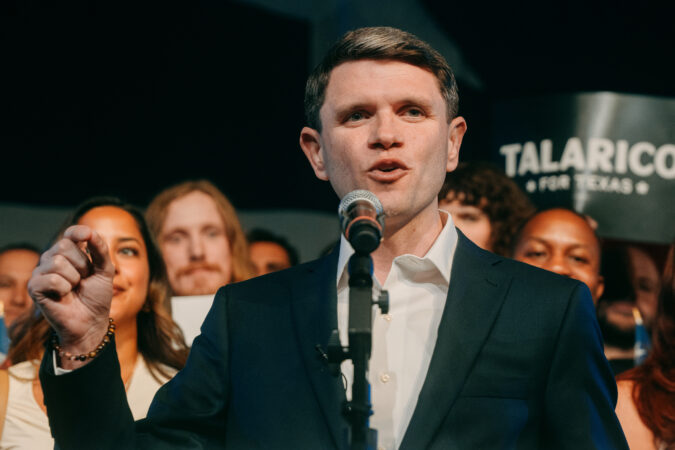
Texas primary voters of both parties voted with cool heads Tuesday, rejecting candidates who appealed to their parties’ bases with more inflammatory styles that could have proved riskier in a general election.
But challenges remain for Democrat James Talarico — who won the primary outright on a unifying message of reaching out to all Texans — and for Republican Sen. John Cornyn, who nosed ahead of firebrand Attorney General Ken Paxton but now faces a punishing May 26 runoff against him.
Democrats face an uphill battle to flip a Senate seat in the red state no matter what happens in the runoff, as they mount their long-shot bid to retake the Senate in November. The chamber is currently controlled by Republicans, 53-47, and Democrats would have to flip several deep-red states like Texas to regain control.
The next few months will determine how well-positioned Texas Democrats are to regain a Senate seat that has eluded them for more than 30 years, as the party hopes unusually high voter enthusiasm and weariness with President Donald Trump could fuel their comeback.Talarico in the coming months must work to unite the party by attracting Black voters who strongly backed his opponent, all while fending off coming attacks from the right painting him as a radical.
And Cornyn’s political survival may depend on the actions of someone who is notoriously hard to predict or corral — Trump. The president said Wednesday that he would soon endorse one candidate and that the other should quit the race. If he does not get Trump’s endorsement, Cornyn may struggle to clear the runoff, and either way the next few months will be a divisive slugfest between two Republicans with large megaphones.
“We are not going to go quietly, and we are not going to let you buy the seat,” Paxton said at his election-night party in Dallas, referencing the tens of millions of dollars Cornyn and his allies poured into the race.
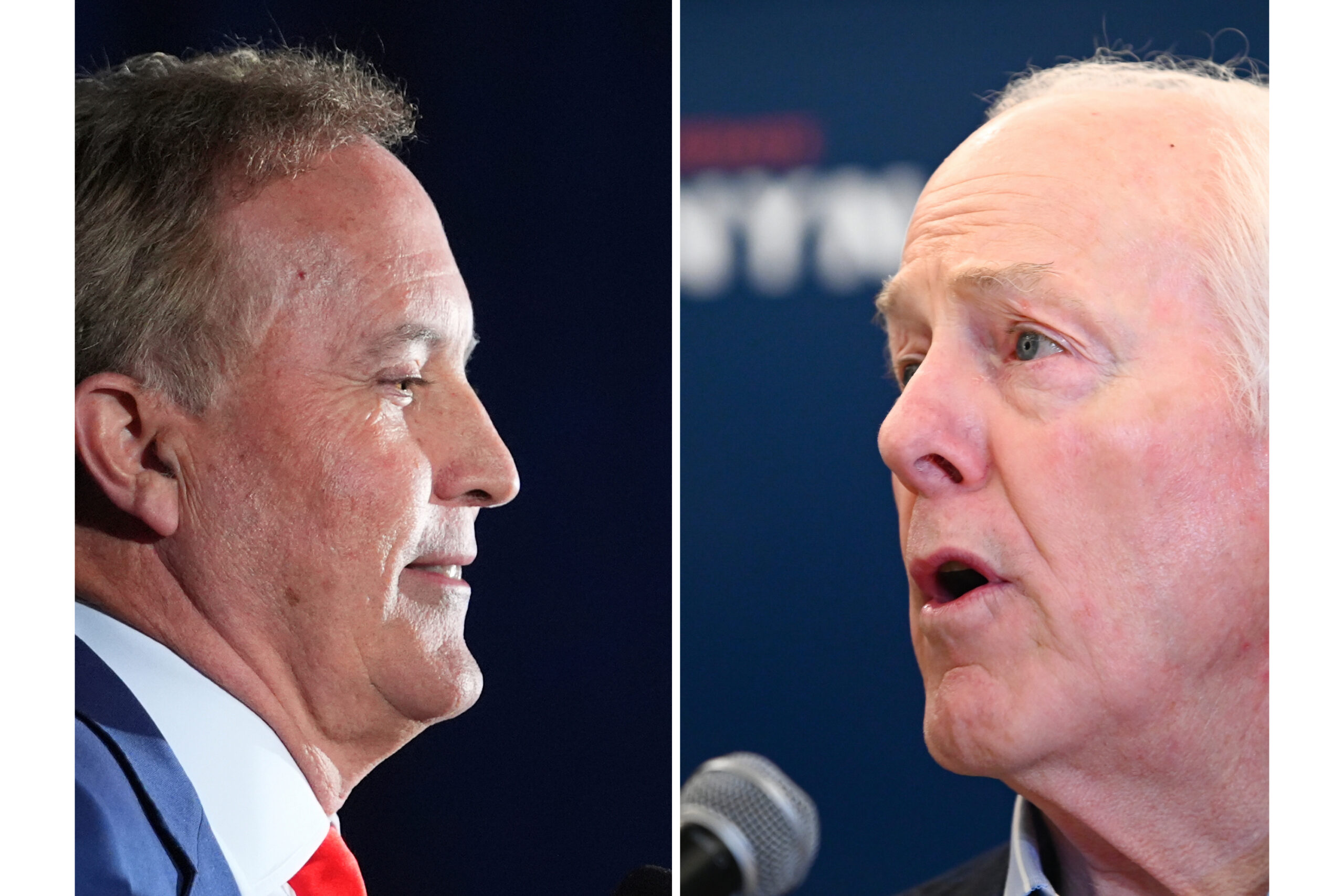
FILE – This photo combination shows Texas Attorney General Ken Paxton, left, in Dallas and Sen. John Cornyn, R-Texas, in Austin, Texas, both on March 3, 2026. (AP Photo/Julio Cortez, Jack Myer)
Cornyn, a fourth-term senator who is widely considered to be a stronger general-election candidate than the scandal-plagued Paxton, fell short of the 50% mark that would have avoided a runoff. Paxton was impeached by the GOP-controlled Texas House in May 2023 on charges of bribery but was acquitted by the Senate.
Cornyn warned Paxton that “judgment” was coming for him. “I refuse to allow a flawed, self-centered, and shameless candidate like Ken Paxton to risk everything we’ve worked so hard to build,” he told reporters.
The bitter intra-Republican warfare marked a stark contrast to the Democratic side of the ledger, where Rep. Jasmine Crockett set aside her earlier attacks on Talarico — and a legal challenge she filed Tuesday after voters were turned away from polling places in her Dallas district —and urged Democrats to come together Wednesday.
“Texas is primed to turn blue and we must remain united because this is bigger than any one person,” Crockett wrote in a social media post.
Talarico also urged unity, telling his supporters Tuesday, “The stakes in Texas are too high for division.”
Mudslinging in the final weeks of the race may have caused some damage that Talarico will need to repair ahead of November, however. Crockett called the argument that Talarico was more electable than her a “dog whistle” and slammed him for not condemning ads run by a super PAC that supported him as “straight-up racist.” (Talarico does not control the super PAC, and the group denied darkening Crockett’s skin in an ad.)
Crockett ran strong with the state’s Black voters, while Talarico appeared to run away with the Latino vote in the state. He beat Crockett by 30 percentage points or more in 21 counties that are more than 75% Latino. In counties that were 20% or more Black, Crockett won by 25 percentage points.
Nancy Zdunkewicz, a Texas Democratic pollster, said she believed that much of the Crockett-Talarico tensions played out online rather than on the campaign trail and that the primary electorate was not divided.
“She has conceded graciously, and I don’t want to overstate any damage done simply because of the social media dialogue, which was unnoticed by voters,” she said.
Former Vice President Kamala Harris, who backed Crockett in the final days of the race, urged voters to unify. “I congratulate James Talarico for his win, and the inspiring campaign he continues to build,” she said in a statement. “I offer him my full support in the months ahead.”
Republicans have a while to go before they can start their postprimary healing process, a delay that could dampen enthusiasm in November. It is also unclear whether Republicans will continue to vote with their heads instead of their hearts in May by backing Cornyn. Runoffs tend to feature a smaller, more intense group of voters compared with regular primaries, which could benefit Paxton. And it remains an open question whether Trump will support Cornyn, a nod that could put him over the top.
Political analysts also do not know if the roughly 13% of Republicans who voted for GOP Rep. Wesley Hunt, who failed to make the runoff, will show up again in May and, if so, which candidate they would favor.
Cornyn’s allies have warned the president that should Paxton be their nominee, the party would have to spend $200 million to get him over the finish line — a haul that would take away from other competitive Senate races Republicans are defendingin Maine, North Carolina, and Ohio. Paxton historically has not been a strong fundraiser, and Democrats have nominated Talarico, whom they see as a stronger candidate than Crockett in the general election and who may take more resources to beat.
Cornyn has Trump-connected allies on his side as they make this pitch, including Trump’s former campaign manager Chris LaCivita, who is running his super PAC, and Trump pollster Tony Fabrizio.
Republicans in the state are sounding the alarm about record-breaking primary turnout for Democrats, which they see as a signifier of high enthusiasm going into November. Ross Hunt, a Republican pollster, called the turnout “a code red alert for Texas Republicans” in an analysis he published earlier this week. He predicted Democrats have added more than 480,000 voters to their turnout in the fall.
“Republicans will need to do everything right this fall: we will need to select the best nominees for the General Election, maximize GOP turnout, practice intense message discipline, and have a clear-eyed and dispassionate understanding of where the new front line of defense stands after March 3rd,” he wrote.
A Florida developer who is building data centers in Pennsylvania. A Chicago crypto trader whose company was sued by the Biden administration. And a Southwestern Pennsylvania coal magnate whose firm received a permit from state regulators last year to expand operations — and is now seeking approval to open a new mine.
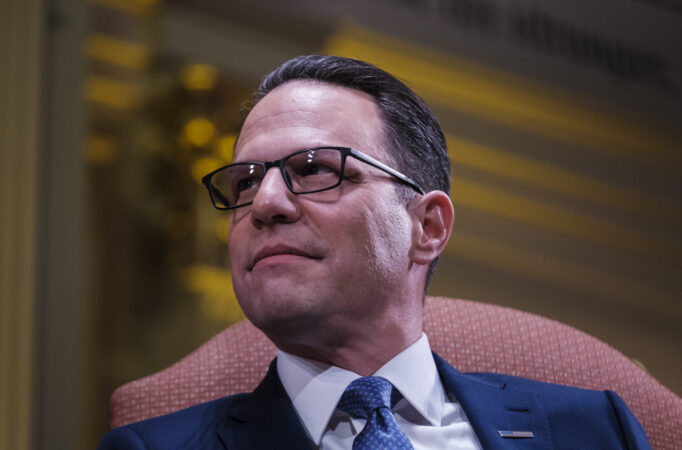
Shapiro’s gubernatorial campaign raised at least $8.5 million last year from nearly 240 CEOs, founders, business owners, and other top executives, according to an Inquirer analysis of campaign-finance records that were made public last month.
That includes the single biggest donation to the campaign: $2.5 million from billionaire and former New York City Mayor Michael Bloomberg. Shapiro’s haul from top executives represents 50.8% of the $16.8 million he raised from donors who listed their occupation in campaign finance filings.
window.addEventListener(“message”,function(a){if(void 0!==a.data[“datawrapper-height”]){var e=document.querySelectorAll(“iframe”);for(var t in a.data[“datawrapper-height”])for(var r,i=0;r=e[i];i++)if(r.contentWindow===a.source){var d=a.data[“datawrapper-height”][t]+”px”;r.style.height=d}}});
During his first three years in office, Shapiro, 52, has sought to build a profile as a pragmatic, business-friendly governor, focusing on speeding the permitting process and promoting economic development through government grants and tax breaks.
At the same time, the governor has proven adept at raising campaign cash from people who have business interests before state government in Harrisburg. Those include a skill game developer who staved off a major policy defeat this year and a waste coal power plant owner who gave $100,000 to Shapiro two days before the governor pulled out of a multistate program that requires such facilities to pay for their greenhouse gas emissions.
It’s a contrast with the rising populism on both the left and right, marked by a “Fighting Oligarchy” tour by progressive leaders and the MAGA movement’s deep suspicion of elites.
It’s not unusual for corporate executives to make contributions to candidates from both parties. But the practice could invite scrutiny for Shapiro in a White House run — particularly among voters and activists who are dismayed by the role of money in politics.
“We are concerned about any elected leaders taking monetary donations from corporate interests, regardless of who they are,” said Ashley Funk, executive director of the Mountain Watershed Association, a nonprofit that opposes a Shapiro donor’s coal mining expansion.
“I think that it influences decision-making,” she said.
‘The speed of business’
For now, Shapiro’s pledge to make Pennsylvania’s government run “at the speed of business” appears to have won over many executives, helping him build a massive fundraising advantage in his reelection bid. Shapiro raised $23.2 million overall in 2025, compared with the $1.5 million reported by his likely Republican opponent, State Treasurer Stacy Garrity.
“I’ve long admired the way the commonwealth approaches economic development and innovation, and I have deep respect for Gov. Shapiro’s leadership,” said Bob Clark, executive chairman and founder of Clayco, a Chicago-based real estate and construction firm that is redeveloping a site at the industrial hub known as the Bellwether District in South Philadelphia.
Clark gave Shapiro’s campaign $100,000 last year. “I consider him both a trusted colleague and an effective leader,” he said.
In recent weeks, the governor has celebrated pledges by pharmaceutical companies to invest billions of dollars in new facilities in Montgomery County and the Lehigh Valley, secured with tens of millions of dollars in state incentives. And last year, Amazon said it would spend $20 billion in Pennsylvania to build two new artificial intelligence data centers, in what officials called the single largest private investment in state history.
Shapiro’s allies say he stands up to big business, too, highlighting how he successfully prodded PJM Interconnection LLC — the Valley Forge-based regional electric grid operator whose voting members largely consist of companies in the electricity industry — to impose and extend a price cap. He has also received support from organized labor.
Shapiro argues that the way to restore faith in institutions is not by railing against billionaires but by showing that the government can fix real problems — “get s— done,” in his parlance.
Garrity, the Republican state treasurer, says Shapiro’s actions don’t live up to the hype.
“Liberal national donors may be investing in Josh Shapiro’s political vanity project, but hardworking Pennsylvanians are seeing nothing in return,” she said in a statement.
Garrity received nearly $380,000 from more than 60 CEOs and other top business executives. That figure represents about 41% of her contributions from donors who listed their occupation in campaign-finance filings.
Shapiro’s campaign said his coalition is “reflective of a governor who is delivering for all Pennsylvanians — and of a campaign that is fighting to win up and down the ballot.”
window.addEventListener(“message”,function(a){if(void 0!==a.data[“datawrapper-height”]){var e=document.querySelectorAll(“iframe”);for(var t in a.data[“datawrapper-height”])for(var r,i=0;r=e[i];i++)if(r.contentWindow===a.source){var d=a.data[“datawrapper-height”][t]+”px”;r.style.height=d}}});
The governor has “focused on growing our economy and creating jobs, and he has delivered — creating tens of thousands of jobs, winning major deals, and building the only growing economy in the Northeast,” campaign spokesperson Manuel Bonder said in a statement.
Shapiro highlighted one such deal in July, when he appeared alongside executives at defense contractor Rhoads Industries at the Navy Yard in South Philly to announce the firm’s $100 million plan to build a new manufacturing facility, create 450 jobs, and boost production of submarine parts.
“One of the things that Rhoads is known to do is get things done. … We want to turn out product; we want to turn it around; we want to get it done,” president Mike Rhoads said.
Looking toward Shapiro, he said, “Somebody standing to my left has the kind of same attitude.”
Gov. Josh Shapiro (right) with Rhoads Industries CEO Dan Rhoads in July 2025 at the Navy Yard.
Taking his turn at a lectern that read “Rebuilding America’s Fleet,” Shapiro said Rhoads’ investment — with help from the state — would “ensure the future of submarine manufacturing, shipbuilding, and all things important to securing our freedom is going to run right through the Philadelphia Shipyard.”
Three months later, in October, CEO Dan Rhoads contributed $10,000 to Shapiro’s campaign — the single largest donation he made to a candidate for state office in the last decade, records show. Rhoads did not respond to requests for comment.
Data centers and ‘skill games’
Shapiro donors’ business interests include everything from data center construction to state regulation of slot machine-style games and approvals for a nuclear reactor.
Dan Hilferty, CEO of Philadelphia-based Comcast Spectacor — which owns the Flyers and the Xfinity Mobile Arena in South Philly — gave $40,000. A political action committee affiliated with parent company Comcast also gave $50,000. Comcast Spectacor and the 76ers are building a new arena at the South Philadelphia sports complex, and Shapiro last year did not rule out offering state incentives. Hilferty, a former CEO of Independence Blue Cross, previously gave Shapiro’s campaigns $27,500 over the last decade. Other Comcast Spectacor executives contributed about $95,000 during that period.
Top executives at Pace-O-Matic, the Georgia-based developer of so-called skill games that have proliferated across convenience stores and bars, gave $50,000. Operators for Skill, a PAC affiliated with the firm, contributed $10,000. The company successfully fended off a push in 2025 by Shapiro and lawmakers to tax the games at a level the industry considered too high. The governor has renewed a push to regulate the games, which some Philadelphia lawmakers say they would prefer to see banned. Pace-O-Matic contributes to both parties and remains “committed to fighting for fair regulation and taxation of Pennsylvania skill games,” said Mike Barley, chief public affairs officer for Pace-O-Matic.
Joseph Dominguez, president of Baltimore-based Constellation Energy, gave $25,000. The company is seeking to restart a nuclear reactor at Three Mile Island, just outside Harrisburg, and needs state and federal approvals. The plant would supply power to Microsoft to support the tech company’s data centers. “Constellation executives contribute to policymakers on both sides of the aisle who, like Gov. Shapiro, prioritize results and pragmatic solutions over politics,” a company spokesperson said.
Brian Patten, CEO of Next Generation Land Co. LLC, gave $10,000. He is a Florida data center developer who says he is pursuing projects in Pennsylvania. Data centers that power companies’ cloud storage and computing needs have drawn backlash across the U.S. over fears of rising electricity rates. In his February budget address, Shapiro said he wants data centers to supply their own energy and pay for any new generation they need. He has also said the U.S. needs to win the AI race against China.
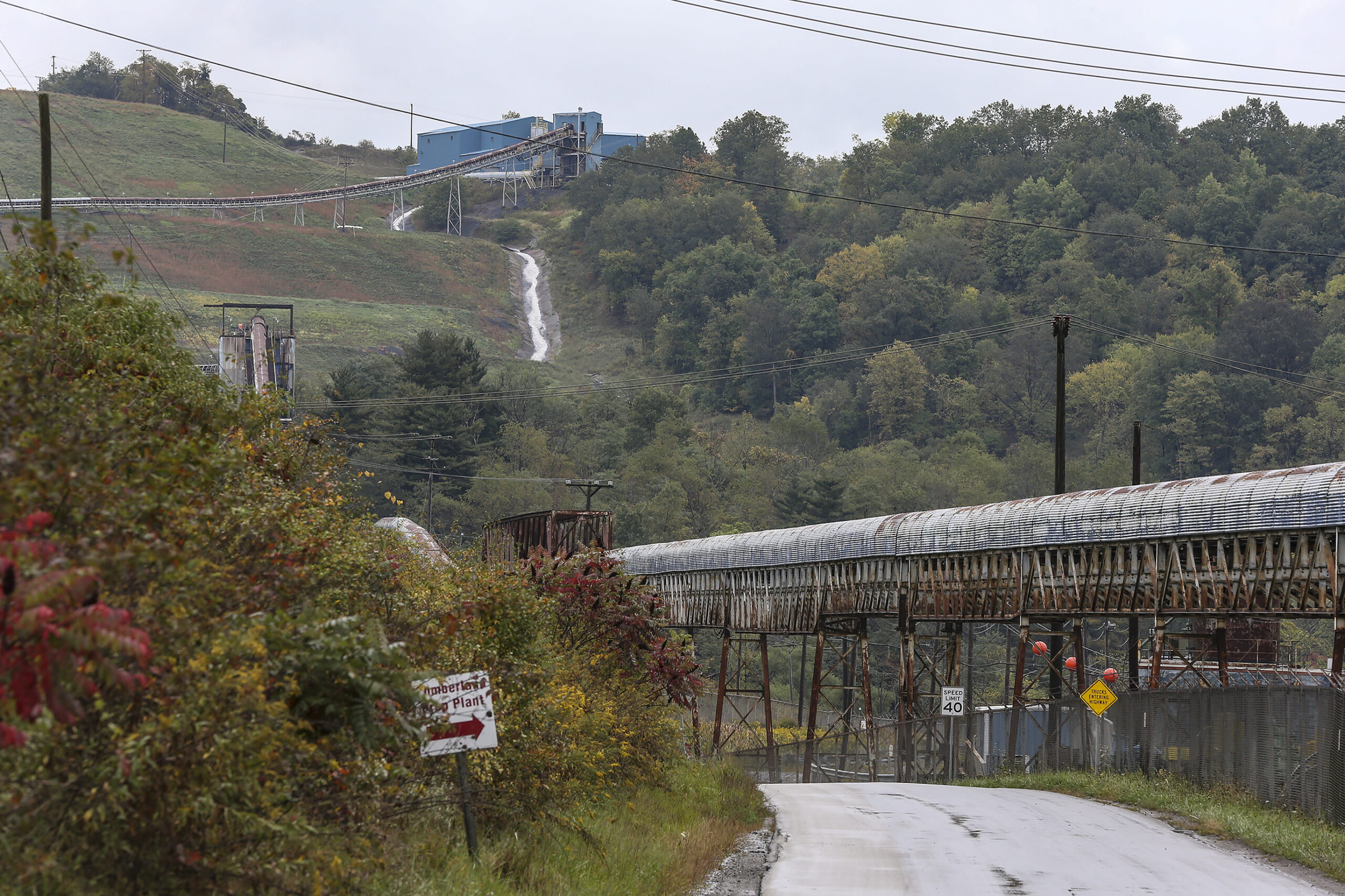
Justin Thompson, CEO of Iron Senergy, a coal operator, gave $10,000. His firm owns the Cumberland Mine in Greene County. When Pennsylvania applied to the U.S. Environmental Protection Agency for a $400 million grant, it mentioned several firms — including Iron Senergy — that could use the money for decarbonization projects, the Pittsburgh Post-Gazette reported in 2024. The EPA awarded the grant, and the Pennsylvania Department of Environmental Protection is tasked with administering it. The state is now reviewing applications, which it says are confidential.
The Cumberland Coal Mine in Greene County seen in 2020.
Local and national donors
Shapiro drew on a mix of executives from local and national firms. In Pennsylvania, he raised money from health system CEOs (Joseph Cacchione of Thomas Jefferson University, $10,000), bankers (Richard J. Green of Philly-based Firstrust Bank, $125,000), and a home remodeler (Asher Raphael of Power Home Remodeling in Chester, $100,000). Josh Kopelman — founder of First Round Capital and chairman emeritus of The Inquirer’s board of directors — and his wife, Rena, each gave $50,000.
There were private equity investors (San Francisco billionaire John Pritzker, cousin of Illinois Gov. JB Pritzker, $50,000), Hollywood producers (Jimmy Miller of talent management and production firm Mosaic, $75,000), professional sports team owners (telecom billionaire Robert Hale, minority owner of the Boston Celtics, $50,000), and a Massachusetts sports betting executive (Jason Robins of DraftKings, $10,000).
For his part, Bloomberg is “a big fan of Gov. Shapiro and a big believer in his leadership, and thinks he’s done a great job for Pennsylvania,” adviser Howard Wolfson told Axios.
At least one donor had ties to President Donald Trump, whom Shapiro often criticizes.
Don Wilson Jr., CEO of Chicago-based trading firm DRW Holdings LLC, gave $10,000 to Shapiro in September.
The Securities and Exchange Commission filed civil charges against a unit of Wilson’s firm while President Joe Biden, a Democrat, was in office. The SEC accused it of operating as an unregistered cryptocurrency dealer.
Biden-era regulators said that firms were dodging that rule by claiming crypto was a commodity, not a security. The enforcers argued this exposed investors to extra risks associated with digital currencies.
Then last March, a couple of months after Trump took office, the new administration dropped the charges against Wilson’s firm. Nine weeks later, Wilson invested $100 million into a Trump bitcoin project, the Financial Times reported.
The company told the newspaper it engages in a “variety of strategies in the crypto ecosystem” and saw value in holding bitcoin. “This transaction was viewed purely through that lens,” it said.
Trump denies having conflicts of interest.
That didn’t stop the Democratic National Committee from flagging the news on its “CORRUPTION WATCH” page.
The Trump administration, the Democrats’ post said, “now appears to be engaged in blatant pay-to-play politics.”
Power plants and coal mines
Among corporate executives, two of the eight biggest donors to Shapiro’s campaign last year were the father-and-son owners of privately held Robindale Energy Services, which owns about 20 companies involved in waste coal reclamation, power generation, mining, and logistics. Robindale’s assets include multiple power plants fueled by waste products from abandoned coal mines.
CEO Scott Kroh and his son Judson, the Latrobe-based company’s president, gave a total of $271,000.
That included a $100,000 contribution from Scott Kroh two days before Shapiro signed the annual budget, which came after a monthslong stalemate. The deal with Senate Republicans included language pulling the state out of the Regional Greenhouse Gas Initiative, a multistate effort to generate cleaner power that Robindale had vocally opposed.
Robindale’s executives did not respond to requests for comment.
In June 2023, Judson Kroh spoke out against RGGI at a public hearing, telling Pennsylvania lawmakers that Robindale’s power plants have enough capacity to power 500,000 homes. “Our main concern is you’ll see a significant decrease in power exports out of the state due to RGGI, as well as a significant decrease in coal production,” Kroh said.
Other energy industry firms, Republican lawmakers, and building trades unions have also long opposed the initiative, which requires power plants to buy allowances to cover their carbon emissions. They call it a job killer and an electricity tax. Environmental groups say it has reduced pollution and led to investments in clean energy in other states.
Shapiro had for years expressed concerns about the greenhouse gas initiative, which Pennsylvania joined under his predecessor but never implemented due to litigation. Shapiro said in 2021 during his first run for governor that “it’s not clear to me” that the program protected jobs, addressed climate change, or ensured energy reliability.
The Kroh family donated a total of $55,000 to his 2022 campaign and $21,000 the following year. Judson Kroh was among the more than 300 people who served on Shapiro’s transition team.
Many of Robindale’s operations are regulated by the state, and the company spent $150,000 lobbying state government officials last year, records show. Company executives in recent years have largely donated to Republicans in Harrisburg, though they have also supported some Democrats, including Shapiro.
window.addEventListener(“message”,function(a){if(void 0!==a.data[“datawrapper-height”]){var e=document.querySelectorAll(“iframe”);for(var t in a.data[“datawrapper-height”])for(var r,i=0;r=e[i];i++)if(r.contentWindow===a.source){var d=a.data[“datawrapper-height”][t]+”px”;r.style.height=d}}});
In addition to its power generation business, Robindale owns coal mines that are subject to state inspections and oversight. When two people died in a Somerset County mine operated by subsidiary LCT Energy, DEP required the company to update its safety protocols. The deaths in 2022 and 2023 came during a time in which there were 20 coal mining fatalities nationwide, according to federal data.
Johnstown-based LCT is currently expanding.
About 30 miles west of Maple Springs, LCT opened another mine in 2018 in Westmoreland County called Rustic Ridge 1, which produces 600,000 tons of coal a year.
The state renewed the permit for the 2,800-acre underground mine in January last year, and from that month through March, the Kroh family donated $70,000 to Shapiro’s campaign.
In April, after a yearslong review, the Pennsylvania Department of Environmental Protection approved a permit authorizing LCT to expand its operations there, adding 1,400 acres under the Pennsylvania Turnpike — the equivalent of 93 Lincoln Financial Fields. The permit allows LCT to mine coal up to 600 feet underground. The company sells the coal for production of steel.
The nonprofit Mountain Watershed Association is appealing the DEP’s approval to the Pennsylvania Environmental Hearing Board — whose judges are appointed by the governor, subject to confirmation by the state Senate — arguing that the expansion could harm groundwater and streams.
Others say the mine supports jobs and helps the local economy. Before opening, the company said in 2014 that it would invest $50 million to develop the mine, according to local news reports.
The state budget Shapiro signed in November expanded a program for expedited permitting involving approvals from the DEP, which reviews 40,000 permits a year. Introduced in 2024, the program is currently available for eligible permits such as air quality, dam safety, and oil and gas erosion and sediment control.
The budget legislation — cheered by Shapiro and GOP lawmakers — added more permit types, including one for mining, “which DEP is in the process of adding to the program,” a department spokesperson said.
Funk — the executive director of the watershed association, which has spent millions of dollars over the last 30 years repairing the environmental damage of legacy coal mining — said she is concerned the Krohs’ political giving “might be having an influence over Shapiro and his administration as we work to permit some of Robindale’s projects such as LCT Energy.”
Shapiro says permitting reform reflects his governing ethos.
“When you think about getting stuff done … it requires focus and speed,” he said in December at a National Governors Association event. “We’ve gotta be speedier as a country.”
It was at the end of last year in the hazy stretch between Christmas and New Year’s when time doesn’t feel real, and some of Philly’s top Democrats were huddled around a secret proposal, racing to meet a deadline.
The group — convened by Mayor Cherelle L. Parker, her aides, and some key Philadelphia boosters — was preparing a lengthy bid to bring the Democratic National Convention back to the city in either 2028 or 2032, a potential economic boon and a chance to show off in front of lawmakers, celebrities, and international media.
The confidential proposal to the Democratic National Committee included everything from the city’s hotel space to police outfitting to nitty-gritty details about the electrical grid and voltage capacity at Xfinity Mobile Arena. SEPTA officials drafted a section about the public transportation Philadelphia could offer visitors, and tourism agencies chipped in with insights on hotels and restaurants.
David L. Cohen, a longtime Democratic fundraiser and the president of the recently formed nonprofit host committee called Pick Pennsylvania, said that while the mayor led the effort, the bid also emphasized the “unity of the region and the commonwealth.”
“She wanted it to be really clear this is more than a Philadelphia bid,” he said. “This is a unified Pennsylvania bid.”
It appears the Democratic National Committee was impressed. On Monday, the DNC announced that it is considering five cities, including Philadelphia, to host the 2028 convention, where a Democratic presidential nominee will be coronated. The party is also looking closely at Atlanta, Denver, Chicago, and Boston to hold the early August event.
What comes next is a campaign to lure the convention to Philly, complete with a carefully coordinated public relations effort and a significant fundraising push. Philadelphia’s host committee for 2016, the last time the city held a presidential nominating convention, raised more than $85 million.
The DNC has asked host cities to raise $5 million before being selected. Philly’s fundraising, Cohen said, “will be substantially higher than that number.”
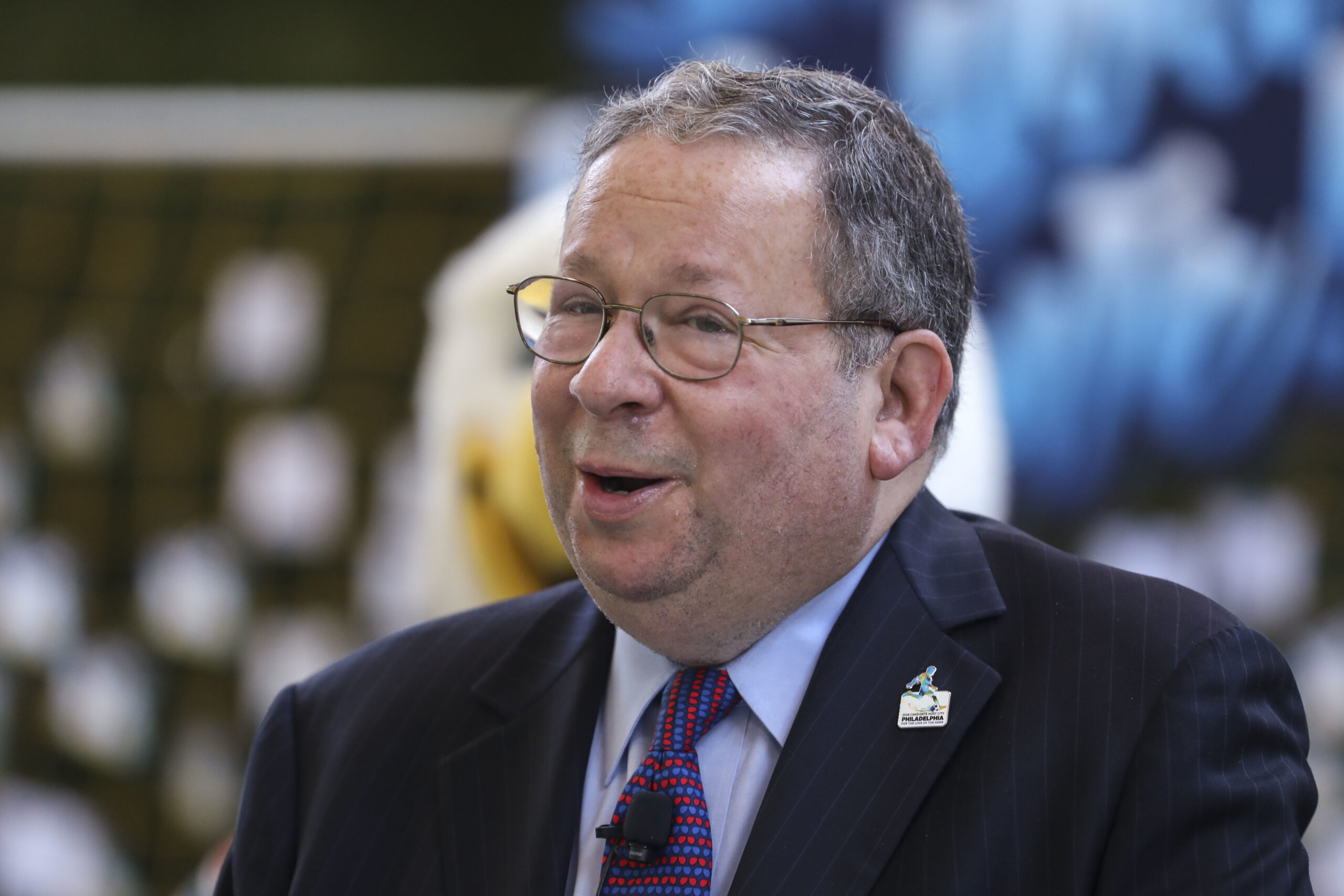
In this 2021 file photo, David L. Cohen speaks as Philadelphia Soccer 2026, the city’s World Cup 2026 bid committee, launched an interactive exhibit at the Independence Visitors Center in Philadelphia. He is now heading an effort to bring the Democratic National Convention to Philadelphia.
Cohen, a former Comcast executive and erstwhile chief of staff to former mayor Ed Rendell, is leading the effort alongside Daniel J. Hilferty, now the CEO of Comcast Spectacor.
Hilferty and Cohen have worked together repeatedly over the last two decades to bring major events to Philadelphia, including a successful bid to become one of a handful of North American cities to host World Cup games this year.
Also involved in coordinating the DNC proposal was Erin Wilson, a Philadelphia native who was a top aide to former Vice President Kamala Harris. She was the national political director for former President Joe Biden’s campaign and planned his 2021 inauguration.
When the DNC comes to town
DNC officials are expected to make a final decision on the 2028 site later this year. That call will likely be made by chair Ken Martin in consultation with top advisers and the committee’s Technical Advisory Group, which assesses logistics and operational matters.
Philadelphia could also have an advocate in State Rep. Malcolm Kenyatta, who represents parts of North Philadelphia and is a DNC vice chair. He is known to have a close relationship with Martin.
Committee officials and the advisory group will tour each of the five finalist cities for a yet-to-be-scheduled site visit this spring.
If history is any indication, the city will roll out the red carpet. In 2014, when 18 members of the DNC came to Philly to check out the city ahead of the 2016 convention, the host committee spent six figures to charm them.
The trip included a tour of Philly’s most popular sites, like Reading Terminal Market and the Philadelphia Museum of Art, as well as a swanky rooftop party and a breakfast at the Comcast Center. Predictably, cheesesteaks were also involved.
“The site visits are as much about feel as they are about technical details,” Cohen said. “After site visits, the teams who are making choices leave here and they have their socks knocked off. They can’t believe how vibrant the city is.”
In this 2014 file photo, Congressman Bob Brady, left, talks with DNC CEO Amy Dacey, center, as they have lunch at Pat’s Steaks in South Philadelphia.
Ryan Boyer, the head of the Philadelphia Building and Construction Trades Council and a close Parker ally, said one of Philadelphia’s best assets might be its mayor. Parker is an unabashed cheerleader for the city and is leading preparations for several major events this year, including World Cup games, the MLB All-Star Game, and the commemoration of America’s 250th anniversary.
“She’s the most effective advocate for bringing people together,” Boyer said, “with just her level of passion, her love of the city, and her love of the job.”
Cohen said he spoke to Parker last year about the potential to bid for the convention, and when she asked him to lead the host committee, he said yes because the city has “a serious chance.”
“As a friend and longtime supporter of hers, if I didn’t think we had a legitimate shot, I would try to talk her out of it,” Cohen said. “If anything, I have poured gasoline on her flames of enthusiasm and said, ‘We should be all in for this.’
”I said, ‘Do what you do best,’” he added. “Get everyone excited about this.’”
That means there is a chance that Shapiro, who was raised in Montgomery County and whose family still lives there, could be nominated in what is essentially his hometown.
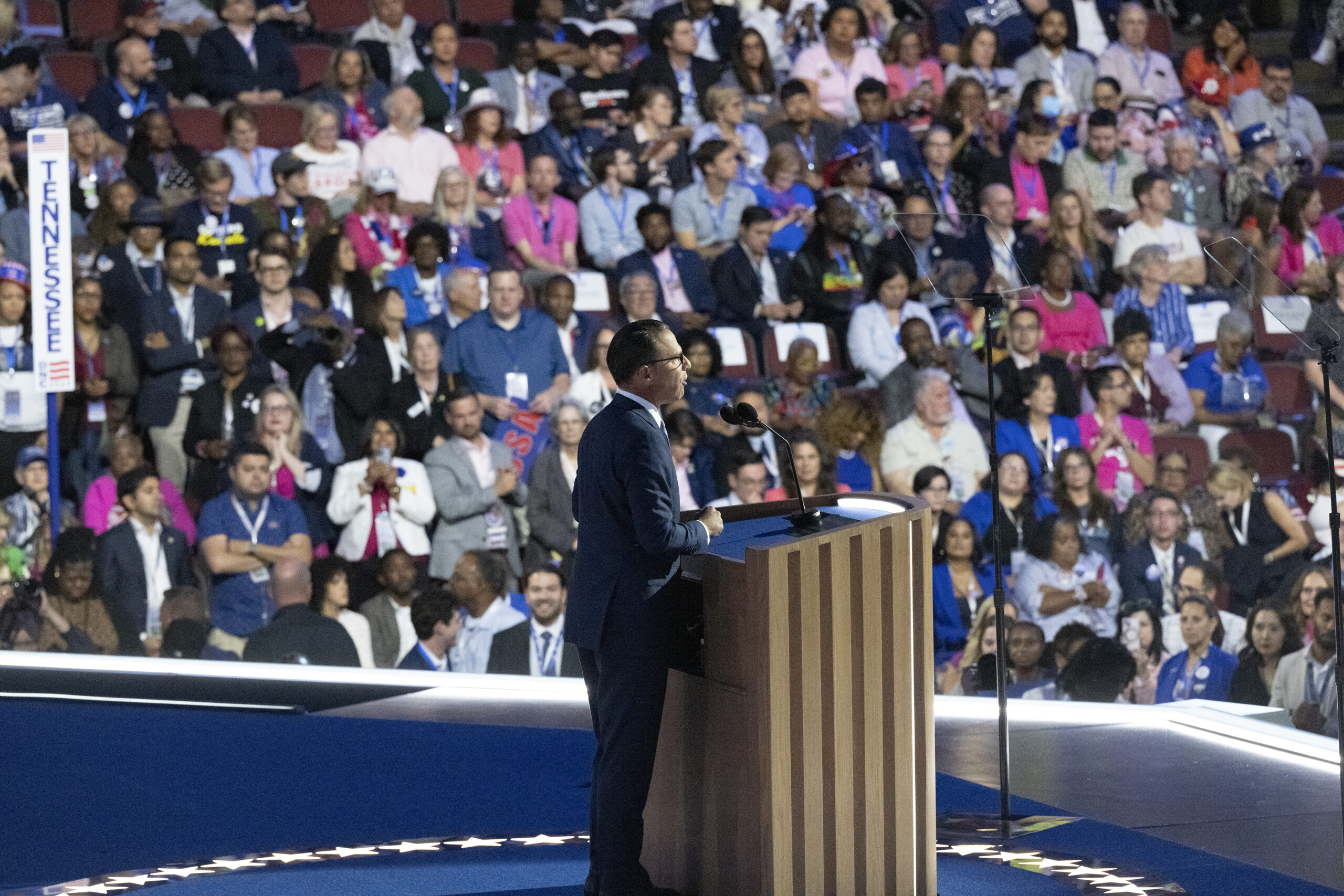
Pennsylvania Gov. Josh Shapiro speaks during the Democratic National Convention Aug. 21, 2024, in Chicago.
In a letter to Martin, Shapiro wrote that Philadelphia “would see substantial economic benefits” from hosting the convention and vowed that the state would be “prepared to ensure our infrastructure, public safety agencies, workforce, and business community are equipped to host thousands of delegates and attendees.”
What’s next: a close look at security and logistics
Behind the pomp of the DNC’s spring site visit will be a serious evaluation of security, transportation, hotels, and arena logistics.
The DNC said in a statement Monday that it will value “new and innovative approaches” to hosting a large-scale event that is likely to bring thousands of tourists. In 2016, the convention drew more than 5,000 attendees and an additional 29,000 visitors — nearly 20,000 of whom were media members.
Nominating conventions are typically designated as National Special Security Events, meaning the federal government leads security because the event is deemed at high risk for terrorism or other criminal activity. That means planners need to know specifics about law enforcement staffing, gear, and other capabilities.
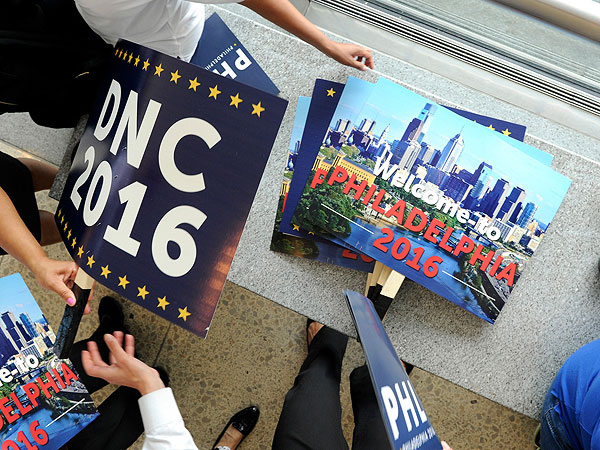
Placards promoting Philadelphia as the host city of the Democratic National Convention in 2016, while the Democratic National Committee was touring the city in August.
Support will also have to come from outside the city. During past conventions, federal law enforcement teamed up with Philadelphia police to secure the venue, and they were joined by officers from across the region.
The DNC also said in its announcement Monday that the committee would prioritize “the importance of forging a strong partnership between the DNC and the host city, including its community, political, and business leaders.”
To that end, the host committee and Parker asked elected officials and civic leaders from across the state to write letters of support that accompanied the city’s bid.
Authors ranged from City Council President Kenyatta Johnson, whose district includes the South Philadelphia stadium complex, to labor leaders to Democrats from the Philadelphia collar counties.
Montgomery County Commissioner Neil Makhija, who wrote a letter to the DNC boosting the bid, said it is important for the committee to see that local governments and law enforcement agencies outside the city are willing to offer support, because “pulling something like this off requires a lot of cooperation on many different fronts.”
“A real concern now when you’re thinking about hosting a political convention is ‘How are we going to manage public safety and a threat environment?’” he said. “There are a number of reasons to point to our region and see a level of collaboration that inspires confidence.”
Philadelphia is one of five cities on a list of finalists to host the 2028 Democratic National Convention, a major gathering that could generate millions of dollars in economic impact for the city.
Party officials are also considering Boston, Atlanta, Chicago, and Denver, the Democratic National Committee announced Monday.
The convention will be held from Aug. 7 to Aug. 10, 2028, according to the party. If Philadelphia is selected, the convention would likely be held at the Xfinity Mobile Arena at the South Philly stadium complex, the largest indoor event space in the city.
DNC leaders and advisers are expected to make site visits this spring before selecting a host.
The DNC said in its statement that, in picking a host city, party leaders will consider how each city uses “new and innovative approaches in response to the challenges and opportunities that arise from hosting an event of this magnitude.”
The Republican Party’s 2028 convention will take place in Houston.
Top Philadelphia Democrats and donors formed a host committee — called Pick Pennsylvania — in recent months and, in partnership with Democratic Mayor Cherelle L. Parker, submitted a bid to host the 2028 convention.
In a statement, Parker said that Philadelphia’s selection as a finalist “reflects the strength of its proposal and the broad coalition of civic, business, labor, and community leaders committed to hosting a convention that is inclusive and memorable.”
Parker, who is up for reelection next year, would no doubt play a major role in planning for an upcoming convention. So would Gov. Josh Shapiro, a Democrat currently running for reelection who is considered a contender for the 2028 presidential nomination.
The president of the Philadelphia host committee is David L. Cohen, a prominent party stalwart, and the chair is Daniel J. Hilferty, the CEO of Comcast Spectacor, which owns the Xfinity Mobile Arena.
He said in a statement that “there is no city more excited, more invested and more prepared than Philadelphia to host the 2028 Democratic National Convention.”
Philadelphia — the largest city in a critical swing state — last hosted a presidential nominating convention in 2016 at the South Philly arena, then called the Wells Fargo Center. Democrats that year nominated former Secretary of State Hillary Clinton, who was later defeated by Republican Donald Trump.
Before 2016, the city hosted major party conventions seven times, including the 2000 Republican National Convention. The GOP that year nominated then-Texas Gov. George W. Bush, who went on to serve two terms in the White House.
Former U.S. Rep. Bob Brady, the chair of the Philadelphia Democratic City Committee, said Monday that he had spoken multiple times to DNC leaders about the prospect of the city hosting the 2028 convention.
“We got a great reputation from the last convention we had,” Brady said. “Plus we’re going to show off the city very well this summer, which will really give us a good look.”
The news that Philadelphia is again a finalist to host the DNC is a welcome development for the city’s tourism and hospitality industry, as party conventions draw thousands of visitors and can be a boon for spending in the city.
The 2016 event generated $230.9 million in economic impact, according to the Philadelphia Convention and Visitors Bureau. Of that, about $132.9 million came from direct convention-related spending, and $11.1 million was generated by state and local taxes. That convention attracted more than 5,000 attendees and some 29,000 other visitors, leading to a record-breaking year for hotels in Center City, the bureau reported.
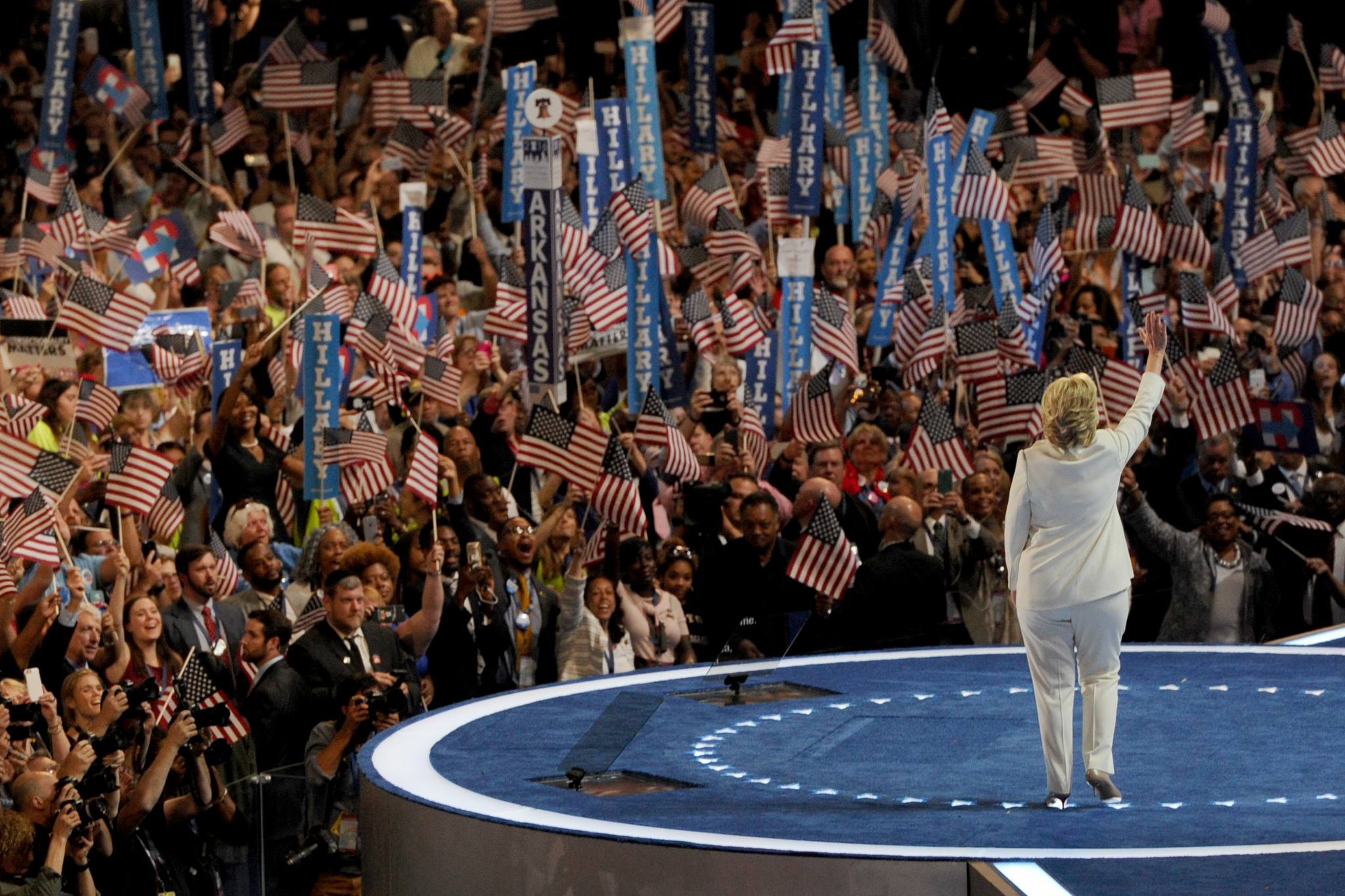
In this July 28, 2016 file photo, then-Democratic presidential nominee Hillary Clinton walks on stage at the arena in South Philly to accept the nomination of her party on the final night of the DNC.
If selected, Philadelphia may be uniquely positioned to host an influx of visitors.
The city’s hotel supply has expanded since the last time it hosted a DNC — and there are more than 19,000 hotel rooms in the city, according to Visit Philadelphia. That’s an increase from about 16,000 available in 2016.
The city has also invested millions of dollars on improvements to public spaces, transit hubs, and security ahead of several major events this year, including World Cup games, the MLB All-Star Game, and the commemoration of the 250th anniversary of America.
Conventions are also major logistical undertakings. Attendees include high-profile politicians and celebrities, and protests often form outside the events. The federal government has over the last two decades designated both parties’ nominating conventions as National Special Security Events, meaning they are deemed at high risk for terrorism and require federally led security.
In Chicago in 2024, the U.S. Secret Service led security planning alongside 16 other public safety entities, according to a local NBC affiliate. The law enforcement and security plan included designated protest zones, airspace monitoring, and traffic control.
Host committees are also responsible for raising millions of dollars to pay for parties, transportation for delegates, construction and venue upgrades, as well as other logistical services such as consultants, accountants, and communications staff.
In 2016, the Philadelphia host committee raised about $85 million — $10 million of which came from taxpayers in the form of a state grant. Other top contributions came from corporations, unions, and wealthy individual donors.
Weeks earlier, Brown was accused of robbing campaign donations from another Democrat more than a thousand miles away in Florida.
Brown, a Florida-based finance manager and campaign consultant who works primarily with Democrats and social justice groups, has over the last decade faced criminal charges for embezzlement and other allegations of financial fraud in at least four states totaling in excess of half a million dollars, according to an Inquirer review of hundreds of pages of court documents, campaign finance filings, and business records.
The misdeeds Brown, 46, has been accused of range from shaving money from campaign accounts to setting up sham jobs and billing nonprofits for work that was never performed. Two years ago, Brown paid $330,000 after pleading no contest to felony embezzlement in California, where prosecutors said she stole from a nonprofit and set up a fake loan under the name of a consultancy where she previously worked.
Through it all, she avoided jail time and, using three different surnames, continued to work on political campaigns from Florida to Philly, persuading candidates to trust her with access to their bank accounts and thousands of dollars in donations to their causes.
Khambrel Davis, a Florida-based criminal defense attorney representing Brown, says this is all a misunderstanding. He said that Brown is the victim, and that a rogue employee of Brown’s firm stole from the PACs in Philadelphia and St. Petersburg and then disappeared “in the wind.”
Davis said Brown reached out to law enforcement but has not heard back.
“[Brown] just can’t locate her, and now it’s kind of all coming back on her,” Davis saidin a phone interview Saturday. “Her history is coming up, so everyone’s just assuming she must have done this. They’re kind of putting together this narrative that she’s just this habitual thief.”
Records show Brown as the only employee of her firm who ever filed campaign finance paperwork for the campaigns now accusing her of theft.
Today, Brown’s whereabouts are unknown to the campaigns she once worked for.Her firm’s address listed in campaign finance filings is a mailbox rental shop, and her website went dark in February. She is registered to vote in Coral Springs, Fla., a suburb of Fort Lauderdale.
Davis, who said he has been in contact with Brown, declined to say where she is. He insisted she has been “transparent and forthcoming with everyone.”
Several other campaign consultants based in Florida told The Inquirer that they have identified suspicious transactions made last year while Brown had access to their accounts. And multiple law enforcement agencies are investigating Brown’s accounting, including the FBI, according to two sources who requested anonymity because they were not authorized to discuss the ongoing probe.
State Rep. Chris Rabb at a forum hosted by the 9th Ward Democratic Committee on Dec. 4, 2025. He is a Democratic candidate running to represent Philadelphia’s 3rd Congressional District.
Before Brown joined Rabb’s campaign in August, she worked with high-profile Democrats in New York, Illinois, and Florida — at times using her married name, Yolanda Rumph.
Her clients included former Tallahassee Mayor Andrew Gillum, who waged a closely watched campaign for Florida governor against Ron DeSantis in 2018. Gillum was indicted for making fraudulent transactions out of the same political action committee that Brown worked for — but prosecutors dropped the charges in 2023 after a jury deadlocked and the court declared a mistrial.
Rabb, a progressive who is considered among a handful of front-runners in the race to replace outgoing U.S. Rep. Dwight Evans, has said he is committed to continuing his campaign for the 3rd Congressional District seat, despite losing money that heis unlikely to see returned before the May 19 primary.
In January, before allegations of the missing money became public, Rabb was already significantly trailing the financial front-runner in the race. Records show he had about $100,000 in his campaign account at the start of the year, while State Sen. Sharif Street reported having more than five times that amount.
Rabb’s campaign declined to say how much money was taken, citing the ongoing law enforcement investigation.
Abe White, Rabb’s spokesperson, said in a statement that the campaign identified the unauthorized withdrawals after finding errors in its most recent campaign finance filing, which encompasses fundraising and spending activity from October to December.
He said the campaign had protocols in place to reconcile accounts and “immediately took action” after coming across the suspicious activity.
“The campaign’s former treasurer manipulated every campaign safeguard in place,” White said. “It’s what these people do.”
Davis, Brown’s attorney, said his client intends to pay back the funds he alleges were stolen by the employee.
“She’s just going to take responsibility,” he said, “and try to remedy the situation.”
No warning signs until it was too late
Very few people working on political campaigns have access to the bank accounts powering their efforts. The accounts see thousands — and sometimes millions — of dollars flowing in and out in a relatively short period of time.
That means candidates put significant trust in their treasurers, who are official designees responsible for ensuring campaigns comply with finance laws.
Matthew Haverstick, a managing partner with Kleinbard LLC, a Philadelphia-based law firm that often works with political campaigns and causes, said it is essential that campaigns thoroughly vet campaign treasurers and compliance consultants.
“This is why you work hard at the front end of this stuff in campaigns,” Haverstick, who is not working for any candidate in the race, said of Rabb’s situation. “When you’re deep into a campaign and a problem like this blows up, it has the potential to end the campaign. So the right time to spend a little more money and try a little harder is before you hire somebody.”
Rabb, a five-term Pennsylvania state representative, entrusted his account to Brown shortly after launching his run for Congress in July. Rabb had not worked with Brown before, and records show no other campaign in Pennsylvania has paid her or her firm for work.
The three other candidates who have so far raised the most money in the 3rd Congressional District race have treasurers based in Philadelphia. But it’s not unheard of for candidates to use consultants and staff from out of state, especially when they are seeking federal office.
White, Rabb’s spokesperson, said Brown “came highly recommended”and “there was no reason for concern” when she was hired.
Elsewhere, other Democrats who hired Brown said they similarly saw no warning signs until it was too late.
In January, the chairperson of a PAC backing St. Petersburg Mayor Ken Welch said she had reported Brown to law enforcement for misspending $207,000.
Brown had worked with the group, called the Pelican PAC, for about a year. Campaign finance records show that last fall, several transactions were made to transfer money from the PAC account into O’Reilly Business LLC, a separate entity that Brown controls.
Davis said Brown’s employee also had access to that LLC, and said it was the employee who moved the money.
Adrienne Bogen, who heads the Pelican PAC, said Brown was removed as the PAC’s treasurer in January.
She was hired following “standard onboarding practices,” Bogen said.
“Nothing was identified that raised concerns,” she added.
In this 2023 file photo, St. Petersburg Mayor Ken Welch greets the audience during a Suncoast Tiger Bay Club meeting at Tropicana Field in St. Petersburg, Fla.
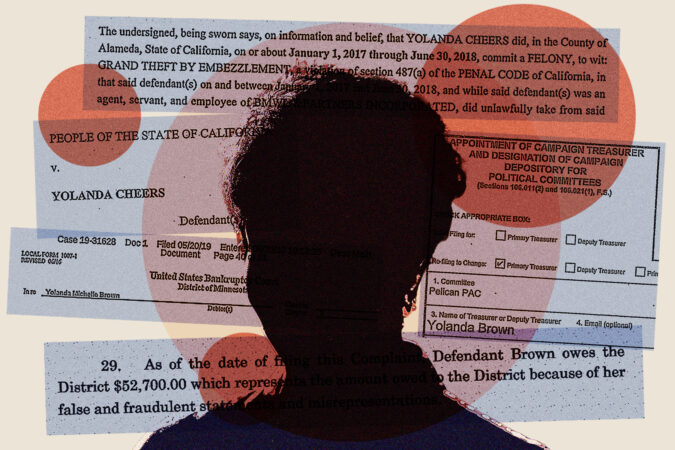
In reality, Brown had been under indictment on 10 criminal charges in Alameda County, Calif., where she worked as a finance manager for Oakland-based consultancy BMWL & Partners. She was charged under the name “Yolanda Cheers.”
In 2019, prosecutors in court documents accused Brown — referring to her as “Cheers” — of routing money belonging to a nonprofit client of the consultancy to herself and then, years after being fired, taking out unauthorized loans in BMWL’s name. She faced charges of aggravated white-collar crime, grand theft by embezzlement, forgery, and identity theft, and could have faced years in prison.
The same year she was indicted in California, Brown faced legal trouble elsewhere. Authorities in Washington, D.C., accused her of fraud, allegations that came to light after she filed for bankruptcy in Minnesota.
Brown had previously worked as a grants manager for the local government in D.C. and owed the city $52,700 while filing for bankruptcy, the D.C. attorney general wrote in court papers. Authorities alleged that in 2014 and 2015, Brown asked two city contractors to hire her fiance,and she billed them for work that he supposedly completed — even though he was on an active-duty military assignment at the time.
The Minnesota bankruptcy case moved forward. Much of Brown’s debt was erased, but not the money that she owed in Washington.
On the other side of the country, the criminal case in California languished for nearly five years.
In February 2024, Alameda County District Attorney Pamela Price announced that her office had reached a plea deal. Brown pleaded no contest to one count of grand theft by embezzlement andwas required to pay $330,000 in restitution. She served no jail time.
Davis cast the no-contest plea as Brown’s attempt to put the charges behind her — not as an admission of guilt.
“Court could be kind of dragging on people,” he said. “It’s a very big burden.”
‘Some people will inevitably give in to temptation’
After the campaign allegations against Brown in St. Petersburg and Philadelphia trickled out this year, others who have worked with her said they reported activity they think is suspicious to law enforcement.
Jamie Jodoin, a Florida-based political and financial consultant, said she worked on a PAC last year that hired Brown as its treasurer. She said Brown wired $25,000 out of the PAC’s bank account and later closed the account without notifying the candidate.
“We have no idea where that went,” Jodoin said.
Political campaigns, which are small and short-lived entities, often don’t carry insurance against internal theft. But they do usually have review processes.
The Federal Election Commission recommends candidates put in place internal controls such as risk assessment and monitoring in order to prevent the misappropriation of funds. The guidance says that bank statements should be reviewed by someone who is not also writing the checks.
“Absent some basic checks and balances,” the commission says in its recommendations, “some people will inevitably give in to temptation.”
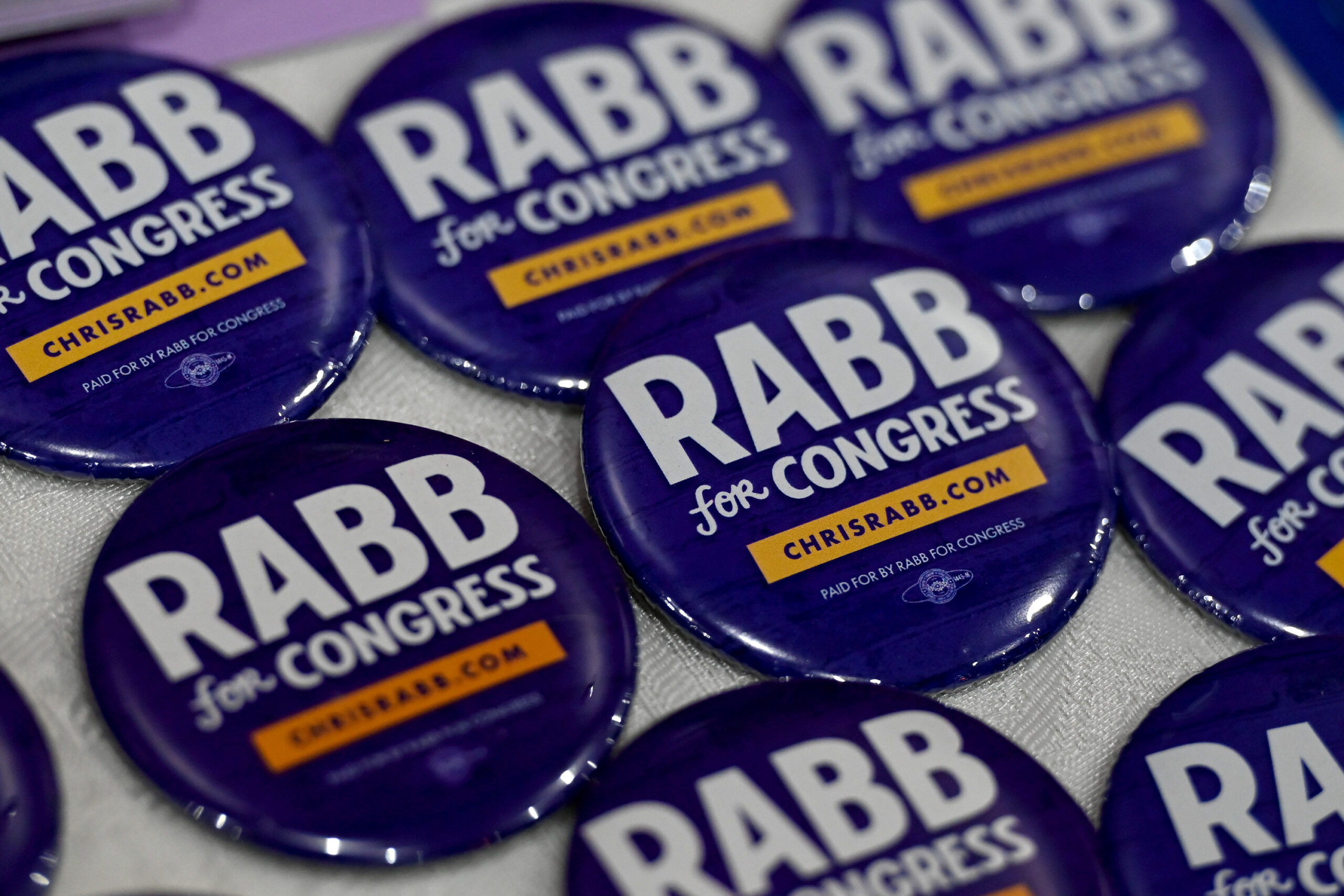
Campaign buttons for State Rep. Chris Rabb Dec. 4, 2025. A Democratic candidate running to represent Philadelphia’s 3rd Congressional District.
White said the Rabb campaign had safeguards in place. But he added that, after the unauthorized withdrawals were identified, the campaign newly established “airtight financial protocols” such as “strengthening oversight and internal controls.”
The campaign recently named a new treasurer and hired a new compliance firm.
Bogen, of Welch’s PAC in St. Petersburg, said Brown’s access to internal systems and bank accounts was “immediately revoked” once it was discovered that she had made suspicious transactions.
Brown, Bogen said, “has not been heard from since.”
As a matter of journalistic duty, I forced myself to watch the endless State of the Union reality show.
Punting on all serious issues, President Donald Trump stoked the applause meter by delivering awards to a 100-year-old vet and a brave U.S. pilot, and inviting the entire U.S. men’s Olympic hockey team to celebrate their gold medal win.
Trump was relentlessly racist (with disgusting slurs against all Somali Americans in Minnesota). His lies were dangerously predictive about the 2026 elections, never tiring of the Big Whopper about winning in 2020 and claiming Democrats must be stopped because they “only win if they cheat.”
In short, the union is in a dangerous state under an amoral, unprincipled, delusional commander in chief.
What disturbed me most as I watched Trump rant on is how a president could be so wholly indifferent to the liberal democratic values that underlie the existence of our nation. Although often honored in the breach, they are what have made this country unique. Yet, the sycophants in his administration, along with most GOP legislators, have chosen to abandon those values, or never believed in them from the start.
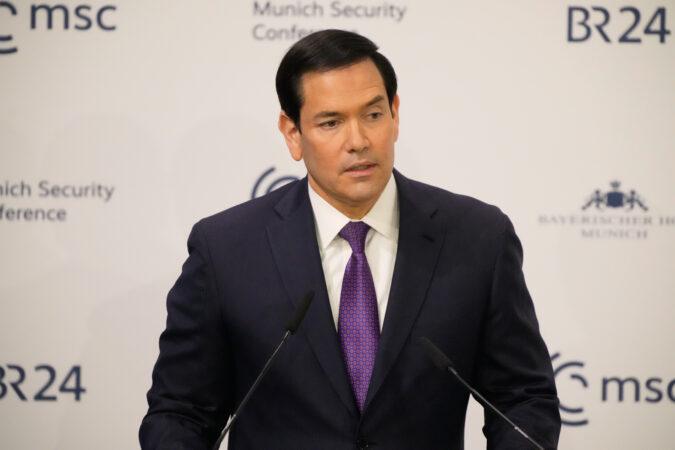
For that reason, I’d rank Secretary of State Marco Rubio’s speech at the recent Munich Security Conference as far more important than Trump’s sad State of the Union guff.
That’s because Rubio laid out an alternative set of U.S. values promoted abroad and at home by the political theologians of the Trump regime. Precepts that would make the Founding Fathers revolt anew.
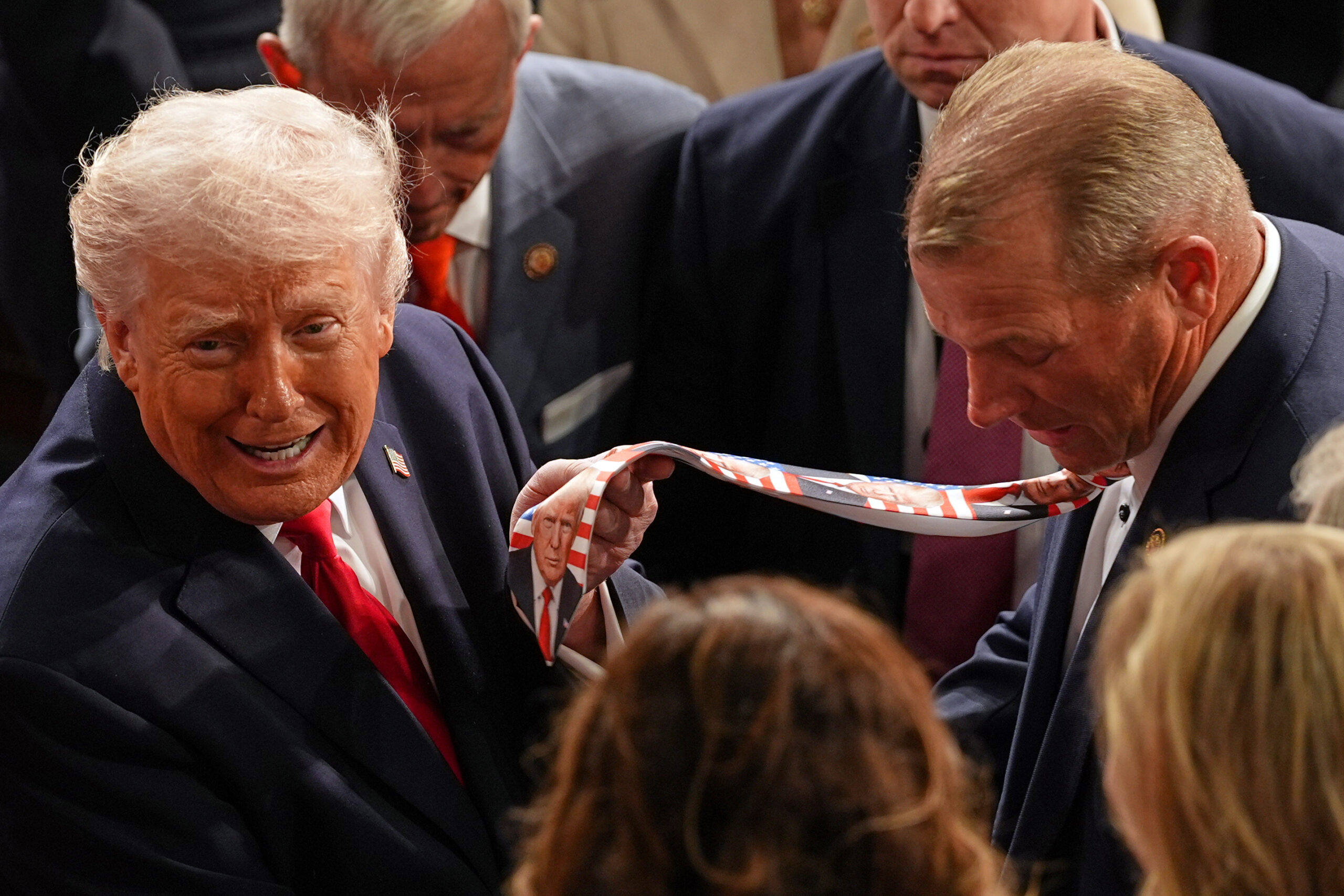
President Donald Trump holds up U.S. Rep. Troy Nehls’ (R., Texas) tie with his face on it as he departs after delivering the State of the Union address to a joint session of Congress in the House chamber at the U.S. Capitol in Washington, Tuesday.
The new theology revolves around the theme of saving “thousands of years of Western civilization” from the depredations of “woke” liberal democracy. It is an extension of language long used by white nationalists, and which came back to prominence during the rise of Islamist terrorism in the Mideast, which led to an influx of Syrian and Afghan immigrants into Europe fleeing civil wars at home. It became even more useful to Trumper populists when fanning fears of immigrants at home.
Former Trump adviser Steve Bannon and current Deputy White House Chief of Staff Stephen Miller latched onto the “saving Western civilization trope” a decade ago, and have embraced its transition into saving Western “Christian civilization.” Somehow, the term, which had been commonly used to describe shared Western religious and cultural identity for decades — Judeo-Christian civilization — has conveniently been shortened.
Never mind the historical inaccuracy of a term that tries to combine thousands of years of shifting, melding populations, ideas, and religions into one neat sum.
Yes, there are obvious philosophical threads from Athens to Rome to the Magna Carta, and ultimately to the values of the Enlightenment. But there are centuries of religious, ethnic, and philosophical wars, as well.
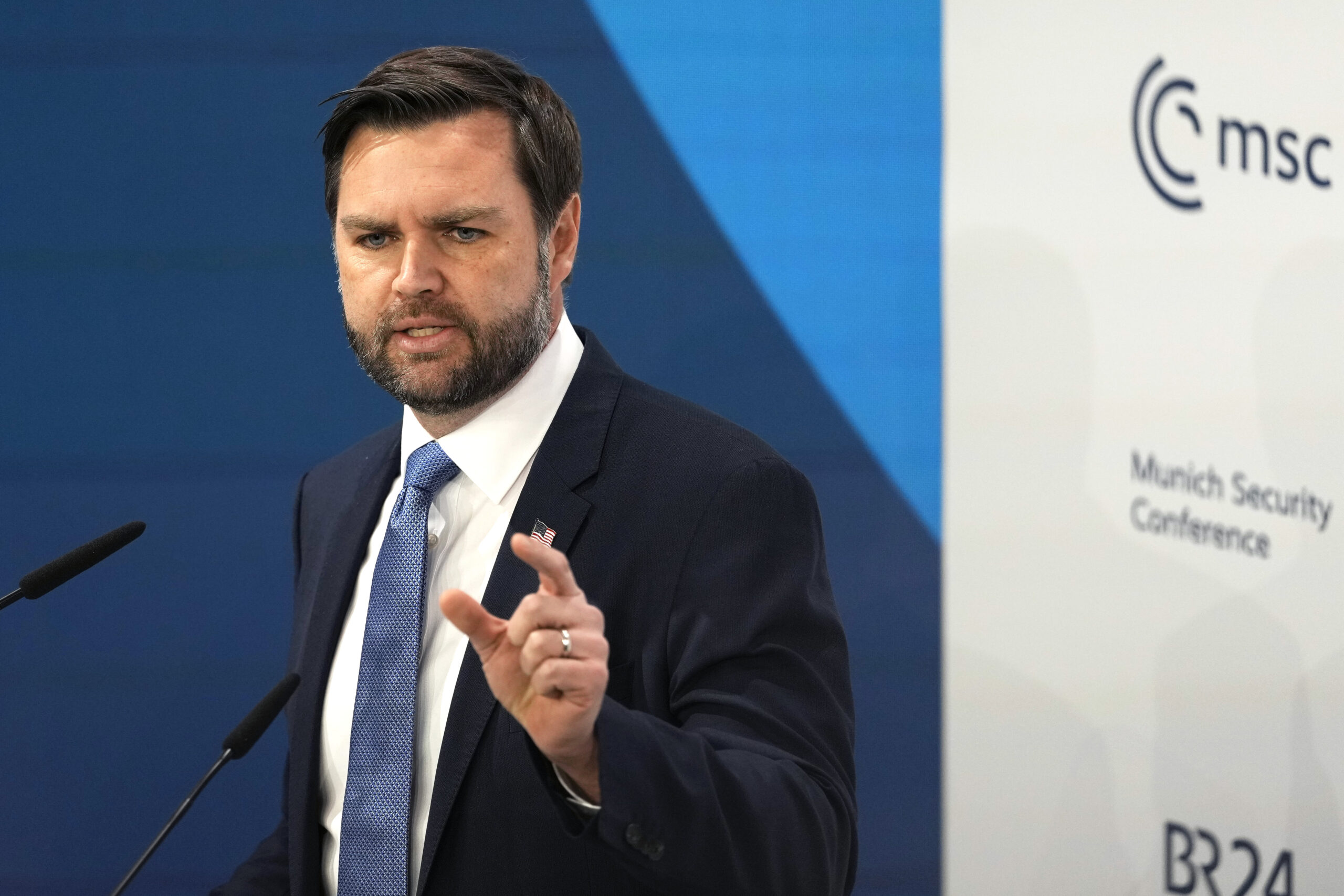
When Vice President JD Vance tried to promote the concept at the Munich Security Conference last year — and to promote white Christian populist parties in Europe as the saviors of “Western civilization” — the audience of European leaders, officials, and think tankers reacted with shock. More so when he berated German leaders for not inviting the neofascist Alternative für Deutschland (AfD) party into the government, even though its leaders have downplayed Adolf Hitler’s crimes. To add insult to injury, he pointedly paid a visit to the AfD’s political leader.
Vice President JD Vance addresses the audience during the 2025 Munich Security Conference at the Bayerischer Hof Hotel in Munich.
But Rubio was supposed to be different: the realistic, savvy foreign policy adviser who tried to save Trump from his worst instincts. When the secretary of state delivered remarks that praised U.S.-European ties, the eager audience was at first won over — until reality sank in, and many participants read the text of his speech.
Indeed, Rubio was warmed-over Vance, blaming liberal democracy (which, in the Enlightenment sense, means individual freedoms, human rights and rule of law, and observance of science) for all the West’s ills, and urging Europeans to junk “the global rules-based order.”
It got tiresome hearing Rubio tout the dangers of Western “civilizational erasure.” As Hillary Clinton noted — on a panel titled “The West-West Divide” — “When Rubio talks about Western ‘civilization,’ I never knew he was so supportive of Native Americans.” Then she added, “He is wrong historically.”
Indeed. “Western civilization” has become the MAGA dog whistle that stands for bashing all immigration and playing to racial fears.
No surprise, Rubio had not a word of criticism for the Russian invasion of Ukraine as an attack on “Western civilization,” although Vladimir Putin’s war crimes have upended the relatively peaceful, post-World War II order. And not a word of apology for Trump’s threat to seize Greenland from a NATO ally, which also threatened that order.
Nor any word of recognition that a dog-eat-dog world of unrestrained big power dominance resulting from an end to global “rules” will lead back to the violent era preceding World War II.
Instead, Rubio urged the Europeans not to be “shackled by guilt and shame,” which is a key buzz phrase for the AfD, which urges its members to stop apologizing for Nazi crimes.
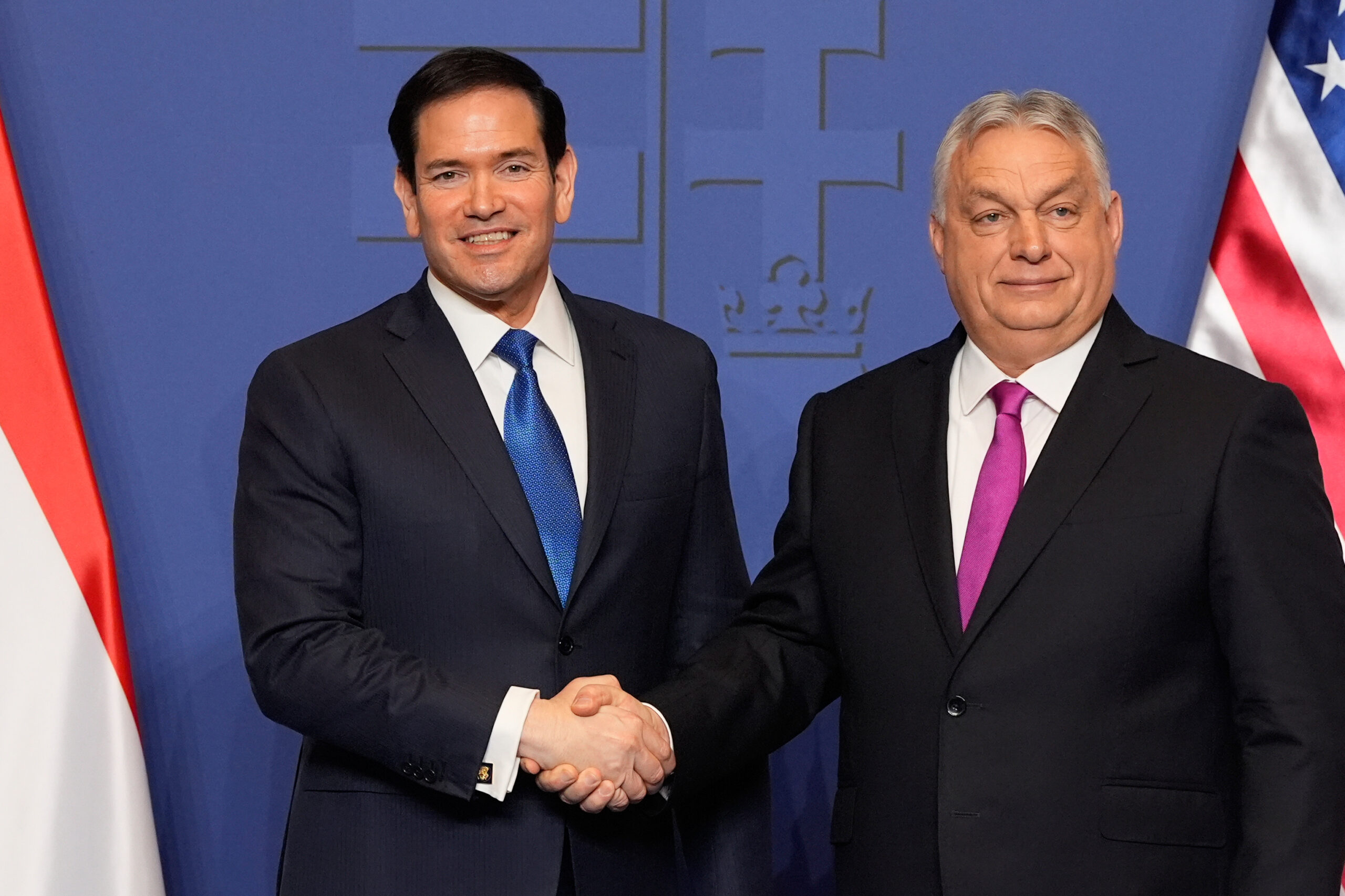
Secretary of State Marco Rubio (left) and Hungarian Prime Minister Viktor Orbán shake hands after a news conference in Budapest, Hungary, on Feb. 16.
And right after his speech, the secretary rushed off to Hungary to praise the pro-Putin Prime Minister Viktor Orbán, a Trump ally who has done his best to destroy Hungarian democracy, including press and judicial freedom — and is trying to block European Union aid to Ukraine.
Yet, Orbán’s corruption and Hungary’s economic decline have become so overwhelming that he may be defeated in an April election. But Trump sent Rubio to bolster this antisemitic autocrat who repeats the “saving white Christian civilization” line.
It is no wonder the Munich scene erupted into debate about the West-West division over democratic values. As Germany’s Green Party coleader and Bundestag member, Franziska Brantner, stated: “Our values are rooted in the Enlightenment, in reason, science, freedom of religion, equal rights. The Enlightenment is a project, not a period in history. It is about very concrete individual freedoms, about free elections dependent on the will of the people, not run by oligarchs.”
“I don’t want to go back in history,” Brantner said flatly.
Norwegian Finance Minister Jens Stoltenberg added, in a restrained poke at Trump, “For all those who believe in liberal values and protection of the truth, it is difficult when we see that not all of our allies agree on these values.”
In Europe, at least, there is an active debate about the consequences of the junking of rules and history by the world’s most powerful democracy. The dangers to democracy are more immediately apparent to those who live closer to Russia and Ukraine.
Watching Trump’s performance and Rubio’s subservience, those dangers may seem obvious to many Americans. But they must find a way to get that message across more clearly to those who still doubt the danger here.
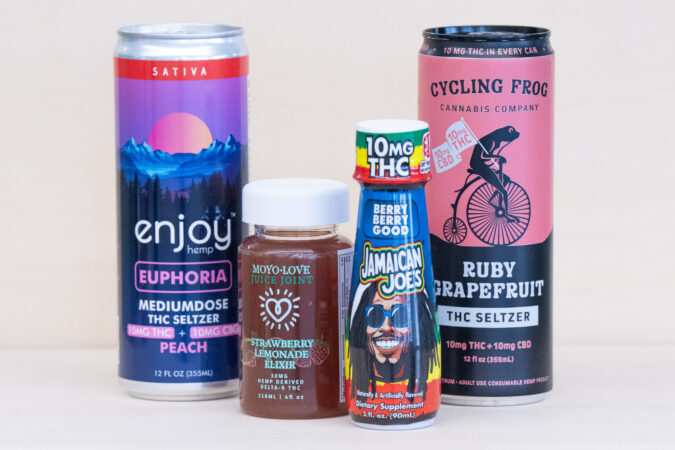
State Rep. Steven Malagari (D., Montgomery) plans to introduce a bill that could put THC drinks in beer stores, while State Sen. Dan Laughlin (R., Erie), a major proponent of weed legalization — unlike his party’s leaders — is working on legislation that would open the door to hemp-derived THC being regulated like medical marijuana. Pennsylvania hemp businesses look toward these efforts with optimism, but as the clock races down, stakeholders are asking for urgency.
Representatives from the hemp, medical marijuana, and beer wholesaler industries spoke to state regulators at January’s Pennsylvania Farm Show about shielding the hemp industry from the Nov. 12 deadline that would outlaw all intoxicating hemp products, including Delta-9 THC and CBD, which is what the majority of hemp is grown for in Pennsylvania. Under new rules, many of the state’s hemp farmers would be out of business by fall.
Across all competing interests, industry representatives said one thing was clear: Lawmakers need to regulate the billion-dollar state hemp market.
Testifying before the Center for Rural Pennsylvania, stakeholders, including Montgomery County District Attorney Kevin Steele, agreed, stressing the need for safeguards.
“It’s not about taking away people’s livelihoods in hemp farming and people working in this industry,” Steele said during his testimony. “It’s about community safety and establishing guardrails through legislation to oversee that safety.”
But, as Congress disagrees on when and if it will regulate hemp-derived THC — including if the ban deadline should be extended — those delays cascade to the states, where local lawmakers await federal guidance before regulating it themselves. While any state proposals for regulation are purely speculative until Congress passes hemp legislation, Laughlin’s and Malagari’s efforts in Pennsylvania imagine what is possible.
It is important to note, however, that regulating intoxicating hemp products is an uphill battle in a state where recreational marijuana legalization is opposed by Republican state leadership.
Whether these bills become law or save the state’s hemp industry as it currently stands is up in the airwith federal delays, but local hemp businesses choose to be optimistic.
A view of Tyler Shannon’s Adams County hemp farm. Unless regulations change, he will have to shut down his hemp farm by next year.
What does any of this mean for Pennsylvania hemp?
For Tyler Shannon, an Adams County hemp farmer, a full ban on hemp products would be devastating. With the vast majority of Pennsylvania’s hemp grown for cannabinoids, such as Delta-9 THC and CBD, it means that “if hemp is not saved, my family will lose everything, including our farm,” Shannon said.
Shannon is not alone. Beau Whitney, a leading cannabis market analyst who testified at the January hearing, estimated that Pennsylvania’s cannabinoid market generates just under $1 billion in revenue annually. In his latest report, he found that the majority of Pennsylvania’s hemp-derived THC and CBD products were sold “legally” through semi-regulated channels, in stores or online. “As a result, there were 9,500 jobs, generating $382 million in wages in Pennsylvania,” Whitney said.
Those in the local hemp industry are confident that a deadline extension will help protect them, but planting season is fast approaching, while hemp farmers have no reassurance that their crops will be legal come fall, Shannon said. His family farm is holding off on a planned $175,000 facility expansion due to the looming ban.
As of now, no federal or state legislation has been passed to avert the impending doomsday scenario for hemp, and despite the constant regulatory discussions, small hemp farmers and businesses don’t feel on solid ground, Sebastian Stelmach of Manayunk’s Keystone Dispensary said.
“It’s just scary to think that come November, I might be unemployed and close up shop,” Stelmach said. “A lot of lawmakers realize that we can’t let this industry die. I believe that they’re going to do something, but what that is, I don’t know.”
Trade organizations, like the U.S. Hemp Roundtable, are lobbying Congress to extend the federal ban deadline by one year, giving regulators time to flesh out less restrictive standards for hemp products.
“Even [federal agencies] said they don’t have enough time to enforce the rules under the current bill,” said Jonathan Miller, U.S. Hemp Roundtable’s general counsel. “We’ve created a mess here, and we really need this extension to be more deliberate and responsible.”
In this 2019 file photo, Steve Groff is getting ready to harvest his first crop of hemp plants at his farm in Holtwood, Lancaster County.
Intoxicating hemp regulated like marijuana
Laughlin’s bill to establish a Cannabis Control Board would see the state’s medical marijuana program come under new oversight, similar to the liquor and gaming control boards.
While hemp is not the primary focus of that legislation, organizations like the Pennsylvania Cannabis Coalition (PCC), which represents the state’s medical marijuana industry, hope to see hemp included in Laughlin’s bill to open the doors for more responsive hemp regulation.
“The Cannabis Control Board would have the authority to deal with hemp products and decide what is safe for consumers as a single regulatory body,” said Meredith Buettner, executive director of PCC. Buettner said it makes the most sense for intoxicating hemp products to be regulated alongside cannabis.
Laughlin argues that “if it’s a consumable cannabis product, it should fall under one clear regulatory structure.”
How and where specific hemp THC products would be sold will be worked out in the legislation, but “intoxicating products should be sold through appropriate, regulated channels,” he said.
Jake Sitler, who owns Lancaster-based Endo THC drinks and testified at the January regulatory hearing, is ready to support any regulation that saves the current hemp framework, like incorporating hemp into a control board, but worries small businesses will get cut out of the deal.
“The hemp industry concern is where our seat is at the table and to make sure new laws are appropriate for our farmers and our industry,” Sitler said. “And that any new regulation isn’t used as a guise to out-regulate small business down the road.”
THC and CBD-infused beverages on the shelves of Free Will Collective, an Ardmore smoke shop and wellness store owned by Will Angelos. As Congress moves to ban most intoxicating hemp products, business owners like Angelos aren’t sure they will be able to keep the doors open long past 2027 if current regulations go into effect.
Delta-9 THC drinks in Pennsylvania beer stores
The bill from Malagari would carve out regulation for hemp-derived Delta-9 THC drinks, which are among some of the most popular intoxicating hemp products, with a national market of $1.5 billion in annual sales.
Malagari, who previously worked in beverage wholesale, wants to see THC drinks regulated similarly to beer and malt-beverage products in Pennsylvania.
Pennsylvania operates a three-tiered system for beer, with licenses at the manufacturing level, distribution level, and retail level. THC drinks would be incorporated into this system, which would begin by allowing established three-tiered license holders to manufacture and sell hemp-derived Delta-9 THC drinks.
Jake Sitler and his wife, Jamie, standing inside the Endo drinks warehouse. The Lancaster couple founded one of Pennsylvania’s first hemp-derived THC drinks and is grappling with the fact that their business might have to shut down if Congress doesn’t rework its hemp regulations.
Common retail spaces for beer and malt beverages include beer distributors, grocery stores, restaurants, and bars.
This legislation, if passed and signed into law, would not prohibit THC drinks from being sold in medical marijuana dispensaries and could work alongside Laughlin’s CCB bill, Malagari said. But he believes that lawmakers should approach THC beverages differently from hemp-derived flower and vapes.
As an owner of a hemp beverage company, Sitler could benefit from Malagari’s bill, but also wonders if it is too early for beverage carve-outs before a fuller state framework is in place. “A hemp beverage bill with no overarching regulation is putting the cart a bit before the horse,” Sitler said.
At the end of the event, the moderator, 21st Ward Leader Lou Agre, allowed the candidates to ask one another questions. Their choices offered hints as to which of their rivals the candidates view as most threatening.
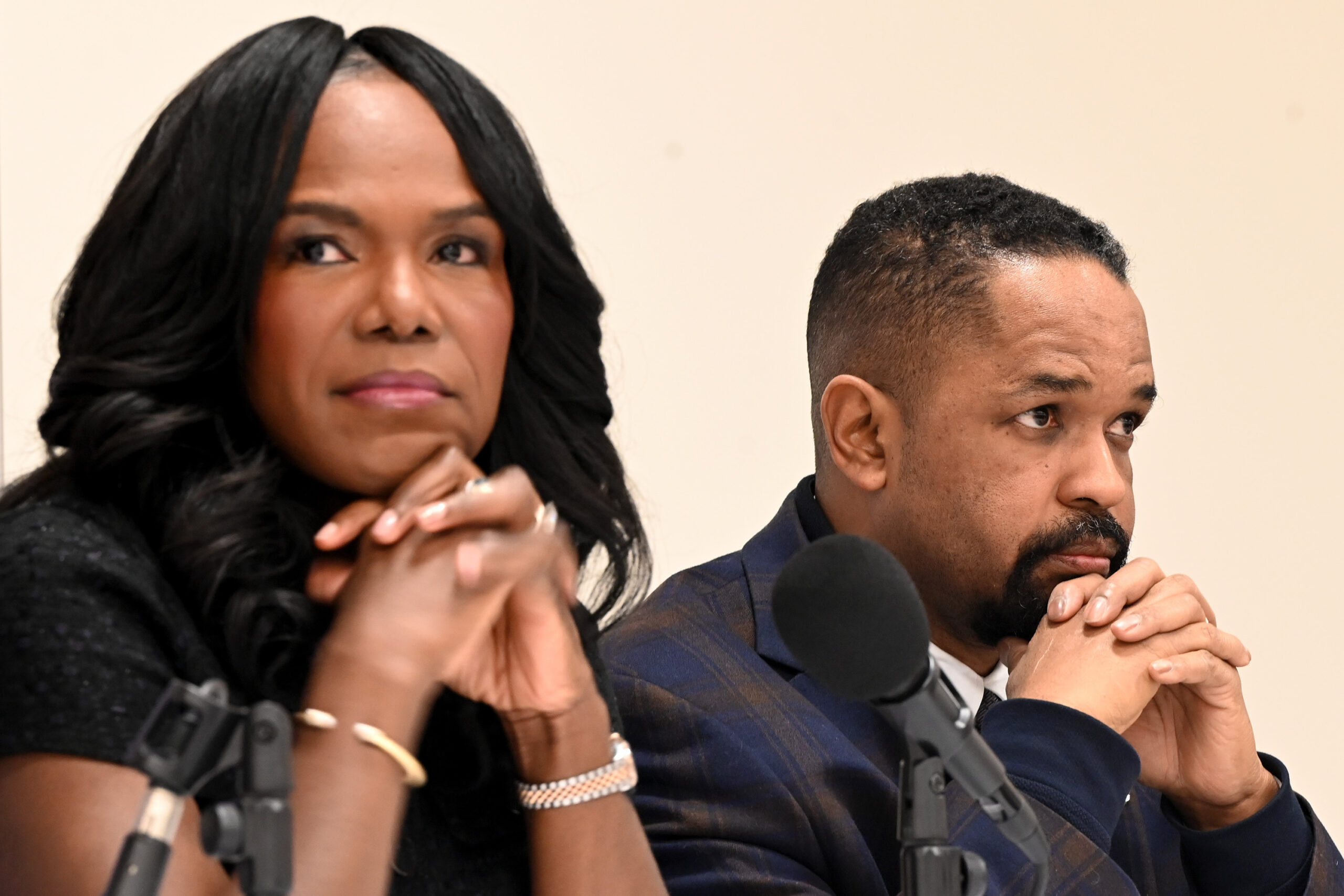
Dr. Ala Stanford, who appears to be the strongest candidate among the non-elected officials in the race, questioned the accomplishments of State Sen. Sharif Street, who is seen by many as a frontrunner after being endorsed by the Democratic City Committee and building trades unions.
The 3rd District covers about half of Philadelphia and is, by some measures, the bluest seat in Congress. The Democratic primary is May 19.
The forum was initially scheduled to be held in-person at the Polish Legion of American Veterans’ Adam Kowalski post in Roxborough, but it was moved to Zoom due to the blizzard on Sunday and Monday.
Here are the issues the candidates debated Monday night.
She began the candidate-on-candidate questioning on Monday by asking Street for instances in which his work has helped constituents in tangible ways, setting up a juxtaposition with her record.
“In a time when the people are asking for new leadership, they’re asking for innovation, they’re asking for not the same politics as usual … can you tell the people a time when the seas were rough and you stepped up and delivered for them that they felt it?” Stanford asked, adding: “Can you share what you can do during the chaos that people can feel — and where was it during COVID?”
Physician Ala Stanford (left) and State Sen. Sharif Street at a December forum hosted by the 9th Ward Democratic Committee.
Street began by saying that, as the top Democrat on the Senate Banking & Insurance Committee in Harrisburg, he boosted Stanford’s work during the pandemic by pressuring insurance companies to reimburse her fledgling organization, which provided testing and vaccinations for thousands of Philadelphians in disadvantaged neighborhoods.
“Independence Blue Cross was not moving forward with the reimbursement rates for the Black COVID Doctors Consortium,” Street said. “I spoke with you, and I helped, and I reached out to them to make sure that [the Medicaid plan] Keystone First would begin to pay the reimbursement in an immediate way.”
He also said his office distributed food to constituents and helped process rent rebates during the pandemic.
In the run-up to the 2020 election, Street, as chair of the Pennsylvania Democratic Party at the time, repeatedly fought in court against President Donald Trump’s campaign over election administration issues. In her question, Stanford asked Street to focus on what he delivered for his constituents — “not that you sued Donald Trump 20 times and won every time, because how do the people feel that?”
“Donald Trump wanted to challenge people’s ability to vote in some of the most vulnerable communities,” he said. “I went to court, I stopped him, and I made sure that they had the right to vote, and that was why we were able to pass the vote to remove him from office.”
Street and Rabb clash over hate-crime legislation
When it was his turn to pose a question, Street pressed Rabb on why the progressive was opposed to hate-crime legislation, an issue the two had sparred over at a forum last week.
“You and I have worked to fight for regular folks, for disadvantaged people, for a long time. I was shocked that you … want to prevent hate-crimes legislation,” Street, a centrist Democrat, said to Rabb. “I’ve heard from so many trans women of color, who are most likely to be victims of hate crimes, and they don’t understand.”
Rabb responded by saying that Street’s line of attack was “shameful and unnecessary.”
“I know you want to win. I just thought you would do it with honor,” Rabb said. “I am an active member of the LGBTQ Equality Caucus. I am the father of a queer son. I represent an active queer community. … To use this as a political punching bag is just — man, it’s beneath you.”
At the end of the forum, Street clarified that he has no doubts about Rabb’s commitment to the LGBTQ community.
At a December candidates forum in Mount Airy, (from left) State Reps. Morgan Cephas and Chris Rabb and physician David Oxman.
“I had a policy dispute about hate crimes,” Street said. “I did not mean to question your commitment to the trans community or to your kid.”
The dust-up got in the way of a meaningful debate over hate-crime laws, which increase sentences for people convicted of crimes that prosecutors prove were motivated by prejudice against particular groups.
Such laws are common across the country, but they have long faced criticism from the libertarian right, which fears that such regulations could be used to target citizens for political views. The laws have also faced pushback from some on the progressive left, who contend that they contribute to mass incarceration.
“Politicians tout hate-crime laws as proof they care about the marginalized,” Rabb wrote in an op-ed for PennLive last fall. “In reality, the main outcome is more policing, more prosecution, and more incarceration.”
Street said last week that people who oppose hate-crime laws on the “far left … don’t want to address the antisemitism on the left or the right.”
The Pennsylvania House in 2023 approved a bill to expand the state’s law that criminalizes ethnic intimidation to include sexual orientation and disability status. Rabb voted for the bill, which ultimately died in the Senate amid GOP opposition, but said he had “considerable reservations.”
“We should collectively focus on structural violence and hatred that has been cultivated by the very institutions that have been asked to address this legislation,” Rabb said at the time.
Cephas presses Stanford about her government contracts
Cephas, who represents a West Philadelphia district and chairs the Philadelphia delegation to the state House, questioned how much money Stanford’s nonprofit organization has made from government contracting since the onset of the pandemic.
“You oftentimes quote that you, as a private citizen, came in and saved Philadelphia from COVID, and, you know, there are a number of people on this [Zoom] call that stepped up during COVID,” Cephas said, noting that she worked with Stanford to set up clinics in her district during the pandemic.
“We all did it in our own individual capacity, and we didn’t receive government contracts for it. … How much in government contracts did you receive during the COVID-19 period?”
Stanford noted that she initially launched the Black Doctors Consortium with her own financial resources to serve neighborhoods that were not being reached by existing healthcare and government institutions. She said her first $1 million city grant for testing came months after she began her work.
In 2020 and 2021, Stanford’s groups received $2.5 million in grants and contracts from the city, state, and federal governments, according to Stanford campaign manager Janée Taft-Mack. That money covered costs including supplies, staff, mobile medical units, personal protective equipment, and facility rentals, Taft-Mack said.
Since then, Stanford hascontinued partnering with government agencies to address healthcare inequality. She has opened the Dr. Ala Stanford Center for Health Equity in Swampoodle and secured a $5.38 millioncontract for the Black Doctors Consortium to work at Riverview Wellness Village, the city-owned drug recovery home.
The total amount Stanford and her organizations have received for work since 2021 was not immediately clear.
Philly’s most famous culinary offering has proven politically hazardous over the years, such as when John Kerry catastrophically asked for Swiss cheese while visiting Pat’s King of Steaks during the 2004 presidential election.
This year’s congressional hopefuls were better prepared than the Massachusetts senator.
Agre, the moderator whose ward includes much of Roxborough, interjected to insist that Dalessandro’s served up the best steak sandwiches in the city.
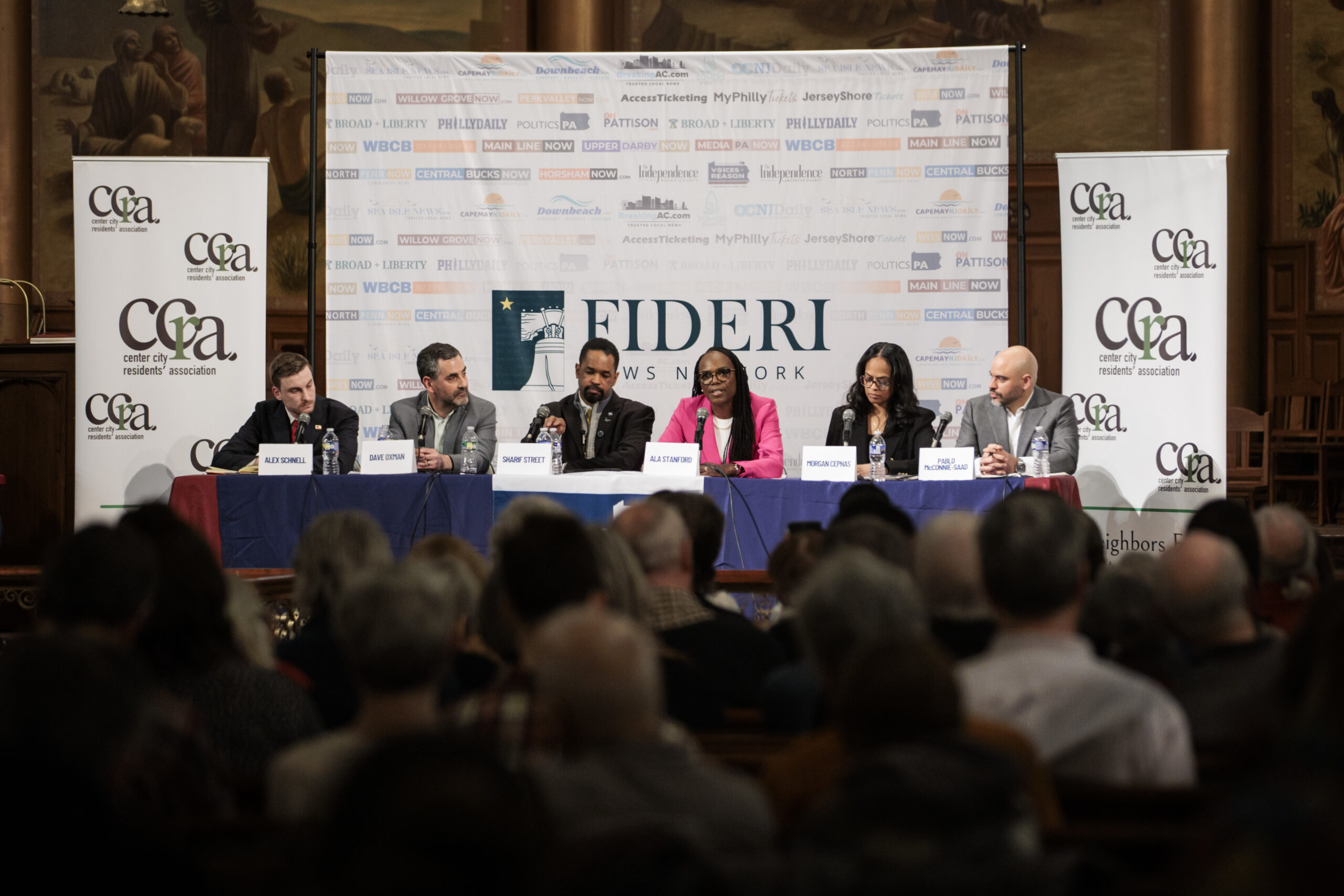
At a candidate’s forum on Feb. 9 at the Church of the Holy Trinity, (left to right) Alex Schnell, physician Dave Oxman, State Sen. Sharif Street, physician Ala Stanford, State Rep. Morgan Cephas, and Pablo McConnie-Saad.
Cephas said she orders Cooper Sharp at Angelo’s Pizzeria. Stanford’s go-to is American from Dalessandro’s. Street, a vegetarian, said he gets non-meat cheesesteaks from Hip City Veg and enjoys the cheese they use. (Mozzarella, per Hip City’s website.)
And Rabb shouted out the cheesesteak egg rolls from Black Dragon, a West Philadelphia establishment offering a “unique fusion of Black American cuisine presented with the familiar aesthetics of classic Chinese American takeout,” according to its website.
Still tense from the previous questions and perhaps a bit peckish, the candidates declined Agre’s offer to deliver closing remarks.
Staff writers Max Marin and Ryan W. Briggs contributed to this article.
Does Donald Trump have to ruin everything? The answer is obviously yes, but this one was heartbreaking. Sunday’s overtime thriller over Canada, which gave U.S. men’s hockey its first gold medal since this senior citizen was a college junior, was a howl of joy in what’s been a dire year for America. But then (taxpayer-)Ka$h Patel showed up to party, and soon Trump was on the phone, egging on the boys with misogynistic trash talk about their gold medal compatriots, the women’s hockey team. Now the men are invited to Trump’s State of the Union address, the women “had other plans,” and I almost wish our Canadian friends had won the game.
How Indiana University won a football crown and lost the plot
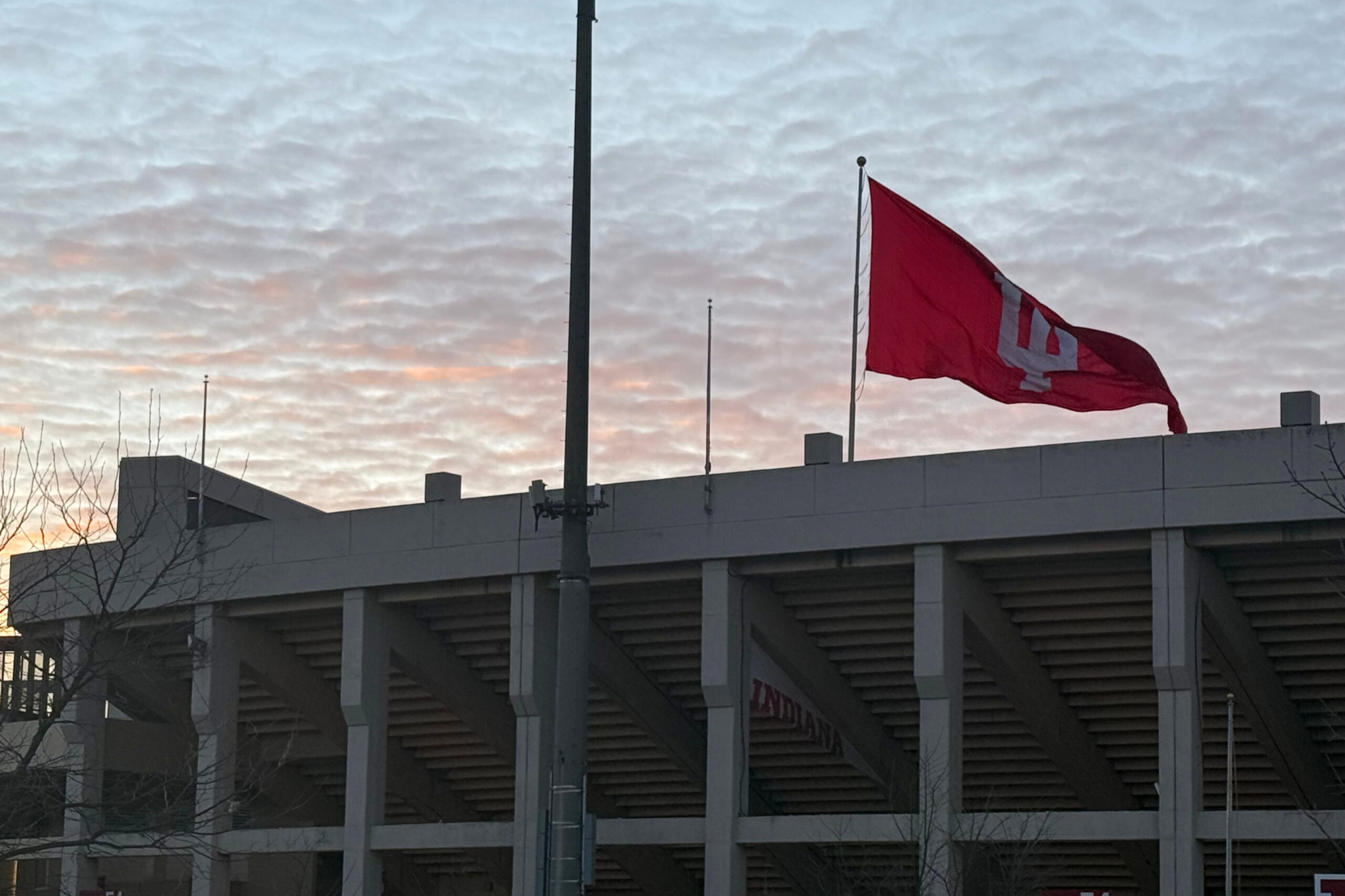
Indiana University’s victory flag flies over Memorial Stadium in January in Bloomington, Ind.
Even in a state where the sports miracles, from Rudy and The Knute Rockne Story to Hoosiers, are so big they tend to make it to Hollywood, there’s never been a feel-good script quite like Indiana University — with the most losses in college football history until this season, when it went 16-0 and won the national championship.
“The energy is just absolutely insane,” Katie Shin, a recent Indiana alumna, told the Athletic as thousands of fans went wild on the Bloomington campus that night, saluting Heisman Trophy quarterback Fernando Mendoza and their unsmiling genius head coach Curt Cignetti. “The whole state is just rallying around IU.”
But there’s a huge irony for anyone who’s a big fan of America’s colleges for more than just what happens on the gridiron. In the same season Indiana was slowly climbing to the top of the football polls, the flagship public university was also ranked dead last in the nation.
For something arguably more important: free speech.
The Foundation for Individual Rights and Expression (FIRE), the national campus speech group based here in Philadelphia, last fall ranked IU 255th on its 2026 ranking of universities over freedom of expression — the lowest-rated public institution in America, and only higher than the controversy-wracked private sister schools, Columbia University and Barnard College.
Interestingly, the FIRE low-ranking came after a slew of campus controversies in which the silenced speakers or protesters were all over the map ideologically — a canceled Jewish speaker and a shout down of right-wing speakers, but also draconian moves against pro-Palestinian protesters, including harsh penalties for a 2024 encampment. Last month, a federal court ruled that IU’s punishments of the Gaza campers and its anti-protest policies were unconstitutional.
FIRE’s lambasting of IU’s free speech transgressions was reported upon last Sept. 9 in the student paper, the Indiana Daily Student. The following month, school administrators ousted the faculty adviser to the IDS and told the student journalists they could no longer print the paper, and that news could only be published online. The university’s insistence that this was purely an economic move was a surprise to the ex-adviser, who sued and said he was fired “after he refused to censor the students’ work.”
It ought to go without saying that curbing the free exchange of ideas is antithetical to the most sacred values of American higher education. But the free speech mess at IU is but one controversy at an iconic heartland university that has become a poster child for the moral crisis of U.S. universities, even as it celebrates football glory.
Clearly, the leadership at IU — and this includes its board of trustees, with three new conservative, pro-MAGA members that GOP Gov. Mike Braun named in June under a law that also allowed him to boot three trustees elected by IU’s alumni — is eager to keep its pigskin prowess as the main thing America knows about the university.
The school just signed its field general, Cignetti, to a contract extension that will pay him $13.2 million a year through 2033, making him one of the three highest-paid coaches in the nation. But his new deal flabbergasted a growing number of critics, who note the big raise came as IU — just days after the new conservative trustees were named — either eliminated or made deep cuts in nearly 250 academic programs such as French, art history, geography, and East Asian studies.
Meanwhile, Cignetti isn’t the only high-profile figure at IU to see a big raise. Also this weekend, the trustees gave Whitten a $100,000 pay hike, to an even $1 million a year — citing her willingness to work with industry.
At least 250 IU alums, joined by current faculty and students, have signed on so far to an open letter and donation freeze demanding that, instead, Whitten step down. They also want the university to restore both its diversity programs and robust free speech protections, as well as the reinstatement of the three alumni trustee positions. But they are swimming against a red tide of conservatism that’s polluted the public college universe in Indiana.
Cross-state public rival Purdue University is reeling from a recent report in its hometown newspaper that the school, under pressure from conservative lawmakers, has informally banned the admission of international students from China and a slew of other countries. Students and faculty have complained of an unwritten “soft ban” on many overseas applicants, although Purdue has denied that such a policy exists.
Meanwhile, the regional campus of IU Indianapolis caused a stir and triggered a protest when it abruptly canceled the 57-year tradition of an annual Rev. Dr. Martin Luther King Jr. dinner — a move that was undertaken not long after the school removed campus signs that read “Black Lives Matter” and “Discrimination has no place here.”
Indiana is hardly alone. The 2025-26 academic year has been marked by similar outrages against unfettered speech and racial inclusion, especially in the most pro-Trump red states. To cite just one of many examples, the University of Texas System just adopted a new policy aimed at limiting discussion of “controversial topics” in the classroom. Isn’t that the whole point of the college experience?
The erosion of freedom at the American university has happened gradually and then suddenly, and it needs to be getting a lot more attention. That’s hard when the president is sending aircraft carriers to threaten Iran, imposing steep taxes for no reason, and generally acting and talking like the mad king he is.
Yet, nothing is more important for MAGA’s authoritarian project than what is happening at Indiana University and other college campuses right now. As I wrote in my 2022 book, After the Ivory Tower Falls, higher ed is the fulcrum of America’s political divide, now more than ever.
Every tactic — murdering the humanities and the social sciences, making campuses more white, ensuring our future elites aren’t exposed to “controversial topics” while entertaining them with the beer and circuses (a phrase, ironically, coined by an IU English professor) of big-time football — is another step toward MAGA’s strategic goal of an American electorate that cannot think critically.
The fight for the soul of Indiana University is the fight for the soul of the United States, and it’s not what’s happening inside Memorial Stadium against Ohio State or Michigan.
“We know that IU alums are smart enough to celebrate the success of the Football Hoosiers and condemn what Pamela Whitten is doing to degrade the prestige of our degrees,” the university dissidents write in their open letter. “Please help us take a stand against the debasement of our university and restore the glory of old IU.”
Yo, do this!
You might have noticed that the late Jeffrey Epstein and his randy U.K. royal pal, the artist formerly known as Prince Andrew, have been in the news a lot lately. But did you know there’s an excellent 2024 Netflix movie called Scoop about the drama behind the disastrous 2019 BBC interview that started the long downfall of Andrew Mountbatten-Windsor, now arrested and under a British police investigation? I watched Scoop over the weekend, and it’s both an entertaining and highly relevant journalism thriller.
Since this space is devoted to my weird entertainment choices, and not what normal people are doing, I have to share that I’ve been escaping today’s banality of evil with a deep dive into the musical world of … mass murderer Charles Manson. My all-time favorite podcast, Andrew Hickey’s A History of Rock Music in 500 Songs, did a remarkable four-parter a couple of years ago about Manson and his shockingly close ties to the Beach Boys (and others like, sigh, Neil Young) that resulted in the murder mastermind’s uncredited cowriting of their 1968 song, “Never Learn Not to Love.” There’s also a compelling detour into the life of Black music pioneer Huddie “Lead Belly” Ledbetter, and a book recommendation that sounds equally incredible: Bring Judgment Day: Reclaiming Lead Belly’s Truth from Jim Crow’s Lies by Sheila Curran Bernard.
Ask me anything
Question: Update us on what is and what should be happening in Quakertown [please]. — @marco2751.bsky.social via Bluesky
Answer: Thanks for this, Marco, because if readers aren’t up to speed on what’s been happening in Quakertown, an exurb nearly an hour’s drive north of Philadelphia, then they need to learn. Quick version: A peaceful Friday walkout by Quakertown High School students protesting U.S. Immigration and Customs Enforcement raids turned shockingly violent, highlighted by a grown man placing a teen girl in what appeared on video to be a dangerous choke hold. It turned out this man was the Quakertown police chief and interim borough manager, Scott McElree. Adding insult to injury, five students were arrested and spent the entire weekend in jail before they could see a judge. What should be done? Quakertown can’t fire McElree quickly enough. The right to peacefully assemble and protest the government is the heart of the First Amendment, and what makes America a democracy. A police chief who can’t honor the U.S. Constitution should not have a job.
What you’re saying about …
Last week’s take-a-step-back-from-the-madness question about who is the greatest living American (inspired by the passing of the Rev. Jesse Jackson) didn’t get a large response, but brought some compelling arguments. Two men were named twice: Pope Leo XIV, the Villanova alum who has shone as an advocate for immigrants and for peace on the world’s stage since last summer, and Sen. Bernie Sanders, who has never wavered in fighting for progressive values. Other suggestions included Bob Dylan, Edward Snowden, Barack Obama, and — in a show of respect for science under siege — the health experts Anthony Fauci and Peter Hotez, who, wrote Pat Eisenberg, “is trying to improve the health of Americans despite all the things the Trump administration is doing to ruin our health.”
📮 This week’s question: I’m hopefully going to be writing soon about the scourge of prediction markets like Kalshi, and more broadly, the problem of sports betting. Should these forms of gambling be banned, or at least more strictly regulated? Please email me your answer and put the exact phrase “Betting bans” in the subject line.
Backstory on what pundits don’t get about ‘28
This photo combo shows Illinois Gov. JB Pritzker, left, speaking during the McIntyre-Shaheen 100 Club Dinner, April 27, 2025, in Manchester, N.H., and U.S. Rep. Alexandria Ocasio-Cortez (D., N.Y.) speaking during a “Fighting Oligarchy” tour event at Arizona State University, March 20, 2025, in Tempe, Ariz.
Get 13 Democratic and left-leaning independent voters together in the same chat — as the New York Times did with a recent focus group, the latest in its running series — and you’d surely hear some harsh words about Donald Trump and the GOP. But ask them what they think about the Democratic Party, and you might want to cover your ears.
“Spineless.” “More complacent than I thought they would be.” “Paralyzed.” “Afraid.” “Incompetent.” “I guess suffocated, or given up …” “Sold out.” I’m not leaving out the positive responses, because there weren’t any. You also won’t be surprised that these 13 Democratic or aligned voters — very diverse across racial, class, and age lines — want more radical leaders who will take the party, and hopefully the nation, in a bold new direction. There was positive buzz for the likes of new New York Mayor Zohran Mamdani and Texas Rep. Jasmine Crockett — anyone with fresh ideas and a willingness to mix it up with Trump. Said a 36-year-old independent woman from Washington state: “I still don’t agree with everything she’s doing, but Alexandria Ocasio-Cortez is a well-known name and seems to be fighting against Trump.”
I thought a lot about the Times’ focus group last week as I heard or read two veteran pundits try, at this relatively early date, to handicap the 2028 presidential race. Mark Halperin (who’s somehow still around despite this) went on POTUS radio with Michael Smerconish to defend his picks: He included ex-Chicago mayor Rahm Emanuel, a center-right figure who is passionately hated by any real Democrat I’ve ever spoken with, and also overrated Kamala Harris (floating on the fumes of her name ID), as well as his No. 1 pick, California Gov. Gavin Newsom, with Pennsylvania Gov. Josh Shapiro at No. 2. He said he included AOC and upgraded Illinois Gov. JB Pritzker only because his “sources” told him to — because his sources understand the Democrats while the clueless Halperin does not.
Ditto Nate Silver, who has magically reappeared in the Times, which first made him a star in 2012. Although Silver did place AOC in second, behind Newsom, he also — much like Halperin — uprated tired conventional wisdom candidates like Shapiro (No. 6) and Michigan Gov. Gretchen Whitmer (No. 4, despite being invisible recently), and grossly downrated progressive favorites like Pritzker (14) and Connecticut Sen. Chris Murphy (18), as well as more interesting and unorthodox names like Arizona Sen. Mark Kelly (12) and Kentucky Gov. Andy Beshear (15). He sees Newsom as the darling of “Resistance Libs,” the Trump-hating MS Now watchers who controversially get tagged as heavily “wine moms.” Said Silver of Newsom: “They want a fighter. And Newsom plays expertly into that.”
True, but I expect Newsom’s standing among Democratic primary voters will crumble once voters learn more about his ties to Silicon Valley billionaires, or his verbal sellouts of the transgender community, or his “meh” popularity among the Californians who know him best. Readers of this newsletter were unanimous earlier this month in not wanting Shapiro to run. I’m not going to do a numerical ranking, but I would place Pritzker, who’s made all the right moves against Trump without Newsom’s train car of baggage, and AOC, who’s making all the right enemies, including the worst Beltway journalists, as my top two. I’ve covered presidential races since 1984, and I’ve learned the only thing that matters two years out is to listen to the people. The pundits know nothing right now.
What I wrote on this date in 2019
It’s impossible to top this anniversary: The day I appeared in the Epstein files. In February 2019, with the walls closing in, Epstein’s close adviser and quasi-journalist friend, Michael Wolff, wanted to make sure he saw my Feb. 24, 2019, column about elite male impunity that mentioned him and two billionaires in his orbit: Donald Trump and New England Patriots owner Robert Kraft. What did Epstein read, assuming he clicked on it? I wrote that “this isn’t really ‘a sex scandal.’ The real scandal here is the gross imbalance of power involving women who were held in a form of human bondage to serve as objects of gratification for powerful men intoxicated by their belief they can get away with anything.”
I took a short break from the relentless anti-Trump, anti-ICE beat last week to write about the other threat to the American way of life: artificial intelligence. Rapid advances in AI technology make it clear that robots and chatbots and the like are going to upend the economy — most importantly, the job market — sooner rather than later. Can wary voters find politicians who are willing to regulate AI and its threats to employment, education, and the environment, or will pols continue to prefer Silicon Valley’s campaign donations? Over the weekend, I highlighted the recently leaked ICE blueprint for an American concentration camp in Georgia, and what that document tells us about the moral depravity of mass deportation.
In a city as large and as history-bound as Philadelphia, all big stories are inevitably local. That was never truer than at the Winter Olympics in northern Italy, especially for the most-watched event on these shores: the U.S. men’s hockey’s thrilling overtime victory over Canada. The on-ice celebration blended with copious tears as Team USA teammates went into the stands and skated back with Johnny Jr. and Noa Gaudreau, the young children of late South Jersey NHL hockey icon Johnny Gaudreau. Their dad and their uncle Matty were killed by an alleged drunk driver while cycling on a South Jersey road in August 2024, as Gaudreau was training to hopefully make this Olympic squad. The players centered the Gaudreau family and his No. 13 jersey during the gold-medal celebration, and The Inquirer’s Alex Coffey captured the whole emotional story — one you won’t read anywhere else. “This is a history book [moment] that there will be a movie about,“ sister Katie Gaudreau told Coffey. ”And in that movie, Noa and Johnny will be on the ice.” You get the big, moving stories like this, and allow us to keep covering them, when you subscribe to The Inquirer.
By submitting your written, visual, and/or audio contributions, you agree to The Inquirer’s Terms of Use, including the grant of rights in Section 10.
WASHINGTON — The Supreme Court’s stunning rebuke of President Donald Trump’s most sweeping tariffs means he can’t conjure up new import taxes on a whim anymore.
But the justices’ ruling on Friday is nonetheless unlikely to ease the uncertainty over Trump’s trade policy that has paralyzed businesses over the past year. “It’s only gotten more complicated for everybody,” said trade lawyer Ryan Majerus, partner at King & Spalding and a former U.S. trade official.
Vexing questions remain: How will the president use other laws to reconstruct the tariffs the Supreme Court knocked down, and will those attempts withstand legal challenges? What does the decision mean for the trade deals Trump strong-armed other countries into accepting, using his now-defunct tariffs as leverage? Can importers collect refunds for the tariffs they paid last year, and if so, how?
Then there’s Trump’s own unpredictability. Even though he had weeks to prepare for an unfavorable Supreme Court ruling, his response was still chaotic: On Friday, he said he’d use other legal authority to impose 10% levies on imports from other countries. Saturday, he ratcheted it up to 15%.
Normally, lower tariffs arising from the Supreme Court’s decision might be expected to give the economy a little lift. But “any benefit you would get from that is more than offset to a modest negative from the uncertainty front,” said Mike Skordeles, head of U.S. economics at Truist, a bank.
Gone for good are the sweeping tariffs Trump justified under the 1977 International Emergency Economic Powers Act (IEEPA), mainly to combat America’s persistent trade deficits. But that doesn’t mean the president can’t invoke other laws to rebuild much of his tariff wall around the U.S. economy.
“Tariff revenues will be unchanged this year and will be unchanged in the future,” Treasury Secretary Scott Bessent said in a Fox News interview Sunday.
Trump reached for a stop-gap option immediately after his defeat Friday at the Supreme Court: Section 122 of the Trade Act of 1974 allows the president to impose tariffs of up to 15% for up to 150 days. But any extension beyond 150 days must be approved by a Congress likely to balk at passing a tax increase as November’s midterm elections loom.
Section 122 has never been invoked before, and some critics say the president can’t use it as a stand-in for the IEEPA tariffs to combat the trade deficit.
Bryan Riley of National Taxpayers Union, for example, argues that Section 122 is meant to give the president a tool to fight what it calls “fundamental international payments problems,’’ not the trade deficit.
The provision arose from the financial crises that emerged in the 1960s and 1970s when the U.S. dollar was tied to gold. Other countries were dumping dollars in exchange for gold at a set rate, putting alarming downward pressure on the dollar. But the U.S. currency is no longer linked to gold, so Section 122 has been “effectively rendered obsolete,’’ Riley wrote in a commentary.
“Given the amount of money at issue for U.S. businesses, it is not hard to imagine a new wave of litigation attacking Section 122, and again seeking refunds of Section 122 duties collected,” said trade lawyer Dave Townsend, a partner at Dorsey & Whitney.
A sturdier alternative is Section 301 of the same 1974 trade act, which gives the United States a handy cudgel with which to smack countries it accuses of engaging in “unjustifiable,” “unreasonable” or “discriminatory” trade practices. In a statement Friday, in fact, U.S. Trade Representative Jamieson Greer said the administration was launching a series of 301 investigations after the loss at the Supreme Court.
Trump invoked Section 301 in his first term to impose sweeping tariffs on Chinese imports in a dispute over the sharp-elbowed tactics that Beijing was using to challenge America’s technological dominance. Those tariffs were upheld in court and kept by the Biden administration.
“We’re eight years in, and those China tariffs are still here,” King & Spalding’s Majerus said. “They’re sticky tariffs.’’
Confusion surrounds Trump’s trade deals
The Supreme Court’s decision also raises questions about the lopsided trade agreements Trump negotiated last year, using the threat of potentially unlimited IEEPA tariffs to squeeze concessions out of U.S. trading partners from the European Union to Japan.
Will countries try to back out of their commitments, now that the IEEPA tariff threat is gone?
The European Union’s trade deal with Trump is already on hold amid confusion following the Supreme Court’s ruling — and Trump’s decision to respond to it with the 15% Section 122 global tariff.
European lawmakers on Monday delayed a vote on ratifying the pact to seek clarification. They are worried that Trump’s new import tax will stack on top of the “most favored nation’’ tariffs the United States charges under pre-existing World Trade Organization rules — and lift U.S. tariffs on EU imports above the 15% the Europeans had agreed to last year.
“A deal is a deal,” said commission spokesman Olof Gill. “So now we are simply saying to the US, it is up to you to clearly show to us what path you are taking to honor the agreement.”
Then there’s the United Kingdom, which had reached a deal with Trump last year for 10% tariffs on its exports to the United States. Will they really go to 15%?
Still, trade analysts largely expect U.S. trade partners to stick by the deals they reached with Trump last year. For one thing, the United States could wallop them with hefty Section 301 tariffs, which are potentially unlimited, for violating trade agreements.
“They’re going to pretty leery of rocking the boat on their deals,” Majerus said. “Violations of trade agreements can be a basis for taking 301 action. So you could see Section 301 become an enforcement mechanism’’ for the United States.
“We are confident that all trade agreements negotiated by President Trump will remain in effect,’’ U.S. Trade Representative Greer said in his statement.
A messy refund process
In its ruling, the Supreme Court didn’t bother to say what would happen to all the money collected from the IEEPA tariffs, $133 billion as of mid-December. It left the messy issue of refunds to importers — but likely not to consumers — to lower courts and the Customs and Border Protection agency, which collects import taxes. But they’re likely to be overwhelmed — hundreds of companies are already lined up to get their money back — and the refunds could take months or years to be paid.
“The whole thing’s going to be a mess,’’ Majerus said.
It’s possible that Congress will order Customs to take an “easy ‘one-click’ approach to refunds,’’ wrote strategists Thierry Wizman and Gareth Berry at the investment bank Macquarie. Otherwise, they warned, the Trump administration could “make the refund process as burdensome as possible, requiring every importer to file stacks of paperwork, if not file a lawsuit, to get its money back. That would be costly for businesses.”