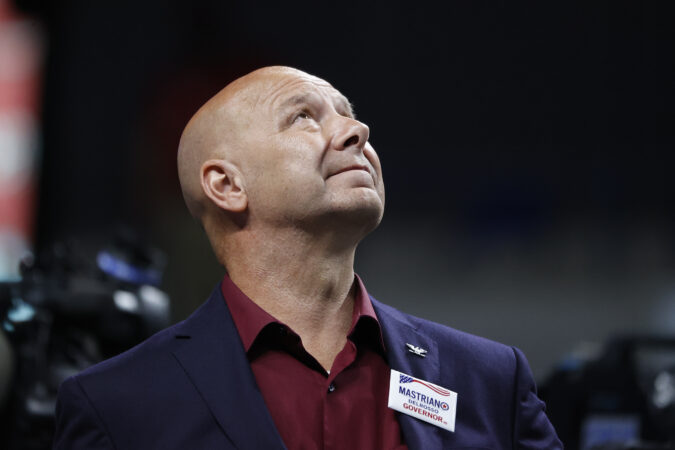
Mastriano’s announcementWednesday now clears the way for State Treasurer Stacy Garrity, who was endorsed by the state GOP last fall as the party’s best pick to challenge Gov. Josh Shapiro this November.
“We believe, with full peace in our hearts, God has not called us to run for governor,” Mastriano said in a Facebook Live video stream alongside his wife, Rebbie.
He did not endorse Garrity as part of his announcement, nor did he mention her by name.
“For you to have a Republican governor here, the grassroots is going to have to back the candidate,” Mastriano said, referring to Garrity.
Republicans chose Garrity early — endorsing her more than a year before the 2026 election — in an effort to avoid a crowded primary like the one that eventually led to Mastriano’s nomination in 2022. They hope that a candidate like Garrity, who has won statewide elections twice and dethroned Shapiro for receiving the most votes of any state-level candidate, will have a better chance at beating Shapiro, or at least, preventing a down-ballot blowout in an election that already is likely to favor Democrats.
Mastriano, a two-term state senator representing Gettysburg and the surrounding area, publicly criticized the state party for endorsing Garrity so early, and has repeatedly said that their endorsement would not deter him from getting in the race.
In a statement, Garrity said she respected Mastriano’s decision not to run, calling him a “strong voice for faith, family and freedom.”
“I look forward to working with him to restore integrity, fiscal responsibility, and common-sense leadership in our commonwealth,” Garrity added.
Mastriano, a former U.S. Army colonel with top-secret clearance, built a grassroots online following during the early days of the COVID-19 pandemic for his resistance to business shutdowns. That support continued to grow after the 2020 presidential election as he promoted President Donald Trump’s false claims that Pennsylvania’s election results were rigged. He has remained a staunch supporter of Trump ever since.
Trump’s advisers, however, feared that Mastriano’s presence on the ticket would hurt Republicans up and down the ticket despite him leading Garrity in private polling by 21 points, Politico reported in July.
Mastriano and his wife spent much of his 20-minute announcement on Wednesday reminiscing on their movement since 2020: their daily virtual fireside chats during COVID-19 closures and their other attempts to reopen the state’s businesses amid the pandemic, their efforts to overturn Pennsylvania’s 2020 election results for Trump, Mastriano’s 2022 gubernatorial run, and the GOP’s electoral successes in 2024.
However, things are different now, the couple said. The grassroots supporters aren’t as unified as they once were, and the state party overstepped in its early endorsement.
“Bottom line is: They don’t have the last say,” said Rebbie Mastriano, in a reminder to their supporters. “You have the last say.”
In the 2022 primary, the state GOP declined to endorse candidates in the gubernatorial or U.S. Senate races. That led to a crowded, nine-candidate GOP primary ballot for governor that was advantageous for Mastriano, who had built name recognition through his anti-lockdown and 2020 election efforts.
The state Democratic Party responded to Mastriano’s announcement with fresh attacks on Garrity, calling her a “far-right, toxic candidate” and noted some of the areas where she and Mastriano agree, including that she denied the 2020 election results and her past opposition to abortion. (She now says she would not support a state abortion ban.)
As of Wednesday, no GOP candidate had announced their candidacy for lieutenant governor. Garrity told The Inquirer last month she was vetting candidates and planned to announce who she’d endorse as her running mate in February, ahead of the next state GOP meeting.
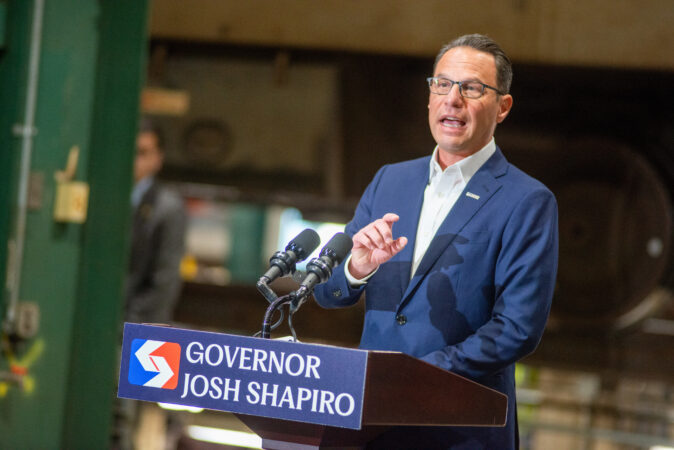
Five years after rioters stormed the U.S. Capitol, Gov. Josh Shapiro and other Pennsylvania Democrats on Tuesday marked the anniversary of the Jan. 6, 2021, attack by sharply criticizing President Donald Trump.
Trump, who was impeached for inciting the riot in the final days of his first administration, pardoned nearly every Jan. 6 defendant and commuted sentences for a handful of violent offenders as one of his first actions upon returning to office last year.
“Law enforcement officers literally gave their lives to protect our country and our democracy — yet one of the first things Donald Trump did when he took office was pardon people who were convicted of assaulting police officers,” Shapiro said in a post on X Tuesday morning.
“The President may not respect our law enforcement officers’ courage and commitment to service — but here in Pennsylvania, we remember the sacrifices they make and will always have their backs.”
Shapiro played a key role as state attorney general in defending the 2020 election results in Pennsylvania in the weeks leading up to the attack, which took place the same day that Congress was certifying former President Joe Biden’s victory.
Trump has downplayed the events of Jan. 6, and on Tuesday the White House unveiled a webpage dedicated to the events, falsely describing the riot as a peaceful protest and blaming Capitol Police for the violence that unfolded.
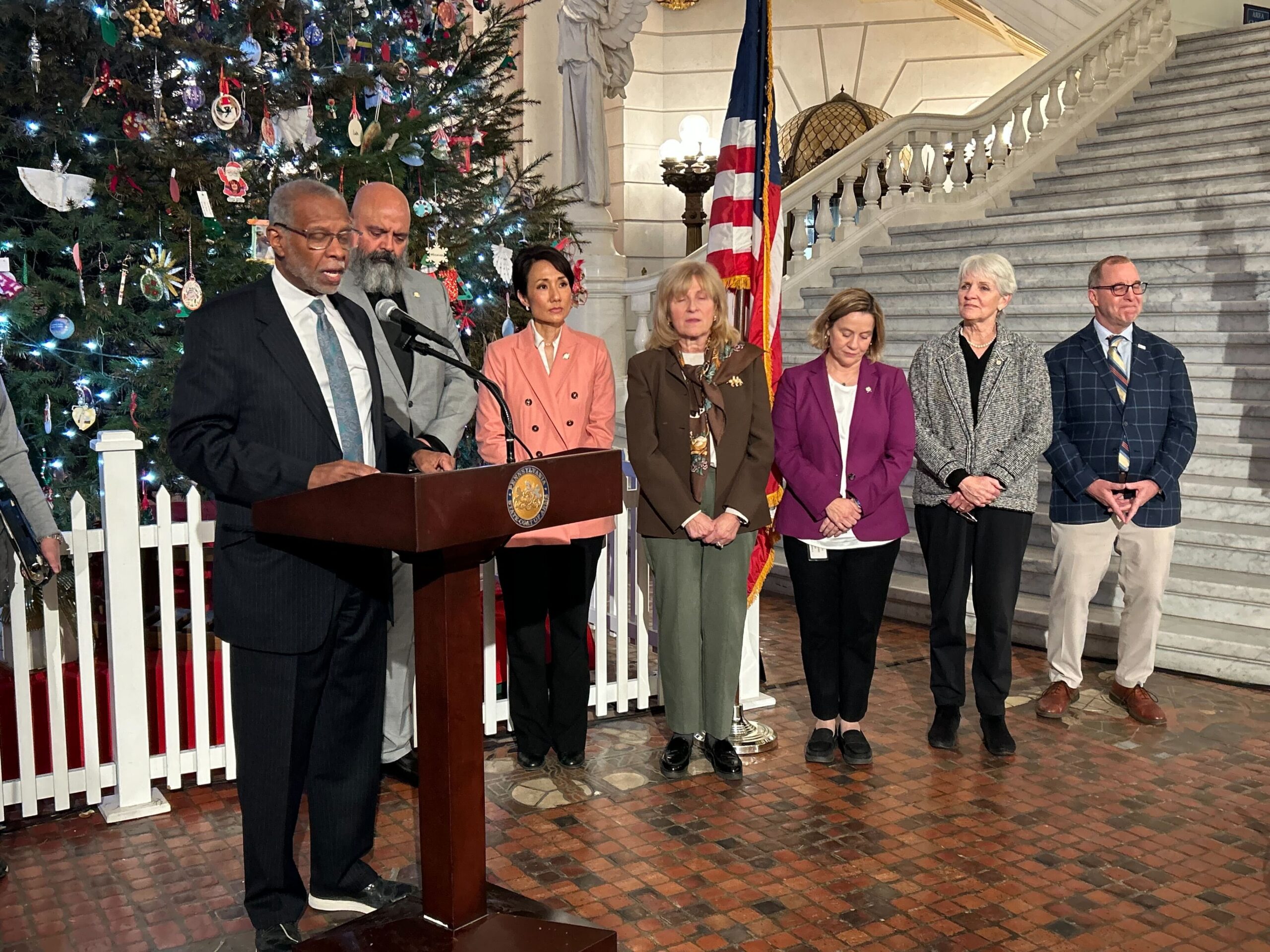
Pennsylvania Senate Democrats hold an event in the state Capitol Tuesday to commemorate the Jan. 6, 2021, attack on the U.S. Capitol.
Shapiro was one of several Democrats who marked the anniversary of the attack for the first time since Trump returned to office.
State Rep. Malcolm Kenyatta, of Philadelphia, introduced a resolution alongside other House Democrats to designate Jan. 6 as the “Democracy Observance Day for Education, Remembrance, and Vigilance.”
AndPennsylvania Senate Democratsheld an event in the state Capitol Tuesday.
State Sen. Art Haywood, who represents parts of Montgomery County and Philadelphia, described the events of Jan. 6, 2021, as an “attempted coup” orchestrated by Trump.
He recounted the events in minute-by-minute detail drawing from what has been reported about the day, from Trump’s direction to rally-goers to go to the Capitol to former Vice President Mike Pence’s evacuation from the Senate chambers and rioters’ success breaking into offices.
State Sen. Jay Costa, of Pittsburgh, said Tuesday’s anniversary eventwas aimed at drawing attention to the “lawlessness” of the day. Trump’s decision to pardon those involved, he said, was a “slap in the face” to law enforcement.
Costa contended that other incidents of political violence in the years that have followed could be traced back to Jan. 6.
“We cannot pick and choose, as our president has done, when we think about what we’re going to do and say about our law enforcement officers,” he said. “We need to stand with them all the time.”
One Trump supporter’s journey from a mall kiosk to a Bucks County strip mall is coming to an end this month.
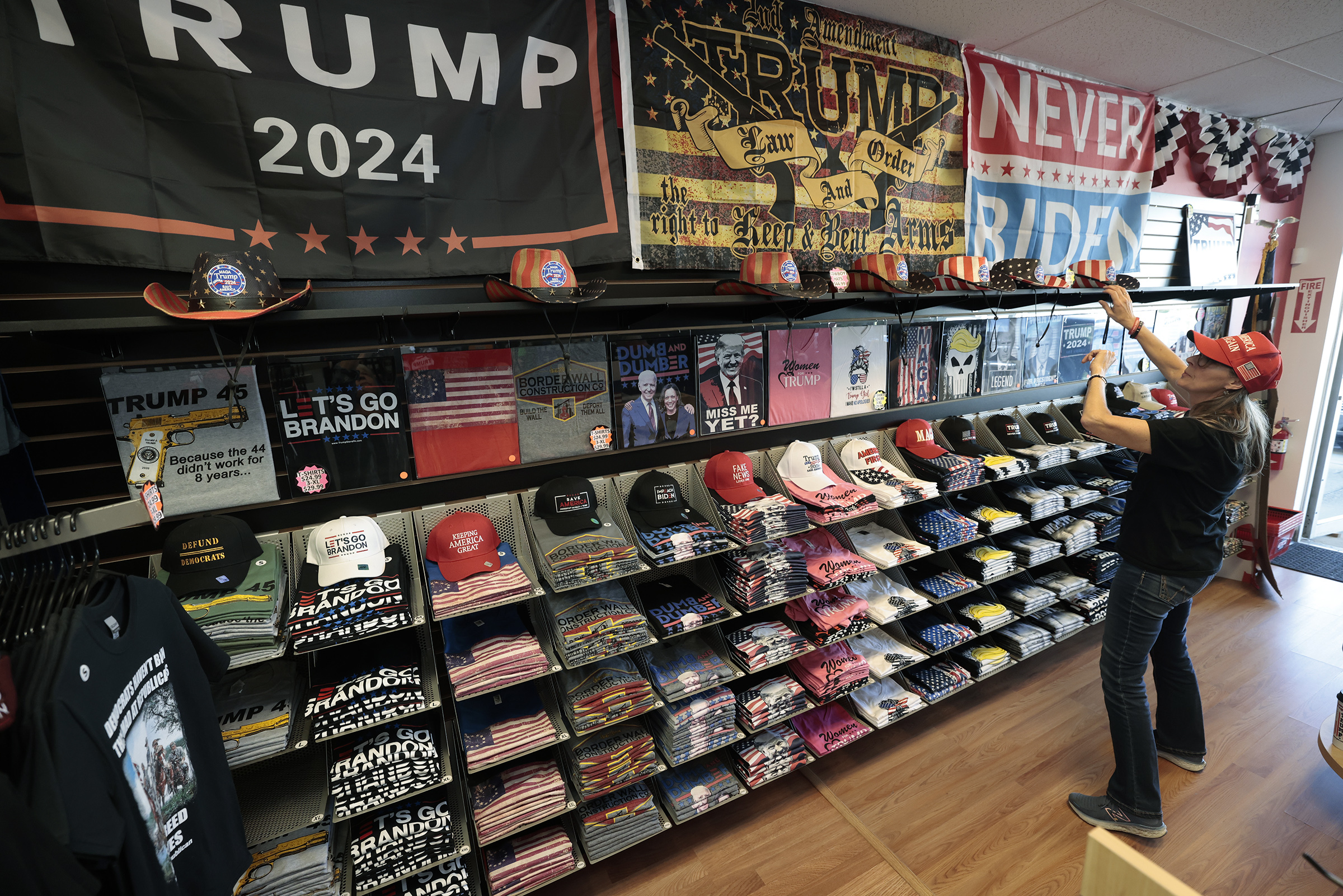
The “Trump Store,” a Bensalem spot for merchandise and knickknacks celebrating President Donald Trump, is closing its doors after six years in business. The store’s final day is Jan. 31.
Mike Domanico, who co-owns the store with his wife, Monica, remains an ardent supporter of the president. But business is business, and Domanico said sales have declined since Trump returned to the White House, forcing the “tough decision” to shut down.
“Business has slowed down some because there’s not really much action going on with Trump,” Domanico said. “It’s time.”
There were other factors. The store’s lease is up in February, and Domanico wants to devote more of his time to a booming side business selling gun show merchandise.
Domanico said Trump’s tariffs on imported goods haven’t impacted his business at all.
“Any of the stuff I buy is priced the same as it was before all the tariffs took effect,” Domanico said.
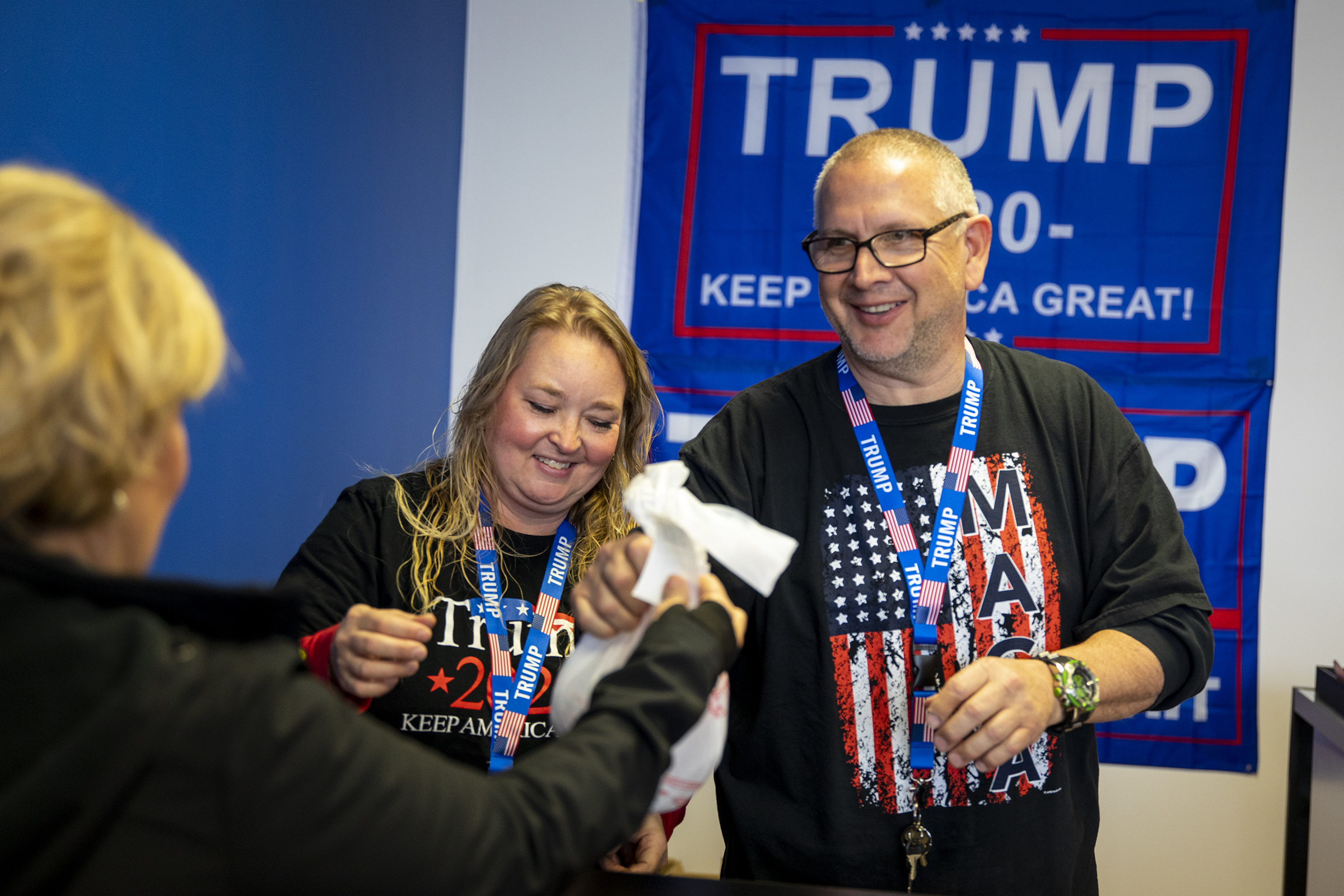
Michael Domanico and his wife, Monica, seen here in 2020 during the grand opening of their Trump Store in Benaslem.
The store began its closeout sale on Tuesday, Jan. 6, exactly five years to the day when Trump supporters stormed the U.S. Capitol in an unsuccessful attempt to overturn the 2020 election results. Everything’s on sale, from shirts featuring the president as an Eagles player to hats promoting a fictitious 2028 reelection campaign barred by the U.S. Constitution.
Domanico opened a sister Trump Store in Chalfont in July 2022, but closed it last year due to issues with the landlord and some vandalism. He has two full-time employees helping him run the store.
In his six years selling Trump merchandise, Domanico said the only tough year was after the 2020 election. Following his second impeachment, Trump appeared to lose support from most Republicans, and sales at the store slowed.
“I stuck with it because I knew he was going to run again, and it worked out very well,” Domanico said.
Trump Store manager Lisa von Deylen, seen here replenishing the store’s inventory in May 2024.
Sales grew during the final years of Joe Biden’s tenure, fueled by Trump becoming the first former president indicted for a crime. “Free Trump” shirts became a particularly hot seller, and the store saw a spike in sales when the president’s Mar-a-Lago estate in Palm Beach, Fla., was raided by FBI agents.
While many Bucks County residents appear to have soured on the president and his policies, Domanico isn’t among them.
“I think his second term has been great,” Domanico said. “I know the liberal media turns everything around, making it look bad, but he’s doing some great stuff. I love it.”
In the beginning, God created the 12 days of Christmas and the bacchanalia of New Year’s Eve to get us through the dark and frigid endless nights of winter. That wasn’t nearly enough for us shivering and depressed humans, so God sent us the NFL playoffs. The hope is that the Eagles last long enough to get us to the balmy breezes of baseball’s spring training.
Delay, deny, distract, divert attention: Inside the Epstein Files coverup
Pages from a totally redacted New York grand jury file into Jeffrey Epstein and Ghislaine Maxwell, released by the U.S. Justice Department, are photographed last month in Washington.
I want you all to stonewall it, let them plead the Fifth Amendment, cover up or anything else if it’ll save it — save the plan.
The newish word that best captures the 2020s is one that I’m not allowed to use in a family newspaper like The Inquirer. In 2022, the social critic Cory Doctorow coined this scatological term that I’m calling “en(bleep)ification” (it won’t take much imagination) to describe the way that products, but especially consumer-facing websites, gradually degrade themselves in pursuit of the bigger goal, higher profits.
For example, writer Kyle Chayka wrote a popular New Yorker essay in 2024 about what he called the, um, en(bleep)ification of the music site Spotify as it devolved, in his opinion, from a place for the songs and albums you want to hear to pushing playlists that they want you to hear.
In the political world, no product rollout had been more anticipated than the December release, forced by law upon the Donald Trump regime’s Department of Justice, of the Jeffrey Epstein Files — the investigative trail of documents about the late financier and indicted sex trafficker who also palled around with Trump in the 1990s and early 2000s.
No one with any familiarity of Trump’s modus operandi should have been shocked by what happened when the congressionally mandated deadline for release of all of this massive cache of paperwork finally arrived on Dec. 19 — or by what has happened in the two-and-a-half weeks since then.
Needless to say, the Epstein Files have not offered the seamless user experience that its readers — especially those hoping for bombshells that would expose the tawdry secrets of Trump’s friendship with a man who allegedly abused more than 1,000 young and sometimes underaged women — had anticipated. In the hands of the president’s minions at Justice, the Epstein Files have been en(bleep)ified.
How so? Here’s the diabolical part. The MAGA Gang that normally can’t shoot straight managed to hit the coverup bullseye this time, not with one dramatic act to rile people up — like Nixon during Watergate with his notorious Saturday Night Massacre — but with a blend of tactics and dodges designed to frustrate and exhaust truth-seekers.
Delay. The law, which Trump signed to avoid an embarrassing defeat on Capitol Hill, required the release of every single document — with appropriate blacked-out redactionsto protect things like the names of Epstein’s victims — by that December deadline. But suddenly the Justice Department — which once had as many as 200 staffers combing the papers last spring before its original botched plan to squelch the files — lacked energy and manpower, claiming it was working as fast as it could in an initial release of just about 40,000 pages, which would seem to be a tiny fraction of more than 5 million pages believed to exist.
The DOJ’s small-batch cooking came in two small servings right before Christmas, when most Americans consume the least news, and information about any new releases in the new year has suddenly dried up, with maybe 99% of the files still outstanding.
Deny. The papers that have been released have included major redactions — including the completely blacked-out pages of Manhattan grand jury testimony pictured above — that violate the spirit if not the letter of the law, which demanded that any hidden passages only protect victims and not Epstein’s powerful associates and clients.
Stunningly, DOJ actually took back and attempted to bury some 16 files from the first release, including a photo of a photo that included Trump, before a public outcry led to that file’s republishing. Meanwhile, the department also claimed that 1 million additional Epstein files were discovered in New York after the legal deadline — an incredible claim that was immediately punctured by experts.
Deflect. The initial batch was also larded with photos of Epstein with celebrities like Michael Jackson, Diana Ross, and Walter Cronkite as well as several of a Trump predecessor and longtime enemy, Bill Clinton. The pictures were dumped without any explanation and seemed to prove only that there’s a good reason the government normally doesn’t release raw investigatory files, especially about those not charged with any crime.
The second batch also included a lurid and bizarre apparent letter from Epstein to a fellow famed accused sex offender, the gymnastic coach Larry Nassar, penned right around the time of his August 2019 jail-cell death. It seemed unbelievable, and just hours later the FBI said: Oh yeah, we looked at this and it’s a fake. The not-subtle subtext was essentially: “We don’t know what to believe in these files, and neither should you.”
Nearly 53 years ago, Nixon’s plan to cover up Watergate with a mix of denials, delays, purchased silence and outright lies didn’t work. But Team Trump’s efforts to “save it — save the plan” by stonewalling the Epstein files is going just swell so far.
If this moment feels familiar, it is very much like 2018 and the long-awaited Robert Mueller report on Russian influence in the 2016 presidential campaign and potential links to Moscow’s preferred candidate, Trump. There was a Mueller Report — much like there has been a “release” of the Epstein Files — that contained damning evidence, especially about potential obstruction of justice. But the information was dribbled out, downplayed, denied, and ultimately went nowhere.
The Epstein Files have been destined to fail from Day One. It was always what Trump himself might call a “rigged deal” — with the papers in the possession of those with the most to lose, with many ways to make sure the worst stuff stays buried until at least 2029, if it hasn’t already been shredded. But the biggest truth has already been revealed.
The outright defiance of the law demanding full release of the Epstein Files has exposed the utter brokenness of our democracy.
The reason that Nixon’s coverup plan failed is because America had institutions stronger than his lies, including a Congress that cared more about its strength and independence than party ID, newspapers that were not just widely read but believed, and Supreme Court justices with an allegiance to the law and not the man who appointed them.
Trump and his DOJ are daring a comatose Congress, a cowed news media, and a judiciary already in their back pocket to do something, but so far there is no indication that the en(bleep)ification of the Epstein Files can be undone. For now, they are more like the X Files, because the truth about Trump and his Palm Beach pal is out there…but beyond our weakened grasp.
Yo, do this!
These days I find “vacation” is often just another word for catching up on household chores, but during my long December break I did watch a slew of movies, including some of the ones I’d recommended previously like One Battle After Another (very good, but flawed) and Eddington (meh). I ventured to an actual theater on New Year’s Eve and saw probably my favorite movie of 2025: Song Sung Blue, the bittersweet, based-on-a-true-story saga of a Neil Diamond cover band at the end of the 20th century. As the title implies, the movie is more than just a rousing feel-good pop musical, despite cathartic moments of exactly that. Kate Hudson deserves an Oscar for her Wisconsin Nice accent.
If you miss the glory days of not-formulaic-or-cartoonish movies — in the spirit of Song Sung Blue or One Battle After Another, only better — you should check out a new documentary on Netflix called Breakdown: 1975, by filmmaker Morgan Neville. The film spotlights an all-too-brief golden age of the mid-1970s with clips from the era’s classics like Taxi Driver, Dog Day Afternoon, and Network, and interviews with the likes of Martin Scorsese and Albert Brooks. They could have done much more with this, but I’d still recommend it.
Ask me anything
Question: Do you think that there is enough of a media firestorm over Grok’s nude filter to kill it? — BCooper (@bcooper82.bsky.social) via Bluesky
Answer: The recent, shocking news about the artificial-intelligence tool called Grok that was created for Elon Musk-owned X (formerly Twitter) is a classic example of an important story that so far has befuddled and fallen through the cracks of the mainstream media. In recent days, X users have been asking Grok to create partially clothed and sexualized AI photos of real, everyday people, including images of underage adolescents. And Grok has complied, in what would seem to be a violation of laws regarding child pornography, among other legal and ethical problems. Musk needs to shut down Grok immediately — arguably for good — but that is not enough for the harm that’s already been caused. In a nation that routinely prosecutes citizens for having this kind of material on their computers, Musk, his co-creators of Grok, and X as a corporation need to be hauled before a judge.
What you’re saying about…
The half-dozen or so of you who responded to December’s open-ended call for 2026 predictions had one big thing in common: Boundless pessimism. Readers of this newsletter expect the new year to bring economic collapse and a disastrous midterm election in November, either from Donald Trump stealing it to Democrats somehow blowing it in the ways that only Democrats can. Stephen R. Rourke predicted: “I believe that the American economy, and perhaps the world economy, will slide into a second Great Depression, the almost inevitable consequence of an over leveraged economy, and a lack of willingness across the board to make tough choices about how to address the American addiction to borrowed money…” Oof. Nonetheless, Kim Root stole my heart with this: “I think the Philadelphia Union will rise even with the personnel changes because they are a developer of young talent. DOOP.”
📮 This week’s question: A no-brainer: Donald Trump’s lethal assault on Venezuela and his seizure of that country’s strongman leader, in defiance of U.S. and international law, marks a turning point in American foreign policy. Are you OK with Trump’s actions because a bad guy has been removed from power, or are you alarmed by a military assault with the stated goal of pumping more oil? Please email me your answer and put the exact phrase “Venezuela attack” in the subject line.
Backstory on the growing crisis of ICE custody deaths
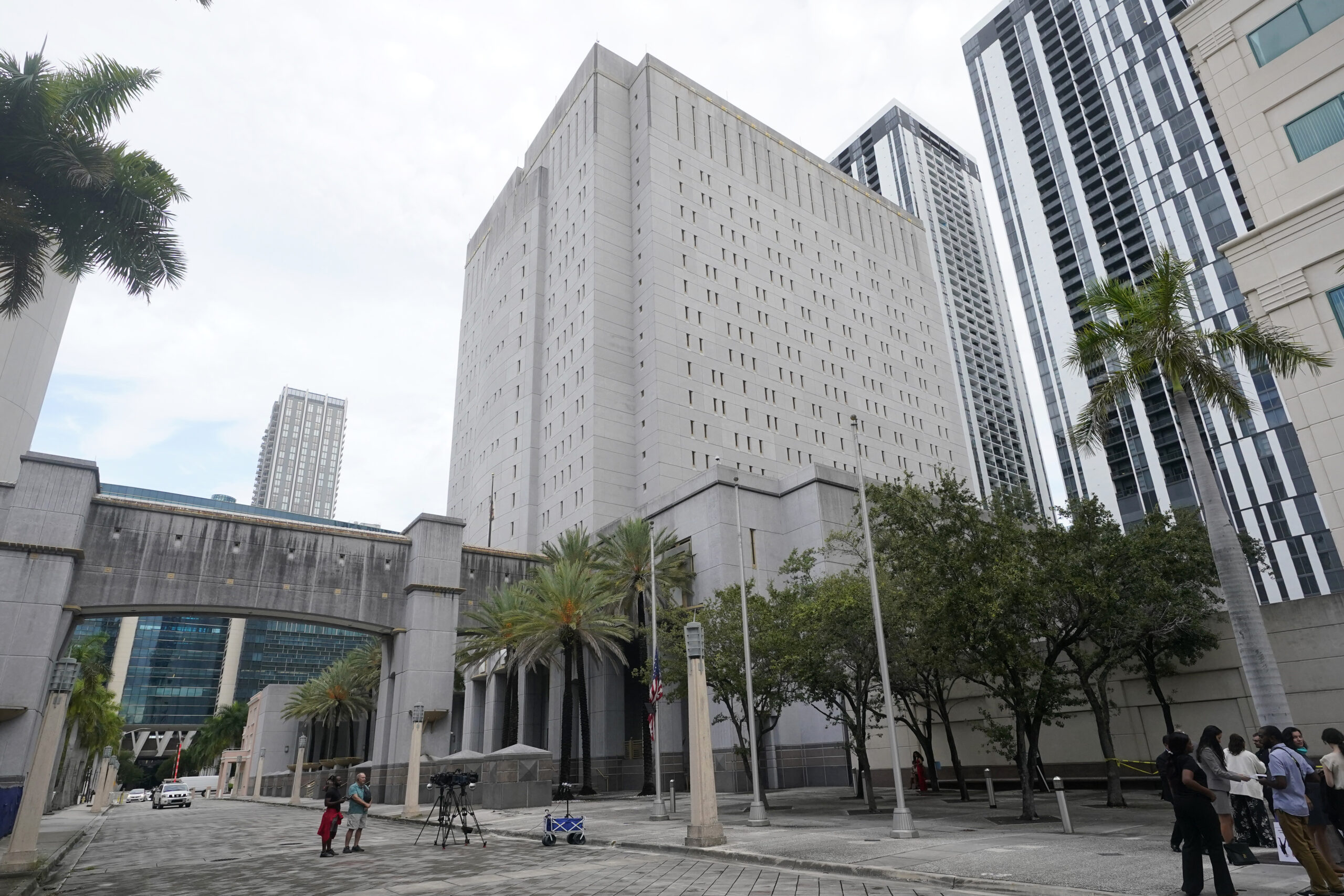
The Federal Detention Center in Miami.
Marie Ange Blaise, a citizen of Haiti, was 44 years old when she was arrested last February by Customs and Border Patrol officers as she attempted to board a commercial flight in Charlotte — one of the thousands swept up during 2025 amid the mass deportation drive of the Donald Trump regime.
Just 10 weeks later, Blaise died inside a federal immigration detention center in Broward County, Fla. A South Florida public radio station reported that the Haitian woman had spoken to her son, who later told the medical examiner that “she complained of having chest pains and abdominal cramps, and when she asked the detention staff to see a physician, they refused her.” Another detainee reported Blaise’s care was “severely delayed,” even as Immigration and Customs Enforcement (ICE) insisted she’d been offered blood-pressure medication but refused.
Blaise’s death was not an isolated incident. There was a sharp spike in ICE custody deaths during 2025, with the final tally of 31 fatalities nearly triple the 11 deaths posted during 2024, the last year of the Biden administration. Given the surge in immigration arrests after Trump took office last January, some increase was inevitable. Two of the 31 were killed by the gunman who fired on an ICE facility in Dallas. But immigration advocates say the crisis has been greatly exacerbated by inadequate medical care, bad food, and unsanitary conditions at detention centers.
“This is a result of the deteriorating conditions inside of ICE detention,” Setareh Ghandehari, advocacy director at Detention Watch Network, told the Guardian, which recently published a comprehensive rundown of all 31 custody deaths. Many died from heart attacks or respiratory failure, with a few apparent suicides — although, in a number of cases, family members are disputing the official account. Only a few of those who died were senior citizens.
There’s a bigger picture here. History has shown that authoritarian regimes can be hazardous to your health, and there is no American Exceptionalism. The MAGA movement’s low regard for the sanctity of human life is breaking through on multiple fronts, from the more than 100 deaths of South Americans on boats blown up by U.S. drones to the global crisis caused by the decimation of foreign aid through USAID (blamed for as many as 600,000 deaths by health experts) to the rising concern about fewer vaccinations and shrinking health insurance. A new generation is witnessing a grim reality: Dictatorship can be deadly.
What I wrote on this date in 2021
Jan. 6, much like Dec. 7 or Sept. 11, is a date which will live in infamy for most Americans. I had some health concerns five years ago that kept me from traveling to Washington to report on the insurrection — which I’ll always regret — but I did dash off an instant column before the smoke from Donald Trump’s failed coup had dissipated. I wrote, “When the future 45th president of the United States egged on the most violent thugs at his Nuremberg-style campaign rallies, when he yelled “get him the hell out of here” as white supporters roughed up a Black man in Birmingham, when he promised to pay the legal fees of brownshirts who beat up anti-Trump demonstrators, and when he said “I’d like to punch him in the face” to one rally insurrectionist, why are people still shocked when a riled-up mob takes Trump up on his own toxic words?” Read the rest: “Trump told us he would wreck America. Why didn’t we believe him the first time?”
Recommended Inquirer reading
I returned from a long Christmas break this weekend with something brand new to write about: the Trump regime’s illegal attack on Venezuela, which killed as many as 80 people, including civilians, and resulted in the capture of that nation’s strongman leader, Nicolás Maduro, and his wife. I wrote that Trump’s war without the required constitutional approval or public support, in violation of international law against unprovoked military aggression, fulfills his ambitions to rule as a dictator. And a new world order based not on the rule of law but brute force makes all of us less safe.
Last June, the partially unclothed body of a young woman was discovered by police under a pallet in an overgrown lot in Philadelphia’s Frankford neighborhood. For weeks, the identity of this murder victim was unknown, which didn’t deter one determined homicide detective, the missing woman’s anguished family who’d been initially told not to file a missing-person report — or The Inquirer’s Ellie Rushing, who has written a moving account of the life and death of the woman eventually learned to be Anastasiya Sangret. This kind of essential local reporting takes time and resources, which means it needs your support. You do exactly that, and unlock all the journalism of one of America’s best newsrooms, when you start 2026 with a subscription to The Inquirer.
By submitting your written, visual, and/or audio contributions, you agree to The Inquirer‘s Terms of Use, including the grant of rights in Section 10.
WASHINGTON — Five years ago outside the White House, outgoing President Donald Trump told a crowd of supporters to head to the Capitol — “and I’ll be there with you” — in protest as Congress was affirming the 2020 election victory for Democrat Joe Biden.
A short time later, the world watched as the seat of U.S. power descended into chaos, and democracy hung in the balance.
On the fifth anniversary of Jan. 6, 2021, there is no official event to memorialize what happened that day, when the mob made its way down Pennsylvania Avenue, battled police at the Capitol barricades and stormed inside, as lawmakers fled. The political parties refuse to agree to a shared history of the events, which were broadcast around the globe. And the official plaque honoring the police who defended the Capitol has never been hung.
Instead, the day displayed the divisions that still define Washington, and the country, and the White House itself issued a glossy new report with its own revised history of what happened.
Trump, during a lengthy morning speech to House Republicans convening away from the Capitol at the rebranded Kennedy Center now carrying his own name, shifted blame for Jan. 6 onto the rioters themselves.
The president said he had intended only for his supporters to go “peacefully and patriotically” to confront Congress as it certified Biden’s win. He blamed the media for focusing on other parts of his speech that day.
At the same time, Democrats held their own morning meeting at the Capitol, reconvening members of the House committee that investigated the Jan. 6, 2021, attack for a panel discussion. Recalling the history of the day is important, they said, in order to prevent what Rep. Jamie Raskin (D., Md.) warned was the GOP’s “Orwellian project of forgetting.”
And the former leader of the militant Proud Boys, Enrique Tarrio, summoned people for a midday march retracing the rioters’ steps from the White House to the Capitol, this time to honor Trump supporter Ashli Babbitt and others who died in the Jan. 6 siege and its aftermath. More than 100 people gathered, including Babbitt’s mother.
Tarrio and others are putting pressure on the Trump administration to punish officials who investigated and prosecuted the Jan. 6 rioters. He was sentenced to 22 years in prison for seditious conspiracy for orchestrating the Jan. 6 attack, and he is among more than 1,500 defendants who saw their charges dropped when Trump issued a sweeping pardon on his return to the White House last year.
“They should be fired and prosecuted,” Tarrio told the crowd before they arrived at the Capitol, confronted along the way by counterprotesters, and sang the national anthem.
The White House in its new report highlighted the work the president has already done to free those charged and turned the blame on Democrats for certifying Biden’s election victory.
Echoes of 5 years ago
This milestone anniversary carried echoes of the differences that erupted that day.
But it unfolds while attention is focused elsewhere, particularly after the U.S. military’s stunning capture of Venezuela’s president, Nicolás Maduro, and Trump’s plans to take over the country and prop up its vast oil industry, a striking new era of American expansionism.
“These people in the administration, they want to lecture the world about democracy when they’re undermining the rule of law at home, as we all will be powerfully reminded,” House Democratic leader Hakeem Jeffries of New York said on the eve of the anniversary.
House Speaker Mike Johnson of Louisiana, responding to requests for comment about the delay in hanging the plaque honoring the police at the Capitol, as required by law, said in a statement on the eve of the anniversary that the statute “is not implementable,” and proposed alternatives “also do not comply with the statute.”
Democrats revive an old committee, Republicans lead a new one
At the morning hearing at the Capitol, lawmakers heard from a range of witnesses and others — including former U.S. Capitol Police officer Winston Pingeon, who said as a kid he always dreamed of being a cop. But on that day, he thought he was going to die in the mayhem on the steps of the Capitol.
“I implore America to not forget what happened,” he said, “I believe the vast majority of Americans have so much more in common than what separates us.”
Also testifying was Pamela Hemphill, a rioter who refused Trump’s pardon, blamed the president for the violence and silenced the room as she apologized to the officer sitting alongside her at the witness table, stifling tears.
“I can’t allow them not be recognized, to be lied about,” Hemphill said about the police who she said also saved her life as she fell and was trampled on by the mob. “Until I can see that plaque get up there, I’m not done.”
Among those testifying were former Rep. Adam Kinzinger of Illinois, who along with former Rep. Liz Cheney of Wyoming were the two Republicans on the panel that investigated Trump’s efforts to overturn Biden’s win. Cheney, who lost her own reelection bid to a Trump-backed challenger, did not appear. Speaker Emerita Nancy Pelosi urged the country to turn away from a culture of lies and violence that she said sends the wrong message about democracy.
Republican Rep. Barry Loudermilk of Georgia, who has been tapped by Johnson to lead a new committee to probe other theories about what happened on Jan. 6, rejected Tuesday’s session as a “partisan exercise” designed to hurt Trump and his allies.
Many Republicans reject the narrative that Trump sparked the Jan. 6 attack, and Johnson, before he became the House speaker, had led challenges to the 2020 election. He was among some 130 GOP lawmakers voting that day to reject the presidential results from some states.
Instead, they have focused on security lapses at the Capitol — from the time it took for the National Guard to arrive on the scene to the failure of the police canine units to discover the pipe bombs found that day outside Republican and Democratic party headquarters. The FBI arrested a Virginia man suspected of placing the pipe bombs, and he told investigators last month he believed someone needed to speak up for those who believed the 2020 election was stolen, authorities say.
“The Capitol Complex is no more secure today than it was on Jan. 6,” Loudermilk said in a social media post. “My Select Subcommittee remains committed to transparency and accountability and ensuring the security failures that occurred on Jan. 6 and the partisan investigation that followed never happens again.”
The aftermath of Jan. 6
At least five people died in the Capitol siege and its aftermath, including Babbitt, who was shot and killed by police while trying to climb through the window of a door near the House chamber, and Capitol Police Officer Brian Sicknick died later after battling the mob. Several law enforcement personnel died later, some by suicide.
The Justice Department indicted Trump on four counts in a conspiracy to defraud voters with his claims of a rigged election in the run-up to the Jan. 6 attack.
Former Justice Department special counsel Jack Smith told lawmakers last month that the riot at the Capitol “does not happen” without Trump. He ended up abandoning the case once Trump was reelected president, adhering to department guidelines against prosecuting a sitting president.
Trump, who never made it to the Capitol that day as he hunkered down at the White House, was impeached by the House on the sole charge of having incited the insurrection. The Senate acquitted him after top GOP senators said they believed the matter was best left to the courts.
El Carnaval de Puebla, one of the biggest yearly celebrations of Mexican culture in Philadelphia and on the East Coast, is not returning in 2026.
For the second year in a row, the current immigration policies have overshadowed the festival that commemorates the Battle of Puebla traditionally celebrated on May 5, but not for the reasons one might expect.
“We are not scared of ICE; it is not fear that drives us,” said Edgar Ramirez, founder of Philatinos Radio and a committee member for San Mateo Carnavalero. “Many of the people who attend the carnival are second or third generation, but we are living at a time where the feeling of rejection is palpable, and it is not a suitable environment.”
A group of children dress up for the 2019 Carnaval de Puebla.
El Carnaval de Puebla has been a long-standing tradition for the city since 2005, stopping only during the pandemic, the first year of Donald Trump’s presidency in 2017, and last year following his reelection, as concerns for attracting immigration enforcement actions arose.
Since Trump’s reelection, the number of immigrants in federal detention facilities has increased beyond 65,000, a two-thirds increase since he took office last January.
Such uncertainty over when ICE might strike puts festival attendees at risk, making it harder to find sponsors and generate enough revenue to pay for city permits and requirements to hold the event, said committee member Olga Renteria.
“It’s hard to ask people to invest when there is no certainty that the carnival will be able to drive the success of previous years,” said Renteria, who noted that over 15,000 people attended the carnival in 2024. “The carnival is about family, sharing, drinking, enjoying yourself, and right now, any excuse is good enough to arrest someone; one incident is enough.”
For the community, this feels like a loss of space, both literally and figuratively.
A group of Carnavaleros march on Broad Street during the 2019 Carnaval de Puebla.
Longtime carnival attendee Alma Romero looked forward to seeing people in traditional attire, dancing andparading on Washington Avenue, triggering memories of her home in Puebla once a year.
“The carnival would have been good to lift our spirits, just as the Day of the Dead celebrations did,” Romero said, referring to the Ninth Street Corridor festivities in November that commemorate loved ones who passed away. “Without it, it feels like a sense of pride and unity is missing; now we just carry it in our hearts.”
After having attended the parade at all 19 past El Carnaval de Pueblaevents in Philly, Karina Sanchez, too, feels that sense of loss.
“I understand it’s important for the community to feel safe, but it’s sad to see us shrinking ourselves,” Sanchez said. “When that sentimentgrows, it is not a loss just for us, but for Philadelphia as a whole.”
Currently, there are no plans to replace El Carnaval de Puebla, but there is hope among many for a return.
“We have to come back,” Ramirez said. “We must because we are part of this city too, and things have to get better at some point.”
The parade that included horses arrives at the 18th annual El Carnaval de Puebla at Sacks Playground on Washington Avenue on April 30, 2023. El Carnaval de Puebla falls on Mexico’s “Day of the Children” and is one of the city’s biggest celebrations of Mexican culture. The celebration featured a parade, traditional games, food, live music and dancing.
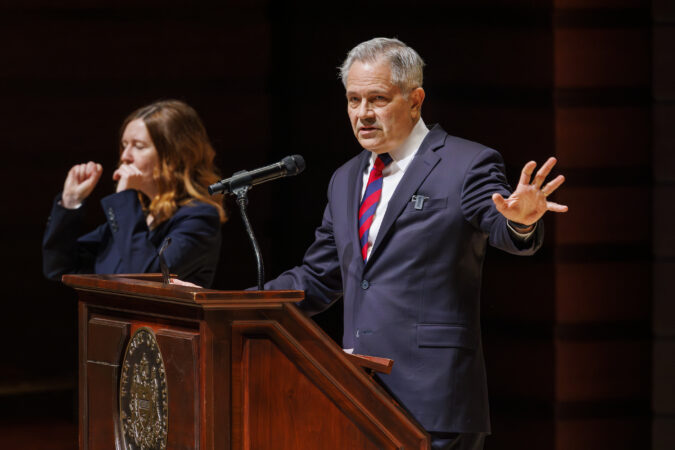
When Larry Krasner was sworn in to his second term as district attorney four years ago, Philadelphia was in a public safety crisis: Murders and shootings were at an all-time high and the homicide clearance rate was at a historic low.
Krasner, 64, took the oath of office alongside his wife, former Common Pleas Court Judge Lisa M. Rau, and one of his two sons inside the grand auditorium of the Kimmel Center for the Performing Arts.
Krasner cruised to reelection in November after handily defeating former Municipal Court Judge Patrick F. Dugan with about 75% of the vote. Krasner’s campaign often focused more on attacking President Donald Trump than specifying what, if anything, he might do differently with another four years.
He struck similar tones on Monday.
Across a nearly 20-minute speech, Krasner did not lay out a coming agenda, saying that was “not for today,” but instead recounted what he said were his accomplishments over the last eight years: building what he said was a more morally intact staff, investing in forensic advancements to help take down violent gangs, and providing grants to community organizations.
“It will be headed towards more safety. It will be headed towards more freedom,” he said of his office in the next four years.
And he took a few shots at Trump.
“Sometimes people ask me, ‘Why are you talking about Trump so much? Why do you keep bringing up Trump?’” he said.
While City Council members and state lawmakers have “tremendous power,” he said, “they don’t have the obligation, as I just swore in front of you, to uphold the Constitution and the laws of the United States from someone … whose intent is, without question, the overthrow of democracy in the United States of America.”
District Attorney Larry Krasner displays a political cartoon by Pat Bagley during a news conference in August 2025 to lament President Trump’s deployment of the National Guard to D.C. streets. Bagley is staff cartoonist for the Salt Lake Tribune in Salt Lake City, Utah.
He also noted that Trump has not deployed the National Guard to Philadelphia, as the president has done in other Democratic cities like Chicago, San Francisco, and Los Angeles, and seemed to acknowledge Cherelle L. Parker’s hotly debated strategy of avoiding confrontation with Trump.
“If that has any part in the reality that we have not seen Trump’s troops, Trump’s tanks in the City of Philadelphia — I don’t know if it does or not, but if it has anything to do with that, then I’m glad, and I intend to work closely, always, with other elected officials.”
Parker, who earlier congratulated Krasner in her introductory remarks, stared ahead stoically during his comments about Trump.
Krasner ended by promising to continue making Philadelphia safer, and then returned to one of his favorite themes.
“We all got to this point of achievement together, and this is no time to retreat. It is no time to surrender. It is time to push on so that Philadelphia goes from being known as chronically violent to being known as consistently safe for decades to come,” he said.
“And if anybody — including the guy in D.C. — doesn’t want that, if they want to F around, then they’re gonna find out.”
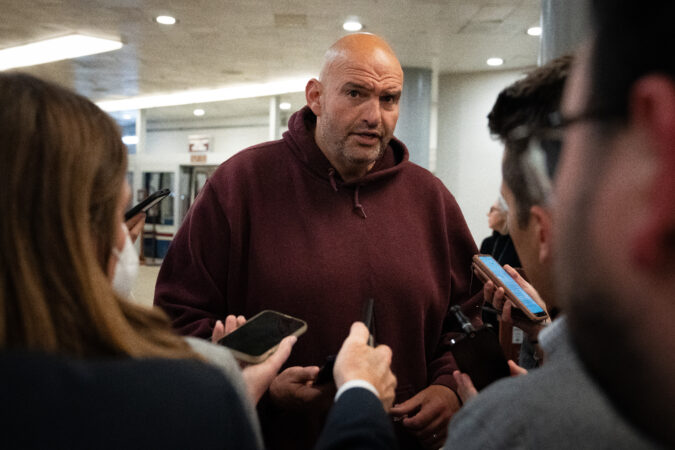
Sen. John Fetterman (D., Pa.) on Monday praised President Donald Trump’s order to capture Venezuelan President Nicolás Maduro and his wife, breaking with most Democrats’ messaging on the military operation that took place early Saturday without congressional authorization.
“I don’t know why we can’t just acknowledge that it’s been a good thing what’s happened. … We all wanted this man gone, and now he is gone,” Fetterman said during an interview on Fox & Friends on Monday morning.
Fetterman’s comments come days after the Trumpadministration orchestrated a strike on Caracas, resulting in the capture of Maduro, Venezuela’s president since 2013, and his wife, Cilia Flores, early Saturday.
The event followed months of escalation by the U.S. military and claims from the Trump administration that Maduro is responsible for large-scale drug trafficking operations. The future of the Venezuelan government is unclear, but Trump has suggested that U.S. involvement will continue.
“I think [the military operation] was appropriate and surgical,” Fetterman said during the interview. “This wasn’t a war, this wasn’t boots on the grounds, and in that kind of way, this was surgical and very efficient, and I want to celebrate our military.”
The military operation provoked mixed reactions from members of the Philadelphia region’s Venezuelan community, some of whom are thankful for Maduro’s ouster but were concerned by Trump’s comments over the weekend that the U.S. would “run” Venezuela.
The incident also garnered sharp disapproval from many Democratic lawmakers.
Sen. Cory Booker (D., N.J.) said in a post on X on Saturday that Maduro is a “brutal dictator who has committed grave abuses” and that the U.S. military carries out their orders with “professionalism and excellence,” but stressed that Trump’s military operation defies the Constitution and isa culmination of a repeated failure by Congress to exercise its check on presidential power.
“We face an authoritarian-minded president who acts with dangerous growing impunity. He has shown a willingness to defy court orders, violate the law, ignore congressional intent, and shred basic norms of decency and democracy,” Booker said.
“This pattern will continue unless the Article I branch of government, especially Republican congressional leadership, finds the courage to act,” Booker said.
Other Democrats and opponents to the military operation havealsoquestioned its legality.
This is not the first time that Fetterman has differed with fellow Democrats on key issues. Recently, the Pennsylvania senator wasone of only a handful of Senate Democrats who supported the Republican-led plan to reopen the federal government without addressing the expiration of healthcare subsidies.
During his interview Monday, Fetterman noted that Democrats, including former President Joe Biden, have called for the ouster of Maduro.
“Why have a bounty of $25 million if we didn’t want him gone? Why would you do these things if you weren’t willing to actually do something other than harsh language,” Fetterman said.
The images are historic and alarming: Nicolás Maduro, the president of Venezuela, captured and transported by a U.S. warship to stand trial in a New York federal court. President Donald Trump hails this as justice, promising Maduro will face the “full might of American justice.”
This double standard extends to the world stage. The United States fiercely rejects the jurisdiction of respected judicial bodies like the International Criminal Court, even restricting its prosecutors in order to protect Americans. Yet, it now unilaterally extends its own domestic courts to sit in judgment over a foreign leader, echoing the 1989 capture of Panama’s Manuel Noriega.
Venezuelan President Nicolás Maduro places his hand over his heart while talking to high-ranking officers during a military ceremony on his inauguration day for a third term, in Caracas, Venezuela, in January 2025.
The charges of “narco-terrorism” may be serious, but the process is purely an assertion of power through legal theater.
This action shatters global order; it does not uphold it.
What principle will stop China from arresting a Taiwanese leader for “secessionist terrorism” to face a court in Beijing? What stops Russia from charging a Ukrainian president with “Nazi conspiracy” in Moscow? By normalizing this model — where powerful nations kidnap and try the leaders of weaker states — the U.S. is inviting a world of legalized vendettas.
It replaces a fragile system of rules with raw power.
For Americans, this is a direct threat to our security. It makes every U.S. official, diplomat, and service member abroad a potential target for retaliatory arrests by rival powers who will cite this case as their precedent.
We have just handed our adversaries a blueprint for political kidnappings disguised as “law enforcement.”
The acting president of Venezuela, Delcy Rodríguez, is right to call this a mortal threat to sovereignty. True democrats in Venezuela, who seek a future free from Maduro, now face an impossible dilemma: Their cause has been co-opted by a foreign power’s invasion of their nation’s self-determination.
This act will not foster democracy; it will fuel nationalism and anti-American resentment for a generation, making a genuine, Venezuelan-led transition harder.
We cannot defend democracy by obliterating its foundations.
If we believe in any kind of justice, it must be a justice that respects the equality of nations before the law, not a justice delivered at gunpoint by the world’s most powerful navy to a courtroom in Manhattan.
The capture of Maduro and his wife by Trump may seem like victory for the U.S. administration today, but its legacy will be a more lawless, dangerous, and unstable world for all of us tomorrow.
He is not enforcing the law; he is proving that, in his view, only might is right.
Januarius Asongu is a scholar and the author of more than 20 books on political philosophy and international conflict. A resident of Townsend, Del., he is the founder and chancellor of Saint Monica University in Cameroon and of the American Institute of Technology in Sierra Leone.
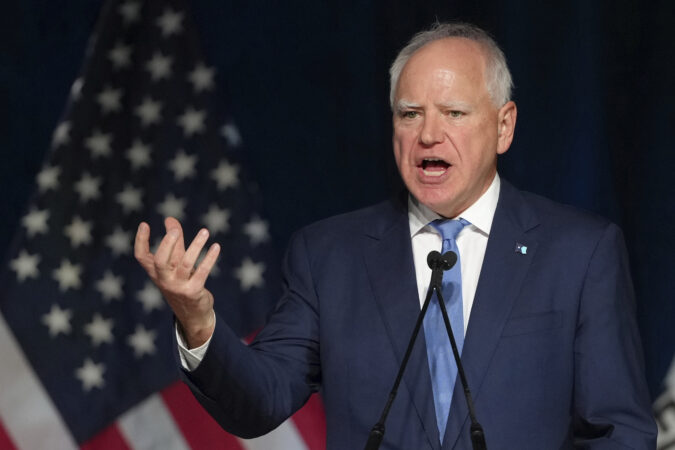
ST PAUL, Minn. — Minnesota Gov. Tim Walz, Democrats’ 2024 candidate for vice president, is ending his bid for a third term as governor amid President Donald Trump’s relentless focus on a fraud investigation into child care programs in the state.
Less than four months after announcing his reelection campaign, Walz said Monday that he could no longer devote the energy necessary to win another term, even as he expressed confidence that he could win.
Walz said in a statement Monday that he “can’t give a political campaign my all” after what he described as an “extraordinarily difficult year for our state.”
“Donald Trump and his allies – in Washington, in St. Paul, and online – want to make our state a colder, meaner place,” Walz said, referring to the Trump administration withholding funds for the programs. “They want to poison our people against each other by attacking our neighbors. And, ultimately, they want to take away much of what makes Minnesota the best place in America to raise a family.”
Democratic Sen. Amy Klobuchar of Minnesota is considering running for governor, according to a person close to her. The person, who wasn’t authorized to speak publicly and spoke on the condition of anonymity, said Klobuchar has not made a final decision.
Around a dozen Republicans are already in the race. They include MyPillow founder and chief executive Mike Lindell, an election denier who is close to Trump. They also include Minnesota House Speaker Lisa Demuth, of Cold Spring; Dr. Scott Jensen, a former state senator from Chaska who was the party’s 2022 candidate; state Rep. Kristin Robbins, of Maple Grove; defense lawyer and former federal prosecutor Chris Madel; former executive Kendall Qualls; and former Minnesota GOP Chair David Hann.
Walz is a military veteran and union supporter who helped enact an ambitious Democratic agenda for his state, including sweeping protections for abortion rights and generous aid to families.
Vice President Kamala Harris picked Walz as her running mate after his attack line against Trump and his running mate, then-Ohio Sen. JD Vance — “These guys are just weird” — spread widely.
Walz had been building up his national profile since his and Harris’ defeat in November. He was a sharp critic of Trump as he toured early caucus and primary states. In May, he called on Democrats in South Carolina to stand up to the Republican president, saying, “Maybe it’s time for us to be a little meaner.”