Tag: Donald Trump

  • Internal documents shed light on Mayor Cherelle L. Parker’s decision to end Philadelphia’s racial diversity goals in contracting

    Internal documents shed light on Mayor Cherelle L. Parker’s decision to end Philadelphia’s racial diversity goals in contracting

    Mayor Cherelle L. Parker has said her administration relied on expert advice from a top law firm when it decided to end a Philadelphia policy prioritizing businesses owned by women or people of color in city contracting following recent court rulings that limited affirmative action-style government programs in hiring and contracting.

    “I call them my genius attorneys because they all clerked for Supreme Court justices, and they handle the hardest cases throughout the country,” City Solicitor Renee Garcia, the city’s top lawyer, recently said of the New York-based firm Hecker Fink.

    “And we went back and forth,” Garcia said. “Can we do this? Can we do this? What about this? What about that?”

    But when it came time to replace the city’s old program with a new policy, the Parker administration didn’t adopt all of the suggestions it received from Hecker Fink, internal administration documents obtained by The Inquirer show.

    Hecker Fink attorneys suggested that Philadelphia replace its old contracting system with one that favors “socially and economically disadvantaged” businesses, the documents show. Parker instead created a new policy favoring “small and local” companies.

    The differences between Parker’s program and alternatives the city could have adopted are highly technical but hugely important, attorneys and researchers who study government contracting told The Inquirer.

    Critics say the new policy indicates Philadelphia took the easy way out in the face of conservative legal attacks, instead of fighting to preserve the spirit of the old program: promoting equity and diversity in city contracting.

    Parker, however, is adamant that her “small and local” policy will achieve that goal, given that many small companies in the city are owned by Black and brown Philadelphians who have faced discrimination.

    “Our small and local business program is our disadvantage program,” Garcia said in a written statement. “Considering counsel’s advice, the City determined that a small and local business program is the best way to incorporate social and economic disadvantage in a way that is objective, content-neutral, consistent, demonstrable, and could be stood up very quickly.”

    The documents, which include confidential legal memos from Hecker and internal administration emails, show how top city officials attempted to navigate a new legal landscape after the U.S. Supreme Court in 2023 upended decades of jurisprudence on affirmative action and other race-conscious policies.
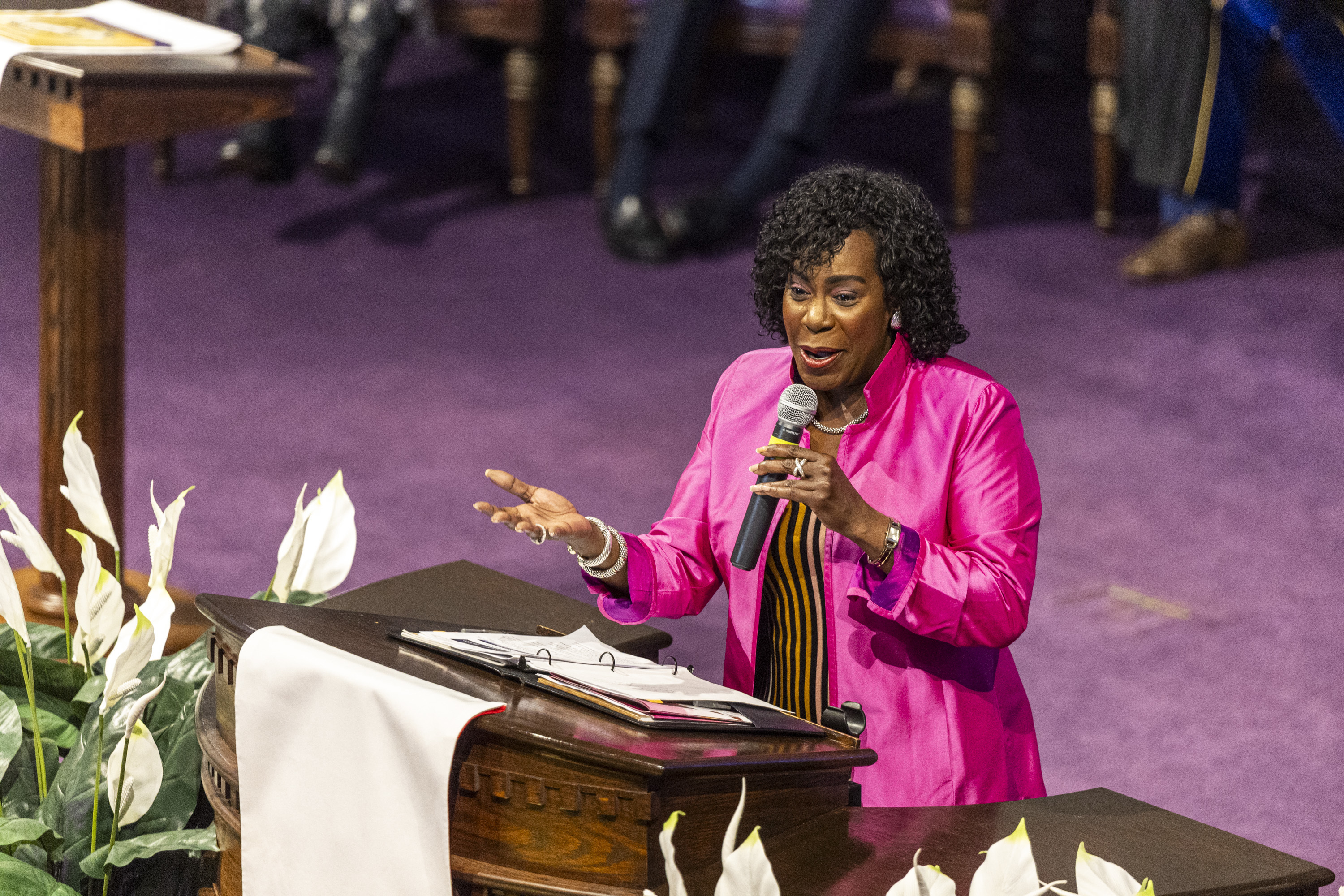
    Mayor Cherelle L. Parker said her “small and local” contracting policy will boost Philadelphia companies.

    In early 2025, the Law Department provided a spreadsheet of line-by-line edits to the city’s Five Year Plan, a long-term budgeting document, to remove language about racial and gender-equity goals submitted by city departments.

    When the Office of Community Empowerment and Opportunity, for instance, wrote that its mission involved “advancing racial equity,” the Law Department simply wrote, “remove racial,” as it did for several other agencies.

    The edits signify a stark contrast to the city’s approach under former Mayor Jim Kenney, who in 2020, operating under very different circumstances, instructed all departments to craft comprehensive racial-equity plans.

    There is no indication in the internal documents, which are primarily from 2024 and 2025, that Parker, the city’s first Black female mayor, or administration officials were eager to make those changes. And no city officials appeared in the documents to view the “small and local” policy as less aggressive or safer than the other options at Parker’s disposal when she replaced the city’s race-conscious contracting system.

    But for Wendell R. Stemley, president of the National Association of Minority Contractors, the mayor’s choice was revealing.

    “The cities that want to cave in on this issue without doing the hard work are just doing small [and] local, race- and gender-neutral,” Stemley said.

    ‘Disadvantaged’ vs. ‘small and local’

    The documents obtained by The Inquirer show that Hecker recommended the city abandon its decades-old contracting system — responsible for allotting more than $370 million each year in city contracts to historically disadvantaged firms — due to the threat of potential legal challenges, as Parker and Garcia have said.

    But they also show that the firm proposed replacing that policy with a system “setting mandatory goals for hiring socially and economically disadvantaged businesses or persons,” a race- and gender-neutral standard based on the federal Small Business Administration’s 8(a) business development program.

    Like the city’s contracting policies, the federal program previously had a stated policy of aiding business owners who were members of specific historically disadvantaged groups, such as women and Black people. But a 2023 federal court ruling in Washington, D.C., prohibited the SBA from presuming that members of those groups had faced barriers and required 8(a) applicants to demonstrate social and economic disadvantages.

    The change allowed the program to pass legal muster by not favoring race or gender groups, while still allowing the agency to consider whether each applicant had faced discrimination on an individual basis.

    Hecker, a litigation and public interest firm, suggested that Philadelphia adopt a similar approach.

    “Adopting mandatory goals for hiring socially or economically disadvantaged individuals or businesses, defined along the same race-neutral lines as in the SBA’s 8(a) program, would likely be defensible if challenged,” Hecker lawyers wrote in a May 5 memo to the city.

    An internal administration memo analyzing the city’s options on May 16 said that Hecker “recommended taking a look at the federal SBA 8(a) Business Development Program as a model.”

    “This is a program to recognize small and disadvantaged businesses,” the city’s memo said, adding that the SBA defines socially disadvantaged individuals as “those who have been subjected to racial or ethnic prejudice or cultural bias within American society because of their identities as members of groups and without regard to their individual qualities.”

    The executive order governing the city’s old minority contracting program, which aimed to award 35% of contracts to historically disadvantaged firms, expired at the end of 2024, and the city quietly ended it at some point earlier this year.

    Parker did not announce that the program had been discontinued or that it would be succeeded by her “small and local” policy until an Inquirer story published last month revealed the change.

    ‘They are different’

    The key difference between Parker’s program and the 8(a) model is that the city’s new policy gives no explicit consideration for social disadvantage, prejudice, or cultural bias.

    Garcia, the city solicitor, firmly pushed back against the notion that the city had ignored Hecker’s advice on reshaping its contracting landscape and contended that the “small and local” policy will result in equitable outcomes because many of Philadelphia’s small businesses are owned by people of color and have faced discrimination and other barriers to growth.

    “The City’s small and local business program … is more aggressive [than an SBA 8(a)-style policy] in that it is broadly applicable to small and local businesses, without creating unnecessary hurdles and confusion over the word ‘disadvantage’ or requiring onerous paperwork” for business owners to demonstrate their disadvantages, she said.
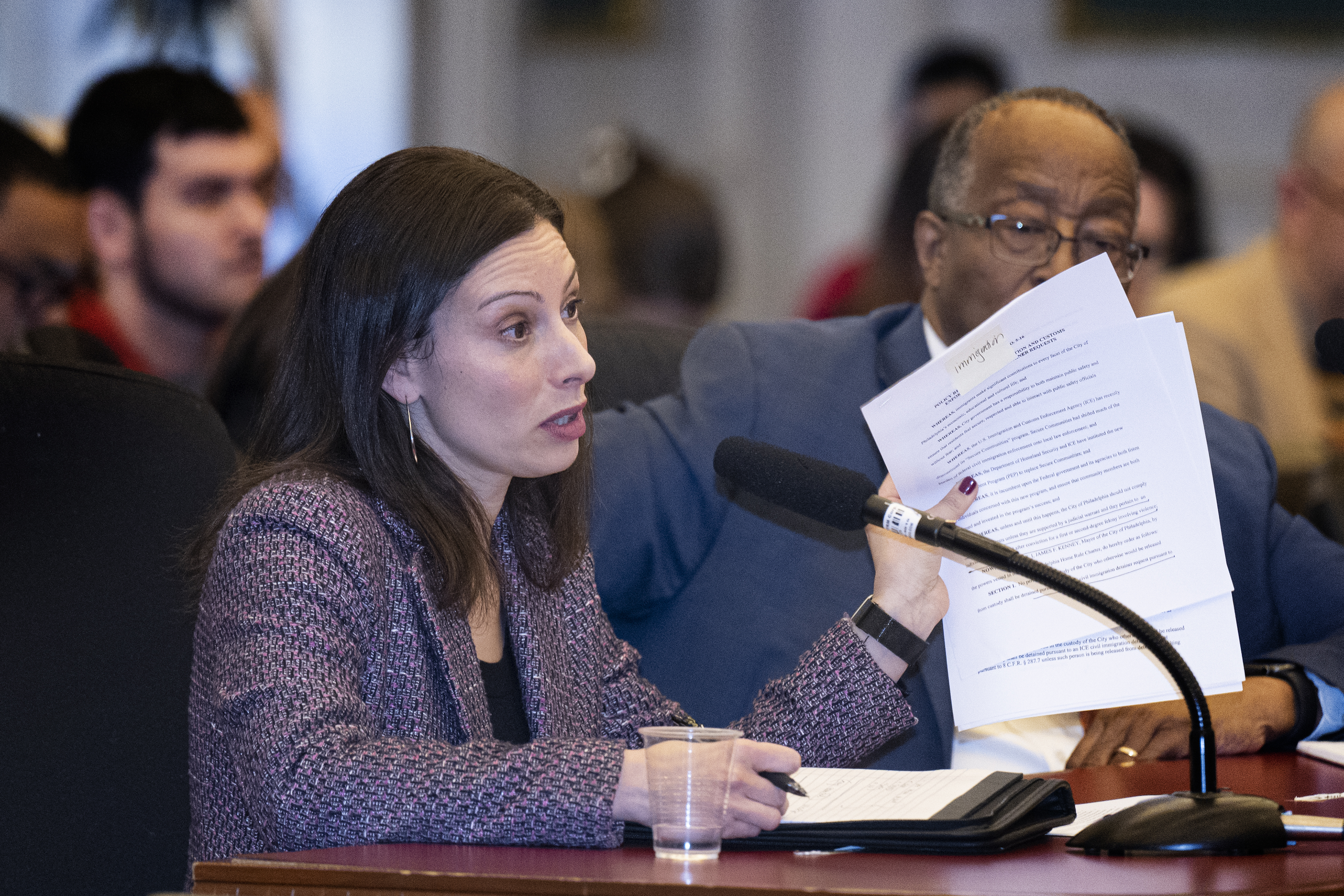
    City Solicitor Renee Garcia is the Parker administration’s top lawyer.

    Although Parker’s new program is not exclusively available to disadvantaged firms, Garcia said it “has built-in elements of social and economic disadvantaged programs like the SBA 8(a) and [U.S. Department of Transportation] programs, such as utilizing SBA business size standard caps, examining years in business, examining employee count, and personal net worth considerations.”

    But Andre M. Perry, a senior fellow at the Brookings Institution, said that while the city may be intending to help disadvantaged businesses with its “small and local” approach, specifying that goal in writing is important. The mayor’s executive order does not use the word disadvantage.

    “They are different,” said Perry, the author of Black Power Scorecard, an examination of access to property, education, and business success. “The downside of any approach that does not use some criteria for being disadvantaged is that you can ignore them.

    “There is a history that suggests that you absolutely need some process to identify groups of people who have been ignored by the city. It’s certainly not a given that you will touch those communities that have been denied opportunities in the past under ‘small and local,’” Perry said.

    ‘Too early to tell’

    Parker’s move to abandon the city’s goal of prioritizing businesses owned by women and Black and brown people has become the latest flashpoint in the debate over the centrist Democrat mayor’s approach to the new political reality under President Donald Trump’s second administration, as critics like progressive City Councilmember Kendra Brooks have accused her of “caving” to Trump.

    Parker, however, said the city had little choice but to end the old system following Students for Fair Admissions v. Harvard, a 2023 Supreme Court ruling that prohibited affirmative action in college admissions and has had widespread consequences for race-conscious government programs.

    “There were people who told us that leadership meant justifying the [old] law,” Parker said at a recent news conference announcing the contracting policy changes. “They said, ‘Forget about the Supreme Court ruling. Philadelphia should just continue functioning and operating its program even if your Law Department and these genius lawyers at [Hecker] who have clerked for Supreme Court justices [recommended abandoning it.]’

    “I want to take some advice from somebody to interpret the Supreme Court ruling right for some folks who have worked there.”

    The U.S. Supreme Court upended the legal landscape for race-conscious government programs with a 2023 case ending affirmative action in college admissions.

    But Parker also said she felt that the city’s old system was “broken” long before the Harvard decision because it failed to achieve its goal of boosting the number of “Black and brown and women and disabled business owners” in Philadelphia.

    Chief Deputy Mayor Vanessa Garrett Harley added that an administration review found that only 20% of the firms in Philadelphia’s registry of businesses owned by women, people of color, or people with disabilities were getting city contracts.

    Parker, who as a lawmaker worked on policies aimed at boosting economic opportunities for minority- and women-owned firms, said she was optimistic that pivoting to a focus on “small and local” firms would produce better results.

    Parker has not publicly discussed suggested alternatives to her new policy, including the 8(a)-style approach.

    Several government contracting attorneys and researchers interviewed by The Inquirer said that both “small and local” and “socially disadvantaged” programs have downsides and that the success of either would primarily depend on how well it is executed. Details are scant on what the new policy will actually look like, making it difficult to evaluate the potential impact.

    But experts said choosing a policy that seeks to favor disadvantaged businesses rather than any small Philadelphia firm would indicate the mayor was fighting to maintain the spirit of the old program, which sought to boost companies owned by women and people of color who have long been underrepresented among business owners and government contractors.

    “Adopting an 8(a)-style program with language prioritizing contracts for socially disadvantaged businesses would signal a desire to maintain the pre-2024 understanding that cities can procure goods deliberately, intentionally, in different ways, with preferences from disadvantaged businesses,” said Brett Theodos, a senior fellow at the Urban Institute who has written a paper about how governments can use contracting to promote equity, despite recent court decisions. “Having an (8)a-style [program] would signal that the mayor wanted to try something more.”

    Parker has defended her policy shift by invoking the bona fides of the Hecker attorneys who worked with the city. She and other city officials have noted that one clerked for liberal U.S. Supreme Court Justice Sonia Sotomayor and now works for the American Civil Liberty Union — “not somebody who would have had a conservative mindset,” as Garrett Harley put it. (Those comments later prompted the ACLU-PA to distance itself from what it described as the city’s “DEI rollback.”)

    To be sure, adopting a program in which contractors need to demonstrate social disadvantages, such as past instances of discrimination, has its own drawbacks.

    Following the 2023 federal court decision, the SBA now requires 8(a) applicants to submit “social disadvantage narratives,” or essays, increasing administrative burdens and potentially favoring savvier contractors. The U.S. Department of Transportation has a similar essay-based approach.
    The U.S. Small Business Administration’s 8(a) business development program is aimed at helping “socially and economically disadvantaged” firms.

    “We have heard from our businesses it is already too hard to do business in Philadelphia; these kinds of additional requirements will exacerbate an already difficult and burdensome process,” Garcia said.

    And despite being a race- and gender-neutral federal policy, the current 8(a) standard, which was adopted in President Joe Biden’s administration, may still be challenged in court.

    The lawyers at Hecker Fink, however, believed that a Philadelphia version of the policy could withstand scrutiny.

    “The next wave of conservative litigation in this space may target such programs, arguing that social or economic disadvantage is a proxy for race,” Hecker attorneys wrote in the May 2025 memo. “However, based on our assessment of the current legal landscape, the City would have a strong chance of defeating such challenges.”

    Like many diversity, equity, and inclusion initiatives cast as discriminatory by the president, the 8(a) program has come under siege since Trump took office in January. On the agency’s website, hyperlinks to guidelines on how companies can demonstrate social disadvantage have gone dead, and the Trump administration has launched an audit of the program in the wake of an alleged bribery scheme.

    None of those issues, however, address the question of whether a similar policy crafted for the city would be legally defensible. Despite Trump’s attacks, the current version of the 8(a) program’s focus on “socially disadvantaged” firms has not been overturned in court.

    Regina Hairston, president and CEO of the African-American Chamber of Commerce of PA, NJ, and DE, said the organization will wait and see how Parker’s new policy shakes out.

    “It’s too early to tell if the mayor’s policy is the right policy, but from what I’ve seen across the country, other cities are moving to [prioritize] small, medium enterprises,” Hairston said. “We don’t know if that’s the answer, but we will be monitoring it.”

    Staff writer Anna Orso contributed to this article.
  • Doctor says Trump had preventative screening MRI on heart, abdomen with ‘perfectly normal’ results

    Doctor says Trump had preventative screening MRI on heart, abdomen with ‘perfectly normal’ results

    WASHINGTON — Donald Trump’s doctor says the president had MRI imaging on his heart and abdomen in October as part of a preventative screening for men his age, according to a memo from the physician released by the White House on Monday.

    Sean Barbabella said in a statement that Trump’s physical exam included “advanced imaging” that is “standard for an executive physical” in Trump’s age group. Barbabella concluded that the cardiovascular and abdominal imaging was “perfectly normal.”

    “The purpose of this imaging is preventative: to identify issues early, confirm overall health, and ensure he maintains long-term vitality and function,” the doctor wrote.

    The White House released Barbabella’s memo after Trump on Sunday said he would release the results of the scan. He and the White House have said the scan was “part of his routine physical examination” but had declined until Monday to detail why Trump had an MRI during his physical in October at Walter Reed National Military Medical Center or on what part of his body.

    “I think that’s quite a bit of detail,” White House press secretary Karoline Leavitt said Monday when announcing the memo’s release.

    The Republican president said Sunday during an exchange with reporters as he traveled back to Washington from Florida that the results of the MRI were “perfect.”

    “If you want to have it released, I’ll release it,” Trump said.

    Trump added Sunday that he has “no idea” on what part of his body he got the MRI.

    “It was just an MRI,” he said. “What part of the body? It wasn’t the brain because I took a cognitive test and I aced it.”

  • A man accused of committing voter fraud in Bucks County in 2020 says a Trump pardon should wipe out his criminal case

    A man accused of committing voter fraud in Bucks County in 2020 says a Trump pardon should wipe out his criminal case

    President Donald Trump’s decision last month to pardon dozens of political allies who helped him try to overturn the 2020 election was quickly criticized by some opponents.

    Now, a man accused of committing voter fraud in that contest by voting twice for Trump is seeking to wipe out a pending criminal case by saying the powers of that pardon action should extend to him.

    Attorneys for Matthew Laiss wrote in court documents last month that the language in Trump’s pardon proclamation “clearly extend” to Laiss, who is awaiting trial on charges that he illegally voted twice in the 2020 election — first by submitting a mail-in ballot in Bucks County, then by voting in-person at his new home in Florida.

    Federal prosecutors in Philadelphia charged Laiss in September with crimes including voter fraud and voting more than once in a federal election, and they said he faces potential prison time if convicted.

    Last month, however, Laiss’ attorneys filed a motion to dismiss the case, saying that the pardon Trump issued Nov. 7 clearly applied to Laiss, and that Laiss had accepted it.

    Although Laiss was not among the 77 people Trump listed when specifying who would receive relief, Laiss’ lawyers said the proclamation’s preamble included language making it applicable to “all United States citizens” for conduct, voting, or advocacy surrounding the contest.

    In addition, his attorneys wrote, Trump allies including Rudy Giuliani, Sidney Powell, and Mark Meadows were all explicitly pardoned for “exponentially more egregious alleged conduct.” Extending relief to them while denying it to Laiss, his lawyers wrote, “would be outrageous.”

    Federal prosecutors say Laiss is “entirely incorrect.”

    In a reply brief filed last week, the U.S. Attorney’s Office said Trump’s pardon was intended for people who were seeking to expose or rectify potential fraud in the 2020 election — not for people like Laiss, who are accused of actually committing it.

    Beyond what they said was Laiss’ clear misinterpretation, prosecutors said that they checked with Trump’s Office of the Pardon Attorney and that it does not believe the president’s clemency —` which it helped effectuate — applies to Laiss.

    “In other words, it is this office’s understanding that if Laiss were to appeal directly to the Office of the Pardon Attorney for a pardon based on [the] November 7 pardon proclamation, that petition would be denied,” prosecutors wrote.

    It was not immediately clear how or when U.S. District Judge Joseph F. Leeson Jr. might rule on the issue, although Laiss was scheduled to have a final pretrial hearing Tuesday morning.

    If Leeson rules that the case can proceed, a trial is scheduled to begin next week.

  • Former Trump lawyer Alina Habba has been disqualified as New Jersey’s top prosecutor, a U.S. appeals court ruled

    Former Trump lawyer Alina Habba has been disqualified as New Jersey’s top prosecutor, a U.S. appeals court ruled

    PHILADELPHIA — The Trump administration’s maneuvers to keep the president’s former lawyer Alina Habba in place as New Jersey’s top federal prosecutor were illegal and she is disqualified, a federal appeals court said Monday.

    A panel of judges from the 3rd U.S. Circuit Court of Appeals sitting in Philadelphia sided with a lower court judge’s ruling after hearing oral arguments at which Habba herself was present on Oct. 20.

    The ruling comes amid the push by President Donald Trump’s Republican administration to keep Habba as the acting U.S. attorney for New Jersey, a powerful post charged with enforcing federal criminal and civil law. It also comes after the judges questioned the government’s moves to keep Habba in place after her interim appointment expired and without her getting Senate confirmation.

    Habba said after that hearing in a statement posted to X that she was fighting on behalf of other candidates to be federal prosecutors who have been denied a chance for a Senate hearing.

    Messages were left Monday seeking comment from the U.S. attorney’s office in New Jersey, Habba’s personal staffer and the Justice Department.

    Habba is hardly the only Trump administration prosecutor whose appointment has been challenged by defense lawyers.

    Last week, a federal judge dismissed criminal cases against former FBI Director James Comey and New York Attorney General Letitia James after concluding that the hastily installed prosecutor who filed the charges, Lindsey Halligan, was unlawfully appointed to the position of interim U.S. attorney for the Eastern District of Virginia. The Justice Department has said it intends to appeal the rulings.

    The judges on the panel were two appointed by Republican President George W. Bush, D. Brooks Smith and D. Michael Fisher as well as one named by Demcoratic President Barack Obama: Luis Felipe Restrepo.

    A lower court judge said in August Habba’s appointment was done with a “novel series of legal and personnel moves” and that she was not lawfully serving as U.S attorney for New Jersey.

    That order said her actions since July could be invalidated, but he stayed the order pending appeal.

    The government argued Habba is validly serving in the role under a federal statute allowing the first assistant attorney, a post she was appointed to by the Trump administration.

    A similar dynamic is playing out in Nevada, where a federal judge disqualified the Trump administration’s pick to be U.S. attorney there.

    The Habba case comes after several people charged with federal crimes in New Jersey challenged the legality of Habba’s tenure. They sought to block the charges, arguing she didn’t have the authority to prosecute their cases after her 120-day term as interim U.S. attorney expired.

    Habba was Trump’s attorney in criminal and civil proceedings before he was elected to a second term. She served as a White House adviser briefly before Trump named her as a federal prosecutor in March.

    Shortly after her appointment, she said in an interview with a right-wing influence that she hoped to help “turn New Jersey red,” a rare overt political expression from a prosecutor.

    She then brought a trespassing charge, eventually dropped, against Democratic Newark Mayor Ras Baraka stemming from his visit to a federal immigration detention center.

    Habba later charged Democratic U.S. Rep. LaMonica McIver with assault stemming from the same incident, a rare federal criminal case against a sitting member of Congress other than for corruption. McIver denied the charges and pleaded not guilty. The case is pending.

    Questions about whether Habba would continue in the job arose in July when her temporary appointment was ending and it became clear New Jersey’s two Democratic U.S. senators, Cory Booker and Andy Kim, would not back her appointment.

    Earlier this year as her appointment was expiring, federal judges in New Jersey exercised their power under the law to replace Habba with a career prosecutor who had served as her second-in-command.

    Bondi then fired the prosecutor installed by the judges and renamed Habba as acting U.S. attorney. The Justice Department said the judges acted prematurely and said Trump had the authority to appoint his preferred candidate to enforce federal laws in the state.

    Brann’s ruling said the president’s appointments are still subject to the time limits and power-sharing rules laid out in federal law.

  • Trump says he’ll release MRI results but doesn’t know what part of his body was scanned

    Trump says he’ll release MRI results but doesn’t know what part of his body was scanned

    WASHINGTON — President Donald Trump said he’ll release the results of his MRI test that he received in October.

    “If you want to have it released, I’ll release it,” the Republican president said Sunday during an exchange with reporters as he traveled back to Washington from Florida.

    He said the results of the MRI were “perfect.”

    The White House has declined to detail why Trump had an MRI during his physical in October or on what part of his body.

    The press secretary, Karoline Leavitt, has said that the president received “advanced imaging” at Walter Reed National Military Medical Center “as part of his routine physical examination” and that the results showed Trump remains in “exceptional physical health.”

    Trump added Sunday that he has “no idea” on what part of his body he got the MRI.

    “It was just an MRI,” he said. “What part of the body? It wasn’t the brain because I took a cognitive test and I aced it.”

  • How Brendan Boyle became Democrats’ healthcare messenger-in-chief

    How Brendan Boyle became Democrats’ healthcare messenger-in-chief

    WASHINGTON — Ahead of a morning Budget Committee meeting, U.S. Rep. Brendan Boyle gathered his senior advisers in a brightly lit conference room just off the Capitol to settle on a simple strategy.

    “Let’s keep the main thing the main thing,” he said. “Fifteen million Americans are gonna lose their healthcare because Republicans care more about tax breaks for billionaires. It’s accurate. You can describe it in a sentence.”

    Boyle, a six-term lawmaker, is the most veteran of Pennsylvania’s eight Democrats in Washington. He has been the ranking member of the House Budget Committee since 2023, meaning he is the top Democrat playing defense as the Republican-controlled Congress ushers through GOP spending priorities. It can be a futile exercise in shouting into a void — until the yelling starts to echo outside.

    Increasingly, Boyle, known as the Democrats’ “budget guy,” has been the man behind the messaging against President Donald Trump’s reconciliation bill and the shutdown fight over healthcare.

    “He’s one of our best messengers who appropriately comes across as both strong and authentic at the same period of time,” House Minority Leader Hakeem Jeffries (D., N.Y.) said in an interview late last month.

    Jeffries credited Boyle with homing in on a key statistic: Taken together, Trump’s reconciliation bill and the expiration of Affordable Care Act tax credits represent the largest cut to Medicaid in American history.

    “That one observation became core to our arguments in pushing back against that toxic piece of legislation, and it’s also one of the reasons I believe that the law is so deeply unpopular amongst the American people,” Jeffries said.

    Democrats have been recently on a roller coaster — securing big wins in the November election and then splitting over how long to withstand the government shutdown, with eight senators ultimately crossing the aisle to end the impasse. But Boyle’s messaging war is ongoing, and he thinks it is his party’s best bet for winning key midterm races in his home state, where Democrats are targeting four Republican-held seats in swing areas.

    If Democrats reclaim Congress in next year’s election, Boyle would shift from ranking member to chair of the powerful Budget Committee — becoming the first Pennsylvanian to lead it since Philadelphian Bill Gray, a Democrat who chaired it from 1985 to 1989. It would be another resumé builder for the 48-year-old lawmaker whose role in Washington keeps growing and who has not ruled out a potential Senate run in 2028, when Democratic Sen. John Fetterman’s seat would be up.

    “I get asked a lot: How do you keep this message going for the next year?” Boyle said in an interview in his Washington office. “Well, we started this five months ago, and actually more people know about it today than over the summer. Every single day, continuing to talk about healthcare, continuing a broader conversation about affordability, is absolutely what we have to do.”

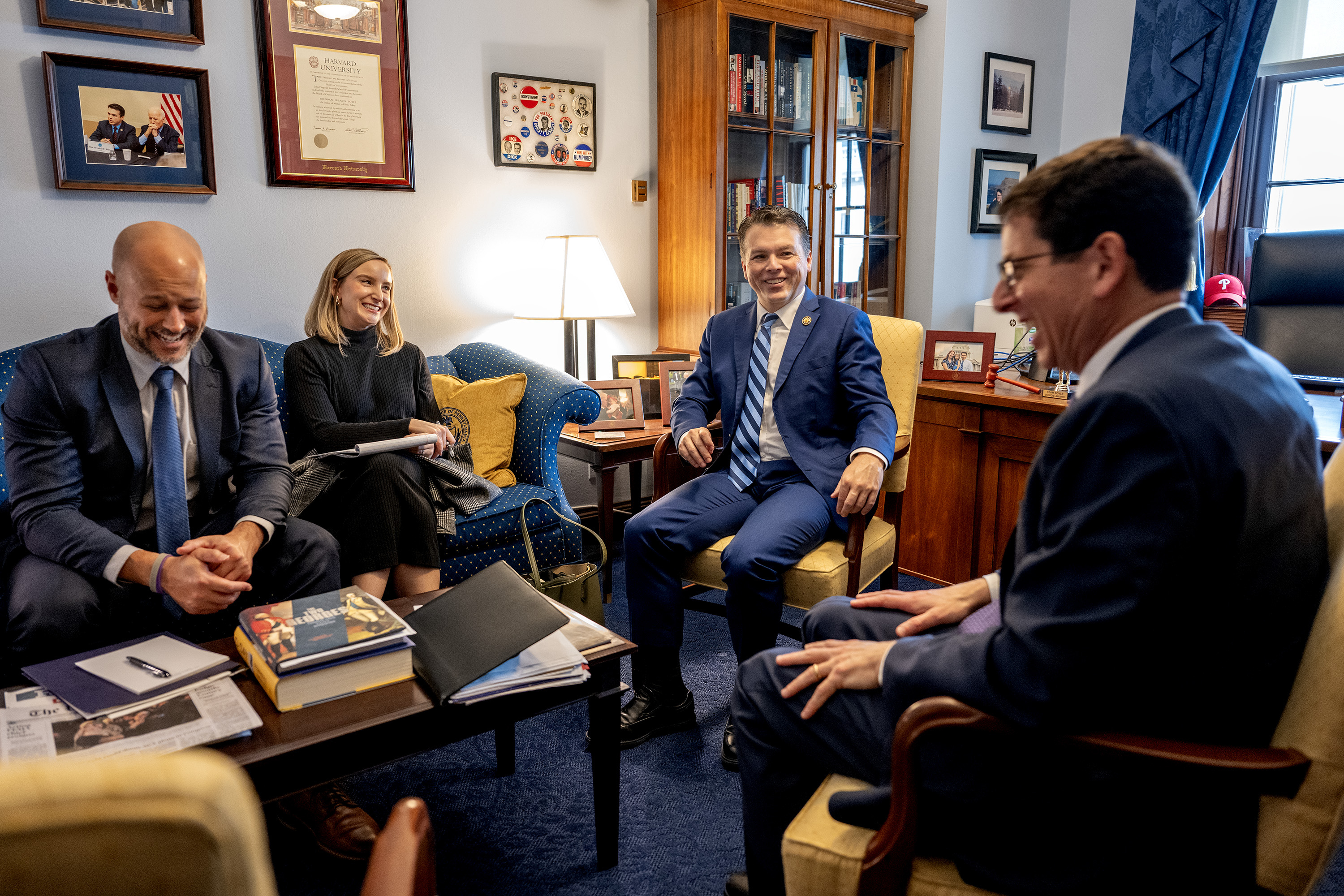
    U.S. Rep. Brendan Boyle (center) meets in his Capitol Hill office with Phillip Swagel (right), director of the Congressional Budget Office, following Swagel’s testimony before House Committee on the Budget last month. As Budget’s ranking member, Boyle has been central in shaping Democratic messaging around Republican policies.

    ‘Scrappy Irish Catholic boys from Olney’

    Boyle, who lives in Somerton with his wife and 11-year-old daughter, is an affable, earnest lawmaker in a role that is unapologetically wonky — and high-profile, especially lately.

    From Oct. 1 through the end of November — a period including the shutdown — Boyle popped up on TV news more than two dozen times, by his office’s count.

    His political beginnings were far less polished. In 2014, Boyle shocked Philadelphia’s political establishment by winning the Democratic primary over a field that included former U.S. Rep. Marjorie Margolies, scion of a powerful political family. Then a 37-year-old state representative, Boyle ran as a blue-collar, antiestablishment pragmatist from Northeast Philly. His ads cast his opponents as out of touch, and he leaned hard on his family’s story: his father, an Irish immigrant, worked at an Acme warehouse and later as a SEPTA janitor; his mother was a school crossing guard. Boyle still keeps his dad’s SEPTA cap on a bookshelf in his Washington office.

    That same year, his brother Kevin won a seat in the state House, prompting Philadelphia Magazine to profile the “scrappy Irish Catholic boys from Olney” who were reshaping the party.

    A decade later, Democrats are still striving to win back blue-collar voters. Boyle, meanwhile, has traded some of his insurgent edge for the stature of a Hill veteran. As Philadelphia elects a replacement for retiring U.S. Rep. Dwight Evans next year, Boyle will be a key ally for the new lawmaker, and a coveted endorsement during the election, though he has said he does not plan to weigh in. He has been in the thick of some of the year’s biggest fights — leading Democrats through a 12-hour reconciliation markup, testifying at a 1 a.m. Rules Committee hearing, and grinding through an overnight Ways and Means marathon.

    His younger brother has had a far more tumultuous path. Kevin lost his state House seat last year amid long-running mental health struggles.

    Boyle declined to discuss the situation beyond saying: “The last five years — almost exactly five years — have been very challenging. And I’ll just leave it at that.”

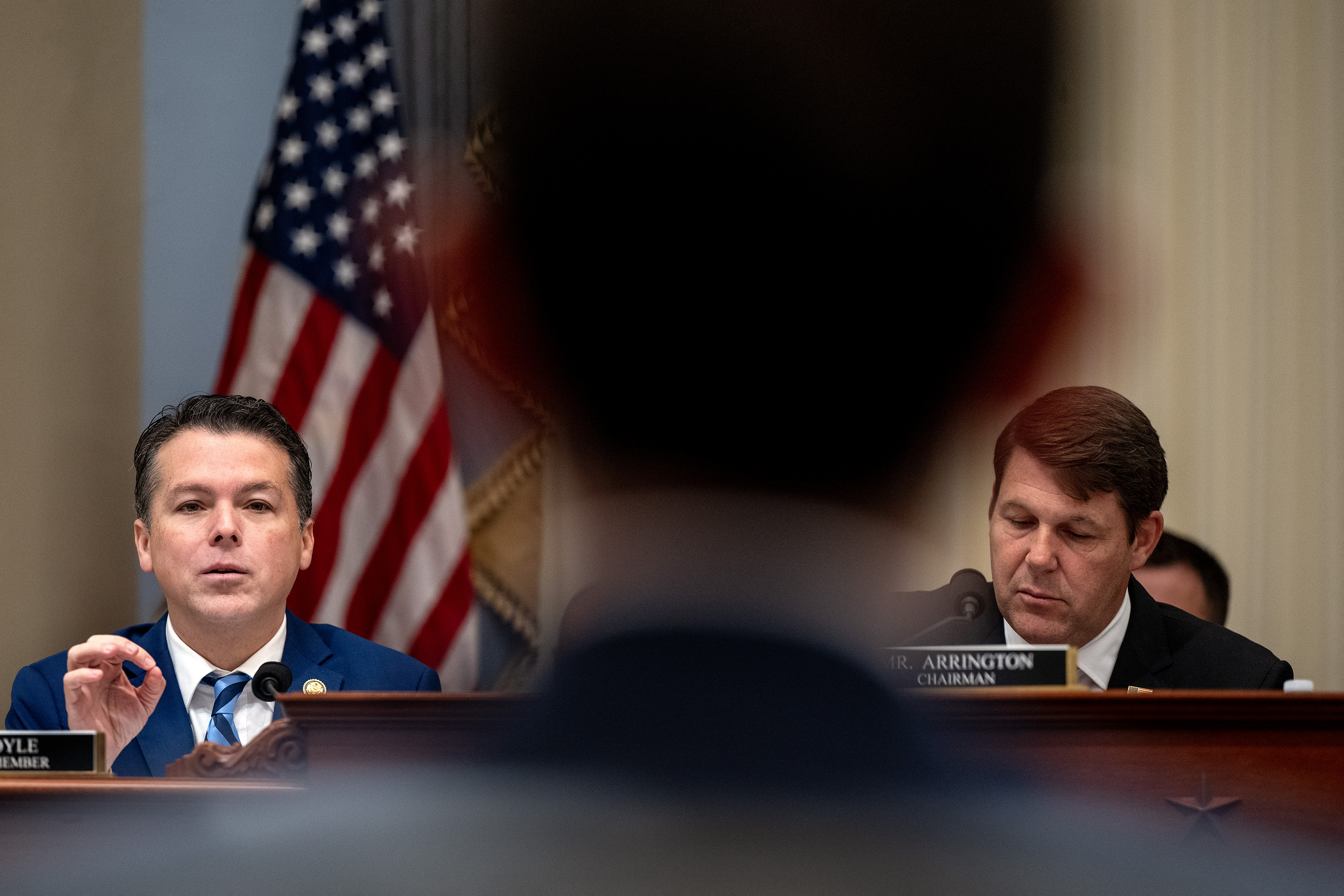
    U.S. Reps. Brendan Boyle (left) (D., Philadelphia) and Jodey Arrington (right) (R., Texas) question Phillip Swagel (back to camera), director of the nonpartisan Congressional Budget Office, during a hearing on Capitol Hill in Washington, D.C. Tuesday, Nov. 18, 2025. Arrington chairs the House Budget Committee, while Boyle is the panel’s top Democrat.

    In line for the gavel

    Before that late November hearing, Boyle had already reached out to fellow Democrats on the committee: Talk about healthcare, he urged them. Talk about affordability. Talk about it ad nauseam.

    He sat at the dais across from a portrait of Gray in an ornate hearing room, surrounded by paintings of former budget chairs, and delivered his opening remarks.

    “The president has stopped calling it the ‘Big, Beautiful Bill.’ He’s stopped talking about the bill altogether,” Boyle said. “… Because it’s not just that healthcare’s become unaffordable in America. It is beef, it is coffee, it’s electricity, almost every staple in the average consumer basket.”

    The director of the Congressional Budget Office, Phillip Swagel, was called before the committee that day and fielded questions from both sides. Democrats wanted to know Swagel’s projections on how Trump’s policies would affect everything from the national debt to the price of Thanksgiving dinners, eager for sound bites to send to constituents back home and to pressure Republicans on the healthcare debate.

    Republicans were pushing Swagel for an audit, seeking more transparency on how the nonpartisan agency comes to its projections.

    “We need to be able to cut through the politics and the partisanship and figure out where you and your team can do a better job,” said U.S. Rep. Jodey Arrington, the Texas Republican who chairs the committee.

    Boyle, whose office uses CBO projections to compile and distribute national and district-level data to Democrats, said he is open to an audit, if performed responsibly and not as a means to “discredit” the agency over numbers Republicans don’t like.

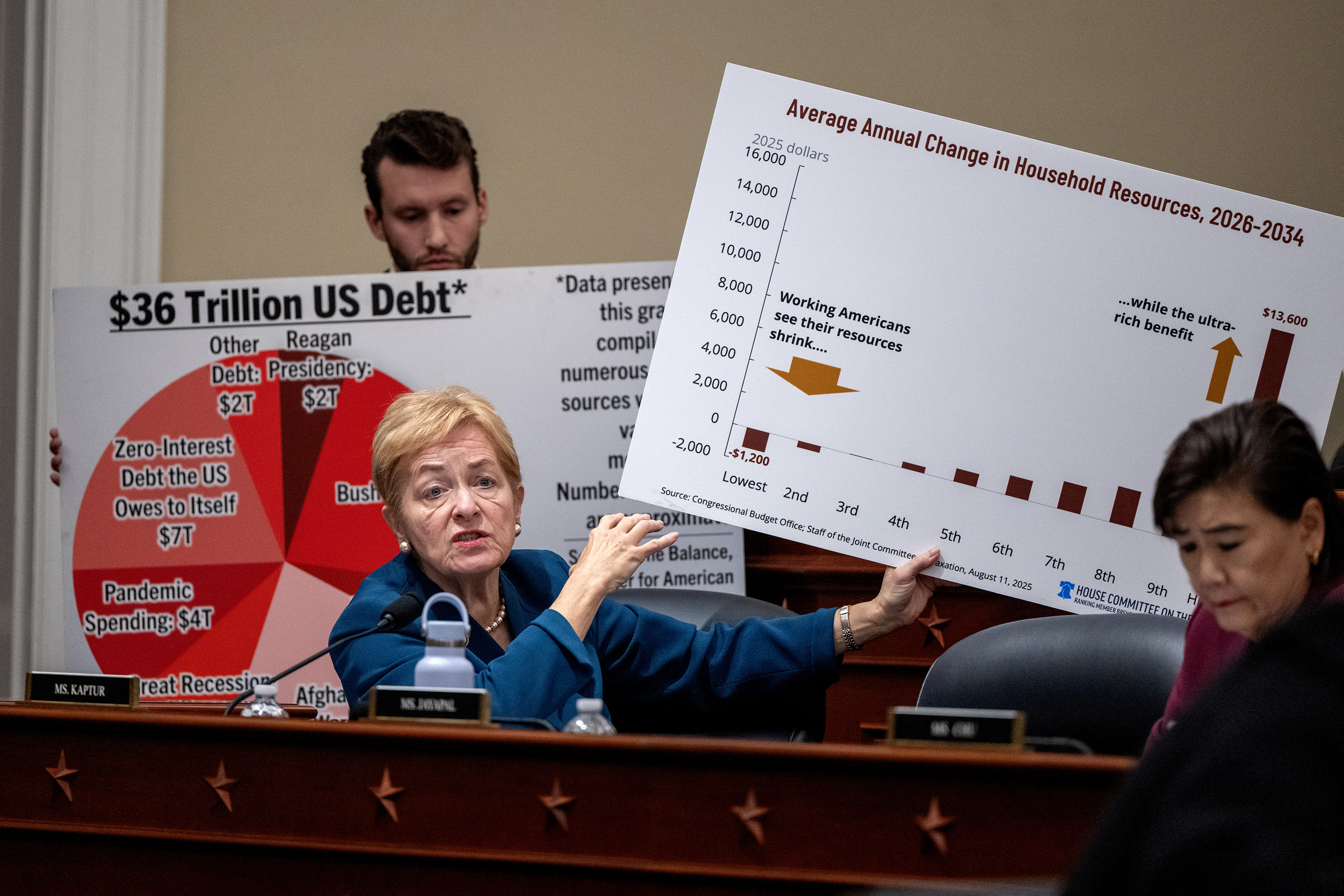
    U.S. Rep. Marcy Kaptur, a Democrat from Ohio, brings visual aids to a hearing of the House Committee on the Budget on Capitol Hill in Washington, D.C. Tuesday, Nov. 18, 2025.

    Throughout the three-hour hearing, Boyle would sidebar with Arrington, who is retiring next year. The Philly Democrat and the West Texas conservative make an unlikely pair, but the two have bonded across many late-night sessions over having younger children and their college football fanaticism — Boyle for his alma mater, Notre Dame, Arrington for Texas Tech.

    “He’s a very good communicator because he’s a really smart and thoughtful guy,” Arrington said. “I always can appreciate, whether I agree or not, with a good communicator. He’s authentic in what he believes and he’ll even say, ‘I grant you it’s not perfect,’ or ‘You make a good point.’”

    The midterms will dictate not just the party that controls Congress but also which ideological track the Budget Committee takes. If Democrats win, and Boyle takes the gavel, he plans to put more scrutiny on the administration and aim to regain some of Congress’ control over purse strings that Republicans have ceded to Trump.

    Another Pennsylvanian, U.S. Rep. Lloyd Smucker, a Republican who represents Lancaster, has announced he is running to be the top Republican on the committee following Arrington’s retirement. That means regardless of party control, two Pennsylvanians will likely be at the helm of one of the most powerful committees in Congress. Smucker, a fiscal conservative running with Arrington’s backing, said in an interview he would focus on rising national debt and getting a budget resolution adopted. He was a key negotiator for Republicans during reconciliation, helping to get conservative House Freedom Caucus members on board.

    Smucker called Boyle someone who is “serious about the budget process, and wants to make sure that it functions.”

    “He genuinely cares about strengthening Congress as an institution,” Smucker added.

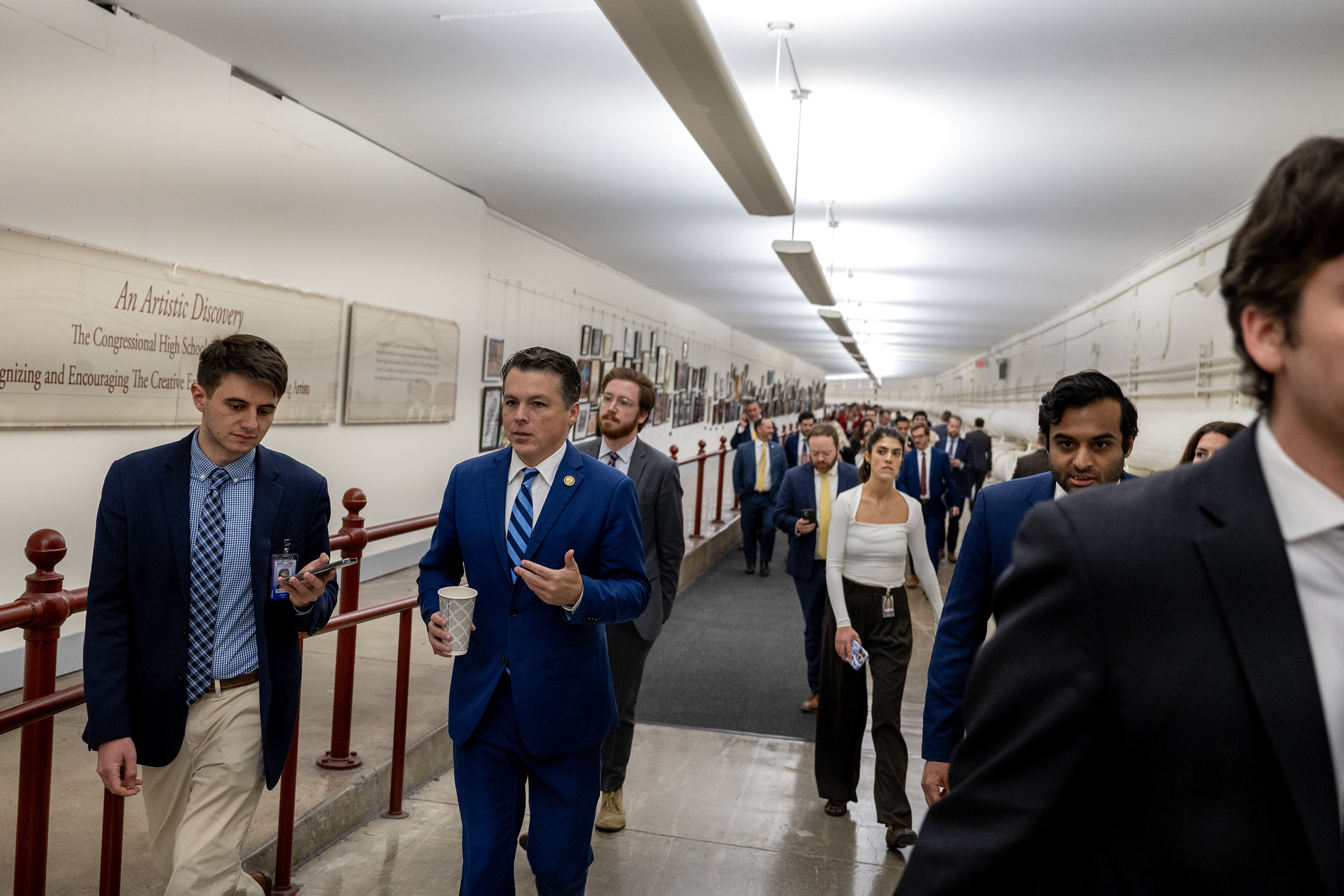
    U.S. Rep. Brendan Boyle is interviewed by Charles Hilu (left), a reporter with the Dispatch, as he moves between office buildings on Capitol Hill in Washington, D.C. Tuesday, Nov. 18, 2025.

    The road ahead

    The longer Boyle stays in the House, in a safe Democratic seat, the harder it is to think about walking away.

    In September, Jeffries appointed him the lead Democrat for the congressional delegation to the NATO Parliamentary Assembly. For Boyle, a history lover who has biographies of George Washington on his office coffee table, it’s an exciting opportunity to represent the country internationally as Trump continues to criticize the historic alliance. Boyle would become the leader of the parliamentary assembly delegation if Democrats take control of the House, just as he would take the gavel in the Budget Committee. Past committee chairs include former House Speaker Paul Ryan (R., Wis.), former Defense Secretary Leon Panetta, and former Ohio Gov. John Kasich.

    “Some really high-quality, high-caliber people have done that over the last 40 years. So that’s what I’m looking forward to in the near term,” Boyle said. “After that, come 2028, and beyond, we’ll deal with that then. But it is interesting, like the longer you’re here, and if you move up the ranks, then actually it does make it more difficult to leave.”

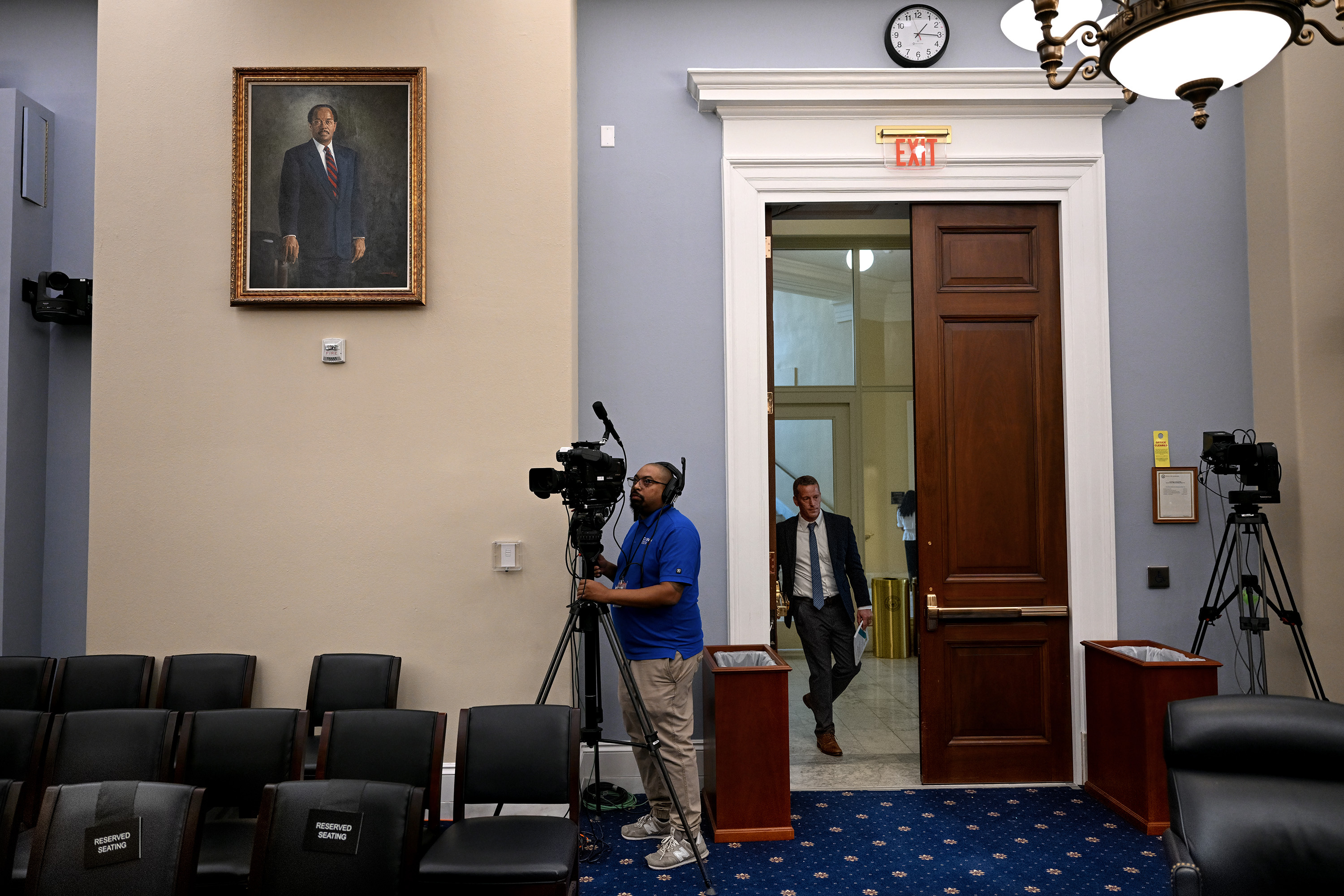
    A painting of former U.S. Rep. William H. Gray III hangs in the hearing room of the House Committee on the Budget on Capitol Hill. It’s been 40 years since a Philadelphia lawmaker led a House committee.
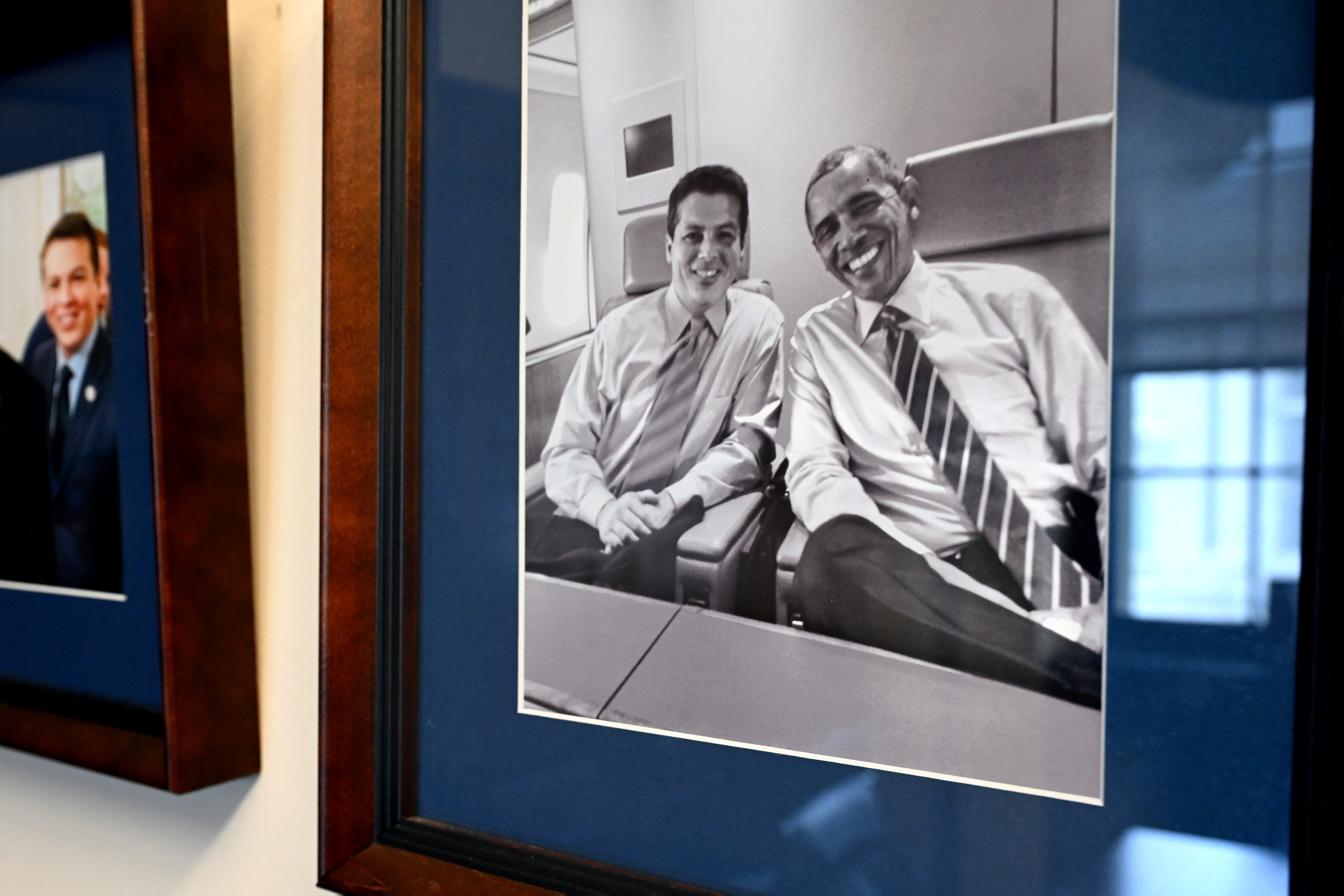
    A photo of U.S. Rep. Brendan Boyle with former President Barack Obama on Air Force One hangs in his office on Capitol Hill in Washington, D.C.

    But Boyle has not been shy about airing frustrations with Fetterman, whose term is up in 2028, sparking speculation Boyle could have an interest in a run against him.

    Boyle said he avoided criticizing Fetterman until this spring, when the senator’s positions started to directly conflict with the party messaging he was pushing out.

    “As I was doing TV opportunity after TV opportunity, what I increasingly found was that the clip they would show before I would be asked the question wouldn’t be a clip of what Donald Trump had said; it would be a clip of what my state’s Democratic senator had said,” Boyle said. “And I obviously would have to combat it.”

    Fetterman has embraced an independent streak as a purple-state senator, often willing to work with the GOP. While pleasing to voters eager to see compromise and bipartisanship in a tenuous moment in Washington, it has also alienated some progressives.

    Boyle said when it comes to the Senate, “I don’t rule anything in and I don’t rule anything out.”

    If he were to run, a challenge could be building his statewide profile. He is still relatively unknown outside Philadelphia, though he has proven to be a prolific fundraiser. Today’s politics also tend to elevate showmen and outsiders, while Boyle has the more traditional cadence of an establishment politician — disciplined, polished, and most compelling when he speaks off-script.

    Some local Philadelphia Democrats have criticized Boyle’s voting record on immigration, arguing it has not reflected the interests of the Latino community he represents in his majority-minority district. Boyle voted for the bipartisan Laken Riley Act, which requires the Department of Homeland Security to detain noncitizens who are arrested or charged with certain crimes, often forgoing due process. He was one of 46 Democrats in the House along with 12 in the Senate, including Fetterman, to support the GOP-led bill.

    “I have the same criticism as I do of Josh Shapiro: I wish he would take a stronger stance on immigration,” said State Rep. Danilo Burgos, who represents North Philadelphia. At the same time, Burgos credited Boyle as being a “good partner in our community” who always returns phone calls and texts.

    For now, Boyle keeps an extremely busy schedule. The day of the budget hearing, his schedule stretched over 15 hours. He hustled from a meeting with Social Security and Medicaid experts to a floor vote to release the Jeffrey Epstein files.

    Back in his office, where Eagles throw blankets, Phillies pennants, and a painting of Donegal, Ireland, his father’s home county, decorate the space, he sat down for his final meeting of the day.

    Gwen Mills, the international president of UNITE HERE, a labor union that represents hospitality workers, wanted advice on how to translate Democrats’ work in Washington to members frustrated with both parties.

    “Talk about affordability and how Republicans are making it worse — with the so-called beautiful bill,” Boyle suggested, running through some numbers and data before offering up a simpler sound bite:

    “It boils down to life in America is just too damn expensive right now.”

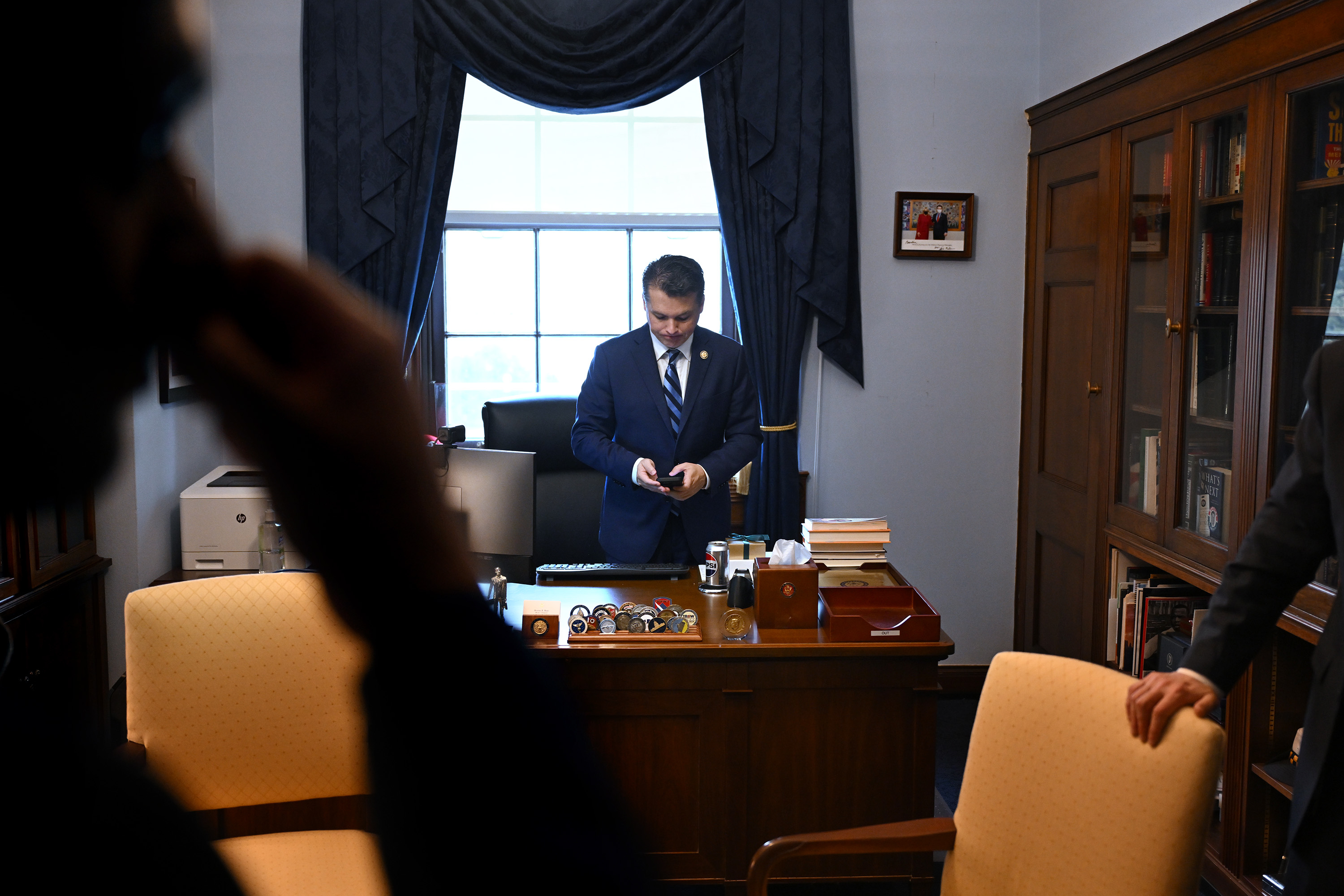
    U.S. Rep. Brendan Boyle checks his phone before leaving his office on Capitol Hill in Washington, D.C. Tuesday, Nov. 18, 2025.
  • Faith communities are showing up at the ICE office for 40 weeks of prayer and protest

    Faith communities are showing up at the ICE office for 40 weeks of prayer and protest

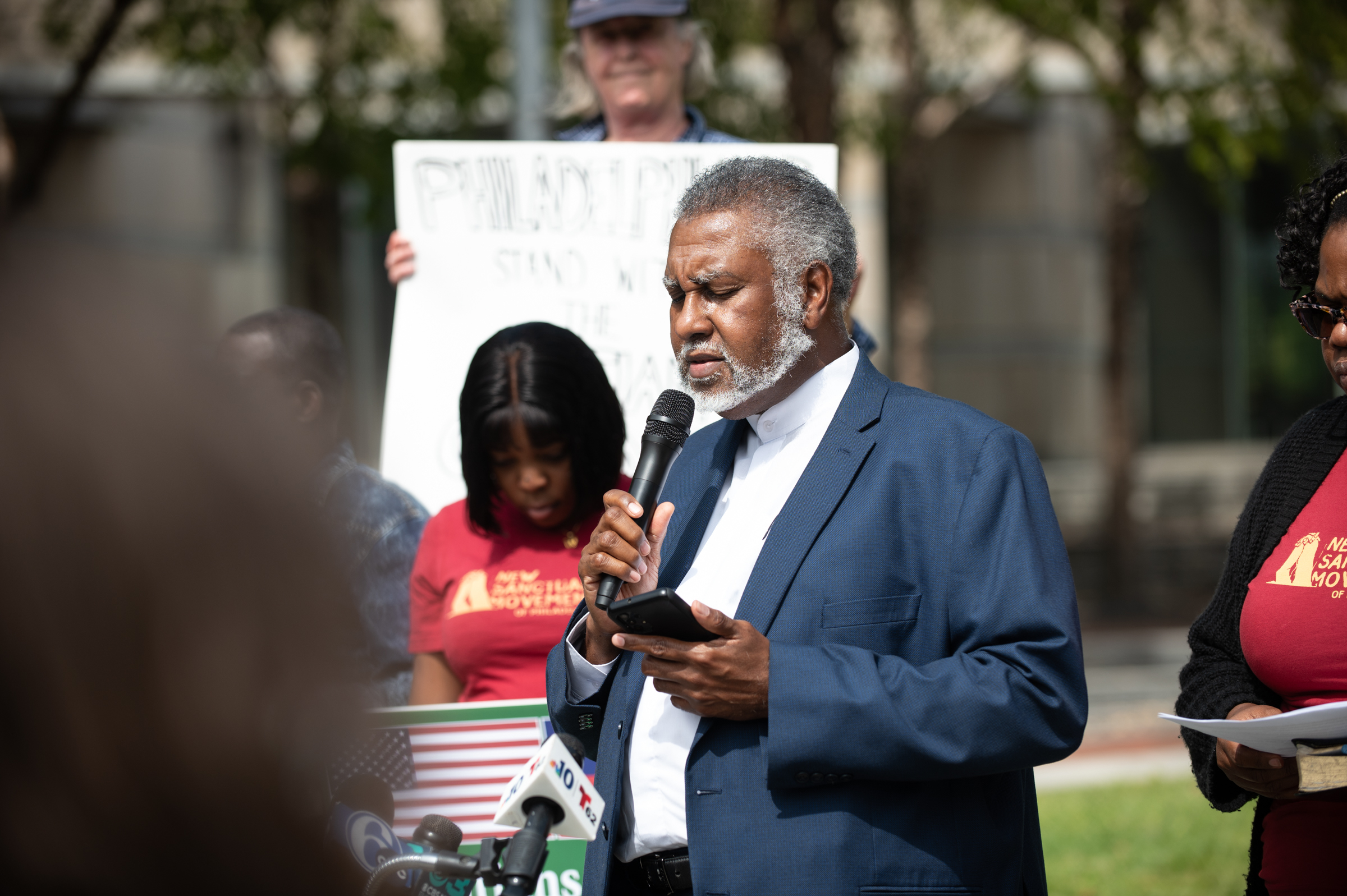
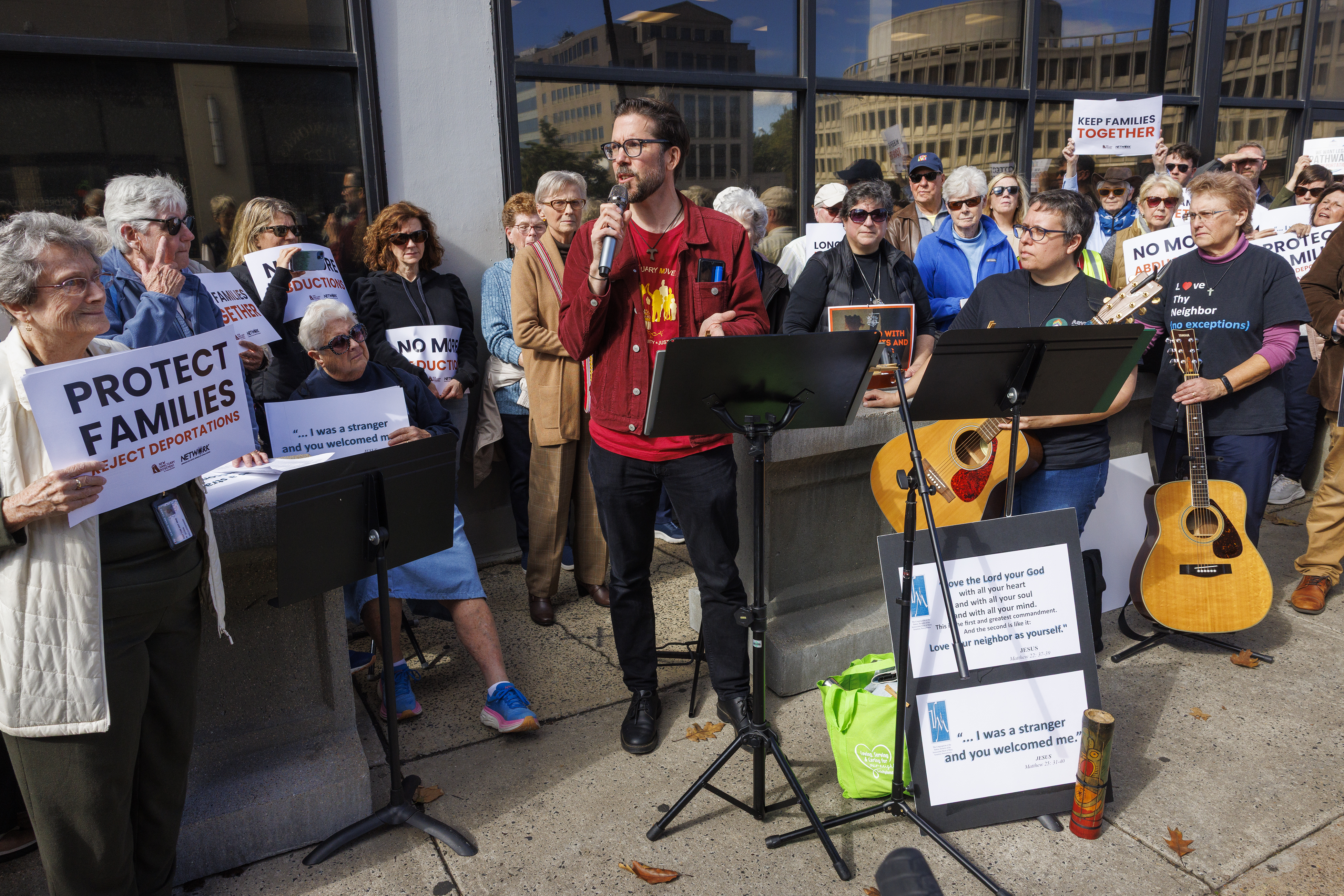
    On a rainy Wednesday a week before Thanksgiving, members of the congregations of the Roman Catholic parishes of Holy Innocents and St. Joan of Arc gathered in front of the U.S. Immigration and Customs Enforcement office in Center City.

    They stood vigil in witness to what the Rev. Christopher Neilson — the founder and president of Christianity for Living Ministries and founder and pastor of the Living Church at Philadelphia — calls “the core requirements God has for humanity”: act justly, love mercy, and walk humbly with God.

    Another religious group appeared at ICE’s door near Eighth and Cherry Streets on the day before Thanksgiving. This time, it was an interfaith mix of folks led by Christianity for Living Ministries.

    And there will be more. On Wednesdays to come, members of Mennonite Action, a couple of United Methodist churches, a Quaker meeting, two synagogues, a Presbyterian church, the Sisters of St. Joseph of Philadelphia and more Catholic parishes have all pledged to take part in a recurring demonstration that Neilson calls ICE Profest 40 — an ecumenical and interfaith action to oppose the government’s pitiless anti-immigrant crackdown slated to take place over 40 weeks. The word profest was coined by Neilson to mean “an amalgamation of faith expressed through proclamation, prayer, and protest.”

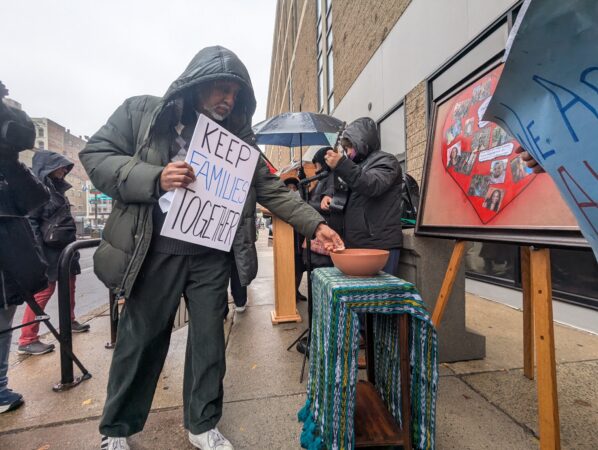
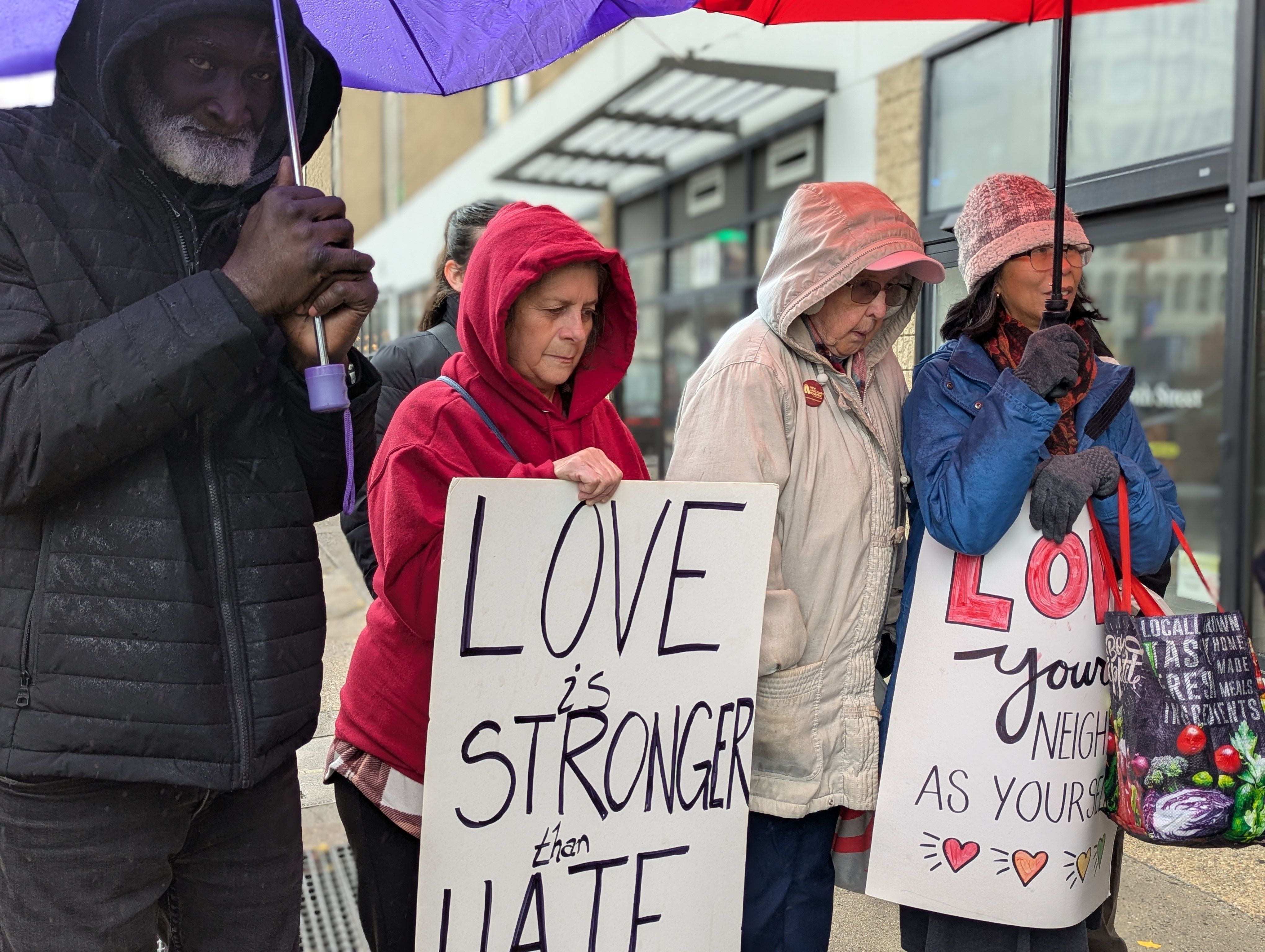
    Members of the congregations of Holy Innocents and St. Joan of Arc parishes gathered Nov. 19 for an interfaith prayer vigil outside the ICE office in Center City. It was the kickoff of 40 weeks of vigils planned by faith communities across Philadelphia.

    It’s easy for small, quiet acts like this to get lost in the din of all the outrageous actions coming from President Donald Trump and his administration, or amid the larger protests that draw millions of participants.

    But organizers are hopeful that whatever their movement might lack in numbers, it more than makes up for in the power of their spiritual conviction — a conviction that is grounded in the Bible and other sacred texts.

    “We proclaim God’s word of justice, mercy, and humility (Micah 6:8),” Neilson told me via email. “We pray for ICE agents and authorities (St. Matthew 5:44-45; St. Luke 3:24; 6:27-28; I Timothy 2:1-4), many of whom are conflicted and have crises of conscience. [We pray] for their courage, transformation, and turning, and for the protection and provision of the detainees and deportees, who are traumatized, from family separation and living in constant fear (Isaiah 1:17; Psalm 10:17-18; 82:3; St. Luke 4:18-19).”

    “And,” he added, “we protest ICE activity, i.e., the orders ICE agents are given and the ways in which they are carried out, that dehumanizes and victimizes those created in the image and likeness of God [who] are our neighbors, and [which] disobeys and violates God’s command to welcome and love the stranger and alien (Leviticus 19:33-34; Deuteronomy 10:18-19; St. Matthew 25:31-46).”

    The Rev. Christopher Neilson said that demonstrators at the protests pray for detainees and deportees who have been traumatized by family separation and are living in fear. They also pray for the safety of ICE agents and that the organization’s leaders might change their policies.

    The number of weeks — 40 — during which this will happen has biblical significance, Neilson said, as a period of transition from trial to transformation. (Think of the 40 days and 40 nights Jesus traveled in the wilderness before the crucifixion.)

    For me, the timing of when ICE Profest 40 is gearing up is especially resonant.

    We’re moving from Thanksgiving — a secular holiday which, in good years, I get to celebrate with a family that includes foreign-born and U.S.-born folks — into Advent.

    The beginning of the liturgical year is when Christians like me move from anticipation to action as we wait to celebrate the birth of Christ into a humble, migrant human family. I love the hush that precedes a world on the brink of transformation. I suspect that is why the quiet power of ICE Profest 40 actions moves me so deeply.

    “The tone of these vigils is different,” Peter Pedemonti, the codirector of New Sanctuary Movement of Philadelphia, told me via email.

    Peter Pedemonti, codirector of the New Sanctuary Movement, addressing Catholics gathered outside the ICE office at Eighth and Cherry Streets, in October.

    “They are not as loud as a protest, but they have the potential for big impact,” he said. “We are seeing people sign up who are new to public witness, and so they serve as an entry into collective action. This is important as we fight not only the attacks on immigrant communities, but also Trump’s rapid steps toward authoritarianism. We need everyone right now, and it is really important we have paths for new people to get involved.”

    “I have been doing faith-rooted organizing for nearly 20 years. These spiritual tools we have work. We can’t always see the immediate impact, but I have seen them help win campaigns. And so I believe that when we bring them to ICE, we are engaging in something powerful,” Pedemonti added. “The religious community has an important role right now. We are the moral voice, and when we see Trump trample our faith teachings and our democracy, it is critical [that] faith communities speak out.”

    While my own faith tradition has long had priests, religious men and women accompanying immigrants and advocating for their rights, the United States Conference of Catholic Bishops has been pretty circumspect about commenting on the Trump administration’s policies.

    But that changed this November.

    In a statement issued after the conference’s plenary meeting, the bishops wrote, “We oppose the indiscriminate mass deportation of people,” and soon thereafter, Pope Leo XIV expressed his wholehearted support for the bishops’ statement.

    Leaders from many other faith traditions and denominations have, of course, also stood publicly with immigrant communities threatened by Trump’s policies.

    But for Catholics who supported Trump — 55% overall (62% of white Catholics, 41% of Hispanic Catholics), according to the Pew Research Center — the Catholic bishops’ statement could serve as a come-to-Jesus (heh!) moment.

    It is certainly a clear call for transformation during this most transformative of seasons.

    What can the birth of Christ mean to us Christians if we would deny people shelter near us simply because they are unknown to us, and from elsewhere? What can it mean if we don’t stand against the indiscriminate targeting of innocents? What can it mean if we justify killing people based on the mere prognostication of threat?

    I won’t speak for other people of faith, but for me, those are questions that go beyond political affiliation or temporal power, and touch on the “act justly, love mercy, and walk humbly” core requirements Neilson referenced.

    On the first Sunday of Advent, one of the readings will be Isaiah’s proclamation that the people “shall beat their swords into plowshares, and their spears into pruning hooks; one nation shall not raise the sword against another, nor shall they train for war again,” and that throws me right back into the fact that both the Catholic bishops in their statement, and the Rev. Neilson in his description of the ICE Profest 40 vigils, reference ICE agents.

    ICE agents aren’t wielding swords, of course, but they do carry firearms and other implements with which they smash the windows and doors of terrified immigrants. And with the proposal that military members could be “trained” by deployment to U.S. cities to support ICE and U.S. Customs and Border Protection agents, it’s not that much of a stretch to make Isaiah fit the moment.

    I’m going to confess something now. I’ve prayed often for immigrants, never for ICE agents. In fact, I bristled a bit when I heard the bishops equating the vilification immigrants have experienced with the vilification of ICE agents — no one has accused ICE agents of eating pets, or separated them from their families, or turned them from legally residing to unauthorized in a moment.

    But, as we saw with this week’s shooting of two National Guard members in Washington, D.C., those who have been asked to carry out the administration’s ill-conceived and oppressive policies may also be endangered by them.

    The shooting reminded me of what Pedemonti told me: “If we want ICE to see the humanity of those they are persecuting, then we need to model that and see the humanity of ICE agents.”

    “The religious community has an important role right now. We are the moral voice, and when we see Trump trample our faith teachings and our democracy, it is critical [that] faith communities speak out,” Peter Pedemonti said.

    “We believe all people can change,” he added, “and so in the tradition of St. Óscar Romero, who called on soldiers in El Salvador’s authoritarian regime to put down their arms, we call for ICE agents to follow their conscience and refuse to follow orders, to leave people with their families, to leave the people in peace.”

    I guess it’s time to broaden my prayers. Don’t get me wrong, my rosary (the one which, along with its crucifix and Our Lady of Guadalupe medallion, has monarch butterfly beads representing migrants) will still be in regular rotation with prayers for immigrant justice. But maybe the Romero quote with which I open my prayers using a niner that has his medallion will be different: I want to make a special appeal to soldiers, National Guard members, and policemen: Each of you is one of us.

    The first candle we light at Advent represents hope, after all, and no matter how far away or unlikely the desired outcome appears, hope always leads to transformation.

  • Trump wants a bigger White House ballroom. His architect disagrees.

    Trump wants a bigger White House ballroom. His architect disagrees.

    President Donald Trump has argued with the architect he handpicked to design a White House ballroom over the size of the project, reflecting a conflict between architectural norms and Trump’s grandiose aesthetic, according to four people who spoke on the condition of anonymity to describe internal conversations.

    Trump’s desire to go big with the project has put him at odds with architect James McCrery II, the people said, who has counseled restraint over concerns the planned 90,000-square-foot addition could dwarf the 55,000-square-foot mansion in violation of a general architectural rule: don’t build an addition that overshadows the main building.

    A White House official acknowledged the two have disagreed but would not say why or elaborate on the tensions, characterizing Trump and McCrery’s conversations about the ballroom as “constructive dialogue.”

    “As with any building, there is a conversation between the principal and the architect,” said the official, who spoke on the condition of anonymity to discuss private conversations. “All parties are excited to execute on the president’s vision on what will be the greatest addition to the White House since the Oval Office.”

    McCrery declined an interview request through a representative who declined to answer questions about the architect’s interactions with Trump in recent weeks.

    Trump’s intense focus on the project and insistence on realizing his vision over the objections of his own hire, historic preservationists and others concerned by a lack of public input in the project reflect his singular belief in himself as a tastemaker and obsessive attention to details. In the first 10 months of his second term, Trump has waged a campaign to remake the White House in his gilded aesthetic and done so unilaterally – using a who’s-going-to-stop-me ethos he honed for decades as a developer.

    Multiple administration officials have acknowledged that Trump has at times veered into micromanagement of the ballroom project, holding frequent meetings about its design and materials. A model of the ballroom has also become a regular fixture in the Oval Office.

    The renovation represents one of the largest changes to the White House in its 233-year history, and has yet to undergo any formal public review. The administration has not publicly provided key details about the building, such as its planned height. The 90,000-square-foot structure also is expected to host a suite of offices previously located in the East Wing. The White House has also declined to specify its plans for an emergency bunker that was located below the East Wing, citing matters of national security.

    On recent weekdays, a bustling project site that is almost entirely fenced off from public view contained dozens of workers and materials ready to be installed, including reinforced concrete pipes and an array of cranes, drills, pile drivers and other heavy machinery, photos obtained by The Washington Post show.

    Plans for the addition as of Tuesday had not been submitted to the National Capital Planning Commission, a 12-member board charged by Congress with overseeing federal construction projects and now led by Trump allies. A preliminary agenda for the commission’s next meeting, scheduled for Dec. 4, does not include the ballroom project under projects expected to be covered at the meeting or reviewed by the body in the next six months. White House officials say that the administration still plans to submit its ballroom plans to the commission at “the appropriate time.”

    The administration’s rapid demolition of the East Wing annex and solicitations from companies and individuals to fund the new construction have caused controversy over the project, which Trump believes the White House needs to host special events. Democrats, historical preservation groups and some architects have criticized the project’s pace, secrecy and shifting specifications. The White House initially said this summer that the ballroom would cost $200 million and fit 650 people, while Trump in recent weeks asserted that it could cost $300 million or more and would fit about 1,000 people.

    McCrery has kept his criticism out of the public eye, quietly working to deliver as Trump demanded rushed revisions to his plans, according to two of the people with knowledge of the conversations. The president – a longtime real estate executive who prides himself on his expertise – has repeatedly drilled into the details of the project in their Oval Office meetings, the people said.

    McCrery has wanted to remain with the project, worried that another architect would design an inferior building, according to a person with knowledge of his thinking.

    McCrery, a classical architect and the founder and principal of McCrery Architects, had designed works like the U.S. Supreme Court bookstore and the pedestal for President Ronald Reagan’s statue in the U.S. Capitol. The ballroom was the largest-ever project for his firm, which has specialized in designing churches, libraries and homes.

    Trump hired McCrery for the project on July 13. Eighteen days later, the White House announced the ballroom project, with officials promising to start construction within two months and finish before the end of Trump’s second term.

    Trump also appointed McCrery in 2019 to serve a four-year term on the U.S. Commission of Fine Arts, which provides advice to the president, Congress and local government officials on design matters related to construction projects in the capital region.

    Democrats have pressed the White House and its donors for more details on the planned construction and what was promised to financial contributors. The ballroom is being funded by wealthy individuals and large companies that have contracts with the federal government, including Amazon, Lockheed Martin and Palantir Technologies. (Amazon founder Jeff Bezos owns The Post.)

    Several donors have cast the decision in statements as an investment in the future of a building that belongs to the American people, pushing back on the suggestion that their largesse sought to curry favor with Trump.

    A donor list released by the White House of 37 businesses and individuals who underwrote the ballroom is not comprehensive, administration officials acknowledged, leaving open the possibility that millions of dollars have been funneled toward the president’s pet project with no oversight.

    “Billionaires and giant corporations with business in front of this administration are lining up to dump millions into Trump’s new ballroom – and Trump is showing them where to sign on the dotted line,” Sen. Elizabeth Warren (D-Massachusetts) said in a statement last week. Warren and her colleagues also introduced legislation that would impose restrictions on White House construction and require more transparency from donors.

  • Trump wins dismissal of Georgia 2020 election interference case

    Trump wins dismissal of Georgia 2020 election interference case

    WASHINGTON – A prosecutor on Wednesday dropped all criminal charges in Georgia against U.S. President Donald Trump for interference in the 2020 presidential election, ending a high-profile racketeering case that once seemed like a significant threat to the Republican.

    The decision by Peter Skandalakis, a state official who recently took over the prosecution, was a stinging defeat for Fulton County District Attorney Fani Willis, who brought the case in 2023 but then lost control of it amid ethics complaints by defense lawyers.

    It was one of four criminal prosecutions that Trump faced in the years since losing his 2020 presidential re-election bid to Democrat Joe Biden. Only one of them — a New York case over a hush-money payment to a porn star during his 2016 campaign — went to trial. Trump was found guilty in that case but has asked for it to be thrown out.

    The dismissal highlighted how Trump’s return to the White House this year, a political comeback unparalleled in U.S. history, dismantled a thicket of legal cases that once seemed set to define his post-presidency era.

    Trump’s political career had appeared to be over after his false claims of election fraud led a mob of supporters to storm the U.S. Capitol on Jan. 6, 2021, in a failed bid to overturn his 2020 defeat.

    Skandalakis said in a court filing that “there is no realistic prospect that a sitting President will be compelled to appear in Georgia to stand trial,” so it would be “futile and unproductive” to push forward with the case.

    Skandalakis said his decision, which was approved by a judge on Wednesday morning, “is not guided by a desire to advance an agenda but is based on my beliefs and understanding of the law.”

    Steve Sadow, a lawyer for Trump, praised the dismissal, saying the case should have never been brought.

    Willis had brought the case against Trump and 18 co-defendants, charging a sweeping criminal conspiracy to overturn Georgia’s 2020 election results after a recording surfaced in the media of Trump asking Georgia’s top electoral official to “find” him enough votes to win the state.

    The co-defendants included former Trump lawyers Rudy Giuliani and John Eastman, who like Trump pleaded not guilty.

    An appeals court removed Willis, an elected Democrat in Atlanta, from the case last year. The court said she had created an “appearance of impropriety” by having a romantic relationship with the special prosecutor she had hired to lead the case.

    Skandalakis heads the Prosecuting Attorneys’ Council of Georgia, a government agency that supports the state’s local prosecutors. Earlier this month, he appointed himself to lead the case, saying he had been unable to find another prosecutor willing to take it over.

    Anthony Michael Kreis, a Georgia State University law professor, said Skandalakis’s decision to drop the charges was not surprising. The agency he oversees does not have the resources to prosecute such a complex case with several co-defendants, Kreis said.

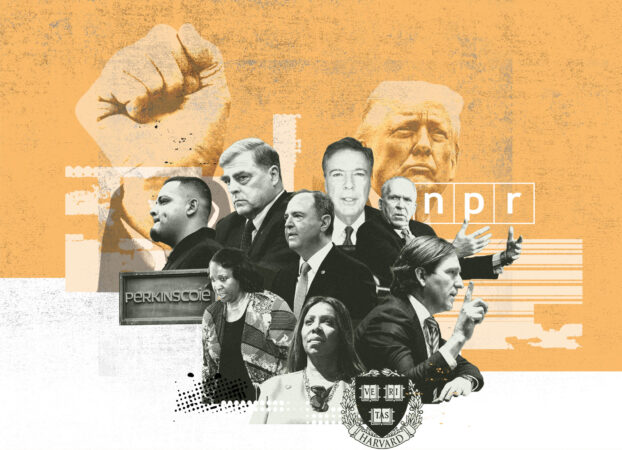
  • Trump’s campaign of retribution: At least 470 targets and counting

    Trump’s campaign of retribution: At least 470 targets and counting

    In his second term, Donald Trump has turned a campaign pledge to punish political opponents into a guiding principle of governance.

    What began as a provocative rallying cry in March 2023 — “I am your retribution” — has hardened into a sweeping campaign of retaliation against perceived enemies, reshaping federal policy, staffing and law enforcement.

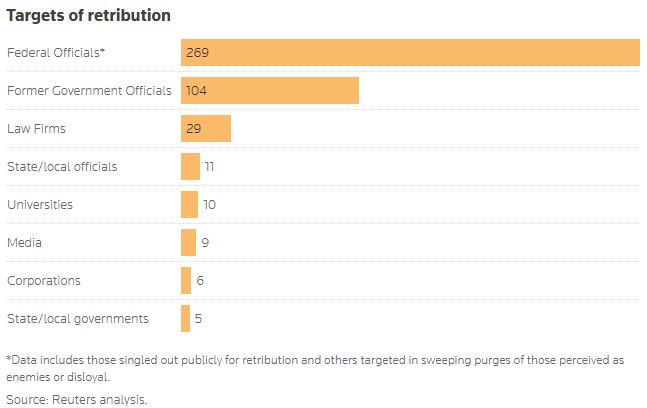
    A tally by Reuters reveals the scale: At least 470 people, organizations and institutions have been targeted for retribution since Trump took office — an average of more than one a day. Some were singled out for punishment; others swept up in broader purges of perceived enemies. The count excludes foreign individuals, institutions and governments, as well as federal employees dismissed as part of force reductions.

    The Trump vengeance campaign fuses personal vendettas with a drive for cultural and political dominance, Reuters found. His administration has wielded executive power to punish perceived foes — firing prosecutors who investigated his bid to overturn the 2020 election, ordering punishments of media organizations seen as hostile, penalizing law firms tied to opponents, and sidelining civil servants who question his policies. Many of those actions face legal challenges.

    At the same time, Trump and his appointees have used the government to enforce ideology: ousting military leaders deemed “woke,” slashing funds for cultural institutions held to be divisive, and freezing research grants to universities that embraced diversity initiatives.

    Reuters reached out to every person and institution that Trump or his subordinates singled out publicly for retribution, and reviewed hundreds of official orders, directives and public records. The result: the most comprehensive accounting yet of his campaign of payback.

    The analysis revealed two broad groups of people and organizations targeted for retaliation.

    Members of the first group – at least 247 individuals and entities – were singled out by name, either publicly by Trump and his appointees or later in government memos, legal filings or other records. To qualify, acts had to be aimed at specific individuals or entities, with evidence of intent to punish. Reuters reporters interviewed or corresponded with more than 150 of them.

    Another 224 people were caught up in broader retribution efforts – not named individually but ensnared in crackdowns on groups of perceived opponents. Nearly 100 of them were prosecutors and FBI agents fired or forced to retire for working on cases tied to Trump or his allies, or because they were deemed “woke.” This includes 16 FBI agents who kneeled at a Black Lives Matter protest in 2020. The rest were civil servants, most of them suspended for publicly opposing administration policies or resisting directives on health, environmental and science issues.

    The retribution took three distinct forms.

    Most common were punitive acts, such as firings, suspensions, investigations and the revocation of security clearances.

    Reuters found at least 462 such cases, including the dismissal of at least 128 federal workers and officials who had probed, challenged or otherwise bucked Trump or his administration.

    The second form was threats. Trump and his administration targeted at least 46 individuals, businesses and other entities with threats of investigations or penalties, including freezing federal funds for Democratic-led cities such as New York and Chicago.

    Trump openly discussed firing Federal Reserve Chair Jerome Powell for resisting interest rate cuts, for instance. Last week, he threatened to have six Democratic members of Congress tried for sedition – a crime he said is “punishable by DEATH” – after the lawmakers reminded military personnel they can refuse “illegal orders.” This week, the Defense Department threatened to court-martial one of them, U.S. Senator Mark Kelly, a former Naval officer.

    The third form was coercion. In at least a dozen cases, organizations such as law firms and universities signed agreements with the government to roll back diversity initiatives or other policies after facing administration threats of punishment, such as security clearance revocations and loss of federal funding and contracts.

    It’s a campaign led from the top: Trump’s White House has issued at least 36 orders, decrees and directives, targeting at least 100 individuals and entities with punitive actions, according to the Reuters analysis.

    Trump openly campaigned on a platform of revenge in his latest run for the presidency, promising to punish enemies of his Make America Great Again movement. “For those who have been wronged and betrayed, I am your retribution,” he said in a March 2023 speech. Weeks later, while campaigning in Texas, he repeated the theme. “I am your justice,” he said.

    Today, the White House disputes the idea that the administration is out for revenge. It describes recent investigations and indictments of political adversaries as valid course corrections on policy, necessary probes of wrongdoing and legitimate policy initiatives.

    “This entire article is based on the flawed premise that enforcing an electoral mandate is somehow ‘retribution.’ It’s not,” White House spokesperson Abigail Jackson said. There is no place in government for civil servants or public officials “who actively seek to undermine the agenda that the American people elected the president to enact,” she added. Trump is abiding by campaign promises to restore a justice system that was “weaponized” by the Biden administration, Jackson said, and “ensure taxpayer funding is not going to partisan causes.”

    Trump’s actions have been cheered by his staunchest backers. Right-wing commentator and former Trump advisor Steve Bannon told Reuters the use of government power to punish Trump’s enemies is “not revenge at all” but an attempt to “hold people accountable” for what he said were unfair investigations targeting Trump. More is on the way, he said.

    “The people that tried to take away President Trump’s first term, that accused him of being a Russian asset and damaged this republic, and then stole the 2020 election – they’re going to be held accountable and they’re going to be adjudicated in courts of law,” he said in an interview. “That’s coming. There’s no doubt.” There’s no evidence the 2020 election was stolen.

    Trump’s allies point to actions former President Joe Biden took upon taking office. After Trump’s supporters attacked the U.S. Capitol on January 6, 2021, in a failed bid to overturn his election loss, Biden revoked Trump’s access to classified information, a first for any former president. Biden also won a court battle to dismiss Senate-confirmed directors of independent agencies serving fixed terms, such as the Federal Housing Finance Authority, and removed scores of Trump-era appointees from unpaid advisory boards.

    Yet the scale and systematic nature of Trump’s effort to punish perceived enemies marks a sharp break from long-standing norms in U.S. governance, according to 13 political scientists and legal scholars interviewed by Reuters. Some historians say the closest modern parallel, though inexact, is the late President Richard Nixon’s quest for vengeance against political enemies. Since May, for instance, dozens

    of officials from multiple federal agencies have been meeting as part of a task force formed to advance Trump’s retribution drive against perceived enemies, Reuters previously reported.

    “The main aim is concentration of power and destruction of all checks against power,” said Daron Acemoglu, Nobel laureate in economics and a professor at the Massachusetts Institute of Technology, which faces an ongoing federal investigation for embracing diversity and equity programs. “Retribution is just one of the tools.”

    Dozens of Trump’s targets have challenged their punishments as illegal. Fired and suspended civil servants have filed administrative appeals or legal challenges claiming wrongful termination. Some law firms have gone to court claiming the administration exceeded its legal authority by restricting their ability to work on classified contracts or interact with federal agencies. Most of those challenges remain unresolved.

    Investigating foes of Trump

    The administration has moved aggressively against officials in the government’s legal and national security agencies, institutions central to investigations of Trump’s alleged misconduct during and after his first term.

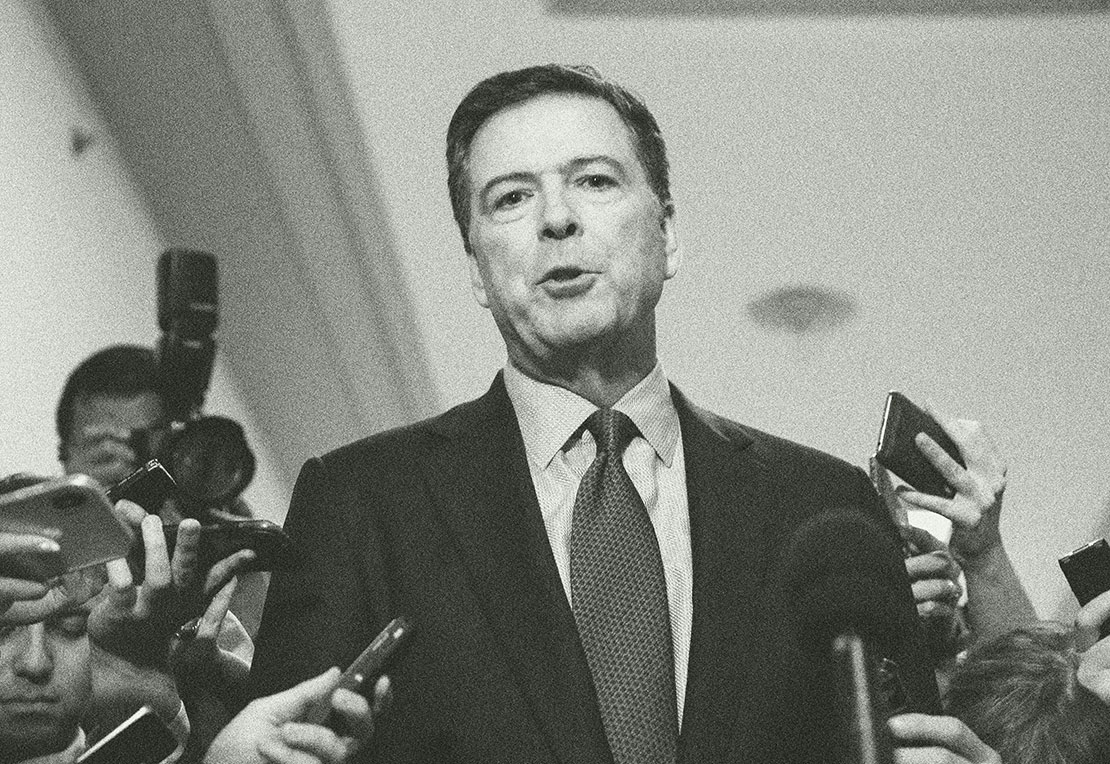
    At least 69 current and former officials were targeted for investigating or sounding alarms about Russian interference in U.S. elections. U.S. intelligence agencies concluded soon after the 2016 election that Moscow sought to tilt the race toward Trump, a finding later affirmed by a bipartisan Senate Intelligence Committee report in August 2020. Acts of retribution tied to the Russia probe include the September 25 indictment of former FBI Director James Comey, a break from Justice Department norms meant to shield prosecutions from political influence.

    Comey, who led the FBI’s investigation into Trump’s 2016 campaign, was charged after Trump demanded his prosecution. The Justice Department has cast the case as a corruption crackdown. Comey and his lawyers said in court documents that the case was “vindictive” and motivated by “personal animus.” Comey, who pleaded not guilty, declined to comment. A federal judge dismissed the case on Monday, ruling that Trump’s handpicked prosecutor had been unlawfully appointed.

    Acts of retribution tied to the Russia probe include the indictment of former FBI Director James Comey. His lawyers say he is the target of a “vindictive” prosecution.

    At least 58 acts of retribution have targeted people Trump viewed as saboteurs of his election campaigns, including Chris Krebs, the top cybersecurity official during his first term. Trump fired him in 2020 for disputing claims that the election was rigged. In April, Trump stripped Krebs’ security clearance and ordered a federal investigation into his tenure. Krebs, still asserting that Trump’s defeat was valid, has vowed to fight the probe. He did not respond for this story.

    Reuters documented 112 security clearances revoked from current and former U.S. officials, law firms and state leaders – credentials needed for work that involves classified information. In August, Director of National Intelligence Tulsi Gabbard announced she was revoking 37 clearances.

    In a response to Reuters posted on X, an agency spokesperson said Gabbard and Trump are working “to ensure the government is never again wielded against the American people it is meant to serve.” She added: “President Trump said it best, ‘Our ultimate retribution is success.’”

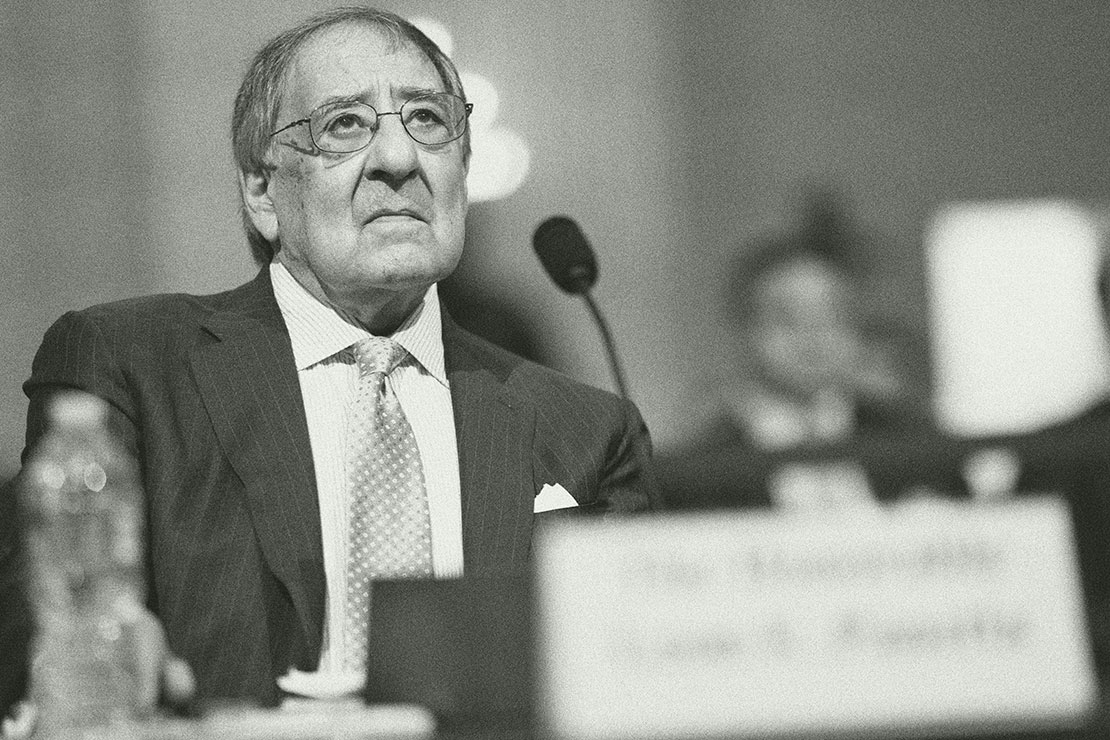
    Leon Panetta, CIA director and defense secretary under former President Barack Obama, had his security clearance revoked in January along with others who signed an October 2020 letter suggesting Russia may have been behind reports about emails on Hunter Biden’s laptop. At the time, Joe Biden — Hunter’s father — was Trump’s Democratic rival in the 2020 election. An executive order Trump signed in January claimed: “The signatories willfully weaponized the gravitas of the Intelligence Community to manipulate the political process and undermine our democratic institutions.” Panetta has said he stands by signing the letter.

    Panetta told Reuters he had already surrendered his clearance after leaving government nearly a decade ago. Trump’s retribution campaign is hurting CIA morale and wrecking the bipartisan trust that allows Washington to function, Panetta said. “What I worry about is that our adversaries will look at what’s happening and sense weakness,” he said. “This kind of political retribution leads to a loss of trust, which ultimately leads to a failure of governing.” The CIA did not respond to a request for comment.

    Former CIA director Leon Panetta had his security clearance revoked along with others who signed a letter suggesting Russia may have been behind reports about emails on Hunter Biden’s laptop.

    The revenge effort also reaches deep into the civil service, punishing employees who speak out against Trump’s policies and turning forms of dissent that were tolerated by past administrations into grounds for discipline.

    This summer, hundreds of Environmental Protection Agency staffers wrote an open letter protesting deep cuts to pollution control and cleanup programs. The fallout was swift. More than 100 signers who attached their names were placed on paid leave. At least 15 senior officials and probationary employees were told they would be fired. The rest were informed they were under investigation for misconduct, leading to at least 69 suspensions without pay. Many remained out of work for weeks.

    “They followed all the rules” of conduct for civil servants, said Nicole Cantello, one of the signers and an officer with the American Federation of Government Employees, a union that represents many affected workers. She called the punishments an attempt to “quell dissent,” stifle free speech and “scare the employees.” In a statement, the EPA said it has “a zero-tolerance policy for career officials using their agency position and title to unlawfully undermine, sabotage, and undercut” administration policy.

    At the Federal Emergency Management Agency, about 20 staffers were put on leave and now face misconduct investigations after signing a letter criticizing the agency’s decision to scrap bipartisan reforms adopted years ago to speed disaster relief.

    Cameron Hamilton, a Republican who served briefly as acting head of FEMA, was fired in May, a day after telling Congress he didn’t believe the agency should be shut down, contradicting the administration.

    Hamilton told Reuters he still supports Trump. But he said too many senior officials are firing people in the name of retribution, trying to impress the White House. “They want to find ways to really launch themselves to prominence and be movers and shakers, to kick ass and take names,” said Hamilton. “They’re trying to show the president ‘look at what I am doing for you.’”

    In a statement to Reuters, the Department of Homeland Security, which includes FEMA, said it is building a “new FEMA” to fix “inefficiency and outdated processes.” Employees “resisting change” are “not a good fit,” the statement said.

    Dr. Jeanne Marrazzo, former head of the National Institute for Allergy and Infectious Diseases, sees her firing in October — three weeks after filing a whistleblower complaint alleging politicization of research and vaccine policy — as a warning shot. She told Reuters the administration’s purge of dissenting health officials is breeding “anticipatory obedience” — a reflex to comply before being asked. “People know if they push back … this is what happens,” she said. The effect, she says, is an ecosystem of fear: those who stay in government self-censor; those who speak out are branded “radioactive, too hot to handle.”

    The Department of Health and Human Services, the agency that oversees NIAID, did not respond to a request for comment.

    Federal agency leaders have dismissed a wide array of officials they deemed out of step with Trump’s MAGA agenda, including employees involved in diversity, equity and inclusion initiatives and those working on transgender issues.

    David Maltinsky, a Federal Bureau of Investigation employee, says he was fired by Director Kash Patel for displaying a Pride flag at work — one of at least 50 bureau personnel dismissed on Patel’s watch. Maltinsky sued the FBI and Justice Department, alleging violations of his constitutional rights and seeking reinstatement. The Justice Department has yet to file a formal response.

    In his 2023 book, “Government Gangsters,” Patel named 60 people that he said were members of an “Executive Branch deep state” that opposed Trump, including former Democratic government officials and Republicans who served in Trump’s first administration but eventually broke with him. He called for firings and said that anybody who abused their authority should face prosecution. In his 2025 confirmation hearing before Congress, Patel denied that it was an “enemies list.”

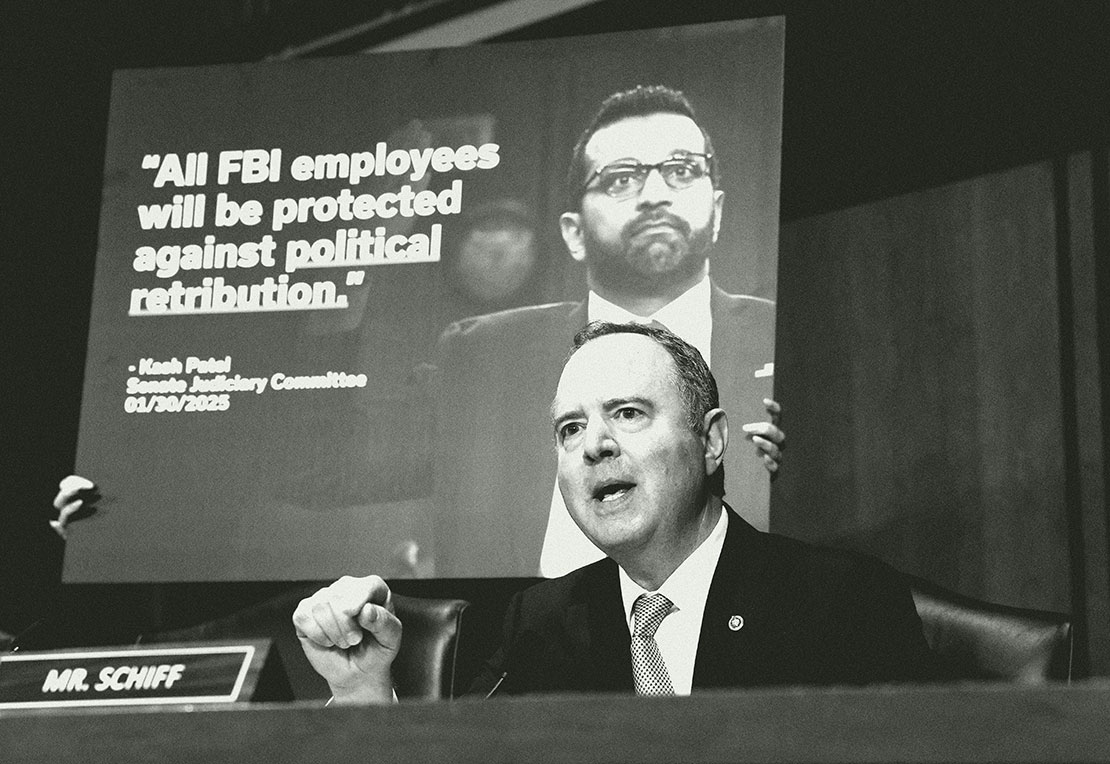
    Under FBI Director Kash Patel’s watch, at least 50 FBI personnel have been dismissed. In this photo, U.S. Senator Adam Schiff speaks in front of an image of Patel at a Senate hearing on FBI oversight.

    Reuters found that at least 17 of the 60 people on Patel’s list have faced some sort of retribution, including firings and stripping of security clearances. The FBI did not respond to a request for comment.

    Against perceived foes in the private sector, the administration has wielded financial penalties as leverage. At least two dozen law firms faced inquiries, investigations or restrictions on federal contracting, often for employing or representing people tied to past cases against Trump. Eight struck deals to avoid further action.

    Nine media organizations have faced federal investigations, lawsuits, threats to revoke their broadcast licenses and limits on access to White House events. Trump has also suggested revoking broadcast licenses for networks whose coverage he dislikes.

    The targets include universities, long cast by the president and his allies as bastions of left-wing radicals.

    Officials froze more than $4 billion in federal grants and research funding to at least nine schools, demanding policy changes such as ending diversity, equity and inclusion programs, banning transgender athletes from women’s sports and cracking down on alleged antisemitism amid pro-Palestinian protests. Five universities have signed agreements to restore funding. Harvard University successfully sued to block a freeze on $2.2 billion in federal aid for the school, which Trump accused of “pushing political, ideological, and terrorist inspired” dogma. Harvard declined to comment.

    The administration has described the funding freezes and other efforts to force policy changes at colleges and universities as a necessary push to reverse years of leftward drift in U.S. education. “If Reuters considers restoring merit in admissions, reclaiming women’s titles misappropriated by male athletes, enforcing civil rights laws, and preventing taxpayer dollars from funding radical DEI programs ‘retribution,’ then we’re on very different planes of reality,” said Julie Hartman, a spokesperson for the U.S. Education Department.

    A historical parallel: Nixon’s enemies

    It’s impossible to predict, of course, how far the Trump revenge campaign will go, or whether it will be affected by a recent slide in popular support. Trump has been hurt by public frustration with the high cost of living and the investigation into late convicted sex offender Jeffrey Epstein.

    Nixon resigned in 1974 over the Watergate scandal, in which aides to his re-election campaign broke into Democratic Party headquarters and the president himself later directed a cover-up. While in office, he kept a list of more than 500 enemies. But while Trump has conducted his retribution campaign in the open, historians note, Nixon’s enemies list was conceived as a covert tool.

    John Dean, chief counsel in the Nixon White House, wrote a confidential memo in 1971 addressing “how we can use the available federal machinery to screw our political enemies.” The planned methods included tax audits, phone-tapping, the cancellation of contracts and criminal prosecution. Yet the execution faltered: IRS Commissioner Donald Alexander refused to conduct mass audits, and most targets escaped serious punishment.

    Other recent presidents, to be sure, have been accused of seeking to punish opponents, though on a smaller scale. The Obama administration pursued “aggressive prosecution of leakers of classified information,” the Committee to Protect Journalists said in a 2013 report. Two IRS employees alleged they were retaliated against during the Biden administration for raising concerns about the handling of the tax-compliance investigation of Hunter Biden.

    Nixon’s plotting remained a secret until the Watergate hearings exposed it, turning his enemies list into a symbol of presidential abuse. The secrecy reflected a political culture in which retaliation was whispered, not broadcast, and where institutional checks blunted many of Nixon’s ambitions.

    Trump’s approach reverses that pattern, historians say. He has openly named his perceived enemies, urged prosecutions in public and framed vengeance as a campaign vow. Some say today’s “enemies list” politics are in that sense farther-reaching than Nixon’s, possibly signaling a shift toward a normalization of retribution in American political life.

    Corey Brettschneider, a political science professor at Brown University who has written a book on power grabs by American presidents, said Nixon was ultimately checked and forced to resign by Congress, including members of his own Republican Party. “That’s just not happening now,” he said.