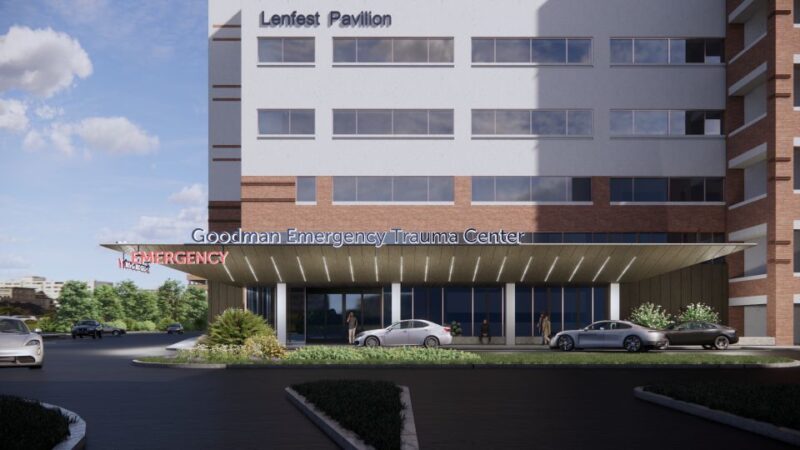
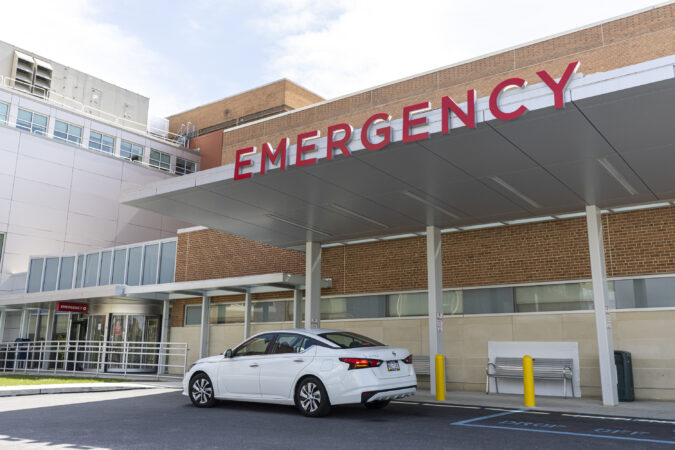
Jefferson Health is boosting emergency department capacity at Abington Hospital to enable it to receive 100,000 visits annually, up from 80,000 now, the nonprofit health system said Tuesday.
The department, which is also a Level II trauma center, will be named the Goodman Emergency Trauma Center in honor of an unspecified donation from Montgomery County residents Bruce and Judi Goodman. Bruce Goodman is a commercial real estate developer and a longtime Abington board member, Jefferson said.
Jefferson, which acquired Abington in 2015, described the Goodman gift as the cornerstone of a $30 million ongoing fundraising campaign for the hospital’s emergency department.
The project will reconfigure more than 24,000 square feet of existing clinical space and reallocate 10,000 additional square feetfrom a courtyard and a gift shop to the ED to expand capacity from 80 to 116 treatment spaces, Jefferson said.
Also last year, Jefferson announced $19 million in upgrades to the emergency department at Thomas Jefferson University Hospital in Center City. The system also added a 20-bed observation unit in the ED at Jefferson Einstein Philadelphia.
Competition at Philadelphia-area medical schools intensified in 2025, with programs seeing about 50 applicants for every open spot.
That’s the highest demand since 2022, with the number of applications bouncing back after a three-year decline, recently released data from the Association of American Medical Colleges(AAMC) shows.
The annual report offers a look at the composition of the nation’s future doctors through the demographics of the applicants and enrollees at M.D. degree-granting medical schools across the United States and Canada.
It showed increased class sizes and strong female enrollment across the Philadelphia area’s five M.D. degree-granting schools: University of Pennsylvania, Thomas Jefferson University, Temple University, Drexel University, and Cooper Medical School of Rowan University.
And the fraction of first-year medical students from Pennsylvania who identified as Black or African American, excluding the mixed-race student population, fell from 6.9% to 5.4% between 2023 and 2025.
The racial demographics of entering studentsare seeing increased scrutiny in light of the 2023 Supreme Court decision that effectively ended affirmative action, barring race from being used in higher education admissions.
The percentage of first-year medical students from Pennsylvania who are Black is lower this year than the national average. Pennsylvania also lags behind the national average for first-year enrollment of Hispanic or Latino medical students.
This data reflects the results of the application cycle that concluded last spring. Next year’s prospective medical school students are currently in the thick of admissions season, awaiting interviews and offers.
Here’s a look at the key trends we’re seeing:
Applications back up
Demand for spots at Philadelphia area-medical schools is back up after a three-year decline. There were nearly 5,000 more applications last cycle, a 9.3% increase, with all schools except Cooper seeing a boost.
Jefferson’s Sidney Kimmel Medical College helped drive growth the most, with a 16% increase in applications compared to the previous year.
window.addEventListener(“message”,function(a){if(void 0!==a.data[“datawrapper-height”]){var e=document.querySelectorAll(“iframe”);for(var t in a.data[“datawrapper-height”])for(var r,i=0;r=e[i];i++)if(r.contentWindow===a.source){var d=a.data[“datawrapper-height”][t]+”px”;r.style.height=d}}});
More medical students being trained
Orientation icebreakers might take a bit longer to get through at area-medical schools as first-year classes continue to get bigger.
In 2025, Philadelphia-area schools enrolled 1,089new medical students, compared to 991 in 2017. Drexel University College of Medicine contributed to half of that growth, adding 49 seats to its recent entering class compared to that of 2017.
Penn’s Perelman School of Medicine was the only school that did not increase its class size in 2025.
window.addEventListener(“message”,function(a){if(void 0!==a.data[“datawrapper-height”]){var e=document.querySelectorAll(“iframe”);for(var t in a.data[“datawrapper-height”])for(var r,i=0;r=e[i];i++)if(r.contentWindow===a.source){var d=a.data[“datawrapper-height”][t]+”px”;r.style.height=d}}});
Female enrollment remains strong
More female students have entered Philly-area medical schools over the last decade.
In 2025, 55.4% of first-year enrollees at Philly-area medical schools were female, compared to 47.7% in 2017.
Drexel saw the biggest rise, with 181 women entering in 2025, compared to 120 in 2017.
window.addEventListener(“message”,function(a){if(void 0!==a.data[“datawrapper-height”]){var e=document.querySelectorAll(“iframe”);for(var t in a.data[“datawrapper-height”])for(var r,i=0;r=e[i];i++)if(r.contentWindow===a.source){var d=a.data[“datawrapper-height”][t]+”px”;r.style.height=d}}});
The rollout of so-called virtual nurses in hospitals remains a mixed bag, University of Pennsylvania researchers have found in the largest survey to date on nursing care delivered remotely through a screen.
One hospital staffer said virtual nurses are a huge help getting patients checked in.
Another said they worry hospitals are trying to cut corners by keeping floors fully staffed by using virtual nurses.
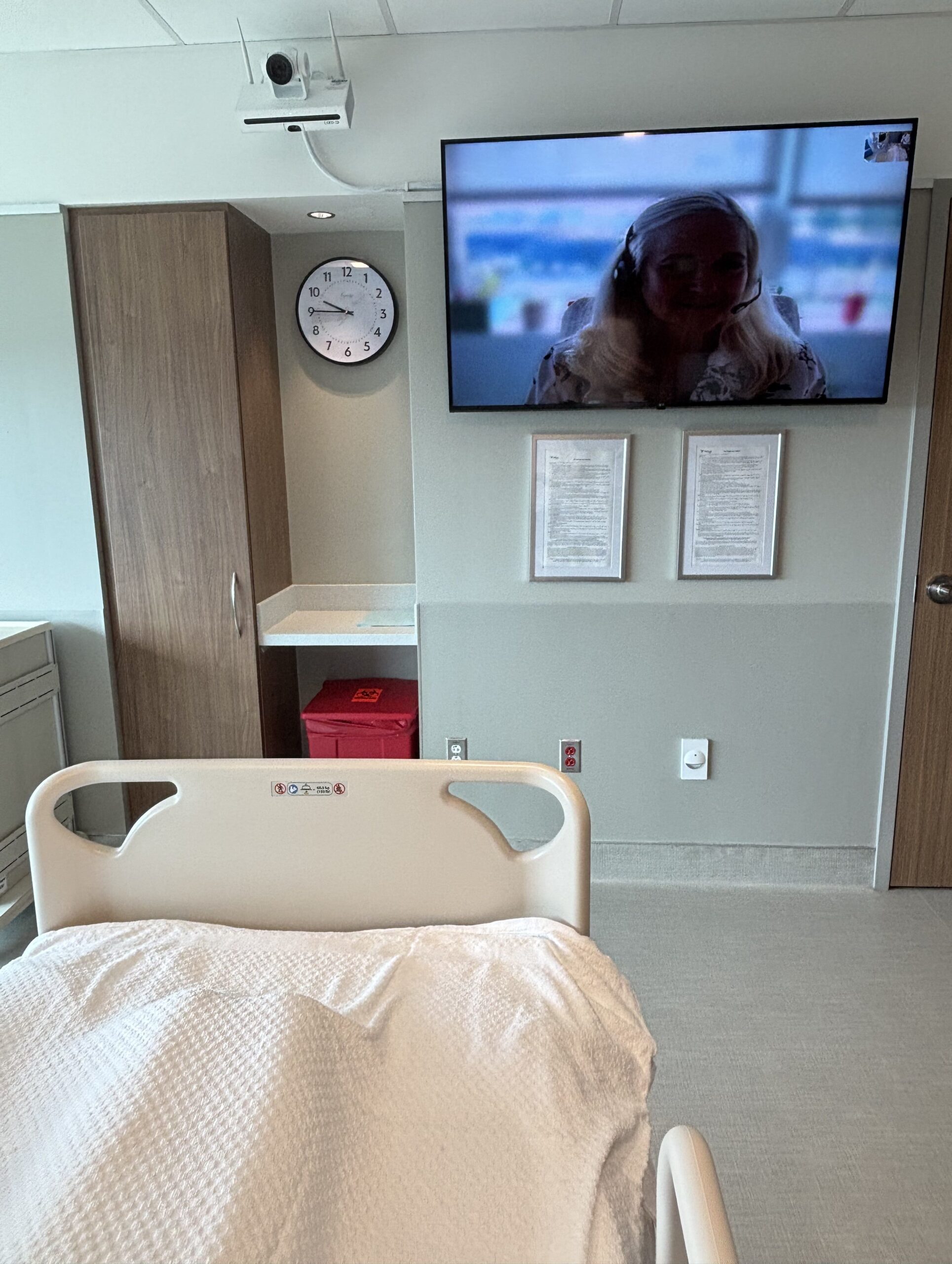
And sometimes, patients think the virtual nurse is a television advertisement and try to press fast forward, researchers were told.
A new study out of University of Pennsylvania School of Nursing surveyed 880 registered nurses in 10 states, including Pennsylvania, about the virtual nursing programs that have sprung up at health systems across the country.
About half — 57% — of the nurses surveyed said virtual nurse programs did not reduce their workload, with some saying they felt virtual nurses created more work.
But similar numbers also said they thought virtual nurse programs improved the quality of care patients received.
Others said they didn’t think the technology had any impact — positive or negative — on quality of care, according to a study of results published online in December in JAMA Open Network.
“It can be beneficial or a headache,” one nurse interviewed by Penn researchers summed up.
Virtual nursing programs became more widespread during the COVID-19 pandemic, when health systems needed to limit physical interaction to protect patients and medical staff, and have continued to expand in Philadelphia and across the country. Administrators embracing technology and artificial intelligence say they can help streamline administrative responsibilities that can burden staff, provide extra patient oversight, and improve how quickly clinicians can respond to emergencies.
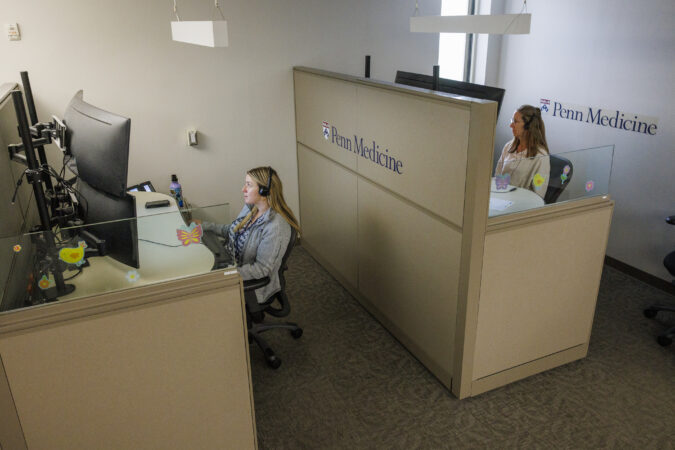
Local examples include Penn Medicine’s use of virtual nurses to monitor patients at risk of falling or pulling out tubes and wires. Jefferson Health assigns a virtual nurse to patients who doctors have decided need to be monitored around the clock.
And virtual nurses handle administrative work, like reviewing medications and giving discharge instructions at Virtua Health hospitals in New Jersey.
The new study from Penn is among the largest to date to evaluate how well the programs are meeting goals, and the mixed results should be a warning to hospital administrators to proceed cautiously, researchers say.
“Virtual nursing programs have been heralded as an innovative silver bullet to hospitals’ nurse staffing challenges, but our findings show that most bedside nurses are not experiencing major benefits,” said lead author K. Jane Muir, an assistant professor of nursing in the university’s Department of Family and Community Health.
Virtual nursing on the rise
Virtual nurses at Virtua Health appear on the television in a patient’s room.
Virtual nursing refers to patient-care responsibilities managed by a team of nurses stationed at a remote hub, where they monitor screens and electronic information feeds.
They are not intended to replace bedside care, but rather to serve as an extra set of eyes to monitor patients.
If a patient who is known to be unsteady on their feet moves as if to get up from bed, a virtual nurse could speak through a screen or sound system asking if they need something and call a nurse on the floor to help them. If the patient falls, a virtual nurse can quickly alert medical staff.
Virtua Health officially launched its program last year.
Virtual nurses make sure patients have the appropriate medications before going home, know their discharge instructions, and have a follow-up appointment scheduled. They work in partnership with the bedside nurse, who focuses on the physical tasks in caring for a patient, while the virtual nurse handles the majority of the discussion.
“It’s something that our patients are requesting and they’ve come to expect,” said Kristin Bloom, a nurse by training who serves as assistant vice president of clinical operations for Virtua’s Hospital at Home program.
Virtua also uses virtual nurses in its intensive care units to help monitor and identify early signs of deterioration. These nurses have access to bedside cameras and can view the patient’s heart rhythms, lab results, and vital signs.
Participants in the Penn survey, conducted in late 2023 and early 2024, did not include nurses working in New Jersey, where Virtua’s hospitals are based.
Virtual nursing challenges
Nurses surveyed by Penn’s researchers said they appreciated the extra set of eyes on patients, but not all were convinced that the virtual monitor was any more effective than bed alerts that can sound when they sense a patient leaving, according to the study.
Karen Lasater, an associate professor of nursing and co-author of the study, urged health systems to include in-hospital nurses when shaping their virtual care programs.
She said including bedside nurses in the conversation about what’s working and not working is “imperative.”
“It’s important that nurses have a seat at the table,” Lasater said.
Nurses surveyed also expressed concern that health systems were using virtual workers to avoid hiring more on-site staff.
Bedside nurses questioned why they were being asked to take on more responsibility because administrators said they couldn’t afford to hire more staff, yet still found funding to build virtual programs.
“They felt like investments in virtual nursing was a workaround,” Lasater said. “Why did they have money to invest in virtual nurses who couldn’t do all the work of the bedside nurses, but couldn’t invest in more bedside nurses?”
At Virtua, administrators have turned to veteran bedside nurses to staff their virtual nursing program.
“It’s an avenue to retain our experienced nursing staff,” Bloom said.
Philadelphia-area hospitals have seen some virtual nursing challenges. In 2024, for instance, Jefferson Abington Hospital was cited by the Pennsylvania Department of Health after inspectors said the power cords attached to the monitors for virtual nursing created a strangulation risk for behavioral health patients.
The hospital treated the incident as a learning experience, adjusting how the mobile monitors are used.
The technology can also be confusing for some patients, who may not grasp the concept of a virtual nurse or may get conflicting instructions from their virtual and bedside nurses, Lasater said.
Penn initially planned to use virtual nurses to help monitor behavioral health patients, who often require one-on-one monitoring around the clock.
But staff found that patients who were experiencing behavioral or mental health challenges were too often confused or unsettled by virtual nurses, and unable to follow their instructions, Bill Hanson, Penn’s chief medical information officer, told The Inquirer in 2024.
“We’re all learning as we go,” he said at the time.
The Wistar Institute’s long-standing president and CEO Dario Altieri will step down at the end of the year after leading the independent biomedical research institute for 11years, officials announced Monday.
Wistar plans to launch a national search for his successor, but did not share further details.
Altieri joined Wistar in 2010 as its cancer center director and first chief scientific officer. Five years later, he was promoted to the role of president and CEO.
During his tenure, the West Philadelphia-based institute’s annual budget quadrupled to more than $100 million, and its endowment tripled to $277 million, according to a news release.
The number of independent labs also grew from 30 to 41, and two new research centers were created.
Its cancer center, which Altieri directs, received its third consecutive renewal as a National Cancer Institute (NCI)-designated Basic Cancer Center with an “exceptional” rating.
“Due in large part to Dario’s efforts, Wistar is exceptionally well positioned for continued growth and success,” said Rick Horowitz, the board’s chair, in a statement.
The 67-year-old started his career in Milan, Italy, where he underwent his medical training. He has served in faculty roles at the Scripps Clinic and Research Foundation, Yale University, and the University of Massachusetts Medical School.
As a cancer biologist who still leads aresearch laboratory, he has authored more than 260 research papers and been listed as an inventor on 13 patents.
“[I] look forward to dedicating my time to the values of work that have defined me since I was a medical student: laboratory research, teaching and mentoring,” Altieri said in a Monday statement released by the institute.
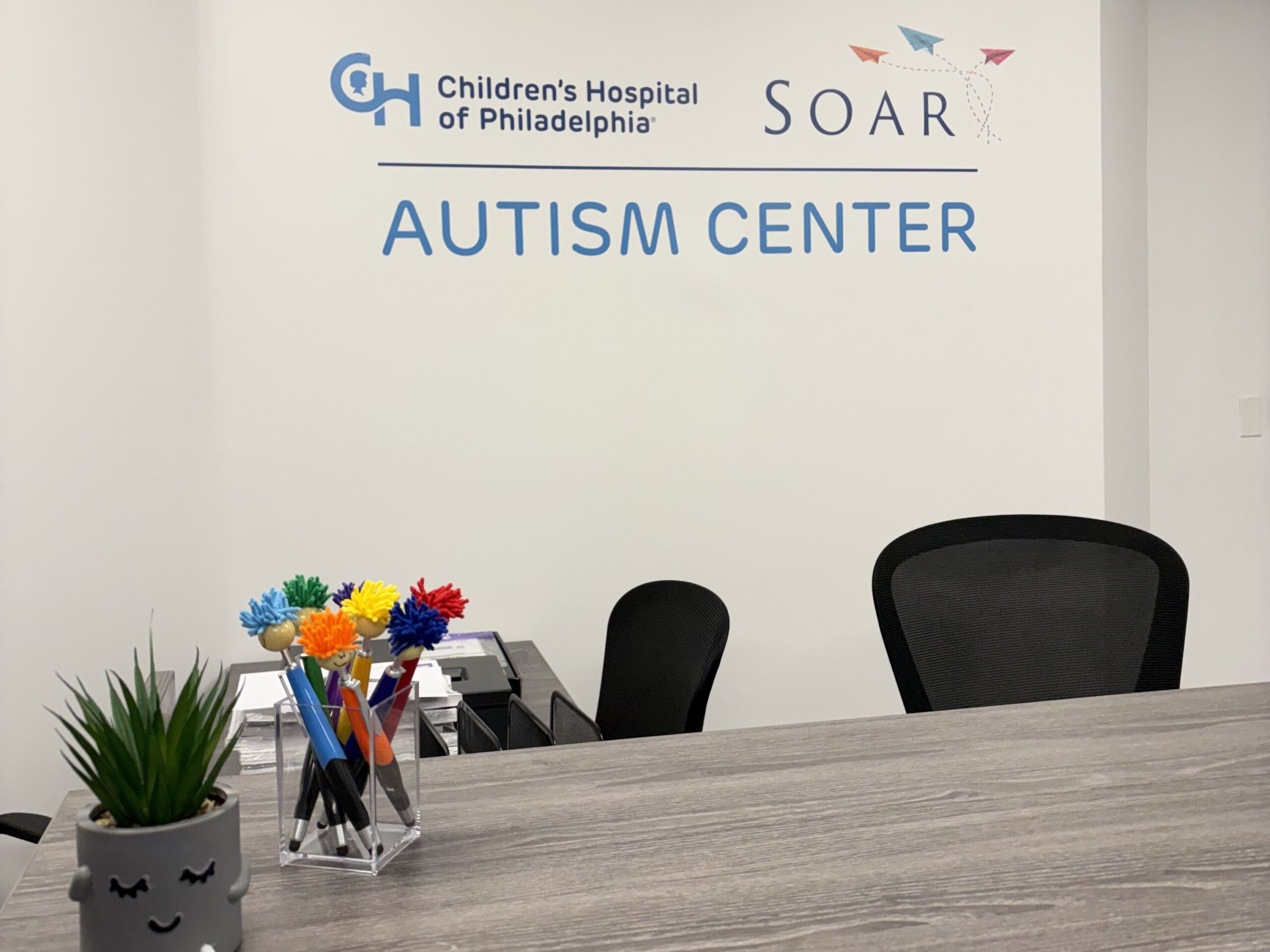
The Children’s Hospital of Philadelphia and Denver-based Soar Autism Centers have opened in Newtownthe first of five planned early childhood autism centers in the Philadelphia region and expect the network could grow to more than 30 centers, officials said.
The 50-50 joint venture is designed to reduce wait times for therapy and to make it easier for families to access multiple types of therapy at one location while remaining connected to CHOP specialists.
“It can take a year to get into therapy on a regular basis,“ an extremely long time in a young child’s neurological development, Soar cofounder and CEO Ian Goldstein said.
Such wait times continue to frustrate families despite dramatic growth in the autism-services sector over the last 15 years or so, as states mandated insurance coverage and diagnosis rates soared with more awareness and an expanded definition of autism.
Nationally, applied behavioral analysis, commonly known as ABA therapy, has become popular for autism treatment, increasing nationally by 270% between 2019 and 2024, according to Trilliant Health, a Nashville data analysis firm. The volume of services provided locally — where companies including ABA Centers, Helping Hands Family, and NeurAbilities Healthcare have expanded — was not available.
The increase in diagnoses has outpaced the growth in available services, said Matthew Lerner, an autism expert at Drexel University, who is not involved with the newly launched CHOP-Soar Autism Centers.
When Lerner moved to the Philadelphia region from Long Island in 2023 and started getting plugged into the autism network, a few clinicians here would ask if he could connect patients with services in New York.
“I was coming from eastern Long Island, two hours east of New York City, and people were like, do you know anyone closer to you?” he recalled.
CHOP’s road to a joint venture with Soar
The freestanding, 10,000 square-foot clinic that opened on Jan. 5 in suburban Bucks County near CHOP Pediatric Primary Care Newtown has 35 to 40 rooms and an indoor playground for therapeutic uses.
CHOP, among the largest children’s health systems in the country, has longbeen concerned about limited access to autism care in the region, said Steve Docimo, CHOP’s executive vice president for business development and strategy.
The nonprofit hasprovided diagnostic services, but not the forms of therapy that the CHOP-Soar centers will offer. “The threshold to doing this on our own has always been high enough that it hasn’t been a pool that we’ve jumped in,” he said.
CHOP was in talks with Soar for three years before agreeing to the 50-50 joint venture with the for-profit company.CHOP’s investment will be its share of the startup costs for CHOP-Soar locations.
The partnership plan calls for five locations in the first two years. The partners did not say where the next four centers will be.
Soar has 15 locations in the Denver area, which has about half the population of the Philadelphia region, Goldstein said.
That comparison implies that the CHOP-Soar partnershipcould grow to30 centers, Goldstein added. He thinks the region’s needs could support additional expansion, sayingthe total could reach “into the dozens.”
The first CHOP-Soar Autism Center opened this month in Newtown. Shown here is the reception area.
That’s assuming CHOP-Soar provides high quality care for kids, an appealing family experience, and a system of coordinated care: “There will be a need to do more than five, and I think we’re jointly motivated to do so,” Goldstein said.
The CHOP-Soar approach
Families seeking care for an autistic child typically have to go to different places to get all the types of therapy they need.
Families “get behavioral analytics in one place, occupational therapy somewhere else, and speech language pathology in another place,” Docimo said.
Soar brings all of that together in one center. “If it can be scaled, this will fill a gap in our region in a way that I think will work very well for these families,” he said.
CHOP-Soar centers will emphasize early intervention and treat children through age six. “The brain has its greatest neuroplasticity” up to age 3, “so waiting a year is a really big deal,” Goldstein said. “You’re missing out on that opportunity to really influence the child’s developmental trajectory at a young age.”
Some autism services providers focus on ABA therapy, which breaks social and self-careskills, for example, down into components and then works discretely on each.
But Soar offers what Goldstein described as “integrated, coordinated care for the child.” That includes speech, occupational, and behavioral therapies.
With CHOP, medical specialties, such as genetics, neurology, and gastrointestinal care, can be tied in as well, Goldstein said.
It’s rare for autism providers to offer a wide variety of commonly needed services under one roof, said Lerner, who leads the A.J. Drexel Autism Institute’s Life Course Outcomes Research Program.
He said Soar’s evidence-based, multidisciplinary approachhas a lot to offer the region.
“A person diagnosed with autism will have complex care needs throughout their life, and a one-size-fits-all, one-intervention approach will not work,” he said.
The University of Pennsylvania has received an $8 million gift to redesign how it trains doctors at the Perelman School of Medicine, Penn officials announced Thursday.
Incorporating technology, AI, and data to create customized learning pathways for Penn medical students is an overarching goal. The effort comes at a time when increasingly easyaccess to medical information and changes in care delivery are leading medical schools nationwide to revamp their curricula.
The gift to Penn is from New York-based RTW Foundation, a philanthropy associated with the life sciences investment firmfounded by Perelman School graduate and Penn Medicine board member Rod Wong. Penn said the gift from Wong, and his wife, Marti Speranza Wong, is the largest single donation to support curriculum innovation at the medical school, which dates back to 1765.
At a news conference announcing his donation Thursday, Wong recalled his time atthe medical school right after its last major overhaul of the curriculum in 1998. One update underPenn’s “Curriculum 2000” revamp was recording and making lectures available online — a relatively innovative move at the time (YouTube wouldn’t be created for another several years).
“Technology has changed, and obviously we’re at this same inflection point because of AI and data science,” said Wong, who is managing partner and chief investment officer at RTW Investments LP.
Penn alumnus Rod Wong (center) sits with dean of Perelman School of Medicine Jonathan A. Epstein (left) after signing the gift agreement.
The vast majority of the $8 million gift will go toward hiring data scientists and engineers, supporting faculty, and building and acquiring the platforms needed to deliver the new curriculum.
Technology will be incorporated into new training techniques, such as byusing augmented or virtual reality to assist in learning anatomy, developing knowledge needed to diagnose illnesses and develop treatment plans, and mastering clinical skills such as IV placement and suturing.
For example, students can practice taking a person’s medical history or doing a physical exam on a virtual patient, while an AI agent is there to give feedback in real time.
“It’s really adaptive to the individual learner, but you do it at your own pace, on your own time,” said Lisa Bellini, executive vice dean of the medical school and a leader on the project.
The redesign will take place over the next three years as school leaders consult with stakeholders and work on building the platform.
Some of Wong’s gift will be used to create a biannual endowed lecture in business and entrepreneurship that will bring leaders in medicine and healthcare innovation to campus. The gift will also establish the Roderick Wong Entrepreneurship Pathway, which will provide mentorship, workshops, and project-based learning to students with business interests.
“We really need to incorporate the fundamentals of how best to use technology responsibly within the practice of medicine and create something incredibly enduring, because you’re not going to go through this exercise every three years,” Bellini said.
The Perelman School of Medicine is embarking on its curriculum revamp at a time when medical education is evolving at many schools.
Some medical schools have concentrated the traditional two years spent learning science into one year to give students more time to learn how to interact with patients and collaborate with other medical professionals.
A three-year medical school option is offered at institutions such as the Pennsylvania State University College of Medicine to speed doctors into the clinic and reduce students’ debt loads.
Jennifer Kogan, vice dean for undergraduate medical education at the Perelman School of Medicine, is a leader in the curriculum revamp.
Faster, flexible learning
Like most medical schools, Perelman has a standard curriculum where students take foundational science courses for a stretch of time and then transition to the hospital to gain clinical experience.
This can lead to some students repeating courses that they already mastered in college.
“If you were a biochemistry major as an undergrad, do you really have to take biochemistry again?” said Jennifer Kogan, vice dean of undergraduate medical education and a leader on the redesign project. “How could you better use that time to achieve whatever your career goals are?”
Leaders at Penn want to give students the flexibility to adjust their timelines based on their skill sets and goals.
Instead of setting a fixed time for how long a class or rotation will take, a student who masters a skill more quickly should be able to move on and devote their time to other interests, such as research or entrepreneurship.
Many students at Penn pursue dual degrees or research fellowships that end up adding a fifth year of medical school. Penn leaders hope adding flexibility to the curriculum could enable students to instead finish in four years or “maybe even three,” Kogan said. (The possibility of a three-year path is not yet guaranteed but will be explored.)
“It will be better set up to support students like me who have had to use significant federal loans to finance their way through medical school and might have benefited from the condensed training timeline,” said Alex Nisbet, a fourth-year medical student at Perelman who spoke at the signing event.
An attendee holds a pennant flag representing the Perelman School of Medicine.
The school will leverage data and AI to assess how individual students are progressing in what they’re calling a “precision education model.”
Though parts of the program will be piloted over the next three years, the first class to see the full implementation of the curriculum will be in the fall of 2029.
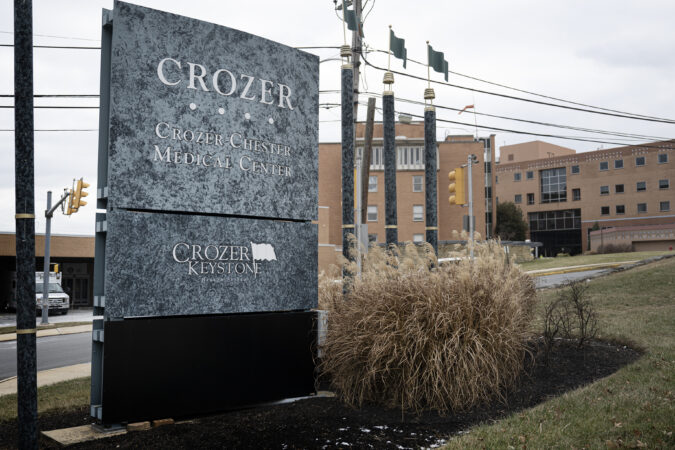
The new owner of the defunct Crozer-Chester Medical Center wants to restore hospital and emergency services to the 64-acre campus that straddles Chester and Upland Township in Delaware County.
Newly formed Chariot Equities completed the $10 million purchase Wednesday. The for-profit entity said it expected within six months to have an agreement with a health system that would operate a “right-sized” hospital and emergency department at the facility that had been the county’s largest provider of those services before closing last year.
The idea is then to open the first phase within two years, Chariot said in a statement.
Chariot did not say how much it would spend on refurbishing Crozer-Chester, which had suffered from years of neglect under its two previous owners.
Chariot’s partner at Crozer-Chester is Allaire Health Services, a Jackson, N.J.-based for-profit operator of nursing homes.
The partners said they are in talks with regional and national nonprofit health systems regarding an operating partnership, but provided no details. The amount of money needed for the project would likely depend on what prospective tenants would want to do at the property.
“Our belief in Delaware County’s future, and the community’s need for sustainable healthcare access, made this an effort worth committing to well before the finish line,” said Yoel Polack, Chariot’s founder and principal.
Little is known about the new owners. Polack worked in healthcare real estate in the New York City area before setting his sights on redeveloping Crozer-Chester.
Federal records list Allaire’s CEO Benjamin Kurland as an owner of 20 nursing homes, including three in the Philadelphia area. Chariot’s statement said Allaire owns a total of 29 facilities in five states.
Main Line Health has been involved in discussions about reopening emergency services at three former Crozer hospitals — Crozer-Chester Medical Center, Springfield Hospital, and Taylor Hospital — at the request of state lawmakers and the property owners, Ed Jimenez, CEO of Main Line Health, said Wednesday at a Riddle Hospital event.
Jimenez said he would “entertain the concept” of restoring emergency services at one of the hospitals as part of a partnership with other health systems, but only if it can be done on a break-even basis.
All three of the former hospital buildings visited by Main Line officials are in poor condition and were stripped of medical equipment after the closures. Main Line’s experts estimated it would cost between $15 million and $20 million just to make the emergency department at Taylor functional, Jimenez said.
ChristianaCare, Delaware’s largest health system, considered acquiring Crozer in 2022. Instead, it took a different path to expansion in Southeastern Pennsylvania. It is planning to open two micro-hospitals in Delaware County. The nonprofit system also took over five former Crozer outpatient locations. Its credit rating was recently downgraded by one notch because of lower profitability.
The importance of Crozer-Chester
Crozer-Chester closed in early May during the bankruptcy of owner Prospect Medical Holdings Inc., a for-profit company based in California, and after the failure of government-supported efforts to form a new nonprofit owner for Crozer-Chester and other Crozer Health facilities.
Crozer-Chester was particularly important as a safety-net provider for a low-income area of Delaware County that has few other nearby options. The Crozer system, which had four hospitals, was the county’s largest health system and largest employer for many years.
Two local Democratic officials, State Rep. Leanne Krueger and Delaware County Council member Monica Taylor, said they were encouraged by the approach being taken by Chariot and Allaire.
At Taylor Hospital, the other Crozer hospital that closed last year, new owners are also looking for healthcare tenants. Local investors bought the Ridley Park facility for $1 million. It is less than four miles from Crozer-Chester.
The same group agreed last week to pay $1 million for Springfield Hospital, another facility that had previously shut down under Prospect ownership.
Two Delaware County hospitals are getting $6 million in additional funding to help them address a sharp increase in patients after Crozer Health, the county’s largest hospital and busiest emergency department, closed last year.
About $5 million of the funding had previously been allocated to Crozer Health under a program that supports hospitals that care for a high portion of low-income patients with Medicaid. About $3 million of that money was redistributed to Riddle Hospital in Media; Mercy Fitzgerald Hospital in Darby $2 million. Local lawmakers secured an additional $1 million for Riddle.
“They really have stepped up to fill a big void, and we want to make sure they have the resources they need,” said Rep. Lisa Borowski, a Delaware County Democrat.
The additional funding will allow Riddle, part of the nonprofit Main Line Health system, to hire more staff, said Ed Jimenez, Main Line Health’s CEO.
When there aren’t enough nurses or other clinicians to cover the hospital’s needs, Riddle has had to turn to staffing agencies, which charge three to four times the rate Main Line pays staff providers, he said.
Main Line executives and local lawmakers marked the funding announcement at Riddle Wednesday with a check presentation ceremony and roundtable discussion about ongoing regional healthcare challenges.
Rep. Gina Curry, a Delaware County Democrat, urged hospital executives to continue trying to connect with patients who may be without doctors after Crozer was closed by its bankrupt for-profit owner, Prospect Medical Holdings, based in California.
Crozer-Chester Medical Center in Upland and its sister hospital, Taylor Hospital in Ridley Park, served a disproportionately low-income population in Chester and other densely populated communities outside Philadelphia with high rates of chronic health problems, such as asthma and heart disease.
“You’re working very hard inside here to try to help, but how are you including the community to let them know that Main Line Health is wrapping around them,” Curry said.
Jefferson Health’s Lehigh Valley Health Network will go out of network Monday for members of UnitedHealthcare’s Medicare Advantage plans.
That means about more than 20,000 people who get care at LVHN facilities could experience disruptions in their care. Two years of negotiations failed to result in a new contract, Jefferson said in a statement Wednesday.
Jefferson also said that United reduced payments to LVHN by nearly 40% since 2021, reducing the nonprofit health system’s revenue by more than $100 million over four years.
“When an insurer stops paying agreed‑upon rates and refuses to negotiate, patient access is put at risk. Jefferson and LVHN will not stand by while an insurer prioritizes its own margins over fair contracts and sustainable care,” said Jeffrey Price, a Jefferson senior vice president involved in managed care and payer relations.
LVHN patients who have UnitedHealthcare plans through their employers will remain in-network at the nonprofit system through most of April 25, Jefferson said.
United said that negotiations continue on those contracts, but noted that LVHN wanted a 20% price increase in the first year.
The dispute does not affect Philadelphia-area Jefferson patients with insurance from UnitedHealthcare, the nation’s largest health insurer.
Jefferson first warned in October that its LVHN facilities would startgoing out of network this month.
At the time, United suggested that Jefferson’s announcement during the Medicare Advantage annual enrollment period was a negotiating tactic designed to put pressure on United.
United said Wednesday that its “top priority is providing people continued access to the care they need through our broad network of providers who collaborate with us to provide quality, affordable care.”
The company noted that it recently signed a multiyear contract with LVHN’s biggest competitor, St. Luke’s University Health Network. That contract covers employer-sponsored plans as well as Medicare and Medicaid plans.
By going out of network with United Medicare Advantage plans, LVHN joins other well-known systems to have done so in the last year. They include Johns Hopkins Medicine and Mayo Clinic.
Last March, Jefferson went out of network with Cigna Health for a few weeks during a similar impasse in negotiations. Jefferson and Cigna quickly reached a deal after the termination.
At Penn Medicine’s clinic where adults receive genetic counseling and testing, about 9% of patients are Black.
By contrast, one in four patients at the cardiology and endocrinology clinics located in the same facility in West Philadelphia are Black, while nearly 40% of cityresidents are. Those from low-income neighborhoods are also less likely to be seen at the genetics clinic, yet more likely to have positive results when tested, a recent Penn study found.
These findings line up with what Theodore Drivas, a clinical geneticist and the study’s senior author, had long suspected about the impact of racial disparities based on his own experience seeing patients at Penn’s clinic.
The study, published this month in the American Journal of Human Genetics, found that Black patients were also less likely to be represented at adult genetics clinics at Mass General Brigham, a Harvard-affiliated health system in Massachusetts.
There’s no biological reason why rates of testing should differ, Drivas said. The overall rate of genetic disease should be similar regardless of race, even though certain diseases are more prevalent in some populations.
“Genetic disease doesn’t favor one group or another,” he said.
That means if one group isn’t getting tested as much, they’re probably missing out on key diagnoses.
Racial disparities are an ongoing concern in medicine and have been attributed to a wide range of causes, including socioeconomic factors, unequal access to care, implicit bias, and medical mistrust due to historic injustices.
In a study published last August, Drivas’ team found that the chances of a genetic condition being caught varied widely by race. Among patients admitted to intensive care units across the Penn health system, 63% of white patients knew about their genetic condition, compared to only 22.7% of Black patients.
To address these disparities, Drivas is calling for changes to how the medical field approaches genetic testing, such as by integrating testing into standard protocols and improving national guidelines.
“It’s not just a Penn problem or a Harvard problem. It’s a genetics problem in general,” Drivas said.
Diving into the disparities
Drivas’ team analyzed data from 14,669 patients who showed up at adult genetics clinics at Penn and Mass General Brigham between 2016 and 2021. The findings are limited to the two major academic centers on the East Coast, which tend to see sicker patients compared to community medical centers.
Black patients were 58% less likely to be seen at Penn’s genetics clinic than would be expected based on the overall University of Pennsylvania Health System patient population.
At Mass General Brigham, Black patients were 55% less likely than would be expected based on that system’s population.
Some literature has suggested that Black patients and others from minority groupsare less likely to agree to genetic testing because of an inherent distrust in the medical system due to historic injustices. “But we don’t see that in our data,” Drivas said.
Once evaluated at Penn’s clinic, Black patients were 35% more likely to have testing ordered than white individuals.
His team also found disparities affecting lower-income individuals. Each $10,000 increase in the median household income of a person’s neighborhood was associated with a 2% to 5% higher likelihood of evaluation at a genetics clinic.
Meanwhile, patients from neighborhoods with lower median socioeconomic status were more likely to get positive results from testing than those from wealthier neighborhoods.
“We’re relatively over-testing the people from higher socioeconomic brackets and under-testing the people from lower socioeconomic brackets,” Drivas said.
The solution is not to stop testing the wealthier people, he clarified, but to improve access to testing for others.
Undoing disparities
People who want to get a genetic diagnosis often have to go to major medical centers.
The University of Pennsylvania health system comprises sevenhospitals across Pennsylvania and New Jersey. Its Perelman Center for Advanced Medicine, adjacent to the Hospital of the University of Pennsylvania in West Philadelphia, is the only one that has an adult genetics clinic.
Drivas has many patients who drive two or three hours to be seen for genetic testing.
The current wait time at his clinic is around three or four months, which he said is “pretty good” compared to others.
He thinks part of the solution to reducing disparities requires expanding the size and diversity of the genetics workforce so more patients can be seen.
Geneticists also need to better educate doctors in other fields about when to refer patients, he said. Creating better guidelines would help.
Notably, Black patients in the study were more likely to be evaluated than white individuals for genetic risk factors of cancer — an area where there are clear clinical practice guidelines recommending genetic testing.
They need to come up with similar guidelines for other conditions, such ascardiovascular and kidney diseases, he said.
Another idea he had was to make genetic testing more integrated into standard care in the hospital.
His earlier study found a surprising number of adults in ICUs at Penn had undiagnosed genetic conditions. Such testing is now widely available and often costs as little as a few hundred dollars.
“It costs money, but I think there are cost savings and life-saving interventions that can come from it,” Drivas said.