Tag: hoops-content

  • Westtown’s Jordyn Palmer — a basketball phenom and highly sought-after recruit — has untapped potential

    Westtown’s Jordyn Palmer — a basketball phenom and highly sought-after recruit — has untapped potential

    Amid the cacophony of whirling toddlers at a local YMCA in Oxford, Chester County, about 14 years ago, Jermaine Palmer caught a glimpse in the corner of his eye of what was to come. He had gotten his daughter, Jordyn, into basketball, taking her to his practices, letting her crawl around the court in diapers, and involving her in youth coed rec leagues with a tiny ball and hoop.

    One afternoon, as a game was going on, he noticed, Jordyn and a little boy collided going after a rebound. They both fell. The boy went crying to his mother. Jordyn stood up, grabbed the ball, and scored a layup as if nothing happened, smiling back down the court. Jermaine just shook his head, he recalled.

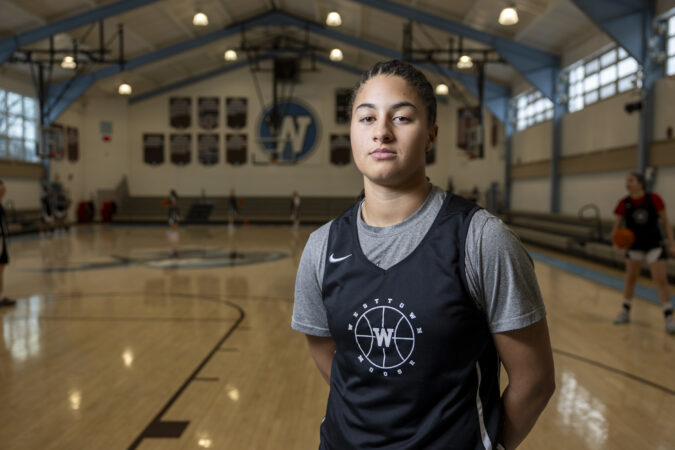
    Jordyn Palmer, the gifted 6-foot-2 junior guard at Westtown School, tends to make a lot of people shake their heads in disbelief each time they see her play, especially the nation’s top college coaches. She is ranked as the No. 6 player in the country in the class of 2027 by ESPN’s SportsCenter NEXT — Super 60. She is averaging a humble 23 points and 12 rebounds for the Moose, who will be playing for their sixth straight Friends Schools League championship this Friday at 6:30 p.m. against archrival Friends’ Central at La Salle University.

    As a junior, Palmer is on the threshold of 2,000 career points and is the leader of a star-studded team that has a/ 23-1 overall record this season and is ranked No. 7 in the country by ESPN.

    What is so interesting about Palmer is that her best is yet to come. She’s always been tall for her age, and her parents, Jermaine and Kim, had to carry her birth certificate as proof of her age because of that. She has been playing varsity basketball since she was in eighth grade.

    A dominant rebounder, ballhandler, and shooter, she can finish left- or right-handed and has added a more consistent perimeter game. She’s also a team player, making a point to get her teammates involved. She plays with poise, despite the constant attention she has had on her since she was 14.

    She was 5-9 at age 12 playing for the Chester County Storm under-16 AAU team when Westtown coach Fran Burbidge first saw her in a summer tournament at the Spooky Nook complex in Manheim, Lancaster County. Burbidge, who coached women’s stars Elena Delle Donne and Breanna Stewart, quickly saw how much more advanced Palmer was than the teenage girls she was playing against.

    “A friend of mine asked me if I ever saw her play. I remember going to one of the back courts and thinking, ‘There is no way that kid is in seventh grade,’” Burbidge said. “So, yeah, I had to convince myself she was that much better than everyone around her. If I didn’t know, I would have thought she was a high school junior.”

    Palmer has evolved since then. The second-oldest of four, she’s 17 and may grow another inch.

    She’s also a victim of her own success. Burbidge pulls her early in blowouts — and the Moose have many. She easily could score 40 points a game, but she plays with a pass-first, team-first mentality.

    Last summer, she was playing in a league against a talented Imhotep Charter team when she dominated both ends of the court for 10 minutes. Then she turned back to being a facilitator again. She is by no means lazy, according to her coaches and her father, but she is so smooth that she can play at different levels.
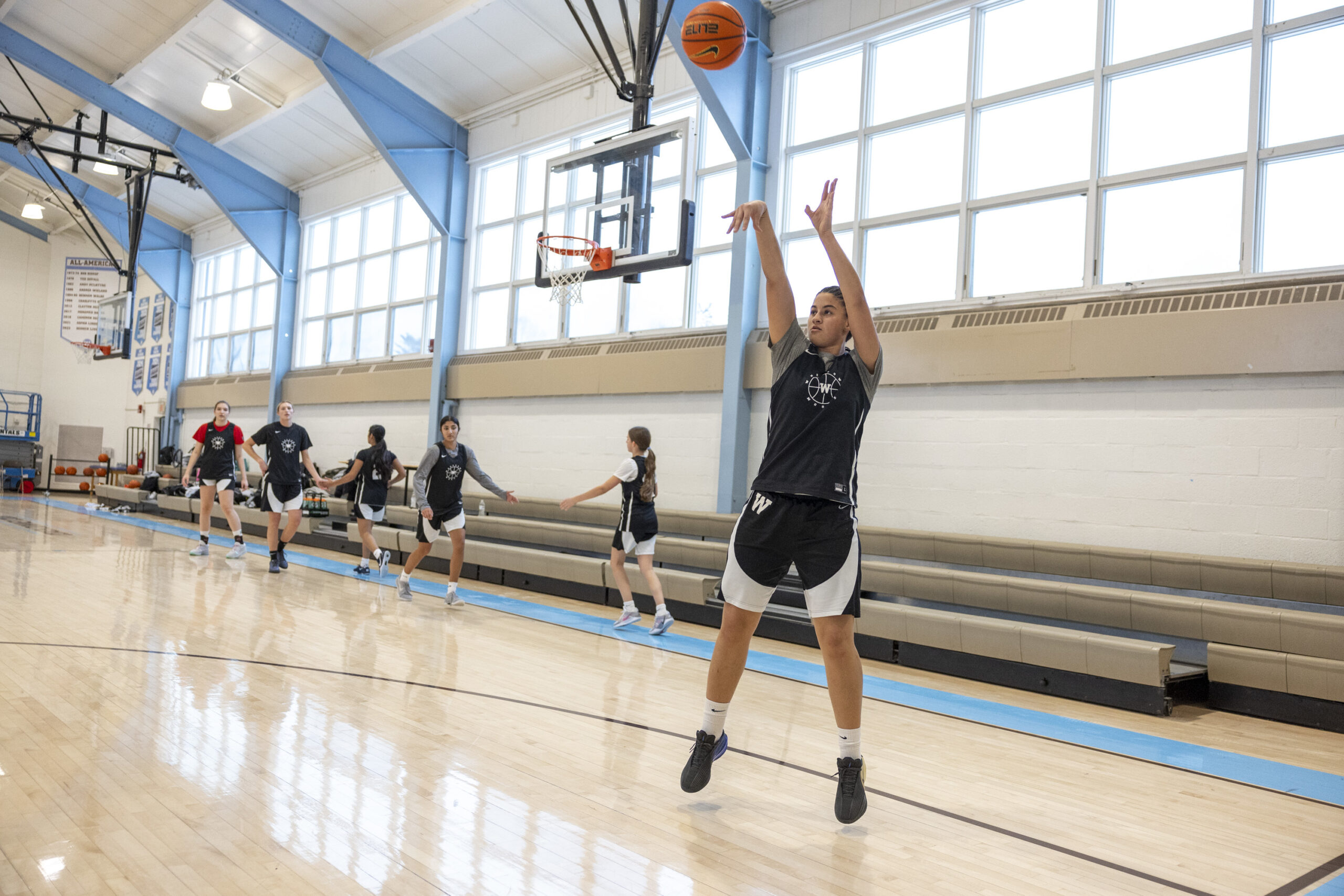
    Jordyn Palmer is averaging 23 points and 12 rebounds this season.

    “I was raised around the game. I grew up with a basketball in my hands, my dad being a coach taking me to practice,” said Jordyn, who carries a 3.5 grade-point average. “I was pretty much crawling around a basketball court before I was walking. I was always the tallest kid, that was me. I grew up playing soccer, too, but basketball was definitively my first love. I would say I was around seventh, eighth grade, when I started to think I was pretty good at this. It really changed when I went to Westtown.”

    And it really changed in 2023 when she was cut from the U.S. under-16 national team in Colorado Springs, Colo., when she was 14. It was the first and only time she was cut from something. She reached the second cuts. She sat in a conference room and was told that she did very well, but she would not make the team.

    When Jordyn called her parents, tears were shed — fueling aheightened determination.

    “A year later, I got invited back, and I made the team,” she said. “That was the first time I faced rejection, and I thought I dealt with it well. It made me work harder. Being cut didn’t make me angry because I was not too sure I would make it anyway, but it shocked me. I began working out in the morning, and I’m not a morning person. I hate waking up early. I began taking basketball more seriously than I ever did.”

    A month after she was cut that summer, she led Philly Rise to an AAU national title.

    Jermaine and Burbidge want her to play more intensely for sustained periods of time. Jordyn knows she will need to maintain those levels once she gets to college.

    “Jordyn has not even scratched her full potential,” said Jermaine, the girls’ basketball coach at Oxford High School. “I’m proud of her. Jordyn is a great kid. Her upbringing keeps her humble. But she does not play with the urgency that I know she has. You see it in spurts, but when you see her playing national-level players, that comes out. I get on her all the time about dominating.

    “The stuff people don’t see in the gym is someone who can outplay anyone. You can’t really guard her. When she tightens her shot off the dribble and her ballhandling, she is going to be terrifying. I’m her father and a coach — you see the way games are called. She’s so strong and so solid, refs look at her a different way than they do other players. She has gotten used to it. Refs don’t understand the body difference between Jordyn and everyone else.

    “No one likes Goliath. It’s part of the game.”

    Jordyn Palmer plans to make her college commitment next spring. She’s interested in South Carolina, LSU, Kentucky, Rutgers, Maryland, Notre Dame, and UCLA.

    South Carolina, LSU, Kentucky, Rutgers, Maryland, Notre Dame, and UCLA are the schools in which she’s interested. She says she is looking to make her official visits over the summer and make a decision next spring. Jordyn and Jermaine said they want to take their time with the recruiting process.

    She would get around 30 calls a day this time last year. That has been reduced to around five a day.

    “It’s been a little bit of a pain,” she said. “There have been those times when I have cried by myself because it can sometimes be overwhelming. I spoke to my parents about it, and they have done a great job taking the pressure off me, telling these coaches I’m taking a break. I’m still a kid, and I’m grateful to my parents for allowing me to be a kid. They let me fish.”

    Then, Jordyn went into her own “fish tale.” She got into fishing as a way to relax through her maternal grandfather. During summer vacations, she fishes with her family in northeast Maryland and the Outer Banks in North Carolina. She once hooked a baby shark when she was 7.

    “Yep, it was about 100 pounds,” she said. “We took it home and ate it. My uncles helped me pull it in.”

    Her father laughs at the recollection.

    “Jordyn was there,” Jermaine said. “I don’t know if she caught it. But we’ll go with that story.”

    One thing is certain, Jordyn Palmer is no fish tale.
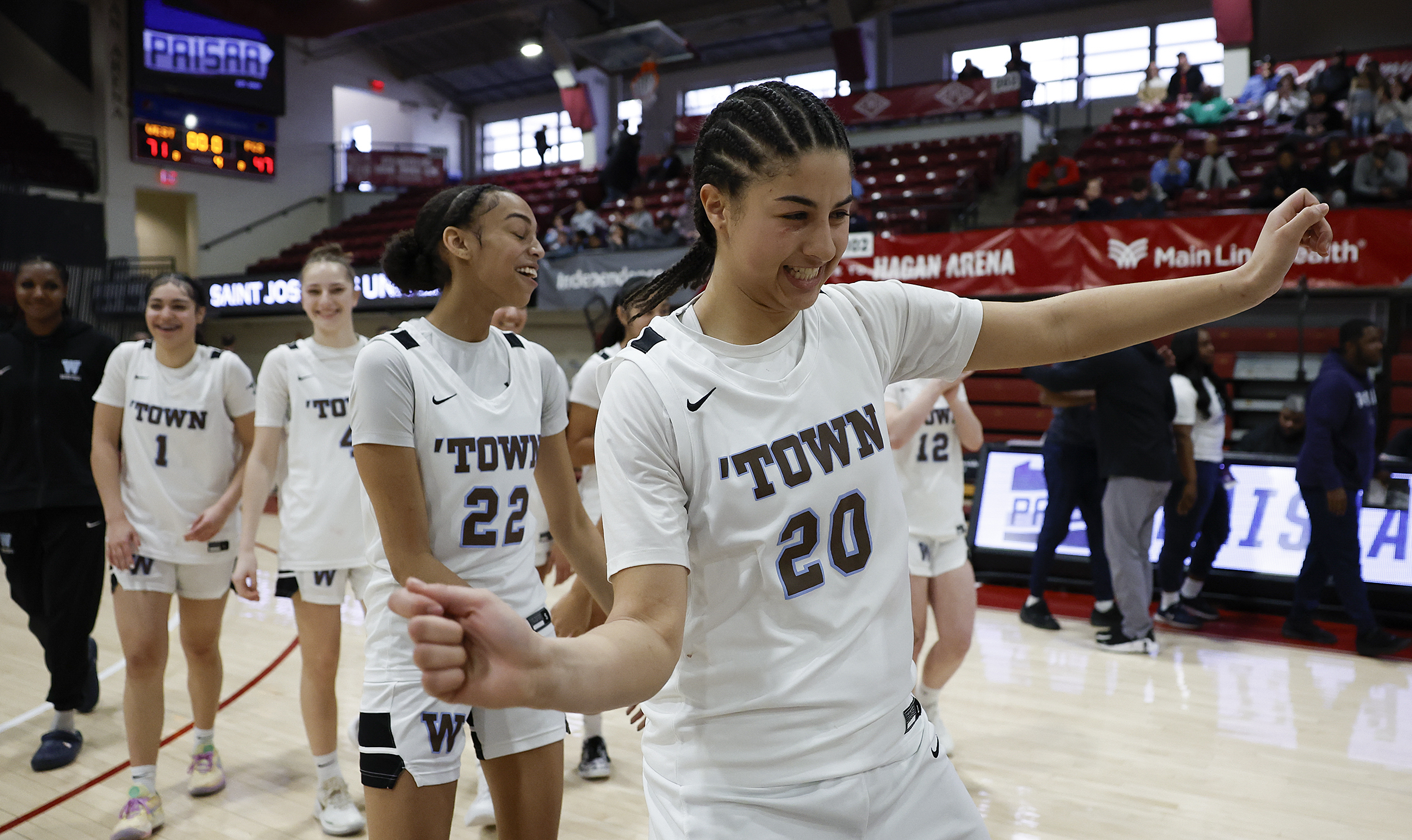
    Westtown School’s Jordyn Palmer will play for a Friends Schools League championship on Friday at La Salle.
  • Is Tyler Perkins Villanova’s new Josh Hart? He might be close enough.

    Is Tyler Perkins Villanova’s new Josh Hart? He might be close enough.

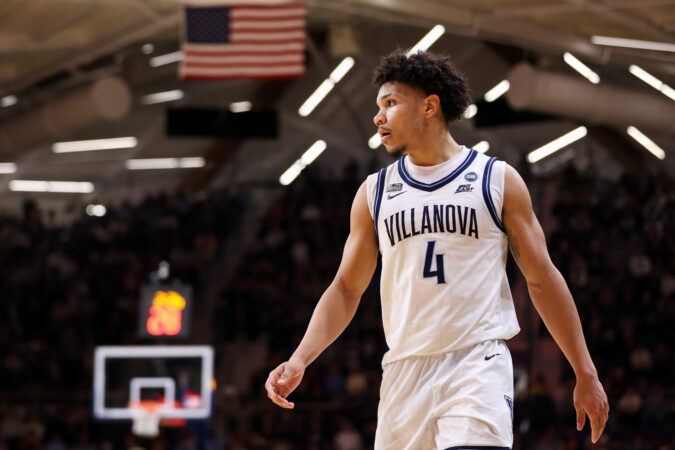
    In the rotunda of the Finneran Pavilion late Tuesday night, the longest tenured Villanova player paused to crane his head toward the ceiling, toward the national championship, Final Four, and Big East championship banners that hang there in V formation, like a flock of birds in flight. On this Wildcats team, he’s the one whose name is called last in the pregame introductions.

    He’s the one everyone knows a little better than everyone else on the roster. For a program once accustomed to having its stars stay for three years, four years, sometimes even five, it has to be jarring that Tyler Perkins, a junior who transferred from Penn in 2024, is the closest thing to a keeper of that flame.

    “I take pride in it,” he said. “Last year, I was able to learn a lot about this place from guys like Eric Dixon, Jordan Longino, guys who have been here for three years, five years. I was able to pick their brains. Just walking these halls, looking at these banners, it makes you hungry. You want to bring it back to this place.”

    The whole idea of a player recognizing and appreciating a particular program’s history and culture seems quaint in this era of college basketball. It certainly doesn’t have the pull and power that it once did.

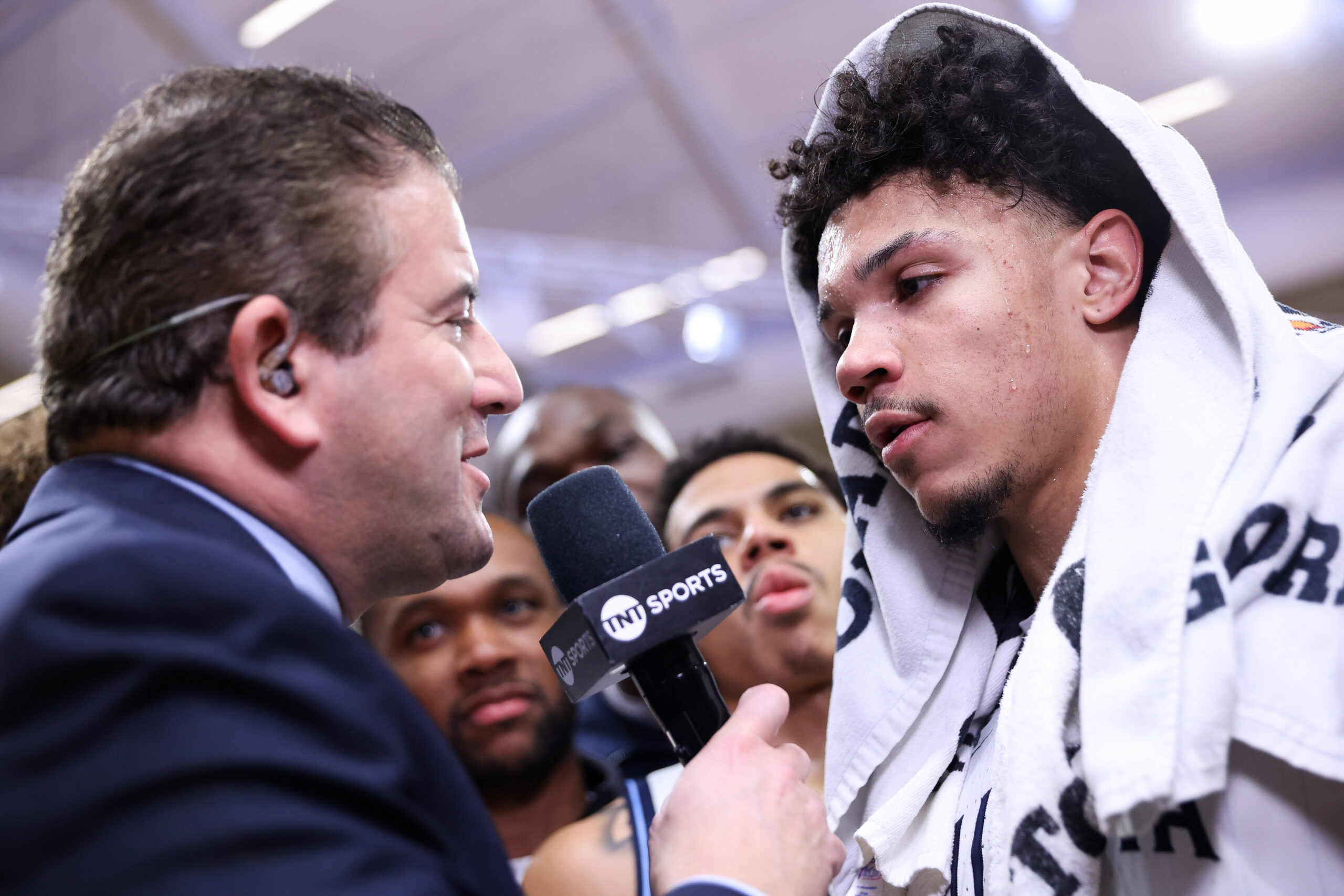
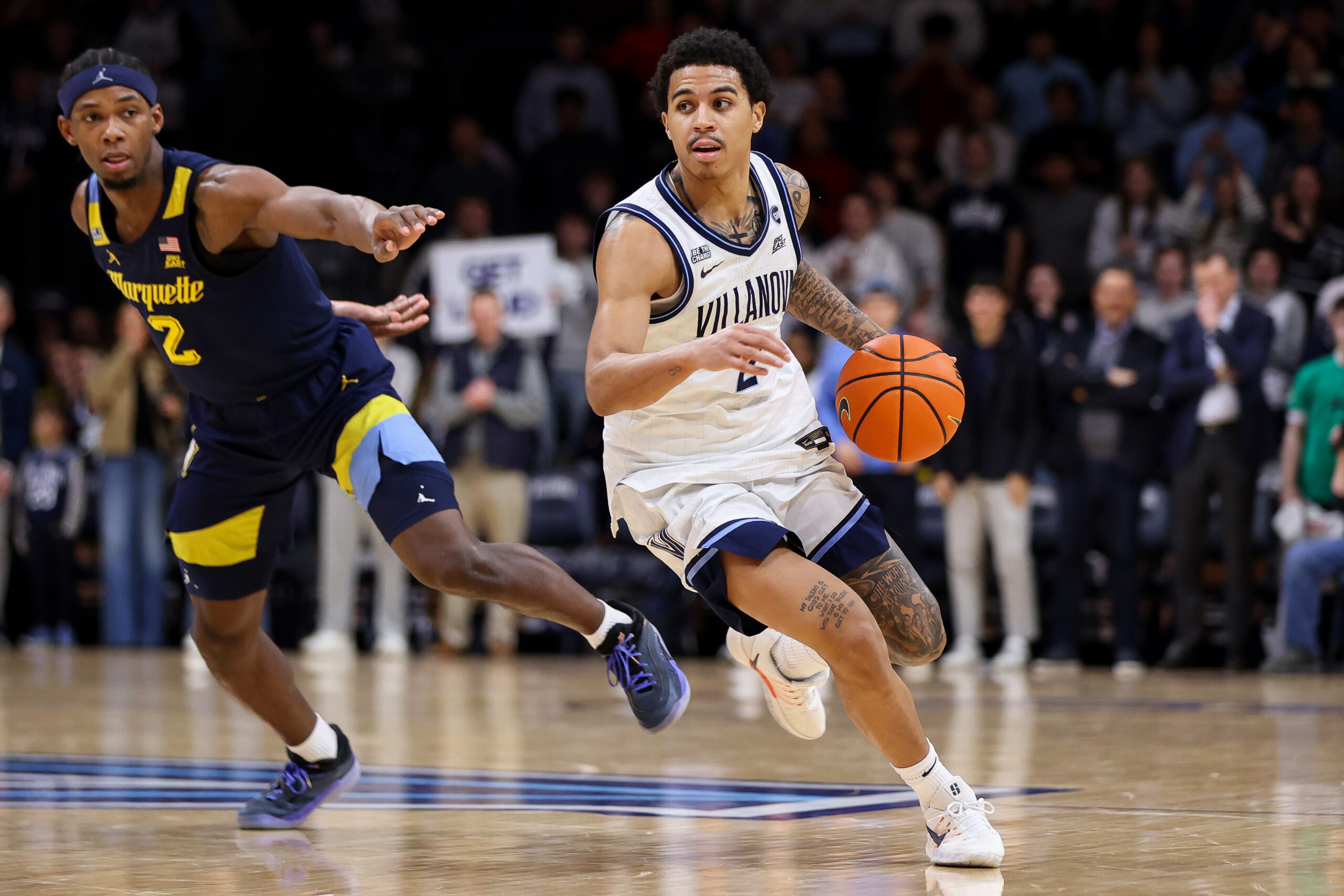
    Tyler Perkins (right) is interviewed by Andy Katz after Villanova’s 77-74 win against Marquette at the Finneran Pavilion on Tuesday.

    Now, paying players is an above-board course of action, athletes pass through the transfer portal like it’s an open doorway, and the story that played out at the Pavilion on Tuesday, in Villanova’s 77-74 victory over Marquette, showed just how much everything has changed.

    Perkins pretty much saved the Wildcats, now 19-5 and on track for their first NCAA Tournament appearance in four years, from losing a Big East game to a lesser opponent. He scored a team-high 22 points, hit three late three-pointers to help ’Nova quickly wipe out a nine-point deficit, grabbed six offensive rebounds, and blocked a three-point attempt by the Golden Eagles’ Adrien Stevens on the game’s final possession.

    It was the kind of performance that a savvy upperclassman — Josh Hart, Mikal Bridges, Collin Gillespie, Dixon — once would have delivered for Villanova … except in this case, the savvy upperclassman is a kid who has been on campus less than two years, and he was having a lousy defensive game until he snuffed Stevens’ shot at the end.

    “Once he figures out he can affect the game without shooting or having to shoot, that’s when he’s going to take a monster step,” Wildcats coach Kevin Willard said. “And he’s starting to get there. He is.”

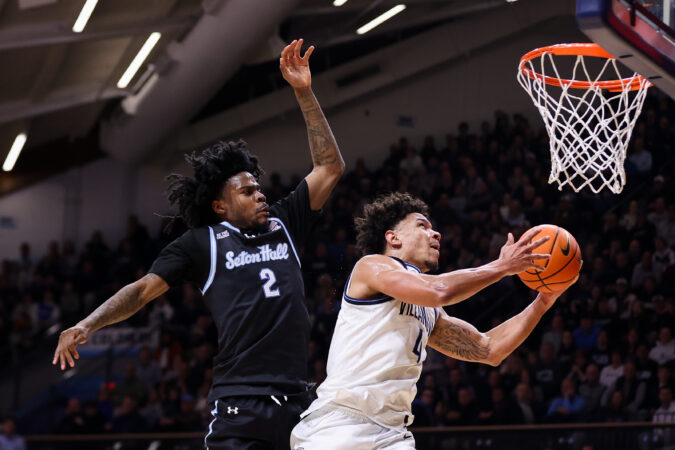
    Willard is so certain that Perkins will become a great player that, after the Wildcats’ win over Seton Hall last week, he didn’t back away from comparing him to Hart — a first-team All-American and a national champion at ’Nova, a nine-year NBA vet and an invaluable piece of a New York Knicks team that could reach the Finals.

    During Tuesday’s postgame media availability, Willard playfully chided Perkins for his mostly poor defense against Marquette, then pointed out that Hart’s all-around game is what made him such a headache when Willard, while at Seton Hall, was coaching against him.

    “I tell the story all the time,” Willard said. “One of the last times we played against him, I called timeout, and I cursed out my team. I was like, ‘Can somebody please stop Josh Hart?’ And he hadn’t taken a shot. He hadn’t taken a shot, and they’re all looking at me like, ‘Well, he’s not shooting.’ He’s got three steals. He’s got four offensive rebounds. He’s got five assists. And he didn’t take a shot. That’s why he’s in the NBA.

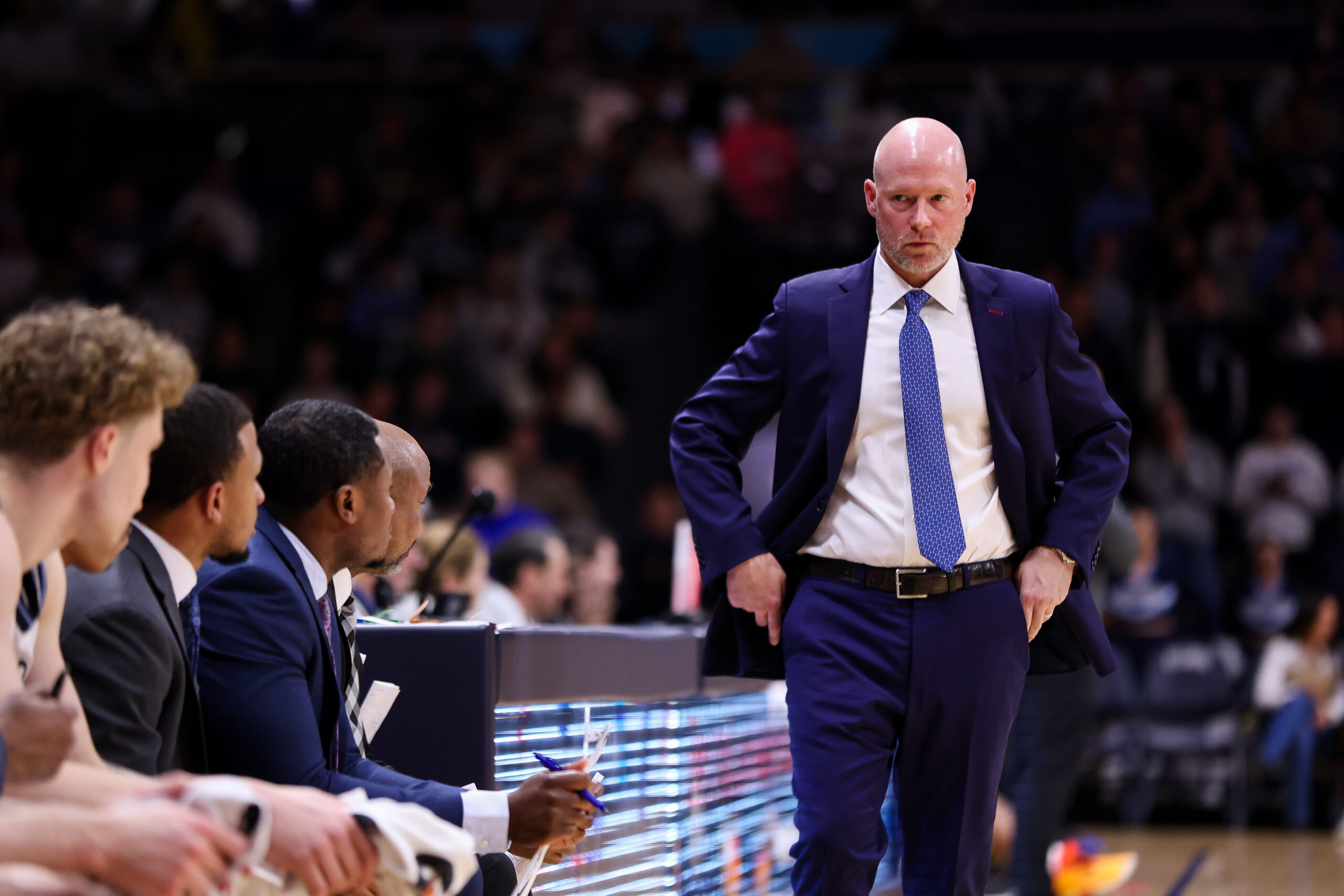
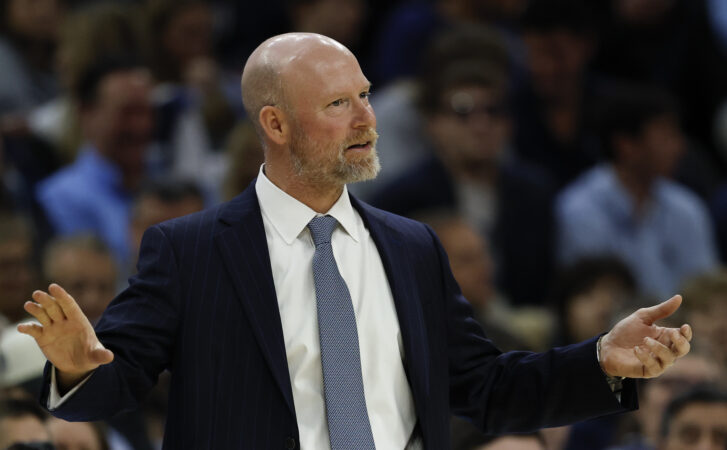
    Villanova coach Kevin Willard believes Tyler Perkins shares many of the same qualities as former Wildcats guard Josh Hart.

    “He” — he tipped his head to the right, toward Perkins — “can do that. He just has to figure it out at times, ‘I don’t need to shoot the ball to be out here and be effective.’ Because he does so many other things.”

    Perkins has met Hart just once — last September, when Hart and Jalen Brunson returned to campus to record an episode of their podcast, The Roommates Show. Their on-paper profiles are practically identical. Both are from the Washington area.

    They are about the same height (6-foot-4) and roughly the same weight (210-215 pounds). The biggest difference, at the moment anyway, might be that the conditions that allowed Hart to develop over his four seasons at Villanova, from 2013 to 2017, are harder to replicate. These days, it takes a welcoming atmosphere; a rewarding athletic, academic, and social experience … and, of course, a big, fat check.

    Make no mistake: The money is and will be the major motivator for keeping a promising basketball player on any campus. A program that wants to keep a star into his senior season is going to have to pony up accordingly. But those first two factors still matter some, at least some of the time, and apparently to Perkins.

    “I don’t really care about all the extra stuff that’s going on in college basketball right now,” he said. “I find joy in playing the game, and I felt like this place was the most comfortable place for me to play.”

    Imagine the comfort he’ll feel a year from now, two years from now, three, if he can stand inside the Pavilion, look up at that ceiling, and see a banner he helped to hang.

  • Kaylah Turner went from Temple’s top reserve to leading scorer in the American — and she isn’t satisfied

    Kaylah Turner went from Temple’s top reserve to leading scorer in the American — and she isn’t satisfied

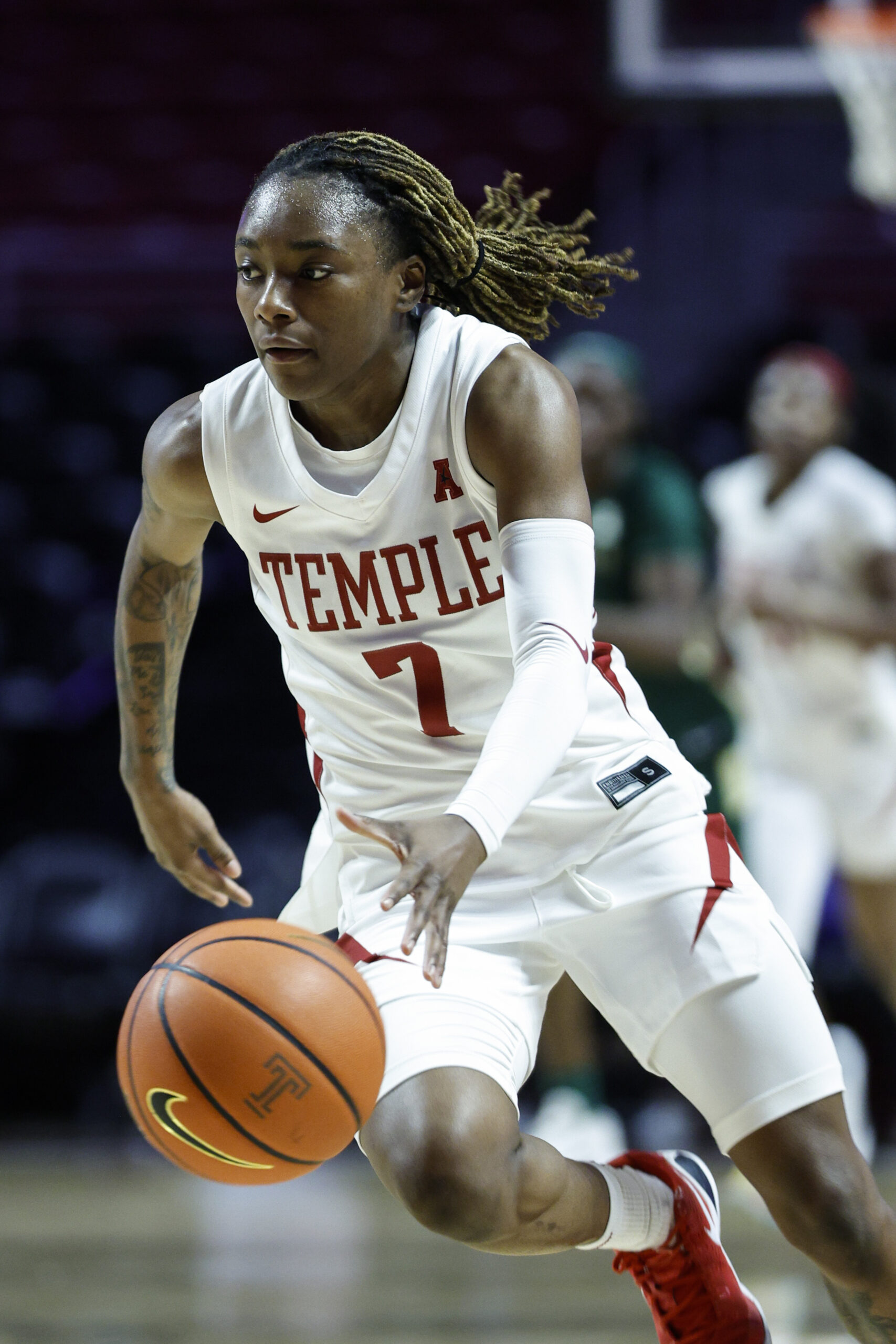
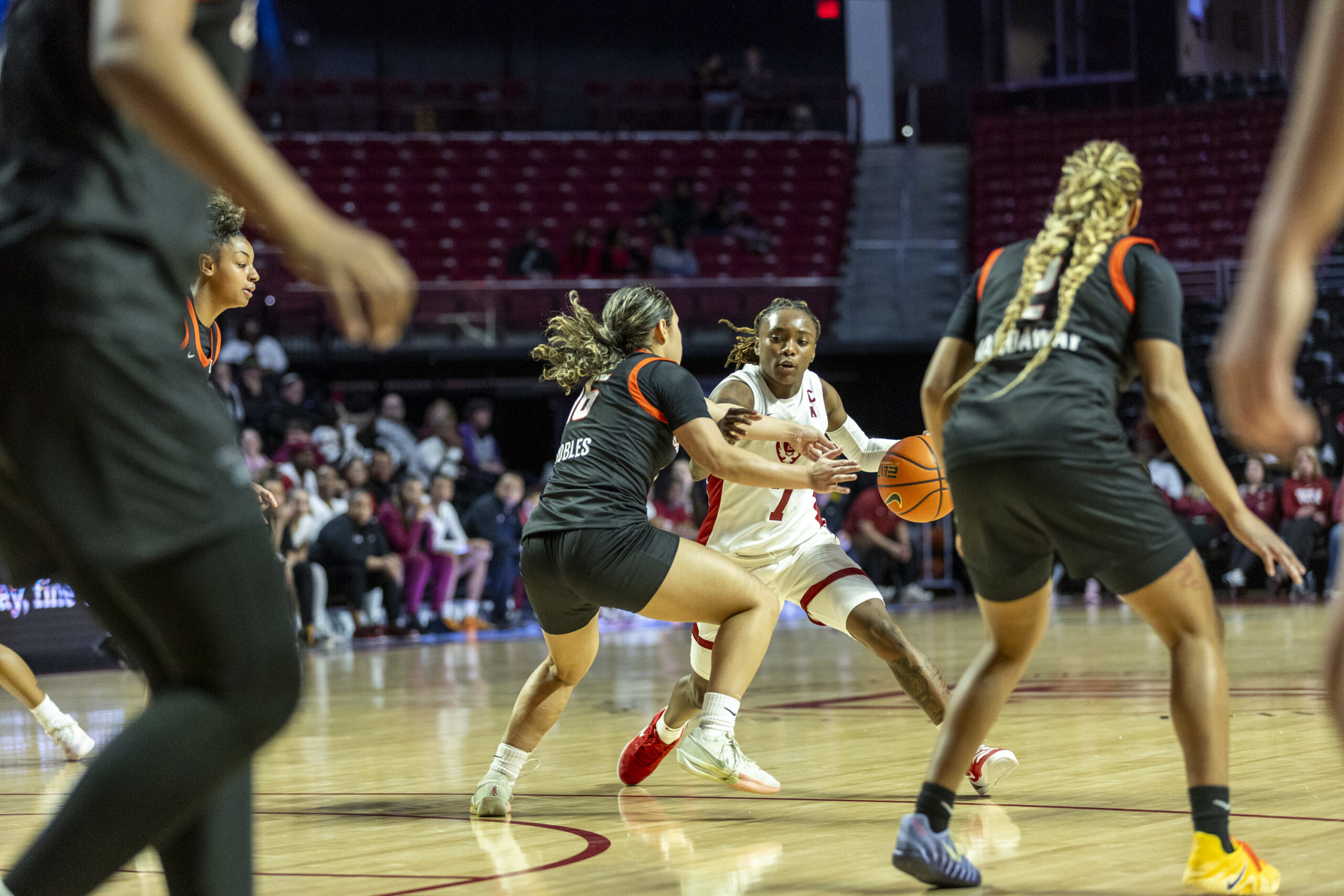
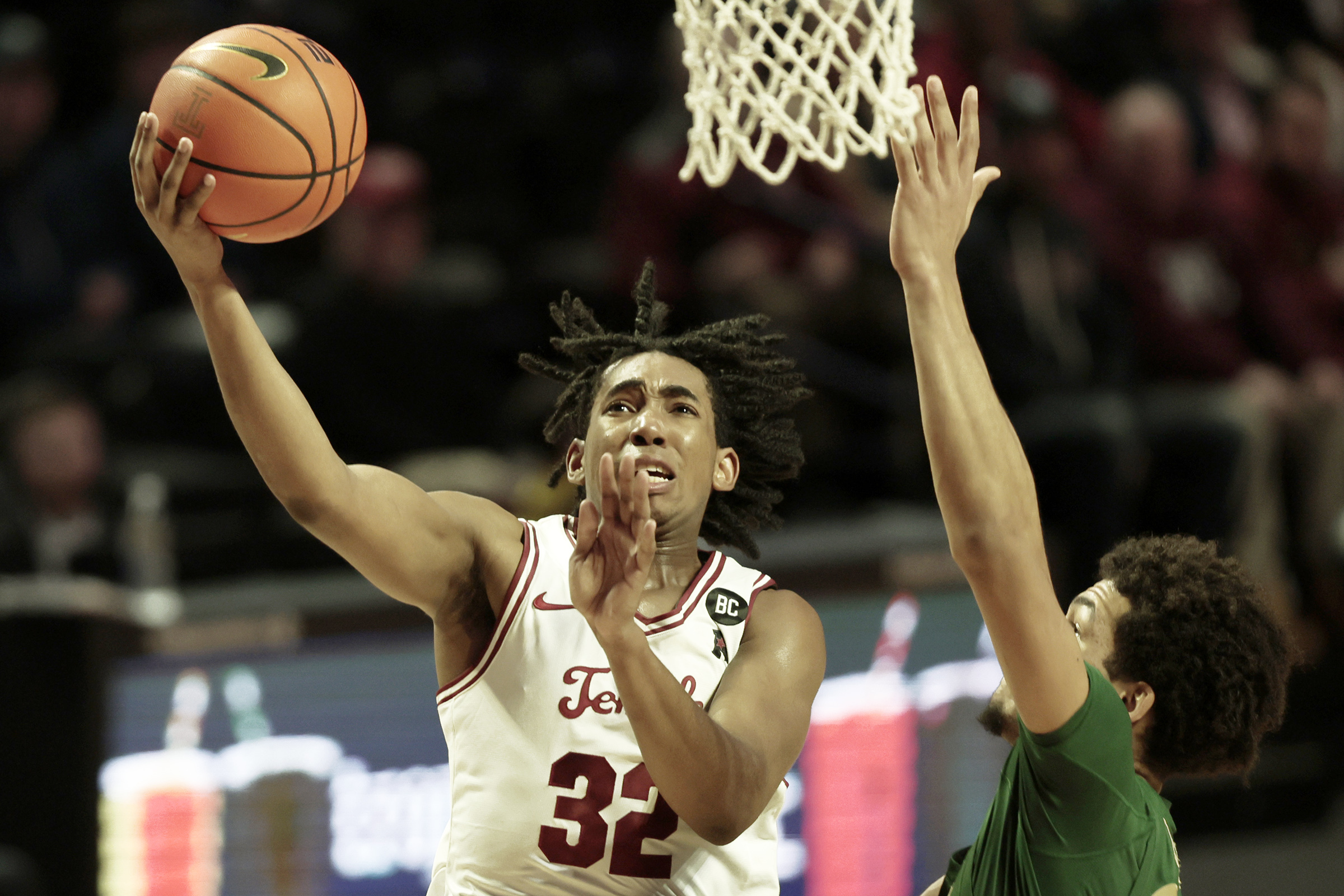
    Temple guard Kaylah Turner describes her play as “KT ball,” which she says is scoring at all three levels and being a pest on defense.

    However, the 5-foot-6 junior is constantly looking to improve, whether it’s becoming a better passer or grabbing more rebounds. Her drive has helped her blossom into one of the best players in the American Conference.

    The Alabama A&M transfer and reigning American sixth player of the year leads the conference in scoring with 17.2 points per game. It’s been a difficult stretch for the Owls in conference play, and Turner has led Temple (10-13, 4-7) to three wins in its last seven games. She scored 12 points in Tuesday’s 52-43 loss against University of Texas San at Antonio.

    “We just have to focus on the next game,” Turner said. “We can’t really draw on all the losses.”

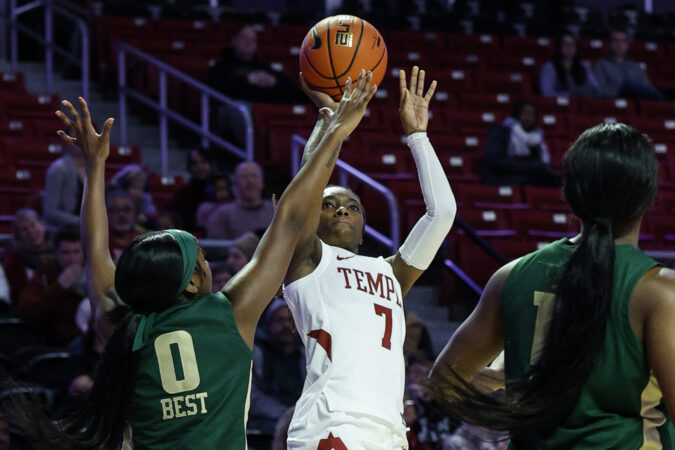
    Temple guard Kaylah Turner is averaging 17.2 points per game.

    Turner had high expectations this season. She was named to the American’s preseason all-conference first team after a strong first season with the Owls, in which she averaged 9.9 points on 38.5% shooting off the bench. With the graduation of guards Tiarra East and Tarriyonna Gary, Turner moved into the starting lineup this season.

    “First-team preseason was cool, but I think I should have been preseason player of the year,” Turner said. “So that’s on my mind, and that’s what’s motivated me every day to get better because I didn’t get my original goal, so I still have another couple of goals in mind. I’m just never satisfied.”

    Moving into the starting lineup paired Turner with point guard Tristen Taylor, who led the American in assist-to-turnover ratio last season. Turner’s scoring prowess and Taylor’s facilitating has forged a formidable backcourt.

    “We play very well together,” Taylor said. “I feel like we’re actually the best backcourt duo in the conference, and I’ll say that. But Kaylah comes in here and works hard every day. She is a great teammate, not just to me, but to everybody. She always brings energy, and I just feel like that flows onto the court when she goes out and plays.”

    That energy has helped Turner lead the conference in scoring and shoot 41.6% on three-pointers, which is second in the conference..

    However, when Temple lost four of its first five American contests, Turner was one of the players who couldn’t find her groove.

    Turner shot below 40% in four of those five games. Before Temple’s game against South Florida on Jan. 20, the team held a meeting to go over everyone’s role on the floor. The Owls beat the Bulls, 86-83, and are 3-3 since the meeting. Turner has been one of the biggest beneficiaries of the refreshed role clarity.

    Temple’s Kaylah Turner has surpassed 1,000 career points this season.

    She had a 27-point outburst in Temple’s 67-65 overtime win over Tulane on Jan. 31 and came up with a steal and assisted forward Jaleesa Molina’s game-winning layup in the final seconds.

    “We were just super locked in on that play,” Turner said. “I got the steal, but all my teammates were all talking at that time. So that’s why we got that steal and Jaleesa was able to get the bucket.”

    Turner also eclipsed 1,000 career points after knocking down a three-pointer in the second quarter in the win over the Green Wave.

    “It definitely means a lot,” Turner said. “I was definitely happy when I got it. Just seeing my success that I had at Alabama A&M, and then having the same thing here is just incredible, seeing my hard work pay off in that aspect.”

    Despite having the best season of her career, Turner sees plenty of room for improvement. With Temple ninth in the 13-team American with seven games to play, Turner is looking to give the Owls momentum heading into the conference tournament.

    “Looking at these games that we won recently, it was with the defense and 50/50 balls, intensity, urgency, all that type of stuff,” Turner said. “So we can make sure we really emphasize the little things. We can sit here and look at scout and run our plays, but what wins games is everything that’s not on the scout. Energy, talking, getting on the floor, that type of stuff. Just being consistent with our spicy defense, like Coach [Diane Richardson] always talks about.”

  • Villanova survived a scare from Marquette, but there are concerns. One in particular? Poor foul shooting.

    Villanova survived a scare from Marquette, but there are concerns. One in particular? Poor foul shooting.

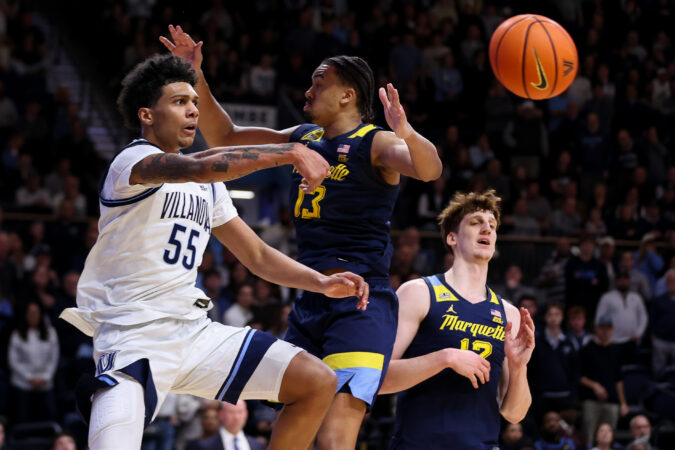
    Acaden Lewis toed the free-throw line with 3 minutes, 35 seconds left in the second half Tuesday night and Villanova trailing Marquette by three. The freshman point guard released the first of two attempts and watched as it failed to reach the rim. The second attempt was only mildly better and clanked off the front of it.

    Just over a minute later, he was back at the line after being fouled on a drive. The deficit still was three.

    In this moment, it would be Tyler Perkins who inspired the winning plays in Villanova’s 77-74 victory. They were visible all night in Perkins’ clutch three-pointers, his game-winning block, and a key steal as he finished with a team-high 22 points.

    But his night also included a moment of leadership, a junior making sure a freshman could forget what had just happened.

    “Tyler came up to me and was just like, ‘You’re built for these moments,’” Lewis said.

    “I just relaxed and shot them.”

    Both free throws went in. Lewis cut Marquette’s lead to one. The tide was starting to turn, and Villanova (19-5, 10-3 Big East) rode the wave and avoided a bad loss to a struggling Marquette team.

    A Villanova free throw misses the hoop during the second half against Marquette on Tuesday.

    That is the thing about free throws. They giveth and taketh. Lewis described his two misses as “uncharacteristic,” but he is shooting 60.5% for the season, and the Wildcats entered Wednesday ranked 285th in the country and 10th among 11 Big East teams in free-throw percentage (69%).

    They made their last six free throws and won the game at the line over the final 2 minutes, 10 seconds. But they were in a tight game against an inferior opponent largely because they were 12-for-25 before the closing minutes.

    Sensing a pattern

    Villanova’s win against Georgetown on Saturday didn’t have to be as hard as it was. Fourteen missed free throws made it nervy. The fans who were at Finneran Pavilion on Tuesday night know the issues well. They gave a Bronx cheer to freshman Chris Jeffrey when he made a pair of free throws midway through the second half.

    It is worth mentioning that the struggles are abnormal for a program that consistently has resided at the top of the conference and near the top of the country in free-throw percentage for much of the last decade. But it is not particularly relevant context, given that Kevin Willard is in his first season coaching an entirely new team.

    Still, what gives?

    “Everyone is in there every day,” Willard said. “It’s not like we’re not doing it. I think it’s a little mental right now. I think we miss one, and it’s like we got a little bit too much negative emotion right now on the free-throw line. I’ve got to change that somehow.”

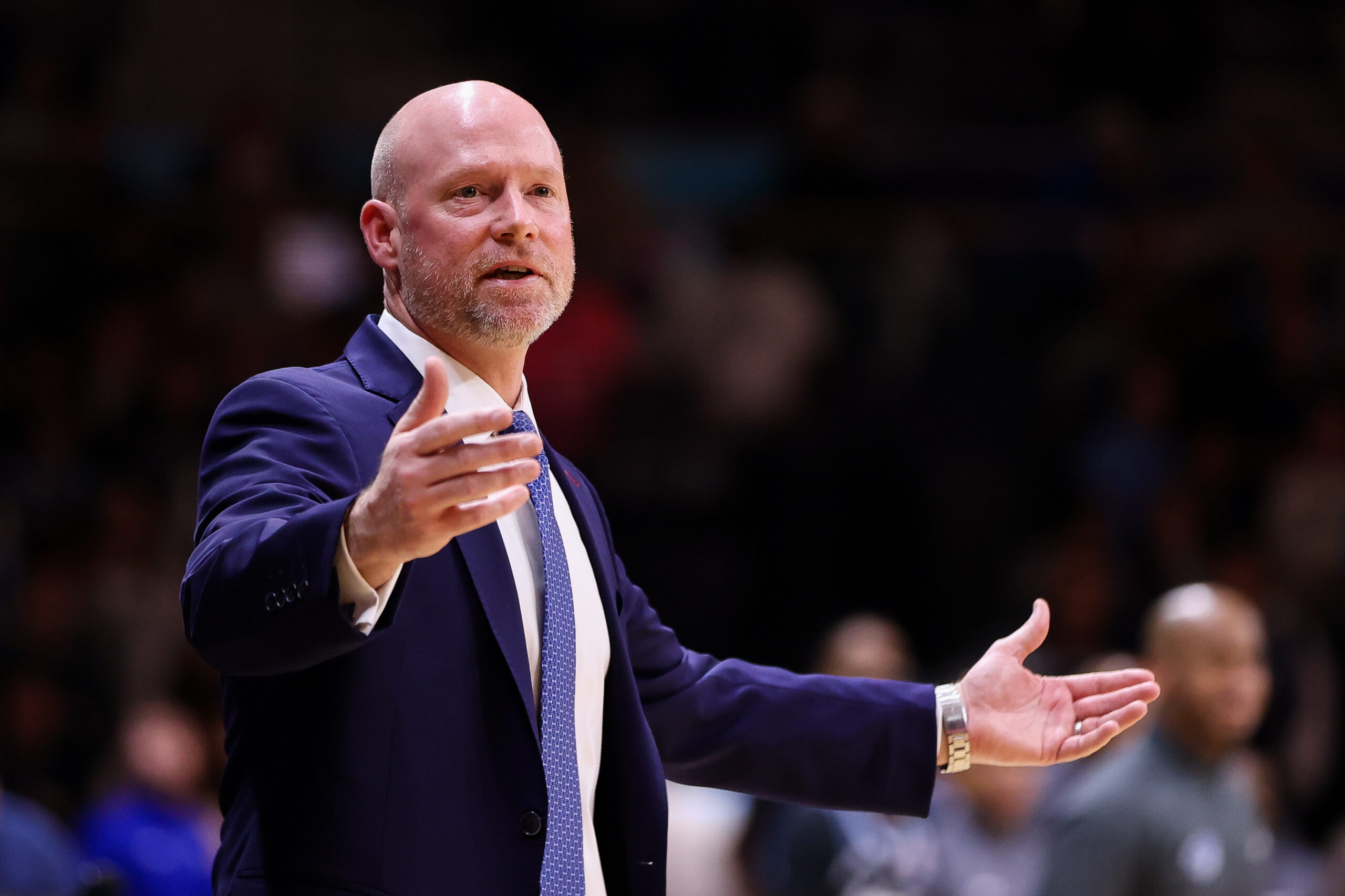
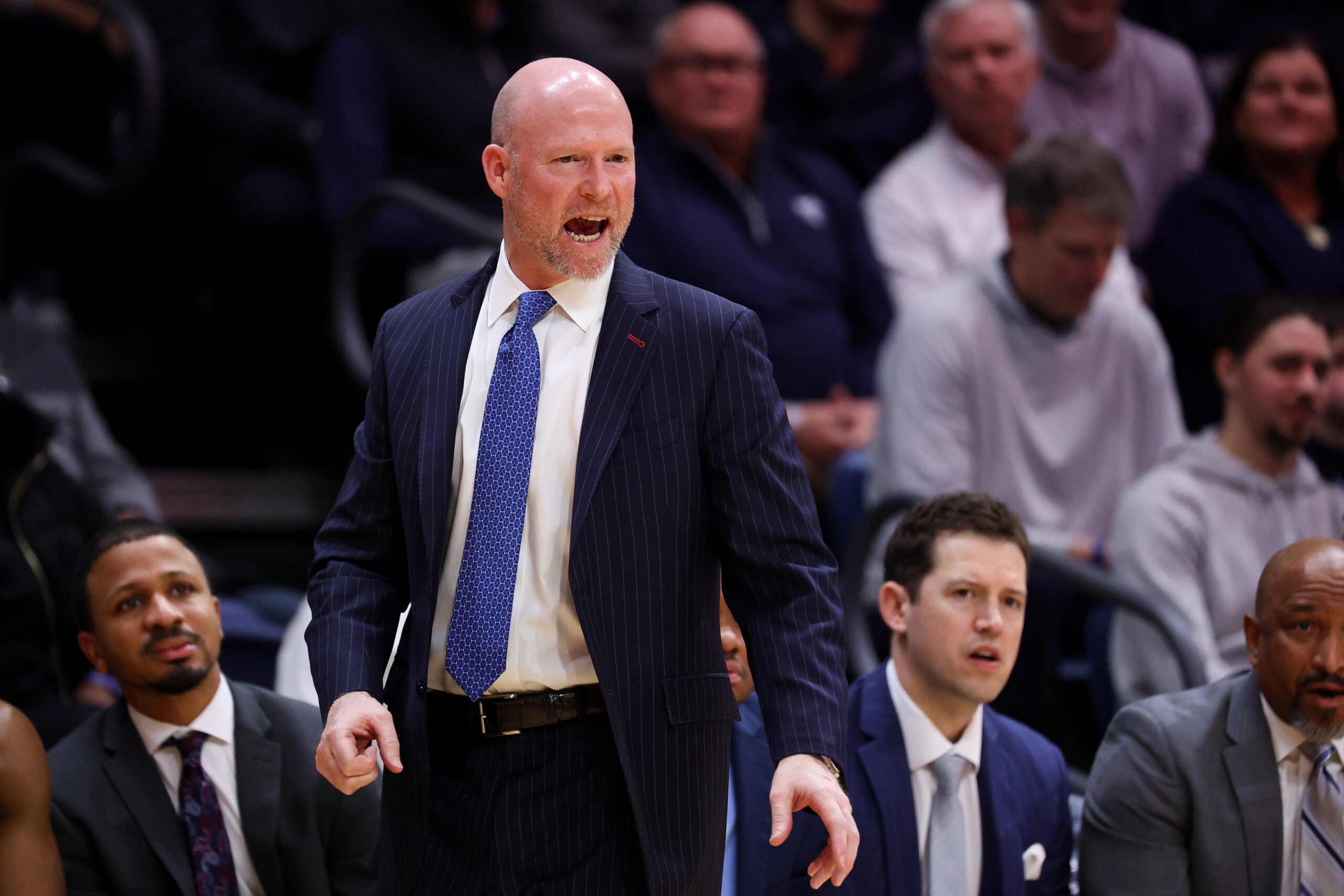
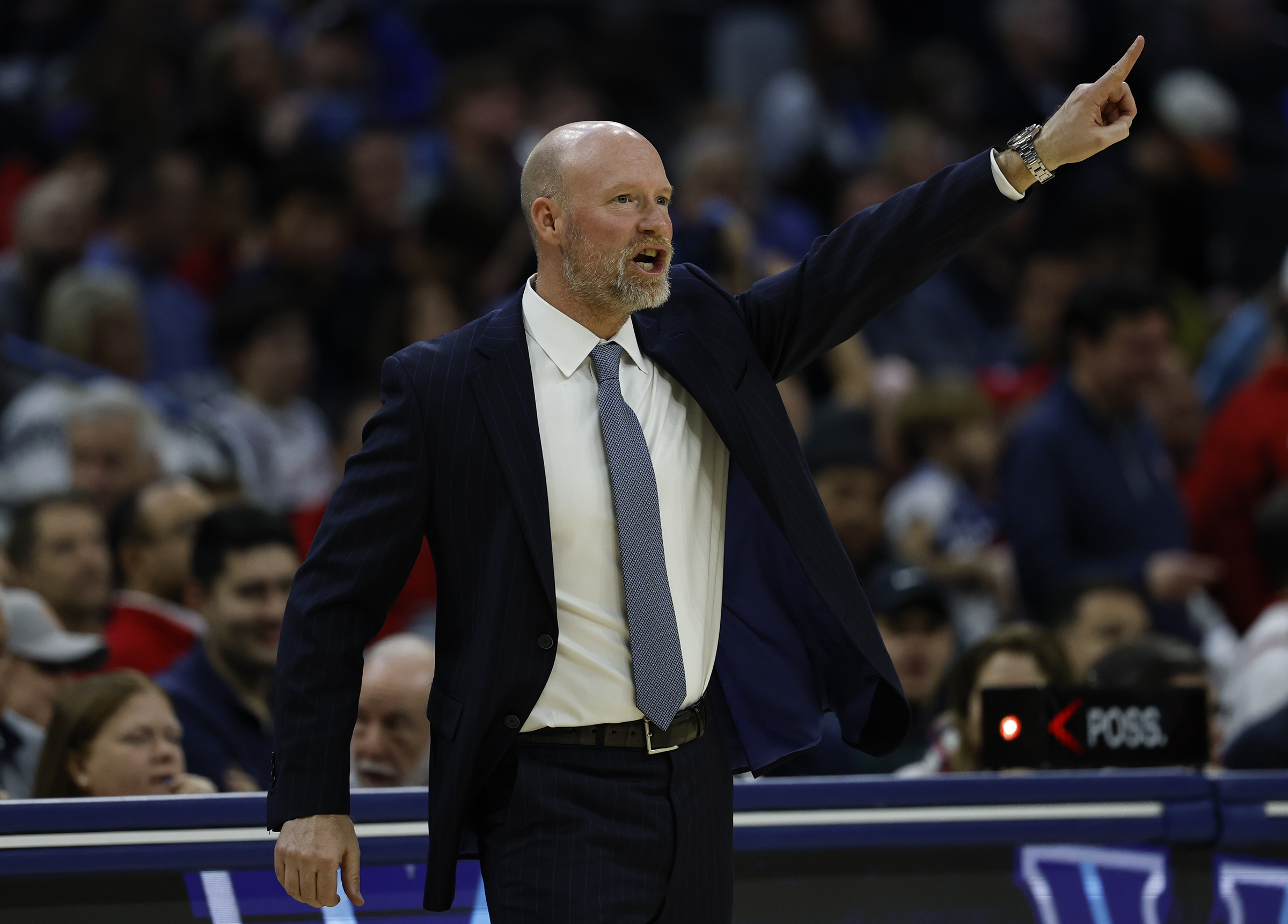
    Villanova coach Kevin Willard calls out instructions during the first half against Marquette on Tuesday.

    How does one change a mentality this late in the season?

    “We’ll get there,” Willard said. “If we can improve our free-throw shooting and make a couple layups in the first half, it’s a completely different game. We held them to 32 points [in that first half], we should’ve had 44 points, and it’s a different type of game.”

    Willard was flanked in his postgame news conference by Lewis and Perkins. He turned to Lewis and mentioned that the freshman shoots around 200 extra free throws after practices and noted that Perkins, who is shooting 75% for the season, never misses in practice.

    “I have a lot of confidence in these guys that as we go through February and get into March that we’ll make them,” Willard said.

    Lindsay’s slump continues

    Bryce Lindsay made his first shot Tuesday night, a three-pointer less than three minutes into the game.

    It had to, at least briefly, feel like the weight of the world was off his shoulders. Lindsay entered the night having made just 15 of his previous 64 attempts from three-point range (23.4%) over Villanova’s last 10 games since the calendar turned to 2026. The sharpshooting redshirt sophomore guard was a big reason behind Villanova’s strong start to the season, but he has reached double figures just four times in the last 11 games. That initial attempt Tuesday night was his only make on six three-point tries. He went scoreless Saturday afternoon at Georgetown.

    Villanova guard Bryce Lindsay dribbles past Marquette’s Chase Ross during the second half Tuesday.

    “He’s going to get going,” Willard said. “It’s a little mental. I talked to the team earlier, before the game, about staying in the moment. Talking to each other and not worrying about the past, not worrying about the future, just trying to stay in the present. Sometimes it’s hard when you’re not playing well to kind of stay in the moment.

    “I have a lot of confidence in Bryce. He’s in the gym with me every day working. He’s going to get it. I thought he had some good opportunities tonight. When you’re struggling the way he’s struggling, sometimes you just need one, get a good bounce, bank one in. I told him to sleep on the other side of the bed tonight. Sometimes you’ve just got to try something different.”

    Something different, like starting sixth man Devin Askew and giving Lindsay a different look off the bench?

    “No,” Willard said. “He’s still doing a lot of other things, and people have to guard him.”

    Lindsay did affect the game in positive ways despite only scoring four points. He was plus-8 and had three rebounds and four assists, including a key pass to the corner for a Matt Hodge three-pointer with 4:20 left in the game.

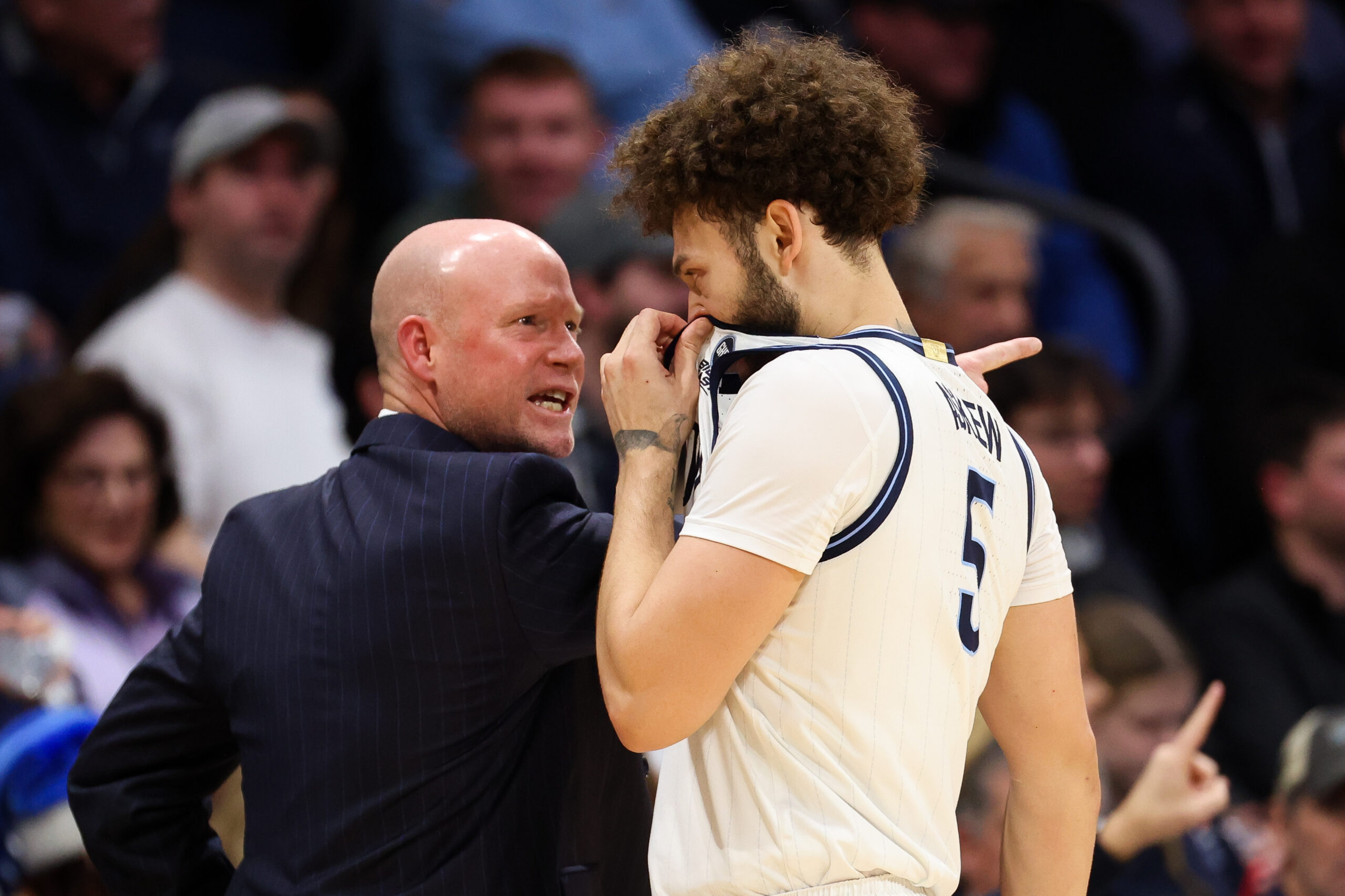
    Willard said he likes Askew coming off the bench as a “security blanket.”

    Speaking of which … it was Askew who made two free throws with 11 seconds left that gave Villanova a three-point lead and forced Marquette into a desperation three-point attempt.

  • How Jordan Mason became Temple’s true point guard and ‘the heart of our team’

    How Jordan Mason became Temple’s true point guard and ‘the heart of our team’

    When Jordan Mason entered the transfer portal last spring, he wanted to be part of a winning program.

    It wasn’t his first time in the portal. The senior spent two seasons at Texas State before transferring to University of Illinois Chicago in 2024. He got in contact with Temple coach Adam Fisher in the portal and immediately felt at home.

    Mason thought his skill set would complement Temple’s screen-heavy offense. He has since been a catalyst for the Owls.

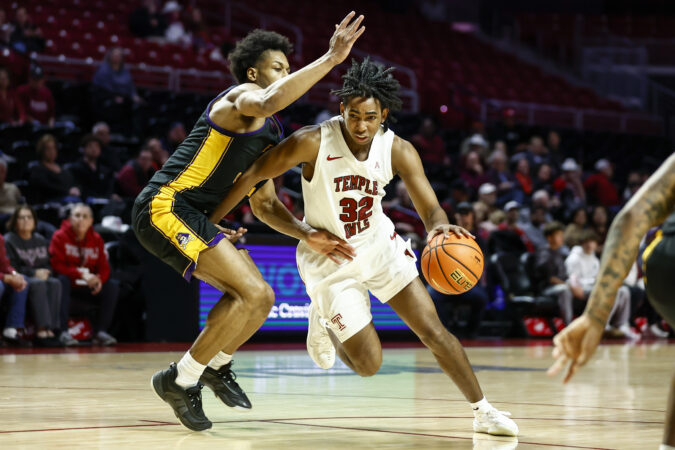
    Temple (14-8, 6-3 American Conference) lacked a true point guard for the past two years. Mason has taken over that role. He’s averaging 11.7 points and a team-leading 4.3 assists in 22 starts.

    “I saw the way that the coaches interacted with each other and the way they interacted with me and my family,” Mason said. “It felt like a family right away. It felt like home. It was like I could be comfortable here. I can be myself here.”

    Mason developed into a key rotational player at Texas State. As a freshman, he averaged 6.3 points in 32 games (19 starts). His numbers more than doubled as a sophomore (12.9 points per game) and 23 starts in 29 games.

    He transferred to UIC for the 2024-25 season and averaged 9.6 points. Mason also was an asset defensively and as a ballhandler. He had 3.3 assists and 1.2 steals per game with the Flames.

    “He knows when to pick and when [to] shoot,” Fisher said. “Guys enjoy playing with somebody like that, when you know that there’s an opportunity that you’re going to get shots, and he gets you easy looks.”

    Jordan Mason played two seasons at Texas State and one at University of Illinois Chicago before joining Temple this offseason.

    Mason quickly established himself as Temple’s main ballhandler in the season opener and created scoring opportunities for his teammates, notching six assists in the 83-65 win over Delaware State.

    “Every pass I make, it seems like the shot goes in,” Mason said. “So some of it is me getting a little bit better at passing, but a lot of it is just the talent around me. They’re just really good dudes that make a lot of shots. So it makes me look good.”

    His play contributed to the Owls winning seven straight from Dec. 9 to Jan. 14 — a stretch in which he also surpassed 1,000 career points. When he struggled in the middle of January, though, the team’s production took a dip.

    Temple lost two straight games, but a road trip to his native Texas helped turn things around.

    “He’s the heart of our team,” said guard Aiden Tobiason. “Because he’s so important. He’s really the main guy in principle every single time.”

    The Owls won both games at Rice and University of Texas at San Antonio, and Mason recorded back-to-back double-digit outings, 15 points against Rice in Houston and 18 at UTSA — with his family in attendance.

    “It was pretty amazing,” said Mason, who’s from San Antonio. “I’ve actually played UTSA as a freshman, and I didn’t touch the floor. That was rough for me because it was my first time playing at home, and it was, to be honest, a little embarrassing not playing. So to be able to come back, full-circle moment my senior year and play in front of everybody and beat UTSA because we lost to [them] my freshman year.”

    Entering Saturday’s noon matchup at East Carolina (7-15, 2-7), Temple sits in fourth place in the American and could snatch a top-four seed in the conference tournament in March.

    Mason, in his final year of eligibility, looks to make that happen.

    “I want to win the conference tournament and go to the NCAA Tournament,” Mason said. “That’s the big goal for our team.”

  • Is Drexel a sneaky NCAA Tournament contender? A big final month will tell the tale.

    Is Drexel a sneaky NCAA Tournament contender? A big final month will tell the tale.

    Drexel started off more than slow.

    After an offseason that saw Zach Spiker’s squad lose four of its five starters to the transfer portal, the Dragons went 6-7 in nonconference play, dropping all three of their Big 5 matchups in the process. The team started its Coastal Athletic Conference campaign looking for relief but was confronted with more of the same: It lost three in a row to tip off conference play. The season looked like a loss.

    Then, on Jan. 8, a switch seemed to flip. The Dragons shut down Stony Brook, limiting the Seawolves to just 37 points in a win. From there, Drexel started rattling off victories powered by its defense, winning six of seven games to move into conference contention. The Dragons have held opponents to an average of 56.3 points over that stretch

    Drexel (12-11, 6-4 CAA) is in a tie for third place ahead of Thursday’s matchup (7 p.m., FloSports) at Campbell (10-13, 4-6). The Dragons will receive a first-round bye in the CAA Tournament if they stay in the top four.

    The potential for the program’s first NCAA Tournament berth since 2021 has offered some guarded optimism for the Dragons.

    “I don’t feel a recent surge in excitement and fun after winning,” junior guard Shane Blakeney said. “We’re all taking a deep breath like this is what it should have been like. We’re frustrated because we should have been playing like this, and we also still feel like we haven’t played our best yet.”

    Added junior guard Kevon Vanderhorst: “We’re constantly learning through our losses … It’s not necessarily that we’ve just had a reawakening. It’s [that] we’ve been learning the whole time.”

    In their last outing on Saturday, Drexel outlasted North Carolina A&T, 61-60, in a slugfest that came down to the final whistle.

    With no timeouts and down by one point, the Dragons had to advance the length of the court in 3.2 seconds. After a bit of backcourt misdirection, the ball was inbounded to Vanderhorst. The guard beat his defender down the court, converting a contested scoop at the buzzer to win the game.

    “We practice shots like that … three seconds on the clock, somebody has to go get a bucket,” Vanderhorst said. “In terms of just our process, nothing really has changed here.”

    Although the team has practiced that situation countless times, hitting the buzzer-beater in a game garnered national attention. Vanderhorst’s sprint to the bucket landed third on SportsCenter’s daily top 10 plays feature.

    “It’s definitely been a surreal moment,” Vanderhorst said. “I think that’s the perfect word for it. Growing up, SportsCenter top 10 is that show you turn on in the morning [when] you want to see all the highlights from the day before.”

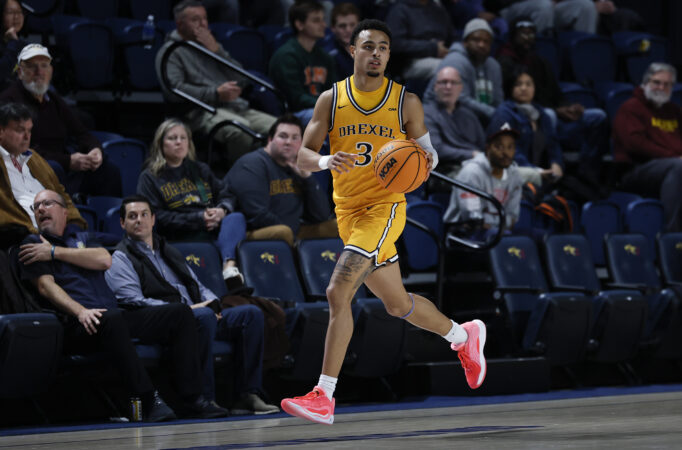
    Vanderhorst, who is averaging 9.6 points, is part of an offense that boasts five players scoring eight or more points per game. Blakeney averages a team-high 13.3 points. The balanced offensive approach has made it difficult for opposing defenses to focus on a single player.

    “Our coaches recruited talent. It’s shown in a lot of plays especially through this stretch of the season,” Blakeney said. “Teams can’t really be surprised when we play together — we look good. … We play fast, play connected.”

    Drexel has been dominant defensively. The program logged the best defensive effective field goal percentage in the NCAA during January. Since the start of conference play, Drexel is allowing an average of 6.8 fewer points than Hampton, the CAA’s second best statistical defense.

    Despite the team’s prowess on defense, not one Drexel player can be found in the top 10 in total steals or blocks among CAA players since the beginning of conference play. Like the offense, Drexel’s suffocating defense has been a team effort.

    The Dragons have had the luxury of not leaving campus in two weeks, playing their last three at home. Starting with Campbell on Thursday, though, five of their final eight games are away. Despite boasting a 10-3 record at home, the team is a combined 2-8 in away and neutral games.

    “I think this home stretch was nice because it’s given us confidence a little bit,” Vanderhorst said. “In those past games that we had away in Monmouth and Towson, I think dudes were really just getting the hang of sticking together through adversity.

    “[Doing that] on the road and [in] those environments is super important, so I don’t think it’s anything that needs to change. I think we’ve kind of gotten the hang of it now.”

  • Ronald Moore was once a March Madness sensation. Now he’s a Penn assistant coach.

    Ronald Moore was once a March Madness sensation. Now he’s a Penn assistant coach.

    When Ronald Moore became an NCAA Tournament hero in 2009, TikTok and Instagram had not yet been invented. The iPhone was in only its second iteration, the 3G, and the first one had been launched just two years before.

    You could certainly become a national sensation, but it would have been with a highlight reel play instead of a viral one.

    Yet for all that has changed in technology since then — to say nothing of all that has changed in college basketball — some things never go out of style. A mid-major toppling a Big Ten beast in March is certainly one of them.

    It was news enough that Siena had taken Ohio State to overtime, and all the better since the game was in Dayton, just over an hour from Columbus. With 9.1 seconds left in the extra session, the Saints trailed the Buckeyes, 65-62.

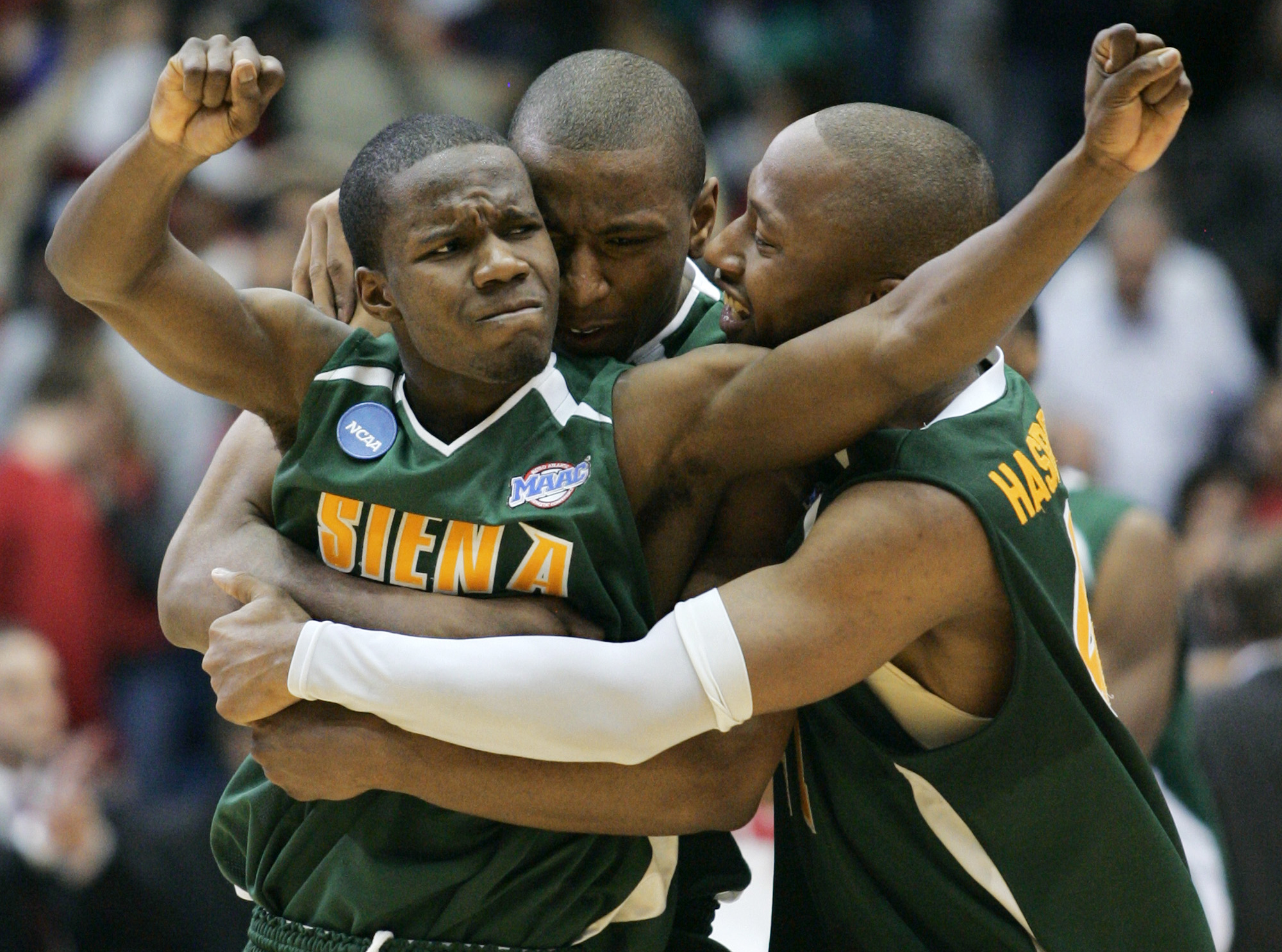
    Moore, a Plymouth Meeting native who was then a junior guard from Plymouth-Whitemarsh High, took the inbounds pass and raced up the floor. When he neared the three-point arc, he faked left on Ohio State’s P.J. Hill and dribbled right. Hill bit, Moore let fly, and the shot was inch-perfect.

    As CBS announcers Verne Lundqist and Bill Raftery joined the crowd in delirium, Ohio State’s Jon Diebler shot a potential game-winner off the rim. A second overtime beckoned.

    “The little guy that could!” Raftery exclaimed over replays of 6-foot-tall Moore’s three, including a wide-eyed Siena coach Fran McCaffery and an even more wide-eyed bench.

    With 19 seconds left in the second OT, future 76er Evan Turner’s gutsy layup put Ohio State ahead, 72-71. Moore again took the inbounds pass, this time dribbling left, then toward the middle.

    He passed to Edwin Ubiles, who gave a pump fake, a dribble, and a pass back out of a triple team to the man of the hour. The clock read 5.4 when Moore let fly.

    “Three-pointer … Yes!” Lundquist roared, with Raftery landing an “Oh!” right on top of his partner.

    Then came the moment that really sticks in many fans’ minds: Raftery’s “Onions! Double order!” exclamation. The sport’s king of rhetorical flourishes had never taken his most famous line to that level, and it’s still rare.

    Bill Raftery (left) calling a game on CBS with former Villanova coach Jay Wright in 2022.

    Had Turner made the running jumper he missed on Ohio State’s last possession, perhaps all of this would have been forgotten. But the ball rolled around the rim and out, and the nation had a new star.

    ‘A great moment in time’

    Countless fans of Cinderella have memories of Moore’s heroics. So does Siena’s all-time assists leader, now 37 and settled back in his hometown as an assistant coach at Penn.

    “They’re always vivid,” he said in an interview this week. “I’m blessed to have had that moment in my basketball career. And every March, it’s always a flashback, whether someone brings it to my attention or I catch a glimpse of it in some of the highlight reels they play of March Madness.”

    And he still gets “the same feeling every time I see it — just because of what it meant to not only the university, but to myself, to my teammates. So it’s always a great moment in time when I flash back and look at those shots.”

    McCaffery, now at the helm of Penn, hasn’t forgotten either, just as he hasn’t forgotten many of his great moments as a player and a coach. But he offered a reminder of something those fans might have forgotten: Siena was a ninth seed that year, and this was its second straight tournament with a win.

    Ronald Moore (left) celebrates with teammates after his famous game-winning three-pointer.

    “In the moment you’re just thinking about adjustments, personnel — what are we in defensively? What are they in? Are we in the bonus?” McCaffery recalled. “With that team, it was easy to trust your guys. It was a veteran group, they were really smart, and they were incredibly mentally tough. So you can play Ohio State in Ohio [and] nobody’s rattled at all.”

    McCaffery also recalled what followed: “That was as good a locker room celebration as I can remember.”

    After graduating in 2010, Moore went on to play professional basketball in Europe for 11 years, for teams in Slovakia, Poland, Hungary, Ukraine, Italy, and France. He retired from the court in 2021, then returned to his hometown to run a youth basketball outfit.

    “I felt that it was something that was my calling, just to kind of help the next generation and give all the knowledge that I possibly can to help those kids try to help achieve their goals and their dreams in the game of basketball,” he said. “It’s brought me so much that I wanted to be able to help someone do the same.”

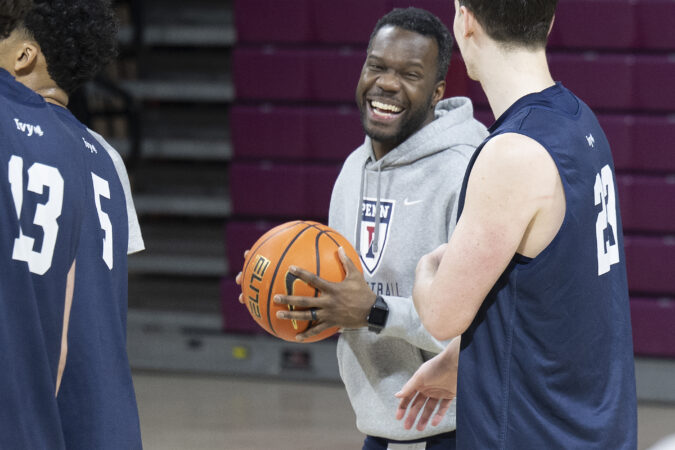
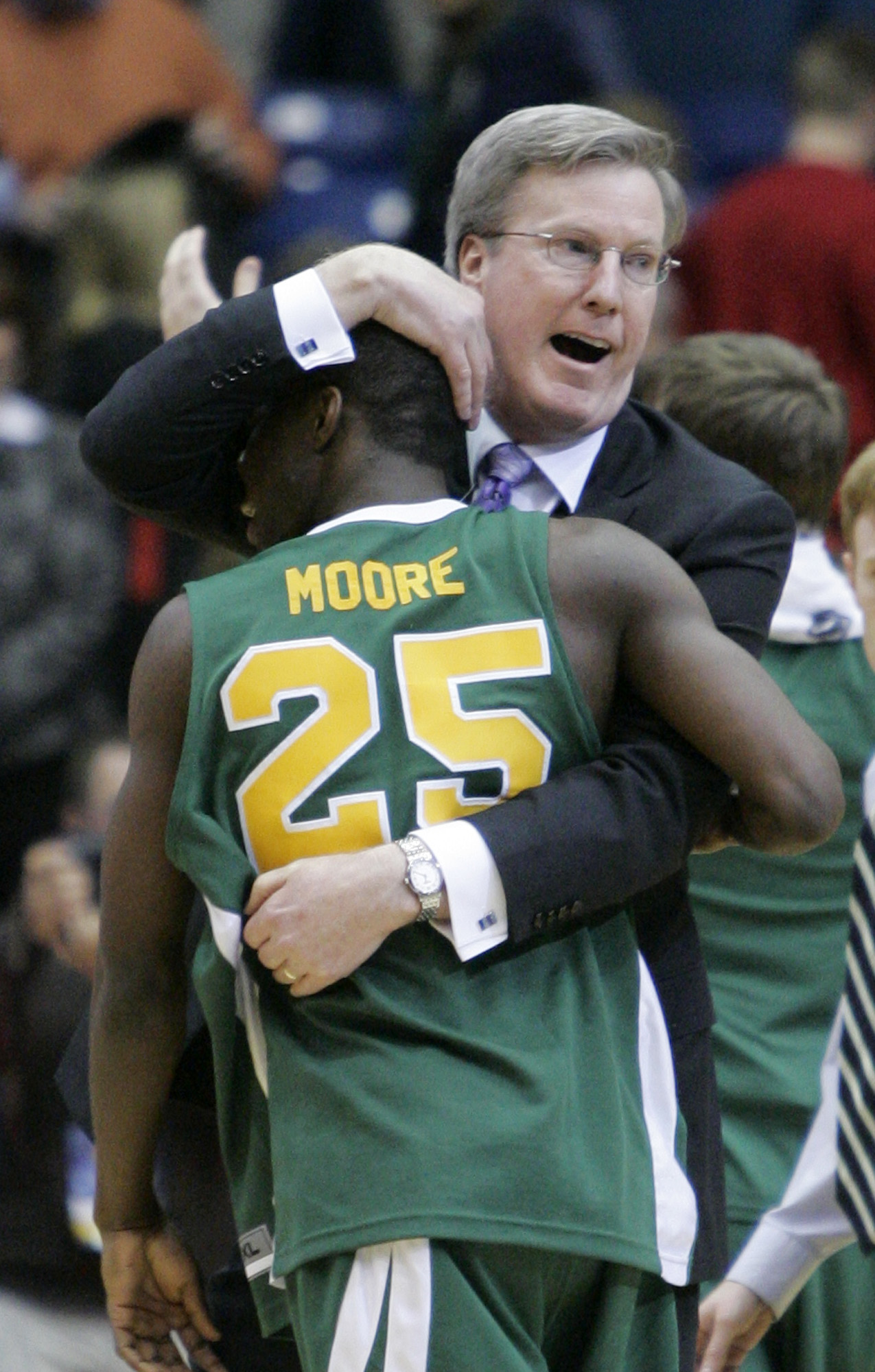
    Then, last spring, his old college coach returned to his hometown, and his alma mater. When McCaffery hired Moore to the staff at Penn, some people of a certain age reacted: “That Ronald Moore?”

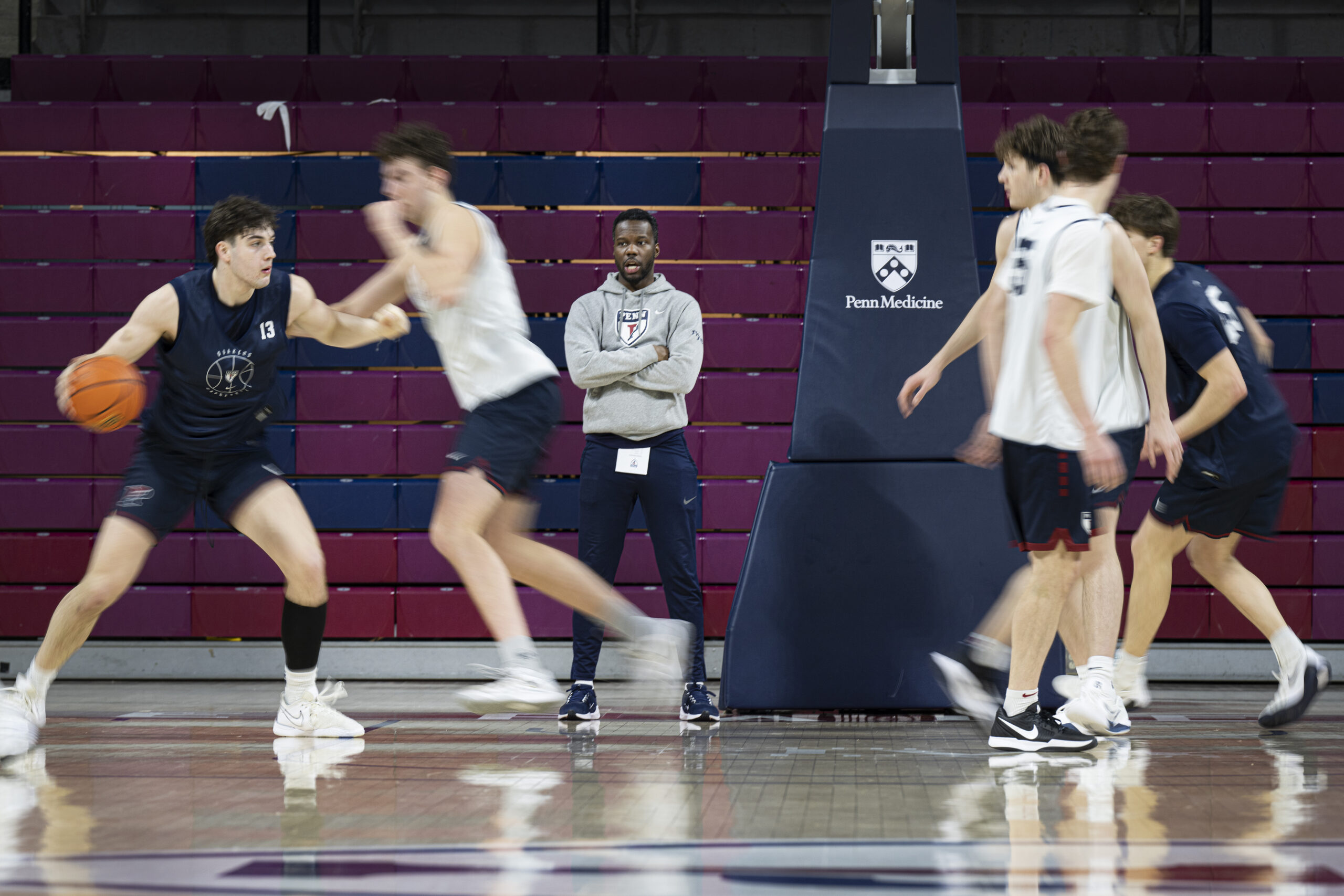
    Ronald Moore watching Penn’s players practice at the Palestra this week.

    Yes, that Ronald Moore. He and his old coach had stayed in close touch over the years. They traded text messages, and when time allowed, Moore would visit McCaffery at Iowa, where the coach moved in 2010. Their families got to know each other, too.

    “It’s just the type of person Fran is, man,” Moore said. “I think a lot of people get a misconception of when he’s out here yelling and trying to motivate guys on the floor, but off the court, he’s always been an open book, and someone who would be approachable to talk about anything.”

    Hiring him made ‘perfect sense’

    McCaffery had long felt Moore would make a good coach someday, and had told him so.

    “I always thought about having him on my staff no matter where I was, but it makes perfect sense in Philadelphia, where we’re both from,” McCaffery said.

    Now Moore’s experiences make him even better-suited for the job.

    “He’s played at an incredibly high level internationally,” McCaffery said. “He’s played for some really good coaches — played for some coaches who probably weren’t very good, and that’s part of the growth in this profession. … But his knowledge is just next-level of the game. So the coaching side of it is easy.”

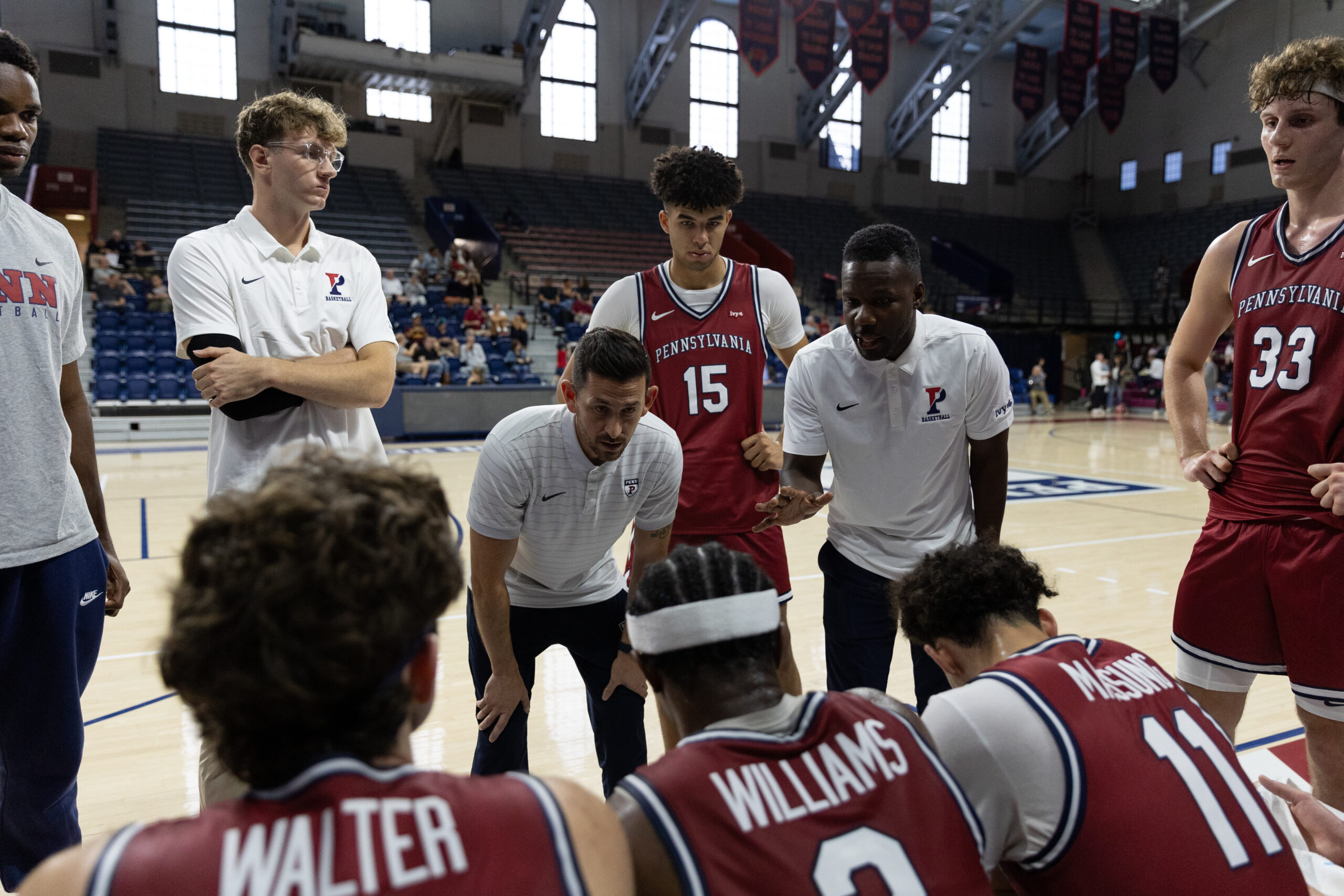
    Ronald Moore (second from right) and fellow Penn assistant coach Ben Luber talking with players during a preseason scrimmage last fall.

    When the offer came to join Penn’s staff, Moore felt that “it just was a full-circle moment.” And he was ready.

    “Many people have asked me, ‘Hey, have you ever thought about getting into college coaching?’” he said. “I had plenty of friends that coached at the college level, so I knew what it entails, but I didn’t really want to move around. So him coming back to Penn and getting that phone call, it kind of just seemed like a no-brainer.”

    On top of that, he now has a key to the Palestra, his city’s basketball shrine. He appreciates that too with one of its annual rituals played on Saturday’s. The 61-60 win over rival Princeton, ended an 8-year, 14-game skid an offered a measure of Penn’s progress this season.

    “You soak it all in when you’re in this place and it’s quiet and nobody’s around — you kind of can stand back and look at it from a different lens,” Moore said. “Having been able to play here as a college player, play here as a high school player, knowing what it means to the city of Philadelphia, and just its history in general, it’s a special place to be able to work at and come in every day.”

    Fran McCaffery embraces Ronald Moore after Siena’s upset of Ohio State.
  • ‘Glue’ guy Tyler Perkins keeps Villanova rolling in its double-digit win over Seton Hall

    ‘Glue’ guy Tyler Perkins keeps Villanova rolling in its double-digit win over Seton Hall

    Kevin Willard was going on about his appreciation for the way his Villanova team works during practices when he referred to junior guard Tyler Perkins, seated to his right after Villanova’s 72-60 victory over Seton Hall, as a “pain in the ass.”

    He meant it in the best way possible.

    “He works too much,” Willard said. “His processor gets burned out sometimes.”

    Villanova improved to 17-5 on the season and 8-3 in the Big East for a variety of reasons Wednesday night. The Wildcats, who never trailed, got a key effort from Malachi Palmer, who scored a career-high 15 points off the bench and helped ignite an 11-2 run to end the first half to send Villanova into the break with a 15-point lead. They forced Seton Hall point guard and Philadelphia native Adam “Budd” Clark to shoot jump shots and limited his ability to impact the game in transition. They outrebounded one of the better rebounding teams in the conference, 37-27.

    But they won again because Perkins, the only returning regular player from last season, continues to excel. It has been a different guy on some nights for Villanova. Early in the season, it was Acaden Lewis and Bryce Lindsay driving the backcourt with Duke Brennan manning the middle.

    Devin Askew has chipped in strong efforts off the bench, especially lately. Wednesday night was Palmer’s turn. But Perkins, who transferred to Villanova from Penn after his freshman season, scored 18 points and added five rebounds. It was his 10th double-digit scoring effort in Villanova’s last 12 games.

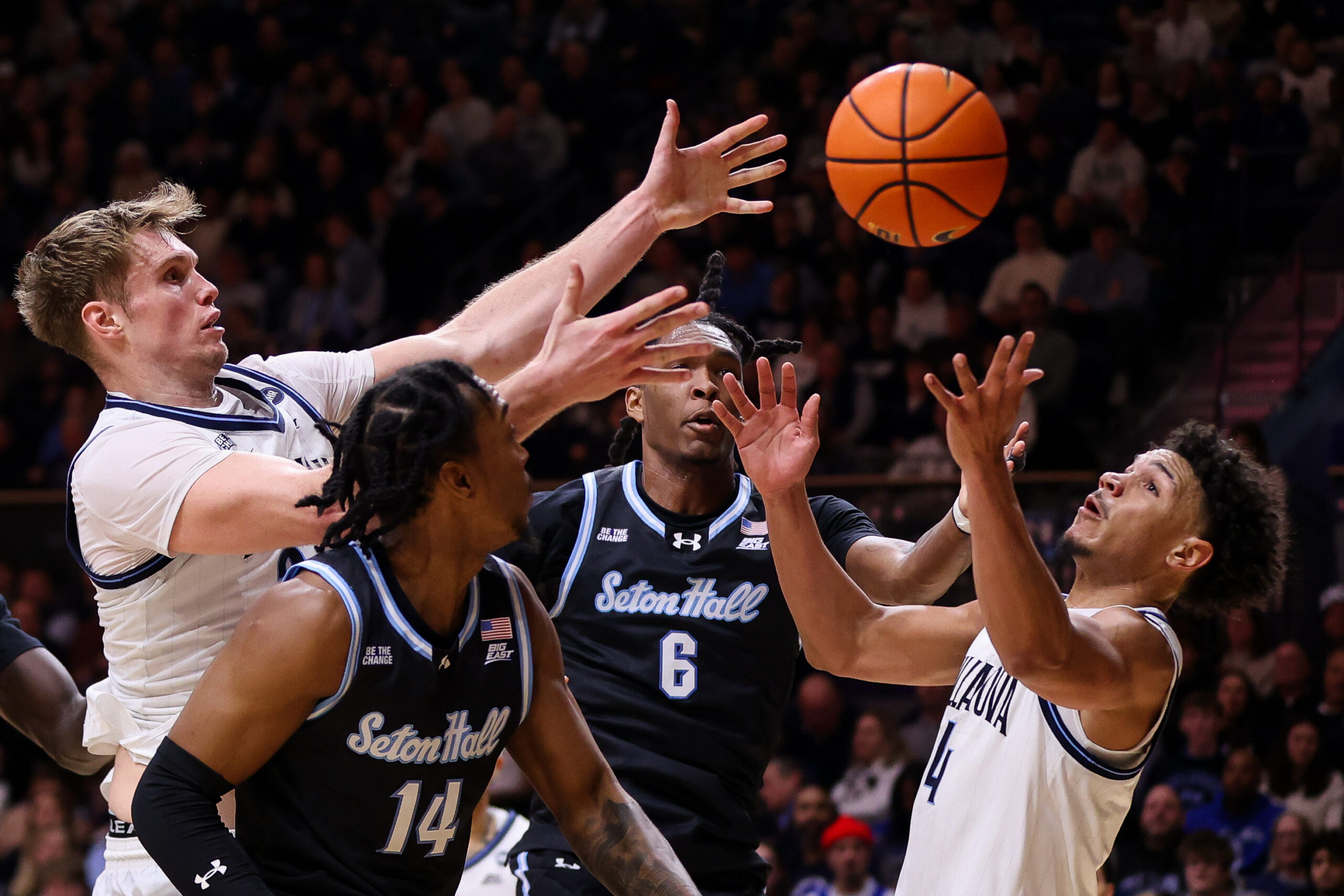
    Villanova forward Duke Brennan and guard Tyler Perkins compete for a rebound against Seton Hall.

    “He’s just the glue of their team,” Seton Hall coach Shaheen Holloway said. “He’s just solid.

    “For him to be a junior, he’s a grown man. He plays bigger than his size.”

    Being a “glue guy” can be a derogatory term to some players. And maybe it’s an unfair label for Perkins, a 6-foot-4 guard, who is averaging 17.8 points and 6.5 rebounds over his last six games. Lewis and Lindsay have, at times, struggled with the physicality required to get through a Big East season. Perkins hasn’t.

    You can call him whatever you want.

    “A lot of people say it, but at the end of the day I’m just trying to do whatever I can to help my team,” Perkins said. “I can impact the game in many ways. I’m fine with that if we win.”

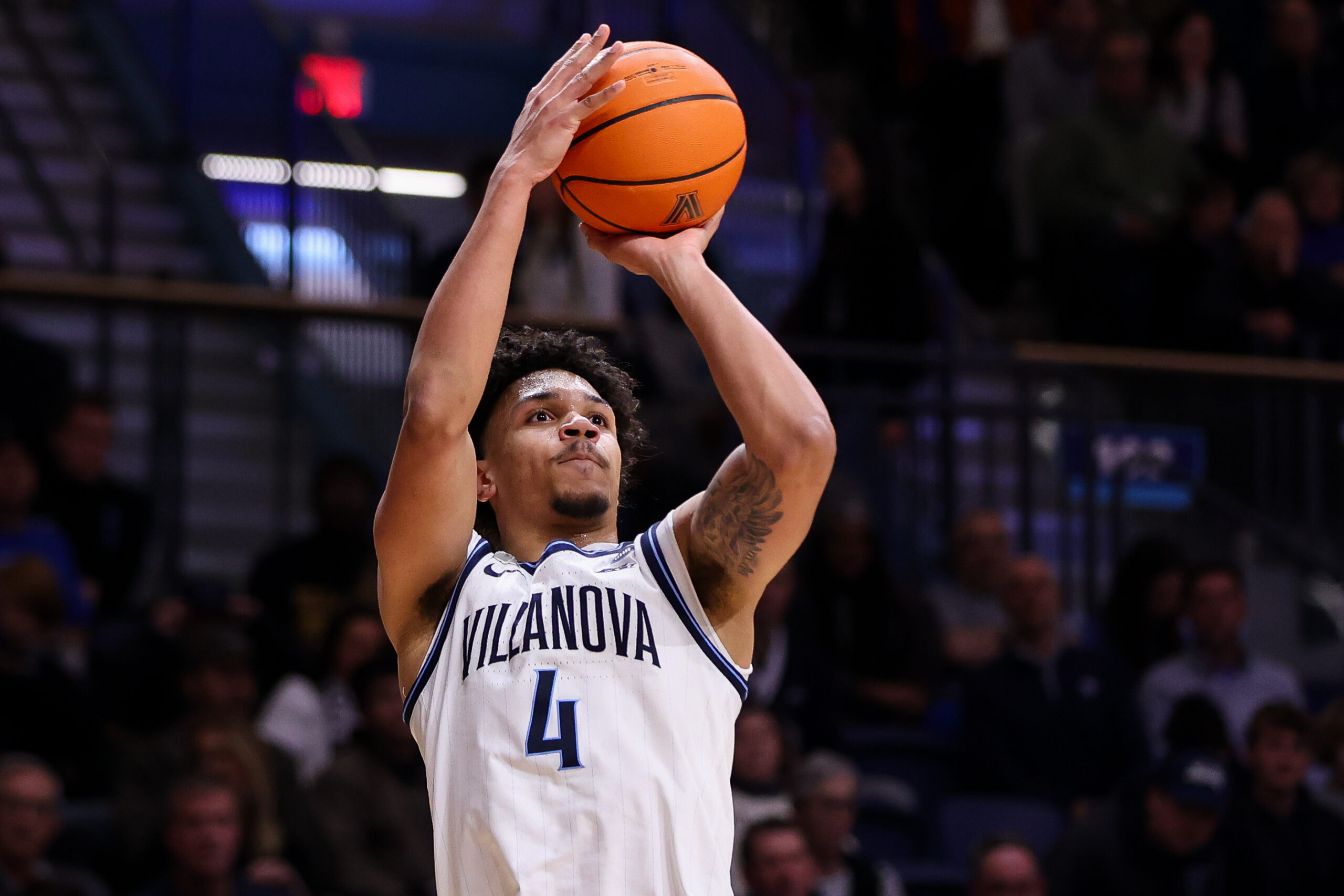
    Tyler Perkins is averaging 17.8 points and 6.5 rebounds over his last six games.

    He made winning plays Wednesday, and some were more obvious than others. Seton Hall threatened to erase a Villanova lead that grew as large as 20. The Pirates dialed up the pressure and forced Villanova into 11 second-half turnovers. The lead was down to 11 when Perkins turned a missed Palmer three-pointer into a putback layup plus a free throw to push the lead back to 14 with 5 minutes, 50 seconds to go. He was just 1-for-6 from three-point range but made all five of his free throws and turned the ball over just once.

    Willard was doing some reminiscing Wednesday with his former school in the building. He was asked if Perkins reminded him of Josh Hart with all of the little things he does.

    “Josh kicked my ass for four years,” Willard said. “Three games a year, I got it from Josh. One of the things I loved about Josh is he affected the game at every level and never made a mistake. He was OK not touching the ball for eight or nine possessions. Once [Perkins] realizes it’s OK not to touch the ball a little bit, and he can still affect the game at an unbelievable level, that’s what made Josh a pro. Josh affected the game without having to score, but he found ways to score. He found ways to shut down the best offensive guy.

    “[Perkins] is starting to figure that out. That’s about a big a compliment as I can give to somebody because Josh was not only a phenomenal person, which Tyler is, but just a winner. And Tyler is a winner.”

    He may not have the kind of NBA future that Hart has created for himself, but Perkins is affecting winning right now on a Villanova team that is tracking toward snapping a three-year NCAA Tournament drought in Willard’s first season. The Wildcats play next at Georgetown on Saturday, a team they beat by 15 at home two weeks ago. There are more winnable games on the calendar ahead, and rematches with No. 3 UConn and No. 22 St. John’s remaining, too.

    Villanova coach Kevin Willard said he isn’t satisfied with his team: “We’ve got a lot of work to do.”

    With all the success Willard has had so far through 22 games, the coach was asked Wednesday night what he’s most satisfied with so far.

    “Nothing,” he said. “We’ve got a lot of work to do. February is not a time to be [satisfied]. You should be looking at your team right now in February and saying, ‘What do I need to improve? What do I need to fix?’ I have to fix our offense a little bit.”

    Count on Perkins being part of the solution.

  • Kevin Willard wants to push Villanova into the future — without casting Jay Wright into the past

    Kevin Willard wants to push Villanova into the future — without casting Jay Wright into the past

    Over his 12 years coaching at Seton Hall and against Jay Wright, Kevin Willard figured that he knew Villanova as well as any outsider could, especially one who would eventually become the university’s men’s basketball coach. His next-door neighbors in Westfield, N.J., were ’Nova alumni, as were three of his golfing buddies at Plainfield Country Club, and there were all those Big East battles between his teams and Wright’s at the Finneran Pavilion, at the Prudential Center in Newark, and at Madison Square Garden in March.

    Then he went to Maryland. Maryland wasn’t the northeast. It wasn’t Jersey. It wasn’t Philly. It wasn’t even the Main Line. It was the Big Ten. The Big Ten has big-time football, and more importantly, it has football money and a football mindset, even for its basketball programs. The Big Ten also has 18 member schools, so Willard stopped watching Big East basketball altogether. He had 17 conference opponents to study, after all. Then he returned to the Big East this season, replacing Kyle Neptune at Villanova.

    He doesn’t feel comfortable there yet, he said. Too much to do. Too much change so quickly. Too much of a whirlwind.

    “The comfort won’t happen until Year 3,” he said. “When I came, I definitely had rose-colored glasses. I had a perception of what this was, not remembering it had been three years since Jay had left.”

    The Wildcats are 17-5 following their 72-60 victory Wednesday night over Willard’s former team, Seton Hall. And Villanova’s strong season so far might allow its donors and alumni to regard the last three years as just a blip — a small stint in purgatory before Willard got the program back to where those who support it presumed it should and would always be. During an hourlong interview in his office late Tuesday afternoon, though, Willard made it clear where he comes down on Villanova’s future … and its recent past.

    No matter Wright’s intentions, his tenure and presence loomed over Neptune as an ever-present reminder of his 21 years as head coach and nerve center, of two national championships and four Final Fours and the status as the top program in the country. Neptune, who had a single season at Fordham as a head coach and had spent 12 years at Villanova on Wright’s staff, couldn’t escape that shadow or the comparisons, and he couldn’t win enough to buy himself more time. Willard doesn’t want to fall into the same trap, and he thinks he knows how to avoid it, believing his three years at Maryland and in the Big Ten, that experience elsewhere, will be vital to understanding how Villanova has to evolve.

    “It’s so important,” he said. “My 12 years at Seton Hall, I did it my way. You get very isolated, and Jay was here for so long, and they were winning. But it was Jay. And I know this because I went against him. It was Jay. It was Jay’s way. It was the way it was. They didn’t need to change anything. They didn’t need to worry about anything because they had Jay. Once Jay left, you need to go, ‘All right, what’s everyone else doing? Where has everyone else made gains where maybe this place didn’t because they had Jay?’”

    Kevin Willard doesn’t want to erase all of the Wildcats’ basketball history, rather use it as a valuable resource.

    For Willard, the caution and smaller-time approach that worked under Wright — that worked because of Wright, and because Villanova was operating in a pre-NIL/transfer portal/pay-for-play world — won’t fly anymore. It would be foolish for Willard to try. He’s a Villanova outsider still, rougher around the edges than Wright, than the man who was the most polished coach in the country, and the circumstances in this wild, wild west era of college hoops are different and more challenging.

    The luxury of redshirting players such as Mikal Bridges and Donte DiVincenzo, for instance, allowing them to get acclimated and mature, won’t necessarily be available to Willard. The way to make up for Wright’s departure isn’t to operate as if his successors will be able to replicate his methods or even his culture. It’s to pay the cost of acquiring big-time players and tout their skills as part of social-media branding campaigns and recognize that this isn’t anything like amateur basketball anymore.

    “It’s like growing up in a small town and going to their amusement park, and then you go to Disney World,” Willard said. “You can’t say, ‘We just need to make the roller coaster better.’ Everything’s got to get better, bigger — fairy dust everywhere. It’s not even a money thing or a structural thing. It’s more about a mentality. Jay was monstrous. Jay was Villanova basketball. But we don’t have Jay anymore. …

    “Everyone else is being Disney World. We can’t be the small, little amusement park. We’re not the small, little amusement park, but the mentality a little bit is. ‘We can do it like this because we’ve always done it that way.’”

    Willard insisted he doesn’t intend to erase all of the Wildcats’ basketball history, that he can’t ignore or disregard what Villanova is as a university or how Rollie Massimino, Steve Lappas, Wright, and Neptune did their jobs and why. “If you just go against 60 years of tradition,” he said, “you’re going to get [expletive] blown out of the water.” So he views Wright’s presence as an asset, his knowledge and success as valuable resources.

    Kevin Willard said he won’t feel comfortable coaching on the Main Line until year three.

    “If I was in my third year of coaching, I wouldn’t feel the same way,” he said. “I’m 20 years a head coach. I’m not cocky, but I feel pretty confident that I know what I’m doing at this point. I love the fact [that] I have Jay around. It’s only going to help. If I was younger and was coming here after three years at Seton Hall, I would be like, ‘What the [hell]? Why is he at the game? This is [expletive] crazy.’ But I love that he comes to practice. I love that he’s at games. I love that I can text him or call him or go out to dinner with him because he built this. He knows this place better than anybody.”

    He likely always will. It’s a standard, though, that Kevin Willard doesn’t have to exceed or even meet yet. It’s still just Year 1 for him. Check back in Year 3. He doesn’t have to know Villanova as well as Jay Wright did. He just has to do his part in this new time of college basketball. He just has to know it well enough.

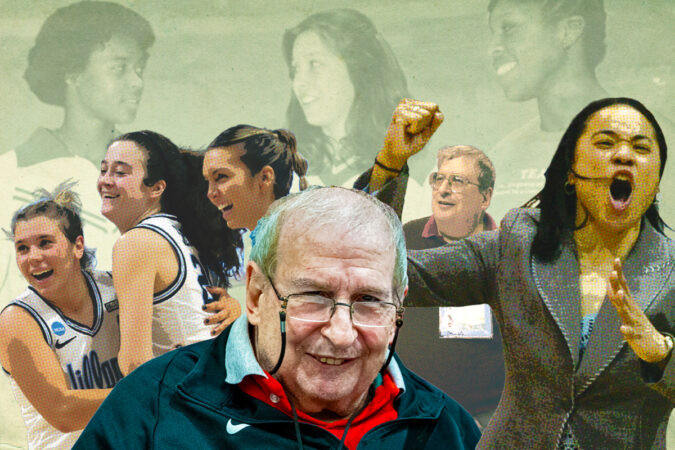
  • Born in The Inquirer’s newsroom, the AP women’s basketball poll ‘has stood the test of time’

    Born in The Inquirer’s newsroom, the AP women’s basketball poll ‘has stood the test of time’

    Paging through the bulky Sunday Inquirer on Nov. 28, 1976, readers encountered a sports section that might have been compiled in Mount Athos, the tiny Greek republic that’s been off-limits to women for centuries.

    It was stuffed with man’s-world staples — stories, stats, and standings on the NFL, NHL, pro and college basketball. There were columns on hunting, golf, boys’ high school sports; features on boxing, men’s cross-country, minor league hockey; an entire page devoted to horse racing.

    The ads were no less macho-flavored, promoting car batteries, rifles, tires. A prominent one hyped January’s U.S. Pro Indoor Tennis Championship at the Spectrum with its lineup of “50 of the world’s top male pros.”

    About the only indications that women participated in sports were an account of a West Chester State field hockey game and, buried on the gray scoreboard page, a truncated leaders’ list from that weekend’s LPGA tournament.

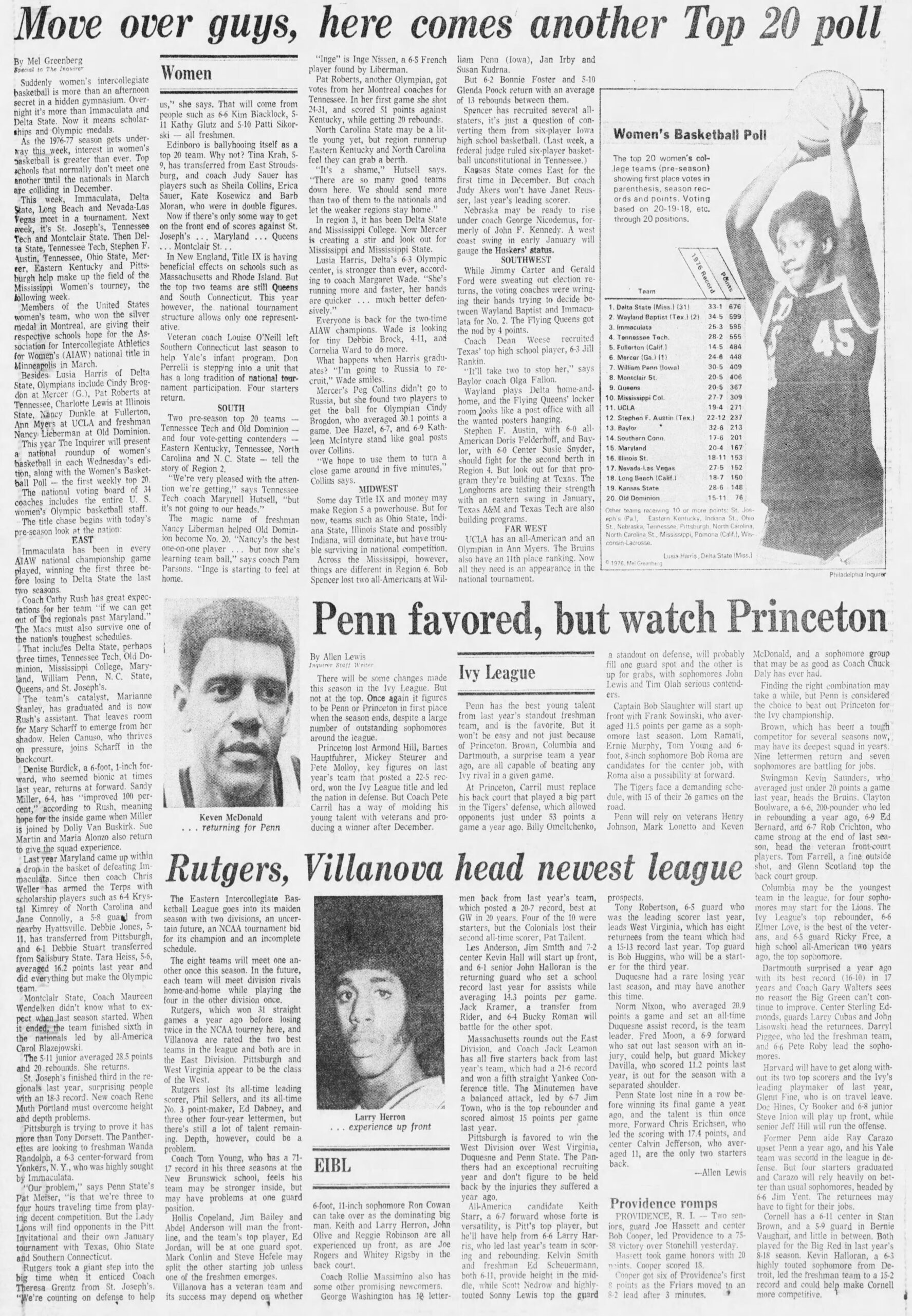
    But for those who reached Page 16, a strange interloper awaited. Sandwiched between two men’s basketball previews, as if editors thought it incapable of standing alone, was one of the earliest and most consequential harbingers of a bubbling sports revolution — the first women’s college basketball poll.

    Conceived by then-Inquirer sports editor Jay Searcy and obsessively nurtured by a Temple-educated newspaper clerk named Mel Greenberg, its headline read like a polite plea for recognition: “Move over guys, here comes another Top 20 poll.”

    A clipping from the Nov. 28, 1976, edition of The Inquirer that features the first installation of what became the AP women’s basketball poll.

    It came. And it stayed. Week after week, year after year, Greenberg’s poll accumulated popularity and heft, becoming a building block in the growth of women’s basketball. A sport that had been widely ignored and loosely governed by the Association for Intercollegiate Women’s Athletics now had validation, a common sense of purpose, and unity.

    “That poll gave coaches and others around the country an opportunity to know what was going on everywhere with women’s college basketball,” said Marianne Stanley, a star on Immaculata’s 1970s championship teams and later a successful college and WNBA coach. “Prior to that, there was only word-of-mouth. Newspapers didn’t cover it, and no one was tracking what was happening nationally.”

    Revisiting that debut poll in this, its 50th anniversary year, is eye-opening. Its top 10 might today be mistaken for a ranking of Division III field hockey teams — Delta State, Wayland Baptist, Immaculata, Tennessee Tech, Fullerton, Mercer, William Penn, Montclair State, Queens, and Mississippi College.

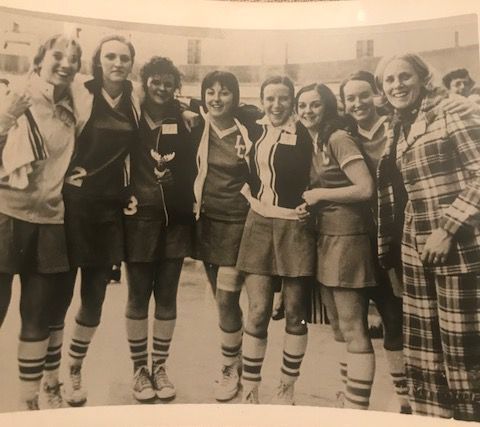
    Theresa Grentz (second from left) and Marianne Stanley (fourth from right) with Immaculata teammates and coach Cathy Rush at right. Immaculata was one of women’s college basketball’s first powers.

    The large state schools that dominate in 2026 mostly were absent.

    But not for long.

    Motivated by the mandates of 1972’s Title IX and by a desire to see themselves in the new rankings, many started to invest in the sport.

    By 1981, when the NCAA replaced the AIAW as the game’s overseer, there were 234 women’s Division I programs. That jumped to 284 in 1991, 317 in 2001. Last season there were 325 D-I programs, and more than 1,000 when Division II and III are included.

    “The fact that so many schools where women’s basketball was nonexistent or an afterthought went all in is a credit to Mel and his poll,” said Jim Foster, the retired women’s coach at St. Joseph’s, Ohio State, and elsewhere.

    Deirdre Kane, the retired West Chester University coach, said that “until Mel’s poll, the NCAA wasn’t even acknowledging our existence. That poll made people realize, some of them for the first time, that women’s collegiate basketball was being played.”

    Greenberg built a national network of coaches and administrators, contacting them weekly for information and input. As newspapers beyond Philadelphia added his poll, its significance deepened.

    “We were all fighting for recognition, but none of us were getting much,” said Geno Auriemma, the Norristown-raised, spectacularly successful coach at Connecticut. “Mel came along, and he was one of the few who gave us a little. His poll helped us all grow the game.”

    It grew so widely that in 1996 the NBA launched a women’s pro league, stocked with the stars of the college game. The WNBA now has a national TV contract, recognizable superstars, and a lineup of big-city franchises that in 2030 will include Philadelphia.

    “When Philadelphia gets that team,” Foster said, “they ought to call it the Philadelphia Mels.”

    Philadelphia roots

    It took 28 years after the inception of the Associated Press’ men’s college basketball poll for the women to get one. In 1976, Searcy, who before arriving at The Inquirer had covered women’s sports for the New York Times, decided the time had come. His motivation likely sprang from developments in that Bicentennial year.

    Women’s basketball made its Olympic debut that summer in Montreal. A few months earlier, Immaculata had appeared in its fifth straight AIAW national title game. The Mighty Macs, who in 1971 played in the first nationally televised women’s game, had won the first three and were runners-up the next two years.

    Searcy reached out to Greenberg, an editorial clerk who by then was the de facto Immaculata beat writer.

    “Jay called me into his office and said, ‘What do you think of the idea of a women’s basketball poll?’” Greenberg said. “And I said, ‘I think you’re nuts.’”

    As Greenberg prepared for the poll’s November launch, Searcy promoted it. He revealed his plan to Temple students during a campus visit. In that audience was Foster, then a physical education major who also coached Bishop McDevitt High School’s girls.

    “It was really exciting news for anyone interested in the sport,” Foster said. “He told us he was going to start a women’s basketball poll that would be just like the men’s.”

    Still, many scoffed. Women’s basketball, after all, existed deep in the shadows. Most newspapers and TV stations ignored it. With few exceptions, games were played before tiny crowds, often in substandard gyms. Rules weren’t standardized, qualified coaches and referees were in short supply, and, until the AIAW’s 1971 founding, there was no universally accepted end-of-season tournament.

    “The only people who followed women’s basketball then were the people involved in the game,” Kane said.

    But if there was a hotbed, it probably was the Philadelphia area. Numerous elementary schools, high schools, and colleges here had teams. West Chester State, with its strong physical education program, gained prominence in the 1960s under coach Carol Eckman, now known as “the mother of women’s college basketball.” And it was a West Chester grad, Cathy Rush, who turned Immaculata into the nation’s best team in the early 1970s.

    “There was always a huge basketball presence in Philadelphia,” Stanley said. “But it wasn’t until Immaculata that many people noticed the women. Then, the AIAW was formed, and that was big. Now, here comes the poll, and suddenly we’ve got a way to track and pay attention to what was happening not just here but across the country.”

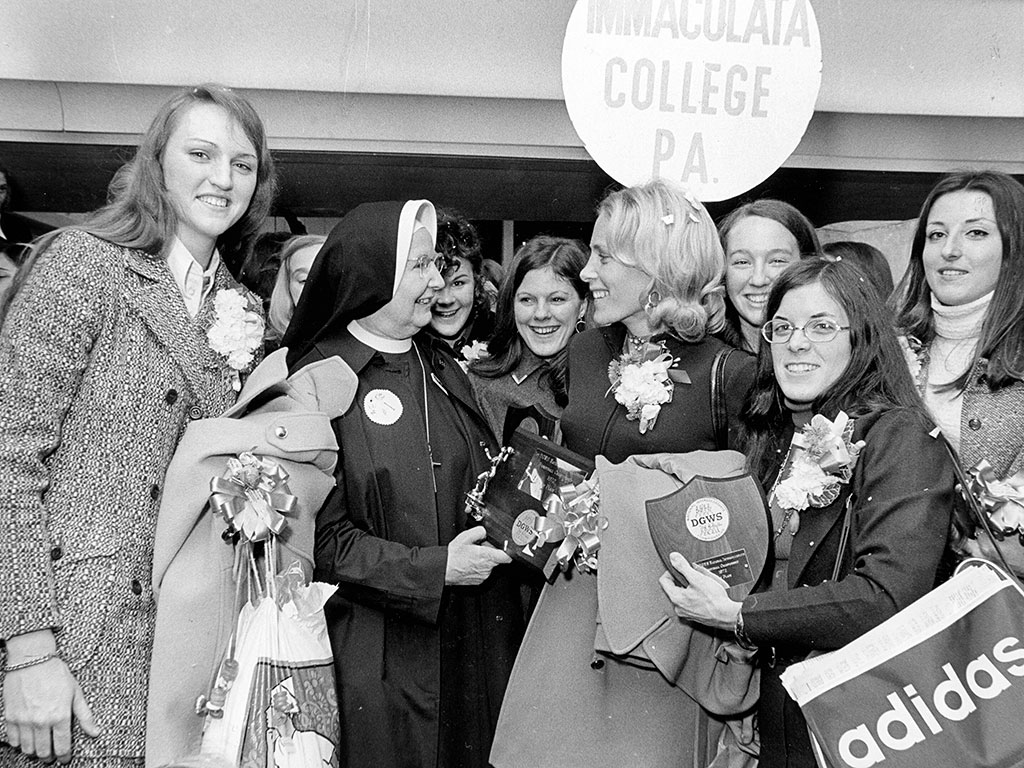
    Members of the Immaculata College basketball team gather around their coach as they return after winning the first women’s collegiate national championship in 1972. From left in the foreground are Theresa Shank, college president Sister Mary of Lourdes, coach Cathy Rush, and Janet Ruch.

    Despite Greenberg’s occasional stories on the Mighty Macs, few readers knew much of the women’s basketball world beyond. And few sports editors and writers besides Searcy and Greenberg saw its potential.

    “I loved women’s basketball,” said Dick Weiss, a veteran sportswriter who then was covering men’s college basketball for the Philadelphia Daily News, “but most of us never saw it becoming a regular beat. All our energy went into the Sixers with Julius Erving and the Big 5, which still had NCAA teams filled with local talent.”

    Launching the poll proved problematic. If women’s programs were second-class on most campuses, so were their support staffs. Gathering schedules and stats was nearly impossible. When Greenberg reached out to the AIAW for help, the organization balked.

    “They told me women’s sports shouldn’t get involved in things like newspaper polls because that would lead to the evils of men’s athletics,” he said.

    So he built a Rolodex of contacts, then he and some basketball contacts painstakingly collected information over the phones.

    “Mel based the poll operation in our sports department,” said Gene Foreman, then The Inquirer’s managing editor. “His volunteer helpers were several tall women.”

    Coaches telephoned in their votes on Sunday nights. One, N.C. State’s Kay Yow, provided an early indication of the poll’s impact.

    On Jan. 2, 1977, Immaculata visited N.C. State, which typically played before small gatherings. But the new rankings promised a compelling matchup. The Wolfpack were ranked No. 15; Immaculata, which triumphed, 95-90, was No. 2.

    “I remember Yow calling and talking about how excited she was,” Greenberg said. “It was snowing before the game, but there was a long line of fans outside the arena waiting for tickets.”

    In 1978, the Associated Press began distributing the poll, giving most news outlets access. Then, in 1994, Greenberg ceded its compilation to the AP, and media members replaced coaches as the voters.

    The poll was a cornerstone of the game, and in 2000, another Sunday Inquirer spotlighted women’s basketball’s maturity.

    Philadelphia was hosting that year’s Final Four. Its lineup of Connecticut, Tennessee, Rutgers, and Penn State revealed the game’s progression from the days when little Immaculata could win three straight titles. Its two sessions attracted nearly 40,000 fans. Millions more watched on ESPN.

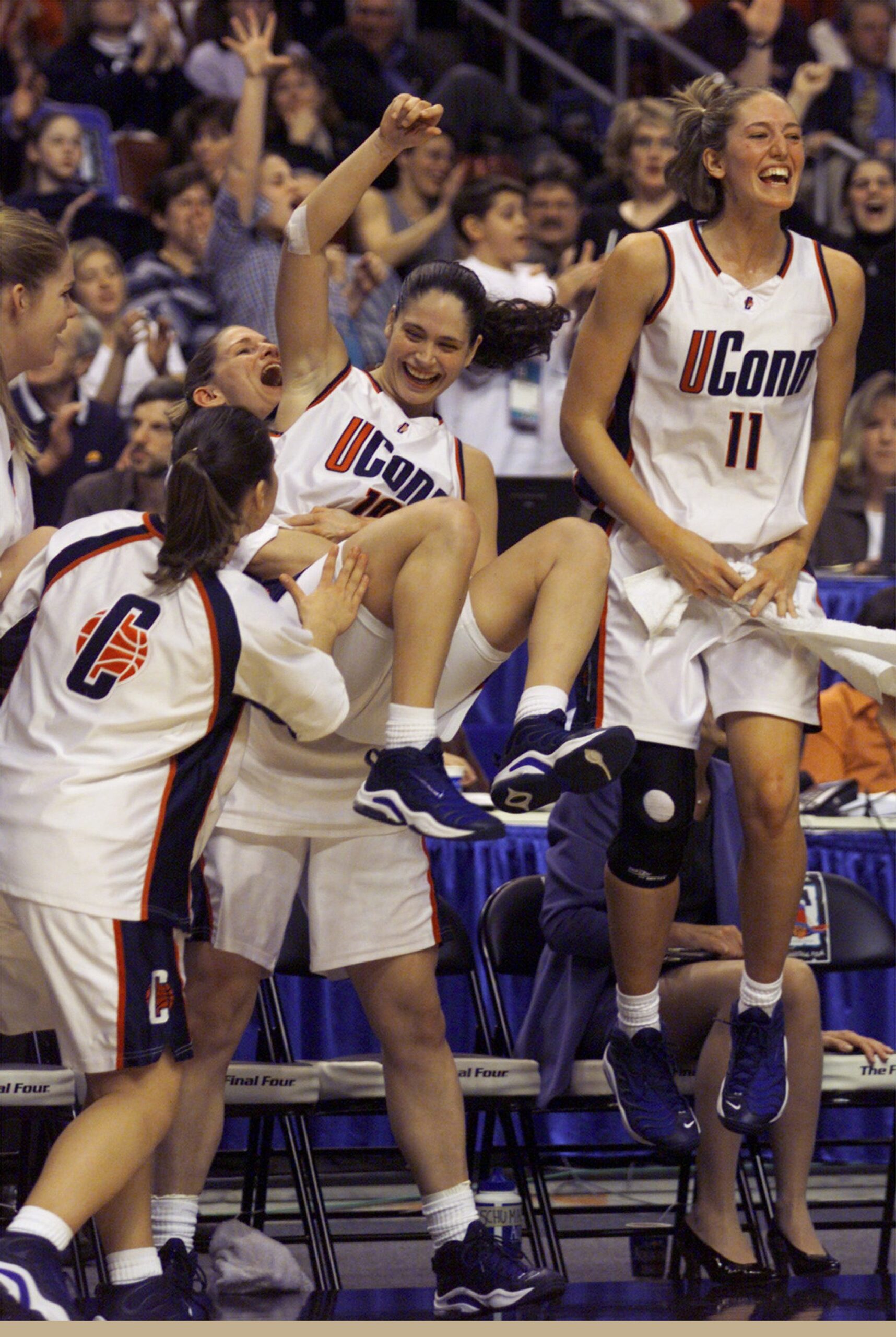
    Stacy Hansmeyer, Sue Bird, and the UConn bench celebrate after Swin Cash makes a breakaway layup late in the second half of UConn’s Final Four game against Penn State on March 31, 2000, at what then was called the First Union Center.

    The April 2 Inquirer ballyhooed that night’s title game on Page 1. Inside was an entire section previewing the event from every angle. There were profiles of coaches, players, even the referees. There were analyses, features, columns, statistics, photos and predictions.

    And the poll?

    Well, the championship game itself proved just how plugged in it was. Connecticut, the No. 1 team in the regular season’s final rankings, defeated No. 2 Tennessee.

    Greenberg retired from The Inquirer in 2010 but still compiles a widely read blog. Organizations, including the Naismith Basketball Hall of Fame, have recognized him and his poll’s contributions.

    “Mel was a gift to the women’s game,” Stanley said. “He was so passionate, and so dedicated and so single-minded. Who knows how long it otherwise would have taken for anything of substance to occur? Not many news outlets gave a crap about it, but Mel and The Inquirer decided to do something about women’s basketball. And that poll has stood the test of time.”