By the time you read this, Philadelphia will have hosted two matches in the FIFA World Cup and will be steadfastly preparing for a third in quick succession come Monday.
France, a favorite by many to win the whole tournament, will take on Iraq in the second game of Group I, but if it’s anything like the previous two matches, the game itself will once again not be the story.
Because for the past two games, the attraction has been that of the fans, and the unbridled passion people have for not just a team and its players, but the nation so many have bought jerseys for, the emblem they proudly wear above their heart, or in the middle of their chest.
The heart of Brazil is in Philadelphia ahead of their match against Haiti
This spectacle of what will result in 104 matches of underdogs becoming story lines, a U.S. men’s national team exercising the type of dominance very few expected, has also seen Philly lead the way on the main stage, creating lasting memories for thousands of fans who have flocked to the city, all while becoming lore, in the process.
In the lead-up to the World Cup, the story lines circulated the unforeseen, the question marks that surrounded what the World Cup’s return to the United States would look like.
It came on the heels of perceived rampant greed from FIFA, which enacted dynamic pricing for the first time, sending ticket prices soaring to the highest they’ve ever been. They opened the door for broadcasters to run advertisements midgame, under the guise of hydrating tired players.
FIFA president Gianni Infantino (right) gives President Donald Trump the inaugural FIFA Peace Prize at the World Cup draw last December.
Let’s not forget the lobbying of the sitting U.S. president in the process, going as far as to create an inaugural peace prize for him while his administration destabilized governments and enabled a war in the Middle East.
But look at how quickly all of that has fallen into the backdrop.
Soccer in its purest form has provided an escape for a nation that desperately needed one. And what it’s also proved in the process is that people of different races, colors, and creeds don’t hate each other as much as their social media algorithms might suggest.
Proof was on display right here in Philly in the form of fans who packed the stands over the last two matches.
Fans like Maxence Jeanty, a 41-year-old Haitian native living in Chicago who traveled to Philly from the Windy City, dressed in a suit depicting liberator Jean-Jacques Dessalines, a key figure of the Haitian Revolution.
Maxence Jeanty, 41, a fan from Chicago arrived at the FIFA World Cup game between Brazil and Haiti, dressed as Jean-Jacques Dessalines, the leader of the Haitian revolution.
“When I was growing up in Haiti as a kid, I watched the World Cup, and I’ll never forget watching the 1994 World Cup,” Jeanty said. “It’s been so long that my people haven’t made it to the World Cup that the choice was to choose either Brazil or Argentina [as the nation to support]. But now, we’re stepping on the field as equals, and no matter what happens, we’re stepping on the field as equals. The pride that brings to me and to every Haitian fan here, man, that’s indescribable.”
We witnessed massive gatherings on the most iconic steps of our fair city from supporters who, like Jeanty, boarded planes just to be a part of the moment.
Haiti fans celebrate during Friday’s FIFA World Cup Group C soccer match against Brazil.
Only a week and a half in, the World Cup has become for so many a momentary cure for what ails, the escape we didn’t know we needed. Lifelong supporters hang onto every kick, and casual fans are amazed by the sights and sounds.
Along the way, we’ve met supporters of other nations who’ve never met and have become instant friends. We saw dance parties on subway cars, in parking lots, and in the middle of streets.
Lucas Maninhu, 31, who arrived from New York and was draped in Brazil’s jersey, wanted to introduce me to his “new best friend,” a Haitian man who only wanted to go by Greguity. The two met in the parking lot on the day of the Brazil-Haiti match, struck up a conversation, walked into the stadium, and watched most of the game together.
Brazil fan Lucas Maninhu (right) and Haitian fan Greguity met at the World Cup match in Philly between Brazil and Haiti. Both said they’ve become “best friends” in the process.
“We met tonight,” Maninhu said. “We are here for different teams, but it doesn’t matter, tonight this is my boy. We’re all here for the same reason.”
And look, FIFA knows this. It knows the unifying power this tournament has had on the masses since before the end of the Second World War.
It’s why, despite laying the claim of being “Football for All,” this edition of the World Cup, from a financial perspective, has felt like football for the few.
But those few continue to sell out arenas, flock to stadium stores to buy World Cup merchandise, and drink $7 purified water. Outside the stadium, games are setting broadcast records, and people are filling the bars and restaurants across North America. There’s money to be made all around.
Let’s not forget the FIFA Fan Festivals, the official watch party situated in Philly at Lemon Hill. It’s made that neighborhood a noisy one, but it’s a good noise.
Think about it. At its core, the first 10 days of the World Cup have allowed many Americans to take a sigh of relief, to have something to look forward to, or have on in the background while life is happening in real time.
Cam Gorman, 23, of Gilbertsville, Pa., cheering with Philly Sports Guy Jamie Pagliei (front, center) at the FIFA Fan Festival in Lemon Hill as the U.S. beat Australia on Friday.
Here at home, you can try to equate the fervor to the Eagles winning it all in 2018, and then again in 2024, but it’s a different vibe, because this isn’t about wins or losses. To many fans, this is about the sheer joy that having the sport in their backyard has delivered.
It feels like the reprieve America needed, and Philly’s place in all of it has not gone unnoticed.
Shelly Gaither, 51, of Cheltenham, makes sure her three sons, ages 6, 9, and 18, get their meals while she manages with whatever is left over — if anything ever is.
“Oh, my God, groceries are too expensive,” said Gaither, a former data analyst who suffers from a disability that makes working difficult. She visits a food pantry regularly to make sure her kids eat chicken when they can. Her monthly SNAP (Supplemental Nutrition Assistance Program) benefits were reduced from $400 to $200 earlier this year because of changes to the programunder President Donald Trump’s One Big Beautiful Bill Act.
“I don’t think there’s hope,” she said. “I feel guilty for bringing children into a world that doesn’t want them to exist because the government makes cuts that take away their food and their healthcare.”
For people like Gaither throughout the United States, levels of food insecurity have seen a “remarkable” rise since the pandemic in 2020, according to a national survey taken earlier this year and released in late May by the Federal Reserve Bank of New York.
Around 10% of 1,300 heads of households polled in February reported a lack of enough food and said their children were missing meals, according to the survey. Nearly 16% relied on food donations. Among families taking in less than $50,000 a year, almost 20% reported being forced to skip meals or go without.
In 2020, when the federal government stepped in to help families at the height of the pandemic, just 4% of households reported missing meals, including less than 7% of families earning less than $50,000 a year, according to the survey.
At that time, temporary supplemental unemployment benefits, expanded SNAP payments, and direct government relief payments helped stave off hunger among Americans. Food insecurity increased after COVID-19 relief expired, according to the Urban Institute.
But the recent surge in hunger has also been attributed to the sweeping law Trump signed last year, whichreduces SNAP benefits and other safety net programs to help pay for his tax cut.
Findings in the bank’sreport also reflect Gaither’s sense of despair, a pessimism about personal finances and the overall economy among people with low incomes. That same group exhibits diminished expectations for finding a job and declining levels of consumer confidence, the survey says.
(function(){function e(){window.addEventListener(`message`,function(e){if(e.data[`datawrapper-height`]!==void 0){var t=document.querySelectorAll(`iframe`);for(var n in e.data[`datawrapper-height`])for(var r=0,i;i=t[r];r++)if(i.contentWindow===e.source){var a=e.data[`datawrapper-height`][n]+`px`;i.style.height=a}}})}e()})();
According to thereserve bank’s report, non-white Americans have been especially hard hit. The number of such households that reported missing meals increased from 4% in 2020 to 19% in February. At the same time, the number of non-white people receiving SNAP benefits jumped from 14% to more than 26%.
Overall, the survey found food insecurity was particularly acute among lower-educated and lower-income households, as well as households with young children. Many families are experiencing financial stress due to the high cost of living, persistent inflation, and high interest rates, even as the stock market has been steadily rising, according to the survey.
Pantries struggle to keep up with demand
More people are flocking to food pantries, but they are not equipped to take up the slack of reduced SNAP benefits.
“Pantries across the state are in perpetual crisis mode,” said Stuart Haniff, CEO of Hunger-Free Pennsylvania in Pittsburgh. Add to that the advent of summer, when kids are no longer receiving free breakfast and lunch at school. “Families must now provide those 60 to 80 meals a month,” Haniff said.
In Norristown, “immense need” has increased the number of people frequenting Martha’s Choice Marketplace, the largest food pantry in Montgomery County, by 100% since 2022, said Patrick Walsh, director of programs. “And I don’t expect things to get better.”
Food prices are also up 3.2% this spring over last, according to U.S. Department of Agriculture figures,exacerbating the issue.
In South Jersey, “we are seeing record numbers at our food distributions,” said Jane Asselta, president and CEO of the Food Bank of South Jersey, in a statement to The Inquirer. “Life is getting harder to afford for more and more people.”
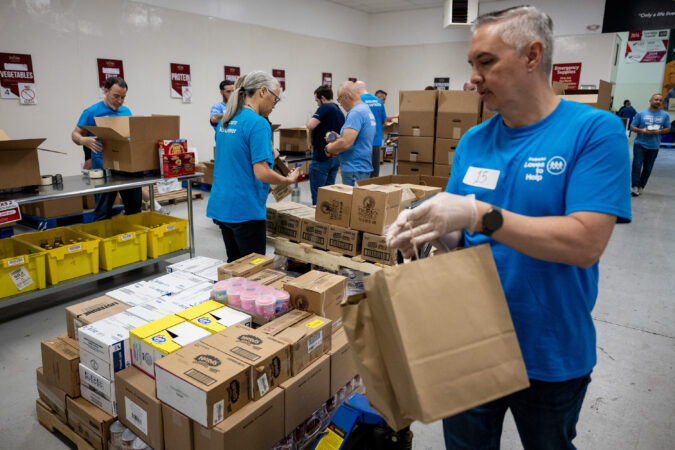
Matt McDevitt (left) and Michael Hickey load their vehicle at the Food Bank of South Jersey Thursday, June 11, 2026. The men are volunteers at the Temple Lutheran Church in Pennsauken and their food bank is open from 5-6 p.m. every Thursday.
Asselta said the Federal Reserve Bank’s report “mirrors” what her organization has observed through its network of 300 community partners.
“Hunger has never been higher,” said Pastor Sonita Johnson, who runs the food pantry at St. John’s Pentecostal Outreach Church in Salem City, Salem County. “Food prices are high, and the lines you see you would not believe — a 50% increase in people just over the last two months.”
Nationwide, between January 2025 and January 2026, SNAP rolls decreased by more than 4 million people — from 42 million to 38 million — according to USDA figures.
Between last September and April of this year, nearly 90,000 Pennsylvanians lost SNAP benefits due to new eligibility requirements stipulated by the Trump administration, according to an analysis by the Pennsylvania Department of Human Services (DHS).
And between December 2025 and last month, more than 32,000 Philadelphians lost benefits, DHS figures show.
In New Jersey, SNAP participation has fallen by more than 50,000 individuals between March 2025 and March of this year, New Jersey Department of Human Services figures show.
The Trump administration’s SNAP changes include an expansion of work requirements for people who receive SNAP benefits and increased documentation requirements “designed to make maintaining eligibility increasingly difficult,” according to the Food Research and Action Center (FRAC), the largest anti-hunger lobby in the United States.
Deputy White House press secretary Anna Kelly said in a statement that Trump signed the changes to strengthen SNAP and to ensure that it is “sustainable for future generations.” She added that Trump was “elected to eliminate runaway spending across the federal government.”
William Meo works on the loading dock at the Food Bank of South Jersey Thursday, June 11, 2026.
For people like Shelley Gaither, how her reduced SNAP benefits could be seen as part of “runaway spending” is tough for her to figure, given her needs. To survive this precarious moment, Gaither said, she will do whatever she can.
“We eat more vegetarian meals and I don’t buy my kids cookies or snacks,” she said. “If I drink enough coffee, maybe I just need one meal a day. This is our existence now. This is how we live.”
Airbnb is activating its “anti-party” technology again for Memorial Day weekend as the global rental property giant doubles down on its no-party policies.
Temporary changes to the online booking system will deter potential “higher risk” bookings during Memorial Day weekend. At the time of publishing, Airbnb did not specify the exact dates and times the technology would be operating.
Last year, Airbnb said this technology deterred nearly 11,000 people from booking entire homes over Memorial Day weekend. In Philadelphia, 85 people were deterred from entire-home booking that same time period.
The system looks at the type of listing being booked, the duration of the stay, the distance from the guest’s primary location, and whether the booking is made last minute, to determine whether a booking should be deterred, according to Airbnb.
Airbnb has tied certain entire-home bookings to the potentially disruptive parties for which rental platforms garnered a reputation in earlier years, including in the Philadelphia region. Muhammad Ali’s Cherry Hill mansion, which still operates as a rental property on platforms like Vrbo and Expedia, was the site of countless “wild parties” that led police to visit the home 97 times between 2018 and 2019, according to an Inquirer report.
The anti-party technology deters potential house party bookings toward private room listing or hotels hosted on the platform.
“Our investment in anti-party technology, along with clear policies and consequences, reflects our commitment to supporting positive stays and countering the rare few who would try to break the trust our platform and local communities are built on,” said Rog Kaiser, vice president of fraud and safety operations at Airbnb.
In 2022, Airbnb made its COVID-era “party ban” permanent, making it against the rules for all users year-round to book entire homes solely for large parties.
Airbnb was also reminding parents and guardians that children under 18 cannot have Airbnb accounts and parents cannot book rentals for underage guests without the parent being on-site. Violating these rules can lead to bans and financial costs in the case of damages.
Since these measures were put in place, in 2025, less than 1% of U.S. rental bookings resulted in a report of a party to Airbnb, according to the company.
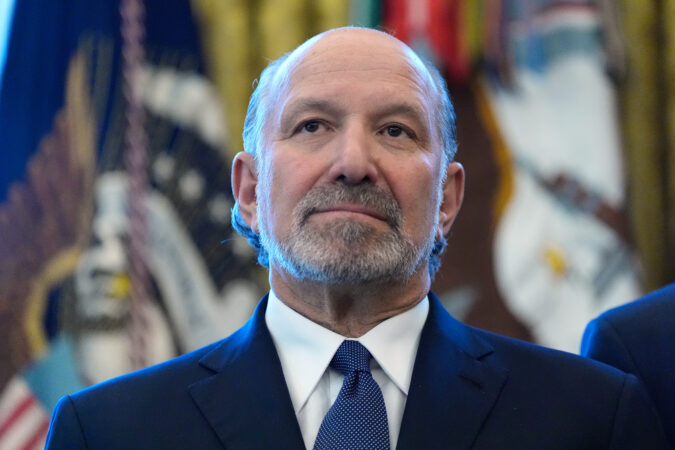
Haverford College will not consider removing U.S. Commerce Secretary and mega donor Howard Lutnick’s name from its library despite student calls to do so, the school announced Wednesday.
President Wendy Raymond’s announcement came 30 days after the student body voted by an overwhelming majority to ask that she establish a review committee to consider removing his name. But Raymond said she will not accept the student body’s resolution.
“I do not believe this matter meets the threshold necessary to move forward with a committee,” Raymond wrote in an email to the students’ council copresidents.
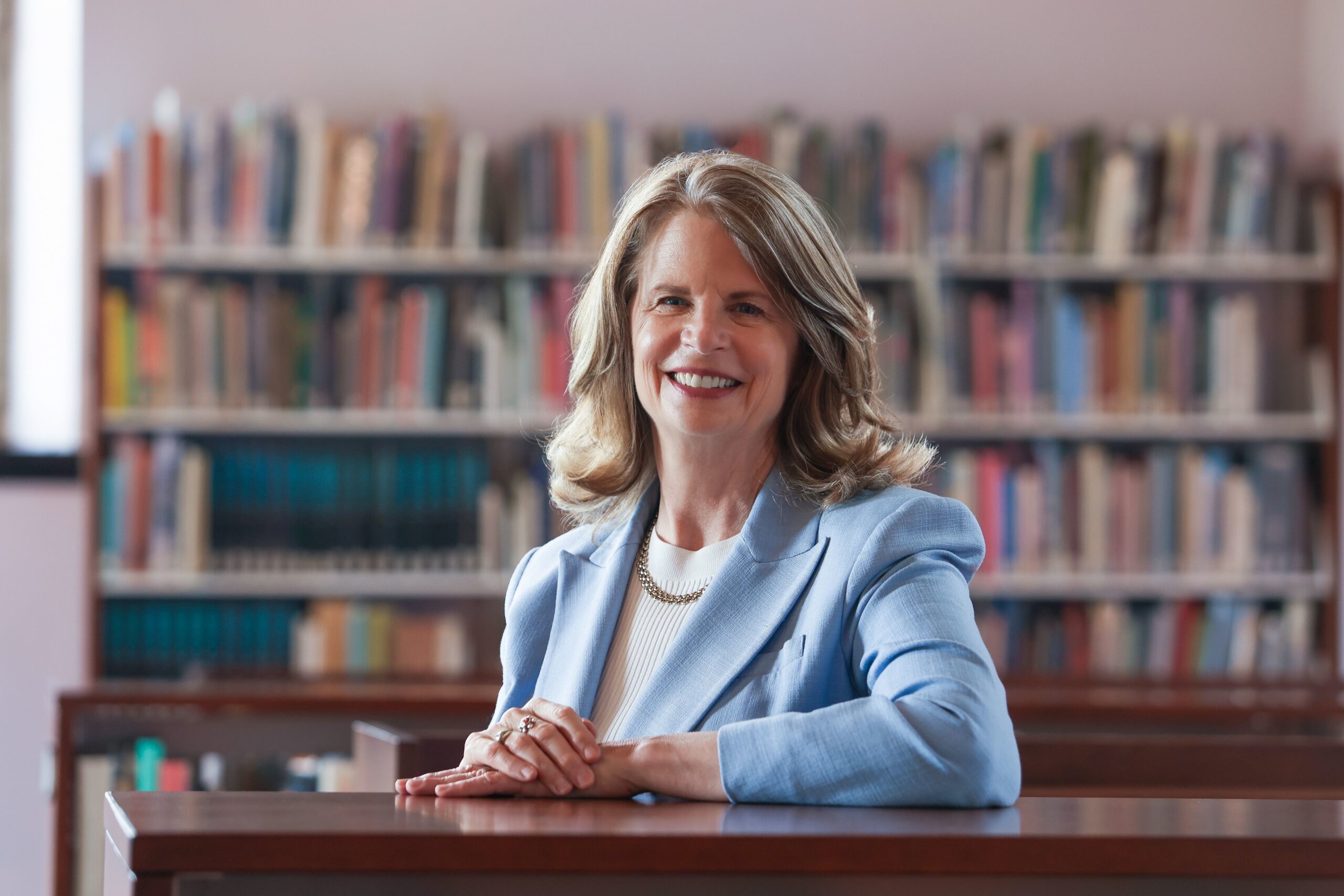
Haverford College President Wendy Raymond announced she would not consider removing Howard Lutnick’s name from the school’s library.
Concern has been mounting about Lutnick, the former chair of Haverford’s board of managers, since Department of Justice documents released earlier this year showed he had contact with sex offender Jeffrey Epstein as recently as 2018, long after Epstein pleaded guilty to obtaining a minor for prostitution and soliciting a prostitute.
Raymond did not elaborate on her reasons and declined to comment through a spokesperson, but the decision was immediately panned by students.
The council copresidents expressed their “deep disappointment” in an email to students.
“The committee would have been a valuable step in our college’s ongoing reckoning with sexual assault,” wrote Ben Fligelman and Sarah Weill-Jones. “We hope that in the coming weeks and months, President Raymond will reevaluate her decision and understand the profound importance of convening a review committee.”
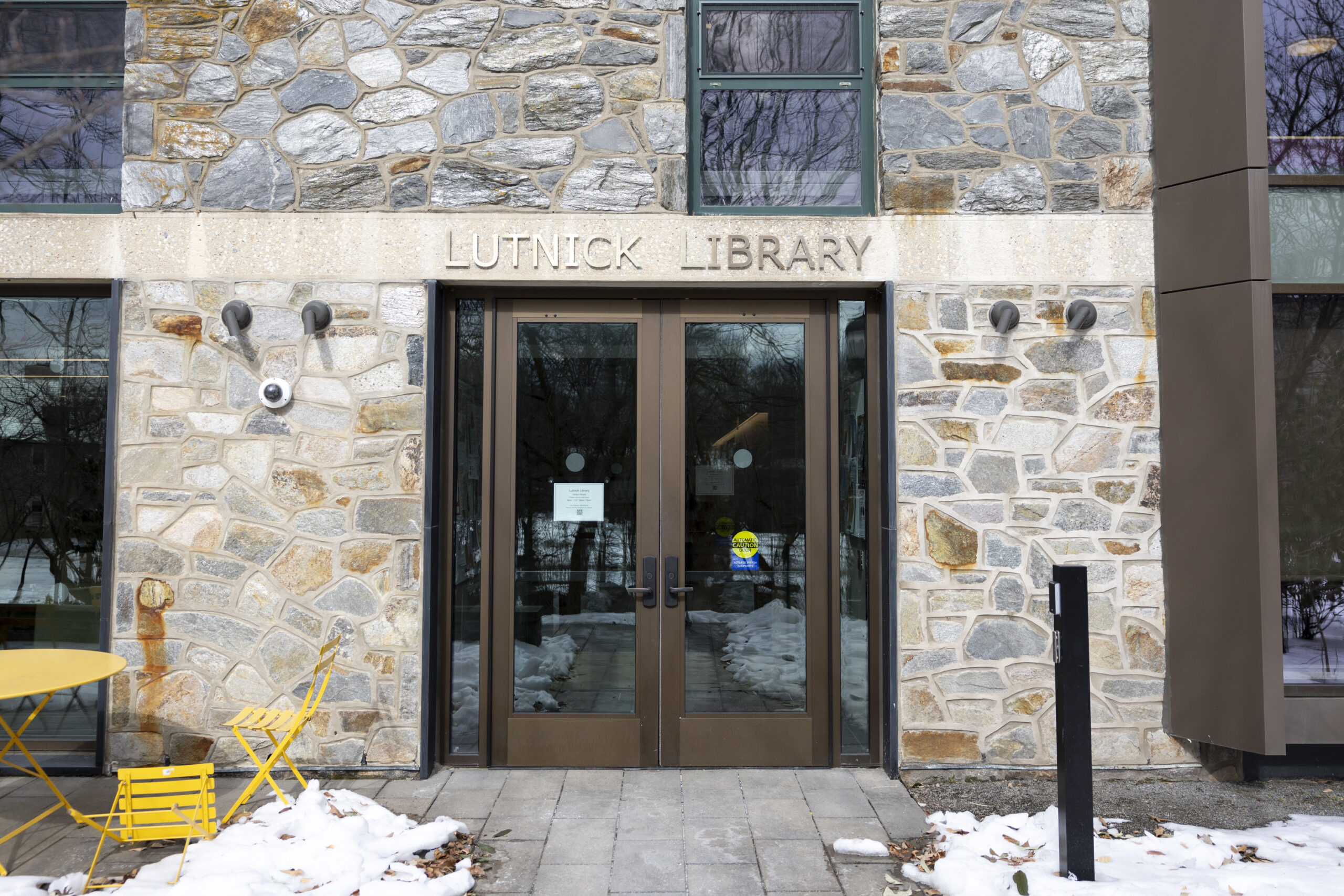
The outside of the Lutnick Library at Haverford College.
The Haverford Survivor Collective, which started in 2023 and is led by Haverford students and survivors of sexual assault, called the decision “disappointing, unsurprising and categorically insulting” in a statement. It is even more painful that the decision was released on Denim Day, an international day of support for survivors, the collective wrote.
“What should have been a meaningful day of solidarity and collective support has instead become a stinging reminder of how far Haverford still has to go,” the group wrote.
Senior English major Paeton Smith-Hiebert, co-founder of the collective, said Raymond in a meeting with some students Tuesday shared her reasoning for why the Lutnick situation did not meet the threshold.
Raymond said, according to Smith-Hiebert, there needed to be “pretty unambiguous evidence of harm being directly committed” and that “association wasn’t enough.”
Arshia Seth, another student who is a member of the collective board, said when pressed by those present, Raymond said the threshold would be if Lutnick had “direct ties to trafficking.”
The president also told students she wished she had had more time to make the decision, but plenary rules require that she respond within 30 days, Smith-Hiebert said. Whether that means she will continue to weigh the matter is unclear.
“Looking forward, … I — and future presidents — will retain the ongoing responsibility to consider the relevant facts at any given moment in time, and to act in consideration of the best interests of Haverford’s educational mission,” Raymond, who announced in November she would retire as president in June 2027, said in her statement. “…The board of managers too will remain engaged.”
Raymond’s announcement Wednesday also said she and the college “stand in solidarity with survivors of sexual violence.”
Raymond previously said she had heard from “a growing number” of Haverford alumni “who have written to express their dismay” about Lutnick’s ties to Epstein, which included a visit by Lutnick and his wife to Epstein’s private island. She said in February that she would consider forming a review committee.
Lutnick’s name was put on the library after a then-record $25 million donation he and his wife made in 2014. Lutnick, a 1983 Haverford graduate, has given the school $65 million and is one of its biggest donors.
If Raymond had established a committee, it would have kick-started a multistep process that the school follows when considering changing building names. Raymondwould have considered the committee recommendation before then making her own recommendation to the external affairs committee of the board of managers, as well as to its chair and vice chair. The external affairs committee then would have made its recommendation to the full board of managers, who ultimately decide whether a building should be renamed.
Under Haverford’s gift policy, the school can rename a building if “the continued use of the name may be deemed detrimental to the college, or if circumstances change regarding the reason for the naming.”
The students’ vote came during their plenary session on March 29. At least 66% of the student body living on campus had to be present at the session for discussion and votes to occur, and to pass, the resolution needed to win a simple majority. That 66% represents almost 900 students.
“Students feel harmed and hurt by the presence of his name and association on campus,” Milja Dann, a sophomore psychology major from Woodbury, N.J., said in March, after attending the session.
The Haverford Survivor Collective had been urging the college to form a committee even before the plenary.
“Given the gravity of this situation, survivors are among those most directly affected,” Smith-Hiebert had written to Raymond earlier this year. “Many are feeling significant harm and institutional betrayal … While I understand there are many stakeholders to consult, it is difficult to reconcile the stated commitment to engagement with the apparent absence of those most impacted.”
The student resolution asked the college to include student representation on the review committee, along with staff from several offices, including institutional diversity, equity, and access. It also called on college leadership “to stand in solidarity with victims of assault.”
And it asked the board of managers to consult directly with students before making final decisions to rename the library and or whom it would be named for.
The resolution also called into question Lutnick’s leadership at Cantor Fitzgerald, the New York City financial firm where he formerly served as chairman. The Securities and Exchange Commission charged the firm in 2024 with violating laws related to regulatory disclosure, and Cantor agreed to pay a civil penalty. Cantor Gaming in 2016 agreed to pay $16.5 million in penalties to the federal government “to resolve a criminal investigation into the company’s past involvement in illegal gambling and money laundering schemes,” according to a release from the U.S. Attorney’s Office.
During congressional testimony, Lutnick said he visited Epstein’s island with his family in 2012. Lutnick previously said he had not been in a room with Epstein, whom he found “disgusting,” since 2005.
A Commerce Department spokesperson told The Associated Press in January that Lutnick had had “limited interactions” with Epstein, with his wife in attendance, and had not been accused of “wrongdoing.” Lutnick told lawmakers during his testimony: “I did not have any relationship with him. I barely had anything to do with him.”
The outside of the Lutnick Library at Haverford College.
In addition to the library, which also bears the name of Lutnick’s wife, Allison, Haverford’s indoor tennis and track center is named for his brother Gary Lutnick, a Cantor Fitzgerald employee who was killed on 9/11, and the fine arts building carries the name of his mother, Jane Lutnick, a painter. Lutnick also funded the college’s Cantor Fitzgerald Art Gallery.
Students, however, said they were focusing on the library in the resolution because of its prominence.
Before Raymond’s decision was announced, Adam Marcello, a Haverford student, in an opinion piece for the Haverford Clerk, the student newspaper, said students needed to keep the pressure on.
“If students want the renaming to succeed, they will need to sustain visible, organized pressure,” Marcello wrote. “Epstein posters scattered across the library or letters tacked to the doors are not enough. We need to make inaction more costly than action.”
The Montgomery County Intermediate Unit’s mission is to support schools in the county with early childhood intervention, professional development, and bulk-purchasing programs that save taxpayers’ money.
In recent years, however, the Norristown-based intermediate unit has also served as an international travel agency of sorts — for its own leaders.
Expense reports obtained by The Inquirer through a Right-to-Know request show that, since 2023, the Montco IU’s executive director, Regina Speaker, and its assistant executive director, Sandra Edling, have used public funds to book about $40,000worth of professional-development travel to three continents.
That includes a 14-day African safari that cost about $18,000.
“Travel from towering Mount Kenya to the wild expanses of the Serengeti to witness the drama of the bush unfolding around you,” reads the online brochure for the trip Speaker and Edling took to Kenya and Tanzania in the summer of 2023.
The expense reports show that Speaker subsequently used her IU credit card to fly to South Korea and Singapore for 11 days last spring. Edling used hers to purchase a trip to Central Europe in the fall, before the intermediate unit canceled it amid funding concerns.
Some of the credit card charges lacked receipts or didn’t state a destination, or provide any indication that they involved overseas travel. Yet, they were approved by two presidents of the Montco IU board and a now-retired assistant executive director. The 21-person board is composed of members from each school district board in the county.
The trips raise questions about how forthcoming the IU’s executive staff has been with the board about its spending, as well as the level of oversight provided by the board.
In a recent interview, Speaker defended the trips as legitimate professional-development outings. She said she followed the proper procedure for spending money the board had already budgeted for that purpose.
“Everything was signed off on by the board president and clearly communicated,” she said. “There was nothing underhanded about it.”
Jennifer Wilson, who served on the intermediate unit’s board from 2017 to last November, first learned of the trips from an Inquirer reporter last month. She said some looked more like “vacations” that shouldn’t have been covered by the publicly-funded IU.
“We never got notice [Speaker] was going on these trips at all,” said Wilson, who still serves as vice president of the Hatboro-Horsham School Board. “In my home school district, the superintendent tells us if he’s going out of town for the weekend.”
Public finance experts also questioned whether taxpayers should pay for professional-development trips that include extensive leisure time, such as giraffe feeding and guided tours through the Great Rift Valley.
Marguerite Roza, director of the Edunomics Lab at Georgetown University, said those types of expenses could leave taxpayers feeling cynical about how their money is being spent.
“We use examples like this to warn people that these are public funds,” Roza said. “You need to make sure your expenditures make sense and are justified, but also, contemplate the optics.”
The Montco IU, one of 29 state-mandated agencies in Pennsylvania, has a $198 million budget and 848 employees. It receives a mix of local, state, and federal funding, and provides support services to more than 200 public and private schools.
Speaker, who was named executive director in 2020, has been thinking on a larger scale.
“Our big mission is to be part of the global community,” Speaker, a former Great Valley School District superintendent, said in explaining her travel bills.
The trip to Kenya and Tanzania, Speaker said, culminated a yearlong academy for education leaders run by the the School Superintendents Association, or AASA.
“Everything was through the lens of leadership,” she said of the trip. “It was about that process of survival of the fittest, and how are you a leader, and what do you prioritize.”
The itinerary included six sightseeing tours and eight wildlife drives in search of zebras, monkeys, lions, baboons, cheetahs, hippos, elephants, wildebeests and “the exceedingly rare black rhino,” as well as 11 nights in “handpicked hotels.”
Speaker noted that the trip featured a visit to a tribal school.
Expense reports show that in March 2025 Edling used her procurement card for about $7,000 related to what is described on the purchasing log as a “conference.” The documents don’t name a location or offer specifics.
In response to questions from The Inquirer, Speaker said that Edling’s expenditure, which was approved by another assistant executive director in the office, was for a 10-day trip to Germany, Switzerland, and Austria in October 2025 sponsored by AASA, the superintendents group that put together the African safari.
“The whole idea was to bring her up to speed on the leadership component,” Speaker said of Edling, who previously served as the IU’s chief financial officer.
That trip, according to the online brochure, was to include a tour of Munich, quick-tempo Viennese waltz lessons, an underground train ride into Austria’s ancient Hallein salt mine, a “journey to crazy King Ludwig’s fairy tale castle of Neuschwanstein,” and an alpine hut dinner.
“Ascend into the Alps for an evening of true Swiss hospitality,” reads the itinerary. “As you feast on beautiful views from your hosts’ mountain chalet, enjoy traditional food, entertainment and fun Swiss games and activities.”
School visits were planned on day five and day nine, according to the itinerary.
Speaker said that she subsequently froze all travel last year because Pennsylvania’s four-month budget impasse held up a large portion of the intermediate unit’s funding. The IU didn’t know if it would be able to pay its staff. The cancellation also came after The Inquirer had requested the records. Speaker said the IU was able to get a refund for that trip.
Edling said that while she didn’t get to go on that trip, meeting with education leaders abroad is a justifiable public expense.
“We believe we need to grow the global partnership concept. Other intermediate units are also working on that,” she said. “As an educational service agency, we have to be at the forefront of what’s next, what’s new.”
Lara Wade, AASA’s director of communications, said in an email that her group is involved in planning the trips, but does not track whether participants bill taxpayers or pay their own way.
“From AASA’s perspective, these international delegations are designed as professional learning experiences for senior education leaders,” Wade said. “They include school visits and meetings with education leaders, but they’re not intended to mirror classroom-style professional development or be evaluated solely by the number of hours spent inside schools.”
A recurring theme
Justin Marlowe, director of the Center for Municipal Finance at the University of Chicago, said questionable spending is a recurring theme at intermediate units and other regional educational agencies around the country.
They received a lot of public money and are often given wide latitude in how to spend it.
“The presumption is that everything is going to be on the up and up,” Marlowe said.
At the same time, these organizations operate largely outside of public view and are overseen by board members who aren’t always as engaged as they are in their home school districts. Intermediate unit board meetings are open to the public but rarely draw much interest.
“They don’t get the same level of scrutiny from taxpayers,” Marlowe said. “The stuff they do is not on people’s radar in the same way.”
Still, he said, “I don’t know if I’ve seen African safaris.”
Roza, the education finance expert at Georgetown, said board members have to be able to trust the judgment of executive directors and superintendents because they can’t review every expense. She said the safari, in her opinion, is a “misuse of public funds.”
“If I was a board member and my superintendent was taking trips like this, I’d be like, ‘I think I just lost confidence in you,’” Roza said, after reviewing the itineraries for the African and Central European trips.
A 2020 drone photograph of the annual migration of wildebeest in Serengeti National Park in Tanzania. Montco IU officials visited three years later on a professional-development trip.
Roza compared the trips to those that made news in Clark County, Nevada in 2024. School district officials there spent more than $150,000 to attend job fairs and conventions around the country, including in Hawaii, with little to show for it.
“Just because it’s legal doesn’t mean it’s advisable or a good use of public funds,” Roza said.
Juliane Ramić, the former Montco IU board president who in 2023 approved Speaker’s credit card charges for the Africa trip, said this month that she could not recall if she was aware at the time what the charges were for.
The records The Inquirer obtained show that some of the expenses Speaker submitted for that trip lack supporting documentation, even though she included receipts for routine business expenses.
For instance, Speaker in May 2023 included a receipt for a $54.47 lunch at Redstone American Grill. But the $9,342 in purchases related to the safari only included what appears to be a screen grab from her phone showing the amount of money charged to the card.
The only mention of Africa in the records came months later when she purchased a Tanzanian eVisa for $139.
Ramić did not sign off on the expenses until August and September 2023, after Speaker and Edling had returned from Nairobi.
Ramić, who now serves as the Montco IU board’s treasurer, said board members are focused more on big-picture issues, such as whether the unit’s programs are working correctly.
“There is no onboarding or training for serving on an intermediate unit board,” said Ramić. “There is no guidance. There are gaps there.”
In April 2025, with a new board president in place, Speaker traveled to South Korea and Singapore, as part of a leadership academy run by the Association of Educational Service Agencies. The registration cost $13,000, paid in two installments with Speaker’s IU credit card.
Records show that one of the payments, in December 2024, apparently was not approved. That month’s expenses were not signed or dated by either Speaker or Janet Flisak, then the board president.
Both lines are blank. Flisak, who has since left the board, could not be reached for comment.
Ramić said she does not believe Speaker or Edling did anything wrong, but the board has requested more information from her office about travel expenses going forward. She said she intended to follow up with the board to see if new policies are needed to better monitor IU operational expenses.
‘It’s a personal trip’
Not everyone who flew to Nairobi in 2023 billed their employer.
Lee Ann Wentzel, who retired last year as superintendent of the Ridley School District, also went on the African safari, as well as an earlier trip to Israel that AASA sponsored. She paid for both trips herself.
“Some people look at it as a vacation, others work related,” Wentzel said. “I think both things can be true.”
Wentzel said she did not use Ridley school-district funds because her trips were too last-minute to include in her long-term professional development budget. But, she said, other superintendents are justified in using public funds.
“Speaking to locals, learning about their personal education journeys and how different the government schools are versus the religious and private schools, and what services are offered, that’s something you’re not going to see unless you go to international settings,” Wentzel said.
Janet Fike, superintendent of the Morris-Union Jointure Commission, a state-established educational service agency in New Jersey, also went on the Africa trip. In a detailed account written for the New JerseyAssociation of School Administrators’ website, she described it as a “bucket list” trip that she’d dreamed about for decades and explained how “a safari Jeep became our home on the road.”
“The majestic Amboseli National Park, in the backdrop of Mt. Kilimanjaro, or ‘Kili’ as it is called in Africa, beckoned,” Fike wrote. “On this game drive, we saw the elusive cougars, cheetahs, plentiful wildebeests, elephants, and more giraffes, my favorite! Each species was more spectacular than the other.”
Fike said recently that she paid for the trip out of pocket, instead of charging it as a business expense to the Morris-Union Jointure Commission.
“I paid for my own trip because it’s a personal trip,” Fike said. “And I took vacation days.”
Inquirer staff writer Kristen Graham contributed to this article.
At times, Ala Stanford feels like she doesn’t quite fit in.
She’s a pediatric surgeon — albeit very well-known — who is running for political office for the first time, trying to win a seat in Congress that for decades has been held by a seasoned Philadelphia politician.
At campaign events, when the top Democrats in the congressional race are chit-chatting among themselves, Stanford has found herself on the margins. Often, she feels more comfortable talking medical procedures with Dave Oxman, the other physician in the race, than whatever the sitting state representatives have going on in Harrisburg.
The trail may get lonelier. Oxman is planning to drop out Wednesday and endorse Stanford, making her the hands-down most prominent outsider in a race that is stacked with political veterans.
To amass support ahead of the crowded May 19 primary election — the likely deciding contest in one of the nation’s bluest congressional districts — Stanford will have to chart a path that beats both the Democratic establishment and the progressive left, which have chosen other candidates in the wide-open race.
Stanford, 55, knows her lack of political experience makes her stand out, and she’s accentuating it on the campaign trail. She is highlighting her career as a physician, and she says she’ll fix a healthcare system her opponents failed to address in their years as public officials. Her candidacy comes as an increasing number of medical professionals are running for office across the country, and as thousands of Pennsylvanians have dropped their healthcare coverage due to rising costs.
She has kept pace with three sitting lawmakers who are also running for the seat, in part by lending her campaign $250,000 of her own money.
Candidates (from left) State Rep. Morgan Cephas; physician David Oxman; State Rep. Chris Rabb; physician Ala Stanford and State Sen. Sharif Street appear at a forum hosted by the 9th Ward Democratic Committee in Mt. Airy Thursday, Dec. 4, 2025.
Stanford alsohas a cadre of healthcare workers uplifting her. She has won endorsements from prominent doctors, as well as a national super PAC, 314 Action, which backs candidates with backgrounds in science and has poured $1.5 million into a pro-Stanford campaign.
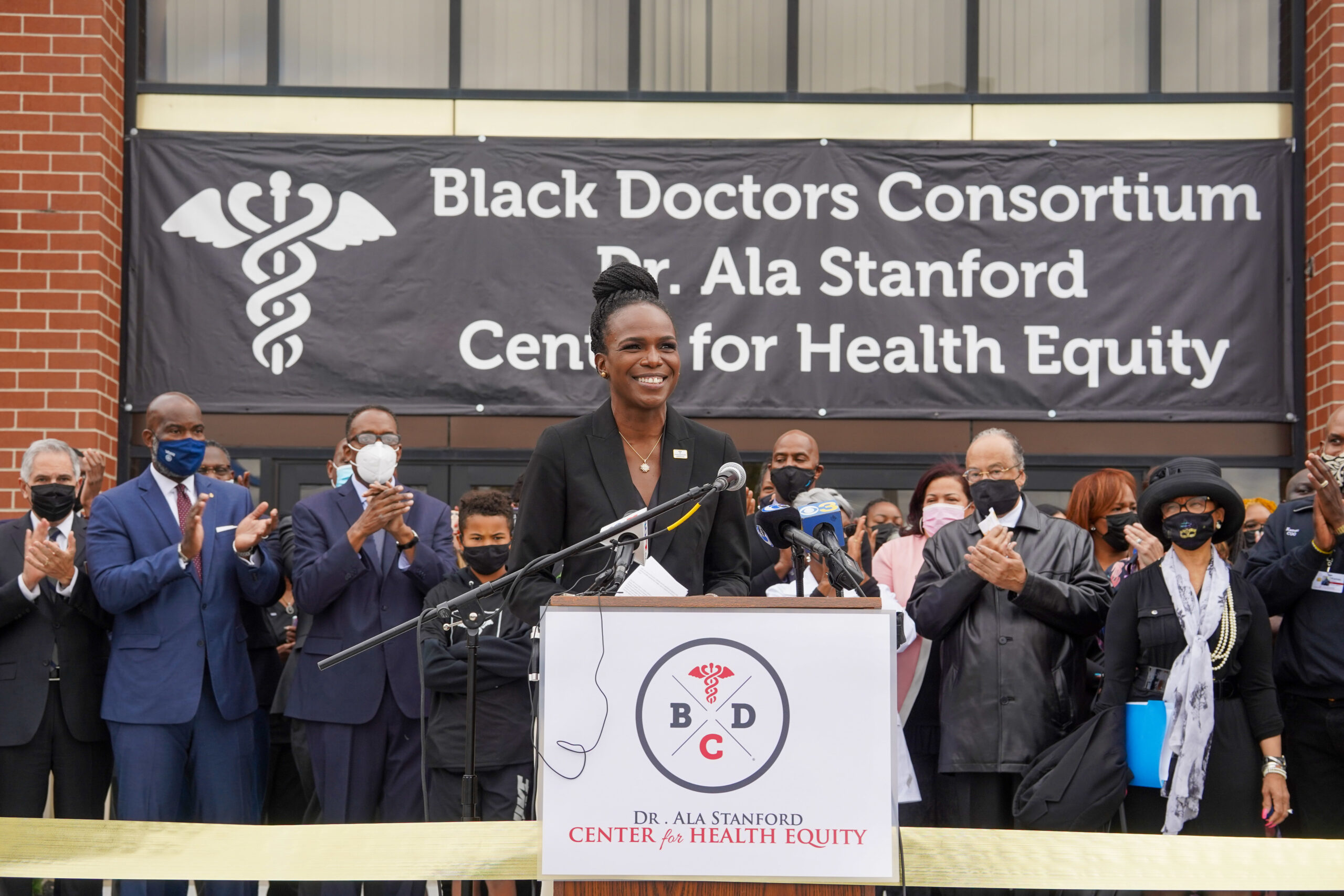
The group so far funded five weeks of television commercials reminding voters that Stanford founded the Black Doctors COVID-19 Consortium. In the throes of the pandemic, she set up mobile testing sites in majority-Black communities and ran vaccination clinics to inoculate thousands of Philadelphians, a grassroots effort to fill gaps left by government-funded programs.
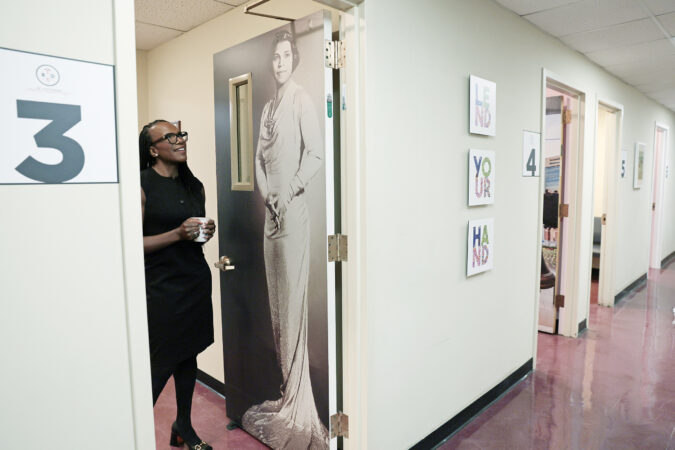
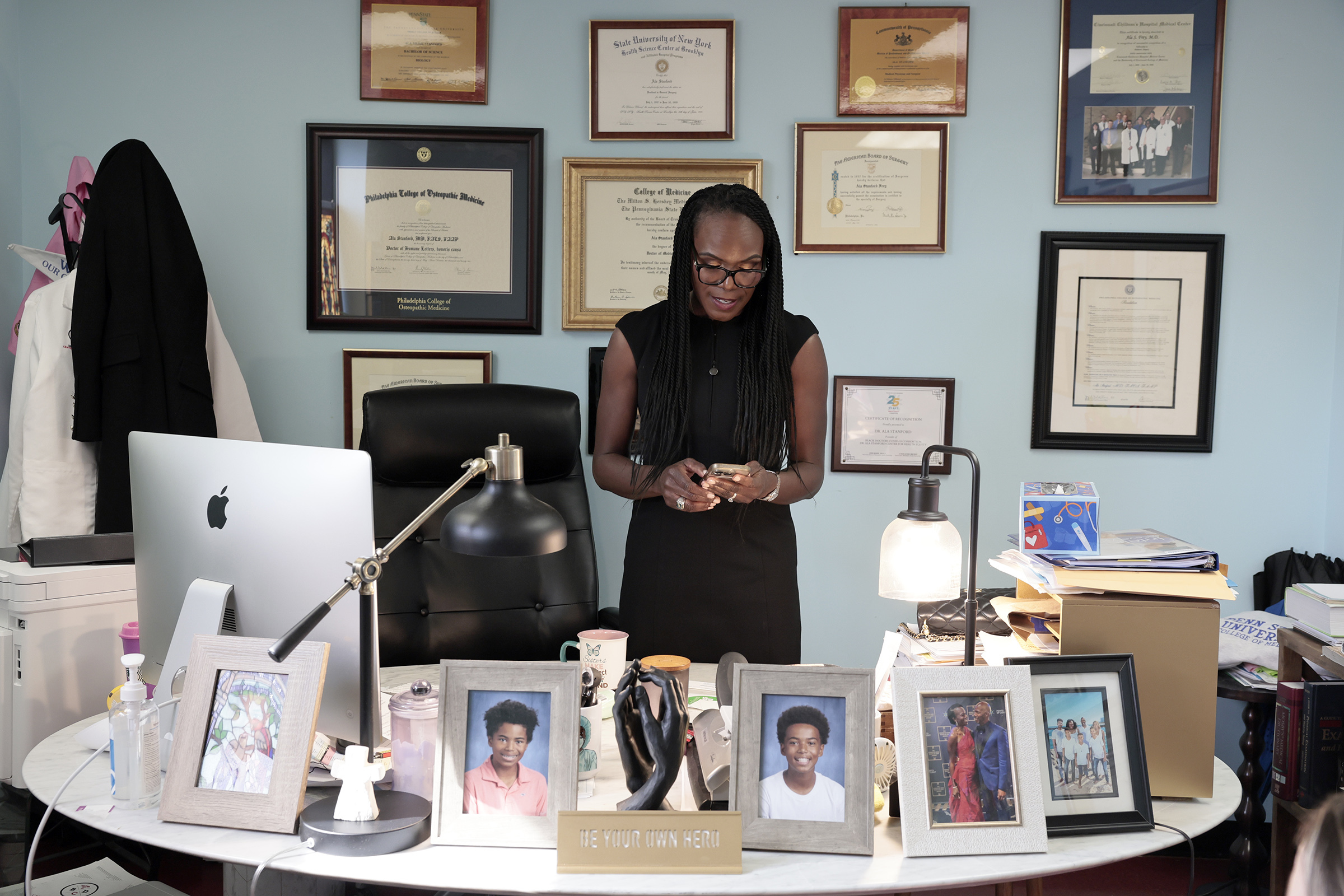
Ala Stanford texts her son while in her office at the Dr. Ala Stanford Center for Health Equity, 2001 W Lehigh Ave. in Philadelphia on Friday, March 13, 2026
It is a compelling story that has been told many times — across national media, on podcasts, and in Stanford’s own memoir.
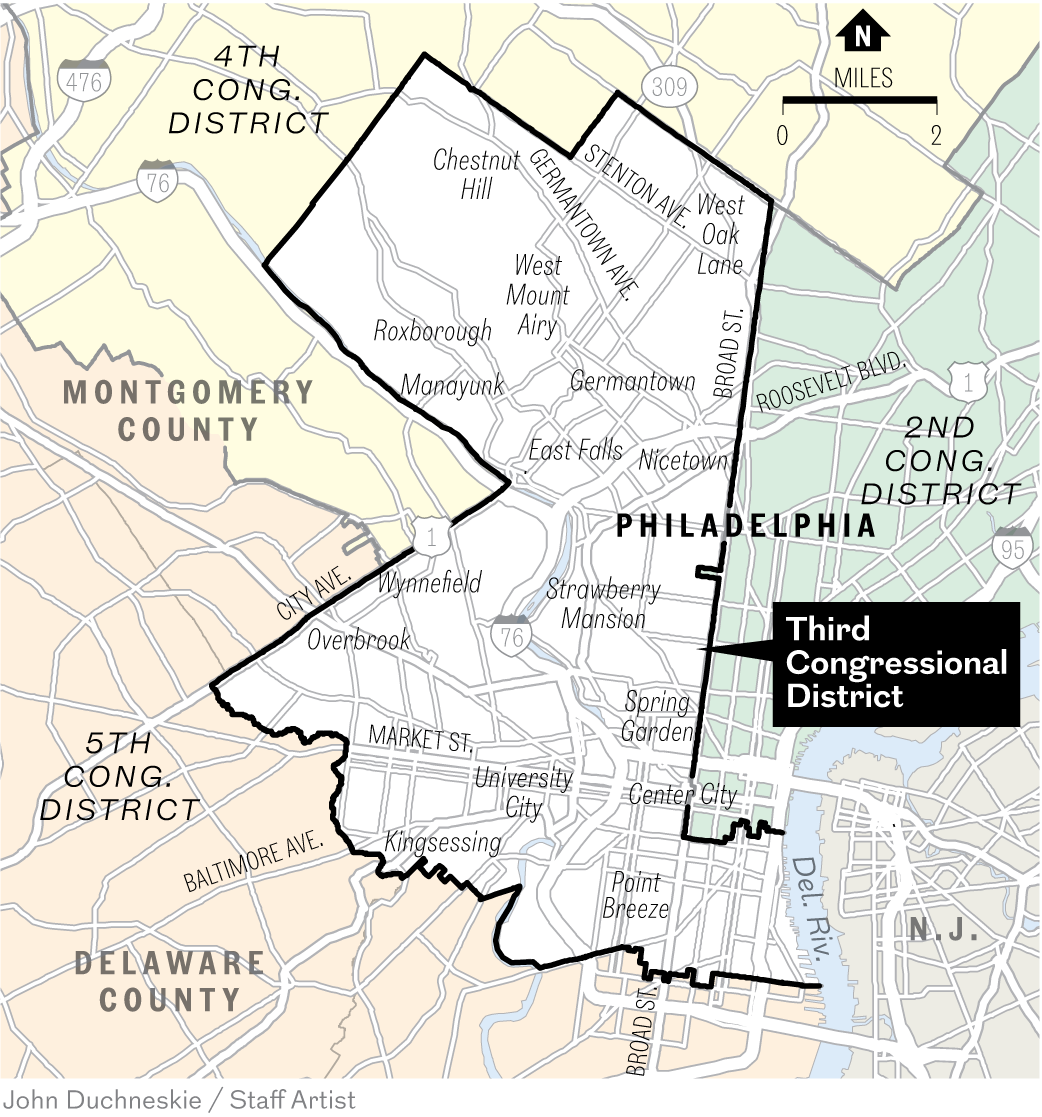
What hasn’t been told is why it means she should represent the 3rd Congressional District, which covers much of Philadelphia, over her opponents who have spent years in politics.
“People get so comfortable doing things the same way, the same way, the same way,” she said in a recent interview at her health clinic. “And no one likes change. But the city needs this. The city needs some change.”
Other candidates say Stanford doesn’t have a monopoly on talking about healthcare. State Sen. Sharif Street, another front-runner in the race, has touted that he and other government officials helped secure funding for Stanford’s pandemic operation.
“During COVID, he was very proud of his work,” Street spokesperson Anthony Campisi said, “to ensure that Doctor Stanford’s vaccination efforts received the support they needed so that we could get vaccines into arms quickly.”
Stanford’s opponents also clearly know that her status as a physician may be an asset.
She submitted paperwork to appear on the ballot as “Dr. Ala Stanford.” But on Tuesday, a member of the Democratic City Committee — which endorsed Street — filed a petition in state court, saying Stanford’s name should appear without the “Dr.” in front of it.
In the coming days, a judge will decide.
Leaning on healthcare as a core issue
Stanford does not fit neatly onto the ideological spectrum.
Of course, she is not conservative. She doesn’t call President Donald Trump by his name — he’s “47″ — and she uses words like “tyranny” and “running amok” to describe the current White House.
But unlike some of her opponents, she is not of the Philadelphia Democratic establishment. She said she feels like the city’s long-entrenched party apparatus had always planned to endorse Street, the former head of the state party and the son of a Philadelphia mayor.
Stanford is also not of the populist left. She believes Palestinians “deserve to have safety and freedom,” but thinks it’s inflammatory when her progressive opponent, State Rep. Chris Rabb, calls Israel’s war in Gaza a “genocide.”
“I know when you use the G-word how hurtful it is to a group of people,” she said. “It’s like someone saying the N-word around me. I don’t want to hear that. And every time you shout that from the rooftops, how many people are you hurting?”
What she does believe is that government systems have failed underserved communities, and that most domestic issues can be traced back to inequities in healthcare — points she has consistently emphasized in her campaign.
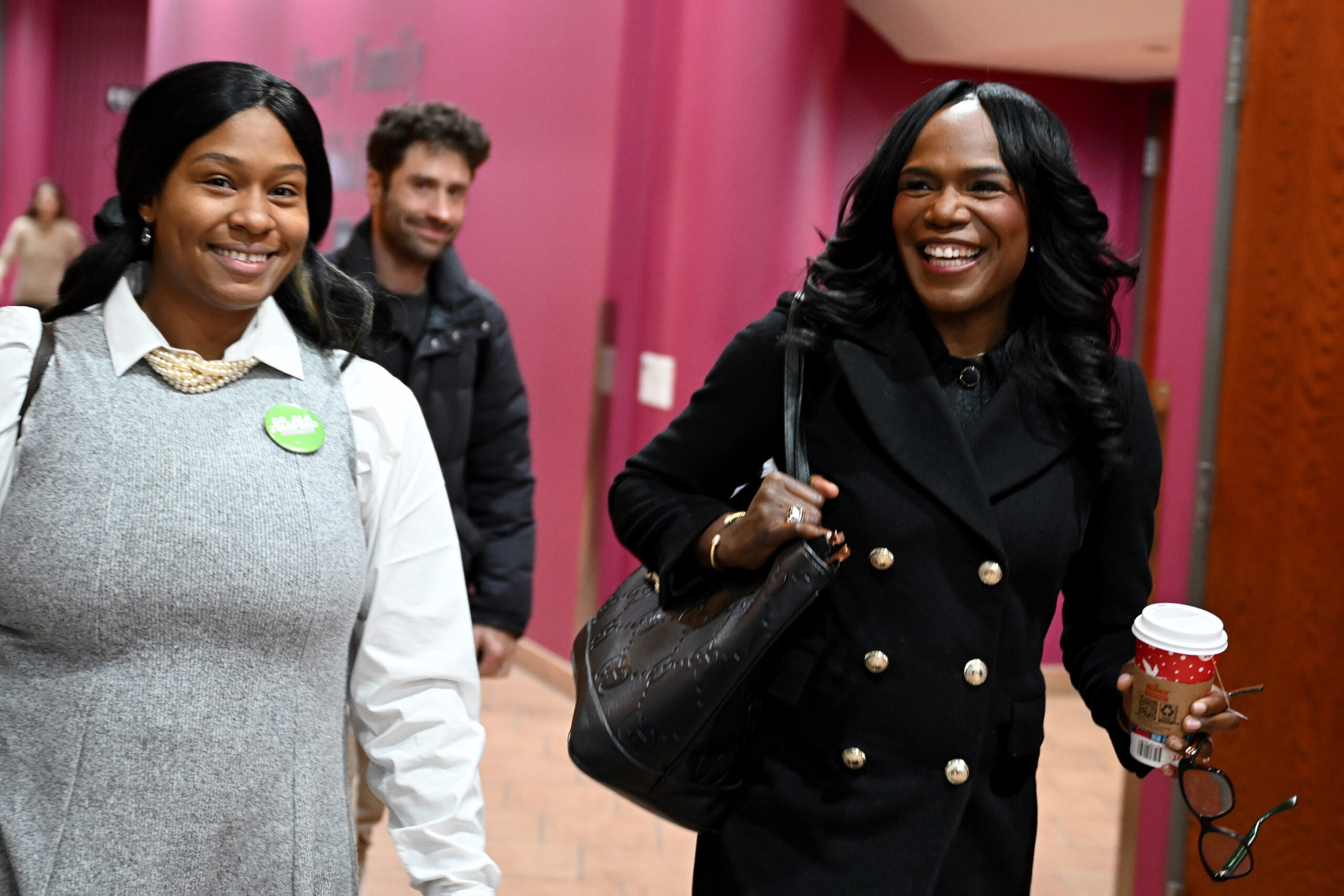
Physician Ala Stanford (right) arrives at a forum hosted by the 9th Ward Democratic Committee Dec. 4, 2025. She is a Democratic candidate running to represent Philadelphia’s 3rd Congressional District.
She has hammered Republicans for not extending pandemic-era subsidies that ensured people on Affordable Care Act health plans did not pay more than 8.5% of their income for care. She has advocated for universal healthcare. And she has harshly criticized Health and Human Services Secretary Robert F. Kennedy Jr., who has long been skeptical of vaccines.
“In this country, wealth is linked to homeownership, home ownership is linked to education, education is linked to health outcomes, and health outcomes are all exacerbated by racial injustice,” Stanford said during a recent candidates forum. “So when you talk about one, you talk about all.”
Stanford is careful to say that her focus on healthcare doesn’t mean she can’t discuss housing, immigration, or the war in Iran.
But it is clear that she feels most comfortable talking about what she knows best. Her supporters say that’s an asset in the 3rd Congressional District, which has a disproportionately high number of people who rely on public healthcare systems.
More than a third of the district’s residents, or more than 284,000 people, were on Medicaid as of December, according to the state Department of Human Services. Among Pennsylvania congressional districts, that’s the second-highest proportion of residents on Medicaid. (The first highest is the 2nd Congressional District, which also includes parts of Philadelphia.)
There were also more than 80,000 people in the district who last yearhad health coverage under the Affordable Care Act, either through expanded Medicaid eligibility or a plan they purchased through the marketplace.
That number is also likely lower now since ACA subsidies expired this year and premiums rose. Statewide, one in five people who bought plans last year from Pennsylvania’s marketplace, Pennie, opted out for 2026.
Ala Stanford speaks at the Black Doctors Consortium Dr. Ala Stanford Center for Health Equity in Philadelphia, Pa., on October 27, 2021. The center was opened with the goal of making healthcare accessible for those in communities who might struggle to get proper healthcare treatment.
Stanford’s supporters think Philadelphia voters will trust a doctor to ensure affordable healthcare access. They point to a survey released this month by the Annenberg Policy Center at the University of Pennsylvania that found 86% of respondents said their primary healthcare provider is trustworthy.
Erik Polyak, the executive director of 314 Action, said Stanford’s background differentiates her in a Democratic primary in which most candidates align on key issues.
“Voters want healthcare decisions made by people who understand patients and the science,” he said, “and not politicians chasing headlines.”
Oxman, Stanford’s now-former opponent, said physicians running for office can help rebuild a Democratic Party that has “lost the trust of so many people.”
“So many people see us as not centered on their needs, particularly their economic needs,” he said. “If the Democrats are going to build a party that has a chance of winning in Center City Philadelphia and in central Pennsylvania, it’s got to regain the trust of the voters.”
New to politics, but not government
It was the spring of 2020, and the bills were piling up.
Stanford, who was born in Germantown, had given up her well-paying day job as a surgeon to work full-time with the Black Doctors Consortium. She ran COVID-19 testing clinics in Philly parking lots and churches, and amassed some $200,000 in bills, saying she couldn’t “let one person lose their life for a test that costs $100.”
That was the beginning of her pandemic experience with government.
A lot of it was begging. As Stanford tells it, she peppered government officials with emails, telling them how many people she and her volunteers had tested that day, and asking for help securing funding.
In this April 2020 file photo, Ala Stanford puts on her mask before running a coronavirus (COVID-19) testing site at the Miller Memorial Baptist Church in Philadelphia.
U.S. Rep. Dwight Evans was immediately responsive. He connected Stanford with the White House, other members of Congress, and top insurance companies. And he publicly called on former Gov. Tom Wolf and then-Mayor Jim Kenney to allocate funding to Stanford’s organization, citing the group’s outreach to predominately Black communities and its work to address distrust of medical institutions.
The money came in several months later. It was finally enough for Stanford to pay for testing, compensate her staff, and prepare to vaccinate thousands of Philadelphians.
Fast-forward five years, and Evans has endorsed Stanford to replace him in Congress as he retires after decades of public service. His backing has been invaluable to Stanford, and it surprised some political observers who figured he might endorse one of the politicians whom he’d served alongside.
Stanford said Evans’ support has not convinced some Democratic voters. Some tell her they plan to vote for Street, citing his family name, or they say that “it’s his turn now.”
“What about if he is not what’s best for the people?” Stanford said. “Doesn’t that factor in?”
She tells voters that despite being new to the campaign trail, she isn’t new to government. She worked as a regional director for the Department of Health and Human Services under former President Joe Biden, who appointed her to the role. And she leads medical services at the Riverview Wellness Village, the city-owned drug recovery center opened last year by Mayor Cherelle L. Parker’s administration.
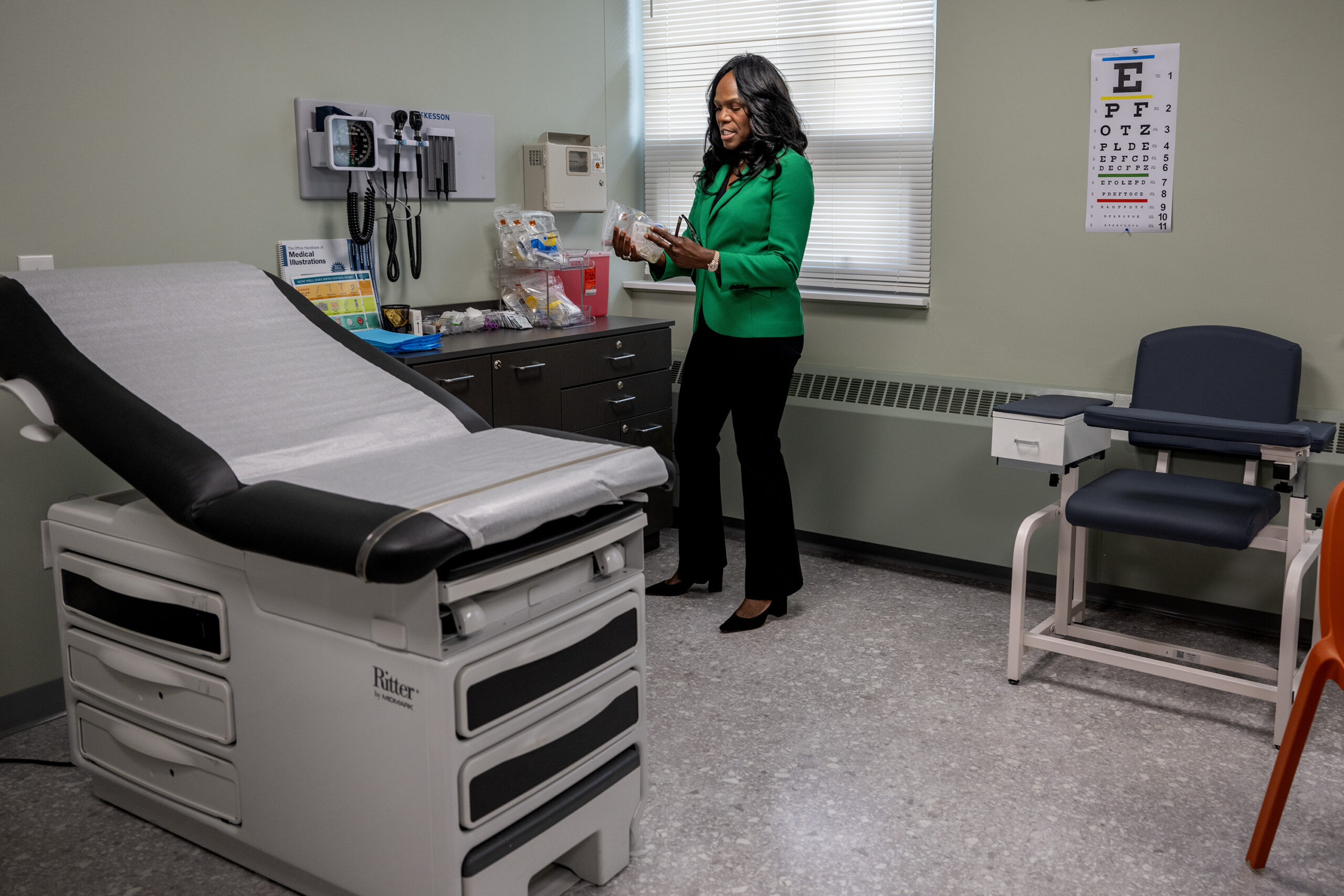
Physician Ala Stanford in an examination room at the primary medical care center run by her Black Doctors Consortium at Riverview Wellness Village, a city-owned drug recovery home in Northeast Philadelphia Tuesday, Nov. 25, 2025.
Still, Stanford very much sees herself as a doctor.
She often works out of a corner office in the North Philadelphia health center, and she still is alerted when the temperature of the vaccine refrigerator dips a degree too low. She has, on more than one occasion, tended to someone experiencing a medical emergency while she was campaigning.
She knows that overseeing day-to-day operations at the health clinic won’t be possible if she’s in Congress. There’s a succession plan in place.
“It’s just about, how can I have more significance at a larger scale? Congress is definitely a way to do it, but it might be somewhere else,” Stanford said. “That is, if I don’t win. But I want to win. I should win.”
MIAMI — The record will reflect that Venezuela, a baseball-rich country with a loaded lineup and passionate fans who ring your ears with songs and chants, won the sixth edition of the World Baseball Classic, 3-2, here Tuesday night.
Just not before the Showman showed up.
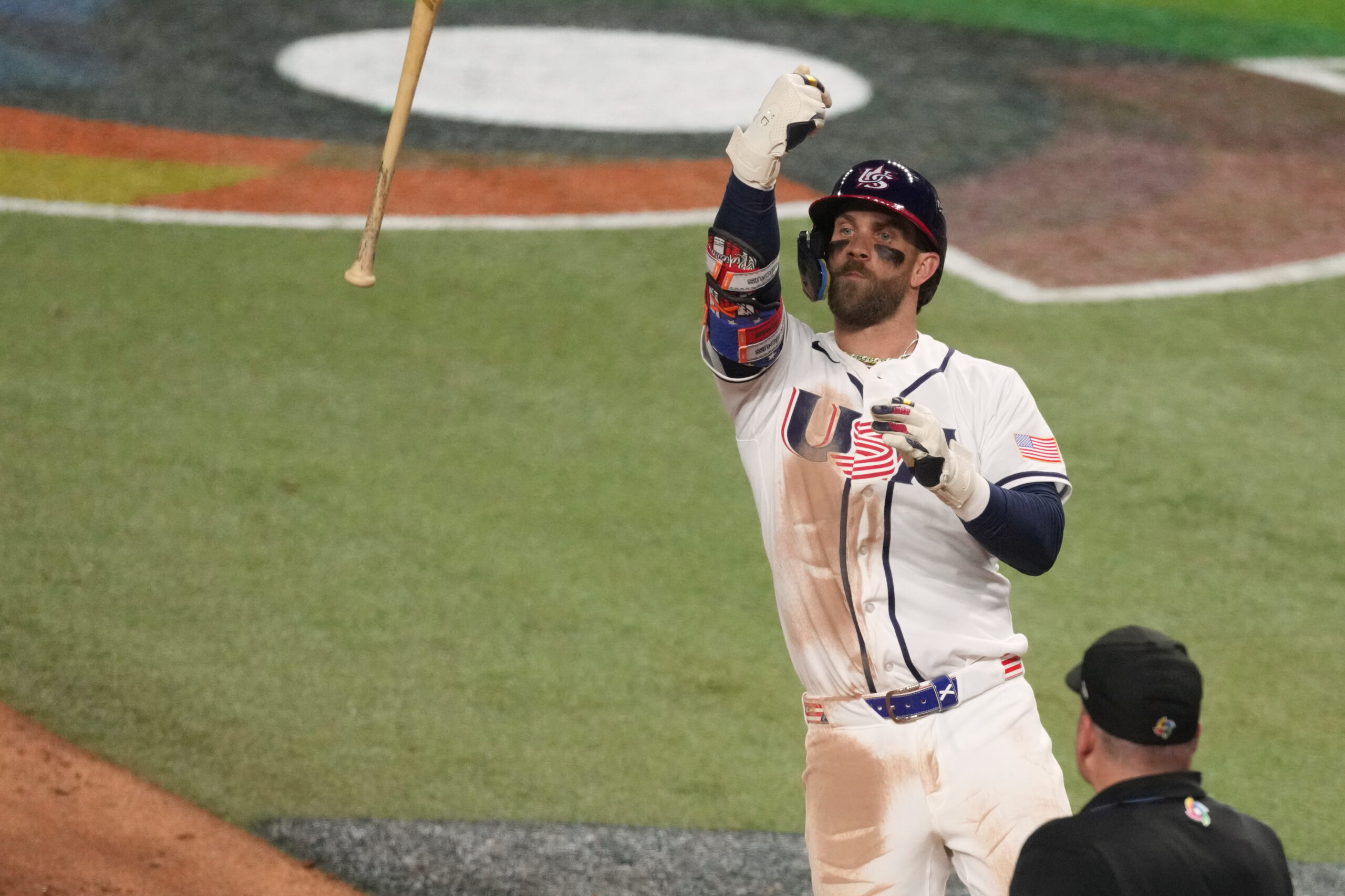
With the most talented U.S. team ever assembled in danger of getting shut out, and with the pro-Venezuela sellout crowd raring to party, Bryce Harper bashed a game-tying two-run homer to straightaway center field in the eighth inning, javelin-tossed his bat, pointed to the flag on his sleeve and flexed for a camera after rounding third base, and provided irrefutable evidence that Americans do, in fact, have fun playing the game.
“I was telling people, I go, ‘This isn’t going to shock you guys if it happens,’” said Kyle Schwarber, a witness in the Phillies’ dugout to Bedlam at the Bank and so many other vintage Harper moments. “And then, bam!”
Said U.S. manager Mark DeRosa: “I knew he was going to have a moment. That’s who he is, right? He has the ability to have big moments in big spots. He wants it. He wants to be up there in that spot.”
It just wasn’t enough to beat Venezuela. Not after Eugenio Suárez’s double to center field drove in the go-ahead run off reliever Garrett Whitlock in the ninth inning, nearly blowing the retractable roof off Venezuelan.
Bryce Harper throws his bat after delivering a game-tying two-run homer in the eighth inning of the World Baseball Classic final Tuesday night in Miami.
But Harper’s seismic shot was the highlight of the two-week tournament for Team USA, which overcame a loss to upstart Italy in pool play and criticism of its manager for being overconfident at best, clueless at worst.
Leave it to Harper to deliver — and not only with a dramatic homer. He tried to rally Team USA with a pregame speech, too.
“I think the just biggest thing [Harper said] was just being us, representing us, playing for us,” Schwarber said. “He had a great message. It was from the heart, right? I know getting in front of a group of people isn’t easy sometimes. There was a lot of respect for that.
Harper waited 17 years for this. He hadn’t played for the country since 2009, when he was 16. He raised his hand for the last WBC in 2023 but withdrew after having elbow surgery. He desperately wants MLB to allow players to compete when baseball returns to the Olympics in 2028.
But Harper was 3-for-20 with seven strikeouts in five games through the quarterfinals. Layer that on top of the Phillies’ divisional-round knockouts in the last two postseasons, and it had been a while — maybe all the way back to the Orlando Arcia game in the 2023 playoffs — since he had “The Moment.”
Where did this one rank in his 15-year career?
Bryce Harper hits a 432-foot home run to center field during the eighth inning to tie the game at 2.
“Probably No. 2,” he said. “Probably right behind the San Diego homer, in Game 5 [to clinch the pennant in 2022]. I’ll probably put this right behind it.”
The Americans had only three hits against six Venezuelan pitchers. Two belonged to Harper. He lasered a 95 mph sinker to right field for a single in the sixth inning. In the eighth, he got a center-cut pitch from Andrés Machado. Statcast labeled it a changeup, although at 93 mph, it had the characteristics of a heater.
Either way, Harper unloaded — 109.4 mph off the bat, 432 feet to dead center.
“Yeah, what a moment,” Harper said. “I love the opportunity. I love the chance. I’m grateful for it. I thought when we tied it up right there that we had a good chance to win the game.”
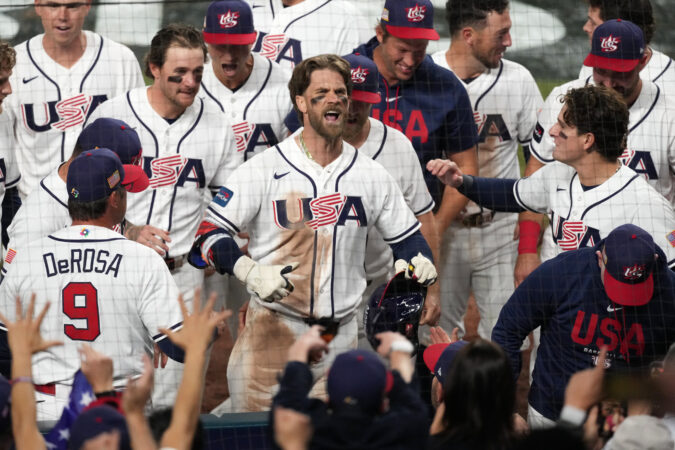
And so, the emotion spilled out of him, as Team USA spilled from the dugout and met him at home plate.
“Just enjoy the moment,” he said.
The game was played against an unavoidable political backdrop two months after U.S. military forces captured Venezuelan president Nicolás Maduro. But Venezuelan manager Omar López and the native players on the roster repeatedly steered clear of the topic.
“We’re here to [play] baseball,” Ronald Acuña Jr. said earlier in the week.
The last few days also sparked a debate about whether Dominican and Venezuelan players, who exude emotion on the field, have more fun than the more staid Americans. Harper, rarely afraid to play with flair, offered himself as proof that they don’t.
“Every country has their way they play, right?” Harper said a few days ago. “Latin American countries, a lot of energy. And I love watching it because that’s how I played when I was younger. I got in trouble for it, right? I came up, I used gray bats. I used different cleats, got my cleats cut. MLB told me I couldn’t use gray bats, couldn’t use my eye black, all that kind of stuff, right? I kind of got pounded for it.
“So, there’s an American way of basically what everybody talks about. But I think that’s so far from the truth.”
Bryce Harper celebrates his home run with Aaron Judge.
And upon hitting a moonshot in the late innings of a winner-take-all game in international competition, well, Harper didn’t hold anything back.
When it was over, many of the American players and staff watched from the third-base dugout as a mass of blue, yellow, and red jerseys celebrated around closer Daniel Palencia.
They arrived dressed in game-worn USA hockey jerseys, a gift from the gold medalists. But they left with silver medals that they took off their necks almost as soon as they were presented to them.
Harper made a point of shaking hands with many of the Venezuelan players.
“Venezuela’s a very proud place for their baseball,” he said. “I’m really happy for them. Obviously I want to win no matter what. That’s what I play for, to win championships and gold medals. But in that moment, it’s not about me. It’s about us and our game.
“They had a great tournament. I just wanted to let them know and say congratulations. They’re the best team in the world.”
DeRosa said he shared a “special moment” with Harper in his office. They were teammates with the Nationals in 2012, when Harper was a 19-year-old rookie. He couldn’t have imagined the WBC without him.
“I knew what his career was going to be like, with the multiple MVPs and how he’s competed,” DeRosa said. “I was just proud he was a part of the team, share a clubhouse with him again.”
Maybe Harper will do it again at the Olympics in two years.
Last week, we learned that the Roots Picnic is moving to Belmont Plateau, a mile away from its recent home at the Mann Center. Now, we know who the name-in-lights Saturday night headliner is for the 20th edition of the festival.
It’s Jaÿ-Z.
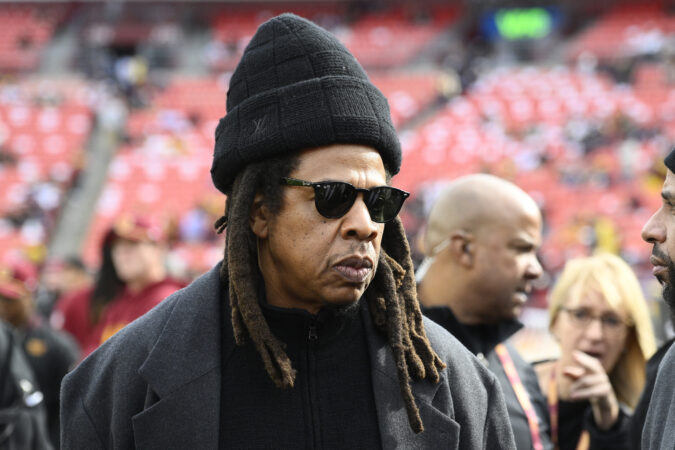
The rapper and head of entertainment business powerhouse Roc Nation will perform with The Roots as the closing act on May 30, the first day of the two-day festival. The Roots has a history of playing as Jaÿ-Z’s backing band before, most notably on Jay-Z: Unplugged, the 2001 live album that was part of the “MTV Unplugged” series.
And who else is playing over the course of the Picnic, whose lineup last year included over 40 acts? That is not yet known.
Tuesday’s initial announcement includes only The Roots and Jaÿ-Z. Word on the rest of the festival, which is scheduled for May 30 and 31, is expected later this week.
In a news release, Roots manager Shawn Gee, who is the president of Live Nation Urban, which produces the festival and others around the country, said that booking Jaÿ-Z and bringing the festival to Belmont Plateau both represented the fulfillment of long-time goals for the Philadelphia hip-hop and The Tonight Show house band.
“Moving the Roots Picnic to Belmont Plateau and bringing Jaÿ-Z and The Roots together to perform are both bucket-list moments for us,” Gee said in the statement.
The Roots perform on the Mann Stage during the Roots Picnic 2025 at the Mann Center on Sunday, June 1, 2025.
“After meeting with Mayor Cherelle Parker and hearing her vision for Philadelphia 250, she truly inspired us to dream even bigger,” he said, thanking Parker, Parks and Recreation commissioner Susan Slawson, and Janelle Jones, the city’s director of the office of special events. “We can’t wait to see everyone in May at the Plat.”
Jaÿ-Z, of course, is no stranger to large scale hip-hop festivals in Philadelphia. From 2012 to 2022, Roc Nation produced the Made in America festival on the Benjamin Franklin Parkway on Labor Day weekend.
Jaÿ-Z curated the festival, headlined it in 2012 and 2017, and booked his wife, Beyoncé to play it in 2013 and 2015. The festival was cancelled due to the COVID-19 pandemic in 2020, and resumed for two years. In 2023, it was planned with Lizzo and SZA as headliners and then abruptly cancelled a month ahead of time.
Roc Nation has never announced that Made in America is over, but the festival did not take place in 2024 or 2025. Jaÿ-Z headlining the Roots Picnic in Philadelphia would certainly seem to be another sign that Made in America is gone for good.
Another burning question: What’s up with the two dots — a diacritic called an umlaut — over the “y” in Jaÿ-Z’s name?
The answer is: He started stylizing it that way on all of his branding earlier this year.
What that might mean is not entirely clear. However, this is an important anniversary year for the Brooklyn rapper born Shawn Carter.
His debut album, Reasonable Doubt, was released 30 years ago, in 1996. That same year, he released the single “Dead Presidents” with his name stylized as Jaÿ-Z, which is how it was also written on the Reasonable Doubt album cover.
So, does that mean Jaÿ-Z is launching a Reasonable Doubt anniversary tour, with the Roots Picnic as his launching pad? Or will he be releasing a new album in 2026, which would be his first since 4:44 in 2017? Stay tuned for answers to those questions.
Tickets for the 2026 Roots Picnic go on sale Wednesday, March 18, at 10 a.m. at RootsPicnic.com.
TerraPower Isotopes, part of a nuclear power company founded by Bill Gates, plans a $450 million plant in the Bellwether District to make radioactive molecules for cancer research and potential treatments, Gov. Josh Shapiro announced Tuesday.
Bellwether’s developer HRP Group will build a 250,000-square-foot facility for the Bellevue, Wash., company at the former refinery site. TerraPower Isotopes is expected to employ 225 people in Philadelphia to meet anticipated demand for a type of molecule that can be used to kill tumors without damaging surrounding tissue.
TerraPower’s material, an isotope called actinium-225, is ultimately derived from weapons-grade uranium. Researchers are exploring precision cancer treatments that involve attaching actinium-225 to an antibody that is targeted to specific cancer cells. The isotope then emits high doses of radiation at close range.
“This new facility is a testament to the demand for actinium-225 as part of the growing industry, which is transforming how cancer is treated,” TerraPower Isotopes President Scott Claunch said in Shapiro’s announcement. “Our team is proud to be building a large-scale manufacturing facility in Philadelphia, which will play a pivotal role in expanding global access to this rare isotope.”
Pennsylvania government is supporting the project with $10 million in grants. The Bellwether District is in a Keystone Opportunity Zone that has tax benefits through 2043. That means TerraPower Isotopes won’t have to pay many state and local taxes, though it will remain responsible for city wage taxes.
TerraPower Isotopes, part of a bigger nuclear sciences company called TerraPower, is the second radiopharmaceutical company to announce a factory in the region. In 2024, Nucleus RadioPharma, which counts Fox Chase Cancer Center among its investors, shared plans for a 48,000-square-foot facility in Spring House, Montgomery County.
TerraPower’s move to South Philadelphia is the third significant life sciences development announced this year by Shapiro and his economic development team.
TerraPower is the second tenant in the 1,300-acre Bellwether District, which HRP is trying to develop into a new industrial and life sciences hub. Late last year, it announced that California-based canned beverage manufacturer DrinkPAK will build a 1.4 million-square-foot factory that will product 3 billion cans a year.
The NFL’s 2026 free agency period is ongoing — even as the lion’s share of the league’s headline-grabbing signings have come off the board. The Eagles are one team for whom the situation remains fluid, but enough has occurred to take stock of the post-free agency picture nonetheless.
The Inquirer’s Eagles reporting team of Jeff McLane, Olivia Reiner and Jeff Neiburg got together for a roundtable with a week of free agency movement in the rear-view mirror.
What has been your biggest surprise of the Eagles free agency period to date?
McLane: Nothing the Eagles have done or not done so far qualifies as surprising from this vantage point. Howie Roseman essentially laid out his plans ahead of free agency. He would be selective in retaining his own players, prudent in signing others, and continue to build from within via the draft. I thought that maybe the Eagles would make an effort to keep safety Reed Blankenship considering the relatively affordable contract he signed with the Texans at $8.25 million a year. But I guess the greater shock was that Roseman would make a cornerback his first free agent signing.
There isn’t some rule that general managers have to fill roster spots by order of need. And signing Riq Woolen indicated that Roseman saw value in inking the 26-year old to a one-year contract worth up to $15 million. In theory, that is good business. But the third corner spot behind Quinyon Mitchell and Cooper DeJean is a luxury. Woolen has enviable attributes in size and speed, if not issues with consistency and temperament. He could be a steal on a “prove-it” deal. But he’s essentially a rental with Mitchell and Cooper slated for extensions next offseason. The Eagles have time to address holes at edge rusher, safety and find the next generation on the offensive line and at tight end. So this isn’t a critique of Roseman’s initial choices. Just an early assessment.
Reiner: Jaelan Phillips was always going to get paid this offseason, it was just a question of how much. He was a young, talented player at a premium position within a relatively underwhelming free-agent class. While the Eagles had interest in bringing him back, it seemed unlikely that they were going to overpay him, given the team’s need to reward homegrown defensive players who are eligible/will become eligible for extensions. Plus, Phillips had just five sacks last season (two with the Eagles) and hasn’t yet eclipsed his career best of 8½ sacks set during his rookie season in 2021.
He signed with the Carolina Panthers for four years, $120 million, good for a $30 million average annual value. While I figured his AAV would be high, I didn’t anticipate it would be that high. That’s a pretty significant projection, especially for a player not too far removed from a pair of serious injuries. I’m not surprised the Eagles were outbid, but I am surprised that they were outbid by that much.
Neiburg: My surprise is that it’s March 17 and the only addition to the edge rushing corps has been Arnold Ebiketie. There is, of course, plenty of time for that to change. But I expected Phillips to be back — though not at that number — and if not, expected the Eagles to bring in another top-end talent like Trey Hendrickson or Maxx Crosby. It’s the lone position on the team right now screaming for an infusion of talent, so I’d expect something to change relatively soon.
New Eagles tight end Johnny Mundt (86) arrives from Jacksonville with a sterling reputation as a blocker.
Which new Eagles face needs to be the most immediate difference-maker?
McLane: The pickings are slim here so I’ll go with Ebiketie. I don’t imagine the Eagles will go into next season with the former Falcon as the third outside linebacker behind Nolan Smith and Jalyx Hunt. But right now that’s where he lines up in the pecking order. Ebiketie dropped down the depth chart in Atlanta after new faces arrived last season, but he was still effective. He had a solid 16.4% pressure rate, if only two sacks. He had six sacks in each of the two previous seasons, though.
Ebiketie projects as more than a serviceable rotation edge rusher. The same could have been said for Azeez Ojulari and Joshua Uche — two outside linebackers the Eagles signed to one-year contracts a year ago that didn’t exactly pan out. It wasn’t all their fault. They weren’t given much of chance. Roseman traded for Phillips and Brandon Graham was lured out of retirement. As stated above, the GM is likely to add more bodies at the position, even if it isn’t a No. 1 guy. Until then, Ebiketie will have to do the heavy lifting as the projected No. 3.
Neiburg: The answer for me right now is Johnny Mundt, which probably says more about the quiet nature of the free agent class so far. The second tight end isn’t all that sexy. But I think Mundt’s job with the Eagles is a more important one than Woolen’s. Sure, Woolen is the high-profile name, but we saw last year that CB2, in this defense, with Mitchell and DeJean, wasn’t that much of an issue. Adoree’ Jackson did fine, and Woolen is better. The running game, on the other hand, suffered from poor blocking from the tight ends. That needs to change, especially in this new scheme, to get the offense back on track. Mundt needs to be as advertised. Woolen, meanwhile, can get away with just being OK.
Reiner: With Dallas Goedert and Grant Calcaterra now under contract in 2026, the addition of the 31-year-old Mundt is all the more important. Howie Roseman admitted in advance of the combine that the Eagles needed a more diverse skill set in the tight ends room last season, given Goedert, Calcaterra, and Kylen Granson were stronger receivers than they were blockers.
That’s where Mundt comes in. The Eagles’ run game is poised to lean more into a wide-zone scheme under new offensive coordinator Sean Mannion. Mundt should be familiar with the revamped run game and the coaches installing it. He played with Mannion with the Rams in 2017 and 2018 and the Minnesota Vikings in 2021 and 2023. New Eagles offensive line coach Chris Kuper also served in the same role in Minnesota while Mundt was on the team. Given the struggles of last year’s unit, Mundt has the potential to make a positive impact on the ground as a blocker. After all, Vikings head coach Kevin O’Connell once called him “the best third tight end in the NFL.”
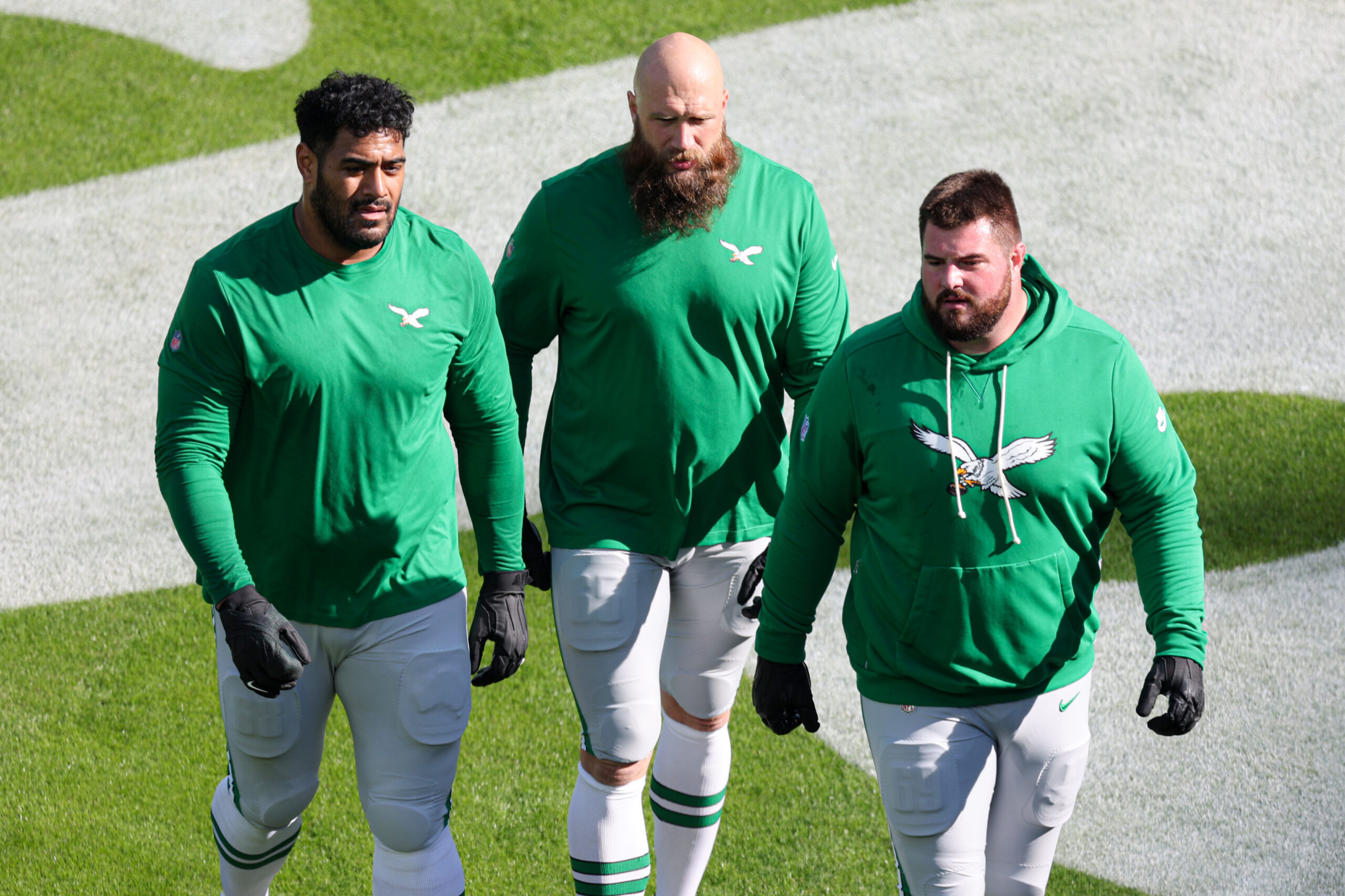
Jordan Mailata (left), Lane Johnson (center) and Landon Dickerson (right) are the present of the Eagles offensive line. The Eagles know they must think about the future in the trenches.
Name a position that concerns you heading into next month’s draft.
Reiner: Edge rusher. The Eagles could still use some more pass-rush prowess on the edge, especially after a quiet wild-card showing from the group (no sacks, just one quarterback hit, according to Pro Football Focus). Last year, the Eagles went into the season with Smith and Hunt as their top two edge rushers and ended up acquiring Phillips at the trade deadline to lead the group. Roseman ought to take a more proactive approach this year and add an impact player at the position before the season begins. Then, the Eagles should be set at the position for 2026 (and potentially beyond), as Smith and Hunt are promising, yet still developing.
Neiburg: In the immediate future, it’s edge rusher, but the long-term future of the offensive line is my primary concern for the state of this Eagles roster, and one they will need to help address in the draft. Lane Johnson’s career is winding down. Injuries and pain could soon force Landon Dickerson to retire before he hits 30. Cam Jurgens, like Dickerson, just got a treatment for his ailments in Colombia that they don’t do in the U.S. A position that has long been a strength of the Eagles has a lot of question marks as they enter the 2026 season.
McLane: I’ve mentioned the holes at edge rusher and safety, but I’m looking at a position with a longtime returning starter with question marks: left guard. We know that Dickerson will be back for a sixth season. Will he be able to finish it? I think that’s a fair question considering doubts he expressed about his future at the end of the season, and from sources close to Dickerson who know the full extent of injuries he’s played through the last several seasons. There might not be a tougher player on the roster, but a nowhere-near-100-percent Dickerson was often a detriment to the offense in 2025.
As Jeff mentions, he addressed his ailing body by receiving stem cell treatment, following Jurgens to Colombia earlier this month. Jurgens doesn’t get off scot-free. His regression last season wasn’t solely because he wasn’t full recovered from back surgery. He needs to bounce back. But the Eagles didn’t reduce the number of years left his contract like they did with Dickerson. They clearly know the end is nearing for the former Pro Bowler. They don’t have an obvious backup at this point after Brett Toth and Matt Pryor left in free agency. Roseman will likely add a veteran. But he may have to start thinking about finding a replacement in the draft, and that’s on top of preparing for Johnson’s retirement, which could be coming in a year.
Will the Eagles have regrets over whatever their decision is on A.J. Brown?
Crystal ball: What will we be saying about A.J. Brown at the end of the 2026 season?
Neiburg: Hello from late January. The Eagles just lost in the NFC title game despite A.J. Brown’s eight catches for 84 yards and a touchdown. The Eagles never got an offer worthy of parting with Brown, and so they kept him on the team and ran it back with Brown and DeVonta Smith at the top of the depth chart. Mannion’s offense opened up the passing and running games a bit, and Brown did fire off a few cryptic social media posts, but he went over 1,000 yards for the fifth consecutive season.
Reiner: Brown is still a great player … whether he is on the Eagles or not. Lately, it seems like “not” is the more likely outcome for the two parties. Perhaps the Eagles will wait to move him until after June 1, when they can spread out his dead cap charge over the next two seasons. Regardless, whoever ends up with Brown in 2026 is the better-off team. Even a 29-year-old Brown can make a difference in an offense, given he posted a paltry 1,003 receiving yards in a relatively down season in 2025.
McLane: I doubt there will be one uniform statement said about Brown, whether he’s with the Eagles or not. I suspect there will be a growing chorus, however, suggesting that he has taken another slight step back. We saw glimpses of that last season and perhaps that is why Brown voiced his frustrations in the middle of last season. He was still great at times. And it wasn’t like his average separation numbers when targeted dropped. He actually had a slight increase from 2.1 to 2.2 yards, per Next Gen Stats. But dropped passes and an occasional lack of effort were concerning. Jalen Hurts and Kevin Patullo weren’t solely to blame for last season.
Roseman wouldn’t be open to trading Brown if there wasn’t evidence that he’s slipping in his age-29 year. Every team knew about his knee concerns before the draft. The Eagles are the only ones to know how they’re holding up as he enters his eighth season. Any potential partner would perform a physical before signing off on a trade. But Brown isn’t coming off knee surgery like Maxx Crosby. There’s an uncertain expiration date with chronic injury. And some receiver-needy team is likely to take that risk. The Patriots or some other suitor will have to meet Roseman’s demands, but the asking price could drop post-June 1, especially if the Eagles draft a receiver.