Tag: Immigration

  • Unmasking ICE in Philly could test the limits of local power over federal agents

    Unmasking ICE in Philly could test the limits of local power over federal agents

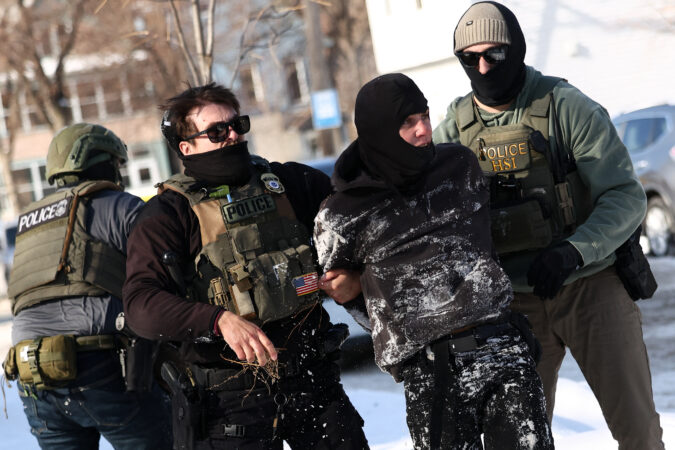
    One of the lasting images of President Donald Trump’s mass deportation campaign will be the masks worn by federal immigration agents.

    The widespread use of facial coverings by U.S. Immigration and Customs Enforcement officers is among the suite of tactics — agents dressed in plainclothes, wearing little identification, jumping out of unmarked cars to grab people off the street — that have fueled immigration advocates’ use of terms like “kidnappings” and “abductions.”

    Now Philadelphia lawmakers appear poised to pass legislation that would ban all officers operating in the city — including local police — from concealing their identities by wearing masks or conducting enforcement from unmarked cars.

    The question is whether the city can make that rule stick.

    Legal hurdles loom for municipalities and states attempting to regulate federal law enforcement. Local jurisdictions are generally prohibited from interfering with basic federal functions, and Trump administration officials say state- and city-level bans violate the constitutional provision that says federal law reigns supreme.

    Experts are split on whether the bill proposed by Philadelphia City Council members last week would survive a lawsuit.

    There are also practical concerns about enforcement. Violating the mask ban would be a civil infraction, meaning local police would be tasked with citing other law enforcement officers for covering their faces.

    “No doubt this will be challenged,” said Stanley Brand, a distinguished fellow at Penn State Dickinson Law. “This ordinance will be a protracted and complicated legal slog.”
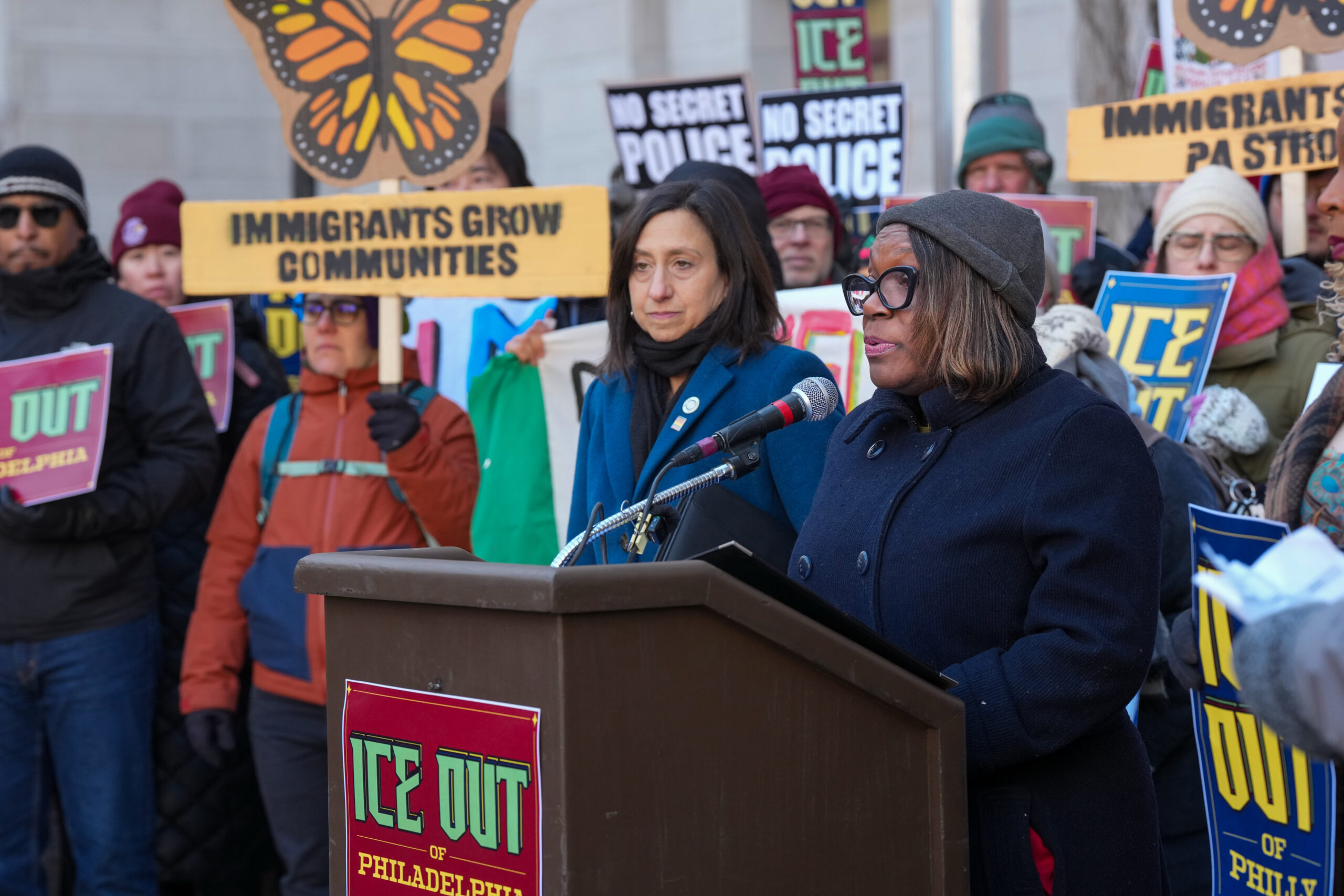
    Councilmember Kendra Brooks speaks during a news conference at City Hall to announce a package of bills aimed at pushing back against ICE enforcement on Jan. 27.

    Advocates for immigrants say that unmasking ICE agents is a safety issue, and that officers rarely identify themselves when asked, despite being required to carry badges.

    Mask use can also spur impersonators, they say. At least four people in Philadelphia have been arrested for impersonating ICE officers in the last year.

    “You see these people in your community with guns and vests and masks,” said Desi Bernette, a leader of MILPA, the Movement of Immigrant Leaders in Pennsylvania. “It’s very scary, and it’s not normal.”

    Democrats in jurisdictions across America, including Congress and the Pennsylvania General Assembly, have introduced legislation to ban ICE agents from concealing their faces. California is the furthest along in implementing a mask prohibition, and a judge is currently weighing a challenge filed by the Trump administration.

    Senate Democrats negotiating a budget deal in Washington have asked for a nationwide ban on ICE agents wearing masks in exchange for their votes to fund the Department of Homeland Security.

    And polling shows getting rid of masks is popular. A recent Pew Research Center survey found that 61% of Americans believe federal agents should not wear face coverings to conceal their identities while on duty.

    ICE officials say agents should have the freedom to conceal their faces while operating in a hyperpartisan political environment.

    Last year, ICE head Todd Lyons told CBS News that he was not a proponent of agents wearing masks, though he would allow it. Some officers, he said, have had private information published online, leading to death threats against them and their families.

    On Sunday, U.S. Sen. John Fetterman, a Pennsylvania Democrat, defended ICE officers who wear masks and said doxing is a “serious concern.”

    “They could target [agents’] families,” Fetterman said in an interview on Fox News, “and they are organizing these people to put their names out there.”
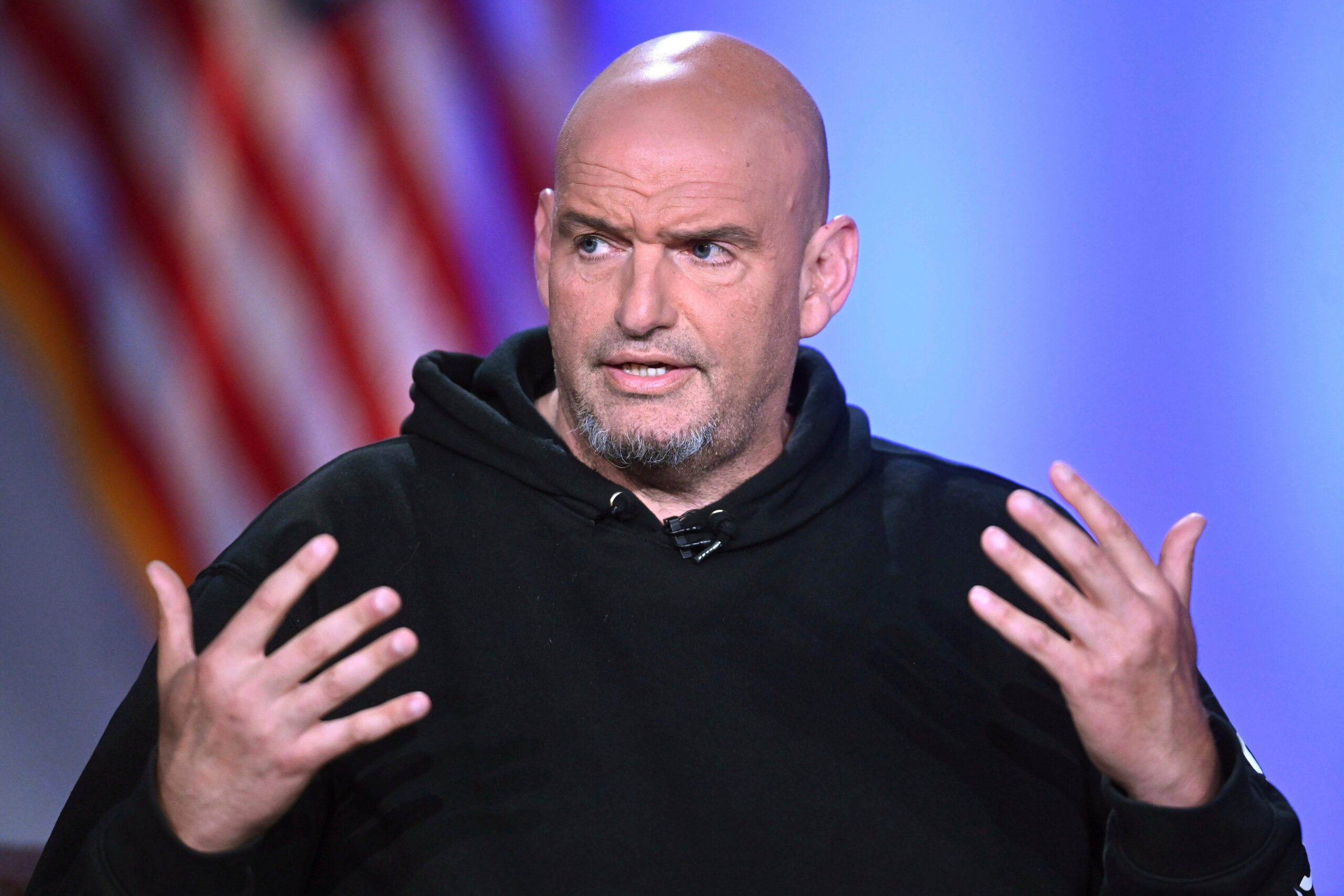
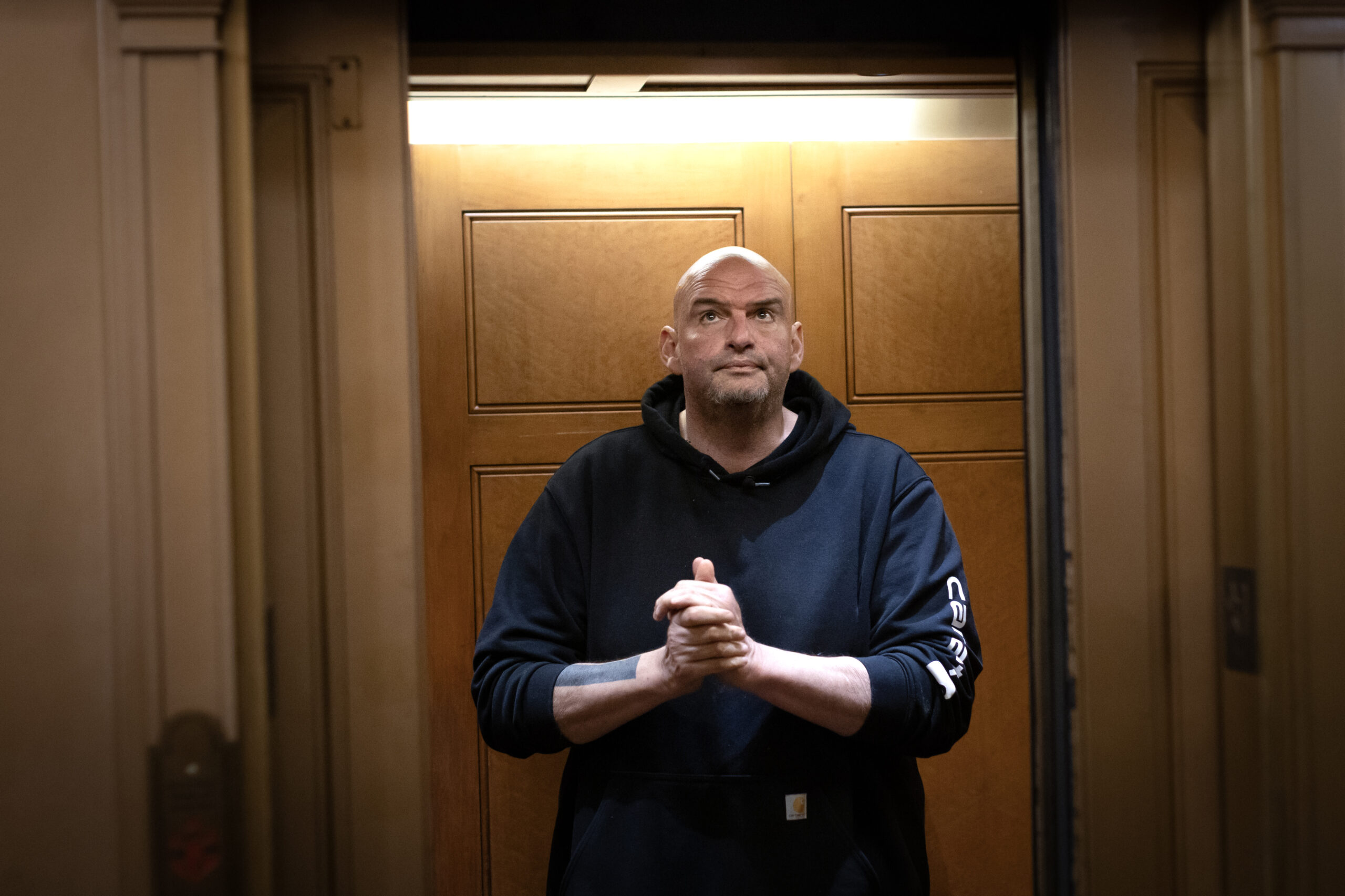
    Sen. John Fetterman, D-Pa., participates in a debate on June 2, 2025, in Boston.

    The Council authors of the Philadelphia bills say they are responding to constituents who are intimidated by ICE’s tactics, and they believe their legislation can withstand a legal challenge.

    “Our goal is to make sure that our folks feel safe here in the city,” said City Councilmember Kendra Brooks. “We are here to protect Philadelphians, and if that means we eventually need to go to court, that’s what would need to happen.”

    The constitutional limits on unmasking ICE

    The bill introduced last week by Brooks and Councilmember Rue Landau is part of a package of seven pieces of legislation aimed at limiting how ICE operates in Philadelphia. The proposals would bar Philadelphia employees from sharing information with ICE and ban the agency from using city property to stage raids.

    Fifteen of Council’s 17 members signed on to the package of legislation, meaning a version of it is likely to become law. Passing a bill in City Council requires nine votes, and overriding a mayoral veto takes 12. Mayor Cherelle L. Parker has said her team is reviewing the legislation, which can still be amended before it becomes law.
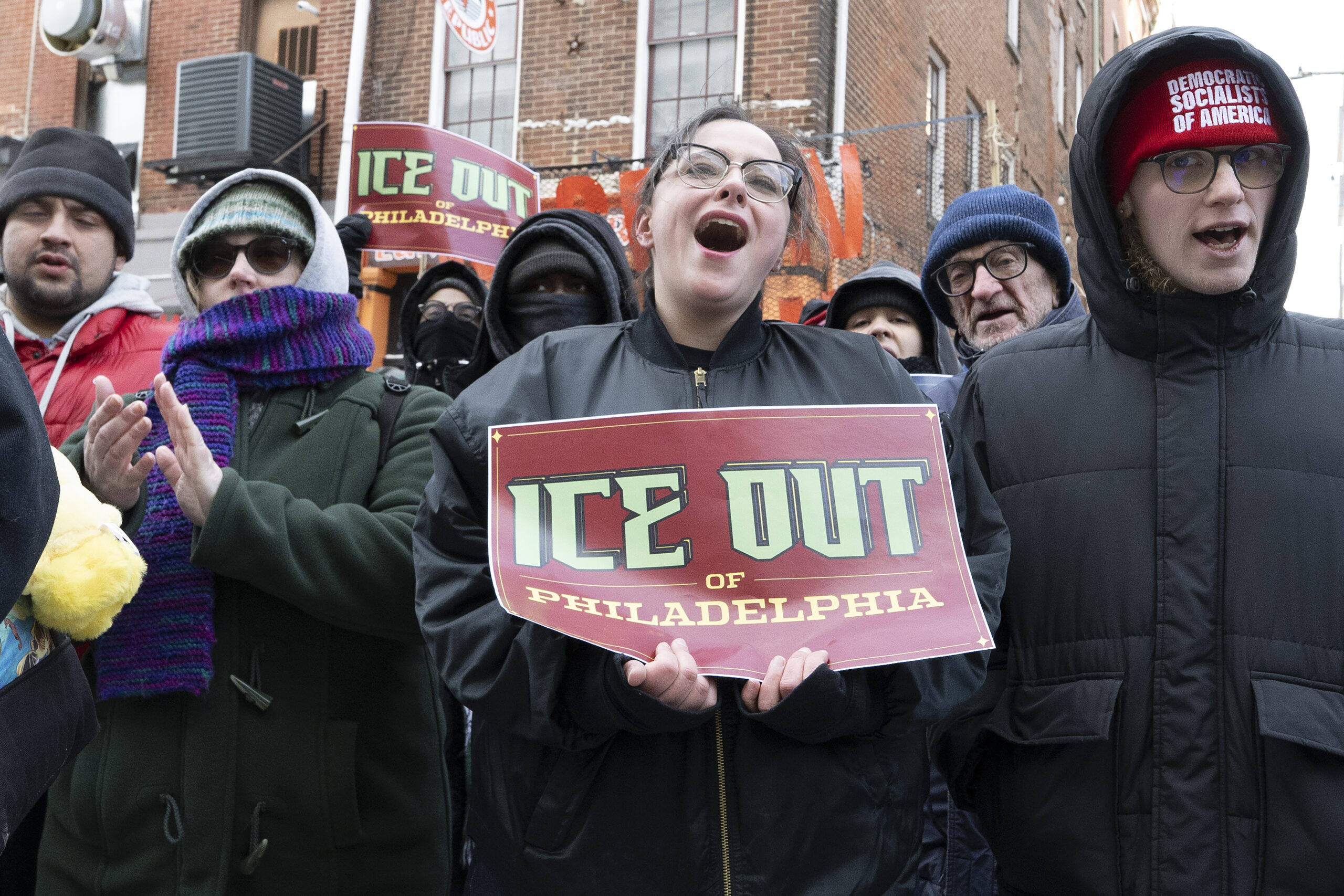
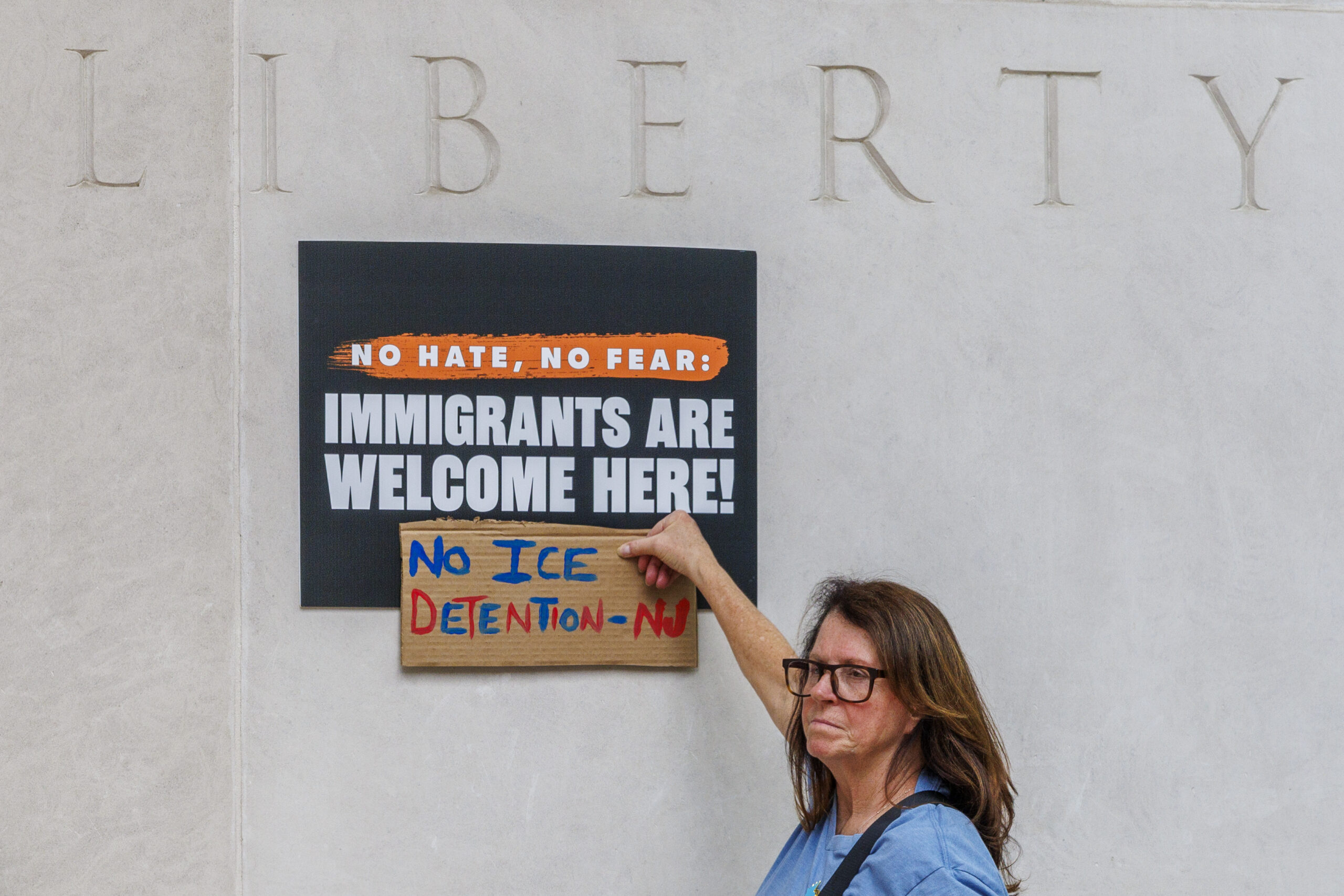
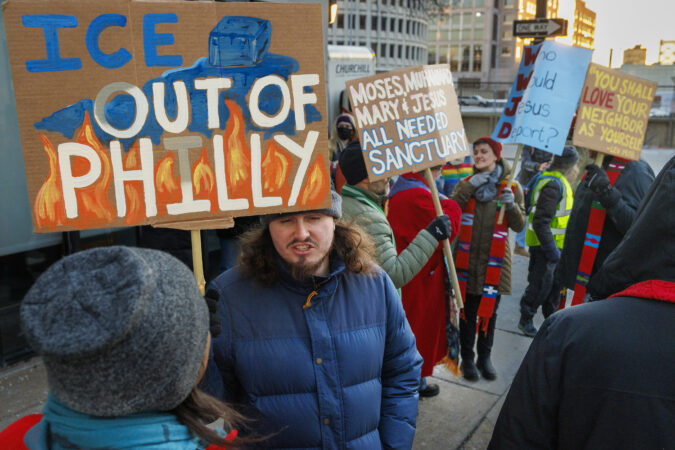
    Anti-ICE activists demonstrate outside U.S. Sen. John Fetterman’s Philadelphia office, Jan. 27, calling for an end to federal immigration enforcement policies.

    One of the two members who did not cosponsor the package was Councilmember Mike Driscoll, a Democrat who represents parts of Lower Northeast Philadelphia. He indicated that he had concerns about whether the “ICE Out” legislation would hold up in court.

    Brooks said Council members worked with attorneys to ensure the legislation is “within our scope as legislators for this city to make sure that we protect our folks against these federal attacks.”

    Brand, of Dickinson Law, said the legislation is a classic example of a conflict between two constitutional pillars: the clause that says federal law is supreme, and the 10th Amendment, which gives states powers that are not delegated to the federal government.

    He said there is precedent that the states — or, in this case, cities — cannot interfere with laws enacted by Congress, such as immigration matters.

    “If I were betting, I would bet on the federal government,” Brand said.

    But there is a gray area, he said, and that includes the fact that no law — or even regulation — says federal law enforcement agents must wear masks.

    Kermit Roosevelt, a law professor at the University of Pennsylvania who is an expert on the Constitution and conflict of laws, said if there is no agency policy, that is “free space” for states and cities to regulate.

    Roosevelt said Brooks’ legislation steers clear of other constitutional concerns because it applies to all police officers, not just federal agents.

    “If they were trying to regulate only federal agents, the question would be, ‘Why aren’t you doing that to your own police officers?’” he said. “If you single out the federal government, it looks more like you’re trying to interfere with what the federal government is doing.”

    Applying the law to local police

    Experts say part of the backlash to ICE agents covering their faces is because Americans are not used to it. Local police, sheriff’s deputies, and state troopers all work largely without hiding their faces.

    “Seeing law enforcement actions happening with federal agents in masks, that’s extremely jarring,” said Cris Ramon, an immigration consultant based in Washington. “Why are you operating outside of the boundaries of what every other law enforcement agency is doing?”
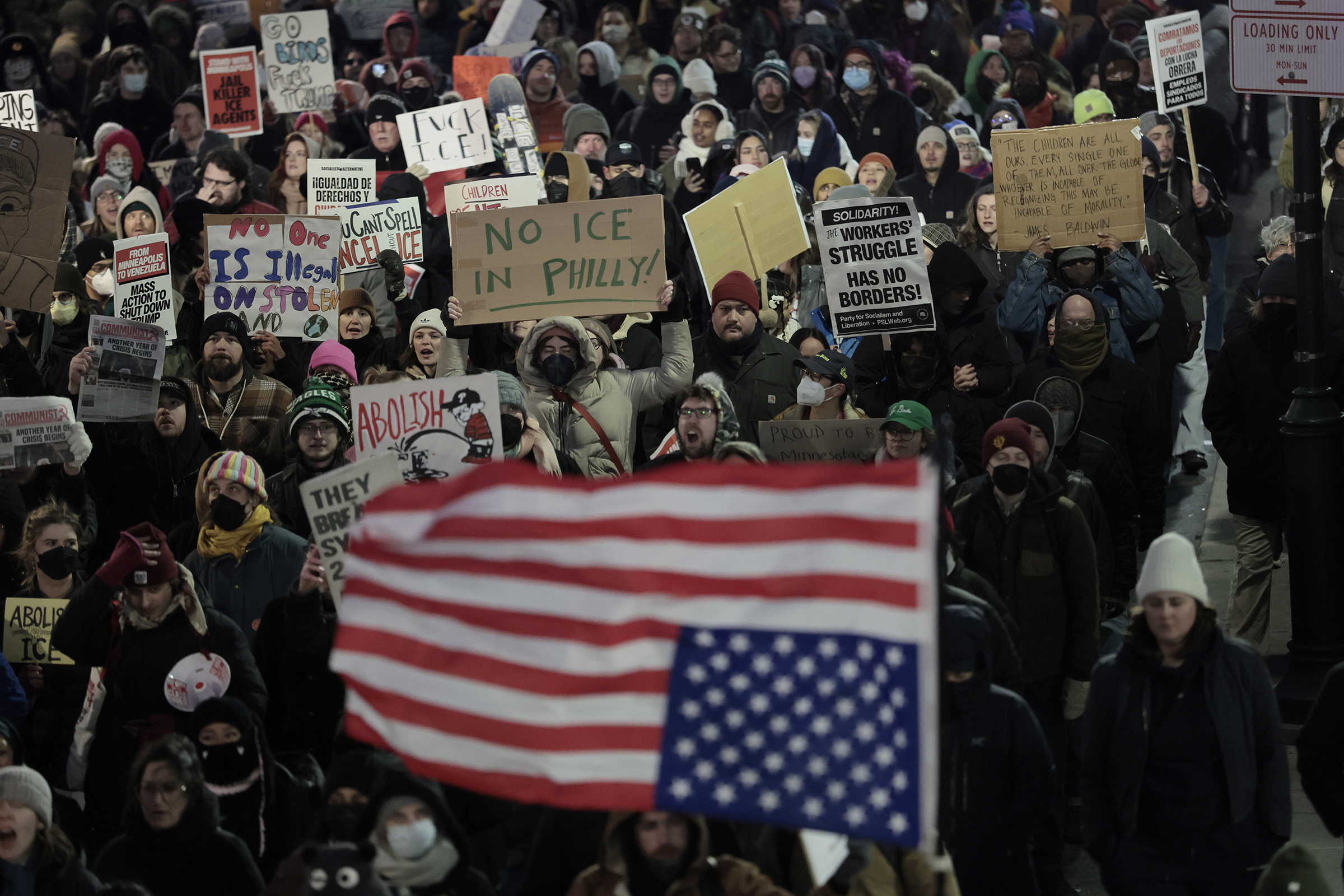
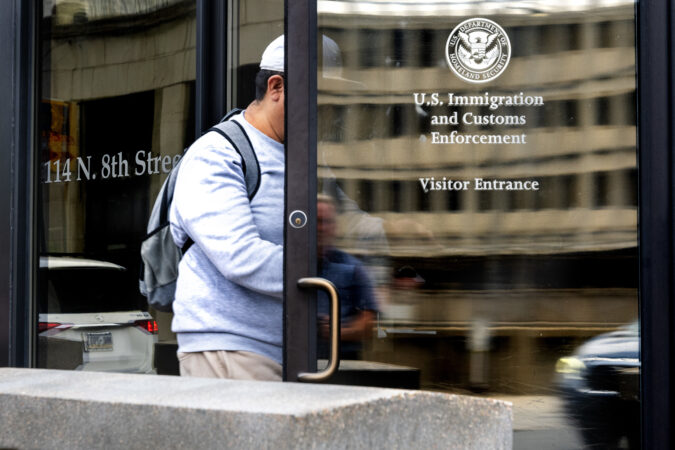
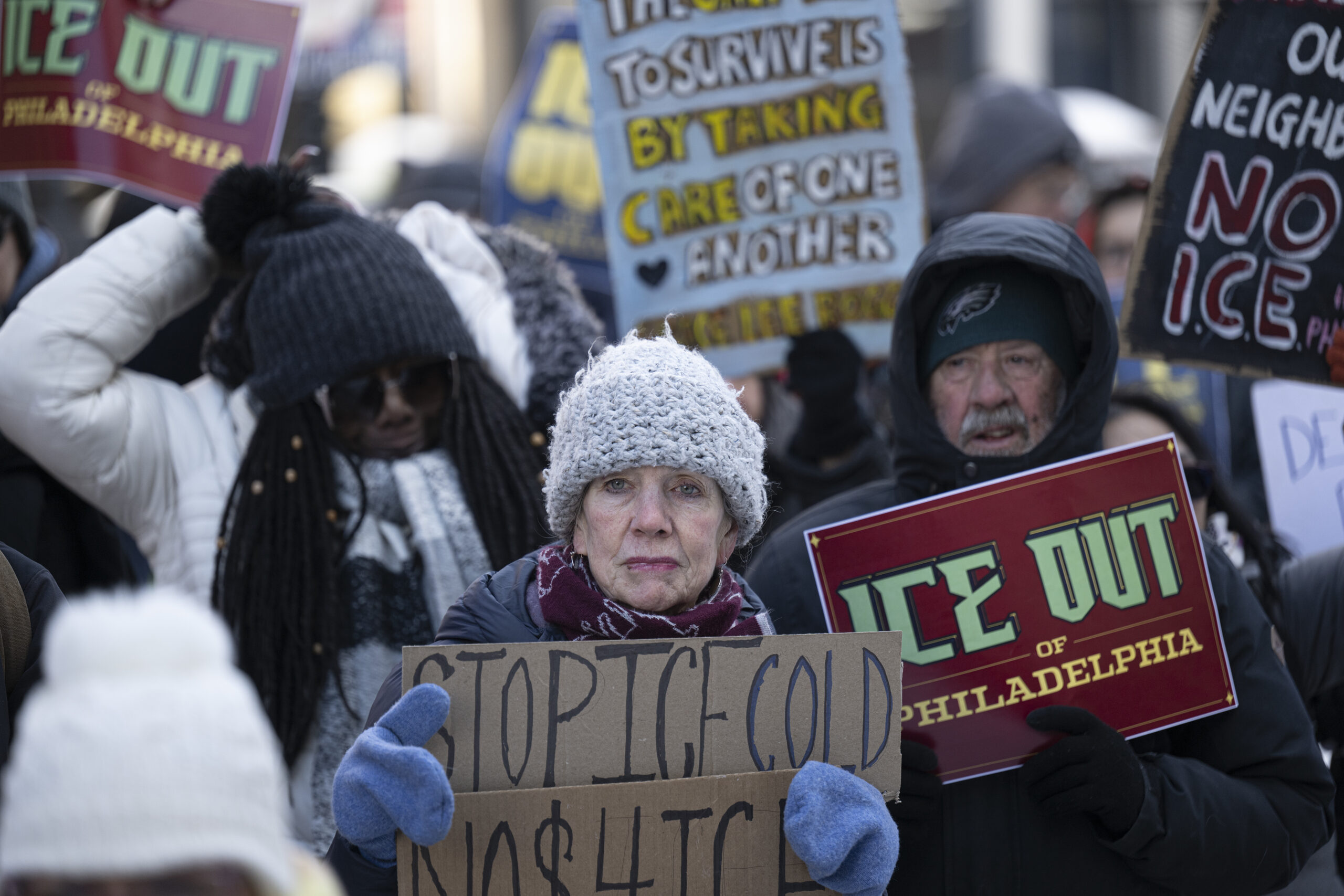
    Protesters march up Eighth Street, toward the immigration offices, during the Philly stands with Minneapolis Ice Out For Good protest at Philadelphia City Hall on Jan. 23.

    The Council legislation includes exceptions for officers wearing medical-grade masks, using protective equipment, or working undercover. It also allows facial coverings for religious purposes.

    However, the federal government could still raise First Amendment concerns, said Shaakirrah R. Sanders, an associate dean at Penn State Dickinson Law.

    The administration, she said, could argue that the city is only trying to regulate law enforcement officers and claim that would be discriminatory.

    Sanders said defending the legislation could be “very costly” and the city should consider alternatives that fall more squarely within its authority. She pointed to efforts like New Jersey Gov. Mikie Sherrill’s announcement that the state would create a database for residents to upload videos of ICE interacting with the public.

    “It looks like the city wants to wield big legislative power,” Sanders said. “My alternative is more in the grassroots work, where you are the first ear for your citizens, not the regulator of the federal government.”
  • About 40 anti-ICE activists are arrested at protest inside Target in South Philly

    About 40 anti-ICE activists are arrested at protest inside Target in South Philly

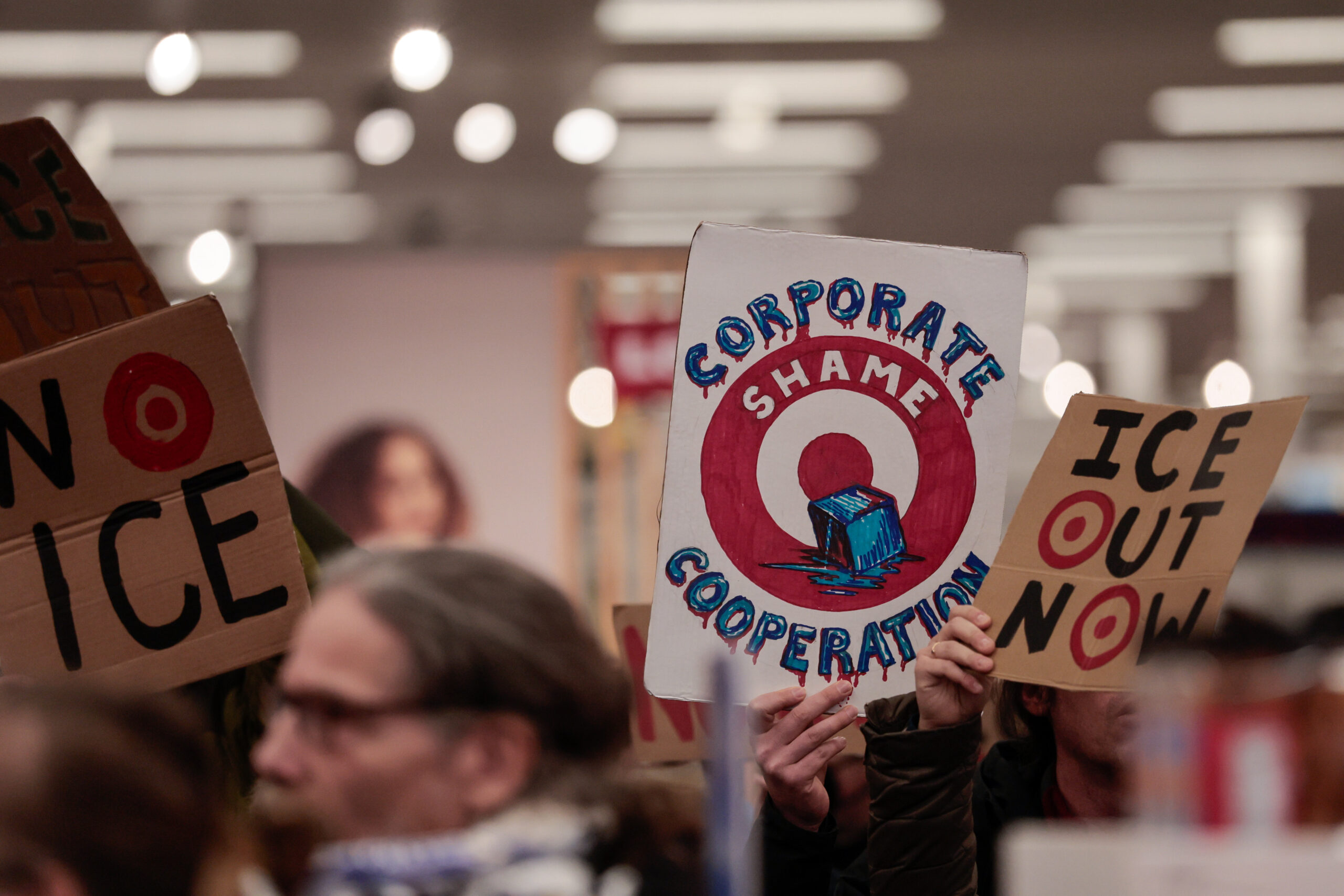
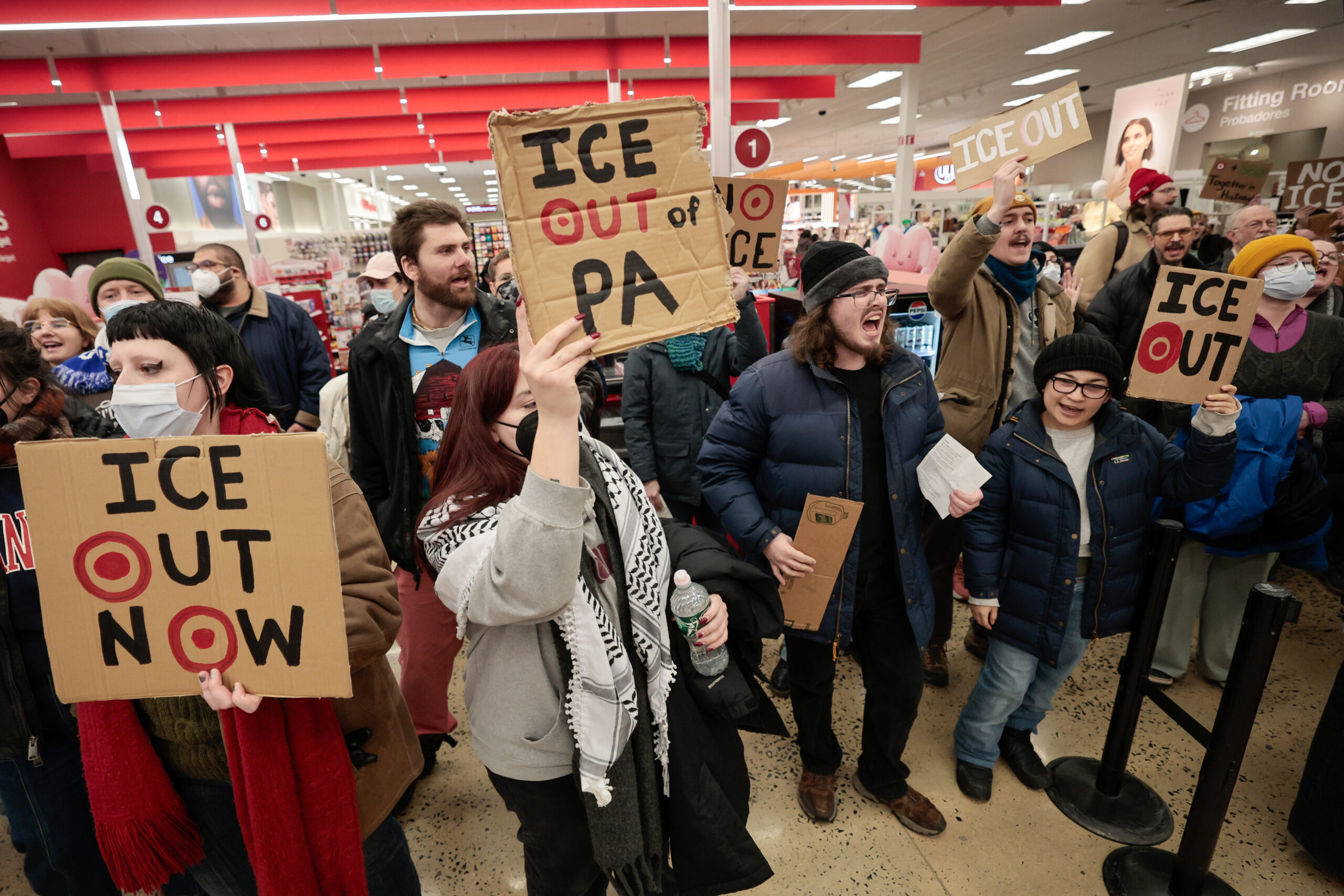
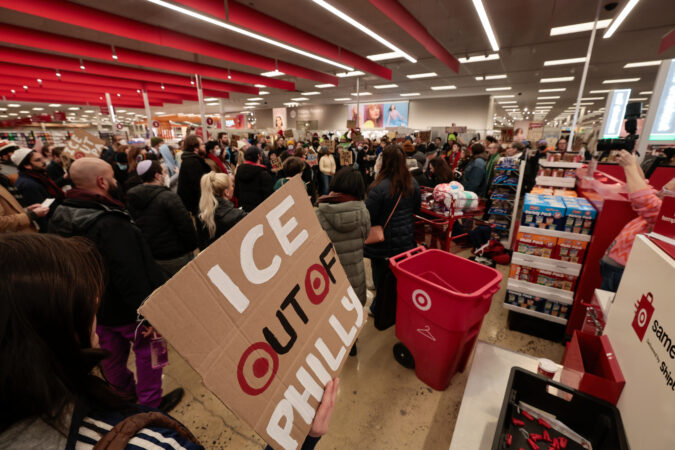
    About 40 people were arrested after an activist group Thursday evening conducted a demonstration inside a Target store in South Philadelphia to demand that the company take a public stand against U.S. Immigration and Customs Enforcement actions at the chain’s stores.

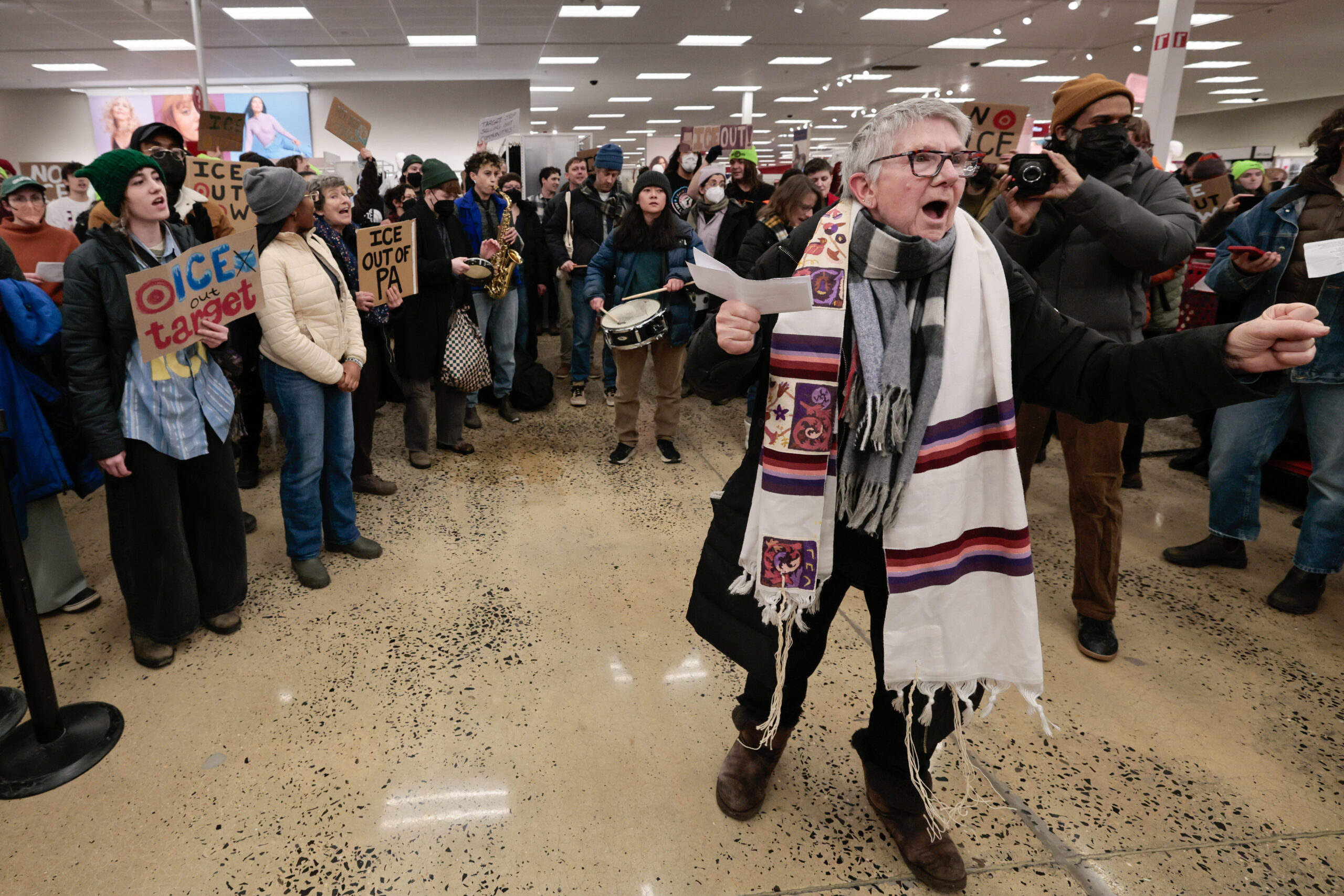
    More than 100 demonstrators affiliated with No ICE Philly chanted “ICE out of Target now!” and played instruments inside the store near Snyder Avenue and I-95. Some shoppers joined the chanting.

    Shortly before 6 p.m., the protesters were given their first warning by police to leave or be arrested. Dozens then left, but a group of 40 or so remained inside, seated on the floor. Around 6:15 p.m., police began making arrests without incident. Three remaining protesters were given citations and allowed to leave, police said.

    The zip-tied detainees were led by police out of the store one by one to cheers from other protesters outside.

    The demonstration and subsequent arrests did not deter shoppers from going about their business, entering and leaving the store.

    A man dressed in a bear costume and wearing an action camera harnessed to his chest showed up and yelled at the activists inside the store, calling them “weirdos.” Police intervened to prevent an escalation.

    Rabbi Linda Holtzman, 73, (right) a spokesperson for No ICE Philly, addresses the crowd during a demonstration inside a Target store in South Philadelphia, Feb. 5, 2026.

    Benita Dixon, 66, accompanied by her granddaughter, was at the store to buy a Valentine’s Day present for her daughter when the protest broke out.

    Dixon’s first reaction was to get a tighter grip on her granddaughter’s hand, but when chanting began, the pair joined in dancing with protesters.

    “ICE has been going around killing people in Minnesota, and that’s not right,” Dixon said. “Many of my co-workers are coming into work carrying their passports because they are scared, so I’m glad we are protesting: No ICE in our streets.”

    Protests coordinated by No ICE Philly were conducted last month at Target stores around Philadelphia, including in Center City, Fairmount, Port Richmond, and South Philadelphia.

    Across the country, protesters — including employees of the company — have been calling for Target to publicly oppose the federal immigration crackdown in Minnesota, the company’s home state, and deny ICE agents who do not have judicial warrants access to Target stores and parking lots.

    Demonstrators from No ICE Philly protesting inside the Target store.

    “Target does not have cooperative agreements with any immigration enforcement agency,” a company executive said in a memo to employees on Jan. 22, Business Insider reported.

    A day after two ICE agents fatally shot 37-year-old Alex Pretti in Minneapolis, where Target is headquartered, then-incoming CEO Michael Fiddelke cosigned a joint statement from the Minnesota Chamber of Commerce with dozens of other executives, “calling for an immediate de-escalation of tensions and for state, local and federal officials to work together to find real solutions.”

    Pretti’s Jan. 24 killing in Minneapolis was the second in less than a month. On Jan. 7, an ICE agent fatally shot 37-year-old Renee Nicole Good.

    A Target spokesperson said in an email that Fiddelke also sent a note to employees saying “the violence and loss of life in our community is incredibly painful” and that “we are doing everything we can to manage what’s in our control, always keeping the safety of our team and guests our top priority.”

    Target, founded in 1962, operates 1,989 stores across the United States and generates net revenue of more than $100 billion annually.

    The company was hit with a national boycott last year after it rolled back Diversity, Equity, and Inclusion initiatives to fall in line with the policies of President Donald Trump.

    No ICE Philly has led demonstrations against the agency and against the arrests of immigrants outside the city Criminal Justice Center.

    Demonstrators from No ICE Philly protesting inside the store.

    At the Target in South Philadelphia, Rabbi Linda Holtzman, 73, said the in-store protest is what people must do when neighbors are under attack.

    “What ICE is doing, what they have been doing, is horrible, and we stand with the people of Minneapolis,” Holtzman said.

    Protesting at the South Philadelphia Target is a way to tell the company that it must stand on the side of the people, Holtzman said.

    “Target has become an ally to ICE, letting them come into their stores without a warrant,” Holtzman said. “That’s not the America I grew up in. Is that the country you want?”

  • Philly federal judges are growing frustrated with ICE policy to detain most undocumented immigrants

    Philly federal judges are growing frustrated with ICE policy to detain most undocumented immigrants

    Federal judges in Philadelphia have been unusually outspoken in recent weeks about what they call the “illegal” policy by ICE of mandating detention for nearly all undocumented immigrants — and have been sharply critical of the “unsound” arguments by government attorneys seeking to justify the approach.

    U.S. District Judge Harvey Bartle III has overturned the government’s attempts to detain people in six cases over the last two months, writing in one opinion that Immigration and Customs Enforcement “continues to act contrary to law, to spend taxpayer money needlessly, and to waste the scarce resources of the judiciary.”

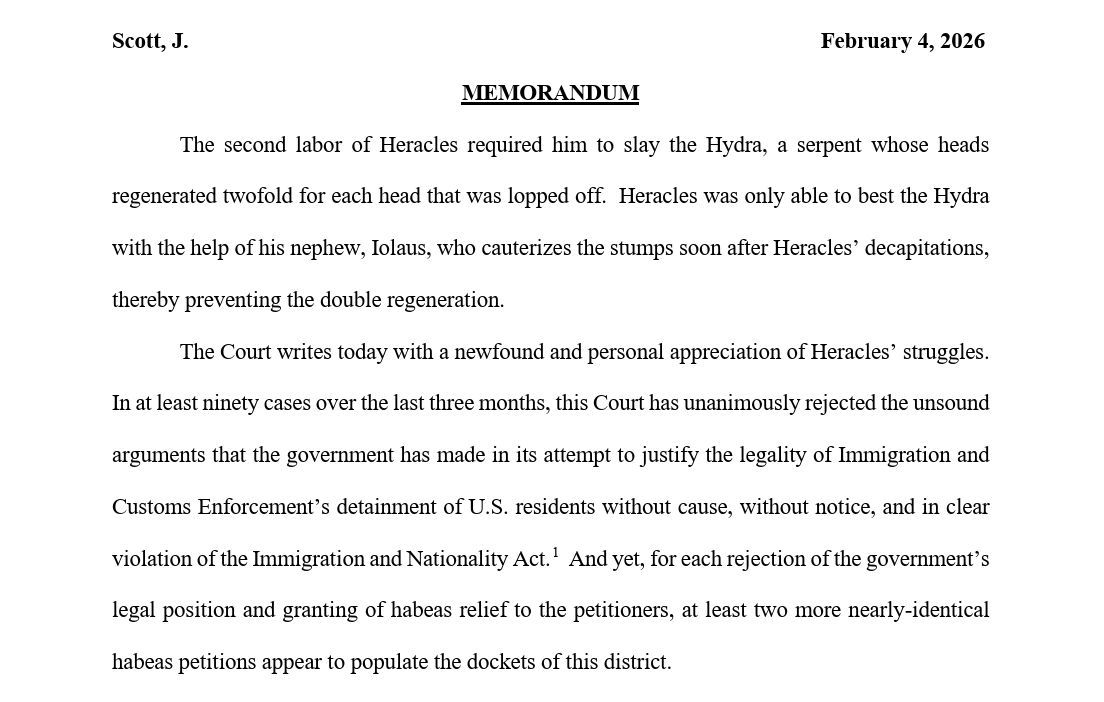
    And U.S. District Judge Kai N. Scott became the latest jurist to equate the ongoing legal battle with the government to Greek mythology, saying she and her colleagues on the bench have been squaring off with the Justice Department in a manner similar to Heracles’ confrontation with Hydra, the serpentlike monster that grew two heads every time one was chopped off.

    Although the region’s federal judges have “unanimously rejected” the government’s attempts to rationalize ICE detention of immigrants “without cause, without notice, and in clear violation” of federal law, Scott wrote, the government has continued to detain people in the same fashion day after day. And after each rejection, she wrote, “at least two more nearly identical” petitions seeking relief pop up on the court’s docket.

    “The Court writes today with a newfound and personal appreciation of Heracles’ struggles,” she said.

    District Judge Kai N. Scott’s Feb. 4, 2026 memo granting another habeas petition filed by an immigrant, and expressing frustration with the federal government’s arguments.

    The judicial rebukes come as immigration authorities have continued sweeping the nation to fulfill President Donald Trump’s promise of mass deportations. The number of detained immigrants has exploded — as has the number of court petitions from people seeking immediate release, which are known as habeas petitions.

    The enlarged legal workload has put a corresponding strain on the nation’s U.S. attorney’s offices, which typically defend ICE’s actions in federal court. Prosecutors from the New Jersey U.S. Attorney’s Office, for example, requested an extension in January to handle part of a class-action suit in order to deal with a surge in immigration release petitions.

    “This Office continues to handle an unprecedented volume of emergent immigration habeas petitions, which we continue to prioritize because of the liberty interests at issue,” the letter said.

    And in Minnesota this week, a federal prosecutor said she wished the judge would hold her in contempt so she could get some sleep in jail. Julie Le seemed exasperated when the judge pressed her on why the government had been ignoring his release orders.

    “What do you want me to do? The system sucks. This job sucks,” Le said, according to a court transcript.

    Le was subsequently fired.

    The issue at the center of each incident involves ICE’s mandatory detention policy. The policy was rolled out over the summer, and it requires that nearly all undocumented immigrants be held in custody as their cases wind through the country’s backlogged and complex immigration system.

    That upended decades of government practice, which typically allowed people who entered the country illegally, but who were otherwise law-abiding, to at least receive a bond hearing and determine if they could remain in the community as their cases moved forward.

    Jeanne Ottoson with Cooper River Indivisible attends an Immigrant rights groups rally outside the Third Circuit Court of Appeals to defend the New Jersey state ban on immigration-detention contracts on May 1, 2025.

    Some of those detained as a result of the policy have filed habeas petitions, arguing that their detention violates the Constitution. And in the Eastern District of Pennsylvania, Philadelphia’s federal court, judges have granted challenges to the policy at a near-universal rate.

    Still, those decisions have been made on a case-by-case basis, with relief extended only to one petitioner at a time. The U.S. Court of Appeals for the Fifth Circuit, which is based in New Orleans and is considered one of the country’s most conservative jurisdictions, heard a broader challenge to the policy. A divided 2-1 court ruled Friday that ICE can detain undocumented immigrants the agency is seeking to deport, even those who have been in the country for years.

    The ruling covers only federal courts in Louisiana, Mississippi, and Texas, and many legal experts expects the matter to ultimately end up before the U.S. Supreme Court.

    In Philadelphia, Scott’s expression of frustration came this week in response to the release petition of Franklin Leonidas Once Chillogallo. The 24-year-old from Ecuador came to the United States in 2020, lives with his partner and his 6-month-old twin daughters in Upper Darby, and works as a construction worker. He has no criminal history.

    After ICE arrested Once Chillogallo outside his home on Jan. 13, he was held in the Philadelphia Federal Detention Center without the opportunity for an immigration judge to review his case.

    Just as happened in the previous 90 cases, Scott rejected the argument that Once Chillogallo, an immigrant who has been in the country for years, was subject to the same bond rules as those who were caught entering without permission. The judge ordered Once Chillogallo’s release, which took place the following day, according to the court docket.

    Inside the federal courthouse Thursday, judges held three hearings on arcane legal questions surrounding habeas petitions.

    Dozens of other habeas petitions remain pending, court records show. In many that were recently decided, judges used terse or brusque language to point out that the government’s interpretation of the law has been repeatedly rejected.

    “Across the board, there is frustration. There is frustration from attorneys. There is frustration from the judges,” said Kimberly Tomczak, an immigration attorney who represented Once Chillogallo. “Nothing seems to be changing on the immigration side in response to the flood of habeas grants across the nation.”

  • From Big Lots to warehousing humans: ICE plan sparks fear in Schuylkill County

    From Big Lots to warehousing humans: ICE plan sparks fear in Schuylkill County

    TREMONT, Pa. — Evil has never looked this banal.

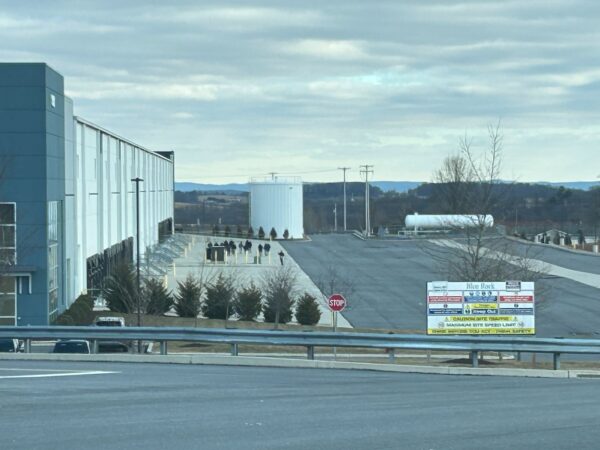
    A massive 1.3 million-square-foot Schuylkill County warehouse that just 13 months ago bustled with 505 workers moving cheap overstock goods like shower curtains or pet cleaners for now-bankrupt retailer Big Lots sits utterly abandoned, its dozens of truck bays fenced off and surrounded by a silent shroud of snow.

    It’s hard to imagine, but in the very near future, this white behemoth could be warehousing thousands of desperate human beings behind its bland, baby blue-trimmed concrete walls. On Monday, U.S. Immigration and Customs Enforcement filed a county deed that confirmed its $119.5 million purchase of the Big Lots facility — one more island in an American gulag archipelago of detention camps for the undocumented immigrants ICE is aggressively arresting from coast to coast.

    “It hurts my heart,” the Rev. Brian Beissel, pastor at Christ’s United Lutheran Church in nearby Ashland, told me, choking up a bit, as we sat in a car outside the warehouse entrance.

    When I asked him to expand on the source of that pain, Beissel’s response epitomized what other local residents have been saying about the stunning ICE news — a blend of small-town fears about stressed infrastructure with spiritual unease over the images of violent immigration raids in Minneapolis and elsewhere. He invoked Schuylkill County’s deep resentment of the 20th-century coal barons who took the money and the minerals and then ran. “They’re promising jobs, but how long are they going to be here?”

    But then Beissel — a Schuylkill County native who sees himself as a not very political preacher, in a county that Donald Trump won in 2024 with nearly 71% of the vote — pivoted to his moral dismay over a citizenship-seeking restaurant owner and father of a 2-year-old he knows from nearby Danville who was arrested by ICE and agreed to return to Mexico. “The Bible is pretty darn clear,” he said, “that we welcome the stranger.”

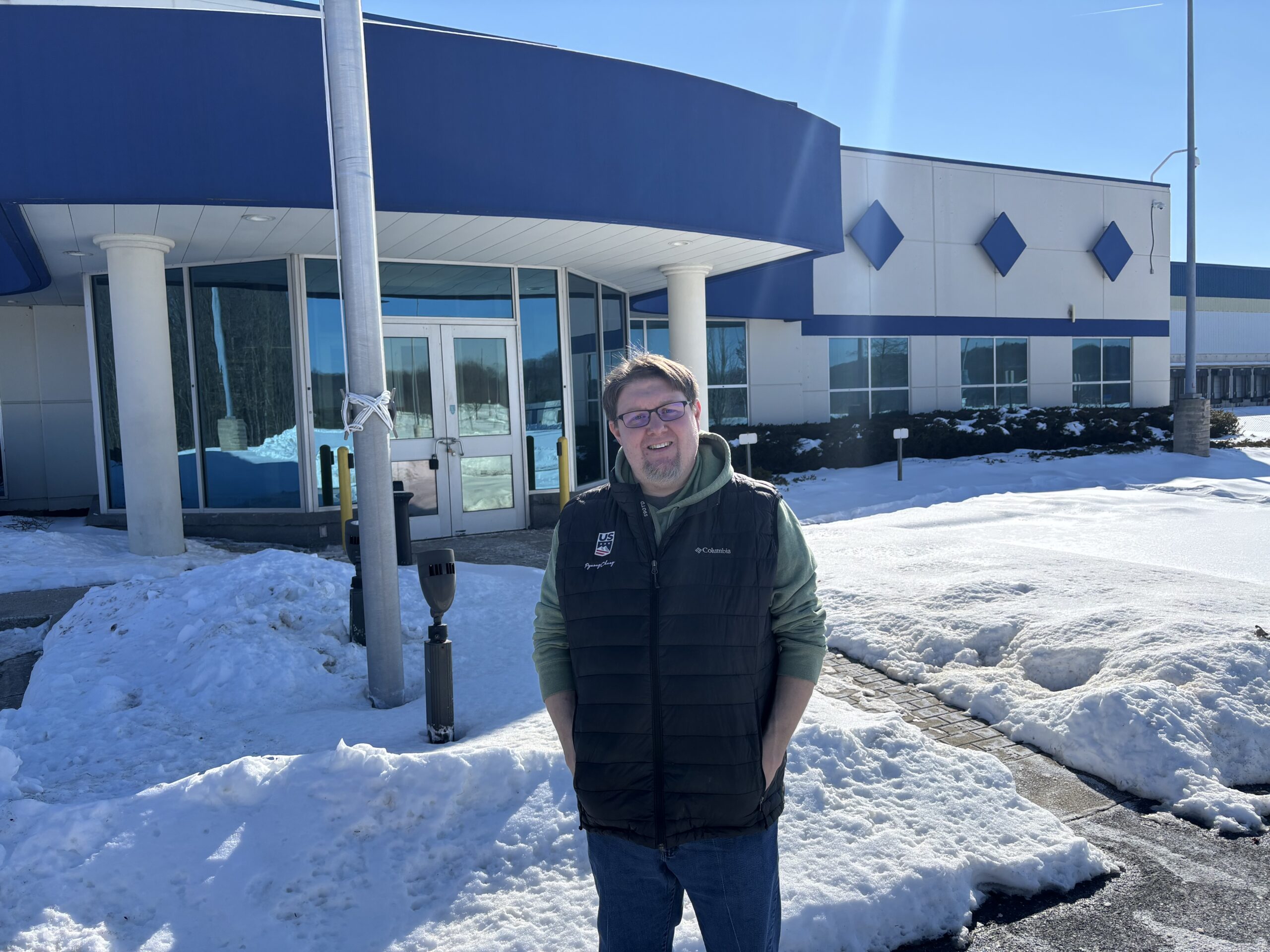
    Brian Beissel, pastor at Christ’s United Lutheran Church in Ashland, Pa., stands in front of the former Big Lots warehouse in Tremont, Pa., that has been purchased by U.S. Immigration and Customs Enforcement (ICE), on Wednesday.

    The Trump regime told America this day was coming. Its acting ICE director, Todd Lyons, said in an April interview that he wanted to run the agency like a business, with a deportation process “like [Amazon] Prime, but with human beings.”

    Ironically, the soon-to-be ICE detention center in Schuylkill County, about 100 miles northwest of Philadelphia, is less than a mile from a massive new Amazon fulfillment center that opened in 2023. Soon, trucks carrying consumer bric-a-brac to Tremont will be jostling on Interstate 81 with buses carrying day laborers or restaurant servers in handcuffs to those reborn rows of truck portals.

    ICE, flush with a whopping $45 billion in cash from Trump’s so-called Big Beautiful Bill to construct its human supply chain, is currently racing to buy sites for 23 detention centers with as many as 76,500 beds from coast to coast — often keeping communities like Tremont in the dark to thwart the inevitable opposition.

    In fact, the Schuylkill County deal is the second ICE facility in east-central Pennsylvania announced just this week. A different warehouse location, which ICE envisions as a kind of feeder camp for 1,500 detainees, was also purchased for $87 million in Hamburg, Berks County — only 25 miles from Tremont.

    Even if you could somehow put the morality of what many see as concentration camps on U.S. soil to the side, the government’s scenario for tiny Tremont — a coal-country hollow of two-story brick homes and faded American flags with just 2,000 residents — boggles the mind.

    The Big Lots site could soon see a community of nearly 10,000 people — the 7,500 detainees and an estimated more than 2,000 workers to oversee them — that would instantly become the second-largest city in Schuylkill County (after Pottsville, the county seat). It’s just 300 yards from the largest daycare center in a township where the water and sewer system is already at capacity, with no local police force or nearby hospital to deal with the inevitable emergencies. The U.S. government won’t be paying the roughly $1 million a year in annual property taxes that propped up local schools and county and municipal services.

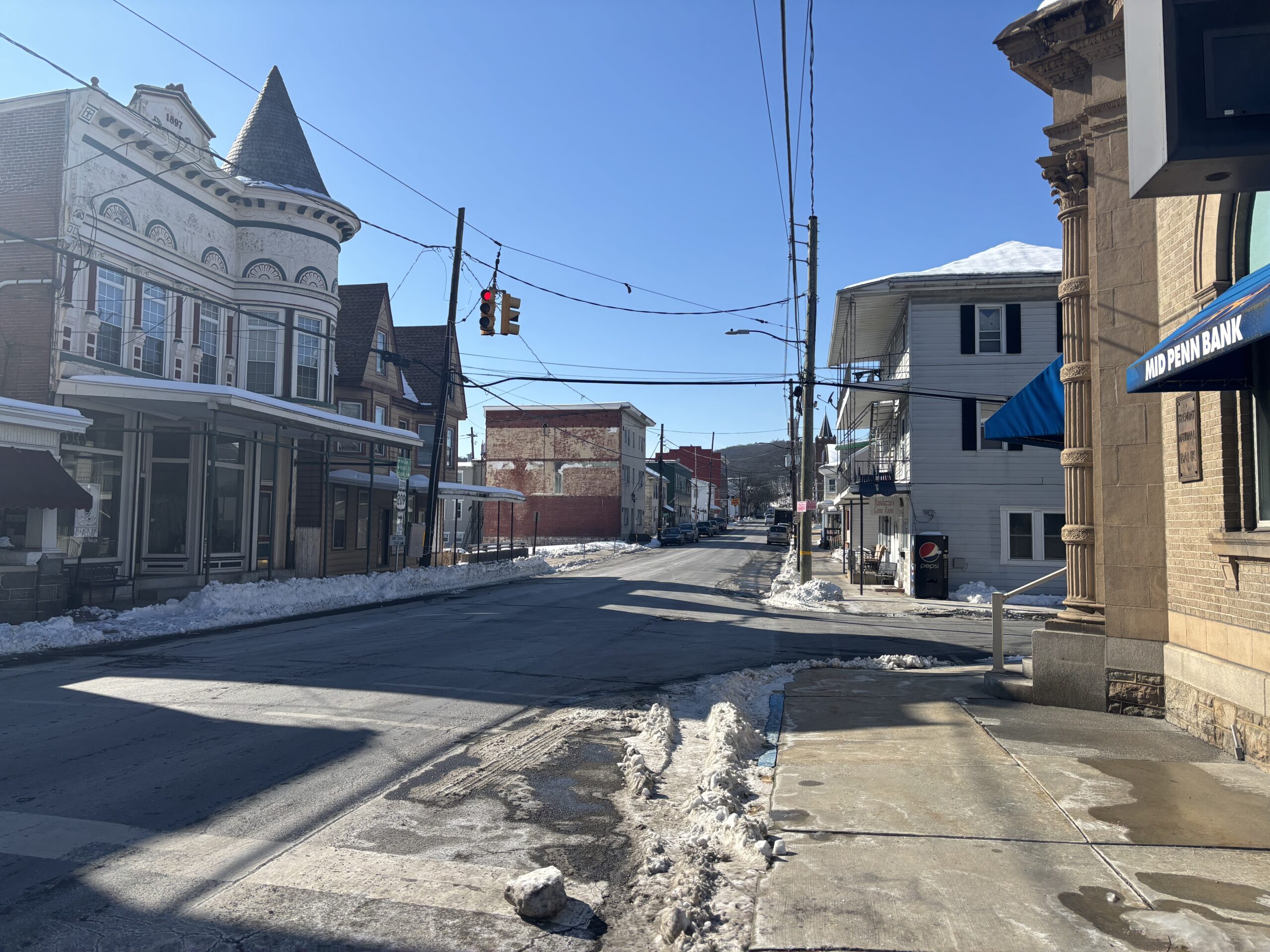
    The empty streets of downtown Tremont, Pa., on Tuesday. The 2,000 people of the coal-country borough and its surrounding township would be dwarfed by 7,500 potential detainees at a planned ICE facility on the edge of town.

    It’s these kinds of not-in-my-backyard worries that are driving a lot of the initial concern in Schuylkill County, especially from politicians who are cautious in talking about the fraught immigration issue in blood-red Trump country. “I am not going to get into a debate over the overarching immigration policies of the United States of America,” the GOP chair of the county commission, Larry Padora Jr., told a meeting on Wednesday, where he confirmed the ICE purchase of the warehouse.

    But a growing number of neighbors do want to talk about those immigration policies, and the stench of inhumanity.

    “I’m scared,” Tana Smith, a 24-year-old server at Behm’s Family Restaurant, the local wood-paneled breakfast hangout, told me about the pending ICE project. She, too, blended fears about the daycare site and possible escapees from a detention center with empathy for those same would-be detainees. “People’s families are just being, you know, ripped apart,” she said. “It’s really sad.”

    Smith said she’d already gently lobbied her dad — a Republican who said, “I guess it’s just taking care of the illegal people” — against the ICE plan. “I was like, I don’t feel like that’s true at all,” she said. “I feel like they’re going after everyone.”

    Andrea Pitzer, author of the definitive history of global concentration camps, One Long Night, said Tremont residents like Smith are right to be alarmed. She told me her research found that authoritarian regimes frequently rely on existing sites like abandoned warehouses or factories as they launch a growing network of gulags.

    “The U.S. is clearly echoing previous history with these warehouse acquisitions,” she said. “Dachau — not a death camp, to be sure, but one of the earliest Nazi concentration camps — took over a converted factory when it began its heinous existence in 1933.”

    Pitzer asked, “What things will they do on this new, huge scale behind barbed wire?” She noted that the warehouses are a massive expansion of a system that’s already at a record for detainees, with more than 73,000, and is already plagued by squalid conditions, a measles outbreak at the family detention site in Texas, and a death rate as much as 10 times as high as during the Biden administration.

    No wonder ICE has moved to buy up new sites — including the two Pennsylvania warehouses — with a practically Soviet level of state secrecy. There are no public hearings. Top lawmakers from both parties have been left in the dark. “This was quiet,” the Democratic county commissioner, Gary Hess, told the meeting. “It was silent. And then, bango! There it was.”

    “These will not be warehouses — they will be very well-structured detention facilities meeting our regular detention standards,“ the U.S. Department of Homeland Security insisted in a statement Wednesday. It added that the federal acquisitions “should not come as news,” as ICE expands its nationwide dragnet.

    Yet, arguably the region’s most powerful politician, Republican U.S. Rep. Dan Meuser, who voted for the $45 billion fund, has sounded, fittingly, like TV’s fictional German prison camp guard, Sgt. Schultz: He knows nothing, nothing! His spokesperson said Meuser, with both planned facilities in his 9th Congressional District, “has requested a call with … [ICE], and our office has reached out for additional information to better understand the details of the situation. We have not yet received a response.”

    Instead, it fell on Meuser’s likely Democratic opponent in November — Rachel Wallace, a former chief of staff for the U.S. Office of Management and Budget who has returned to her native Pottsville — to organize a town hall last week when the project was still rumored.

    Lisa Von Ahn (left) and Josephine Kwiatkowski, members of the Schuylkill County chapter of Indivisible, attend a county commissioners meeting in Pottsville on Tuesday to speak out against a proposed ICE detention center in Tremont, Pa.

    Most of the 100 or so people who packed a fire hall voiced opposition, but for a variety of reasons. The local GOP state representative, Joanne Stehr, attended and agreed with the not-in-my-backyard concerns, but then drew loud boos when she reportedly said: “I’m saying ICE has a job to do, and it’s going to get done. We are taking out the trash.”

    The growing uproar in Schuylkill County echoes brewing battles in many of the 21 other locations, even in areas that voted heavily for Trump in 2024. In Ashland, Va., a Canadian-based warehouse owner canceled its planned deal with ICE after economic pressure and opposition from county commissioners. Elected officials in Roxbury, N.J., and other proposed sites are also fighting to keep ICE out, but it’s unclear how much traction such an effort will get in red rural Pennsylvania.

    “We want economic development, and we want good businesses that are part of the community,” Wallace, the congressional candidate, told me as she decried the process and her opponent Meuser’s silence. “And this is the opposite of that.”

    And a growing number of Schuylkill County residents say their biggest alarm is less over the NIMBY concerns and more about the idea of their backyard hosting an American concentration camp.

    “We have seen firsthand the brutality that government agents are using to detain American citizens, legal immigrants, and law-abiding immigrants without legal status, and the violence in our streets caused by masked, heavily armed agents,” Josephine Kwiatkowski, an Army veteran and retiree from Pottsville, told the commissioners. She said these scenes and “the civil rights violations, the lack of humanitarian conditions [in current ICE facilities], and the discounting of the Constitution are the same issues that I was willing to sacrifice my life to oppose.”

    Pitzer, the concentration camp historian, said the time to act is now, before these proposed gulags are up and running.

    “Those who made excuses for or ignored these kinds of camps in Russia in the 1920s or Germany in the 1930s couldn’t know how much more vast and lethal those systems would become a decade later,” she said. “But we, who have those examples and other horrors from around the world in our rearview mirror, have no excuse.”

    This should be a five-alarm fire, not just for the politicians who’ve been trusted with keeping an American republic, but for citizens who are beginning to grasp a monstrous reality that was set into motion when Trump’s xenophobic demagoguery won a narrow plurality on Nov. 5, 2024. The image of our neighbors shipped in a supply chain like patio furniture and disappeared into the bowels of a Big Lots warehouse should have all of us asking a fundamental question.

    What are we doing here?

  • Trump’s border czar announces 700 immigration officers to immediately leave Minnesota

    Trump’s border czar announces 700 immigration officers to immediately leave Minnesota

    The Trump administration is reducing the number of immigration officers in Minnesota but will continue its enforcement operation that has sparked weeks of tensions and deadly confrontations, border czar Tom Homan said Wednesday.

    About 700 federal officers — roughly a quarter of the total deployed to Minnesota — will be withdrawn immediately after state and local officials agreed over the past week to cooperate by turning over arrested immigrants, Homan said.

    But he did not provide a timeline for when the administration might end the operation that has become a flashpoint in the debate over President Donald Trump’s mass deportation efforts since the fatal shootings of U.S. citizens Renee Good and Alex Pretti in Minneapolis.

    About 2,000 officers will remain in the state after this week’s drawdown, Homan said. That’s roughly the same number sent to Minnesota in early January when the surge ramped up, kicking off what the Department of Homeland Security called its ” largest immigration enforcement operation ever.”

    Since then, masked, heavily armed officers have been met by resistance from residents who are upset with their aggressive tactics.

    A widespread pullout, Homan said, will occur only after protesters stop interfering with federal agents carrying out arrests and setting up roadblocks to impede the operations.

    Gov. Tim Walz and Minneapolis Mayor Jacob Frey, both Democrats who have heavily criticized the surge, said pulling back 700 officers was a good first step but that the entire operation should end quickly.

    “We need a faster and larger drawdown of forces, state-led investigations into the killings of Alex Pretti and Renee Good, and an end to this campaign of retribution,” Walz posted on social media.

    Vice President JD Vance said the officers being sent home were mainly in Minneapolis to protect those carrying out arrests. “We’re not drawing down the immigration enforcement,” Vance said in an interview on The Megyn Kelly Show.

    Trump administration has pushed for cooperation in Minnesota

    Trump’s border czar took over the Minnesota operation in late January after the second fatal shooting by federal officers and amid growing political backlash and questions about how the operation was being run.

    Homan said right away that federal officials could reduce the number of agents in Minnesota, but only with the cooperation of state and local officials. He pushed for jails to alert Immigration and Customs Enforcement about inmates who could be deported, saying transferring those inmates to ICE is safer because it means fewer officers have to be out looking for people in the country illegally.

    Homan said during a news conference Wednesday that there has been an “increase in unprecedented collaboration” resulting in the need for fewer public safety officers in Minnesota and a safer environment, allowing for the withdrawal of the 700 officers.

    He didn’t say which jurisdictions have been cooperating with DHS

    The Trump administration has long complained that places known as sanctuary jurisdictions — a term applied to local governments that limit law enforcement cooperation with the department — hinder the arrest of criminal immigrants.

    Minnesota officials say its state prisons and nearly all of the county sheriffs already cooperate with immigration authorities.

    But the two county jails that serve Minneapolis and St. Paul and take in the most inmates had not previously met ICE’s standard of full cooperation, although they both hand over inmates to federal authorities if an arrest warrant has been signed by a judge.

    The Hennepin County Sheriff’s Office, which serves Minneapolis and several suburbs, said its policies have not changed. The Ramsey County Sheriff’s Office in neighboring St. Paul did not immediately respond to a request for comment.

    Border czar calls Minnesota operation a success

    Homan said he thinks the ICE operation in Minnesota has been a success, checking off a list of people wanted for violent crimes who were taken off the streets.

    “I think it’s very effective as far as public safety goes,” he said Wednesday. “Was it a perfect operation? No.”

    He also made clear that pulling a chunk of federal officers out of Minnesota isn’t a sign that the administration is backing down. “We are not surrendering the president’s mission on a mass deportation operation,” Homan said.

    “You’re not going to stop ICE. You’re not going to stop Border Patrol,” Homan said of the ongoing protests. “The only thing you’re doing is irritating your community”

    Schools ask court to block immigration operations

    Two Minnesota school districts and a teachers union filed a lawsuit Wednesday to block federal authorities from conducting immigration enforcement at or around schools.

    The lawsuit says actions by DHS and its ICE officers have disrupted classes, endangered students and driven families away from schools.

    It also argues that Operation Metro Surge has marked a shift in policy that removed long-standing limits on enforcement activity in “sensitive locations,” including schools.

    Homeland Security officials have not responded to a request for comment.

  • ICE buys $87 million warehouse in Berks County as it plots expansion of immigration detention centers across the U.S.

    ICE buys $87 million warehouse in Berks County as it plots expansion of immigration detention centers across the U.S.

    UPPER BERN, Pa. — The Trump administration has quietly purchased a nearly 520,000-square-foot warehouse in Berks County as it plans to convert such facilities into immigration detention centers across the U.S.

    The warehouse, located at 3501 Mountain Rd. in Upper Bern Township, was sold to the U.S. government on behalf of the Department of Homeland Security and Immigration and Customs Enforcement for $87.4 million, deed records show. The purchase was recorded on Feb. 2.

    Spotlight PA visited the warehouse, which is located about a mile from I-78, on Jan. 15 and witnessed about two dozen individuals touring the exterior of the building. One man who arrived early to the site that day identified himself to a reporter as ICE.

    The property was most recently called the Hamburg Logistics Center, and before that was the site of the Mountain Springs Arena, a county landmark known for rodeos and demolition derbies. It neighbors an Amazon warehouse and the Mountain Springs Camping Resort.

    The building is one of at least 23 that ICE plans to convert into immigration detention facilities, Bloomberg reports. The Berks County warehouse could house up to 1,500 beds.

    ICE also finalized the purchase of a warehouse in nearby Tremont Township, in Schuylkill County, on Monday, according to a deed. The Tremont property is located less than 300 yards from a daycare center and has already faced fierce resident opposition.

    A spokesperson for ICE did not answer any questions about the Berks County warehouse purchase and instead lauded the agency’s targeting of “vicious criminals.”

    “Thanks to the One Big Beautiful Bill, ICE has new funding to expand detention space to keep these criminals off American streets before they are removed for good from our communities,” the spokesperson said.

    Upper Bern Township’s solicitor said in an emailed statement that community leaders learned about the sale on Monday. They declined to answer questions.

    “The township was not involved in this transfer and has not received any applications from either the prior or new owners regarding the future use of the property,” the statement reads. “The township has no further comment on this matter at this time.”

    State Sen. Chris Gebhard and State Rep. Jamie Barton, Republicans who represent the area, said they have reached out to federal contacts to gather more information on how the Department of Homeland Security plans to use the warehouse.

    “Our immediate concerns include the potential loss of property tax revenue for the host municipality, county, and school district, as well as security and perimeter considerations,” the lawmakers said in a joint statement. “We look forward to engaging directly with the appropriate federal officials to address these issues. Once additional information is available, we will provide an update.”

    The property is assessed at $22 million and currently pays $198,286 annually in county property taxes under the current tax rate of 9.013 mills. Combined with Hamburg Area School District and township taxes, the loss of tax revenue from the federal government’s purchase would be about $624,000.

    State Sen. Judy Schwank (D., Berks) declined to comment on the warehouse purchase on Monday. In an earlier interview with Spotlight PA, she called the then-potential sale “deeply concerning,” especially given the reports of mistreatment of people detained in ICE facilities. She released a statement about “ICE’s action in Minneapolis” on Jan. 27, shortly after federal agents killed Alex Pretti.

    “My concern is, knowing the track record of some of these other facilities located throughout the country, it’s not good,” she said. “I don’t necessarily want to see something like that being housed in our county.”

    The deed finalized on Monday shows the property was sold to ICE by an LLC connected to PCCP, a national commercial real estate equity firm. The firm purchased the warehouse in 2024 for $57.5 million, deed records show.

    Reached by phone Monday afternoon, PCCP partner Greg Eberhardt — who is the authorized signatory for 3501 Mountain Road Owner LLC on the latest deed — denied knowledge of the property and its sale, and refused to comment further.

    “I have no idea what you’re talking about,” Eberhardt said before hanging up on a Spotlight PA reporter. “I’m not making company comments.”

    Upper Bern Township is situated on the edge of Berks and Schuylkill Counties, with a population of roughly 1,600 people. The community is mostly white, with only 2.8% of residents identifying as another race, according to the 2020 Census.

    Bridget Cambria, an attorney with Aldea, a nonprofit that provides pro bono immigration legal services, said the detention center would have a “disruptive” and “chilling” impact on Berks County’s immigrant community.

    “If there are people that live freely and at peace knowing that they do the right thing, they can do their immigration process or stay with their family or figure out a way to legalize their status, they’re going to be more afraid to do that with a giant detention center in their backyard,” Cambria said.

    A 2022 study by the Detention Watch Center and the Immigrant Legal Resource Center found that immigrants were more likely to be arrested by ICE in counties with more detention bed space.

    This story was produced by the Berks County bureau of Spotlight PA, an independent, nonpartisan newsroom. Sign up for Good Day, Berks, a daily dose of essential local stories, at spotlightpa.org/newsletters/gooddayberks.

    BEFORE YOU GO … If you learned something from this article, pay it forward and contribute to Spotlight PA at spotlightpa.org/donate. Spotlight PA is funded by foundations and readers like you who are committed to accountability journalism that gets results.

  • Josh Shapiro is increasingly critical of ICE in Minneapolis. Some point out he still cooperates with the agency.

    Josh Shapiro is increasingly critical of ICE in Minneapolis. Some point out he still cooperates with the agency.

    WASHINGTON — In a string of public appearances since federal agents fatally shot Alex Pretti, Gov. Josh Shapiro has repeatedly decried the federal immigration operation in Minnesota as unconstitutional and called on President Donald Trump to “terminate the mission.”

    The centrist Democratic governor leaned heavily into criticism of the Trump administration as he toured the East Coast — and network and cable news shows — to promote his new memoir, Where We Keep The Light, last week.

    “I believe this administration in Washington is using [government] for pure evil in Minnesota right now,” Shapiro, who is widely believed to be setting up a presidential run, told Late Show host Stephen Colbert last week. “And it should not be hard to say that.”

    Known to be a careful messenger, Shapiro’s approach to the Immigration and Customs Enforcement and Border Patrol operations in Minneapolis evolved over the last week, from his initial decision over the first year of Trump’s second presidency not to aggressively speak out against ICE’s enforcement tactics to a hard-line approach condemning the Trump administration’s mission following the killing of another U.S. citizen by federal agents that became national tipping point.

    When ICE agents killed Renee Good in early January, Shapiro issued a statement mourning her death, but made no broader conclusions about ICE and did not mention her by name.

    Now, he has honed a clear and authoritative message that the Trump administration’s strategies are eroding trust in law enforcement, violating constitutional rights and making communities less safe. If Trump moves his focus and forces to Pennsylvania, he says, state officials are prepared to push back.

    According to polling obtained by Puck News, Shapiro has landed on some of the most effective messaging on immigration in the country.

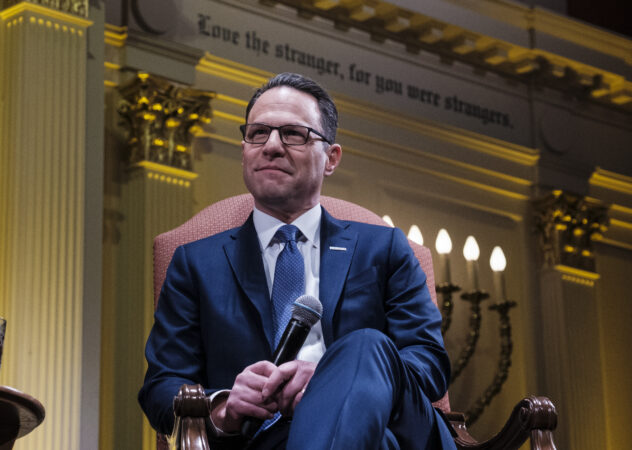
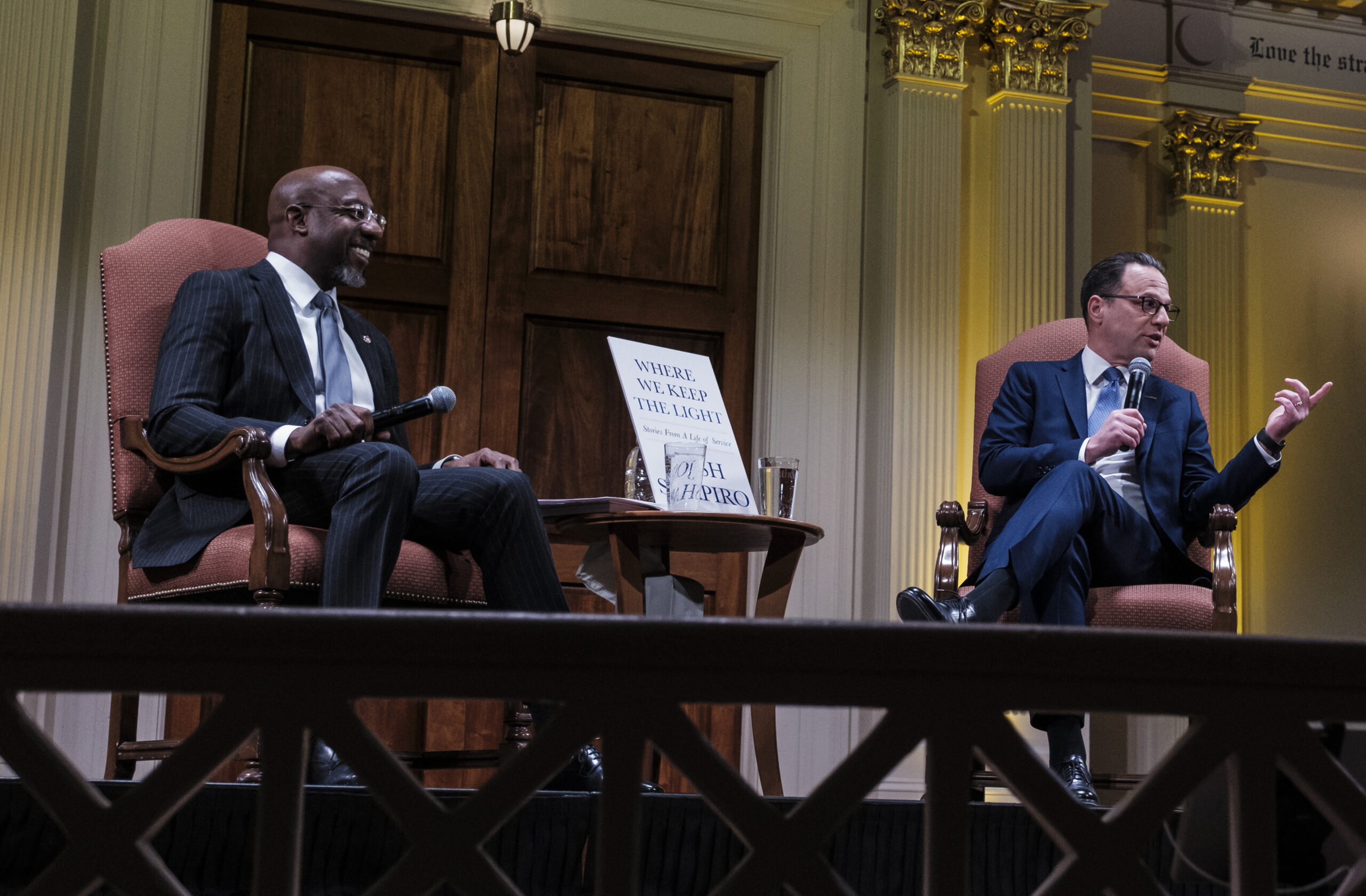
    Governor Josh Shapiro (D-PA) and Sen. Raphael Warnock (D-GA) speak during a talk for his new memoir “Where We Keep the Light” on January 29, 2026 in Washington, D.C

    But immigrant rights groups in Pennsylvania say the governor took too long to speak up and has yet to back his rhetoric up with concrete actions in his home state by ending cooperation with ICE.

    “Because it is the topic of the day, he’s getting these pointed questions, and his answer to that is to point to what they’re doing wrong in Minnesota. Meanwhile, he’s over here telling us that he’s not going to stop collaborating with ICE,” said Tammy Murphy, advocacy manager at immigrant rights group Make the Road Pennsylvania. “It’s easy for him to point the finger to somebody else, but then what is he doing at home?”

    At a roundtable with journalists in Washington on Thursday, Shapiro said he didn’t view his new outspokenness against ICE’s operations in Minneapolis as a tone shift, but acknowledged that the situation had become more serious in recent days and he “reached a point where it was critically important” to comment on the situation in Minnesota and tell Pennsylvanians his views.

    “I think I’ve been in the same place on this to protect our immigrant communities and also make sure that Pennsylvania is safe,” Shapiro said.

    “Both [Good and Pretti’s deaths] told me the same story that you had people who were not following proper policing tactics. People who were in the field who seemingly, and it became more clear to me over the last week or two, did not have a clear mission and that the directive that they had clearly was not within the bounds of the constitution.”

    Shapiro has called for residents to continue peacefully protesting ICE activity. Speaking to Sen. Raphael Warnock (D., Ga.) in a book tour stop in Washington on Thursday evening, Shapiro noted that those protests had led to the votes against DHS funding Warnock was preparing to take that week.

    “That’s people power right now, and this is a moment where we need to raise our voices,” Shapiro said. (His event was then promptly, but briefly, interrupted by climate protesters)

    That same night Shapiro’s likely Republican opponent, State Treasurer Stacy Garrity, told The Inquirer that Minnesotans need to “cooperate” with ICE and that Pennsylvania officials should, too.

    “It’s always good to cooperate with ICE, especially when they’re doing targeted actions,” Garrity said.

    Samuel Chen, a GOP strategist, said Shapiro’s harsh rhetoric would create a clear distinction between him and Garrity while “endearing him to the Democrats should he run in 2028.”

    Chen noted that even some Republicans have criticized Trump’s approach to Minnesota, which creates an opportunity for Shapiro to speak out.

    “With that being public opinion the governor has a lot of cover to come out even harder,” Chen said. “It’s a win, win, win for him.”

    Chalk on the sidewalk reading “Shapiro Stop ICE in PA,” during a protest outside the Free Library as Gov. Josh Shapiro promoted his new book “Where We Keep The Light” in Philadelphia, Pa., on Saturday, Jan. 24, 2026.

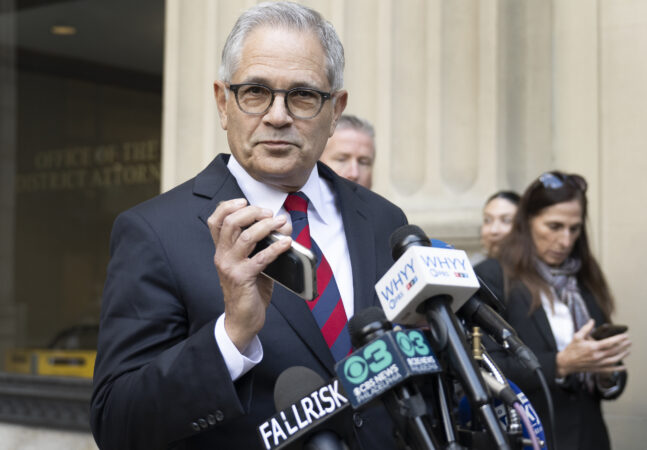
    Even as he makes the case against ICE’s recent actions, Shapiro is still being careful not to go too far. He frequently mentions that Pennsylvania is not a sanctuary state. In an interview with Fox News last week, he criticized Philadelphia District Attorney Larry Krasner’s comments comparing ICE agents to Nazis as unacceptable rhetoric.

    “It is abhorrent and it is wrong, period, hard stop, end of sentence,” Shapiro said.

    What is most frustrating to immigrant rights groups is the Shapiro administration’s willingness to cooperate with ICE — even if on a limited basis — while other Democratic governors have taken strong actions against it. Gov. Maura Healy of Massachusetts, for example, banned ICE from state facilities.

    Meanwhile, Shapiro’s administration honors some ICE detainers in state prisons and provides ICE with access to state databases that include personal identifying information for immigrants.

    “You are still collaborating with the agency that is murdering our people, that you yourself have named as violating the constitution,” said Jasmine Rivera, the executive director of the Pennsylvania Immigration Coalition.

    When Parady La, an Upper Darby resident and Cambodian immigrant died of a drug withdrawal in ICE custody last month, they note, Shapiro said nothing.

    “You know, Parady La’s death was also bad,” said Murphy, who is with Make The Road. “That happened in this state at the hands of federal agents. And he’s silent about that, but then he’s got something to say about Renee Good or Alex Pretti. He’s talking about those people, but not the people here.”

    The Shapiro administration says that outside agencies do not have “unfettered access” to state databases but may offer access to federal agents for “legitimate investigations that involve foreign nationals who have committed crimes.”

    Furthermore, they say ICE detainers are honored only when a detainee has been convicted of a crime and sentenced to state prison.

    In a letter to advocates last month, the administration vowed not to lease state property to ICE and reiterated that State Police are barred from conducting immigration enforcement and that federal agencies must obtain a warrant to access non-public space in state buildings.

    Gov. Josh Shapiro speaks with Stephen Colbert last week.

    This cautious approach is part of a balancing act Shapiro must handle as he pursues reelection in a politically split state and weighs a potential run for higher office, said Alison Dagnes, a political science professor at Shippensburg University.

    “He is spinning plates and juggling flaming torches, all while he’s playing the kazoo,” Dagnes added “That combination is really important to consider as we look at his shifting rhetoric, his carefulness that moved into a louder stance.”

    But advocates want Shapiro to take a firmer stance and say they won’t stop pushing until he does.

    “Politically, he wants to be seen as ‘both sides,’” Murphy said. “He doesn’t want to be seen challenging Trump or this deportation machine.”

  • Temple student arrested for anti-ICE protest at Minnesota church in case involving journalist Don Lemon

    Temple student arrested for anti-ICE protest at Minnesota church in case involving journalist Don Lemon

    A 21-year-old Temple University student was arrested Monday on charges that he conspired with nine other people, including journalist Don Lemon, to interfere with the First Amendment rights of worshipers during a Jan. 18 anti-ICE protest at a church in St. Paul, Minn.

    Jerome Richardson, 21, a senior at Temple who is a native of St. Paul, turned himself in Monday morning to federal authorities in Philadelphia, according to a post on a GoFundMe page created to pay for his legal defense. A photo was posted showing Richardson entering the United States Custom House with several federal law enforcement officers apparently waiting for him at the entrance.

    The arrests of Richardson and Ian Davis Austin, an Army veteran from Montgomery County, were announced at 9:10 a.m. on X by Attorney General Pam Bondi. Austin was arrested Friday.

    “If you riot in a place of worship, we WILL find you,” Bondi wrote. “We have made two more arrests in connection with the coordinated attack on Cities Church in St. Paul, Minnesota: Ian Davis Austin and Jerome Deangelo Richardson.”

    The arrest of Don Lemon was made public on Friday.

    The protesters went to Cities Church because a pastor there is also a U.S. Immigration and Customs Enforcement official.

    Lemon entered the church while livestreaming and said repeatedly: “I’m not here as an activist. I’m here as a journalist.” He described the scene before him, and interviewed churchgoers and demonstrators.

    A magistrate judge had rejected prosecutors’ initial bid to charge the veteran journalist. Lemon was charged, as were Richardson and seven others, by grand jury indictment last Thursday.

    The indictment described the protest as a “coordinated takeover-style attack” on the church that caused people to flee in fear. Protesters chanted “ICE out!” and “Hands up! Don’t shoot!” The indictment quotes Lemon, who in the moment described the scene as “traumatic and uncomfortable.”

    Before his arrest, Richardson shared a video online in which he said he feared for his safety and needed help to pay legal bills.

    Richardson said he assisted Lemon “by helping with logistics and connecting him with local contacts.”

    “Don was reporting on the situation,” Richardson said, adding that he was proud to help.

    “As a consequence of this support, I am now being targeted by Trump and the federal administration,” Richardson said, adding that he was proud of the other defendants in the case.

    “This is the price of being unapologetic about humanity and love of Christ,” he said.

    Richardson, who traced his activism to the murder of George Floyd in 2020, said he still hoped to complete his degree and graduate from Temple in May.

    In a statement, Temple University said it was aware of media reports about the arrest of a student.

    “We understand that the circumstances surrounding this matter are developing. Out of respect for the privacy of the student and the ongoing legal process, the University will not comment on the specifics,” the statement says.

    “As we’ve shared previously, we deeply value the First Amendment, including the rights of free speech, a free press, and the freedom to exercise religion,” the statement says. “We encourage and educate our students to engage thoughtfully and lawfully to advocate for their beliefs and values, raise awareness and contribute to constructive dialogue.”

    This article contains information from the Associated Press.

  • Philly DA Larry Krasner says ‘don’t be a wimp’ after Gov. Josh Shapiro decried his comparison of ICE agents to Nazis

    Philly DA Larry Krasner says ‘don’t be a wimp’ after Gov. Josh Shapiro decried his comparison of ICE agents to Nazis

    Philadelphia’s bombastic district attorney, Larry Krasner, is no stranger to opposition from within his own party, but the anger directed at him last week after he said ICE agents are “wannabe Nazis” was more pronounced than usual.

    After making the comparison, Krasner faced a wave of criticism, including from Pennsylvania Gov. Josh Shapiro, a Democrat, who called the comments “abhorrent” and said the rhetoric doesn’t help “bring down the temperature.”

    But the progressive district attorney said Monday that he would not back down, saying “these are people who have taken their moves from a Nazi playbook and a fascist playbook.”

    “Governor Shapiro is not meeting the moment,” Krasner said in an interview. “The moment requires that we call a subgroup of people within federal law enforcement — who are killing innocent people, physically assaulting innocent people, threatening and punishing the use of video — what they are. … Just say it. Don’t be a wimp.”

    Krasner pointed to a speech by Rabbi Joachim Prinz at the March on Washington in 1963: “Bigotry and hatred are not the most urgent problem. The most urgent, the most disgraceful, the most shameful, and the most tragic problem is silence.”

    In invoking that speech, Krasner said: “A reminder, Mr. Governor: Silence equals death.”

    Krasner’s defense came after days of criticism from across the political spectrum, ranging from the White House press secretary to Democratic members of Congress. And it punctuated a yearslong history of conflict with Shapiro.

    The governor and Philadelphia’s top law enforcement official have feuded politically, sparred in court, and disagreed on policy. In 2019 — when lawyers from Krasner’s office decamped to work for then-Attorney General Shapiro — DA’s office staffers referred to Shapiro’s office as “Paraguay,” a reference to the country where Nazis took refuge after the war.

    It is not new for Krasner — whose Jewish father volunteered to serve in WWII — to compare President Donald Trump’s administration to elements of World War II-era fascism. Krasner has on several occasions referred to ICE as akin to the Nazi secret state police, and last year he called the president’s immigration agenda “Nazi stuff.”

    Last week, during a news conference about proposed restrictions on immigration enforcement in Philadelphia, the district attorney said he would “hunt down” and prosecute U.S. Immigration and Customs Enforcement agents who commit crimes in the city.

    “There will be accountability now. There will be accountability in the future. There will be accountability after [Trump] is out of office,” Krasner said. “If we have to hunt you down the way they hunted down Nazis for decades, we will find your identities.”

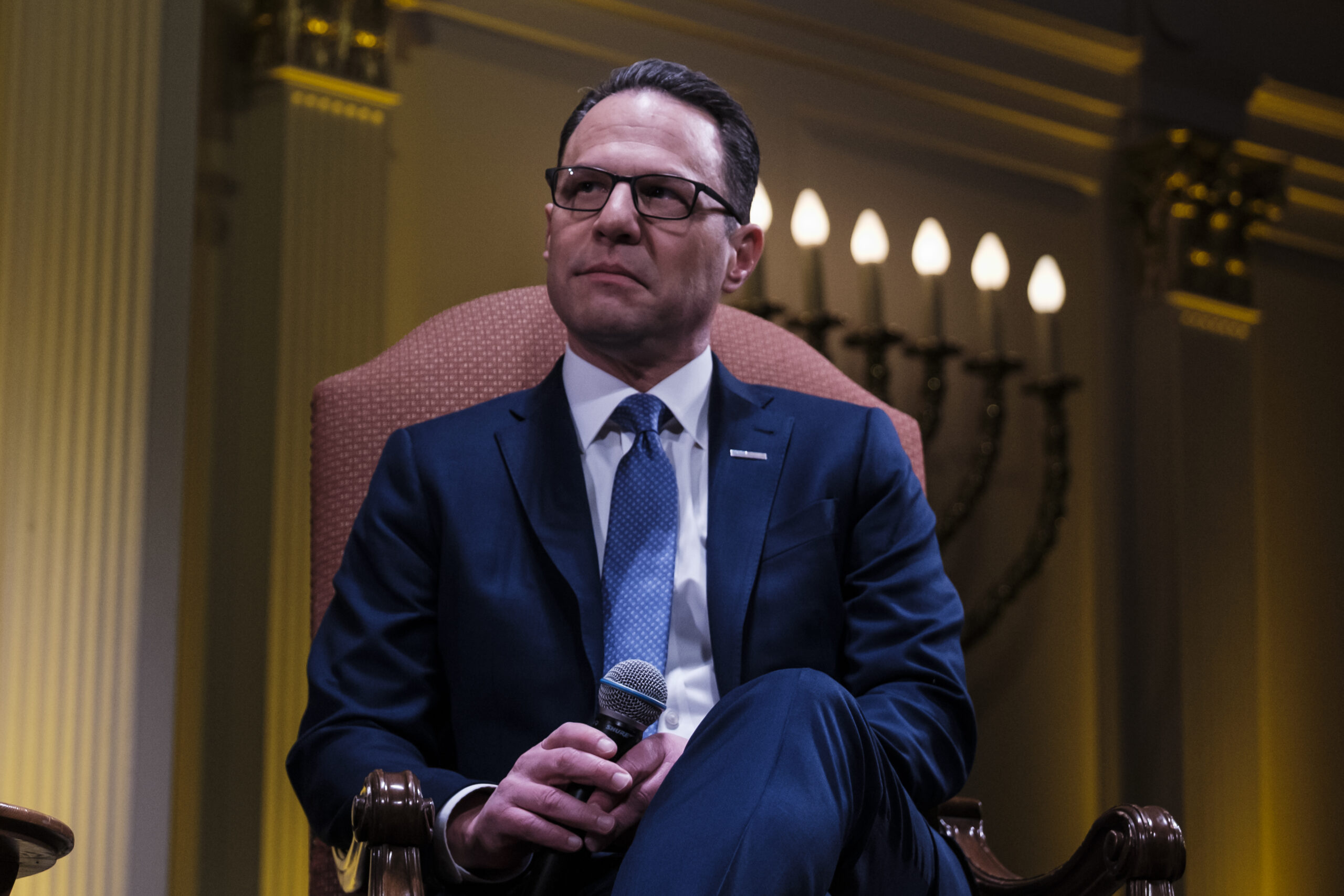
    Pennsylvania Gov. Josh Shapiro during a talk for his new memoir “Where We Keep the Light” on Jan. 29 in Washington.

    Shapiro, who is Jewish and is a rumored presidential contender, was interviewed a dozen times last week on national media while promoting his new memoir and condemned ICE’s tactics during all of them.

    During an interview Thursday on Fox News’ Special Report with Bret Baier, Shapiro was asked about Krasner’s comparison of ICE agents to Nazis and called the comments “unacceptable.”

    “It is abhorrent and it is wrong, period, hard stop, end of sentence,” Shapiro said.

    Several other Democrats in political and media circles weighed in. U.S. Sen. John Fetterman, a Pennsylvania Democrat who has at times sided with Trump on immigration matters, appeared on Fox News and said he “strongly” condemned Krasner’s language.

    He said that “members of ICE are not Nazis.”

    “That’s gross,” Fetterman said. “Do not compare anyone to Nazis. Don’t use that kind of rhetoric. That can incite violence.”

    Sen. John Fetterman (D., Pennsylvania).

    U.S. Rep. Chris Deluzio, a Democrat who represents parts of Western Pennsylvania, in an interview with the Washington Examiner contrasted his own approach with Krasner’s, saying: “I reserve throwing the phrase Nazis at actual Nazis. I don’t just throw that around.”

    And State Rep. Manuel Guzman Jr., a Democrat who represents a significant Latino population in Berks County, wrote on social media Friday: “I really, really want Krasner to chill tf out.”

    “I get it. We want to protect our immigrant community,” Guzman wrote, “but I question if constantly poking the bear is the right strategy. At the end of the day it’s my community that is under siege.”

    Republicans also swiftly castigated Krasner.

    On Wednesday, White House Press Secretary Karoline Leavitt shared a video clip of Krasner’s comments on social media, writing: “Will the media ask Dems to condemn?”

    And U.S. Rep. Dan Meuser, a Republican who represents parts of Northeast Pennsylvania, appeared on Newsmax and called Krasner a “psychopath with a badge.”

    Meuser — who considered challenging Shapiro for governor with Trump’s backing but ultimately decided not to run — also on social media decried “the Left’s silence and, in many cases, encouragement of this rhetoric.”

    Krasner doubled down. In an interview on CNN on Thursday, he criticized Fetterman as “not a real Democrat” and also said, “There are some people who are all in on the fascist takeover of this country who do not like the comparison to Nazi Germany.”

    He said that when he promised to “hunt down” federal agents who kill someone in his jurisdiction, he was attempting to make a point that there is no statute of limitations on homicide.

    The interviewer, Kaitlan Collins, asked Krasner whether he could have made that point without comparing agents to Nazis.

    “Why would I do that?” Krasner responded. “They’re taking almost everything they do out of the Nazi playbook.”

  • Immigrants are a ‘main driver’ of the Philadelphia economy, local leaders say

    Immigrants are a ‘main driver’ of the Philadelphia economy, local leaders say

    Foreign nationals are facing increasing challenges to working and studying in the U.S., but their contributions to the Philadelphia economy are critical, local business leaders say, painting a grim picture of Philadelphia’s future with fewer of them.

    In Philadelphia, “immigrants are not a side factor when it comes to our economy. They are a main driver,” Alain Joinville, from the city’s Office of Immigrant Affairs, said at a panel discussion, hosted last week by the Economy League of Greater Philadelphia, in partnership with immigration-reform organization FWD.us.

    The foreign-born population has supported Philadelphia’s workforce growth in recent years. Between 2010 and 2022, the immigrant workforce grew by 50% from 105,600 to 158,300, according to the Pew Charitable Trusts. In 2022, the foreign-born population represented 15.7% of the total Philadelphia population.

    But over the past year, President Donald Trump’s administration has pushed to carry out the largest deportation effort in the country’s history, and put forward a plan to charge employers $100,000 to secure H-1B visas for their employees. ICE agents have detained immigrants across the region.

    Anti-ICE activists demonstrate outside U.S. Sen. John Fetterman’s Philadelphia office on Jan. 27, 2026, calling for an end to federal immigration enforcement policies.

    “If we have policies that are disrupting families, detaining people, sending people back, that’s a huge part of our economy that impacts manufacturing, transportation of all the goods and services that we manufacture,” said Elizabeth Jones, of immigrant-support nonprofit the Welcoming Center. “The ripple effect is scary in terms of how it’s going to impact the economy.”

    Potential to lose the research edge

    While the U.S is a global leader in research universities, it could be losing that grip, said Amy Gadsden, from the University of Pennsylvania’s Global Initiatives. Having the best research universities in the world requires the best talent — namely international students that also become faculty, she noted.

    Penn has roughly 9,000 international students and an additional 2,000 faculty, postdoc students, and others who “drive a lot of economic activity, both for Penn and for the city of Philadelphia — for the country, for that matter,” she said.

    International student enrollments are down across the country, and students are being cautious about where they apply.

    “There is not a guidance counselor around the world who is advising their student not to hedge their application to the United States with an application to another country,” she said.

    A view over Walnut Street on the University of Pennsylvania campus, with the Philadelphia skyline at left rear.

    Penn, Philadelphia’s largest employer, depends on international students, said Gadsden. “When we think about what is going on with visa policy in the United States, what we see is a decrease in international students, a decrease in international faculty, a decrease in research output, that will ultimately lead to a decrease in our position as a leading research university in the world,” she said.

    A challenge for employers

    Jennifer Rodriguez, president and CEO of the Greater Philadelphia Hispanic Chamber of Commerce, highlighted the challenge employers can face under the new fee for H-1B visas.

    “Immigrants and the foreign-born population in general is one that is critical for the economic health of the city of Philadelphia and the region,” she said.

    The Economy League of Greater Philadelphia held a panel discussion in collaboration with FWD.us. From left are Ben Fileccia, Pennsylvania Restaurant & Lodging Association; Maria Praeli, FWD.us; Jennifer Rodriguez, Greater Philadelphia Hispanic Chamber of Commerce; Alain Joinville, Philadelphia’s Office of Immigrant Affairs; Elizabeth Jones, the Welcoming Center; Tracy Brala, University City Science Center; Jeff Hornstein, the Economy League of Greater Philadelphia; Amy Gadsden, University of Pennsylvania.

    Rodriguez described the additional $100,000, which is on top of other expected visa processing costs, as exorbitant. While some large businesses might have resources to handle it, she said, middle-market companies will be more challenged.

    “Philadelphia is desperate to get more of those businesses to establish here, and now you’re making it that much harder,” said Rodriguez. “We are really curtailing the ability of these businesses to innovate, to hire, to really be the contributors to the economy that we want them to be.”

    Immigrants in Philadelphia are of prime working age, noted Joinville, from the city’s Office of Immigrant Affairs.

    “Without immigrants, we have a smaller workforce to drive and support our businesses locally,” he said, adding that immigrants start small businesses at a high rate in Philadelphia.

    “As a child of immigrants, focusing on the economy can be a little tricky for me, because we’re not just data or money or economy,” said Joinville. “Yes, immigrants have an economic impact, but they are cultural leaders, civic leaders, and, yeah, just good people.”