Tag: Immigration

  • ICE tactics in Minneapolis set off political firestorm from Philadelphia City Hall to Washington

    ICE tactics in Minneapolis set off political firestorm from Philadelphia City Hall to Washington

    In Philadelphia, lawmakers on Tuesday unveiled legislation that would institute some of the nation’s toughest limits on federal immigration-enforcement operations.

    In Harrisburg, a top Democrat floated making Pennsylvania a so-called sanctuary state to protect undocumented immigrants.

    And in Washington, senators faced mounting pressure to hold up funding for the Department of Homeland Security, an effort that could result in a government shutdown by the end of the week.

    Across the nation, lawmakers are fielding calls to rein in U.S. Immigration and Customs Enforcement after President Donald Trump’s administration surged forces into Minneapolis as part of his aggressive nationwide deportation campaign. Frustration with the agency reached new heights Saturday after agents fatally shot protester Alex Pretti, the second killing of a U.S. citizen there this month.

    Democrats nationwide slammed ICE and called on Trump to pull the forces out of Minnesota. Sen. John Fetterman, the Pennsylvania Democrat who has at times sided with Trump on immigration matters, said DHS Secretary Kristi Noem should be fired.
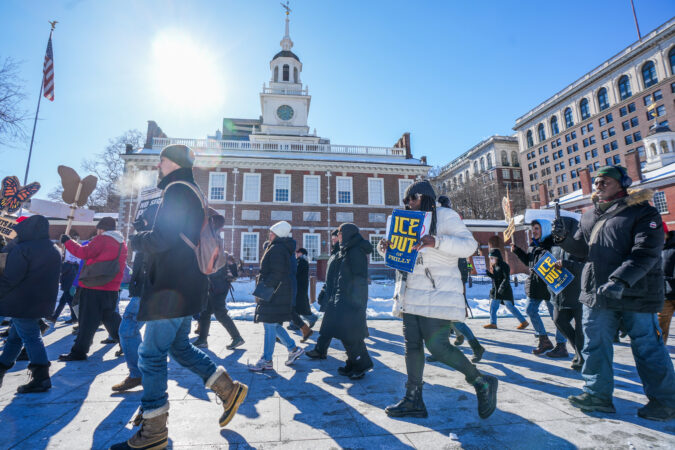
    Anti-ICE activists demonstrate outside U.S. Sen. John Fetterman’s Philadelphia office on Monday, calling for an end to federal immigration enforcement policies.

    But Fetterman has also said he will not vote to shut down the government. That angered protesters, who rallied on Tuesday outside his Philadelphia office. Some of the senator’s fellow Democrats, including members of Pennsylvania’s U.S. House delegation, urged him to vote against a bill to fund DHS.

    A growing number of Republicans have also signaled their discomfort with the Minneapolis operation, including Trump allies who called on members of the administration to testify before Congress. Sen. Dave McCormick, a Pennsylvania Republican, has called for an independent investigation into Pretti’s killing.

    Trump, for his part, showed some willingness to change course, sending border czar Tom Homan to Minneapolis to meet with Democratic leaders there. The president on Tuesday called Pretti’s death a “very sad situation.”
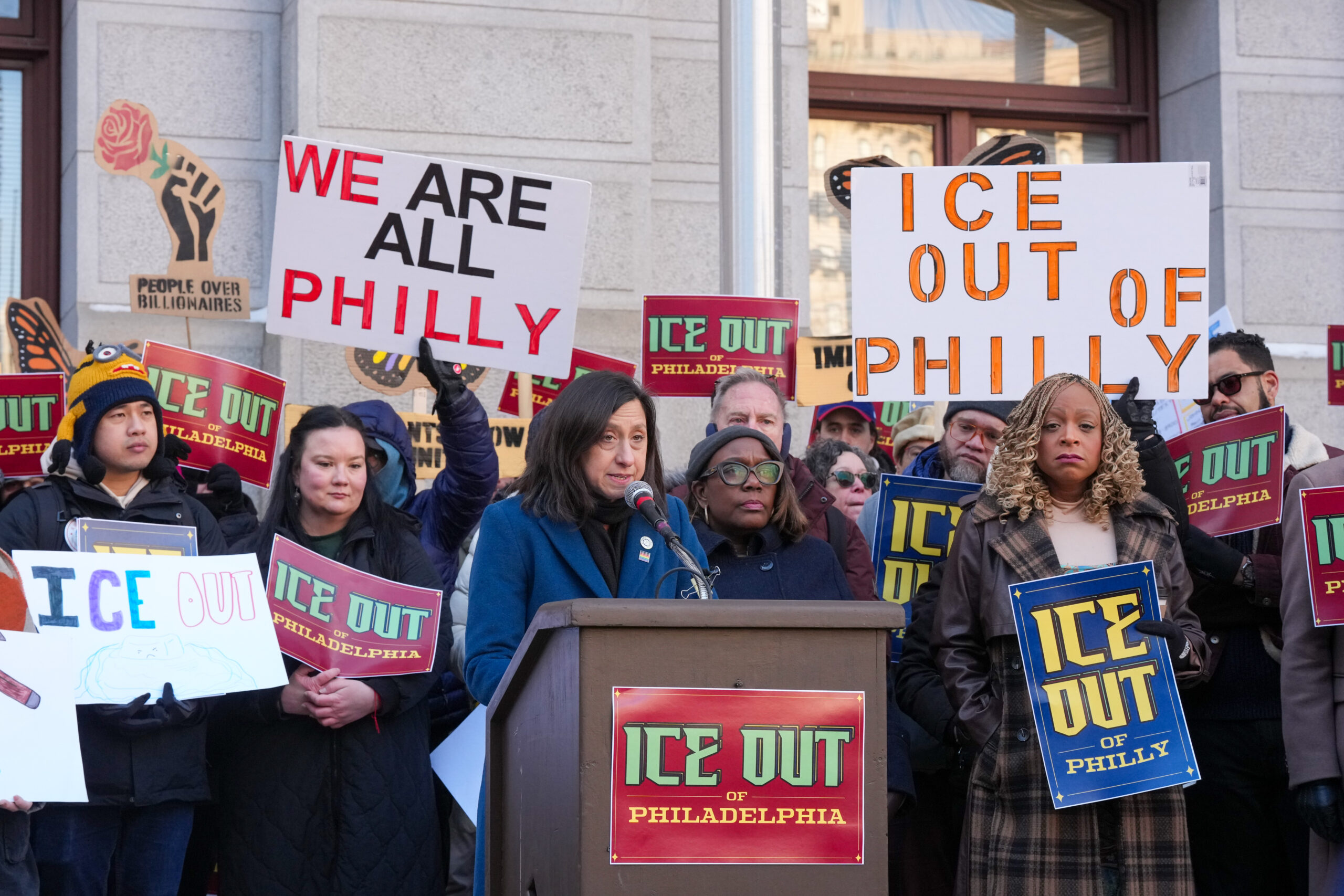
    Rue Landau shown here during a press conference at City Hall to announce a package of bills aimed at pushing back against ICE enforcement in Philadelphia on Tuesday.

    However, a chorus of Democrats and activists said Tuesday that the agency needs to change its tactics and be held accountable for missteps. And local leaders said they are laying out plans in case a surge of immigration enforcement comes to Philadelphia, home to an estimated 76,000 undocumented immigrants.

    “We have spent hours and hours and hours doing tabletop exercises to prepare for it,” Gov. Josh Shapiro, a Democrat, said during a Monday night interview on The Late Show with Stephen Colbert.

    Shapiro, who is running for reelection and is a rumored presidential contender, added: “I want the good people of Pennsylvania to know — I want the American people to know — that we will do everything in our power to protect them from the federal overreach.”

    Codifying sanctuary policies

    Philadelphia officials said the best way they can prepare is by limiting the city’s cooperation with federal immigration enforcement.

    City Councilmember Kendra Brooks, of the progressive Working Families Party, and Councilmember Rue Landau, a Democrat, were joined by dozens of activists and other elected officials during a news conference Tuesday to unveil a package of legislation aimed at codifying into law the city’s existing “sanctuary city” practices.

    Those policies, which are currently executive orders, bar city officials from holding undocumented immigrants in custody at ICE’s request without a judicial warrant.

    Landau and Brooks’ legislative package, expected to be introduced in Council on Thursday, goes further, preventing ICE agents from wearing masks, using city-owned property for staging raids, or accessing city databases.

    Erika Guadalupe Núñez, executive director of immigrant advocacy organization Juntos, said the legislation “goes beyond just ‘We don’t collaborate.’”

    Juntos gets regular calls about ICE staging operations at public locations in and around Philadelphia, and people have been worried, despite official assurances, whether personal information held by the city will be secure from government prying.

    “We deserve a city that has elected leadership that’s willing to step forward with clear and stronger protections,” Núñez said.
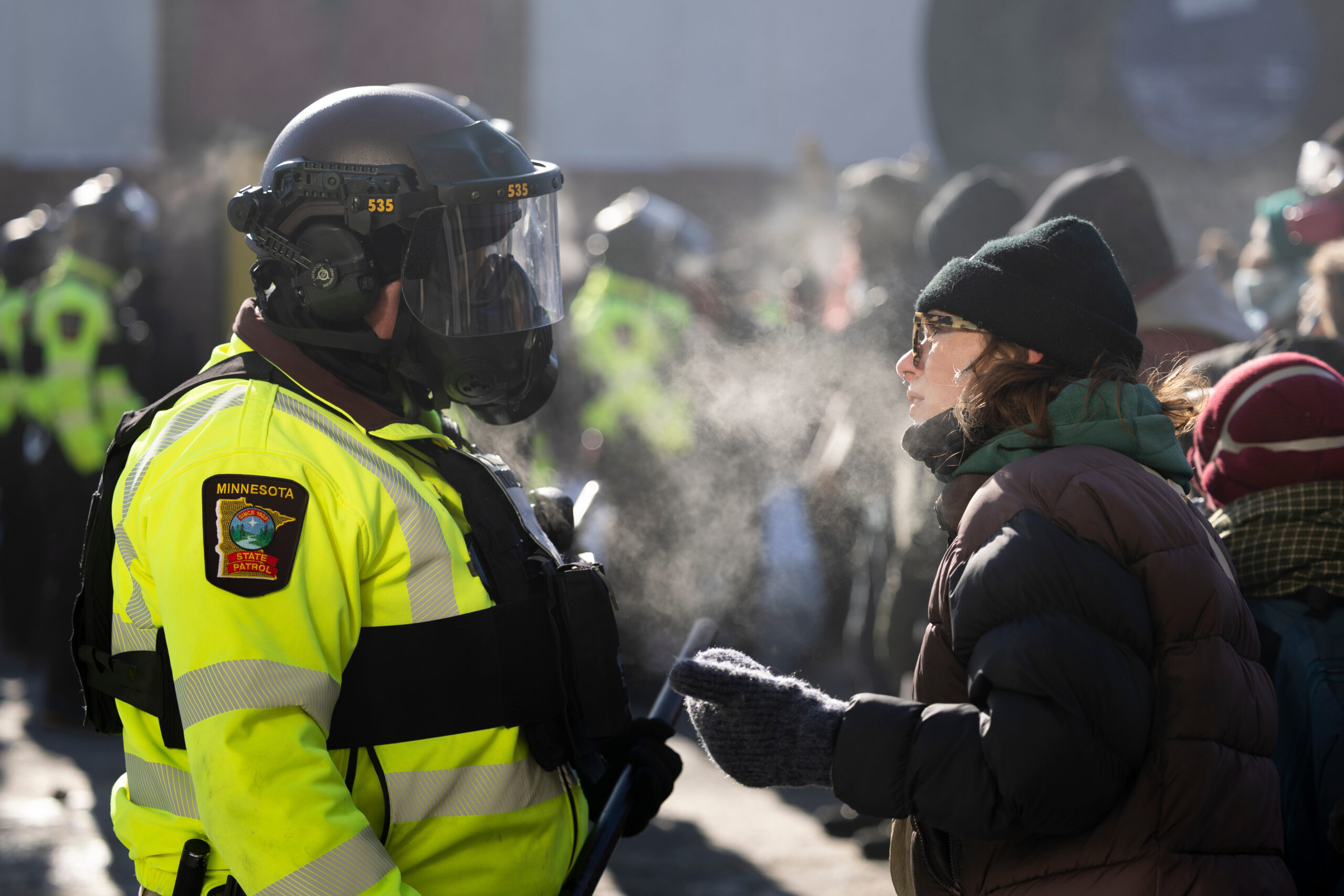
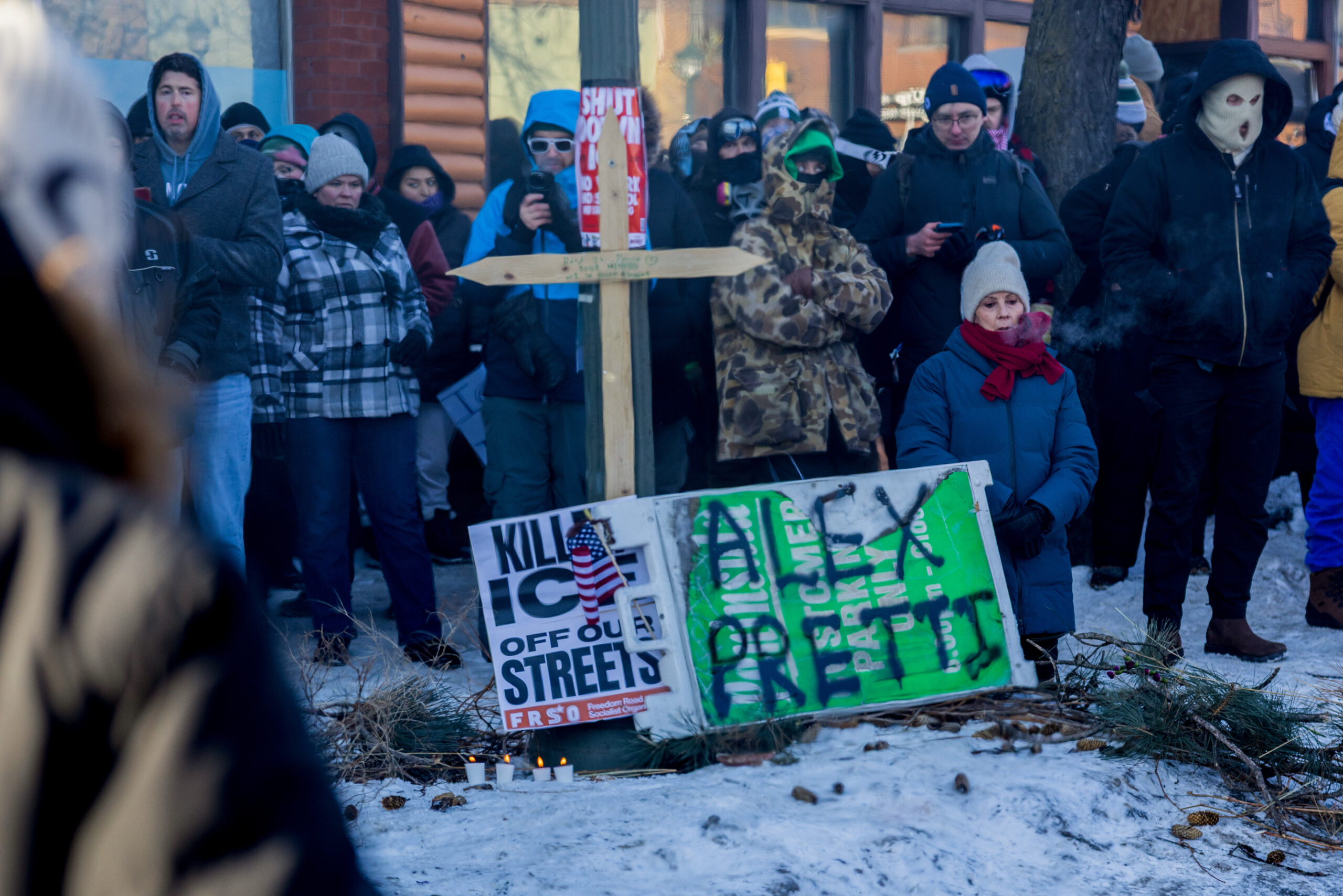
    A protester speaks to a Minnesota State Patrol officer near the site of the fatal shooting of 37-year-old Alex Pretti by federal agents in Minneapolis on Saturday.

    If the legislation is approved, Philadelphia would have some of the most stringent protections for immigrants in the country.

    Oregon has especially strong restrictions against cooperation with federal immigration authorities, including barring local law enforcement from detaining people or collecting information on a person’s immigration status without a judicial warrant.

    In Illinois, local officers “may not participate, support, or assist in any capacity with an immigration agent’s enforcement operations.” They are also barred from granting immigration agents access to electronic databases or to anyone in custody.

    California, New York, Colorado, Vermont — and individual jurisdictions in those states — also provide strong protections for immigrants.

    In New Jersey, Gov. Mikie Sherrill, a Democrat who was sworn in last week, has kept the state’s sanctuary directive in place as lawmakers seek to expand and codify the policy into law. Legislators came close in the final days of former Gov. Phil Murphy’s administration, but he killed a related bill that had won approval in Trenton, saying he worried that enacting a law that included changes to the state’s current policy would invite new lawsuits.

    Meanwhile, some conservatives say bolstering sanctuary policies risks community safety.

    “If an illegal immigrant breaks the law, they should be dealt with and handed over to federal law enforcement, not be released back into our neighborhoods to terrorize more victims and commit more crime,” said James Markley, a spokesperson for the Pennsylvania Republican Party.

    He added: “Sanctuary policies don’t protect communities, they endanger all of us by shielding criminals from accountability for their crimes.”

    Democrats are taking varying approaches

    The widespread outrage over ICE’s tactics in Minneapolis has exposed sharp divisions in elected Democrats’ responses.

    On one end of the party’s ideological spectrum is Fetterman, who has said often that he will not bow to activist demands and strongly opposes shutting down the federal government, even if it means funding DHS.

    On the other end is District Attorney Larry Krasner, Philadelphia’s most prominent progressive, who has on several occasions threatened to file criminal charges against ICE agents who commit crimes in the city.

    “There will be accountability now. There will be accountability in the future. There will be accountability after [Trump] is out of office,” Krasner said Tuesday. “If we have to hunt you down the way they hunted down Nazis for decades, we will find your identities.”
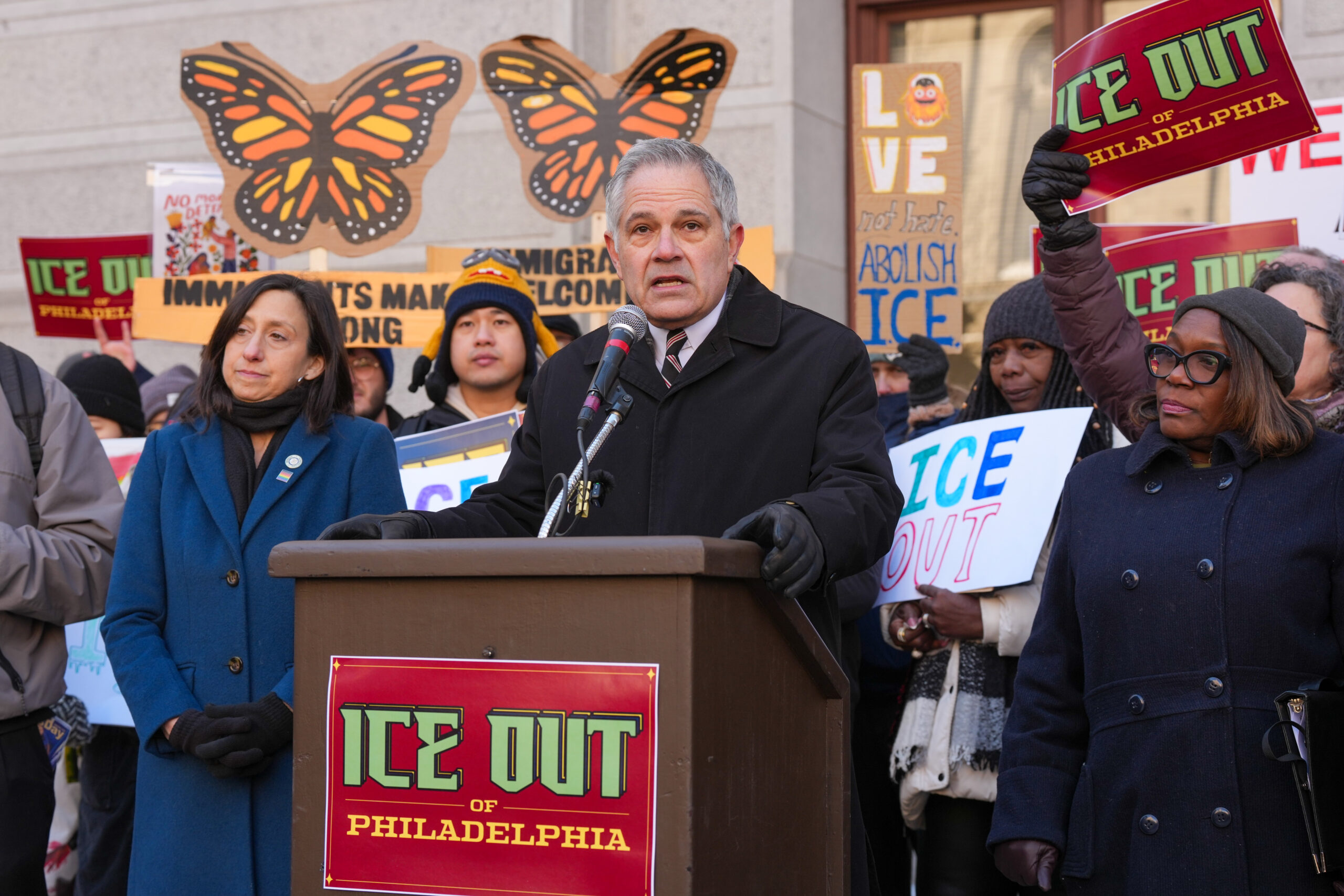
    District Attorney Larry Krasner speaks during a news conference at City Hall on Tuesday to announce a package of bills aimed at pushing back against ICE enforcement in Philadelphia.

    Somewhere in the middle is State Sen. Sharif Street, a Philadelphia Democrat and former head of the state party who is running for Congress.

    Street does not have Krasner’s bombast, but this week he announced plans to introduce legislation to prevent state dollars from funding federal immigration enforcement. The bill has less of a chance of becoming law in Pennsylvania’s divided state legislature than similar measures would in Philadelphia, where City Council is controlled by a supermajority of Democrats.

    “Who knows the amount of money that the state could incur because of Trump’s reckless immigration policies?” Street said in an interview Tuesday. “I don’t think state taxpayers should be paying for Donald Trump’s racist, reckless policies.”

    The city’s most prominent Democrat — Mayor Cherelle L. Parker — has perhaps said the least.

    The centrist Democrat has largely avoided outwardly criticizing Trump or his administration, saying often that she is focused on carrying out her own agenda.

    The mayor’s critics have said her approach is not responsive to the city’s overwhelmingly Democratic residents.

    “To the people of Philadelphia, I want to say: I hear you. You want ICE out of our city, and you want your local government to take action,” Brooks, the Council member, said Tuesday. “Some people believe that silence is the best policy when dealing with a bully, but that’s never been an option for me.”
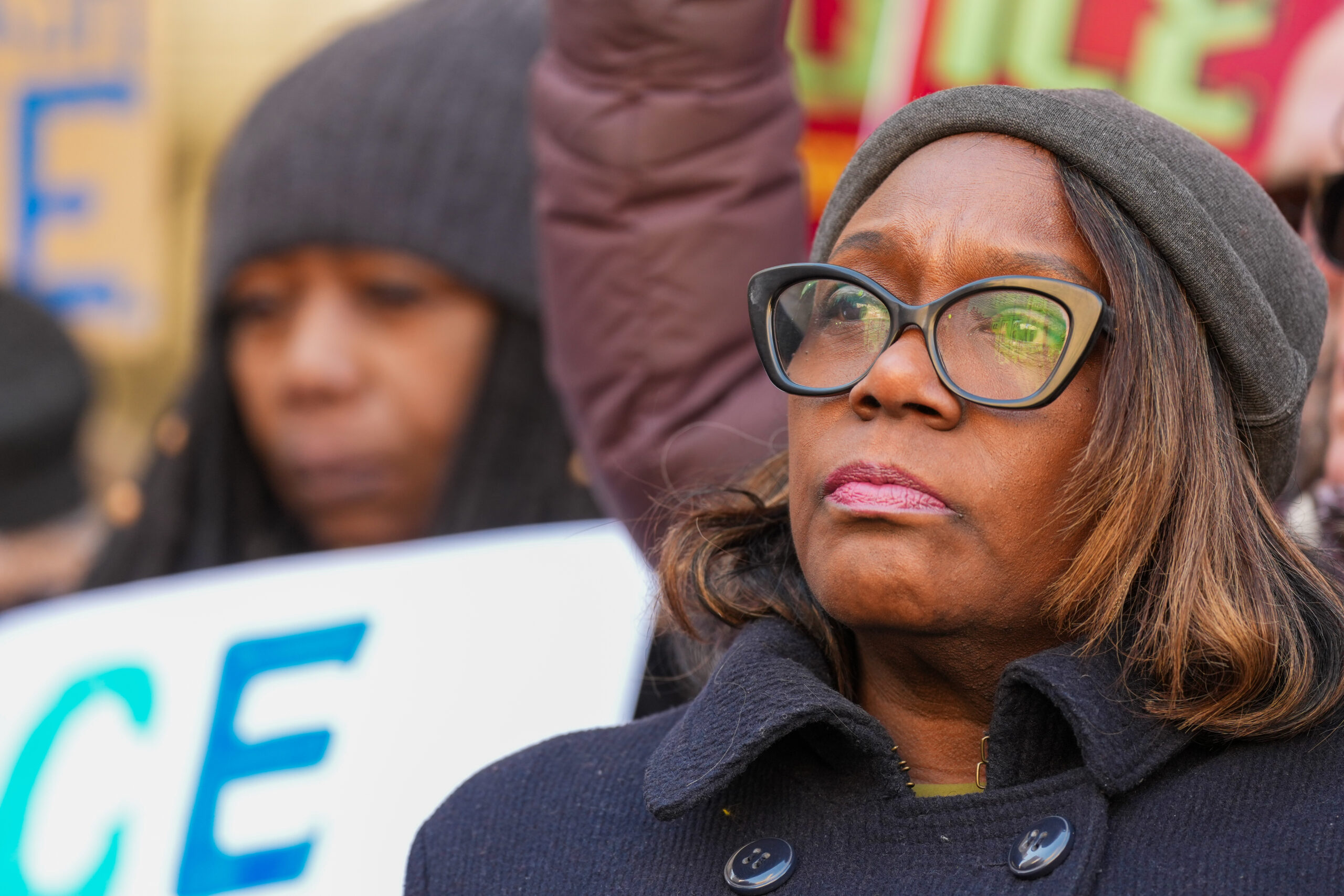
    Kendra Brooks shown here during a news conference at City Hall on Tuesday to announce a package of bills aimed at pushing back against ICE enforcement in Philadelphia.

    Others say Parker’s conflict-averse strategy is appropriate.

    “All of us have different roles to play,” Street said. “The mayor has to manage the city. She’s got to command law enforcement forces. … As a state legislator, we make policy.”

    Rafael Mangual, a fellow who studies urban crime and justice at the right-leaning Manhattan Institute in New York City, said legislative efforts to erect barriers between federal and local law enforcement could backfire.

    “If you don’t engage at all, and you do something that seems to actively frustrate the federal government,” Mangual said, “that would seem to be an invitation for the federal government to prioritize a city like Philadelphia.”

    Staff writers Alfred Lubrano, Aliya Schneider, and Gillian McGoldrick contributed to this article.

  • Gov. Shapiro tells Stephen Colbert he’s planning for the possibility of federal troops entering Pa.

    Gov. Shapiro tells Stephen Colbert he’s planning for the possibility of federal troops entering Pa.

    Saying the Trump administration is using the federal government for “pure evil” in its immigration crackdown in Minneapolis, Gov. Josh Shapiro revealed on late-night television Monday that he’s preparing Pennsylvania to respond should the state face such an incursion.

    Shapiro’s wide-ranging remarks on The Late Show With Stephen Colbert — which included Shapiro deriding Vice President JD Vance as a “sycophant” and a “suck-up” — sounded at times like a speech before a studio audience that applauded him vigorously. Making the rounds to promote his new book, Where We Keep the Light: Stories from a Life of Service, Shapiro also appeared on CBS Sunday Morning, Good Morning America on Monday, and The View on Tuesday.

    On Colbert, the governor sharply criticized the Trump administration’s actions in Minneapolis, where he said “untrained” agents from U.S. Immigration and Customs Enforcement (ICE) have been creating “chaos” by fatally shooting two American citizens.

    “I think Americans are outraged by what they see,” Shapiro said, adding: “The mission in Minnesota must be terminated immediately.”

    When Colbert said there are “rumors” that federal troops will be sent to Philadelphia “to foment fear,” Shapiro nodded. On The View, he said troops could show up in Philadelphia, Pittsburgh, or Lancaster.

    “We have spent hours and hours and hours doing tabletop exercises to prepare for it,” Shapiro said, without being specific. The governor did not elaborate.

    He added that “it’s a sad day in America that a governor of a commonwealth needs to prepare for a federal onslaught where they would send troops in to undermine the freedoms and the constitutional rights of our citizens. This is un-American.”

    “But I want the good people of Pennsylvania to know — I want the American people to know — that we will do everything in our power to protect them from the federal overreach.”

    Asked for comment, Abigail Jackson, a White House spokesperson, said Tuesday: “It’s pure evil when Democrat leaders provide sanctuary to dangerous criminal illegal aliens who assault, murder, and rape innocent American citizens. President Trump is keeping his promise to the American people to deport criminal illegal aliens.”

    Referencing ICE agents wearing masks, Shapiro said that members of the Pennsylvania State Police “have strict rules on when they can wear a mask. You want to be identified as folks who are keeping people safe.”

    He added, “Of all the tools that we give our law enforcement in Pennsylvania, the most important tool you need to have is trust with the community that you police.”

    When the conversation turned to Vance’s statement that the ICE officer who shot and killed Minneapolis resident Renee Macklin Good on Jan. 7 has “absolute immunity,” Shapiro retorted that it was untrue.

    He added that Vance is “such a sycophant, such a suck-up. He embarrasses himself daily as he seeks the affirmation of Donald Trump.”

    ICE agents “are not above the law,” Shapiro added moments later. “I don’t care what B.S. Vance [says.]”

    The governor’s reelection bid this year, as well as rumors that he may be a presidential candidate in 2028, did not come up. Instead, Colbert touted Shapiro’s book.

    Shapiro said that the courts, Congress, and public opinion need to be marshaled to prevent the Trump administration from sending more troops to U.S. cities.

    “All of you have powerful voices,” Shapiro told the audience. He added: “The story of America is ordinary Americans rising up, demanding more, seeking justice.”

  • Minneapolis shooting scrambles Second Amendment politics for Trump

    Minneapolis shooting scrambles Second Amendment politics for Trump

    Prominent Republicans and gun rights advocates helped elicit a White House turnabout this week after bristling over the administration’s characterization of Alex Pretti, the second person killed this month by a federal officer in Minneapolis, as responsible for his own death because he lawfully possessed a weapon.

    The death produced no clear shifts in U.S. gun politics or policies, even as President Donald Trump shuffles the lieutenants in charge of his militarized immigration crackdown. But important voices in Trump’s coalition have called for a thorough investigation of Pretti’s death while also criticizing inconsistencies in some Republicans’ Second Amendment stances.

    If the dynamic persists, it could give Republicans problems as Trump heads into a midterm election year with voters already growing skeptical of his overall immigration approach. The concern is acute enough that Trump’s top spokeswoman sought Monday to reassert his brand as a staunch gun rights supporter.

    “The president supports the Second Amendment rights of law-abiding American citizens, absolutely,” White House press secretary Karoline Leavitt told reporters.

    Leavitt qualified that “when you are bearing arms and confronted by law enforcement, you are raising … the risk of force being used against you.”

    Videos contradict early statements from administration

    That still marked a retreat from the administration’s previous messages about the shooting of Pretti. It came the same day the president dispatched border czar Tom Homan to Minnesota, seemingly elevating him over Homeland Security Secretary Kristi Noem and Border Patrol chief Greg Bovino, who had been in charge in Minneapolis.

    Within hours of Pretti’s death on Saturday, Bovino suggested Pretti “wanted to … massacre law enforcement,” and Noem said Pretti was “brandishing” a weapon and acted “violently” toward officers.

    “I don’t know of any peaceful protester that shows up with a gun and ammunition rather than a sign,” Noem said.

    White House deputy chief of staff Stephen Miller, an architect of Trump’s mass deportation effort, went further on X, declaring Pretti “an assassin.”

    Bystander videos contradicted each claim, instead showing Pretti holding a cellphone and helping a woman who had been pepper sprayed by a federal officer. Within seconds, Pretti was sprayed, too, and taken to the ground by multiple officers. No video disclosed thus far has shown him unholstering his concealed weapon -– which he had a Minnesota permit to carry. It appeared that one officer took Pretti’s gun and walked away with it just before shots began.

    As multiple videos went viral online and on television, Vice President JD Vance reposted Miller’s assessment, while Trump shared an alleged photo of “the gunman’s gun, loaded (with two additional full magazines!).”

    On Tuesday, Trump was asked if he agreed with Miller’s comment describing Pretti as an “assassin” and answered “no.” But he added that protesters “can’t have guns” and said he wants the death investigated.

    “You can’t walk in with guns, you just can’t,” Trump told reporters on the White House lawn before departing for a trip to Iowa.

    Swift reactions from gun rights advocates

    The National Rifle Association, which has backed Trump three times, released a statement that began by casting blame on Minnesota Democrats it accused of stoking protests. But the group lashed out after a federal prosecutor in California said on X that, “If you approach law enforcement with a gun, there is a high likelihood they will be legally justified in shooting you.”

    That analysis, the NRA said, is “dangerous and wrong.”

    FBI Director Kash Patel magnified the blowback Sunday on Fox News’ “Sunday Morning Futures With Maria Bartiromo.” No one, Patel said, can “bring a firearm, loaded, with multiple magazines to any sort of protest that you want. It’s that simple.”

    Erich Pratt, vice president of Gun Owners of America, was incredulous.

    “I have attended protest rallies while armed, and no one got injured,” he said on CNN.

    Conservative officials around the country made the same connection between the First and Second amendments.

    “Showing up at a protest is very American. Showing up with a weapon is very American,” state Rep. Jeremy Faison, who leads the GOP caucus in Tennessee, said on X.

    Trump’s first-term vice president, Mike Pence, called for “full and transparent investigation of this officer involved shooting.”

    A different response from the past

    Liberals, conservatives and nonpartisan experts noted how the administration’s response differed from past conservative positions involving protests and weapons.

    Multiple Trump supporters were found to have weapons during the Jan. 6, 2021, attack on the U.S. Capitol. Trump issued blanket pardons to all of them.

    Republicans were critical in 2020 when Mark and Patricia McCloskey had to pay fines after pointing guns at protesters who marched through their St. Louis neighborhood after the police killing of George Floyd in Minneapolis. And then there’s Kyle Rittenhouse, a counter-protester acquitted after fatally shooting two men and injuring another in Kenosha, Wisconsin, during the post-Floyd protests.

    “You remember Kyle Rittenhouse and how he was made a hero on the right,” Trey Gowdy, a Republican former congressman and attorney for Trump during one of his first-term impeachments. “Alex Pretti’s firearm was being lawfully carried. … He never brandished it.”

    Adam Winkler, a UCLA law professor who has studied the history of the gun debate, said the fallout “shows how tribal we’ve become.” Republicans spent years talking about the Second Amendment as a means to fight government tyranny, he said.

    “The moment someone who’s thought to be from the left, they abandon that principled stance,” Winkler said.

    Meanwhile, Democrats who have criticized open and concealed carry laws for years, Winkler added, are not amplifying that position after Pretti’s death.

    Uncertain effects in an election year

    The blowback against the administration from core Trump supporters comes as Republicans are trying to protect their threadbare majority in the U.S. House and face several competitive Senate races.

    Perhaps reflecting the stakes, GOP staff and campaign aides were reticent Monday to talk about the issue at all.

    The House Republican campaign chairman, Rep. Richard Hudson of North Carolina, is sponsoring the GOP’s most significant gun legislation of this congressional term, a proposal to make state concealed-carry permits reciprocal across all states.

    The bill cleared the House Judiciary Committee last fall. Asked Monday whether Pretti’s death and the Minneapolis protests might affect debate, an aide to Speaker Mike Johnson did not offer any update on the bill’s prospects.

    Gun rights advocates have notched many legislative victories in Republican-controlled statehouses in recent decades, from rolling back gun-free zones around schools and churches to expanding gun possession rights in schools, on university campuses and in other public spaces.

    William Sack, legal director of the Second Amendment Foundation, said he was surprised and disappointed by the administration’s initial statements following the Pretti shooting. Trump’s vacillating, he said, is “very likely to cost them dearly with the core of a constituency they count on.”

  • Trump administration’s immigration crackdown contributed to a drop in the U.S. growth rate last year

    Trump administration’s immigration crackdown contributed to a drop in the U.S. growth rate last year

    ORLANDO, Fla. — President Donald Trump’s crackdown on immigration contributed to a year-to-year drop in the nation’s growth rate as the U.S. population reached nearly 342 million people in 2025, according to population estimates released Tuesday by the U.S. Census Bureau.

    The 0.5% growth rate for 2025 was a sharp drop from 2024’s almost 1% growth rate, which was the highest in two decades and was fueled by immigration. The 2024 estimates put the U.S. population at 340 million people.

    Immigration increased by almost 1.3 million people last year, compared with 2024’s increase of almost 2.8 million people. If trends continue, the annual gain from immigrants by mid-2026 will drop to only 321,000 people, according to the Census Bureau, whose estimates do not distinguish between legal and illegal immigration.

    In the past 125 years, the lowest growth rate was in 2021, during the height of the coronavirus pandemic, when the U.S. population grew by just 0.16%, or 522,000 people and immigration increased by just 376,000 people because of travel restrictions into the U.S. Before that, the lowest growth rate was just under 0.5% in 1919 at the height of the Spanish flu.

    Births outnumbered deaths last year by 519,000 people. While higher than the pandemic-era low at the beginning of the decade, the natural increase was dramatically smaller than in the 2000s, when it ranged between 1.6 million and 1.9 million people.

    Lower immigration stunts growth in many states

    The immigration drop dented growth in several states that traditionally have been immigrant magnets.

    California had a net population loss of 9,500 people in 2025, a stark change from the previous year, when it gained 232,000 residents, even though roughly the same number of Californians already living in the state moved out in both years. The difference was immigration since the number of net immigrants who moved into the state dropped from 361,000 people in 2024 to 109,000 in 2025.

    Florida had year-to-year drops in both immigrants and people moving in from other states. The Sunshine State, which has become more expensive in recent years from surging property values and higher home insurance costs, had only 22,000 domestic migrants in 2025, compared with 64,000 people in 2024, and the net number of immigrants dropped from more than 411,000 people to 178,000 people.

    New York added only 1,008 people in 2025, mostly because the state’s net migration from immigrants dropped from 207,000 people to 95,600 people.

    South Carolina, Idaho, and North Carolina had the highest year-over-year growth rates, ranging from 1.3% to 1.5%. Texas, Florida, and North Carolina added the most people in pure numbers. California, Hawaii, New Mexico, Vermont, and West Virginia had population declines.

    The South, which has been the powerhouse of growth in the 2020s, continued to add more people than any other region, but the numbers dropped from 1.7 million people in 2024 to 1.1 million in 2025.

    “Many of these states are going to show even smaller growth when we get to next year,” Brookings demographer William Frey said Tuesday.

    The effects of Trump’s immigration crackdown

    Tuesday’s data release comes as researchers have been trying to determine the effects of the second Trump administration’s immigration crackdown after the Republican president returned to the White House in January 2025. Trump made a surge of migrants at the southern border a central issue in his winning 2024 presidential campaign.

    The numbers made public Tuesday reflect change from July 2024 to July 2025, covering the end of President Joe Biden’s Democratic administration and the first half of Trump’s first year back in office.

    The figures capture a period that reflects the beginning of enforcement surges in Los Angeles and Portland, Ore., but do not capture the impact on immigration after the Trump administration’s crackdowns began in Chicago; New Orleans; Memphis, Tennessee; and Minneapolis, Minn..

    The 2025 numbers were a jarring divergence from 2024, when net international migration accounted for 84% of the nation’s 3.3 million-person increase from the year before. The jump in immigration two years ago was partly because of a new method of counting that added people who were admitted for humanitarian reasons.

    “They do reflect recent trends we have seen in out-migration, where the numbers of people coming in is down and the numbers going out is up,” Eric Jensen, a senior research scientist at the Census Bureau, said last week.

    How the population estimates are calculated

    Unlike the once-a-decade census, which determines how many congressional seats and Electoral College votes each state gets, as well as the distribution of $2.8 trillion in annual government funding, the population estimates are calculated from government records and internal Census Bureau data.

    The release of the 2025 population estimates was delayed by the federal government shutdown last fall and comes at a challenging time for the Census Bureau and other U.S. statistical agencies. The bureau, which is the largest statistical agency in the U.S., lost about 15% of its workforce last year due to buyouts and layoffs that were part of cost-cutting efforts by the White House and its Department of Government Efficiency.

    Other recent actions by the Trump administration, such as the firing of Erika McEntarfer as Bureau of Labor Statistics commissioner, have raised concerns about political meddling at U.S. statistical agencies. But Frey said the bureau’s staffers appear to have been “doing this work as usual without interference.”

    “So I have no reason to doubt the numbers that come out,” Frey said.

  • Philly lawmakers want to restrict cooperation with ICE and ban agents from wearing masks

    Philly lawmakers want to restrict cooperation with ICE and ban agents from wearing masks

    Philadelphia lawmakers are set to consider legislation that would make it harder for ICE to operate in the city, including limiting information sharing, restricting activity on city-owned property, and prohibiting agents from concealing their identities.

    Among the package of bills set to be introduced Thursday is an ordinance that effectively makes permanent Philadelphia’s status as a so-called “sanctuary city” by barring city officials from holding undocumented immigrants at ICE’s request without a court order. Another bans discrimination based on immigration status.

    Two City Council members are expected to introduce the legislation as U.S. Immigration and Customs Enforcement is facing mounting national scrutiny over its tactics in Minneapolis, where federal agents fatally shot two U.S. citizens this month.

    Councilmembers Rue Landau, a Democrat, and Kendra Brooks, of the progressive Working Families Party, said in an interview that the violence in Minneapolis hardened their resolve to introduce legislation to protect a population that includes an estimated 76,000 undocumented immigrants in Philadelphia.

    “It’s been very disheartening and frightening to watch ICE act with such lawlessness,” Landau said. “When they rise to the level of killing innocent civilians, unprecedented murders … this is absolutely the time to stand up and act.”

    The package of a half-dozen bills is the most significant legislative effort that Council has undertaken to strengthen protections for immigrants since President Donald Trump took office last year on a promise to carry out a mass deportation campaign nationwide.

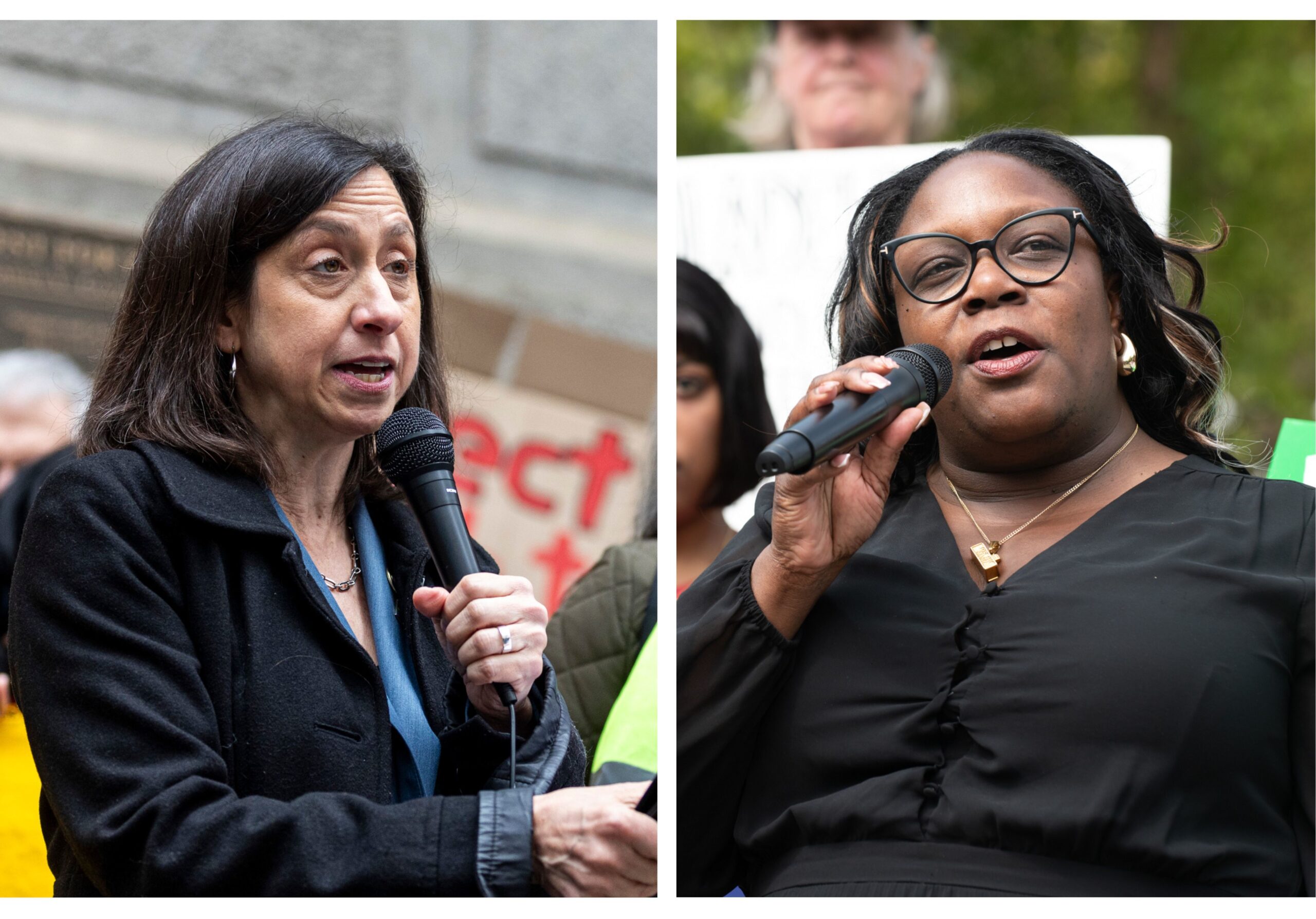
    Left: City Councilmember Rue Landau. Right: City Councilmember Kendra Brooks. Landau and Brooks are introducing legislation this week to make it harder for ICE to operate in Philadelphia, including by limiting city cooperation with the agency.

    ICE spokespeople did not immediately reply to a request for comment.

    Jasmine Rivera, executive director of the Pennsylvania Immigration Coalition, said it’s not the job nor the jurisdiction of the city to enforce federal law.

    The goal of the legislation, Rivera said, is ensuring that “not a single dime and single second of our local resources is being spent collaborating with agencies that are executing people.”

    Activists have for months urged Mayor Cherelle L. Parker to formally affirm her commitment to the city’s sanctuary status. Top city officials say an executive order signed by the former mayor to limit the city’s cooperation with ICE remains in place.

    But Parker, a centrist Democrat, has taken a quieter approach than her colleagues in Council, largely avoiding criticizing the Trump administration outwardly and saying often that she is focused on her own agenda.

    Now, the mayor could be forced to take a side. If City Council passes Landau and Brooks’ legislation this spring, Parker could either sign the bills into law, veto them, or take no action and allow them to lapse into law without her signature. She has never vetoed a bill.

    Joe Grace, a spokesperson for Parker, declined to comment on the legislation.

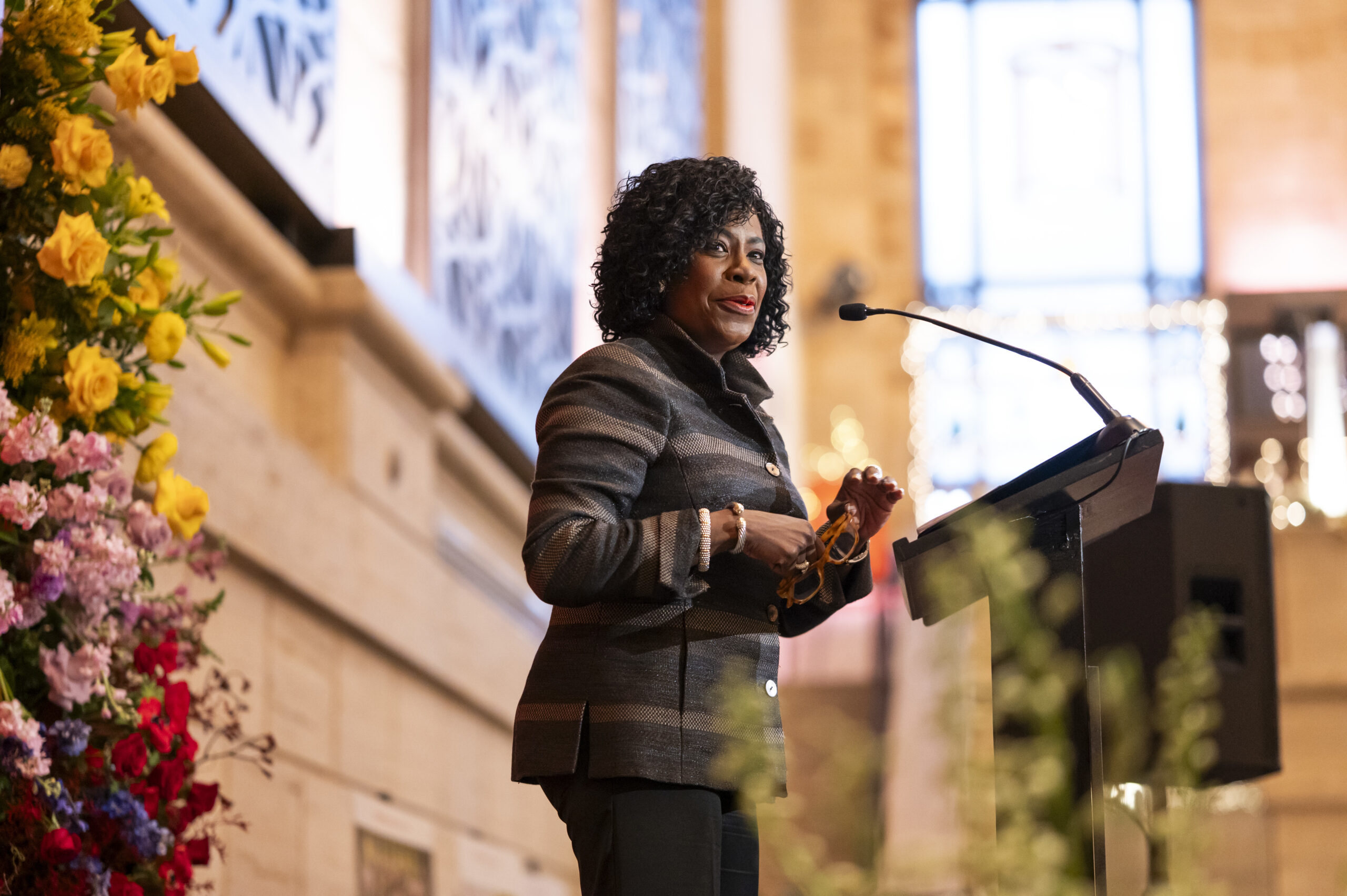
    Mayor Cherelle L. Parker speaks at a news conference earlier this month. It is unclear how she will act on upcoming legislation related to ICE operations in Philadelphia.

    It’s unclear what fate the ICE legislation could meet in Council. The 17-member body has just one Republican, but Parker holds influence with many of the Democrats in the chamber.

    City Council President Kenyatta Johnson, a Democrat who controls the flow of legislation, has not taken a position on the package proposed by Landau and Brooks.

    But he said in a statement that “Philadelphia has long positioned itself as a welcoming city that values the contributions of immigrants and strives to protect their rights and safety.”

    “I have deep concerns about federal ICE actions directed by President Donald Trump’s administration that sow fear and anxiety in immigrant communities,” Johnson said, “underscoring the belief that enforcement practices should be lawful, humane, and not undermine trust in public safety.”

    Making sanctuary status the law

    Border Patrol and ICE are both federal immigration agencies, which are legally allowed to operate in public places and subject to federal rules and regulations. Some cities and states — not including Pennsylvania and New Jersey — actively cooperate with ICE through written agreements.

    Since 2016, Philadelphia has operated under an executive order signed by former Mayor Jim Kenney, which prohibits city jails from honoring ICE “detainer requests,” in which federal agents ask the city to hold undocumented immigrants in jail for longer than they would have otherwise been in custody to facilitate their arrest by federal authorities.

    Undocumented immigrants are not shielded from federal immigration enforcement, nor from being arrested and charged by local police for local offenses.

    Some refer to the noncooperation arrangement as “sanctuary.” As the term “sanctuary cities” has become politically toxic, some local officials — including in Philadelphia — have backed away from it, instead declaring their jurisdictions to be “welcoming cities.”

    Parker administration officials have said several times over the last year that Philadelphia remains a “welcoming city.”

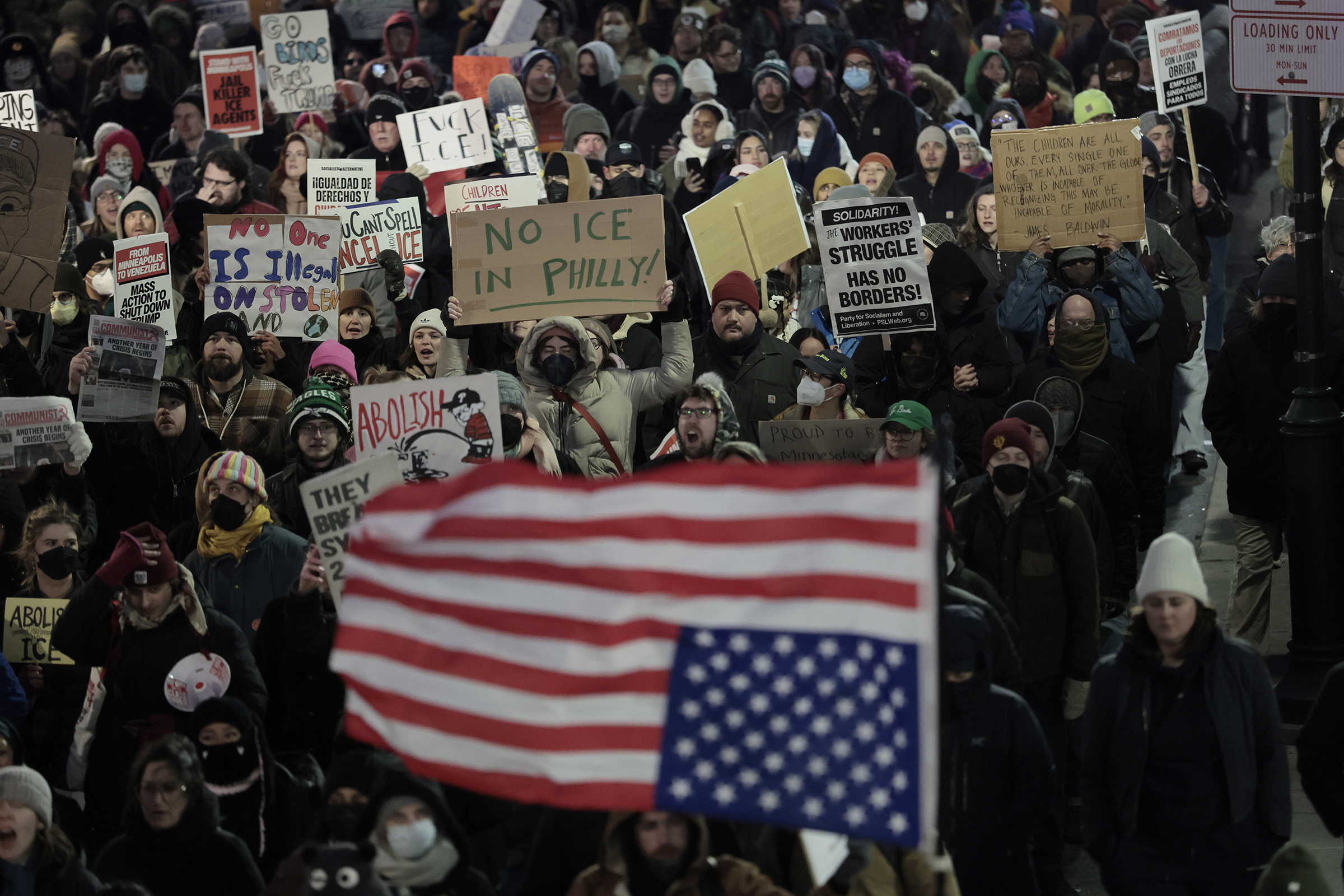
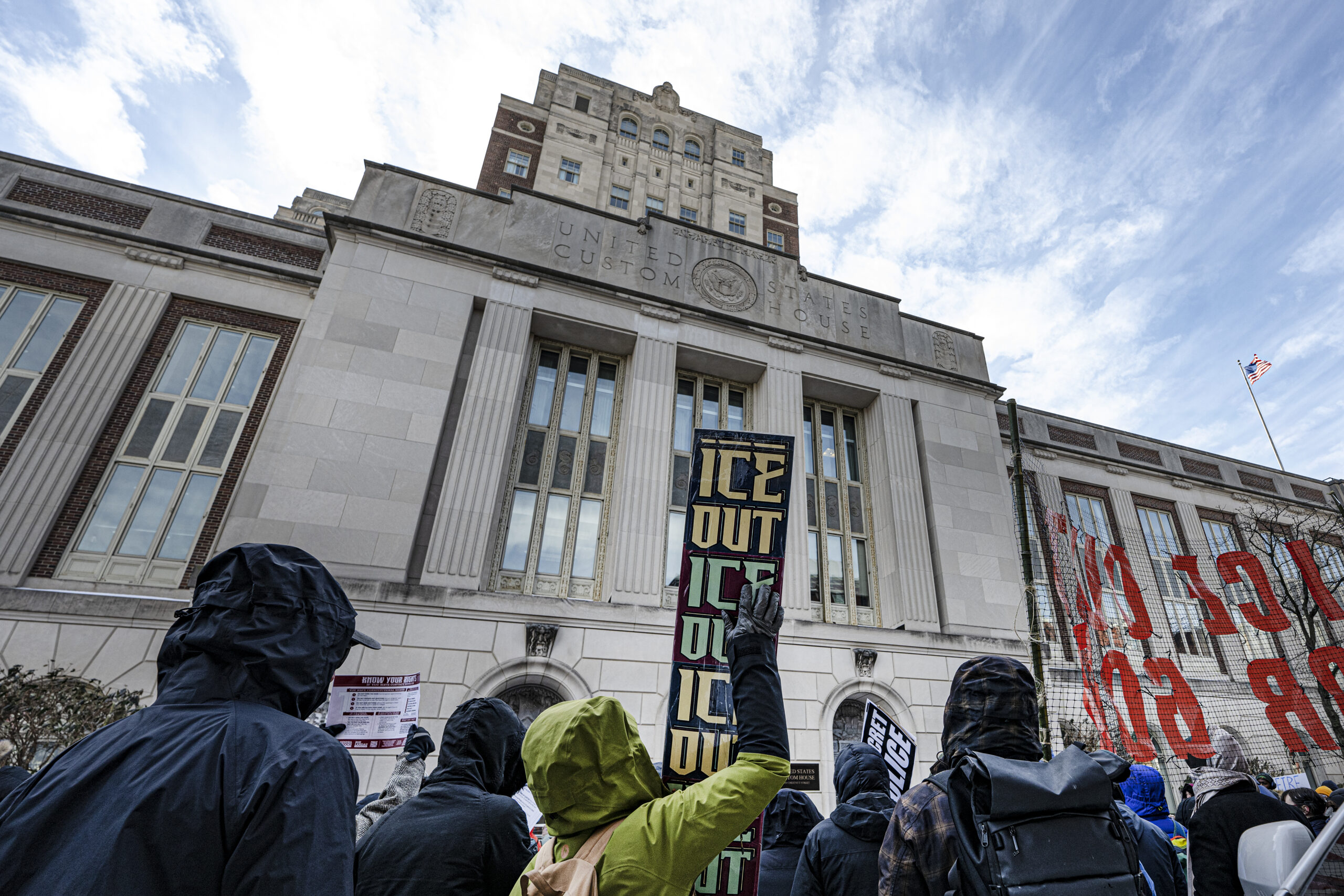
    Protesters march up Eighth Street, toward the immigration offices, during the Philly stands with Minneapolis Ice Out For Good protest at Philadelphia’s City Hall on Jan. 23.

    But advocates for immigrants have said they want an ironclad city policy that can’t be rescinded by a mayor.

    Landau and Brooks’ legislation would be that, codifying the executive order into law and adding new prohibitions on information sharing. The package includes legislation to:

    • Strengthen restrictions on city workers, including banning local police from carrying out federal immigration enforcement and prohibiting city workers from assisting in enforcement operations.
    • Prohibiting law enforcement officers from concealing their identities, including by wearing masks or covering up badges with identifying information.
    • Banning ICE from staging raids on city-owned property and designated community spaces such as schools, parks, libraries, and homeless shelters. (It would not apply to the Criminal Justice Center, where ICE has had a presence. The courthouse is overseen by both city and state agencies.)
    • Prohibiting city agencies and contractors from providing ICE access to data sets to assist in immigration enforcement.
    • Restricting city employees from inquiring about individuals’ immigration status unless required by a court order, or state or federal law.

    Peter Pedemonti, co-director of New Sanctuary Movement of Philadelphia, an advocacy organization that partnered with the Council members to craft the package of bills, compared ICE to an octopus that has multiple arms reaching into different facets of American life.

    The proposed legislation, he said, is a means to bind a few of those arms.

    “The whole world can see the violence and brutality,” Pedemonti said. “This is a moment where all of us need to stand up, and Philadelphia can stand up and speak out loud and clear that we don’t want ICE here to pull our families apart, the families that make Philadelphia Philadelphia.”

    An impending showdown that Parker hoped to avoid

    Homeland Security officials claim that sanctuary jurisdictions protect criminal, undocumented immigrants from facing consequences while putting U.S. citizens and law enforcement officers in peril.

    Last year, the Trump administration named Philadelphia as among the jurisdictions impeding federal immigration enforcement. The White House has said the federal government will cut off funding to sanctuary cities by Feb. 1.

    However, the president has made no explicit threat to ramp up ICE activities in Philadelphia.

    Some of Parker’s supporters say the mayor’s conflict-averse strategy has spared Philadelphia as other cities such as Washington, New York, Los Angeles, Chicago, and Minneapolis have seen National Guard troops or waves of ICE agents arrive in force.

    Residents near the scene of a shooting by a federal law enforcement agent in Minneapolis on Saturday.

    Critics, including the backers of the new legislation, have for months pressed Parker to take a stronger stand.

    Brooks said she “would love to have the support of the administration.”

    “This should be something that we should be working collaboratively on,” she said. “Philadelphia residents are demanding us do something as elected officials, and this is our time to lead.”

    But Parker has not been eager to speak about Philadelphia’s immigration policies.

    For example, the city is refusing to release a September letter it sent to the U.S. Department of Justice regarding its immigration-related policies, even after the Pennsylvania Office of Open Records ruled its reasoning for keeping the document secret was invalid. The Inquirer has requested a copy of the letter under the state Right-to-Know Law.

    The new Council legislation and the increasing tension over Trump’s deportation push may force Parker to take a clearer position.

    Notably, the city sued the federal government last week over its removal of exhibits related to slavery from the President’s House at Independence National Historical Park, potentially signaling a new willingness by Parker to push back against the White House.

    But even then, Parker declined to take a jab at Trump.

    “In moments like this,” she said last week, “it requires that I be the leader that I need to be for our city, and I can’t allow my pride, ego, or emotions to dictate what my actions will be.”

  • Judge orders ICE chief to appear in court to explain why detainees have been denied due process

    Judge orders ICE chief to appear in court to explain why detainees have been denied due process

    MINNEAPOLIS, Minn. — Federal immigration authorities have released an Ecuadorian man whose detention led the chief federal judge in Minnesota to order the head of Immigration and Customs Enforcement to appear in his courtroom, the man’s attorney said Tuesday.

    Attorney Graham Ojala-Barbour said the man, who is identified in court documents as “Juan T.R.,” was released in Texas. The lawyer said in an email to The Associated Press that he was notified in an email from the U.S. attorneys office in Minneapolis shortly after 1 p.m. CT that his client had been freed.

    In an order dated Monday, Chief Judge Patrick J. Schiltz expressed frustration with the Trump administration’s handling of Juan’s and other immigration cases. He took the extraordinary step of ordering Todd Lyons, the acting director of ICE, to personally appear in his courtroom Friday.

    Schiltz had said in his order that he would cancel Lyons’ appearance if the man was released from custody.

    “This Court has been extremely patient with respondents, even though respondents decided to send thousands of agents to Minnesota to detain aliens without making any provision for dealing with the hundreds of habeas petitions and other lawsuits that were sure to result,” he wrote.

    The order comes a day after President Donald Trump ordered border czar Tom Homan to take over his administration’s immigration crackdown in Minnesota following the second death this month of a person at the hands of an immigration law enforcement officer.

    Trump said in an interview broadcast Tuesday that he had “great calls” with Minnesota Gov. Tim Walz and Minneapolis Mayor Jacob Frey on Monday, mirroring comments he made immediately after the calls.

    As he left the White House, the president was asked whether Alex Pretti’s killing by a Border Patrol officer Saturday was justified. He responded by saying that a “big investigation” was underway. In the hours after Pretti’s death, some administration officials sought to blame the shooting on the 37-year-old intensive care nurse.

    The seemingly softer tone emerged as immigration agents were still active across the Twin Cities region, and it was unclear if officials had changed tactics following the shift by the White House.

    Walz’s office said Tuesday that the Democratic governor met with Homan and called for impartial investigations into the shootings involving federal officers. They agreed on the need to continue to talk, according to the governor.

    Frey and Minneapolis Police Chief Brian O’Hara said they also met with Homan and had a “productive conversation.” The mayor added that city leaders would stay in discussion with the border czar.

    The White House had tried to blame Democratic leaders for the protests of immigration raids. But after the killing of Pretti on Saturday and videos suggesting he was not an active threat, the administration tapped Homan to take charge of the Minnesota operation from Border Patrol commander Gregory Bovino.

    The streets appeared largely quiet in many south Minneapolis neighborhoods where unmarked convoys of immigration agents have been sighted regularly in recent weeks, including the neighborhoods where the two deaths occurred. But Associated Press staff saw carloads of agents in northeast Minneapolis, as well as the northern suburb of Little Canada.

    Schiltz’s order also follows a federal court hearing Monday on a request by the state and the mayors of Minneapolis and St. Paul for a judge to halt the immigration enforcement surge. The judge in that case said she would prioritize the ruling but did not give a timeline for a decision.

    Schiltz wrote that he recognizes ordering the head of a federal agency to appear personally is extraordinary. “But the extent of ICE’s violation of court orders is likewise extraordinary, and lesser measures have been tried and failed,” he said.

    “Respondents have continually assured the Court that they recognize their obligation to comply with Court orders, and that they have taken steps to ensure that those orders will be honored going forward,” he wrote. “Unfortunately, though, the violations continue.”

    The Associated Press left messages Tuesday with ICE and a DHS spokesperson seeking a response.

  • Trump softens tone as some federal agents expected to leave Minneapolis

    Trump softens tone as some federal agents expected to leave Minneapolis

    MINNEAPOLIS — President Donald Trump softened his tone Monday on the immigration crackdown in Minnesota, touting productive conversations with the governor and Minneapolis mayor as he sent the border czar to take charge of much of the enforcement effort. Some federal agents were expected to leave as soon as today.

    Minneapolis Mayor Jacob Frey said he spoke by phone with Trump, who praised the discussion and declared that “lots of progress is being made.” Frey said he asked Trump in a phone call to end the immigration enforcement surge and that Trump agreed the present situation cannot continue.

    The mayor said some agents would soon leave and that he would keep pushing for others involved in Operation Metro Surge to go.

    Among those who are expected to depart was senior Border Patrol commander Greg Bovino, a person familiar with the matter told the Associated Press. The person was not authorized to publicly discuss details of the operation and spoke to AP on condition of anonymity.

    Bovino has been at the center of the administration’s aggressive enforcement surge in cities nationwide. His departure marks a significant public shift in federal law enforcement posture amid mounting outrage over the fatal shooting of 37-year-old ICU nurse Alex Pretti by Border Patrol agents.

    Bovino’s leadership of highly visible federal crackdowns, including operations that sparked mass demonstrations in Los Angeles, Chicago, Charlotte, and Minneapolis, has drawn fierce criticism from local officials, civil rights advocates, and congressional Democrats.

    Criticism has increased around Bovino in the last few days after his public defense of the Pretti shooting and disputed claims about the confrontation that led to his death.

    The border czar, Tom Homan, will take charge of Immigration and Customs Enforcement operations in Minnesota.

    Judge hears arguments on crackdown

    A federal judge heard arguments Monday over Minnesota’s challenge to the Trump administration’s immigration enforcement crackdown, posing skeptical questions to both sides about the effort that has led to two fatal shootings by federal officers.

    U.S. District Judge Katherine Menendez is considering whether to grant requests by the state and the cities of Minneapolis and St. Paul to temporarily halt the immigration operation. She said the case was a priority, though she issued no immediate ruling.

    Menendez questioned the government’s motivation behind the crackdown and expressed skepticism about a letter recently sent by Attorney General Pam Bondi to Minnesota Gov. Tim Walz. The letter asked the state to give the federal government access to voter rolls, to turn over state Medicaid and food assistance records, and to repeal sanctuary policies.

    “I mean, is there no limit to what the executive can do under the guise of enforcing immigration law?” Menendez asked. She noted that the federal requests are the subject of litigation.

    Lawyers for the state and the Twin Cities argued that the situation on the street is so dire as to require the court to halt the federal government’s enforcement actions.

    “If this is not stopped right here, right now, I don’t think anybody who is seriously looking at this problem can have much faith in how our republic is going to go in the future,” Minnesota Assistant Attorney General Brian Carter said.

    Brantley Mayers, counsel to the Justice Department’s assistant attorney general, said the government’s goal is to enforce federal law. Mayers said one lawful action should not be used to discredit another lawful action.

    “I don’t see how the fact that we’re also doing additional things that we are allowed to do, that the Constitution has vested us with doing, would in any way negate another piece of the same operation, the same surge,” Mayers said.

    Menendez questioned where the line was between violating the Constitution and the executive’s power to enforce the law. She also asked whether she was being asked to decide between state and federal policies.

    “That begins to feel very much like I am deciding which policy approach is best,” she said.

    At one point, while discussing the prospect of federal officers entering residences without a warrant, the judge expressed reluctance to decide issues not yet raised in a lawsuit before her.

    “I can’t be the global keeper of all things here. Like, presumably that will be litigated,” she said to the state’s attorney.

    The state of Minnesota and the cities sued the Department of Homeland Security earlier this month, five days after Renee Good was shot by an Immigration and Customs officer. The shooting of Alex Pretti by a Border Patrol officer on Saturday added urgency to the case.

    Border czar to Minnesota

    In other developments, Trump said he had a “very good” call with Gov. Tim Walz about the latest shooting and that they are now on a “similar wavelength.” It was an abrupt shift from Trump, who frequently derides Walz for his actions on immigration issues in Minnesota.

    Trump also said he would send border czar Tom Homan to Minnesota. The president’s statement comes after Homeland Security Secretary Kristi Noem and Bovino, who has become the public face of the crackdown, answered questions at news conferences over the weekend about Pretti’s shooting. Trump posted on social media that Homan will report directly to him.

    Since the original court filing, the state and cities have substantially added to their request in an effort to restore the conditions that existed before the administration launched Operation Metro Surge on Dec. 1.

    The lawsuit asks the judge to order a reduction in the number of federal law enforcement officers and agents in Minnesota back to the level before the surge and to limit the scope of the enforcement operation.

    Justice Department attorneys have called the lawsuit “legally frivolous” and said Minnesota “wants a veto over federal law enforcement.” They asked the judge to reject the request or to at least stay her order pending an anticipated appeal.

    Democratic Minnesota Attorney General Keith Ellison said Sunday that the lawsuit is needed because of “the unprecedented nature of this surge. It is a novel abuse of the Constitution that we’re looking at right now. No one can remember a time when we’ve seen something like this.”

    During a briefing on Monday, White House press secretary Karoline Leavitt said that a trio of “active investigations” and internal probes of the shooting were underway by federal agencies.

    Leavitt said that the Department of Homeland Security and the FBI were investigating the shooting and that U.S. Customs and Border Protection was “conducting their own internal review.”

    Leavitt said at the briefing that she has not heard Trump commit to release body camera footage from federal immigration officers involved in the shooting and killing of Alex Pretti.

    Leavitt later said that the administration is talking with members of Congress about requirements to have federal immigration officers wear body cameras.

    Leavitt said the shooting and killing of Pretti by a federal immigration officer “occurred as a result of a deliberate and hostile resistance by Democrat leaders in Minnesota.”

    Walz, Minneapolis Mayor Jacob Frey, and other elected Democrats “were spreading lies about federal law enforcement officers,” Leavitt said at the White House briefing.

    Other state implications

    The case has implications for other states that have been or could become targets of ramped-up federal immigration enforcement operations. Attorneys general from 19 states plus the District of Columbia, led by California, filed a friend-of-the-court brief supporting Minnesota.

    “If left unchecked, the federal government will no doubt be emboldened to continue its unlawful conduct in Minnesota and to repeat it elsewhere,” the attorneys general wrote.

    Menendez ruled in a separate case on Jan. 16 that federal officers in Minnesota cannot detain or tear gas peaceful protesters who are not obstructing authorities, including people who follow and observe agents.

    An appeals court temporarily suspended that ruling three days before Saturday’s shooting. But the plaintiffs in that case, represented by the American Civil Liberties Union of Minnesota, asked the appeals court late Saturday for an emergency order lifting the stay in light of Pretti’s killing.

    The Justice Department argued in a reply filed Sunday that the stay should remain in place, calling the injunction unworkable and overly broad.

    In yet another case, a different federal judge, Eric Tostrud, issued an order late Saturday blocking the Trump administration from “destroying or altering evidence” related to Saturday’s shooting. Ellison and Hennepin County Attorney Mary Moriarty asked for the order to try to preserve evidence collected by federal officials that state authorities have not yet been able to inspect.

    A hearing in that case was scheduled for Monday afternoon in federal court in St. Paul.

    “The fact that anyone would ever think that an agent of the federal government might even think about doing such a thing was completely unforeseeable only a few weeks ago,” Ellison told reporters. “But now, this is what we have to do.”

  • Trump can try to hide it, but slavery is part of America’s story

    Trump can try to hide it, but slavery is part of America’s story

    It hurts my soul that the Trump administration has made good on the president’s threats to destroy the President’s House slavery exhibit at Independence National Historical Park, something Philadelphians fought long and hard to get. It would hurt President Donald Trump’s soul, too, if only he had one.

    None of this makes America great again. It doesn’t bring down the cost of groceries. It doesn’t help Americans whose healthcare premiums have skyrocketed. It doesn’t make our streets safer. It doesn’t do anything but rile up Confederate flag-waving racists in Trump’s base. They had an awful lot to say about preserving history when monuments honoring traitorous soldiers who fought for the Confederacy and the right to own Black folks were torn down. But not so much when it comes to the destruction that happened at Sixth and Market Streets Thursday afternoon.

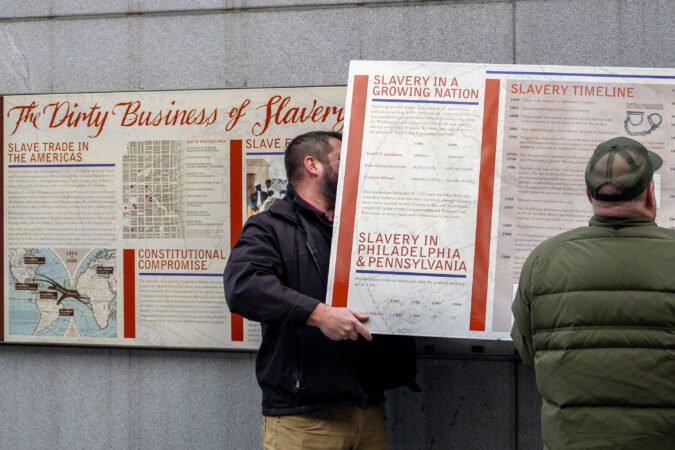
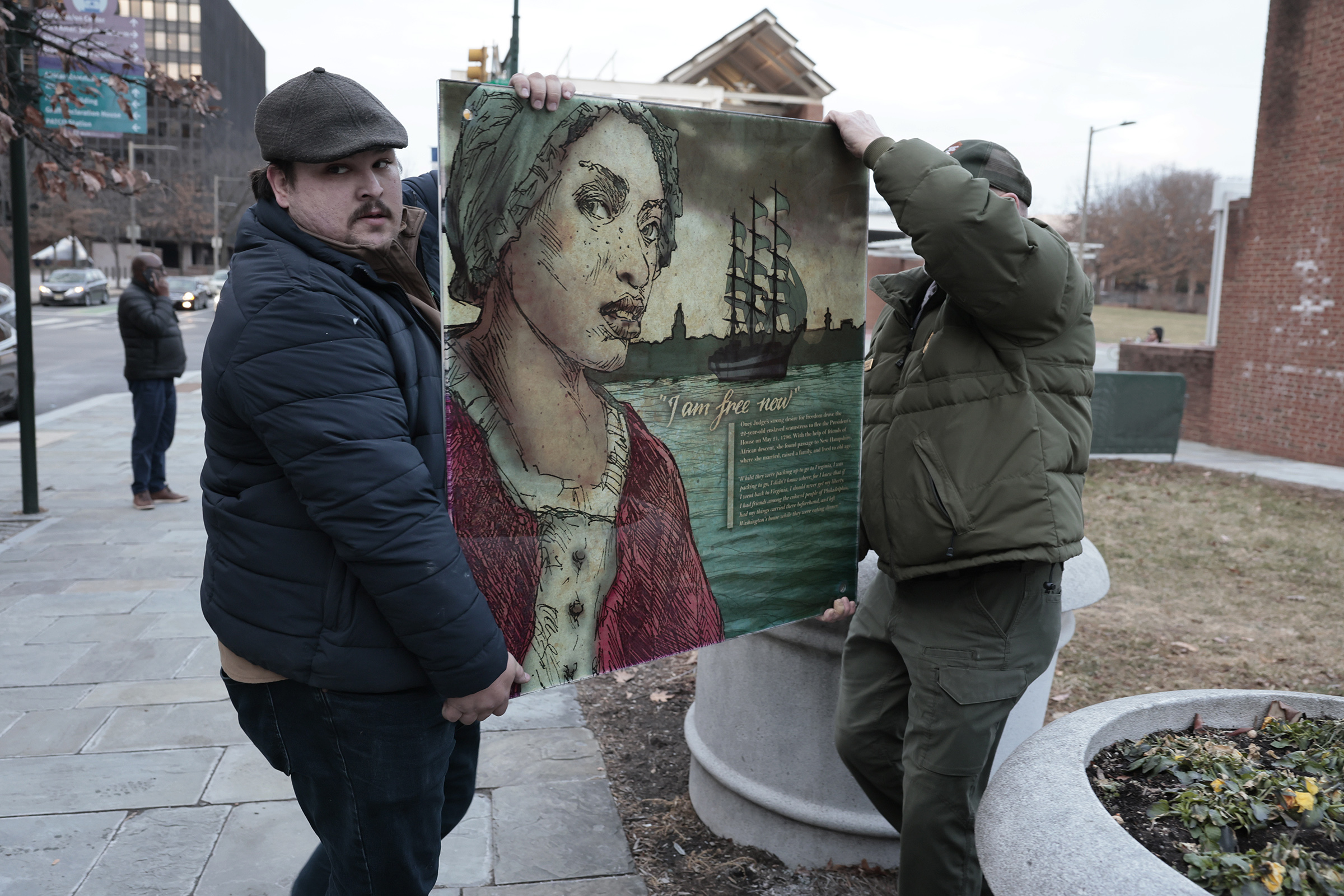
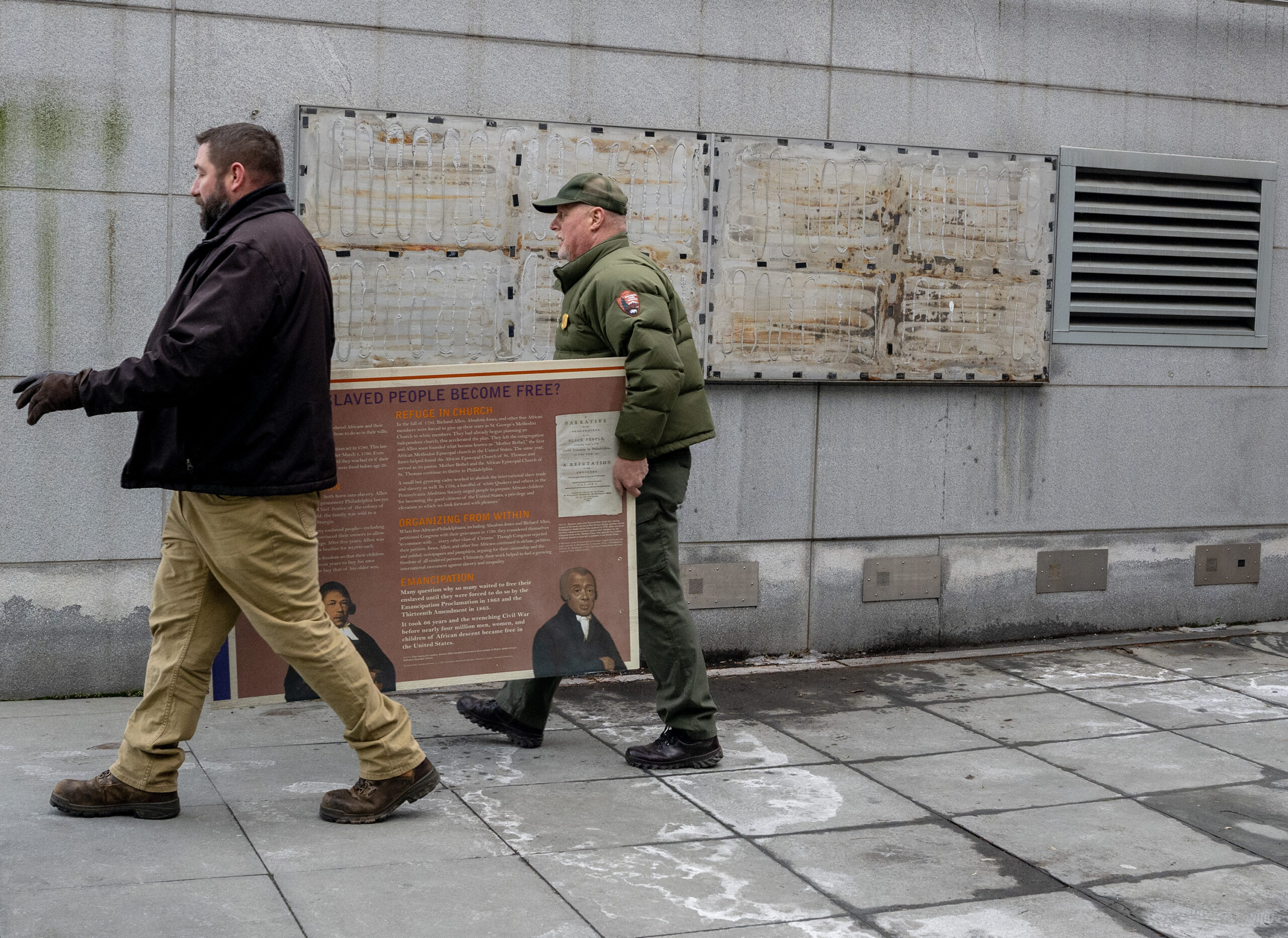
    National Park Service workers remove the displays at the President’s House site in Independence National Historical Park in Philadelphia on Thursday.

    I hope the spirits of the enslaved Africans whose stories had been immortalized in that display adjacent to the Liberty Bell will forever haunt Trump. It is my sincere wish that he and the henchmen who took down signs and dismantled the panels documenting the sad history of the nine enslaved Black people owned by our nation’s first president will never forget what they’ve done.

    From this day forward, may they toss and turn each night as they remember the destruction they have wrought, as well as the names of the enslaved whose memorial they defiled: Austin, Paris, Hercules, Christopher Sheels, Richmond, Giles, Oney Judge, Moll, and Joe.

    Trump and his enablers can try to hide the facts, but chattel slavery is an undeniable part of America’s founding. This nation wouldn’t be what it is now without the free labor of Africans dragged to these shores against their will and forced to toil for free in brutally inhumane conditions. It’s our story and one that should be acknowledged — not played down because Trump says so.

    What will he do next? Take a sledgehammer to the Martin Luther King Jr. statue in Washington, D.C.? Empty out the Smithsonian’s National Museum of African American History and Culture? Burn the books about slavery and Black codes that have been for sale in museum gift shops and national parks?

    The exhibit at the President’s House was the first I’d ever seen that, instead of glorifying the nation’s first president, humanized the poor people Washington held in the worst kind of bondage. The offices of The Inquirer are right across the street, and I’ve walked through the free outdoor exhibit many times. I used to enjoy seeing the expressions of tourists as they learned about the side of Washington that’s left out of most history books.

    Workers remove display panels about slavery at the President’s House site in Independence National Historical Park on Thursday, leaving only empty spaces where history has been redacted by President Donald Trump.

    Now all that’s left are the empty spaces where the various signs used to be. These sudden omissions at Independence Park make it feel like the historical account now being told at the site is a lie — not unlike the foundational lie of white supremacy that was used to justify the sin of slavery in the first place.

    The removals are just another step in Trump’s brutal agenda to take things in America back to how they used to be when white men had everything and Black people had nothing.

    Since his return to power, it has been one thing after another: his attempts to destroy all vestiges of diversity, equity, and inclusion, including his decision to no longer allow free admission to national parks on the federal holidays celebrating the late Rev. Dr. King and Juneteenth. Instead, parkgoers can enjoy free admission on Trump’s birthday, as if that’s really a thing.

    The president would destroy Black History Month, too, if he could, and I don’t put it past him to try. He’s been clear about his racial animus, restoring the names of Army bases to those of Confederate military figures and using U.S. Immigration and Customs Enforcement agents to inflict a reign of terror on Black and brown people.

    I’m proud Philadelphia has filed suit to take back what was removed from the President’s House. This is the beginning of the City of Brotherly Love, showing the Trump administration that, in the words of Sheriff Rochelle Bilal, “You don’t want this smoke.”

  • ‘He reached his limit.’ Immigrant father of 5-year-old with brain cancer accepts deportation to Bolivia after months in ICE detention.

    ‘He reached his limit.’ Immigrant father of 5-year-old with brain cancer accepts deportation to Bolivia after months in ICE detention.

    In the end, the pressure on the family simply became too great.

    Johny Merida Aguilara, the detained immigrant father of a 5-year-old son with brain cancer, has decided to drop efforts to stay in the United States and accept deportation to Bolivia.

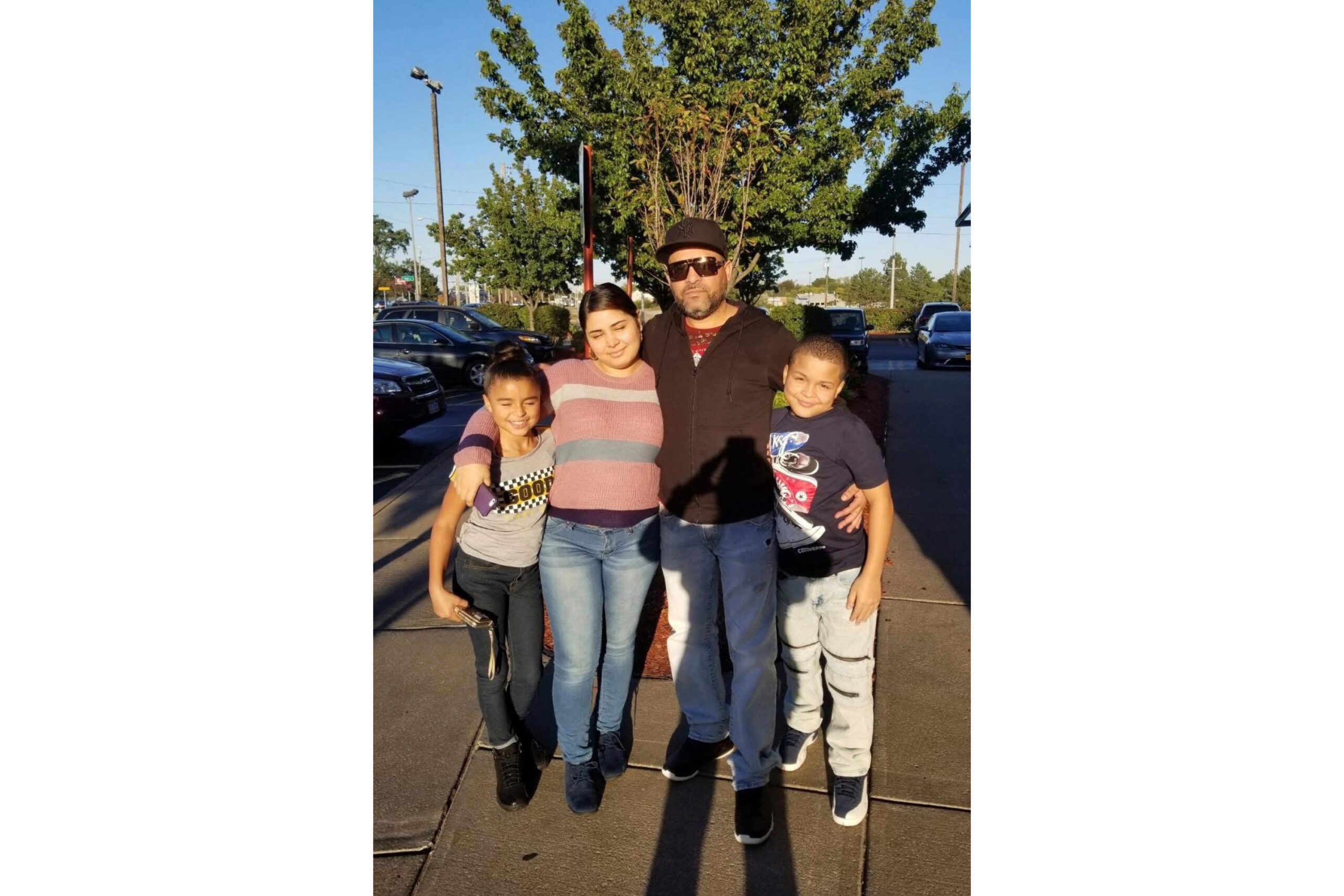
    His wife and three American-citizen children will also leave the country, though they are not required to do so, departing their Northeast Philadelphia home to reunite with their husband and father in the central Bolivian city of Cochabamba.

    The decision to go comes as Merida Aguilara, 48, approaches his fifth month in immigration detention ― with no end in sight. The family’s forced separation has been emotionally devastating, friends and supporters said. And with Merida Aguilara in custody and unable to work, the financial situation for his wife and children was growing desperate.

    Merida Aguilara had been a main caregiver for his son, Jair, who has been treated at Children’s Hospital of Philadelphia, and whose future is now deeply uncertain. Quality healthcare can be lacking in Bolivia, where the U.S. State Department warns that “hospitals cannot handle serious conditions.”

    Jair has autism and a severe eating disorder, surviving on PediaSure nutrition drink delivered through a plastic syringe. He generally would accept food only from his father, and Merida Aguilara would leave work during the day to feed his son.

    The father was arrested by ICE for an immigration violation during a September traffic stop on Roosevelt Boulevard near Hunting Park Avenue, having lived in the United States without official permission for nearly 20 years.

    “I am tired,” Gimena Morales Antezana, his wife, said in an interview with The Inquirer. “We have been trying to survive, but it is difficult with the children because they miss their dad so much.”

    U.S. Immigration and Customs Enforcement officials did not reply to a request for comment on Thursday.

    The family has received strong community support, Morales Antezana said, but that could not continue indefinitely, and at this point she can no longer afford rent, water, or heat,

    Son Matias, 7, cries himself to sleep most nights, calling out for his father to come home. His sadness deepened after Christmas, turning into anger when Morales Antezana finally revealed that his father was not away on an extended work trip, but was being held by immigration authorities at the Moshannon Valley Processing Center, an ICE facility in central Pennsylvania.

    Gimena Morales Antezana and Johny Merida Aguilar’s wedding photos hang on the wall at their home in Northeast Philadelphia.

    Daughter Melany, 13, now feels unsafe in the U.S., her mother said. Teenage insecurities have bloomed into a persistent sense of danger, and she told her mom that leaving might be the only way to feel comfortable again.

    Jair cries inconsolably every time he sees or hears his father on the phone, asking why his dad can’t be home, Morales Antezana said.

    All three children were born in this country and are U.S. citizens by law.

    Some good news came this month. Doctors told Morales Antezana that Jair’s brain tumor had not grown, allowing time to try to find care in Bolivia.

    “This is going to be a constant struggle every day until God decides,” Morales Antezana said. “It’s scary to think that if something happens we don’t have a hospital to take him to, but knowing his dad will be there makes it a little lighter to bear.”

    Morales Antezana, 49, had to stop working in 2020 to handle the nearly full-time demands of Jair’s health, taking him to see specialists and undergo treatments while also caring for Melany and Matias.

    Jair Merida, 5, posed for a portrait at home in October. His father, Johny Merida Aguilar, was stopped and arrested by ICE in September.

    She has not been ordered deported while she has pursued legal means to stay in the country. Mother and children plan to voluntarily depart this month, while the precise timing of Merida Aguilara’s deportation is uncertain.

    “He couldn’t do it anymore; he reached his limit,” said Philadelphia immigration attorney John Vandenberg, who represents the family. “It’s a tough environment in the jail.”

    Vandenberg won relief in the U.S. Court of Appeals for the Third Circuit, which issued a Sept. 30 order to temporarily block Merida Aguilar’s deportation. The lawyer also applied on Morales Antezana’s behalf for a T visa, which can bestow a path to citizenship on victims of human trafficking and their families.

    But time has gone on with no sign from the government as to when that visa application might be considered.

    Merida Aguilar and his wife were given permission to legally work in the U.S. under her 2024 claim for asylum, which could enable both to live here permanently if granted. The Trump administration, however, has made it increasingly difficult for people to succeed on those claims.

    Vandenberg said Merida Aguilar has no criminal record in the U.S., and Bolivian authorities provided documentation showing he had committed no offenses in that country.

    His efforts to remain in the U.S. have been complicated by a previous deportation, when he tried to enter the U.S. east of San Diego in 2008. Immigration officials sent him to Mexico, but Merida Aguilar secretly crossed back into the U.S. almost immediately.

    Now he and his wife want their children to be in Bolivia in time for the new school year, which starts in February.

    “I want to make sure our kids can study,” Morales Antezana said, “so they can decide who they want to be in the future, and come back [to the U.S.] as professionals with a different story than us.”

    Her parents, and a son from a previous relationship, are eager to see them in Bolivia.

    She said she is looking forward to what many people might take for granted ― hugging her partner, watching him play with their children, enjoying a meal as a family. That helps ease the pain of saying goodbye to a city she sees as home and to the friends who tried to help.

    “They kept me strong and helped me not get more depressed,” Morales Antezana said. “I’m going to miss everything about Philadelphia. It hurts a lot to have to leave because there are good people here.”

  • People are dying in Trump’s squalid concentration camps

    People are dying in Trump’s squalid concentration camps

    In the sweltering August heat of the West Texas desert, U.S. Immigration and Customs Enforcement — through a $1.2 billion private contract that was awarded under some strange circumstances — in 2025 opened up a large tent city detention camp near El Paso to take some of the thousands swept up in Donald Trump’s mass deportation raids.

    It took just a matter of days for horror stories to begin leaking out of the sprawling camp on the grounds of Fort Bliss.

    A Cuban refugee identified as Isaac, a pseudonym, told investigators from a coalition of human rights groups that guards had violently assaulted him as part of a campaign to convince him and other detainees to be dumped in Mexico rather than to contest their deportation.

    Isaac told the groups’ lawyers in a sworn declaration that “the guards hit my head” and “slammed it against the wall approximately ten times” before grabbing and crushing his testicles, then handcuffing him and putting him on a bus with 20 other detainees that was driven to the border. They were told, according to Isaac, “If we don’t want to go to Mexico, then we would either be sent to a jail cell in El Salvador or Africa.”

    Isaac’s complaints echoed other nightmarish tales that attorneys for the American Civil Liberties Union (ACLU) and a web of immigrant rights groups gleaned in 45 interviews with detainees that were cited in a December letter pleading with ICE to shut down what has become the largest internment camp in the United States.

    This undated photo provided by Jeanette Pagan-Lopez shows Geraldo Lunas Campos with his three children. Lunas Campos died Jan. 3 at an ICE detention facility in El Paso, Texas.

    The implication was that if the Trump regime did not act, things at Camp East Montana would get worse.

    They did.

    Over a 33-day stretch that straddled the arrival of the new year, three ICE detainees at the Texas camp died under murky circumstances. One of the cases — the Jan. 3 death of 55-year-old Geraldo Lunas Campos, also a Cuban immigrant — was on Wednesday ruled a homicide by the county medical examiner, citing efforts by camp guards to restrain him. The medical examiner wrote in his report that Campos died from “asphyxia due to neck and torso compression.”

    The U.S. Department of Homeland Security, which oversees ICE, has continued to maintain that Campos’ death was “a suicide,” and that any encounter he had with guards was an effort to prevent him from taking his own life. Two fellow detainees who reported seeing guards choking Campos have now received deportation notices. The mother of two of Campos’ children told the New York Times, “He was being abused and beaten and choked to death.”

    The alleged killing of Campos is arguably the worst example of what many critics predicted when Trump won the presidency in 2024, behind supporters waving placards, “Mass Deportation Now.” The squalid, hastily erected tent city in the Texas desert is the flagship of what experts describe as a growing network of concentration camps. And now, one year into Trump’s second term, people are dying in them.

    “It’s everything that we warned it would be, even before it opened,” Haddy Gassama, a senior policy counsel at the ACLU who’s been working on the issues around Camp East Montana, told me this week. “I think their goal is still to put 5,000 people in this space with inadequate healthcare, inadequate food, and inadequate recreation.”

    The high-profile, increasingly violent immigration raids that have been taking place in Minneapolis, Chicago, and other U.S. cities have swelled the number of detainees in ICE custody to more than 73,000, an all-time record. DHS is currently planning a large-scale 2026 expansion of its gulag archipelago that would even include repurposing remote rural warehouses for holding human beings.

    In such a large population of detainees, some deaths would be inevitable, but the current ongoing spike in fatalities has shocked and alarmed experts. The sixth ICE detainee death of 2026 took place on Sunday, which is a rate of one every three days. That extrapolates to more than 120 deaths over a year, which would be more than 10 times the rate in the last year of the Biden administration, when only 11 detainees perished.

    That Jan. 18 fatality also occurred at Camp East Montana, when Victor Manuel Diaz, 36, of Nicaragua, died of what government officials called a “presumed suicide.” Unlike Campos, the autopsy on Diaz will not be done by the county medical examiner, but by government doctors at an Army medical center. Diaz was one of many migrants swept up in the current ICE operation in Minnesota.

    The third recent death tied to the Texas concentration camp — Francisco Gaspar-Andres, 48, of Guatemala, who was taken to an El Paso hospital — was determined by an autopsy to have been caused by complications of alcohol-related liver disease.

    That the majority of ICE custody deaths are linked to medical causes doesn’t necessarily exonerate either the agency or its private contractors. A 2024 report by Physicians for Human Rights that looked at 52 deaths in ICE custody from 2017 to 2021, or during Trump’s first term, found that 95% were preventable, or possibly preventable, if appropriate medical care had been provided.

    One such medical death occurred here in Philadelphia earlier this month when Parady La, a 46-year-old Cambodian refugee who lived in Upper Darby, died after he was taken from the city’s federal detention center to Thomas Jefferson University Hospital. ICE said La was suffering from severe drug withdrawal symptoms, but family members are questioning whether the feds paid enough attention to his illness, or even administered the right treatment.

    Human rights watchers insist that the spike in ICE detention deaths cannot be viewed as a coincidence, but as an outgrowth of problems that include not only medical neglect but also squalid conditions, substandard food, rancid water, and patterns of physical and sexual abuse by guards. They say the problems are not new, but have substantially worsened as the Trump regime hastily expands its networks of detention centers and camps.

    In December, another Camp East Montana detainee — Thomas, also a pseudonym — told human rights lawyers that “he was beaten by officers so severely he sustained injuries across his body, lost consciousness, and had to be taken to a hospital in an ambulance.” Like his fellow detainee Isaac, he alleged guards grabbed his testicles and crushed them.

    Gassama, the ACLU attorney, said the horrific track record of ICE detention raises all kinds of red flags about its current plans, aided by its $175 billion windfall in Trump’s “Big Beautiful Bill” that was signed last year, to house as many as 80,000 detainees in a new network of revamped warehouses. “You can only imagine what a remodeled warehouse would be like to detain people, human beings, long term,” she said.

    It’s true that — as right-wing pundits are always quick to point out — the U.S. mass deportation regime offers nothing that comes close to the death camps Nazi Germany established at the end of the Holocaust. But experts like author Andrea Pitzer say the similarities to concentration camps that Adolf Hitler set up for his political enemies after taking power in 1933 are too many to ignore.

    History has shown again and again that rounding up masses of people based on their identity strips them of their basic humanity. And that becomes the sick justification for violent abuse, neglect, endemic disease, and, ultimately, death.

    The most famous victim of the Nazi Holocaust, the teenage diarist Anne Frank, wasn’t killed in a gas chamber, but died from typhus at the Bergen-Belsen concentration camp, which was the result of unsanitary conditions and medical neglect.

    Now, people are dying in record numbers in “the camps” on sunbaked U.S. soil. This is shameful beyond words.

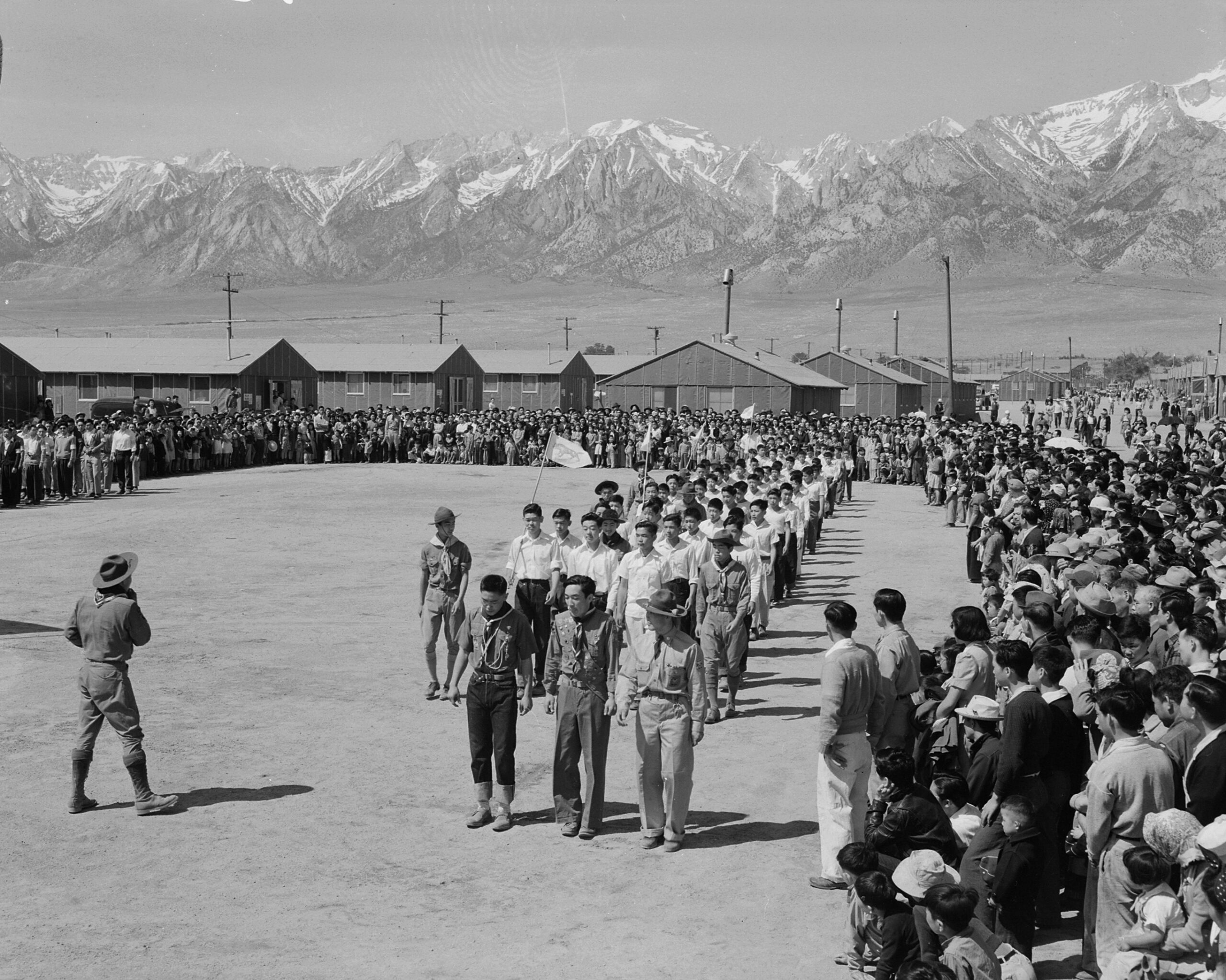
    In this photo provided by the National Archives, Japanese Americans, including American Legion members and Boy Scouts, participate in Memorial Day services at the Manzanar Relocation Center, an internment camp in Manzanar, Calif., in May 1942.

    These human rights abuses now occurring at Camp East Montana are also a tragic echo of the longer arc of history of its Fort Bliss location. In 1942, thousands of detainees — mostly Japanese Americans, with some people of German or Italian descent — were shipped from the West Coast to be held in a barbed-wire camp under constant watch by armed guards. Over the course of World War II, some 1,862 Japanese Americans died in the broader network of internment camps, many from harsh conditions.

    More than four decades later, America formally apologized for this gross injustice. This time, we need to stop it before it comes to that.