Tag: Immigration

  • A disabled Ecuadoran immigrant faces deportation. Del. Gov. Matt Meyer hopes to stop it.

    A disabled Ecuadoran immigrant faces deportation. Del. Gov. Matt Meyer hopes to stop it.

    Delaware Gov. Matt Meyer has stepped into the case of a 52-year-old disabled Ecuadoran immigrant, telling the judge it would be “cruel” and “egregious” to deport the Seaford resident to face gang violence in his homeland.

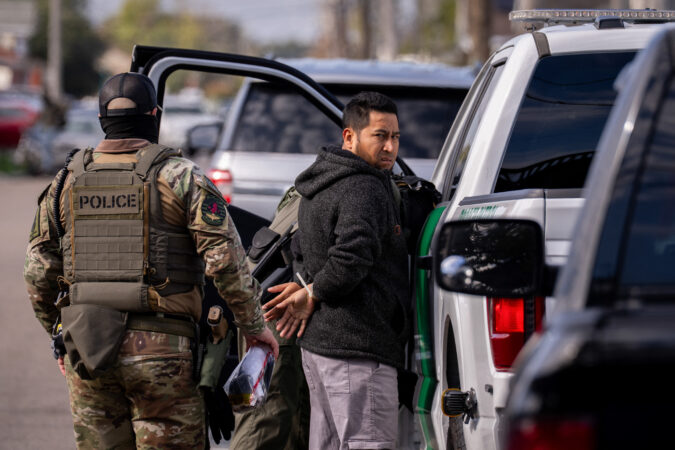
    The man, Victor Acurio Suarez, is unable to live on his own, always cared for by his younger brother. He tried to flag down a U.S. Immigration and Customs Enforcement agent in a Lowe’s parking lot near his home in September, apparently thinking the officer could help him find work. Instead, he was arrested and placed in detention and is scheduled for an Immigration Court hearing on Jan. 16.

    “Given Mr. Suarez’s medical and functional limitations, I am concerned that he is unable to safely care for himself, effectively represent himself in legal processes, or access the necessary support without his family,” the governor wrote to Judge Dennis Ryan.

    Meyer also advocated for Acurio Suarez in a series of social media posts, saying, “I want Delawareans to know about Victor Acurio Suarez,” and calling what has happened to him “deeply disturbing.”

    Meyer’s advocacy is notable. While many elected officials have spoken out against President Donald Trump’s broader immigration policies, advocating for specific individuals has been typically reserved for high-profile cases like Kilmar Abrego Garcia, the Maryland man who was illegally deported to El Salvador’s notorious CECOT prison, returned to Moshannon Valley Processing Center, and was recently released.

    Meyer argued that with no criminal history, not even a traffic violation, Acurio Suarez “poses no threat to public safety.”

    Yet how much weight the backing of a governor carries in the immigration system remains to be seen.

    In the past, someone with Acurio Suarez’ profile might have been allowed to stay home as their case moved forward in Immigration Court.

    A medical assessment submitted for his asylum application this week said Acurio Suarez has autism and aphasia, a language disorder that affects his ability to produce or understand speech.

    Dr. David W. Baron noted Acurio Suarez can’t safely live on his own. He requires supervision to perform daily hygiene activities or cook and has a hard time communicating his needs to others, a condition made worse by being in an unfamiliar setting while in detention, where he doesn’t have access to the support needed for his neurocognitive disabilities.

    Still, as the Trump administration pursues a mass deportation agenda, undocumented immigrants without violent criminal histories are increasingly held in mandatory detention, unable to seek release on bond, as their cases play out.

    The latest federal data from November says 74% of the roughly 65,000 people in detention have no criminal convictions.

    It’s unclear what impact the governor’s letter might have. The judge on the case can only approve or deny the asylum application.

    ICE does have discretion in releases but has so far denied a September request from Acurio Suarez’ attorney, Kaley Miller-Schaeffer.

    “The letter from the governor, if anything, could maybe persuade ICE to relook at the request for release on parole,” she said, noting that Meyer’s letter brings more attention to the case.

    An ICE spokesperson said in a statement that the agency was committed to the “health, safety, and welfare of all detainees in custody.”

    “ICE’s National Detention Standards and other ICE policies require all contracted facilities to provide comprehensive medical and mental health screenings from the moment an alien arrives at a facility and throughout their entire time in custody,” the statement said.

    Miller-Schaeffer said she will still have to prove Acurio Suarez met all the strict requirements for asylum in Immigration Court. Should ICE not reconsider releasing Suarez on bond, he will remain in Moshannon Valley Processing Center until he is either granted asylum or deported.

    Deportation could be deadly, according to Acurio Suarez and his brother. In addition to lacking the necessary support to perform daily tasks, Acurio Suarez fears the gang that drove him and his brother to flee the country would find him again in an effort to recruit or kill him.

    Acurio Suarez told Baron he fled to the United States in 2021 after a group of gang members beat and kicked him with steel-toe boots, knocking out his gold front teeth and stealing them. The group was part of Los Lobos, a criminal organization with a national presence in the country, designated a foreign terrorist organization by U.S. Secretary of State Marco Rubio this year.

    Acurio Suarez said the group also set his home on fire after they learned his younger brother reported the attack to the police.

    According to the Global Initiative Against Transnational Organized Crime, gang violence has risen in Ecuador amid economic hardship and subsequent battles over the illicit economy. The Geneva-based group estimates that the country will reach about 9,100 intentional homicides in 2025, a 40% increase from the previous year.

    In his passionate defense of Acurio Suarez, Meyer said the 52-year-old is at “high risk of re-victimization by the Los Lobos gang” should he be deported.

    “If you believe compassion belongs in our immigration system, join me in calling for Victor’s release,” Meyer wrote.

  • The Trump administration’s immigration raids are testing this sanctuary city

    The Trump administration’s immigration raids are testing this sanctuary city

    GRETNA, La. — Siomara Cruz was not troubled when she saw two Latina immigrants handcuffed earlier this month by masked immigration agents outside a restaurant in this New Orleans suburb.

    “They need to do things the proper way,” said Cruz, 59, a housewife whose parents emigrated from Cuba. “The law is the law. Every country has their law, and you’ve got to respect it.”

    Across the street, Tracey Daniels said it was “awful” to see immigration agents in an unmarked SUV detain a Latino man outside the gas station kitchen where she was preparing lunch plates of red beans, rice, and fried catfish.

    “They’re just snatching these people, snatching them away from their families,” said Daniels, 61. “Now they got people afraid to come outside, businesses closing.”

    The immigration operation, dubbed Catahoula Crunch by the Department of Homeland Security, follows similar crackdowns in Chicago, Los Angeles, Charlotte, N.C., and other cities. DHS Assistant Secretary Tricia McLaughlin said in a statement earlier this month that 250 people had been arrested since the start of the operation.

    The mission is exposing stark divides in and around New Orleans that reflect broader national reactions to the administration’s immigration raids — and who should help enforce them.

    Across 10 national polls in November and early December, 43% approve of President Donald Trump’s handling of immigration, while 55% disapprove. The share of people who approve of Trump’s handling of immigration has dropped from about 50% in March. Last week, Illinois Gov. JB Pritzker, a Democrat, signed a law seeking to limit immigration enforcement in his state as he continues challenging the administration’s aggressive campaign there.

    New Orleans is a “sanctuary city,” where officials have historically refused to support federal immigration sweeps. But new state laws designed to penalize those who impede immigration enforcement could put officials and officers at risk if their departments do not cooperate with federal operations.

    And some surrounding police departments, including in Gretna, have signed 287(g) agreements to work with U.S. Immigration and Customs Enforcement to deport people who authorities say entered the country illegally.

    Those agreements have also divided residents. Some said that immigration enforcement should fall exclusively to federal agents — that having local officers partner on the issue risks alienating immigrant communities or violating people’s rights. But police supporting the operations said they get more complaints about crime in their communities than they do about Catahoula Crunch.

    Gretna Deputy Police Chief Jason DiMarco said his 150-person force needs to serve everyone in its diverse community, but added that having so many undocumented residents in the city makes it harder to identify suspected criminals. Last month, he said, local police accompanied ICE agents on a raid that picked up four suspects, including an alleged MS-13 gang member. DiMarco noted that within the last year, Gretna police have investigated several serious crimes committed by undocumented suspects, including one who fled the country after allegedly killing an immigrant who had come to the United States legally.

    Now, because of the 287(g) agreement, officers can coordinate directly with ICE.

    “If they run across an illegal immigrant in their day-to-day patrol activities … they can actually detain the person, check their legal status, and if they aren’t here legally, we can contact ICE and they’ll come and get them,” DiMarco explained of the partnership during an interview at his office earlier this month.

    DiMarco, who is from Gretna, has watched the city of nearly 18,000 grow more diverse, to include a member of his own family who emigrated from Honduras. Like many in the New Orleans area, his family tree includes immigrants from several countries, including France, Italy, and Cuba.

    “New Orleans is the original melting pot of the world,” he said. “… People from every walk of life lived in this city. And they intertwined and managed to live together cohesively.”

    So far, DiMarco said, he hasn’t fielded any complaints about his department’s work with ICE. Even if people don’t agree, he said, officers have a duty to enforce the law, including one signed in June by Gov. Jeff Landry, a Republican, that criminalized “any act intended to hinder, delay, prevent, or otherwise interfere with or thwart federal immigration enforcement efforts.”

    Anyone in violation could face jail time or fines.

    “We don’t get to pick and choose which you can and can’t enforce,” DiMarco said.

    But DiMarco also worries the ongoing raids may make immigrants even more hesitant to report crime.

    “We don’t want somebody to get victimized and get picked on, whether they be illegal or not,” he said. “Nobody deserves to be a victim of a crime.”

    Most Catahoula Crunch activity has been to the west of New Orleans in Jefferson Parish, which includes Gretna and other towns where law enforcement agencies signed 287(g) agreements. In last year’s presidential election, 55% of Jefferson Parish voted for Trump, while 82% of neighboring Orleans Parish voted for Democratic nominee Kamala Harris.

    Kenner, Jefferson Parish’s most populous city, has more than 64,000 residents — about one-third of whom are Latino, according to U.S. Census Bureau data. Police Chief Keith Conley said Kenner partnered with ICE at the request of local business owners, including immigrants.

    “We had members of our community pleading with us to keep our community safe,” Conley said, describing gang activity that he said had its roots in Central American countries that residents of Kenner had fled. “They saw the ways of their home countries coming here. When I have business leaders coming to me, I have to respond.”

    Conley said his city has experienced “some pretty heinous crimes” in recent years, including murder and child sexual assaults.

    “And we weren’t getting much cooperation” from federal officials, he said. “It was a failure at the top.”

    Landry requested a National Guard deployment to New Orleans in September, citing an alleged increase in violent crime, even though police and city leaders say crime has decreased and federal support is not needed. The city’s homicide rate is nearly the lowest in 50 years. Violent crimes — including murders, rapes, and robberies — have all decreased 12% through October compared with a year ago, according to New Orleans police.

    Conley and some Jefferson Parish residents, however, said they are grateful the Trump administration has sent federal agents into their region. Outside a Lowe’s hardware store in neighboring Metairie, where immigration agents were spotted this month, Howard Jones, 71, said he was supportive of local law enforcement agencies joining the operation.

    “I’m all for people being deported who are not here legally,” said Jones, a retired data warehouse analytics consultant and self-described moderate conservative who voted for Trump the last three presidential elections.

    But Gloria Rodriguez, 38, a Mexican immigrant who works in construction, said she did not like seeing local police involved. Though she is a legal permanent resident and her husband and 18-year-old son who were in the truck with her are U.S. citizens, they carried their passports and immigration paperwork in case they were stopped by federal agents.

    “They should not cooperate with immigration, just do their job and get criminals out of the streets instead of hardworking people,” Rodriguez said, adding that she has been troubled by reports of U.S. citizens being caught up in the immigration crackdown.

    “What if they take us?” she said.

    Unlike their counterparts in Gretna, Kenner, and other cities with 287(g) agreements, New Orleans officials have resisted cooperating with the Trump administration’s efforts.

    New Orleans police adopted a policy that prohibits officers from assisting federal immigration enforcement except under certain circumstances, such as a threat to public safety. The policy resulted from a 2013 federal consent decree to address a history of unconstitutional practices, including racial profiling. Last month, a federal judge ended the consent decree, but Police Superintendent Anne Kirkpatrick said last month that immigration remained a civil issue, adding that police would not enforce civil laws but instead ensure that immigrants “are not going to get hurt and our community is not in danger.”

    Louisiana Attorney General Liz Murrill, a Republican, has since encouraged Kirkpatrick to have officers “fully cooperate” with federal immigration officials.

    Murrill warned that New Orleans police policies “appear to conflict with current state law,” referencing this year’s statute that says thwarting federal immigration efforts could be considered obstruction of justice.

    Kirkpatrick did not respond to a request for comment, but a department spokesperson said in a statement this month that “NOPD is not involved in, informed of, or responsible for any enforcement activity conducted by ICE, DHS, or U.S. Border Patrol.”

    The police department’s role, the statement added, “is to enforce state and municipal criminal laws. We do not handle or participate in federal immigration enforcement.”

    Murrill is also embroiled in a legal battle with the Orleans Parish Sheriff’s Office, which operates city jails under a federal consent decree and has refused to cooperate with ICE.

    Chief Border Patrol Agent Gregory Bovino has appeared in the French Quarter of New Orleans, Kenner, and other areas with agents, where he has been met with protests and signs of support. Anti-ICE protesters confronted Bovino and temporarily shut down a New Orleans City Council meeting this month, but other residents posed for photos with Bovino while holding a homemade sign that read: “Thank you ICE.”

    New Orleans Mayor-elect Helena Moreno is already pressing federal officials to prove they are targeting only immigrants with violent criminal histories. Moreno, a Democrat who will be the city’s first Latina mayor, will not take office until Jan. 12. But she said she is concerned Catahoula Crunch is creating a “culture of fear” and forcing businesses to close and workers to stay home. She created a website advising residents of their rights, and the city council launched an online portal where they can report alleged abuse by federal officers.

    Some New Orleans business owners posted “ICE Keep Out” signs this month, while others said they worried that doing so could make them targets. Antoine’s Restaurant in the French Quarter held meetings with employees — all documented — to address their fears after seeing reports of masked immigration agents conducting raids in armored vehicles.

    “It’s giving a lot of people anxiety, including our employees,” said Lisa Blount, whose family owns the restaurant, as she stood near the packed bar. “We are in a busy season, an important, celebratory time in New Orleans. We’re not going to let them bully their way in.”

    A few streets away, Dominican immigrant Diomedes Beñalo was unloading gold chairs for a wedding and said he wished local police would do more to protect residents’ rights. He questioned why federal agents are hiding their faces.

    “That seems like a thing that can make them violate people’s rights,” said Beñalo, 40, adding that undocumented immigrants’ civil rights should not be violated.

    “The police should make sure that doesn’t happen,” he said. “That’s what we pay police to do.”

  • Palantir CEO Alex Karp was raised in a liberal household outside Philly. Now he’s a top Trump administration contractor

    Palantir CEO Alex Karp was raised in a liberal household outside Philly. Now he’s a top Trump administration contractor

    In the first year of President Donald Trump’s administration, Palantir Technologies has secured major contracts to compile data on Americans, assist the president’s federal immigration enforcement, and play a key role at the height of the Department of Government Efficiency’s efforts to shrink the federal government.

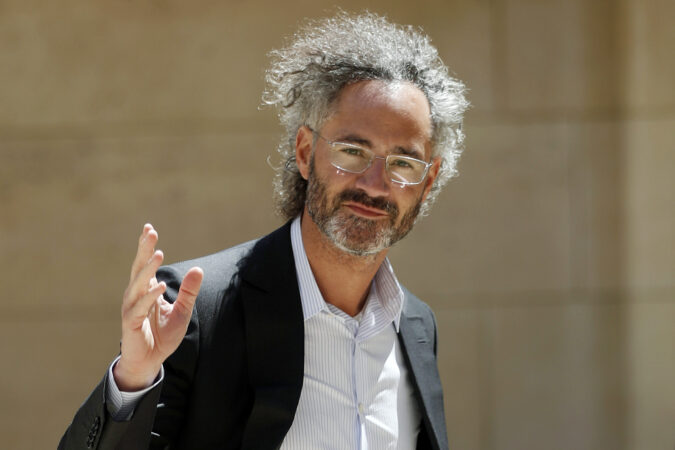
    But just a few years ago, it seemed unlikely that billionaire Alex Karp, CEO of Palantir — a publicly traded data software company that Karp described in 2011 as “deeply involved in supporting progressive values and causes” — would ever strike such deals with Trump.

    Karp grew up in the Philadelphia area in a politically left-leaning household and was critical of Trump during his first White House term. But over time, and catalyzed by Hamas’ Oct. 7, 2023, attack on Israel, his opinion and habits shifted. Quickly, he went from being a major Democratic Party donor to writing a big check to Trump’s 2024 inaugural committee.

    As of May, Palantir has received more than $113 million in federal spending. The company, which builds software to analyze and integrate large data streams for major companies, including defense contractors, sees itself as a beneficial power, but critics are concerned about data being misused or people being surveilled in violation of civil liberties, according to the New York Times’ The Daily podcast.

    And some employees are opposed to the optics of Palantir carrying out the president’s controversial political agenda.

    Here’s what to know about Karp and Palantir.

    What is Palantir?

    Palantir is a publicly traded data analytics software company that was cofounded by Karp, Joe Lonsdale, Nathan Gettings, Stephen Cohen, the company’s president, and Peter Thiel, a billionaire tech investor and cofounder of PayPal. Thiel is a libertarian and is a staunch supporter of right-wing ideology.

    Palantir, based in Denver, grew out of the Sept. 11, 2001, terrorist attacks on the United States and a desire to help improve national security.

    According to The Daily podcast guest Michael Steinberger, who spent six years interviewing Karp for a book, one of Palantir’s major contractors has been the CIA, which was also one of its early investors. Palantir’s technological products also played a key role in assisting Ukraine during the early months of Russia’s war on the country.

    The company started its partnership with U.S. Immigration and Customs Enforcement during former President Barack Obama’s administration, but that contract did not draw controversy until Trump’s first term in the White House, when his immigration crackdown became a key priority, Steinberger, a contributing writer to the Times, said.

    This summer, it was reported that Palantir landed a $10 billion software and data contract with the U.S. Army, months after reports showed Trump tapped the company to compile data on Americans, prompting scrutiny from privacy advocates, labor rights organizations, and student unions.

    Alex Karp, Palantir CEO, has roots in Philadelphia

    Karp was born in New York but grew up in the Philadelphia suburbs, he told the World Economic Forum in 2023. He went on to attend Central High School.

    As Steinberger describes it, “He’s a Philly kid. He grew up in Philadelphia. Grew up in a very left-wing household.” Karp is the son of a Jewish pediatrician and a Black artist. And he’s dyslexic, Steinberger said.

    “It’s like I have this weirdly structured brain,” Karp said in an interview with Steinberger. “The motor is just structured differently.”

    Karp and his younger brother spent time going to antiwar and antinuclear protests, and the older Karp attended Haverford College, Steinberger said. There, he closely identified with his Black heritage, getting involved with Black student affairs and organizing an antiracism conference at Yale University.

    Karp insists that he did not put much effort into his schooling at Haverford, but Steinberger, who was a classmate of Karp’s in college, appears to think otherwise.

    “I think his path in life would suggest otherwise. I think the library saw a lot more of him than it did of me, which may go some way to explaining why he became a billionaire and I did not,” Steinberger said.

    After Haverford, Karp attended Stanford Law School, where he met and became close with Thiel — whose political views were the opposite of Karp’s. Years later, Karp and Thiel reunited after 9/11. Thiel was looking for a CEO for Palantir.

    “Thiel interviews a couple of people for the CEO position, but then he and the other people involved in founding Palantir realized Karp is probably the right guy for the job,” Steinberger said.

    In an interview with Steinberger, Karp admitted that his background made him an unlikely choice for CEO.

    “I wasn’t trained in business. I didn’t know anything about start-up culture. I didn’t know anything about building a business. I didn’t know anything about financing a business,” Karp said.

    From a Philly liberal to a staunch Trump defender

    In Steinberger’s telling, Hamas’ terrorist attack on Israel on Oct. 7, 2023, gave rise to a political environment that would solidify Karp’s rightward shift.

    Over time, Karp had become discouraged with the left’s criticisms of Palantir, but that reached a fever pitch when Palantir offered its services to Israel as the country began its military invasion of Gaza amid protests, including internal dissent from employees, Steinberger said.

    Steinberger said Karp — once a protester himself — became increasingly troubled by college campus protests against Israel’s war in Gaza.

    “He thinks the protests are riddled with antisemitism,” Steinberger said. “They’re very dangerous and he sees this as reflective of a broader rot in his mind on the left.”

    Karp continued to back then-President Joe Biden, who was supportive of the Israeli government, but in December 2023, Karp posed a sort of ultimatum at the Reagan National Defense Forum in California regarding liberals’ stance on Israel and a desire for the Democratic Party to denounce the college campus protests.

    “I’m one of the largest donors to the Democratic Party and, quite frankly, I’m calling it out, and I’m giving to Republicans. If you keep up with this behavior, I’m going to change. A lot of people like me are going to change. We have to really call this out. It is completely beyond the bounds,” Karp said.

    Over time, Karp started donating more “aggressively” to Republicans, Steinberger said, and made clear his support for Trump. Karp wrote a $1 million check to the Trump-Vance Inaugural Committee and later began publicly praising Trump on national security.

    Karp, for his part, still thinks of himself as a progressive.

    “I didn’t shift my politics,” Karp said. “The political parties have shifted their politics. The idea that what’s being called progressive is any way progressive is a complete farce.”

  • A disabled Ecuadorian immigrant tried to flag down an ICE officer. Now he faces deportation.

    A disabled Ecuadorian immigrant tried to flag down an ICE officer. Now he faces deportation.

    Victor Acurio Suarez is 52 but childlike, born with developmental disabilities that have left him unable to live on his own.

    He likes to talk to people, said his brother, who takes care of him. And on Sept. 22, in a Lowe’s parking lot near the brothers’ home in Seaford, Del., he tried to flag down an ICE agent, apparently thinking the officer could help him find work.

    Instead, Acurio Suarez, originally from Ecuador, was arrested for being in the country without permission and sent to the Moshannon Valley Processing Center, an ICE detention facility in central Pennsylvania.

    Acurio Suarez doesn’t realize he’s in custody, his brother, Lenin Acurio Suarez, said in an interview. He thinks he’s on vacation, provided with three free meals a day and allowed to buy snacks and kick a soccer ball.

    But in phone calls from Moshannon, he says that after three months, he’s grown tired of vacation and wants to come home.

    In fact, Acurio Suarez faces deportation to Ecuador ― with a key Immigration Court hearing that had been scheduled for Thursday now postponed. When that hearing takes place, he could be granted asylum and allowed to stay in the U.S., safe from the gang violence he fled, or ordered returned to his homeland.

    His case, said his attorney, Kaley Miller-Schaeffer, is a prime example of how Trump-administration policy shifts have encouraged ICE to detain even the most vulnerable and to treat potential discretionary relief as irrelevant in a bid to boost deportations.

    Her Sept. 30 request to have Acurio Suarez released to the care of his brother while his immigration case goes forward was denied.

    Asked about Acurio Suarez’s arrest and detention, ICE said in a statement that they screen and look out for the health of all detainees.

    “U.S. Immigration and Customs Enforcement is firmly committed to the health, safety, and welfare of all detainees in custody. ICE’s National Detention Standards and other ICE policies require all contracted facilities to provide comprehensive medical and mental health screenings from the moment an alien arrives at a facility and throughout their entire time in custody.”

    At an earlier court hearing, Miller-Schaeffer said, she watched as Acurio Suarez struggled to answer basic questions. He told the judge he didn’t know if he had an attorney or know what an attorney does.

    His ability to testify was so limited, she said, that the judge allowed his brother to take the stand to explain his sibling’s experience and situation.

    Acurio Suarez can recall big events in his life, she said. He remembers being beaten by gangs who seized on his vulnerability, but he couldn’t tell you exactly when that occurred.

    Today, as President Donald Trump pursues an unprecedented mass-deportation campaign, more migrants including Acurio Suarez have been made subject to mandatory detention. That means they’re held in custody during their deportation proceedings, unable to seek release on bond.

    Victor Acurio Suarez’s empty room at his home in Seaford, Del.

    That includes immigrants whose only offense was crossing the border without approval, who in the past might have been issued a notice to appear in court and allowed to live in the community while their cases go forward.

    That’s helped drive the number of immigrants in federal detention past 65,000, a two-thirds increase since Trump took office in January.

    The administration says it is arresting the “worst of the worst,” dangerous immigrants who have committed serious and sometimes violent offenses. But data show 74% of those in detention have no criminal convictions.

    That includes Acurio Suarez, who worked at odd jobs in Ecuador before coming to this country in 2021.

    According to an ICE report, at 9:14 a.m. on Sept. 22, an ICE team was conducting operations in Seaford, a southern Delaware city of 9,000 where 13% of the population is foreign-born.

    The ICE officer wrote that he was looking for a place to park in the Lowe’s lot when a man in paint-stained clothing, Acurio Suarez, approached him. Acurio Suarez waved his hand, signaling the officer to come to him, according to the ICE account.

    The officer kept going, then stopped his car and watched Acurio Suarez from another lot. Acurio Suarez tried to hail other cars, and could be seen talking to people who were loading lumber onto a trailer in the parking lot, he said.

    It looked like Acurio Suarez was trying to find daily work, which is why he tried to get the ICE officer to stop his vehicle, the report said.

    It’s common for undocumented immigrants seeking a day’s pay to wait in the parking lots of big home-improvement stores like Lowe’s and Home Depot, hoping to connect with building contractors who need laborers.

    Lenin Acurio Suarez said his brother cannot hold a full-time job, able only to handle small tasks, provided someone is beside him giving directions.

    A second ICE officer arrived, and both parked their cars near where Acurio Suarez had left his lunch box unattended. Acurio Suarez walked back toward the officers, and one of the agents approached and questioned him.

    Acurio Suarez said he had no identification or immigration documents and was placed in handcuffs. He told the officer he was in good health, the report says.

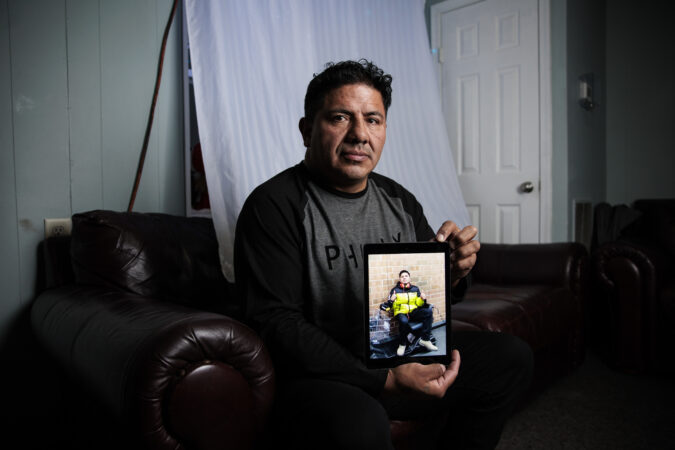
    Lenin Acurio Suarez holds a photograph of his brother, Victor, at his home in Seaford, Del., on Wednesday. Victor was arrested by ICE on Sept. 22.

    Records show that four years ago, on Aug. 2, 2021, he and his brother were stopped by the U.S. Border Patrol as they tried to enter the country near Eagle Pass, Texas, southwest of San Antonio.

    The brothers were processed separately by immigration authorities. Lenin Acurio Suarez was issued a notice to appear in court and released. His immigration case was later dismissed.

    Victor Acurio Suarez was ordered deported and subsequently returned to Ecuador on Sept. 24. But three days later, for reasons that are unclear, the deportation order was found to have been issued incorrectly, and Acurio Suarez was brought back by authorities to the U.S.

    In October 2021, he was granted temporary permission to stay in the country. He had filed his asylum case by the time that permission expired a year later.

    Asylum cases from Ecuador have surged in recent years, as thousands of people flee violence, political instability, and economic hardship. Gang violence there has rocketed as criminal organizations compete for control of the illicit economy, including extortion, kidnapping, transporting drugs, and illegal mining, according to the Geneva-based Global Initiative Against Transnational Organized Crime.

    The group projects that intentional homicides in Ecuador could reach 9,100 in 2025, a 40% increase over the previous year.

    That’s a rate of nearly 50 per 100,000 inhabitants, which would continue to give Ecuador the highest homicide rate in Latin America, the organization said. In the U.S. the figure is about five per 100,000 people.

    While ICE agents were arresting Acurio Suarez, Lenin was frantically searching the neighborhood, initially not having realized that his brother had left their home. Lenin called local police for help, and officers checked the Lowe’s security cameras. The video showed Victor being taken into custody.

    In an interview, Lenin, 49, explained that he has always taken care of his younger brother, since their mother left when they were teenagers in Ecuador.

    In this country, Lenin has a job in housing construction that enables him to provide for himself and his brother and to live with others in a rented house. He worries what will happen to Victor if he’s sent back to Ecuador, where there’s no one to care for him.

    “Thanks to God I’ve been able to pay rent and food for me and my brother,” Lenin said. “I am grateful for this country, to be in this country. But I want my brother to have a fair life, with me, out of detention. He won’t be able to survive by himself in Ecuador.”

  • Why hasn’t Trump sent troops to Philly, the city where ‘bad things happen’? Everyone has a theory.

    Why hasn’t Trump sent troops to Philly, the city where ‘bad things happen’? Everyone has a theory.

    In the last six months, President Donald Trump has sent troops, immigration agents, or both to Democratic cities from coast to coast. The list includes Los Angeles, Chicago, Washington, Memphis, Portland, Ore., Charlotte, N.C., New Orleans, and Minneapolis.

    But not Philadelphia.

    The city that seemed an obvious early target, condemned by Trump as the place where “bad things happen,” has somehow escaped his wrath. At least so far.

    That has sparked speculation from City Hall to Washington over why the president would ignore the staunchly Democratic city with which he has famously feuded. Here we offer some insight into whether that’s likely to change.

    Why has Philadelphia been spared when smaller, less prominent cities have not?

    Nobody knows. Or at least nobody knows for sure. But lots of people in government and immigration circles have ideas.

    There’s the weather theory, that it’s hard for immigration agents who depend on cars to make arrests in cities that get winter snow and ice. Except, of course, the administration just launched Immigration and Customs Enforcement operations in Minneapolis, which gets 54 inches of snow a year.

    Then there’s the swing-state theory, that Trump is staying out of Philadelphia because Pennsylvania ranks among the handful of states that can tip presidential elections. But that doesn’t explain Trump’s surge into North Carolina, where he sent immigration forces last month.

    While the Tar Heel State voted for Trump three times, elections there can be decided by fewer than 3 percentage points.

    U.S. Rep. Brendan Boyle, a Democrat whose North and Northeast Philadelphia district includes many immigrants, suggested a blue-state theory, that Trump has mostly targeted cities in states that voted for Vice President Kamala Harris in the 2024 presidential election. But Boyle acknowledged that North Carolina and Tennessee are exceptions.

    “It could just be that they’re working their way down the list,” Boyle said.

    Has Mayor Cherelle L. Parker had a hand in keeping troops out of Philadelphia?

    It depends on whom you talk to.

    For months she has passed up opportunities to publicly criticize the president, turning aside questions about his intentions by saying she is focused on the needs of Philadelphia. Some believe her more passive approach has kept the city out of the White House crosshairs.

    People close to the mayor point out that big-city mayors who land on the president’s bad side have faced big consequences. For instance, in Los Angeles, Mayor Karen Bass frequently clashed with Trump ― and faced a National Guard deployment.

    Some point out that Parker has good relationships with Republicans who are friendly with the president, including U.S. Sen. Dave McCormick of Pennsylvania, who has praised the mayor on multiple occasions.

    On the other hand, some in the city’s political class ― especially those already skeptical of Parker ― say the suggestion that she has shielded the city gives her too much credit.

    One strategist posited that the lack of overt federal action has more to do with Trump’s trying to protect a razor-thin Republican majority in the House, and that targeting Philadelphia could anger voters in the Bucks County and Lehigh Valley districts where Republicans hold seats.

    What does Trump say about his plans for Philadelphia?

    Not much. Or at least nothing specific.

    During a raucous campaign-style rally Tuesday night in Northeast Pennsylvania, Trump made no mention of his intentions ― even as he railed against immigration and accused Democrats of making the state a “dumping ground” for immigrants.

    Trump suggested there should be a “permanent pause” on immigration from “hellholes like Afghanistan, Haiti, Somalia and many other countries,” declared Washington the safest it has been in decades, and praised ICE as “incredible.”

    He also reminisced about hosting the Philadelphia Eagles at the White House earlier this year, after their Super Bowl win, hailing head coach Nick Sirianni as a “real leader” and marveling at running back Saquon Barkley’s muscles.

    “I love Philadelphia,” Trump declared. “It’s gotten a little rougher, but we will take it.”

    That was a marked change from a decade ago, when Trump called Jim Kenney a “terrible” mayor, and Kenney called him a “nincompoop.”

    Kenney fought Trump in court and won in 2018, when a U.S. District Court judge ruled that the president could not end federal grants based on how the city treats immigrants. After the ruling, the Irish mayor was captured on video dancing a jig and calling out “Sanctuary City!”

    More recently, in May, Philadelphia landed on Trump’s list of more than 500 sanctuary jurisdictions that he planned to target for funding cuts. That was no surprise. Nor was it surprising that in August, when the administration zapped hundreds of places off that list, Philadelphia was among the 18 cities that remained.

    “I don’t know why they’re not here yet,” said Peter Pedemonti, codirector of New Sanctuary Movement of Philadelphia. But the larger point is that “ICE is in neighborhoods every day, they are taking away people every day,” and he urged those who support immigrants to prepare.

    “Now is the time to get involved with organizations that are organizing around this,” Pedemonti said. “There are neighbors who need us.”

    Has Gov. Josh Shapiro helped dissuade federal action in Philadelphia?

    It’s hard to say. Shapiro has challenged Trump in court multiple times, including when he was the state attorney general during Trump’s first term.

    As governor, Shapiro sued the administration over its move to freeze billions in federal funds for public health programs, infrastructure projects, and farm and food bank contracts. He also joined a multistate suit challenging an executive order that restricted gender-affirming care for minors.

    On immigration, however, Shapiro has been careful not to directly engage in the sanctuary city debate, saying his job is to provide opportunity for all Pennsylvanians. But he has been critical of Trump’s enforcement tactics, calling them fear-inducing and detrimental to the state’s economy and safety.

    Still, Trump has not lashed out at Shapiro, a popular swing-state governor. At his rally in Mount Pocono last week, in which he criticized several Democrats, Trump didn’t mention Shapiro ― or the Republican in attendance who is running against the governor in 2026, Stacy Garrity.

    Why is the president sending troops to American cities in the first place? Isn’t that unusual?

    Highly unusual ― and fought in court by the leaders of many of the cities that have been targeted. On Wednesday, a federal judge blocked Trump’s deployment of troops to Los Angeles, saying it was “profoundly un-American” to suggest that peaceful protesters “constitute a risk justifying the federalization of military forces.”

    Trump says the National Guard is needed to end violence, to help support deportations, and to fight crime in Democratic-run cities. Last week he declared that Democrats were “destroying” Charlotte, after a Honduran man who had twice been deported allegedly stabbed a person on a commuter train.

    Two members of the West Virginia National Guard were hospitalized in critical condition ― one subsequently died ― after being shot by a gunman in Washington the day before Thanksgiving.

    That the attack was allegedly carried out by an Afghan man who had been granted asylum helped spark a wave of immigration policy changes, all in the name of greater security. For some immigrants who are attempting to legally stay in the country, that has resulted in the cancellation of citizenship ceremonies and the freezing of asylum processes.

    So what happens next?

    It’s hard to say. Immigration enforcement will surely continue to toughen.

    More immigrants are being arrested when they show up for what they expect to be routine immigration appointments, suddenly finding themselves handcuffed and whisked into detention. In Philadelphia this year, more than 90 immigrants have been trailed from the Criminal Justice Center by ICE agents and then arrested on the sidewalks outside, according to advocates who are pushing the sheriff to ban the agency from the courthouse.

    But it’s difficult to predict when or whether troops might land on Market Street.

    “I’ve heard so many different theories,” said Jay Bergen, the pastor at Germantown Mennonite Church, who has helped lead demonstrations against courthouse arrests. “It’s probably all of them ― a little bit of the way Shapiro has positioned himself, the way the mayor has positioned herself, a little bit the electoral map of Pennsylvania, a little bit, more than a little bit, Trump’s own personality.”

    That Philadelphia has been ignored to date doesn’t mean it won’t be in Trump’s sights tomorrow, Bergen said.

    “This administration thrives on being unpredictable, and on sowing as much exhaustion and pain as possible,” Bergen said. “We don’t do ourselves a favor by getting panicked in advance, but we also need to be ready.”

  • At the border, fear and uncertainty as Trump seeks to remake the immigration court system

    At the border, fear and uncertainty as Trump seeks to remake the immigration court system

    EL PASO, Texas — A small group of immigrants gathered in the lobby of the Richard C. White federal building downtown here on a cool early morning in November. They waited to be allowed up to the seventh floor, where they would appear before a judge as their case made its way through the immigration system.

    Among them were Noemi and her 6-year-old daughter, Abigail. They had driven more than four hours to get to their court date and were hoping to head back the same day. While Noemi was soft-spoken, Abigail was sharp and spirited, more than willing to answer all the questions she was being peppered with by strangers.

    She spoke about where she was from (El Salvador), her favorite show (Bluey), about school (It’s all right), and about her older best friend (She’s 8).

    Abigail has been in the U.S. since 2021, arriving with her mother in search of a better life. They were welcomed by a Biden administration that, despite its many faults, initially asserted an immigration policy that was deeply humanitarian.

    But that was then.

    While the immigrants sat and waited, Sigrid González introduced herself. She was a volunteer doing court accompaniment. They could not offer legal advice but were there to observe and help immigrants plan — did they bring a car? Do they have kids in school? Do they know whom to call? — in case they were detained.

    “ICE is here. They have a list. We don’t know who they will take,” González said. “This is not to frighten you, but to let you know.”

    Later, as the elevator doors opened on the seventh floor, a group of about half a dozen Immigration and Customs Enforcement agents were indeed there. Dressed as civilians but still in uniform: blue jeans, sneakers, and dark jackets.

    El Paso has not seen the kind of excessive use of force seen in places like New York, but as in immigration courtrooms across the country, ICE agents stand in wait to arrest people who are following the rules.

    Immigration and Customs Enforcement agents escort a detained immigrant into an elevator after he exited a New York immigration courtroom in June.

    The government’s strategy is to ask the court to dismiss an immigrant’s case, making them eligible for expedited removal, a relatively quick process under which a noncitizen can be deported back to their country, potentially without any additional immigration court hearings, Emmett Soper, a former immigration judge in Virginia, told me.

    In practice, however, ICE agents regularly detain immigrants regardless of a judge’s decision on dismissal.

    “I denied every single motion to dismiss. I set the case for a further hearing. I gave all the required advisal, things like that,” Soper said. “Every single person was arrested, to my knowledge, after I denied the motion to dismiss.”

    The Trump administration is not stopping at ignoring due process, it is also working to reshape the immigration court system. Soper is one of about 100 immigration judges fired this year. There is no explanation for the dismissal of the judges, other than many of them having a record seen as out of step with the administration’s hard-line approach.

    Instead of an experienced jurist like Soper, who took the bench in 2017 and understands that every case should be given a fair hearing according to the law, Department of Homeland Security Secretary Kristi Noem is looking for people who want to be a “deportation judge” and want “to restore integrity and honor to our Nation’s Immigration Court system.”

    In case there was any doubt what the Trump administration wants to restore, DHS clarifies in a recruitment ad: “Defend your communities, your culture, your very way of life.”

    As Abigail sat next to her mother inside Judge Judith F. Bonilla’s courtroom, coloring an image of two cats sitting side by side handed to her by the court clerk, it was hard to see what the White House is so afraid of.

    Noemi was so concerned about her legal case that she would only speak with me on the condition that her last name not be used. She did not have a lawyer. The judge asked her a series of questions and she responded in turn: She had no family in the U.S., she had not been a victim of a crime, it was her first time in the country, she had never been arrested. She was not afraid to go back to El Salvador.

    It was clear from her answers that Noemi did not want to fight her case.

    The only relief available for her, the judge said, was voluntary departure. If she took that option, Noemi waved her right to appeal but it left the door open for them to return legally in the future.

    “I want voluntary departure,” she said.

    Noemi and her daughter had 90 days to leave the U.S.

    Outside the courtroom, Noemi met with González, who asked her if she wanted to share any contact information in case they were detained by ICE. Noemi looked confused.

    “I have voluntary departure; can they still take me?” she asked. Based on experience, González did not hesitate to answer: “Yes.”

    I have been thinking for weeks about Noemi’s face at that moment. How to describe what it looks like when someone who has gone through the legal process and made peace with the fact she cannot stay in the U.S. must still face the random cruelty of an administration that sees her and her 6-year-old as a threat.

    Crestfallen, Noemi shared her information with González.

    Across the hall, the ICE agents began to move toward the elevator. Apparently, they were leaving. Everyone around Noemi and Abigail sighed in relief. The mother and daughter were not among those taken, which that day included a man and a mother and her older son.

    As Noemi and Abigail left the federal building to drive back home through the west Texas desert — back to the life they had built for themselves over four years and now had 90 days to leave — the only thing I could think was, how does this benefit America?

    More from the border: Trump may have shut down the border to asylum-seekers, but he can’t end immigrants’ hope

  • Federal judge issues order to prohibit immigration officials from detaining Kilmar Abrego Garcia

    Federal judge issues order to prohibit immigration officials from detaining Kilmar Abrego Garcia

    BALTIMORE — A federal judge blocked U.S. immigration authorities on Friday from re-detaining Kilmar Abrego Garcia, saying she feared they might take him into custody again just hours after she had ordered his release from a detention center.

    The order came as Abrego Garcia appeared at a scheduled appointment at an Immigration and Customs Enforcement field office roughly 14 hours after he walked out of immigration detention facility in Pennsylvania.

    His lawyers had sent an urgent request to the judge, warning that ICE officials could immediately place him back into custody. Instead, Abrego Garcia exited the building after a short appointment, emerging to cheers from supporters who had gathered outside.

    Speaking briefly to the crowd, he urged others to “stand tall” against what he described as injustices carried out by the government.

    Abrego Garcia became a flashpoint of the Trump administration’s immigration crackdown earlier this year when he was wrongly deported to a notorious prison in El Salvador. He was last taken into custody in August during a similar check-in.

    Officials cannot re-detain him until the court conducts a hearing on the motion for the temporary restraining order, U.S. District Judge Paula Xinis in Maryland said. She wrote that Abrego Garcia is likely to succeed on the merits of any further request for relief from ICE detention.

    “For the public to have any faith in the orderly administration of justice, the Court’s narrowly crafted remedy cannot be so quickly and easily upended without further briefing and consideration,” she wrote.

    Abrego Garcia on Friday stopped at a news conference outside the building, escorted by a group of supporters chanting “We are all Kilmar!”

    Abrego Garcia says he has ‘so much hope’

    “I stand before you a free man and I want you to remember me this way, with my head held up high,” Abrego Garcia said through a translator. “I come here today with so much hope and I thank God who has been with me since the start with my family.”

    He urged people to keep fighting.

    After Abrego Garcia spoke, he went through security at the field office, escorted by supporters.

    When Abrego Garcia’s attorney, Simon Sandoval-Moshenberg, announced to the crowd assembled outside that his client would walk back out the field office’s doors again, he stressed that the legal fight was not over.

    “Yesterday’s order from Judge Xinis and now the temporary restraining order this morning represent a victory of law over power,” Sandoval-Moshenberg said.

    The agency freed him just before 5 p.m. on Thursday in response to a ruling from Xinis, who wrote federal authorities detained him after his return to the United States without any legal basis.

    Kilmar Abrego Garcia waits with Lydia Walther-Rodriguez of Casa in Maryland, left, to enter the building for a mandatory check at the Immigration and Customs Enforcement office in Baltimore, Friday, Dec. 12, 2025, after he was released from detention on Thursday under a judge’s order. (AP Photo/Stephanie Scarbrough)

    Mistakenly deported and then returned

    Abrego Garcia is a Salvadoran citizen with an American wife and child who has lived in Maryland for years. He immigrated to the U.S. illegally as a teenager to join his brother, who had become a U.S. citizen. In 2019, an immigration judge granted him protection from being deported back to his home country, where he faces danger from a gang that targeted his family.

    While he was allowed to live and work in the U.S. under ICE supervision, he was not given residency status. Earlier this year, he was mistakenly deported and held in a notoriously brutal Salvadoran prison despite having no criminal record.

    Facing mounting public pressure and a court order, President Donald Trump’s Republican administration brought him back to the U.S. in June, but only after issuing an arrest warrant on human smuggling charges in Tennessee. He has pleaded not guilty to those charges and asked a federal judge there to dismiss them.

    A lawsuit to block removal from the U.S.

    The 2019 settlement found he had a “well founded fear” of danger in El Salvador if he was deported there. So instead ICE has been seeking to deport him to a series of African countries. Abrego Garcia has sued, claiming the Trump administration is illegally using the removal process to punish him for the public embarrassment caused by his deportation.

    In her order releasing Abrego Garcia, Xinis wrote that federal authorities “did not just stonewall” the court, “They affirmatively misled the tribunal.” Xinis also rejected the government’s argument that she lacked jurisdiction to intervene on a final removal order for Abrego Garcia, because she found no final order had been filed.

    ICE freed Abrego Garcia from Moshannon Valley Processing Center, about 115 miles northeast of Pittsburgh, on Thursday just before the deadline Xinis gave the government to provide an update on Abrego Garcia’s release.

    He returned home to Maryland a few hours later.

    Immigration check-in

    Check-ins are how ICE keeps track of some people who are released by the government to pursue asylum or other immigration cases as they make their way through a backlogged court system. The appointments were once routine but many people have been detained at their check-ins since the start of Trump’s second term.

    The Department of Homeland Security sharply criticized Xinis’ order and vowed to appeal, calling the ruling “naked judicial activism” by a judge appointed during the Obama administration.

    “This order lacks any valid legal basis, and we will continue to fight this tooth and nail in the courts,” said Tricia McLaughlin, the department’s assistant secretary.

    Sandoval-Moshenberg said the judge made it clear that the government can’t detain someone indefinitely without legal authority.

    Abrego Garcia has also applied for asylum in the U.S. in immigration court.

    Charges in Tennessee

    Abrego Garcia was hit with human smuggling and conspiracy to commit human smuggling charges when the U.S. government brought him back from El Salvador. Prosecutors alleged he accepted money to transport within the United States people who were in the country illegally.

    The charges stem from a 2022 traffic stop in Tennessee for speeding. Body camera footage from a Tennessee Highway Patrol officer shows a calm exchange with Abrego Garcia. There were nine passengers in the car, and the officers discussed among themselves their suspicions of smuggling. However, Abrego Garcia was eventually allowed to continue driving with only a warning.

    A Department of Homeland Security agent testified at an earlier hearing that he did not begin investigating the traffic stop until after the U.S. Supreme Court said in April that the Trump administration must work to bring back Abrego Garcia.

  • Homeland Security Secretary Noem defends Trump’s hard-line immigration policies at hearing

    Homeland Security Secretary Noem defends Trump’s hard-line immigration policies at hearing

    Homeland Security Secretary Kristi Noem defiantly defended the Trump administration’s hard-line immigration policies on Thursday during a House committee hearing, portraying migrants as a major threat faced by the nation that justifies a crackdown that has seen widespread arrests, deportations and a dizzying pace of restrictions on foreigners.

    Noem, who heads the agency central to President Donald Trump’s approach to immigration, received backup from Republicans on the panel but faced fierce questioning from Democrats — including many who called for her resignation over the mass deportation agenda.

    The secretary’s testimony was immediately interrupted by protesters shouting for her to stop Immigration and Customs Enforcement raids and “end deportations.” They trailed her down the halls as she left early for another engagement, chanting, “Shame on you!”

    But she vowed she “would not back down.”

    “What keeps me up at night is that we don’t necessarily know all of the people that are in this country, who they are and what their intentions are,” Noem said.

    The hearing was Noem’s first public appearance before Congress in months, testifying at the House Committee on Homeland Security on “Worldwide Threats to the Homeland,” and it quickly grew heated as she emphasized how big a role she believed immigration played in those threats. It focused heavily on the Trump administration’s immigration policies, whereas in years past the hearing has centered on issues such as cybersecurity, terrorism, China and border security.

    Rep. Bennie Thompson, the panel’s ranking Democrat, said Noem has diverted vast taxpayer resources to carry out Trump’s “extreme” immigration agenda and failed to provide basic responses as Congress conducts its oversight.

    “I call on you to resign,” the Mississippi congressman said. “Do a real service to the country.”

    Trump returned to power with what the president says is a mandate to reshape immigration in the U.S. In the months since, the number of people in immigration detention has skyrocketed; the administration has continued to remove migrants to countries they are not from; and, in the wake of an Afghan national being accused of shooting two National Guard troops, Noem’s department has dramatically stepped up checks and screening of immigrants in the U.S.

    Tough questions from Democrats

    Several Democrats repeatedly told Noem flatly that she was “lying” to them and to the public over claims they are focused on violent criminals. They presented cases of U.S. citizens being detained in immigration operations and families of American military veterans being torn apart by deportations of loved ones who have not committed serious crimes or other violations.

    “You lie with impunity,” said Rep. Delia Rodriguez (D., Ill.) who said Noem should resign or be impeached.

    Republicans largely thanked Noem for the work the department is doing to keep the country safe and urged her to carry on.

    “Deport them all,” said Rep. Andy Ogles (R., Tenn).

    Since Noem’s last Congressional appearance in May, immigration enforcement operations, especially in Los Angeles and Chicago, have become increasingly contentious, with federal agents and activists frequently clashing over her department’s tactics.

    Noem did not address the calls to resign, but she tangled with the Democratic lawmakers — interrupting some — and suggested that she and the department she leads weren’t going anywhere.

    “We will never yield. We will never waver,” she said.

    Noem, whose own family, including an infant granddaughter, was in the audience, praised the Trump administration’s efforts when it comes to immigration, saying, “We’re ending illegal immigration, returning sanity to our immigration system.”

    During the hearing, a federal judge ordered the government to free Kilmar Abrego Garcia, whose wrongful deportation to a notorious prison in El Salvador made him a flashpoint in the Trump administration’s immigration enforcement. Noem did not address the judge’s order, nor was she asked about it during the hearing.

    Noem left early, saying she was headed to a meeting of the Federal Emergency Management Agency review council. The meeting, however, was abruptly canceled with no reason given.

    Noem, department under scrutiny

    The worldwide threats hearing, usually held annually, is an opportunity for members of Congress to question the leaders of the Department of Homeland Security, the FBI, and the National Counterterrorism Center.

    FBI Director Kash Patel did not appear, but sent Michael Glasheen, operations director of the national security branch of the FBI.

    Glasheen said the nation faces “serious and evolving” threats, and pointed to so-called antifa, and Trump’s executive order designating the group as a domestic terror organization, as the “most immediate violent threat” facing the country.

    Pressed by Thompson for details — where is antifa headquartered? How many members does it have? — the FBI’s representative appeared unable to provide answers, saying it’s “fluid” and investigations are “ongoing.”

    And, notably, he did not identify immigration as among the most pressing concerns for the homeland.

    Asked about the U.S. seizure of an oil tanker off the Venezuelan coast, Noem linked it to the Trump administration’s antidrug campaign in the region, saying cocaine had been kept from entering the U.S. as a result.

    The hearing offered lawmakers a rare opportunity to hear directly from Noem, but many members of the panel used the bulk of their allotted time to either praise or lambast her handling of immigration enforcement.

    During one sharp exchange, the secretary levied broad criticism for the program through which the man suspected of shooting two National Guard members last month came to the United States.

    “Unfortunate accident?” Noem retorted after Thompson raised the issue. She called it a “terrorist attack.”

    The program, Operation Allies Welcome, was created by then-President Joe Biden’s Democratic administration after the 2021 decision to leave Afghanistan following 20 years of American intervention and billions of dollars in aid. Thompson pointed out that the Trump administration approved the asylum claim of the suspect in the National Guard attack.

    Noem’s department is under particular scrutiny because Congress in July passed legislation giving it roughly $165 billion to carry out its mass deportations agenda and secure the border. The department is getting more money to hire 10,000 more deportation officers, complete the wall between the U.S. and Mexico and increase detention and removal of foreigners from the country.

    The secretary’s appearance also comes as a federal judge is investigating whether she should face a contempt charge over flights carrying migrants to El Salvador.

  • Judge orders Kilmar Abrego Garcia to be immediately released from immigration detention

    Judge orders Kilmar Abrego Garcia to be immediately released from immigration detention

    GREENBELT, Md. — A federal judge in Maryland ordered Kilmar Abrego Garcia freed from immigration detention on Thursday while his legal challenge against his deportation moves forward.

    U.S. District Judge Paula Xinis ruled that Immigration and Customs Enforcement must release Abrego Garcia from custody immediately.

    “Since Abrego Garcia’s return from wrongful detention in El Salvador, he has been re-detained, again without lawful authority,” the judge wrote. “For this reason, the Court will GRANT Abrego Garcia’s Petition for immediate release from ICE custody.”

    Justice Department and Homeland Security spokespeople didn’t immediately respond to messages seeking comment on the judge’s order. Messages seeking comment were left with Abrego Garcia’s attorney Simon Sandoval-Moshenberg.

    Abrego Garcia, a Salvadoran national, has an American wife and child and has lived in Maryland for years, but he originally immigrated to the U.S. illegally as a teenager. An immigration judge in 2019 ruled Abrego Garcia could not be deported to El Salvador because he faced danger from a gang that targeted his family. When Abrego Garcia was mistakenly deported there in March, his case became a rallying point for those who oppose President Donald Trump’s immigration crackdown.

    Abrego Garcia was returned to the U.S. under a court order. Since he cannot be deported to El Salvador, ICE has been seeking to deport him to a series of African countries. His lawsuit in federal court claims Trump’s Republican administration is illegally using the deportation process to punish Abrego Garcia over the embarrassment of his mistaken deportation to El Salvador.

    Meanwhile, in a separate action in immigration court, Abrego Garcia is petitioning to reopen his immigration case to seek asylum in the United States.

    Additionally, Abrego Garcia is facing criminal charges in federal court in Tennessee, where he has pleaded not guilty to human smuggling. He has filed a motion to dismiss the charges, claiming the prosecution is vindictive.

    A judge has ordered an evidentiary hearing to be held on the motion after previously finding some evidence that the prosecution against Abrego Garcia “may be vindictive.” The judge said many statements by Trump administration officials “raise cause for concern.”

    The judge specifically cited a statement by Deputy Attorney General Todd Blanche that seemed to suggest the Justice Department charged Abrego Garcia because he won his wrongful deportation case.

  • Trump’s handling of the economy is at its lowest point, according to new AP-NORC polling

    Trump’s handling of the economy is at its lowest point, according to new AP-NORC polling

    WASHINGTON — President Donald Trump’s approval on the economy and immigration have fallen substantially since March, according to a new AP-NORC poll, the latest indication that two signature issues that got him elected barely a year ago could be turning into liabilities as his party begins to gear up for the 2026 midterms.

    Only 31% of U.S. adults now approve of how Trump is handling the economy, the poll from The Associated Press-NORC Center for Public Affairs Research finds. That is down from 40% in March and marks the lowest economic approval he’s registered in an AP-NORC poll in his first or second term. The Republican president also has struggled to recover from public blowback on other issues, such as his management of the federal government, and has not seen an approval bump even after congressional Democrats effectively capitulated to end a record-long government shutdown last month.

    Perhaps most worryingly for Trump, who’s become increasingly synonymous with his party, he’s slipped on issues that were major strengths. Just a few months ago, 53% of Americans approved of Trump’s handling of crime, but that’s fallen to 43% in the new poll. There’s been a similar decline on immigration, from 49% approval in March to 38% now.

    The new poll starkly illustrates how Trump has struggled to hold onto political wins since his return to office. Even border security — an issue on which his approval remains relatively high — has declined slightly in recent months.

    The good news for Trump is that his overall approval hasn’t fallen as steeply. The new poll found that 36% of Americans approve of the way he’s handling his job as president, which is down slightly from 42% in March. That signals that even if some people aren’t happy with elements of his approach, they might not be ready to say he’s doing a bad job as president. And while discontent is increasing among Republicans on certain issues, they’re largely still behind him.

    Declining approval on the economy, even among Republicans

    Republicans are more unhappy with Trump’s performance on the economy than they were in the first few months of his term. About 7 in 10 Republicans, 69%, approve of how Trump is handling the economy in the December poll, a decline from 78% in March.

    Larry Reynolds, a 74-year-old retiree and Republican voter from Wadsworth, Ohio, said he believes in Trump’s plan to impose import duties on U.S. trading partners but thinks rates have spiraled too high, creating a “vicious circle now where they aren’t really justifying the tariffs.”

    Reynolds said he also believes that inflation became a problem during the coronavirus pandemic and that the economy won’t quickly recover, regardless of what Trump does. “I don’t think it’ll be anything really soon. I think it’s just going to take time,” he said.

    Trump’s base is still largely behind him, which was not always the case for his predecessor, President Joe Biden, a Democrat. In the summer of 2022, only about half of Democrats approved of how Biden was handling the economy. Shortly before he withdrew from the 2024 presidential race two years later, that had risen to about two-thirds of Democrats.

    More broadly, though, there’s no sign that Americans think the economy has improved since Trump took over. About two-thirds of U.S. adults, 68%, continue to say the country’s economy is “poor.” That’s unchanged from the last time the question was asked in October, and it’s broadly in line with views throughout Biden’s last year in office.

    Why Trump gets higher approval on border security than immigration

    Trump’s approval ratings on immigration have declined since March, but border security remains a relatively strong issue for him. Half of U.S. adults, 50%, approve of how Trump is handling border security, which is just slightly lower than the 55% who approved in September.

    Trump’s relative strength on border security is partially driven by Democrats and independents. About one-third of independents, 36%, approve of Trump on the border, while 26% approve on immigration.

    Jim Rollins, an 82-year-old independent in Macon, Georgia, said he believes that when it comes to closing the border, Trump has done “a good job,” but he hopes the administration will rethink its mass deportation efforts.

    “Taking people out of kindergarten, and people going home for Thanksgiving, taking them off a plane. If they are criminals, sure,” said Rollins, who said he supported Trump in his first election but not since then. “But the percentages — based on the government’s own statistics — say that they’re not criminals. They just didn’t register, and maybe they sneaked across the border, and they’ve been here for 15 years.”

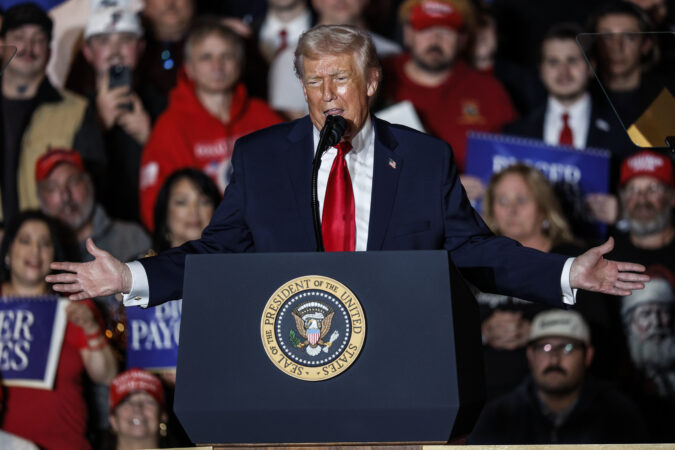
    President Donald Trump made his first stop on an “economic tour” in Mt. Pocono, Pa., on Tuesday, Dec. 9.

    Other polls have shown it’s more popular to increase border security than to deport immigrants, even those who are living in the country illegally. Nearly half of Americans said increasing security at the U.S.-Mexico border should be “a high priority” for the government in AP-NORC polling from September. Only about 3 in 10 said the same about deporting immigrants in the U.S. illegally.

    Shaniqwa Copeland, a 30-year-old independent and home health aide in St. Augustine, Florida, said she approves of Trump’s overall handling of the presidency but believes his immigration actions have gone too far, especially when it comes to masked federal agents leading large raids.

    “Now they’re just picking up anybody,” Copeland said. “They just like, pick up people, grabbing anybody. It’s crazy.”

    Health care and government management remain thorns for Trump

    About 3 in 10 U.S. adults approve of how Trump is handling health care, down slightly from November. The new poll was conducted in early December, as Trump and Congress struggled to find a bipartisan deal for extending the Affordable Care Act subsidies that will expire at the end of this month.

    That health care fight was also the source of the recent government shutdown. About one-third of U.S. adults, 35%, approve of how Trump is managing the federal government, down from 43% in March.

    But some Americans may see others at fault for the country’s problems, in addition to Trump. Copeland is unhappy with the country’s health care system and thinks things are getting worse but is not sure of whether to blame Trump or Biden.

    “A couple years ago, I could find a dentist and it would be easy. Now, I have a different health care provider, and it’s like so hard to find a dental (plan) with them,” she said. “And the people that do take that insurance, they have so many scheduled out far, far appointments because it’s so many people on it.”

    The AP-NORC poll of 1,146 adults was conducted Dec. 4-8 using a sample drawn from NORC’s probability-based AmeriSpeak Panel, which is designed to be representative of the U.S. population. The margin of sampling error for adults overall is plus or minus 4 percentage points.