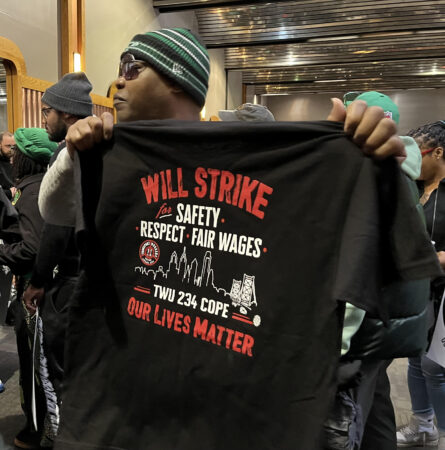
Transport Workers Union Local 234, SEPTA’s largest union, may soon strike, according to president Will Vera.
At a Friday afternoon news conference at TWU headquarters in Spring Garden, Vera said his “patience has run out,” and he said the union’s executive committee was meeting to decide when to call a strike.
“I’m tired of talking, and we’re going to start walking,” said Vera, who was elected president in October.
Local 234’s latest contract expired Nov. 7, and the 5,000-member local voted unanimously on Nov. 16 to authorize leaders to call a strike if needed during contract negotiations.
The union represents bus, subway, and trolley operators, mechanics, cashiers, maintenance people, and custodians, primarily in the city.
John Samuelsen, president of TWU International and former president of NYC’s local, joined Vera at the news conference.
“A strike is imminent,” Samuelsen said. “SEPTA is the most incompetent transit agency in the country … SEPTA is triggering a strike.”
In an email sent Friday evening, Samuelsen called on leaders and staff members of TWU locals to travel to Philadelphia to help Local 234 in the event of a strike.
Andrew Busch, spokesperson for SEPTA, said negotiations were “at an impasse,” noting that the negotiating committees met only twice this week. He said SEPTA’s leaders hoped TWU would “take us up on the offer to continue to talk so we can avoid a strike and the massive service disruption it would cause.” No meetings are scheduled for the weekend as of Friday evening.
Vera agreed there was room for the two groups to keep talking, if SEPTA provided “a fair and reasonable” contract proposal.
The union says it is looking for a two-year deal with raises and changes to what it views as onerous work rules, including the transit agency’s use of a third party that Vera said makes it hard for members to use their allotted sick time.
SEPTA officials have signaled they are open to a two-year deal as a step toward labor stability.
In recent weeks, TWU and SEPTA have been negotiating contributions to the union’s healthcare fund. Pensions have arisen as a sticking point.
Union sources told The Inquirer that TWU leaders are increasingly frustrated with the pace of negotiations.
Vera said the executive board meeting began at 4:30 p.m. on Friday. He hoped the board would reach a decision on when members would walk off the job.
TWU last went on strike in 2016. It lasted for six days and ended the day before the general election. Democrat Hillary Clinton’s presidential campaign was worried about voter turnout, and the city sought an injunction to end the strike. It proved unnecessary.
SEPTA’s financials
TWU’s contract negotiations are happening as SEPTA is emerging from what it has called the worst period of financial turmoil in its history.
Like many transit agencies, SEPTA was facing a recurring deficit due to inflation, fewer federal dollars, and flat state subsidies. It reported a $213 million recurring hole in its operating budget.
Following a prolonged and contentious debate over mass transit funding in the state budget, Gov. Josh Shapiro in September directed PennDot to allow SEPTA to tap $394 million in state money allocated for future capital projects to pay for two years of operating expenses.
And last month, he allocated $220 million to SEPTA, the second time in two years he’s flexed state dollars to support the financially beleaguered transit agency. While the $220 million is expected to go primarily toward capital expenses related to Regional Rail, the move helps SEPTA’s overall balance sheet.
What riders should know
SEPTA riders are no strangers to service disruptions.
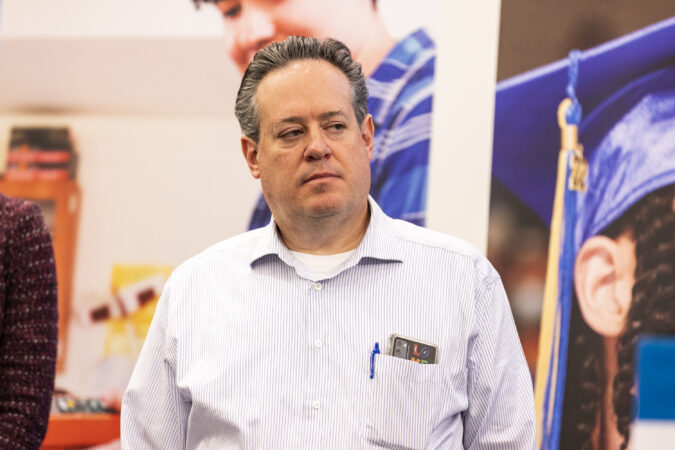
Uri Monson, Gov. Josh Shapiro’s longtime confidant and Pennsylvania’s budget secretary, is the new executive director of the $80 billion-asset Pennsylvania school pension and investment system, known as PSERS.
The move puts Monson, a former top finance officer for the School District of Philadelphiaand for Montgomery County government while Shapiro was its top elected official, atop the agency responsible for paying retirement checks to half a million current and retired school employees.
Monson has shown “exceptional financial leadership and integrity,” Shapiro said in a statement, citing Monson’s bond refinancing work that shaved state interest costs and helped boost its credit ratings so they are no longer among the lowest of the 50 states.
Zachary Reber, a deputy secretary in Monson’s office with 30 years of state government experience, will become the state’s new budget secretary. Shapiro credited Reber as a top negotiator for the 2025-26 budget, helping clinch the deal with legislators.
At PSERS, Monson will lead a staff of 350. The board picked Monson “because of his extensive public-sector financial experience,” board chair Richard Vague said in a statement that also said Monson’s hiring followed “a nationwide search.”
The new executive director “understands both the financial demands of a pension system and the responsibility” to school staff and retirees, said vice chair Sue Lemmo, a retired teacher.
Monson pledged to work with the board, staff, and other stakeholders — who include taxpayers and pension system members — to ensure “retirement security.”
He holds both a master’s degree in public policy and a bachelor’s degree from Columbia University and a second bachelor’s from the Jewish Theological Seminary of America.
PSERS is one of the most expensive state programs, consuming $5.5 billion directly from public revenues last year, including both state and local property tax funds, plus $1.2 billion routed through school workers’ paychecks.
The system also collects profits from its wide-ranging investments, totaling $5.7 billion last year.
The switch will likelymean a significant pay raise for Monson, who earned $211,000 a year as budget czar, the most of any Pennsylvania cabinet officer and more than the lieutenant governor.
While working as the top budget officer in the state since 2023, Monson oversaw Shapiro’s annual state budget proposals, which guide spending for the next five years.
Republican lawmakers criticized Shapiro’s 2025-26 budget proposal for counting on new revenue streams, such as marijuana taxes, that had yet to be approved by the General Assembly.
Monson’s predecessor at PSERS, Terrill Savidge Sanchez, was paid $317,000 in fiscal 2024. A longtime PSERS employee who also headed the smaller Pennsylvania state workers’ pension system (SERS), Sanchez announced her retirement earlier this year. Chief investment officer Ben Cotton stepped in as interim director after she left.
Sanchez was tapped for the top PSERS job in 2022 after the departure of Glen Grell, a former state representative and lawyer who tripled his legislative paycheck by joining PSERS in 2015.
Grell and other top staffers retired during a federal investigation into the system’s exaggerated earnings and secretive land deals, which was followed by changes in pension investment, financial reporting, audit, and travel practices.
As governor, Shapiro has not attempted such a purge, either at PSERS, where he controls three of 15 trustee seats, or at the SERS state employee pension system, where the governor appoints six of the 11 trustees.
PSERS trustees on their own have scrapped hedge funds and cut back on private-equity funds in recent years, citing high fees and poor returns compared to the rising U.S. stock market.
PSERS, like the state workers’ pension system, was among the first state pension systems to invest heavily in private assets in the late 1990s and 2000s.
PSERS’s private investments underperformed U.S. stocks during the 2010s bull market. Those investment returns, plus rising retirements and pension underfunding in the early 2000s, required higher taxpayer payments in recent years to keep the fund from growing less solvent.
Pennsylvanians now pay 34 cents into the PSERS plan for every $1 in school staff wages.
Some owners of private money managers who solicit top leaders of PSERS and other state pension funds for investments are major political donors at the national level, though an SEC rule has barred them from collecting state and local pension fees after donating to state or local candidates.
U.S. Sen. David McCormick (R., Pa.) was chief executive of hedge fund Bridgewater Associates when it was PSERS’s largest money manager. It oversaw about one-tenth of the state’s investments and collected more than $750 million in Pennsylvania investment fees over the 20 years before PSERS trustees voted to drop hedge funds in 2021.
Staff writer Gillian McGoldrick contributed to this article.
Eric Stern drove out to Erie last January and got a slice of pizza with Christina Vogel at Donato’s, the downtown shop she has owned for nine years.
The small-business owner and political novice was interested in running for county executive against a vulnerable Republican incumbent. Stern, a longtime Democratic political operative, was part of a newly founded firm looking for candidates to help flip Republican-held seats.
“It all started with trying to find candidates who were, frankly, better messengers for the values we had and the things we cared about,” Stern said. “She was someone who understood the urgency of this moment as a small-business owner and mom but just as critically was not part of this broken system that had Democrats losing in the past.”
FIGHT is working with Scranton Mayor Paige Cognetti in Northeast Pennsylvania and firefighter Bob Brooks in the Lehigh Valley. U.S. Rep Rob Bresnahan and U.S. Rep. Ryan Mackenzie, the freshman Republicans who represent those areas, each won by about a percentage point in 2024, making them two of the most vulnerable incumbents in next year’s elections.
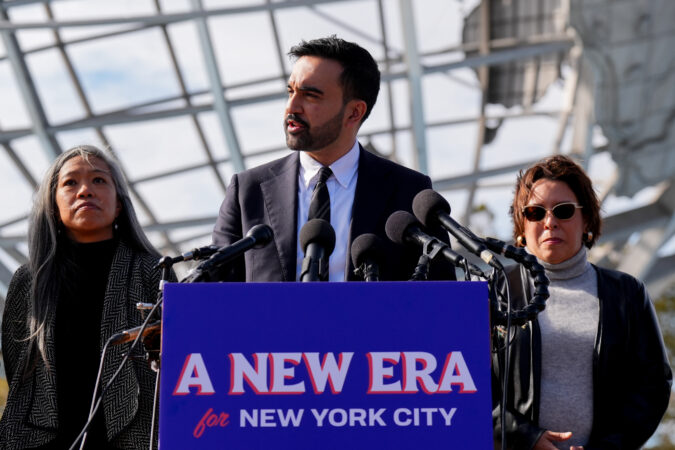
This past year FIGHT’s six-person teamhelped Zohran Mamdani win the New York mayoral race, the buzziest contest of the cycle.The Philadelphia-based agency had a hand in the Pennsylvania Supreme Court slate’s retention, county executive wins in Lehigh and Erie, and two successful Democratic judicial campaigns in the state.
The firm was cofounded by Rebecca Katz, a Central High graduate who lives in New York; Philadelphia ad-maker Tommy McDonald; and Julian Mulvey, an architect of Sen. Bernie Sanders’ 2016 presidential campaign.
“New York isn’t Pennsylvania and Pennsylvania isn’t New York,” Katz said of lessons learned from Mamdani’s win, also noting primaries and generals are extremely different. “But there’s a universal desire for authentic candidates laser-focused on the affordability crisis.”
The strategists started the firm in January 2025 after Democrats suffered across-the-board lossesin 2024, a year she helped Sen. Ruben Gallego defy that trend and win an open seat in Arizona.
Stern, a Pittsburgh native and resident, and McDonald both quit their jobs to sign on with the agency.
Their most basic strategy is creating authentic campaigns that reflect the communities the candidates are running in, clear economic messaging, and trying different things across media platforms to win back working-class voters, Katz said.
“We try to think about what makes an ad pop, what makes people look up from their phone, or, if they’re on their phone, what makes them stay there,” Katz said. “It can’t look like everything else on TV.”
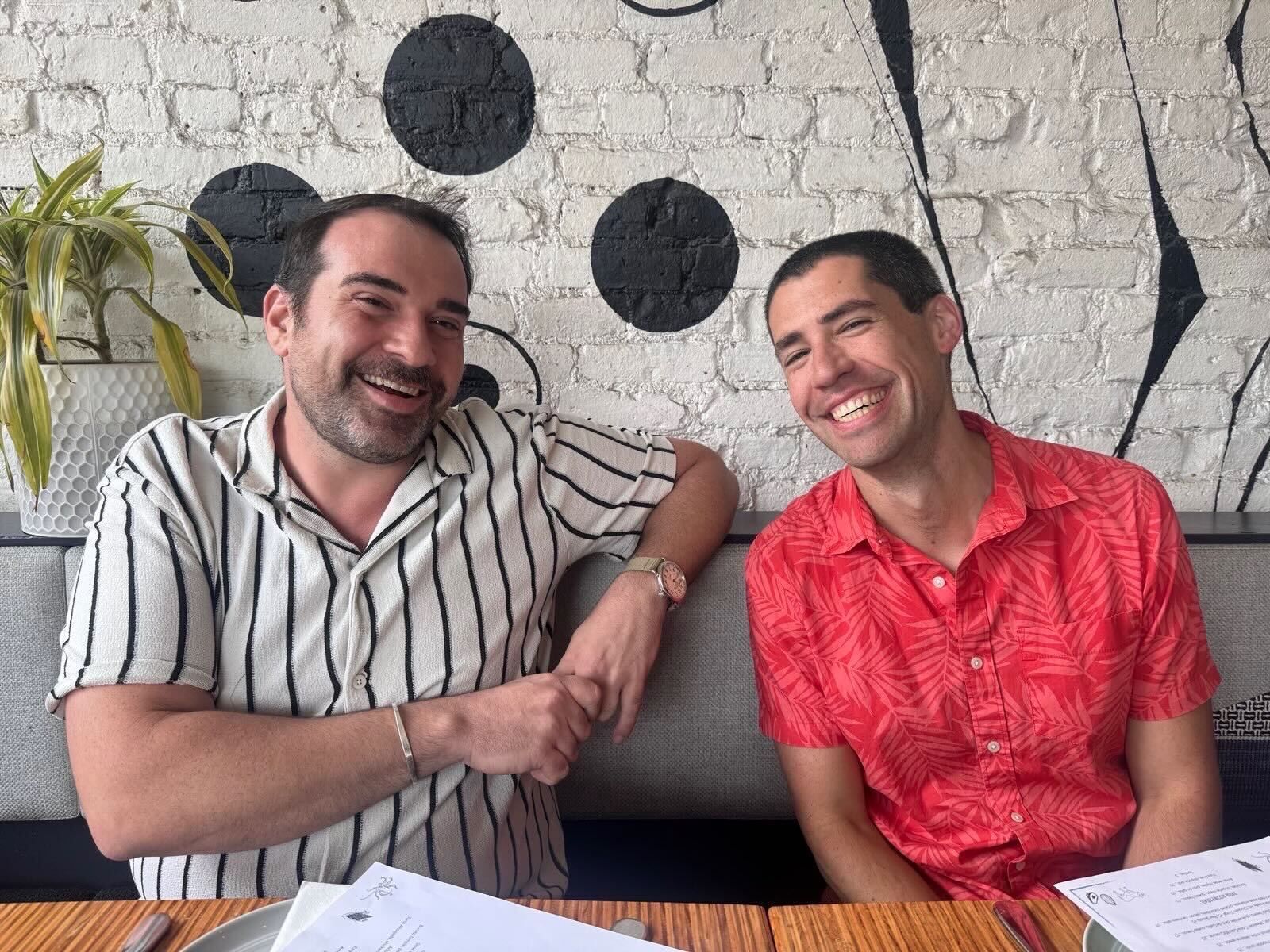
Tommy McDonald (left), and Eric Stern (right), are longtime Democratic media consultants now with FIGHT, a Philly-based agency working on two key Congressional races in Pennsylvania in 2026.
‘A new road map’
In the November election, standing out meant ads about the state Supreme Court race that featured Pennsylvanians talking directly to the camera about how they felt their rights had been protectedby the three justices on the ballot, who were all first elected as Democrats. Sixteen Pennsylvania counties that Vice President Kamala Harris lost wound up voting to retain the judges in the most expensive judicial contest in state history.
The victory provided a blueprint for Gov. Josh Shapiro and other Democrats running in Pennsylvania in 2026, said McDonald, who made the ads for the retention race.
“These are the typical working-class voters that Democrats are bleeding,” McDonald said. “It’s Beaver County. It’s where the New York Times visits diners. It showed us there’s a new road map for how to get persuadable voters in Pennsylvania. We know where they are now.”
Stern, Katz, and McDonald all worked on Fetterman’s 2022 campaign, a race that included the unprecedented challenge of navigating a candidate’s stroke days before the primary and running a general election campaign as he recovered.
They wound up winning awards for the campaign, which featured bright yellow and black branding and creative trolling of Republican nominee Mehmet Oz’s New Jersey ties. McDonald had the idea to fly a banner plane along the Jersey shoreline: “HEY DR. OZ, WELCOME HOME TO NJ! ♥ JOHN,” it read.
They called that July, which also included Jersey Shore cast member Nicole “Snooki” Polizzi making a surprise cameo, “New Jersey Summer.”
“We all learned politics here,” McDonald said of his home state. “The idea is to try to do things differently, redefine Democratic campaigns.”
This year,political headwinds certainly helped Democrats, but hyperlocal messaging did, too, the strategists argue.
Stern worked with Vogel’s campaign in Erie to create ads that looked like a pizzeria’s commercials, to stand out from the cookie-cutter format.
”In Erie County, we know good things start with the right ingredients,” the ad says as a hand scatters toppings atop a pie.
Another ad showed Republicans and self-proclaimed three-time Donald Trump voters on-camera saying they were supporting Vogel over the incumbent, Republican Brenton Davis. A Democrat cannot win in the county without some independent and Republican support.
“They were all people I met on the campaign trail,” Vogel said of the ad. “We really focused on what matters most with affordability, how stretched thin people are across the U.S., and just focused relentlessly on the same message and reminding people why voting matters.”
And in Lehigh County, a slightly bluer but still purple region, Stern worked with State Rep. Josh Siegel’s campaign for county executive. That was more of an offensive against Republican Roger MacLean, a former Allentown police chief, whom ads described as a “grifter and a disgrace,” highlighting his multiple beach houses amid an affordability crisis.
“We came up with an ad strategy that basically determined the most important thing was to beat the crap out of this guy,” Stern said.
“I think Democrats have pulled their punches for way too long,” he added. “There’s a difference between fighting dirty and fighting back, and we have to be in a position where we’re willing to say, ‘We’re here to fight.’”
Siegel, 32, soon to become the youngest county executive in Pennsylvania history, credited the agency with urging him to be specific in his pitch to voters.
“For me, the problem with the way we communicate as Democrats is part of the professional consultant class has created this art form of saying a lot and saying nothing,” he said. “I think people have a particularly adept bulls— detector and they are tired of what is just the most inoffensive, poll-tested, style-over-substance speak we’ve perfected.”
As they look to next year, Stern thinks anti-corruption will be the key issue in the race against Bresnahan in the Northeast. Bresnahan has faced criticism for stock trading while in Congress. Cognetti, his opponent, has been the mayor since 2020, when she won on an anti-corruption platform.
While affordability runs across races, Stern said campaigns cannot make the mistake of being too general in their messaging. “There’s no one right message that cuts across all these districts,” he said.
“Too many folks are running the same ads or calling the same plays they would have a decade ago. We are in a different world. Things have totally changed in a million different ways.”
Gov. Josh Shapiro lashed out over former Vice President Kamala Harris’ portrayal of his interview to become her 2024 running mate, calling Harris’ retellings “complete and utter bulls—” intended to sell books and “cover her a—,” according to the Atlantic.
Shapiro, Pennsylvania’s first-term Democratic governor now seen as a likely presidential contender in 2028, departed from his usual composed demeanor and rehearsed comments in a lengthy Atlantic profile, published Wednesday, when journalist Tim Alberta asked the governor about Harris’ depiction of him in her new book.
In her book, titled 107 Days, Harris described Shapiro as “poised, polished, and personable” when he traveled to Washington to interview with Harris for a shot at becoming the Democraticvice presidential candidate during her historic campaign against Donald Trump.
However, Harris said, she suspected Shapiro would be unhappy as second-in-command. He “peppered” her with questions, she wrote, and said he asked questions about the vice president’s residence, “from the number of bedrooms to how he might arrange to get Pennsylvania artists’ work on loan from the Smithsonian.” The account aligns with reporting from The Inquirer when Harris ultimately picked Minnesota Gov. Tim Walz over Shapiro, in part, because Shapiro was too ambitious to serve in a supporting role if chosen as her running mate.
But Shapiro, the Atlantic reported, was taken aback by the portrayal.
“She wrote that in her book? That’s complete and utter bull—,” Shapiro reportedly told the Atlantic when asked about Harris’ account that he had been imagining the potential art for the vice presidential residence. He added: “I can tell you that her accounts are just blatant lies.”
The governor’s sharp-tongued frustration depicted in the Atlantic marked a rare departure for the image-conscious Shapiro, whose oratory skills have been compared to those of former President Barack Obama, and who has been known to give smiling, folksy interviews laced with oft-repeated and carefully told anecdotes.
The wide-ranging, nearly 8,000-word profile in the Atlantic also detailed Shapiro’s loss of “some respect” for Harris during the 2024 election, including for her failure to take action regarding former President Joe Biden’s visible decline.
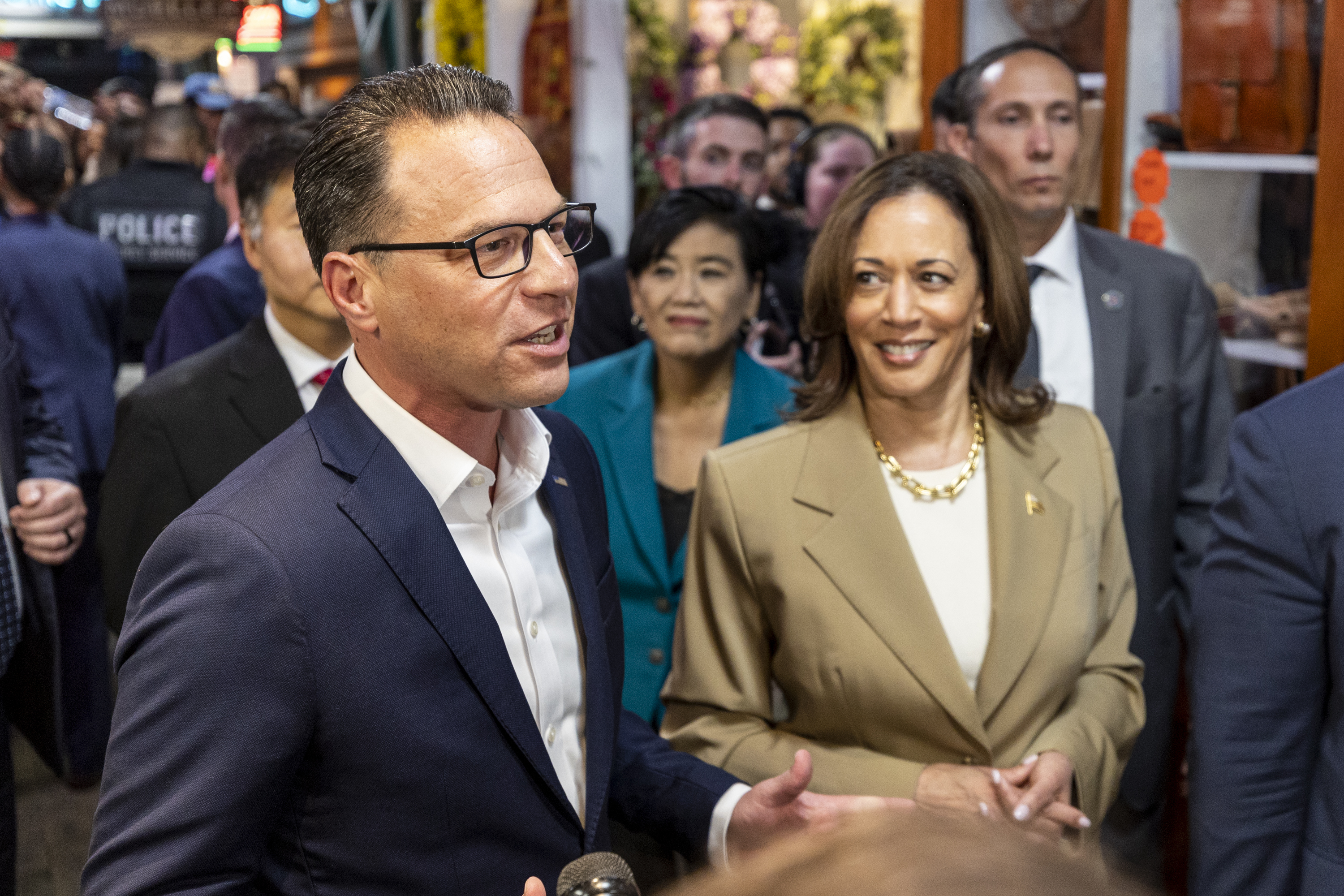
Governor Josh Shapiro speaks with press along with Vice President Kamala Harris during their short visit to Little Thai Market at Reading Terminal Market after she spoke at the APIA Vote Presidential Town Hall at the Pennsylvania Convention Center in Philadelphia, Pa., on Saturday, July 13, 2024.
When Shapiro was asked by the Atlantic whether he felt betrayed by Harris’ comments in her book about him, given that the two have known each other for 20 years, he said: “I mean, she’s trying to sell books and cover her a—.”
He quickly reframed his response: “I shouldn’t say ‘cover her a—,’ I think that’s not appropriate,” he added. “She’s trying to sell books, period.”
The Atlantic piece also outlined common criticisms of Shapiro throughout his two decades in Pennsylvania politics, including those from within the Democratic Party: He is too ambitious with his sights set on the presidency, and his pragmatic approach often leaves him frustrating all sides, as evidenced in his 2023 deal-then-veto with state Senate Republicans over school vouchers. It highlighted some of the top issues Shapiro will face if he chooses to run for president in 2028, including a need to take clearer stances on policy issues — a complaint often cited by Republicans and his critics. If he rises to the presidential field, Shapiro will also have to face his past handling of a sexual harassment complaint against a former top aide that Shapiro claimed he knew very little about despite the aide’s long-held reputation.
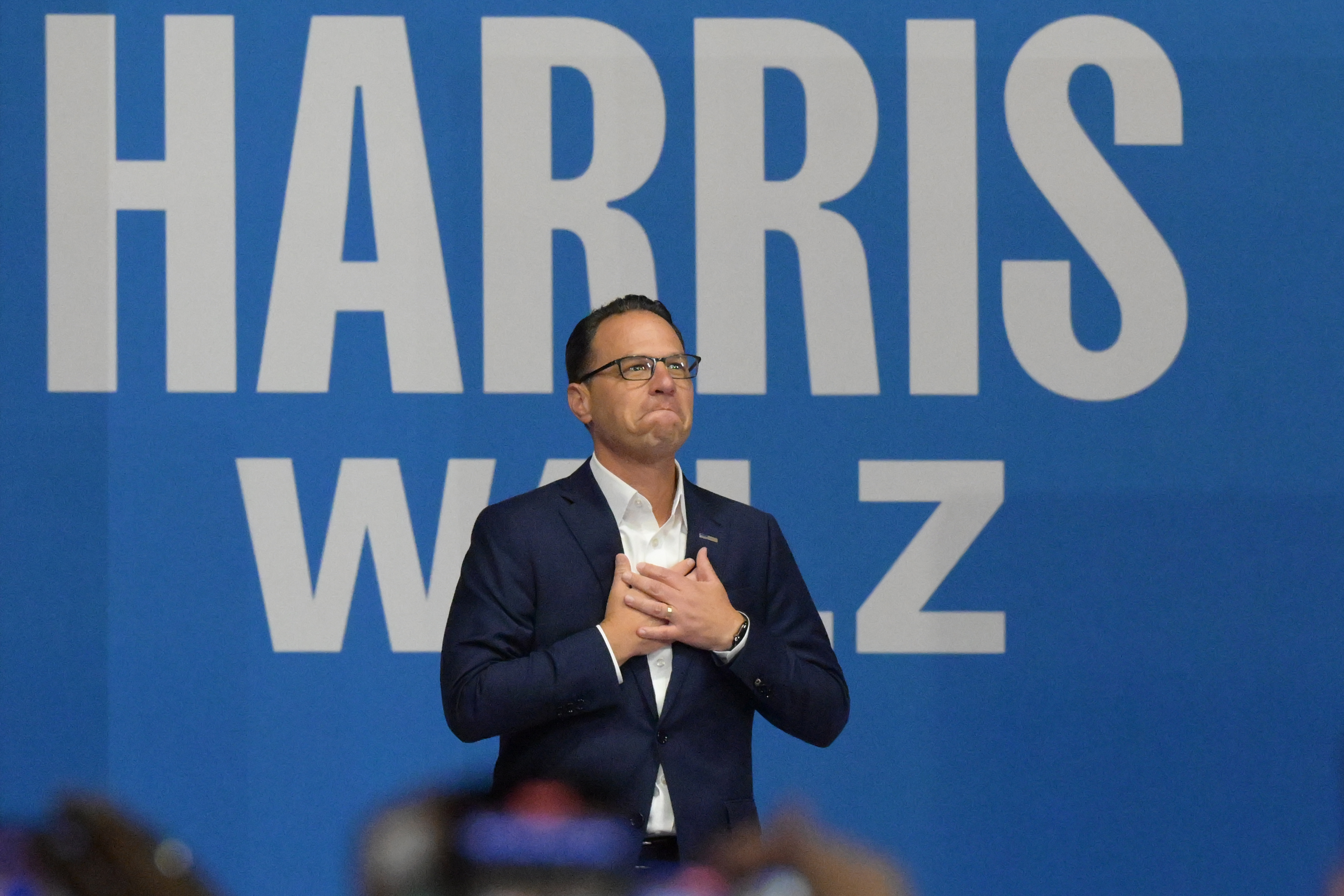
Gov. Josh Shapiro takes the stage ahead of U.S. Vice President Kamala Harris and Gov. Tim Walz at a rally in Philadelphia’s Liacouras Center on August 6, 2024.
“The worst-kept secret in Pennsylvania politics is that the governor is disliked — in certain cases, loathed — by some of his fellow Democrats,” the Atlantic reported. Further, Alberta noted that when an unnamed Pennsylvania lawmaker received a call from a member of Harris’ vetting operation, the member said they had never seen “so many Democrats turning on one of their own.”
Shapiro has been featured in several other prominent national media outlets in recent weeks, including in the New Yorker, which ran a profile about his experience with political violence. He has become vocal on that issue in the months since a Harrisburg man who told police he wanted to kill Shapiro broke into the governor’s residence in April and set several fires while Shapiro and his family slept upstairs. As one of the most prominent Jewish elected officials in the nation, Shapiro has frequently said that leaders must “bring down the temperature” in their rhetoric, and has tried to refocus his own messaging on the good that state governments can do to make people’s lives easier, such as permitting reforms and infrastructure improvements.
“The fact that people view institutions as incapable or unwilling to solve their problems is leading to hyper-frustration, which then creates anger,” Shapiro told the Atlantic. “And that anger forces people oftentimes into dark corners of the internet, where they find others who want to take advantage of their anger and try and convert that anger into acts of violence.”
A special election in a safely Republican district in Tennessee became must-watch TV for political observers Tuesday night, the latest sign of anti-Trump sentiment ahead of the 2026 midterms.
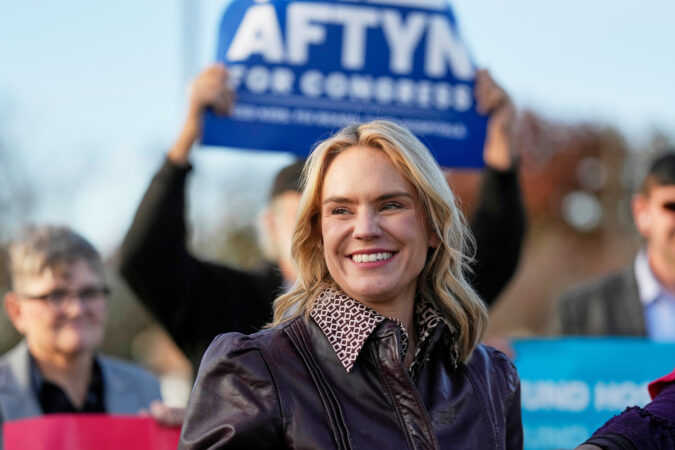
The Associated Press called the race in Tennessee’s 7th Congressional District for Republican Matt Van Epps, who was leading Democrat Aftyn Behn by about 9 percentage points with about 99% of the vote in. That was a steep decline from the 22-point win President Donald Trump recorded in the same district just last year, and from his 39-point victory in 2016.
It was the latest sign of a Democratic blue wave forming, following Election Day sweeps in Virginia, New Jersey, and Virginia last month. It also was the third straight special election in a deeply Republican district where voters swung toward the Democratic candidate by double-digit margins.
“Sometimes in politics, what is happening is clear and in front of you,” David Chalian, CNN’s Washington bureau chief and political director, said Tuesday night. “Democrats are significantly, significantly over-performing what Kamala Harris did last year vs. Donald Trump in all of these places.”
While Trump celebrated Van Epps’ victory on social media, Democratic National Committee chairman Ken Martin called the results “a flashing warning sign for Republicans heading into the midterms.”
“What happened tonight in Tennessee makes it clear: Democrats are on offense and Republicans are on the ropes,” Martin said in a statement.
What is the Republican majority in the House?
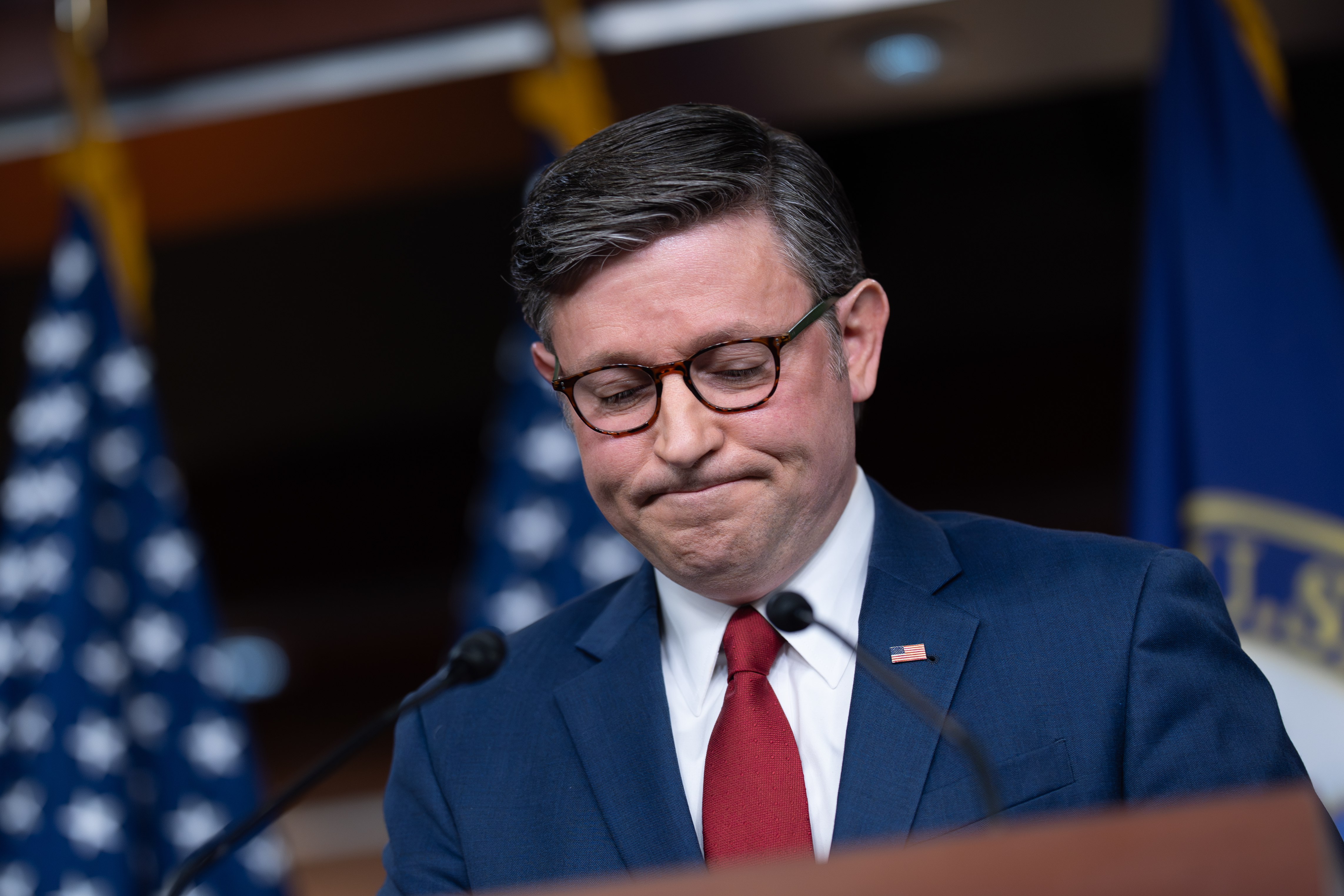
Speaker of the House Mike Johnson (R., La.) is dealing with a shrinking majority.
Van Epps’ victory means Republicans will hold 220 seats, while Democrats have 214 seats; 218 are needed to control the majority.
Two seats remain vacant, and both are expected to go to Democrats, further reducing the already slim majority of House Speaker Mike Johnson (R., La.).
The first is in Texas, where a runoff will be held Jan. 31 to fill the seat vacated by the death of Democratic Rep. Sylvester Turner. The race is down to two Democrats — Christian Menefee and Amanda Edwards.
The second open seat is in New Jersey’s 11th Congressional District, which will hold a special election April 16 to fill the spot vacated by New Jersey Gov.-elect Mikie Sherrill. While the district was represented by a Republican as recently as 2018, it has been safely blue since maps were redrawn following the 2020 Census and is expected to remain in Democratic control.
Not surprisingly, there are a lot of Democrats vying to replace Sherrill. At least 13 have entered the race or are about to do so, a lengthy list that includes former Rep. Tom Malinowski, progressive activist Analilia Mejia, Obama White House alum Cammie Croft, Essex County Commissioner Brendan Gill, and current Lt. Gov. Tahesha Way.
Just one Republican has announced a bid to replace Sherrill — Randolph Mayor Joe Hathaway.
Then there is the Georgia seat of GOP Rep. Marjorie Taylor Greene, which is set to become vacant following her resignation on Jan. 5. It is unclear when Georgia will hold a special election to replace Greene, but Gov. Brian Kemp is required to set a date within 10 days of her departure.
The seat is considered safely Republican, but that is hardly definitive after what happened in Tennessee on Tuesday night.
Why was there a special election in Tennessee?
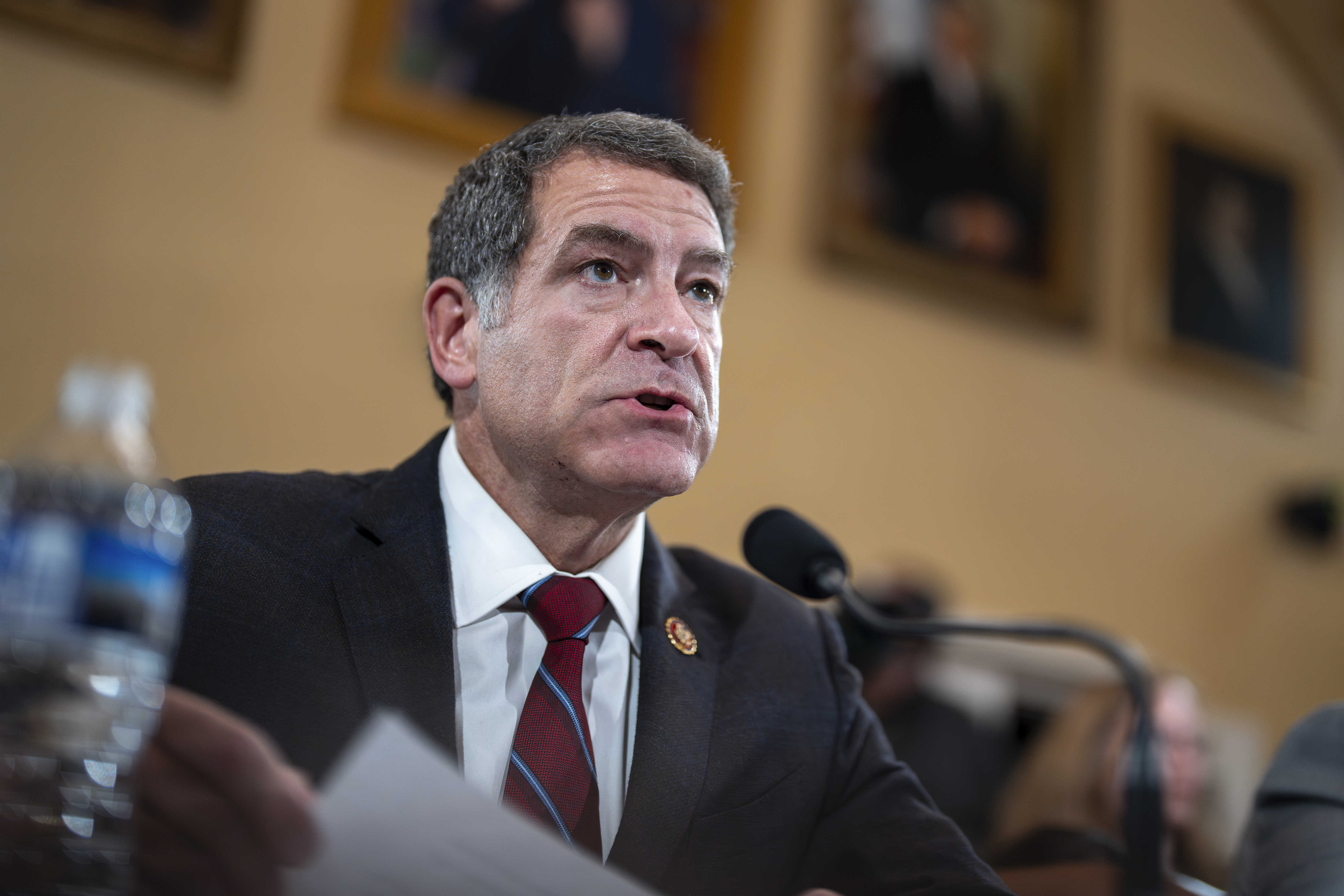
Former Rep. Mark Green (R., Tenn.) left Congress suddenly to launch his own business.
Tuesday’s special election was held to replace the seat vacated by Republican Mark Green, who resigned in July to launch a new business called Prosimos.
Green’s decision to leave Congress, and his role as the chair of the Homeland Security Committee, came in the middle of his fourth term.
So what is Prosimos? According to Green, it’s a development and strategy firm designed to help U.S. businesses better compete against the influence of China. The company’s website says it provides “tailored strategies and expert guidance to navigate the complexities of global business development.”
What does this mean for Republicans in Pennsylvania and New Jersey?
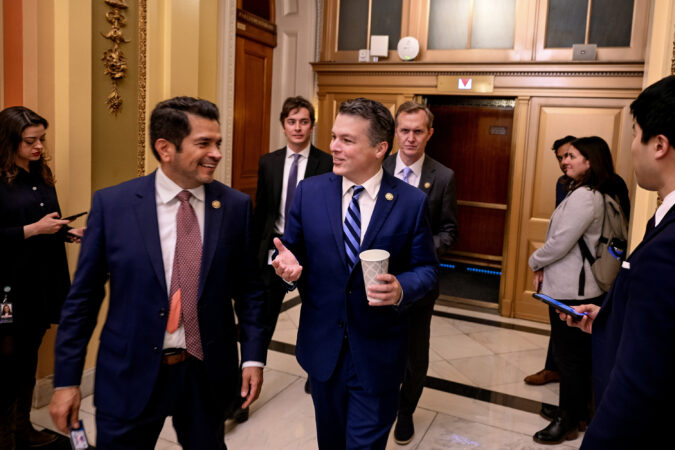
Rep. Ryan Mackenzie (R., Pa.) is one of four Pa. Republicans facing a tough reelection battle.
If there has been a trend since Trump’s inauguration, it’s that voters are keen on punishing Republicans at the ballot box.
In four previous special elections for House seats held in 2025, Democrats significantly outperformed Harris’ margins in 2024. That was also true of Election Day victories in Pennsylvania, New Jersey, Virginia, and Georgia, where two Republicans were booted off the state’s Public Service Commission.
Closer to home, there are five House seats — four in Pennsylvania, one in New Jersey — that Democrats hope to flip during the 2026 midterms, potentially deciding the balance of power during the final two years of Trump’s presidency.
PA-01: In Bucks County, Republican Rep. Brian Fitzpatrick is used to close races, but next year could be particularly challenging for the five-term moderate. In addition to nationwide trends, Democrats won each countywide office by around 10 percentage points last month, and Bucks County District Attorney Joe Khan is the first member of their party ever elected to the office.
PA-07: In the Lehigh Valley, Republican Rep. Ryan Mackenzie is the biggest target for Democrats after ousting Susan Wild by just 1 percentage point in 2024. Cook Political Report lists the district as a true “toss up” and five Democrats have already entered the race.
PA-08: Farther north, in Scranton and Wilkes-Barre, Republican Rep. Rob Bresnahan is also looking to win reelection to a seat he flipped by just 1 percentage point in 2024. The district leans Republican — Trump won it by nearly 9 percentage points — and so far Bresnahan’s only challenger is Scranton Mayor Paige Cognetti.
PA-10: Another of Cook’s “toss up” districts. Republican Rep. Scott Perry, an outspoken Trump supporter who supported the president’s efforts to overturn the 2020 election, is seeking his eighth term. Perry narrowly won reelection in 2024, defeating former news anchor Janelle Stelson by less than 1 percentage point. She is running against Perry again in 2026 and has already received an endorsement from Gov. Josh Shapiro.
NJ-07: The northwestern New Jersey district is currently represented by Republican Tom Kean Jr., a moderate who won reelection by about 5 percentage points in 2024. Cook lists Kean’s district as a “toss up,” and he faces a crowded field of Democrats in what would otherwise be a safely Republican seat.
WASHINGTON — Ahead of a morning Budget Committee meeting, U.S. Rep. Brendan Boyle gathered his senior advisers in a brightly lit conference room just off the Capitol to settle on a simple strategy.
“Let’s keep the main thing the main thing,” he said. “Fifteen million Americans are gonna lose their healthcare because Republicans care more about tax breaks for billionaires. It’s accurate. You can describe it in a sentence.”
Boyle, a six-term lawmaker, is the most veteran of Pennsylvania’s eight Democrats in Washington. He has been the ranking member of the House Budget Committee since 2023, meaning he is the top Democrat playing defense as the Republican-controlled Congress ushers through GOP spending priorities. It can be a futile exercise in shouting into a void — until the yelling starts to echo outside.
“He’s one of our best messengers who appropriately comes across as both strong and authentic at the same period of time,” House Minority Leader Hakeem Jeffries (D., N.Y.) said in an interview late last month.
Jeffries credited Boyle with homing inon a key statistic: Taken together, Trump’s reconciliation bill andthe expiration ofAffordable Care Act tax credits represent the largest cut to Medicaid in American history.
“That one observation became core to our arguments in pushing back against that toxic piece of legislation, and it’s also one of the reasons I believe that the law is so deeply unpopular amongst the American people,” Jeffries said.
Democrats have been recently on a roller coaster — securing big wins in the November election and then splitting over how long to withstand the government shutdown, with eight senators ultimately crossing the aisle to end the impasse. But Boyle’s messaging war is ongoing, and he thinks it is his party’s best bet for winning key midterm races in his home state, where Democrats are targeting four Republican-held seats in swing areas.
If Democrats reclaim Congress in next year’s election, Boyle would shift from ranking member to chair of the powerful Budget Committee — becoming the first Pennsylvanian to lead it since Philadelphian Bill Gray, a Democratwho chaired it from 1985 to 1989. It would be another resumé builder for the 48-year-old lawmaker whose role in Washington keeps growing and who has not ruled out a potential Senate run in 2028, when Democratic Sen. John Fetterman’s seat would be up.
“I get asked a lot: How do you keep this message going for the next year?” Boyle said in an interview in his Washington office. “Well, we started this five months ago, and actually more people know about it today than over the summer. Every single day, continuing to talk about healthcare, continuing a broader conversation about affordability, is absolutely what we have to do.”
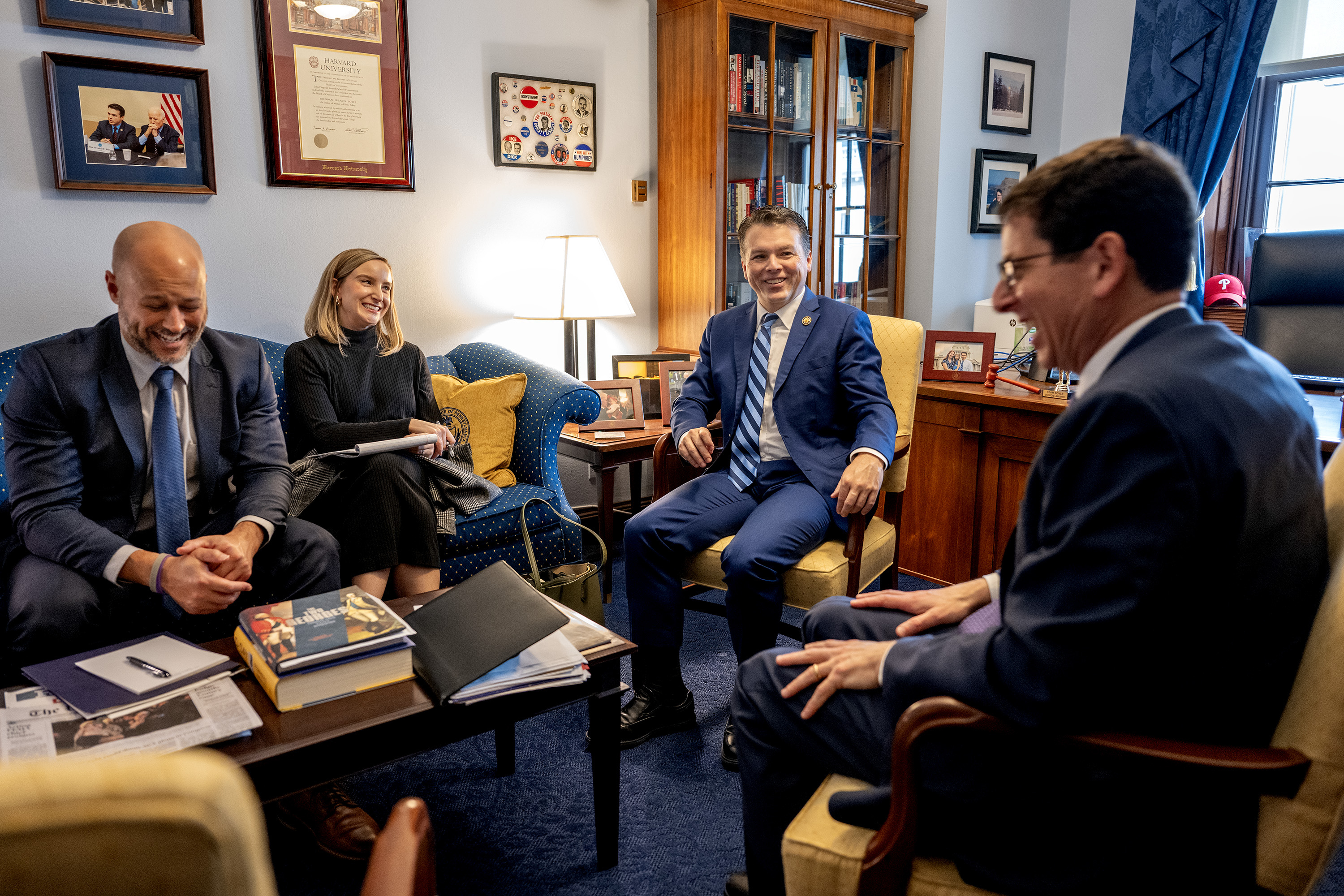
U.S. Rep. Brendan Boyle (center) meets in his Capitol Hill office with Phillip Swagel (right), director of the Congressional Budget Office, following Swagel’s testimony before House Committee on the Budget last month. As Budget’s ranking member, Boyle has been central in shaping Democratic messaging around Republican policies.
‘Scrappy Irish Catholic boys from Olney’
Boyle, who lives in Somerton with his wife and 11-year-old daughter, is an affable, earnest lawmaker in a role that is unapologetically wonky — and high-profile, especially lately.
From Oct. 1 through the end of November — a period including the shutdown — Boyle popped up on TV news more than two dozen times, by his office’s count.
His political beginnings were far less polished. In 2014, Boyle shocked Philadelphia’s political establishment by winning the Democratic primary over a field that included former U.S. Rep. Marjorie Margolies, scion of a powerful political family. Then a 37-year-old state representative, Boyle ran as a blue-collar, antiestablishment pragmatist from Northeast Philly. His ads cast his opponents as out of touch, and he leaned hard on his family’s story: his father, an Irish immigrant, worked at an Acme warehouse and later as a SEPTA janitor; his mother was a school crossing guard. Boyle still keeps his dad’s SEPTA cap on a bookshelf in his Washington office.
That same year, his brother Kevin won a seat in the state House, prompting Philadelphia Magazine to profile the “scrappy Irish Catholic boys from Olney” who were reshaping the party.
A decade later, Democrats are still striving to win back blue-collar voters. Boyle, meanwhile, has traded some of his insurgent edge for the stature of a Hill veteran.As Philadelphia elects a replacement for retiring U.S. Rep. Dwight Evans next year, Boyle will be a key ally for the new lawmaker, and a coveted endorsement during the election, though he has said he does not plan to weigh in. He has been in the thick of some of the year’s biggest fights — leading Democrats through a 12-hour reconciliation markup, testifying at a 1 a.m. Rules Committee hearing, and grinding through an overnight Ways and Means marathon.
His younger brother has had a far more tumultuous path. Kevin lost his state House seatlast year amid long-running mental health struggles.
Boyle declined to discuss the situation beyond saying: “The last five years — almost exactly five years — have been very challenging. And I’ll just leave it at that.”
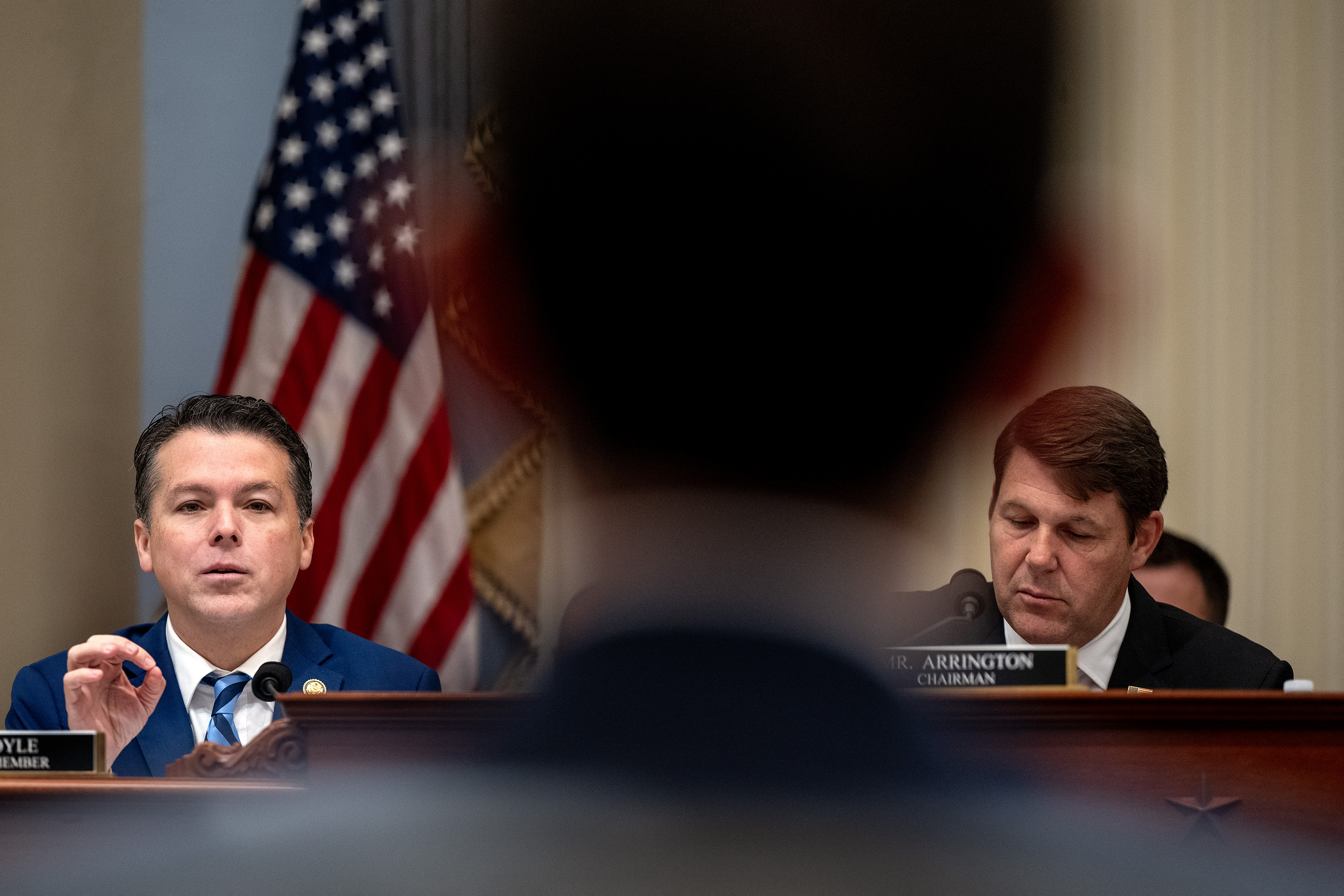
U.S. Reps. Brendan Boyle (left) (D., Philadelphia) and Jodey Arrington (right) (R., Texas) question Phillip Swagel (back to camera), director of the nonpartisan Congressional Budget Office, during a hearing on Capitol Hill in Washington, D.C. Tuesday, Nov. 18, 2025. Arrington chairs the House Budget Committee, while Boyle is the panel’s top Democrat.
In line for the gavel
Before that late November hearing, Boyle had already reached out to fellow Democrats on the committee: Talk about healthcare, he urged them. Talk about affordability. Talk about it ad nauseam.
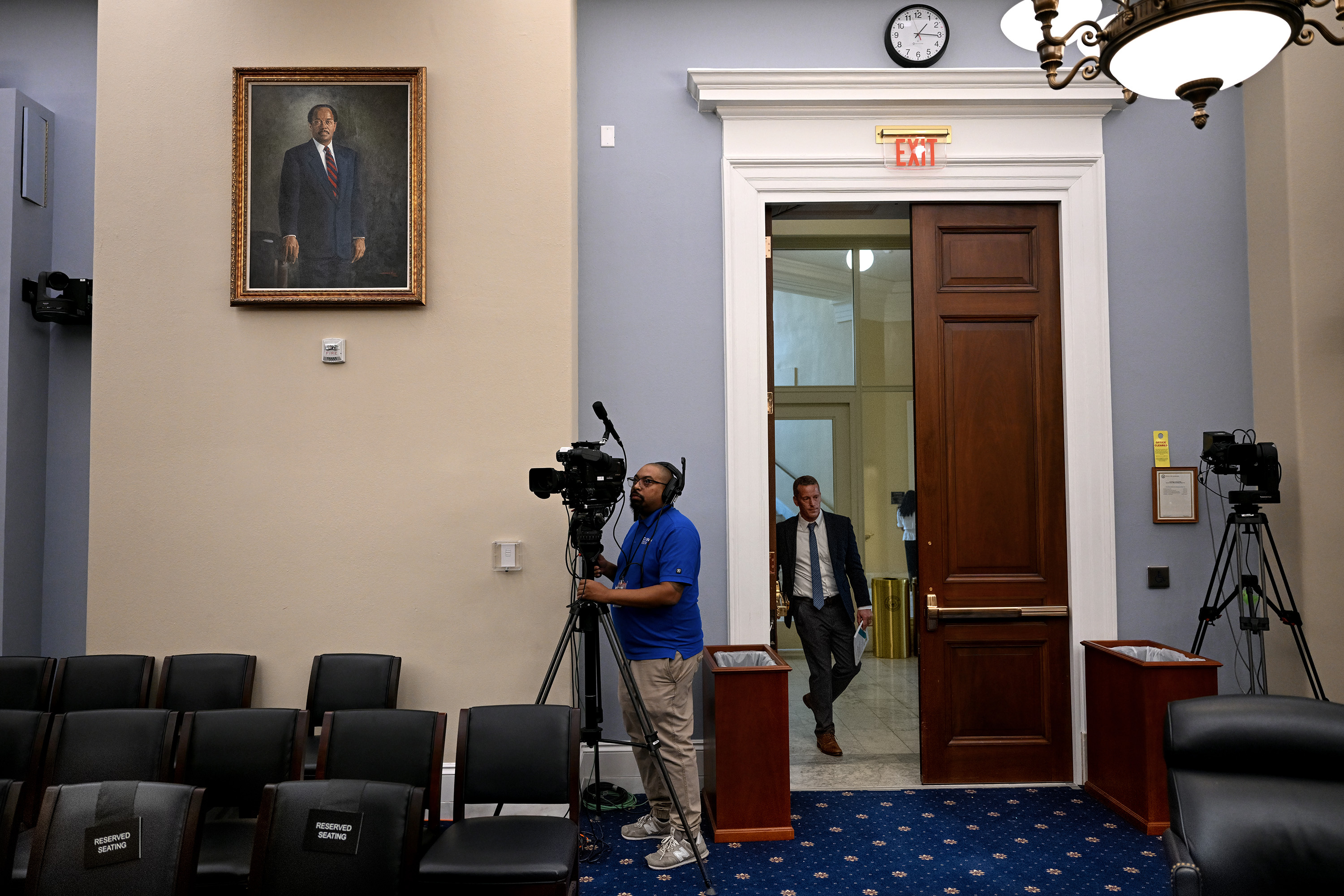
He sat at the dais across from a portrait of Gray in an ornate hearing room, surrounded by paintings of former budget chairs, and delivered his opening remarks.
“The president has stopped calling it the ‘Big, Beautiful Bill.’ He’s stopped talking about the bill altogether,” Boyle said. “… Because it’s not just that healthcare’s become unaffordable in America. It is beef, it is coffee, it’s electricity, almost every staple in the average consumer basket.”
The director of theCongressional Budget Office, Phillip Swagel, was called before the committee that day and fielded questions from both sides. Democrats wanted to know Swagel’s projections on how Trump’s policies would affect everything from the national debt to the price of Thanksgiving dinners, eager for sound bites to send to constituents back home and to pressure Republicans on the healthcare debate.
Republicans were pushing Swagel for an audit, seekingmore transparency on how the nonpartisan agency comes to its projections.
“We need to be able to cut through the politics and the partisanship and figure out where you and your team can do a better job,” said U.S. Rep. Jodey Arrington,the Texas Republican who chairs the committee.
Boyle, whose office uses CBO projections to compile and distribute national and district-level data to Democrats, said he is open to an audit, if performed responsibly and not as a means to “discredit” the agency over numbers Republicans don’t like.
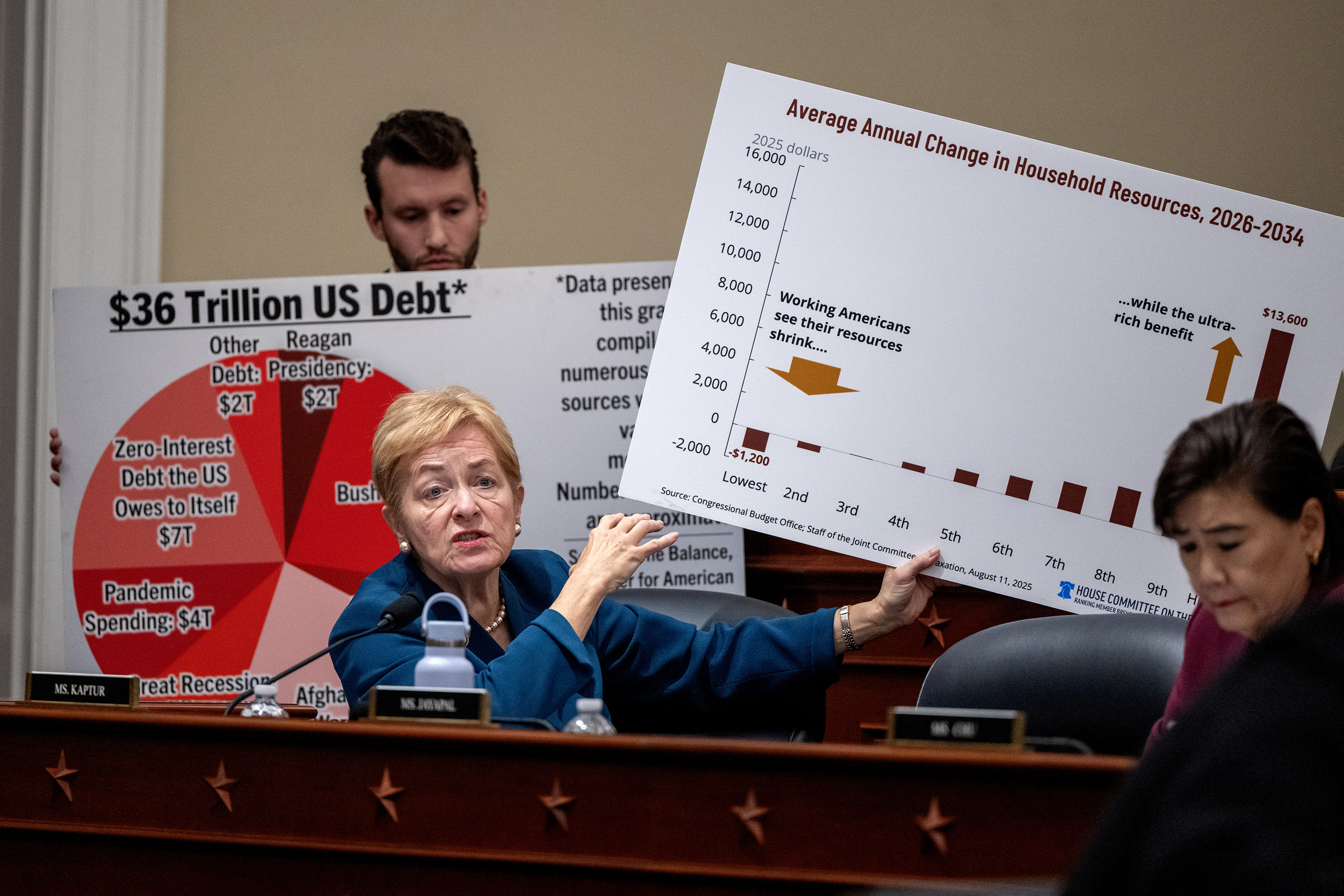
U.S. Rep. Marcy Kaptur, a Democrat from Ohio, brings visual aids to a hearing of the House Committee on the Budget on Capitol Hill in Washington, D.C. Tuesday, Nov. 18, 2025.
Throughout the three-hour hearing, Boyle would sidebar with Arrington, who is retiring next year. The Philly Democrat and the West Texas conservative make an unlikely pair, but the two have bonded across many late-night sessions over having younger children and their college football fanaticism — Boyle for his alma mater, Notre Dame, Arrington for Texas Tech.
“He’s a very good communicator because he’s a really smart and thoughtful guy,” Arrington said. “I always can appreciate, whether I agree or not, with a good communicator. He’s authentic in what he believes and he’ll even say, ‘I grant you it’s not perfect,’ or ‘You make a good point.’”
The midterms will dictate not just the party that controls Congress but also which ideological track the Budget Committee takes. If Democrats win, and Boyle takes the gavel, he plans to put more scrutiny on the administration and aim to regain some of Congress’ control over purse strings that Republicans have ceded to Trump.
Another Pennsylvanian, U.S. Rep. Lloyd Smucker, a Republican who represents Lancaster, has announced he is running to be the top Republican on the committee following Arrington’s retirement. That means regardless of party control, two Pennsylvanians will likely be at the helm of one of the most powerful committees in Congress. Smucker, a fiscal conservative running with Arrington’s backing, said in an interview he would focus on rising national debt and getting a budget resolution adopted. He was a key negotiator for Republicans during reconciliation, helping to get conservative House Freedom Caucus members on board.
Smucker called Boyle someone who is “serious about the budget process, and wants to make sure that it functions.”
“He genuinely cares about strengthening Congress as an institution,” Smucker added.
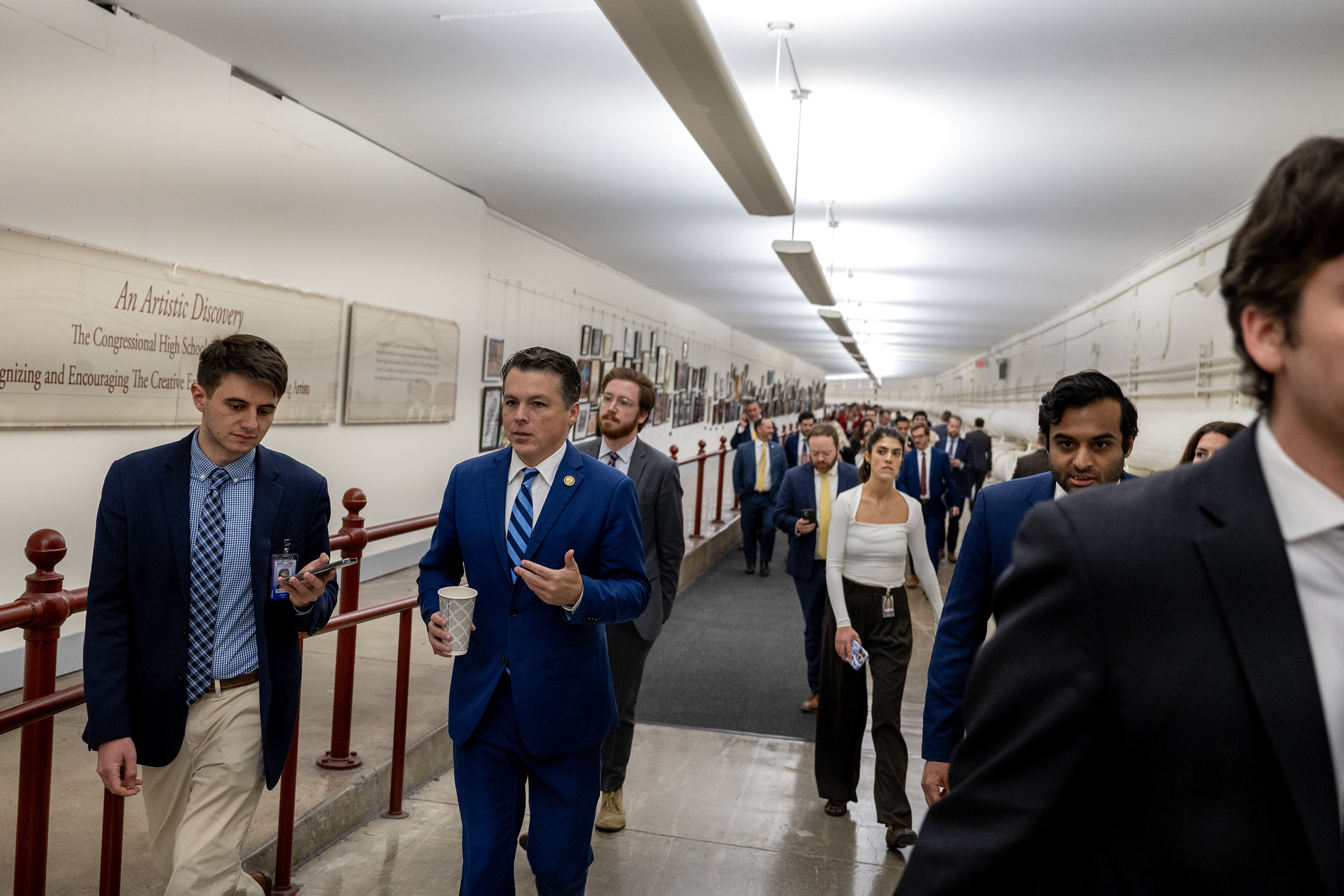
U.S. Rep. Brendan Boyle is interviewed by Charles Hilu (left), a reporter with the Dispatch, as he moves between office buildings on Capitol Hill in Washington, D.C. Tuesday, Nov. 18, 2025.
The road ahead
The longer Boyle stays in the House, in a safe Democratic seat, the harder it is to think about walking away.
In September, Jeffries appointed him the lead Democrat for the congressional delegation to the NATO Parliamentary Assembly. For Boyle, a history lover who has biographies of George Washington on his office coffee table, it’s an exciting opportunity to represent the country internationally as Trump continues to criticize the historic alliance. Boyle would become the leader of the parliamentary assembly delegation if Democrats take control of the House, just as he would take the gavel in the Budget Committee. Past committee chairs include former House Speaker Paul Ryan (R., Wis.), former Defense Secretary Leon Panetta, and former Ohio Gov. John Kasich.
“Some really high-quality, high-caliber people have done that over the last 40 years. So that’s what I’m looking forward to in the near term,” Boyle said. “After that, come 2028, and beyond, we’ll deal with that then. But it is interesting, like the longer you’re here, and if you move up the ranks, then actually it does make it more difficult to leave.”
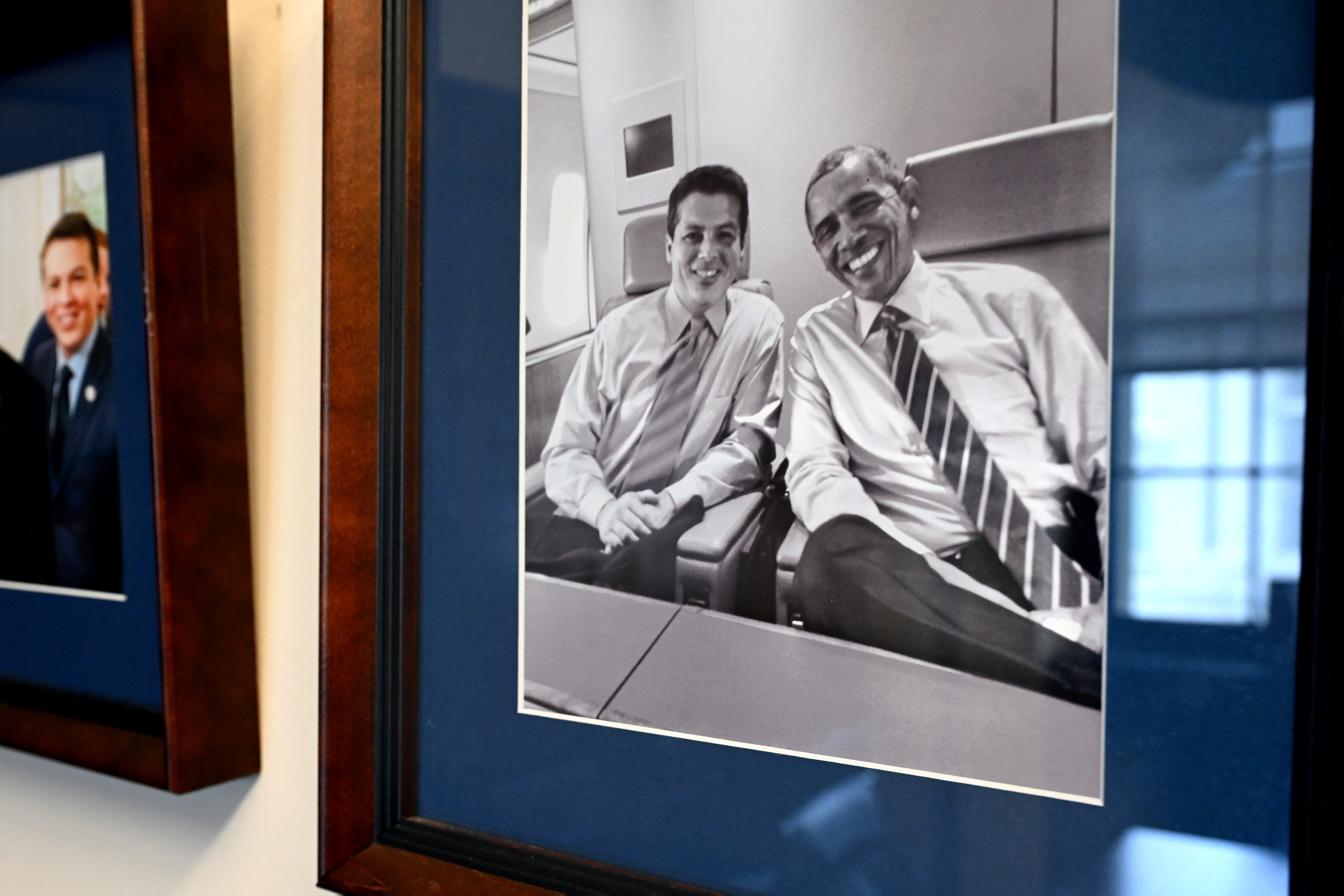
A painting of former U.S. Rep. William H. Gray III hangs in the hearing room of the House Committee on the Budget on Capitol Hill. It’s been 40 years since a Philadelphia lawmaker led a House committee. A photo of U.S. Rep. Brendan Boyle with former President Barack Obama on Air Force One hangs in his office on Capitol Hill in Washington, D.C.
But Boyle has not been shy about airing frustrations with Fetterman, whose term is up in 2028, sparking speculation Boyle could have an interest in a run against him.
Boyle said he avoided criticizing Fetterman until this spring, when the senator’s positions started to directly conflict with the party messaging he was pushing out.
“As I was doing TV opportunity after TV opportunity, what I increasingly found was that the clip they would show before I would be asked the question wouldn’t be a clip of what Donald Trump had said; it would be a clip of what my state’s Democratic senator had said,” Boyle said. “And I obviously would have to combat it.”
Fetterman has embraced an independent streak as a purple-state senator, often willing to work with the GOP. While pleasing to voters eager to see compromise and bipartisanship in a tenuous moment in Washington, it has also alienated some progressives.
Boyle said when it comes to the Senate, “I don’t rule anything in and I don’t rule anything out.”
If he were to run, a challenge could be building his statewide profile. He is still relatively unknown outside Philadelphia, though he has proven to be a prolific fundraiser. Today’s politics also tend to elevate showmen and outsiders, while Boyle has the more traditional cadence of an establishment politician — disciplined, polished, and most compelling when he speaks off-script.
Some local Philadelphia Democrats have criticized Boyle’s voting record on immigration, arguing it has not reflected the interests of the Latino community he represents in his majority-minority district. Boyle voted for the bipartisan Laken Riley Act, which requires the Department of Homeland Security to detain noncitizens who are arrested or charged with certain crimes, often forgoing due process. He was one of 46Democrats in the House along with 12 in the Senate, including Fetterman, to support the GOP-led bill.
“I have the same criticism as I do of Josh Shapiro: I wish he would take a stronger stance on immigration,” said State Rep. Danilo Burgos, who represents North Philadelphia. At the same time, Burgos credited Boyle as being a “good partner in our community” who always returns phone calls and texts.
For now, Boyle keeps an extremely busy schedule. The day of the budget hearing, his schedule stretched over 15 hours. He hustled from a meeting with Social Security and Medicaid experts to a floor vote to release the Jeffrey Epstein files.
Back in his office, where Eagles throw blankets, Phillies pennants, and a painting of Donegal, Ireland, his father’s home county, decorate the space, he sat down for his final meeting of the day.
Gwen Mills, the international president of UNITE HERE,a labor union that represents hospitality workers, wanted advice on how to translate Democrats’ work in Washington to members frustrated with both parties.
“Talk about affordability and how Republicans are making it worse — with the so-called beautiful bill,” Boyle suggested, running through some numbers and data before offering up a simpler sound bite:
“It boils down to life in America is just too damn expensive right now.”
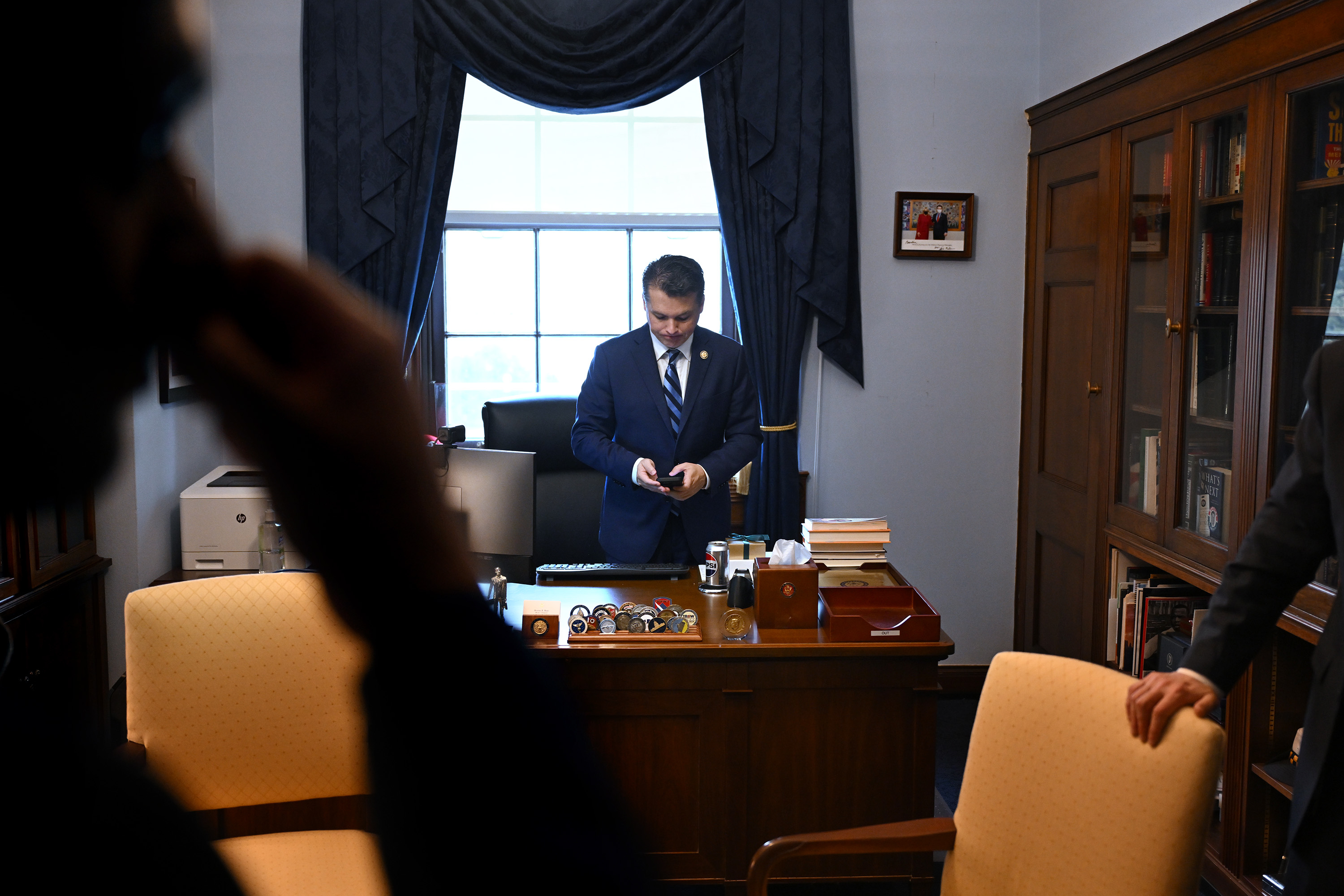
U.S. Rep. Brendan Boyle checks his phone before leaving his office on Capitol Hill in Washington, D.C. Tuesday, Nov. 18, 2025.
Gov. Josh Shapiro signed the CROWN Act into law Tuesday, a landmark bill that prohibits discrimination based on a person’s hair type, texture, or style.
The act, which stands for Create a Respectful and Open World for Natural Hair, applies to every Pennsylvanian, but is especially impactful to Black men and, particularly, women who have been discouraged from or marginalized by wearing natural or protective styles at school or in their places of work.
At the Island Design Natural Hair StudioTuesday, where Shapiro signed the bill into law, studio owner Lorraine Ruley said her clients have asked to change their hairstyles because of their workplace or upcoming job interviews. In one instance, Ruley said she had a client who asked to cut their locks because their workplacedeemed it “unprofessional.”
“The experience has been really heartbreaking, but I thank God for the opportunity to be here,” Ruley said. “And I just want to say natural hair rock.”
At the West Philly salon, Shapiro was flanked by primestate sponsor of the CROWN Act, state Rep. La’Tasha D. Mayes (D., Allegheny), and prime cosponsor House Speaker Joanna McClinton (D., Phila), who were overjoyed that their years of fighting for these protections were finally paying off and supported in a bipartisan fashion. The Pennsylvania Senate passed the bill 44-3 last week after it was stuck in committee for years.
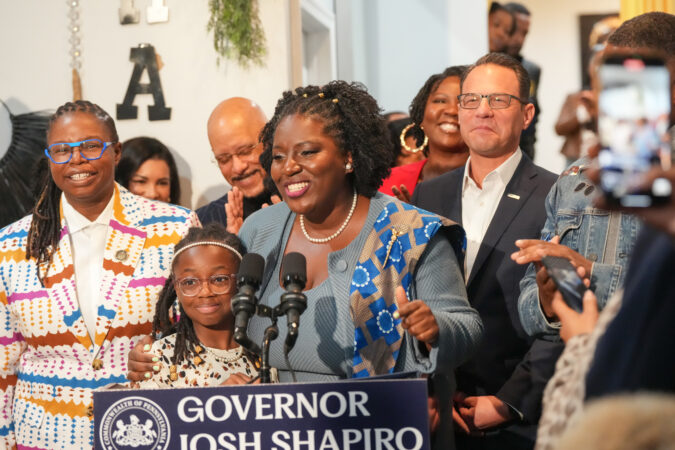
Gov. Josh Shapiro (front center) holds up the signed CROWN Act during a news conference at Island Design Natural Hair Studio, in West Philadelphia Tuesday.
“This is going to help people by making sure that wherever you work, or wherever you’re applying for a job, they can’t look at your hair and size you up, not based on your qualifications and all of the professional development you have and all of your education,” McClinton said. “They will not look at your hair and decide you can’t work here.”
Shapiro said the bill is about delivering “real freedom” for Pennsylvanians to protect them against hair discrimination that may at times be subtle.
Pennsylvania is the 28th state to pass anti-hair discrimination laws. New Jersey signed the CROWN Act into law in 2019. And both Philadelphia and Pittsburgh passed ordinances in 2020 to ban such discrimination, but this law will ensure protections for all Pennsylvanians.Incidents of discrimination can be reported to the Pennsylvania Human Relations Commission.
For some Black women, the price of trying to conform to a prejudiced setting could come at a risk to their health. There have been some concerns in recent years that frequent use of chemical straighteners, which some women use to more permanently straighten their hair, could increase the risk of cancers of the reproductive system.
“With an undeniable correlation between the use of chemical relaxers and the increased likelihood of developing uterine fibroids and cancer, the cost of conformity is simply too expensive,” said Adjoa B. Asamoah, a Washington, D.C.-based Temple graduate and architect of the CROWN Act, at the bill signing Tuesday.
The state House passed the bill once again in March, and McClinton worked with Republican Senate president pro tempore Kim Ward to get the bill to the Senate.
When asked about the prospects of a bill similar to the CROWN Act becoming federal law, especially under the Trump administration, which has railed against diversity, equity, and inclusion practices, Asamoah said she is hopeful that it will become the law of the land andshe “will not rest” until it does. Asamoah added that the bill is crafted carefully to “withstand any judicial scrutiny.”
Shapiro, for his part, said: “This is law. I don’t care what Donald Trump says. We make the laws here in the Commonwealth of Pennsylvania, and we will protect the Crown Act.” Those gathered clapped and interjected with affirmations.
And it became clear at the beginning of Tuesday’s bill signing event that the salon likes itwhen Shapiro wades into national political discourse.
There’s an old saying — well, there ought to be one — that the surest way to jinx something is to write, “I don’t want to jinx it…” My Border Patrol tornado-chasing trip to Charlotte was doomed the moment I posted about it here — frantically canceled when I learned 17 hours before takeoff that the BP had abruptly ditched North Carolina. There is a Plan B but no way will I jinx it a second time.
It’s better to stop Trump’s illegal orders than hope troops will disobey them
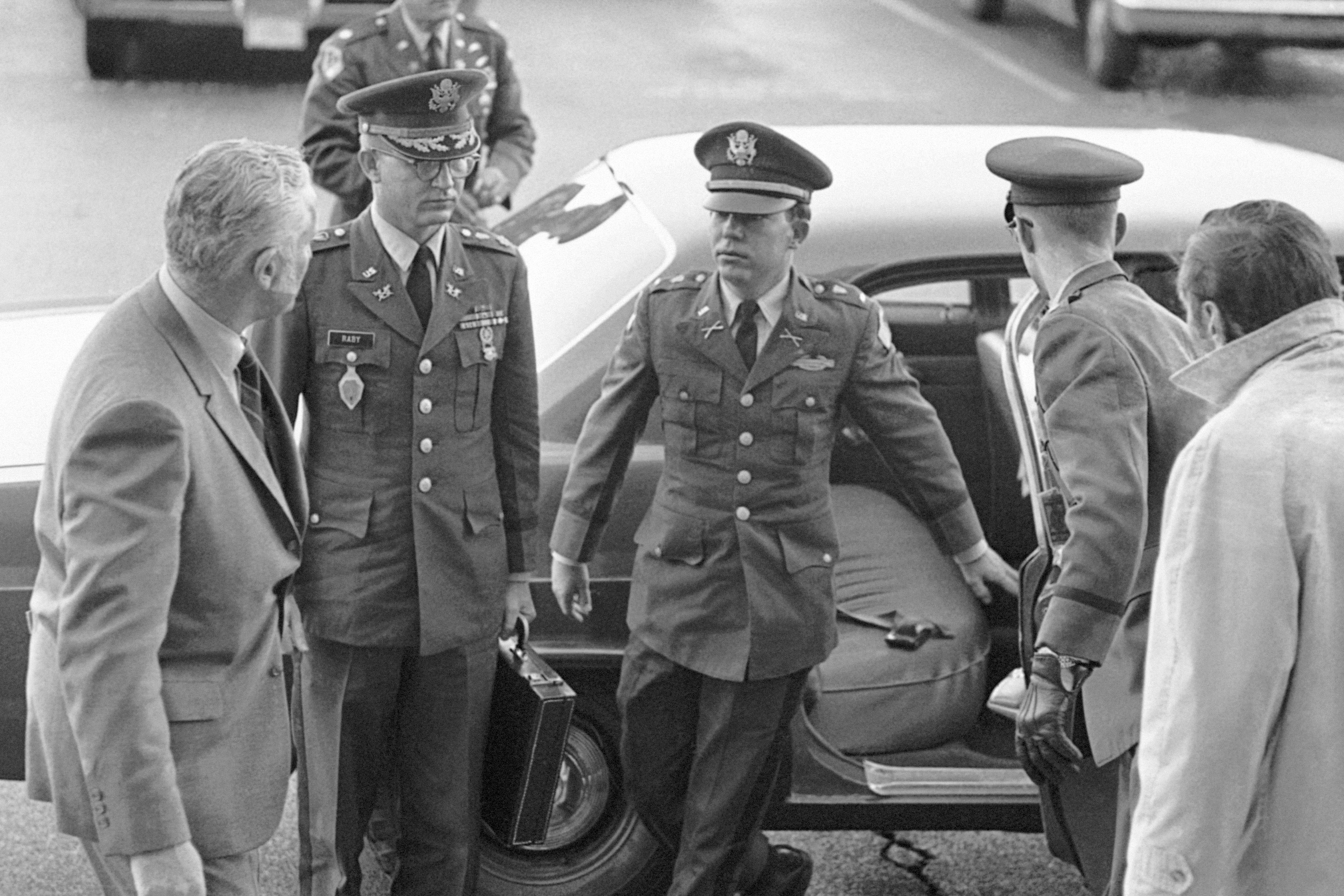
Lt. William L. Calley Jr., center, and his military counsel, Maj. Kenneth A. Raby, left, arrive at the Pentagon for testimony before an Army board of investigation hearing into the My Lai Massacre in December 1969. Calley led the U.S. soldiers who killed hundreds of Vietnamese civilians in the most notorious war crime in modern American military history.
A U.S. Army helicopter pilot named Hugh Thompson Jr. may be the greatest American hero you’ve probably never heard of. On March 16, 1968, Thompson — a warrant officer serving in Vietnam — and his crew were dispatched to support a “search and destroy” mission supposedly targeting the Viet Cong in a tiny hamlet called My Lai.
Instead, the Georgia-born soldier came up upon arguably the most notorious war crime in U.S. history — with thatch hutches ablaze and countless villagers, including women and children, laying dead or dying in an irrigation ditch.
Thompson landed and found the commander on the ground, Lt. William Calley. “What is this?” he asked. “Who are these people?”
“Just following orders,” Calley replied. After some more back and forth, the flustered Thompson replied: “But, these are human beings, unarmed civilians, sir.”
What Thompson and his helicopter crew did next was truly remarkable. Holding Calley and their other U.S. comrades at bay, they shielded a group of Vietnamese women, children and old men as they fled. Eventually, he loaded 11 villagers into the helicopter, and then Thompson and his men thought they detected movement in the ditch. Two fellow solders found a boy, just 5 or 6, hiding under the corpses, “covered in blood and obviously in a state of shock.” After safely evacuating the boy to a military hospital, Thompson reached a lieutenant colonel who ordered Calley to stop the killings.
Near the end of his life, Thompson — who died in 2006 — and two comrades were recognized for their courage and the many lives they saved at My Lai, awarded the Army’s highest award for bravery not in conflict with an enemy (the Soldier’s Medal), as well as the the Peace Abbey Courage of Conscience Award. He even returned to My Lai for an emotional reunion in 1998.
But it wasn’t like that in real time. During the war, a prominent congressman demanded that Thompson be court-martialed. “I’d received death threats over the phone,” he told CBS’ 60 Minutes in 2004. “Dead animals on your porch, mutilated animals on your porch some mornings when you get up.”
A generation after Thompson’s death, the kind of bold action he took that day in 1968 — disobeying what he correctly understood as an illegal order — is yet again on America’s front burner. This time, the debate is fueled by a video from six veterans who now serve as Democrats in Congress ― reminding today’s soldiers about their sworn duty to disobey unlawful commands.
That every expert in military law agrees with this principle hasn’t stopped President Donald Trump or his defense secretary, Pete Hegseth, from going ballistic — calling the Democrats “traitors” or even reposting calls for their death by hanging.
On Monday, Hegseth kicked things up a notch by endorsing a plan for one of the six — Arizona Sen. Mark Kelly, a former astronaut and decorated Navy fighter pilot — to return to active duty, so that he can be court-martialed for taking part in the video. A statement from the Pentagon, which Trump and Hegseth call “the Department of War,” insisted that “orders are presumed to be lawful. A servicemember’s personal philosophy does not justify or excuse the disobedience of an otherwise lawful order.”
Even as the growing controversy dominates the headlines, there is one aspect to the illegal-orders debate that practically no one is talking about. Actions like Thompson’s refusal at My Lai don’t only stand out for the soldier’s gumption. It is also the stuff of peace prizes and 60 Minutes profiles because it is so incredibly rare.
Do your own research. It’s very difficult to find examples in America’s 249-year history of troops disobeying orders because they are believed to be illegal. To be sure, there are famous incidents of soldiers who disobeyed an order and heroically saved lives — but almost all of them were because the command was reckless or just plain stupid, which isn’t the same as illegal or unconstitutional.
It’s not like there haven’t been opportunities. There have been American war crimes from Wounded Knee to Abu Ghraib, what Barack Obama famously called “dumb wars” like the 2003 assault on Iraq, and moments of intense moral agony, like dropping atomic bombs on Hiroshima and Nagasaki. These did produce a few whistleblowers or conscientious objectors, of course, but cases of actually refusing an order are few.
It’s not hard to understand why. Most military orders — even ones later reviled by history — come with some veneer of legality, whether it’s an opinion from a military lawyer or a congressional authorization vote, as happened with Vietnam, Iraq, and other conflicts.
The video recorded by Kelly and the others (including Pennsylvania Reps. Chrissy Houlahan and Chris Deluzio) focuses only on the widely accepted principle that military men and women must follow the law and the Constitution above all else, and doesn’t mention Trump or any specific disputed orders. In interviews, though, Democrats like Kelly and Houlahan have criticized Trump’s ongoing attacks on boats off South America that the regime claims are smuggling drugs.
While almost every expert on military laws describes these attacks — which have killed at least 83 people— as extrajudicial killings lacking legal justification, the Office of Legal Counsel in Trump’s Justice Department has nonetheless written a secret classified memo to justify them. Any officer or lower-level troop ordered to blow up these boats and kill all the people on board hasn’t seen the memo. And they won’t get a medal for saying “no” — at least not in 2025. They will be court-martialed and vilified by MAGA.
New York Times opinion writer David French, a Harvard Law grad who served as an Army lawyer in Iraq, notes the congressional video didn’t advise troops on what exactly is an illegal order, and adds: “Individual service members don’t have sufficient knowledge or information to make those kinds of judgments. When time is of the essence and lives are on the line, your first impulse must be to do as you’re told.”
Not always, as Thompson showed at My Lai, but military matters are rarely that black and white. The Trump regime’s sending of National Guard units and even active-duty military into cities such as Los Angeles may be an unnecessary and inflammatory violation of democratic norms, but experienced judges continue to debate its legality. Expecting the rank-and-file troops to decide is asking a lot.
It is very much in the spirit of Joseph Heller’s World War II novel and its legendary Catch-22: A soldier must disobey an illegal order, yet orders, in the heat of the moment, are almost never illegal.
That doesn’t mean Trump and Hegseth threatening Kelly and the other Democrats with jail and possibly the noose isn’t utterly outrageous. After all, they did nothing more than remind soldiers of their obligation to the law in the same language their drill sergeants use in boot camp.
I do also think — understanding the limitations of a MAGA-fed Congress — that good people of both parties on Capitol Hill should be doing a lot more to invoke the War Powers Act, hold hearings, debate impeachment, and do whatever else they can to prevent Trump’s reckless acts in the Caribbean and elsewhere. In other words, stop illegal orders before they’re given.
That said, as the Trump regime deteriorates, there may come a day when right and wrong feels as obvious as it did that 1968 day in the rice paddies of Vietnam. If, heaven forbid, this government ever ordered troops to put down a protest by firing on citizens, we will need a platoon full of Hugh Thompsons and no William Calleys, “just following orders.”
Yo, do this!
The writer Anand Giridharadas is the best of today’s public intellectuals, with a laser focus on the 1 Percent and the devastating role of income inequality in works such as Winners Take All, which rips apart the facade of modern philanthropy. So who better to pour through the late financier-and-sex-fiend Jeffrey Epstein’s emails and find the true meaning? His recent, masterful New York Times essay — “How the Elite Behave When No One Is Watching: Inside the Epstein Emails” — parses the small-talk and atrocious grammar of America’s rich and powerful to decipher how they rule. It is a must read.
Saturday was the 62nd anniversary of the day that changed America, for bad: the assassination of President John F. Kennedy as his motorcade rolled through downtown Dallas. It was also the day I was savaged by several dozen people on Bluesky for expressing an opinion shared by 65% of Americans: that we haven’t been told the whole truth about what really happened on Nov. 22, 1963. Kudos to ABC News for a new special that aired Monday looking at both sides of the endless controversy — Truth and Lies: Who Killed JFK? — that included skeptics like veteran journalist Jefferson Morley of the excellent site JFK Facts. The one hour-special is now streaming on Hulu.
Ask me anything
Question: Why is the Trump administration uncritically regurgitating the Russian “peace plan”? — @kaboosemoose.bsky.social via Bluesky
Answer: That’s a great question as our president has consistently told us that the “Russia! Russia! Russia!” scandal around Vladimir Putin’s U.S. election interference and his seeming sway over the 45th and 47th president is all a massive hoax. How to explain, then, that the supposedly-Trump-drafted 28-point peace plan to end the fighting in Ukraine was translated from its original Russian, with its details hashed out in Florida by corrupt and contented Trump son-in-law Jared Kushner and Kirill Dmitriev, a U.S.-sanctioned Russian envoy? It’s probably true that liberals were naive during Trump’s first term to believe the strange ties between MAGA and the Kremlin would bring down his presidency, but it’s also true that where there’s smoke, there’s fire. We all want peace in Ukraine, but Trump and his U.S. government simply are not honest brokers.
What you’re saying about…
Last week’s question about the Jeffrey Epstein files, and whether they’ll ever see the light of day despite enactment of the law calling for their release, was kind of open-ended, and thus it drew an array of responses. But most agreed with my view that it’s highly unlikely we’ll see the files, or see very much. “They won’t release them because they are now investigating the Democrats in the files, thus they won’t be able to release them due to the investigation,” Rosann McGinley wrote. “Also they’d be heavily redacted, ‘nothing to see here.’” Added Judy Voois: “I would not be surprised if he declared war on Venezuela just to steer the media and public interest away from continued scrutiny of the Epstein saga.”
📮 This week’s question: The heated reaction I received online about the JFK assassination now has me wondering what newsletter readers think. Do you believe Lee Harvey Oswald was the lone killer of John F. Kennedy, or do you think there was a conspiracy? Please email me your answer and put the exact phrase “JFK assassination” in the subject line.
Backstory on Pennsylvania’s budget deal with the devil
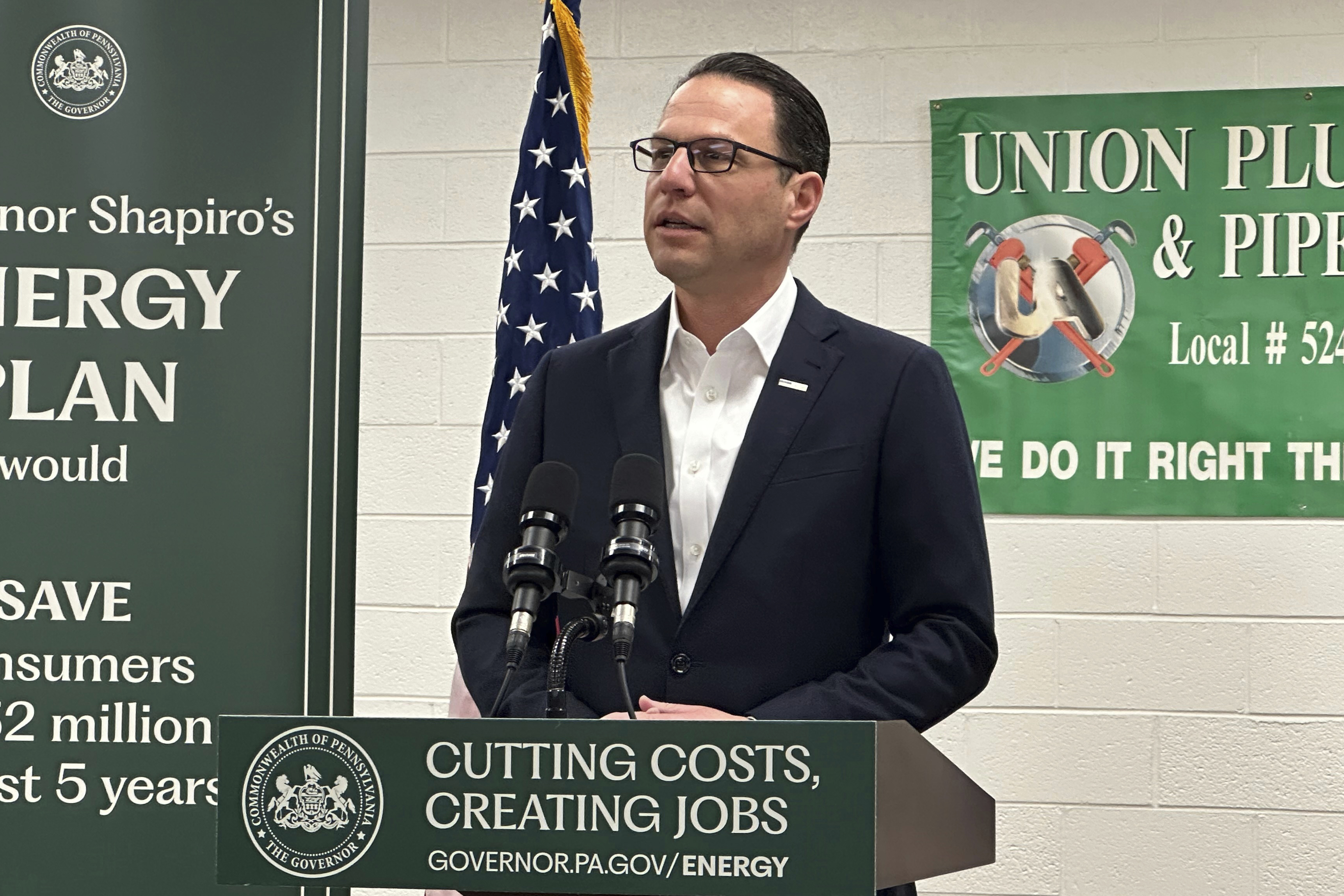
Pennsylvania Gov. Josh Shapiro speaks at a news conference at the United Association Local 524 union building in Scranton, Pa. in March 2024.
Saturday was the 62nd anniversary of the JFK assassination, but on Nov. 22, 2025 it was the entire planet that was under fire. One researcher declared that globally it was the hottest Nov. 22 ever recorded. It didn’t feel that way at my windswept dog park in Delco, but it did from the American Southeast — experiencing a record heat wave — to Tehran, where an epic drought has seen water fountains run dry. And yet the world’s leaders were on a full-fledged retreat from climate action, from the White House, where U.S. CEOs toasted the oil dictatorship of Saudi Arabia at a posh dinner, to Brazil, where a global summit on climate change failed to take on the hegemony of fossil fuels, to Harrisburg.
In a state that’s kowtowed to Big Oil and Gas interests since the days of John D. Rockefeller, Pennsylvania Republicans used the shame of the nation’s longest state-budget impasse to finally ram home their most cherished agenda item: gutting efforts in the Keystone State to work with our neighbors to control the greenhouse-gas pollution behind climate change. The GOP-run state Senate backed Democratic Gov. Josh Shapiro into a corner. Pennsylvania had to withdraw from Regional Greenhouse Gas Initiative (RGGI), a regional pollution-control system, or the money wouldn’t resume flowing to schools and other vital services.
To be clear, the drivers of this giant step backward were state lawmakers who’ve been swimming in Big Oil’s tainted campaign cash for a couple of decades now. But the capitulation, even at political gunpoint, was not Shapiro’s finest hour — especially as the Democrat with apparent ambition for higher office continues to push for polluting and energy-devouring data centers that he claims will boost the economy. As the American Prospect noted in a new piece, Pennsylvania’s environmental retreat came at the same time Virginia was electing a Democratic governor in Abigail Spanberger who’d promised to restore her state to the RGGI. If Shapiro does run for president in 2028, he may struggle to explain this deal to climate-minded voters.
The real problem, though, is that the best way to tackle climate change is by going on offense, with aggressive programs to promote alternative energy such as wind (there seems to be a lot of that around here) and solar that aren’t not only cleaner but a better deal for beleaguered consumers. While Pennsylvania — second only to Texas in natural-gas production — went all in on fracking, a 2024 survey found the commonwealth was 49th on expanding wind power and energy efficiency. With RGGI in the rearview mirror, the Shapiro administration needs to work a lot harder on green energy. That would be good for our governor’s White House dreams, but it would be a lot better for the planet.
What I wrote on this date in 2020
In the late fall of 2020, when I wasn’t trying to warn people that Donald Trump was planning a coup, I turned my attention to the incoming president, Joe Biden — and it’s both fascinating and sad to read how naive we were in the giddy aftermath of Trump’s defeat. In writing about Biden’s early Cabinet picks, the subhead read: “America is seeing the start of something it’s not used to: A White House that’s experienced, qualified … and boring. Could Biden’s ploy work?” NO! The answer turned out to be “no.” But still read the rest: “Biden’s Cabinet is ‘delightfully boring.’ Can reality-TV-addled America deal with it?”
Recommended Inquirer reading
Only one column last week as I spent time both preparing for and then canceling the Charlotte trip that never happened. In that piece, I vented my rage at the lavish White House shindig for a monster: Saudi Crown Prince Mohammed bin Salman, who was behind the brutal bone-saw murder of Washington Post journalist Jamal Khashoggi. The man that Joe Biden all too briefly promised to make “a global pariah” was feted by the CEOs of Apple, Nvidia, GM and just about any big business entity you can think of, in a stunning embrace of corruption that should end the myth of “woke corporations.”
There are two things, more than anything else, that keep local news in America alive: Hometown sports teams, and restaurants. Here in Philly, it was a lousy week for the former but a remarkable moment for the latter, as restaurants in the City of Brotherly Love competed for the very first time for recognition from the world’s ultimate dining survey, the Michelin Guide. In a glitzy ceremony at the Kimmel Center, Michelin bestowed its coveted star on three Philadelphia restaurants and honored more than 30 others — and Inquirer readers were obsessed. Four of the newsroom’s top seven most-read articles online last week were about the Michelin madness — including the bittersweetness of one eatery cited just before its closing, the cheesesteak shop that was honored but not invited, and other various snubs and surprises. The Inquirer has amped up its food coverage this year, and if you live and eat in this region I don’t know how you’d survive without it. If you don’t subscribe, please sign up today.
By submitting your written, visual, and/or audio contributions, you agree to The Inquirer‘s Terms of Use, including the grant of rights in Section 10.
Earlier this month, the Federal Transit Administration ordered SEPTA to inspect its trolley power system after four incidents, including two times trolleys stalled in the Center City tunnel, requiring 415 passengers to be evacuated.
The budget impasse
Shapiro said he was forced to act for the second straight year because Senate Republicans wouldn’t support additional recurring funding for mass transit operations in the state budget.
“They’ve come up with a ton of excuses, but they haven’t come up with the funding,” Shapiro said.
After the governor decided in September that no budget agreement on transit funding was possible, PennDotallowed SEPTA to tap $394 million in state money allocated for future capital projects to pay for two yearsof operating expenses.
The transit agency was facing a $213 million recurring deficit in its operating budget.
Yet the problems with the rail cars and trolleys served to underscore the risks of using capital funds for day-to-day operations.
“A history of chronic underinvestment has led us to this point,” said Chester County Commissioner Marian D. Moskowitz, who is vice chair of SEPTA’s board.
She noted that SEPTA has a much smaller capital budget than other large transit agencies.
$95 million for electrical system upgrades, overhauled propulsion motors and more on the Silverliner IV train cars and the newer Silverliner V models.
$48.4 million to update the overhead catenary wires in the trolley tunnel, along with three new catenary-maintenance cars for the tunnel and along trolley lines, and on long Regional Rail lines.
$51.5 million to upgrade 13 escalators at SEPTA stations, install AI-powered inspection cameras to catch potential problems earlier, and technology improvements at SEPTA’s Control Center
$8 million to install replacement parts for Broad Street Line and Norristown High Speed Line cars.
“These funds are going to make a significant difference in our efforts to overcome the current crises,” SEPTA general manager Scott Sauer said, and to help avoid future ones.
He thanked the governor and pledged “a comprehensive effort to identify potential problems sooner before they grow and lead to delays, cancellations, or shutdowns.”
Shapiro had proposed an increase in the share of general sales-tax revenue devoted to transit subsidies over five years.
Leaders of the GOP-controlled Senate said the $1.5 billion price tag was too high and proposed shifting capital money to operating subsidies for the state’s transit systems and roads — an idea partially reflected in the Shapiro administration’s temporary solution.
“I am glad the Governor continues to take our advice and use existing resources to support public transit,” Senate Majority Leader Joe Pittman (R., Indiana) said in a statement.
“It’s unfortunate that just one year ago, he took $153 million of funding from critical [road] infrastructure projects to fund transit, neglecting the needs of those who use our roadways every single day,” Pittman said.
Republicans also argued that SEPTA had been mismanaged and needs change.
As the next state budget cycle nears, the debate is likely to continue.
“I want you to know I’m going to be a continue to be a governor who supports mass transit, who gives a damn about SEPTA, who cares about those 800,000 people that rely on SEPTA every single day,” Shapiro said.
Rape crisis centers in the Philadelphia region are sounding the alarm that the slight increase in funding in the recently passed state budget won’t be enough to sustain or improve crucial services for survivors of sexual assault.
The Pennsylvania Coalition to Advance Respect (PCAR), which funds rape crisis centers via the state allocation, estimates centers will only see an average increase of $5,300 from the state to support their work assisting victims of sexual violence.
The Philadelphia Center Against Sexual Violence had to lay off most of its staff and reduce services due to the nearly five-month state budget impasse. And while leaders in the region appreciate the funding — the first increase for rape crisis centers in years — it’s only a fraction of what Philly’s only rape crisis center says it needs to survive.
“Even with the budget now passed, the funding increase is minimal compared to the overwhelming need,” said LaQuisha Anthony, senior manager of advocacy at the center, in a news release last week. The center is known as WOAR, the initials of its former name, Women Organized Against Rape.
Now advocates in Philadelphia and the suburbs are turning their focus to next year’s budget, pushing for an $8 million increase in state funding to rape crisis centers, which, among other services, offer victim advocacy, legal services, and crisis hotlines. A surge in funding will help provide stability for survivors and adequately compensate staff who dedicate their lives to this work.
“An $8 million increase would help ensure that every survivor across the Commonwealth, urban, suburban, and rural, has access to care, advocacy, and prevention,” said Joyce Lukima, coalition director and chief operating officer at PCAR, in a statement.
More than $12 million of a $50.1 billion state budget was allocated to rape crisis this year, a $250,000 increase from last year. Lukima said this $250,000 will be split among 47 rape crisis centers in the state.
In a statement, a spokesperson for the Pennsylvania Department of Human Services, which oversees rape crisis center funding, highlighted Gov. Josh Shapiro’s history of support for survivors of sexual violence.
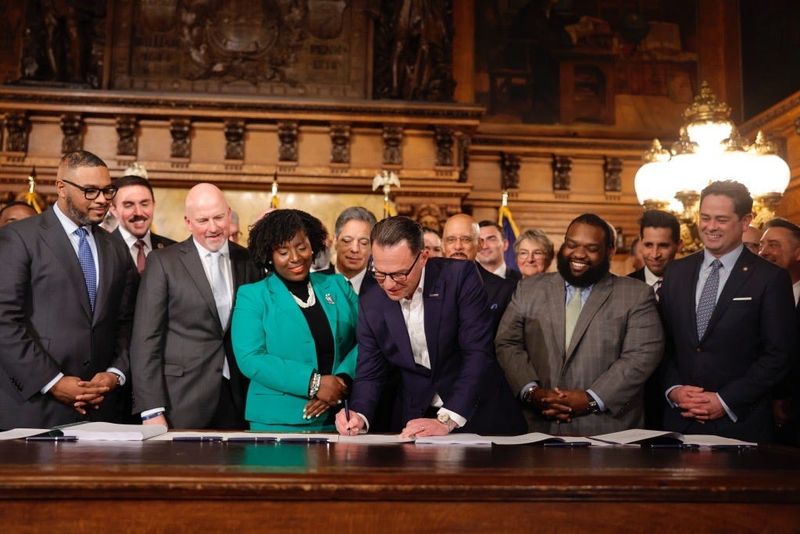
Gov. Josh Shapiro signs the fiscal year 2025-26 budget surrounded by General Assembly members on Nov. 12 at the Capitol in Harrisburg. The state budget had been due June 30, and Pennsylvania is the final state in the country to approve a funding deal.
“The final budget reflects the realities of working with one of the only divided legislatures in the entire country – but Gov. Shapiro will continue to fight for survivors and the Commonwealth’s rape crisis centers,” said Ali Fogarty, the DHS spokesperson.
Victim services centers in the suburbs, which also offer rape crisis services, are echoing WOAR and PCAR’s message, highlighting the urgent need for greater funding. These suburban centers receive funding from additional sources because they support victims of other crimes.
“For now, we’re doing OK, but another year of no increase in funding while the cost of living is going up has a significant impact on our staff as well as our organization,” said Penelope Ettinger, executive director of Network of Victim Assistance – Bucks County.
Trying to stay afloat
While Pennsylvania lawmakers were failing to come to an agreement on a far overdue state budget last month, rape crisis centers in Philadelphia and the suburbs were trying to make ends meet and provide services to survivors of sexual violence.
For instance, the Victim Services Center of Montgomery County had to use a line of credit, delay bill payments, institute a hiring freeze, increase the number of interns, and commit to “triaging services,” said Mary Onama, executive director.
“If they hadn’t passed the budget the time that they did, by December or January, we would have had to close, because we couldn’t go much longer,” Onama added.
At the Crime Victims’ Center of Chester County, it “added a layer of stress to an already very stressful job,” though the center did not have to reduce services, said Christine Zaccarelli, the organization’s CEO.
WOAR’s release last week said the closure of therapy and counseling services left “106 individuals wait-listed, 33 group clients waiting for services to resume, and eight child clients referred elsewhere for care.”
The center has been serving Philadelphia since 1971 and was one of the first rape crisis centers in the United States, according to the organization. Between January and October, the center said it responded to 3,820 calls on its crisis hotline.
The dysfunctional approval of the state budget, though, will have lingering effects on WOAR, warning in the news release that without a “long-term, sustainable investment,” the center won’t be able to meet a rising demand for resources.
The Bridge Loan, from the Pa. Treasury Department, provided WOAR funding owed for July through September, but it still wasn’t enough to return WOAR to full capacity, said Demetrius Archer, PCAR’s communications director. The center also brought back two employees this month, but it’s still in need of community support and is hoping to bring back more staff when possible.
“When services are underfunded, survivors and entire communities feel the impact,” said Fontan in the news release. “In a city as large and diverse as Philadelphia, every minute counts when someone is in crisis. Survivors deserve to know that when they reach out for help, someone will be there to answer.”
All eyes on Harrisburg
At Temple University’s campus Tuesday, student advocates bundled up in their coats, hats, and scarves and gathered at the Bell Tower to discuss an anti-sexual violence state bill they helped develop.
The Every Voice Bill, which primarily focuses on sexual violence prevention resources on college campuses, is even more important now that survivor services from WOAR are “unstable,” said Bella Kwok, a senior criminal justice major and president of Temple’s Student Activists Against Sexual Assault, in an interview prior to Tuesday’s event
“This bill would ensure that stability at least on an institutional level,” Kwok said.
Temple University students Emma Wentzel, left, and Bella Kwok speak at a podium on Polett Walk on Tuesday, Nov. 18, 2025, about campus sexual assault and a state bill they helped craft to strengthen protections against sexual violence at colleges.
Kwok is not the only one who is turning their attention to Harrisburg. PCAR and other rape crisis centers are continuing their push for next year’s budget to include an $8 million increase in the Pa. DHS line item for rape crisis.
As the first increase for rape crisis centers in a few years, the new budget’s funding gives advocates “hope,” even if the amount is “disappointing,” said Zaccarelli, of the Crime Victims’ Center of Chester County.
“Maybe our advocacy is making a little bit of a difference and shining a light on survivors and their needs and how important our centers are in the community,” Zaccarelli said.
Ettinger said that Bucks County’s state lawmakers have been supportive of NOVA Bucks, which had to place a hiring freeze on some positions and issue “significant” restrictions on spending due to the impasse, but that a lack of increased funding from the state is “very telling.”
“I believe that the fact that the state did not allocate a significant increase is very telling to what they believe, where they put it on the priority list,” Ettinger said.
For his part, Shapiro signed Act 122 in October 2024, which aimed to increase transparency by requiring a statewide electronic system to track evidence kits for sexual assaults, Fogarty, the DHS spokesperson said. And in December 2023, he signed Act 59, which aims to improve access to treatment for survivors of sexual assault.
It’s a “societal” problem, not a government problem, said Vincent Davalos, interim executive director of the Delaware County Victim Assistance Center.
“When we talk about sexual violence, the first thought is, of most people, is to say ‘Maybe this didn’t happen,” Davalos said. “And even if they do believe it happens… it’s just a really difficult topic for people to engage and talk about it plainly.”
This week, victim services leaders across Pennsylvania will gather in Harrisburg for an annual conference to address funding challenges among other concerns, Davalos said, noting that with more funding, his center could improve staff retention.
But this year, the newly passed state budget is likely to be top of mind.
“I think money is going to be a big topic,” Davalos said.