Tag: no-latest

  • Winter storm threatens to bring blizzards and ice to parts of the U.S., hampering holiday travel

    Winter storm threatens to bring blizzards and ice to parts of the U.S., hampering holiday travel

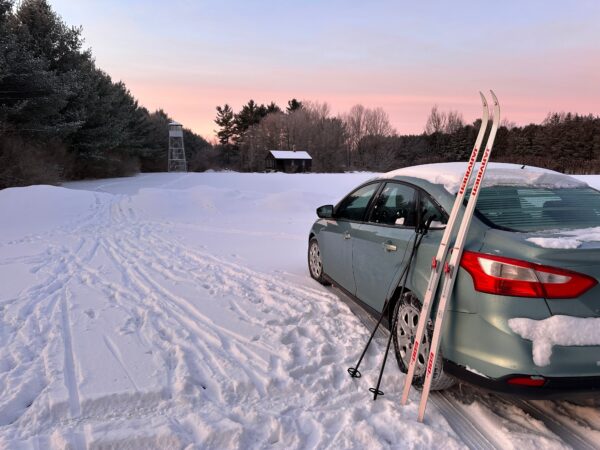
    A powerful winter storm was sweeping east from the Plains on Sunday, driven by what meteorologists describe as an intense cyclone, setting off a chain reaction of snow, ice, rain, and severe weather expected to affect much of the country.

    Snow and strengthening winds spread across the Upper Midwest on Sunday, where the National Weather Service warned of whiteout conditions and possible blizzard conditions that could make travel impossible in some areas. Snowfall totals were expected to exceed a foot across parts of the upper Great Lakes, with up to 2 feet possible along the south shore of Lake Superior.

    In the South, meteorologists warn of severe thunderstorms expected to signal the arrival of a sharp cold front — sometimes referred to as a “Blue Norther” — bringing a sudden temperature drop and strong north winds that will end days of record warmth across the region.

    The snowy holiday season in the Upper Midwest and Northeast comes as springlike warmth continues in much of the nation’s midsection and South, where record high temperatures had Santa sweating in recent days.

    The high temperature in Atlanta was forecast to be around 72 degrees Fahrenheit on Sunday, continuing a warming trend after climbing to 78 F to shatter the city’s record high temperature for Christmas Eve, the National Weather Service said. Numerous other record high temperatures were seen across the South and Midwest on the days after Christmas.

    But that record heat is quickly coming to an end, forecasters say.

    A cold front was expected to bring rain to much of the South late Sunday night into Monday, bringing much colder weather on Tuesday. The abrupt change will drop the low temperature in Atlanta to 25 F by early Tuesday morning. The colder temperatures in the South are expected to continue through New Year’s Day.

    Over the next 48 hours, the cyclone is expected to produce heavy snow and blizzard conditions in the Midwest and Great Lakes, freezing rain in New England, thunderstorms across the eastern U.S. and South, and widespread strong winds.

    The storm is expected to intensify as it moves east, drawing energy from a sharp clash between frigid air plunging south from Canada and unusually warm air that has lingered across the southern United States, according to the National Weather Service.

    It follows thousands of flight delays and cancellations across the Northeast and Great Lakes regions over the weekend due to snow, as thousands took to the roads and airports during the busy travel period between Christmas and New Year’s.

    On the other side of the country, California was experiencing a fairly dry weekend after powerful storms battered the state with heavy rains, flash flooding, and mudslides. At least four people were killed including a man who was found dead Friday in a partially submerged car near Lancaster, the Los Angeles County Sheriff’s Department reported.


  • Philly’s year in weird stories | Morning Newsletter

    Philly’s year in weird stories | Morning Newsletter

    Good morning.

    Sunday will be slightly warmer, but some showers are possible in the evening.

    Some truly bizarre stuff happened in and around Philadelphia this year. In our main story, we recap the strangest stories of 2025.

    And for the more than 550,000 people who drive on the Pennsylvania Turnpike every day, stopping for a meal can feel like a trip back in time.

    Scroll along for these stories and more.

    — Paola Pérez (morningnewsletter@inquirer.com)

    If someone forwarded you this email, sign up for free here.

    2025 was wild

    No matter how hard we try, there are certain tales we just can’t forget from this roller coaster of a year.

    In reflection, Inquirer columnist Stephanie Farr collected a handful of Philly-area stories that captured the peculiar. For example:

    💩 At least one kind of tush push was deemed illegal. A viral video of a road rage incident in April “put a stain on Delco that won’t be wiped away anytime soon,” Farr writes.

    🗑️ When Philly got trashed over the summer, things went from stinky to strange. A major city workers strike over eight hot days led to dead bodies piling up at the medical examiner’s office, slashed car tires, and plenty of memes.

    🐢 And we can’t leave out our “shellebrities” Mommy and Abrazzo, the nonagenarian tortoise couple at the Philadelphia Zoo that fascinated the country in hatching a historic count of 16 kids.

    Between the Phillies Karen situation and Mayor Cherelle L. Parker’s “Eagles” chant gone wrong, there was no shortage of sports-related wackiness, too. Read on for Farr’s list of the 10 weirdest stories of 2025.

    Turnpike fare

    🎤 Now I’m passing the mic to reporter Brett Sholtis.

    Driving west on the Pennsylvania Turnpike, Mary Wright was hoping for a Chick-fil-A. But as she watched the limited options on road signs pass, fond memories of roast beef sandwiches lured her to Roy Rogers.

    “My mother liked Roy Rogers,” said Wright, who is in her 60s and from Collingswood. “That’s how long it’s been around.”

    That’s pretty typical of the food offerings on the Pennsylvania Turnpike, where old-school brands such as Auntie Anne’s, Baskin-Robbins, and Sbarro dot many of the 17 service plazas.

    That puts the turnpike behind the times compared with similar toll roads in New Jersey and New York, where travelers can hold out for newer brands like Chick-fil-A, Pret a Manger, and Shake Shack.

    “I think the older generation likes Roy Rogers and all that, but younger people are more likely to like Shake Shack, for example,” said John Zhang, professor of marketing at the University of Pennsylvania’s Wharton School of Business.

    Once on the toll road, people are faced with dining options decided almost entirely by one company. It’s what Zhang called a “captive consumer” environment. The reasons for this involve state policy, a corporate contract, and a little business history. — Brett Sholtis

    Sholtis explains how consumer preferences have shifted over the decades, and the commercial stakes at play.

    What you should know today

    ❓Pop quiz

    Which famous Eagle made a surprise performance at the War on Drugs’ performance at Johnny Brenda’s last weekend?

    A) Swoop

    B) Jason Kelce

    C) Jordan Mailata

    D) Joe Walsh

    Think you got it right? Test your local news know-how and check your answer in our weekly quiz.

    🧩 Unscramble the anagram

    Hint: World-renowned _ Guitars

    MIN TAR

    Email us if you know the answer. We’ll select a reader at random to shout out here.

    Cheers to Linda Chaga, who correctly guessed Saturday’s answer: “O Little Town of Bethlehem.” One of America’s great Christmas songs, it was first composed and heard in a Philadelphia church before it spread across the world.

    Photo of the day

    Canada geese at sunrise in Evans Pond in Haddonfield, during the week of the Winter Solstice for the Northern Hemisphere.

    🎶 Today’s track goes like this: “Now we can begin again / For then was then, and now is now.”

    One more musical thing: The forthcoming week is full of concert options for Philly-area fans. Pop critic Dan DeLuca picked these highlights.

    👋🏽 I’ll be back in your inbox in 2026, so I want to take this opportunity to wish you a very happy and bright new year. Julie will bring you Monday’s news. Thanks for reading, and take care.

  • Horoscopes: Sunday, Dec. 28, 2025

    ARIES (March 21-April 19). Today, the adage “just do it” applies. If you’re reasonably sure your action helps (or at least won’t harm anyone), go without hesitation, because if you waste time explaining or asking permission, you’ll miss your chance.

    TAURUS (April 20-May 20). There’s often one person whose quick wit lifts the whole room, and right now, that’s you. Your timing is impeccable, your instincts are on point, and your humor is sharp. Things get done because you inspire.

    GEMINI (May 21-June 21). What good is a fancy shoe if it doesn’t fit? If it gives you blisters, it’s the wrong shoe for you. Similarly, no one is “better” because they are popular. If you can’t relax around them, they’re not your person. Happiness is finding a good fit.

    CANCER (June 22-July 22). Something in your life may feel like a relic from an older version of you. Notice what distracts from your true purpose. Notice what feels redundant. Streamlining now removes static and lets you focus on the main goal.

    LEO (July 23-Aug. 22). “No one wants to see how the sausage is made,” they say — except the other sausage makers, who adore the gritty details. Likewise, you’ll find yourself among people who get your weird process and actually want to hear about it.

    VIRGO (Aug. 23-Sept. 22). Your rational side may take charge for a while, but the emotions don’t just disappear, they wait. You may need to compartmentalize a feeling, but make time to return to it later so it doesn’t weigh on you.

    LIBRA (Sept. 23-Oct. 23). Theme of the day: Happiness is something you take in, not something you collect or display. “Trying to be happy by accumulating possessions is like trying to satisfy hunger by taping sandwiches all over your body.” — Roger Corless

    SCORPIO (Oct. 24-Nov. 21). You want to feel special and connected to someone, but not owned. Relationships need freedom and respect. Choose people who understand that closeness isn’t achieved by trying to own or control another person — rather, it’s about showing up for each other.

    SAGITTARIUS (Nov. 22-Dec. 21). People care what you think of them much more than you might guess. So any gesture that lets them know you like them will be well received and will promote a sense of calm and comfort. Everything is easier from there.

    CAPRICORN (Dec. 22-Jan. 19). You love to learn. It feels good when your brain absorbs the information to connect ideas. You’ll have the sensation today akin to the particular kind of pleasure that happens when a puzzle comes together.

    AQUARIUS (Jan. 20-Feb. 18). Some use a situation for all its worth, and the moment something “better” comes along, they jump. Not you. You value loyalty and make moves that aren’t just based on self-interest. You strongly consider your effect on others, too.

    PISCES (Feb. 19-March 20). Lean into reinvention. You’re not obligated to remain recognizable to anyone except your own spirit. Change your habits, your look, your approach — whatever makes your life feel more like “you.”

    TODAY’S BIRTHDAY (Dec. 28). Welcome to the Year of “You’re IT, Baby.” You’ll know how it feels to rule the room, be the source of the buzzy excitement and handle the special attention your charisma attracts. It comes about with clever micro-moves that add up to major life upgrades — the kind no one sees coming until suddenly you’re that person. More highlights: Money becomes easier to track and even easier to grow, romance reinvigorates your aesthetic sensibilities, and a skill becomes unexpectedly profitable. Virgo and Aries adore you. Your lucky numbers are: 7, 15, 26, 31 and 48.

  • Dear Abby | Jilted wife blames herself for marriage’s collapse

    DEAR ABBY: My ex-husband and I were best friends. We shared everything — dreams, laughs and struggles. I was convinced we’d grow old together. When he proposed, I said yes without hesitation. We had plans to start a family, but he asked me to wait until we purchased a home. I waited five years, trusting that the dream we had built together was still alive.

    In time, we bought our house, but when I asked about having children, something had shifted. He told me he no longer wanted kids. I was heartbroken. The life we had talked about for years suddenly dissolved. Soon after, he invited his mother, sister, brother-in-law and their daughter to move in with us. I tried to be understanding, but I began feeling like a guest in my own home — like he loved me, but prioritized them. Eventually, he told me he was moving out. He bought a condo and moved with his entire family, and I was left alone — emotionally and physically.

    I have tried to convince myself that this was never really about the kids, but I can’t shake the guilt. Part of me keeps thinking if I had said no to children, would he have stayed? Even now, years later, I still care for him and cannot seem to let go. I don’t know how to move forward when someone who was once my everything still occupies so much of my heart, even if he’s no longer in my life. How do I let go of someone who let go of me so easily?

    — DREAM DESTROYED IN VIRGINIA

    DEAR ‘DREAM’: You feel guilty for having wanted children, after your husband led you on for years pretending that he did? You were grossly misled and then deserted. If that reality hasn’t been enough to help you “let go,” then what you need is professional help from someone who is licensed to give it. You are clinging to the fantasy of this person, not the reality.

    ** ** **

    DEAR ABBY: My retired husband of 15 years, “Seth,” is pushing me to the edge of divorce. He’s extremely negative, verbally abusive and estranged from many friends, which has harmed my relationships with friends and family. He drinks almost all day (I drink as well), calls me horrible names I won’t repeat and refuses to respect my sleep needs (I’m still working). He thinks he’s being “funny” when he acts this way. Seth doesn’t hear well, so he talks softly, and this also leads to unnecessary arguments.

    I love Seth, but I feel like he is destroying my spirit and who I am. I used to be an independent, capable person. Now I feel like I am always walking on eggshells. I dread coming home from work some days. I just want to run away. Your thoughts?

    — END OF MY ROPE IN IDAHO

    DEAR ‘END’: Go online to Al-Anon (al-anon.org/info), find a location near you and attend some of the meetings. Then, if you are really at the end of your rope, draw the line with your disrespectful, alcoholic verbal abuser. Tell him LOUDLY, when he’s a little more sober than usual, that you have had it and that if he doesn’t stop drinking, his marriage is over. Then save yourself and follow through.

  • Jeffrey R. Holland, 85, next in line to lead Church of Jesus Christ of Latter-day Saints

    Jeffrey R. Holland, 85, next in line to lead Church of Jesus Christ of Latter-day Saints

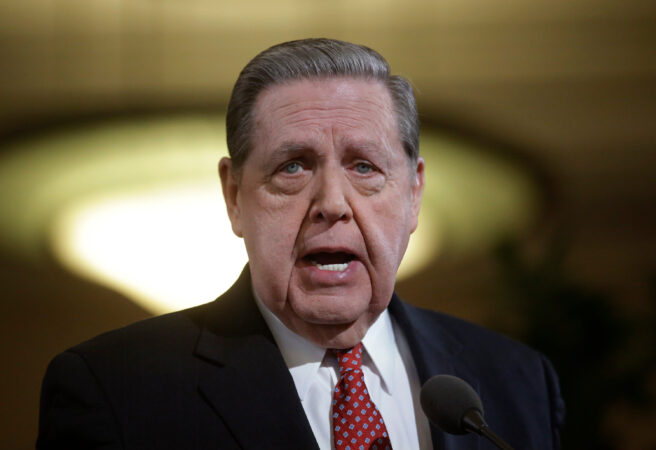
    SALT LAKE CITY — Jeffrey R. Holland, a high-ranking official in the Church of Jesus Christ of Latter-day Saints who was next in line to become the faith’s president, has died. He was 85.

    Holland died early Saturday morning from complications associated with kidney disease, the Church of Jesus Christ of Latter-day Saints announced on its website.

    Holland, who died in Salt Lake City, led a governing body called the Quorum of the Twelve Apostles, which helps set church policy while overseeing the many business interests of what is known widely as the Mormon church.

    He was the next longest-tenured member of the Quorum of the Twelve after President Dallin H. Oaks, making him next in line to lead the church under a long-established succession plan.

    Henry B. Eyring, who is 92 and one of Oaks’ two top counselors, is now next in line for the presidency.

    Holland had been hospitalized during the Christmas holiday for treatment related to ongoing health complications, the church said. Experts on the faith pointed to his declining health in October when Oaks did not select Holland as a counselor. He attended several church events that month in a wheelchair.

    His death leaves a vacancy in the Quorum of the Twelve that Oaks will fill in coming months, likely by calling a new apostle from a lower-tier leadership council. Apostles are all men in accordance with the church’s all-male priesthood.

    Holland grew up in St. George, Utah, and worked for many years in education administration before his call to join the ranks of church leadership. He served as the ninth president of Brigham Young University, the Utah-based faith’s flagship school, from 1980 to 1989 and was a commissioner of the church’s global education system.

    Under his leadership, the Provo university worked to improve interfaith relations and established a satellite campus in Jerusalem. The Anti-Defamation League later honored Holland with its Torch of Liberty Award for helping foster greater understanding between Christian and Jewish communities.

    Holland is widely remembered for a 2021 speech in which he called on church members to take up metaphorical muskets in defense of the faith’s teachings against same-sex marriage. The talk, known colloquially as “the musket fire speech,” became required reading for BYU freshmen in 2024, raising concern among LGBTQ+ students and advocates.

    Holland was preceded in death by his wife, Patricia Terry Holland. He is survived by their three children, 13 grandchildren and several great-grandchildren.

  • Winter storm snarls U.S. holiday travel across Northeast, Great Lakes

    Winter storm snarls U.S. holiday travel across Northeast, Great Lakes

    BOSTON — More than a thousand flights were canceled or delayed across the Northeast and Great Lakes regions due to snow as thousands took to U.S. roads and airports during the busy travel period between Christmas and New Year’s.

    New York City received around 4 inches of snow Friday night into early Saturday — slightly under what some forecasts had predicted. At least 1,500 flights were canceled from Friday night, according to flight-tracking service FlightAware. But by Saturday morning, both the roads and skies were clearing.

    “The storm is definitely winding down, a little bit of flurries across the Northeast this morning,” said Bob Oravec, a Maryland-based forecaster at the National Weather Service.

    Oravec said the storm was quick-moving from the northwest toward the Southeast U.S., with the largest snowfall in the New York City area reaching over 6 inches in central eastern Long Island. Further to the north in the Catskills, communities saw as much as 10 inches of snowfall.

    Newark Liberty International Airport, John F. Kennedy International Airport, and LaGuardia Airport posted snow warnings on the social media platform X on Friday, cautioning that weather conditions could cause flight disruptions.

    The National Weather Service warned of hazardous travel conditions from the Great Lakes through the northern mid-Atlantic and southern New England, with the potential for tree damage and power outages. Forecasters said the storm was expected to weaken by Saturday morning.

    In Times Square on Saturday, workers in red jumpsuits worked to clear the sludge and powder-coated streets and sidewalks using shovels and snowblowers.

    Jennifer Yokley, who was in Times Square on a holiday trip from North Carolina, said she was excited to see snow accumulating as it dusted buildings, trees, and signs throughout the city.

    “I think it was absolutely beautiful,” she said.

    Payton Baker and Kolby Gray, who were visiting New York City from West Virginia on Saturday, said the snow was a Christmas surprise for their third anniversary trip.

    “Well, it’s very cold and it was very unexpected,” Baker said, her breath visible in the winter air. “The city is working pretty well to get all the roads salted and everything, so it’s all right.”

    Ahead of the storm, New York Gov. Kathy Hochul declared a state of emergency for more than half of the state.

    4 dead in California

    On the other side of the country, California was experiencing a fairly dry weekend after powerful storms battered the state with heavy rains, flash flooding, and mudslides. At least four people were killed including a man who was found dead Friday in a partially submerged car near Lancaster, the Los Angeles County Sheriff’s Department reported.

    Some mountainous areas received 10 to 18 inches of rain over three days, peaking on Christmas Eve, National Weather Service meteorologist Rose Schoenfeld said. There were varied amounts of rain in other populated areas, including up to 4 inches across the Los Angeles Basin and many coastal areas.

    There was significant damage to homes and cars in Wrightwood, a 5,000-resident mountain town about 80 miles northeast of Los Angeles, as floods and mudslides turned roads into rivers and buried vehicles in rock and debris.

    Before rain reappears in the forecast later next week, California was expected to experience Santa Ana winds with gusts of over 60 mph in mountainous areas from Sunday night through Tuesday. The winds could uproot saturated trees and cause power outages.

  • Russian attack pummels Kyiv as Zelensky prepares to meet Trump

    Russian attack pummels Kyiv as Zelensky prepares to meet Trump

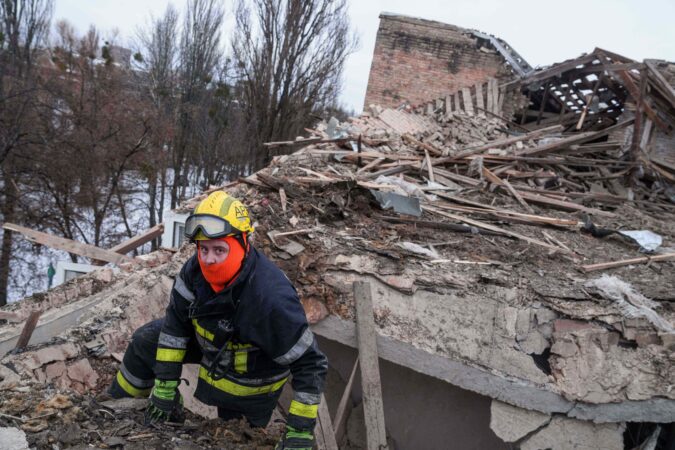
    KYIV — Russia launched a massive attack on civilian infrastructure in Ukraine early Saturday, targeting the Kyiv region’s energy grid and leaving one-third of the capital without heating, Foreign Minister Andrii Sybiha said, as residents face freezing temperatures and frost.

    The assault, which also triggered power cuts throughout Kyiv, comes just one day before Ukrainian President Volodymyr Zelensky is set to meet with President Donald Trump at his Mar-a-Lago estate in Florida to discuss the latest draft of a peace plan to end the war — a document that Russia has not signaled it is prepared to sign.

    Zelensky told journalists Saturday that he was en route to Canada, where he would meet with Prime Minister Mark Carney and speak via videoconference with European leaders ahead of the Trump meeting.

    The key issues Trump and Zelensky are expected to discuss include territorial control, future U.S. security guarantees for Ukraine, and investment in Ukraine’s reconstruction.

    “Putin deliberately ordered a massive bombing of residential areas and critical infrastructure of Kyiv just as leaders of Ukraine and the US are preparing to meet and advance peace,” Sybiha wrote on X. “ … Putin must realize that further rejection of peace will come at a very heavy price for him and his regime.”

    Zelensky pleaded for European partners to provide new air defense systems to Ukraine and described the Russian attacks as a reaction to “peaceful negotiations between Ukraine and the United States regarding ending Russia’s war against Ukraine.”

    By midmorning Saturday, Russia had launched nearly 500 Shahed drones and 40 missiles at Ukraine, including ballistic Kinzhals, Zelensky said in a post on Telegram. Several residential buildings were hit. Footage showed vehicles on fire on a major road in Kyiv.

    At least one person was killed and 28 people wounded in Kyiv, including two children, Mayor Vitali Klitschko said. One woman was killed in the nearby city of Bila Tserkva. The assault lasted 10 hours — and air raid sirens blared again throughout the afternoon as more drones closed in on Kyiv’s airspace. The attacks followed others elsewhere in Ukraine in recent days, including a glide-bomb strike on Kharkiv, the country’s second-largest city, on Friday night that killed two civilians and wounded a 9-month old girl and her mother.

    Russia has spent months targeting Ukraine’s energy infrastructure in a bid to damage the country’s economy and its people’s resolve in the coldest and darkest months of the year. In many parts of the country, including the capital, scheduled blackouts have been in place that leave civilians without power for much of the day. New emergency outages were implemented Saturday in response to the latest attack.

    The Kremlin refused Ukraine’s request for a Christmas ceasefire. Fierce battles continue across the front line in the country’s east and south. The Russian Volunteer Corps, a group of Russian soldiers fighting for Ukraine, announced Saturday that its commander, Denis Kapustin, was killed in a Russian drone attack in the southeastern Zaporizhzhia region.

    “If Russia even turns the Christmas and New Year’s time into a time of destroyed buildings and burned apartments, ruined power stations, then this sick activity can only be responded to with really strong steps,” Zelensky wrote Saturday on Telegram. “America has this opportunity, Europe has this opportunity, many of our partners have this opportunity. The main thing is to take advantage of it.”

    A frenzied effort to draft a workable peace plan has been in the works since last month, when the White House threatened to cut all aid to Ukraine unless Kyiv signed on to a controversial 28-point proposal by Thanksgiving. That draft made major concessions to Russia, stirring outrage in Ukraine and Europe. Washington eventually backed down on the threat, and delegations from Kyiv and Washington have since met several times to draft a new version, which Zelensky said Friday numbers 20 points and is 90% complete.

    The U.S. has pressured Ukraine to organize elections, including a presidential vote, which has been postponed since last year because of martial law, which has been in place throughout the war. Putin, meanwhile, changed Russia’s constitution to extend his stay in office indefinitely. Zelensky said recently that he would urge lawmakers to discuss how best to organize a presidential election but has insisted that Ukraine will require security guarantees to host any vote.

    Kyiv and European partners have repeatedly warned that Russia will attempt to disrupt any vote in Ukraine. Some elements of the latest draft peace plan, especially those regarding territory, would require a referendum in Ukraine, which also would face challenges with millions of people displaced or serving on the front line.

    “I am not clinging to the chair; we are ready for this,” Zelensky said Saturday of elections. But he insisted that the legal and security framework be established before any vote. “After today’s strikes — again, I repeat, because this happens daily, because Russia attacks us every day — the sky must be safe, and security ensured throughout our territory, at least for the duration of the elections or a referendum.”

    Any U.S. security guarantees, Zelensky said, will depend on Trump — “what he is ready to give, when he is ready to give it, for what term. Without a doubt, I will be grateful to him if his decision aligns with our wishes.”

    Ukraine continues to refuse to cede territory to Russia but has signaled openness to establishing a demilitarized zone in the Donbas region if Russia withdraws its troops — a proposal that Moscow, which remains adamant it wants to control all of Donbas, may refuse.

    Ukraine also rejected an earlier suggestion that its military be restricted to 600,000 troops, which would make it incapable of fighting off any future Russian attack, instead writing into the latest draft that its peacetime military could be capped at 800,000 troops.

    “Where is the Russian response to the proposals to end the war, which were put forward by the United States and the world?” Zelensky wrote on Telegram. “Russian representatives are having long conversations, but in reality, it’s the Kinzhals and Shaheds that speak for them. This is the real attitude of Putin and his entourage. They don’t want to end the war and are trying to use every opportunity to inflict more pain on Ukraine and increase their pressure on others in the world. And this means that the responsive pressure is not enough.”

  • Times Square to feature patriotic crystal ball for New Year’s Eve, kicking off U.S. 250th birthday

    Times Square to feature patriotic crystal ball for New Year’s Eve, kicking off U.S. 250th birthday

    After the crystal ball drops on New Year’s Eve in New York City, it will rise again, sparkling in red, white, and blue to usher in 2026 and kick off months of celebrations for the nation’s upcoming 250th birthday.

    The patriotic touches at this year’s Times Square gathering, including a second confetti drop, will offer an early glimpse of what’s ahead: hundreds of events and programs, big and small, planned nationwide to mark the signing of the Declaration of Independence in 1776.

    “I’m telling you right now, whatever you’re imagining, it’s going to be much more than that,” said America250 Chair Rosie Rios, who oversees the bipartisan commission created by Congress in 2016 to organize the semiquincentennial anniversary. “It’s going to be one for the ages, the most inspirational celebration this country and maybe the world has ever seen.”

    Rios and her group worked with the Times Square Alliance business district and One Times Square, the building from which the ball is dropped, to make the changes to this year’s ceremonies. They’re also planning a second ball drop event on July 3, the eve of the nation’s birthday, “in the same beautiful style that Times Square knows how to do it,” Rios said.

    It will mark the first time in 120 years there will be a ball drop in Times Square that doesn’t occur on New Year’s Eve, she said.

    A New Year’s Eve ball was first dropped in Times Square in 1907. Built by a young immigrant metalworker named Jacob Starr, the 700-pound, 5-foot-diameter ball was made of iron and wood and featured 100 25-watt light bulbs. Last year, the Constellation Ball, the ninth and largest version, was unveiled. It measures about 12 feet in diameter and weighs nearly 12,000 pounds.

    The only years when no ball drop occurred were 1942 and 1943, when the city instituted a nightly “dimout” during World War II to protect itself from attacks. Crowds instead celebrated the new year with a moment of silence followed by chimes rung from the base of One Times Square.

    This year, the stroke of midnight will also mark the official launch of America Gives, a national service initiative created by America250. Organizers hope to make 2026 the largest year of volunteer hours ever aggregated in the country.

    On the following day, America250 will participate in the New Years Day Rose Parade in Pasadena, Calif., with a float themed “Soaring Onward Together for 250 Years.” It will feature three larger-than-life bald eagles representing the country’s past, present, and future.

    “We want to ring in this new year from sea to shining sea. What better way to think about it than going from New York to California,” Rios said. “This has to be community-driven, this has be grassroots. We’re going from Guam to Alaska, from Fairbanks to Philadelphia, and everything in between.”

    President Donald Trump has also announced the “Freedom 250” initiative to coordinate additional events for the 250th anniversary.

    Rios said she sees the wide range of celebrations and programs planned for the coming months, from large fireworks displays and statewide potluck suppers to student contests and citizen oral histories, as an opportunity to unite a politically divided nation.

    “If we can find something for everyone … having those menus of options that people can pick and choose how they want to participate,” she said. “That’s how we’re going to get to engaging 350 million Americans.”

  • Millions of Afghans face hunger as aid cuts deepen a humanitarian crisis

    Millions of Afghans face hunger as aid cuts deepen a humanitarian crisis

    KABUL, Afghanistan — For 10 hours a day, Rahimullah sells socks from his cart in eastern Kabul, earning about $4.5 to $6 per day. It’s a pittance, but it’s all he has to feed his family of five.

    Rahimullah, who like many Afghans goes by only one name, is one of millions of Afghans who rely on humanitarian aid, both from the Afghan authorities and from international charity organizations, for survival. An estimated 22.9 million people — nearly half the population — required aid in 2025, the International Committee for the Red Cross said in an article on its website Monday.

    But severe cuts in international aid — including the halting of U.S. aid to programs such as food distribution run by the United Nations’ World Food Program — have severed this lifeline.

    More than 17 million people in Afghanistan now face crisis levels of hunger in the winter, the World Food Program warned last week, 3 million more than were at risk more than a year ago.

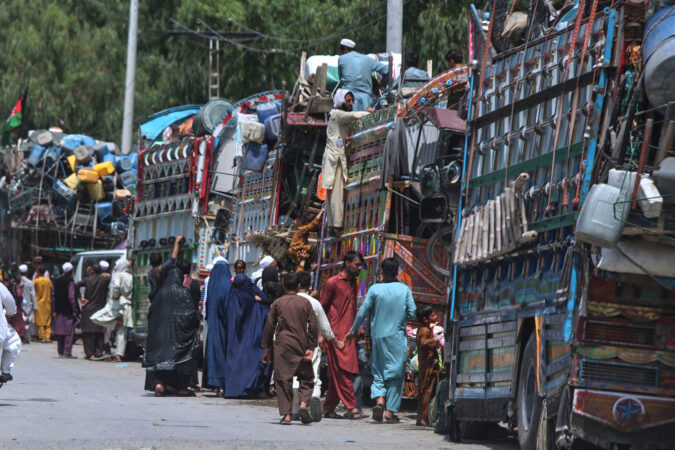
    The slashing in aid has come as Afghanistan is battered by a struggling economy, recurrent droughts, two deadly earthquakes, and the mass influx of Afghan refugees expelled from countries such as Iran and Pakistan. The resulting multiple shocks have severely pressured resources, including of housing and food.

    U.N. appeals for help

    Tom Fletcher, the U.N. humanitarian chief, told the Security Council in mid-December that the situation was compounded by “overlapping shocks,” including the recent earthquakes and increasing restrictions on humanitarian aid access and staff.

    While Fletcher said nearly 22 million Afghans will need U.N. assistance in 2026, his organization will focus on 3.9 million facing the most urgent need of lifesaving help due to reduced donor contributions.

    Fletcher said this winter was “the first in years with almost no international food distribution.”

    “As a result, only about 1 million of the most vulnerable people have received food assistance during the lean season in 2025,” compared to 5.6 million last year, he said.

    The year has been devastating for U.N. humanitarian organizations, which have had to cut thousands of jobs and spending in the wake of aid cuts.

    “We are grateful to all of you who have continued to support Afghanistan. But as we look towards 2026, we risk a further contraction of life-saving help — at a time when food insecurity, health needs, strain on basic services, and protection risks are all rising,” Fletcher said.

    Returning refugees

    The return of millions of refugees has added pressure on an already teetering system. Minister of Refugees and Repatriation Affairs Abdul Kabir said Sunday that 7.1 million Afghan refugees had returned to the country over the last four years, according to a statement on the ministry website.

    Rahimullah, 29, was one of them. The former Afghan Army soldier fled to neighboring Pakistan after the Taliban seized power in 2021. He was deported back to Afghanistan two years later, and initially received aid in the form of cash as well as food.

    “The assistance was helping me a lot,” he said. But without it, “now I don’t have enough money to live on. God forbid, if I were to face a serious illness or any other problem, it would be very difficult for me to handle because I don’t have any extra money for expenses.”

    The massive influx of former refugees has also sent rents skyrocketing. Rahimullah’s landlord has nearly doubled the rent of his tiny two-room home, with walls made half of concrete and half of mud and a homemade mud stove for cooking. Instead of 4,500 afghanis (about $67), he now wants 8,000 afghanis (about $120) — a sum Rahimullah cannot afford. So he, his wife, daughter, and two young sons will have to move next month. They don’t know where to.

    Before the Taliban takeover, Rahimullah had a decent salary and his wife worked as a teacher. But the new government’s draconian restrictions on women and girls mean women are barred from nearly all jobs, and his wife is unemployed.

    “Now the situation is such that even if we find money for flour, we don’t have it for oil, and even if we find it for oil, we can’t pay the rent. And then there is the extra electricity bill,” Rahimullah said.

    Harsh winters compound misery

    In Afghanistan’s northern province of Badakhshan, Sherin Gul is desperate. In 2023, her family of 12 got supplies of flour, oil, rice, beans, pulses, salt, and biscuits. It was a lifesaver.

    But it only lasted six months. Now, there is nothing. Her husband is old and weak and cannot work, she said. With 10 children, seven girls and three boys between the ages of 7 and 27, the burden of providing for the family has fallen on her 23-year-old son — the only one old enough to work. But even he only finds occasional jobs.

    “There are 12 of us … and one person working cannot cover the expenses,” she said. “We are in great trouble.”

    Sometimes neighbors take pity on them and give them food. Often, they all go hungry.

    “There have been times when we have nothing to eat at night, and my little children have fallen asleep without food,” Gul said. “I have only given them green tea and they have fallen asleep crying.”

    Before the Taliban takeover, Gul worked as a cleaner, earning just about enough to feed her family. But the ban on women working has left her unemployed, and she said she developed a nervous disorder and is often sick.

    Compounding their misery is the harsh cold of the northern Afghan winter, when snow halts construction work where her son can sometimes find jobs. And there is the added expense of firewood and charcoal.

    “If this situation continues like this, we may face severe hunger,” Gul said. “And then it will be very difficult for us to survive in this cold weather.”

  • Thailand and Cambodia sign a new ceasefire agreement to end border fighting

    Thailand and Cambodia sign a new ceasefire agreement to end border fighting

    BANGKOK — Thailand and Cambodia signed a ceasefire agreement on Saturday to end weeks of fighting along their border over competing territorial claims.

    The agreement took effect at noon and calls for a halt in military movements and airspace violation for military purposes.

    Only Thailand has carried out airstrikes, hitting sites in Cambodia as recently as Saturday morning, according to the Cambodian Defense Ministry.

    The deal also calls for Thailand, after the ceasefire has held for 72 hours, to repatriate 18 Cambodian soldiers it has held as prisoners since earlier fighting in July. Their release has been a major demand of the Cambodian side.

    Within hours of the signing, Thailand’s Foreign Ministry protested to Cambodia that a Thai soldier sustained a permanent disability when he stepped on an anti-personnel land mine it charged had been laid by Cambodian forces.

    Defense ministers met at the border

    The agreement was signed by the countries’ defense ministers, Cambodia’s Tea Seiha and Thailand’s Nattaphon Narkphanit, at a border checkpoint. It followed three days of lower-level talks by military officials.

    It declares that the sides are committed to an earlier ceasefire that ended five days of fighting in July and follow-up agreements.

    The original July ceasefire was brokered by Malaysia and pushed through by pressure from U.S. President Donald Trump, who threatened to withhold trade privileges unless Thailand and Cambodia agreed. It was formalized in more detail in October at a regional meeting in Malaysia that Trump attended.

    Despite those deals, the countries carried on a bitter propaganda war and minor cross-border violence continued, escalating in early December to widespread heavy fighting.

    On Saturday, U.S. Secretary of State Marco Rubio welcomed the ceasefire announcement and urged Cambodia and Thailand to fully honor it and the terms of the peace accord reached earlier in Malaysia.

    Civilians bore the brunt of the fighting

    Thailand has lost 26 soldiers and one civilian as a direct result of the combat since Dec. 7, according to officials. Thailand has also reported 44 civilian deaths.

    Cambodia hasn’t issued an official figure on military casualties, but says that 30 civilians have been killed and 90 injured. Hundreds of thousands of people have been evacuated on both sides of the border.

    “Today’s ceasefire also paves the way for the displaced people who are living in the border areas to be able to return to their homes, work in the fields, and even allow their children to be able to return to schools and resume their studies,” Cambodia’s Seiha told reporters after the signing.

    Each side blamed the other for initiating the fighting and claimed to be acting in self-defense.

    The agreement also calls on both sides to adhere to international agreements against deploying land mines, a major concern of Thailand.

    Thai soldiers along the border have been wounded in at least 10 incidents this year by what Thailand says were newly planted Cambodian mines. Cambodia says the mines were left over from decades of civil war that ended in the late 1990s.

    Following the latest injury on Saturday, Thailand’s Foreign Ministry noted that the new agreement “includes key provisions on joint humanitarian demining operations to ensure the safety of military personnel and civilians in the border areas as soon as possible.”

    Another clause says the two sides “agree to refrain from disseminating false information or fake news.”

    The agreement calls for a resumption of previous measures to demarcate the border. The sides also agreed to cooperate in suppressing transnational crimes. That’s primarily a reference to online scams perpetrated by organized crime that have bilked victims around the world of billions of dollars each year. Cambodia is a center for such criminal enterprises.

    Malaysia’s leader hails agreement

    Malaysia’s Prime Minister Anwar Ibrahim, who was instrumental in putting together the original ceasefire, said the new agreement “reflects a shared recognition that restraint is required, above all in the interest of civilians.”

    Many clauses similar to those in Saturday’s agreement were included in October’s ceasefire document, and were open to various interpretations and generally honored only in part. These included provisions concerning land mines and the Cambodian prisoners.

    The fragility of the new agreement was underlined by Thailand’s Defense Ministry spokesperson Surasant Kongsiri in a news briefing after Saturday’s signing. He said that the safe return of civilians to their homes would indicate the situation had stabilized enough to allow the repatriation of the captured Cambodian soldiers.

    “However, if the ceasefire does not materialize, this would indicate a lack of sincerity on the Cambodian side to create sure peace,” he said. “Therefore, the 72- hour ceasefire beginning today is not an act of trust nor unconditional acceptance but a time frame to tangibly prove whether Cambodia can truly cease the use of weapons, provocations, and threats in the area.”