Tag: no-latest

  • TSA agents are working without pay at U.S. airports due to another shutdown

    TSA agents are working without pay at U.S. airports due to another shutdown

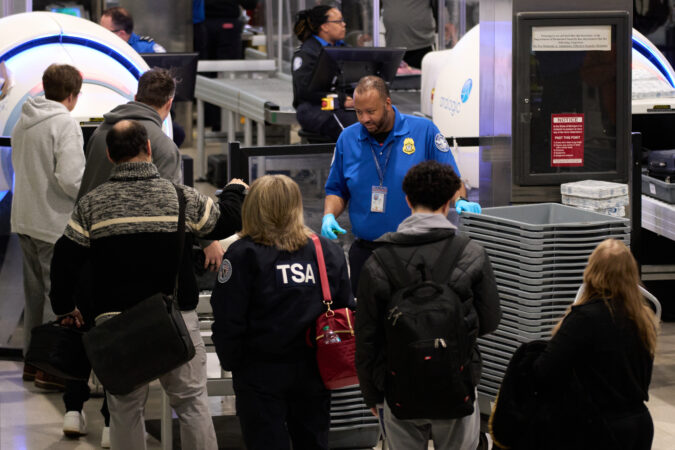
    A shutdown of the U.S. Department of Homeland Security that took effect early Saturday impacts the agency responsible for screening passengers and bags at airports across the country. Travelers with airline reservations may be nervously recalling a 43-day government shutdown that led to historic flight cancellations and long delays last year.

    Transportation Security Administration officers are expected to work without pay while lawmakers remain without an agreement on DHS’ annual funding. TSA officers also worked through the record shutdown that ended Nov. 12, but aviation experts say this one may play out differently.

    Trade groups for the U.S. travel industry and major airlines nonetheless warned that the longer DHS appropriations are lapsed, the longer security lines at the nation’s commercial airports could get.

    Here’s what to know about the latest shutdown and how to plan ahead.

    What’s different about this shutdown?

    Funding for Homeland Security expired at midnight Friday. But the rest of the federal government is funded through Sept. 30. That means air traffic controllers employed by the Federal Aviation Administration will receive paychecks as usual, reducing the risk of widespread flight cancellations.

    According to the department’s contingency plan, about 95% of TSA workers are deemed essential personnel and required to keep working. Democrats in the House and Senate say DHS won’t get funded until new restrictions are placed on federal immigration operations.

    During past shutdowns, disruptions to air travel tended to build over time, not overnight. About a month into last year’s shutdown, for example, TSA temporarily closed two checkpoints at Philadelphia International Airport. That same day, the government took the extraordinary step of ordering all commercial airlines to reduce their domestic flight schedules.

    On Saturday afternoon, the Philadelphia airport’s website showed all checkpoints open with normal brief wait times of 10 minutes or less.

    John Rose, chief risk officer for global travel management company Altour, said strains could surface at airports more quickly this time because the TSA workforce also will be remembering the last shutdown.

    “It’s still fresh in their minds and potentially their pocketbooks,” Rose said.

    What is the impact on travelers?

    It’s hard to predict whether, when, or where security screening snags might pop up. Even a handful of unscheduled TSA absences could quickly lead to longer wait times at smaller airports, for example, if there’s just a single security checkpoint.

    That’s why travelers should plan to arrive early and allow extra time to get through security.

    “I tell people to do this even in good times,” Rose said.

    Experts say flight delays also are a possibility even though air traffic controllers are not affected by the DHS shutdown.

    Airlines might decide to delay departures in some cases to wait for passengers to clear screening, said Rich Davis, senior security adviser at risk mitigation company International SOS. Shortages of TSA officers also could slow the screening of checked luggage behind the scenes.

    What travelers can do to prepare

    Most airports display security line wait times on their websites, but don’t wait until the day of a flight to check them, Rose advised.

    “You may look online and it says 2½ hours,” he said. ”Now it’s 2½ hours before your flight and you haven’t left for the airport yet.”

    Passengers should also pay close attention while packing since prohibited items are likely to prolong the screening process. For carry-on bags, avoid bringing full-size shampoo or other liquids, large gels or aerosols, and items like pocketknives in carry-on bags.

    TSA has a full list on its website of what is and isn’t allowed in carry-on and checked luggage.

    At the airport, Rose said, remember to “practice patience and empathy.”

    “Not only are they not getting paid,” he said of TSA agents, “they’re probably working with reduced staff and dealing with angry travelers.”

    Will the shutdown drag on?

    The White House has been negotiating with Democratic lawmakers, but the two sides failed to reach a deal by the end of the week before senators and members of Congress were set to leave Washington for a 10-day break.

    Lawmakers in both chambers were on notice, however, to return if a deal to end the shutdown is struck.

    Democrats have said they won’t help approve more DHS funding until new restrictions are placed on federal immigration operations after the fatal shootings of Alex Pretti and Renee Good in Minneapolis last month.

    In a joint statement, U.S. Travel, Airlines for America, and the American Hotel & Lodging Association warned that the shutdown threatens to disrupt air travel as the busy spring break travel season approaches.

    “Travelers and the U.S. economy cannot afford to have essential TSA personnel working without pay, which increases the risk of unscheduled absences and call outs, and ultimately can lead to higher wait times and missed or delayed flights,” the statement said.

  • CIA, Pentagon investigated secret ‘Havana syndrome’ device in Norway

    CIA, Pentagon investigated secret ‘Havana syndrome’ device in Norway

    Working in strict secrecy, a government scientist in Norway built a machine capable of emitting powerful pulses of microwave energy and, in an effort to prove such devices are harmless to humans, in 2024 tested it on himself. He suffered neurological symptoms similar to those of “Havana syndrome,” the unexplained malady that has struck hundreds of U.S. spies and diplomats around the world.

    The bizarre story, described by four people familiar with the events, is the latest wrinkle in the decadelong quest to find the causes of Havana syndrome, whose sufferers experience long-lasting effects including cognitive challenges, dizziness, and nausea. The U.S. government calls the events Anomalous Health Incidents.

    The secret test in Norway has not been previously reported. The Norwegian government told the CIA about the results, two of the people said, prompting at least two visits in 2024 to Norway by Pentagon and White House officials.

    Those aware of the test say it does not prove AHIs are the work of a foreign adversary wielding a secret weapon similar to the prototype tested in Norway. One of them noted that the effects suffered by the Norwegian researcher, whose identity was not disclosed by the people familiar, were not the same as in a “classic” AHI case. All spoke on the condition of anonymity because of the subject’s sensitivity.

    But the events bolstered the case of those who argue that “pulsed-energy devices” — machines that deliver powerful beams of electromagnetic energy such as microwaves in short bursts can affect human biology and are probably being developed by U.S. adversaries.

    “I think there’s compelling evidence that we should be concerned about the ability to build a directed-energy weapon that can cause a variety of risk to humans,” said Paul Friedrichs, a retired military surgeon and Air Force general who oversaw biological threats on the White House National Security Council under President Joe Biden. Friedrichs declined to comment on the Norway experiment.

    The Trump administration took office promising to pursue the AHI issue aggressively. But there has been little apparent movement. A review ordered by Director of National Intelligence Tulsi Gabbard is expected to focus mostly on the Biden administration’s handling of the issue, and its release has been delayed, people familiar with the issue said.

    In a separate development that has become public in recent weeks, the U.S. government covertly purchased at the end of the Biden administration a different foreign-made device that produces pulsed radio waves and which some experts suspect could be linked to AHI incidents, according to two people familiar with the matter.

    The device is being tested by the Defense Department. It has some Russian-origin components, but the U.S. government still has not determined conclusively who built it, said one of the people.

    The U.S. acquisition of the device was first reported last month by independent journalist Sasha Ingber and CNN, which said it had been purchased for millions of dollars by Homeland Security Investigations, part of the Department of Homeland Security.

    The device that the scientist constructed in Norway was not identical to the one that the U.S. government covertly acquired, one of the people familiar with the events said. The Norwegian device was built based on “classified information,” suggesting it was derived from blueprints or other materials stolen from a foreign government, this person said.

    At about the same time the U.S. became aware of the two pulsed-energy machines, two spy agencies altered their previous judgment and concluded that some of the incidents involving AHIs could be the work of a foreign adversary, delivering that verdict in an updated U.S. intelligence assessment issued in January 2025 during the Biden administration’s final weeks.

    “New reporting,” the assessment said, led the two agencies “to shift their assessments about whether a foreign actor has a capability that could cause biological effects consistent with some of the symptoms reported as possible AHIs.”

    One was the National Security Agency, which intercepts and decodes foreign electronic communications, several people familiar with the issue said. The other, said two of those people, was the National Ground Intelligence Center, a U.S. Army intelligence agency in Charlottesville that produces intelligence on foreign adversaries’ scientific, technical, and military capabilities.

    The majority of U.S. intelligence agencies, including the CIA and four others, said they continued to judge it “very unlikely” that the attacks were the result of a foreign adversary or that a foreign actor had developed a novel weapon. In conversations intercepted by U.S. spy agencies, American adversaries were heard expressing their own surprise at the AHI incidents and denying involvement, U.S. officials have said.

    The CIA declined to comment on the Norwegian test or how it impacted the agency’s analysis. Norway’s embassy in Washington did not respond to a request for comment.

    Some former officials and AHI victims have pointed to Russia as the prime suspect in the AHI incidents because of its decades of work in directed-energy devices. So far, no conclusive proof has publicly emerged, and Moscow has denied involvement.

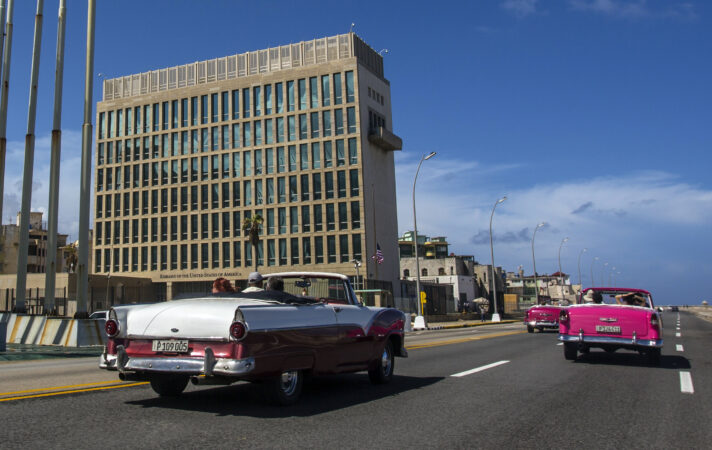
    Taken together, the two known directed-energy devices along with other research appear to have prompted a reconsideration by some of the causes of Havana syndrome, so named because of the mysterious 2016 outbreak of symptoms reported by personnel at the U.S. Embassy in Havana.

    In subsequent years, U.S. personnel reported hundreds of cases globally, in China, Eastern Europe, and elsewhere. A top aide to then-CIA Director William J. Burns reported symptoms while traveling in India in 2021.

    At a conference in Philadelphia earlier this month, retired Air Force Lt. Col. Chris Schlagheck, at times his voice breaking, said he was hit five times in 2020 in his home in Northern Virginia, where a Russian family lived across the street. It was not until last year that a doctor told him his symptoms were the same as those reported from Havana a decade earlier.

    Much about the Norway test remains obscured by its highly classified nature. People familiar with the events declined to identify the scientist or the Norwegian government agency he worked for.

    The results were all the more shocking because the Norwegian researcher had earned a reputation as a leading opponent of the theory that directed-energy weapons can cause the type of symptoms associated with AHIs, those familiar with the events said. Trying to dramatically prove his point, with himself as a human guinea pig, he achieved the opposite.

    “I don’t know what possessed him to go and do this,” one of the people said. “He was a bit of an eccentric.”

    A delegation of Pentagon officials traveled to Norway in 2024 to examine the device. In December of that year, a group of intelligence and White House officials also went to Norway to discuss the issue, those familiar with the events said.

    In January 2022, the CIA produced an interim assessment that concluded a foreign country was probably not behind Havana syndrome. It emerged weeks before a major panel of government and nongovernment experts produced a report commissioned by the director of national intelligence and deputy CIA director that came to a markedly different conclusion.

    That panel concluded in February 2022 that pulsed electromagnetic energy, particularly in the radio-frequency range, ‘’plausibly explains the core characteristics of reported AHIs,” although it acknowledged many unknowns. “Information gaps exist,” it reported.

    The conclusion marked the first time a report issued publicly by the U.S. government acknowledged that the symptoms could be caused by human-made, external events.

    The IC Experts Panel, as it was known, interviewed several people who had suffered accidental exposure to electromagnetic energy, said David Relman, a Stanford University microbiologist who chaired the panel.

    But the CIA interim assessment overshadowed the expert panel’s report. Then, in March 2023, the full intelligence community issued an assessment that unanimously concluded that it was unlikely that a foreign adversary was behind the incidents. “There is no credible evidence that a foreign adversary has a weapon or (intelligence) collection device that is causing AHIs,” the unclassified version of their report said, citing secret intelligence data and open-source information about foreign weapons and research programs.

    U.S. intelligence agencies “essentially ignored” the experts panel’s work, Relman told the conference in Philadelphia. The agencies, particularly the CIA, “had developed a very firm set of conclusions, world view that caused them I think to become dug in,” he said.

    By late 2024, senior White House officials in the Biden administration had come to question the absolutist position taken by U.S. intelligence agencies in their 2023 assessment.

    There were some officials, including within the intelligence community, who insisted that “there was nothing here” — that every reported case could be explained by some environmental or medical factor, said one person familiar with the administration’s views.

    The more “responsible” view, the person said, was to admit “we don’t know the answers” and that it was “plausible that pulsed electromagnetic energy could account for some subset of cases.”

    After the November 2024 election, White House officials who were working on an AHI brief for the incoming Trump administration invited several victims to a meeting to offer their input. The officials also wanted to reassure the victims that they realized the intelligence community assessment called into question the very real health issues they experienced and what caused them.

    At one point, an official turned to the victims who were gathered in the Situation Room and said, “We believe you.” The White House wasn’t yet certain it was a foreign actor but believed it was plausible that the symptoms had been caused by external factors, said the person familiar with the administration’s views.

    Marc Polymeropoulos, a former CIA officer and AHI victim who attended the unclassified meeting, said, “It was clear to the victims, but also unsaid, that new information had come into the NSC that had caused them to make such a statement.”
  • What to know about the investigation into Nancy Guthrie’s disappearance

    What to know about the investigation into Nancy Guthrie’s disappearance

    TUCSON, Ariz. — Law enforcement agents have been gathering more potential evidence as the search for Today show host Savannah Guthrie‘s mother heads into its third week.

    Nancy Guthrie, 84, was last seen at her Arizona home on Jan. 31 and was reported missing the following day. Authorities say her blood was found on the front porch. Purported ransom notes were sent to news outlets, but two deadlines for paying have passed.

    Authorities have expressed concern about Nancy Guthrie’s health because she needs vital daily medicine. She is said to have a pacemaker and have dealt with high blood pressure and heart issues, according to sheriff’s dispatcher audio on broadcastify.com.

    Here’s what to know about her disappearance and the intense search to find her:

    Video of masked man

    The Federal Bureau of Investigation released surveillance videos of a masked person wearing a handgun holster outside Guthrie’s front door in Tucson the night she vanished. A porch camera recorded video of a person with a backpack who was wearing a ski mask, long pants, jacket, and gloves.

    On Thursday, the FBI called the person a suspect. It described him as a man about 5 feet, 9 inches tall with a medium build. The agency said he was carrying a 25-liter “Ozark Trail Hiker Pack” backpack.

    Investigators initially said there was no surveillance video available since Guthrie didn’t have an active subscription to the doorbell camera company. But digital forensics experts kept working to find images in back-end software that might have been lost, corrupted, or inaccessible.

    Studying DNA

    Investigators collected DNA from Guthrie’s property which doesn’t belong to Guthrie or those in close contact with her, the Pima County Sheriff’s Department said. Investigators are working to identify who it belongs to.

    Evidence requiring forensic analysis is being sent to the same out-of-state lab that has been used since the beginning of the case, the department said.

    Investigators found several gloves, the nearest about 2 miles from Guthrie’s home, and submitted them for lab analysis, the sheriff’s department said. It did not specify what type of gloves.

    The sheriff stressed his department is working closely with the FBI.

    Sorting through tips

    The Pima County sheriff and the FBI announced phone numbers and a website to offer tips. Several hundred detectives and agents have been assigned to the case, the sheriff’s department said.

    The FBI said it has collected more than 13,000 tips since Feb. 1, the day Guthrie was reported missing. The sheriff’s department, meanwhile, said it has taken at least 18,000 calls.

    The sheriff’s department has not said whether any tips have advanced the investigation.

    Intensive searches

    Late Friday night, law enforcement sealed off a road about 2 miles from Guthrie’s home as part of their investigation. A parade of sheriff’s and FBI vehicles, including forensics vehicles, passed through the roadblock.

    The two agencies also tagged and towed a Range Rover SUV from a Culver’s restaurant parking lot. The restaurant is just over 2 miles from Nancy Guthrie’s home. This activity took place at the same time the sheriff’s office closed a road just north of the Guthrie home.

    The Pima County Sheriff’s Department confirmed Saturday that a federal court-ordered search warrant was executed at the home Friday in connection with the Guthrie case. The warrant was based on a lead the agency had received. No arrests were made.

    A traffic stop was also conducted, and while someone was questioned, no arrests were made, the sheriff’s office said.

    No additional information was released Saturday.

    On Tuesday, sheriff deputies detained a person for questioning during a traffic stop south of Tucson. Authorities didn’t say what led them to stop the man but confirmed he was released.

    The same day, deputies and FBI agents conducted a court-authorized search in Rio Rico, about an hour’s drive south of the city.

    Family pleas

    Savannah Guthrie, her sister, and her brother have shared on social media multiple video messages to their mother’s purported captor.

    The family’s Instagram videos have shifted in tone from impassioned pleas to whoever may have their mom, saying they want to talk and are even willing to pay a ransom, to bleaker and more desperate requests for the public’s help.

    The latest video on Thursday was simply a home video of their mother and a promise to “never give up on her.”

    A quiet neighborhood

    Nancy Guthrie lived alone in the upscale Catalina Foothills neighborhood, where houses are spaced far apart and set back from the street by long driveways, gates, and dense desert vegetation.

    Savannah Guthrie grew up in Tucson, graduated from the University of Arizona, and once worked at a television station in the city, where her parents settled in the 1970s. She joined Today in 2011.

    In a video, she described her mother as a “loving woman of goodness and light.”

  • Russia poisoned Alexei Navalny with dart frog toxin, European nations say

    Russia poisoned Alexei Navalny with dart frog toxin, European nations say

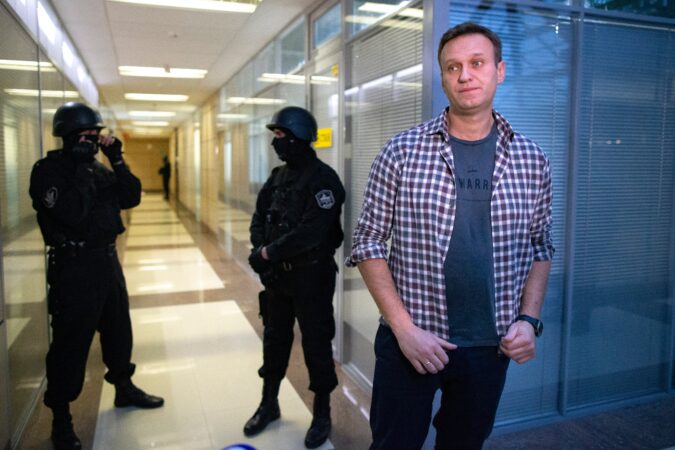
    LONDON — Russian opposition leader Alexei Navalny was poisoned by the Kremlin with a rare and lethal toxin found in the skin of poison dart frogs, five European countries said Saturday.

    The foreign ministries of the U.K., France, Germany, Sweden, and the Netherlands said analysis in European labs of samples taken from Navalny’s body “conclusively confirmed the presence of epibatidine.” It is a neurotoxin secreted by dart frogs in South America that is not found naturally in Russia, they said.

    A joint statement said: “Russia had the means, motive and opportunity to administer this poison.”

    The five countries said they were reporting Russia to the Organization for the Prohibition of Chemical Weapons for a breach of the Chemical Weapons Convention. There was no immediate comment from the organization.

    Navalny, who crusaded against official corruption and staged massive anti-Kremlin protests as President Vladimir Putin’s fiercest foe, died in an Arctic penal colony on Feb. 16, 2024, while serving a 19-year sentence that he believed to be politically motivated.

    “Russia saw Navalny as a threat,” British Foreign Secretary Yvette Cooper said. ”By using this form of poison the Russian state demonstrated the despicable tools it has at its disposal and the overwhelming fear it has of political opposition.”

    French Foreign Minister Jean-Noël Barrot wrote on X that the poisoning of Navalny shows “that Vladimir Putin is prepared to use biological weapons against his own people in order to remain in power.”

    Navalny’s widow says results confirmed her accusations

    The European nations’ assessment came as Navalny’s widow, Yulia Navalnaya, attended the Munich Security Conference in Germany, and just before the second anniversary of Navalny’s death.

    She said last year that two independent labs had found that her husband was poisoned shortly before he died. She has repeatedly blamed Putin for her husband’s death. Russian officials have vehemently denied the accusation.

    Navalnaya said Saturday that she had been “certain from the first day” that her husband had been poisoned, “but now there is proof.”

    “Putin killed Alexei with chemical weapon,” she wrote. She said Putin was “a murderer” who “must be held accountable.”

    Russian authorities said that the politician became ill after a walk and died from natural causes.

    U.K. has accused Russia of previous attacks

    Epibatidine is found naturally in dart frogs in the wild, and can also be manufactured in a lab, which European scientists suspect was the case with the substance used on Navalny. It works on the body in a similar way to nerve agents, causing shortness of breath, convulsions, seizures, a slowed heart rate, and ultimately death.

    Navalny was the target of an earlier poisoning in 2020, with a nerve agent in an attack he blamed on the Kremlin, which always denied involvement. His family and allies fought to have him flown to Germany for treatment and recovery. Five months later, he returned to Russia, where he was immediately arrested and imprisoned for the last three years of his life.

    The U.K. has accused Russia of repeatedly flouting international bans on chemical and biological weapons. It accuses the Kremlin of carrying out a 2018 attack in the English city of Salisbury that targeted a former Russian intelligence officer, Sergei Skripal, with the nerve agent Novichok. Skripal and his daughter became seriously ill, and a British woman, Dawn Sturgess, died after she came across a discarded bottle with traces of the nerve agent.

    A British inquiry concluded that the attack “must have been authorized at the highest level, by President Putin.”

    The Kremlin has denied involvement. Russia also denied poisoning Alexander Litvinenko, a former Russian agent turned Kremlin critic who died in London in 2006, after ingesting the radioactive isotope polonium-210. A British inquiry concluded that two Russian agents killed Litvinenko, and Putin had “probably approved” the operation.

  • Dear Abby | Friend’s living situation goes from bad to worse

    DEAR ABBY: A good friend of mine, “Louis,” has big problems. He is in his 60s, and although he’s 50% disabled, he can still work custodial jobs. His sister, “Gayle,” who lives 500 miles away, asked him to move in with her and her husband, saying they would help take care of him.

    Louis moved, not realizing his sister was a severe alcoholic. She’d come home from work, have six or eight drinks and become really belligerent with both her husband and Louis. She even gave Louis 30 days to get out of her house. He has nowhere to go because he severed ties with everyone in his prior location.

    I loaned Louis enough money to keep him from starving as he tried to find a means of support. He has applied for several custodial jobs. His brother-in-law is a great person but is not strong enough to do anything. Gayle has hit her husband on several occasions. They are at their wits’ end and need advice. Gayle refuses to seek any kind of help.

    — THERE FOR MY FRIEND IN FLORIDA

    DEAR ‘THERE’: Louis and his brother-in-law might find some support if they start attending Al-Anon or Smart Recovery meetings. Because they are dealing with a raging alcoholic, it may make them feel less isolated.

    As to what you should advise Louis about his living situation: Since he burned his bridges in the town from which he relocated and doesn’t have the funds to move out of his sister’s home, all you can do is continue to listen to him and be as supportive as you can until he finds work. Because Louis is partially disabled, he may qualify for some services and assistance in his new community. Encourage him to look into these potential options further.

    ** ** **

    DEAR ABBY: My sister-in-law and mother-in-law are going to court against each other. My mother-in-law acknowledges that she wasn’t a good mother when her children were younger. My sister-in-law claims her mother was harassing her by dropping off gifts, notes and money on birthdays.

    Unfortunately, my fiancé and I were dragged into the middle of the situation because we were speaking with both of them prior to the court proceeding. Now, they have both cut us off! I’m pretty sure it was because we wouldn’t pick sides, but why should we have to? We love them both.

    My fiancé had a close relationship with his sister and mother. I know this is hurting him. How can I help bring their relationships back together? My sister-in-law has blocked me from all of her accounts, and if I mail a letter, I’m afraid she will accuse me of harassing her, too.

    — TOUGH POSITION IN PENNSYLVANIA

    DEAR TOUGH POSITION: There is no way you can force a reconciliation between two parties who don’t want to mend fences. You do not know whether your mother-in-law’s motive for dropping off unwanted gifts was to harass her daughter. (It may have been.) My advice is to stay firmly out of the line of fire until after that court case has been resolved.

    ** ** **

    DEAR READERS: On this day that celebrates love, I want you to know how much I value my long relationship with all of you. Wishing you all a Happy Valentine’s Day.

    — WITH LOVE, ABBY

  • Horoscopes: Saturday, Feb. 14, 2026

    ARIES (March 21-April 19). How can you obey your heart’s commands if the noise of your mind makes it impossible to hear? Focusing on your breath pulls attention away from racing thoughts and activates the parasympathetic nervous system, which signals your body to relax.

    TAURUS (April 20-May 20). If you could, you’d say yes to everyone who needs your help or wants your company. But since you can’t do it all, you’ll do the next best thing — decline invitations with such grace it warms hearts and keeps bonds intact.

    GEMINI (May 21-June 21). When your aesthetic is reflected in your environment, you feel loved. And this is why you’ll gravitate toward clean, clear, organized, novel and coordinated surroundings. The work you do will move through your hands and settle back into you.

    CANCER (June 22-July 22). You’ll raise your energy by playing to your strengths and avoiding the obvious drains. Conserving and boosting your energy is a form of self-kindness that creates a foundation of comfort and safety you can grow from.

    LEO (July 23-Aug. 22). Good news on the financial front: You’re rich in all the ways that matter and a few bonus ways, too. And since there’s still no reason to buy what you can’t afford to impress those you don’t know, you can save a little, too!

    VIRGO (Aug. 23-Sept. 22). When you have fun, others catch on to your joy. So don’t worry about being seen. It’s good for everyone if you are. As one doctor suggested, “Look at me, look at me, look at me now. It is fun to have fun, but you have to know how.” — Dr. Seuss

    LIBRA (Sept. 23-Oct. 23). Most events are a good time to somebody. But if they are not your idea of a good time, there’s no need to attend. Go with what puts a smile on your own face or at least with what doesn’t make you frown.

    SCORPIO (Oct. 24-Nov. 21). Today’s plot unfolds to prove once more that compassion is always best. The self-centered behavior of others will make it challenging, so go slow and be patient, and with a little restraint, love wins.

    SAGITTARIUS (Nov. 22-Dec. 21). Too much analysis breeds paralysis; action is the way. The movement itself is what will make sense of things. The movement itself is what will change the odds, validate the mission and prove the purpose worthy.

    CAPRICORN (Dec. 22-Jan. 19). Compassion pulls you toward people and you begin to care about their reality, their struggles and their hopes. Before you know it, concern turns into commitment. Compassion ignites passion.

    AQUARIUS (Jan. 20-Feb. 18). You’ll get attention, though you may be too busy to notice. It’s OK because you don’t feed on external validation. You’re full already. You come to the party of life, after having already eaten at home.

    PISCES (Feb. 19-March 20). Before you buy, ask yourself questions like “really?” and “why?” Confront deeper motivations and life gets less expensive. You’ll serve your actual need instead of getting the quick, cheap, shiny Band-Aid. Honest reflection leads to pure fulfillment.

    TODAY’S BIRTHDAY (Feb. 14). Welcome to your Year of the Wild Horses, when you’ll have the unbridled power, untamed heart and exuberant kinship to roam with fellow feral spirits. More highlights: Fun, infatuation, thrills, illusion and the more substantial fortifications of sincere and devoted love. You’ll delight in the company of those whose style and processes are a mystery to you including animals who teach you about being human. Scorpio and Taurus adore you. Your lucky numbers are: 1, 50, 33, 13 and 6.

  • Brazilian au pair gets 10-year sentence for scheme to kill lover’s wife and another man

    Brazilian au pair gets 10-year sentence for scheme to kill lover’s wife and another man

    FAIRFAX, Va. — An au pair who schemed with her employer-turned-lover to kill his wife and another man received a 10-year prison sentence on Friday.

    Prosecutors had recommended Juliana Peres Magalhães walk free after she pleaded guilty to a downgraded manslaughter charge in the February 2023 killing of Joseph Ryan. Instead of being tried for second-degree murder, she became their star witness, testifying that she had fatally shot Ryan as Brendan Banfield was fatally stabbing his wife, Christine, in the couple’s bedroom.

    Brendan Banfield was convicted by a jury this month of aggravated murder in the deaths of his wife and Ryan.

    “I know my remorse cannot bring you peace,” Magalhães told the victims’ families on Friday, wiping away tears and muffling sobs. “I hope you can someday understand that I really did not believe his plan would actually happen.”

    Instead of sentencing her to time served, Judge Penney Azcarate delivered the maximum possible sentence to the woman from Brazil.

    “Let’s get it straight: You do not deserve anything other than incarceration and a life of reflection on what you have done to the victim and his family. May it weigh heavily on your soul,” the judge said.

    At Banfield’s trial, Magalhães testified that she and the IRS agent created an account in the name of his wife, a pediatric intensive care nurse, on a social media platform for people interested in sexual fetishes. Ryan connected with the account and agreed to meet for a sexual encounter involving a knife.

    Magalhães, then 22, said she and Brendan Banfield took the couple’s 4-year-old child to the basement, and then found Ryan surprising Christine Banfield with a knife in the couple’s bedroom. She said Brendan Banfield shot Ryan and then began stabbing his wife in the neck. When she saw Ryan moving, Magalhães said, she fired the second shot that killed him.

    The au pair wasn’t arrested until eight months later, and hasn’t left jail since. Prosecutors raised concerns that if she were to be allowed bail, she would flee to Brazil or be deported by immigration officials before they could finish their case. She didn’t talk with investigators for more than a year, until she changed her mind as her trial date approached.

    “I lost myself in a relationship, and left my morals and values behind,” Magalhães told the judge.

    “You were texting and speaking to Joseph Ryan, encouraging him to bring a knife and ultimately, through the phone conversation, getting his consent, knowing all along you were bringing him to his death,” the judge responded.

    Ryan’s mother, Deirdre Fisher, told the court that her son, born days before Christmas, was her “greatest gift.” Three years after his killing, she can’t bear taking down their Christmas tree. An urn with Ryan’s ashes sits in front of the decoration.

    “I say good morning to him each day when I turn on the tree’s lights,” she said. “But of course that’s not Joe sitting there. He can’t say ‘I love you’ back.”

    Sangeeta Ryan described her nephew as “inquisitive, curious, smart, charming and so dang talkative.” She said he loved martial arts and role-playing with his friends. She also noted that he had moved in with his octogenarian grandmother to care for her.

    “His sudden murder devastated his grandma — she could no longer live in the family home without Joe,” his aunt said. The woman quietly moved away, hoping to avoid her memories and the reporters knocking at the door.

    Christine Banfield’s relatives attended Friday’s hearing. A judge has said Banfield will be sentenced in May.

  • Feds open a perjury probe into ICE officers’ testimony about the shooting of a Venezuelan man

    Feds open a perjury probe into ICE officers’ testimony about the shooting of a Venezuelan man

    MINNEAPOLIS — Federal authorities have opened a criminal probe into whether two immigration officers lied under oath about a shooting in Minneapolis last month, as all charges were dropped against two Venezuelan men.

    Immigration and Customs Enforcement Director Todd Lyons said Friday that his agency opened a joint probe with the Justice Department after video evidence revealed “sworn testimony provided by two separate officers appears to have made untruthful statements” about the shooting of one of the Venezuelan men during the Trump administration’s immigration crackdown across the Minneapolis-St. Paul area.

    The officers, whose names were not disclosed, are on administrative leave while the investigation is carried out, he said. Lyons said the two ICE officers could be fired and face criminal prosecution.

    “Lying under oath is a serious federal offense,” said Lyons, adding that the U.S. attorney’s office is actively investigating.

    “The men and women of ICE are entrusted with upholding the rule of law and are held to the highest standards of professionalism, integrity, and ethical conduct,” Lyons said. “Violations of this sacred sworn oath will not be tolerated. ICE remains fully committed to transparency, accountability, and the fair enforcement of our nation’s immigration laws.”

    Earlier Friday, U.S. District Court Judge Paul A. Magnuson dismissed felony assault charges against Alfredo Alejandro Aljorna and Julio Cesar Sosa-Celis, who were accused of beating an ICE officer with a broom handle and a snow shovel during a Jan. 14 fracas. The officer fired a single shot from his handgun, striking Sosa-Celis in his right thigh.

    The cases were dropped after a highly unusual motion to dismiss from U.S. Attorney for the District of Minnesota Daniel N. Rosen, who said “newly discovered evidence” was “materially inconsistent with the allegations” made against the two men in a criminal complaint and at a hearing last month.

    The reversal follows a string of high-profile shootings involving federal immigration agents in which eyewitness statements and video evidence have called into question claims made to justify using deadly force. Dozens of felony cases against protesters accused of assaulting or impeding federal officers have also crumbled.

    The immigration lawyer representing Aljorna and Sosa-Celis said they are “overjoyed” that all charges have been dismissed. Had they been convicted, the two immigrants would have faced years in federal prison.

    “The charges against them were based on lies by an ICE agent who recklessly shot into their home through a closed door,” said attorney Brian D. Clark. “They are so happy justice is being served.”

    It is unclear whether the men could still be deported.

    A chase, claims of an attack, and a shot fired

    Last month, an FBI investigator said in a now-discredited court affidavit that ICE officers attempted to conduct a traffic stop on a vehicle driven by Aljorna on Jan. 14. He crashed the vehicle and fled on foot toward the apartment duplex where he lived. An immigration officer chased Aljorna who — according to the government — violently resisted arrest.

    The complaint alleged Sosa-Celis and another man attacked the officer with a snow shovel and a broom handle as the officer and Aljorna struggled on the ground. The officer, who is not named in court filings, fired his handgun, striking Sosa-Celis. The men ran into an apartment and eventually were arrested.

    After the shooting, Homeland Security Secretary Kristi Noem attacked Minnesota Gov. Tim Walz and Minneapolis Mayor Jacob Frey, accusing the Democrats of “encouraging impeding and assault against our law enforcement which is a federal crime, a felony.”

    “What we saw last night in Minneapolis was an attempted murder of federal law enforcement,” Noem said in a Jan. 15 statement. “Our officer was ambushed and attacked by three individuals who beat him with snow shovels and the handles of brooms. Fearing for his life, the officer fired a defensive shot.”

    The Department of Homeland Security did not responded Friday to questions about whether Noem stands by those statements, which ICE — part of DHS — says are now under investigation.

    Robin M. Wolpert, a defense attorney for Sosa-Celis in the criminal case, said she was pleased ICE and the Justice Department are publicly acknowledging and investigating apparent untruthful statements by the two ICE officers.

    “These untruthful statements had serious consequences for my client and his family,” Wolpert said. “My client is a crime victim.”

    Clark, the immigration lawyer for Aljorna and Sosa-Celis, urged the government to release the name of the ICE officer who shot his client and charge him.

    Court filings show state authorities have opened their own criminal investigation into the shooting, though the FBI has thus far refused to share evidence, provide the name of the ICE officer who fired his weapon or make him available for an interview.

    Holes already apparent in prosecution case

    Rosen’s motion seeking to drop the charges did not detail what new evidence had emerged or what falsehoods had been in the government’s prior filings, but cracks began to appear in the government’s case during a Jan. 21 court hearing to determine whether the accused men could be released pending trial.

    In court, the ICE officer’s account of the moments before the shooting differed significantly from testimony from the two defendants and three eyewitnesses. Available video evidence did not support the ICE officer’s account of being assaulted with a broom and snow shovel.

    Aljorna and Sosa-Celis denied assaulting the officer. Testimony from a neighbor and the men’s romantic partners also did not support the agent’s account that he had been attacked with a broom or shovel or that a third person was involved.

    Frederick Goetz, a lawyer representing Aljorna, said his client had a broomstick in his hand and threw it at the agent as he ran toward the house. Wolpert, representing Sosa-Celis, said he had been holding a shovel but was retreating into the home when the officer fired, wounding him. The men’s attorneys said the prosecution’s case relied wholly on testimony from the agent who fired the gun.

    Neither Aljorna and Sosa-Celis had violent criminal records. Both had been working as DoorDash delivery drivers at night in an attempt to avoid encounters with federal agents, their attorneys said.

    Aljorna and Sosa-Celis retreated into their upstairs apartment and barricaded the door, so federal officers used tear gas to try to force the men out, the FBI agent said. Concerned about the safety of two children under 2 inside the home, Aljorna and Sosa-Celis surrendered.

    A third Venezuelan man, Gabriel Alejandro Hernandez Ledezma, who lived in the apartment downstairs was also arrested.

    Though he was never federally charged, a Jan. 30 court petition seeking his release says Hernandez Ledezma was detained without a warrant and within hours flown to an ICE detention facility in Texas. He alleges his removal was to prevent him becoming a material eyewitness who could undercut the federal government’s case and help the Minnesota state investigation.

    Hernandez Ledezma was returned to Minnesota and discharged from ICE custody on Monday after a federal judge ordered his release.

  • Journalist Don Lemon pleads not guilty to civil rights charges in Minnesota church protest

    Journalist Don Lemon pleads not guilty to civil rights charges in Minnesota church protest

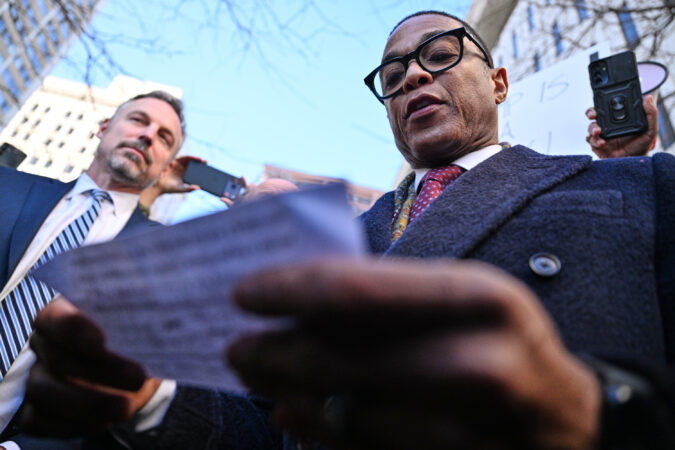
    ST. PAUL, Minn. — Former CNN host turned independent journalist Don Lemon pleaded not guilty to federal civil rights charges Friday, following a protest at a Minnesota church where an Immigration and Customs Enforcement official is a pastor. Four others also pleaded not guilty in the case.

    Lemon insists he was at the Cities Church in St. Paul to chronicle the Jan. 18 protest but was not a participant. The veteran journalist vowed to fight what he called “baseless charges” and protect his free speech rights.

    “For more than 30 years, I’ve been a journalist, and the power and protection of the First Amendment has been the underpinning of my work. The First Amendment, the freedom of the press, are the bedrock of our democracy,” Lemon said outside the courthouse after his arraignment. “And like all of you here in Minnesota, the great people of Minnesota, I will not be intimidated, I will not back down.”

    Dozens of supporters gathered outside the courthouse, chanting “Pam Bondi has got to go” and “Protect the press.”

    ‘We the people have to stand for our rights’

    Civil rights attorney Nekima Levy Armstrong was among the other defendants who pleaded not guilty Friday. The prominent local activist was the subject of a doctored photo posted on official White House social media that falsely showed her crying during her arrest. The picture is part of a deluge of AI-altered imagery that has circulated since the fatal shootings of Renee Good and Alex Pretti by federal officers in Minneapolis amid President Donald Trump’s administration’s immigration crackdown.

    Levy Armstrong echoed Lemon’s defiant words after the hearing.

    “We the people have to stand for our rights. We have to stand for the Constitution. We have to stand for our First Amendment rights to freedom of the speech, some freedom of assembly, and freedom of the press,” she said.

    “Today we have the federal government trying to weaponize the Department of Justice in order to silence us, in order to prevent us from speaking the truth,” Levy Armstrong said. ”They are trying to prevent us from calling out a manifest injustice.”

    All of the defendants have been charged under the FACE Act

    Protesters interrupted a service at the Southern Baptist church last month, chanting “ICE out” and “Justice for Renee Good,” referring to the 37-year-old mother of three who was fatally shot by an ICE officer in Minneapolis.

    In total, nine people have been charged under the 1994 Freedom of Access to Clinic Entrances Act in relation to the church protest. The FACE Act prohibits interference or intimidation of “any person by force, threat of force, or physical obstruction exercising or seeking to exercise the First Amendment right of religious freedom at a place of religious worship.”

    Two more defendants accused in the protest are scheduled for arraignment next week, including another independent journalist, Georgia Fort.

    Penalties can range up to a year in prison and up to a $10,000 fine.

    Attorneys for journalists seek to pierce veil of grand jury secrecy

    Lawyers for Lemon and Fort filed a joint motion with the court Friday seeking transcripts of the normally secret grand jury proceedings that resulted in the indictments against the nine defendants. They maintained that Lemon and Fort were at the church protest in their capacity as journalists covering the story.

    The defense attorneys noted that several judges — including the chief federal judge for Minnesota — found no probable cause to support the complaints that prosecutors first tried to file against the two journalists, so they refused to sign arrest warrants for Lemon or Fort before the government turned to the grand jury.

    They said those refusals raise serious concerns about whether the government made misleading or inaccurate statements of law and/or facts to the grand jury. And they expressed concern that President Donald Trump, Attorney General Pam Bondi and other Justice Department officials put undue pressure on prosecutors to charge them.

    “In the United States of America, we do not prosecute journalists for doing their job. That happens in Russia, China, Iran and other authoritarian regimes. And yet the government sold this unconstitutional mess to the grand jury,” they wrote. “Disclosure of the grand jury proceedings is necessary to ensure the government did not mislead or mis-instruct it.”

    The attorneys also said prosecutors told them they will oppose the motion.

    Protest provoked conservative religious backlash

    Renee Carlson, an attorney with True North Legal, which is representing Cities Church, said in a statement that by pleading not guilty Lemon and others are “doubling down on their claim that the press can do whatever they want under the auspices of journalism.”

    “The First Amendment does not protect premeditated schemes to violate the sanctity of a sanctuary, disrupt worship services, or intimidate children,” Carlson said. “There is no ‘press pass’ to trespass on church property or conspire to invade religious worship.”

    The church protest drew sharp complaints from conservative religious and political leaders. White House press secretary Karoline Leavitt warned in a social media post at the time: “President Trump will not tolerate the intimidation and harassment of Christians in their sacred places of worship.” Even clergy who oppose the administration’s immigration enforcement tactics expressed discomfort.

    Former federal prosecutor is part of Lemon’s legal team

    One of Lemon’s attorneys who was in court Friday is Joe Thompson, one of several former prosecutors who have left the Minnesota U.S. Attorney’s Office in recent weeks citing frustration with the Trump administration’s immigration enforcement crackdown in the state and the Justice Department’s response to the killing of Good and Pretti.

    Thompson had led the sprawling investigation of major public program fraud cases for the prosecutors office until he resigned last month. The Trump administration has cited the fraud cases, in which most defendants have come from the state’s large Somali community, as justification for its immigration crackdown.

  • Trump says change in power in Iran ‘would be the best thing that could happen’

    Trump says change in power in Iran ‘would be the best thing that could happen’

    WASHINGTON — President Donald Trump said Friday that a change in power in Iran “would be the best thing that could happen” as the U.S. administration weighs whether to take military action against Tehran.

    Trump made the comments shortly after visiting with troops in Fort Bragg, N.C., and after he confirmed earlier in the day that he’s deploying a second aircraft carrier group to the Mideast for potential military action against Iran.

    “It seems like that would be the best thing that could happen,” Trump said in an exchange with reporters when asked about pressing for the ouster of the Islamic clerical rule in Iran. “For 47 years, they’ve been talking and talking and talking.”

    The president has suggested in recent weeks that his top priority is for Iran to further scale back its nuclear program, but on Friday he suggested that’s only one aspect of concessions the U.S. needs Iran to make.

    Israeli Prime Minister Benjamin Netanyahu, who traveled to Washington this week for talks with Trump, has been pressing for any deal to include steps to neutralize Iran’s ballistic missile program and end its funding for proxy groups such as Hamas and Hezbollah.

    “If we do it, that would be the least of the mission,” Trump said of targeting Tehran’s nuclear program, which suffered significant setbacks in U.S. military strikes last year.

    Iran has insisted its nuclear program is for peaceful purposes. Before the June war, Iran had been enriching uranium up to 60% purity, a short, technical step away from weapons-grade levels.

    Trump’s comments advocating for a potential end to Ayatollah Ali Khamenei’s rule come just weeks after Secretary of State Marco Rubio said a potential change in power in Iran would be “far more complex” than the administration’s recent effort to oust Venezuelan President Nicolás Maduro from power.

    Rubio, during a Senate hearing last month, noted that with Iran “you’re talking about a regime that’s in place for a very long time.”

    “So that’s going to require a lot of careful thinking, if that eventuality ever presents itself,” Rubio said.

    Trump said the USS Gerald R. Ford, the world’s largest aircraft carrier, is being sent from the Caribbean Sea to the Mideast to join other warships and military assets the U.S. has built up in the region.

    The planned deployment comes just days after Trump suggested another round of talks with the Iranians was at hand. Those negotiations didn’t materialize as one of Tehran’s top security officials visited Oman and Qatar this week and exchanged messages with U.S. intermediaries.

    “In case we don’t make a deal, we’ll need it,” Trump told reporters about the second carrier. He added, “It’ll be leaving very soon.”

    Already, Gulf Arab nations have warned any attack could spiral into another regional conflict in a Mideast still reeling from the Israel-Hamas war in the Gaza Strip. Meanwhile, Iranians are beginning to hold 40-day mourning ceremonies for the thousands killed in Tehran’s bloody crackdown on nationwide protests last month, adding to the internal pressure faced by the sanctions-battered Islamic Republic.

    The Ford, whose new deployment was first reported by the New York Times, will join the USS Abraham Lincoln and its accompanying guided-missile destroyers, which have been in the region for over two weeks. U.S. forces already have shot down an Iranian drone that approached the Lincoln on the same day last week that Iran tried to stop a U.S.-flagged ship in the Strait of Hormuz.

    Trump in exchanges with reporters on Friday still offered measured hope that a deal can be struck with Iran.

    “Give us the deal that they should have given us the first time,” Trump said about how U.S. military action can be avoided. ”If they give us the right deal, we won’t do that.”

    Ford had been part of Venezuela strike force

    It would be a quick turnaround for the Ford, which Trump sent from the Mediterranean Sea to the Caribbean last October as the administration built up a huge military presence in the lead-up to the surprise raid last month that captured then-Venezuelan President Nicolás Maduro.

    It also appears to be at odds with the Trump administration’s national security and defense strategies, which put an emphasis on the Western Hemisphere over other parts of the world.

    In response to questions about the movement of the Ford, U.S. Southern Command said U.S. forces in Latin America will continue to “counter illicit activities and malign actors in the Western Hemisphere.”

    “While force posture evolves, our operational capability does not,” Col. Emanuel Ortiz, spokesperson for Southern Command, said in a statement. U.S. “forces remain fully ready to project power, defend themselves, and protect U.S. interests in the region.”

    The Ford strike group will bring more than 5,000 additional troops to the Middle East but few capabilities or weapons that don’t already exist within the Lincoln group. Having two carriers will double the number of aircraft and munitions that are available to military planners and Trump.

    Given the Ford’s current position in the Caribbean, it will likely be weeks before it is off the coast of Iran.

    Trump has repeatedly threatened to use force to compel Iran to agree to constrain its nuclear program and earlier over Tehran’s bloody crackdown on nationwide protests.

    Iran and the United States held indirect talks in Oman a week ago, and Trump later warned Tehran that failure to reach an agreement with his administration would be “very traumatic.” Similar talks last year ultimately broke down in June as Israel launched what became a 12-day war on Iran that included the U.S. bombing Iranian nuclear sites.

    Asked by a reporter about the new negotiations, Trump said Friday that “I think they’ll be successful. And if they’re not, it’s going to be a bad day for Iran, very bad.”

    Long carrier deployments affect crews and ships

    The USS Ford, meanwhile, first set sail in late June 2025, which means the crew will soon have been deployed for eight months. While it is unclear how long the ship will remain in the Middle East, the move sets the crew up for an unusually long deployment.

    The Navy’s top officer, Adm. Daryl Caudle, told reporters last month that keeping the Ford longer at sea would be “highly disruptive” and that he was “a big nonfan of extensions.”

    Carriers are typically deployed for six or seven months. “When it goes past that, that disrupts lives, it disrupts things … funerals that were planned, marriages that were planned, babies that were planned,” Caudle said.

    He said extending the Ford would complicate its maintenance and upkeep by throwing off the schedule of repairs, adding more wear and tear, and increasing the equipment that will need attention.

    For comparison, the aircraft carrier USS Dwight D. Eisenhower had a nine-month deployment to the Middle East in 2023 and 2024, when it spent much of its time engaged with the Iran-backed Houthi rebels in Yemen. The ship entered maintenance in early 2025 as scheduled, but it blew past its planned completion date of July and remains in the shipyard to this day.

    Caudle told the Associated Press in a recent interview that his vision is to deploy smaller, newer ships when possible instead of consistently turning to huge aircraft carriers.