Tag: no-latest

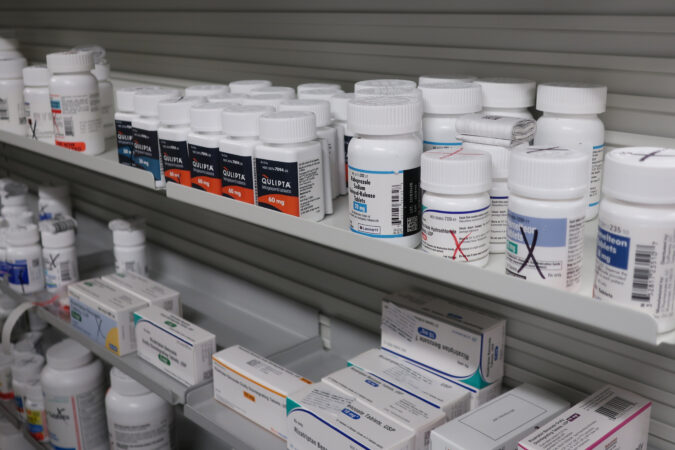
  • We asked nurses. Here are the at-home medical items they swear by.

    We asked nurses. Here are the at-home medical items they swear by.

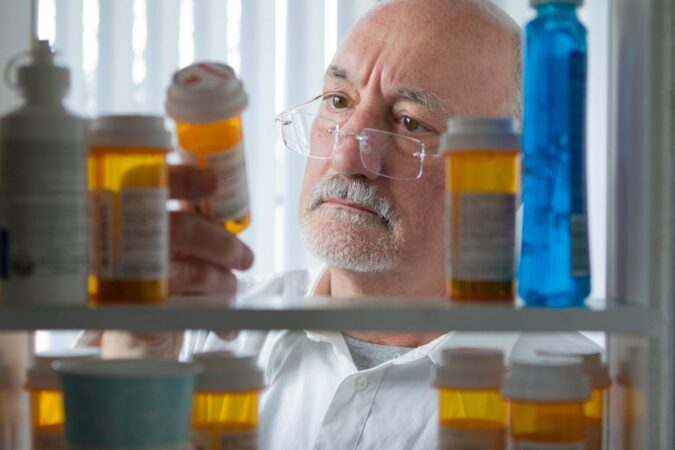
    Peeking inside somebody’s medicine cabinet is a no-no, which is a big part of what makes poking around all those tubes and bottles so tempting. (Still, don’t. It’s not only rude, but also an egregious violation of privacy.) But what if someone were to invite you into their medicine cabinet, and then took it a step further by showing you the items they swear by for every ailment under the sun? Fabulous!

    In service of bringing you that exact experience, we asked nurses — and, truly, who better than nurses? — to tell us what they always keep stocked in their medicine cabinets. And any items you can’t do without? Let us know in the comments.

    (Responses have been edited for length and clarity.)

    Hanna Weitzman-Flanigan, a nurse-practitioner in New York City

    Tylenol is the universal answer. Headache? Tylenol. Sore back after a 12-hour shift? Tylenol. Low-grade fever? You guessed it. It’s the “don’t overthink it” solution — reliable, effective, and always within reach.

    Rubbing alcohol is one of those quiet MVPs. Need to clean a cut? Done. Disinfect something quickly? Easy. Somehow get marker, sticker residue or who knows what on your skin? Rubbing alcohol has entered the chat. I love it because it’s simple and it works without fuss.

    I use Band-Aids for almost everything. Paper cut, kitchen nick, blister from new shoes … it’s getting a Band-Aid. Part comfort, part prevention, all habit.

    Benadryl cream is a favorite for all the annoying things — bug bites, mystery rashes, skin that just suddenly decides to act up. It’s the “Why is this itchy, and how do I make it stop immediately?” solution. And it usually works.

    Vicks VapoRub is basically magic. Congestion? Vicks. Cough? Vicks. Headache, sore muscles, questionable life decisions? Somehow … also Vicks. It’s part remedy, part nostalgia, and 100% a staple in my home.

    Zac Shepherd, an intensive care unit travel nurse

    Electrolytes. I keep these around because they’re useful in a lot more situations than people realize. Travel, stomach bugs, heat, long days, hard workouts, or simply not drinking enough water. As an ICU nurse, I’ve seen firsthand how much electrolyte imbalances can affect the body. That said, more isn’t always better — don’t take them just for the sake of taking them. Electrolytes that are too high can be just as dangerous as electrolytes that are too low.

    Vaseline. It’s not exciting, but I probably use it more than anything else on this list. Dry skin, chapped lips, minor cuts, irritated skin. There’s always a tub of it somewhere in my house.

    A blood pressure cuff. Working in the ICU has made me appreciate having objective information. If something feels off, getting a useful piece of data like your blood pressure can help you decide what to do next. Checking it periodically can also help you understand what’s normal for you, especially if white coat syndrome tends to make you run higher at the doctor’s office or hospital.

    Ibuprofen (Advil). It’s a staple for a reason. Headaches, sore muscles, back pain, minor injuries. It’s one of those things that has a permanent spot in my medicine cabinet. When appropriate, alternating it with Tylenol can be a very effective way to manage pain.

    Jennifer Armendariz, a nurse-practitioner in Texas

    Oscillococcinum is a homeopathic product that I keep on hand at all times. As soon as someone starts to feel a cold coming on, we start taking it.

    Excedrin migraine. My daughter and I both suffer from migraines. I keep this at home and in my purse.

    Magnesium glycinate to help with sleep. I will also pair Excedrin and magnesium when I have a headache.

    Arnica ointment for any bruising to help speed up the healing process.

    Aloe vera gel is especially helpful during the summer if you’re out in the sun too long. The plant is best, but you can get the gel as well.

    Icy Hot or Biofreeze are great for muscle aches or joint pain.

    Bonnie Fecowicz, a registered nurse in New Hampshire

    Aleve, cortisone cream, Band-Aids, and antidiarrheal meds. Nothing impairs you more than having to find a bathroom frequently! I used to host teenagers and young adults for summer vacations, and no matter what they were up to the night before, these things got them through the next day.

    Louis Joseph, a neonatal ICU nurse in Chicago

    Castor oil. It helps with digestion, skin care, hair care, hair growth. I was born in Haiti, and it’s something everyone keeps in their home.

    Vicks VapoRub. When you rub it on your chest or under your nose, all that menthol and the minty smell help to open your sinuses. It warms and cools your skin, and it seems as if it can fix anything, like a headache, a cold, or a stuffy nose. It may be a superstitious thing, but someway, somehow it helps you feel better.

    Baby aspirin. It’s good for treating pain, and it’s an antiplatelet.

    Albuterol inhaler for asthma. Cold and flu medication. Tums.

    Also, in my backpack that I take everywhere, I carry a mini medicine cabinet that has baby aspirin, cough drops, acetaminophen (Tylenol),a blood pressure cuff, a stethoscope, an ophthalmoscope, and emergency albuterol. There are a lot of kids in the city and in my neighborhood with asthma because of air pollution. So I like to keep things around just in case. Everyone around me knows that I’m the go-to for anything.

    Diane Plas, a family nurse-practitioner in Texas

    Second-generation antihistamines, like loratadine (Claritin), cetirizine (Zyrtec), fexofenadine (Allegra), or levocetirizine (Xyzal), are multipurpose medicines. When the weather changes, when a wind storm blows in, or when new flora blooms, they come to the rescue to treat troubling allergies. You can also grab these antihistamines to treat itchy skin and rashes caused by allergies, and they also come in handy for skin breakouts due to new cosmetics and self-care items, irritation from certain fabrics, food allergies, and pet allergies. It’s best to have antihistamines on hand year-round.

    I always have a trio of meds to cover all GI issues: Gaviscon — you want something quick and chewable to help with heartburn, indigestion, and GERD. An antidiarrheal may not be needed very frequently, but when you need it, you need it! No one wants to go out to the pharmacy during a bout of this type of tummy trouble. Stool softeners like Colace or Miralax that pull water into the bowel without a stimulant. You can ensure everything keeps moving without the dramatics of a stimulant. This is also great for travel.

    Antifungal cream for itchy rashes along toes, underarms, and skin folds. They often increase in hot, humid, and sweaty areas and can be very bothersome. Treating these rashes quickly helps prevent them from spreading.

    You can put hydrocortisone on so many trouble spots. It will help with inflammation and itchy areas due to contact dermatitis, allergies, and yeast.

    Jessica Varghese, a registered nurse in New York

    Vicks VapoRub is my go-to solution for everything. From headaches, to chest congestion, to general uneasiness, Vicks is the remedy. When I was pregnant, the smell even helped my nausea. It’s the answer to many ailments.

    I carry Benadryl in my purse and have used it in emergency situations in the community. Benadryl can be used when there is some type of allergic reaction. Having a child with an egg allergy, it has come in handy when certain things you don’t account for have egg, such as brioche or certain ice creams. It can also be used to help with itching, induce sleep, or as a treatment for hay fever.

    Tweezers. Someone is always getting something stuck somewhere. It’s very helpful for splinter removal, ticks, and bee stings, which happen a great deal outdoors.

    Chai calms you from the inside out (I usually store that in my kitchen cabinet, not my medicine cabinet, but it still serves the same medicinal purpose). I make it with ginger and cardamom, and it is very therapeutic for healing.

    Pam Vollmer, a registered nurse in Florida

    Fever reducer. Acetaminophen is the best choice here.

    Nonsteroidal anti-inflammatory. I prefer ibuprofen for this, but naproxen (Aleve) is another excellent over-the-counter choice. Doses of ibuprofen range from 400 to 800 mg. My rule of thumb is that if the pain I have is not bad enough to need an 800-mg dose, then I don’t take anything at all.

    Antihistamine for severe reactions. My go-to for this is diphenhydramine (Benadryl). The antihistamine kept on hand should be something that can treat allergic emergencies, not simply daily or seasonal type allergies.

    Sandra Russo, a registered nurse in New York City

    Two pain relievers: plain acetaminophen and plain ibuprofen, both in one standard strength so nobody has to squint at labels when they don’t feel well. If someone has a low‑grade fever, a headache, or just feels achy, we start with acetaminophen. If it’s something clearly inflamed, like a twisted ankle, a sore back after too much lifting, or dental pain, that’s when I pull out the ibuprofen.

    There’s always a nondrowsy antihistamine (I usually buy cetirizine), a small bottle of diphenhydramine and a tube of 1% hydrocortisone cream. Between those three, we’ve gotten through bug bites, surprise rashes from who‑knows‑what, and random hives that show up right before bed. Aloe gel and a battered bottle of calamine lotion live there, too, because in the summer someone is always coming home sunburned or bitten.

    For stomach and “I knew that second slice was a bad idea” problems, I keep chewable antacids, loperamide (Imodium), and a couple of electrolyte drinks or powder packets.

    If there’s a bug going around, I add honey, throat lozenges, and saline spray to the rotation before I reach for anything stronger.

    And because the nurse part of my brain never fully clocks out, there’s a small first aid box tucked nearby — containing bandages in too many sizes, gauze, tape, antibiotic ointment, alcohol wipes, tweezers, a tiny pair of scissors, gloves — and a reusable ice pack waiting in the freezer.

    A plain digital thermometer is the unsung hero of the whole setup. It’s not glamorous, but it’s the thing I reach for first.

    Veneta Simone Easter, a registered nurse in California

    I find myself always reaching for the following three things again and again that I will always recommend having. Witch hazel should be a staple for everyone because it’s so versatile. It can be used to soothe irritated skin, calm any redness, refresh your skin when needed. It’s also great if you get a bug bite or a minor scrape as it gives you fast relief. This product is inexpensive and simple, and I highly recommend it.

    Medical-grade hyaluronic acid is great in the serum form, and for skin care this is my top recommendation. No better way to get healthy, hydrated skin. A quality serum helps maintain and protect the skin’s barrier, gives you instant hydration and can be used for all skin types. A win-win for everyone.

    Sunscreen is next, and this is nonnegotiable! Go for a mineral sunscreen with an SPF of at least 30 for daily sun protection and use. This product will help prevent premature aging, hyperpigmentation and, of course, protect your skin from sun damage.

    Jeff Doucette, a chief nurse officer in Pennsylvania

    The three must-haves in my medicine cabinet are a tub of CeraVe Moisturizing Cream for all the handwashing and rehydrating; it’s second to none! Lumify eye drops: With all my travel, something to clear up red eyes from flights and different hotels, no day starts without a couple of drops. SPF 30 light facial moisturizer: No face should leave the house without it.

    Karen Selby, registered nurse and patient advocate in Florida

    I always have a supply of the classic first aid kit essentials: burn cream, antibiotic ointment, aspirin, antacids, and Tylenol. But in addition to those, I always have a supply of Tegaderm transparent dressing. This is a great way to keep wounds clean and dry, especially in the summer months.

    Another must-have is some type of woven sleeve bandage, which is perfect for keeping those scraped knees and elbows clean and covered.

    Jessica Wise, a licensed practical nurse in Pennsylvania

    Burn gel is crucial to stop wounds from continuing to burn and blister.

    Saline wound wash as a “hurt free” rinse for boo-boos. My kiddos think it’s magic! Butterfly dressings to help keep wounds/cuts closed.

    A Dechoker helps remove foreign objects from airways — you will never know when you need it!

    All the Band-Aids: every shape, size, color, and character of Band-Aids, because the kids go through 100 a day, even if they aren’t actually needed.

    Fedline Lysius, a senior nurse clinician in New York City

    A heating pad is one of my go-to recommendations because it can provide soothing relief for muscle tension, menstrual cramps, back pain, and stress-related tightness.

    I keep oral rehydration packets on hand, as they can be especially helpful during illness, after travel, following strenuous activity, or any time dehydration contributes to fatigue, headaches, or dizziness.

    I swear by aromatherapy rollers containing ingredients such as peppermint. Many people find these useful for easing tension headaches, promoting relaxation, and creating a sense of calm during stressful moments.

    Another favorite is a simple stress ball, which can serve as a practical mindfulness tool by helping release nervous energy, improve focus, and encourage grounding during periods of stress and overwhelm.

  • Letters to the Editor | July 3, 2026

    Letters to the Editor | July 3, 2026

    Pieces fit

    Our country has been likened to a mosaic. I compare it to a jigsaw puzzle. The picture is composed of hundreds of millions of individual pieces — all with unique shapes — fit together to form an image. The union, which we revere when we celebrate its birthday and salute the flag, is a result of pieces linked together. From a distance, they form an unbroken, seamless picture, but up close, you can still see the lines of each individual piece. When locked together as intended by the creators of the puzzle we call the United States of America, the union is solid and unbroken despite the lines of individuality that frame each component. A puzzle without each piece is incomplete. Putting the puzzle together requires the diligent effort of everyone who pledges to support the effort. We all — each one of us, native-born, immigrant — are a piece of the puzzle. To exclude anyone is to render the puzzle incomplete. In order to form a more perfect union, all pieces must be welcomed. That is our creed. It is truly what “Makes America Great” — not just “Again,” but always.

    Joe Sundeen, Yardley

    Drama-free

    In honor of our great nation’s 250th birthday, I would like to see all media refrain from any mention or photo of anything DJT-related. Make this day about our country, not him. We need a chance to celebrate without all the drama.

    Jerome Hodlofski, Marlton

    Join the conversation: Send letters to letters@inquirer.com. Limit length to 150 words and include home address and day and evening phone number. Letters run in The Inquirer six days a week on the editorial pages and online.

  • Horoscopes: Friday, July 3, 2026

    ARIES (March 21-April 19). A problem can seem small to everyone else and still feel enormous to the person living it. Because problems don’t obey laws of scale. Small things can have tremendous emotional significance. If it’s a big deal to you, it’s a big deal, period.

    TAURUS (April 20-May 20). It’s an ideal moment to update your surroundings and relationships to match who you are now. Your closet, like your contact list, contains artifacts from previous chapters. Release what no longer reflects your current life.

    GEMINI (May 21-June 21). Each individual who interacts with others is both a person and an idea of a person. We never interact with people completely objectively. We interact with them and our ideas about them at the same time. Today, some of those ideas will need updating.

    CANCER (June 22-July 22). What you want is in fine alignment with the interests of those around you. This makes manifestation much easier. You won’t have to convince anyone. No hard sell — no soft sell either — just building on the enthusiasm that already exists.

    LEO (July 23-Aug. 22). You’ll work without proof that you’re doing it right. But you know that even if this idea doesn’t work, you’ll have another one. Your confidence doesn’t depend on success. It depends on your faith in your own ability to keep creating.

    VIRGO (Aug. 23-Sept. 22). It’s not true that all dark clouds have a silver lining. Sometimes it’s black. Sometimes it’s gold. Sometimes everything disperses in a fog so diffuse there’s no lining at all. But every weather reveals something that sunshine alone cannot.

    LIBRA (Sept. 23-Oct. 23). There are things you know but don’t yet know that you know. Writing has a way of revealing them. Once thoughts leave the swirl of the mind and take shape on a page, patterns emerge, priorities become obvious, and hidden assumptions introduce themselves.

    SCORPIO (Oct. 24-Nov. 21). Smart people sometimes hide behind being smart. You’ll be around the dynamic today — people trying to have interesting conversations instead of real ones. Things gets better when nobody is trying to prove anything. So how can you put them at ease?

    SAGITTARIUS (Nov. 22-Dec. 21). Where does your responsibility end and theirs begin? Today you can clean up some of the blurred lines between “my job” and “your job.” Remember that what you establish in the early stages of a relationship is likely to become the norm.

    CAPRICORN (Dec. 22-Jan. 19). What if the universe wants to give you what you ask for, but it doesn’t understand the request? In some small way, give the very thing you want. This will serve as an example — a template for the universe to follow and scale up.

    AQUARIUS (Jan. 20-Feb. 18). Animal trainers know that training a relaxed animal is challenging but that training a stressed animal is near impossible. The human animal also learns better without too much stress and pressure. The education itself is challenge enough.

    PISCES (Feb. 19-March 20). Throughout history, reasonable people have accomplished unreasonable things — things they never imagined they could do. Don’t let a momentary crisis of confidence keep you from going forward. Doubt yourself if you must, but march on anyway.

    TODAY’S BIRTHDAY (July 3). It’s your Year of the Vineyard of Dionysus. In Greek myth, the god of wine, theater, and celebration taught that pleasure and creativity are close companions. Gatherings become collaborations. Fun turns into opportunity. Joy proves productive. More highlights: You’ll make game-changing sales. You’ll clear up a cluttered area of your life and have a deep peace. Your powers of attraction grow. Aries and Leo adore you. Your lucky numbers are: 15, 20, 41, 6, and 9.

  • Dear Abby | Grown sons tell dad to ditch wife of 45 years

    DEAR ABBY: My husband was married to a woman who lied to him about being pregnant. She wasn’t at the time, but she later became pregnant. They had two sons and divorced five years later. He never loved her.

    I married him eight years after that. We have been happily married for 45 years. I always thought I had a great relationship with both of his sons (now 58 and 56). When we retired and moved to Florida, they suddenly became angry and announced that they had always hated me.

    They had wanted us to move next door to their mother and live as “one big, happy family.” My husband and I couldn’t imagine that. His ex-wife is well educated and has a Ph.D. in family therapy. She never remarried. She is manipulative and controlling. Now, they won’t speak to us or let us see the four grandchildren. It’s heartbreaking.

    We reached out twice, trying to make amends. We had a wonderful relationship with three of the grandchildren before this happened. My husband’s sons told him: “Dad, if you move back here, live close to mom and leave your current wife, we will forgive you.” Help!

    — SADDENED IN THE SUNSHINE STATE

    DEAR SADDENED: How does your husband feel about the emotional blackmail his sons are attempting? Forgive me for using the vernacular, but they and their family therapist mother are loony tunes! You don’t need my help. You and your husband need only to use your common sense. What is being proposed is outside the realm of reality.

    ** ** **

    DEAR ABBY: I have two nieces. Each has two children. The children range from 12 to 18 years old. All of them live in my country of origin in Europe. I haven’t been able to visit for more than 10 years, so the younger ones don’t remember me. I have, however, always sent them gifts of money for Christmas and birthdays, around $25 each time for each child, plus their mothers. When the eldest was 18, I sent a larger gift, around $75, with similar amounts for significant exam results and graduation. I intend to do this for all four of them.

    My question is: Can I stop these gifts now that one is an adult and phase out the gifts for all of them after they graduate from high school? I can afford to keep on giving them $25 for the holidays and birthdays, but it isn’t going to buy them much in college and, to be honest, I’m growing a bit tired of all the gifting.

    I understand the eldest two are particularly brilliant and will go to famous universities, but I haven’t seen any evidence that they can write at all — i.e., not one thank you letter, ever! Would it seem mean and petty if I stopped, or should I wait until they are out of college?

    — MEAN AUNTIE IN NORTH CAROLINA

    DEAR AUNTIE: Do not punish the kids for something their parents failed to teach them. The money you have been sending hasn’t created a hardship for you, and a pattern has been established. If you opt to stop the monetary gifts, explain to your nieces your disappointment that in all these years you have received not one response for your thoughtfulness from their children.

  • The Supreme Court tackled race, history, and the law in fraught and reflective major rulings

    The Supreme Court tackled race, history, and the law in fraught and reflective major rulings

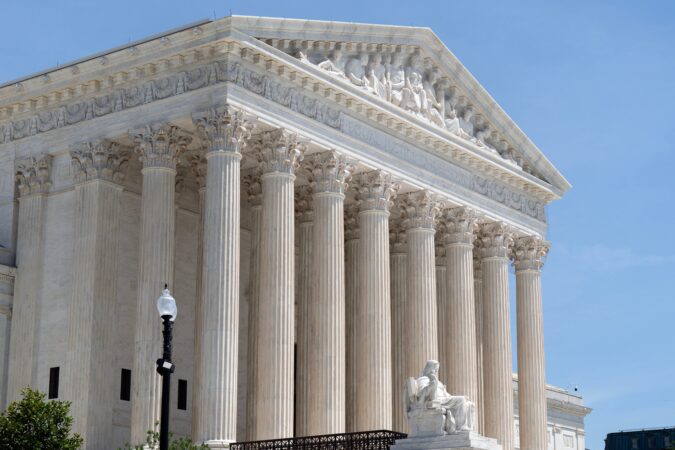
    WASHINGTON — The Supreme Court just wrapped up a term that yielded significant rulings in cases involving race and discrimination that could have lasting effects on U.S. politics and society.

    Justices were at times bitterly divided — and critical of one another — in rulings that winnowed key provisions of a landmark voting rights law, allowed the government to revoke protections for some immigrants, and even challenged the historic understanding of birthright citizenship for the children of immigrants.

    The decisions come at a moment when long-standing debates over race and identity have turned toward immigration, increasing racial diversity, and the fairness of policies meant to prevent and redress discrimination.

    “This term, we saw a Supreme Court that is moving quickly to eradicate legal protections in ways that will leave vulnerable communities exposed to the harsh winds of discrimination and hatred that we continue to see across the country today,” Kristen Clarke, general counsel for the NAACP and the former head of the Justice Department’s civil rights division during the Biden administration, told the Associated Press.

    Here is a breakdown of the latest decisions involving race and what they may mean going forward:

    The temporary protected status case

    The court allowed the government to end deportation protections for Haitians and Syrians in the U.S. who have fled violence and natural disaster. President Donald Trump’s administration revoked the temporary protected status last year.

    With the president’s more than decadelong track record of denigrating developing nations and immigrants who come to the U.S. from Africa, Asia, Latin America, and the Middle East, attorneys for some affected migrants contended that the government could not cancel the designations, in part because Trump’s comments about immigrants were racist.

    “The true reason for the termination is the president’s racial animus towards non-white immigrants and bare dislike of Haitians in particular,” Geoffrey Pipoly, an attorney for the Haitian nationals in the case, said during April oral arguments in the case, Mullin v. Doe. The attorneys noted that, during his second presidential campaign, Trump claimed immigrants “are poisoning the blood of our country” and suggested in another instance that migrants have “bad genes.”

    Federal authorities denied prejudice played a role in the decision and argued that TPS was supposed to end but has lasted more than a decade in some cases.

    In writing for the 6-3 conservative majority, Justice Samuel Alito said none of the cited statements was “overtly racial,” reasoning that any of Trump’s actions could have been taken without racial animus and attributing his anti-immigrant comments to “political discourse.”

    That’s not how the court’s liberal minority saw the situation.

    “The references — of filth, disease, and primitiveness — are shot through with racial stereotypes and tropes. It is hard to imagine the statements being made today of any White community,” Justice Elena Kagan wrote in her dissent.

    The birthright citizenship case

    In one of the highest-profile cases of the term, the court reaffirmed that the 14th Amendment to the U.S. Constitution means all people born in the U.S. are citizens.

    On his first day in office last year, Trump signed an executive order seeking to restrict birthright citizenship to the children of U.S. citizens, a move that civil rights groups challenged as unconstitutional and racist.

    In his majority opinion, Chief Justice John Roberts traced the arc of birthright citizenship — a principle that all people born on U.S. soil are citizens — from its origins in English common law to its codification in the 14th Amendment.

    Roberts noted that race and citizenship had been fiercely debated in courts, speeches, Congress, and battlefields because of Black Americans’ fight for freedom from slavery.

    Freed Black Americans did not receive citizenship as a “reward,” Roberts wrote, but because “the Amendment recognized their rightful claim to birthright citizenship simply and solely by virtue of their having been born on American soil.”

    The 6-3 ruling was a blow to the Trump administration, which has made restricting immigration its central goal.

    “The clause does not extend citizenship to the children of temporary visa holders or illegal aliens,” U.S. Solicitor General John Sauer argued before the court in April.

    Justice Clarence Thomas agreed and wrote in his dissent that African descendants of enslaved people in the U.S. are a unique case separate from the children of tourists or people in the country illegally.

    “Blacks were entitled to citizenship because they were Americans. They had no other homeland, owed no allegiance to any foreign power, and were subject to no other authority,” Thomas wrote.

    In a stark move, liberal Justices Ketanji Brown Jackson and Sonia Sotomayor directly criticized Thomas’ claim in a joint opinion.

    “The Reconstruction Amendments were an anticaste, antisubordination reset for the Nation, not a mere spot treatment for the dark stain of slavery,” they wrote.

    The voting rights case

    The Supreme Court handed down a decision in April that gutted a key provision of the Voting Rights Act meant to remedy efforts to disenfranchise minority voters. Among the methods the law permitted to stop voting discrimination in states was the creation of majority-minority congressional districts.

    In the majority opinion, Alito found that because race and partisan voting behavior were so intertwined, it was unfair to conclude that a partisan gerrymander of a state’s congressional districts could be racist, given there may be other reasons for the map’s results.

    Alito reasoned that “in a state where both parties have substantial support and where race is often correlated with party preference,” partisan actors can “easily exploit” laws meant to protect minority political participation for disingenuous reasons.

    The liberal justices balked at the logic and criticized the conservative majority for harming minority representation in politics and culture. They believed that the law’s provisions were still necessary to prevent discrimination by states and worried about the fallout from its removal.

    “The consequences are likely to be far-reaching and grave,” Kagan wrote in her dissent. “Today’s decision renders Section 2 all but a dead letter. In the states where that law continues to matter — the states still marked by residential segregation and racially polarized voting — minority voters can now be cracked out of the electoral process.”

    The decision has had profound impact on the political landscape, with nearly a dozen Southern states immediately taking steps to redistrict and eliminate majority-Black districts.

  • Trump administration proposes a rule it says could save Medicare patients $1.1 billion on drugs

    Trump administration proposes a rule it says could save Medicare patients $1.1 billion on drugs

    WASHINGTON — The Trump administration proposed a new rule on Thursday to keep hospitals from charging markups on discounted drugs for Medicare patients and says that could save consumers $1.1 billion next year, according to estimates obtained by the Associated Press.

    The rule would apply to hospitals that serve low-income patients under what is known as the 340B program, which lets hospitals buy outpatient prescription drugs at discounted prices. But in many cases, hospitals can bill insurers at rates that exceed those costs, allowing hospitals to keep the difference and resulting in higher costs to patients.

    Under the proposed rule, the Centers for Medicare & Medicaid Services would change the formula for what hospitals participating in the program can get reimbursed, in an effort to cut costs for patients.

    The Republican administration has sought to show during an election year that it is tackling the challenges of affordability for U.S. families at a time when rising healthcare costs are driving financial strains for households and the government alike. While the administration has taken several steps it says will save money on medical treatment, it is unclear how much savings might ultimately materialize based on the complexity of the country’s healthcare system.

    The American Hospital Association said the proposed rule would compound the financial pressures its members face.

    “These proposals will undermine the ability of hospitals to maintain essential services and protect affordable access to care for those who depend on the 340B program,” said Ashley Thompson, the group’s senior vice president for public policy analysis and development.

    There is the risk that hospital systems could see their revenues decrease, which could have consequences in the communities they serve. The 340B program was initially designed as a way for healthcare providers to stretch scarce federal resources to better serve more patients. But it has long been at the center of a lobbying battle between hospitals and pharmaceutical companies, with each side attempting to enlist lawmakers in maintaining or changing the benefit.

    The agency estimates that the average older adult with Medicare Part B coverage who is administered one of these drugs would save $800 a year in co-payments. That would work out to a total savings of $1.1 billion for everyone with that coverage.

    The savings over 10 years could total about $20 billion, according to a White House official who requested anonymity to discuss the rule before the official announcement. The official said the proposed rule was not previewed for hospital groups before the release.

    In a policy draft of the rule, the administration gave a specific example of how the current system works for the prostate cancer drug Lupron Depot. Hospitals under the 340B program can acquire a dose for roughly $700, but they can receive about $4,000 in Medicare reimbursement for administering it and an additional $1,000 from the patient co-payment.

    The proposed rule would cut by roughly 40% that amount that hospitals in the discounted drug program could be paid through Medicare programs. If approved, the rule would go into effect at the start of next year.

    In 2018 during President Donald Trump’s first term, his administration tried to enact this same type of rule to reduce Medicare payments to hospitals. But the Supreme Court ruled in 2022 that the government could not provide a separate reimbursement plan for 340B hospitals.

    The president signed an executive order in April 2025 to survey how much hospitals spend to buy drugs. The result of that survey led to the proposed rule, which would cap Medicare reimbursement for participating hospitals at the average sales prices, minus 33.4%. The reason that the average reimbursement rate would be cut is because the hospitals acquired the drugs at discounted prices.

  • Trump and Republicans return to communist attacks against Democrats ahead of the midterm elections

    Trump and Republicans return to communist attacks against Democrats ahead of the midterm elections

    WASHINGTON — President Donald Trump and his fellow Republicans are reviving a line of attack against Democrats heading into the midterm elections: They’re communists.

    In just the past week, Trump has issued dark warnings that members of the Democratic Party’s ascendant left are communists who want to “completely destroy the traditional American way of life” and even engage in assassinations. Vice President JD Vance has similarly called out communism as a political shift that is “something we haven’t seen in the U.S.” House Speaker Mike Johnson has decried “radical candidates” who are “self-described, self-identifying Marxists.”

    The GOP’s ideological focus conflates democratic socialism, which often centers on securing universal healthcare, higher taxes on the wealthy, and stricter corporate regulation, with communism, under which private ownership is largely eliminated. It has been building since Zohran Mamdani, a democratic socialist, won the Democratic nomination for New York City mayor last year.

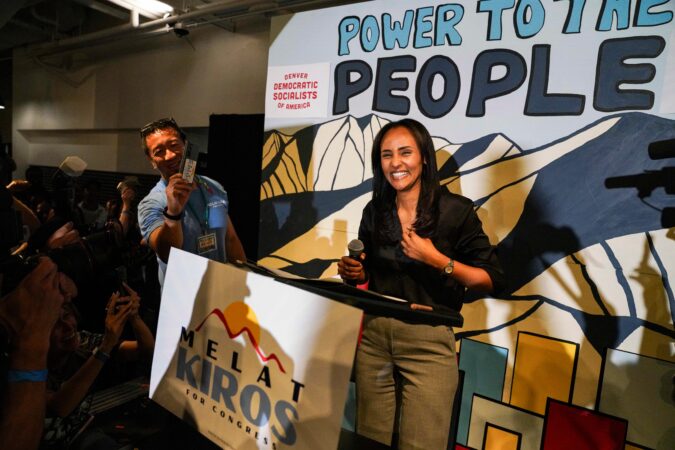
    But it’s kicked into a higher gear recently after democratic socialists won several New York City congressional primaries last week. The primary victory on Tuesday by another democratic socialist, Melat Kiros, for a Denver congressional seat suggested the trend may extend beyond Manhattan liberalism.

    “The Democrats are making this easy for us,” Rep. Richard Hudson, the North Carolina Republican who leads the House GOP’s strategy and fundraising arm, said in an interview. “They’re nominating extreme liberals, leftists who are out of touch even with mainstream Democrats.”

    Republicans are holding onto slim majorities

    The messaging effort comes as Republicans scramble to hold onto threadbare congressional majorities in the November midterms. It risks overlooking public frustration, particularly among younger voters, with unfettered capitalism at a time of growing income inequality and rising costs.

    But it also gives Republicans a much-needed opportunity to shift the conversation back to territory that is more comfortable for them after their party has spent much of the year on defense over the fallout from Trump’s decision to launch a war against Iran, which contributed to widespread price spikes.

    Ralph Reed, the longtime conservative activist who hosted Trump last week at a Faith and Freedom Coalition conference, acknowledged that Republicans are facing steep headwinds this year. But the recent string of wins by democratic socialists, he said, allows Republicans to present a contrast between “common sense and crazy.”

    Democrats uncertain over the party’s direction

    The renewed push could tug at tensions among Democrats who are largely united in their loathing of Trump but are divided over the party’s direction. This year’s primaries are shaping up as a referendum between centrists who are eager to course correct from what they see as progressive overreach earlier in the decade and a left wing pushing for even more sweeping change.

    “A lot of this anger has been boiling under the surface,” said Joseph Geevarghese, executive director of Our Revolution, which was founded by U.S. Sen. Bernie Sanders, a Vermont independent who caucuses with Democrats. “It’s coming to the fore in this moment in a very powerful way.”

    But Rep. Josh Gottheimer, a centrist New Jersey Democrat, called the victories in Colorado and New York “aberrations.”

    “We’ve got to fight like hell to keep our party from being hijacked by socialists,” he said. “Most of them are bomb throwers, not problem solvers.”

    Nevada Attorney General Aaron Ford easily dispatched a more progressive rival earlier this year in his Democratic bid for governor in a state Trump carried in 2024. As he eyes a general election challenge to Republican Gov. Joe Lombardo, he insisted candidates like those who won in New York don’t represent all Democrats.

    He said the Democratic Socialists of America “is not the face of our party.”

    Rep. Suzan DelBene, a Washington Democrat who chairs the House Democratic campaign committee, said in a statement that Republicans were “resorting to desperate attacks that aren’t actually about the pocketbook issues.”

    Trump risks overreaching with communism argument

    Trump and fellow Republicans risk missing the mark when the public’s embrace of capitalism might not be as strong as it was decades ago.

    About half of U.S. adults, 54%, have a positive view of capitalism, according to an August poll from Gallup, a slight decline from 61% in 2010. Democrats have driven some of the shift, but favorable opinions of capitalism have fallen among independents as well.

    Only 42% of Democrats viewed capitalism favorably, while 66% had a positive view of socialism. The poll found that both younger and older Democrats have warmed slightly on socialism since 2010, but Democrats under age 50 are much less likely to view capitalism favorably. Democrats age 50 or older didn’t shift meaningfully.

    “Young voters, who I would argue are driving a lot of the electoral energy that we’re seeing, came of age politically in a post-Soviet world,” Geevarghese said. “The attacks don’t land in the same way when Donald Trump was politically of age.”

    Hudson, who is running the House GOP campaign committee, acknowledged the communism line might not resonate in the same way with all voters, particularly younger people. That’s why, he said, it’s important for Republicans to tailor their message to the needs of individual districts.

    “I’ve never run cookie-cutter campaigns where we just say one thing over and over everywhere,” he said.

    Still, the argument was high on Trump’s mind again on Wednesday as he visited the newly built Theodore Roosevelt Presidential Library in North Dakota. He called the former president a “ferocious opponent of a thing called communism.”

    “It’s the biggest threat to our country, including World War I, World War II, Pearl Harbor, September 11,” he said. “It’s a bigger threat, potentially a bigger threat than that, because it’s like a cancer that spreads, and you better stop it fast.”

    Beverly Gage, a history professor at Yale University who has written on the rise and fall of Sen. Joe McCarthy, said earlier eras of anti-communism politics took hold because there was a large and active Communist Party in the U.S. and the Soviet Union was the country’s primary foe. But she said Trump’s focus on the issue is notable given his ties to Roy Cohn, a onetime confidant of Trump who earlier worked for McCarthy.

    “It’s not very many steps to get from McCarthy to Roy Cohn to Donald Trump,” she said.

    California Gov. Gavin Newsom, a potential Democratic presidential candidate, shrugged off Trump’s communism focus as “bunk.” In an interview, he said the direction of the party isn’t all that different from the dynamics he’s navigated for decades in California politics.

    “I governed in an environment where the DSA was otherwise known as progressives,” he said. “This dialectic is so deeply familiar to me, and I don’t over read any of it.”

  • Tucker Carlson, who broke with Trump, plans to ‘help build a third party’

    Tucker Carlson, who broke with Trump, plans to ‘help build a third party’

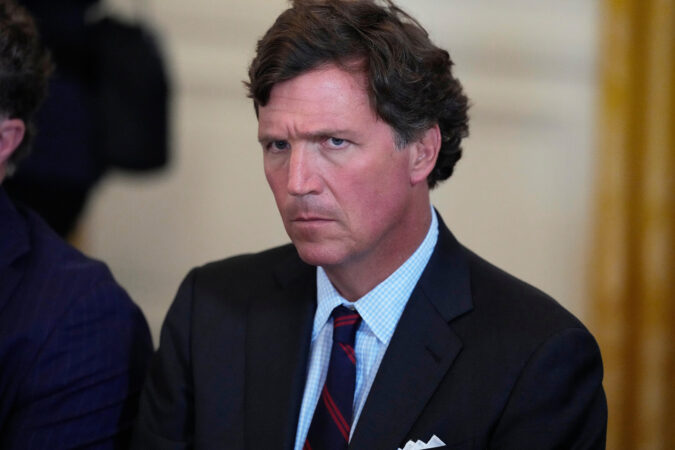
    Tucker Carlson, the influential conservative media commentator, said in an interview that he planned to help start a new political party after leaving the Republican Party but that he had no interest in running for office.

    Carlson, a former close ally of President Donald Trump who has broken with the Republican Party over the war with Iran, told the Columbia Journalism Review that he was “going to help build a third party.”

    “There should be a good-faith effort to figure out what benefits the country,” Carlson said in an interview with the Columbia Journalism Review published Wednesday.

    He outlined his plans at a moment of upheaval for both parties: The insurgent left appears ascendant in the Democratic Party as the base has grown angry over the party leadership’s stance on Israel since the war in the Gaza Strip. The Republican Party has been fractured by Trump’s handling of the war with Iran.

    Carlson, a popular podcaster and former Fox News host, said last month that he was leaving the Republican Party. He described himself on a podcast episode as a “consistent defender” of the party for 35 years, but said that he believed the party had lost touch with “America First” principles under Trump.

    In the Columbia Journalism Review interview, he described some of the policies that might animate his new party, saying he supports “ending all immigration.” A longtime nativist and immigration hard-liner prone to conspiratorial views, Carlson said immigration drives unemployment. (Many economists say it does not.)

    He also argued that the two parties did not offer a sufficient contrast on “war and finance.”

    “That’s not a democracy,” Carlson told the Columbia Journalism Review. “That’s a one-party state posing as a democracy, and it needs to be broken, and there’s going to be a third party, and I’m going to do everything I can to bring that about.”

    Carlson was often at Trump’s side during his 2024 presidential campaign and pushed Trump to select JD Vance, then a senator from Ohio, as his running mate.

    But he broke sharply with the president after the United States started the war with Iran in late February, declaring Trump was violating a core campaign promise to avoid foreign conflicts. By April, Carlson said he was “tormented” by his past support for the president.

    He told the Columbia Journalism Review that he had not spoken to Trump since the start of the war, which has been largely paused by a fragile ceasefire.

    “I’m not interested in talking to him,” Carlson told the publication.

    In the past, Carlson’s relationship with Trump has been revived after rocky stretches. In a text surfaced by a defamation lawsuit filed by Dominion Voting Systems, Carlson wrote of Trump, “I hate him passionately.” (Carlson was fired by Fox News after it agreed to pay $787.5 million to resolve the case, which centered on the network’s promotion of 2020 election misinformation.)

    But Carlson’s frequent, forceful public criticism of Trump since the war began has led to some speculation that he might be angling for his own run for office.

    Carlson told the Columbia Journalism Review that he was not entertaining the idea, and he insisted he did not see himself as a competitor to Trump.

    “I’m not a politician, that’s for sure,” Carlson told the publication. “I’m not a rival to Trump for power. I have no power. I’m someone who knows Trump, and I know him well, and I’ve known him for a long time.”

    This article originally appeared in the New York Times.

  • Shark attack on Alabama teen inspires the start of a national alert system

    Shark attack on Alabama teen inspires the start of a national alert system

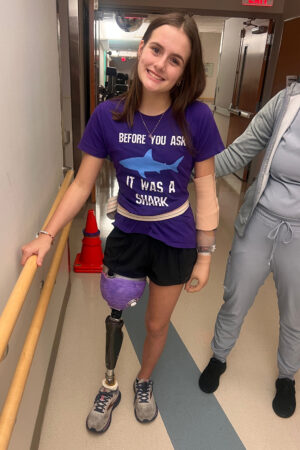
    Lulu Gribbin was 15 when she survived a shark attack off the coast of Florida. She lost her left hand, part of her right leg and almost her life.

    What she didn’t know when she entered the water on that day in 2024 was that another woman had been bitten by a shark 90 minutes earlier and just 3 miles down the beach. Had she known about the earlier attack, there is no way she would have been swimming, she said.

    Gribbin’s story has inspired new federal legislation to authorize emergency alerts to mobile phones to warn beachgoers when a shark has bitten someone in the area.

    President Donald Trump last week signed Lulu’s Law, which requires the Federal Communications Commission to allow the emergency messages. The legislation, which Gribbin advocated for, authorizes the warnings by classifying a shark attack as an event for which an emergency alert can be issued. It is up to states to implement the warnings. Gribbin’s home state of Alabama approved such a warning system last year.

    “It’s really just common-sense legislation. It says that whenever there has been a shark attack in a certain area where you are near, it will send an alert to your phone, exactly like how an Amber Alert system works when a child is abducted,” she said.

    Gribbin said she hopes the alert system will help prevent attacks like hers. “I definitely see this law working in the future and I’m really excited to hopefully save lives,” she said.

    A fight to survive

    Gribbin was one of three people bitten by a shark on June 7, 2024, off the Florida Panhandle.

    She was on a mother-daughter trip to the Florida Panhandle. Gribbin said she and her friend had been diving for sand dollars.

    “All of the sudden my best friend yelled, ‘Shark!’ and so we all started swimming for our lives,” Gribbin recalled. She said she remembered that sharks are attracted to frantic splashing and yelled for everyone to be calm. Gribbin, who was closest to the shark, was bitten.

    “The shark bit off my hand first, and I raised my arm out of the water, and there was just flesh and bone there,” Gribbin said. The shark then latched onto her leg. A man punched the shark off her and strangers on the beach rushed to help. She was flown by helicopter to a nearby hospital.

    Doctors were able to save the teen’s life but had to amputate part of her right leg.

    Choosing positivity throughout her recovery

    In the hospital, Gribbin made a deliberate decision to choose joy and to never give up.

    She initially struggled, knowing “that I only have two regular limbs, and that my life would be completely different.”

    “I would cry, and I would ask my mom, ‘Why is it happening to me?’ And on that day, we put a Bible verse on my bedside table that said, ‘With God, all things are possible.’ And then she told me that what you look like doesn’t define you, it’s who you are on the inside. And so, I think that stuck with me throughout my whole recovery the past two years.

    “It doesn’t matter what I look like, as long as I’m spreading positivity and inspiring others to stay strong and to never give up,” she said.

    Gribbin was fitted with prosthetic limbs, quickly regained her ability to walk, returned to sports, and got her driver’s license. She has gone back in the water and learned to surf, meeting Bethany Hamilton, a professional surfer who lost her arm in a shark attack.

    U.S. Sen. Katie Britt, the Alabama Republican who sponsored the legislation, said the fact that Gribbin was bitten soon after an attack on another woman prompted discussions about what could have been done differently. That led to the idea of an alert. She contacted Gribbin’s parents who had thought about the same possibility.

    “If there had been any type of alert that was given, that there’s no way that Lulu would have been in the water. And so we talked about how a simple change could have made a huge impact,” Britt said.

    Shark bites remain rare

    While sharks are commonly found in the waters off the United States, shark bites are rare, said Gavin Naylor, director of the Florida Museum of Natural History’s shark research program.

    There are between 60 to 80 known unprovoked bites worldwide each year, he said. It’s extremely rare that two or more people are bitten in close proximity. He said in a database of known shark bites, called the International Shark Attack File, there have only been a few instances of multiple bites in a single day.

    “If somebody is bitten by a shark, and then an alert goes out, the probability that another person’s going to be bitten by a shark within, let’s say, two or three hours is incredibly small,” Naylor said.

    When that happens, he said it’s likely because of environmental conditions such as sharks following schools of bait fish closer to the shore. Murky water conditions can also be a factor because they increase the chance that a shark will mistake a person for a fish or seal.

    In the area where Gribbin was bitten, there are about 20 to 30 bull sharks 1,312 feet offshore at any time, Naylor said. Great white sharks have been spotted more frequently in the chilly waters of New England and Atlantic Canada, according to conservation groups. A smartphone app called Sharktivity also allows shark spotters to report their sightings.

    The sightings might unnerve people, but Naylor said it’s important to remember that shark attacks are rare.

    “If sharks wanted to eat people, we’d have about 10,000 bites a day. The fact that we have so few is basically testament to the fact that the sharks are doing their level best to avoid people, not to target them,” Naylor said.

    Britt said she believes parents and others on the beach will want the information. “I know as a parent, I want every tool in my toolbox to be able to keep my child safe,” Britt said.

    Another survivor praises the alert system

    Braxton Rocha, who was bitten by a large tiger shark off the north shore of the Big Island of Hawaii, said he liked the idea of an alert system. He thinks it is information that people, particularly tourists to the island, will want to know.

    Rocha was spearfishing in 2015 when he saw the large shark. “Looked like a bus or submarine. She was the biggest thing I’d seen in the ocean at that time,” Rocha said. He started making his way to shore. When he looked back to check where the shark was, the animal was right in front of him. He tried to push the shark away, but the animal was too big and powerful. It latched onto his leg. Rocha punched it in the nose and the shark let go and swam away.

    “Everything happened so fast. It was almost like being struck by lightning. I was still kind of out of it. I looked down and see giant clouds of blood just bursting out of my leg,” he said.

    It took nearly 100 staples to repair the gaping wound on his leg. But the experience did not dampen Rocha’s enthusiasm for the ocean and wildlife. “I’ve always loved sharks,” Rocha said.

  • After gutting foreign aid, Trump goes big on Venezuela earthquake relief

    After gutting foreign aid, Trump goes big on Venezuela earthquake relief

    The humanitarian crisis gripping Venezuela after last week’s earthquakes is testing President Donald Trump’s claim of American leadership in the Western Hemisphere, as officials tout their surge of U.S. money and personnel to the country after gutting America’s foreign assistance apparatus early in the administration.

    At first glance, the large-scale relief effort may be surprising as the Trump administration has championed a policy of “trade over aid” in its attempt to reimagine how Washington apportions the federal government’s largess.

    But the U.S. aid presence now in Venezuela — including search-and-rescue teams along with military and civilian logistical support — is an example of the big, brash displays of humanitarian assistance and disaster relief that the administration says it favors over slower-paced development work.

    “There is a definite ‘Team America’ element to a search-and-rescue deployment,” said Jeremy Konyndyk, former head of disaster assistance at the United States Agency for International Development (USAID), which the Trump administration dismantled and shuttered within months of the president taking office. “It makes for good TV.”

    Another twist is Washington’s newly close relationship with Venezuela, which has become tethered to the United States since a January military raid captured President Nicolás Maduro. The Trump administration has fostered ties with the country’s interim leader, Delcy Rodríguez, focusing on shared economic benefits, including the takeover of Venezuela’s oil industry, and sidelining its exiled opposition leader María Corina Machado.

    Trump emphasized this dynamic in the hours after the two quakes struck June 24, writing on social media that the U.S. would “be there for our new and great friends.”

    On Capitol Hill, some in the president’s own party have appeared more skeptical of this relationship, citing reports of Venezuelan officials stymieing the efforts of international rescue teams, including those from the U.S. Such accounts are “very troublesome for the White House,” Rep. María Elvira Salazar (R., Fla.) told reporters this week, adding that it raised questions about where Rodríguez’s “heart is.”

    Asked about the reports, John Barrett, chargé d’affaires of the U.S. Embassy in Caracas, told reporters Wednesday that “local authorities have fully complied with our requests and have accelerated this massive humanitarian response.”

    Since returning to office, Trump has advanced a more assertive U.S. leadership role in the Western Hemisphere in a bid to dilute the influence of China and Russia. His supporters call it the “Donroe Doctrine,” a play on the 19th-century pledge by President James Monroe to protect America’s neighboring nations from European colonial powers.

    At the same time, the Trump administration has radically overhauled the U.S. government’s decades-old approach to foreign aid, and what remains is sharply scaled back in key areas, including global health, food aid, and support for refugees around the world.

    Few have expressed doubt that the U.S. response to the Venezuelan earthquakes is substantial, though some experts question the metrics being used by the Trump administration to promote its claims that the relief effort is one of Washington’s fastest and most robust in decades.

    Jeremy Lewin, a senior official with the State Department’s foreign aid bureau, told reporters Monday that the $300 million the United States had pledged to spend on the relief effort was likely to grow significantly.

    “This is, by really any estimate, at this point the largest response to any natural disaster the United States has mounted in this century in terms of personnel on the ground, money out the door, [and] speed,” Lewin said.

    It is unclear how the State Department arrived at that assessment. One official, speaking on the condition of anonymity to describe internal discussions, pointed to the number of U.S. personnel “on the ground,” including military staff, urban search-and-rescue teams, and other U.S. government employees, as well as the initial pledge of monetary support.

    Gen. Francis Donovan, the commander of U.S. Southern Command, told reporters this week that there were “roughly 2,000 teammates” from the Defense Department in area to help with search and rescue. The U.S. military has used drones to aid those efforts and led the repair and reopening of an international airport in Caracas that had been inoperable due to damage.

    Sam Vigersky, a former USAID official now at the Council on Foreign Relations think tank, said that in 2010, when Haiti experienced a devastating earthquake, records show that the U.S. sent roughly 5,800 military personnel to help within five days — a figure significantly larger than those currently deployed to Venezuela.

    The Obama administration deployed six search-and-rescue teams to Haiti, compared to the four in Venezuela, Vigersky said.

    President Barack Obama also extended temporary protected status to Haitian nationals after the earthquake, allowing tens of thousands of people to continue living and working in the U.S. by shielding them from deportation.

    The Trump administration canceled TPS for Haitians and for Venezuelans, who were granted protected status by the Biden administration due to political and economic turmoil under Maduro. Deportation flights originating from the U.S. were arriving in the country right up until the day of last week’s earthquakes.

    Vigersky said that the different nature of the natural disasters in Haiti and Venezuela, as well as the political situations in the two nations, may explain disparate figures; the U.S. initially estimated more than 65,000 dead in Haiti, far more than the current toll of about 1,700 in Venezuela.

    Even still, Vigersky said, “Venezuela is a huge response by any measure.” And with the $300 million in aid announced by the State Department so far, the Trump administration may well surpass early U.S. spending after the Haiti earthquake.

    However, only a third of that money appeared to be new funding for partner organizations in Venezuela, with the rest made up of previously announced assistance for the United Nations Office for the Coordination of Humanitarian Affairs and other agencies.

    The State Department said this week it was directing funding to several large and well-established religious aid agencies, including the evangelical Samaritan’s Purse and Catholic Relief Services. Both organizations have been involved in relief efforts since the earthquakes hit, with CRS working through a local partner, Caritas Venezuela, and Samaritan’s Purse setting up a field hospital in the coastal city of La Guaira.

    Representatives of both organizations said Wednesday that they had not yet received funding from the State Department.

    Brittany Wichtendahl, a media relations contact for CRS, said that their “request is still in proposal form” and they did not have a dollar figure yet.

    Franklin Graham, president and CEO of Samaritan’s Purse, said his organization was in “final discussions” with the State Department for a $15 million funding agreement. “While that has not been finalized yet, these funds would certainly enable us to do more and to help more people,” Graham said in a statement.

    In response to a request for comment from the Washington Post, the State Department said that there were 1,900 personnel currently deployed to Venezuela and that the number of search-and-rescue teams sent to the region does not “signify any perceived level of support.”

    “In terms of personnel, financial support, and speed, the State Department’s response has been swift and comprehensive,” the State Department said in a statement.

    The Trump administration drew criticism last year for a slower and smaller response to an earthquake in Myanmar that occurred amid the dismantling of USAID. More than 5,000 were later estimated to have died in that disaster.

    Paul Spiegel, a professor at Johns Hopkins University who chaired a recent commission that proposed radical ways to overhaul the international humanitarian system, expressed concern with what he called the seemingly selective nature of the support for Venezuela.

    “A $300 million response to Venezuela, framed around its strategic importance and set beside roughly $9 million for a comparable earthquake in Myanmar last year, creates the appearance of aid being allocated by political interest rather than relative need,” Spiegel said.

    Speaking to reporters Monday, Lewin, the State Department official who oversaw much of USAID’s dismantling, said politics and geography would play a role in the Trump administration’s response to such disasters going forward.

    “Venezuela,” he told reporters, “has been part of our system and part of our hemisphere … it’s one of our neighbors.”

    Lewin pointed to efforts in the Caribbean last year, where the State Department led a smaller disaster-relief effort after Hurricane Melissa struck the region. The new model, he explained, is to support these nations as “quickly, efficiently, and accountably as possible, whenever these sudden onset disasters occur in friendly nations and our neighbors.”

    Konyndyk, who now leads the nongovernmental group Refugees International, said he supported the administration spending big on the disaster-relief efforts underway in Venezuela. “There’s a really powerful symbolism to it, in addition to being lifesaving,” he said.

    But in terms of dollars spent per life saved, the administration could do more if it also reinstated other forms of foreign assistance, Konyndyk added.

    “The administration has fully cut off food aid to Somalia ahead of what could turn into a famine there,” he said. “You could save exponentially more lives for dramatically less money in Somalia just by turning food aid back on there. They’re choosing not to do that.”