Tag: no-latest

  • U.S. officials believed Israel was plotting to kill Iranian negotiators

    U.S. officials believed Israel was plotting to kill Iranian negotiators

    WASHINGTON — U.S. officials believed that Israel might have been plotting to kill Iran’s top negotiators while Washington was engaged with Tehran in delicate talks this spring to reach an interim peace deal, according to current and former U.S. officials.

    Killing senior Iranian leaders had been part of Israel’s strategy from the start of the war. But America’s concerns about the targeting of two particular Iranian officials — Abbas Araghchi, Iran’s foreign minister, and Mohammad Bagher Ghalibaf, the speaker of the parliament — spiked during delicate ceasefire negotiations that began in April.

    Fearful that an Israeli assassination effort would doom the negotiations, the United States, according to some of the officials, went so far as to ask other countries in the region to warn Iran about the possibility Israel could target the two officials.

    U.S. officials acknowledged that during the intense phase of the war, Araghchi and Ghalibaf, as senior government officials, could have been legitimate targets for Israel, which was intent on toppling Iran’s hard-line government. But after the negotiations started in earnest in April, U.S. officials believed that any attempt to kill the Iranian leaders would end the talks and reignite the fighting.

    The war began Feb. 28 with an Israeli strike that killed the supreme leader, Ayatollah Ali Khamenei, and other top officials, based in part on U.S. intelligence.

    While U.S. strikes focused on Iran’s navy and missile forces, Israel prioritized targeting the leadership in the early phase of the war, intent on killing as many high-ranking officials as it could.

    That included killing potentially more pragmatic leaders that the Trump administration had hoped to negotiate with, such as Ali Larijani, Iran’s top national security official, and Kamal Kharazi, a former Iranian foreign minister. Both men were involved in the negotiations with the United States when they were killed in Israeli airstrikes.

    The Trump administration’s suspicions about the possible Israeli plot to kill the two top negotiators show how the U.S. and Israeli war aims, which were close at the very beginning of the war, quickly diverged radically. And while the United States wanted a peace agreement, Israel has been skeptical from the initial cessation of hostilities in April.

    The initial two-week ceasefire in April was met with grudging Israeli official support and broad public concern in Israel that the United States was ending the war too early. Rather than being driven from power, the theocratic government of Iran had become even more hard-line, and Iran’s Revolutionary Guard had only consolidated its control over the country.

    Araghchi and Ghalibaf have been the key officials negotiating with various countries in the region to reach a ceasefire and then a more lasting peace with the United States. In June, the United States and Iran reached a framework agreement that sought to open the Strait of Hormuz and set the outline for follow-on talks on Tehran’s nuclear program.

    Officials and commentators in Israel viewed the initial agreement as a disaster, because it did not accomplish their country’s war aims of forcing regime change, destroying Iran’s proxy forces, and seriously damaging its missile program. Israeli officials also worried the agreement would put billions of dollars into Iran, allowing it to quickly rebuild after the war and without meaningfully restricting its nuclear ambitions.

    A spokesperson for the Israeli Embassy in Washington declined to comment.

    Asked about Israeli plans and the warning to Iran, a U.S. official noted that talks between American and Iranian delegations continue and that Steve Witkoff, a special envoy, and Jared Kushner, the president’s son-in-law, had productive meetings in Qatar. President Donald Trump, the official said, wants the peace process “to play out.”

    The Wall Street Journal reported in March that Israel had Araghchi and Ghalibaf on a target list but temporarily removed them as the United States discussed beginning negotiations with Iran.

    A U.S. official and a Middle East official said that the Trump administration learned around that time that at least Ghalibaf was on an Israeli targeting list and asked Israel to refrain.

    Ghalibaf was nearly killed in both the 12-day war in June 2025 and again in this year’s conflict, when Israel targeted a secret meeting of senior government officials in a bunker under a mountain, according to three senior Iranian officials and public comments by officials. In both incidents, Ghalibaf was rescued from under the rubble, the officials said.

    “Today, Mr. Ghalibaf and Mr. Araghchi and other members of the negotiating team have put their lives on the line, knowing the grave security risks, and this is called a real sacrifice, not political maneuvering,” Mohsen Zanganeh, a lawmaker, told local media in late April after the Islamabad meeting.

    During the negotiations, Iran has taken precautions aimed at making it more difficult for Israel to strike at senior officials.

    In April, Ghalibaf was set to travel to Islamabad to meet with Vice President JD Vance. But Iranian security officials were concerned that Israel would use the opportunity to assassinate Ghalibaf or Araghchi to derail the talks, the officials said.

    Iranians sought guarantees from the United States, through Pakistani and Qatari intermediaries, that Israel would not carry out any covert operations targeting the Iranian delegation, the officials said.

    Pakistani fighter jets escorted the Iranian airplanes carrying a delegation of more than 70 Iranians from the border of Iran to Islamabad and back again when the session was over.

    But on the way back to Tehran, an Israeli security threat emerged.

    Iran’s security forces notified the plane carrying Ghalibaf back to Tehran that they had picked up intelligence that Israel planned to attack the plane and that two Israeli fighter jets had entered Iran’s airspace from its western border near Iraq, the two officials said.

    Mahdi Mohammadi, a senior adviser for Ghalibaf, who accompanied him to Islamabad, confirmed this account on his social media page. The plane made an emergency landing in the city of Mashhad, Iran’s closest airport to the Pakistani border, and the Iranian delegation traveled some eight hours by land back to Tehran, Mohammadi and the two officials said.

    But the officials have continued to travel.

    In late May, Ghalibaf and Araghchi flew to Qatar for talks and then traveled to Switzerland in June for a second in-person meeting with Vance and the American delegation.

    This article originally appeared in the New York Times.

  • Trump wants to ease rules on mailing guns. His son’s company could benefit.

    Trump wants to ease rules on mailing guns. His son’s company could benefit.

    On an earnings call in May, GrabAGun’s chief executive had a hopeful message for investors: The Trump administration’s proposed rollback of gun regulations could be a boon to the company, which hopes to be “the Amazon of guns.”

    “This could be the most significant change to firearms retail distribution in decades,” Marc Nemati said, according to a public recording of the call. “GrabAGun is uniquely positioned for this opportunity.”

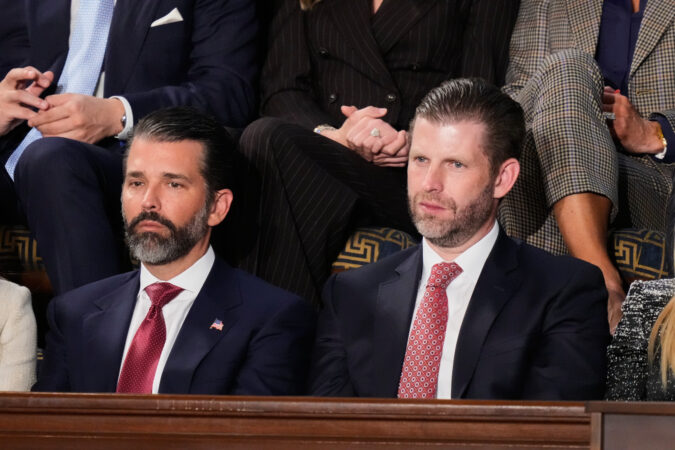
    What Nemati did not mention was that the company also had a powerful voice on its side. Donald Trump Jr., the president’s son, is on GrabAGun’s board and is a consultant to the company.

    The younger Trump was present at the New York Stock Exchange in July 2025 when the company went public, with photos showing him making a gesture like holding a gun to celebrate the moment as he helped ring the bell.

    And, with a 1.1% ownership stake in the company, Trump Jr. stands to prosper if the company fulfills its goal of being a dominant seller of firearms online.

    “To be able to come back to the New York Stock Exchange and actually take a gun company public feels like such a vindication of all the insanity, all of the woke nonsense that we’ve been watching and facing for the last decade in America,” Trump Jr. said on Fox Business ahead of GrabAGun going public. “It’s a triumphant return.”

    GrabAGun sells and ships ammunition, and some gun accessories, directly to consumers in some states using its website. But it must rely on middlemen to actually transfer the firearm to the customer.

    That’s because federal regulations prohibit sending handguns to individuals through the mail, and they require that firearms background checks and transfers be conducted in person. The administration has proposed regulatory changes that, for the first time, would let firearms sales take place entirely online, with handguns mailed directly to buyers’ doorsteps.

    Such changes could enormously benefit GrabAGun and the president’s son, creating a potential conflict of interest that has attracted the attention of ethics watchdogs.

    Many Republicans were highly critical of Hunter Biden’s tenure as a board member of the Ukrainian energy company Burisma at a time when his father, Joe Biden, was vice president and a key player on Ukraine. In the Trumps’ case, the president’s son could benefit directly from policies adopted by his father’s administration.

    “There is no question about the company’s ties to the son of the president,” said Jordan Libowitz, a spokesperson for Citizens for Responsibility and Ethics in Washington, which investigates and litigates matters involving ethics in governance. “It is always going to raise red flags and question how decisions are made within the administration.”

    In a statement, a spokesperson for GrabAGun said, “We appreciate the proposed rulemaking may allow a more streamlined purchase process for firearms for everyone who wishes to legally secure firearms, from enthusiasts to sportsmen. There is a lengthy rulemaking process ahead. GrabAGun has submitted a public comment on one of the proposed rules, and will be participating in the public comment process.”

    A spokesperson for Trump Jr. said he is a longtime promoter of gun rights who is pursuing an attractive business opportunity and has no connection to the ATF rule changes.

    “Don is a lifelong businessperson and vocal advocate of our Second Amendment rights,” the spokesperson said. “He does not interface with the federal government as part of his role with any company that he invests in or advises and had zero involvement in this particular decision.”

    A White House official said the ATF proposals were driven by the administration’s interest in protecting the Second Amendment and had nothing to do with Trump Jr.’s business interests.

    The Trump family’s sprawling business ventures, which have thrived during President Donald Trump’s second term, are facing heightened scrutiny. The president’s latest financial disclosure forms show that his reported income soared to more than $2.2 billion in 2025, as he took in more than $1.4 billion from cryptocurrency, digital tokens, and related partnerships.

    The president has said he is not involved in the day-to-day operation of his businesses while in the White House. But his two oldest sons have continued to manage the family’s eponymous real estate empire and invest in new ventures, often in countries heavily reliant on the goodwill of the U.S. government.

    Trump Jr., for example, has invested in AI-related companies, data centers, and more.

    Trump Jr. became formally involved in GrabAGun in December 2024, shortly after his father was elected to his second term. Under his agreement with the company, Trump Jr. would serve as a consultant in exchange for 300,000 shares of stock, or just over 1% of the company’s value, according to filings with the Securities and Exchange Commission.

    He would also be responsible for helping to execute the company’s marketing strategy, developing partnerships, and “serving as a spokesperson for the Company to effectively communicate the Company’s mission and initiatives,” the filings say.

    GrabAGun Digital Holdings is a 16-year-old Texas-based company that aims to digitize the gun-buying process, according to SEC filings. It hopes to reach a more youthful cohort of firearms users, who company executives say would be more likely than their older peers to buy firearms online.

    Since going public, the company — which is valued at nearly $70 million — has dropped in value, public records show. On the earnings call, company executives blamed the loss in value on the costs of going public and expanding.

    Trump Jr. has made it clear that the company’s path toward greater profitability is internet sales.

    “Younger people are actually getting into the Second Amendment,” he said on Fox News in January 2025. “They understand the fundamental importance of being able to protect themselves and their freedoms. … This is a way — with an incredible tech site — for them to shop the way they shop for everything else.”

    On the campaign trail, the elder Trump promised to roll back Biden-era firearms regulations, such as a rule that prohibits the sale of stabilizing brace firearm accessories, and received the backing of major gun rights groups. In April, the Bureau of Alcohol, Tobacco, Firearms and Explosives — the law enforcement agency within the Justice Department tasked with regulating the nation’s hundreds of millions of firearms — proposed amending or eliminating 34 gun regulations.

    Experts said some of those changes, taken together, would transform the firearms market from one that largely plays out in storefronts across the country into a potentially lucrative digital marketplace.

    Currently, licensed firearms dealers must verify a potential buyer’s identity and run a federally mandated background check in person. That stems from Congress’ move to tighten the rules in 1968, after Lee Harvey Oswald used a fake name on a mail order to buy the gun he used to assassinate President John F. Kennedy in 1963.

    Gun rights groups say the regulations are outdated in the digital era. Under one of the ATF proposals, firearms sellers would be able to verify someone’s identity and check their background online.

    Erich Pratt, senior vice president of Gun Owners of America, said the Gun Control Act of 1968 went beyond the government’s authority in restricting gun purchases, given the Second Amendment right to bear arms. Pratt, the ATF, and other gun rights groups have said that the proposal has ample measures in place to ensure the safe sale of firearms online.

    “The right of Americans to buy guns — even online — is something that is deeply rooted in our nation’s text, history, and tradition,” Pratt said, echoing the language of recent Supreme Court decisions. “It is as American as apple pie.”

    GrabAGun’s business model allows customers to order firearms on the company’s website or mobile app. The guns are shipped not to their homes but to a licensed dealer in their states, and the customers must undergo background checks at the store before they can pick up the firearms.

    As the ATF moves to allow background checks online, a separate proposal would loosen a century-old ban on sending handguns to people’s homes through the U.S. Postal Service. Under the proposed rule, licensed firearms dealers could ship guns to residents of their state. The proposal follows a Justice Department memo in January, authored by lawyers in the department’s Office of Legal Counsel, declaring the gun-mailing ban unconstitutional.

    If the ATF and Postal Service rule changes are enacted, GrabAGun could sell firearms online and ship them directly to consumers, at least in states where the company is licensed. GrabAGun is a licensed dealer in Texas, according to public records, and firearms experts say it would not be difficult for the company to get licensed in many other states.

    The ATF announced its proposals on April 29, beginning a 90-day public comment period that will expire in early August. The public comment period for the Postal Service measure has closed, and those comments are under review. Multiple state attorneys general have said they are against the Postal Service proposal, suggesting that it could face legal challenges if adopted.

    The administration says its proposals would remedy the misinterpretation of the law and Constitution by Biden-era officials.

    “ATF regulation changes reflect President Trump’s commitment to the rule of law, and that includes protecting the Second Amendment rights of all Americans,” a White House official said. “We refuse to bypass Congress and use the regulatory process to harass law-abiding Americans seeking to exercise their rights,” as the administration claims its predecessors did.

    Advocates for stricter gun laws say it is critical that potential buyers have in-person interactions before they acquire handguns. In face-to-face interactions, they say, gun sellers can pick up on any red flags suggesting that it would be unsafe for the potential buyer to possess a firearm.

    Gun-control advocates cite another administration proposal that, they say, could help GrabAGun but threaten public safety.

    Under existing ATF regulations, residents of states with rigorous procedures for obtaining concealed-carry permits can bypass the federal background check. Under the new proposal, more states, including those with laxer procedures, would qualify for the waiver.

    Marianna Mitchem, senior industry adviser for Everytown for Gun Safety, a gun-control advocacy group, said she fears that the administration’s proposals would make it simpler for gun traffickers, criminals, and underage people to get their hands on firearms through online platforms such as GrabAGun.

    Mitchem, who was a senior official at ATF overseeing inspections of gun shops before leaving the agency in 2025, said the agency during the Biden administration never discussed easing regulations to enable online sales.

    “This is going to make it so much easier for dangerous people to get firearms,” Mitchem said. “You are eliminating [gun shops’] ability to be the first line of defense.”

    GrabAGun’s executives disagree, and they submitted a comment to ATF supporting online background checks.

    “The Second Amendment is in our blood,” Jonathan B. Wolens, GrabAGun’s general counsel, wrote in the comment, which is available online. “We support this rule change because we believe it will promote efficiency and support compliance by enabling more timely, accurate confirmation of license validity.”

    ATF said the proposed rule would require a rigorous identification process while updating the gun sales process for the 21st century. “ATF’s proposed rule modernizes and strengthens identity-verification requirements … and reduces burden on consumers,” an ATF spokesperson said in a statement.

    GrabAGun appears poised to move fast if the rule changes are enacted. In October — months before the proposals were introduced — GrabAGun formed a subsidiary called Pew Logistics, with a stated mission of selling software to provide “next-generation, white-label direct-to-consumer fulfillment solutions to modernize the firearms supply chain.”

    That software would be sold to gun manufacturers, helping them sell directly to consumers online.

    Trump Jr. has multiple other financial ties to GrabAGun that could enable him to profit if the company takes off.

    GrabAGun offers a “Shoot Now Pay Later” financing option through a company called Credova Financial. Credova is a subsidiary of Public Square Holdings, where the president’s son is a board member and investor.

    In August, the Consumer Financial Protection Bureau dropped an investigation of Credova, which had been accused of wrongly charging fees to customers. It said the inquiry, which started during the Biden administration, was politically biased against companies affiliated with firearms.

    When GrabAGun went public, it merged with Colombier Acquisition Corp. II, a firm designed to combine with other companies and take them public. Colombier is led by Omeed Malik, a major Republican donor who chairs 1789 Capital, a venture capital firm that includes Trump Jr. as a partner.

  • Trump returns to Mount Rushmore after years of hinting he belongs there

    Trump returns to Mount Rushmore after years of hinting he belongs there

    He hasn’t explicitly said that he wants to be added — at least not in public.

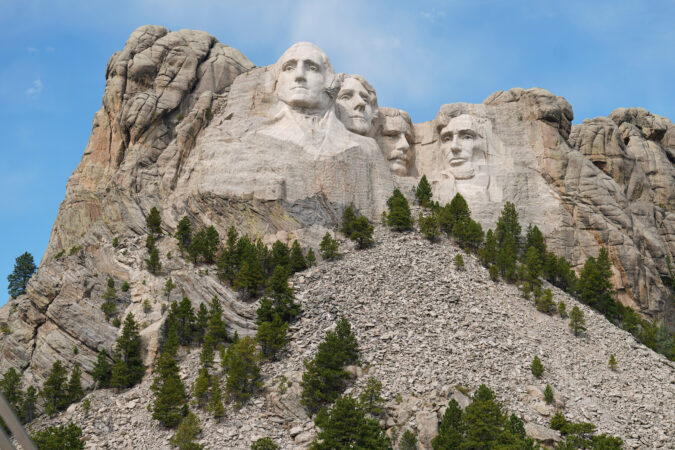
    But on the eve of the nation’s 250th anniversary, President Donald Trump was returning to Mount Rushmore after nine years of flirting with the idea of having one more face join the four presidents: his own.

    Ahead of his visit to the national memorial on Friday, his White House said that adding Trump’s face would be a welcome development — even though officials at Mount Rushmore have long said the monument cannot be carved further.

    “There would be no better addition to the iconic Mount Rushmore than the 45th and 47th President of the United States, Donald Trump,” said Taylor Rogers, a White House spokesperson, in a statement to the Washington Post.

    For a president who has had a golden statue of himself erected at his golf resort and his name and image affixed to buildings, government programs, U.S. passports, digital and physical coins, roads, and an airport, the landmark represents a rare limit: No presidential order or act of Congress can create more carvable rock.

    It has been on his mind. As recently as five weeks ago, the president — twice in one evening — posted to Truth Social digital mock-ups of his face next to the mountainside carvings of George Washington, Thomas Jefferson, Theodore Roosevelt, and Abraham Lincoln.

    Soon after he first took office, Trump told a congresswoman in private that joining them was his dream. When that Republican congresswoman, Kristi L. Noem, became South Dakota governor and gave Trump a sculpture depicting his face on Mount Rushmore next to Lincoln’s, he put it on display at his Mar-a-Lago office.

    He last visited the monument six years ago, delivering a speech on July 3, 2020, that sought to rally supporters around a law-and-order message central to his unsuccessful reelection campaign.

    On Friday, “beneath the towering faces of four of America’s greatest presidents, President Trump will deliver a historic address commemorating the nation’s 250th anniversary and charting a course for America’s next chapter,” Freedom 250, the White House-created organization heading up the semiquincentennial celebrations, wrote in an announcement of Trump’s Mount Rushmore appearance.

    Two people with knowledge of the event planning, including a senior White House official, said there would not be a projection of Trump’s face on Rushmore during the Friday night celebration.

    Trump, as he has danced around the idea of being added to Mount Rushmore since first taking office, has never batted it down.

    “Never suggested it,” he wrote on Twitter in 2020 in response to a New York Times report that said a White House aide had inquired with Noem’s office about the process of carving additional presidents. But Trump continued: “Although, based on all of the many things accomplished during the first 3½ years, perhaps more than any other Presidency, sounds like a good idea to me!”

    A year earlier, when asked by the Hill if he’d like to see his face carved there, Trump replied that he didn’t want to say: “If I answer that question, ‘Yes,’ I will end up with such bad publicity.”

    At a 2017 rally in Youngstown, Ohio, Trump declared that each of the presidents on Mount Rushmore “believed in protecting American industry.” He told the audience that he should “ask whether or not you think I will someday be on Mount Rushmore,” but that he would face blowback for positing such a question.

    “If I did it joking, totally joking, having fun, the fake news media will say, ‘He believes he should be on Mount Rushmore,’” Trump said. “So I won’t say it, OK? I won’t say it.”

    Trump’s allies have kept hope alive, however, even as Mount Rushmore officials and engineers who have long monitored the rocks there say it isn’t possible.

    Days after he was sworn in for a second time, Rep. Anna Paulina Luna (R., Fla.) in January 2025 filed a bill directing the Interior Department to begin the process of having Trump’s face carved onto Mount Rushmore. Around the same time, a Fox News panel, including former White House press secretary Kayleigh McEnany and former representative Jason Chaffetz (R., Utah), cheered on the idea. McEnany said it would be “epic” to have Trump’s face added for the country’s 250th anniversary — which would have left a year and a half to do so.

    Last July, Rep. Andy Ogles (R., Tenn.) sent a letter to Interior Secretary Doug Burgum asking him to “explore” adding Trump, saying that “past bureaucratic resistance or political discomfort” should not stop the process.

    And Burgum himself, contradicting what past National Park Service officials had said, last year told Trump’s daughter-in-law and Fox News host Lara Trump that it wasn’t out of the question.

    “Well, they certainly have room for it there,” Burgum replied when she asked if the United States would ever see Trump added to Mount Rushmore.

    In 2018, the public information officer at Mount Rushmore, Maureen McGee-Ballinger, told the Sioux Falls Argus Leader that “there is no more carvable space up on the sculpture,” adding that the rock to the left of Washington can’t be carved into, and what appears to be space next to Lincoln is “beyond the sculpture” and an “optical illusion.”

    Staff at Mount Rushmore and the National Park Service did not immediately respond to a request for comment on whether the memorial’s geology had changed since.

  • Belgian diamond group that won tariff relief gifts Trump a lavishly encrusted ring

    Belgian diamond group that won tariff relief gifts Trump a lavishly encrusted ring

    BRUSSELS — Dozens of diamonds spell out two giant letter T’s next to the Stars and Stripes and “1776” and “2026.” Dozens more frame the numbers 45 and 47 in the shape of Superman’s logo. A diamond-winged eagle carries a ruby shield and clutches an olive branch of emeralds, below a radiant “250” and atop the phrase “250 YEARS USA” etched in 18-karat gold.

    All told, 321 diamonds, 56 sapphires, 13 emeralds and six rubies encrust the watch-sized gold ring presented this week to Bill White, the U.S. ambassador to Belgium, to give to President Donald Trump.

    “A very special thank you to my friends from Antwerp for the magnificent Freedom 250 ring,” Trump said in a prerecorded video message during an event marking America’s 250th birthday in Brussels.

    Isidore Mörsel, president of the Antwerp World Diamond Center, or AWDC, gifted the ring on behalf of the centuries-old diamond community in the Belgian port city, a central node in the worldwide trade of the precious stones that found itself struggling last year under the weight of Trump’s sweeping trade war.

    “May this ring serve as a lasting reminder that true partnership like the finest natural diamonds are formed under pressure, endure the test of time, and shine brightest when built on trust,” Mörsel said. The ring’s interior is engraved with the phrase “Crafted in Antwerp for Donald John Trump.”

    In dollar terms, the ring’s value pales beside gifts like the $400 million plane donated by Qatar that Trump ordered converted into a new Air Force One. But it’s a glitzy window into the role that ostentatious – and almost always gilded — gifts are playing for those seeking to curry favor with the U.S. president.

    A White House official, speaking on the condition of anonymity to discuss the matter, said Thursday that the ring has not been presented to Trump yet.

    Ring is latest in Trump’s break with White House custom

    The gift comes months after Belgium’s diamond industry won the removal of U.S. tariffs on diamond imports. In September, AWDC said it had “succeeded in securing a zero percent import tariff” on Antwerp’s annual export of more than $2 billion of polished diamonds to the U.S. A spokesperson for the group said on Thursday that the AWDC provided “input” to the European Commission as it negotiated with Trump on a broad deal on tariffs in 2025, but did not itself lobby the administration.

    U.S. presidents have considerable discretion to accept gifts from domestic and foreign sources and may determine themselves whether a gift was meant for them personally or the nation. The exception is those from foreign governments, which are prohibited by the foreign emoluments clause of the Constitution without congressional assent, though presidents could use personal funds to reimburse the Treasury for the full value of an official gift if they wish to retain it.

    Personal gifts are also supposed to be registered on the president’s annual financial disclosure. Trump’s 2025 disclosure, released this week, revealed a $250,000 gift of a sculpture depicting his triumphal gesture after surviving a 2024 assassination attempt at a campaign rally in Butler, Pa., and tickets to 10 sporting events, including 10 to the upcoming World Cup final in New Jersey from FIFA’s Gianni Infantino, valued at a collective $15,000.

    Four U.S. ethics experts told the Associated Press that Trump has broken with decades-old custom in the White House to avoid accepting such gifts.

    Ring’s value estimated at $25,000-$35,000

    To forge the ring, the AWDC turned to David Gotlib, an Antwerp-based high-end jeweler whose cufflinks can sell for more than 15,000 euros ($17,000).

    Neither AWDC nor Gotlib would provide a valuation of the ring, but two independent jewelers told AP they estimated the value between $25,000 and $35,000.

    Paris- and London-based jewelry consultant Alexander Levinson calculated the cost at $25,928, while David Saad, a third-generation luxury jeweler in Canada, priced the ring between $33,000 and $35,000. Both said half the cost was in materials, half in labor.

    After the ring was presented on a star-spangled stage in Brussels, musician Alexis Wilkins, the girlfriend of FBI Director Kash Patel, sang the U.S. national anthem to more than 8,000 people drinking Budweiser and bourbon from Tennessee and Kentucky.

    White said he raised more than $5.5 million for the 250th anniversary event from corporate sponsors like defense industry titans Lockheed Martin and Northrop Grumman and tech firms like Intel, Google, and Meta, as well as the European chocolate companies Leonidas and Ferrero. AWDC said it contributed funds, too.

    “The media was asking, ‘Why does it have to be so big?’” White said of the event. “Because we are the United States of America!”

    Meanwhile, the fate of the ring is not currently clear.

    On Wednesday, White posted a photo online of himself wearing the ring and giving a thumbs-up. The post has since been deleted.

  • Venezuelan earthquake survivors search for missing pets in an unexpected place: McDonald’s

    Venezuelan earthquake survivors search for missing pets in an unexpected place: McDonald’s

    CARABALLEDA, Venezuela — Hope came in the strangest of places: a Venezuela McDonald’s.

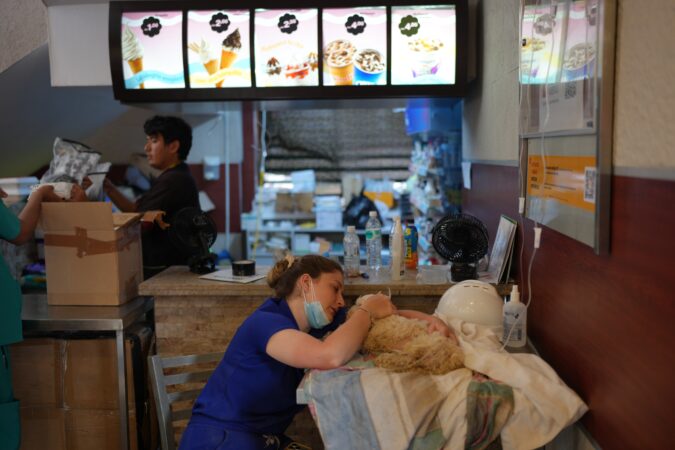
    Gabriela Alves found herself embracing her 6-year-old dog Buddy on Thursday in the fast-food outlet after a week of searching for the white pup that went missing when two earthquakes devastated the South American nation on June 24.

    The restaurant, next to the ruins of collapsed state housing complexes, has become a de facto hospital for earthquake victims, as well as a center for locating and treating missing pets in the seaside city of Caraballeda, which was devastated by the natural disaster. Neighbors call it “Hospital McDonald’s.”

    “This is a miracle,” Alves said, arms wrapped around the dog with an IV in one of his legs on a table next to restaurant workers selling soft-serve ice cream. “We’ve lost everything material, but at least we’re both alive.”

    The makeshift hospital was born one day after the back-to-back earthquakes killed at least than 2,295 people and wounded 11,000, according to Venezuelan officials. Many more families were left scrambling to find their missing loved ones, including cats and dogs lost in the rubble.

    Angel Matute and 70 other veterinarians, students, doctors, and civilian volunteers traveled from the western city of Barquisimeto. The team was looking for a place to sleep, store equipment, and shelter from heavy tropical rain when they found one of the only operational facilities within the chaos. The Golden Arches.

    They set up shop in the restaurant, which still had running air-conditioning, and began distributing medical supplies and treating human patients while also becoming a place for treating injured pets and seeking dogs and cats that were still missing.

    “For us, a pet is one more human life,” said Matute, who coordinates rescue efforts in the McDonald’s where the volunteers also sleep. “There are animals that are more human than humans themselves.”

    Matute was among dozens of bustling volunteers on Thursday treating dogs and cats alongside search teams ordering hamburgers and french fries. His group, which has rescued 140 animals and treated 60 more, plans to continue reuniting owners with missing pets until their assistance is no longer needed.

    Alves turned to Hospital McDonald’s when she was desperately searching for her beloved dog.

    Alves was at a family member’s house when the quakes shook northern Venezuela. Hours later, she jumped on her motorcycle and frantically rushed to her home to save Buddy, but all she found were ruins.

    The 36-year-old Venezuelan said she heard the McDonald’s had become a place to look for lost pets and began making daily laps. She would swing by the restaurant to check if the volunteers had found any white dogs before returning home to yell, “Buddy, Buddy,” hoping to hear a bark. For more than a week, she was met with silence.

    “We’re all living one day at a time,” she said Thursday. “Today, I returned and I truly can tell you I had lost all hope.”

    She persisted, though, and picked through the ruins, pulling clothes from her mother’s room, the only area of the home still accessible. Then she heard a distant bark, looked down and saw Buddy’s white ear through a crack in the concrete.

    Alves screamed for help and nearby rescuers ran to her. They broke a hole in the wall and pulled the dust-covered dog from the debris. Alves sobbed as she cradled Buddy, swaddled in a pink blanket and licking her arm. Hours later, veterinarians at Hospital McDonald’s checked Buddy for injuries after eight days trapped in the rubble.

    “Right now, with all the tragedy of the earthquake, it’s one positive thing in all the bad,” Alves said, still embracing her dog. “He’s like my doggie Band-Aid.”

  • D.C. official tells Trump to build his arch somewhere else

    D.C. official tells Trump to build his arch somewhere else

    The Trump administration should pick an “alternative site” for President Donald Trump’s planned 250-foot-tall triumphal arch, a Washington, D.C., official told the administration last month, warning that Trump’s plan to build the structure by Arlington National Cemetery would be “divisive.”

    David Maloney, the city’s historic preservation officer, said the plan to build in Memorial Circle — a traffic roundabout across the river from the Lincoln Memorial — would “severely damage an exceptional cultural landscape and one of the most important symbolic places in the nation.”

    Maloney instead suggested a different spot that he said would be a better fit for the towering arch: an empty traffic oval located on South Capitol Street between Nationals Park and Audi Field.

    “It would create an energizing focal point for a still-emerging neighborhood, suitable for a celebratory crowd,” Maloney wrote to the National Park Service in a June 26 letter posted by a federal commission reviewing the project. An arch located there could become a symbol of “sports triumph” linked with the nearby stadiums, he said, “and importantly, it would enhance the historic L’Enfant Plan and the city’s monumental landscape rather than detracting from it.”

    Rodney Mims Cook Jr., a Trump appointee who chairs the U.S. Commission of Fine Arts, had previously identified that site as a prospective location to build a triumphal arch.

    Washington Mayor Muriel E. Bowser’s office declined to comment on the proposal from Maloney, who has served as the city’s historic preservation officer since 2007. The historic preservation office does not always speak for the mayor and has some degree of autonomy in its work, city officials said.

    Bowser has sought to strike a balance with Trump as he attempts to remake parts of Washington, encouraging him to tend to long-delayed repairs to local fountains. She has avoided public battles with the president over some of his more controversial changes to the city and its historic buildings, such as Trump’s demolition of the East Wing to build an expansive White House ballroom.

    Trump last year proposed building a triumphal arch to honor the nation’s 250th anniversary, arguing that it was an overdue addition to Washington.

    “We’re the only important and major city that doesn’t have one,” Trump said in the Oval Office in May. He also touted his plan to make it bigger than the 164-foot-tall Arc de Triomphe in Paris.

    “We have to do slightly larger … otherwise you’d all be disappointed in me,” the president said, alluding to his propensity for large construction projects. “But it’s even far more beautiful.”

    Historic preservationists and advocacy groups have opposed the project, warning that the large arch — Trump’s most significant effort to change Washington’s skyline — would alter the city’s historic views.

    Military veterans also have sued to block it, warning that the towering structure would harm their experience of visiting the nearby national cemetery. A federal judge is weighing the case.

    The Commission of Fine Arts, which Trump has packed with allies, has approved the project. A second federal panel, the National Capital Planning Commission, is scheduled to weigh the proposal Thursday.

    Federal officials have also laid out an aggressive timetable to potentially complete work on the arch before Trump’s term ends, which would involve 20 hours per day of construction on the arch, year-round.

    Maloney, who declined an interview, has also questioned the Trump administration’s process to build the arch, criticizing the 10-day window for public comment. He also said that outside experts had been wrongly excluded from a federally required process, known as a Section 106 review, to consider the arch’s potential effects on historic properties.

    Trump officials have declined to include a half-dozen historic preservation and advocacy groups in the process. All of the excluded organizations, which have historically offered input on past federal projects, have sued the Trump administration over the president’s construction and renovation projects.

    The review process “is clearly an exercise designed to shield this controversial project from genuine public and expert scrutiny, rather than to reduce its harmful impacts on our shared heritage, which is owned by the public,” Rebecca Miller, the executive director of the DC Preservation League, wrote in a June 15 letter to the Park Service.

    Maloney also warned that Memorial Circle is somewhat removed from Washington’s downtown, limiting potential visitors if an arch is built there. He compared it to the sites of other major memorials — such as the Arc de Triomphe in Paris and the 9/11 Memorial in New York City — that are better woven into their city’s fabric.

    “The location does not suggest a likelihood of success for a celebratory monument,” Maloney wrote in his June 26 letter to the Park Service.

  • Older adults turn to ‘Golden Girls’ housing

    Older adults turn to ‘Golden Girls’ housing

    Shirley Jennett, a retired nurse, loves her spacious ranch-style house in Denver, with its big backyard and gazebo.

    “I want to stay here,” she vowed. “And die here.”

    She might pull that off. In relatively good health, Jennett still drives to lunch with friends, does her own housekeeping and grocery shopping, and plows through a book a day, usually a mystery. But her children worry about her living alone at 89, especially since she has had a couple of falls.

    Enter her new housemate, Susan Beese. Despite working four days a week in retail, Beese could no longer afford her nearby one-bedroom apartment as the rent topped $1,500 a month. She moved out, first staying with friends and then in what she delicately called “a senior women’s facility.”

    Now Beese, who is 79, pays Jennett $800 monthly for a bright two-bedroom space, with a bath and a kitchen, on the lower level of her house. As part of the agreement the housemates worked out, she helps plant and water Jennett’s garden, takes out the trash, and cooks occasional meals.

    “It’s been a lifesaver,” Beese said. Jennett even welcomed her dog.

    Meet the real-life Golden Girls. In the much-loved 1980s sitcom, still in perpetual reruns, the four wisecracking women who share a house in Miami met through an ad on a supermarket bulletin board.

    In Denver, the housing matchmaker was Sunshine Home Share Colorado, a local nonprofit that Alison Joucovsky, a senior services administrator, founded in 2016 when the problem became urgent. “My phone was ringing off the hook,” she said, recalling anxious pleas from older residents spending most of their Social Security checks on rising rent or facing yearslong waiting lists for subsidized senior housing.

    Home sharing “is a really efficient way to create affordable housing and to support older people who want to age in place,” Joucovsky said. Carefully vetting both “home providers,” who may be rattling around in family houses now too big and too empty, and “home sharers” seeking reasonable rents, Sunshine facilitated 31 shares last year, a record for the nonprofit.

    “The cost of developing and building new housing is astronomical, and so is the length of time it takes,” said Laura Fanucchi, president of the National Shared Housing Resource Center and an administrator with HIP Housing, a home-share organization in San Mateo County, Calif. “Why not make use of existing housing stock?”

    About 55 organizations around the country offer these services — and demand is growing, driven by housing shortages, rising rents, and sales prices that affect both the old and the young. Legislators in several states are working to promote home sharing as an option. (Personal care is not part of these arrangements.)

    The need is acute. About one-third of households headed by someone 65 or older were “cost-burdened” in 2024, according to an analysis by the Harvard Joint Center for Housing Studies. That means they spent more than 30% of their income on housing.

    Although nearly 80% of those people were homeowners, the center found, an increasing proportion are still paying off mortgages or home equity loans, and most contend with higher taxes, utility and maintenance costs, and insurance premiums.

    “A lot of the people calling me to complain about property taxes and inflation are senior citizens on fixed incomes whose children have left, and maybe their spouse has died,” said Pennsylvania state Rep. Abby Major, a Republican, who has co-sponsored a bill that would facilitate home sharing. “They’re a single older adult living in a four-bedroom house.”

    Yet most don’t want to relocate. Even if they do, many older adults will find that downsizing has also become prohibitively expensive, as home prices rise and very low interest rates become a memory.

    Younger people are similarly cost burdened, including 37% of those aged 25 to 34, and 31% of those 35 to 44, the Joint Center has reported. Home sharing can benefit both older homeowners who need income and people of any age in search of lower-cost housing.

    To help increase their reach, some home-share programs now supplement or replace the traditionally labor-intensive matching process with online platforms. (For-profit companies like Nesterly or Roommates.com also facilitate shared housing.)

    “It’s like online dating, except that people who have rooms can meet people who need rooms,” said Candice Smith, executive director of HomeShare Oregon. “And it’s a lot more secure.” HomeShare’s online platform has drawn close to 7,000 providers and seekers over five years.

    Further support has come from the city of Portland, which this year announced a pilot program to pay $1,000 to homeowners who make a spare room available (or $1,500 for two rooms) through qualified home-share programs.

    In addition, legislators in several states have introduced or passed bills that prohibit municipalities from unduly restricting homeowners who want to rent spare rooms to nonfamily members. Sponsors in Pennsylvania and Connecticut actually call them Golden Girls bills, and they’ve drawn bipartisan support.

    “So many young people have basically given up on buying a home,” said Colorado state Rep. Manny Rutinel, a Democrat. He helped pass a 2024 law prohibiting cities and counties from limiting the number of unrelated people who could live together in a single dwelling.

    In Pennsylvania, state Rep. Tarik Khan steered a similar bill through the House in June; it awaits a Senate vote. “It doesn’t make sense that your cousin can move in but someone unrelated to you can’t,” said Khan, a Democrat.

    The Pennsylvania bill caps the number of nonfamily occupants in a home at five; Connecticut’s limit would be three. That bill passed the Senate in April, and then died without a vote in the House. But the bill sponsors plan to reintroduce it next session.

    Home sharing can’t solve the housing crisis, its fans acknowledge. But it could make a dent, potentially unlocking thousands of spare bedrooms across the country without requiring new construction that would change the character of neighborhoods.

    Admittedly, matching homeowners with those who want to rent a room becomes a delicate process. Home-share staff members typically interview the individual parties, run background checks, verify incomes, coordinate initial phone calls and meetings, and mediate if problems later arise.

    They also help applicants sift through the myriad lifestyle preferences that can torpedo a match. “Living together isn’t easy,” Fanucchi said. Will the home provider accept smokers, pets, visitors? Does the sharer work from home? Or need to park a car? Who sets the thermostat?

    Sometimes the agreement includes a “service exchange,” in which the newcomer does a few hours of chores such as snow shoveling, shopping, or some meal preparation in return for reduced rent.

    Jenlyn and Larry Boyer, for instance, have lived in their ranch house in suburban Broomfield, Colo., for 31 years and never want to leave. But Jenlyn Boyer, who is 80, has “gotten unsteady” and uses a walker. Her husband, 70, suffers chronic fibromyalgia pain and needs a wheelchair.

    Because they now pay for tasks that they used to undertake themselves, and because inflation has undermined their finances, “I had an epiphany,” Jenlyn Boyer said. “We need more help and we need more money.”

    Six months ago, through Sunshine Home Share, they met a 46-year-old graduate student whose monthly rent had doubled to an unmanageable $2,000.

    The student moved into their furnished downstairs bedroom/family room with a bathroom, a small refrigerator and a microwave. In exchange for about 10 hours of dishwashing a month, she pays a reduced rent of $600.

    The additional income has helped the Boyers cover expenses like van repairs and wheelchair batteries. But they also enjoy chatting with their new housemate.

    “She turns out to be just a gem,” Boyer said. “We laugh together a lot.”

    This article originally appeared in the New York Times.

  • We asked nurses. Here are the at-home medical items they swear by.

    We asked nurses. Here are the at-home medical items they swear by.

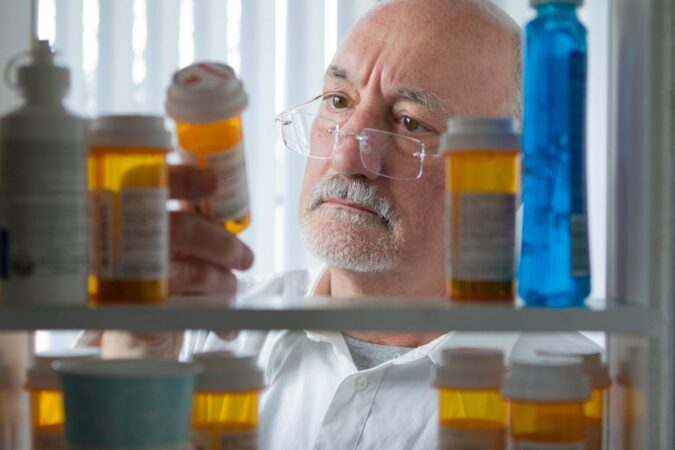
    Peeking inside somebody’s medicine cabinet is a no-no, which is a big part of what makes poking around all those tubes and bottles so tempting. (Still, don’t. It’s not only rude, but also an egregious violation of privacy.) But what if someone were to invite you into their medicine cabinet, and then took it a step further by showing you the items they swear by for every ailment under the sun? Fabulous!

    In service of bringing you that exact experience, we asked nurses — and, truly, who better than nurses? — to tell us what they always keep stocked in their medicine cabinets. And any items you can’t do without? Let us know in the comments.

    (Responses have been edited for length and clarity.)

    Hanna Weitzman-Flanigan, a nurse-practitioner in New York City

    Tylenol is the universal answer. Headache? Tylenol. Sore back after a 12-hour shift? Tylenol. Low-grade fever? You guessed it. It’s the “don’t overthink it” solution — reliable, effective, and always within reach.

    Rubbing alcohol is one of those quiet MVPs. Need to clean a cut? Done. Disinfect something quickly? Easy. Somehow get marker, sticker residue or who knows what on your skin? Rubbing alcohol has entered the chat. I love it because it’s simple and it works without fuss.

    I use Band-Aids for almost everything. Paper cut, kitchen nick, blister from new shoes … it’s getting a Band-Aid. Part comfort, part prevention, all habit.

    Benadryl cream is a favorite for all the annoying things — bug bites, mystery rashes, skin that just suddenly decides to act up. It’s the “Why is this itchy, and how do I make it stop immediately?” solution. And it usually works.

    Vicks VapoRub is basically magic. Congestion? Vicks. Cough? Vicks. Headache, sore muscles, questionable life decisions? Somehow … also Vicks. It’s part remedy, part nostalgia, and 100% a staple in my home.

    Zac Shepherd, an intensive care unit travel nurse

    Electrolytes. I keep these around because they’re useful in a lot more situations than people realize. Travel, stomach bugs, heat, long days, hard workouts, or simply not drinking enough water. As an ICU nurse, I’ve seen firsthand how much electrolyte imbalances can affect the body. That said, more isn’t always better — don’t take them just for the sake of taking them. Electrolytes that are too high can be just as dangerous as electrolytes that are too low.

    Vaseline. It’s not exciting, but I probably use it more than anything else on this list. Dry skin, chapped lips, minor cuts, irritated skin. There’s always a tub of it somewhere in my house.

    A blood pressure cuff. Working in the ICU has made me appreciate having objective information. If something feels off, getting a useful piece of data like your blood pressure can help you decide what to do next. Checking it periodically can also help you understand what’s normal for you, especially if white coat syndrome tends to make you run higher at the doctor’s office or hospital.

    Ibuprofen (Advil). It’s a staple for a reason. Headaches, sore muscles, back pain, minor injuries. It’s one of those things that has a permanent spot in my medicine cabinet. When appropriate, alternating it with Tylenol can be a very effective way to manage pain.

    Jennifer Armendariz, a nurse-practitioner in Texas

    Oscillococcinum is a homeopathic product that I keep on hand at all times. As soon as someone starts to feel a cold coming on, we start taking it.

    Excedrin migraine. My daughter and I both suffer from migraines. I keep this at home and in my purse.

    Magnesium glycinate to help with sleep. I will also pair Excedrin and magnesium when I have a headache.

    Arnica ointment for any bruising to help speed up the healing process.

    Aloe vera gel is especially helpful during the summer if you’re out in the sun too long. The plant is best, but you can get the gel as well.

    Icy Hot or Biofreeze are great for muscle aches or joint pain.

    Bonnie Fecowicz, a registered nurse in New Hampshire

    Aleve, cortisone cream, Band-Aids, and antidiarrheal meds. Nothing impairs you more than having to find a bathroom frequently! I used to host teenagers and young adults for summer vacations, and no matter what they were up to the night before, these things got them through the next day.

    Louis Joseph, a neonatal ICU nurse in Chicago

    Castor oil. It helps with digestion, skin care, hair care, hair growth. I was born in Haiti, and it’s something everyone keeps in their home.

    Vicks VapoRub. When you rub it on your chest or under your nose, all that menthol and the minty smell help to open your sinuses. It warms and cools your skin, and it seems as if it can fix anything, like a headache, a cold, or a stuffy nose. It may be a superstitious thing, but someway, somehow it helps you feel better.

    Baby aspirin. It’s good for treating pain, and it’s an antiplatelet.

    Albuterol inhaler for asthma. Cold and flu medication. Tums.

    Also, in my backpack that I take everywhere, I carry a mini medicine cabinet that has baby aspirin, cough drops, acetaminophen (Tylenol),a blood pressure cuff, a stethoscope, an ophthalmoscope, and emergency albuterol. There are a lot of kids in the city and in my neighborhood with asthma because of air pollution. So I like to keep things around just in case. Everyone around me knows that I’m the go-to for anything.

    Diane Plas, a family nurse-practitioner in Texas

    Second-generation antihistamines, like loratadine (Claritin), cetirizine (Zyrtec), fexofenadine (Allegra), or levocetirizine (Xyzal), are multipurpose medicines. When the weather changes, when a wind storm blows in, or when new flora blooms, they come to the rescue to treat troubling allergies. You can also grab these antihistamines to treat itchy skin and rashes caused by allergies, and they also come in handy for skin breakouts due to new cosmetics and self-care items, irritation from certain fabrics, food allergies, and pet allergies. It’s best to have antihistamines on hand year-round.

    I always have a trio of meds to cover all GI issues: Gaviscon — you want something quick and chewable to help with heartburn, indigestion, and GERD. An antidiarrheal may not be needed very frequently, but when you need it, you need it! No one wants to go out to the pharmacy during a bout of this type of tummy trouble. Stool softeners like Colace or Miralax that pull water into the bowel without a stimulant. You can ensure everything keeps moving without the dramatics of a stimulant. This is also great for travel.

    Antifungal cream for itchy rashes along toes, underarms, and skin folds. They often increase in hot, humid, and sweaty areas and can be very bothersome. Treating these rashes quickly helps prevent them from spreading.

    You can put hydrocortisone on so many trouble spots. It will help with inflammation and itchy areas due to contact dermatitis, allergies, and yeast.

    Jessica Varghese, a registered nurse in New York

    Vicks VapoRub is my go-to solution for everything. From headaches, to chest congestion, to general uneasiness, Vicks is the remedy. When I was pregnant, the smell even helped my nausea. It’s the answer to many ailments.

    I carry Benadryl in my purse and have used it in emergency situations in the community. Benadryl can be used when there is some type of allergic reaction. Having a child with an egg allergy, it has come in handy when certain things you don’t account for have egg, such as brioche or certain ice creams. It can also be used to help with itching, induce sleep, or as a treatment for hay fever.

    Tweezers. Someone is always getting something stuck somewhere. It’s very helpful for splinter removal, ticks, and bee stings, which happen a great deal outdoors.

    Chai calms you from the inside out (I usually store that in my kitchen cabinet, not my medicine cabinet, but it still serves the same medicinal purpose). I make it with ginger and cardamom, and it is very therapeutic for healing.

    Pam Vollmer, a registered nurse in Florida

    Fever reducer. Acetaminophen is the best choice here.

    Nonsteroidal anti-inflammatory. I prefer ibuprofen for this, but naproxen (Aleve) is another excellent over-the-counter choice. Doses of ibuprofen range from 400 to 800 mg. My rule of thumb is that if the pain I have is not bad enough to need an 800-mg dose, then I don’t take anything at all.

    Antihistamine for severe reactions. My go-to for this is diphenhydramine (Benadryl). The antihistamine kept on hand should be something that can treat allergic emergencies, not simply daily or seasonal type allergies.

    Sandra Russo, a registered nurse in New York City

    Two pain relievers: plain acetaminophen and plain ibuprofen, both in one standard strength so nobody has to squint at labels when they don’t feel well. If someone has a low‑grade fever, a headache, or just feels achy, we start with acetaminophen. If it’s something clearly inflamed, like a twisted ankle, a sore back after too much lifting, or dental pain, that’s when I pull out the ibuprofen.

    There’s always a nondrowsy antihistamine (I usually buy cetirizine), a small bottle of diphenhydramine and a tube of 1% hydrocortisone cream. Between those three, we’ve gotten through bug bites, surprise rashes from who‑knows‑what, and random hives that show up right before bed. Aloe gel and a battered bottle of calamine lotion live there, too, because in the summer someone is always coming home sunburned or bitten.

    For stomach and “I knew that second slice was a bad idea” problems, I keep chewable antacids, loperamide (Imodium), and a couple of electrolyte drinks or powder packets.

    If there’s a bug going around, I add honey, throat lozenges, and saline spray to the rotation before I reach for anything stronger.

    And because the nurse part of my brain never fully clocks out, there’s a small first aid box tucked nearby — containing bandages in too many sizes, gauze, tape, antibiotic ointment, alcohol wipes, tweezers, a tiny pair of scissors, gloves — and a reusable ice pack waiting in the freezer.

    A plain digital thermometer is the unsung hero of the whole setup. It’s not glamorous, but it’s the thing I reach for first.

    Veneta Simone Easter, a registered nurse in California

    I find myself always reaching for the following three things again and again that I will always recommend having. Witch hazel should be a staple for everyone because it’s so versatile. It can be used to soothe irritated skin, calm any redness, refresh your skin when needed. It’s also great if you get a bug bite or a minor scrape as it gives you fast relief. This product is inexpensive and simple, and I highly recommend it.

    Medical-grade hyaluronic acid is great in the serum form, and for skin care this is my top recommendation. No better way to get healthy, hydrated skin. A quality serum helps maintain and protect the skin’s barrier, gives you instant hydration and can be used for all skin types. A win-win for everyone.

    Sunscreen is next, and this is nonnegotiable! Go for a mineral sunscreen with an SPF of at least 30 for daily sun protection and use. This product will help prevent premature aging, hyperpigmentation and, of course, protect your skin from sun damage.

    Jeff Doucette, a chief nurse officer in Pennsylvania

    The three must-haves in my medicine cabinet are a tub of CeraVe Moisturizing Cream for all the handwashing and rehydrating; it’s second to none! Lumify eye drops: With all my travel, something to clear up red eyes from flights and different hotels, no day starts without a couple of drops. SPF 30 light facial moisturizer: No face should leave the house without it.

    Karen Selby, registered nurse and patient advocate in Florida

    I always have a supply of the classic first aid kit essentials: burn cream, antibiotic ointment, aspirin, antacids, and Tylenol. But in addition to those, I always have a supply of Tegaderm transparent dressing. This is a great way to keep wounds clean and dry, especially in the summer months.

    Another must-have is some type of woven sleeve bandage, which is perfect for keeping those scraped knees and elbows clean and covered.

    Jessica Wise, a licensed practical nurse in Pennsylvania

    Burn gel is crucial to stop wounds from continuing to burn and blister.

    Saline wound wash as a “hurt free” rinse for boo-boos. My kiddos think it’s magic! Butterfly dressings to help keep wounds/cuts closed.

    A Dechoker helps remove foreign objects from airways — you will never know when you need it!

    All the Band-Aids: every shape, size, color, and character of Band-Aids, because the kids go through 100 a day, even if they aren’t actually needed.

    Fedline Lysius, a senior nurse clinician in New York City

    A heating pad is one of my go-to recommendations because it can provide soothing relief for muscle tension, menstrual cramps, back pain, and stress-related tightness.

    I keep oral rehydration packets on hand, as they can be especially helpful during illness, after travel, following strenuous activity, or any time dehydration contributes to fatigue, headaches, or dizziness.

    I swear by aromatherapy rollers containing ingredients such as peppermint. Many people find these useful for easing tension headaches, promoting relaxation, and creating a sense of calm during stressful moments.

    Another favorite is a simple stress ball, which can serve as a practical mindfulness tool by helping release nervous energy, improve focus, and encourage grounding during periods of stress and overwhelm.

  • Letters to the Editor | July 3, 2026

    Letters to the Editor | July 3, 2026

    Pieces fit

    Our country has been likened to a mosaic. I compare it to a jigsaw puzzle. The picture is composed of hundreds of millions of individual pieces — all with unique shapes — fit together to form an image. The union, which we revere when we celebrate its birthday and salute the flag, is a result of pieces linked together. From a distance, they form an unbroken, seamless picture, but up close, you can still see the lines of each individual piece. When locked together as intended by the creators of the puzzle we call the United States of America, the union is solid and unbroken despite the lines of individuality that frame each component. A puzzle without each piece is incomplete. Putting the puzzle together requires the diligent effort of everyone who pledges to support the effort. We all — each one of us, native-born, immigrant — are a piece of the puzzle. To exclude anyone is to render the puzzle incomplete. In order to form a more perfect union, all pieces must be welcomed. That is our creed. It is truly what “Makes America Great” — not just “Again,” but always.

    Joe Sundeen, Yardley

    Drama-free

    In honor of our great nation’s 250th birthday, I would like to see all media refrain from any mention or photo of anything DJT-related. Make this day about our country, not him. We need a chance to celebrate without all the drama.

    Jerome Hodlofski, Marlton

    Join the conversation: Send letters to letters@inquirer.com. Limit length to 150 words and include home address and day and evening phone number. Letters run in The Inquirer six days a week on the editorial pages and online.

  • Horoscopes: Friday, July 3, 2026

    ARIES (March 21-April 19). A problem can seem small to everyone else and still feel enormous to the person living it. Because problems don’t obey laws of scale. Small things can have tremendous emotional significance. If it’s a big deal to you, it’s a big deal, period.

    TAURUS (April 20-May 20). It’s an ideal moment to update your surroundings and relationships to match who you are now. Your closet, like your contact list, contains artifacts from previous chapters. Release what no longer reflects your current life.

    GEMINI (May 21-June 21). Each individual who interacts with others is both a person and an idea of a person. We never interact with people completely objectively. We interact with them and our ideas about them at the same time. Today, some of those ideas will need updating.

    CANCER (June 22-July 22). What you want is in fine alignment with the interests of those around you. This makes manifestation much easier. You won’t have to convince anyone. No hard sell — no soft sell either — just building on the enthusiasm that already exists.

    LEO (July 23-Aug. 22). You’ll work without proof that you’re doing it right. But you know that even if this idea doesn’t work, you’ll have another one. Your confidence doesn’t depend on success. It depends on your faith in your own ability to keep creating.

    VIRGO (Aug. 23-Sept. 22). It’s not true that all dark clouds have a silver lining. Sometimes it’s black. Sometimes it’s gold. Sometimes everything disperses in a fog so diffuse there’s no lining at all. But every weather reveals something that sunshine alone cannot.

    LIBRA (Sept. 23-Oct. 23). There are things you know but don’t yet know that you know. Writing has a way of revealing them. Once thoughts leave the swirl of the mind and take shape on a page, patterns emerge, priorities become obvious, and hidden assumptions introduce themselves.

    SCORPIO (Oct. 24-Nov. 21). Smart people sometimes hide behind being smart. You’ll be around the dynamic today — people trying to have interesting conversations instead of real ones. Things gets better when nobody is trying to prove anything. So how can you put them at ease?

    SAGITTARIUS (Nov. 22-Dec. 21). Where does your responsibility end and theirs begin? Today you can clean up some of the blurred lines between “my job” and “your job.” Remember that what you establish in the early stages of a relationship is likely to become the norm.

    CAPRICORN (Dec. 22-Jan. 19). What if the universe wants to give you what you ask for, but it doesn’t understand the request? In some small way, give the very thing you want. This will serve as an example — a template for the universe to follow and scale up.

    AQUARIUS (Jan. 20-Feb. 18). Animal trainers know that training a relaxed animal is challenging but that training a stressed animal is near impossible. The human animal also learns better without too much stress and pressure. The education itself is challenge enough.

    PISCES (Feb. 19-March 20). Throughout history, reasonable people have accomplished unreasonable things — things they never imagined they could do. Don’t let a momentary crisis of confidence keep you from going forward. Doubt yourself if you must, but march on anyway.

    TODAY’S BIRTHDAY (July 3). It’s your Year of the Vineyard of Dionysus. In Greek myth, the god of wine, theater, and celebration taught that pleasure and creativity are close companions. Gatherings become collaborations. Fun turns into opportunity. Joy proves productive. More highlights: You’ll make game-changing sales. You’ll clear up a cluttered area of your life and have a deep peace. Your powers of attraction grow. Aries and Leo adore you. Your lucky numbers are: 15, 20, 41, 6, and 9.