Tag: no-latest

  • After gutting foreign aid, Trump goes big on Venezuela earthquake relief

    After gutting foreign aid, Trump goes big on Venezuela earthquake relief

    The humanitarian crisis gripping Venezuela after last week’s earthquakes is testing President Donald Trump’s claim of American leadership in the Western Hemisphere, as officials tout their surge of U.S. money and personnel to the country after gutting America’s foreign assistance apparatus early in the administration.

    At first glance, the large-scale relief effort may be surprising as the Trump administration has championed a policy of “trade over aid” in its attempt to reimagine how Washington apportions the federal government’s largess.

    But the U.S. aid presence now in Venezuela — including search-and-rescue teams along with military and civilian logistical support — is an example of the big, brash displays of humanitarian assistance and disaster relief that the administration says it favors over slower-paced development work.

    “There is a definite ‘Team America’ element to a search-and-rescue deployment,” said Jeremy Konyndyk, former head of disaster assistance at the United States Agency for International Development (USAID), which the Trump administration dismantled and shuttered within months of the president taking office. “It makes for good TV.”

    Another twist is Washington’s newly close relationship with Venezuela, which has become tethered to the United States since a January military raid captured President Nicolás Maduro. The Trump administration has fostered ties with the country’s interim leader, Delcy Rodríguez, focusing on shared economic benefits, including the takeover of Venezuela’s oil industry, and sidelining its exiled opposition leader María Corina Machado.

    Trump emphasized this dynamic in the hours after the two quakes struck June 24, writing on social media that the U.S. would “be there for our new and great friends.”

    On Capitol Hill, some in the president’s own party have appeared more skeptical of this relationship, citing reports of Venezuelan officials stymieing the efforts of international rescue teams, including those from the U.S. Such accounts are “very troublesome for the White House,” Rep. María Elvira Salazar (R., Fla.) told reporters this week, adding that it raised questions about where Rodríguez’s “heart is.”

    Asked about the reports, John Barrett, chargé d’affaires of the U.S. Embassy in Caracas, told reporters Wednesday that “local authorities have fully complied with our requests and have accelerated this massive humanitarian response.”

    Since returning to office, Trump has advanced a more assertive U.S. leadership role in the Western Hemisphere in a bid to dilute the influence of China and Russia. His supporters call it the “Donroe Doctrine,” a play on the 19th-century pledge by President James Monroe to protect America’s neighboring nations from European colonial powers.

    At the same time, the Trump administration has radically overhauled the U.S. government’s decades-old approach to foreign aid, and what remains is sharply scaled back in key areas, including global health, food aid, and support for refugees around the world.

    Few have expressed doubt that the U.S. response to the Venezuelan earthquakes is substantial, though some experts question the metrics being used by the Trump administration to promote its claims that the relief effort is one of Washington’s fastest and most robust in decades.

    Jeremy Lewin, a senior official with the State Department’s foreign aid bureau, told reporters Monday that the $300 million the United States had pledged to spend on the relief effort was likely to grow significantly.

    “This is, by really any estimate, at this point the largest response to any natural disaster the United States has mounted in this century in terms of personnel on the ground, money out the door, [and] speed,” Lewin said.

    It is unclear how the State Department arrived at that assessment. One official, speaking on the condition of anonymity to describe internal discussions, pointed to the number of U.S. personnel “on the ground,” including military staff, urban search-and-rescue teams, and other U.S. government employees, as well as the initial pledge of monetary support.

    Gen. Francis Donovan, the commander of U.S. Southern Command, told reporters this week that there were “roughly 2,000 teammates” from the Defense Department in area to help with search and rescue. The U.S. military has used drones to aid those efforts and led the repair and reopening of an international airport in Caracas that had been inoperable due to damage.

    Sam Vigersky, a former USAID official now at the Council on Foreign Relations think tank, said that in 2010, when Haiti experienced a devastating earthquake, records show that the U.S. sent roughly 5,800 military personnel to help within five days — a figure significantly larger than those currently deployed to Venezuela.

    The Obama administration deployed six search-and-rescue teams to Haiti, compared to the four in Venezuela, Vigersky said.

    President Barack Obama also extended temporary protected status to Haitian nationals after the earthquake, allowing tens of thousands of people to continue living and working in the U.S. by shielding them from deportation.

    The Trump administration canceled TPS for Haitians and for Venezuelans, who were granted protected status by the Biden administration due to political and economic turmoil under Maduro. Deportation flights originating from the U.S. were arriving in the country right up until the day of last week’s earthquakes.

    Vigersky said that the different nature of the natural disasters in Haiti and Venezuela, as well as the political situations in the two nations, may explain disparate figures; the U.S. initially estimated more than 65,000 dead in Haiti, far more than the current toll of about 1,700 in Venezuela.

    Even still, Vigersky said, “Venezuela is a huge response by any measure.” And with the $300 million in aid announced by the State Department so far, the Trump administration may well surpass early U.S. spending after the Haiti earthquake.

    However, only a third of that money appeared to be new funding for partner organizations in Venezuela, with the rest made up of previously announced assistance for the United Nations Office for the Coordination of Humanitarian Affairs and other agencies.

    The State Department said this week it was directing funding to several large and well-established religious aid agencies, including the evangelical Samaritan’s Purse and Catholic Relief Services. Both organizations have been involved in relief efforts since the earthquakes hit, with CRS working through a local partner, Caritas Venezuela, and Samaritan’s Purse setting up a field hospital in the coastal city of La Guaira.

    Representatives of both organizations said Wednesday that they had not yet received funding from the State Department.

    Brittany Wichtendahl, a media relations contact for CRS, said that their “request is still in proposal form” and they did not have a dollar figure yet.

    Franklin Graham, president and CEO of Samaritan’s Purse, said his organization was in “final discussions” with the State Department for a $15 million funding agreement. “While that has not been finalized yet, these funds would certainly enable us to do more and to help more people,” Graham said in a statement.

    In response to a request for comment from the Washington Post, the State Department said that there were 1,900 personnel currently deployed to Venezuela and that the number of search-and-rescue teams sent to the region does not “signify any perceived level of support.”

    “In terms of personnel, financial support, and speed, the State Department’s response has been swift and comprehensive,” the State Department said in a statement.

    The Trump administration drew criticism last year for a slower and smaller response to an earthquake in Myanmar that occurred amid the dismantling of USAID. More than 5,000 were later estimated to have died in that disaster.

    Paul Spiegel, a professor at Johns Hopkins University who chaired a recent commission that proposed radical ways to overhaul the international humanitarian system, expressed concern with what he called the seemingly selective nature of the support for Venezuela.

    “A $300 million response to Venezuela, framed around its strategic importance and set beside roughly $9 million for a comparable earthquake in Myanmar last year, creates the appearance of aid being allocated by political interest rather than relative need,” Spiegel said.

    Speaking to reporters Monday, Lewin, the State Department official who oversaw much of USAID’s dismantling, said politics and geography would play a role in the Trump administration’s response to such disasters going forward.

    “Venezuela,” he told reporters, “has been part of our system and part of our hemisphere … it’s one of our neighbors.”

    Lewin pointed to efforts in the Caribbean last year, where the State Department led a smaller disaster-relief effort after Hurricane Melissa struck the region. The new model, he explained, is to support these nations as “quickly, efficiently, and accountably as possible, whenever these sudden onset disasters occur in friendly nations and our neighbors.”

    Konyndyk, who now leads the nongovernmental group Refugees International, said he supported the administration spending big on the disaster-relief efforts underway in Venezuela. “There’s a really powerful symbolism to it, in addition to being lifesaving,” he said.

    But in terms of dollars spent per life saved, the administration could do more if it also reinstated other forms of foreign assistance, Konyndyk added.

    “The administration has fully cut off food aid to Somalia ahead of what could turn into a famine there,” he said. “You could save exponentially more lives for dramatically less money in Somalia just by turning food aid back on there. They’re choosing not to do that.”
  • Immigrant arrests surge to 10,000 in 5 days as ICE clamps down

    Immigrant arrests surge to 10,000 in 5 days as ICE clamps down

    WASHINGTON — Federal immigration officials have detained more than 10,000 people in the five days ending Thursday, a major surge that has stemmed from a push within Immigration and Customs Enforcement to increase arrest rates.

    Agency leaders in recent days ordered top ICE officials to focus more of their officers’ efforts on picking up immigrants they want to deport, according to documents obtained by the New York Times and interviews with federal officials. ICE officers have arrested people at check-ins, with immigration authorities, during traffic stops, and on the street. The push has apparently yielded results, with recent arrest numbers roughly doubling from the 1,000 picked up each day earlier this year.

    ICE officials were told that the White House wanted an increase in arrests, according to three officials with knowledge of the conversations. One of the officials said that it was unclear how long the pace could continue, but that ICE officials had been told that 2,000 arrests a day was the new standard for enforcement.

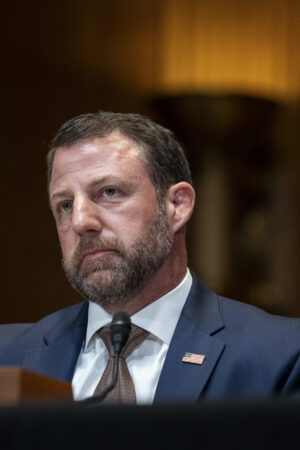
    The surge has occurred without the fanfare of highly visible operations last year, in which officials announced their intentions ahead of time to target cities, including Chicago and Los Angeles, and send officers pouring into the streets. Markwayne Mullin, the homeland security secretary, pledged to mount a quieter enforcement campaign following the chaos of a monthlong operation in Minnesota, where federal officers killed two U.S. citizens.

    The rise in arrests suggests that President Donald Trump is determined to meet his pledge of mass deportations, a goal that is popular among his conservative supporters but that has fueled a political backlash amid the administration’s heavy-handed tactics. The Trump administration has promised more aggressive actions, particularly after the Supreme Court in recent days expanded the president’s power to set federal immigration policy, but undercut his effort to eliminate birthright citizenship for the children of immigrants in the country illegally and visitors.

    “Our message is clear: If you come to our country illegally, we will find you, we will arrest you, and we will deport you,” Lauren Bis, a Department of Homeland Security spokesperson, said in a statement.

    Word of an uptick in arrests has started to trickle out, sowing fear in immigrant communities and among advocates already on edge after the Supreme Court ruled that Trump could end deportation protections for people from disaster- and war-torn countries under the Temporary Protected Status program.

    In recent days, ICE officers have launched an intense push to ramp up arrests. Arrests topped out Saturday when authorities detained more than 2,400 people, according to documents obtained by the Times. The detention population inside ICE facilities has jumped nearly 4,000, to more than 63,000 in the agency’s custody as of Tuesday, according to internal documents.

    In emails to ICE personnel, agency leaders applauded the latest numbers.

    “I want to personally thank each of you for your extraordinary efforts this past weekend,” Marcos Charles, the head of ICE’s deportation wing, wrote this week. “Through your dedication, professionalism, and unwavering commitment to our mission, enforcement and removal operations achieved remarkable operational results.”

    Top ICE officials were told to make sure that as many officers as possible were working seven days a week, and to put 80% of their officers on arrest operations, according to two U.S. officials who spoke on the condition of anonymity to discuss internal conversations. Top supervisors were expected to be working closely on the operations as well.

    Last year, Stephen Miller, Trump’s deputy chief of staff, set a goal of 3,000 arrests a day for the agency, a figure it was not able to hit. Since then, the agency has hired thousands of new officers and has had its budget increased by billions of dollars for the enforcement surge.

    Across the country, immigration lawyers and advocates have reported an uptick in enforcement.

    In South Texas, Sister Letty Ugboaja, a Nigerian nun, was arrested on her way to church on Sunday morning, according to Sister Norma Pimentel, her colleague. Ugboaja is a local nurse who also helps at a parish in the region. Pimentel called local leaders after learning of the arrest, and congressional officials soon got involved and pushed for her release.

    On Sunday, she was let go from ICE custody, and Pimentel was there to greet her.

    Pimentel said that Ugboaja was distraught upon her release.

    “It took her awhile to be able to talk — she was crying,” she said.

    In southern Florida, attorneys have been on alert. Cindy Blandon, an immigration attorney in Miami, said that one of her clients, a Nicaraguan father of two children, had an immigration court hearing set for 2027, but was arrested by ICE on Monday during a routine check-in.

    And in Utah, Ysabel Lonazco, an immigration attorney, has noticed an uptick as well. She has spoken to several clients, including a man who was driving when he was picked up by the agency for overstaying his visa this weekend.

    “It sets further fear in the community,” she said. “People don’t want to leave their houses. They are afraid to drive to do their grocery shopping. They are just terrified with these detentions.”

    One of her clients, Arturo, a 48-year-old Mexican man, was arrested in Salt Lake City on his way to a soccer game Sunday, according to his wife, Veronica. She said the arrest had shattered their family.

    “They’re getting people — be very careful,” her husband told her from ICE detention, she recalled through an interpreter. She said her 13-year-old son was traumatized by the arrest of his father, who had worked most days of the week building furniture before his arrest, she added.

    A Department of Homeland Security spokesperson said that Arturo had illegally reentered the United States and would be held in ICE custody as the agency sought to deport him.

    Veronica said the family had not expected to be caught up in Trump’s deportation sweep.

    “We were worried, but it wasn’t like we were extremely worried. We figured — we don’t have any criminal record, we pay taxes every year,” she said.

    This article originally appeared in the New York Times.

  • Taylor Swift and Travis Kelce donate $26M to charities ahead of wedding

    Taylor Swift and Travis Kelce donate $26M to charities ahead of wedding

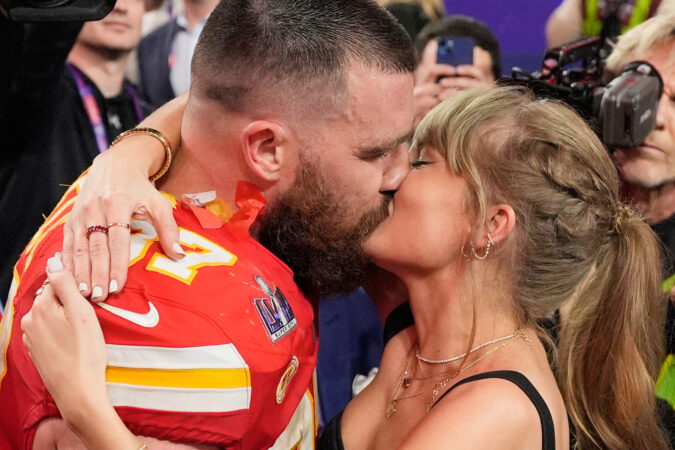
    Taylor Swift and Travis Kelce have donated $26 million to charities this week ahead of their Friday wedding at Madison Square Garden.

    The donations were spread out across 20 local and national charities, according to Swift’s publicist, with many located in areas where the couple has deep ties. The announcement did not include any mention of Swift and Kelce’s wedding, but a law enforcement official briefed on security plans has told AP that the wedding will be held today, after a smaller rehearsal dinner Thursday night.

    Nine of the selected organizations are based in New York, ranging from the Food Bank For NYC, City Harvest, to Musical Mentors, a nonprofit that connects music teachers with students in need.

    Just how much each charity received was not disclosed.

    Other charities reflected where Swift and Kelce have also called home, including the Rhode Island Community Food Bank — where Swift owns an estate in Watch Hill — and the Children’s Mercy Hospital in Kansas City, Mo. — where Kelce plays tight end for the Kansas City Chiefs.

    A handful of national groups also received money: Dolly Parton’s Imagination Library, a book giveaway program spearheaded by the music legend; the American Society for the Prevention of Cruelty to Animals; and Feeding America.

    The large donations ahead of Swift and Kelce’s wedding are reminiscent of charitable gifts the couple has given in the past. Swift, a billionaire, gave millions to food banks ahead of her Eras Tour stops, while Kelce has been recognized by the Chiefs for winning “charity challenges” and operating his own nonprofit.

    Swift and Kelce have been in a relationship since 2023, enthralling millions around the world. Their relationship have been documented in countless shots of Swift celebrating at Chiefs games and fan videos of Kelce dancing along at Swift’s Eras concert tour as it traveled the globe. In 2025, they announced their engagement with the caption “Your English teacher and your gym teacher are getting married” but have remained mum on wedding details.

    Yet buzz has remained high around New York’s MSG, with multiple trucks and crews going in and out delivering materials for what is expected to be an elaborate event.

  • How Philadelphia’s past tragedy prepared the city for today’s extreme heat

    How Philadelphia’s past tragedy prepared the city for today’s extreme heat

    Thanks to Thomas Jefferson, we know that July 4, 1776, was a pleasant day in Philadelphia with temperatures that topped out in the mid-70s.

    Two hundred and fifty years later, visitors who descend on the city to celebrate the signing of the Declaration of Independence — and to watch a World Cup match on July 4 — will find a far more sweltering reality.

    A dangerous heat dome over the Eastern United States for the next several days is forecast to send temperatures into the triple digits, break records across multiple states, and pose health risks for tens of millions of Americans.

    In the Philadelphia area, the National Weather Service has warned that daily heat indexes could be as high as 110 degrees through Sunday. “This is not the kind of heat event we see every year,” the service wrote in an update this week, adding that the region could experience its hottest stretch since July 2011.

    Of any city in the path of the furnacelike blast, Philadelphia might be the most prepared. The onetime capital of the nation, home to Independence Hall and the Liberty Bell, has long had one of the country’s most robust heat-response programs.

    “We are a fairly well-oiled machine when it comes to monitoring the weather and making the decision to declare a heat health emergency,” said Palak Raval-Nelson, the city’s health commissioner. She said officials spent years planning for the America 250 and World Cup crowds.

    Behind those extensive preparations lies the memory of a deadly heat wave decades ago, and the lessons learned that started Philadelphia on its current path. The early interventions developed in its aftermath are still part of the city’s regular heat protocols.

    A brutal stretch of heat in the summer of 1993 killed 118 people in Philadelphia, a tally higher than in other cities that were grappling with similar conditions. Many of the victims were among the city’s most vulnerable — poor, elderly, or infirm. Some had no access to air-conditioning and were found with their windows closed, the stifling heat probably worsening any health conditions.

    In the wake of that disaster, officials dug deeper into what went wrong. At the time, deaths were typically considered heat-related only when there were documented signs of hyperthermia — defined as a core body temperature of 105 degrees or higher.

    But Philadelphia’s then-medical examiner, Haresh Mirchandani, expanded the definition of heat deaths to include those for which heat was a contributing factor, resulting in a more accurate picture of the heat wave’s toll.

    “It was a turning point,” recalled Laurence Kalkstein, a climatologist and heat-mortality expert who worked with Philadelphia on developing a novel approach that would eventually be emulated by numerous cities.

    The 1993 heat wave led to a litany of changes in Philadelphia, aimed at raising awareness and reducing risk among those residents most imperiled by urban heat.

    The city set up a mass-notification system to alert residents when the mercury spikes and conditions pose serious health risks. Officials designated cooling centers, mobilized a network of block captains to check on neighbors, launched a public awareness campaign, and set up an emergency heat hotline.

    One early study found that the early-warning system saved at least 117 lives in the first several years of the program and that the benefits far outweighed the costs.

    “Philadelphia led the pack,” said Kalkstein, who still works on heat-related policies in the United States and abroad.

    One measure of the success of such interventions, he said, is that even as global warming has worsened extreme heat events in recent decades, fatalities in places such as Philadelphia have not trended higher.

    “You would think because of climate change, heat-related deaths would be going up,” he said. “That’s not what we are finding.”

    Raval-Nelson said the preparations have been even more extensive ahead of the World Cup and America 250 celebrations, which are expected to draw huge crowds to the city.

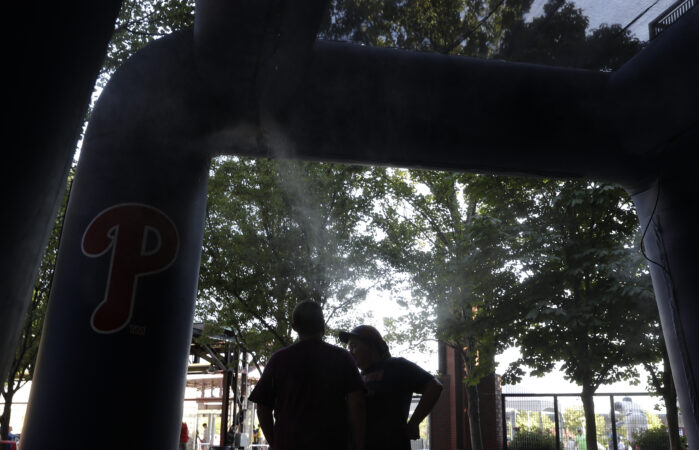
    For example, she said the free FIFA Fan Festival on Lemon Hill will have cooling tents, water filling stations, ample shade, and medical stations. Organizers also have reduced the festival’s hours because of the forecast for crippling heat.

    Many of the same precautions — misting fans, free water stations, medical tents, extra shade — have been set up throughout the city, Raval-Nelson said, adding that Philadelphia also has “an elaborate network” of pools and spray parks where people can cool off.

    In addition, officials recently conducted the latest workshop for block captains on how to look out for residents. That can be especially key in neighborhoods such as Hunting Park, a predominantly Black and Hispanic enclave where surface temperatures can reach far higher than those in whiter, shadier suburbs.

    As this week’s heat dome descends, Raval-Nelson said she hopes the range of actions Philadelphia has taken will lead to a safer holiday throughout the city where the Founding Fathers enjoyed a much more mild July 4.

    “We want everyone to celebrate safely,” she said. “Practice makes perfect, and we’ve been practicing this.”

  • Donors were misled by Trump-backed Freedom 250, House Democrats allege

    Donors were misled by Trump-backed Freedom 250, House Democrats allege

    Some donors who intended to give money to a bipartisan effort to celebrate the nation’s 250th anniversary were, instead, steered to a White House-backed initiative under false pretenses, House Democrats allege in a report released Thursday morning, citing whistleblower interviews and newly obtained documents.

    The donors meant to give money to America250, a congressionally chartered initiative to celebrate the nation’s semiquincentennial, according to Democrats on the House Natural Resources Committee. They instead were given routing and account numbers that directed their funds to Freedom 250, which President Donald Trump established last year to organize anniversary events, the report says.

    The report does not identify the donors. In interviews, Democrats said they needed to protect the identity of whistleblowers who worked with the panel. But they said their report — which includes other allegations of Freedom 250 officials and allies explicitly steering money away from America250 and toward projects shaped by Trump — shows how the president transformed a bipartisan celebration of the nation’s anniversary into an initiative that benefited him and his allies.

    “I’m a lawyer, and I know better than to pronounce that a crime has been committed,” said Rep. Jared Huffman (D., Calif.), who oversaw the report as the committee’s top Democrat. “But I do know the elements of fraud, and there is evidence of all those elements here.”

    The White House referred questions to Freedom 250, which denied that donors had been misled by its fundraising activities and criticized Democrats for the timing of their report.

    “This so-called ‘report’ is nothing more than a partisan smear from politicians who would rather manufacture division than celebrate America’s 250th birthday alongside the rest of the country,” Freedom 250 spokesperson Danielle Alvarez said in a statement.

    Alvarez also criticized America250, saying that the bipartisan organization — which Congress established in 2016 — “had nothing to show” for its 10 years of planning and spending.

    “Freedom 250 was created because the American people deserved better,” Alvarez said.

    America250 declined to comment on the specific allegations in Democrats’ report.

    “America250 will continue to focus on the values-based programming approved by our bipartisan Commission at the local, state, national and international levels, including once-in-a-lifetime celebratory moments during the 4th of July weekend,” Rosie Rios, who chairs America250, said in a statement. “We are supportive of the many other organizations planning events for the 250th at the federal, state and local level, so all Americans have ample opportunities to join in the celebration.”

    Trump has extolled Freedom 250 in public remarks, saying that the initiative has organized multiple special events. The public-private partnership, which the White House launched in December, has overseen a flurry of high-profile announcements, including some from the Oval Office.

    “We’ll have a Freedom 250 Grand Prix right here in Washington around the Capitol,” the president said last week in remarks kicking off the Great American State Fair on the National Mall — another Freedom 250-backed event.

    The Trump-backed initiative has overtaken some efforts led by America250, which is directed by a bipartisan board created by Congress a decade ago.

    America250 originally applied for and received a grant from the Institute of Museum and Library Services for so-called Freedom Trucks, mobile museums inspired by the American Freedom Train that crisscrossed the country from 1975-1976. The institute is a federal agency that provides financial support for museums and libraries.

    Officials have said the grant was later voluntarily transferred to Freedom 250, which is now operating Freedom Trucks that provide a sanitized version of the nation’s founding, according to administration critics.

    America250 officials have said they reoriented their initiative to organize events outside Washington, while Freedom 250 focuses on events in the nation’s capital. But the dueling organizations and approaches have confused some corporate leaders and lawmakers, and tensions between the groups have grown, the Washington Post reported earlier this year.

    The Democratic lawmakers’ report offers further examples of how the two groups have come into conflict.

    Some donors and sponsors interested in donating to America250 were told by the Trump administration that they lacked a “green light” to do so, according to the Democrats. The report also claims that administration officials pressured donors to redirect donations from the bipartisan effort to Freedom 250, with the Trump-backed group conducting outreach to America250 sponsors with donation requests.

    Some corporate executives did not understand the difference between the two organizations and were confused by this process, the report says.

    Freedom 250 officials also worked to deprive America250 of money, the Democrats charge, citing new examples of Trump allies pressuring donors to reallocate funds away from the bipartisan initiative. They also allege that Trump allies worked to shift public financial support away from America250, including $75 million of congressionally allocated funds that America250 leaders were expecting to receive. The remaining funds are likely to be kept by the White House, the report says.

    The reduced funding posed challenges for America250 to execute planned programming, according to the report, including grants, educational initiatives, and volunteer programs. Redirected federal funding created “significant headwinds” for this programming, the Democrats said, though the group still sought to execute all planned events through additional private fundraising.

    Though America250 is still organizing anniversary celebrations in large cities across the country, its programming has been overshadowed by that of Freedom 250. The Trump-backed group helped organize last month’s UFC fight on the White House lawn, this week’s opening of the Theodore Roosevelt Presidential Library in North Dakota, and a Trump rally and fireworks show scheduled for the evening of Independence Day.

    Freedom 250 also employs many former U.S. DOGE Service officials and harvested users’ data for political purposes, according to the report.

    Huffman said that if Democrats retake the House this fall — and obtain the power to issue subpoenas — they will open broader investigations into Freedom 250.

    “If and when we have more tools at our disposal to do investigation and oversight, perhaps in the next Congress you will see a lot more information on this, I’m sure,” he said.

  • Venezuelan security guard pulled alive from building basement 8 days after twin quakes

    Venezuelan security guard pulled alive from building basement 8 days after twin quakes

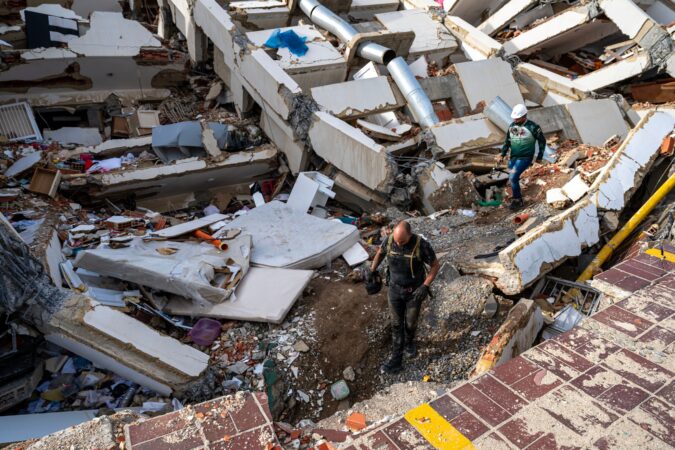
    CATIA LA MAR, Venezuela — Rescuers pulled a 43-year-old security guard alive from a collapsed basement early Thursday, ending a grueling dayslong operation that became a symbol of hope after the devastation of twin earthquakes that struck Venezuela eight days earlier.

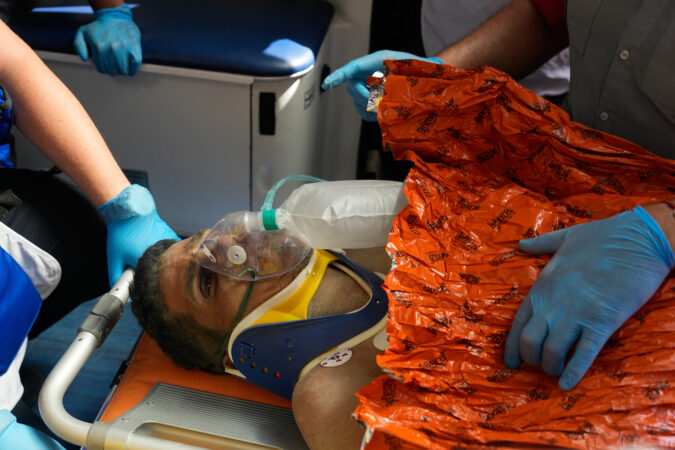
    Hernán Alberto Gil Flores emerged to safety atop a stretcher surrounded by helmet-clad rescue workers after being trapped since June 24 under rubble in the basement of the Galerías Playa Grande shopping center in the coastal town in La Guaira.

    Rescuers, who initially made contact with him over the weekend, worked for more than 100 hours to free him — navigating a highly unstable structure, torrential rain, and persistent aftershocks to tunnel down to the survivor.

    Teams carrying flags from around the world cheered as rescuers carried Gil Flores, wearing an oxygen mask and covered in an orange tarp, through throngs of people to an ambulance.

    One Chilean rescuer carrying his stretcher pumped his fist in joy. A group of men in red Costa Rican Red Cross uniforms embraced and laughed in relief. Others broke out into applause.

    “When we found him, he asked us not to tell his wife that he was alive, just in case he wouldn’t make it,” Costa Rican Red Cross rescuer Minyar Collado told the Associated Press, but she added “We were never going to leave him here.”

    The rescue was considered a small miracle cutting through a week of tragedy. By supplying Gil Flores with food and water while they excavated the concrete, rescue teams were able to keep him alive far longer than the 48- to 72-hour threshold most operations give to find survivors in disasters.

    Gil Flores, who worked as a night-shift security guard at the complex, was inside his small security cabin when the first violent tremor struck. While the surrounding concrete structure collapsed around him, his cabin held ground, shielding him from crushing debris and creating a vital pocket of air.

    A specialized team from the Costa Rican Red Cross first detected signs of life and established contact with him Sunday.

    His wife, Gusbimar González, told the AP that she grappled with despair for days before hearing that rescuers made contact.

    “When I learned he was alive, I saw a ray of light in the darkness,” she said. The couple has two children, ages 8 and 10.

    The operation was coordinated by an urban search and rescue team of Chilean firefighters, who worked around the clock with specialized teams from the United States, Portugal, Mexico, Costa Rica, El Salvador, and Venezuela.

    Acting Venezuelan President Delcy Rodríguez celebrated the rescue on social media at a time that her government has come under fire for what many Venezuelans say has been an inadequate crisis response.

    “We celebrate the greatness of humanity, when it is united for a single purpose: to save another. Thank you to our rescuers and to the support of the international rescuers,” she wrote on a post on X.

    Teams used a telescopic camera to help maintain constant contact with Gil Flores, passing water and liquid nutrients through a narrow shaft to keep him hydrated during the final three days of the rescue.

    María Paz Campos, a veteran firefighter from Chile, talked him through the entire operation and kept him calm during the final excruciating hours Thursday.

    In a video published by Chilean firefighters in the hours before the rescue, Gil Flores is seen drawing, seemingly to pass the time. Campos then gently tells him to look at the camera and to wear protective goggles.

    “I need you to keep the goggles on, for the small particles that are falling, to avoid them getting into your eye,” Campos told the Venezuelan survivor.

    The collapse of the building was triggered by two back-to-back earthquakes on June 24 that registered magnitudes of 7.2 and 7.5, respectively. The shallow, violent tremors damaged or destroyed tens of thousands of buildings across northern Venezuela, killing more than 2,200 people, injuring over 11,000 and leaving La Guaira state as the hardest-hit region in the country.

  • Lightning injuries are rare, but an expert says the Parkway is an especially risky venue on July 4

    Lightning injuries are rare, but an expert says the Parkway is an especially risky venue on July 4

    In the grand casino of the atmosphere, scheduling outdoor events on July Fourth in the Philly region is almost always going to be a rolling of the bones.

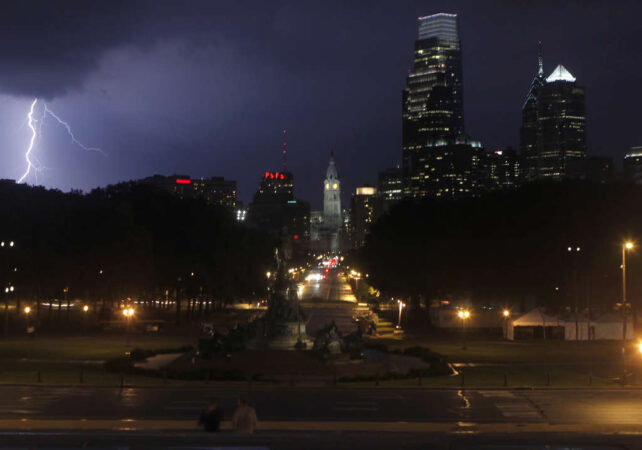
    And on the day Philadelphia and the rest of the nation are holding a mass 250th birthday party, the odds may be dicier than usual, with thunderstorms and accompanying lightning possible Saturday afternoon and night, forecasters say.

    The National Weather Service on Thursday listed a 50-50 chance of storms Saturday night, and the federal Storm Prediction Center, in Norman, Okla., bumped up the probability of severe storms — those with winds up to 60 mph — to 15%.

    July happens to be the peak month for lightning-bearing thunderstorms in Philadelphia, occurring every five days on average, and who doesn’t want to be outside on the Fourth?

    As if record-challenging heat and an atmosphere that feels like syrup weren’t enough.

    Lightning injuries and fatalities are rare — on average in the last decade, 20 people have been killed annually by lightning in the United States, according to the National Weather Service. But among outdoor events with large crowds across the country, Philly’s July Fourth concert would be among the riskiest for lightning, according to Stephen Strader, disaster specialist at Villanova University.

    “It’s way up there, a lot higher than I thought it was,” he said.

    The city is well aware of the atmosphere’s capriciousness, the potential risks in July, and the potential effects on the Parkway celebration and the World Cup match in South Philly and has developed safety protocols, said Jeffery Kolakowski, communications director for the Office of Emergency Management.

    Unfortunately, for attendees and planners, predicting the when and where for thunderstorms remains elusive.

    “There’s uncertainty of the when and where of the storms,” said Rich Thompson, branch chief and lead forecaster at the federal Storm Prediction Center, in Norman, Okla., the source of those severe storm and tornado watches. “It’s still one of the great frontiers of meteorology. It’s incredibly difficult.”

    ‘Ring of Fire’ fireworks and the weekend forecasts

    Readings soared to 97 on Wednesday, and the heat index shot past 105 in Philly as the atmosphere thickened in a hurry.

    And it’s about to get thicker. The heat is forecast to peak Thursday and Friday with highs surpassing 100. It could cool down all the way to 99 on Saturday, said Matt Benz, senior meteorologist with AccuWeather Inc. Unfortunately that would indicate increasing volatility in the atmosphere.

    High pressure though the atmosphere, the so-called heat dome phenomenon, has put a lid on convective storms, “but that starts to come off Friday into Saturday,” he said. That could lead to “ring of fire” thunderstorms, so named because they form on heat-dome edges. They can be especially nasty.

    “We’re worried that something is going to be blowing up,” he said.

    The storms could come in one bunch in the early evening and yield to a peaceful night, but they also could come in waves over a period of hours.

    Even without strong storms — or storms not in the immediate vicinity of the festivities — lightning strikes are possible.

    “Unfortunately that could be the biggest concern that day you’ve got lighting and people outdoors,” said Benz.

    The lightning threat

    The chances of being struck by lightning are remote, about one in a million in a given year, according to the weather service.

    But they do happen: They’re what Strader calls “low probability events” with “high consequences.” In 2019, several people were injured when lightning struck at a PGA tournament in Georgia.

    In 2014, a severe thunderstorm forced thousands of concertgoers at Philadelphia’s Made in America Music Festival to evacuate the Parkway for a short time that Sunday evening.

    But for the most part, Fourth of July fireworks have been confined to the manmade kind.

    In his analysis, Strader looked at thousands of outdoor events attended by 10,000 or more people, what he called “large outdoor public gatherings,” to calculate which ones would expose the most people to cloud-to-ground lightning strikes, taking into account location and time of year.

    He found that both the Parkway and World Cup events in Philly this year would rank among the top 6%, using his criteria. The Parkway would be particularly problematic given the lack of shelter options.

    All during the events the City’s Emergency Operations Center will be operating with a “play by play” from a National Weather Service forecaster, said Kolakowski.

    In the event of lightning he said, “an evacuation of the area could be issued and people would be asked to leave the event ground in a safe manner and seek shelter.”

    He said weather messages would be broadcast on screens, loudspeakers, social media, and text alert.

    He added that people can get free event or safety alerts by texting CUPPHL or AMERICA to 888-777.

    May they be unnecessary.

  • Vatican excommunicates breakaway group, in first major crisis for Pope Leo

    Vatican excommunicates breakaway group, in first major crisis for Pope Leo

    VERBANIA, Italy — The Vatican on Thursday excommunicated all formal followers of a breakaway conservative faction of the Roman Catholic Church, a day after its leaders defied a personal plea from Pope Leo XIV and consecrated four new bishops without his permission.

    The Vatican announced in a decree that the group, the Society of St. Pius X, was in schism with the Church. In an explanatory note about the decree, it also said the society was barred from officiating marriages and hearing confessions, and it warned the society’s followers to stop attending its Masses and participating in its events.

    The Vatican’s note added that all formal followers of the society “are to be considered schismatics and excommunicated” after its leaders consecrated the bishops in a ceremony in Switzerland on Wednesday “against the will of the Holy Father and in open violation of canon law.”

    The society did not immediately comment on the excommunication.

    The schism is the biggest internal crisis of Leo’s young papacy, and a blow to his stated efforts to bridge divisions between Catholics who want to modernize the church, including by ordaining female priests, and conservatives, like followers of the Society of St. Pius X, who hold fast to tradition.

    The Vatican’s decision heightened a decades-long standoff between the Church’s leadership and the society, which is widely known by the acronym SSPX.

    The society was founded in 1970 by Archbishop Marcel Lefebvre in protest against the Church’s efforts to modernize after the Second Vatican Council, held in the 1960s, including by allowing priests to hold services in vernacular languages instead of only in Latin. The society also objects to the council’s efforts to soothe tensions between Catholicism and other Christian faiths, and to take part in interreligious dialogue. And it insists on the primacy of the Roman Catholic Church even as it accuses the modern leaders of heresy.

    Those tensions peaked in 1988, when the society first consecrated four bishops without the permission of Pope John Paul II, who swiftly excommunicated them and Lefebvre.

    Relations thawed somewhat in 2009, under Pope Benedict XVI, who lifted the excommunications of the surviving bishops in a gesture of outreach to all Catholics still attached to celebrating the traditional Latin Mass. But one bishop had provoked outrage by denying the Holocaust.

    That rapprochement ended on Wednesday, after the society defied Leo by proceeding with a consecration ceremony that the group said had brought some 17,000 worshipers to Écône, a small village in Switzerland where the society installed its first seminary in 1970.

    The Vatican’s sanctions on Thursday were even harsher than those imposed in 1988 under John Paul II, when the Vatican only excommunicated its five senior prelates.

    This time, the excommunication applies to all of the society’s priests and formal followers. The Vatican added that the sacraments administered by the society’s priests, including confession and matrimony, were invalid, reversing concessions that Pope Francis had made to the society in recent years.

    The Vatican’s decree left open the possibility of reconciliation for those who renounced the society, saying that “the Church, as a caring mother, will welcome with sincere affection and lively solicitude all those who wish to return to full communion.”

    The Rev. Ian Andrew Palko, an SSPX priest in Texas, said he did not expect the excommunication to lead to many defections. “There may be some who are uncomfortable with” excommunication, he said. But, he added, if the faithful “were worried, it would have already pushed them away.”

    And the Rev. Paul Robinson, the society’s prior in Denver, said he expected communication with Rome would continue, as it did after the 1988 excommunications. “There were plenty of conversations that took place” even after the fact, he said. “So I think there will still be contact with Rome.”

    This article originally appeared in the New York Times.

  • As the Pentagon stays quiet, AP reconstructs a U.S. strike that killed over 100 Iranian children

    As the Pentagon stays quiet, AP reconstructs a U.S. strike that killed over 100 Iranian children

    JERUSALEM — It was the deadliest reported strike in the U.S.-Israeli war against Iran. Most of the victims were children.

    In almost any other conflict, these haunting truths would be seared into national memory. Yet more than 120 days since at least one U.S. missile struck an Iranian primary school, there remains no final accounting of what happened.

    The Trump administration has yet to directly accept the blame or formally release findings of a Pentagon investigation into the bombing, even though the military possessed evidence almost immediately that the site of the school had been struck, a U.S. official with knowledge of the situation, who spoke on condition of anonymity in order to discuss an ongoing investigation, told the Associated Press.

    The AP has reconstructed the story of the attack, beginning in the schoolyard on the morning of Feb. 28, drawing from open-source information, video footage, human rights reports, and interviews with researchers and civilians inside and outside Iran to reveal previously unreported details about the bombing in Minab, including the diversity of children killed.

    Still, many details about the blast remain elusive, as a lack of information from the Pentagon and politicization of the attack by Iran’s theocracy have complicated independent reporting efforts. That has created an accountability vacuum, leaving the families of the victims without resolution. Among the mysteries remaining are the number of munitions that hit the school and a complete list of the dead.

    When asked last week about the incident, President Donald Trump said he hadn’t read the Pentagon’s report and had seen nothing to make him believe the U.S. had carried out the attack.

    “I don’t know that they’re ever going to solve that problem in terms of whose fault was it, because there were missiles flying all over the place,” he said. “I don’t think it was us.”

    Iran’s mission to the United Nations did not respond to a request for comment from the AP.

    Video evidence, interviews and other sources yield a fuller picture

    The reconstruction draws from interviews with U.S. officials, Iranian human rights workers, a resident of Minab, an international representative of the Coordinating Council of Iranian Teachers’ Trade Union, and researchers from major international rights groups.

    Several people who spoke to the AP were in direct contact with the families of victims and rescuers who rushed to the scene. Most requested anonymity for fear of retribution against them and those with whom they spoke.

    Parents called to pick up their kids, then bomb fell

    Skies over the city of Minab, located in southeastern Iran about 16 miles from the Strait of Hormuz, were clear and bright on the morning of Saturday, Feb. 28, a school day in Iran. It was Ramadan.

    Students of the Shajareh Tayyebeh school, Farsi for “Good Tree,” jostled past the colorful murals lining the schoolyard and into the building. Boys and girls filtered into separate spaces with brightly painted desks.

    The school they entered was one of over 30 with the same name established to serve children from families closely tied to Iran’s paramilitary Revolutionary Guard or other state institutions, said Shiva Amelirad, the international union representative who also worked as a teacher in Iran for 18 years and has been in contact with people in Minab.

    Though most schools in Iran operate within guidelines proscribed by the Islamic Republic, the Shejareh Tayyebeh schools were more explicitly oriented toward reproducing and reinforcing the Guard’s worldview, she said, adding that children are civilians regardless of their family backgrounds, and “any attack targeting a school is unequivocally condemnable.”

    The school lay within the same walled compound as a Guard base, according to an AP assessment of satellite imagery and open-source mapping. It was once part of that neighboring base, before it was fenced off and converted over a decade ago.

    Though some of its pupils were the children of Guard officers working on the nearby base, others were local children from Minab, which is populated predominantly by people of the majority-Sunni Baluch ethnic minority who often face repression from the Iranian government, said the Balochistan Human Rights Documentation Network.

    Hundreds of students are believed to have been inside the building by the time teachers and administrators received the news that bombs had begun falling on Tehran around 9:40 a.m.

    Teachers and administrators thought it prudent to send the children home. They called parents on landline phones, summoning them for an early pickup, two people told the AP. A recently released report by Airwars, a London-based independent group that tracks recent conflicts, also found that parents were called to pick up their children.

    At 10:15 a.m., Iran’s state media sent out an advisory, closing schools across the country.

    One father, who lived a short distance away, went immediately to pick up his 10-year-old son, said a resident of Minab, who relayed the stories of several families to the AP. The AP verified details of the residents’ stories against available lists of the dead and rights groups’ chronologies of the day’s events.

    The father noticed his 6- and 7-year-old relatives among the students waiting for their parents, said the resident. He asked them if they’d like a ride home and they said no, that their own father was on the way.

    He left with his child and headed to the supermarket. Ten minutes later, he heard the explosions.

    Multiple munitions pummeled the compound, striking at least five buildings, according to an AP analysis of satellite imagery. Hundreds of pounds of explosives collapsed the school.

    A tiny arm, suspended in the rubble

    The father raced back to a scene of chaos, where onlookers gathered, screaming, as men pawed through smoking rubble to dig out bodies, according to video of the aftermath circulated by Iranian state media.

    Eventually, the father made out two burned figures he believes were those of his relatives, but he couldn’t be sure.

    People kept coming. One man from a nearby Sunni village arrived to search for his nephew after receiving a panicked call from the boy’s mother. In the rubble, he found her dead son.

    Rescuers found small backpacks and children’s drawings, colored pencils and worksheets. Gently suspended, a tiny arm lay in the wreckage.

    Men carried disfigured limbs and torsos to the local hospital, said the Balochistan Human Rights Documentation Network, whose staff spoke with two families of those killed. The AP has not been able to verify how many munitions specifically hit the school, but the attack had left flesh so mutilated that many body parts were unrecognizable.

    By the end of the day, doctors at the hospital estimated they had at least 108 bodies, but cautioned that it was likely an undercount, said the resident of Minab.

    By the next day, state media was saying around 150 had been killed. Soon, it was reporting a death toll of 168.

    “They called the kids martyrs”

    Three days after the bombing, state TV showed thousands of Iranians packing a Minab roundabout, where the crowds faced a podium and a large portrait of Ayatollah Ruhollah Khomeini, the late founder of the Islamic Republic.

    The gathering might have been mistaken for a demonstration, if it were not a funeral. All the parents of victims, regardless of ethnicity or religion, had to participate, said the Minab resident. Most women in the crowd wore the black chador garment customary to the Islamic Republic, even though it’s not typically worn by Baluch people at funerals.

    Parents were told they’d be permitted to take their children’s bodies back to their villages and conduct their own observances, said the resident. In the end, though, many decided to bury their children together.

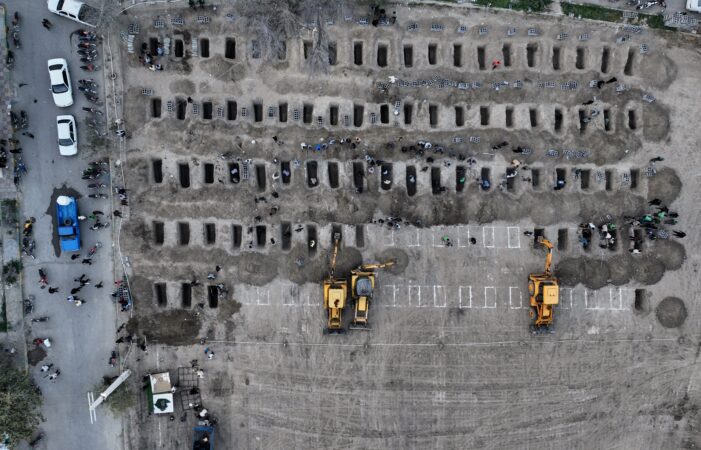
    In footage captured by drone cameras and circulated by state media, workers broke ground on an earthen lot, creating a grid of tiny, identical, unmarked graves.

    “The state media advocated a narrative based on IRGC interest,” said Amelirad. “You can tell because they called the kids martyrs.”

    The story grows harder to tell

    Strikes continued to ravage Iran, targeting more sites in the opening days than the start of recent U.S. or Israeli military campaigns, including in Gaza, an Airwars analysis found.

    Racing to document the ongoing bombardment, journalists and rights groups struggled to verify details from Minab. They had no access to the target site. Government restrictions in Iran prevented most foreign journalists from entering the country. The opening day of the war, Iran shut down the internet, making it nearly impossible to hear from ordinary civilians.

    As the war progressed and the Strait of Hormuz became a major battlefield, the situation in the province grew more tense, said the resident. All branches of the military were deployed heavily in the area. Families of the victims feared retribution for speaking out. People were reportedly being detained for trying to communicate with foreign media.

    That left Iran’s government in control of the messaging around the strike.

    Iran’s soccer team wore golden “#168” pins on their jackets upon their arrival at the FIFA World Cup.

    The Iranian team negotiating for a pause to the war with the U.S. named itself “Minab 168.”

    The children were depicted as animated Lego figures in viral videos made by pro-Iran groups trolling the U.S.

    “In the aftermath of the attack, Iranian authorities … exploited the suffering of victims’ families and surviving children for propaganda purposes,” wrote Amnesty International in a March report investigating the deaths.

    Through it all, there remained no public list of the names of the dead.

    The Pentagon finds clues in archive

    Locked out of Iran, researchers focused on the question of responsibility.

    Iran blamed the U.S. Trump cast doubt on American culpability and pointed the finger at Iran. Defense Secretary Pete Hegseth said only that the Pentagon was investigating.

    Internally, the U.S. military knew more than it initially let on. The clues were buried in their archives.

    When the news first surfaced, the U.S. military knew they had conducted strikes in the vicinity — though it took the military time to verify the Iranian claims that a school was struck and begin a formal investigation, said a U.S. official with knowledge of the situation, who spoke on condition of anonymity to discuss the ongoing inquiry.

    It appears that while the building housing the school was identified as such by one analyst as early as seven years ago, that discovery was not sufficiently made known across different intelligence and military staffs and agencies, the U.S. official said.

    Ultimately, the building was not known among target developers as a school, revealing potential systematic shortfalls in the target analysis and review process, they said.

    One former Pentagon official, similarly speaking on condition of anonymity, said the bombing came as a natural result of changes made by the Trump administration to reduce staff to mitigate civilian harm and Hegseth’s emphasis on lethality.

    When Hegseth took charge, he slashed the size of an office called the Civilian Protection Center of Excellence, created at the direction of Congress in late 2022. That stopped the office’s work on updating “no-strike lists,” which are lists of protected sites such as hospitals, schools, churches, and mosques, that the Pentagon keeps, said Wes Bryant, who began working at the office in 2024 as the branch chief of Civil Harm Assessments.

    When he was working at the Pentagon, it was well known that the list was out-of-date, he said.

    The search for more answers from Minab

    In the last weeks, researchers have made some progress. Airwars, the conflict research group, spent months combing through open-source information to verify the identity of victims. The group determined the names and identities of 157 of the dead, including 123 children, all 13 or younger, and 34 adults. Among the adults are 26 school staff members (one of whom was pregnant) and five parents — each of whom lost at least one child.

    The group puts the death toll between 157 and 168 and says between 95 and 111 people were injured.

    It’s unclear when the formal results of the military’s Minab investigation will be published. Much of the investigative work has been completed, but the U.S. military’s Central Command, which commissioned the investigation, is currently reviewing the findings.

    Hegseth said last week the report would be divulged “when the appropriate time is right.”

    Findings from similar past investigations have been more timely. When a Hellfire missile killed 10 civilians in Kabul, Afghanistan, on Aug. 29, 2021, the Defense Department claimed responsibility and gave details on its operations in less than a month.

    Some members of Congress still push for transparency.

    In a recent interview, Sen. Mike Rounds, a Republican from South Dakota and a member of the Armed Services and Intelligence committees, said Congress has not gotten enough information on the bombing and expected a full report.

    The issue “has not gone away,” he said.

  • Couple climbs needle of Empire State Building

    Couple climbs needle of Empire State Building

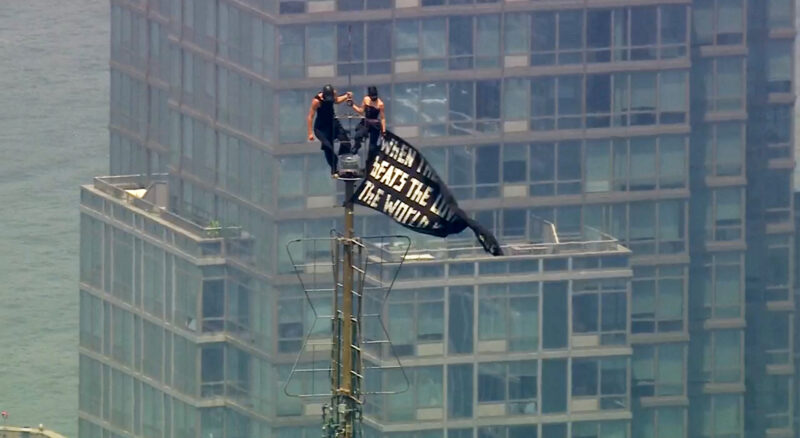
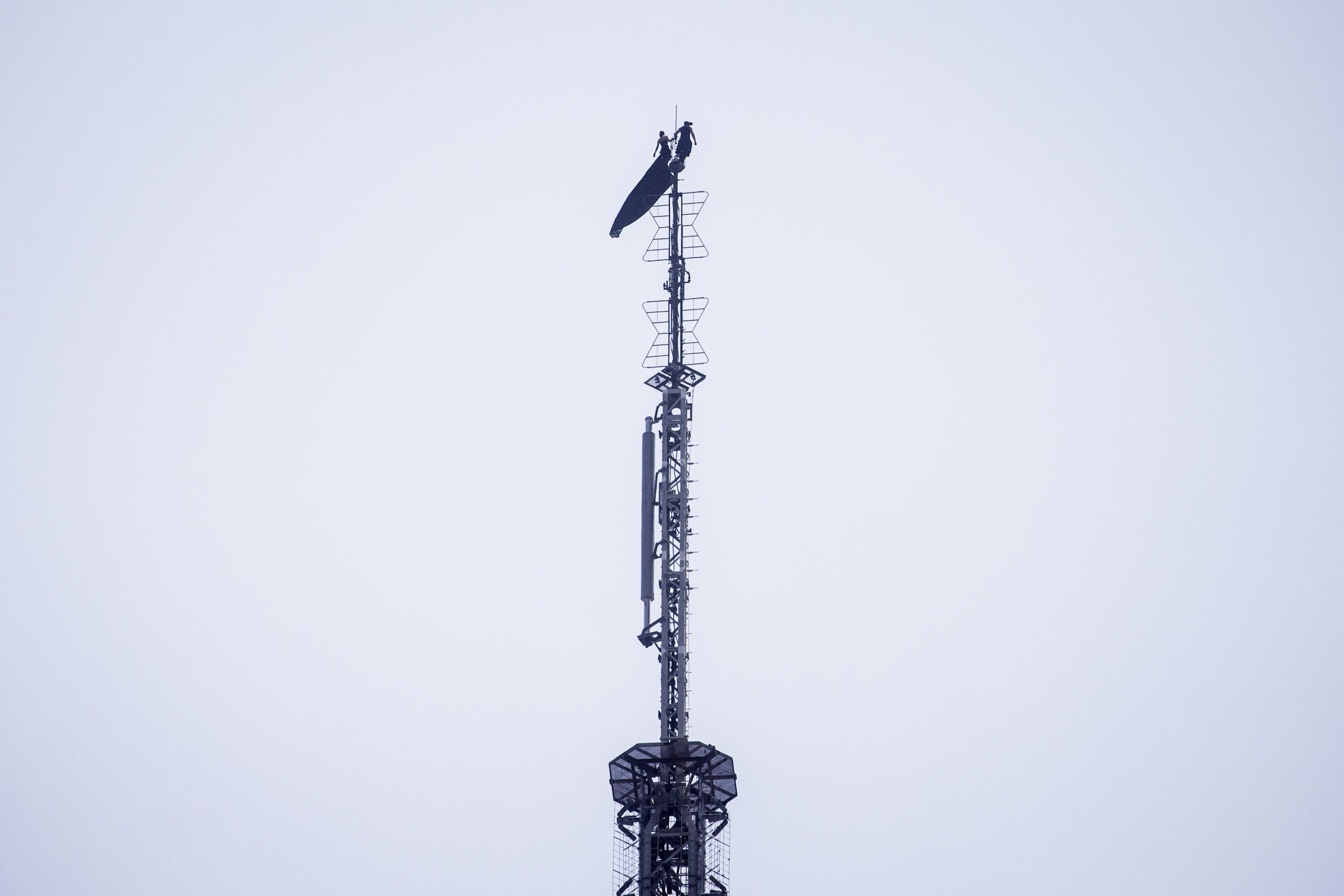
    NEW YORK — A couple known for scaling tall buildings climbed to the top of the needle of the Empire State Building on Wednesday and unfurled a large black banner that flapped in the breeze, about 1,450 feet above the city.

    The couple, Angela Nikolau, 33, and Ivan Beerkus, 32, were taken into custody after the stunt, according to a law enforcement official. Nikolau, according to a police document, was charged with burglary — defined in New York state as unlawfully entering a building with the intent to commit a crime. It was not immediately clear whether Beerkus was also charged.

    Late Wednesday morning, Nikolau posted a video on her Instagram account that showed a vertiginous view from a narrow platform and that was captioned “Currently at the Empire State Building.”

    The message on the banner read: “When the power of love beats the love of power the world knows peace.”

    As they stood atop the skyscraper, Beerkus proposed to Nikolau, the law enforcement official said. A photo Nikolau posted to Instagram shows Beerkus getting down on one knee.

    The law enforcement official gave Nikolau’s first name as Angelina and Beerkus’ surname as Kuznetsov, which appears to be his birth surname.

    The couple were the subjects of a 2024 documentary, “Skywalkers: A Love Story,” about their romance and quest for thrills and fame. In 2022, they climbed Merdeka 118 in Malaysia, which is more than 2,000 feet tall.

    The Empire State Building’s needle, which houses communications equipment and a very tall antenna, rises about 200 feet above the top floor of the building.

    Climbers with a banner atop the spire of the Empire State Building in Manhattan, on Wednesday, July 1, 2026. After making the ascent, the man proposed to the woman on a tiny platform, 1,450 feet above the city. (Dave Sanders/The New York Times)

    It is a surface that is not frequently scaled. In 1994, the French climber Alain Robert did so, according to the Guinness World Records website.

    New York City’s skyscrapers and monuments, however, have long been magnets for climbers.

    Their attempts have ranged from the modest to the truly harrowing.

    In 1918, Harry Gardiner, nicknamed “the Human Fly,” climbed the Soldiers’ and Sailors’ Memorial Arch at Grand Army Plaza in Brooklyn; it is all of 80 feet high.

    Philippe Petit walked a tightrope between the towers of the World Trade Center in 1974.

    In 2008, after three people — one of whom was Robert — climbed the New York Times Building in a matter of weeks, the Times removed some of the horizontal rods that climbers had used to scale it.

    In 2014, a teenager from New Jersey climbed to the spire of the Freedom Tower, which was built on the site of the twin towers.

    Jason Barr, an economics professor at Rutgers University who has studied skyscrapers, said that the initial plans for the Empire State Building did not include a spire or antenna, but after the construction of the Chrysler Building, with its distinctive crown, the building was redesigned to include a mooring mast that would stretch into the sky.

    “These spires are designed partly for aesthetic reasons but also partly for advertising reasons, like, ‘Look at the top of my building’,” Barr said.

    In recent years, artists and exhibitionists have called their unsecured and usually illegal ascents “rooftopping,” documenting the climbs on social media. Aside from structures in New York and Malaysia, Nikolau and Beerkus, have ascended buildings and constructions sites in China and Europe, sometimes with legal repercussions.

    But there have been sanctioned climbs of skyscrapers, too. In 2023, actor Jared Leto scaled 18 floors of the Empire State Building, from the 86th floor to the 104th floor, with permission, to promote a world tour for his band Thirty Seconds to Mars.

    He performed one of the band’s songs from the 104th floor, an unofficial landing off limits to the public.

    This article originally appeared in The New York Times.