Tag: no-latest

  • Democratic outsiders keep rolling: 5 takeaways from Colorado’s primaries

    Democratic outsiders keep rolling: 5 takeaways from Colorado’s primaries

    The insurgent progressive movement jolting the Democratic Party rolled through Colorado on Tuesday evening in the latest test of the left’s ability to oust establishment politicians and usher in generational change.

    In two primary battles between mainstream figures and candidates running to their left as Washington outsiders, the more liberal candidates prevailed. Melat Kiros, a 29-year-old lawyer and democratic socialist, toppled a veteran congresswoman in Denver, while Phil Weiser, the state attorney general, stopped Sen. Michael Bennet’s bid to move from Congress to the governor’s mansion.

    But in a third key primary race, Sen. John Hickenlooper staved off a progressive challenger.

    Here are five takeaways from the night in Colorado, where Democrats will be favored in all three races in November.

    Even older progressives are falling to young left-wing challengers

    Rep. Diana DeGette, who lost to Kiros, sported legitimate progressive credentials. She was a strong backer of “Medicare for All,” and she ran a television advertisement featuring prior praise from Rep. Alexandria Ocasio-Cortez, D-N.Y., who did not pick a side in Tuesday’s primary.

    Nevertheless, she met her match in Kiros, who centered her campaign on calls for generational change — DeGette, 68, was first elected to Congress the year before Kiros, 29, was born — and on opposition to Israel over the war in the Gaza Strip.

    DeGette said last year that she opposed the sale of “offensive weapons” to Israel, but in the past she had called herself a “strong supporter of Israel.” Kiros was far more outspoken in her opposition to the war and her calls to end U.S. military aid to Israel.

    Socialists are racking up victories around the country

    Kiros adds to a growing number of socialist candidates expected to enter Congress next year, including Claire Valdez and Darializa Avila Chevalier of New York and Chris Rabb of Pennsylvania.

    Running in a deep-blue Denver district, Kiros did not shy away from her socialist label. She welcomed support from the Democratic Socialists of America and Hasan Piker, a provocative left-wing livestreamer who is popular with young progressives but controversial with the party establishment.

    Her victory is likely to further embolden the ascendant movement, which has aspirations beyond deep-blue cities.

    In Wisconsin, a candidate for governor, Francesca Hong, will test whether socialism can appeal to voters in a swing state. And two battleground Senate candidates who do not identify as socialists but also have left-wing, populist politics — Abdul El-Sayed in Michigan and Graham Platner in Maine — are on similar missions.

    One establishment veteran wasn’t caught flat-footed

    On the surface, Colorado’s Democratic primary for Senate mirrored the kinds of races that have been ripe for upset victories this year: A 74-year-old moderate incumbent who had spent 20 years in state politics faced a younger progressive who was once a DSA member.

    But toppling a U.S. senator in a statewide race remains considerably more difficult than ousting a House member, at least on the Democratic side. And Hickenlooper turned back his challenge from Julie Gonzales, a state senator, by nimbly moving to the left and drastically outspending her.

    Hickenlooper focused his campaign pitch on liberal priorities like overhauling the Immigration and Customs Enforcement agency. He also earned some support from labor and activist groups, preventing Gonzales from consolidating progressives.

    Perhaps most significantly, he raised nearly $8 million, while she had less than $1 million at her disposal.

    Trump loomed large in an upset in the governor’s race

    Colorado’s other senator was not so fortunate.

    Bennet lost his bid to become the state’s next governor to Weiser, who had trailed by 30 percentage points in polls last year but managed to make the race a referendum on how forcefully the two candidates were opposing President Donald Trump.

    Pointing to his lawsuits against the administration, and to Bennet’s votes to confirm a few of Trump’s Cabinet members, Weiser won that metric.

    And although Weiser does not profile as a typical insurgent progressive — he is a former federal lawyer who served in the Obama administration and as dean of a law school — he successfully portrayed himself as an outsider running to Bennet’s left.

    Democrats keep picking progressives in key House races

    In swing districts from California to Pennsylvania this year, Democratic voters have bucked the conventional wisdom of running centrist candidates who can peel off independent voters against Republicans. Instead, they have backed left-wing candidates.

    Coloradans took a similar approach Tuesday, choosing Manny Rutinel, a progressive state lawmaker, over Shannon Bird, a more moderate legislator, in the Democratic primary race to face Rep. Gabe Evans, a vulnerable Republican in a district north of Denver.

    The general election will also be a test of whether Democrats can regain support from Latino voters. Rutinel, who is Dominican American, will need a sizable chunk of them in a district that is nearly 40% Latino to beat Evans, who is Mexican American.

    This article originally appeared in The New York Times.

  • The lights, the party, the ball gowns: Expect a black-tie Swift-Kelce event

    The lights, the party, the ball gowns: Expect a black-tie Swift-Kelce event

    As details continue to emerge and preparations appear to be underway for Taylor Swift and Travis Kelce’s upcoming multiple-day event at Madison Square Garden, there are still plenty of questions unanswered about what the secretive festivities might look like.

    The flowers. The food. The décor. The guest list. What those guests will wear.

    The answer to that last one is that Swift and Kelce’s celebratory event, widely expected to be their wedding, appears to be shaping up to be a formal affair. The dress code is black tie, according to two people familiar with the event who spoke to The New York Times on condition of anonymity because they were not authorized to speak publicly. Many of the women attending will be wearing gowns, one of the people also said.

    For men, that means a tuxedo, with a jacket, black bow tie and matching satin-striped trousers. Women have a little more flexibility, with floor-length gowns, elevated cocktail dresses or dressy separates all fitting the bill. (Black tie is a step down in formality from white tie, which requires tailcoats for men and, as the name implies, white bow ties.)

    Peters Clothiers, a menswear store in Kansas City, Missouri, posted a photo on Instagram last month of Andy Reid, coach of the Kansas City Chiefs, getting fitted for a tuxedo jacket. “Getting ready for the Travis Kelce and Taylor Swift Wedding!” the caption read, naming Reid, as well as the team’s general manager, Brett Veach, and the team’s vice president of sports medicine and performance, Rick Burkholder, who were also pictured. When reached by a reporter Tuesday, an employee of the store referred questions to a different employee who did not immediately respond. In May, Reid told the radio show “The Drive” that he “probably had” been invited to the wedding.

    Swift and Kelce will hold two different events at Madison Square Garden this week. There will be an intimate gathering of about 100 people Thursday evening, which is a rehearsal dinner in the Infosys Theater, not the main arena, according to a person familiar with the plans. On Friday, a larger, splashier event (with black-tie dress code) with about 1,000 guests will begin with a cocktail hour at 4 p.m. Both events will have no-phone policies for all guests, vendors and security, the same person said.

    The couple has said little publicly about the event, but there were some possible clues outside the Garden on Tuesday afternoon. Semitrucks and forklifts unloaded heavy cargo, some of it the size of a small car, wrapped in dark plastic, including objects that appear to be trees (wooden boxes labeled “trees” were also visible). One of the forklift drivers wore a T-shirt that said: “Taylor Swift CARPENTERS.” When asked if his shirt was related to his job, the man said, “I plead the Fifth.”

    Mindy Weiss, the Los Angeles-based event planner behind Selena Gomez and Benny Blanco’s wedding in 2025, said this week that checking guests’ phones at the door had become de rigueur at high-profile events, noting that the guests occasionally brought multiple phones in an attempt to circumvent tech rules and that she and her team were often on the lookout at events for rogue banned devices.

    While the guests will be arriving in tuxedos and floor-skimming dresses, the most important look of the night has not been confirmed: what designer might dress the “Love Story” singer?

    Swift and Kelce both donned ensembles by Ralph Lauren in their engagement announcement photos, raising speculation that the iconic American designer might again dress the couple. Swift’s longtime friend Gomez wore a halter-neck gown by Ralph Lauren for her 2025 wedding to Blanco.

    The Hollywood Reporter reported this week that Swift would wear a Christian Dior look designed by Jonathan Anderson. Swift wore a punk-inspired yellow, plaid high-low overskirt and corset top by the brand to the 2024 MTV Video Music Awards.

    There are also several other possible designers among those Swift has worked with before. On her latest tour, Swift wore some costumes by Vivienne Westwood, who designed the minidress Charli XCX wore to her courthouse wedding in 2025. At the 2024 Grammy Awards, Swift wore a draped, strapless white gown by Schiaparelli, which has drawn wedding gown comparisons. Or perhaps it will be Oscar de la Renta; Swift wore a blue, floral gown by the designer to a premiere of her Eras Tour documentary.

    This article originally appeared in The New York Times.
  • Letters to the Editor | July 1, 2026

    Letters to the Editor | July 1, 2026

    Civics lesson

    A civics lesson for those of us who remember our high school class in government. Perhaps ironically, given today’s reality, in my Montgomery County high school, the course was named “Problems of Democracy.” These days, without a doubt, the problems are large and numerous.

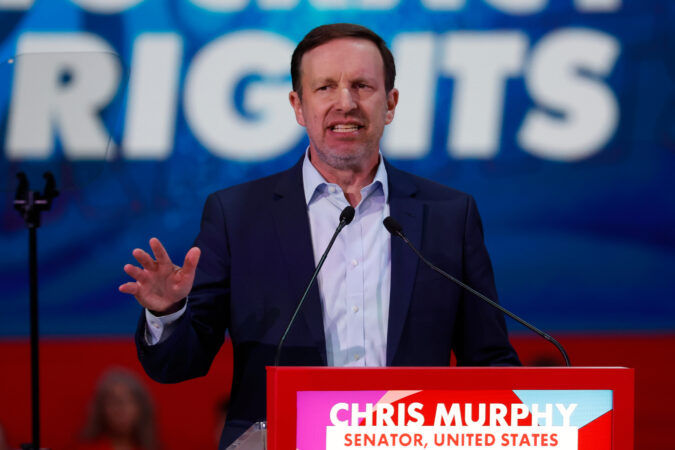
    I commend everyone for spending a few minutes finding and watching online Sen. Chris Murphy’s (D., Conn.) speech last week, “500 Days of Corruption.” Then contact your favorite Republican elected officials (and Republican candidates) from Pennsylvania, asking him/her to either 1) rebut the facts Murphy outlined (which represented only the tip of the corruption iceberg floating in the Trump swamp), or 2) state precisely what he or she will publicly do in an effort to clean the swamp and preserve our representative democracy.

    As you wait forever for your response, as I do in my case from Sen. Dave McCormick, keep in mind the basic precept of our system is that these “officials” represent the interests of the residents of Pennsylvania, not merely the resident of 1600 Pennsylvania Avenue and his superwealthy family and friends.

    Stephen Ulan, Wynnewood

    Missed gems

    When we saw The Inquirer’s “76 Neighborhood Gems,” the leadership of the Ceiba Collective came to the same conclusion: “The only thing worse than being blind is having sight but no vision.” Helen Keller’s quote is apropos because the piece missed important parts of Philly.

    We understand it was based on a survey of The Inquirer’s readers, but the survey stated that your “own reporting” would ensure the collection was well-rounded.

    The piece, however, was vision-impaired. It did not, for example, feature a Latino place in the city.

    Highlighting this blind spot is not a complaint about inequity. We find fault with it because Philadelphians were not fully served. They did not get information that recognized the variety of gems in the city. This hurts us all because it misses the opportunity to bring diverse people together to learn more about Latinos: one of the fastest-growing and vibrant populations in Philly.

    We know The Inquirer can do better.

    We implore it to do so. Today, more than ever, we need to be fully informed and encouraged to connect with all people in all neighborhoods of the city.

    Will Gonzalez, executive director, Ceiba, Philadelphia

    Join the conversation: Send letters to letters@inquirer.com. Limit length to 150 words and include home address and day and evening phone number. Letters run in The Inquirer six days a week on the editorial pages and online.

  • Dear Abby | Sister has revealed her true colors time and again

    DEAR ABBY: When I was 16 and my sister “Daisy” was 18, I found out she was in a sexual relationship with my boyfriend, “Tyler” (also 18). I broke it off. She then asked if I minded her dating him. I’m sure I said I didn’t, but I thought, “Why ask? You were already having sex with him.” (He and I hadn’t.) Tyler and I remained friends through the years. He was my first love.

    That episode shaped my dating relationships going forward. It took years for me to learn to trust again. Years later, I asked Daisy why she’d done that, and her response was because she could. We enjoy each other’s company as long as I don’t let the past into my consciousness.

    How do I let this go? Saying anything may make things worse — but it really hurts that she betrayed me and never once offered an indication of an apology.

    — STILL MATTERS IN NORTH CAROLINA

    DEAR STILL MATTERS: Daisy and Tyler both betrayed you. What they did showed a distinct lack of character on both their parts. But this is who they are. You and your sister may enjoy each other’s company, but do not think that the core of her — her character — has changed. That she hasn’t apologized for hurting you, and her answering you in such a flip manner, should serve as a warning about how selfish and insensitive she is to this day.

    ** ** **

    DEAR ABBY: I don’t live in the same state as my sister, so I used to call her at the same time each week so we could catch up. Her husband, “Dale,” was usually at work on the day I called. Then, Dale got a new job, so he is now home whenever I call.

    My problem is that Dale enters the room and talks to her while she is on the phone. She answers him immediately, even if I am in the middle of a sentence. Because this is confusing and annoying, I told her it would probably be better if she called me when she was free to talk. (At no time did I specifically say anything about Dale’s interruptions.) She said, “Fine!” — and that was the last time I heard from her, and it’s been more than five months.

    If I reach out to her, I’m sure nothing will change. If I say it’s annoying to allow Dale to interrupt phone calls, she’ll probably get angrier and defend him. I love my sister and miss talking to her. Must I resign myself to never hearing from her again?

    — SIS INTERRUPTED

    DEAR SIS: Call your sister and apologize for letting the silence go on so long. It doesn’t matter how rude she and Dale have been; you need to start communicating again if you want to fix this.

    Then, instead of placing all of the responsibility on your sister, why not show her you’re willing to compromise? Now that Dale’s work schedule is predictable, ask your sister to suggest a time for the weekly call when she knows he won’t be around. If that’s not possible, you’ll have to decide whether Dale’s interruptions are annoying enough to lose a sister over.

  • Horoscopes: Wednesday, July 1, 2026

    ARIES (March 21-April 19). Resilience is one of your superpowers. You have learned how to adapt and bounce back. Every challenge has taught you something useful, and today you handle something so easily, not in spite of those challenges but because of them.

    TAURUS (April 20-May 20). Nobody else can bring your exact combination of experiences, interests, obsessions, humor, grief, curiosity and insight to a project. Also, you don’t need everyone to agree with your choices. They don’t have to make sense to anyone but you.

    GEMINI (May 21-June 21). Anyone can be kind and competent on a normal Wednesday, but you welcome the heightened circumstances when they come, knowing that it’s grace under fire that forges the good stuff. Heightened circumstances are opportunities for true character to emerge.

    CANCER (June 22-July 22). You’re not just hoping things will work out, you make them work. It’s in the details now. Small adjustments create outsized results. The finishing touches are where the magic happens — the glossy varnish turns “good” into “exceptional.”

    LEO (July 23-Aug. 22). You trust yourself more than you did, for the simple reason that you just keep delivering results you can stand by. You’re gaining experience you need to do quick, dependable work. You’ll make a decision that brings immediate reward.

    VIRGO (Aug. 23-Sept. 22). A gift doesn’t require repayment. If there are strings attached, it’s not a gift, it’s a negotiation. There may be expectations attached to today’s exchange of “generosity.” The real question is: Are those terms acceptable to you?

    LIBRA (Sept. 23-Oct. 23). Today, it’s not about being right. It’s about progress, which always involves the whole mechanism. If one gear fits, great. But what does that mean to the next gear and the next? Everything must turn together. Think in terms of systems.

    SCORPIO (Oct. 24-Nov. 21). Not every lesson can be taught in advance. Some people need firsthand experience. Caring about someone doesn’t give you the power to spare them every consequence. Though you feel responsible for people, you are not responsible for their choices.

    SAGITTARIUS (Nov. 22-Dec. 21). You share your knowledge and lead others with certainty and care. As excellent as you are at educating others, experience remains the more powerful teacher. Consider whether your best move is to step back with love and let them discover for themselves.

    CAPRICORN (Dec. 22-Jan. 19). Even though you’re extremely observant, don’t assume appearances tell the whole story, either about other people or about yourself. Today, it’s safe to assume there’s much more going on behind the scenes than meets the eye.

    AQUARIUS (Jan. 20-Feb. 18). Restraint can be mistaken for passivity or weakness — no. Ask any dam: Restraint takes real strength, fortifications, tons of metal or mettle, as the case may be. Today, your restraint will be the move of champions.

    PISCES (Feb. 19-March 20). You don’t always play to win, at least not on the small scale of the game. Sure, games are often nice to win, but you’re playing to connect, and therefore you win just by playing.

    TODAY’S BIRTHDAY (July 1). It’s your Year of the Silver Thread. The connections are uncanny, unmistakable and strong to just people, places and opportunities you need. All you have to do is follow through on the leads. More highlights: You’ll achieve new levels of honesty and togetherness in relationships. A talent developed for pleasure becomes useful work. Family life settles into a rhythm that supports the big dreams you share. Aquarius and Gemini adore you. Your lucky numbers are: 5, 30, 1, 22 and 16.

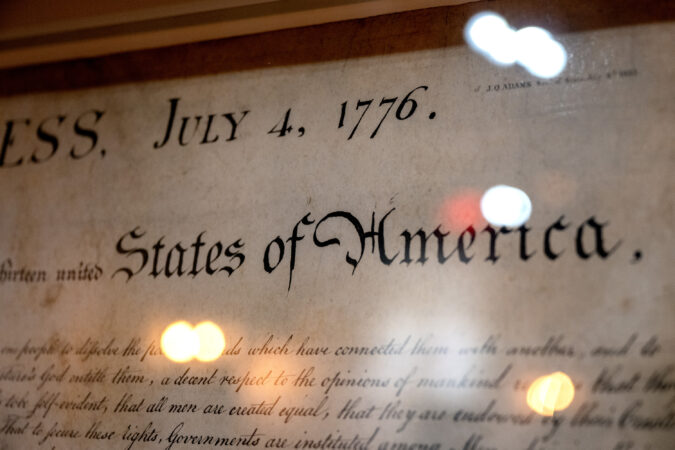
  • Three words in the Declaration of Independence paint a cruel picture of Natives

    Three words in the Declaration of Independence paint a cruel picture of Natives

    McKaylin Peters, a 24-year-old Native American graduate student at Johns Hopkins University, still recalls when she first heard the words “merciless Indian savages.”

    Sitting in social studies class at her predominantly White middle school near Green Bay, Wisc. — a school that once used an image of an Indian as its mascot — she cringed when the teacher read a passage deep in the Declaration of Independence: “He has excited domestic insurrections amongst us, and has endeavoured to bring on the inhabitants of our frontiers, the merciless Indian Savages, whose known rule of warfare, is an undistinguished destruction of all ages, sexes and conditions.”

    Peters said she and the six other Native students in the class looked quietly at one another.

    “I was upset. It just rolled off her tongue very easily,” recalled Peters, a citizen of the Menominee Nation who is getting her master’s in organizational leadership. “It seemed like no one else was shocked except for us, the Indigenous students in the classroom. We were like, ‘Did she really just say that?’”

    As the United States marks the 250th anniversary of the Declaration — a document fundamental to the nation’s founding and still revered — Peters and other Native American scholars and tribal leaders are reflecting on the Founding Fathers’ use of the derogatory description for Indigenous people in 1776. Many note that while the Declaration promises that “all men are created equal,” its ideals were not extended to everyone.

    The document’s portrayal of Indigenous people helped establish a moral and legal framework that justified decades of devastating U.S. policies toward Native communities, according to historians. Celebrations of the 250th anniversary of the Declaration’s signing come amid a striking contrast: Native tribes are working to reclaim ancestral lands, revive lost languages, and preserve cultural traditions, while the Trump administration has sought to remove or downplay references to slavery, Native dispossession, and other dark chapters of U.S. history in parks and museums and on government websites.

    “It’s not just a line in an old document,” Peters said. “It’s a reminder that this country was built by declaring us less than human. When the Declaration of Independence calls us that, it’s a message that Native youth sadly still hear today in classrooms, policy debates, and in how society talks about us.”

    Many historians and Indigenous historians say the term “savages” did more than reflect 18th-century attitudes. It helped perpetuate stereotypes of Native Americans and contributed to their marginalization; centuries later, it adds to feelings, especially for Native youths, of being excluded from America’s national story. A 2022 study by Texas A&M University researchers found that the Declaration’s pejorative reference to Native Americans helped normalize a view of them as threats rather than as sovereign nations and peoples with rights.

    For many Native people, the meaning — and impact — of the phrase is emotional and complicated.

    Some discover the wording as adults and are appalled. Others see it as a reminder of racist attitudes and centuries of broken treaties, land theft, and forced assimilation. Some young people have reclaimed the epithet, debating it on social media and displaying it on T-shirts and tattoos as a symbol of resilience and empowerment. An Indigenous-led heavy metal band intentionally used the phrase as its name.

    “It’s become sort of an ironic touchstone,” said Kevin Gover, the Smithsonian Institution’s undersecretary for museums and culture. A citizen of the Pawnee Tribe of Oklahoma, Gover said he did not encounter the term until middle age. After his initial outrage, Gover said, he responded as many Native people do: by mocking it.

    “Even we, on the side of the descendants of those who were victimized, have to take a nuanced view,” said Gover, who is also the former director of the National Museum of the American Indian in D.C. “In many respects, it’s a badge of pride that our ancestors had the wherewithal to survive and allow us to be alive in this time.

    “We can acknowledge the wrong,” he said, “and be grateful for our ancestors’ fortitude.”

    Hartman Deetz, an enrolled member of the Mashpee Wampanoag — the Massachusetts tribe that famously helped the Pilgrims survive their first Thanksgiving in 1621 — said the wording reflects the opposite of how Indigenous people treated white settlers.

    “They were fed when they were starving, given hospitality by us, but they treated us in a way that was savage and merciless in the dispossession of our homelands,” said Deetz, who served as a consultant for an exhibition at the Museum of the American Revolution in Philadelphia about the Declaration and the history behind it. “It was framed in a way that justified the treatment they brought upon us, and it continues to this day in attempts to sell our sacred sites for copper mines and to drill for oil and mining on our lands.

    “The colonial enterprise hasn’t stopped,” he said. “There’s such a disregard for Natives to exist or have rights of where we do exist. That’s the legacy of these words.”

    The words originated in an early draft of the Virginia Constitution written by Thomas Jefferson, who later included it in the Declaration of Independence, which Congress adopted.

    Ironically, some historians say, the characterization of Native people contradicts Jefferson’s own views. In Notes on the State of Virginia, a book Jefferson wrote that laid out many of his views on race, government, and religious freedoms, he was “very sympathetic to Native people,” said Kevin Butterfield, a historian at the Library of Congress. Jefferson described Indigenous people as just, honorable and noble — a sharp contrast to the widespread European belief that Indigenous people were inferior.

    But Jefferson understood the Declaration was political rhetoric — a kind of “public relations piece,” said Butterfield, who is the acting chief of the Manuscript Division at the Library of Congress. He placed it near the end to bolster the case for independence.

    “He’s trying to paint the worst possible picture of how the king is approaching his interactions with the American colonists,” Butterfield said. “So he’s laying out horrible wartime atrocities from the Revolutionary War.”

    The description reflected colonial attitudes and the realities of frontier warfare, scholars say. Colonists were hostile toward Native Americans, who were powerful political and military figures and, just like other nations, protecting their sovereignty. Some Native nations had allied with the British — a move that many settlers resented — and many colonists also opposed King George III’s Proclamation of 1763, which barred settlement west of the Appalachian Mountains.

    Repeated violence between Indigenous people and settlers also helped shape the ideology behind the description, including the French and Indian War and Dunmore’s War in 1774, when Virginia colonists fought the Shawnee and Mingo to expand into the Ohio Valley, according to historians. In the summer of 1776, as the Declaration was drafted and adopted, a lesser-known conflict unfolded when Cherokee warriors attacked frontier settlements across parts of Virginia, North Carolina, South Carolina, and Georgia. Colonists responded by burning more than 50 Cherokee towns and driving Native people from their homes.

    By 1776, the Founding Fathers “understood their need to accuse the king of what they considered the ultimate crime — partnering with Indigenous peoples and arming them,” said Ned Blackhawk, a Native American author and Yale University historian. “So they created this vilification in the Declaration that, in many ways, was at odds with their experience of living alongside Natives for generations.”

    The rhetoric was part of a broader racial ideology taking shape during the Revolutionary era, said Blackhawk, an enrolled member of the Te-Moak Tribe of Western Shoshone Indians of Nevada.

    “They were deeply committed to Enlightenment principles, but those were restricted to people similar to themselves,” he said. “Native Americans became a foil in simplified and racialized ways.”

    Tracy L. Canard Goodluck, executive director of the Center for Native American Youth at the Aspen Institute, said she is disappointed the term is either glossed over or not taught in many school curriculums, its impact not discussed.

    It wasn’t until she was a student at Dartmouth College, she said, that she fully understood the context of the description. She was angry, but the new knowledge also awakened in her a passion for educating others about Indigenous history and mistreatment. Goodluck, a member of the Oneida Nation who is also Mvskoke Creek, said in her previous work as a teacher in Seattle and Albuquerque she taught about Indigenous people and the harsh characterization in the Declaration.

    “It shouldn’t just be about white history,” she said. “It should be about all history — the good, the bad, and the ugly.”

    She said it’s also important to educate the public, so every Fourth of July, she wears a T-shirt emblazoned with the phrase from the Declaration.

    “Those words served the purpose back then as a way to dehumanize Native people in this country,” said Goodluck. “We need to change that narrative. We’re still here. We’re doctors, lawyers, teachers and political leaders.

    “I am that merciless Indian savage who my ancestors prayed for to do great things.”

  • As war stalls, Putin concedes he never cut a deal with Trump in Alaska

    As war stalls, Putin concedes he never cut a deal with Trump in Alaska

    Russia’s war in Ukraine is stalling — on the battlefield and in the corridors of diplomacy.

    For months, high-ranking Russian officials insisted that a path to ending the war in Ukraine — largely on Moscow’s maximalist terms — had been decided at a meeting between President Vladimir Putin and President Donald Trump last August in Anchorage. Only Ukraine’s intransigence stood as an obstacle.

    But that narrative has unraveled — perhaps because the only way to get the United States to help broker a new deal is admitting there never was a previous one.

    In recent days, three top Russian officials accused the White House of not honoring the Alaska agreement. Foreign Minister Sergei Lavrov even speculated that the summit was a U.S. “ploy to buy time to rearm the Kyiv regime.”

    Secretary of State Marco Rubio, however, pushed back. “If there had been an agreement, we would have had an end of the war,” Rubio told reporters.

    “Russia wants the entirety of Donetsk to be turned over to them, among some other things,” he said, explaining Russia’s demand for more Ukrainian territory.

    After days of back-and-forth, Putin conceded the point, saying on Sunday that “there were indeed no agreements reached in Anchorage.”

    “The spirit of Anchorage — although it wasn’t expressed in any formal documents, and no one put any signatures down — in Anchorage we discussed certain possibilities for ending the crisis in Ukraine,” Putin told a state television reporter Sunday. “And the compromises discussed were precisely the proposals the American side made to us.”

    The contradictions started in Alaska immediately after the summit. Putin said an agreement that will “pave the path toward peace in Ukraine” was reached, while Trump said that while the meeting was “extremely productive … there’s no deal until there’s a deal.” Trump also told Fox News afterward that it was “up to Zelensky” now to get a deal done, referring to Ukrainian President Volodymyr Zelensky.

    The Russian leader’s decision now effectively to bury the Alaska summit, which the Kremlin and its propagandists had mythologized as a turning point, comes as Russian forces are largely stalled on the battlefield in Ukraine — a sharp change from the previous four summers when they made gains.

    Instead, the skies over Russia and the Ukrainian territory it occupies are increasingly crowded with advanced Ukrainian drones, signaling a new phase in which Russia is playing technological catch-up and regular Russian citizens are feeling the war intrude on their lives with gasoline shortages and disruptions to summer travel, including to occupied Crimea.

    Russian political analysts have interpreted the indirect spat between Rubio and Lavrov over the alleged deal as a sign that Ukraine has convinced Trump it can keep fighting — and that it can pose a serious threat to Crimea, which Russia illegally annexed in 2014, rather than surrendering the Donbas region, as Russia has demanded.

    Trump probably arrived in Anchorage believing that Ukraine’s defeat was inevitable and that the sooner it accepted terms, the better for everyone, Fyodor Lukyanov, a prominent foreign policy analyst who advises the Kremlin, wrote in an op-ed in a Russian publication.

    “The goal of Kyiv and the collective Brussels was to convince Trump that the belief in Ukraine’s inevitable defeat was mistaken,” Lukyanov wrote. “Ten months after the Anchorage summit, they succeeded in persuading him.”

    Since Alaska, no major breakthrough has materialized in Russia’s favor, Europe so far has managed to sustain its military and economic aid to Ukraine, and Trump has become distracted by Iran.

    “Diplomacy in the midst of hostilities is shaped by their outcome,” Lukyanov wrote. “If the balance of power — or the perception thereof — shifts, the understandings reached at an earlier stage lose their validity.”

    Ukraine’s push to impose a “logistical lockdown” on Crimea and Kyiv’s growing capability to strike deep inside Russia seem to be part of a 40-day blitz declared by Zelensky to “influence” Moscow to end the war.

    Continuing that pressure, Ukraine overnight launched dozens of drones at the Moscow region and struck Russia’s Dubna satellite communications center north of the capital. Zelensky said ​Russia uses the Dubna site for reconnaissance and coordination of its military activities in Ukraine.

    Andrei Vorobyov, governor of the Moscow region, confirmed the attack had occurred but said that an “administrative building was damaged by drone debris.”

    Amid chaotic scenes in Crimea, the Russia-installed authorities imposed a state of emergency in response to strikes on highways and bridges. There have also been blackouts that have prompted many summer visitors to return home.

    “He’s holding his own at least,” Trump said of Zelensky last week, speaking to reporters at the White House. “A lot of people dying on both sides, but I think he’s doing pretty well. You have to say he’s courageous, he’s got great equipment, he’s got great men, he’s got fighters.”

    Ukraine seems to have scaled drone production to a level that can sustain strikes on Russian cities hundreds of miles from the border, and that keeps the frontline kill zone stable. This means that ground action is drying up.

    “The war has markedly changed this year,” said Ruslan Leviev, an analyst with the Conflict Intelligence Team, a group that uses open-source data to track the Russian military.

    “It’s hard to say the battle initiative is on the Ukrainian side,” Leviev said, “but time is on Ukraine’s side — more problems keep arising for Russia, economically, politically, and militarily, and it’s all adding up.”

    Russian budget data indicates that its military recruited 71,216 men during the first quarter of 2026, compared with 89,601 over the same period last year, according to Janis Kluge, a Russia expert at the Berlin-based German Institute for International and Security Affairs.

    Recruitment stabilized somewhat in the second quarter, returning to around 30,000 contracts per month. But local media reports suggest the overall stream of recruits has slowed compared with previous years as the pool of men drawn by the enormous pay packages that eclipse regional Russian salaries appears to be shrinking.

    Rumors have circulated that Russia may declare a fresh mobilization after key parliamentary elections in the fall — the first since the war began — but politically that move could prove extremely costly for the Kremlin. The “partial mobilization” in 2022 drove tens of thousands of men to flee Russia. After four years of war, and mounting economic strain, the mood has soured considerably.

    Leviev and other analysts said that they doubt Moscow would call for full mobilization, since this would require significant financial resources to set up new formations, and train and equip them, and that such a move fundamentally wouldn’t unfreeze the line of contact. “At this pace, the war on the ground looks to us as a dead end,” Leviev said.

    This poses several challenges for Russia.

    Russia still holds an advantage in manpower, conventional arms, and ballistic missiles, which it continues to use against Ukrainian cities and infrastructure. But Ukraine’s relentless drone campaign, especially its use of medium-range drones, has chipped away at this advantage, complicating frontline logistics and driving up the costs for Moscow of supplying the front.

    Russia’s flagship air defense systems were designed for high-altitude targets like jets and ballistic missiles, not slow, low-flying drones. Interceptor missiles also cost many times more than the drones they shoot down, draining stocks at a rate Western officials have said may be unsustainable.

    In his remarks Sunday, Putin commented on the deteriorating situation in Crimea and the wider fuel shortage in Russia after weeks of silence.

    Addressing Ukraine’s drone campaign, Putin said that Russia needed to “significantly ramp up production of air defense systems.” He also pledged to ensure the supply of fuel to Crimea by land and sea but did not say how this would be accomplished.

    Putin also asserted that Kyiv had put forward what he called “new proposals” to curtail hostilities in four regions of eastern Ukraine — Kherson, Zaporizhzhia, Donetsk, and Luhansk — and agree to mutually halt long-range strikes.

    Putin, however, cast the offer as a distraction that would allow Ukraine to redeploy units from other regions to these four areas, relieving pressure along the nearly 800-mile frontline. He reiterated that Moscow aims to fight on.

    “We have some certainty regarding the challenges facing Putin, but what we can expect from him in response to these challenges remains unclear,” said Vladimir Pastukhov, a Russian political scientist and honorary senior research fellow at University College London.

    According to Pastukhov, Putin has several options to escalate the war, all fraught with risk. These include an attack on a NATO nation in the Baltics, the detonation of a tactical nuclear weapon in Ukraine, or a mass mobilization of Russian soldiers. Moscow could also adopt a hybrid strategy, potentially striking European military facilities supporting Ukraine.

    That would effectively be a limited, undeclared war on Europe, testing Trump’s loyalty to NATO allies.

    Putin could also pressure its ally Belarus to allow Russian forces to attack Ukraine from its territory, opening a new northern front.

    Putin on Sunday said Russia was expecting a resumption of U.S.-led peace talks and a visit to Moscow by U.S. envoys Steve Witkoff and Jared Kushner — once the “hot ​phase” of the Iran war is resolved.

    Lukyanov, the analyst, said Russia believes that Trump’s position on the war in Ukraine will shift again — as it has many times. “But first,” he wrote, “the White House must be brought to the understanding that a military victory for Russia’s adversaries is impossible.”

  • House GOP defections block move to attach Trump-backed elections measure to defense bill

    House GOP defections block move to attach Trump-backed elections measure to defense bill

    The latest attempt by House Speaker Mike Johnson (R., La.) to fulfill President Donald Trump’s demand to advance an elections overhaul bill failed Tuesday and delayed consideration of an annual defense policy bill.

    Due to GOP defections, a procedural vote failed 224-198 on the House floor. The vote would have merged the Save America Act and the National Defense Authorization Act upon passage of the latter and sent both bills together to Senate.

    Thirteen Republicans joined with Democrats to defeat a measure that would set rules for debate. GOP hard-liners, led by Rep. Anna Paulina Luna (Fla.), rebelled against the tactic, arguing it would make it too easy for the Senate to remove provisions of the Save America Act. Senate leaders have said repeatedly that they lack the votes to pass the Save America Act as a stand-alone measure.

    House Majority Leader Steve Scalise (R., La.) voted “no” on the rule Tuesday alongside the 13 GOP lawmakers, a move that preserves a chance for the House to reconsider the vote later.

    Johnson said Republicans will spend the next day and a half working on getting everyone in the party to a yes.

    He said the Republicans who voted against the rule are making “irrational decisions.”

    “It makes no sense to punish the House and stop the great progress of the House because of what Senate Democrats are doing or not doing,” he told reporters. “We’ve got to move forward.”

    When asked if Trump should talk to the House GOP holdouts, Johnson said he believes the president is “going to be very frustrated” with them.

    House Republicans have scrambled to find a way to get another vote on the Save America Act that would impose new voting restrictions, including a requirement to provide documented proof of citizenship and a photo ID at the time of voting, as Trump has demanded.

    After Tuesday’s failed vote, Luna said she will vote for the rule if House leaders let her add an amendment to the NDAA that would call for voter ID plus proof of citizenship to be placed into the text of the NDAA — two crucial portions of the Save Act.

    Another option House Republicans are considering would use a fast-track process to bypass the filibuster and pass Trump’s sought-after voting restrictions.

    Johnson said Monday that Republicans are moving forward with a plan to establish a grant program that would incentivize states to adopt stricter election rules outlined in the Save America Act.

    The move would use the reconciliation process, designed to overcome the filibuster, because it can be passed with a simple majority in both chambers, bypassing Democrats.

    “If you put it into a grant program or something similar, then it does make it part of reconciling the budget,” Johnson told reporters Monday, after meeting with Trump at the White House. “It does ultimately work that way.”

    “The only way to get that to the president’s desk, we’ve been shown many times, is to put it on reconciliation,” Johnson said.

    However it’s not clear whether Trump would be on board with voting restrictions administered through a grant program. And many Senate Republicans have expressed doubt about passing more legislation through the fast-track process this year.

    On Tuesday, Scalise said Trump is “really excited” about House Republicans’ plans to put components of the Save America Act into a reconciliation bill, but Scalise did not indicate whether the president supports the idea of getting the act done through a grants program.

    “He wants to get Save America signed into law, so do I. So you’ve seen us pass it multiple times in different ways, and we’re going to keep trying,” Scalise said. “The Senate is going to have to figure out a way to get it to the president’s desk.”

    Trump has been trying to pressure Republicans to pass the act, including refusing to sign a bipartisan bill aimed at helping Americans with housing, which was sent to his desk Monday.

    Speaking at the White House on Monday, Trump said it is “even more important” that Congress passes the Save America Act.

    Senate Republican leaders have repeatedly told Trump that the votes are not there to pass his election bill, which would require proof of citizenship to vote in federal elections and restrict mail-in voting, among other provisions. The House passed a version of the bill earlier this year that did not include all the provisions Trump has demanded.

    Johnson said he believes that establishing a grant program that incentivizes states to implement the new election restrictions — rather than establishing them outright — should comply with Senate rules and allow them to pass the legislation with Republican votes only.

    However, Senate rules would likely prevent much of the Save America Act as written from being included as provisions passed through the process must be budgetary.

    At least four Republicans in the Senate have expressed opposition to the Save America Act and previously voted against adding the language to another must-pass measure. It is unclear whether these senators would support the new grant provision.

  • Pope promotes Italian nun to top migrant role in his first major appointment of a woman to Holy See

    Pope promotes Italian nun to top migrant role in his first major appointment of a woman to Holy See

    ROME — Pope Leo XIV on Tuesday made his first major appointment of a woman to the Holy See hierarchy, promoting Italian Sister Alessandra Smerilli to head the Vatican office responsible for migrants, the environment, and development.

    Smerilli, an economist, is currently the No. 2 in the Dicastery for Promoting Integral Human Development. As prefect, she replaces the retiring Canadian Cardinal Michael Czerny, who turns 80 this month.

    With the appointment of Smerilli, Leo appears to be following suit of his predecessor, Pope Francis, who made a point of promoting women to top-level management positions within the Holy See as part of his response to calls by women for greater decision-making roles in the church.

    But Leo too is following Francis’ lead by simultaneously naming Cardinal Fabio Baggio as a “pro-prefect” of the office, where he is currently undersecretary.

    The dual nominations recognize that sometimes the role of a Vatican department head requires being an ordained priest and cardinal.

    Baggio was also given the mandate to head up the Vatican’s Borgo Laudato Si environmental educational center, at Castel Gandolfo, near Rome.

    The Catholic Church reserves the priesthood for men, and women have long complained of a second-class status despite carrying out the lion’s share of the church’s work running schools and hospitals and passing the faith on to younger generations.

  • Judge orders Trump to end efforts to kill Hudson Tunnel funding

    Judge orders Trump to end efforts to kill Hudson Tunnel funding

    A federal judge on Monday ordered the Trump administration to permanently abandon its efforts to suspend funding for a $16 billion rail tunnel under the Hudson River, describing those attempts as “flagrantly” illegal.

    Judge Jeannette A. Vargas of the Southern District of New York said that the administration violated federal guidelines when it stopped reimbursing the tunnel’s builders for their expenses in September. The suspension forced a shutdown of the construction project and led to a brief layoff of about 1,000 workers in New York City and New Jersey in February.

    Federal officials said that the payments were stopped while the project’s hiring practices were reviewed. But Vargas noted that President Donald Trump had indicated in interviews that there were political reasons for stopping the tunnel project, which was a favorite of Sen. Chuck Schumer, the Democratic minority leader from New York.

    “We’re cutting a $20 billion project that Schumer fought for 15 years to get, and I’m cutting the project,” the judge quoted Trump as saying in October. “The project is gonna be dead. It’s just pretty much dead right now.”

    The project, known as Gateway, would supplement two 116-year-old single-track tunnels under the Hudson between Manhattan and New Jersey. Schumer had called it the most critical infrastructure project in the United States.

    The project ran out of money about five months after the federal government stopped making payments. The states of New York and New Jersey jointly sued the Trump administration in federal court in Manhattan, seeking an emergency order to end the suspension.

    On Feb. 6, the day that work on the tunnel stopped, Vargas granted a temporary restraining order. The Trump administration opposed that order and continued to press its case but never disputed that the suspension “flagrantly violates federal law,” the judge said.

    In declaring the suspension of funding illegal, Vargas also said that the federal government could not attempt to suspend payment of the federal grants again.

    Catherine Rinaldi, executive vice president of the Gateway Development Commission, which oversees the project, said that before federal funding was frozen, the tunnel project “was on schedule and on budget, and we have made significant progress since federal funding for the project resumed in February.”

    In response to the judge’s decision, Gov. Kathy Hochul of New York and Gov. Mikie Sherrill of New Jersey, both Democrats, released a joint statement with Letitia James, the attorney general of New York, and Jennifer Davenport, the attorney general of New Jersey.

    “We are grateful that a federal court has once again agreed that the Trump administration’s decision to freeze billions of dollars in grants for the Gateway Tunnel Project is flagrantly unlawful,” their statement said. “This victory sends a clear message: The Trump administration’s attempt to halt Gateway funding will not stand.”

    The federal Department of Transportation said that it remained “committed to ensuring hard-working taxpayer dollars are being spent responsibly and do not fund unconstitutional, discriminatory contracting practices.”

    The decision Monday did not complete litigation over the suspension. The development commission is still suing the Transportation Department for monetary damages resulting from the forced shutdown of the project.

    This article originally appeared in the New York Times.