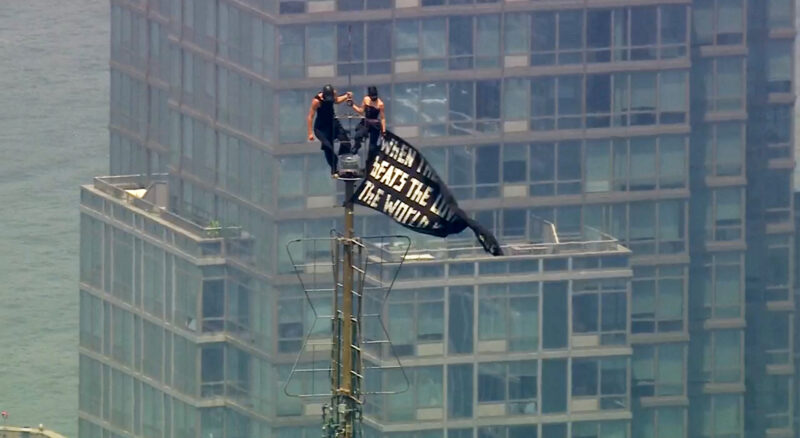
NEW YORK — A couple known for scaling tall buildings climbed to the top of the needle of the Empire State Building on Wednesday and unfurled a large black banner that flapped in the breeze, about 1,450 feet above the city.
The couple, Angela Nikolau, 33, and Ivan Beerkus, 32, were taken into custody after the stunt, according to a law enforcement official. Nikolau, according to a police document, was charged with burglary — defined in New York state as unlawfully entering a building with the intent to commit a crime. It was not immediately clear whether Beerkus was also charged.
Late Wednesday morning, Nikolau posted a video on her Instagram account that showed a vertiginous view from a narrow platform and that was captioned “Currently at the Empire State Building.”
The message on the banner read: “When the power of love beats the love of power the world knows peace.”
As they stood atop the skyscraper, Beerkus proposed to Nikolau, the law enforcement official said. A photo Nikolau posted to Instagram shows Beerkus getting down on one knee.
The law enforcement official gave Nikolau’s first name as Angelina and Beerkus’ surname as Kuznetsov, which appears to be his birth surname.
The couple were the subjects of a 2024 documentary, “Skywalkers: A Love Story,” about their romance and quest for thrills and fame. In 2022, they climbed Merdeka 118 in Malaysia, which is more than 2,000 feet tall.
The Empire State Building’s needle, which houses communications equipment and a very tall antenna, rises about 200 feet above the top floor of the building.
Climbers with a banner atop the spire of the Empire State Building in Manhattan, on Wednesday, July 1, 2026. After making the ascent, the man proposed to the woman on a tiny platform, 1,450 feet above the city. (Dave Sanders/The New York Times)
It is a surface that is not frequently scaled. In 1994, the French climber Alain Robert did so, according to the Guinness World Records website.
New York City’s skyscrapers and monuments, however, have long been magnets for climbers.
Their attempts have ranged from the modest to the truly harrowing.
In 1918, Harry Gardiner, nicknamed “the Human Fly,” climbed the Soldiers’ and Sailors’ Memorial Arch at Grand Army Plaza in Brooklyn; it is all of 80 feet high.
Philippe Petit walked a tightrope between the towers of the World Trade Center in 1974.
In 2008, after three people — one of whom was Robert — climbed the New York Times Building in a matter of weeks, the Times removed some of the horizontal rods that climbers had used to scale it.
In 2014, a teenager from New Jersey climbed to the spire of the Freedom Tower, which was built on the site of the twin towers.
Jason Barr, an economics professor at Rutgers University who has studied skyscrapers, said that the initial plans for the Empire State Building did not include a spire or antenna, but after the construction of the Chrysler Building, with its distinctive crown, the building was redesigned to include a mooring mast that would stretch into the sky.
“These spires are designed partly for aesthetic reasons but also partly for advertising reasons, like, ‘Look at the top of my building’,” Barr said.
In recent years, artists and exhibitionists have called their unsecured and usually illegal ascents “rooftopping,” documenting the climbs on social media. Aside from structures in New York and Malaysia, Nikolau and Beerkus, have ascended buildings and constructions sites in China and Europe, sometimes with legal repercussions.
But there have been sanctioned climbs of skyscrapers, too. In 2023, actor Jared Leto scaled 18 floors of the Empire State Building, from the 86th floor to the 104th floor, with permission, to promote a world tour for his band Thirty Seconds to Mars.
He performed one of the band’s songs from the 104th floor, an unofficial landing off limits to the public.
KYIV, Ukraine — Russia hammered Kyiv in an 11-hour drone and missile attack overnight into Thursday morning, killing at least 21 civilians in the city and injuring scores more in what Moscow said was retaliation for Ukrainian strikes on Russian oil facilities.
Loud explosions shook the Ukrainian capital, where more than 50,000 people sheltered in subway stations after authorities issued air raid warnings, the Kyiv Metro said. Emergency crews dug through the rubble of collapsed and charred apartment buildings all day in search of victims.
Russia’s Defense Ministry said in a statement that the bombardment was in response to Ukraine’s recent barrage of long-range strikes, which have caused severe fuel shortages and put pressure on President Vladimir Putin.
Ukraine’s frequent attacks inside Russia — described by Ukrainian President Volodymyr Zelensky as a 40-day blitz — have especially targeted oil refineries, causing a fuel crisis that has frustrated Russians already feeling the war’s economic toll.
More than four years after Moscow’s full-scale invasion of its neighbor, Ukraine’s technological advances in drone engineering have in recent months given it an edge, analysts and Western officials say. Its strikes on supply routes behind the front line have robbed the Russian army of momentum on the battlefield and made its progress slow and costly, they say.
Kyiv’s forces have especially targeted supplies to Crimea, triggering the worst fuel crisis on the Black Sea peninsula since it was illegally annexed by Russia in 2014 and delivering a blow to the Kremlin’s narrative that Moscow is winning the war.
Ukrainian officials say they are trying to force Putin to the negotiating table, but so far Moscow’s response has been to hit back.
Diplomatic efforts to end the war, most recently by the Trump administration, haven’t produced results. President Donald Trump and Zelensky are expected to attend next week’s NATO summit in Turkey.
Putin thinks that time is on his side, that Western support will peter out and that Ukraine’s resistance will eventually collapse under pressure from strategic bombing, analysts say.
Ukraine’s top diplomat says it was a ‘night of horror’ in Kyiv
The attack killed 21 people in Kyiv, according to the country’s Emergency Service. More than 90 others were reported injured.
Foreign Minister Andrii Sybiha said it was a “night of horror” in the capital, which had a prewar population of roughly 3 million people.
Flashes from exploding drones and missiles lit up the night, and loud booms echoed through Kyiv. Tracers from air defense fire streaked through the air as a huge pall of black smoke rose into the sky.
More than 30 locations across the city reported damage, including about 20 residential buildings, authorities said.
Kyiv resident Serhii Budko said three or four ballistic missiles hit his district of the city. “We were inside the shelter and felt the shelter shaking — the ceiling and floor, everything,” the 24-year-old said.
In Kyiv’s Desnianskyi district, residents were trapped inside a damaged nine-story building, and in the Darnytskyi district, most of a nine-story building collapsed.
In Ukraine’s central Dnipropetrovsk region, meanwhile, a Russian strike killed a 7-year-old girl and wounded four other people, including an 11-year-old girl, all members of the same family, regional head Oleksandr Hanzha said.
The bombardment was “exclusively against military or military-linked targets,” Kremlin spokesperson Dmitry Peskov said.
Russia’s aerial attacks on Ukraine have repeatedly hit civilian areas. More than 16,000 Ukrainian civilians have been killed in the war, according to the United Nations.
No reliable figures are available for battlefield casualties in the war. A report earlier this year by the Center for Strategic and International Studies, a think tank, estimated that up to 1.8 million soldiers have been killed, wounded, or gone missing on both sides, with Russian troops accounting for most of that number.
Ukrainian officials urge countries to provide more air defenses
The attack used “high-precision long-range weapons” and drones to strike weapons factories and energy facilities in and around Kyiv, and “military airfield infrastructure” in other parts of Ukraine, the Russian Defense Ministry’s statement said.
In all, Russia fired 74 missiles and 496 drones in the attack, Ukraine’s air force said.
Ukraine’s air defenses have improved throughout the war, especially in countering Russian drones. But it is harder to stop ballistic missiles, which accounted for roughly a third of the missiles fired overnight.
Sybiha, the Ukrainian foreign minister, said in April that the country’s weapons factories meet up to 75% of its military’s needs. But he and other Ukrainian officials have pleaded with partner countries to supply more Patriot systems that offer the best protection from Russian aerial attacks.
Ukraine attacks another Russian oil refinery
Ukrainian forces struck one of Russia’s largest oil refineries overnight in the Nizhny Novgorod region east of Moscow, starting a fire, Ukraine’s General Staff said.
Also, Ukrainian forces struck a railway bridge over the Siverskyi Donets River in the Russian-occupied Luhansk region, it said. The bridge was used by Russian forces to transport personnel, weapons, and military supplies, according to the General Staff.
WASHINGTON — Federal immigration officials have detained more than 10,000 people in the last five days, a major surge that has stemmed from a push within Immigration and Customs Enforcement to increase arrest rates.
Agency leaders in recent days ordered top ICE officials to focus more of their officers’ efforts on picking up immigrants they want to deport, according to documents obtained by The New York Times and interviews with federal officials. ICE officers have arrested people at check-ins, with immigration authorities, during traffic stops and on the street. The push has apparently yielded results, with recent arrest numbers roughly doubling from the 1,000 picked up each day earlier this year.
ICE officials were told that the White House wanted an increase in arrests, according to three officials with knowledge of the conversations. One of the officials said that it was unclear how long the pace could continue, but that ICE officials had been told that 2,000 arrests a day was the new standard for enforcement.
The surge has occurred without the fanfare of highly visible operations last year, in which officials announced their intentions ahead of time to target cities, including Chicago and Los Angeles, and send officers pouring into the streets. Markwayne Mullin, the homeland security secretary, pledged to mount a quieter enforcement campaign following the chaos of a monthlong operation in Minnesota, where federal officers killed two U.S. citizens.
The rise in arrests suggests that President Donald Trump is determined to meet his pledge of mass deportations, a goal that is popular among his conservative supporters but that has fueled a political backlash amid the administration’s heavy-handed tactics. The Trump administration has promised more aggressive actions, particularly after the Supreme Court in recent days expanded the president’s power to set federal immigration policy, but undercut his effort to eliminate birthright citizenship for the children of immigrants in the country illegally and visitors.
“Our message is clear: If you come to our country illegally, we will find you, we will arrest you and we will deport you,” Lauren Bis, a Department of Homeland Security spokesperson, said in a statement.
Word of an uptick in arrests has started to trickle out, sowing fear in immigrant communities and among advocates already on edge after the Supreme Court ruled that Trump could end deportation protections for people from disaster- and war-torn countries under the Temporary Protected Status program.
In recent days, ICE officers have launched an intense push to ramp up arrests. Arrests topped out Saturday when authorities detained more than 2,400 people, according to documents obtained by the Times. The detention population inside ICE facilities has jumped nearly 4,000, to more than 63,000 in the agency’s custody as of Tuesday, according to internal documents.
In emails to ICE personnel, agency leaders applauded the latest numbers.
“I want to personally thank each of you for your extraordinary efforts this past weekend,” Marcos Charles, the head of ICE’s deportation wing, wrote this week. “Through your dedication, professionalism, and unwavering commitment to our mission, enforcement and removal operations achieved remarkable operational results.”
Top ICE officials were told to make sure that as many officers as possible were working seven days a week, and to put 80% of their officers on arrest operations, according to two U.S. officials who spoke on the condition of anonymity to discuss internal conversations. Top supervisors were expected to be working closely on the operations as well.
Last year, Stephen Miller, Trump’s deputy chief of staff, set a goal of 3,000 arrests a day for the agency, a figure it was not able to hit. Since then, the agency has hired thousands of new officers and has had its budget increased by billions of dollars for the enforcement surge.
Across the country, immigration lawyers and advocates have reported an uptick in enforcement.
In South Texas, Sister Letty Ugboaja, a Nigerian nun, was arrested on her way to church on Sunday morning, according to Sister Norma Pimentel, her colleague. Ugboaja is a local nurse who also helps at a parish in the region. Pimentel called local leaders after learning of the arrest, and congressional officials soon got involved and pushed for her release.
On Sunday, she was let go from ICE custody, and Pimentel was there to greet her.
Pimentel said that Ugboaja was distraught upon her release.
“It took her awhile to be able to talk — she was crying,” she said.
In southern Florida, attorneys have been on alert. Cindy Blandon, an immigration attorney in Miami, said that one of her clients, a Nicaraguan father of two children, had an immigration court hearing set for 2027, but was arrested by ICE on Monday during a routine check-in.
And in Utah, Ysabel Lonazco, an immigration attorney, has noticed an uptick as well. She has spoken to several clients, including a man who was driving when he was picked up by the agency for overstaying his visa this weekend.
“It sets further fear in the community,” she said. “People don’t want to leave their houses. They are afraid to drive to do their grocery shopping. They are just terrified with these detentions.”
One of her clients, Arturo, a 48-year-old Mexican man, was arrested in Salt Lake City on his way to a soccer game Sunday, according to his wife, Veronica. She said the arrest had shattered their family.
“They’re getting people — be very careful,” her husband told her from ICE detention, she recalled through an interpreter. She said her 13-year-old son was traumatized by the arrest of his father, who had worked most days of the week building furniture before his arrest, she added.
A Department of Homeland Security spokesperson said that Arturo had illegally reentered the United States and would be held in ICE custody as the agency sought to deport him.
Veronica said the family had not expected to be caught up in Trump’s deportation sweep.
“We were worried, but it wasn’t like we were extremely worried. We figured — we don’t have any criminal record, we pay taxes every year,” she said.
WASHINGTON — A federal judge in Washington on Wednesday blocked the United States Postal Service from carrying out changes to its delivery of mail-in ballots, writing that recent policies directed by President Donald Trump ran afoul of legal terms the agency accepted more than four years ago to ensure timely delivery of mail ballots.
In a brief opinion, Judge Emmet G. Sullivan pointed to a settlement agreement reached between the NAACP and the Postal Service in December 2021, after the group sued the government arguing that postal delays threatened to disenfranchise voters. At that time, the agency agreed to “prioritize monitoring and timely delivery of election mail.”
Sullivan, an appointee of President Bill Clinton, wrote that the Postal Service’s proposal, which includes not delivering mail-in ballots in states that decline to hand over voter data to the federal government, violated the settlement agreement, which the parties had agreed would run through the 2028 election cycle.
Sullivan wrote that Trump’s order appeared “designed to exert federal control over who in the United States may be sent a mail-in or absentee ballot in federal elections by the Postal Service.” He wrote that the agency had previously agreed to outline plans before each national election and meet with the NAACP to explain how it would ensure efficient delivery of election-related mail.
While another judge in Washington had declined for now to halt the enforcement of the executive order because new rules for the Postal Service had not been finalized at the time, Sullivan concluded that the agency’s recent proposal could be blocked preemptively because it would violate the prior agreement.
Last week, a judge in Massachusetts struck down the main components of Trump’s order, including the creation of lists of eligible voters and changes to mail-in voting. The ruling from Judge Indira Talwani stated that the Constitution granted authority over elections firmly to the states.
The NAACP, which brought the lawsuit in 2020 amid a spike in voting by mail during the COVID-19 pandemic, had raised concerns about delays in mail delivery. The group argued that the new proposed changes raised fresh worries for coming elections. Among the changes it contested were the addition of new individualized bar codes on mail-in ballots and a plan to reject ballots from states that do not submit a list of eligible mail-in voters to the Postal Service ahead of time.
“The proposed USPS changes would have created unnecessary and unlawful barriers, in direct violation of the USPS’s mandate to prioritize election mail,” Anthony P. Ashton, the NAACP’s senior associate general counsel, said in a statement. “Those barriers could have disproportionately harmed Black voters, who are more likely to rely on mail voting due to long-standing inequities in access.”
“Put simply, the use of mail-in voting helps reduce voter intimidation at the polls and Election Day dirty tricks,” he added.
Postmaster General David Steiner has said on multiple occasions, including to The New York Times this year, that he would follow court orders governing voting by mail.
The agency had argued in filings before the decision that the court could not block the changes until it had finalized its rules and that the changes fell outside the scope of the legal settlement.
The Postal Service has not responded to multiple requests for comment after recent court decisions that partially blocked Trump’s mail voting executive order and the Postal Service’s proposal to impose it.
Under the 2021 settlement, the Postal Service agreed to take extra steps to expedite mail ballots for all even-year federal elections through 2028.
William Hensley, a former election mail specialist at the Postal Service who helped establish those “extraordinary measures” while at the agency, said in an interview that they can include dispatching delivery trucks on extra trips, authorizing local postmasters to pay out employee overtime, and in some cases postmarking and turning around mail ballots locally rather than at regional processing centers.
For this year’s midterm elections, the Postal Service said it will begin enforcing those measures Oct. 27, roughly a week before the midterms.
Benjamin Pinckney, 46, has dreamed of becoming a physician assistant since just after his 20th birthday.
He had been targeted by a drive-by shooter in Jacksonville, Fla., and hospitalized with two gunshot wounds. During his weeklong hospitalization, he said, a physician assistant changed the course of his life by visiting his hospital bed each day and warning him that Black men with gunshot wounds often end up paralyzed — or worse.
“I used to run the streets, you know, on the wrong sides of the track,” Pinckney said. “He made me promise that I would never come into his ER that way again. That was the last conversation we had, right before I was discharged.”
His goal since then has been to become a physician assistant. Pinckney, who spent most of his career working for New York City’s Department of Sanitation and as an Army Reserve medic, recently took a step toward achieving it. In May, he graduated with departmental honors from Lehman College with a Bachelor of Science degree.
After moving from New York to Prince George’s County, Md., he’d planned on applying for physician assistant school this year. But now, he’s worried his dream may be thwarted by new student loan rules.
Starting July 1, the amount of money graduate students will be allowed to borrow from the federal government will be capped. The new student loan limits are part of the GOP’s tax-and-spending legislation known as the One Big Beautiful Bill Act, which President Donald Trump signed into law last year.
The caps are intended to curb the cost of higher education and student loan debt, according to the Trump administration.
But critics widely agree the new limits are too low, especially for students allowed to borrow only $20,500 a year in federal loans due to the law’s controversial definition of a “professional degree.” On June 24, a federal judge temporarily blocked the Department of Education from enforcing that definition. Still, for many students, the new caps won’t cover the combined cost of tuition, housing, and living expenses.
This could leave hundreds of thousands of students who borrow money for graduate school each year at the mercy of private lenders with higher interest rates and fewer repayment options.
Some experts and students also worry that the limits will threaten efforts to diversify the healthcare workforce by deterring minorities and people from low-income households from applying to graduate programs. A drop in incoming students could worsen existing rural and primary care shortages, they argue.
Many politicians and loan experts have acknowledged that the cost of higher education needs to be addressed. But the new federal loan limits are “just not going to achieve that goal,” said Todd Pickard, president of the American Academy of Physician Associates, one of several organizations that have sued the Department of Education over the rules.
“It’d be like if you had a hangnail and I cut your whole arm off instead of just taking care of your hangnail,” Pickard said. “The treatment doesn’t match the problem.”
‘A rock and a hard place’
Students working toward what the law describes as “professional degrees” — including trainee doctors, dentists, pharmacists, and chiropractors — will be allowed to borrow up to $200,000 total, and no more than $50,000 a year.
Meanwhile, the median cost of attending a public medical school is nearly $300,000 over four years, while the median cost of a private medical school education exceeds $400,000, according to the Association of American Medical Colleges.
The caps were set even lower for those pursuing other “graduate” degrees, who face a $100,000 borrowing limit for federal loans over the course of their degree programs. The annual limit for this category of students is only $20,500. Students pursuing physical therapy, physician assistant, and nursing degrees were originally included in this group. But according to new guidance issued by the Department of Education on June 29, some of these students will at least temporarily be able to borrow up to the higher limit, according to The Associated Press.
The Department of Education, which has been sued by clinician trade groups and about two dozen states over the new rules, did not respond to questions for this article.
As the law was written, a physician assistant student who completed their degree within the average two to three years would not have been eligible to borrow the full $100,000. Meanwhile, physician assistants typically start their careers with an average debt of $112,000, meaning some could be forced to finance their education with higher-interest private loans.
“I feel like I’m between a rock and a hard place,” said Olivia Trull, 24, who is scheduled to begin the physician assistant program at Northwest University in Kirkland, Wash., this summer. The 28-month program costs $137,000, with about $62,000 in tuition and fees estimated for the first year, she said. That doesn’t include living expenses.
Before the court order, Trull said she qualified for the maximum annual allotment under the new rules of $20,500 in federal loans during her first year of graduate school. The balance would need to be financed through a private lender.
She anticipated she would need up to $100,000 in private loans to finance her graduate degree and would face loan payments of more than $3,000 a month when she was done.
“I have to actually sit down and have a conversation with myself,” Trull said, to consider “if I want to be drowning in debt for the next 10 years of my life.” One private bank offered her a loan with an interest rate of nearly 14%, she said.
Pinckney, who said he finished his undergraduate degree with about $10,000 in federal student loan debt, said some of his friends who have already applied for private student loans have been quoted interest rates as high as 13%. Meanwhile, interest rates for federal loans for graduate students, which are set annually, are currently about 8-9%. Federal loans also offer more flexible repayment options than private loans typically do.
In May, 25 states and the District of Columbia filed a federal lawsuit against the Department of Education over the new rules. The complaint described the law’s “professional degree” definition as “arbitrary and capricious.”
In a separate federal lawsuit filed in June, the American Academy of Physician Associates and the PA Education Association alleged that the new rules deny students the loan amounts needed to attend physician assistant schools. They argue that PA students should be able to access the higher loan limits available to students in medical school and other professional degree programs. (While “physician assistant” and “physician associate” typically refer to the same role, the AAPA adopted the title “physician associate” in 2021 because of “concern that ‘assistant’ does not reflect the important role of PAs in delivering high-quality healthcare to patients.”)
Meanwhile, Trump administration officials have contended the cost of graduate school is too high across the board. Education Secretary Linda McMahon, speaking before a House committee in May about the new limits, said, “It is our overall goal to bring down the cost of college and education.”
Indeed, some experts acknowledge that the new limits may be helpful in bringing down costs. The federal Grad PLUS loan program, established by Congress 20 years ago, did not cap the amount graduate students could borrow in federal loans. That program was eliminated in the One Big Beautiful Bill Act.
“There is considerable evidence that people borrowed more than they really needed to go to school,” said Sandy Baum, a higher education economist and a senior fellow at the Urban Institute.
Already, some graduate programs have lowered tuition prices, Baum said. In May, for example, the University of California-Irvine announced it would lower the cost of its MBA programs by tens of thousands of dollars to fall below the new federal lending thresholds.
And yet Baum doesn’t anticipate many other schools will follow suit.
“I don’t think we’re going to see some dramatic decline in prices,” she said. “I think some programs could close down because they can’t manage.”
‘Tears have been shed’
The new lending limits will also disproportionately affect Black students, Baum said, because they have historically borrowed more than white and Hispanic students.
For some students who borrowed money to finance their undergraduate degrees, the new limits will hit especially hard. Under the new rules, they will be subject to a lifetime limit of $257,000 in federal student loans.
“There will be students who can’t enroll,” Baum said.
Andrei Robu, 26, a medical student at the Medical University of South Carolina, leads the Financial Literacy Interest Group on the Charleston campus. He said many of his peers are worried that the lending limits will make the student body less diverse.
He is also concerned that, because the demand for acceptance into medical school is already so high, schools could prioritize entrance for students from wealthy backgrounds and “still fill up their classes.”
“That’s just not what we want in our physician workforce,” said Robu, who isn’t subject to the new rules as a current student. “We want to represent the population of the country at large.”
Jasmine Vasquez, 26, who has been accepted into the physician assistant program at South College in Atlanta, decided to defer her enrollment until 2027, partly to see if her financing options change. She is worried about taking on too much debt from a private bank.
“Tears have been shed multiple times,” said Vasquez, who is due to give birth in September. “It’s nothing that’s within my control.”
Betsy Mayotte, president of the Institute for Student Loan Advisors, expects the new rules will force some graduates into bankruptcy when they can’t afford to repay private loans.
First, though, she expects enrollment numbers to drop and some graduate programs to close because they can’t recruit enough students. Completion rates will also drop, she expects, as students run into federal loan limits partway through their degree programs.
Beyond that, she predicts healthcare graduates will seek jobs in high-paying specialties, exacerbating shortages in rural and underserved communities.
“They’re going to go where they can make the most money,” Mayotte said.
Benjamin Pinckney wants to go to graduate school to become a physician assistant. But he worries new federal student loan limits may force him to borrow money from a private bank at a higher interest rate. (Erica S. Lee for KFF Health News)
Pinckney said he is “not really sure” what the future holds. He paid for most of his undergraduate education by working while he was in school, but that’s typically not possible for full-time physician assistant students.
He has considered applying to a biomedical science graduate program instead, which he estimated would cost about $30,000 — an amount that’s “a lot more doable,” he said. It would allow him to potentially work in a lab or in pharmaceuticals, he said. It’s still aligned with medicine, he said, but it wouldn’t help him realize his goal of working with patients.
“Maybe this thing will blow over,” he said of the new federal loan limits. In the meantime, he’s holding out hope.
“If I can influence one person’s life, that would be my way of paying him forward for what he did,” he said, referring to the physician assistant who inspired him back in 1999. “It’s very hard to pivot from that dream.”
KFF Health News is a national newsroom that produces in-depth journalism about health issues and is one of the core operating programs at KFF — the independent source for health policy research, polling, and journalism.
This eternal blustering by the U.S. and Iran over the control of the Strait of Hormuz is just that. Two nation-states vying for control of a waterway neither has the right nor historical precedent to. I can’t say I blame Iran, which from any vantage point was — despite its history — unjustifiably attacked by Israel and the U.S. Where is Iran in this picture? Why is President Donald Trump taking full responsibility for keeping it open? What role should a NATO peacekeeping force be playing? Why are the peace negotiations being driven by Trump and Iran? Where is Israel in that picture? Unless Israel is totally complacent and under the thumb of Trump, how can he and Iran expect to sign a treaty governing southern Lebanon? Something just doesn’t smell right.
Tim Reed, Philadelphia
Heat safety
As Philadelphia welcomes thousands of visitors for a summer filled with historic events, matches, and celebrations, it’s important to remember that extreme heat poses serious health risks.
Extreme heat is the leading cause of weather-related deaths in the United States. Forecasts suggest above-average temperatures throughout summer — and we’re all really seeing the truth of that this week. The combination of heat, humidity, and dense crowds can quickly lead to heat-related illnesses.
There are three simple but critical steps everyone should follow:
Stay hydrated. Drink water regularly, even if you do not feel thirsty. Avoid sugary, caffeinated, and alcoholic beverages.
Stay cool. Take frequent breaks in shaded or air-conditioned spaces. If your home is too warm, visit public places such as libraries, malls, or designated cooling centers.
Stay connected. Check in on friends, family, and neighbors, especially those at higher risk. Make sure pets also have access to water and shade.
Philadelphia’s historic summer events should be a time of celebration. By taking a few simple precautions and looking out for one another, we can ensure this season is not only memorable but safe for all.
Jennifer Graham, CEO, American Red Cross Southeastern Pennsylvania Region
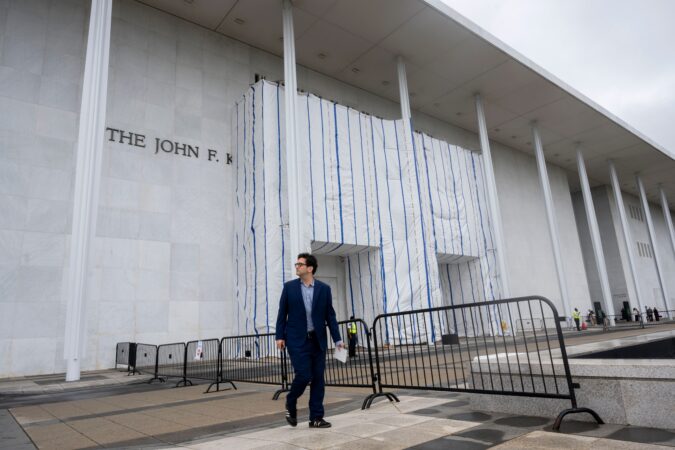
Ignoring Public Law 88-260, which established the center as “a living memorial to be named in [JFK’s] honor,” the brief asserts that Trump’s name should also be on it. The reason being that the center’s trustees thought Trump’s experience building things warrants his name being placed back above President Kennedy’s, even though Trump was 25 when the center opened and he had nothing to do with its construction.
The brief gets worse, stating that Trump’s “construction abilities” would fix the building and restore it as a crown jewel of D.C. Apparently, neither the board of trustees nor anyone at the Justice Department has seen what Trump has done to two of the district’s other crown jewels — the Lincoln Memorial Reflecting Pool and the East Wing of the White House.
Even if the laughable assertions in the brief were true, they are meaningless. The center was named for an assassinated president, and the name of a narcissistic opportunist doesn’t belong there, legally or otherwise. It’s impossible that Todd Blanche was unaware of this frivolous argument. This further cements his place as likely the most unfit person ever nominated to serve as attorney general. The only law he cares about is the law of Trump.
Stewart Speck,Wynnewood, speckstewart@gmail.com
Join the conversation: Send letters to letters@inquirer.com. Limit length to 150 words and include home address and day and evening phone number. Letters run in The Inquirer six days a week on the editorial pages and online.
DEAR ABBY: I’ve been married for 20 years and have three kids: 19 (in college), 17 and 15. My wife and I sleep in separate beds and haven’t had sex in more than five years — her choice, not mine. We tried counseling in the past but never got anywhere.
My wife is not investing in our relationship and isn’t interested in seeking outside help. At this point, I’m in it for the kids and my faith in God. I long to be in an intimate relationship. I feel incredibly lonely and have a growing resentment toward my wife. I work two jobs; she stays at home — doing what, I can’t tell you. She’s resistant to going to work. I’m afraid of the crash and burn of a divorce and how it would impact my children and my career. Please advise.
— DESPERATE FOR HELP IN PENNSYLVANIA
DEAR DESPERATE: Your wife may not be interested in getting outside help for your marital difficulties, but you definitely should. If you do, it will help you to clarify your thinking and decide how to rationally handle the next steps. From where I sit, your marriage died five years ago, and you shouldn’t have to live the way you have been.
** ** **
DEAR ABBY: My husband’s sister “Jewel” and her husband sometimes make condescending comments and embarrass me. Most recently, I held a family get-together at my house and prepared lots of food for it. Great meal and great time had by all.
Her husband came in late, walked past every dish and announced there was nothing there he liked. He then told Jewel, “Let’s go and pick up KFC. I’m hungry!” Jewel didn’t go, but she looked at me and said to the crowd, “Oh, my dear, you were cooking a lot. I’m so proud of you!” Neither one ate anything, but everyone else loved it.
There are some people you just don’t like to be around. How do I avoid inviting these people to my house or anywhere?
— HAD IT IN FLORIDA
DEAR HAD IT: Because Jewel is your husband’s sister, you may not be able to avoid them entirely. However, because the issue seems to be with your cooking, exclude them from gatherings in which you are the chef, or serve them a bucket of KFC. (With a smile, of course.)
** ** **
DEAR ABBY: Some of my friends and relatives have passed away recently, and some of the families have requested donations to religious organizations or charities I don’t want to support (nor do I wish to send flowers or plant a tree). Is it acceptable to send a donation to a charity that feeds children or in other ways works for the good of humankind? I do want to acknowledge the family’s loss. What would you suggest?
— MEMORIAL MALAISE
DEAR MEMORIAL MALAISE: I’m sorry to hear you have lost so many loved ones. However, it would be inappropriate to honor the deceased with a donation to a charity of your own choosing. If you want to support the family but not the causes they’ve suggested, enclose a check with a thoughtful sympathy card and trust that the money will be used to offset the funeral expenses.
ARIES (March 21-April 19). A problem can seem small to everyone else and still feel enormous to the person living it. Because problems don’t obey laws of scale. Small things can have tremendous emotional significance. If it’s a big deal to you, it’s a big deal, period.
TAURUS (April 20-May 20). It’s an ideal moment to update your surroundings and relationships to match who you are now. Your closet, like your contact list, contains artifacts from previous chapters. Release what no longer reflects your current life.
GEMINI (May 21-June 21). Each individual who interacts with others is both a person, and an idea of a person. We never interact with people completely objectively. We interact with them and our ideas about them at the same time. Today, some of those ideas will need updating.
CANCER (June 22-July 22). What you want is in fine alignment with the interests of those around you. This makes manifestation much easier. You won’t have to convince anyone. No hard sell — no soft sell either — just building on the enthusiasm that already exists.
LEO (July 23-Aug. 22). You’ll work without proof that you’re doing it right. But you know that even if this idea doesn’t work, you’ll have another one. Your confidence doesn’t depend on success. It depends on your faith in your own ability to keep creating.
VIRGO (Aug. 23-Sept. 22). It’s not true that all dark clouds have a silver lining. Sometimes it’s black. Sometimes it’s gold. Sometimes everything disperses in a fog so diffuse there’s no lining at all. But every weather reveals something that sunshine alone cannot.
LIBRA (Sept. 23-Oct. 23). There are things you know but don’t yet know that you know. Writing has a way of revealing them. Once thoughts leave the swirl of the mind and take shape on a page, patterns emerge, priorities become obvious and hidden assumptions introduce themselves.
SCORPIO (Oct. 24-Nov. 21). Smart people sometimes hide behind being smart. You’ll be around the dynamic today — people trying to have interesting conversations instead of real ones. Things gets better when nobody is trying to prove anything. So how can you put them at ease?
SAGITTARIUS (Nov. 22-Dec. 21). Where does your responsibility end and theirs begin? Today you can clean up some of the blurred lines between “my job” and “your job.” Remember that what you establish in the early stages of a relationship is likely to become the norm.
CAPRICORN (Dec. 22-Jan. 19). What if the universe wants to give you what you ask for, but it doesn’t understand the request? In some small way, give the very thing you want. This will serve as an example — a template for the universe to follow and scale up.
AQUARIUS (Jan. 20-Feb. 18). Animal trainers know that training a relaxed animal is challenging, while training a stressed animal is near impossible. The human animal also learns better without too much stress and pressure. The education itself is challenge enough.
PISCES (Feb. 19-March 20). Throughout history, reasonable people have accomplished unreasonable things — things they never imagined they could do. Don’t let a momentary crisis of confidence keep you from going forward. Doubt yourself if you must, but march on anyway.
TODAY’S BIRTHDAY (July 3). It’s your Year of the Vineyard of Dionysus. In Greek myth, the god of wine, theater and celebration taught that pleasure and creativity are close companions. Gatherings become collaborations. Fun turns into opportunity. Joy proves productive. More highlights: You’ll make game-changing sales. You’ll clear up a cluttered area of your life and have a deep peace. Your powers of attraction grow. Aries and Leo adore you. Your lucky numbers are: 15, 20, 41, 6 and 9.
As the nation celebrates its 250th birthday this weekend, the legislative branch has momentarily called it quits.
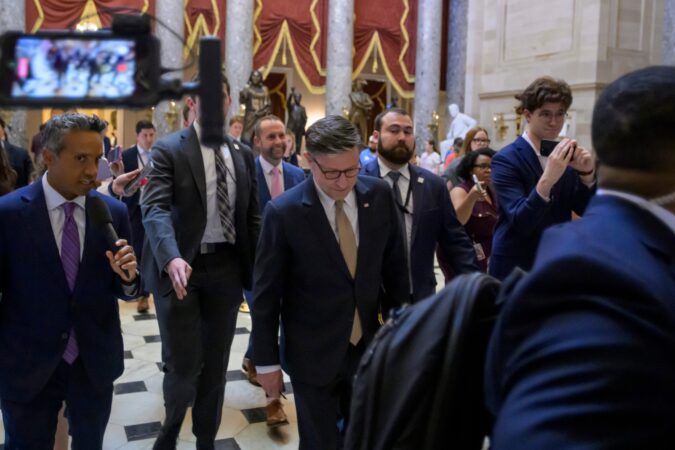
The House leadership on Tuesday abruptly canceled votes and sent lawmakers home early for the holiday recess, Speaker Mike Johnson ‘s majority once again ground to a standstill by a Republican revolt over their own party’s agenda.
In this case, it’s a standoff blocking the annual defense bill — with pay raises for the troops and other matters at a time of war — as the renegade Republicans push to include President Donald Trump’s own priority, the SAVE America Act, a strict voter ID bill. Last week, the Senate similarly shuttered after Trump’s demands.
The emptying Capitol provides another snapshot of the imbalance of power in Washington as a headstrong executive confronts a weakened Congress.
For the second time in as many weeks, the House has simply given up.
“It’s a relatively bad time in Congress,” Republican Rep. Dusty Johnson of South Dakota said recently. “A lot of my colleagues have forgotten how to govern.”
The scene is far different than last year’s Fourth of July
A year ago this weekend brought a wholly different scene in Washington, as Trump gathered Republican lawmakers outside the White House for an ebullient July Fourth ceremony to sign what they called the “One, Big, Beautiful Bill” of tax breaks and spending cuts.
It was a celebratory moment for Trump and the slim Republican majority — and for Johnson, who many doubted could pass the bill over the objections of Democrats who viewed it as tax giveaway at the expense of billions of dollars in cuts to health care and food stamps for Americans in need.
Johnson was so reliant on Trump’s power to help push the bill to approval that he gifted the president a speaker’s gavel, which Democrats and others saw as a worrisome symbol of the transference of power from one branch of government to the other.
“We’re not dealing with Speaker Mike Johnson,” Democratic Rep. Pete Aguilar of California, the caucus chairman, said in a recent interview. “Unfortunately, Speaker Donald Trump does not want us in this week.”
Trump makes conflicting demands on his party in Congress
As Johnson works to keep Trump close, the president’s demands seem to grow in ways the Republican speaker can’t always deliver.
The president’s insistence on the SAVE America Act, which doesn’t have enough support in the Senate to pass, has interrupted almost all other business in Congress. Trump has refused to sign a popular bipartisan housing bill that cleared both chambers until the voting bill is also approved. He calls the housing bill a “yawn.”
Johnson spent four hours last week at the White House and said he spent another two hours with the president this week on a path forward.
“I told him, ‘Mr. President, I don’t have any tattoos, but if I did, it’d say SAVE America on my shoulder,’ OK?” Johnson said over the weekend on Fox News.
“We passed it three times in the House already. We’re going to pass it again.”
But by Tuesday, a House vote to advance the legislation collapsed. Republicans led by Rep. Anna Paulina Luna of Florida argued that Johnson’s plan to attach the voting bill to the defense bill was essentially a doomed strategy that would be rejected in the Senate.
“That’s disappointing,” acknowledged Republican Majority Leader Steve Scalise of Louisiana, who insisted the GOP would try again.
“We’re going to keep trying because we have to,” he said. “We’re not done doing big things.”
As America celebrates its 250th birthday, Congress is adrift
The founders of the new democracy clearly had aspirations for the Congress, putting it first in the Constitution as the Article One branch of government, ahead of the executive and judicial branches.
But as lawmakers face voters this fall, they will have to answer for these dwindling days on their calendar.
House Democratic Leader Hakeem Jeffries said the problem is not the Congress, it’s the GOP.
“Donald Trump is fighting with Senate Republicans, Senate Republicans are fighting with House Republicans, and House Republicans are fighting with each other,” said Jeffries, who is in line to become House speaker if Democrats win control in fall.
“It’s not the Congress that’s struggling. It’s House Republicans who are struggling,” he said.
Jeffries said Democrats are fighting “to make life more affordable for the American people.”
As they left the Capitol for an extended recess, lawmakers voiced frustration with the House’s dysfunction.
Rep. Kevin Kiley, who left the Republican Party to become an independent earlier this year, said the situation in the House is “frustrating.”
“It’s just like déjà vu where many times now we run into some sort of obstacle,” he said, “then the solution is just to go home.”
WASHINGTON — A pair of federal judges struck down a Trump administration overhaul to a public service forgiveness program for student loans, ruling Tuesday in separate cases in favor of advocates who said the program risked becoming a tool for political retribution.
U.S. District Judge Myong Joun in Massachusetts vacated the U.S. Education Department’s changes, saying they overstepped the agency’s power and threatened to violate First Amendment protections for free speech. The ruling came in response to a pair of lawsuits filed by more than 20 states along with a coalition of nonprofit groups and cities.
In Washington, D.C., District Judge Amir Ali in Washington issued a similar ruling in a case brought by nonprofit organizations. The rulings came a day before the new rules were set to take effect.
Under Secretary of Education Nicholas Kent said the department was evaluating next steps.
“The Department stands behind this commonsense policy to ensure that taxpayer dollars are never used to subsidize illegal activities,” Kent said in a written statement.
Congress created Public Service Loan Forgiveness in 2007 to encourage college graduates to work in government and nonprofit jobs. It promised to forgive their federal student loans after they worked in public service jobs for 10 years.
Last year, the Trump administration moved to add new eligibility rules that would strip the benefit from workers whose employers are deemed to have a “substantial illegal purpose.”
The overhaul targeted nonprofits and government organizations that support causes at odds with the Trump administration’s priorities.
It gave the education secretary power to exclude groups from the program if they engage in the trafficking or “chemical castration” of children, illegal immigration or supporting terrorist organizations. Its definition of “chemical castration” included using hormone therapy or drugs that delay puberty.
The overhaul amounted to a major reworking of a program that has canceled loans for more than 1 million Americans. Nonprofits and government groups said it undercut an important benefit that helped attract college graduates to jobs that traditionally pay less than the private sector.
“This decision is a win for the communities that depend on local nonprofits and for the workers who serve them,” said Diane Yentel, president and CEO of the National Council of Nonprofits, one of the plaintiffs in the Massachusetts case.
One of the plaintiffs in the Washington case, Student Defense, said the judge’s ruling is a victory for student loan borrowers.
“Public servants should not have to worry that the federal government will punish them because of their employer’s mission or perceived political views,” said Aaron Ament, Student Defense’s president.
Joun said the new rules threatened to impose the administration’s policy views on employers. The judge also faulted the department for failing to connect its definitions of illegal activity to criminal statutes.
“The Department cannot create new criminal prohibitions through rulemaking,” he wrote.
The judge also questioned the department’s stated rationale for proposing the new rules, drawing on its own estimates that fewer than 10 employers would be barred from the program per year.
“The Department offers no explanation for why a Final Rule with such sweeping consequences is necessary to address the possibility that, at most, ten employers each year may be engaging in illegal activity,” Joun wrote.
In his ruling, Joun noted that more than 100 supporting briefs were filed on behalf of the groups challenging the rules, while none were filed in support of the Trump administration’s change.