Tag: Semiquincentennial

  • How to have a Perfect Philly Day, according to Revolution Museum chief R. Scott Stephenson

    How to have a Perfect Philly Day, according to Revolution Museum chief R. Scott Stephenson

    For R. Scott Stephenson, the ghosts of the Revolution are easily conjured. They are found on every block and every corner of his daily walk from his 18th-century home in Queen Village to the Museum of the American Revolution in Old City, where Stephenson has served as president and CEO since 2018.

    “If you close your eyes, you can feel it,” Stephenson wrote about “The Declaration’s Journey,” the museum’s ongoing grand exhibit celebrating America’s 250th anniversary. “Over there, irascible John Adams and taciturn George Washington stroll to their first meeting. Down the street, brooding Thomas Jefferson takes a break from drafting a declaration to stretch his legs and find a nice pint of cider.”
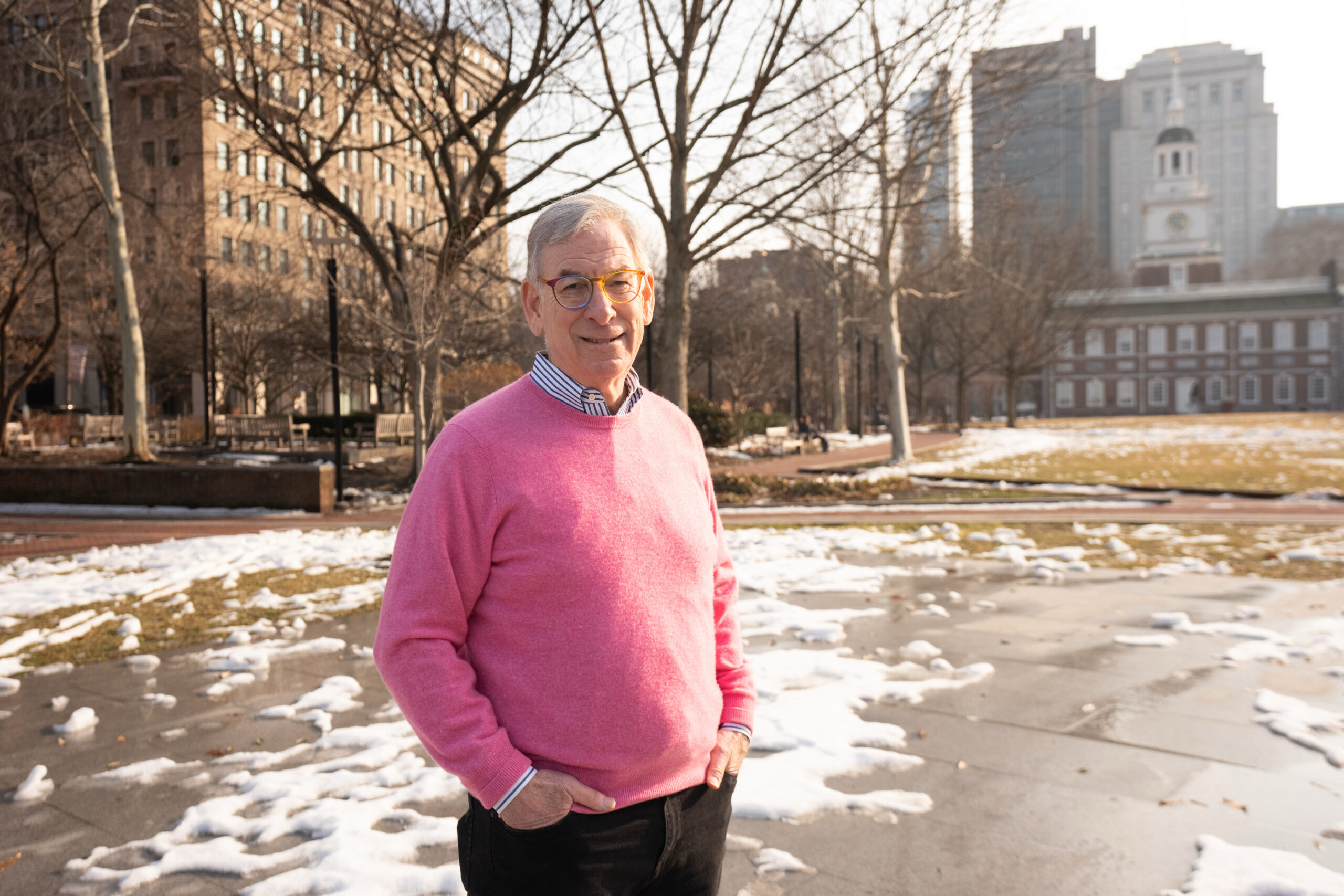
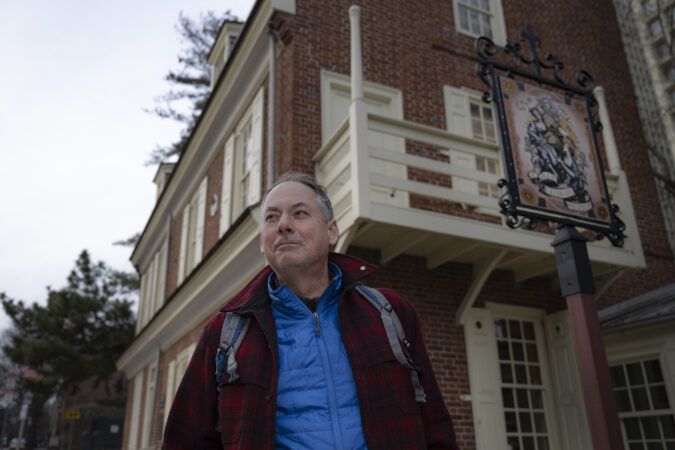
    R. Scott Stephenson has been president and CEO of the Museum of the American Revolution since 2018. This year, as the nation turns 250, the museum takes center stage.

    As Philadelphia takes center stage in 2026 for the national milestone, also known as the Semiquincentennial, Stephenson will no doubt have a little less time to stretch his legs. This year, it falls to him to conjure the spirits of those fiery days of rebellion for the more than 1.5 million visitors Philadelphia is expecting in 2026.

    It is a moment of celebration and introspection the museum has been planning for since before it opened in 2017. With the lauded exhibit exploring the history and global impact of the declaration, and their most robust slate of programming and exhibitions ever, the museum and its staff of about 100 historians and researchers, is ready, said Stephenson.

    “It’s akin to a playwright,” he said. “You’ve written the play, you’ve cast all the characters, you’ve made all the costumes, you built the stage and been through endless rehearsals. We feel so supremely confident to meet the visitors that are coming.”

    A Pittsburgh native, who earned a PhD in American History at the University of Virginia, Stephenson and his wife, a physician, and two adult children, have lived in the Philly area for 25 years. His perfect Philly day would include coffee before dawn, Italian Market shopping and exploring with his daughter, oysters and bookstores, Philly’s only Colonial-era tavern, and a home-cooked meal with the family. And all, with those ghosts trailing close behind.
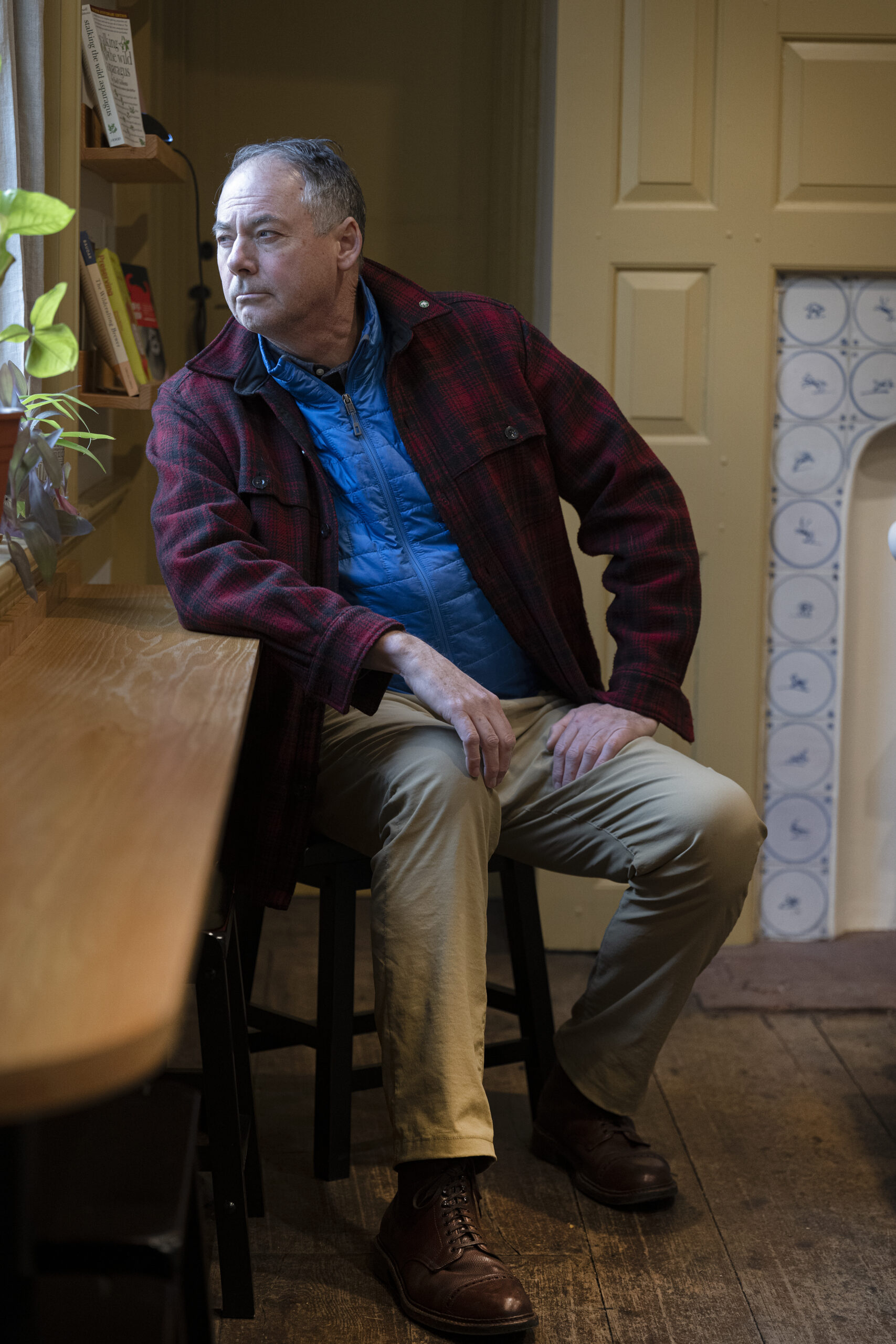
    Stephenson, 60, a Pittsburgh native, lives in Queen Village with his wife and daughter.

    This interview has been condensed and edited for length.

    5:30 a.m.

    Our beloved adopted Philadelphian, Benjamin Franklin, said, “Early to bed, early to rise makes a man healthy, wealthy and wise.” So far, I’m just healthy, the other two may have not necessarily come (laughter). But I think maybe with the thousands of years of farmers in my past, my circadian clock has never changed. I am up without an alarm between 4:30 a.m. and 5:30 a.m. I start my day with a pot of really strong black coffee. Those first couple of hours before anyone is up is golden time for me. I read my periodicals, my newspapers. I still like the sound of paper wrinkling.

    7:30 a.m.

    We are a cooking family. On weekends, we are all about ending the day with a big meal that we make together. So a perfect day is my daughter and I walking to the Italian Market to browse around at the various shops, figuring out what protein we’re going to build dinner around. And nosing around the produce stands and cheese stops. At Fante’s Kitchen Shop are great reproductions of 18th-century German cookie molds for making gingerbreads.

    I do not have one path to get from Point A to Point B anywhere in Philadelphia, so I’m usually going to want to zigzag around a bit. We like to do a little exploration as we bring the groceries back to the house.

    11:30 a.m.

    My wife and I love to walk over to Rittenhouse. Lunch at the Oyster House. I love that block of Sansom. It’s a street that feels like a previous era. There’s an original oyster house in Pittsburgh. That was a place both of my grandfathers ate lunch often. My father would go there. I was taken there as a kid. Although ironically, I have a great grandfather who died from eating, what was called on his death certificate, a “poisoned oyster.” He ate a bad one and died in 1905 when he ate a bad one that was a little too far from the Jersey Shore when it was consumed.

    1 p.m.

    I’d definitely pop into Sherman Brothers Shoes right next door. Incredible shoe store. I am sort of obsessed with Alden shoes, these great, super sturdy, American made, old school leather shoes. So I am at least going to go drool a little bit, and think, “Oh, when I wear this pair out, what’s my next pair of Alden’s going to be?”

    2 p.m.

    On a perfect day, I’m popping into the museum, and trying to remain anonymous. Just for an hour, and go wander around the galleries or sit through a showing of “Washington’s Tent” — and just talk to guests. A lot of my job is storytelling. Being able to talk about the impact we have on people — the best way to do that is to actually tell a story that happened to me.

    3 p.m.

    Our other routine would be to go to Plough & the Stars in Old City. We absolutely love Plough & the Stars, particularly in the winter, to be able to sit in front of the fire there. Have a shephard’s pie or fish and chips and a Guinness.

    4:30 p.m.

    I’m gonna spend some time up at the Book Trader on Second Street. I’m not actually allowed to buy any more books. My library is mostly in storage right now. We just don’t have the room. But I do love a bookstore, particularly a used one.

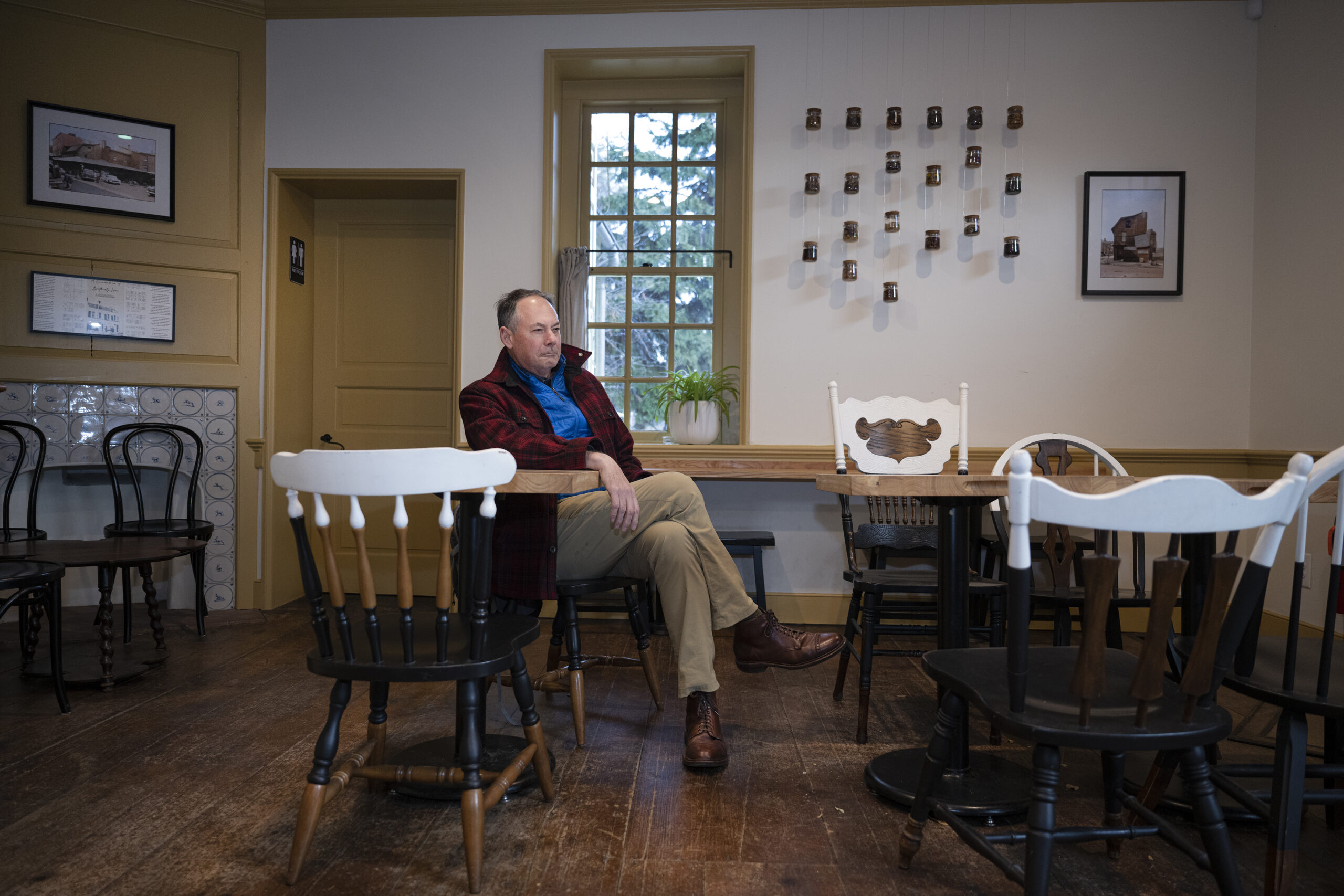
    Stephenson said of Man Full of Trouble tavern and museum: “That’s the only surviving tavern in Philadelphia from the 18th century, where you can literally sit in a room where rum punch and revolution was the game.”

    5:30 p.m.

    Walking home, and frankly whether or not I have been to Center City or Old City, I am almost certainly going to stop, and this a new addition since it just reopened, but at the Man Full of Trouble tavern and history museum. That’s the only surviving tavern in Philadelphia from the 18th century, where you can literally sit in a room where rum punch and revolution was the game. To me, it’s just another reason why this is the greatest city in the nation. Being a few blocks from the Man Full of Trouble, creates a lot of trouble (laughter).

    6:30 p.m.

    It’s probably time to start dealing with those groceries at this point (laughter). At least one weekend day every weekend is family dinner day, where we’re all going to be cooking. So my son and his girlfriend will be in — my daughter’s there, my wife’s there, and we’ll have figured out what’s on the menu. We have a long table. We love to have candles and a candlestick on the table, and turn the lights down. A no device moment, where we really are in each other’s presence.

    8 p.m.

    We are probably going to be playing Wingspan, it’s a board game. There’s a new one called Finspan, which is all about fish in the ocean. We are almost exactly a two minute walk from Queen & Rook Game Cafe. So we’re kind of in a board game neighborhood. We’ll be right at our dining room table and we’ll be playing for a while and drinking a little wine.

    9 p.m.

    Going back to Franklin for a minute, and you remember his aphorism was “Early to bed, early to rise.” I am not the life of a party. Most nights by 9 p.m., my eyes are closed and I am sawing wood (laughter).
  • A new streaming series tells the story of America through the lens of Philadelphia

    A new streaming series tells the story of America through the lens of Philadelphia

    By 2019, after a decade of producing dozens of documentaries about Philadelphia history, the filmmakers at History Making Productions realized they had more than just the story of a city.

    They had the story of America.

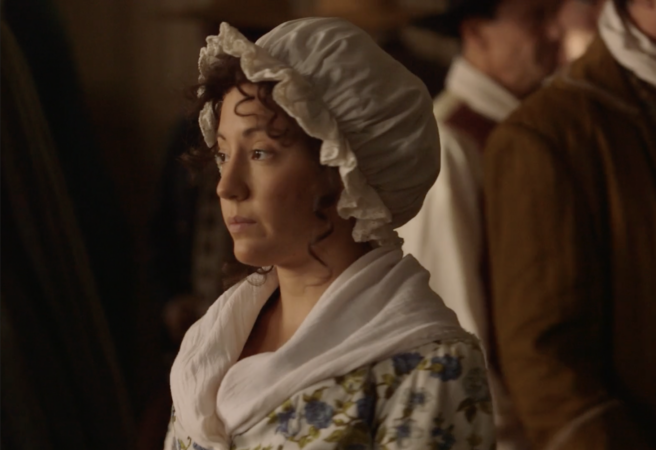
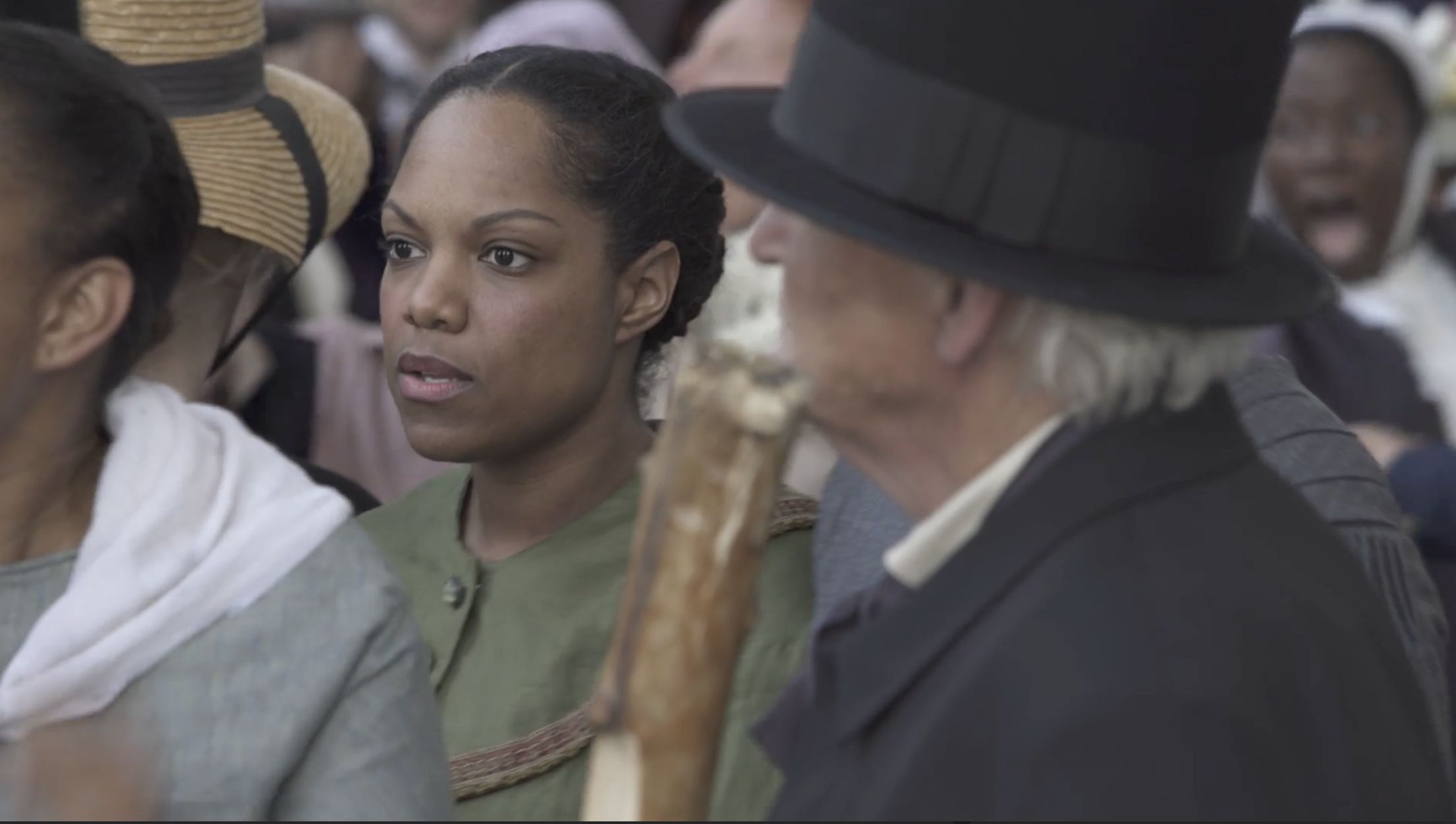
    On Friday, the studio released its epic, new telling of that 400-year-old story: In Pursuit: Philadelphia and the Making of America. Directed by documentary filmmaker Andrew Ferrett and written by author and historian Nathaniel Popkin — and mixing modern footage with historical recreation and more than 600 on-camera interviews — the 10-episode series explores the history of America through the lens of Philadelphia, its birthplace.

    Belinda Davis as Sarah Forten in “In Pursuit: Philadelphia and the Making of America.”

    Timed to coincide with the 250th anniversary of the Declaration of Independence in 2026, known as the Semiquincentennial, the series provocatively grapples with urgent questions, like how did the American experiment actually unfold? And how can it endure?

    “Philadelphia is not just the birthplace of American democracy — it has been its proving ground,” said Sam Katz, series creator, executive producer, and founder of History Making Productions. “This series looks honestly at how ideals were formed, challenged, expanded, and sometimes betrayed, and why that history matters so urgently.”

    ‘A national moment’

    Spanning 400 years of Philadelphia history, from its indigenous roots to the MOVE Bombing the series is equal parts entertainment and civic project. Funded by Katz and philanthropies like Pew Center for Arts & Heritage, Penn Medicine, and Lindy Communities, the series premiered at the National Constitution Center on Thursday.

    Episode One is now streaming online. Katz and the filmmakers will host screenings and community conversations at Pennsbury Manor in Bucks County on Sunday, and another screening Feb. 26 at the Bok Building in South Philadelphia.

    Throughout 2026, as the city and country celebrate the national milestone, a citywide “In Pursuit of History Film Festival” will promote each new installment with monthly screenings and public events. 6ABC will also air monthly hourlong shows to highlight new episodes.

    Sam Katz at Independence Hall, in Philadelphia, Tuesday, Feb. 17, 2026, in Philadelphia

    From the beginning, the project was meant to get people talking about the true meaning of the American experience, and those it has left behind.

    “We’re going to get partners all over the city, and we’re going to have screenings all over the place,” said Katz, the civic-leader-turned-producer. “We’re going to create opportunities for people to come and meet the filmmakers, or meet a historian or an artist, who will then lead a conversation. It really is an opportunity for Philadelphia to take stock of itself.”

    Popkin, who co-founded Hidden City Daily, said the project tells the story of events that shaped a city and a country founded on ideals not yet fully realized — and now divided and tested as they’ve been in decades.

    “The timing is perfect,” he said. “I think a film can really launch a lot of conversations. This is a moment for us as a nation.”

    Fresh portals

    Ferrett, who grew up in Bucks County, and has been directing and producing films at History Making Productions for more than 15 years, said the project revealed itself.

    For earlier Philly projects — including The Great Experiment, an Emmy-award winning, 14-part docuseries spanning 500 years of Philly history, and Urban Trinity: The Story of Catholic Philadelphia — the filmmakers had amassed hundreds of unused hours of interviews with local and national historians, artists, and cultural leaders.

    Over the years, much of it had to be left on the cutting room floor, including magical moments that he said opened fresh portals to Philly history, said Ferrett.

    “We talked to pretty much anyone you can imagine who was either involved with studying Philadelphia history, or in the case of 20th-century history, a lot of witnesses to it,” he said.

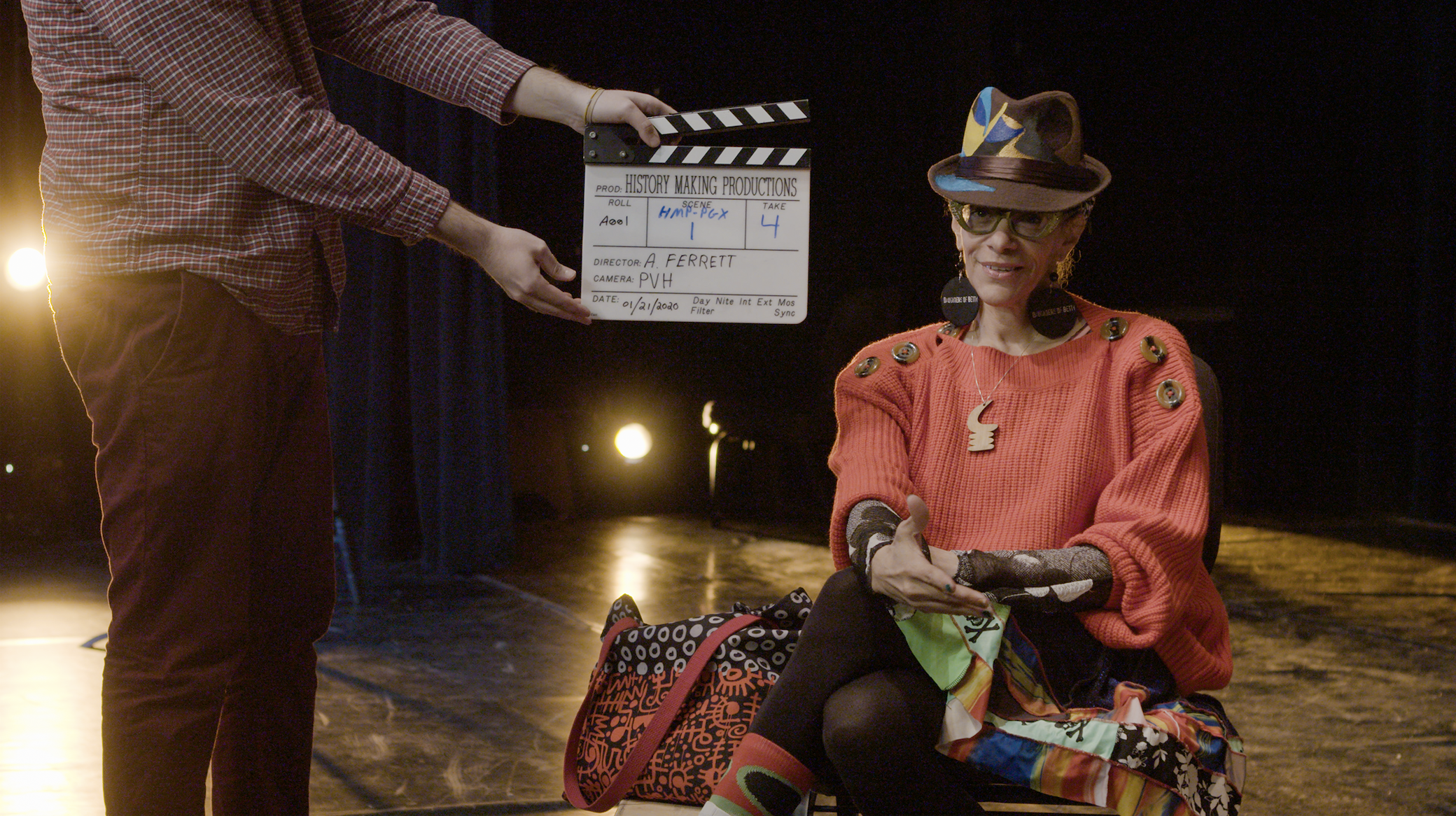
    Poet Ursula Rucker during filming of “In Pursuit: Philadelphia and the Making of America.” The new 10-part docuseries examines the history of America, through the story of Philadlephia.

    Besides, he said, nowhere else could hold a better mirror to America, than the place of its birth.

    “It really became obvious to us that what we have here is much more than a local history,” he said. “It’s a history of the whole United States because so many consequential moments that shaped the country’s history went through Philadelphia.”

    History that feels alive

    Setting out to tell the story anew, Katz raised money to shoot updated interviews and fresh historical recreations.

    Meanwhile, history did not slow down, from the COVID-19 pandemic, to the killing of George Floyd, and the Black Lives Matter movements, to Trump, and immigration crackdowns.

    “We were asking how do we deal with history while all this is happening,” Katz said. “We were writing about it right now.”

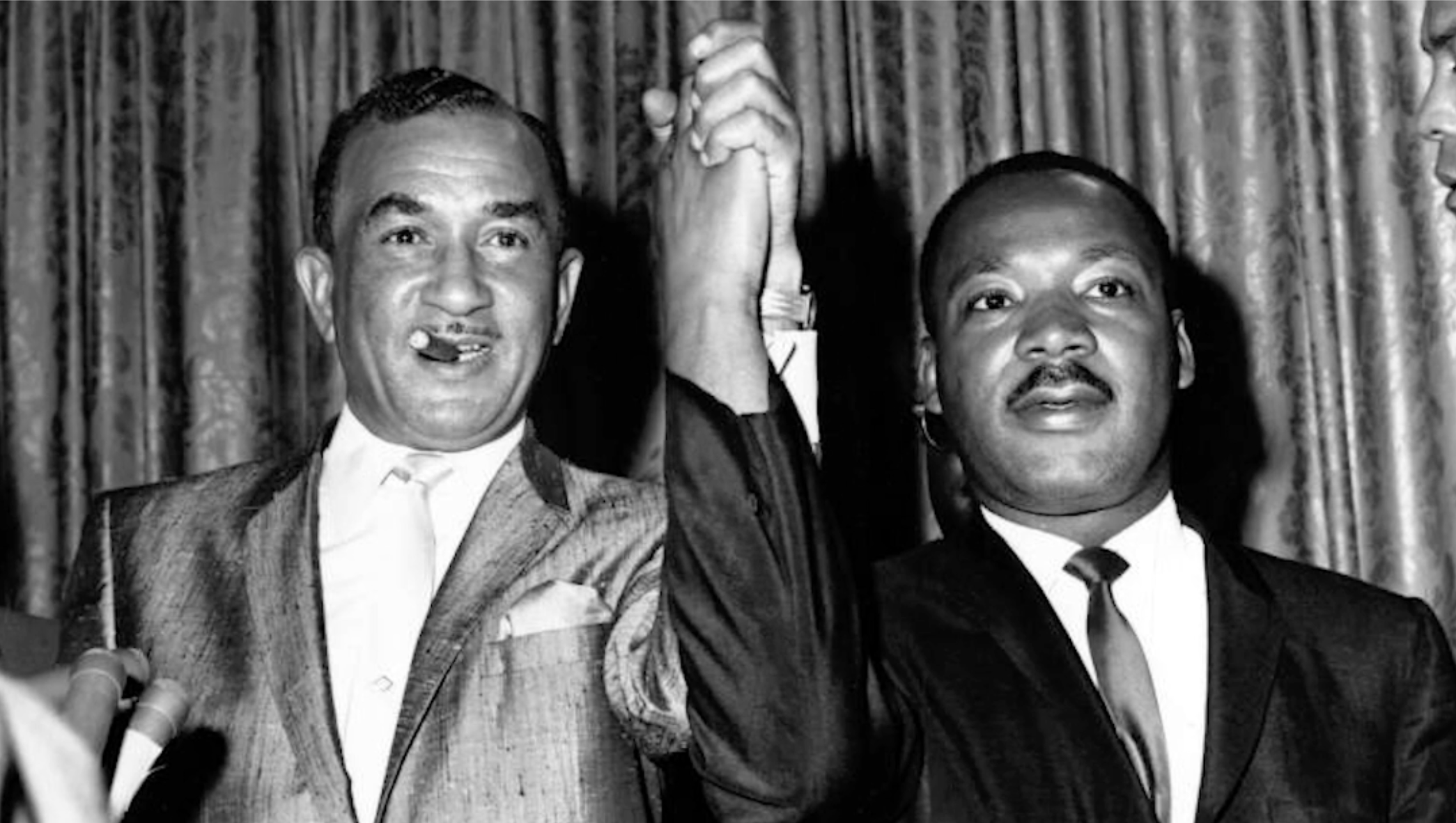
    Cecil B. Moore and Martin Luther King, Jr in footage from “In Pursuit: Philadelphia and the Making of America.”

    Narrated in a warm, resonant baritone by actor Michael Boatman, known for roles in shows Spin City and The Good Wife, In Pursuit is no dull, black-and-white history. The city feels alive, the stakes serious and undecided.

    Threading modern day footage of bustling Philly streetscapes and soaring neighborhood shots with commentary and historical recreations imprints the series with a powerful immediacy.

    The story stretches far beyond 1776, though the dramatic details of that sweltering summer in Philadelphia are recounted in episode three in gripping scenes of refreshingly believable historical recreations.

    “We were able to shoot these lush and full reenactments,” said Ferrett, of all 10 episodes. “Sam was always like, ‘Where’s the dirt? I don’t want to see people with perfect teeth and smiling.’”

    The start

    Episode One, “Freedom (to 1700),” begins at the beginning, pulling no punches as it tells the story of the Lenape people, Philadelphia’s earliest Indigenous settlers — and of the generations of Dutch and other European colonists’ efforts to eradicate them through violence and disease.

    It surprises even in the telling of William Penn, recounting how the rebellious aristocrat’s non-conformist ways landed him in jail more than once, before he founded a City of Brotherly Love meant to be a better world, and a testing ground of the most advanced ideals in Europe.

    The episode also showcases what Ferrett describes as “deepeners,” when the story cuts away from the arc of history for moments of reflection from modern Philly voices.

    “We all feel it here … it’s all in our bloodstream,” poet Ursula Rucker says in the episode. “What does this city mean to me? Everything. Everything.”

  • One of the nation’s oldest hospitals will now be one of Philadelphia’s newest museums

    One of the nation’s oldest hospitals will now be one of Philadelphia’s newest museums

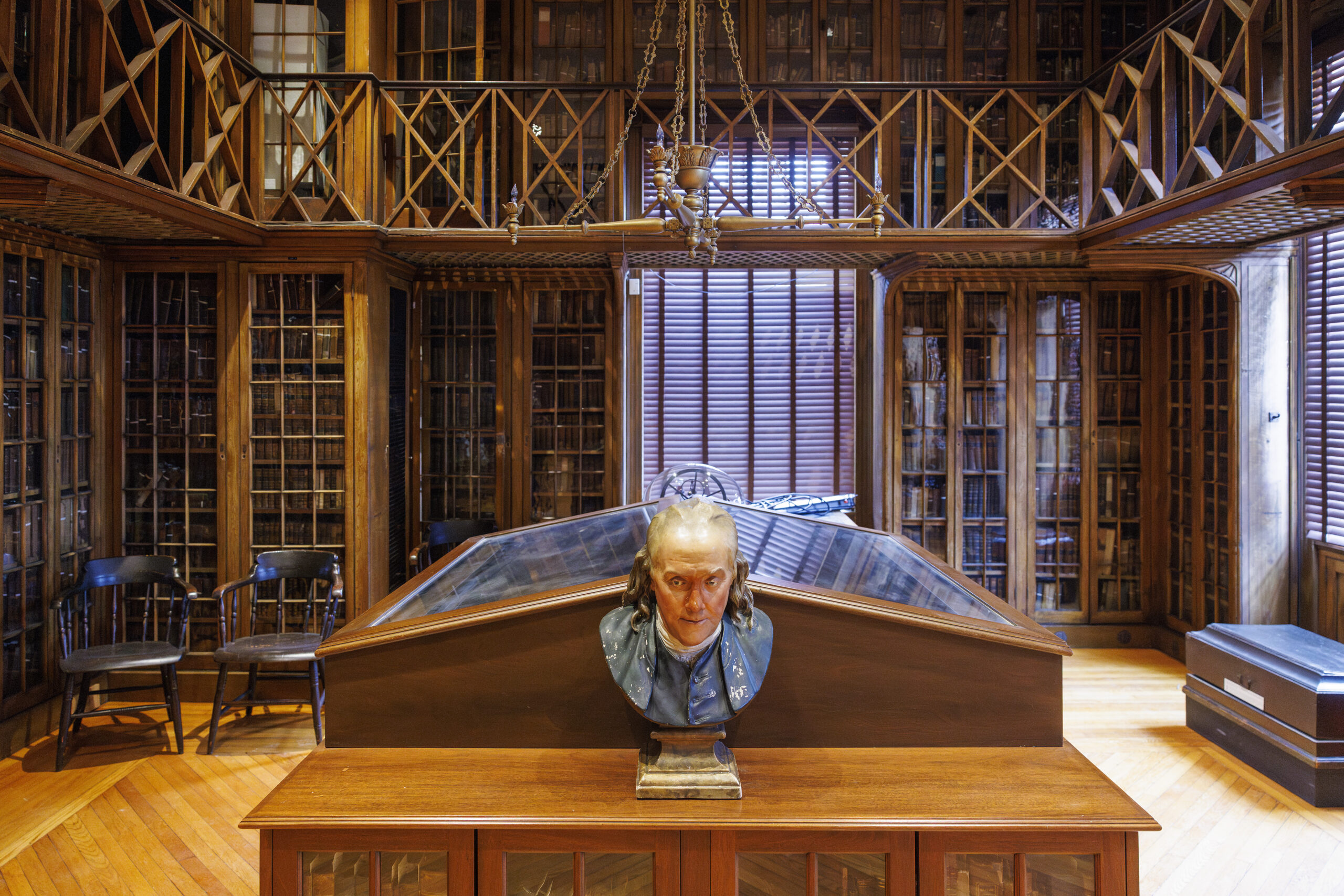
    Before 1751, sick Pennsylvanians had few healthcare options other than often expensive home visits from doctors. That changed when Benjamin Franklin and physician Thomas Bond established a medical institution to treat the physically and mentally ill for free.

    The result was the Pennsylvania Hospital on Spruce Street. The 275-year-old institution became home to the country’s first surgical amphitheater to teach students, the oldest medical library, and a nursing museum, among other historic firsts. It continues to advance medical research as part of Penn Medicine.

    Now the nation’s oldest chartered hospital will become Philadelphia’s newest museum.

    The hospital’s Pine Building, which started construction in 1755, will be converted to the Pennsylvania Hospital Museum, Penn announced on Monday. The museum in the majestic Georgian architecture building at Eighth and Pine Streets, designed by architect Samuel Rhoads, is scheduled to open to the public on May 8.

    “It’s a very Philadelphia story to hear the history of the hospital because it really is about caring for other people,” said Stacey Peeples, lead archivist at Pennsylvania Hospital.

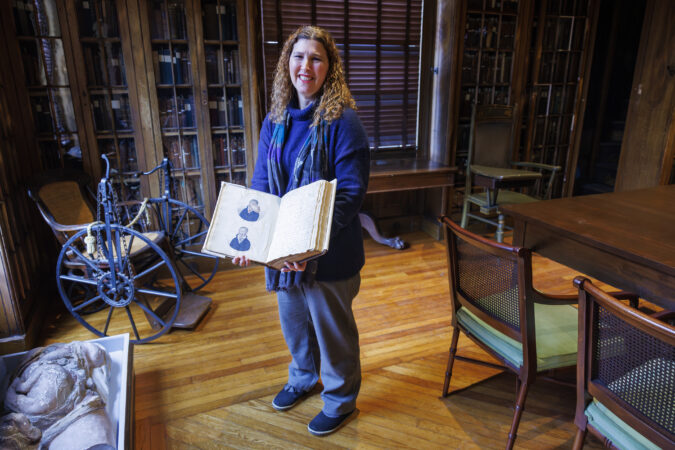
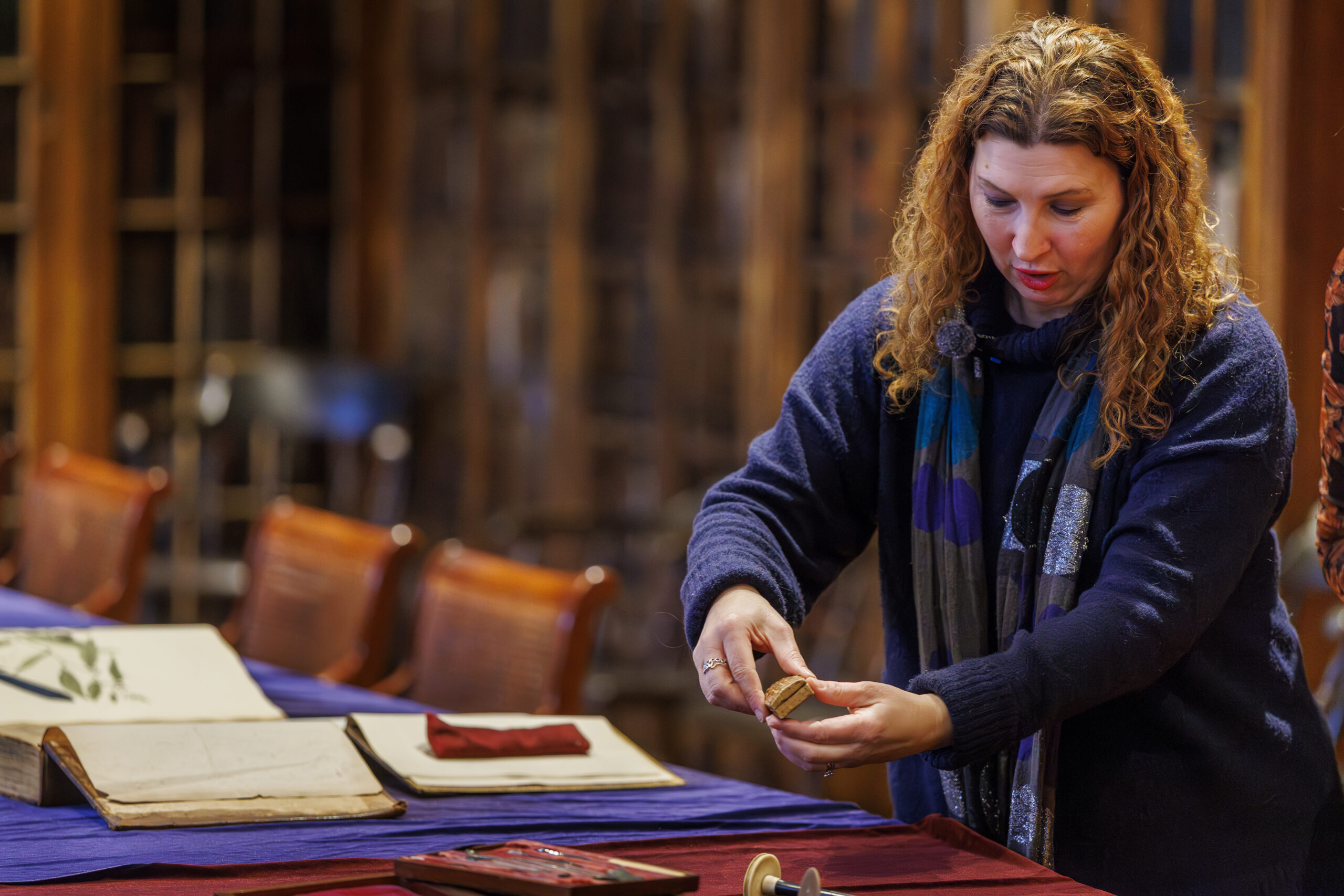
    Stacey Peeples, lead archivist at Pennsylvania Hospital, described artifacts in the hospital’s new museum.

    The medical library, surgical amphitheater, and apothecary have all been restored for the museum. Eight galleries will feature videos, hands-on activities, and archival objects describing the history of the hospital and the care it delivered.

    The opening of the museum in the hospital’s 275th year coincides with America’s Semiquincentennial celebrations. (The University of Pennsylvania Health System, which merged with the hospital in October 1997, will run the museum.)

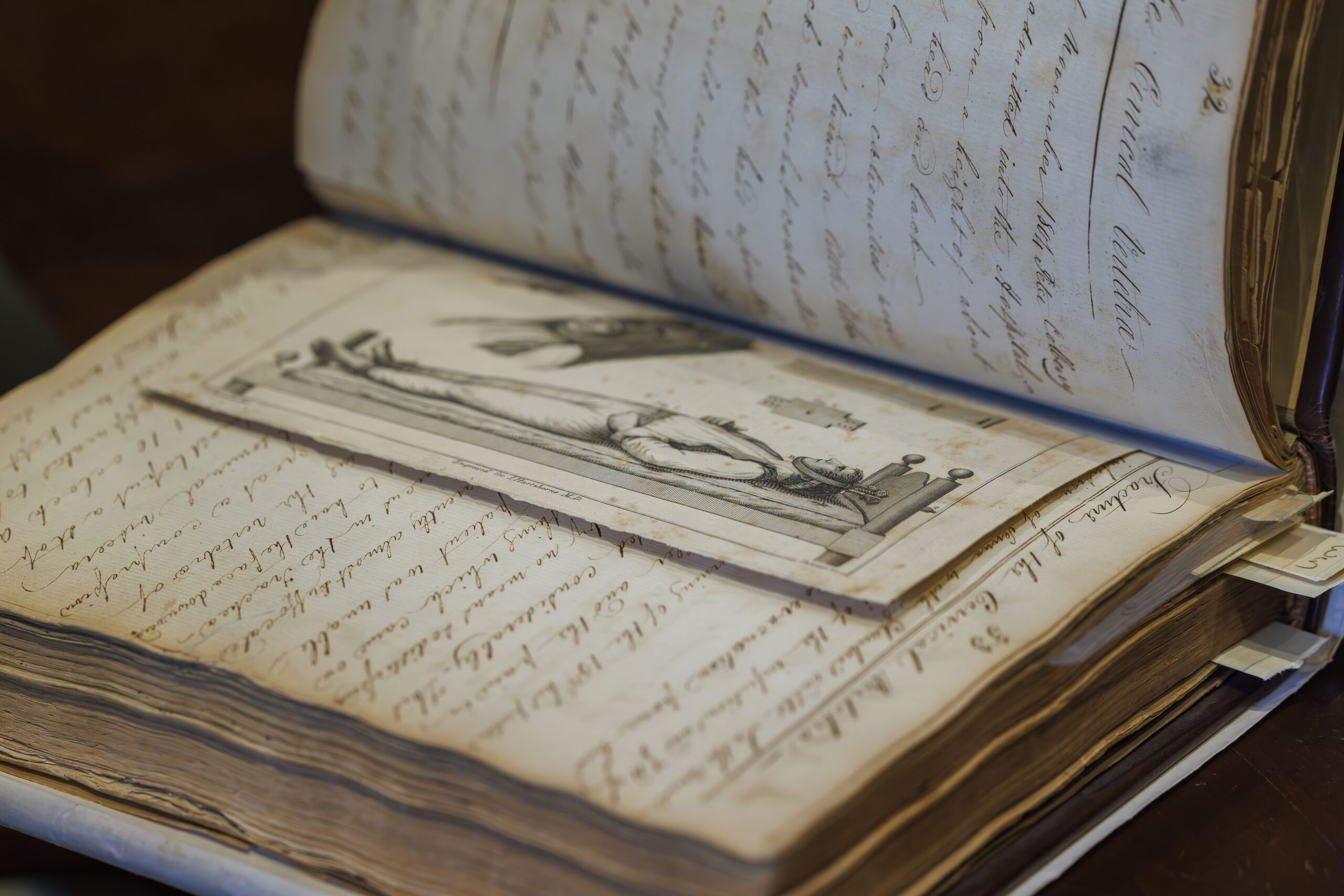
    One of Peeples’ favorite items on display is a collection of medical cases compiled by the hospital’s doctors in the early 19th century.

    Housed in the historic library, the book is flipped to a page showing a man with a seven-pound tumor in his cheek and neck area. Visitors can also find the actual preserved tumor from 1805 on display in the back of the room.

    A historic medical book compiling interesting cases at Pennsylvania Hospital shows an image of Pete Colberry, a patient who fell from ship rigging and was stabilized on a bed to hold him in place, circa 1804.

    A look at early medicine

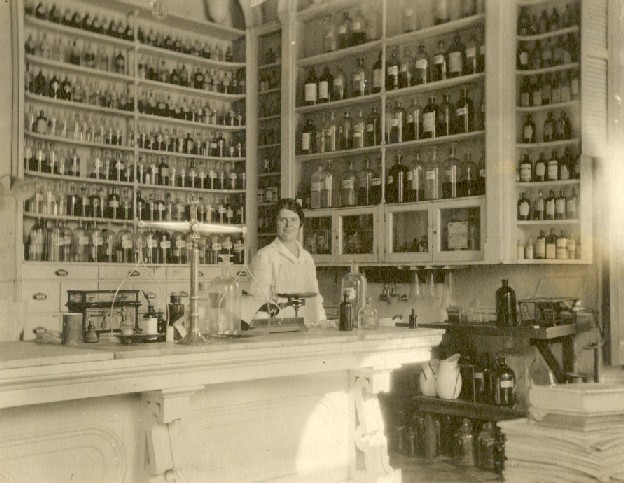
    Pennsylvania Hospital’s apothecary — where medicines were mixed and sold — was last used for that purpose in the early 1900s.

    Most recently, it served as a conference room.

    It’ll now be restored to its original layout, based on historic images from the 19th century. That includes bringing back alcoves filled with shelves of bottles, the scale used to weigh ingredients, as well as a giant counter where the apothecary could mix medications, Peeples said.

    An archival image of Mildred Carlisle working in the Pennsylvania Hospital apothecary, circa 1920s.

    In the historic library, the only room ready for news media to view this week, the artifacts remained scattered around.

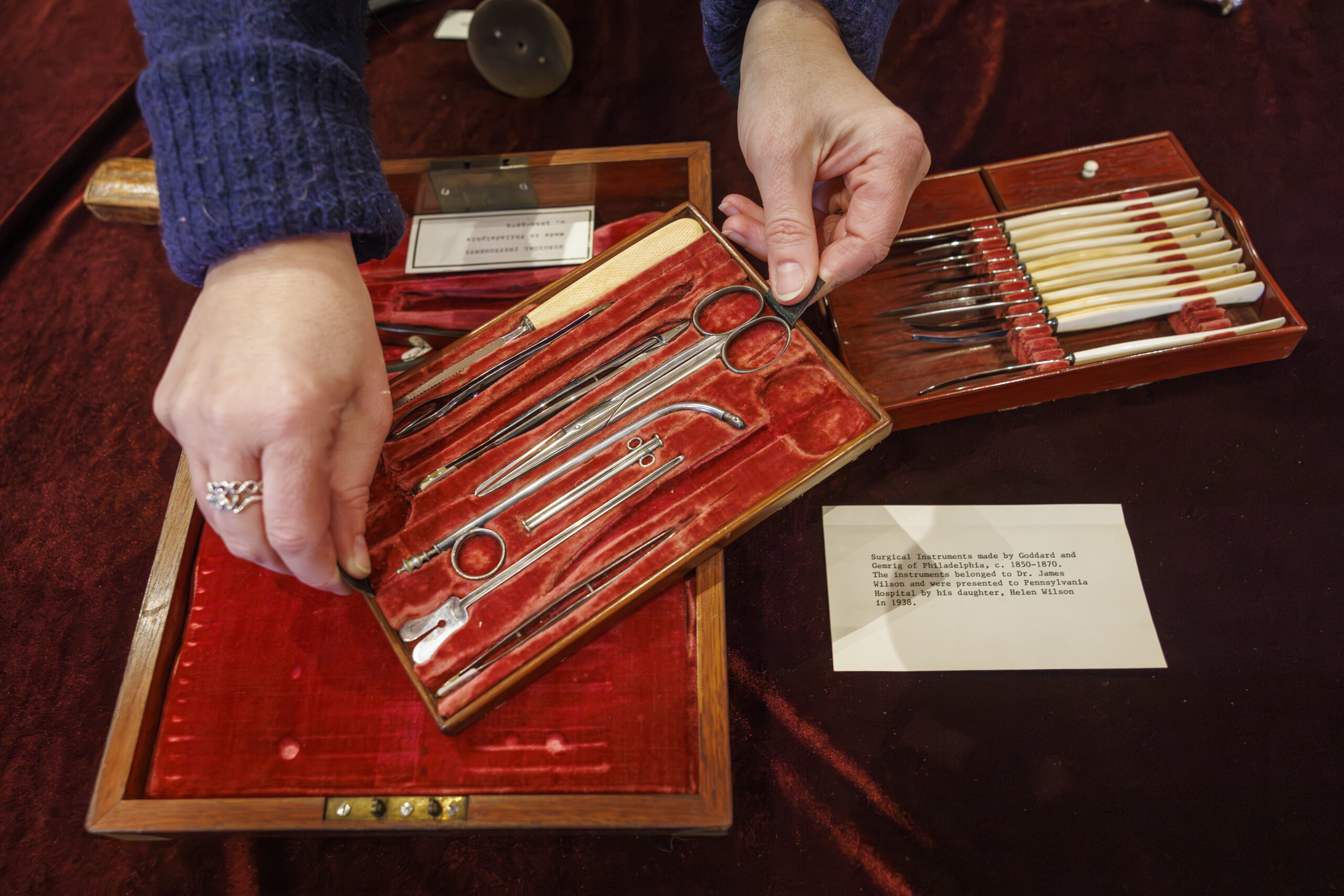
    A tonsil guillotine, designed to remove tonsils using a blade, sat next to early surgical tools and stethoscopes. Some objects, such as the scalpel, have not changed significantly in form through the years.

    “But how we treat those objects certainly is very, very different. We want to make sure everything’s sanitized now,” Peeples said.

    Surgical instruments belonging to Dr. James Wilson from the 1800s.

    Other artifacts included old tools of medical education. Like three anatomical casts of women who died during childbirth in the mid-1700s that were used for anatomical study in lieu of cadavers.

    The museum’s exhibits will showcase the hospital’s history of delivering care related to behavioral health and women’s health, as well as its role treating patients during times of conflicts, beginning with the Seven Years’ War, and through pandemics.

    “People would always talk about us being able to do something on a larger scale like this, and I honestly wasn’t sure that was ever going to happen,” said Peeples, who has been at the hospital for 25 years.

    Tickets will go on sale at the end of the month and cost $12 per person, with discounts for those 12 and under, 65 and over, and the military.

    The plan is for the museum to be a permanent fixture, open Wednesdays to Sundays. The rest of the hospital will keep operating as normal.

    Interior of the Historic Library of Pennsylvania Hospital, located at Eighth and Pine Streets.

    The hospital, older than the nation, houses 517 licensed inpatient beds, and saw 19,759 adult admissions, 54,023 emergency department visits, and 5,163 births in fiscal year 2025, per Penn Medicine’s statement.

    “Pennsylvania Hospital is a jewel in the crown that is Penn Medicine, where our staff draw energy from our rich history to shape the future of medicine,” Alicia Gresham, CEO of Pennsylvania Hospital, said in a statement.

  • You can celebrate Pennsylvania’s 250th birthday at this hidden Philly landmark

    You can celebrate Pennsylvania’s 250th birthday at this hidden Philly landmark

    Days before America’s Founding Fathers declared their independence from Britain, Pennsylvania did it first.

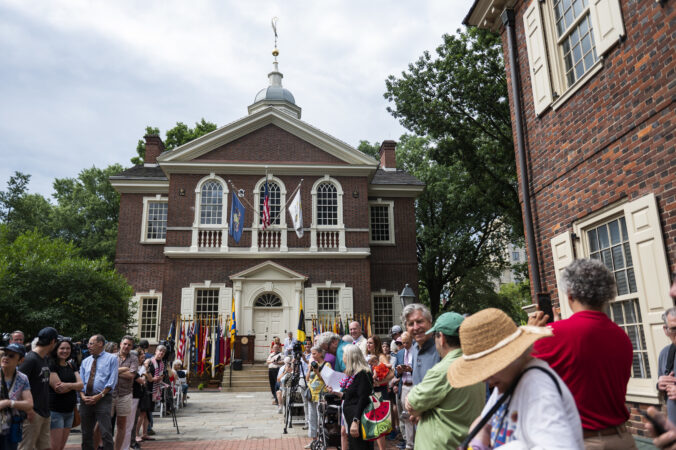
    In June 1776, before the Declaration of Independence was signed, a group of leaders from Philadelphia and its surrounding 10 counties — Bucks, Berks, Chester, Lancaster, York, Cumberland, Bedford, Northampton, Northumberland, and Westmoreland — met in Carpenters Hall for the Pennsylvania Provincial Conference. There, the Commonwealth of Pennsylvania was born.

    Carpenters Hall, a hidden landmark just two blocks from Independence Hall in Philadelphia’s Old City, is the true birthplace of Pennsylvania, where the state declared its independence from Britain — jump-starting the framework of the state’s influential constitution that would serve as a model for the U.S. Constitution.

    Now, the little-known and privately owned historic site is celebrating Pennsylvania’s 250th birthday — which coincides with America’s Semiquincentennial — by holding commemorative events across the state to reflect on Pennsylvania’s history and ask residents how the state constitution should be strengthened in 2026 and beyond.

    “It’s the piece of the story we should own and celebrate and use as a platform for civic engagement,” said Michael Norris, the executive director of Carpenters Hall.

    Executive director Michael Norris makes remarks at the reopening ceremony at Carpenters Hall on July 3, 2023.

    Last week, Norris and others from Carpenters Hall traveled from Philadelphia — the state’s first capital — to Harrisburg to announce their yearlong schedule of events celebrating Pennsylvania’s founding, including those about the state’s constitution and its past and future.

    At a news conference last week, Rep. Mary Isaacson (D., Philadelphia) noted that she occupies the seat once held by former Pennsylvania House Speaker Benjamin Franklin. She said she sees the Carpenters Hall events as “more than learning about a key moment in Pennsylvania history.”

    “It’s also about exploring the vital importance of our state constitution in our democracy today and what citizens can do to engage,” she added.

    The commemorative events include an interactive town hall series hosted in Philadelphia, Pittsburgh, Harrisburg, and Erie to discuss the importance of the Pennsylvania Provincial Conference in the United States’ founding. The group will also host several events at Carpenters Hall, including the installation of a blue historical marker outside the hall on June 18, in addition to a three-part virtual lecture series on Pennsylvania’s constitution.

    The events, funded by America 250 PA and the Landenberger Family Foundation, are open to the public and intended to reach Pennsylvania’s “lifelong learners” who are interested in history and civics, as well as the legal community, who will be eligible for Continuing Legal Education credits for attending the virtual lectures, Norris said.

    “To me, 250 is about reflection and engagement,” Norris said. “It’s not about parties and buildings. It’s really a moment to reflect and say, ‘What are we doing here? Do we still want this democracy, and how do we protect it and keep it going?’”

    The Carpenters’ Company — the nation’s oldest craft guild, which built and still owns Carpenters Hall — will also conduct polling about how Pennsylvania’s constitution, as well as the U.S. Constitution, should be changed to better represent citizens in a modern time, Norris said. The poll results will be made public at an in-person event in Philadelphia on Sept. 28, the 250th anniversary of when the state constitution was ratified.

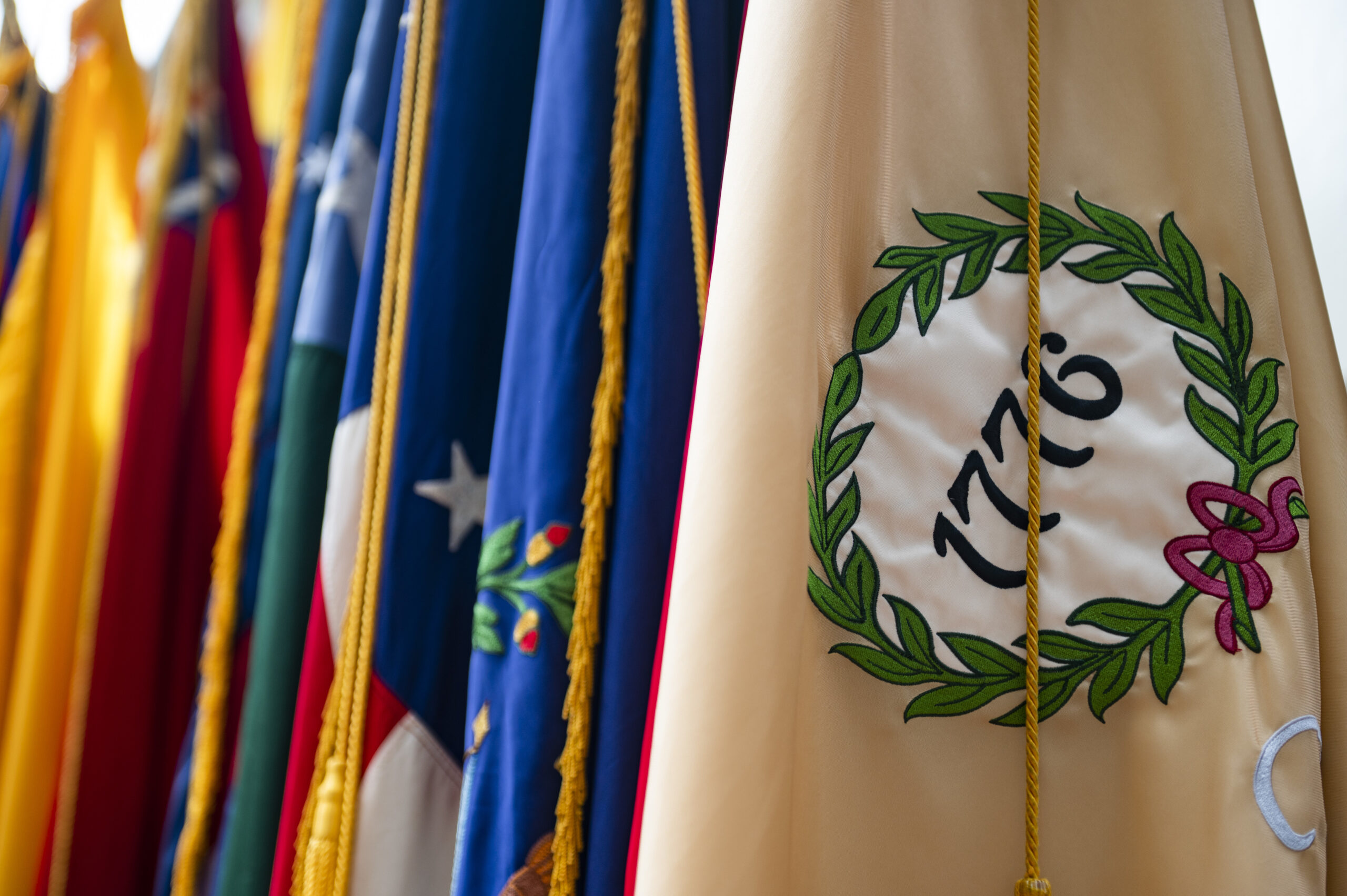
    Historic flags are displayed outside at the reopening ceremony at Carpenters Hall on July 3, 2023. The building opened for the first time to the public since April 2022.

    Rhode Island was the first colony to declare independence from England in May 1776, and Delaware became the first state in December 1787. Pennsylvania followed days after, and its constitution influenced the country’s founding documents. Pennsylvania’s expansive constitution — viewed as radical at the time — focused on personal freedoms and liberties in its “Declaration of Rights,” after which the Bill of Rights was modeled.

    Carpenters Hall was the nation’s first privately owned historic landmark, and remains owned by the Carpenters’ Company today, which offers free admission for 150,000 visitors each year. Because it is privately owned, it is not overseen by the National Park Service, which has in recent weeks dismantled exhibits about slavery at the nearby President’s House Site in Independence National Park that President Donald Trump’s administration contends “inappropriately disparage” the United States.

    The Carpenters Hall events will occur as Philadelphia prepares to host millions of visitors this summer for America’s 250th celebrations, the MLB All-Star Game, and FIFA World Cup games.

  • Philly’s 250th celebration will feature the biggest parade anywhere, six days of fireworks, and Floridian Segway riders

    Philly’s 250th celebration will feature the biggest parade anywhere, six days of fireworks, and Floridian Segway riders

    Philly will have the largest Semiquincentennial parade in the country this summer to celebrate the 250th anniversary of the signing of the Declaration of Independence, along with six nights of fireworks to keep things lit well into the evening.

    Sure, Philadelphians find a reason to set off fireworks every night (what are you celebrating at 9:37 p.m. on a Thursday in February?!?), but the big difference is these will be professional.

    There is new information about first-time and returning events for the 2026 Wawa Welcome America Festival, Philly’s annual 16-day Independence celebration, but details about other events — like who’s going to headline the July 4 concert on the Benjamin Franklin Parkway — still remain under wraps.

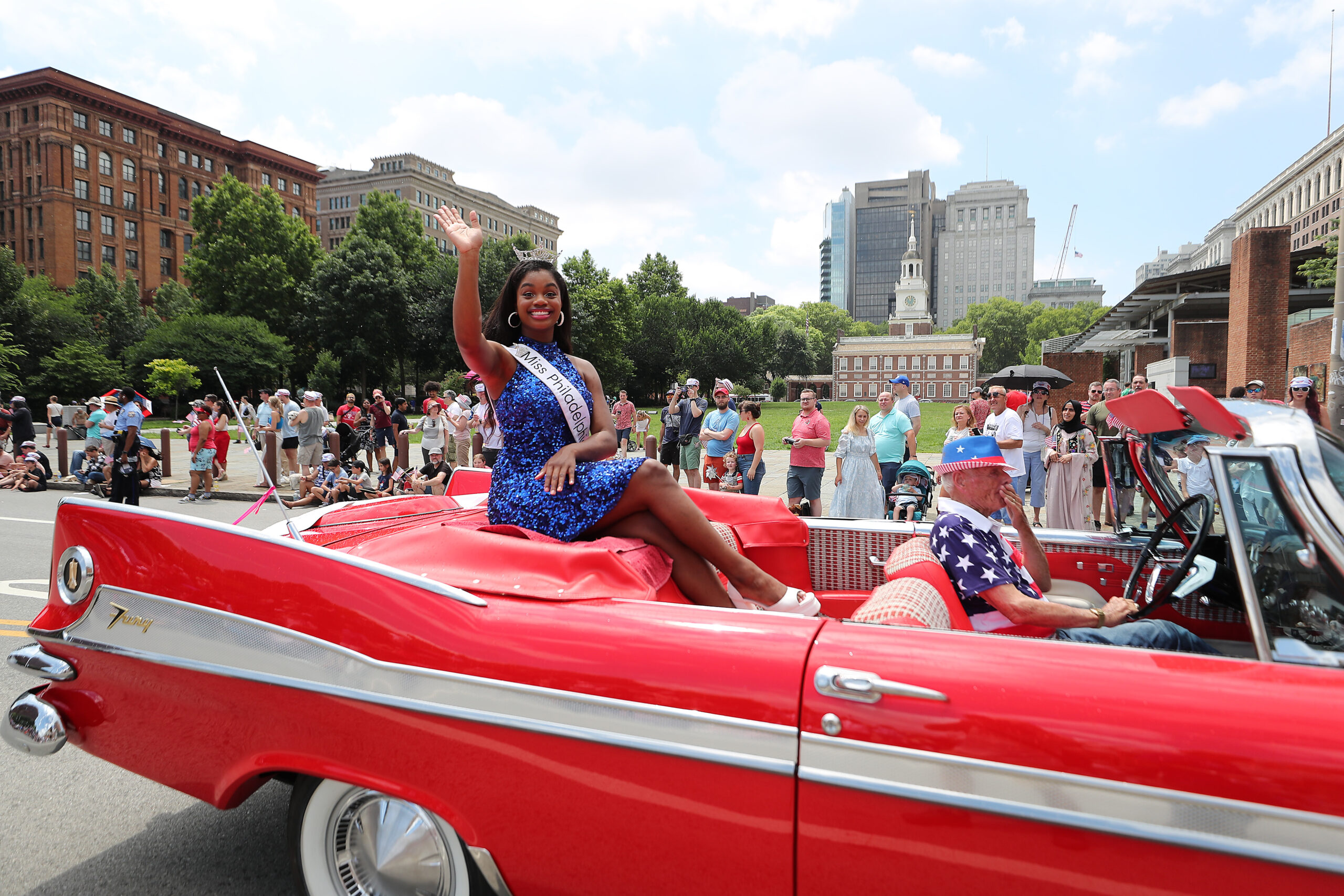
    New this year will be the Salute to Independence Semiquincentennial Parade on July 3, which will feature people, performers, and personalities representing the country’s 50 states, its territories, and the District of Columbia.

    Miss Philadelphia 2023 Jacqueline Means waves to the crowd near Independence Hall during the Wawa Welcome America Salute to Independence Day Parade in 2023.

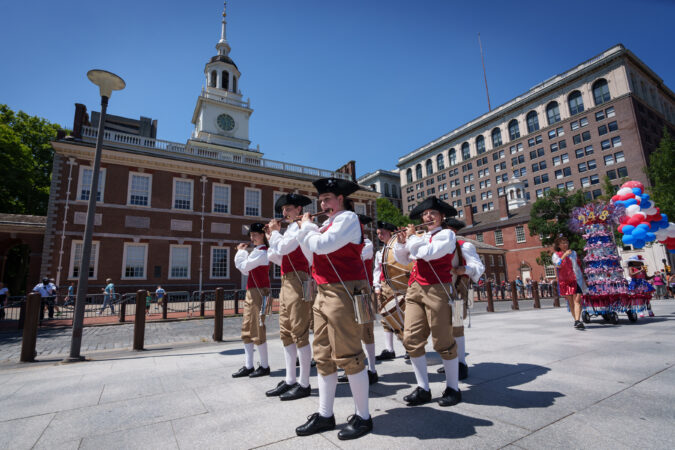
    Among them will be all Miss America state titleholders, several fife and drum corps, historical reenactors, dancers, 50 marching bands, unicycle riders, stilt walkers, a jump rope team from Maryland, a steel drum band from Michigan, a circus troupe from Illinois, the Milwaukee Dancing Grannies, and the Philly Drag Mafia.

    The Louisiana LunaChicks, a group whose members will dress like Mrs. Roper from Three’s Company, will also be performing in “patriotic caftans,” according to a news release. The LunaChicks may want to stay clear of the Segway Riders Club of The Villages, Florida, which is exactly what you think it is and will also be rolling in the parade.

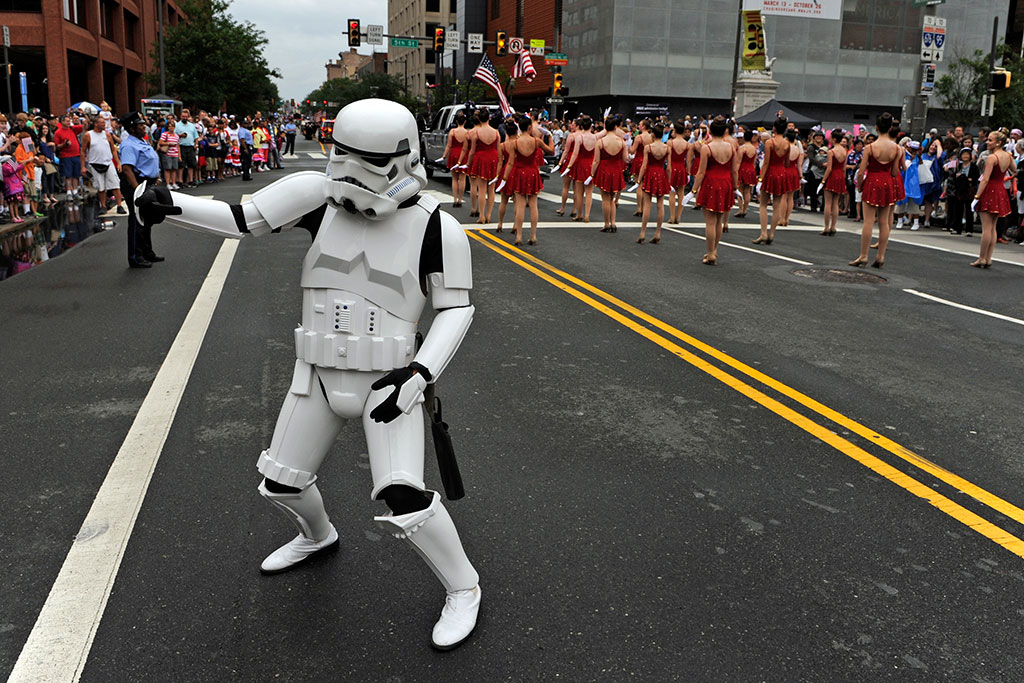
    Not to be outdone, three Star Wars cosplay groups — Garrison Carida, Kyber Base, and the Mav Oya’la Clan — are teaming up to represent the lighter side of Pennsylvania (and the dark side of the force).
    A storm trooper with the Garrison Carida dances during the Philadelphia Independence Day Parade in 2014.
    The parade will also feature international bands from Ghana to Ireland; more than a dozen floats, including those celebrating Indigenous people and women’s right to vote; and a 20-by-40-foot Declaration of Independence.

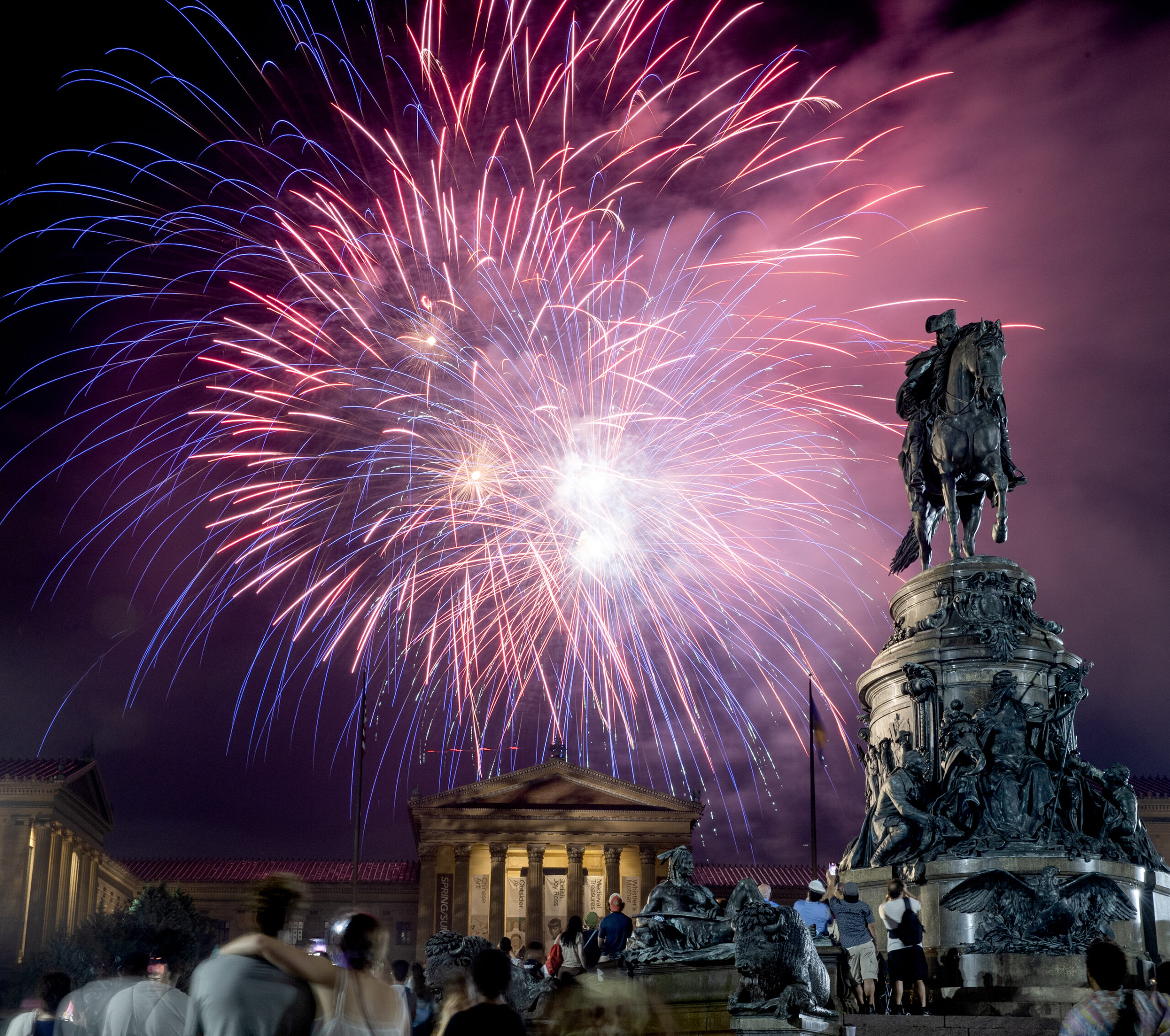
    Wawa Welcome America’s six nights of fireworks begin June 20 (and on June 21) at a new event that has not yet been announced, according to a news release.

    Fireworks will also take place on June 25 at the Celebration of Black Music Month at the Dell Music Center, June 26 at the Kidchella Music Festival at Smith Memorial Playground, June 27 at a concert on the waterfront, and July 4, “following the star-studded concert” on the Parkway, absolutely no details of which were included in the release.

    Fireworks over the Philadelphia Museum of Art and the statue of George Washington at Eakins Oval during the Wawa Welcome America Festival on July 4, 2023, following a free concert featuring Demi Lovato and Ludacris on the Benjamin Franklin Parkway.

    Returning events include:

    • June 19: Juneteenth Block Party at the African American Museum
    • June 24: Five Points Night Market at Cottman and Rising Sun Avenues in Northeast Philly
    • June 27: Concillio’s Annual Hispanic Fiesta at LOVE Park
    • June 28: Gospel on Independence at Independence National Historical Park
    • July 1: Wawa Hoagie Day on Independence Mall
    • July 2: Red, White, & Blue To-Do parade, block party, and folk festival at sites across the Historic District
    • July 2: Salute to Service: The U.S. Army Field Band & Soldiers’ Chorus at Independence National Historical Park.
    • July 3: Pops on Independence at Independence Park
    • July 4: Celebration of Freedom Ceremony outside of Independence Hall

    For more details about Wawa Welcome America, visit july4thphilly.com/events.

  • A formerly enslaved man was thrown out of an Old City church. He then founded America’s first African Methodist Episcopal church.

    A formerly enslaved man was thrown out of an Old City church. He then founded America’s first African Methodist Episcopal church.

    Mark Tyler, historiographer and executive director of research and scholarship of the African Methodist Episcopal Church, often wonders: What if Christians stood up in the 1780s and challenged the articles of the U.S. Constitution that said Black people were not whole human beings?

    What if the American branch of the Methodist church followed the teachings of its founder, John Wesley, who taught that slavery was a violation of Christian mercy? What if the ushers of Old City’s St. George’s Methodist Church didn’t kick formerly enslaved congregants Richard Allen and Absalom Jones out of the general congregation and force them to worship in segregated pews?

    “We would have avoided the Civil War,” Tyler said. “We would have avoided Jim Crow. We would have avoided the moment in history we are in now.”

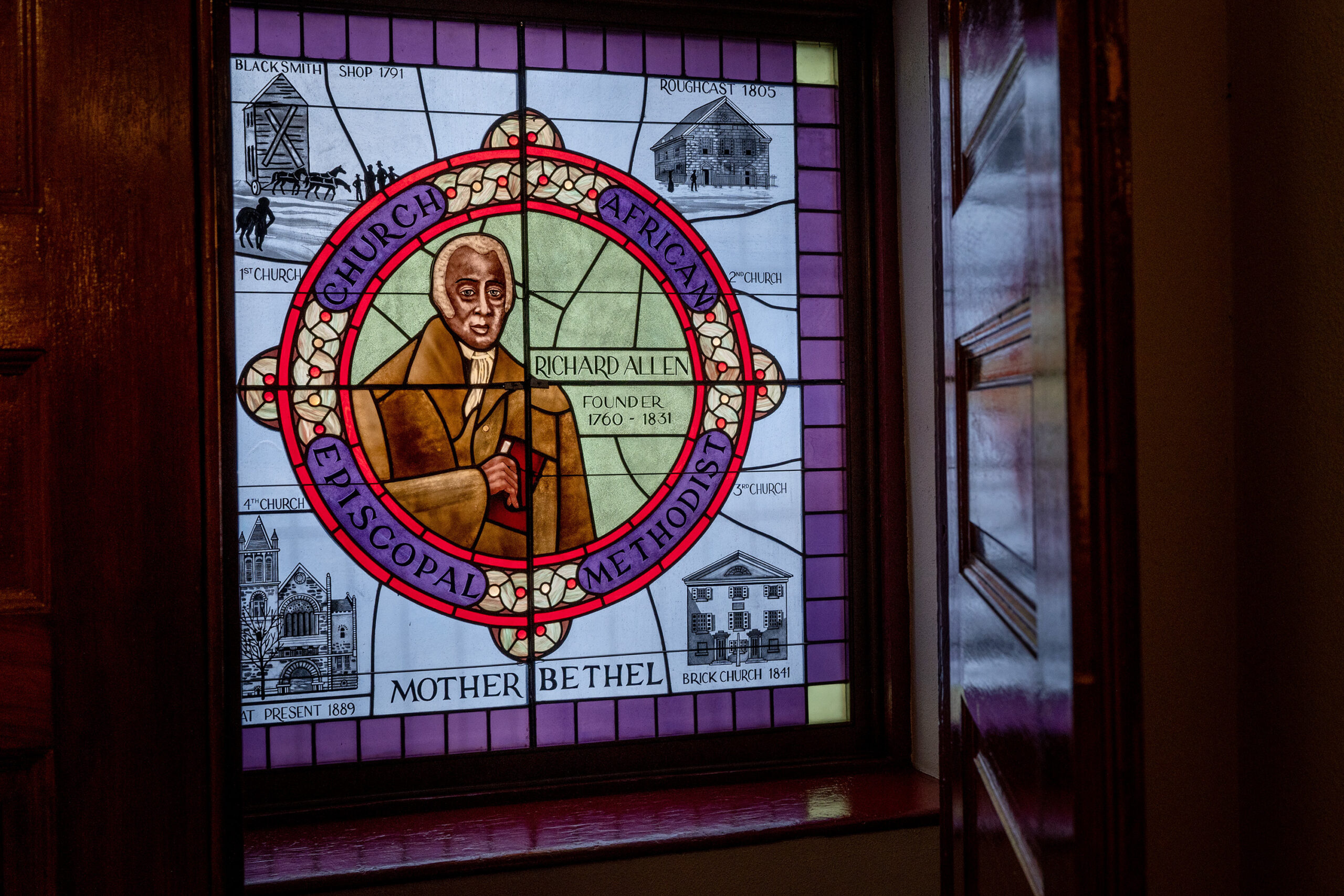
    A stained glass window of founder Richard Allen and Mother Bethel AME Church’s previous homes is at entrance of the church.

    Instead, American Methodists sided with southern landholders who relied on cost-free Black labor to build their empires. Evangelical churches, Tyler said, were among the first institutions to practice segregation.

    Allen and Jones went on to start their own churches.

    Jones founded the African Episcopal Church of St. Thomas at 5th and Adelphi Streets. (Today the church is at 6361 Lancaster Ave. in West Philly.)

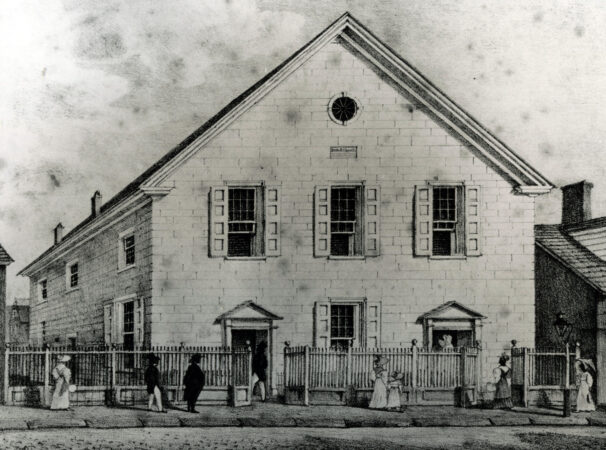
    Allen established Mother Bethel African Methodist Episcopal Church, regarded as America’s — and the world’s — first AME congregation.

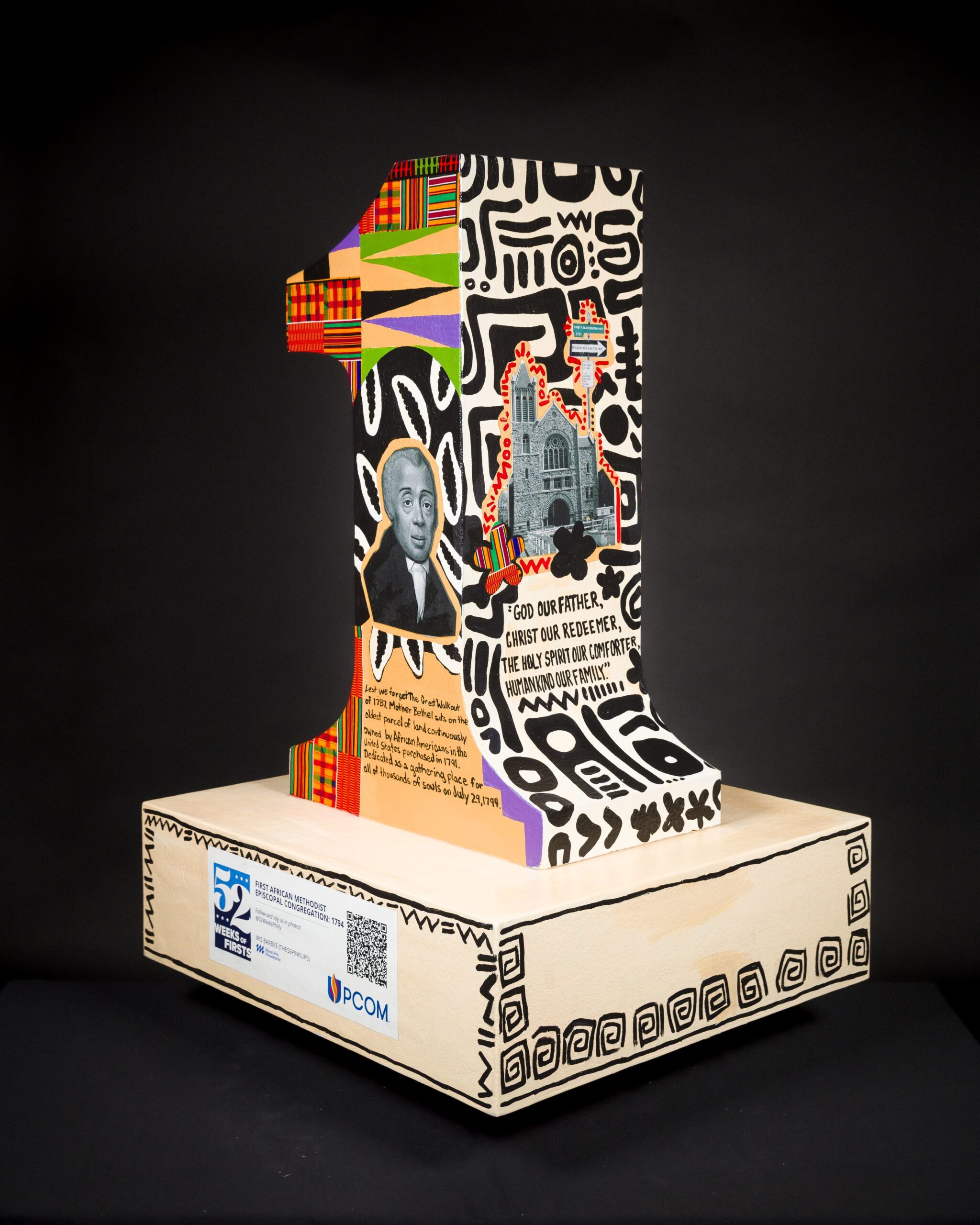
    Mother Bethel will celebrate this history at the Philadelphia Historical District’s weekly “firstival,” part of a yearlong celebration of America’s 250th birthday. Each Saturday in 2026, the historic district is hosting a daytime shindig honoring an event that happened in Philadelphia before anywhere else in America and often the world.

    Iris Barbee Bonner is a fashion designer and graphic artist who brought her experience growing up in the AME Church to this 52 Weeks of Firsts No. 1

    Allen was born into slavery in Philadelphia in 1760. He bought his freedom from his enslaver, a devout Methodist who converted many of the people he enslaved, in 1783. Allen answered the call to preach and traveled the mid-Atlantic for a few years evangelizing freed and enslaved people.

    In 1786, he returned to Philadelphia, joined St. George’s, and started a 5 a.m. worship service. He led the service for a year-and-a-half before walking out in November of 1787.

    “Certainly there had been moments of resistance in colonial Black communities,” Tyler said. “But this walkout was significant because it led to the emergence of the first American institutions by and for Black people,” Tyler said.

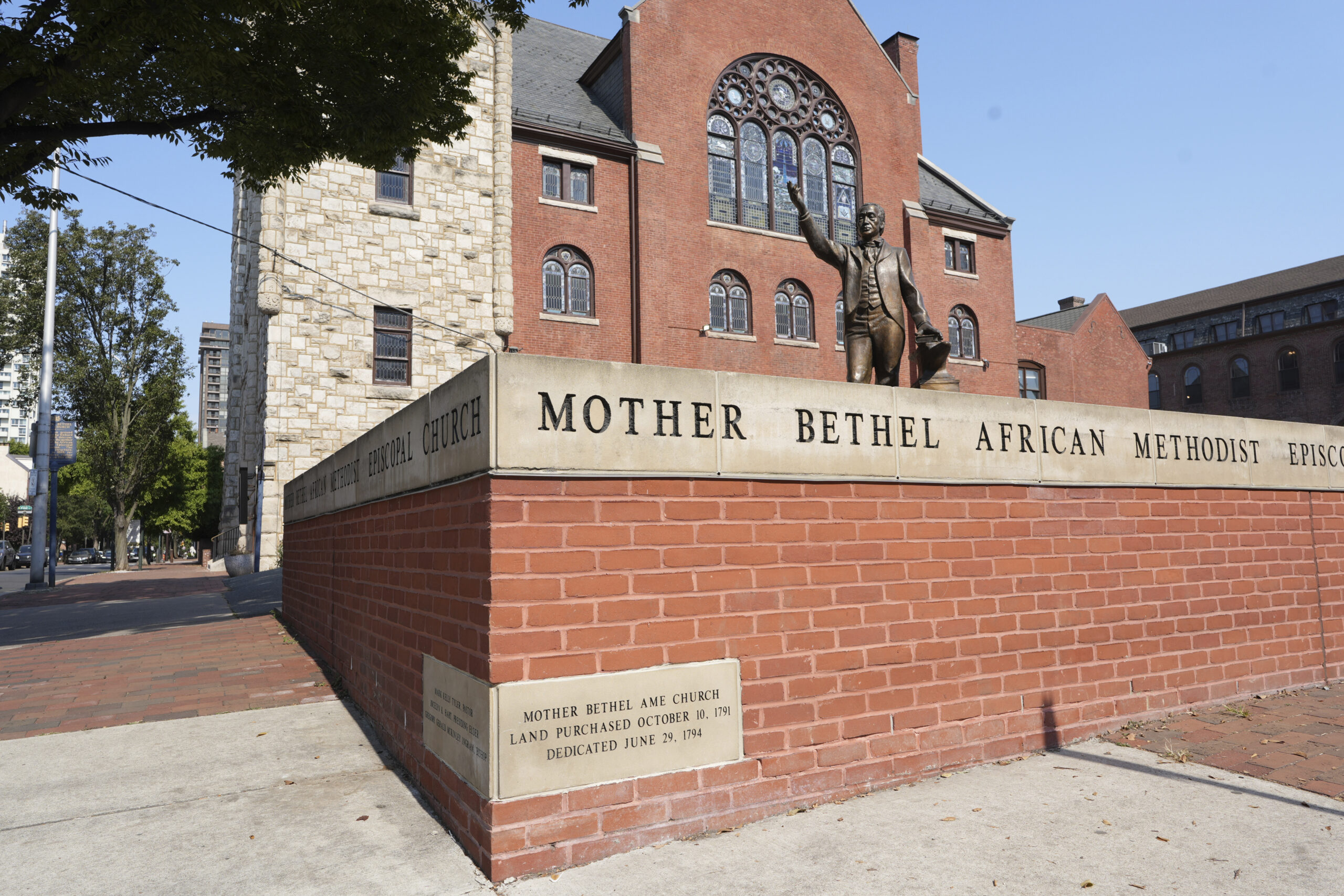
    Allen bought land at Sixth and Lombard Streets — where Mother Bethel sits now — on Oct. 10, 1791. Mother Bethel’s first building, a repurposed blacksmith shop, was dedicated on July 29, 1794, by Bishop Francis Asbury.

    A second building was erected in 1805, a third in 1841, and the current building was completed in 1890.

    “We are the oldest independent denomination founded by people of color in the United States,” said the Rev. Carolyn C. Cavaness, pastor of Mother Bethel. “Our church sits on the oldest parcel of land continuously owned by African Americans.”

    In 1816, 30 years after Allen established Mother Bethel, he invited delegates of Black Methodist churches in Pennsylvania, Baltimore, Maryland, Delaware, and New Jersey to a conference, establishing the AME Church as its own denomination.

    A statue of Mother Bethel AME Church founder Richard Allen stands on the oldest parcel of land continuously owned by Black Americans in Philadelphia on Oct 13, 2024. (AP Photo/Luis Andres Henao)

    Mother Bethel has stood at the center of civil rights for centuries, from serving as a station on the Underground Railroad to uniting interfaith clergy who questioned $50 million of community benefits slated to go to the Sixers arena in 2024.

    “We are the Mother Church,” Cavaness said. “ … the foundation of so much Philadelphia history, so much American history. It’s an honor to be the sacred caretaker of this history.”

    This week’s Firstival is Saturday, Feb. 7, 11 a.m.-1 p.m., at Mother Bethel, 419 S. Sixth St. The Inquirer will highlight a “first” from Philadelphia Historic District’s 52 Weeks of Firsts program every week. A “52 Weeks of Firsts” podcast, produced by All That’s Good Productions, drops every Tuesday.

  • Independence Hall reopens after a four-month preservation project

    Independence Hall reopens after a four-month preservation project

    The doors of Independence Hall had been flung open, and the British were coming.

    More specifically, English tourists Chadi Rahim and his daughter, Sophia Rahim, 18, shivered in their parkas Thursday, awaiting one of the first tours of Independence Hall since its 119-day closure.

    The historic state house, where American democracy was born in 1776, had been closed to the public since Oct. 1 — a temporary pause of access, stretching through the federal government shutdown and weeks of planned preservation work ahead of Philadelphia’s Semiquincentennial celebrations this year. The revamp included restoration of wood, masonry, plaster, and metal, historically accurate paint finishes, and the construction of accessibility ramps. The work would ensure that Independence Hall would continue as a “beacon of American freedom,” the National Park Service had said.

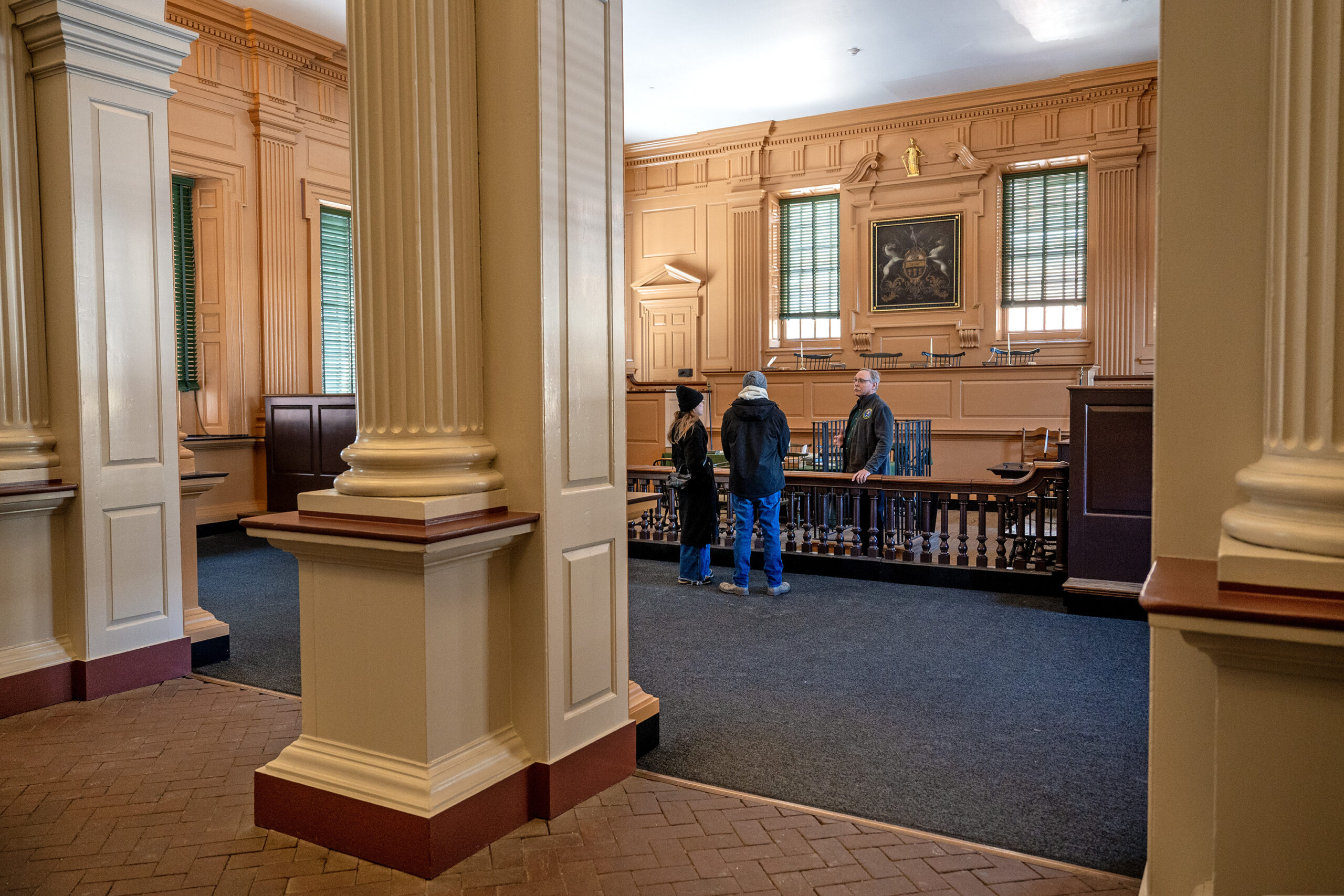
    Tourists Jenna Lippert and Brandon Camperlino from Syracuse, NY listen as park service volunteer Bill Rooney (right) gives a tour in the Pennsylvania Supreme Court Chamber in Independence Hall Thursday, Jan. 29, 2026.

    As part of the Independence Square Improvement Project, similar repairs were planned for Congress Hall and Old City Hall, which are part of the Independence Hall complex.

    “Wear and tear,” National Park Ranger Hugh Evans assured 14 visitors assembled for the 11:30 a.m. tour.

    All morning, a steady trickle of travelers trekked to the redbrick building in Old City where the Founding Fathers staked their necks on the promise of a freer and more perfect future.

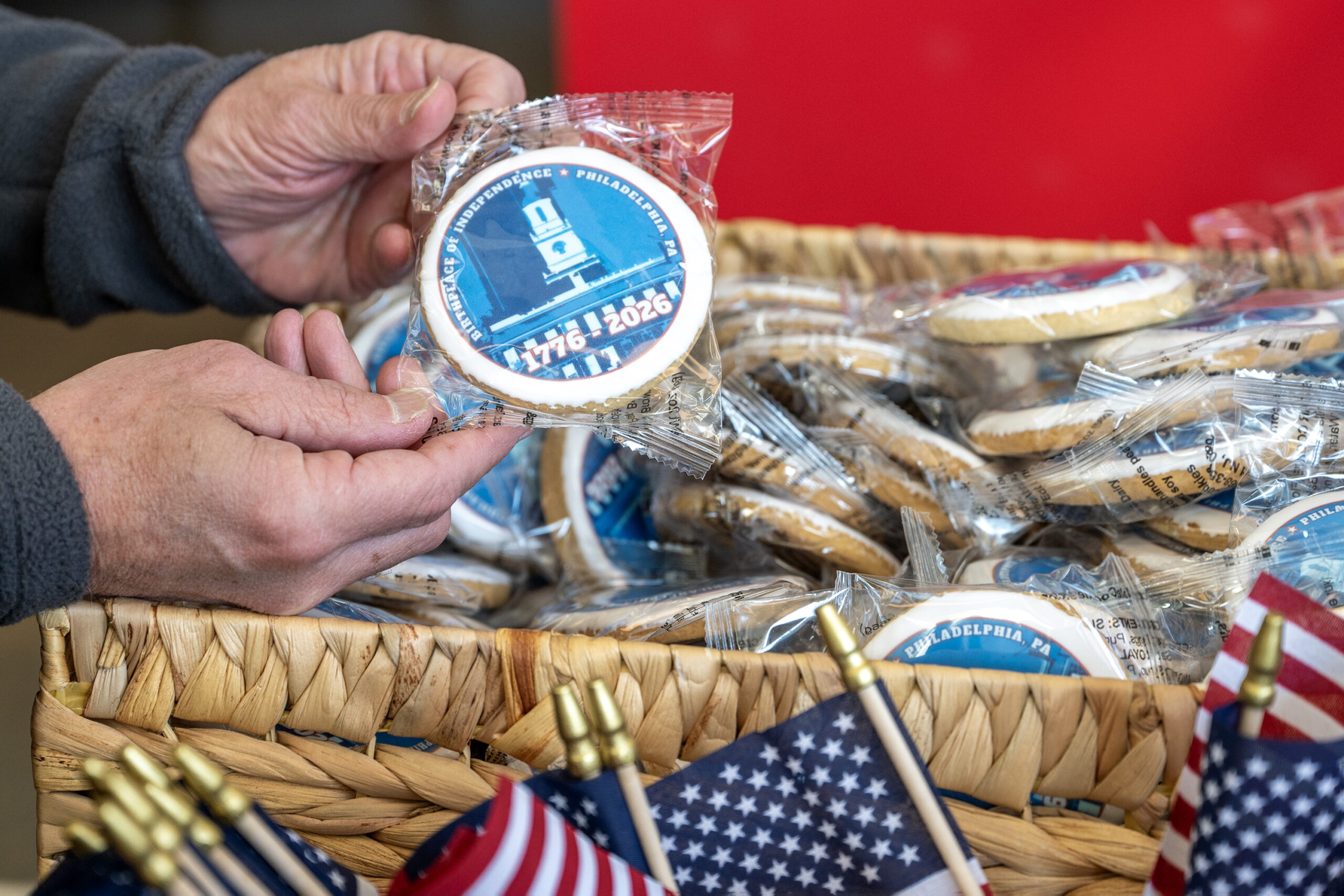
    Independence Visitor Center information desk host Woody Rosenbach displays a free Independence Hall cookie offered to the first 250 visitors on Thursday.

    In Thursday’s cold, the tourists came from the rocky coasts of Oregon and the sunlit shores of California, from small towns and big cities, from red states and blue states. And their presence on such an auspicious day was completely by chance. None of the more than a dozen pilgrims to American democracy who braved frozen temps and icy footpaths said they had been aware that Independence Hall had only just reopened.

    The site where the Declaration of Independence was signed 250 years ago, the building is one of Independence National Historic Park’s central attractions. The Liberty Bell Center, which was also closed during the shutdown, reopened in November. Officials expect that more than five million people will visit Independence Hall in 2026 for the national milestone.

    Learning that their visits had fallen on the reopening of the historic site only lent more power, visitors said.

    Rahim, a business owner with the sturdy frame of a Victorian boxer, said he and his daughter had decided on a Philadelphia holiday for shopping and relaxation and Rocky (Sophia is also a fan of National Treasure, a 2005 Nicolas Cage history caper that was filmed at Independence Hall and other historic district sites). But also because of the story only Philadelphia can tell about America’s founding.

    And especially now, when the future of American democracy feels more at stake than ever.

    “We know the story about independence,” Rahim said, buttoning up against the cold. But he and his daughter had wanted to experience it up close. “Sometimes stuff gets in the way. But if you see the history, it makes you realize what people went through to get us where we are now.”

    During the 11 a.m. tour, National Park Ranger David Powers welcomed a half-dozen visitors into the stately, Georgian state room, where the Founders first passed independence. Walls and floors in the rooms where it happened reflected a new polish, while some painting could still use touching up.

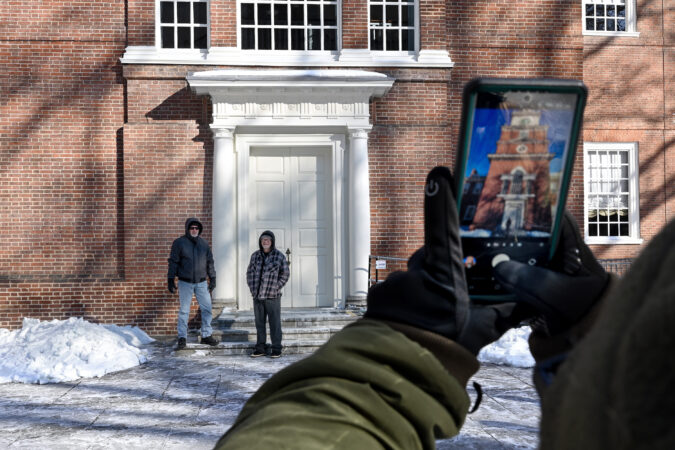
    After four months of closure and renovations, guided tours resumed every half hour Thursday. Security staff said they did not encounter crowds of guests seeking to stroll the sun-streaked confines where profound compromises of democracy were hashed out 2½ centuries ago.

    Rather, on the day of the building’s reopening, many of the visitors represented just normal Americans, looking for signs of hope in uncertain times.

    Rachel Lawson of Bend, Ore., and Amanda Shapiro of Southern California, colleagues in town for a work event, admired the simple elegance of the original woodwork design inside Congress Hall, home of the U.S. Congress from 1790 to 1800.

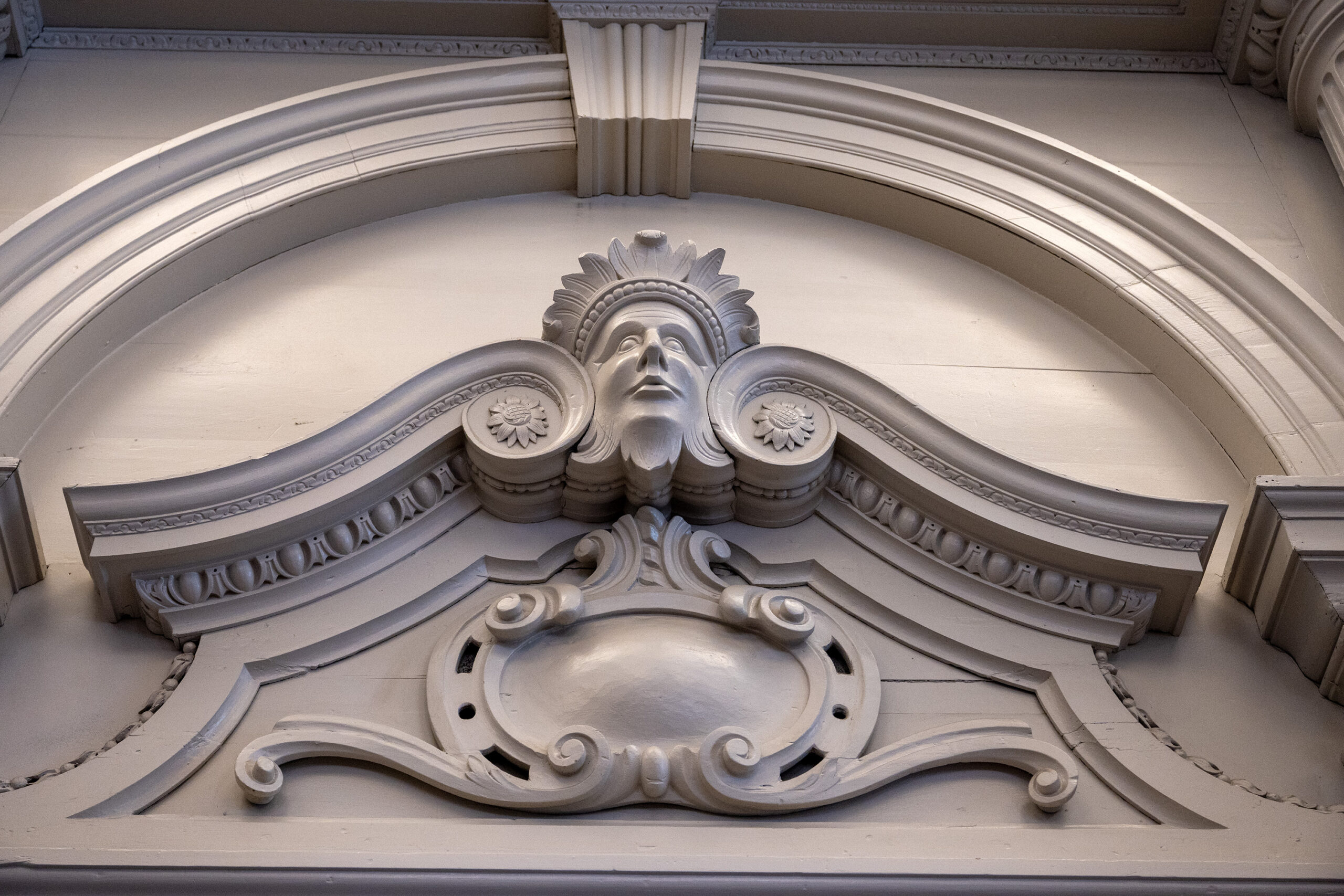
    A newly painted pediment above a doorway in Independence Hall on Thursday, Jan. 29, 2026.

    “The attention to detail, the thoughtfulness, the regal energy,” she said.

    Nearby, Luke Morris, a 20-something political podcaster from Washington, had planned his visit to Independence Hall as a reminder that Americans are still fighting for that promised future amid all the pain and turmoil.

    “We are still fighting for what we think is right,” he said.

  • See costumes from the Oscar-nominated wardrobe of ‘Sinners’ at the African American Museum in Philadelphia

    See costumes from the Oscar-nominated wardrobe of ‘Sinners’ at the African American Museum in Philadelphia

    Sinners, Ryan Coogler’s vampiric period film starring Michael B. Jordan, made Academy Award history on Thursday when it was nominated for 16 Oscars, more than any other film in the history of the award ceremony’s 98-year run.

    It toppled the 14 nominations previously received by All About Eve (1950), Titanic (1997), and La La Land (2016). In addition to Michael B. Jordan’s best actor nomination and Coogler’s best director nod, Sinners Oscar-winning costume designer, Ruth E. Carter, was also nominated for for her work on the film. It’s her fifth overall Oscar nomination.

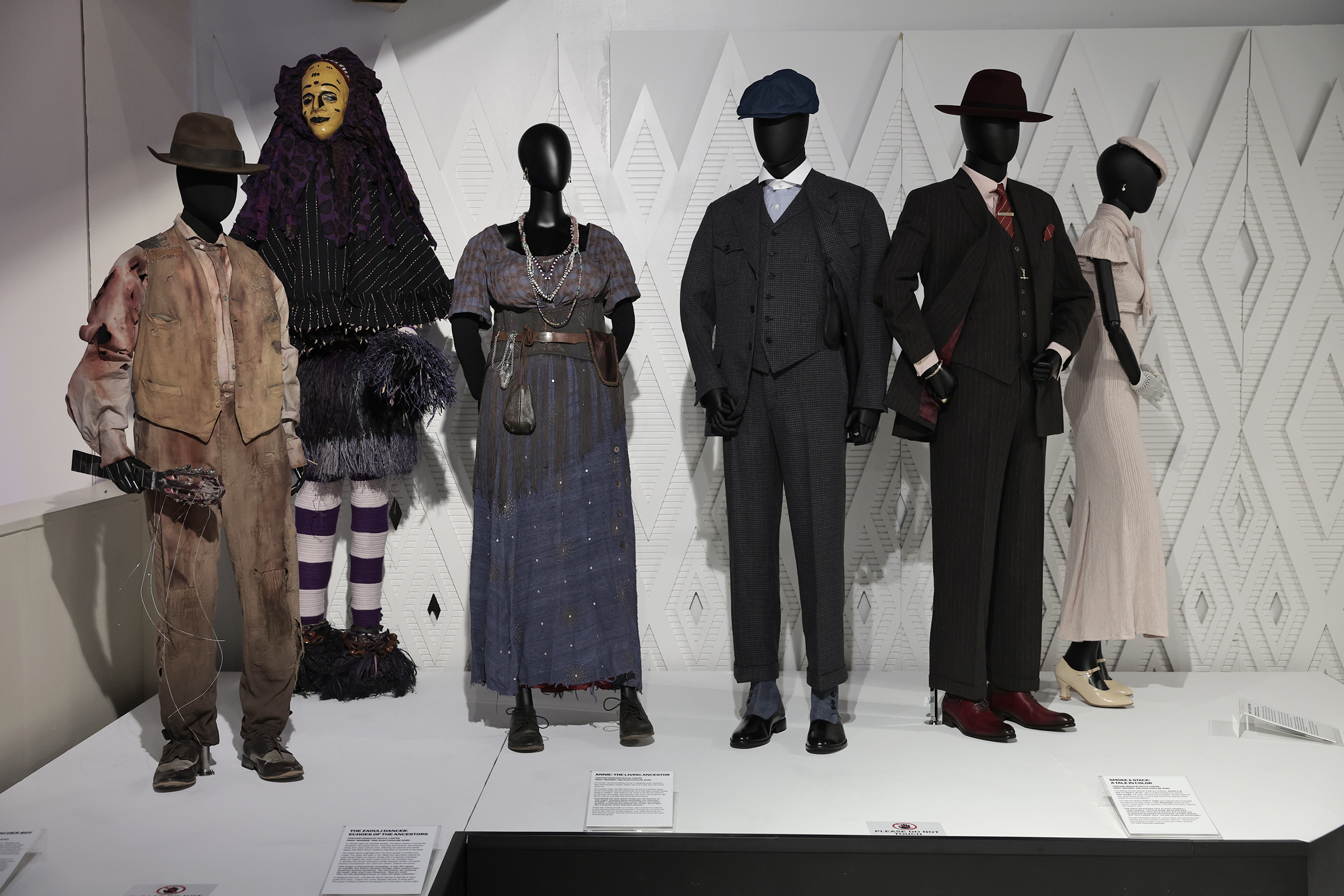
    Six of those costumes are on display at the African American Museum in Philadelphia through September in the traveling “Ruth E. Carter: Afrofuturism and Costume Design Exhibit.”

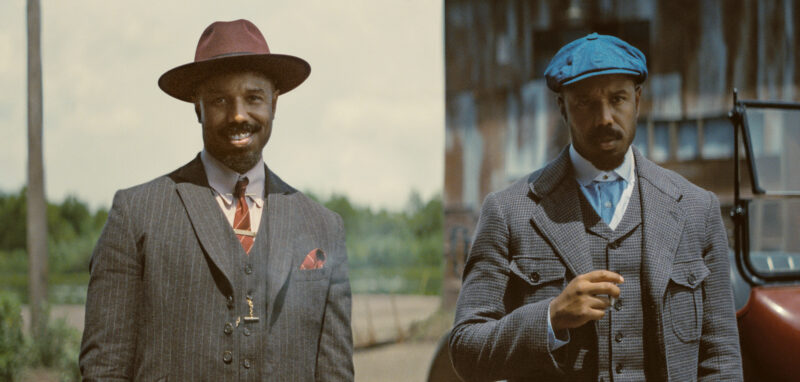
    That includes Smoke and Stack’s (twins played by Jordan) memorable 1930s-era three-piece suits, with complementary fedora and newsboy cap, timepieces, and tiepins.

    Ruth E. Carter’s Oscar-nominated costumes from “Sinners” starring Michael B. Jordan as twins Smoke and Stack.

    Coogler’s only direction to Carter was to dress Smoke in blue and Stack in red, she told The Inquirer in November.

    Carter, not one to fret long, dove into her arsenal of research. By the time she began the fittings, she’d amassed an array of blue and red looks befitting of the 1930s sharecroppers-turned-bootleggers and juke joint owners.

    “[And] when I put that red fedora on him, Ryan flipped out and said, ‘That’s it!’,” Carter said. “We wanted people to resonate with their clothing and it did.”

    The Smoke and Stack effect went beyond Sinners. This Halloween there were tons of social media posts of revelers dressed as the mysterious twins.

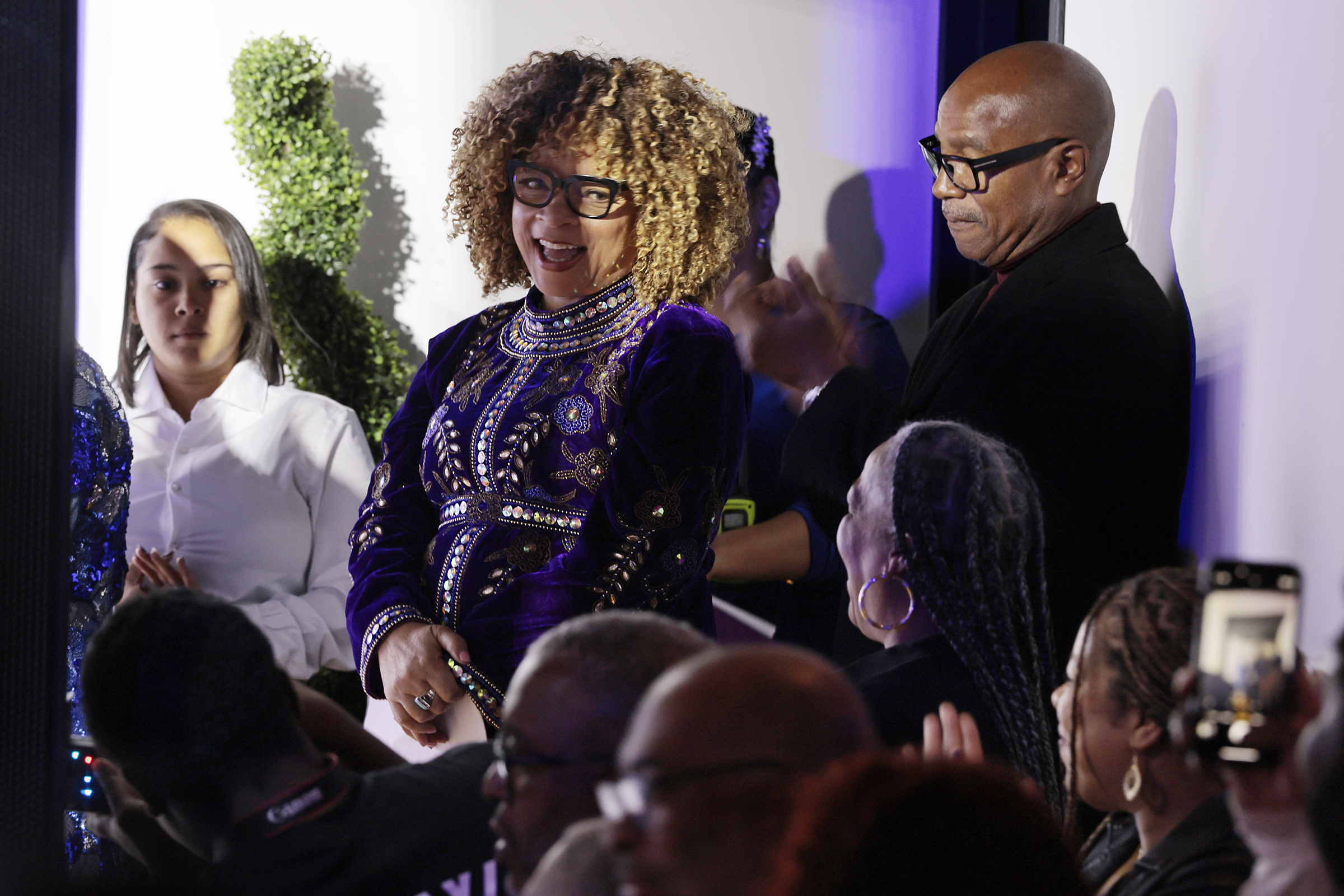
    Ruth E. Carter during the “Ruth E. Carter: Afrofuturism in Costume Design” opening gala at the African American Museum in Philadelphia on Saturday, Nov. 1, 2025.

    Also a part of AAMP’s Sinners display is the flowy earthy dress that best supporting actress nominee Wunmi Mosaku wore in her role as Annie. Annie is Smoke’s lover and a root woman who discovers the vampires in their Clarksdale, Miss., town.

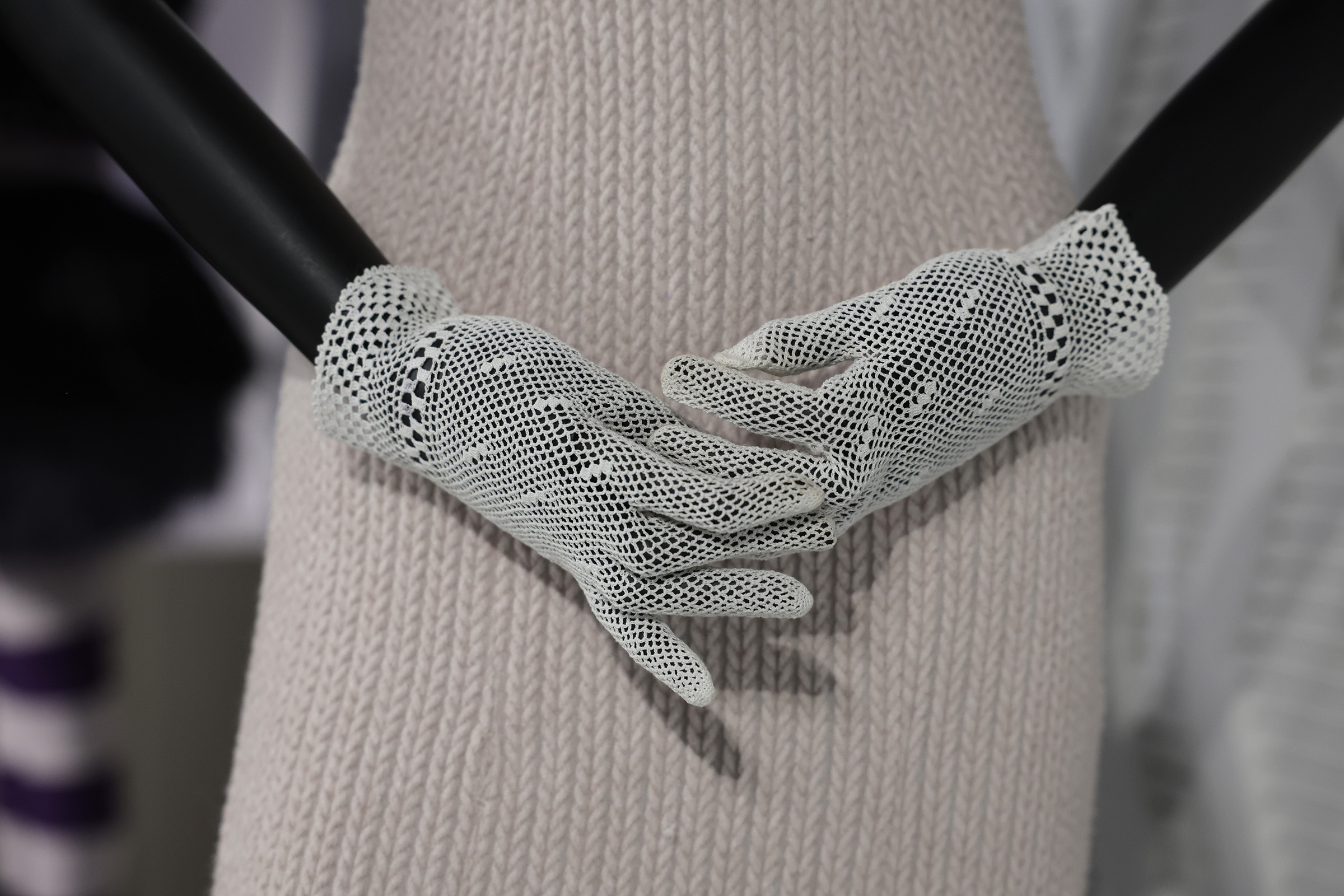
    Cornbread’s (Oscar Miller) tattered sharecropper outfit is on the dais along with Mary’s (Hailee Steinfeld) blush knit dress with its short-sleeved bodice and pussy bow accent. Her matching knit beret and pearls are also on display. In the film, Mary is Stack’s childhood friend, turned girlfriend, turned vampire.

    “I immerse myself in the mind, body, and soul of my characters,” said Carter. “Then I see them in my mind, how they move and with research, I come up with a look that I feel is unique to them.”

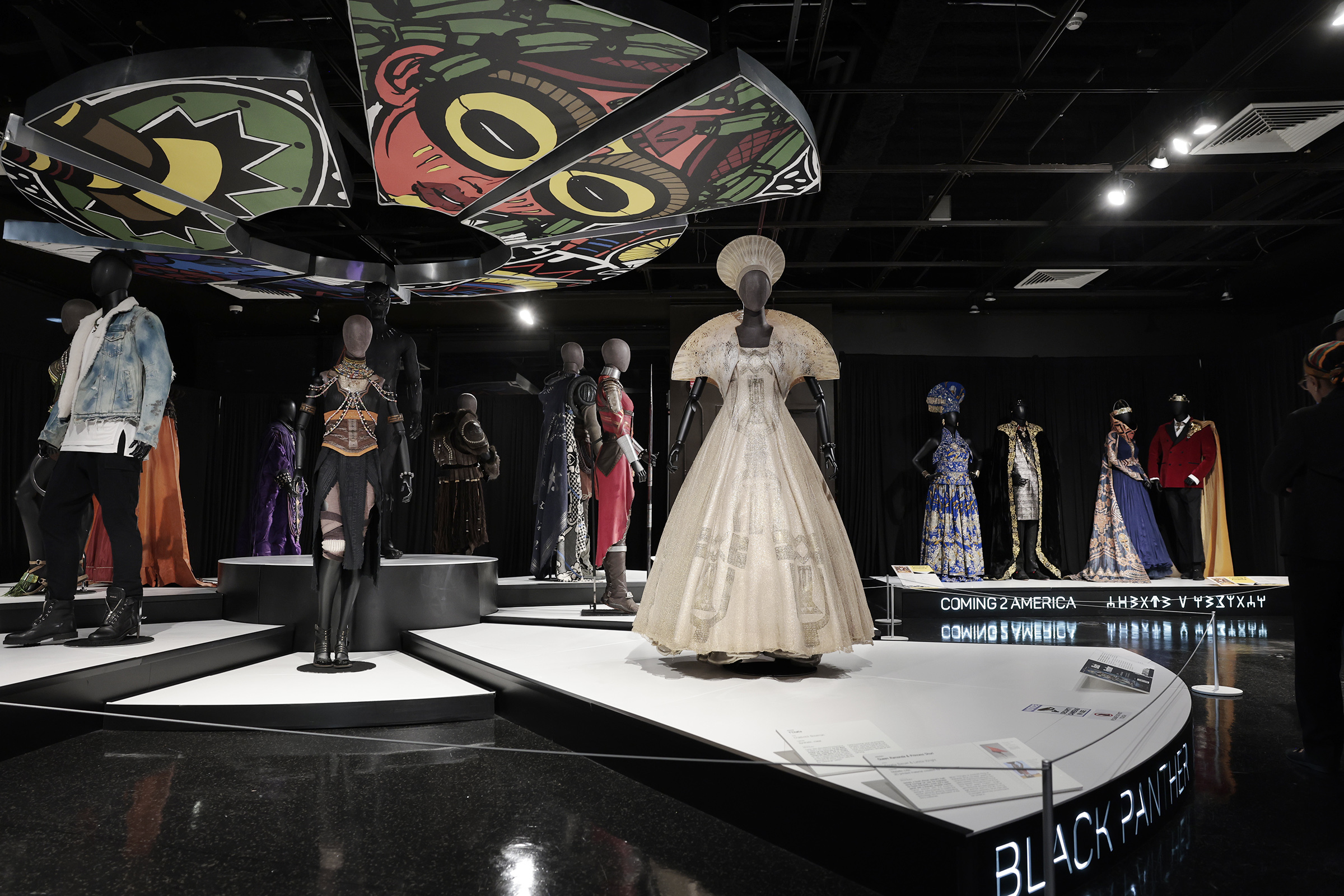
    The Sinners pieces are among the more than 80 looks featured in the “Afrofuturism” exhibit, joining outfits from The Butler (Lee Daniels), and from Malcolm X, Coming 2 America, Black Panther, and its sequel, Black Panther: Wakanda Forever.

    The show, headlining the African American Museum’s celebration of the nation’s Semiquincentennial, will be on display through September.

    Lace gloves and knit dress detail of Mary (Hailee Steinfeld) costume from sinners.

    During her five decades in the movie business, Carter has worked on more than 60 big-screen documentations of where Black Americans have been, who they are at the given moment, and who they dream of becoming.

    Her work has shaped how the world sees African Americans.

    In the 2010s, a friend of hers suggested she plan a museum exhibit around her costumes. After Black Panther, she partnered with Marvel, and in 2019, “Afrofuturism in Costume Design” debuted at the Savannah College of Art and Design’s Atlanta Campus.

    The “Ruth E. Carter: Afrofuturism in Costume Design” exhibit at the African American Museum in Philadelphia on Saturday, Nov. 1, 2025.

    Philadelphia is the exhibit’s ninth — and longest — stop. It’s also the first stop for the Sinners costumes.

    “I am a griot,” Carter said. “[Throughout my career,] I’ve developed a knowledge base that embraces our culture and speaks to all of us in a positive way.”

    Ruth E. Carter: Afrofuturism in Costume Design” will be on view through Sept. 6. at the African American Museum in Philadelphia, 701 Arch St., Thursday through Sunday, 10 a.m. to 5 p.m. Tickets are $20 for adults, $10 for children.

  • ICE, housing, and ‘resign to run’: What’s on Philadelphia City Council’s 2026 agenda

    ICE, housing, and ‘resign to run’: What’s on Philadelphia City Council’s 2026 agenda

    Philadelphia City Council’s first meeting of 2026 on Thursday comes as tensions rise over President Donald Trump’s immigration crackdown and as Mayor Cherelle L. Parker continues to sidestep that conversation while focusing on advancing her signature housing initiative.

    During the first half of the year, city lawmakers are expected to have a hand both in shaping the city’s response to Trump and in advancing Parker’s Housing Opportunities Made Easy, or H.O.M.E., initiative.

    They will also tackle the city’s waste-disposal practices, a long-standing law requiring Council members to resign before campaigning for higher office, and the city budget.

    Meanwhile, events largely outside Council’s control, including potential school closings and Philly’s role in the nation’s 250th birthday, are also expected to prompt responses from lawmakers.

    Here’s what you need to know about Council’s 2026 agenda.

    ‘Stop Trashing Our Air’ bill up for vote

    The first meeting of a new Council session rarely features high-profile votes, but this year could be different.

    Council on Thursday is expected to take up a bill by Councilmember Jamie Gauthier that would ban Philadelphia from incinerating its trash.

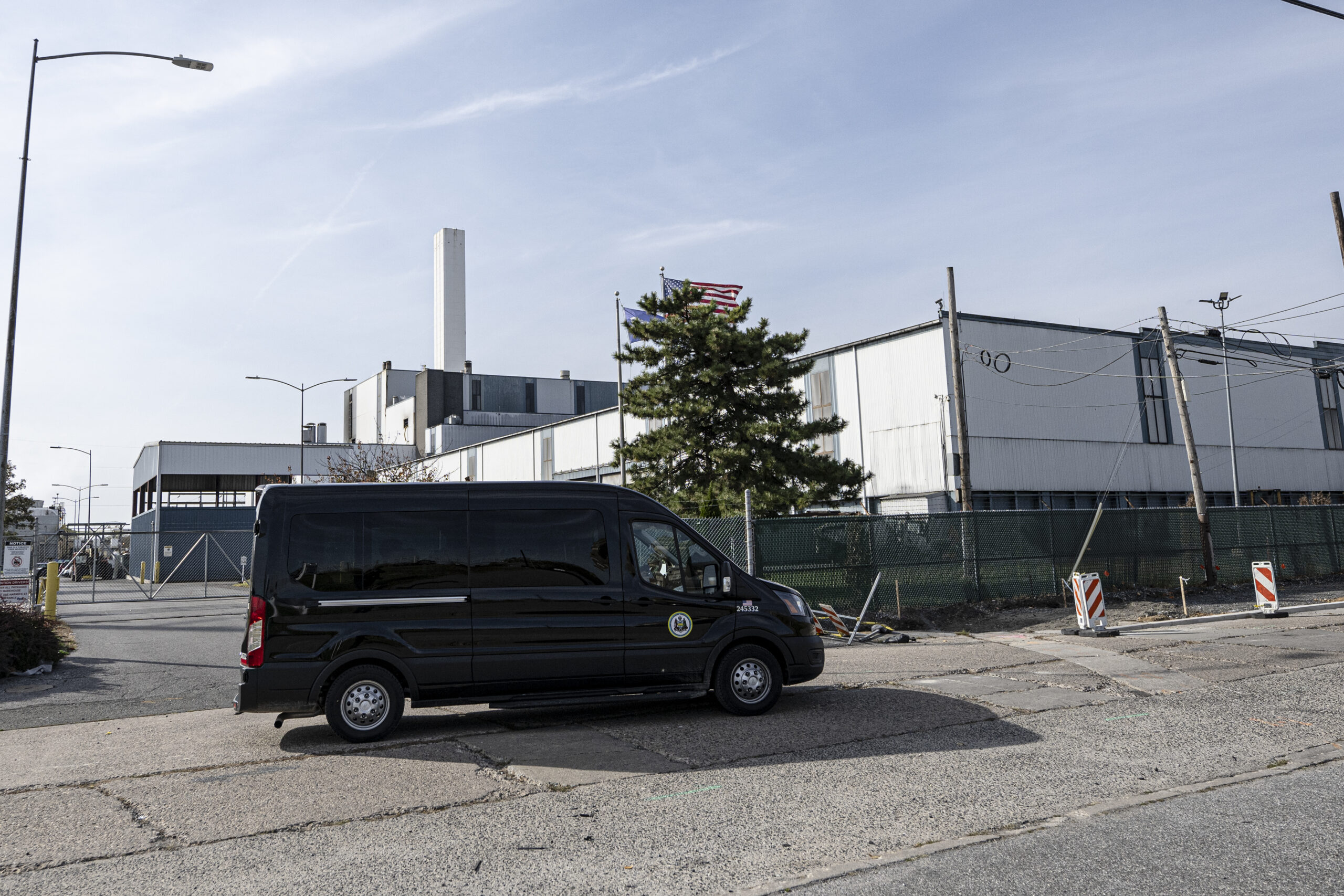
    Currently, the city government sends about a third of the trash it collects to the Reworld trash incinerator in Chester, with the rest going to landfills. Those waste-disposal contracts expire June 30, and Gauthier is hoping to take incineration off the table when new deals are reached.

    The Reworld incinerator in Chester, Pa., on Friday, Nov. 7, 2025.

    “Burning Philadelphia’s trash is making Chester, Philadelphia, and other communities around our region sick,” Gauthier has said, pointing to elevated rates of asthma and other ailments and a legacy of “environmental racism” in Chester. The low-income and majority-Black city downriver from Philly has been home to numerous heavy industrial facilities.

    Reworld has said its waste-to-energy facility, which produces some electricity from burning trash, is a “more sustainable alternative to landfilling.”

    At a hearing last year, Parker administration officials said the city is including language in its request for proposals for the next contracts that will allow the city to consider environmental impacts. But they asked lawmakers not to vote for a blanket ban on incineration to allow the city to study the issue further.

    Parker waiting for Council to reapprove $800 million in bonds for her H.O.M.E. plan

    The biggest agenda item left hanging last month when lawmakers adjourned for the winter break was a bill to authorize the Parker administration to issue $800 million in city bonds to fund her H.O.M.E. initiative.

    Parker had hoped to sell the bonds last fall, and Council in June initially authorized the administration to take out new debt. But lawmakers made significant changes to the initiative’s first-year budget, especially by lowering income thresholds for some programs funded by the H.O.M.E. bonds to prioritize the lowest-income residents.

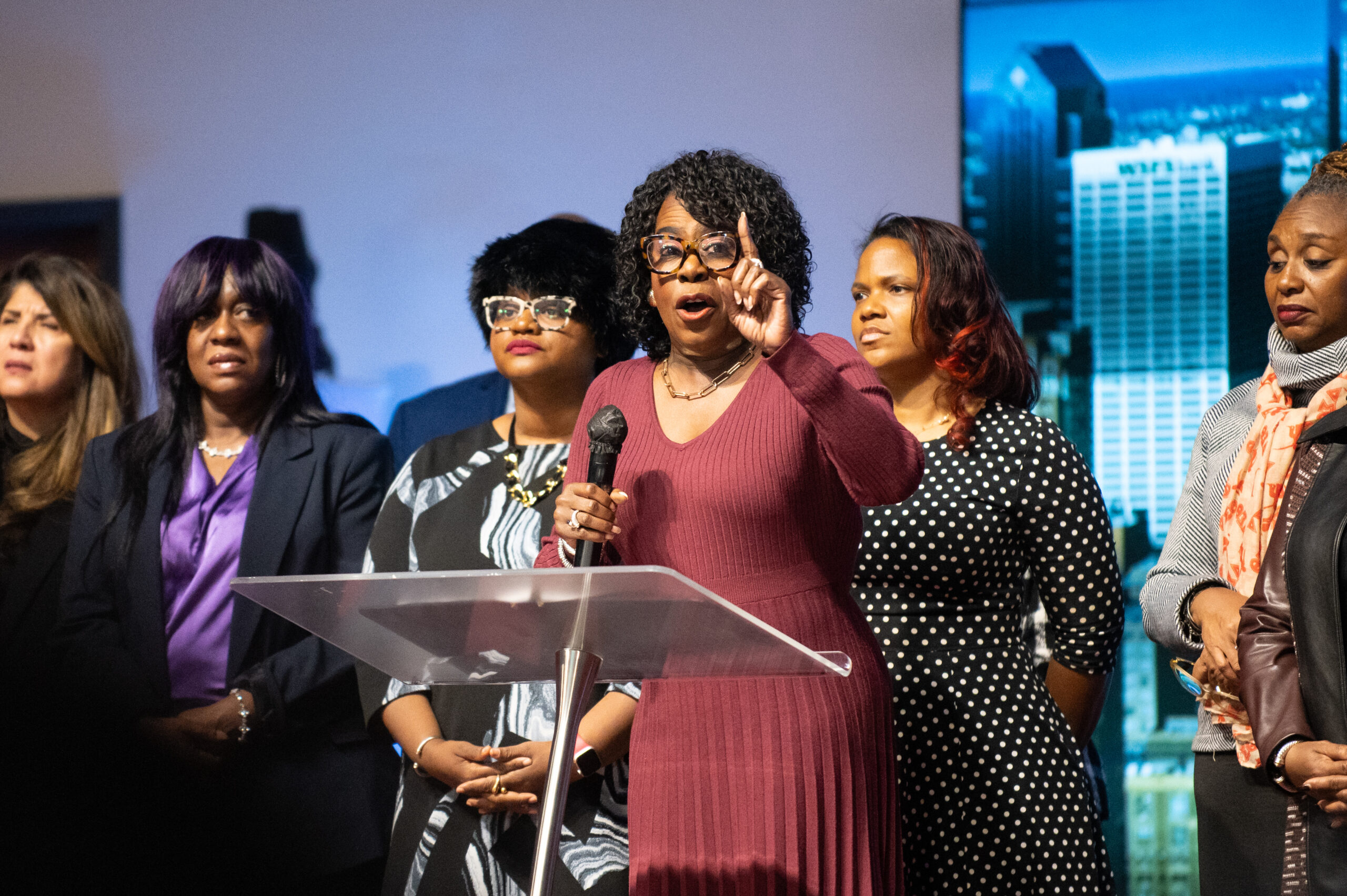
    Mayor Cherelle L. Parker speaks to the crowd at The Church of Christian Compassion in the Cobbs Creek neighborhood of West Philadelphia on Sunday, Dec. 7, 2025. Parker visited 10 churches in Philadelphia on Sunday to share details about her H.O.M.E. housing plan.

    That move, which Parker opposed and which sparked Council’s most significant clash with her administration to date, required a redo of the bond authorization. Lawmakers ran out of time to approve a new version of the measure in December, but Council President Kenyatta Johnson said it could come up for a final vote Thursday.

    “Council members have always been supportive of the H.O.M.E. initiative,” Johnson said. “H.O.M.E. advances City Council’s goals to expand access to affordable homeownership for Philadelphians … and to ensure that city housing investments deliver long-term benefits for families and neighborhoods alike.”

    Council aims to limit ‘resign to run’ … again

    Council is also expected to vote this spring on legislation that would change Philadelphia’s 74-year-old “resign to run” law and allow city officeholders to keep their jobs while campaigning for other offices.

    Currently, Council members and other city employees are required to quit their jobs to run for higher office. Lawmakers have tried several times over the last 20 years to repeal the law, but they have been unsuccessful. Changing the rule requires amending the city’s Home Rule Charter, which a majority of voters would have to approve through a ballot question.

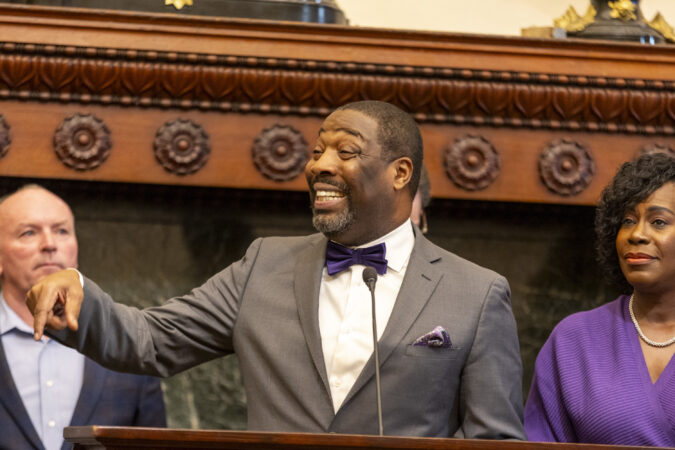
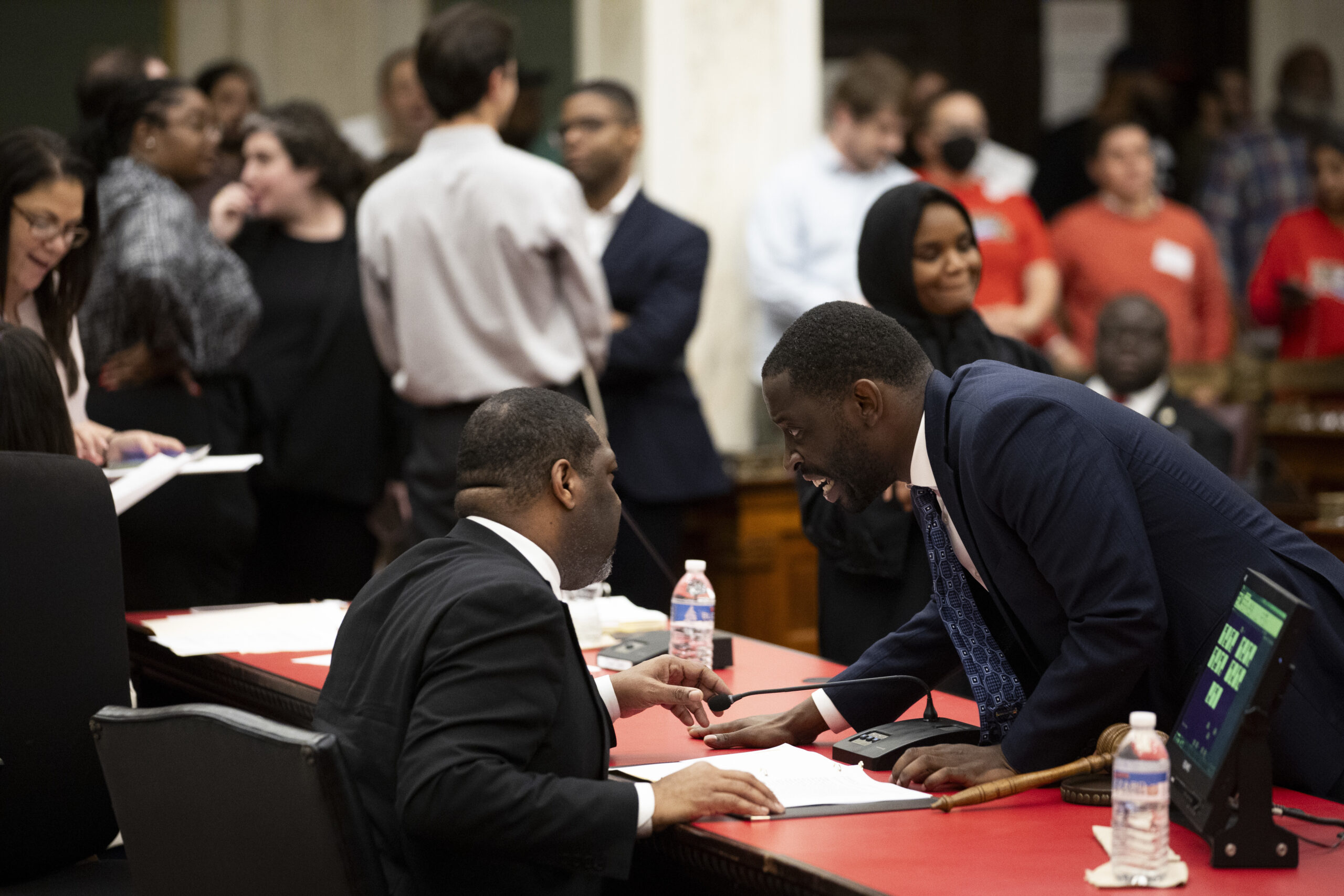
    Council President Kenyatta Johnson talks with Councilmember Isaiah Thomas at City Hall on Wednesday, Dec. 11, 2024 in Philadelphia.

    The latest attempt, spearheaded by Councilmember Isaiah Thomas, would not entirely repeal the resign-to-run law, but instead would narrow it to allow elected officials to keep their seats only if they are seeking state or federal office, such as in Congress or the state General Assembly. Council members who want to run for mayor would still have to resign.

    Thomas, a Democrat who represents the city at-large and is rumored to have ambitions of running for higher office, plans to make minor amendments to the legislation this spring, a spokesperson said, before calling it up for a final vote. The goal, Thomas has said, is to pass the legislation in time for a question to appear on the May primary election ballot.

    Incoming clash over immigration?

    Parker has spent the last year avoiding direct confrontation with the Trump administration, a strategy that supporters say has helped keep Philadelphia out of the president’s crosshairs.

    The mayor, however, cannot control what other local elected officials say about national politics, and Trump’s immigration crackdown appears to be stirring stronger local reaction heading into his second year in office.

    After an Immigration and Customs Enforcement agent fatally shot Renee Good in Minneapolis this month, Sheriff Rochelle Bilal went viral for saying federal agents “will not be able to hide” in Philly. (Bilal, however, does not control the Philadelphia Police Department, which is under Parker’s purview.)

    Meanwhile, progressive Councilmembers Rue Landau and Kendra Brooks this year are expected to introduce legislation aimed at constricting ICE operations in Philadelphia.

    Demonstrators from No ICE Philly gathered to protests outside the U.S. Immigration and Customs Enforcement, office at 8th and Cherry Street, Philadelphia, Tuesday, Jan. 20, 2026.

    It is not yet clear what the lawmakers will propose. But Brooks, who has called on Parker to take a firmer stand against Trump, recently criticized the Philadelphia courts for allowing agents to seize suspects leaving the Criminal Justice Center. She said officials who in her view have failed to stand up to ICE are engaged in “complicity disguised as strategic silence,” and she vowed to force those who “cooperate with ICE in any way” to testify in Council.

    “Cities across the country are stepping up and looking at every available option they have to get ICE out,” Brooks said at a news conference earlier this month. “In the coming days, you will hear about what my office is doing about city policy. These demands must be met or face the consequences in Council.”

    Landau added Philly cannot allow “some masked, unnamed hooligans from out of town [to] come in here and attack Philadelphians.”

    “We are saying, ‘ICE out of Philadelphia,’” she said.

    Parker has said her administration has made no changes to the city’s immigrant-friendly policies, but she continues to be tight-lipped about the issue.

    The Pennsylvania Office of Open Records last week ruled in favor of an Inquirer appeal seeking to force Parker’s administration to disclose a September letter it sent the U.S. Department of Justice regarding local policies related to immigration.

    The administration still has not released the document. It has three more weeks to respond or appeal the decision in court.

    South Philly arena proposal still in the works

    After the 76ers abandoned their plan to build a new arena in Center City a year ago, the team announced it would partner with Comcast Spectacor, which owns the Flyers, to build a new home for both teams in the South Philadelphia stadium complex.

    The teams announced last fall they have selected an architect for the new arena, which is scheduled to replace the Spectacor-owned Xfinity Mobile Arena, formerly the Wells Fargo Center, in 2031.

    If the teams are still planning to open the new arena on their previously announced timeline, legislation to green-light the project could surface as soon as this spring. But so far, there has been no sign of movement on that front.

    “There is currently no timeline for introducing legislation to build a new Sixers arena in South Philadelphia,” said Johnson, whose 2nd District includes the stadium complex. “At the appropriate time, my legislative team and I will actively collaborate with Mayor Cherelle L. Parker’s administration on drafting any legislation related to the Sixers arena before it is introduced in City Council.”

    School closings and 2026 celebrations also on the horizon

    In addition to its legislative agenda, Council this year will likely be drawn into discussions over school closings and the high-profile gatherings expected to bring international attention to Philly this summer.

    The Philadelphia School District is soon expected to release its much-anticipated facilities plan, including which school buildings are proposed for closure, consolidation, or disposition. The always-controversial process is sure to generate buzz in Council.

    “We will do our due diligence on the District’s Facilities Plan,” Johnson said in a statement.

    Additionally, the city is preparing for the nation’s Semiquincentennial, FIFA World Cup games, and the MLB All-Star Game. While the administration is largely responsible for managing those events, some Council members have said ensuring the city is prepared for them is a major priority.

    Johnson said his agenda includes “making sure Philadelphia has a very successful celebration of America’s 250th Birthday that results in short and long-term benefits for Philadelphia.”

    Staff writers Jake Blumgart, Jeff Gammage, and Kristen A. Graham contributed to this article.

  • Yes, Philly is most definitely a basketball city. Dating all the way back to 1898.

    Yes, Philly is most definitely a basketball city. Dating all the way back to 1898.

    On Dec. 1, 1898, about 1,000 people gathered at a court in Textile Hall — today’s Kensington neighborhood. They were there to watch the Philadelphia Hancock Athletic Association play the New Jersey Trenton Nationals in America’s first professional basketball game.

    According to an article in the following day’s Philadelphia Times, the game got a late start because referees were still ironing out the rules of the world’s newest professional sport.

    But once the game got underway, it was fast and furious.

    Hancock “started with a rush, scoring two field goals before the players had become warmed up to their work,” the story reads.

    “Throughout the entire first half, the home team had the better of the argument, taking advantage of every opportunity finishing the half in the lead by a score of 11 to [0].”

    In the end, Philadelphia lost by two points, a disappointment Philly sports fans know all too well, even in these modern times.

    The final score: 21 to 19.

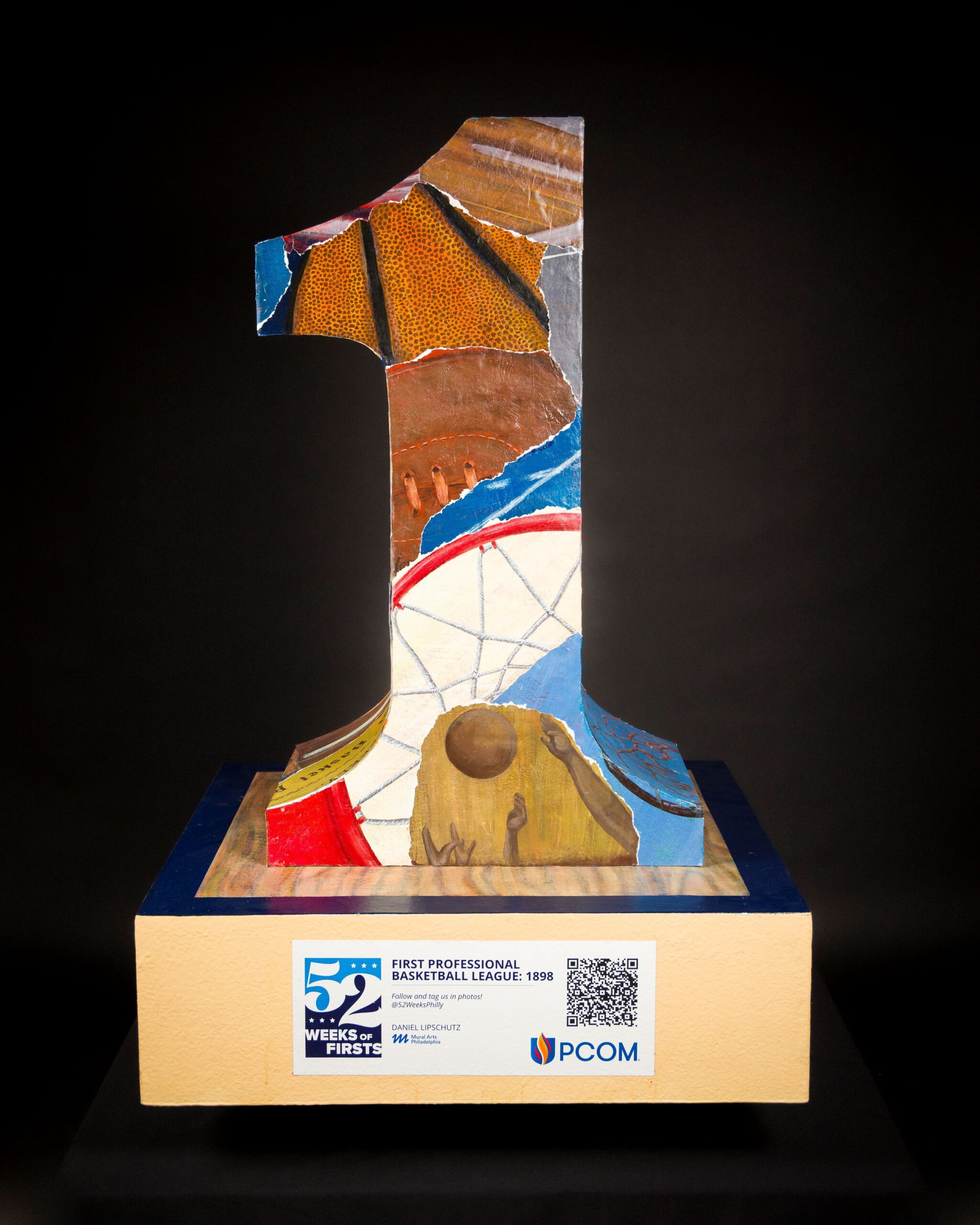
    Daniel Lipschutz blended history into his love of the modern day sport for this sculpture.

    That first game of the National Basketball League will be feted this Saturday at a Firstival at Xfinity Mobile Arena. Firstivals are the Philadelphia Historic District’s weekly day parties celebrating events that happened in Philadelphia before anywhere else in America, and often the world. They are part of a yearlong celebration of America’s 250th birthday.

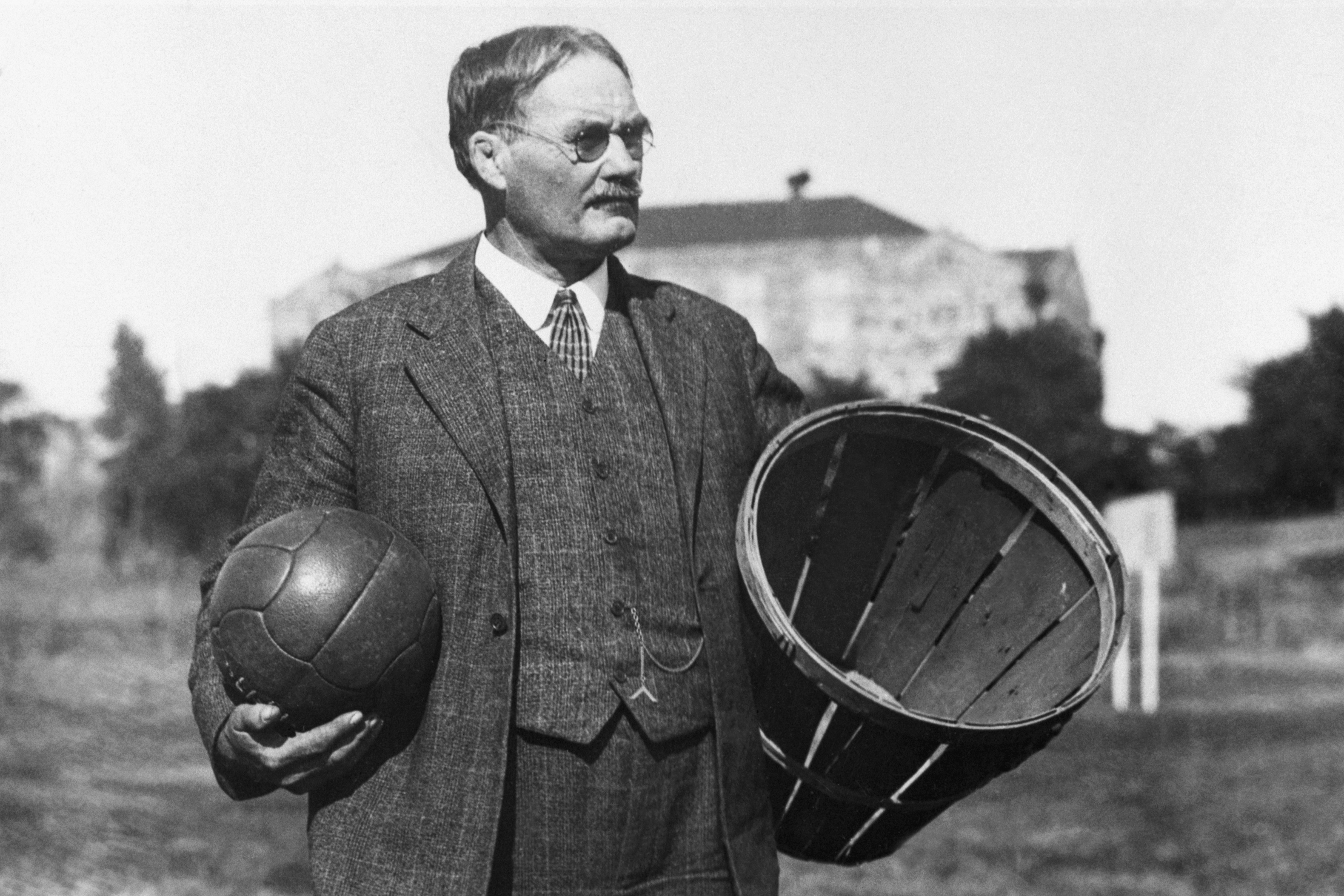
    James Naismith, a YMCA coach in Springfield, Mass., invented basketball in 1891 to keep kids active during winter months. The sport incorporated elements of rugby, lacrosse, and soccer. Instead of throwing balls into a bottomless net to score, players threw balls into peach baskets.

    (In other words, there was no such thing as a rebound.)

    James Naismith, inventor of basketball, with a ball and a basket.

    Basketball quickly became popular with college students and in 1898, Naismith was recruited to coach the University of Kansas basketball team.

    That same year, Horace Fogel, sports editor of the Philadelphia Public Ledger, organized the first professional basketball league with three teams from Philadelphia and three from South Jersey.

    A 12-foot chain-link cage separated players from the fans. Ropes replaced these iron cages in the 1920s.

    Fogel’s National Basketball League lasted just five years, folding in 1904 because of quick player turnover eating into profits. A second league was formed in 1937 and was sponsored by Goodyear. In 1946, the Basketball Association of America was established.

    And in 1949, the BAA and NBL merged to create today’s NBA.

    “This really goes to show that Philadelphia is a sports city,” said Shavonnia Corbin Johnson, vice president of civic affairs for the 76ers. “When people talk about Philadelphia sports rooted in history, tradition, and passion, it’s true, but now we know that America’s true love of sports can trace its roots right back here.”

    This week’s Firstival is Saturday, Jan. 24, 11 a.m. — 1 p.m., at Xfinity Mobile Arena, 3601 S. Broad St., Philadelphia, Pa. Premium Access Entrance on the Broad Street side, near Lot C. The Inquirer will highlight a “first” from Philadelphia Historic District’s 52 Weeks of Firsts program every week.