Tag: Semiquincentennial

  • Why a Boston-based appeals court ruling matters for President’s House

    Why a Boston-based appeals court ruling matters for President’s House

    President Donald Trump’s administration is closer to getting its way after a Boston-based appeals court said it doesn’t have to restore exhibits it removed — at least for now.

    The Boston-based U.S. Court of Appeals for the First Circuit ruled the National Park Service does not have to restore all exhibits it removed as part of its “restoring sanity to American history” push before the nation’s 250th anniversary celebration, issuing an administrative stay on a lower court’s order.

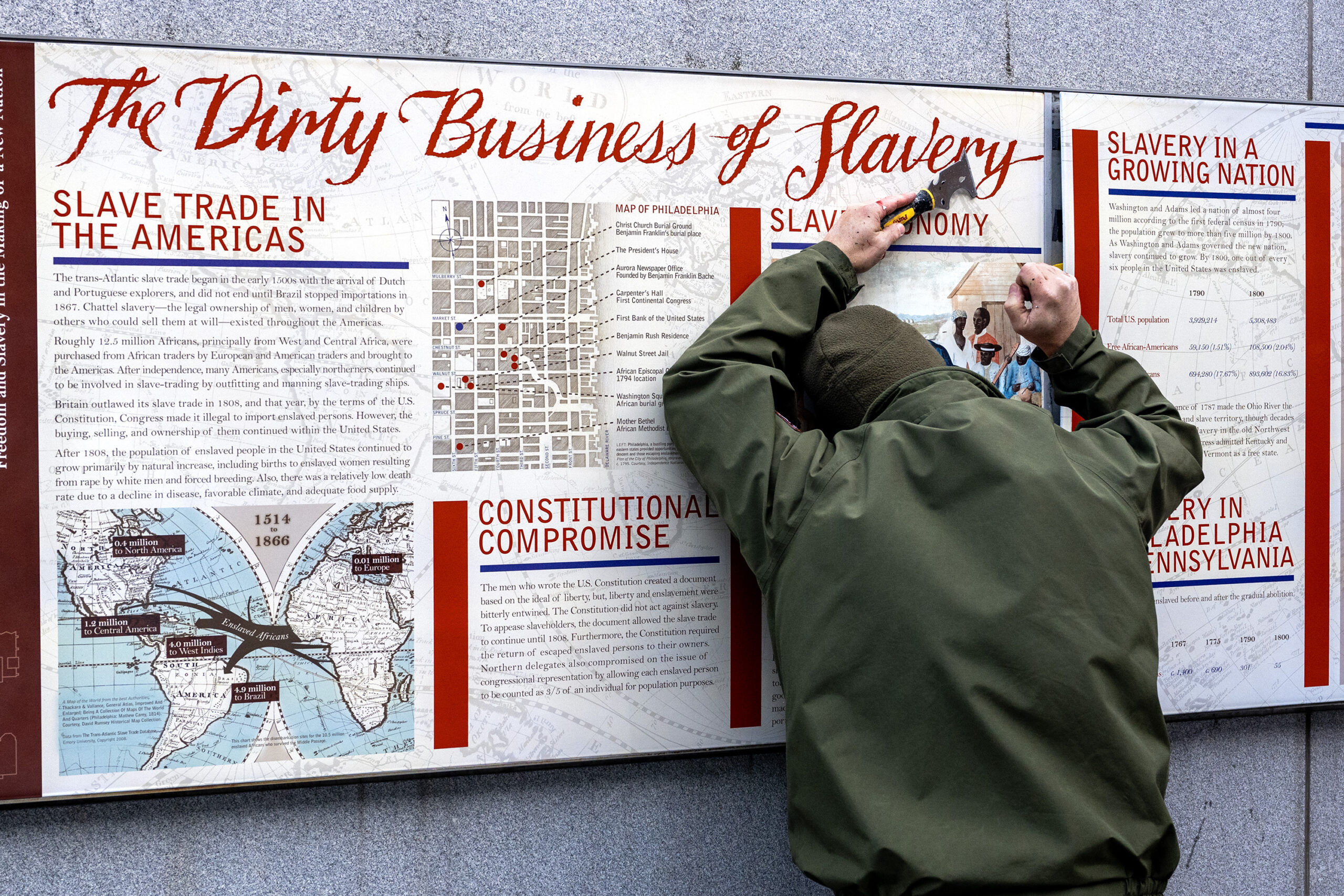
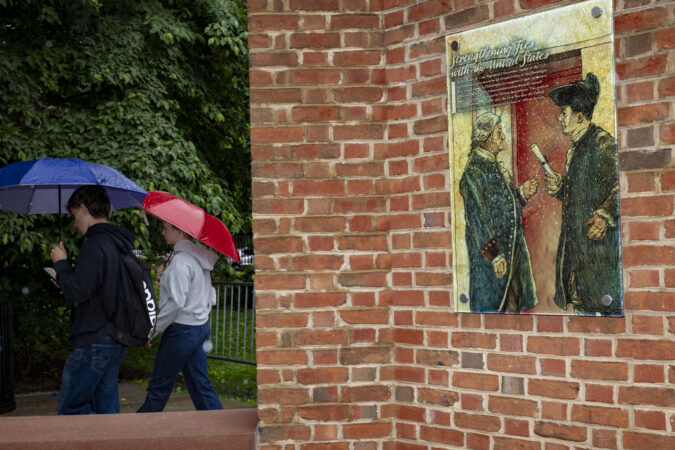
    That order protected the historic site of George Washington’s Philadelphia residence on Sixth and Market Streets from further changes after the U.S. Court of Appeals for the Third Circuit ruled last week that Philadelphia does not have the right to dictate the content of exhibits at the President’s House. The exhibits were dismantled by the Trump administration earlier this year.

    But it remains to be seen whether the stay allows the Trump administration to install the newly proposed panels, which historians say whitewash Washington’s culpability in enslaving nine people at his Philadelphia home.

    In a statement, the Department of the Interior responded: “We are confident that as this inferior ruling from an activist lower court judge receives further scrutiny, they will be further restrained.”

    Administrative stays are common steps federal courts take to buy time while judges assess the arguments.

    The First Circuit judges intend to rule “promptly” on a request for a more permanent stay during the appeal, the order says.

    Either way, the ruling marks a second blow in a week to the City of Philadelphia and stakeholders who developed the President’s House Site.

    Michael Coard, attorney and founder of Avenging the Ancestors Coalition, which is leading efforts to protect the President’s House, emphasized that the First Circuit action was not a final decision.

    “The stories of enslaved African descendants and other historically marginalized communities are American history and deserve to be preserved and told truthfully,” he said.

    Here is what you need to know about the status of the President’s House exhibits.
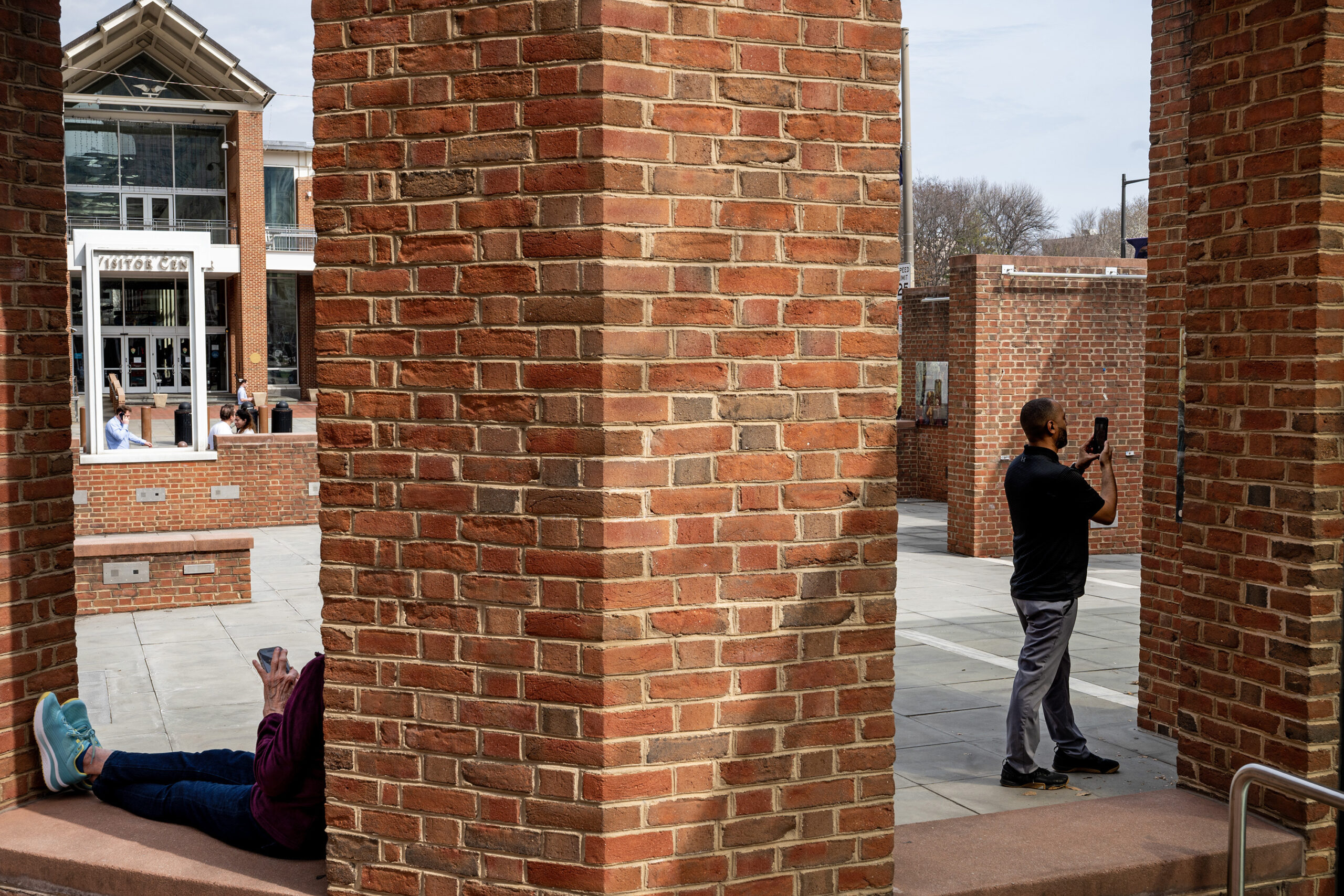
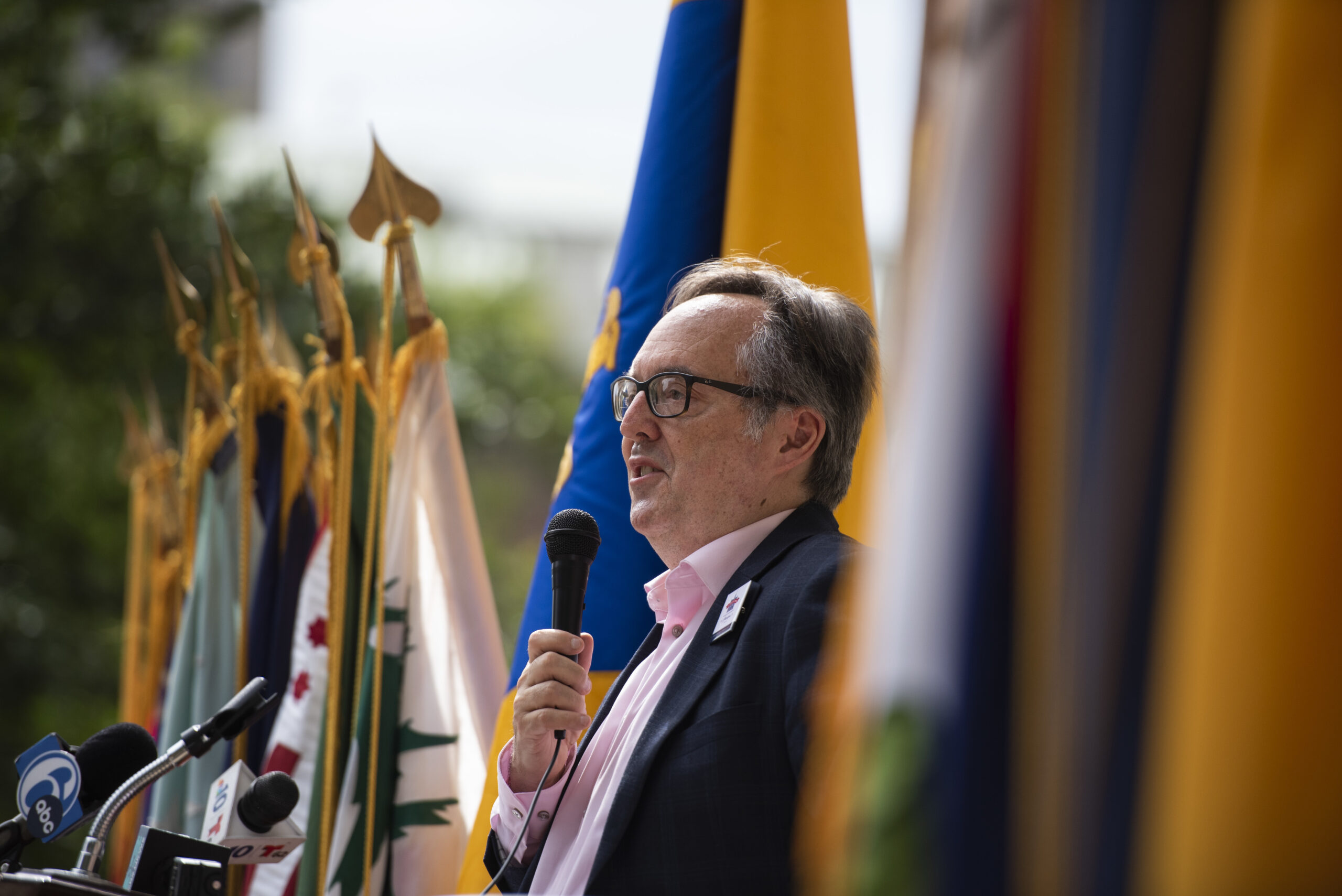
    The President’s House in Independence National Historical Park March 11, 2026.

    What do Boston-based courts have to do with the President’s House?

    Earlier this year, conservation groups sued the Trump administration in federal court in Massachusetts challenging Interior Secretary Doug Burgum’s 2025 order implementing the president’s directive to ensure that no displays at national parks “inappropriately disparage Americans past or living.”

    U.S. District Judge Angel Kelley this month temporarily blocked the National Park Service from removing or altering content at parks across the country, and required the agency to restore before July 4 all exhibits that had been removed.

    The Trump administration’s changes to exhibits “seek to rewrite the Nation’s history with a white-out pen,” wrote Kelley, a nominee of former President Joe Biden.

    At least 50 exhibits were removed from more than 30 sites nationwide, according to court records.

    Justice Department attorneys appealed the ruling to the First Circuit and asked the higher court to issue an administrative stay or a stay for the duration of the appeal.

    The three judges assigned to the case — Chief Judge David J. Barron, appointed by Barack Obama, and Biden appointees Gustavo A. Gelpí Jr. and Julie Rikelman — issued the administrative stay Tuesday pausing the majority of Kelley’s order, including the directive to restore sites such as the President’s House.

    The order is not explicit on whether the National Park Service can make changes to sites, but administrative stays are viewed as a way to preserve the status quo while the appeals court can review the facts and arguments in a case.

    “The administration’s decision not to reinstall and reinstate censored materials, particularly in advance of our nation’s upcoming 250th anniversary, is a disservice to every park visitor this summer and to the broader American public,” the conservation groups, represented by Democracy Forward, said in a statement.

    What did the Third Circuit rule?

    The First Circuit ruling comes on the heels of the Third Circuit’s reversal of a February order entered by a Philadelphia federal judge.

    Judge Cynthia M. Rufe issued an injunction that required the Trump administration to restore the President’s House to its form before the abrupt Jan. 22 removal of exhibits.

    A three-judge panel disagreed with Rufe, finding that Philadelphia gave up its rights over the President’s House when it donated the site to the National Park Service. The judges further said the federal government’s proposed replacement panels were “full of historical context.”
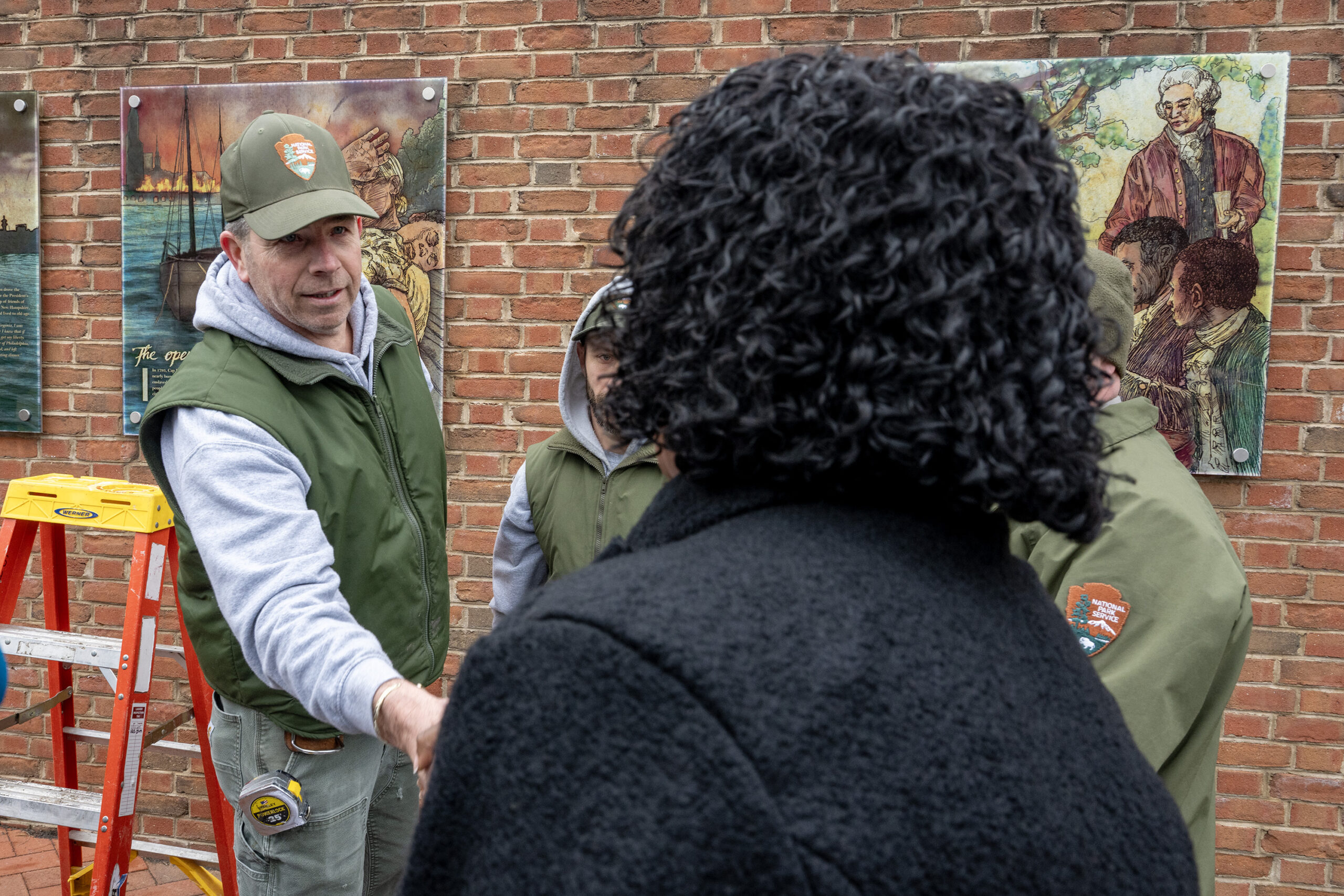
    Mayor Cherelle L. Parker thanks workers as the President’s House site in Independence National Historical Park Thursday, Feb, 19, 2026 during a brief visit to the site as they began to return the slavery displays.

    What are the city’s options?

    After the Third Circuit ruling, Mayor Cherelle L. Parker said she would “pursue every legal action possible in efforts to reverse this decision.”

    The city has a few options, but time is running out for a favorable ruling before July 4.

    The city could ask for a rehearing in front of the same three judges who unanimously ruled to overturn the injunction. It can also ask for a hearing in front of the full Third Circuit court, known as en banc, or ask the U.S. Supreme Court to intervene.

    Philadelphia Law Department attorney Anne Taylor argued at the Third Circuit hearing that the federal government’s attack on these exhibits has caused irreparable harm as the city tries to tell its story ahead of next month’s 250th celebrations.

    Philadelphia is expecting a flood of visitors for the Semiquincentennial celebration, Taylor said, adding: “The President’s House is at the doorway to the Liberty Bell. That history is not being told to all the people who are expected to come here.”

    It could be challenging, or even impossible, to get a new panel of circuit judges or the Supreme Court justices briefed on the case to get a ruling in less than two weeks, legal experts said.
  • What to the oppressed is the Semiquincentennial?

    What to the oppressed is the Semiquincentennial?

    I’ve been thinking a lot about the speech Frederick Douglass gave on the 76th anniversary of the signing of the Declaration of Independence. Posed as a question, “What to the Slave is the Fourth of July?” the answer written in commentary form hasn’t lost its power or relevance in Philadelphia in 2026: “What, to the American slave, is your Fourth of July? I answer: a day that reveals to him, more than all other days in the year, the gross injustice and cruelty to which he is the constant victim.”

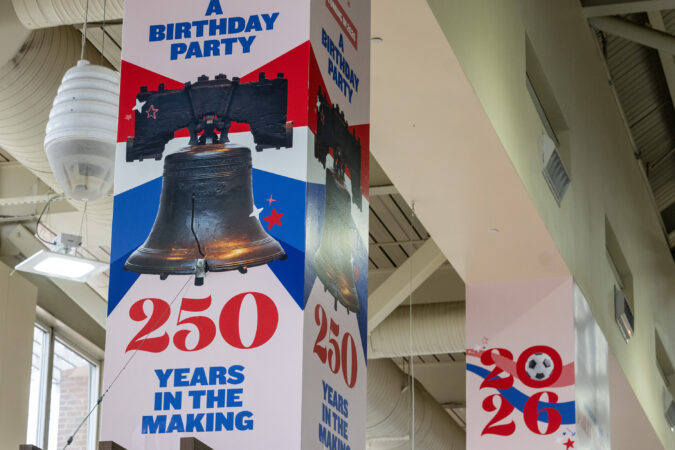
    This summer will place Philadelphia in the spotlight not only with the celebration of America’s Semiquincentennial, but also as a host city for the FIFA World Cup, the PGA Championship, and the MLB All-Star Game.

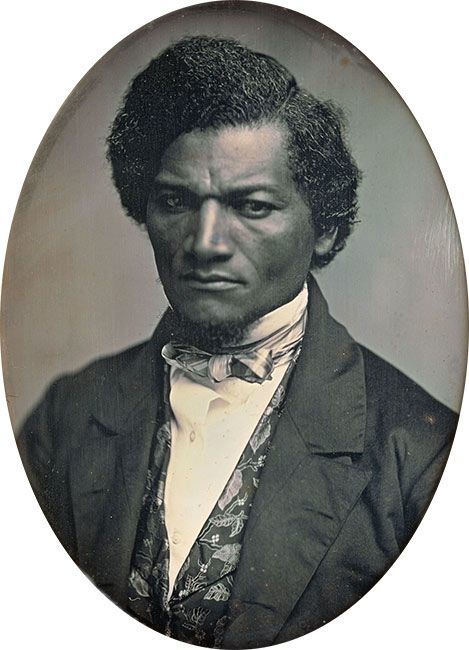
    Frederick Douglass, ca. 1847-1852.

    Just as Douglass decried our delusions of progress and challenged why victims of a broken system would celebrate their own oppression, we see that patterns repeat.

    Philadelphia will be center stage, celebrated as having birthed the nation, while the federal government wages war on its own cities, defunds basic services for its people, whitewashes and rewrites history in spaces such as the President’s House at Independence National Historical Park, and, despite describing itself as an avatar of freedom, bombs sovereign nations.

    A National Park Service worker removes an interpretive panel at the President’s House Site.

    As we invite the world to celebrate the World Cup with us, we have banned residents of some of the participating countries and unleashed a year of domestic terrorism by agents of U.S. Immigration and Customs Enforcement and the U.S. Department of Homeland Security, which will make it unsafe for people of color from throughout the world to attend.

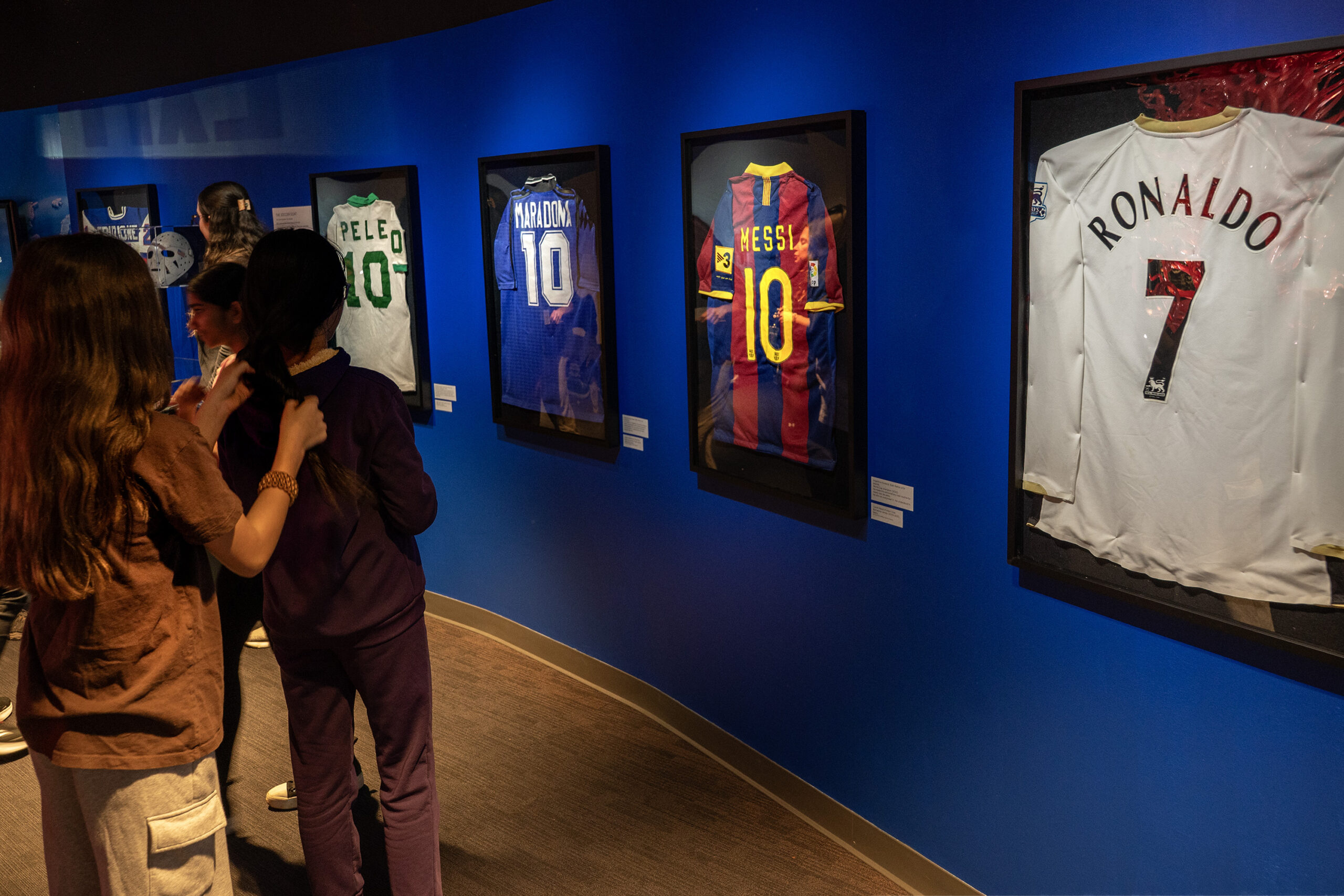
    Soccer jerseys on exhibit at at the National Liberty Museum.

    The events themselves will serve as an excuse for an influx of federal security agents — and there is nothing that makes me feel safe about them coming to Philadelphia this summer to keep us “safe.”

    In Philadelphia, while we want to accentuate the positive and celebrate our standing as a great city, we continue to see an increase in the unhoused population, a lack of affordable housing, underfunded and ineffective education and transportation, and a lack of economic opportunity for our residents.

    And we continue to ignore our broken carceral system, which hungrily awaits the failures of everything listed above.

    As Douglass wrote in his famous speech: “I say it with a sad sense of the disparity between us. I am not included within the pale of this glorious anniversary! Your high independence only reveals the immeasurable distance between us. The blessings in which you, this day, rejoice, are not enjoyed in common.”

    We hold these truths …

    This summer is not just about the nation, but about Philadelphia trying to put its best foot forward to show the few gleaming spots in our house, while keeping visitors from seeing the dirt inside the closet or under the couch.

    As Douglass likely experienced in 1852, I can already see the faces of some reading this and thinking, This is not the time for all your talk. We cannot allow Philadelphia to be disparaged.

    I am not disparaging Philadelphia — I am holding onto the city’s multiple truths.

    This is a great city and is the birthplace of independence for some — but instead of serving as the cheerleaders for despots and a city that submits to our nation’s current “king,” we should be the city that serves as the vanguard of resistance. Our city cannot stand on both sides of history and hold hands with our oppressors simply because we are desperate to be noticed.

    As it was with Douglass 175 years ago, where we stand today will be remembered tomorrow.

    The need for plain speaking

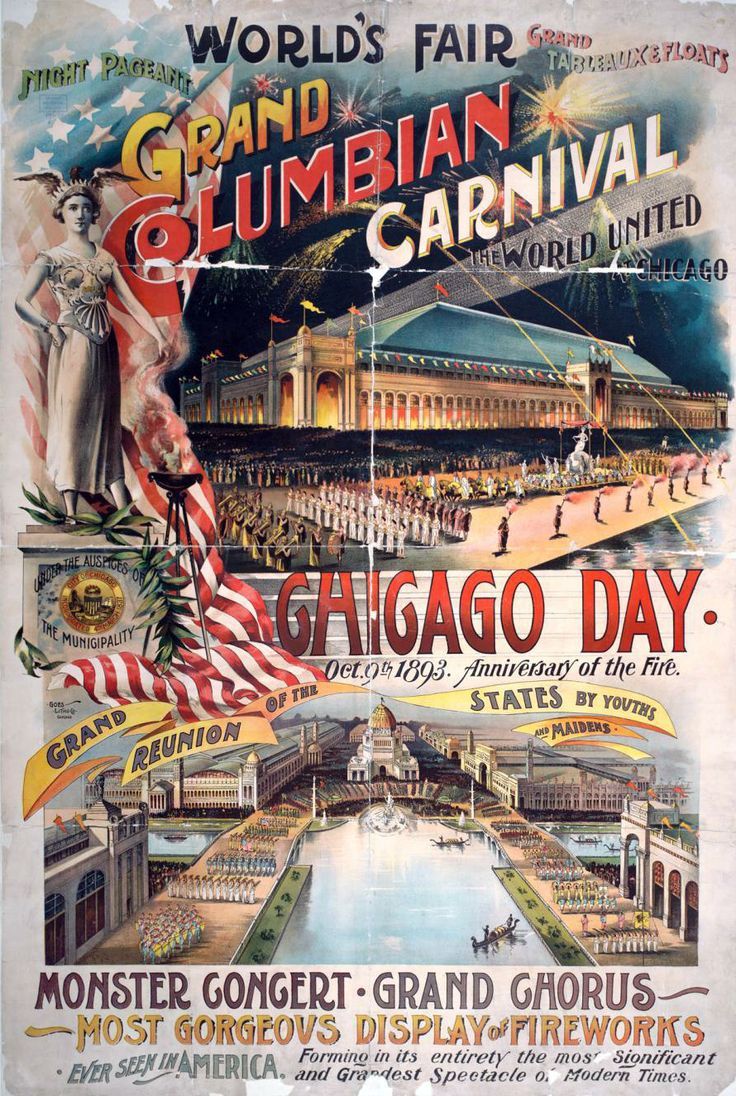
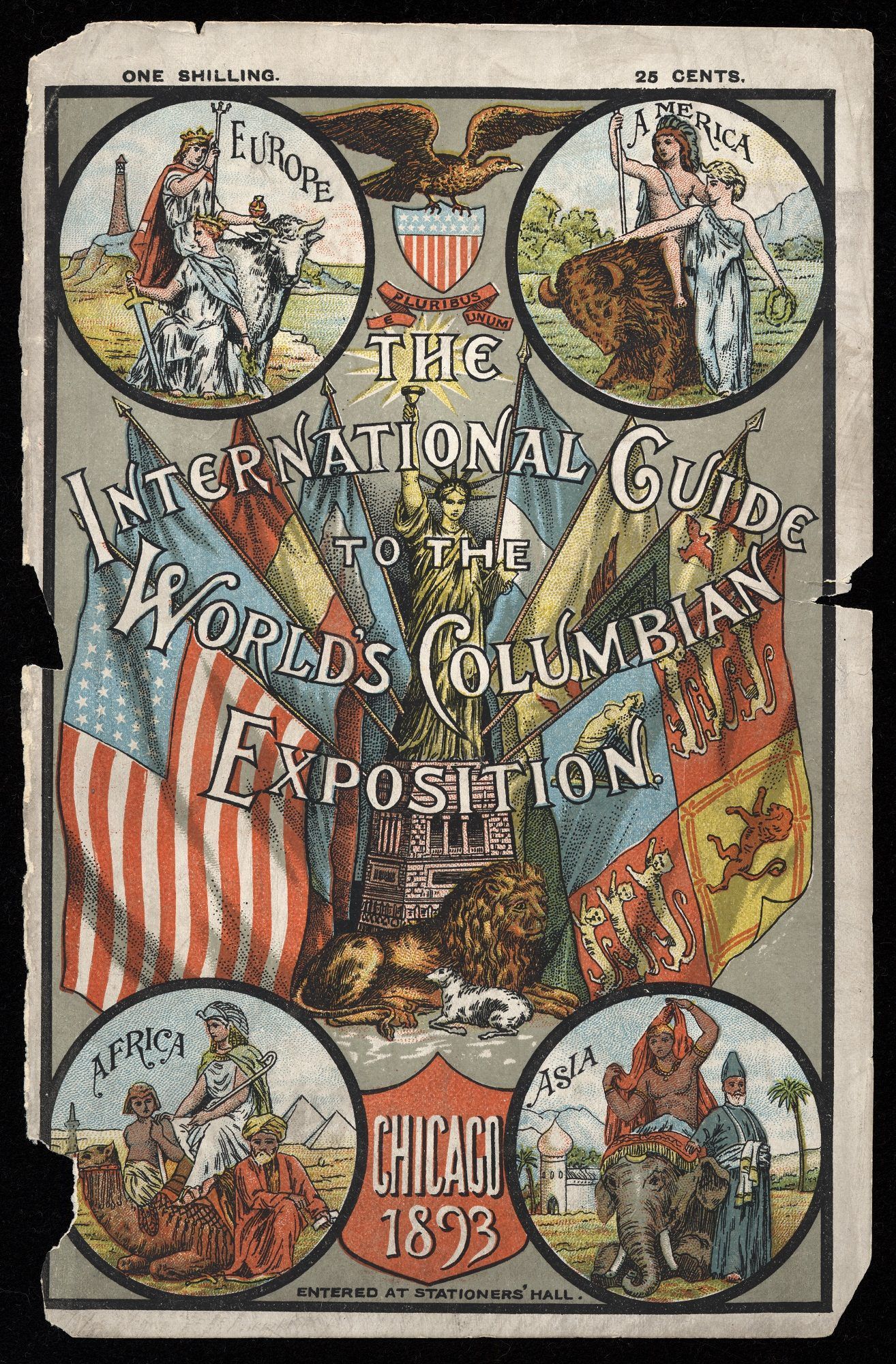
    Forty years after Douglass shared his words about the Fourth of July, America had once again chosen to celebrate its history and place in the world — this time through the 1893 World’s Fair in Chicago, which marked the 400th anniversary of Christopher Columbus’ landing in the Americas.

    Program from the 1893 World’s Fair in Chicago.
    Program from the 1893 World’s Fair in Chicago.

    Just four years earlier, the event had been held in Paris, and marvels such as the Eiffel Tower were shared with the world, showing the importance and ingenuity of the host nation.

    This era is often referred to as the “Gilded Age,” a time our current president fondly looks back on and wishes we would return to. “We were at our richest from 1870 to 1913. That’s when we were a tariff country,” President Donald Trump said in March. But it was also a time defined by government corruption, inequality, and exploitation, and it took place only 28 years after the end of slavery in America.

    While Paris gave the world the Eiffel Tower, the 1893 World’s Fair in Chicago introduced the world to Cracker Jack, the first dishwasher, and the first Ferris wheel — which stood 264 feet tall and carried 2,000 passengers — a monument to America’s greatness!

    While the fair was about all of America, the only space for Indigenous peoples was in the exotic exhibits of peoples from around the world. While the fair was about all of America, white women asked for their place within the fair and, after initially being denied a role, were eventually granted one through the creation of the World’s Congress of Representative Women.

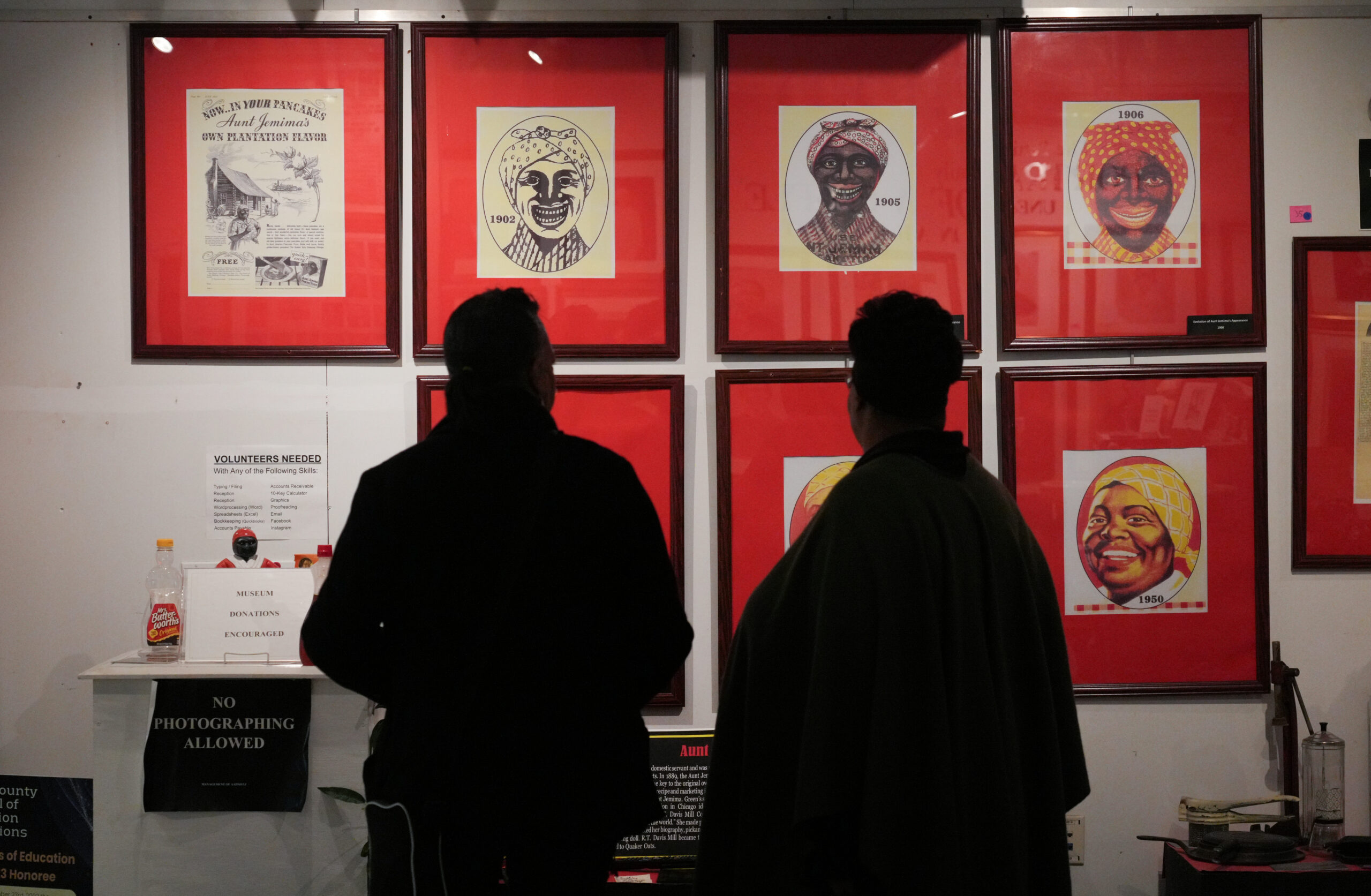
    Aunt Jemima in ads at the African American Heritage Museum of Southern New Jersey.

    While the fair was about all of America, African American luminaries such as Douglass and Ida B. Wells were denied any formal space or role. Instead, it was determined by organizers that participation of African Americans would be marked by introduction to the character Aunt Jemima — a fictional depiction playing to all fantasies of the happy slave and the way of life lost after emancipation — and through Negro Day, during which the organizers of the fair gave away 2,000 free watermelons to visitors.

    After being denied any real role within the fair, African American leaders appealed for sponsorship to the newly recognized World’s Congress of Representative Women, and that group said no — foreshadowing the next 150 years of American politics. With that denial, African American leadership turned to the Haitian delegation and received support from the only country that successfully established a new government from a slave revolt.

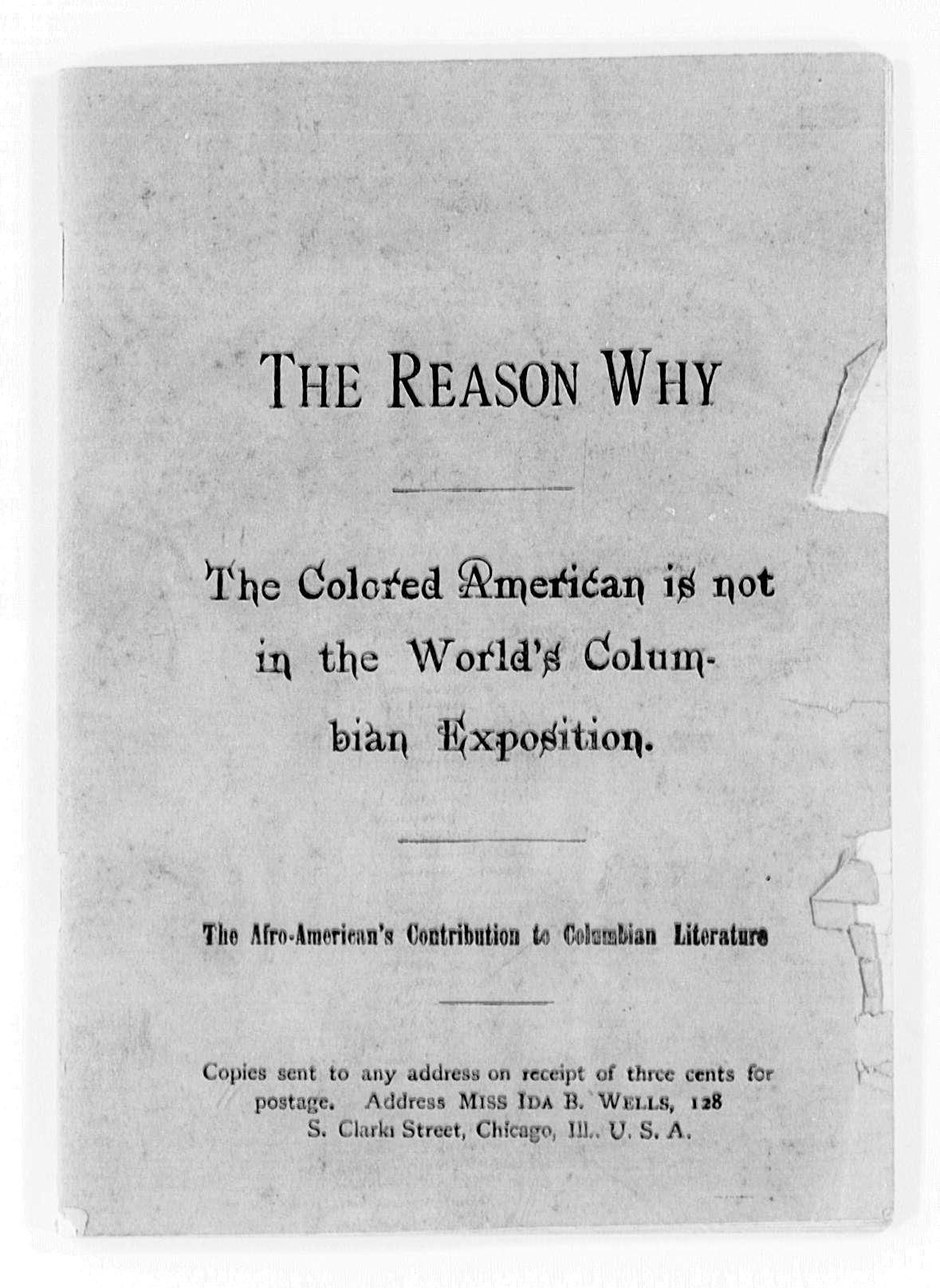
    The pamphlet distributed from the Haitian exhibition space at the 1893 World’s Fair in Chicago.
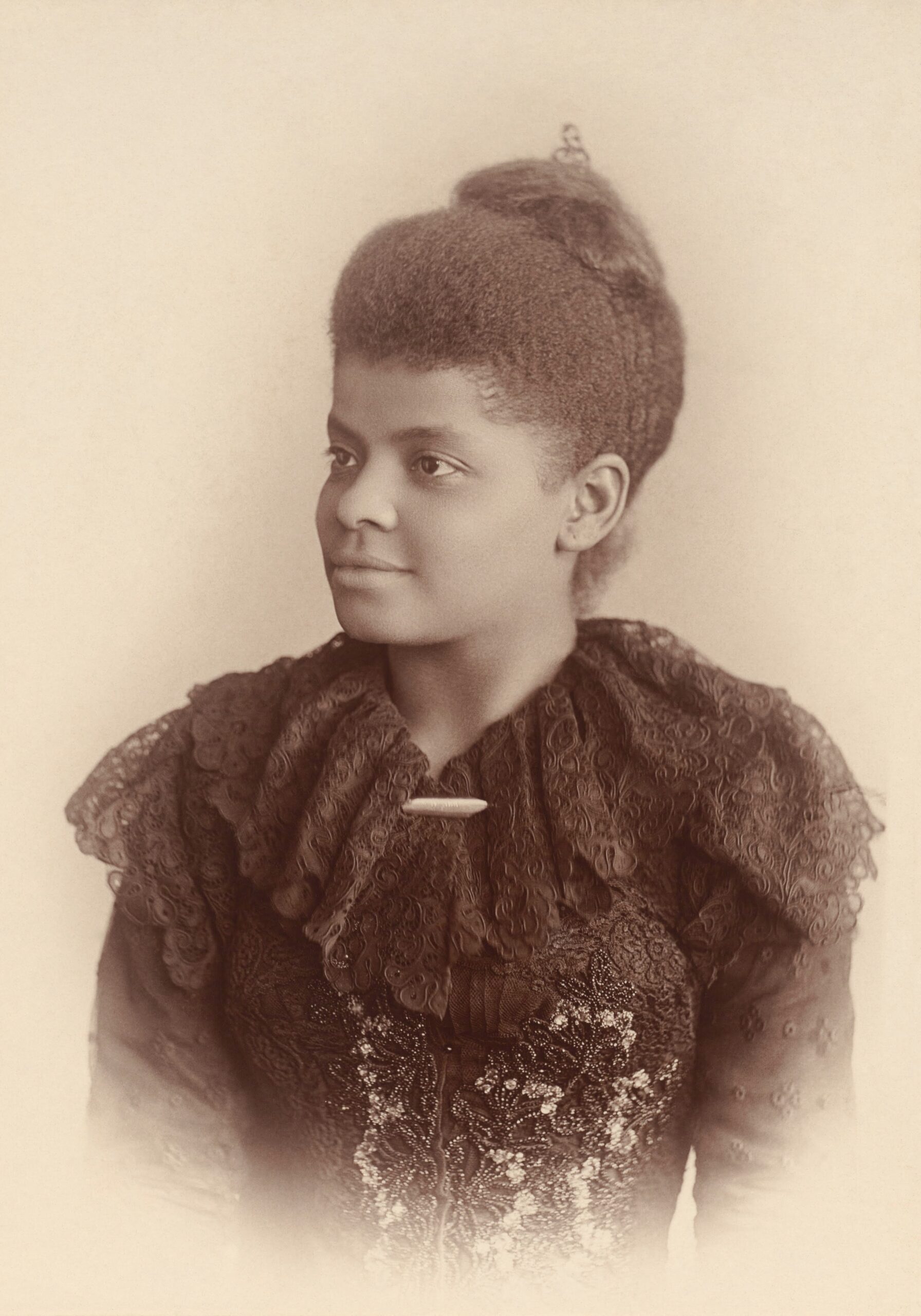
    Ida B. Wells Barnett, c. 1893.

    It was from the Haitian exhibition space that an alternative conversation took place, one that started with “The Reason Why: The Colored American is not in the World’s Columbia Exhibition,” a pamphlet which explained the current condition of the American Negro, but also spoke to the history, the successes, and a vision for the future.

    In it, Douglass wrote that “it involves the necessity of plain speaking of wrongs and outrages endured, and of rights withheld, and withheld in flagrant contradiction to boasted American Republican liberty and civilization. It is always more agreeable to speak well of one’s country and its institutions than to speak otherwise; to tell of their good qualities rather than of their evil ones.”

    I live and work in Kensington, an area of Philadelphia built during the Gilded Age to create wealth for a few. Our community is literally still trying to recover from that era; we have no interest in bringing it back or celebrating the destruction it caused.

    Just as during the Gilded Age — when a false history was celebrated in order to justify and whitewash the failures of America — we are walking into the trap of reproducing our mistakes without recognizing the current conditions, or centering the voices of those most affected by them.

    The 1893 World’s Fair in Chicago promotional flier.
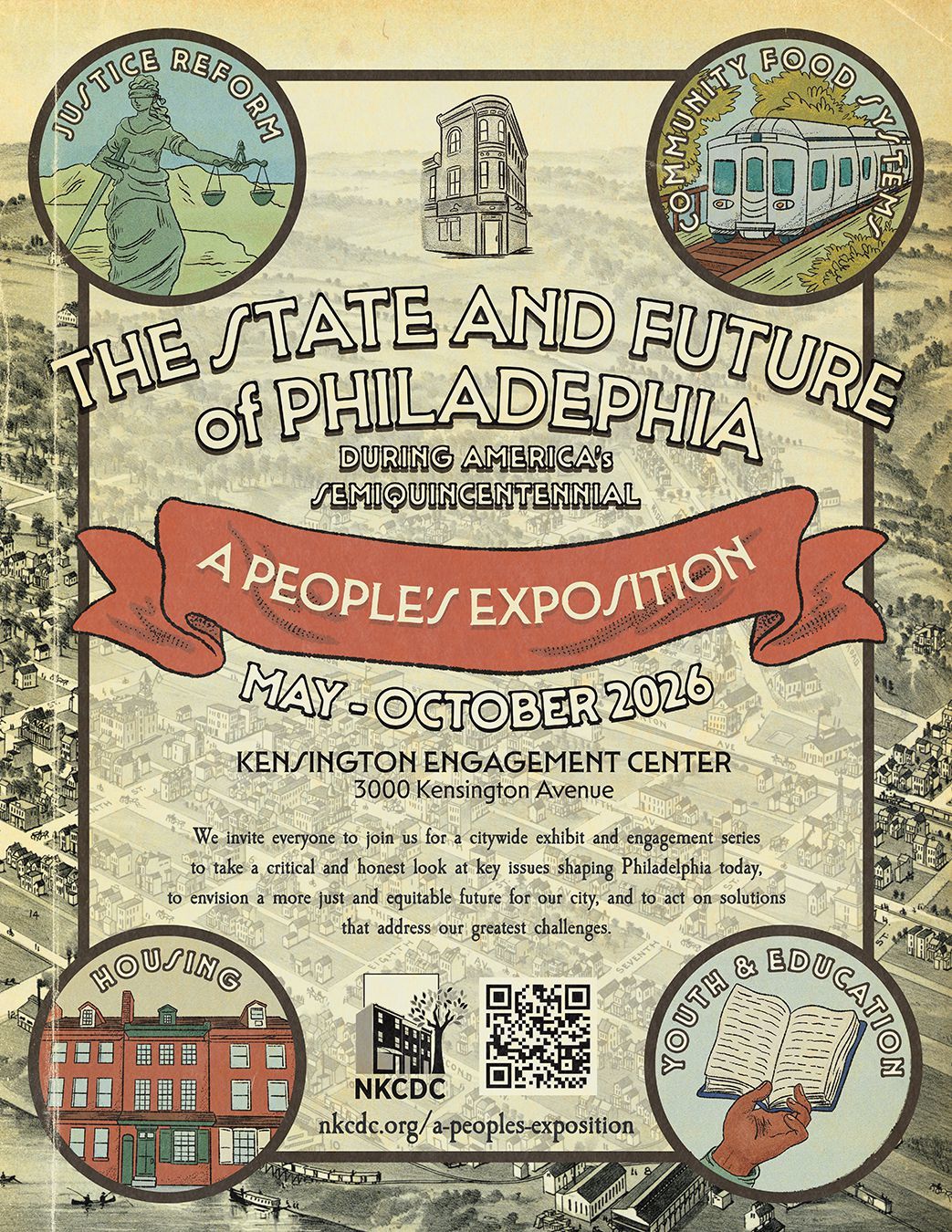
    “A People’s Exposition” 2026 promotional flier.

    Welcome to ‘A People’s Exposition’

    In the spirit of Douglass and Wells, and the ways they challenged “the celebration of oppression,” New Kensington Community Development Corp., along with partners throughout the city, invite you to participate in “A People’s Exposition” at the Kensington Engagement Center — to take a critical and honest look at our city’s challenges, to envision a just and equitable future, and to act on cocreated solutions.

    Opening on May 20 and running through October, partners from across the city will collectively create a welcoming space where we can learn about the status of Philadelphia’s most pressing issues, including the housing crisis, poverty and workforce development, the criminal justice system, youth and education, and community food systems and transportation.

    We invite you into a space of the curious and the committed, to learn and connect to current efforts and campaigns that are working toward addressing our city’s greatest needs.

    Leaving off with hope

    We all need and deserve celebration and joy. Philly has many things to be proud of — be it housing wins, Chinatown wins, or the daily wins of just making it another day on the right side of the grass — but we can and should hold two truths at once.

    While many in our city will only want to take part in performative displays of national and civic pride without facing the true underbelly of our nation and city, I encourage us all to resist whitewashing and to support participatory processes to fight the oppressive and exploitative machine that continues to be built and executed 250 years after independence. As a true patriot would.

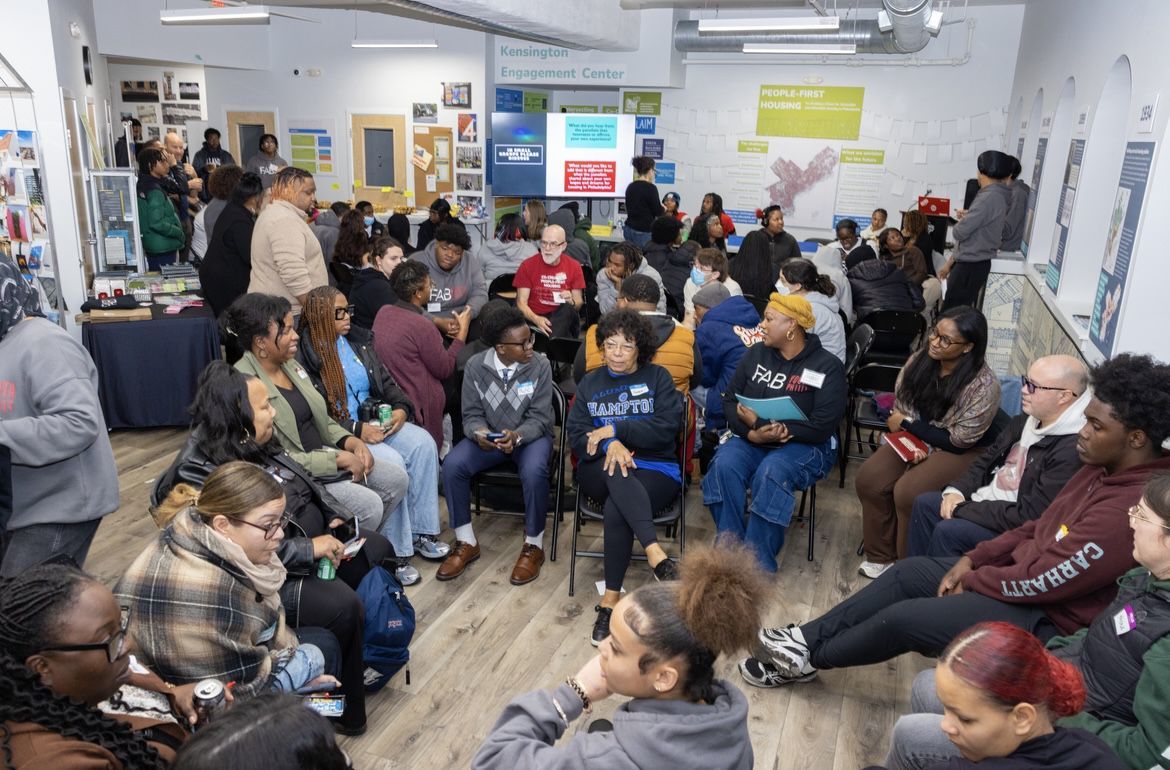
    Participants in a teen town hall at the Kensington Engagement Center.

    And as Frederick Douglass did on the Fourth of July.

    He challenged us to remember that for many, there is very little, if anything, to celebrate, and we should instead be engaged in reflection and organizing to put into action what is necessary to create a just society for all.

    “I do not despair of this country,” he wrote. “There are forces in operation, which must inevitably, work the downfall of slavery … I, therefore, leave off where I began, with hope.”

    Bill McKinney is a Kensington resident and the executive director of the New Kensington Community Development Corp.


    All images courtesy of the New Kensington Community Development Corp., except where noted.

  • Five things not to miss at the Philadelphia Flower Show this year

    Five things not to miss at the Philadelphia Flower Show this year

    Root systems are literal and figurative in our language — there are those you can see and touch and eat, and those invisible to the eye that connect us to the people and places that have brought us to this moment.

    Both type of roots are important to our past and future and both are explored at the Philadelphia Flower Show this year by gardeners and artists whose exhibits bring to life the show’s theme, “Rooted: Origins of American Gardening.”

    As the nation marks its 250th anniversary, the Flower Show celebrates its 197th year by looking back at the history of gardening in the United States. This is the “final chapter in a three-year trilogy” of themes that began in 2024 with “United by Flowers,” which explored current gardening connections, and continued last year with “Gardens of Tomorrow.”

    The most notable difference at this year’s Flower Show, which runs through March 8 at the Pennsylvania Convention Center, is that the marketplace has been moved out of the main exhibition halls on the upper floor to a separate space below. It’s a welcome change that provides more space for exhibits and visitors and makes the overall experience feel less crowded and commercial.

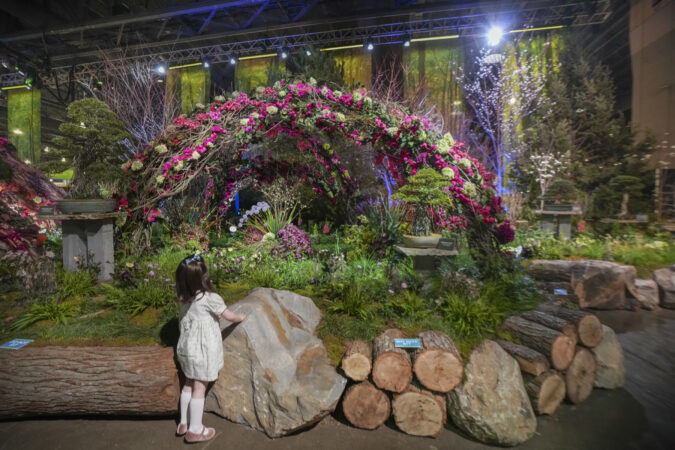
    I went rooting around the Flower Show during a media and members event on Friday. As always, the entrance garden — this year’s is “The Forest Floor” — is a can’t-miss, mainly because you have to walk through it to get in. But after that, here are five other interesting things I suggest making sure to see if you visit this year’s Flower Show.

    All the world’s a stage

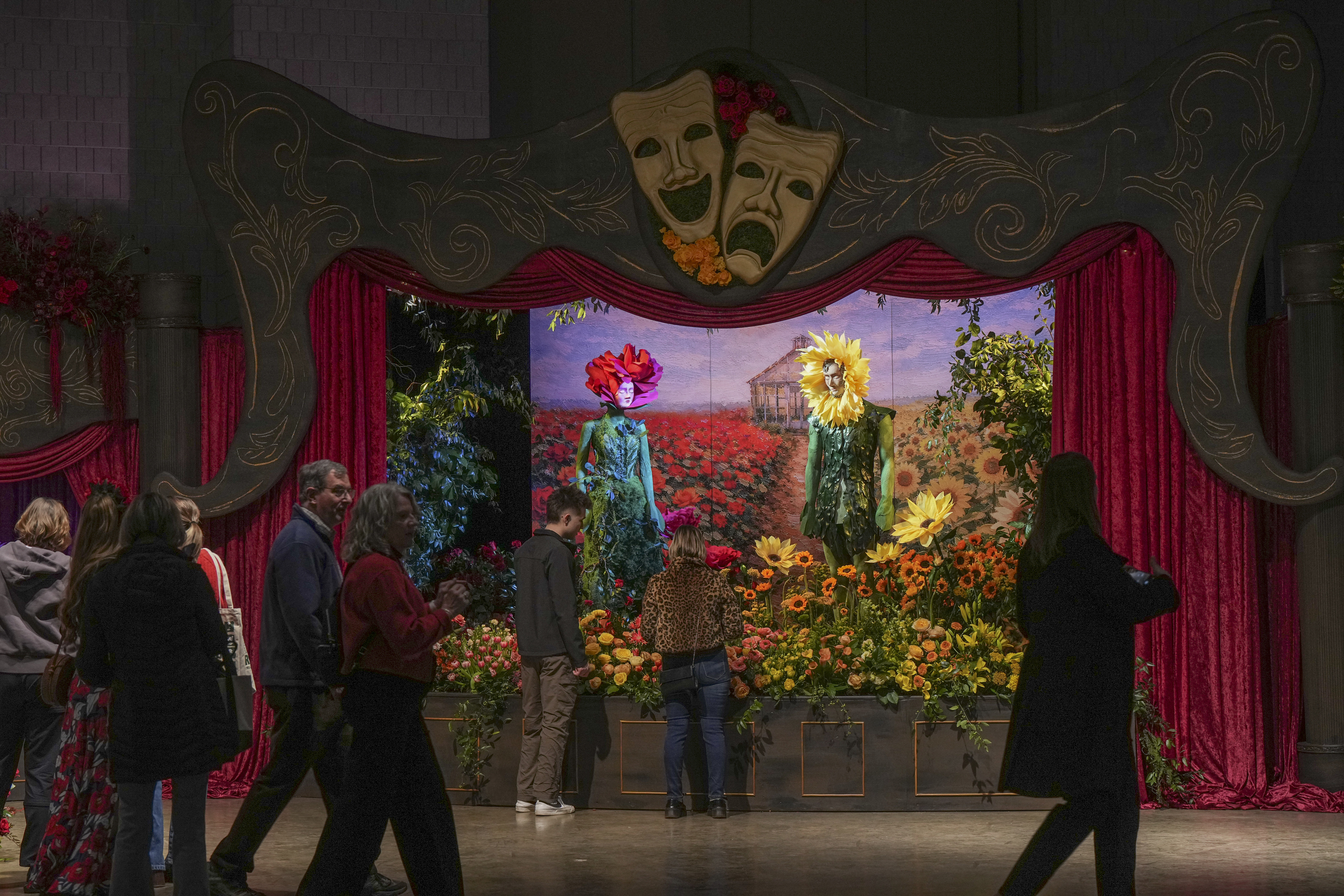
    “Rooted in Love” is a theatrical floral exhibit by Jennifer Designs of Mullica Hill that brings together horticulture and Shakespeare.

    That which we call a rose by any other word would smell as sweet, but what if a rose was chosen by central casting to play Juliet? How sweet would that be?

    Jennifer Designs of Mullica Hill shows us in its exhibit, “Rooted in Love,” in which an anthropomorphized rose and sunflower play the star-crossed lovers in William Shakespeare’s Romeo and Juliet on a stage overflowing with flowers.

    While the connection to this year’s theme is a bit tenuous — the exhibit “explores the language of horticulture and Shakespeare” — I’m giving it a pass, mostly because I love Shakespeare but also because this display is absolutely stunning.

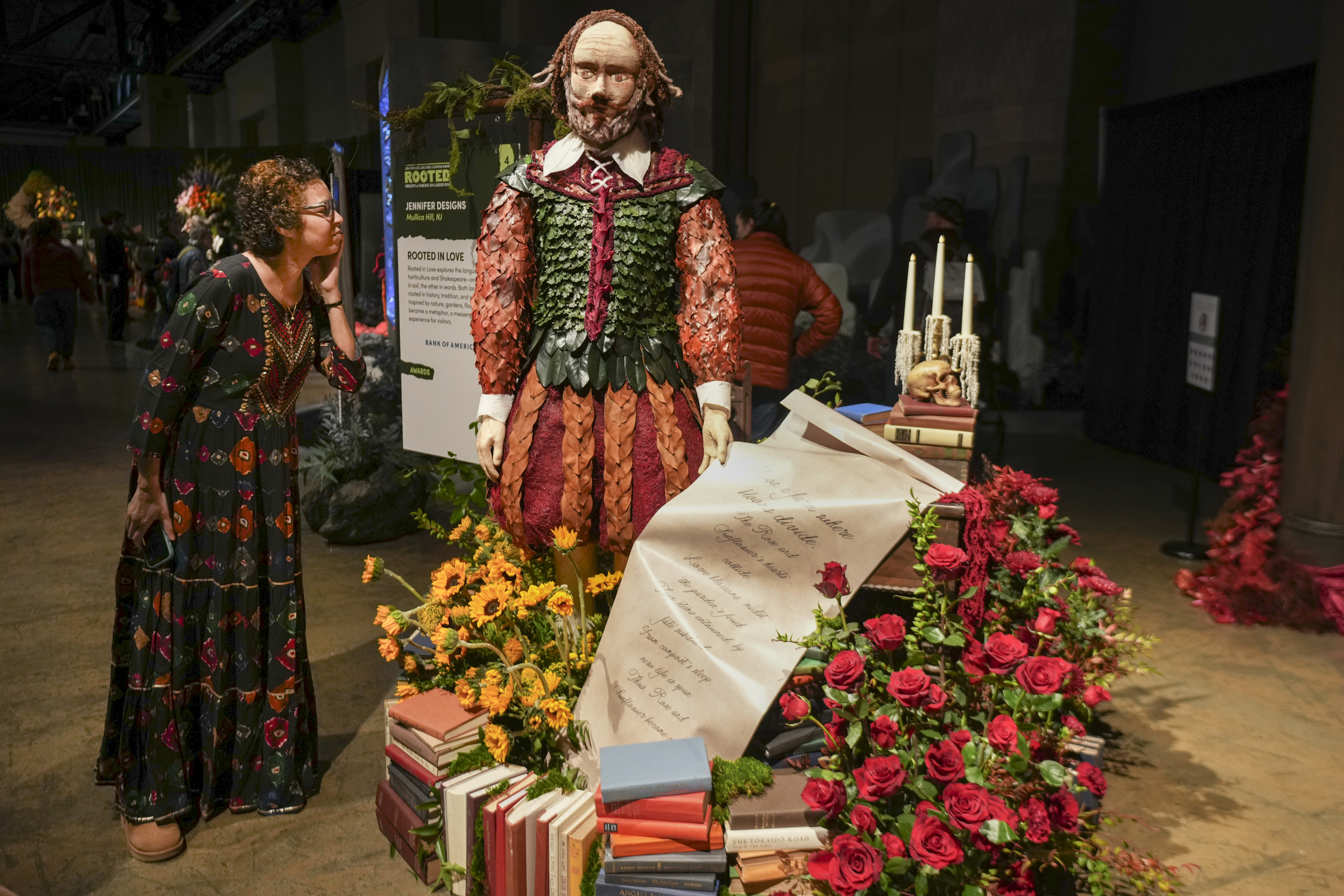
    A Flower Show guest looks at William Shakespeare in the “Rooted in Love” exhibit by Jennifer Designs of Mullica Hill.

    Beyond the main scene, there’s a life-size recreation of the Bard made of flowers, a “Bloombill” complete with a cast and crew list, and flower box seats on either side of the stage.

    The shop around the corner

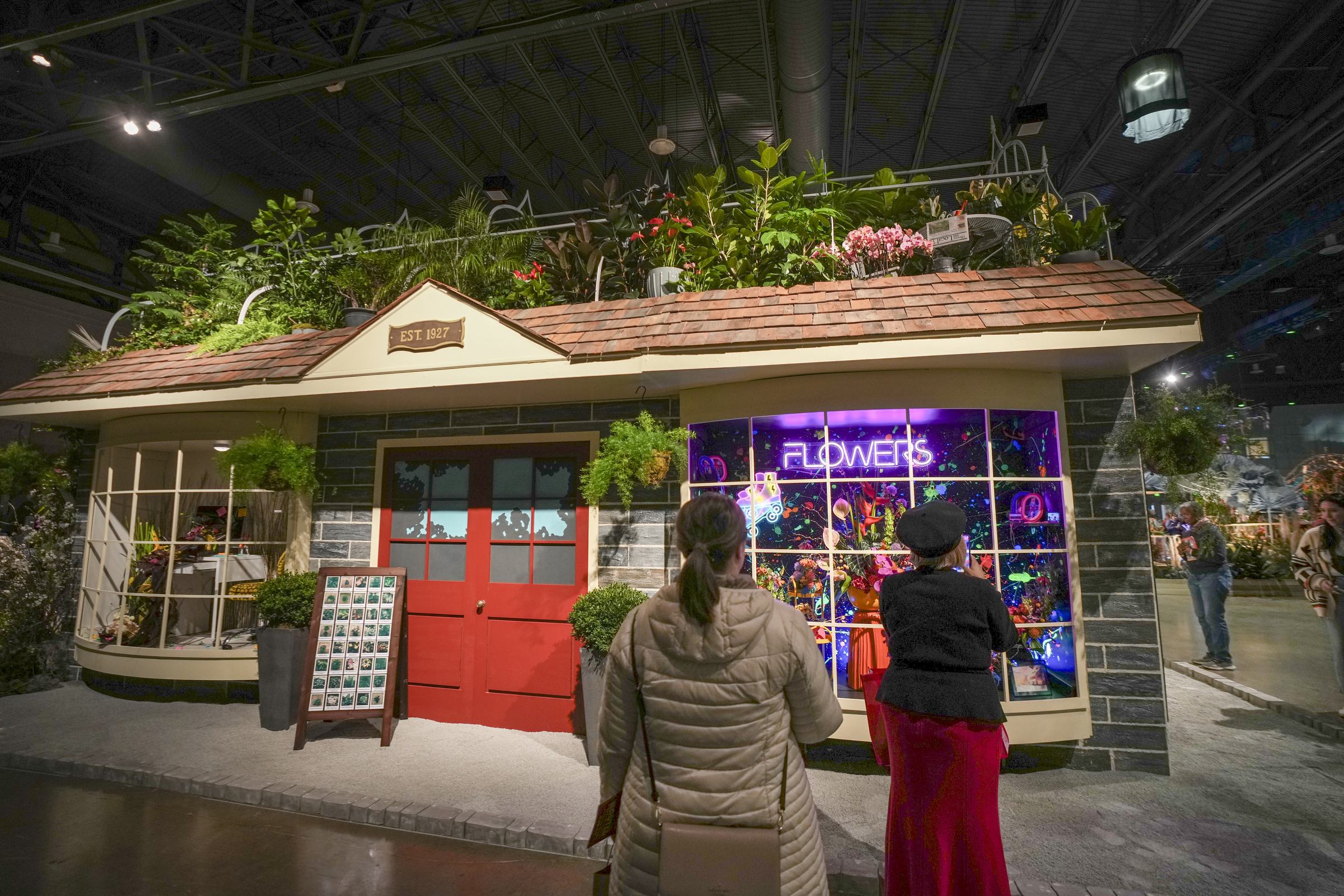
    Robertson’s Flowers & Events of Wyndmoor digs into its own roots — dating back 99 years — with a charming life-size recreation of its Chestnut Hill corner store.

    Each of the four window displays of the 360-degree exhibit celebrate a different era of floristry, from the formal and feather-accented styles of the early 20th century to the neon-lit early ’90s.

    Visitors look at Robertson’s Flowers & Events’ “Windows into the Past,” at the Philadelphia Flower Show.

    Just as impressive as the structure and display itself is the lush rooftop garden atop the entire building, which teems with orchids and greenery and metaphorically “extends its roots downward,” connecting the shop with the community.

    It’s so tiny!

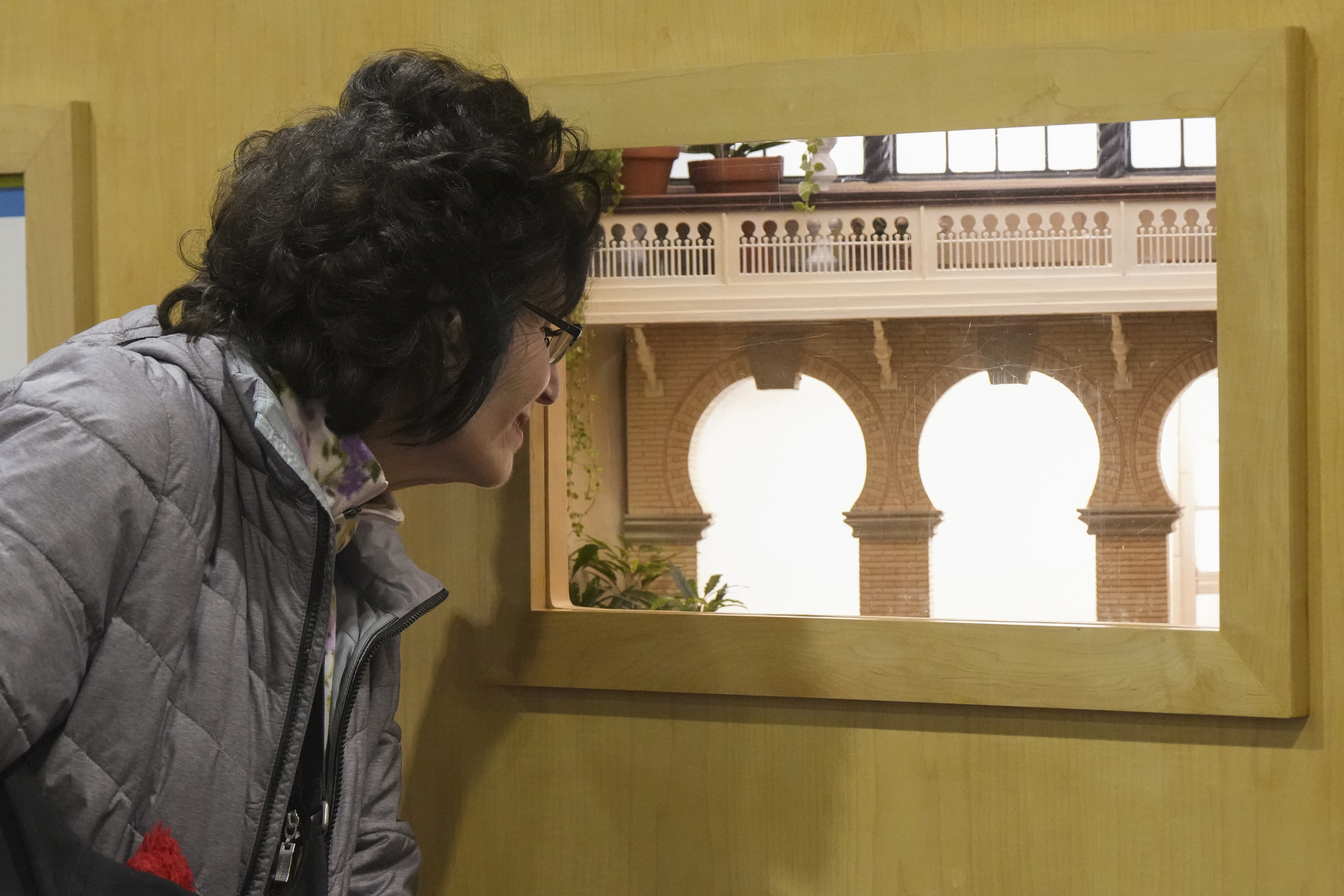
    It is here I must make a confession: My favorite part of the Flower Show every year, without fail, is the “Miniature Settings” category, which I call “the dioramas.” This is because I love tiny things and because my dream when I retire is to search for seashells and make dioramas.

    I’ve hesitated putting it on my must-see list in previous years because I am 110% biased and because the line to see these mini scenes is always long (I waited about 15 minutes on Friday). But this year’s — which challenged participants to create a setting for an event that happened between the prehistoric era and 1900 — truly is a must-see for Philly lovers.

    A visitor to the Flower Show looks at the “Philadelphia’s Centennial Exhibition: Opening Day, 1875,” one of the exhibits in Miniature Settings category.

    While some folks made scenes of the last night in Pompeii or the Roswell UFO crash site, it’s the three Philly-themed dioramas that stood out to me. There’s Benjamin Franklin’s garden, with a floating kite and key and inventive lighting effects; the interior of Independence Hall; and Horticulture Hall at Philadelphia’s Centennial exhibition.

    Understood the assignment

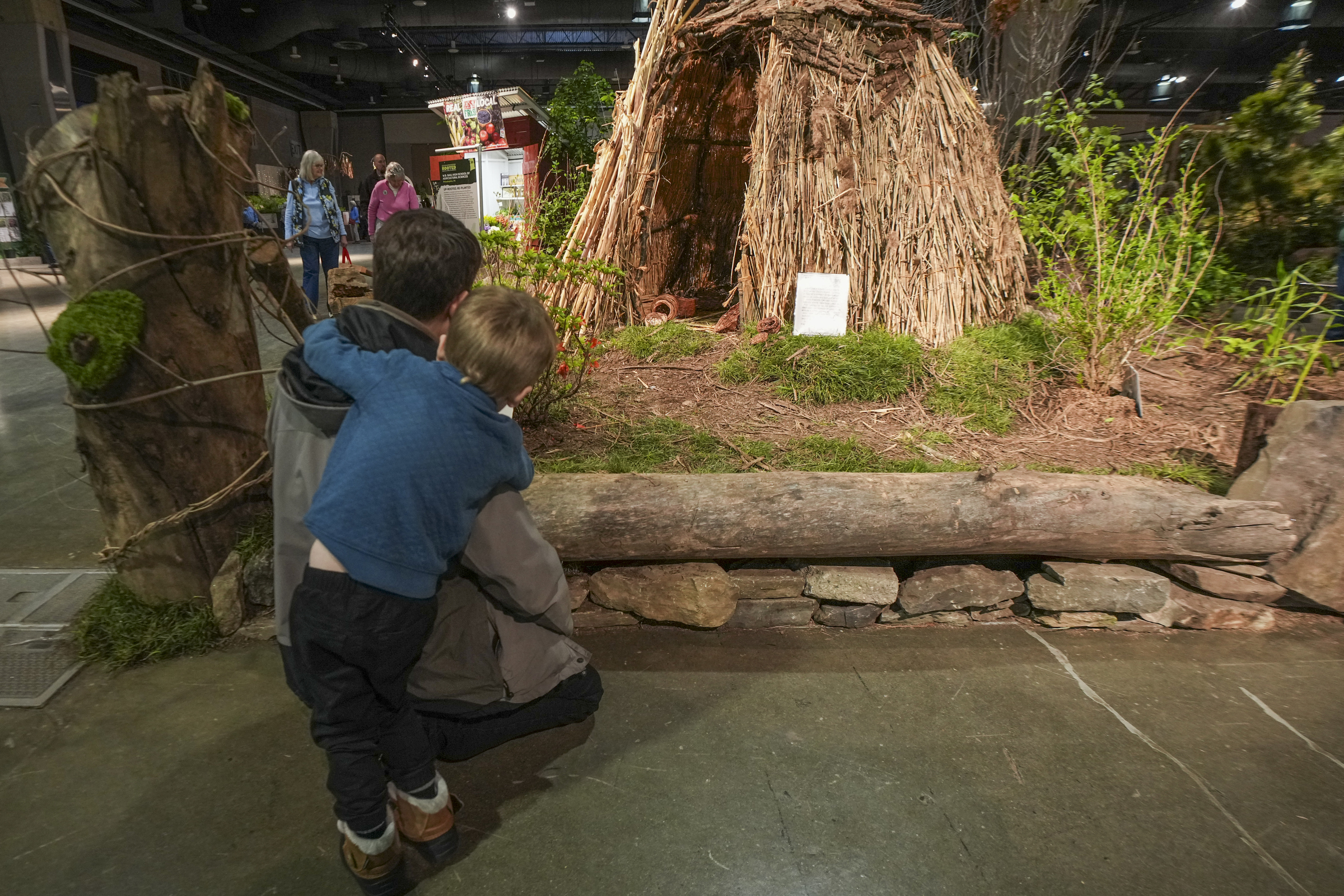
    With it’s late fall setting and its stark use of flowers and color, the exhibit from W.B. Saul High School of Agricultural Sciences in Roxborough isn’t as eye-catching as many others, initially, but if you take the time to study it and read the placards, it’s by far the most moving, emotionally.

    “Up-Rooted, Re-Planted,” explores the roots of our region through the Lenape people, the original Indigenous inhabitants who lived here before being uprooted by European settlers.

    A babbling brook runs through a wooded autumn setting that seems just on the brink of winter. A placard in a dugout canoe tells the story of how the Lenape were forced to move westward. And a sturdy wigwam built by hand keeps the food and firewood within it dry.

    Andrew Luedders and Lukas Luedders look at W.B Saul High School of Agricultural Sciences’ exhibit “Up-Rooted, Re-Planted.”

    Out of all of the exhibits, this was the most on-point when it came to theme and the most profound when I spent some time with it. It’s also a really good learning moment for kids, which is particularly wonderful because it was built by students. I saw several adults kneeling down to read the placards to children and share the story of the people who first planted roots in what is now Philadelphia.

    The fun is in details

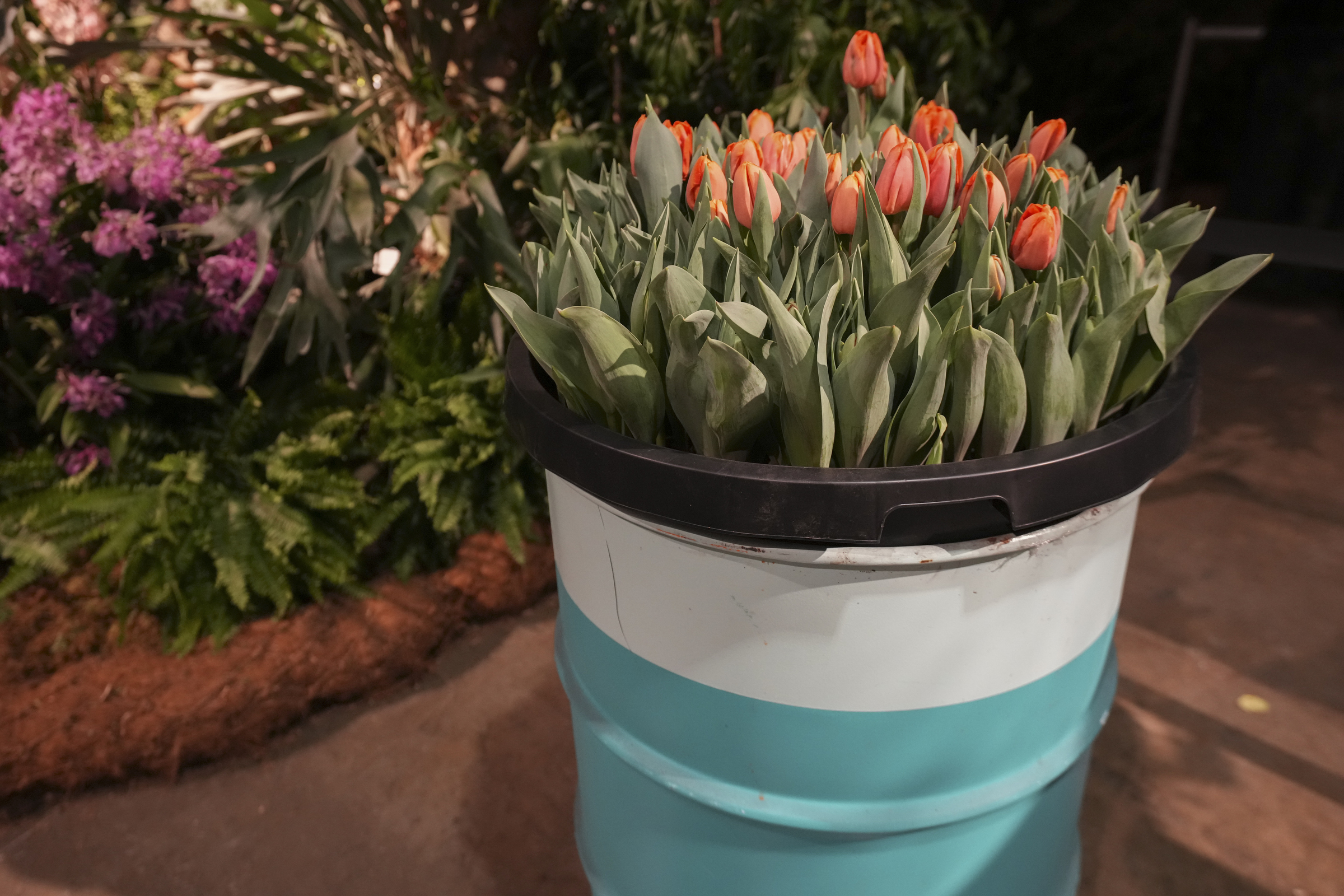
    Some of my favorite moments at the Flower Show this year were small ones I didn’t expect. Throughout the event hall, there are trash cans filled not with garbage, but with daffodils, tulips, and lilacs. It’s a small but sweet touch that adds a bit of whimsy.

    In the “Garden Design” section, there’s an exhibit which repurposes stone blocks as books with punny titles written on them like Where the Wild Plants Are, War and Peas, and A Kale of Two Cities.

    Tulips in a trash can at the Philadelphia Flower Show.

    At the American Landscape Showcase exhibit, there’s a display called “American Anemoia” featuring an overgrown ornamental garden at a vacant house. Nailed to the fading white picket fence of the house is a citation from the city of Philadelphia for weeds and mowing.

    If that isn’t rooted in truth, I don’t know what is.

    The Philadelphia Flower Show continues through March 8 at the Pennsylvania Convention Center, 11th and Arch Streets. Hours: 10 a.m. to 8 p.m., except until 6 p.m. on March 8. Ticket prices vary depending on person’s age and day and time of entrance. Information: phsonline.org or 215-988-8800.

  • Philadelphia opens new LGBTQ+ visitor center, one of few in country

    Philadelphia opens new LGBTQ+ visitor center, one of few in country

    It is a simple, sleek storefront in the Gayborhood. And it is now a welcoming spot.

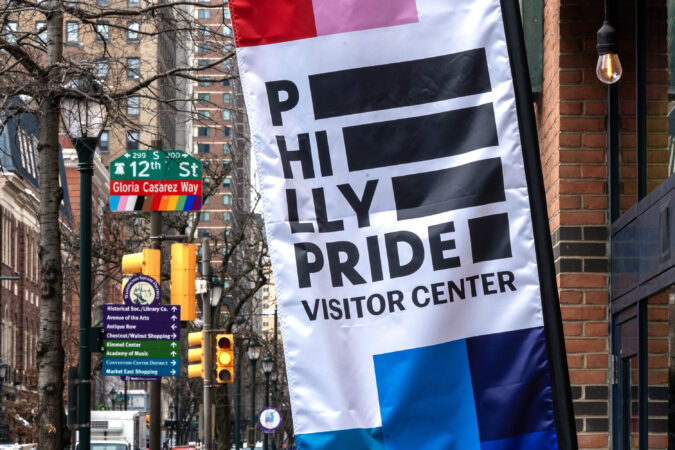
    On Wednesday, Gov. Josh Shapiro, city tourism and marketing leaders, and LGBTQ+ advocates officially opened the Philadelphia Pride Visitor Center, one of the country’s first LGBTQ+ visitor centers.

    “We need happy things in the world,” Shapiro said, during a ribbon cutting at the center. “And we need places like this that bring people together. That is the Pennsylvania way.”

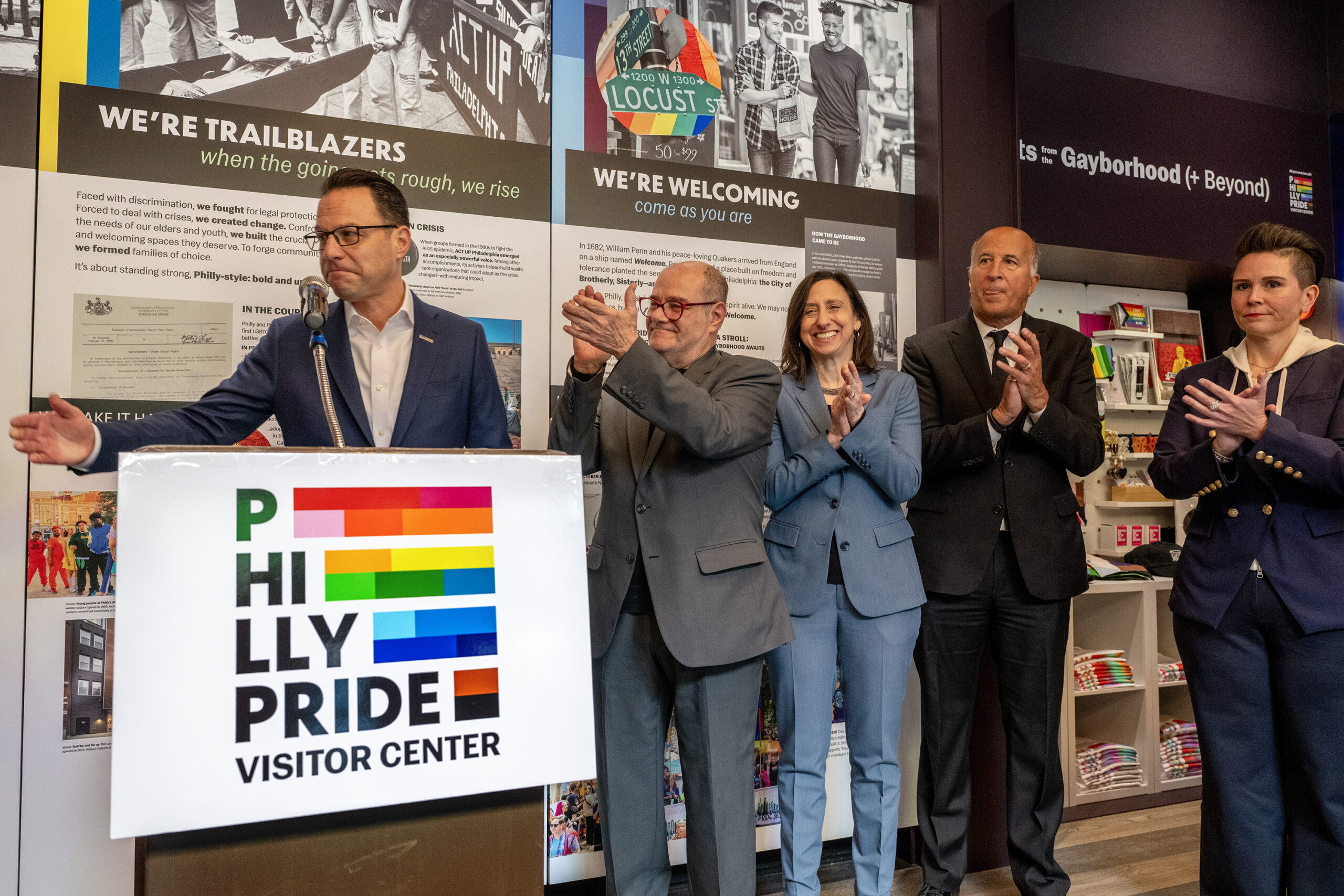
    Gov. Josh Shapiro opens the Philly Pride Visitor Center Wednesday, Feb. 25, 2026, in the heart of the city’s Gayborhood at 12th & Locust. With him, from left, are Mark Segal, Philadelphia Gay News founder; City Councilmembers Rue Landau and Mark Squilla; and Anne Ryan, Pennsylvania Deputy Secretary of Tourism.

    The Philly Pride Center is now just one of a handful of LGBTQ+-dedicated visitor centers in America, including ones in New York and Miami. Opening ahead of Philadelphia’s big summer celebrations for the 250th anniversary of America in 2026, also known as the Semiquincentennial, officials described the center as a symbol that Philadelphia, the city of the nation’s birth, welcomes all.

    “At a time when other states are walking away from their LGBTQ+ community, we are walking toward it,” Shapiro said. “At a time when other states are saying ‘no’ to pride-based tourism, we are embracing it.”

    Located near 12th and Locust Streets, in a storefront connected to Knock Restaurant and Bar, the center offers visitor services, including itinerary planning, attraction ticketing, and travel information, with a focus on LGBTQ+-affirming destinations, businesses, and cultural institutions. Souvenirs made by LGBTQ+-owned businesses and artists are on sale.

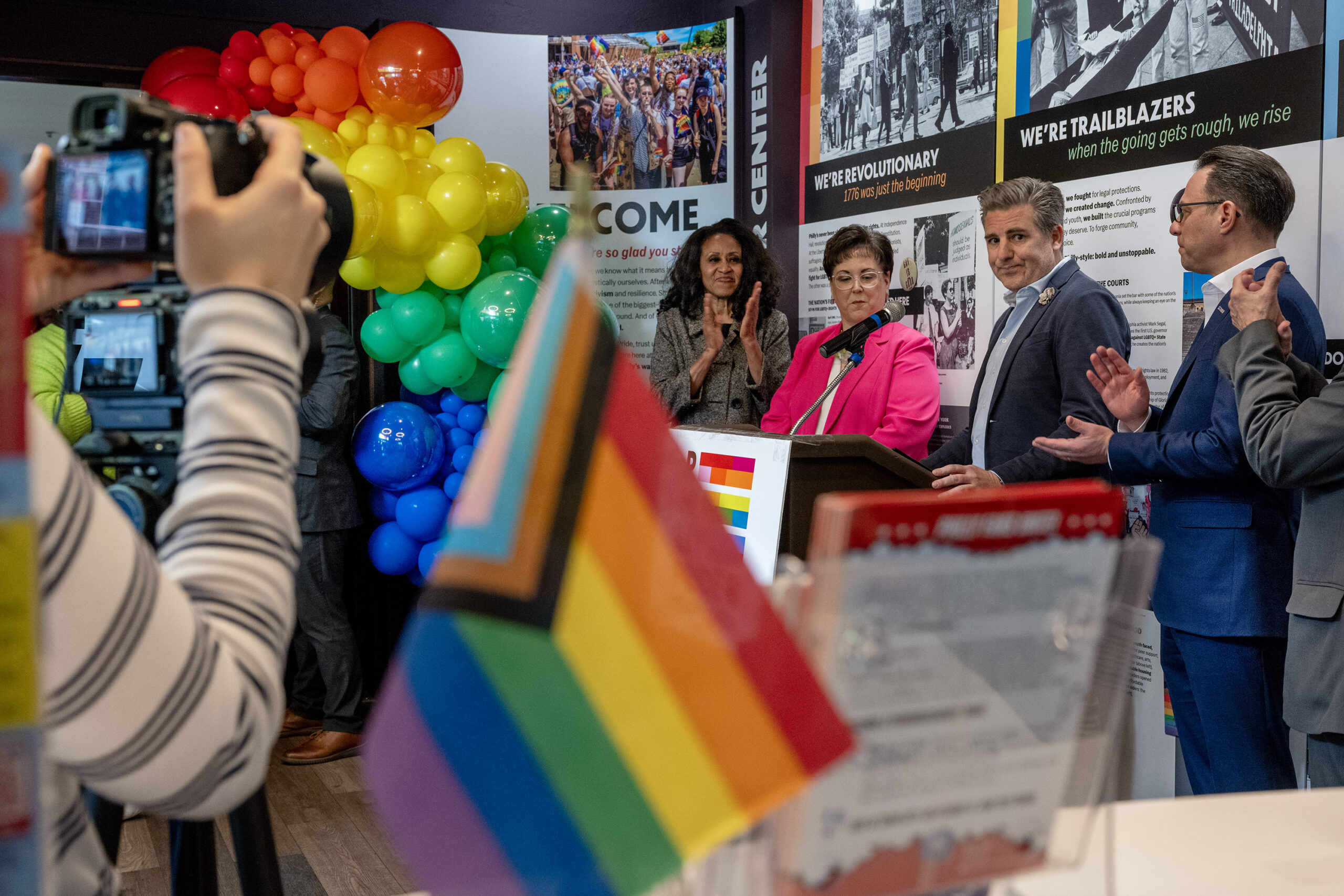
    Neil Frauenglass (second from right), chief marketing officer with Visit Philadelphia, is recognized for his work during grand opening of the Philly Pride Visitor Center Wednesday, Feb. 25, 2026, in the heart of the city’s Gayborhood at 12th & Locust. With him, from left, are Donna Jackson Stephans, Philadelphia’s chief diversity, equity and inclusion officer; Philadelphia Visitor Center President and CEO Kathryn Ott Lovell; and Gov. Josh Shapiro.

    “The Philly Pride Center reflects something we believe with all of our hearts,” said Kathryn Ott Lovell, president and CEO of Philadelphia Visitor Center Corp., which will run the new center. “That every visitor should feel like they are welcome and that they belong. We want the Philly pride visitor center to be both a very practical resource and a very visible statement about who we are as a city.”

    More than a year in the making — and now open Thursday through Monday, noon to 6 p.m., at 1130 Locust Street — the site will represent Philly’s fifth visitor center, including ones at Independence Mall, City Hall, Love Park, and the Parkway Visitor Center & Rocky Shop.

    “Philadelphia’s LGBTQ+ history helped shape this country’s story, and the Philly Pride Center brings that legacy forward in a powerful and visible way,” said Angel Val, president and CEO of Visit Philadelphia, which helped found the center, along with Mark Segal, founder and publisher of Philadelphia Gay News. Segal, an activist and author, who was part of the seminal riots at the Stonewall Inn in Greenwich Village in 1969, curated the historical information exhibited at the center, telling of Philly’s long and powerful LGBTQ+ legacy.

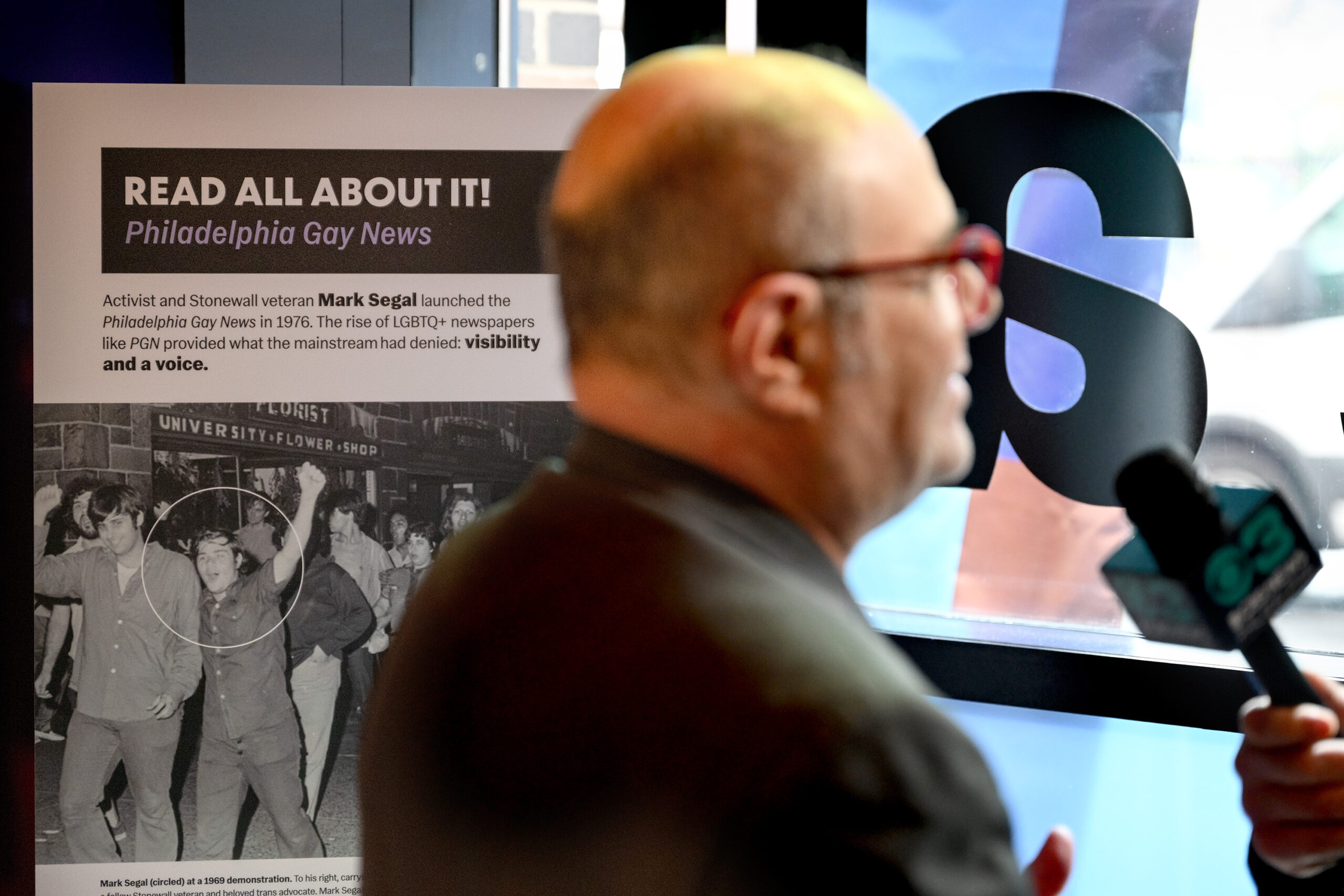
    Mark Segal, Philadelphia Gay News founder and publisher is interviewed during the grand opening of the Philly Pride Visitor Center Wednesday, Feb. 25, 2026. At left is a photo (circled) of him demonstrating for Gay rights in 1969, part of his newspaper’s 50th Anniversary.

    It is a point of pride, Segal said, that the Philly Pride Visitor Center comes at a time when many scholars and activists believe the Trump administration is attempting to sanitize American history.

    “At this time in history, there are many people who are trying to erase us and erase our history,” Segal said. “But today, by opening a new Pride Center, which yells and screams ‘visibility and take pride in who you are,’ we’re saying, ‘No, we’re not going to allow anyone to put us back in the closet ever again.’”

  • The real revolution is not giving up on democracy — or on each other

    The real revolution is not giving up on democracy — or on each other

    As the nation enters its 250th birthday at a moment when faith in democracy feels fragile, I have been thinking deeply about what it means to be American right now. This is not a season for rose-tinted nostalgia, nor is it a time to ignore the difficulties of the past year. The challenges we have faced have been real and impossible to dismiss.

    But cynicism is not a solution, and disengagement is not patriotism.

    I keep returning to what feels like a revolutionary idea right now: I am not giving up on democracy, and I am not giving up on my neighbor.

    American democracy is a glorious, unfinished experiment. Anchored in the radical idea that government derives its power from, and is created of, by, and for the people, it was new and unproven nearly 250 years ago.

    Rejecting rule by kings in favor of the will of the people, it was an idea that endured extraordinary challenges and helped shape one of the most successful societies in human history.

    But democracy does not sustain itself. It requires constant care, tension, participation, and belief.

    Because of that, I am choosing to engage.

    Staying in the game

    In everyday life, not giving up on democracy looks like staying in the game. It means talking openly with people in our communities, engaging across differences, and resisting the urge to judge or dismiss ideas before listening for understanding. At its core, it is a recommitment to respecting the human dignity of every person.

    I come to this work as the president and CEO of Eastern State Penitentiary Historic Site, a site founded on a Quaker belief in the “light within” every person, and a deep respect for our shared humanity. Today, Eastern State bears witness to nearly 200 years of evolving ideas about justice, liberty, and freedom in America. Walking its corridors and sitting with its stories reveals a powerful record of trauma and human resilience — and a nation still wrestling with the true meaning of those ideals.

    This perspective is also shaped by more than 20 years of studying the Constitution, a document woven with both brilliance and imperfection. At Eastern State, we recognize humans’ capacity for change. Like democracy itself, people are not a finished product. We are living beings who both require and deserve care to grow and evolve.

    When democracy is healthy, individuals and groups can express different viewpoints freely, with the goal of shaping public life. But those viewpoints must also be shaped by one another through engagement and dialogue. Civic ideas are meant to strengthen over time, not harden into absolutes. When trust erodes, that essential civic interplay breaks down.

    We see this erosion clearly. According to the General Social Survey, the share of Americans who believe “most people can be trusted” fell from 46% in 1972 to just 34% in 2024. Research shows social trust is rooted in personal experience. How we treat one another is inseparable from the health of our democracy.

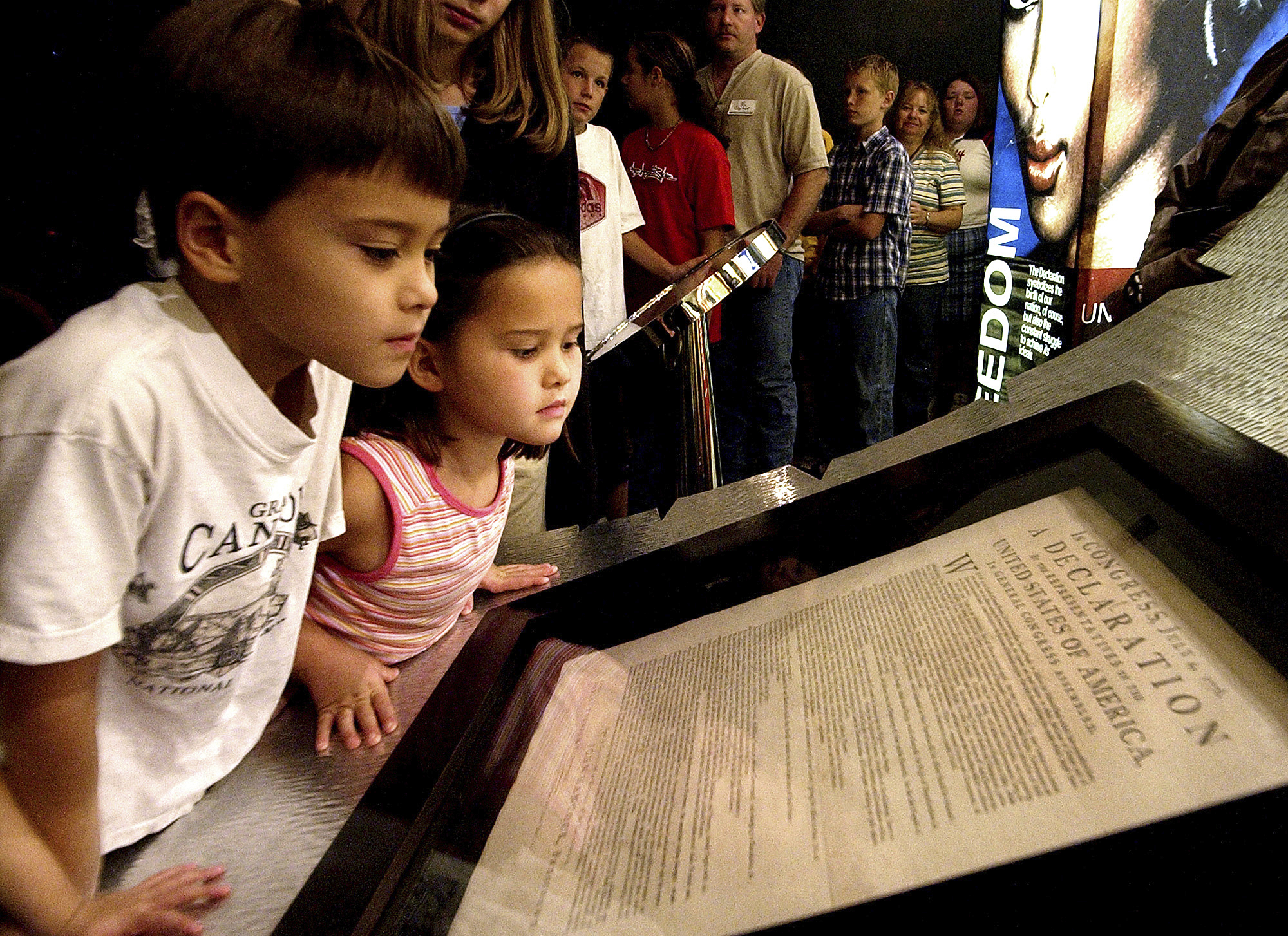
    Children look at an original printed version of the Declaration of Independence. The ideals that guided the founders are pertinent today.

    The American Revolution did not happen in a single summer in Philadelphia. John Adams wrote that the war was just one part of the revolution, stating: “The Revolution was in the Minds and Hearts of the People. … This radical Change in the Principles, Opinions Sentiments and Affection of the People, was the real American Revolution.”

    Likewise, Benjamin Rush, a framer of both the Declaration of Independence and of Eastern State, believed the real revolution was still unfolding, shaped over time by citizens’ morals and manners. He was right then, and he remains right now.

    Civic holidays give us a chance to come together, remember, commemorate, and celebrate. As we approach the Semiquincentennial, perhaps it is also time to reconnect and consider how those founding ideals can guide us forward.

    The real revolution is not behind us. It is happening now — in how we show up for one another, and in our refusal to give up on each other.

    Kerry Sautner is president and CEO of Eastern State Penitentiary.

  • How to have a Perfect Philly Day, according to Revolution Museum chief R. Scott Stephenson

    How to have a Perfect Philly Day, according to Revolution Museum chief R. Scott Stephenson

    For R. Scott Stephenson, the ghosts of the Revolution are easily conjured. They are found on every block and every corner of his daily walk from his 18th-century home in Queen Village to the Museum of the American Revolution in Old City, where Stephenson has served as president and CEO since 2018.

    “If you close your eyes, you can feel it,” Stephenson wrote about “The Declaration’s Journey,” the museum’s ongoing grand exhibit celebrating America’s 250th anniversary. “Over there, irascible John Adams and taciturn George Washington stroll to their first meeting. Down the street, brooding Thomas Jefferson takes a break from drafting a declaration to stretch his legs and find a nice pint of cider.”

    R. Scott Stephenson has been president and CEO of the Museum of the American Revolution since 2018. This year, as the nation turns 250, the museum takes center stage.

    As Philadelphia takes center stage in 2026 for the national milestone, also known as the Semiquincentennial, Stephenson will no doubt have a little less time to stretch his legs. This year, it falls to him to conjure the spirits of those fiery days of rebellion for the more than 1.5 million visitors Philadelphia is expecting in 2026.

    It is a moment of celebration and introspection the museum has been planning for since before it opened in 2017. With the lauded exhibit exploring the history and global impact of the declaration, and their most robust slate of programming and exhibitions ever, the museum and its staff of about 100 historians and researchers, is ready, said Stephenson.

    “It’s akin to a playwright,” he said. “You’ve written the play, you’ve cast all the characters, you’ve made all the costumes, you built the stage and been through endless rehearsals. We feel so supremely confident to meet the visitors that are coming.”

    A Pittsburgh native, who earned a PhD in American History at the University of Virginia, Stephenson and his wife, a physician, and two adult children, have lived in the Philly area for 25 years. His perfect Philly day would include coffee before dawn, Italian Market shopping and exploring with his daughter, oysters and bookstores, Philly’s only Colonial-era tavern, and a home-cooked meal with the family. And all, with those ghosts trailing close behind.

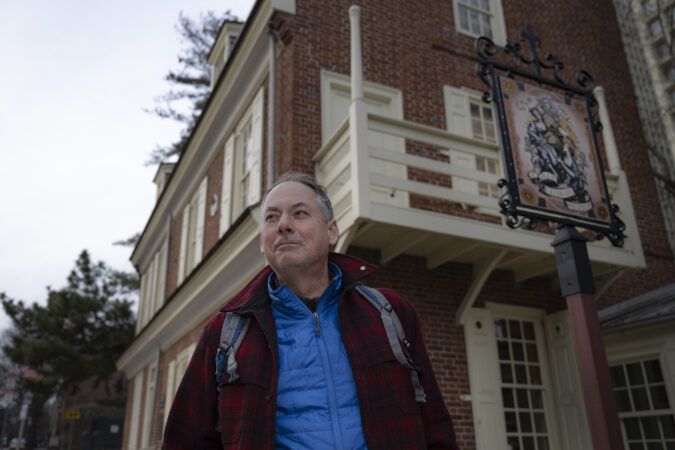
    Stephenson, 60, a Pittsburgh native, lives in Queen Village with his wife and daughter.

    This interview has been condensed and edited for length.

    5:30 a.m.

    Our beloved adopted Philadelphian, Benjamin Franklin, said, “Early to bed, early to rise makes a man healthy, wealthy and wise.” So far, I’m just healthy, the other two may have not necessarily come (laughter). But I think maybe with the thousands of years of farmers in my past, my circadian clock has never changed. I am up without an alarm between 4:30 a.m. and 5:30 a.m. I start my day with a pot of really strong black coffee. Those first couple of hours before anyone is up is golden time for me. I read my periodicals, my newspapers. I still like the sound of paper wrinkling.

    7:30 a.m.

    We are a cooking family. On weekends, we are all about ending the day with a big meal that we make together. So a perfect day is my daughter and I walking to the Italian Market to browse around at the various shops, figuring out what protein we’re going to build dinner around. And nosing around the produce stands and cheese stops. At Fante’s Kitchen Shop are great reproductions of 18th-century German cookie molds for making gingerbreads.

    I do not have one path to get from Point A to Point B anywhere in Philadelphia, so I’m usually going to want to zigzag around a bit. We like to do a little exploration as we bring the groceries back to the house.

    11:30 a.m.

    My wife and I love to walk over to Rittenhouse. Lunch at the Oyster House. I love that block of Sansom. It’s a street that feels like a previous era. There’s an original oyster house in Pittsburgh. That was a place both of my grandfathers ate lunch often. My father would go there. I was taken there as a kid. Although ironically, I have a great grandfather who died from eating, what was called on his death certificate, a “poisoned oyster.” He ate a bad one and died in 1905 when he ate a bad one that was a little too far from the Jersey Shore when it was consumed.

    1 p.m.

    I’d definitely pop into Sherman Brothers Shoes right next door. Incredible shoe store. I am sort of obsessed with Alden shoes, these great, super sturdy, American made, old school leather shoes. So I am at least going to go drool a little bit, and think, “Oh, when I wear this pair out, what’s my next pair of Alden’s going to be?”

    2 p.m.

    On a perfect day, I’m popping into the museum, and trying to remain anonymous. Just for an hour, and go wander around the galleries or sit through a showing of “Washington’s Tent” — and just talk to guests. A lot of my job is storytelling. Being able to talk about the impact we have on people — the best way to do that is to actually tell a story that happened to me.

    3 p.m.

    Our other routine would be to go to Plough & the Stars in Old City. We absolutely love Plough & the Stars, particularly in the winter, to be able to sit in front of the fire there. Have a shephard’s pie or fish and chips and a Guinness.

    4:30 p.m.

    I’m gonna spend some time up at the Book Trader on Second Street. I’m not actually allowed to buy any more books. My library is mostly in storage right now. We just don’t have the room. But I do love a bookstore, particularly a used one.

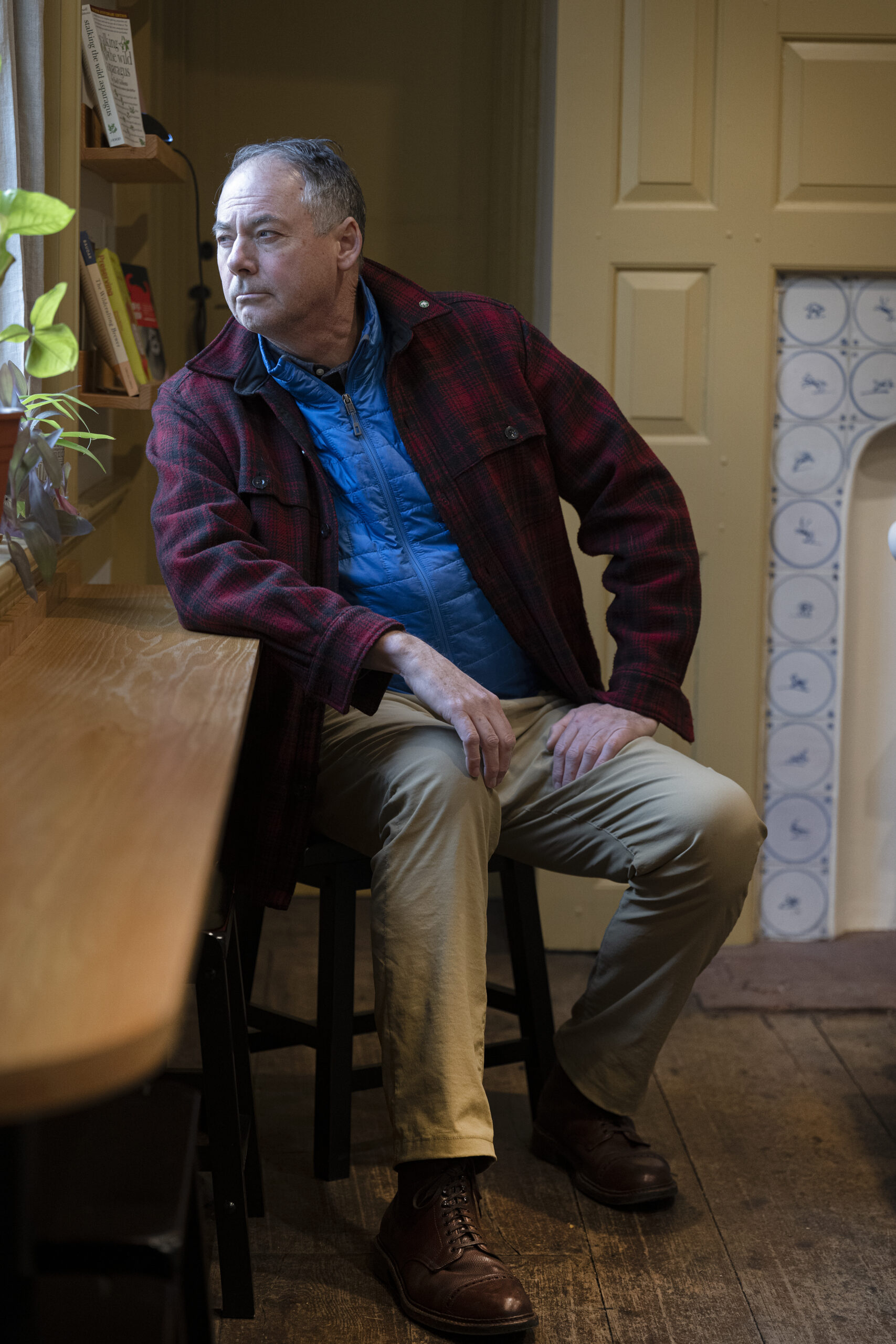
    Stephenson said of Man Full of Trouble tavern and museum: “That’s the only surviving tavern in Philadelphia from the 18th century, where you can literally sit in a room where rum punch and revolution was the game.”

    5:30 p.m.

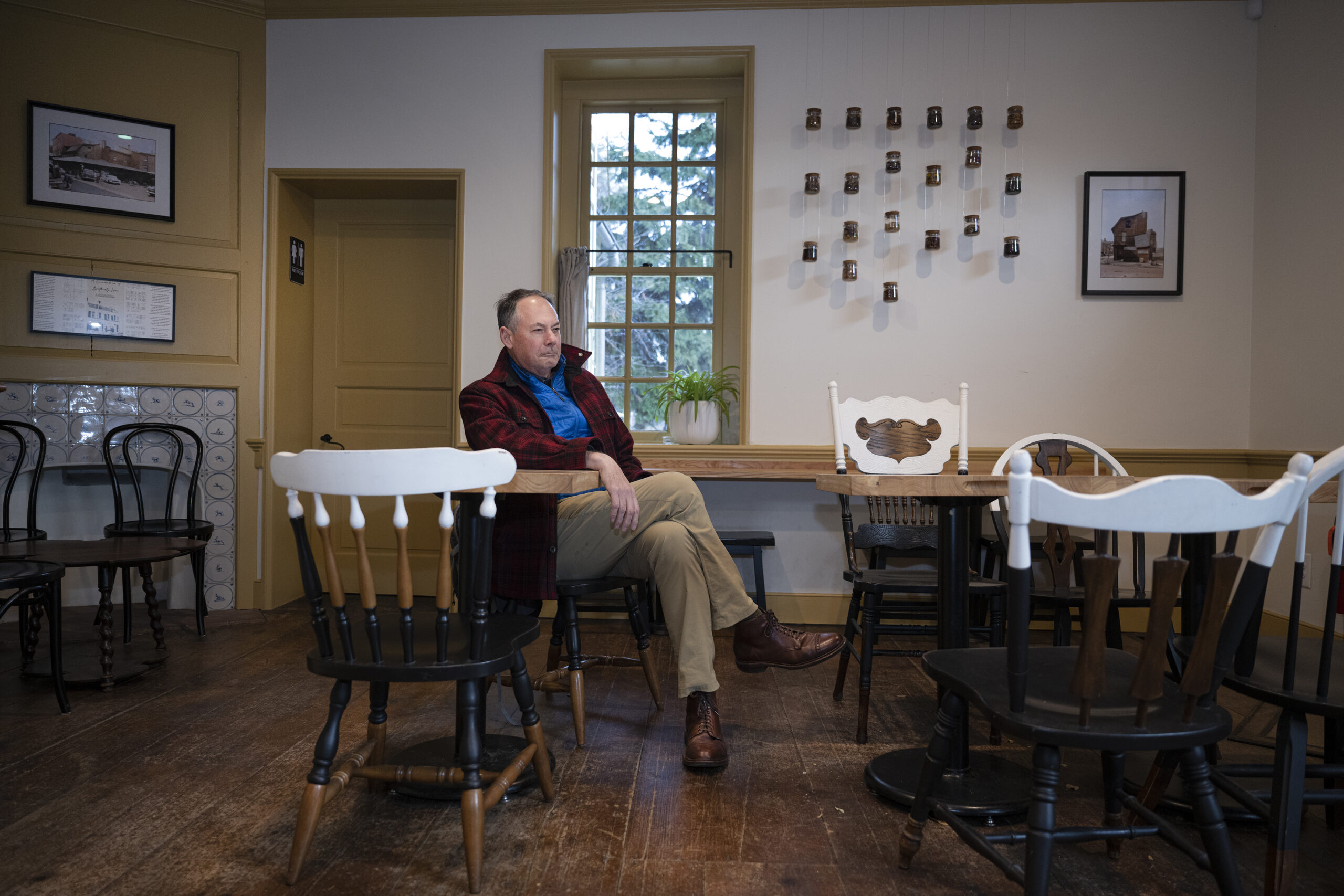
    Walking home, and frankly whether or not I have been to Center City or Old City, I am almost certainly going to stop, and this a new addition since it just reopened, but at the Man Full of Trouble tavern and history museum. That’s the only surviving tavern in Philadelphia from the 18th century, where you can literally sit in a room where rum punch and revolution was the game. To me, it’s just another reason why this is the greatest city in the nation. Being a few blocks from the Man Full of Trouble, creates a lot of trouble (laughter).

    6:30 p.m.

    It’s probably time to start dealing with those groceries at this point (laughter). At least one weekend day every weekend is family dinner day, where we’re all going to be cooking. So my son and his girlfriend will be in — my daughter’s there, my wife’s there, and we’ll have figured out what’s on the menu. We have a long table. We love to have candles and a candlestick on the table, and turn the lights down. A no device moment, where we really are in each other’s presence.

    8 p.m.

    We are probably going to be playing Wingspan, it’s a board game. There’s a new one called Finspan, which is all about fish in the ocean. We are almost exactly a two minute walk from Queen & Rook Game Cafe. So we’re kind of in a board game neighborhood. We’ll be right at our dining room table and we’ll be playing for a while and drinking a little wine.

    9 p.m.

    Going back to Franklin for a minute, and you remember his aphorism was “Early to bed, early to rise.” I am not the life of a party. Most nights by 9 p.m., my eyes are closed and I am sawing wood (laughter).

  • A new streaming series tells the story of America through the lens of Philadelphia

    A new streaming series tells the story of America through the lens of Philadelphia

    By 2019, after a decade of producing dozens of documentaries about Philadelphia history, the filmmakers at History Making Productions realized they had more than just the story of a city.

    They had the story of America.

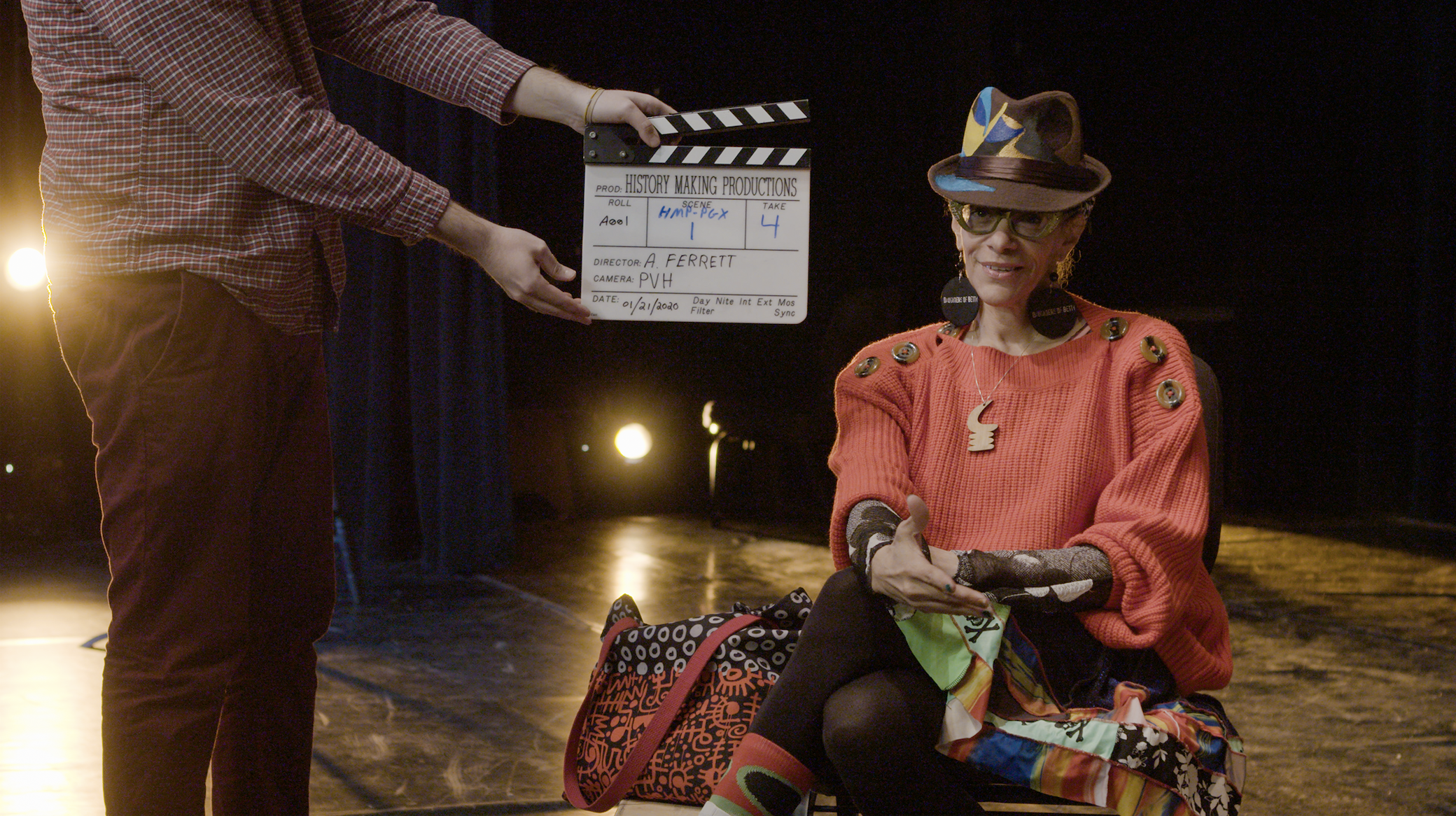
    On Friday, the studio released its epic, new telling of that 400-year-old story: In Pursuit: Philadelphia and the Making of America. Directed by documentary filmmaker Andrew Ferrett and written by author and historian Nathaniel Popkin — and mixing modern footage with historical recreation and more than 600 on-camera interviews — the 10-episode series explores the history of America through the lens of Philadelphia, its birthplace.

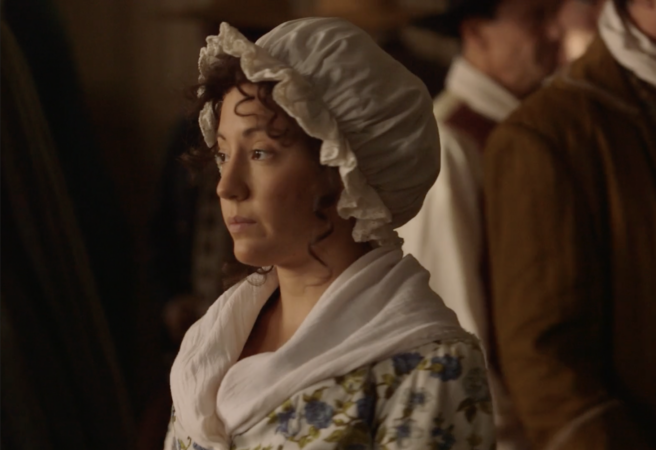
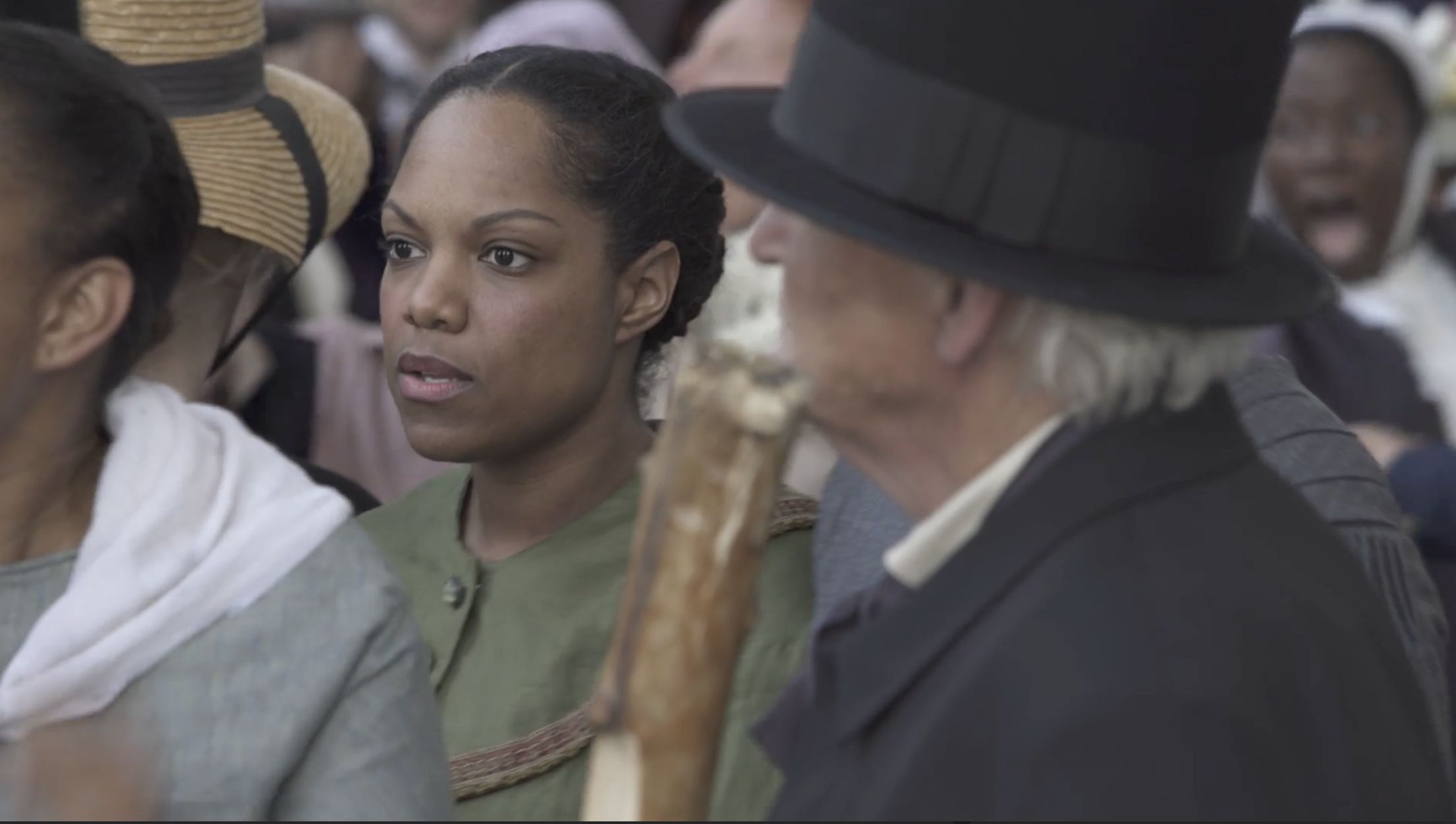
    Belinda Davis as Sarah Forten in “In Pursuit: Philadelphia and the Making of America.”

    Timed to coincide with the 250th anniversary of the Declaration of Independence in 2026, known as the Semiquincentennial, the series provocatively grapples with urgent questions, like how did the American experiment actually unfold? And how can it endure?

    “Philadelphia is not just the birthplace of American democracy — it has been its proving ground,” said Sam Katz, series creator, executive producer, and founder of History Making Productions. “This series looks honestly at how ideals were formed, challenged, expanded, and sometimes betrayed, and why that history matters so urgently.”

    ‘A national moment’

    Spanning 400 years of Philadelphia history, from its Indigenous roots to the MOVE Bombing the series is equal parts entertainment and civic project. Funded by Katz and philanthropies like Pew Center for Arts & Heritage, Penn Medicine, and Lindy Communities, the series premiered at the National Constitution Center on Thursday.

    Episode One is now streaming online. Katz and the filmmakers will host screenings and community conversations at Pennsbury Manor in Bucks County on Sunday, and another screening Feb. 26 at the Bok Building in South Philadelphia.

    Throughout 2026, as the city and country celebrate the national milestone, a citywide “In Pursuit of History Film Festival” will promote each new installment with monthly screenings and public events. 6abc will air monthly hourlong shows to highlight new episodes.

    Sam Katz at Independence Hall, in Philadelphia, Tuesday, Feb. 17, 2026.

    From the beginning, the project was meant to get people talking about the true meaning of the American experience, and those it has left behind.

    “We’re going to get partners all over the city, and we’re going to have screenings all over the place,” said Katz, the civic-leader-turned-producer. “We’re going to create opportunities for people to come and meet the filmmakers, or meet a historian or an artist, who will then lead a conversation. It really is an opportunity for Philadelphia to take stock of itself.”

    Popkin, who cofounded Hidden City Daily, said the project tells the story of events that shaped a city and a country founded on ideals not yet fully realized — and now as divided and tested as they’ve been in decades.

    “The timing is perfect,” he said. “I think a film can really launch a lot of conversations. This is a moment for us as a nation.”

    Fresh portals

    Ferrett, who grew up in Bucks County, and has been directing and producing films at History Making Productions for more than 15 years, said the project revealed itself.

    For earlier Philly projects — including The Great Experiment, an Emmy-award winning, 14-part docuseries spanning 500 years of Philly history, and Urban Trinity: The Story of Catholic Philadelphia — the filmmakers had amassed hundreds of unused hours of interviews with local and national historians, artists, and cultural leaders.

    Over the years, much of it had to be left on the cutting room floor, including magical moments that Ferrett said opened fresh portals to Philly history.

    “We talked to pretty much anyone you can imagine who was either involved with studying Philadelphia history, or in the case of 20th-century history, a lot of witnesses to it,” he said.

    Poet Ursula Rucker during filming of “In Pursuit: Philadelphia and the Making of America.” The new 10-part docuseries examines the history of America through the story of Philadelphia.

    Besides, he said, nowhere else could hold a better mirror to America than the place of its birth.

    “It really became obvious to us that what we have here is much more than a local history,” he said. “It’s a history of the whole United States because so many consequential moments that shaped the country’s history went through Philadelphia.”

    History that feels alive

    Setting out to tell the story anew, Katz raised money to shoot updated interviews and fresh historical recreations.

    Meanwhile, history did not slow down, from the COVID-19 pandemic, to the killing of George Floyd and the Black Lives Matter movements, to Trump, and immigration crackdowns.

    “We were asking how do we deal with history while all this is happening,” Katz said. “We were writing about it right now.”

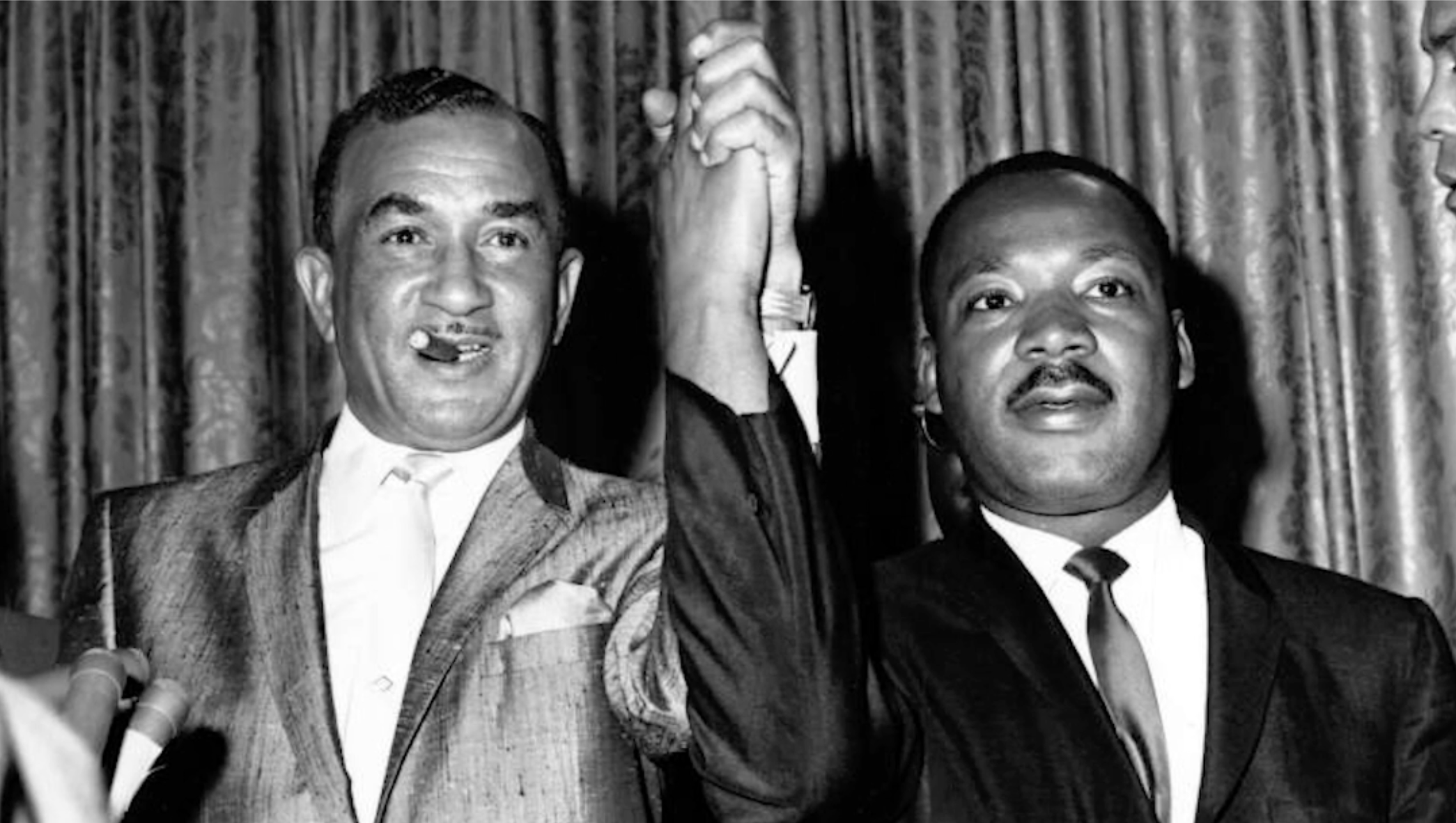
    Cecil B. Moore and Martin Luther King Jr. in footage from “In Pursuit: Philadelphia and the Making of America.”

    Narrated in a warm, resonant baritone by actor Michael Boatman, known for roles in shows Spin City and The Good Wife, In Pursuit is no dull, black-and-white history. The city feels alive, the stakes serious and undecided.

    Threading modern-day footage of bustling Philly streetscapes and soaring neighborhood shots with commentary and historical recreations imprints the series with a powerful immediacy.

    The story stretches far beyond 1776, though the dramatic details of that sweltering summer in Philadelphia are recounted in episode three in gripping scenes of refreshingly believable historical recreations.

    “We were able to shoot these lush and full reenactments,” said Ferrett, of all 10 episodes. “Sam was always like, ‘Where’s the dirt? I don’t want to see people with perfect teeth and smiling.’”

    The start

    Episode One, “Freedom (to 1700),” begins at the beginning, pulling no punches as it tells the story of the Lenape people, Philadelphia’s earliest Indigenous settlers — and of the generations of Dutch and other European colonists’ efforts to eradicate them through violence and disease.

    It surprises even in the telling of William Penn, recounting how the rebellious aristocrat’s nonconformist ways landed him in jail more than once, before he founded a City of Brotherly Love meant to be a better world, and a testing ground of the most advanced ideals in Europe.

    The episode also showcases what Ferrett describes as “deepeners,” when the story cuts away from the arc of history for moments of reflection from modern Philly voices.

    “We all feel it here … it’s all in our bloodstream,” poet Ursula Rucker says in the episode. “What does this city mean to me? Everything. Everything.”

  • One of the nation’s oldest hospitals will now be one of Philadelphia’s newest museums

    One of the nation’s oldest hospitals will now be one of Philadelphia’s newest museums

    Before 1751, sick Pennsylvanians had few healthcare options other than often expensive home visits from doctors. That changed when Benjamin Franklin and physician Thomas Bond established a medical institution to treat the physically and mentally ill for free.

    The result was the Pennsylvania Hospital on Spruce Street. The 275-year-old institution became home to the country’s first surgical amphitheater to teach students, the oldest medical library, and a nursing museum, among other historic firsts. It continues to advance medical research as part of Penn Medicine.

    Now the nation’s oldest chartered hospital will become Philadelphia’s newest museum.

    The hospital’s Pine Building, which started construction in 1755, will be converted to the Pennsylvania Hospital Museum, Penn announced on Monday. The museum in the majestic Georgian architecture building at Eighth and Pine Streets, designed by architect Samuel Rhoads, is scheduled to open to the public on May 8.

    “It’s a very Philadelphia story to hear the history of the hospital because it really is about caring for other people,” said Stacey Peeples, lead archivist at Pennsylvania Hospital.

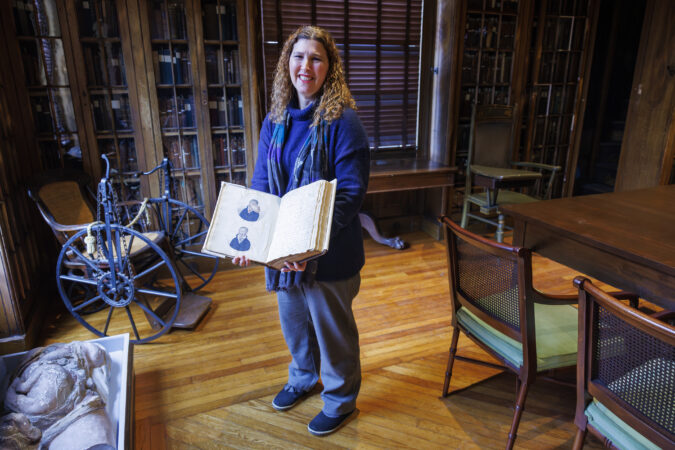
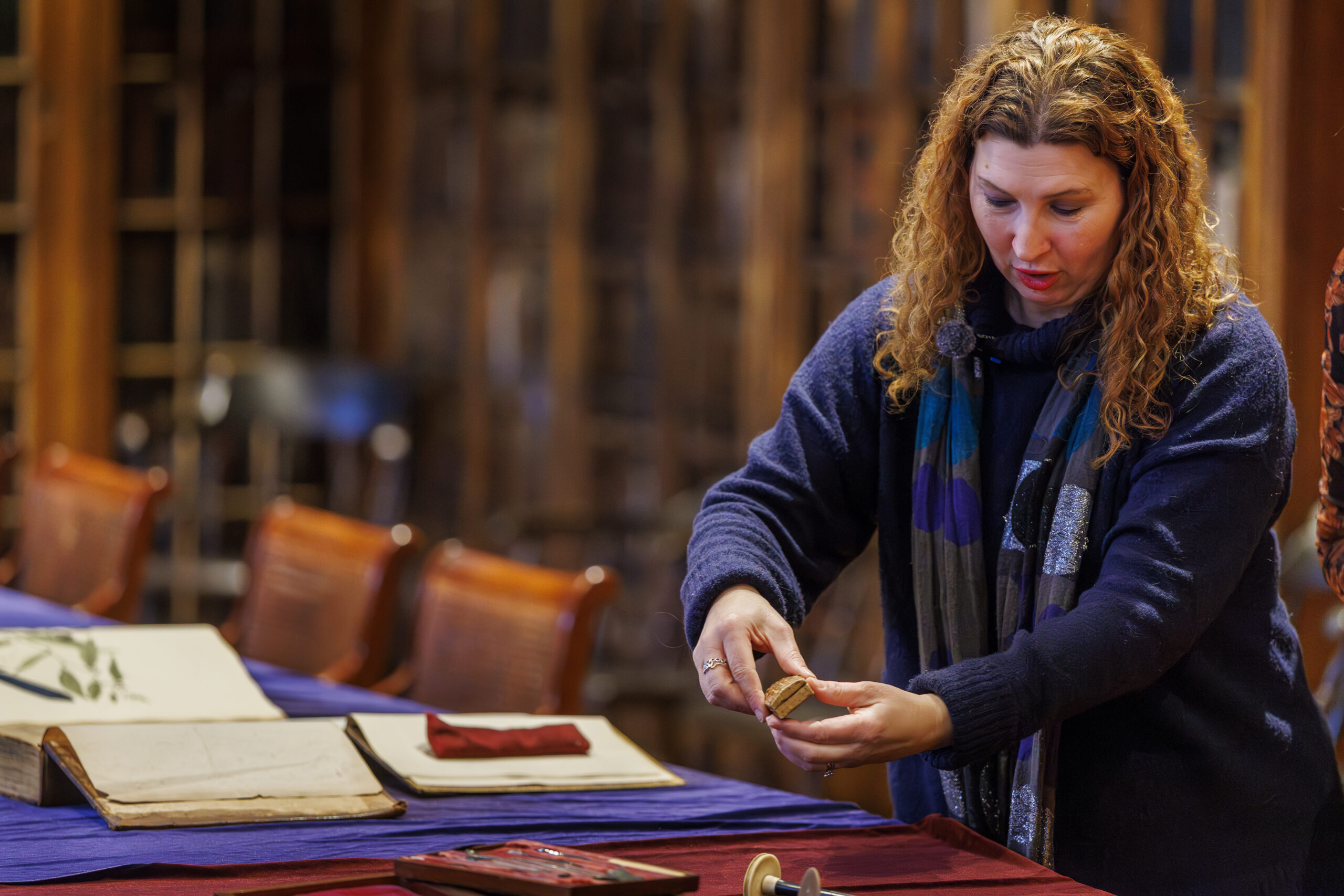
    Stacey Peeples, lead archivist at Pennsylvania Hospital, described artifacts in the hospital’s new museum.

    The medical library, surgical amphitheater, and apothecary have all been restored for the museum. Eight galleries will feature videos, hands-on activities, and archival objects describing the history of the hospital and the care it delivered.

    The opening of the museum in the hospital’s 275th year coincides with America’s Semiquincentennial celebrations. (The University of Pennsylvania Health System, which merged with the hospital in October 1997, will run the museum.)

    One of Peeples’ favorite items on display is a collection of medical cases compiled by the hospital’s doctors in the early 19th century.

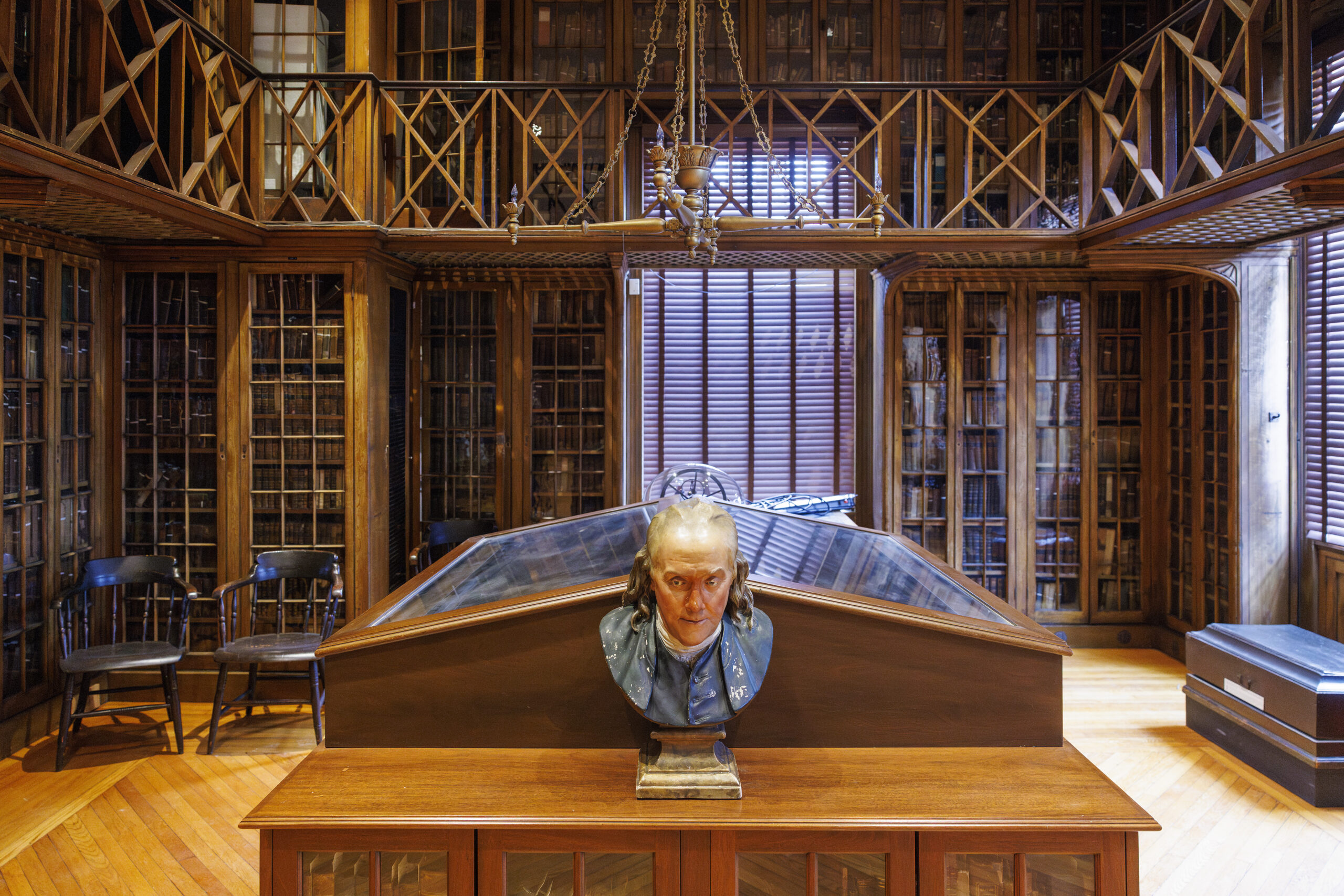
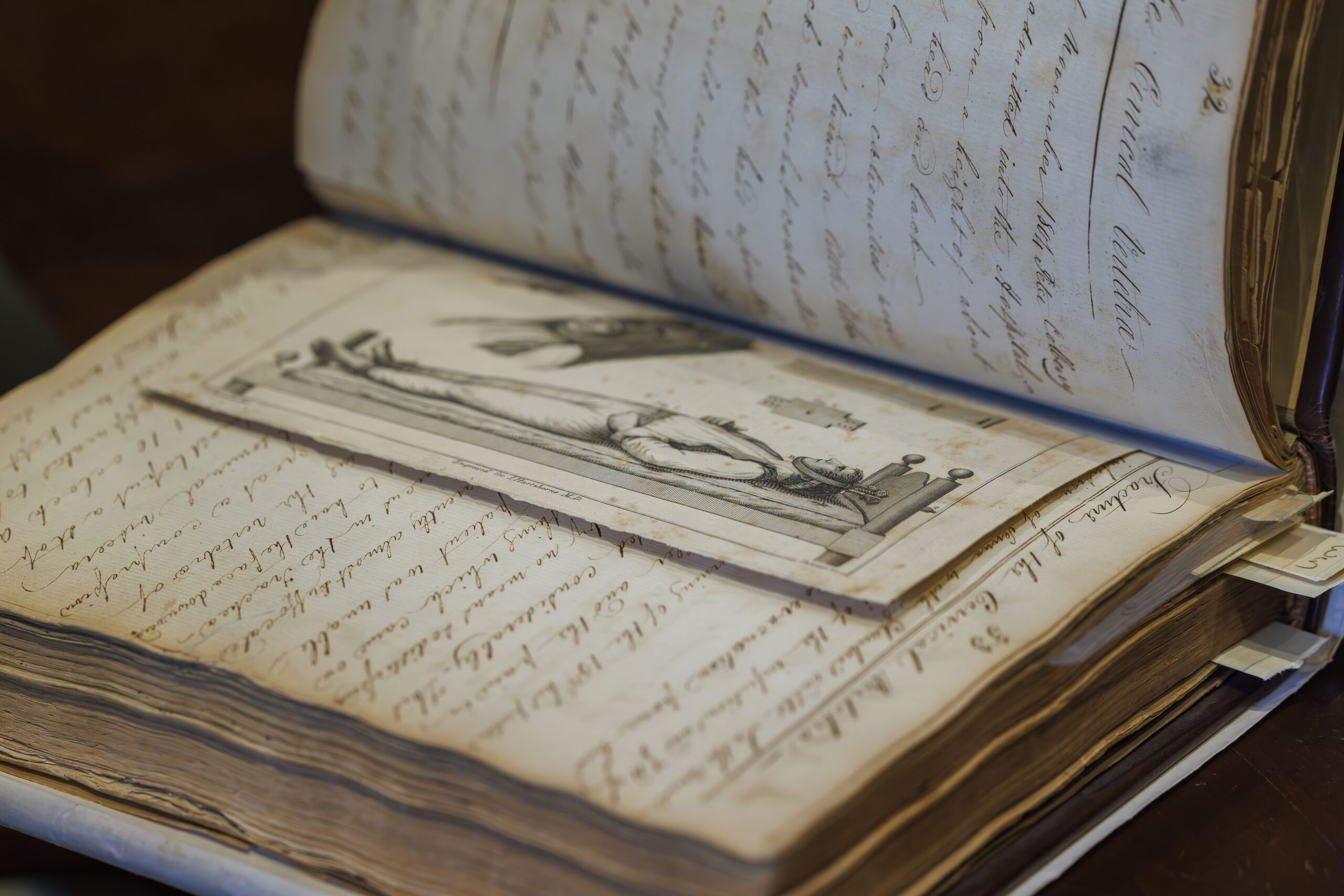
    Housed in the historic library, the book is flipped to a page showing a man with a seven-pound tumor in his cheek and neck area. Visitors can also find the actual preserved tumor from 1805 on display in the back of the room.

    A historic medical book compiling interesting cases at Pennsylvania Hospital shows an image of Pete Colberry, a patient who fell from ship rigging and was stabilized on a bed to hold him in place, circa 1804.

    A look at early medicine

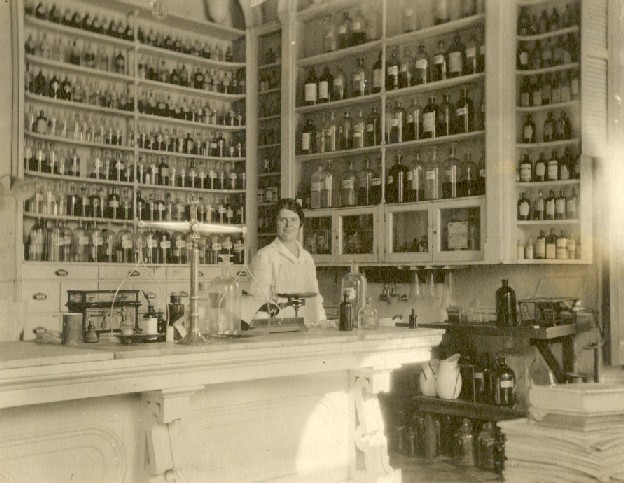
    Pennsylvania Hospital’s apothecary — where medicines were mixed and sold — was last used for that purpose in the early 1900s.

    Most recently, it served as a conference room.

    It’ll now be restored to its original layout, based on historic images from the 19th century. That includes bringing back alcoves filled with shelves of bottles, the scale used to weigh ingredients, as well as a giant counter where the apothecary could mix medications, Peeples said.
    An archival image of Mildred Carlisle working in the Pennsylvania Hospital apothecary, circa 1920s.

    In the historic library, the only room ready for news media to view this week, the artifacts remained scattered around.

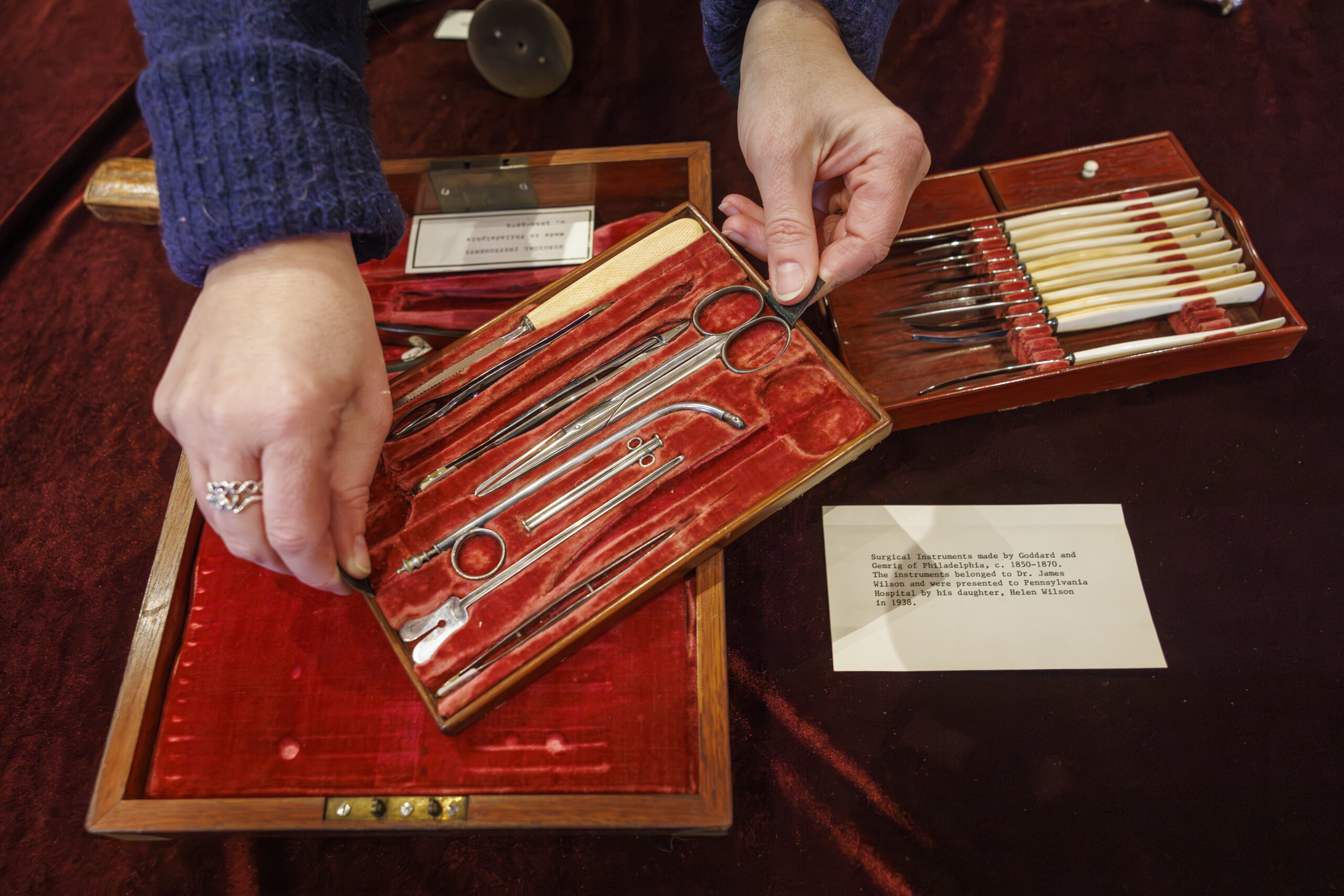
    A tonsil guillotine, designed to remove tonsils using a blade, sat next to early surgical tools and stethoscopes. Some objects, such as the scalpel, have not changed significantly in form through the years.

    “But how we treat those objects certainly is very, very different. We want to make sure everything’s sanitized now,” Peeples said.
    Surgical instruments belonging to Dr. James Wilson from the 1800s.

    Other artifacts included old tools of medical education. Like three anatomical casts of women who died during childbirth in the mid-1700s that were used for anatomical study in lieu of cadavers.

    The museum’s exhibits will showcase the hospital’s history of delivering care related to behavioral health and women’s health, as well as its role treating patients during times of conflicts, beginning with the Seven Years’ War, and through pandemics.

    “People would always talk about us being able to do something on a larger scale like this, and I honestly wasn’t sure that was ever going to happen,” said Peeples, who has been at the hospital for 25 years.

    Tickets will go on sale at the end of the month and cost $12 per person, with discounts for those 12 and under, 65 and over, and the military.

    The plan is for the museum to be a permanent fixture, open Wednesdays to Sundays. The rest of the hospital will keep operating as normal.

    Interior of the Historic Library of Pennsylvania Hospital, located at Eighth and Pine Streets.

    The hospital, older than the nation, houses 517 licensed inpatient beds, and saw 19,759 adult admissions, 54,023 emergency department visits, and 5,163 births in fiscal year 2025, per Penn Medicine’s statement.

    “Pennsylvania Hospital is a jewel in the crown that is Penn Medicine, where our staff draw energy from our rich history to shape the future of medicine,” Alicia Gresham, CEO of Pennsylvania Hospital, said in a statement.

  • You can celebrate Pennsylvania’s 250th birthday at this hidden Philly landmark

    You can celebrate Pennsylvania’s 250th birthday at this hidden Philly landmark

    Days before America’s Founding Fathers declared their independence from Britain, Pennsylvania did it first.

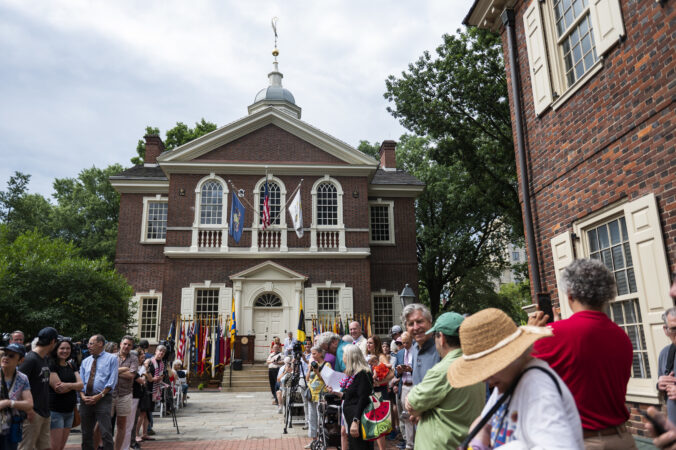
    In June 1776, before the Declaration of Independence was signed, a group of leaders from Philadelphia and its surrounding 10 counties — Bucks, Berks, Chester, Lancaster, York, Cumberland, Bedford, Northampton, Northumberland, and Westmoreland — met in Carpenters Hall for the Pennsylvania Provincial Conference. There, the Commonwealth of Pennsylvania was born.

    Carpenters Hall, a hidden landmark just two blocks from Independence Hall in Philadelphia’s Old City, is the true birthplace of Pennsylvania, where the state declared its independence from Britain — jump-starting the framework of the state’s influential constitution that would serve as a model for the U.S. Constitution.

    Now, the little-known and privately owned historic site is celebrating Pennsylvania’s 250th birthday — which coincides with America’s Semiquincentennial — by holding commemorative events across the state to reflect on Pennsylvania’s history and ask residents how the state constitution should be strengthened in 2026 and beyond.

    “It’s the piece of the story we should own and celebrate and use as a platform for civic engagement,” said Michael Norris, the executive director of Carpenters Hall.

    Executive director Michael Norris makes remarks at the reopening ceremony at Carpenters Hall on July 3, 2023.

    Last week, Norris and others from Carpenters Hall traveled from Philadelphia — the state’s first capital — to Harrisburg to announce their yearlong schedule of events celebrating Pennsylvania’s founding, including those about the state’s constitution and its past and future.

    At a news conference last week, Rep. Mary Isaacson (D., Philadelphia) noted that she occupies the seat once held by former Pennsylvania House Speaker Benjamin Franklin. She said she sees the Carpenters Hall events as “more than learning about a key moment in Pennsylvania history.”

    “It’s also about exploring the vital importance of our state constitution in our democracy today and what citizens can do to engage,” she added.

    The commemorative events include an interactive town hall series hosted in Philadelphia, Pittsburgh, Harrisburg, and Erie to discuss the importance of the Pennsylvania Provincial Conference in the United States’ founding. The group will also host several events at Carpenters Hall, including the installation of a blue historical marker outside the hall on June 18, in addition to a three-part virtual lecture series on Pennsylvania’s constitution.

    The events, funded by America 250 PA and the Landenberger Family Foundation, are open to the public and intended to reach Pennsylvania’s “lifelong learners” who are interested in history and civics, as well as the legal community, who will be eligible for Continuing Legal Education credits for attending the virtual lectures, Norris said.
    “To me, 250 is about reflection and engagement,” Norris said. “It’s not about parties and buildings. It’s really a moment to reflect and say, ‘What are we doing here? Do we still want this democracy, and how do we protect it and keep it going?’”
    The Carpenters’ Company — the nation’s oldest craft guild, which built and still owns Carpenters Hall — will also conduct polling about how Pennsylvania’s constitution, as well as the U.S. Constitution, should be changed to better represent citizens in a modern time, Norris said. The poll results will be made public at an in-person event in Philadelphia on Sept. 28, the 250th anniversary of when the state constitution was ratified.
    Historic flags are displayed outside at the reopening ceremony at Carpenters Hall on July 3, 2023. The building opened for the first time to the public since April 2022.
    Rhode Island was the first colony to declare independence from England in May 1776, and Delaware became the first state in December 1787. Pennsylvania followed days after, and its constitution influenced the country’s founding documents. Pennsylvania’s expansive constitution — viewed as radical at the time — focused on personal freedoms and liberties in its “Declaration of Rights,” after which the Bill of Rights was modeled.

    Carpenters Hall was the nation’s first privately owned historic landmark, and remains owned by the Carpenters’ Company today, which offers free admission for 150,000 visitors each year. Because it is privately owned, it is not overseen by the National Park Service, which has in recent weeks dismantled exhibits about slavery at the nearby President’s House Site in Independence National Park that President Donald Trump’s administration contends “inappropriately disparage” the United States.

    The Carpenters Hall events will occur as Philadelphia prepares to host millions of visitors this summer for America’s 250th celebrations, the MLB All-Star Game, and FIFA World Cup games.

  • Philly’s 250th celebration will feature the biggest parade anywhere, six days of fireworks, and Floridian Segway riders

    Philly’s 250th celebration will feature the biggest parade anywhere, six days of fireworks, and Floridian Segway riders

    Philly will have the largest Semiquincentennial parade in the country this summer to celebrate the 250th anniversary of the signing of the Declaration of Independence, along with six nights of fireworks to keep things lit well into the evening.

    Sure, Philadelphians find a reason to set off fireworks every night (what are you celebrating at 9:37 p.m. on a Thursday in February?!?), but the big difference is these will be professional.

    There is new information about first-time and returning events for the 2026 Wawa Welcome America Festival, Philly’s annual 16-day Independence celebration, but details about other events — like who’s going to headline the July 4 concert on the Benjamin Franklin Parkway — still remain under wraps.

    New this year will be the Salute to Independence Semiquincentennial Parade on July 3, which will feature people, performers, and personalities representing the country’s 50 states, its territories, and the District of Columbia.

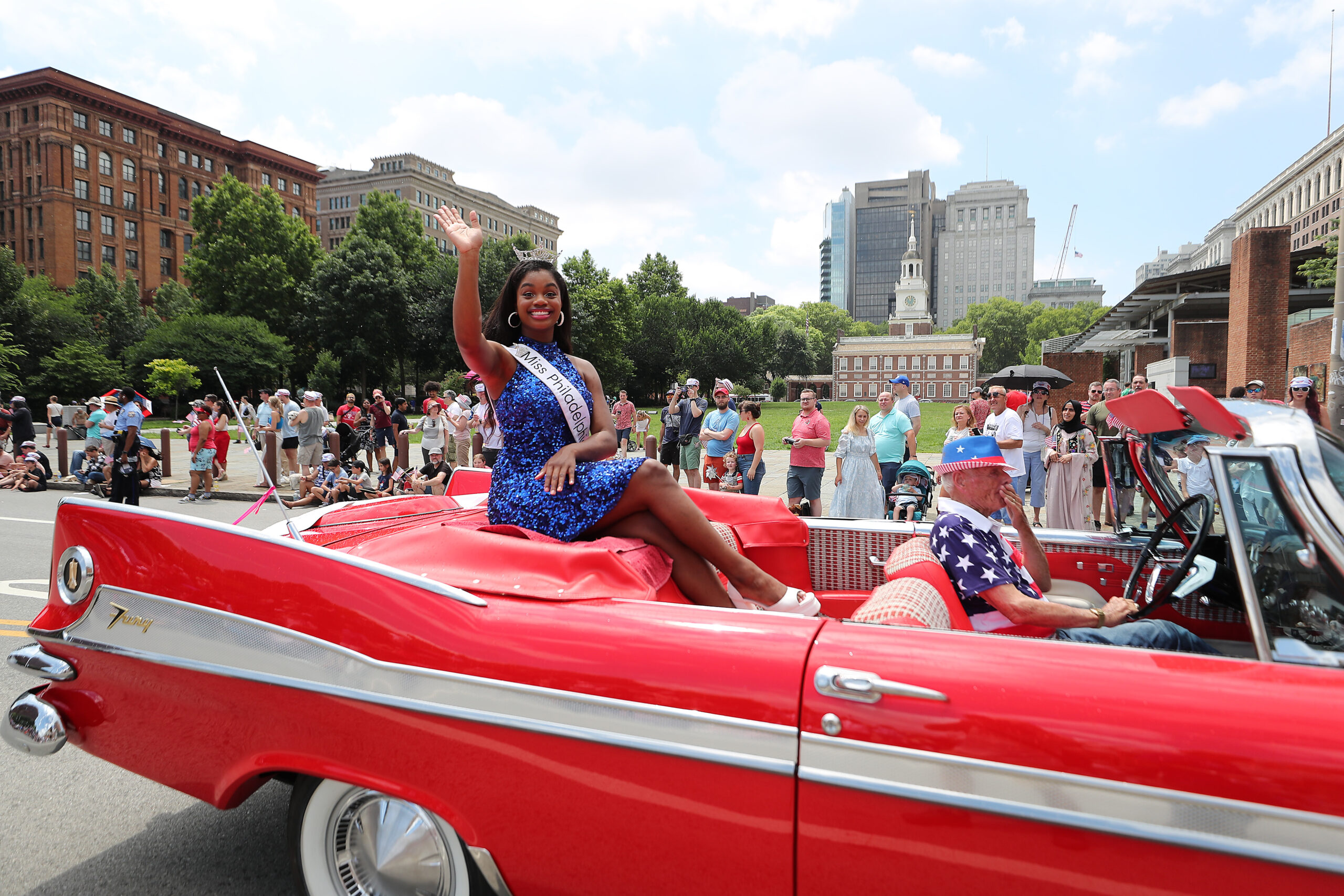
    Miss Philadelphia 2023 Jacqueline Means waves to the crowd near Independence Hall during the Wawa Welcome America Salute to Independence Day Parade in 2023.

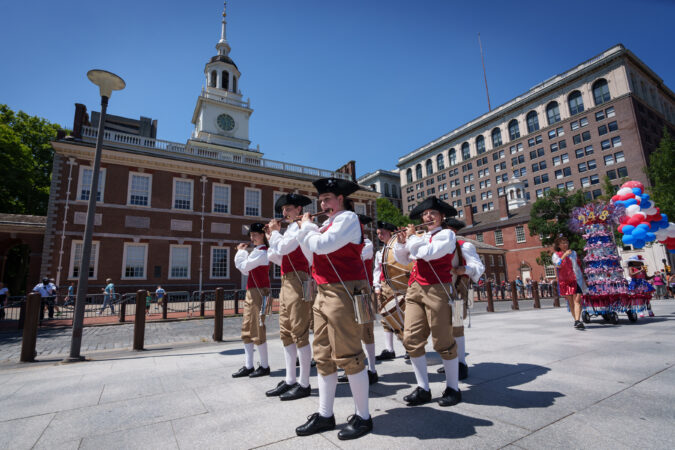
    Among them will be all Miss America state titleholders, several fife and drum corps, historical reenactors, dancers, 50 marching bands, unicycle riders, stilt walkers, a jump rope team from Maryland, a steel drum band from Michigan, a circus troupe from Illinois, the Milwaukee Dancing Grannies, and the Philly Drag Mafia.

    The Louisiana LunaChicks, a group whose members will dress like Mrs. Roper from Three’s Company, will also be performing in “patriotic caftans,” according to a news release. The LunaChicks may want to stay clear of the Segway Riders Club of The Villages, Florida, which is exactly what you think it is and will also be rolling in the parade.

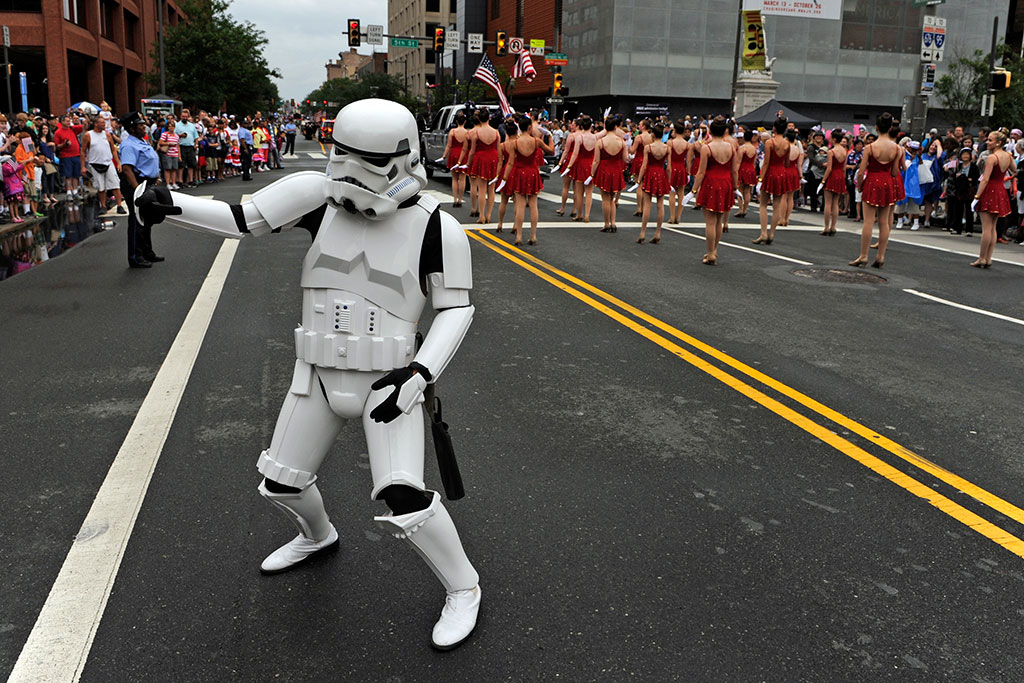
    Not to be outdone, three Star Wars cosplay groups — Garrison Carida, Kyber Base, and the Mav Oya’la Clan — are teaming up to represent the lighter side of Pennsylvania (and the dark side of the force).

    A storm trooper with the Garrison Carida dances during the Philadelphia Independence Day Parade in 2014.

    The parade will also feature international bands from Ghana to Ireland; more than a dozen floats, including those celebrating Indigenous people and women’s right to vote; and a 20-by-40-foot Declaration of Independence.

    Wawa Welcome America’s six nights of fireworks begin June 20 (and on June 21) at a new event that has not yet been announced, according to a news release.

    Fireworks will also take place on June 25 at the Celebration of Black Music Month at the Dell Music Center, June 26 at the Kidchella Music Festival at Smith Memorial Playground, June 27 at a concert on the waterfront, and July 4, “following the star-studded concert” on the Parkway, absolutely no details of which were included in the release.

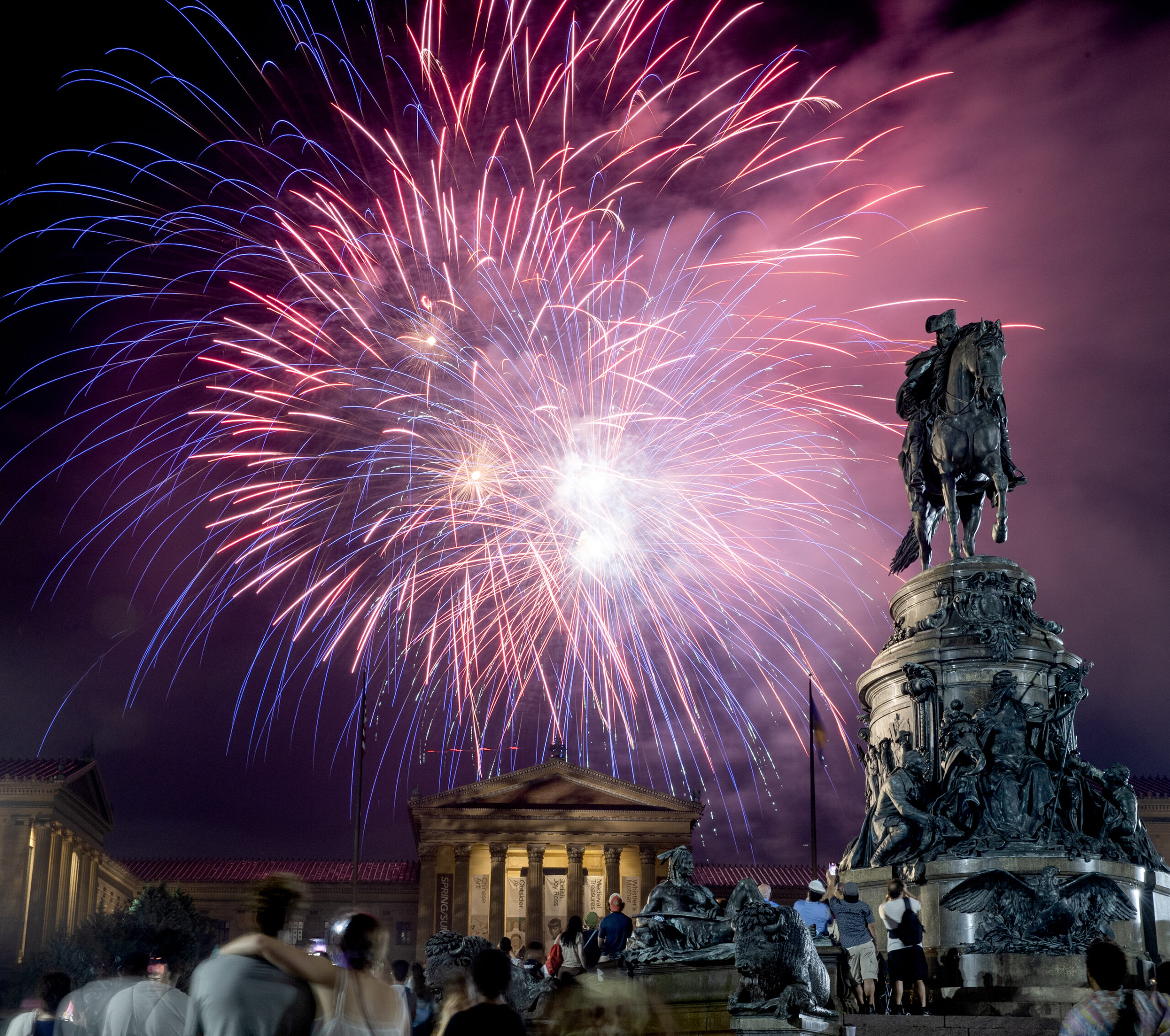
    Fireworks over the Philadelphia Museum of Art and the statue of George Washington at Eakins Oval during the Wawa Welcome America Festival on July 4, 2023, following a free concert featuring Demi Lovato and Ludacris on the Benjamin Franklin Parkway.

    Returning events include:

    • June 19: Juneteenth Block Party at the African American Museum
    • June 24: Five Points Night Market at Cottman and Rising Sun Avenues in Northeast Philly
    • June 27: Concillio’s Annual Hispanic Fiesta at LOVE Park
    • June 28: Gospel on Independence at Independence National Historical Park
    • July 1: Wawa Hoagie Day on Independence Mall
    • July 2: Red, White, & Blue To-Do parade, block party, and folk festival at sites across the Historic District
    • July 2: Salute to Service: The U.S. Army Field Band & Soldiers’ Chorus at Independence National Historical Park.
    • July 3: Pops on Independence at Independence Park
    • July 4: Celebration of Freedom Ceremony outside of Independence Hall

    For more details about Wawa Welcome America, visit july4thphilly.com/events.