New Year’s Day is still more than a week away, but already, everything’s coming up Philly in 2026.
In the latest sign that the city is poised for a banner year, the Wall Street Journal has named Philadelphia the world’s top place to visit in ‘26 — echoing what various national and international publications have been saying for weeks.
The primary draw, of course, is the nation’s 250th birthday celebration, which is expected to bring an endless stream of tourists — not to mention contribute to as much as $2.5 billion to the city and region in additional tourism dollars, by one estimate.
The city’s sports calendar in the coming year ain’t looking too bad, either.
Most notably, the FIFA World Cup arrives next summer with a much-anticipated slate of games in June and July. (France and Brazil are among the teams that’ll take part in six matches slated for Lincoln Financial Field.)
And in July, Major League Baseball’s All-Star Game festivities will take place at Citizens Bank Park — in the same year the Phillies rank among the betting favorites to win a third World Series title, no less — while Xfinity Mobile Arena will be hosting first- and second-round games for the NCAA men’s basketball tournament.
Oh, and the PGA Championship returns to the Philadelphia area, May 11-17 at the Aronimink Golf Club in Newtown Square.
The Wall Street Journal’s recognition marks the latest in a spate of hype for Philadelphia in the coming year. Last month, Travel + Leisure named the city one of its top places to travel in ’26, as did the BBC.
Joining Philadelphia in the Journal’s top five destinations for ‘26 were Basque Country, Spain; Okavango Delta, Botswana; Yunnan, China; and Guadalupe Valley, Mexico.
Tulsa, Okla. — which in June will celebrate the 100th birthday of the country’s favorite lonely highway with its annual Route 66 Road Fest — was the only other American city to make the Journal’s top 10.
Tourists arriving in Philadelphia next year may find it easier and far more inviting to stroll through what is now a tucked-away stretch of Old City.
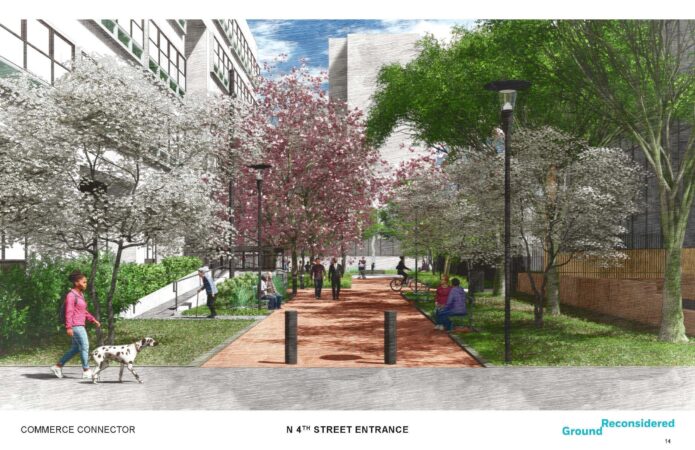
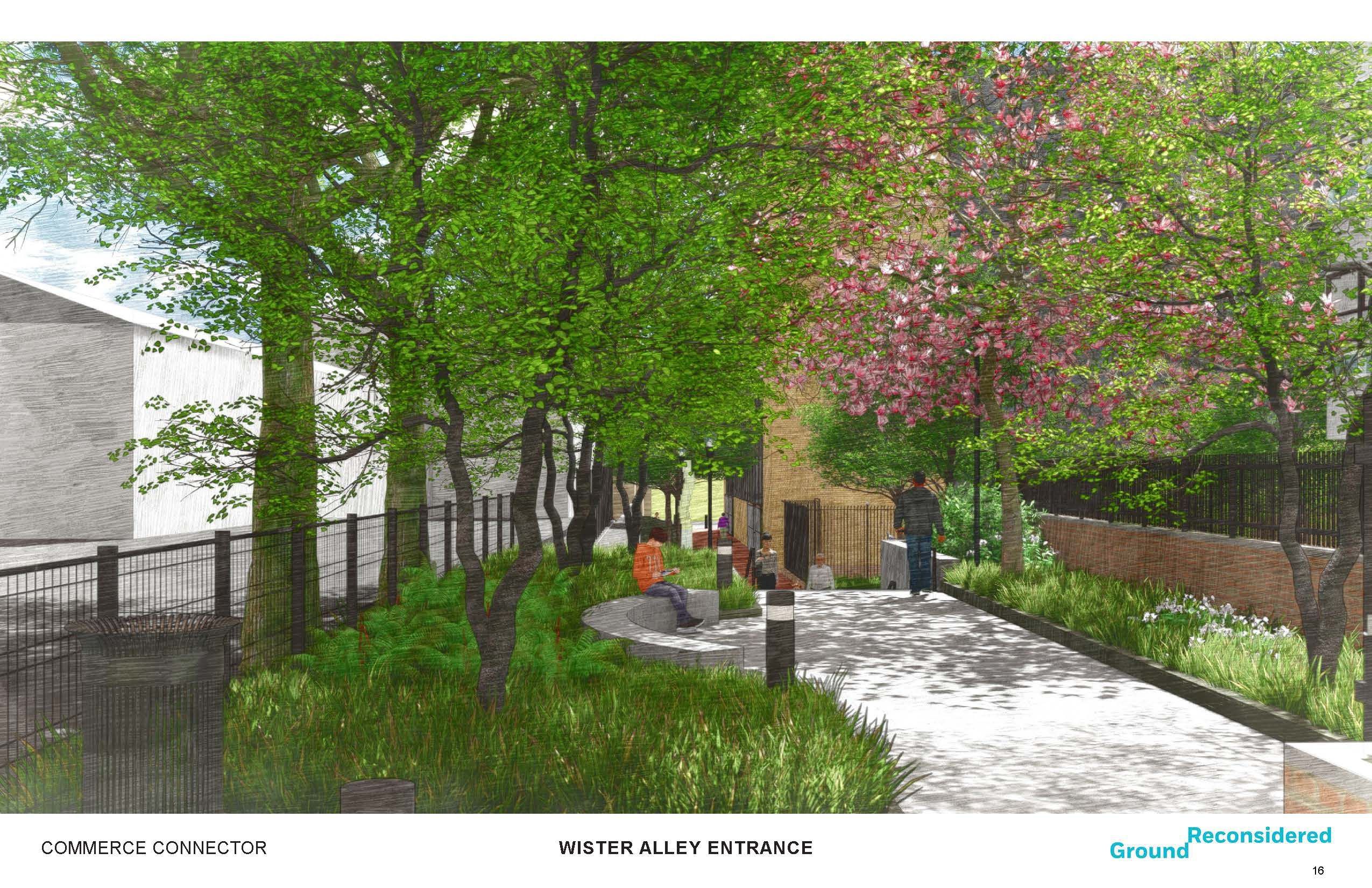
On Wednesday, the city launched construction on what officials call the Commerce Connector, a pedestrian path designed to guide visitors from the Independence Visitor Center to Carpenters Hall along a brick‑lined walkway adorned with seating and ornamental plantings, while bypassing a congested area.
The city has allocated $2.7 million toward the project.
The project is spearheaded by the nonprofit Independence Historical Trust in collaboration with the city; Old City Green, a neighborhood beautification group; and Old City District, a business support organization.
Bill Marrazzo, chair of Independence Historical Trust, called the connector “an important step forward.”
“The Commerce Connector enhances the visitor journey between some of Philadelphia’s most treasured sites while also improving everyday walkability for residents and workers,” he said in a statement.
A rendering of a new connector pathway planned in Old City.
The bigger picture
The connector is part of a larger effort by the city and nonprofits, led by Independence Historical Trust, to craft a broader vision for the city’s historical area. Some will be complete by the Semiquincentennial, and others might not.
That vision, which could take $100 million to implement, calls for more walkable and bike-friendly streets, new plazas, additional green spaces, and easier navigation to cultivate a sense of cohesiveness they say is lacking.
The Historical Philadelphia Vision Framework plan aims to create ways for people to “wayfind” easy-to-follow, less car-centric routes through Independence National Historical Park, Old City, and other historic or local neighborhoods.
The current redo of Market Street in Old City, now under construction, is part of that. It will include a new Tamanend Plaza at Second and Market Streets, and a “road diet” to accommodate bike lanes. Workers were busy Thursday putting down blocks for the new plaza.
Work is also underway by the National Park Service at the Declaration House at Seventh and Market Streets, where Thomas Jefferson stayed while he wrote the famed document, and at the Benjamin Franklin Museum off Chestnut Street, both part of Independence National Historical Park. Also, the 25,000-square-foot, Greek Revival-style First Bank of the United States is undergoing $27 million in work, timed to reopen as a new park attraction for the Semiquincentennial.
What’s the route?
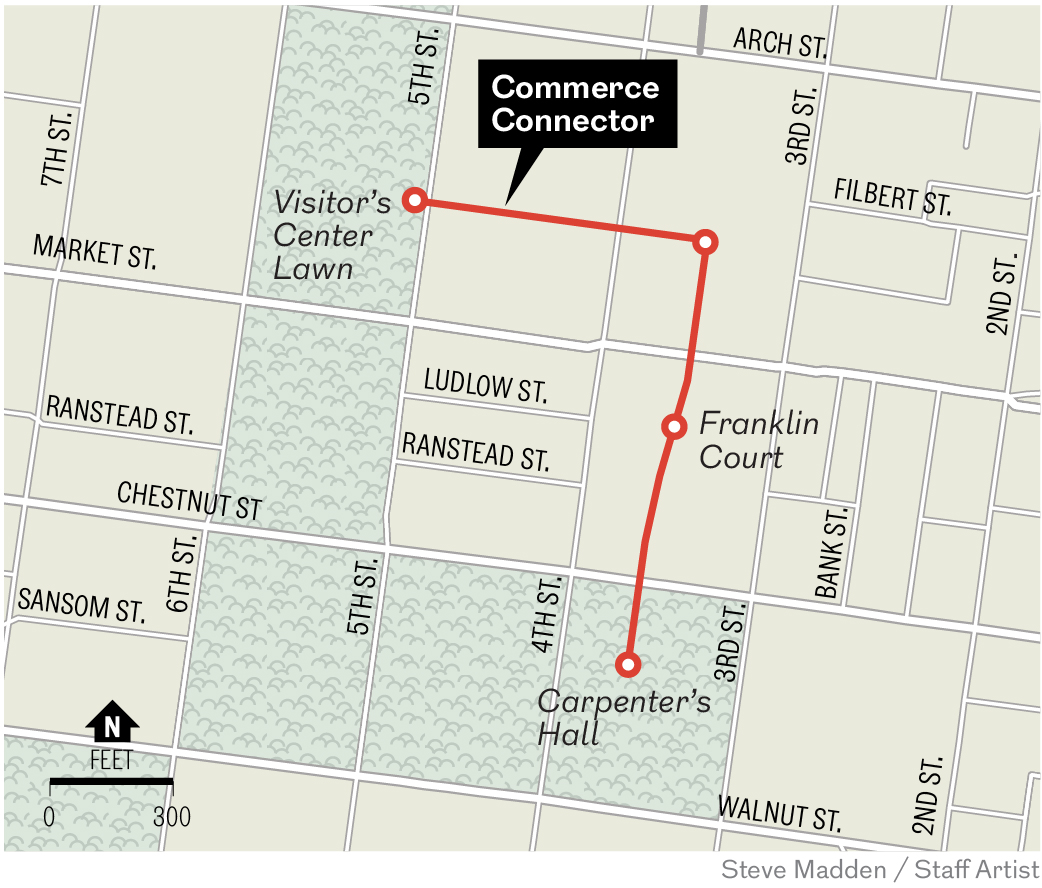
The roughly 2,000-foot-long Commerce Street foot path will lead travelers from the edge of the visitor center’s lawn at Fifth Street, east across Market Street, and onto Commerce Street, now an unmarked alley that runs parallel to Market Street. From there, they will continue east before turning right onto another alley, which leads to Market Street.
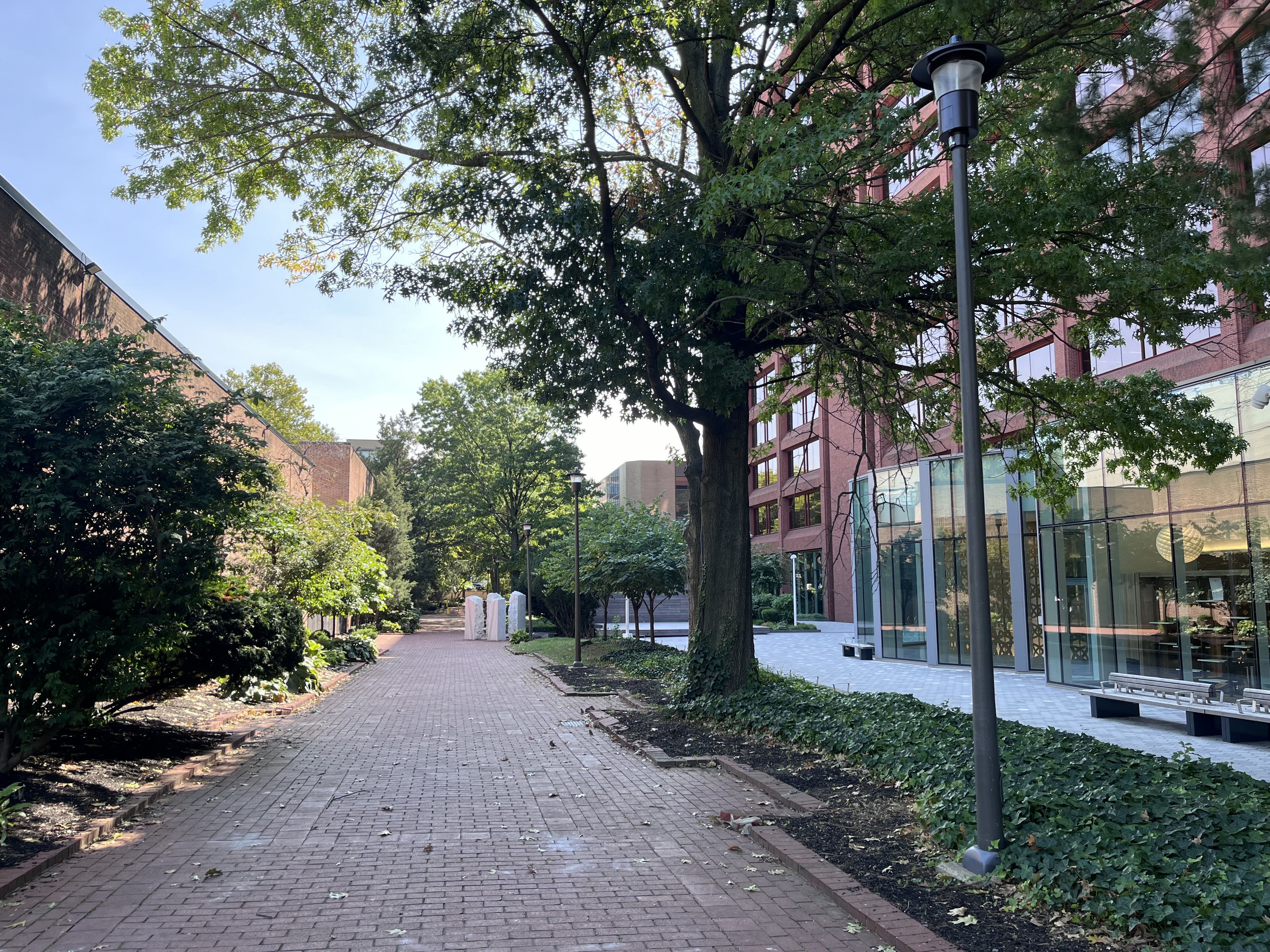
A 2024 view of Commerce Street, an alley that starts on Fifth Street, midway between Arch and Market Streets. Commerce Street would become a way to connect Independence Visitor Center with Carpenters Hall under a plan led by Independence Historical Trust.
After crossing Market, they will cut through Franklin Court, cross Chestnut Street, and arrive at Carpenters Hall.
Once at the hall, visitors can branch out into the wider Independence National Historical Park and other notable areas.
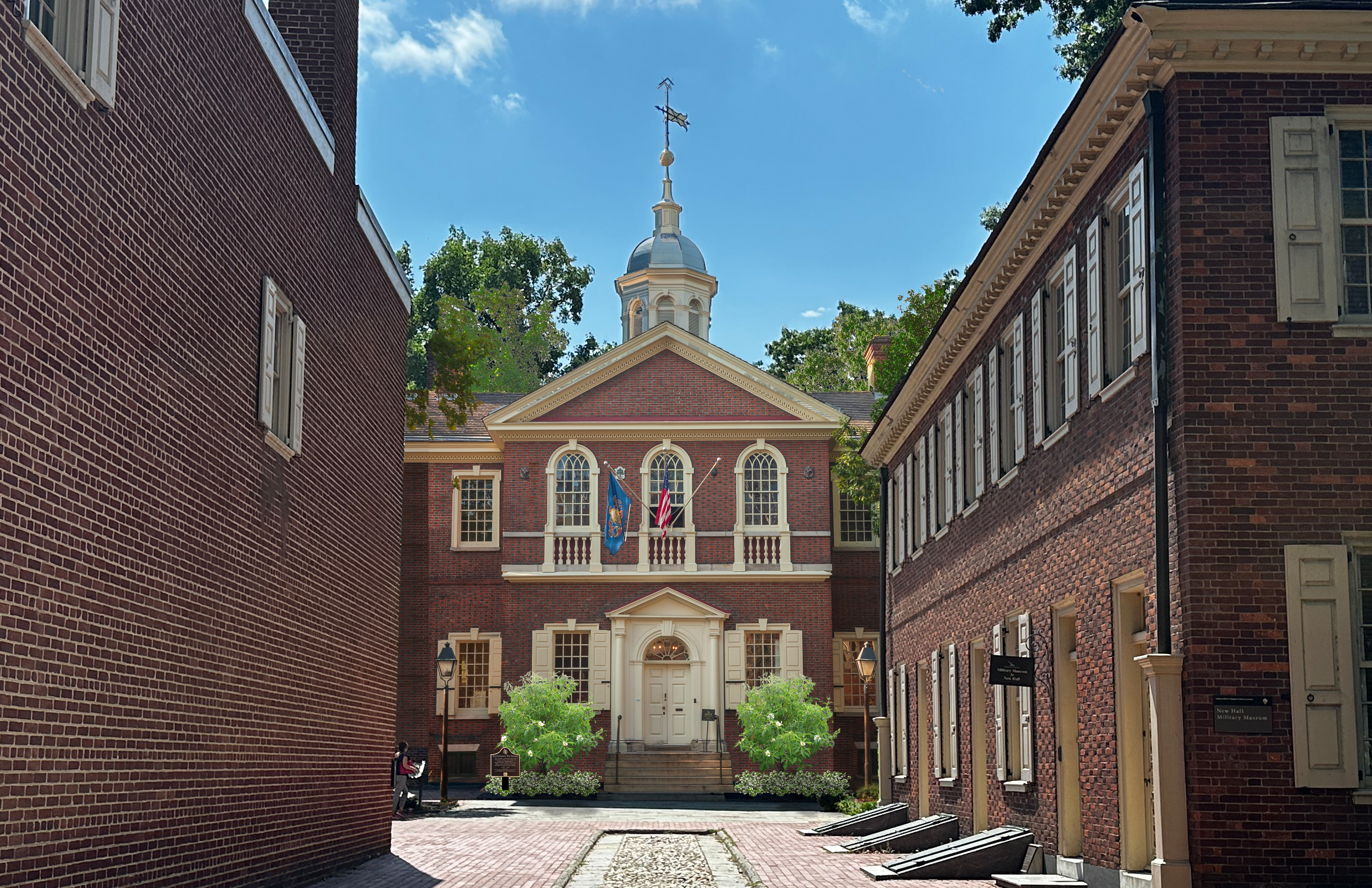
Officials emphasize that the connector will deliver a mostly traffic‑free passage to Carpenters Hall in time for an anticipated surge in tourism tied to the 250th anniversary of the Declaration of Independence. Carpenters Hall was the site of the first Continental Congress in 1774.
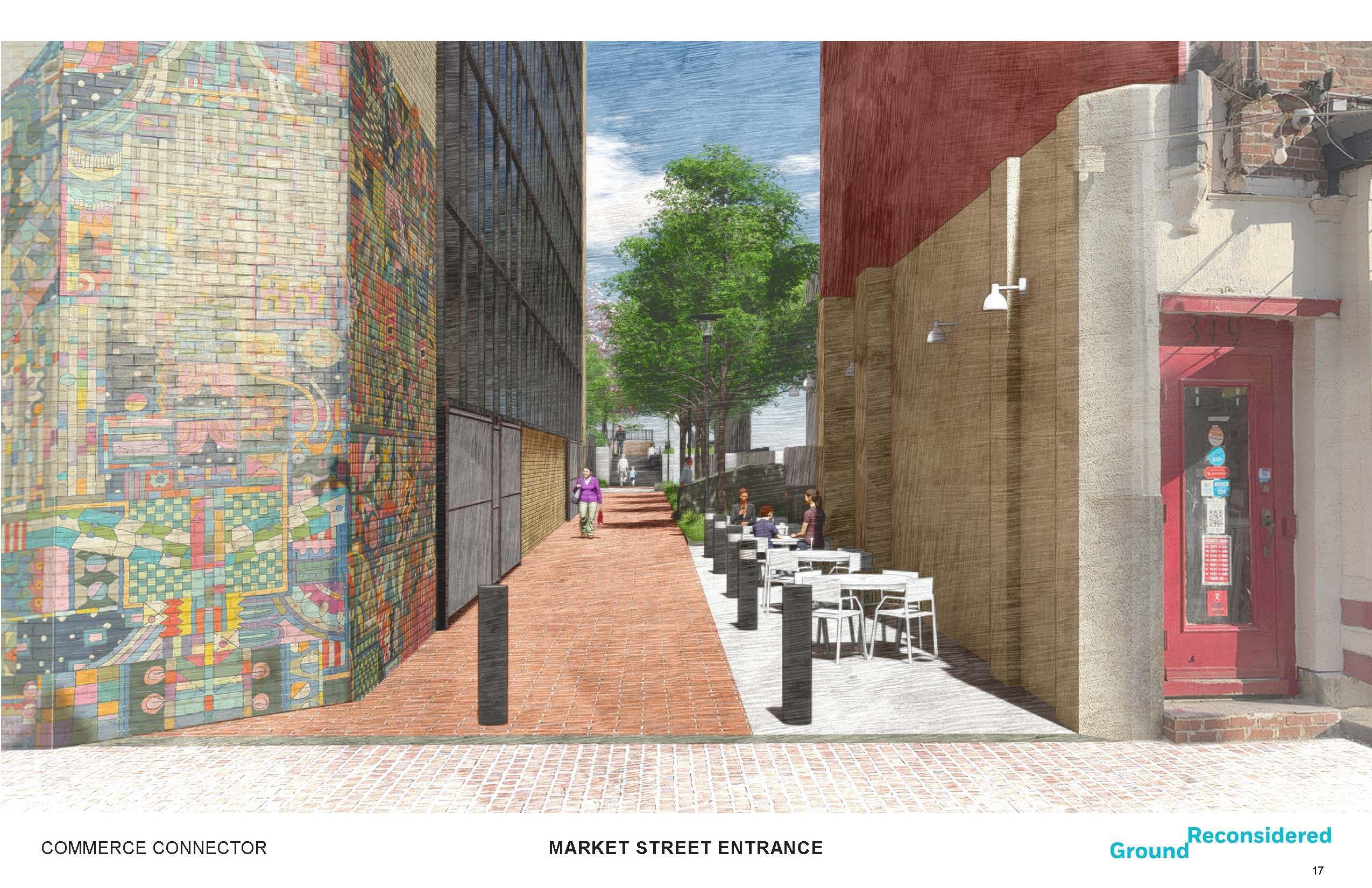
A rendering of a new connector walking path being built in Old City.Commerce Connector pedestrian route through Old City.
Other enhancements
Officials say existing paving, benches, lighting, and plantings are all in poor condition.
The redesigned corridor will get new furnishings, better lighting for security, ornamental trees and bushes, and other enhancements to make it more inviting. It would include a “gathering area” and new entrances.
To slow traffic for pedestrians, a speed bump mid-block on Fifth Street would connect Independence Visitor Center and the alley. Another mid-block bump on Fourth Street would help pedestrians cross Market Street to Franklin Court.
Fourth Street would get a bike lane.
New signs would note area history.
The path would also help connect people to Christ Church Burial Ground, Commodore Uriah Phillips Levy Park, and the Faith and Liberty Discovery Center.
Construction is expected to be complete before July Fourth, ahead of the nation’s Semiquincentennial.
Carpenters Hall.
“The Commerce Connector reflects our commitment to making Old City safer and easier to navigate for everyone,” said City Councilmember Mark Squilla, who helped secure funding.
Job Itzkowitz, executive director of Old City District, said the connector “strengthens the backbone of Old City by transforming an underused passageway into a vibrant, welcoming public space” that will make it easier for residents and tourists to move between iconic city sites.
Old City Green launched the early planning efforts for the corridor and will continue to help maintain the path.
“By introducing new plantings, shade, and thoughtfully designed landscape elements, we’re creating a greener and more accessible environment for everyone who walks through this historic neighborhood,” said Joe Schiavo, vice president of Old City Green.
Soon, the distinct smells of the Pennsylvania Farm Show will waft through Harrisburg, everything from manure to hay to the ubiquitous milkshakes.
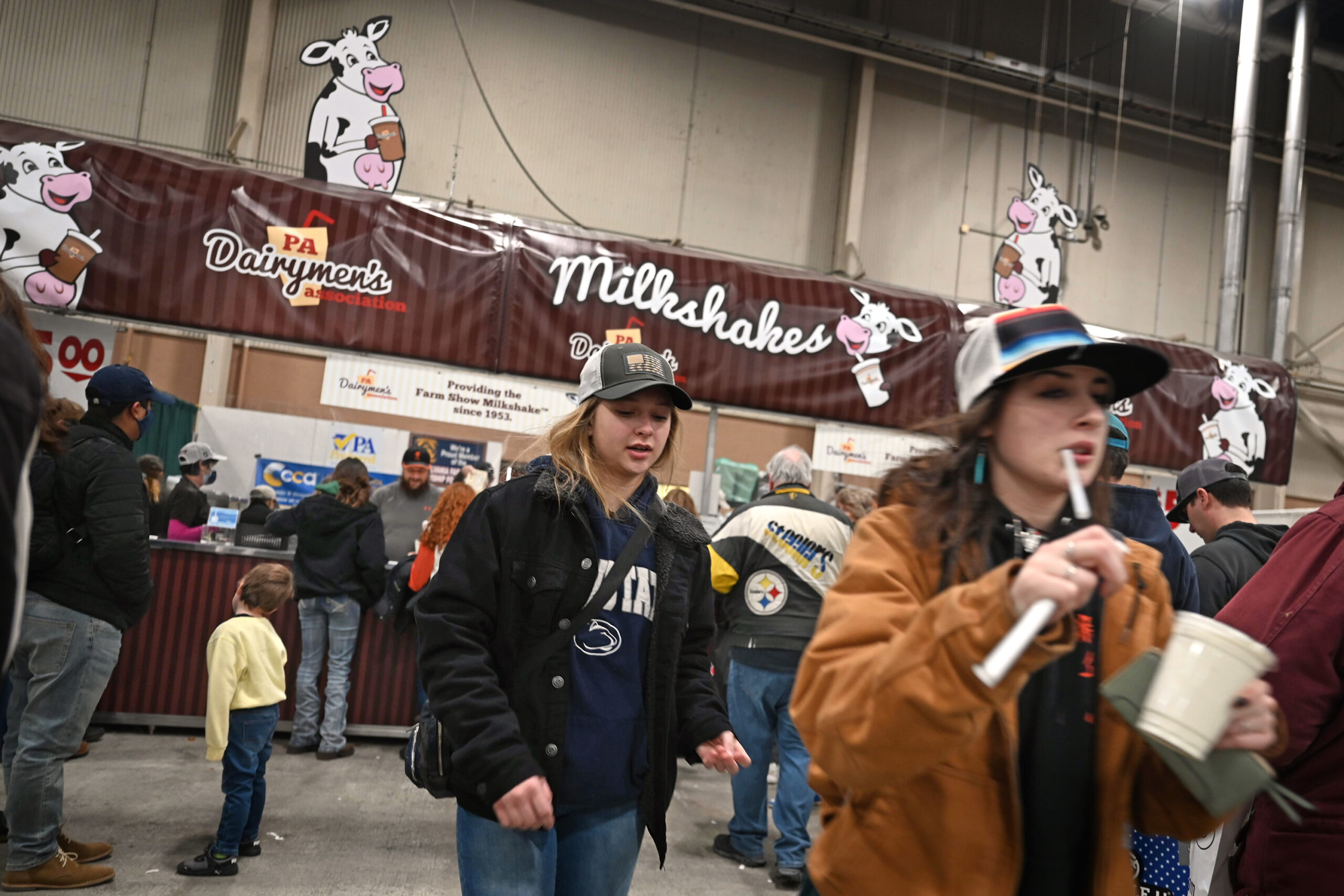
The shakes, sold by the Pennsylvania Dairymen’s Association, are a Farm Show tradition, along with looking at the enormous butter sculpture and watching live calf births.
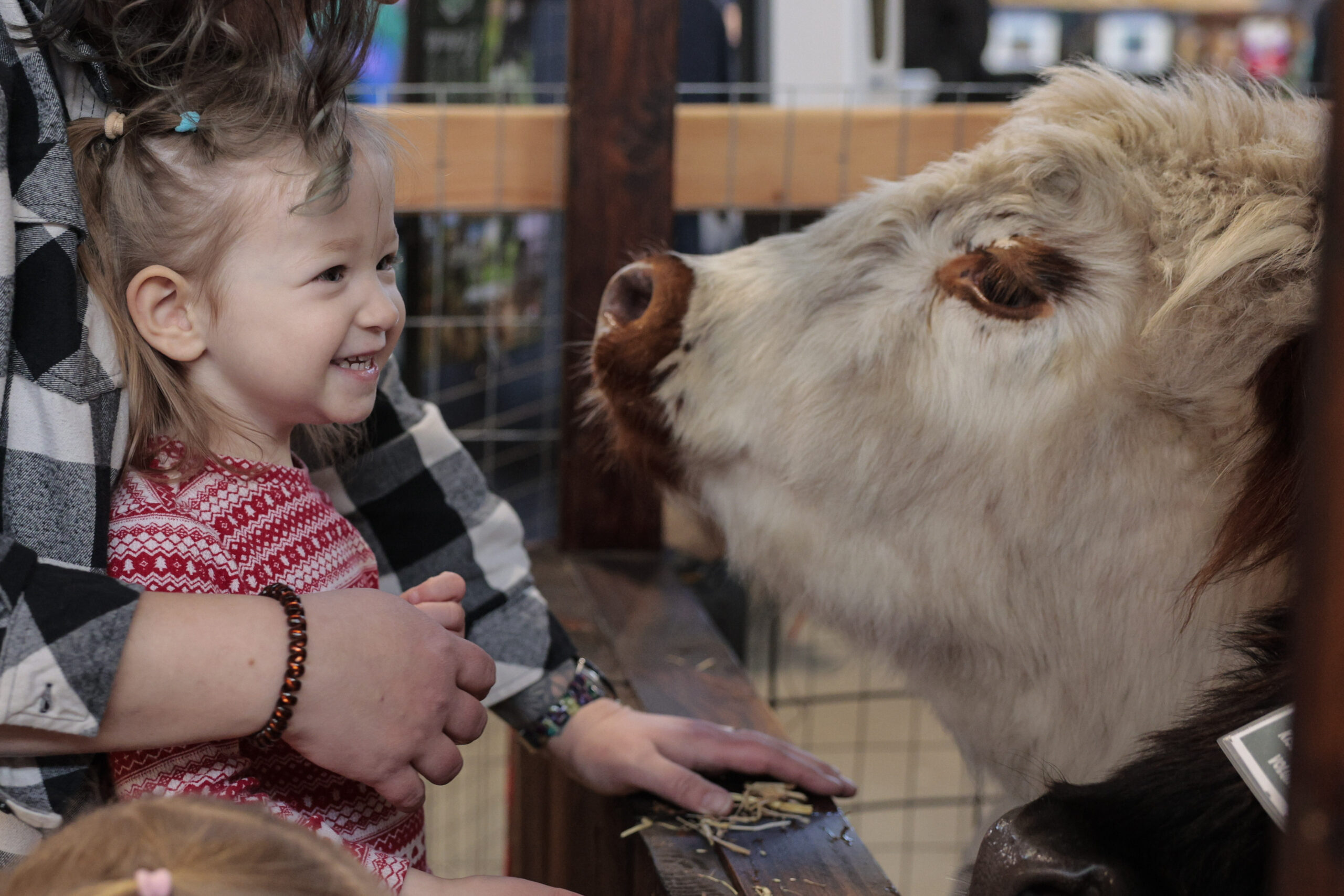
Kaitlyn Groff from Lancaster is visiting a kiss a cow with a Highland cattle at the Pennsylvania Farm Show in Harrisburg, Thursday, January 9, 2025.
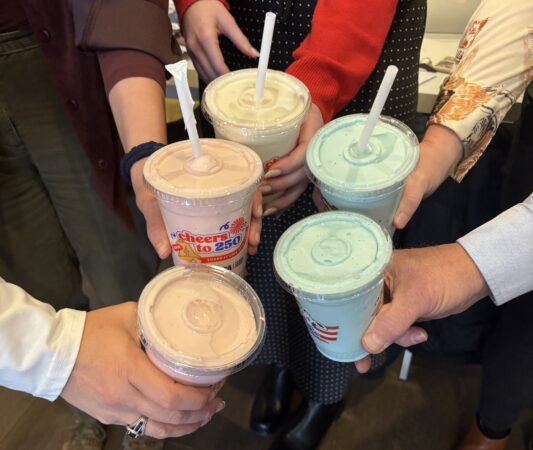
Traditionally, the flavors are vanilla, chocolate, and strawberry, but this year, to celebrate America’s 250th birthday, the shakes are getting patriotic. The “America250Pa Milkshake flight” will now be red, white, and blue thanks to the addition of blue raspberry.
The farm show is the country’s largest indoor agricultural exhibition, and it starts on Saturday, Jan. 10, 2026, with the massive food court opening on Friday, January 9th. You can get mushroom burgers from Chester County and baked sweet potatoes douses in butter and cinnamon.
Pennsylvania is second nationally in the number of dairy farms with 465,000 head of cattle on 4,850 farms. The state’s dairy industry provides 47,000 jobs across the Commonwealth and generates $11.8 billion in annual revenue.
Attendees visit the the PA Dairymen’s Association milkshake booth at the Pennsylvania Farm Show in Harrisburg Jan. 10, 2022.
The U.S. is turning 250 next year, and among its birthday gifts will be newly designed quarters, dimes, and half-dollar coins.
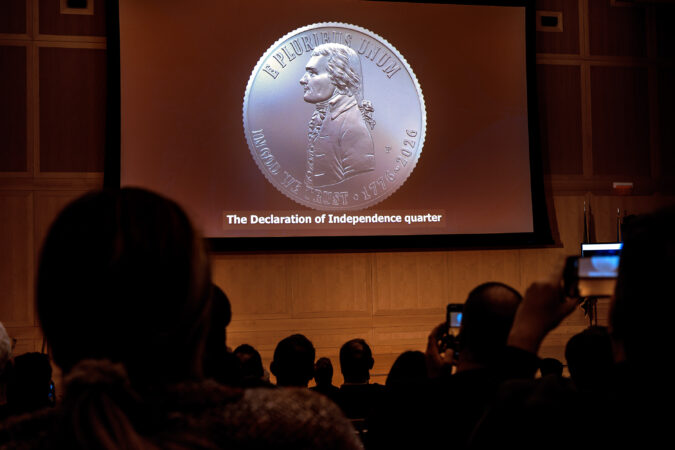
On Wednesday evening, the U.S. Mint unveiled the new coins at the National Constitution Center in Philadelphia, to commemorate the 250th anniversary of the Declaration of Independence.
“The designs on these historic coins depict the story of America’s journey toward a ‘more perfect union,’ and celebrate America’s defining ideals of liberty,” said Kristie McNally, the Mint’s acting director. “We hope to offer each American the opportunity to hold our nation’s storied 250 years of history in the palms of their hands as we connect America through coins.”
Several coins feature Philadelphia-area landmarks.
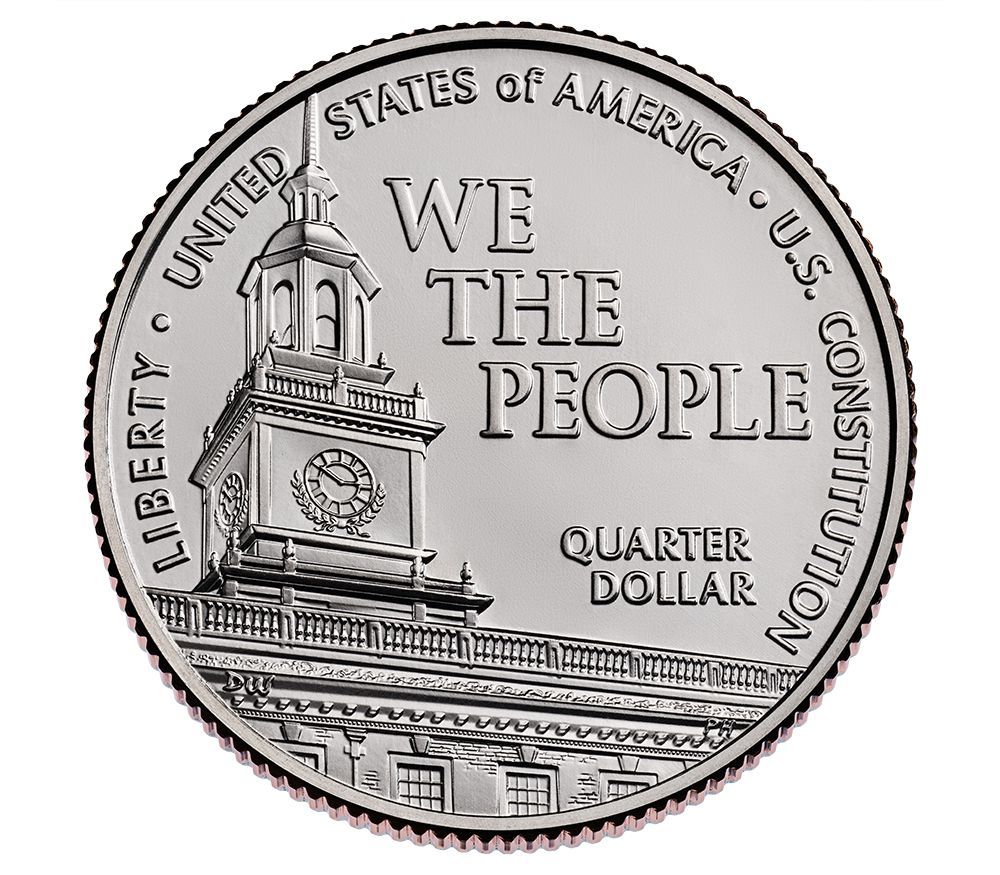
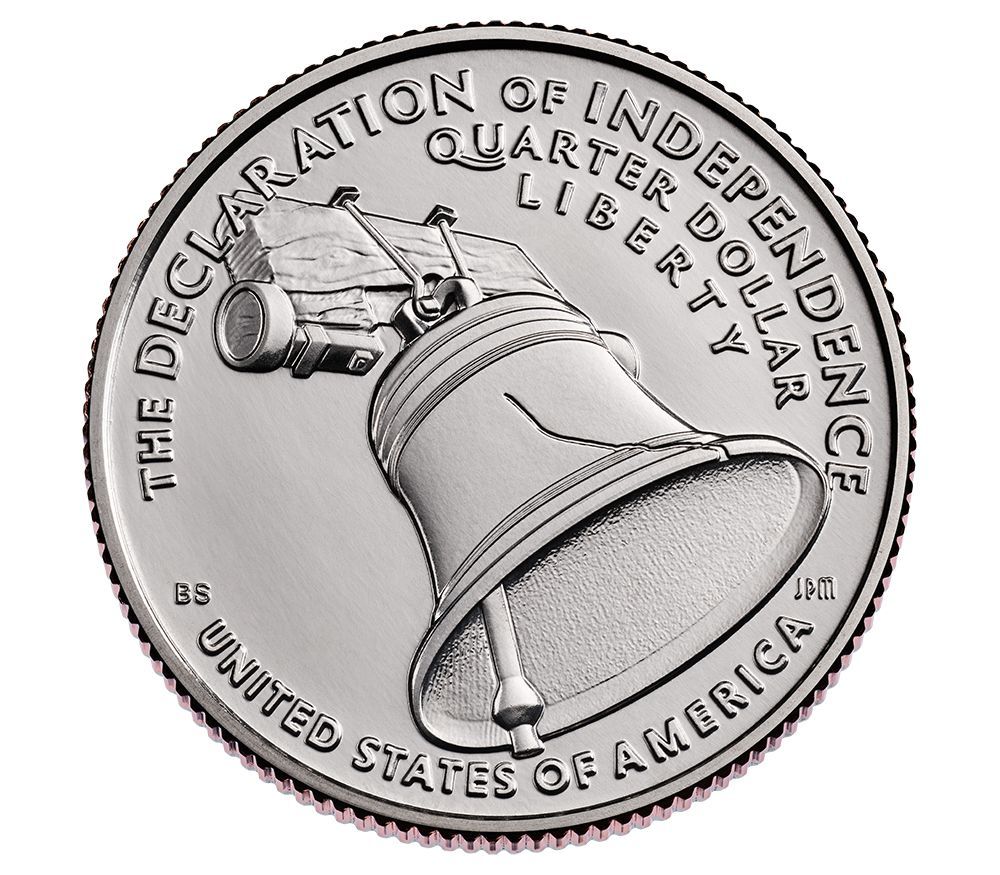
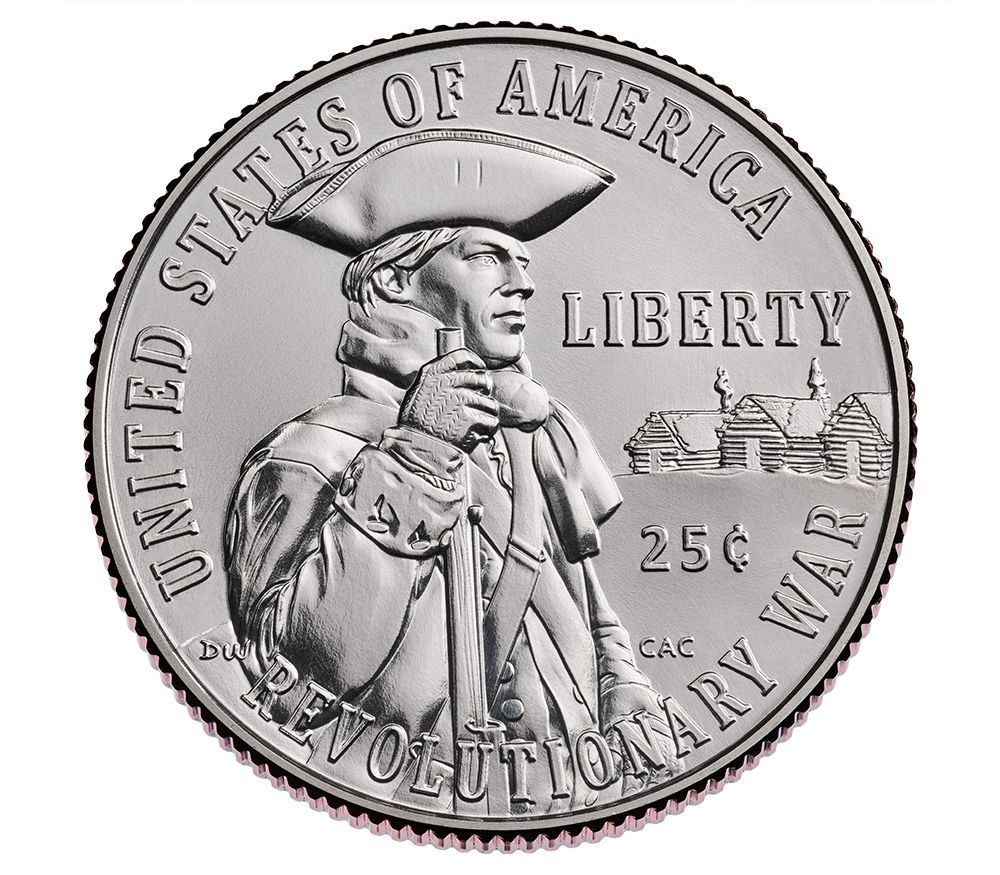
Three separate quarter designs include images of Independence Hall, where the Declaration of Independence was signed; the Liberty Bell, housed and managed by the National Park Service in Philadelphia; and a Continental Army soldier at Valley Forge commemorating the Revolutionary War.
This new design for the quarter commemorates the U.S. Constitution and depicts Independence Hall in Philadelphia, where the Declaration of Independence and U.S. Constitution where signed. The other side of this quarter has a depiction of President James Madison.
The new dime represents the founding era of the country. Its design includes Liberty depicted as a woman wearing a cap patterned with stars and stripes. The other side of the dime will feature an American eagle, which was on early dimes that circulated in 1796, and it hasn’t appeared on the coin since 1837, according to the U.S Mint.
In addition to the Philadelphia-area landmarks, the quarters also don images of pilgrims and the Mayflower. The five new quarters reference the Mayflower Compact, the Revolutionary War, The Declaration of Independence, the U.S. Constitution, and the Gettysburg address, and also feature images of Presidents James Madison, Thomas Jefferson, George Washington, and Abraham Lincoln.
This new design for the quarter commemorates the Declaration of Independence, and depicts the Liberty Bell, housed in Philadelphia. The other side of this quarter features President Thomas Jefferson.
The half-dollar coin is intended to look to the future of the country with an image of the Statue of Liberty on one side, and on the other, a torch being passed from her hand to another hand.
The coins will be produced at the U.S. Mint facilities in Philadelphia and Denver and begin circulating in 2026. The new designs are authorized under legislation signed by President Donald Trump just before he left office in 2021. It noted that these coins can be issued for a one-year period starting in January 2026.
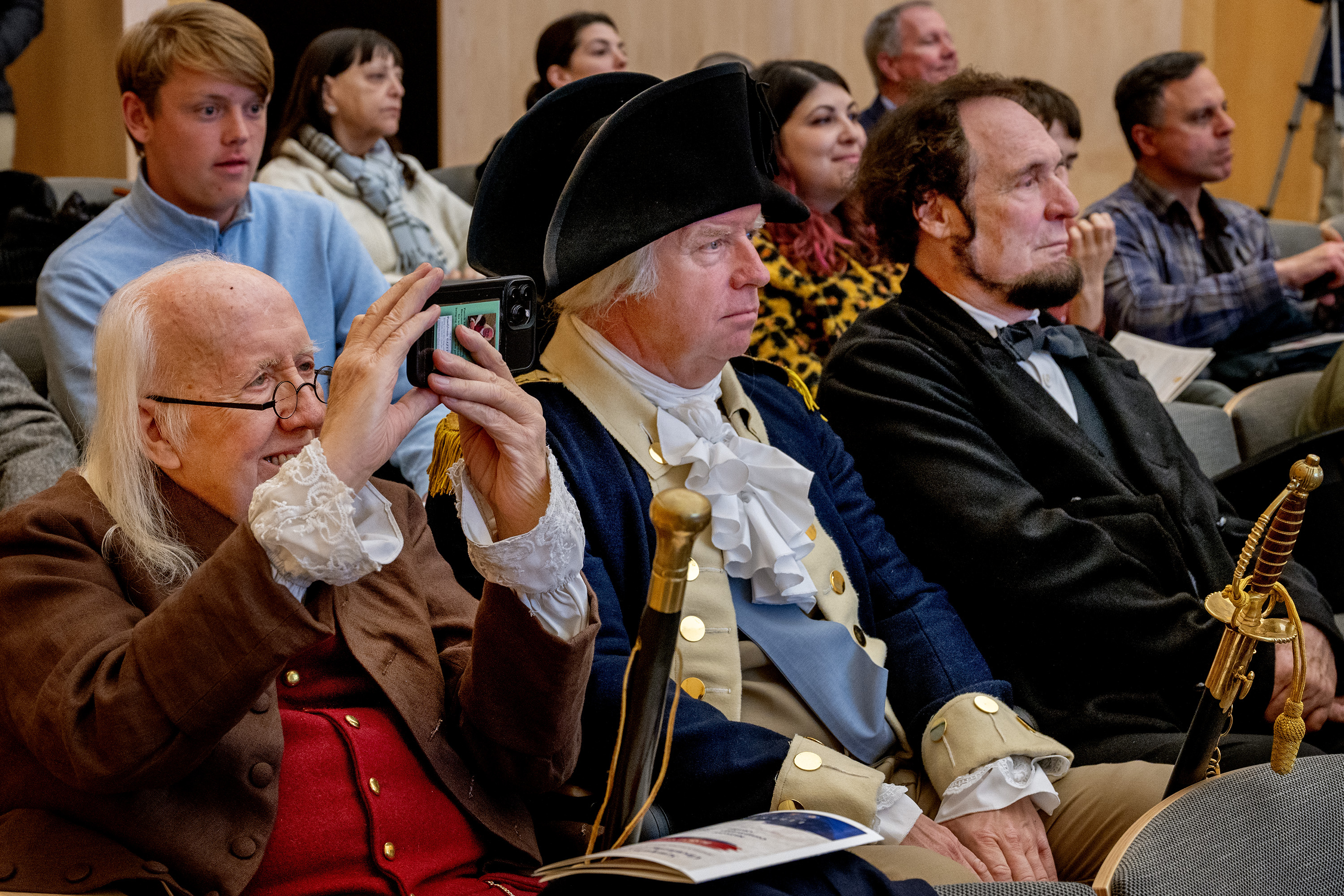
Historical interpreters Benjamin Franklin (from left) Gen. George Washington, and President Abraham Lincoln are in the audience as the U.S. Mint unveils new coins for the Semiquincentennial at the National Constitution Center in Philadelphia Wednesday.
Philadelphia is expected to see an influx of visitors in 2026 for the Semiquincentennial.
This year, the U.S. Mint, which had 389 employees in Pennsylvania in 2024 according to federal database FedScope, stopped producing pennies in Philadelphia. The one-cent coins are more expensive to make than they are worth due to inflation and the high cost of metals.
A newly designed quarter for the 250th anniversary of the country commemorates the time of the Revolutionary War. It depicts a Continental Army soldier at Valley Forge, Pa. The other side of this quarter features President George Washington.
Philly is getting ready to dress itself up — with Liberty Bells. Lots of Liberty Bells.
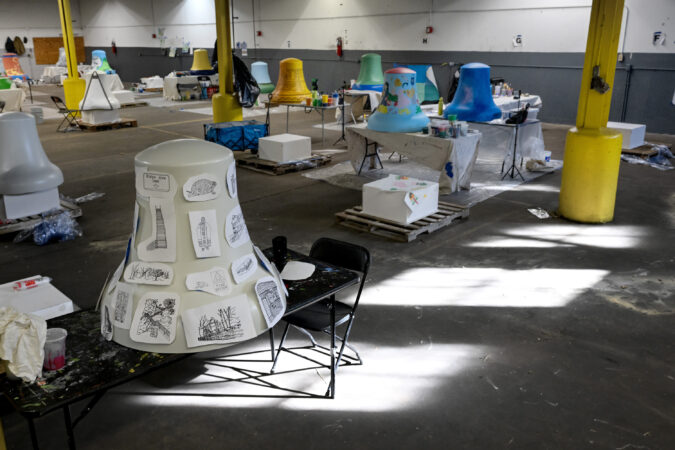
Organizers of Philadelphia’s yearlong celebrations for America’s 250th anniversary in 2026 gathered in a frigid Philadelphia School District warehouse in Logan on Tuesday, offering a special preview of the 20 large replica Liberty Bells that will decorate Philly neighborhoods for the national milestone.
Designed by 16 local artists selected through Mural Arts Philadelphia — and planned for commercial corridors and public parks everywhere from Chinatown and South Philly to West Philly and Wynnefield — the painted bells depict the histories, heroes, cultures, and traditions of Philly neighborhoods.
As part of the state nonprofit America250PA’s “Bells Across PA” program, more than 100 painted bells will be installed across Pennsylvania throughout the national milestone, also known as the Semiquincentennial. Local planners and Mural Arts Philadelphia helped coordinate the Philly bells.
“As Philadelphia’s own Liberty Bell served as inspiration for this statewide program, it makes sense that Philly would take it to the next level and bring these bells to as many neighborhoods as possible,” Mayor Cherelle L. Parker said in a statement. “We are a proud, diverse city of neighborhoods with many stories to tell.”
Kathryn Ott Lovell, president and CEO of Philadelphia250, the city’s planning partner for the Semiquincentennial, said the bells are a key part of the local planners’ efforts to bring the party to every Philly neighborhood.
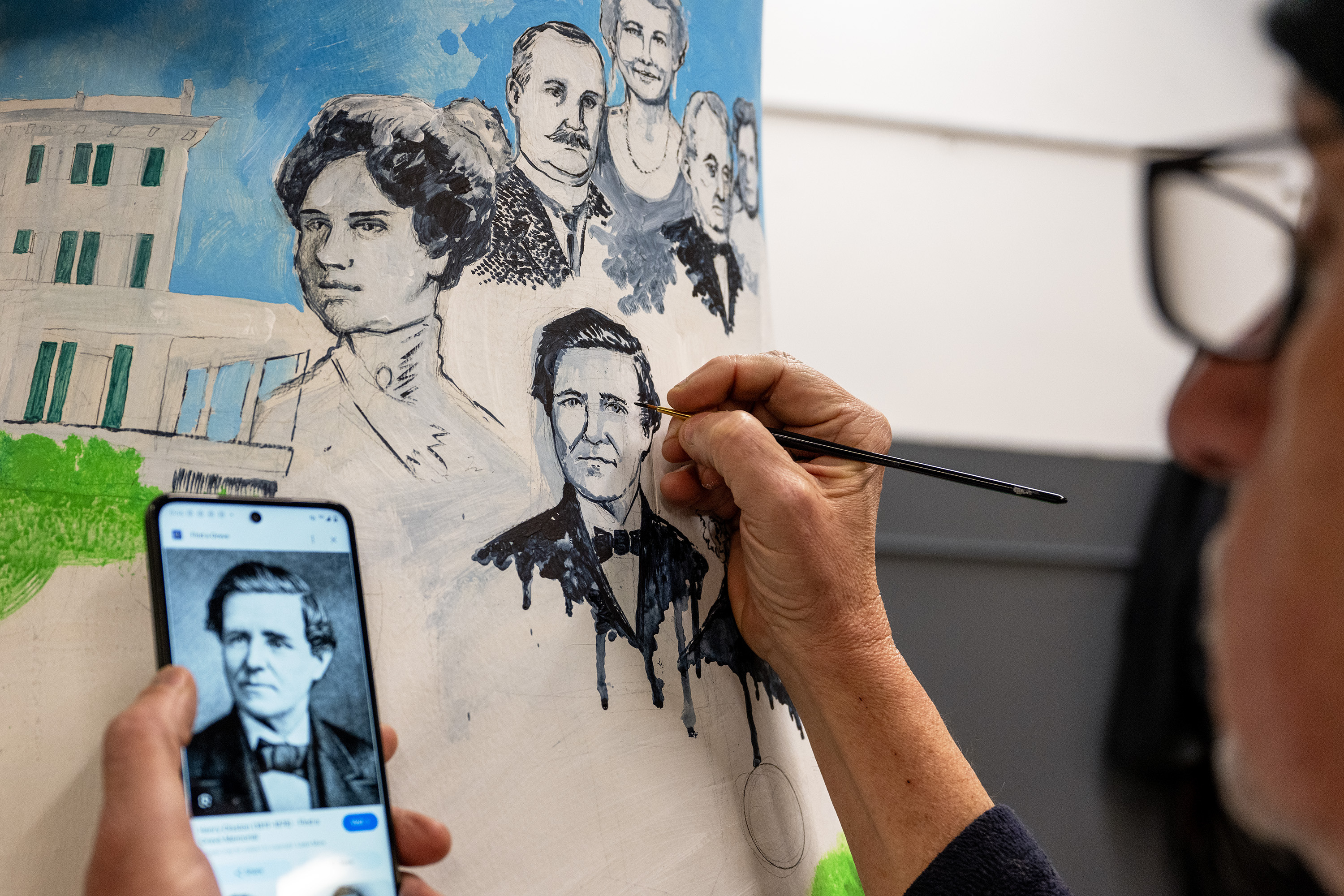
Local artist Bob Dix paints a portrait of industrialist Henry Disston on his bell.
“The personalities of the neighborhoods are coming out in the bells,” she said, adding that the completed bells will be dedicated in January, then installed in early spring, in time for Philly’s big-ticket events next summer, including six FIFA World Cup matches, the MLB All-Star Game, and a pumped-up Fourth of July concert.
Planners released a full list of neighborhoods where the bells will be placed, but said exact locations will be announced in January. Each of the nearly 3-foot bells — which will be perched on heavy black pedestals — was designed in collaboration with community members, Ott Lovell said.
Inside the massive, makeshift studio behind the Widener Memorial School on Tuesday, artists worked in the chill on their bells. Each bell told a different story of neighborhood pride.
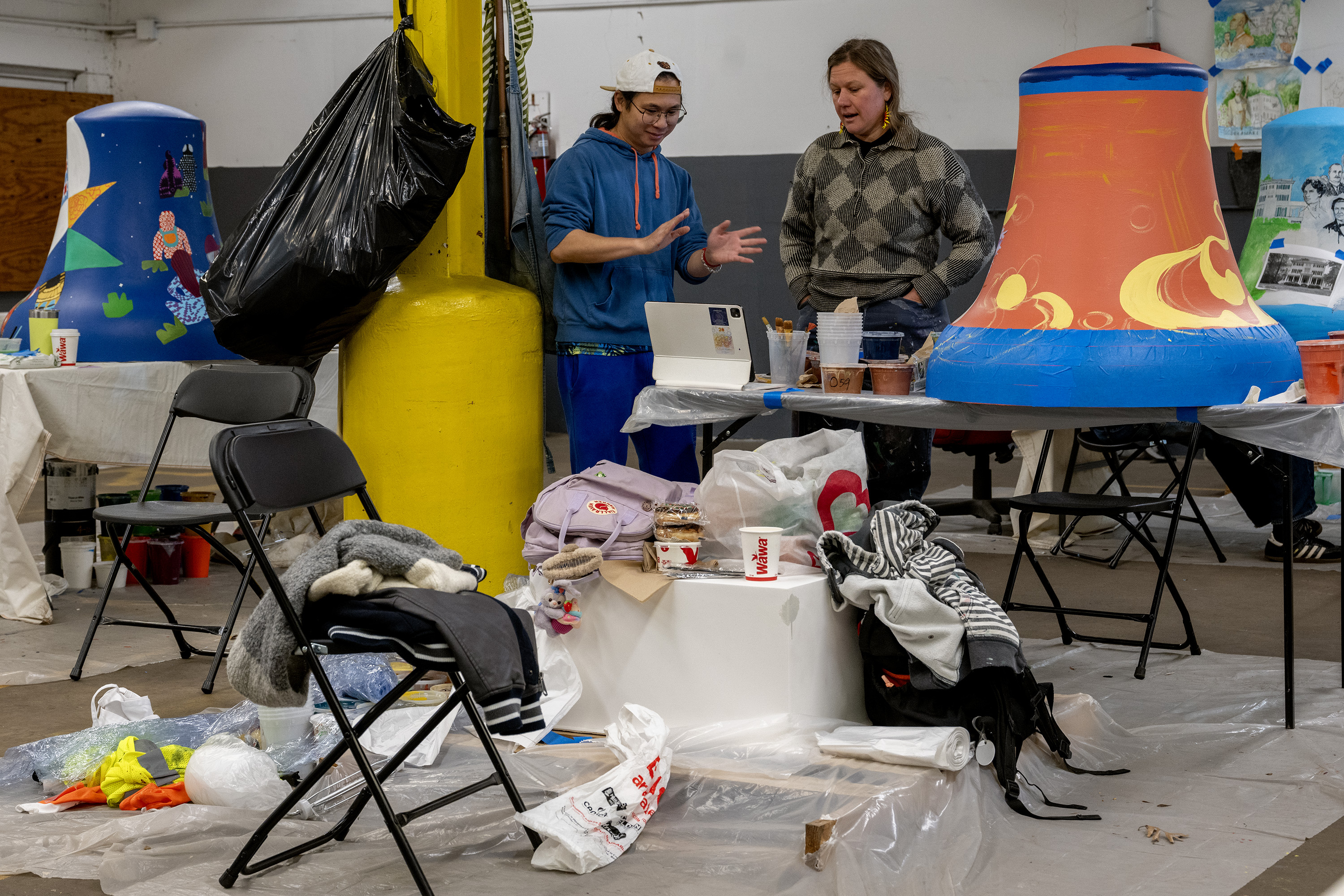
Chenlin Cai (left) talks with fellow artist Emily Busch (right) about his bell, showing her concepts on his tablet.
Cindy Lozito, 33, a muralist and illustrator who lives in Bella Vista, didn’t have to look for inspiration for her bell on the Italian Market. She lives just a block away from Ninth Street and is a market regular.
After talking with merchants, she strove to capture the market’s iconic sites, history, and diversity. Titled Always Open, her bell includes painted scenes of the market’s bustling produce stands and flickering fire barrels, the smiling faces of old-school merchants and newer immigrant vendors, and the joy of the street’s annual Procession of Saints and Day of the Dead festivities. Also, of course, the greased pole.
“It’s a place where I can walk outside my house and get everything that I need, and also a place where people know your name and care about you,” she said, painting her bell.
For her bell on El Centro de Oro, artist and educator Symone Salib, 32, met twice with 30 community members from North Fifth Street and Lehigh Avenue, asking them for ideas.
“From there, I had a very long list,” she said. “People really liked telling me what they wanted to see and what they did not.”
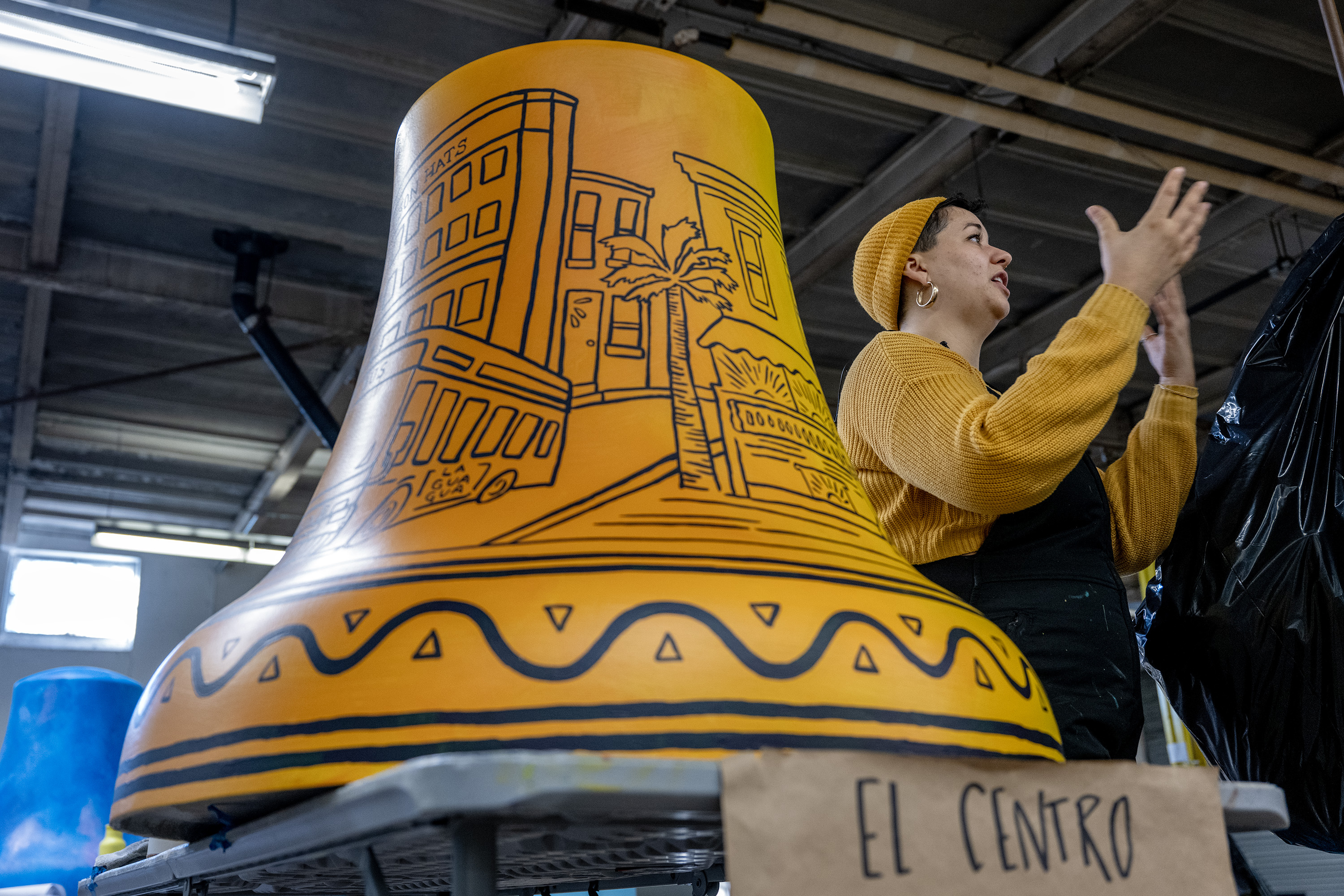
Local artist Symone Salib talks with a visitor as she works on her bell.
Titled The Golden Block, the striking yellow-and-black bell depicts the neighborhood’s historic Stetson Hats factory, the long-standing Latin music shop Centro Musical, and popular iron palm tree sculptures.
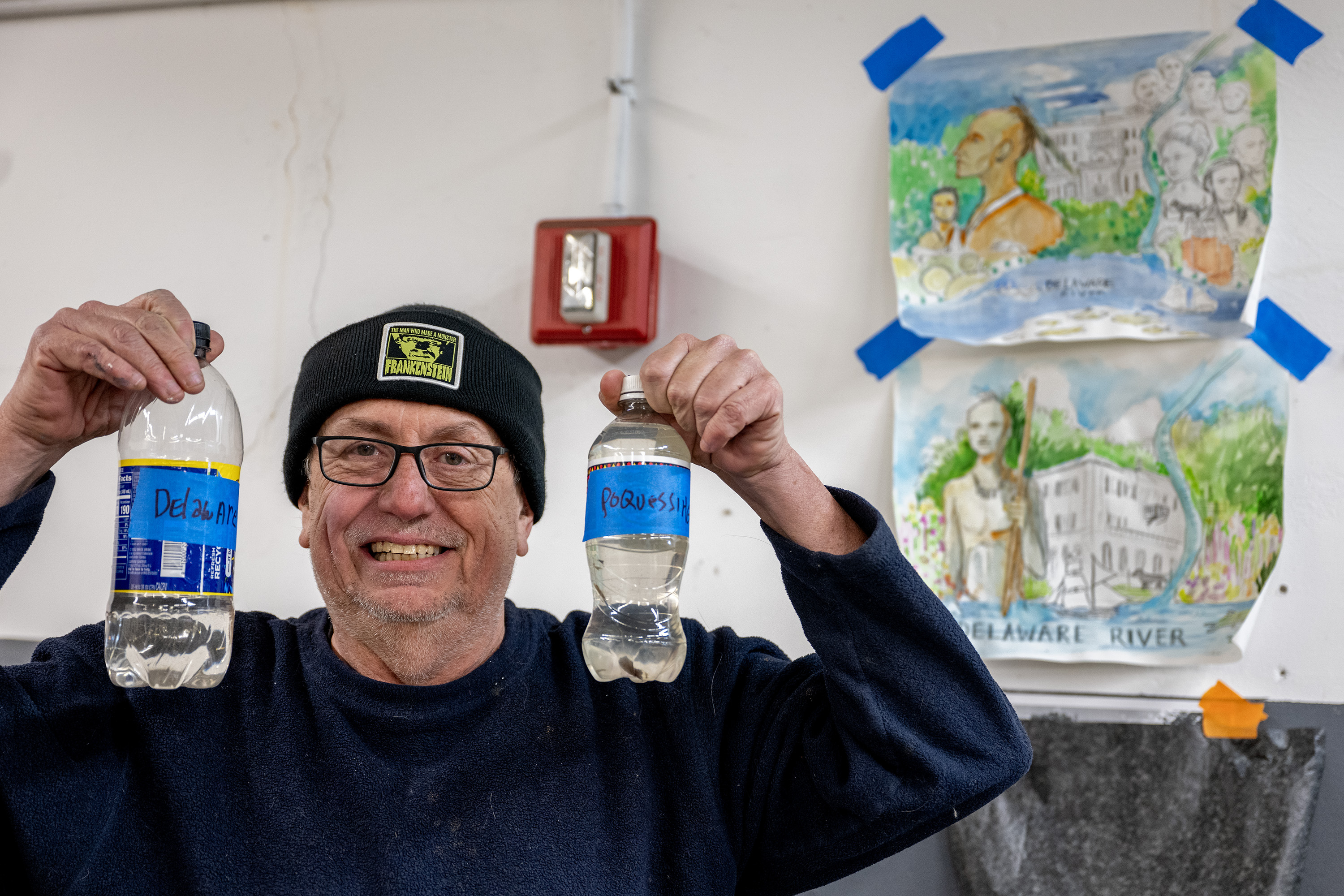
To add that extra bit of authenticity to his bell depicting Glen Foerd, artist Bob Dix, 62, mixed his paints with water bottled from the Delaware River, near where the historic mansion and estate sits perched in Torresdale, overlooking the mouth of Poquessing Creek.
“I like to incorporate the spirit of the area,” he said, dabbing his brush in the river water. “I think it’s important to bring in the natural materials.”
Local artist Bob Dix displays waters he collected from the Delaware River and Poquessing Creek to use in his painting of one of 20 replica Liberty Bells representing different neighborhoods Tuesday, Dec. 9, 2025.
Planners say they expect the bells to draw interest and curiosity similar to the painted donkeys that dotted Philadelphia neighborhoods during the 2016 Democratic National Convention.
Ott Lovell said organizers will install the bells around March to protect them from the worst of the winter weather.
“I don’t want any weather on them,” she said with a smile. “I want them looking perfect for 2026.”
A new arts festival will launch in Philadelphia in 2026 as one of the major events marking the nation’s 250th anniversary. What Now: 2026 is planned to be a five-week-long festival from the nonprofit ArtPhilly. The festival aims to showcase the city’s artistry and talent for both tourists and neighbors alike.
Dozens of Philadelphia artists across disciplines will present more than 30 original works, staged from late May to July 2026 in venues around Philadelphia, coinciding with the Fourth of July and FIFA World Cup matches as part of the city’s Semiquincentennial events.
What Now: 2026 will feature new works by Philly artists such as filmmaker Walé Oyéjidé, poet Yolanda Wisher, opera singer/drag queen Cookie Diorio, photographer and pop-up book creator Colette Fu, and sculptor Pedro Ospina. Institutional collaborators in the region will include BalletX, BlackStar, Philadanco!, the Crossing, and Theatre in the X.
One highlight is The Basil Biggs Project, a new play from actor and playwright Anna Deavere Smith, an alum of Arcadia University. Her great-great-grandfather was a farmer and veterinarian in Gettysburg who, during the Civil War, took a job disinterring and reburying Union soldiers on the battlefield. Smith wrote the work using archival research on her family’s history.
The festival is the brainchild of renowned local philanthropist Katherine Sachs, a longtime trustee and benefactor of the Philadelphia Art Museum, and arts administrator Bill Adair, who previously led programs at the Pew Center for Arts & Heritage and the Rosenbach Museum & Library.
Sachs began planning What Now: 2026 in the winter of 2021 to ensure that the arts remained central to the city’s celebration. She gathered a committee of regional arts leaders including Barnes Foundation head Thom Collins, Mann Center for the Performing Arts president Cathy Cahill, and Mural Arts director Jane Golden to brainstorm meaningful ways to spotlight Philadelphia’s artists.
“I just thought we could do a better job than we did in 1976 [for the Bicentennial],” said Sachs, who serves as chair of ArtPhilly. “We want people to see what Philly has to offer every day of the year, so they come back.”
“We’re rah-rah sports. We’re rah-rah about our history and our Independence Hall, and Liberty Bell,” said Adair, ArtPhilly’s creative and executive director. “Those are amazing parts of our identity and who we are, but we know that the arts and culture sector is one of the strongest in the country and the world, and we deserve to be known for that.”
Part of the duo’s work involved creating the nonprofit organization ArtPhilly, that would provide infrastructure and allow for planning the inaugural festival in 2026 and also future years. Sachs and Adair plan for it to be a recurring festival every two or three years.
The pair fundraised about $7.5 million for ArtPhilly and the festival with support from the William Penn Foundation and the Pew Center for Arts & Heritage along with private foundations and corporate sponsors. ArtPhilly also received $750,000 from the Philadelphia Funder Collaborative for the Semiquincentennial.
Working with choreographer Tania Isaac, ArtPhilly’s curatorial and deputy director, they selected 17 Philadelphia curators who proposed 45 projects. The team narrowed down the list to 32 works that received between $20,000 to $400,000 in project funding.
“Other cities have done [festivals like] this, and the return on the investment is about six times, meaning the economic impact is really pretty great, between the hotels and restaurants, and what the artists have to build and all the people that you have involved,” said Sachs.
Los Angeles’ Pacific Standard Time festival was a helpful model. Sachs said the result led to increased attendance at institutions in the city, a major goal for Philadelphia organizations that have struggled with foot traffic since the COVID-19 lockdown.
“Artists are going to interpret this anniversary in a way that no one else can … For us, this festival isn’t a celebration of the anniversary, as much as it is a kind of marking and interrogation of the anniversary. Hence the question, ‘What now?’,” said Adair. “We feel like we’re adding something very important to the public discourse around the anniversary by having artists as the interpreters, but also the provocateurs.”
What Now: 2026 projects include:
Chinatown Pop-Up Book, a look at the neighborhood’s history through a large, hand-cranked pop-up book
In Case of Fire, Speak!, a dance collaboration between Martha Graham Dance Company and Philadanco!
Pepperpot, a combination of live music, poetry, and food surrounding the history of pepper pot soup from jazz musician V. Shayne Frederick and chef Valerie Erwin
This article was updated after receiving a revised total for the amount that the Philadelphia Funder Collaborative for the Semiquincentennial granted ArtPhilly.
This article was updated to reflect Jane Golden’s current title.
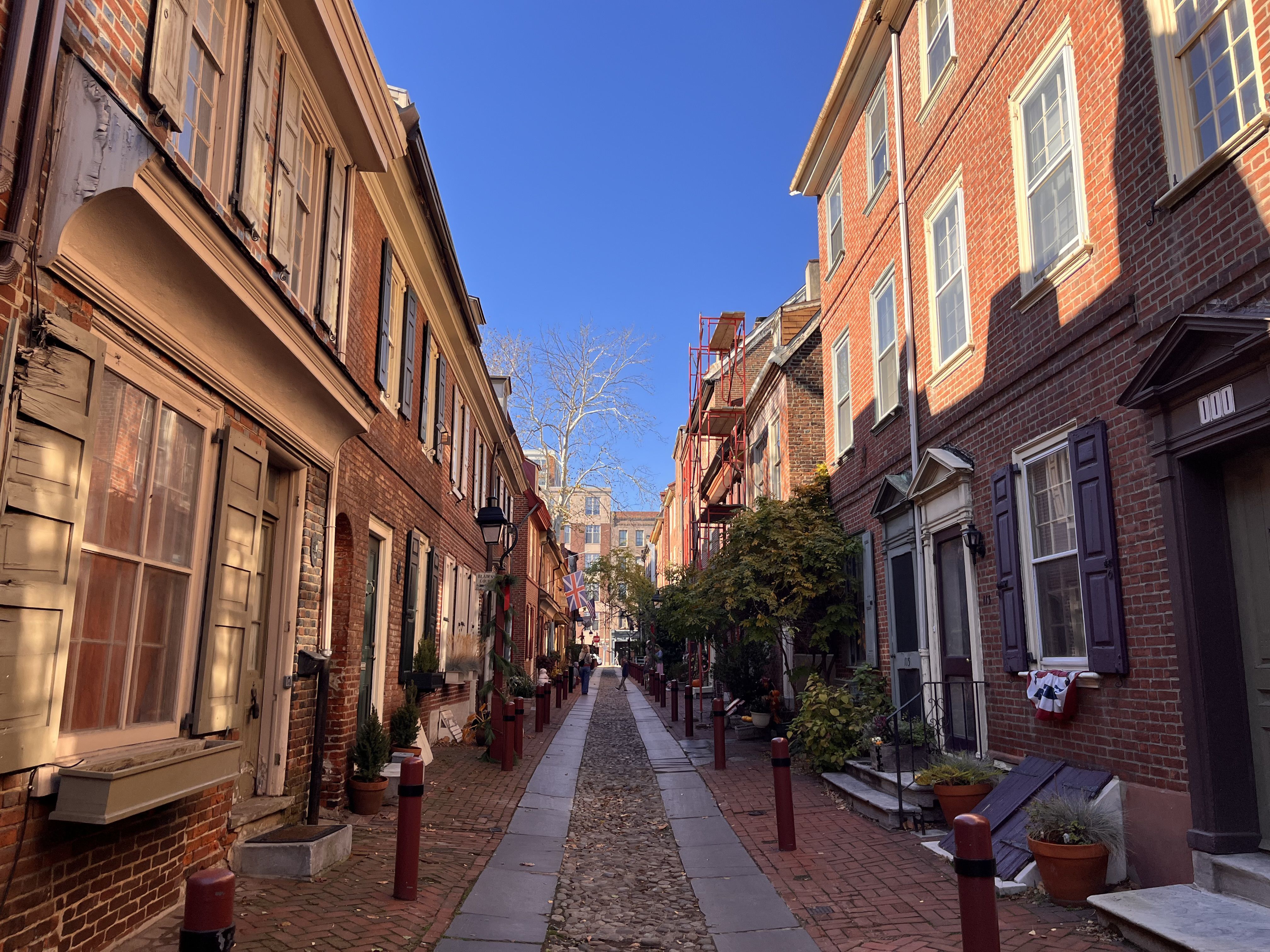
Few Philadelphians may recognize the name Dolly Ottey, yet nearly all know Elfreth’s Alley — the nation’s oldest residential street — which she helped rescue from decline and demolition starting in the 1930s.
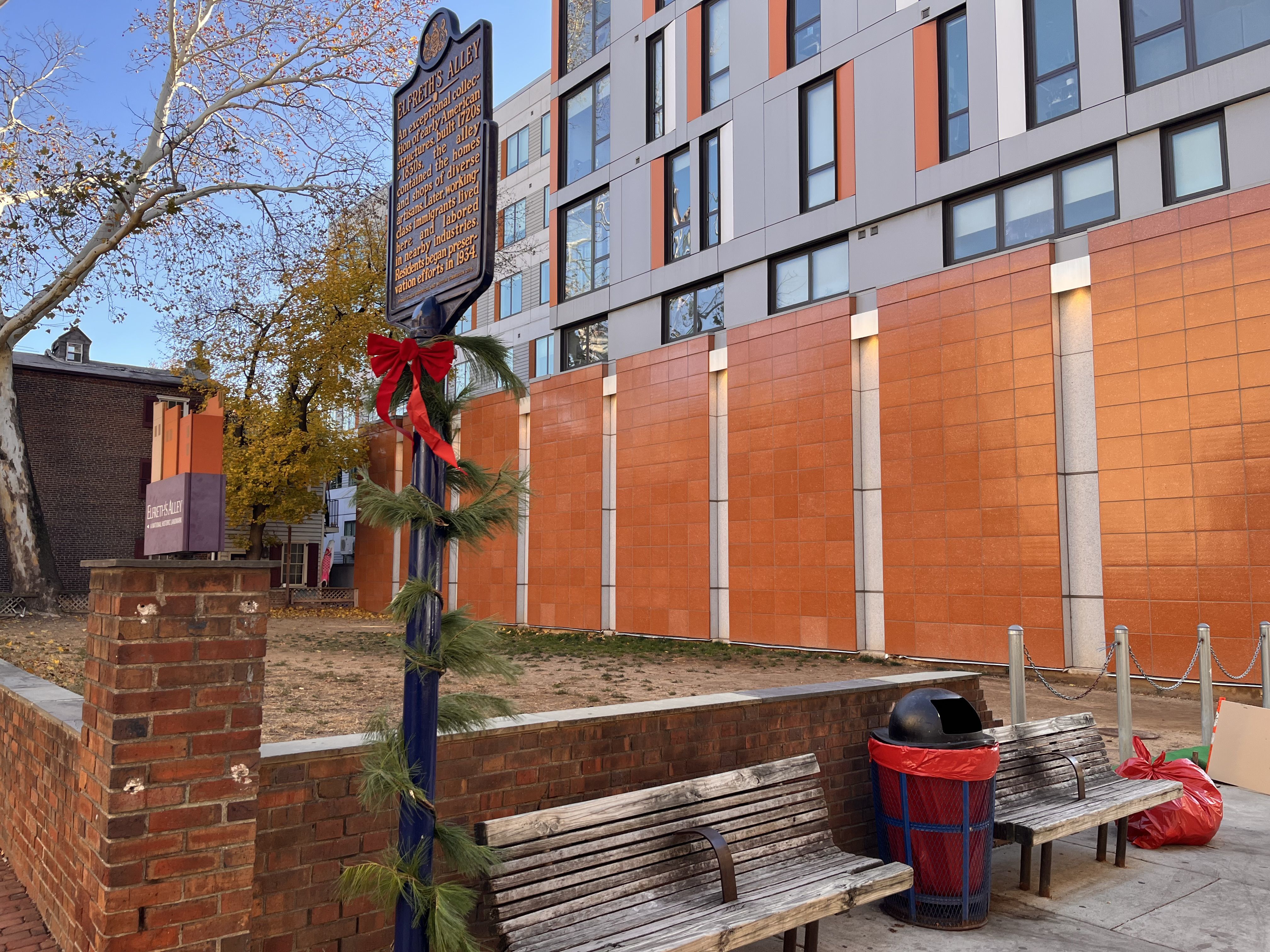
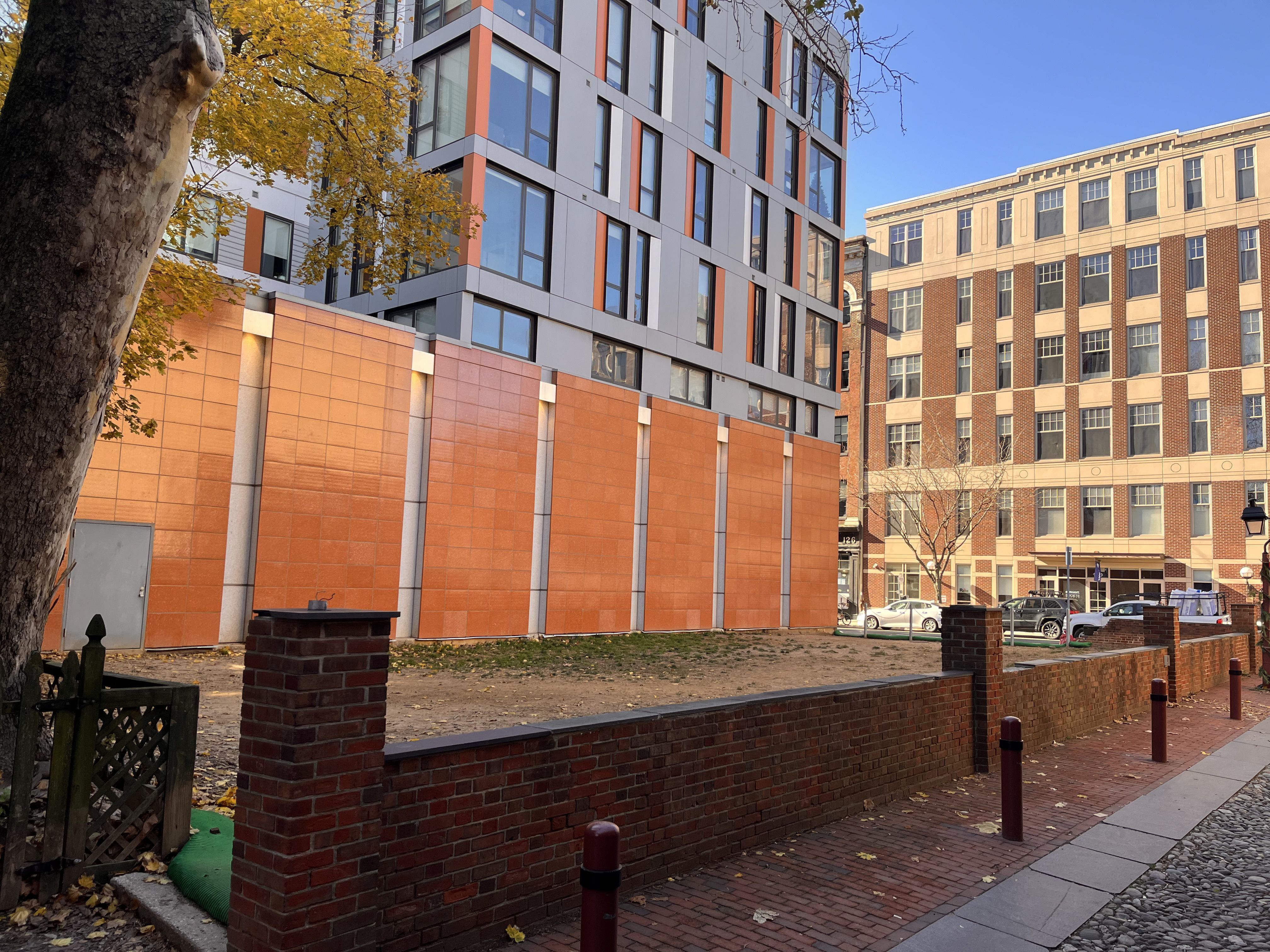
Now, after years of wrangling, a long-neglected vacant lot that some have derided as an eyesore at the historic location is slated for a transformation in time for the 250th anniversary of the Declaration of Independence.
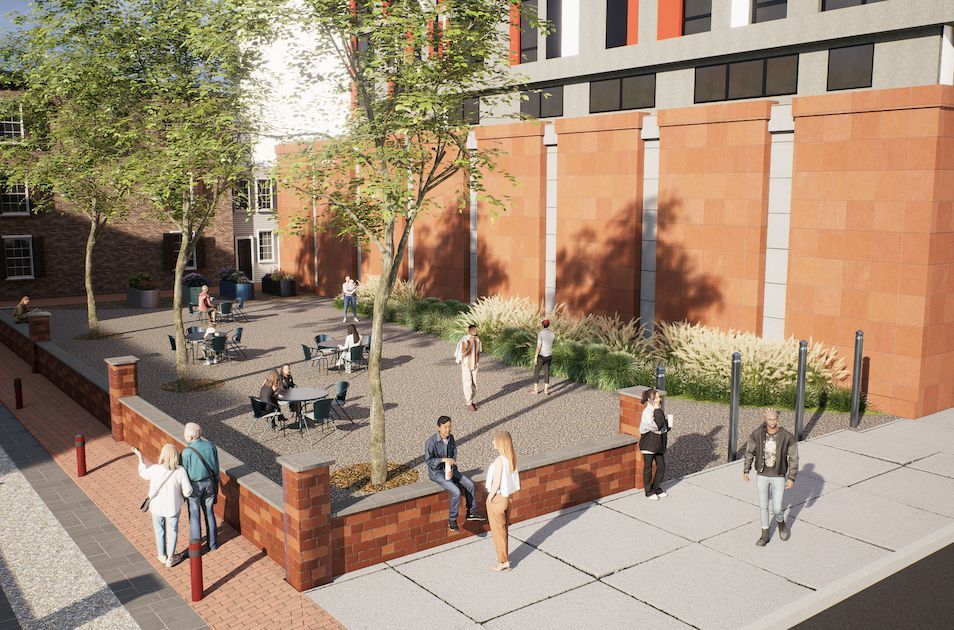
Plans call for the lot at North Second Street and Elfreth’s Alley to be reborn as Dolly Ottey Park, honoring the woman who first championed preservation of the narrow cobblestone passage starting in the 1930s.
window.addEventListener(“message”,function(a){if(void 0!==a.data[“datawrapper-height”]){var e=document.querySelectorAll(“iframe”);for(var t in a.data[“datawrapper-height”])for(var r,i=0;r=e[i];i++)if(r.contentWindow===a.source){var d=a.data[“datawrapper-height”][t]+”px”;r.style.height=d}}});
Job Itzkowitz, executive director of Old City District, said the project took eight years of sporadic effort to get multiple parties to sign off on an agreement to create the park. Old City District is a nonprofit registered community organization.
“We want it to be a place where residents, tourists, visitors, employers, and employees can take a bit of a respite,” he said. “It’s going to be a drastic improvement.”
A conceptual rendering of Dolly Ottey park at Second Street and Elfreth’s Alley in Old City, Philadelphia. Organizers hope to transform the existing vacant space into a park by spring.
On a recent day, families and couples toured Elfreth’s Alley, taking pictures and discussing the history of the area. But none ventured into the vacant lot. Later, a lone woman could be seen walking her dog there.
Itzkowitz credited a renewed spirit of collaboration for breaking the stalemate.
He said changes in leadership at the real estate advisory board for the National Old City Apartments, which abuts the park, and crucial support from the nonprofit Elfreth’s Alley Association paved a path for agreement.
A view of a vacant lot at Second Street and Elfreth’s Alley in Old City Philadelphia. Plans for creation of Dolly Ottey Park at the location and named after an advocate who helped save Elfreth’s Alley in the early to mid 20th Century.
The lot is owned by Bit Investment Seventy-Eight LLC, according to city records, and is part of that company’s holdings for National Old City Apartments along North Second Street.
A usable space by spring
The pocket park will rise in two phases: an interim stage featuring a crushed stone base, picnic tables, planters, wild grasses, and repairs to a crumbling brick wall, followed by a more permanent design.
An architect has been hired to craft a cost-effective plan to deliver a usable public space by spring 2026.
The interim plan design for Dolly Ottey Park carries a modest $60,000 budget, with fundraising to break ground in February and finish by March. Old City District has set up an online link for public contributions.
Itzkowitz said the timing for the interim phase would ensure the park provides a welcoming experience for visitors during the Semiquincentennial as part of a significant historical landmark.
A view of Elfreth’s Alley.
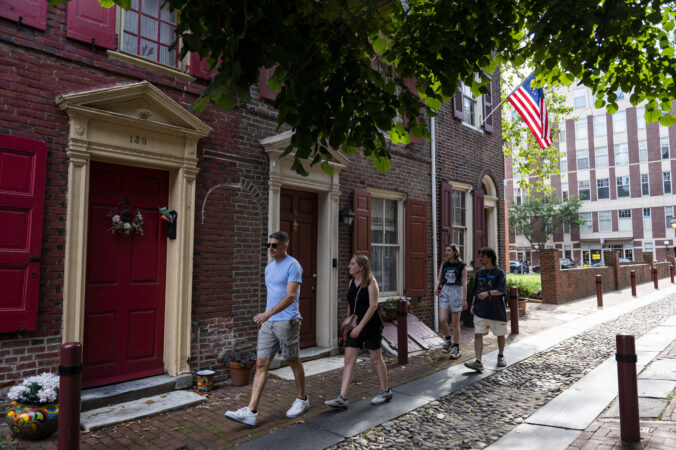
Elfreth’s Alley is believed to be America’s oldest continuously inhabited residential street. Its origins trace to the early 1700s, when two landowners combined properties to create a cart path leading to the river. People have been living there since 1713.
The cobblestone alley, about 400 feet long and lined by 30 brick buildings, was named for Jeremiah Elfreth, an 18th-century blacksmith. It originally housed artisans and merchants, serving as a base for business ventures. Notable figures such as Stephen Girard, who helped finance the War of 1812, are believed to have lived here.
However, Elfreth’s Alley faced demolition due to neglect and development pressure. From the 1890s to the 1930s, part of the block was rebranded as Cherry Street, leading to the loss of at least one historic home.
Who is Dolly Ottey?
Ottey, a resident and owner of the Hearthstone restaurant at 115 Elfreth’s Alley, formed the Elfreth’s Alley Association in 1934 to protect the unique street and save it from destruction.
A view from Elfreth’s Alley facing a vacant lot at Second Street that will be transformed into Dolly Ottey Park.
Elfreth’s Alley faced an even bigger existential threat in the 1950s and 1960s when proposed construction of I-95 would have demolished at least half the block.
The demolition was vehemently opposed by Ottey and the Elfreth’s Alley Association. The community gathered 12,000 signatures for a petition presented at City Hall, successfully pleading for the street to be spared.
Elfreth’s Alley was protected as a National Historic Landmark in the 1960s as a result and is listed on Philadelphia’s historic register.
Ottey died in 1996, in South Jersey, at age 85.
Elfreth’s Alley remains not only a residential area but also a cultural and historical attraction. It holds a museum that educates visitors on its history and the lives of early inhabitants.
The Founding Fathers never suffered sobriety. When they weren’t sweating out independence at Independence Hall, they were bending elbows at City Tavern — pretty much around the clock.
George Washington developed such a hankering for a rich, malty, Philly-brewed Robert Hare’s porter, he had kegs of the stuff shipped to Mount Vernon.
John Adams, once virulently anti-tavern, effusively extolled the Philly bar scene in letters to his wife, Abigail. At one “most sinful feast,” Adams recalled sipping what would become his favorite Philly cocktail, the “Whipped Sillabubs.” A popular choice of the colonial-era Philly cocktail set, the boozy, creamy concoction was made from sherry, wine, and lemons.
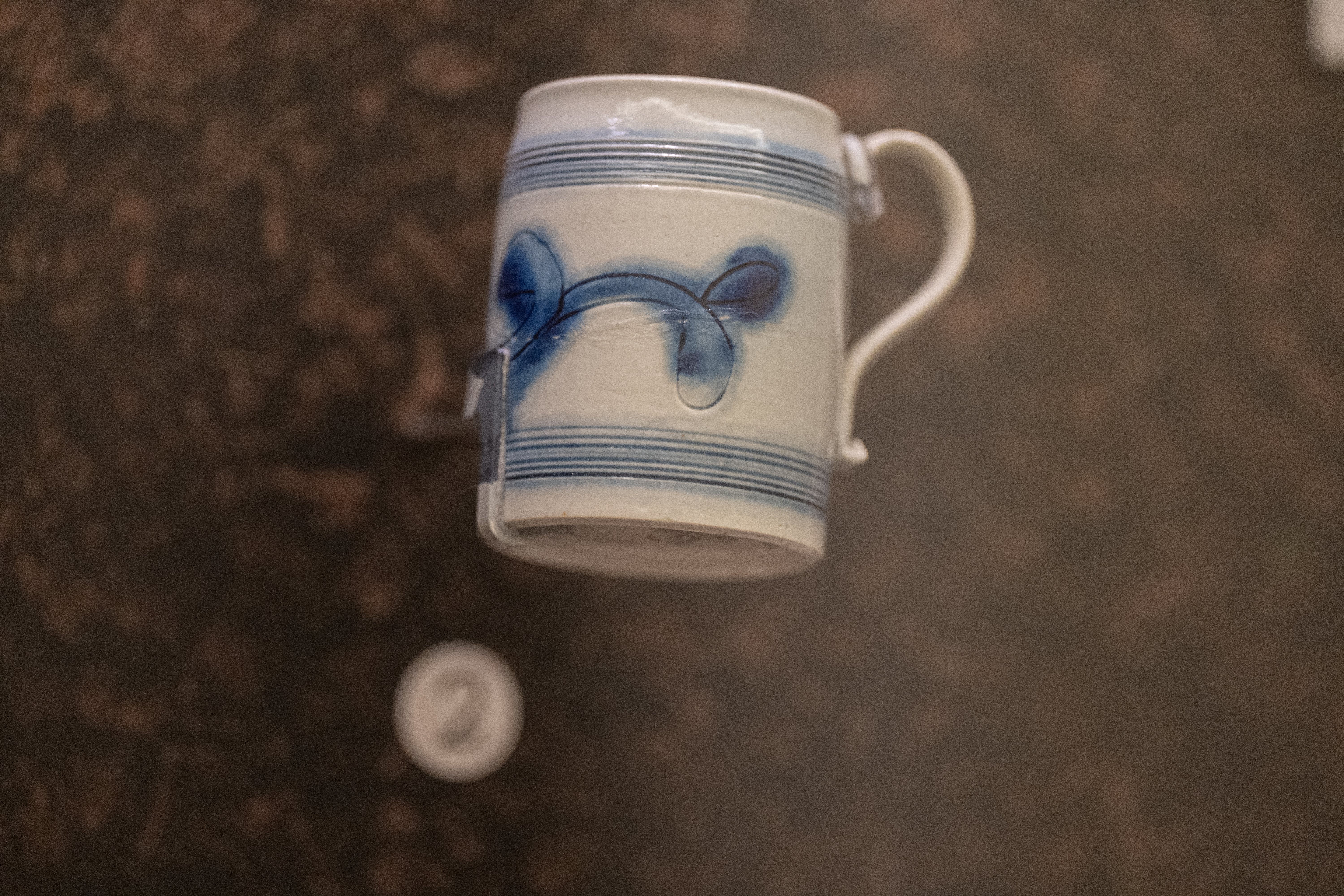
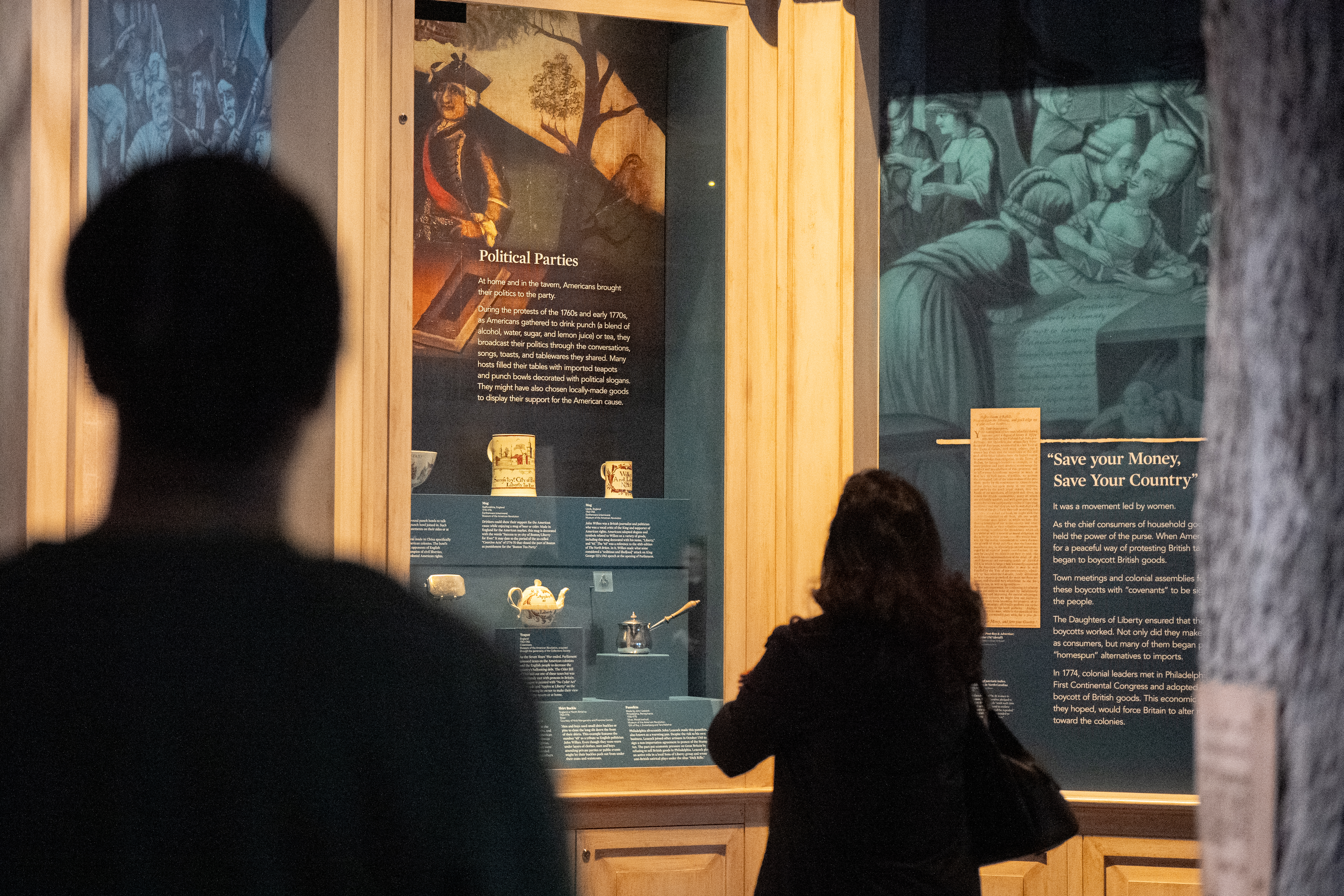
Items related to drinking at the Museum of the American Revolution, in Philadelphia, PA, November 18, 2025,
Thomas Paine, the working-class poet, whose thunderous pamphlet Common Sense helped roar in a revolution, oiled up his writing hand with Philly rum.
It has long been accepted that Thomas Jefferson spent those sweltering summer weeks of 1776 drafting the Declaration from the favored Windsor chair of his Market Street lodgings. But records show he actually spent more time than ever at City Tavern at Second and Walnut. A minor, if tantalizing, historical development, which hints that perhaps the world’s most famous freedom document came fortified by fortified wine.
Benjamin Franklin, polymath of the Revolution, inventor, scientist, printer, statesman, and lover of French wine (if in moderation), affectionately penned a Drinker’s Dictionary. The tippling tome contained 229 of Franklin’s favorite phrases for drunkenness, including buzzy, fuddled, muddled, dizzy as a goose, jambled, halfway to Concord, and Wamble Cropped.
‘Boozy business of revolution’
Franklin and his ilk were not ringing up 18th-century expense accounts for the hurrah of it. They were doing the boozy business of revolution.
Revolutionary-era Americans consumed staggering amounts of alcohol compared with today, said Brooke Barbier, historian and author of the forthcoming book Cocked and Boozy: An Intoxicating History of the American Revolution.
By the end of the 18th century, when beer and spirits were a staple of daily life, the average colonist swilled about 3.7 gallons of hard liquor per year. A dizzying amount, not counting beer and cider, that must’ve set many a patriot’s tricorn hat spinning.
By comparison, Americans now consume about 2.5 gallons of all alcohol, from beer to whiskey to wine, per year, said Barbier.
Historians believe booze and bar life played an outsize role in stoking the embers of insurrection.
Items related to drinking at the Museum of the American Revolution, in Philadelphia, PA, November 18, 2025,
“Tavern culture was essential to the American Revolution,” said Barbier. “It was not a part of the sideshow. It was part of where the discussions about revolutionary ideas happened. Where spies met. And where others, who weren’t directly involved in politics, gathered to discuss the growing political crisis. Opinions were formed in taverns.”
Nowhere was this work done more than in Philadelphia.
By 1776, Philadelphia boasted roughly 200 licensed and illegal watering holes — or about one for every 150 citizens, said Tyler Putman, senior manager for gallery interpretation at the Museum of the American Revolution.
Revolution with a twist
The fare of colonial-era drinking spots was as diverse as the budding port town.
There were posh spots like the newly constructed City Tavern, located blocks from the waterfront, and where the delegates of the First and Second Constitutional Congress drank nightly like fish. Ensconced in an upstairs space, known as the “Long Room,” the Founding Fathers debated liberty over libations late into the night, while imbibing copious amounts of Madeira, whiskey, punch, and everybody’s favorite Robert Hare porter.
There were taverns and flophouses, where tradesmen and sailors learned of Britain’s newest outrage from newspapers read aloud, or the latest traveler. And there were scores of unlicensed disorderly houses, grungy forebears of the modern dive bar.
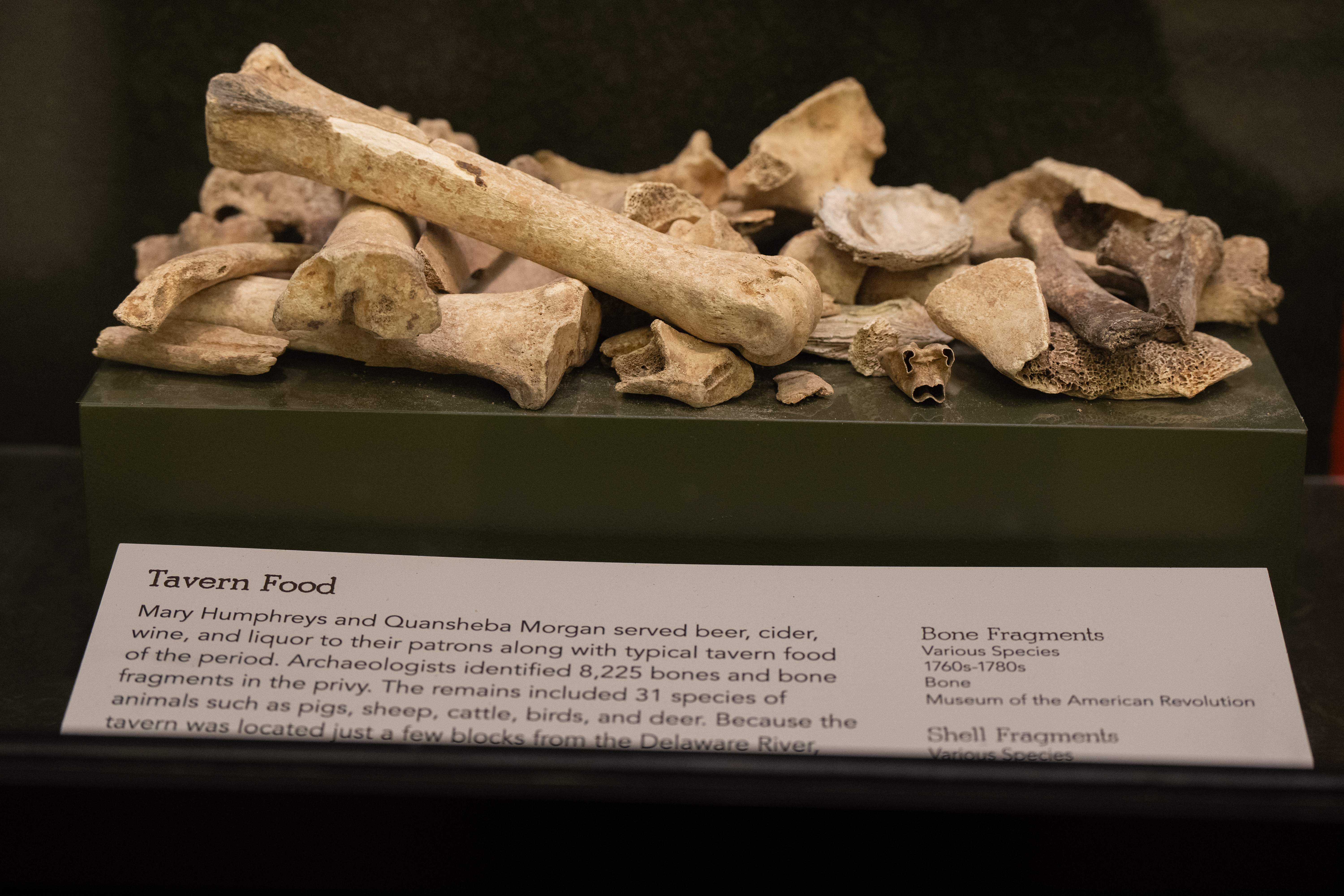
In 2014, three years before opening, the Museum of the American Revolution conducted a large archaeological dig, discovering thousands of artifacts from a Revolutionary-era disorderly house buried beneath its future Old City home. Among the mounds of mutton bones, glassware, and broken bottles unearthed from the privy of Benjamin and Mary Humphreys’ living room tavern was a broken windowpane inscribed with the initials and names of customers.
Bones from Tavern food at the Museum of the American Revolution, in Philadelphia, PA, November 18, 2025,
In what can only be the earliest example of Philly barroom graffiti, one dreamy patriot etched a quote attributed to the ancient Roman senator Cato into the clouded glass: “We admire riches and are in love with idleness.” The etching was meant as a barb toward the British, Putman said.
“They were obsessed with ancient Rome,” he said, of the American revolutionaries. “They were thinking a lot about, ‘How do you go back to some sort of idealized republic?’”
A nation born in taverns
Just as the nation strived to become democratic, its taverns became more undemocratic.
“In Philadelphia, the elites who are cooking up one version of the revolution are not drinking with the rabble who are cooking up what maybe would become a different version,” Putman said.
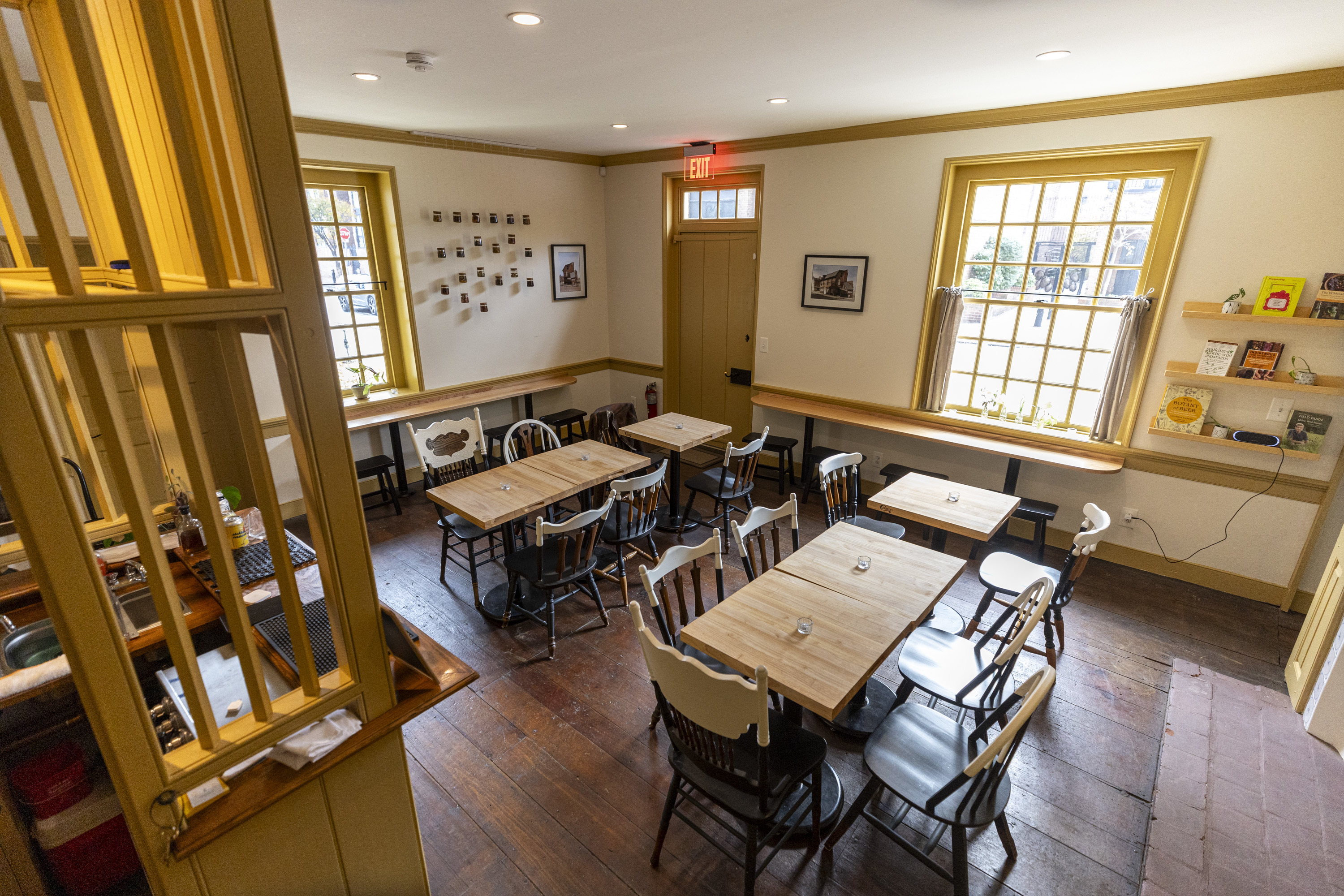
The newly-renovated Man Full of Trouble Tavern in Society Hill on Saturday Dec. 7, 2024.
Revolutionary-era drinking and tavern life, and its role in America’s founding 250 years ago, will be explored in full at a Nov. 21 after-hours event at the Museum of the American Revolution. Dubbed “Tavern Night,” the sold-out cocktail reception and boozy symposium serves as a twist to the museum’s grand exhibition celebrating the national milestone, also known as the Semiquincentennial, “The Declaration’s Journey.”
“Unlike today’s bars, taverns were meeting places at a time when few others were available,” said Dan Wheeler, who last year reopened Philly’s only remaining colonial-era tavern, A Man Full of Trouble, and will join Barbier in speaking at the event. “Revolutionary thoughts were conceived and refined in taverns, and a nation was born.”
Colonial keggers and the bonds of liberty
Booze was the social lubricant of the Revolution, said Barbier, a Boston-based historian who also runs tours of Revolutionary-era taverns, who pored over the Founding Fathers’ diaries and account books in recreating their raucous time in Philly.
The historical record provides no evidence that the nation’s founders were fully loaded — or “cock-eyed and crump-footed,” as Franklin might’ve said — as they went about forming the republic, she said.
“When you hear someone accusing someone of being drunk, it’s in an overly negative way,” she said.
Still, she was surprised by just how much the Founding Fathers drank.
Items related to drinking at the Museum of the American Revolution, in Philadelphia, PA, November 18, 2025.
Hard cider and small beer, the 18th-century version of light beer, more or less, accompanied breakfast, she said. The midday meal, known as dinner, boasted cider, toddy, punch, port, and various wines. When their workday wrapped up in the late afternoon, the delegates’ drinking began in earnest.
“There’s certainly a lot of drinking happening in these taverns,” said Barbier, whose book includes recipes of the Founding Fathers’ preferred aperitifs. “I don’t drink and not eventually feel tipsy. Certainly the same would be true for people in the past.”
Barbier notes the downside of all the drinking, like booze-fueled mob violence that spilled into the streets. And neither will she say that Jefferson, who kept all his receipts, actually penned the Declaration at City Tavern.
“He was there more frequently than ever during this time,” she said. “Maybe he needed to take a break from his writing, and go there. And sometimes when you’re on break, you develop your best ideas.”
The Founders’ endless toasting of tankards — including a rager for the ages marking Paul Revere’s arrival in Philly, and held in 1774, the night before a critical vote toward independence — provided crucial trust-building, Barbier said.
The men who founded America arrived in Philly as strangers, agreeing on little. After so much boozing, they bonded as brothers in liberty, and left a new nation in their wake.
“Ultimately, this comradery and social bonding leads to the consensus that leads to the Declaration of Independence,” Barbier said.
Sure, Philly’s the birthplace of the nation. But we’re also the site of the first hot-air balloon ride (1793), the first selfie (1839), and the first pencil with an attached eraser (1858). So why not celebrate these Philly firsts and many more?
That’s the idea behind the Philadelphia Historic District 250th Committee’s “52 Weeks of Firsts” in 2026. Every week, all year, there will be a party somewhere in the city honoring a different “Philly-born” first, replete with a “first-ival,” storytelling, giveaways, scavenger hunts, and an oversized #1 sculpture made of foam to mark the exact spot, or closest thing to it, of the milestone.
On Thursday, during a festive gathering at the Constitution Center featuring circus performers, Mummers, Once Upon A Nation storytellers, and ice cream sodas from Franklin Fountain, officials announced the complete schedule for “52 Weeks of Firsts.”
“Philadelphia has always been a city of firsts — from the founding of our nation to innovations that shaped everyday life,” said Amy Needle, president and CEO of Historic Philadelphia Inc. “It’s an opportunity for residents and visitors alike to go and explore and find these firsts and learn about all the amazing history and innovation that has happened in Philadelphia in the last 250 years.”
Fitting with planners’ promise to bring the 250th celebration to the neighborhoods, the 52 Weeks festivities will take place across at least 16 different sections of the city, Needle said. In compiling the list, a partnership of representatives from 22 Philly museums and cultural institutions adhered to a strict definition of first from Merriam Webster: “preceding all others in time, order, or importance.”
Some Philly firsts are known to every schoolchild. Like the first American flag (thanks, Betsy: 1777). And first naming of the United States (1776.) Others may stump even the most ardent Philly booster. Like the country’s first public showing of a motion picture (1870), first U.S. weather bureau office (also 1870), and first electronic computer (1945).
The 52 Weeks of First aims to capture all that has made Philly first in the nation throughout the years, Needle said.
“There are so many things that Philadelphia has to be excited about,” she said.
Here is the full list, with the schedule for the whole year.
52 Weeks of Firsts: Week by week
First Hot Air Balloon Flight in America: 1793
The Athenaeum, Jan. 3, 2026
First Folk Parade: 1901
Mummers Museum, Jan. 10, 2026
First Volunteer Fire Company: 1736
Fireman’s Hall Museum, Jan. 17, 2026
First Professional Basketball League: 1898
Location TBD, Jan. 24, 2026
First Public Girl Scout Cookie Sale: 1932
Location TBD, Jan. 31, 2026
First African Methodist Episcopal Congregation: 1794
Mother Bethel A.M.E. Church, Feb. 7, 2026
First Abolitionist Society in America: 1775
The African American Museum in Philadelphia, Feb. 14, 2026
First Authentic Chinese Gate Built in America: 1984
The Rev. Carolyn Cavaness is adjusting to her new life as a celebrity.
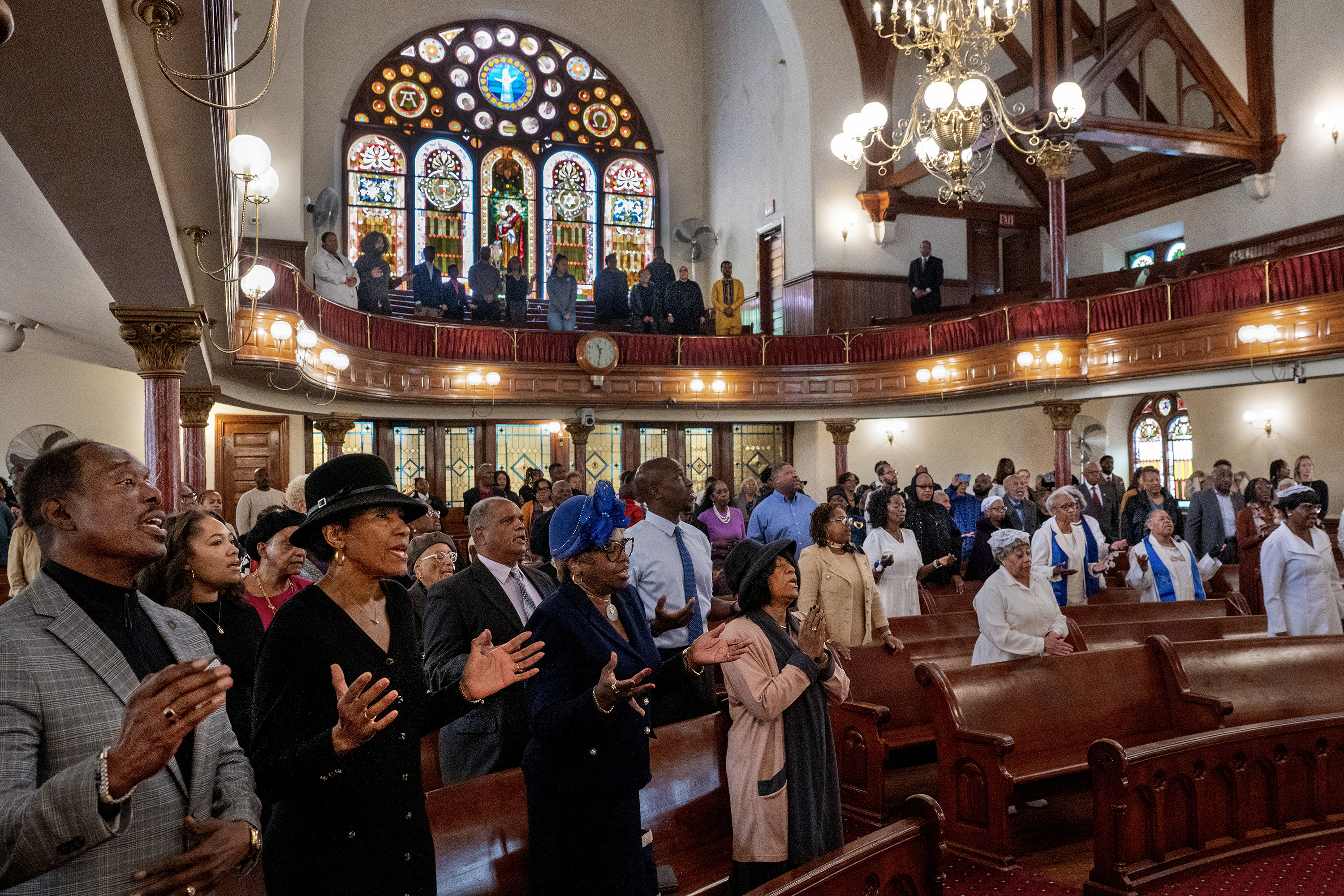
Any pastor of the historic Mother Bethel A.M.E. Church might get stopped and asked for a picture while walking down the street, as she sometimes does. The church is a national historic landmark, long celebrated for its role as a hub for Black activism and the oldest church property in the United States to be owned continuously by Black people.
But in November, Cavaness, 42, was appointed as the first femalepastor in the church’s 238-year history. She is a fourth-generation A.M.E. preacher from Newark, N.J., and previously led the Bethel A.M.E. Church of Ardmore for 10 years, also serving as its first woman pastor. Cavaness took over for the Rev. Mark Kelly Tyler, who had left Mother Bethel after 16 years.
“Some days I have this moment where I say, ‘Wow, Carolyn, you are the pastor of Mother Bethel. You’re in the big chair. What if somebody else was in this spot? What would they be doing in this moment?’” she said.
While Cavaness brings a new perspective, she is also focused on honoring the legacy of the 52 pastors and their congregations who came before. She said that the church’s first members knew immediately that they were “a big deal” who would matter greatly to the Black community. Two centuries later, that is still the case.
“Here I am in this 21st century and having to be the caretaker, but also being called to action,” Cavaness said.
“So what becomes our contribution?”
Cavaness spoke with The Inquirer about her first year at Mother Bethel, what it has meant to take on her trailblazing role, and how the church’s tradition of resilience inspires her and the congregation.
This conversation has been edited for clarity.
Your first sermon at Mother Bethel was an emotional one, about your family’s deep Philly roots and great achievements born out of the Black struggle, even though you were only notified about your appointment just the day before. What do you remember about that day? What have you learned about what Mother Bethel means to people over the past year?
It was surreal. I mean I literally found out less than 24 hours before. But that is being an itinerant preacher [of] Methodist tradition. You’re here to serve.
I had very much the sentiment of “I wish my dad and my grandmothers were here to see this.”
I think about when I walked into the pulpit for the first time, how the congregation stood up. I think about the smiles, the hugs. I think about the flowers they gave me. And the sacred trust that I’ve been given.
The congregation sings as Rev. Carolyn Cavaness (not shown) celebrates her first worship service on Nov. 10, 2024.
It’s been an amazing first year, definitely life-transforming, being entrusted with this national, this international treasure. I have just been captivated by the testament and the hope that she bears.
There’s this connection, this affinity for her. We’ve gotta be intentional about being the light, about being a place of love, sanctuary, refuge, that people feel safe. That’s a real thing for me.
The people I’ve come to know, the smiles, their new sense of hope — it is possible, you know? People have a sense of joy, and you can feel that and see that. Sometimes when you’re a leader, you’re in a vacuum. And so to hear and to see people smiling more, that does something. As a pastor, that’s a gift. You feel that you’re making a difference.
You are the first woman pastor at Mother Bethel A.M.E. How has it felt to hold that distinction, and how have people received you?
People have been very supportive. It’s about building trust and relationships. All I knew, I could only be Carolyn. I can’t be anybody I’m not. I like to laugh, I like to joke. I think I have surprised people by being accessible.
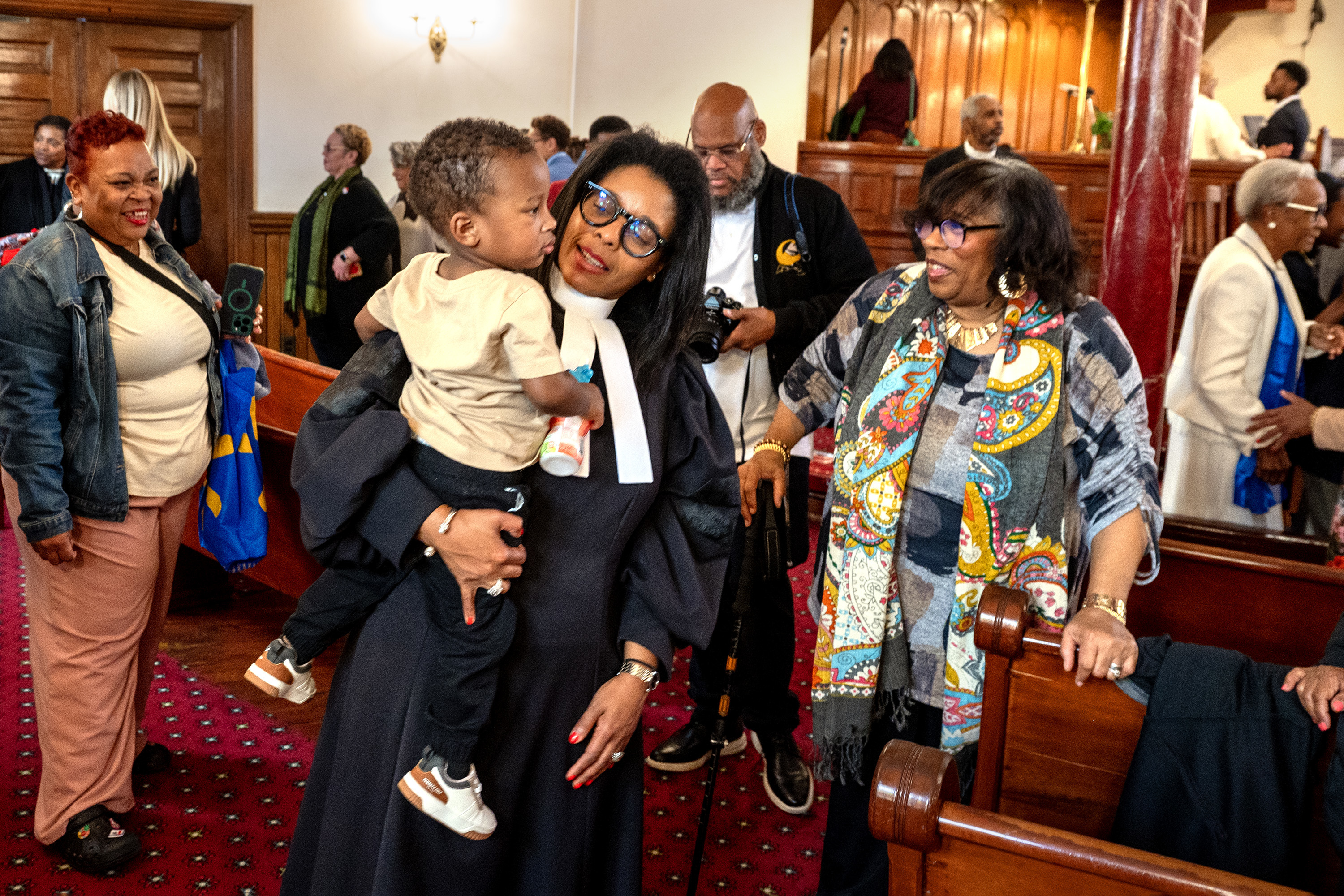
Rev. Carolyn Cavaness holds 2-year-old Kylo Banks as she greets members of the congregation after her first service.
Many people have reminded me, “You know, reverend, you’re a historical figure. Amongst the 53, there’s gonna be that picture of you.” It’s very humbling.
I went to New Orleans and an older gentleman walked up and he said, “Hello, good to meet you. You’re pastor of Mother Bethel.” Fifty years ago, that would have been a different conversation.
I have two twin nephews. They had a women’s history project, and they wrote about me being the pastor of Mother Bethel. My 5-year-old nephews are esteeming me. That was special.
When you were appointed last year, Donald Trump had just won the election, and many of your congregation were fearful of what was to come. What is Mother Bethel’s role during this time?
We are resilient people. This is not the first time that we have had pharaohs and tyrants and dictators.
Here is an institution providing, a way in which government ought to, esteem and affirm and care for [people]. Democracy has ideals, but here, this place, Mother Bethel, is where it’s realized. Where you’re a safe haven and a sanctuary. The principles and the ideals of the Free African Society. We come from that legacy, from that line where we have always taken care. We have always filled a gap. We’ve always been out front.
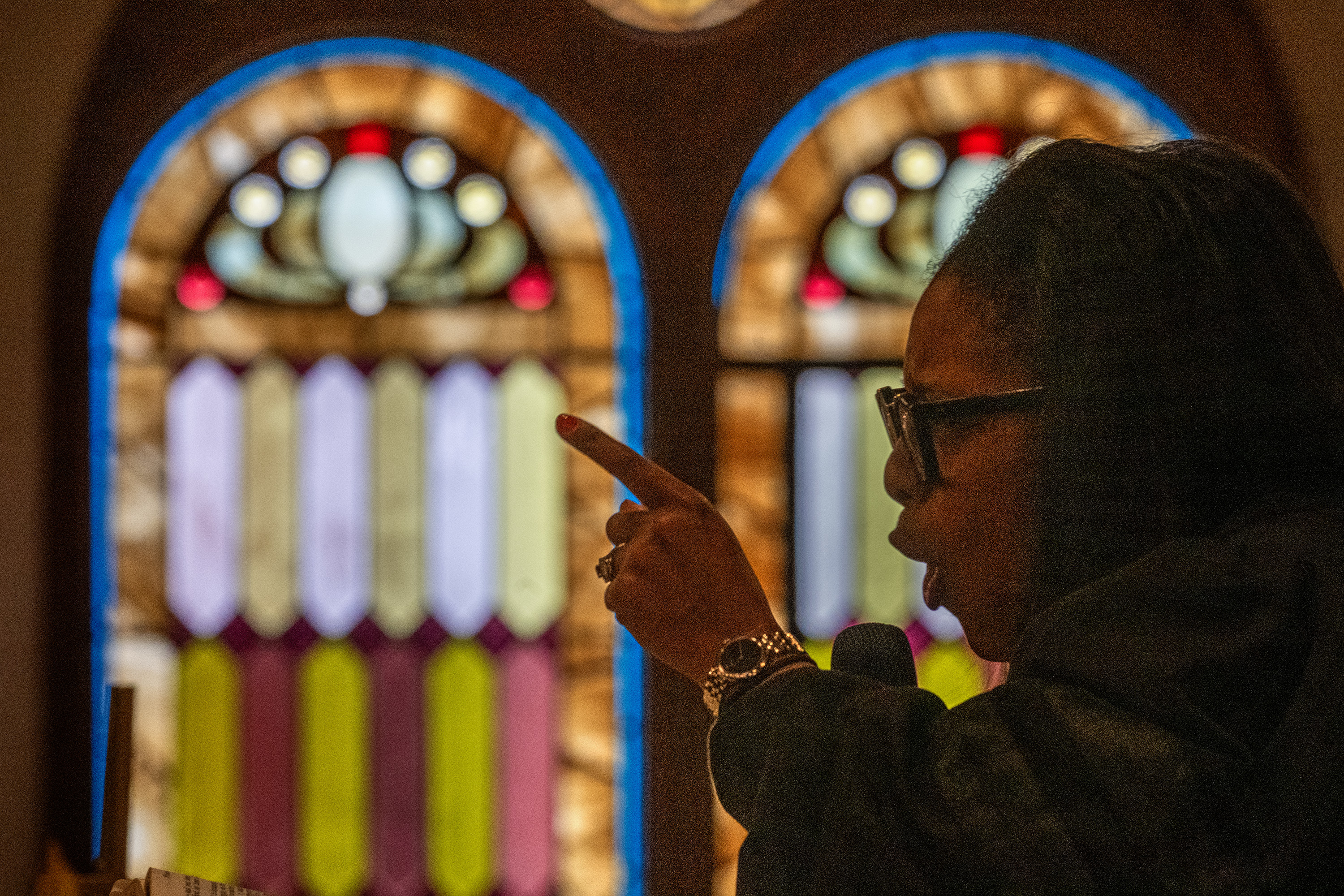
The Rev. Carolyn Cavaness celebrates her first worship service.
Another has definitely been around how we honor our history and legacy. I was honored to give the eulogy for Ruby Boyd — she was the first African American librarian in the city of Philadelphia. She lived to be 105, and she’s one noted for putting into a book, On This Rock, of Mother Bethel, the history of many of the stained glass window collection, pictures and little vignettes about the pastors. And so in my eulogy, I talked about that we have a responsibility to tell the story and to make it accessible.
This regime of erasure has really amplified my efforts as the spiritual leader and also just how important Mother Bethel is.
What are you looking forward to in year two?
I’m looking forward to the [Semiquincentennial], the 250th. Definitely the larger preservation plan, there are some conversations that we as a congregation are gonna be having about her preservation and how accessible [it is]. And to continue to tell this story.
I think also around community engagement. Just seeing people becoming more strengthened in their sense of witness.
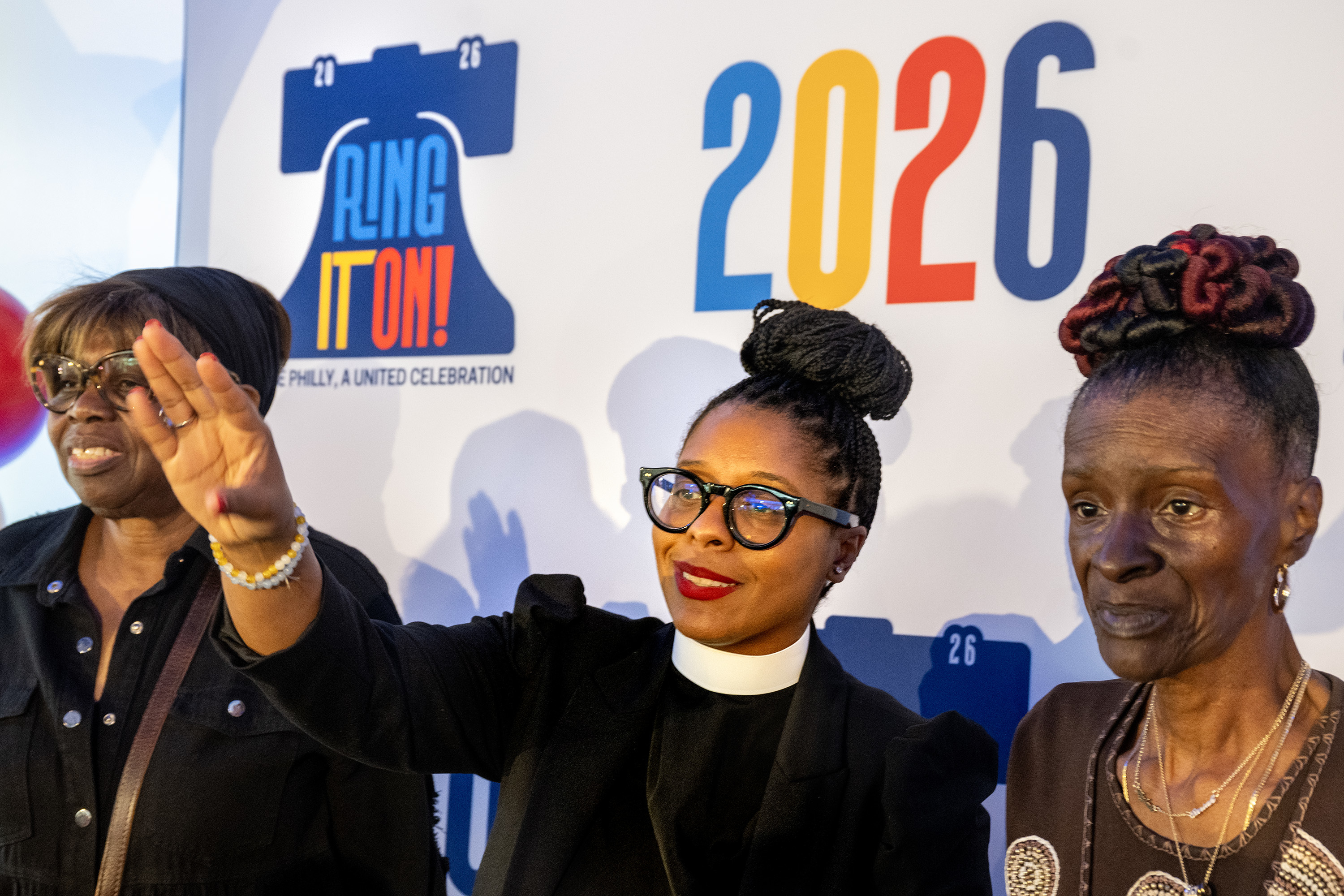
The Rev. Carolyn Cavaness (center) at the Independence Visitor Center during a September Semiquincentennial event.