It’s January, and that means one of Pennsylvania’s grandest spectacles is back again: the annual Farm Show butter sculpture.
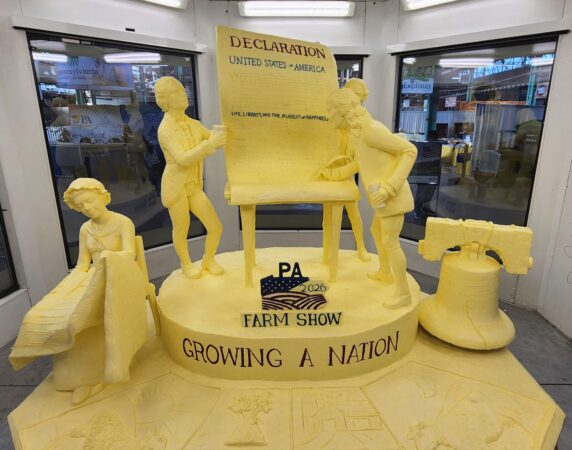
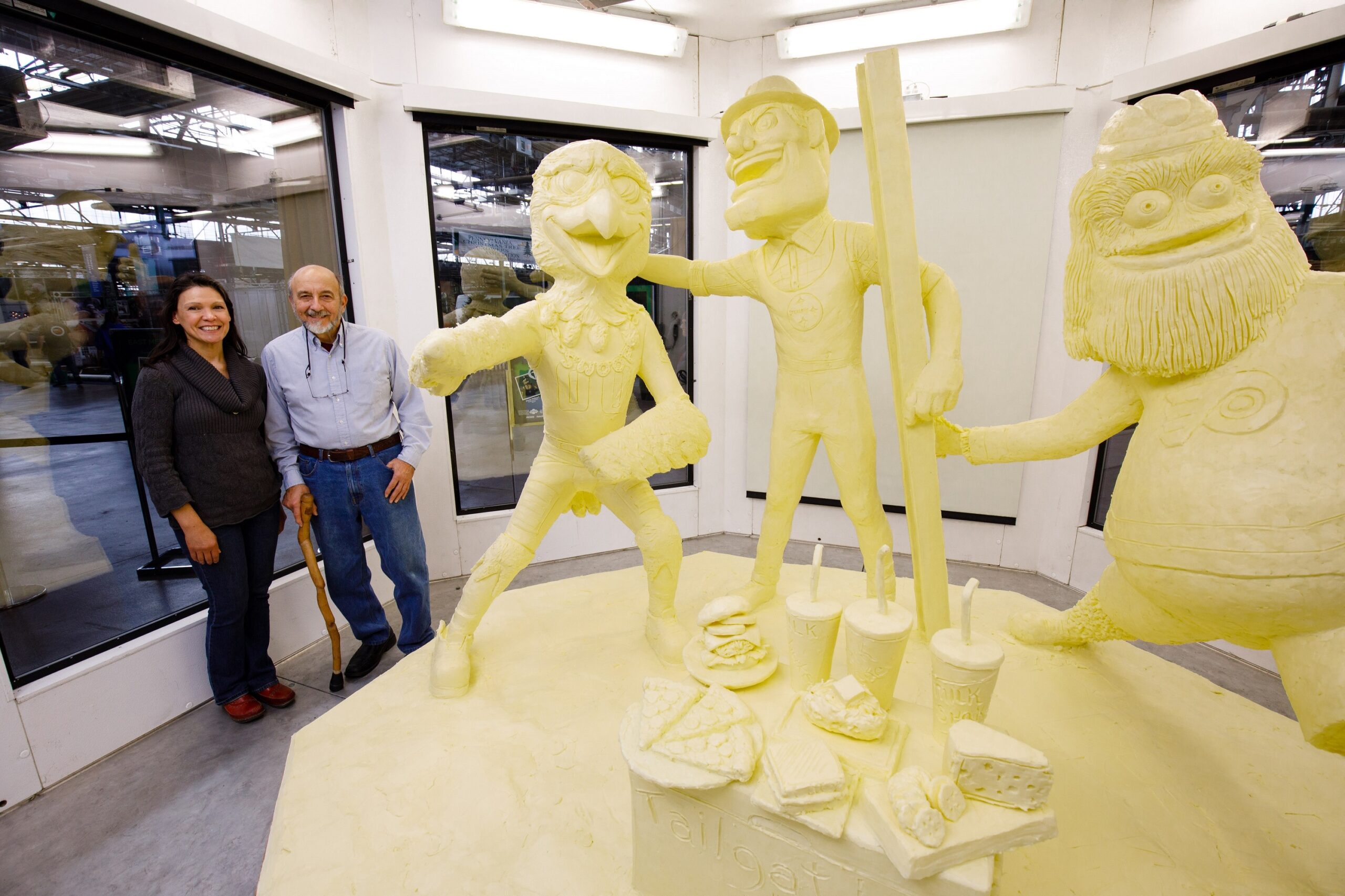
Every year, in Harrisburg, a new 1,000-pound sculpture is unveiled to the public at the Farm Show Complex, a 1-million-square-foot event space that hosts the long-running show. Some years, the sculpture features mascots, like Gritty. This year’s sculpture is titled, “A Toast to Our Nation’s 250th Anniversary: Inspired by Founders. Grown by Farmers” in honor of America’s Semiquincentennial.
“The butter sculpture is a people-pleasing favorite every year at the Pennsylvania Farm Show,” Pennsylvania Department of Agriculture Secretary Russell Redding said in a news release. “In this America250 year, it takes on a deeper meaning reflecting how agriculture has been the roots of our nation’s growth and prosperity for 250 years, and how Pennsylvania farmers will continue to lead us forward.”
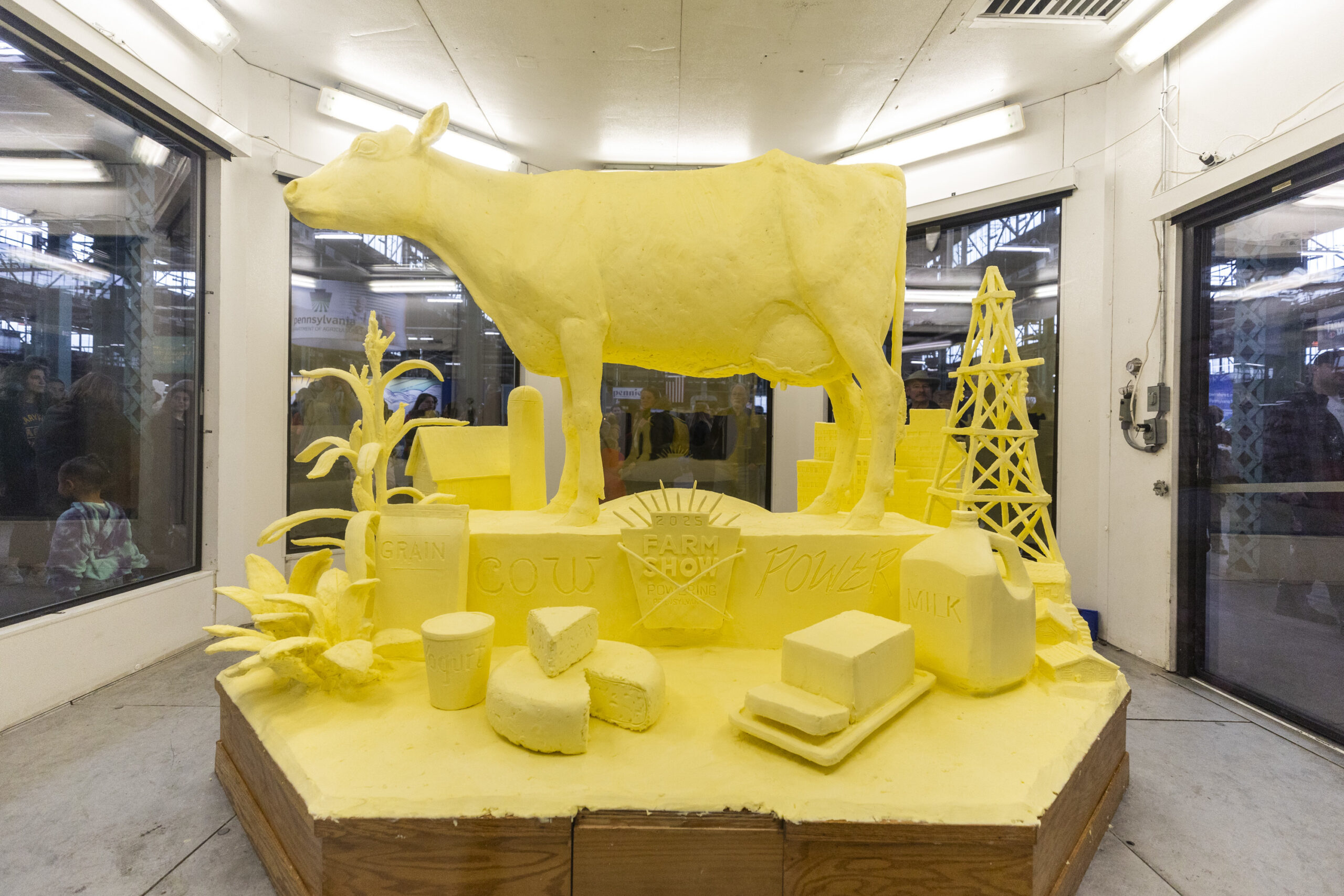
The completed butter sculpture crafted from 1,000 pounds of butter over 14 days by Jim Victor and Marie Pelton at the Pennsylvania Farm Show in Harrisburg, Pa., on Saturday, Jan. 4, 2025.
The show began on Friday and runs daily through Saturday. The butter sculpture, which has been part of the Farm Show for over half a century, is enclosed in a large, refrigerated case.
This year’s sculpture is a 1776 Philadelphia tableau, featuring Benjamin Franklin and the Founding Fathers at the signing of the Declaration of Independence, complete with a celebratory toast with milk. The Liberty Bell and Betsy Ross make an appearance, too.
Like most years, the butter sculpture was created by Conshohocken artists Jim Victor and Marie Pelton. They’ve worked with chocolate, cheese, and ice over their careers, but butter’s brought them the most acclaim.
The butter is often donated by large national producers like Land O Lakes or Keller’s, and no, it can’t be melted and drizzled on popcorn.
“It’s waste butter we get from plants,” Pelton told The Inquirer in 2020. ”It’s stuff that’s been extruded or cleaned out, or stuff that’s been damaged, or generally can’t be sold to the public.”
According to the Department of Agriculture, the Pennsylvania Farm Show is the largest indoor agricultural expo in the nation, featuring nearly 5,000 animals, 12,000-plus competitive entries from more than 4,600 competitors, plus more than 250 commercial exhibits, and hundreds of educational and entertaining events. Admission is free. Parking is $15 per vehicle. Farming, according to the Department of Agriculture, provides 593,000 Pennsylvania jobs and contributes $132.5 billion to the state’s economy each year.
Marie Pelton and Jim Victor with the mascot-themed butter sculpture they created for the 104th annual Pennsylvania Farm Show in Harrisburg in January 2020.
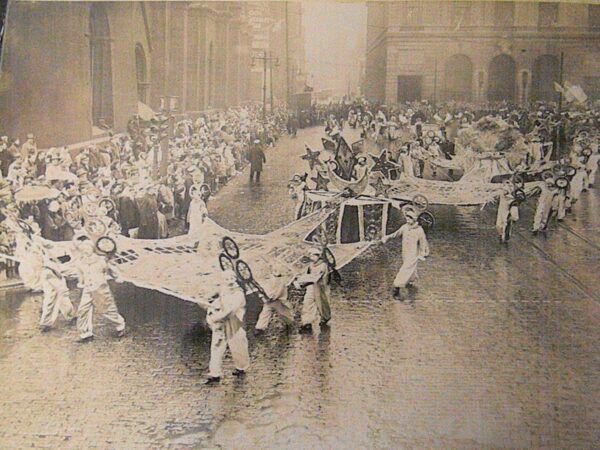
As the fog lifted on Jan. 1, 1901, four Fancy Dress Clubsand 16 Comic Clubs gathered at the corner of Broad and Reed Streets for the first ever Mummers Parade.
“Kings, emperors, knights and jesters, clothed in purple royal or tinkling tensel [sic], wended their way up the broad thoroughfare …” reads a front-page story from the Jan. 2, 1901, Philadelphia Inquirer. “In the throng of merry makers, no tribe no nation, scarcely an individual was neglected.”
That inaugural Mummers Parade was America’s first folk parade. It also marks the first time an American city hosted a New Year’s Day procession.
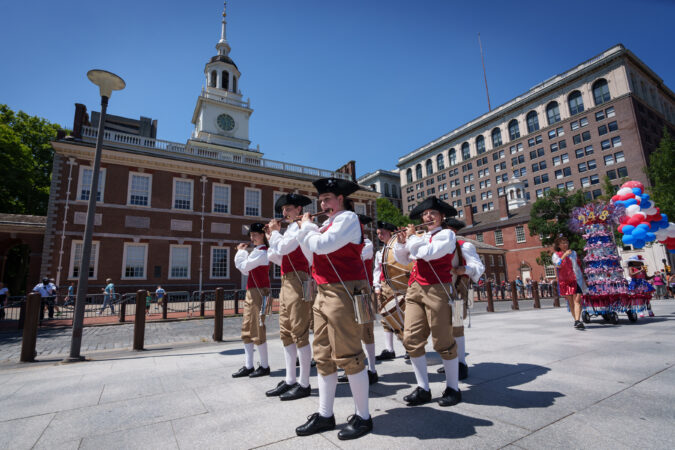
It will be remembered Saturday at the Firstival in the Mummers Museum. Firstivals are the Philadelphia Historic District’s weekly day parties celebrating historic events that happened in Philadelphia before anywhere else in America, and often the world. They are part of a yearlong celebration of America’s 250th birthday.
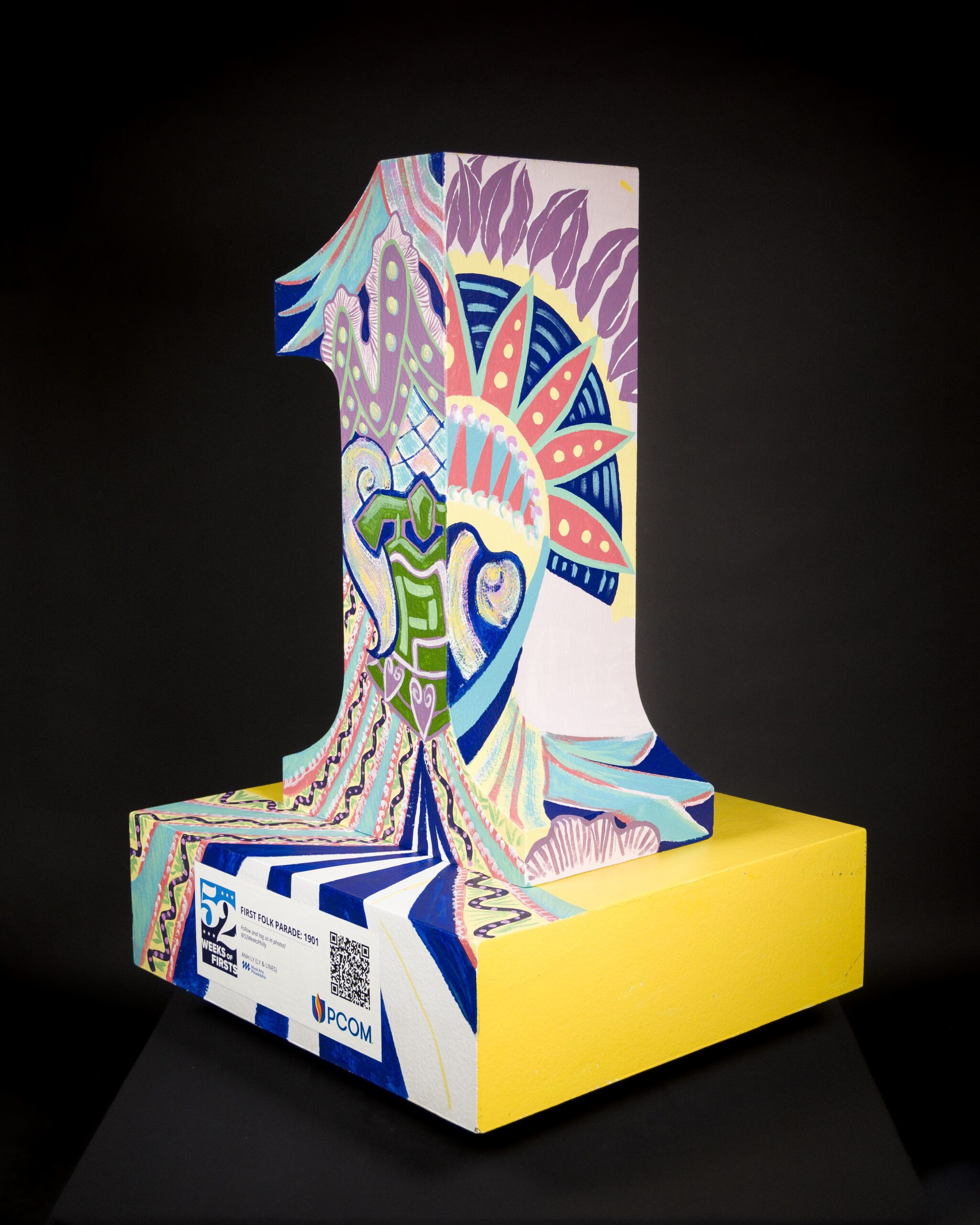
Artist Anh Ly’s No. 1 highlights the Mummers Parade’s vibrant costumes, instruments and playful traditions.
That first Mummers Parade began 125 years ago at 9 a.m. on a chilly overcast morning, said Mark A. Montanaro, the Mummers Museum’s curator. It took participants just two hours to march up Broad Street and around City Hall to Girard Avenue.
Three hundred dollars — $11,575 in today’s money — was awarded to the parade’s two first-place winners: the Elkton Association, part of the Fancy Dressed Club; and the White Cap Association, belonging to the Comic Club.
Revelers partied all day and into the night.
The boisterousness remains to this day. So much so that the Philadelphia Historic District did not want to start the Firstival celebrations with the parade, even though that was the initial plan. Why? Because they assumed the Mummers would still be recovering from their parade.
The word mummer is derived from Momus, the Greek god of satire and mockery. Mommer is the Old French word for mime.
Philadelphia’s 17th century English and Swedish immigrants dressed in elaborate regalia during the days between Christmas and New Year’s, knocked on their neighbors’ doors, and demanded treats of sweets and nuts. Over the decades, the door-to-door tradition turned into rambunctious neighborhood parties as Dutch, Irish, and Italian immigrants joined in on the fun.
In November of 1900, Philadelphia Evening Bulletin reporter and theatrical promoter H. Bart McHugh and City Councilman John H. Baizley asked Mayor Samuel Ashbridge if the city would consolidate the block parties into one big parade.
Plans were finalized by mid-December.
The Mummers Parade remains one of Philadelphia’s most enduring traditions. It’s only been canceled three times: during the 1919 Spanish Flu, 1934 during the Great Depression, and 2021 during COVID. (This year, the String Band Division called off its competition due to strong winds.)
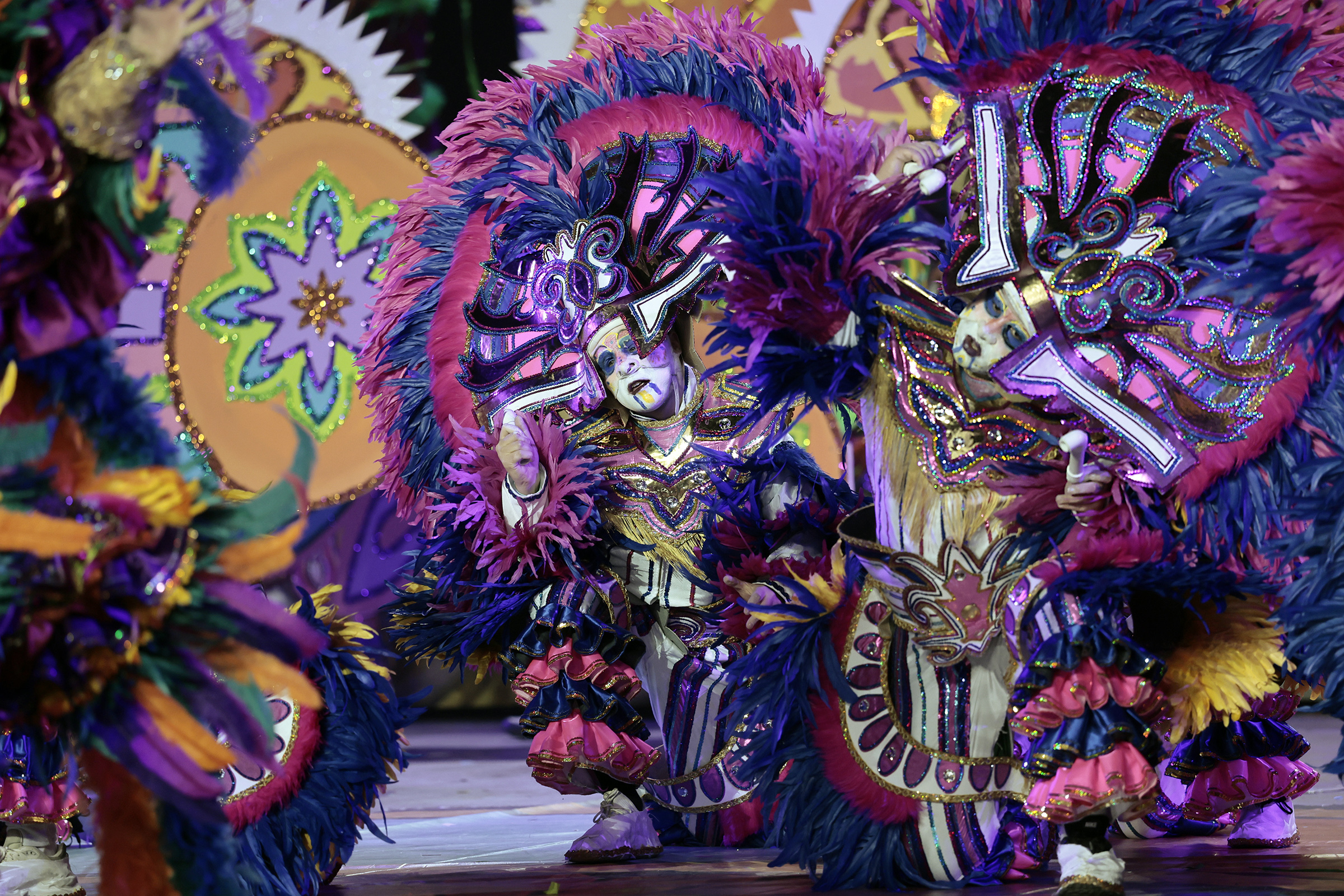
The Jokers perform during the Fancy Brigade Finale at the Pennsylvania Convention Center during the 2026 Mummers Parade in Philadelphia on Thursday, Jan. 1, 2026.
Parade routes have changed; today it starts at City Hall and ends at Washington Avenue. At times its been fraught with racial controversy, as some members have appeared in blackface as recently as 2020.
That’s all in the past, Montanaro stressed.
“The Mummers are striving for inclusivity,” Montanaro said. “We are a little bit of Mardi Gras, a little bit of Carnival, and a whole lot of Philly.”
This week’s Firstival is Saturday, Jan. 9, 11 a.m. — 1 p.m., at the Mummers Museum, located at 1100 S. 2nd Street. The Inquirer will highlight a “first” from Philadelphia Historic District’s 52 Weeks of Firsts program every week.
With the nation’s 250th birthday fast approaching, the New York Times named Philadelphia as the number one travel destination in the world for 2026.
While noting that there will be no shortage of celebrations for the Semiquincentennial, as the national milestone is known, Philly landed the top spot on the paper’s annual “52 Places to Go” list published each January. Because where else would you want to be this year than the birthplace of the Declaration of Independence?
“Celebrate the Semiquincentennial with fireworks and themed balls,” the paper wrote, before mentioning just a few of the slew of major events Philly has planned for America’s yearlong birthday bash, including a Red, White & Blue To-Do Pomp & Parade, two new galleries at the National Constitution Center, a grand exhibition at the Philadelphia Museum of Art, and a World Cup match on Independence Day.
That’s not to mention other big-ticket events coming our way in 2026, like the MLB All-Star Game, a pumped Fourth of July concert with soon-to-be-announced special guests, and TED Democracy talks, plus a host of neighborhood programming.
With its unmatched Revolutionary bona fides, Philly edged out global travel destinations for the top spot. Like Warsaw, with its gleaming new Museum of Modern Art, and a greener-than-ever Bangkok. Costa Rica’s Osa Peninsula and India’s Bandhavgarh Tiger Reserve rounded out the paper’s top global spots worth visiting in 2026.
Compiled yearly by Times editors and reporters, the exhaustive listnoted that other original colonies — Massachusetts, Virginia, New York, and New Jersey — will also have stacked Semiquincentennial calendars.
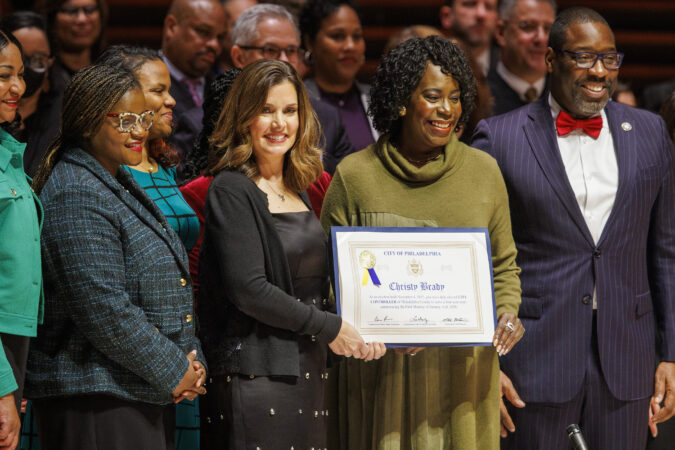
After being sworn in to her first full four-year term, City Controller Christy Brady on Monday vowed to examine spending related to Mayor Cherelle L. Parker’s signature housing program and to probe whether Philadelphia is maximizing economic opportunities at its waterfront and port.
“In my next term, I will be expanding my oversight of the mayor’s housing program to ensure every dollar borrowed is used as intended and is properly accounted for,” Brady said of Parker’s Housing Opportunities Made Easy, or H.O.M.E., initiative during a swearing-in ceremony at the Kimmel Center for the Performing Arts.
“And with our waterfront and ports being one of our strongest economic assets, we will be focusing on efforts to ensure they can deliver the greatest financial impact,” Brady said.
Holt denies that it has engaged in anticompetitive conduct, and a company spokesperson said growth is “vitally important to the future of our business and our region.”
“Holt Logistics has been a key driver of the Port’s growth over the last decade, as witnessed by the fact that in the last month alone, two new lines of business have chosen to call Philadelphia, largely because of the service they receive,” spokesperson Kevin Feeley said.
Additionally, Brady promised to help prevent fraud in city spending related to this year’s Semiquincentennial festivities.(Parker has pledged to dole out $100 million, focusing on neighborhood-based programming across the city, for major events in 2026, including the nation’s 250th birthday.)
And in her capacity as chair of the Philadelphia Gas Commission, Brady said she would “conduct a thorough review of PGW’s operations.”
Brady also sits on the city Board of Pensions and Retirement and said she would “collaborate with [City] Council to adjust benefit structures.”
The controller’s office audits city agencies and investigates allegations of fraud, waste, and abuse.
Brady was appointed by former Mayor Jim Kenney to serve as acting controller in late 2022 when Rebecca Rhynhart resigned to run for mayor. Brady in 2023 won a special election to serve the remaining two years of Rhynhart’s term.
Seeking her first four-year term, Brady ran unopposed in the May 2024 Democratic primary and easily defeated Republican Ari Patrinos in the November general election.She was sworn in Monday with District Attorney Larry Krasner, who is beginning his third term, and city judges who were on the ballot last year.
Philadelphia Common Pleas Court Judge Natasha Taylor-Smith introduced Brady and administered her oath of office.
Many past controllers have had less-than-friendly relationships with the mayors they served alongside, a natural dynamic for an office tasked with investigating the executive branch. The post has also served as a springboard for many politicians with higher aspirations.
Rhynhart, for instance, repeatedly clashed with Kenney by publishing critical reports on city accounting practices and a lack of accountability in spending on anti-violence groups. She touted those probes to brand herself as a reformer while running in the 2023 mayor‘s race, finishing second behind Parker in the Democratic primary.
Brady’s background and leadership style are different. She has spent three decades rising through the ranks in the controller’s office and was deputy controller in charge of the audit division before being appointed to the top job. And since becoming controller, she has made a point of working collaboratively with Parker’s administration.
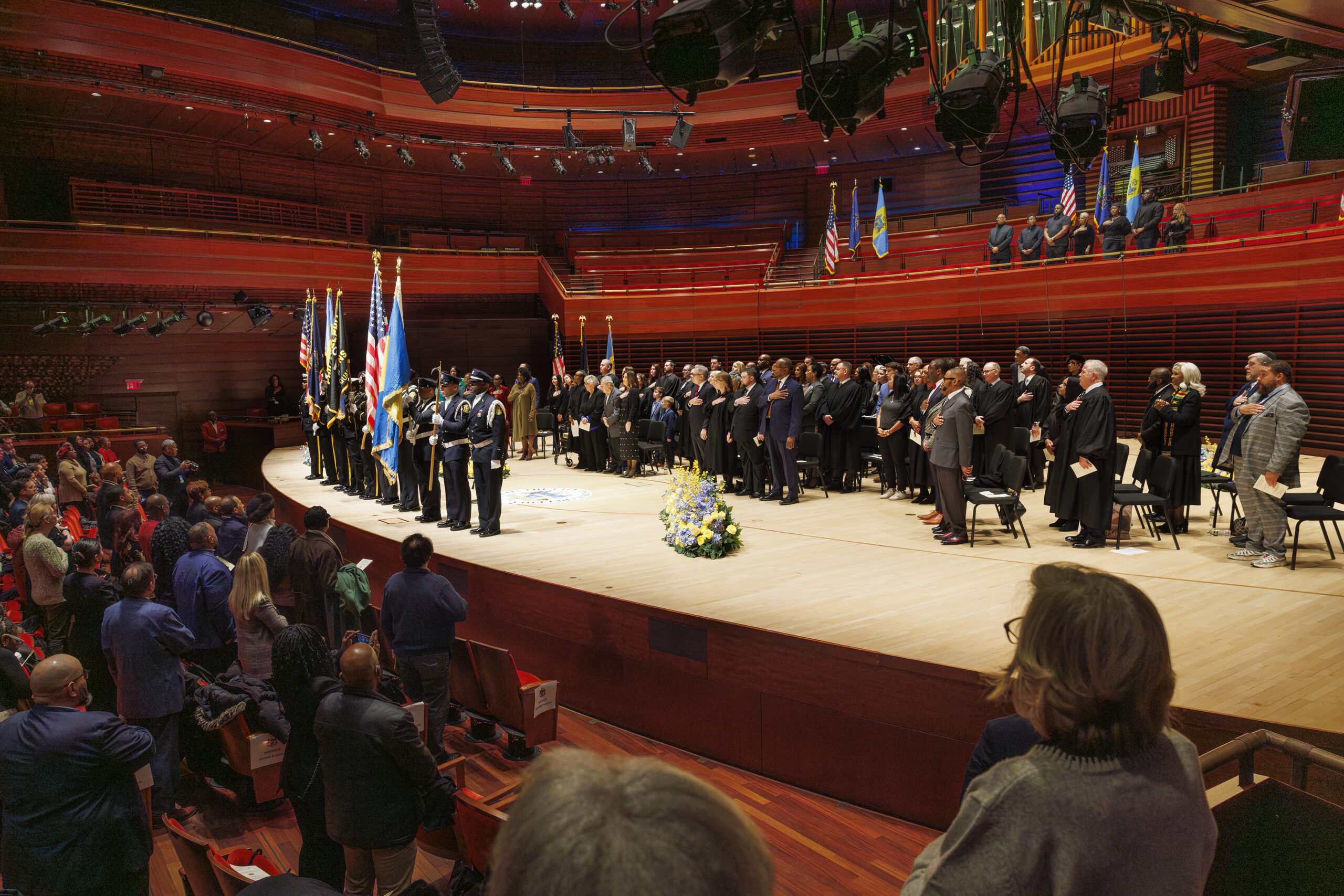
Dignitaries and elected officers before start of 2026 Inaugural Ceremony at the Kimmel Center Performing Arts on Monday.
“As promised, I hit the ground running. We’ve achieved far more than many thought was possible,” Brady said. “A key to that success has been collaboration with Mayor Parker and Council President [Kenyatta] Johnson to ensure that our recommendations resulting from the findings in each report, review, and audit that we issue are implemented.”
Parker acknowledged their collaboration in her remarks during Monday’s ceremony.
“Controller Brady, thank you for not being wrapped up in politics and staying focused on the work of the controller’s office,” Parker said. “You do it by communicating with our office. No ‘gotcha’ moments.”
In her relatively short political career, Brady has received strong support from influential groups in local politics, especially the building trades unions and the Democratic City Committee. On Monday, she gave shout-outs to numerous politicos, including former U.S. Rep. Bob Brady, who chairs the city’s Democratic Party and is not related to her.
“I want to thank the people who have made this possible, including my friends in labor, Congressman Bob Brady, my friends in the Democratic Party, the business community, and all the voters who put their trust in me,” Christy Brady said.
Last year, I asked for your suggestions for what Philadelphia should create, destroy, or fix in advance of everything — and everyone — coming to our in our city in 2026.
In other words, Philadelphians had thoughts. Of course, there were recurring themes that arose (more on those later), and there were folks who submitted suggestions well beyond the scope of the assignment. While I appreciate people’s visions, I don’t think we’re going to solve school funding, stop gun violence, end courtesy towing, or turn Regional Rail into a German-style S-Bahn by next year.
But there were a lot of great ideas, and so, I now present this edited list, because if I included every suggestion, we’d be here until 2027.
Simple things that are easy, free, or cheap to do
Cullen Kisner: “Drive around the city, literally section it off like trash trucks do, and remove any unnecessary traffic cones/street work signs/construction barricades/etc. It just [clogs] up the city and makes it look like a perpetual construction zone (which it is, but the tourists don’t need to know that).”
Brendan Yuhas suggests charging $17.76 for SEPTA passes and Indego bicycle rental passes during the week of Independence Day. He’d also like to see restaurants offer meals for $17.76.
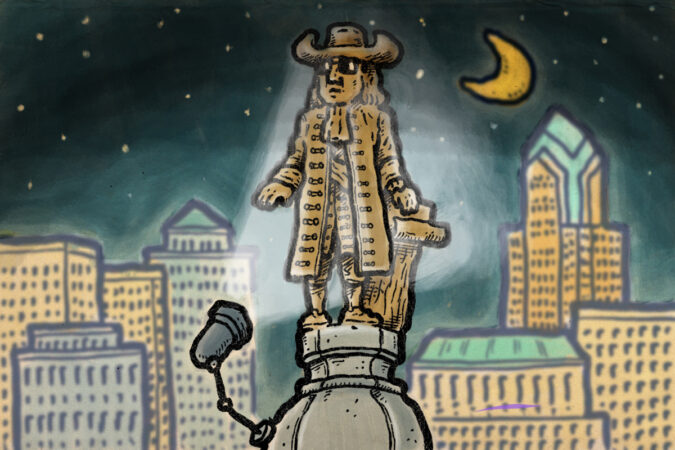
Brian Smart suggests illuminating the William Penn statue atop City Hall at night.
Beth LaPiene: “We need longer pedestrian crossing times on Center City streets. How does anyone cross Broad Street in 15 seconds, especially if it’s crowded?” (Another reader raised this issue with Vine Street as well.)
Things that take some amount of time and/or money to address
Jason Berkhimer and Rogelio Ayllon separately requested that Philadelphia adopt a new city flag, an idea previously explored by The Inquirer. Berkhimer wrote that a new flag is “incredibly important to sew unity in this partisan time” (his pun, not mine), while Ayllon said it could be marketed on merchandise, making it “a win for vendors … and a win for the city in tax dollars.”
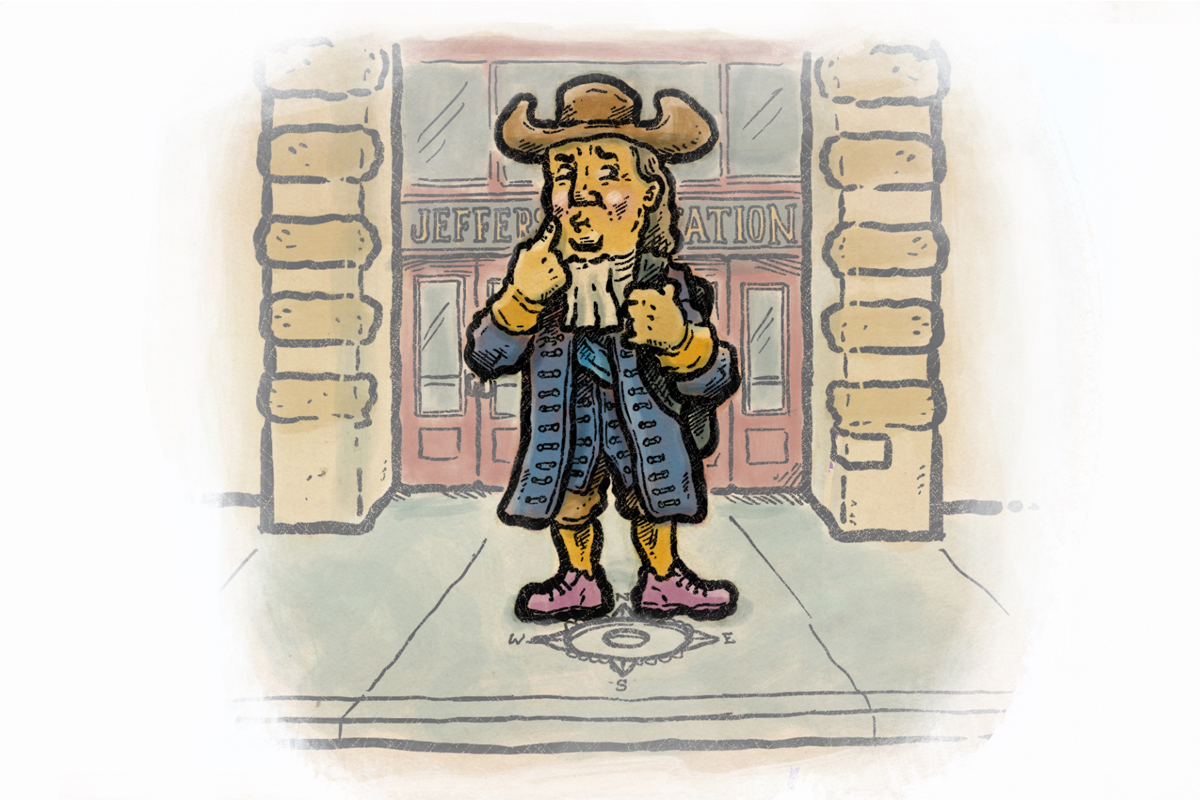
Anonymous: “Install compass roses outside of all El, trolley, subway, PATCO, and Regional Rail access points so people can quickly get an idea of which direction they need to go when reaching the surface street.”
Of course, Philly is all about the Benjamin Franklin too. Tom Rosenberg suggested rehabbing the exterior of Franklin’s post office on Market Street. “It’s dilapidated and looks awful,” he wrote. Rich Armandi bemoaned the fact that a plaque at the Second and Market Street subway stop in Old City that marked the site of Franklin’s first print shop has been missing since 2024. He wants it replaced, and he’d like a mural there that envisions what Franklin’s print shop might have looked like.
The Association of Philadelphia Tour Guides (who submitted a lot of great ideas in a well-curated slideshow) would like to see the Franklin Court Printing Office, a replica of an 18th century printing office, open seven days a week, instead of just weekends.
Big things that take time, money, and cooperation
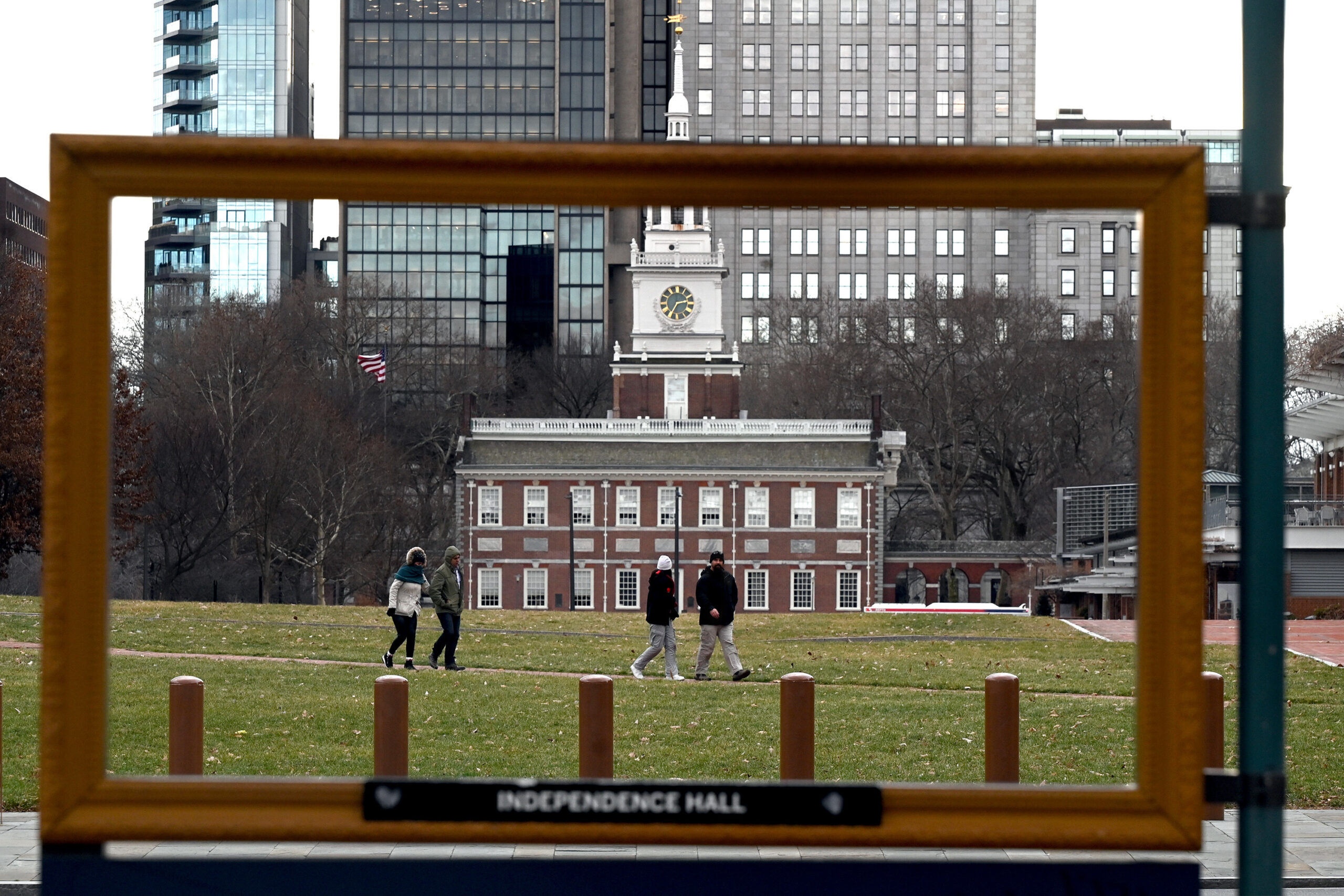
Several people asked for the city and the National Park Service to work together to make Independence Mall “more than a desolate lawn.” One suggested that an “easy change would be to move some existing statues or art installations from more obscure/lower visibility places (like Fairmount Park and Kelly Drive).” Other readers proposed adding trees, benches, and water features.
Jack Bellis would like to see the concourse below Broad Street (from Market to Locust) turned into a rainy-day attraction with Philly vendors and a centerpiece mini-golf course “created either in part or wholly by school students, in which each of the holes highlights a Philadelphia tourist attraction.”
Mark Methlie’s idea is to “follow Boston’s lead” and create our own version of the Freedom Trail, a trail embedded in roads and sidewalks that leads to notable spots (which I also proposed after visiting Boston in 2024). Methlie, however, suggests multiple trails leading out of the Convention Center, including ones for history, art, science, cultural institutions, and food.
Bob Dix: “I would love to see the water taxis languishing under 95 to be taken out of mothballs and used for tours or transport … and they could be used for transit to the FIFA events in FDR.”
Association of Philadelphia Tour Guides: “Create an introduction park to Elfreth’s Alley at Second Street in the empty lot. Design it to include native shrubs, shade, colonial lamps, benches, and information displays.” (Note: In late November, it was announced that this one is planned to happen!)
Fun activities and events
Tori Beard: “I’m a big fan of a Colonial Day Fest idea. Think Ren Fest, but for colonial-style activities and dress. Bonnets, butter churning, powdered wigs. Could even be held in the Independence Hall area.” (Note: The Museum of the American Revolution hosts an annual living history interpretation weekend called Revolutionary Philadelphia, but it would be great to see it expanded for 2026.)
The Association of Philadelphia Tour Guides suggests creating a tour and a music festival highlighting The Sound of Philadelphia artists like Teddy Pendergrass, Harold Melvin & the Blue Notes, and Tammi Terrell. I’d like to take it a step further and suggest a music festival in which current Philly musicians pay homage to Philadelphia musicians who came before them, regardless of genre. I’d love to see The Roots play the O’Jays, Jill Scott perform Bessie Smith, and Dr. Dog pay homage to Jim Croce.
Anonymous: “Pepper pot stew cook-off.”
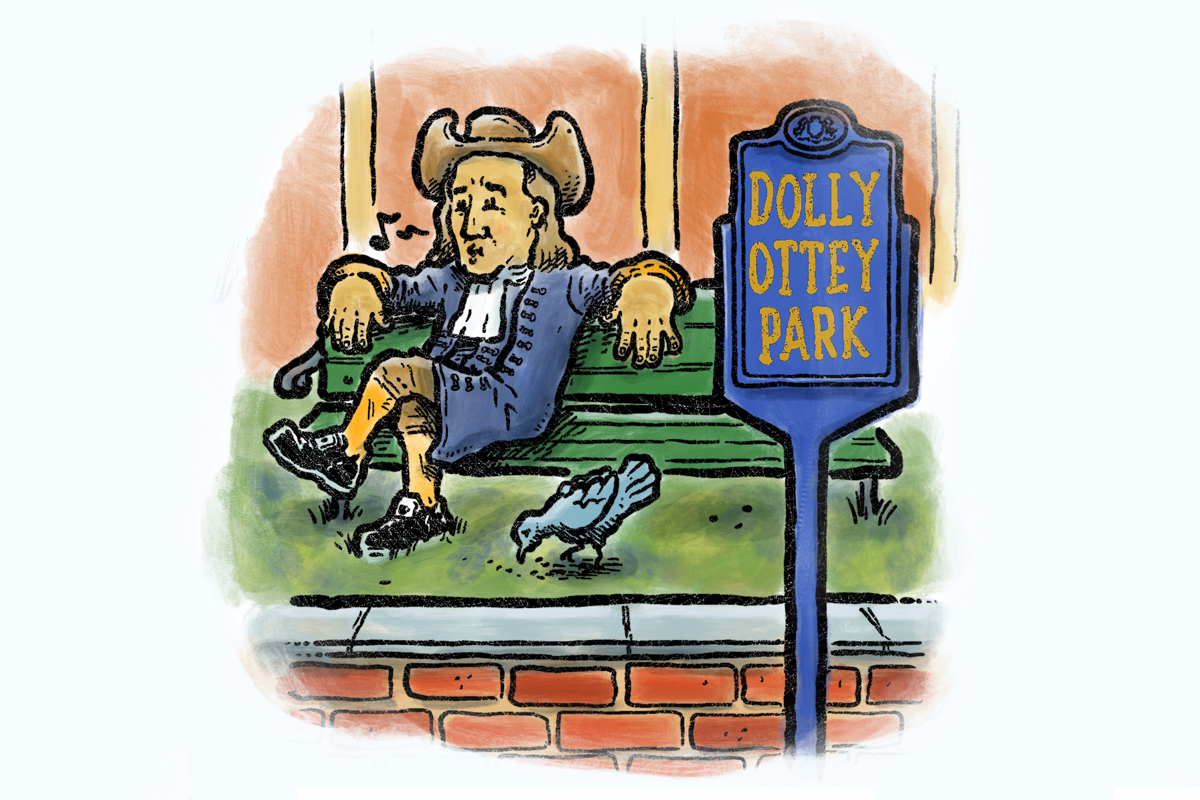
Eli Fish: “Turn Headhouse Square into European-style plaza. No cars, tables in the street and under the headhouse cover, live music and outdoor dining. We know this can work because they started to do it during COVID and it was amazing.” (Note: This idea was also raised on Instagram by users who begged the city to “Make Headhouse interesting again.”)
Hugh Connelly suggests creating an iconic, solar-powered mural that looks like Philadelphia in 1776 during the daytime, but at night when a system of solar-powered lights illuminate it, the “new night image is one of futuristic Philly, a beacon for liberty for the next 250 years.”
Kevin Fennell: “There should be a steal the Declaration of Independence escape room.” Why yes there should be, along with a “National Treasure treasure hunt,” as suggested by one Instagram user.
Off-the-wall ideas
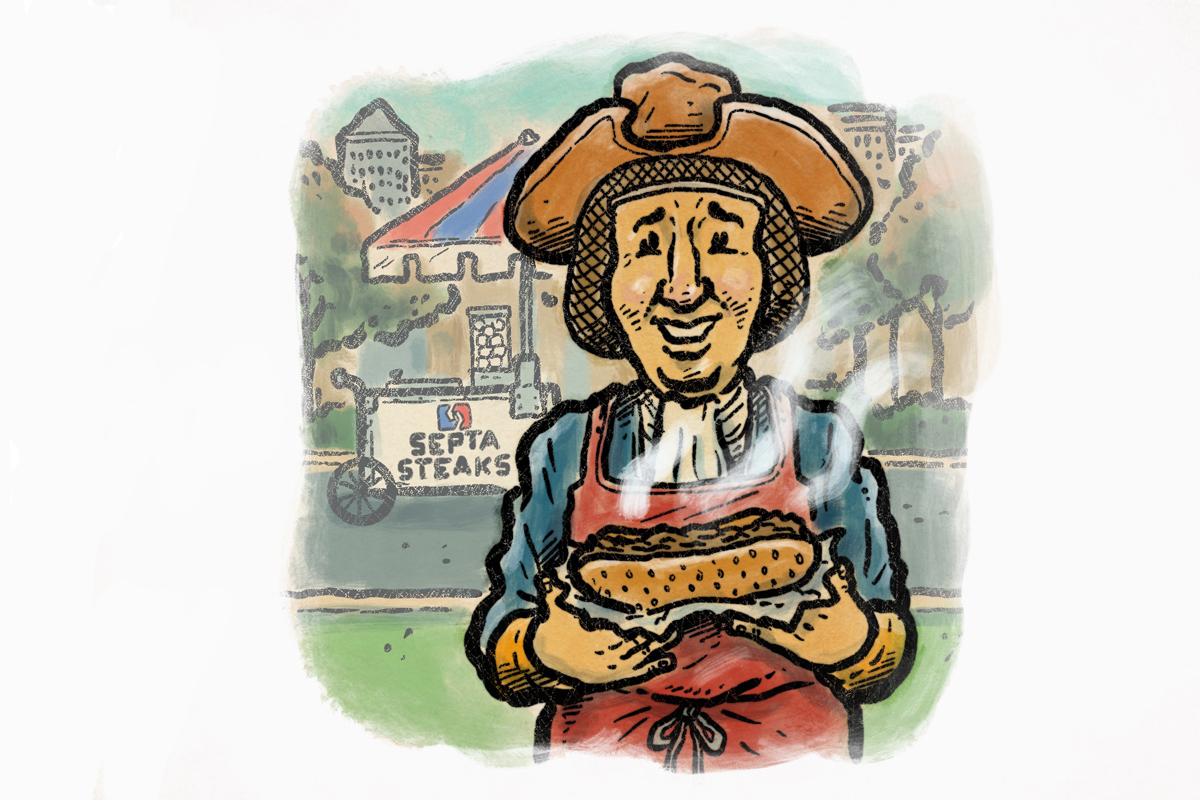
Zach Marcum‘s idea is an official SEPTA cheesesteak joint: “We bring in a real Philly chef who will (for free) design us the perfect cheesesteak for maximum profit and quality balance. We line up sourcing with local suppliers in Philly — and the surrounding areas — I’m talking grain for the bread-type vertical integration — and then set up SEPTA cheesesteak carts throughout not just Philly but the state of Pennsylvania, and hire good local kids paying good wages to cook and distribute these cheesesteaks. As for all the people who are already in the cart business, we bring them in as middle managers or buy them out, or they can sell halal or whatever (sorry … I’m not a genius). With the profits we fund massive infrastructure improvements, spreading wealth and glory to all.”
Tom Dougherty proposes something like an “Epcot Village,” to show off the diversity of Philly’s food-and-beverage scene. A potential location could be FDR Park, where Dougherty suggests it could run in conjunction with the Southeast Asian Food Market.
Thomas Lake‘s idea is a Schuylkill ferry that would commute people from King of Prussia to the Philadelphia Art Museum and back, with stops in Norristown, Conshohocken, and Manayunk. “Might have to remove some dams?” he wrote. Yeah, a few, plus I’m told the river is far too shallow in spots and some bridges are too low for a ferry to navigate. Even though this one is implausible, it’s fun to dream about.
Catherine Robb Stahl: “You know how Tinker Bell flies down from the Disney castle at night on a zip line? Well, how about having Betsy Ross do the same thing from City Hall??? Fun, huh?!?! What a sight to see!”
Other off-the-wall ideas submitted without further context included: a community zip line and pool, a Gritty cave, a Gritty statue, secede from Pennsylvania, “Find a better word than Semiquincentennial,” hold a “Band things happen in Philadelphia LGBT concert band performance,” “No city tax for those who live within 1 mile of a pothole,” and “Make it abundantly clear in marketing to other U.S. cities that Philly rules.”
Recurring themes
Properly funding SEPTA is integral to Philly and any plans for 2026, as I said in my original column. While there’s since been a measure enacted to ensure it will operate for the next two years, SEPTA’s fate remains murky after that. At least a quarter, maybe more, of the responses I received mentioned SEPTA in some way.
But people told me they want to see SEPTA more than just funded. They want it cleaned — deep cleaned — from the stairwells to the seats, like the entire system was exposed to nuclear waste (New Jersey commuters would also like their PATCO stations decontaminated too).
“Tourists Take Transit. Let’s not show the world our dirty underwear,” Tally Brennan said via email.
Scores of Philly-area residents wrote in asking for more public bathrooms, trash cans, water fountains, trees, shade, benches, pocket parks, trash cans, signage to city sites, protected bike lanes, trash cans, street cleaning, trash cans, programs to assist the unhoused, trash cans, murals, and underground parking lots. And for the love of all that is good and holy can we get at least one permanent pedestrian-only street in this city?
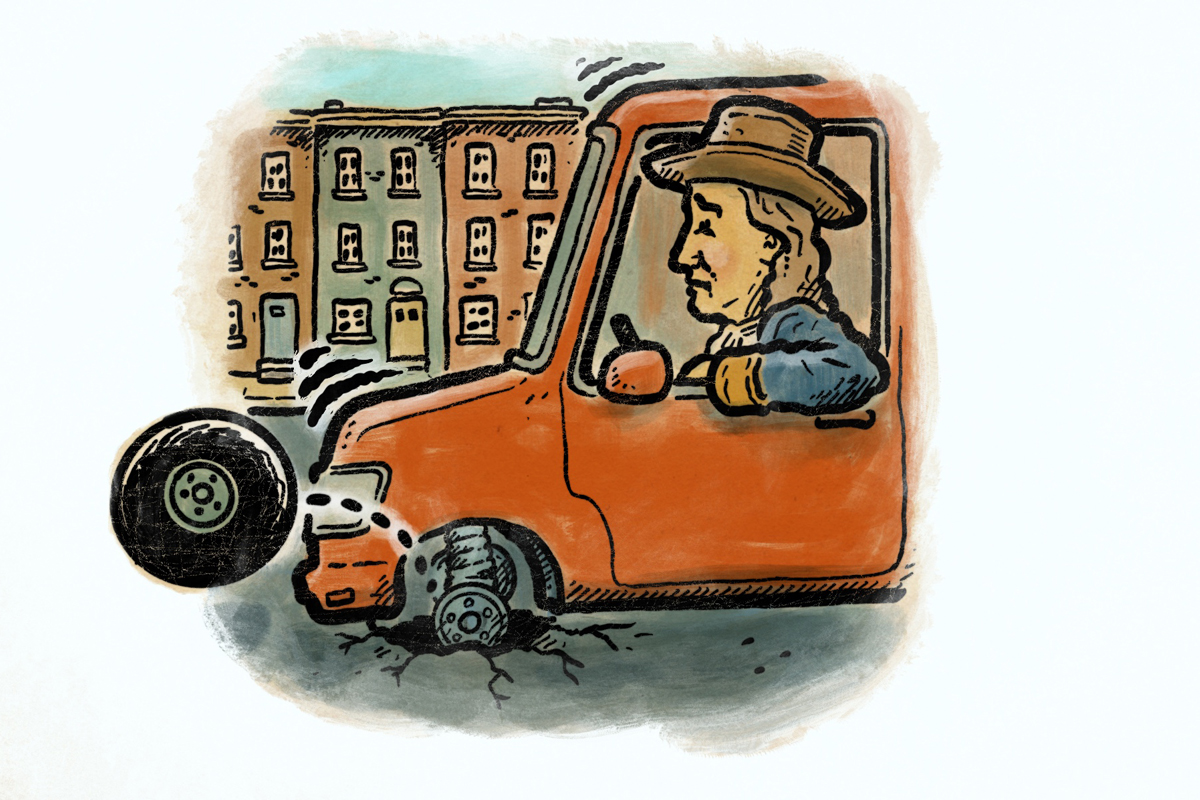
Readers would also like to see the following repaired: the escalators at Jefferson Station, potholes, the lines on the road “so they’re visible and you don’t have to just guess,” “Fix the roads, all of them!” “ITS LIKE A BOMBED WAR ZONE,” and sinkholes.
Many people said the entire Market East corridor needs a whole lot of love. Folks lament that it used to be a destination and now it’s filled with shuttered storefronts.
While we learned in November that Comcast and the Sixers plan to demolish some buildings they own on the 1000 block of Market Street in time for next year’s events, it’s still unclear what they plan to put there.
In the remaining vacant storefronts, readers suggested putting pop-up shops, art galleries, experiences, or doing a pop-up Philly History Museum.
Finally, a very sweet reader asked me: “Please can we have the building on Broad Street that has the graffiti ‘Boner 4Ever’ painted over??? It’s truly an embarrassment.”
Nowhere will celebrate America’s 250th anniversary like Philadelphia. Because nowhere else can celebrate the national milestone like Philadelphia.
Philly is where it happened.
Only in Philadelphia, on July 4, 1776, did 56 sweat-soaked delegates of the Second Continental Congress stride into sweltering Independence Hall to stake their necks on an idea. In the course of human events, it had become time to declare self-evident truths. All men are created equal and endowed by certain unalienable rights.
Some men, that is.
This unforgivable erasure would have reverberations to this day. Nowhere are the centuries-old wounds of that betrayal more visible than in the unrelenting poverty, violence, and inequality preventing so many Philadelphians from their pursuit of happiness.
But the manifesto was still the most revolutionary freedom document humankind ever produced. A single piece of parchment composed of elegant, unwavering prose that defied and dared an empire, forever reordered the rights of man, and drew the eyes of humanity — and judgments of history — upon our humble burg.
Their work for the day done — and in keeping with the rest of the Founders’ stay in the City of Brotherly Love — the framers presumably dusted off their wigs, loosened up their waistcoats, and repaired to the cooling comfort of the City Tavern for a rager for the ages.
Only in Philadelphia.
Independence Hall in Independence National Historical Park Jan. 3, 2024. one of the Philadelphia region’s most visited areas, but the lustre has often seem faded in its grounds and buildings. But organizers say it will be different in time for 2026, the 250th birthday celebration of America.
‘Philly is beyond ready’
Two-and-half centuries later, the eyes of the world again fall upon our Philly — for yet another rager for the ages.
In Philly fashion, the city’s preparations for the 250th anniversary of the signing of the Declaration of Independence, also known as the Semiquincentennial, stumbled to a rocky start. Poor funding, a lack of leadership, and miscommunication plagued early stages of Philly’s 250th party planning.
But in truer Philly fashion, dozens of passionate Philadelphian civil servants, cultural leaders, artists, volunteers, and philanthropies rallied to ensure the city where it happened met the moment.
Only a year ago, during a 2026 preparedness meetings, worried planners requested $100 million from city and state coffers to fund festivities and programming worthy of democracy’s birthplace. They have received it.
“A year ago, we were having a conversation about, ‘Are we ready?’, ‘Is the money there?’, ‘Can we pull this off?’” said Max Weisman, an aide to Councilmember Isaiah Thomas, a key planner. “Yes, yes, yes.”
Philadelphia is ready, the planners say. Have no doubt.
These Philly-loving patriots say they have organized a once-in-a-lifetime party equal to the city’s unparalleled role in history — and its irrepressibly proud personality.
“Philly is beyond ready,” said Kathryn Ott Lovell, president and CEO of the Philadelphia Visitor Center Corporation and Philadelphia250, the city’s key planning partner for 2026. “Everyone is pulling out the red carpet. Every museum. Every cultural institution. Every neighborhood organization. Everyone is doing something special for the company that’s coming.”
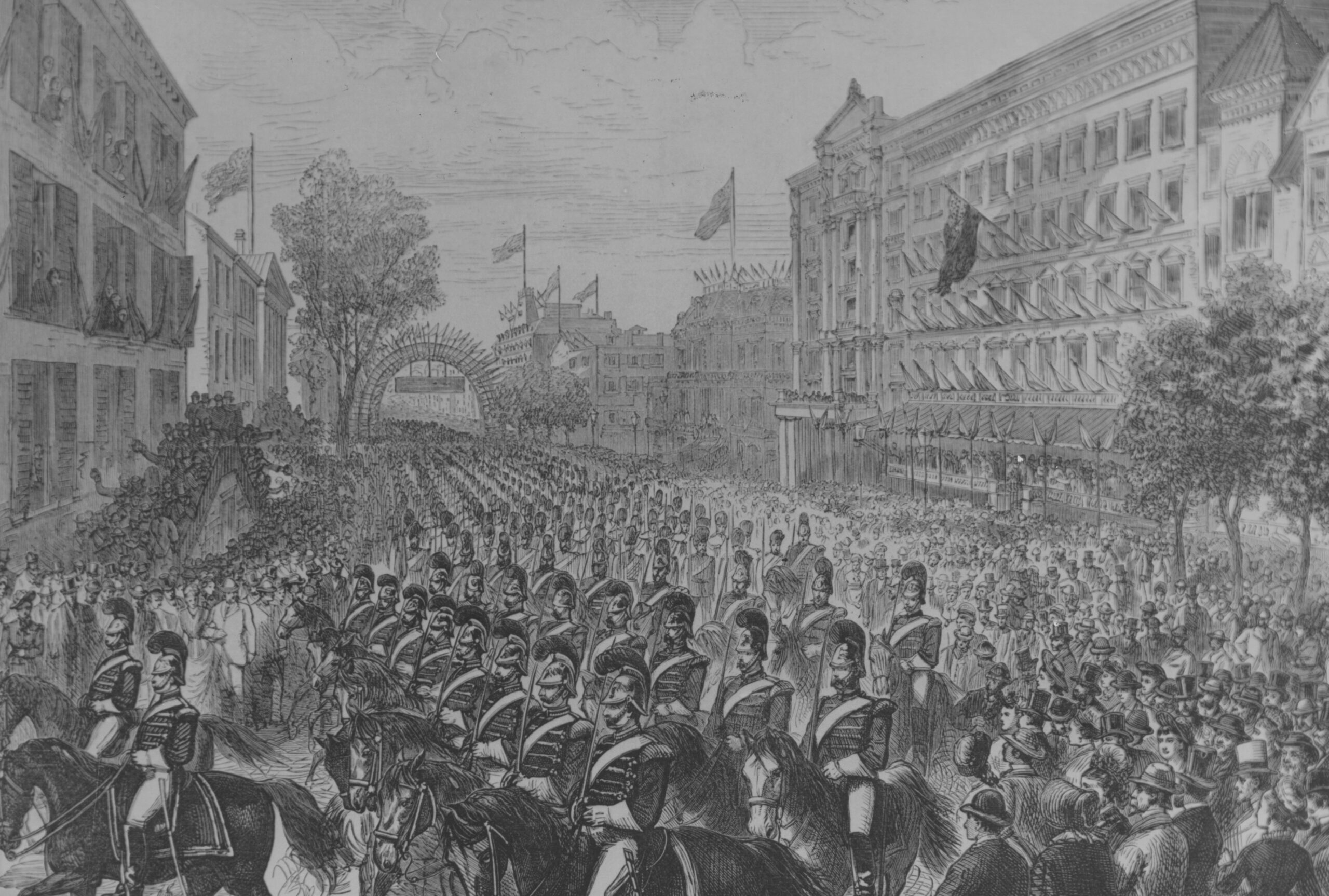
In this depiction published in The Inquirer July 1, 1951, the first event of July 4, 1876, was a huge military parade. The celebration was held in Independence Square after the parade.
A ‘reintroduction to the world’
Look around. Everywhere signs abound of the already-underway party. In the scores of new museum exhibits grandly exploring every power and contradiction enshrined in the declaration bellowed out of Philadelphia 250 years ago. In the abundance of plans for neighborhood programming and beautifications that bring the party to the people in 2026. In new ventures honoring Philly diversity and pride. In the polish and paint in the works for the Historic District.
Hey, Philly cleans up when it needs to.
It was visible when a parade of ships sailed along the Delaware in October to kick off the 250th anniversary of the Navy, founded in Philly. And it was heard in the crisp salutes and solemn hymns of the Marines who crowded Old City in November to mark their branch’s founding, also in Philly in 1775. It builds in the excitement of clock-ticking preparations for the string of big-ticket events that will grace Philadelphia in 2026.
Six FIFA World Cup matches, with a summer fan festival and volunteer-training campus. The MLB All-Star Game. A pumped-up Fourth of July with to-be-announced special guests. TED Democracy talks featuring citizen speakers from Philly and beyond, exploring democracy’s painful past and uncertain present.
It rings out in the genuine excitement of Philadelphians who work in ceaseless dedication to the principle that Philadelphians know how to throw a party.
Philadelphia is not screwing up a party, is Weisman’s mantra (except he doesn’t say, “screwing.”)
Matthew Skic, of Morristown, N.J., Director of Collections and Exhibitions, (left), and Michael Hensinger, of Fishtown, Pa., Senior Manager of K-12 Education, (right), are dressed as Minute Men from the Massachusetts Militia at the opening of the exhibit Banners of Liberty which showcased the original revolutionary war flags at the Museum of the American Revolution in Philadelphia, Pa., on Saturday, April 19, 2025.
Not just a party. A year-long, city-wide commemoration that delivers Philadelphia into a more prosperous future. Before city planners found their 250th footing, Philly tourism and cultural leaders banded together to seize the opportunity. With more than500,000 visitors expected for the World Cup alone, they aim to reintroduce Philadelphia to the world.
“Or introduce ourselves for the very first time to people who do not know Philadelphia or have a very narrow view of Philadelphia,” said Angela Val, president and CEO of Visit Philadelphia, the nonprofit that serves as the city’s official leisure-tourism marketing agency. “We don’t take these big events lightly. They are investments. This is really an opportunity to set ourselves up for success in 2026 and beyond.”
Parties of the past
We’ve been here before.
Every 50 years since 1876, the nation’s Centennial year, and America’s first major birthday bash, Philly has dusted off its wig to get down. Each of these events came with larger national wounds.
“Before every one of these fairs, there’s a scar,” said David Brigham, librarian and CEO of the Historical Society of Pennsylvania, referring to Philly’s previous national birthday parties. “There’s always been a conflict and a pain.”
And in these moments, Philly has strove to be a salve, he said. Most of the time, anyway.
In 1876, when America reeled from unhealed wounds of the Civil War, Philadelphia built a small city in Fairmount Park — and hosted 10 million people from 37 countries. The showcase of growing American innovation and economic prowess aimed to heal a ruptured nation. Memorial Hall, its massive art gallery, remains today as the Please Touch Museum.
In 1926, as America emerged from the carnage of World War I, our Sesquicentennial marked the building of the Ben Franklin Bridge, the transformation of what is now FDR Park, and the construction of a temporary, gleaming, utopian metropolis in South Philly.
The Bicentennial in 1976 led to the creation of the Mann Center and the African American Museum in Philadelphia, even if the party itself was marred by Mayor Frank Rizzo’s heavy-handed security — he summoned 15,000 National Guard members.
We’ve been here before. And we aren’t perfect.
As ready as Philadelphia stands, next year’s commemoration will not include the big legacy projects of past celebrations, the bridges, stadium, and new museums.
But maybe that’s not what this moment is about, anyway.
An unfinished journey
Just as past planners grappled with the questions of their American moment, Philadelphia organizers wrestle with ours.
“It’s a commemoration of why our republic was created,” Lovell said. “But also about a recommitment to the ideals that were established. We were founded on these basic principles and values that the Founding Fathers fought over. And we’re still fighting over it.”
It’s that same theme — the grand fragility of our American experiment — that pulses though the Museum of the American Revolution’s landmark exhibit, “The Declaration’s Journey.”
A breath-taking assemblage of rare artifacts, including Thomas Jefferson’s writing chair and Martin Luther King’s prison bench, the museum’s most ambitious show ever explores the 250-year global impact of the declaration. How words proclaimed out from Philadelphia inspired revolutions and freedom movements throughout the centuries
“The American Revolution is not synonymous with the Revolutionary War,” said R. Scott Stephenson, president of the museum. “It is a centuries-long, ongoing experiment in liberty, equality, and self-government.”
And that journey’s not yet over.
The birth of democracy in Philadelphia, and the worldwide struggle to sustain it, represents the most significant event since the birth of Christ, said filmmaker Ken Burns. (And here we though it was Super Bowl LII.)
The American war may be over, but the revolution is not, said Burns, whose 12-hour docuseries, “The American Revolution,” is streaming on PBS.
All we were promised was the pursuit, he said. And the chance to forever make the imperfect a little less so.
The republic the Founders forged in the Philly heat stands the most divided and tested it has been in decades, with core disagreements about its very foundations.
It is only right, then, that Philadelphians march onto the global stage. Who else but us?
In every way, being America’s birthplace shapes Philadelphia. Where else is its hallowed iconography such a daily staple? Where else does its symbolism so powerfully frame every civic successes — and failure? Every sports triumph and cultural happening. Every step forward; every stumble backward.
Where else does the promise and contradictions of a proclamation that turned the world upside down so intrinsically coarse through the lifeblood of a place?
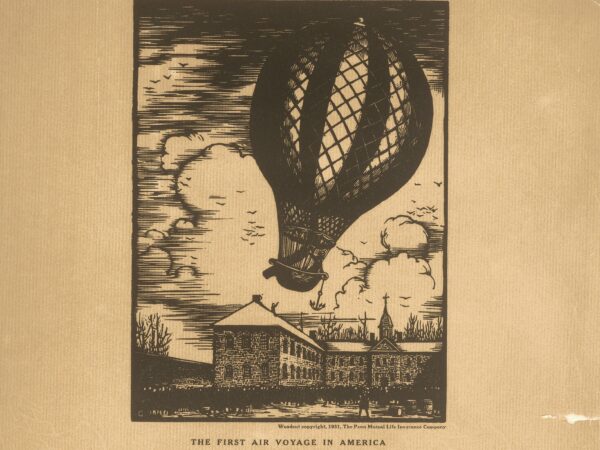
It was a cold January morning in colonial Philadelphia. The year was 1793 and Thomas Jefferson, James Monroe, John Adams, and George Washington were among dozens of spectators gathered in the Walnut Street Prison workyard. The Founding Fathers watched in awe as French aeronaut Jean-Pierre Blanchard prepared to take flight.
Blanchard’s hydrogen-powered balloon rose up into the sky. It was the first time someone had ever seen a balloon take off in America.
Two and a half hours later, Blanchard landed the blue-and-yellow striped silk balloon 15 miles north in a Deptford, N.J., field that today is a Walmart Supercenter parking lot.
That historic moment — America’s first balloon ride — will be remembered on Saturday at the Athenæum, where the Walnut Street Prison workyard once stood.
The festivities will kick off the Philadelphia Historic District’s 52 Weeks of Firsts, a weekly day party marking events that happened in Philadelphia before anywhere else in America, and often the world. Each Saturday, the Historic District will partner with a local institution to host a free festival — or “Firstival.” This will be part of a yearlong celebration of America’s 250th birthday.
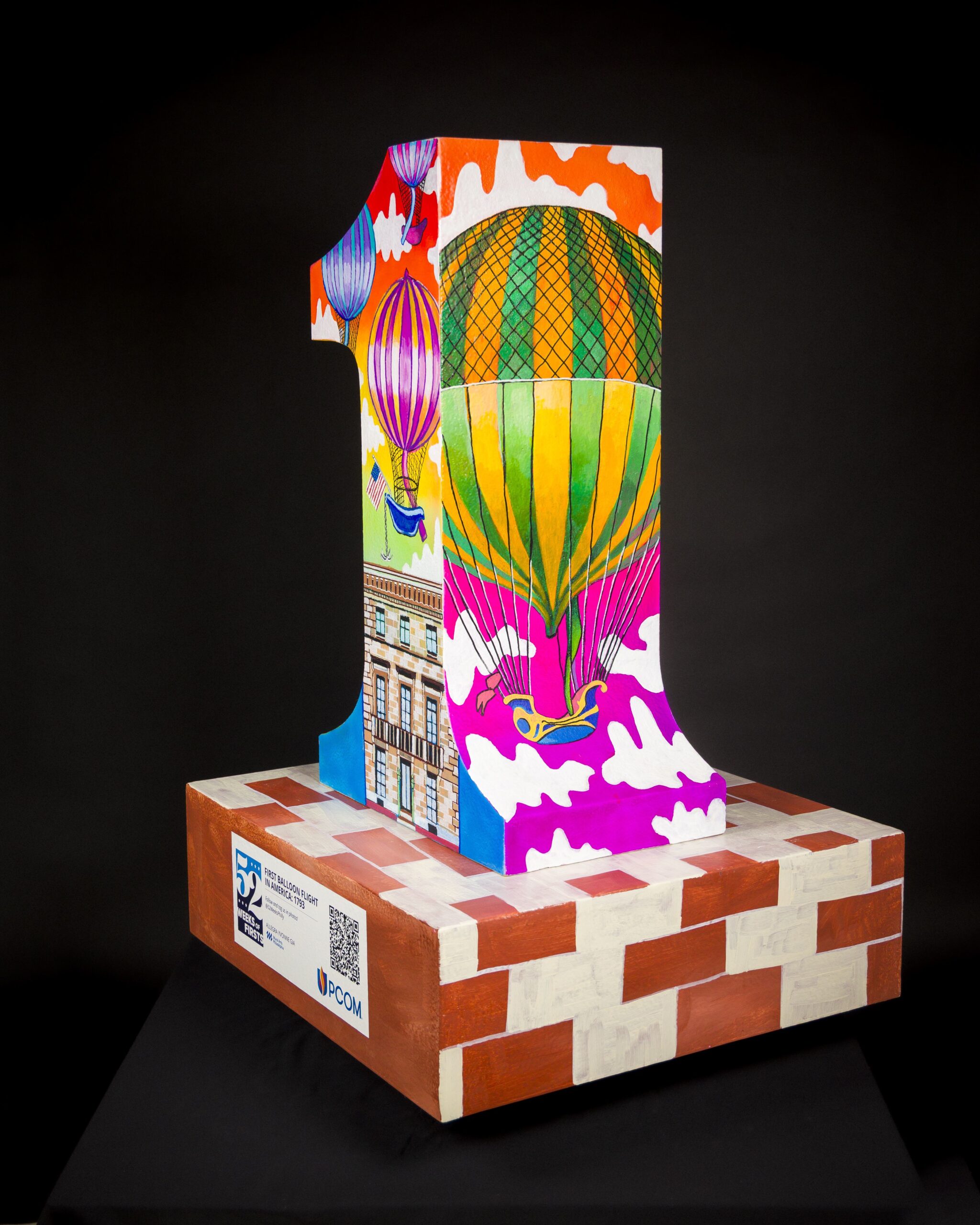
Each of those locations will feature a foam sculpture illustrated by a Mural Arts of Philadelphia artist commemorating the historic event.
Mural Arts artist Allegra Yvonne Gia infused images of the Walnut Street prison yard, The Athenæum of Philadelphia, and hydrogen balloons in this illustration.
While in Paris negotiating an end to the Revolutionary War in 1783, America’s A-list forefathers, Ben Franklin, John Adams, and John Jay witnessed some of the world’s first balloon rides. Impressed, they came back to Philadelphia raving about the innovation.
Two years later, Blanchard, and co-aeronaut John Jefferies, became the first people to sail over the English Channel in a hydrogen balloon. (He chose hydrogen because hot air balloons were powered by fire and prone to explosion, thereby making any flight more than three miles risky.)
The English Channel trip made Blanchard a big deal in aeronautical circles, and he started traveling around the world, flying balloons, and charging spectators, explained Beth Shalom Hessel, executive director of the Athenæum of Philadelphia
On Jan. 9, 1793, Blanchard made his landmark 45th flight in Philadelphia, turning the Walnut Street Prison workyard into the birthplace of aeronautics in America.
Onlookers paid $5 — more than $150 in today’s money — to witness Blanchard take off. He carried with him a dog and a letter from Washington. This letter, which demanded that Blanchard be offered safe passage wherever he landed, is considered by many to be the first ever American passport.
“As a way of making money and drumming up interest in his balloon, Blanchard intentionally chose Philadelphia for his first American flight,” Hessel said. “And that’s fascinating.”
This week’s Firstival is Saturday, Jan. 3, 11 a.m.- 1 p.m., at the Athenæum of Philadelphia, 219 S. Sixth St. The Inquirer will highlight a Philly “first” from the 52 Weeks of Firsts program every week.
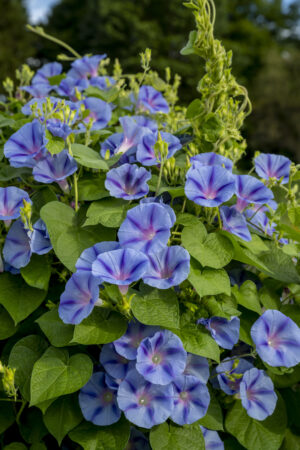
The morning glory flower can take months to blossom, but seeing their stunning trumpet-shape blooms finally pop from their spindly tendrils is so worth the wait.
“We call the morning glory ‘happiness,’ because it’s cheerful. It’s blue with a glowing pink center, and it makes you feel like life is good,” said Burpee president and CEO Jamie Mattikow.
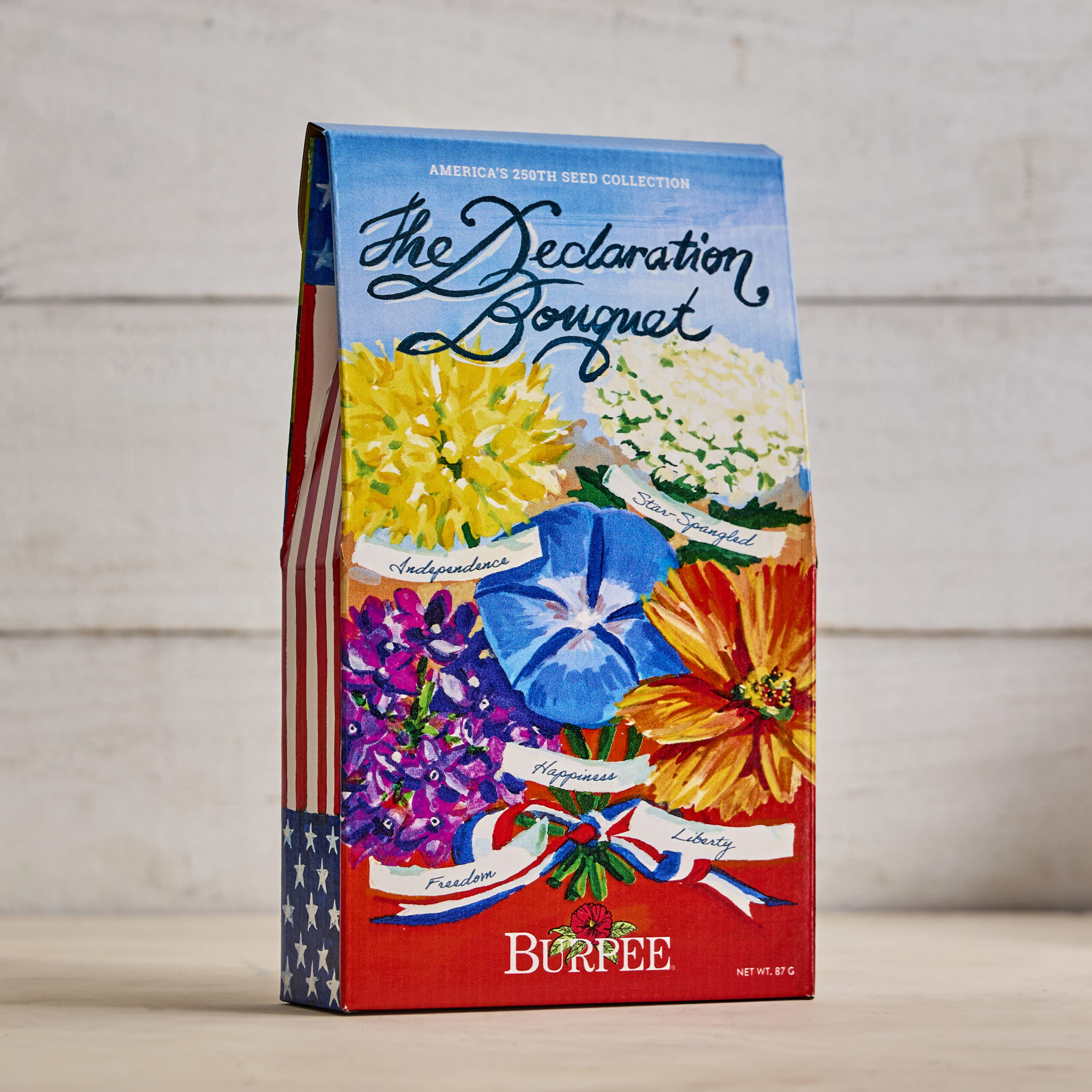
To celebrate the nation’s 250th birthday, the Warminster company is partnering with the Museum of the American Revolution to offer a Declaration Bouquet collection, which features seeds for five new flowers inspired by words plucked from the Declaration of Independence and the national anthem.
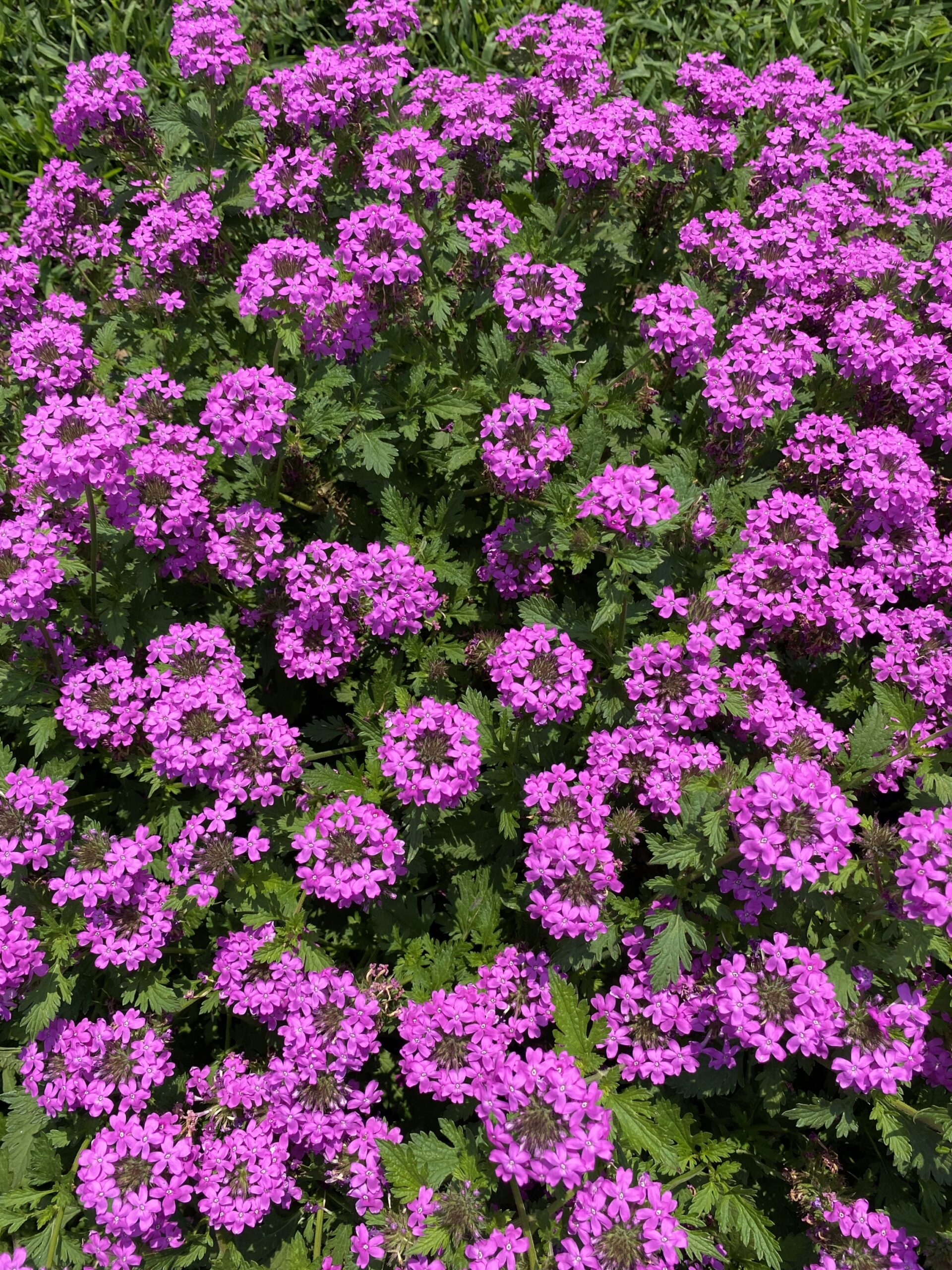
The collection debuted Dec. 1, and, besides the “happiness” morning glory, includes a “star-spangled” marigold, whose white layered petals signify Old Glory’s stars; the drought-tolerant, butter yellow “independence” gaillardia; the fiery orange “liberty” cosmos; and the calming purple “freedom” verbena that can be started indoors or out, as long as it has full sun.
Burpee’s Declaration Bouquet celebrates the nation’s 250th anniversary.
“We wanted to bring the words to life in a flower that embodied them,” Mattikow said of the full collection, which is available in the museum’s gift shop and via Burpee for $34.95 (you can also get each Declaration Bouquet seed packet individually via burpee.com). The collection contains five seed packets, eight labels, a Declaration of Independence keepsake card, and growing instructions.
“The Declaration Bouquet was part of a larger effort of making America’s 250th special for gardeners,” said Mattikow, who became an avid gardener himself after he joined the company in 2019.
The idea to partner with the Museum of the American Revolution came from Maureen Heffernan, horticulturist and wife of Burpee owner George Bell, after a visit to the Old City institution.
“They were percolating this idea of collaborations for 2026, so she reached out,” said Allegra Burnette, the museum’s chief strategy and growth officer.
They talked through ideas, and the company came up with the flower collection.
“It’s a way for them to showcase new flowers — and the Declaration of Independence spawned a lot of new things, as well,” Burnette said. “It’s also a nice way to come out of our ‘Declaration’s Journey’ exhibit when you are in a thoughtful but celebratory frame of mind. We hope it’s a way to plant a seed and keep something going forward.”
“Freedom” verbenas were bred for Burpee’s Declaration Bouquet in celebration of the nation’s 250th anniversary.
The collaboration was a no-brainer for Burpee. “We recognize the importance of Philadelphia to the birth of the country, and we wanted to partner with somebody who could help us think of a great way to do this,” Mattikow said.
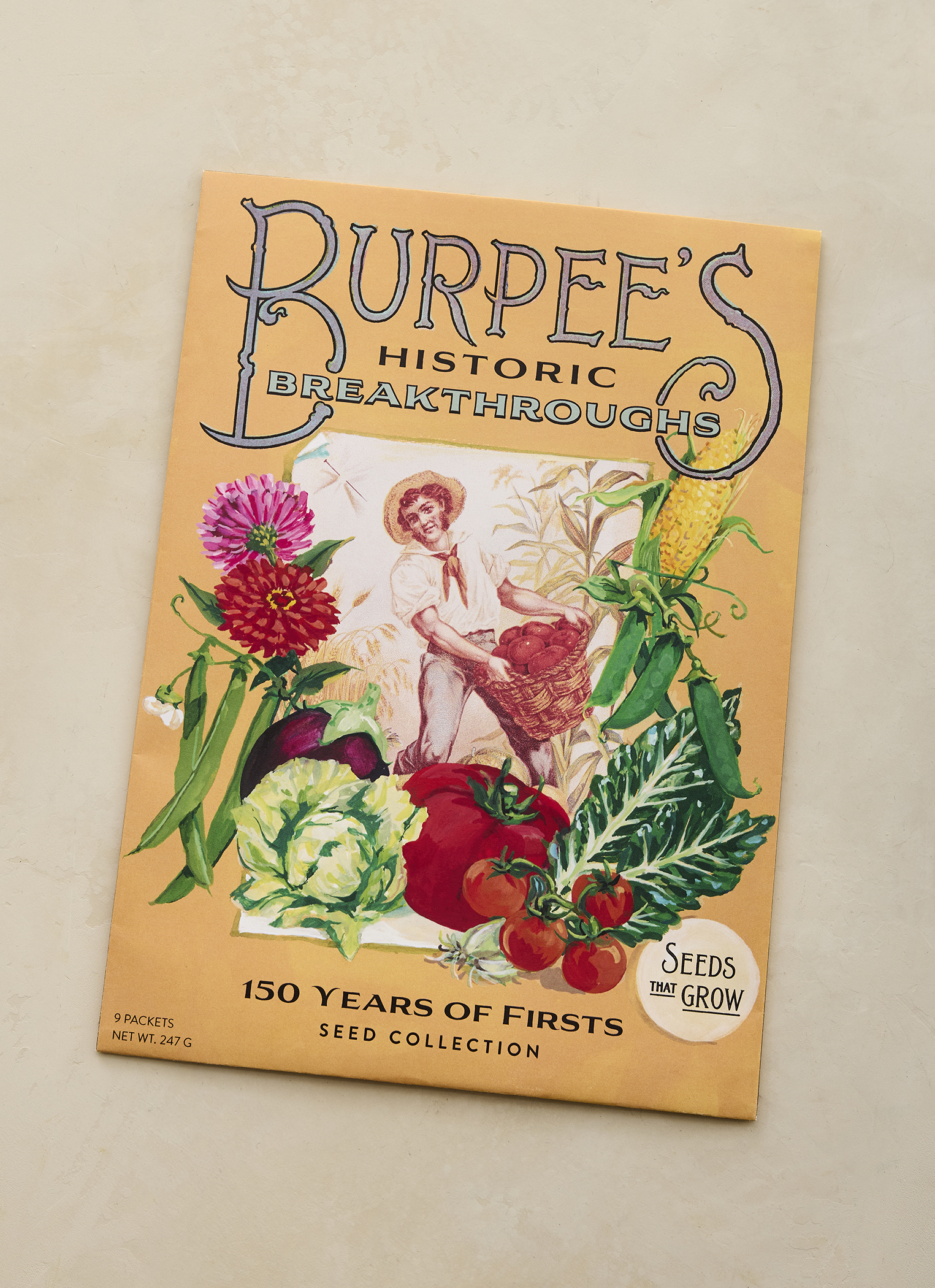
Along with celebrating the nation’s milestone birthday, Burpee has a big one of its own, marking 150 years in business in 2026. One way it’s ringing in the anniversary is with a Historic Breakthroughs collection of heirloom seeds.
“The founding of W. Atlee Burpee has always been about innovation, even today,” Mattikow said. “[Our story] has been largely told in products that were firsts to gardeners and farmers at the time. There are histories behind them that some people aren’t aware of, so we thought it’d be a wonderful opportunity to bundle it together in a collection of historic gardening firsts.”
Burpee’s Historical Breakthroughs seed collection celebrates the company’s 150th anniversary.
The Historic Breakthroughs collection includes nine seed packets and is priced at $29.95, available through Burpee’s website and catalog. This includes iceberg lettuce (first bred in 1894), the first yellow sweet corn (1902), and snowbird sugar snap peas (1978). The collection’s packaging features a nostalgic recreation of a Burpee catalog cover from 1888.
In addition to the Declaration Bouquet, Burpee also launched three other heirloom seed collections for 2026 that tell stories from the iconic gardens of the Monticello Museum, George Washington’s Mount Vernon, and the American Horticultural Society. Each collection contains eight packets of seeds and is available at the respective institutions, as well as via Burpee for $49.95.
“Over the years there’s been a lot of choiceful introduction of products that would succeed in the climates of the U.S.,” said Mattikow. “They’re wonderful if you want a little slice of history from a gardener’s standpoint.”
Philadelphia sports fans of a certain age remember the city’s golden era, when all four professional teams advanced to their league’s championship series or title game in the same calendar year.
“The city was crazy that summer,” said Larry Bowa, the former Phillies shortstop who was a member of the 1980 World Series champion team. “Every team went to the finals, and we were the only one that won.”
Yes, the Sixers, Flyers, and Eagles all came up short of the brass ring in 1980 (and January 1981 for the Birds’ Super Bowl loss), but Philadelphia morphed into a sports nirvana during those 12 months.
Bowa said he thinks the 2026 Philadelphia sports scene will be even more electric, when the City of Brotherly Love hosts a bevy of major sporting events throughout the year. It starts with the March Madness men’s basketball opening rounds at Xfinity Mobile Arena, and stretches through the end of August, when the Philadelphia Cycling Classic is staged.
In between those two marquee events, the 108th PGA Championship will be played at Aronimink Golf Club, followed by six FIFA World Cup matches held at Lincoln Financial Field, the last of which is scheduled for July 4, the 250th anniversary of the adoption of the Declaration of Independence by the Continental Congress.
If that’s not enough, Citizens Bank Park in mid-July will be the host site for the Major League Baseball All-Star Game, the fifth time the Midsummer Classic has been played in Philadelphia, but the first at the Phillies’ current home stadium.
Imagine if the four Philly pro teams have a 1980 redux — that would be the cherry on top of Billy Penn’s hat.
“I think it’s going to be awesome,” Bowa said of the upcoming sports extravaganza. “People come from all over, and, whether it’s fair or not, Philly gets a bad rap sometimes. People that don’t live here, they don’t understand the passion that the fans have. It’s a great city. The fans are great. [You] can enjoy some of the history downtown. It’s going to be fun to sit back and watch.”
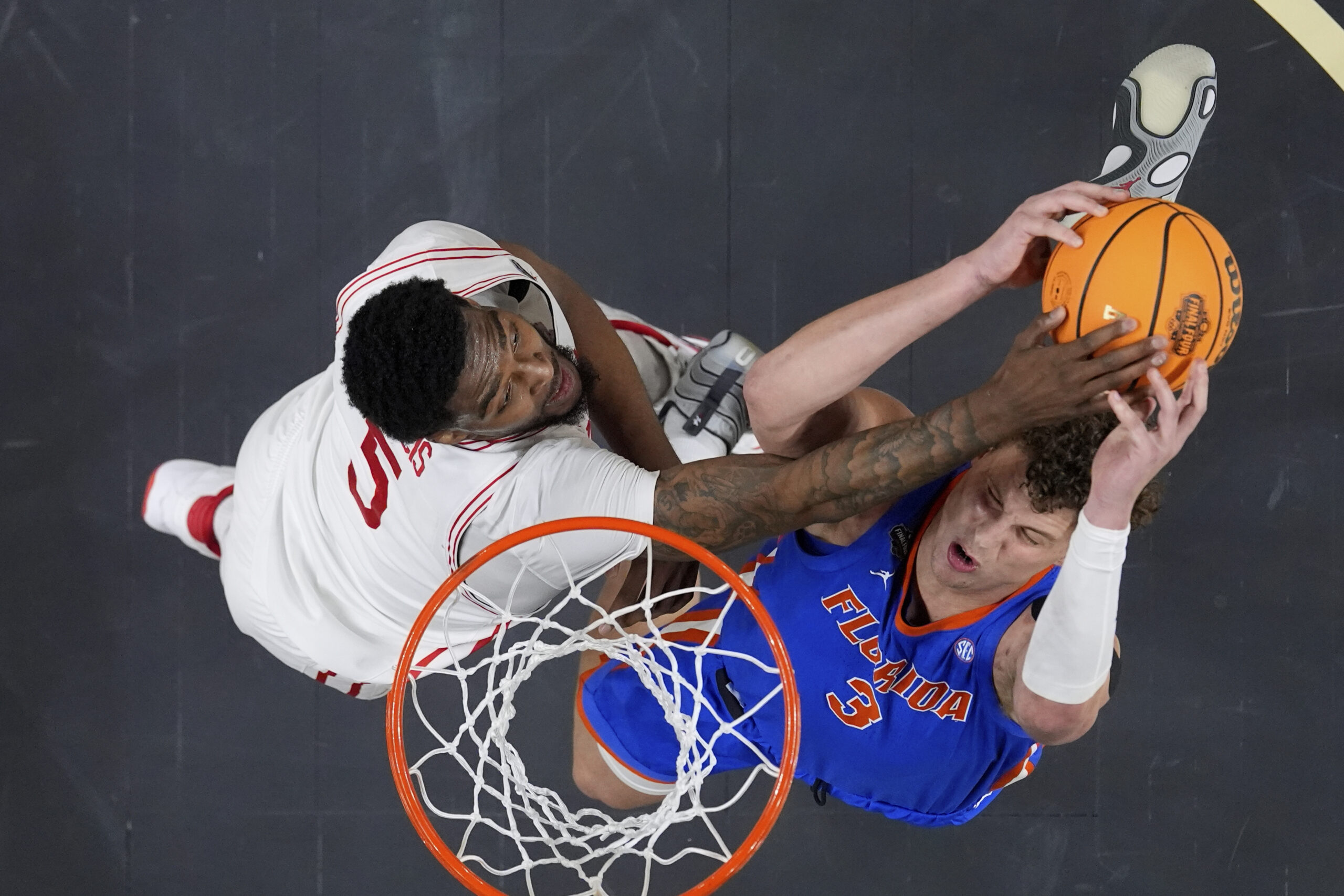
Houston forward Ja’Vier Francis blocks a shot by Florida center Micah Handlogten during the NCAA championship game on April 7, 2025, in San Antonio, Texas.
March Madness: NCAA men’s basketball tournament
None of the area men’s basketball teams that constitute the Big 5 (now 6 including Drexel University) is currently in the Top 25 rankings as of this writing, but that could change by the turn of the calendar.
Even if no Philly-area team punches its Big Dance ticket, St. Joseph’s will factor in the 2026 NCAA tourney when the school hosts the first- and second-round games at Xfinity Mobile Arena. The Florida Gators are the defending champions, and when March Madness begins, Philadelphia steps into the college basketball limelight for the opening curtain.
Friday, March 20, and Sunday, March 22; Xfinity Mobile Arena; tickets at xfinitymobilearena.com.
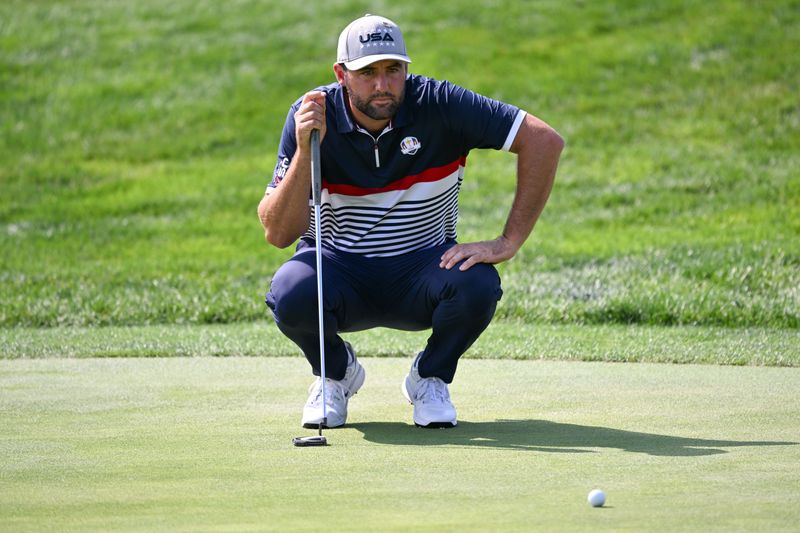
Scottie Scheffler lines up a putt on the fifth green on the first day of the 2025 Ryder Cup at Bethpage Black on Sept. 26.
PGA Championship
The 108th edition of one of professional golf’s four majors will be staged on the pristine Aronimink Golf Club links. The last time the PGA Championship was staged here was more than 60 years ago, when Hall of Fame legend Gary Player beat Bob Goalby by a stroke.
More recently, Keegan Bradley won the 2018 BMW Championship at Aronimink. Defending champ Scottie Scheffler will be among the star-studded group of golfers descending upon suburban Philly to play for the Wanamaker Trophy. If you miss out on tickets to the PGA Championship, you have another chance to see high-level golf in the region when the U.S. Men’s Amateur Championship comes to Merion Golf Club in mid-August.
May 11-17; Aronimink Golf Club, Newtown Square; tickets at pgachampionship.com.
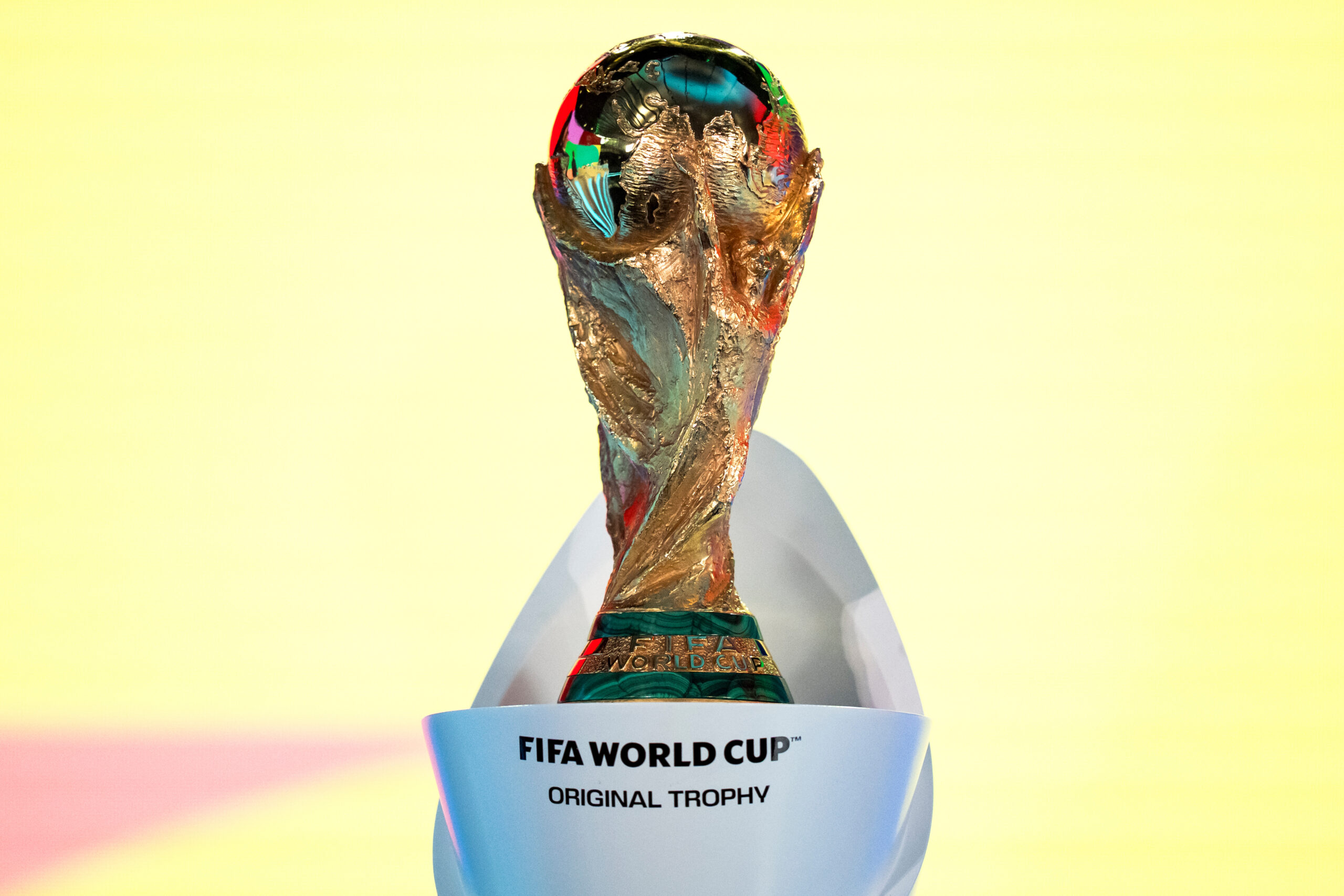
The FIFA World Cup Trophy is displayed during the FIFA World Cup 2026 playoff draw in Zurich, Switzerland, on Nov. 20.
FIFA World Cup
Soccer’s premiere event was last staged in the U.S. over three decades ago, when the USMNT advanced to the Round of 16, before losing to perennial powerhouse Brazil. Now the men’s national team has another chance to try to do what no U.S. squad has done before — win soccer’s most prestigious award.
Six of the 2026 FIFA World Cup matches will be played at the Linc, including the final of those matches scheduled to take place on Independence Day.
June 14-July 4; Lincoln Financial Field; tickets at fifa.com.
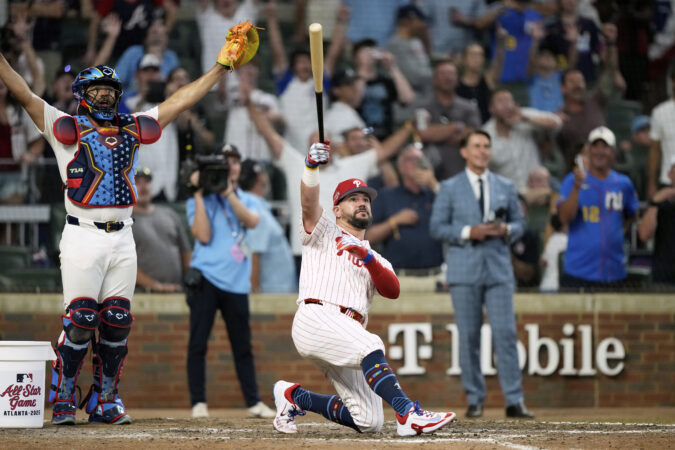
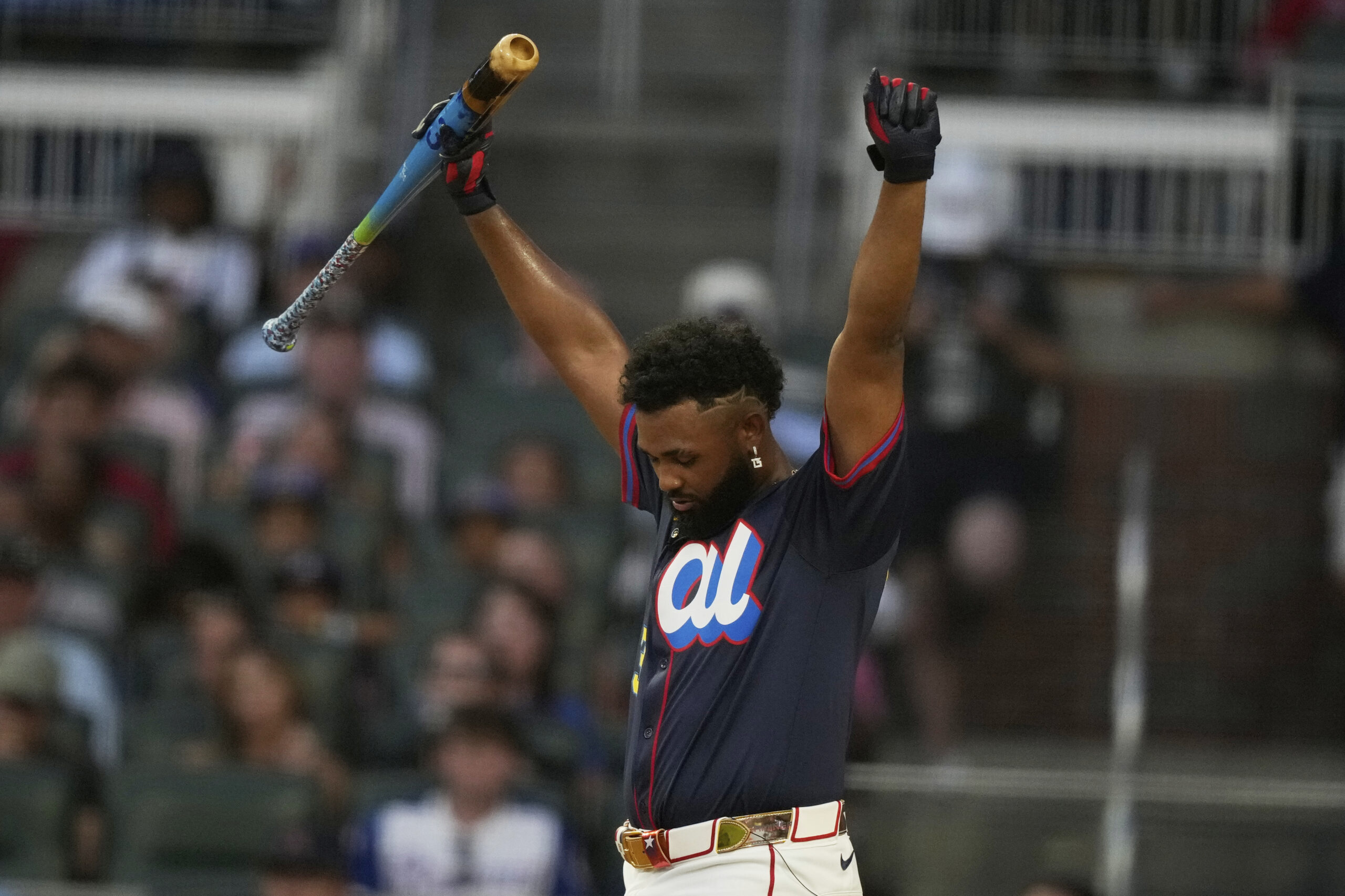
Tampa Bay Rays’ Junior Caminero reacts during the MLB baseball All-Star Home Run Derby on July 14 in Atlanta.
MLB All-Star Game
Bowa was an All-Star in 1976, when the Midsummer Classic was played at Veterans Stadium. But in that doughnut-shaped ballpark, “you had to hit ’em to get out of there.” Bowa said he thinks the bandbox Citizens Bank Park will be a great venue for baseball’s All-Star gathering, particularly the Home Run Derby.
“This one, they might be taking the upper deck down with these guys as big and strong as they are, and the way the ball jumps in Philly.”
It will be even more entertaining if defending All-Star Game MVP Kyle Schwarber is suited up in a Phillies jersey next year. But if Schwarber departs in free agency, there is still a group of Phillies — Bryce Harper, Trea Turner, Cristopher Sanchez — who could star for the National League.
July 12-14; Citizens Bank Park; tickets at mlb.com.
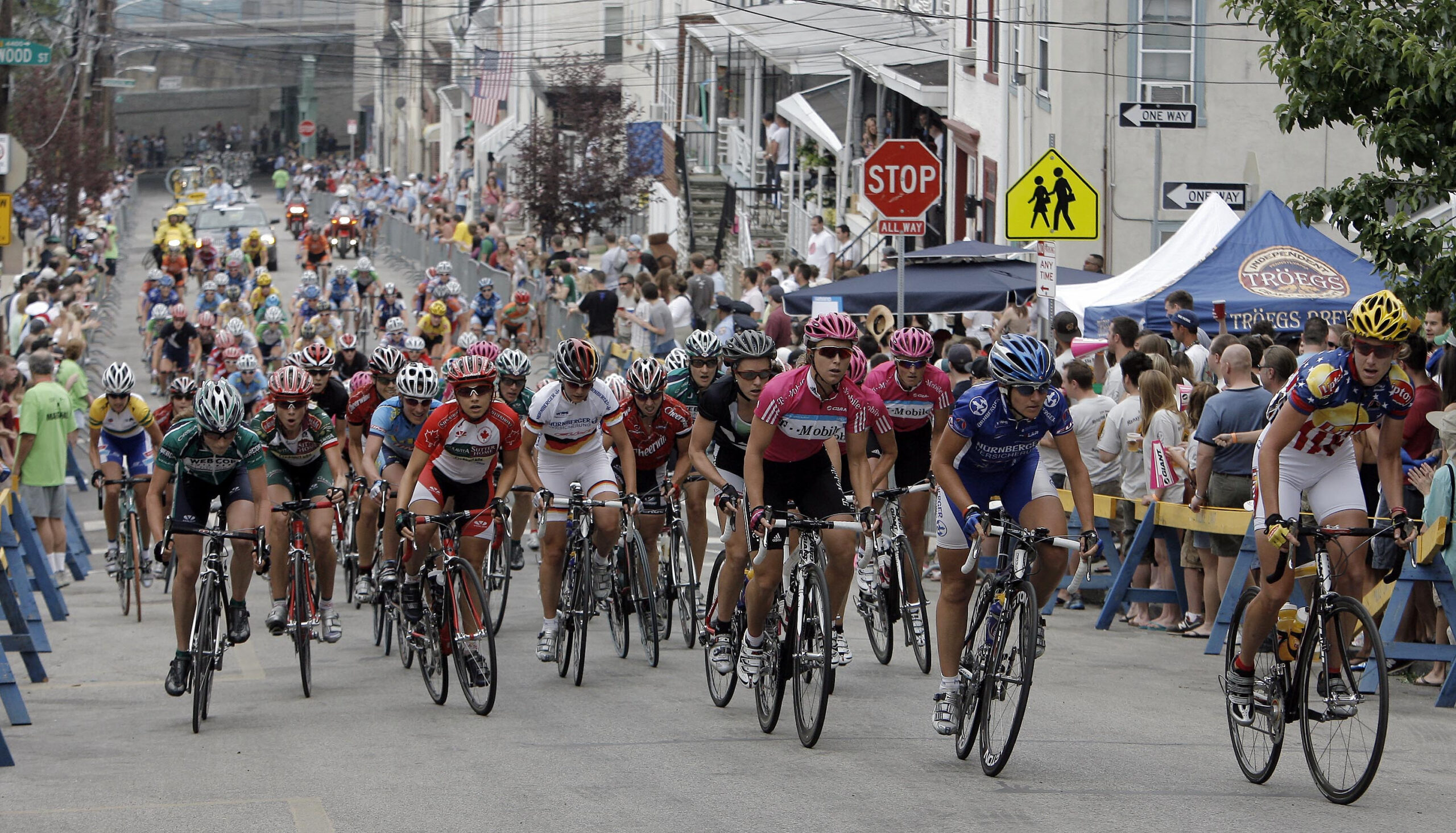
Racers in the 2007 Commerce Bank Liberty Classic climbing the Manayunk Wall.
Philadelphia Cycling Classic
One of cycling’s jewel events, the Philadelphia Classic has had numerous name iterations over the years, going back to its start in 1985 when it was called CoreStates U.S. Pro Cycling Championship. That year, Eric Heiden — yes, the former U.S. Olympic gold medal-winning speed skater — was champion.
Tour de France legend Greg LeMond has also been a past participant. The route snakes west of Center City and includes the famed Manayunk Wall, a cycling test of will on Levering Street.
Aug. 30; Planned 14.4-mile circuit goes from Logan Square up Kelly Drive to Manayunk and back; tickets at philadelphiacyclingclassic.com.
No one throws a “Happy 250th Birthday, America” jammy jam like a Philadelphia museum.
Embedded into the fabric of our nation’s birthplace, Philly cultural institutions are gearing up for high-level deep dives into history, fun, folly, and reflection. Just in time for the Semiquincentennial.
Our museums’ dynamic programming for America’s big birthday kicks off on Jan. 1.
The Philadelphia Art Museum, the National Constitution Center, the Museum of the American Revolution, and smaller outfits like Eastern State Penitentiary and Historic Germantown will, as expected, reimagine the history of our republic in an homage to the forefathers’ ingenuity.
Many are also honoring the perspective of marginalized Americans, upon whose backs this country was built.
Mixed into the Semiquincentennial festivities are other milestone birthdays. Carpenters’ Hall will celebrate the Commonwealth of Pennsylvania’s 250th with an exhibit, historical marker, statewide town halls, and virtual lecture series.
The new year also marks Germantown’s the Colored Girls Museum‘s 10th anniversary; it will open its fall 2026 season with a rare show from renowned sculptor vanessa german.
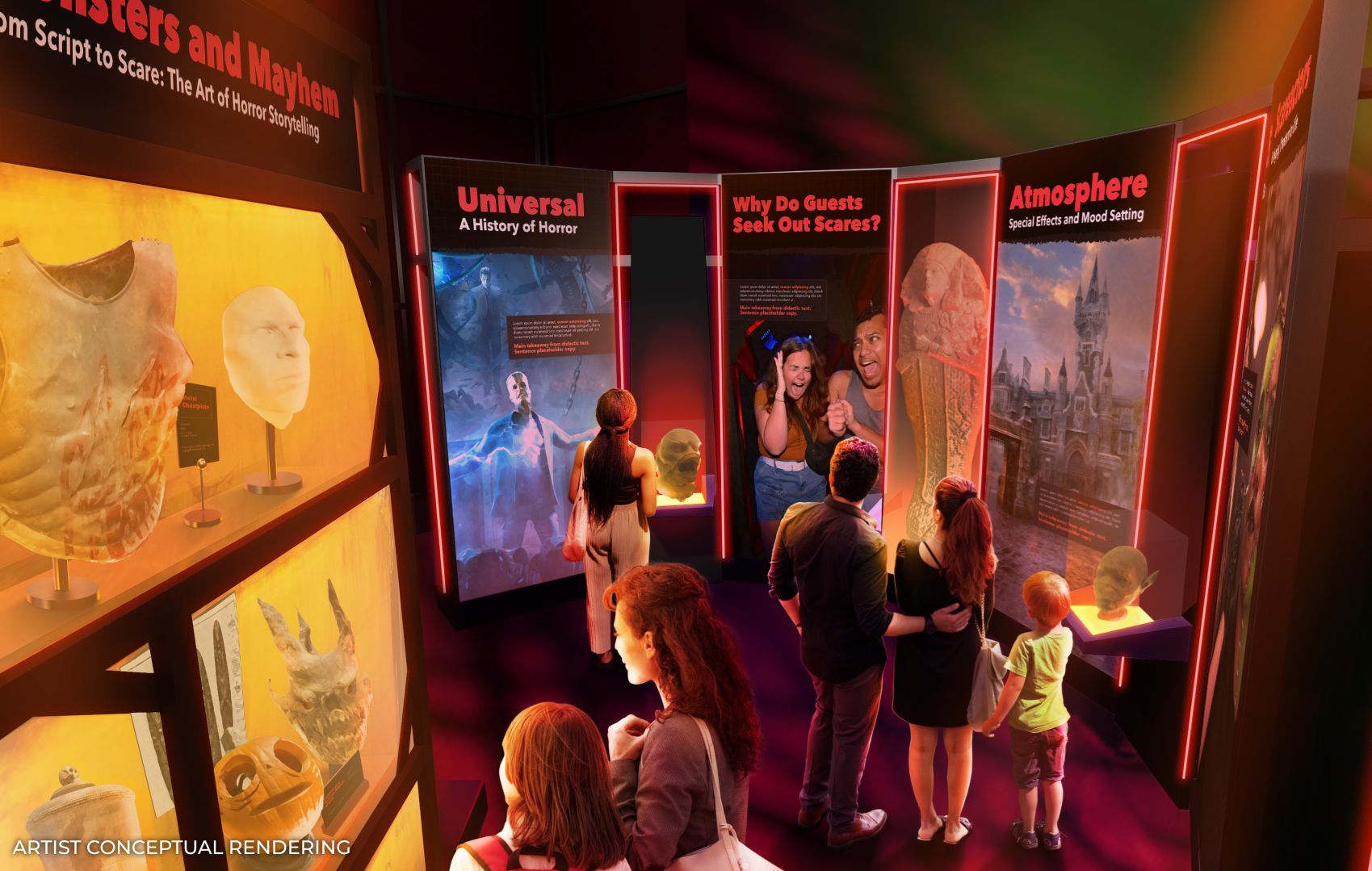
Renderings of The Franklin Institute’s world premiere of “Universal Theme Parks: The Exhibition” February 14, 2026 – September 7, 2026.
Philly is America’s birthplace. Our 250th birthday energy can’t be outdone.
From the looks of it, it won’t be.
Philadelphia Art Museum
The Philadelphia Art Museum has three major shows in 2026.
Noah Davis
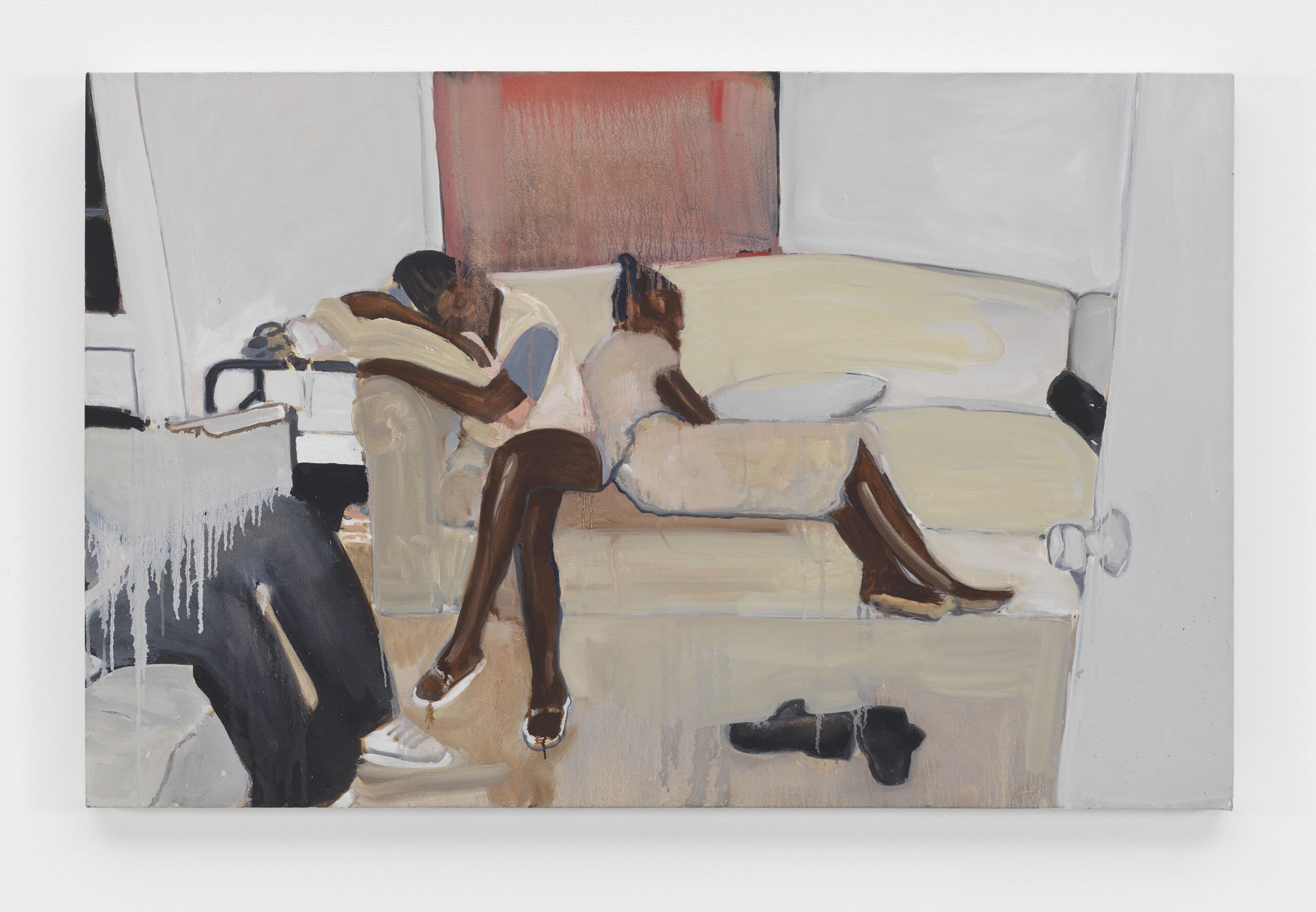
The art museum’s Morgan, Korman, and Field galleries will feature the work of the late African American artist Noah Davis (1983-2015). Davis’ paintings, sculpture, and works on paper capture the history and intricacies of American Black life from antebellum America through his untimely death. Jan. 24-April 26.
“Untitled Girls” This painting by Noah Davis will be on display in the Philadelphia Art Museum’s 2026 exhibition named after the late artist
A Nation of Artists
Paintings, furniture, and decorative arts from Phillies managing partner John Middleton and his wife, Leigh, will center the “A Nation of Artists” exhibit, telling the 300-yearslong story of American creativity. The exhibit is a joint project between the Philadelphia Art Museum and the Pennsylvania Academy of Fine Arts and is billed as “the most expansive presentation of American art ever mounted in Philadelphia.” Opens April 12.
Rising Up
2026 marks the 50th anniversary of the release of the first Rocky film. To coincide, the Art Museum in April will open “Rising Up: Rocky and the Making of Moments” in the museum’s Dorrance galleries. The exhibit will explore how the Rocky statue outside the museum brings people together. April 25-Aug. 2.
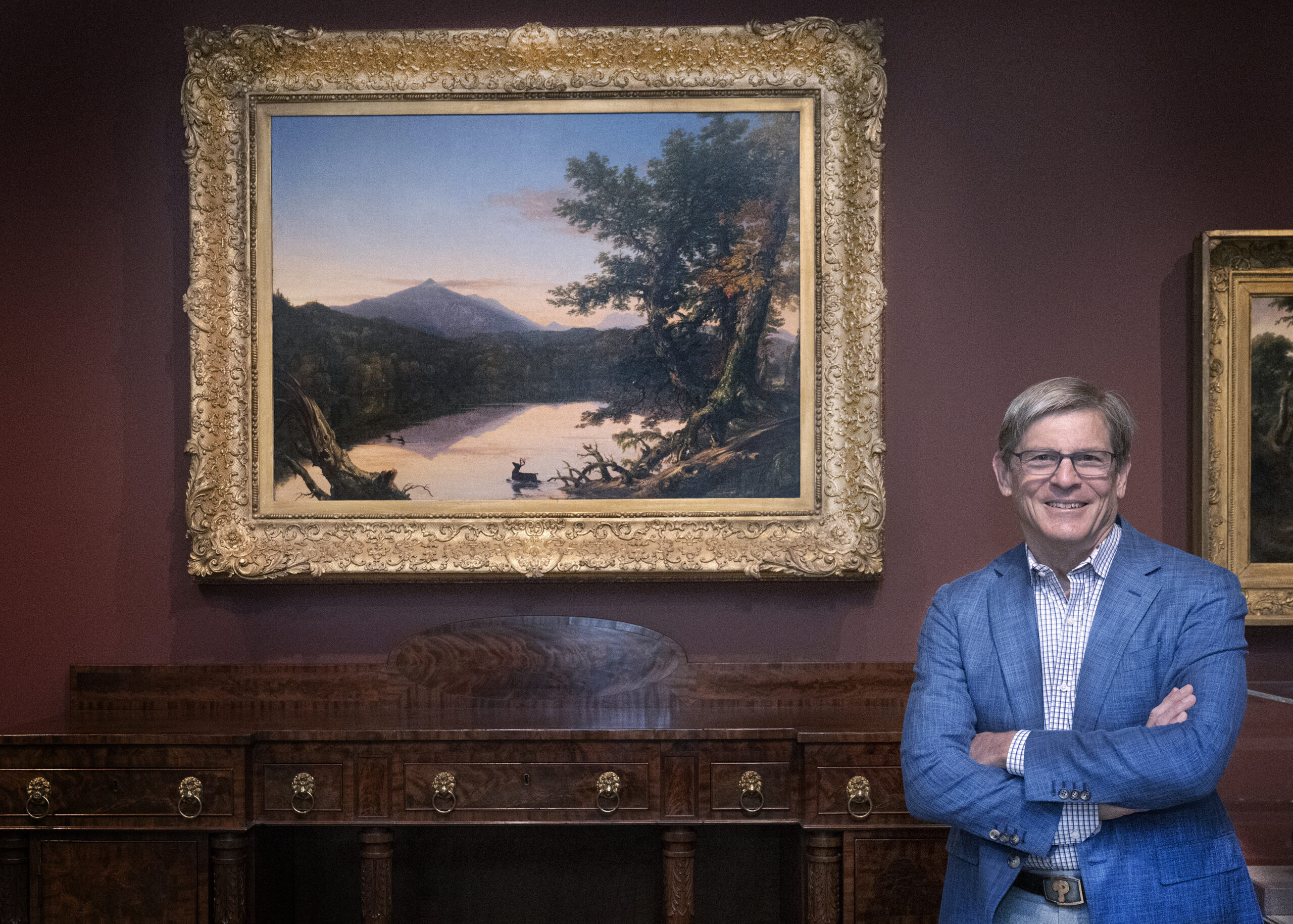
Phillies owner John Middleton is photographed next to a painting to his left, part of his personal collection and soon to be exhibited at the Philadelphia Museum of Art.
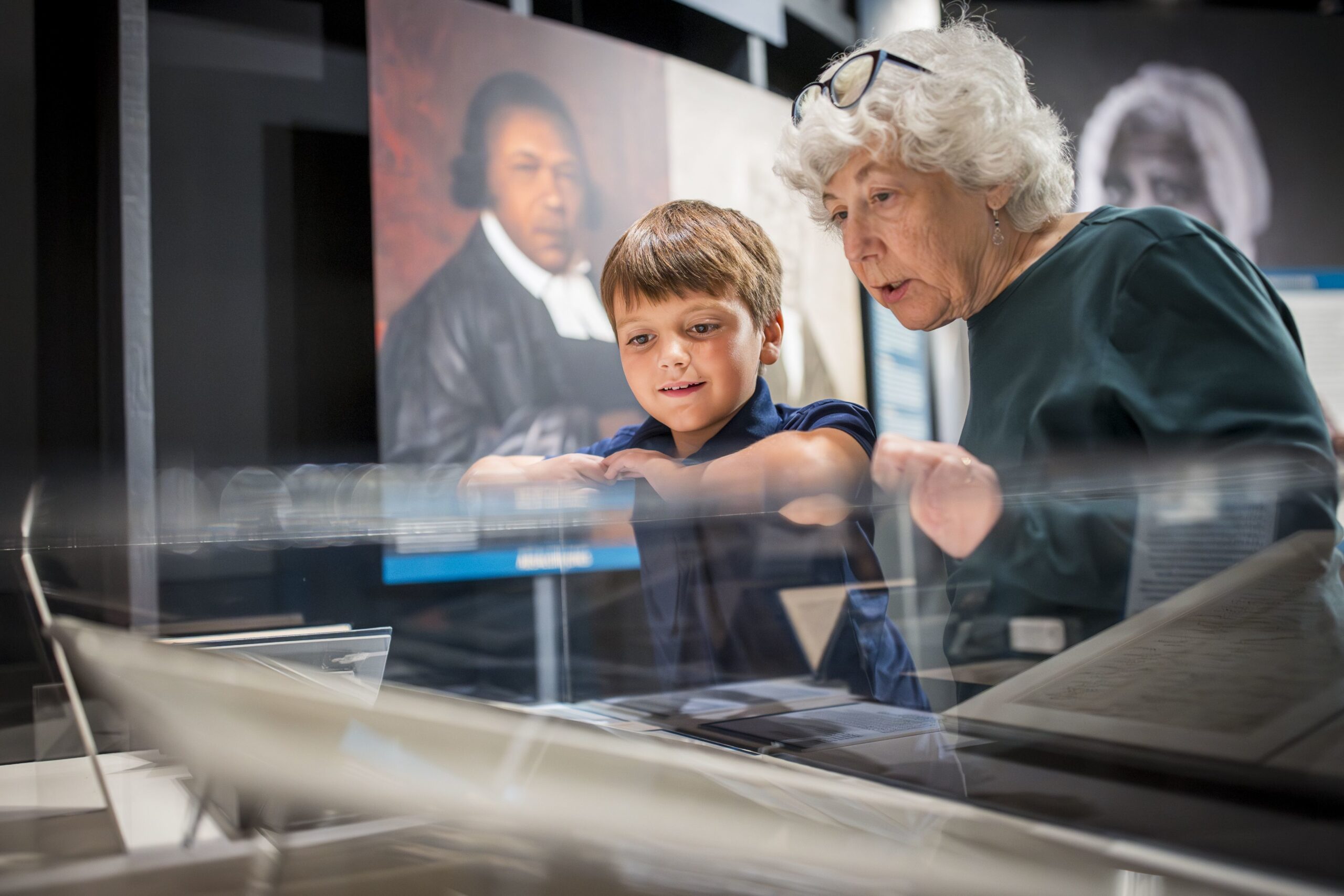
Visitors at the Museum of the American Revolution in front of a portrait of Absalom Jones, abolitionist and founder of The First African Episcopal Church of St. Thomas. Jones’ writings are on display.
Penn Museum
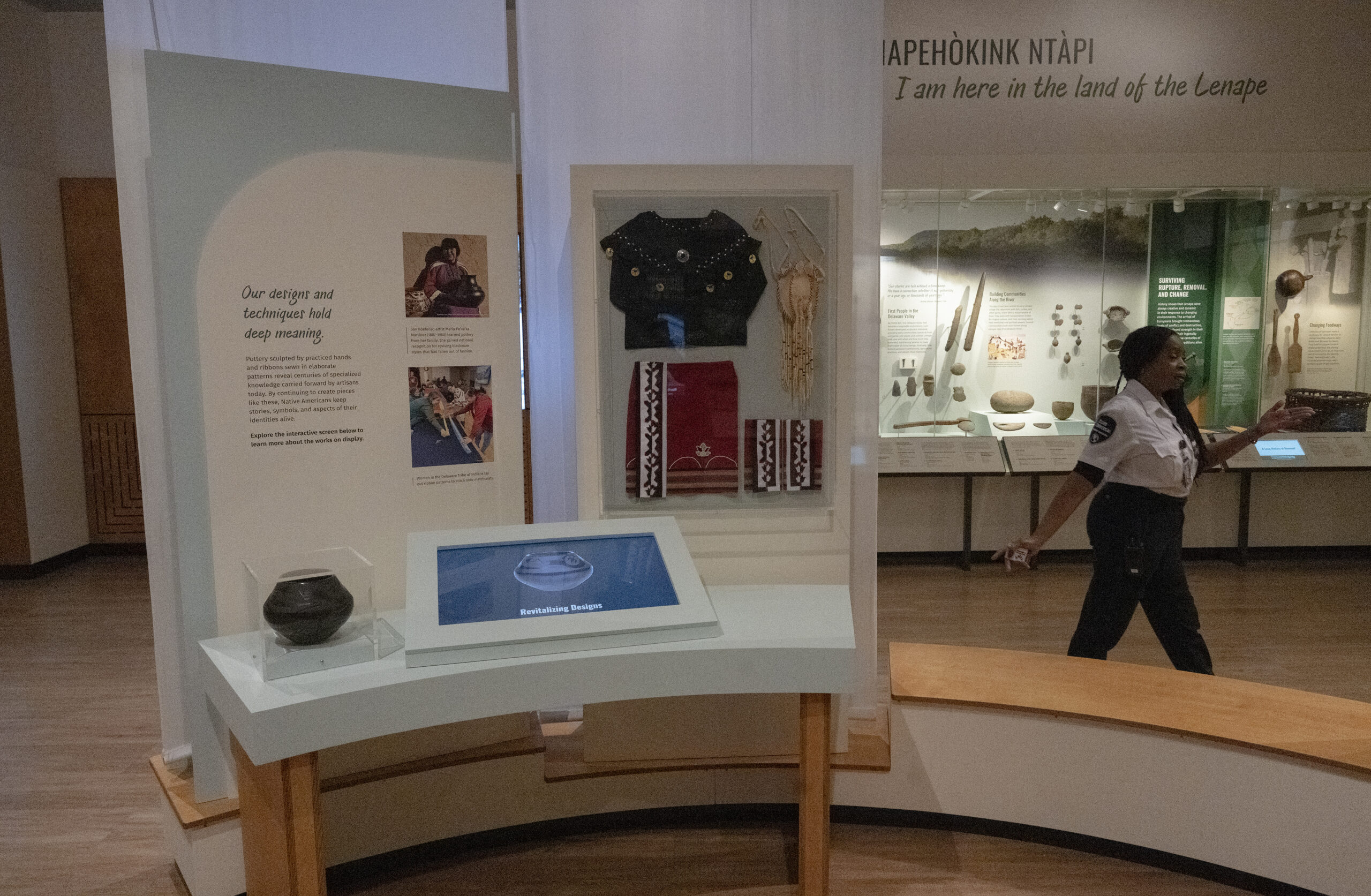
Spear points dating to 3,000 B.C., centuries-old bowls, and 19th century beaded collars are a few of the items that illustrate the lives Lenape Indians led fishing on the banks of the Schuylkill and hunting in Fairmount Park. These are on display at Penn Museum’s new Native North American gallery. Visiting curator Jeremy Johnson chose these artifacts because, he said, they best “tell the story of his people — who the Founding Fathers tried to erase.” Through 2027.
A gallery of Native American art is displayed at the Penn Museum on Friday, Nov. 21, 2025, in Philadelphia. As celebrations of Native American culture and precolonial Philadelphia plants grow, museums across the city prepare for America’s 250th birthday.
Weitzman National Museum of American Jewish History
On Nov. 16, 1776, the Andrew Doria brigantine arrived in the Caribbean on the British colony St. Eustatius, waving the first national flag of the United States. The Jewish merchants and English settlers, treated poorly by their antisemitic Anglican monarchs, greeted the newly minted Americans with a 13-cannon salute. In that moment, St. Eustatius became the first country to recognize America’s sovereignty.
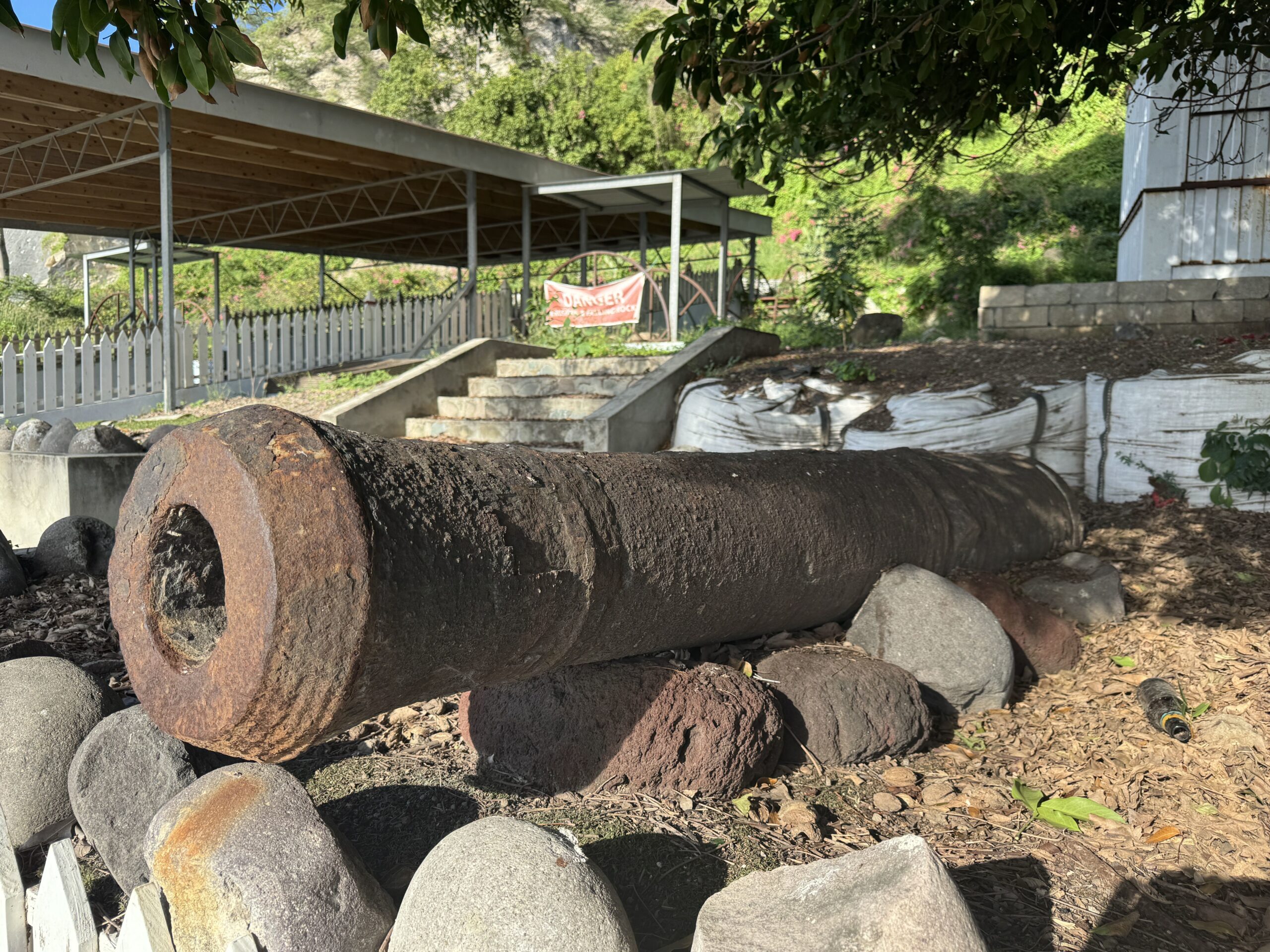
Cannon from the shores of St. Eustatius much like those fired in the 18th century that will will be on display during “First Salute.” 250tharts-12-28-2025
Weitzman National Museum of American Jewish History’s“The First Salute” exhibit will recount this largely untold story — including how the Jewish merchants smuggled the Americans’ gunpowder in tea and rice bags, giving Pirates of the Caribbean meets Hamilton vibes. Artifacts on display will include 18th-century currency, a series of paintings from prominent Jewish Philadelphian Barnard Gratz’s art collection, and an actual cannon shot from the island’s shores. From April 23, 2026, through April 2027.
National Constitution Center
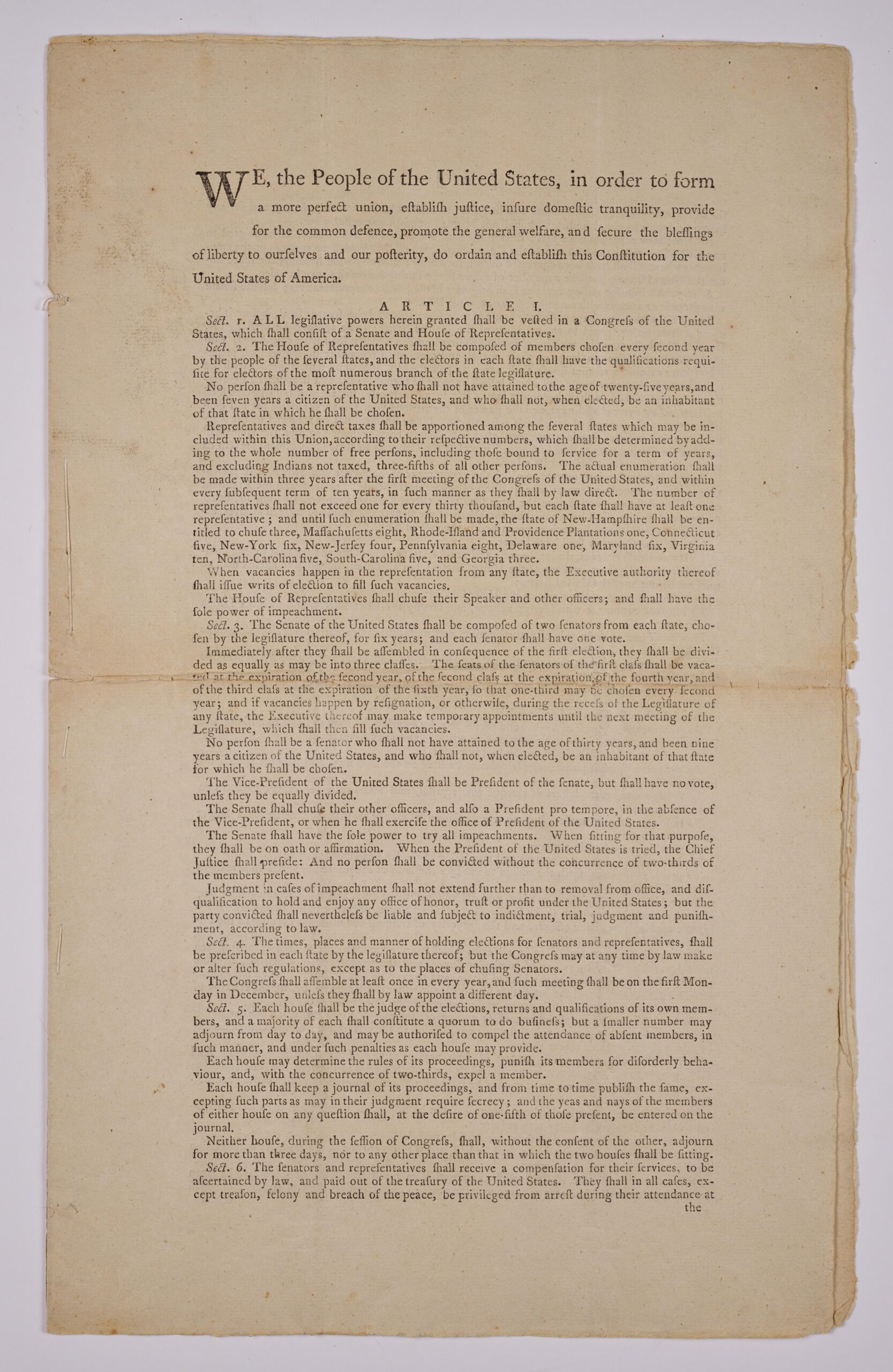
Centered around a rare, centuries-old copy of the U.S. Constitution — a gift from billionaire hedge fund manager Kenneth C. Griffin — the National Constitution Center will present “America’s Founding.“ The gallery will be dedicated to the exploration of our early, colonial principles that led our fight for independence. How do they stand up now? Opens Feb. 13.
This original copy of the U.S. Constitution, one of only 14, was donated to the National Constitution Center by billionaire hedge fund manager Kenneth C. Griffin. It will be featured in the Constitution Center’s upcoming “America’s Founding” exhibit.
A second gallery will explore how the Constitution defines roles and balances power between the legislative, judicial, and executive branches of government. Opens in May.
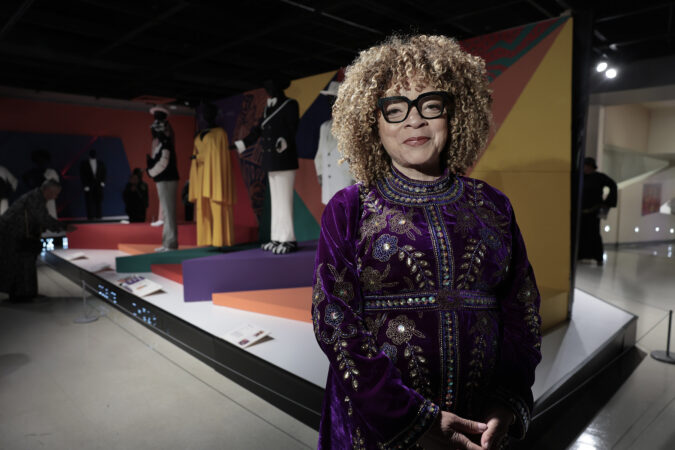
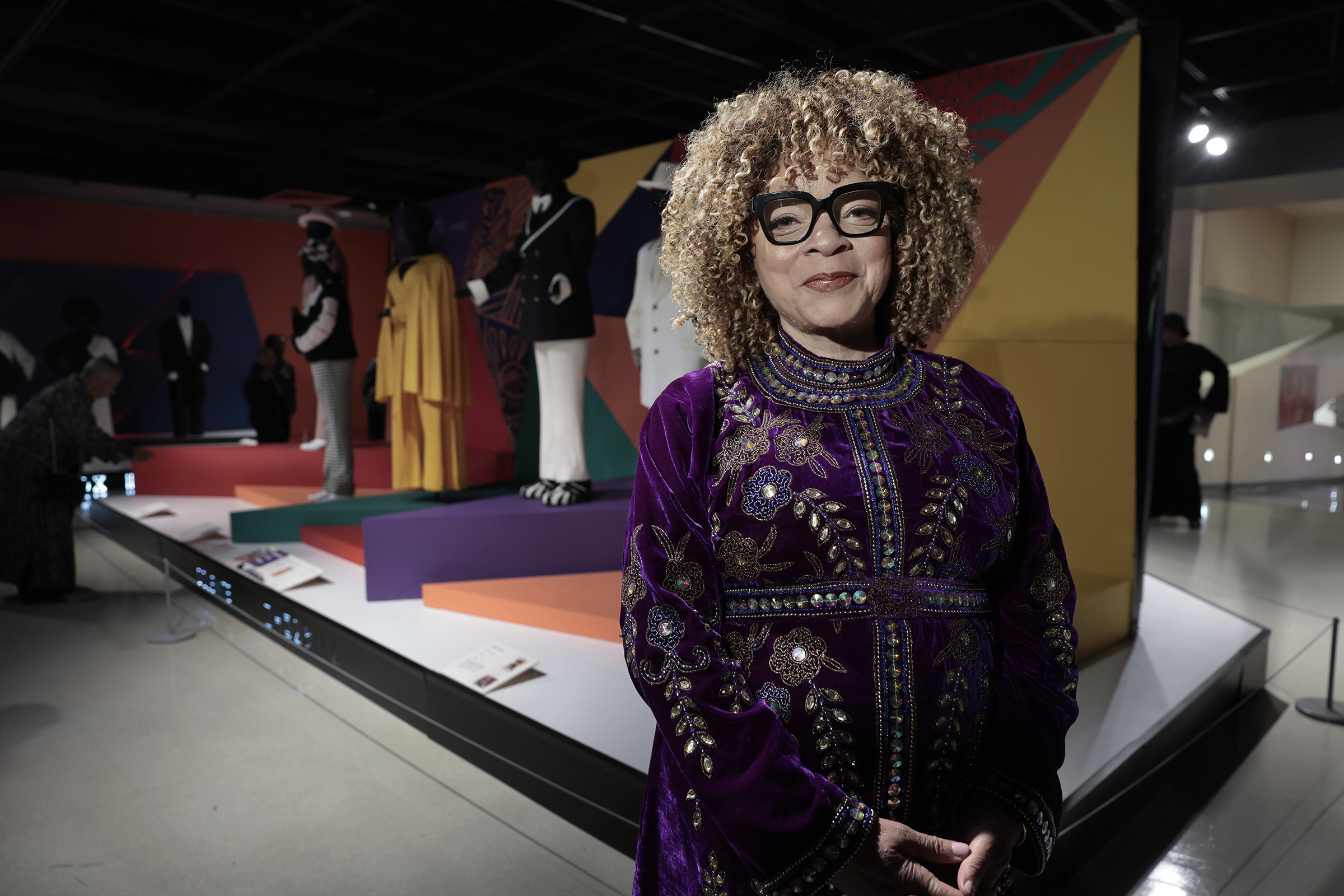
Ruth E. Carter pauses briefly during the “Ruth E. Carter: Afrofuturism in Costume Design” opening gala at the African American Museum in Philadelphia on Saturday, Nov. 1, 2025.
In October 2026, AAMP will premiere the extension of its “Audacious Freedom” exhibit. Currently on the ground floor, the exhibit is a study of Black Philadelphians from 1776 to 1876. The expanded show will bring “Audacious Freedom” up to present day and will include 20th-century artists and educators, from Charles Blockson to Jill Scott.
Woodmere Art Museum
Inspired by Philadelphia illustrator and friend of WoodmereJerry Pinkney, the Chestnut Hill museum’s Semiquincentennial show, “Arc of Promise,” acknowledges America’s painful histories of slavery, injustice, and displacement of its Indigenous people while affirming its capacity to rebuild, renew, and evolve. Featuring art by Philadelphians dating to 1790, “Arc of Promise’s” paintings, sculptures, maps, and flags explore what freedom and justice for all truly means. Opens June 20.
The Academy of Natural Sciences of Drexel University
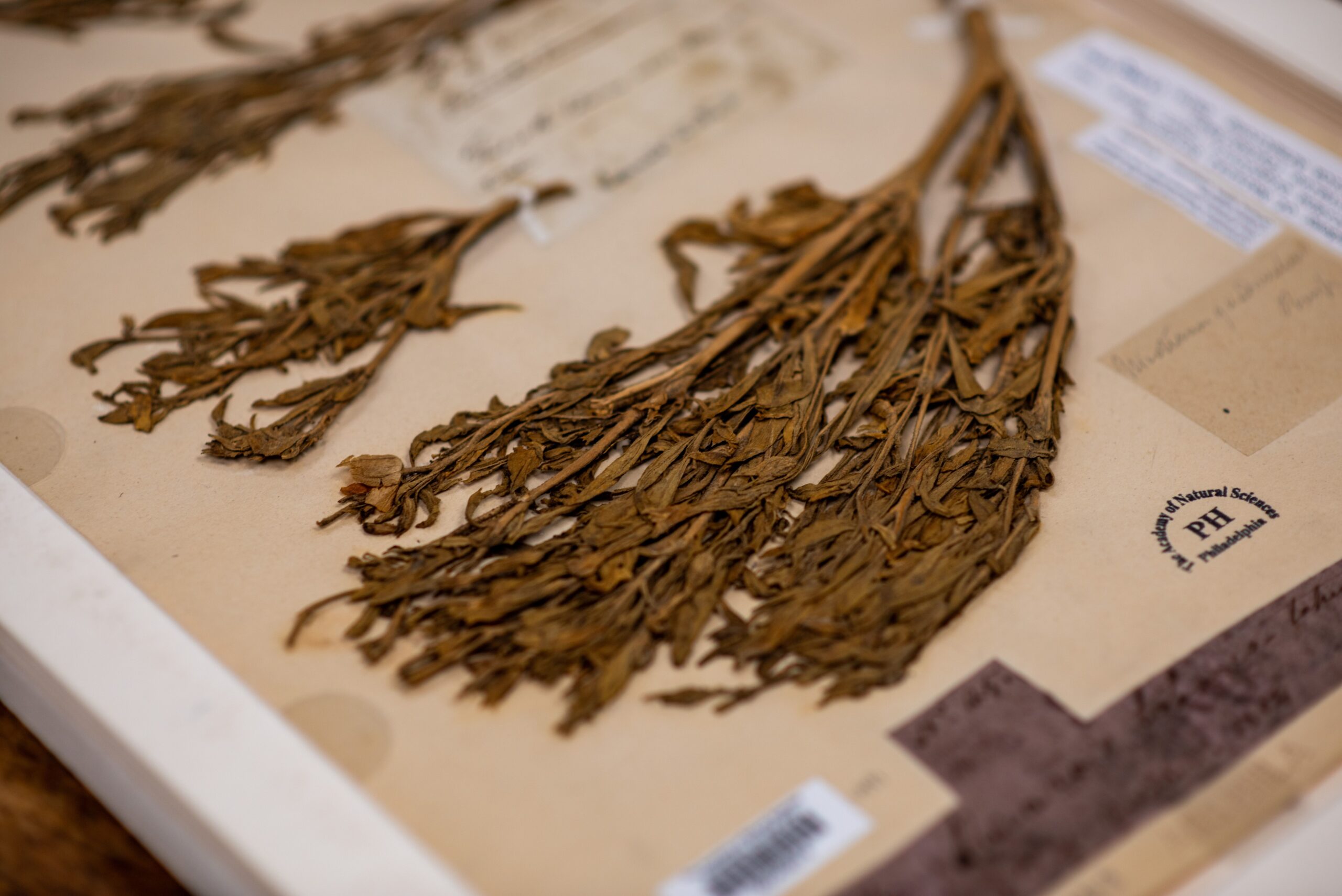
In collaboration with California State University ethnobotanist Enrique Salmón, the Academy of Natural Sciences at Drexel University will debut “Botany of Nations: Indigenous Ecological Knowledge and the Lewis & Clark Corps of Discovery.” These centuries-old plants, collected by explorers Meriwether Lewis and William Clark, were a gift to Philadelphia’s American Philosophical Society from Thomas Jefferson. Organizers hope the selection of now-pressed plants — prairie turnip, camas root, and Western red cedar — will be a vegetative portal to the Indigenous perspective in American frontier life. From March 28, 2026, through Feb. 14, 2027.
Samples from Botany of Nations. Academy of Natural Sciences of Drexel University, March 28, 2026 – February 14, 2027
The Clay Studio: Center for Innovation in Ceramic Art.
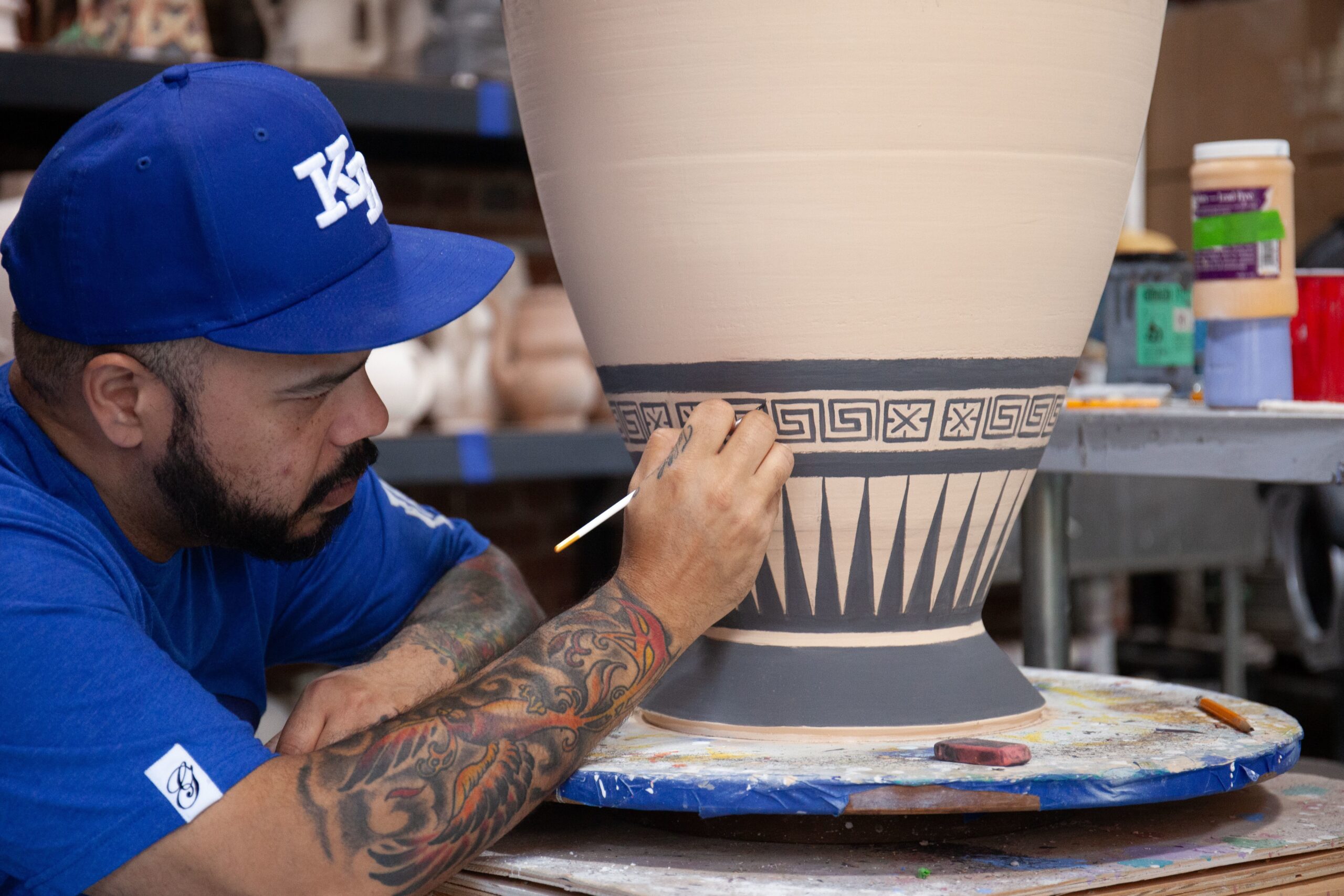
Twenty-five artists from 20 Philadelphia cultural institutions will present projects that show how the definition of independence evolved from 1776 through 1876, 1926, 1976, and 2026 under the umbrella of the Clay Studio. The exhibit, “Radical Americana,” will start with a compelling show by Kensington potter Roberto Lugo on April 9. Artists will mount additional shows at participating institutions throughout the year, including at the Museum for Art in Wood and Cliveden Historic House. A full list is available at theclaystudio.org. Opens April 9.
Roberto Lugo is shown working on one of his Greek vases that is now part of a new exhibition, “Roberto Lugo / Orange and Black” at Art@Bainbridge, a gallery project of the Princeton University Art Museum
Mural Arts Philadelphia
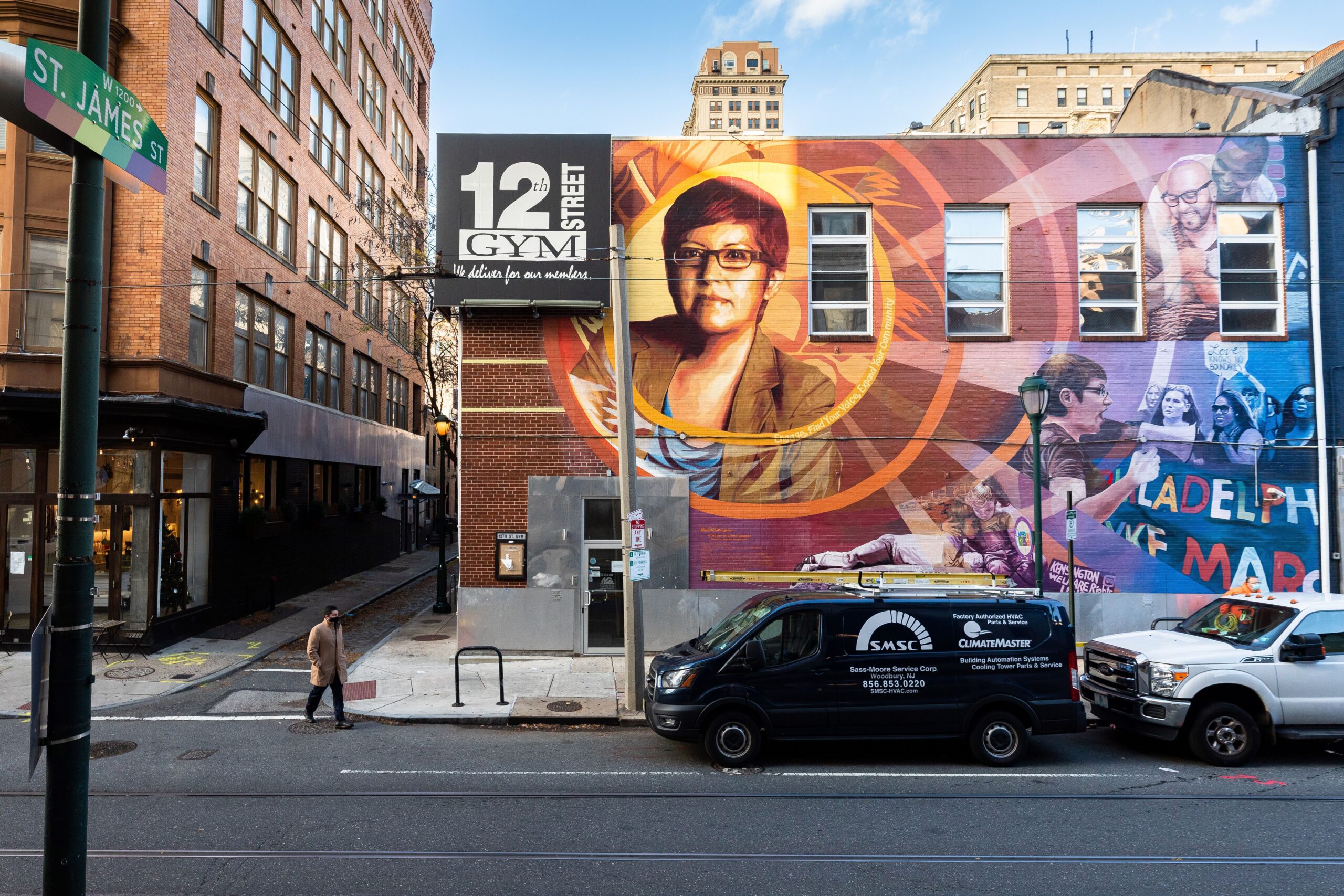
Mural Arts is working on several projects that will spruce up the city in 2026. That includes a new focus on the city’s entryways, the restoration of several murals, and a collaboration between Free Library of Philadelphia in a community printmaking project. At least three new murals will debut and include a tribute to artists Questlove (of the legendary Roots crew) and Boyz II Men. A refurbished mural in honor of Philadelphia’s first director of LBGTQ affairs, the late Gloria Casarez, will be unveiled. Mural Arts also is partnering with the Philadelphia Historic District on sculptures for next year’s 52 Weeks of Firsts programming and with the Bells Across PA program to create Liberty Bell replicas in neighborhoods throughout the city.
A rendering of a tribute to Gloria Casarez City of Philadelphia Mural Arts Program, Michelle Angela Ortiz, 12th Street Gym, 204 South 12th Street.