A video of a former WHYY intern yelling expletives and pepper-spraying a local influencer on a SEPTA bus is going viral on conservative media.
During the encounter on Monday afternoon, 22-year-old Paulina Reyes called 22-year-old Francis Scales a “fascist” and “racist.” Reposts of the video capturing the incident have since garnered millions of views on social media.
The video depicts Reyes accusing Scales of insulting Muslim people, Black people, and Latino people in posts on his website. Reyes then proceeds to pepper-spray him in the face while Scales’ friend and colleague films.
Scales runs a website called Surge Philly on which he posts videos of himself interviewing people at protests. He became known for provoking District Attorney Larry Krasner at a town hall and organizing a protest against him.
Social media accounts, including I Meme Therefore I Am, which has more than 842,000 followers on X, and Libs of TikTok, which has 4.5 million X followers, launched the video and its two subjects into the national spotlight in the days following the encounter. Both social media accounts are known for posting and reposting content geared toward conservative audiences.
“BREAKING: Antifa agitator attacked two conservative independent journalists on a Philly bus, pepper spraying them, punching them, and trying to grab their phone. She needs to be identified and arrested!” I Meme Therefore I Am posted on X alongside the video on Monday night.
By Wednesday afternoon the post had 2.3 million views and 8,600 reposts.
Billionaire Elon Musk got involved, commenting “She has violence issues” on Surge Philly’s X post containing the video of the incident. His comment attracted 222,000 views.
Soon, the social media posts were linking Reyes to WHYY. Reyes interned there over the summer but neglected to update her LinkedIn profile to reflect that her internship had ended months ago. The lapse led people on social media to post about her as if she were still employed there and led to criticism of the public radio station.
“Hi @WHYYNews, why are your reporters pepper spraying independent journalists on the bus??” Libs of TikTok posted Tuesday morning.
Scales has capitalized on the attention, reposting several tweets from popular social media accounts containing the video and messages supporting him and condemning Reyes.
Meanwhile, Reyes said she has received “nonstop” phone calls from strangers around the country and has gotten private messages from people threatening to rape or kill her.
Reyes and Scales were peers at Community College of Philadelphia, where Reyes is still a full-time student studying communications and media. Scales was studying biology and got partway through his degree before leaving school and transitioning to full-time content creation, he said. He plans to go back and finish his degree eventually.
The two had crossed paths a few times at school and were familiar with each other at the time of the encounteron the Route 7 bus, they both said.
Reyes said she had an overall positive impression of Scales on their first few meetings, and felt he was trying to do right by the students in his capacity as student government president.
But her attitude changed during his tenure as president. She said she observed him condescend tostudents and staff of color and carried that behavior over to the content on his Surge Philly website once he left school.
When she saw him on the bus in South Philly, her initial intention was to have a civil conversation, she said. She planned on asking him why his videos do not offer multiple viewpoints on the issues discussed.
“I did not want to pepper-spray someone on a public bus,” she said. “This is not something I wanted to do.”
Scales soon started filming the confrontation “for my own safety,” he said, because “she was attacking me.”
Reyes said she asked him to stop filming and felt the anger building as he kept the camera rolling. Especially as it started to dawn on her that he would likely post this video online.
“I got mad and I wanted to defend myself because he wasn’t listening,” Reyes said. “I did what I thought was the safest thing to protect myself. I pepper-sprayed him in the face.”
Scales said he managed to dodge the first spray. Reyes then got off the bus.
Knowing this video was likely to reach Scales’ followers, Reyes returned to the bus and came at Scales again with insults about his videos.
“I wanted to make a message that the content he was making was harmful and it was hurting people,” Reyes said. “It was hurting communities that are trying to feel safe right now.”
She concluded her tirade by pepper-spraying him again, this time getting him in the eyes.
SEPTA is investigating the incident, which took place at 23rd Street and Washington Avenue, according to agency spokesperson Andrew Busch.
Philadelphia police did not respond to a request for comment. Nor did Community College of Philadelphia.
Scales said he posted the video online partly because it was such a shocking incident, but also, in part, because it felt aligned with the rest of the content on his website.
“I thought it was relevant,” Scales said. “She was calling me a racist and a fascist and then she committed violence because of what she thought I was.”
This was not Scales’ first time getting attacked for his interviews and posts, he said. He attributes the attacks to the lines of questioning he often pursues when interviewing people at protests. The protesters seem to sense he’s not “in their circle,” he said.
Some of Scales’ recent videos consist of him interviewing people at protests and on the street. He typically homes in on one question, such as “Do you think people have a right to disrupt ICE operations?” or “Do you believe in the concept of having a border?”
“They react aggressively and violently to anybody who they feel may not have their same worldview,” he said. “I think it’s a sign that what I’m doing is good and that I need to stay on this path.”
As for Reyes’ journalistic aspirations, she said she is nervous.
“My entire life has been feeling like it’s falling down now,” she said. “I’m just worried about how this would affect my future as a journalist.”
WHYY spokesperson Gary Bramnick responded to the incident with a statement clarifying Reyes “has no current affiliation, employment, or contractual relationship with our organization.”
Reyes said she has undergone years of treatment for borderline personality disorder and depression. She has been working on managing her emotions better, she said, but, in this moment, they got the best of her.
“I’m not a perfect person and I’m learning how to self-regulate better,” she said.
For Scales’ part, he said he does not feel safe returning to campus until the college makes a public statement in an effort to “denounce political violence.”
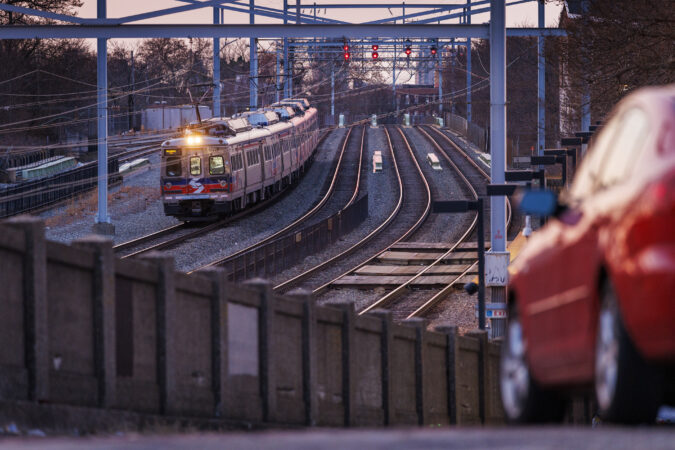
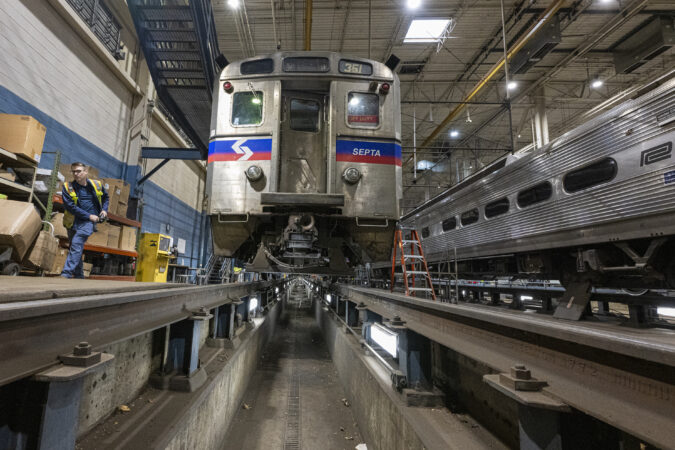
SEPTA Regional Rail riders experienced significant delays — at times, 30 minutes to an hour — at the peak of morning rush hour on Tuesday morning, after a train pulled electrical wires down.
A West Trenton Line train struck overhead electrical wires near Wayne Junction train station in the Nicetown section of Philadelphia at 7:45 a.m., said SEPTA officials.
The train lost power and was tangled in the wires it had pulled down.
Marie Pollock, 24, who was on board, felt the train start to gradually slow down before quickly and forcefully coming to a stop. Pollock could see wires hitting the train windows and noted that other passengers were startled during the collision.
“We were keeping the doors closed because it was so cold,” Pollock said. “We were on kind of a hill, so there wasn’t any room for SEPTA to get a shuttle, and the power was out on both tracks, so we couldn’t get a typical rescue train to us.”
Pollock, who had already been waiting a half-hour in 20-degree chill for her 6:17 a.m. West Trenton Line train before the ordeal, said passengers waited inside the stuck train for an hour and a half.
SEPTA crews had to cut through the downed wires to free the train and then used a diesel-powered train to tow the disabled one to Wayne Junction, where passengers took other trains into Center City.
Pollock’s four-hour journey didn’t end until 10 a.m. when she finally arrived at Jefferson Station.
Since then, service interruptions have been occurring primarily on the Warminster, Lansdale/Doylestown, and West Trenton lines. However, delays cascade throughout the rail system, leading to 15 to 45-minute delays on other lines, said SEPTA spokesperson Andrew Busch.
“Repairs are still continuing,” Busch said Tuesday afternoon, “but service has improved. Some minor delays, and we are advising passengers to plan for some extra time during rush hour, but we expect the evening commute to be better than this morning.”
There is currently no timeline for completed repairs.
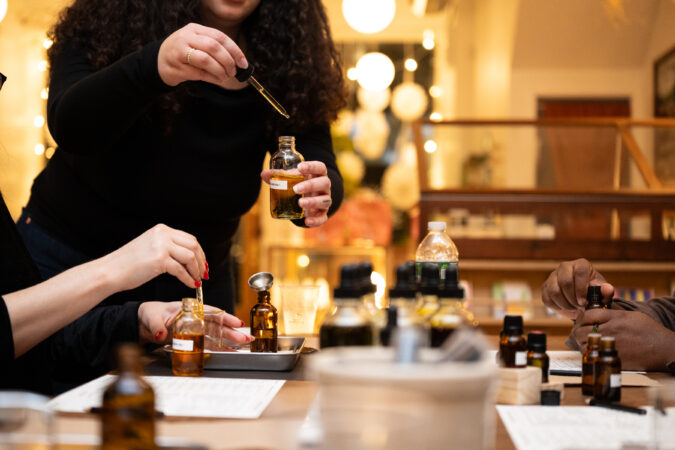
On a recent wintry evening at Queen Village’s Moon and Arrow, a group of 10 women poured essential oils into beakers, mixing them with carrier oils.
They’d gathered for a workshop led by Tasha Gear, founder of local brand Linear Beauty, who instructed as they created a formula for body oils.
The 10 women took a whiff of each other’s potions, commented on their notes, and took in the smells.
Here was a perfect picture of Philadelphia’s beauty scene, which is having a moment — not the glossy, influencer-backed boom of coastal cities, but something scrappier, smarter, and deeply local.
Across the city, indie founders are hand-batching serums, mixing skincare in one-kilogram beakers, and designing products meant to withstand SEPTA, summer humidity, and long work shifts.
Leila McGurk (left) laughs with Leah Antonia at a DIY body oil workshop organized by local skincare brand Linear Beauty at Moon and Arrow, a boutique in Queen Village on Thursday, Dec. 4, 2025.
They are united by a commitment to science, transparency, and community,
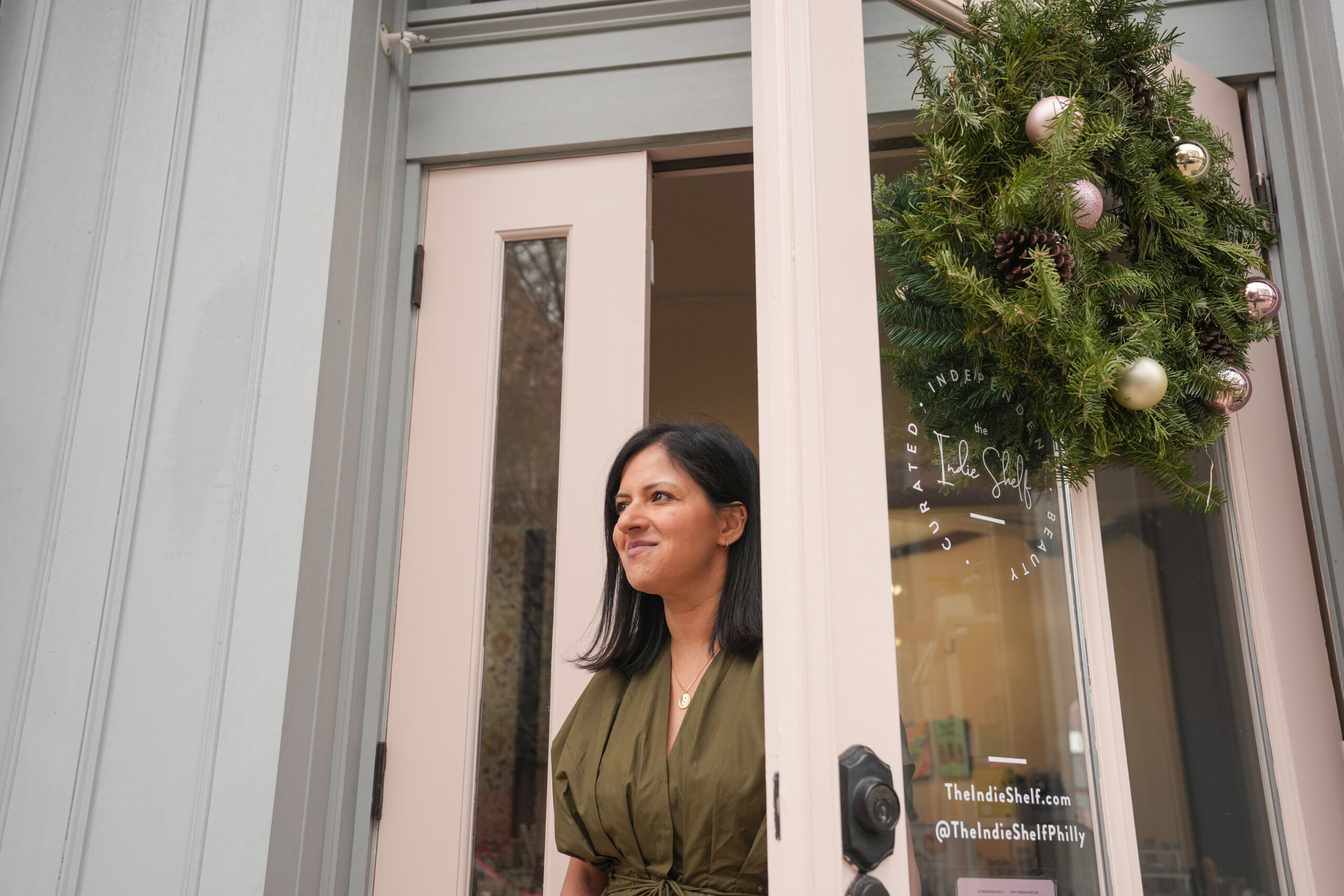
At the center of this shift is Indie Shelf in Grays Ferry and Malvern, where cosmetic scientist Sabeen Zia helps customers navigate an often confusing clean-beauty landscape.
“Clean beauty goes beyond ingredient lists,” the Main Line resident said. “It’s how a product is developed, packaged, and the values behind it.” Zia doesn’t draw up fear-based “toxic ingredient” lists. Instead, she relies on science-backed safety standards and direct conversations with product founders.
“People come in because they want to support small businesses, but they stay because they’re stunned by the changes in their skin,” she said.
Sabeen Zia runs Indie Shelf, which stocks a bunch of indie beauty brands. She also runs a brand called Muskaan that she sells at the store, in Philadelphia, December 11, 2025.
Before opening the shop in 2019, Zia ran her own makeup line, Muskaan Beauty, which was cruelty-free, vegan, gluten-free, and halal. It struggled to get visibility — a challenge she realized many indie founders shared. “Philly didn’t have many clean beauty shops at the time,” she said. “It felt like a real gap in the market.”
A gap that Indie Shelf aims to fill.
Other local founders, too, swear by that community-first ethos.
A former professor of English at Stockton University, Adeline Koh of Sabbatical Beauty, hand-batches high-concentration, K-beauty–inspired products, often using ingredients from neighborhood businesses, like Câphe Roasters and Baba’s Brew.
“I wanted formulas that actually deliver what they promise,” she said. “Philly has so much pride in Philly-owned businesses. That made me feel this would be a really good market to build in. People here show up for their community.” She’s based in the Bok building.
As for what feels uniquely “Philly” in Sabbatical Beauty’s identity, she doesn’t hesitate when asked.
“We’re unapologetic about who we are, and that shows up in our emphasis on diversity: skin tones, body sizes, age. We want to expand what beauty means, not narrow it.”
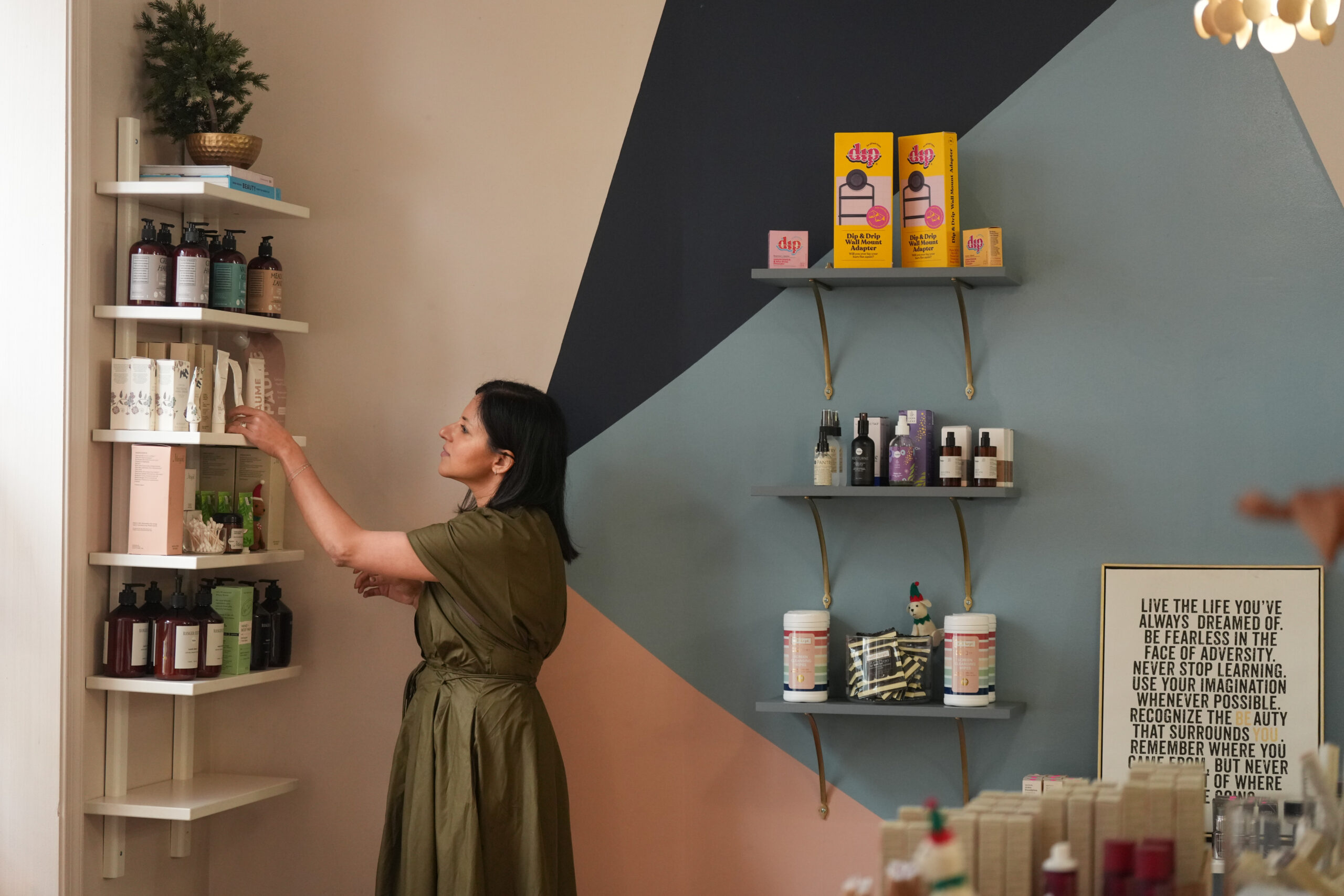
Sabeen Zia runs Indie Shelf, which stocks a bunch of indie beauty brands. She also runs a brand called Muskaan that she sells at the store, in Philadelphia, December 11, 2025.
The brand is sold at local shops and spas.
Sabbatical Beauty also pours back into the city’s maker ecosystem — donating masks and sanitizer during COVID, hosting holiday toy drives, running small-business markets, and partnering with the Equitable Skincare Project to fund donation facials for the trans community.
It’s a similar story with brow artist Tara Giorgio.
When the Lancaster native grew frustrated by the discontinuation of her favored brow beauty products, she created Brow Gang — her line of high-pigment brow mousse and powders that are, as she says, made “for real life.”
Her products are sold in her two salons — in West Chester and Northern Liberties — and online.
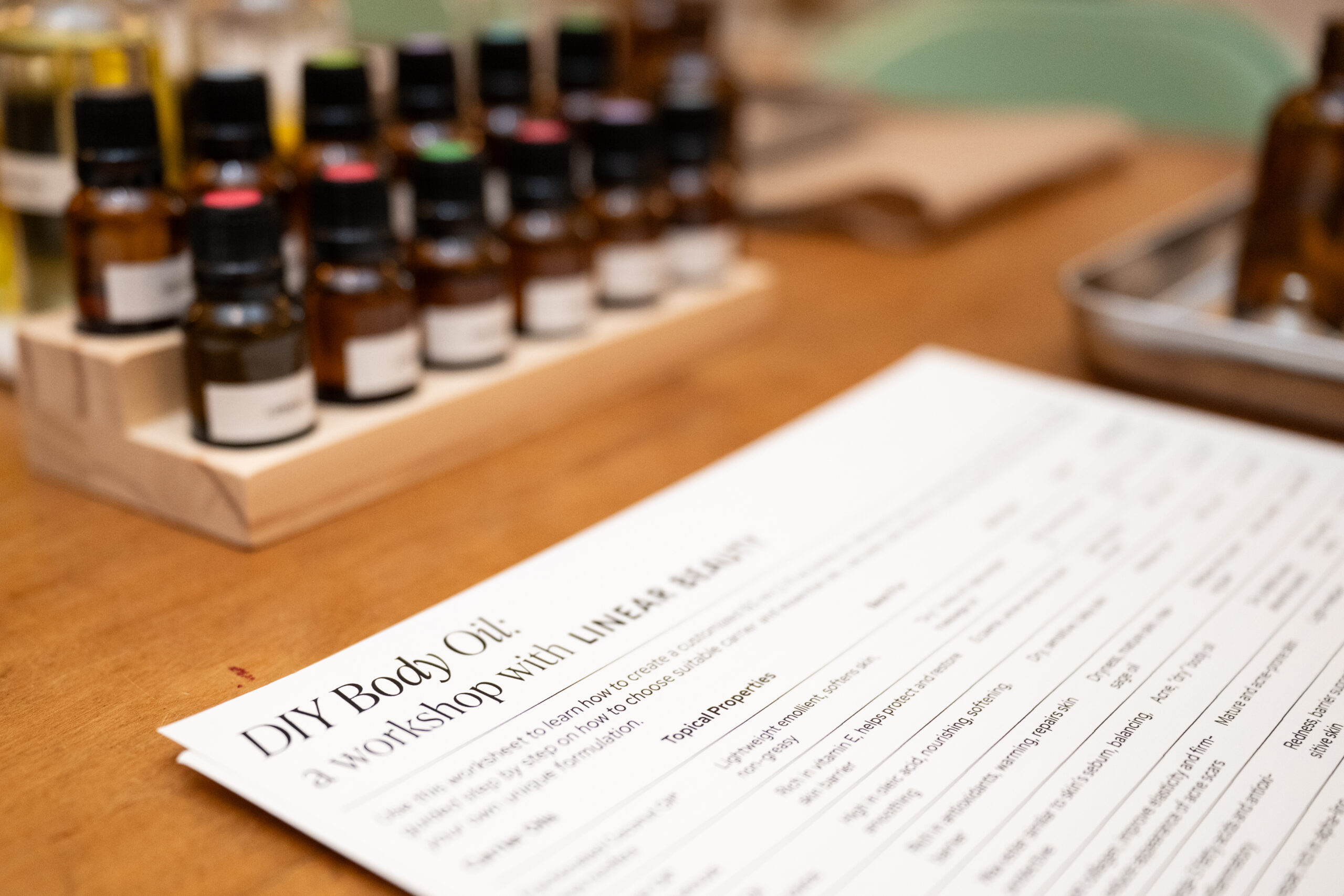
Essential oils and an instruction sheet are pictured before Linear Beauty’s DIY body oil workshop at Moon and Arrow, a boutique in the Queen Village section of Philadelphia, on Thursday, Dec. 4, 2025. Linear Beauty is an independent Philadelphia-based botanical skincare brand founded by Tasha Gear.
Philly’s beauty customers, she said, are unique because this city is “a true melting pot — all cultures, all backgrounds, all brow textures, all lifestyles. We don’t like fluff in Philly and we want things that work and are priced reasonably.”
People here are busy and “they want products that make their lives easier — fast routines, long-lasting wear, and formulas that hold up through humidity, work shifts, SEPTA, the gym, real everyday life.”
Cosmetic chemist Tina D. Williams feels “there’s still a real lack of handmade, natural skincare” in the local market to feed that need.
Her Center City-based DVINITI Skincare crafts small-batch, food-grade blends of natural oils like argan, jojoba, and almond, which are designed for customization. Her philosophy, too, is rooted in the city: “The first ingredient in every DVINITI product is love — and this City of Brotherly Love is the perfect home for a brand built on self-care.”
Williams, who grew up in the Olney area and graduated from the Philadelphia High School for Girls, is all too familiar with the city’s cold winters and hot summers. “I grew up here, so I understand the kind of skincare [Philly] people need,” she said. She also sees the city’s scientific backbone as a natural fit for a chemistry-driven brand. “Philly is a tech hub and a leader in research and development. DVINITI is positioned well to scale and grow with the local resources here to support our clients’ needs.”
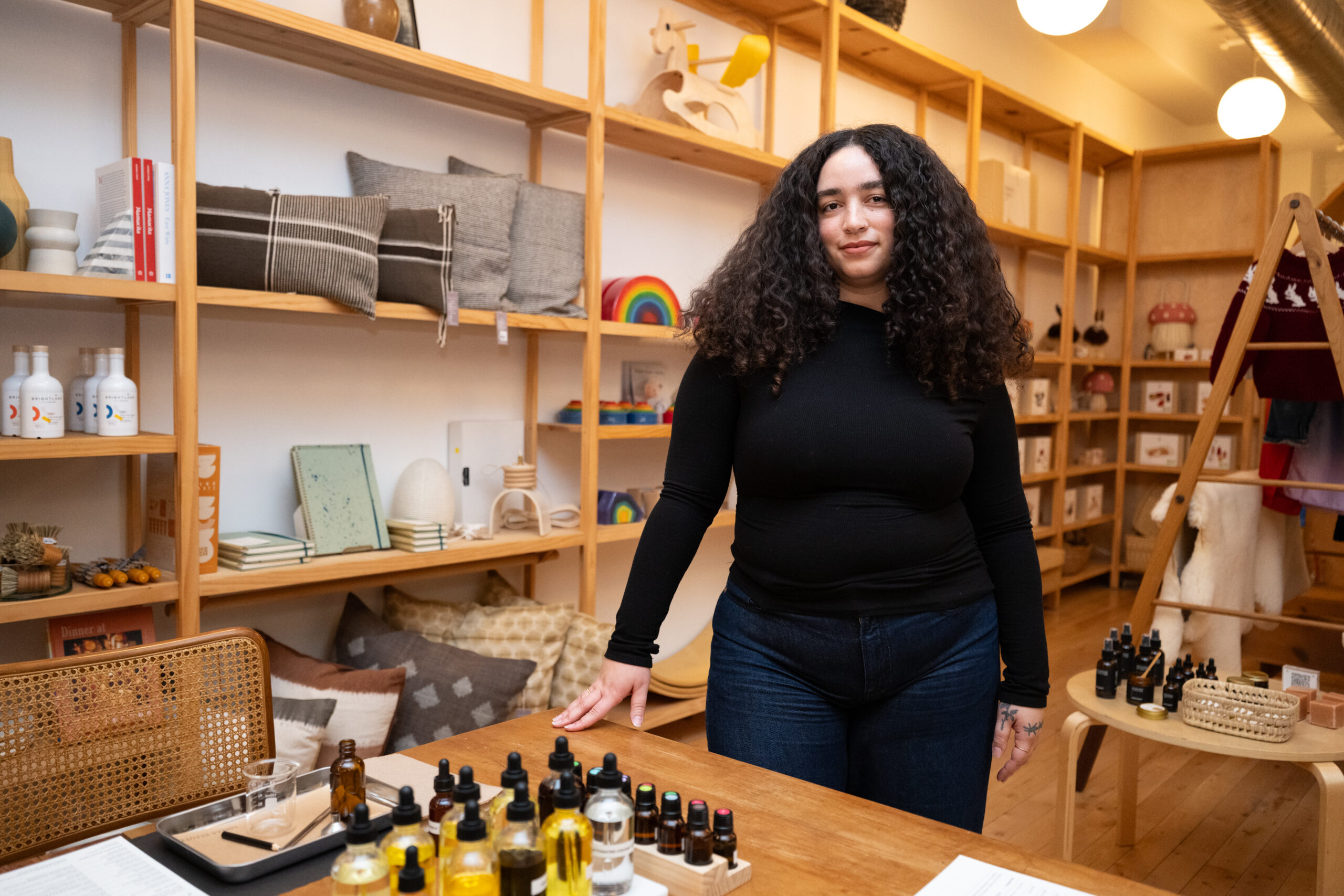
Linear Beauty founder Tasha Gear poses for a portrait at a DIY body oil workshop hosted by the beauty brand at Moon and Arrow, a boutique in the Queen Village section of Philadelphia, on Thursday, Dec. 4, 2025.
Another brand shaping the city’s beauty identity is Haiama Beauty, a Black woman–owned haircare line built in Philadelphia “because I love this city wholeheartedly,” said founder Allison Shimamoto.
Haiama’s Grow & Strengthen Elixir takes four months to make and uses premium, organic argan oil — not because it’s the most profitable, but because it’s the right way to make it.
Small-batch production allows the brand to source intentionally from BIPOC, LGBTQIA+, and women-owned suppliers and to design products that work across all curl patterns— from the Leona red-light scalp stimulator to the multipurpose Everything Cream.
What resonates with her Philly consumers, Shimamoto said, is connection. “People here want to know who’s behind the brand.”
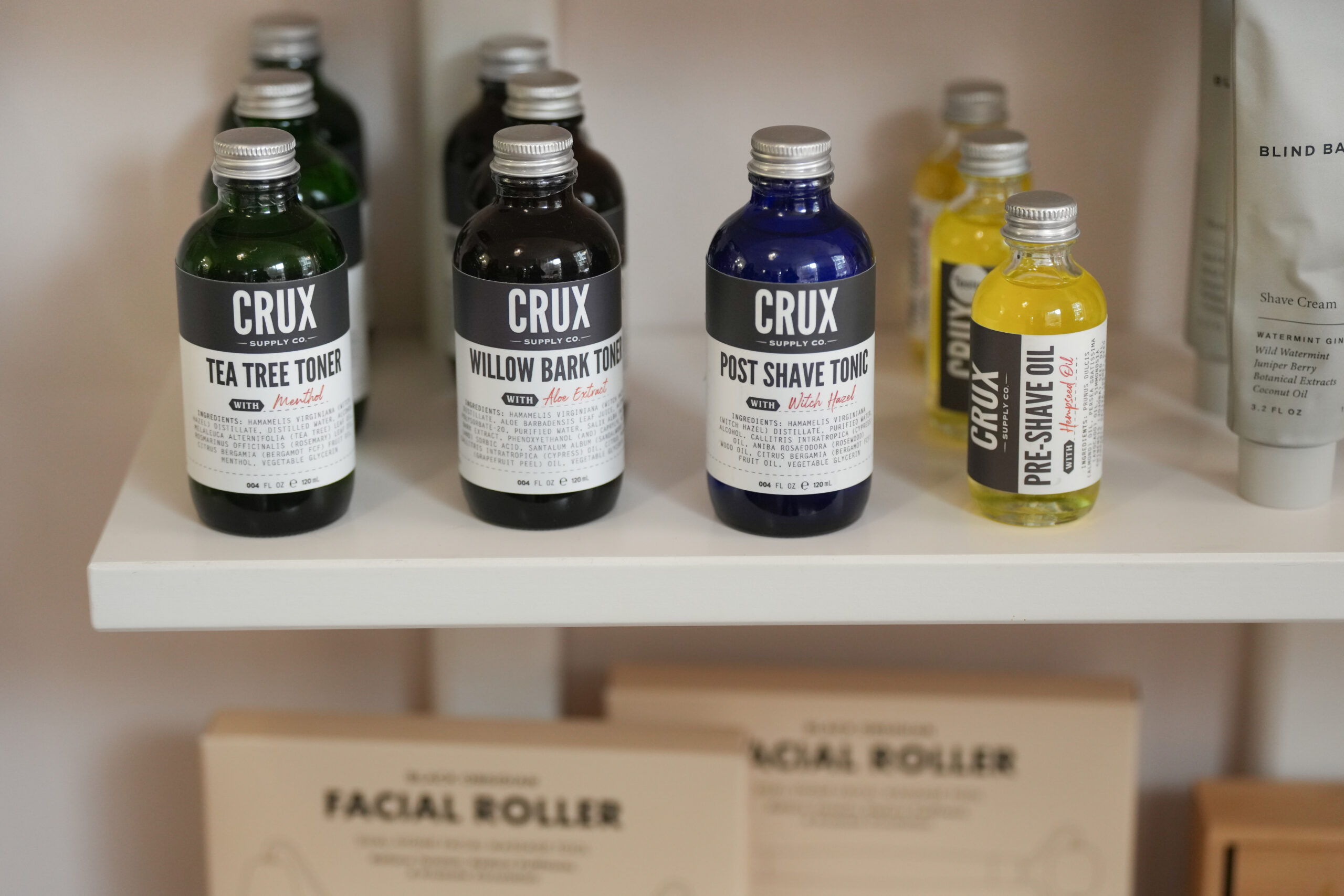
Linear Beauty products are pictured at a DIY Body Oil Workshop hosted by the brand at Moon and Arrow, a boutique in the Queen Village section of Philadelphia.
Markets like Made@Bok and Art Star have helped Haiama meet customers face-to-face, build community, and grow within the city’s tight-knit maker ecosystem.
Philadelphia’s indie founders agree that the city’s beauty identity is defined by three traits: creative, authentic, community driven.
“The passion for high-quality products and supporting small business truly sets Philly brands apart,” said Zia. Even small details — easy drop-offs, quick restocks, face-to-face conversations with founder-formulators — become part of the city’s distinctive customer experience.
Local customers meet founders in person, pick up their products, return for refills, and show up at pop-ups and farmers markets.
Products at Indie Shelf, which stocks a bunch of indie beauty brands.
Despite challenges like tariffs, supply-chain delays, and seasonal slowdowns, Zia remains hopeful. Her dream? “For Philly to be known as the city for indie beauty — a place where founders can scale without losing their authenticity.”
Gear, who moved to Philadelphia in 2019 after spending a decade working in New York City’s Package Free Shop, agrees.
“Philly is a pretty no-B.S. city,” she said. “That shows up in everything I make.”
This week’s column talks about heroes with feet of clay, SEPTA’s starts and stops, and America’s 250th birthday celebrations.
No one’s hero
Philadelphia Sheriff Rochelle Bilal is having her 15 minutes of fame this week, with her comments at a news conference alongside District Attorney Larry Krasner spreading across social media. After the killing of Renee Good by U.S. Immigration and Customs Enforcement agent Jonathan Ross in Minneapolis, Krasner stated that he would hold federal officers accountable for any violation of the law. Bilal warned that the feds “don’t want that smoke” and called ICE “fake wannabe law enforcement.” She even scored an interview with CNN’s Erin Burnett.
That’s all well and good, but there’s one big problem with Bilal’s position: The sheriff ultimately has no ability to protect Philadelphians from ICE.
Despite her title and natty uniform, it is Police Commissioner Kevin J. Bethel who serves as the city’s top law enforcement official, not Bilal. This is a good thing because the sheriff’s track record is disastrous.
Despite running for the office in 2019 as a reformer, Bilal began her tenure by firing Brett Mandel, her chief financial officer, just five weeks into his tenure. Mandel had flagged her use of what he described as a slush fund. A longtime good government advocate, Mandel objected to using city funds to pay for things like parking tickets and six-figure media consulting contracts.
While Bilal was basking in the media spotlight of talking tough against ICE, Bethel was not amused. Given Mayor Cherelle L. Parker’s clear strategy to avoid poking the orange bear, Bilal’s comments forced the commissioner to make clear in a statement that it is the Philadelphia Police Department that runs law enforcement in the city, not the sheriff.
If people are looking for a genuine local hero in the national crisis over immigration enforcement, why not opt for Keisha Hudson instead? Hudson, who leads the local Defenders Association, has put together a new unit specializing in immigration cases. An immigrant from Jamaica herself, Hudson has both the right job and the right life experience to help residents who have been mistreated by ICE.
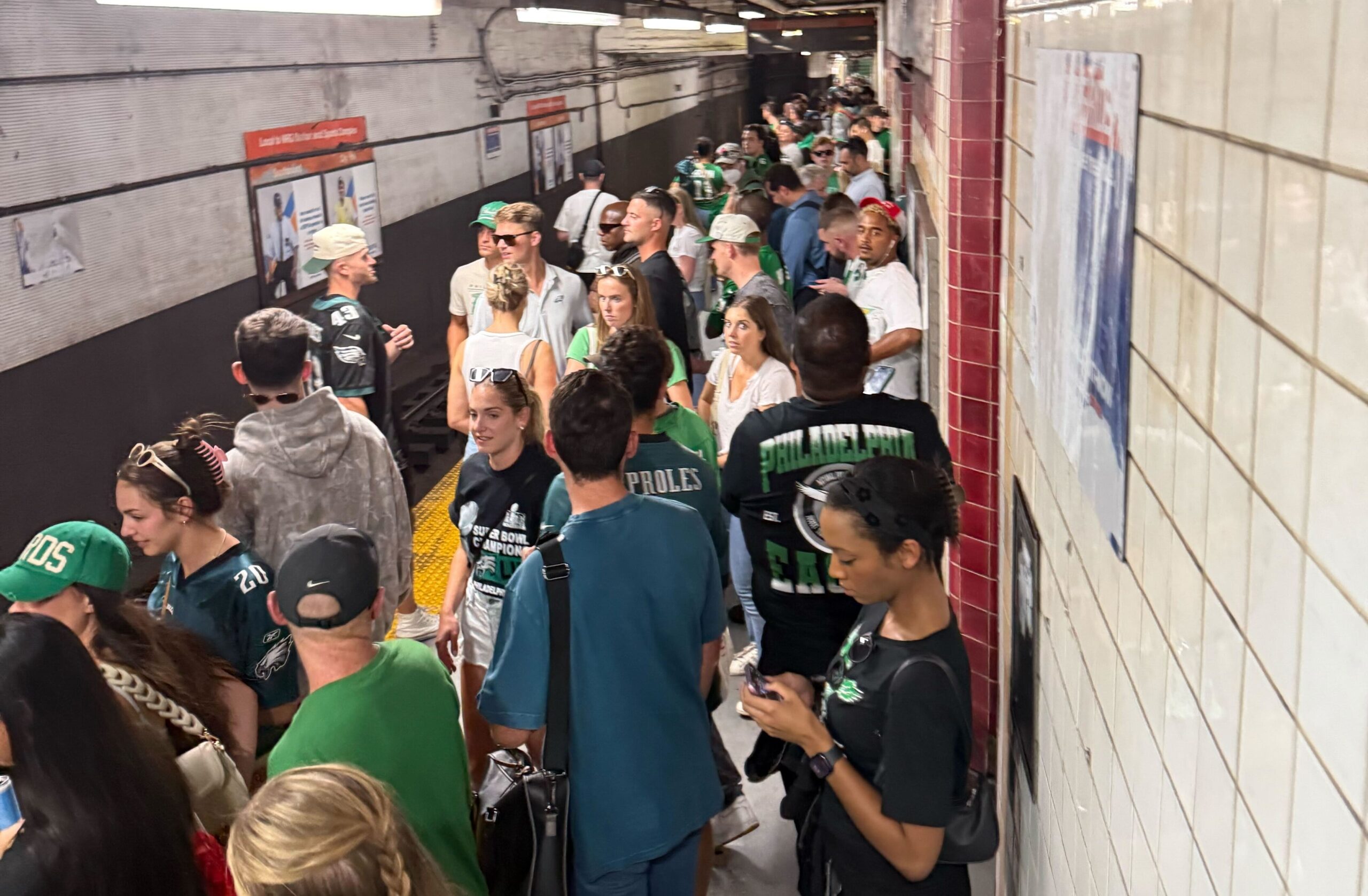
Eagles fans wait for a Broad Street Line train at City Hall station.
The wheels on the bus
During the yearslong debate over transit funding in Pennsylvania, one consistent drumbeat is that SEPTA needed to become more efficient if it wanted to get more support.
Of course, SEPTA already does more with less when compared with other major agencies, with cost-per-ride lower than in Boston and Washington, D.C. Additionally, trying to save money can sometimes cost agencies in the long run, or at the very least cost scarce political capital.
In fact, most of the current crises SEPTA faces are the result of trying to save money or insufficient political will. For example, better capitalized agencies would have replaced the Regional Rail fleet a decade or so ago. Meanwhile, the weekslong closure of the trolley tunnel happened because the agency tried using a new part — in the hope that it would be replaced less frequently and cost less.
Perhaps the Broad Street Line felt left out of the chaos because operations there have become a new pain point for riders. The 1980s Kawasaki trains are well-built. They are also nearly 45 years old. When I first started at The Inquirer five years ago, then-SEPTA General Manager Leslie Richards told me she hoped to avoid replacing the trains until the 2040s. Recent issues on that line make me question that timeline.
For weeks, the trains have struggled with mechanical issues. Riders have reported jam-packed trains that have been forced to skip stops, line adjustments, and other delays. According to a spokesperson, door faults and general vehicle malfunctions have contributed to the problems.
It all came to a head at the end of Sunday’s Eagles game.
After a door issue disabled a train near Snyder Station, already dejected fans were forced to wait until 9 p.m. to catch a ride home. SEPTA is spending $5 million to upgrade the traction motors, which should help. What’s really needed, however, are new trains.
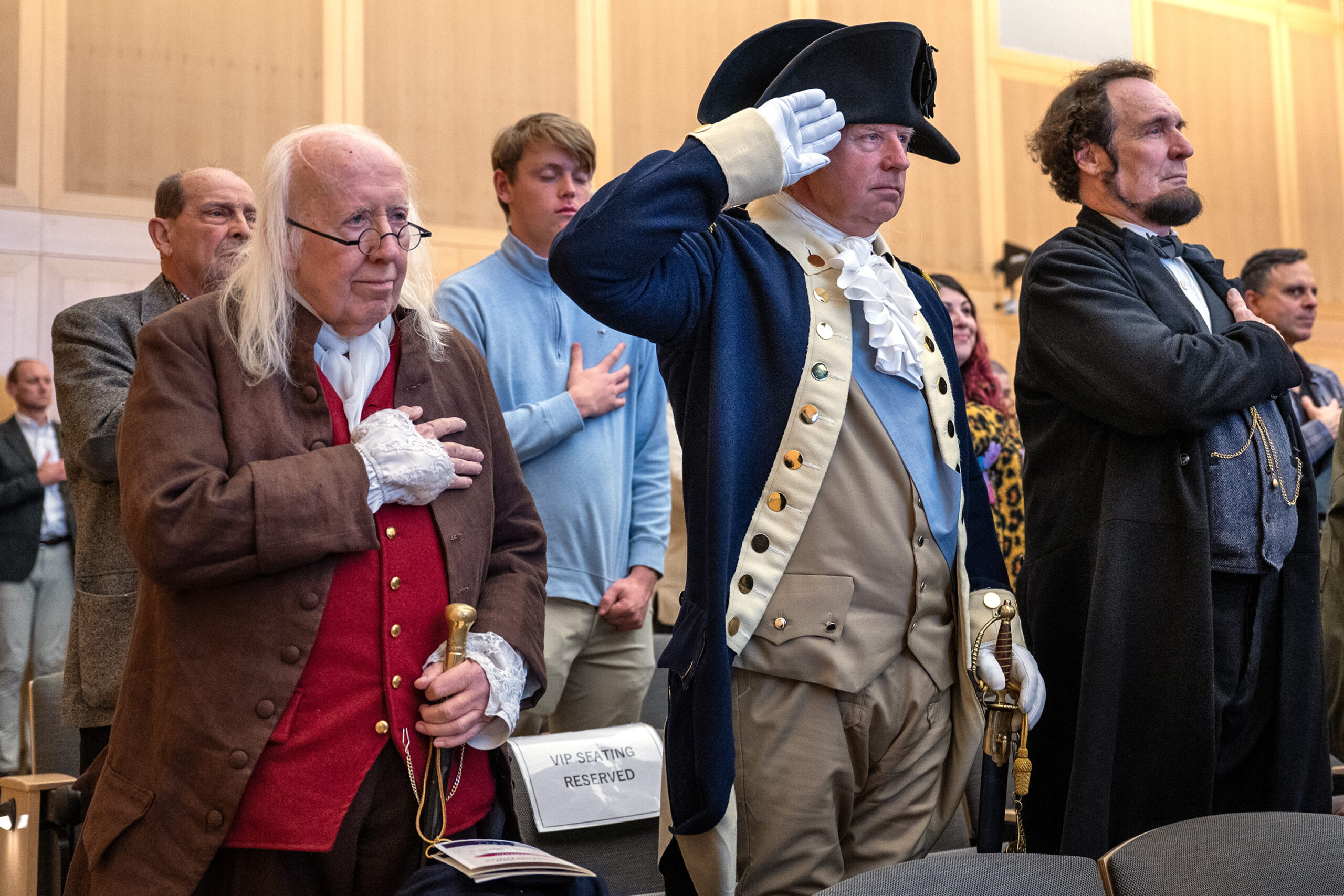
Historical interpreters (from left) Benjamin Franklin, Gen. George Washington, and President Abraham Lincoln stand with other audience members for the Presentation of the Colors, as the U.S. Mint unveils new coins for the Semiquincentennial at the National Constitution Center in Philadelphia in December.
Let’s get this party started
The United States is celebrating a big one this year. America’s big 250th birthday party is here … can you tell?
I can’t. While big events like the World Cup are planned for later this year, there is currently little to indicate that 2026 is any different from 2025. The patriotic bunting that sprouted all over Philadelphia during the Civil War and the Centennial has yet to appear.
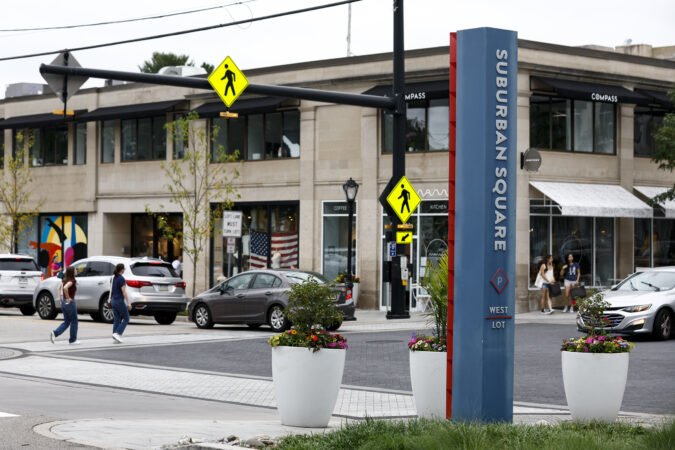
This week, owner Kimco Realty and developer Bozzuto Development announced the opening of Coulter Place, the first apartment community in the Ardmore shopping destination.
The five-story, mixed-use development includes 131 apartments with one to three bedrooms and about 20,000 square feet of ground-floor retail space. Amenities for residents include a fitness center, clubroom, game room, pool, coworking spaces, and pet-care spaces. It has two courtyards and garage parking with electric-vehicle charging stations.
The promise of apartment residents helped attract new retailers to Suburban Square, including New Balance, Sugared + Bronzed, and the apparel brand Rhone on the ground floor of the apartment building.
The complex is one of a few projects planned in recent years that have added or will add hundreds of apartments near Lancaster Avenue in Ardmore. One Ardmore, a 110-unit apartment complex, opened in 2019 after a yearslong campaign by residents to stop it. The long-awaited Piazza development is expected to add 270 apartments and almost 30,000 square feet of retail space when it opens in a couple of years.
This rendering shows the outdoor pool at Coulter Place.
Conor Flynn, CEO of Kimco Realty, said in a statement that Suburban Square is an “iconic, walkable destination” and that the addition of apartments creates “a more vibrant, connected experience for residents, retailers, and visitors alike.”
“Coulter Place represents the next chapter in Suburban Square’s evolution and a clear example of how we’re unlocking long-term value through thoughtful mixed-use development,” Flynn said.
The apartments are across from Trader Joe’s and the Ardmore Farmers Market and within walking distance to the Ardmore station for SEPTA and Amtrak trains.
Apartments available for lease at Coulter Place range from one-bedroom, one-bathroom units for about $3,030 per month to a three-bedroom, two-bathroom unit for $7,035 per month.
Philadelphia-based JKRP Architects designed the apartment building.
Suburban Square was developed in 1928 and now has about 80 shops, restaurants, fitness spaces, and more. Businesses include Apple, SoulCycle, Warby Parker, Van Leeuwen Ice Cream, CAVA, and Di Bruno Bros.
This rendering shows one of the courtyards for residents of Coulter Place.
Lush landscaping and public art will soon line Broad Street, impromptu performances may pop up, and vehicular traffic will be calmed with a new Avenue of the Arts south streetscape about to take shape.
The project — estimated to take $150 million and a decade to realize — will begin modestly.
The groundbreaking ceremony was held Wednesday morning in front of the Kimmel Center and was attended by more than 200 dignitaries, including Mayor Cherelle L. Parker, City Council President Kenyatta Johnson, and other members of City Council, state representatives, and officials from groups along the Avenue of the Arts.
The actual construction is slated to start at the end of January on a small portion of the project: remaking the median strip between Spruce and Pine Streets. That phase is expected to be completed by June.
In 2027, after the end of an anticipated swell in tourism and street activity during the Semiquincentennial, sidewalk beautification will begin on both the east and west sides of that block.
Eventually, pending funding, all of the blocks between City Hall and Washington Avenue will be remade.
Looking north toward City Hall, a rendering shows the completed first phase of a South Broad Street streetscape project slated to break ground in January 2026.
The current streetscape of planters, pavers, and retro light fixtures was designed and installed more than three decades ago. In addition to the wear and tear of the existing scheme, the thinking around public space has evolved since then, said Carl Dranoff, board chair of Avenue of the Arts, Inc., which is overseeing the project.
“It’s become somewhat aged and dog-eared,” said Dranoff. “In 1993 you didn’t need to have outdoor cafes. We need to activate the street, not just make it palatable. We have the opportunity to really elevate the Avenue of the Arts into one of the world’s great streets.”
The project was announced in July 2024 at $100 million, but inflation and a more detailed cost analysis has now put the total price tag at about $150 million — $15 million per block. These numbers include not just the planters, lighting, public art, street furniture, and aesthetic elements, but also infrastructure work beneath the surface, said Dranoff.
“A lot of it is things you don’t see. There’s a lot of underground construction,” he said. “Right now water is leaking from the median strip into the subway concourse. One of the reasons we got support from SEPTA and PennDot and [the Philadelphia] Streets [Dept.], is as we are building the median strips, we are improving deficiencies in the street in each block.”
In addition, some utilities will have to be moved. One PECO relocation, for instance, will cost the project $250,000, he said.
Dranoff has a vested interest in the vitality of the Avenue of the Arts. He has led several development projects on South Broad Street, including Arthaus, which is on the same block as the first phase of the new streetscape, and, one block south, Symphony House. He compares the investment in the new streetscape to the ones made in the Pennsylvania Convention Center, Philadelphia Navy Yard, Kimmel Center, and Schuylkill River Trail.
“If we don’t make investments in the future, which are going to increase revenue and population, we are relegating ourselves to second-place status.”
The new $15 million streetscape in the block from Spruce to Pine, which includes a $1 million endowment fund to underwrite maintenance, native-species plants, a rainwater-collection cistern, lighting, curved raised planting beds, public art, seating, way-finding devices, and artist-designed banners.
Of the $15 million needed, $5 million has been raised so far: $3 million from the city over two budget years, $1 million from the state, and $1 million from private donors. Other funding requests are pending, which planners call “very promising.”
A sidewalk garden on the east side of Broad Street between Pine and Spruce Streets is planned for installation in 2027 as part of a new Avenue of the Arts streetscape.
Dranoff says that construction of the median between Spruce and Pine — which is the block occupied by the Kimmel Center and defunct University of the Arts — won’t cause “a lot of disruption. They’re only working business hours, not on weekends.” Any blocked lanes will be reopened after work is done for the day, he said.
The next block to be redesigned hasn’t been decided, but it will likely be north of Spruce Street, Dranoff said. “Part of it will depend on funding. If we get a donor, someone whose offices are near the Academy of Music and is donating $15 million for that block to be next, we might accommodate that,” he said.
Funding for the entire project is expected to be a mix of public money, corporate and individual donations, and foundation support, he said.
The goal isn’t to have the mile-plus between City Hall and Washington Avenue end up with a streetscape that looks uniform, Dranoff said. Instead, design firms Gensler and OJB Landscape Architecture may come up with different ideas for different blocks.
“You don’t need a master plan that’s set for 10 blocks. Every block is different, the institutions are different. It lends itself to block-by-block planning tied together by a common theme.”
Dranoff said once the block from Spruce to Pine is done, it will show the potential, which he expects will spur fundraising to complete the streetscape for the entire Avenue of the Arts south.
“The difference between now and the first block being finished is, you’re going to be driving down a tree-lined boulevard.”
The article has been updated with details from the groundbreaking ceremony.
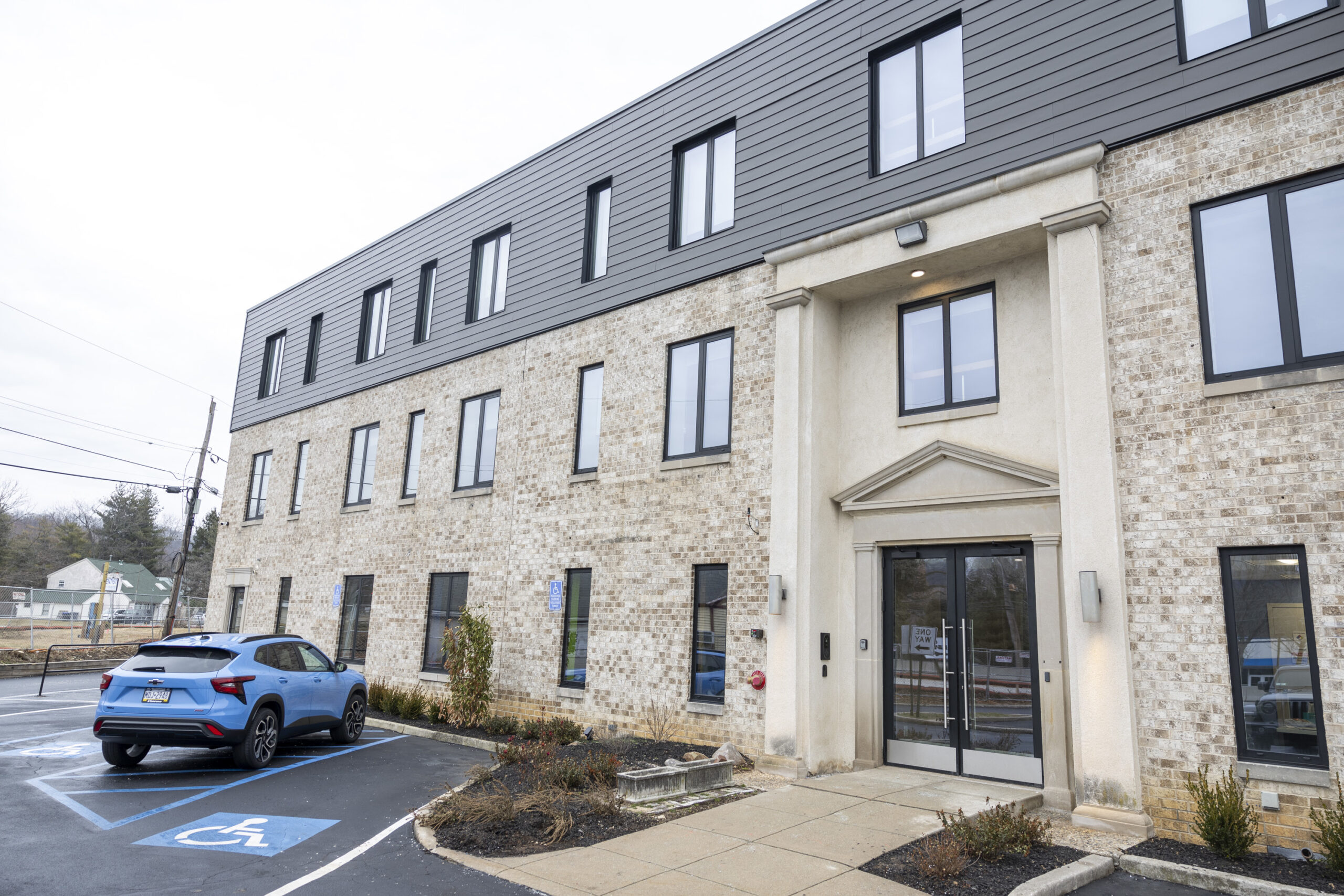
They’re equipped with kitchens, bathrooms, and washer/dryers, and they’re being marketed as monthslong hotel accommodations for consultants and visitors to nearby employers.
The owners, a group led by Main Line real estate lawyer David McFadden, broker John McGee, and investment partner Chiu Bai, hope the building, which they’re calling the Flats on 100, will be a model for reusing orphan buildings that stud theGreat Valley and other suburban office, industry, and retail zones.
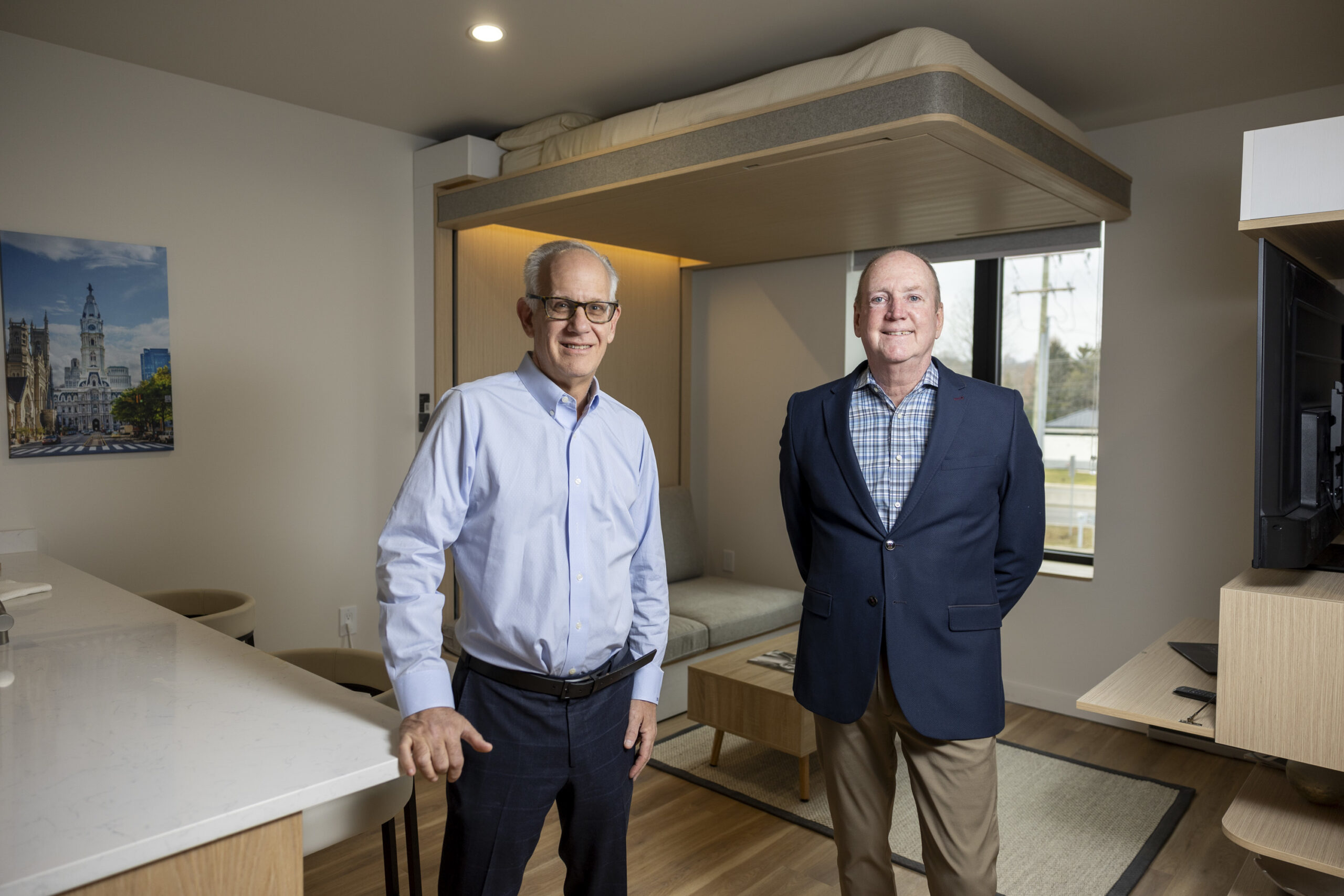
David McFadden of Chester Springs (left) and John McGee of Wayne are co-partners and owners of the Flats on 100 in Exton.
The trio picked up the 53-year-old, 30,000-square-foot building and grounds at 319 N. Pottstown Pike (State Route 100) in 2023 for $1.5 million from family-owned Kelsch Disability Services.
“Fifty bucks a [square] foot” seemed like a bargain, even though the partners didn’t have specific plans for it, McFadden said.
“Office buildings are being given away these days. What do we do with them when there’s no demand for office space?” he said. “At the right discount, developers can afford to turn them into something sustainable that people want.”
As offices, the building was broker-rated Class C, the least desirable. The partners paid cash, figuring they could borrow millions for capital improvements if they could show lenders a credible plan to turn it into something more profitable.
“We got lucky with the zoning,” McFadden said. West Whiteland’s “town center” designation allows a wide range of uses.
The partners chose what McFadden calls “hotel-apartments.” He compared it to projects built by Level Hotels & Furnished Suites, with locations in Chicago and the West Coast, and by family-owned, locally based Korman Communities’ AVE Living, with its furnished apartments at Philadelphia’s Navy Yard and other local sites.
McFadden says the model offers “a place that feels like home, with the amenities of larger buildings but a boutique feel.” The units arefully furnished, including appliances, dishes, and linens, as well as cleaning and other services as requested.
Lender Trupert Ortlieb from TruMark Financial, one of the area credit unions bulking up with business loans, arranged $5.7 million in financing for capital improvements.
The outside of the Flats on 100 apartments, a redevelopment of a commercial building.
Contractors demolished and replaced interior walls; added sprinklers, triple-glazed windows, and insulation; and replaced heating and air-conditioning. The reclad of the interior with aluminum finished like pine was picked up by Chiu in China for $30,000 (half that for the materials, $4,000 for shipping, and $11,000 to cover tariffs).
Because the project qualifies as a hotel, it could add a liquor license without the higher cost of a tavern license. A first-floor retail space has been leased to a dentist.
The partners expect interest from nearby employers such as Vanguard Group, QVC, West Pharmaceutical Services, and Accenture.
The Fairfield shopping center, with a Giant supermarket, fast-casual restaurants, and retail stores, is within walking distance. The Exton SEPTA Regional Rail station is two miles down Pottstown Pike.
Seeking light in what had been gloomy space, the developers brought in architect Martin Kimmel from Blue Bell. He persuaded them to replace half “gun-slit” windows with 5-foot-wide glass sheets, which turned out to be more work than expected, trimming 12-inch blocks topped by 4-inch bricks.
Other amenities include a barbecue pit, an outdoor dog walk, a pet-washing room, basement fitness center, conference room, bar, pool table, and walk-on services like massage and physical therapy.
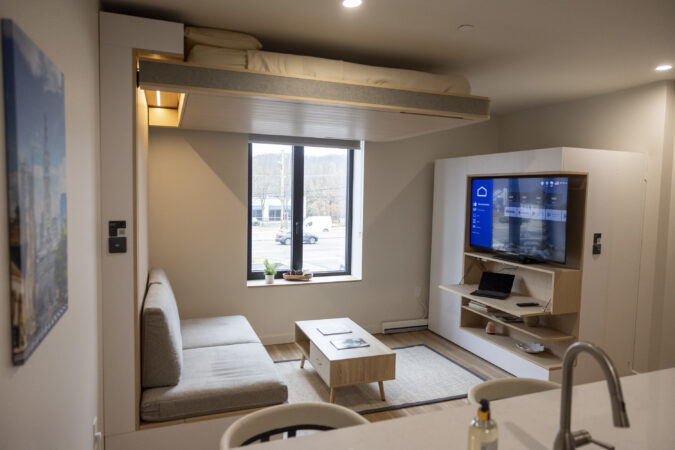
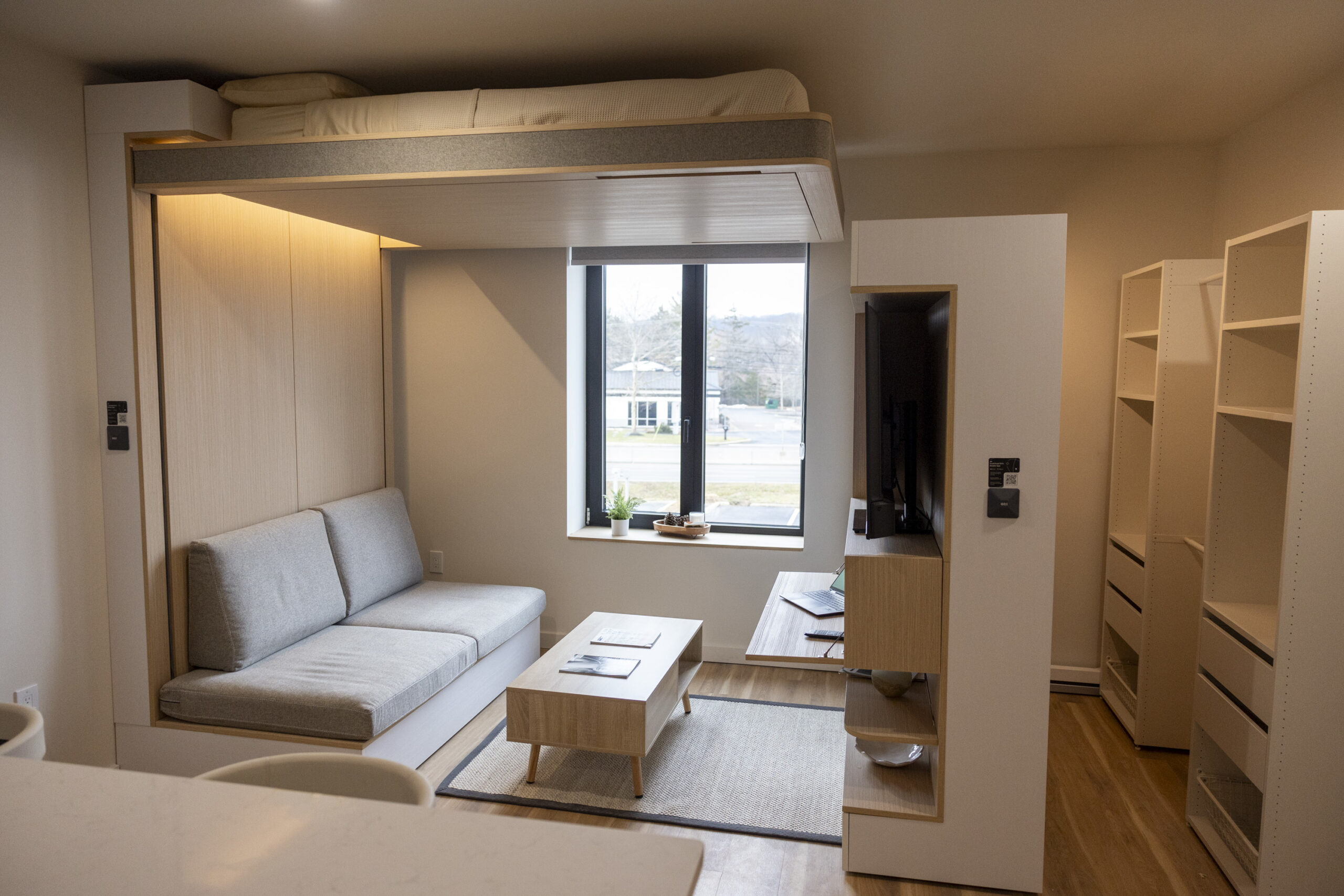
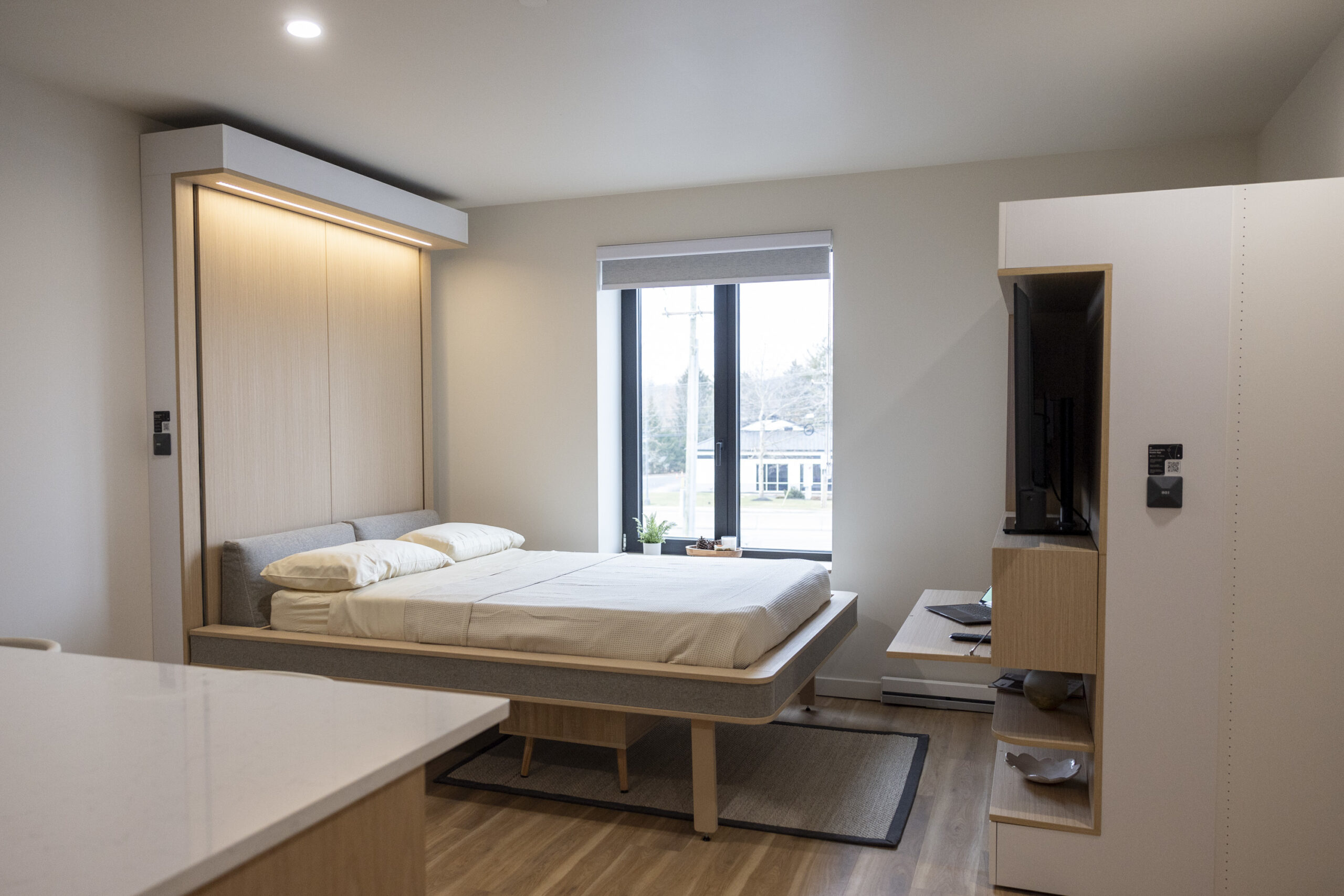
This space in the studio apartment can be used as a sitting area or a bedroom. The Ori bed lowers from the ceiling for sleeping.
Kimmel and the partners looked at New York apartment plans to see how many one-person units they could fit into the three stories. Beds could be stowed for work-at-home hours, but “we didn’t want those old fold-out Murphy beds,” McFadden said.
They bought canopy beds from Hasier Larrea’s Ori flexible-furniture-systems firm. The beds lower from the ceiling onto couch bases, plus facing rows of shelves can open as a walk-in closet. The bed controls, like the digital room locks, are remote-accessible and have manual overrides in case of power failure.
The narrow building admits more light for that suburban feel.
“Not every office building converts well to apartments,” McGee said. “This was perfect — 65 feet deep, you have a central corridor with apartments. If it were 200 feet deep, you’d have very narrow apartments with one window at the end.”
Pennsylvania’s race for governor has officially begun. And 10 months before the election, the November matchup already appears to be set.
Democratic Gov. Josh Shapiro formally announced his reelection campaign Thursday — not that anyone thought he wouldn’t run. And Republicans have rapidly coalesced behind thestate party’s endorsed candidate, Pennsylvania Treasurer Stacy Garrity.
The racewilldominate Pennsylvania politics through November,but it could also havea national impact as Democrats hope Shapiro at the top of the state ticket can elevate the party’s chances in several key congressional races.
Here’s what you need to know about the high-stakes contest.
Shapiro was elected state attorney general in 2016, a year when Pennsylvania went for Republican Donald Trump in the presidential contest. The position put Shapiro in the national spotlight in 2020 when Trump sought to overturn his loss in the state that year through a series of legal challenges, which Shapiro’s office successfully battled in court.
He went on to decisively beat Trump-backed Republican State. Sen. Doug Mastriano for the governorship in 2022. Despite an endorsement from Trump, Mastriano lacked the support of much of Pennsylvania’s Republican establishment and spent the election cycle discouraging his supporters from voting by mail.
Throughout Shapiro’s first term as governor, he has highlighted his bipartisan bona fides and ability to “get stuff done” — his campaign motto — despite contending witha divided legislature. His launch video highlights the quick reconstruction of I-95 following a tanker explosion in 2023.
A strong supporter of Trump, Garrity is one of the only women that has been elected to statewide office in Pennsylvania history. If elected, she would be the first female governor in state history.
Garrity is a retired U.S. Army colonel who was executive at Global Tungsten & Powders Corp. before she was elected treasurer in 2020. Running a relatively low-key state office, Garrity successfully lobbied Pennsylvania’s General Assembly to allow her to issue checks to residents whose unclaimed property was held by her office, even if they hadn’t filed claims requesting it.
Anyone else?
While Shapiro and Garrity are the likely nominees for their parties, candidates have until March to file petitions for the race. That theoretically leaves the possibility of a primary contest open for both candidates, but it appears unlikely at this point.
The outcome of Pennsylvania’s gubernatorial race could hold wide-ranging impacts on transportation funding, election law, and education policy, among other issues.
The state’s governor has a powerful role in issuing executing actions, setting agendas for the General Assembly, and signing or vetoing new laws. The governor also appoints the secretary of state, the top Pennsylvania election official who will oversee the administration of the next presidential election in the key swing state.
Throughout the entirety of Shapiro’s first term, he has been forced to work across the aisle because of the split legislature. Throughout that time the balance of power in Harrisburg has tilted toward Democrats who hold the governor’s mansion and the Pennsylvania House. But many of the party’s goals — including expanded funding for SEPTA and other public transit — have been blocked by the Republican-held Senate.
If Garrity were to win that dynamic would shift, offering Republicans more leverage as they seek to cut state spending and expand school voucher options (while Shapiro has said he supports vouchers, the policy has not made it into any budget deals under him).
Shapiro coasted to victory against Mastriano in 2022, winning by 15 points. The 2026 election is expected to be good for Democrats with Trump becoming an increasingly unpopular president.
But Garrity is viewed as a potentially stronger opponent to take on Shapiro than Mastriano, even though her political views have often aligned with the far-right senator.
When the midterms conclude, the 2028 presidentialcycle will begin. If Shapiro can pull off another decisive win in a state that voted for Trump in 2024, it could go a long way toward aiding his national profile. But if Garrity wins, it could endthe governor’s chances of putting up a serious campaign for the presidency in 2028.
Every other race in Pennsylvania
The governor’s contest is the marquee race in Pennsylvania in 2026. Garrity and Shapiro have the ability to help or hurt candidates running for Pennsylvania’s statehouse and Congress.
The momentum of these candidates, and their ability to draw voters to the polls could play a key role in determining whether Democrats can successfully flip four competitive U.S. House districts as they attempt to take back the chamber.
Democrats also narrowly hold control of the Pennsylvania House and are hoping to flip three seats to regain control of the Pennsylvania Senate for the first time in decades. If Democrats successfully flip the state Senate blue, it would offer Shapiro a Democratic trifecta to push for long-held Democratic goals if he were to win reelection.
Strong Democratic turnout at the statewide level could drive enthusiasm down-ballot, and vice versa. Similarly, weak turnout could aid Republican incumbents in retaining their seats.
The dates
The election is still months away but here are days Pennsylvanians should put on their calendars.
May 4: Voter registration deadline for the primary election.
May 19: Primary election.
Oct. 19: Voter registration deadline for the general election.
Regional Rail trains are operating with fewer canceled trips and are running with more cars after months of service disruptions while SEPTA rushed to inspect and repair 223 Silverliner IV cars after five caught fire last year.
Yet packed two-car trains and skipped stops persist on some lines during peak travel times.
“It’s been three months and our customers had reason to believe things would be better sooner and they’re frustrated — understandably,“ SEPTA spokesperson Andrew Busch said. ”There is still some catching up to do.”
SEPTA decided late Thursday to restore 24 Regional Rail express trips on the Lansdale/Doylestown, Media, Paoli, West Trenton, Norristown, and Wilmington Lines, Busch said. The restored expresses had been running as locals.
An Oct. 1 federal mandate to inspect and mitigate Silverliner IV fire risks required the transit authority to take the workhorse of Regional Rail offline, leading to shorter trains and furious riders.
SEPTA’s records show it canceled 2,544 Regional Rail trains from October through Dec. 31, though the number steadily droppedover time — from 1,324 to 752 to 468.
As of Thursday, 180 of the Silverliner IV cars had met all the milestones set by the Federal Railroad Administration to return to service.
Regulators demanded each car pass a safety inspection, have necessary repairs made, and have a modern thermal-detection circuit installed.
So far, however, just 78 of those 180 Nixon-Ford era rail cars have been returned to service.
That means work is yet to be completed on35 Silverliner IVs.All together, the carsmake up 57% of the Regional Rail fleet.
(function() { var l = function() { new pym.Parent( ‘regional-rail-return__graphic’, ‘https://media.inquirer.com/storage/inquirer/ai2html/regional-rail-return/index.html’); }; if(typeof(pym) === ‘undefined’) { var h = document.getElementsByTagName(‘head’)[0], s = document.createElement(‘script’); s.type = ‘text/javascript’; s.src = ‘https://pym.nprapps.org/pym.v1.min.js’; s.onload = l; h.appendChild(s); } else { l(); } })();
“Over the last couple of days, we’ve been adding more three and four-car trains,” Busch said. With the restoration of express service, that should continue, he said.
To keep Regional Rail service running in its slimmer form, SEPTA has been using its 120 Silverliner V cars, which arrived between 2009 and 2011, as well as 45 coach cars, which have no motors and are pulled by locomotives.
The Silverliners have onboard motors, carrying passengers and providing propulsion at the same time. The 78 returned to service will also add capacity.
In addition, SEPTA plans to use an additional 10 passenger coaches leased from Maryland’s commuter railroad. They are here, but train crews are undergoing training, which was delayed by vacations and work schedules over the holidays. They should be ready to go a couple of weeks, Busch said.
The transit agency is seeking to buy 20 used passenger cars from Montreal but has not heard whether it won the bidding.
Back-ordered shipments arrived around Christmas, and now there is plenty of wire to finish the job, SEPTA says. The deadline for the installations was Dec. 5, but under the circumstances, federal authorities did not punish SEPTA.
Gov. Josh Shapiro officially announced his widely expectedreelection bid for Pennsylvania governor Thursday, as speculation over a 2028 run for president continues to build. The question now: How will the Democrat’s rumored presidential ambitions bolster or detract from his must-win election at home in 2026?
Shapiro will kick off his reelection campaign with not one but two rallies— first stopping in Pittsburgh, then in Philadelphia. In a campaign video posted to social media Thursday morning, he touted his three years of leading a divided legislature and his bipartisan achievements in a politically split state, via a campaign that has already amassed a record $30 million war chest.
He coasted to victory in 2022, elevating his profile within the national Democratic Party, and is not expected to face a primary challenger. In the general election, he will likely face Republican State Treasurer Stacy Garrity, who largely consolidated GOP support early.
But that’s not the only race on the line in November.
As Shapiro looks to potential parallel runs, he’ll need to continue to build a national profile without outwardly focusing too much on the presidential picture.
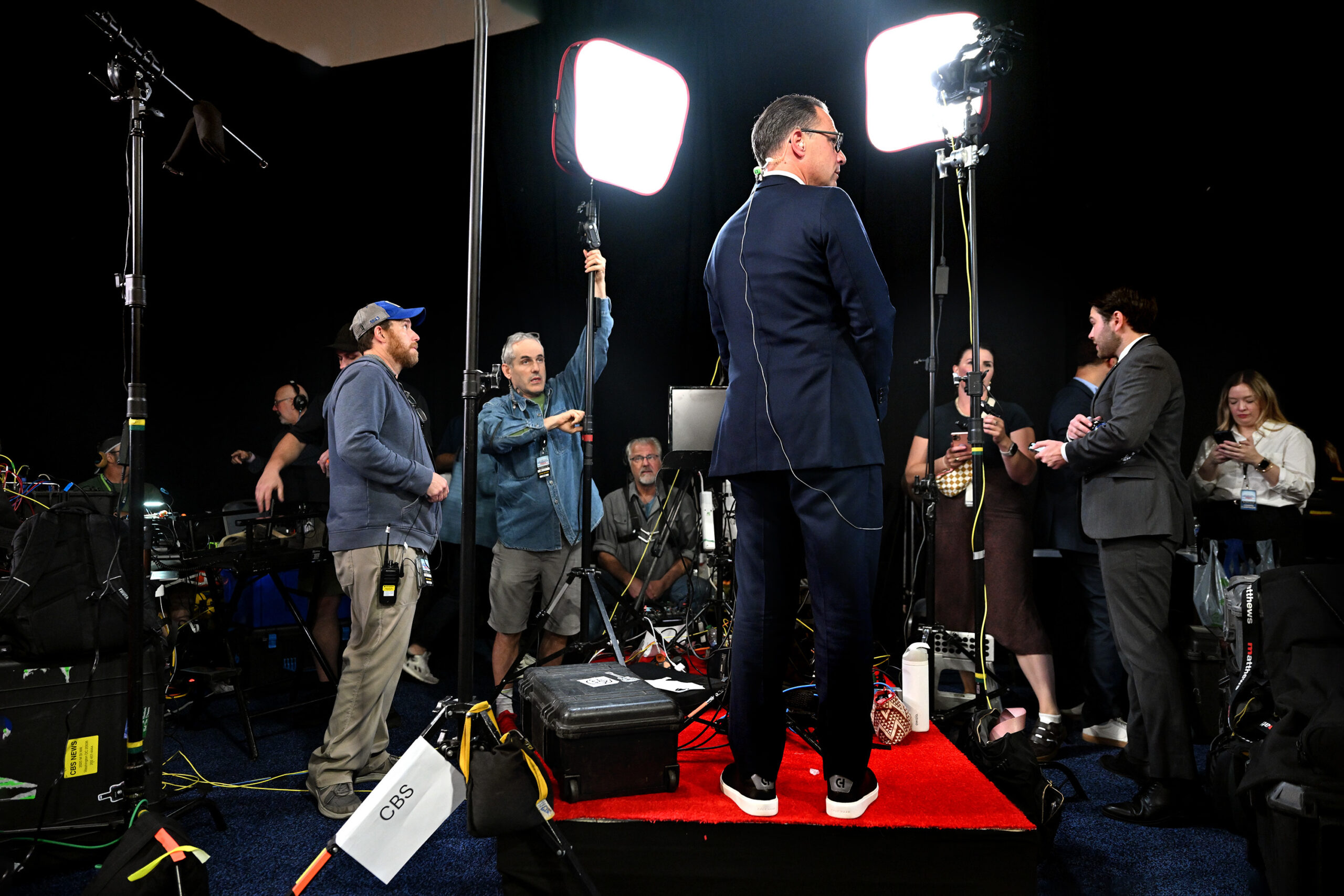
Gov. Josh Shapiro is interviewed by TV news in the spin room at the Convention Center following the debate between former President Donald Trump and Vice President Kamala Harris Tuesday, Sept. 10, 2024.
“The challenge, of course, is you have to take care of your next election first,” said Christopher Borick, a pollster at Muhlenberg College. “Of anything he does, he knows this is the most important thing for his potential success in 2028 if he was to run.”
In the governor’s race, Shapiro will likely face a more formidable opponent in Garrity than he did in state Sen. Doug Mastriano (R., Franklin) in 2022, but he’ll also be running in a far more favorable political atmosphere for Democrats amid souring attitudes toward President Donald Trump and the GOP. If he can retain the governor’s mansion decisively and bring a ticket of Democrats vying for the statehouse and Congress to victory with him, that’s a narrative that could be strong in a Democratic presidential primary.
“Having a win, and maybe an impressive one in Pennsylvania, the key swing state heading into that cycle, is about as big of a boost as any that you can have,” Borick added.
Running local
The 2028-curious Democrats include several other sitting governors generating buzz: California’s Gavin Newsom, Kentucky’s Andy Beshear, Maryland’s Wes Moore, Michigan’s Gretchen Whitmer, and Illinois’ JB Pritzker. Shapiro has formed alliances with several of them.
But unlike some of his peers, Shapiro hasn’t been a frequent guest on cable news or podcasts with national reach.
On Oct. 4, 2024, nearly a month before Harris lost the presidential election to Trump, Shapiro confidentially requested that the state ethics commission determine whether he would violate any state ethics laws for accepting royalties from a book about his life in public service, according to the filing.
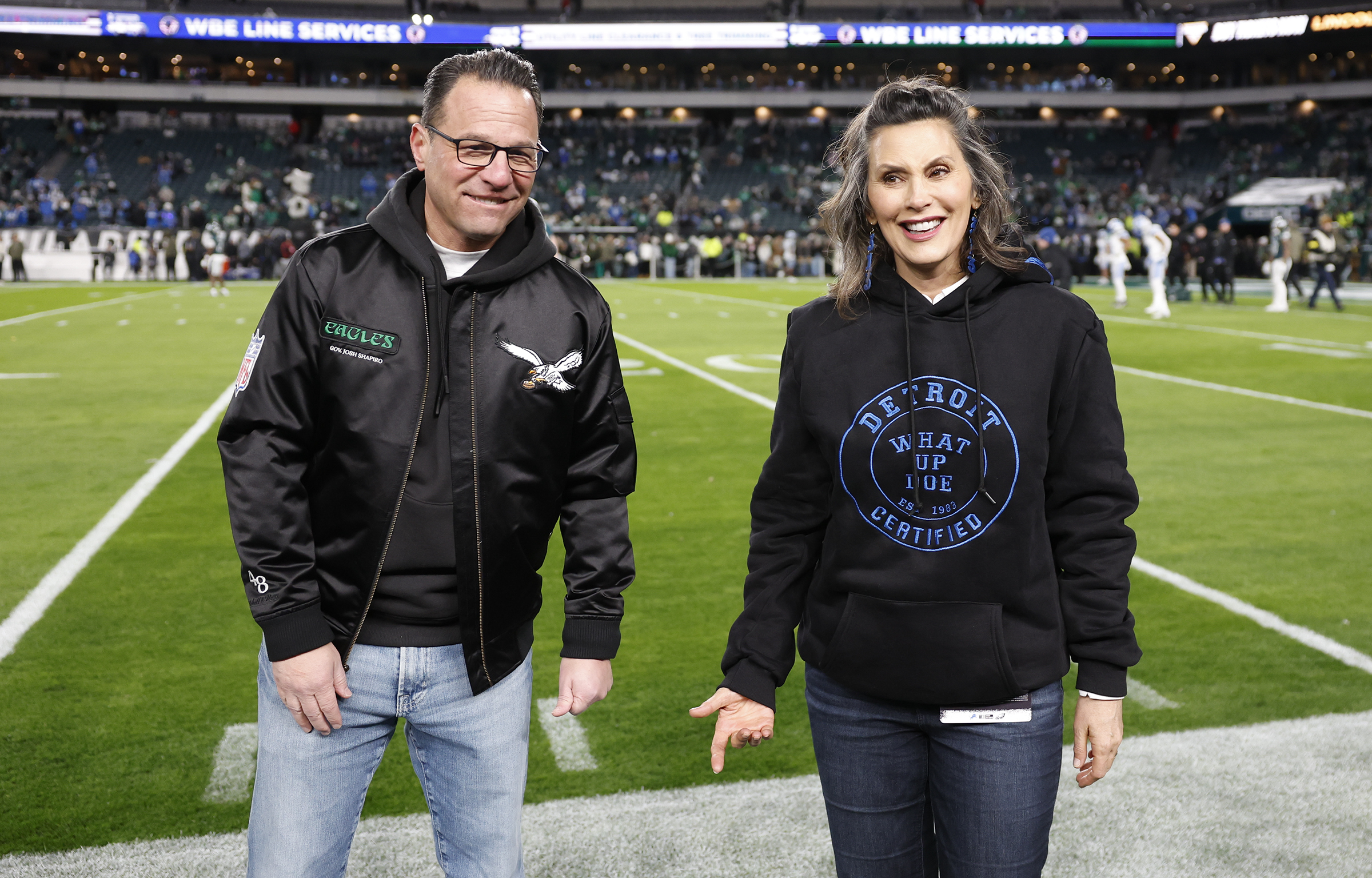
Pennsylvania Gov. Josh Shapiro (right) and Michigan Gov. Gretchen Whitmer before the Eagles played the Detroit Lions at Lincoln Financial Field on Sunday, Nov. 16, 2025, in Philadelphia, PA.
His book, Where We Keep the Light, will publish later this month, recounting his political upbringing, his vice presidential vetting, and the firebombing of his home last year. He’s not alone. Harris published a memoir about the 2024 election last year, and Newsom is due out with Young Man in a Hurry: A Memoir of Discovery in February.
But in the coming months, several Democratic strategists predict Shapiro will be squarely focused on the governor’s race he has to win in Pennsylvania — simultaneously proving he has what it takes to capture the vote of the nation’s most important swing state.
“He’s such a careful politician. He’s not taking anything for granted,” said former Gov. Ed Rendell, a Democrat who also once faced scrutiny for having potential presidential ambitions.
Shapiro is likely to follow the same campaign playbook in Pennsylvania as he did in 2022: Stump in every region of the state, including areas where Democrats don’t usually show up. That helped him run down the margins in longtime GOP strongholds like Lancaster or Schuylkill Counties toward his resounding victory over Mastriano. Those stops in most of Pennsylvania’s 67 countieswon’t give him as much time to visit South Carolina, Iowa, and New Hampshire, as the other Democratic presidential hopefuls start their sojourns.
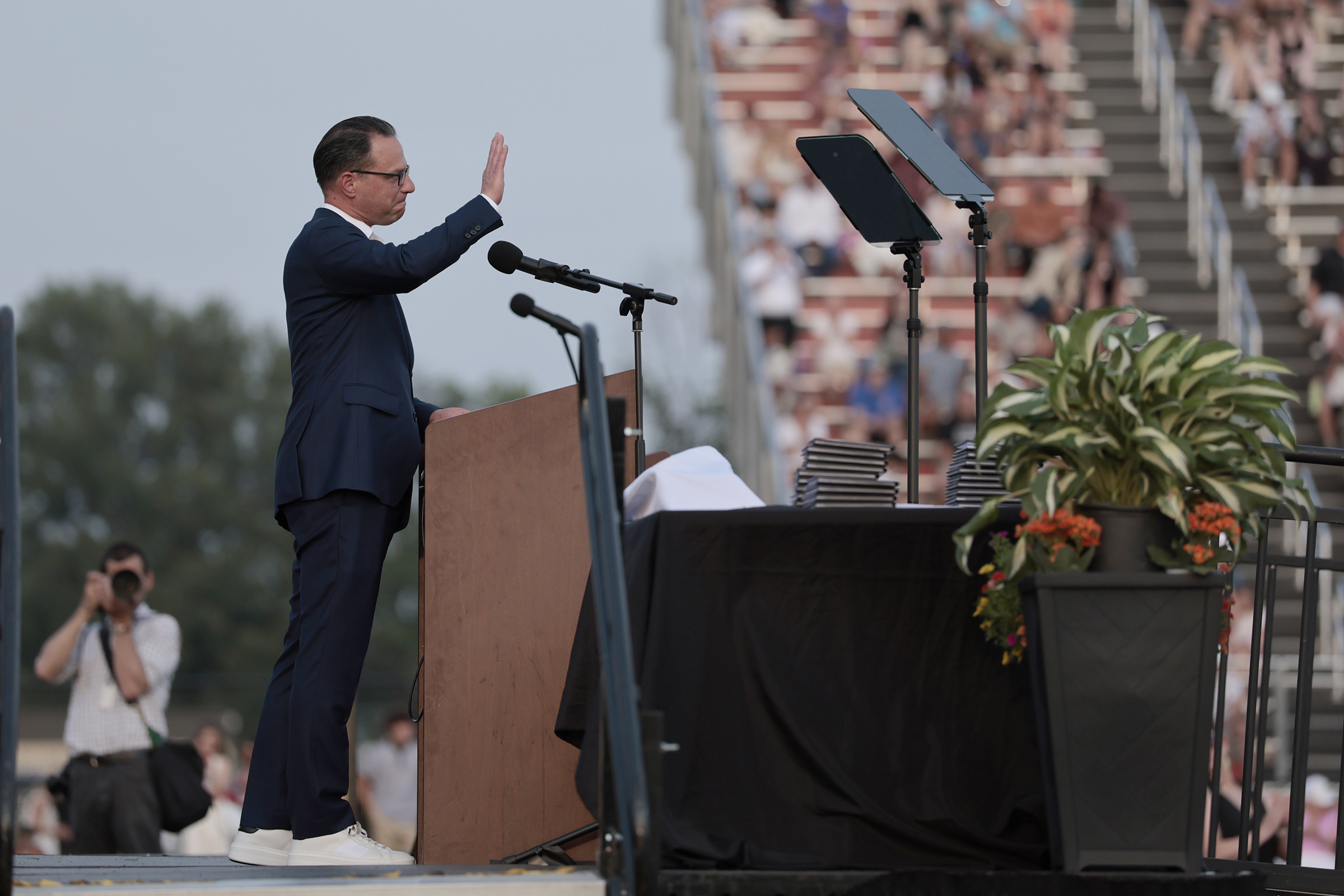
Pennsylvania Governor Josh Shapiro waves goodbye to the crowd after speaking during graduation ceremonies at Pennsbury High School in Fairless Hills on Thursday, June 12, 2025.
“The No. 1 caveat is stay focused on the race you’re running,” echoed Alan Kessler, a national fundraiser based in Philadelphia who has supported and fundraised for Shapiro.
Still, the campaign is likely to generate attention beyond the Keystone State.
Shapiro will still court donors in blue states as he fundraises for reelection, Kessler added.
Come November, he will be the only governor with rumored 2028 aspirations up for reelection in a swing state. And his brand as a popular, moderate Democratic governor trying to restore trust in government — as well as his potential to help boost Democrats down ballot — will easily capture a wider audience and bring national media into Pennsylvania.
As Democrats seek to flip control of the U.S. House in 2026, targeting several congressional districts in the state, the election may once again come down to Pennsylvania, and in turn, increase the spotlight on Shapiro. The governor is widely seen as someone who can boost the congressional Democratic candidates also on the ballot, having won three of the four districts that Democrats are targeting in the state by double digits in 2022.
Republicans have targeted several weaknesses to try to erode Shapiro’s popularity in Pennsylvania and boost Garrity. They point to a lack of rigorous electoral challengers in his past. They question his record of “getting stuff done” — his oft-repeated motto — including three late state budgets. And they’ve harped on a lack of transparency as governor, including claims he used tax dollars for political benefitas well as a sexual harassment scandal involving a former top aide. They’ve also criticized his support for Minnesota Gov. Tim Walz, who recently dropped his third gubernatorial bid following a fraud scandal among the state’s Somali refugee population totaling $1 billion, according to federal prosecutors.
Among the emerging attacks: Republicans want to highlight Shapiro’s presumed presidential ambitions, as they try to cast him as an opportunist more interested in a future White House bid than the problems of everyday Pennsylvanians.
“Josh Shapiro is more concerned with a promotion to Pennsylvania Avenue than serving hardworking Pennsylvanians,” Garrity said in a statement, noting the state fared poorly in U.S. News and World Report rankings on the economy and education. “In the military, I learned the importance of putting service before self. Pennsylvanians are the hardest-working, most compassionate, strongest people in the nation, and together we will return Pennsylvania to our rightful place as a national and global leader.”
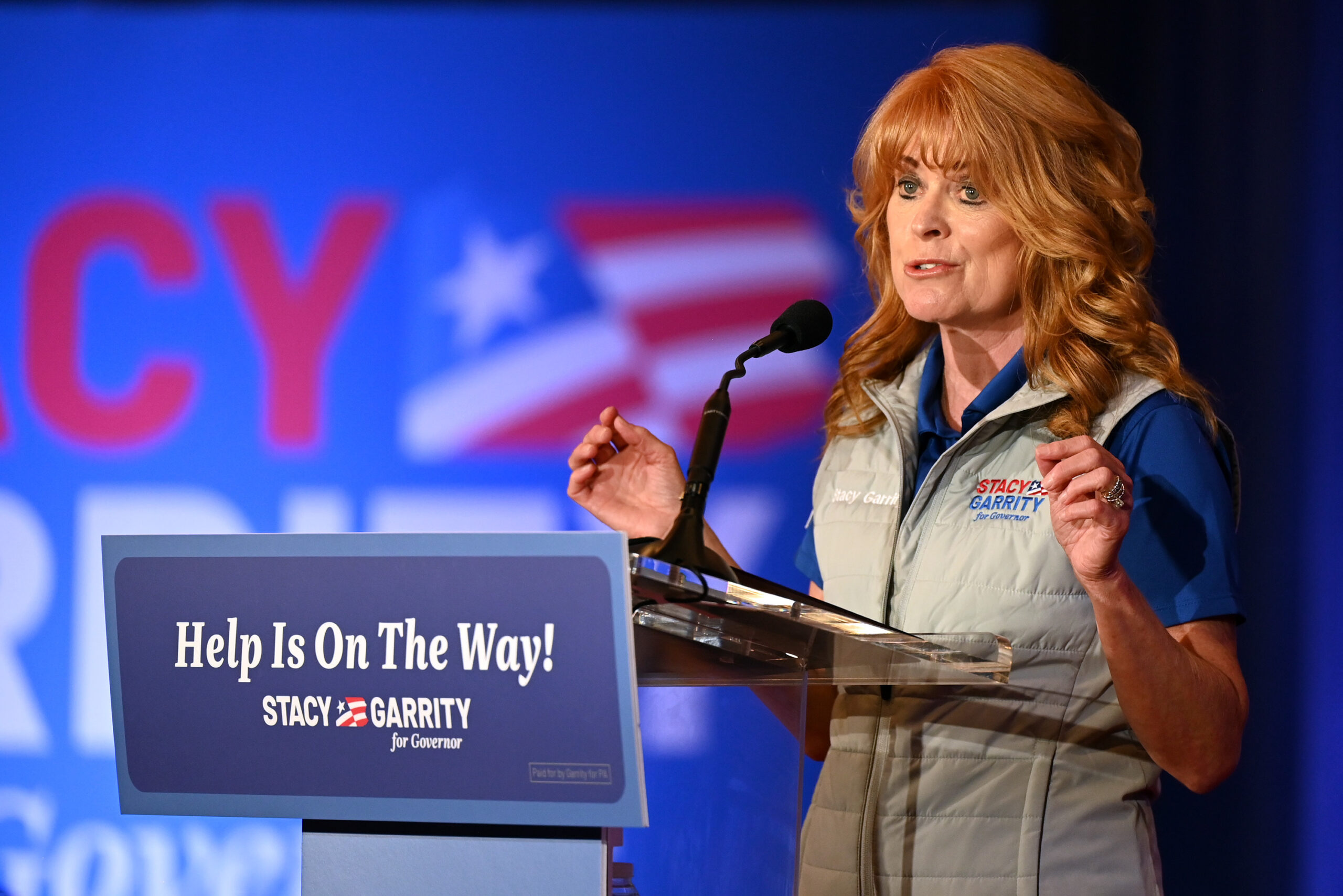
State Treasurer and Republican candidate for governor Stacy Garrity holds a rally in Bucks County Sept. 25, 2025 at the Newtown Sports & Events Center.
Mastriano, the far-right Republican state senator who announced Wednesday he won’t run for governor, said in a statement earlier this week that Shapiro “owes [Pennsylvanians] straight answers” over his use of the state plane, security updates to his personal home in Abington Township, and more.
“Pennsylvanians deserve accountability, not ambition,” he added, making a nod to Shapiro’s potential longer-term plans.
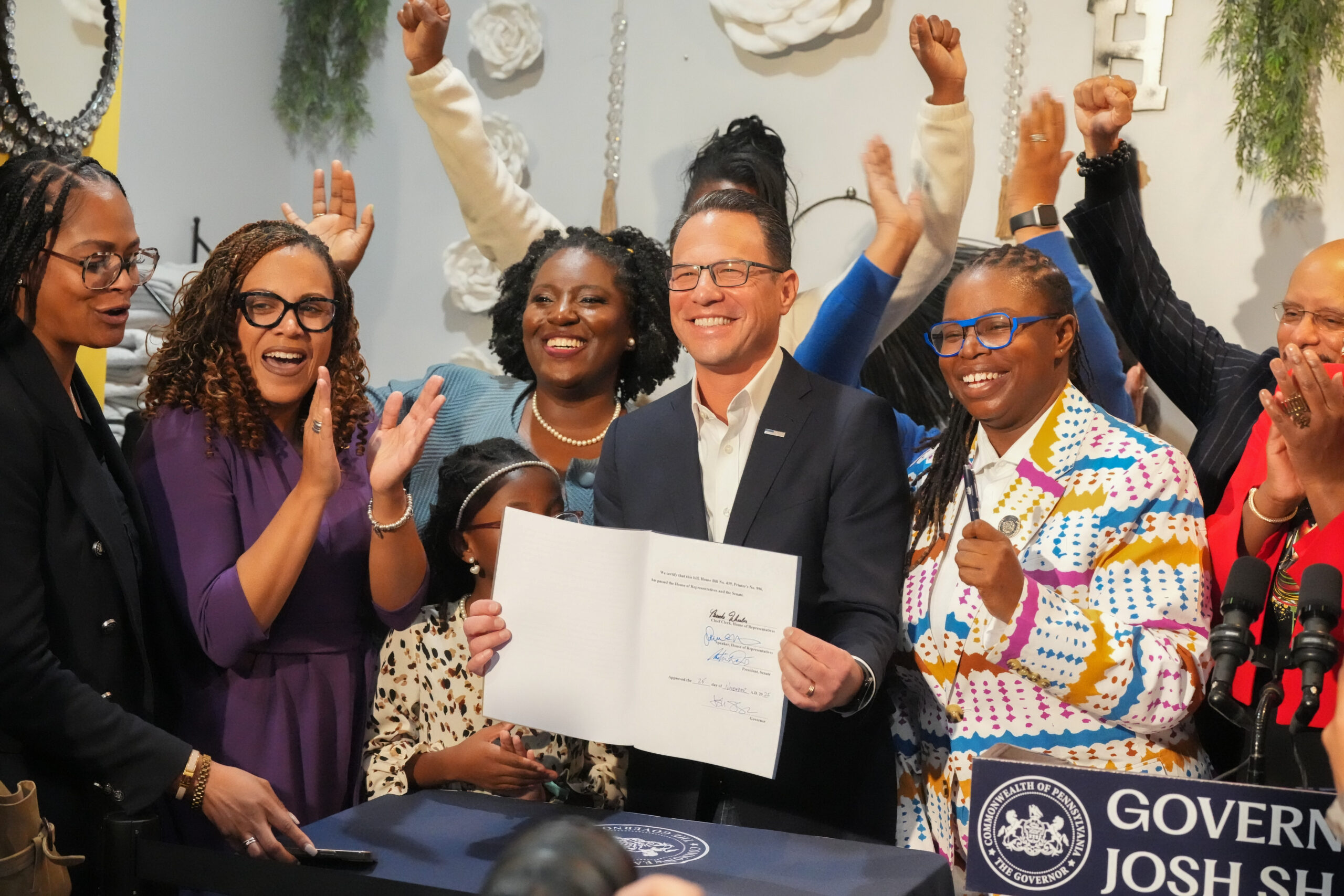
House Speaker Joanna McClinton, back center left, Gov. Josh Shapiro, front center, and State Rep. La’Tasha D. Mayes, right, celebrate the signing of the CROWN Act, which prohibits discrimination based on a person’s hair type, during a press conference at Island Design Natural Hair Studio, in West Philadelphia, November 25, 2025.
Borick, the pollster, was skeptical that attacks on Shapiro’s potential wider ambitions could reverse hislargely positive public sentiment.
“If that’s all they got, they don’t got a lot.”
Republicans insist they see a path to victory for Garrity in a politically divided state with months to go until the election. But behind the scenes, some Republicans are already acknowledging the goal is to lose by less and prevent big losses in state legislature or congressional races.
If Shapiro does look poised to cruise to victory, it might mean less media attention on the race, and it could mean he’s less vetted ahead of a much bigger stage.
“I think Josh is better served if the [Republican Governors Association] puts $100 million into this race because then it’s nationalized,” said a Democratic political strategist based in Pennsylvania who did not want to be named speculating on Shapiro’s presidential run. “If it’s a cakewalk, CNN’s not gonna cover it …If he wants to be governor for another four years, he should pray for a cakewalk. If he wants to be president, he should pray for a difficult campaign.”
Florida Gov. Ron DeSantis, for example, the strategist noted, cleaned up in his 2022 reelection, but failed to gain traction in the GOP presidential primary that Trump dominated.
Beyond 2026
Shapiro speaks Pennsylvanian very well. Raised in Montgomery County, he’s lived here almost all of his life, and has built an image as a popular moderate focused on problem-solving in a purple state. That’s earned him the support of about 30% of Trump voters in the state.
But winning a general election in Pennsylvania is different than winning a Democratic presidential primary.
He’s tried not to alienate the MAGA base, focusing on issues with bipartisan appeal like funding for apprenticeship and vocational-training programs. He’s taken on Trump in court, but has picked his personal battles with the president more carefully.
But being a strategic, self-described “progressive pragmatist” can end up alienating voters on both sides.
Gov. Josh Shapiro leaves after an event at the Port of Philadelphia Thursday, Apr. 10, 2025, the day after President Trump paused some tariffs.
Becky Carroll, a Democratic political consultant in Chicago who has worked with Pritzker, said Shapiro seems less on the radar of voters in the Midwest. As she’s followed Shapiro’s career, she said she sees a “damn fine governor,” but someone who’s taken a more muted approach to Trump than blue state governors like Pritzker and Newsom.
When it comes to a Democratic primary, candidates may be judged in part on their pushback to Trump, she said. “I think we’re in a moment where you can sulk in a corner and hope it’ll all go away or fight …,” Carroll said. “And if you’re gonna put yourself out there for a primary battle, you better show you have battle scars to prove you can fight for the most vulnerable in the country right now.”
Gov. Josh Shapiro is interviewed by TV news in the spin room at the Convention Center following the debate between former President Donald Trump and Vice President Kamala Harris Tuesday, Sept. 10, 2024.
But other national strategists see Shapiro’s moderate appeal as a potential asset in 2028. Jared Goldberg-Leopold, a former communications director for the Democratic Governors Association, thinks Shapiro’s biggest asset is his electoral track record in a state the nation knows is critical on the path to the White House. Primaries have previously been won by moderates whom the party thinks have the best chance at winning the general.
But the first step, Goldberg-Leopold stressed, is the governor’s race ahead.
“It would be easy for the Eagles to look past the 49ers to the next week of playoffs, but they’ve gotta focus on only one thing. And the same is true for the governor,” he said. “You can only prepare for what’s ahead of you, and the way people get in trouble in politics is planning too many steps ahead.”
Staff writer Katie Bernard contributed to this article.