Tag: Temple University

  • Temple student arrested for anti-ICE protest at Minnesota church in case involving journalist Don Lemon

    Temple student arrested for anti-ICE protest at Minnesota church in case involving journalist Don Lemon

    A 21-year-old Temple University student was arrested Monday on charges that he conspired with nine other people, including journalist Don Lemon, to interfere with the First Amendment rights of worshipers during a Jan. 18 anti-ICE protest at a church in St. Paul, Minn.

    Jerome Richardson, 21, a senior at Temple who is a native of St. Paul, turned himself in Monday morning to federal authorities in Philadelphia, according to a post on a GoFundMe page created to pay for his legal defense. A photo was posted showing Richardson entering the United States Custom House with several federal law enforcement officers apparently waiting for him at the entrance.

    The arrests of Richardson and Ian Davis Austin, an Army veteran from Montgomery County, were announced at 9:10 a.m. on X by Attorney General Pam Bondi. Austin was arrested Friday.

    “If you riot in a place of worship, we WILL find you,” Bondi wrote. “We have made two more arrests in connection with the coordinated attack on Cities Church in St. Paul, Minnesota: Ian Davis Austin and Jerome Deangelo Richardson.”

    The arrest of Don Lemon was made public on Friday.

    The protesters went to Cities Church because a pastor there is also a U.S. Immigration and Customs Enforcement official.

    Lemon entered the church while livestreaming and said repeatedly: “I’m not here as an activist. I’m here as a journalist.” He described the scene before him, and interviewed churchgoers and demonstrators.

    A magistrate judge had rejected prosecutors’ initial bid to charge the veteran journalist. Lemon was charged, as were Richardson and seven others, by grand jury indictment last Thursday.

    The indictment described the protest as a “coordinated takeover-style attack” on the church that caused people to flee in fear. Protesters chanted “ICE out!” and “Hands up! Don’t shoot!” The indictment quotes Lemon, who in the moment described the scene as “traumatic and uncomfortable.”

    Before his arrest, Richardson shared a video online in which he said he feared for his safety and needed help to pay legal bills.

    Richardson said he assisted Lemon “by helping with logistics and connecting him with local contacts.”

    “Don was reporting on the situation,” Richardson said, adding that he was proud to help.

    “As a consequence of this support, I am now being targeted by Trump and the federal administration,” Richardson said, adding that he was proud of the other defendants in the case.

    “This is the price of being unapologetic about humanity and love of Christ,” he said.

    Richardson, who traced his activism to the murder of George Floyd in 2020, said he still hoped to complete his degree and graduate from Temple in May.

    In a statement, Temple University said it was aware of media reports about the arrest of a student.

    “We understand that the circumstances surrounding this matter are developing. Out of respect for the privacy of the student and the ongoing legal process, the University will not comment on the specifics,” the statement says.

    “As we’ve shared previously, we deeply value the First Amendment, including the rights of free speech, a free press, and the freedom to exercise religion,” the statement says. “We encourage and educate our students to engage thoughtfully and lawfully to advocate for their beliefs and values, raise awareness and contribute to constructive dialogue.”

    This article contains information from the Associated Press.

  • Sharpies, colored paper, and sandwich boards become resistance art at the President’s House site

    Sharpies, colored paper, and sandwich boards become resistance art at the President’s House site

    The resistance was born on a Friday morning at the Gen. George A. McCall School photocopy machine.

    The copier spat the message out on yellow, purple, and orange paper — page after page amplifying the same sentiment scrawled on each in big black letters: Learn all history.

    In the aftermath of the removal of the slavery exhibit at the President’s House Site on Jan. 22, fourth-grade social studies teacher Kaity Berlin wanted to convert her rage into something productive, she said. She quickly thought of the words on one of her shirts: “Teach all history.” So she gathered some teacher friends, took to the photocopier, and headed to Independence National Historical Park.

    Berlin wasn’t the only one who saw the shallow silver frames at the President’s House as a void screaming to be filled.

    The exhibit included a series of signs describing what life was like for those enslaved by George Washington at the site and his complicated relationship with the institution of slavery. The exhibit was dismantled last week, several months after President Donald Trump and Interior Secretary Doug Burgum issued an order requiring the review and potential removal of displays at the national parks that “inappropriately disparage” the United States.

    The city asked a federal justice to order that no more exhibits be removed from the President’s House and that the exhibits that were already removed be kept safe. In a hearing Friday, judge Cynthia M. Rufe didn’t issue a ruling but asked the Trump administration attorney that the exhibits remain untouched so she can review them Monday.

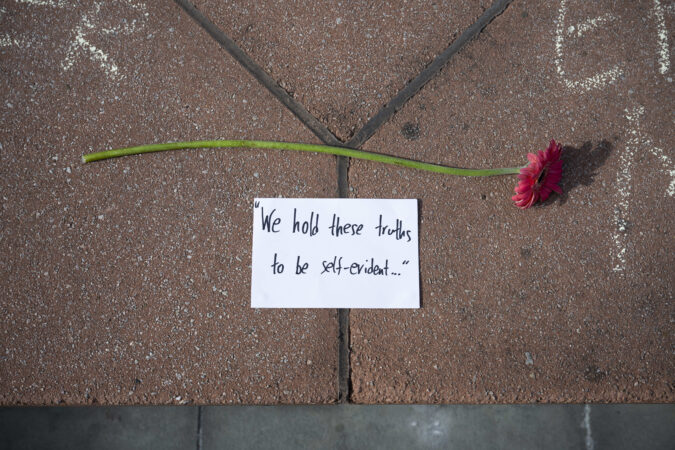
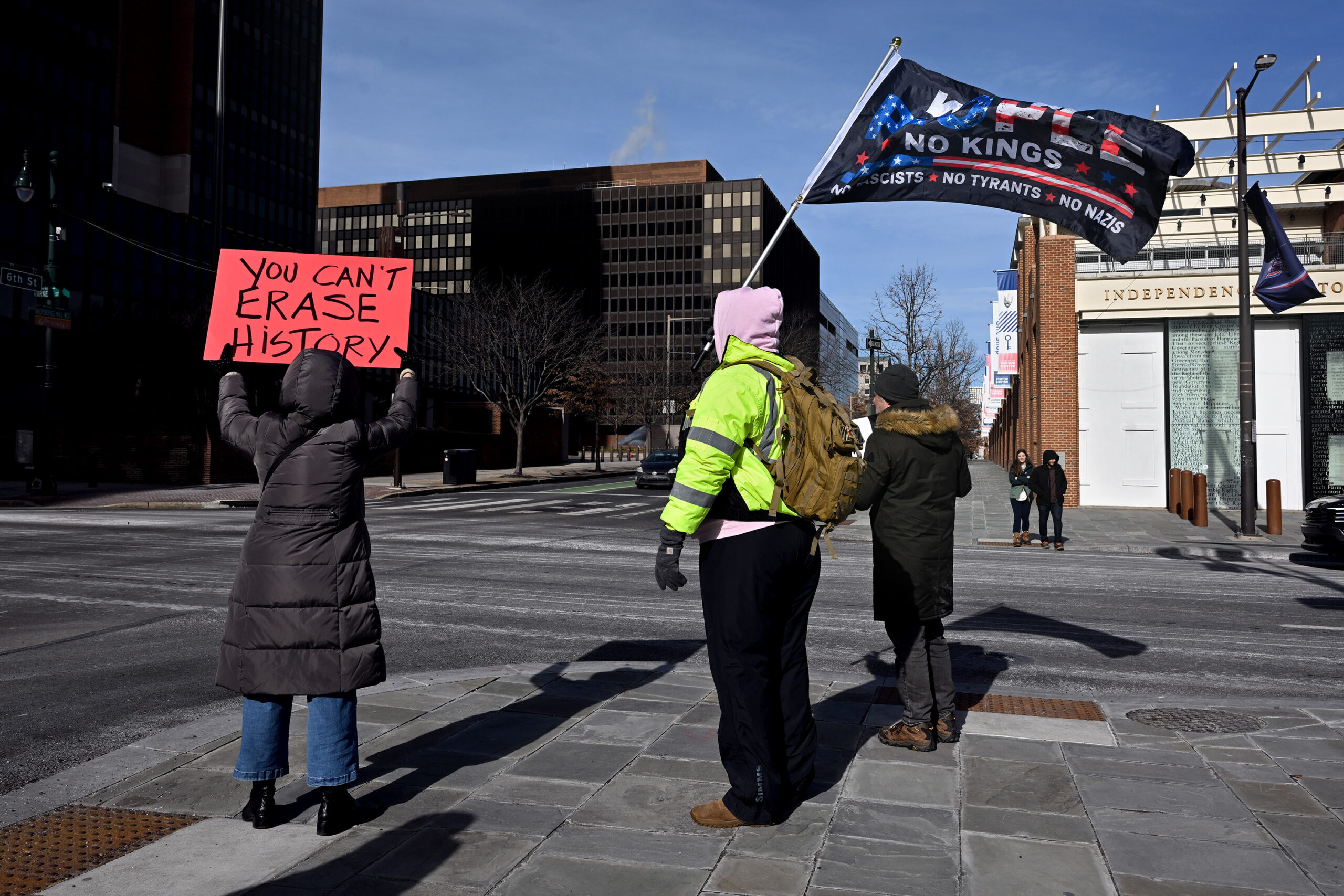
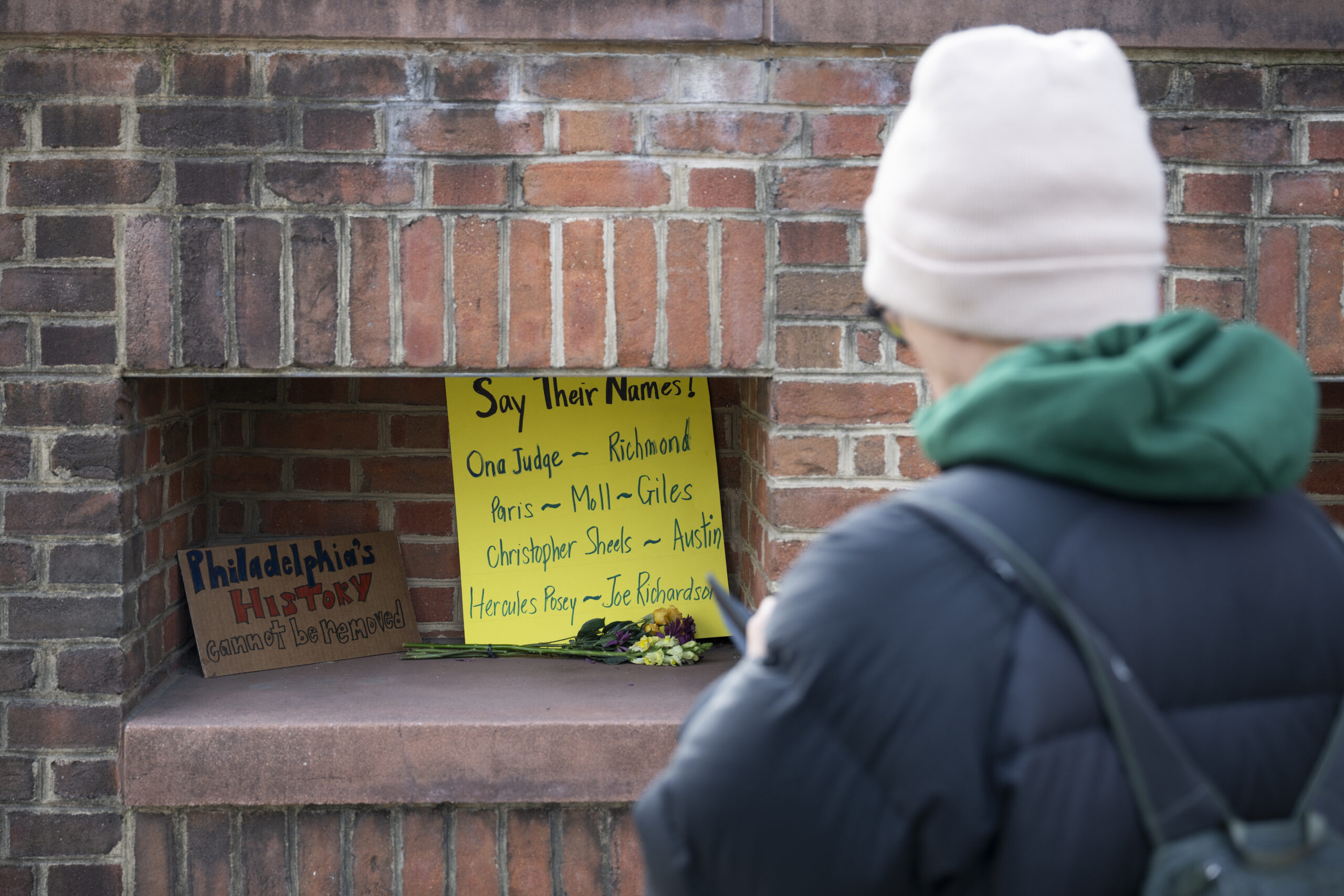
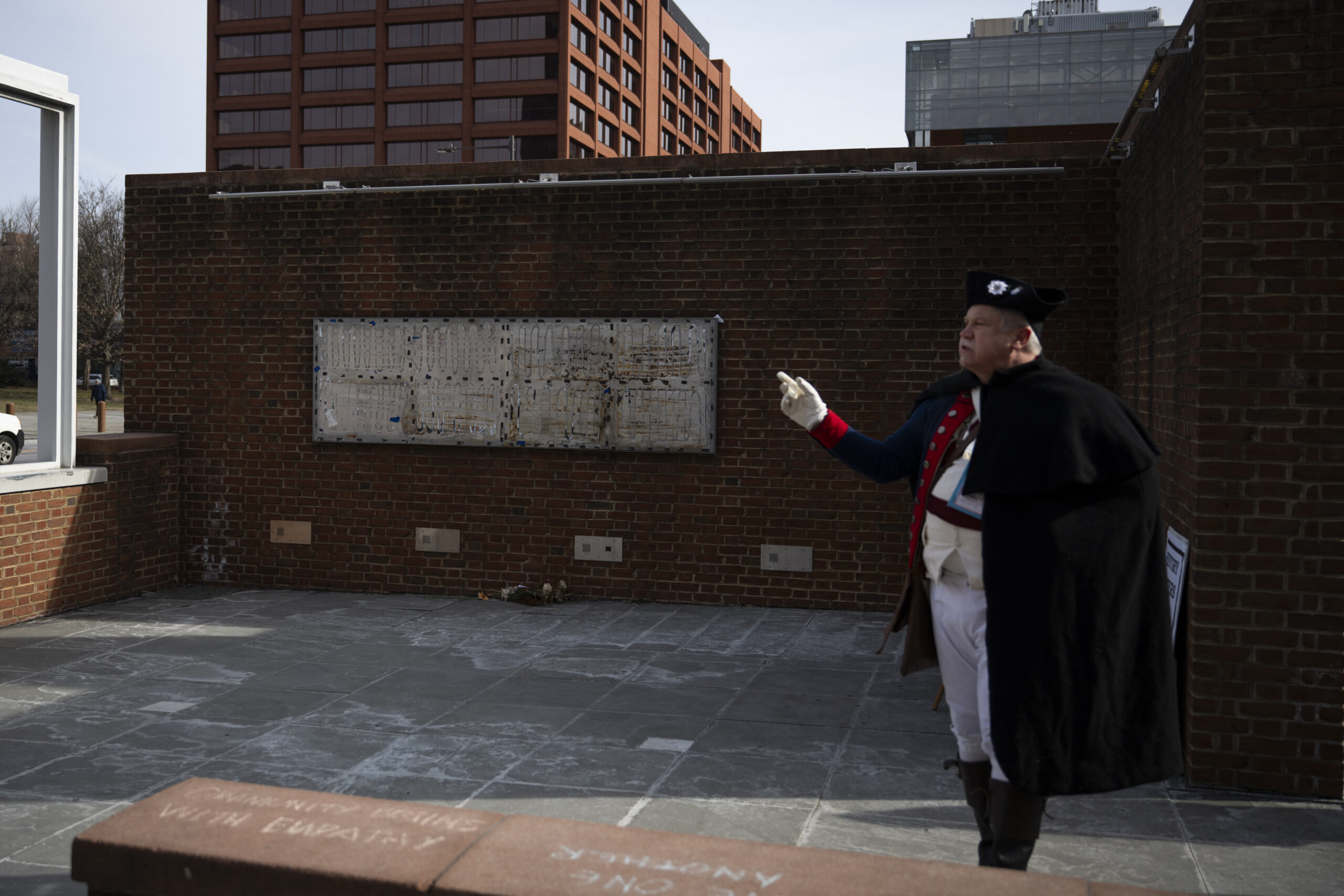
    Over that first weekend colorful signs populated the walls, reenactors donned historic garb and positioned themselves along the red brick pillars with a flourish, some people held giant replica signs of the ones that were removed, and others laid flowers delicately across the facility.

    To Berlin, whose school is a few blocks from the President’s House, posting the colorful signs was just a quick action she could take in her 45-minute prep period.

    “It was just a cathartic way to be like ‘Ugh, this sucks,’” Berlin said.

    But it soon became the first of numerous forms of activism and art that filled the space as more and more Philly-area residents yearned for a similar way to express their opposition to the removal of the plaques.

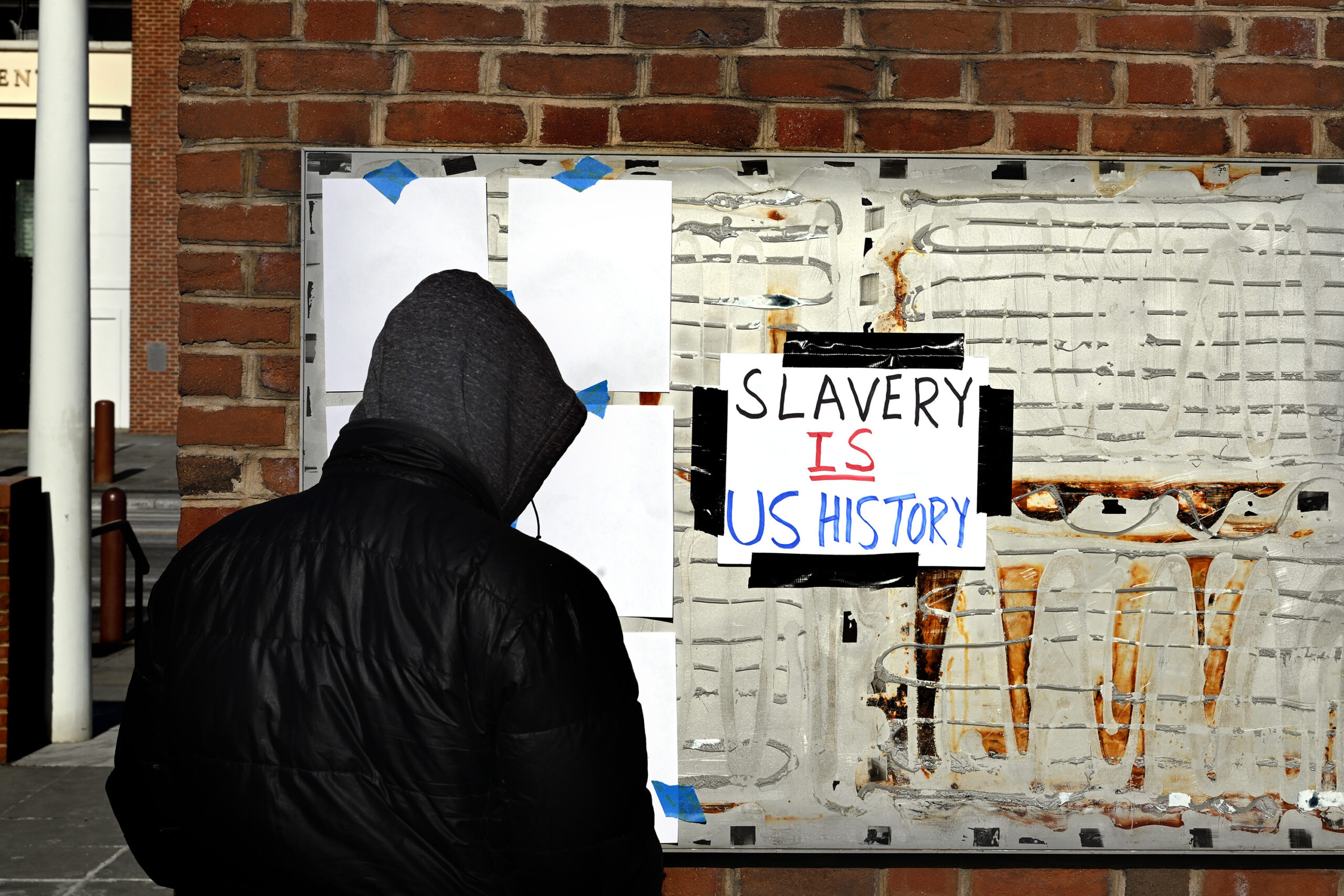
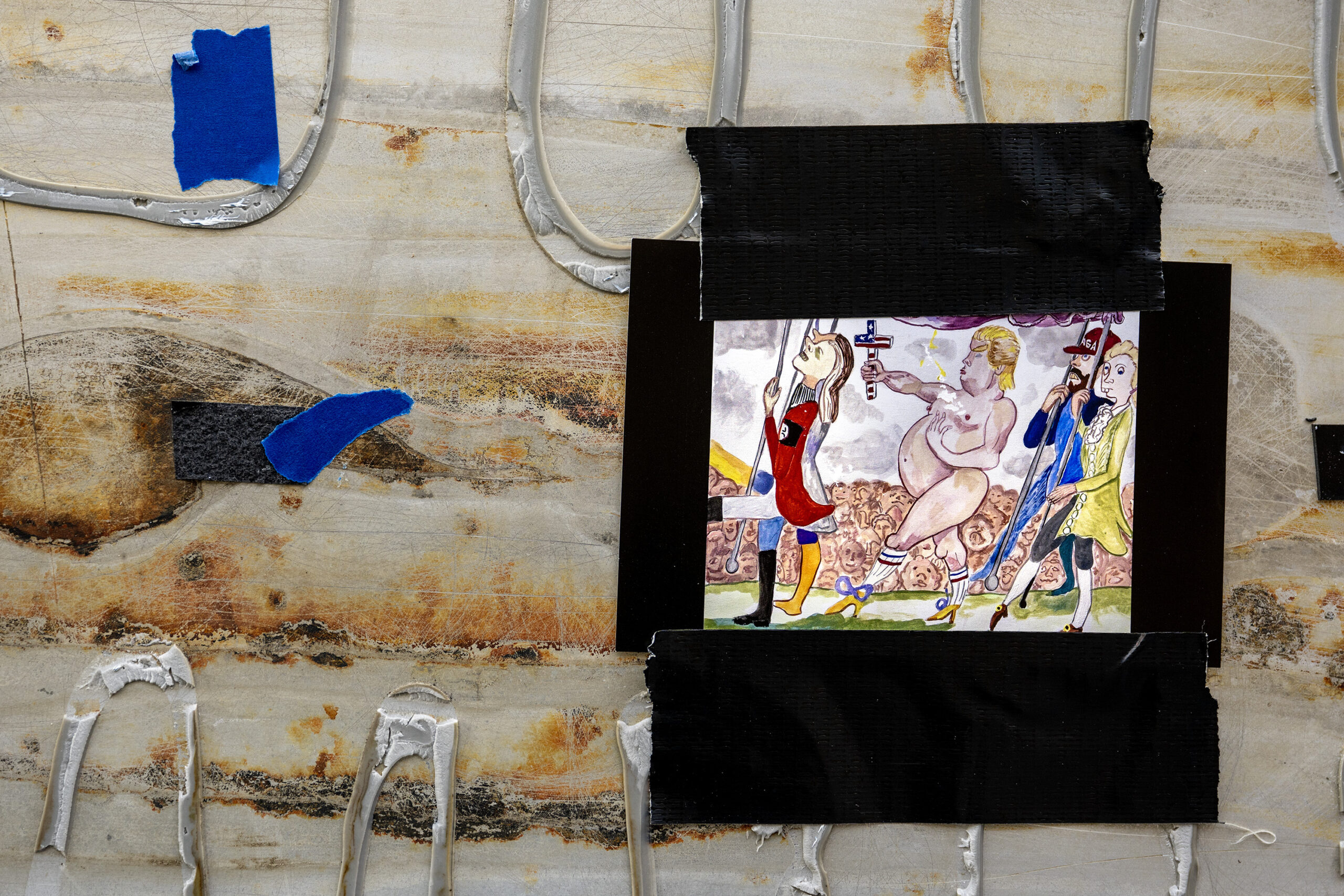
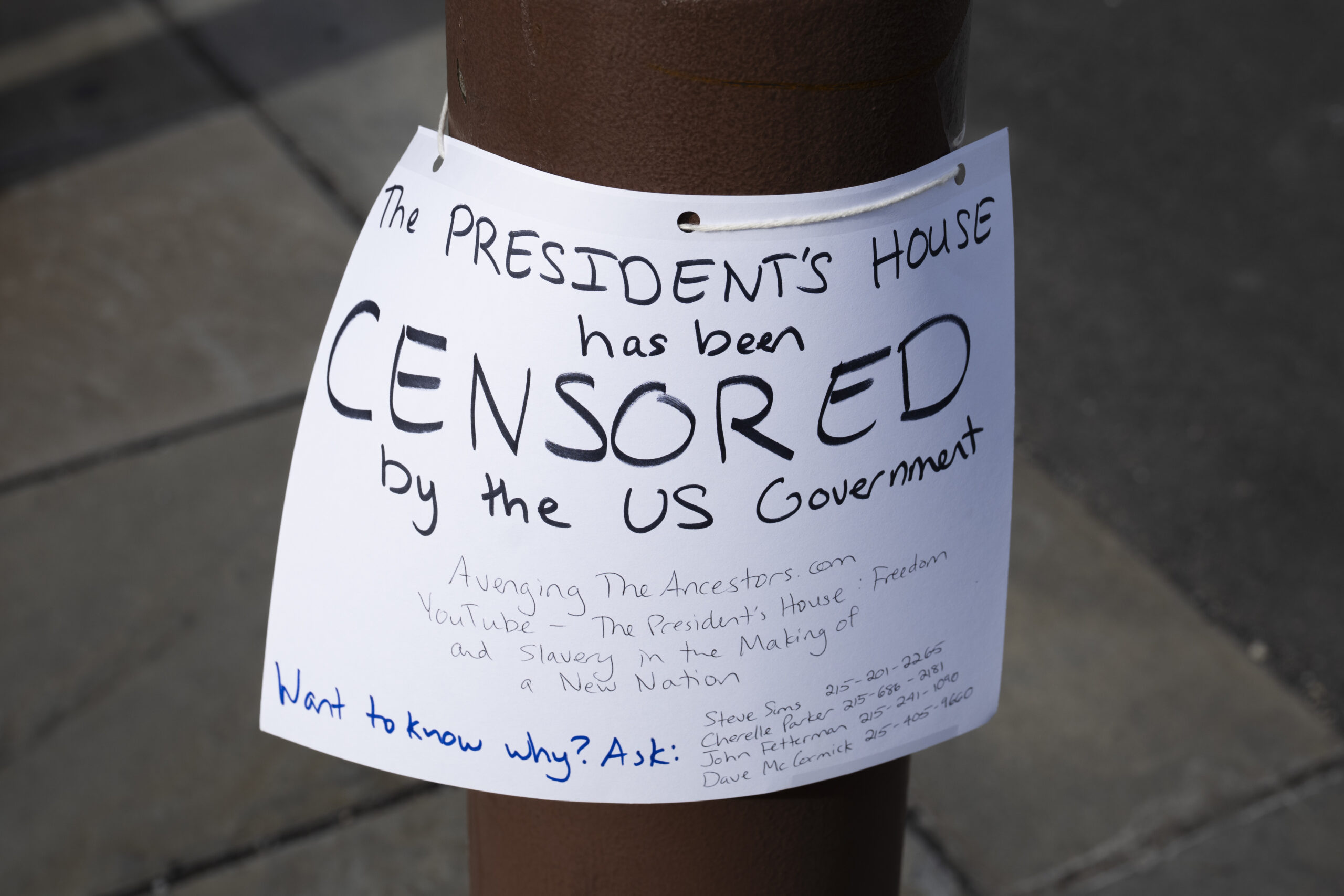
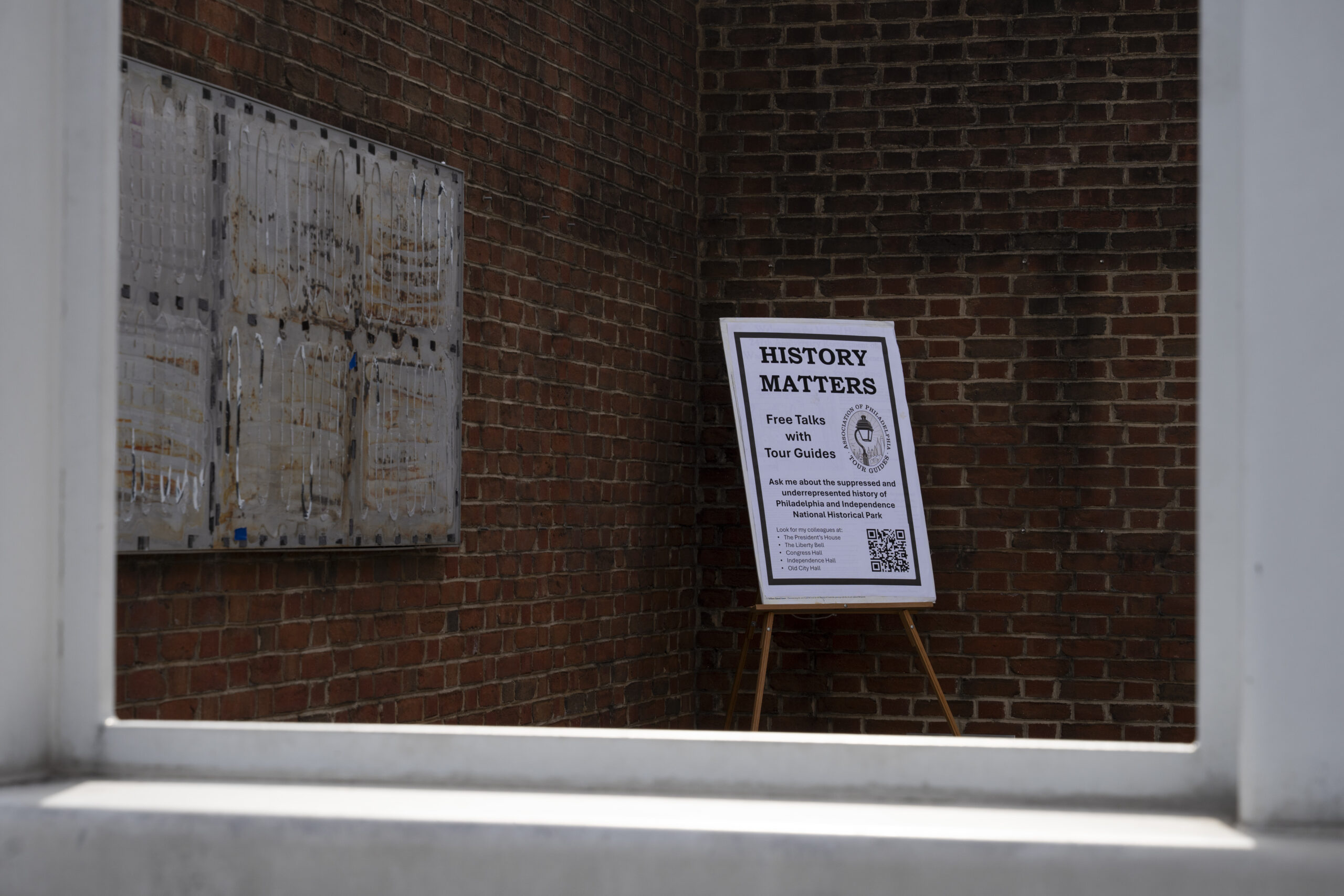
    Media ranged from cardboard to poster board. Tools included Sharpies and pens. Many of the more informal signs were affixed with painter’s tape to nooks in the brick structure and empty metallic shells where the original signs hung. Some more official-looking signs included QR codes and printed messages balanced on easels. Others were replicas of the signs that were there made with assistance from professional printing services.

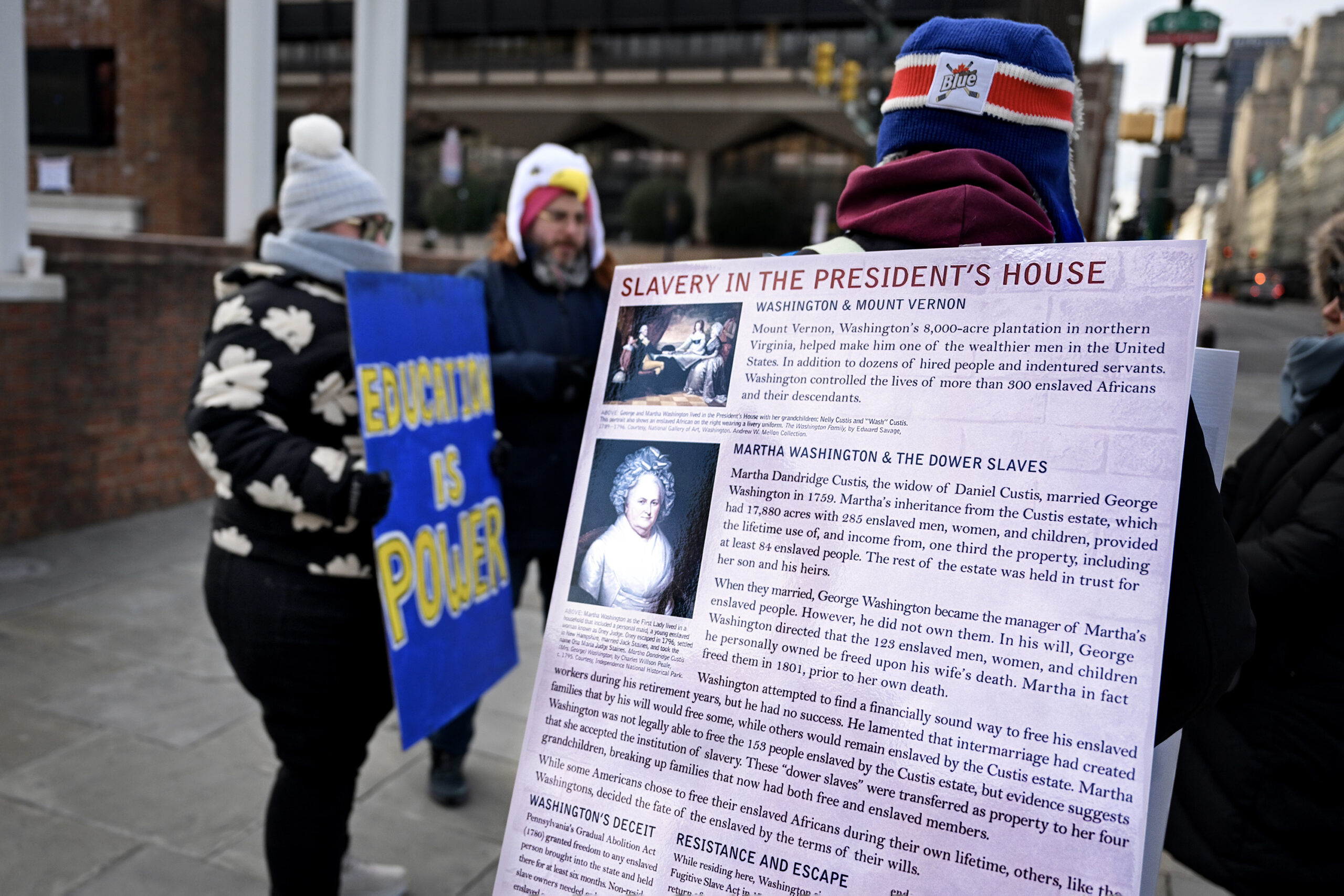
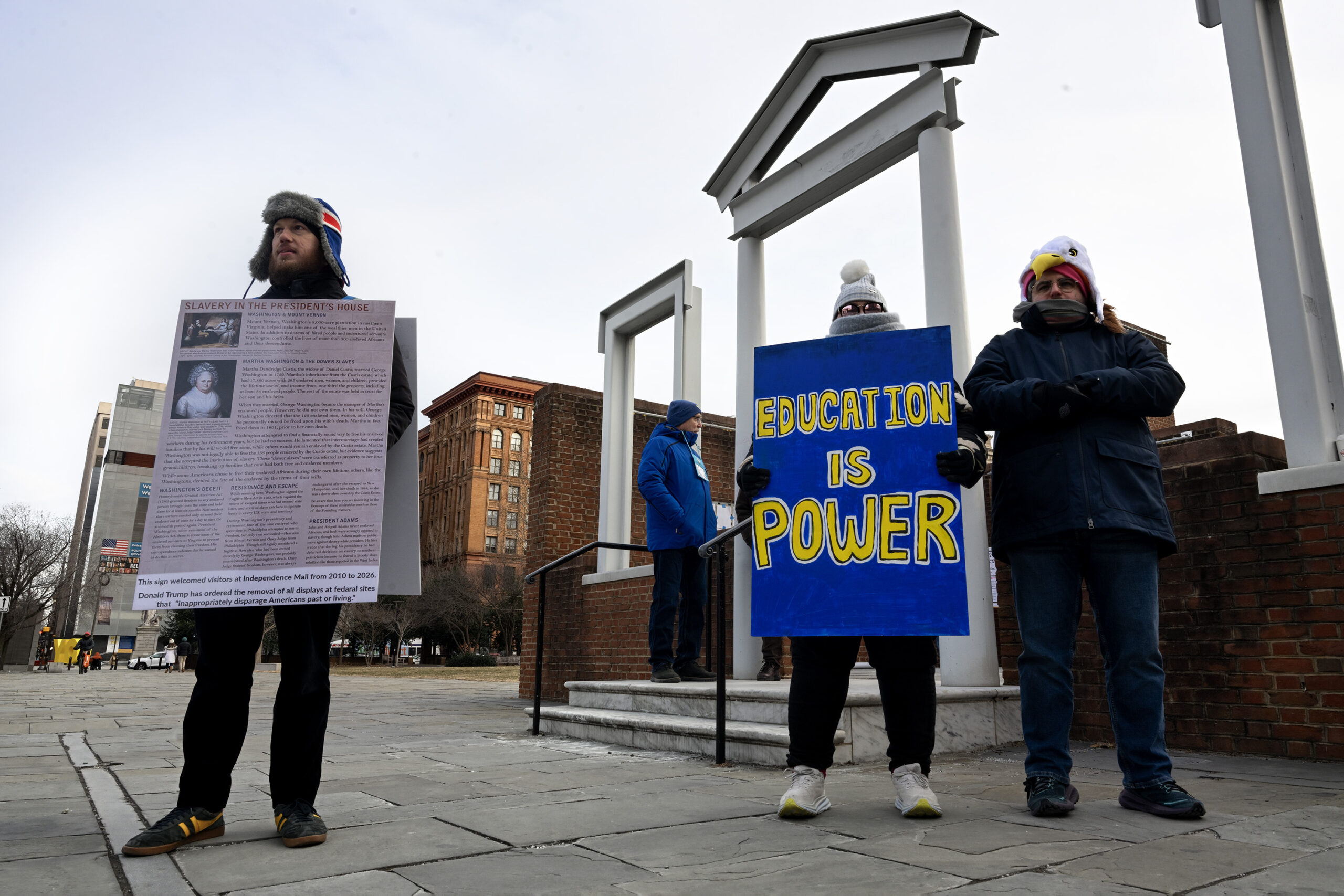
    Ted Zellers, a property manager in North Philly, took a more full-body approach to his protest. He found a high-resolution image online of one of the removed signs, titled “Slavery in the President’s House,” got it printed twice, fashioned a sandwich board out of the posters, and became “a living sign,” he said.

    It was an educational tool he could wield, but it doubled as a warning.

    “I hope people will think about what other information is under threat of being disappeared,” Zellers said.

    He expected to be the only person in the park with a sign, but was heartened to see a few dozen others there withstanding the 17-degree air interspersed with sharp winds slicing through the open air exhibit.

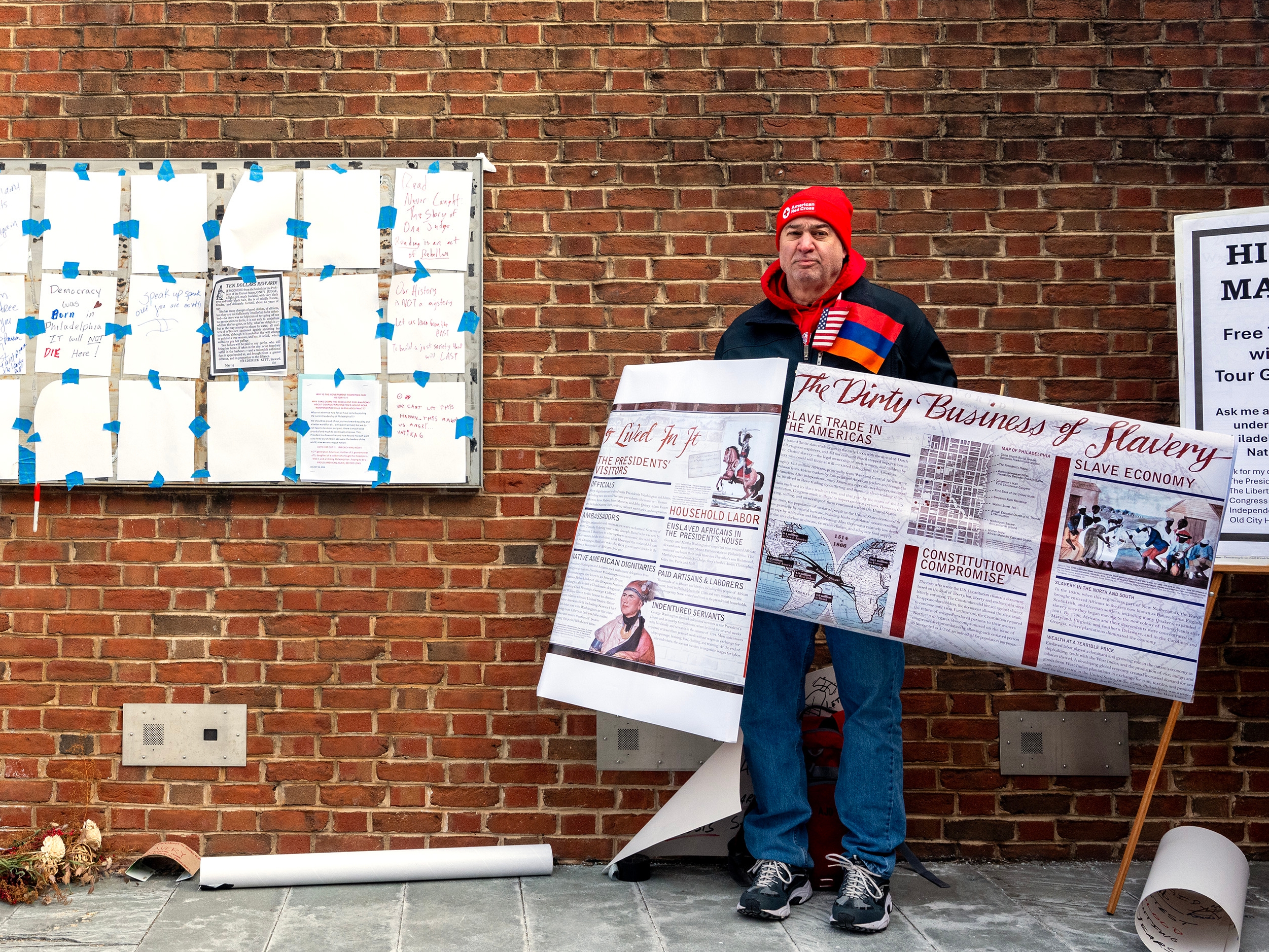
    Albert DerMovsesian from Willow Grove, who came to the site equipped with one vertical sign detailing the labor that took place in the house and a horizontal one titled “The Dirty Business of Slavery,” found himself similarly pleased to see so many like-minded others around him.

    In the park he saw little kids writing on pieces of paper pasted to the walls, a woman leaving a sign with the names of those enslaved at the site, and people adorning the structure with flowers.

    “It reminded me that I wasn’t alone,” DerMovsesian said.

    “We don’t need 350 million Malcolm X’s to make the country better,” Zellers said. “We just need a lot of regular people who recognize that they’re part of networks and who can take some action and amplify what’s going on, pass it onm and get other people engaged.”

    The collage of images developed organically, but hearkened back to a long lineage of protest art that has become increasingly prevalent under the Trump administration, said Nicolo Gentile, an artist and adjunct faculty member at Temple University’s Tyler School of Art and Architecture.

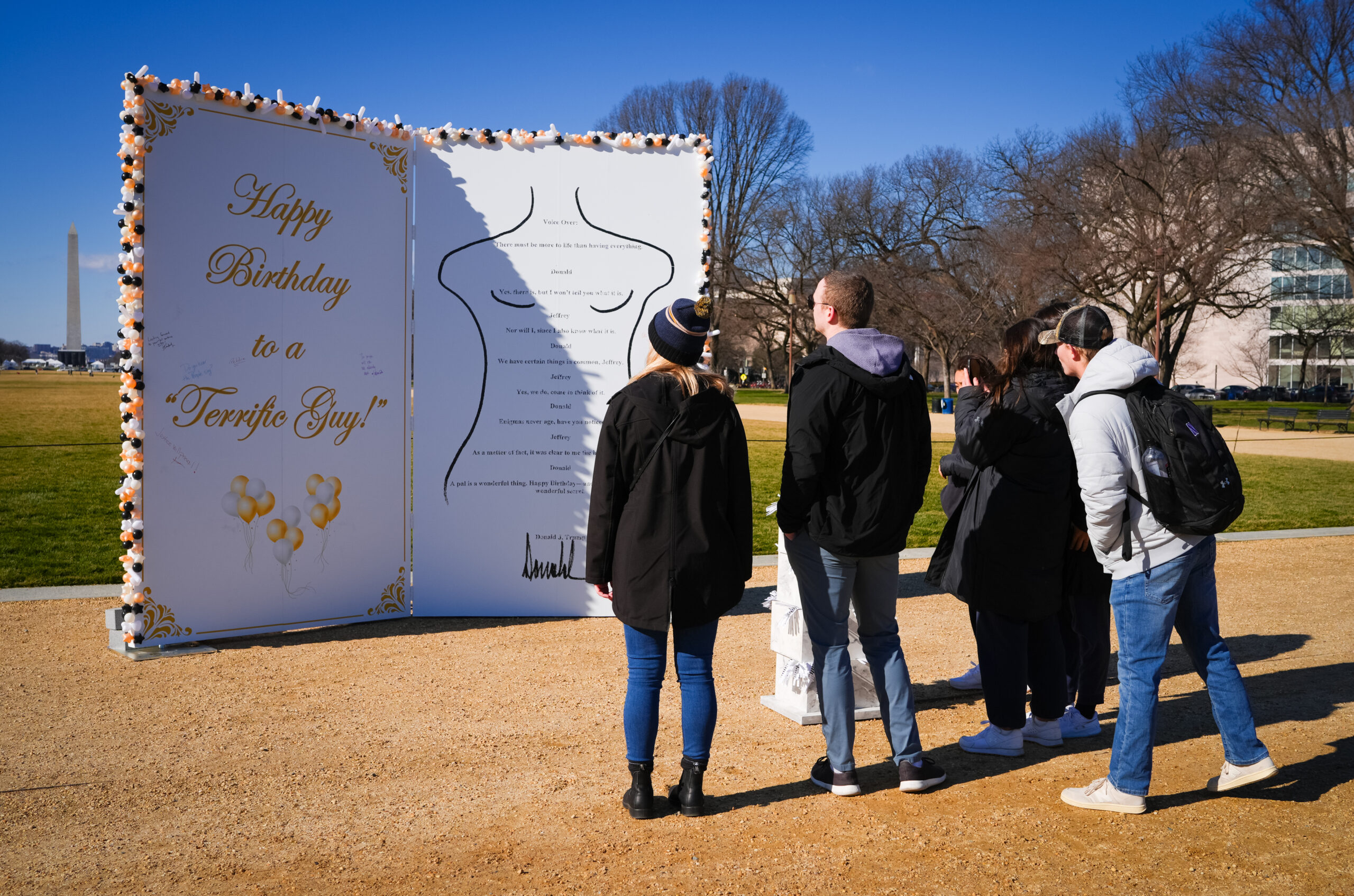
    Gentile likened the immediacy and style of the displays at the President’s House to the enlarged version of Trump’s birthday card to financier and sex offender Jeffrey Epstein that popped up on the National Mall in Washington last month.

    A new protest art installation referencing the Epstein files and President Donald Trump was installed on Third Street SW along the National Mall.

    The assortment of papers reading “learn all history” gets its power from the relative anonymity of its author, Gentile said, as well as its use of repetition.

    “It starts to create a texture of sound of a greater voice the way that the many voices of a chant during protest does,” he said.

    While Berlin said she doesn’t see herself as an artist, she appreciates the punch of a stark and direct message through signage and art.

    “I do love the impact of a good simple piece,” she said.

    In some cases, political art can be used to “accelerate progress,” Gentile said, but sometimes its best use is halting regression and “to wedge our foot in the door as progress may seem to be closing.”

    “This work seems to be the foot in the door,” he said.

    People leave notes on the spaces at the President’s House site in Independence National Historical Park.
    Ted Zellers (right) wears a sandwich board with a replica of one of the removed slavery panels as people visit and protest at the President’s House site.
    Ted Zellers (left) wears a sandwich board with a replica of one of the removed slavery panels, joining Jenna and Gregory May (right) protesting at the President’s House.
    People leave notes and political satire cartoons in the spaces at the President’s House.
    People protest at the President’s House site.
    Al DerMovsesian holds replicas of some of the removed slavery panels as people visit the President’s House site.
    The President’s House in Independence National Historical Park.
    The President’s House in Independence National Historical Park.
    Michael Carver portrays Mordecai Sheftall as part of a “History Matters” guide at The President’s House.
    A sign was placed at the President’s House.
    A group of teacher taped posters along the now barren brick walls of the President’s House.
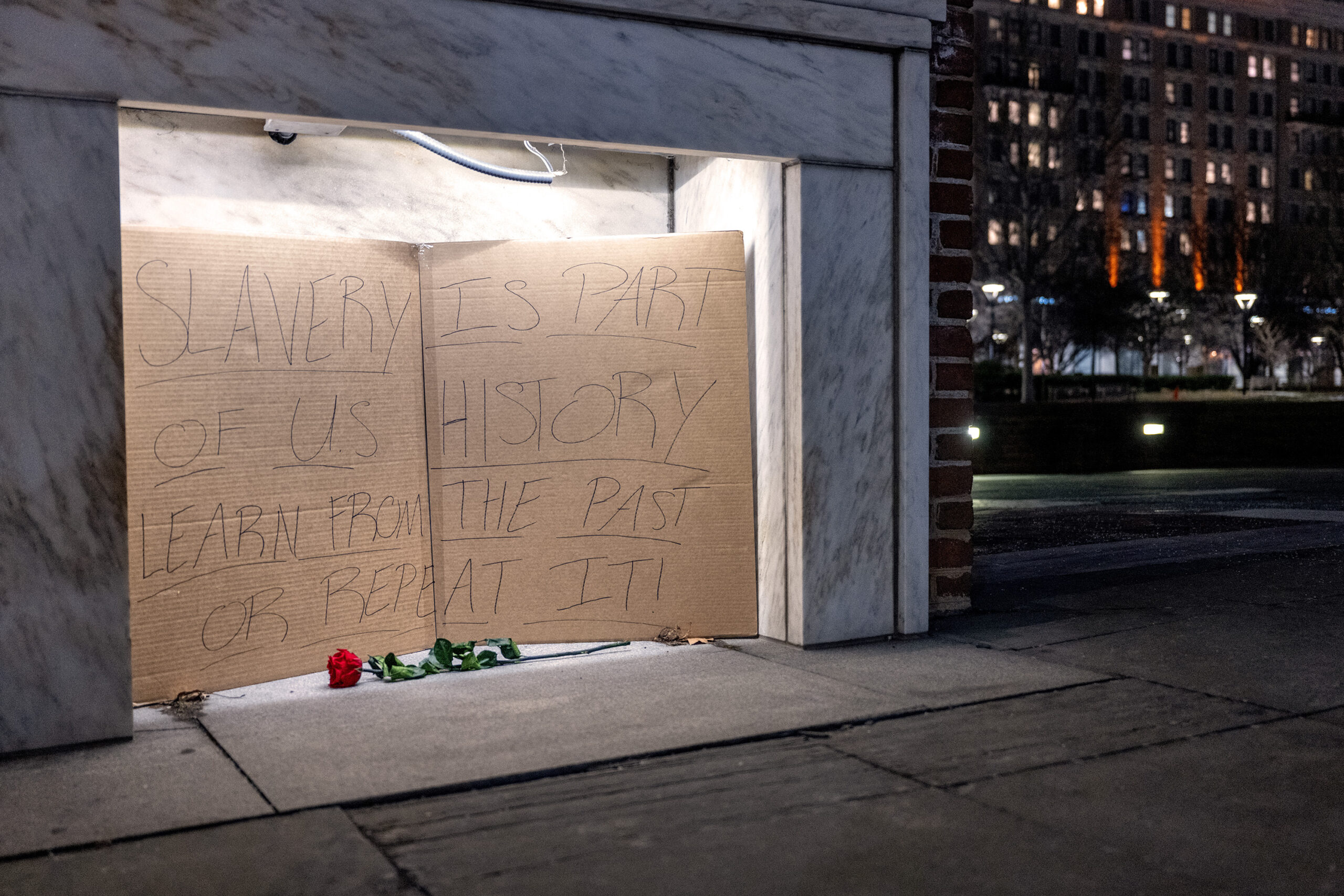
    A single rose and a handwritten cardboard sign (“Slavery is part of U.S. history learn from the past or repeat it”) are inside an empty hearth at the President’s House.
  • Temple has released its plan for the next decade. See what the North Philadelphia university has in mind.

    Temple has released its plan for the next decade. See what the North Philadelphia university has in mind.

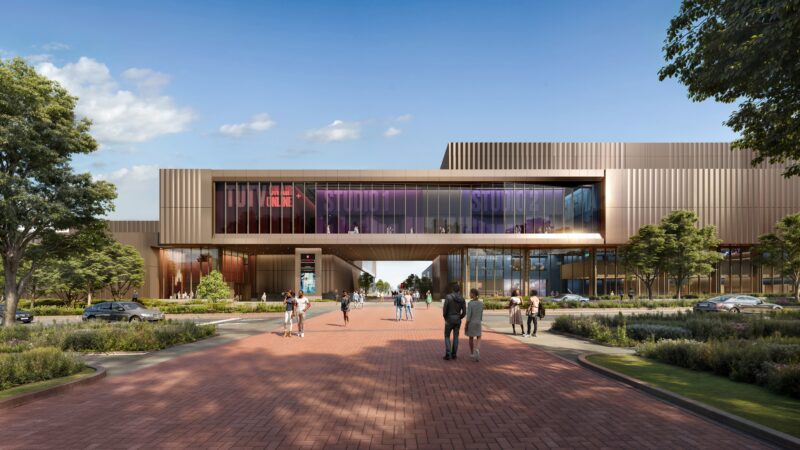
    Temple University on Wednesday released its plans for the school’s future, including a new 1,000-bed residence hall, STEM complex, quad with green space, and more attractive and defined entrances to its North Philadelphia main campus.

    That’s just part of the 10-year strategic plan, which will take the more than 33,000-student university through its 150th anniversary in 2034 and includes supports for students and learning, a campus development plan, and a new vision for Broad Street both near and beyond its campus.

    It emphasizes the student academic experience, with plans to elevate its honors program to an honors college, implement systems to identify and help students who are at risk of failing early on, increase online offerings to accommodate non-traditional students, and require career development and experiential learning for all students.

    And the 20-year campus development plan, which is part of the strategic plan, also reiterates President John Fry’s desire to create an “innovation corridor” stretching from the recently acquired Terra Hall at Broad and Walnut Streets in Center City to Temple’s health campus, a little more than a mile north of main campus on Broad Street.

    Temple is in the quiet phase of a $1.5 billion capital campaign — its largest to date — to raise money for faculty support and student financial aid, but also for initiatives outlined in the plan.

    “What we’re trying to do is build on the momentum we think we have right now as already one of the most consequential urban research universities that wants to go to the next level,” said Temple President John Fry.

    “What we’re trying to do is build on the momentum we think we have right now as already one of the most consequential urban research universities that wants to go to the next level,” Fry said in an interview before trustees approved the plan Wednesday. “This is a very ambitious plan that I think honestly will be a very big lift for us. But I think it’s achievable.”

    Interim Provost David Boardman, who led the strategic planning effort, emphasized that the top priority is student success and new buildings and development are meant to support that.

    “That, more than anything, is the heart of what we do,” Boardman said. “This is about providing meaningful research … It’s about us becoming the most important academic institution and partner in this community and really partnering for the future of Philadelphia and the region and the Commonwealth.”
    David Boardman, Temple University’s interim provost

    The planning effort, which included input from more than 2,000 Temple faculty, staff, students, and community members, started as an update of the 2022 plan that Fry initiated after becoming president in November 2024. But Temple officials realized a new plan was needed, Fry said.

    More greenery for campus and Broad Street

    Fry envisions more green space for recreation and events and for making North Broad Street more aesthetically pleasing.

    “It is a really harsh streetscape,” Fry said. “It’s really not inviting. Traffic is moving very quickly. …That street needs to be calmed down, and the best way … is to create medians, plants — both sides of Broad Street — making it a much more civilized area than it is now.”
    The effort, he said, is modeled after the recently announced $150 million streetscape plan to make the Avenue of the Arts in Center City greener. Temple also is involved with that through its ownership of Terra Hall, which will become Temple’s Center City campus, he said.

    “But we can’t do that without other public and private partnerships,” he said. “It’s beyond the institution’s capacity to fund that.”
    To start, Temple will fund “significant greening” around the entrance to the under-construction Caroline Kimmel Pavilion for Arts and Communication, he said. More green work is planned at Burk Mansion at Broad and Oxford, which Temple owns, as development occurs there, he said.

    With a large green lawn and courtyards, a quad is planned for the campus center, surrounded by Paley Hall, Tyler School of Art, the Charles Library, and the biology life sciences building.

    Temple in December purchased the former McDonald’s site at 1201-1219 N. Broad St., by Girard Avenue, which is adjacent to the Temple Sports Complex. Fry envisions using that property to create a major campus gateway.

    “Right now, you don’t really know when you come onto the Temple campus,” he said. “We would like Broad and Girard to announce you’re starting to enter Temple’s campus district.”

    More on-campus student housing

    Temple wants more on-campus residential space to improve the student experience and safety, Fry said.

    “We think we’re at a minimum several thousand beds short of where we need to be,” he said. “A stronger residential experience really does make for a much more fulfilling undergraduate experience. The more kids living on campus, the more dense campus is, I think the better we’re going to do on safety.”

    The plan calls for beginning to build a 1,000-bed residence hall along Broad Street on the former Peabody Hall site, south of Johnson and Hardwick Halls, in 2027. That would increase the current 5,000-bed capacity on the main campus by 20%. When that opens, Temple would upgrade Johnson and Hardwick, which have another 1,000 beds, he said.

    The Annenberg Hall/Tomlinson Theater building, which will relocate to the new arts and communication building in 2027, could also be converted into more residential space if needed, Fry said.

    An emphasis on STEM

    Temple intends to upgrade facilities for science, technology, engineering and math.

    “We just don’t have the research space, the wet lab space in particular, to accommodate the work that our faculty are doing,” Fry said.

    Several buildings, including the biological life sciences facility, will be renovated, and the school plans a new STEM building, perhaps behind the engineering building, or the conversion of an existing facility, Fry said. The decision on whether to build new will come within six months, he said.

    Temple needs to close some current science facilities to gain more space, he said.

    The Beury building, next to the Bell Tower and across from the new Barnett College of Public Health, will begin to be demolished this summer, he said.

    “Think of that as sort of the first down payment on this quad,” he said.

    That would be the first step toward developing an innovation district, Fry said. While not on the scale of University City’s, it would be “a very good attempt to begin to build that capacity in North Philadelphia,” he said.

    Terra Hall will nurture an arts hub, and both would contribute to creating an innovation corridor, he said.

    The plan also calls for a new ambulatory care center to better serve North Philadelphia. Fry said those plans are in very early stages.

    “A lot of outpatient care is occurring within the hospital right now,” Fry said. “It’s not great for patients… It also puts a real strain on our capacity to serve people who need inpatient services.”

    A new academic home for star students

    Temple aspires to make its honors program into an honors college, like Pennsylvania State University’s popular Schreyer Honors College, though with different parameters.

    Boardman said that effort would require major fundraising. Currently, the program exists within the college of liberal arts and enrolls more than 2,200 students.

    Elevating it to a college would require more programming, study-abroad and research stipends, experiential learning opportunities, and an option for those enrolled to live together in a residential community.

    Temple’s college would consider more than grade-point averages and SATs for admission, Boardman said. Various talents and leadership potential would be considered, with interdisciplinary studies and public service infused, he said.

    Staff writer Peter Dobrin contributed to this article.

  • Shootout in North Philadelphia home leaves one dead, three hospitalized

    Shootout in North Philadelphia home leaves one dead, three hospitalized

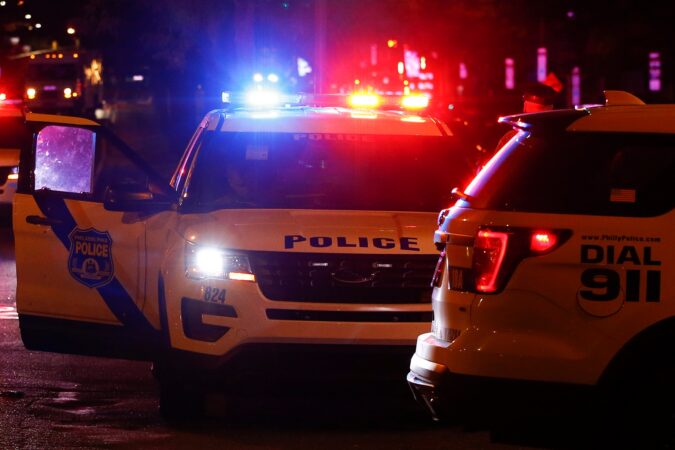
    A man is dead, and three others are hospitalized after a shooting inside a North Philadelphia house early Monday morning.

    The Philadelphia Police Department responded to a report of a person with a gun on the 1700 block of North Croskey Street at around 4:15 a.m. Upon entering a home on the block, officers say they found four adult male shooting victims.

    One man, estimated to be in his 50s, was found with a gunshot wound to the head. He was pronounced dead at the scene by medical personnel at 4:23 a.m., according to police.

    Police said the three other men were transported to Temple University Hospital and are in stable condition at the time of writing. None of the victims have been identified.

    A 48-year-old man suffered multiple gunshot wounds to the torso. A second man, 46, sustained two gunshot wounds to the stomach. Both are listed as in critical but stable condition.

    The third man, 54, who was shot once in the right shoulder, is in stable condition.

    Police recovered two firearms and found several spent shell casings inside the home where the men were found. No arrests were made, and no motive has been established as of publication.

    Tips and information about this incident can be shared with PPD’s tip line at 215-686-8477.

    This morning’s quadruple shooting comes during a January that saw some of the lowest numbers of homicides in Philadelphia in more than a decade, according to police data.

  • Carla Washington Hines, longtime dancer, choreographer, and teacher, has died at 72

    Carla Washington Hines, longtime dancer, choreographer, and teacher, has died at 72

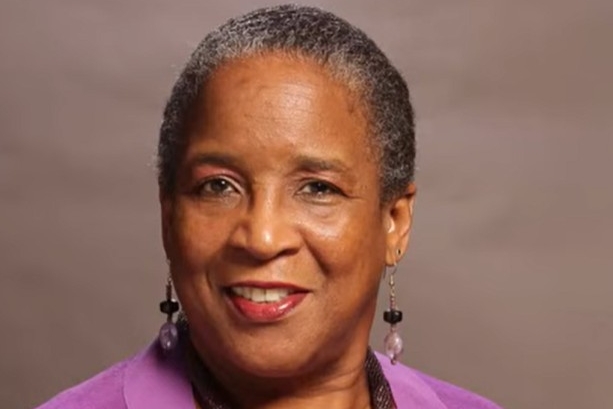
    Carla Washington Hines, 72, of Philadelphia, longtime dancer, pioneering choreographer, celebrated teacher, former artistic director, collaborator extraordinaire, and mentor, died Sunday, Nov. 2, of sepsis at Temple University Hospital-Jeanes Campus.

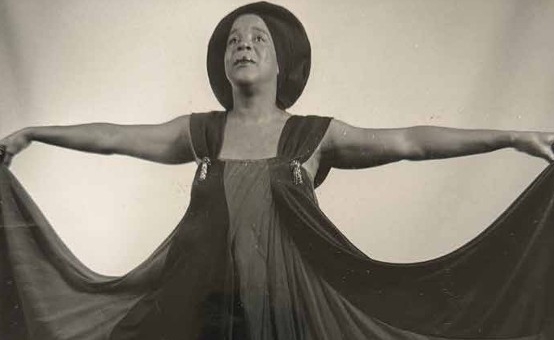
    Mrs. Hines came to Philadelphia from Virginia in 1974 after college and spent the next four decades dancing, teaching, lecturing, traveling, and generally advocating for arts in education from kindergarten through college. She danced with the Sun Ra Arkestra, the John Hines Dance Co., and other troupes at all sorts of venues in Philadelphia, New York, Chicago, elsewhere in the United States, and throughout Europe.

    She choreographed original performances such as “Montage in Black,” “Reflections,” and “Life Cycle,” and collaborated with notable jazz musicians Herbie Hancock and Alice Coltrane, and other musical stars. She was a guest on TV and radio shows, read poetry at public events, and earned awards from the Pennsylvania Council on the Arts and the Philadelphia-based Bartol Foundation for education.

    She was an expert in jazz dance, modern dance, ballet, and posture, and she lectured, organized workshops, and taught the elements of dance and choreographic principles at schools, colleges, art centers, drama guilds, libraries, and elsewhere around the country. Her mother, Thelma, was a dancer and teacher, too, and Mrs. Hines championed the connection between an interest in the arts and academic success.

    “In dance, I can be anything I want to be,” she said in an online interview. “That’s the magic of the arts.”

    She created an afterschool residency at a Universal charter school and taught dance at E.M. Stanton Elementary School, Strawberry Mansion High School, and other schools. She said in the online interview that her curriculum “is based on the appreciation of dance and movement,” and that it helps students “make sense of their lives using dance as a tool for learning.”

    She said: “I want them to be able to understand through movement exploration how dance can change one’s life.”

    She was artistic director for the Philadelphia chapter of the Institute for the Arts in Education and at the Point Breeze Performing Arts Center. “Her creative guidance helped students tell powerful cultural stories through movement,” her family said.

    Mrs. Hines performed with the Jones-Haywood Dance School in Washington before moving to Philadelphia.

    As longtime community engagement manager for the Philadelphia Clef Club of Jazz and Performing Arts, Mrs. Hines wrote grants and choreographed performances. She was executive director of the John Coltrane Cultural Society and active at the old University of the Arts.

    Her family said: “She devoted her life to creativity and to nurturing talent in others.”

    Carla Yvette Washington was born Nov. 3, 1952, in Charleston, W.Va. Her family moved to Grambling, La., when she was young, and she graduated from high school in 1970.

    She was named Miss Freshman at what is now Grambling State University, joined the Alpha Kappa Alpha Inc. sorority, and earned a bachelor’s degree in recreation in 1973. In 1981, she earned a master’s degree in fine arts and dance at the old Philadelphia College of the Performing Arts.

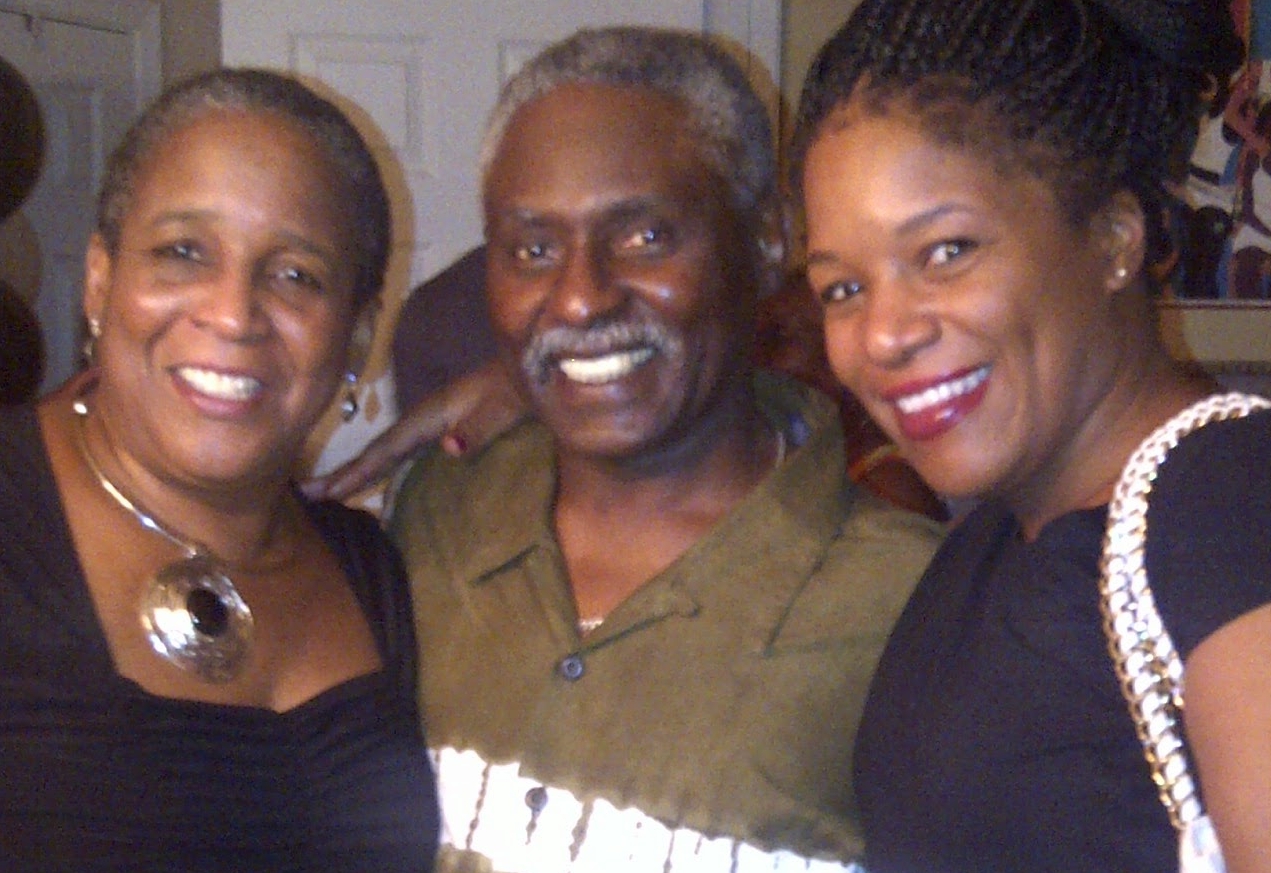
    Mrs. Hines (left) smiles with her husband, Lovett, and their daughter, Zara.

    She worked as a dance teacher for the Fairfax County Department of Recreation in Virginia after college and performed with the Jones-Haywood Dance School in Washington before moving to Philadelphia.

    She met jazz musician Lovett Hines Jr. when they were students at Grambling and they married in 1984 and lived in West Oak Lane. They had a daughter, Zara, and Mrs. Hines welcomed her husband’s son, Lovett III, and his family into her family.

    “She introduced many creatives to dance and culture, and sparked their creative careers,” her stepson said. “That is the essence of her legacy.”

    Mrs. Hines and her husband, their daughter said, were “a partnership of two geniuses.” He played the saxophone and was artistic director at the Clef Club. She loved the drums, and they collaborated seamlessly on many notable projects.

    Friends called her “a sweetheart” and “a beautiful soul” in online tributes. One said she “made an impact on Philadelphia and beyond in countless ways.” Her sister, Alicia Williams, said: “Everyone had a special relationship with her.”

    Mrs. Hines graduated from Grambling High School in Louisiana in 1970.

    Mrs. Hines was diagnosed with a lung disease in 2024 and Stage 4 cancer in 2025. “She was stern but soft,” her daughter said, “loving but able to tell you like it is.”

    Her husband said: “She had special relationships with so many musicians, so many people. It was through insight, understanding, and patience. In them, we see her everyplace, feel her everyplace.”

    In addition to her husband, daughter, mother, and stepson, Mrs. Hines is survived by three sisters, two step-grandsons, and other relatives. A brother died earlier.

    Services were held Wednesday, Dec. 17.

    Mrs. Hines (center) said she adapted her teaching techniques to suit the needs and ages of the students.
  • Educational play spaces were built at two North Philly affordable housing sites. Could they inspire similar projects nationwide?

    Educational play spaces were built at two North Philly affordable housing sites. Could they inspire similar projects nationwide?

    Regina Robinson isn’t used to being asked what she wants out of her home.

    But for about a year, architects and designers had detailed discussions with her and other tenants at the Susquehanna Square subsidized apartment community in North Philadelphia about how to transform the look and feel of the development.

    Robinson and her now 8-year-old daughter, Faith, went to every meeting. Residents talked about their love of graphic novels and the inspiration they found in superheroes — not just those who can fly, but real people they saw making a difference in their own families and communities.

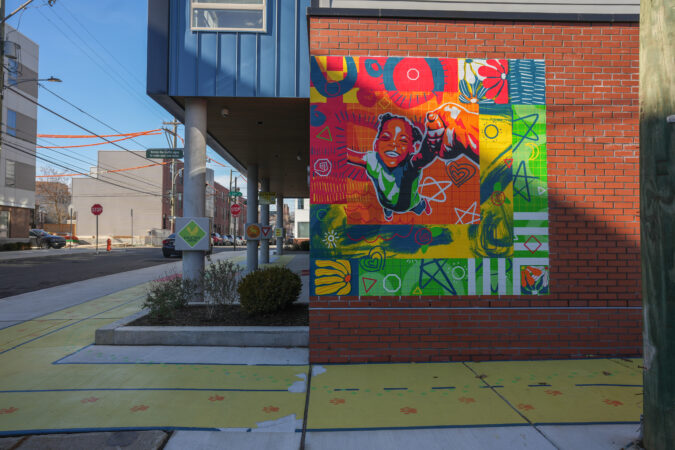
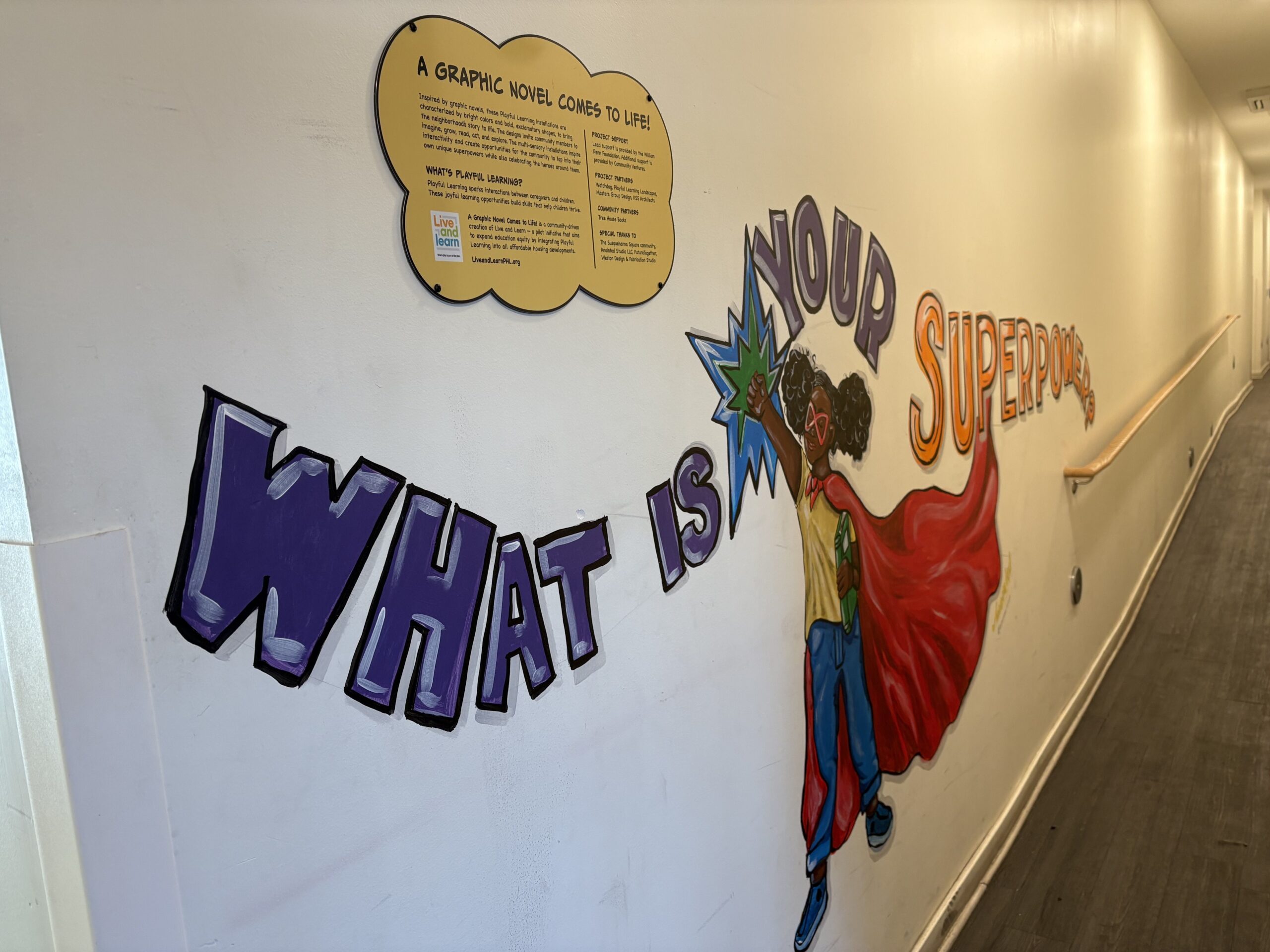
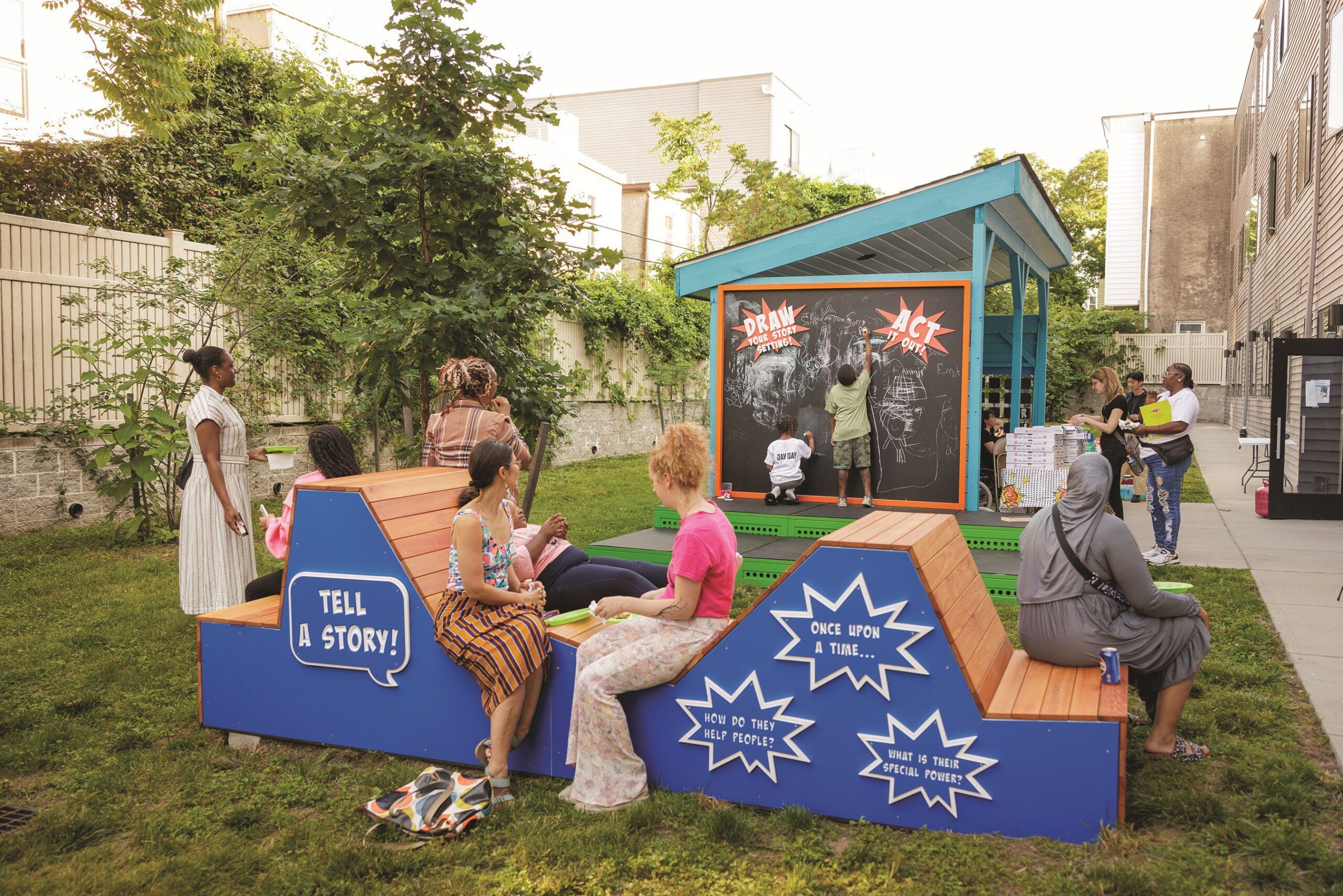
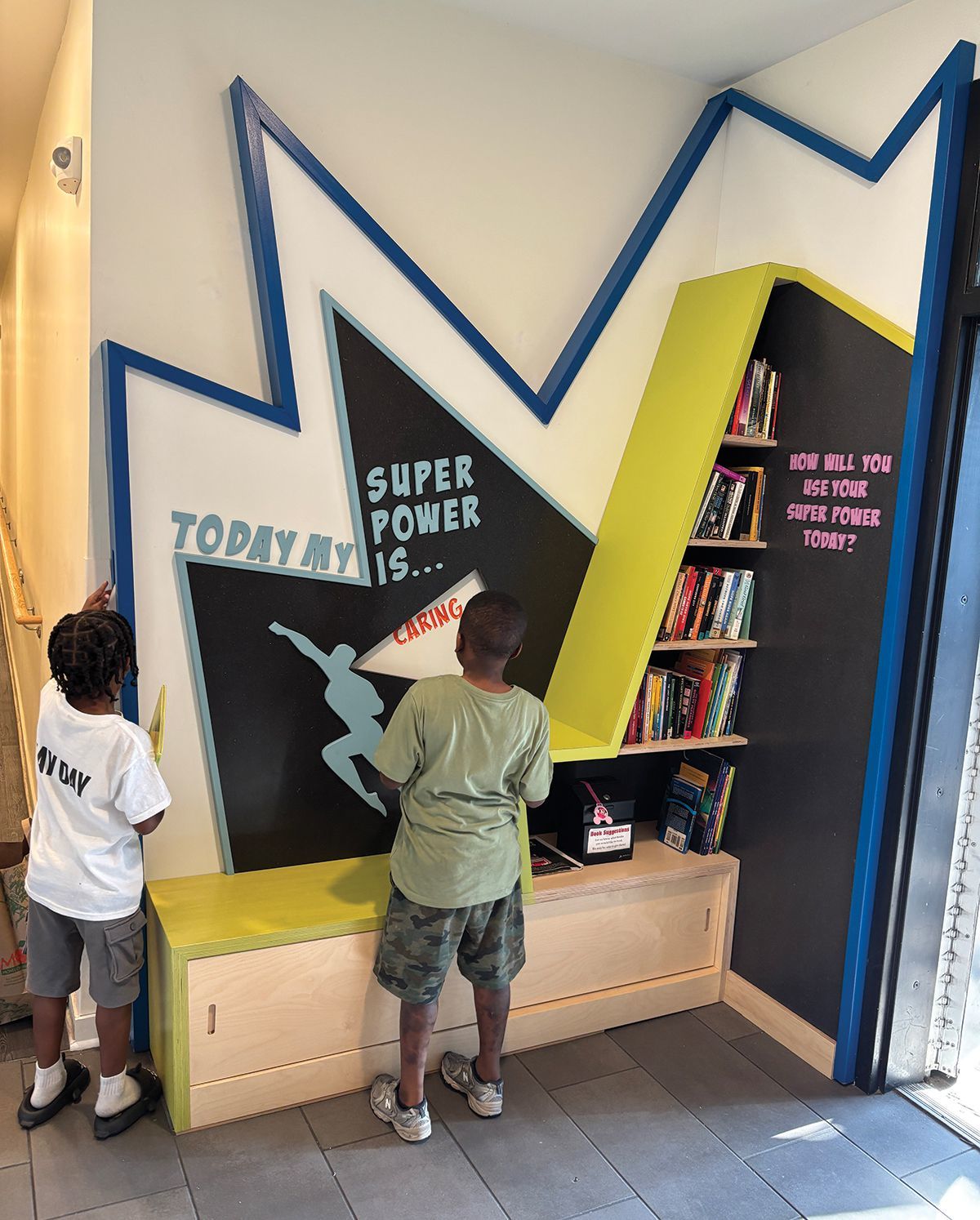
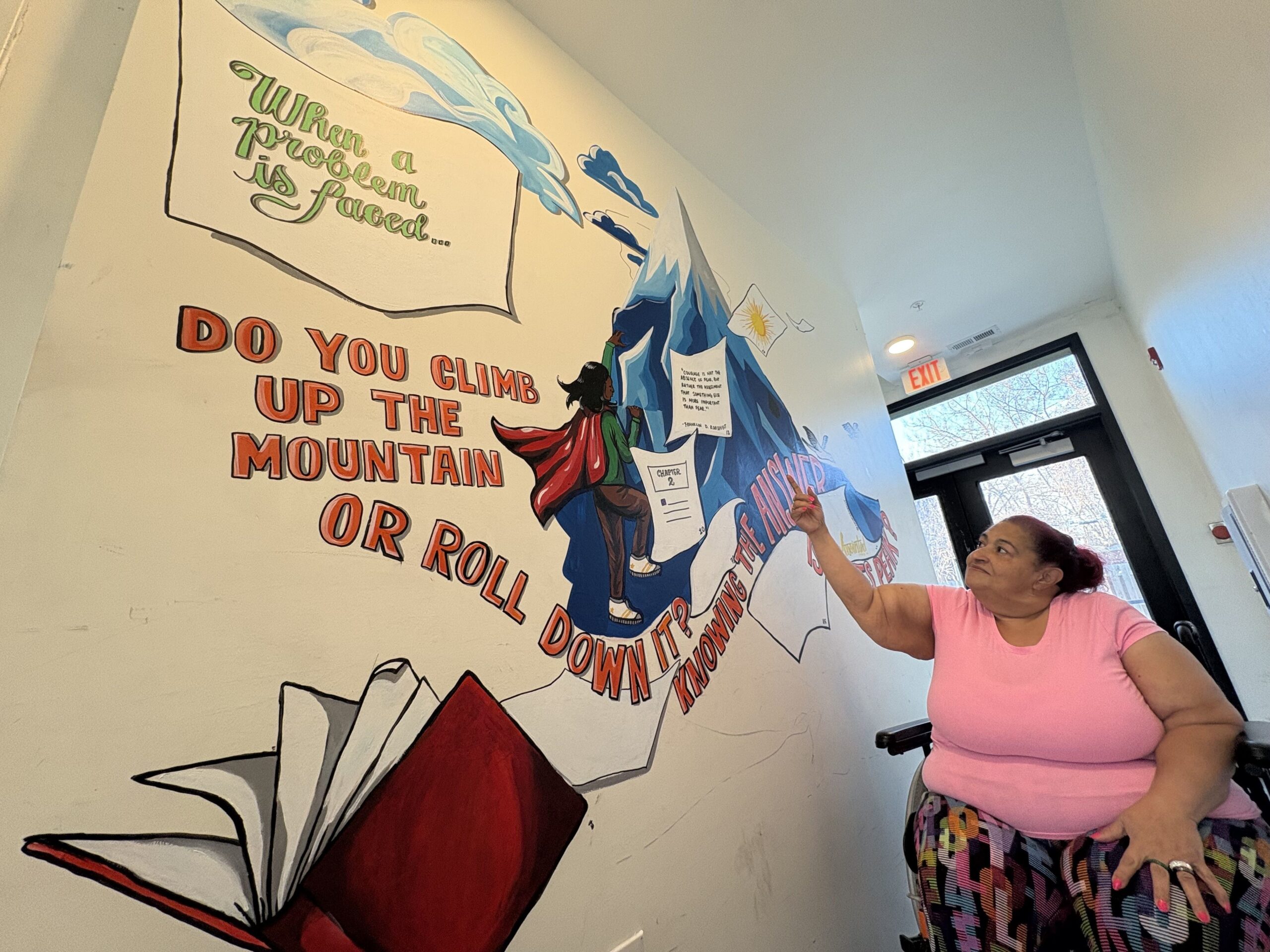
    Blank white walls in apartment hallways became canvases for colorful murals of people in capes meant to inspire children and adults to have self-confidence and set goals. A previously unused bike shed now stores bikes but is also a stage for acting out stories and a puzzle wall for spelling words. In courtyards, residents got new places to sit that double as little libraries. Prompts ask them to think about the books they read and create characters and stories of their own.

    “They really listened to us. … They were taking our ideas and they actually brought it to life,” Robinson, 52, said. “It really brought tears to my eyes.”

    A mural asks “What is your superpower?” in the hallway of an apartment building in the Susquehanna Square development in North Philadelphia.

    The project was an initiative of Playful Learning Landscapes, cofounded in Philadelphia in 2009 by Temple University professor Kathy Hirsh-Pasek and University of Delaware professor Roberta Michnick Golinkoff. The organization has brought the concept of playful learning — engaging children and their caregivers in skill-building lessons through play — to spaces such as laundromats, parks, grocery stores, sidewalks, and subway stops.

    But installations at two sites in North Philadelphia are the organization’s first that bring playful learning to subsidized housing. And the organization and its partners hope the Live and Learn pilot will lead to similar projects across the country that help vulnerable children catch up to peers who have access to more educational opportunities.

    The goal is to incorporate playful learning into all subsidized housing developments, said architect Heidi Segall Levy, project manager of the Live and Learn initiative and an associate at Watchdog, a Philadelphia-based real estate consulting firm.

    “We were really trying to increase educational equity,” she said. “And the way to do that is to really bring it into [people’s] homes.”

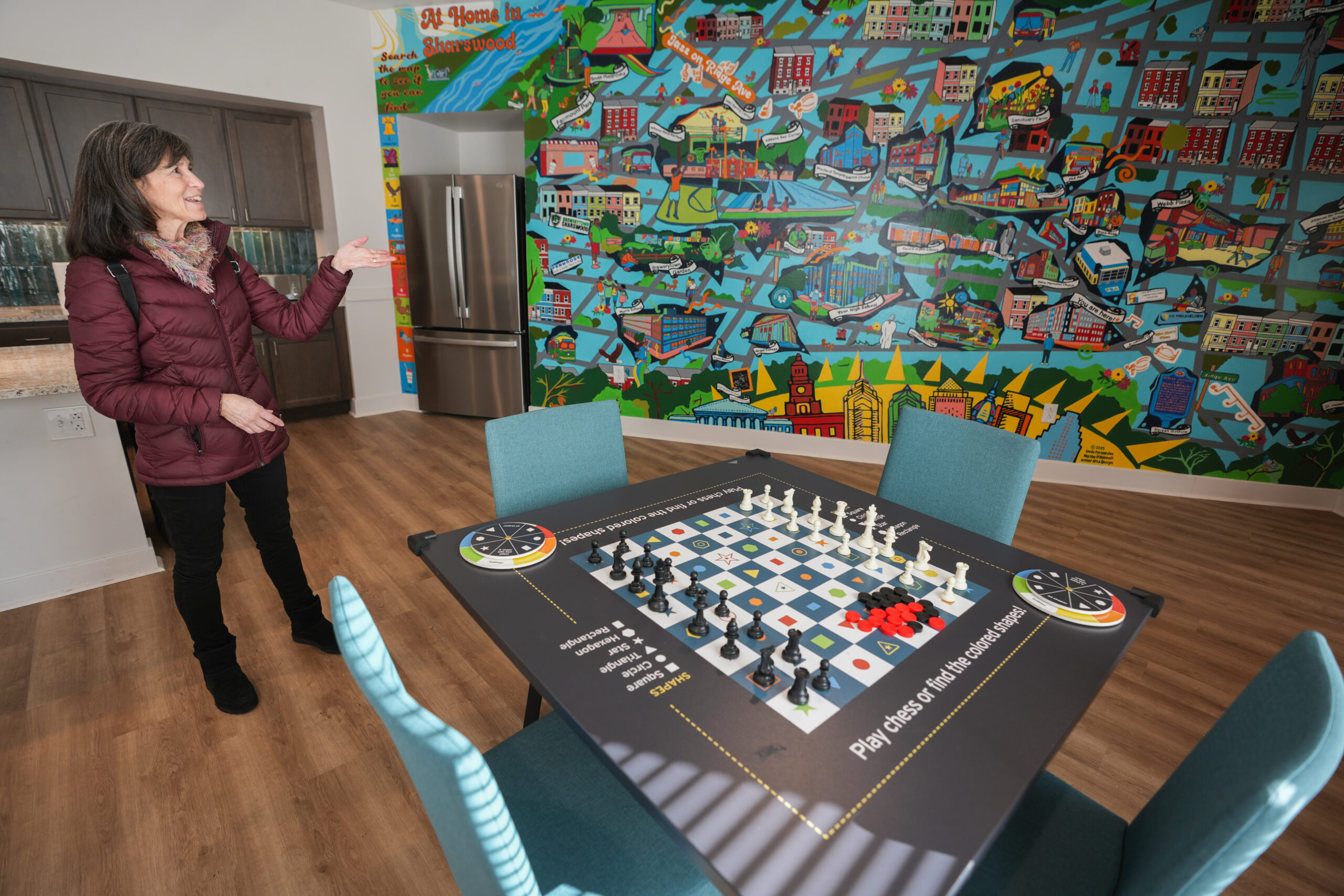
    Architect Heidi Segall Levy, manager of the Live and Learn project, shows a mural by Linda Fernandez and Martha O’Connell from Amber Art & Design, at one of the educational play spaces at 2000 Ridge Ave.

    About playful learning

    Adults might not immediately understand what playful learning is until they’re reminded of childhood games.

    Take Simon Says, for example. Children learn to retain information, evaluate the directions they’re given, and follow through. I Spy helps children learn how to describe their surroundings. Matching games strengthen memory and help kids recognize patterns.

    Playful Learning Landscapes wants to transform any space where children and caregivers spend time into somewhere they can engage with each other. The organization has dozens of installations in Philadelphia and projects in about 30 U.S. cities and about 10 countries.

    Now an activity hub, this transformed bike shed invites children and caregivers to draw, act, and tell stories together. Interactive puzzles, a chalkboard, and a small stage surround a multi-seat bench that doubles as a learning prompt and bookshelf.

    One goal of the Live and Learn pilot was to train housing providers to continue the work.

    “Our hope in the future is that developers and designers will be thinking about how to build playful learning into the architecture,” Segall Levy said. And eventually, “playful learning will just be included in public space design.”

    Most of the pilot’s funding came from the William Penn Foundation, which contributed $647,250.

    The foundation has invested about $26 million in playful learning projects in Philadelphia over the last decade and wants to see playful learning elements become standard in recreation centers, parks, libraries, and other places, said executive director Shawn McCaney.

    “We believe every neighborhood should have access to high-quality public spaces” that can support community building, safety, and children’s development, McCaney said. “These kinds of spaces can become really important points of pride and engagement in communities.”

    Super at Susquehanna Square

    David La Fontaine, who recently retired as executive director of the nonprofit housing developer Community Ventures, was immediately interested when he was approached about adding playful learning to his Susquehanna Square apartment complex.

    “A program that helps young kids in school was really what made me most interested,” La Fontaine, the son of a public schoolteacher, said.

    Residents at Susquehanna Square spin the wheel to discover their superpower — a feature of the Book Nook. This custom Playful Learning installation is designed to create a sense of arrival while encouraging reading and social connection.

    Community members’ vision came to life with the help of KSS Architects.

    Susquehanna Square resident Merlyn DeJesus, 61, likes to sit in her building’s backyard and take in what the space has become. Young residents now have things to do when they go outside. They draw on a chalkboard, spin the letter tiles of a puzzle, and turn wheels to create their own superheroes.

    DeJesus and her 8-year-old granddaughter read books together from the little library, where community members can take and leave titles. Her granddaughter also helped paint superhero murals, which are on each of her building’s three floors.

    It all makes the space feel “more homey,” DeJesus said.

    “I feel proud inviting people to come to my home,” she said.

    Merlyn DeJesus, a resident of the Susquehanna Square subsidized housing development in North Philadelphia, points to one of the murals painted in her apartment building as part of the Live and Learn project.

    Transforming community spaces

    Playful Learning Landscapes focuses on tailoring projects for specific communities based on extensive outreach.

    For example, residents in the Sharswood area of North Philadelphia noted that nearby Ridge Avenue has lots of fast-moving traffic. So they said they wanted their children to learn about street safety in the Live and Learn project that was focused on subsidized homes developed by Pennrose in partnership with the Philadelphia Housing Authority.

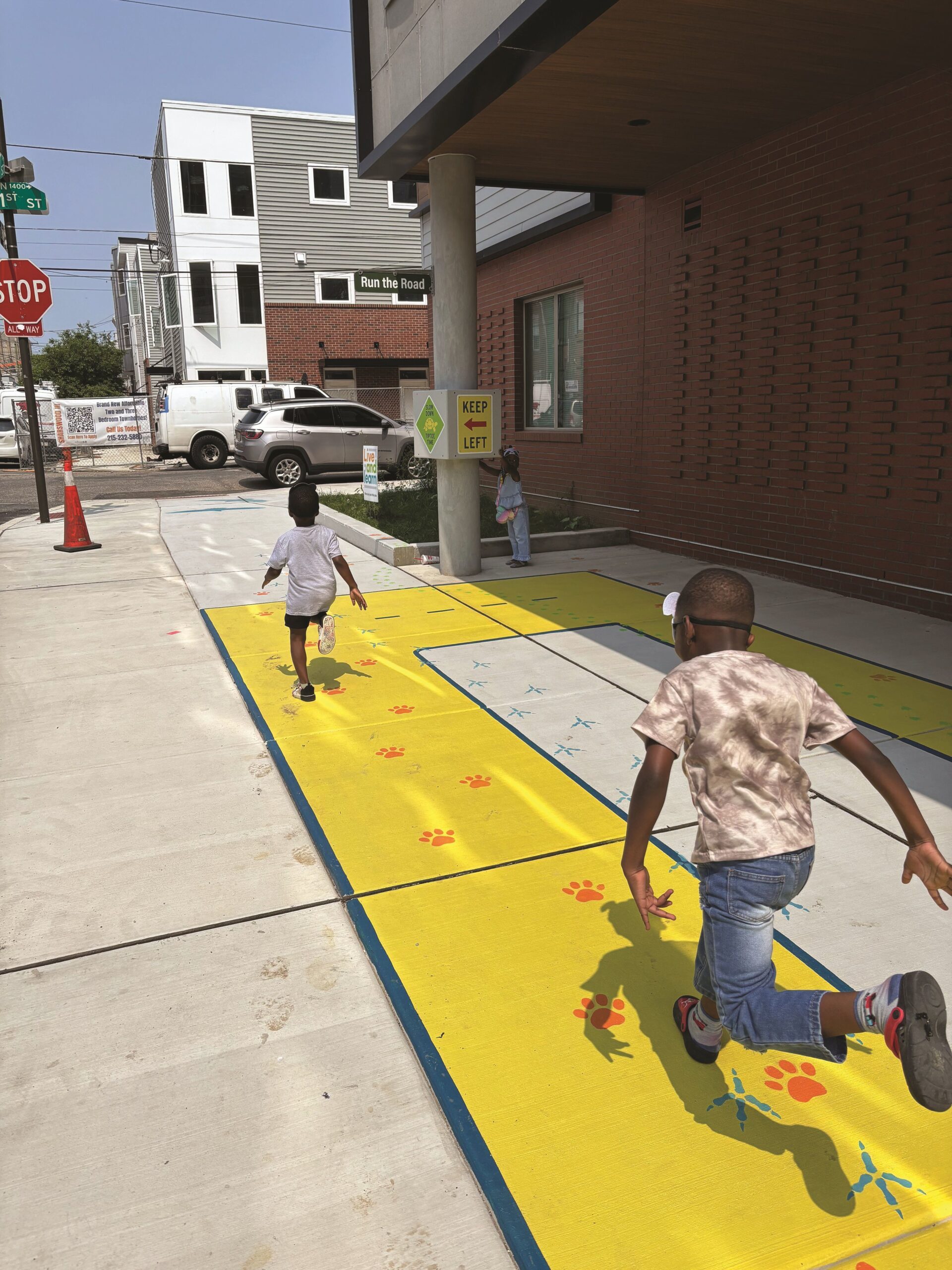
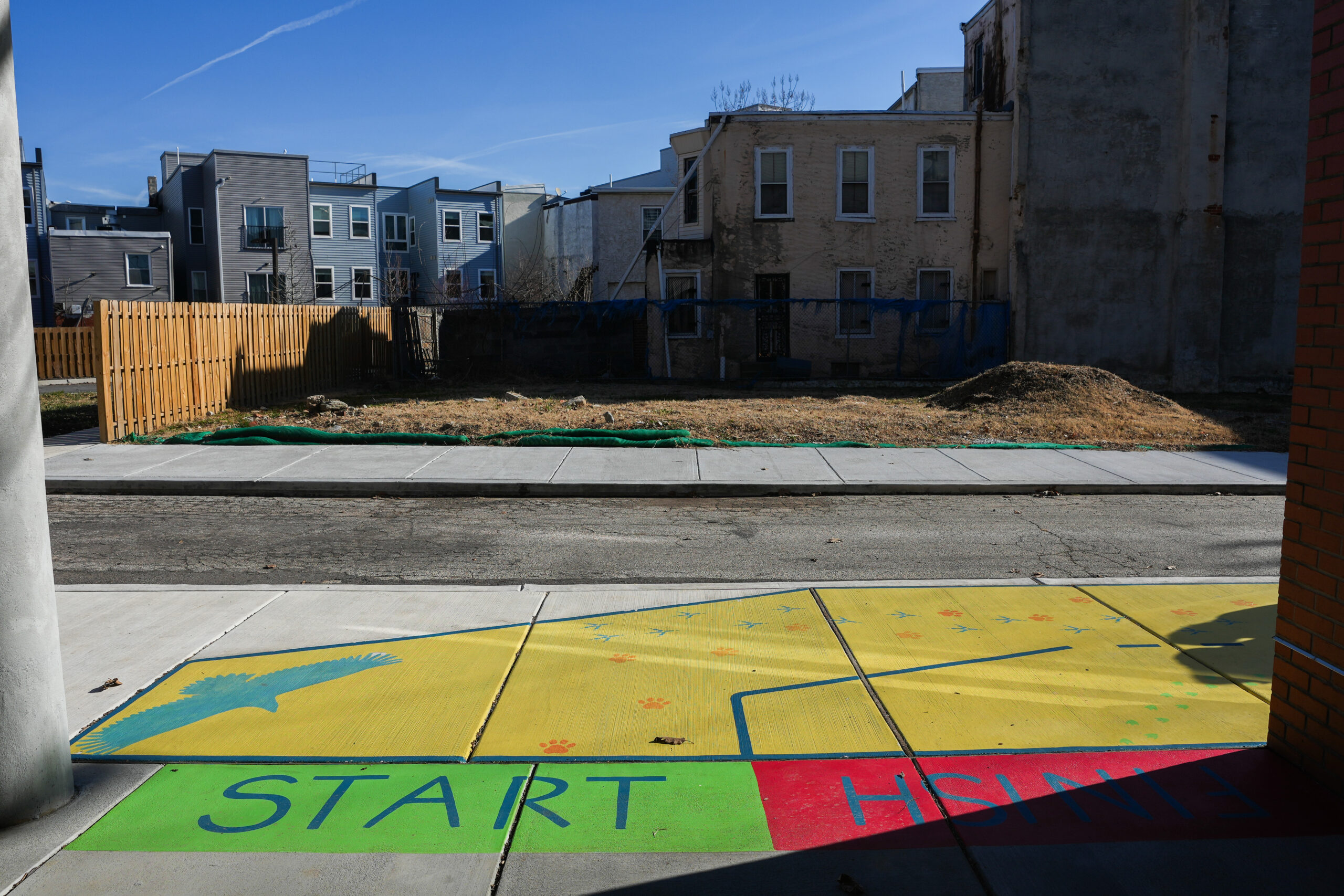
    Children in Sharswood “run the road” along a new Playful Learning track painted on the sidewalk of a Pennrose housing development.

    At the “Run the Road” installation, a colorful street is painted on a sidewalk. Children can spin traffic signs and learn what “yield,” “keep right,” and “one way” mean. They learn about crosswalks. They can step on animal prints and walk like the creatures.

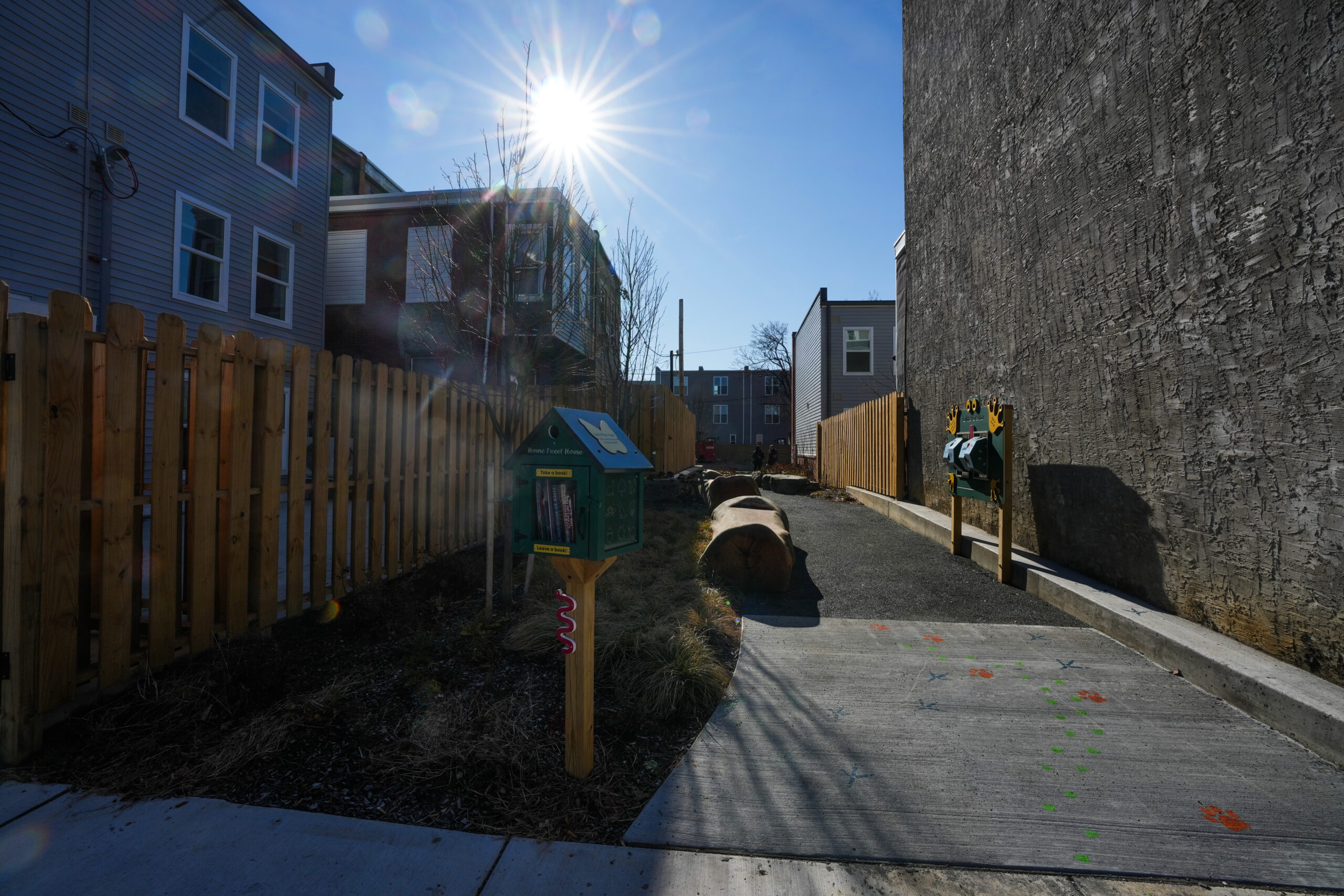
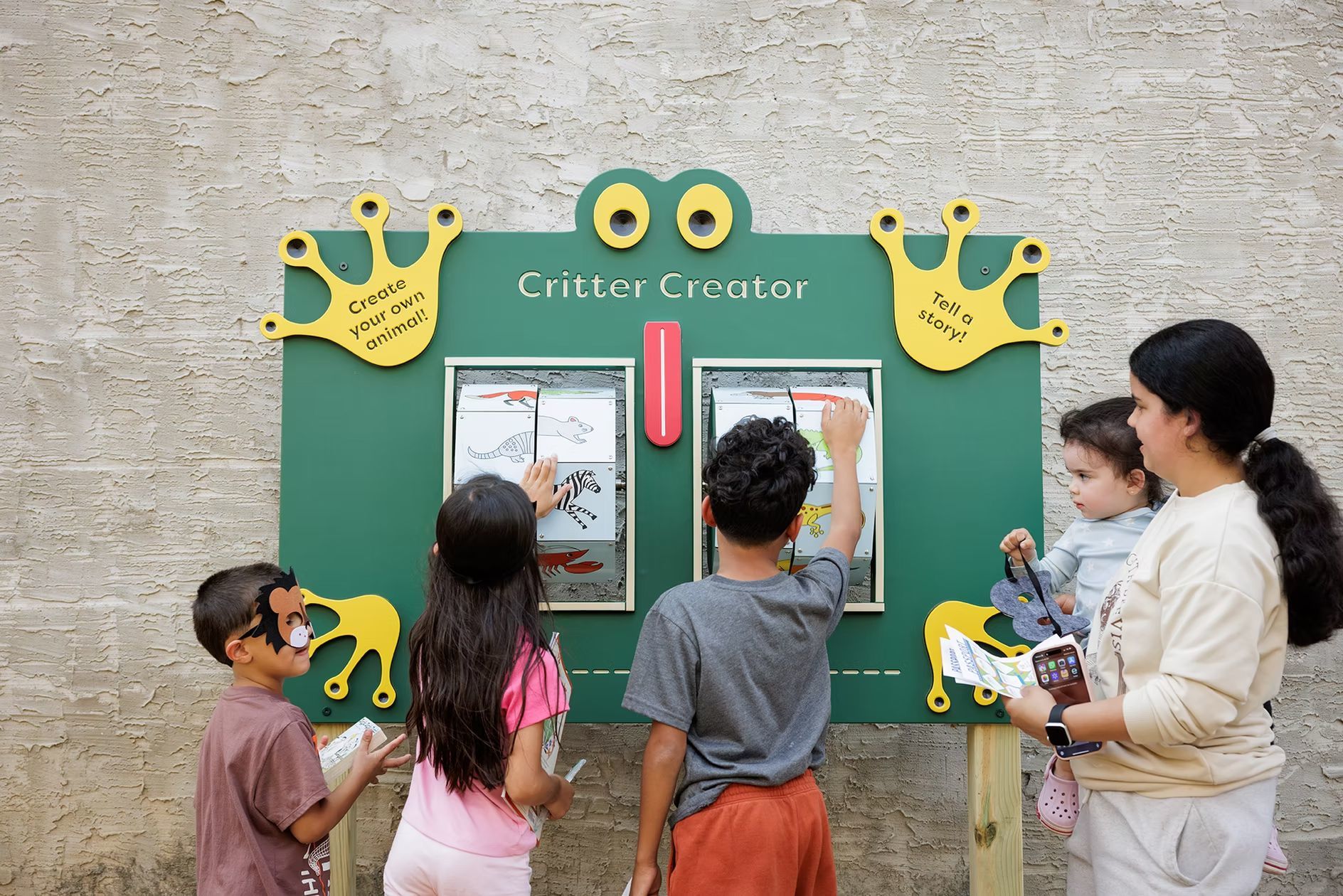
    Residents also said they didn’t have open space they could enjoy. So the Live and Learn project transformed a small strip of unused land into a pocket park. It has seating and a little library. There’s a puzzle and matching game and wheels children can turn to create their own animals and tell stories based on their creations.

    A pocket park is one of the educational play spaces that the Live and Learn initiative brought to a subsidized housing community in the Sharswood area of North Philadelphia.

    Darnetta Arce, executive director and founder of the Lower North Philadelphia Community Development Corp., said the space has become a safe, peaceful place for neighborhood residents.

    “Anytime you take blighted property and change it into a beautiful play and sitting area, I think that’s great,” she said. “There is no longer an eyesore in this community.”

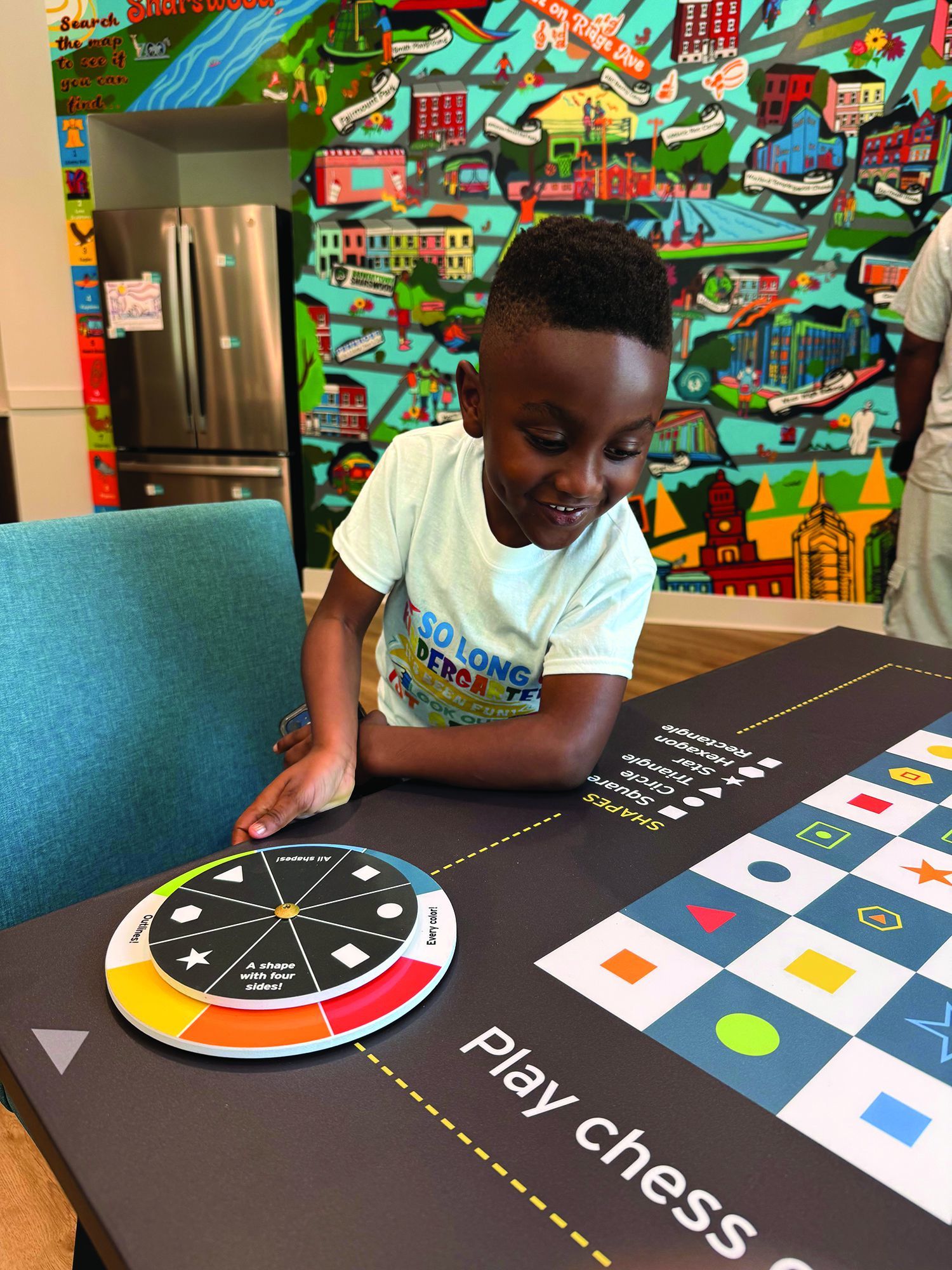
    Inside the community room of a new subsidized apartment building at 2000 Ridge Ave., what was originally going to be a blank white wall became a mural featuring a map of the neighborhood with cultural landmarks. The room also features tabletops with activities, such as chess, matching games, word games, and storytelling prompts.

    A young Sharswood resident explores a custom-designed Playful Learning chess table in the community room of a Pennrose housing development. The table is one of six navigation stations that help children build skills through play where they live.

    Architecture firm WRT worked on the installations. Associate Lizzie Rothwell has been an architect for more than 15 years and said she doesn’t usually get so much breathing room to collaborate with community members.

    “Within my professional career, it was a pretty unique opportunity,” Rothwell said. “It was one of the more rewarding experiences I’ve had working with a community on a design.”

    A forgotten strip of land wedged between housing developments on 22nd Street between Ingersoll and Master Streets in Sharswood is now “The Backyard,” designed with Playful Learning installations, including this Critter Creator, two nature-themed standing puzzles, and a little library with a built-in I Spy game.

    Looking ahead

    Now, Playful Learning Landscapes wants to pursue public policies that support the expansion of playful learning projects and provide incentives for developers and architects to incorporate this work into their plans, said Sarah Lytle, the organization’s executive director.

    Playful learning advocates briefed City Council members this fall about their work. In September, the city’s Department of Planning and Development issued a call for proposals to create or preserve affordable housing and encouraged developers to include art or design elements that foster children’s development.

    “We’re starting to see some traction,” Lytle said.

    More than seven months after the opening of the play spaces at Susquehanna Square, Robinson and her daughter now live in South Philadelphia, but they’ve come back to visit the murals they helped paint and the installations they helped develop.

    “To see it and to know it’s going to always be there,” Robinson said, “it brings a lot of joy to me.”

    The “Run the Road” installation on a sidewalk at 2045 Master St. teaches children in Sharswood about traffic rules.
  • After a shooting in Hunting Park, a police officer fired at the suspect before arresting him

    After a shooting in Hunting Park, a police officer fired at the suspect before arresting him

    A Philadelphia police officer opened fire on a man Monday night after the man critically injured another person in Hunting Park, police said. The man, police said, was not hit.

    Officers were called about 8:30 p.m. to a Sunoco gas station in the 4100 block of North Broad Street for a report of a man with a gun, according to police Tuesday.

    When they arrived, police said, the officers saw multiple men arguing. The men quickly left the gas station and walked toward the intersection of Broad and Jerome Streets, where the fight turned physical, police said.

    A 29-year-old man drew a handgun and shot another man in the chest and groin. One of the officers fired at the alleged shooter, police said, but did not strike him.

    The alleged shooter ran away, but the officer caught and arrested him in the 1300 block of Jerome Street, police said. Nearby, beneath a parked vehicle, officers found a 9mm handgun.

    Paramedics took the victim to Temple University Hospital, where police said he was in critical condition Tuesday. His name was not released.

    Police did not release the name of the alleged shooter, who had not yet been formally charged, they said.

    The officer, a 36-year-old man with nine years on the police force, was not injured in the incident, police said. He has been placed on administrative duty pending an internal investigation, as per department policy when an officer discharges his gun.

  • Temple dismisses CJ Hines from men’s basketball program following alleged involvement in point-shaving case

    Temple dismisses CJ Hines from men’s basketball program following alleged involvement in point-shaving case

    Temple guard CJ Hines is no longer with the men’s basketball team, the program announced in a statement, after being referenced in a basketball gambling indictment by federal prosecutors in Philadelphia on Thursday.

    Hines transferred to Temple in May 2025 but didn’t play in a game this season after the university announced on Nov. 5 that he was under investigation for eligibility concerns prior to his enrollment at Temple.

    According to the indictment, Hines, who played two seasons at Alabama State, was allegedly involved in point-shaving efforts with former teammate Shawn Fulcher during the Hornets’ 2024-25 season. Hines will be charged elsewhere if he is found guilty.

    The indictment names more than two dozen players on 17 different NCAA teams in the basketball gambling scheme, which also targeted the Chinese professional league for attempting to fix games from September 2022 to October 2025.

    Temple coach Adam Fisher brought Hines in to add scoring depth after Hines averaged 14.1 points and shot 37.8% on three-pointers for Alabama State last season. Hines led the Hornets to the NCAA Tournament in the 2024-25 season.

    The 6-foot-2 guard amassed more than 1,500 points during his career at Faulkner and Alabama State.

  • Here are the Philly ties to the new basketball gambling scandal

    Here are the Philly ties to the new basketball gambling scandal

    Philadelphia had a moment in the global spotlight this week as the U.S. Attorney’s Office said it had charged 26 people — including 20 basketball players — with participating in a wide-ranging, international scheme to rig games on behalf of gamblers.

    U.S. Attorney David Metcalf said bettors bribed players on teams in the Chinese professional league, as well as in NCAA games from Texas to New York.

    So why was the case charged here? And what role did Philadelphia play in the allegations?

    Below are three takeaways about the local ties of the sprawling investigation — the latest high-profile case to target alleged corruption in sports.

    U.S. Attorney David Metcalf announced charges against 26 people in what prosecutors described as a point shaving operation to benefit gamblers.

    Why was the case charged in Philadelphia?

    Federal prosecutors have wide latitude to pursue criminal investigations as long as some aspect of the alleged wrongdoing took place in their jurisdiction, and if a suspect’s actions could be considered a violation of federal law.

    In this case, prosecutors have alleged that the bets and payoffs that impacted games amounted to a criminal conspiracy between the so-called fixers and players, and also that the actions violated federal bribery and wire-fraud laws.

    In addition, the indictment contends one of the key organizers of the point-shaving scheme — professional gambler Shane Hennen — lived partially in Philadelphia at the time of his alleged crimes.

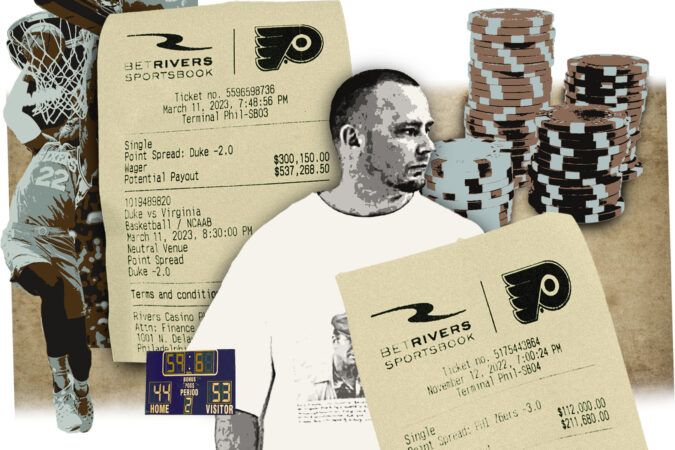
    And even though most of the games he gambled on took place elsewhere, Hennen is accused of placing huge bets at Rivers Casino’s sportsbook in Fishtown. One of the wagers was a $198,300 bet against a Chinese team called the Jiangsu Dragons, court documents say. Hennen had allegedly recruited one of the Dragons’ best players, Antonio Blakeney, to play poorly in exchange for bribes.

    (A spokesperson for Rivers Casino declined this week to comment on the case and did not respond to questions about why Hennen was allowed to place such large wagers on relatively obscure games.)

    The indictment says several other crimes took place in Philadelphia as well, including Jalen Smith — a basketball trainer and alleged organizer of the scheme — traveling to the Philadelphia International Airport to pay an unnamed player his bribe money.

    Were any Philadelphia schools part of the scheme?

    The indictment paints a limited portrait of connections between the point-shaving operation and Philadelphia schools or universities.

    In one of the more detailed local episodes in the document, prosecutors said Smith and Blakeney in 2024 attempted to recruit players from the La Salle men’s basketball team to take bribes and underperform in a game against St. Bonaventure.

    Hennen and a codefendant apparently thought the plan had succeeded — the indictment said they went on to place nearly $250,000 in bets on St. Bonaventure for that game.

    But none of the bets won, prosecutors said. And no La Salle players were named or accused of accepting the bribes in relation to the contest.

    A La Salle spokesperson said in a statement this week that it was aware of the allegations in the case, adding: “Neither the university, current student-athletes, or staff are subjects of the indictment. We will fully cooperate as needed with officials and investigations.”

    What about any Philadelphia-based players?

    The role of Philadelphia-based players was similarly limited.

    While several players accused of participating in the scheme spent time in the area, none was accused of accepting bribes while playing for a Philadelphia-based school.

    Former Temple University forward Elijah Gray, for example — who played for the Owls in the 2024-2025 season — participated in the scheme the year before, while he was playing at Fordham. Prosecutors said he was offered $10,000 to $15,000 to underperform on the court, and said he later recruited a teammate to participate in the point-shaving operation as well.

    Gray left Temple and transferred this academic year to the University of Wisconsin, but he was dismissed from the team in the fall over what the program said were “events preceding his enrollment.” He has pleaded guilty to one count of bribery, court records show, and is scheduled to be sentenced in March.

    Micawber “Mac” Etienne — who played for La Salle last year — was also bribed before he came to Philadelphia. Fixers approached Etienne in 2024, prosecutors said, while he was playing at DePaul. He agreed to help throw games, prosecutors said, which led Smith to give him and three teammates $40,000 in cash.

    Etienne has also pleaded guilty to a bribery count, court records show, and is scheduled to be sentenced in April.

    One current Philadelphia-based player is facing charges: C.J. Hines, a guard who transferred to Temple this year. But prosecutors said he took bribes in 2024, when he was playing at Alabama State.

    Hines has been charged by information, which typically indicates a defendant intends to plead guilty.

    A Temple spokesperson said the university had “previously received notice from the NCAA that Hines had potential eligibility concerns, and for that reason, he has not participated in any athletic competition since enrolling at Temple.”

    What happens now?

    The prosecutions will now proceed through Philadelphia’s federal courthouse in Center City.

    Some defendants — such as Gray, Etienne, and Hines — will likely have their cases wrapped up relatively quickly, as they’ve already pleaded guilty or indicated an intent to do so.

    Hennen has not yet entered a formal plea in the case, according to court records. If he or any other defendants plans to take the case to trial, it could be many months before the case is put before a jury.

    Staff writer Isabella DiAmore contributed to this article.

  • Who is Shane Hennen, the high-stakes Philly gambler at the center of the latest sports-betting indictment?

    Who is Shane Hennen, the high-stakes Philly gambler at the center of the latest sports-betting indictment?

    For Shane Hennen, the house of cards keeps folding.

    A federal indictment unsealed Thursday accuses the Philadelphia-based professional gambler of acting as a ringleader in a sweeping sports-betting conspiracy now involving the NCAA and the Chinese Basketball Association. Hennen was first arrested last January in connection with a gambling case involving a former Toronto Raptor, and was also charged separately in an October indictment in New York focused on the NBA.

    The latest charges against Hennen, known as “Sugar Shane,” brought an international angle to the existing portrait of a high-stakes gambler who prosecutors allege was willing to bribe athletes to throw games, provide devices to fix backroom card games tied to the New York mafia, and use insider betting information to place fraudulent wagers.

    In all, federal prosecutors have accused Hennen of conspiring to place fraudulent bets on ex-Raptors forward Jontay Porter and NBA guard Terry Rozier, bribing the top-scoring player in the CBA to throw games, and recruiting college basketball trainers to help rig dozens of NCAA games — much of it orchestrated from Hennen’s favorite Philly casino, Rivers. On top of it all, he is also alleged to have participated in the rigging of mob-linked poker games in New York City.

    And while the list of implicated players and conspirators continues to grow by the dozens, Hennen has remained a central figure to the bet-fixing scandals that have rocked the sports world over the past year.

    Rise of a “betfluencer”

    On social media, Hennen has cast himself as rising from a hard-luck Pennsylvania town to a self-styled “betfluencer,” flying on private jets from Las Vegas to Monte Carlo and gambling up to $1 million a week on sports and card games.

    But Hennen’s earlier record for criminality came into clearer view as result of the federal investigations. While growing up in the Pittsburgh area, he did time for drug and gambling related charges that now serve as a kind of prelude to his role in the bet-fixing scandals.

    In 2006, the Washington, Pa., native received probation in Allegheny County for charges linked to a gambling scheme. According to court records, Hennen and an accomplice rented adjacent rooms in a Pittsburgh area hotel to hold underground dice games. While gambling in one room, a partner in the next room employed a magnetic device to flip loaded dice to preferred numbers.

    Then, early one morning in 2009, a former Duquesne University basketball player was found bleeding from a stab wound in Pittsburgh’s South Side neighborhood, a popular nightlife area. The man survived and later told police that Hennen had stabbed him in the neck after the athlete confronted him about cheating in a card game. Hennen was also picked up on a DUI less than two weeks later, but was released.

    Not long afterward, Hennen was charged with two more felonies after he was caught in a parking lot with 500 grams of cocaine down the street from the Meadows Casino, near Pittsburgh.

    In subsequent court filings, Hennen revealed that he had been working with a local drug dealer for more than a year. Facing well over a decade of jail time between the drug and assault charges linked to the stabbing, Hennen agreed to testify against his dealer and participated in a federal drug sting involving a different narcotics supplier based in Detroit, court records show.

    He served just less than two-and-a-half years in prison, plus four years of supervised release.

    According to court transcripts published by Sports Illustrated in October, Hennen admitted five times under oath that he cheated other people out of money.

    During a cross-examination, Lee Rothman, an attorney for his associate drug dealer he was testifying against, stated bluntly that Hennen made “a living out of cheating people out of things.”

    “That’s correct,” Hennen said.

    After his release in 2013, Hennen traveled to Pensacola, Fla., purportedly to work as a sales rep for a seafood wholesaler. Court records show he almost immediately went back to gambling, even violating his probation to travel out of state to participate in the 2014 World Series of Poker in Las Vegas.

    When Hennen landed in Philadelphia in 2015, it was seemingly to start over. He leased an apartment near the Rivers Casino in Fishtown.

    The small casino would become Hennen’s unlikely staging ground for a new, more lucrative gambling scheme that would come to span the globe.

    From Philly to China

    Local gamblers said Hennen worked the poker and baccarat tables at Rivers, using the action to build a reputation with the house and pave the way for six-figure sports bets, the kind only gamblers with money and a track record at the casino are allowed to make.

    By 2022, Hennen had launched an online betting consultancy via an Instagram page called “Sugar Shane Wins.” On social media, Hennen posted his sportsbook picks along with glamorous photos jetting around to Vegas or Dubai, or sitting courtside at Sixers games.

    Although he marketed bets on teams familiar to U.S. gamblers, his focus — and income — was overseas, according to federal prosecutors.

    He posted courtside photos of himself at Sixers games with a Mississippi-based sports handicapper named Marves Fairley, who prosecutors say connected the gambler with Antonio Blakeney, a former Louisiana State University shooting guard who had done a brief stint on the Chicago Bulls.

    Blakeney had subsequently bounced around different international teams, including Hapoel Tel Aviv, in Israel, and the Nanjing Monkey Kings and Jiangsu Dragons, both in China. According to a federal indictment, while playing for the Dragons, Hennen and Fairley bribed Blakeney to underperform in Chinese basketball games in order to fix high-stakes bets against the team and recruit others to do the same.

    Suddenly, the slots parlor on the Delaware was seeing six-figure bets placed on multiple Chinese basketball games through its sportsbook, BetRivers, sometimes for upward of $200,000. Representatives for the casino declined to comment Thursday on the latest federal indictment.

    The gambit proved reliably lucrative. In a 2023 text message obtained by federal authorities, Hennen reassured an accomplice who had placed big bets against Blakeney’s team.

    “Nothing gu[a]rantee[d] in this world,” Hennen wrote, ”but death taxes and Chinese basketball.”

    The model would also serve as a template for a similar racket the duo would orchestrate within the NCAA.

    By 2024, the duo had recruited basketball trainers Jalen Smith and Roderick Winkler to help convince dozens of college basketball players to rig matches on their behalf.

    Ultimately, 39 players on more than 17 Division 1 NCAA teams would participate, with bettors wagering millions on at least 29 rigged games.

    Hennen took a behind-the-scenes role, authorities alleged, texting a network of straw bettors who placed big wagers on games featuring star players bribed by the trainers, and sometimes moving bribe money or splitting up winnings back in Philly.

    His rising profile started to draw unwanted attention.

    Shortly after Hennen relocated to Las Vegas in 2023, he was accused of rigging poker matches by Wesley “Wes Side” Fei, another professional gambler who claimed in social media posts that Hennen had scammed him out of millions.

    The next year, gambling industry watchdog Integrity Compliance 360 began flagging bets placed on six Temple University basketball games. One, against Alabama-Birmingham in March 2024, saw the Borgata, in Atlantic City, cancel bets for the game due to suspicious betting activity. Before the end of 2024, the National Collegiate Athletic Association had launched an investigation into the games, as rumors swirled that federal authorities were questioning Temple player Hysier Miller as part of an alleged point-shaving scheme.

    Then Porter, the Raptors center, was banned for life from the NBA, after it emerged that the league was investigating yet another bet-rigging scheme. A few months later, Porter pleaded guilty to gambling charges — the first hint at the true scope of a sprawling federal investigation that went on to consume the NCAA and NBA.

    Beginning of the end

    In January 2025, Hennen’s luck ran out.

    Authorities stopped him in Las Vegas as he was boarding a one-way flight to Panama, en route to Colombia. He had $10,000 in his pocket and claimed he was headed to South America for dental treatment.

    But investigators had already zeroed in on Hennen as the main orchestrator of the prop betting scheme involving Rozier, the former Miami Heat guard. In October, federal prosecutors in the U.S. District Court for the Eastern District of New York unsealed an indictment, accusing Hennen of working with Fairley to have Rozier throw games for a profit, sometimes using Philadelphia as a meeting point to dole out the proceeds to other bettors.

    Court records show that since then, Hennen has entered plea negotiations with federal prosecutors and relocated to a residence in South Philadelphia. (His attorney did not respond to a request for comment.)

    During the Thursday news conference unveiling the latest indictment, Wayne Jacobs, a special agent in charge of the FBI Philadelphia field office, said that Hennen and his conspirators’ actions had undermined faith in professional sports writ large.

    “We expect athletes to embody the very best of hard work, skill, and discipline, not to sell out to those seeking to corrupt the games for their own personal benefit,” he said. “The money that’s used as a tool to influence outcomes does not just taint a single game, it tears up the trust and the results that we cherish.”