Tag: Temple University

  • A gift to Temple will create the first endowed editor position at its student newspaper

    A gift to Temple will create the first endowed editor position at its student newspaper

    Jack Pinkowski relished his time as a photojournalist for Temple University’s student newspaper when he was enrolled there in the 1960s.

    And he always admired the work of his father, the late Edward Pinkowksi, an historian and author who founded a small newspaper in the Montgomery County borough of Bridgeport.

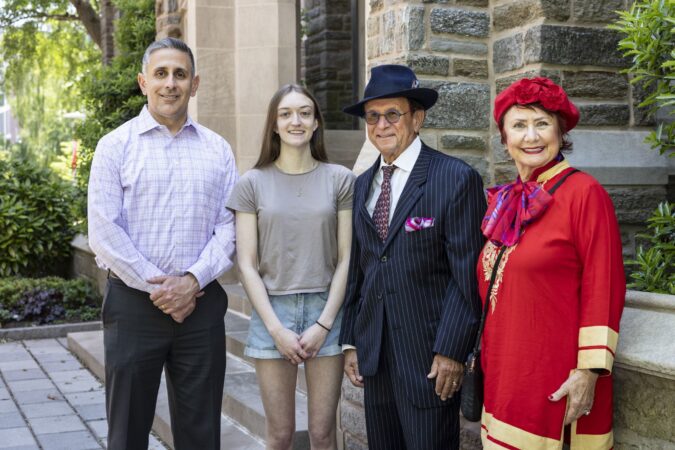
    This month, Pinkowski, a 1968 Temple grad, and his wife, Monica, gave Temple a $1.25 million gift, a portion of which will for the first time endow the editor-in-chief position for the Temple News, as well as increase other staff salaries and pay for some story-related travel and new equipment.

    Pinkowski said the need for journalists has never been more important, and he lamented the struggles print journalism has faced.

    “We hope to show it a lifeline, give it some support to encourage people to go into that as a field of endeavor,” said Pinkowski, 78, of Plantation, Fla. “This named editorship is a tribute to my father for starting a newspaper and having a lifetime as a critical mind that searched for facts and put them together and brought stories to the enjoyment of people.”

    Of the gift, $250,000 will be used to create an endowment for the student newspaper, and the remaining $1 million will fund scholarships of up to $10,000 per academic year for students to study at Temple’s Rome campus. Applicants must have knowledge of, coursework in, or a commitment to promoting Polish or Italian studies, history, or culture.

    The Pinkowskis made their money by investing in and managing real estate as well as through other careers.

    The couple both worked in businesses with global ties — Jack as an importer of furniture and Monica as an importer of gourmet foods to restaurants — and saw the merit in global study. They also both attended a study abroad program for adults at Temple Rome in 2024.

    Given the federal government’s policies affecting foreign students, Pinkowski said, he thought it was important to support the Rome campus so that students have an alternative way to attend an American university.

    Temple president John Fry said he especially likes that the gift is so personal and that it is widening access to students to participate in both studying on the Rome campus and working for the student newspaper.

    “These are two really important experiences that many students have to forgo, and I think the Pinkowskis are making both of those possible,” Fry said. “Its meaning and impact are significant.”

    The gift comes as the college prepares to close a record fundraising year, led by a record $55 million gift from alumnus Christopher Barnett in October and a large gift in April from alumna Jane Creamer Sullivan and her late husband, Thomas J. Sullivan, to start its new honors college.

    A boost for the Temple News

    John DiCarlo, managing director of student media and adviser to the Temple News, said its portion of the Pinkowski gift will be incredibly important in supporting the newspaper with a staff of 37, which last academic year ran on a $115,596 budget that largely covers salaries and print costs.

    Most of the costs were covered by the university, with the newspaper responsible for raising $23,500 through ad revenue and other means. If the publication exceeds that goal — which it did last year, raising over $29,000 — it can funnel the additional money back into operations, DiCarlo said.

    The new endowment, DiCarlo said, will bring in an additional $10,000 to $12,000 annually, depending on its earnings.

    Incoming senior Sienna Conaghan, 20, who will be the inaugural Edward Pinkowski Editor-in-Chief, said she is grateful for the funding, which will cover her approximate $5,400 salary. And she is glad that salaries for other staffers can get boosted, too.

    “We’re asking them to do full-time jobs on a college student’s budget and a college student’s schedule,” DiCarlo said. “It takes a lot out of them because they really care.”

    Conaghan, a journalism major from West Yellowstone, Mont., estimates that she spends about 30 hours a week on Temple News work. She freelanced freshman year, was assistant sports editor sophomore year, and worked as sports co-editor last year.

    The experience is more important than the paycheck, said Conaghan, who plans to pursue a career in sports journalism, but the money helps.

    “It has really been everything,” Conaghan said of her Temple News work. “I think I’ve learned so much from working at the Temple News, from how to be a journalist and also just how to be an adult and a person.”

    The Pinkowskis initially gave a gift to the Temple News in 2023 to help it reach a fundraising goal. The college wanted to be able to pay student journalists a little more because some were having to take on second jobs to generate more income, DiCarlo said. At that time, he said, he had no idea the couple would return with such a large gift three years later; it is the largest gift the Temple News has ever received.

    “Monica and I are avid readers and avid followers of print journalism,” said Jack Pinkowski, a graduate of Philadelphia’s Central High School.

    Pinkowski said his father decided to start the now-defunct Bridgeport South Side Press in 1950 because the community did not have a local paper. He also wrote history books about the local area, using skills he developed as a journalist, Pinkowski said.

    The Pinkowskis have had other career experience in addition to real estate and import businesses.

    He was a general contractor and wedding photographer early on and later spent 18 years as an associate professor of public administration at Nova Southeastern University’s school of business and entrepreneurship in Florida.

    And she was a flight attendant at one time and as a child grew up working in a family traveling carnival business in Missouri — which helped pay for her education at the University of Missouri-Kansas City.

    Jack Pinkowski said the common thread in their endeavors has been “inquisitiveness and intellectual curiosity and the ability to take something where there’s nothing and make something of it.”

    Both Temple officials and the Pinkowskis hope their gift will motivate others.

    “I do believe that other people pay attention to that, and it makes them say, well, maybe they can do something as well,” Jack Pinkowski said.
  • A Philadelphia high schoolers’ production of ‘1776’ is former Gov. Ed Rendell’s dream come true

    A Philadelphia high schoolers’ production of ‘1776’ is former Gov. Ed Rendell’s dream come true

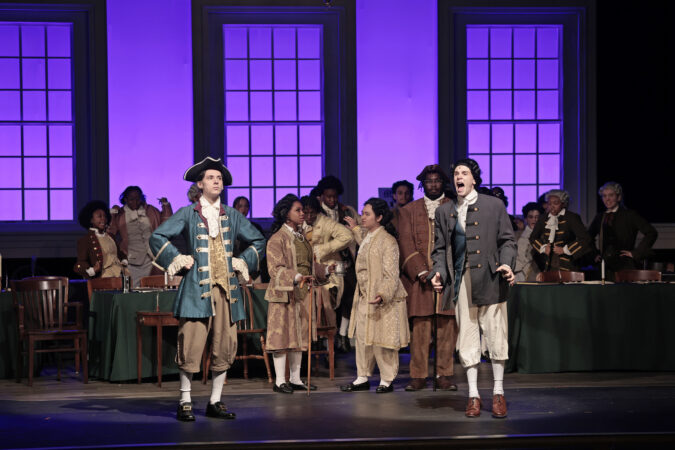
    In tricorn hats and tail coats, their locs, microbraids, and wavy tresses gathered into 18th-century low ponytails, 27 Philadelphia-area high school students transformed into America’s Founding Fathers on Wednesday evening at the Philadelphia High School for Creative and Performing Arts.

    The young thespians debated and deliberated the benefits of forming a sovereign nation. Their well-practiced Southern accents and New England inflections echoed in the full auditorium.

    In 2½ hours, Massachusetts congressman John Adams (played by Jackson Preisser), Ben Franklin (Jayden Duvene), and Thomas Jefferson (Maxwell Henderson) made the case for liberty, overcoming the petty aristocratic concerns of Pennsylvania delegate John Dickinson (Greg Rist).

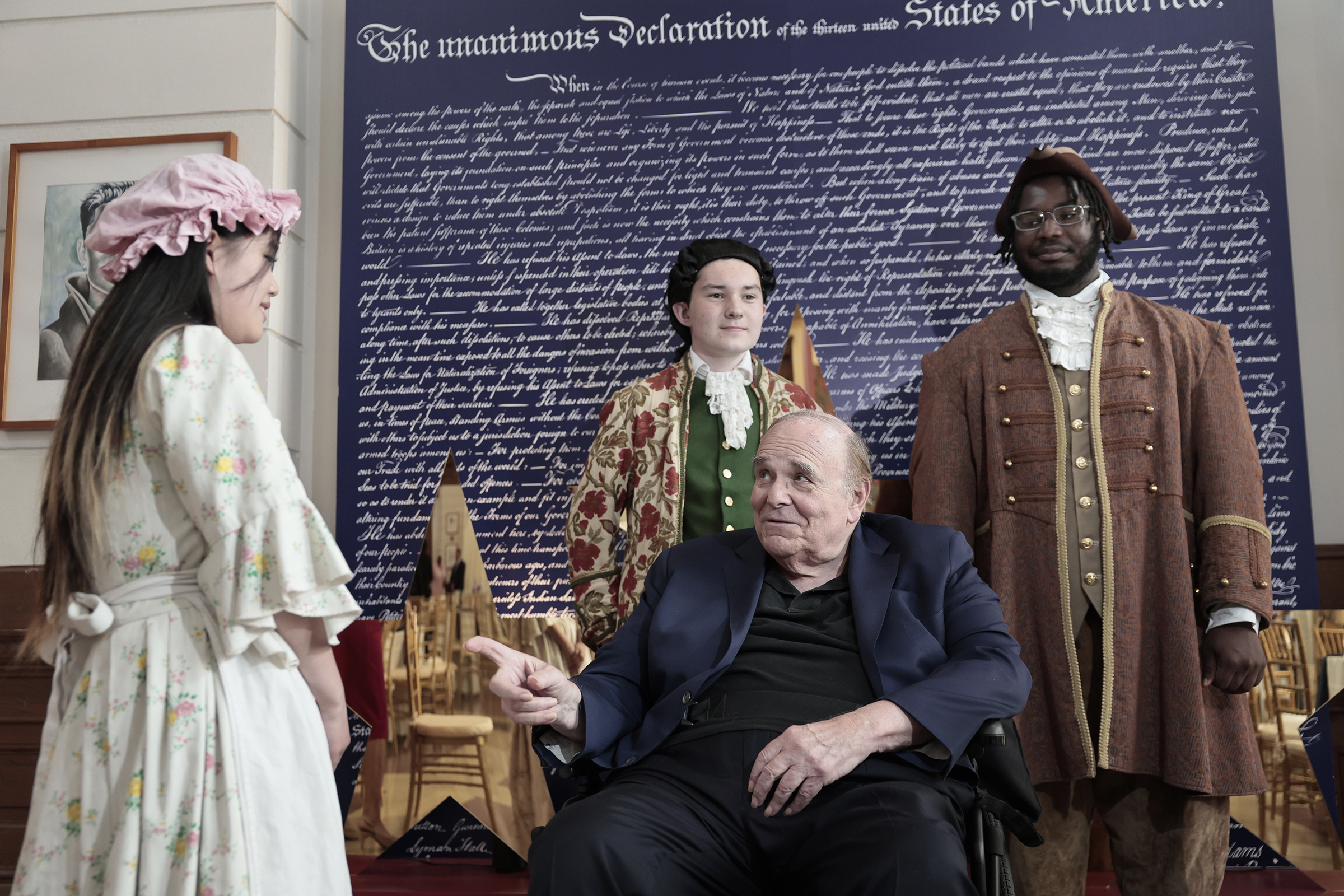
    Former Mayor Ed Rendell meets cast members (L-R) Abigail Adams (played by Chloe Chau), John Dickinson (played by Greg Rist) and Ben Franklin (played by Jayden Duvene) during opening night of 1776: The Musical at the Philadelphia High School for Creative and Performing Arts on Wednesday, June 24, 2026.

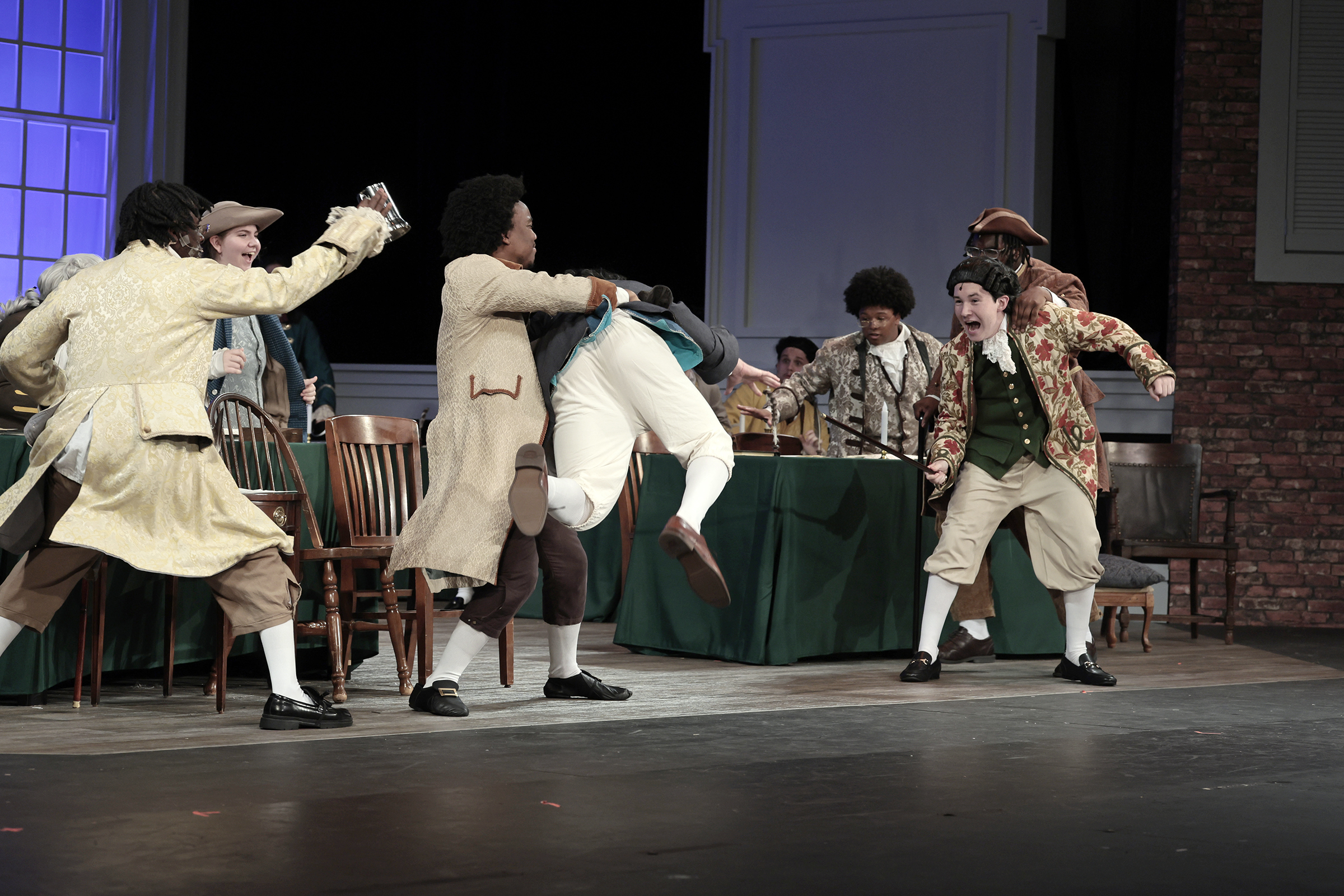
    On a set that looked remarkably like Independence Hall, the students staged the Tony Award-winning 1969 Broadway musical 1776 and argued for and against liberty with witty songs and sophisticated dialogue.

    The reenactment of the signing of the Declaration of Independence was everything Ed Rendell, the elder statesman and the brain behind the production, wanted it to be.

    “It’s been my dream for quite some time to see this production happen,” Rendell said to The Inquirer, his voice a raspy whisper, worn and weary from Parkinson’s disease. Sitting in his wheelchair at the red, white, and blue step and repeat, Rendell smiled as CAPA’s lobby was turned into a dining room for dignitaries hours before the play began.

    “In honor of America’s 250th birthday, we wanted to use 1776 to teach high school students the sacrifices and compromises it took to form this great nation,” he said.
    Rendell’s love for 1776 is rooted to the night in 1969 when he watched the colonial drama unfold on Broadway, starring William Daniels as John Adams, Ken Howard as Thomas Jefferson, and Howard da Silva as Benjamin Franklin. Daniels, Howard, and da Silva starred in the 1971 Oscar-nominated film of the same name.

    “I loved it,” Rendell said, whose favorite ballads from the play are Franklin, Adams, and Jefferson’s quirky performance of “The Egg,” in which the forefathers humorously choose the bald eagle as America’s national bird. (That didn’t really happen during the Second Continental Congress, but it’s a nice touch.)

    Another of Rendell’s favorite songs is “Is Anybody There?,” a melancholy number during which Adams asks himself if his dedication to the cause of independence is worth it.

    “It struck the right chord, giving all the facts about how we came to our freedom, our independence,” Rendell said. “When I became mayor, I went back and studied it and began to think of it as an important civics lesson. There were so many things I didn’t even know.”
    A former president, a mayor, a speaker walk into a play

    The 1776 opening night saw the attendance of a who’s who in Philadelphia politics, business, and civics.

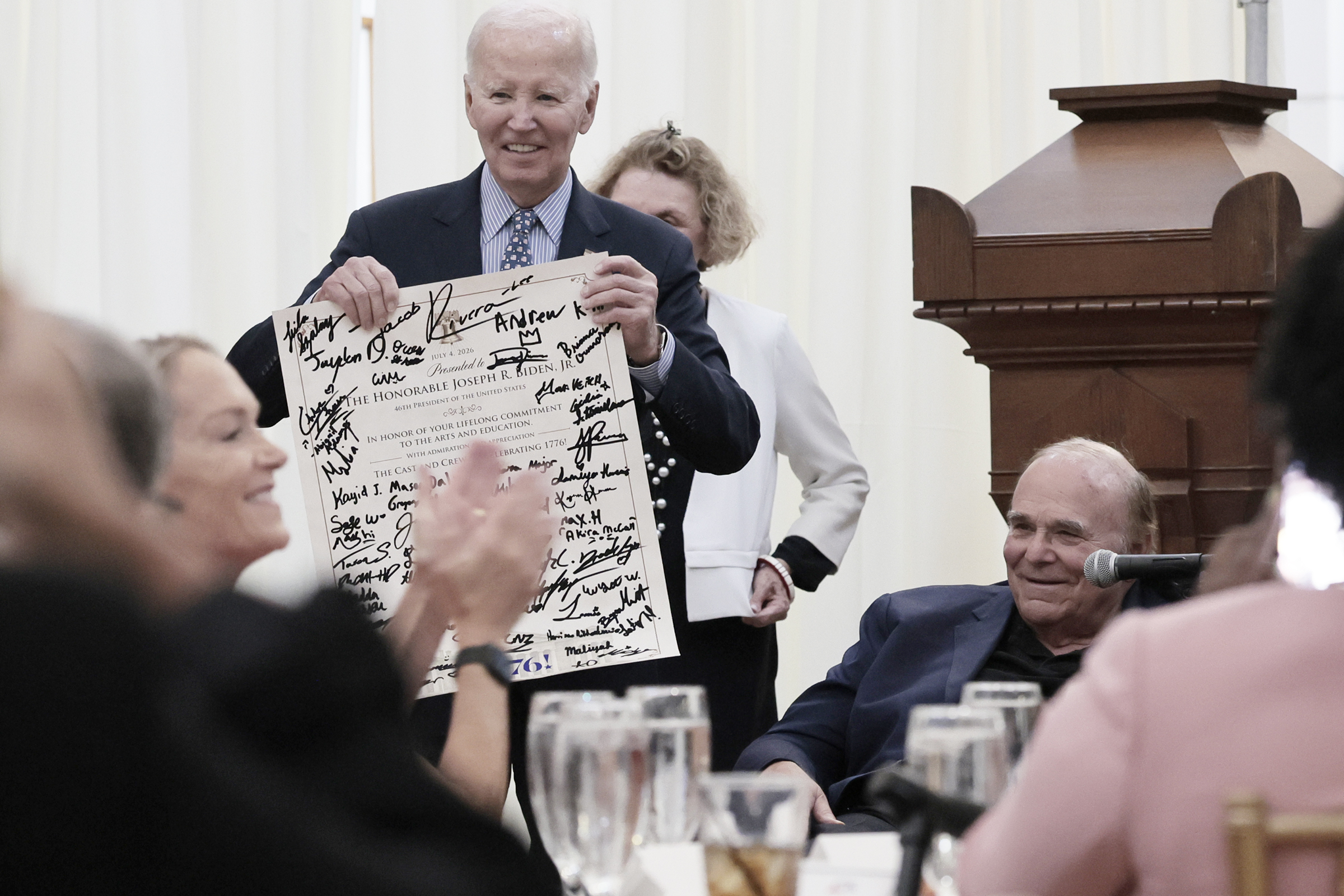
    Former President Joe Biden was in the house on the opening night of Rendell’s theatrical milestone. After he was presented with a copy of the declaration signed by the cast, the former president delivered a nine-minute speech about the importance of teaching American history in present-day America, although he did not mention President Donald Trump by name.

    “What I can tell you is that from the moment the Founding Fathers signed the Declaration of Independence, we have been in a consistent battle for the soul of the nation,” Biden said as guests prepared to dig into barbecued chicken, brisket, and ribs, Rendell’s favorite.

    Former President Joe Biden displays a signed poster from the cast as former Mayor Ed Rendell looks on during the opening night celebration of 1776: The Musical at the Philadelphia High School for Creative and Performing Arts on Wednesday, June 24, 2026.

    “Even when there is darkness,” Biden said, “we’ve summoned our angels and crawled back from the brink. We are trying to do that now.”

    Mayor Cherelle L. Parker, Pennsylvania House Speaker Joanna McClinton (D., Philadelphia), and State Rep. Joe Ciresi (D., Montgomery) were also in attendance. Philadelphia School Superintendent Tony B. Watlington Sr.; Temple University president John Fry; and David L. Cohen, the former senior executive vice president to Comcast and U.S. ambassador to Canada, were on hand, too.

    “When Mr. Rendell calls, people come out,” said Adrian R. King, a partner at Philadelphia-based law firm Ballard Spahr and a former Rendell staffer.

    Their attendance reflected their respect for Rendell, a former governor of Pennsylvania and mayor of Philadelphia who, in his political heyday in the 1990s, led the efforts to reimagine South Broad Street as the now-bustling Avenue of the Arts. CAPA’s 1997 opening was a part of that plan.

    John Adams (played by Jackson Preisser, middle) and John Dickinson (played by Greg Rist, right) are seperated during a scene from the opening night of 1776: The Musical at the Philadelphia High School for Creative and Performing Arts on Wednesday, June 24, 2026.

    Rendell’s baby

    Rendell has dreamed of this production for years. He began working on it in earnest last year, bringing on veteran Philadelphia arts administrator Karen Corbin to executive produce. Phillip Sean Brown, director of theater at Bryn Mawr’s Shipley School, was roped in to direct.

    “The governor had very specific ideas of what he wanted,” Brown said. “He wanted to show the history of our country, show the drama of the birth of a nation, and have the students learn everything they could about the craft of theater.”
    The first order of business was securing the rights to the late composer Sherman Edwards’ script and music. That will cost about $45,000 by the end of the run, Corbin said.

    Casting began in February and auditions began in March. Forty actors from eight area high schools were picked for the multicultural, gender-fluid rotating cast, giving the revival of the 57-year-old production Hamilton vibes.

    In addition, Brown said, more than 30 students were hired as musicians and production crew.

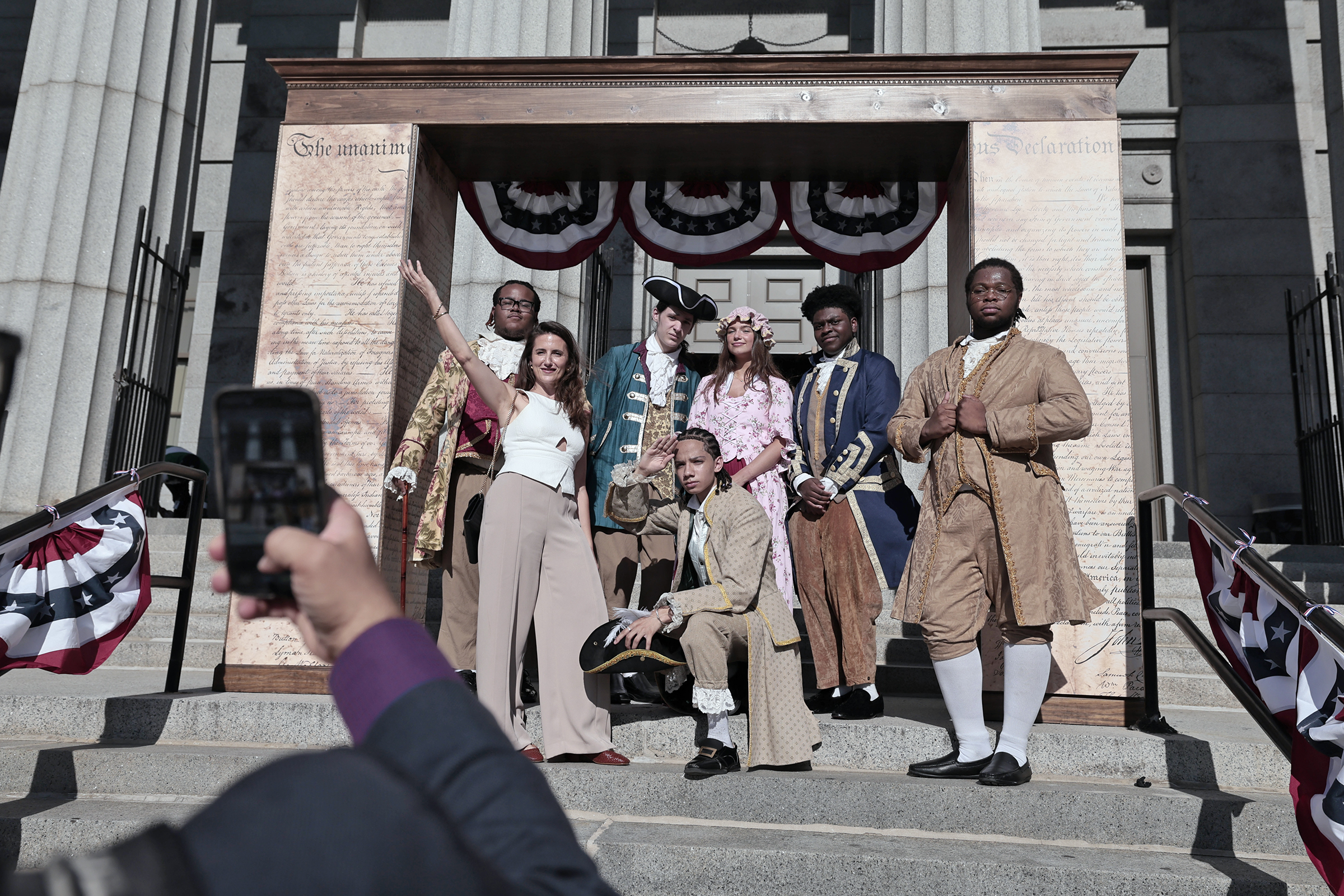
    Cast members posed with guests before opening night of 1776: The Musical at the Philadelphia High School for Creative and Performing Arts on Wednesday, June 24, 2026.

    “They worked with professionals in theater lighting, costume, sound, and props,” Brown said.

    Students were paid $150 a week during rehearsal weeks, and will make $300 a week through the eight-week performance. The entire production cost $850,000 including a $150,000 grant from the state.

    There will be 50 shows through Aug. 15 at CAPA. Actors will also perform vignettes of the musical throughout Philadelphia’s historic district, including Carpenters Hall.

    ‘All good things take compromise’

    Students’ exposure to the arts and history has been priceless.

    “This experience represents striving forward — as an actor with my cast,“ said Mason Daly, a CAPA graduating senior whose biting Southern accent for South Carolina congressman and segregationist Edward Rutledge was chilling.

    Daly’s role as Rutledge is particularly eye-opening. 1776 tells us that Jefferson’s original draft of the declaration included a clause abolishing slavery in America. Rutledge, however, would support America only if that part of the declaration were struck.

    Jefferson laments to Franklin, saying, “Mark me, Franklin … if we give in on this issue, posterity will never forgive us.” But he does give in.

    “Playing him, I learned to value the nuances of the perspectives of even those we disagree with,” Daly said.

    “It’s about his personal compromises to get to the yea vote that allowed independence to go forward. That dialogue, that discussion, that back-and-forth between him and the various colonial representatives is the basis of our democracy and government.”

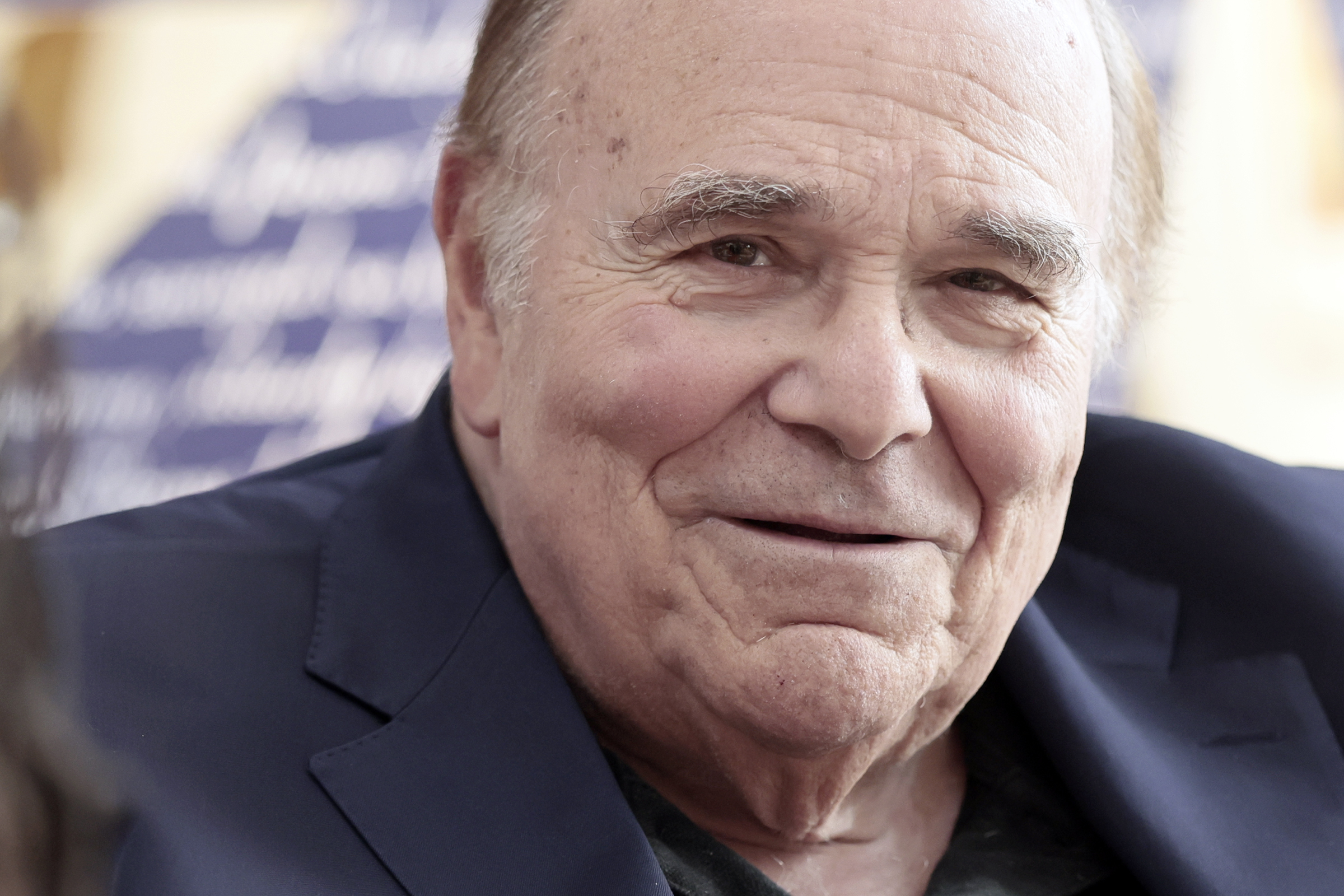
    Former Mayor Ed Rendell during opening night of 1776: The Musical at the Philadelphia High School for Creative and Performing Arts on Wednesday, June 24, 2026.

    The actors’ parents bubbled with excitement.

    “My child is really being taken seriously as an actor in this production,” said Justina Barrett, chief learning and engagement officer at the Historical Society of Pennsylvania, and mother to Sage Wentz, who played Col. Thomas McKean of Delaware. “This whole play is about the messy business of making the United States. It was hard. These guys weren’t nice. It wasn’t pretty. In many ways, we are divided then as we are now.”

    Although difficult, this idea of forming a new nation through compromise is what Rendell hopes is the ultimate lesson for all involved.

    “We can’t get anything done without compromise,” Rendell said. “We have to get back to a government that is working toward the good of the government. The Civil Rights Act took compromise. Women’s rights took compromise. All good things take compromise.”

    “1776″ will be performed at CAPA, 901 S. Broad St., through Aug. 15. Tickets start at $11. For more information, go to the Celebrating 1776! website.

  • The Supreme Court is deciding your future. Pay attention.

    The Supreme Court is deciding your future. Pay attention.

    For most Americans, the U.S. Supreme Court occupies a seat on the back burner. We know it is important, but so much of what it does seems unconnected to our daily lives.

    Every now and then, it pops up in the news when something major is on the table and briefly grabs our attention — overturning Roe v. Wade and the constitutional right to choose to have an abortion grabbed the headlines, as did throwing out Donald Trump’s tariffs. But, outside of the circles of lawyers, judges, and academics, most of what the court does goes unnoticed. For a brief moment, the nation pays attention. Then the spotlight moves on.

    Enduring consequences

    Over the next two to three weeks, before the justices depart for their four-month summer recess, the court will issue a series of decisions in cases it has been considering for months. They have listened to the lawyers argue their cases for hours, reviewed thousands of pages of briefs submitted by lawyers, interested organizations, and government officials, and debated among themselves.

    Any day now, decisions will be handed down that could alter the legal landscape for decades to come. These cases will affect millions of people, directly and indirectly. These decisions become the law of the land, and their impact will endure for decades. While the court can later reverse its own decisions, it rarely does. So the decisions it makes in the next two to three weeks will endure long after many of us are dead. In 1954, for example, the court’s decision in Brown v. Board of Education finally ended desegregation, 50 years after the same court had infamously approved it in Plessy v. Ferguson.

    More recently, in 2022, the court reversed Roe v. Wade, ending a constitutional right to abortion that had been established since 1973.

    In short, the decisions it makes in the next couple of weeks are not likely to change for half a century or more. Given what the court is about to decide, all of us have a stake in the outcome.

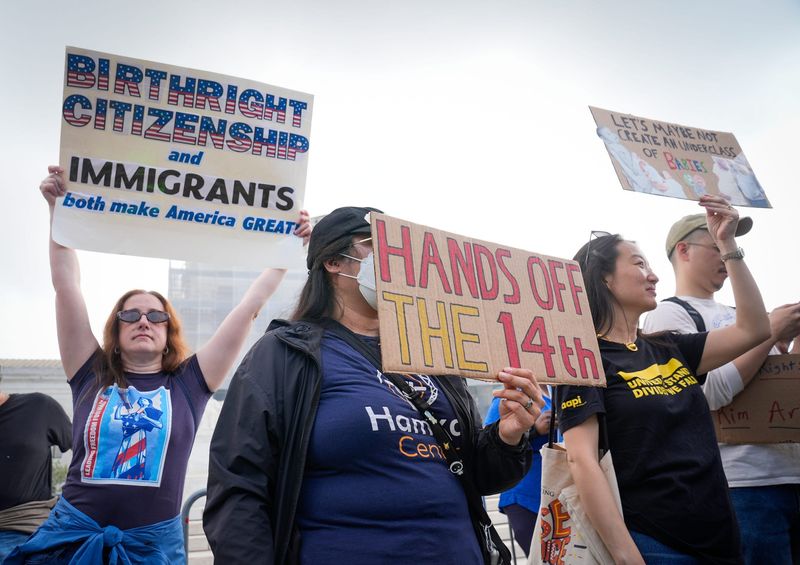
    People demonstrate outside the U.S. Supreme Court Building in 2025 before justices hear oral arguments in a birthright citizenship case, one of many critical issues before the court.

    One of the most pressing issues it is considering is “birthright citizenship.”

    President Trump signed an executive order ending automatic citizenship for those born in the United States unless they meet certain conditions, despite the Constitution (in the 14th Amendment) explicitly conferring it to “all persons” born in the United States.

    The stakes in this case extend far beyond immigration policy or the end of birthright citizenship.

    The issue is not simply whether birth in the United States confers automatic citizenship. More fundamentally, it asks whether a president may effectively amend the Constitution, eviscerating rights and guarantees formerly entrenched in American society, literally with the stroke of a pen.

    The Constitution is meant to endure and survive political winds — and it has for 250 years. In that time, aside from the Bill of Rights, there have been only 17 amendments. The Constitution provides a process for changing its provisions. It is purposefully neither quick nor easy. The framers understood that fundamental rights should not fluctuate like a weather vane depending on who occupies the White House. Constitutional rights are meant to endure and survive political winds — and they have for 250 years.

    Executive orders signed by the president, any president, are not among the methods the Constitution provides for rewriting its guarantees.

    Critical decisions

    The decision is critical. If a president’s signature on an executive order can override constitutional guarantees in one area, where does that authority end? What’s next? The right to remain silent? Free speech? The freedom to practice your religion, safe from government interference? The right to counsel? The guarantee of a fair trial? Presidential term limits? Can Trump end the constitutionally mandated two-term limit with his signature?

    Free speech is a central issue. Can students be punished for participating in peaceful demonstrations on college campuses because officials disagree with their views? Does freedom of expression apply equally to all viewpoints, or only to favored ones? If the government can silence one unpopular group today, what prevents it from silencing another tomorrow?

    Among the issues that will be decided in the next few weeks are whether states can exclude transgender women from participating in female athletic competitions. Earlier, the court addressed whether states may prohibit licensed therapists from discussing certain issues relating to gender identity with their patients — can they prohibit some of it, or all of it, or none of it. The First Amendment won that battle. Surprisingly. But transgender rights are not a favored policy, and the administration is unashamedly hostile to them, and civil liberties advocates are not hopeful.

    The court was asked to revisit long-standing Fourth Amendment protections against unreasonable searches and seizures. Under what circumstances may police officers enter a person’s home without a warrant, probable cause, or judicial authorization? How far may a warrant reach before it undermines the constitutional guarantee that people should be secure in their homes?

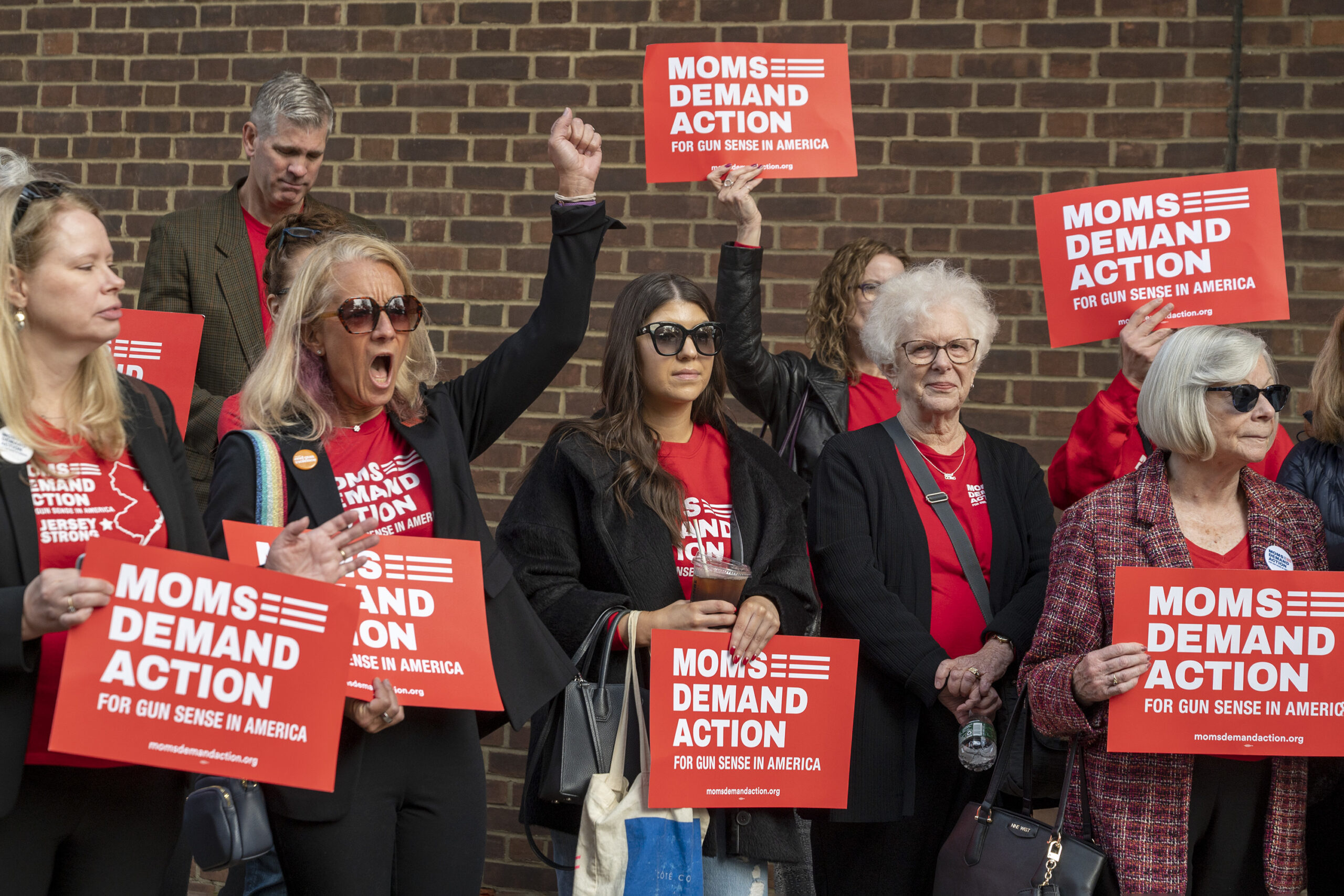
    Gun safety advocates rally outside federal court in Philadelphia in 2023 as the Third Circuit Court of Appeals hears oral arguments about a New Jersey law keeping guns out of parks, playgrounds, bars, and other sensitive places. The law was challenged by the National Rifle Association and other gun lobby groups.

    The Second Amendment and gun control remain among the most active areas of constitutional law. If school shootings and the murder rate are important to us, we need to be paying attention.

    Beyond individual rights, the courts are increasingly confronting questions concerning executive power and the structure of the federal government itself. May a president deploy National Guard troops without the consent of state officials? Can federal employees be dismissed without cause? Does the president have the authority to remove senior agency officials at will, or are there constitutional limits on that power?

    Shaping lives

    The fundamental right to vote is also at stake, as the plethora of decisions already announced on redistricting and voter rights will undoubtedly shape the political landscape. In the next few weeks, the court’s decisions on mail-in ballot restrictions will add to that mix.

    These are not abstract legal debates. They are questions that go to the heart of citizenship, liberty, equality, and the limits of governmental power. They will shape lives, influence public policy, and define constitutional rights long after today’s political battles have faded from memory.

    The Supreme Court may not dominate our daily conversations, but the decisions it issues in the coming days will touch every American in one way or another. Whether we agree with the outcomes or not, this is one of those moments when paying attention is not merely advisable — it is essential.

    Susan Sullivan is a lawyer and professor of constitutional law and politics at Temple University.

  • Ten years after Philly killed hitchBOT, the robots are back. Let’s be nice this time.

    Ten years after Philly killed hitchBOT, the robots are back. Let’s be nice this time.

    Philadelphia is known for some great things: the Declaration of Independence (happy 250th!), Rocky, and the cheesesteak. It is also known for “killing” hitchBOT, the famous hitchhiking robot that was dismembered in August 2015. A decade later, there’s a new bot in town: the Uber Eats delivery robot, operated by Avride.

    When these robots first arrived, I had my own spontaneous encounter with one. I was surprised by how unsettled I felt, especially as someone who has spent years researching them. I am an expert in human–robot interaction, and my research focuses on why people abuse robots. I immediately wondered how long it would be before another robot made headlines in this post‑hitchBOT world.

    It only took 18 days.

    Uber Eats robot attacked by Philly pedestrians

    Since these delivery robots rolled into town, they have been making headlines for all the wrong reasons: getting beat up, hit by cars, and colliding with pedestrians. These coolers on wheels are having an effect on Philadelphians, and I do not blame my fellow city dwellers.

    We are living in a cultural climate where artificial intelligence and automation are often framed as threats to jobs amid inflation and economic anxiety. Layer on top of that Philadelphia’s unique reputation as a destroyer of robots, and the reaction is hardly surprising.

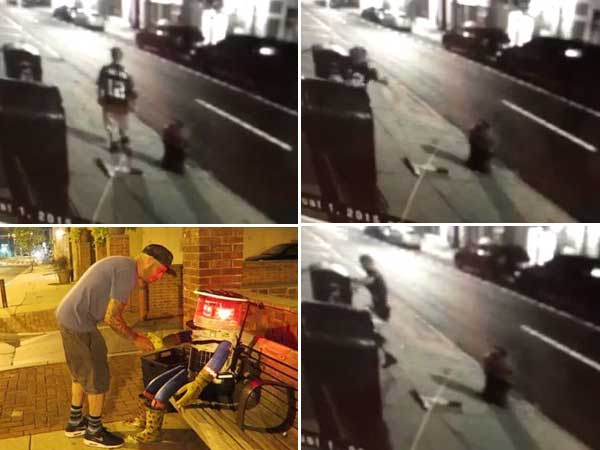
    Clockwise from lower left. 1) Last known image of an intact hitchBOT in Philadelphia in 2018. 2) Frame grab from surveillance video of man in No. 12 jersey after tossing what appear to be hitchBOT’s arms to sidewalk. 3 & 4) Man appears to stomp item believed to be hitchBOT.

    With innovative technology, there is always disruption. When UberX and Lyft arrived, Philadelphians were up in arms about the traffic congestion caused by rideshare vehicles, a problem the city later officially acknowledged.

    Yet in less than a decade, the norm quietly shifted. Today, many of us hail a rideshare instead of a taxi despite the unresolved congestion issue. The question now is whether we will react to delivery robots as another passing disruption, or whether we will choose to use them to actually improve city life.

    Garci Peterkin, owner and CEO of Carter’s Cheesesteaks by Garci in the 1000 block of Race Street, demonstrates how food delivery robots work, in March.

    Recently, Councilmember Jeffery Young proposed a $1,000 surcharge on deliveries made by autonomous delivery devices using city sidewalks. That may sound like mere regulation, but in practice it would push the robots out entirely. Before Philadelphia taxes these devices into irrelevance, we should look at how other cities are putting them to work for the public good.

    West Hollywood, for example, has had delivery robots on its sidewalks since 2020. On Jan. 1, 2026, the city implemented a new program, the first of its kind, to use data and fees from these devices to improve and pay for sidewalk repairs. In this program, companies that operate delivery robots partner with an accessibility app used by blind and low-vision residents. As they travel city streets, the robots can report real-time obstacles such as blocked sidewalks, helping make navigation safer. The city then uses information gathered by the robots to map accessibility problems and prioritize sidewalk improvements.

    The companies also pay a daily fee for each robot in their fleet, plus an advertising fee (about four dollars per day per device) with that advertising revenue directed into a sidewalk repair fund that is expected to bring in roughly $40,000 to $80,000 per year.

    In other words, the robots are not just delivering takeout; they are quietly scanning the city, funding basic infrastructure, and making the streets more accessible.

    There are a lot of potential benefits: using robot data to measure and assess street conditions, cutting down on short car trips by shifting them to small electric devices, and easing traffic congestion on already strained streets.

    These are practical, achievable ways to use technology to help address the climate crisis and long‑neglected infrastructure. This moment should also demonstrate that it’s past time for us to stop pretending we can opt out of technological change altogether.

    Philadelphia City Council should resist a blanket $1,000 surcharge that effectively bans delivery robots and instead work with residents, robotic operators, advocates, and experts in human–robot interaction to build a Philadelphia version of West Hollywood’s data‑and‑sidewalk‑repair model.

    Uber Eats’ delivery robot in Chinatown on March 10, 2026.

    If we are going to share our streets with robots, we should make sure the companies profiting from them are paying their way and helping fix the sidewalks they roll on.

    Will Philadelphia embrace that possibility, or will we become a city of Robo-NIMBYs, elected officials and residents alike?

    Lindsay Ouellette is a Philadelphia-based social psychologist and human-robot interaction researcher who studies public responses to robots and emerging technologies. She recently earned her doctorate from Temple University, where her research examined aggression toward robots.

  • How to have a perfect Philly day, according to actor and director Amina Robinson

    How to have a perfect Philly day, according to actor and director Amina Robinson

    South Philly-raised director and actor Amina Robinson is one of the region’s most celebrated theater makers, known for directing major productions including Fat Ham, Once on This Island, and The Color Purple. Now based in Cherry Hill with her husband and son, Robinson was just named the new artistic director of Norristown’s Theatre Horizon, where she’ll take the helm later this year.

    When she’s not directing plays and musicals like this spring’s Ain’t Misbehavin’, the Temple University professor spends her days walking around Philadelphia and visiting family in West Philly. On her perfect Philly day, she takes her family for cheesesteaks at Jim’s before walking around the Schuylkill and, of course, catching a show at her soon-to-be artistic home, Theatre Horizon.

    8 a.m.

    I get up and I wake up my son and my husband. We decide to get ready and go to Philly for breakfast. We’re gonna go to Eggcellent Cafe on Chestnut Street and I’m gonna eat their truffle avocado toast — it’s so big and good. I’m gonna have their golden turmeric latte, too.

    Families and friends gather from all over to watch the firework show over the Delaware River on New Years Eve at Penn’s Landing in Philadelphia on Wednesday, Dec. 31, 2025.

    10:30 a.m.

    We’ll walk breakfast off by taking a nice little walk down Penn’s Landing, right along the water.

    11 a.m.

    After that, we’ll go visit my mom in Overbrook Park. I would bring her decaffeinated Dunkin’ Donuts coffee, that’s a must. Then we’ll sit and talk with my mom for a little bit. I would see my brother and my stepdad, and probably my nephew, and maybe my brother’s girlfriend would be there, but I really would be going to visit my mommy.

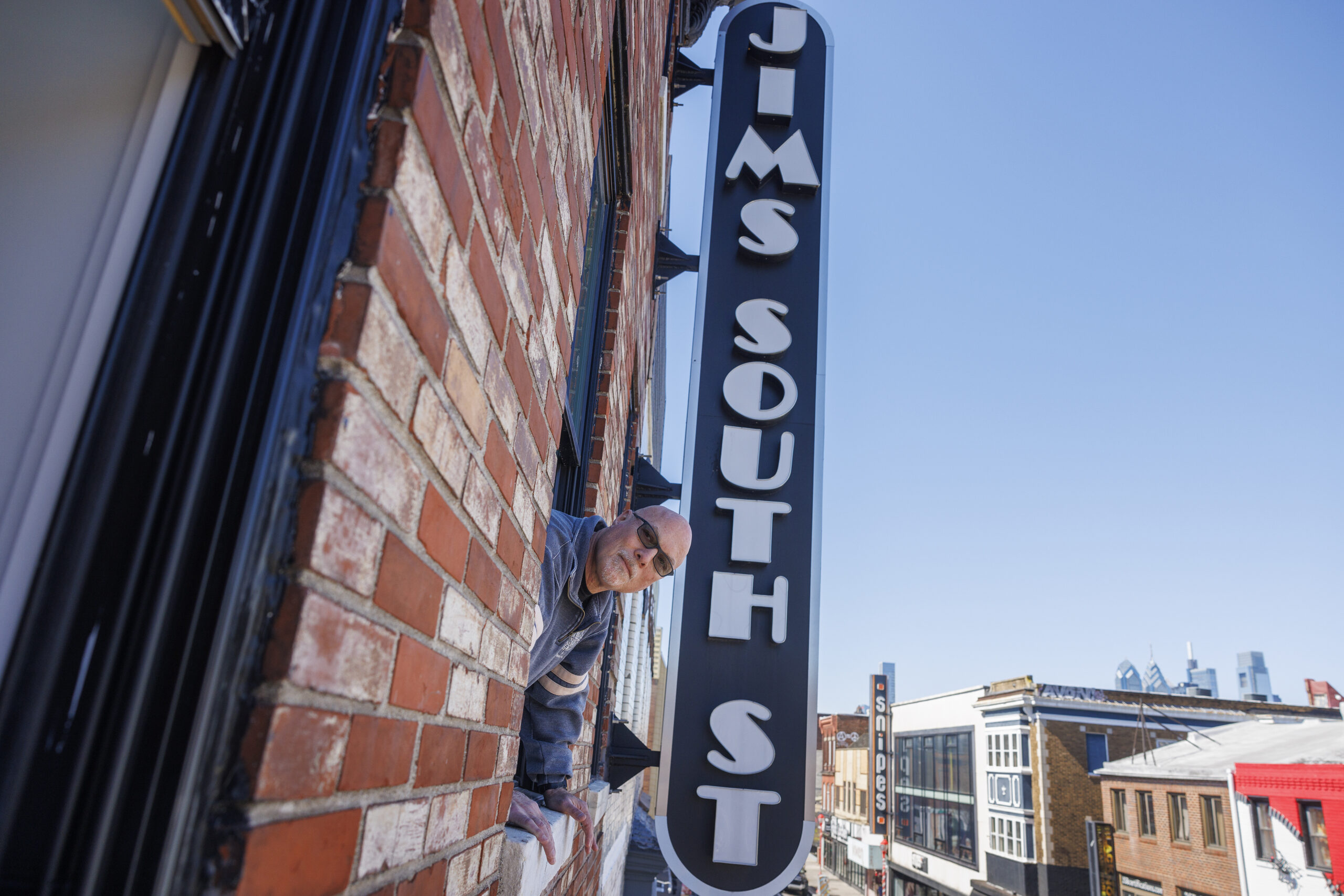
    Ken Silver, owner of Jim’s Steaks, corner of 4th and South Street with sign on front of building.The restaurant is under construction after 2022 fire destroyed the cheesesteak restaurant. Photo taken on Monday, March 25, 2024.

    1 p.m.

    For lunchtime I want to go down to Jim’s on South Street and get a cheesesteak with whiz and fried onions. I probably need to walk off my cheesesteak, but I’m not going to walk off my cheesesteak. I’m going to let it just sit in my belly for a while.

    3 p.m.

    Then we’ll go out to the Art Museum area and chill out and walk around. Maybe we’ll have ice cream, there are usually ice cream trucks out there. I love walking around that area so much — I’ve always loved West River Drive and Kelly Drive. When I was a kid, I didn’t know that Boathouse Row was like boathouses, even though it’s called that — I used to always say, when I grew up, I’m gonna live in one of those houses.

    Boathouse Row is relit with a new programmable system containing 6,400 LED lights that allow for 16 million color combinations in Philadelphia, Pa. on Thursday, March 7, 2024.

    5:30 p.m.

    At night, I’m gonna go to Norristown. There’s this Mexican restaurant on Main Street that’s so freaking good, Taqueria La Michoacana. I would definitely have their beans and rice, and tacos, and I don’t know what else.

    7:30 p.m.

    I would go see a show at Theatre Horizon. They want to foster empathy and edify the people who come to see the theater. As the incoming artistic director, I’d love to start programs like that to grow the artistic community there, all the while supporting the community that’s already been built there.

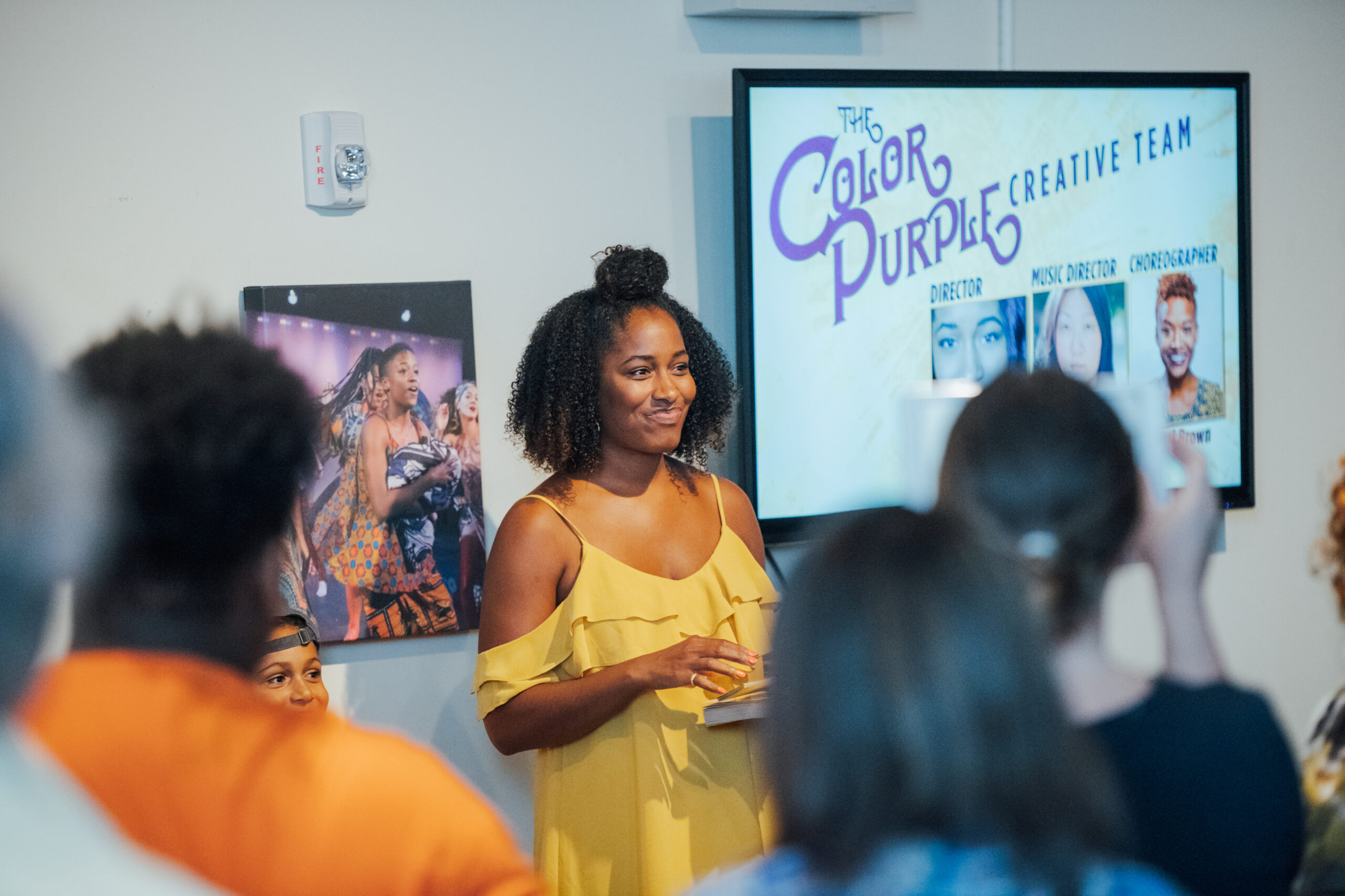
    New artistic director Amina Robinson at an event for Theatre Horizon’s 2018 production of ‘The Color Purple.’

    10 p.m.

    I’d head home to sit outside and watch the cars go by, just like chill out and relax. Then I’ll lay on the couch and fall asleep watching a television show, probably a Lifetime Movie Network movie.

  • Edna B. Foa, celebrated pioneering psychologist and longtime Penn professor, has died at 88

    Edna B. Foa, celebrated pioneering psychologist and longtime Penn professor, has died at 88

    Edna B. Foa, 88, of Philadelphia, renowned clinical psychologist, pioneering mental health researcher, creator of the celebrated prolonged exposure therapy for post-traumatic stress disorder, longtime professor of clinical psychology in psychiatry at the University of Pennsylvania, lecturer, mentor, and volunteer, died Tuesday, March 24, of complications from pneumonia at Pennsylvania Hospital.

    Dr. Foa was among the first psychologists in the 1970s and ‘80s to infuse empirical case study research into existing behavior protocols to create more effective mental health treatments for victims of rape, combat trauma, childhood sexual abuse, and other ordeals. She became an expert in PTSD, obsessive-compulsive disorder, and social phobia, and her prolonged exposure therapy for PTSD and exposure and response prevention treatments for OCD are still hailed as breakthrough innovations.

    From 1971 to 1997, she was a fellow, professor, and clinical researcher in the psychiatry departments at Temple University and the old Medical College of Pennsylvania, now part of Drexel University. She joined Penn’s Department of Psychiatry in 1998 and, over more than 50 years, evaluated thousands of mental health cases to determine which behavior therapy was best for each condition.

    “Her work truly changed the field,” colleagues at the Ardmore-based Center for Hope and Health said on Instagram. They said she “spent her career doing what she believed mattered most: studying what actually helps people get better, and making those treatments more accessible.”

    She created the Center for the Treatment and Study of Anxiety at Temple in 1979 and directed it later at Penn. Colleagues at the center said on Facebook: “Through her brilliance, determination, and unwavering belief in the power of evidence-based care, she transformed the understanding and treatment of anxiety-related disorders and changed the lives of countless individuals and families around the world.”

    Other colleagues and friends called her “brilliant,” “amazing,” and “extremely influential” in online tributes. One said she was “a giant who taught the world how to conquer fear and reclaim life.”

    Dr. Foa earned grants for research and education, and taught her therapy techniques to veterans counselors in the United States and Israel, to therapists for the U.S. Army and the City of Philadelphia, and to clinicians at Women Against Rape and other groups around the world. In 2010, she was named one of Time magazine’s 100 most influential people in the world.

    To share her innovations and encourage peer review, Dr. Foa edited Failures in Behavior Therapy in 1983 and cowrote Emotional Process of Fear in 1986 and Emotional Processing of Traumatic Experiences in 2007. The hundreds of books, manuals, articles, and papers she wrote, cowrote, or edited about memory, stress, anger, depression, and guilt have been cited more than 13,000 times by other authors.

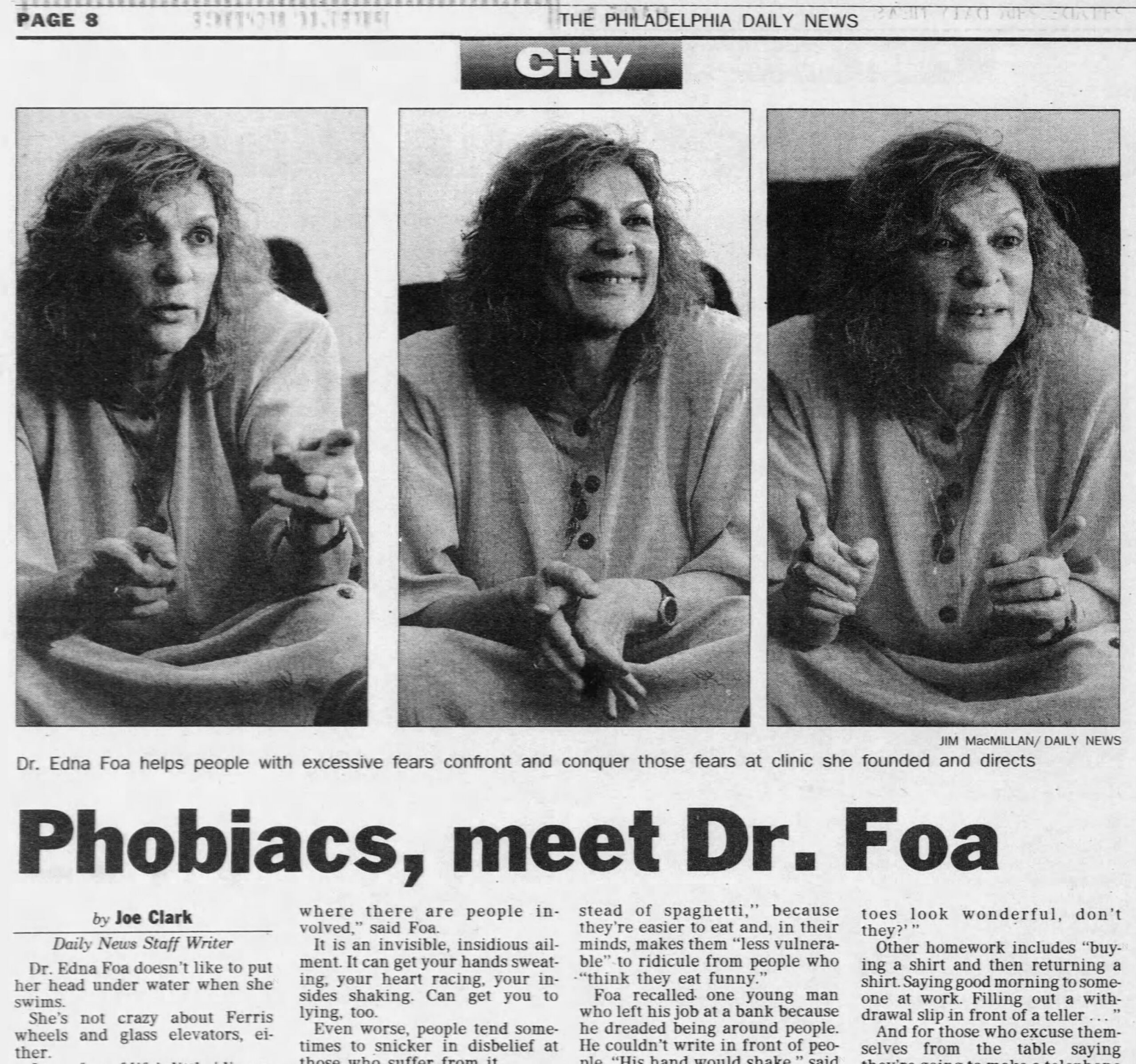
    The Daily News published this story and photos of Dr. Foa in 1993.

    She also volunteered as a consultant and supervisor at clinics and medical centers. She lectured and organized clinical workshops in the United States, Israel, and elsewhere. In 2010, she told Time magazine: “If you develop a wonderful protocol, it’s useless if nobody uses it.”

    She was affiliated with many mental health societies and associations, and earned lifetime achievement awards from the American Psychological Association, the International Society for Traumatic Stress Studies, and other groups. She was featured often in The Inquirer and the Daily News, and told the Daily News in 1993 that “everyone has little fears.” She said her little fears were of heights and swimming underwater.

    In 1970, Dr. Foa earned both a doctorate in clinical psychology and personality from the University of Missouri, and a master’s degree in clinical psychology at the University of Illinois. In 1962, she earned a bachelor’s degree in psychology and literature at Bar-Ilan University in Israel.

    She stopped working full-time at Penn in 2023 but never really retired. In April, she was scheduled to lead a workshop in prolonged exposure therapy. In 2011, she told The Inquirer: “If I die tomorrow, I think that what I have achieved is fine. If I don’t die, I don’t need to stop.”

    Edna Ben Jacob was born Dec. 28, 1937, in what is now Haifa, Israel. She became fascinated by the work of psychologist Sigmund Freud, she told the Encyclopedia of Behavior Modification and Cognitive Behavior Therapy, and she worked briefly with juvenile offenders near Tel Aviv after high school.

    In 2011, she told The Inquirer she was shattered by her own trauma in 1948 when her brother, Uri, was killed in the war and her father, Abraham, died four years later.

    She married and divorced when she was young, and met Professor Uriel Foa at Bar-Ilan. They married when she was 24, had daughter Dora, and moved to the United States in 1966. They had daughters Yael and Michelle, and lived in Illinois and Missouri before moving to Glenside and then Penn Valley. She moved to Philadelphia a few years ago.

    After a divorce, she married Penn professor Charles Kahn. Her husband and former husband died earlier.

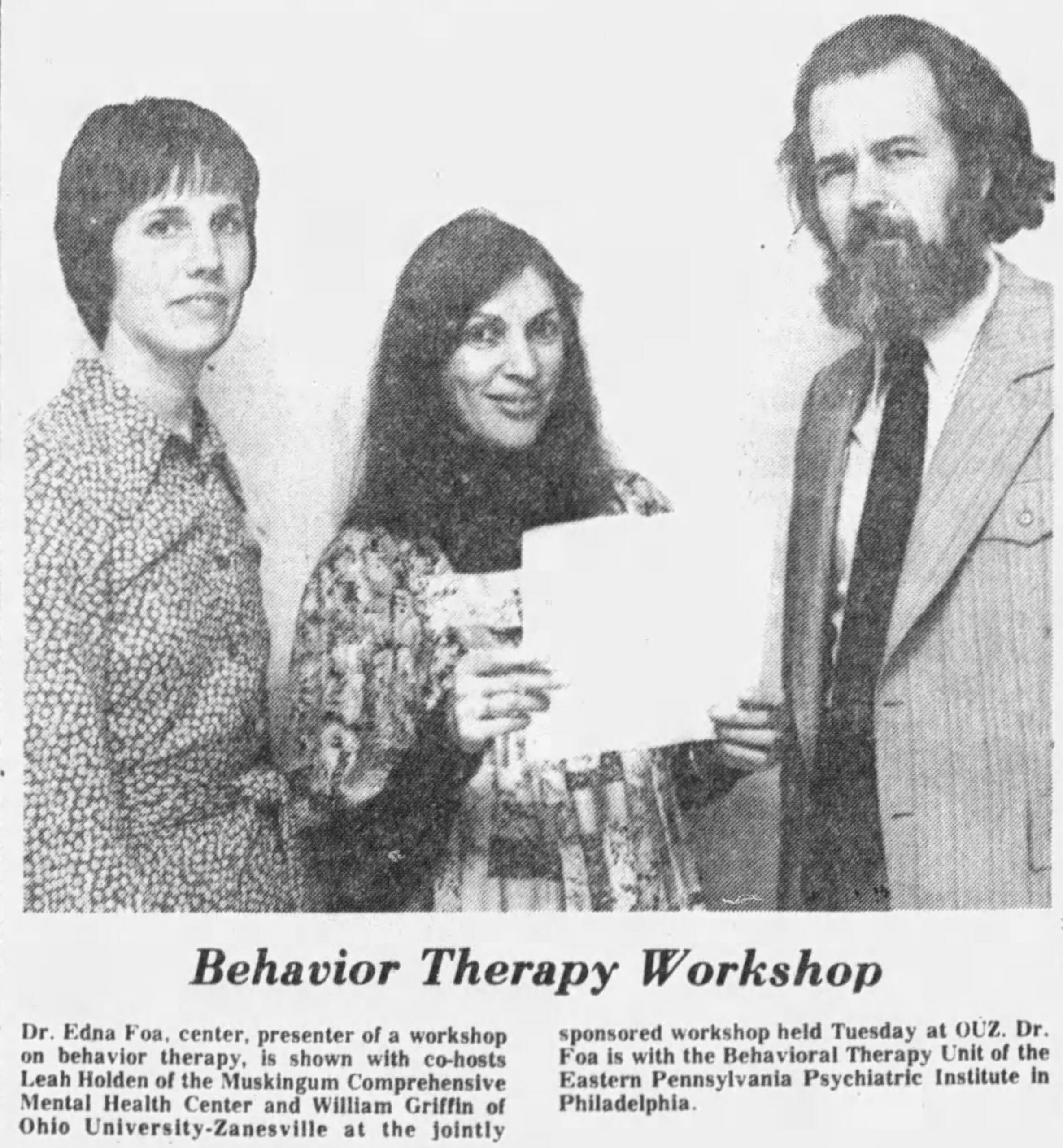
    This photo of Dr. Foa (center) appeared in the Times Recorder in Ohio in 1978.

    Away from work, Dr. Foa enjoyed traveling, gardening, and hosting family and friends at holidays. She collected art and antiques.

    She told an interviewer she had a bad habit of deleting emails before reading them. She managed lung cancer years ago.

    “She was full of energy, vivacious, a force of nature,” said her daughter Yael. Her daughter Michelle said: “She was an extraordinary figure who lived a very rich life.”

    In addition to her daughters, Dr. Foa is survived by five grandchildren, a great-granddaughter, and other relatives.

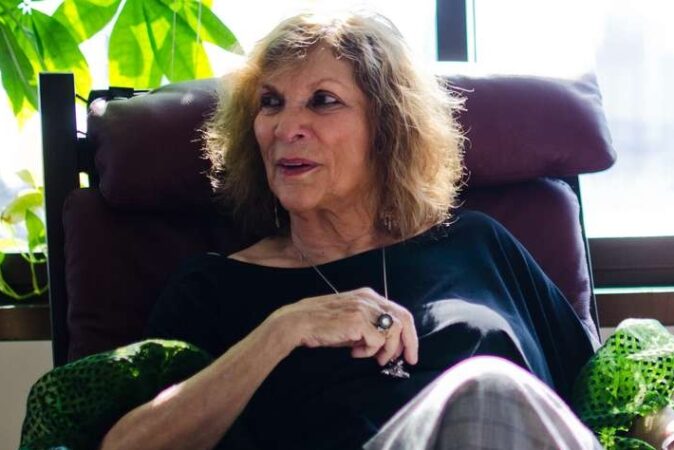
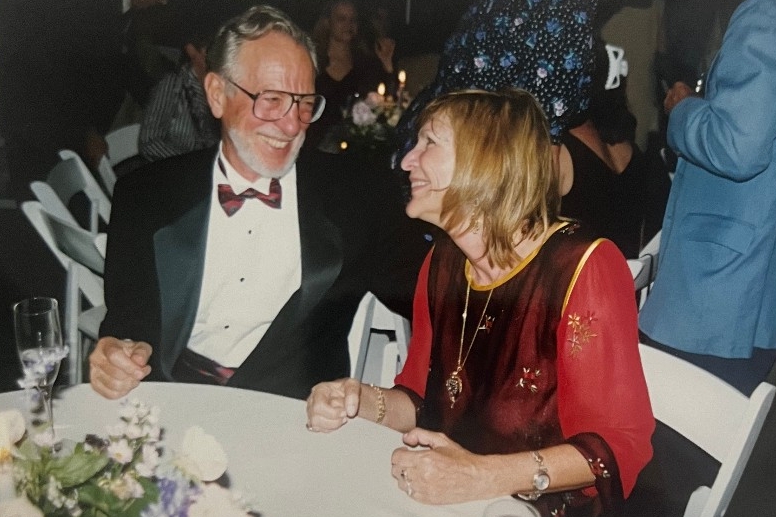
    Dr. Foa laughs with her husband, Charles Kahn.

    Private services are to be held later.

    Donations in her name may be made to the Philadelphia Museum of Art, 2600 Benjamin Franklin Parkway, Philadelphia, Pa. 19130; and the Philadelphia Orchestra, 300 S. Broad St., Philadelphia, Pa. 19102.

  • Temple ends six-game losing streak in emphatic fashion, routs Tulane to punch ticket to American tournament

    Temple ends six-game losing streak in emphatic fashion, routs Tulane to punch ticket to American tournament

    When Temple last played Tulane on Feb. 11, the Green Wave handed the Owls an 11-point loss that started their six-game skid and subsequent slide in the American Conference standings. What doomed the Owls was the Green Wave outscoring them 26-8 to open the second half.

    On Thursday, with Temple’s hopes of clinching a spot in next week’s conference tournament hanging in the balance, the circumstances were the exact opposite.

    The Owls went into halftime up eight points, then outscored the Green Wave (17-13, 8-9) by 21 for a 29-point lead at the midway point in the half. Tulane never rallied as Temple (16-14, 8-9) picked up a 89-60 win — the most one-sided win in its history in the conference — to punch its ticket to the league tournament in Birmingham.

    “To be able to come back and respond, it’s kind of that shows the resiliency of this team,” head coach Adam Fisher said. “We’ve seen a lot of adversity on and off the court this season, and I thought these guys were tremendous.”

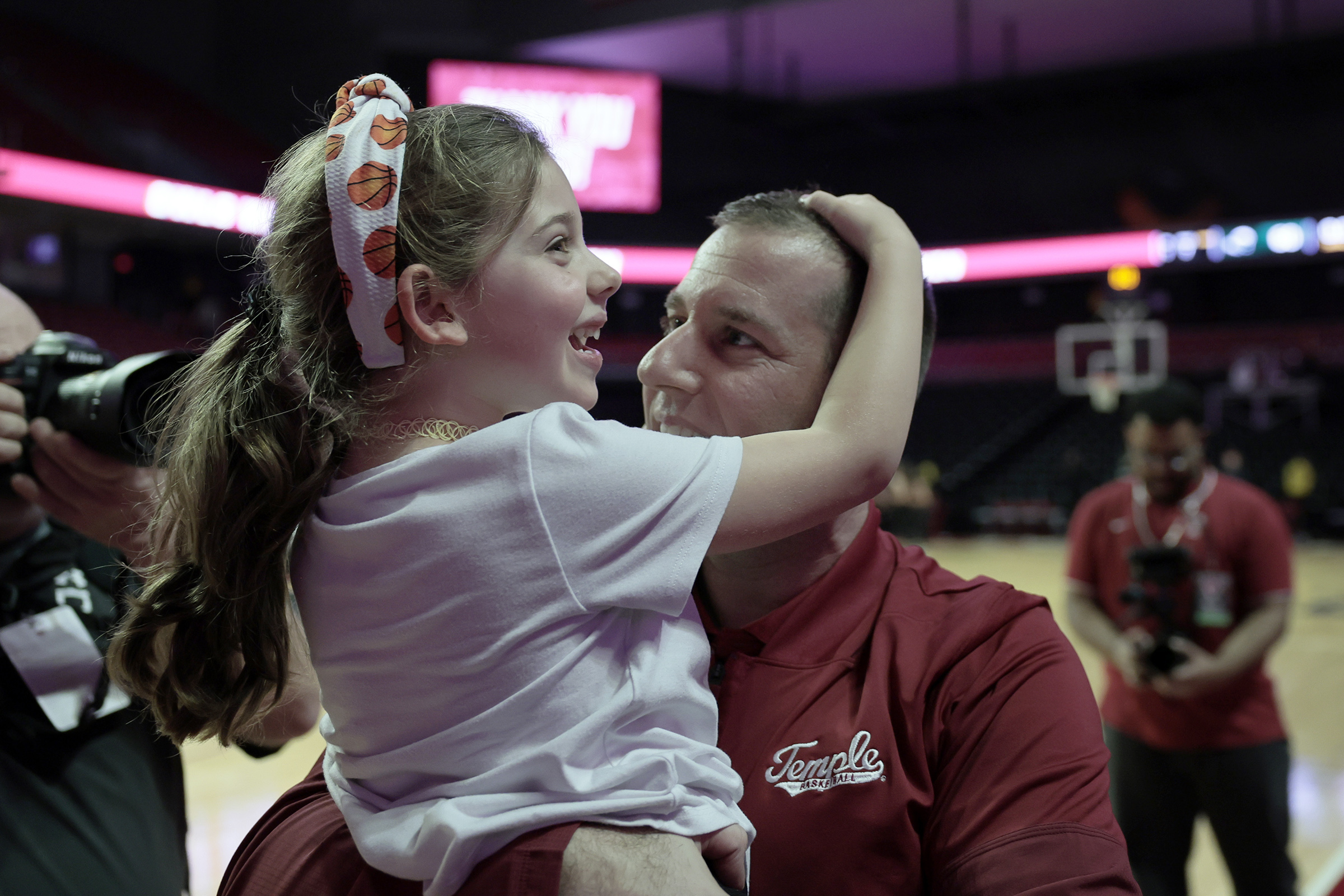
    Temple head coach Adam Fisher gets a hug from his daughter Livi after the team punched its ticket to the conference tournament.

    Statistical leaders

    Temple clicked in nearly every facet of the game, shooting 53.4% from the floor, and hit 13 three-pointers. Guard Aiden Tobiason led the team with 21 points, while guards Gavin Griffiths and Jordan Mason each had 15.

    What we saw

    The Green Wave knocked down their first three shots for a 7-5 lead two minutes into the game, but the Owls struck back. They hit five of their first seven shot attempts, while the defense held Tulane at bay for a 14-9 lead.

    Then, Temple began to sprint and left the Green Wave in the dust.

    Tobiason charged the offense at first but then other Owls chipped in. Guard Masiah Gilyard drilled a three-pointer, prompting a 17-7 run in five-and-a-half minutes. Griffiths dished out most of the damage with nine points, and despite some late Green Wave buckets, Temple had a 40-32 halftime lead.

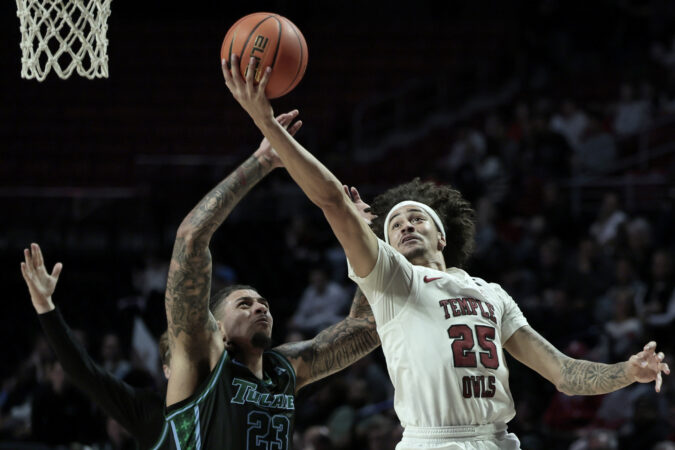
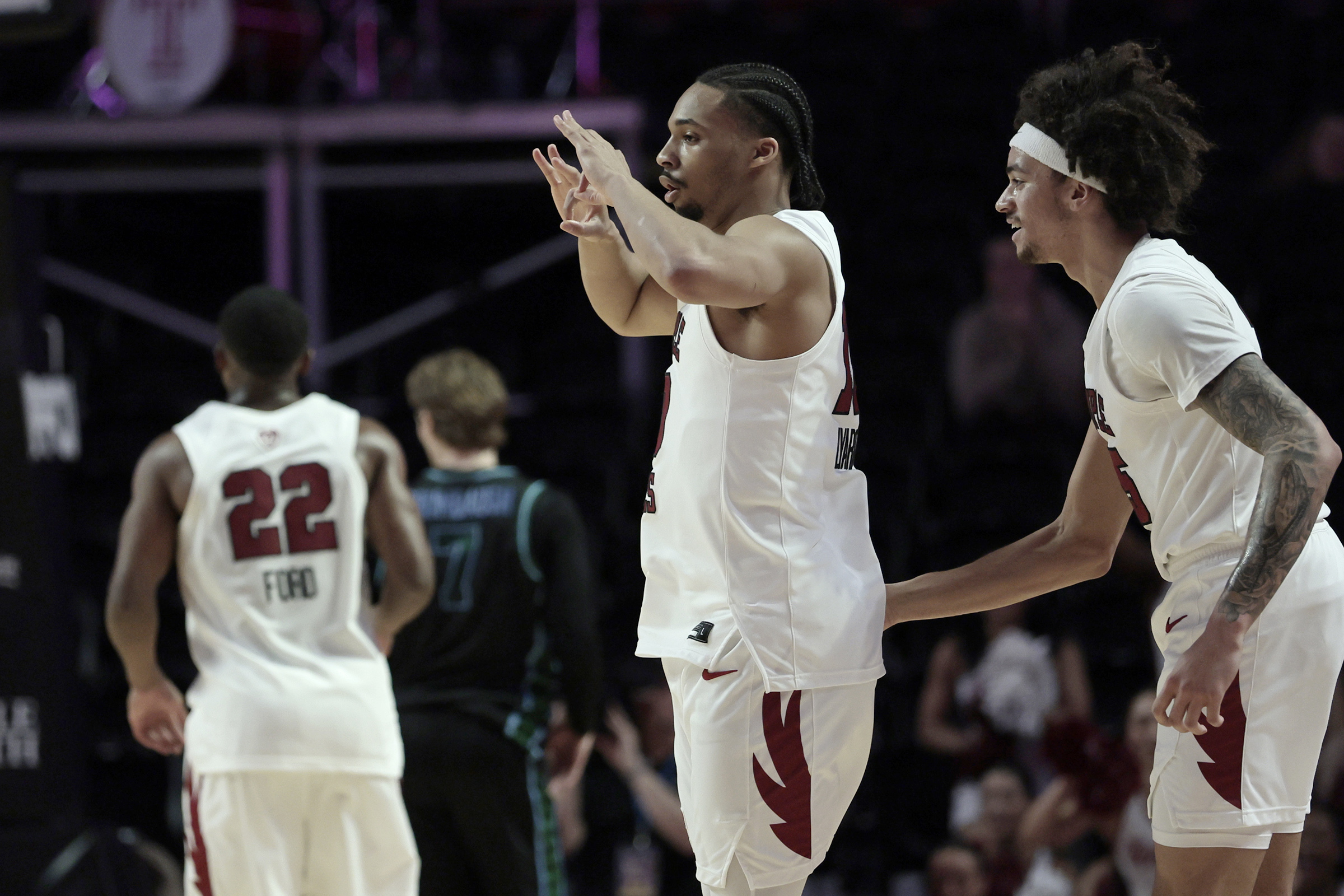
    Aiden Tobiason (right) celebrates with Masiah Gilyard after Gilyard’s three-point basket against Tulane.

    Temple looked like the team it did during its 15-8 start coming out of the locker room. It smothered Tulane with the first 10 points of the half a little more than two minutes in, building a 50-32 lead. The Green Wave answered with a three, but Griffiths hit one 18 seconds later.

    The Owls hit 60.7% of their shots in the second half while knocking down eight three-pointers. Mason and guard Derrian Ford both had 11 points in the half as the lead grew to as much as 34.

    Game-changing play

    Temple had momentum going into halftime but needed an extra jolt to make the score a little more comfortable out of the break. Fisher has stated that the Owls’ issues have stemmed from first-half miscues being exploited after the break.

    They got that boost immediately.

    “I think the biggest thing I was hoping for coming out of halftime was to get a stop.” Fisher said. “We harped on the first possession, ‘you got to get a stop, you got to get a stop.’ Then we strung three stops in a row. That was something we have really emphasized, and the bench was going crazy.”

    Forward Jamai Felt swatted a shot from Green Wave guard Rowan Brumbaugh, leading to a three from Mason. Tulane missed its first four shots of the half and the Owls capitalized. Mason’s three turned into one from Tobiason, and then one from Ford, and it became an avalanche of points.

    A lob from Griffiths to Tobiason pushed the score to 68-43 eight minutes into the half to put an exclamation point on the run, and the eventual win.

    Up next

    Temple closes out its season on the road against Tulsa (24-6, 12-5) at the Reynolds Center on Sunday (ESPN+, 3 p.m.). The Owls enter the final weekend tied for eighth place in the American standings, with just one game separating five teams (Florida Atlantic, Charlotte, North Texas, Tulane and Temple) between fifth and ninth place. The American conference tournament will feature 10 teams.

  • Joseph E. McGettigan III, longtime trial lawyer and celebrated former prosecutor, has died at 76

    Joseph E. McGettigan III, longtime trial lawyer and celebrated former prosecutor, has died at 76

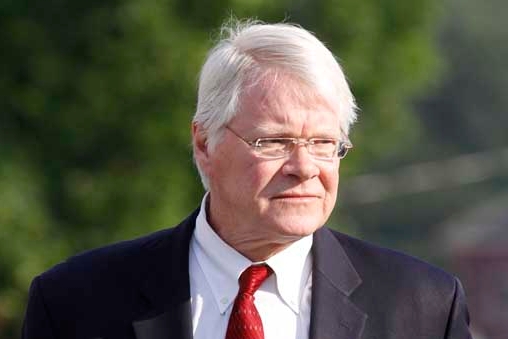
    Joseph E. McGettigan III, 76, of Media, longtime trial lawyer and legal consultant, former Philadelphia assistant district attorney, former Pennsylvania chief deputy attorney general, former Delaware County first assistant district attorney, former assistant U.S. attorney in Philadelphia, former Philadelphia first assistant district attorney, and former Pennsylvania senior deputy attorney general, died Thursday, Dec. 31, of lung inflammation at Lankenau Medical Center.

    Born in West Philadelphia and a graduate of Temple University, Mr. McGettigan was a legal expert in sexual assault and murder cases. He litigated in hundreds of trials over more than three decades as a prosecutor for city, county, state, and federal governments, and won notable convictions in the murder case against multimillionaire philanthropist John E. du Pont in 1997 and the child sexual abuse case against then-Pennsylvania State University assistant football coach Jerry Sandusky in 2012.

    He was, then-Delaware County District Attorney Patrick L. Meehan said in 1998, like “a fascinating character in a crime novel.”

    He worked for four Philadelphia district attorneys over two stints in City Hall and spent a year in Iraq in 2008 and 2009 as a U.S. government resident legal adviser working to reestablish a criminal justice system after the fall of Saddam Hussein. For most of the last decade, he worked for the Philadelphia law firm of McAndrews Mehalick Connolly Hulse & Ryan P. C. “He was a wonderful guy, a faithful citizen, and an incredible lawyer,” Dennis McAndrews, founder of the firm, said in an online tribute.

    The grandson of a Philadelphia police officer and son of a lawyer, Mr. McGettigan prosecuted one of the first sex-abuse cases involving a priest from the Archdiocese of Philadelphia in 1985 and oversaw a state Senate absentee-ballot scam case in 1993. “I’m not shocked by much of human depravity,” he said in a 2018 video interview with lifelong friend Dom Irrera. “I’ve seen a fair amount of it.”

    In an online tribute, Judge Jack Stollsteimer of Delaware County Court called Mr. McGettigan a “legendary prosecutor, a larger-than-life personality, and an avenging hero to crime victims across our Commonwealth.” He was a favorite of the City Hall crowd, and colleagues called him “a true public servant,” “a great guy with a wonderful heart,” and “an extraordinary presence in the courtroom.”

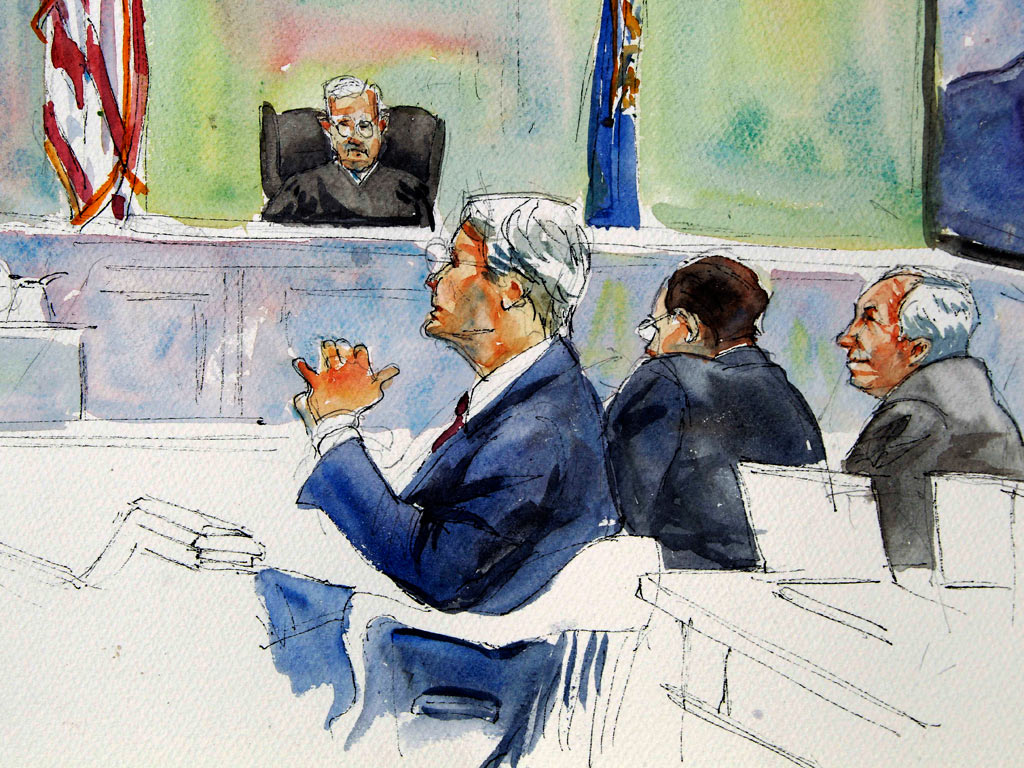
    Mr. McGettigan (foreground) is shown in this courtroom sketch during the Jerry Sandusky trial in 2012.

    Even those with whom he clashed praised Mr. McGettigan. Thomas A. Bergstrom, the Philadelphia lawyer who represented du Pont, said in 2011: “He’s a formidable adversary … very principled. If Joe doesn’t agree with you, he’ll let you know. If he’s going to hit you, it will be a punch in the nose, not a stab in the back.”

    Witty and naturally engaging, Mr. McGettigan interrupted his legal career after the du Pont case to work briefly in Hollywood as a legal content adviser for the short-lived TV series Philly. The show starred Kim Delaney as a tough defense attorney in Philadelphia, and Mr. McGettigan played a police detective, not a prosecutor, in a courtroom scene in one episode in 2002.

    He also worked briefly as a consultant and manager for a private security company in Virginia, was a legal analyst for TV talk shows, and mentored other lawyers. He graduated summa cum laude with a bachelor’s degree in English literature from Temple and earned his law degree at the University of San Diego School of Law in 1982.

    Mr. McGettigan played basketball in high school, on Philly playgrounds, and later whenever he could. Longtime college basketball coach and lifelong friend Fran O’Hanlon called him “a great friend who would do anything for you.”

    His sister Mary said: “He was complex. He appeared often to be a hard-nose tough guy. But there was a soft side to him. He wanted to help people who were vulnerable.” His sister Patty said: “He left the world a better place.”

    Joseph Edward McGettigan III was born March 5, 1949. An altar boy at church, he grew up with six sisters and a brother, and he instigated many dinner-table debates with his siblings and parents about all kinds of subjects.

    “He kept us on our toes,” his sister Mary said. “He had a strong sense of justice, of doing the right thing.”

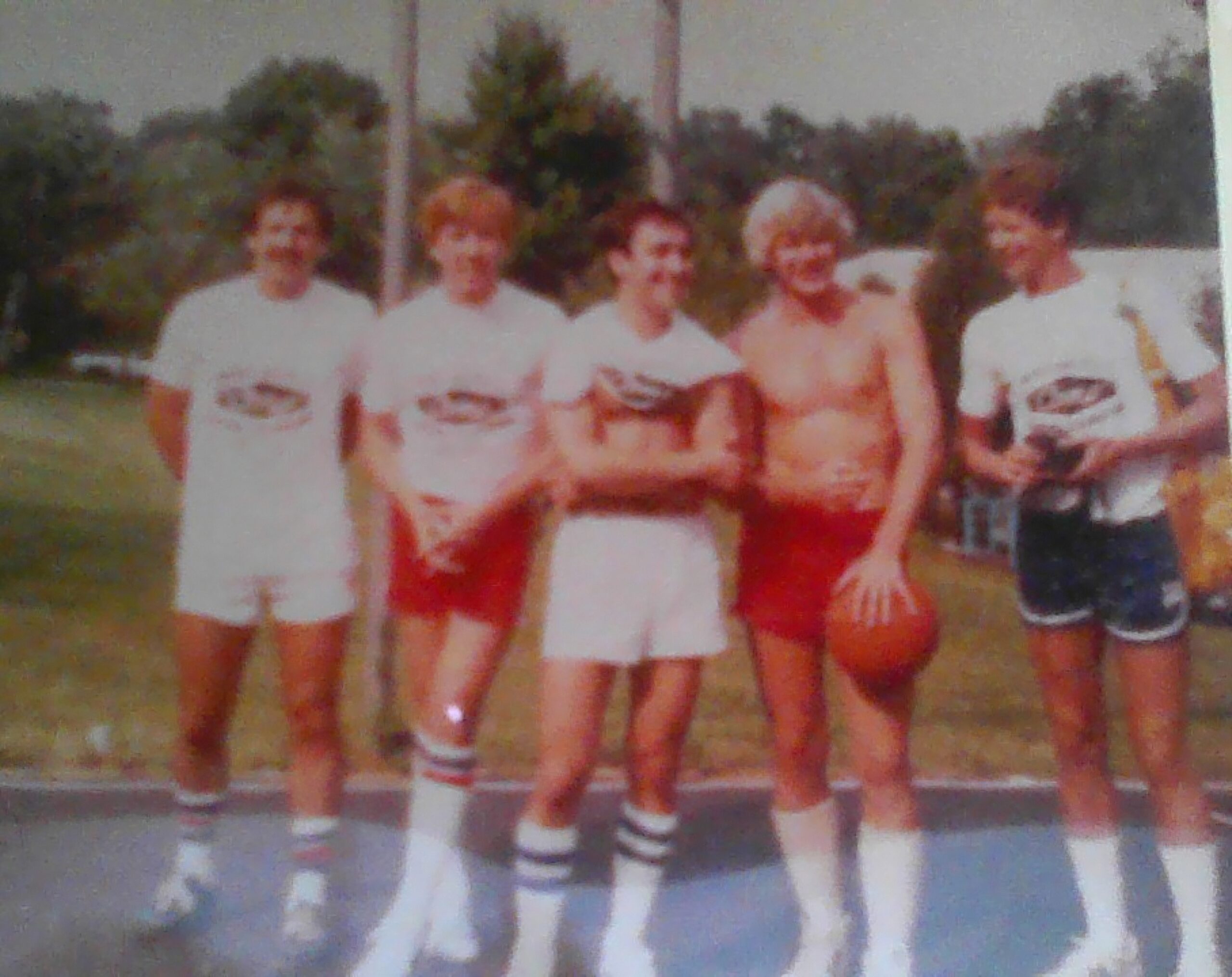
    Mr. McGettigan (second from right) liked nothing better than playing hoops with friends.

    He married Gay Warren, and they lived in Media and Naples, Fla. “Gay was Joe’s rock,” his sister Mary said. “He was devoted to her, and she to him.”

    Mr. McGettigan loved music, reading, and writing, and told Irrera in 2018 that his favorite authors were William Shakespeare and Joseph Conrad. He was fun and funny, his siblings said, a raconteur with a large personality.

    “Joe was an outlier in a family of bookish nerds,” his sister Jeanne said. “We followed his youthful adventures with great amusement and his later accomplishments with pride and respect. His generosity changed lives for the better.”

    Mr. McGettigan spent a year in Iraq helping local officials revive their justice system.

    One time, when they were young, his brother Michael tried to lie about losing Mr. McGettigan’s football. So Mr. McGettigan grilled him about the details and eventually extracted a confession.

    “I gave it all up,” Michael McGettigan said, “the first of many malefactors to find relief in telling the whole truth and nothing but to Joseph E. McGettigan III.”

    In addition to his wife and siblings, Mr. McGettigan is survived by his mother, Ruth, and other relatives. A sister died earlier.

    Mr. McGettigan (front right) always seemed to be surrounded by friends.

    Visitation with the family is to be from 10 to 10:45 a.m. Saturday, March 7, at St. Francis de Sales Church, 4625 Springfield Ave., Philadelphia, Pa. 19143. A Funeral Mass is to follow at 11 a.m.

    Donations in his name may be made to the Tunnel to Towers Foundation, 2361 Hylan Blvd., Staten Island, N.Y. 10306.

    “Everyone wanted to be Joe’s friend,” a colleague said in a tribute. 
  • Temple University and the Philadelphia Orchestra and Ensemble Arts have signed a deal for a new partnership

    Temple University and the Philadelphia Orchestra and Ensemble Arts have signed a deal for a new partnership

    Broadway stars and orchestral players might lead budding Philadelphia musical talent in master classes, and new college internships could open up at the city’s largest performing arts producer and presenter.

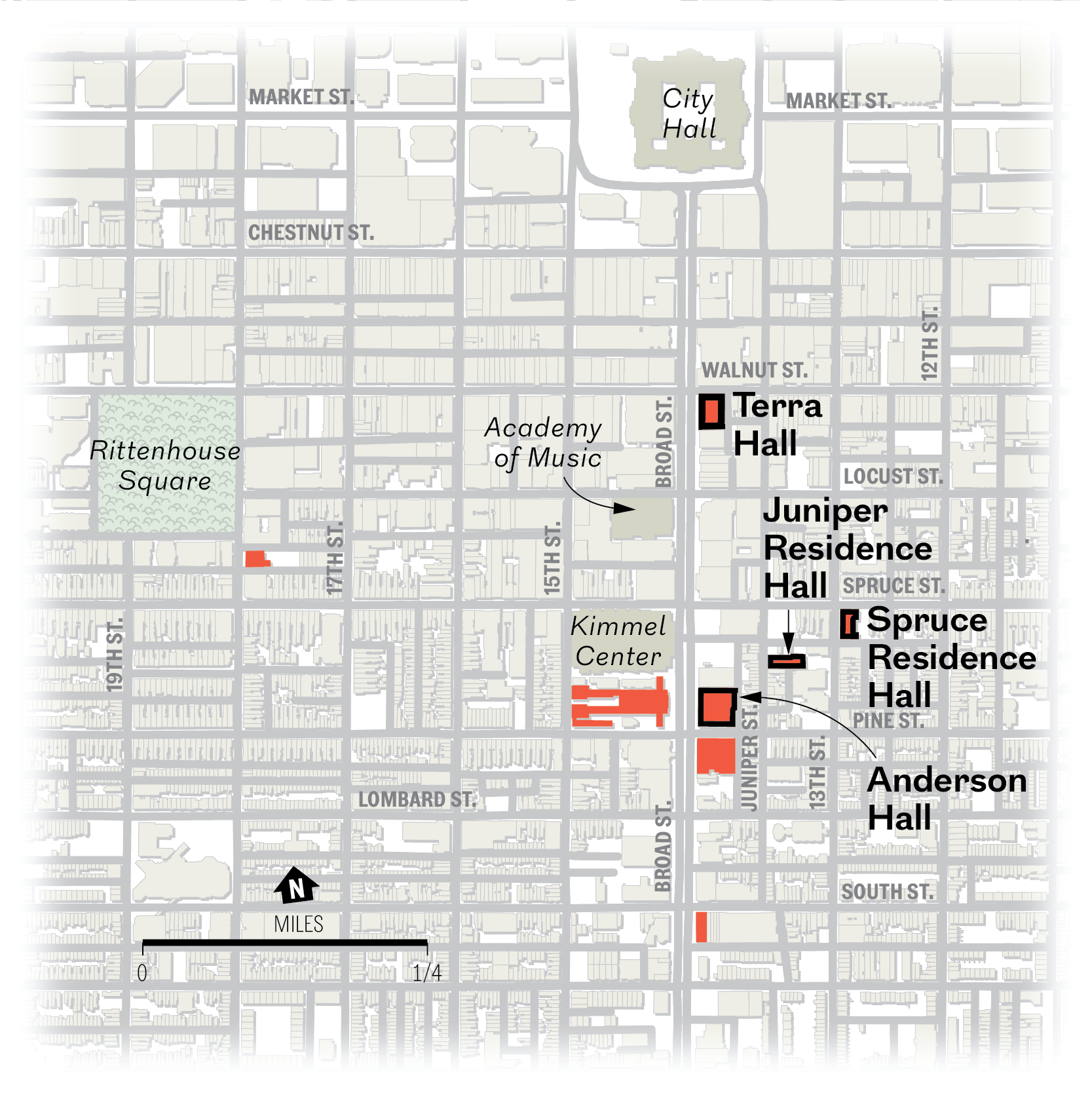
    As Temple University prepares to establish an outpost in Philadelphia’s major arts district, the school, and Philadelphia Orchestra and Ensemble Arts have signed a memorandum of understanding for a new partnership, formalizing a dream stage for joint activities already underway.

    The new arrangement is expected to benefit not only Temple University students, but also younger students of Temple Music Prep and the Philadelphia School District.

    Temple and the orchestra have long partnered on projects, but the university’s purchase of Terra Hall — near the orchestra and Kimmel Center — will allow a deeper level of involvement, leaders said.

    In the fall of 2027, for instance, about three dozen Philadelphia Orchestra current and retired musicians are expected to move their teaching studios from Temple’s main campus to Terra. Other collaborations are expected to take shape over the next year and half.

    “The gist of it is, Temple University and the Philadelphia Orchestra and Ensemble Arts are committed to working together to build a tangible partnership. It’s aspirational,” said POEA president and CEO Ryan Fleur of the memorandum of understanding, which was signed last month.

    “There’s a lot around the exchange of talent and supporting one another,” said Temple president John Fry.

    Terra Hall – shown here with other former University of the Arts buildings – is near the Academy of Music and Kimmel Center.

    For POEA, the partnership means it will no longer pursue the possibility of building an additional education wing at the Kimmel Center that had been in the early planning stages.

    “When I heard Temple was acquiring Terra Hall,” said Fleur, “the priority shifted from the idea of an education wing over the loading dock to how we could work with Temple to deploy the space in Terra Hall. Our greatest strength is not about building things, and if we unite in Terra Hall for the benefit of Philadelphia students, it’s a win for Philly.”

    An education annex at the Kimmel might have cost in the neighborhood of $100 million.

    “It was a large figure,” said Fleur. POEA is already in the process of raising hundreds of millions of dollars for a variety of needs from endowment to repairing and renovating its facilities, which include Marian Anderson Hall, the Academy of Music, and the Miller Theater.

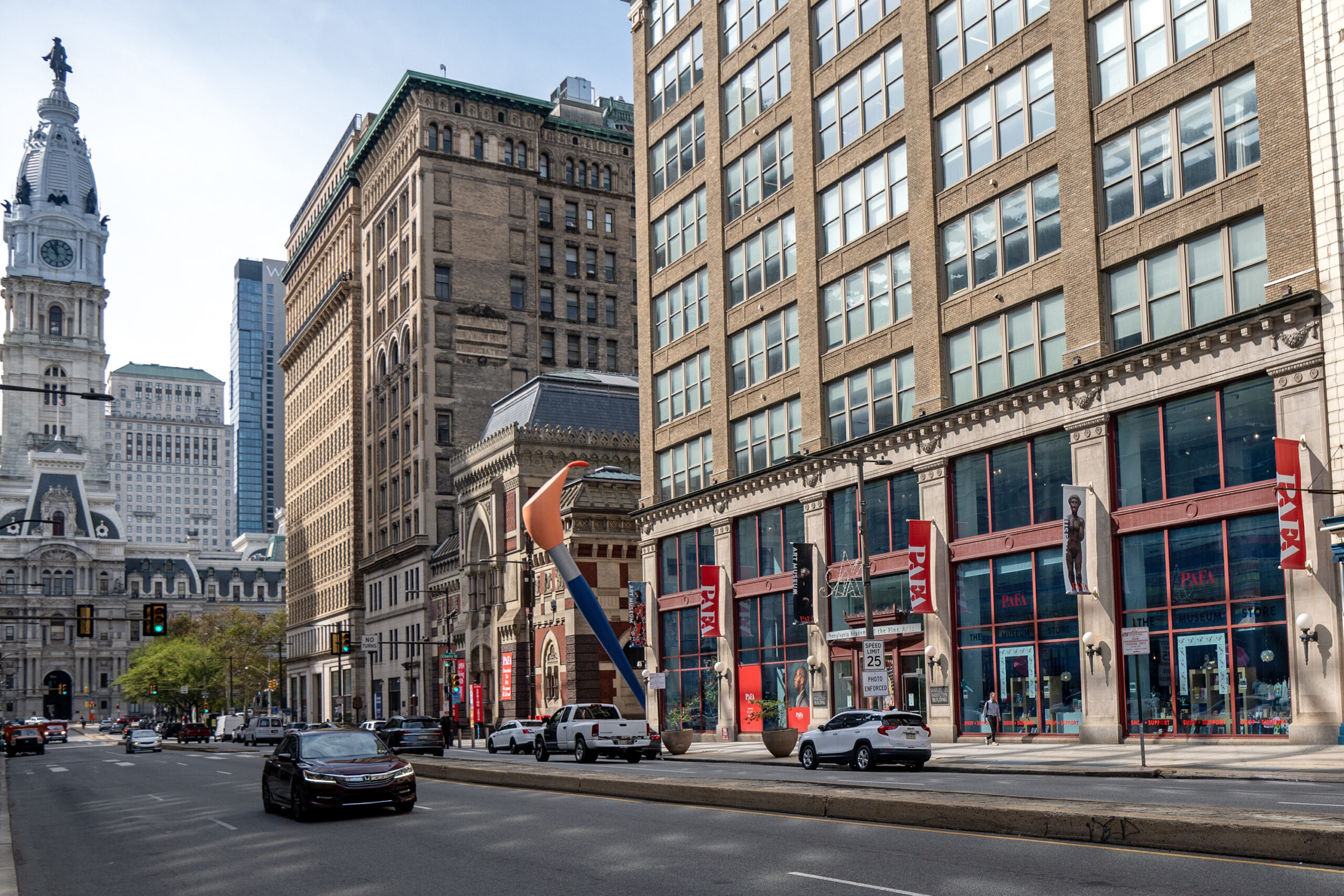
    The Pennsylvania Academy of the Fine Arts on North Broad Street, where Temple University has established a presence in PAFA’s Hamilton building (on right).

    Temple has been establishing a series of partnerships south down Broad Street from its main North Philadelphia campus. It has leased space at the Pennsylvania Academy of the Fine Arts and is developing programs there, and is in the process of taking over the Library Company of Philadelphia, on Locust Street just east of Broad.

    It acquired Terra Hall in 2025 for $18 million after the abrupt bankruptcy and closing of the University of the Arts. Terra was already outfitted with practice rooms, a recording studio, performance space, a dance studio, and classrooms.

    Fry said that Temple is currently doing work on the Terra building, with particular attention to the foundation and elevators, and that the major part of renovations would be done by September 2027. But he said that some of the spaces will be usable this fall.

    Both POEA and Temple have existing relationships with the Philadelphia School District. Fleur said the next step is “uniting” the efforts among the three. Fry said Temple was in discussions with other arts organizations as potential partners in Terra Hall.

    “We want people to think of this as a public resource,” he said, “not a closed academic building just for Temple. Where Temple can play a role, we want to be a part of that.”

  • Most Philly-area health systems had improved financial results in first half of fiscal 2026

    Most Philly-area health systems had improved financial results in first half of fiscal 2026

    Six of eight nonprofit health systems in Southeastern Pennsylvania and northern Delaware posted improved financial results for the six months that ended Dec. 31 compared to the year before. Still, half of them had operating losses, according to financial data reported last month to bond investors.

    Jefferson Health and Temple University Health System reported results that were worse than the same period last year.

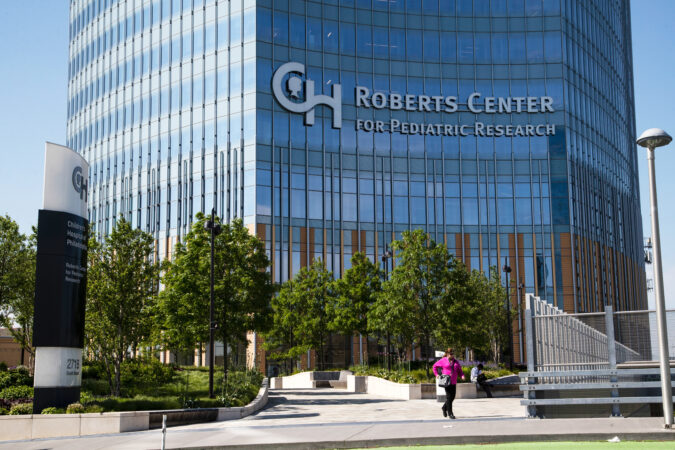
    Children’s Hospital of Philadelphia remained the region’s most profitable health system, with a 6.2% operating margin, up from 5.2% the year before. CHOP posted $2.7 billion in total revenue in the last six months of 2025, up from $2.4 billion the year before.

    Nonprofit health systems in South Jersey, such as Cooper, Inspira, and Virtua, do not report comparable financial results until they file their annual audited financials statements in the spring.

    Here’s a summary:

    Jefferson Health: Jefferson had an operating loss of $201 million in the six months that ended Dec. 31, compared to a $55 million loss the year before. The $201 million loss included a $64.7 million restructuring charge related to severance for 600 to 700 people laid off in October and other changes designed to improve efficiency in the 32-hospital system that stretches from South Jersey to Scranton, Jefferson said.

    University of Pennsylvania Health System: Penn had an operating profit of $189 million in the first six months of fiscal 2026, up from $117 million in the same period a year ago. Operating income increased, even after Penn put $43 million into reserves for medical malpractice claims. Two years ago, Penn had recorded charges totaling $90 million for the same purpose.

    ChristianaCare: ChristianaCare, Delaware’s largest health system, posted a $37 million operating gain, up from $33 million in the first six months of fiscal 2025. The health system’s revenue rose 9% to $1.75 billion, helped in part by its expansion into Pennsylvania. ChristianaCare took over five of Crozer Health’s freestanding outpatient locations in Delaware County.

    Temple University Health System: Temple had a $50.5 million operating loss in the six months that ended Dec. 31. In the same period the year before, Temple reported a $13.5 million operating gain. The nonprofit attributed some of the losses to costs related to the opening of Temple Women & Families Hospital in September.

    Main Line Health: Main Line had an $8.7 million operating profit in the six months that ended Dec. 31. Main Line’s swing from an $8.9 million loss in the same period of 2024 benefited from a change in accounting for depreciation that reduced expenses. Without that change, Main Line would have had another loss.

    Tower Health: Tower had an operating loss of $16 million in the first six month of fiscal 2026, according to its report to bondholders Friday. In the same period a year ago, the Berks County nonprofit’s loss was $16.1 million.

    Redeemer Health: Redeemer reported an operating loss of $14.7 million, compared to a loss of $19.5 million the year before. The improvement happened even though the health system in Philadelphia’s northern suburbs increased revenue by just 1.2%, to $227 million.