Temple University last month bought a vacant property at the site of a former McDonald’s near its North Philadelphia campus for $8 million, according to property records.
The university is still developing plans for the 48,640 square-foot lot at 1201-1219 N. Broad St., by Girard Avenue, a spokesperson said.
It’s adjacent to the Temple Sports Complex, which features two fields for soccer, lacrosse, and field hockey. That location “provides an opportunity to implement the vision of our campus safety and physical environment plan,” Steve Orbanek said.
Temple’s latest acquisition comes as the university has expanded its footprint in recent months along Broad Street.
In early 2025 the university paid $18 million for Terra Hall, a former University of the Arts building on South Broad Street. The building will be Temple’s Center City campus. And last fall Temple bought jazz bar New Barber’s Hall on Oxford Street for $2.3 million, the Business Journal reported.
At local colleges with major sports programs, some student athletes are now getting paychecks — from their athletic departments.
Pennsylvania State University, Temple, Villanova, St. Joseph’s, Drexel, and La Salle are among the Pennsylvania schools that have begun to directly pay athletes following a settlement last year in federal class-action lawsuits over student athlete compensation.
The move arguably ends college athletes’ status as amateurs and begins to address long-standing concerns that players haven’t fairly profited from the lucrative business of some college sports.
It also raises questions about how schools will fund the athletes’ pay and whether equity complaints will arise if all athletes are not comparably awarded. Some also question how it will impact sports that are not big revenue makers.
Locally, most colleges have been mum on how much they are paying athletes, and some have also declined to say which teams’ athletes are getting money through revenue sharing, citing competitive and student privacy concerns. Villanova, a basketball powerhouse that has 623 athletes across 24 sports, said it will provide money primarily to its men’s and women’s basketball teams.
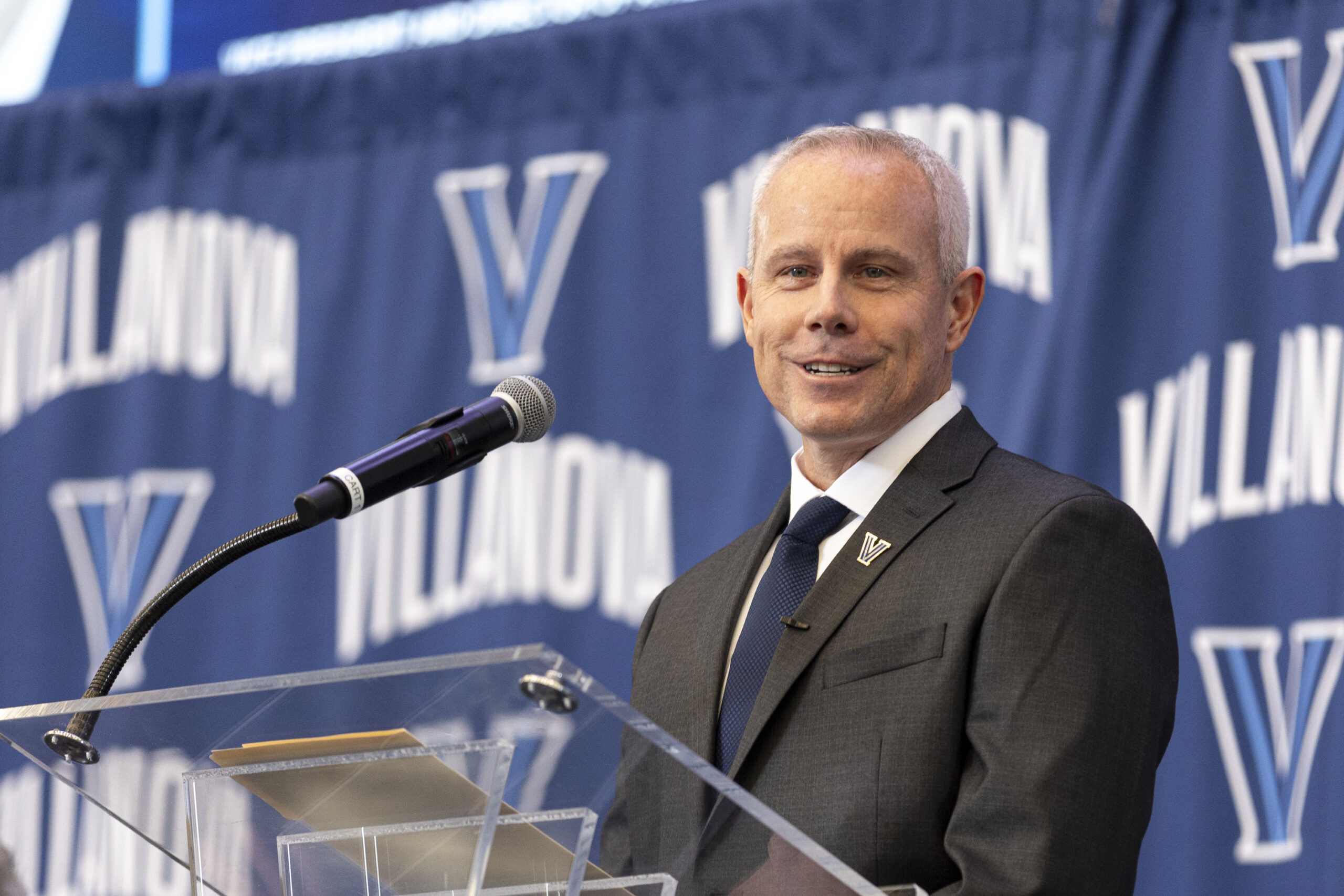
Erica Roedl, Villanova’s vice president and athletic director, speaks during a news conference at the school’s Finneran Pavilion in 2024.
“Our objective is to share revenue at levels which will keep our basketball rosters funded among the top schools in the Big East [Conference] and nationally,” Eric Roedl, Villanova’s vice president and director of athletics, said in a June message after the court settlement.
St. Joe’s, another basketball standout, said its arrangement is also with men’s and women’s basketball athletes, like its peers in the Atlantic 10 Conference.
Temple University established Competitive Excellence Funds that allow all of its 19 teams to raise money for revenue sharing, but declined to say which teams are currently distributing money to athletes.
“Donors could, if they wanted to, make sure their money went to a certain sport,” said Arthur Johnson, Temple’s vice president and director of athletics. “They have that ability.”
Other local colleges, including St. Joseph’s and Villanova, also launched funds to help raise money for revenue sharing. And all three schools also plan to use athletic revenue.
Under the revenue-sharing framework established by the court settlement, each college can pay its athletes up to a total of $20.5 million this academic year. Football powerhouse Penn State, which has about 800 athletes, has said it intends to reach the cap, according to a June 7 statement from athletic director Pat Kraft.
“This is a rapidly evolving environment that we are monitoring closely to ensure our approach remains consistent with applicable rules, while supporting the well-being and academic success of our student-athletes,” said Leah Beasley, Penn State’s deputy athletic director for strategic engagement and brand advancement.
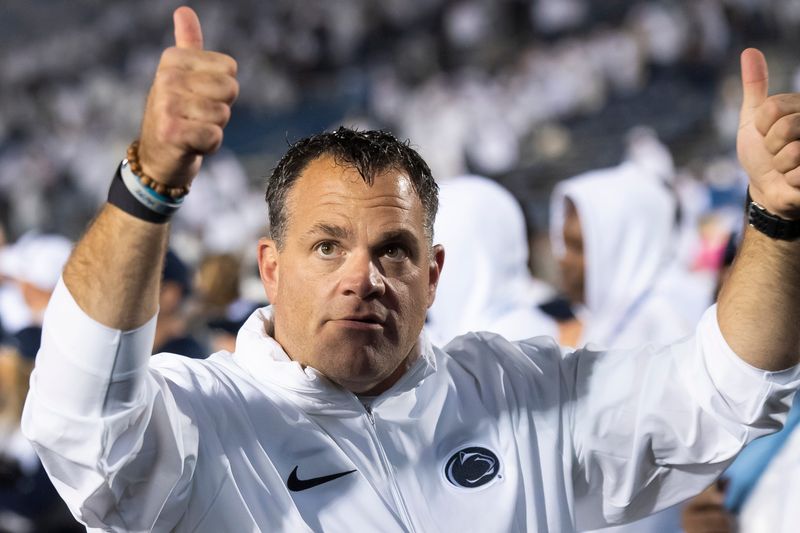
Penn State athletic director Pat Kraft gives two thumbs up to the student section following a 31-0 win in a football game against Iowa in 2023.
‘It’s a job’
To athletes, revenue sharing seems only fair, given many are so busy practicing and playing through summers and other breaks that they don’t have time to work.
“It is a job at the end of the day,” said former Villanova University basketball player Eric Dixon, who holds the Wildcats’ record as all-time leading scorer. “You put a lot of time into it every single day, every single week.”
Players get hurt and can see their sports careers harmed or halted, said Dixon, who grew up in Abington and played at Villanova from 2020 to 2025. College may be their only time to earn money for their sports prowess.
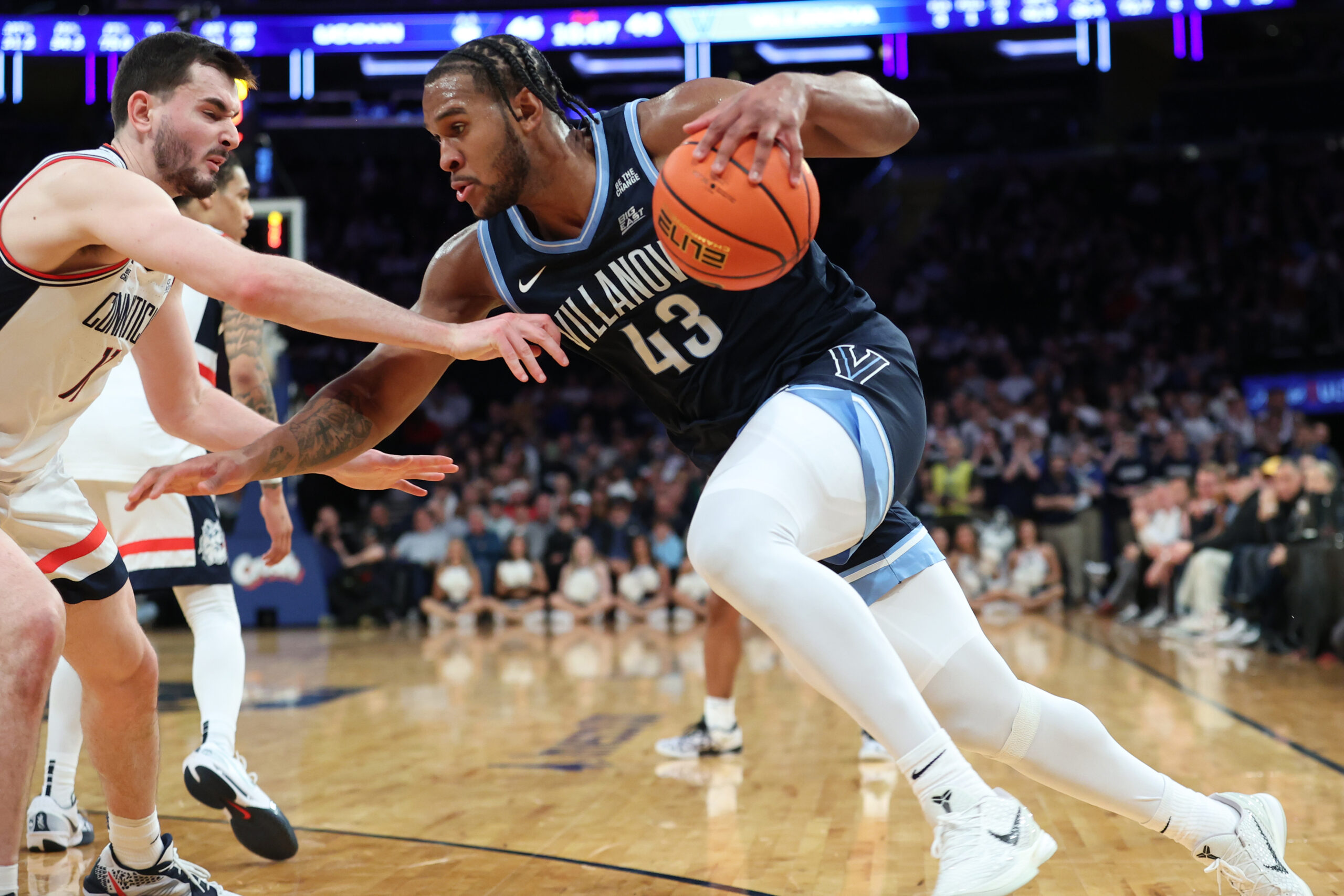
Villanova’s Eric Dixon drives against Alex Karaban of UConn during the 2025 Big East Tournament at Madison Square Garden in New York.
Dixon didn’tbenefit from revenue sharing. But he got money through external name, image, and likeness (NIL) endorsements and sponsorships that the NCAA began allowing in 2021. Dixon declined to specify how much he received, but said it was “seven figures” over four years and allowed him to help his family.
Like some other schools, Villanova, he said, provided players with financial guidance so they could make wise decisions on how to use their money.
External NIL arrangements, though, he said, were a little “like the Wild West.”(NIL compensation is allowed to continue under the lawsuit settlement, but deals of more than $600 have to be reported.) Revenue sharing from colleges will offer athletes more predictable income, said Dixon, who now plays for the Charlotte Hornets’ affiliated team in the G League.
Tyler Perkins, a Villanova junior from Virginia, currently plays for the Wildcats, who won national championships in 1985, 2016, and 2018. While he declined to say how much he is receiving, he said revenue sharing is helping him prepare for his future and “set up for the rest of my life.”
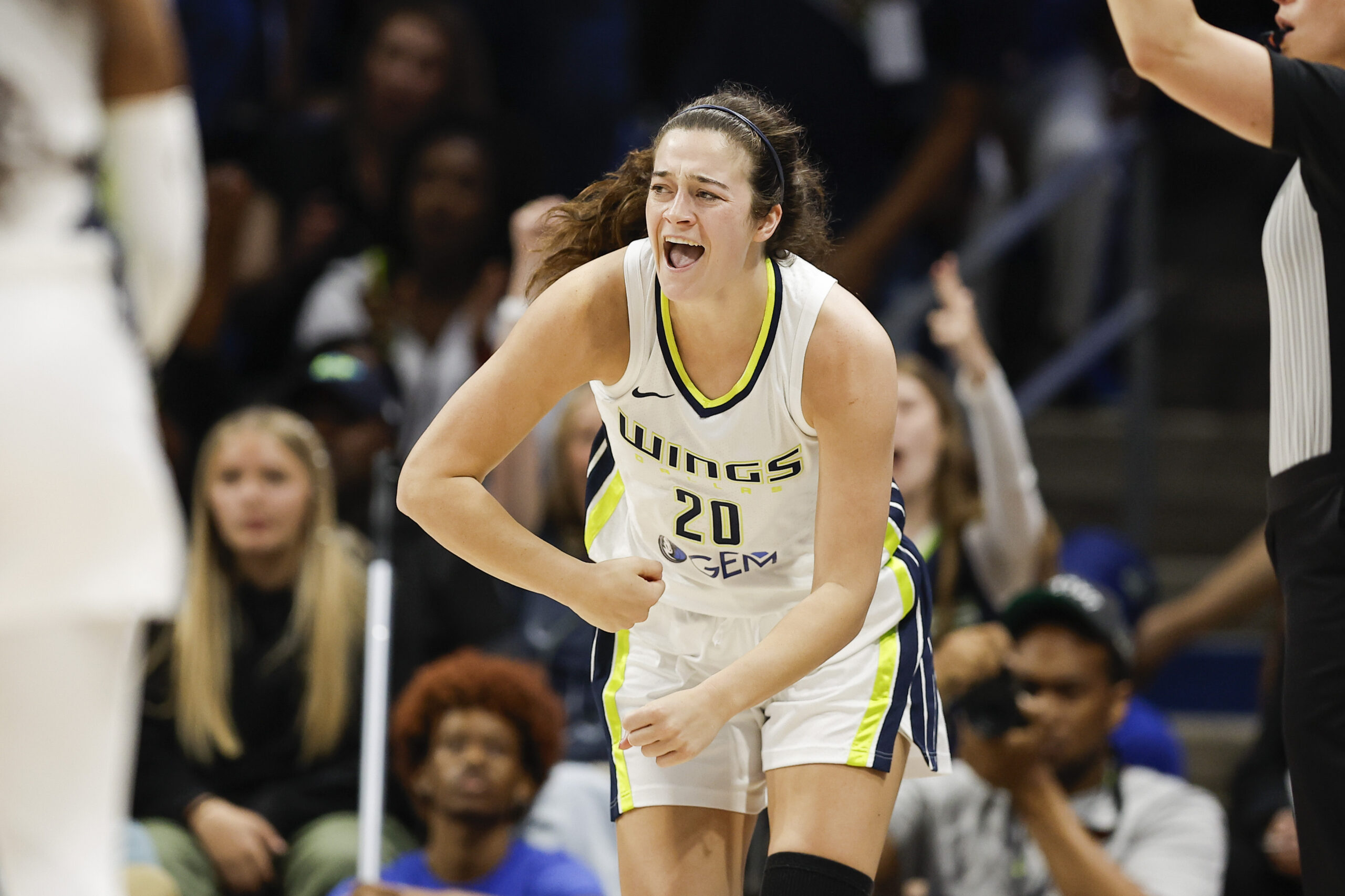
Maddy Siegrist, also a former Villanova basketball player who now plays for the Dallas Wings in the WNBA, is pleased universities are able to share revenue directly with athletes.
“It will be interesting to see how it all plays out,” said Siegrist, the Big East’s all-time leading scorer in women’s basketball and Villanova’s overall highest scorer, of men’s and women’s basketball.
Dallas Wings forward Maddy Siegrist celebrates a three-point shot during a WNBA basketball game against the Chicago Sky in 2024 in Arlington, Texas.
While the big revenue sports are likely to see the money first, she said, “I would hope there will be a trickle-downeffect where almost every sport is able to benefit.“
A lawsuit spurs changes
For years, there have been growing concerns that athletes were not getting their fair share of the profits from college sports, which make money onbroadcast rights, ticket sales, and sponsorships. Meanwhile, coaches can be among the highest paid in a university’s budget.
In 2020, former Arizona State swimmer Grant House became the lead plaintiff in House vs. NCAA, a class-action antitrust lawsuit that argued athletes should be able to profit from the use of their name, likeness, and image and schools should not be barred from paying them directly.
The settlement approved in June of that suit and two others against the NCAA requires the NCAA and its major conferences to pay $2.8 billion in damages to current and former Division 1 athletes. Another provision gave rise to the revenue sharing.
It initially applied to the major sports conferences: the Big Ten, Atlantic Coast Conference, Southeastern Conference, and the Big 12. Penn State belongs to the Big Ten and the University of Pittsburgh to the Atlantic Coast.
But other athletic conferences, along with many of their members, decided to opt in to the agreement to remain competitive in select sports. St. Joseph’s, La Salle, Villanova, Drexel, and Temple all are part of conferences participating in revenue sharing with athletes this year.
“We support student-athletes’ ability to pursue value among their peers and to leverage commercial opportunities that may benefit them or the institution,” said Maisha Kelly, Drexel’s vice president and director of athletics and recreation.
Temple belongs to the American Athletic Conference, which said its members must agree to pay at least $10 million over three years to its athletes. Johnson, Temple’s athletic director, noted that total also includes new scholarships, not just pay.
No tuition, state dollars to be used
Pitt alumnus J. Byron Fleck has called on the Pennsylvania State Board of Higher Education to advise three state-related colleges — Penn State, Temple, and Pitt — not to use tuition dollars, student fees, or state appropriations to fund athlete payments.He also asked lawmakers to take action.
“It doesn’t relate to any educational or academic purpose,” said Fleck, a 1976 Pitt alumnus and lawyer in California.
Karen Weaver, an expert on college athletics, higher education leadership, and public policy, said the same concerns about public funds being used to pay athletes have risen in other states, including Michigan and Washington.
But Penn State, Temple, and Pitt all said in statements that they would not use tuition, student fees, or state appropriations to fund revenue sharing with athletes.
“Penn State Intercollegiate Athletics is a self-sustaining unit of the university,” said Beasley, Penn State’s deputy athletic director.
Pitt said it would use athletic revenues.
In addition to donations, Temple, too, is using athletic department revenues, such as ticket sales, but it is also looking at other “nontraditional ways” to raise money, Johnson said.
“We’re turning over every stone,” he said.
Weaver, an adjunct professor at the University of Pennsylvania, said she worries that as the caps on revenue sharing get higher and costs grow, schools, especially those tight for cash, may start raising recreation and other student fees. The University of Tennessee added a 10% student talent fee for season ticket renewals, according to the Associated Press, while Clemson is charging a $150 per semester student athletic fee, according to ESPN.
Roedl, the Villanova athletic director, said in a statement that it had launched the Villanova Athletics Strategic Excellence (VASE) Fund to raise money for the payments.
“Additionally, we are looking for other ways to maximize revenue through ticketing, sponsorships, and events, and identifying cost efficiencies throughout our department,” he said.
St. Joe’s, which has about 450 student athletes, said that it started a Basketball Excellence Fund to raise revenue and that payments also are funded by the basketball program. Athletes that receive funds “serve as brand ambassadors for the university,” the school said in a statement. “… These efforts have included community engagement — particularly with youth in the community — and marketing initiatives that directly support the Saint Joseph’s University brand.”
La Salle declined to say how much student athletes receive or in what proportion.
“We can share that any funds provided to students come from external sources and not tuition dollars,” said Greg Nayor, vice president for enrollment management and marketing.
Weaver, author of a forthcoming book, Understanding College Athletics: What Campus Leaders Need to Know About College Sports, said plans that call for the bulk of revenue sharing to go to football and basketball players would lead to legal action, charging that female athletes are not being treated equally.
“Any day now I expect we’ll see a huge Title IX lawsuit,” she said.
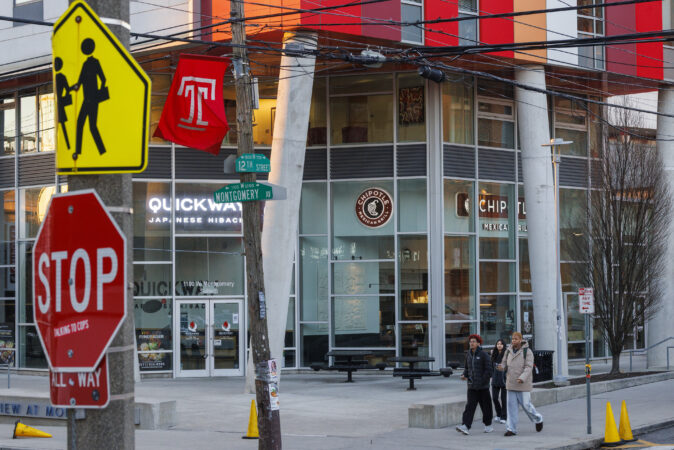
A 16-year-old was found shot to death inside the bathroom of a Chipotle near Temple University’s campus Monday night in what investigators believe may have been an unintentional shooting, according to police and a law enforcement source.
Khyon Smith-Tate and three of his friends were inside the Chipotle on the ground floor of The View at Montgomery apartments at 12th Street and Montgomery Avenue around 5 p.m. Monday, police said. Smith-Tate and one friend went into one bathroom, while the two other teens went into the second bathroom, said Deputy Commissioner Frank Vanore.
According to surveillance video, the teen with Smith-Tate left the restroom alone a short time later, and then walked out of the restaurant with the other teens, Vanore said.
About 15 minutes later, a restaurant employee found Smith-Tate suffering from a gunshot wound to the chest, he said. Police and medics responded, and pronounced him dead at the scene, officials said.
No gun was recovered, though officers found one spent shell casing from a 9mm handgun in the trash can, Vanore said.
Smith-Tate was a student at Imhotep Institute Charter High School. His mother, overwhelmed with grief, declined to speak Monday at her North Philadelphia home.
In a written statement, school officials described Smith-Tate as “caring, energetic, filled with school pride and comical.”
“He was filled with light and love,” the statement, signed by Imhotep Chief Executive Officer Andre Noble and Principal Jury Segers, said. “We will always remember his smile.”
Police have identified the three teens involved, Vanore said, and are poring over cell phone data and interviewing witnesses to try to learn what happened inside the bathroom.
A law enforcement source with knowledge of the investigation said detectives are looking into whether the teens may have been filming a social media video or playing with a gun when it fired and unintentionally struck Smith-Tate.
The source, who asked not to be identified to discuss an ongoing investigation, said the teens are all close friends. Still, they did not call for help, the source said, and left him to die on the bathroom floor.
“As one can imagine, we are struggling today,” Noble and Segers said. Our collective hearts are hurting. But this community is resilient.”
District Attorney Larry Krasner said that trauma-care professionals and victim advocates from his office visited the school on Tuesday to lead “multiple grief trauma healing circles” for students and staff.
“The trauma and grief our young people experience as a result of shootings is unacceptable,” he said. “We will not accept this as normal for our kids and babies.”
If it is confirmed that the shooting was unintentional, Smith-Tate would be the latest in a growing list of children shot by a mishandled gun in Philadelphia.
Dozens of kids have been wounded in accidental shootings in recent years, often the result of other children finding unsecured guns in their homes. Just last month, a 14-year-old was seriously wounded when another teen playing with a gun shot him in the stomach, police said.
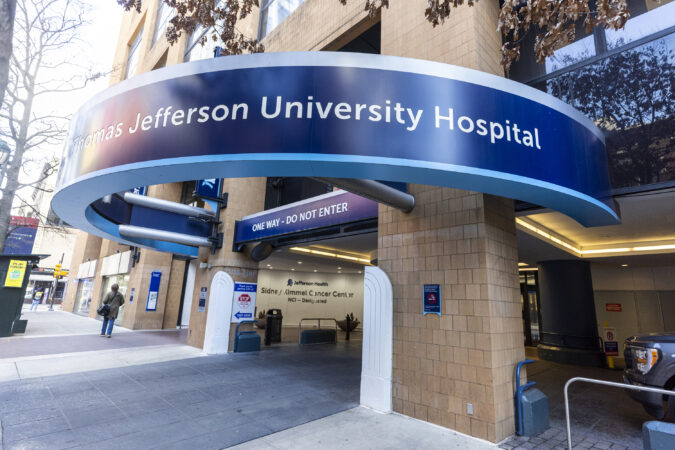
Temple University Health System and Jefferson Health are the latest area health systems to sue pharmaceutical companies and pharmacy benefit managers over high insulin pricing.
Temple filed its suit last week, and Jefferson sued just before the new year.
Eli Lilly, CVS Caremark, and Sanofi are among the major companies named in the suits, which accuse drugmakers and pharmacy benefit managers, or PBMs, of conspiring to drive up profits on diabetes drugs.
PBMs work with drug manufacturers, insurers, and pharmacies, negotiating prices and developing formularies — lists of prescription drugs that are available on a given insurance plan.
The health systems and other plaintiffs say drugmakers inflate prices for their insulin products in order to secure lucrative placements on formularies. Then, they pay a portion of the resulting profits back to PBMs, according to the lawsuits.
Jefferson and Temple officials said they are paying more for employees’ insulin as a result, impacting the health systems’ budgets and hurting their ability to “provide necessary services […] to the larger Philadelphia community.”
Representatives from both health systems declined to comment.
Eli Lilly has worked for years to reduce out-of-pocket costs for insulin, the company said in a statement, noting that some plaintiffs filing the lawsuits are choosing higher-priced medications over more affordable options.
Lilly capped insulin prices at $35 per month, the statement said, and in 2024 the average monthly out-of-pocket cost for its insulin was less than $15.
CVS Caremark said pharmaceutical companies “alone are responsible” for pricing their drugs in its latest statement, released after Philadelphia officials joined the litigation last month. The company said it would welcome lower prices on insulin.
“Allegations that we play any role in determining the prices charged by manufacturers for their products are false, and we intend to vigorously defend against this baseless suit,” they wrote in an email.
A statement from Sanofi said that the company has always complied with the law when it comes to drug prices and works to lower prices. PBMs and insurers sometimes negotiate savings on drugs, but those are “not consistently passed through to patients in the form of lower co-pays or coinsurance,” the statement read.
“As a result, patients’ out-of-pocket costs continue to rise while the average net price of our insulins declines.”
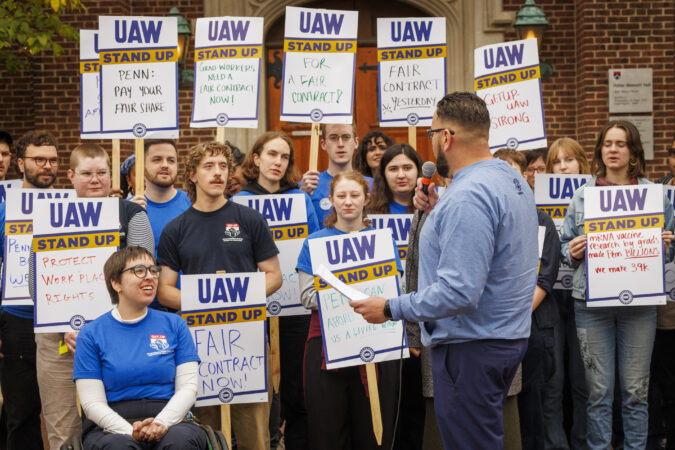
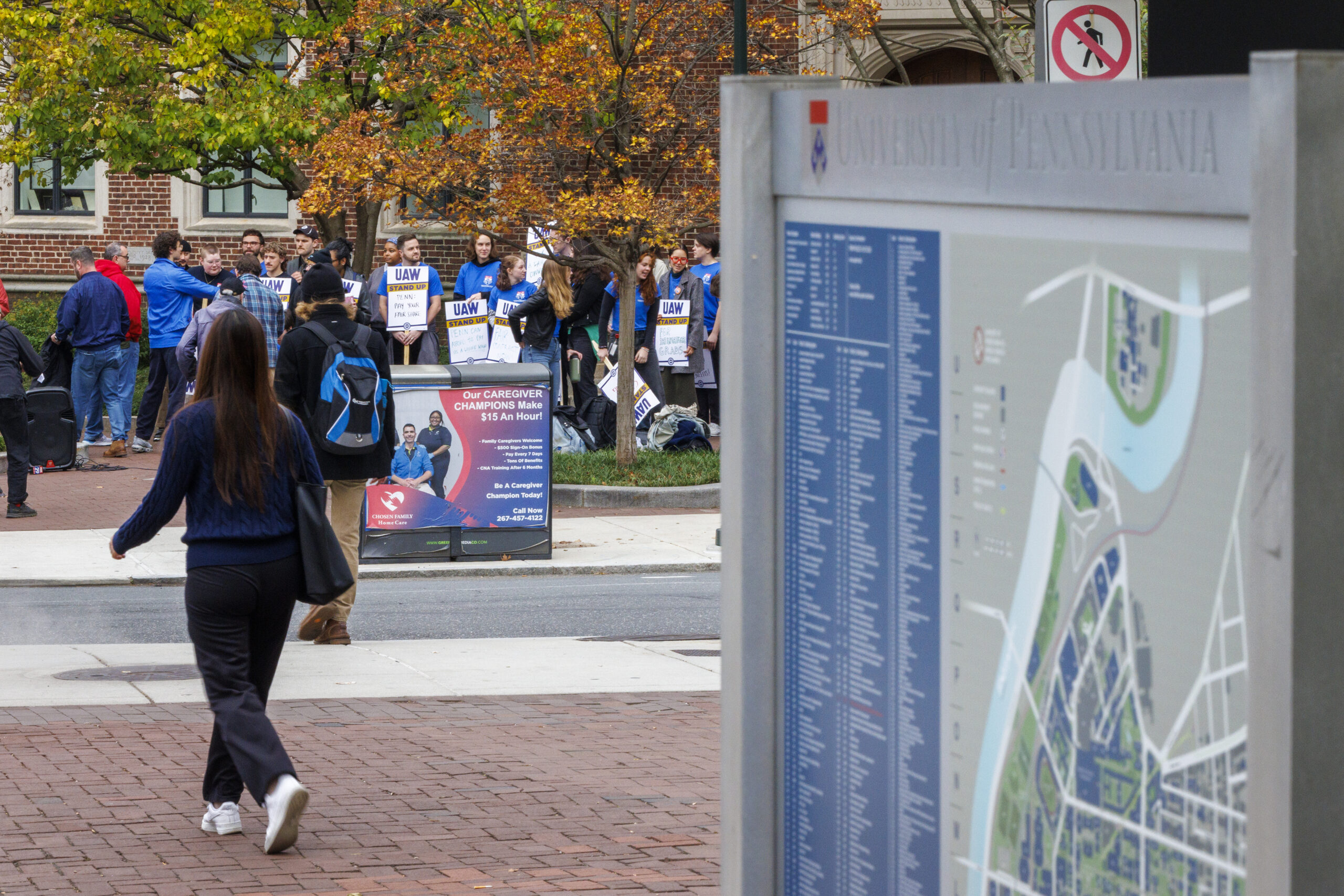
The union that represents about 3,400 University of Pennsylvania graduate student workers says they will go on strike Feb. 17 if they do not reach a contract deal with the university by then.
“We love our jobs, but Penn’s administration is leaving us no choice but to move forward with a strike,” said Nicolai Apenes, a Ph.D. candidate and research assistant in immunology, in a statement shared by the union Tuesday. “We are ready to stand up and demand that our rights are respected.”
Penn’s graduate student workers voted to unionize in 2024. The union has been negotiating with the university since October 2024 for a first contract, and some tentative agreements have been reached on a number of issues.
Sticking points in bargaininginclude wages, healthcare coverage, and more support for international student workers.
In November the teaching and research assistants voted to authorize a strike if called for by the union, which is known as Graduate Employees Together-University of Pennsylvania (GET-UP) and is part of the United Auto Workers (UAW).
A spokesperson for the University of Pennsylvania said in a statement Tuesday that Penn has engaged in good faith negotiations with the union, and has reached 23 tentative agreements through 39 bargaining sessions with additional sessions planned.
“We believe that a fair contract for the Union and Penn can be achieved without a work stoppage, but we are prepared in the event that the Union membership strikes,” said the Penn spokesperson. “Efforts are underway to ensure teaching and research continuity, and the expectation is that classes and other academic activities will continue in the event of a strike.”
“While we hope that Penn comes to the table and negotiates a fair contract for these essential workers, we know that these workers are a powerful force that Penn cannot break,” said Daniel Bauder, Philadelphia AFL-CIO president, in a statement Tuesday. “We are proud to stand with them and the broader Coalition of Workers at Penn as they fight the biggest employer in the region and bring union power to the University of Pennsylvania.”
The region has also seen a couple other university strikes in recent years. In 2023 graduate workers at Temple University walked off the job for 42 days amid contract negotiations, and in a separate action at Rutgers University, educators, researchers, and clinicians went on strike for a week.
University of Pennsylvania graduate students hold a press conference and rally calling for a strike vote against the university at the corner of South 34th and Walnut Street, Monday, Nov. 3, 2025.
It seems that Philadelphia’s reputation as a good place to start a business got a boost this past year.
The city ranked 13th among 350 “start-up ecosystems” worldwide in Startup Genome‘s 2025 Global Startup Ecosystem Report, which considers educational resources, labor, taxes, and funding opportunities.
The region attracted over $900 million in equity funding and acquisitions in 2024-25, according to the Greater Philadelphia Chamber of Commerce; expanded biotech and robotics facilities; and launched AI education initiatives — all supported by public-private partnerships and university-led R&D.
Chamber CEO Chellie Cameron said the Startup Genome ranking “affirms our region’s emergence as a global destination for innovation, business, and opportunity.”
From 2019 to 2024, the U.S. saw more than 21 million new business applications, marking the largest-ever spike.
Software giant Intuit recently reported that and “33% of U.S. adults plan to start a business or side hustle next year — a 94% year-over-year increase.” LinkedIn says the number of “founders” listed on the platform grew 69% last year.
Are you thinking of starting a business this year? Before you quit your job, here’s some practical advice.
Get your finances in order
When I started my business, I did so while having a full-time job. I worked a lot of hours. But that’s because I needed to build up an income stream to support me for when I eventually left the corporate world.
Smart entrepreneurs know their finances. They’re good at math or have advisers that help them. They recognize the importance of accounting.
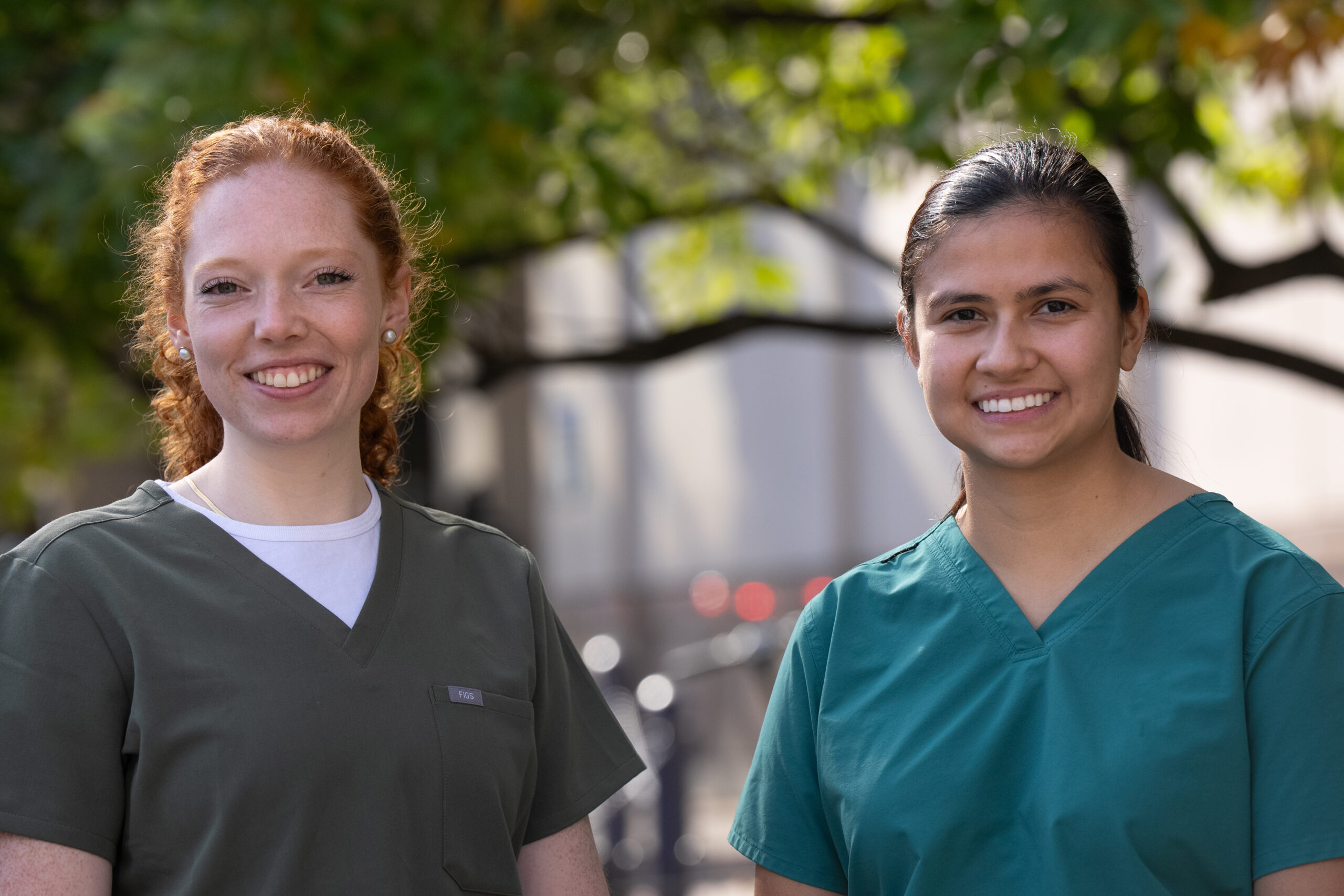
“I got a freshman finance textbook, learned the terms, and then learned from other founders’ experiences,” Daltoso said. “I found mentors and professors who would help me at Penn. People can be incredibly helpful when you reach out.”
Sonura founders Gabriella Daltoso (left) and Sophie Ishiwari at the Hospital of the University of Pennsylvania in November.
Start-ups need capital, and for financing, it’s important to have a solid business plan with realistic projections of revenues and expenses. You need to establish relationships with banks, investors, family members, friends, venture capitalists, or anyone else that could be a source of financing. You should have enough money in the bank to support yourself and your family for at least two years because it will likely take that long to get your business cash positive.
James Massaquoi, a board member at the Seybert Foundation and former analyst at Philadelphia venture capital firm Osage Partners, emphasizes planning capital needs early, ideally before launching. Massaquoi urges founders to deeply understand their cost structure and assumptions before getting in too deep.
“Talk to bankers and other sources of capital before you really start the business, so it’s a conversation — not another checklist,” he said. “Spend more time modeling out costs than forecasting profits because costs fluctuate dramatically, especially in the first two years.”
Make sure your family is on board
Think you’re busy now? Wait until you start a business.
You will spend much more time launching, running, and growing your enterprise than you expect. You will work nights, weekends, and crazy hours. People will be happy for you and supportive, but in the end, it’s all on your shoulders.
This kind of stress could put a strain on your personal life. You will not succeed unless your family members understand this and are ready to support you.
“Work-life balance is really about how much work you need to do for this to be successful — and how much pressure you feel to make it succeed,” Massaquoi said.
Be realistic
Passion for your business venture is important, but profits are just as important. Your model needs to be satisfying a market need if it’s going to have a legitimate chance.
The typical life span of a start-up is two to five years, with 70% going out of business before reaching their fifth year. The odds are against you.
The ones that do survive fix problems and do so better than their competitors. They watch their pennies and are open to change based on what their customers need.
Take your business seriously
Talk to a tax and legal adviser and form a company — maybe a corporation, partnership, or limited liability company. Use these advisers to help you register your business with the state and the federal government.
Create a professional website. Establish a commercial mailing address (not your home) and a toll-free phone number.
Pay in your estimated taxes, and file your tax returns on time.
As you hire employees, create policies and procedures and try to offer the types of benefits that established businesses provide like health insurance, retirement plans, and flexible time off.
If you are truly running a business (and not just a hobby), you need to act like a business.
Lean on local resources
As a start-up founder in Philadelphia, you’re not alone. The area has a number of great resources to help your small business get funding and grow.
Also, surround yourself with as many experts as you can afford. Have a good accountant, lawyer, coach, and advisers on hand to help you make decisions. Build these costs into your business plan and projections because these people are critical for your business success.
“Your expertise isn’t having all the answers; it’s learning from anyone who’s willing to share,” Daltoso said. “It’s really important to hear everyone, synthesize what’s useful, and move forward with confidence.”
Crystal Edwards didn’t see a dentist until she had a deep cavity at age 10: growing up in a struggling Philadelphia family, the resources to access dental checkups just weren’t there.
So she jumped atthe opportunity to locate a dental clinic in the school where she is now principal, W.D. Kelley, a K-8 in North Philadelphia.
“This dental clinic is saving lives,” said Edwards.
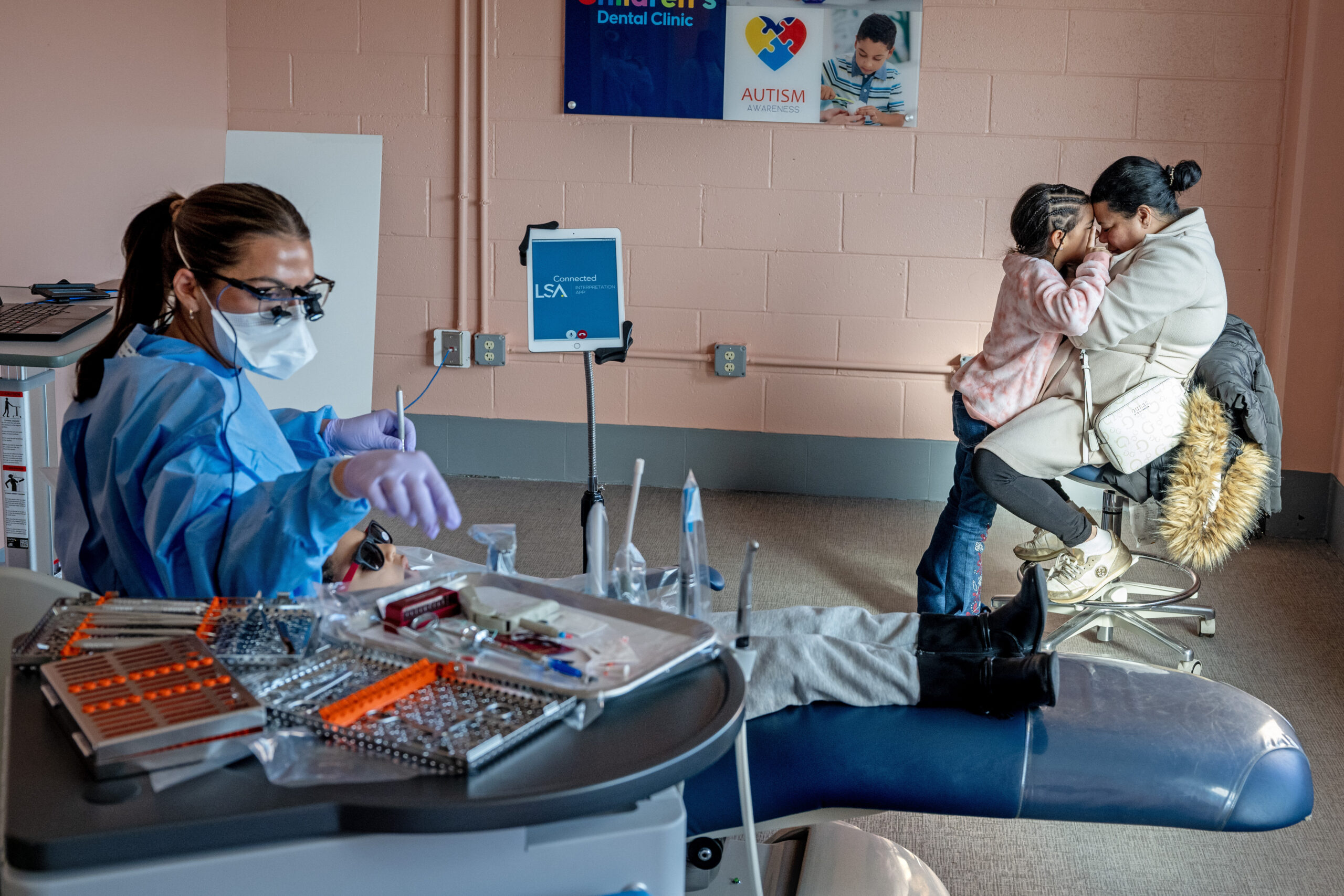
Tucked into a converted science lab on the school’s third floor, the Dental Clinic at William. D. Kelley, operated by Temple University’s Maurice H. Kornberg School of Dentistry, is nearing its third year of operation. It is open to all Philadelphia children, including those who do not attend Kelley, regardless of insurance status.
School district officials have pointed to the Kelley clinic as a model as it prepares to make facilities master plan decisions,which will result in closing, combining, and reconfiguring some school buildings. The clinic is an example, they say, of how the system could use available space in some of its schoolsfor public good.
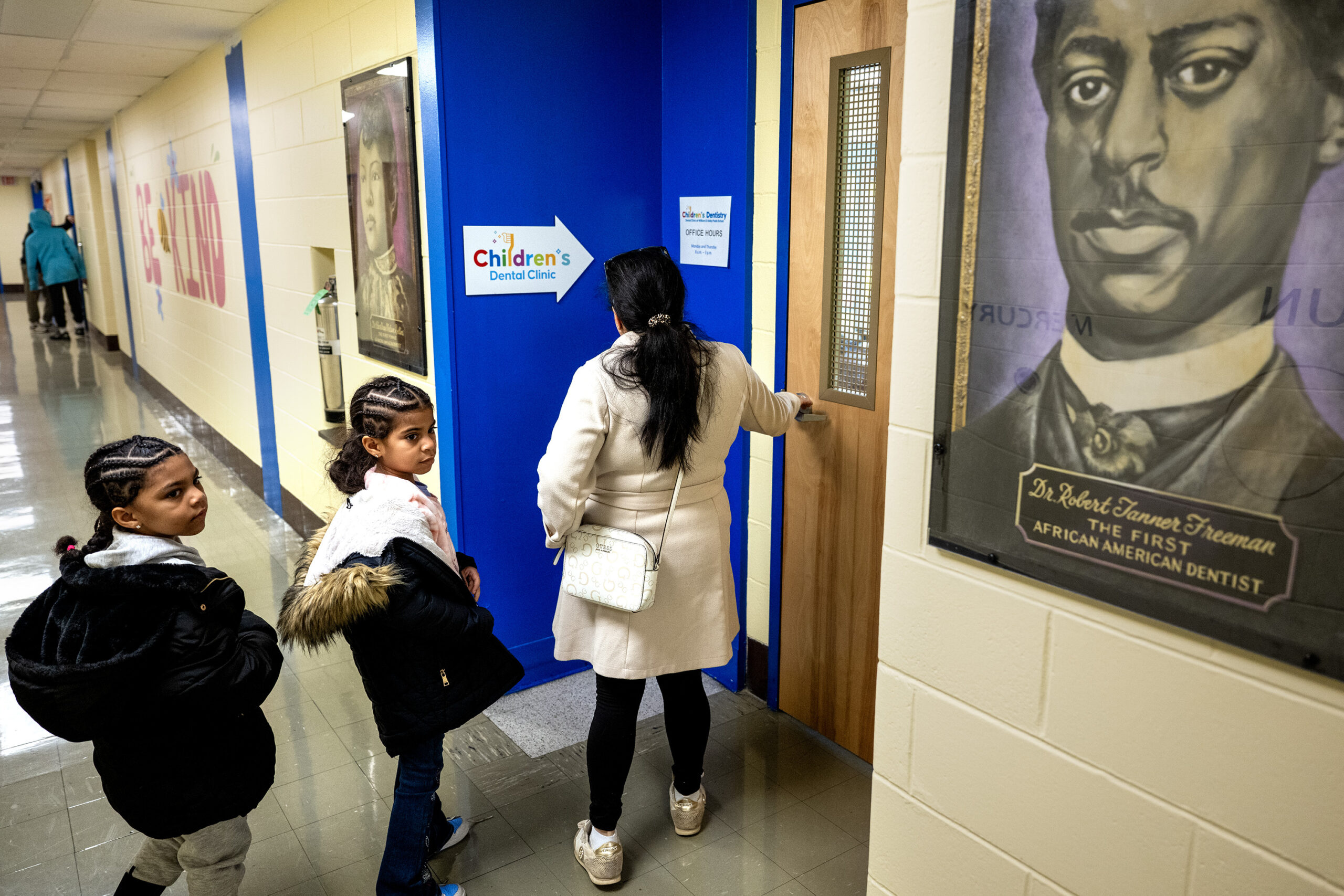
Soribel Acosta arrives at the Dental Clinic at William D. Kelley public school on Thursday, with her children, Andrea Jimenez (left), 6. And Sayra Jimenez, 7.
“This is certainly a great example of what can happen when a university partners with a school district to create life-changing opportunities and outcomes for young people,” Superintendent Tony B. Watlington Sr. said in a statement in 2023, when the clinic opened.
Temple dental school officials said more clinics could follow elsewhere in the city.
Taking care of every child
The underlying concept is simple, said Eileen Barfuss, the Temple dental professor who leads the clinic.
“If your tooth hurts, if you’re not feeling well, you’re not going to learn,” said Barfuss. “In the past, there have been a lot of barriers to care for dentistry that weren’t there for medicine, but preventative care is so important so it doesn’t get to the point of pain.”
The clinic accepts all comers, including those who are uninsured or underinsured, and sometimes treats students’ parents. (Most, but not all, patients have Medicaid dental, and grants help cover treatmentfor those without insurance.)
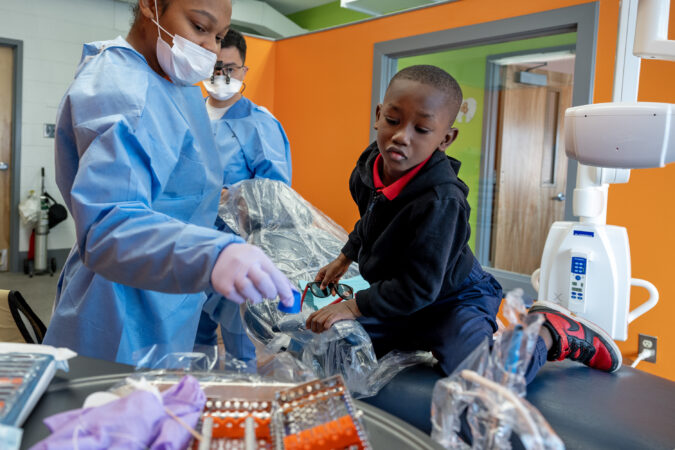
Temple dentistry student Carly Pandit works on the teeth of Andrea Jimenez, 6, as her mother, Soribel Acosta, entertains sister Sayra Jimenez, 7, waiting her turn in the char at the dental clinic at William D. Kelley public school on Thursday.
“We try to take care of every child in the Philadelphia School District,” said Barfuss. “There’s a place that they can come and get comprehensive care and establish a dental home.”
To date, the clinic has seen nearly 700 patients, some of whom are repeat visitors. Patients are treated both by Barfuss and dental students she supervises.
Students do come from other schools to the clinic; Barfuss said her team does outreachat community events andspreads the word through the district’s school nurses, who often send patients to the clinic. And staff teach lessons in Kelley classrooms on oral health andthe importance of seeing a dentist twice a year.
Being in a school helps normalize the dentist for many kids, who might poke their heads into the clinic to look around andsee the friendly dental staff in their scrubs in the hallways, Barfuss said.
‘This is a good dentist’
On Thursday, Fatoumata Bathily, a fourth grader with pink glasses and a bright smile, swung her legs down from a Kelley clinic dentist chair after a successful checkup.
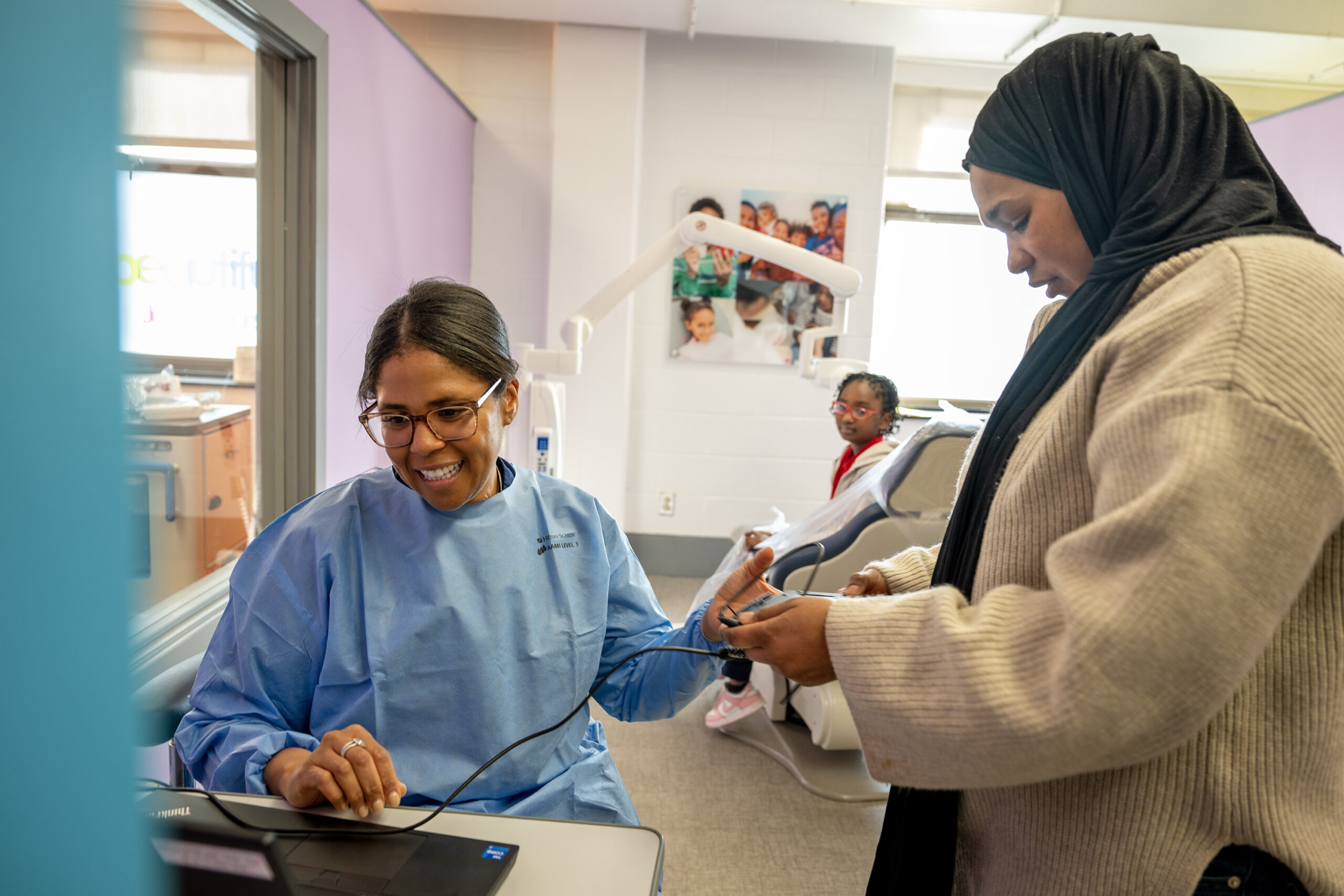
Eileen K. Barfuss (left), a pediatric dentist and Temple dentistry instructor consults with Fily Dramera after her daughter Fatoumata Bathily (rear), 9, was seen by a Temple student dentist at the Dental Clinic at William D. Kelley public school on Thursday.
“It’s good here,” said Fatoumata, who attends nearby Robert Morris Elementary, and came for preventive care along with her brother, Abubakr. “This is a good dentist. I like that it’s colorful, and the people are nice.”
Amid Ismail has wanted to bring such a model to the city since he became dean of Temple’s dental school in 2008. Decades ago, some schools offered dental care via city services, but as funding dried up, those clinics went away, Ismail said.
Ismail raised the idea of a Temple-district partnership, but it took several years to get off the ground. Edwards, an award-winning principal who takes pride in bringing the community into Kelley, got the vision intuitively, he said.
Temple paid to transform a large science lab into the dental clinic; the district provides the space and does not charge rent. There are four chairs, including one in a space specifically designed for patients with autism who might need a quieter environment and more room. Rooms are bright and modern.
“The message to the parents and caregivers is that this is a nice place where all treatment is provided,” Ismail said. “A lot of children do have dental problems, but here we can treat them easily — they miss one class, max, and they don’t have to stay a long time.”
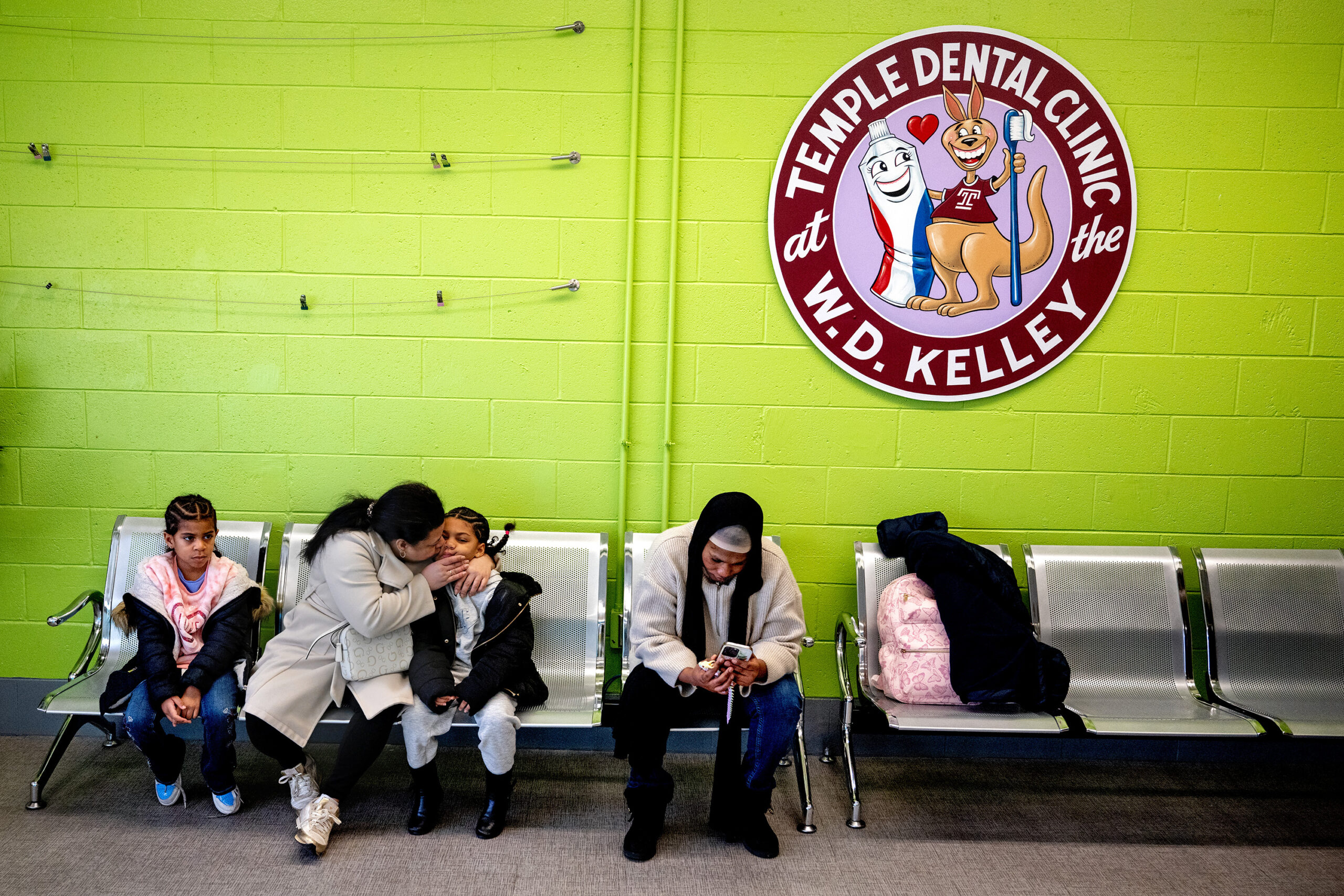
Soribel Acosta waits for their appointment with her children, Sayra Jimenez (left), 7; and Andrea Jimenez (right), 6, at the Dental Clinic at William D. Kelley public school on Thursday.
The clinic, which is about to celebrate its third anniversary, just expanded its schedule — it’s open four days a week, and officials eventually hope it will be open five days.
Edwards fought for the clinic to come to Kelley, and it’s been just the boon she had hoped, she said.
“This is a historic community that was really devastated and hard hit by the crack and drug pandemic,” said Edwards. “The dental office has really given us leverage on how to serve the community better.”
In Kensington, a program to mitigate street violence was hitting its stride.
After joining the New Kensington Community Development Corporation in 2023, outreach coordinators with Cure Violence began responding to shootings in the neighborhood, connecting folks with mental health services and other wellness resources.
They hosted men’s therapy groups, safe spaces to open up about the experience of poverty and trauma, and organized a recreational basketball league at residents’ request. Their team of violence interrupters even intervened in an argument that they said could have led to a shooting.
Cure Violence Kensington was funded by a $1.5 million federal grant from the Department of Justice, part of a Biden-era initiative to combat the nation’s gun violence epidemic by awarding funds to community-based anti-violence programs rather than law enforcement agencies.
One year after a political shift in Washington, however, federal grants that Philadelphia’s anti-violence nonprofits say allowed them to flourish are disappearing.
In the spring, New Kensington CDC received a letter from the Justice Department, saying that under the leadership of Attorney General Pam Bondi it had terminated the grant that would have funded Cure Violence for the next three years.
The work, the letter said, “no longer effectuates the program goals or agency priorities.” In the future, it said, the department would offer such grants exclusively to local law enforcement efforts.
“It was a heavy hit,” said Bill McKinney, the nonprofit’s executive director.
The cuts come amid a Trump administration crackdown on nonprofits and other organizations it views as either wasteful or focused on diversity and DEI.
It spent 2025 slashing funds for programs that supplied aid abroad, conducted scientific research, and monitored climate change. At the Justice Department, cuts came for groups like McKinney’s, which aim to target the root causes of violence by offeringmental health services, job programs, conflict mediation, and other alternatives to traditional policing.
In Philadelphia, organizations like the Antiviolence Partnership of Philadelphia and the E.M.I.R. Healing Center say they, too, lost federal funding last yearand expect to see further reductions in 2026 as they scramble to cover shortfalls.
A Justice Department spokesperson said changes to the grant program reflect the office’s commitment to law enforcement and victims of crime, and that they would ensure an “efficient use of taxpayer dollars.”
“The Department has full faith that local law enforcement can effectively utilize these resources to restore public safety in cities across America,” the spokesperson said in an email.
Nonprofits may appeal the decisions, the spokesperson said, and New Kensington CDC has done so.
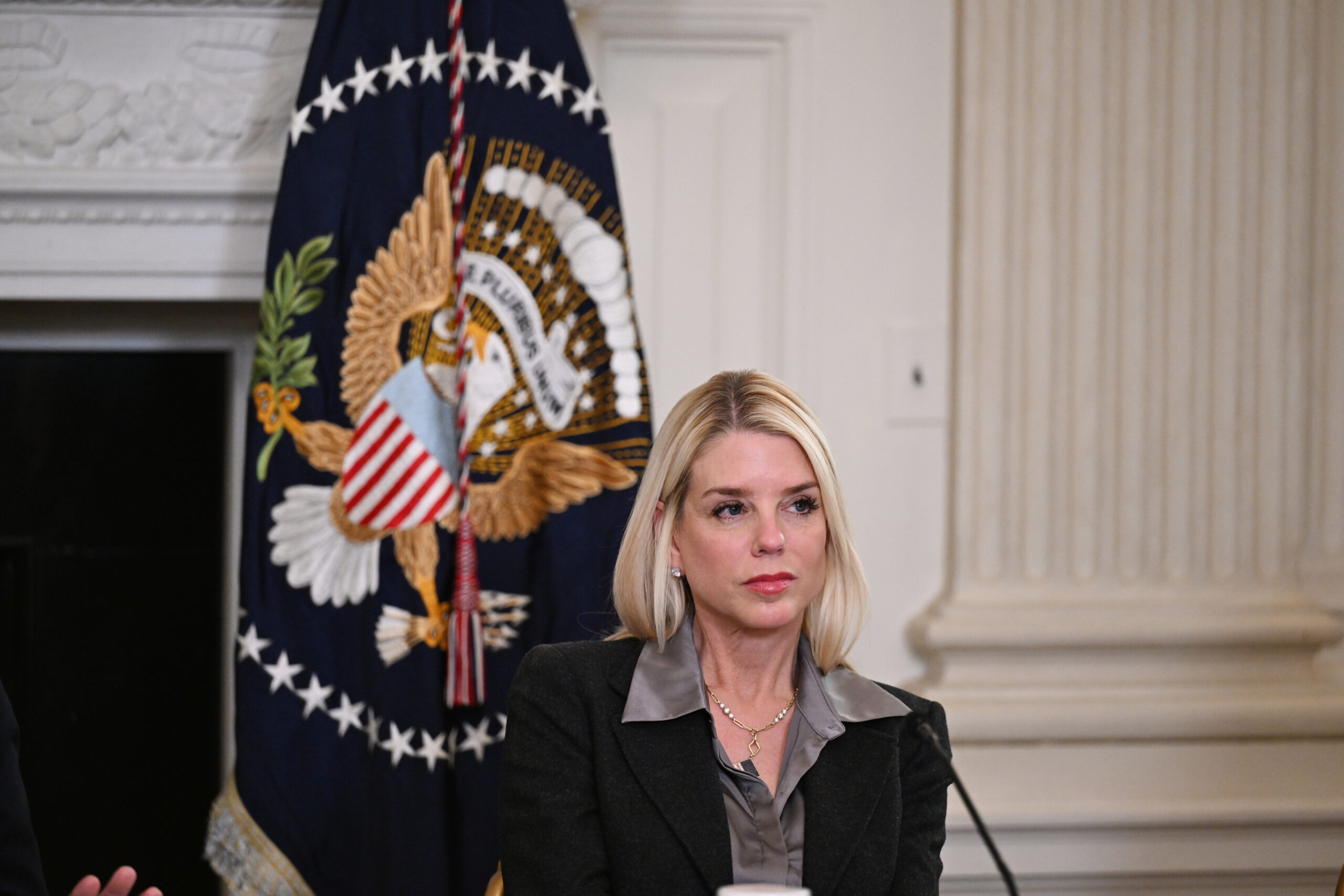
Attorney General Pam Bondi takes part in an event at the White House on Oct. 23.
Philadelphia city officials, for their part, say they remain committed to anti-violence programs, in which they have invested tens of millions of dollars in recent years.
“There are always going to be things that happen externally that we have no control over as a city,” said Adam Geer, director of the Office of Public Safety.
The reversal in federal support comes at a time when officials like Geer say the efforts of anti-violence programs are beginning to show results.
Violent crime in Philadelphia fell to historic lows in 2025, a welcome relief after the sharp upturn in shootings and homicides that befell the city at the height of the pandemic.
In 2021, the city announced a large-scale campaign to combat gun violence that,in the past year, included nearly $24 million for anti-violence programs.
That was on top of the Biden administration’s Community Based Violence Intervention and Prevention Initiative. Since launching in 2022, the DOJ program awarded more than $300 million to more than 120 anti-violence organizations nationwide.
In April, many of those groups, including New Kensington CDC, lost funds. And in September, a larger swath learned they were now barred from applying for other Justice Department grants that would have arrived this spring.
“We’ve seen enormous dividends” from the work of such groups, said Adam Garber, executive director of CeaseFirePA, a leading gun violence prevention group in the state. “Pulling back now puts that progress at risk — and puts lives on the line.”
Philadelphia feels the squeeze
Federal grants helped Natasha McGlynn’s nonprofit thrive.
McGlynn, executive director of the Antiviolence Partnership of Philadelphia, said a DOJ grant called STOP School Violence allowed her organization to launch a counseling program for young people who had been victims of violence or otherwise exposed to it in some of the city’s most violent neighborhoods.
The nonprofit used the grant to hire therapists to help students develop healthier attitudes around conflict and trauma, she said.
The $997,000 grant was cut in April, and when McGlynn went to apply for another round of funding in the fall, she learned that nonprofits were no longer eligible. The lost funding means some services, like counseling, could now be eliminated, she said.
“I would say several positions are in question,” McGlynn said. “I would say the program is in question.”
Chantay Love, the director of Every Murder is Real, said her Germantown-based victim services nonprofit also lost Justice Department funding in 2025.
Federal grants are not the nonprofit’s only source of income, Love said, but she along with other nonprofit leaders in the city are considering whether they’ll need to cut back on programs this year.
Record-setting investment
The decade before the pandemic saw gun-related deaths in the state climb steadily, spiking during the lockdown as social isolation, school closures, shuttered community services, and higher levels of stress contributed to a spate of gun homicides and shootings that began to ease only in 2024.
Two years earlier, the state began dispersing more than $100 million to community-based anti-violence programs, much of the money coming from the American Rescue Plan, a sweeping Biden administration pandemic recovery package that also sought to reduce rising gun violence. And when those funds expired, state lawmakers continued to invest millions each year, as did Philadelphia city officials.
Garber, of CeaseFirePA, said those efforts “get a lot of heavy-lifting credit” for Philadelphia’s historic decrease in violence.
A report compiled by CeaseFirePA cites studies that found outreach programs like Cure Violence helped reduce shootings around Temple University, as well as in cities like New York and Baltimore, where homicides and shootings in some parts of the city fell by more than 20%.
While it’s too early for data to provide a full picture on how such funding has contributed to overall violence reduction, officials like Geer, the Philadelphia public safety director, agreed that programs like Cure Violence have helped crime reach record lows.
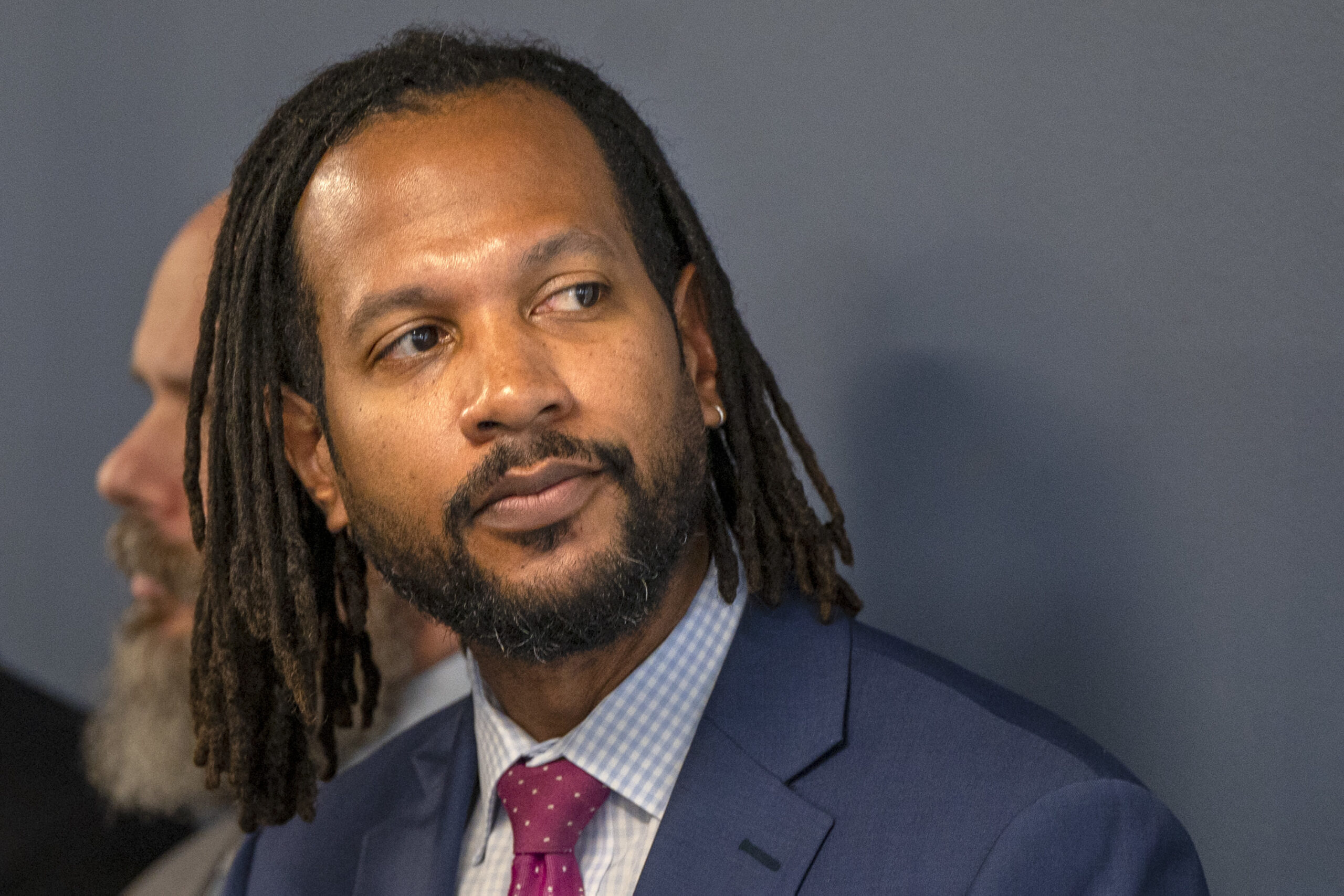
Philadelphia acting chief public safety director Adam Geer attends a news conference on Jan. 30, 2024, about a shooting that left an officer wounded and a suspect dead.
Outreach workers with the city-supported Group Violence Intervention program made more than 300 contacts with at-risk residents in 2025, according to data provided by Geer’s office, either offering support or intervening in conflicts.
And they offered support to members of more than 140 street groups — small, neighborhood-oriented collectives of young people that lack the larger organization of criminal gangs — while more than doubling the amount of service referrals made the previous year.
In practice, a program’s success looks like an incident in Kensington in which Cure Violence workers intervened in a likely shooting, according to members of New Kensington CDC.
In April, a business owner called on the nonprofit after seeing a group of men fighting outside his Frankford Avenue store and leaving to return with guns. Members of the outreach team spoke with both parties, de-escalating the conflict before it potentially turned deadly.
“Each dollar cut is ultimately a potential missed opportunity to stop a shooting,” Garber said.
Cutting off the ‘spigot’
Even as community-based anti-violence programs have risen in popularity, they are not without their critics.
While some officials champion them as innovative solutions to lowering crime, others say the programs can lack oversight and that success is difficult to measure.
In 2023, an Inquirer investigation found that nonprofits with ambitious plans to mitigate gun violence received millions in city funds, but in some cases had no paid staff, no boards of directors, and no offices.
A subsequent review by the Office of the Controller found some programs had not targeted violent areas or had little financial oversight. But by the next round of funding, the city had made improvements to the grant program, the controller’s office found, adding funding benchmarks and enhanced reporting requirements.
Meanwhile, as Philadelphia continued its support these programs, President Donald Trump’s Justice Department began a review of more than 5,800 grants awarded through its Office of Justice Programs. It ultimately made cuts of more than $800 million that spring.
Among programs that lost funding, 93% were “non-governmental agencies,” including nonprofits, according to a letter DOJ officials sent to the Senate explaining the decision.
The balance of remaining funds in the violence prevention grant program — an estimated $34 million — will be available for law enforcement efforts, according to a DOJ grant report. In addition to fighting crime, the money will help agencies improve “police-community relations,” hire officers, and purchase equipment, the document says.
Agencies conducting immigration enforcement are also eligible for grants, the report says, while groups that violate immigration law, provide legal services to people who entered the country illegally, or “unlawfully favor” people based on race are barred.
One group lauding the cuts is the National Rifle Association, which commended the Trump administration in November for cutting off the “spigot” to anti-violence nonprofits.
‘[T]he changes hopefully mean that nonprofits and community groups associated with advocating gun control will be less likely to do it at the expense of the American taxpayer and that real progress can occur on policing violent criminals,” the NRA’s legislative arm wrote in a blog post that month.
Nate Riley disagrees.
Riley, an outreach worker with Cure Violence Kensington, said the cuts threaten to reverse the progress New Kensington CDC has made since he joined the program early last year.
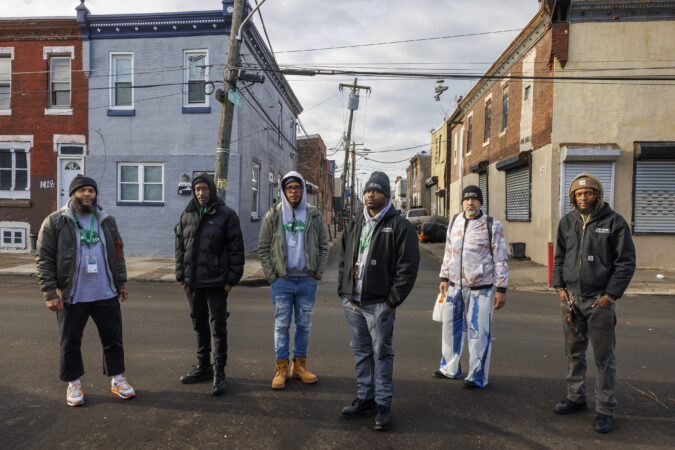
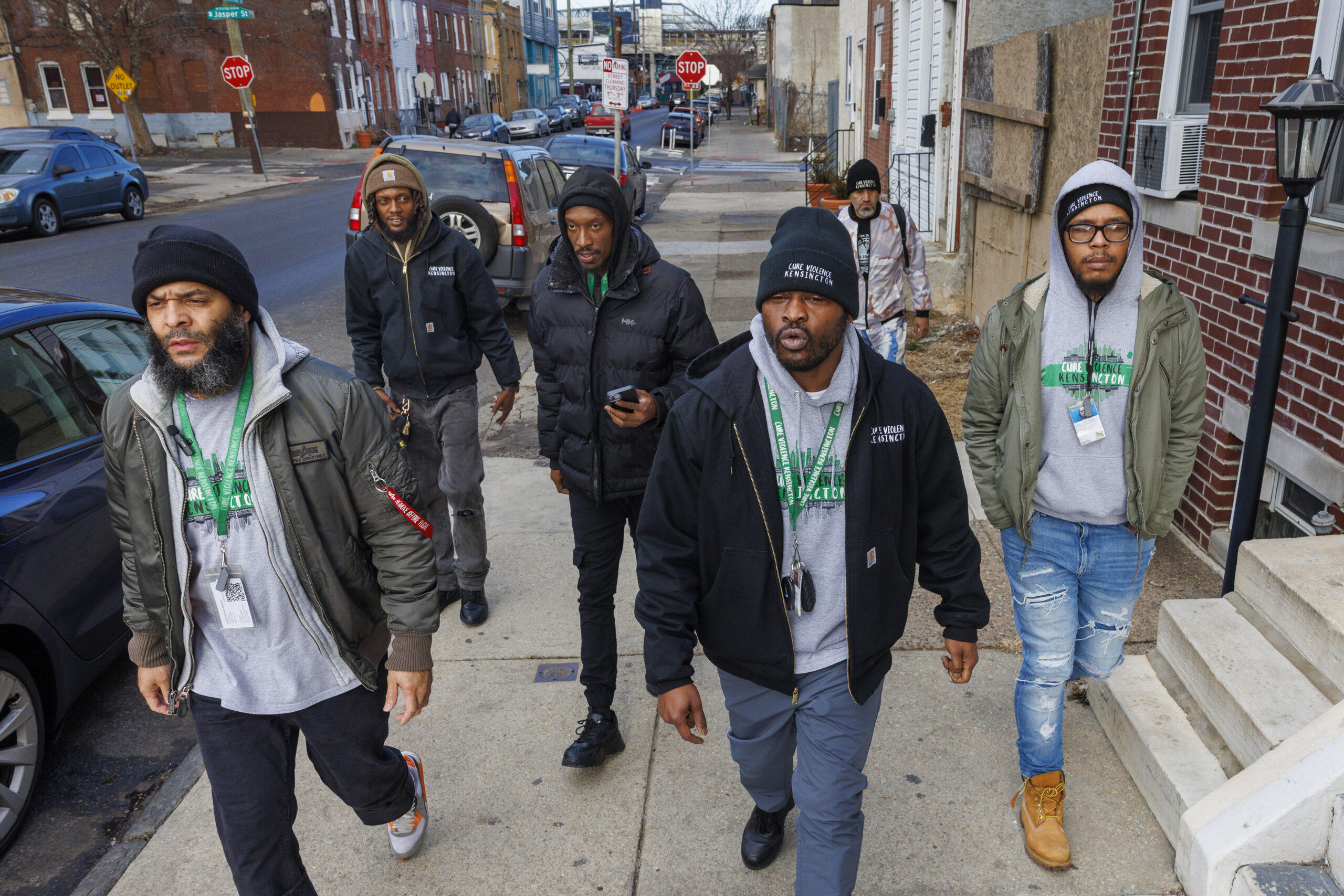
Nate Riley (from left), Tyree Batties, Dante Singleton, Tyreek Counts, Ivan Rodriguez, and Jamall Green-Holmes, outreach workers with New Kensington Community Development Corporation, making their rounds on Wednesday.
Cure Violence’s six-person outreach team is made up of people like Riley, who grew up in North Philadelphia and says he is well-versed in the relationship between poverty, trauma, and violence and brings that experience to Kensington.
“This is a community that’s been neglected for decades,” Riley said. “For lack of a better term, you’ve got to help them come in outside of the rain.”
In a recent month, Cure Violence outreach workers responded to 75% of shootings in the Kensington area within three days, a feat Riley is particularly proud of.
He said the program is not meant to supplant the role of police.
Instead, Riley sees street outreach as another outlet for those whose negative experiences with authorities have led them to distrust law enforcement.
Those people may alter their behavior if they know police are present, he added, giving outreach workers embedded in the community a better chance at picking up on cues that someone is struggling.
From Kensington to Washington
McKinney, with New Kensington CDC, said the group was still expecting about $600,000 from the Justice Department when the grant was cut short.
The nonprofit has since secured a patchwork of private donations and state grants that will keep Cure Violence running through much of 2026, he said.
After that, the program’s future is uncertain.
In the wake of the cuts, national organizations like the Community Justice Action Fund are advocating for federal officials to preserve funding for community-based anti-violence programs in future budgets. Adzi Vokhiwa, a federal policy advocate with the fund, said the group has formed a network of anti-violence nonprofits dubbed the “Invest in Us Coalition” to do so.
The group petitioned congressional leadership in December to appropriate $55 million for anti-violence organizations in the next budget — a figure that both Democrats and Republicans in the Senate have previously agreed on and that Vokhiwa views as a sign of bipartisan support for such programs.
McKinney, with New Kensington CDC, said it was impossible to ignore that the nonprofit and others like it provide services to neighborhoods where residents are overwhelmingly Black and brown. In his view, the cuts also reflect the administration’s “war on cities.”
He was bothered that the Justice Department did not seem to evaluate whether New Kensington CDC’s program had made an impact on the neighborhood before making cuts.
“We’re in a situation where the violence isn’t going away,” he said. “Even if there’s been decreases, the reality is that Kensington still leads the way. As those cuts get deeper, we are going to see increases in violence.”
Two new schools are coming to the Philadelphia School District.
Both schools, a K-8 and a high school,district officials said Wednesday, will have resources to help eliminate long-standing achievement and opportunity gaps for kids from underresourced communities.
They’ll be part of the “North Philadelphia Promise Zone,” Superintendent Tony B. Watlington Sr. announced. Watlington said they would be the first schools in the United States to replicate the success of the acclaimed Harlem Children’s Zone, with the blessing of its founder, Geoffrey Canada,who pioneered a model that takes a birth-to-career approach to tackling generational poverty.
Watlington said the schoolswould be “true year-round schools.” They would bring a new approach to the new Philadelphia public schools, where prior attempts to replicate the Harlem Children’s Zone blueprint have shown mixed results.
Harlem Children’s Zone runs charters in New York City, but the proposed Philadelphiaschools will be run by the district using the organization’s educational model,which includes extra resources and a longer school day and school year, as well as extensive social service supports.
Members of the West Philadelphia Marching Orange & Blue perform before Philadelphia Mayor Cherelle L. Parker speaks on the state of Philadelphia schools during a gathering at Edison High School in Philadelphia, Wednesday, Jan. 7, 2026.
“We’re going to be partners in opening these two state-of-the-art schools,” Watlington said at his state of the schools address, held Wednesday at Edison High School in North Philadelphia.
The district has big hopes for the schools, which officials said will be opened in existing Philadelphia school buildings — no new school structures will be involved.
“Not only will they get better, but get better faster than our district average. We’re going to make sure the school is staffed with the very best, most effective principals,” Watlington said. “We’re going to ensure that these schools are staffed with the very best, most effective teachers.”
They will be schools of choice, meaning parents can opt into having their children attend rather than basing enrollment on where students live.
The schools will also pull in Temple University; Watlington said that via the Temple Future Scholars program, “every single one of these graduates from this K-8 and high school” will be college-ready.
Many details were not clear Wednesday, including when the schools will open, what the year-round model will look like, the exact relationship with Harlem Children’s Zone, how the schools will be funded, and who will staff them. The district said it could not give more details immediately.
News of the new schools caught an important partner off guard. Arthur Steinberg, president of the Philadelphia Federation of Teachers, said Watlington’s speech was the first he heard of the initiative.
“Any changes in working conditions must be negotiated with the PFT,” Steinberg said. “We will not agree to anything that requires members to work additional days or hours.”
Watlington said the K-8 school will open first, and he has tapped Aliya Catanch-Bradley, the respected principal of Bethune Elementary in North Philadelphia, to lead the efforts to open the North Philadelphia Promise Zone schools.
Catanch-Bradley said it was too soon to discuss the particulars about the schools, which will be built with significant community involvement.
But, she said, North Philadelphia is a prime location for the cradle-to-career Harlem Children’s Zone model.
“We know that it’s not a food desert, because food… deserts are natural,” she said of North Philadelphia. “It is food insecure by design, right? And so, we now know that you have a resource drought there, to which it’s going to take an intentional pouring of all types of resources to wrap around a community, to help expand and become a very successful ecosystem.”
Philadelphia district officials will take time to study Harlem Children’s Zone, “but also to understand the landscape of Philadelphia, what needs to be augmented to echo the needs of this community,” Catanch-Bradley said.
Mayor Cherelle L.Parker campaignedon the promise of year-round schools, and her administration has put extended-day, extended-year programs into 40 district and charter schools. But those programs are essentially before- and after-care and summer camps, paid for with city funds and offered free to 12,000 students, rather than traditional year-round education.
Harlem Children’s Zone schools have longer school days and longer school years. It’s not clear what form the proposed North Philadelphia Promise Zone schools might take, and how these efforts would differ from prior attempts around the country to replicate the success of the Harlem Children’s Zone. Former President Barack Obama in 2010 highlighted the model and selected20 communities, including Philadelphia, to start “Promise Neighborhood” programs that would improve access to housing, jobs, and education. Those efforts were met with varying degrees of success, and no schools opened in Philadelphia.
Watlington’s new-school announcement capped a two-plus-hour, pep-rally-style event where he and others underscored progress the district has made in the past year — and since the superintendent came to Philadelphia four years ago.
Philadelphia Mayor Cherelle Parker (left), Superintendent Tony B. Watlington Sr. (center), and school board president Reginald Streater during a ceremony on the state of Philadelphia schools at Edison High School on Wednesday.
Other news from the state of Philadelphia schools event
Parker, who led off the event, said she was pleased with the state of schools.
“The school district has continued to make steady and meaningful progress,” Parker said. “Test scores are rising, attendance is rising. Dropout rates are declining, and those gains are real, and they reflect what happens when we invest in our students.”
Parker emphasized her desire to have the city take over a list of abandoned district buildings. The school board took the first step in December, voting to authorize Watlington and his administration to begin negotiating with the city to do just that.
Parker said thatsome of the buildings have been vacant for as long as 30 years. The district has not yet released a list of buildings to consider transferring, but the mayor said it includes at least 20 former schools.
“I want you to be clear about what my goal and objective is,” Parker said. “It’s not OK for me to have 20, 21 buildings consistently vacant, red on the school district’s balance sheet, generating no revenue and not at all working at their best and highest use. We’re going to find a way to do what has never been done in the city of Philadelphia before — develop a plan for those persistently vacant buildings.”
Watlington alsoran down a laundry list of accomplishments, including ongoing fiscal stability and improvementson the National Assessment of Educational Progress, known as the nation’s report card.
He said the district would “retire” its structural deficit completely by 2029-30 though declined to give details.
He and Reginald Streater, president of the city’s school board, said the district still has a ways to go but has made strides. More than half of all district students still fail to meet grade-level standards in reading and math.
But, Watlington said, “I can assure you we’re making progress. We’re going to double down. More for our children, not less. More opportunities, more access, more exposure, more good things to come in 2026.”
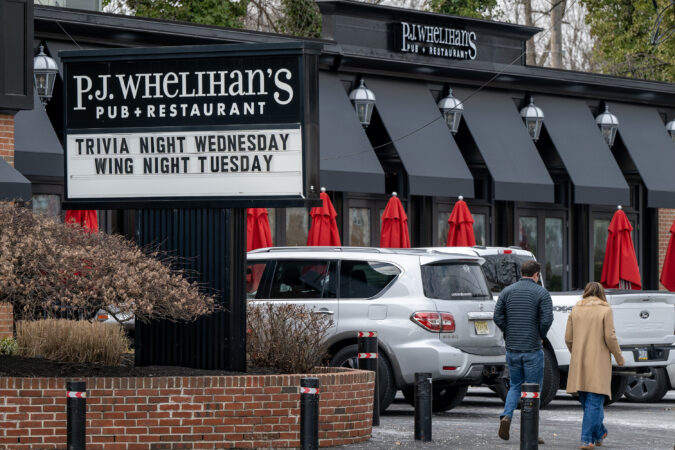
The company that owns P.J. Whelihan’s may be moving into a former Iron Hill Brewery in Bucks County.
PJW Opco LLC, which is registered at the headquarters of PJW Restaurant Group, was approved to take over a lease for the shuttered Iron Hill in Newtown, effective Dec. 31, according to documents filed in U.S. Bankruptcy Court in New Jersey.
PJW marketing director Kristen Foord declined to comment.
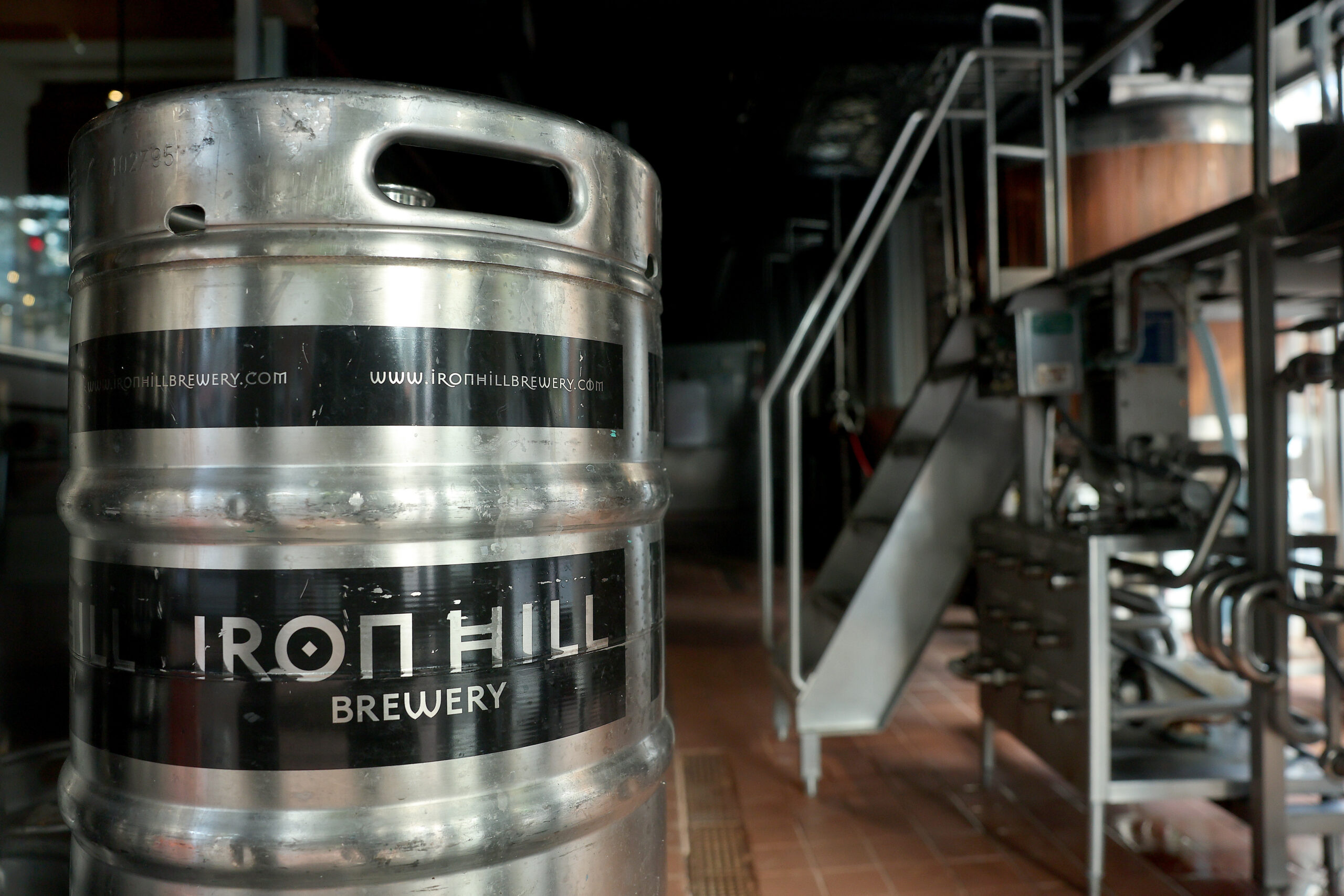
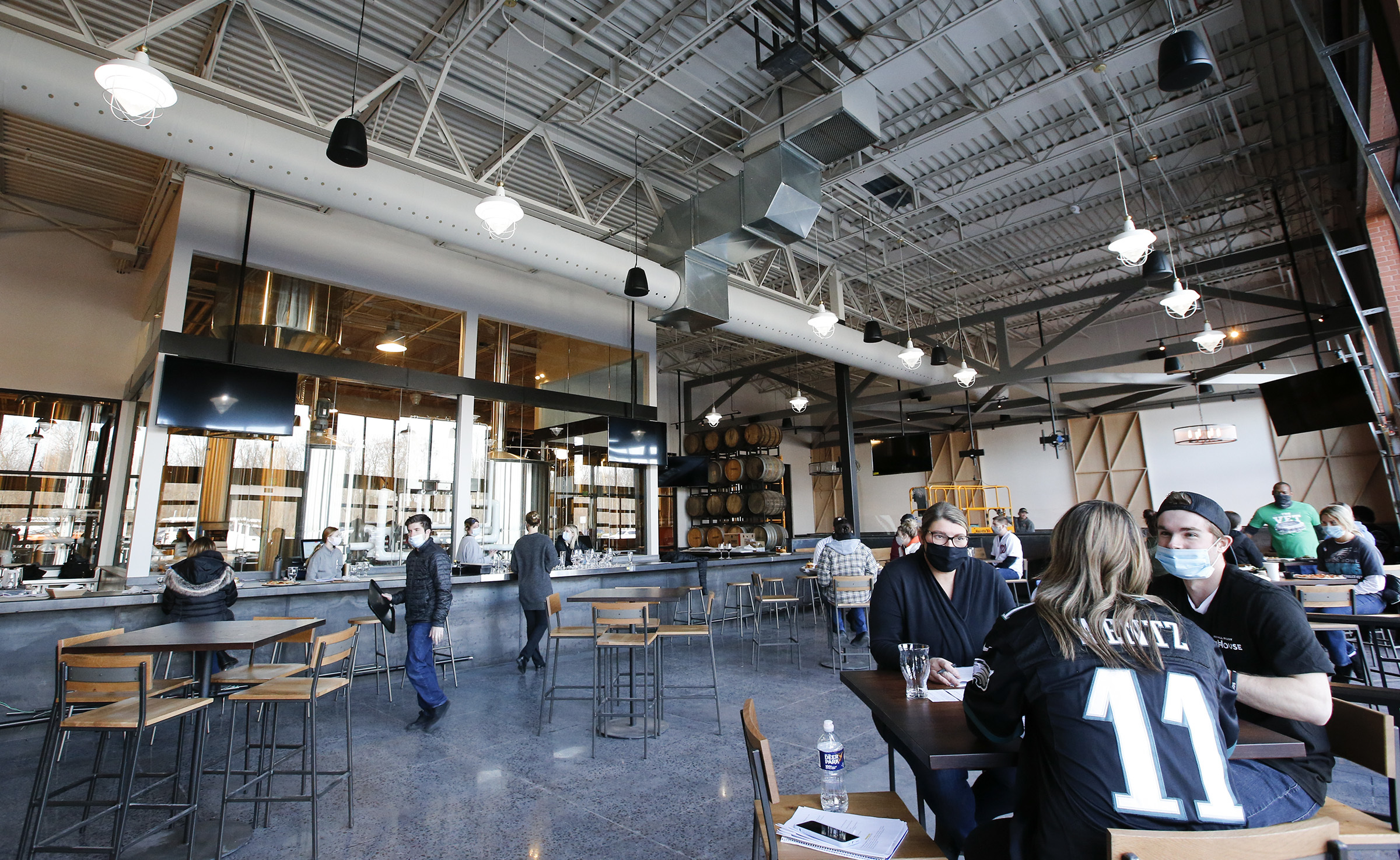
The nearly 8,000-square-foot brewpub in the Village at Newtown shopping center has sat empty since September, when Iron Hill abruptly closed all its locations and filed for liquidation bankruptcy. The Newtown Iron Hill had been among the chain’s newest locations, having opened in 2020.
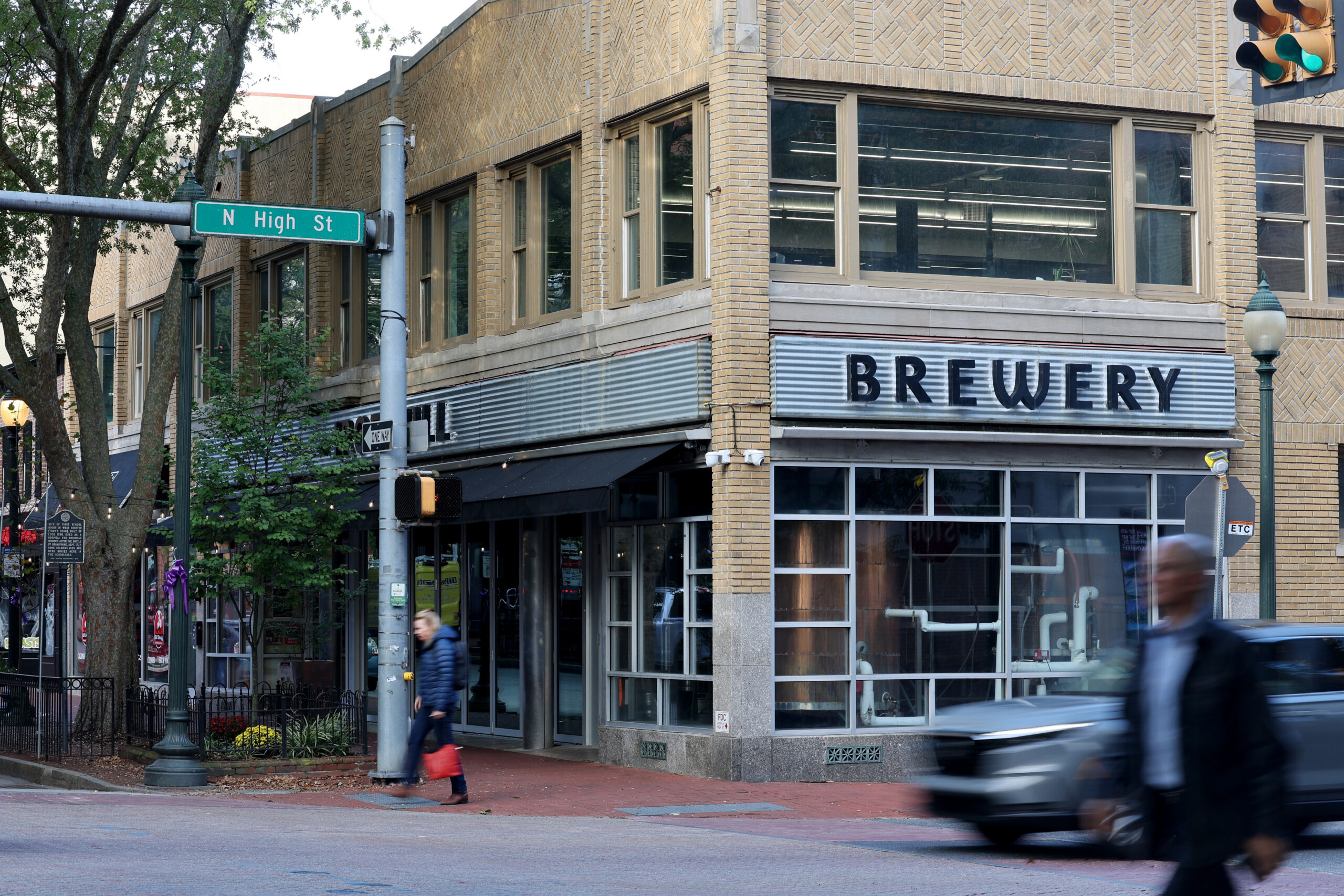
A view from the outside looking in on the closed Iron Hill Brewery in West Chester in October.
Brixmor Property Group, which owns the Village at Newtown, is “excited about what’s in the works” for the former Iron Hill space, spokesperson Maria Pace said in a statement, but she declined to share details.
The court documents did not indicate PJW’s plans for the Newtown site.
PJW’s most well-known franchise is P.J. Whelihan’s, the regional bar-restaurant chain that started in the Poconos in 1983. There are now 25 P.J. Whelihan’s locations from Harrisburg to Washington Township, with the vast majority in the Philadelphia area.
Haddon Township-based PJW also owns the Pour House, which has locations in Exton, North Wales, and Westmont, Haddon Township; the ChopHouse in Gibbsboro; the ChopHouse Grille in Exton; Central Taco & Tequila in Westmont; and Treno, also in Westmont.
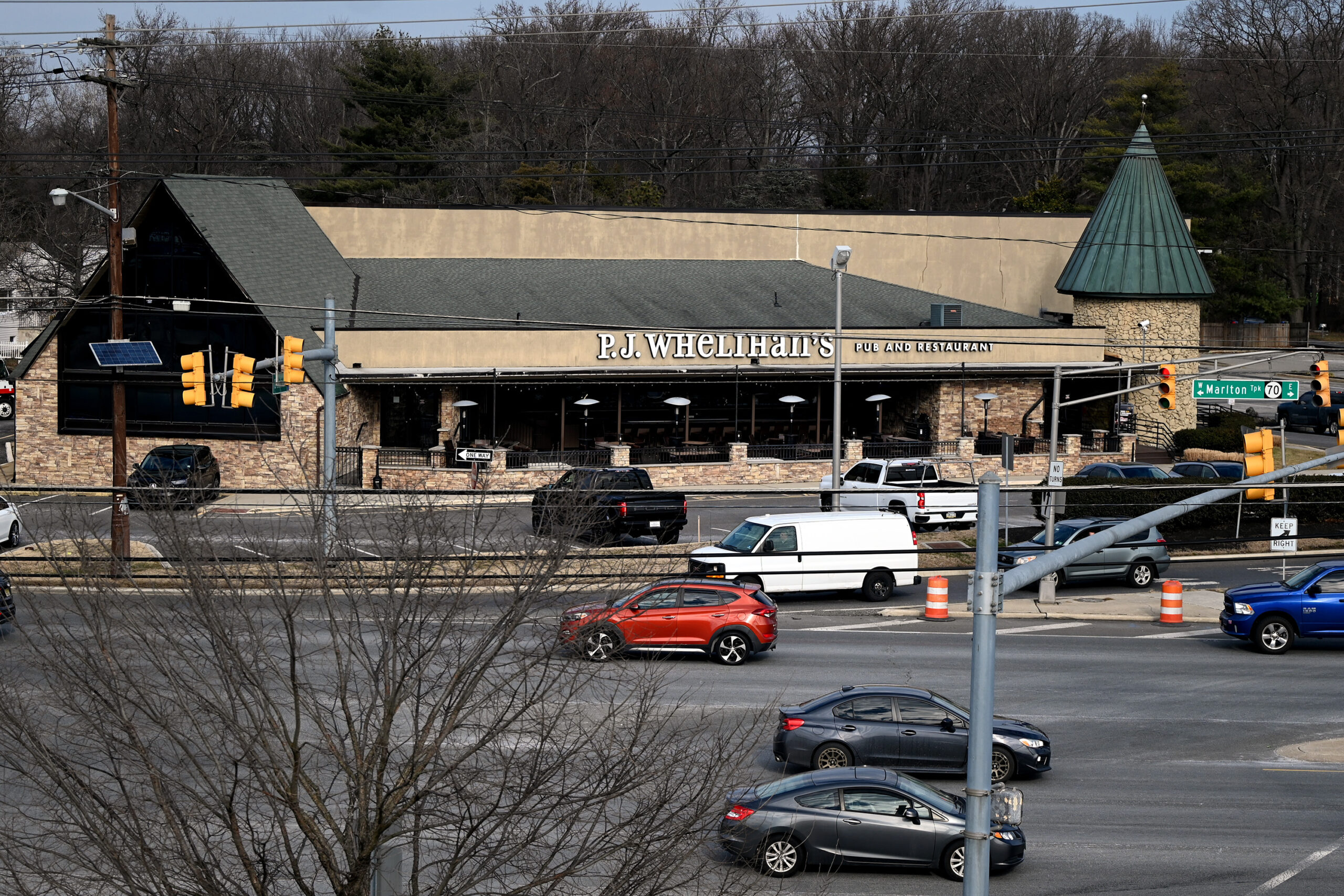
The P.J. Whelihan’s on Route 70 in Cherry Hill.
As 2026 gets underway, Iron Hill’s bankruptcy case continues to make its way through the courts. In recent weeks, Iron Hill’s leases in Exton, Maple Shade, and North Wales were formally rejected, according to court documents. That means these empty breweries are getting closer to finding new tenants.
“Any out-of-town brewery with plans to leverage existing brewery infrastructure and scale its operations in the region would be a good fit, as it would save significant tenant improvement costs,” Kagithapu said in a statement. “I also believe a grocery store would serve the community very well.”
The Iron Hill Brewery TapHouse in Exton is pictured in 2020. After Iron Hill’s bankruptcy, the Exton landlord is seeking a new tenant for the massive space.
On Christmas Eve, Barry, a Massachusetts-based real estate investor, inked a deal to buy the liquor license and all interior assets of the location at the borough’s central corner of High and Gay Streets.
“It will not be reopening as Iron Hill Brewery,” Barry said in a recent interview. “My goal would be to find something similar,” though not necessarily a brewery.
Barry purchased the assets from Jeff Crivello, the former CEO of Famous Dave’s BBQ, who in November was approved by a bankruptcy judge to revive 10 Iron Hills under the same name or as a new concept. Barry and Crivello declined to disclose the financial details of the West Chester deal.
Pedestrians walk by the closed Iron Hill Brewery in West Chester in October.
The Newtown location was originally among the locations of which Crivello was approved to buy the assets, pending negotiations with landlords. Court documents indicate the asset sale was put on hold amid a landlord objection.
Founded in Newark, Del., Iron Hill Brewery operated for nearly 30 years, earning a reputation as a local craft-brewing pioneer and a family-friendly mainstay in the Philadelphia suburbs. In recent years, the chain had expanded into South Carolina and Georgia and had announced plans to open a Temple University location that never materialized.
When brewery executives filed for bankruptcy, they reported that they owed $20 million to creditors and had about $125,000 in the bank.