Tag: Temple University

  • Roberta Fallon, artist, writer, and Artblog cofounder, has died at 76

    Roberta Fallon, artist, writer, and Artblog cofounder, has died at 76

    Roberta Fallon, 76, of Bala Cynwyd, cofounder, editor, and longtime executive director of theartblog.org, prolific freelance writer for The Inquirer, Daily News, and other publications, adjunct professor at St. Joseph’s University, artist, sculptor, mentor, and volunteer, died Friday, Dec. 5, at Thomas Jefferson University Hospital of injuries she suffered after being hit by a car on Nov. 24.

    Ms. Fallon’s husband, Steven Kimbrough, said the crash remains under investigation by the police.

    Described by family and friends as empathetic, energetic, and creative, Ms. Fallon and fellow artist Libby Rosof cofounded the online Artblog in 2003. For nearly 22 years, until the blog became inactive in June, Ms. Fallon posted commentary, stories, interviews, reviews, videos, podcasts, and other content that chronicled the eclectic art world in Philadelphia.

    The site drew more than 4,500 subscribers and championed galleries and artists of all kinds, especially women, LGBTQ and student artists, and other underrepresented innovators. “I think we have touched base with every major arts organization in Philadelphia at one point or another, and many of the smaller ones,” Ms. Fallon told The Inquirer in May. “We became part of the arts economy.”

    She earned grants from the Knight Foundation and other groups to fund her work. She organized artist workshops and guided tours of local studios she called art safaris.

    For years, she and Rosof raised art awareness in Center City by handing out miniatures of their artwork to startled passersby. She said in a 2005 Inquirer story: “We think art needs to be for everyone, not just in galleries.”

    She mentored other artists and became an expert on the business of art. “She was so generous and curious about people,” Rosof said. “She was innovative and changed the way art reached people.”

    Artist Rebecca Rutstein said Ms. Fallon’s “dedicated art journalism filled a vacuum in Philadelphia and beyond. Many of us became known entities because of her artist features, and we are forever grateful.” In a 2008 Inquirer story about the city’s art scene, artist Nike Desis said: “Roberta and Libby are the patron saints of the young.”

    Ms. Fallon never tired of enjoying art.

    Colleague and friend Gilda Kramer said: “The Artblog for her was truly a labor of love.”

    In November, Ms. Fallon and other art writers created a website called The Philly Occasional. In her Nov. 12 article, she details some of her favorite shows and galleries in Philadelphia and New York, and starts the final paragraph by saying: “P.S. I can’t let you go without telling you about what I just saw at the Barnes Foundation.”

    She worked at a small newspaper in Wisconsin before moving to West Philadelphia from Massachusetts in 1984 and wrote many art reviews and freelance articles for The Inquirer, Daily News, Philadelphia Weekly, Philadelphia Citizen, and other publications. In 2012, she wrote more than a dozen art columns for the Daily News called “Art Attack.”

    She met Rosof in the 1980s, and together they curated exhibits around the region and displayed their own sculptures, paintings, and installations. Art critic Edith Newhall reviewed their 2008 show “ID” at Projects Gallery for The Inquirer and called it “one of the liveliest, most entertaining shows I’ve seen at this venue.”
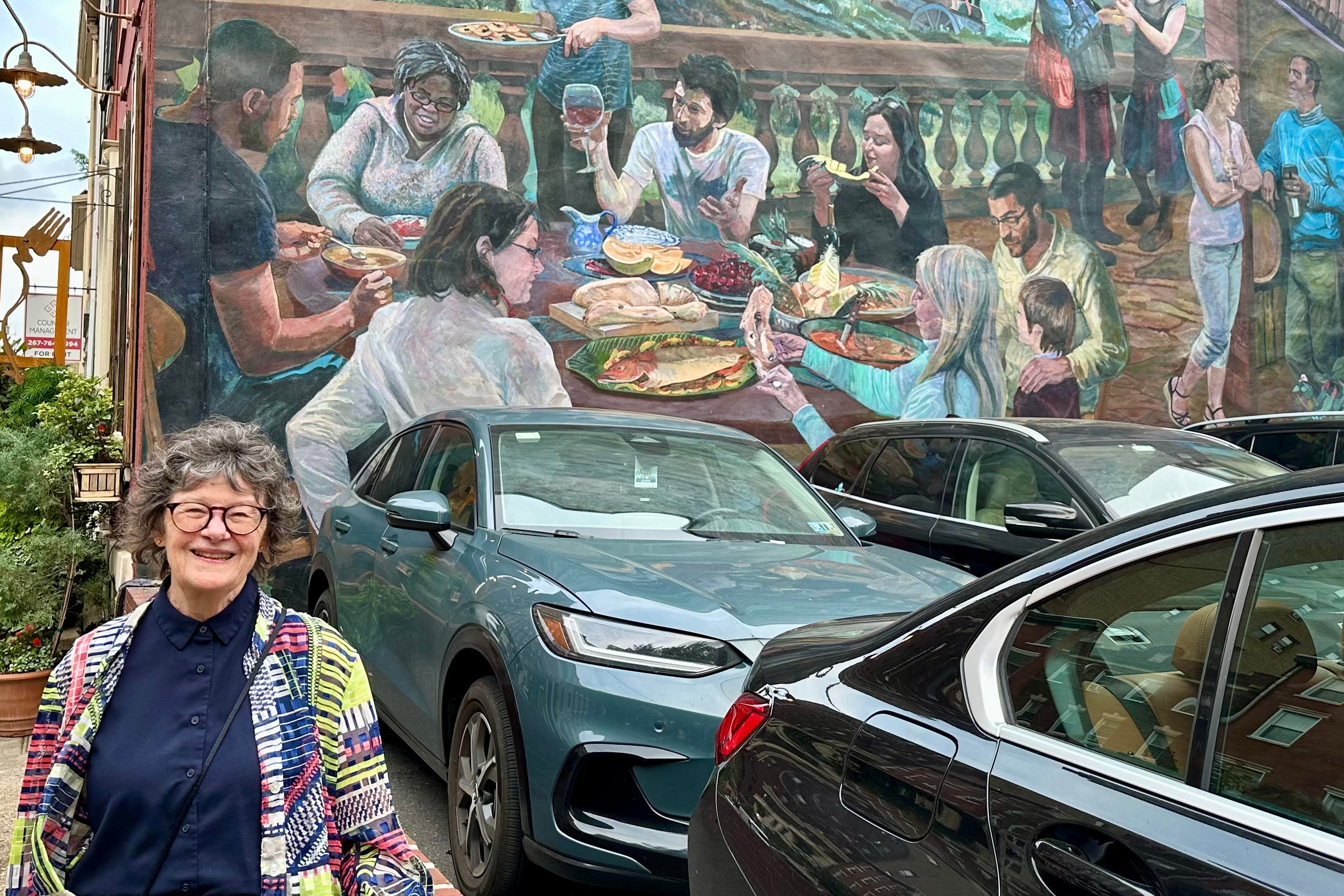
    Ms. Fallon stands in front of a mural at 13th and Spruce Streets. She is depicted as the figure profiled in the lower left in the white blouse.

    Most often, Ms. Fallon painted objects and sculpted in concrete, wood, metal, textiles, and other material. She was a founding member of the Philadelphia Sculptors and Bala Avenue of the Arts.

    She studied at the Pennsylvania Academy of the Fine Arts and Temple University’s Tyler School of Art and Architecture, and later taught professional practice art classes at St. Joseph’s. Moore College of Art and Design, which will archive Artblog, awarded her an honorary doctorate.

    “Roberta was an exceptional creative artist” and “a force,” artist Marjorie Grigonis said on LinkedIn. Artist Matthew Rose said: “Robbie was a North Star for many people.”

    Her husband said: “Her approach to life was giving. She succeeded by adding value to wherever she was.”
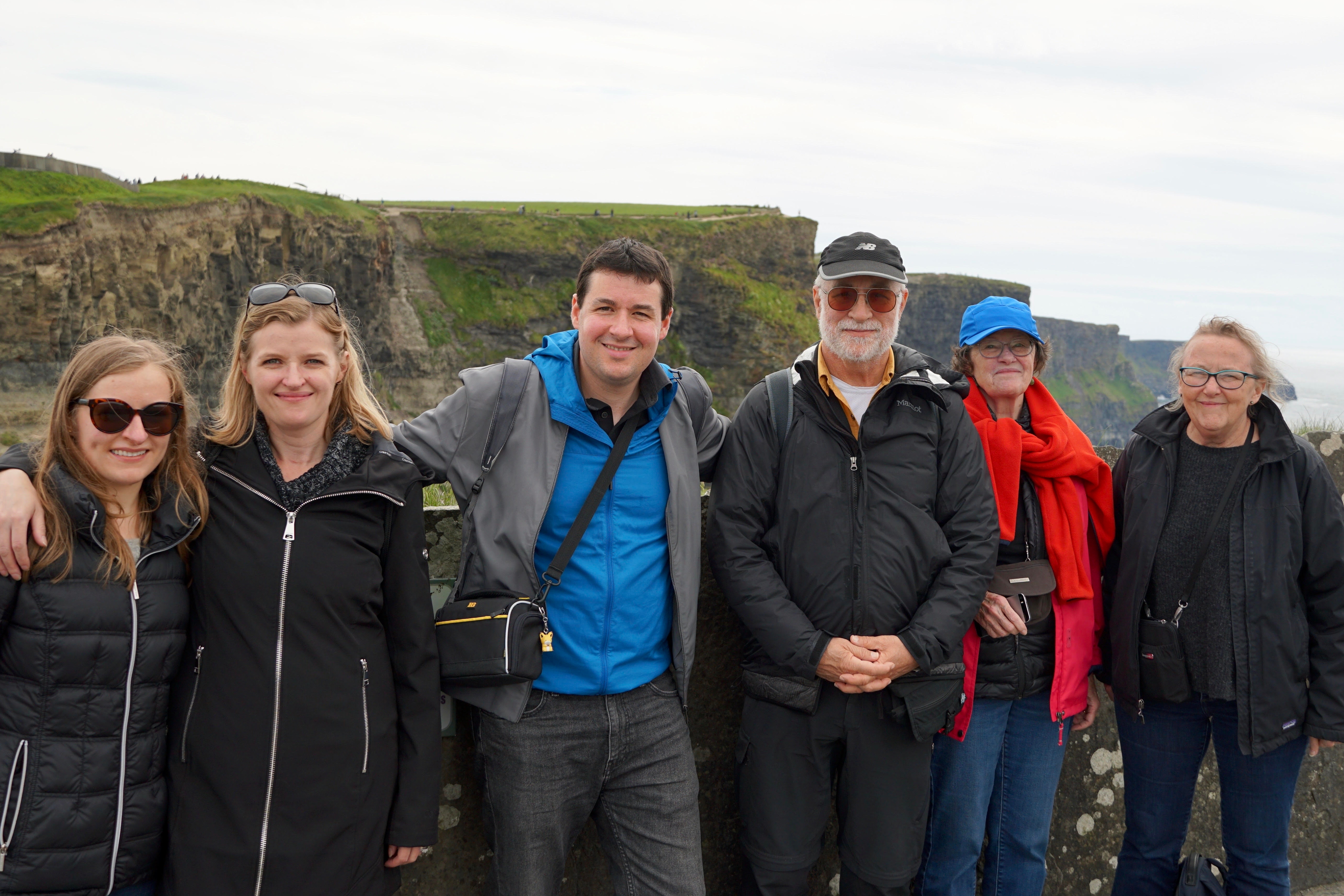
    Ms. Fallon (second from right) enjoyed time with her family.

    Roberta Ellen Fallon was born Feb. 8, 1949, in Milwaukee. She went to the University of Wisconsin-Madison to study sociology after high school and dropped out to explore Europe and take art classes in Paris. She returned to college, changed her major to English, and earned a bachelor’s degree in 1974.

    She met Steven Kimbrough in Wisconsin, and they married in 1980, and had daughters Oona and Stella, and a son, Max. They lived in West Philadelphia for six years before settling in Bala Cynwyd in 1993.

    Ms. Fallon was a neighborhood political volunteer. She enjoyed movies and reading, and she and her husband traveled often to museums and art shows in New York and elsewhere.

    They had a chance to relocate to Michigan a few years ago, her husband said. But she preferred Philadelphia for its art and culture. “She was like a local celebrity in the art scene,” her daughter Stella said.
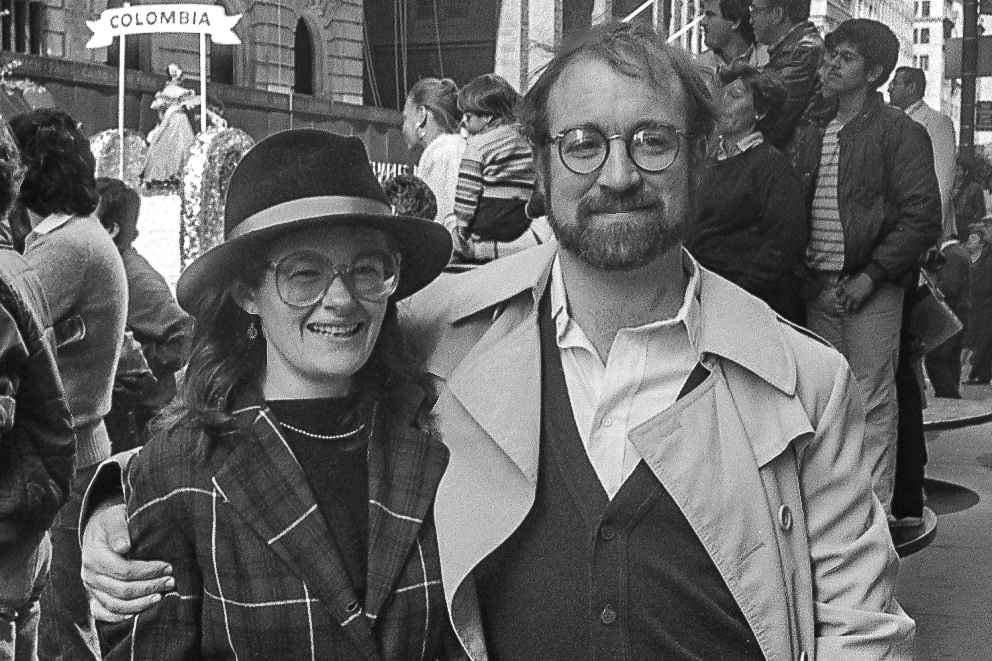
    Ms. Fallon and her husband, Steven Kimbrough, visited New York in 1982.

    Her husband said: “Everybody likes her. Everybody wants to be around her. She made a difference for a lot of people.”

    Her daughter Stella said: “The world would be a better place if we all tried to be like my mom.”

    In addition to her husband and children, Ms. Fallon is survived by four grandchildren, a sister, a brother, and other relatives.

    A memorial service is to be held later.

    Donations in her name may be made to Moore College of Art and Design, 1916 Race St., Philadelphia, Pa. 19103.
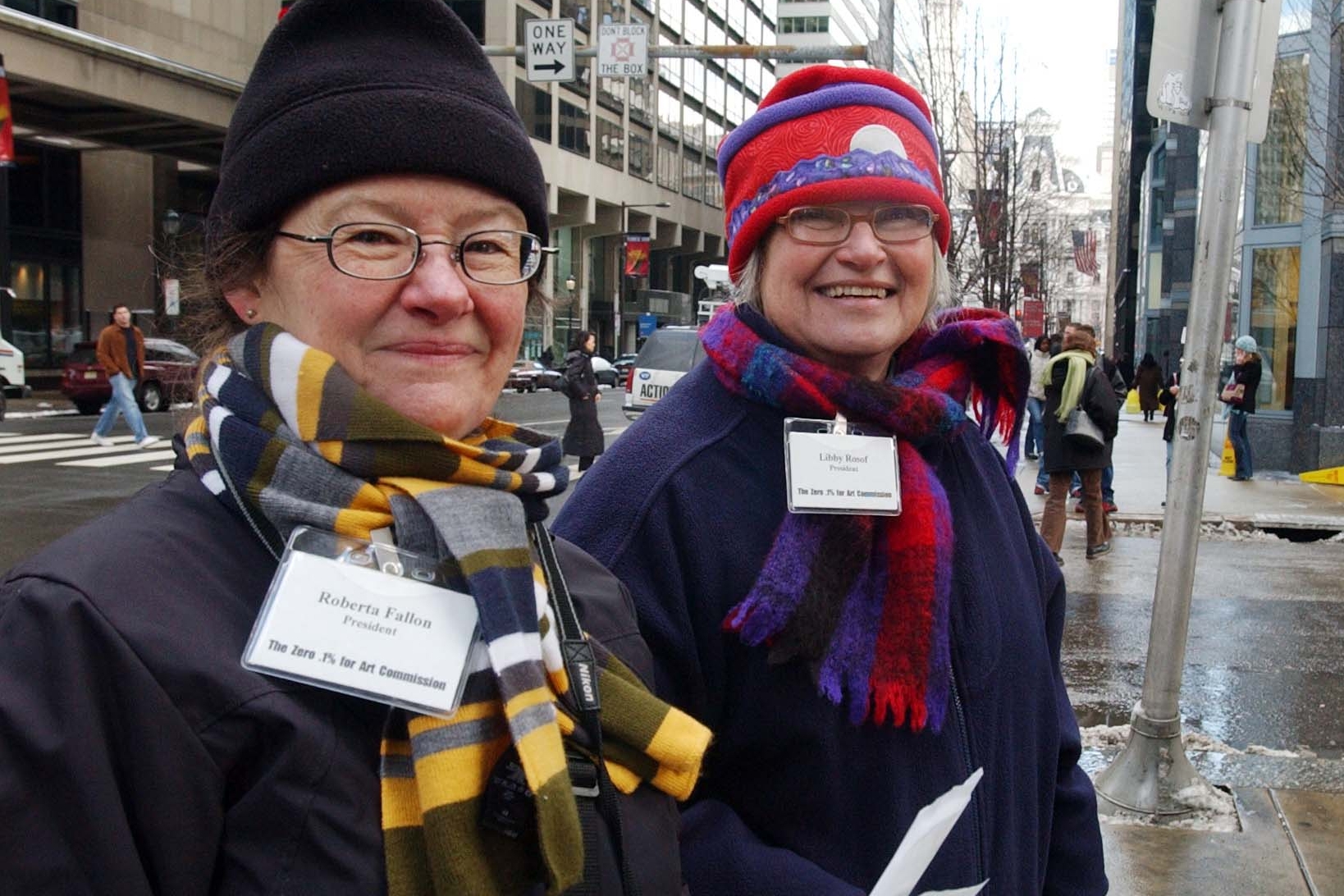
    Ms. Fallon (left) and Libby Rosof hand out free art at 17th and Market Streets in 2005.
  • Temple’s former enrollment head gets job at Rutgers

    Temple’s former enrollment head gets job at Rutgers

    Jose A. Aviles, who abruptly resigned last month as Temple University’s head of enrollment, has taken a leadership role at Rutgers University.

    Aviles has been named senior vice president for enrollment management and student success at New Jersey’s flagship university.

    “Dr. Aviles’ commitment to data-informed, student-centered leadership will be pivotal to strengthening student recruitment, expanding access and enhancing student success metrics,” Rutgers said in its announcement.

    At Rutgers, the overall enrollment neared 71,500 this year, up 3.2%.

    When Aviles announced his exit from Temple, he told The Inquirer he was leaving for “a life-changing opportunity.”

    Aviles, who served as Temple’s vice president for enrollment and student success for 2½ years, joined the North Philadelphia school in 2023, after about six years at Louisiana State University.

    In that experience at LSU, he has a tie to Rutgers’ new president, William F. Tate IV, who led the Baton Rouge university from 2021 to this July, when he took the helm at Rutgers.

    Aviles left Temple with recent successes under his belt; he had recently been promoted from a vice provost to a vice president.

    “Jose has reimagined enrollment management at the university over the last couple of years, helping move us to a modern, technology- and data-driven approach that has delivered results,” Temple president John Fry and interim provost David Boardman said to the campus community last month.

    They noted the university achieved growth in first-year enrollment the last two years, with this year’s group reaching a record high of 5,379.

    The university also under Aviles’ tenure started the Temple Promise program, which makes tuition and fees free for first-time, full-time college students from low-income families who live in Philadelphia, and the Temple Future Scholars program, a mentoring and college-readiness initiative.

    While Temple’s first-year class was strong, the school fell short of its initial overall enrollment projection by about 700 students, which translates to about $10 million in lost revenue.

    The university had been estimating it would enroll a total of 30,100 to 30,300 students, which would have been its first enrollment increase since 2017.

    Instead, enrollment came in at 29,503, down about 500 from last year and further declining from its high of more than 40,000 eight years ago. (That does not include enrollment on its Japan and Rome campuses, which increased. Including those campuses, Temple’s overall enrollment was over 33,000, a slight increase from last year.)

    There have also been concerns about sophomore retention and a higher percentage of third- and fourth-year students not returning.

  • Who is living in all of Center City’s new apartment buildings?

    Who is living in all of Center City’s new apartment buildings?

    When Adam Sawyer and his wife, Marissa Tan, moved to Philadelphia in 2024 from Baltimore, they were attracted to Center City by its proximity to work and mass transit.

    The couple figured if they sold their car, they could even afford to rent in one of the thousands of new, high-rise apartments that have been built across Center City over the last 10 years.

    Tan had just gotten a new job with the Cooper University Hospital in Camden, and Adam needed access to 30th Street Station for work. They eventually settled on the PMC Property Group’s Riverwalk North at 23rd and Arch Streets and have been impressed by the city, its transit system, and life without a car.

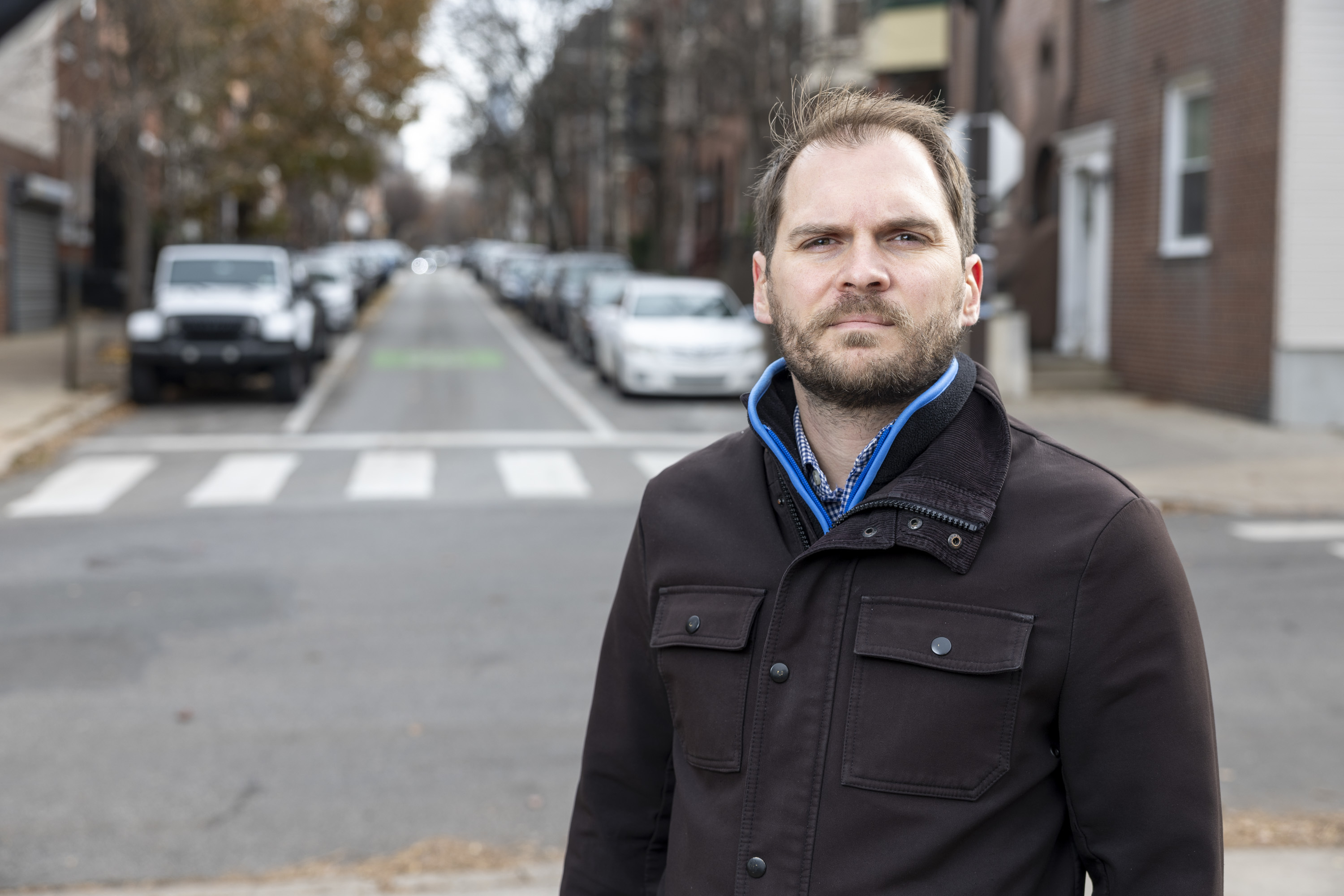
    Adam Sawyer and his wife, Marissa Tan, moved to Philadelphia in 2024 from Baltimore.

    “One of the things I love about living in a city is that you’ll be walking down the street and there are five different events you didn’t even know about,” Sawyer said. “Festivals, farmers markets, just activity, people doing things. I love that Philadelphia has so much energy.”

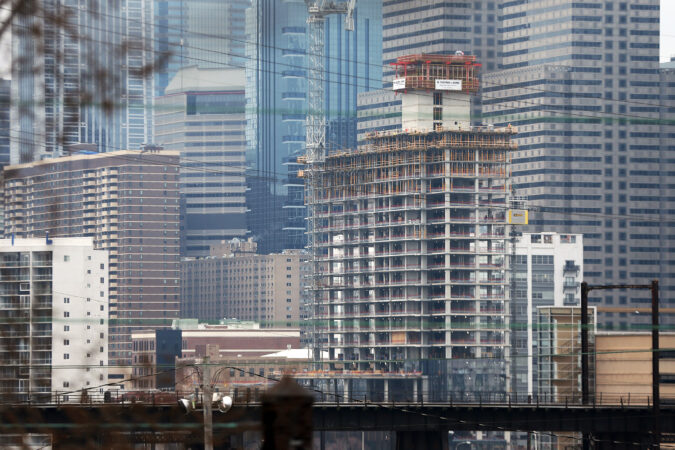
    In many ways Sawyer and Tan — who are both 35 — are representative of the people who have taken up residence in the new apartment buildings across Center City. Between Pine and Vine Streets, river to river, 3,500 new apartments have opened since 2023.

    Center City District (CCD) set out to learn more about who is calling these apartments home, with a survey of more than two dozen buildings constructed since 2015.

    Like Sawyer and Tan, the vast majority of respondents to CCD’s survey are under 45 (83%), more than half don’t own a car (55%), and close to half moved from outside the Philadelphia area (44%). Sawyer works remotely like 21% of respondents, and Tan works in healthcare like 32% of them.

    window.addEventListener(“message”,function(a){if(void 0!==a.data[“datawrapper-height”]){var e=document.querySelectorAll(“iframe”);for(var t in a.data[“datawrapper-height”])for(var r,i=0;r=e[i];i++)if(r.contentWindow===a.source){var d=a.data[“datawrapper-height”][t]+”px”;r.style.height=d}}});

    In a city where a fifth of all residents live in poverty, the respondents aren’t representative of the average Philadelphian in many ways. The buildings surveyed have an average rent of $2,645, well above the median of $1,387.

    But the results show that there is a market for the kind of new buildings that are still being proposed. They also highlight that many people are attracted to the most central parts of Philadelphia because it offers more density, walkability, and other urban characteristics that few other American cities can boast.

    “People actively choose Philadelphia over other cities and metropolitan areas because we outperform them in some ways,” said Clint Randall, vice president of Economic Development with CCD, which is funded by downtown property owners and provides advocacy and services like additional security and cleaning downtown.

    “The city spent so many decades shrinking,” Randall said. “When you see this entire skyline of high-rise apartment buildings emerge, it contradicts what longtime Philadelphians think they know about this place, which is that it does not grow or attract residents.”

    Reversing reverse commuting

    Center City District’s survey confirmed a longtime finding of the organization’s other research reports: People who live downtown are likely to work there or very close by.

    In Philadelphia, reverse commuting is common, a testament to the fact that many private-sector employers have remained outside the city to avoid wage and business taxes. But among survey respondents, only 12% commuted to the suburbs for work compared to almost 40% citywide.

    Over half of respondents work in either Center City or University City, and a similar proportion work in either healthcare (32%) or in the jobs more typically associated with office towers: “business, professional, or financial services” (27%). Twenty-one percent work from home.

    “A lot of people are in medicine, in healthcare. I see a lot of scrubs,” said Kaz Rivera-Gorski, about her building One Cathedral Square at 17th and Race Streets.

    window.addEventListener(“message”,function(a){if(void 0!==a.data[“datawrapper-height”]){var e=document.querySelectorAll(“iframe”);for(var t in a.data[“datawrapper-height”])for(var r,i=0;r=e[i];i++)if(r.contentWindow===a.source){var d=a.data[“datawrapper-height”][t]+”px”;r.style.height=d}}});

    “I would imagine there’s a good amount of people that work remotely, too,” said Rivera-Gorski, who is a management consultant who works from home. “I see people on their laptops in the shared spaces during the day.”

    Seventy percent of respondents said their jobs are within walking, biking, or transit distance from their homes, while 80% of them said that owning a car was not necessary to enjoy daily life in Philadelphia.

    That’s part of what attracted Sawyer and Tan, even though another part of Philadelphia’s allure was that it was closer to family in central and eastern Pennsylvania (the couple have a Zipcar membership).

    “While I do drive, I really, really dislike driving,” Sawyer said. “I’ve lost people. Everybody has, to either accidents or crashes or DUIs. So we were open to selling our car and became more and more convinced it was a good idea.”

    window.addEventListener(“message”,function(a){if(void 0!==a.data[“datawrapper-height”]){var e=document.querySelectorAll(“iframe”);for(var t in a.data[“datawrapper-height”])for(var r,i=0;r=e[i];i++)if(r.contentWindow===a.source){var d=a.data[“datawrapper-height”][t]+”px”;r.style.height=d}}});

    Retaining out-of-towners

    Randall said that he was surprised by the proportion of CCD’s respondents who reported having moved to Philadelphia from outside the region. (A recent Realtor.com report showed that Philadelphia switched from having mostly local interest in rental listings before the pandemic to mostly out-of-towners today.)

    The survey also found that the majority of Center City dwellers planned to be living in Philadelphia in three to five years, with 45% planning to continue renting and 16% hoping to buy.

    “You hear about the transience of other places like D.C. or Boston, and it seems like people are here [in Philadelphia] and they intend to stay,” Randall said.

    That is certainly the goal of Annika Verma, a student at Temple University who lives in the Logan Lofts in Callowhill.

    “I am already calculating: Can I get an entry-level job? What salary would work for the rent in this area?” Verma said. “I would love to stay. The area seems ideal for me in terms of commuting or walking. Anything, everything is a 15-20 minute walk or bus ride away.”

    Sawyer and Tan are hoping to stay in Philadelphia, too. They are currently searching Center City for a condo to buy. They may try to stay in their current Logan Square neighborhood for its proximity to the Schuylkill River Trail and 30th Street Station.

    “We love it,” said Sawyer, who notes that they’ve lived in three cities in Texas, Cooperstown in New York, and Baltimore before this. “But our favorite place we’ve ever lived is here in Philadelphia.”

  • CHOP was Southeastern Pa.’s most profitable nonprofit health system in first quarter of fiscal 2026. Four systems lost money.

    CHOP was Southeastern Pa.’s most profitable nonprofit health system in first quarter of fiscal 2026. Four systems lost money.

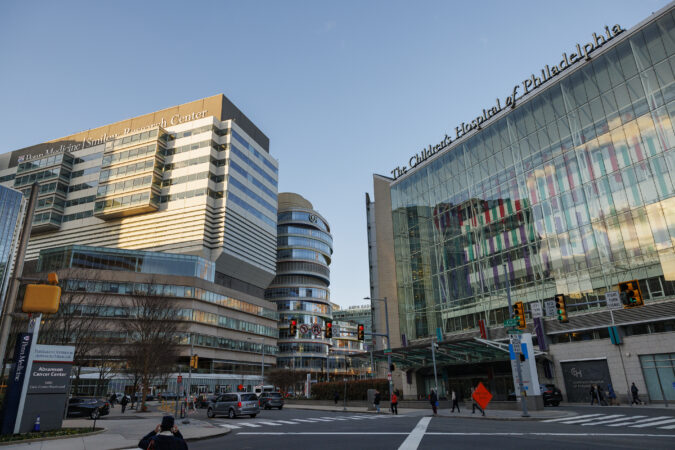
    Children’s Hospital of Philadelphia was the most profitable nonprofit health system in Southeastern Pennsylvania during the three months that ended Sept. 30, according to an Inquirer review of financial filings.

    CHOP reported $70 million in operating income in the first quarter of fiscal 2026, up from $67 million the same period a year ago. The nonprofit’s revenue climbed nearly 9% to $1.3 billion.

    The biggest loss in percentage terms was at Redeemer Health, the region’s smallest health system and the only remaining operator with a single hospital. Redeemer had an $11.7 million operating loss on $103.4 million in quarterly revenue. That was an improvement over an $18.9 million loss last year.

    Jefferson Health had the most patient revenue following its acquisition last year of Lehigh Valley Health Network. The 32-hospital system had $2.9 billion in patient revenue, $100 million more than the $2.8 billion at the University of Pennsylvania Health System, which has seven hospitals.

    window.addEventListener(“message”,function(a){if(void 0!==a.data[“datawrapper-height”]){var e=document.querySelectorAll(“iframe”);for(var t in a.data[“datawrapper-height”])for(var r,i=0;r=e[i];i++)if(r.contentWindow===a.source){var d=a.data[“datawrapper-height”][t]+”px”;r.style.height=d}}});

    Here’s a recap of selected systems’ results for September quarter:

    Jefferson Health

    Jefferson Health reported a $104 million operating loss, as its insurance business continued to drag down results. The loss included $19.4 million in restructuring charges for employee severance related to earlier job cuts and moves designed to make the system more efficient.

    University of Pennsylvania Health System

    University of Pennsylvania Health System had an operating gain of $109.3 million, up from $49.3 million in the same period a year ago. This year’s results include Doylestown Health, which Penn acquired April 1. Total revenue was $3.3 billion, up from $2.8 billion a year ago.

    Temple University Health System

    Temple University Health System’s loss in the quarter was $15 million, an improvement over a $17 million loss last year. Total revenue was $800 million, up 13% from $712.5 million a year ago. Outpatient revenue increased by nearly $62 million, much of it from the health system’s specialty and retail pharmacy business.

  • Hospital-based anti-violence programs get $3 million in state funding

    Hospital-based anti-violence programs get $3 million in state funding

    Several Philadelphia-area violence prevention efforts will benefit from nearly $3 million in newly released state funding to help hospitals address a leading cause of death and injury.

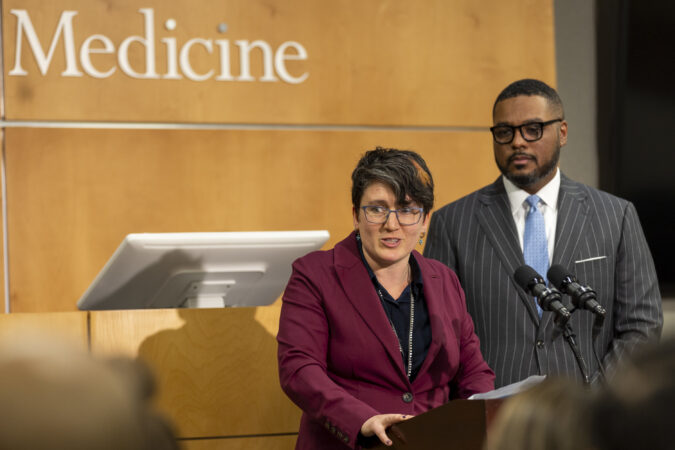
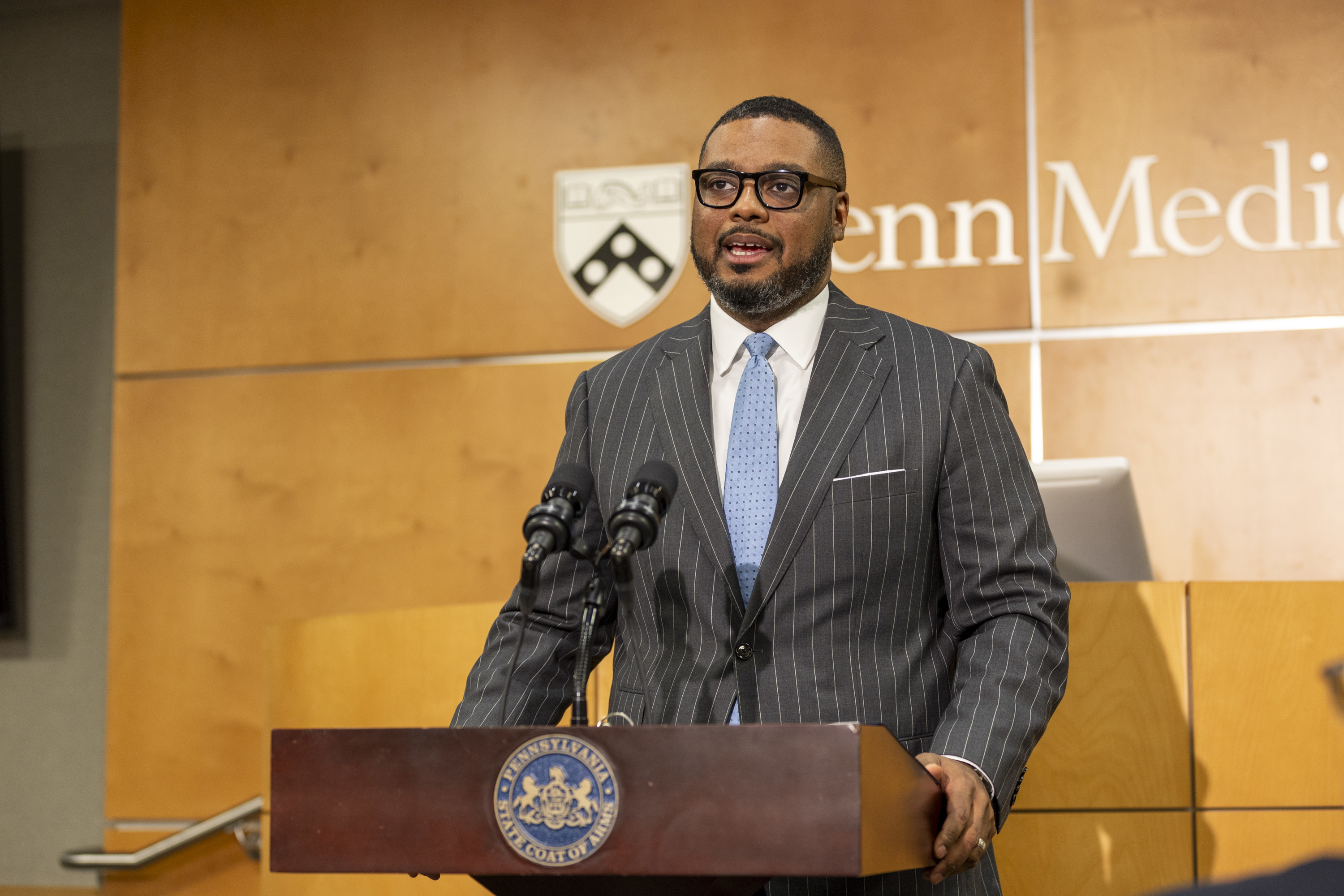
    The new funding for hospital-based violence intervention programs (HVIP) was announced by Pennsylvania Lt. Gov. Austin Davis on Wednesday at Penn Presbyterian Medical Center. One of the recipients, the Penn Trauma Violence Recovery Program, is based at the Penn Medicine hospital in University City.

    Other local awardees include Temple University Hospital in North Philadelphia and the Philadelphia-based nonprofit Urban Affairs Coalition. The coalition received funding on behalf of the Chester Community Coalition to relaunch a program that had been at the now-shuttered Crozer-Chester Medical Center.

    The University of Pittsburgh Medical Center also received funding. The amounts awarded to each program were not announced.

    The Pennsylvania Commission on Crime and Delinquency, which Davis chairs, received 15 applications in total seeking nearly $12 million in funding — four times what was available.

    “Addressing the epidemic of gun violence is a top priority for our administration,” Davis said.

    Lieutenant Governor Austin Davis speaks at a press conference announcing the $3 million in grants for hospital-based violence intervention programs.

    The programs aim to connect patients at risk of repeat violence with resources while they are in a hospital, so they leave with a safety plan. Services can include long-term community-based case management, mentoring, and home visits.

    Since the first HVIP was established in the mid-1990s, dozens have spread around the country and abroad, including in Philadelphia.

    Several local institutions have these programs, including Temple Health, Children’s Hospital of Philadelphia, Penn Medicine, Jefferson Health, and Drexel University. The City of Philadelphia, in conjunction with the area’s Level 1 trauma centers, launched an HVIP Collaborative in 2021.

    Studies have shown these programs reduce rates of repeat violent injuries and recidivism among participants.

    After shootings spiked during the COVID-19 pandemic, gun violence is now declining in Philadelphia. As of July, shootings for the year were at their lowest total since at least 2015.

    Davis noted that Philadelphia has seen a 15% decrease in homicides this year, with roughly four in five gunshot victims surviving their injuries.

    The new funding will allow the Penn Trauma Violence Recovery Program to increase its community presence and mental health programming, said its director, trauma surgeon Elinore Kaufman.

    Through her experience treating victims of violence, she has learned that injuries can be deeper than the physical wounds.

    The program was launched to address social factors often involved in violence by providing psychosocial support and connecting patients with services to help with education, job training, and housing.

    “We’ve worked with patients long enough now that we have high school graduation photos, we have baby pictures,” Kaufman said. “We have patients who want to give back and have joined our patient advisory board to help push us forward.”

  • A man and teen were killed during attempted sale of a Rolex in Germantown, police say

    A man and teen were killed during attempted sale of a Rolex in Germantown, police say

    A man and a teenager were killed Tuesday night in Germantown when, investigators believe, a meeting for the sale of a Rolex watch turned into a robbery, and a shootout erupted.

    Tyree Ware, 30, drove to the 500 block of West Queen Lane to sell a Rolex he had listed for sale online, police said. Quaneef Lee, 16, arrived with an acquaintance to purchase it, they said.

    Detectives believe Lee and the other male then attempted to rob Ware of the watch at gunpoint, according to a law enforcement source who spoke on the condition of anonymity to discuss an ongoing investigation.

    Ware also pulled a gun, the source said.

    When officers arrived, they found Ware lying in the street beside the open door of his silver Nissan Maxima. He had been shot multiple times. A 9mm handgun lay beside him.

    Officers found Lee on the ground behind the sedan, shot once in the chest.

    Ware and Lee were rushed to Temple University Hospital, where they died shortly after 5:30 p.m., police said.

    Officers recovered 11 bullet casings from the scene. Deputy Commissioner Frank Vanore said three guns were used in the shootout, but only one was recovered.

    The Rolex, Vanore said, was found inside Ware’s vehicle.

    Investigators are still working to identify the man who accompanied Lee and who may have killed Ware.

    A family member of Lee, when reached by phone Wednesday, declined to speak.

    The shooting comes as Philadelphia is on pace to record its lowest number of homicides in 60 years. Still, violence persists. Lee is one of at least 12 children shot and killed in the city this year.

  • Mental health workers in Philadelphia unionize following changes in their workplace and patient care

    Mental health workers in Philadelphia unionize following changes in their workplace and patient care

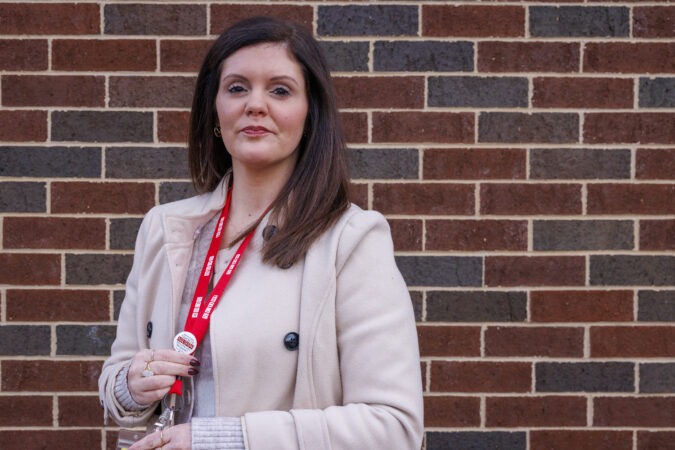
    Mental health professionals at Rogers Behavioral Health in West Philadelphia have formed a union, citing increased workloads and business changes that diminished patient care.

    The nonprofit mental healthcare provider last year transitioned from individual patient sessions to a group care model, said Tiffany Murphy, a licensed professional counselor and therapist at the facility. Some workers there were also moved from salaried to hourly positions then forced to reduce hours, their union has said.

    Some patients and workers have left amid the changes, says Murphy, estimating that 22 of her colleagues have quit in the past year.

    “A lot of us sort of put our jobs on the line by [unionizing], because we believe in the organization, but more so, we believe in our patients. We wanted to provide the best patient care that we possibly could for them,” said Murphy.

    The 19 West Philadelphia Rogers employees, including therapists and behavioral specialists, filed their petition last month to unionize with the National Union of Healthcare Workers. Rogers voluntarily recognized the union, according to NUHW, marking the union’s first unit in Pennsylvania.

    NUHW represents some 19,000 healthcare workers, primarily in California.

    Sal Rosselli, NUHW president emeritus, said the union is pleased that Rogers accepted the petition. “All too often, employers do the opposite and put together very anti-union campaigns, spending all kinds of patient care dollars to prevent their workers from organizing,” he said.

    The Philadelphia metro area, which also includes Camden and Wilmington, has the fifth-highest number of working therapists among U.S. metros, according to the Bureau of Labor Statistics. This region employs just over 500 therapists, with average salary of $79,510.

    A spokesperson for Rogers declined to comment on employees’ organizing efforts and remarks on workplace changes.

    Rogers provides addiction treatment and mental healthcare with facilities in 10 states. In Philadelphia, the nonprofit offers outpatient treatment and partial hospitalization, treating patients with depression, anxiety, and obsessive-compulsive disorder.

    In recent years, Rogers workers in California also unionized with NUHW. Their recently forged union contract includes caseload limits and a cap on how many newly admitted patients can be assigned to each therapist or nurse.

    Thousands of healthcare workers in the Philadelphia area have moved to unionize in recent years.

    Within the past few years, residents at Penn Medicine and the Rutgers University health system finalized their first contracts with their health systems, and attending doctors at ChristianaCare became the first group of post-training physicians in the region to unionize. Residents at Temple University Hospital, Thomas Jefferson University Hospitals, ChristianaCare, and Jefferson’s Einstein Healthcare Network also voted to unionize in early 2025. Residents at Children’s Hospital of Philadelphia narrowly voted against joining a union.

    The organizing push means that about 81% of the city’s resident physicians are unionized.

    What do workers want?

    When Murphy first started working at the Rogers facility in Philadelphia 4½ years ago, she said there was “a really good work-life balance.”

    At the time, clinicians had four patients per day, provided individualized care, and led group sessions. As the organization moved toward group counseling, she said, caseloads have grown, with up to 12 patients in each group.

    The organization hired behavioral specialists to support therapists, said Murphy, but “it was difficult to provide the patients with the care that they really needed and deserved with the new structure.”

    Some patients and staff left because of the new model, said Murphy.

    This year, some salaried workers were switched to hourly, and Rogers started sending workers home due to low patient demand, leaving the rest with larger workloads, according to the union. That meant some used paid time off to avoid going without pay, said Murphy.

    When Philadelphia Rogers employees heard their colleagues in California were unionizing, “That became a bit enticing to us,” said Murphy, noting the workplace had become challenging and sometimes “unbearable.”

    Now, she says, the union members want more manageable caseloads — or pay increases to account for the larger caseloads — and a return to the old pay model for those who were switched to hourly work.

    “We are unionizing to have a voice at work that will allow us to promote a healthier work-life balance as well as high-quality sustainable patient care,” therapist Sara Deichman said in a union news release.

    Where else have mental health workers unionized?

    The organizing in Philadelphia comes as the U.S. faces a shortage of mental healthcare professionals, and in the wake of a demand surge from the pandemic.

    “The industry is forcing fewer providers to care for more and more patients because the focus is on the bottom line,” said Rosselli.

    Staffing concerns plague the healthcare industry generally, said Rebecca Givan, an associate professor at Rutgers University’s School of Management and Labor Relations.

    “If the facility wants to hold down costs, it tries to keep staffing levels as low as possible,” said Givan. “In the case of mental health providers, it can be about shortening appointment times or increasing caseloads so that each provider has a very large number of cases or clients.”

    She says there’s not “a huge amount of union representation” in stand-alone behavioral health facilities, but some public hospitals are unionized.

    Private practice mental health workers can’t unionize because they’re self employed, Givan noted, but “one could argue that they might benefit from collectively negotiating, for example, with the insurance companies that determine their reimbursement rates.”

    NUHW is leading efforts to organize independent providers. The goal, Rosselli says, is to “establish an employer for them so that they can have leverage against insurance companies to increase pay and increase access to patient care issues.”

    The union has already done this in the home care industry in California, Rosselli noted.

    Staff reporter Aubrey Whelan contributed to this article.

  • More than 65,000 immigrants are being held in federal detention, a big increase from when Trump took office

    More than 65,000 immigrants are being held in federal detention, a big increase from when Trump took office

    The number of immigrants confined in federal detention facilities has surged past 65,000, perhaps the highest figure ever and a two-thirds increase since President Donald Trump took office in January.

    The 65,135 in custody across the nation represents a shattering of the 60,000 threshold, which was last passed briefly in August before dropping back down. The new figure is up from 39,238 when Trump was inaugurated, as his administration quickly undertook an unprecedented campaign to arrest, detain, and deport immigrants.

    “It’s quite stunning,” said Jonah Eaton, a Philadelphia immigration attorney who teaches about detention at Temple University’s Beasley School of Law. “They are dead serious about moving as many people out of the country as possible, and keeping them detained while they do it.”

    The data, current as of Nov. 16, come from the Transactional Records Access Clearinghouse, an information-and-research organization that obtains information from ICE and other federal agencies.

    An ICE spokesperson said the agency could not comment on statistics compiled by third parties.

    window.addEventListener(“message”,function(a){if(void 0!==a.data[“datawrapper-height”]){var e=document.querySelectorAll(“iframe”);for(var t in a.data[“datawrapper-height”])for(var r,i=0;r=e[i];i++)if(r.contentWindow===a.source){var d=a.data[“datawrapper-height”][t]+”px”;r.style.height=d}}});

    The Trump administration says it is arresting the “worst of the worst,” criminal immigrants who have committed serious and sometimes violent offenses. But the new data show ― as they consistently have ― that 74% of those in detention have no criminal convictions.

    “The question is ‘What’s going to be the ceiling for this?’ as the administration has designs to expand the capacity to detain individuals as arrests increase,” said Cris Ramon, an independent immigration consultant in Washington. “If the goal is to remove as many people as possible, they’re going to be leaning on the detention centers to be, first and foremost, a staging ground.”

    Ramon said he was not surprised by the high detention numbers, given the Trump administration’s determination to carry out large-scale operations in cities like Charlotte, N.C., and Chicago.

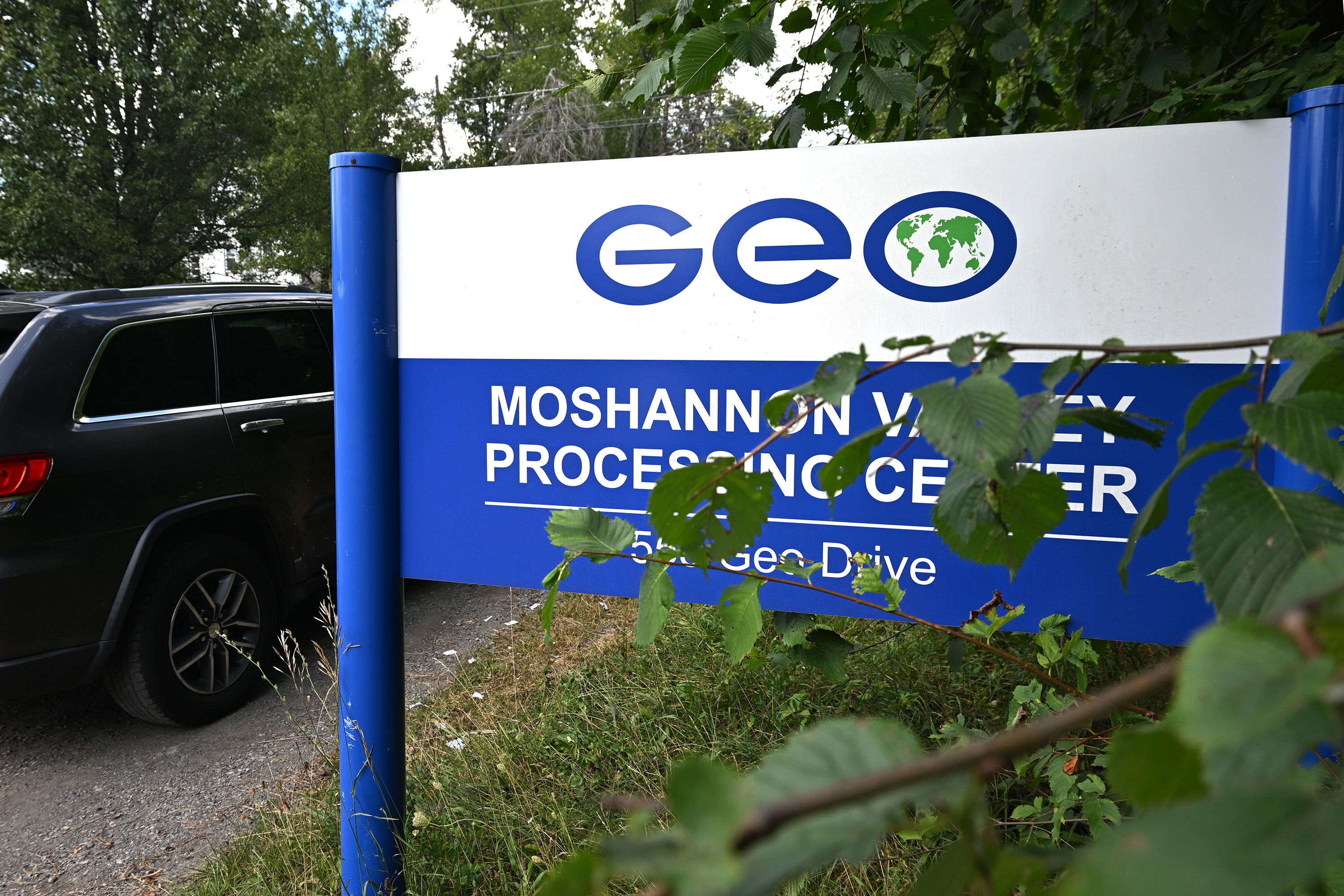
    The Moshannon Valley Processing Center outside Philipsburg, a U.S. Immigration and Customs Enforcement facility in Clearfield County, Pennsylvania that is privately operated by the GEO Group under contract with ICE. It is the largest ICE detention center in the Northeast United States.

    The new figures show that more of those in custody are being arrested by ICE, rather than by U.S. Customs and Border Protection, the agency that conducts inspections at airports and other ports of entry and includes the Border Patrol.

    Today 81% of people in detention were arrested by ICE, up from 38% when Trump took office. The president has demanded that Immigration and Customs Enforcement make more arrests more quickly, and won new funding to encourage that.

    The agency generally operates in the interior United States.

    Many of those arrested in Pennsylvania are sent to the largest detention center in the Northeast, the Moshannon Valley Processing Center near Philipsburg, Pa. Moshannon, as it is known, is a private, 1,876-bed immigration prison operated by the Florida-based GEO Group Inc.

    ICE also holds detainees at the Clinton County Correctional Facility and the Pike County Correctional Facility. And this year the agency began confining people at the Philadelphia Federal Detention Center in Center City.

    New Jersey has two detention facilities, in Newark and Elizabeth, and might be getting a third, in South Jersey. The administration plans to hold detainees at Joint Base McGuire-Dix-Lakehurst, one of two military sites that have been designated for that purpose. The other is Camp Atterbury in Indiana.

    Many of those in custody are subject to “mandatory detention,” meaning they are not allowed to seek release on bond. In the summer, the administration announced a policy change that prevented immigration judges from granting bond to anyone in detention who had entered the United States without documentation.

    The result, according to the National Immigration Law Center, is that the Trump administration has ensured that migrants have almost no way out of detention “other than death or deportation.”

    ICE is arresting, detaining, and refusing to release far more people than before, the law center said, including many who rarely would have been held in the past.

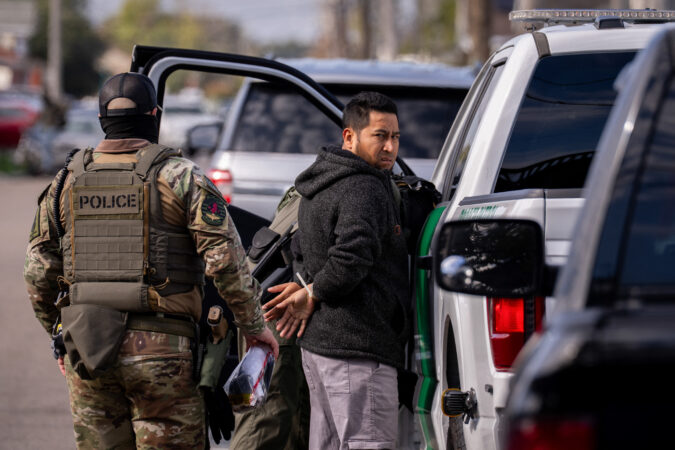
    In Philadelphia and elsewhere, some immigrants have showed up for routine in-person appointments or check-ins, only to be handcuffed and taken into detention. Green-card applicants, asylum-seekers, and others who have ongoing legal or visa cases have been unexpectedly detained.

    Immigration detention is civil in nature, to hold people as they progress through their court cases or await deportation. It is not supposed to be a punishment.

    When Joe Biden assumed the presidency in 2021, there were 14,195 people in immigration detention. That figure more than doubled during his term and eventually topped 39,000.

    “Trump’s cruel mass detention and deportation agenda has reached a previously unimaginable scope and scale,” Carly Pérez Fernández, communications director at Detention Watch Network in Washington, said in a statement.

    She called the new detention figure “a grim reminder” of a larger plan that is “targeting people based on where they work and what they look like, destabilizing communities, separating families, and putting people’s lives at risk.”

    ICE holds detainees across the country, in ICE facilities, in federal prisons, in privately owned lockups, and in state and local jails. As detentions have surged, so has the need for places to house people.

    As of this summer, ICE detained people in all 50 states as well as in Guantánamo Bay, Cuba, Puerto Rico, Guam, the Northern Mariana Islands, and the U.S. Virgin Islands, according to the Vera Institute of Justice in New York.

    Texas had the most facilities with 69, and Florida was second with 40, the institute said.

  • A man died driving on Northwest Philly’s winding, wet roads. The neighborhood has tried addressing the danger for decades.

    A man died driving on Northwest Philly’s winding, wet roads. The neighborhood has tried addressing the danger for decades.

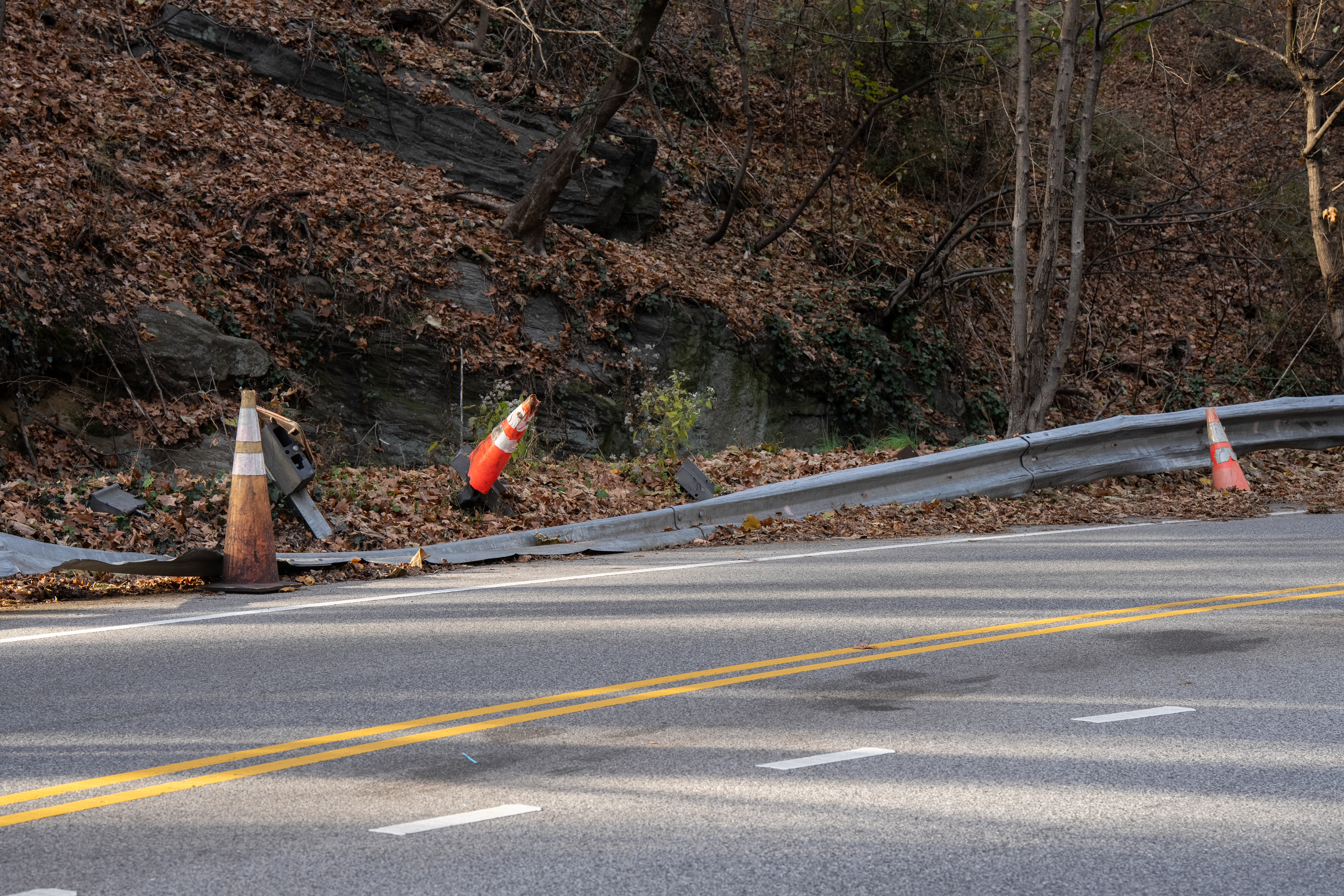
    A 65-year-old man died Sunday after he lost control of his vehicle on Cresheim Valley Drive in Chestnut Hill, striking a downed guardrail and flipping the car upside down into a creek. Just weeks before, another driver veered off the same road but survived.

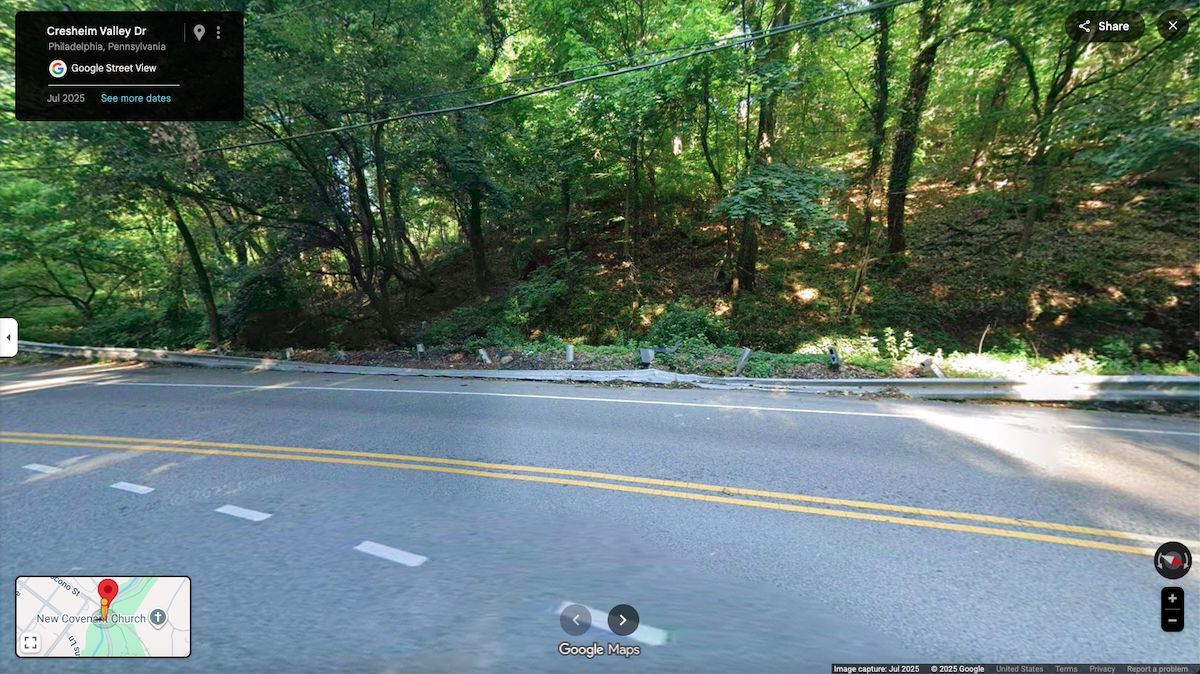
    Compounding this latest traffic death is the fact that the guardrail meant to prevent cars from swerving off the road was broken and nearly flattened from previous crashes, leaving a gap in the guardrails for months, said Josephine Winter, a Mount Airy resident and executive director of West Mount Airy Neighbors (WMAN). “The guardrail was down, and it was previously crumbled so it’s a frequent site of crashes,” she said. Images from Google Maps show the guardrail down as far back as July.

    The Philadelphia Streets Department is aware of the recent crash and is conducting an assessment of the guardrail on Cresheim Valley Road. “The streets department’s top priority is public safety,” a spokesperson said.

    A screenshot of a Google Map’s street view captured in July 2025 shows the downed guardrail on Cresheim Valley Drive in the Chestnut Hill neighborhood of Philadelphia. On Nov. 30, 2025, a 65-year-old man crashed and went over the guardrail, later succumbing to his injuries.

    Neighbors say accidents, sometimes fatal, have plagued the winding roadways in Chestnut Hill and Mount Airy for decades. These traffic safety concerns came to a head with Sunday’s deadly crash.

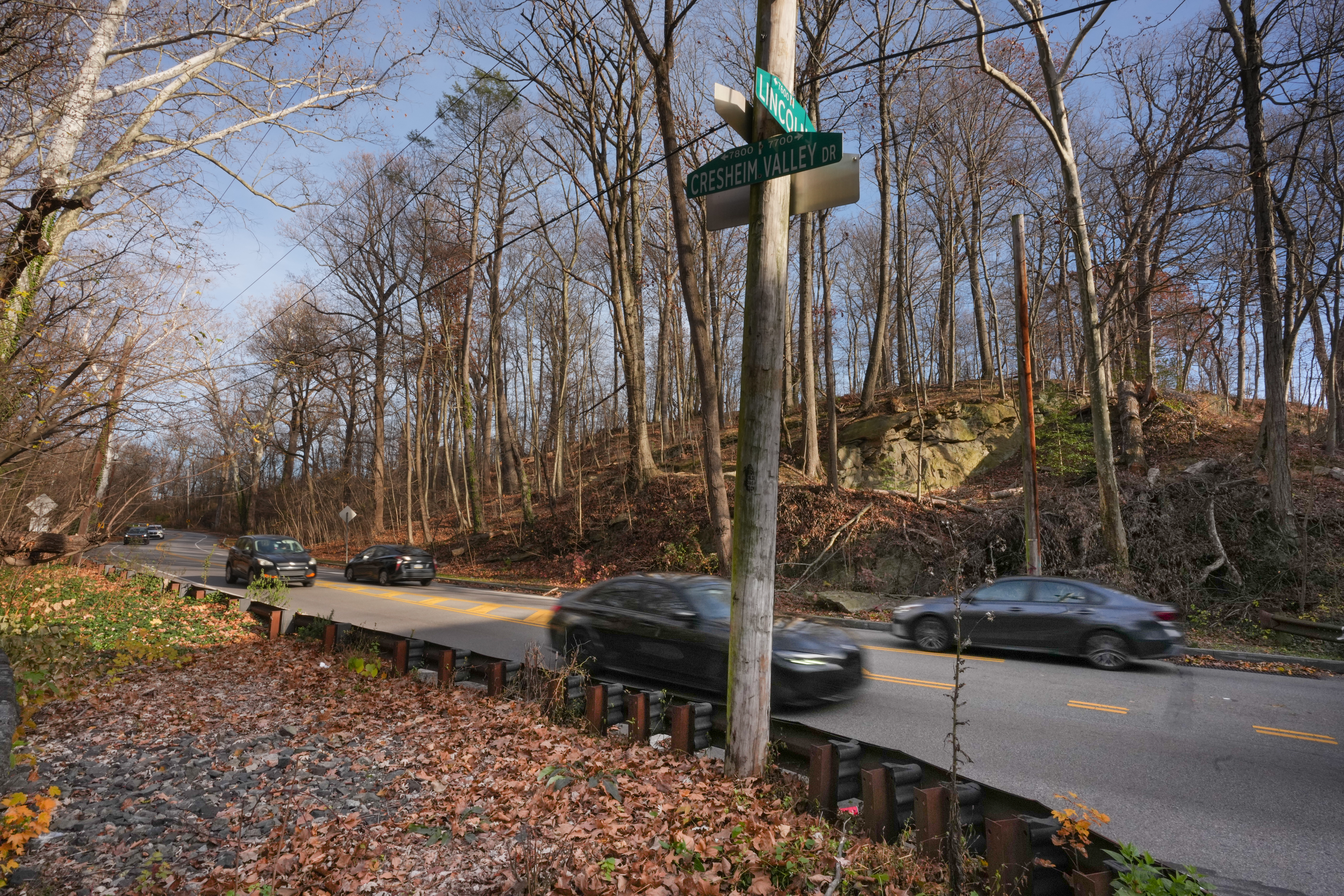
    “It’s a curvy, tricky road, especially when it’s wet, and people tend to speed on that road,” Winter said of roadways like Lincoln and Cresheim Valley Drives, which are lined with trees, have swooping dips and hills, and are prone to flooding.

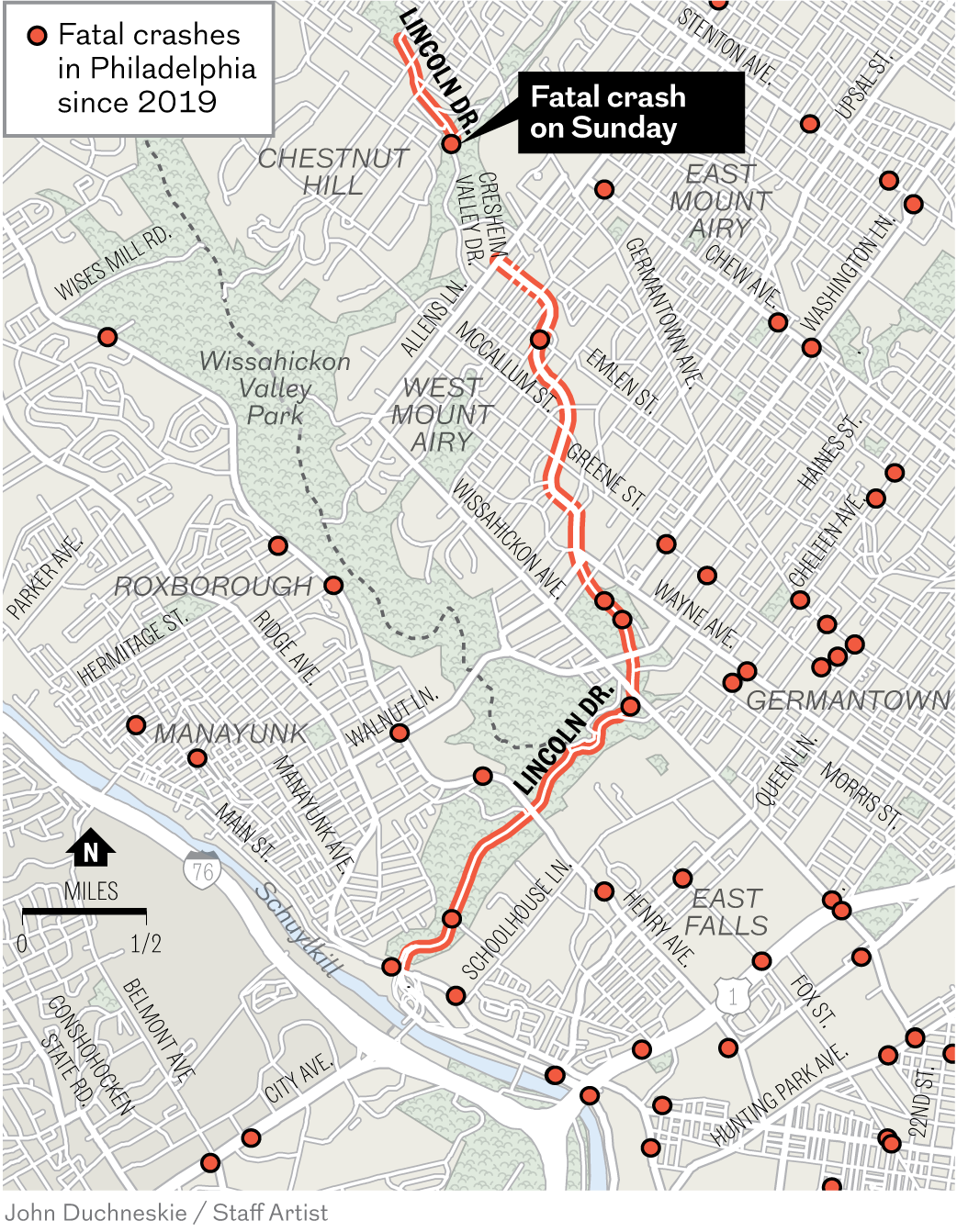
    Map of fatal crashes in Northwest Philadelphia since 2019.

    Since 2019, according to city crash data, at least five people have died while driving on the dark, winding sections of Lincoln Drive, which intersects with Cresheim Valley Drive, prompting many neighbors to fear walking down their street or leading them to invest thousands on giant boulders to protect their home and lawn.

    Winter, who leads WMAN’s traffic-calming committee, and other neighborhood organizations have petitioned for city support, urging the streets department to slow the speed of traffic on Cresheim Valley Drive, Lincoln Drive, and Wissahickon Avenue. The group’s efforts are so ingrained in the fabric of the neighborhood that, when digging through Temple University’s Urban Archives, Winter found an advertisement from 1968 stressing the need for cars in Mount Airy to “slow down to keep kids safe.”

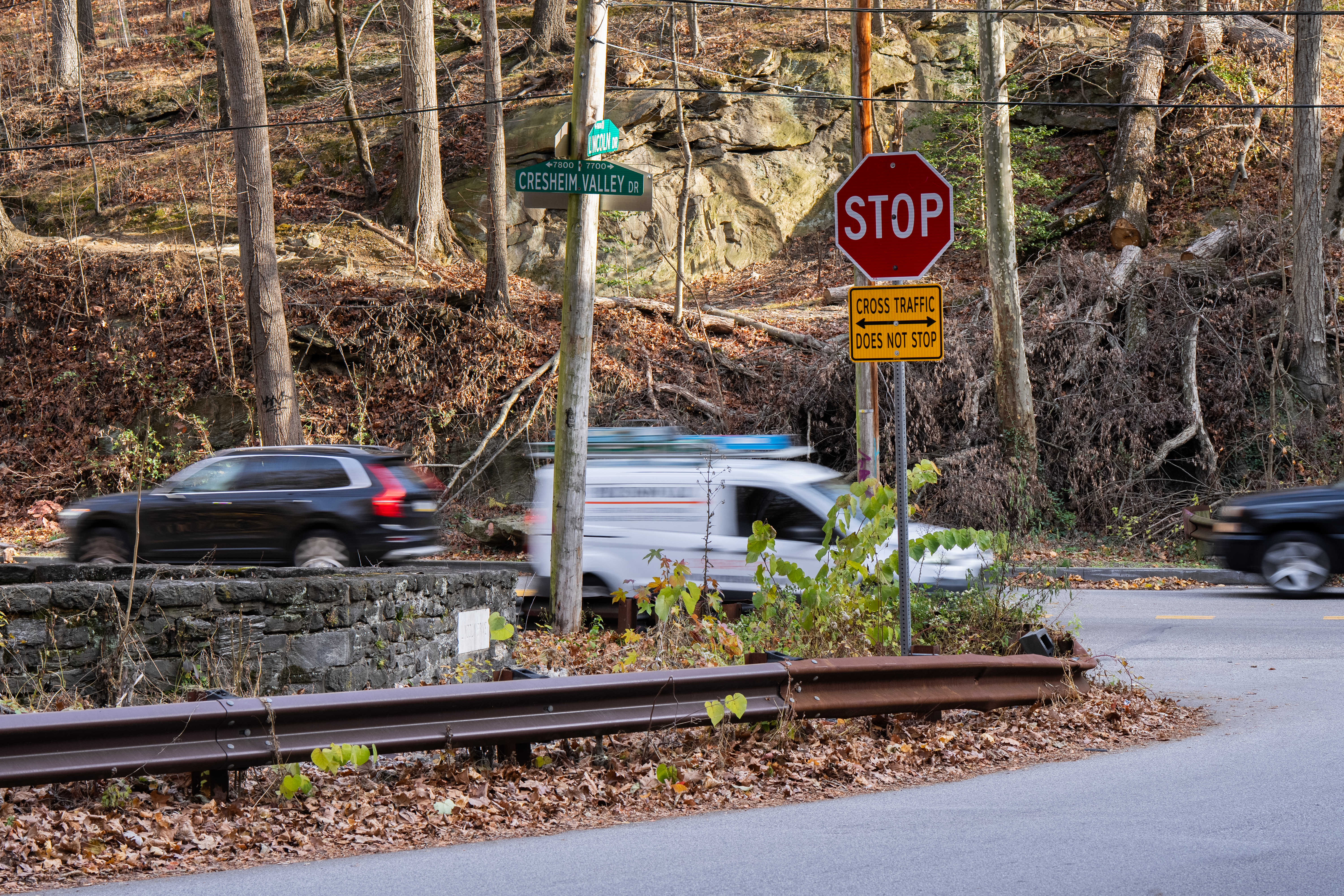
    The intersection of Cresheim Valley Drive and Lincoln Drive, in Philadelphia, PA, Dec. 1, 2025.

    The streets department installed “speed slots,” traffic-calming structures similar to speed bumps, earlier this year along Lincoln Drive between Allens Lane and Wayne Avenue. Along the same stretch of road, the Pennsylvania Department of Transportation installed rumble strips and speed tables to slow drivers down in 2023, in addition to traffic lane separators to keep drivers from using center lanes to pass other vehicles.

    In addition to the recently completed speed slots and traffic-calming measures on sections of Emlen Street, which becomes Cresheim Valley Road, signal upgrades are planned for Lincoln Drive as well.

    However, the work to improve these streets is not over, Winter said. Additionally, the streets department plans do not include changes to Cresheim Valley Drive, where Sunday’s crash happened.

    “We’ll need a collaborative approach as soon as possible to temporarily address the downed guardrail, and then see what the options are moving forward,” Winter said.

    The intersection of Cresheim Valley Drive and Lincoln Drive, in Philadelphia, PA, Dec. 1, 2025.

    Throughout the last decade, locals have suggested better-timed signals, more speed tables, and reducing the number of driving lanes from two in either direction down to one. They also want to see more roundabouts and curb bump-outs in the neighborhood to keep traffic flowing, but at a reasonable speed.

    A mere 50 to 100 feet from Cresheim Valley Drive is a parallel bike trail, where trail organizers like Brad Maule are accustomed to the crashes on the road nearby. Before Sunday’s fatal crash, he remembers two other cars that drove off the side of the road in recent months, not counting the crashes on the roadway itself. The city recently installed pedestrian crossing signs and repainted the crosswalk on nearby Cresheim Road, but Maule hopes speed bumps will follow.

    Cresheim Valley Drive near where it intersects with Lincoln Drive, in Philadelphia, PA, Dec. 1, 2025.

    While Winter said that engineers from the Philadelphia Streets Department were among the first calls she received Monday morning responding to the crash, and that the community appreciates the response, she, Maule, and other neighbors hope that more safety improvements will be considered to save more lives.

    “I’m just looking forward to the new measures of safety that come here,” Maule said. “Hopefully, people will abide by them.”

    Staff writers Max Marin and Dylan Purcell contributed to this article.

  • Temple Health reported a $15 million operating loss in the first quarter of fiscal 2026

    Temple Health reported a $15 million operating loss in the first quarter of fiscal 2026

    Temple University Health System reported a $15 million operating loss in the three months that ended Sept. 30.

    The result for the first quarter of fiscal 2026 was an improvement from the North Philadelphia nonprofit’s $17 million loss last year.

    “We’re pretty happy where we are,” CEO Mike Young said Wednesday. Revenue was above budget and labor costs were on budget in the first quarter for the first time in several years.

    Here are some details:

    Revenue: Total revenue was $800 million, up 13% from $712.5 million a year ago. Outpatient revenue increased by nearly $62 million, much of it from the health system’s specialty and retail pharmacy business.

    Temple participates in a federal program for safety-net hospitals that allows it to buy certain drugs at a discount and then get full reimbursement from insurance companies.

    Expenses: Temple noted in its report to municipal bond investors Tuesday that salaries, including higher pay rates for nurses, and higher drug spending for outpatient infusions and other pharmacy business were the biggest expense increases.

    Notable: On the labor front, several job categories remain hard to fill, Young said. Those are CT techs, nurse anesthetists, and lab techs. “Other than those three [specialties], it’s not where it was three years ago, where you couldn’t find anybody,” he said.