Tag: topic-link-auto

  • Shapiro budget address: $53.2 billion spending plan includes $1 billion for housing and infrastructure, raising Pa. minimum wage to $15 an hour

    Shapiro budget address: $53.2 billion spending plan includes $1 billion for housing and infrastructure, raising Pa. minimum wage to $15 an hour


    // Timestamp 02/03/26 4:26pm

    SEPTA not considering imminent service cuts, fare increases as long-term funding remains unresolved

    SEPTA officials are sketching out their own budget plans but already know it’s not going to look or sound like last year’s “doomsday” scenario.

    “We won’t be talking about deep service cuts and fare increases and layoffs and all the things that were discussed then,” SEPTA General Manager Scott Sauer said in an interview Tuesday following Gov. Josh Shapiro’s budget address.

    Last August, the transit agency implemented service cuts of 20%, including the elimination of some bus routes, and raised fares by 21.5% after the legislature failed to pass new money for transit operations.

    There’s a fiscal cushion now.

    Shapiro flexed $394 million reserved for transit infrastructure projects so SEPTA could spend it on daily operations last year after the legislature failed to pass a bill. Pittsburgh got a similar, proportionally smaller, temporary deal.

    House Majority Leader Matt Bradford (D., Montgomery) said that the latest use of capital funds for mass transit operations deferred the issue for two years, so the General Assembly can agree on a long-term revenue stream to increase state support for public transit in Pennsylvania’s metropolitan areas and beyond.

    “The governor bailed out the legislature again on the issue of transit last year and got us a two-year bridge, which will have us dealing with this issue immediately after the next election,” Bradford said in a Harrisburg press conference.

    SEPTA officials said they will be able to continue robust service through July 1, 2027 because of the converted capital money.

    The maneuver allowed SEPTA to quickly restore the 2025 service cuts; it came as the agency faced a judge’s order to do so.

    Longer term, Shapiro proposed to increase the share of the state sales and use tax devoted to mass transit subsidies by 1.75% for five years. But it wouldn’t take effect until fiscal year 2008, raising an additional $319.6 million in the first year to help strapped public transportation systems.

    It’s the same proposal as last year’s, though projected to generate more because of growth in sales-tax revenue.

    Democrats are pushing to hold Senate GOP lawmakers accountable at the ballot box in November for their failure to find a long-term revenue source last year.

    “Now the people are going to have their say on this,” Bradford said. “Do you support this type of obstruction? Do you support staying in the way of funding mass transit systems in this commonwealth? I think the answer is decidedly not.”

    To be fair, both parties proved unable to reach a compromise but the sticking point was in the Senate, controlled by Republicans.

    Democrats hope the issue will help them flip the state Senate and give them a trifecta of control in the state House, Senate and governor’s mansion.

    For his part, Sauer said the governor’s renewed funding proposal and his rhetorical support in the address will help.

    “The fact that we’re still in the conversation is important,” he said. “That’s the most I can hope for at this stage.”

    Thomas Fitzgerald, Katie Bernard


    // Timestamp 02/03/26 3:40pm

    Senate Republicans pan Shapiro’s budget proposal as overspending

    Senate Republicans were quick to pan Shapiro’s budget proposal as overspending that would harm the state’s economic outlook in the long term.

    In a press conference responding to the budget address Tuesday, Republican leaders said the governor’s proposed spending increases relied on revenue streams that may not be approved by the legislature while perpetuating a structural deficit that would dip into the state’s Rainy Day Fund.

    “We’re going to do everything we can to protect the taxpayer and make sure that the dollars that are allocated are wisely used,” Senate Majority Leader Joe Pittman (R., Indiana) said. “We have to make sure we’re, again, stretching every taxpayer dollar we can and bringing the cost of government down as much as possible.”

    Sen. Scott Martin (R., Lancaster), who chairs the Senate Appropriations Committee, called the spending “mind-boggling.”

    Shapiro’s budget assumes that more than $1 billion in new revenue will come from legalization of recreational marijuana and regulation and taxation of skill games. Pittman did not commit to moving either forward in the state Senate this year.

    Democratic leaders, however, lauded Shapiro’s budget, insisting that Republicans would be forced to support it or come up with an alternative if they wanted to retain their slim majority in the state Senate.

    “I would argue the polls indicate that we have a very popular governor. They tried to obstruct him and his numbers only got more popular,” House Majority Leader Matt Bradford (D., Montgomery) said. “My suggestion is it would be the political imperative, regardless of the policy implications, that they start working with this governor to pass things.”

    Asked whether his caucus disagreed with any part of Shapiro’s budget, or were disappointed to see any items left out, Bradford said no.

    Katie Bernard


    // Timestamp 02/03/26 2:19pm

    Gov. Josh Shapiro proposes $53.2 billion state budget focusing on affordability, development, and raising Pennsylvania’s minimum wage
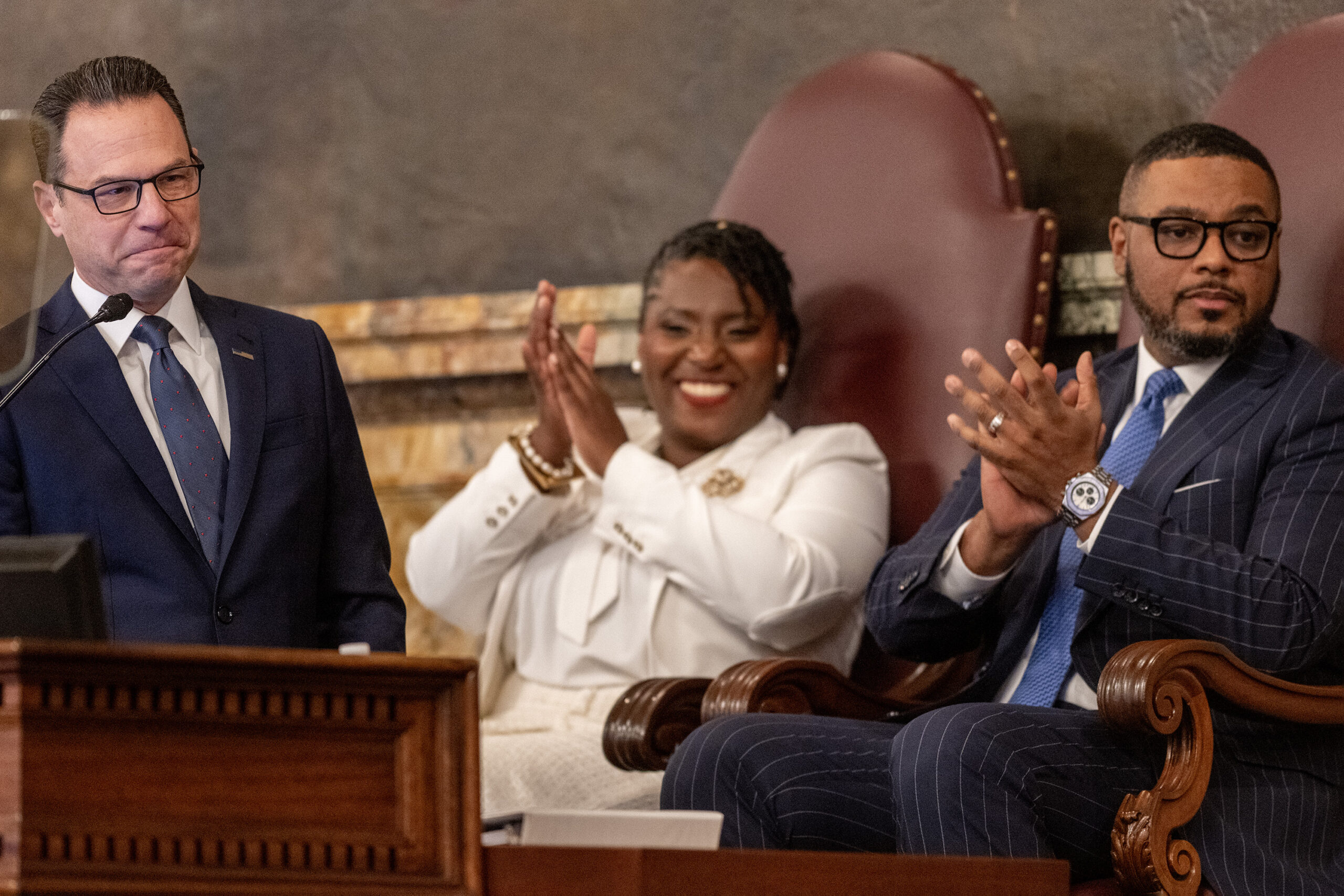
    Gov. Josh Shapiro make his annual budget proposal in the state House chamber in Harrisburg Tuesday, Feb. 3, 2026. Pa. House Speaker Joanna McClinton (left) and Lt. Gov. Austin Davis (right) are seated behind him.

    HARRISBURG — Gov. Josh Shapiro on Tuesday unveiled a $53.2 billion state budget proposal with a focus on affordability and attracting development in Pennsylvania, in what — if approved by the state’s divided legislature — would be a 6.2% increase over last year’s budget.

    Shapiro’s $53.2 billion pitch is likely setting him up for another fight during the election year with Senate Republicans, who control the chamber and have promised fiscal restraint as their top priority and are unlikely to approve a major spending increase. Shapiro’s budget proposal would spend $4.6 billion more than the state is projected to bring in in the 2026-27 fiscal year, requiring the state to pull most of new spending from Pennsylvania’s Rainy Day Fund that currently tops more than $7 billion.

    Last year, Shapiro and House Democrats took 135 days to reach an agreement with Senate Republicans, in what became an at-times ugly battle that underscored the state’s rural-urban divide.

    Shapiro on Tuesday said he wants to avoid another lengthy stalled budget, which forced schools, counties and nonprofits to take out billions in loans to stay afloat during the four-month-long impasse.

    He invited leaders of all four caucuses — Senate Democrats, Senate Republicans, House Democrats, and House Republicans — to meet on Wednesday to start budget talks much sooner than prior years. They all agreed to attend, he added.

    “We all recognize it took too long last year and that had real impacts on Pennsylvanians, but we learned some valuable lessons through that process,” Shapiro said in his address lasting an hour and 24 minutes. “We learned that we all need to be at the table, and that we all need to be at the table sooner.”

    Gillian McGoldrick, Katie Bernard


    // Timestamp 02/03/26 1:34pm

    Shapiro takes aim at grid operator PJM, utility companies for high rates

    Pennsylvania Gov. Josh Shapiro had sharp words for PJM, the region’s independent electric grid operator, during his budget address Tuesday, saying it has “moved too slow to supply new power,” helping lead to high energy rates to consumers.

    Shapiro and advocates have long criticized the way PJM holds auctions that impact the rates consumers pay to energy providers. On Tuesday, he called for a continued cap on rates of wholesale electricity payments to power plant owners.

    But Shapiro, calling PJM “just one part of the problem,” also took aim at utility companies, saying they have “too little public accountability or transparency.”

    “That’s going to change,” Shapiro said.

    According to the governor, only about 20% of the amount people pay on utility bills comes from energy use.

    “Another big chunk comes from fees and costs that your local utility company charges to get electricity to your home,” Shapiro said. “Utilities companies in Pennsylvania make billions of dollars every year, while at the same time, they’ve increased the cost for consumers.”

    Shapiro said major utility providers, such as PECO have agreed to take four steps to rein in costs. PECO serves 2,100 square miles in Southeastern Pennsylvania and provides electricity to up to 1.7 million customers.

    The steps are:

    • End so-called “black box” settlements, which are confidential negotiated agreements between utility companies and regulators that determine rate changes, and agree to set prices transparently.
    • Enact “common sense reforms” to ban “deceptive contracts.”
    • Eliminate “jump fees” utilities charge low-income Pennsylvanians to have their services reconnected “something that literally can be done with the press of a button.”
    • Work to extend protections for low-income and vulnerable residents from shut-offs while managing unpaid bills.

    Frank Kummer


    // Timestamp 02/03/26 1:26pm

    Budget talks to start Wednesday

    Budget talks will start tomorrow.

    In an apparent effort to dodge a repeat of last year’s five month (135 day) budget impasse, Shapiro announced he would be meeting with legislative leaders on Wednesday to begin budget talks.

    Shapiro said he had invited the leaders of all four caucus in the House and Senate to his office and each had accepted.

    “We all recognize it took too long last year — and that had real impacts on Pennsylvanians,” Shapiro said. “But we learned some valuable lessons through that process.”

    The impasse resulted in temporary cuts to social services, schools and counties across the state as budget talks stretched on into November and state dollars stopped flowing.

    This played out in Pennsylvania alongside a federal government shutdown that threatened critical food assistance dollars. But Shapiro said the final deal showed progress.

    “At a time when dysfunction and chaos reigns elsewhere, Pennsylvania is showing that we can be a model for steady progress when we come together, treat others with respect, and find ways to extend a helping hand to our neighbors,” he said.

    Katie Bernard


    // Timestamp 02/03/26 1:24pm

    Shapiro calls for renter protections including a statewide cap on rental application fees

    Shapiro also used his budget address to call for protections for households that either rent their homes or rent the land their homes sit on.

    He called for a statewide cap on rental application fees, “limiting them to the actual cost of screening, and prohibiting landlords from charging fees before a prospective tenant can view a property.”

    Philadelphia City Council members last year passed legislation that prohibits rental property owners from charging rental application fees of more than $50 or the cost of running a background and/or credit check, whichever is less. And landlords are banned from charging application fees unless they are used to cover the cost of these checks.

    The law took effect two months ago.

    City Councilmember Rue Landau, who introduced the legislation, said some renters had been paying $100 or more per application, which adds up when tenants apply to multiple properties.

    Shapiro also called for protections for owners of manufactured homes, which are single-family dwellings often built off-site and placed on a lot. These households own their homes, but many of them rent the land their homes sit on.

    Manufactured homes represent one of the most affordable forms of homeownership. But homeowners are often left vulnerable, because they have no other option than to pay increased rent costs if they want to keep the homes they own. Manufactured-home communities are increasingly being bought by private equity companies and other institutional investors, and rent hikes tend to follow.

    Across Pennsylvania, 56,000 households live in these communities, Shapiro said. He asked lawmakers to limit the rent increases that landowners can charge.

    Last year, New Jersey enacted a law that limits annual rent increases to 3.5% for these lots. Landlords who want higher increases must ask the state’s Department of Community Affairs for permission.

    Michaelle Bond


    // Timestamp 02/03/26 1:23pm

    Budget proposal includes $10 million increase for recruiting and retaining childcare employees

    Shapiro proposed an additional $10 million toward recruiting and retaining childcare employees.

    “Last year, we all – all of us – identified a problem that we don’t have enough childcare workers, and that’s because we don’t pay them enough,” said Shapiro.

    In response to the need, the state launched a program to pay 55,000 childcare workers a bonus of $450.

    “We showed them the respect that they deserve,” said Shapiro.

    On Tuesday Shapiro proposed increasing the recruitment and retention bonus from $450 to $630 as he noted the program has seen overwhelming demand.

    “That’s more money in the pockets of our childcare workers, and more available child care for Pennsylvania families. It’s a win, win,” he said.

    Staffing shortages plague the childcare sector in Pennsylvania and nationally, and the need for workers is expected to continue to grow. Employees who work as care providers are some of the lowest paid workers, earning on average roughly $30,000 annually in Philadelphia, Montgomery, Delaware, Chester and Bucks Counties.

    And when parents can’t find adequate childcare, the Pennsylvania economy takes a hit, the Inquirer has reported. The state loses out on $6.65 billion annually when parents have to call out of work or lose their job due to childcare issues.

    Ariana Perez-Castells


    // Timestamp 02/03/26 1:20pm

    Shapiro renews calls for lawmakers to legalize marijuana in Pennsylvania

    Shapiro renewed his calls for the state General Assembly to legalize recreational, also known as adult-use, marijuana as a way to drive needed revenue in the commonwealth.

    According to the National Conference of State Legislatures 24 states, including Pennsylvania’s neighbors in Delaware, New Jersey, New York and Ohio, have legalized adult use marijuana. Pennsylvania is among 14 states that allow marijuana for medicinal purposes only.

    The governor’s budget proposal calls for a 20% tax on marijuana products sold with sales beginning on January 1 of next year. According to budget documents from his office that tax would provide Pennsylvania with $729 million in revenue in its first year.

    The figure is nearly $200 million more than Shapiro’s administration projected for revenues from legalization when he made the same proposal in last year’s budget.

    A Shapiro administration official credited the increased projection as a result of increased interest among marijuana companies who would want to come to Pennsylvania and purchase licenses.

    Approving recreational use of cannabis will be an uphill battle for Shapiro with a split legislature. Even as the federal government moves towards rescheduling marijuana and opening the door to more research, Senate Republicans have been reluctant to legalize the drug in the commonwealth.

    Katie Bernard, Gillian McGoldrick


    // Timestamp 02/03/26 1:10pm

    Shapiro pushes for more housing construction

    If Pennsylvania doesn’t take action to build and preserve more housing, it will be short 185,000 homes by 2035, Shapiro said during his budget address. He called for the construction of more homes and the reform of local land-use laws to allow for more housing and lower housing costs.

    Shapiro’s budget would create a $1 billion fund, supported by the issuing of bonds, to pay for a range of infrastructure projects. He called the fund “a major investment in building new housing.”

    “We need hundreds of thousands of new homes,” Shapiro said. “This is how we build them.”

    He also noted that local land-use laws vary across Pennsylvania’s 2,560 municipalities. He called for the state to create a catalog of local zoning rules and to help local governments reform ordinances to allow for more housing.

    Shapiro called for local governments to allow for the construction of more homes near mass transit, streamline the construction of mixed-use development, and allow accessory dwelling units – such as in-law suites, garage apartments, and backyard cottages.

    Most Pennsylvania municipalities ban the building of accessory dwelling units or make building them difficult.

    The day before Gov. Shapiro’s budget address, a group of lawmakers in the state House announced a bipartisan package of bills meant to make homes more affordable. The two bills that have been introduced so far would allow for more housing density.

    One would allow accessory dwelling units – such as in-law suites, garage apartments, and backyard cottages – in areas zoned for single-family housing. Property owners would have the right to build ADUs without asking their local government for a special exception, but municipalities would still be allowed to make “reasonable” restrictions, state Rep. John Inglis (D., Allegheny) said at a news conference Monday.

    ADUs are “a simple way to add affordable housing without changing the character of our neighborhoods, and we can’t afford to keep blocking these solutions,” Inglis said.

    Another bill would promote the construction of duplexes, triplexes, and quadplexes in certain areas that are zoned for single-family housing. It would require larger municipalities to allow these types of multifamily housing “while still allowing local governments to reject certain projects that might not be viable in their communities,” Inglis said.

    Pennsylvania isn’t building enough housing, and that lack of supply is hiking prices for homeowners and renters, the Pew Charitable Trusts said in a report released last year.

    Pennsylvania is one of the states that has allowed the least amount of housing to be built. It ranked 44th for the share of homes approved to be built from 2017 to 2023, according to the nonpartisan, nonprofit research and public policy organization.

    Pew researchers cited restrictive local land-use laws as a cause and recommended the loosening of zoning rules.

    “The bottom line is the best way to bring high rents and housing costs down is to build more housing and to build more varied types of housing,” Seva Rodnyansky, a manager in Pew’s housing policy initiative, told The Inquirer last year.

    Michaelle Bond


    // Timestamp 02/03/26 1:09pm

    Shapiro urges GOP lawmakers to pass statute of limitations reforms for child sex abuse victims

    After years of advocating for statute of limitations reform to allow a window for child sex abuse victims to sue their abusers, Shapiro placed the blame for the policy’s lack of movement at the feet of Senate Republicans in Tuesday’s address.

    “Stop cowering to the special interests, like insurance companies and lobbyists for the Catholic Church,” Shapiro said to Senate Republicans as Republicans in the chamber booed.

    The governor has pushed for the window since his time as Attorney General when, in 2018, his office released a grand jury report on clergy abuse in the state that called for the window among other reforms.

    The policy passed the General Assembly as a constitutional amendment in 2020 but failed to reach voters’ ballots due to an administrative error from Gov. Tom Wolf’s Department of State.

    Ever since, the policy has stalled as Senate Republicans have sought to tie it to constitutional amendments relating to voter identification and other GOP priorities.

    The governor, who has faced criticism from some survivors for not being a strong enough advocate for reform enough since becoming governor, made an impassioned plea to Senate Republicans, urging them to “stop trying justice for abused kids to your pet political projects.”

    “It is shameful that this hasn’t gotten done here in Pennsylvania when almost 30 other states have followed our grand jury report and passed it in their legislatures,” Shapiro said. “Pass statute of limitations reform this year — and give survivors of sexual abuse the chance to confront their abusers in court.”

    Katie Bernard, Gillian McGoldrick


    // Timestamp 02/03/26 1:02pm

    ‘Stop delaying’: Shapiro again asks legislators to raise the state minimum wage

    On Tuesday, Gov. Josh Shapiro once again asked legislators to raise Pennsylvania’s minimum wage.

    “I am calling on the General Assembly to stop delaying and put a minimum wage bill on my desk, and I will sign it,” he said to audible cheers.

    Some in the crowd chanted “raise the minimum wage” as he brought up the issue. Shapiro responded to the chant, noting that 25 senators stood to applaud raising the minimum wage, including two Republicans: Sen. Joe Picozzi (R., Philadelphia) and Sen. Devlin Robinson (R., Allegheny).

    Since taking office as governor, Shapiro has backed raising the minimum wage at every annual state budget address.

    Pennsylvania’s minimum wage is the federal minimum of $7.25, which was set in 2009. Neighboring states all have higher minimum wages. In January, New Jersey’s minimum wage increased by $0.43 to $15.92 – making it more than double that of Pennsylvania’s.

    “Our minimum wage in Pennsylvania has been stuck at $7.25 for the last 16 years. In that time, every single one of our neighboring states has raised the wage for their workers,” he said.

    Shapiro noted Tuesday that raising the minimum wage to $15 an hour would save the state $300 million on entitlement programs like Medicaid.

    “If you aren’t going to do this because it’s the right thing to do, or because it would let more families put food on the table for their kids, then do it because it’s going to save us $300 million, shrink our entitlement budget by growing our workforce and putting more money back in workers’ pockets,” he said.

    In order to cover their basic needs, an adult living in Pennsylvania needs to earn $22.91 an hour, according to a living wage calculator developed at the Massachusetts Institute of Technology.

    Only 2% of hourly wage earners in Pennsylvania earn the minimum wage or less, according to a report from the state’s Department of Labor and Industry based on 2022 data.

    Ariana Perez-Castells


    // Timestamp 02/03/26 12:56pm

    Shapiro calls for faster licensing for social workers and other professionals

    Shapiro, who has touted himself as a good for business governor and last year worked with Republicans to approve building permitting reform, asked lawmakers to help him move that work forward in reducing licensing time for Pennsylvania professionals.

    He called on the General assembly to approve reforms allowing social workers to be licensed in conjunction with graduate school, helping to address a shortage in the state, and he called for lower wait times for other professionals like barbers and pharmacists.

    “We’ve put ourselves at a competitive disadvantage by incentivizing workers to go to another state,” he said.

    Katie Bernard


    // Timestamp 02/03/26 12:47pm

    Shapiro proposes adding $5 million to Pa.’s student teacher stipend program

    As Pennsylvania continues to struggle with teacher shortages, Shapiro proposed adding another $5 million to the state’s student teacher stipend program — bringing the program up to $35 million.

    Growing the program, which provides $10,000 to student teachers completing their required placements, will “ensure there are more well-trained teachers,” Shapiro said. He called out a teacher from Susquehanna Township, Hallie Sill, who he said had told him how the stipend program that launched in 2024 had helped her land a job after graduating from the University of Pittsburgh.

    “Let’s increase our commitment to this initiative that we know works,” Shapiro said.

    Maddie Hanna


    // Timestamp 02/03/26 12:45pm

    Budget would add $18 million in funding for career and technical education

    The governor wants to increase funding for career and technical education in the state by $18 million, bringing up total funding for these initiatives to $200 million.

    He noted that career and technical education, apprenticeship and vocational technical program funding has increased 50% since he took office.

    “We’ve registered 231 new pre-apprenticeships and apprenticeships, and more than 39,000 of our fellow Pennsylvanians have participated in an apprenticeship during my time as your governor in fields ranging from welding to nursing to dairy herd management,” said Shapiro. “Those investments are making a meaningful difference, and they’re creating pathways of opportunity.”

    He highlighted that some workers in the state lack a high school degree.

    “We can’t lose sight of the fact that there are literally hundreds of thousands of Pennsylvanians who could be added to the workforce if we take care to give them the tools they need to succeed, said Shapiro. “Take the 614,000 Pennsylvania adults who don’t have a high school degree, for example. That’s a ton of untapped potential.”

    Ariana Perez-Castells


    // Timestamp 02/03/26 12:41pm

    Shapiro introduces ‘GRID’ plan for the rise of massive data centers

    Saying the U.S. is in a race to dominate artificial intelligence, Pennsylvania Gov. Josh Shapiro announced a new plan he says will protect consumers against rising energy costs associated with data centers, while also easing a path for tech companies to build.

    The Governor’s Responsible Infrastructure Development (GRID) plan would make data center developers either bring their own power generation or pay for any new generation they’ll need, “not saddling homeowners with added costs because of their development.”

    Shapiro said too many data center proposals have been “shrouded in secrecy” but that they are crucial to the U.S.

    “The United States is locked in a battle for AI supremacy against China. Look, I don’t know about you, but I’d much rather the future be controlled by the United States of America and not Communist China,” Shapiro said.

    Components of the plan include:

    • Commit to “strict transparency standards.”
    • Engage communities.
    • Hire and train local workers from Pennsylvania.
    • Enter into community benefit agreements.

    In return, developers would be “speed and certainty” in getting permits, as well as qualifying for tax credits.

    “I know everyone … wants to see our economy grow and create more jobs and more opportunity,” Shapiro said. “But I also recognize this is unchartered territory, so let’s come together, codify these principles and take advantage of this opportunity.”

    Frank Kummer


    // Timestamp 02/03/26 12:37pm

    Shapiro proposes ensuring access to recess for Pennsylvania students

    The governor made another proposal for Pennsylvania schools: ensuring they have recess.

    “Recess, to me, isn’t just an extra block on the schedule. I would argue it’s just as critical as learning math and science and English,” Shapiro said.

    He said he had directed the Pennsylvania State Board of Education to develop recommendations to “guarantee recess for our students.”

    Maddie Hanna


    // Timestamp 02/03/26 12:31pm

    School day cell phone ban would create a ‘healthy, productive learning environment,’ Shapiro says

    Shapiro repeated his support for banning cell phones during the school day — saying kids need fewer distractions for a “healthy, productive learning environment.”

    “Students need to spend less time focused on their phones and more time focused on learning, on talking to their friends face to face, and on developing the critical skills that they will need later in life,” said Shapiro, who drew sustained applause for the proposal. (“If applause could vote, we’d have this whole thing done already,” the governor quipped.)

    He told lawmakers: “I know there are bills in both chambers to do this — I urge you respectfully to come together and send a bill to my desk.”

    Shapiro first called for banning cell phones from classrooms on Thursday, joining a growing movement seeking to limit kids’ time glued to devices. A bill in the Senate that would require districts to adopt policies barring phones during the school day could come up for a vote as soon as today; the bill could make Pennsylvania the 24th state to pass a so-called “bell-to-bell” cell phone ban.

    Maddie Hanna


    // Timestamp 02/03/26 12:28pm

    Some proposals garner unanimous standing ovations from lawmakers

    Shapiro’s budget address is a workout for Democratic lawmakers, as they stand up, clap, repeat for each of his ideas.

    As Shapiro mentioned mass transit — which he is proposing a long-term funding stream to begin in 2027 — all Democrats quickly shot up to applaud. Only one Republican lawmaker, Sen. Joe Picozzi (R., Philadelphia) stood to celebrate the mention.

    As Shapiro talked about new standards he plans to implement for new data centers in Pennsylvania, a handful of other Republicans also stood to applaud.

    Two popular proposals that garnered unanimous standing ovations: mentions of first responders and Shapiro’s pitch for restricting children’s access to dangerous AI chatbots.

    Shapiro joked at one point, as he has in prior years, that Republicans should applaud his federal response fund because it will help safeguard money Pennsylvanians deserve. This brought a laugh from Democrats, but no reaction from Republicans.

    Gillian McGoldrick


    // Timestamp 02/03/26 12:26pm

    Shapiro calls for limitations on AI to protect children and seniors

    Shapiro called for a litany of limits on artificial intelligence as the emerging technology presents new risks to children and seniors across the commonwealth.

    In recent months AI developers have faced calls for regulation nationwide and lawsuits from parents who say their children’s relationship with chatbots drove them to self harm.

    Even as Shapiro advocated for making Pennsylvania a hub for AI, he said safeguards needed to be established.

    He called for age verification and parental consent for chat bots, requirements that companies direct mentions of self harm or violence from children to the correct authorities and periodic reminders from AI chatbots that they are not human.

    Furthermore, he called for prohibiting AI chatbots from producing sexually explicit or violent content involving children.

    “This space is evolving rapidly. We need to act quickly to protect our kids,” Shapiro said.

    In addition to for calling for the General Assembly to pass legislation imposing those limits, Shapiro said he had directed state agencies to explore legal avenues to hold app developers accountable.

    Katie Bernard


    // Timestamp 02/03/26 12:08pm

    Shapiro touts list of achievements as governor: ‘We’re solving problems and getting stuff done’

    In his fourth budget address, and final before he stands for reelection in November, Shapiro touted a laundry list of his administration’s accomplishments – from funding of education, to investments in the state’s economy to reducing violent crime across the state.

    “We’re solving problems and getting stuff done to improve people’s lives,” Shapiro said, referencing his campaign’s slogan “get sh*t done.”

    The list of accomplishments closely mirrored the stump speech the governor gave to supporters in Pittsburgh and Philadelphia last month as he formally launched his reelection campaign and his talking points as he hit the cable news circuit on his book tour last month.

    Likely to face State Treasurer Stacey Garrity in the general election next year the centrist Democrat has focused on the idea that he, as governor, can accomplish things for Pennsylvanians regardless of party affiliation.

    He will retain that focus throughout his budget address, and throughout the next year as he campaigns for reelection while raising his national profile ahead of a possible 2028 presidential run.

    Katie Bernard


    // Timestamp 02/03/26 12:07pm

    Proposal includes $565 million funding increase to raise poor schools to ‘adequately’ funded levels

    Gov. Shapiro is sticking to the state’s plan for remedying constitutional underfunding of its public schools — proposing another $565 million increase to raise poor schools to “adequately” funded levels, and reimburse high-taxing districts.

    If approved, Shapiro’s proposal would represent the third of nine installments to fill a $4.5 billion gap, identified after a landmark 2023 Commonwealth Court decision concluded the state had discriminated against poorer districts.

    The governor’s proposed budget also includes a $50 million increase in basic education funding to be distributed to all K-12 schools and a $50 million increase in special education funding.

    And it takes another step to curb payments from school districts by $75 million to cyber charter schools, after funding changes last year that were projected to save districts $175 million. While school districts have long accused charters of draining their budget, the cyber schools have vigorously protested proposals to scale back their payments, arguing their students will be hurt.

    Maddie Hanna


    // Timestamp 02/03/26 12:05pm

    Watch: Gov. Josh Shapiro’s budget address


    // Timestamp 02/03/26 12:02pm

    Shapiro expected to discuss increase in state minimum wage

    Shapiro is expected to discuss an increase in the Pennsylvania minimum wage in his budget address.

    State legislators have proposed minimum wage increases in recent years, but those bills did not become law.

    The labor and industry committee of the Pennsylvania House voted Tuesday to advance a bill that would gradually raise the minimum wage. It would increase to $11 next year, $13 in 2028, and $15 in 2029, with annual cost-of-living adjustments after that.

    Ariana Perez-Castells


    // Timestamp 02/03/26 11:58am

    State mass transit funding fight could be postponed until 2027

    Gov. Josh Shapiro is ready to postpone until 2027 a likely fight over a longer-term enhancement of state mass transit funding, citing the temporary cash infusion the administration arranged last year to bail out SEPTA.

    “We believe that they are stabilized for two years,” said a Shapiro administration official on Tuesday, adding that they are happy to discuss the issue sooner if the General Assembly is willing.

    Last fall after negotiations with the legislature stalled on transit, the administration allowed SEPTA to shift $394 million in state funds allocated for infrastructure projects to pay cover daily operational expenses — the third temporary solution in as many years.

    The money, spread over two fiscal years, allowed SEPTA to reverse 20% service cuts it had imposed last year amid a $213 million deficit. It also was to carry the transit agency through the coming budget year. Shapiro’s proposed spending plan and annual address Tuesday kicked off the negotiations process.

    Yet the governor did put on record his preferred stable funding solution for mass transit, which looks just like the one lawmakers spurned last year.

    The spending plan would increase the share of the sales and use tax devoted to mass transit subsidies by 1.75%, raising an additional $319.6 million yearly to help strapped local and regional public transportation systems, according to budget documents.

    But the proposal would not take effect until July 1, 2027, the start of the fiscal year that will run through June 2028.

    “I bought us two years — but we have to keep working at this, because this isn’t a problem we can ignore,” Shapiro said Tuesday. “Mass transit helps drive our economy — this is an issue of economic competitiveness. You know I’m competitive as hell — and I want to win.”

    Thomas Fitzgerald, Gillian McGoldrick


    // Timestamp 02/03/26 11:55am

    State lawmakers share bipartisan hugs ahead of Shapiro’s budget address

    The joint session of the Pennsylvania House and Senate was called to order, and as the group of state lawmakers awaited the arrival of Gov. Josh Shapiro to the chamber to deliver his $53.2 billion budget proposal.

    Up until Shapiro’s arrival, attendees gave bipartisan, bicameral hugs to lawmakers from their opposing chamber. Several legislators reunited with their former colleagues who had returned to Harrisburg on Tuesday in their current roles as mayors or executives across the state, including Philadelphia Mayor Cherelle L. Parker, who previously served in the state House for 11 years.

    Seated nearby to Shapiro’s left is state Treasurer Stacy Garrity, alongside the other GOP row officers Auditor General Tim DeFoor and Attorney General Dave Sunday. Garrity is likely to challenge Shapiro in November’s midterm election as the state GOP- endorsed candidate for governor.

    Shapiro has delivered some lengthy speeches in past years during his first term, running for more than an hour to lay out his priorities for the upcoming fiscal year.

    Gillian McGoldrick


    // Timestamp 02/03/26 11:30am

    Shapiro’s budget would allot $30 million in performance-based funding for Temple, Penn State and Pitt

    Gov. Shapiro’s budget once again proposes to allot money for performance-based funding for Temple, Pennsylvania State University and the University of Pittsburgh.

    The budget includes $30 million for the effort, half of what Shapiro proposed last year, according to a source close to the process. When the current budget was passed, however, it included no money for performance-based funding this year.

    Whether the initiative will gain legislative support in the new budget year is unclear.

    The three universities currently receive about $551 million in state funding.

    The new performance measures that would determine how the $30 million is allotted include graduation rates, affordability, and enrollment of low-income students and those pursuing degrees in wide-ranging occupations deemed critical for the state. The criteria were developed last year by a bipartisan council of legislative leaders and the acting secretary of education.

    The universities in Pennsylvania’s State System of Higher Education, meanwhile, would be flat-funded for a second consecutive year under the budget, according to the source.

    West Chester, East Stroudsburg, Kutztown, Millersville, Slippery Rock, Shippensburg, Commonwealth, Pennsylvania West and Indiana received the same basic funding this year that they did last year. That was the first time since 2021-22 that the schools did not receive an increase.

    Cheyney also got the same basic funding, but the historically Black college got a special $5 million earmark “to develop and implement an enhanced transfer and workforce development initiative in partnership with a community college.”

    The state’s community colleges also would be flat-funded under the governor’s proposal.

    Susan Snyder


    // Timestamp 02/03/26 10:50am

    Why is Pennsylvania Gov. Josh Shapiro always so mad at PJM, and what is it?

    Pennsylvania Gov. Josh Shapiro is expected to spotlight energy affordability and the rapid expansion of data centers during his annual budget address Tuesday.

    PJM Interconnection — the region’s dominant electric grid operator — is poised to play a central role in that expansion, as the independent organization has been shoved into the national spotlight and subjected to mounting pressure over the past year.

    In many ways, PJM may be one of the most consequential Philly‑area institutions that most residents have barely heard of, even though their electricity supply and monthly bills hinge on its decisions.

    The organization has faced escalating scrutiny nationwide and across the region because of its position as the country’s largest independent grid operator and the challenges tied to surging energy demand.

    But what is PJM and why is everyone always so mad at it?

    Frank Kummer


    // Timestamp 02/03/26 10:08am

    Shapiro will pitch $100 million reserve in the event Trump cuts federal funds for Pennsylvania

    Gov. Josh Shapiro is expected to propose a new $100 million fund to use as a reserve in the event President Donald Trump’s administration opts to withhold federal funds from Pennsylvania.

    Shapiro will pitch the new Federal Response Fund on Tuesday, when he delivers his fourth budget address before a joint session of the state General Assembly.

    While Shapiro’s budget pitch will outline how he believes the state should spend $53.3 billion in state revenue and reserves, it is only a piece of Pennsylvania’s annual spending. In the 2025-26 budget, the state was projected to receive $53.1 billion in additional funds from the federal government, or 40% of the state’s total annual spending.

    Shapiro has repeatedly said the state cannot backfill the federal cuts by the Trump administration and Congress to Medicaid, health subsidies, food assistance, and more, as these cuts total billions in federal funds. The proposed fund would not try to replace this money, but would be available if the Trump administration chooses to withhold federal fund as it did multiple times last year.

    Shapiro is expected to note in his address the 19 times he sued or joined lawsuits against the Trump administration for failing to release federal funds, such as $18 million set aside for state-level Homeland Security funding or $2 billion for environmental and energy projects already appropriated by Congress during former President Joe Biden’s tenure.

    Shapiro frequently sued Trump during his first administration while he was Pennsylvania’s attorney general, and has chosen to continue to legally challenge him in his capacity as the state’s governor on numerous occasions.

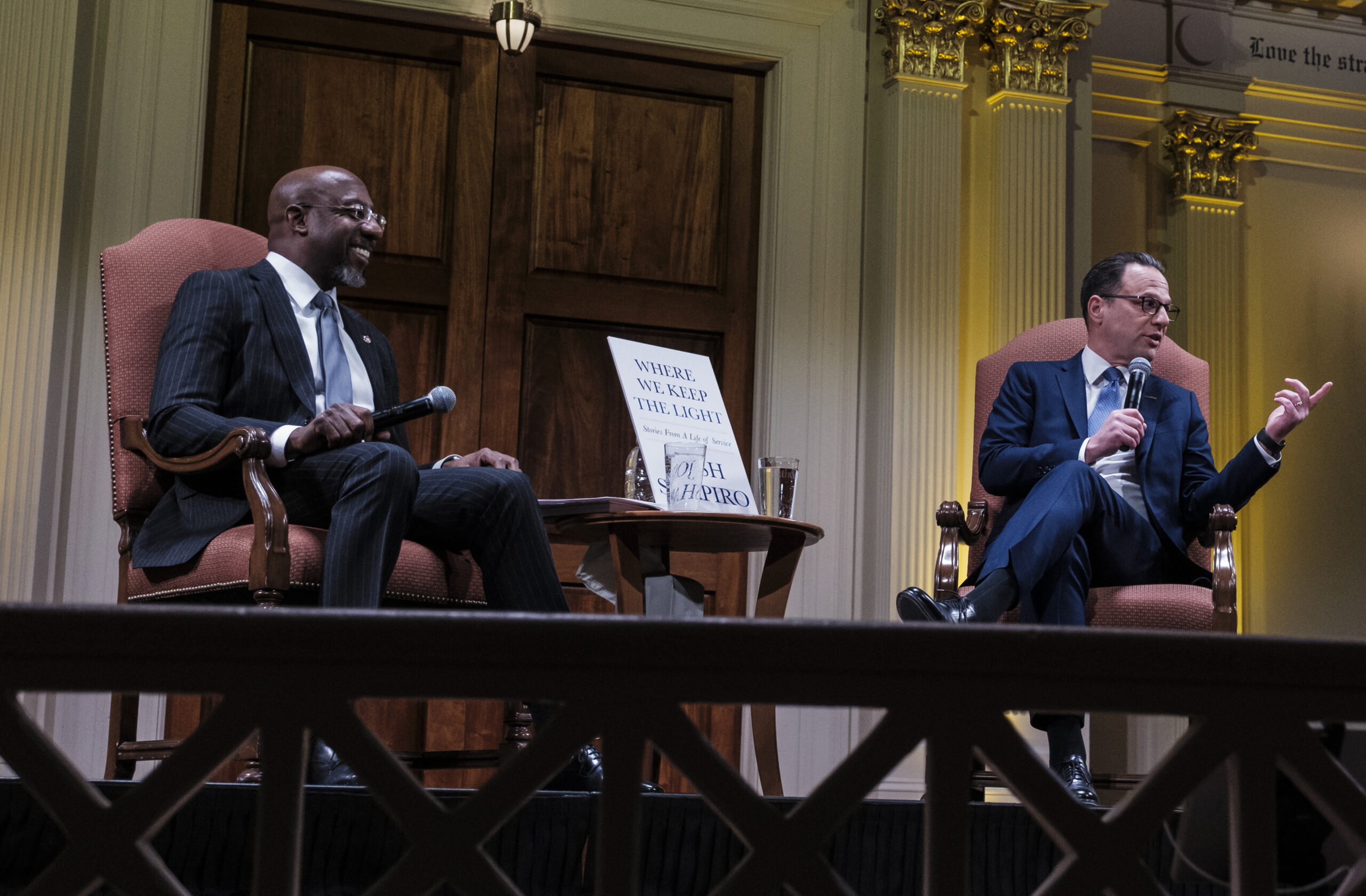
    In his new memoir Where We Keep the Light, which was released last week, Shapiro gave a window into how he decided to join lawsuits as attorney general, noting the many times he beat the Trump administration in court because “we were rooted in the law, not politics.”

    “But while I had profound differences with [Trump], and I didn’t like the way he talked, and I certainly didn’t like the values and viewpoints he espoused, I only sued his administration when I believed that he was actually violating the law,” Shapiro wrote.

    Gillian McGoldrick


    // Timestamp 02/03/26 7:22am

    One reason the budget could get resolved faster than last year

    There is one bright spot for the schools, counties and nonprofits that rely on state funding and which last year had to wait more than four months for the money when lawmakers couldn’t agree: It’s an election year.

    Election years often result in quicker budget resolutions, as lawmakers and officials want to secure money for their districts before they go home to campaign for reelection.

    In 2018, when former Democratic Gov. Tom Wolf was up for reelection, he signed the state budget on June 23 — a week ahead of the July 1 deadline.

    This year, Gov. Josh Shapiro is up for reelection, likely to face a November challenge from State Treasurer Stacy Garrity, the state-GOP endorsed candidate. And many other state lawmakers are in the same boat.

    All 203 seats in the state House and half the 50 seats in the state Senate are on the ballot in November. Several lawmakers have announced they will not seek reelection, allowing for competitive elections to fill the vacancies.

    Gillian McGoldrick


    // Timestamp 02/03/26 7:10am

    Budget address begins an uncertain process for SEPTA

    In the last few years, SEPTA and its fellow public transportation agencies have learned not to expect much from the regular Pennsylvania budget process.

    Rewind to February 2025:

    Gov. Josh Shapiro proposed to generate an additional $1.5 billion over five years to subsidize public transit operations by increasing its share of state sales tax income.

    Senate Republicans, in the majority in the chamber, opposed using the sales tax, though the rate would not have increased.

    They preferred a new source for the state’s transit aid rather than a broad-based levy, and said SEPTA was mismanaged, citing high-profile crimes, rampant fare evasion, and spending decisions.

    Hopes were raised of a deal to use money from a new tax on games of “skill,” slot-like machines that are currently untaxed or regulated — the proverbial magical money pot that would make raising cash painless. It had featured in several budget cycles but again did not come together amid clashing opinions among GOP lawmakers.

    House Democrats, who control that chamber, passed Shapiro’s proposal several times, only to see it choke out in the Senate.

    SEPTA began massive budget cuts in August, including the elimination of 32 bus lines but a Philadelphia judge ordered the agency to reverse them.

    When Shapiro decided negotiations with the legislature were futile, the governor shifted $394 million in state-allocated funds for transit infrastructure projects to pay for daily operations — the third temporary solution in as many years.

    That money would have to last for two years.

    When the state budget passed in December, there was no new transit money in it.

    In November, the administration also sent $220 million in emergency money in November for repairs to the ailing Regional Rail fleet and the trolley tunnel.

    SEPTA officials and transit advocates say they are unsure what’s coming this time around, if anything.

    One thing is clear in advance: A Pennsylvania budget process ain’t Schoolhouse Rock, so hang on.

    Thomas Fitzgerald


    // Timestamp 02/03/26 7:06am

    Shapiro could promote effort to ban cell phones from Pa. schools today

    Gov. Josh Shapiro is backing a proposal to ban cell phones from Pennsylvania classrooms, joining a growing chorus of parents, teachers, and officials seeking to curb school disruptions and detach kids from addictive devices.

    “It’s time for us to get distractions out of the classroom and create a healthier environment in our schools,” Shapiro said in a post on X on Thursday.

    He called on Pennsylvania lawmakers to pass a bill that would require schools to ban the use of cell phones during the school day, “from the time they start class until the time they leave for home.”

    The endorsement from the Democratic governor — who could promote the issue during his budget address Tuesday — comes as school cell phone bans have increasingly become the norm: 31 states have restrictions of some kind on phones, including 23 states with “bell-to-bell” bans barring the use of phones the entire school day, according to Education Week.

    In New Jersey, former Gov. Phil Murphy signed a law last month requiring a bell-to-bell ban to take effect next school year.

    Maddie Hanna


    Housing, affordability, and new revenue: What we’re watching for in Gov. Josh Shapiro’s budget address

    HARRISBURG — Gov. Josh Shapiro on Tuesday is expected to propose a $53.2 billion state budget for the 2026-27 fiscal year, just three months after settling a bitter, 135-day budget impasse that forced schools, counties, and nonprofits to take out loans to stay afloat.

    Shapiro, a first-term Democrat running for reelection this year and potentially poised for higher office, will deliver his fourth annual budget address before a joint session of the Pennsylvania General Assembly, where he plans to pitch an expansive $1 billion housing and infrastructure plan to incentivize new housing development with an overall focus on affordability in the state.

    And as in years past, Shapiro is expected to again propose new revenue streams to fill a more than $5 billion deficit, such as the legalization and taxation of adult-use cannabis, as Pennsylvania is again expected to spend more than it brings in tax revenues.

    Here are three things to watch in Shapiro’s budget proposal.

    Gillian McGoldrick

    // Timestamp 02/03/26 7:00am
  • Black media: Our voice is our most potent weapon and our most sacred sanctuary

    Black media: Our voice is our most potent weapon and our most sacred sanctuary

    Black media matters. Right here, right now, and more than ever before. We are the essential workers on the front lines of a growing resistance movement.

    As the owner and operator of WURD Radio, Philadelphia’s only multiplatform Black talk radio station, my team and I are focused on a singular mission: fighting back against this administration’s attempt to destroy Black history, culture, institutions, and people. We provide our communities with our most powerful weapon: trusted, accurate, culturally specific information.

    The recent arrest of Don Lemon and Georgia Fort, two independent Black journalists, underscores the lengths this government will go to silence dissent — which, by the way, is protected by the First Amendment of the U.S. Constitution.

    The Black press has been fighting a system that has sought to weaken our institutions, marginalize our reporting, and underfund our organizations for centuries. And frankly, for too long, mainstream media has been complicit in maintaining that system of devastating racial oppression.

    Throughout history, the mainstream media has been complicit in maintaining the system of racial oppression by focusing on and reinforcing negative narratives about African Americans, writes Sara Lomax.

    In the 1800s, newspapers profited by running ads to capture enslaved Africans, and throughout history, they‘ve reinforced the caricatures and negative narratives used to justify a racial hierarchy.

    In this new era, it feels as though we are slipping back in time, forced to fight battles we thought were won. The quest for newsroom diversity in mainstream media, for example. The brief glimmer of self-awareness that followed the murder of George Floyd — when pledges were made to hire more reporters of color, diversify sources, and commit to nuanced coverage — was tragically short-lived.

    But if you are Black in America, you know the drill: Racial progress is always followed by a wicked backlash. Now is no different.

    Still, we look to our history for the blueprint of our survival.

    We draw strength from Samuel Cornish and John B. Russwurm, who founded Freedom’s Journal, the first Black newspaper, in 1827. They advocated for the full humanity of Black people nearly 40 years before slavery was abolished nationwide. Imagine the courage and tenacity it took for two Black men to start a newspaper in a country that said it was illegal — in some places, punishable by death or maiming — to read and write.

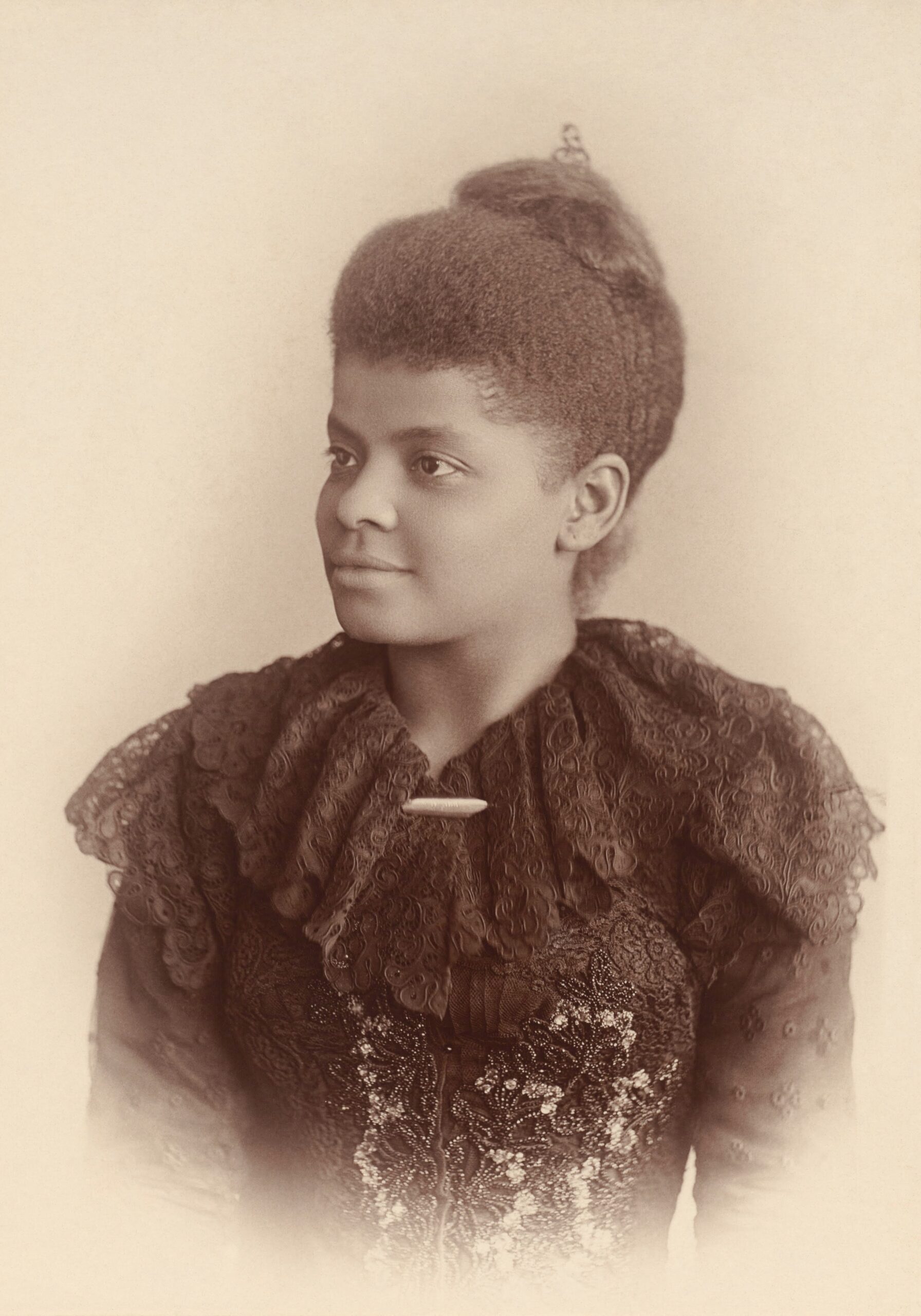
    Ida B. Wells-Barnett, in a photograph by Mary Garrity from c. 1893.

    I am inspired by Ida B. Wells-Barnett, who used the power of her pen to expose the barbaric practice of lynching through the Red Record. She traveled the country with a bounty on her head, determined to move the nation away from its most diabolical instincts.

    I think of Robert Abbott, who launched the Chicago Defender from a landlord’s dining room in 1905. He built a secret network of Black Pullman porters to smuggle his papers into the South, serving as a catalyst for the Great Migration — the movement of roughly six million Black Americans from the rural South to the urban North and West between 1916 and 1970.

    And, of course, there is Christopher Perry, who founded the Philadelphia Tribune in 1884, which remains the longest-running Black newspaper in the nation.

    This history is in our DNA. We call on these ancestors now because we face an overt hostility unlike anything I have seen in my lifetime.

    This moment is clarifying. Statistics highlight the stark disparities in housing, health, and education — but without the historical context of Jim Crow, redlining, and voter suppression, the public is left to believe the administration’s lie: that Black people are “inherently inferior” or merely “unqualified social promotions.”

    This hypocrisy is as old as the nation itself — a country whose “Founding Fathers” codified slavery while declaring all men equal. When your foundational document is based on a lie you refuse to address, it tracks that you would spawn a president who is morally bankrupt. As Malcolm X said, “The chickens are coming home to roost.”

    Yes, our nation has a serious problem. Yet, we persist.

    2025 was the most difficult year of my career. WURD weathered an anti-DEI lawsuit, layoffs after an advertising collapse tied to anti-DEI policies, and the day-to-day exhaustion of covering relentless racial animus in Washington.

    Yet, we did some of our best work, including a special series called Exonerated, which earned us an NAACP Image Award nomination — a rare recognition for local radio. And we’ve launched two new yearlong initiatives to make sure Black voices are centered as part of the 250th birthday festivities.

    Our ancestors didn’t just dream of a free press — they built one. We will continue using all our platforms to tell our stories and center the complexity and diversity of our history, culture, and community.

    We know that in this season of increased tension and hostility, our voice is our most potent weapon and our most sacred sanctuary.

    We don’t just broadcast; we bear witness. And in that witnessing, we find the power to not only endure the present, but to author a future where there is a possibility to be finally and fully free.

    Sara Lomax is the president and CEO of WURD Radio and the cofounder and president of URL Media.

  • Janelle Stelson almost beat Scott Perry in 2024. She keeps outraising him as she prepares for a rematch.

    Janelle Stelson almost beat Scott Perry in 2024. She keeps outraising him as she prepares for a rematch.

    Democrat Janelle Stelson outraised U.S. Rep. Scott Perry for the second quarter in a row in her bid to flip the Central Pennsylvania district, which could determine control of the House in November.

    Stelson, who lost by a little more than 1 percentage point to Perry in 2024, has raised more than $2.2 million since launching her rematch campaign in July. She has outraised Perry in both quarters since her kickoff and has more cash on hand than the incumbent Republican when taking his campaign debt into consideration.

    Perry, a close ally of President Donald Trump, appears to be in the toughest fight of his political career. The seven-term lawmaker continues to be a Trump loyalist even as other swing-district Republicans in the state increasingly look to distance themselves from the president.

    Stelson’s strong fundraising haul indicates Democrats think they can finally flip the seat this year in a more favorable environment after Stelson came close in 2024 even though Trump carried the state and led a red wave.

    Stelson, a former TV anchor and former Republican, has again rooted her campaign in attacks on Perry and Trump. She thinks it will work this time.

    “I think the story of Scott Perry just keeps getting worse,” Stelson, 65, said in an interview. “He’s somebody who I covered for years on the news, and people have just really had enough. After more than a decade in Washington, he’s caused a lot of problems.”

    Perry, 63, a member of the conservative House Freedom Caucus, voted last month against a Democratic-led bill to restore recently expired healthcare subsidies amid a national spike in insurance premiums, a vote Stelson has seized upon. Three other Pennsylvania Republicans who represent swing districts — U.S. Reps. Brian Fitzpatrick, Rob Bresnahan, and Ryan Mackenzie — voted for the measure.

    Stelson would need to win the Democratic primary in May to set up the November rematch. She is facing Dauphin County Commissioner Justin Douglas, a progressive pastor, who has raised under $85,000 this year. Perry also has his first primary challenge, from Karen Dalton, a retired attorney for Harrisburg Republicans, who reported raising a little more than $11,000 since launching her campaign.

    Perry raised more than $2.9 million in 2025, and Stelson has raised $2.2 million since she launched her campaign in July. Stelson raised more than $946,000 from October through December, beating Perry’s haul for the quarter of $780,031.

    Stelson ended the year with $1.52 million cash on hand, while Perry had $1.66 million. But Perry’s campaign also has nearly $280,000 in debt, which would put Stelson ahead when factored into the totals.

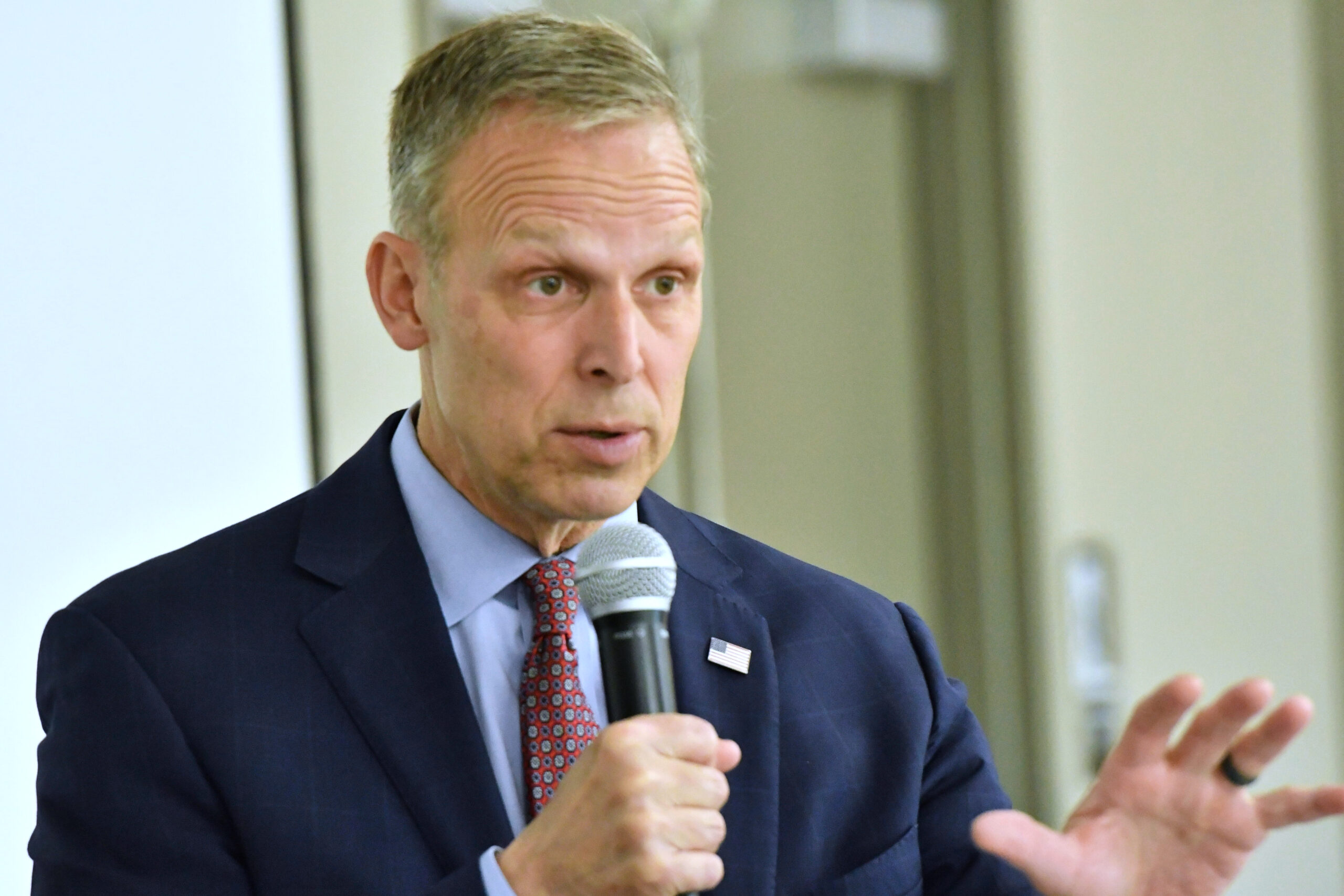
    FILE – U.S. Rep. Scott Perry, R-Pa., speaks during a campaign event in front of employees at an insurance marketing firm, Oct. 17, 2024, in Harrisburg, Pa.

    The nonpartisan Cook Political Report rated the district as a toss-up alongside Mackenzie’s Lehigh Valley district, marking them as among the most competitive races in the country.

    Perry campaign spokesperson Matt Beynon said Perry’s fundraising last quarter was “incredibly strong” and pointed to how he outraised fellow swing district Republicans Bresnahan and Mackenzie during that stretch.

    Beynon said Perry is in a better position to ward off a Democratic challenge this year because his district has emerged as a priority for national Republicans, landing on the National Republican Congressional Committee’s Patriots Program — a list of priority races that he was not on in 2024.

    “Seeing the results last go-around, and seeing how hard we fought to make sure that the congressman was reelected, I think did open some eyes, and the congressman has been able to make the case that he needs support, too,” Beynon said in an interview.

    He said it has been “a learning experience for folks to understand” that the district has become increasingly blue in recent years. The 10th Congressional District includes Dauphin County and parts of York and Cumberland Counties, and is home to Harrisburg and Hershey.

    Perry declined to be interviewed for this article.

    Stelson said Republican voters in the district who have historically voted along party lines are “really waking up” and are beginning to view Perry as more of an “extremist” than a Republican.

    She criticized Perry for urging his colleagues to throw out Pennsylvania’s votes hours after the Jan. 6, 2021, attack on the Capitol. She also pointed to his vote against awarding the Congressional Gold Medal to Capitol Police officers, as well as his support for Trump’s One Big Beautiful Bill Act, which made cuts to Medicaid and SNAP in order to help fund Trump’s tax cuts and immigration crackdown.

    “He’s always putting his far-right politics ahead of the needs of people in this area,” Stelson said. “They can’t pay their bills. … His defeat actually would be a defeat for extremism in our politics.”

    Democrats are optimistic that having Gov. Josh Shapiro, who won the district in 2022, at the top of the ticket will boost Stelson’s chances and build on last year’s momentum in local races.

    Perry’s campaign has called Stelson a “carpetbagger,” since she lived outside district lines in nearby Lancaster last time she ran. Stelson has argued that she knows the district well because of her decades-long career as a local journalist, and that she used to live in it.

    Stelson campaign spokesperson Alma Baker confirmed Stelson now rents a home in the district in Camp Hill while still owning her Lancaster residence, noting she lives in the district full-time.

    Stelson pointed to what she described as “national problems” when asked about unique issues in the district, such as the economy. Her campaign soon after unveiled an agenda aimed at supporting farmers and other rural residents.

    Beynon said that Perry will speak about his support for provisions in Trump’s One Big Beautiful Bill Act like ending tax on tips and extending tax benefits for overtime. He will also point to his long-held position sponsoring a bill to ban stock trading in Congress, on which he has collaborated with Democrats.

    Both candidates plan to talk about affordability, which has emerged as a successful message for both sides of the aisle.

    “It’s just getting worse when you have to worry about whether you’re going to put groceries on the table or pay your skyrocketing utility premiums, that’s a real problem,” Stelson said. “You can’t send kids to school without something in their tummies, otherwise they’re going to be thinking about that all day instead of learning.”

    As a broadcast journalist for decades, the second-time candidate said, she listened to and highlighted concerns from people in the district.

    “And I feel like now they can teach me what I need to be doing in Congress when I carry their voices there,” she added.

  • Flyers draft: Penn State’s Gavin McKenna is once again stating his case to be the No. 1 overall pick

    Flyers draft: Penn State’s Gavin McKenna is once again stating his case to be the No. 1 overall pick

    STATE COLLEGE, Pa. — Gavin McKenna is an 18-year-old prospect who plays like a seasoned NHL veteran. He sports a rare combination of vision and speed that takes most teenagers years to develop.

    It’s why he’s drawn comparisons to future Hockey Hall of Famers Patrick Kane and Nikita Kucherov. It’s also why, before McKenna even played a game for Penn State, coach Guy Gadowsky said he planned to “let Gavin be Gavin.”

    NHL teams have been queuing up for a chance to select McKenna in June’s NHL draft and to “let Gavin be Gavin.” But they will likely need a top-three selection, and maybe the No. 1 overall pick, to land the prolific winger.

    The Flyers, who not long ago occupied a playoff spot, could be among them. Losers of 11 of their last 13 games, the Orange and Black are tied for the ninth-lowest point total in the NHL and are firmly back in the McKenna sweepstakes.

    With 29 games remaining, the Flyers have just a 12.5% chance to make the playoffs, according to Hockey Reference’s latest playoff probabilities report. And according to Tankathon, they currently have a 7.4% chance of landing the first or second pick in the draft lottery. While McKenna is a winger, and Philadelphia’s priorities are center and defense, if the Flyers get some long-overdue lottery luck, could they afford to pass on such an offensive talent, especially given their 21st-ranked offense?

    Here’s a quick scouting report on McKenna and what the prospect could bring to the table at the next level.

    A great manipulator

    Gadowsky has praised McKenna’s “elite” skating and puck skills. But to the longtime Nittany Lions coach, McKenna’s ability to “manipulate the pace” tops all else.

    “[McKenna’s] work ethic is excellent,” Gadowsky said. “He’s extremely quick. He thinks the game differently. And you can see when there are drills that are game-specific, he uses time and space in a very unique way. … When you think [he’s] out of time and space, he manipulates it, and that’s what is really amazing to watch.”

    Major expectations followed McKenna, who was viewed as the consensus No. 1 pick in the 2026 NHL draft, to Happy Valley when he committed to the Nittany Lions in July. Many questioned whether the then-17-year-old, who racked up 41 goals and 129 points last season in the Western Hockey League with Medicine Hat, could handle the physicality and rapid pace after making the step up to college hockey.

    Through 24 games, McKenna has answered those questions. Among Division I skaters, the freshman is tied for 13th in points (32), and ranks 11th in both assists (21) and points per game (1.33). He’s been especially hot lately, having scored seven goals and tallied 14 points in eight games since returning from the World Juniors with Canada.

    McKenna can see plays before they develop. He passes his teammates open rather than passing to open teammates — a skill set showcased on several of his team-high 21 assists.

    “He does everything that the team wants and that the coaches want,” Gadowsky said. “He’s a big-moment player. He’s an incredible talent. But his desire to help the team is what I love most about him.”

    Passing the test

    The native of Whitehorse, Yukon, is a pass-first forward. He plays an unselfish game that sometimes teeters on being too unselfish. But that doesn’t mean he’s not aggressive when necessary, nor does it mean he can’t score.

    McKenna tallied his first collegiate hat trick on Jan. 23 against Wisconsin. With Penn State sporting a two-goal lead, McKenna batted down an airborne puck, turned and skated into the offensive zone, and fired a perfectly placed wrist shot through traffic to complete the achievement.

    McKenna’s shot isn’t the fastest, but it’s accurate. What his shot lacks in strength, he makes up for with a quick release and deft placement.

    The left-handed forward showcased that accuracy in No. 5 Penn State’s 5-4 overtime loss to No. 2 Michigan State on Saturday at Beaver Stadium. After receiving a slot feed, McKenna settled the puck and beat Detroit Red Wings prospect Trey Augustine to tie the contest at 2-2.

    “I kind of blacked out on that one,” McKenna said of his goal. “I think just the emotions in that game — the crowd, the atmosphere, how tight of a game it was — it was pretty easy to get excited like that.”

    McKenna wasn’t done. With the game tied in the second period, the speedy winger pinpointed a pass around two Michigan State defenders and onto the blade of Aiden Fink, who snapped one far side to give the Nittany Lions a 3-2 lead. McKenna scored or assisted on three of Penn State’s four goals on Saturday.

    “Gavin is a super smart player. I know any time he has the puck, I always [have] to be ready,” Fink said. “I saw him have the puck in the corner, and I kind of knew he saw me. I knew he was going to give it to me.”

    While McKenna sports a relatively polished game, his physicality, or lack thereof, is one of his weaknesses and something he’s working on. Standing 6-foot and 170 pounds, the left winger prefers to play a finesse game, which means using his speed to dodge hits and skate into space rather than fighting through contact.

    But that doesn’t mean he’s afraid to get physical when necessary. After totaling just four penalty minutes across his first 21 collegiate contests, McKenna tallied 30 over his next two.

    When Fink tumbled to the ice after taking a blindsided check in the Nittany Lions’ 6-3 loss to Michigan State on Friday, McKenna delivered a retaliatory cross-check on Cayden Lindstrom.

    He received a five-minute major and a game misconduct. But teammates Reese Laubach and Jarod Crespo praised McKenna’s willingness to stand up for his linemate. And in the NHL, plays like that, especially from players not typically known for being physical, go a long way toward earning your teammates’ respect.

    McKenna has the intangibles — elite speed, maturity, impressive playmaking — that make up a No. 1 pick. He’s the type of prospect who could change a franchise.

    Think Matthew Schaefer, who’s on track to guide the New York Islanders to a playoff berth in his rookie season. Or Macklin Celebrini, who has his San Jose Sharks eyeing their first playoff berth since 2019. With some similar lottery luck, McKenna could be the spark the Flyers need to bring playoff hockey back to Philadelphia.

    Penn State’s Gavin McKenna has seven goals and 14 points in his last eight games.
  • ‘Phillies Extra’ Q&A: Whit Merrifield on Nick Castellanos’ falling out, why Rob Thomson was his favorite manager

    ‘Phillies Extra’ Q&A: Whit Merrifield on Nick Castellanos’ falling out, why Rob Thomson was his favorite manager

    Upon signing with the Phillies as a free agent in 2024, Whit Merrifield figured he would get regular at-bats at multiple positions.

    It didn’t work out that way.

    Surely, then, Merrifield could relate to the deterioration of Nick Castellanos’ relationship with manager Rob Thomson last season over playing time, the fallout of which will lead the Phillies to trade or release Castellanos before spring training.

    Merrifield, who retired last season, recently joined Phillies Extra, The Inquirer’s baseball podcast, to discuss that topic and more, including how his close friend Brad Keller will fit into the Phillies’ bullpen and the team’s unexpected pursuit of his former teammate Bo Bichette.

    Watch the full interview below and subscribe to the Phillies Extra podcast on Spotify or Apple Podcasts.

    Q: What’s your view of the Phillies’ offseason? And where do you come down on how much change a team like that should be making to a roster that’s been together for a few years and had a lot of regular-season success, but just hasn’t gotten over the hump in October?

    A: Well, there’s only one team that ends up winning the last game of the season. In baseball, man, that’s a hard thing to do. It’s such a volatile game. There’s so many ups and downs throughout the course of the year, so much has to go right at the right time for you to hoist that trophy at the end of the season. And for Philadelphia, they’ve got all the pieces. It just hasn’t quite peaked at the right time for them. But if you’ve got a team that’s consistently winning the division, it’s hard to fault the guys in the clubhouse and want to go with new guys. That’s a little unrealistic, in my opinion, especially if you’ve got guys that love being in Philly, love being in the clubhouse with the other guys, love playing for the other guys. It’s another thing if the guys feel like they’re going through the motions. But that’s not the feeling you get in that clubhouse. It’s a very driven group of guys. It’s a group of guys that want to bring a championship to Philly. And it just hasn’t quite happened yet. But there’s 29 other teams that are trying to do the same thing.

    It’s not just a matter of, let’s go get all the best players. I mean, it’s easy to say because the Dodgers have done it the last two years. But they about met their match last year, really. They should have lost that series against Toronto, in my opinion. There were some things that happened that allowed L.A. to win over Toronto that probably should have gone the other way. But it’s just not as easy as going out and just being like, ‘Oh, we’re going to go get the best pitcher. We’re going to go get the best position player.’ You’ve got to have the right group of guys in every city. And I think Philly does. It’s just a matter of them getting over that hump.

    Nick Castellanos (right) clashed with Phillies manager Rob Thomson last season and is not expected back in 2026.
    Q: Nick Castellanos clashed with Rob Thomson a few times last year, especially after he lost his everyday job, and the Phillies are going to either trade him or release him before spring training. As a guy who was used to playing every day when you came to the Phillies and wound up coming off the bench, what was the communication about playing time like with Thomson?

    A: It’s a big transition. It really is. Because as an everyday player, you’re used to the flow of the season. You’re used to the mindset of understanding that you’re going to have bad stretches, you’re going to have good stretches, but over the course of the full season, if you just keep doing what you’ve always done and what you’re used to doing, at the end of 162, everything will work itself out. As a bench guy, you don’t quite get that luxury. If you’re in a cold stretch, I might not play for another week unless something happens — somebody needs a day off or something. And if you catch a heater, it’s like, ‘OK, I might be able to earn some playing time, earn some at-bats doing this.’

    And so, there’s a lot more innate pressure and focus on what you’re doing yourself vs. being in the flow of the game, trying to contribute to the team and almost like just playing the game. And it’s easy to sit back and say, ‘Oh, well, you should just always be playing to win’ and all that. And that’s not quite what I’m saying. What I’m saying is you don’t think about yourself as much and how you’re doing as much when you’re playing every day, because you know you’ll be in there the next day. And when you’re not, it’s just a different type of focus.

    I’ve always said it’s why I wasn’t as good in the minor leagues because the minor leagues is all about you. It’s all about yourself. It’s all about getting your numbers so you can get the hell out of there and get to the big leagues. And my numbers in the minor leagues were not very good, except for I had one really good year. But besides that, they were very average to below average.

    When I was in Philly, I’ve told people before, I think Rob Thomson was the best manager I ever had. My favorite manager of all time. I loved him. In any job there’s times when you’re going to disagree with your boss. Your boss has ultimately got to make a decision. And there’s times when you’re going to disagree. I thought that, coming into it, I had a chance to compete for an everyday outfield spot. And after the spring training I had, I thought maybe I had earned a good run to start the year, and didn’t quite get it. But Topper was very up-front with me about what was going on. And like, ‘You’re going to be playing three days this week. We got you [for] two games this series. Hey, we’re going to try to get you in the Sunday game of this series. But it depends on if this guy needs a day off, whatnot.’ And I felt like he was very up-front with me. And if he wasn’t, he’s got a lot going on.

    Whit Merrifield, being congratulated by Rob Thomson during a spring training game in 2024, said the Phillies skipper was always very candid with him about playing time.

    Look, his worry is not catering to me and worrying about my playing time. He’s got a lot going on. But if I was at a point where I needed some knowledge of what they were thinking, he was the easiest guy to go in and talk to. It was never uncomfortable to knock on his door. ‘Hey, Topper, you got a second? What’s the deal? What’s going on? I haven’t played in three days? Is that what’s happening?’ And he was very communicative.

    So, I don’t know how he and Casty’s relationship was. I think Casty is a genuinely good-hearted dude. He’s a little different, and he’ll tell you — he’s just a little different. He’s a little different guy, and he handles things a little differently. He’s very blunt. He’ll tell you exactly how he feels. There’s a little Zack Greinke in him, where he just tells you what he feels. And there’s usually not malicious intent behind it, but it can sound like that sometimes. And I think there are just some things that happen that Casty didn’t like along the way, and he’s not the guy to hide his feelings or sugarcoat it. And I think it just kind of came to a head.

    Q: You were part of the players’ negotiating committee for the last collective bargaining agreement in 2022. With the owners supposedly pushing for a salary cap this time around, do you think baseball is headed for the cliff after the season?

    A: I don’t know. I know that there is a hard no, a nonstarting conversation — unless that’s changed over the last couple of years — with the [players’ association] on a salary cap. And so, I don’t know if the league is just continuing to say it as a posturing stance, or what the serious level is behind a salary cap. And I know it’s a nonstarter for the PA. … It’s a weird thing now, because it seems like the owners have always been together, and the players have always been together. But now it seems like the owners have turned on the Dodgers, and so now, it’s like they’re fighting the Dodgers, along with fighting the players. I don’t know where that leaves us, and I’m not overly optimistic that there will be baseball on time in 2027.

    I haven’t been a part of those conversations in two years, so I don’t know what’s going on behind closed doors. And frankly, I’ve spent enough time doing it; I don’t care to know anymore. I just sit back and watch from afar, because those were some long nights and long hours that I’m not missing being a part of. … I don’t think it’s in a good place. How bad it is, I don’t know. But I’m not optimistic that baseball will be starting on time in 2027.

    Watch or listen to the full episode for Merrifield discussing what the Phillies are getting in reliever Brad Keller, one of his best friends, why he was surprised they pursued Bo Bichette, and more.

  • Josh Shapiro is increasingly critical of ICE in Minneapolis. Some point out he still cooperates with the agency.

    Josh Shapiro is increasingly critical of ICE in Minneapolis. Some point out he still cooperates with the agency.

    WASHINGTON — In a string of public appearances since federal agents fatally shot Alex Pretti, Gov. Josh Shapiro has repeatedly decried the federal immigration operation in Minnesota as unconstitutional and called on President Donald Trump to “terminate the mission.”

    The centrist Democratic governor leaned heavily into criticism of the Trump administration as he toured the East Coast — and network and cable news shows — to promote his new memoir, Where We Keep The Light, last week.

    “I believe this administration in Washington is using [government] for pure evil in Minnesota right now,” Shapiro, who is widely believed to be setting up a presidential run, told Late Show host Stephen Colbert last week. “And it should not be hard to say that.”

    Known to be a careful messenger, Shapiro’s approach to the Immigration and Customs Enforcement and Border Patrol operations in Minneapolis evolved over the last week, from his initial decision over the first year of Trump’s second presidency not to aggressively speak out against ICE’s enforcement tactics to a hard-line approach condemning the Trump administration’s mission following the killing of another U.S. citizen by federal agents that became national tipping point.

    When ICE agents killed Renee Good in early January, Shapiro issued a statement mourning her death, but made no broader conclusions about ICE and did not mention her by name.

    Now, he has honed a clear and authoritative message that the Trump administration’s strategies are eroding trust in law enforcement, violating constitutional rights and making communities less safe. If Trump moves his focus and forces to Pennsylvania, he says, state officials are prepared to push back.

    According to polling obtained by Puck News, Shapiro has landed on some of the most effective messaging on immigration in the country.

    Governor Josh Shapiro (D-PA) and Sen. Raphael Warnock (D-GA) speak during a talk for his new memoir “Where We Keep the Light” on January 29, 2026 in Washington, D.C

    But immigrant rights groups in Pennsylvania say the governor took too long to speak up and has yet to back his rhetoric up with concrete actions in his home state by ending cooperation with ICE.

    “Because it is the topic of the day, he’s getting these pointed questions, and his answer to that is to point to what they’re doing wrong in Minnesota. Meanwhile, he’s over here telling us that he’s not going to stop collaborating with ICE,” said Tammy Murphy, advocacy manager at immigrant rights group Make the Road Pennsylvania. “It’s easy for him to point the finger to somebody else, but then what is he doing at home?”

    At a roundtable with journalists in Washington on Thursday, Shapiro said he didn’t view his new outspokenness against ICE’s operations in Minneapolis as a tone shift, but acknowledged that the situation had become more serious in recent days and he “reached a point where it was critically important” to comment on the situation in Minnesota and tell Pennsylvanians his views.

    “I think I’ve been in the same place on this to protect our immigrant communities and also make sure that Pennsylvania is safe,” Shapiro said.

    “Both [Good and Pretti’s deaths] told me the same story that you had people who were not following proper policing tactics. People who were in the field who seemingly, and it became more clear to me over the last week or two, did not have a clear mission and that the directive that they had clearly was not within the bounds of the constitution.”

    Shapiro has called for residents to continue peacefully protesting ICE activity. Speaking to Sen. Raphael Warnock (D., Ga.) in a book tour stop in Washington on Thursday evening, Shapiro noted that those protests had led to the votes against DHS funding Warnock was preparing to take that week.

    “That’s people power right now, and this is a moment where we need to raise our voices,” Shapiro said. (His event was then promptly, but briefly, interrupted by climate protesters)

    That same night Shapiro’s likely Republican opponent, State Treasurer Stacy Garrity, told The Inquirer that Minnesotans need to “cooperate” with ICE and that Pennsylvania officials should, too.

    “It’s always good to cooperate with ICE, especially when they’re doing targeted actions,” Garrity said.

    Samuel Chen, a GOP strategist, said Shapiro’s harsh rhetoric would create a clear distinction between him and Garrity while “endearing him to the Democrats should he run in 2028.”

    Chen noted that even some Republicans have criticized Trump’s approach to Minnesota, which creates an opportunity for Shapiro to speak out.

    “With that being public opinion the governor has a lot of cover to come out even harder,” Chen said. “It’s a win, win, win for him.”

    Chalk on the sidewalk reading “Shapiro Stop ICE in PA,” during a protest outside the Free Library as Gov. Josh Shapiro promoted his new book “Where We Keep The Light” in Philadelphia, Pa., on Saturday, Jan. 24, 2026.

    Even as he makes the case against ICE’s recent actions, Shapiro is still being careful not to go too far. He frequently mentions that Pennsylvania is not a sanctuary state. In an interview with Fox News last week, he criticized Philadelphia District Attorney Larry Krasner’s comments comparing ICE agents to Nazis as unacceptable rhetoric.

    “It is abhorrent and it is wrong, period, hard stop, end of sentence,” Shapiro said.

    What is most frustrating to immigrant rights groups is the Shapiro administration’s willingness to cooperate with ICE — even if on a limited basis — while other Democratic governors have taken strong actions against it. Gov. Maura Healy of Massachusetts, for example, banned ICE from state facilities.

    Meanwhile, Shapiro’s administration honors some ICE detainers in state prisons and provides ICE with access to state databases that include personal identifying information for immigrants.

    “You are still collaborating with the agency that is murdering our people, that you yourself have named as violating the constitution,” said Jasmine Rivera, the executive director of the Pennsylvania Immigration Coalition.

    When Parady La, an Upper Darby resident and Cambodian immigrant died of a drug withdrawal in ICE custody last month, they note, Shapiro said nothing.

    “You know, Parady La’s death was also bad,” said Murphy, who is with Make The Road. “That happened in this state at the hands of federal agents. And he’s silent about that, but then he’s got something to say about Renee Good or Alex Pretti. He’s talking about those people, but not the people here.”

    The Shapiro administration says that outside agencies do not have “unfettered access” to state databases but may offer access to federal agents for “legitimate investigations that involve foreign nationals who have committed crimes.”

    Furthermore, they say ICE detainers are honored only when a detainee has been convicted of a crime and sentenced to state prison.

    In a letter to advocates last month, the administration vowed not to lease state property to ICE and reiterated that State Police are barred from conducting immigration enforcement and that federal agencies must obtain a warrant to access non-public space in state buildings.

    Gov. Josh Shapiro speaks with Stephen Colbert last week.

    This cautious approach is part of a balancing act Shapiro must handle as he pursues reelection in a politically split state and weighs a potential run for higher office, said Alison Dagnes, a political science professor at Shippensburg University.

    “He is spinning plates and juggling flaming torches, all while he’s playing the kazoo,” Dagnes added “That combination is really important to consider as we look at his shifting rhetoric, his carefulness that moved into a louder stance.”

    But advocates want Shapiro to take a firmer stance and say they won’t stop pushing until he does.

    “Politically, he wants to be seen as ‘both sides,’” Murphy said. “He doesn’t want to be seen challenging Trump or this deportation machine.”

  • Jeffrey Lurie admired Kellen Moore as OC in Dallas and hired a similar coach, Sean Mannion, for the Eagles

    Jeffrey Lurie admired Kellen Moore as OC in Dallas and hired a similar coach, Sean Mannion, for the Eagles

    Folks keep trying to compare little-known Sean Mannion with previous Eagles hires. In fact, the best comp was in Dallas.

    It’s true that Mannion, the new offensive coordinator, shares some characteristics with former Eagles OC Jon Gruden, a former wide receivers coach whom Jeffrey Lurie and the Eagles hired at the age of 31. Similarly, when the Eagles hired 40-year-old Packers quarterbacks coach Andy Reid to be their head coach in 1999, Reid had never called plays, established a scheme, or formulated a game plan.

    But by 1999 Reid had been a coach for 17 years, and by 1995 Gruden had been a coach for nine years. Mannion, by contrast, has been a coach for just two years, both with the Packers, one of them as Matt LaFleur’s “offensive assistant,” the NFL’s equivalent of an unpaid internship.

    That doesn’t mean Mannion can’t do the job.

    After all, Mannion is no bigger risk for the Eagles than Kellen Moore was for the Cowboys in 2019.

    When Jerry Jones named Moore the offensive coordinator in Dallas, Moore was a short-term, insignificant NFL backup with only one year of coaching experience, as the Cowboys’ quarterbacks coach. He was 29.

    Mannion is a short-term, insignificant NFL backup with one year of experience as a position coach. He is 33.

    He also is a consolation prize.

    The Eagles wanted a Josh McDaniels-type OC like Mike McDaniel or Brian Daboll, former head coaches and accomplished coordinators. McDaniel chose the Chargers. Daboll went to Tennessee.

    The Birds got Mannion. He’s not nothing.

    Sean Mannion, 33, has two years of coaching experience in the NFL.

    This might sound like a desperate attempt to cope with what legitimately should be cast as a repudiation of the Eagles by the best and the brightest. This also might sound like an attempt to diminish the injury concerns the Eagles have at offensive line, the commitment concerns they have with A.J. Brown, and the performance concerns they have with Jalen Hurts.

    Maybe it is, a little bit.

    Sometimes, though, as anyone who’s been married can tell you, your first choice isn’t your best choice.

    Sometimes, you don’t get what you want. You get what you need.

    A grudging admiration

    Few owners keep their ear to the ground the way Lurie does. Over his three decades of ownership he routinely has attended the Senior Bowl, which serves as the NFL’s de facto job fair, where aspiring young coaches gather to distribute resumés and a place where executives meet to gossip about hot new coaching prospects.

    As soon as Moore quit playing in 2017, his sixth season in the NFL and his third with Dallas, including practice squads, he was identified as a comer. In 2018, as QB coach, he corrected Dak Prescott’s slump. In 2019, when Wade Wilson retired, Jones controversially promoted Moore, who wasn’t even 30 and looked like he wasn’t even 20.

    Dallas Cowboys offensive coordinator Kellen Moore watching practice in 2020.

    According to an Eagles executive at the time, no one was more impressed by Jones hiring such an outside-the-box candidate than the NFL owner who spends most of his time thinking outside of the box: Jeffrey Lurie.

    Jones’ gamble paid off.

    In 2019, as OC, Moore pushed Dallas’ offense from 22nd to No. 1. That didn’t save the job of head coach Jason Garrett, but it did convince Jones to ask incoming head coach Mike McCarthy keep Moore as the OC. Sure enough, after a dip in 2020, Dallas was No. 1 in 2021, too.

    All along, Lurie was watching Moore’s success and acknowledging the wisdom of Jones, his archrival, with grudging admiration.

    The Cowboys offense then ranked No. 4 in 2022, but by the end of that season McCarthy had so badly mismanaged the Cowboys that he needed a scapegoat. He chose Moore to be his fall guy, and so fired him. (Two years later, Moore was interviewing for McCarthy’s job.)

    Later that winter the Eagles lost OC Shane Steichen, who became the head coach in Indianapolis. Why didn’t Lurie pounce on Moore then?

    Because the Eagles were coming off a Super Bowl appearance, and, according to league sources, head coach Nick Sirianni, having gained even more authority over his staff, wanted to promote from within. Hurts, in line for a huge contract extension, had earned a seat at the hiring table, too. Quarterbacks coach Brian Johnson had been hired in 2021 in part because of Johnson’s preexisting relationship with Hurts. With Hurts’ blessing, Sirianni promoted Johnson.

    Moore instead went west in 2023 as the offensive coordinator for Justin Herbert and the Chargers. A year later, as part of a purge by new head coach Jim Harbaugh, Moore was available again. Johnson had struggled in 2023, and was fired. Lurie pounced. Moore became the Eagles’ OC. The Birds won the Super Bowl after the 2024 season. Moore then got the head coaching job in New Orleans.

    The Eagles won Super Bowl LIX with Kellen Moore as their offensive coordinator.

    He remains the only offensive coordinator in Eagles history to win a Super Bowl calling his own plays — thereby, arguably, the greatest offensive coordinator in Eagles history.

    Those are big shoes for Mannion to fill.

    Déjà vu and Nick Foles

    Moore declined to comment for this column, which is unfortunate, because, in 2019, he nearly was in Mannion’s exact position as an unproven coordinator in a high-pressure market. He also inherited an offensive roster full of pedigreed players, such as running back Ezekiel Elliott, offensive linemen Tyron Smith and Zack Martin, wideout Amari Cooper, and of course, Prescott, who was an overachieving, second-tier draftee who had not completely polished his game.

    The same can be said of Hurts, who is surrounded by a similarly pedigreed cast: four Pro Bowl offensive linemen, two 1,000-yard receivers, and a running back halfway to the Hall of Fame.

    There are differences, of course. Upon becoming OC, Moore had spent four seasons in Dallas as either a player or coach, and so was familiar with the players, coaches, and the unique culture inside The Star, the Cowboys’ training compound.

    Also, Mannion won’t inherit as stable a situation as Moore, who followed Scott Linehan, who had the job for four years. Mannion will be succeeding Kevin Patullo, Sirianni’s longtime right-hand man who was removed from the job on Jan. 13 following a disastrous one-year run.

    On the other hand, Mannion has more connections than Moore. Between playing and coaching, Mannion has been around accomplished offensive minds such as Packers head coach Matt LaFleur, for whom Mannion worked the last two seasons, and Rams head coach Sean McVay, for whom Mannion played in 2017 and 2018.

    It’s also worth noting that, when Mannion was a rookie in the 2015, the Rams’ starting quarterback was a former Pro Bowl MVP named Nicholas Edward Foles.

    Endorsements

    In 2019, immediately after promoting Moore, Jones defended the move by citing Moore’s ability to communicate clearly, Moore’s high football IQ, and Moore’s strength of character.

    Immediately before the promotion, Moore’s candidacy received a major endorsement from Prescott, who not only had been coached by Moore but also had been Moore’s teammate. On a Dallas radio station, Prescott called Moore a “genius phenom. … He’s special. He knows a lot about the game. Just the way he sees the game, the way he’s ahead of the game. He can bring a lot to us, a lot of creativity.”

    Lurie likely won’t offer comments regarding Mannion until he speaks with the press at the owners’ meetings at the end of March in Phoenix.

    Packers quarterback Jordan Love, in his third season as a starter, cut his interception total from 11 in 2023 and 2024 to six in 2025. Backup Malik Willis got better, too. Neither has called Mannion a “genius phenom.”

    Neither has Sirianni, who has issued the only statement from the Eagles, who have not scheduled a media availability with Mannion and his bosses.

    Eagles head coach Nick Sirianni is welcoming yet another offensive coordinator.

    In a statement that defined banality, Sirianni called Mannion “a bright young coach with a tremendous future ahead of him in this league. I was impressed by his systematic views on offensive football and his strategic approach.”

    The franchise’s excitement paled in comparison to the region’s fascination with this hire.

    Over the last three weeks or so, the process of replacing Patullo received unprecedented media attention, considering it was the hiring of an assistant coach. That’s partly due to intensified media coverage of everything NFL, but also because the Eagles are in a window to win right now. Fairly or not, no one bore as much blame for the 2025 one-and-done playoff run as Patullo. No one will face as much pressure for 2026 as Mannion.

    This is similar to the situation Moore inherited in Dallas in 2019, and he shined.

    That doesn’t mean Mannion will, too, but, in Lurie, Eagles fans can take heart.

    With Gruden and Reid in his history, Lurie has a wonderful track record when over-hiring position coaches from Green Bay.

  • NFL draft season has officially kicked off. Here are some early Eagles-focused takeaways.

    NFL draft season has officially kicked off. Here are some early Eagles-focused takeaways.

    MOBILE, Ala. — The snowstorms that swept the country over the last two weeks affected travel plans for many, including those within the NFL. Texas was hit with three inches between the first and second practices of the East-West Shrine Bowl, forcing NFL scouting staffs to change travel plans.

    And getting from the Dallas area to Mobile, Ala., was no easier. Changed and canceled flights, long days in the airport, and sold-out hotels made scouting the next group of NFL players difficult. But that didn’t stop teams from sending big contingents of scouts, coaches, and front office executives in droves to watch and interview players who will soon fill their rosters.

    Every team at both the Senior Bowl and Shrine Bowl all-star games meets with every participant, so the Eagles have not zeroed in on any prospects just yet, but that process has begun, With that in mind, here’s what we learned from attending the all-star game circuit:

    Heavy presence at the Shrine Bowl

    All 32 teams were accounted for in some capacity in Frisco, Texas, for Shrine Bowl practices, and the Eagles sent several scouts, including personnel consultant Darren Sproles, director of college scouting Ryan Myers, West Coast area scout Rod Streater, and northeast scout Ben Ijalana.

    Many of these scouts spend all season on the road meeting and making connections with prospects, and attending the all-star game circuit gives them an opportunity to watch players up close and interview them directly.

    The Eagles were among a handful of teams that had strong representation from scouting personnel at the Shrine Bowl. The Lions, Rams, Dolphins, Colts, Raiders, and Panthers were among the teams with several scouts interacting and intently watching prospects from the sidelines at The Star, the Dallas Cowboys’ practice facility. Dallas, too, had many within the organization roaming the sideline.

    Darren Sproles (center) with other Eagles scouting personnel during the Shrine Bowl quarterback throwing session on Jan. 22.

    Eagles scouts were on hand during the quarterback throwing session the day before Shrine Bowl practices began. Considering that new offensive coordinator Sean Mannion was the OC of the West team in Frisco, Iowa quarterback Mark Gronowski and Louisville’s Miller Moss could garner strong late-round consideration from the Eagles, who might consider drafting another QB after not retaining sixth-round pick Kyle McCord.

    Hurtt and Singleton work directly with prospects

    Eagles defensive line coach Clint Hurtt relished his opportunity to be head coach of the National team at the Senior Bowl, and his direct involvement with draft prospects during the week could be helpful for the Eagles’ scouting process. Also, Eagles running backs coach Jemal Singleton served as offensive coordinator, allowing him to work directly and closely with offensive draft prospects in Mobile.

    While Hurtt rotated between position groups during the three-day practice week, he told The Inquirer on Thursday that he gravitated toward the defensive side of the ball considering his experience on that side as a position coach and former defensive coordinator.

    Prospects also talked about being able to pick Hurtt’s brain as well, especially defensive linemen. Western Michigan edge rusher Nadame Tucker was one of those players to soak up knowledge, and his strong week should garner intrigue from the Eagles.

    Texas Christian safety Bud Clark was another standout who was complimentary of Hurtt’s energy, which seemed to resonate throughout the day even as things got chippy on the final day of practice.

    Singleton’s opportunity to call plays also gave him a closer look at positions like tight end, offensive line, and wide receiver, all potential areas of need for the Eagles heading into the draft. Texas A&M tackle Dametrious Crownover and tight end Nate Boerkircher were standouts at their respective positions, while Wisconsin wide receiver Vinny Anthony and Baylor’s Josh Cameron looked like potential slot options to replace Jahan Dotson as WR3 if he doesn’t return to the team next season.

    The Eagles typically have scouts in Mobile, and even chief of security Dom DiSandro made the trip down in recent years. But working directly with players and getting a chance to see prospects up close and getting direct coaching from people within the Eagles’ building gave them more insight and intel on prospects who could land in Philly in a few months.

    It’s also worth noting that three of the 10 players the Eagles drafted last year were at the Senior Bowl and they have drafted at least one player who participated in the all-star game over the last six drafts.

    A top-heavy O-line class

    Kadyn Proctor, Alabama’s standout left tackle, stood in the end zone at The Star in Frisco, watching Shrine Bowl practice and talking with NFL scouts. He hadn‘t committed to any all-star games, but he was hanging around the practice facility and attending meetings along with other draft prospects who were competing that week.

    Penn State O-linemen Drew Shelton and Olaivavega Ioane were also at the Shrine Bowl host hotel interviewing with teams. Proctor, Shelton, and Ioane are training with Duke Manyweather, the cofounder of OL Masterminds alongside Eagles right tackle Lane Johnson. Manyweather trains current and soon-to-be NFL offensive linemen at Sports Academy in Frisco.

    Proctor will be a hot commodity during the first round of April’s draft, partly because of his movement skills at 6-foot-7, 366 pounds, and partly because of the steep drop-off of true draft-eligible offensive tackles. The Shrine and Senior Bowl practices highlighted that further.

    Along with Proctor, Miami’s Francis Mauigoa, and Utah’s Caleb Lomu and Spencer Fano seem to be the surefire first-round players at the position. Georgia’s Monroe Freeling, Clemson’s Blake Miller, and Arizona State’s Max Iheanachor, who competed at the Senior Bowl last week, could be late first- or early second-round picks. Iheanachor in particular was in the best offensive lineman in Mobile, which is impressive considering that he didn’t play football in high school.

    There are more players who will either need further development or project as depth linemen. As opposed to last year, finding a starting offensive lineman after Day 2 of the draft will prove difficult in this class.

    The same can be said about interior offensive line, although there are several tackles, including Iowa’s Gennings Dunker, Duke’s Brian Parker, and Texas A&M’s Trey Zuhn, who will likely move to the interior at the NFL level.

    For a team like the Eagles, who could be looking to upgrade their offensive line in the interior and identify a replacement for Lane Johnson, spending a premium pick early in the draft on linemen would be ideal. At both the Senior and Shrine Bowls, Eagles scouts were up close to the offensive and defensive line one-on-one drills.

    With important contract extension decisions coming up on the defensive side of the ball, the Eagles won’t have much wiggle room to make big swings via trade or free agency to upgrade the offensive line. Getting an impactful lineman early in the draft could prove critical to extending their win-now window.

    Defensive lineman LT Overton of Alabama runs through drills during practice for the Senior Bowl on Jan. 28.

    Edge rushers, cornerbacks in spotlight

    Two positions the Eagles will likely need to address defensively are edge rusher and a second cornerback to complement Quinyon Mitchell. Jaelan Phillips was impactful as a midseason trade addition but needs a new contract, while Adoree’ Jackson is set to become a free agent.

    If the Eagles chose to move on from Phillips, there’s a strong Day 2 and early Day 3 class of edge rushers to choose from, many of them showcasing their talents on the all-star circuit.

    At the Shrine Bowl, Central Florida’s Malachi Lawrence and Wisconsin’s Mason Reiger were among the standouts of the week, although both excel more as pass rushers than run defenders. In Mobile, it was Illinois’ Gabe Jacas, Michigan’s Derrick Moore, Alabama’s LT Overton, Missouri’s Zion Young, and Western Michigan’s Tucker who flashed in either practice or the Senior Bowl game.

    Of the players mentioned, Jacas and Overton would be ideal players to complement Nolan Smith and Jalyx Hunt in the corps of edge rushers. A 6-3, 260-pound, densely framed edge rusher, Jacas has heavy hands to knock back offensive linemen and has enough wiggle to beat tackles on their outside shoulders. He can pass rush from the interior and from the edge, and his playing style could match Brandon Graham’s role over the last two seasons in Vic Fangio’s defense.

    Overton, who had a sack during the Senior Bowl, can play from multiple alignments, has powerful hands, and a strong bull rush on run downs. He has the skill set of a first-round player, but his impact has been inconsistent over the last two seasons. Overton, however, is the type of draft pick Howie Roseman has coveted: a former five-star prospect who hasn’t always lived up to his recruiting ranking.

    The secondary groups at both the Shrine and Senior Bowls were the best position groups collectively, especially at corner and nickel. In Frisco, North Carolina State’s Devon Marshall, Toledo’s Avery Smith, and Oregon’s Jadon Canady were steady players throughout the practice week. Marshall’s ability to challenge wideouts at the line of scrimmage and be disruptive at the catch point helped prove he was one of the best overall players there.

    Arkansas’ Julian Neal (6-1), San Diego State’s Chris Johnson (6-foot), and Tennessee’s Colton Hood (5-11) have ideal size and coverage skills to man the second corner spot for the Eagles, and Hood will likely go in the first round.

    If either position turns into a pressing need for the Eagles, it’s a good draft to upgrade those spots.

  • Signs of a frozen housing market in Philadelphia and Delaware County

    Signs of a frozen housing market in Philadelphia and Delaware County

    The ground and your toes aren’t the only things frozen in the Philadelphia region.

    In the city and Delaware County last month, potential home sellers and buyers stayed on the sidelines, and sales were slow, according to a Redfin analysis of the 50 most-populous metropolitan areas for the four weeks ending Jan. 25. Pending home sales were down about 4% from the same time last year.

    “You’re just not seeing a lot of activity happening,” said Chen Zhao, head of economics research at Redfin.

    What has been heating up are prices. The market that Redfin defines as Philadelphia and Delaware County was in the top three areas where sale prices increased the most compared to the same time last year. The median sale price was up just over 10% to $294,125.

    Limited home supply and rising home prices tend to go hand in hand, and that is what is happening in these markets, Zhao said.

    Sales in January’s slow market happened at higher prices because buyers who are still in the market are willing to pay elevated prices.

    The average number of new home listings ticked up slightly from last year, and it should continue to grow as the typically busy spring housing market approaches. So should the number of buyers looking for homes.

    Any changes in affordability, Zhao said, will be “mostly driven by mortgage rates, not so much by prices.”

    The average interest rate on a 30-year, fixed-rate mortgage was almost 7% at the end of January 2025, according to the government-backed mortgage buyer Freddie Mac. This year, it was 6.10% at the end of the month.

    Zhao said she doesn’t expect mortgage rates to go much lower this year.

    But buyers have more power than they think, especially now when sales are slow, Zhao said. They “really should be thinking about negotiating” with sellers.

  • An Eagles-focused guide to Tuesday’s Pro Bowl Games: Flag football, Birds legends and more

    An Eagles-focused guide to Tuesday’s Pro Bowl Games: Flag football, Birds legends and more

    The Eagles won’t play a regular-season football game for at least another 225 days, but a handful of Eagles players are slated to compete in a version of football on Tuesday at 8 p.m. on ESPN.

    The Pro Bowl Games are back, taking place in the Super Bowl host area, San Francisco, in the lead-up to the title game on Sunday. Four Eagles players are expected to participate in the festivities, which will have a different format than the Pro Bowls hosted in Orlando over the last couple of years.

    Here is a breakdown of the event and the contingent of Eagles players participating:

    Linebacker Zack Baun (53) and cornerback Cooper DeJean (33) will both be on the scene in San Francisco.

    The participants

    Originally, five Eagles players were named to the Pro Bowl, including two first-timers in Cooper DeJean and Quinyon Mitchell. Zack Baun, Jalen Carter, and Cam Jurgens, who are each two-time Pro Bowlers, rounded out the rest of the group. Carter was the lone starter at his position.

    Players were selected by a consensus vote by fans, players, and coaches. Each group’s vote carried equal weight in determining the players selected to the Pro Bowl.

    The Eagles’ five original-ballot Pro Bowlers were tied for second in the NFL with the Dallas Cowboys, Detroit Lions, and Los Angeles Chargers. The Baltimore Ravens, Denver Broncos, San Francisco 49ers, and Seattle Seahawks had a league-high six players.

    However, Mitchell opted out of the event. Nahshon Wright, the 27-year-old Chicago Bears cornerback, was named Mitchell’s replacement on Jan. 26. Additionally, Carter was not listed on the final roster on Saturday, indicating he had opted out, too.

    Jalen Hurts was added to the roster on Jan. 30 as a replacement for Los Angeles Rams quarterback Matthew Stafford, bringing the Eagles’ delegation back up to four members. Hurts was listed as a fifth alternate when the original rosters were announced in December. The 27-year-old quarterback previously earned Pro Bowl honors in 2022 and 2023.

    Michael Vick (left) and DeSean Jackson were teammates for five seasons with the Eagles, are now competitors in the MEAC, and will serve as opposing offensive coordinators in the Pro Bowl.

    The format

    The Pro Bowl site is downsizing this year from Camping World Stadium in Orlando to the Moscone Center in San Francisco. The event itself is downsizing, too.

    In recent years, the Pro Bowl included a flag football game as well as various skills competitions. This time around, the event will consist solely of a flag football game between the NFC and AFC teams. The league, via a press release, framed the event as an opportunity to “preview the elite athleticism and competition of the sport” ahead of its debut at the 2028 Olympics in Los Angeles.

    Both teams have their own coaching staffs led by San Francisco 49ers greats. Jerry Rice, the Hall of Fame wide receiver, and Steve Young, the Hall of Fame quarterback, will serve as head coaches for the NFC and AFC teams, respectively.

    Eagles fans ought to recognize a couple of the Pro Bowl assistant coaches. Former Eagles wide receiver DeSean Jackson and quarterback Michael Vick are the offensive coordinators for the NFC and AFC teams, respectively. Jackson, who serves as head coach at Delaware State, and Vick, the head coach of Norfolk State, last coached against each other in October at the Linc.

    Torrey Smith, a receiver on the 2017 Eagles team that defeated the New England Patriots in the Super Bowl, is the AFC’s “flag adviser,” according to the NFL. Jason Kelce, a seven-time Pro Bowler with the Eagles, will be on the call for the flag football game for a second straight year on ESPN.

    Jalen Hurts at the Pro Bowl Skills Showdown in Orlando on Feb. 1, 2024. Hurts was added to a long list of Eagles Pro Bowlers this season.

    The history

    This is the first time that Eagles players will have the opportunity to compete in the Pro Bowl since 2024. In 2025, Pro Bowlers Baun, Carter, Jurgens, Landon Dickerson, Lane Johnson, and Saquon Barkley were busy preparing for the Super Bowl.

    According to Stathead, the Eagles have had a total of 313 Pro Bowl selections since 1938, back when it was known as the NFL All-Star Game. Since 2022, the Eagles have had at least four original-ballot Pro Bowlers per season, including 2023 when they tied a franchise-best eight selections (last accomplished in 1960).

    This year’s Pro Bowl will be the first without Johnson listed on the roster since 2021. In his 13 seasons with the Eagles, he has earned six Pro Bowl nods, tied for fifth in franchise history.

    San Francisco will host the Pro Bowl for the first time in the event’s history. However, this is not the first time that the Pro Bowl will be part of the festivities leading up to the Super Bowl. In 2010, the Pro Bowl moved to the site of the Super Bowl, Sun Life Stadium in Miami, the Sunday before the big game. The 2015 Pro Bowl also took place at the same venue as the Super Bowl at University of Phoenix Stadium in Glendale, Ariz., earlier that week.

    The Pro Bowl was famously held in Hawaii for 35 years, but it departed indefinitely in 2017. The league has made various attempts to tweak the event, as it has been criticized for its lack of quality play and entertainment value. According to Sports Media Watch, last year’s Pro Bowl averaged 4.7 million viewers, which made it the least-watched iteration over the last three years since the introduction of the flag football format.