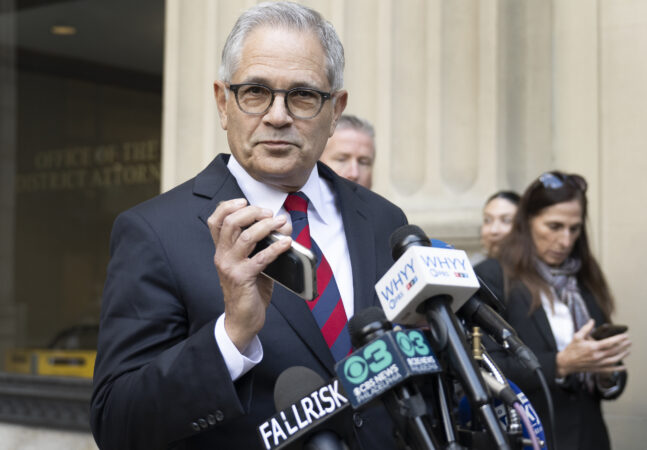
Philadelphia’s bombastic district attorney, Larry Krasner, is no stranger to opposition from within his own party, but the anger directed at him last week after he said ICE agents are “wannabe Nazis” was more pronounced than usual.
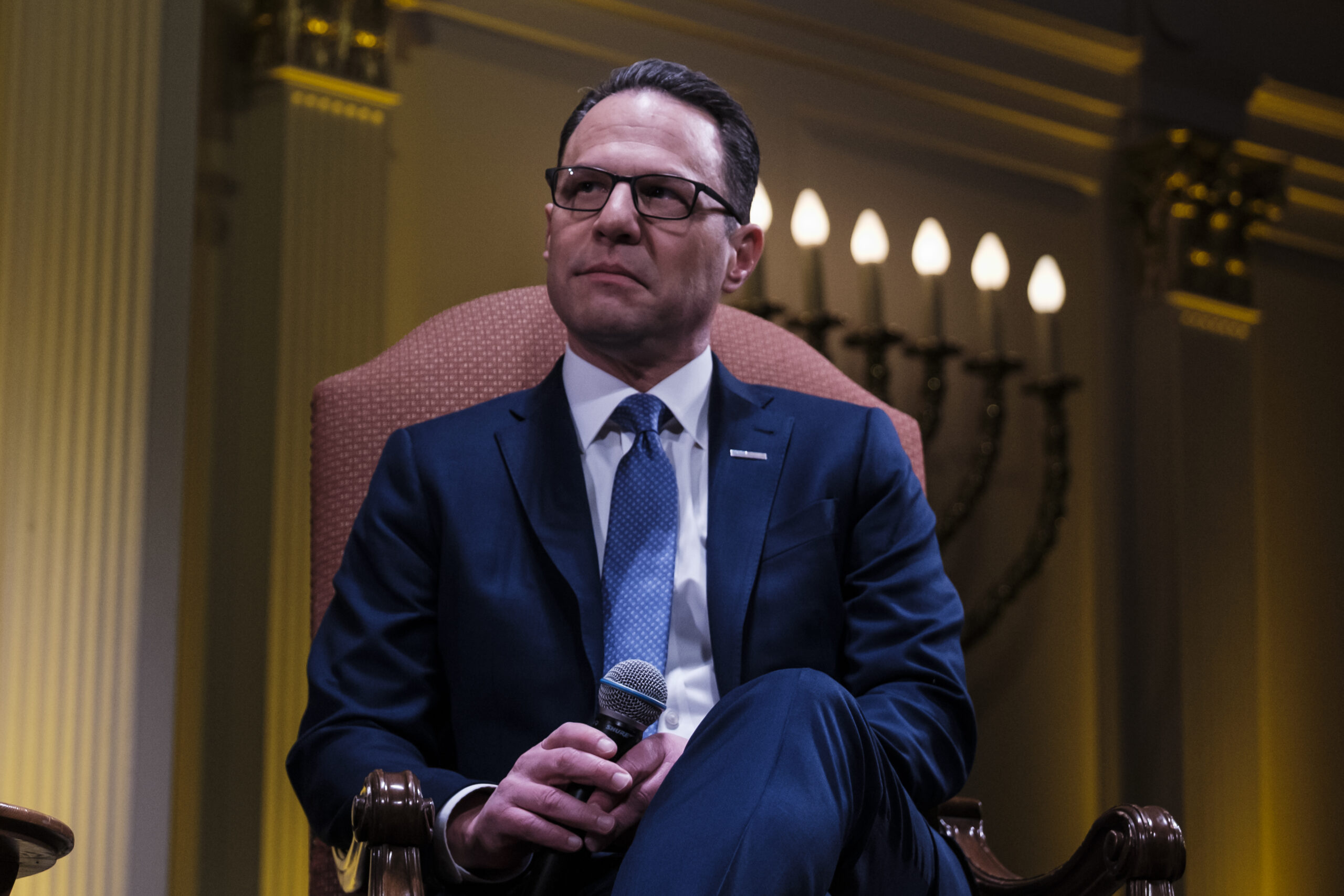
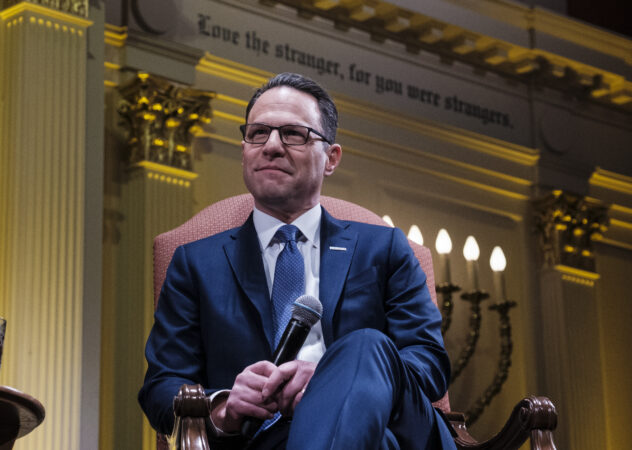
After making the comparison, Krasner faced a wave of criticism, including from Pennsylvania Gov. Josh Shapiro, a Democrat, who called the comments “abhorrent” and said the rhetoric doesn’t help “bring down the temperature.”
But the progressive district attorney said Monday that he would not back down, saying “these are people who have taken their moves from a Nazi playbook and a fascist playbook.”
“Governor Shapiro is not meeting the moment,” Krasner said in an interview. “The moment requires that we call a subgroup of people within federal law enforcement — who are killing innocent people, physically assaulting innocent people, threatening and punishing the use of video — what they are. … Just say it. Don’t be a wimp.”
Krasner pointed to a speech by Rabbi Joachim Prinz at the March on Washington in 1963: “Bigotry and hatred are not the most urgent problem. The most urgent, the most disgraceful, the most shameful, and the most tragic problem is silence.”
In invoking that speech, Krasner said: “A reminder, Mr. Governor: Silence equals death.”
Krasner’s defense came after days of criticism from across the political spectrum, ranging from the White House press secretary to Democratic members of Congress. And it punctuated a yearslong history of conflict with Shapiro.
The governor and Philadelphia’s top law enforcement official have feuded politically,sparred in court, and disagreed on policy. In 2019 — when lawyers from Krasner’s office decamped to work for then-Attorney General Shapiro — DA’s office staffers referred to Shapiro’s office as “Paraguay,” a reference to the country where Nazis took refuge after the war.
Last week, during a news conference about proposed restrictions on immigration enforcement in Philadelphia, the district attorney said he would “hunt down” and prosecute U.S. Immigration and Customs Enforcement agents who commit crimes in the city.
“There will be accountability now. There will be accountability in the future. There will be accountability after [Trump] is out of office,” Krasner said. “If we have to hunt you down the way they hunted down Nazis for decades, we will find your identities.”
During an interview Thursday on Fox News’ Special Report with Bret Baier, Shapiro was asked about Krasner’s comparison of ICE agents to Nazis and called the comments “unacceptable.”
“It is abhorrent and it is wrong, period, hard stop, end of sentence,” Shapiro said.
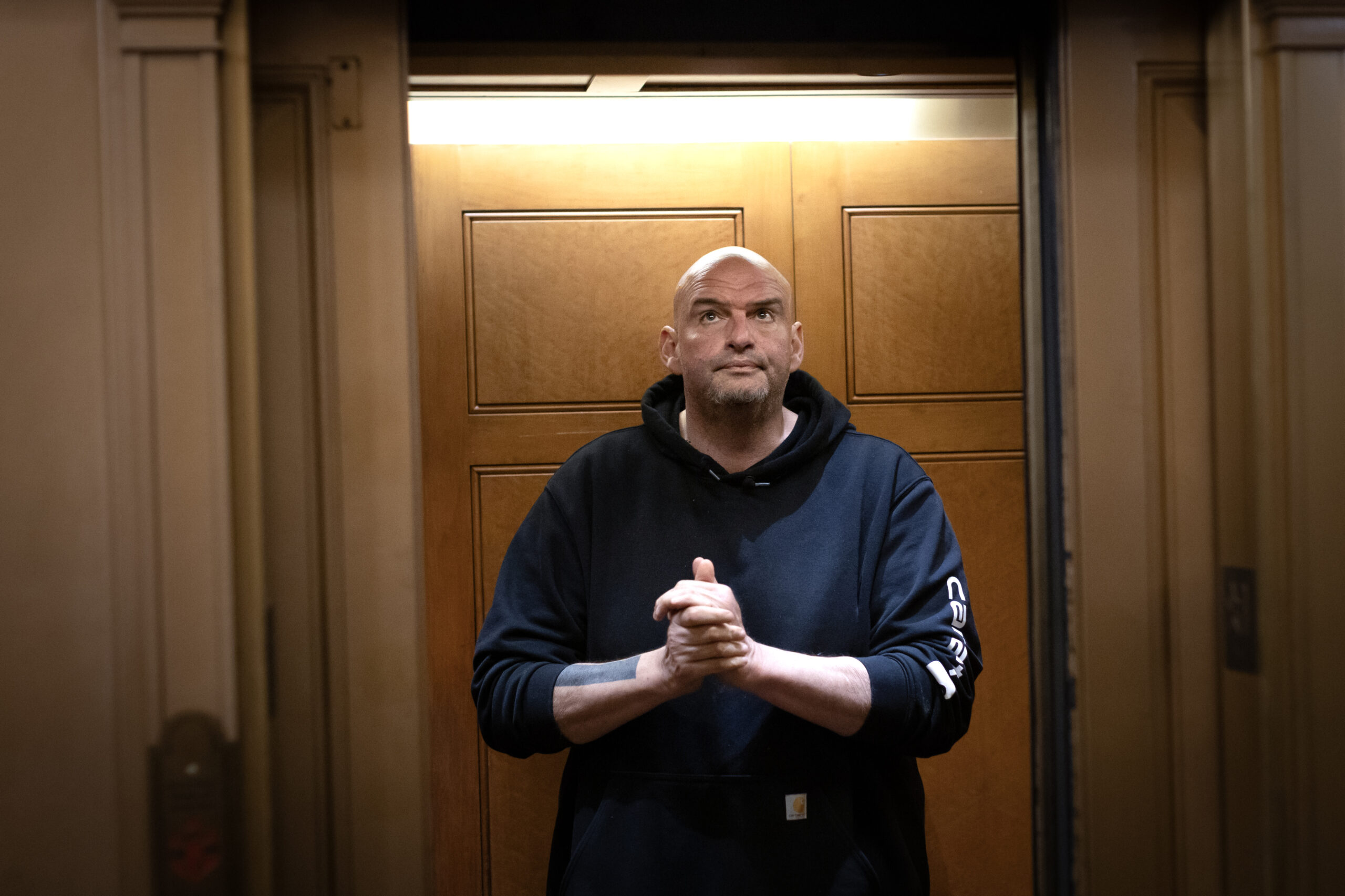
Several other Democrats in political and media circles weighed in. U.S. Sen. John Fetterman, a Pennsylvania Democrat who has at times sided with Trump on immigration matters, appeared on Fox News and said he “strongly” condemned Krasner’s language.
He said that “members of ICE are not Nazis.”
“That’s gross,” Fetterman said. “Do not compare anyone to Nazis. Don’t use that kind of rhetoric. That can incite violence.”
U.S. Rep. Chris Deluzio, a Democrat who represents parts of Western Pennsylvania, in an interview with the Washington Examiner contrasted his own approach with Krasner’s, saying: “I reserve throwing the phrase Nazis at actual Nazis. I don’t just throw that around.”
And State Rep. Manuel Guzman Jr., a Democrat who represents a significant Latino population in Berks County, wrote on social media Friday: “I really, really want Krasner to chill tf out.”
“I get it. We want to protect our immigrant community,” Guzman wrote, “but I question if constantly poking the bear is the right strategy. At the end of the day it’s my community that is under siege.”
And U.S. Rep. Dan Meuser, a Republican who represents parts of Northeast Pennsylvania, appeared on Newsmax and called Krasner a “psychopath with a badge.”
Meuser — who considered challenging Shapiro for governor with Trump’s backing but ultimately decided not to run — also on social media decried “the Left’s silence and, in many cases, encouragement of this rhetoric.”
Krasner doubled down. In an interview on CNN on Thursday, he criticized Fetterman as “not a real Democrat” and also said, “There are some people who are all in on the fascist takeover of this country who do not like the comparison to Nazi Germany.”
He said that when he promised to “hunt down” federal agents who kill someone in his jurisdiction, he was attempting to make a point that there is no statute of limitations on homicide.
The interviewer, Kaitlan Collins, asked Krasner whether he could have made that point without comparing agents to Nazis.
“Why would I do that?” Krasner responded. “They’re taking almost everything they do out of the Nazi playbook.”
A freshman football player at Villanova University texted the woman he is accused of raping to apologize for the encounter,according to the affidavit of probable cause for his arrest,offering new details about the incident.
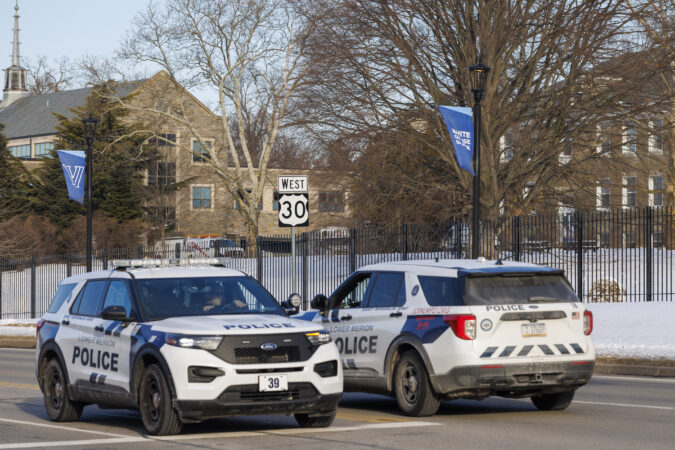
D’Hani Cobbs, 20, was charged with rape, sexual assault, and related crimes after police say he assaulted a woman who also attends the university. He was removed from campus following the Dec. 7 attack, school officials said in a statement. The student newspaper the Villanovan first reported his arrest.
According to the affidavit, Cobbs allegedly assaulted the woman in Good Counsel Hall on the Main Line school’s South Campus.
The early morning attack began after Cobbs and the woman, whom police did not identify, met at an off-campus event and exchanged phone numbers, the document said.
The two later got a ride with others back to South Campus, according to the affidavit. Sometime between 1 and 2 a.m., Cobbs and the woman entered a residence hall room along with another person, whom the filing did not identify. That person left, the document said, leaving the woman alone with Cobbs.
Cobbs asked the woman for a hug, and then he “tried to kiss her, and she said no,” the filing said. Cobbs then “pinned her up against a desk” and began touching her buttocks and genitals and penetrated her with his fingers, the affidavit said. He then grabbed her and lifted her on top of his bed and allegedly raped her, according to the affidavit.
The woman later told police she was screaming and crying during the attack. She said she left the room in tears and asked Cobbs to call a friend to pick her up.
Cobbs later contacted the woman twice, according to the filing.
Around 2 a.m., he texted: “Are [you for real] good tho? That was random [as hell]” and “U were jus fine.”
Just before 5:30 p.m., Cobbs texted: “Yoo Wsp, u ok? My apologies if I made u feel uncomfortable in any way last night I didn’t have any intentions on making u feel uncomfortable. If u want to talk about it over the phone or in person we can just to come to more of a understanding.”
When investigators interviewed Cobbs that week, he did not deny that he had sexual contact with the woman but said it was consensual.
Cobbs’ defense attorney, Thomas G. Masciocchi, did not immediately return a request for comment.
Delaware County District Attorney Tanner Rouse said in a statement Monday that prosecutors had reviewed evidence in the case and swiftly brought charges.
“The message here is as simple as it is clear — when it comes to other people’s bodies, no means no, and stop means stop,” Rouse said. “That’s what we tell our kids and it holds true throughout life, no matter who you are or how talented an athlete you might be.”
As of this week, Cobbs’ player bio page on Villanova’s website is out of service with an error message.
Cobbs’ profile on ESPN is still active, and lists the New Jersey native as a wide receiver. He returned one punt last season, according to the page. A post from the Instagram account for Villanova’s football team announced Cobbs’ signing in 2024.
A Villanova spokesperson said in a statement that in addition to ordering Cobbs to leave campus, the school is “committed to both supporting the victim and fostering a safe environment for all of our students.”
Cobbs was arraigned Friday and was released on unsecured bail, according to court records. He is scheduled to appear in court for a preliminary hearing on Feb. 12 and is ordered not to have contact with the woman.
“I did not see anything that concerned me about the condition, because there are some marks, but I can’t portray where they are from, and I do not believe that they’re in a worsened condition now,” Judge Cynthia M.Rufe told reporters after spending about 30 minutes in the storage facility, which is controlled by the National Park Service even though the center is not part of the agency.
After the inspection, Rufe ordered the government to safeguard the removed exhibits and mitigate any potential harm to them.
The suit came after National Park Service employees took down educational panels about slavery from the President’s House at Independence National Historical Park on Jan. 22.
It also follows a hearing in federal court Friday in which city attorneys and U.S. attorneys sparred over the removal of the exhibits. During the hearing, Rufe, a George W. Bush appointee, chastised a U.S. attorney representing President Donald Trump‘s administration for talking out of “both sides of his mouth” and making “dangerous” arguments.
Rufe issued an order Monday preventing further removals or changes to the President’s House until further notice. The judge also instructed the city to file a new injunction request to clarify what it is seeking, and gave the U.S. attorney’s office another week to respond.
Michael Coard, leader of advocacy group Avenging the Ancestors Coalition, which helped develop the President’s House in the early 2000s and is providing legal backing to the city’s suit, told reporters that he didn’t see any damage to the panels, but “there was desecration.”
What he saw was“completely disrespectful, demoralizing, defiling, and desecration,” Coard said, noting that the signs, many of which are fragile, were not cushioned and that some were against the wall on a cement floor.
Coard joined the judge and attorneys in the storage facility as a representative for the coalition’s legal support of the lawsuit.Members of the press were not allowed to review the exhibits.
Before going to the storage facility Monday, Rufe and the attorneys gathered in the lobby of the Constitution Center, which has a direct view to Independence Hall from Arch Street to Chestnut.
Rufe invoked the iconic building Friday to set the stakes for the city’s suit against Interior Secretary Doug Burgum, acting National Park Service Director Jessica Bowron, and their respective agencies.
“It’s threatening to think that that could happen to Independence Hall tomorrow,” Rufe said during the hearing. “It’s frightening to think that the citizenry would not be involved in such an important change.”
After having been in limbo for months, the informational panels were removed by Park Service employees using wrenches and crowbars onorders from the Trump administration, provoking outrage from Philadelphians. The displays were then piled into the back of a pickup truck and transported to the storage facility.
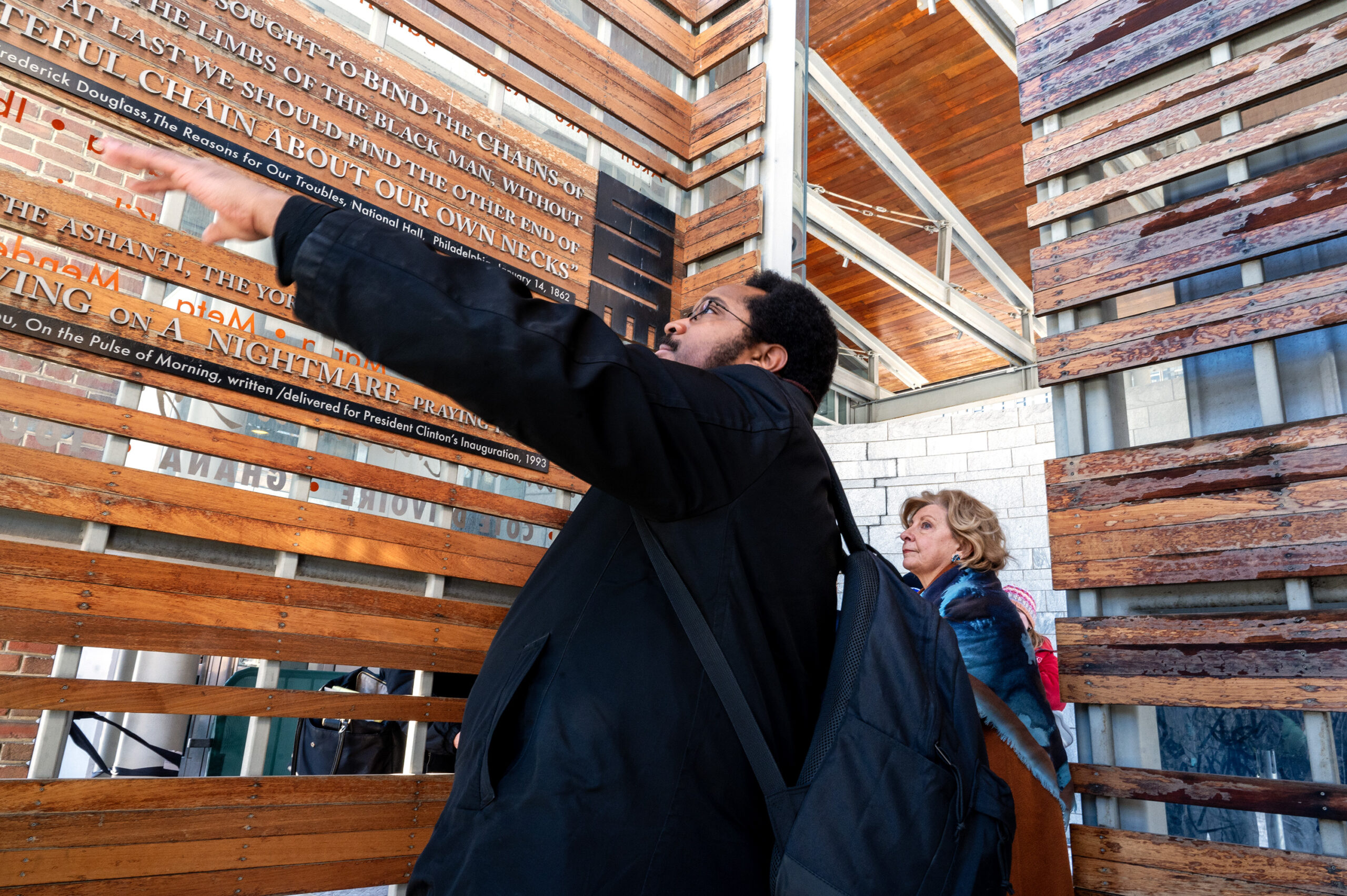
Mijuel Johnson (left), a guide with The Black Journey: African-American Walking Tour of Philadelphia, shows Judge Cynthia Rufe (right) around the President’s House in Independence National Historical Park on Monday.
The exhibits are stored by the National Parks Service in a room accessible through the National Constitution Center, but the civics-nonprofit “does not oversee that space, and Center staff have no knowledge of what materials may be stored there,” a spokesperson said in a statement.
After reviewing the removed exhibits for roughly 30 minutes, Rufe and her law clerks walked across Independence Mall toward the President’s House, a block away at Market Street. The judge stood at the site of the former home of Presidents George Washington and John Adams, as a guide from The Black Journey explained the historical significance of the slavery exhibit.
“This is the first of its kind memorial on federal property to the enslaved people of the United States,” said Mijuel Johnson, who led the tour.
Johnson directed the judge’s attention to panels telling the story of the presidency and the enslaved Africans who lived on the property, part of the routine tour script, but the walls were bare.
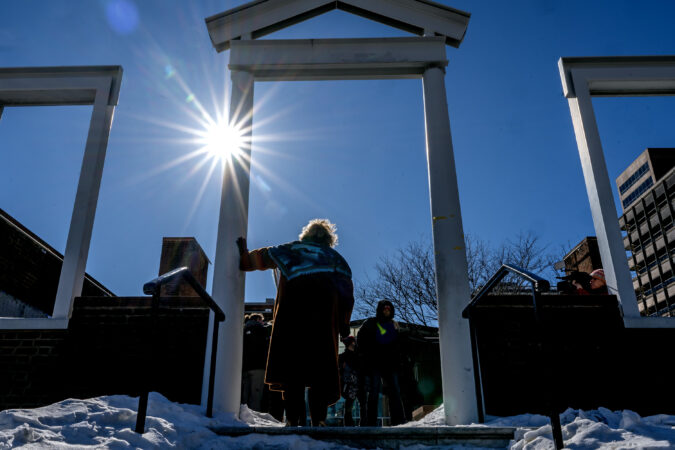
Rufe asked questions about the removed panels and what exhibits could be further removed. She walked around the site, still not cleared of the previous weekend’s snow, to review a wall in which the names of the President’s House enslaved residents are etched into the stone.
Judge Cynthia Rufe views the “Memorial to Enslaved People of African Descent in the United States of America,” during a visit to the President’s House in Independence National Historical Park on Monday. This exhibit was not removed with other panels at the site on Jan. 22. The judge visited the site while hearing the Parker administration’s suit to have President Trump’s administration restore the panels.
Outside the location that served as the slaves’ quarters, adjacent to the Liberty Bell, Rufe paused and took out her glasses to read a memorial panel.
“This enclosed space is dedicated to millions of men, women and children of African descent who lived, worked and died as enslaved people in the United States of America,” the panel read. “They should never again be forgotten”
Relevant to the core disagreement in the lawsuit, about who has the right to change the site, the bottom of the memorial panel bears the names of two entities: the National Park Service and the City of Philadelphia.
Expect the deep cold Philadelphia has been experiencing to continue for the next six weeks, at least according to Punxsutawney Phil.
The weather-predicting groundhog saw his shadow Monday outside his hole at Gobbler’s Knob in Punxsutawney. If you believe such things, that means the entire country — including our snow-covered section of the Northeast — can expect below-average temperatures for the next six weeks.
That won’t come as a surprise to folks in Philadelphia, where the temperature hasn’t made it past the freezing mark of 32 degrees for more than a week.
Despite the frigid temperatures in Punxsutawney, thousands of Phil’s biggest fans gathered early in the morning for what remains the weirdest celebration of meteorology and marmots.
What do forecasters say?
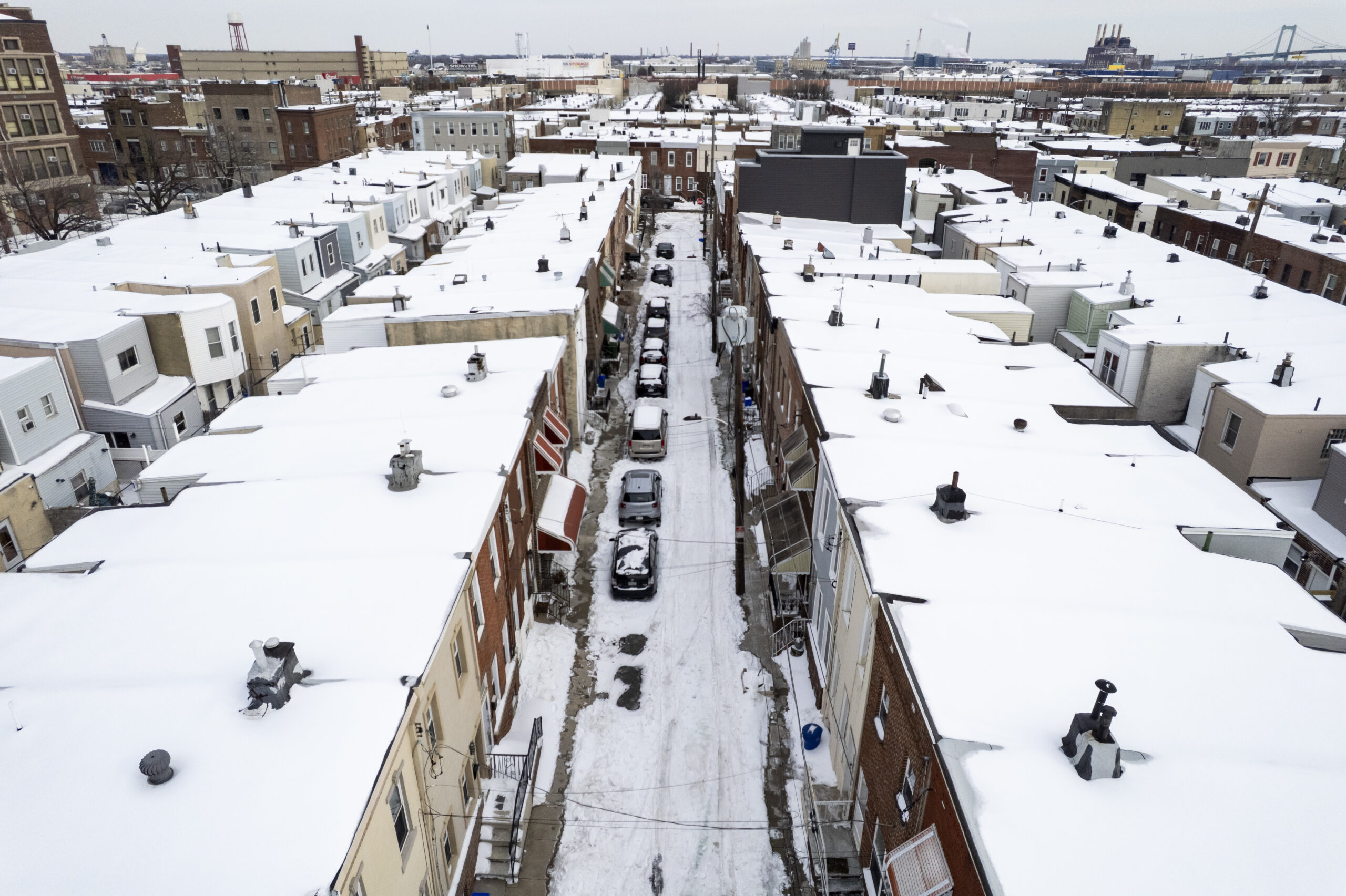
It’s been so cold, Emily Street and much of Philadelphia remains covered in snow.
Predicting the arrival of spring beyond the vernal equinox on March 20 is tricky business, especially when trying to apply it to a regionally diverse country as large as the United States.
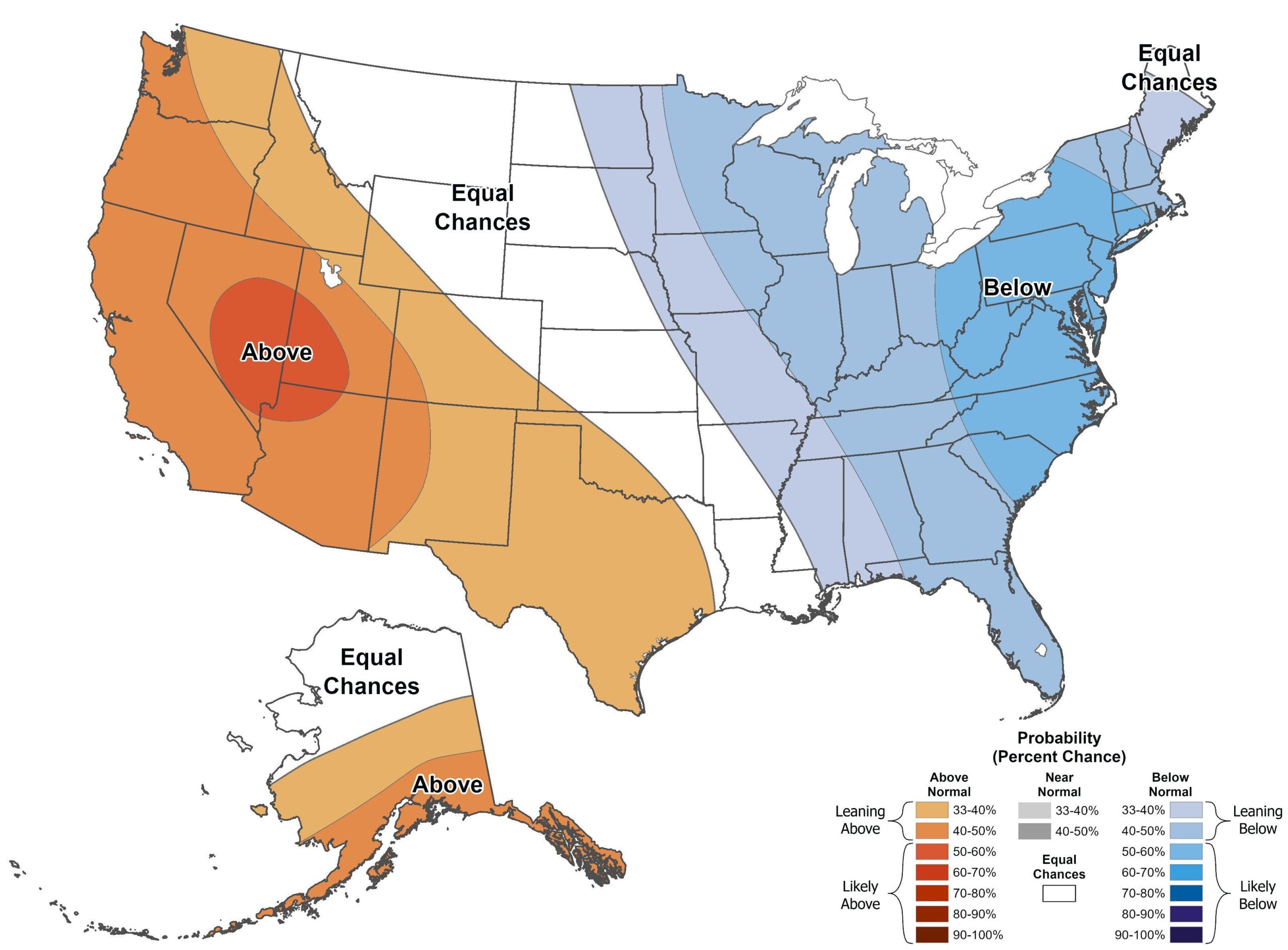
As of Sunday, NOAA was predicting below-average temperatures in February along most of the East Coast all the way west to the Mississippi River. But that’s counterbalanced by above-average temperatures predicted along the West Coast inland as far as Texas.
NOAA’s weather outlook for February, forecasting colder-than-normal temperatures across much of the East Coast.
As for the Philadelphia region, temperatures are expected to remain near or below freezing for at least the next week, with another cold snap possible for the weekend.
The temperature reached above freezing at Philadelphia International Airport on Monday, ending a frigid nine-day streak dating to Jan. 23, the longest since 2004.
If you need to get out, the warmest day of the week is expected to be Tuesday, with highs forecast to reach the mid-30s.
“Outside of that, our high temperatures through the week are looking to be below freezing,” said Amanda Lee, a meteorologist at the National Weather Service’s Mount Holly office, where it dipped to minus-1 degree Sunday morning.
For sake of comparison, the normal high temperature in Philadelphia in the beginning of February is 42 degrees. So we have a ways to go before anything approaching spring reaches the city.
How accurate has Punxsutawney Phil been over the years?
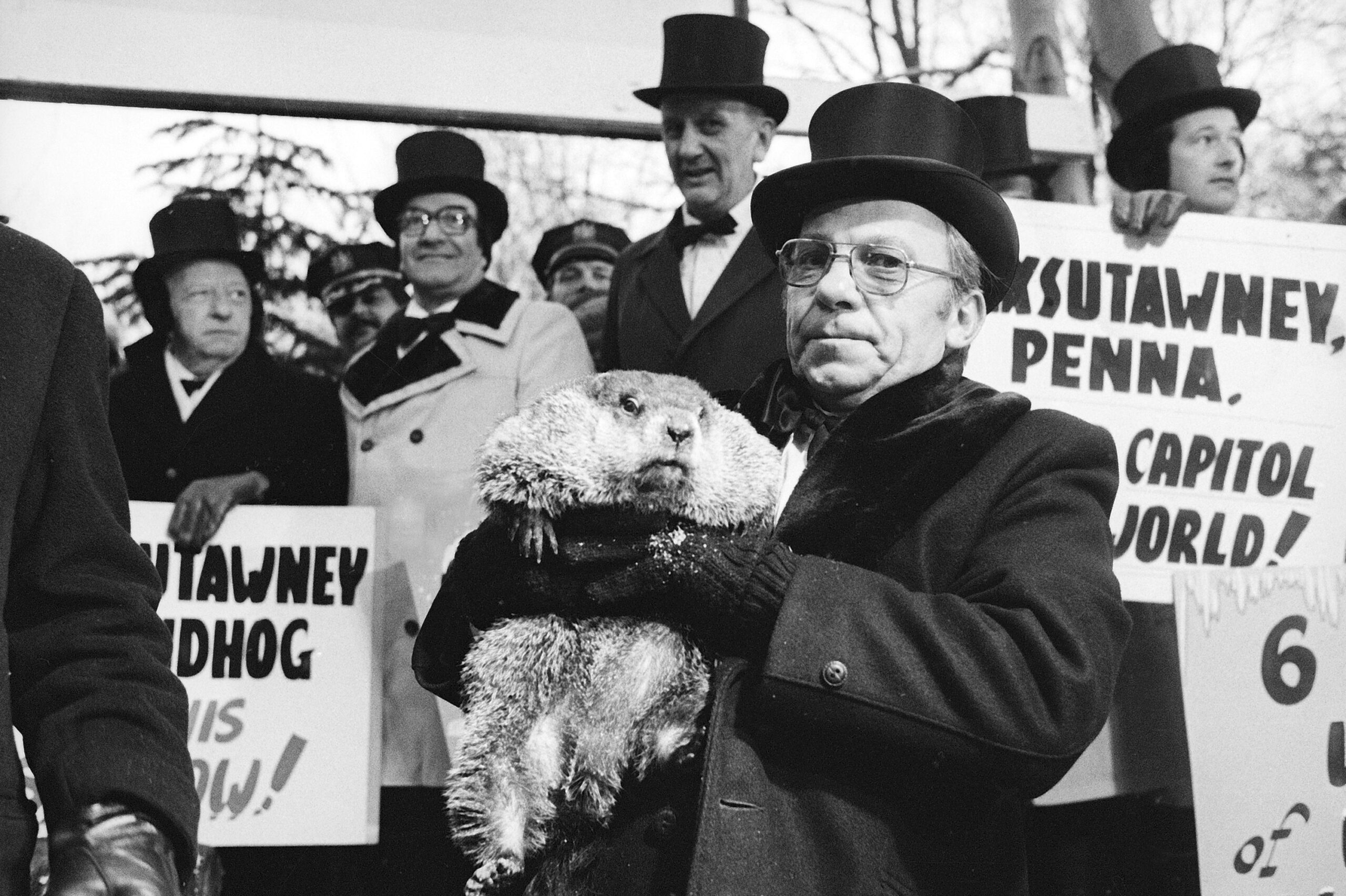
Jim Means holds up Punxsutawney Phil at daybreak on Groundhog Day in 1980.
Were you actually expecting a four-legged creature to accurately predict the weather?
In short, no, I wouldn’t peg my plans over the next six weeks on Phil’s prediction. According to a 2025 analysis by NOAA’s National Centers for Environmental Information, Phil’s forecast has been accurate only 35% of time, based on data of more than a century.
Last year, when Phil predicted six more weeks of winter, temperatures in Philadelphia were 1.8 degrees above normal for the six weeks following Phil’s forecast, with a high of 48 degrees and a balmy low of 30. Nationally, the contiguous U.S. saw near-average temperatures in February and much-above-average temperatures in March 2025, according to NOAA.
“Phil’s forecast was incorrect,” NOAA said bluntly.
!function(){“use strict”;window.addEventListener(“message”,(function(a){if(void 0!==a.data[“datawrapper-height”]){var e=document.querySelectorAll(“iframe”);for(var t in a.data[“datawrapper-height”])for(var r=0;r<e.length;r++)if(e[r].contentWindow===a.source){var i=a.data["datawrapper-height"][t]+"px";e[r].style.height=i}}}))}();
A dead groundhog in Lancaster has been more accurate than Phil
Richard Rankin, Governor of the Groundhog Lodge, poses for a photo with Octoraro Orphie in 2012.
Why brave frigid temperatures in the early morning hours to wait on Phil when you can just pull a stuffed groundhog out of the closet?
That’s what the folks in Lancaster do. Every Groundhog Day since 1907, handlers at the Hibernating Governor of the Slumbering Groundhog Lodge in Quarryville fetch the remains of Octoraro Orphie — often sporting a top hat and bow tie — to offer some weather divination.
They do get outside, celebrating with a parade that ends at the so-called Pinnacle of Prognostication (their tongue-in-cheek description of a manure spreader), where Orphie’s forecast is delivered to the faithful.
What’s wild is the stuffed groundhog is surprisingly accurate, nailing its prediction more than 52% of the time, according to a NOAA analysis done last year.
Orphie did not see his shadow Monday, predicting an early spring. We’ll see which groundhog ends up being right.
Lancaster is a hotbed for groundhog activity, sporting several weather-predicting furballs, including Mount Joy Minnie (who did not see her shadow), M.T. Parker (who did), and a pair of actual living groundhogs in Elliott and Lilly at Acorn Acres who were set to offer their predictions Monday evening.
Staten Island Chuck, seen here at the Staten Island Zoo in 2025.
But none of Pennsylvania’s native groundhogs have been as accurate over the years as Staten Island Chuck. Since his first forecast in 1981, Chuck (formally Charles G. Hogg) has accurately predicted an early spring or six more weeks of winter an astounding 85% of the time, according to NOAA’s analysis.
On Monday, Chuck agreed with Phil, predicting six more weeks of winter, which seems like a safe call.
Chuck has been able to remain accurate despite dealing with much more harrowing conditions than his Pennsylvania counterpart. In 2009, Chuck bit then-Mayor Michael Bloomberg and was secretly replaced by granddaughter Charlotte for the 2014 ceremony. Unfortunately, then-Mayor Bill de Blasio dropped Charlotte, and the groundhog died several days later.
How did this whole marmot-predicting-the-weather thing start?
According to the Pennsylvania Tourism Office, Romans took the early Christian holiday Candlemas to Germany, where it was said that if there was enough sun on Candlemas Day for a badger to cast a shadow, there would be six more weeks of bad weather.
German immigrants brought this tradition to Pennsylvania, and in 1886 the editor of Punxsutawney’s newspaper teamed up with a group of groundhog hunters to begin the legend of Punxsutawney Phil’s weather prowess. So in the United States and Canada, we celebrate Groundhog Day on the same date Christians across the globe celebrate Candlemas.
Good luck trying to stream Groundhog Day today
Bill Murray in a scene from “Groundhog Day.”
You’re not wrong if you remember seeing Groundhog Day on Netflix the other day. It’s just not there now.
The beloved 1993 comedy, staring Bill Murray and directed by the late Harold Ramis, left Netflix as of Sunday. Other than renting the film through a host of streaming platforms, the only other place to stream Groundhog Day on Groundhog Day is AMC+, a subscription service few have that’ll set you back $9.99 a month (though it does have a seven-day free trial).
If you still have a cable subscription, Groundhog Day is airing all day on AMC beginning at 8:30 a.m. Philly time, so set your DVR.
Are there any other Groundhog Day movies?
If you’re looking for another good time loop flick, check out 1998’s “Run Lola Run.”
Listen, we all love Groundhog Day, but to some watching it each and every year is starting to feel a bit like the movie’s repetitive plot.
There are plenty of Christmas, Halloween, and even Valentine’s Day movies for us to choose from. Aren’t there any other films that take place on Groundhog Day?
Sadly, no. About the best you’ll get are a few animated short films, such as the early Disney flick Winter (featuring Walt Disney’s uncredited voice as a raccoon) and 1947’s One Meat Brawl from Warner Bros. And that’s only if you can find them.
Now, if you’re looking for a movie swiping Groundhog Day’s premise — someone living the same day over and over again — there are a few options, from Tom Cruise in Edge of Tomorrow to the sci-fi comedy Palm Springs, staring Andy Samberg and Cristin Milioti.
There’s also 1998’s Run Lola Run, a German thriller where Franka Potente’s protagonist gets three chances to re-run the same 20 minutes to save the life of her boyfriend.
It was so cold Monday at Farrell Elementary, a Philadelphia public school in Northeast Philadelphia, that middle schoolers — a group seemingly constitutionally averse to bundling up — were wearing coats indoors.
That was just one example of trouble for the Philadelphia School District amid the prolonged frigid spell bearing down on the region, with a number of schools plagued by burst pipes, broken heaters, and other issues.
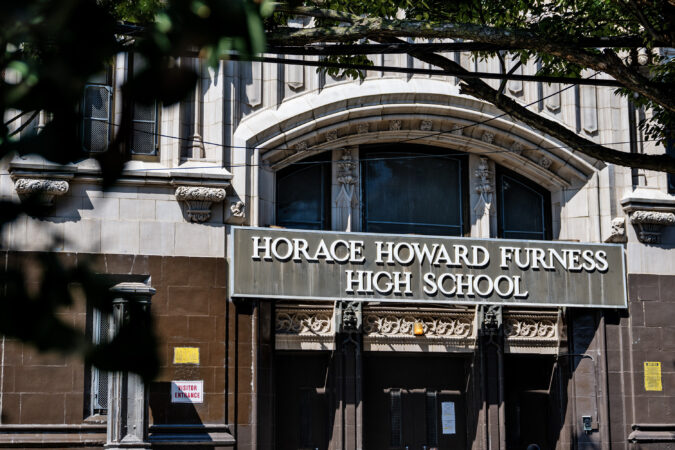
Furness High, in South Philadelphia, moved to virtual instruction Monday “due to ongoing heating challenges.”
“The safety and comfort of our staff remains our top priority,” wrote Teresa Fleming, the district’s chief operating officer. “Moving to virtual instruction for the day allows necessary work to continue while allowing minimal disruption to learning.”
Though Farrell’s heat was on the fritz for the third school day in a row, the district did not pivot to virtual learning there. Instead, it was one of four schools that dismissed early due to heating issues. For much of the day until classes ended, Farrell students and staff were forced to either bundle up or find space to relocate in more-adequately heated spots in the overcrowded school, according to staffers who asked not be named because they are not authorized to speak to the media.
Six Farrell classes camped out in the auditorium, including one class of 38 eighth graders. But the auditorium had to do double duty because the unplowed state of the yard where students typically play meant that students who’d typically be in the yard before or after eating lunch had to be in the auditorium also, Farrell employees said.
Meaningful learning was “absolutely not” going on in the auditorium, one staffer said. “It’s almost impossible.” Students were instructed to complete work on Google Classroom, and teachers were balancing crowd control and working with students individually.
In other cases, teachers and students just stayed in cold rooms, bundled up. Small-group instruction had to happen in hallways because of the population overflow; the hallways were also freezing.
“It’s just ridiculous,” said the Farrell staffer, of the school conditions.
They and others were frustrated that though district officials knew Farrell was plagued by heating issues, students and staff were required to be in the building, especially while other schools were permitted to go virtual.
District students had a snow day last Monday, learned virtually on Tuesday and Wednesday, then went back for in-person instruction on Thursday, though conditions were tough in many schools. In some places, heating issues have resolved.
“The safety and well-being of our students and staff remain our highest priorities,” district spokesperson Monique Braxton said. “Due to sustained frigid temperatures following the recent snowstorm, combined with the age of some School District of Philadelphia facilities, several schools are experiencing heating-related challenges.”
In addition to Farrell, Greenberg Elementary, another school in the Northeast, dismissed early because of heating issues, Braxton said. So did the U School and Parkway Center City Middle College, two district high schools.
District workers and independent contractors are “actively addressing both ongoing and newly identified facilities issues to ensure that all students can safely return to a full day of in-person instruction as soon as possible,” Braxton said.
At Farrell, one teacher brought in their own heater to try to keep warm, a staffer said, and one teacher known for wearing shorts every day finally broke down and wore pants.
And then there were the middle schoolers.
“Even the older ones have on coats,” the staffer said. “It’s so cold that they wore coats.”
Younger students, the staffer said, are more curious.
“They say, ‘Why is it so cold in my classroom?’“ said the Farrell staffer.
By lunchtime, word started to spread that both Farrell and Greenberg were dismissing early, staff there said.
But that late call came with its own set of headaches — while some parents would be able to react to the news quickly and pick up their children early, others may be stuck at work and unable to get to school at dismissal.
Arthur Steinberg, Philadelphia Federation of Teachers president, remained frustrated and angry by the district’s call. Steinberg said last week that the district’s return to buildings was “dangerous” given conditions in some places.
“They shouldn’t have brought people in if they knew the buildings were going to be this cold,” Steinberg said.
As to why one school was permitted to be virtual while others were brought in with inadequate heat, Steinberg was stumped.
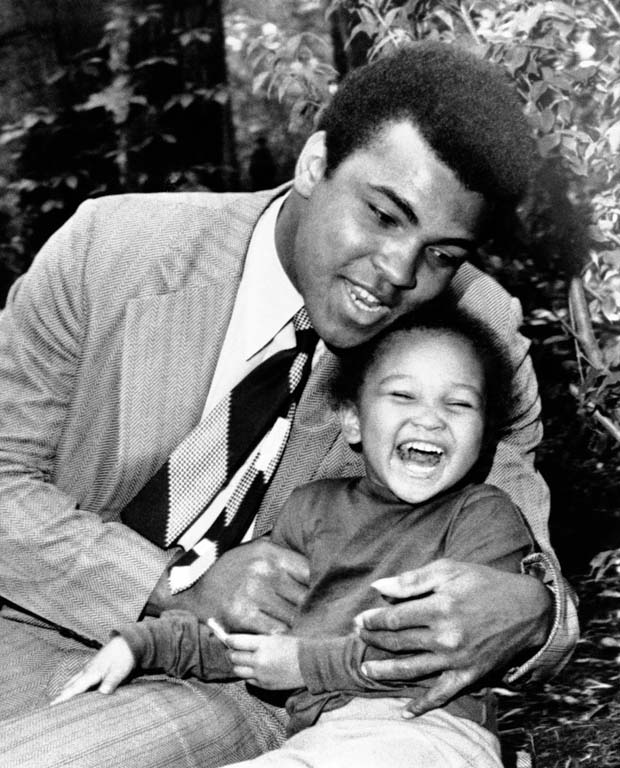
Muhammad Ali plays with his 3-year-old daughter Maryum at his home in Cherry Hill, N.J., on Monday, June 14, 1971.
Sitting on 1.5 acres, the six-bedroom, five-bathroom estate features a kitchen with a large center island and custom cabinetry, a sun-filled greenhouse room, a spacious living area, and an in-ground pool and hot tub, with adjacent basketball and tennis courts. On the lower level of the home is a personal gym and a 12-foot wet bar.
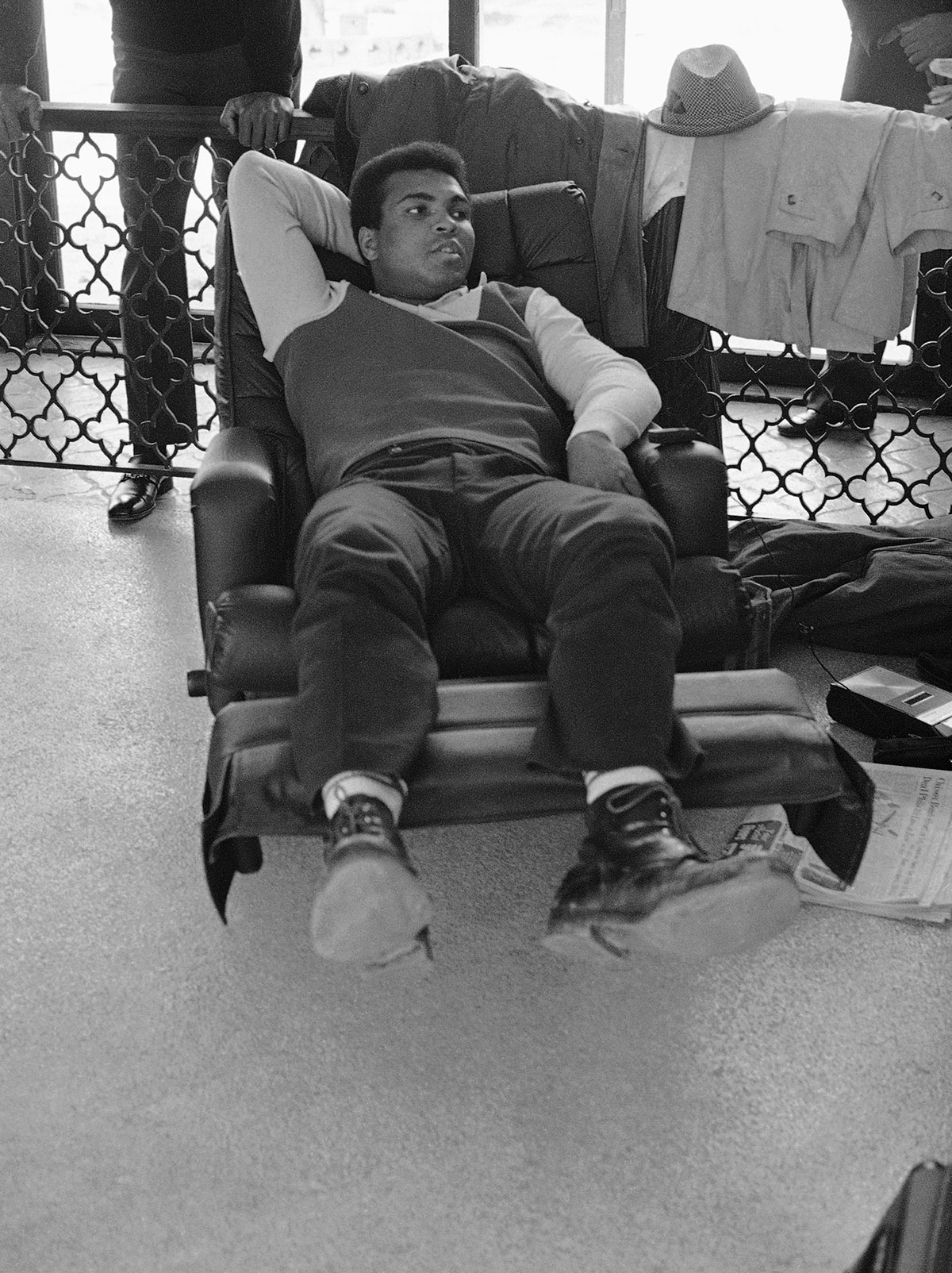
Muhammad Ali, who was defeated by heavyweight champion Joe Frazier, leans back in a reclining chair in his new home in Cherry Hill, N.J., March 10, 1971, as he answered Frazier’s promise to fight Ali again. “Good, we got a rematch, maybe in seven months, might be sooner,” Ali said.
The Champion bought the home for $103,000 in 1971. He moved to Chicago a few years later, according to the New York Times, after his friend, Camden power broker Major Coxson, was shot and killed in his home down the road from Ali’s. A major franchisee of local McDonald’s bought the home from Ali for $175,000.
The backyard and pool area of 1121 Winding Dr. in Cherry Hill, the former home of prizefighter Muhammad Ali from 1970 to 1973. It’s now up for sale for $1.9 million in 2026.
The current owners, who purchased the Cherry Hill homein 2014, traded in the 1970s decor and design for a modern look, converting Ali’s koi pond intoacenterpiece courtyard and fire pit. However, the home retains Ali’s prayer room, which can be found in the lower level, lined with bookshelves.
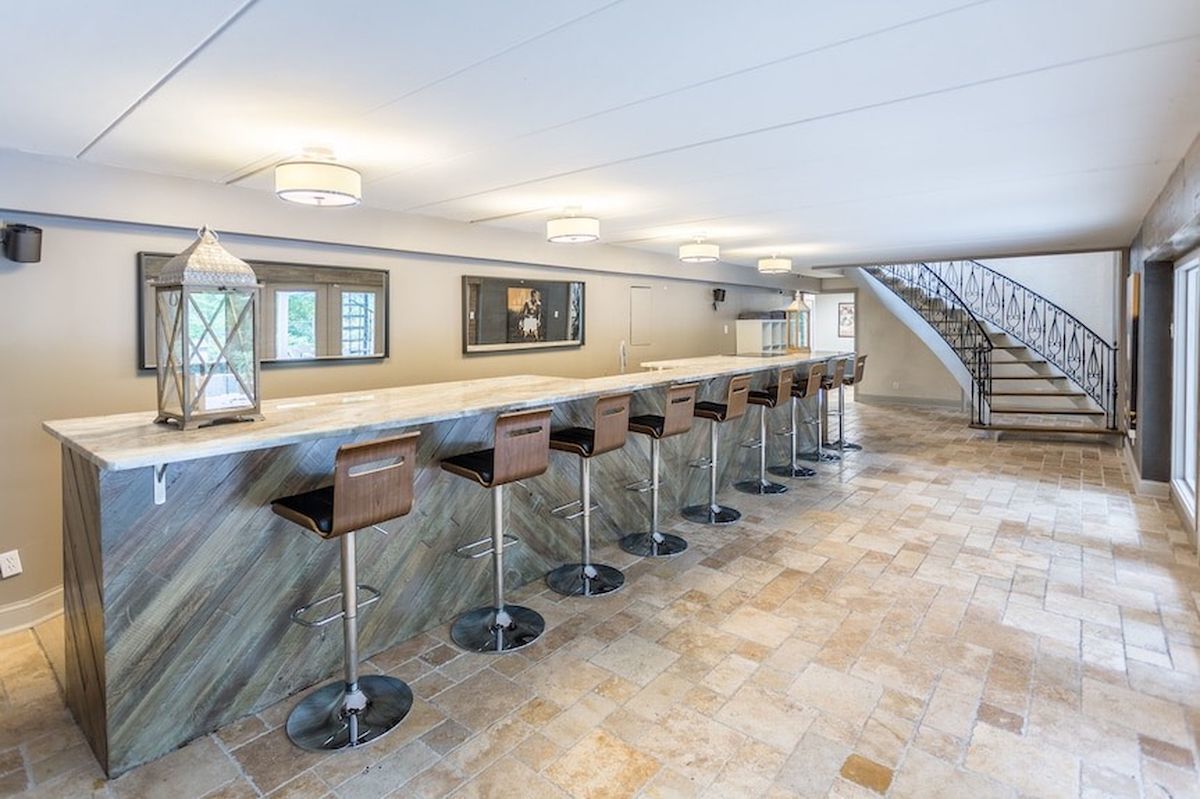
The main draw is the ample entertainment spaces, includingthe basement bar.
The downstairs bar area at 1121 Winding Dr. in Cherry Hill, the former home of Muhammad Ali from 1970 to 1973. It’s now up for sale for $1.9 million in 2026.
“There’s a spiral staircase from the main level to downstairs and you walk right into this large bar area, with tables, chairs, and a large TV setup,” Nicholas Alvini of Keller Williams said. “It really is a great entertaining house.”
The kitchen, including a large island, at 1121 Winding Dr. in Cherry Hill, the former home of prizefighter Muhammad Ali from 1970 to 1973. It’s now up for sale for $1.9 million.
In recent years, the home has been used for short-term rentals, and“wild parties” led police to visit the home 97 timesbetween 2018 and 2019, according to an Inquirer report. In response, Cherry Hill township councilalmost adopted a ban on Airbnb rentals before eventually tabling the idea after community members spoke against it.
Gov. Josh Shapiro is backing a proposal to ban cell phones from Pennsylvania classrooms, joining a growing chorus of parents, teachers, and officials seeking to curb school disruptions and detach kids from addictive devices.
“It’s time for us to get distractions out of the classroom and create a healthier environment in our schools,” Shapiro said in a post on X on Thursday.
He called on Pennsylvania lawmakers to pass a bill that would require schools to ban the use of cell phones during the school day, “from the time they start class until the time they leave for home.”
The endorsement from the Democratic governor — who could promote the issue during his budget address Tuesday — comes as school cell phone bans have increasingly become the norm: 31 states have restrictions of some kind on phones, including 23 states with “bell-to-bell” bans barring the use of phones the entire school day, according to Education Week.
Pennsylvania currently lets schools set their own cell phone policies — and districts have taken a patchwork of approaches. Pennsylvania in 2024 implemented a pilot program allowing schools to access funding for lockable pouches that students could place their phones in during the day, but few districts took the state up on the money.
Some schools have banned cell phones during classes, including by asking students to place their phones in hanging shoe organizers on the backs of classroom doors.
Advocates for entirely phone-free school days say such measures aren’t sufficient. Phones are still buzzing, and if class ends early, “kids are constantly looking at it,” said Kristen Beddard, a parent from the Pittsburgh suburb of Sewickley and leader in the PA Unplugged coalition seeking to curb children’s reliance on phones and screens, in and out of school.
Barring phones only during class time is “not enough to truly break the dopamine feedback loop these kids are exposed to, and inundated with constantly,” Beddard said.
Since PA Unplugged began advocating for a bell-to-bell ban a year ago, “the landscape has changed so much,” including more states moving to restrict phones, Beddard said.
In Pennsylvania, the state’s largest teachers’ union came out in favor of a ban, and legislation that would require school districts to adopt bell-to-bell cell phone policies was unanimously approved in December by the Senate Education Committee. The bill would grant exceptions for students with special needs.
The Pennsylvania State Education Association “supports legislation like Senate Bill 1014 that would establish a consistent, statewide expectation that public schools will restrict the possession and prohibit use of mobile devices for all students during the school day,” said spokesperson Chris Lilienthal.
“Think about how disruptive those notifications are during the course of the school day when students should be focused on learning,” Lilienthal said.
In a divided Harrisburg, the proposal has bipartisan support. Beddard called banning cell phones in schools “maybe one of the few bipartisan issues left.”
In the Philadelphia area, groups of parents have mobilized against cell phone use, circulating pledges such as a commitment to not give children phones before eighth grade. Delco Unplugged, an offshoot of PA Unplugged, has advocated for cell phone bans in school districts and encourages parents to not give children access to phones before high school.
There has been opposition to strict bans, including from school leaders who think kids need to learn how to live with technology, rather than avoid it. Some administrators have also questioned the logistics, and some parents say they want their children to have phones in the case of emergencies, like a school shooting.
Advocates like Beddard say kids are safer during emergencies if they pay attention to the adults in their school, rather than their phones. They also argue that the logistics aren’t so daunting and that there are many ways to enact a ban besides lockable pouches.
Some schools require kids to put their phones in a locker or simply keep them in their backpacks, Beddard said, noting that the legislation advancing in Harrisburg would allow districts to decide how to enact a ban.
Schools that have implemented bans “describe the experience as transformational,” going beyond academic improvements to better socializing among kids, Beddard said. “Awkward conversations in the lunchroom make you a better human being,” she said.
At this point, “Pennsylvania isn’t a pioneer on the issue,” Beddard said. “We need to get with the program.”
What will the 76ers do before Thursday’s 3 p.m. NBA trade deadline?
Will Daryl Morey, the president of basketball operations, continue his trend of making a trade even if it’s just to get under the luxury tax threshold? Or will he decide to keep intact the Sixers’ deepest team since the 2018-19 season?
We’ll learn more in the coming days. In the meantime, I’ll answer a few of your mailbag questions.
Missed out on the party? No worries. Submit questions for next time by tweeting @PompeyOnSixers on X with the hashtag #PompeysMailbagFlow.
Q: Can the Sixers void any of Paul George’s guarantees in his contract due to the suspension? — @MyAmbition_3
A: Thanks for starting the mailbag. This is a great question that many people have been asking me. Now, if George had a bonus for games played or point totals, he wouldn’t receive it if the 25-game suspension prevented him from reaching the required numbers. But overall, the Sixers cannot void his contract.
For a contract to be voided, there must be cause. The team could argue that this fits the definition of cause to void a deal, but it would lose.
To void a contract, the infraction would have to be something that impacts a player’s ability to continue his career. For instance, a team can void a contract if a player commits a serious crime and could face jail time. Another example would be if he sustained a career-ending injury away from basketball or training.
Miami Heat point guard Terry Rozier was placed on unpaid leave following October’s arrest for his alleged involvement in an illegal sports gambling scheme. However, his contract was never voided. And, on Monday, Rozier won his grievance with the NBA and will be paid his $26.6 million salary for this season.
Sixers forward Paul George is serving a 25-game suspension for violating the NBA anti-drug policy.
Q: Is the George suspension a blessing in disguise as it relates to the Sixers’ cap situation? — @bsmallg1
A: Yes, it has been a blessing in disguise as it relates to the salary cap, especially the luxury tax threshold to avoid being taxed. The 35-year-old will lose $11.7 million during his suspension. As a result, the Sixers will have around $5.8 million in tax variance credit. It leaves the team about $1.2 million above the tax threshold.
If not for the suspension, the Sixers would be $7 million above the allowable threshold. In that instance, the expiring contracts of Quentin Grimes ($8.7 million), Kelly Oubre Jr. ($8.3 million), and Andre Drummond ($5 million) would have potentially helped them duck the tax.
The problem is, all three are major contributors for a squad that headed into Monday’s game against the Los Angeles Clippers in sixth place in the Eastern Conference.
Oubre is the starting small forward and has been the team’s X factor. Grimes, a reserve shooting guard, was an early-season candidate for the Sixth Man of the Year. And Drummond, a reserve center, is the Sixers’ leading rebounder.
Now, the Sixers can avoid the tax by making a trade on the margins and avoid parting ways with any of their key rotation players.
In January, Sixers center Joel Embiid averaged 29.7 points, 8.4 rebounds, and 4.6 assists in 14 games.
Q: Is Joel Embiid’s recent scoring surge fact or fiction? — @wheat
A: There’s nothing fake about Embiid’s recent scoring surge. I do think the Sixers will always have their fingers crossed that he won’t suffer another injury. And that makes sense considering the 7-foot-2, 280-pound center’s injury history. But his recent stint has been the best stretch of his career since he suffered a torn meniscus in his left knee on Jan. 30, 2024.
Back to playing at an All-NBA level, the 2023 MVP finished with a season-high 40 points along with 11 rebounds, four assists, and two blocks against the New Orleans Pelicans on Saturday. Embiid averaged 29.7 points, 8.4 rebounds, and 4.6 assists in 14 games in January. His scoring average for that month ranked fourth in the NBA behind Los Angeles Lakers point guard Luka Dončić (34.0 points per game), Oklahoma City Thunder point guard Shai Gilgeous-Alexander (31.7), Denver Nuggets center Nikola Jokić (31.0), and Minnesota Timberwolves shooting guard Anthony Edwards (30.1). Even that’s misleading because Jokić played only one game.
So it’s hard to say Embiid’s scoring surge is fiction.
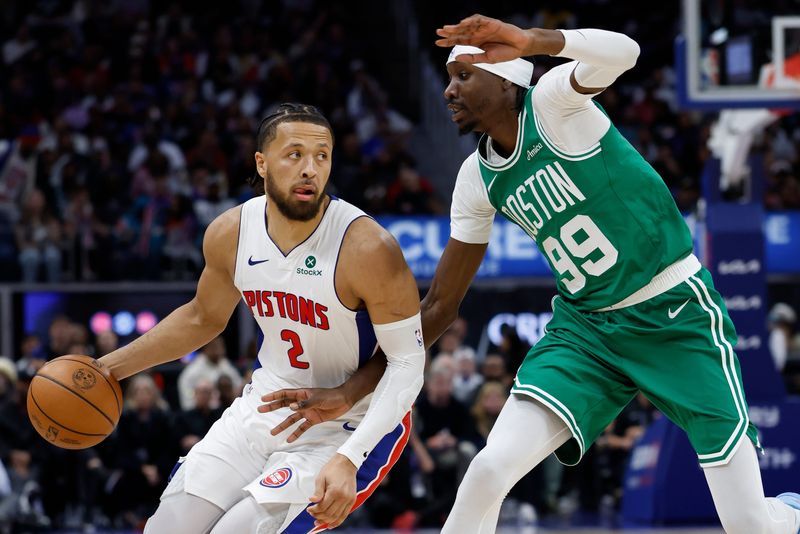
Boston Celtics forward Chris Boucher (99) was a solid glue guy for Sixers coach Nick Nurse during their time together with the Toronto Raptors.
Q: What power forward could the Sixers target at the deadline? — @emkahe12
A: Boston Celtics post player Chris Boucher is a player the Sixers are reported to have some “exploratory” interest in, according to a HoopsHype report. A source downplayed the interest in the reserve power forward/center, who has appeared in only nine games this season with the Boston Celtics, averaging just 2.3 points and 2.0 rebounds in 10.4 minutes.
However, he flourished in the last seven seasons as a reserve glue guy for the Toronto Raptors. Sixers coach Nick Nurse was Raptors coach during Boucher’s first five seasons in Toronto. Nurse was able to get the best out of the undersized post player, who averaged 8.9 points and 5.1 rebounds in 406 games as a Raptor.
Boucher signed a one-year, veteran minimum contract with Boston for $3.2 million, with a cap hit of $2.2 million.
Lydia Romero strained to hear her husband’s feeble voice through the phone.
A week earlier, immigration agents had grabbed Julio César Peña from his front yard in Glendale, Calif. Now, he was in a hospital after suffering a ministroke. He was shackled to the bed by his hand and foot, he told Romero, and agents were in the room, listening to the call. He was scared he would die and wanted his wife there.
“What hospital are you at?” Romero asked.
“I can’t tell you,” he replied.
Viridiana Chabolla, Peña’s attorney, couldn’t get an answer to that question, either. Peña’s deportation officer and the medical contractor at the Adelanto ICE Processing Center refused to tell her. Exasperated, she tried calling a nearby hospital, Providence St. Mary Medical Center.
“They said even if they had a person in ICE custody under their care, they wouldn’t be able to confirm whether he’s there or not, that only ICE can give me the information,” Chabolla said. The hospital confirmed this policy to KFF Health News.
Family members and attorneys for patients hospitalized after being detained by federal immigration officials said they are facing extreme difficulty trying to locate patients, get information about their well-being, and provide them emotional and legal support. They say many hospitals refuse to provide information or allow contact with these patients. Instead, hospitals allow immigration officers to call the shots on how much — if any — contact is allowed, which can deprive patients of their constitutional right to seek legal advice and leave them vulnerable to abuse, attorneys said.
Hospitals say they are trying to protect the safety and privacy of patients, staff, and law enforcement officials, even while hospital employees in Los Angeles, Minneapolis, and Portland, Ore., cities where Immigration and Customs Enforcement has conducted immigration raids, say it’s made their jobs difficult. Hospitals have used what are sometimes called blackout procedures, which can include registering a patient under a pseudonym, removing their name from the hospital directory, or prohibiting staff from even confirming that a patient is in the hospital.
“We’ve heard incidences of this blackout process being used at multiple hospitals across the state, and it’s very concerning,” said Shiu-Ming Cheer, the deputy director of immigrant and racial justice at the California Immigrant Policy Center, an advocacy group.
Some Democratic-led states, including California, Colorado, and Maryland, have enacted legislation that seeks to protect patients from immigration enforcement in hospitals. However, those policies do not address protections for people already in ICE custody.
Julio Cesar Peña, who has terminal kidney disease, sits on his bike in the backyard of his home in Glendale, Calif. His family had a hard time locating him when he was hospitalized after being detained by Immigration and Customs Enforcement.
More detainees hospitalized
Peña is among more than 350,000 people arrested by federal immigration authorities since President Donald Trump returned to the White House. As arrests and detentions have climbed, so too have reports of people taken to hospitals by immigration agents because of illness or injury — due to preexisting conditions or problems stemming from their arrest or detention.
ICE has faced criticism for using aggressive and deadly tactics, as well as for reports of mistreatment and inadequate medical care at its facilities. Sen. Adam Schiff (D., Calif.) told reporters at a Jan. 20 news conference outside a detention center he visited in California City that he spoke to a diabetic woman held there who had not received treatment in two months.
While there are no publicly available statistics on the number of people sick or injured in ICE detention, the agency’s news releases point to 32 people who died in immigration custody in 2025. Six more have died this year.
The Department of Homeland Security, which oversees ICE, did not respond to a request for information about its policies or Peña’s case.
According to ICE’s guidelines, people in custody should be given access to a telephone, visits from family and friends, and private consultation with legal counsel. The agency can make administrative decisions, including about visitation, when a patient is in the hospital, but should defer to hospital policies on contacting next of kin when a patient is seriously ill, the guidelines state.
Asked in detail about hospital practices related to patients in immigration custody and whether there are best practices that hospitals should follow, Ben Teicher, a spokesperson for the American Hospital Association, declined to comment.
David Simon, a spokesperson for the California Hospital Association, said that “there are times when hospitals will — at the request of law enforcement — maintain confidentiality of patients’ names and other identifying characteristics.”
Although policies vary, members of the public can typically call a hospital and ask for a patient by name to find out whether they’re there, and often be transferred to the patient’s room, said William Weber, an emergency physician in Minneapolis and medical director for the Medical Justice Alliance, which advocates for the medical needs of people in law enforcement custody. Family members and others authorized by the patient can visit. And medical staff routinely call relatives to let them know a loved one is in the hospital, or to ask for information that could help with their care.
But when a patient is in law enforcement custody, hospitals frequently agree to restrict this kind of information sharing and access, Weber said. The rationale is that these measures prevent unauthorized outsiders from threatening the patient or law enforcement personnel, given that hospitals lack the security infrastructure of a prison or detention center. High-profile patients such as celebrities sometimes also request this type of protection.
Several attorneys and healthcare providers questioned the need for such restrictions. Immigration detention is civil, not criminal, detention. The Trump administration says it’s focused on arresting and deporting criminals, yet most of those arrested have no criminal conviction, according to data compiled by the Transactional Records Access Clearinghouse and several news outlets.
Taken outside his home
According to Peña’s wife, Romero, he has no criminal record. Peña came to the United States from Mexico in sixth grade and has an adult son in the U.S. military. The 43-year-old has terminal kidney disease and survived a heart attack in November. He has trouble walking and is partially blind, his wife said. He was detained Dec. 8 while resting outside after coming home from dialysis treatment.
Initially, Romero was able to find her husband through the ICE Online Detainee Locator System. She visited him at a temporary holding facility in downtown Los Angeles, bringing him his medicines and a sweater. She then saw he’d been moved to the Adelanto detention center. But the locator did not show where he was after he was hospitalized.
When she and other relatives drove to the detention facility to find him, they were turned away, she said. Romero received occasional calls from her husband in the hospital but said they were less than 10 minutes long and took place under ICE surveillance. She wanted to know where he was so she could be at the hospital to hold his hand, make sure he was well cared for, and encourage him to stay strong, she said.
Shackling him and preventing him from seeing his family was unfair and unnecessary, she said.
“He’s weak,” Romero said. “It’s not like he’s going to run away.”
ICE guidelines say contact and visits from family and friends should be allowed “within security and operational constraints.” Detainees have a constitutional right to speak confidentially with an attorney. Weber said immigration authorities should tell attorneys where their clients are and allow them to talk in person or use an unmonitored phone line.
Hospitals, though, fall into a gray area on enforcing these rights, since they are primarily focused on treating medical needs, Weber said. Still, he added, hospitals should ensure their policies align with the law.
Family denied access
Numerous immigration attorneys have spent weeks trying to locate clients detained by ICE, with their efforts sometimes thwarted by hospitals.
Nicolas Thompson-Lleras, a Los Angeles attorney who counsels immigrants facing deportation, said two of his clients were registered under aliases at different hospitals in Los Angeles County last year. Initially, the hospitals denied the clients were there and refused to let Thompson-Lleras meet with them, he said. Family members were also denied access, he said.
One of his clients was Bayron Rovidio Marin, a car wash worker injured during a raid in August. Immigration agents surveilled him for over a month at Harbor-UCLA Medical Center, a county-run facility, without charging him.
In November, the Los Angeles County Board of Supervisors voted to curb the use of blackout policies for patients under civil immigration custody at county-run hospitals. In a statement, Arun Patel, the chief patient safety and clinical risk management officer for the Los Angeles County Department of Health Services, said the policies are designed to reduce safety risks for patients, doctors, nurses, and custody officers.
“In some situations, there may be concerns about threats to the patient, attempts to interfere with medical care, unauthorized visitors, or the introduction of contraband,” Patel said. “Our goal is not to restrict care but to allow care to happen safely and without disruption.”
Leaving patients vulnerable
Thompson-Lleras said he’s concerned that hospitals are cooperating with federal immigration authorities at the expense of patients and their families and leaving patients vulnerable to abuse.
“It allows people to be treated suboptimally,” Thompson-Lleras said. “It allows people to be treated on abbreviated timelines, without supervision, without family intervention or advocacy. These people are alone, disoriented, being interrogated, at least in Bayron’s case, under pain and influence of medication.”
Such incidents are alarming to hospital workers. In Los Angeles, two healthcare professionals who asked not to be identified by KFF Health News, out of concern for their livelihoods, said that ICE and hospital administrators, at public and private hospitals, frequently block staff from contacting family members for people in custody, even to find out about their health conditions or what medications they’re on. That violates medical ethics, they said.
Blackout procedures are another concern.
“They help facilitate, whether intentionally or not, the disappearance of patients,” said one worker, a physician for the county’s Department of Health Services and part of a coalition of concerned health workers from across the region.
At Legacy Emanuel Medical Center in Portland, nurses publicly expressed outrage over what they saw as hospital cooperation with ICE and the flouting of patient rights. Legacy Health has sent a cease and desist letter to the nurses’ union, accusing it of making “false or misleading statements.”
“I was really disgusted,” said Blaire Glennon, a nurse who quit her job at the hospital in December. She said numerous patients were brought to the hospital by ICE with serious injuries they sustained while being detained. “I felt like Legacy was doing massive human rights violations.”
Handcuffed while unconscious
Two days before Christmas, Chabolla, Peña’s attorney, received a call from ICE with the answer she and Romero had been waiting for. Peña was at Victor Valley Global Medical Center, about 10 miles from Adelanto, and about to be released.
Excited, Romero and her family made the two-hour-plus drive from Glendale to the hospital to take him home.
When they got there, they found Peña intubated and unconscious, his arm and leg still handcuffed to the hospital bed. He’d had a severe seizure on Dec. 20, but no one had told his family or legal team, his attorney said.
Tim Lineberger, a spokesperson for Victor Valley Global Medical Center’s parent company, KPC Health, said he could not comment on specific patient cases, because of privacy protections. He said the hospital’s policies on patient information disclosure comply with state and federal law.
Peña was finally cleared to go home on Jan. 5. No court date has been set, and his family is filing a petition to adjust his legal status based on his son’s military service. For now, he still faces deportation proceedings.
KFF Health News is a national newsroom that produces in-depth journalism about health issues and is one of the core operating programs at KFF — the independent source for health policy research, polling, and journalism.
I don’t believe the Trump administration removed the slavery memorial at the President’s House at Sixth and Market Streets to protect the reputations of the dead. I believe they did it to crush the spirits of the living.
Perhaps, for those too demoralized by Donald Trump’s chaotic presidency, the instinct to resist has faded. But Trump doesn’t know Philadelphians. We are a stubborn sort, reared in well-worn streets that are older than America itself. You cannot take crowbars to our history and pry it from the walls. Nor can you silence us when we rise up to tell the story of what you’ve done.
That’s why Friday’s arrest of Don Lemon, a journalist who toiled in Philadelphia before moving to the national stage, will only sharpen the focus on the Trump administration’s push to deport Black and brown immigrants. It’s why the arrest of Georgia Fort, a vice president of the National Association of Black Journalists, which has its roots in Philadelphia, will only shed light on this administration’s troubling strain of anti-Blackness.
Pretending that Lemon and Fort committed a crime by covering a protest in a mostly white Minnesota church is ludicrous. Yet, that’s what the Trump administration would have us believe. They want us to think that reporting on protesters who were seeking to confront a pastor said to have ties to U.S. Immigration and Customs Enforcement is a criminal act. That interviewing people is enough to be charged with conspiracy against the rights of religious freedom and an attempt to injure while exercising religious freedom.
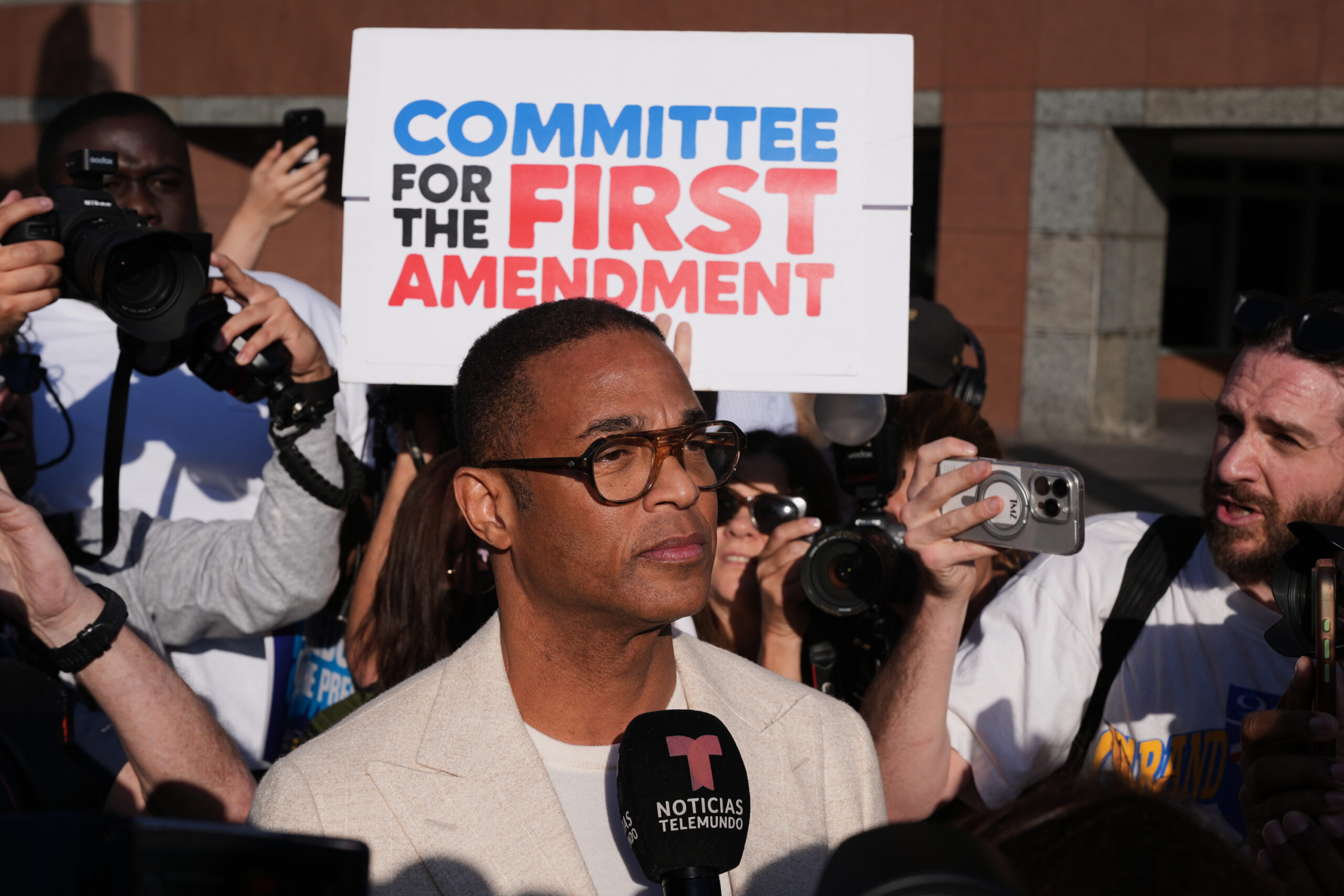
The journalist Don Lemon addresses reporters outside the Edward R. Roybal Federal Building in Los Angeles on Friday.
Don’t bother to try to make sense of it. You can’t, because the Trump administration is not seeking fairness. Nor is it seeking truth. Instead, it is attempting to reshape reality in the image of Donald Trump.
I doubt that it’ll succeed, because there’s a strange thing about truth. No matter what you do to it, truth does not cease to exist. It simply waits to be uncovered.
Prying Black history from the walls at Sixth and Market Streets will never erase truth. Instead, the truth will be amplified. Not only by Michael Coard and the Avenging the Ancestors Coalition, the activists fighting to preserve our history. This truth will be told by all of us.
George Washington enslaved nine Africans in Philadelphia. He returned them to Virginia nearly every six months, thus avoiding the requirement to free them under Pennsylvania law. One of the enslaved, Oney Judge, managed to escape from Washington and his wife, and America’s first president spent years trying to return her to slavery.
That is the truth of what happened here in Philadelphia, and on Friday, when I went to the site of the exhibit and saw the rusted, glue-stained frames that once held depictions of that history, I was angry. But the tale of the President’s House is not the only truth the Trump administration is trying to obscure.
Shootings by federal immigration agents in Minnesota cost Renee Good and Alex Pretti their lives. We know their names and mourn their deaths, not just because they were American citizens, but also because they were white. However, they aren’t the only ones to fall victim to the violence linked to the president’s anti-immigrant push.
In total, at least four people have been killed and eight others wounded by gunfire during immigration enforcement operations since Trump returned to office a year ago. Most of the other victims appear to be people of color. But when state-sanctioned violence hides behind the darkness of masks, the only thing that can expose it is light.
Journalism is that light, and quite often, when journalists begin to look for one truth, another is exposed. That’s what happened when Don Lemon and Georgia Fort walked into that mostly white church to report on a protest in St. Paul, Minn.
Lemon and Fort discovered that in America, where history is pried from walls and Black journalists are arrested, truth does not play out in color. Too often, it’s in Black and White.