A Virginia teen who admitted in court that he wanted to join ISIS pleaded guilty Thursday to attempted murder and related offenses for a stabbing attack last year on a Florence Township police officer, Burlington County Prosecutor LaChia L. Bradshaw said Friday.
Fasihullah Safar, 17, of Alexandria, Va., was charged as an adult and will be sentenced to 18 years in prison under a plea deal, Bradshaw said. He is scheduled to be formally sentenced on March 26 in Superior Court in Mount Holly.
The police officer who was stabbed several times in the chest was wearing a ballistic vest that prevented more significant injuries, Bradshaw said.
On March 21, 2025, Safar, who was 16 at the time, was driving a stolen vehicle when he intentionally caused a crash with another vehicle, Bradshaw said. A Florence police vehicle responding to the scene was then struck multiple times by Safar’s vehicle.
Safar’s vehicle became inoperable on Route 130 near Station Road. When officers arrived, Safar charged them while armed with a knife, Bradshaw said. Besides the officer who was stabbed, suffering a laceration to his torso and facial injuries, two other officers sustained minor injuries. During the struggle, Safar also cut himself.
In court, Safar admitted that in the months before the confrontation, he had begun following the Islamic State organization, Bradshaw said. Safar had indicated on social media that he planned to join the group.
Safar admitted that he shouted “Allahu akbar” during the confrontation with police, and that he intended to kill one of the officers, Bradshaw said.
Prior to the violent encounter with police in Florence Township, he was being sought by authorities, including the FBI, after he allegedly trespassed at a school in Fredericksburg, Va., causing the local district to close all schools.
A school resource officer approached Safar, who then fled and later allegedly stole a vehicle.
One report later said Safar had been investigated by the FBI after the teen allegedly posed on social media with what appeared to be a firearm.
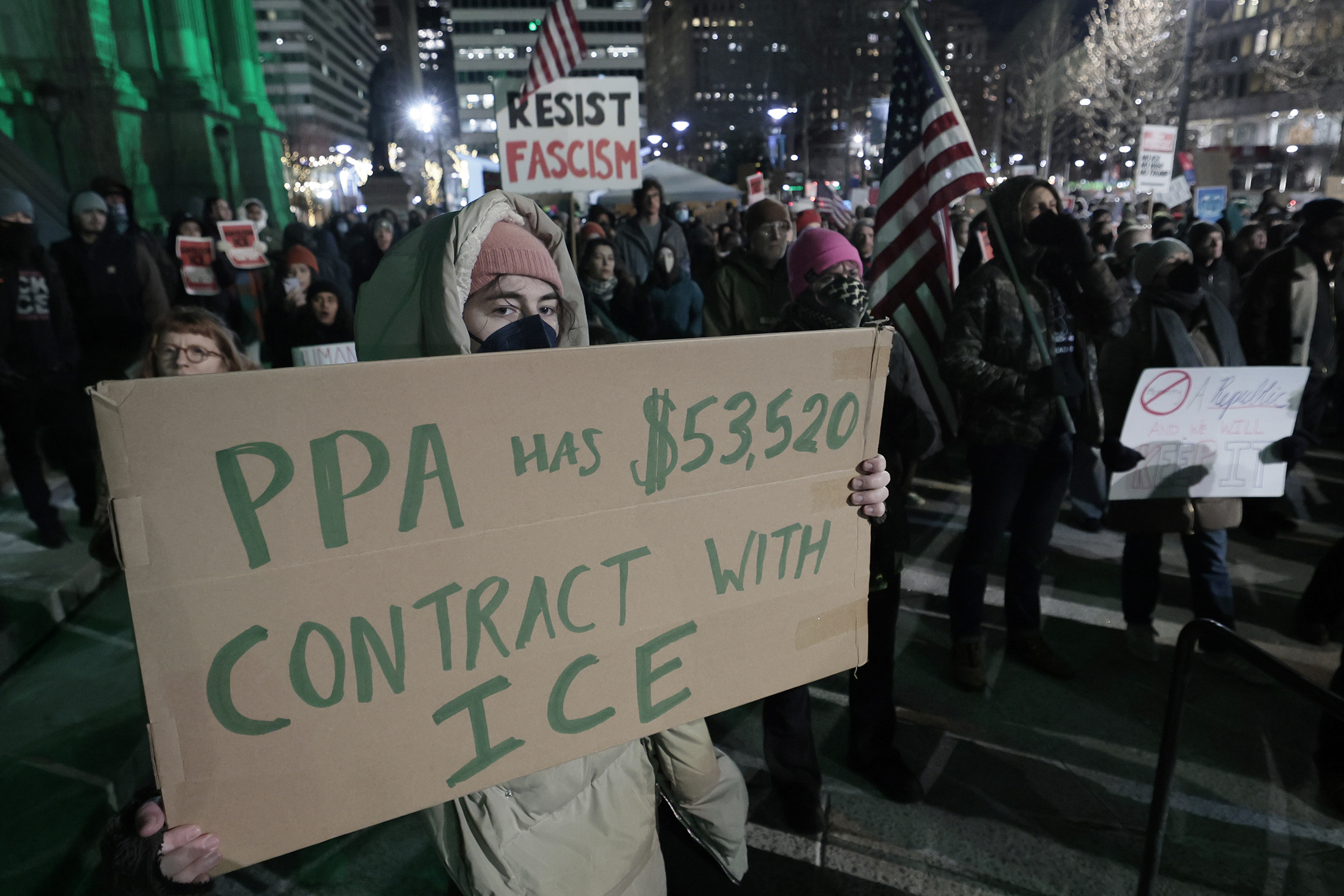
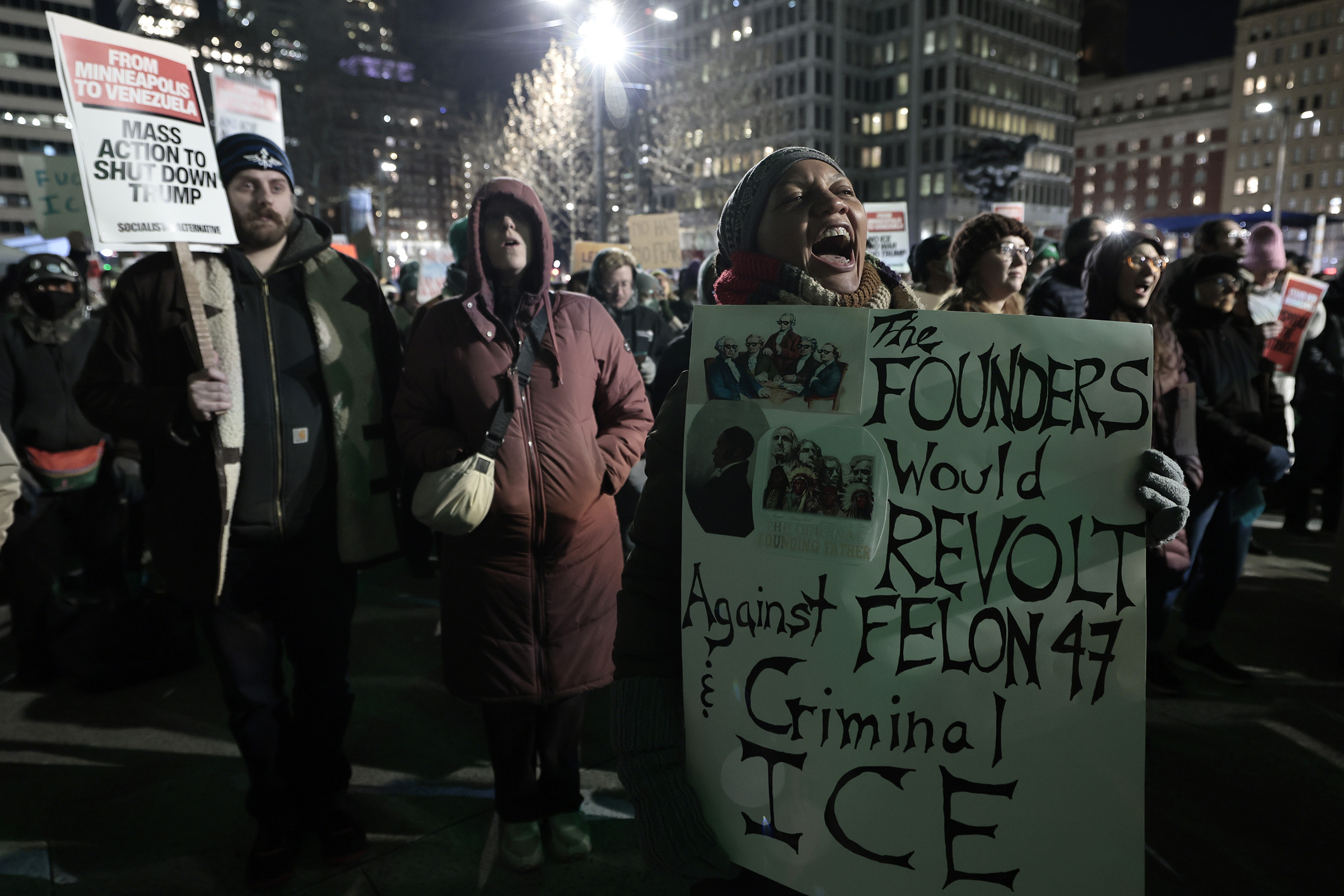
Kelsey Fuentes of Philadelphia (front) chants “No more money for ICE’s crime” as she marches east on Market Street during the Philly stands with Minneapolis Ice Out For Good protest march that began at Philadelphia’s City Hall on Friday, Jan. 23, 2026.A transgender woman from Philadelphia holds up her sign during the Philly stands with Minneapolis Ice Out For Good protest at Philadelphia’s City Hall on Friday, Jan. 23, 2026.Protesters gather during the Philly stands with Minneapolis Ice Out For Good protest at Philadelphia’s City Hall on Friday, Jan. 23, 2026.Alex Kilcullen of King of Prussia (seated) participates during the Philly stands with Minneapolis Ice Out For Good protest at Philadelphia’s City Hall on Friday, Jan. 23, 2026. Kilcullen is from the Deer clan of the Cherokee tribe.Community College of Philadelphia leaders Maritsa Hernandez-Orsini (left) and Maria Baez were vocal during the Philly stands with Minneapolis Ice Out For Good protest at Philadelphia’s City Hall on Friday, Jan. 23, 2026.Protesters gather during the Philly stands with Minneapolis Ice Out For Good protest at Philadelphia’s City Hall on Friday, Jan. 23, 2026.Protesters march up Eighth Street, towards the immigration offices, during the Philly stands with Minneapolis Ice Out For Good protest at Philadelphia’s City Hall on Friday, Jan. 23, 2026.Courtney Mitchell of Philadelphia (right) during the Philly stands with Minneapolis Ice Out For Good protest at Philadelphia’s City Hall on Friday, Jan. 23, 2026.
Letitia Grant was gobsmacked when she learned her daughter’s school was slated for closure.
“That can’t happen,” she said.
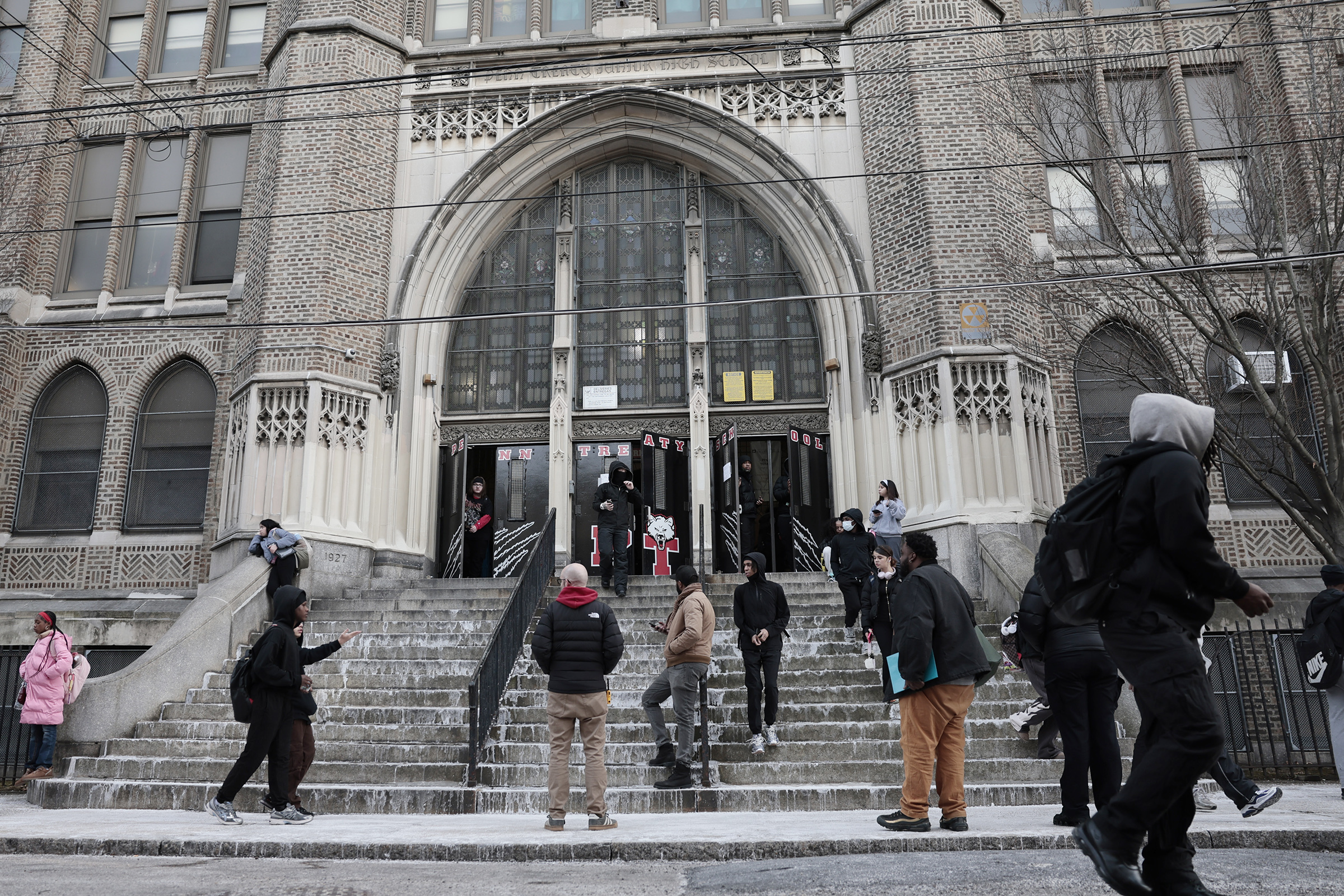
Penn Treaty High School, where Grant’s daughter is in the eighth grade, is one of 20 schools proposed for closure as part of a massive reshaping of the Philadelphia School District announced Thursday.
The plan — which Superintendent Tony B. Watlington Sr. said he would present in full to the school board on Feb. 26 — would affect every neighborhood in the city. In addition to closing 20 schools, it proposes colocating six others, and making changes, including renovations and grade restructuring, at an unspecified number of schools.
But Grant is focused on what it means for her daughter, who loves her teachers, her counselor, and the friends she has made at the Fishtown school.
Grant was looking forward to seeing her daughter cross a stage to collect her diploma at Penn Treaty’s 2030 high school graduation, she said. She is not sure what will come next.
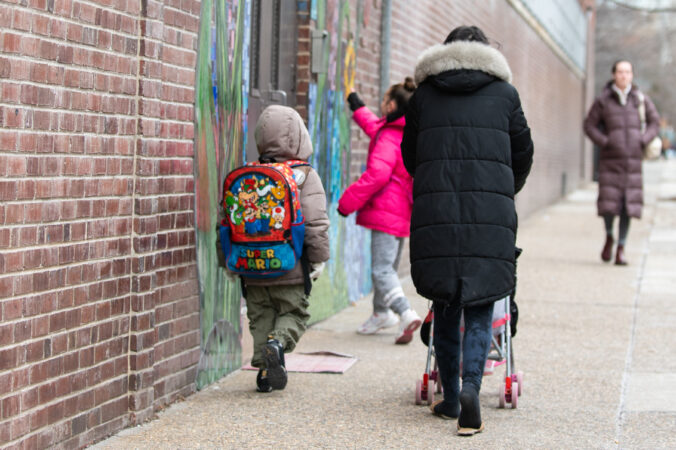
School officials stand by outside for afternoon dismissal at Penn Treaty Middle School, 600 East Thompson Street, in Philadelphia on Thursday, Jan. 22, 2026.
Penn Treaty, which now has just 345 students in grades six through 12 in a building that can accommodate 1,200, would cease to exist under the plan, and Bodine High, a district magnet in Northern Liberties, would move to the Penn Treaty building and add a middle school.
After dismissal Thursday, the day families learned of the closure, Grant’s daughter and her friend stopped their biology teacher to chat. The teacher is her daughter’s favorite, Grant said.
Grant fears the changes will meanthe district will be “piling too many kids per classroom.”
The facilities plan will touch every neighborhood in the city for years to come, with ripples for students, teachers, and families. Here are some of their stories.
At Waring, parents worry — and prepare to sound off
As parents dropped their children off Friday morning at the Laura Wheeler Waring School in Spring Garden, faces were grim.
“We’re pissed off because it’s a great school,” said Isheen Bernard, whose son attended Waring and whose daughter is a third grader there now. Waring was identified for closure; under the plan, Masterman middle school students would eventually take over the building, with Waring students sent to Bache-Martin.
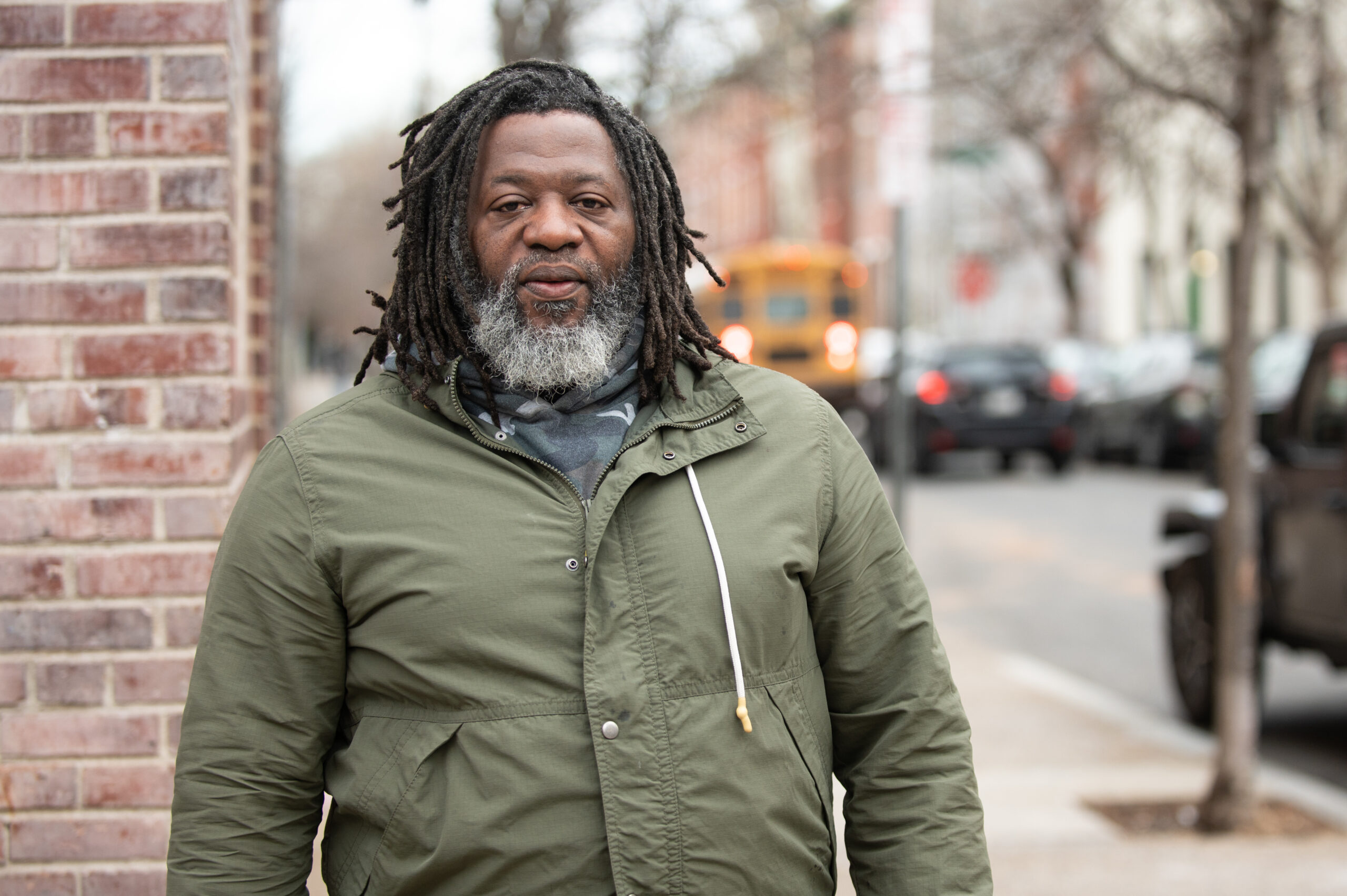
Isheen Bernard, 48, poses for a portrait after dropping his child off at Laura Wheeler Waring Public School in the Spring Garden section of Philadelphia on the morning of Friday, Jan. 23, 2026. Under a new school district plan, Laura Wheeler Waring Public School would be closing in the 2027-2028 school year.
Nysheera Roberts graduated from Waring herself, and so did her mother. Now, she has children there, and her nieces and nephews also attend.
Shutting the school down would be hurtful and heartbreaking, Roberts said. Waring has just under 200 students in a building that can house 437.
“It’s a piece of our history,” she said.
Taking her daughter to Bache-Martin would be a major inconvenience for her, her children, and other neighborhood families, Roberts said. Now, she can easily drop her baby off at a nearby daycare before popping over to Waring with her children, then heading off to work. But Bache-Martin is too far for younger children to walk to from the family’s home — a problem because Roberts does not always have access to a car.
“They shouldn’t be taking our school away from these children,” she said.
Nysheera Roberts, 35, poses for a portrait after dropping her children off at Laura Wheeler Waring Public School in the Spring Garden section of Philadelphia on the morning of Friday, Jan. 23, 2026. Under a new school district plan, Laura Wheeler Waring Public School would be closing in the 2027-2028 school year.
Every Waring parent she has spoken to is upset, Roberts said. She knows the district plans to allow public comment on its plan, and thinks affected families won’t hold back.
“They’re gonna have a lot of parents speaking,” Roberts said. “And I’m gonna be one of them.”
Many schools Mack attended as a child have been closed, so he was not completely surprised that Morris was identified for closure. But he worries about the effect the closing will have on the younger children at the school, who are just settling into the rhythms and routines of Morris.
“You’re telling kids who are already not used to school to go to a new environment and just kind of pick up where they might have left off,” he said. “That’s not conducive to a positive learning environment.”
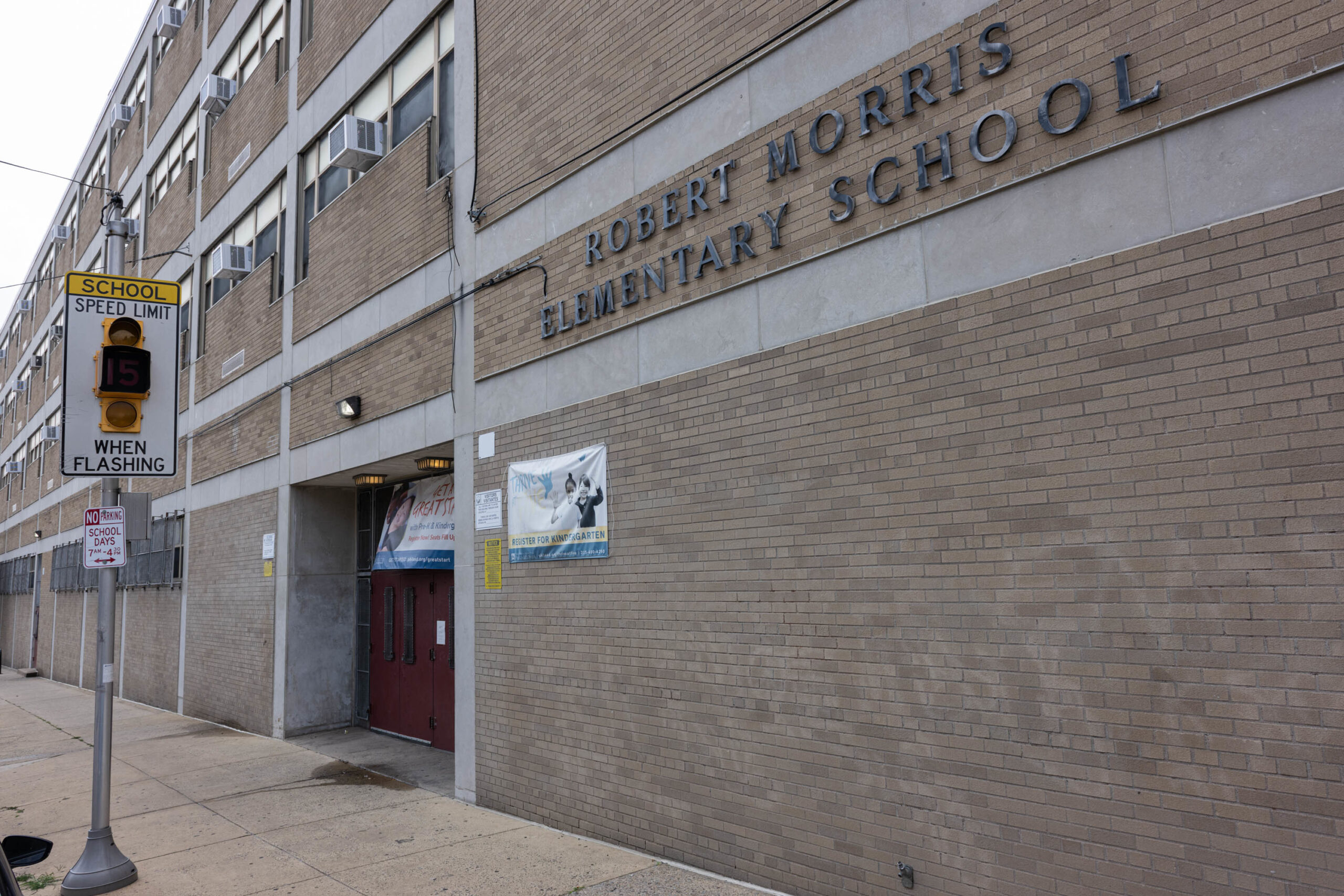
Exterior of Robert Morris Elementary School on Thursday, Aug. 7, 2025, in Philadelphia.
His older children, who are in fourth through eighth grade, have not always had an easy time — often, the teacher they had in the fall left before the spring, and they had to cope with many new teachers or substitutes.
“The kids know they’ll be here longer than their teacher in many cases,” Mack said. “Teachers just pass through, and a lot of kids think that way.”
When Mack was growing up, teachers knew his parents, and they often grew up in the same community as he did, attended the same church. He understands those connections may not still be possible, but said the generational relationships schools used to build produce results.
“Schools have a lot of behavioral issues that I feel as though permanent teachers who have that longevity, of knowing your mom and having been friends with your auntie, add credibility and respect to a teacher’s voice,” Mack said.
Moving more students into existing schools will tax those schools, he said. Will they be overcrowded? Can they guarantee equal or better learning outcomes?
“I think it falls on the school district to pour more resources into teaching staff, because teachers are going to have to wrangle 30 kids in a classroom,” Mack said. “One effort I’d like to see is for the district to identify and vet teachers who want to teach in Philadelphia, in the same schools, for their career.”
Not on the closing list, but big changes are still coming to Moffet
Moffet Elementary shows up nowhere on the school closing list.
But parents at Moffet, in Kensington, learned that massive changes are planned for their school, too. Moffet families were told that children in grades K-4 will be shifted to Hackett Elementary. Moffet, now a K-5, will become a 5-8 school. Hackett is now a K-5; it will become a K-4 with a larger catchment.
“Parents are very upset,” said Katy Hoffman-Williamson, mother of a first grader and president of Moffet’s Family School Organization. “Our WhatsApp thread is blowing up.”
Moffet, she said, is “this really special gem of a school in our neighborhood. There’s only two classes per grade, the Family School Organization is super involved, and all the teachers go above and beyond what they’re supposed to do. It’s an incredibly diverse school, a really special place.”
Technically, Hoffman-Williamson’s catchment school is Ludlow, which was tagged for closure. She chose Moffet carefully and doesn’t love the idea of sending her son to a larger school, or having him transition to a new school in third grade, when he will have to start taking state tests.
“If I didn’t find a school like this, I would have moved, and there’s so many families that are like mine,” Hoffman-Williamson said. “Some families might find the transition to middle school easier, but for the most part, we’re really upset.”
Some academics are alarmed
Julie McWilliams, an anthropologist of education and codirector of the University of Pennsylvania’s urban studies program, studied past city school closings for her forthcoming book Schools for Sale: Disinvestment, Dispossession, and School Building Reuse in Philadelphia.
McWilliams, who is also a Philadelphia School District parent — her children attend Fanny Jackson Coppin in South Philadelphia — said she was not shocked by the number of school closures, based on history and the district’s messaging this time around.
But she was “horrified” by some of the choices the district made, including closing William T. Tilden Middle School in Southwest Philadelphia. The 5-8 school previously took in students from two schools in Southwest Philly that the district previously closed. And she hopes that the school board listens to the people these decisions will galvanize.
“I’m hoping that this is just a starting point to really tease out which choices here are big mistakes and actually were just thoughtless choices,” McWilliams said. “North Philadelphia got crushed in closings last time. Southwest got crushed. I know that’s where the empty seats are, but they’re going to be creating deserts in neighborhoods that have already suffered.”
Akira Drake Rodriguez, a Penn assistant professor who, with McWilliams, is part of the Stand Up for Philly Schools coalition organizing against closures, was also alarmed by the Tilden closing in particular.
“That whole neighborhood of Southwest Philly is charter schools,” Rodriguez said. “Do you really think they’re going to stay in traditional public schools when you close Tilden?”
She predicted enrollments at some schools marked for closure would plummet as parents face uncertainty around their future.
“The district hasn’t really given people a ton of confidence around managing large-scale modernization efforts,” Rodriguez said.
Edwin Mayorga, a SUPS member, an Academy at Palumbo parent, and an associate professor of educational studies at Swarthmore College, said any school closure is troubling.
“It’s about asking ourselves, ‘What are the conditions that have produced a school that has declining enrollments, or toxic conditions in the facility?’ and trying to start from there,” he said.
DENVER ― There’s been a lot of discourse regarding Matvei Michkov.
It ranges from his ice time to his spot on the power play to his deployment at certain times during the game. The latest one is about which wing he plays on.
When he was drafted to the NHL, and for most of his first season with the Flyers, Michkov played on the right wing. This year, like at the end of last season when he played on a line with Sean Couturier and Travis Konecny, he’s largely been skating on the left.
“Yeah, I mean, listen, he’s struggling, so you’re looking for all different things,” coach Rick Tocchet said about moving him across the ice. “But the bottom line is, we got him to play with some pace. That’s it. I know everybody wants him to score and all that stuff. You’ve got to be [in] positions to score.”
Traditionalists will tell you that Michkov should be playing on the left side anyway as a left-handed shot. A lot of it is more about where to line up on faceoffs and in defensive-zone coverage, as a left-handed stick will be able to use the walls and protect the puck to get it out on the left side.
A left-handed left wing is preferable to many coaches in the defensive zone because it typically pits a lefty against a right-shot defenseman, so they have their stick on the same side — and in the shooting lane — as the defenseman when they try to close them down.
“Whether it’s right or left, it really doesn’t matter. It’s just to line up,” Tocchet said. “When you’re in the offensive zone, it doesn’t matter where you [start]. So I think everybody makes a big deal. But through the neutral zone, for me, the faster you can go on your forehand is the better [side]. But that doesn’t mean you can’t go to the other side.”
Across the first 14 games of the season, Michkov lined up on the right side. He had two goals and seven points while averaging 14 minutes, 52 seconds a night. The first of those goals came in Game 4 of the season, and his second came in Game 14 on Nov. 6 against the Nashville Predators.
The next game, on Nov. 8 at home against the Ottawa Senators, he lined up on the left side with Couturier and Bobby Brink. He has stayed on that side of the ice since, regardless of his linemates — although he is back with Brink, but now with Noah Cates as the center.
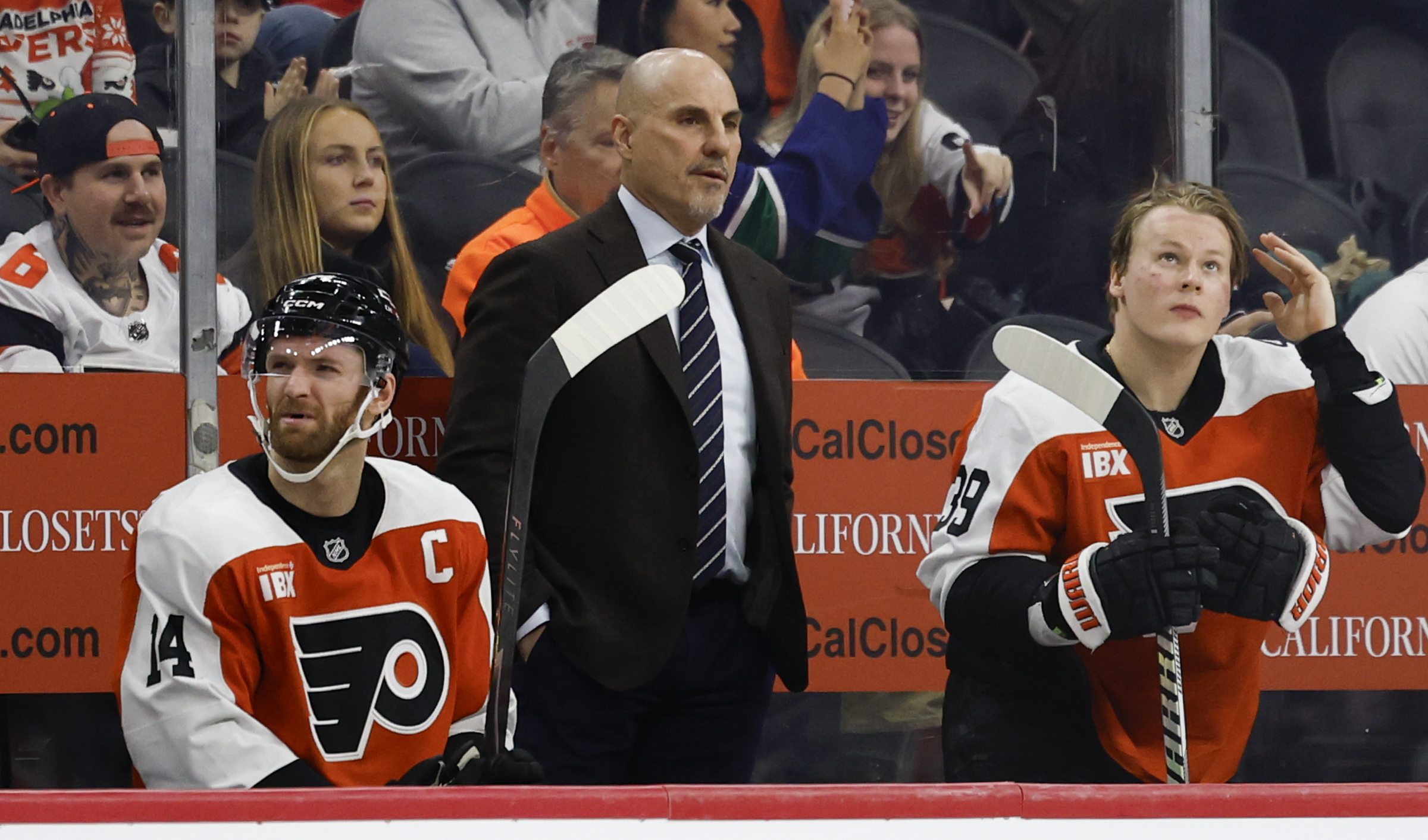
Flyers head coach Rick Tocchet and winger Matvei Michkov have had there disagreements about deployment and responsibilities this season.
At the onset of the switch, it seemed to be working too, as the 21-year-old winger had five goals at five-on-five in the first 10 games and six overall. But over the next 24 contests, he managed just two. Across the past 34 games since switching to left wing, Michkov has 17 points (eight goals, nine assists). He missed one game in January after taking a puck off his foot and has been skating on average 14:30 a night.
“I think there’s been some [better] pace in his game, but I think there’s more,” said Tocchet. “I know he had like [seven] shots last game, but a lot of them are just from the outside, just thrown on the goalie. I want more from him. I want him to do a deep delay, get out of there, move your feet, things like that.”
Matve Michkov’s event map during five-on-five from Wednesday’s loss to the Utah Mammoth.
When delving into the analytics, he is producing at the same 0.50 points per game clip when on the left and right, but he has gone from 0.14 goals per game to 0.24 goals per game since the shift. His shooting percentage has also risen from 7.7% to 11.1%, while his shots per game have risen from 1.86 to 2.12.
According to Natural Stat Trick, at five-on-five, he has also seen his individual shot attempts rise from 2.43 to 3.41 per game, his individual high-danger shot attempts go from 0.71 to 1.03, and his individual scoring chances from 1.5 to 1.82.
Although there are several factors to look at aside from shifting right to left — e.g., linemates, time on ice, the fact that he’sprobablyin better shape now that he’s further removedfrom his offseason ankle injury — statistically, he seems to have been slightly better on the left.
But regardless of side, Michkov’s production hasn’t been anywhere near as good as last year, when the talented youngster averaged 0.79 points per game and led all rookies with 26 goals. The Flyers will hope that starts to change as they close in on the Olympic break (Feb. 6-24).
Breakaways
Nicolas Deslauriers and Hunter McDonald stayed on the ice late, with the veteran showing the youngster some fighting techniques. … Dan Vladař shared a net with Aleksei Kolosov at morning skate as he inches closer to a return from an undisclosed injury. … Sam Ersson (7-8-5, .858 save percentage) was to start in goal against the Colorado Avalanche on Friday night.
Though Trinity Rodman’s contract saga has at last been resolved with her re-signing, the controversy over the NWSL’s High Impact Player rule likely won’t die down soon.
It remains the subject of a grievance by the NWSL Players Association, which claims the rule should have been collectively bargained; and it remains unpopular with many fans, for a variety of reasons.
The league’s commissioner, Jessica Berman, does not mind being the main target of that ire.
“I very much stand behind the decision and the process,” she told The Inquirer in an interview on Friday. “We intentionally negotiated for the right to do exactly what we did, which is to develop a specific rule for a specific classification of players which there is a reduced salary cap charge, so long as we consult in good faith with the Players’ Association. And I want to reinforce that’s exactly what we did in this context.”
The NWSLPA disagreed.
NWSL Players Association Statement on League’s Unilateral Implementation of the High Impact Player Rule:
“At no point in time in CBA negotiations or any time prior to the end of 2025 did [the] NWSL articulate a plan to impose a separate pot of funds with a new cap and eligibility criteria that were unrelated to roster classifications by any name,” NWSLPA executive director Meghann Burke told The Inquirer via email. “We disagree with NWSL’s representation that it consulted with the NWSLPA.”
Burke claimed that the first “written communication” she got on the proposal came on Dec. 11, and the union registered its objections after multiple board meetings in the ensuing days. The league announced the rule on Dec. 23, and said it will take effect on July 1.
Washington Spirit superstar Trinity Rodman’s threat to leave the NWSL in free agency sparked the league to adopt the High Impact Player rule.
Berman acknowledged the grievance in saying that “as in all labor relations in professional sports and otherwise, the union and the league can disagree,” and the league will follow the established procedures for resolving disputes.
“We are very confident in our position,” she said. “We have been contemplating different iterations of a potential rule or policy like this for a long time, and for that reason, we negotiated into the CBA the specific right to move forward with this if and when we believed it was appropriate.”
If there’s enough money going around to give each of the 15 clubs $1 million from the HIP pot, why not just raise the salary cap by the same amount?
“At some point, the board and NWSL are going to have to realize that increasing the cap — while retaining it — is in their own best interests,” said Burke, whose union has been loudly calling to raise the cap. “Until then, we stand ready to enforce the terms that were negotiated.”
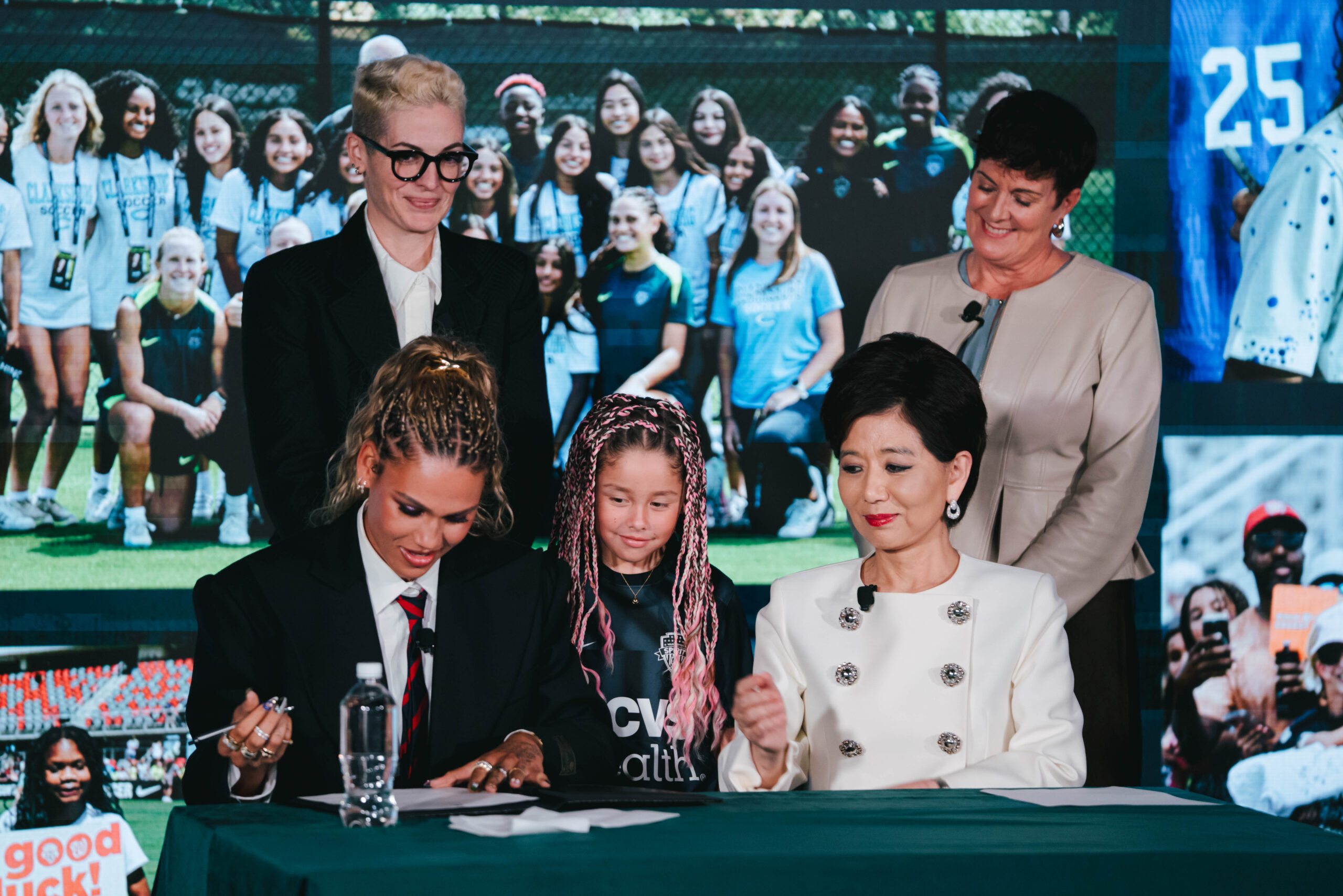
Trinity Rodman (bottom left) signing her new contract on Thursday.
Berman started the league’s case by bringing vice president of player affairs, Stephanie Lee on the call to give more context.
Lee, who previously worked in the front offices of Gotham FC, the Utah Royals, and the Seattle Reign, noted that a player who gets HIP money must have a salary cap charge of at least 12% of the teamwide base cap, which for this year is $3.5 million.
Teams also can’t get cap relief from the rule unless they hit the cap in the first place. Up to that point, the player’s salary is charged to the regular payroll.
“As they roster build throughout the year and through [transfer] windows and different transactions, there’s flexibility there to how they designate players and take advantage of that HIP [money],” Lee said. “It’s not something that they have to decide at the beginning of executing a player’s contract.”
A league spokesperson added that teams can retroactively apply the money to a player when they hit the cap by signing other players, so they can go over the cap to keep everyone they want to.
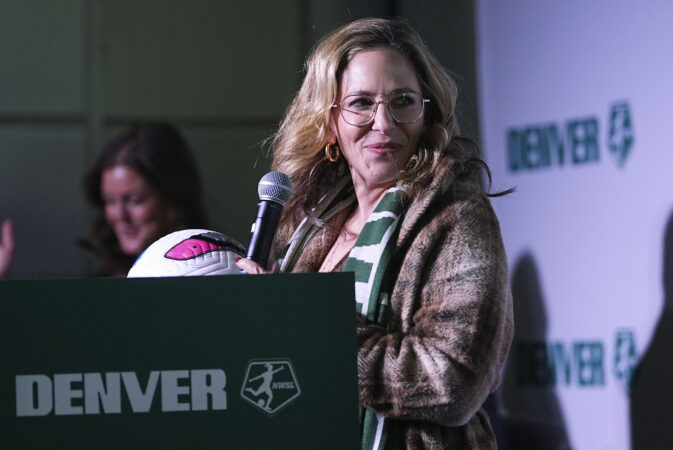
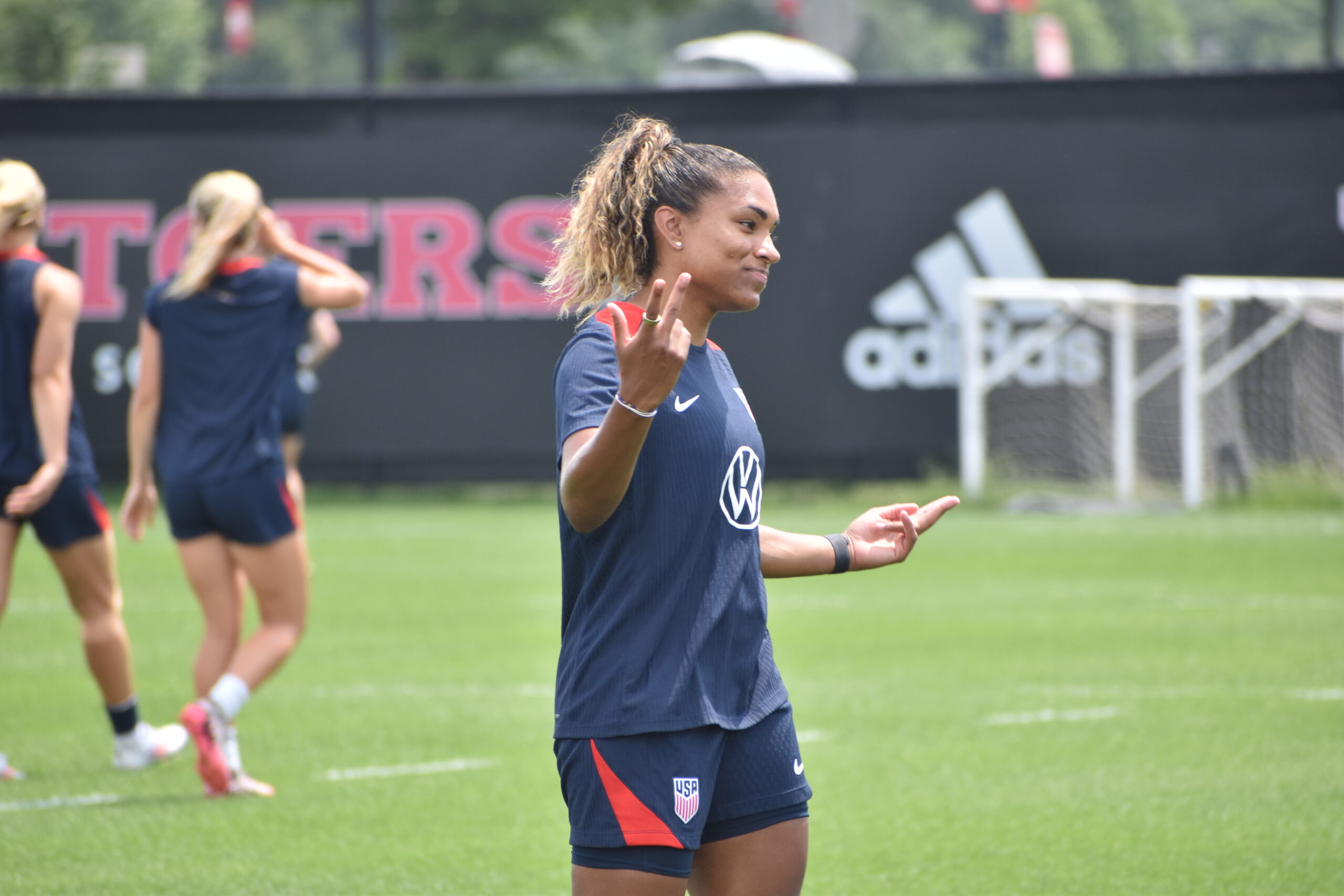
U.S. women’s national team captain Lindsey Heaps is expected to be paid through the HIP rule when she joins her hometown Denver Summit in the summer.
Why limit who can get the money?
Then there are the criteria the league laid down to limit which players are “high impact,” from media and marketing rankings to U.S. national team playing time. This also is widely unpopular.
But there’s also a question at a higher level: Why have criteria in the first place? Why not let teams spend the money on whoever they want, as MLS now does with its Designated Player rule, and let teams potentially make mistakes?
“It is the league’s, and in this case our — my — responsibility to be responsible stewards of capital in service of growing the business,” she said. “In this circumstance where we have unlocked the ability for our clubs to spend an incremental $115 million [combined through 2030], it is our job to make sure that it is going to have a relationship to growing our revenue. That growth in revenue will also feed the revenue-sharing mechanism that was negotiated into our most recent CBA, which means that we are incentively aligned with our players to grow this business.”
U.S. veteran Crystal Dunn (right) is one of the most notable players who is not eligible for HIP money.
Burke strongly disagreed.
“Nothing in the CBA,” she wrote, “permits [the] NWSL to create an additional pot of funds (with an entirely new and separate cap) which only some players are eligible for based on ill-conceived criteria unilaterally determined by NWSL, including and especially when those criteria violate the non-discrimination clause in our CBA.”
Does Berman see a day when the league would loosen the reins?
“In the most general sense, we will always analyze the health of our business and the health of the game in the NWSL,” Berman said. “If we believe that there are business reasons for us to modify our rules, we will.”
Jaedyn Shaw (left) is another notable American who isn’t currently eligible for HIP status.
She stood firm again in saying “we feel like we’ve enabled our clubs to invest significantly.” And as she chose her words, she made it clear that the league will push those clubs to invest in specific ways.
“This particular mechanism, that was very prescriptive in what it was developed to address, is important in that it is supposed to help us to target top players,” she said. “Which, as you’ve heard me say many times, is in service of us being the best league in the world. In order for us to be the best league in the world, we need to compete for the best players, and we want this policy to guide the behavior of our clubs so that they can compete financially to attract and retain top players.”
It’s no secret that there’s a fair amount of variance in how much money NWSL teams have in the bank. Nor is it a secret that Washington Spirit owner Michele Kang sits at the higher end of the scale. She had long been ready to spend big on Rodman, and Rodman’s agent has said the three-year deal is worth over $2 million per season.
But when Kang first put a contract proposal on the table, Berman vetoed it for violating the league’s salary rules. A source with knowledge of the offer told The Inquirer that the Spirit would not have been able to pay Rodman and also meet the league requirement of a 20-player roster, even if all the others were on the league’s minimum salary.
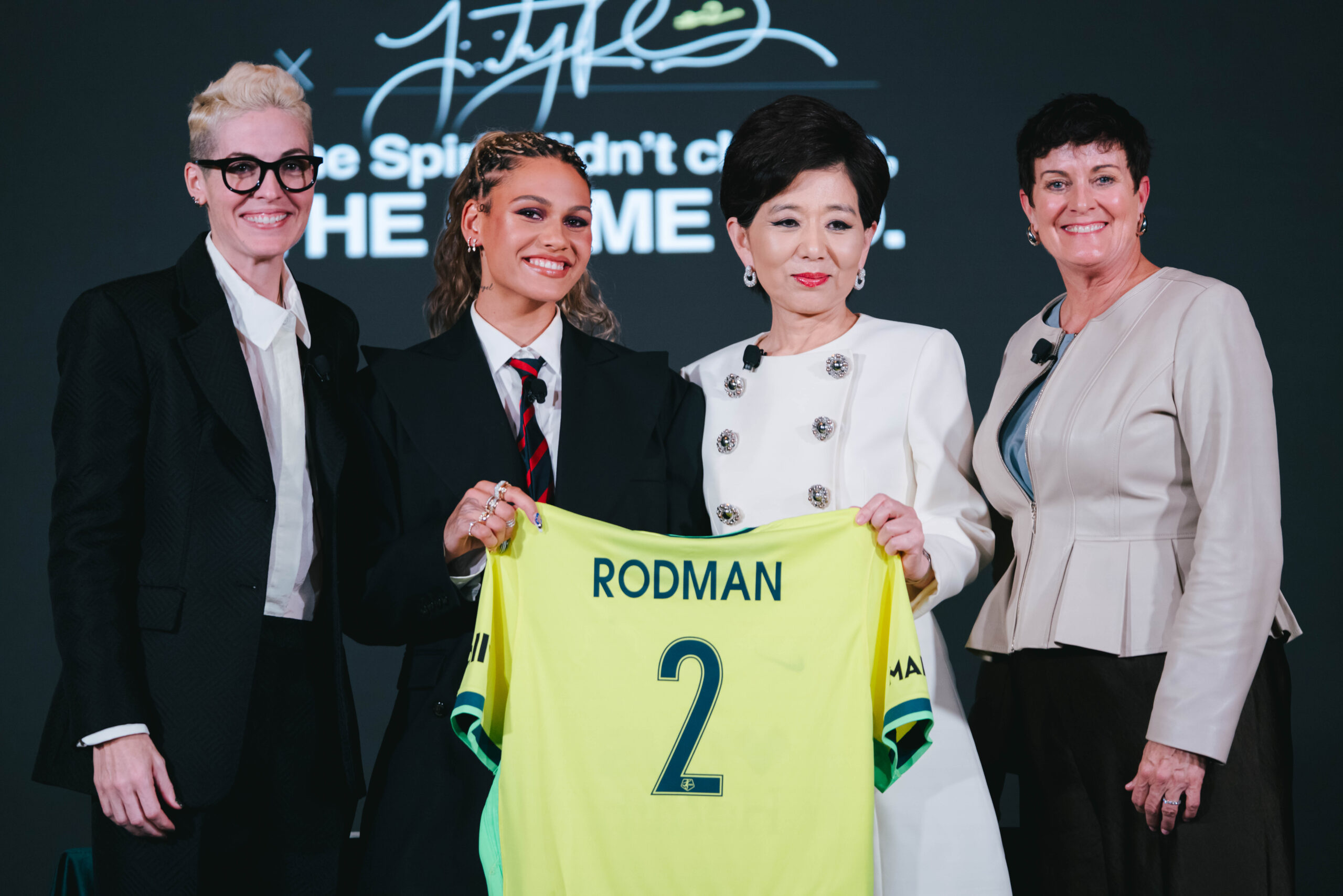
Michele Kang (second from right) with, from right to left, Trinity Rodman, Spirit president of soccer operations Haley Carter, and CEO Kim Stone.
That has led some outsiders to wonder how much resistance there was elsewhere in the league to raising the cap and whether the HIP rule might have been an easier sell. A two-thirds majority of team owners is required to pass a vote.
“It is in our best judgment that the HIP rule is the most strategic mechanism for us to advance the business,” Berman said.
“A rule that has been adopted with such a singular focus on generating revenue is not even about soccer, building a competitive roster to win NWSL games, or meeting a team’s performance needs,” she said, “which are obvious functions of a team when they are constructing a roster.”
Catarina Macario might be the next U.S. star to get HIP money, as there’s speculation she might come to the NWSL in the summer.
Another milestone in all this is expected to arrive when the current European season ends in the summer. There’s been much speculation that U.S. national team star Catarina Macario could come home from England’s Chelsea, and Spanish superpower Barcelona reportedly has nine players on expiring contracts — including stars who’ve fueled the club’s three Champions League titles in the last six years.
Will the NWSL be willing to hit the gas pedal to bring them over?
“We developed this rule very intentionally to put our clubs in a position to compete financially with top clubs around the world for top players, and we believe it will put us in a position to do that effectively,” Berman said. “Without naming specific clubs or naming specific players, it is our expectation that when we look back on this, we will have a list of players that we’ve been able to attract and retain by virtue of enacting this rule.”
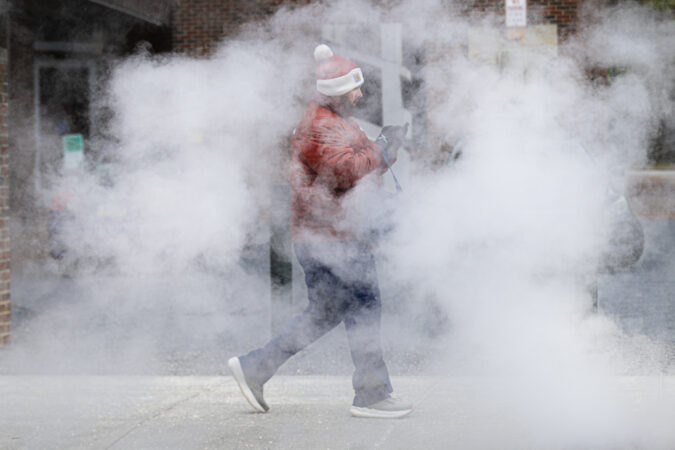
Brace yourself for the cold, Philadelphians, because the first double-digit snowfall in 10 years is potentially heading our way, followed by sub-freezing temperatures that could last the rest of the month.
Since nowhere is safe from the cold, here are some tips on how to keep yourself from freezing and your property from damage (no burst pipes in sight):
Staying indoors is the best way to keep frostbite and hypothermia at bay, but some must brave the temperature for work, other needs, or emergencies, as even waiting for the bus can take longer if SEPTA experiences storm-related service delays.
With temperatures forecast in the teens and lower 20s, it is important to keep an eye on your core temperature.
When you rapidly lose heat or stay wet for too long, it can cause hypothermia, even indoors. This can affect your brain and body, causing slurred speech, confusion, clumsiness, and extreme tiredness.
Continued exposure to the cold can cause frostbite, as blood stops reaching your fingers, nose, ears, and extremities properly. You can get frostbite even under winter clothing, and it can lead to losing the affected body parts. If you start feeling tingling, numbness, or your skin looks gray or pale, head indoors.
Frostbite can happen without hypothermia symptoms, and vice versa. Children, older adults, and people with circulation issues are especially at risk
To prevent both afflictions, stay dry, covered, and layered up, keeping your skin from being exposed.
Four out of five warming centers reached capacity on Thursday, but the city plans to open more and add beds as needed.
The warming centers remain open at select libraries from 9 a.m. to 9 p.m. And shelter beds have been added under the Code Blue declaration.
Some recreation centers will also serve as warming centers from 9 p.m. to 9 a.m. Find the selected libraries and recreation centers closest to you on the city’s interactive map of warming centers.
Folks in need of a warm place can go to their local police precinct to be transported to the nearest warming center.
Broken bones and head trauma are no fun. Stay grounded by wearing footwear with enough traction (no sneakers or dress shoes), or traction cleats.
You can’t control the city roads, but salting your sidewalk properly can help avoid starting your day on the ground, or worse, in the emergency room. As you walk, make sure to lean slightly forward and take shorter steps. You may look like a penguin, but it’s worth it to avoid the pain and medical bills.
Much like your body, your home also loses heat in the cold, putting pipes at risk for freezing and bursting. Disconnecting garden hoses and shutting off the valve that feeds them, and keeping faucets slightly open and running can prevent expensive repairs.
Pipes will begin to freeze when a thermostat is at 39 degrees and lower. Maintaining the thermostat at 50 degrees or above is ideal.
Though they won’t burst, cars get cold too, reducing battery power and creating a risk of being left stranded, especially if the battery is older than two or three years.
Be ready to jump-start your car. Jumper cables and a portable jumper pack can be helpful. Remember, red clamps to the positive post of the dead battery; black clamps to the negative post of the working battery and to the unpainted metal surface on the engine of the dead car.
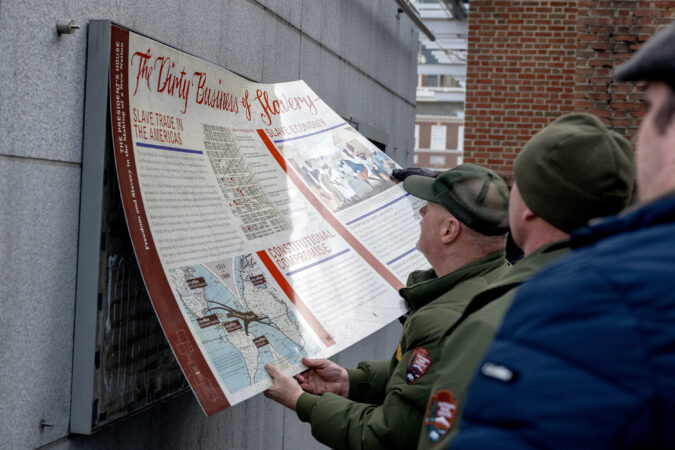
Visitors at Independence National Historical Park strolled through what was left of the President’s House Friday afternoon, some stopping to inspect the blank brick and streaks of glue residue where exhibits about slavery were displayed for 16 years.
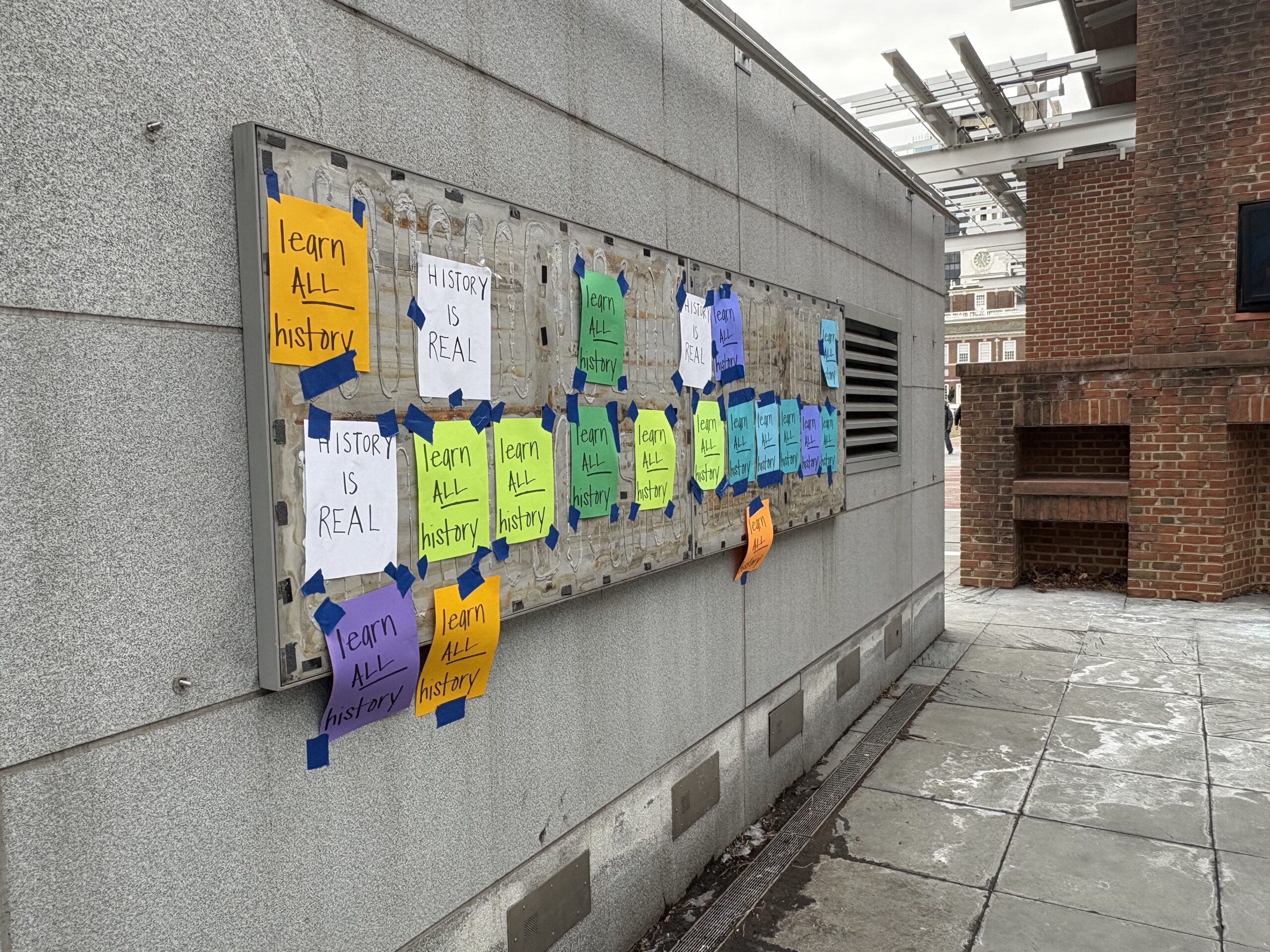
At about 12:30 p.m. Friday, a group of teachers spent their 45-minute lunch break taping up colorful signs across the bare walls as a small act of resistance: “Learn all history,” and “History is real,” the posters read.
A group of teachers on Friday, Jan. 23, 2026, taped posters along the now barren brick walls of the President’s House.
But if any of Friday’s visitors had questions about why the slavery exhibits at the President’s House were removed, they’d be hard-pressed to receive an exact answer from park employees.
Soon after Thursday’s dismantling of the President’s House — which memorializes the nine people George Washington once enslaved there — employees were reminded by the Park Service to use “talking points” that essentially evade visitors’ questions, according to internal correspondence reviewed by The Inquirer.
The message suggests the following lines to park employees, while also instructing them to answer “truthfully”:
“[I am not aware of] why this [exhibit/interpretation materials] has been [changed/removed]”
“[Exhibit/interpretation material] has been [updated/removed] to ensure compliance with the Secretary’s Order.”
“If visitor continues to ask questions that you are unable to answer, politely refer them to AskNPS@nps.gov,” the message further outlined.
“It’s outrageous what they’re doing,” said Kaity Berlin, a social studies teacher who was among the group at the park Friday.
“At the smallest level it’s a waste of resources; at the biggest level, [it’s an] erasure of history,” added Berlin, who declined to say where she worked.
The President’s House received intense scrutiny from Trump and Burgum’sorders, culminating in the total dismantling of all displays at the site Thursday — even those that were not originally flagged by park staff for review last year.
It’s not just the public that has questions. Locallawmakers want answers, too.
On Friday, Democratic U.S. Reps. Brendan Boyle, Dwight Evans, and Mary Gay Scanlon, who all represent parts of Philadelphia, penned a letter to Burgum and Park Service Acting Director Jessica Bowron demanding answers to specific questions about the removal by Jan. 30. They also said they believe the dismantling violates an existing agreement between the Park Service and the city.
“Trying to remove that history just because it makes some people uncomfortable is deeply troubling. When a government starts hiding parts of its past, it begins to look more like a regime that rewrites history rather than one that learns from it,” the lawmakers wrote.
The lawmakers want to know why the exhibits were taken down and who authorized the decision, according to the letter.
The letter also asks for information on what role senior Trump administration officialsplayed, where are displays being stored and if there’s plans for them to be reinstalled, and what other documents or items exist related to the removal of the exhibits.
At the President’s House Friday afternoon, it appeared that many Philadelphians were adamant about preserving this history.
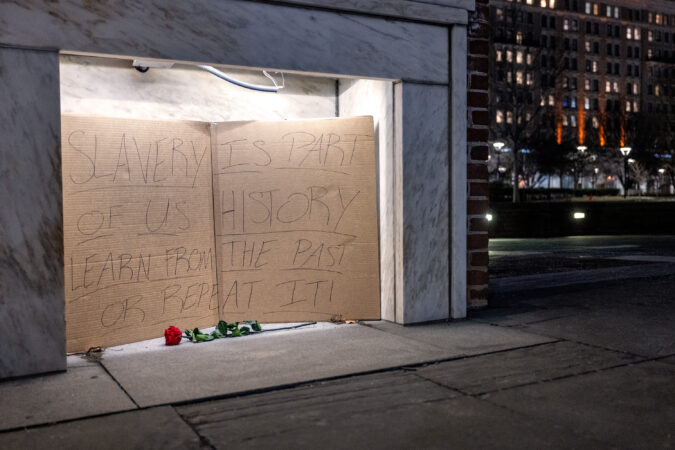
A bouquet of flowers was placed at the feet of the marble wall inscribed with the names of nine people enslaved there by Washington. A single red rose rested inside one of the site’s fireplaces; a sign, “Slavery was here, Philly hates fascists,” rested against a wall.
“Everybody has been fighting for so long to teach all pieces of history, not just one side of it,” Berlin, the teacher, said.
For some, the removal of exhibits about slavery at the President’s House Site at Independence National Historical Park on Thursday came as a shock.
For John Garrison Marks, a historian and author who writes and researches about America’s early years, it looked like history repeating itself.
In April, Marks will publish his book Thy Will Be Done: George Washington’s Legacy of Slavery and the Fight for American Memory. The book delves into George Washington’s life, his relationship with slavery, and how that relationship has been manipulated by politicians and activists over the last 2½ centuries to serve various narratives.
Marks talked to The Inquirer about how the removal of the slavery exhibits at the President’s House will become another chapter in the nation’s struggle to reconcile how a man renowned for fighting for freedom forced so many into bondage.
The following interview has been edited for clarity and brevity.
Can you tell me a little about the specific history of this site?
While [Washington] was there, he enslaved at least nine people. He had enslaved people for the entirety of his adult life. He had grown accustomed to being served by enslaved people at his home in Virginia.
So he brought these people from Mount Vernon to the President’s House in Philadelphia while he was serving as president there, and the major complication that came up with this, and this is one of the things that the historic site did a great job of explaining, is that the state of Pennsylvania passed a law to gradually abolish the institution of slavery in 1780.
As part of that law, any enslaved person who remained in residence in Pennsylvania for more than six months would be entitled to their freedom. George Washington discovered this soon after assuming the presidency and relocating to Philadelphia, and he also learned, as many future presidents would learn, that the law also would apply to him. He wanted to keep the labor of these people that he enslaved, and so he devised a scheme he very much wanted to be kept secret to rotate enslaved people in and out of Pennsylvania before they had arrived at that six-month mark and would be entitled to their freedom.
Sometimes he would send people back to Virginia. Sometimes he would just take them across the river to New Jersey for a little while, but he was very aware of this gradual abolition law and worked very hard to make sure that it wouldn’t apply to the people he personally enslaved.
The tragic irony in that is, at the very same time, George Washington was expressing in letters to people, in private correspondence, how much he supported these Northern gradual abolition laws.
Was there some sort of moral struggle that we have evidence of that he was experiencing? How was he reconciling these things?
He writes to people in private, talking about how he recognizes the hypocrisy inherent in him leading a revolution to found a nation dedicated to liberty and equality and his own involvement with slavery.
There were these statements that he made limiting the nature of his involvement, of trying to establish some limits for himself of how he would and would not engage with the institution of slavery, but he also proved flexible on that point.
Hercules Posey, the chef that he enslaved in Philadelphia, escapes from slavery and escapes from the Washingtons.
After that happens, Washington writes in a letter that he’s disappointed because he vowed never to gain another enslaved person by purchase but then says, “Now this is a vow I must break.” So it seems he never even considered the possibility of hiring and paying a free chef.
How has Washington’s experience with slaves, in general but particularly there, been sort of warped over time?
In the months after Washington’s death, almost every American would have known that he freed the people he enslaved in his last will and testament, and yet almost no one talked about it.
There are dozens of biographies of Washington that get published in the decade after his death, and almost none of them acknowledge slavery in any way.
But there have always been people in America who are dedicated to lifting up that history, to resurfacing Washington’s involvement in slavery. So during the 1932 bicentennial [of Washington’s birth] you have Black educators and activists, Black newspapers who say, if this is going to be about getting back to the real George Washington, now is the time that we have to reckon with his involvement in slavery.
It happens again, to varying extents, during the Civil Rights Movement as there’s a greater scholarly attention to the histories of slavery and African Americans. You’ve seen it over the course of the last couple decades about what kinds of things can and can’t be taught in American schools.
Always, the conversation is about Washington, but it’s never just about Washington. It is always about America and what America stands for, and depending on people’s assessment of what the nation is and what it means, that often dictates how they think the story of George Washington and slavery should be treated.
Why do you think it’s important we have the President’s House as a memorial with the plaques that have been removed? What do you make of the removal of them?
Trying to hide the nation’s history of slavery has never worked. We’ve been trying it over and over again throughout American history, but there have always been other people who insist that we reckon with this past, that we face it head on, that we include the full story so we can learn from it.
As we approach the nation’s 250th anniversary, I can’t help but think how many people are going to be visiting Independence Hall, are going to be visiting Independence National Historical Park, who would have had the opportunity to encounter this history of slavery that is so closely tied to our history of the founding and maybe learned it for the first time.
Eliminating the ability for people to learn from that history, to have conversations about that history, to reckon with what that history should mean for us today is only going to set us farther back. It is going to make much more challenging any effort to move the United States to becoming a more just society.
The driver, Jamal McCullough, assessed his vehicle for damage before fleeing the scene without helping her or calling police, prosecutors said. He turned himself in to authorities after reports of the collision — and his photograph — aired across local news outlets.
On Friday, McCullough was sentenced in Montgomery County Common Pleas court to serve three to six years in a state prison, the mandatory minimum for such a crime. While prosecutors said he was not at fault in the fatal collision because Cary was crossing outside of a posted crosswalk, they said his actions after the crash were criminal.
For Cary-Irvine, the hearing was a chance to offer the public a more complete image of her late sister.
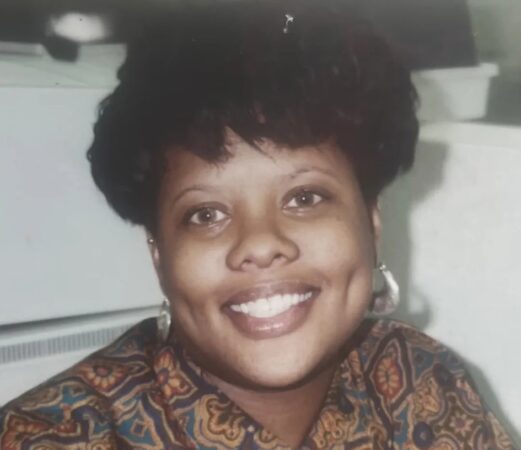
Cary, 61, was an avid reader who loved children, traveling, and the outdoors, according to Cary-Irvine. She was a fan of spelling bee competitions, and she had a sense of humor: she was known for calling up her nieces and nephews and speaking to them as Cookie Monster, her sister said.
“She had a love of people — babies were her specialty,” Cary-Irvine said. “She was the favorite Auntie. To know Tracey was to love Tracey.”
Cary was also a mother to a son who is in his 20s, her sister said, and she held a variety of jobs throughout her life, working for the Philadelphia School District, St. Joseph’s University, and later UPS.
She was a singer of gospel songs, and grew up attending Union Tabernacle Baptist Church in West Philadelphia.
Before Cary’s death, the siblings’ father died from COVID-19, leading Cary to struggle with mental illness, her sister said. Soon she was living on the street.
It was on the street where McCullough struck Cary shortly after 2 a.m. on Nov. 11, 2024.
Surveillance footage showed that McCullough, of East Germantown, struck Cary with enough force to eject her from her wheelchair. After checking on his vehicle, he walked within feet of Cary’s body but did not stop to help her, prosecutors said.
The father of two was en route to a shift as a sanitation worker with Waste Management.
During his sentencing, McCullough apologized for the incident, which he said was an accident.
“I want to apologize for my ignorance, apologize for maybe how I went about things,” McCullough said.
“If I could take it back, I definitely would.”
Minutes earlier, Cary-Irvine read a victim impact statement aloud, telling the court that, in her view, McCullough acted “entitled and without remorse” that morning.
“This sentence is not about revenge — it’s an opportunity, perhaps your last, to reflect honestly on your life,” Cary-Irvine told McCullough.
“If you do not learn from your mistakes,” she continued, “you will repeat them.”
On Friday, the New Jersey man charged with stealing Eagles receiver A.J. Brown’s car accepted a plea deal in Camden court and was sentenced to five years in prison, as first reported by NJ.com and confirmed to The Inquirer by the Camden County Prosecutors Office.
Luis Segurra, 26, pleaded guilty to third-degree receiving stolen property, second-degree unlawful possession of a weapon, and fourth-degree resisting arrest in Camden County Superior Court on Friday — all charges related to the theft of Brown’s luxury vehicle from his home in Haddonfield last April.
Segurra, who was also reportedly sentenced to fourth-degree theft stemming from an unrelated crime in Burlington County, declined to speak before his sentencing.
On top of the five-year sentence, Segurra is ordered to stay away from Brown and his Haddonfield residence as part of the plea deal, NJ.com reported, adding that Segurra will be eligible for parole after serving one year of the sentence.
On April 21, Brown awoke to his car, reportedly a 2022 Mercedes GLE Maybach, missing from his property. He took to social media, asking to cut a deal with the thief, who has been identified as Segurra.
“Just bring the whip back, bro,” Brown said on his Instagram story, after first posting a plea on X asking the thief to return his car. “I won’t press charges. Just bring the whip back and you can go on about your day … You were smooth with it though. Pulled up at 3:42, you got up out of there at 3:45, you’re fast on your feet. I’m going to show you how fast I am on my feet. Real talk. This is about to get done today.”
He wasn’t lying. Mere hours after his social media posts, Brown took to Instagram to say that his car had been returned, but by the police, not the thief.
“I’m out here grinding for the Philadelphia Eagles, and I’ve got to look for my car,” Brown said in a follow-up post, filmed at the NovaCare Complex. “But see, we’ve already got the whip. I told you to just turn the car back in, and now you’ve got to deal with the consequences, man. I’ll tell y’all a funny joke. This morning, when I was talking to the police, my little son comes up and goes, ‘Da-da, Paw Patrol!’ I said, ‘Everybody’s got jokes this morning.’ Now the joke’s on you.”
According to reports, Brown’s vehicle was equipped with a GPS. Brown tracked the vehicle on his own, and then passed on the location to law enforcement, who recovered it in Camden. Segurra, who was in the car at the time law enforcement discovered it, attempted to flee but was unsuccessful.
This past season, Brown led the Eagles in receptions with 78 and was one of team’s two 1,000-yard receivers. During the Eagles’ 23-19 loss to the 49ers in the wild-card round, he was caught in a heated moment with Eagles head coach Nick Sirianni on the sideline, leading to offseason trade rumors. Brown declined to speak to the media on two separate occasions after the game.
While he’s kept a low profile since the end of the season, Brown was recently spotted in Florida purchasing candy from a stranger on the street. In addition to paying for a couple snacks, Brown, who was with his fiancée and young son, gave the kid several hundred dollars in cash to purchase a PlayStation 5.