Tag: topic-link-auto

  • After 20 years of growth, this Philadelphia-born company says it’s ready to help in the caregiver crisis

    After 20 years of growth, this Philadelphia-born company says it’s ready to help in the caregiver crisis

    Just over 20 years ago, when Geoff Gross founded Medical Guardian, his vision was to empower older adults to live more independently.

    The company launched in 2005 out of Gross’ apartment in Center City with a focus on emergency response for seniors and individuals with disabilities.

    “At the time, the industry was largely reactive and built around moments of crisis,” he said.

    It now has 630,000 active members, who can choose from lightweight medical alert devices worn as a necklace or on the wrist. One of them, which looks like any other smartwatch on first glance, allows users to track health and activity stats.

    The company employs more than 600 people and is approaching $250 million in annual revenue. Gross said it is poised to step in as aging-in-place becomes an urgent challenge facing families, healthcare systems, and policymakers.

    By 2034, the number of older adults in the U.S. will surpass the number of minors for the first time in history, according to the U.S. Census Bureau. Simultaneously, families and caregivers are experiencing increased demands, and traditional care models are proving to be less sustainable. Over 53 million Americans serve as unpaid family caregivers, according to a recent study from the Shirley Ryan AbilityLab, and they provide an estimated $600 billion worth of unpaid labor each year.

    “Caregiving is now widely recognized as a public health, workforce, and economic issue, not just a personal one,” Gross said. “Burnout, anxiety, and sleep deprivation are increasingly common, yet caregivers are still underserved by technology that focuses almost entirely on emergencies instead of daily reassurance and support.”

    From peace of mind to longevity

    Gross founded Medical Guardian based on a “simple but deeply personal belief” that “people deserve to age with confidence, dignity, and the freedom to live life on their own terms,” he said.

    That was informed by his family’s experience with Gross’ grandmother, Freda, a retired nurse who lived alone later in life and experienced frequent falls. “She was fiercely independent, but those moments created real anxiety for our family,” he said.

    She became Medical Guardian’s first member.
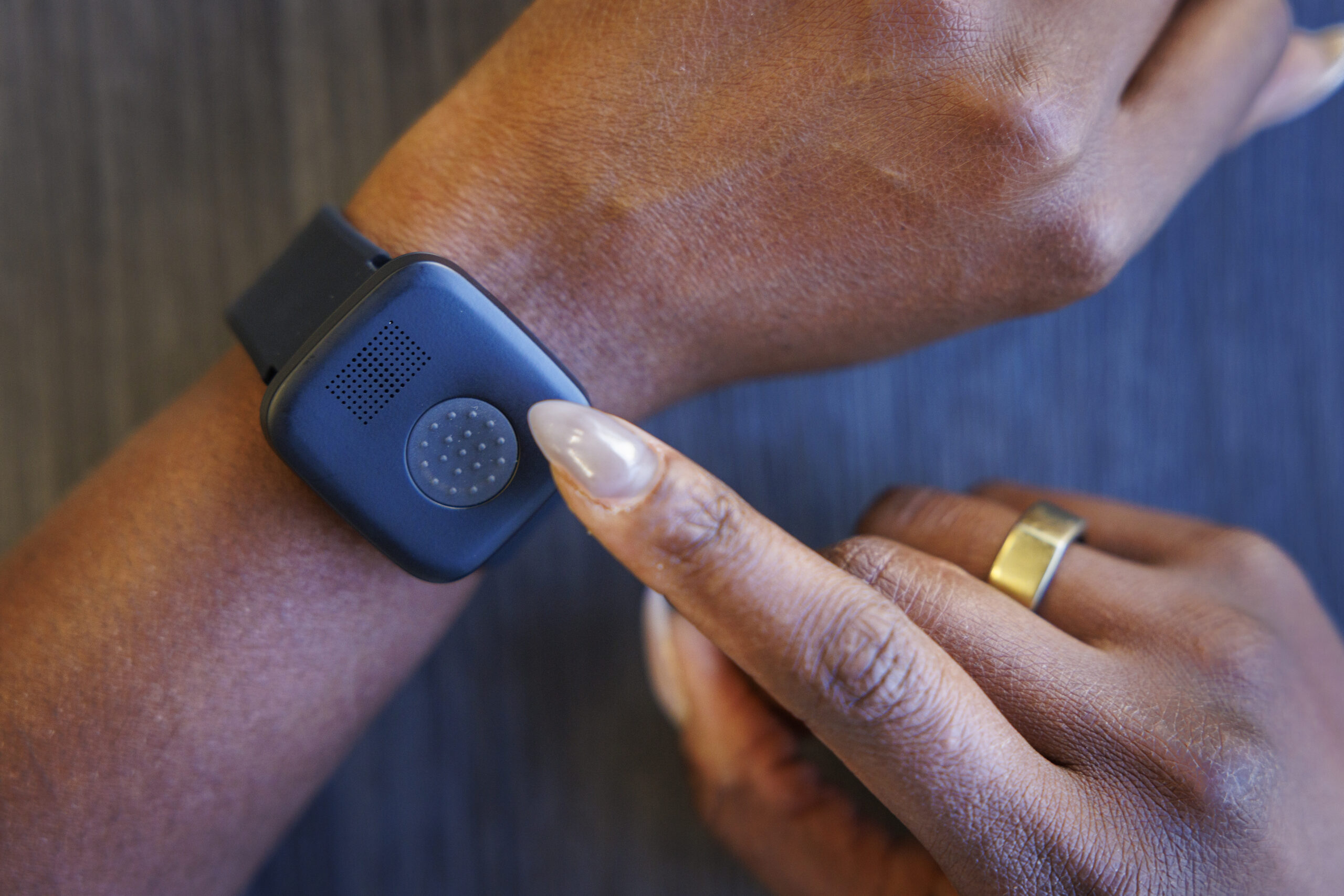
    The MGMini Lite by Medical Guardian.

    “People who are older, frail, or have a disability or chronic illness” need to be able to easily, reliably contact family or emergency services, said Richard C. Wender, who chairs the Department of Family Medicine and Community Health at the University of Pennsylvania’s medical school.

    He recommends choosing a system that’s affordable and delivers on promises made. These services can offer more independent options for vulnerable individuals.

    “Most people want the same things as they get older, as they did before: control over their daily lives, privacy, and the ability to remain in their own homes and communities for as long as possible,” Gross said. “When done thoughtfully, connected health and safety tools can remove barriers rather than impose them.”

    People often find Medical Guardian through referrals from adult children, caregivers, clinicians, and community organizations, Gross said. He noted that such decisions are “often made collaboratively, and our approach is designed to reflect that reality.”

    The company also does direct-to-consumer marketing, as well as social media advertising and influencer outreach. And it works closely with health plans, providers, senior living operators, and state programs focused on helping aging adults remain safely at home.

    “That blend of consumer and healthcare channels mirrors how aging and caregiving actually happen, in real homes, with real families, over time,” Gross said.

    Gross says Medical Guardian members have shared feedback that their devices’ biggest impact is not a dramatic moment, but the everyday reassurance.

    Medical Guardian’s MGMini device, which is worn around the neck.

    “Feeling steady taking a shower, walking outside without hesitation, or knowing help is there if something feels off,” Gross said. “Those small moments of confidence shape how people experience independence.”

    With that in mind, one of the company’s goals is to support people earlier — before a fall, a health scare, or a rushed decision.

    “Our services often come years before in-home care or assisted living, which gives us the opportunity to build trust while people are still living independently and confidently,” he said.

    Medical Guardian also has wellness advocates, many of whom have social work backgrounds, as well as emergency response specialists and care teams.

    “Our platforms use data, automation, and intelligence to notice patterns and surface insights, but when something matters, a real person is always involved,” Gross said.

    Philly-based medical device competes with Big Tech watches

    Many of the people answering Medical Guardian’s emergency calls, building its software, supporting members, and working with health plans are doing so from Philadelphia, where the company is headquartered. More than half its employees are based in the area.

    Geoff Gross, CEO of Medical Guardian, in the Technology Product Innovation Lab at the company’s Center City Philadelphia office.

    “We’ve built and scaled this company in Philly, and that matters to us,” Gross said. “There’s a strong work ethic here, a deep healthcare ecosystem, and a sense of community responsibility that aligns with our mission.”

    Some of Medical Guardian’s partners are based in the region — such as AmeriHealth Caritas, Independence Blue Cross, and Jefferson Health.

    Some may feel that an Apple Watch can do as much as one of Medical Guardian’s devices by providing vital stats, location tracking, and communication capabilities. But Gross said Medical Guardian’s products offer a unique alternative.

    “Many of our members do not want dozens of apps or daily charging. They want something reliable, intuitive, and built for real life, especially in moments when clarity and speed matter,” he said.

    Gross cited that Medical Guardian can monitor location and, when appropriate, biometrics like oxygen levels or blood pressure. That’s not meant to overwhelm people with data but to create meaningful context for families and care teams.

    “For many older adults,” he said, “that focus on usefulness over features is more appealing than a general-purpose smartwatch that tries to do everything.”
  • SNAP cuts are taking a toll on the thousands of Pennsylvanians losing benefits: ‘I fell into a downward spiral’

    SNAP cuts are taking a toll on the thousands of Pennsylvanians losing benefits: ‘I fell into a downward spiral’

    Enrique Fuentes counted on the $250 he received monthly in federal nutrition assistance to cover the cost of groceries. That changed last month.

    Fuentes works three days a week as a technician assisting therapists who help autistic children and adults, ages 3 to 22. He is one of an estimated 3 million able-bodied Americans who do not work enough hours to qualify for the Supplemental Nutrition Assistance Program (SNAP) under a law signed by President Donald Trump.

    “They cut me off because you need to work more than 20 hours a week to get benefits, and I didn’t have those hours,” said Fuentes, 27, who lives in Philadelphia. “I wasn’t even aware of that stipulation.”

    Roughly 4 million Americans are expected to lose SNAP benefits in 2026 under the One Big Beautiful Bill Act. Many of them do not meet work requirements added to the anti-hunger program under the legislation, which paid for Trump’s tax cuts with cuts to SNAP and Medicaid.

    In Pennsylvania, around 144,000 SNAP recipients could see benefits cut this year — an estimated 45,000 in Philadelphia and 12,000 in its collar counties, according to Pennsylvania Department of Human Services estimates.

    Without enough food, Fuentes, who has an associate’s degree in psychology, felt overwhelmed, he said. He is consulting Community Legal Services, which serves people in poverty, for help.

    “I fell into a downward spiral. It’s been upsetting,” he said.

    “Lots of people didn’t know the rules, thinking the winds of Washington don’t affect them. But they do.”

    Since January, advocates say, they have begun to hear from increasing numbers of people suddenly being removed from the program.

    “The White House is rifling through our pockets for lunch money,” said George Matysik, executive director of the Share Food Program, a major provider of food to hundreds of pantries in the region. The cuts constitute “a rounding error for the federal government but [the money is] a lifeline for working-class families,” he added.

    Asked for comment on criticism of the SNAP cuts, a White House spokesperson did not address the program. Instead, the spokesperson praised Trump for helping U.S. families by “fixing” former President Joe Biden’s “broken economy.”

    The spokesperson said that benefits meant for American citizens are “no longer supporting illegal aliens.” But undocumented immigrants have never been eligible to receive SNAP benefits, according to the American Immigration Council, a group that provides legal services to immigrants.

    Policy changes under Trump’s law

    Because the new law revises categories of SNAP recipients — many of which will go into effect at different times — people are uncertain about what they may lose and when. Others who have already seen reductions say they are growing apprehensive because they don’t know whether the law is the reason, or whether bureaucratic adjustments or errors are the cause.

    “Will all this change result in mass panic?” wondered Cailey Tebow, an education outreach coordinator for AmeriCorps VISTA, a national service program designed to alleviate poverty. Tebow works with low-income individuals in Northeast Philadelphia. “It’s scary to think what will happen when people realize what’s being taken from them.”

    Hoa Pham, deputy secretary of the Office of Income Maintenance in the Pennsylvania Department of Human Services, which administers SNAP in the state, is more hopeful. She said she believes the efforts her department has been making will help Pennsylvanians understand SNAP revisions and will “avoid chaos.”

    One category of potential confusion is the change in work requirements.

    Until Trump’s spending plan rewrote the rules, groups of low-income people in Pennsylvania and other states were exempt from a long-standing requirement that childless adults without disabilities and under the age of 54 work, volunteer, or go to school 20 hours per week in order to be eligible for SNAP benefits.

    The work stipulation had been waived for decades because of high levels of poverty and hunger, as well as diminished job opportunities in Philadelphia and elsewhere in the state.

    Under the new policy, childless, able-bodied adults — whose age limit has now been increased to 64 — can be exempt from the work requirements only in areas with at least 10% unemployment — a rate of joblessness considered catastrophic, experts say. In November, Philadelphia’s unemployment rate was 4.8% and other areas in the region saw similar or lower rates.

    “Work requirements in SNAP will put forward a substantial amount of bureaucracy that Pennsylvanians have to contend with,” Pham said. “It could kick many people off SNAP. The impact to people could be severe.”

    She added that reducing SNAP rolls should not be construed as a savings for taxpayers, as Trump and other Republicans have long argued. That is because food insecurity exacerbates health problems, which will add other costs in the long term, Pham said.

    “That will just drive up healthcare and insurance costs,” she said.

    ‘Life is already crumbling’

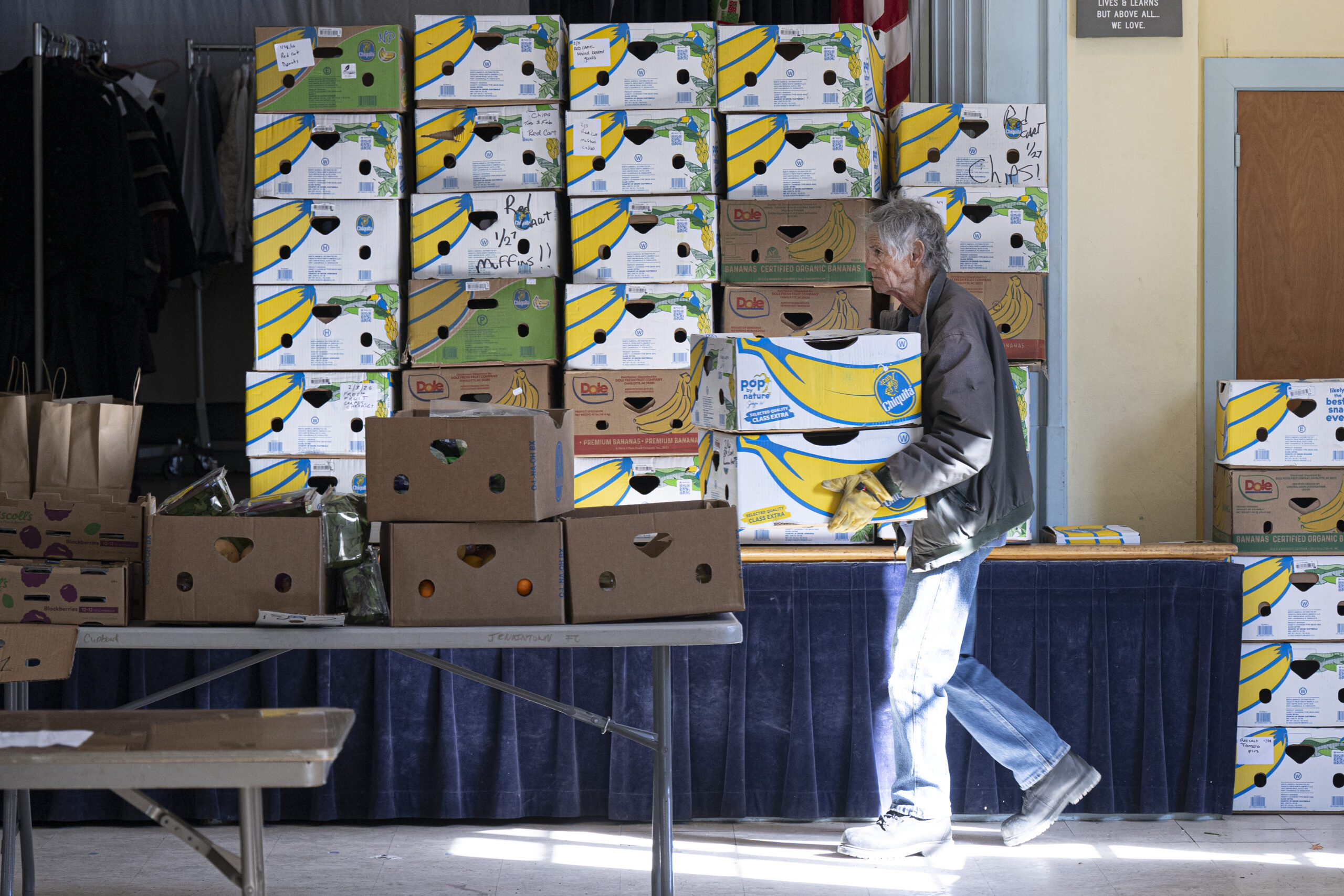
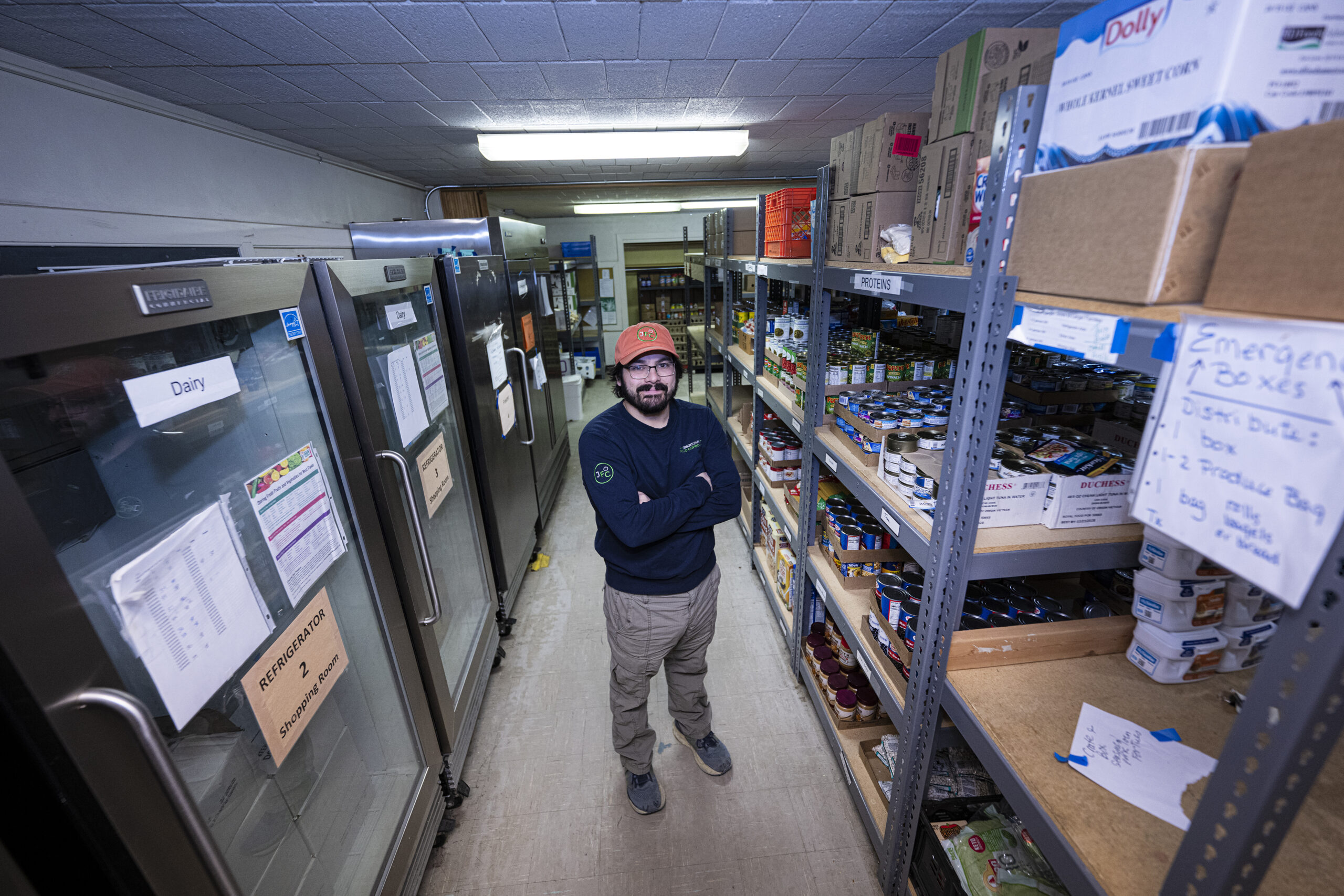
    At the Jenkintown Food Cupboard last week, “anxiety about what will happen is growing,” said Nicolino Ellis, the executive director. “But bellies are already aching from hunger. Life is already crumbling today.”

    Nicolino Ellis, executive director of the Jenkintown Food Cupboard, in the warehouse.

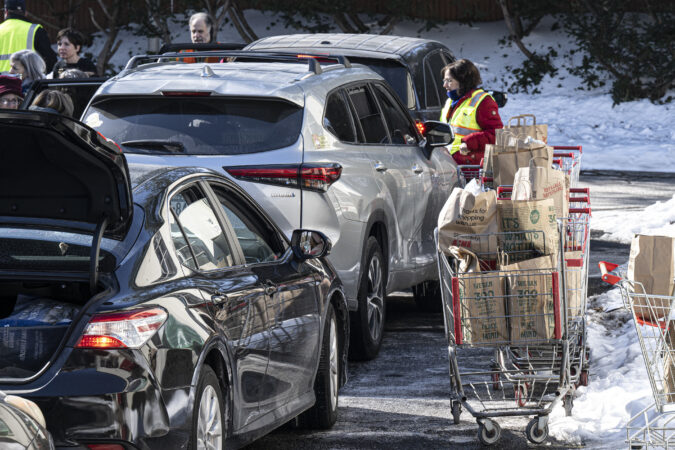
    Outside the cupboard at the Jenkintown United Methodist Church, food was distributed in a driveway to clients who drove up in cars. A phalanx of volunteers slid bags of perishables and shelf-stable foods into trunks and back seats.

    As SNAP benefits dry up while food prices soar, cupboards like this one become overburdened. But they are a less efficient means of feeding Americans in need, according to Stuart Haniff, CEO of the nonprofit Hunger-Free Pennsylvania.

    “For every single meal distributed at a food pantry,” he said, “SNAP provides nine. And need in Philadelphia increased 140% over the last two years.”

    A Jenkintown Food Cupboard volunteer works to set up food distribution.

    Shelley Gaither is one of the hundreds of people receiving groceries from the pantry.

    Gaither, 51, is a former data analyst with an MBA who suffered a disability that caused her to stop working at a Malvern finance company 13 years ago. She now collects Social Security Disability Insurance and lives with her three sons, ages 6, 9, and 18, in Cheltenham.

    Gaither said that in January, her SNAP payment dropped from $400 to $200. “I don’t know if it was a new formula from the government cutting me back, or some other reason,” she said in a phone interview. “No one told me why. It’s not supposed to happen when you have a disability. It’s crazy.”

    Whatever caused the cut, Gaither said, she is in trouble, and worried the benefit will shrink even further.

    “Now, the money I used to pay for electricity and water has to go for food,” she said. “This makes surviving more difficult.”

  • A historic Chesco bridge will be rehabbed to extend a scenic trail

    A historic Chesco bridge will be rehabbed to extend a scenic trail

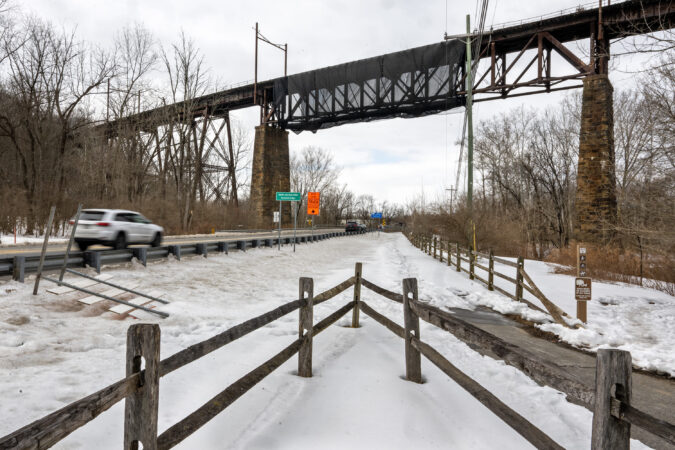
    A project to expand the Chester Valley Trail and repair the historic Downingtown Trestle Bridge, which has spent decades largely untouched, will kick off soon, Chester County officials said.

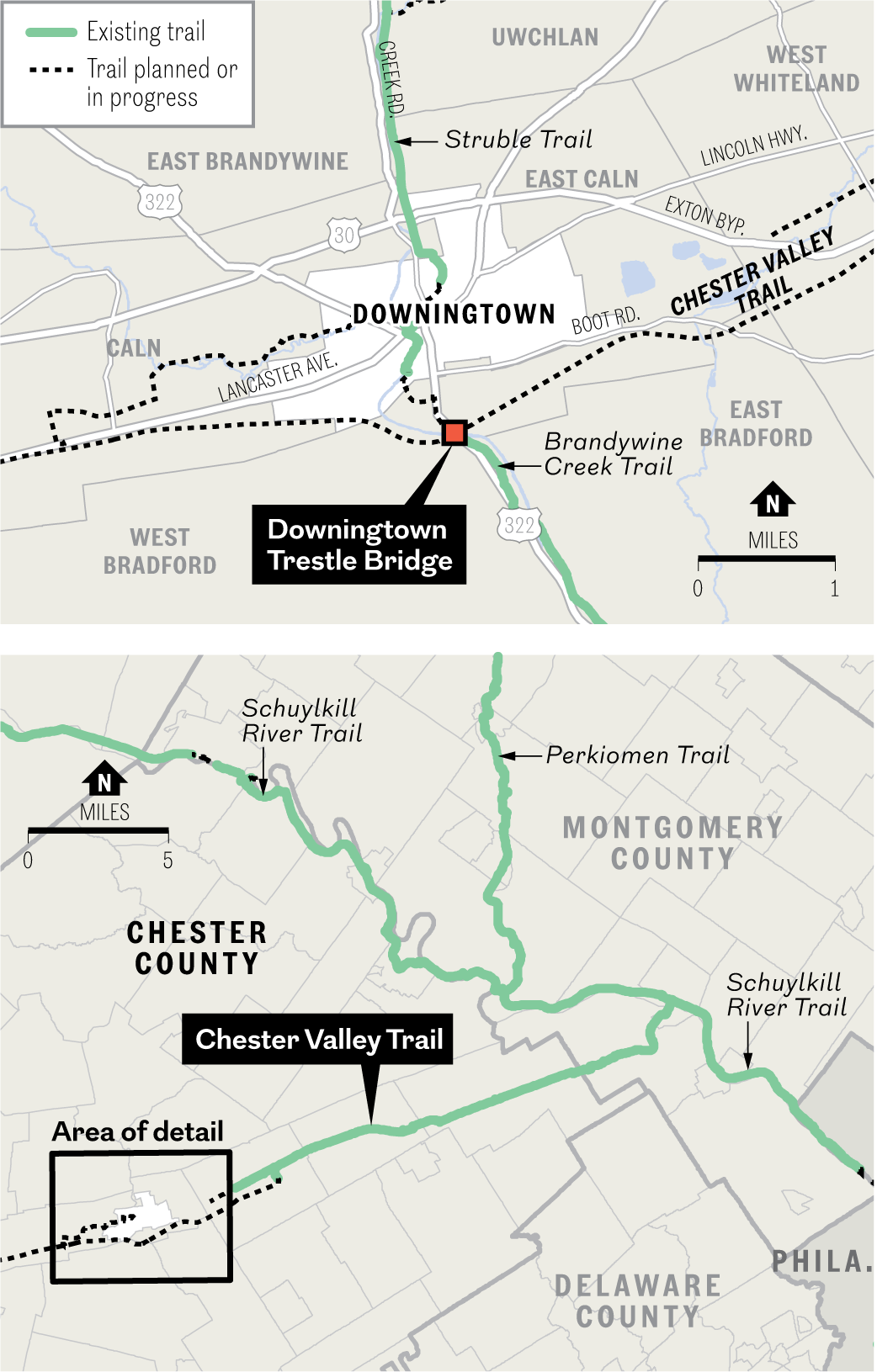
    It’s part of a larger effort to expand the sprawling Chester Valley Trail, a 19-mile rail trail that runs through Chester and Montgomery Counties, from Exton to Atglen.

    “The bridge is a really key part of it, because it’s multimodal,” said George Martynick, director of Chester County’s facilities and parks department. “Without that bridge, I really don’t know what we’d do with this project. It is the keystone of that project. It’s a big job.”

    As the county kicks off the project, people can expect to see inspections taking place on the bridge in the coming months. The trestle will get a full inspection to make sure it meets federal standards, Martynick said. Design is slated to begin in the next year, and the rehabilitation and extension should be completed in five to seven years, he said.

    The bridge stretches 1,450 feet long and more than 130 feet high over the east Brandywine River. Known as the “Brandywine Valley Viaduct,” “Downingtown High Bridge,” or “Pennsylvania Railroad Freight Bridge”— but colloquially called the Downingtown Trestle Bridge — it was constructed in the early 1900s, according to the Downingtown Area Historical Society.

    “This is taking on something much bigger than I think a lot of people understand,” Martynick said.

    Map of the Downingtown Trestle Bridge and the Chester Valley Trail in Chester County.

    The Trestle Bridge has been out of commission since the 1980s, with the track removed. Since then, the bridge has sat abandoned, and has had a troubled history. Security measures were added to prevent people from accessing it, and netting was put on it to keep debris from falling off it.

    The county completed a drone inspection before it took ownership of the bridge last year.

    In May, the county commissioners voted to purchase a portion of the former Philadelphia and Thorndale railroad corridor from the Pennsylvania Department of Transportation for $1.

    Other than some growth and weeds, “it’s in fairly good shape,” Martynick said.

    The county has received three grants for the project — two from the state department of conservation and natural resources, each for $500,000, and a Delaware Valley Regional Planning Commission grant for $200,000, said Brian Styche, the multimodal transportation planning director for the county’s planning commission.

    The county is matching both of the conservation and natural resources grants, for a total of $2.2 million in funding toward the bridge’s design.

    “It’s a good project. It’s going to take a lot of time and effort and a lot of patience, but it will be a pretty impressive project for the community,” Martynick said.

    It’s a personally important project, too: Martynick applied to work in the county’s parks department because of his love of the trail.

    “I love it,” he said. “It’s a very, very special trail.”

  • ‘Courage is contagious.’ How Philadelphia churches and neighborhood groups are preparing to confront ICE.

    ‘Courage is contagious.’ How Philadelphia churches and neighborhood groups are preparing to confront ICE.

    Within the serpentine halls and stairways of Olivet Covenant Presbyterian Church, congregants have established several private, off-limits rooms ― each a potential last-stand space where members would try to shield immigrants from ICE, should agents breach the sanctuary.

    Church leaders call them Fourth Amendment areas, named for the constitutional protection against unreasonable search and seizure. The plan would be to stop ICE officers at the thresholds and demand proof that they carry legal authority to make an arrest, such as a signed judicial warrant.

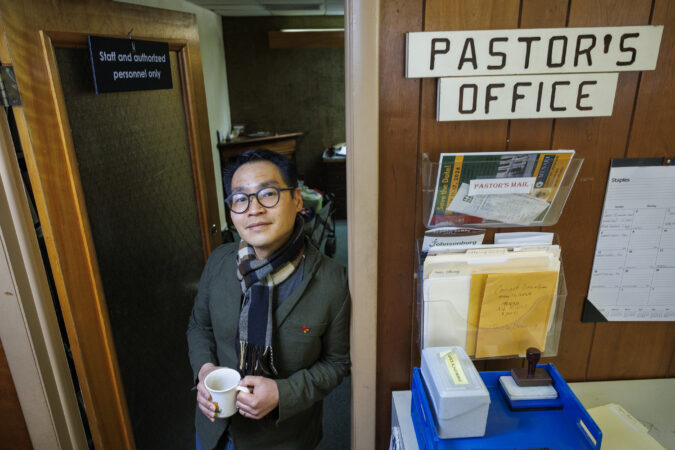
    “It’s a protective space,” said the Rev. Peter Ahn, pastor of the Spring Garden church. “While you’re here, you’re safe, is what we want to assert.”

    Could it come to that? A pastor confronting armed Immigration and Customs Enforcement agents in the hallway of a church?

    It’s impossible to know. But across Philadelphia, churches, community groups, immigration advocates, and block leaders are actively preparing for the time ― maybe soon, maybe later, maybe never ― that the Trump administration deploys thousands of federal agents. People say they must be ready if the president tries to turn Philadelphia into Minneapolis ― or Los Angeles, Chicago, or Washington, D.C.

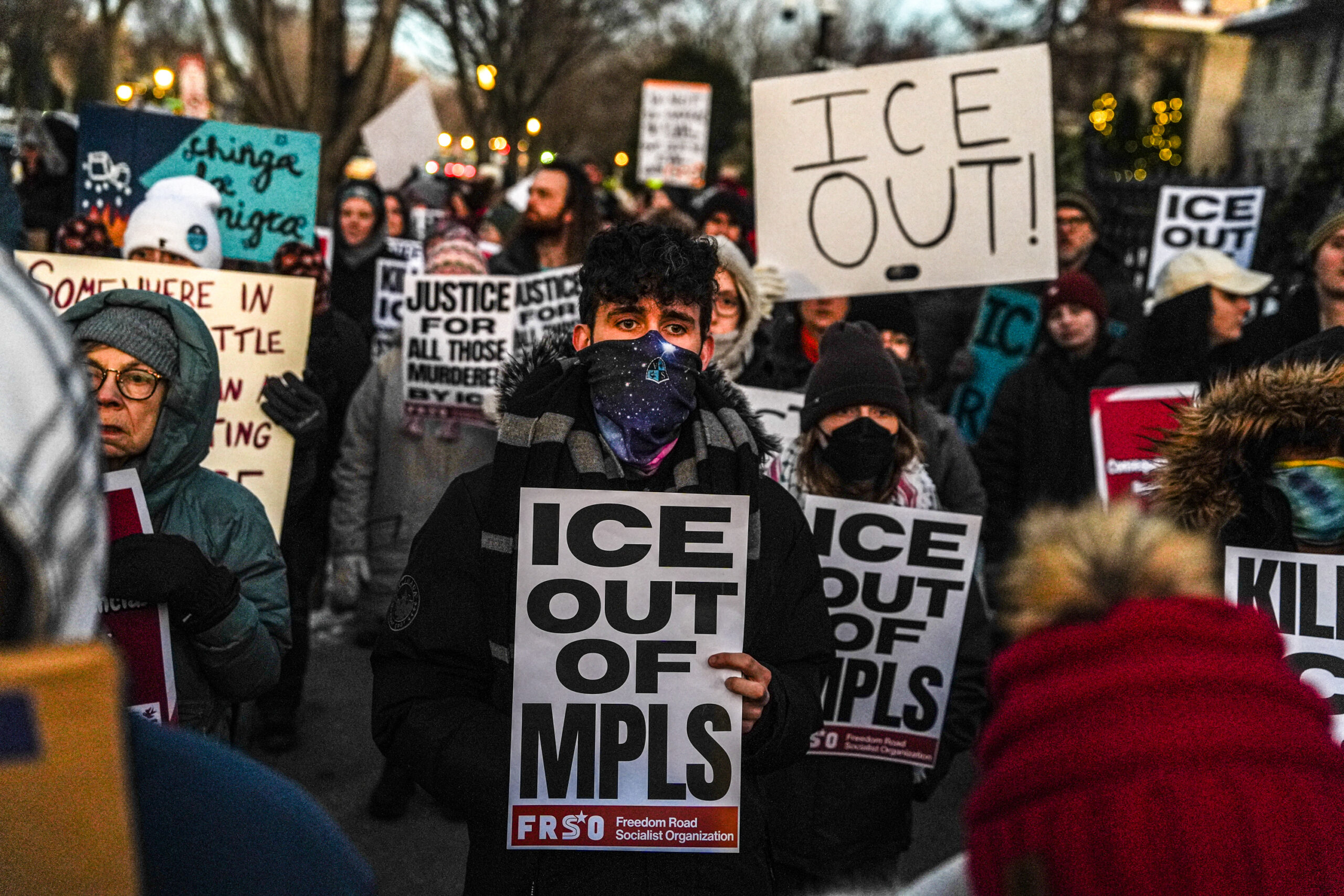
    People participate in an anti-ICE protest outside of the Governors Residence on Feb. 6, in St. Paul, Minn.

    Know-your-rights trainings are popping up everywhere, often to standing-room-only attendance, and ICE-watch groups are abuzz on social media.

    The First United Methodist Church of Germantown held a seminar last week to learn about nonviolent resistance, “so that we will be ready for whatever comes,” said senior pastor Alisa Lasater Wailoo.

    “That may mean putting our bodies in the path to protect other vulnerable bodies,” she said. “We’re seeing that in Minnesota.”

    In Center City, Temple Beth Zion-Beth Israel has ordered 300 whistles ― portable and efficient tools to immediately alert neighbors to ICE presence and warn immigrants to seek safety.

    “There was a sense of needing to support our neighbors if it comes down to it,” said Rabbi Abi Weber. “God forbid, should there start to be ICE raids in our neighborhood, people will be prepared.”

    In other places around the country, immigrant allies have similarly readied themselves for ICE’s arrival, and organized to react in concert when agents show up.

    In Washington state, the group WA Whistles has distributed more than 100,000 free whistles to create what it calls “an immediate first line of community defense.” Chicago residents set up volunteer street patrols to warn immigrants of ICE and to contact family members of those detained. In Los Angeles, people raised money to support food-cart vendors, and organized an “adopt a corner” program to protect day laborers who seek work outside Home Depot stores.

    A small sign at the Olivet Covenant Presbyterian Church, where the Rev. Peter Ahn is creating space to shield immigrants if necessary.

    Ask Philadelphia groups that advocate for immigrants — 15% of the population, including about 76,000 who are undocumented — and they say ICE isn’t about to land in the city. It’s been here.

    The agency’s Philadelphia office serves as headquarters not just for the city but for all of Pennsylvania and for Delaware and West Virginia as well. Arrests take place every day in the Philadelphia region.

    “You all seem to be ‘preparing’ for something that’s already happened,” veteran activist Miguel Andrade wrote on Facebook.

    What has changed, however, is the dramatic escalation in ICE enforcement, particularly visible in Democratic-run cities like Minneapolis, where agents fatally shot two U.S. citizens in January.

    ICE detained 307,713 people across the country in 2025, a 230% increase over the 93,342 in 2024. What federal immigration agencies record as detentions closely mirror arrests.

    Today residents in communities like Norristown and Upper Darby see ICE agents on the streets all the time. Cell phone videos have captured violent footage, including the smashed front door of a Lower Providence home after agents made an arrest on Feb. 9, and two people roughly pulled from a car in Phoenixville earlier this month.

    For immigrants who have no legal permission to be in the U.S. ― an estimated 14 million people ― the rising ICE presence steals sleep and peace of mind. They know not just that they could be arrested and deported at any moment, which has always been true, but also that the U.S. government is expending vast resources to try to make that happen.

    A woman who came to Philadelphia from Jamaica last year, and who asked not to be identified because she is undocumented, said she rarely leaves her home. She said she steps outside only to go to the grocery store, a doctor, or an attorney.

    She recently asked her daughter to check something on the computer, and the girl balked ― afraid to even touch the machine, worried that ICE could track her keystrokes and identify their location, the woman said.

    “How can I tell her it’s going to be OK when I don’t know it’s going to be OK?” asked the woman, who came to the U.S. to escape potential violence in Jamaica. “You come here expecting freedom, but here it’s like you’re in jail except for the [physical] barriers of the four walls.”

    Even as arrests have soared, Philadelphia has been spared the federal intrusions visited on other American cities.

    Why?

    Some say President Donald Trump doesn’t want to ruin the summer celebration of the nation’s 250th birthday, or spoil the grandeur of the World Cup or Major League Baseball’s All-Star Game. Others suggest that he might be timing an ICE deployment to do exactly that.

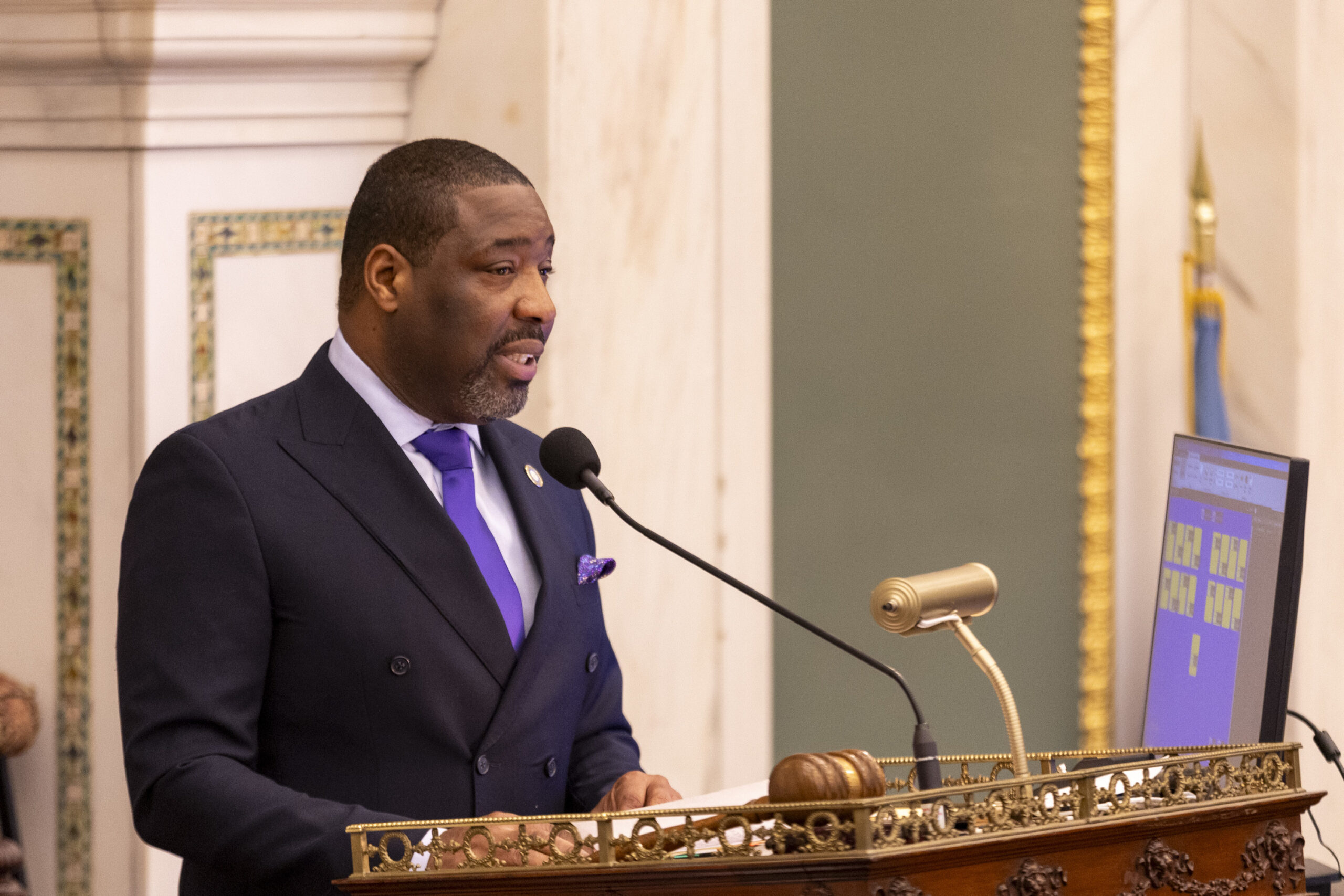
    City Council President Kenyatta Johnson speaking at the City Council’s first session of the year Jan. 22. He said this month that it’s time to stand up for immigrants in Philadelphia. “It’s my responsibility to step up in this space and be more vocal,” he said.

    That as Philadelphia City Council prepares to consider “ICE Out” legislation that would make it more difficult and complicated for the agency to operate in the city.

    Trump told NBC News this month that he is “very strongly” looking at five new cities.

    Some people are not waiting to see if Philadelphia is on the list.

    The monthly Zoom meeting of the Cresheim Village Neighbors usually draws about 20 people. But a hundred logged on in January to hear a presentation: What to do if/when ICE comes to our neighborhood.

    The short advice: If it happens, get out your phone and hit “record.”

    “If I see ICE agents, I will film,” said neighbors group coordinator Steve Stroiman, a retired teacher and rabbi. “I have a constitutional right to do that.”

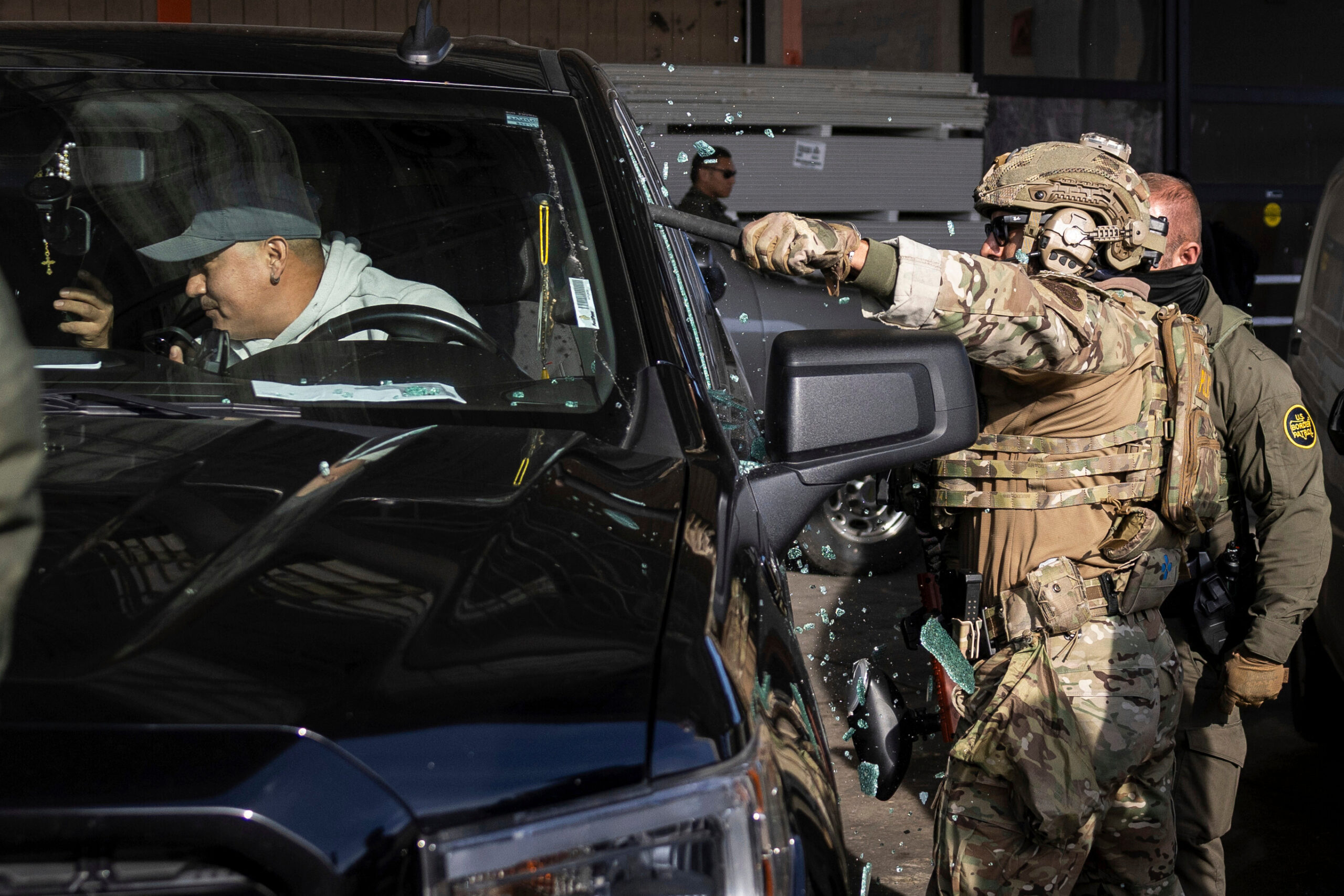
    Federal immigration enforcement agents shatter a truck window and detain two men outside a Home Depot in Evanston, Ill., on Dec. 17, 2025.

    In a sliver of University City, Miriam Oppenheimer has helped lead three block meetings where neighbors gathered to discuss how they would respond.

    They set up a Signal channel so people can communicate. And they formulated a loose plan of action: People will come outside their homes and take video recordings ― and try to get the names and birth dates of anyone taken into custody, so they can be located later.

    “Courage is contagious,” Oppenheimer said. “Everybody is waiting for somebody else to do something, but we have to be the ones.”

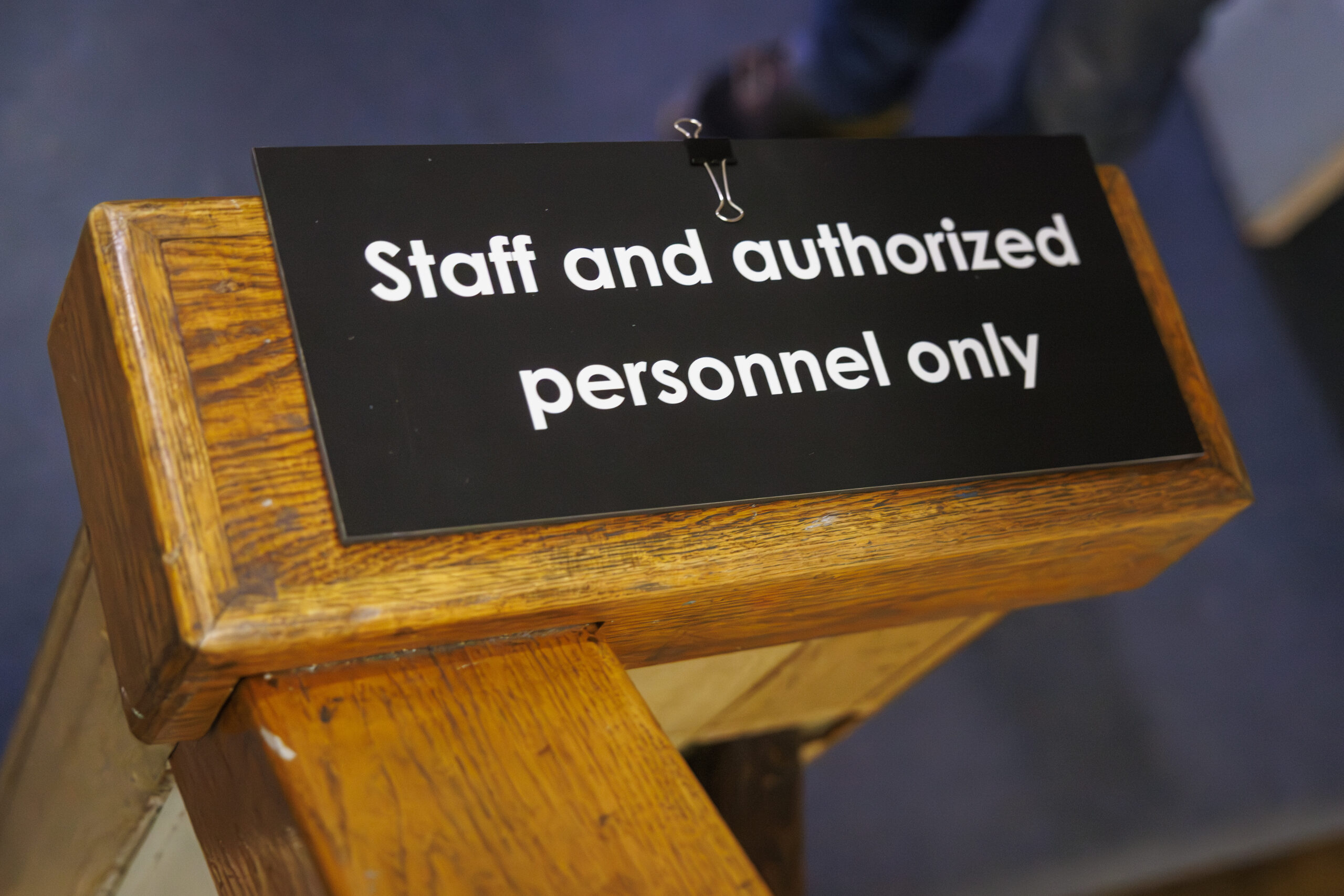
    Inside Olivet Covenant Presbyterian Church, doorways to some rooms now bear black-and-white signs that say, “Staff and authorized personnel only.”

    Issues around ICE access to churches have become more urgent since Trump rescinded the agency policy on “sensitive locations,” which had generally barred enforcement at schools, hospitals, and houses of worship.

    Legal advocates such as the ACLU say ICE agents can lawfully enter the public areas of churches, including the sanctuaries where people gather to worship. But to go into private spaces they must present a warrant signed by a judge.

    “There are many front lines right now,” said Ahn, the Olivet pastor. “We’re not trying to be simply anti-ICE, or anti-anybody. We’re just trying to be for the rights of the Fourth Amendment.”

    Staff writer Joe Yerardi contributed to this article.

  • Here are 8 restaurants offering happy hour deals in (and around) Cherry Hill

    Here are 8 restaurants offering happy hour deals in (and around) Cherry Hill

    From strip mall diners to high-end steakhouses, South Jersey’s restaurants are abundant and ascending in the Philly region’s culinary scene. If you’re looking to dine out for a bargain or enjoy a pre-dinner snack, these eight restaurants in and around Cherry Hill are offering happy hour deals, from $3 tacos to $7 martinis.

    Steak 38

    Looking for charming service, a nostalgic vibe, or perhaps a Caesar salad made tableside? Cherry Hill’s Steak 38 is known for all of the above, and the restaurant even made the Inqurier’s list of the most thrilling places to get a steak in and around Philly. Happy hour is Tuesday through Sunday from 4 to 6 p.m. Though the Caesar salad with a show is not on the happy hour menu, try $9 appetizers like prime rib egg rolls or bleu cheese chips. Sangria is $10 per glass, and all draft beer is $2 off. See the menu here.

    515 Route 38 E., Cherry Hill, N.J., 08002, www.steak38restaurant.com

    Monterey Grill

    Monterey Grill is an upscale American restaurant serving steaks, seafood, and classic steakhouse sides. Grab a glass of house wine for $8, select draft beers for $6, or a cocktail for $10. Happy hour bites are priced at $12, including salmon sliders and angry cashew shrimp. Happy hour is available Monday through Saturday from 4 to 6 p.m. and Sunday from 3 to 5 p.m. in the bar area. See the menu here.

    558 Fellowship Rd., Mt. Laurel, N.J., 08054, www.montereygrill.com

    Farm and Fisherman Tavern

    Farm and Fisherman brought farm-to-table dining to Cherry Hill in 2013 and has been serving up fresh, seasonally-inspired dishes ever since. The restaurant’s unique, herby cocktails even prompted The Inquirer to ponder if Philly’s most interesting drinks program was happening in a South Jersey strip mall. Happy hour diners can snack on P.E.I. Mussels for $8, “line cook fries” (fries with cheese sauce, pickled serrano peppers, and chili butter) for $5, and veggies with a homemade ranch for $5. Draft beers and glasses of wine are $2 off, and martinis (vodka or gin) are $7. Happy hour is Monday through Wednesday from 3 to 6 p.m. See the menu here.

    1442 Marlton Pike E., Cherry Hill, N.J., 08034, www.fandftavern.com

    Kaminski’s Sports Bar and Restaurant

    Locals have called Kaminski’s the closest thing Cherry Hill has to a neighborhood bar. The South Jersey watering hole has been a destination for brews, sports, and bar food for more than 50 years. Happy hour takes place at the bar, Monday through Friday, from 3 to 7 p.m. Try a flatbread or burger sliders for $9 or pepperoni rolls or fried pickles for $7, among other options. Drinks are discounted, too. See the menu here.

    1424 Brace Rd., Cherry Hill, N.J., 08034, kaminskisbarandgrill.com.

    Randall’s Restaurant

    Randall’s Restaurant at the Legacy Club prides itself on serving upscale classics with modern twists. Get $2 off draft beer, $7 featured wines, and $12 featured cocktails during happy hour, which takes place Wednesday and Thursday from 3 to 6 p.m. Featured bites include chicken wings for $12, braised short rib arancini for $6, and clams casino for $9. See the menu here.

    300 E. Evesham Rd., Cherry Hill, N.J., 08003

    Tortilla Press

    Merchantville’s Tortilla Press describes itself as “a favorite spot for locals to enjoy classic Mexican dishes.” During happy hour, try $2.99 tacos, $6.50 pork sliders, or $7.50 chicken flautas, among other choices. House margaritas are $6, sangria is $6.50, domestic draft beers are $4, Mexican bottled beers are $5, and draft Modelos are $5. Happy hour takes place every day from 3 to 6 p.m. and is all day on Tuesdays.

    7716 Maple Ave., Merchantville

    Il Villaggio

    Il Villaggio is an old-school eatery that serves up traditional Italian lunch and dinner dishes, seven days a week. During happy hour, diners can enjoy $6 off bar food, $2 off draft beers, $3 off cocktails, and $3 off wines. Bar menu specials include the crab cake sandwich with parmigiana truffle fries and the beet salad with arugula, pistachios, and goat cheese. Happy hour takes place at the bar area only, Sunday through Thursday from 3 to 6 p.m.

    211 Haddonfield-Berlin Rd., Cherry Hill, N.J.,

    Treno Pizza Bar

    Haddon Township’s Treno Pizza Bar is home to hand-tossed, artisan pizzas, scratch-made pastas, and seasonal cocktails. Happy hour offers a sampling of Treno’s Italian flavors, from $7 Aperol spritzes and $13 blood orange martinis to $6 garlic knots. Happy hour is Monday through Friday from 4 to 6 p.m. See the menu here.

    233 Haddon Ave., Haddon Township, N.J., 08034, trenopizzabar.com

    This suburban content is produced with support from the Leslie Miller and Richard Worley Foundation and The Lenfest Institute for Journalism. Editorial content is created independently of the project donors. Gifts to support The Inquirer’s high-impact journalism can be made at inquirer.com/donate. A list of Lenfest Institute donors can be found at lenfestinstitute.org/supporters.

  • In Philly music this week, Mariah the Scientist plays the Met. Plus, Jason Isbell, Miguel, Margo Price, Say She She, and more

    In Philly music this week, Mariah the Scientist plays the Met. Plus, Jason Isbell, Miguel, Margo Price, Say She She, and more

    This week in Philly music features a busy week at the Met with Jason Isbell, Miguel, and Mariah the Scientist. Plus, R.E.M. guitarist Peter Buck’s new supergroup, two dates with Alejandro Escovedo, and ‘Hard Headed Woman’ Margo Price and her country band playing on South Street.

    Wednesday, Feb. 18

    Say She She

    Say She She is the nomadic vocal trio Piya Malik, Sabrina Mileo Cunningham, and Nya Gazelle Brown — who have connections to New York, London, and Los Angeles. The band name is a play on the “Le Freak? C’est chic!” lyric from Chic’s 1978 disco hit “Le Freak.” On Say She She’s third album, Cut & Rewind, tracks like “She Who Dares” and “Disco Life” qualify as subtle protest music as the band members stand up for diversity and express feminist prerogatives while deftly moving listeners to the dance floor. With Katzù Oso. 8 p.m., Ardmore Music Hall, 23 E. Lancaster Ave., Ardmore, ardmoremusichall.com

    Say She She plays Ardmore Music Hall on Wednesday. The disco group’s new album is “Cut & Rewind.”

    Jason Isbell & the 400 Unit

    Jason Isbell never made it to town on his 2025 tour behind his stark, solo acoustic album Foxes in the Snow. So this full band show will be the first Philly opportunity to hear those break-up songs written after Isbell’s split from then-wife Amanda Shires, played live. They will be mixed in with the impressive body of work that Isbell — a terrific guitarist, singer, and bandleader as well as a masterful storytelling songwriter — has amassed going back to the 2000s with the Drive-By Truckers. 8 p.m., Met Philly, 858 N. Broad St., themetphilly.com.

    Jason Isbell & the 400 Unit headline the Met Philadelphia on Wednesday.

    The Rural Alberta Advantage / The Barr Brothers

    Fans of Canadian indie bands are facing a Wednesday night dilemma. Toronto’s Rural Alberta Advantage, which tends to rock out, headlines Johnny Brenda’s. The band’s most recent album is 2023’s The Rise & The Fall. Meanwhile at Underground Arts, there’s a show by Toronto’s Barr Bothers, which leans more toward the folk, with singer-guitarist Bad Barr and his drummer brother Andrew. Their new album is Let It Hiss. 8 p.m., Johnny Brenda’s, 1201 N. Frankford Ave., johnnybrendas.com; and 8 p.m., Underground Arts, 1200 Callowhill St., undergroundarts.org.

    Alejandro Escovedo and James Mastro, who will play separately and together in Sellersville and Wilmington.

    Thursday, Feb. 19

    Drink the Sea

    Peter Buck of R.E.M. is a serial collaborator. The long list of the uber-influential guitarist’s side projects have included Tuatara, the Minus 5, the Baseball Project, Filthy Friends, and others. Add to the list Drink the Sea, which is the second supergroup Buck has formed with Barrett Martin of the Screaming Trees. The band, which is influenced by global rhythms that reach beyond rock, makes its Main Line debut this week. 8 p.m., Ardmore Music Hall, 23 E. Lancaster Ave., Ardmore, ardmoremusichall.com.

    Alejandro Escovedo

    The great Austin, Texas, songwriter Alejandro Escovedo played Philly last year on a solo tour, while working up a theater show that chronicles his 50-plus year music career. Now he’s back, plugged in, and ready to rock with his band Electric Saints. Further good news is that his opening act is North Jersey veteran rocker and Health and Happiness Show leader James Mastro. He will be joining Escovedo for a few songs on stage , just as he did with Patti Smith’s band at the Met last November. 8 p.m. Thursday, Sellersville Theater, st94.com, and 8 p.m. Friday, Arden Gild Hall, 2126 The Highway, Wilmington, ardenconcerts.com.

    Friday, Feb. 20

    Ben Arnold & the 48 Hour Orchestra

    Philly songwriter Ben Arnold, just back from a European tour with his band U.S. Rails, is home promoting his excellent new solo album XL, which he showcased with an impressive show in Wayne back in October. Noon, World Cafe Live, 3025 Walnut St., xpn.org.

    Margo Price

    Margo Price was positioned as a country — or at least alt-country — artist when she debuted with Midwest Farmer’s Daughter in 2016. She then expanded her sound in a rock direction, even adding psychedelic touches in three subsequent albums. Now she’s again focused on country on Hard Headed Woman, the Grammy-nominated collection that will bring her to the TLA on her “Wild At Heart Tour.” Hot tip: Last time she played Philly, Kurt Vile showed up to jam. Pearl Charles opens. 8 p.m., Theater of Living Arts, 332 South St., tlaphilly.com.

    Miguel at the opening night his CAOS Tour in Atlanta on Feb. 10. He plays the Met Philly on Saturday.

    Saturday Feb. 21

    Miguel

    Miguel Jontel Pimentel has been a frequent visitor to Philly, between multiple visits to the Made in America festival in addition to regular tour stops. Now the R&B love man with vocal chops beyond reproach and a frisky, subversive sensibility is headlining the Met on tour for his 2025 album CAOS. 8 p.m., Met Philly, 858 N. Broad St., themetphilly.com

    Roger Harvey / Roberta Faceplant / Maxwell Stern

    This is another quality multiband bill upstairs at the Khyber Pass pub. Nashville songwriter Roger Harvey is the headliner, with rising Philly acts Roberta Faceplant and Maxwell Stern also playing the Old City venue. 8 p.m., Upstairs at the Khyber, 56 S. 2nd St., khyberpasspub.com

    Mariah the Scientist plays the Met Philly on Tuesday.

    Tuesday Feb. 24

    Mariah the Scientist

    Mariah Amani Buckles was studying to be a pediatric anesthesiologist at St. John’s University before she dropped out to concentrate on her music full time. Thus, she became Mariah the Scientist! The R&B-hip-hop singer — who is engaged to rapper Young Thug — sings about conflicted love affairs, sometimes to chilling effect, on her fourth album, Hearts Sold Separately, which features a sultry duet with Kali Uchis on the hit “Is It A Crime.” 8 p.m., Met Philly, 858 N. Broad St., themetphilly.com.

  • Letters to the Editor | Feb. 18, 2026

    Letters to the Editor | Feb. 18, 2026

    Are new voting rules needed?

    Regardless of frequently repeated claims, voter fraud is exceptionally rare, and the Safeguard American Voter Eligibility, or SAVE America Act, would only prevent an extremely small number of ineligible votes. While the GOP claims the SAVE Act is an attempt to preserve voter integrity, they know statistically that this will create difficulties for certain classes of voters who often vote for Democrats. Studies have shown, for example, that documentation requirements will place a disproportionate burden on communities of color and those with low incomes. Restrictions on vote by mail are likely to suppress the vote from hourly and shift workers, the elderly, those with disabilities, and people who do not have easy access to transportation to the polls. In this same vein, not allowing people to vote by mail forces them to vote in person, where in some places they may have to deal with voter intimidation and harassment (threats from others, long lines without water, etc.). For years, Republicans have pursued harsh penalties for poll workers — a move that may discourage participation by volunteers and slow down voting on Election Day, which may deter some folks from voting (again, long election lines).

    Let’s call it what it is: This is intentional voter suppression and an attack on our democracy.

    Kent Kingan, Malvern

    . . .

    The League of Women Voters is absolutely correct in stating that the SAVE America Act, just passed by the U.S. House of Representatives, would add a burden on voters to present documentary proof of citizenship and voter eligibility, a burden that could be substantial for many, to solve a problem that does not meaningfully exist. However, the organization goes too far in stating that Pennsylvania already has safeguards to ensure only eligible citizens vote, because federal law requires voters to attest to their citizenship when they register and “[e]lection officials verify identity and eligibility.” I have been a judge of elections in Philadelphia for more than a decade. With the exception of voters who must present identification because they have not previously voted in my election division, the only means election officials have to verify the identity and eligibility of someone seeking to vote is to ask for their name and address, confirm that that name and address is in our poll book of eligible voters, and then compare their signature with the signature that appears in the poll book, which is a copy of a signature recorded at the time the person with that name and address registered to vote. For some people, the two signatures are an easy match. But for others — indeed, the majority — not so much. This is especially the case with respect to people who registered years ago. And the problem has compounded since we started using electronic poll books, and voters are signing what is essentially an iPad, usually using a finger. Should I prohibit a person from voting because their signature on Election Day does not match the signature they recorded at the time they registered? Should I tell them they can only vote by provisional ballot? If I do not, can I honestly say I have verified the identity and eligibility of that person?

    Jeff Braff, Philadelphia

    Join the conversation: Send letters to letters@inquirer.com. Limit length to 150 words and include home address and day and evening phone number. Letters run in The Inquirer six days a week on the editorial pages and online.

  • Words have consequences, especially when you are Jewish

    Words have consequences, especially when you are Jewish

    Last month, a Pittsburgh-area man admitted in federal court that he made an online antisemitic threat to a public official.

    “Go back to Israel or better yet, exterminate yourself and save us the trouble,” Edward Owens Jr. wrote on Facebook Messenger, adding, “we will not stop until your kind is nonexistent.”

    This was not some random act — it is part of a larger issue of rising political violence, and an example of what many Jews encounter when they turn on their phones or scroll through their feeds.

    The American Jewish Committee’s just-released “State of Antisemitism in America 2025 Report” lays bare the scope of the problem. Online is where American Jews experience antisemitism the most, with 73% seeing or hearing antisemitic content or being personally targeted.

    Of those who experienced online antisemitism, 54% found it on Facebook — up 7 points from 2024 — while 38% experienced it on YouTube. That is an especially alarming number, given that it demonstrates an 11-point jump from the year before. Instagram and TikTok also saw concerning increases in reported antisemitic content.

    What were once quiet murmurings are now getting very loud. Words matter. AJC’s report found that 55% of American Jews are altering their behavior out of fear of antisemitism. That includes the 39% who are not posting content online that could identify them as Jewish or reveal their views on Jewish issues.

    It’s self-censorship as a means of self-preservation. You don’t know who is reading or who may be triggered by what you post. The Pittsburgh Jewish Chronicle reported that the FBI examined Owens’ phone and found searches tied to antisemitism and “Pittsburgh Jews.”

    Owens also texted a friend that he was “ready to hunt down Jews for extermination.” Those may have just been the words of a bitter man who felt Jews were to blame for everything lacking in his life. But Owens also owned several guns, including a 9 mm pistol FBI agents found in his truck with hundreds of rounds of ammunition.

    Noah Rubin, a Penn engineering student, during a “No hate on campus” rally at the University of Pennsylvania in 2024.

    We don’t know whether Owens’ words would have turned into violence — the online threats and gun charges were handled separately in this case. However, we also don’t have the luxury of parsing whether someone is merely spewing venom to put a scare into people or is contemplating something more sinister.

    Either way, it has an impact. AJC’s report found that 21% of American Jews who experienced antisemitism online felt physically threatened by these incidents.

    Put yourself in the shoes of the official who received Owens’ message. Chances are you’ll be rattled by what you read and contact the authorities, who are better equipped to hunt down cowards like Owens who use online aliases. Then you’ll have a better idea of what it’s like to be an American Jew in 2026.

    Jews in America had long been insulated from violent antisemitism. It was something that happened elsewhere. Then, the 2018 Tree of Life synagogue massacre in Pittsburgh, where 11 people were murdered, changed that and precipitated hundreds of incidents in which Jews have been targeted simply for being Jewish.

    Last April, Gov. Josh Shapiro’s residence was torched on the second night of Passover. As with the Owens case, this is what public officials who are also publicly Jewish are currently facing.

    Owens is a sorry footnote in this spasm of hate. He will rightfully be forgotten after he is sentenced in April. But what we can’t forget is that he has plenty of company. Jewish or not, that should worry us all.

    Marcia Bronstein is the director of the American Jewish Committee’s Philadelphia/Southern New Jersey regional office.

  • Horoscopes: Wednesday, Feb. 18, 2026

    ARIES (March 21-April 19). Each group of people has its own little culture. Families, neighborhoods, workplaces, classrooms — all have rules worth learning, habits worth noticing, so you can decide to follow, bend or ignore them.

    TAURUS (April 20-May 20). Today’s theme: the intelligence in repetition. Routines conserve energy. Sure, there are a lot of different ways to play the day, but grooves come with momentum of their own and require much less of you.

    GEMINI (May 21-June 21). You can disagree without voicing it. And when you must voice it, you do so without provocation. That’s diplomacy: choosing negotiation over conflict, making agreements that protect everyone involved and presenting a unified front.

    CANCER (June 22-July 22). You help others through their feelings. You wish your loved ones were spared every bad feeling. If you could take it on instead, you totally would. And you really want the good feelings to last. You’re a true, strong ally, and they feel it.

    LEO (July 23-Aug. 22). People process experiences at different speeds. Some reflect quietly, some act quickly and some need time to sort through emotions before they respond. Today, someone doesn’t respond in the way you would, but they are feeling something similar inside.

    VIRGO (Aug. 23-Sept. 22). The job looks like it’ll be a real grind, but that’s OK. A grind has its benefits. The knife gets sharp, the stone is polished, and it’s how you make the coffee, the bread and, of course, the money.

    LIBRA (Sept. 23-Oct. 23). You’ll be proud of yourself for trusting in a slow accumulation process. Affection grows steadily. Savings add up. Work builds. Collections expand. Each careful decision stacks on the last. In a few months, you’ll have a tower of power.

    SCORPIO (Oct. 24-Nov. 21). Your focus is your superpower. It’s not about doing more than anyone else but about doing the exact thing that matters. You learn fast, study deeply and work without distraction. Your attention carries more weight than words ever could.

    SAGITTARIUS (Nov. 22-Dec. 21). You’re being pulled in two directions at once, which makes it more challenging to decide who and what should get your time. Just remember, there’s a third option: opt out and do what (SET ITAL)you(END ITAL) want.

    CAPRICORN (Dec. 22-Jan. 19). An unrelentingly positive attitude can be as toxic as negativity because it negates certain inalienable realities, such as gravity, shadows and human imperfection. Aim for realism with a 20% pump of hope — a perfect recipe.

    AQUARIUS (Jan. 20-Feb. 18). You’re no stranger to soft sales, attraction-based strategies, roundabout methods, paying your dues and various other routes to “manifesting.” But today’s most effective tactic for getting what you want is simpler: just ask.

    PISCES (Feb. 19-March 20). Quiet is a sanctuary. Yes, the sacred wisdom that visits the wooded trail, the cathedral and the library is rather obvious. But chaos can be its own kind of enlightening hum. Your instinct will find truth between the vibrations.

    TODAY’S BIRTHDAY (Feb. 18). Welcome to your Year of Dancing Lights, when fleeting moments sparkle into lasting wonder, taking forms such as lifelong friendship, gambles that pay for years and luck that fortifies your relationships and domestic life. Magic and serendipity are the norm. More highlights: playful romance, a creative success that feels almost fated and a paper deal or certificate that gives you financial security. Libra and Sagittarius adore you. Your lucky numbers are: 8, 27, 14, 39 and 5.

  • Dear Abby | Single woman finds herself drawn to her stalker

    DEAR ABBY: I am 57 and have never been married. I have had many relationships (some good, some bad). Although in the past I experienced heartbreaks, I am now open to meeting someone new.

    I recently ended a relationship with “Bill,” a man I met at a resort casino three years ago. I was happy in the beginning, until things started to take a turn.

    Because we go to the same places all the time, it was hard to break it off. I tried, but Bill would run back to me, and I always took him back, mostly because I felt guilty for hurting him. I finally ended things for good four months ago, after he did something very rude. A neighbor later told me that Bill was stalking me. Bill denies this, even though I have proof.

    Abby, I am writing because, for some reason, I’m still drawn to him. He’s the only man in my life who ever told me he loves me. I’m afraid no one will ever love me the way he does. I know the stalking is a sign that he is mentally unwell, yet we keep bumping into each other, which has caused this pull to want to be with him.

    I can’t afford therapy right now, so any advice you can give me to move beyond this “pull” I have for him would be appreciated.

    — HEART RULING THE HEAD

    DEAR HEART: Honey, if you no longer frequent the places you used to frequent together and keep running into him anyway, has it occurred to you that it’s happening BECAUSE HE’S STILL STALKING YOU? If you’re still going to the same places, it’s time to change your routine. This troubled individual may be the only person who has said “I love you,” but he won’t be the last if you open yourself to other relationships.

    You say you can’t afford therapy, but please be aware that free or low-cost counseling is available from your county’s department of mental health services or a local college or university with a psychology department.

    ** ** **

    DEAR ABBY: I’ve been talking to a famous pro wrestler who is having marriage problems. He has been hitting on me through Google Chat. I just want to be a supportive friend whom he can vent to. He says his wife “is getting too old for him,” if you know what I mean. They have a joint bank account, but he says it’s frozen. He has asked me for an Apple card. I told him no and to ask his extended family instead.

    Abby, I need my money to help out my brothers and sister. I’d prefer he be like a friend or big brother to me. I need major advice, please, because it feels like my life is going out of control.

    — UNCERTAIN IN IDAHO

    DEAR UNCERTAIN: People must exercise caution when communicating with strangers online. “Famous pro wrestlers” usually have enough money that they aren’t reduced to hitting up women they meet on the internet for Apple cards. Your life will not “go out of control” unless you allow it to. Regain control by ghosting and blocking this person. He’s a scammer, and he, not you, should figure out his own financial problems.