Tag: topic-link-auto

  • 2026 Genesis GV80 Coupe: Fast and fun but not that comfortable

    2026 Genesis GV80 Coupe: Fast and fun but not that comfortable

    2026 Genesis GV80 Coupe 3.5T E-supercharger vs. 2026 Land Rover Defender 130 V-8 vs. 2026 Mercedes Benz GLE 450 4Matic SUV: Off-roading in high style.

    This week: Genesis GV80 Coupe

    Price: $87,780 as tested.

    Conventional wisdom: Motor Trend likes the “gorgeous interior,” that it “retains rear headroom” and is “more luxurious than ever.” Reviewers panned that it’s “not actually sporty,” has a “confused personality” and “reduced cargo space.”

    Marketer’s pitch: “The pinnacle of comfort.”

    Reality: It has some high points, but comfort isn’t what I would market.

    What’s new: The GV80 Coupe — essentially an SUV with some of the cargo capacity lopped off — joined the GV80 lineup for the 2025 model year. Some color changes and new trim levels have been added for 2026.

    Competition: In addition to the Defender and the GLE 450, there are the BMW X5, Lexus RX, Lincoln Nautilus, and Toyota Land Cruiser.

    Up to speed: Woohoo, that e-supercharger really works, dialing up the horsepower from the 3.5-liter turbo up to 409. Turn the dial to Sport+ and this baby gets off the ground; 0-60 takes 5.2 seconds, according to Car and Driver. It seemed faster.

    Shifty: The eight-speed automatic transmission operates through the dial on the console — twist counterclockwise for Reverse or clockwise for Drive. It’s a nice setup that’s easy for back-and-forth motions when parking.

    There’s no corresponding move for shift mode, though. Just use the paddles on the steering wheel and keep fighting the vehicle for control. I usually blinked first and just let it do the shifting for me.

    On the road: The handling in the GV80 Coupe is almost as impressive as the acceleration. The sporty shaped SUV does nice on the slalom and has a lot of good road feel. The steering is nice as well.

    The only drawback for me came on cornering. The GV80 had a lot of drift, and I had to slow down for the sharper movements.

    Off the road: The GV80 gets a new terrain mode for 2026, with settings for snow, mud, and sand.

    The interior of the 2026 Genesis GV80 Coupe looks inviting, but it turns out comfort is lacking. Also, adjusting the temperature settings is harder than it should be.

    Driver’s Seat: The seat seemed quite hard, and the lumbar support seemed more like a kidney punch than a feature. I’m not sure I could live with this seat day to day. It really seemed as uncomfortable as the old Hyundai basic seats and not quite worthy of this fancy a vehicle, even covered in Nappa leather.

    The fancy digital dashboard also leaves a bit to be desired. So many of the features are hidden by the steering wheel that it could be hard to know what was going on. The gauges are fine, though, and everything sure is attractive.

    Friends and stuff: The rear seats offer nice amenities — power fold and lift, and power recline that provides quite a bit of choice.

    Unfortunately, the low ceiling means headroom is less than plentiful — I still have a little space above my head but not much — and foot room is kind of snug.

    Cargo space is 61.1 cubic feet with the rear seat folded and 29.3 when it’s upright, both numbers down about 15% from the regular GV80.

    The GV80 Coupe can tow up to 6,000 pounds.

    In and out: There’s a bit of a climb into the GV80, naturally, but you must have been expecting that.

    Play some tunes: Sound from the system is delightful, an A+.

    Operation uses either a dial or the touchscreen. A home screen shows all the possible places you can go and swiping to the right shows even more. It’s easy to use and to follow, even through the layers of nested elements.

    Keeping warm and cool: Would that the HVAC were so easy to operate. It features simple dials for temperature but then the source, fan speed, and seat heater and ventilator icons are so tiny in their handsome little ebony touch pad, and it offers zero feedback. So there’s a lot of potential vehicle drift just to keep the air at the right temperature. I’ve been panning Hyundai for this left and right and will continue to do so.

    There also seems to be a lot of thrust in the airflow, so it might not be everyone’s cup of tea. The Lovely Mrs. Passenger Seat was having none of it, lest her perfect hair get blown about.

    Fuel economy: I averaged about 16 mpg, which is pretty pitiful.

    Where it’s built: Ulsan, South Korea. The vehicle is made up of 85% Korean parts and 3% from the U.S. and Canada.

    How it’s built: Consumer Reports predicts the GV80 reliability to be a 2 out of 5.

    Next week: Land Rover Defender 130.

  • Behind the holiday lights: My Christmases in the grip of addiction

    Behind the holiday lights: My Christmases in the grip of addiction

    Christmas hasn’t always meant warmth, family, or celebration for me. For nearly a decade, the holidays were some of the most frightening days of my life. While others wrapped gifts and prepared meals, I was consumed with one mission: securing enough pills to avoid opioid withdrawal.

    People rarely talk about this side of addiction — the logistics, the panic, the constant calculations. For me, the days leading up to Christmas weren’t merry or bright. They were a dangerous countdown.

    My entire holiday hinged on whether a doctor would answer the phone before the office closed. I’d sit in my car with trembling hands, rehearsing my tone before calling, trying to sound calm even as fear tightened my stomach.

    I knew exactly which doctors might authorize an early refill and which ones suspected I had become addicted. My 10-year addiction, which began when I was prescribed painkillers after knee surgery, had me cycling through more than 65 doctors in a half dozen states — each one recorded in the many calendars I hid in drawers. They were my secret maps for survival.

    I would flip through them frantically, searching for any appointment I could make to save me from a night of withdrawal. I wasn’t looking for relief or euphoria. I was looking for a way to avoid the sickness that came the moment I ran out.

    Many of the pharmacies I used were inside large chain stores. While they stayed open late, their pharmacies did not. As the metal grates rolled down over the pharmacy windows, the rest of the store hummed on. That contrast haunted me — bright aisles full of shoppers on one side, and on the other, the closed counter that meant I would be sick by morning. Once those grates came down, my options disappeared.

    My withdrawals weren’t mild. At the height of my addiction, I was taking close to 30 pills a day just to feel normal.

    At the height of my addiction, I was taking close to 30 pills a day just to feel normal, writes Chekesha Lakenya Ellis.

    When the supply ran low, withdrawal hit me brutally and immediately. My stomach would bubble, my skin would prickle, and waves of nausea and trembling would take over. My chest tightened until breathing felt like work. Fear of that sickness controlled my entire life — especially during the holidays.

    There were Christmas Eves when I sat alone in my car, looking at my dwindling supply of pills, trying to make it last through the night. I would delay doses longer than my body was used to, forcing myself to wait, bargaining with myself, fighting back tears each time the sickness crept in. It wasn’t safe. It wasn’t smart. But that was all I could do.

    At family gatherings, I appeared frail and hollow. While everyone raved about my mother’s sweet potato pie, I barely touched my plate. My stomach was in knots, and nausea had stolen my appetite.

    I’d slip into the bathroom, sit on the edge of the tub, and try to steady my breathing before returning to the table. People often assume addiction is about chasing a high. Mine wasn’t. Mine was about avoiding the physical collapse that came when the drugs left my system. I wasn’t celebrating Christmas — I was surviving it.

    Addiction has a way of making you disappear, even when you’re standing right in front of the people who love you.

    Today, my holidays are very different. More than 15 years into recovery, I can sit at a Christmas table fully present. I can breathe without fear. I can enjoy a meal. I can laugh. I can be myself again.

    The holidays are hard for many people, but especially for those battling addiction, writes the auuthor.

    But I never forget the version of me who couldn’t.

    And I haven’t forgotten the people who are living that experience right now.

    If you’re struggling this holiday season — if you are using, withdrawing, unhoused, hiding your pain, or simply trying to make it to tomorrow — I want you to know something:

    Your story is not over.

    You are not beyond help.

    You are not alone.

    Even if all you can do today is stay alive, that is enough. The holidays are hard for many people, but especially for those battling addiction. I survived nights I didn’t think I would survive. And if I could make it out, so can you.

    This Christmas, my prayer is that you hold on — just long enough for the light to break through.

    There is life beyond this moment. Even if you can’t feel hope right now, hope can still find you.

    Chekesha Lakenya Ellis is a certified peer recovery specialist. The Burlington County resident uses Facebook to raise awareness about addiction and recovery.

  • A Philly priest’s soon-to-be-famous Christmas song was played on this week in Philly history

    A Philly priest’s soon-to-be-famous Christmas song was played on this week in Philly history

    One of America’s great Christmas songs grew out of procrastination.

    Two friends — a rector and his organist at the Church of the Holy Trinity on Rittenhouse Square — found the inspiration in the run-up to the Christmas celebration in 1868.

    The result of their delayed creativity was “O Little Town of Bethlehem,” composed and heard in a Philadelphia church.

    It was a song that spread across the world, and put the 19th-century church on the map.

    The silent stars

    Three years before, in 1865, the church’s vicar visited the Holy Land.

    So moved by what he saw on that trip, the Rev. Phillips Brooks put pen to paper.

    The result was a poem:

    O little town of Bethlehem,

    How still we see thee lie.

    Above thy deep and dreamless sleep

    The silent stars go by.

    In totality, as a piece of music, the song is not exactly upbeat.

    The lyrics reflect on the darkness found after midnight. Cries of misery reverberating through dark streets under cover of ink-black skies.

    But there’s also everlasting light.

    A Christmas miracle

    Three years later in 1868, Brooks asked the church’s organist, Lewis Redner, a real estate agent who played the organ for four churches, to set music to those lyrics Brooks penned.

    It was to be part of a song that would play during the Christmas holiday in 1868.

    And then Brooks waited.

    To his congregation, Brooks was an inspiring preacher. In the throes of the American Civil War, he would ride on a wagon to the battlefields around Gettysburg to perform last rites on dying soldiers and offer words of comfort to wounded soldiers — Union and Confederate.

    Days turned to weeks, and Brooks was still waiting for the completed song.

    But as the holiday approached, the procrastination had reached a fever pitch.

    Two days before the Christmas service, on a Friday, Brooks nervously asked about the song.

    “Have you ground out the music yet?”

    “No,” Redner said.

    But he assured Brooks: “I’ll have it by Sunday.”

    On Saturday night, Redner wrote in his diary that his brain was in knots over the tune, according to The Inquirer.

    Once asleep, he woke with a start.

    He wrote that he heard an angel whispering in his ear.

    Redner then scribbled down the tune.

    And before the Sunday service, he layered on the harmony.

  • Forty years after a brain injury changed this veteran’s life, a Jefferson program helped him rebuild

    Forty years after a brain injury changed this veteran’s life, a Jefferson program helped him rebuild

    When Scott Edgell was discharged from the military after a service-related head injury at age 20, he thought he would resume life as normal.

    But over the next four decades, the Lancaster County man was troubled by frequent migraines, memory problems, dizziness, irritability, and balance issues. Even everyday activities, like grocery shopping or eating at a restaurant, became overwhelming.

    “I didn’t understand what was happening to my body,” said Edgell, who is now 57.

    He realized the head injury he suffered while serving in the military was to blame after watching the 2015 movie Concussion, but struggled to find doctors who knew how to help him.

    Just as he started to lose hope in late 2023, he learned about a Jefferson Health program in Willow Grove for veterans and first responders with traumatic brain injuries (TBIs). The clinic provides physical and cognitive rehabilitation to participants over a three-week intensive outpatient program.

    Edgell is among the estimated one in four veterans who have had a TBI. More than half a million U.S. military members have been diagnosed with the injury since 2000, according to the Department of Defense.

    Many suffer TBIs as a result of combat-related incidents, exposure to blasts during explosions, training accidents, and vehicle crashes.

    While some patients can recover completely, up to 30% of those with mild TBIs, also commonly called concussions — which account for the vast majority of TBI cases — experience long-term symptoms.

    The lasting effects of TBIs are often overlooked among veterans because of the injury’s invisibility. Yet they can be life-altering, affecting employment, personal relationships, and overall quality of life.

    Veterans with a TBI had suicide rates 55% higher than veterans without the injury, one study found.

    Jefferson’s program, called the MossRehab Institute for Brain Health, was founded in 2022 and has treated roughly 100 patients. It runs on donations — the biggest being from the veterans’ wellness nonprofit Avalon Action Alliance, which has provided $1.25 million annually.

    Donations allow them to offer the program at no out-of-pocket cost to veterans and first responders, and cover housing, transportation, and meals during the three weeks.

    “I walked in those doors at the lowest part of my life,” said Edgell, who participated in June 2024.

    Though there’s no cure for his injury, the program has helped him rebuild his life.

    “All you can do is learn to manage your symptoms,” he said.

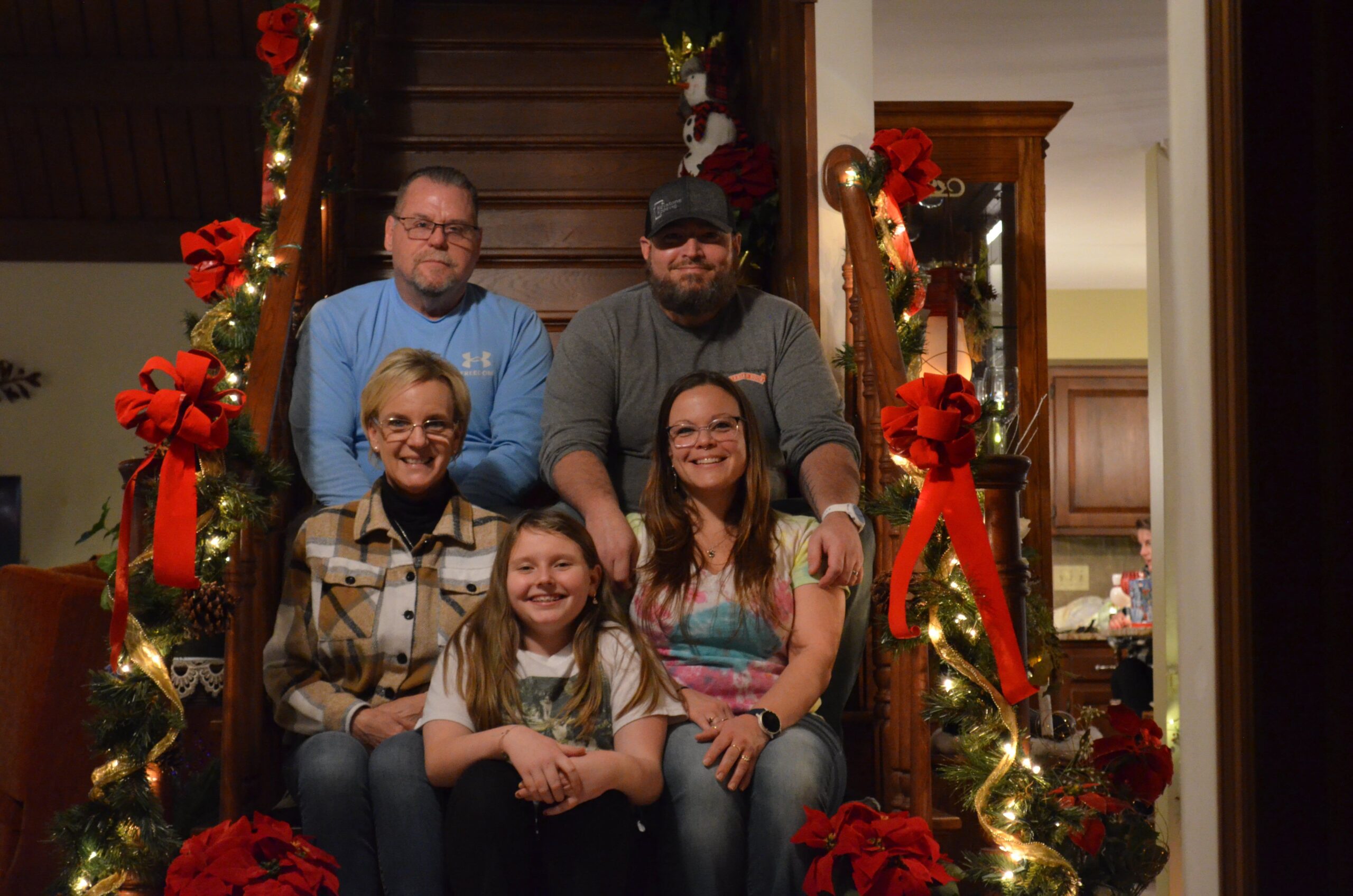
    Edgell and his family, including his wife Tami, stepdaughter Monica Bressler, son-in-law Kenny Bressler, and granddaughter Hayvin.

    The program

    Edgell entered the MossRehab program in June 2024 as part of a cohort of four.

    The first step in his rehab was learning about what was happening to his brain.

    His accident occurred back in 1989, when a steel hatch swung shut and hit him in the back of the head during a training exercise at Fort Riley, Kan.

    Doctors at the time provided memory exercises, mental health support, and physical rehabilitation to improve his gait, but nothing brought him back to baseline.

    Edgell managed to push through his memory problems in college by putting in extra effort into studying, and ultimately became an electronics engineer.

    However, it became harder to cope with the symptoms as he got older.

    Even brief outings would exhaust him to the point of needing days to recover.

    When his wife, Tami, would ask what she could do to help him, he wouldn’t know what to say.

    One therapist at the program offered him a helpful analogy: If a normal brain is like a six-burner stove, then having a brain injury is like being down to only three burners.

    “You’re trying to do everything with two or three burners that you would normally do with six, and your brain just becomes very fatigued and overwhelmed,” Edgell said.

    The program teaches participants to adapt to their brain’s new way of functioning, whether through physical rehabilitation for symptoms such as dizziness, or cognitive rehabilitation to address issues affecting attention, concentration, memory, and mood.

    “We’re basically retraining the brain to do something that it’s having difficulty doing because of an injury,” said Yevgeniya Sergeyenko, a physical medicine & rehabilitation physician and clinical director of the program.

    Since treatment for TBIs revolves around managing the symptoms — which can vary widely between patients — the program has staff across an array of specialties that patients see throughout their three-week stay.

    One provider helped Edgell, who was struggling to get more than a few hours of sleep a night, find medication to help him sleep.

    A physical therapist, meanwhile, assisted with his balance and core structure, so he could walk and move around more easily.

    Others taught Edgell exercises to improve his dexterity, speech, and memory.

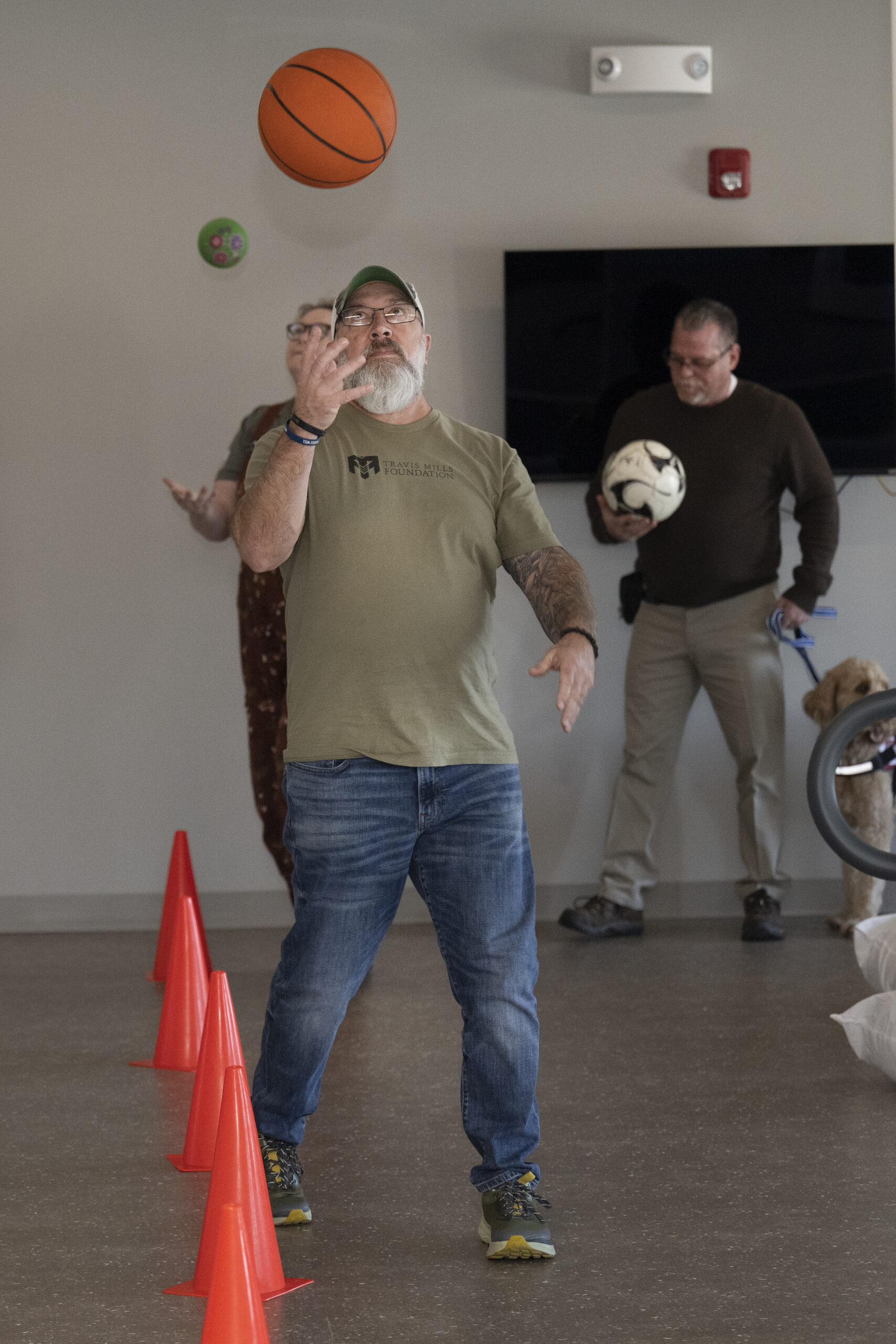
    Army veteran Scott Edgell participates in a cohort session at the MossRehab Institute for Brain Health.

    Some forms of therapy were less conventional.

    There was horticultural therapy — a therapy that involves working with plants — which Sergeyenko said has been shown to lower blood pressure and is intended to help with emotional regulation.

    Patients also did yoga and other mindfulness and movement activities intended to calm the nervous system.

    Edgell said yoga wasn’t his favorite, but he found art therapy helped him communicate more openly.

    One of the exercises at the start of the program asked him to draw a tree. He drew one that “was not doing very well,” he said.

    At the end of the three weeks, he drew a lush version full of leaves. The framed drawing now hangs in his dining room.

    “I look at that everyday to see where I came from,” he said.

    Army veteran Scott Edgell shows drawings of trees representing himself during a cohort session at the MossRehab Institute for Brain Health.

    Outcomes

    Program organizers say returning to a pre-injury baseline is not always a realistic goal.

    “There’s not a medicine that you can give that’s going to make all of your brain injury symptoms subside,” said Kate O’Rourke, the program director at the clinic.

    The program aims to improve function and quality of life.

    As of September, the last time outcome statistics were compiled, 82 patients had gone through the three-week intensive. Sixty-five percent saw significant reduction in their symptoms, as measured by their Neurobehavioral Symptom Inventory scores — which assesses a patient’s severity of neurobehavioral symptoms from 0 to 88. The average reduction was 13.26 points.

    Ninety-nine percent of patients reported that they personally felt they improved after the program.

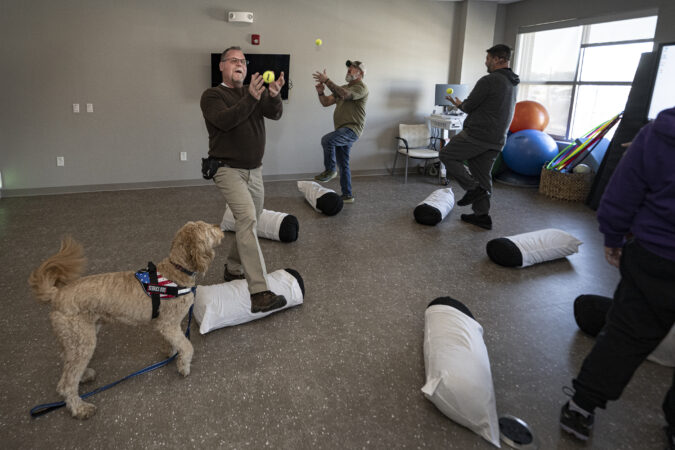
    Current patients (Jeff Todd Malloch and Jessica Mack) and Army veteran Scott Edgell participate in a cohort session with his therapy dog, Lars, at the MossRehab Institute for Brain Health.

    Edgell regularly reaches out to staff for advice, and meets with the program’s alumni in monthly conference calls.

    He still has bad days sometimes, but he’s able to manage them better.

    Before, when he would go to a grocery store or restaurant, he would become overwhelmed by the noise, lights, and commotion.

    “I couldn’t catch my triggers before I fell off the cliff,” Edgell said.

    He was only able to leave the house four to five times a month.

    Working with a service dog at MossRehab inspired him to get one of his own.

    Now, when he starts to react, a golden doodle named Lars will nudge him, giving him a moment to let his brain calm down.

    Edgell and his service dog, a golden doodle named Lars.

    Today, he’s able to leave the house more frequently and for longer.

    He and his wife have reconnected with friends and engaged more in social activities.

    “I still get tired, I still need breaks, but my recovery time is a lot faster, and it’s not nearly as devastating,” Edgell said.

  • Why I like the commercialization of Christmas

    Why I like the commercialization of Christmas

    With the announcement of record sales across the country on Black Friday, including $11.8 billion in online transactions, the holiday shopping season was off to a great start. In the next few weeks, the average person was expected to spend about 10% of their annual shopping budget. By Dec. 25, the National Retail Federation expected a record-setting $1 trillion to be spent nationwide on consumer goods.

    As a Christian, I am not supposed to like the commercialization of Christmas. I was taught from childhood that the birth of Jesus is “the reason for the season,” not gifts. In recent years, critics of all faiths — and none — have joined a growing chorus of anti-consumerist sentiment toward the holidays.

    But rather than dismissing holiday shopping as a symbol of materialism and excess, I have come to view it as an expression of generosity and joy that captures the purpose of the season.

    Rather than dismissing holiday shopping as a symbol of materialism and excess, I have come to view it as an expression of generosity, writes B. G. White.

    The tradition of giving gifts at Christmastime was introduced several centuries ago in Europe by Christians who took stories about the gift-giving of an ancient saint, Nicholas of Myra, and turned him into the modern Santa Claus. As the Industrial Revolution created a new middle class and increased the availability of consumer goods, the tradition grew.

    The importance of material generosity at Christmas was especially championed by Charles Dickens in his 1843 novella A Christmas Carol, which depicts the infamous Ebenezer Scrooge’s transformation from a penny-pinching grump to a joyful philanthropist.

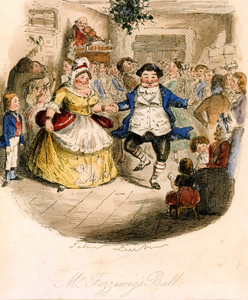
    Hand-colored plate illustration from the first-edition/first-issue copy of Dickens’ “A Christmas Carol.”

    Dickens’ largely secular vision of giving gifts at Christmas helped to make a holiday originally confined to Christians more accessible for an increasingly pluralistic world.

    Of course, there are problems with the connection between Christmas and shopping. I do not like how it can exacerbate class difference, revealing a vast disparity in the quantity and quality of gifts from one household to the next. The upper and middle classes can use Christmas as another opportunity for an exotic vacation or the acquisition of yet another status symbol.

    One only needs, however, to recall the refrain from so many holiday movies to realize that the vast expenditure inherent to the season is not the main problem.

    As Charlie Brown struggles in A Charlie Brown Christmas to pull together the perfect Christmas play, he realizes that, while he may need a Christmas tree for the set, it does not need to be particularly tall, pretty, or even upright. A short, scrawny tree will do just fine.

    Instead of trying to buy happiness, or a better relationship with a loved one, or the perfect Christmas tree, we can use Christmas to focus on what someone really needs, writes B. G. White.

    Christmas is about being content with what you already have and, out of that contentment, being generous to others. Instead of trying to buy happiness, or a better relationship with a loved one, or the perfect Christmas tree, we can use Christmas to focus on what someone really needs.

    To keep ourselves focused on others and avoid unnecessarily lavish gifts, my wife and I use holiday sales as a means to get a discount on items that we would otherwise buy for our kids at some other point in the year. We also focus on practical gifts people will actually use — last year, we got a battery caddy for my mom and gardening gloves for my dad. Our son requested an expensive toy this year — an electric train set — so we found a small one that is in good secondhand condition, which reduces waste and expenditure.

    Perhaps the greatest reason why I like to give gifts at Christmas is that they embody the heart of the Christmas story — the one, ironically, that so many Christians use to create skepticism about Christmas gifts — in which God “gave” Jesus as a savior for the world (John 3:16).

    Perhaps, then, giving gifts does not destroy Christmas; it captures its very essence.

    B. G. White is a faculty member in the theology department at Boston College.

  • Letters to the Editor | Dec. 25, 2025

    Letters to the Editor | Dec. 25, 2025

    Disharmony

    Donald Trump has a fixation on putting his name on everything he can find. His latest is the Kennedy Center. Animals mark their territory, but the smell dissipates quickly. The stench from Trump’s antics will take years to remove.

    Barry Adams, Malvern

    . . .

    The John F. Kennedy Center for the Performing Arts has had wonderfully harmonious moments.

    The recent addition of Donald J. Trump’s name to the center creates a brash, clanging disharmony.

    Consider three examples:

    Kennedy inspired the creation of the Peace Corps. Trump eviscerated the U.S. Agency for International Development, leaving children starving and food rotting.

    Kennedy instituted the Alliance for Progress, which brought hopes of prosperity and peace to Latin America. Trump ordered the military to murder suspected drug smugglers from Latin America.

    Kennedy laid the moral foundation for the Civil Rights Act (1964) and the Voting Rights Act (1965). Trump directed states to redraw congressional boundaries so as to reduce nonwhite representation.

    Bring back harmony and erase Trump’s name from the Kennedy Center. Adding Trump’s name is an insult to the memory and inspirational presidency of Kennedy, who said, “Ask not what your country can do for you — ask what you can do for your country.” In Trump’s case, it’s always been the other way around.

    Terry Furin, Philadelphia

    Pardon or consequences

    Two of your recent editorial cartoon selections shone a light on the changing state of criminal punishment in the United States today: One showed a Santa protester holding a sign that says, “RELEASE THE NAUGHTY LIST.” The other showed Santa checking his “Naughty List” of drug dealers, insurrectionists, fraudsters, etc., but with the word “Naughty” changed to “Pardon.”

    In 2025, facing punishment for misdeeds is no longer a sure thing. Whether it’s a federal conviction for storming the U.S. Capitol, bringing illegal drugs into the country, or defrauding investors, if you support the president, he’ll make it all go away. Donald Trump bragged during his campaign that he could shoot someone in the middle of Fifth Avenue without losing any of his supporters. He may have been right — and he is sharing that immunity with any of his friends who need it.

    Wayne Williams, Malvern

    . . .

    How come Donald Trump can get away with just about anything: demolishing the East Wing, dismantling the U.S. Agency for International Development, freezing congressionally appropriated funds, just to name a few? And while each of those things occurred when he was president, bending the rules has been his MO, as a business person, since Day One. If you or I did the same thing, they’d throw the book at us. Trump? He gets the U.S. Supreme Court to say a president can’t be held accountable for anything he does while in office. The founders are turning over in their graves. Can you imagine what Trump would do if Joe Biden did everything he has done over the past 11 months?

    Biden Derangement Syndrome, indeed.

    Michael Miller Jr., Philadelphia

    Join the conversation: Send letters to letters@inquirer.com. Limit length to 150 words and include home address and day and evening phone number. Letters run in The Inquirer six days a week on the editorial pages and online.

  • Dear Abby | Party host tells it like it is to woman’s children

    DEAR ABBY: While attending a friend’s family barbecue, “Willa,” a young mother of four, drank too much and became ill. Drugs may have been involved. Understandably, the three older children became very concerned about their mom’s condition. Willa’s partner, “Ian,” was furious. My husband spent an hour de-escalating Ian’s issues, while I attended to Willa and assured the children their mom would be feeling better after she rested.

    The problem I had was with my friend “Julia,” who was the host. Julia is Ian’s mother and the grandmother of the youngest child he has with Willa. After I took care of Willa, the kids and Ian, the older ones asked Julia what was wrong with their mom. I replied that their mom was sick from drinking too much, after which Julia loudly announced, “Your mom’s not ‘sick’ … she’s DRUNK!” Her outburst caused the older kids (ages 6 to 12) to become upset again. Julia maintains she did nothing wrong. What are your thoughts?

    — CLEANING UP THE MESS

    DEAR CLEANING UP: Julia was probably mad as heck that Willa ruined her party, which is why she unloaded the way she did. That said, the children were clearly worried when they asked what was wrong with their mom. Frankly, I think Julia did the right thing by telling them the truth about their mother’s condition. That way, the next time it happens, and it will, they won’t be terrified that their mother has a fatal illness.

    ** ** **

    DEAR ABBY: I am in a longtime relationship and things are good. I feel loved, and I love him. However, we have opposite opinions about current politics. It is disturbing that he could feel this way. Our discussions usually result in his telling me over and over, louder and louder, “how things ARE” and “what the REAL truth is,” and that I’m “not looking at the whole picture.”

    I told him I don’t like the debates we have as I feel very off-balance afterward, and it seems like he’s pushing me to accept his beliefs. It has now reached the point that if we keep up these “discussions,” as he calls them, I’ll probably have to leave the relationship. I told him I don’t ever want to talk about politics with him again. Is this a good option? Any other ideas? I cannot believe we are so opposite, yet he is very nice to me.

    — OPPOSITE IN WASHINGTON

    DEAR OPPOSITE: This gentleman may be very nice to you, but philosophically you and he are poles apart. I don’t think it is “very nice” to strong-arm someone into agreeing to something to which they are opposed. Do you really think you can stifle your feelings forever by not discussing this? This is who he is at his core, and he isn’t going to change his convictions. The question you have to answer is whether you are willing or able to do that.

    ** ** **

    DEAR READERS: I wish you all a joyous, meaningful, healthy and safe Christmas. Merry Christmas, everyone!

    — LOVE, ABBY

  • Horoscopes: Thursday, Dec. 25, 2025

    ARIES (March 21-April 19). You’re gifted with initiative. While others wait for a cue, you sense the moment and jump. And if the scene is missing a leader, you’ll make the call to action, plot the plans and move with the boldness others will model themselves after.

    TAURUS (April 20-May 20). You’re gifted with taste. You’re drawn to the good stuff, and you elevate everything you touch. Today, you’ll use your fine discernment and some practical magic to help someone else shine, which only doubles your own glow.

    GEMINI (May 21-June 21). You’re gifted with decisiveness. Here or there? This one or that? You do a quick read of the moment and know within seconds which way to take it. You choose with a light heart, and all roads converge in happiness.

    CANCER (June 22-July 22). You’re gifted with deep feelings. Know that they are a raw form of power. Anything that dulls or distracts you from letting a feeling come through limits your power. You’re brave and ready to face more, feel more and be more.

    LEO (July 23-Aug. 22). You’re gifted with creativity. Unusual ways you celebrate the day? Wear something symbolic or odd. Give someone a random compliment that has creative logic. Switch topics based on intuition. It all makes people happy, especially you.

    VIRGO (Aug. 23-Sept. 22). You’re gifted with bravery. You live authentically, communicate honestly, notice and face life instead of turning away. The courage is in you, steady as your heartbeat. When you need it, just listen — it’s been there all along.

    LIBRA (Sept. 23-Oct. 23). You’re gifted with social savvy. Sometimes it’s about knowing the rules, and sometimes it’s about serving the mood of the room. You sense the emotional temperature and know exactly how to warm it or cool it to bring all in to a dreamy harmony.

    SCORPIO (Oct. 24-Nov. 21). You’re gifted with leadership. Often your influence is nearly indetectable, even by you, because you lead through inspiration, not dominance. You model and they copy you. The exchange may be subtle, but the results are undeniably real.

    SAGITTARIUS (Nov. 22-Dec. 21). You’re gifted with blithe spirit. You bring hope, humor and a touch of wild possibility wherever you go. You’ll lighten the mood with stories of adventures past and plans for adventures future. You remind people that joy is a choice.

    CAPRICORN (Dec. 22-Jan. 19). You’re gifted with unwavering focus. You don’t have to try hard because this power comes naturally to you and works like gravity to keep your goals orbiting close. Today a subtle but potent action will shift your future toward the dream.

    AQUARIUS (Jan. 20-Feb. 18). You’re gifted with charm. You’ll listen more than you respond, but when you respond, it’s not what they were expecting. You follow the emotional thread, the imaginative thread or the absurdist thread. It makes you unpredictable in the best way.

    PISCES (Feb. 19-March 20). You’re gifted with compassion. In your heart of hearts, you know people aren’t so much “good” or “bad” as they are “conscious” or “unconscious.” Your compassion contributes to the wholeness of the world.

    TODAY’S BIRTHDAY (Dec. 25). Welcome to your Year of Luminosity. The “brightness” dial of your life turns up and your soul glows with new energy. Your sense of humor becomes your superpower, attracting exciting people and opportunities. Problems that once consumed you shrink to manageable size. More highlights: Money through bonuses, gifts and lucky breaks, parties you’ll talk about forever, and a relationship that makes everything more fun. Aries and Libra adore you. Your lucky numbers are: 5, 16, 28, 39 and 50.

  • Christmas Eve fire damages several rowhouses, displaces families in Chester

    Christmas Eve fire damages several rowhouses, displaces families in Chester

    No injuries were reported after a Christmas Eve fire at a rowhouse in Chester spread to neighboring homes, displacing five families, officials said.

    Shortly before 5:30 p.m. Wednesday, firefighters responded to the 900 block of West Seventh Street and found heavy fire in a rowhouse. A second alarm was struck about seven minutes later.

    Mayor Stefan Roots said three homes sustained heavy fire and water damage. He did not provide any information on what caused the fire.

    The American Red Cross responded to the scene and assisted a total of 13 people from five families who were displaced, said spokesperson Alana Mauger.

  • With the smoke cleared, key questions emerge in the wake of a deadly nursing home blast

    With the smoke cleared, key questions emerge in the wake of a deadly nursing home blast

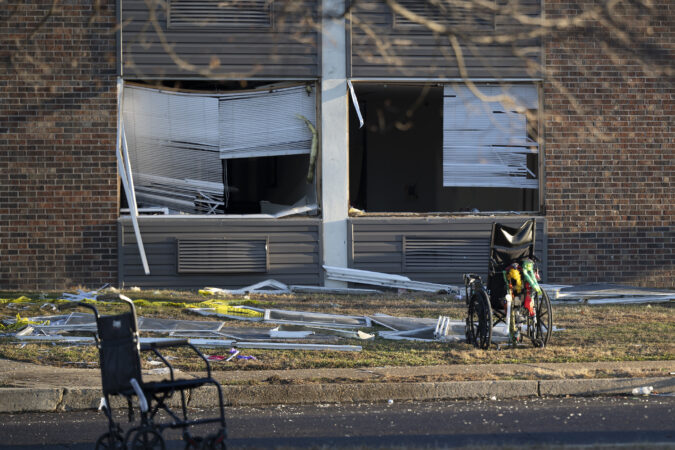
    Twenty-four hours after two gas explosions ripped through a Bucks County nursing home, the dead and injured had been identified, survivors were accounted for, and the cleanup was underway. But unanswered questions about the blast’s cause mounted.

    On Wednesday morning, Peco provided a drastically different account of when its crews responded to reports of a gas odor on Tuesday, saying technicians had actually arrived hours — not minutes — before the blast at Bristol Health & Rehab Center.

    Then, the energy company went silent, declining to answer any additional questions as the National Transportation Safety Board (NTSB) took over a sprawling investigation that will also involve other federal law enforcement and regulatory agencies.

    Meanwhile, the new operator of the 174-bed nursing home, Saber Healthcare Group, is also coming under scrutiny amid questions about the poorly maintained facility on Tower Road that it took over from another provider just three weeks ago.

    It could take months to get answers about what caused, and who is at fault for, the blast that killed two people and left 19 hospitalized, one in critical condition.

    Experts and attorneys told The Inquirer the investigation will likely focus heavily on the actions of Peco and the nursing home’s operators.

    “If the facility doesn’t maintain the equipment and the gas in their own facility, then they would be responsible,” said Robert Mongeluzzi, an attorney who has represented victims of gas explosions. “If there were reports of the gas leak, and Peco is notified and the facility isn’t cleared … there’s going to be responsibility on both of them.”

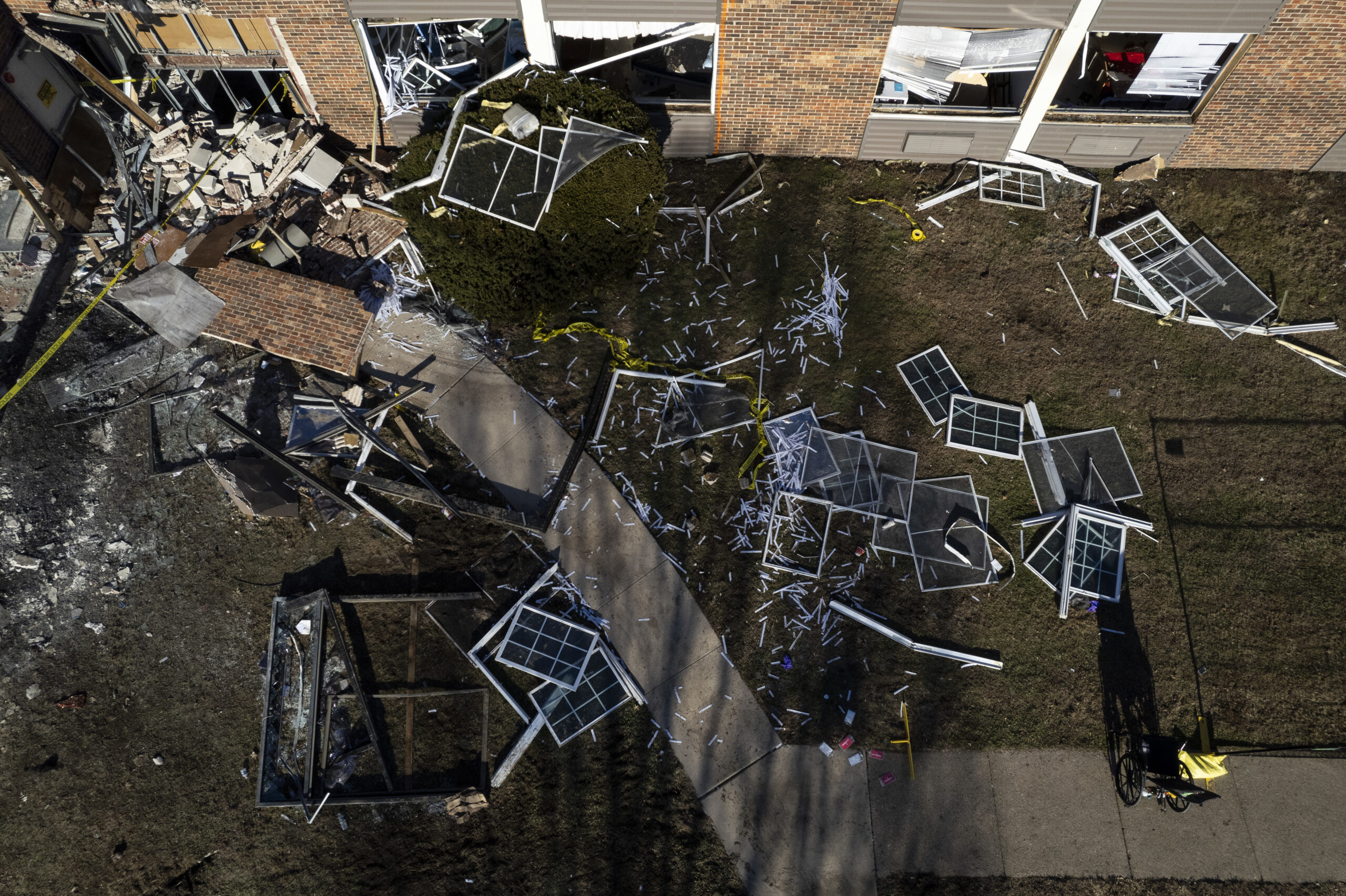
    Windows and debris at the site of the Bristol Health & Rehab Center on Wednesday.

    In a statement, the NTSB said investigators will not be able to fully evaluate the natural gas service line until “a safe path is cleared.” That effort alone could take several days. The agency provided no timeline for its initial findings.

    Saber Healthcare Group took over operations at the nursing home on Dec. 1. Prior to that, the facility had been managed by another privately run for-profit healthcare company, the Ohio-based CommuniCare Health Services.

    CommuniCare, which had operated the home since 2021, racked up a long list of code violations for unsafe building conditions and substandard healthcare. Just two months ago, state inspectors cited the facility for lacking a fire safety plan, failing to maintain extinguishers, and allowing conditions that would cause poor smoke ventilation.

    Federal inspection records also show numerous citations over previous years for substandard healthcare, poor infection control, and mismanaged medical records, earning the facility a one-star rating. CommuniCare incurred more than $418,000 in fines due to violations in 2024, records show.

    “We have worked to improve and fix prior issues, and we will continue that work in the wake of this tragedy,” Saber said in a statement Tuesday.

    Attorneys watching the news unfold questioned whether Saber should have evacuated residents sooner on Tuesday. Peco’s own guidelines urge people who smell gas to evacuate the building immediately.

    “If you or I smelled gas in our apartment or house, we’d be like, ‘Where is it?’ You have to get everybody out,” said Ian Norris, an attorney at Philadelphia-based McEldrew Purtell who has sued Saber and other nursing home operators accused of negligence. “In a nursing home, you have a higher standard of care. They are dependent residents who are there on the basis that they need help.”

    A Saber representative said the company was looking into the evacuation procedures. In its statement Tuesday, the company said “facility personnel reported a gas smell” to Peco. The statement made no mention of an evacuation effort.

    The smell was confined to the kitchen area of the nursing home, according to the Saber representative.

    A Peco gas technician arrived at the nursing home on Tuesday afternoon. He was working alone in the basement below the kitchen area to address the issue, and as he went to his truck to retrieve more tools, the building erupted, said Larry Anastasi, president of IBEW Local 614, the union that represents Peco workers.

    Whether Peco’s gas lines played a role in the blast remains unknown. But the utility company’s aging gas infrastructure will likely come under closer inspection as the probe progresses, according to attorneys with knowledge of investigations following such explosions.

    One detail that became clear Wednesday was that Peco’s gas meter was located in the basement of the nursing home — not outside and aboveground as required by a 2011 order from the Pennsylvania Public Utility Commission (PUC).

    The PUC, like Peco, declined to comment and referred questions to the NTSB.

    Workers set up fencing at Bristol Health & Rehab Center on Wednesday.

    While the age and condition of the gas line near the nursing home were not clear, Peco has acknowledged it had 742 miles of substandard gas lines across the state — including cast iron, plastic, and uncoated steel piping — that needed replacing. The lines accounted for 5% of Peco’s gas service but 82% of leaks, according to a report from the PUC.

    Peco plans call for all of those lines to be replaced by 2035 and to invest roughly $6 billion to inspect, modernize, and perform maintenance on all of its systems over the next five years.

    Richard Kuprewicz, an expert on gas pipeline safety and investigations, said it is too early to tell if Peco or the nursing home acted improperly. He warned against jumping to conclusions the day after the explosions.

    “We just don’t have the facts on this,” Kuprewicz said. “The tragedy is they had an explosion from a gas release that they knew was occurring. People will raise questions about this for months.”

    In the immediate aftermath Tuesday evening, Peco spokesperson Greg Smore said in a statement that the company’s crews had responded to the nursing home “shortly after 2 p.m.” Tuesday and that while they were on site, the explosion occurred. The blast was reported just before 2:20 p.m. Tuesday, according to Bristol Fire Chief Kevin Dippolito.

    But in a revised statement Wednesday morning, the company backtracked, saying its crews actually arrived “a few hours” before the explosion. It would not provide a specific time.

    Peco said it shut off natural gas and electric service “to ensure the safety of first responders and local residents.” But, again, it would not say when.

    Depending on where the gas leak was, Kuprewicz said, significant amounts of gas could continue to seep out after a shutoff.

    “There isn’t one standard answer for all this,” he said. “Even when you shut it off, it doesn’t [always] stop flowing.”

    Inquirer staff writers Samantha Melamed and Barbara Laker contributed to this article.