Tag: topic-link-auto

  • We are at a generational inflection point in healthcare. It’s time for Gen X physicians to assert themselves as the stewards of our profession.

    We are at a generational inflection point in healthcare. It’s time for Gen X physicians to assert themselves as the stewards of our profession.

    Thanksgiving brought a revelation. I was sous-chef to my children and my mother, a sounding board for my son as he completed college applications and my parents as they navigated different doctors, and the planner working around the needs of my children, husband, parents, and in-laws. I now realize what it means to be part of the “sandwich generation.”

    My generation is also squeezed between older and younger cohorts in the professional world — especially medicine and healthcare. I am solidly Gen X and lie squarely between the boomers and the millennials.

    These days, no matter where you turn, the realities of the U.S. healthcare crisis are impossible to ignore. From access to medications, availability of health insurance, affordability of medical costs, even trust and reliability in the messaging or directives we hear, the situation is daunting at best and overwhelmingly dark at worst.

    Perhaps the canary in the coal mine has been the growing healthcare workforce crisis.

    Physician burnout and moral injury, worsened by COVID-19, drove millennial and even Gen X doctors and nurses to leave the field. Adding to the dearth of primary care physicians as the U.S. population ages with worsened chronic diseases, the imminent retirement of a large cohort of boomers results in projections of a shortage of a combined 400,000 physicians and nurses by 2037.

    I can’t help but feel the weight and responsibility of my generation of doctors in the world of medicine, along parallel lines of my personal life.
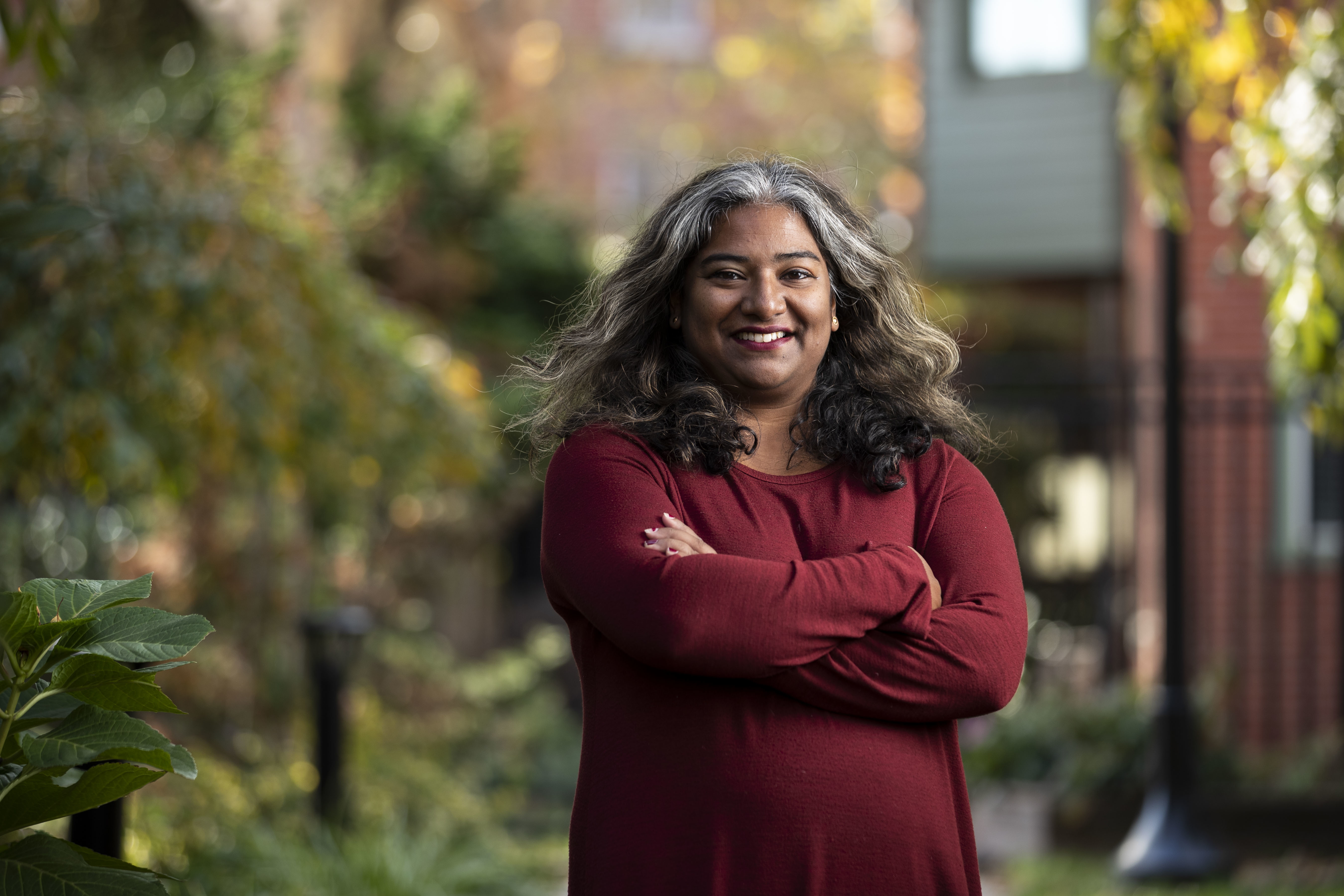
    The same voices, same perspectives, and same ideas have been echoing across institutions for years — even when not representative of the rest of younger medical professionals, writes the author.

    When we were born and grew up shapes the decisions we make and the ways we manifest and execute them. In his book Birth and Fortune, Richard Easterlin, an economist and demographer who researched happiness, posits that the size of the cohort you are born into shapes your generational opportunity.

    Large cohorts, such as the baby boomers, face competition, but they also get the benefits of institutions that bend to their size. Smaller cohorts in the shadow of the larger generation ahead of them often contend with fewer resources and less investment. That’s Gen X in a nutshell.

    And it models my experiences in the world of Philadelphia medicine almost perfectly.

    Even within these cohorts, Easterlin illustrates, there are differences and disparities. Resources and opportunities available to early boomers became scarce to the later boomers, as the systems were slow to meet their needs. Those returning from the Vietnam War later were more likely to feel this dearth of structures and resources — such was the “birth” of homelessness as we recognize it now.

    I saw that firsthand in Philly as a member of the Homeless Death Review team — a small group of experts from across the city convened by the Medical Examiner’s Office. We reviewed every death of a person experiencing homelessness in Philadelphia.

    The author makes a home visit, as part of Pathways to Housing Philadelphia, in 2018, to care for a client who was at that time part of the Prevention Point community in Kensington.

    From a systems-level view, it became clear that a lack of resources decades ago created a disparity that was perpetuated throughout the lives of specific demographics. They contributed to their premature deaths.

    Boomers created the healthcare system we know today. Building on advances in science, research, and opportunity, they expanded and deepened training pipelines. They established medical specialties, subspecialties, and leadership roles.

    They also continued long-standing practices anchored in hierarchy and compliance, where gravitas comes from the company you keep and not always the merit and competency you demonstrate.

    A look across academic medical leaders in Philadelphia shows several with tenures that started in their 40s or early 50s and continued for well over 20 years, ongoing even now. Our city’s medical leadership — whether it be the Philadelphia County Medical Society, Pennsylvania Medical Society, or the American Medical Association — shows many of these same individuals making decisions across organizations.

    The same voices, same perspectives, and same ideas have been echoing across institutions for years — even when not representative of the rest of us.

    Take the American Medical Association. While being known for having the largest lobbying budget of all medical associations, it represents only 20% of the doctors across the country. The AMA designed and owns the Current Procedural Terminology — the five-digit codes that are commonly used in medical billing. That coding system creates an avenue for higher payments for procedures over primary care prevention with a percentage for them as middleman.

    Years ago, I wrote about how my approach to being an emergency physician evolved as I saw a changing world of healthcare that was not meeting the needs of the patients who turned to me for help.

    That same month, the Wall Street Journal reported on the shift among doctors from “GOP stalwarts” to Democratic voters. My Gen X brethren look different from the generation before us: more women, more people of color, a broader range of ethnicities and cultures. It makes sense that we vote differently, in line with our priorities, values, and missions. Just as it makes sense that we lead differently, as well.

    As Gen X doctors, we trained under the “old rules” of loyalty, compliance, endurance, and strict hierarchy. We worked with paper charts, well before computers became the central source of our clinical work. We mastered clinical skills and memorized reams of information. We also understood how issues outside the exam room and beyond our control impacted our patients.

    My cohort went on to learn to practice medicine as the corporatization of hospitals took hold and our profession took on the additional contours of a business. We met productivity quotas and metrics around how quickly we saw patients and moved on to the next. We eventually even learned to ask corporate conglomerates for permission to get the tests, procedures, and medications our training and expertise, together with our direct evaluation, told us our patients needed, through prior authorizations.

    Boomers continued to adhere to their definition of an ideal physician over the last 25 years — fixating on their commanding expertise and a brand of patient care they developed. In the process, they ceded governance of medicine, including financial oversight and systems design, to non-medical stakeholders. They often treated these issues as beneath them.

    For the bulk of our careers, we Gen Xers were complicit — through our silent obedience and compliance. Many of us had learned from personal experience that speaking up or being seen as contrarian to those in power was overtly punished or covertly met with retaliation.

    Now however, Gen X physicians are positioned to do something the generation before could not: carry medicine’s core values forward while shedding the destructive traditions and practices that broke the system.

    We are facing AI in medicine, further decentralization of medical care, technology and innovation, unprecedented availability of our own health data through wearables, simultaneously with more difficult access to the doctors we have always turned to, and fewer hospitals in our communities.

    I see us at a critical generational inflection point. And it’s time to assert ourselves in a few tangible ways:

    • Claim leadership by redefining it. We don’t have to wait to inherit positions when those who have inhabited them for decades finally vacate. Gen X knows well that true leadership doesn’t come through hierarchy or titles. In the words of my dear friend Jeremy Nowak: “Power belongs to the problem solvers.”
    • Reclaim and own our voice. Our predecessors confused apolitical detachment with impartial professionalism. In the process, the discussions, decisions, and policymaking that shaped physicians’ reality excluded us. It’s time we lean in unapologetically and stop waiting for permission. 
    • Reject passive compliance as a virtue. Our silence has helped no one. The courage we spent decades swallowing is exactly the courage we need now to right this ship. We must be intentional in how we define ourselves, our profession, and our value: clinical integrity, collaboration, dignity, empathy, humanity, all come to mind as our unmatched superpowers. 

    It feels we are standing at the precipice of the unfamiliar and unknown. Where technology and AI will redefine what is possible, but the needs of our patients will demand practical and accessible solutions.

    Sustainable change will come from us — crammed in the middle. At the risk of making a sweeping generalization, Gen X believes in fairness, head-down work, and accomplishment. We have learned and adapted throughout our lives. Unlike the boomers and millennials on either side of us, we are “raised analog, fluent digital, comfortable with a rotary phone and an AI dashboard.”

    We are the stewards of the medical profession — not its museum guards. We can bridge the meaningful lessons of our past with the awareness of today and the promise of the future, while centering empathy, values, missions, and ethics.

    The silver lining is this: Our hard-earned lessons have become the foundation for a new kind of courage. It’s one that refuses passivity, demands better, pushes into all the spaces that exclude us, and insists that we show up not just for ourselves, but for our colleagues, our patients, our community, and the generations coming behind us.

    Priya E. Mammen is an emergency physician, healthcare executive, and public health specialist who helps the nation’s most impactful companies integrate clinical integrity at scale.
  • Will the Philadelphia Police Department ever be free of scandal? | Editorial

    Will the Philadelphia Police Department ever be free of scandal? | Editorial

    By most accounts, the Philadelphia Police Department has had a good year.

    Crime is down, a majority of residents feel safer and many give Commissioner Kevin J. Bethel high marks.

    But as is often the case with the PPD, the good work of many dedicated officers gets marred by one scandal after another.

    In February, former homicide detective James Pitts was sentenced to at least 2½ years in prison for fabricating evidence in a murder investigation and then lying about it on the witness stand.

    In May, Officer Mark Dial was convicted of voluntary manslaughter and other crimes after he shot Eddie Irizarry six times, killing him seconds after encountering him in his car with the windows rolled up.

    In November, nine current or former police officers, including a former captain, were charged with theft and conspiracy in connection with the misuse of city anti-violence funds surrounding a youth boxing program.

    Earlier this month, more than 130 drug cases were tossed out after three narcotics officers repeatedly gave false testimony in court. When all is said and done, nearly 1,000 cases are expected to get dismissed because the officers apparently lied about drug deals that never happened or they did not witness.

    The string of scandals is not the case of a few bad apples, as the police often like to claim. It points to a systemic problem that has undermined the department for decades. Stamping out the skullduggery will require a change in recruitment practices, training, culture, and accountability.

    The latest scandal resulting in hundreds of dismissed drug cases underscores the disturbing tolerance for corruption that runs through the department.

    Common Pleas Court Judge Lillian Ransom vacated the first tranche of 134 drug cases after prosecutors said the testimony of three officers on the Narcotics Strike Force was deemed unreliable.

    Hundreds of additional cases built on the officers’ testimony are expected to be voided in the coming months. Amazingly, Officers Jeffrey Holden, Eugene Roher, and Ricardo Rosa remain on the job and assigned to their narcotics squad.

    Commissioner Bethel declined to speak with the Editorial Board but issued a statement that said an internal affairs investigation was launched in March 2024 and remains ongoing. That’s good, but what is taking so long?

    He added that “thus far we have not identified any evidence that would raise concerns of misconduct or criminal behavior on the part of those officers.”

    In other words, move along folks. Nothing to see here. Just about 1,000 criminal cases falling apart because three police officers apparently lied over and over again.

    Credit for uncovering the injustice goes to the overworked and underpaid lawyers at the Defenders Association of Philadelphia.

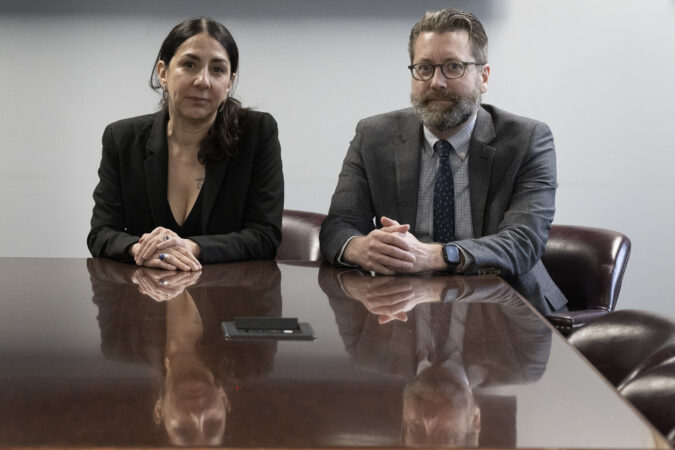
    In particular, Paula Sen and Michael Mellon of the Defenders’ Police Accountability Unit uncovered video footage that contradicted the evidence mounted by the officers.

    More disturbing, this is not the first time the Defenders Association caught the police cooking cases.

    In 2015, Bradley Bridge, a longtime public defender, got more than 950 drug convictions vacated after discovering six narcotics officers robbed and beat drug dealers and then filed bogus paperwork.

    Bridge, who came out of retirement to help on the recent cases, estimated he has overturned about 2,500 drug convictions since 1995.

    Therein lies the problem. Different day, same corruption.

    Bethel said the Police Department takes “potential credibility issues with our officers extremely seriously.” But the department’s history of corruption over the past half century or more indicates otherwise.

    To be sure, Philadelphia does not have a monopoly on police corruption. Problems exist in other big cities and small towns.

    And despite recent reforms, it is unclear if all have been for the better.

    A high-quality police department begins with high quality recruits. But to combat staffing shortages, the department — like many others — eliminated the need for college credits and lowered the requirements for physical training.

    There must also be independent accountability. But a Citizens Police Oversight Commission created in 2022 has not conducted a single investigation.

    Bad cops reduce morale and must be weeded out. But most corrupt officers not only avoid criminal charges but get to keep their jobs — thanks to a police union that goes to bat for every cop, good or bad. A recent analysis found friendly arbitrators reinstated 85% of fired officers.

    Dirty cops undermine community trust and the good work of committed officers who risk their lives to keep the city safe. Even worse, the wrongful prosecutions can take away a person’s liberty and upend lives and families.

    Police corruption also costs taxpayers real money. Over a recent 18-month stretch, Philadelphia taxpayers spent more than $60 million to settle cases stemming from police misconduct.

    The recent reduction in crime is welcome, but a question remains: Will there ever come a day when the Philadelphia Police Department is not plagued by scandal?

  • The likely first public menorah was lit on Independence Mall on this week in Philly history

    The likely first public menorah was lit on Independence Mall on this week in Philly history

    Outside the front door of Independence Hall, amid a wet and mild December in Philadelphia, a handful of devoutly orthodox Jews decided to add their light to the world.

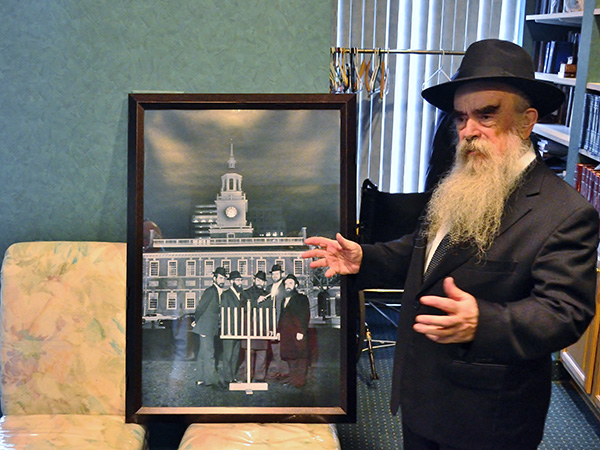
    Four men of the Lubavitcher sect of Hasidic Judaism, including renowned Rabbi Abraham Shemtov, gathered on Independence Mall on Dec. 14, 1974. Together they lit what is believed to be the first menorah, or Hanukkah candelabrum, ever illuminated on public property.

    And together they watched their light spread.

    “Philadelphia is where we started,” the now-88-year-old Rabbi Shemtov told The Inquirer in 2014. “Now it’s everywhere, in too many places to count.

    “So, the idea caught fire,” he said, smiling through his long, gray beard.

    Hanukkah is the Jewish celebration of light over darkness, and of faith and freedom over oppression and persecution. While it’s not the biggest holiday in the Jewish faith, its themes of perseverance and hope have been as synonymous with the winter solstice as any Christian tradition.

    The most obvious reason that menorahs were traditionally not lit outside was because the flame would go out.

    So on that breezy evening in mid-December, the flame stayed lit against all odds. Some might even call it divine intervention.

    “What you need to understand,” Shemtov explained, is that Jewish tradition dictated that the candelabrum be lit at home, and placed “at the spot the house shares with the outside,” typically at the front door.

    “Our sages say outside is better,” he said with a shrug. “So, we brought it outside a step further.”

    In the years since, public menorahs have sprouted up across Europe and North America, from Revolution Square in Moscow to the White House in Washington.

    “The simple lighting ceremony in Philadelphia,” wrote The Inquirer’s longtime religion reporter David O’Reilly, “became the foundational story of public menorahs for most of the world’s Jews.”

    For centuries, menorah lighting had at times been a covert domestic ritual.

    “We lit the first candle. There was some singing and dancing. It was a private event in public,” Shemtov said in 2014. “But even so, in concept we were sharing the thing with the world.”

  • Flyers Q&A: Brent Flahr dishes on prospects Porter Martone, Jett Luchanko, and more

    Flyers Q&A: Brent Flahr dishes on prospects Porter Martone, Jett Luchanko, and more

    Teaser


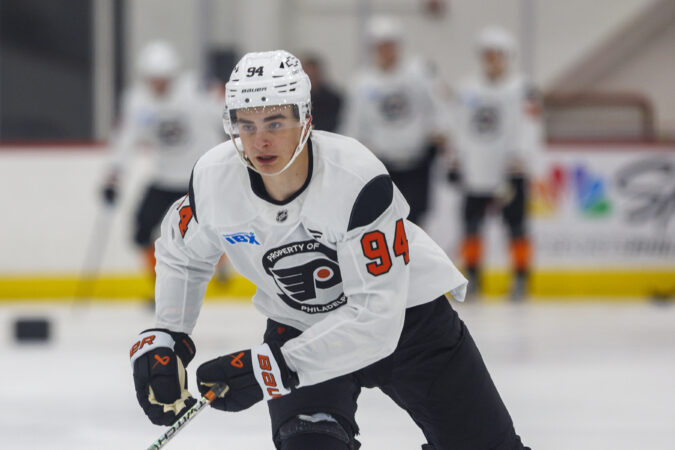
    With the Flyers nearing the midway point and the World Junior Championship around the corner on Dec. 26, it’s time for our annual midseason prospect check-in with assistant general manager and scouting chief Brent Flahr. In Part 1 of a two-part series, we asked Flahr about the team’s prospects that are playing NCAA or Canadian junior hockey, headlined by Porter Martone at Michigan State.

    • Flahr believes Porter Martone, who is averaging 1.25 points per game, which is third among freshmen, has improved his pace in the faster college game. Flahr believes Martone is on track to challenge for an NHL opening-night roster spot next season.
    • Flahr name-checked Jack Berglund, Heikki Ruohonen, and Max Westergård as less-talked-about prospects who have impressed him over the past few months.
    • While Flahr said Jett Luchanko wasn’t unhappy in Guelph, he thinks the move to Brantford is in the best interest of both Luchanko and the organization, as the center will play alongside better players and should benefit from not having to be “the guy” all the time.

    Disclaimer: This interview, which was conducted on Dec. 10, has been edited for clarity and length.

    More Details


    With the Flyers nearing the midway point and the World Junior Championship around the corner on Dec. 26, it’s time for our annual midseason prospect check-in with assistant general manager and scouting chief Brent Flahr. In Part 1 of a two-part series, we asked Flahr about the team’s prospects that are playing NCAA or Canadian junior hockey, headlined by Porter Martone at Michigan State.

    Disclaimer: This interview, which was conducted on Dec. 10, has been edited for clarity and length.

    Q: We are heading into the midway point of the season. How would you assess the Flyers’ prospect pool right now?

    A: It’s pretty good. Obviously, we had a lot of picks last year. We’ve had some guys emerging from previous drafts that have played well and are trending in the right direction. So overall, pretty excited.

    Q: Is there anyone who has stood out to you thus far?

    A: I think Porter Martone gets a lot of the attention because of where he was picked and whatnot, and he’s had a terrific start at a good program. I think [among] the lesser talked about guys, Jack Berglund and Heikki Ruohonen. Those two guys in the summer at the World Junior Showcase in Minnesota were both really good. Max Westergård played well. So I think those guys overseas have done their part to be big parts of their teams going to the World Juniors, which would be fun to see. And then obviously with Jack Nesbitt, Shane Vansaghi, a number of the guys we drafted last year, they’re big parts of their really good teams, and it’s been exciting for them.

    Q: We’ll start with Martone because he is the one everyone talks about. What have you seen from this year with Michigan State, and how do you think it’s helping him prepare for the NHL?

    A: His biggest challenge, and what we’ve talked about, is his pace. He was a really good junior [player], obviously, but he could slow things down all the time and kind of do what he wanted. In the college game, he’s playing against older kids, bigger, stronger, faster, and the way they practice, the way they play games, it’s all out and all full speed. So I think it’s forcing him to move his feet. Obviously, you can’t teach the brain he has, the skill set he has, and the size and whatnot. I think even he’s the first one to tell you, he’s in better shape. He’s playing faster. And I think it’ll really help him adjust to the pro game faster.

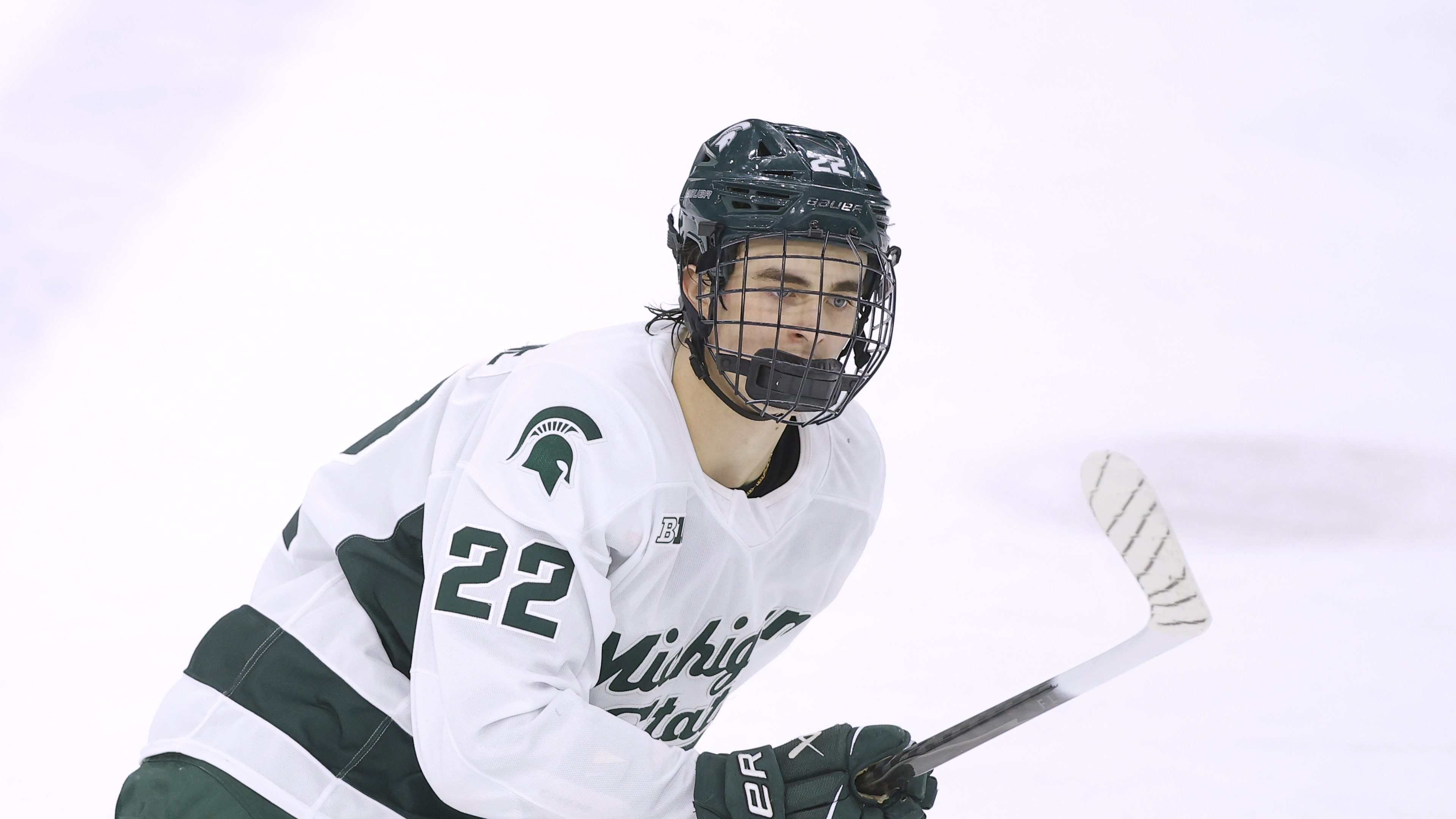
    Flyers top prospect Porter Martone has 11 goals and 20 points in 16 games for the third-ranked Michigan State Spartans.
    Q: Outside of Martone, Nesbitt is probably the most important player from the 2025 draft class. What have you made of his start in the OHL this season?

    A: Yeah, I’ve seen him a number of times. He plays his game. The biggest thing with him is we’re going to have to be a little patient. He’s just a tall drink of water right now, and he’s got to get put on weight. He’s got to get stronger, which we’re well aware of that. But he is a competitive kid. He’s got skill, and he’s very sound defensively.

    He plays with an edge — he’s been suspended a couple times already — but he plays to the identity of a Flyer, what we think of a Flyer. I think he’s going to be a very well-rounded centerman when he gets here. His details are good, good net-front on the power play, and he’s a good penalty killer. But the thing with him, I think the strength and skating is what you can wear down, so that’s a big focus with him. He’s got a good program there, where they have the trainer, and he’s drinking as many shakes as he can and doing all the things he needs to do.

    But it’s going to take some time. His offseason is going to be critical this year and next, but he’s shown that he’s willing to put in the work. But so far so good, really positive, and hopefully next year he’ll get his chance at World Juniors. He’s part of a really good team there in Windsor, and they have a chance, I think, with a few additions to go on a pretty good run there this year as well.

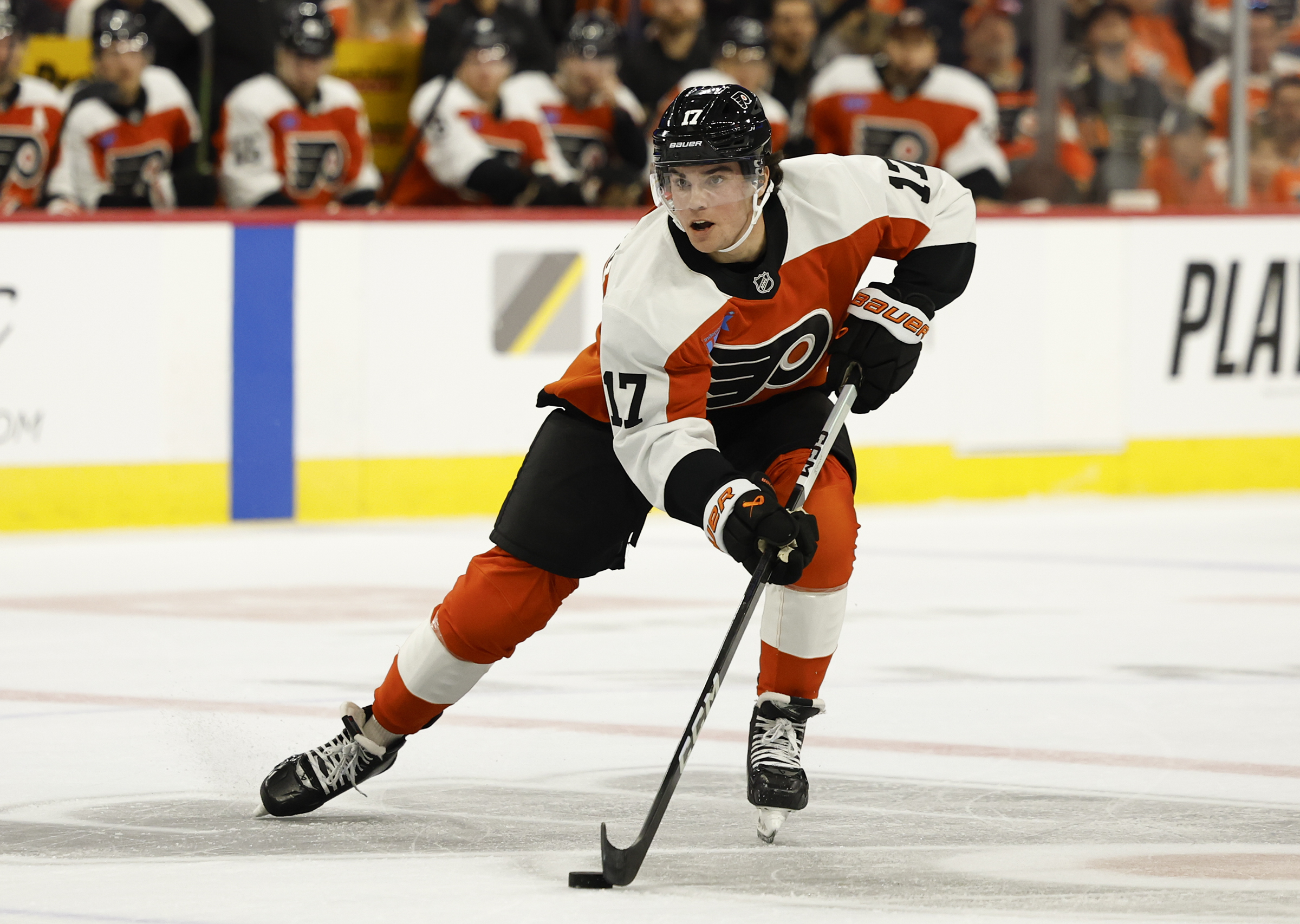
    Flyers center Jett Luchanko was recently traded from Guelp to OHL favorites Brantford. Brent Flahr believes that move will serve his development well.
    Q: What have you seen from Jett Luchanko, and how important was the trade to Brantford for his development?

    A: I don’t think he was unhappy in Guelph; he had friends there, guys he played with and played a ton. But I think his lack of offseason — he had injuries he was dealing with — so he wasn’t able to train and do his thing. So I think out of the gates, he was slow here in camp. He was fine, but really didn’t knock the door down. His details are good enough, skates good enough, where our coaches were like, we would like to give this guy a chance. But for us, long-term, we felt the necessity [for him] to go back to junior.

    I think going to Brantford now, he’s not the guy. He’s one of many guys there, and I don’t know if there’s a better team in Canada. They have a really good coaching staff there, and he has a chance to just play and be a big part of the team there. Jett doesn’t get too high or low ever. He’s always going to take care of the defensive side of things, but I think playing with some good offensive players there and in a lot of situations is only going to help him be confident.

    The one thing with him is, he’s unselfish to a fault. He can really make plays, but at the same time, he passes up opportunities to shoot it, which is what Riley Armstrong and Johnny LeClair, and Patrick Sharp want to get him going and shooting the puck more, being a little more selfish and taking more chances. But he’s in a good spot, good spot mentally, and I think he’s finally feeling back to normal again.

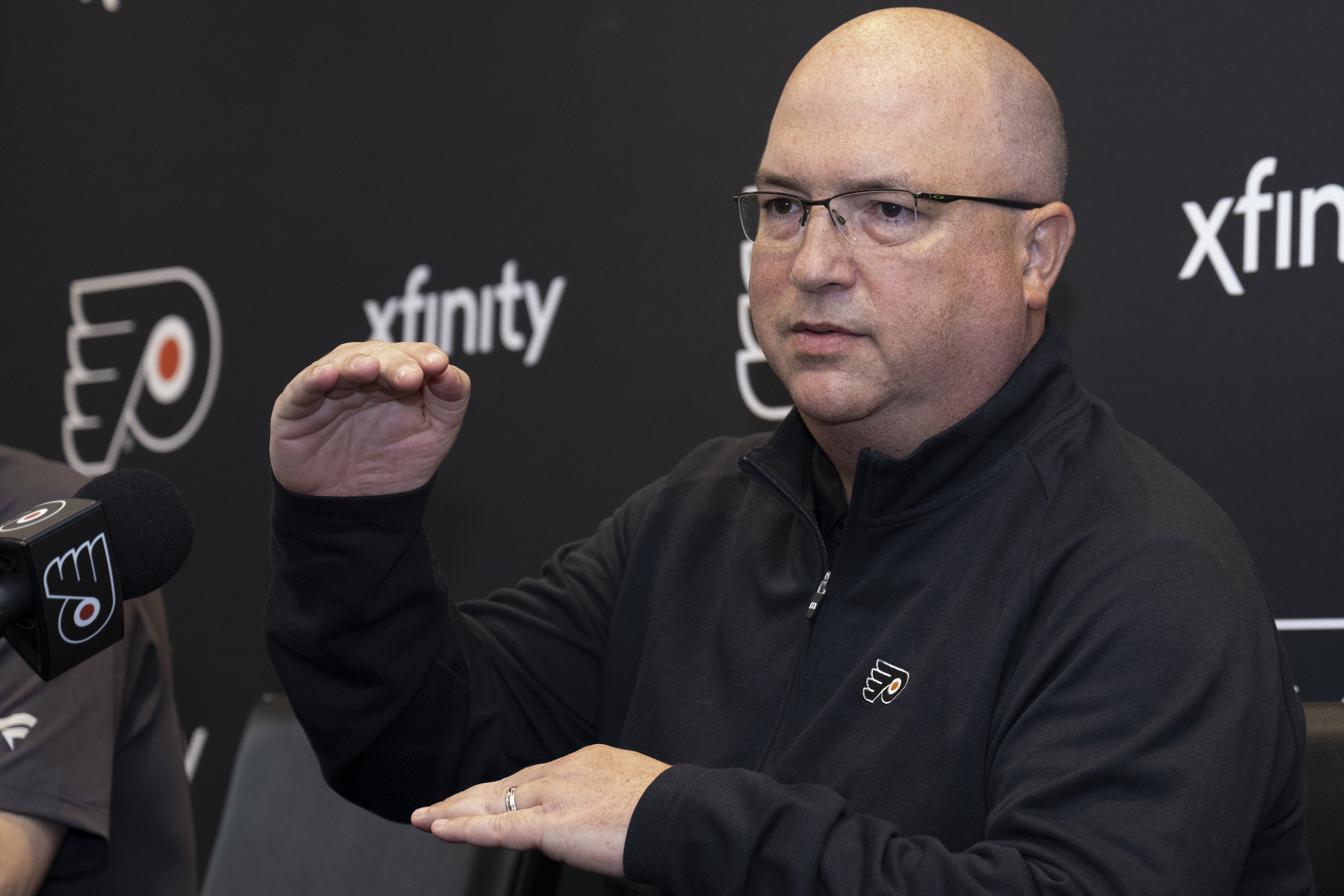
    Flyers Asst. GM Brent Flahr is excited about the progress of many of the team’s top prospects.

    Everything


    With the Flyers nearing the midway point and the World Junior Championship around the corner on Dec. 26, it’s time for our annual midseason prospect check-in with assistant general manager and scouting chief Brent Flahr. In Part 1 of a two-part series, we asked Flahr about the team’s prospects that are playing NCAA or Canadian junior hockey, headlined by Porter Martone at Michigan State.

    Disclaimer: This interview, which was conducted on Dec. 10, has been edited for clarity and length.

    Q: We are heading into the midway point of the season. How would you assess the Flyers’ prospect pool right now?

    A: It’s pretty good. Obviously, we had a lot of picks last year. We’ve had some guys emerging from previous drafts that have played well and are trending in the right direction. So overall, pretty excited.

    Q: Is there anyone who has stood out to you thus far?

    A: I think Porter Martone gets a lot of the attention because of where he was picked and whatnot, and he’s had a terrific start at a good program. I think [among] the lesser talked about [guys], Jack Berglund and Heikki Ruohonen. Those two guys in the summer at the World Junior Showcase in Minnesota were both really good. Max Westergård played well. So I think those guys overseas have done their part to be big parts of their teams going to the World Juniors, which would be fun to see. And then obviously with Jack Nesbitt, Shane Vansaghi, a number of the guys we drafted last year, they’re big parts of their really good teams, and it’s been exciting for them.

    Flyers top prospect Porter Martone has 11 goals and 20 points in 16 games for the third-ranked Michigan State Spartans.
    Q: We’ll start with Martone because he is the one everyone talks about. What have you seen from this year with Michigan State, and how do you think it’s helping him prepare for the NHL?

    A: His biggest challenge, and what we’ve talked about, is his pace. He was a really good junior, obviously, but he could slow things down all the time and kind of do what he wanted. In the college game, he’s playing against older kids, bigger, stronger, faster, and the way they practice, the way they play games, it’s all out and all full speed. So I think it’s forcing him to move his feet. Obviously, you can’t teach the brain he has, the skill set he has, and the size and whatnot. I think even he’s the first one to tell you, he’s in better shape. He’s playing faster. And I think it’ll really help him adjust to the pro game faster.

    Q: Aside from his pace of play, is there anything else that you want to see him work on? And what do you see as his strengths already?

    A: Just the pace of play is the biggest thing for me. His food speed, working on that. His conditioning, and being able to play hard and not coasting like you can get away with in juniors. In college and especially in the NHL, he’s not going to be able to get away with that. But he’s a quick study. He’s a really smart player and skilled. His ability to go to the right spots, and he knows where to be on the ice. He has the ability to process the game at the level that a lot of guys can’t. So whether it’s scoring goals or making plays. Defensive side of things, he’s being forced to work harder at stuff like that, which just helps him when he gets here.

    Q: Do you foresee him pushing for an NHL spot next year?

    A: I think so. But at the same time, we don’t get too far ahead. I don’t even like talking about it. I just want him focusing on his season there and not getting ahead of things. He’s got a good group, and he has a chance to do something special; they’re one of the top teams, and hopefully win it all. And I don’t want him focusing on the end of the season or next year. I just told him, go there with the right attitude and work, and earn your spot, and he has. And, obviously, he’s had success. So I think he gets it, but I want to make sure he makes the most of it and has a chance to have a real special year with World Juniors, and potentially, if you win a national championship and things like that, that really helps build a player going into their pro career.

    Q: Martone will play for Canada at World Juniors. How important is that for him, or any player really, to get that experience?

    A: Well, it can be great. It’s not a be-all, end-all. Especially in Canada, it gets so blown up on the stage, people get crazed if guys don’t make it or make it. But the thing that fans don’t understand is that the coaches of those teams and management have different goals than what we have. We have players that we envision in the NHL in a couple of years — and there’s been lots of great players who have been cut that go on to have great careers — but they’re building a team to win a 10-day tournament in January this year. So they look at it a little differently. But if you are a part of it and you win, just the experience, I think, is great. Especially when it’s in Canada or in a full building, and to play it’s exciting and usually, a lot of times, it translates.

    Flyers Asst. GM Brent Flahr is excited about the progress of many of the team’s top prospects.
    Q: Vansaghi is teammates with Martone on the Spartans and will play for the U.S. at World Juniors. He’s not someone who is talked about as much, but maybe he should be?

    A: You go to a game at Michigan State, you understand what he brings and how he impacts games. He’s a tank. He’s physically engaged. He wins every battle, but his details are really good. And more importantly, off the ice, the way he conducts his business is extremely mature for a young player. It’s contagious to the people around him with how hard he works and the intensity he works. So, you know, he’s a guy that it’s different roles, probably, when they get here, but he could be a very valuable piece to a good team we hope.

    Q: Outside of Martone, Nesbitt is probably the most important player from that draft class. What have you made of his start in the OHL this season?

    A: Yeah, I’ve seen him a number of times. He plays his game. The biggest thing with him is we’re going to have to be a little patient. He’s just a tall drink of water right now, and he’s got to get put on weight. He’s got to get stronger, which we’re well aware of that. But he is a competitive kid. He’s got skill, and he’s very sound defensively.

    He plays with an edge — he’s been suspended a couple times already — but he plays to the identity of a Flyer, what we think of a Flyer. I think he’s going to be a very well-rounded centerman when he gets here. His details are good, good net-front on the power play, and he’s a good penalty killer. But the thing with him, I think the strength and skating is what you can wear down, so that’s a big focus with him. He’s got a good program there, where they have the trainer, and he’s drinking as many shakes as he can and doing all the things he needs to do.

    At 6-foot-5, Jack Nesbitt’s skill popped at this year’s offseason camps.

    But it’s going to take some time. His offseason is going to be critical this year and next, but he’s shown that he’s willing to put in the work. But so far so good, really positive, and hopefully next year he’ll get his chance at World Juniors. He’s part of a really good team there in Windsor, and they have a chance, I think, with a few additions to go on a pretty good run there this year as well.

    Q: What have you seen from Jett Luchanko, and how important was the trade to Brantford for his development?

    A: I don’t think he was unhappy in Guelph; he had friends there, guys he played with and played a ton. But I think his lack of offseason — he had injuries he was dealing with — so he wasn’t able to train and do his thing. So I think out of the gates, he was slow here in camp. He was fine, but really didn’t knock the door down. His details are good enough, skates good enough, where our coaches were like, we would like to give this guy a chance. But for us, long-term, we felt the necessity [for him] to go back to junior.

    I think going to Brantford now, he’s not the guy. He’s one of many guys there, and I don’t know if there’s a better team in Canada. They have a really good coaching staff there, and he has a chance to just play and be a big part of the team there. Jett doesn’t get too high or low ever. He’s always going to take care of the defensive side of things, but I think playing with some good offensive players there and in a lot of situations is only going to help him be confident.

    Flyers center Jett Luchanko was recently traded from Guelp to OHL favorites Brantford. Brent Flahr believes that move will serve his development well.

    The one thing with him is, he’s unselfish to a fault. He can really make plays, but at the same time, he passes up opportunities to shoot it, which is what Riley Armstrong and Johnny LeClair, and Patrick Sharp want to get him going and shooting the puck more, being a little more selfish and taking more chances. But he’s in a good spot, good spot mentally, and I think he’s finally feeling back to normal again.

    Q: You also have a trio at Boston University in Jack Murtagh, Owen McLaughlin, and Carter Amico. What have you seen from them?

    A: They’re finding their way. McLaughlin is actually having a pretty good year.

    Amico is coming off the knee injury, so he’s just finding his way. Saw him there the other night, and he’s a huge kid. He’s going to hopefully get more and more as we go along here.

    And Murtagh, he’s a freshman; they don’t get put into top offensive roles right away, so he’s going to have to earn it. I think the things that he needs to work on, he’s going to have to figure out there, which is good. With the U.S. program, he was the goal scorer. Now he’s learning the details of the game, not only defensively, but where to be on the ice, and whether it’s forechecking, playing within the system, and it’s not just about him, but his attitude is great, and he works hard.

  • After decade of delay, Philadelphia Housing Authority will bring affordable housing to Center City

    After decade of delay, Philadelphia Housing Authority will bring affordable housing to Center City

    Almost 20 years after the Philadelphia Housing Authority (PHA) moved out of its Center City headquarters, a long-promised mixed-income tower will finally begin construction early next year.

    The 14-story building is being built by Philadelphia developer Alterra Property Group, which may also manage the site after it opens. PHA will hold a 99-year ground lease on the property at 2012 Chestnut St., which will be its only affordable building in Center City.

    “It’s a multifamily, mixed-use, mixed-income building in a high opportunity neighborhood,” said Kelvin Jeremiah, president and CEO of PHA.

    It “would afford residents a huge opportunity to live in an area that has access to transportation, employment opportunities, and a whole host of amenities literally right outside of their building entrance,” he said.

    The tower will have 121 apartments, 40% of which will be rented at market rate with the rest targeted at tenants below 80% of area median income (or almost $83,000 for a three-person household). It will have 28 studios, 63 one-bedroom, and 30 two-bedroom units.

    It also will have 2,000 square feet of commercial space, parking available off-site, and amenities that include a roof deck. The project was designed by JKRP Architects.

    “I’m looking to break ground in Q1 of next year,” said Mark Cartella, Alterra’s senior vice president of development and construction. “It’s been a long time coming, so we’re excited to finally be going vertical here.”

    What took so long?

    PHA moved out of its Chestnut Street headquarters in January 2008, leaving a four-story husk. The agency cycled through numerous plans for the property, including a new headquarters and selling the land to a private developer.

    The partnership with Alterra began in 2016. At that time, the project would have had 200 units, a majority of them market rate, and the developer would have held the 99-year ground lease on the property.

    But neighborhood pushback and the resulting negotiations delayed the proposal until 2020. Then the pandemic caused more chaos, followed by a spike in construction costs and elevated interest rates that killed the original financing plan.

    That led to a new strategy in which PHA issued bonds backed by the future rents of the market-rate units to help pay for the project, along with additional funds from federal housing programs, and a $2 million boost promised by Council President Kenyatta Johnson from funds available through Mayor Cherelle L. Parker’s Housing Opportunities Made Easy (H.O.M.E.) initiative.

    “By adding high-quality, affordable apartments alongside retail space in the area, this project helps ensure that our downtown remains vibrant, diverse, and accessible to working families and individuals,” Johnson said in a statement.

    “The PHA project will also help deliver a more inclusive Center City that reflects the full spectrum and diversity of Philadelphia’s residents,” he said.

    A rendering of the roof deck planned for the new mixed-income building proposed by PHA and Alterra.

    The 95-year-old headquarters was demolished in early 2024, but groundbreaking has been delayed in the current unpredictable national economic and political environment.

    “You can probably sum that all up with it’s just general uncertainty with the change of [presidential] administration, as well as just getting through the design development process with a lot of folks having input,” said Cartella of Alterra.

    “This is a little bit beyond the [usual] design development process with Alterra,” he said. “It’s more stringent than what we typically have to go through.”

    Jeremiah has repeatedly expressed concerns about how long the development process can take in Philadelphia, especially in combination with federal guidelines and requirements.

    But as this process nears its end — 18 years after the move, 10 years since bringing on Alterra, and two since demolition — he is feeling optimistic.

    “It is the first PHA built development in Center City,” said Jeremiah. “That’s going to be a signature project for me, for the city, for affordable housing.”

  • Some of Philly’s most vulnerable residents say they lost medical care without notice after millions of Pa. state agency letters went unsent

    Some of Philly’s most vulnerable residents say they lost medical care without notice after millions of Pa. state agency letters went unsent

    “Do you realize you are going to end my life by doing this?”

    Eliana Chernyakhovsky said she asked the question through an interpreter over and over again to the Pennsylvania Department of Human Services last week, after her 24-hour, state-funded care was cut off without warning. Her meal provider was also cut off. How would she feed herself? What if her oxygen tank ran out?

    “Fear had risen in my heart,” Chernyakhovsky said in Russian during an interview through an interpreter on Wednesday. “I was genuinely afraid.”

    Chernyakhovsky, 73, of Northeast Philadelphia, was born with spina bifida and has a number of physical disabilities associated with the condition, and uses a wheelchair to get around. She is among the Pennsylvania residents who say they have lost their government-funded services because a state-contracted mail vendor failed to deliver a month’s worth of agency mail.

    That breakdown resulted in 3.4 million letters never getting sent, 1.7 million of which were from the Pennsylvania Department of Human Services — the agency that oversees SNAP food assistance and Medicaid and is tasked with serving the state’s most vulnerable populations.

    Millions of letters from state agencies — including notices of health and SNAP benefit renewal, driver’s license and vehicle registration renewal invitations, vehicle registration cards, and more — were never sent by a mail presort vendor, who was contracted by the state to tray and sort agency mail in order to save money on postage. The failure went undetected for a month until early December, when Gov. Josh Shapiro’s administration fired Harrisburg-based Capitol Presort Services and hired another vendor on a $1 million emergency contract to work through the backlog.

    In Chernyakhovsky’s case, a letter dated Nov. 6 said she had failed to submit a renewal packet to continue receiving in-home care, said her attorney, Louise Hayes of Community Legal Services. Chernyakhovsky had 15 days to appeal to continue receiving services, or else her services would be shut off on Nov. 21.

    But due to the monthlong lapse in state agency mail, Chernyakhovsky did not receive the letter until last week, after funding for her in-home nurses and food services had already been cut off, she said.

    Chernyakhovsky’s home health aides opted to continue her care without pay, and with no assurance they would get paid for the time when her care was restored, because her needs are so great.

    Her services restarted last week thanks to efforts by Community Legal Services while her appeal works its way through the system. As of this week, one of her home health agencies has still not received payment from her insurance company.

    Alexander Aybinder, her day-shift nurse, said Wednesday it was still unclear when he would get paid. But he said he would still come to Chernyakhovsky’s home, no matter what.

    “I will come tomorrow, because she cannot stay without service. I will work,” he said. “She’s absolutely helpless.”

    DHS: Extended deadlines and ‘additional flexibility’

    DHS spokesperson Brandon Cwalina said in a statement Thursday the agency will extend deadlines for appeals and provide “additional flexibility for affected Pennsylvanians.” Residents affected by the mail issue will receive notice of their appeal options and deadline extensions, Cwalina said.

    Medicaid, CHIP, and TANF cash assistance recipients whose benefits were reduced or cut off during the mail delay will have their cases reopened, he added. These cases will be again reviewed to determine if the recipients received the necessary notification of a change in benefits. Renewals for the programs, originally due in December, are now due in January.

    DHS cannot extend renewal deadlines for SNAP benefits due to federal guidelines, but affected SNAP recipients who submit the necessary documentation within 30 days of losing their benefits will be able to have them reopened and backdated, Cwalina said.

    At least two dozen affected so far, with more expected

    At least two dozen Community Legal Services clients have had problems with receiving their benefits because of the mail delay, said Maripat Pileggi, a supervising attorney at CLS. The delay affected state agency letters dated Nov. 3 through Dec. 3, officials have said, and all unsent mail should be received by residents in a few days.

    And as the nonprofit legal agency has tried to help restore critical services to some of its most vulnerable clients, CLS attorney Lydia Gottesfeld said, legal advocates have struggled to reach the departments in DHS that could help them, with phone lines going unanswered or hour-long wait times.

    “It’s been very difficult to get information about these delays,” she added.

    Cwalina said Thursday that any DHS appeal hearings that were missed due to the mail disruption are being reopened and rescheduled, and the agency maintains that its callback system is accessible to recipients.

    Cases like Chernyakhovsky’s are among the first and most urgent that CLS has identified since the state said that a month’s worth of agency mail to residents from DHS and the Pennsylvania Department of Transportation was never sent. Residents like Chernyakhovsky who receive care through the Medicaid-funded home and community-based services program often have the most acute health issues and significant needs, meaning a loss in healthcare services can be catastrophic.

    Gottesfeld expects that more residents will realize in the coming weeks that they lost services — such as food assistance or health insurance — because of missed hearings or deadlines the next time they visit the doctor or grocery store.

    When people lose state-funded services, it is not usually because they suddenly no longer need them, Gottesfeld said. Rather, it is usually due to failing to submit paperwork properly, resulting in a loss of food assistance, healthcare, or other services.

    Questions remain

    It remains unclear how the state agency mail piled up for more than a month before officials noticed, how the backlog was discovered, or where the millions of agency letters were located after the vendor stopped sorting them.

    The reported loss of benefits stemming from the mail delay also comes after several tumultuous months for people who receive public benefits, following a federal government shutdown that cut food assistance, new work requirements to maintain benefits, and future uncertainty under federal cuts passed earlier this year. Shapiro was at the forefront of Democratic opposition to federal cuts to Medicaid and SNAP, and was a vocal critic when the department withheld benefits during the federal shutdown.

    On Thursday, a group of 15 state Senate Republicans, including top legislative leaders, sent a letter to the Pennsylvania Department of General Services citing The Inquirer’s reporting and requesting more information about how the mail delivery failure was discovered, why it took a month to find the backlog, and more.

    “Given the broad scope of this mail delivery failure, it is critical to ensure every effort is made to minimize the impact on our constituents and the disruption it may cause in their lives,” the senators wrote.

    Shapiro’s administration is “exploring all legal options” against the fired vendor, Capitol Presort Services, Cwalina said.

  • Villanova shares a resemblance to the 2009 FCS championship team. Just ask its former players.

    Villanova shares a resemblance to the 2009 FCS championship team. Just ask its former players.

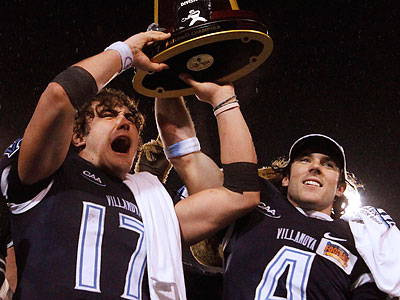
    There was no time Aaron Ball enjoyed more than being in victory formation on the football field, and 16 years ago Thursday was particularly special.

    The former Villanova running back, now living just outside of Virginia Beach, Va., still has fond memories of the program’s only FCS championship victory, a 23-21 win over Montana on Dec. 18, 2009.

    “When [it was] the fourth quarter and the time was running out, and we’re in victory formation‚” Ball told The Inquirer, “it was just an incredible feeling. Just thinking about the moments we had, like after the game in the locker room and going crazy, the trophy and everything. That whole experience was incredible.”

    The Wildcats, now led by Mark Ferrante, who was assistant head coach under Andy Talley on that 2009 team, are one game away from being back in the national championship game.

    After a comeback victory in the FCS quarterfinals against Tarleton State, Villanova will host Illinois State in the semifinal (7:30 p.m., ESPN2) on Saturday, the team’s first home game this late in the playoffs since the 2009 team narrowly defeated William & Mary, 14-13.

    Like that 2009 team, this year’s squad suffered an early CAA loss and went on a lengthy winning streak. Former quarterback Chris Whitney, a St. Joseph’s Prep graduate who was the team’s leading rusher in 2009, believes there is an uncanny resemblance between his team and this year’s group.

    “I feel like there’s a lot of similarities. The defense is really good, and they’ve shown that in the last three games in the playoffs, playing against three top teams in the country,” Whitney said. “And then you flip to the offensive side, they have a great three-headed running game. … Even down to the running backs, very similar to our running backs, Angelo Babbaro and Aaron Ball.

    “Then, from a quarterback perspective, [current starter Pat McQuaide] is taking care of the ball.”

    Brandyn Harvey helped Villanova upset Temple at Lincoln Financial Field in 2009.

    ‘We never felt like anybody could beat us’

    Former wide receiver Brandyn Harvey knew something special was afoot when Villanova went to Lincoln Financial Field and beat Temple by three points to open the 2009 season.

    Harvey, the team’s leading receiver that year who is now living in Los Angeles, said that “beating Temple was more fun than beating Montana,” because of the back-and-forth the two schools had that summer leading up to that August matchup.

    “It put us on the right trajectory to just finish and be successful throughout the rest of the season,” Harvey said.

    Former tight end Chris Farmer, a West Catholic graduate, added: “I know we all thought that we could beat Temple, which would have been a [FBS] school at that point. So once we did that, I think our confidence got rolling a little bit more. And we just took it from there.”

    Ball, though, had a different perspective on when he knew Villanova could be a championship team.

    After Villanova lost to New Hampshire on Oct. 10, the former running back, who finished with 794 rushing yards in 2009, third-most on the team, thought the team was “overlooking our opponents.”

    “After that game, it was a big turnaround for us,” Ball said. “[We were] just doing a little bit too much, and needed to settle in. And then the next game, we bounced back [beating James Madison, 27-0]. And I was like, ‘OK, we’re actually a pretty good team.’ When I’m comparing ourselves to other teams and where they’re at and where we’re at. And I was like, ‘Man, you really can kind of do something special with this team.’”

    For Farmer, who started his career at defensive line and switched to tight end as a junior, what stood out most to him was the talent and the “great camaraderie” that 2009 team had. Everyone hung out with each other, Farmer said, and outside of having class, the “locker room was always filled.”

    And the one common trait that Whitney, Harvey, Ball, and Farmer agreed that the team had back then? Perseverance.

    The 2009 college football season was perhaps the most successful in Philadelphia history. Penn won the Ivy League, Villanova won the FCS national championship and Temple reached a bowl game for the first time in 30 years.

    “We always felt like we were supposed to win, especially at that point in the season,” Farmer said. “So in those playoff games when we were down, just leaning back into the camaraderie, everyone kept their energy going. [The] sidelines never got disappointed or [had their] heads down. I think that camaraderie probably carried us through, to be honest.”

    Added Harvey: “We may have been out of a possession, but we never felt like we were out of the game. We never felt like anybody could beat us at the end of the day, like we were just very confident. I wouldn’t say we were cocky, but we were just very confident, just in ourselves, just based off the work that we put in, because we know how hard we work, especially in the summer, and all that just carried over and translated to the season.”

    ‘Coach Ferrante was the president’

    The offensive line and assistant head coach on that 2009 team is the same coach who leads Villanova now: Ferrante, now in his 38th year with the program.

    While Talley led the program during the first 29 years that Ferrante was with the program, it was the latter whom players say was key in getting them to play on the Main Line. Ferrante was the local recruiter for both Whitney and Farmer, as both played in the Catholic League.

    Both worked closely with the offensive line — Farmer at tight end, Whitney at quarterback — and each agreed that Ferrante’s impact on the team was apparent.

    “He served, as I would say, a father figure to a lot of guys on the team,” Farmer said. “Honestly, he was — if coach [Talley] was the chairman or CEO, then coach Ferrante was the president, making sure everything was up to speed and running the way Coach T wanted it.

    “He put a lot of time, a lot of sweat into the program, you know, to be honest, man, so to see him finally have the opportunity to take the reins … and quickly getting the program to be successful, it’s really cool.”

    Added Whitney: “I have a special place in my heart for Coach Ferrante, frankly. … To talk about a guy who is deserving, putting in his time [for 29] years as an assistant, with the same program putting in that time to then get his chance as a head coach and get a chance to to reach the top of the mountain. I would love nothing more than that for him.”

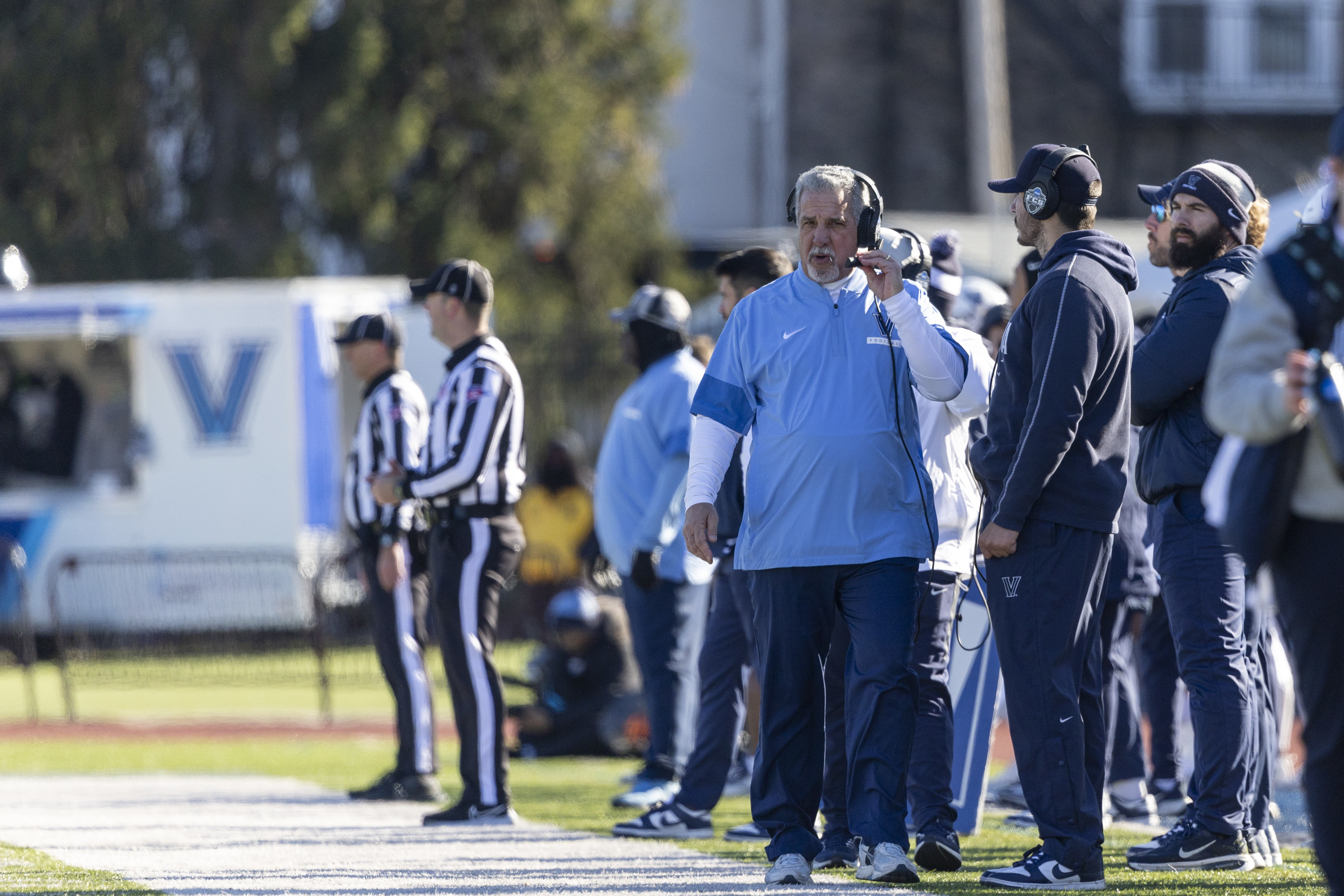
    Villanova coach Mark Ferrante on the sidelines during its game against Harvard on Nov. 29.

    College football has changed plenty in the 16 years since Villanova’s last football title, including the transfer portal and Name, Image, and Likeness to name a few, though the latter doesn’t affect the FCS level as much. But Harvey says his 2009 team only had a handful of transfers, none of whom started on their team, compared to this year’s Villanova team, which starts a transfer quarterback, wide receiver, and has a few other rotational defensive players who transferred in.

    While the culture in college football is different now, Harvey points to the transfer portal as a positive development to the competitiveness of the FCS level.

    “I feel like the portal has really impacted the FCS level. I was thinking about this last week, watching a couple of games and just seeing where some of the players came from. I think when I was playing, I don’t know if it was our culture, but we didn’t really accept transfers,” Harvey recalls. “Players literally come from everywhere, no matter the level. … I know people tend to knock [the] FCS, but it’s also competitive level as well.”

    Added Whitney: “For Pat [McQuaide, a Nicholls State transfer] to come in the spring, and a lot of those guys coming in the spring and meshing as well as they have, it’s a credit to them. It’s also a credit to coach Ferrante. I mean to get these kids to bond so quickly and play together is pretty tough, but it is obviously the new norm in college football.”

    The years in between have looked different for each former player, but the love for their alma mater remains the same. Spread from coast to coast, they still keep in touch with former teammates, tune in to watch Villanova’s football games, and share various memories from that title team with their children.

    They will all be watching this weekend. Harvey and Ball plan on making the trip to the title game if Villanova beats Illinois State.

    And speaking of common threads, here’s one more: the 2009 team won the FCS title game in its final year in Chattanooga, Tenn., and this year’s championship game will played in Nashville, Tenn., after a 16-year stint in Frisco, Texas.

    How about that?

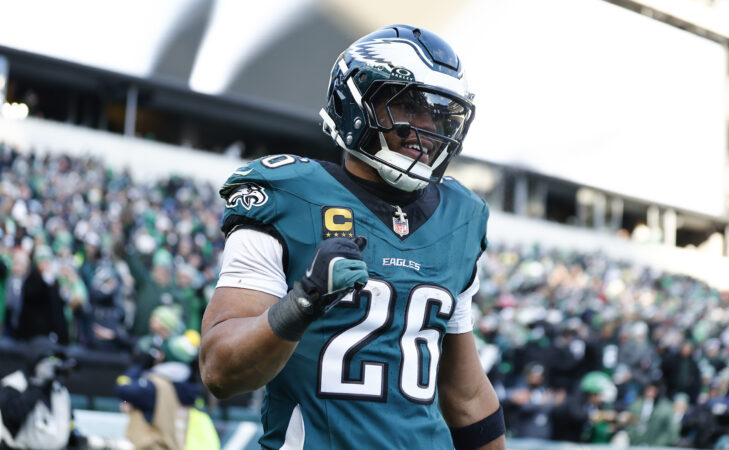
  • Saquon Barkley won’t hit 2,000 yards, but he still thinks he can have a big impact on this Eagles season

    Saquon Barkley won’t hit 2,000 yards, but he still thinks he can have a big impact on this Eagles season

    What was Saquon Barkley going to do for an encore?

    That was one of the overarching storylines entering this season after Barkley, in his first year with the Eagles, became the ninth player in NFL history to rush for 2,000 yards in a season.

    No one has ever done it twice, so repeating always was going to be a stretch. But who could have seen this coming? It’s Week 15, and Barkley still is 60 yards shy of reaching 1,000 on the season. The Eagles have three games remaining, and, assuming Barkley stays healthy, he will reach the 1,000-yard mark Saturday against the Washington Commanders or next week in Buffalo. It would be the first time he’s recorded consecutive 1,000-yard seasons since his first two seasons in the NFL.

    Barkley certainly didn’t see this coming. The way he trains and the way he works, he said, and how much time and money he has put into his body, a mostly healthy season in which he plays in every game should yield better results than this. He’s at 3.9 yards per carry, tied for the second-lowest output of his career for a season in which he’s played more than two games.

    “Sometimes that’s how the game goes,” Barkley said Thursday after the Eagles wrapped their final practice of the week before playing at Washington on Saturday. “My mindset is, I still can have the impact on the season I want to. That’s finishing up the season strong and then going to the playoffs. That’s when it really matters the most. All of that is still in front of me, and I’m excited for the opportunity.”

    The running game not being anywhere close to what it was in 2024 has been one of the big issues plaguing an offense that has failed to consistently sustain drives and score points. There are a variety of factors at play. Teams have zeroed in on stopping the Eagles run game. The Eagles offensive line has been banged up and also hasn’t performed to its usual level. The passing game hasn’t been consistent enough to force opponents to adjust.

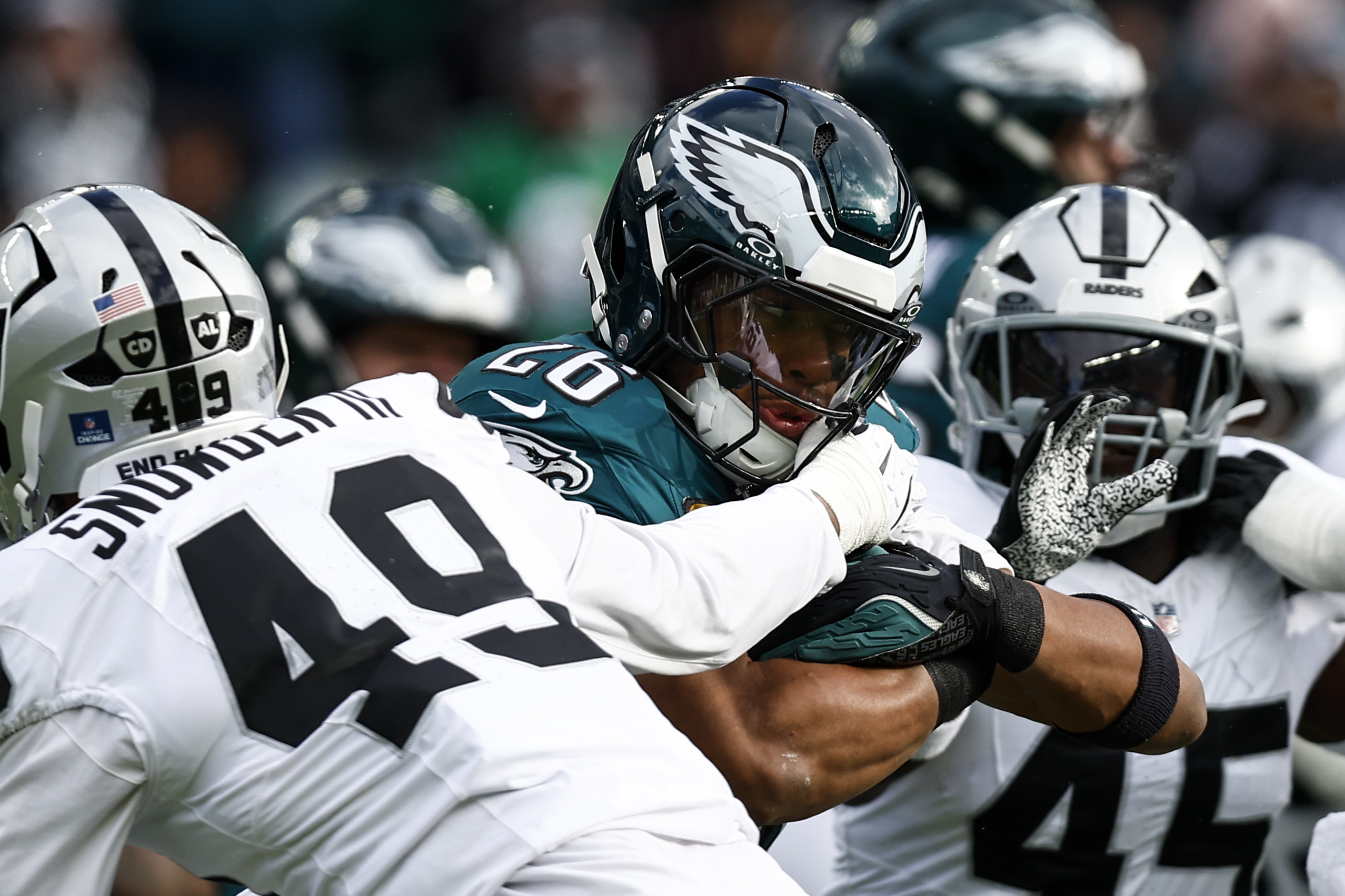
    Saquon Barkley is stopped by Raiders defensive end Charles Snowden during the first half in Week 15.

    But Barkley also shoulders some of the struggles. In a clip on this week’s episode of Hard Knocks, Barkley is seen talking with Nick Sirianni about his role in helping the offense stay ahead of the sticks.

    Barkley has been tackled for a loss on 15.83% of his rushes, according to SumerSports. That’s the third-highest rate in the NFL for running backs with at least 100 carries. Last year, Barkley ranked 24th at 9.57%. That’s on the blocking, of course, but Barkley said he shares some of it, too. It was a knock on him coming out of college, he said, that he tried to score a touchdown every time he touched the ball.

    “Which I am, because I have the ability any time I touch the ball, I could take it 90 [yards],” Barkley said. “I could take it however long it needs to go. But there’s a flow to the game, and it’s helpful when you’re able to get positive runs — get those 3s, get those 4s. That sets up stuff later down the road.”

    Barkley, in the Hard Knocks clip, told Sirianni that he needs to do his part to turn negative runs into smaller positive gains.

    “I have to do my job,” he said Thursday. “The ones that might be a negative-1 or negative-2, if I could make that into [positive] 2 or 3, that’s helpful. It keeps us above the sticks and it makes play calling a lot easier. It makes it a lot easier to be consistent with the play calling and the run game when it’s second-and-6 rather than second-and-9. That’s kind of the mindset, building off that and trusting it and getting the dirty runs. Then, when the opportunity does come, make them pay for it.”

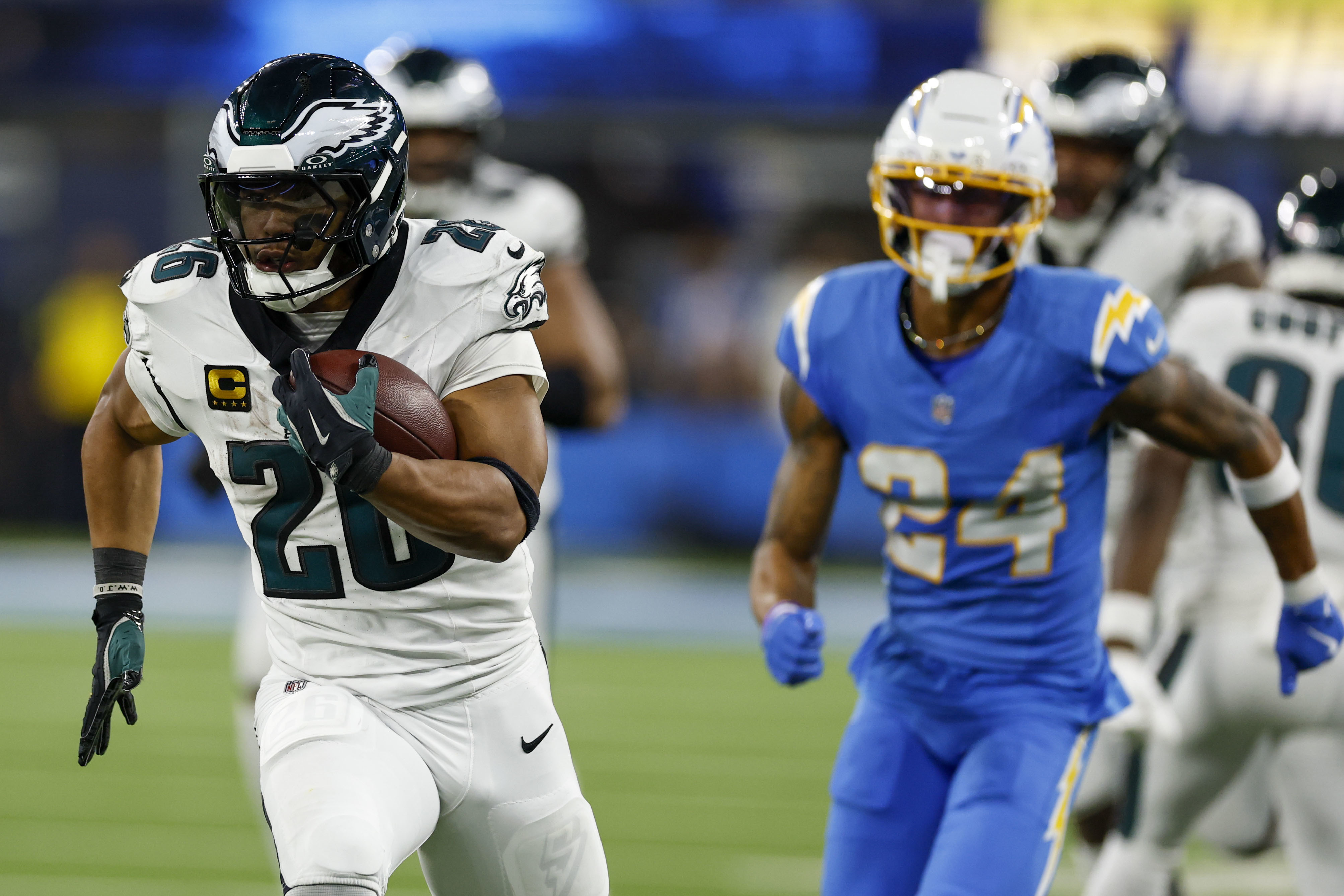
    Saquon Barkley runs for a long fourth quarter touchdown in the Week 14 loss to the Chargers.

    The running game has shown signs of life in recent weeks. Barkley carried 22 times for 78 yards during Sunday’s blowout win over the Raiders. He had 122 yards on 20 carries a game earlier, including a 52-yard touchdown run the Eagles scored off a toss play out of the Tush Push formation.

    The passing game got going Sunday, albeit against a lesser opponent. Jalen Hurts even flashed in the run game, which Barkley said helps open up the offense. The Eagles went under center more than they have all season. There were things to build off of as they head into the final stretch of the season. They’re on the brink of clinching another NFC East title and are gearing up for another playoff run. The protection has improved, and Lane Johnson should be back when the games matter most.

    “I think we’re super close and that’s important,” Barkley said. “Everyone gets caught up in how well teams are playing in the first five games or first half of the season. None of that matters. It does matter, because you got to give yourself a chance to compete for the playoffs, but if you look at some of the guys or the teams … they’re falling off. It’s a long season. It’s hard. Everything we want is still right in front of us.”

  • Eight Eagles draft targets to watch during the first round of the College Football Playoff

    Eight Eagles draft targets to watch during the first round of the College Football Playoff

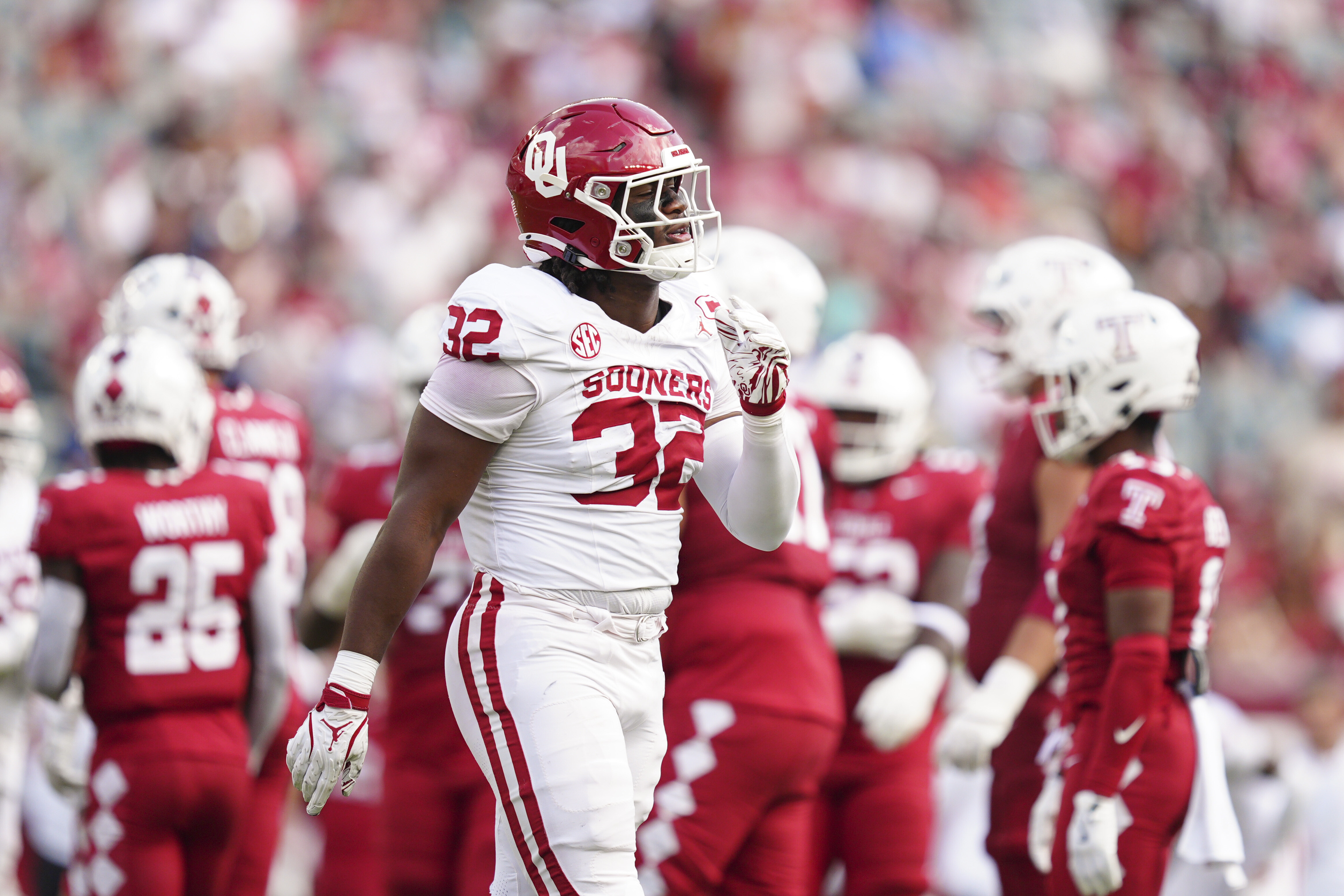
    The first round of the College Football Playoff gets underway Friday with Oklahoma taking on Alabama (8 p.m., 6ABC).

    Three more games follow on Saturday: Miami-Texas A&M, Mississippi-Tulane, and Oregon-James Madison. There will be plenty of draft prospects to keep an eye on, especially ones who could end up on the Eagles next season with the team projected to have eight picks in the 2026 draft.

    Here’s a look at the players the Eagles should be keeping a close eye on this weekend.

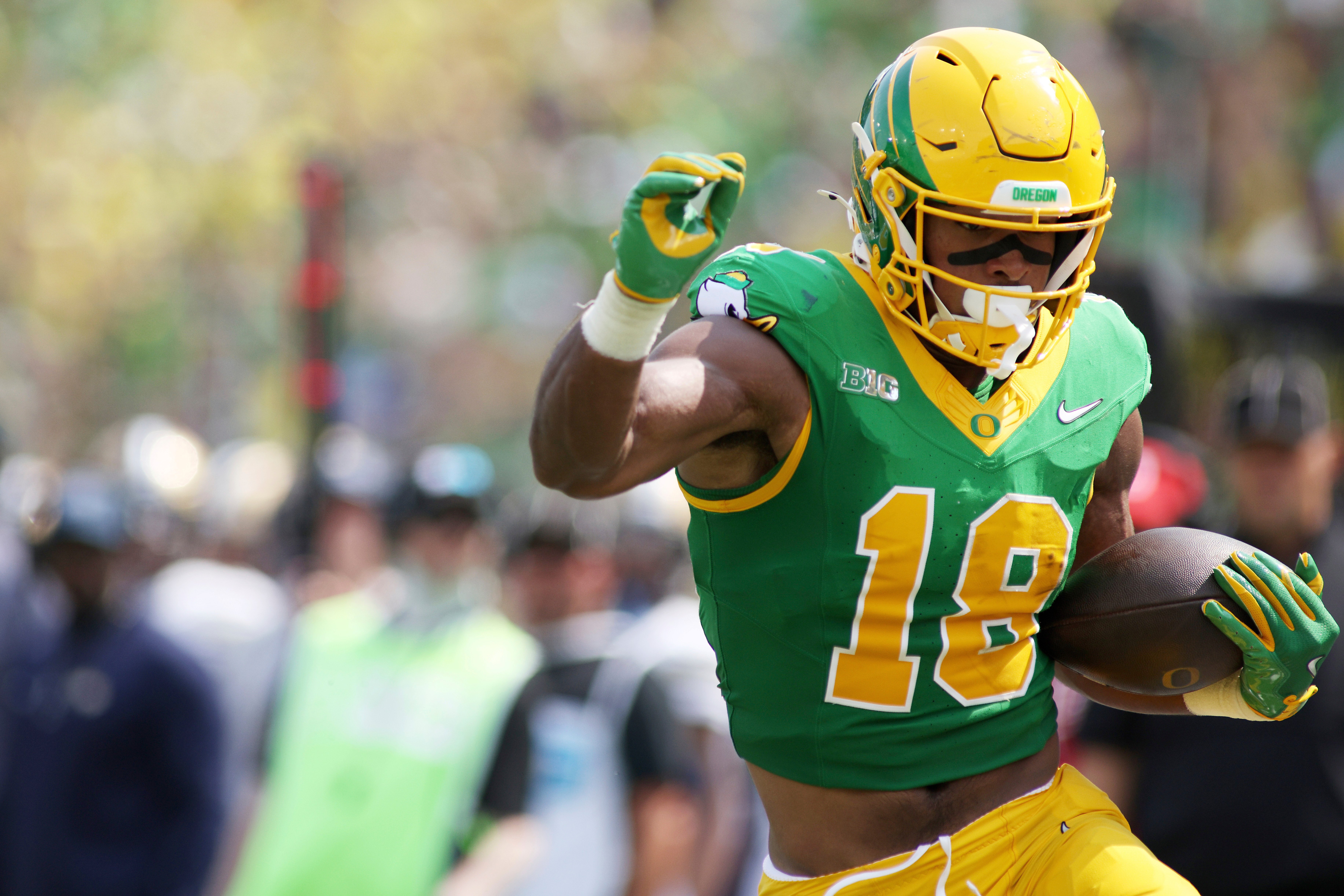
    Tight end Kenyon Sadiq leads Oregon in receptions (40) and touchdowns (eight).

    Kenyon Sadiq, TE, Oregon

    The Oregon offense has plenty of weapons at quarterback Dante Moore’s disposal, but no one may be quite as important as tight end Sadiq, who leads the team in receptions (40) and touchdowns (eight). The 6-foot-3, 245-pound Sadiq is more of a receiving tight end than blocker, but he has tenacious effort in the run game, kicking out edge rushers and driving linebackers and secondary players backward in space.

    Sadiq is an explosive athlete who thrives working the seam and finding soft spots in zone coverage. And his value in the red zone is noteworthy, with his ability to win vertically against secondary players and athleticism to catch passes in congested areas. The Eagles have a long-term need at tight end, despite Dallas Goedert’s strong year, and Sadiq can bring youth and elite athleticism to the room.

    Francis Mauigoa, RT, Miami

    Over the summer, Mauigoa was at Lane Johnson’s OL Masterminds event in Dallas, picking the brain of one of the most consistent tackles in the NFL. That time with Johnson has seemed to pay off for Mauigoa, who is technically refined as a pass protector and a mauler as a run blocker.

    Across 394 pass-blocking snaps, Mauigoa has allowed just two sacks and nine pressures, according to Pro Football Focus. Though the three-year starter has made all of his appearances in college at right tackle, some teams view Mauigoa as a high-level guard with his run-blocking prowess. Whether the Eagles view him as a guard or tackle, the 6-6, 335-pound lineman would be a nice addition at either spot.

    Cashius Howell, DE, Texas A&M

    Howell, who was named SEC Defensive Player of the Year last week, is one of the few edge rushers in this class with first-round worthy film, but his 30¾-inch arms, well below the NFL’s standard of 32-inch arms, may scare some teams off. But his athleticism and fluidity running the arc as a pass rusher makes him hard to ignore.

    Though he needs to work on his run defense, Howell’s pass-rush ability will be coveted. In a class without many top-end edge rushers, he seems like a good bet to go in the back half of Round 1. Edge rusher probably isn’t the most pressing need for the Eagles’ defense, but Howell would bring some additional juice to it.

    Emmanuel Pregnon, G, Oregon

    Playing for his third school in five years, Oregon’s left guard is a road grader in the run game, easily passes off defensive line stunts, and isn’t afraid to clean up a pocket if he isn’t blocking a defensive lineman. Pregnon has a powerful initial punch to redirect pass rushers and climbs to the second-level of a defense on double-team blocks in the run game.

    He has only surrendered three pressures across 351 pass-blocking snaps, according to PFF, and is rarely caught out of position. He has experience at both guard spots and could slot in at right guard if the Eagles feel the need to upgrade with Tyler Steen entering the final year of his contract next season.

    KC Concepcion, WR, Texas A&M

    The Eagles could be looking to upgrade their receiver room with Jahan Dotson set to be a free agent after this season, though drafting a wideout early seems unlikely. Still, Concepcion is a dynamic receiver who has returned to his freshman form this season, consistently winning on a vertical plane and creating explosive plays with the ball in his hands.

    Concepcion transferred from North Carolina State and has become the Aggies’ top receiver, leading the team in receptions (57), receiving yards (886), and touchdowns (nine). He recently won the Paul Hornung Award, which is given to the most versatile player in college football, and would be a welcome addition to the Eagles’ passing attack.

    Will Lee, CB, Texas A&M

    Though Adoree’ Jackson has settled into the corner spot across from Quinyon Mitchell, the Eagles could still look to upgrade the position. Lee is a physical, long defensive back who excels at disrupting routes and breaking on timing routes on an island. An exceptional athlete who is sticky in man coverage, Lee doesn’t have quite the same production as last year when he had two interceptions. But he has seven passes defended this season and has allowed catches on just 54.5% of his targets.

    While he can get overly aggressive and grabby on routes (six penalties in 2025) and must find the ball better in man coverage situations, Lee has the size (6-1, 189 pounds) and competitiveness to excel at the NFL level. A good showing against Miami could be a big stock booster.

    Oklahoma pass rusher R Mason Thomas was limited by injury this season, but he’s still been productive.

    R Mason Thomas, DL, Oklahoma

    The Oklahoma pass rusher has been limited to just nine games because of injury, but his production hardly decreased with nine tackles for loss and 6.5 sacks for the Sooners. Thomas is an elite rusher with excellent closing speed to run the pass rush arc and has a lethal speed-to-power conversion in his repertoire.

    Like Howell, Thomas is likely to be a pass-rush specialist early in his NFL career, but his value getting after the quarterback should still have him selected within the first two rounds of the 2026 draft.

    Akheem Mesidor, DL, Miami

    All of the attention will be on Miami’s star pass rusher Rueben Bain Jr., an expected early-round pick, but versatile edge rusher Mesidor deserves some love, too. The sixth-year senior has inside-out pass-rush ability, possesses strong, active hands, and a quick first step to turn the corner on offensive linemen.

    He played more of an interior role in 2024, but has a natural fit as a defensive end. Mesidor plays with good leverage and hand usage in the run game, and though he’s an older prospect (24), he can make an immediate impact along a defensive line in need of players who can man multiple spots. Mesidor has a career-high 12 tackles for loss and has matched a career high in sacks with seven in 11 games this season.

  • The Big Picture: Eagles big shut out, Sixers defend home court, and the week’s best sports photos

    The Big Picture: Eagles big shut out, Sixers defend home court, and the week’s best sports photos

    Each Friday, Inquirer photo editors pick the best Philly sports images from the last seven days. This week, the Eagles dominated the Las Vegas Raiders, 31-0, to end a three-game losing streak and secure their first shut out win since 2018.

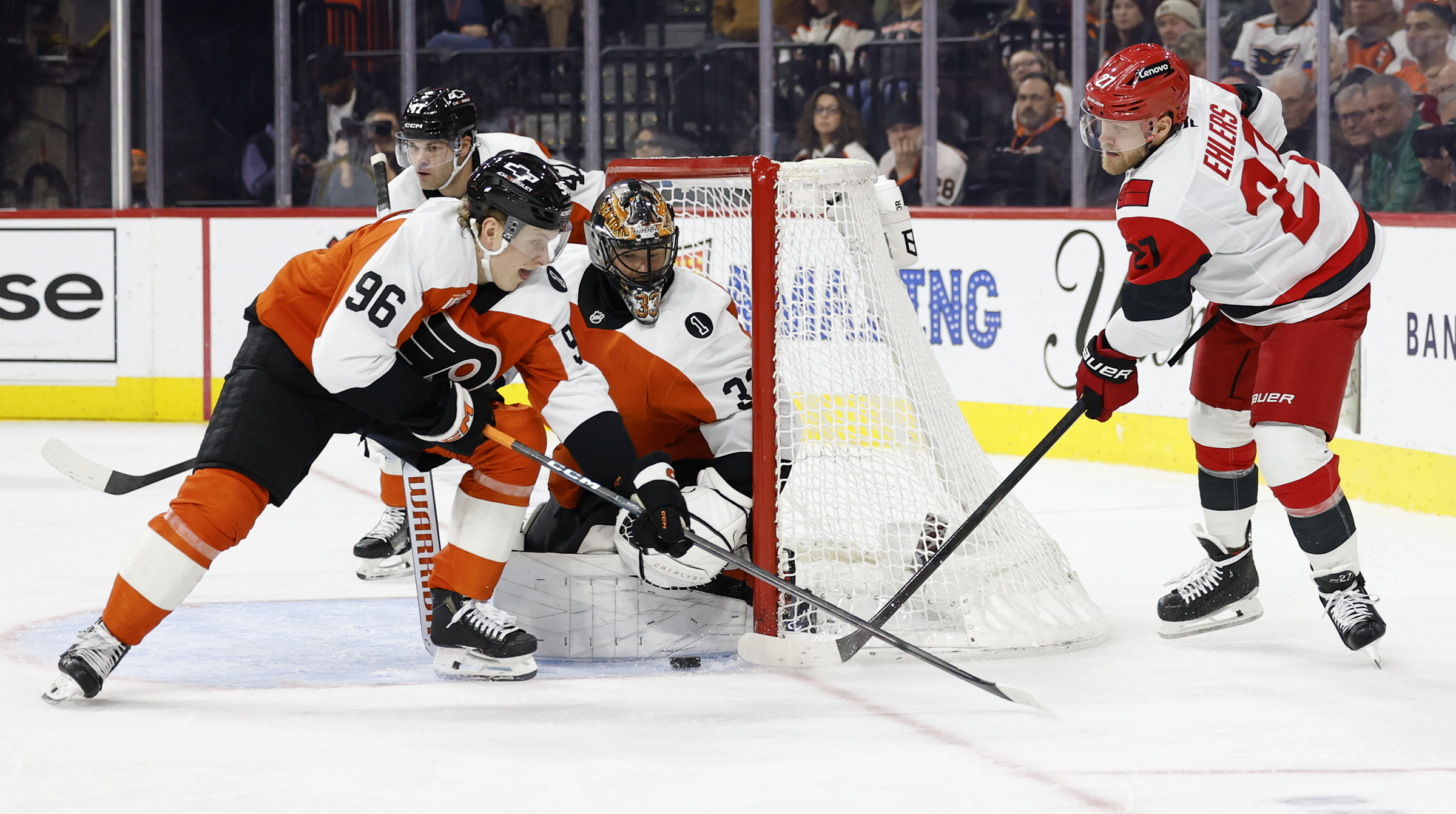
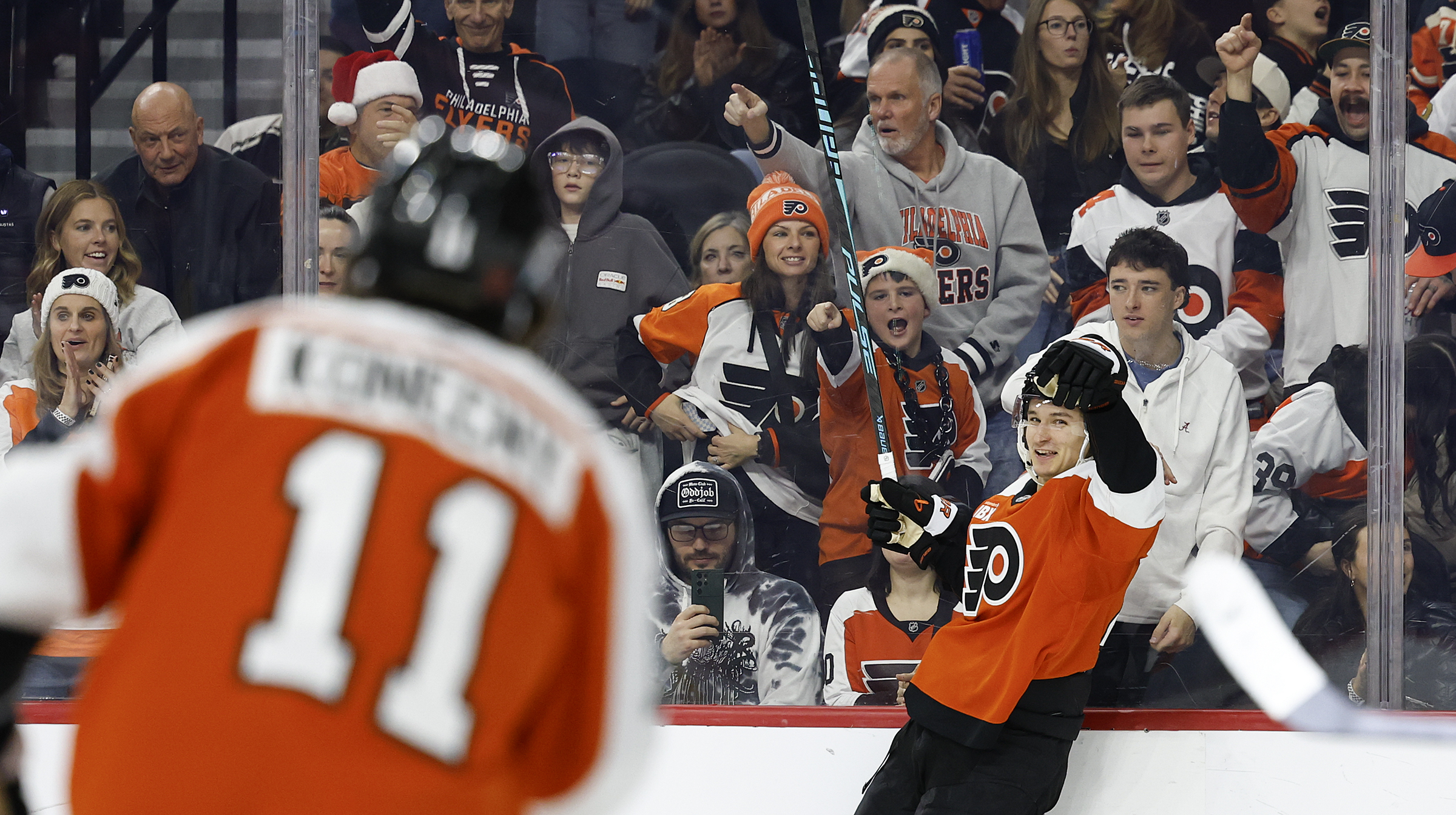
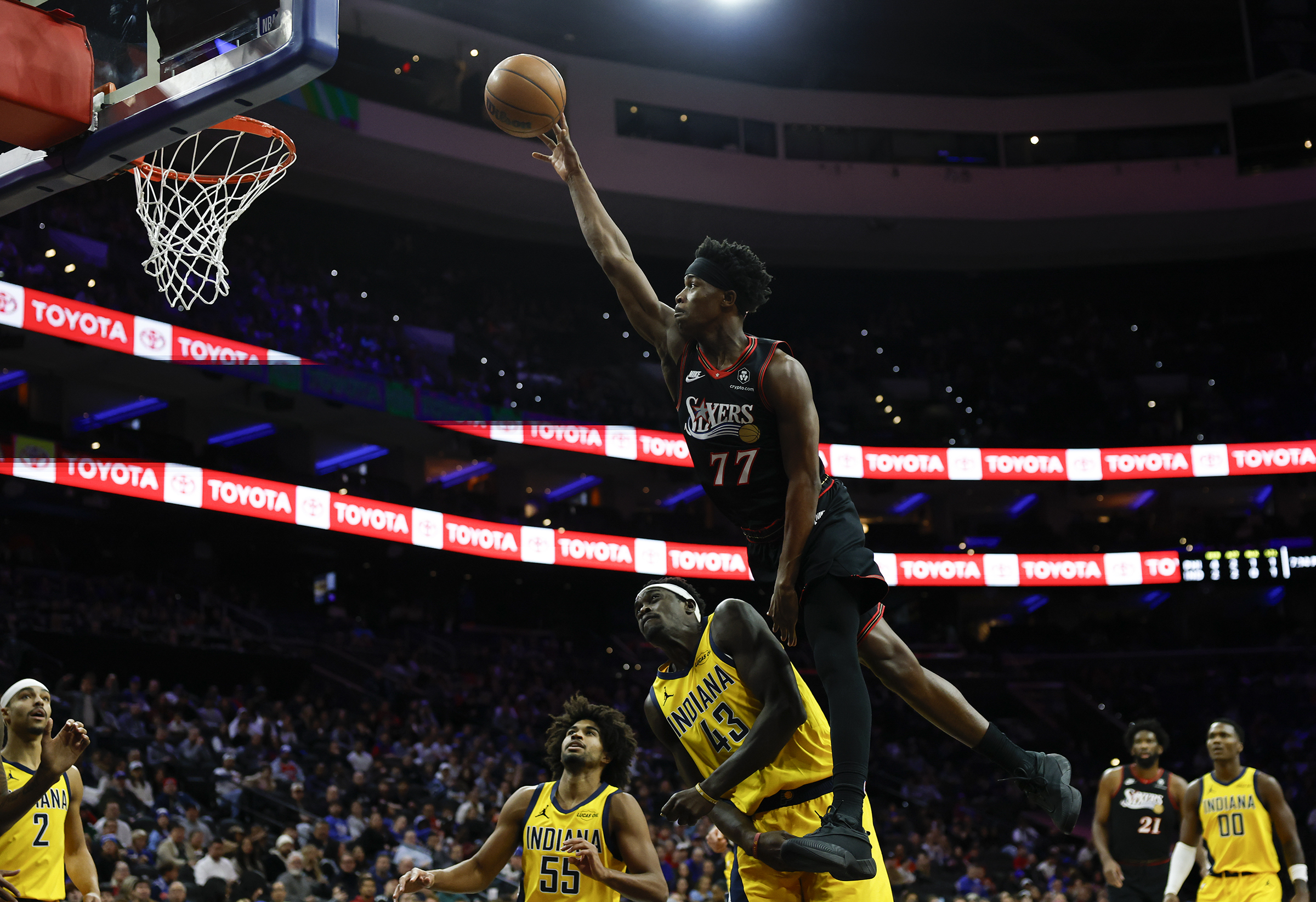
    The Flyers took the Carolina Hurricanes to a shootout last Saturday at Xfinity Mobile Arena, but lost 4-3. The Sixers, though, defended home court with a strong performance by Joel Embiid in last week’s 10-point win over the Indiana Pacers.

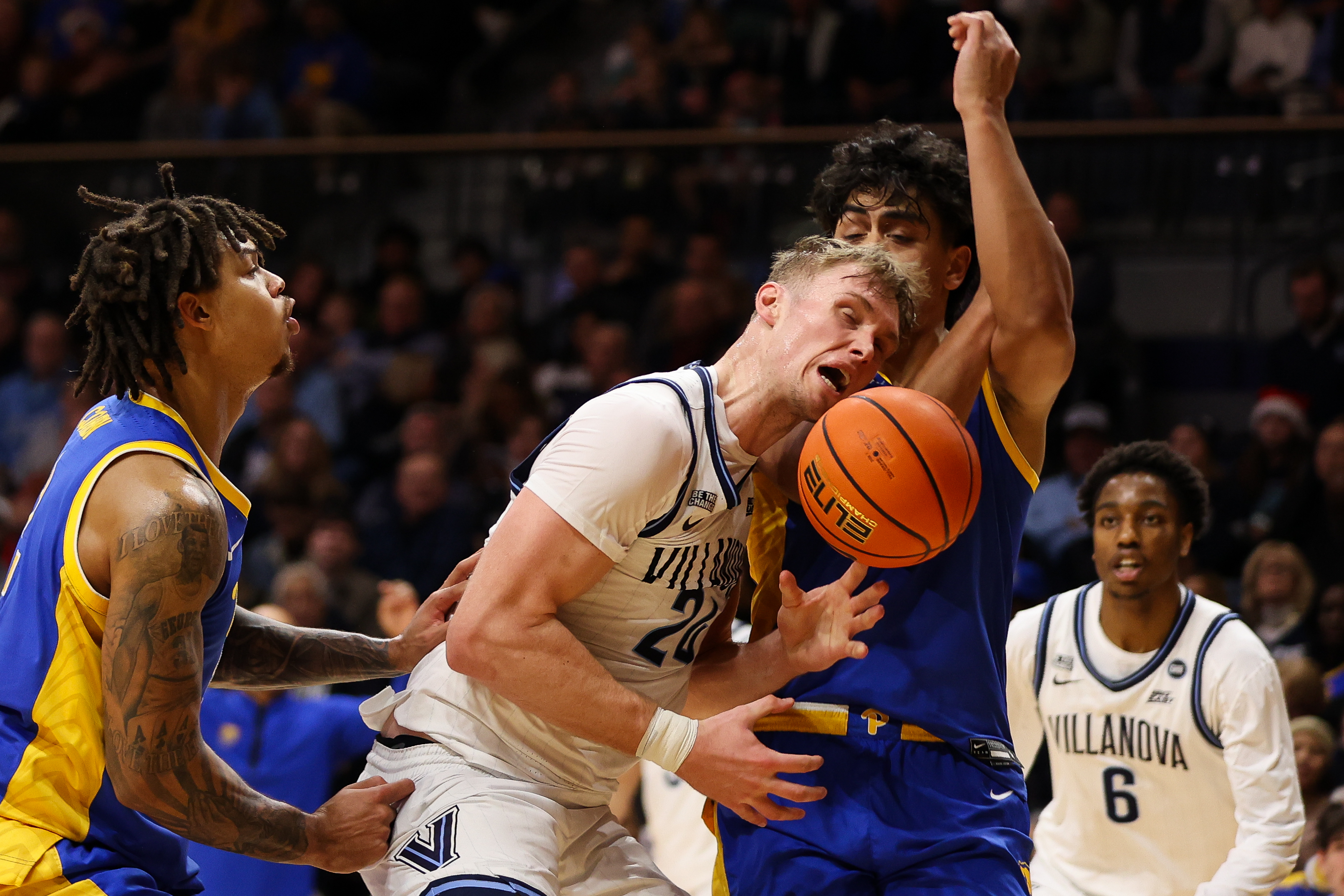
    Meanwhile, Villanova picked up a much-needed nonconference win over Pittsburgh, buoyed by a strong performance from Duke Brennan.

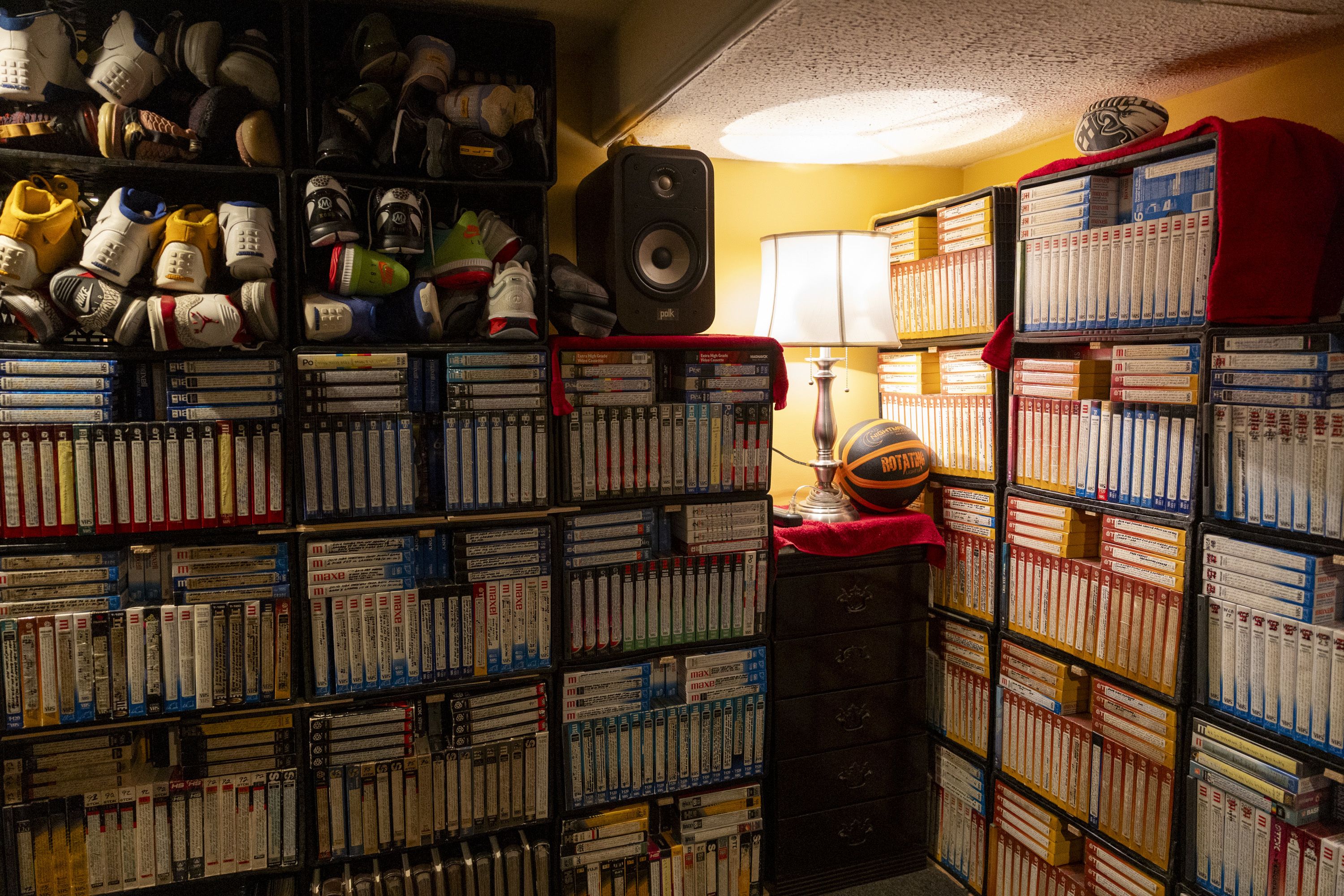
    And finally, our Alex Coffey spoke to Billy Gordon’s family, who still has his VHS collection of basketball games of nearly five decades in Cobbs Creek.

    Our photographers were on hand for it all.

    Las Vegas Raiders quarterback Kenny Pickett gets his jersey grabbed by Eagles linebacker Jalyx Hunt during the third quarter of Sunday’s game.
    Eagles quarterback Jalen Hurts evades Las Vegas Raiders cornerback Darien Porter during a run in Sunday’s game.
    Eagles linebacker Jalyx Hunt watches the action as snow falls at Lincoln Financial Field on Sunday.
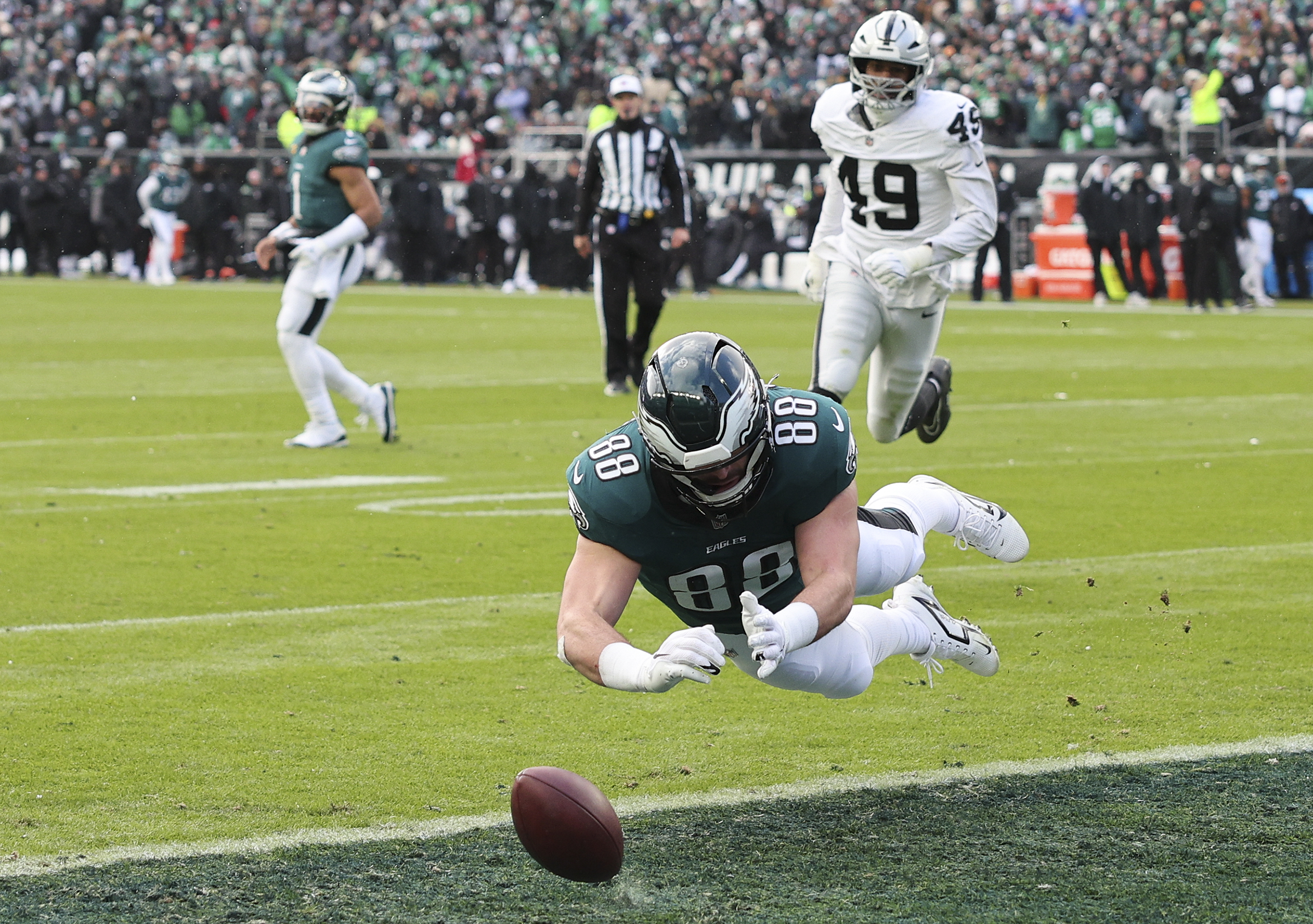
    Eagles tight end Dallas Goedert drops a pass in the end zone against the Raiders on Sunday.
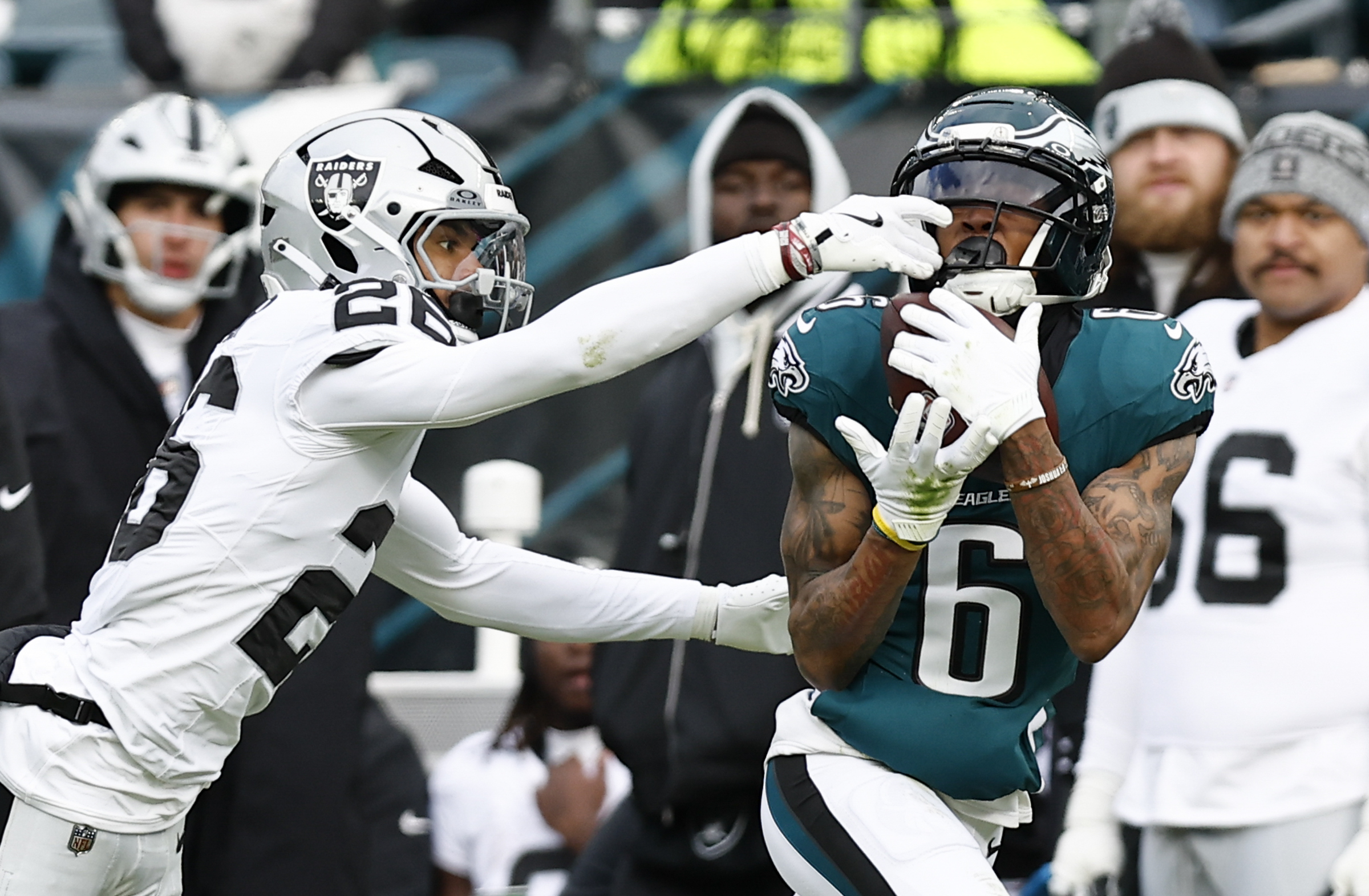
    Eagles wide receiver DeVonta Smith catches the football with Las Vegas Raiders cornerback Darien Porter in coverage during the second quarter of Sunday’s game.
    Flyers goaltender Samuel Ersson (center) stops a shot attempt from Carolina Hurricanes left wing Nikolaj Ehlers (right) with teammate Ty Murchison last Saturday night.
    Flyers center Trevor Zegras celebrates his first period goal against the Hurricanes last Saturday.
    Sixers guard VJ Edgecombe is fouled by Pacers forward Pascal Siakam while attempting a dunk last Friday. The Sixers won 115-105.
    Villanova forward Duke Brennan (center) is defended by Pittsburgh forward Roman Siulepa (right) during the first half at Finneran Pavilion on Saturday. Villanova own 79-61.
    Crates filled with various tapes of NCAA, NBA, and WNBA games from 1986 to 2024 in the room of Billy Gordon in Philadelphia, Pa., on Saturday. Gordon taped and collected men’s and women’s college and professional game broadcasts for 38 years until his death in 2024.