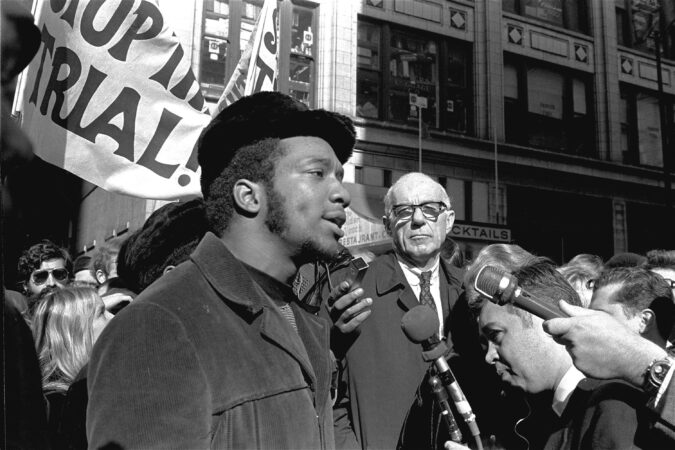
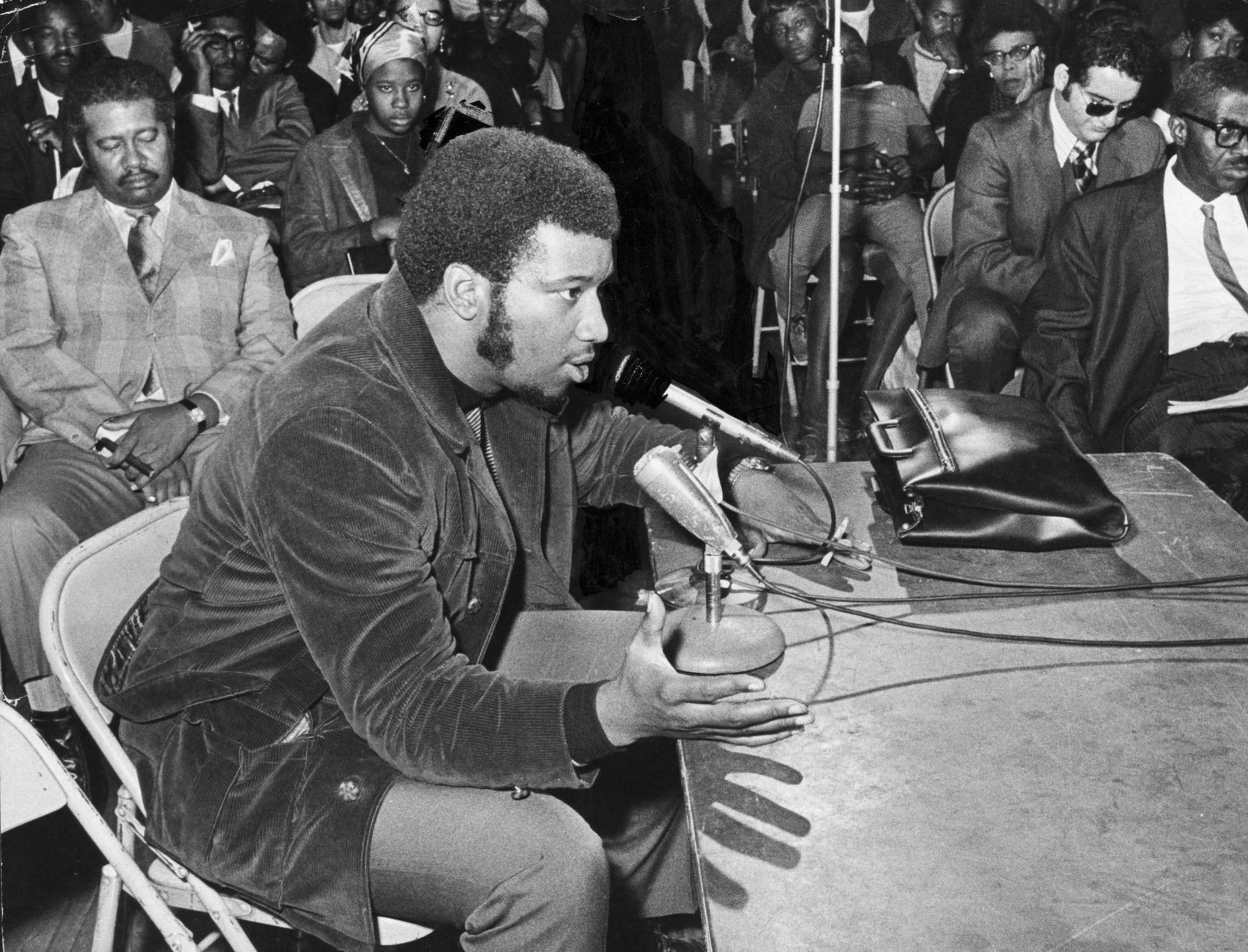
On this date 56 years ago, I awoke in my tiny apartment on the South Side of Chicago and heard the news that changed the course of my life: Fred Hampton was dead.
Hampton, chairman of the Illinois Black Panther Party, had been killed that morning in what the Chicago police described as a “shootout” between them and members of the party at the group’s West Side headquarters.
Hampton was 21, a year younger than I was then. But he already was a magnetic, charismatic figure on the left, clearly destined for leadership beyond the Panthers and Illinois.
I was a graduate student at the University of Chicago, looking for a purpose in life that academia was not providing. Suddenly, the death of Hampton — actually, the assassination of Hampton — gave me that purpose.
Just as many young Americans watched the events of Sept. 11, 2001, and felt compelled to join the military, I watched the aftermath of Hampton’s death and was moved to become a journalist.
At 21, Fred Hampton was already a magnetic, charismatic figure on the left, clearly destined for leadership beyond the Black Panthers, Don Wycliff writes.
I had been habituated to the importance of news since I was a child in rural East Texas, listening with my maternal grandfather to Gabriel Heatter’s quavering delivery of the news each evening on the radio.
In high school, I read and watched in terror as the Cuban missile crisis unfolded. And the year before my high school graduation, I watched faithfully as CBS’s Roger Mudd delivered daily reports on the progress through Congress of the Civil Rights Act of 1964.
But even as I progressed through college at the University of Notre Dame, it never occurred to me that a Black kid like me could become a journalist. And then came Dec. 4, 1969.
The Chicago media were all over the Hampton story, and I was into every news story and broadcast about the case.
One station broadcast a police reenactment of the raid and shootout.
Five daily newspapers — including the legendary Black publication the Chicago Daily Defender (which, a few years prior, had been led by an editor named Chuck Stone) — published editions virtually around the clock, constantly trying to advance the story.
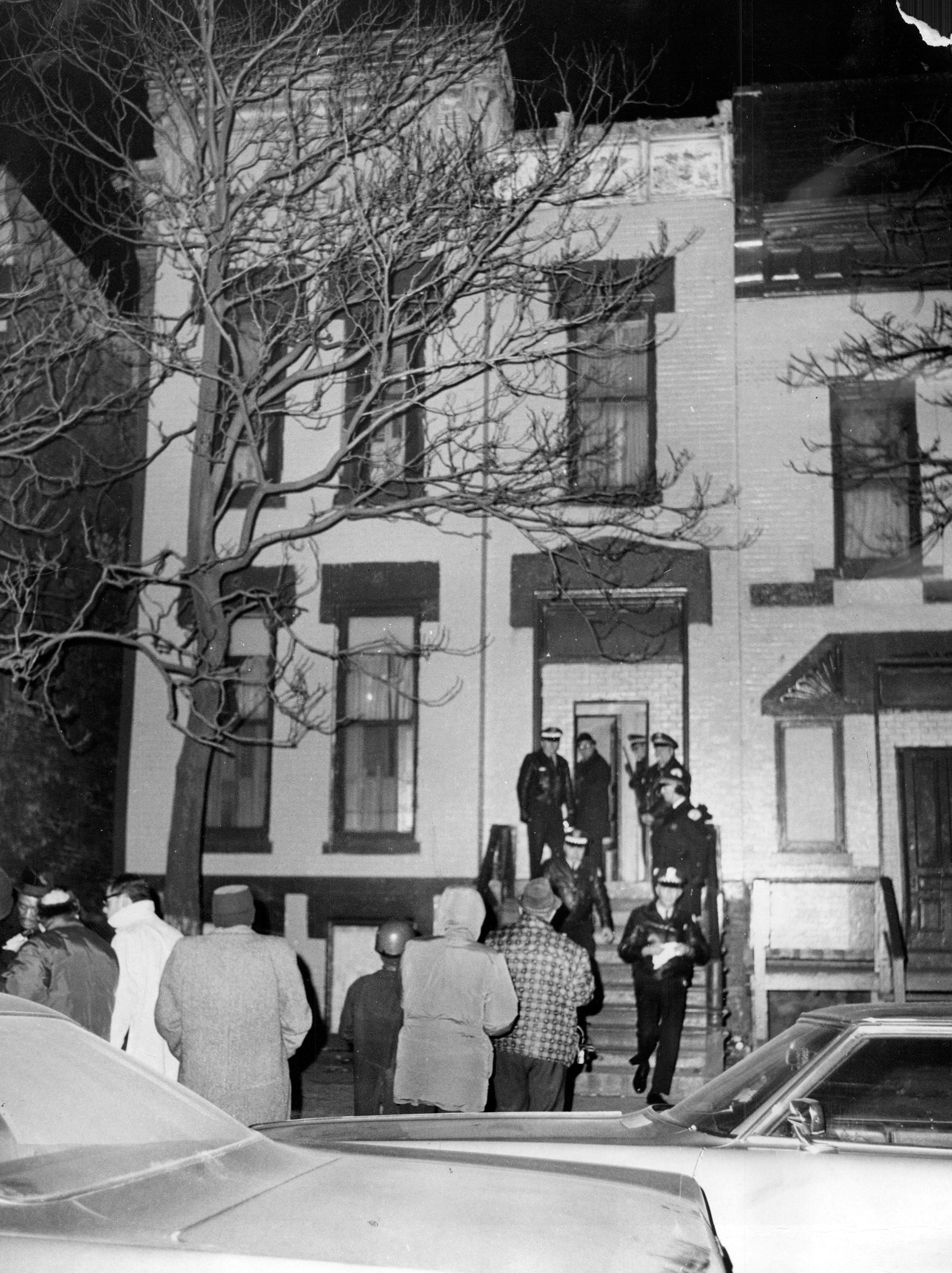
On Dec. 4, 1969, police gathered at 2337 W. Monroe St. on Chicago’s West Side, where Fred Hampton and another member of the Black Panthers were killed.
Eventually, it became clear that there had been no “shootout” at all, but a shoot-in by the police. The clincher was a front-page photo in the Dec. 12 editions of the Chicago Sun-Times under a headline that read, “Those ‘bullet holes’ aren’t.”
The police had put out a similar photo earlier, claiming to show holes in a door caused by bullets fired from within the Panther apartment. The Sun-Times photo showed they were actually rusted nail heads.
What all of this demonstrated to me was the power of journalism to expose truth, to lay bare hidden facts for examination by citizens of a democracy. And after seeing it done, I knew I wanted to do it, too.
The Hampton case was the catalyst for my desire to do journalism, but there have been others.
Bob Woodward and Carl Bernstein inspired a whole generation of journalists with their coverage of Richard Nixon’s Watergate scandal.
And in cities and towns and hamlets all across the country, journalists have unearthed inconvenient truths that people in power would have preferred remained buried — and that undoubtedly inspired others who wanted to do the same.
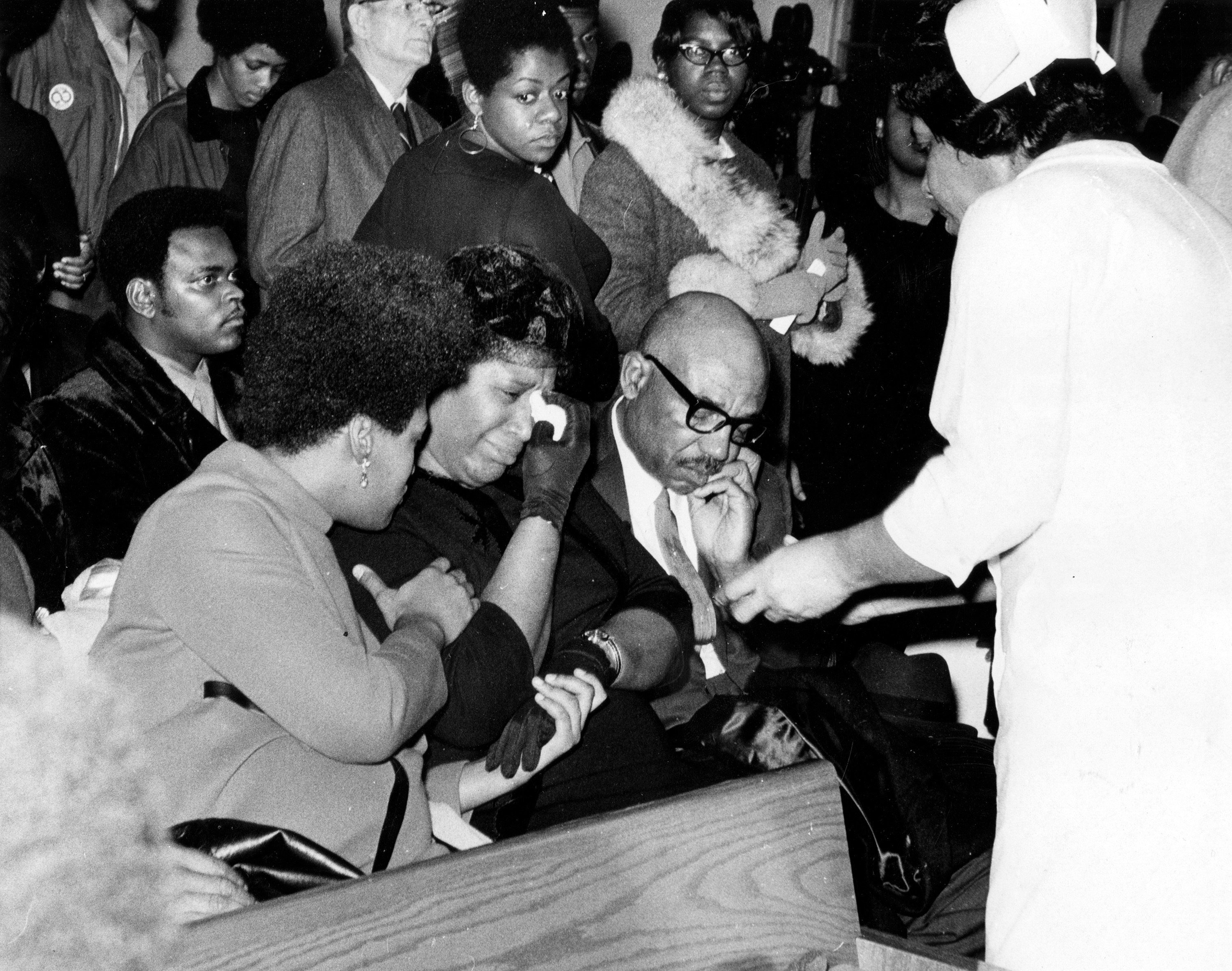
The parents of Fred Hampton, Mr. and Mrs. Francis Hampton (center with tissue-second and third from left), weep during a memorial service for their son on Dec. 9, 1969, in Melrose Park, Ill.
But there are plenty of abuses short of lethal ones that cry out for investigation and exposure. In a world where those in power see disagreement as disloyalty, protest as terrorism, and constitutional mandates like due process as dispensable annoyances, the need for passionate, implacable, even clamorous, journalism endures. And will, I suspect, for at least another 56 years.
Several parents asked for my opinion when the Food and Drug Administration recently announced a warning label on acetaminophen for its alleged link to autism, and when the agency supported the use of leucovorin as an autism treatment despite a lack of scientific evidence. And I am sure I will get questions about the Centers for Disease Control and Prevention’s new claim on its website that the link between vaccines and autism cannot be “ruled out.”
As a developmental and behavioral pediatrician who cares for many children on the autism spectrum, I love to talk with families about what they’re hearing.
Families with children on the spectrum can feel whiplashed by online “influencers” hawking different theories, products, and alternative treatments. These families want to do everything they can to support their children, and so they seek out information everywhere they can find it.
Families look for alternatives because many of our current treatments are not effective for all children, and even those that work well can require intensive effort from teachers, therapists, and caregivers. As a clinician, I try to share the available evidence with families so they can make informed decisions.
Hype for particular treatments and theories about autism’s rise are not new. But when the highest officials in government shout about autism from the rooftops and the internet is awash in “information” untethered from scientific proof, it is more important than ever for clinicians and public health officials to approach parents with compassion, honesty, and evidence.
At Children’s Hospital of Philadelphia (CHOP), Pediatric Health Chat is tracking medical myths and rumors, including those about autism. Based on that data and conversations with parents, here are the top five things I wish my families knew:
1. Autism is not an epidemic
While it is true the number of children with autism spectrum disorder continues to rise across all sociodemographic groups, there is no evidence a single environmental toxin or other factor is the cause. In fact, the strongest studies show that most of the rise in autism over the past 20 years is due to increased recognition of the condition that has meant earlier, incorrect diagnoses can be set aside; and the fact that more characteristics and behaviors are known to be signs of autism. So, while autism diagnoses are rising, there is no evidence of an epidemic — autism is growing, but it’s not a sudden outbreak like COVID .
2. Vaccines do not cause autism
The myth that vaccines cause autism originated in a British study back in the 1990s on just 12 children that was so fraudulent, the journal that published it wound up retracting it. Some people continue to insist that because autism has continued to increase — and new vaccines have been developed — there must be some kind of a link. But just because two things occur at the same time does not mean that one causes the other. (A classic example is that both ice cream purchases and drownings increase in the summer, but no one is claiming that ice cream causes drowning!)
As CHOP’s Vaccine Education Center lays out, there have been numerous, well done studies that have not found a link between vaccines and autism. Vaccines save lives, and the evidence in favor of vaccine safety with respect to autism is overwhelming. I encourage all of my patients’ families to vaccinate their children. I am proud to say that I vaccinate my own children following recommended schedules — to protect them from preventable infections.
3. Acetaminophen does not cause autism
While a few small studies have found an association between prenatal acetaminophen use and autism, the largest and strongest studies have found no association. Studies that do not include factors like why the pregnant person is taking acetaminophen or whether siblings are on the autism spectrum may inaccurately conclude that acetaminophen is a cause when it is not. The truth is that high fevers during pregnancy are known to be dangerous, and acetaminophen, the active ingredient in Tylenol, is the safest medication we have for treating fever. I would have no hesitation recommending acetaminophen during pregnancy as needed.
4. Leucovorin is not a proven treatment for autism
Last spring, a news story appeared about a child who became more verbal after taking leucovorin (also known as folinic acid, a medication that is used for cancer patients undergoing chemotherapy). Since that time, requests from families in the autism community to begin leucovorin have skyrocketed. Yet the evidence for leucovorin’s effectiveness is incredibly limited. For example, children in placebo groups — those that didn’t get any leucovorin — showed similar gains as those that got it. Some families dropped out of the trials because their children became more aggressive while receiving leucovorin. We need larger, well designed, randomized control trials before I would feel comfortable recommending leucovorin to my patients.
5. So-called facilitated communication does not help children with autism
Several decades ago, facilitated communication (in which a facilitator touches a patient to “help them spell” on a keyboard or letter board) was thoroughly debunked by studies proving the facilitator was guiding responses, not helping the person to truly communicate their own thoughts.
Yet facilitated communication (FC) has made a comeback in the form of other “therapies” like supported typing and through the “Telepathy Tapes” podcast. However, these are just FC by another name and are also unsupported by evidence.
On the other hand, augmentative or alternative communication, through which individuals themselves use alternative strategies or “talker” devices to express themselves (instead of having a facilitator physically help them), is strongly supported by evidence. While I understand why families want to give their children every opportunity to express themselves, I strongly urge them to go with the methods that are proven to help them achieve their goals.
Most troubling to me is that woven through all these myths and misinformation is the implicit belief that individuals with autism lack value, or that they cannot lead happy, successful lives. While some individuals on the autism spectrum struggle to live independently and may have some challenging behaviors, all these people are worthy of dignity and respect. Continuing to find ways to best support people with autism and their families, to allow them to reach their highest potential, needs to be the focus.
Editor’s note: Pediatric Health Chat is an online initiative at Children’s Hospital of Philadelphia taking aim at the latest myths and misconceptions about children’s health.Kate E. Wallis, MD, MPH, is a developmental behavioral pediatrician with the Division of Developmental and Behavioral Pediatrics at Children’s Hospital of Philadelphia.
Eric Stern drove out to Erie last January and got a slice of pizza with Christina Vogel at Donato’s, the downtown shop she has owned for nine years.
The small-business owner and political novice was interested in running for county executive against a vulnerable Republican incumbent. Stern, a longtime Democratic political operative, was part of a newly founded firm looking for candidates to help flip Republican-held seats.
“It all started with trying to find candidates who were, frankly, better messengers for the values we had and the things we cared about,” Stern said. “She was someone who understood the urgency of this moment as a small-business owner and mom but just as critically was not part of this broken system that had Democrats losing in the past.”
FIGHT is working with Scranton Mayor Paige Cognetti in Northeast Pennsylvania and firefighter Bob Brooks in the Lehigh Valley. U.S. Rep Rob Bresnahan and U.S. Rep. Ryan Mackenzie, the freshman Republicans who represent those areas, each won by about a percentage point in 2024, making them two of the most vulnerable incumbents in next year’s elections.
This past year FIGHT’s six-person teamhelped Zohran Mamdani win the New York mayoral race, the buzziest contest of the cycle.The Philadelphia-based agency had a hand in the Pennsylvania Supreme Court slate’s retention, county executive wins in Lehigh and Erie, and two successful Democratic judicial campaigns in the state.
The firm was cofounded by Rebecca Katz, a Central High graduate who lives in New York; Philadelphia ad-maker Tommy McDonald; and Julian Mulvey, an architect of Sen. Bernie Sanders’ 2016 presidential campaign.
“New York isn’t Pennsylvania and Pennsylvania isn’t New York,” Katz said of lessons learned from Mamdani’s win, also noting primaries and generals are extremely different. “But there’s a universal desire for authentic candidates laser-focused on the affordability crisis.”
The strategists started the firm in January 2025 after Democrats suffered across-the-board lossesin 2024, a year she helped Sen. Ruben Gallego defy that trend and win an open seat in Arizona.
Stern, a Pittsburgh native and resident, and McDonald both quit their jobs to sign on with the agency.
Their most basic strategy is creating authentic campaigns that reflect the communities the candidates are running in, clear economic messaging, and trying different things across media platforms to win back working-class voters, Katz said.
“We try to think about what makes an ad pop, what makes people look up from their phone, or, if they’re on their phone, what makes them stay there,” Katz said. “It can’t look like everything else on TV.”
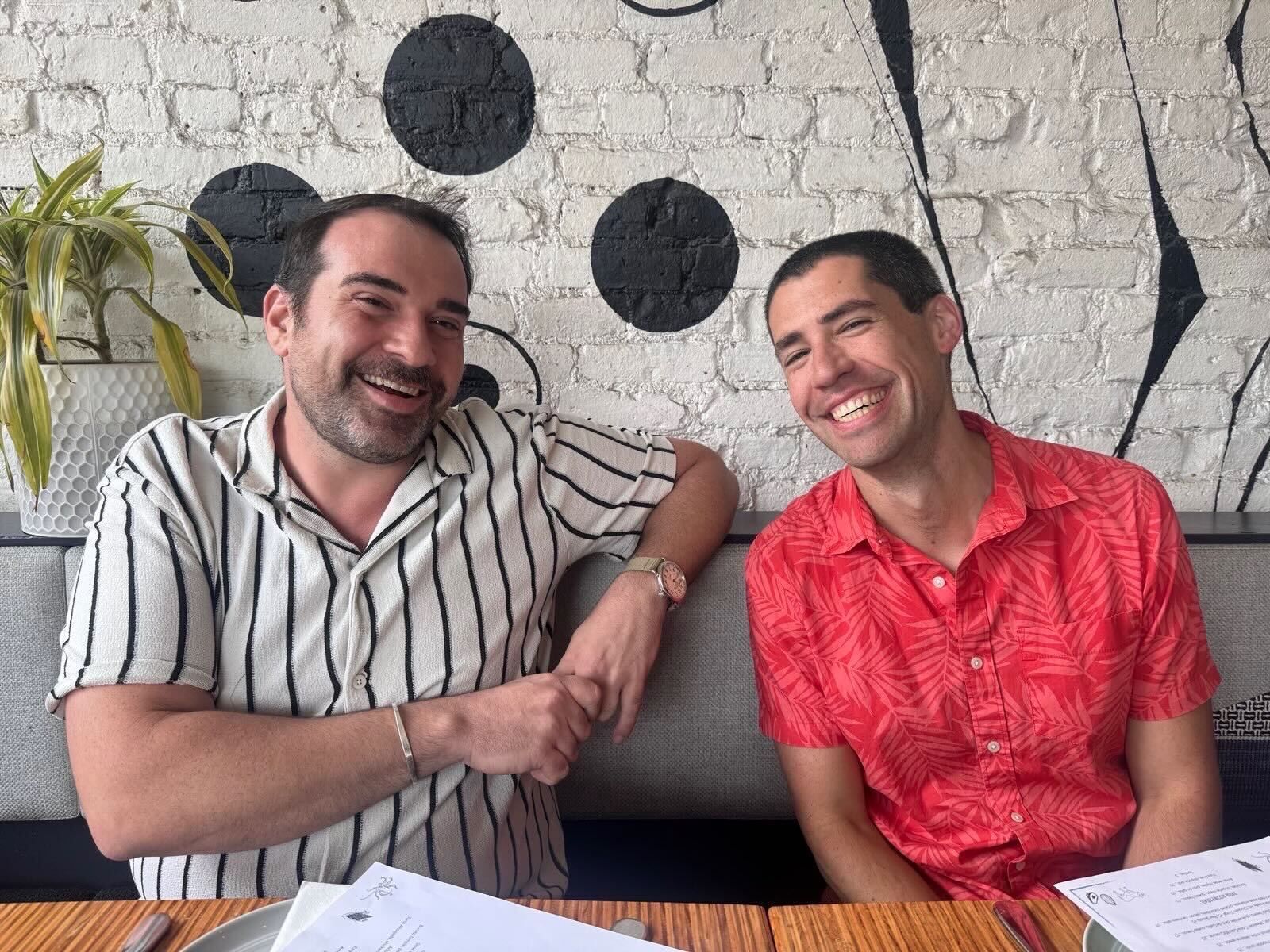
Tommy McDonald (left), and Eric Stern (right), are longtime Democratic media consultants now with FIGHT, a Philly-based agency working on two key Congressional races in Pennsylvania in 2026.
‘A new road map’
In the November election, standing out meant ads about the state Supreme Court race that featured Pennsylvanians talking directly to the camera about how they felt their rights had been protectedby the three justices on the ballot, who were all first elected as Democrats. Sixteen Pennsylvania counties that Vice President Kamala Harris lost wound up voting to retain the judges in the most expensive judicial contest in state history.
The victory provided a blueprint for Gov. Josh Shapiro and other Democrats running in Pennsylvania in 2026, said McDonald, who made the ads for the retention race.
“These are the typical working-class voters that Democrats are bleeding,” McDonald said. “It’s Beaver County. It’s where the New York Times visits diners. It showed us there’s a new road map for how to get persuadable voters in Pennsylvania. We know where they are now.”
Stern, Katz, and McDonald all worked on Fetterman’s 2022 campaign, a race that included the unprecedented challenge of navigating a candidate’s stroke days before the primary and running a general election campaign as he recovered.
They wound up winning awards for the campaign, which featured bright yellow and black branding and creative trolling of Republican nominee Mehmet Oz’s New Jersey ties. McDonald had the idea to fly a banner plane along the Jersey shoreline: “HEY DR. OZ, WELCOME HOME TO NJ! ♥ JOHN,” it read.
They called that July, which also included Jersey Shore cast member Nicole “Snooki” Polizzi making a surprise cameo, “New Jersey Summer.”
“We all learned politics here,” McDonald said of his home state. “The idea is to try to do things differently, redefine Democratic campaigns.”
This year,political headwinds certainly helped Democrats, but hyperlocal messaging did, too, the strategists argue.
Stern worked with Vogel’s campaign in Erie to create ads that looked like a pizzeria’s commercials, to stand out from the cookie-cutter format.
”In Erie County, we know good things start with the right ingredients,” the ad says as a hand scatters toppings atop a pie.
Another ad showed Republicans and self-proclaimed three-time Donald Trump voters on-camera saying they were supporting Vogel over the incumbent, Republican Brenton Davis. A Democrat cannot win in the county without some independent and Republican support.
“They were all people I met on the campaign trail,” Vogel said of the ad. “We really focused on what matters most with affordability, how stretched thin people are across the U.S., and just focused relentlessly on the same message and reminding people why voting matters.”
And in Lehigh County, a slightly bluer but still purple region, Stern worked with State Rep. Josh Siegel’s campaign for county executive. That was more of an offensive against Republican Roger MacLean, a former Allentown police chief, whom ads described as a “grifter and a disgrace,” highlighting his multiple beach houses amid an affordability crisis.
“We came up with an ad strategy that basically determined the most important thing was to beat the crap out of this guy,” Stern said.
“I think Democrats have pulled their punches for way too long,” he added. “There’s a difference between fighting dirty and fighting back, and we have to be in a position where we’re willing to say, ‘We’re here to fight.’”
Siegel, 32, soon to become the youngest county executive in Pennsylvania history, credited the agency with urging him to be specific in his pitch to voters.
“For me, the problem with the way we communicate as Democrats is part of the professional consultant class has created this art form of saying a lot and saying nothing,” he said. “I think people have a particularly adept bulls— detector and they are tired of what is just the most inoffensive, poll-tested, style-over-substance speak we’ve perfected.”
As they look to next year, Stern thinks anti-corruption will be the key issue in the race against Bresnahan in the Northeast. Bresnahan has faced criticism for stock trading while in Congress. Cognetti, his opponent, has been the mayor since 2020, when she won on an anti-corruption platform.
While affordability runs across races, Stern said campaigns cannot make the mistake of being too general in their messaging. “There’s no one right message that cuts across all these districts,” he said.
“Too many folks are running the same ads or calling the same plays they would have a decade ago. We are in a different world. Things have totally changed in a million different ways.”
Roman Catholic has never won a PIAA state football championship. La Salle College High School has not won a state championship in 16 years. Both stalwart Philadelphia Catholic League programs will get their chance to make their respective marks this weekend in the PIAA Class 5A and Class 6A championships at Cumberland Valley High School.
In a rematch of last year’s 5A championship, Roman will face Harrisburg’s Bishop McDevitt, the alma mater of former Eagles LeSean McCoy and Ricky Watters, at 7 p.m. Friday. La Salle will follow on Saturday at 7 p.m. in the 6A final against Pittsburgh’s Central Catholic.
As both programs near the title game, neither Roman Catholic coach Rick Prete nor La Salle coach Brett Gordon have brought up winning a state title to their teams.
“We haven’t even mentioned the words ‘state championship’ all year,” Gordon said. “We want to stay on message. It’s been more of, ‘Let’s get into November playing our best football.’ I think we’re close. But I don’t think we’ve peaked. We hold a high standard.”
Prete has stressed constant improvement all season.
“Our message to the kids is that we didn’t play our best game in the state championship last year,” Prete said. “It bothered the coaching staff. It bothered the kids. It’s why our focus is playing a strong, clean game. We want to see what that looks like. The seniors this year want to do it for those kids who were in that game last year.”
PIAA Class 5A final
(District 12) Roman Catholic (11-3) vs. (District 3) Bishop McDevitt (12-2)
In last year’s Class 5A championship, Roman rebounded from a 21-3 deficit early in the third quarter to tie it in regulation before losing, 34-31, in overtime. McDevitt is on a 12-game winning streak, last losing in August. The Cahillites are on a seven-game winning streak, and have been so dominant that they have not played their starters for an entire game since their 40-39 overtime loss to St. Joseph’s Prep on Oct. 10.
McDevitt has a first-year starting quarterback, junior Sebastian Williams. He has done a solid job filling the void left by the graduation of Pennsylvania’s all-time leading passer, Stone Saunders, now at Kentucky. Williams has thrown for 2,179 yards and 19 touchdowns against eight interceptions this season. He showed considerable poise in leading the Crusaders in the final minutes to a walk-off 31-28 victory over Peters Township in the state semifinals.
Roman runs a no-huddle, up-tempo offense, ignited by Akron-bound senior quarterback Semaj Beals, who has passed for more than 12,000 career yards. He has two Temple-bound receivers in seniors Ash Roberts and Eyan Stead Jr., and a capable ground attack centered around sophomore tailback Trey Montgomery. Much will come down to the time Roman’s offensive line can provide Beals, who gets the ball out quickly.
Senior tight end Giovanni DeSimmone, senior right tackle Gustavo Gomez, junior right guard Malik Cochran, senior center Khalif McNear, senior left guard Dom Ramos, and junior left tackle Sebastian Waddell believe they have a mission to accomplish since losing to McDevitt last December.
“I know Roman is well-coached, Rick Prete does a great job, and I know they have a lot of guys back from last year,” said McDevitt coach Jeff Weachter, who has more than 300 career victories in 23 years. “They are explosive offensively, and they do a lot of different things on defense. They are physical. They run well. We have an idea what we’re up against with their up-tempo offense. They go fast. From what I understand, they are going even faster this year. That will be a little bit of an adjustment. It takes a little bit to get a feel for that. …This will be a great game.”
Prete likes the experience his team has going into the title game. Last year was a mountain of firsts for the Cahillites, who accomplished their first state playoff appearance, first state playoff victories, and first appearance in the state title game.
Roman was up 21-0 in the first quarter against Springfield in the state semifinals and was leading District 6 champion Hollidaysburg 48-0 in the first half of the state quarterfinals.
“This is a group that knows what to expect and we know how to conduct ourselves; we are not just happy getting to the state championship again,” Prete said. “Starting with the offense, we are not forcing anything. Defensively, scheme-wise, we have been good at figuring out the strengths of other teams and what our strengths are. This is a young group that is playing very maturely.”
Senior defensive back Justus Gaskin and junior linebacker Walter Hudson have been defensive standouts, and Stead has been a big contributor on the defensive side, too.
Roman’s inherent bonus is getting great preparation for this stage during the regular Catholic League season against stellar programs, like St. Joe’s Prep and La Salle.
“The Catholic League is the best in the state,” Prete said. “You have great coaches and great players, and your sense of everything is heightened. Playing great teams exposes your weaknesses. La Salle had the ball with a minute-something left down a score, with the ball in a Missouri quarterback’s hands [Gavin Sidwar] and a Notre Dame-bound receiver to throw to [Joey O’Brien]. We got a big stop. … As talented as McDevitt is, playing in the Catholic League allows us not to be surprised by the talent that we are going to see. McDevitt is a very formidable opponent, obviously the defending state champions.”
PIAA Class 6A final
(District 12) La Salle (12-1) vs. (District 7) Central Catholic (13-1)
Neither team has won a state championship under the Class 6A system, installed in the 2016 season. La Salle’s last state championship was in 2009 (24-7 over State College at 4A) — when the Explorers became the first Philadelphia Catholic League team to win a PIAA state football championship under late hall of fame coach Drew Gordon, Brett Gordon’s father.
Central Catholic has not won a state title since 2015 (21-18 over Parkland at 4A). The Vikings are 0-4 in state championship games against Philadelphia area teams (losing to North Penn and St. Joe’s Prep three times, including a 35-6 defeat last year).
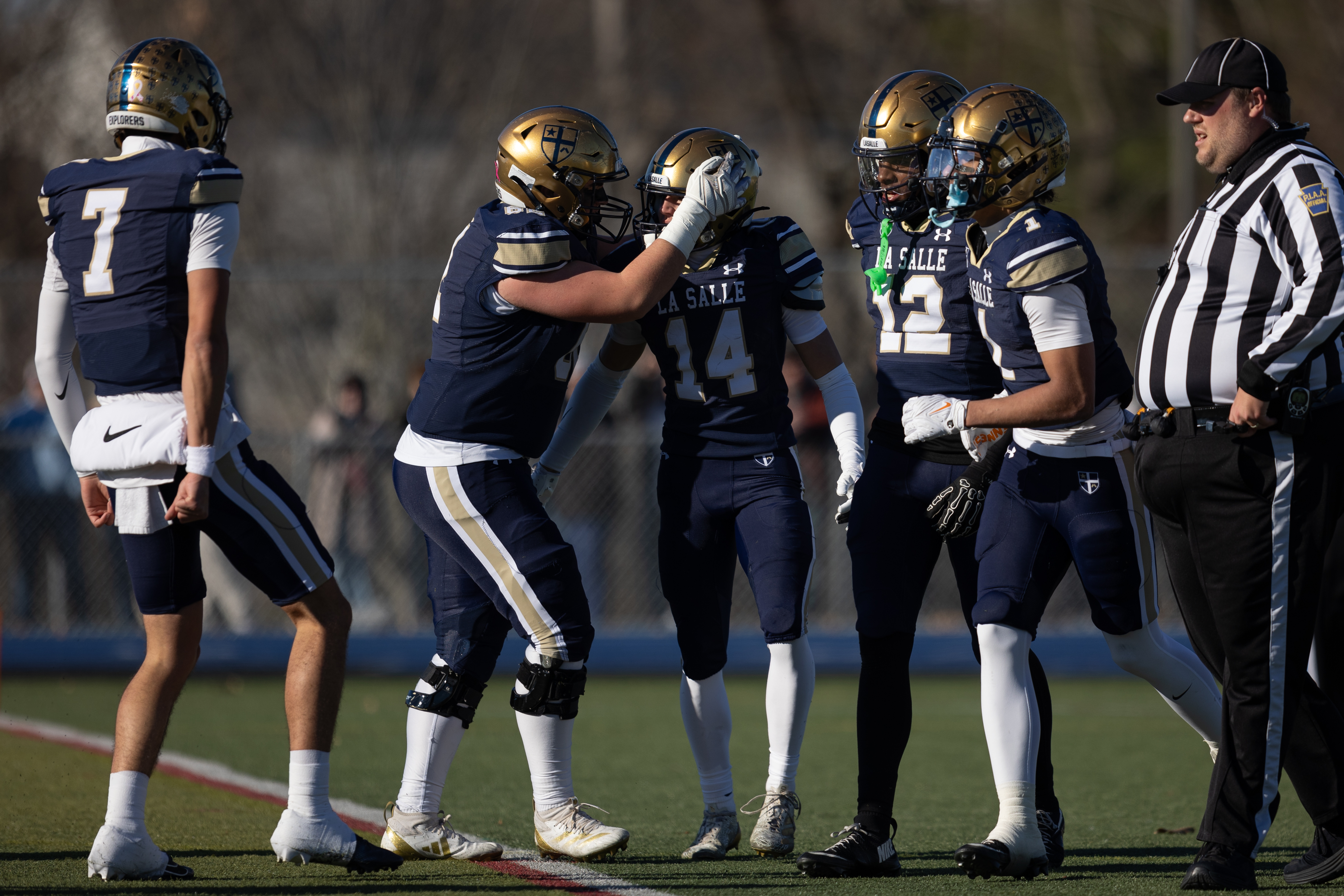
Explorers wide receiver Jim Mahoney (14) celebrates with teammates after scoring a touchdown against North Penn on Nov. 29.
This is a rematch of the season-opening game, won by La Salle, 23-6. Gordon and Central Catholic coach Ryan Lehmeier stressed that their teams are far different from the ones that faced each other on Aug. 22. The Vikings have an offensive line that averages 284 pounds. La Salle’s offensive line averages 283 pounds. The difference is, Central Catholic has won on the ground, and La Salle wins through the air, featuring Sidwar, O’Brien, senior receiver Jimmy Mahoney, junior receiver Owen Johnson, and senior tight end John-Patrick Oates, who is now heading to Virginia Tech and new Hokies coach James Franklin.
In Central Catholic’s 32-14 win over Harrisburg in the state semifinals, the Vikings plowed ahead behind their massive front and sophomore tailback Chrys Black Jr., who rushed for 216 yards and three touchdowns. That template may be repeated, keeping La Salle’s potent offense off the field, and wearing down the Explorers’ defense.
“From an overall health standpoint, I like where we are, but what I didn’t like is that we put the ball on the carpet three times, losing two [in La Salle’s 49-14 state semifinal win over North Penn last Saturday],” Gordon said. “It is not characteristic of who we are. It is safe to say, I like where we are going into this game. We were pressed by Prep and Imhotep. Central Catholic is good at every position. I told people all year long that Central Catholic was the best team we played this season. When you turn on the film, there is no one you can look at as a weakness. ”
La Salle is receiving good interior work from 6-foot-2, 275-pound senior defensive tackle Jemel Williams, and Oates has blossomed into a quality edge rusher, where he may now play in college. Williams was disruptive in state playoff victories against run-oriented teams, including Easton and North Penn, while senior defensive end Ryan Fandozzi has been consistent all season.
Since La Salle lost to Roman in late September, Sidwar has completed 78% of his passes, with 24 touchdowns and no interceptions.
Explorers quarterback Gavin Sidwar (7) hands the ball off to running back Desmond Ortiz during the PIAA Class 6A football semifinal game against North Penn on Nov. 29.
Since the opening loss to La Salle, Lehmeier said his team matured this season.
“Anytime you get this deep into a season, it means you pretty much have had success in all three phases of the game, and the point of emphasis against La Salle on Saturday is to play our style of football,” Lehmeier said. “Whether it’s the quarterback [Sidwar], or their young kid [Johnson] coming on, because I know Joey O’Brien gets a lot of press, they are pretty good. Their ability to spread the football and anytime you have a quarterback like that, it allows you to run that type of offense, which is hard to stop. They are obviously very impressive there. They do some great things on defense, too. They have tremendous football players.”
Trevor Zegras sat down for his first interview on Day 1 of training camp in September, sporting a Nirvana shirt.
“Come as you are, as you were, as I want you to be,” the band’s frontman Kurt Cobain would sing.
Well, the Flyers wanted Zegras to come as he is, as he was, and as they want him to be. There was no rush, but Zegras, who was acquired in June from the Anaheim Ducks in exchange for Ryan Poehling, a 2025 second-round pick, and a 2026 fourth-rounder, hurried up the process. Nevermind the past two years, he has trended in the right direction.
“It’s fun to see the joy in his game again,” Flyers general manager Danny Brière said recently. “You can tell he’s having fun playing the game. I think for hockey players, it’s a big part of having success is that you’ve got to play with passion, you’ve got to play with enthusiasm, and I think that’s what we’re seeing in Trevor’s game.
“I don’t know what happened in Anaheim, that’s not my business. But we see a young man who is having fun and making plays, going out there trying to make a difference. It’s been fun to watch, too, for our fans, adding another guy with high-end skill that can get you out of your seat.”
‘Here we are now, entertain us’
The Flyers have long needed a game-breaker and a creative force to draw fans out of their seats again. Matvei Michkov brought some of those qualities last season, and the hope was that adding Zegras would infuse more.
Twenty-six games into his tenure in orange and black, the 24-year-old has showcased the rare skill level that has long wowed fans. He is tied with Tyson Foerster, who was placed on injured reserve on Wednesday, atop the Flyers’ leaderboard with 10 goals and leads the team with 26 points.
And although there might be some bruises on the fruit, he has helped the power play come in bloom as four of his goals and 11 of his points have come on a man advantage that is tied for 18th in the NHL. He’s also had a knack for the dramatic, scoring the game-winning goal in Saturday’s win over New Jersey, and clinching two other games via the shootout.
Trevor Zegras’ trademark skill and swagger have popped from Day 1 with the Flyers.
The kid who grew up idolizing Patrick Kane, aka “Showtime,” has stolen the show. He is a perfect 4-for-4 this season and ranks No. 1 all-time among players with at least 15 shootout attempts at 68% (17 goals on 25 shots).
“Especially when you have Trevor Zegras on your team, you start almost with one up,” said Sean Couturier, captain of a Flyers team that is a perfect 5-0 in shootouts this season. “So we like our odds in shootouts.”
But maybe the biggest difference for Zegras this year is that the coaching staff has confidence in him. Zegras is averaging 18 minutes, 14 seconds a night, the second-most among Flyers forwards, and his highest amount since the 2022-23 season.
“He’s done a really nice job,” coach Rick Tocchet said last week in South Florida. “He moves his feet. He can make some plays out there. They’re hard to find, and he’s got to be a difference maker for us, which he is. He’s making some good plays for us.”
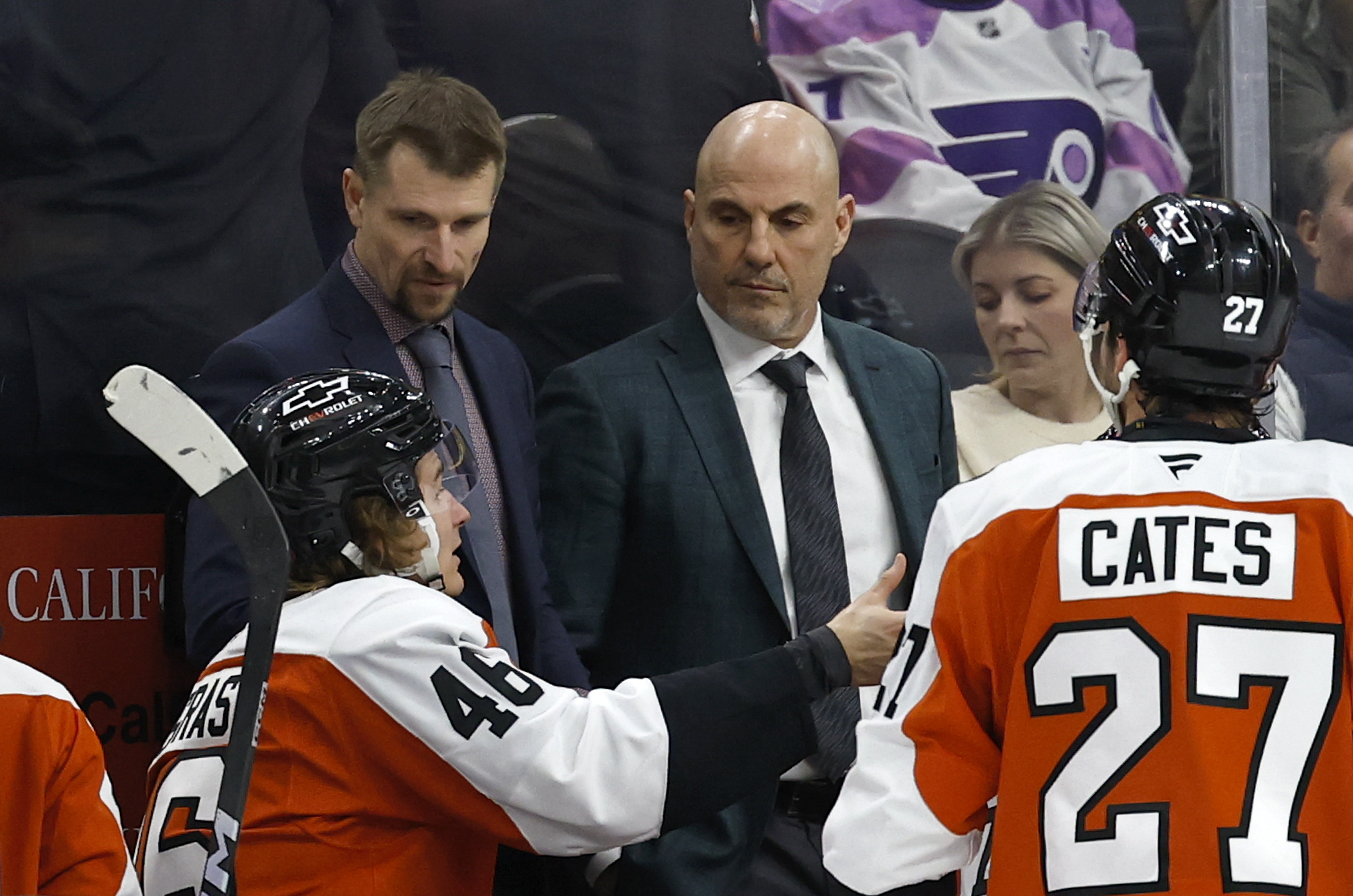
After a tough few years under Greg Cronin in Anaheim, Trevor Zegras has found a coach in Rick Tocchet who believes in him.
Heart-Shaped Box
Although he says you have to prioritize the team game, Zegras notes that he is always building and working on his own game. He can often be spotted doing that on the ice long after practice is done.
He’s also often on the ice talking to Tocchet, whom he affectionately has nicknamed Taco. It looks as if the two are either going over reads, structure, systems, and positioning. In October — after a win against the Seattle Kraken, no less — he texted Tocchet that he wanted to watch video with him, too.
“It’s good,” Zegras said of his relationship with Tocchet. “He watches a lot of hockey, and he played for a long time. There’s just little stuff that he sees; it’s definitely good stuff, important stuff, and they’re usually really good points, so I try to listen.”
Bobby Brink and Trevor Zegras stayed out long after #Flyers practice wrapped up today. In these pics they were working on saucer passes. Zegras was working earlier with an assistant coach on backhand saucer passes too. pic.twitter.com/XecZ8CNFJm
“Unreal, coachable kid. You can tell him anything. We talked last game, I thought he didn’t really skate, didn’t do much, and he actually comes up to me, and he goes, ‘Man, I didn’t move my feet last game, I can really tell,’” Tocchet said, referencing the Nov. 24 game in Tampa Bay.
The bench boss also likes that Zegras is correcting mistakes. He had a big turnover early in the Flyers’ 6-5 shootout win against the St. Louis Blues on Nov. 14 that led to a goal. How did he rebound? By playing a role in each of the Flyers’ goals in regulation and scoring the lone shootout tally.
But while the good times are rolling, the big question remains: At five-on-five, is he a center or a winger?
Right now, it’s a little bit of both.
According to Natural Stat Trick, he’s played just 26 minutes, 46 seconds across the first 26 games of the season down the middle. He’s skated the majority of the season on a line with Christian Dvorak and Owen Tippett — although on Wednesday night, Travis Konecny was on their wing — with Zegras deployed in a hybrid center role.
“Yeah, I don’t know what’s going to happen in the future, but I think it’s a great setup for him,” said Brière when asked if maybe a hybrid is best right now for a player who may be a natural centerman but has spent the last two seasons almost exclusively on the wing.
“The way we have him with the centers that we have, it gives him the chance to take more chances on offense and not have to always come back and be the first player back, battling down deep in the defensive zone.
“He has to do it at times — everybody at times gets caught being the first guy back — but he doesn’t have to do it every shift, and I think it opens him up, frees him up a little bit on the other side of things.”
The hybrid role focuses on the play below the hashmarks in the defensive zone and being the high man, when applicable, in the offensive zone. It’s about being the first forward or F1 — and about faceoffs. Not really known for his faceoff prowess, Zegras is feeling more confident in the circle and has been getting help from Couturier.
“Dvo’s great down low. Not that he needs [it], but I can switch maybe during the shift,” Zegras said before the Flyers’ win last week against the Florida Panthers, before adding with a smile, “or if he wants to maybe cheat on some faceoffs, and he ends up getting kicked out of them, I feel fine getting in there.”
‘Found my friends’
While he’s no longer a teen, Zegras definitely has some spirit. Bounding into the locker room these days with his long flowing locks and a grin mixed in with some chatter, the 24-year-old looks rejuvenated on and off the ice.
“Just extremely grateful that it ended up being Philly.” Gary Zegras, Trevor’s father, told The Inquirer during the dad’s trip in November. “The closeness is incredible. We get to come to the games, and we get to spend a lot of time down here. He’s got a lot of other family that have been coming to the games and friends in the area. So that’s great for him, and it’s also great for us, selfishly.
“And then between management, between the coach, and the other players on the team, it’s just such a great fit. You just see the smile on his face, and you just can tell that he feels comfortable here, and it’s translating to — I know it’s early in the season — but he certainly looks a lot more like his old self. And I think a lot of that has to do with the environment, 100%.”
Zegras has several familiar faces in the room, including his best buddies Jamie Drysdale, his teammate in Anaheim, and Cam York, whom he played with as a teenager at the United States National Team Development Program.
“Just fun to have him around in the locker room. … Obviously, what he’s done has been really great for our team,“ York said. ”He’s added a lot of skill and good vibes, good mojo to the team, I think, and that goes a long way in this league.”
Added Drysdale: “He’s a free spirit. He does his thing. We all love and appreciate him for it. He keeps it light, and he’s playing really good hockey. Yeah, we’re just lucky to have him, and he fits in perfectly here.”
Zegras has found his spark again. But has he found a home, too?
Of course, Brière had no comment when asked recently about a new contract for Zegras. The forward is a restricted free agent on July 1, and the general manager rarely signs players to extensions during the season. But, while it’s early, there is no doubt that Zegras is the type of talent and game-breaker the Flyers have been searching for the past several years.
According to Puckpedia, the cost to keep him around begins at $5.75 million, the minimum qualifying offer the Flyers must give him to retain his rights. But with the salary cap rising, there is no doubt he will command a much higher number.
Jamie Drysdale, Cam York, and Trevor Zegras (center) are best friends and are relishing getting to play together with the Flyers.
A good comparable to Zegras is probably Shane Pinto. The Ottawa Senators center, who was drafted 23 spots below him in the 2019 NHL draft, just signed a four-year extension with an annual average value of $7.5 million. Zegras has eight more points than Pinto this season.
He also has more points than other recent center signings like Utah’s Logan Cooley (eight years at $10 million per), his former Ducks teammate Mason McTavish (six years, $7 million), and Chicago’s Frank Nazar (seven years, $6.59 million). Dallas Stars forward Wyatt Johnston, who got four years at $8.4 million last season, is the only real comparable who has more points than Zegras so far this season.
Two more worth noting are Utah’s JJ Peterka and Winnipeg’s Gabe Vilardi, who, like Zegras, are capable of playing center but have also played a lot of wing. Peterka signed this offseason for five years at a $7.7 million average annual value, and Vilardi got six years at $7.5 million.
Factoring in his recent history and that all but Vilardi are younger than Zegras, the expectation is that he’ll get at least five years — which is the length York, who is also represented by Pat Brisson, signed for in July — and between $7.5 million and $8 million per year.
Brière likes to wait; maybe he shouldn’t. If Zegras keeps trending the way he is — he is on pace for a career-high 32 goals and 82 points — it puts the past two years, and his injury concerns, in the rearview, and the ask could be closer to $9 million.
Is that too much for a kid in his mid-20s who has found his game again and looks to be back on a star trajectory? Probably not. Does it truly matter if he’s that top center or the top winger? In reality, not really, because in the end, he’ll still be a critical piece of a Flyers team moving through a rebuild with the focus on being a Stanley Cup contender for years to come.
Zegras loves playing in Philly. He loves the spotlight. It sounds like a happy marriage because, while for years and years, Zegras roamed, he now feels like he’s back home.
And if he does stay for the long haul, it sounds like Flyers fans will be in nirvana.
Trevor Zegras isn’t going anywhere but the Flyers would be wise to sign him now and try and save a few bucks.
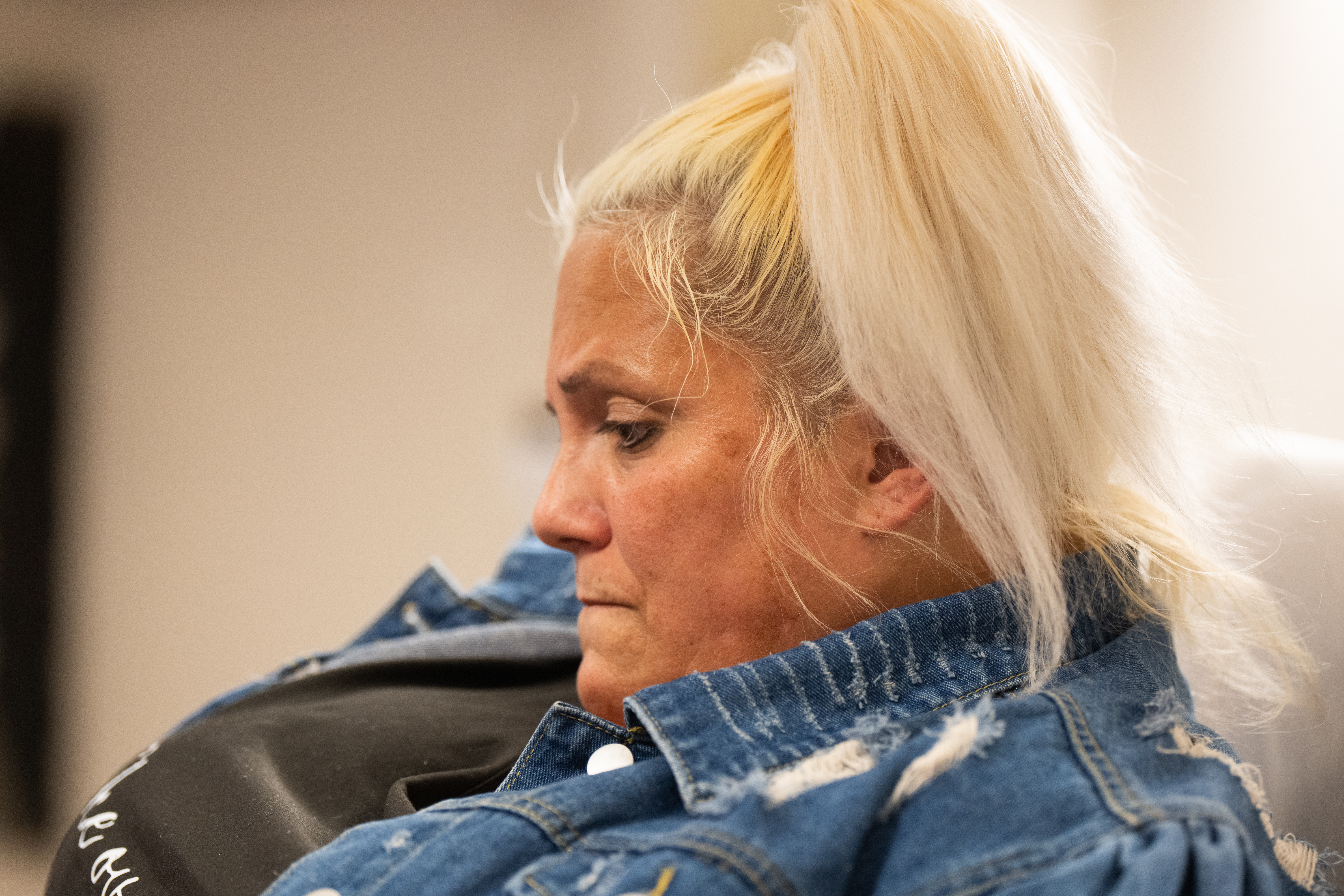
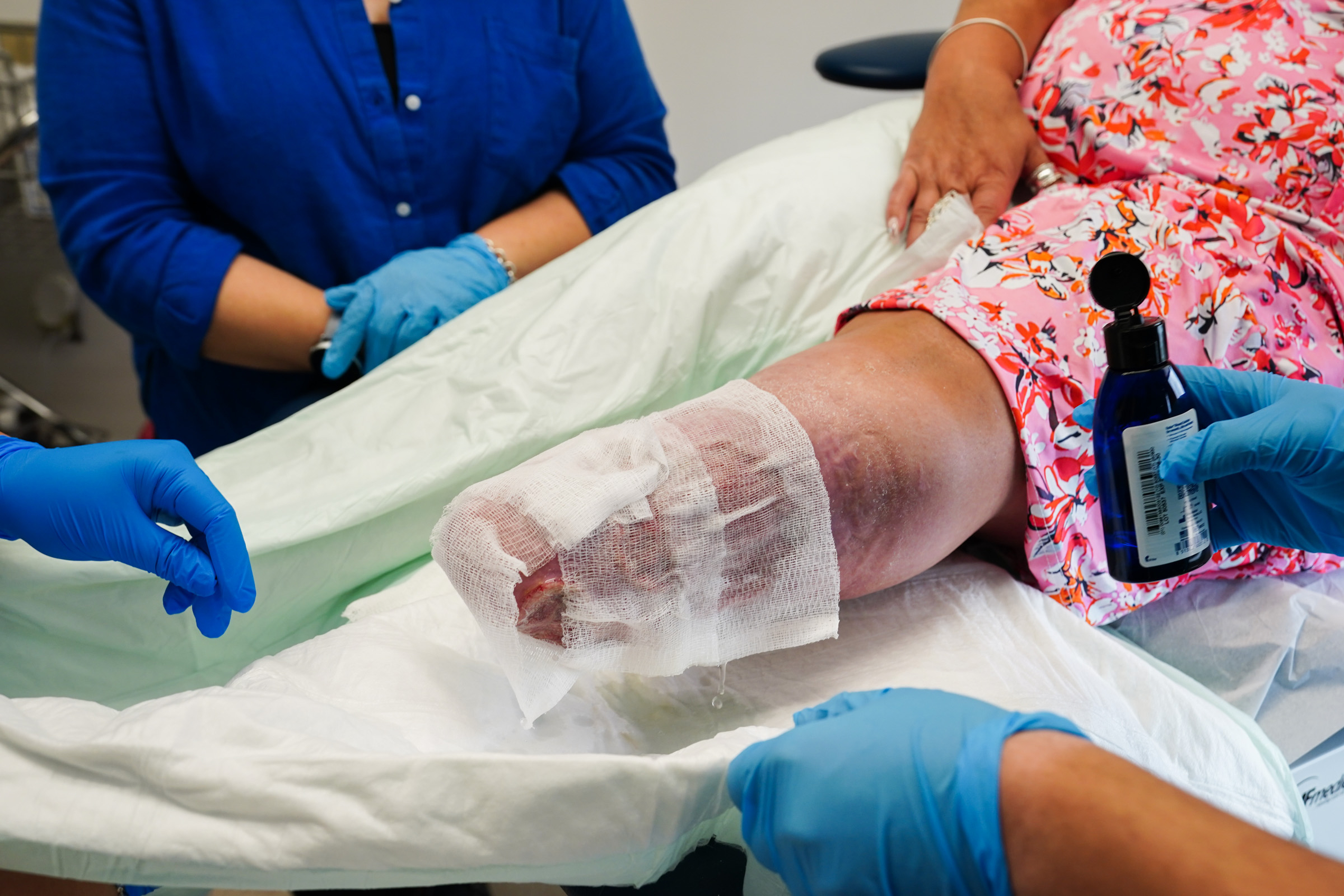
Kelly Wyatt winced as a nurse unwrapped layers of gauze from her left leg, exposing the massive wound beneath.
Yellow and red and gray, weeping plasma and agonizingly painful at the slightest touch, it covered almost the entirety of the end of her leg — the site of the amputation she had undergone four years before.
Emergency room doctors at the time had warned her that if the drugs she was using didn’t kill her, her wounds would.
Now Wyatt is 14 months into recovery from an addiction to fentanyl, a potent synthetic opioid, and xylazine, an animal tranquilizer never approved for human use. The emergence of xylazine, known as “tranq” on the streets, early in the decade marked the beginning of a dangerous new era for Philadelphians addicted to illicit opioids.
Wyatt, 52, is among hundreds of Philadelphians facing lifelong medical needs from tranq, as the latest wave of the area’s drug crisis has seen a rapidly evolving succession of veterinary and industrial chemicals compound the dangers of the powerful opioids being sold on the streets.
Some have become regular patients in burn units and wound care clinics at area hospitals, among the only places capable of treating severe tranq injuries.
As part of its ongoing coverage of the area’s drug crisis, The Inquirer followed Wyatt for more than a year as she went through early recovery and worked with doctors to heal her wound.
Kelly Wyatt receives treatment at Jefferson Einstein Philadelphia Hospital’s Center for Wound Healing in Philadelphia in November.
Wyatt initially shrugged when the small sores had emerged on her legs, only to watch them grow into massive abscesses, resulting in an amputation below her knee. Her ongoing tranq use prevented the wound on her left leg from healing properly. Even after recent months of sobriety and careful treatment, doctors are still warning her that they may have to amputate more of her leg.
But Wyatt’s tranq wounds go still deeper.
Over the last several years, both of her sons had spiraled into addiction. By January, both of them were dead.
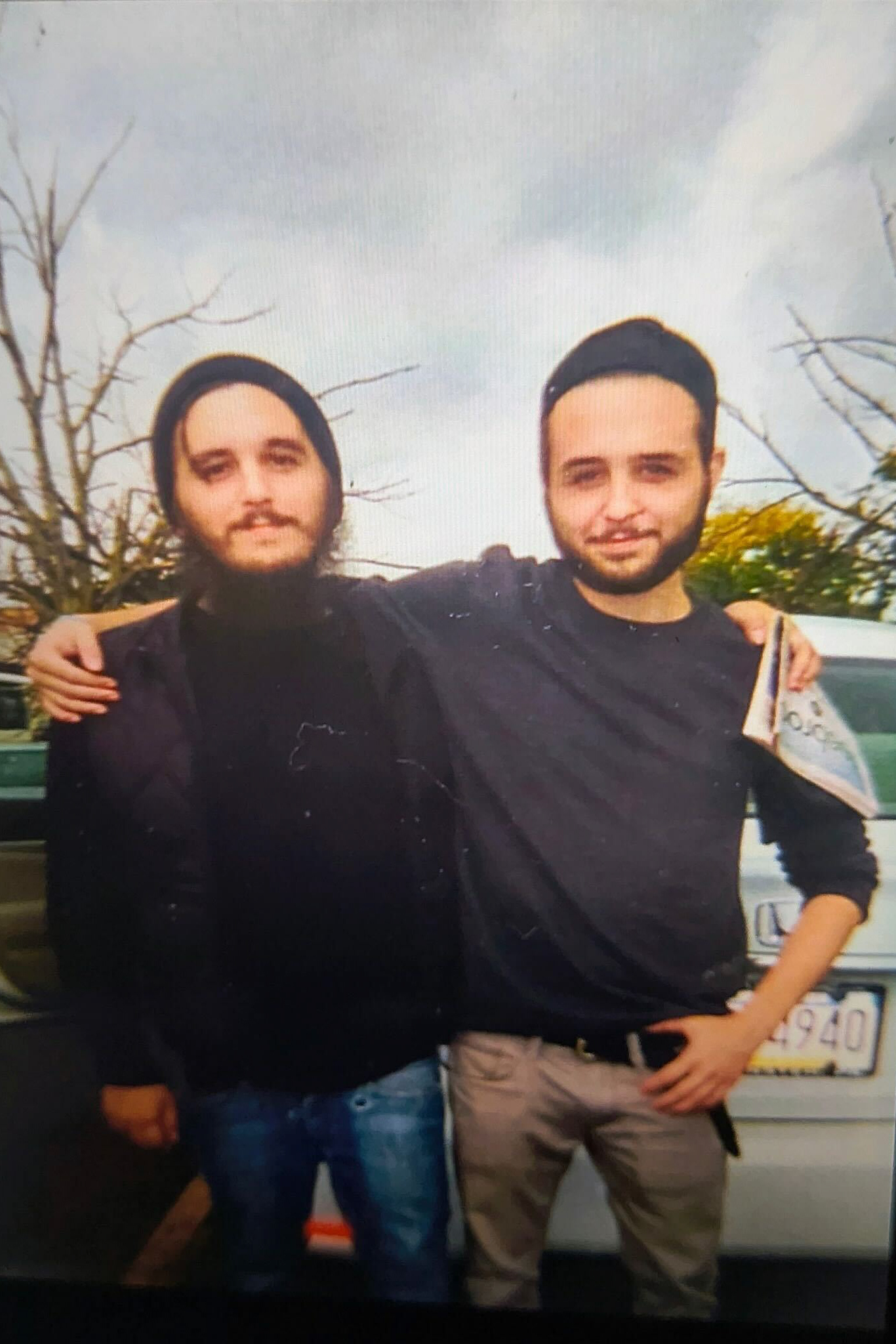
A family photo of Dakota Wyatt, left, and Tyler, right.
Spiraling into addiction
Several members of Wyatt’s family have struggled with addiction.
Wyatt experimented with drugs as a teenager, but was sober during her kids’ early childhoods. She didn’t drink alcohol, let alone seek out illicit drugs, after giving birth to her eldest son, Dakota, at 18. She raised two sons and a daughter in a neighborhood near Pennypack Park.
Her days had a familiar rhythm: packing lunches, picking the kids up from school, watching them play together at the local park. In her spare time, she dabbled in mixed-media art, designing the window displays at the downtown restaurant where she worked for years. One Philadelphia Flower Show-themed display had a working waterfall.
Her youngest, Tyler, was a happy child, grinning wide in every school picture and sharing inside jokes and a love for music with his brother. Dakota, more sensitive, had struggled with anxiety from an early age; Wyatt remembers him asking her at bedtime what the family would do if their house burned down in the night. But he could always make her laugh, and she and the boys would sing along to the same music in the car: ’90s alt-rock, Johnny Cash, the local hip-hop station.
In 1999, she divorced their father. A few years later, at 28, she took her first Percocet pill, an opioid painkiller approved for medical use that is widely abused as a street drug.She had just started working at a bar, and the long hours were wearing on her.
With the pills, “I could get more cleaning done, I could push my body more,” she said. “And it snowballed.”
She was not aware when her sons began using drugs themselves in their teenage years. “I didn’t know for a long, long time,” she said.
Afterward, Wyatt tried to help them seek treatment, even while her own drug use increased, she said.
But a series of traumatic life events resulted in all falling deeper into addiction together.
Wyatt’s ex-husband died following long-standing health issues, including diabetes.
Then Dakota, who drove a Zamboni at a local ice rink, was injured in an accident at work — losing the tips of his fingers while cleaning the machine. He had been using more opioids to deal with the pain.
Wyatt began buying drugs with him in Kensington, at the vast open-air drug market that is the epicenter of Philadelphia’s opioid crisis. “It was normalizing — I’m his mom and I’m with him in that crazy environment. I’m sure it made him feel like it was OK. And I regret that,” Wyatt said.
“I regret a lot of stuff. But that was the beginning.”
Kelly Wyatt leaves her wound care appointment at Jefferson Einstein Philadelphia Hospital’s Center for Wound Healing in November.
Tranq warning signs
It was the mid-2010s, and the drugs on the street were changing. The stronger synthetic opioid fentanyl was just emerging; dealers chanted “fetty-fetty-fetty” on the corners to draw in customers.
And then Wyatt began hearing talk of “tranq” getting mixed into the drug supply.
That was around the time that Dakota developed wounds on his arm, open sores that would not close. Wyatt found small wounds on her arms and legs — “like melon-ball scoops.”
One day, she saw a flier, handed out by health authorities in Kensington, warning that tranq can cause skin lesions.
“All of a sudden,” she recalled, “things made sense.”
But her addiction was so severe that she was afraid to stop using the fentanyl-tranq mix now prevalent in the illicit drug market. She fixated on avoiding xylazine’s severe withdrawal symptoms — chills, sweating, anxiety, and agitation — which don’t respond to traditional opioid withdrawal medications. She worried about seeking treatment with no guarantee of relief.
By the time Wyatt was admitted to a hospital in 2021, she was hallucinating from sepsis, a severe complication from an infection that can lead to organ failure, shock, and death.
When she woke up eight days later, a doctor told her she was at risk of having one leg amputated, and maybe both. “Please let me keep as much of my leg as possible,” she recalls begging a doctor who wanted to remove her entire leg.
Kelly Wyatt receives treatment for a serious xylazine wound at the site of her amputation at Jefferson Einstein Philadelphia Hospital’s Center for Wound Healing in November.
“The doctor thought I should get the whole leg cut off. The other thing I could do was amputate below the knee, and then get tons of operations for the infection,” she said.
Her oldest son’s tranq wounds had also worsened. Dakota had wounds on his legs and an arm, which was eventually amputated later that year. He also suffered a heart infection linked to his drug use, and needed a valve replacement.
After a month in the hospital, he came home and continued using drugs.
He developed new lesions. Maggots ate at his rotting skin. Wyatt cleaned the bugs out of his wounds.
Wyatt tried bargaining with her son, promising they could get addiction treatment together. She offered to get him enough drugs that he wouldn’t enter withdrawal while waiting for care at the hospital. Sometimes, he managed to stay at the hospital for a few hours, but never longer.
“He was too embarrassed to go anywhere, he was too afraid to get clean, and he was too afraid to be sick. He told us he would rather die than go through withdrawal again,” she said. “A couple times, he asked me if I wanted to just shoot up and lay down and die with him.”
“‘I want to live,’” she recalls telling him, “‘and I don’t want to live without you.’”
Kelly Wyatt waits for treatment for a serious wound on her leg at Jefferson Einstein Philadelphia Hospital’s Center for Wound Healing in November.
Loss and recovery
One night in January 2024, Dakota was having trouble breathing and seemed to be hallucinating, speaking nonsense. He asked Wyatt to call an ambulance to the house.
Dakota died before the family reached the hospital. His cause of death was listed as drug intoxication.
Wyatt believes ongoing health issues from his wounds hastened his death. Her grief intensified her own drug use, leading to more xylazine wounds. The wound that had opened near her amputation grew worse.
A month after Dakota’s death, she entered drug treatment. After three months, she relapsed and overdosed on cocaine and fentanyl. Her first thought after waking up was to use again, but instead she chose rehab.
“I didn’t want to die,” Wyatt said. “I didn’t want to be in pain anymore.”
She arrived at the Behavioral Wellness Center at Girard in July 2024, hoping to enter outpatient rehab.
Instead, physicians recommended their inpatient clinic that could also treat her wounds, one of the few such facilities in Philadelphia.
In August 2024, Kelly Wyatt attended a wound care appointment as part of her inpatient care at Girard Behavioral Health, one of a few addiction rehabs in the city that can treat xylazine wounds.
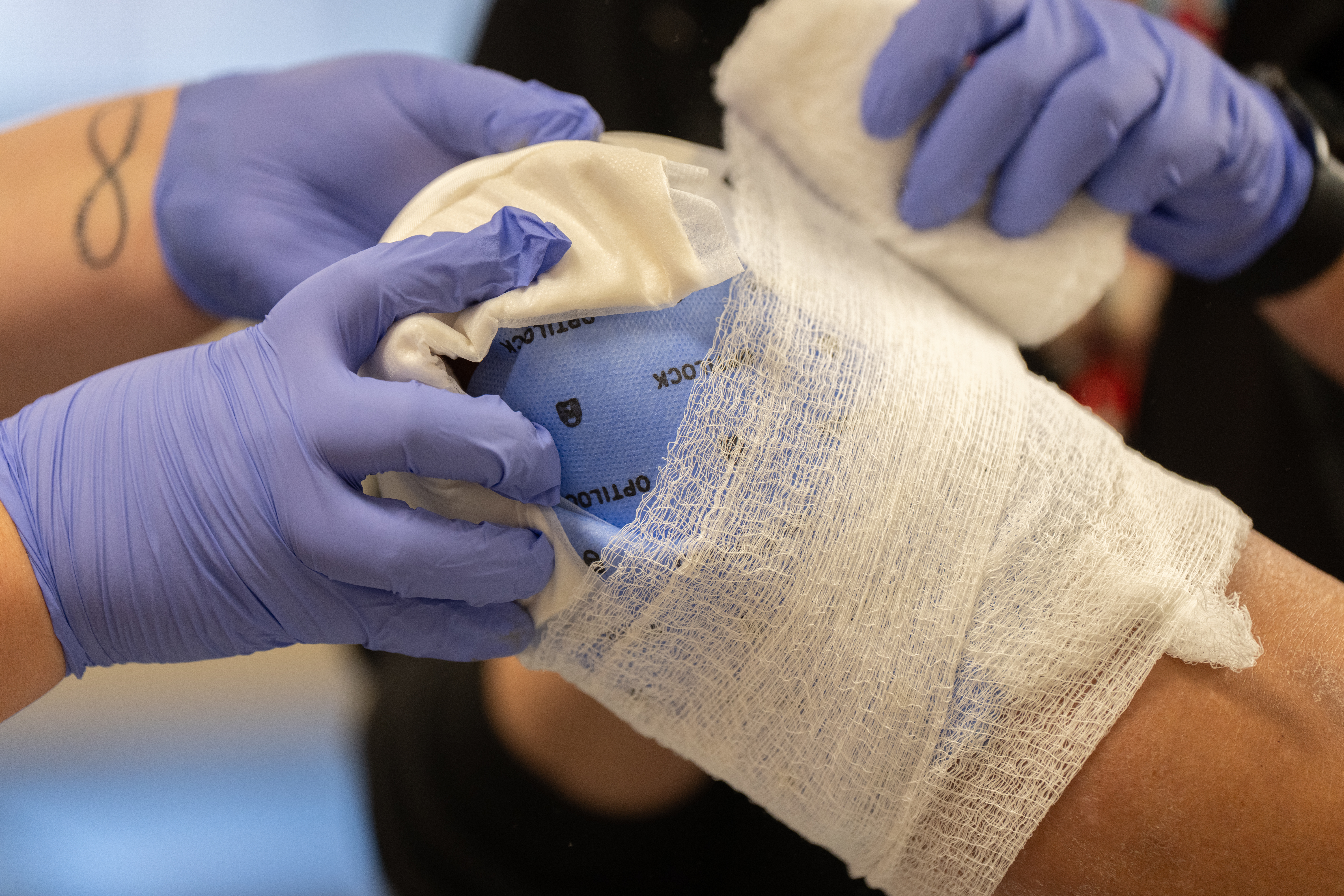
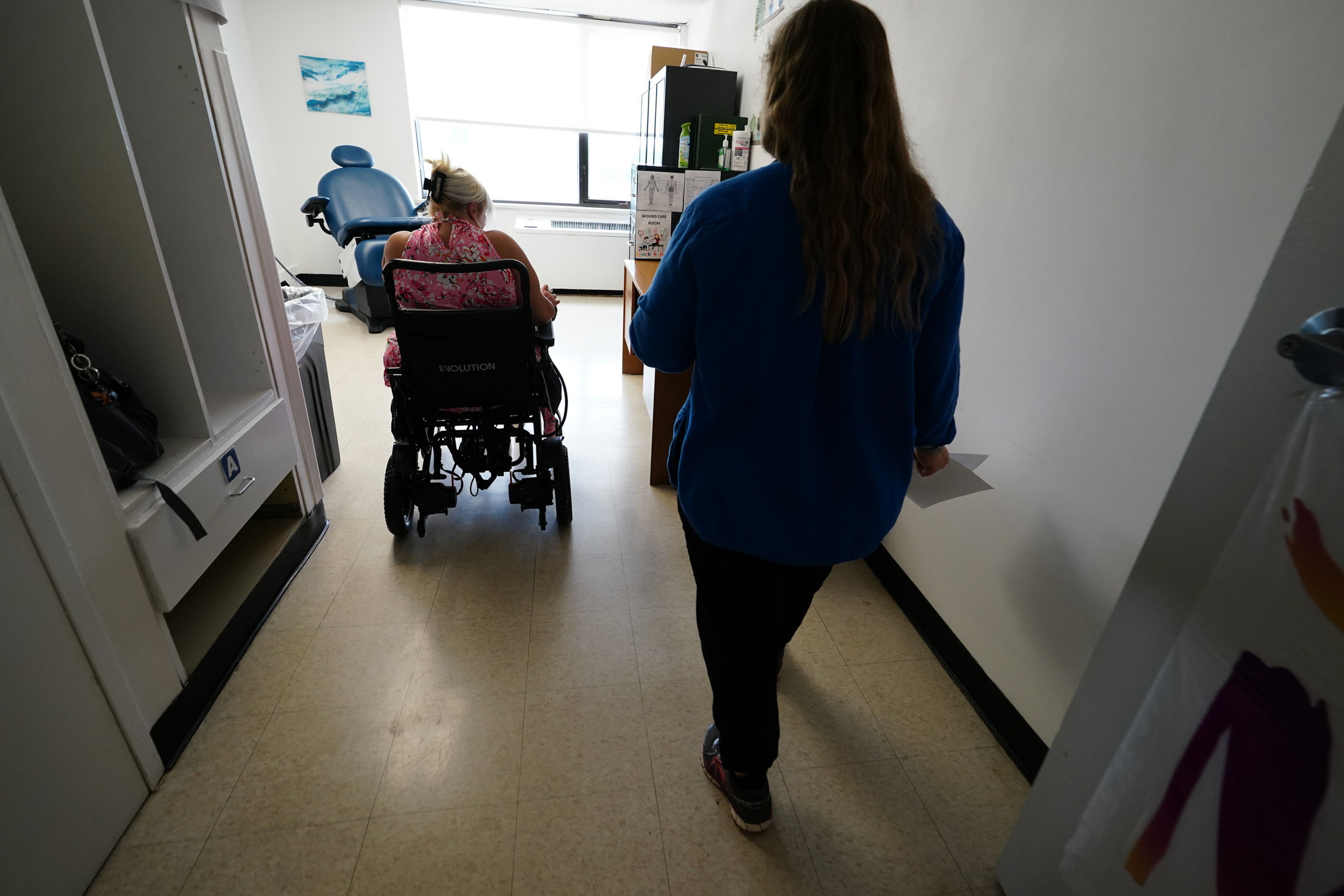
Wyatt was living there and undergoing treatment a month later, in August 2024, when she wheeled her motorized wheelchair into a clinic room and took deep breaths as nurses carefully peeled back layers of moisturized gauze on her left leg, cleaning the wound.
Still in the shaky early months of recovery, and needing to remain in inpatient rehab, she remained worried about Tyler, who was still using drugs.
“He was the primary caretaker of his brother. They would be in their room, getting high together. And now he’s just in that room by himself, day in and day out,” she said in an interview that summer.
“I kept saying, ‘I think I should go home to him.’ And everybody kept saying to me, ‘You have to work on yourself first. He’ll be fine,’” she later recalled.
“And then he wasn’t fine.”
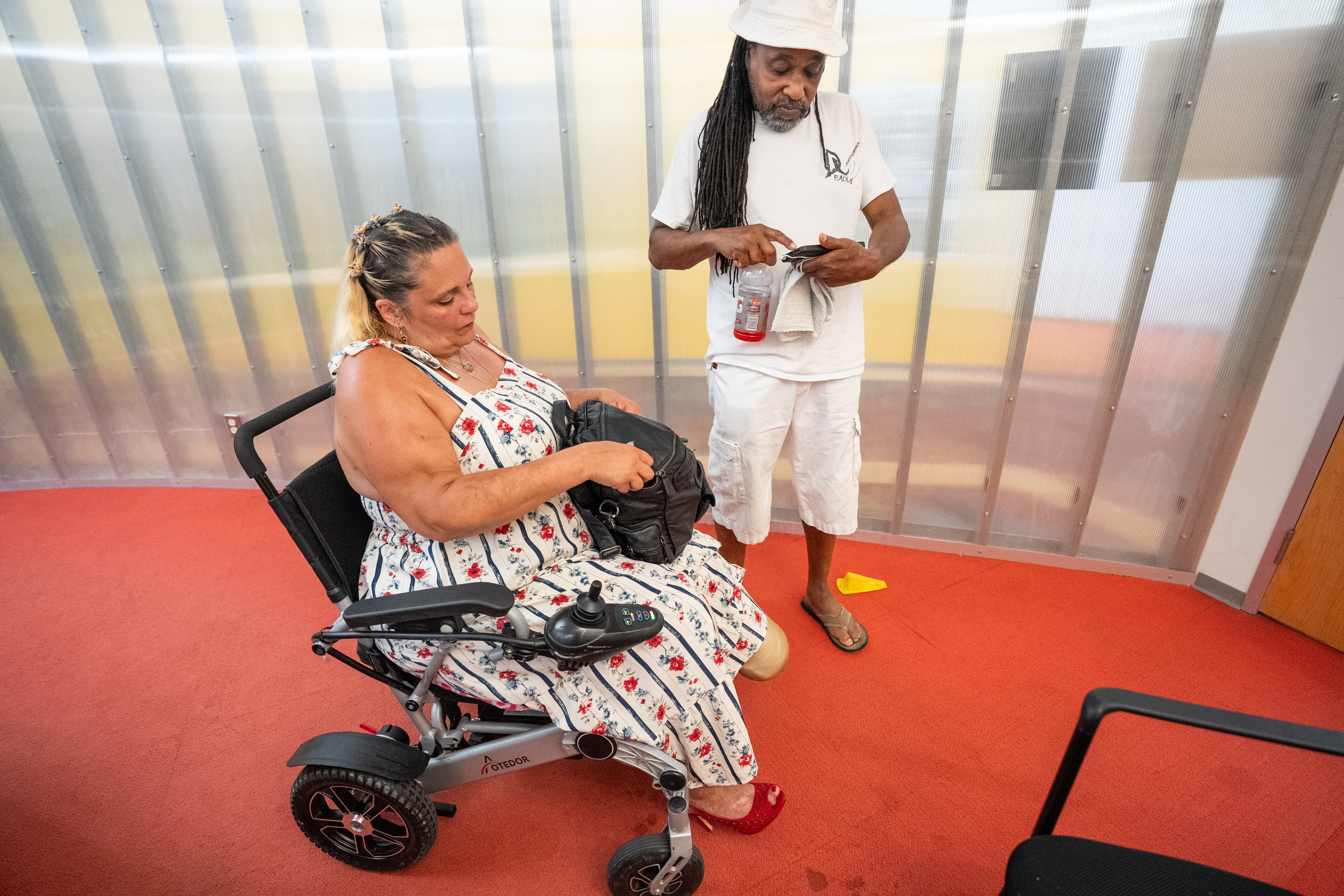
Kelly Wyatt and her partner Randy Stewart at the headquarters of Resources for Human Development, which runs the skilled nursing and inpatient addiction treatment center where Wyatt sought treatment this winter.
A mother’s guilt
Wyatt was still in rehab in January 2025 when her partner, Randy Stewart, called. He hadn’t seen Tyler in hours and thought he might have left the family’s house.
Wyatt called several hospitals and then asked Randy to check the bathroom in the back of the house.
He found Tyler on the floor.
“I just thought, God, please no,” Wyatt said. “Not again. You can’t do this to me again.”
Tyler’s cause of death was also listed as “drug intoxication.”
He died at 27, a year and 10 days after his brother.
Wyatt is still wracked by guilt. Guilt that she used drugs with her sons. That she used drugs at all. That she wasn’t there when either of her boys died. That her daughter, who does not use drugs, stopped speaking to her. Sometimes, she dreams about her children and wakes up screaming.
As she continues treatment, Wyatt said, she hopes her story will help other families struggling with addiction, especially the realities of tranq use.
“Sometimes I’m embarrassed to talk about it. But I feel like I have to,” she said. “Because people need to know. If one person sees this and gets some medical care, gets any kind of help, I would be happy.”
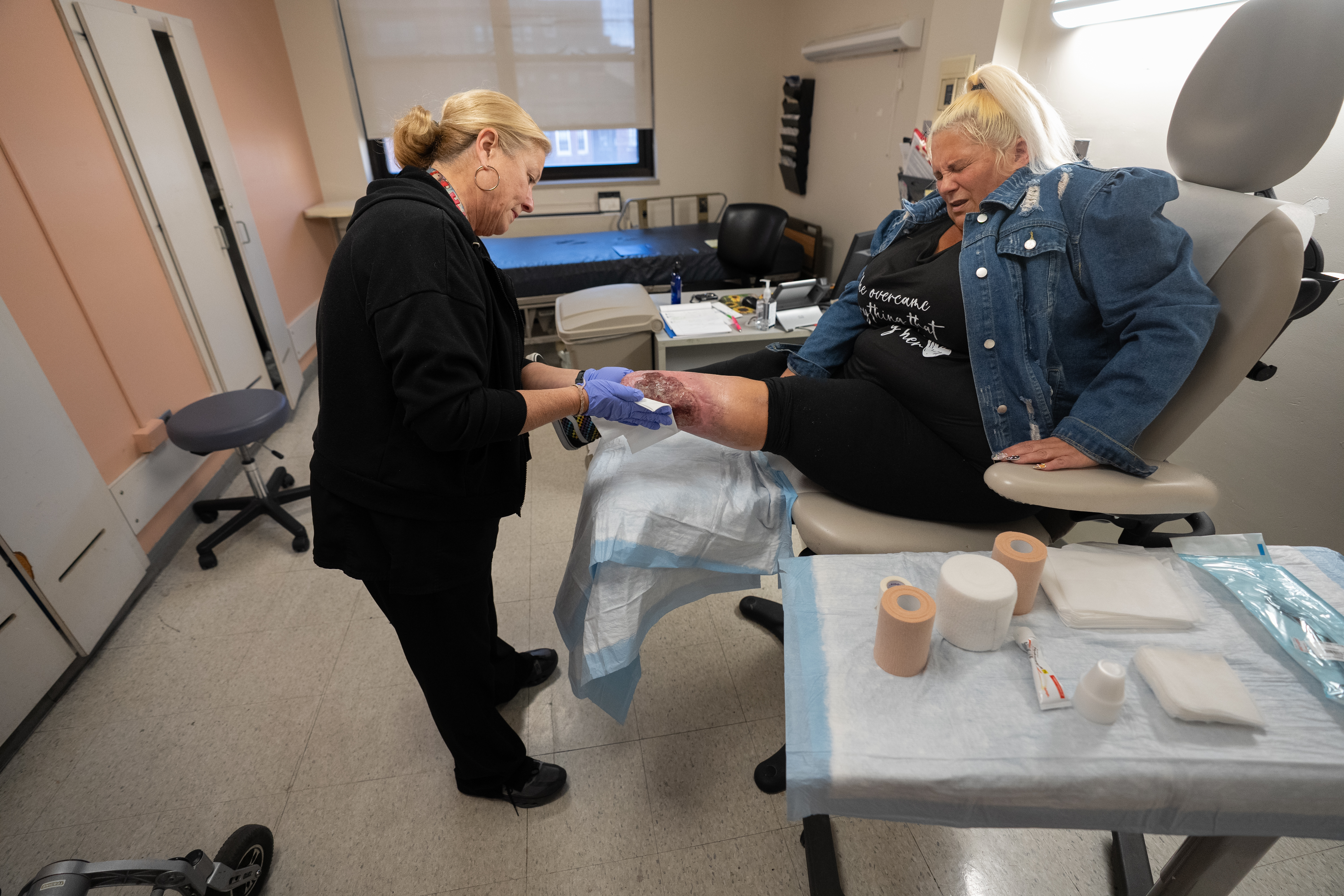
Heidi Hunt, a wound care-certified registered nurse, cleans the wound on Kelly Wyatt’s leg at Jefferson Einstein Philadelphia Hospital’s Center for Wound Healing in November.
Treating tranq’s wounds
For Wyatt, maintaining her recovery from addiction and caring for her wounds are full-time occupations that sometimes are in conflict.
Methadone, the opioid addiction treatment drug that has helped Wyatt curb cravings for more than a year, can be dispensed only at special clinics.
Wyatt’s clinic journey meant three hours a day on a bus where she couldn’t keep her leg elevated. The wound worsened until she was able to switch to a closer methadone clinic.
Wyatt relies on Stewart to help her move around her home, where the only bathroom that she can access is the one where Tyler died.
“Cleaning, taking care of me, changing my wound dressings, talking about my sons — he calms me down. It’s been a lot, and he’s really done a lot,” she said.
Kelly Wyatt and her partner Randy Stewart in July.
Once a week, Wyatt travels to Jefferson Einstein Philadelphia Hospital’s Center for Wound Healing for wound care.
At a recent appointment, nurse practitioner Danielle Curran scraped away infected skin, measured the wounds, cleaned and re-bandaged her lesion.
In between office visits, nurses also go to her home to clean and re-bandage her wound twice weekly. Several times this year, Wyatt has undergone debridement surgery to remove more damaged skin under anesthesia.
If the treatments manage to shrink her wound, Curran said, Wyatt could try a skin graft and eventually receive a prosthetic leg that could help her get around more easily.
Curran has treated about 20 xylazine patients at the clinic over the last few years. About 10, including Wyatt, are still getting regular care. Others have relapsed and returned to the streets. Several have died of overdoses.
She is relieved that, as Philadelphia’s opioid crisis continues to evolve, tranq is becoming less prevalent. But it has been replaced in street drugs by another animal tranquilizer, medetomidine, which does not appear to cause flesh wounds but, rather, agonizing withdrawal symptoms. Skin lesions among opioid users have decreased in the last year.
Yet Curran still insists on seeing patients like Wyatt with xylazine wounds weekly, trying to help them through their injuries and hopefully their recovery, too. “I like to be another person holding them accountable, to stay on the path. We try to give them that support.”
Sometimes, that support means simply reminding Wyatt how far she has come in the four years since the amputation, and now 14 months of sobriety.
At a recent appointment, after carefully scraping dead skin away from Wyatt’s leg with a small curette, Curran walked through her next steps: A disinfecting gel to keep bacteria out of the wound. A course of antibiotics to avoid infection. Another debridement surgery, in a few weeks.
“As a rule of thumb,” Curran told a reporter, “it’s very hard to give timelines for wound care, because of all the things that could possibly go wrong. A wound this size, though? It could take years.”
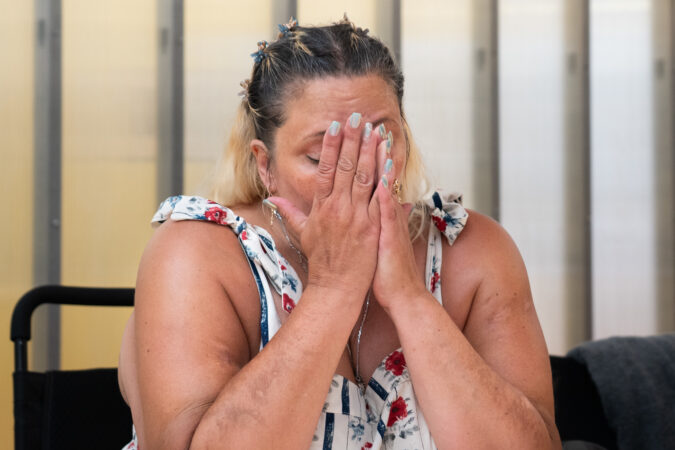
Wyatt began to cry. “It’s already been four years,” she said.
Curran turned to her. “You’ve made so much progress,” she said gently. “Give yourself time.”
Kelly Wyatt enters the wound care clinic at Girard Behavioral Health in August 2024.
Editor’s note: This story has been updated to clarify the name of the Jefferson Health clinic where Kelly Wyatt received wound care.
In 2025, the Phillies had the second-oldest lineup in baseball.
Collectively, the average age of Phillies hitters was 30.3 years old, ranking only behind the Dodgers’ 30.7. That number only stands to increase when their core reports to Clearwater, Fla., another year older in February — that is, unless the Phillies see an injection of youth. Which, according to president of baseball operations Dave Dombrowski, is the plan.
“We also have some young players that we’re going to mesh into our club,” Dombrowski said in October. “I’m not going to declare that anybody has a job, but there will be some people that we’re really open-minded to be on the big league club next year.”
There are several Phillies prospects poised to make their debuts in 2026. Here’s a breakdown of the position players on the farm most likely to make a major league impact in 2026. (An overview of pitching prospects can be found here.)
Justin Crawford could wind up in center field or left field for the Phillies in 2026.
Justin Crawford
The Phillies have been saying it for a while: Justin Crawford is ready.
There isn’t much left for the outfielder to prove at the triple A level after he hit .334 and stole 46 bases for Lehigh Valley. Crawford, who turns 22 next month, was blocked from a promotion in 2025 because of a lack of a path to regular playing time on the major league club. But with some outfield shuffling expected this offseason, he will have an opportunity in 2026, one he could seize as soon as opening day.
“Crawford has a real strong chance to be with our club,” Dombrowski said at the general managers’ meetings last month. “We’re giving him that opportunity to be with our club.”
The Phillies view Crawford internally as a center fielder, though he also played 30 games in left field at Lehigh Valley last season. Where his major league opportunity will come will likely depend on how the rest of the outfield picture shakes out after any free-agent additions or trades.
Beyond youth, Crawford would add speed to the Phillies’ lineup. He has an 81.9% success rate in stolen base attempts throughout his three-year professional career, and last season hit 23 doubles and four triples. He doesn’t have an overwhelming amount of power, with just seven homers last season, and his ground-ball rate continues to be high, at 59.4% in 2025. Despite that, he has hit well at every minor league level, and the only test left is the biggest one.
“I think [Crawford] more than anybody is looking forward to the 2026 opportunity he’s going to have in front of him,” Phillies farm director Luke Murton said on a recent episode of Phillies Extra, The Inquirer’s baseball show.
Gabriel Rincones Jr.’s 18 home runs ranked second in the Phillies farm system last season, but all were against right-handed pitching.
Gabriel Rincones Jr.
At his year-end news conference in October, Dombrowski highlighted outfield prospect Gabriel Rincones Jr. as one of the young players in the system the Phillies were high on.
“We really like Gabriel Rincones, who’s got a lot of pop in his bat, and really hits right-handed pitching even better,” Dombrowski said.
The Phillies added Rincones to the 40-man roster to protect him from being selected in the Rule 5 draft on Dec. 10.
Ranked No. 9 in the Phillies’ system by MLBPipeline, Rincones had a .240 batting average and a .799 OPS in 119 games at Lehigh Valley. His 18 home runs ranked second in the Phillies farm system, trailing Rodolfo Castro by one.
All 18 of those came against right-handed pitching, though. Rincones struggles against lefties, with just a .107 batting average and a .323 OPS.
If an opportunity were to arise for him in the majors, it would likely be strictly a platoon role — and the Phillies already have a left-handed outfield platoon bat in Brandon Marsh. But Rincones’ pop against righties could be of value to the major league club at some point in 2026.
Shortstop Aidan Miller led the Phillies farm system with 59 stolen bases last season.
Aidan Miller
Infield prospect Aidan Miller slashed .264/.392/.433 and led the Phillies farm system with 59 stolen bases in 116 games last season. Eight of those games were in triple A after a September promotion from double-A Reading, as Miller finished the season one step from the majors.
When Miller’s big league opportunity arrives, though, he will need to have a chance to play every day to develop.
Miller has played only shortstop in the minor leagues. But there isn’t exactly an opening there for the foreseeable future, with Trea Turner under contract through 2033 and coming off a resurgent defensive season.
With Alec Bohm heading into free agency after the 2026 season — and once again surrounded by trade rumors — it seems the likeliest path for Miller to break into the Phillies infield will be third base.
“We’d have to make sure that we properly prepared him to do that, and that’s still a discussion that we’ll have to have,” Dombrowski said in October of Miller changing positions. “But he’s a really good player and a good athlete.”
Murton said on Phillies Extrathat while the Phillies would not completely rule out Miller playing left field as a path to the majors, it’s “not something that I think we’ve kicked around too much recently.”
Keaton Anthony
Ranked No. 15 in the Phillies’ system, first baseman Keaton Anthony has flown relatively under the radar.
Anthony, who was one of 26 Iowa student-athletes investigated for violating the NCAA’s sports betting policies in 2023, went undrafted that year. He was not charged, and the Phillies signed him as a free agent.
Since then, Anthony has a career .324 minor league batting average and an .869 OPS. He won a Gold Glove in 2024 as the top defensive first baseman in the minors.
Anthony, who slashed .323/.378/.484 this season, reached triple A in June. The 24-year-old right-hander’s approach is geared more toward contact and he doesn’t have a ton of power, with six homers last year. But Anthony hits line drives at a 33.5% clip.
As a first baseman, Anthony has a very limited avenue to the majors as it stands. But he has some experience playing outfield in college.
With a strong start to 2026, Anthony could potentially follow a similar trajectory as Otto Kemp in 2025. Kemp, who was also undrafted, was called up as an injury replacement in June. Despite having little outfield experience, Kemp ultimately saw some time in left field to keep his bat in the lineup.
The Eagles are off to the Los Angeles area for the third consecutive season, although this time they’ll face the Chargers and not the Rams at SoFi Stadium, a building they could have to travel to again in the playoffs if they want to reach another Super Bowl.
The 8-4 Eagles have lost their last two games, while the 8-4 Chargers have won four of five.
Here are some key numbers and trends from the Chargers that could play into Monday’s result in California:
281
Eagles fans probably don’t need a reminder, but it’s worth repeating just how badly the Eagles were beaten up by Chicago’s running game Friday to the tune of 281 yards.
Defensive coordinator Vic Fangio said he “didn’t do a good enough job of preparing our squad for the quality and the diversity of their run game” and that the defense needed to play better technique and needed to be coached better.
Well, here comes a Chargers offense that just got 126 yards on 25 carries from Kimani Vidal in a 31-14 victory over the Las Vegas Raiders in Week 13. The Chargers limped into their bye week after a 35-6 loss to the Jacksonville Jaguars, but they emerged from the week off with a dominant running game that could give the Eagles fits if they don’t make fixes fast.
Vidal, according to Next Gen Stats, forced a career-high 12 missed tackles. The Chargers chose to run away from Maxx Crosby’s side of the field and got 80 yards and a touchdown on nine carries outside the left tackle, according to Next Gen.
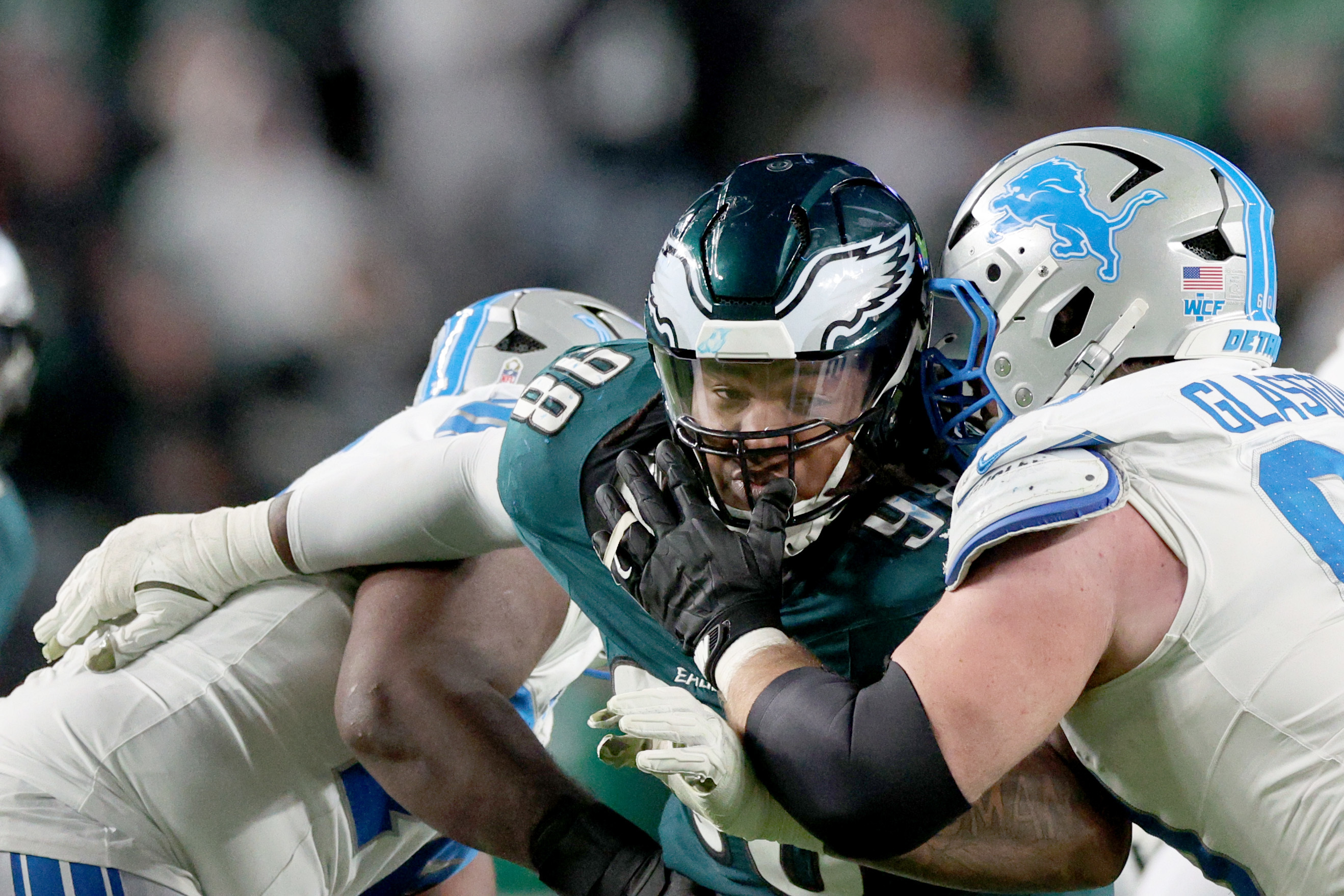
The Eagles should be prepared for the Chargers to try to attack whatever weakness they can find up front. Right now, that might mean running at Jalen Carter, who is dealing with a shoulder injury and got pushed around at times Friday.
“They’ve rushed for 200 yards on two teams this year,” said Fangio, who added that Chargers offensive coordinator Greg Roman has “always done a good job running the ball schematically.”
“They have a big tight end, big fullback, pretty big O-line, good backs. They run it very, very [well],” Fangio said.
Eagles defensive tackle Jalen Carter has been slowed by double teams and a shoulder injury.
26.9%
The good news for the Eagles is that they could be either dealing with a limited Justin Herbert or could face backup quarterback Trey Lance.
Herbert underwent surgery on his left hand Monday, and his status for the game remains unclear. Fangio said the Eagles will prepare for both quarterbacks and know that if Herbert goes, he’ll be playing a lot out of the shotgun and pistol sets rather than under center.
Regardless of who plays, the Chargers did a much better job protecting Herbert last week. He faced a pressure rate of just 26.9%, according to Next Gen, his second-lowest rate of the season. Herbert, who has been dealing with a banged-up offensive line, entered Week 13 facing pressure on 42.7% of his dropbacks in 2025, the highest of any quarterback this year with 375 dropbacks.
He completed 15 of 20 passes for 151 yards with two touchdowns and an interception.
The Raiders have one of the lowest pressure rates (26.9%) in the NFL. The Eagles pressure the quarterback at a 34.3% clip and should be able to find some more success getting after Herbert.
The Eagles were torched by the Bears on third down last week. Chicago converted 10 of its 17 third downs. It’s an area in which the Eagles have struggled at times in 2025.
Against the Chargers, they should at least know where to focus their attention most. No player on the Chargers gets targeted more on third down than Keenan Allen, who entered Week 13 with a 36.8% target share on third downs, according to Next Gen. Allen, who has had a resurgence in his return to the Chargers, entered Week 13 with a league-leading 22 receptions on 35 targets on third down, good for 259 yards and a touchdown. His 20 first downs on third down also led the NFL.
It will be interesting to see how the Eagles defend the Chargers’ top two targets, Allen and Ladd McConkey, who both align inside and out. McConkey is in the slot 62.5% of the time, according to Pro Football Focus, while Allen is inside just 35.5% of the time. Expect Quinyon Mitchell to see a lot of Allen while McConkey will likely be matched up frequently with Cooper DeJean.
The Eagles could have the advantage there, considering how elite Mitchell has been. Mitchell is first in the NFL in catch rate allowed (41.9%) and second in tight windows forced (40.5%).
Stopping the run will be key because getting the Chargers into obvious passing situations likely will play into the Eagles’ hands.
Rose Tree County Park in Media willonce again transform into a winter wonderland this holiday season for the 50th annual Festival of Lights.
Starting Thursday, some 300,000 lights will adorn over 125 trees at the center of the 118-acre park, which will also play host to vendors, musical performances, and food trucks on select nights during the festival’s run through Jan. 3.
More than a beloved tradition, the free festival is “putting Delco on the map,” says Delaware County Parks and Recreation Interim Director Anne Stauffer. The festival drew about 97,000 visitors last year, according to Visit Delco data, and Stauffer expects more than 100,000 this year.
Over the past few years, the festival has significantly grown its footprint. While it used to largely attract residents from in and around Media, a major change in 2021 helped attract more visitors from across the region.
ARPA funding helped grow the Festival of Lights to include larger trees.
Using funding from the American Rescue Plan Act, organizers grew the number of lights on display — including extending it to the park’s tallest trees — and added pop-up shopping elements, a format that has been replicated each year since. With a refreshed display, the festival went from a local event to a “regional draw,” Stauffer said.
Now, the annual festival is one of the park’s biggest undertakings, with work beginning in mid-October.
This year’s festival will see a return of many favorite displays, like a lighted archway, Snoopy and other Peanuts characters, a gingerbread family, and Santa and his reindeer. A Visit Delco selfie station featuring a giant Adirondack chair will be moved to the front of the park. There will also be musical performances on Delco’s Fare & Flair nights, along with a selection of food, drinks, and other vendors.
New this year will be the unveiling of a “Delco Bell,” which will make its debut at 4 p.m. Thursday, and remain on display through next December, even after the festival wraps up. It’s one of many bells being displayed statewide as part of America250PA’s “Bells Across PA” initiative, which began rolling out in April in anticipation of the 250th anniversary of the signing of the Declaration of Independence.
“I think it’s a beautiful opportunity to be able to show the public artistry and history,” Stauffer said.
This is also a milestone year for Rose Tree County Park, which opened in 1975 and is celebrating its 50th anniversary.
Here’s everything you need to know about this year’s Festival of Lights:
When will the Festival of Lights be open?
This year’s festival kicks off on Dec. 4 at 5 p.m., when the entire park will be lit up for the first time this season. As part of the festivities, the Springton Lake Middle School Select Choir will perform seasonal songs, and Santa will help light the park before zipping around on one of Delaware County Parks and Recreation’s electric ATVs. He’ll remain on site until 8:30 p.m.
In addition to the ceremonial lighting, opening night will also be the first of this year’s Delco’s Fare & Flair Nights, which include music, food, drinks, and other local vendors.
From Dec. 4 to Jan. 3, the park will be lit nightly at 5 p.m. and remain lit until 9:30 p.m. Sundays through Thursdays and until 10 p.m. on Fridays and Saturdays.
Who are this year’s vendors?
There will be vendors, food, drinks, and live entertainment on Delco’s Fare & Flair Nights, weather permitting. These will take place Dec. 4, 6, 7, 13, and 14 from 5 to 8:30 p.m.
Expect a selection of food and drinks vendors each night, including Albie’s Fresh Burgers and Crabcakes, Auntie Anne’s, Brick & Brew, Calaveras Street Tacos, DonutNV, Dos Gringos Mexican Kitchen, The Munchy Machine, Napoletano Brothers, Owl’s Water Ice and Treats, Pizzeria La Familia, Rollin’ Phatties BBQ Smokeshack, and Savannah’s Southern Cuisine.
Artisan vendors will also be selling goods including clothing, home decor, and candles.
On Delco’s Fare & Flair Nights, local bands will perform at 5 p.m., followed by a DJ spinning tunes until 8:30 p.m.
You can see the vendors attending each Delco’s Fare & Flair night on the county’s website here.
What’s new for 2025?
While visitors will find a similarly festive display to years past, there will be a few additions for 2025, including one celebrating the nation’s semiquincentennial. A Delaware County-themed bell will be unveiled at 4 p.m. on Dec. 4, and remain on display through the festival and next year.
Where to park when you get there
Delaware County Park Police will be directing traffic on Delco’s Fare & Flair nights, with parking available in the main lots at the front of Rose Tree County Park, closest to Nether Providence Road.The rear lot, near the Hunt Club building, will have additional parking on nights when Delco’s Fare & Flair is not taking place. There will be overflow parking on the grass, as weather permits.
📍 1671 N. Providence Rd., Media 💵 Free
This suburban content is produced with support from the Leslie Miller and Richard Worley Foundation and The Lenfest Institute for Journalism. Editorial content is created independently of the project donors. Gifts to support The Inquirer’s high-impact journalism can be made at inquirer.com/donate. A list of Lenfest Institute donors can be found at lenfestinstitute.org/supporters.
The White House is the People’s House. Period. It is public property that was paid for by us, built by us, and is maintained by us. And no matter who its current occupants are, we still own that building.
Yet, we weren’t asked if we wanted anew 90,000-square-foot, mega-ballroom decorated with gold and who-knows-what-else to be added onto our house. But it’s a ballroom we’re getting from President Donald Trump, whether we like it or not. (Count me in the latter group.)
I agree with those who say the design is tacky. I also agree with those who say we don’t really need it — especially when there is so much our fellow Americans actually need these days.
The project, which will, of course, be called the Trump Ballroom, is projected to cost $300 million. The president says it will be paid for “100% by me and some friends of mine.”
But even if construction costs are covered, taxpayers will get stuck with paying for maintenance and upkeep.
A handout rendering of the interior of a “$200 million ballroom” in the East Wing of the White House that was announced by the Trump administration in July. The cost of building it has gone up since then — it is currently estimated at $300 million.
Between high grocery bills, rising healthcare costs, over-the-top housing prices, and everything else that’s going on right now, building an addition onto the White House should be the lowest Trump priority.
Yet, the project was very much on the president’s mind Sunday night because he boasted about it on Truth Social, claiming “it will be, at its completion, the most beautiful and spectacular Ballroom anywhere in the World!”
But for a lot of us, the old East Wing, which was demolished to make way for the Trump Ballroom, was beautiful and spectacular on its own. That includesformer first lady Michelle Obama, whose office was once located in the East Wing.
Just last week, she described on the Jamie Kern Lima podcast what a jarring experience the demolition was for her. “It’s not about me, it’s about us and our traditions and what they stand for,” the former first lady explained. “I think in my body I felt confusion because I’m like, ‘Well, who are we? What do we value and who decides that?’”
I grew up in Washington, D.C., just seven miles away from the White House. But it could have been a thousand miles away. I felt completely disconnected from the historic landmark and what took place there.
That is, untilObama moved in with her family. She was the first person whom I ever heard refer to 1600 Pennsylvania Ave. as “the People’s House.” Putting it that way made me feel welcome. It gave me a sense of ownership. I loved how she reminded Americans of that shared ownership throughout her family’s eight years in the White House.
Former first lady Michelle Obama speaks about her new book “The Look” during an event at Sixth and I Streets in Washington, D.C., on Nov. 12.
Trump supporters are quick to point out that the Obamas themselves made additions to the White House grounds.When he was in office, President Barack Obama painted lines on an existing tennis court and added basketball hoops. But those areminuscule changes compared with Trump’s addition, whichwould be almost double the size of the White House itself.
I listened to Obama’s comments about the White House on the Kern podcast a few days before the Thanksgiving holiday, one of the most American traditions we celebrate.
And as I mulled over her words, I thought about how, no matter what we think of them, U.S. presidents come and go from their official residence, but the building remains a stalwart symbol of the nation’s highest office.
A Christmas tree decorates the White House on Monday during a preview of its Christmas decorations, which are themed “Home Is Where the Heart Is.”
The theme of this year’s White House Christmas decor is “Home Is Where the Heart Is.” But we have to remember that home is ours; Trump is merely a temporary guest at the executive mansion. It still belongs to us, the American people. Period.