Tag: topic-link-auto

  • Trump dismisses affordability concerns as he rakes in billions. Most Americans aren’t that lucky. | Editorial

    Trump dismisses affordability concerns as he rakes in billions. Most Americans aren’t that lucky. | Editorial

    Donald Trump had a blunt message for anyone struggling to make ends meet: He does not feel your pain.

    During a lengthy cabinet meeting on Tuesday, the president called the issue of affordability a “fake narrative.”

    Between nodding off and a racist rant, Trump declared during the gathering that the cost-of-living squeeze felt by millions of Americans “doesn’t mean anything to anybody.”

    Polls show affordability is the top issue facing Americans. But Trump claimed all the talk about affordability was a “con job.”

    So who is conning whom?

    Trump ran for office last year on the promise to lower prices, end the war in Ukraine, and release the Jeffrey Epstein files. He’s done none of it.

    “When I win, I will immediately bring prices down, starting on Day One,” he said in August 2024.

    Yes, the much-ballyhooed price of eggs has come down, but overall grocery costs have increased.

    For example, beef prices are up 14% this year and expected to soar next year because of fewer cattle. Coffee prices are the highest in decades due to drought and Trump’s tariffs.

    Companies tried to shield consumers from higher prices brought on by Trump’s erratic trade war. But more prices are starting to rise as tariffs have driven up costs on a wide range of products, including clothes, shoes, toys, electronics, cars, and homes.

    Affordability is more than egg prices.

    Millions of Americans are struggling to keep up. A Wall Street portfolio manager argued that after factoring in the cost of childcare, housing, healthcare, and other essentials, the real poverty line for a family of four should be $140,000.

    The median household income in the U.S. is about $84,000. In Philadelphia, it is $60,000.

    While presidents don’t control prices, Trump’s countless chaotic actions have contributed to the growing costs many Americans face.

    An employee works at a cash register in a grocery store in Schaumburg, Ill., in September. Donald Trump campaigned on lowering prices, but overall grocery costs have increased, writes the Editorial Board.

    Polls show home prices and rental costs are among the top affordability issues. Trump’s tariffs on timber, furniture, and cabinets have fueled the increase in housing affordability.

    Trump’s crackdown on immigrants — who account for one-third of construction workers — is leading to a labor shortage and further driving up home prices.

    Elevated mortgage rates, property tax hikes, and higher insurance premiums from more intense storms are also adding to housing expenses.

    The affordability crisis is so bad that the average first-time home buyer is 40 years old.

    Trump also promised to cut energy prices in half, but that has not happened. Many homeowners and businesses have been hit with sharp increases in electricity bills.

    The price hikes vary by state. A booming demand by data centers sent prices up 20% in New Jersey, while utility companies in California have passed on the cost to rebuild after devastating wildfires.

    Trump has also contributed to the higher utility costs after his One Big Beautiful Bill slashed tax incentives for wind and solar energy projects.

    Many Americans are falling behind. Household debt levels — which include mortgages, car loans, credit cards, and student loans — are at a record high, according to the Federal Reserve Bank of New York.

    Many are also rightly worried about their jobs. The unemployment rate hit its highest since 2021, and a record number of small businesses have filed for bankruptcy this year, along with several large companies such as Spirit Airlines, Claire’s, and First Brands.

    About 300,000 federal workers lost their jobs under Trump. U.S.-based companies have shed more than one million jobs through October of this year, a 65% increase from the period in 2024.

    Trump keeps blaming former President Joe Biden for the economic trouble. While inflation spiked under Biden, there was record job growth. Just weeks before the November 2024 election, the Economist magazine said the U.S. economy was “the envy of the world.”

    Despite Trump’s effort to dismiss affordability concerns, many Americans now blame him for the higher costs.

    Meanwhile, the rich get richer. The wealthiest 10% of Americans added $5 trillion to their fortunes in just the second quarter of 2025. And Trump’s net worth has increased by $3 billion this year.

    Now there is the real con job.

  • Swarthmore College hopes to redevelop Cunningham Fields as its athletic infrastructure ages

    Swarthmore College hopes to redevelop Cunningham Fields as its athletic infrastructure ages

    As Swarthmore College embarks on an ambitious campaign to update its campus infrastructure, plans for a redeveloped athletic complex are taking shape. Under the college’s proposal, Cunningham Fields, a set of playing fields located off College Avenue and North Chester Road, would be redesigned to include updated grass and turf fields, new tennis courts, spectator seating, and a pavilion with restrooms and team meeting areas.

    As the lengthy development process between the borough and the college continues to play out, here’s what you need to know about the proposed redesign.

    What is Cunningham Fields?

    Cunningham Fields is a set of athletic fields located on the Swarthmore College campus, off College Avenue and North Chester Road. The complex currently includes four grass fields, six tennis courts, locker rooms, and restrooms. The fields are used for lacrosse, field hockey, soccer, rugby, and Ultimate Frisbee practice. They are open to the public when they are not in use by the college.

    What does the proposed renovation look like?

    The Cunningham Fields redesign proposes the construction of three new sports fields; a pavilion with restrooms, team meeting areas, a training room, and storage; additional spectator viewing areas; and the addition of six tennis courts and relocation of existing tennis courts.

    One all-purpose turf field would be installed for soccer, lacrosse, rugby, Ultimate Frisbee, kickball, and flag football. The all-purpose field would not have lighting, a sound system, or permanent seating.

    A second proposed turf field would be used primarily for field hockey. That field would include spectator seating for up to 160 people, a press box, a scoreboard, a sound system, and lighting, per NCAA regulations. The field may be lit from 4 to 8 p.m., depending on the season, with the option to extend to 10 p.m. one day a week for fall night games. The use of the sound system would be limited to intercollegiate games, which the college says typically occur twice a week during the season.

    A new grass field would be put in primarily for soccer, rugby, and other recreational activities. The field would not have lighting or a sound system, and would be designed as a “quiet and calm environment,” the college says.

    The proposal also includes renovating existing tennis courts and adding six courts, which the college says would allow the men’s and women’s teams to play side by side.

    Why does the college want to renovate Cunningham Fields?

    The Cunningham Fields renovation is part of a larger plan for Swarthmore’s athletic facilities, which the college says are in need of major updates.

    Cunningham Fields currently presents “a unique set of challenges,” according to the college. The natural grass fields require significant maintenance. Its tennis courts have poor drainage and no spectator seats and are split between two locations, creating scheduling conflicts during meets. In addition to Cunningham Fields, the college says, Swarthmore’s Lamb-Miller Field House is “at the end of its usable life” and no longer meets NCAA requirements.

    A spokesperson for the college said in a statement that the proposed development is “an exciting project designed to meet the needs of our students while also serving as a resource for the broader Swarthmore College and Borough community.”

    The proposed renovation follows the 2024 adoption of “Swarthmore Forward,” a strategic plan that articulates the college’s vision for nurturing “all aspects” of students’ well-being, including health and wellness.

    How has the Cunningham Fields proposal changed over time?

    After receiving community feedback, the college says it has made significant changes to its initial plans and is “committed to preserving a true parklike character” through modern lighting and sound technology, quiet hours, deliberate scheduling, and environmentally responsible materials, among other measures.

    While the college initially planned to put lighting on all of the new fields, it now plans to light only the tennis courts and field hockey field. Plans for a new fitness court have been eliminated. Spectator seating and new netting have been pared back.

    To address the complaint of buses waiting along College Avenue, the South Cunningham Lot would be used as the main entry point, and drop-off and pickup would take place at a dedicated area near the parking lot entrance off South Chester Road.

    Has the borough approved the renovations?

    Not yet. Swarthmore College is in the middle of a development process with the borough that could take months, or longer.

    When property owners want to build something that does not comply with the existing zoning code (like the Cunningham Fields proposal), they can go through one of two avenues. Developers can either request that a municipality rezone its specific parcel of land, or propose a text amendment, which changes the municipality’s zoning code at-large.

    The college has gone the latter route, requesting an amendment to the borough’s zoning code. As proposed by the college, the amendment would add various permitted uses to the current IN-B Institutional District code, including changes that would affect the allowance of tennis courts, walking paths, safety netting, and scoreboards.

    Before a text amendment can be passed, it has to go through the borough’s planning and zoning committee, borough council, and planning commission. At a meeting on Dec. 1, the Swarthmore Borough Council discussed traffic, environmental impacts, and noise issues, raising questions like how late the college could use its field lights and where and when spectators could park for games. The council plans to send a list of questions and concerns to the planning commission by the end of the month. The commission will then study those issues before returning with a recommendation.

    If the zoning amendment is approved, the college’s development proposal would then have to go through an approval process with the county and borough, introducing another set of public meetings.

    How do residents feel?

    At a Nov. 20 meeting of Swarthmore’s planning and zoning commission, fears about changing neighborhood character and environmental impacts dominated public comment, according to the Swarthmorean, a community newspaper. Some residents expressed concerns about disruptive late-night athletic games, while others questioned the college’s decision to pursue a text amendment rather than a zone change.

    In its statement, the college said it looks forward to “continued engagement with our neighbors and the Borough as the process moves forward and to creating a space that benefits both the College and Swarthmore residents.”

    This suburban content is produced with support from the Leslie Miller and Richard Worley Foundation and The Lenfest Institute for Journalism. Editorial content is created independently of the project donors. Gifts to support The Inquirer’s high-impact journalism can be made at inquirer.com/donate. A list of Lenfest Institute donors can be found at lenfestinstitute.org/supporters.

  • The share of Asian residents living in Philly’s Chinatown is decreasing, says a new report

    The share of Asian residents living in Philly’s Chinatown is decreasing, says a new report

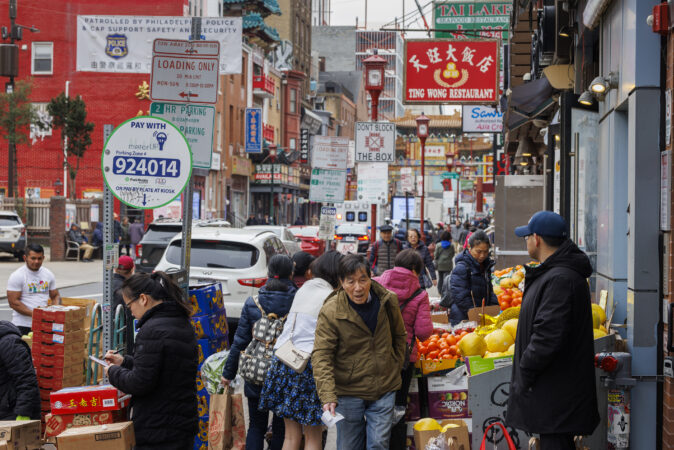
    Philadelphia’s Chinatown neighborhood has grown significantly over the last decade, but a majority of its gains in population and business have resulted in a decline in the share of Asian residents amid concerns over gentrification and displacement, according to a new report.

    And the situation is not unique to Philly, a study from the Asian American Legal Defense and Education Fund found. Its counterparts in New York City and Boston — both also historic Chinatowns — are facing similar pressures.

    All three cities’ Chinatowns, in fact, saw declines in their share of Asian residents from 2010 to 2020, the report found. The findings in Philly, meanwhile, come following years of the neighborhood staving off locally planned developments that may have resulted in additional challenges for residents — including the proposed billion-dollar Sixers arena effort abandoned in January after years of heated debate.

    “The Chinatown community is no stranger to fighting off large-scale and predatory development,” said the report from the fund, which provided legal support to community groups during the arena saga. “The arena would have devastated the neighborhood, bringing in a renewed wave of gentrifying pressure for residents and competition for local businesses.”

    The fund recommends that cities like Philadelphia enact community-focused rezoning efforts to protect their Chinatowns’ cultures from those pressures. But, as the report found, Philly’s Chinatown is already seeing substantial demographic shifts.

    For population and race data in 2000 and 2010, the study used the U.S. Census Bureau’s decennial census, which conducts a 100% count of the nation’s population. Figures for 2020 were drawn from estimates from the Census Bureau’s American Community Survey for the five-year period of 2018 to 2022, as the study’s authors cited possible data issues in the 2020 decennial census because of the pandemic and the proposed citizenship question.

    An Inquirer analysis that used the decennial census for both 2010 and 2020 shows that Asians remain the largest racial group in Chinatown, with their share of the population falling slightly, from 61% to 57%. White residents’ share of Chinatown’s population grew from 24% to 28%.

    Here are three takeaways from the fund’s report:

    An older, less Asian population

    Between 2010 and 2020, Chinatown’s population grew by 15%, from roughly 5,900 people to nearly 6,800. During that time, much of the growth was driven by an influx of white residents, with that group’s population growing by roughly 76% during that time — and becoming the largest racial group in the area — the report found.

    The overall number of Asian residents, however, remained roughly the same — 2,464 in 2010 vs. 2,445 in 2020. That proportion accounted for about 36% of the neighborhood’s population in 2020, decreasing from 42% in 2010. The white population, meanwhile, accounted for 44% of Chinatown’s residents in 2020, compared with 29% in 2010.

    As a result, the report notes, the area’s growth can be “entirely attributed” to a rush of non-Asian residents over the last decade covered by the U.S. Census. The proportion of Latino residents also increased significantly between 2010 and 2020, with that group growing by 36%, the report found.

    The neighborhood’s population also appears in part to be aging in place, with the number of people 65 and older almost doubling from 2010 to 2020, from 444 residents to 849. Simultaneously, its population of residents up to age 17 decreased by 15% during that time period, and the group ages 18 to 24 decreased by 37%. The group of residents ages 25 to 64, meanwhile, saw a “modest” increase of 22% from 2010 to 2020, the report found.

    Higher rent — and home values

    As the proportion of Chinatown’s Asian population decreased, its rent costs, house values, and homeownership rates all increased, the report found. House values in Chinatown, in fact, were more than double the citywide median in 2020, standing at more than $491,000 in the neighborhood compared with $236,000 in Philadelphia overall.

    Homeownership rates were lower in Chinatown than in the city at large, however, standing at 40% in 2020 compared with 52% citywide. Still, homeownership in Chinatown increased from 31% in 2010 while it fell marginally in the city overall from that year, when it stood at 54%. By comparison, Boston’s homeownership rate in its Chinatown stood at 7% in 2020, while New York’s Chinatown had a 15% homeownership rate that year, the report found.

    Rent in Chinatown was also higher in 2020 compared with the rest of the city, the fund’s report found. The neighborhood’s median rent stood at nearly $1,900, while the city’s was about $1,150 that year.

    Boston, New York, and Philadelphia, the report found, all saw the “transformation of former warehouses, tenement buildings, or rowhouses into luxury apartments and condominiums” over the last decade. Those developments, the fund noted, “fail to expand the housing supply for Chinatown community members” and contribute to rising rents and displacement of low-income residents.

    “Affordable housing is quickly disappearing in Philadelphia’s commercial core,” the fund’s report found.

    Largely local business

    In total, the study found that 92% of Chinatown’s commercial land parcels were small or local businesses in 2020, with restaurants and retail outlets making up a lion’s share of storefronts. Restaurants were the clear growth leader, increasing in number by 40% from the decade prior.

    Nearly all of Chinatown’s restaurants were located south of the Vine Street Expressway, the fund noted. Of those, Asian restaurants dominated the cuisine offered, with most eateries serving Chinese food.

    Still, despite the dominance of Asian restaurants in the neighborhood, Philadelphia did observe the largest shift in Asian to non-Asian restaurants of the three Chinatowns examined in the study. Over the last decade, the proportion of neighborhood Asian restaurants decreased from 85% to 62%, while the area’s non-Asian eateries more than doubled from 15% to 38%.

    The presence of national chains in Philly’s Chinatown doubled between 2010 and 2020, moving from 4% of all businesses to 8%, the study found. Retail stores, meanwhile, made up about 30% of commercial businesses in the neighborhood in 2020, the largest proportion of which were beauty and hair salons, followed by grocery stores and markets.

    Many newer businesses, the study noted, were tailored for younger customers, such as bubble tea and upscale dessert shops, as well as convenience stores that sell snacks rather than groceries — many of which lack indoor dining rooms. That shift may affect older residents, the fund noted.

    “As these types of indoor dining rooms disappear, Chinatown elders have fewer options to spend their time in safe and affordable spaces,” the study said.

    Clarification: This story has been updated to further explain the data used in the Asian American Legal Defense and Education Fund study.

  • New study on historic districts counters claim preservation limits development, housing

    New study on historic districts counters claim preservation limits development, housing

    For years, preservationists have countered claims that historic designation limits development and housing supply. Some neighborhood groups have gone as far as filing petitions to oppose new historic districts in Philadelphia on these grounds.

    Until recently, there was little data to challenge these assumptions. That changed when the Preservation Alliance for Greater Philadelphia commissioned PlaceEconomics to study preservation’s impact in Philadelphia.

    Although only about 5% of the city’s land and 4.4% of its buildings are listed on the Philadelphia Register of Historic Places — up from just 2.2% in 2016 — that expansion in designations shows how Philadelphia has begun to catch up with peer cities. This growth reflects both resident advocacy and the city’s expanded preservation capacity, which were spurred by efforts under Mayor Jim Kenney’s administration, including the convening of a Historic Preservation Task Force.

    The new report produced striking findings that flip the old narrative on its head: that preservation constricts housing supply and reduces density.

    In fact, the data show preservation supports growth and density. Population density in historic districts is 34% higher than in other neighborhoods, and housing units there grew 26% over the past decade, nearly triple the citywide rate.

    The study also found that older neighborhoods are becoming more diverse, with preservation helping sustain racial and economic inclusion. Nonwhite homeownership in these areas is rising faster than in the city as a whole, a clear sign that maintaining older housing can open doors to opportunity, not close them.

    It’s evidence that preserving the city’s older housing stock is a key component of Mayor Cherelle L. Parker’s H.O.M.E. Initiative to provide new affordable housing opportunities. Investing in these neighborhoods will support the growth of homeownership for Black and Hispanic populations.

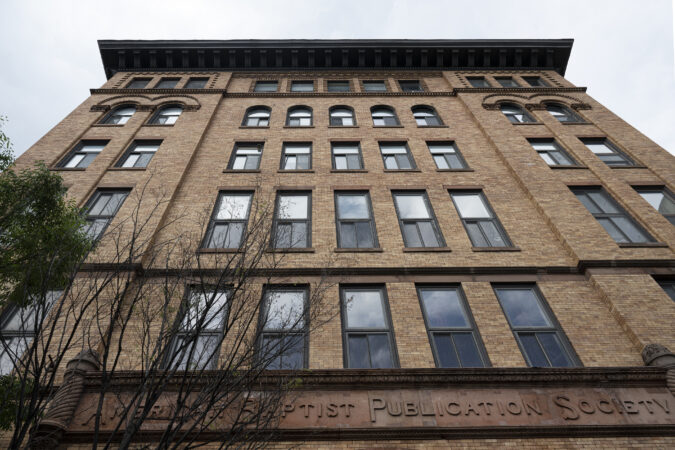
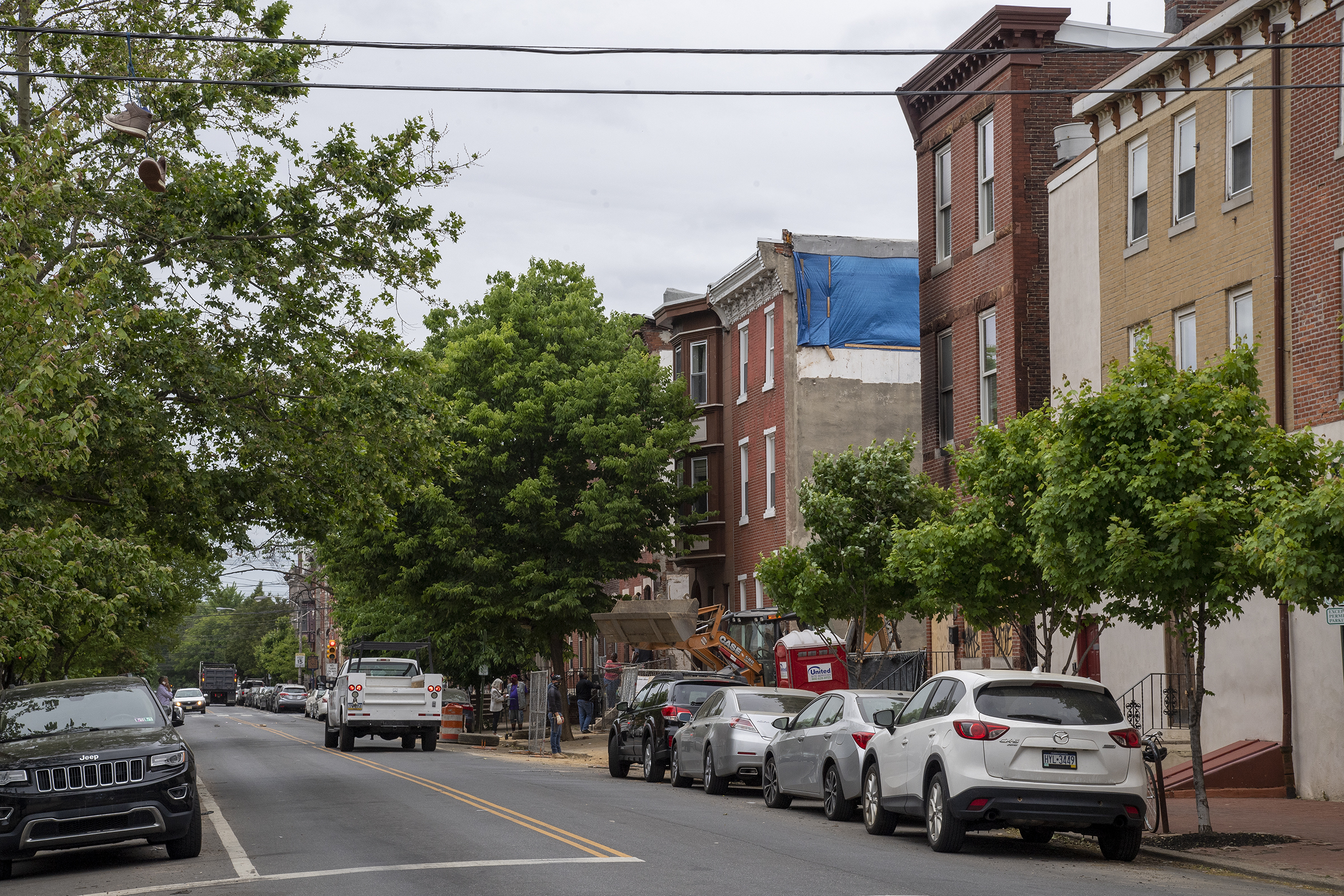
    The 1500 block of Christian Street in the historic Black neighborhood nicknamed “Doctors Row,” photographed in 2021.

    Beyond the data, historic neighborhoods offer beauty, character, and a sense of place that newer developments often struggle to match. Built long before cars shaped our neighborhoods, these areas were designed for people: compact, walkable, and full of architectural variety. Their mix of rowhouses, corner stores, and small apartment buildings naturally creates the kind of density and vibrancy that newer communities struggle to emulate.

    Moreover, many older neighborhoods were built at a time when transportation options were more limited, such as walking and transit, causing them to be more densely developed than later, automobile-oriented areas of the city. These neighborhoods were often built with a wide variety of housing types, including multifamily buildings that are inherently denser than neighborhoods of primarily single-family homes.

    Historic districts are simply desirable places to live. And that attracts housing developers seeking to put up new housing, whether on vacant lots or on parcels containing “noncontributing” properties, which can be demolished under Philadelphia Historical Commission regulations.

    These and other new buildings constructed within historic districts in recent years have been subject to Historical Commission review to ensure they do not detract from the character of the historic districts in which they were built.

    Preservation also fuels local jobs and investment. Philadelphia ranks among the nation’s leaders in historic tax credit projects, which, since 2010, have generated roughly 2,500 jobs and $141 million in annual labor income — a steady return that proves preservation is as much an economic strategy as a cultural one.

    Historic districts are living, breathing neighborhoods that welcome both new housing and new residents. The findings from the latest study should put to rest some of the more persistent claims of preservation’s detractors.

    Paul Steinke is the executive director of the Preservation Alliance for Greater Philadelphia.

  • Letters to the Editor | Dec. 4, 2025

    Letters to the Editor | Dec. 4, 2025

    As I say, not as I do

    The president was highly critical of universities for protests he claimed were antisemitic. We did not hear a peep from the president, though, when Young Republicans in chat rooms used repugnant, antisemitic language, or when Tucker Carlson chatted on his podcast with white nationalist Nick Fuentes.

    The president asked Republicans to release the Jeffrey Epstein files just 48 hours after he applied intense pressure on Lauren Boebert to change her vote on the discharge petition, which would have kept the files in the dark shadows where they have been for the last decade.

    As we seem to get closer and closer to military engagement in Venezuela, under the guise of stopping the flow of illegal drugs, our president has announced his plan to pardon Juan Orlando Hernández, the former president of Honduras and a convicted drug trafficker.

    I appreciate the way The Inquirer has covered these stories, and I hope you will continue to shine a light on these obscene examples of the president’s hypocrisy and moral bankruptcy.

    Rob Howard, Rosemont

    . . .

    Donald Trump announced a “full and complete pardon” for Juan Orlando Hernández, the former president of Honduras, who was serving a 45-year sentence in federal prison. He was found guilty, in a U.S. federal court, of conspiring to import cocaine into our country. In 2024, there were an estimated 1.3 million Americans aged 12 and older addicted to cocaine.

    Trump has murdered more than 80 people he suspected, with no evidence, of planning to bring drugs into our country.

    For Trump, being in a fast boat near the U.S. is proof enough of guilt, but a conviction in federal court is not. How’s that for a rational, effective drug policy?

    Is it possible that dirty drug money can buy a full and complete pardon?

    James A. Morano, New Britain Township

    Weaponizing truth

    I strongly disagree with Jonathan Zimmerman’s premise that calling the president a fascist doesn’t do anything to advance the Democrats’ cause. It’s similar to what happened almost 100 years ago in Europe when the Jewish people were saying the Nazi Party was dangerous and would destroy Germany. But that warning went unheeded.

    This isn’t an etiquette class or an English course at the University of Pennsylvania, Mr. Zimmerman; it’s the cold, hard world we’re living in. We should all be polite, but Donald Trump isn’t. He’s a bully, a name-caller, and he threatens people. Like those fascist Nazis 100 years ago, the MAGA movement, Project 2025, and Trump are all a threat to our democracy. If we don’t call Trump out for being the hateful, fascist liar he is — because it wouldn’t be nice or effective — what do you think is gonna happen? It’s gonna give Trump and his followers a signal that they can do even worse. Just look at Karoline Leavitt, Trump‘s press secretary, who usually responds to reporters’ questions as Trump does, with insults and division. And she’s been doing that since Day One. Zimmerman wants us to remain quiet about that?

    Michael Miller Jr., Philadelphia, michamille@comcast.net

    Join the conversation: Send letters to letters@inquirer.com. Limit length to 150 words and include home address and day and evening phone number. Letters run in The Inquirer six days a week on the editorial pages and online.

  • Horoscopes: Thursday, Dec. 4, 2025

    ARIES (March 21-April 19). You’re on a roll with a clear head, taking deliberate steps. You’ll handle one thing at a time and finish strong. What makes this possible? Good rest. Good habits. Be sure to give credit where credit is due.

    TAURUS (April 20-May 20). If you place too much expectation on one person or subject, life falls out of balance. Spread your attention around. Take breaks, change the scenery and allow for “time wasting” distraction, because novelty keeps your energy high.

    GEMINI (May 21-June 21). You’ve worked hard. You’ve earned your skills. Now all you have to do is trust them. Use what you have. It’s enough. Confidence isn’t pretending, it’s remembering you’ve done this before.

    CANCER (June 22-July 22). While you chew on a hard truth, a white lie is on your lips. Social niceties can be the most compassionate way to go. All will come to the truth eventually, each adjusting to reality at their own pace.

    LEO (July 23-Aug. 22). An old fear may find its way back. This fear is not the enemy; it just wants a minute. You’re older and wiser now. You can listen to what fear has to tell you and take what’s useful. Once it feels heard, it quiets down or maybe leaves entirely.

    VIRGO (Aug. 23-Sept. 22). Whether someone comes through for you is besides the point. Regardless, real security comes from your own integrity and preparation. Even the kindest person can fail you, so build your peace on what you can control — your own choices.

    LIBRA (Sept. 23-Oct. 23). Human chemistry is unpredictable. Throw the theories out the window and go for a real-life experience. Data comes from presence, not speculation. Meetings, rehearsals, collaborations and relationships all reveal their truth only when lived.

    SCORPIO (Oct. 24-Nov. 21). You’ll notice people around you dragging today — tired, distracted and stuck in their heads. Then there’s you, breaking the spell with humor, kindness and your superstar smile. Wherever you go, your energy changes things.

    SAGITTARIUS (Nov. 22-Dec. 21). You’re usually quick to pick up on things, but today you’re downright telepathic. A look, a tone, a pause — that’s all it takes. You’ll read the room perfectly and respond like a pro.

    CAPRICORN (Dec. 22-Jan. 19). Mild feelings like boredom or awkwardness can be tricky to overcome because they don’t come with the motivational adrenaline rush of hotter feelings like fear or passion. You’ll have to take charge to move your mood, and so you will.

    AQUARIUS (Jan. 20-Feb. 18). You’re ready to take a risk, especially with your work, which deserves more exposure. Show the world what you can do, and let the world show you the needs and niches you can fill.

    PISCES (Feb. 19-March 20). People take your agreement for granted. Dare to be a little disagreeable today. Throw in a “no” or a “maybe” or an “I’ll think about it.” If you always say “yes,” then agreement is not really a decision; it’s a default.

    TODAY’S BIRTHDAY (Dec. 4). Welcome to your Year of Mastery and Reward. What you’ve practiced for years suddenly clicks. You rise to meet the moment and exceed it. One new influence makes a huge difference. Look for the spark in bright eyes, quick wit and a flash of imagination. You’ll spot it the moment it looks back at you — fire! More highlights: a sweet financial comeback, joyful reunions and renovations that bring ease to daily life. Virgo and Aries adore you. Your lucky numbers are: 19, 42, 16, 5 and 30.

  • Dear Abby | Argumentative, abusive brother alienates family

    DEAR ABBY: I have a brother who is very opinionated and in my face any time I don’t agree with him. It doesn’t matter what the subject is; he thinks he’s the only one who knows anything about it. He is not educated, but he thinks he’s smarter than everyone else, even educated people.

    He won’t let me get a word in while he’s yelling and screaming in my face. He resorts to name-calling, telling me I’m wrong and calling me stupid. Later, he sends emails and texts trying to prove to me why I am wrong. I think he is abusive and has a mental disorder. He has accomplished nothing in his life.

    My husband and I have careers. If I try to remain quiet around my brother, he starts aggravating me to get a reaction. He has alienated my family. No one wants to be around him. What’s the best way to shut him down to make whatever time we have to spend together more civil?

    — SMART SIS IN MISSISSIPPI

    DEAR SIS: No magic formula will shut down your abusive, immature and possibly mentally ill brother. Accept the fact that you can’t change him, and save your sanity by avoiding him as often as possible.

    ** ** **

    DEAR ABBY: I recently asked a friend to cat-sit while I was out of town for a few days. We agreed she would stop by daily to feed my kitty, refresh her water and spend a little time with her. When I returned, I noticed several signs that she hadn’t been coming by every day — food bowls untouched, litter box fuller than it should’ve been, and a very lonely (and vocal) cat.

    I haven’t confronted my friend yet, but I’m hurt and disappointed. I trusted her with my pet’s care. I would have made other arrangements had I known she couldn’t commit. I don’t want to jump to conclusions, but I also feel I can’t just brush this off. How do I approach this conversation without blowing it out of proportion or damaging the friendship, while still addressing that this wasn’t OK

    — CAT LADY IN MICHIGAN

    DEAR CAT LADY: One can only wonder what else this friend is irresponsible about. However, I do not endorse “taking her to the woodshed.” In the future, when you plan to travel, make other arrangements for the care of your cat. This person was less than purr-fect.

    ** ** **

    DEAR ABBY: I have always wanted to do some exotic travel. I’m retired now, but my wife has medical issues. She can still drive, shop, etc., but international travel would be too much for her.

    I don’t mind traveling alone, and I have saved up enough with such trips in mind. I don’t want to be selfish, but I want to see parts of the world I have yet to see. What’s fair?

    — FUTURE TRAVELER IN CALIFORNIA

    DEAR TRAVELER: Fortunately, your wife is still somewhat independent and could manage in your absence. What is “fair” would be for you to discuss this with her and negotiate an agreement that’s acceptable to both of you. If your wife would like to travel a bit, perhaps you could split your savings between short domestic excursions with her and solo trips abroad.

  • Five Flyers score, including 3 goals in 59 seconds, in 5-2 win vs. the Sabres

    Five Flyers score, including 3 goals in 59 seconds, in 5-2 win vs. the Sabres

    With leading scorer Tyson Foerster out 2-3 months after getting injured in Monday’s 5-1 loss to the Pittsburgh Penguins, there were questions about how the Flyers would find offense.

    The answer? Easily.

    The Flyers beat the Buffalo Sabres 5-2 for their fourth win in the past five games. Since losing two straight in mid-November to the Ottawa Senators and Edmonton Oilers, they have gone 7-3-0 and have not lost two in a row since.

    They did lose defenseman Cam York late in the second period. After Trevor Zegras was boarded by Sabres captain Rasmus Dahlin in the offensive zone, York was involved in a scrum. He did not return and coach Rick Tocchet said postgame he thought it was an upper-body injury.

    “I think he got hit behind the net, or something,” Tocchet said. “We were trying to look for it. But I think he got hit behind the net a little bit late or something. I haven’t talked to the doctors.”

    Dahlin was assessed a five-minute major and was ejected from the game, but the Flyers did not score on the power play.

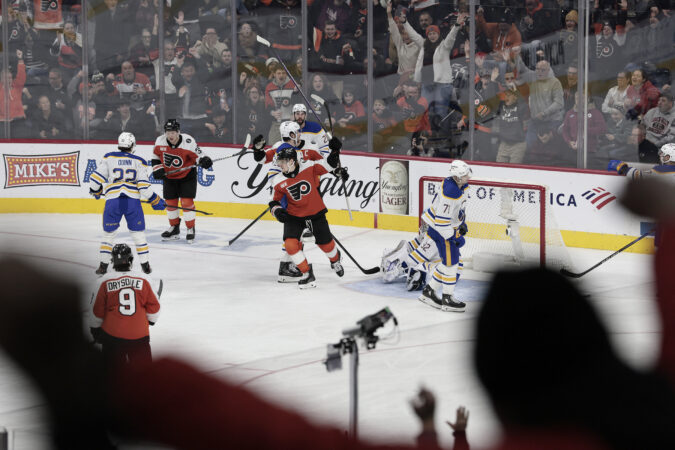
    But they had already scored a pair with the man advantage. It came in the first period when the Flyers scored a trio of goals after — no surprise here — trailing 1-0.

    Travis Konecny scored on the power play to tie the game 1-1 while on the ice with the revamped unit of Zegras, Travis Sanheim, Owen Tippett, and Matvei Michkov. Konecny got the puck along the boards and carried it above the left faceoff circle and toward the middle before putting the puck past the blocker of Sabres goalie Colten Ellis for his sixth goal of the season.

    The Sabres challenged the call with Tippett in front, but the video review confirmed that there was no interference before the goal. Because of the failed challenge, the Flyers went right back on the power play.

    Flyers goaltender Sam Ersson makes a save on a shot from Sabres’ Josh Doan in the first period.

    Zegras scored his 10th goal of the season on the ensuing man advantage. It tied him with Foerster for the team lead.

    The Flyers moved the puck around the outside well. Konecny skated down the left boards before sending the puck back to Sanheim to open space. The defenseman saw Zegras with his stick up in the air, awaiting the pass above the right circle. After receiving it, he put the puck toward the net, and it ended up going off the skate of Buffalo’s Ryan McLeod to give the Flyers the lead 38 seconds after tying the game.

    Zegras said postgame he was actually looking to get the puck to Konecny across the ice.

    Twenty-one seconds later, it was 3-1. After putting the follow line of Noah Cates, Bobby Brink, and Nikita Grebenkin — who was promoted to the top nine after the Foerster injury — on the ice, the trio connected.

    Grebenkin deflected a pass intended for Tage Thomson and collected the puck inside the blue line before feeding Brink, who dropped it to Cates. The center put the puck on goal, and Brink cleaned up the rebound for his seventh goal of the season. It gave the Flyers three goals in 59 seconds.

    In the second period, it was Brink who fed Cates for the goal seconds after a Flyers power play ended. Jamie Drysdale got the loose puck and carried it to the middle of the ice before dishing to Brink atop the right circle. He carried it down and set up Cates for a redirect and his sixth of the season.

    Later in the period, Tippett made it 5-1 with his third goal in three games. Emil Andrae kept the puck in at the blue line and sent it down the boards to Sean Couturier, who sent a no-look pass to Michkov. The Russian winger then did the same to Tippett with Mattias Samuelsson, the son of former Flyers defenseman Kjell Samuelsson, on him.

    Tippett went backhand to forehand and had his initial shot go off Ellis’ shoulder. But the Flyers forward stuck with it and battled the puck out of midair for his ninth of the season.

    Tocchet didn’t like the first goal the Flyers gave up. After Monday’s game, he chastised the penalty kill, citing that he didn’t like the structure; he prefers an aggressive diamond and hates the box. Well, the goal by Sabres forward Jason Zucker was because the penalty kill fell into the box and he was able to score in front off a pass from Josh Doan.

    Buffalo’s second goal of the night, which made it 4-2, came off the stick of Bowen Byram. On a bouncing puck, the defenseman fired the puck past Flyers goalie Sam Ersson.

    Breakaways

    The Flyers now have 11 comeback wins and are 10-6-2 after trailing first. Both lead the NHL. … Ersson made 27 saves, and the Flyers put 35 shots on goal. The Flyers’ goalie is now 5-2-2 on the season. … Forward Carl Grundström, who was recalled from Lehigh Valley of the American Hockey League on Tuesday, and defenseman Noah Juulsen were the healthy scratches. … The Flyers challenged a goal by the Sabres in the third period, and it was determined that Buffalo was offside.

    Up next

    The Flyers have a few days between games, but next face the NHL’s top team, the Colorado Avalanche, on Sunday (1 p.m., NBCSP). How good are the Avalanche? They’ve lost once in regulation this season.

  • Overnight closures to begin on westbound I-76 at 30th Street, PennDot says

    Overnight closures to begin on westbound I-76 at 30th Street, PennDot says

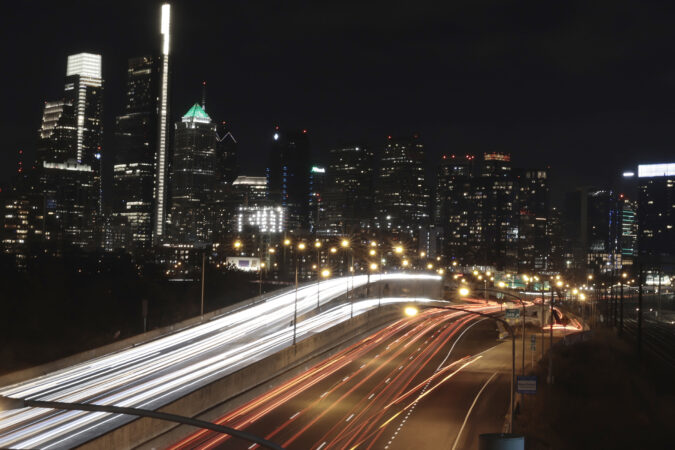
    The Pennsylvania Department of Transportation said lane restrictions and overnight closures will begin Sunday and last until June for a short westbound stretch of the Schuylkill Expressway at 30th Street to allow for overhead bridge construction.

    The work is part of a $148.9 million project to rehabilitate the bridges that connect Market Street over Amtrak and I-76, the Schuylkill River Trail, and CSX Railroad, PennDot said Wednesday.

    On Sundays through Thursdays from 9 to 10 p.m., I-76 West will be reduced to one lane between 30th Street and the I-676 interchange.

    Then from 10 p.m. to 5 a.m., all the westbound lanes will be closed and traffic will be detoured at 30th Street onto Schuylkill Avenue to then access the ramps to I-76 West and I-676 East.

    The changes will last through June 1.

    Because of the forthcoming holidays, there will be no overnight closures from Dec. 21 through Jan. 3.

    PennDot said motorists can visit www.marketstreetbridges.com to sign up for email notifications and learn more about the project.

  • Jason Kelce’s belly bucking competition, concerns with Eagles offense, and more from latest ‘New Heights’

    Jason Kelce’s belly bucking competition, concerns with Eagles offense, and more from latest ‘New Heights’

    For the second straight week, Jason Kelce went on his New Heights podcast to break down an Eagles loss — this time, to the Chicago Bears. Reacting to the offense’s struggles, Kelce is hopeful that right tackle Lane Johnson’s return and the Eagles’ continued use of motion will be the key to the team’s turnaround.

    Along with his brother and co-host Travis, Jason discussed his pregame tailgate at Lincoln Financial Field, and was joined by George Clooney to end the episode.

    Here’s what you may have missed …

    At least one Eagle showed up

    Despite the lackluster product on the field, Kelce made his Black Friday tailgate one for the ages.

    Dubbed the belly bucking championship, Kelce hosted his first-of-its-kind tournament in which Eagles fans were pitted against each other in shirtless sumolike wrestling.

    “No Shirt Dom came out victorious,” Jason said. “We were kind of making up the rules as it went … I mean, go figure, a guy who is committed to not wearing a shirt wins the belly bucking competition.”

    Retired Eagles center Jason Kelce greets fans at an impromptu appearance at a pregame tailgate before an Eagles game last year.

    The winner wore a chain featuring a pendant depicting a crossed-out shirt, acting as a fitting celebration for the event. Kelce, not one to be undone, also went shirtless and entered the ring.

    “I’m not going to lie,” Jason said. “I did kind of make the belly bucking competition just so there was something that, at one point, I knew I would eventually get in some belly action.”

    “Me and No Shirt Dom … we decided to have a little friendly one,” Jason added. “That wasn’t really a bucking, that was an offensive linemen duck walking, getting the hips in there. … I don’t think Dom was ready for it.”

    Bad news Bears

    Travis opened up the show’s segment on the Birds by complimenting Chicago’s turnaround from their 5-12 record last year under new head coach Ben Johnson, who took his shirt off in the locker room to celebrate after the team’s Black Friday victory in Philly.

    Watching the carnage unfold, Jason reminisced on how Nick Sirianni brought similar vibes to the Eagles locker room.

    “Nick Sirianni has had that,” Jason said. “That’s what’s frustrating, I think right now the Eagles are trying to figure this thing out, they are trying to get this offense going, and playing the Bears … you can feel the energy and excitement that team has.”

    Confident in the team’s desire to get better, Jason believes the improvement of the offense hinges on Johnson’s return — despite the offense struggling even with Johnson on the field earlier this season.

    “Lane Johnson coming back will be huge,” Jason said. “Even though Fred has done well, especially in pass [protection]. I think the run game is close, I know it hasn’t manifested yet. It’s frustrating watching because you know it can be so much better. I think with the health that is starting to come, it will only improve.”

    The six-time All-Pro center was happy to see the Eagles’ improvements in the passing game — specifically moving wide receivers around the field more often as the team currently ranks in the bottom five in pre-snap motion in the NFL. Admitting he doesn’t know much about route trees and coverages, Jason let Travis take over to breakdown how movement can benefit an offense, with the Chiefs tight end being plenty familiar with motion under Andy Reid.

    “You watch the Chiefs play, you see me moving around all the time,” Travis said. “I move from one side of the line to the other side of the line, and what that does for the defense is it changes passing strength, it changes rules on how they’re going to pass off routes, it changes how they have to fill gaps.”

    “All of a sudden, you’re snapping the ball while they’re still trying to figure out how they need to adjust,” Travis continued. “If you use that to your advantage, [expletive] is only going to make things way easier as a route runner and as an offense.”

    Despite all the injuries, recent struggles, and added pressure applied through the recording of Hard Knocks, Jason is confident it will all come together by the end of the season.

    “More than ever, the NFL is wide open,” Kelce said. “We’re 8-4, we got time to figure this out.”

    George Clooney joined the Kelce brothers on the latest “New Heights” podcast.

    George Clooney was there?

    In an odd turn of events, famous actor Clooney joined the show — taking over the mic to choose sides between the two hosts.

    “Jason, I dig you man,” Clooney said. “You’re NFC, you’re a Hall of Famer, I can show some love for you. Travis, you broke me man. I’m a Bengals fan dude, I grew up in Cincinnati.”

    Taking 30 minutes to haze Travis, discuss his new movie Jay Kelly, and to talk ball — Clooney bonded with Jason before the end of the episode. Normal Batman shouting out fat Batman (Jason) wasn’t on my bingo card, but Clooney is a welcome addition to the team nonetheless.