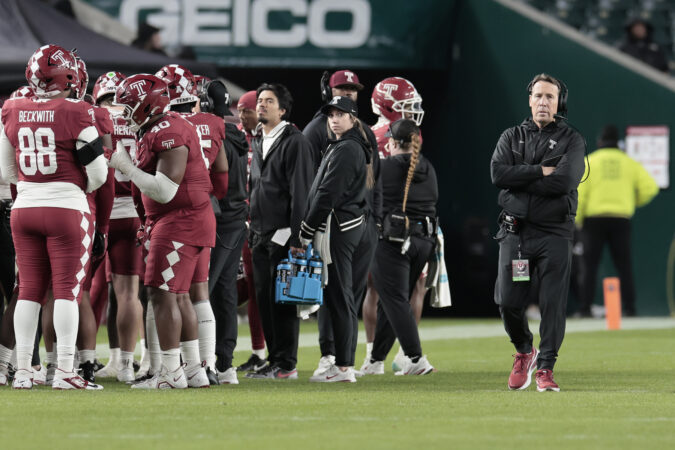
Wednesday’s early national signing day kicked off Temple coach K.C. Keeler’s first full offseason with the Owls. Keeler was hired on Dec. 1, 2024, but this will be his first recruiting class.
Temple announced the signing of 33 players on Wednesday. The program’s recruiting class is ranked No. 62 in the country and No. 1 in the American Conference, according to 247 Sports. Of the signed players, 21 will join the team in January, when the spring semester begins. This is the largest recruiting class in program history.
“The recruiting really started as soon as the season was over, in terms of this building, that’s where you start your recruiting,” Keeler said. “That’s our philosophy, is recruit the locker room. We’ve been recruiting the locker room since the first day we got here, because it’s about culture and trying to keep your guys here, and them believing that you know they’re better off staying here than going someplace else.”
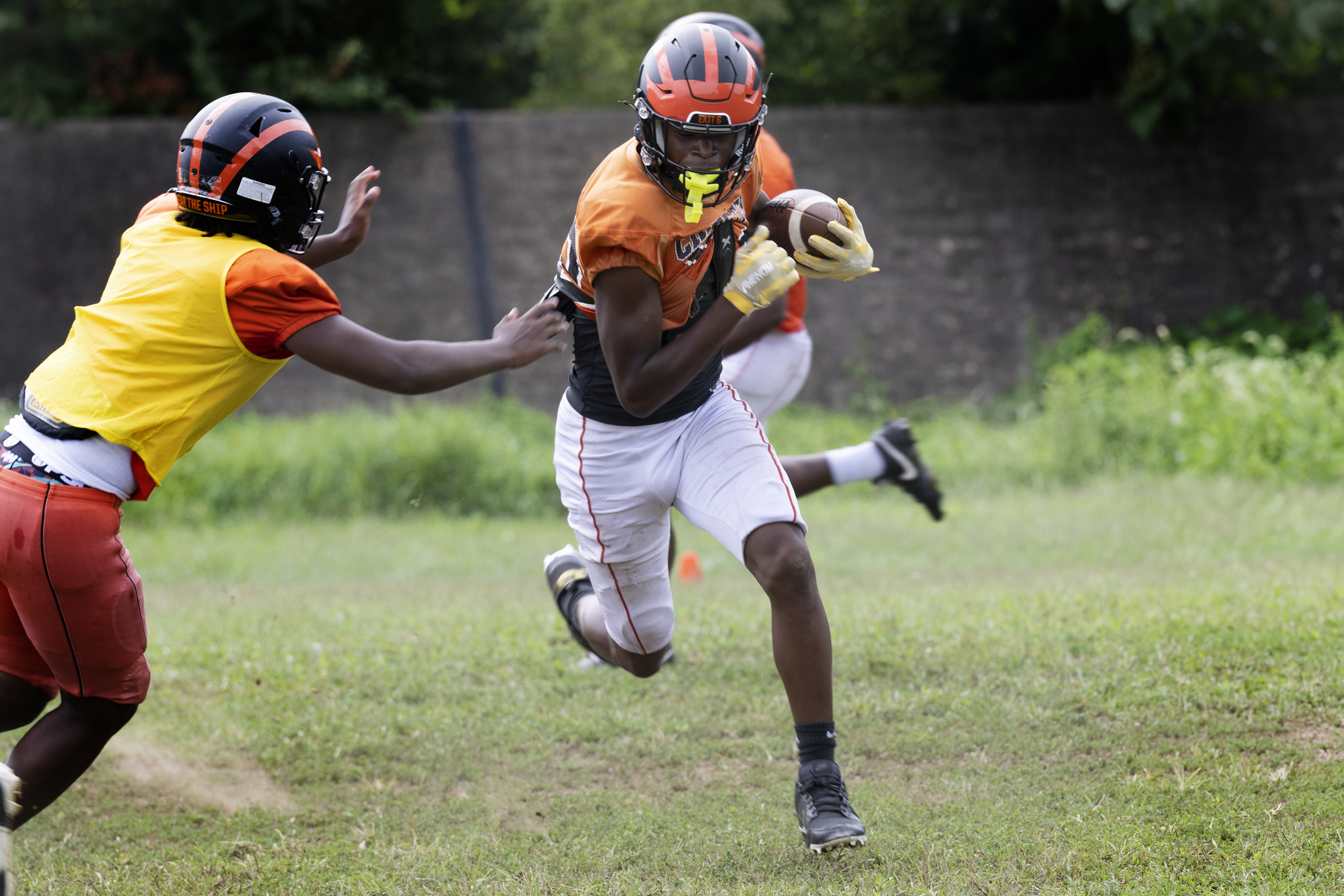
Keeler has emphasized the importance of local recruiting. Temple signed 22 players from Pennsylvania, New Jersey, and Delaware, with five playing high school football in the Philadelphia area.
“The recruiting staff has a lot of regional ties, so we’re able to connect with a lot of people that [we] probably wouldn’t have been able to if we weren’t structured that way,” Keeler said. “I think we’ve made a lot of strides very quickly and I think we can even make more strides. For a first year, from Day 1 to Day 365, I think it’s a pretty darn good class.”
Two notable players from the area are the Roman Catholic tandem of Eyan Stead Jr. and Ash Roberts. Stead played defensive back and wide receiver for the Cahillites, but Keeler and general manager Clayton Barnes expect him to be a safety for the Owls. Roberts will play receiver. He earned first-team All-Catholic League honors after posting 745 yards and 10 touchdowns on 53 receptions.
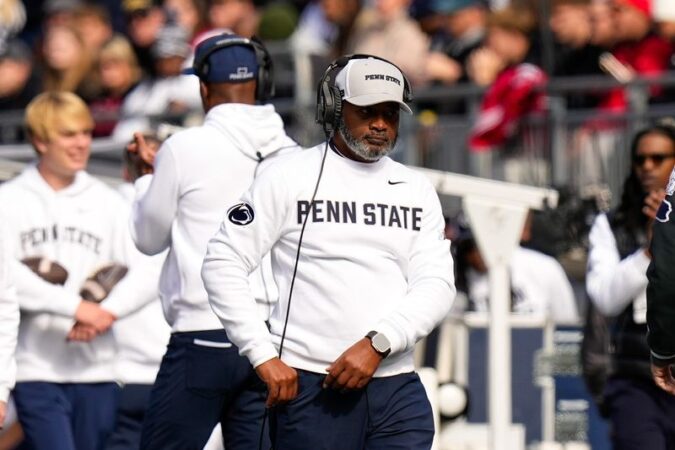
Chester High’s Daron Harris will likely play safety with the Owls.
Chester High’s Daron Harris is another local signee who likely will play safety for the Owls. He had 1,818 yards and 25 touchdowns as a wide receiver, while also producing 36 tackles and four interceptions at safety this season.
Harris intends to join the team in January. The Owls had just four freshmen join the team early last season. The extra depth will allow players to get a head start in the offseason.
“The fact that you have [21] early enrollees is going to make a big difference,” Barnes said. “Because getting that full offseason is going to get them more physically ready to be able to play as true freshmen.”
One position of need that the Owls looked at was quarterback after losing starter Evan Simon and backups Gevani McCoy and Anthony Chiccitt to graduation. Temple added three quarterbacks in Brady Palmer of Bloomingdale, Ill., Brody Norman of Mooresville, N.C., and Lamar Best.
Palmer and Norman committed in June, while Best backed out of a commitment to Delaware. Best, a Willingboro native, played two seasons at St. Joseph Regional in Bergen County, where he amassed 76 passing touchdowns. He suffered an injury toward the end of this season but led the team to a state championship appearance, where it defeated Don Bosco Prep.
Temple plans to add at least two quarterbacks through the portal. Then the Owls will have a competition to decide who will succeed Simon.
Temple also brought in five junior college players.
Cornerbacks Asa Locks, a transfer from Iowa Western who had three interceptions this season, and Nakeel Lawrence, an all-conference player out of Butte College in California, will look to make an immediate impact.
“In the defensive backfield, we have a mixed bag of high school kids and older kids, junior college kids, because we graduate quite a few in the secondary, [at] both safety and corner,” Barnes said. “So we had to bring a lot of guys from the high school ranks and we had a couple of older kids.”
Temple will use the rest of the winter to add transfers and JUCO players, as the transfer portal opens Jan. 2.
“That’s kind of the next phase in our recruiting,” Keeler said.
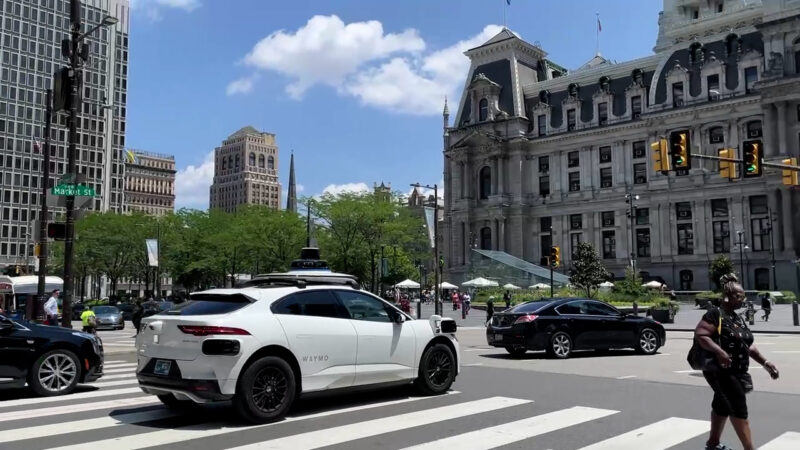
Waymo, the self-driving car company owned by Google’s parent firm, said Wednesday that it has begun autonomous tests in Philadelphia and expects to offer its robo-taxis to customers at some point afterward.
“We’re making it official, Philly: Waymo will bring our service to the City of Brotherly Love!” the company announced on its website.
Ethan Teicher, a spokesperson for Waymo, said in an email: “We recently began driving autonomously with a specialist behind the wheel, after securing permission to do so from PennDOT. We’ll continue laying the groundwork in Philadelphia to open our fully autonomous ride-hailing service for the public in the future.”
In July, a Waymo spokesperson said the company would begin mapping Philadelphia’s neighborhoods, manually “driving through the most complex parts of the city, including downtown and freeways.”
In its Wednesday announcement, Waymo said it will begin the mapping process in Pittsburgh, and noted that city’s connection with autonomous driving history. Carnegie Mellon University, which is located in Pittsburgh, is known as the birthplace of self-driving technology.
Under a 2022 Pennsylvania law legalizing the commercial operation of “highly automated vehicles,” Waymo needs a “certificate of compliance” to conduct autonomous testing in specified locations. In July, the Pennsylvania Department of Transportation said it was reviewing an application from Waymo.
The only other company with a certificate for the city is Perrone Robotics, which operates a self-driving shuttle service at the Navy Yard.
In New Jersey, state law does not allow for commercial services using self-driving vehicles on public streets. Legislation recently was introduced to create a pilot program requiring three years of testing with a human driver in the vehicle.
Waymo offers self-driving taxi service in Los Angeles, San Francisco, Phoenix, Austin, and Atlanta, and has test-driven in dozens of other cities. Testing began in New York City this summer.
Currently, the company says it is performing a total of 250,000 rides a week using fully autonomous electric vehicles.
A spokesperson for Mayor Cherelle L. Parker said Wednesday that the mayor and other city officials are “closely monitoring Waymo and its plans for Philadelphia” but declined to elaborate.
Besides mapping and testing its vehicles, Waymo has “engaged with community organizations” in Philadelphia and Pennsylvania, including the Bicycle Coalition of Greater Philadelphia and the National Federation of the Blind of Pennsylvania, said Teicher, the company spokesperson.
In the company’s announcement, it included a statement from Samantha Civitate, the Pennsylvania state director for Best Buddies, a nonprofit that brings together volunteers and people with intellectual and developmental disabilities.
“Accessible transportation remains a vital piece of fostering independence and inclusion,” Civitate said.
There has been no groundswell of opposition to Waymo coming to Philadelphia. The company, however, has had to deal with recent incidents elsewhere that have generated negative attention.
A Waymo taxi in Los Angeles was caught on video making a left turn just feet away from an incident involving police officers positioned behind their vehicles shouting commands at a suspect who was lying facedown on the ground, apparently waiting to be arrested.
In San Francisco on Sunday, a Waymo taxi hit an unleashed dog, which reportedly needed to be euthanized because of its injuries.
Waymo vehicles have also been targeted, though mainly because they were in the wrong place at the wrong time. In June, several Waymo taxis were burned during anti-ICE protests in Los Angeles. The company temporarily halted service in the area.
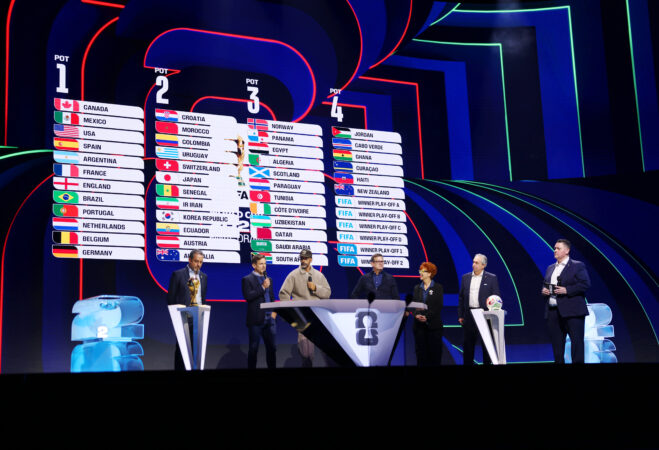
WASHINGTON — At some point between noon and 2 p.m. on Friday, the World Cup group draw will tell us which teams the United States will play in next year’s tournament. We’ll also get the first hints of which teams will come to Philadelphia, although the schedule won’t be set until Saturday.
Along the way, there will be jokes from Kevin Hart, singing from Andrea Bocelli, and appearances from Tom Brady, Wayne Gretzky, Shaquille O’Neal, and Aaron Judge. President Donald Trump also will be involved, having steered FIFA to move the event from Las Vegas to the Kennedy Center in D.C.
Not only was FIFA president Gianni Infantino happy to oblige his friend, but the global governing body added the Village People (of Trump favorite “Y.M.C.A.” fame) to the list of performers.
But somewhere amid all that, there will be sports, too. Tournament draws weren’t always as much of a spectacle, but they’ve always been a dramatic part of soccer’s tapestry.
The men’s World Cup trophy on display Wednesday at the Kennedy Center in Washington, where the draw will take place Friday.
Once the pots of seeds were set last month — four groups of 12 each, with the cohosts and the top nine teams in FIFA’s rankings in Pot 1 — the speculation began worldwide. How about England vs. Scotland, or the Republic of Ireland, Wales, or Northern Ireland if they get through Europe’s last qualifying playoffs?
How about a Spain-Morocco rematch of a 2022 World Cup epic? If Italy gets through the playoffs, which teams will it face in its first men’s World Cup in 12 years? And what powerhouses will underdogs like Haiti, with the Union’s Danley Jean Jacques, get to challenge?
Then, of course, there are matchups that resonate off the field. For all the efforts to keep sports and politics separate, soccer has always been the most political sport. So will the U.S. play Iran for a second straight men’s World Cup, and a third overall? There are sparks already, as Iran has boycotted the draw, since some of its delegates were refused visas.
As you wonder, here are three rules to consider. First, teams from the same continent can’t be drawn in the same group except for Europe, which has 16 berths in the first 48-team World Cup. There must be one European team in each group, and there can’t be more than two.
The famous draw balls in one of the bowls on stage, waiting to be picked up.
With that in mind, here are our picks for the easiest, hardest, most festive, and most politically controversial groups that the U.S. could end up in:
The picks
The easiest group: Austria, South Africa, Jordan. There are lower-ranked European teams in the playoffs than No. 24 Austria, but the case here is about the opponent you know vs. the opponent you don’t.
Since Austria is in Pot 2, drawing that country would spare the U.S. from big hitters like Croatia, Colombia, Morocco, and Japan. From there, South Africa would give the U.S. a better tactical matchup than the rest of Pot 3, whose teams span Europe, Africa, South America, Asia, and Concacaf.
Having picked South Africa from Pot 3, all the African teams in Pot 4 are off the table. So we’ll go to Asia for Jordan, a World Cup debutant ranked No. 66. And we’ll wish Cape Verde, with former Union midfielder Jamiro Monteiro in a starring role, all the best.
Former Union midfielder Jamiro Monteiro (right) helped Cape Verde qualify for its first World Cup.
The hardest group: Morocco, Norway, Italy if it qualifies. Morocco edges Croatia and Colombia from Pot 2 for talent — led by Paris Saint-Germain’s Achraf Hakimi — and a vibrant, gritty playing style.
In Pot 3, Norway has finally delivered Manchester City superstar striker Erling Haaland to his first World Cup, along with outstanding Arsenal playmaker Martin Ødegaard.
In Pot 4, we turn to the European playoffs. Italy never needs much introduction, though it bears repeating that the Azzuri truly blew it in failing to reach the 2018 and 2022 World Cups. The current squad features goalkeeper Gianluigi Donnarumma and midfield generals Nicolò Barella and Manuel Locatelli.
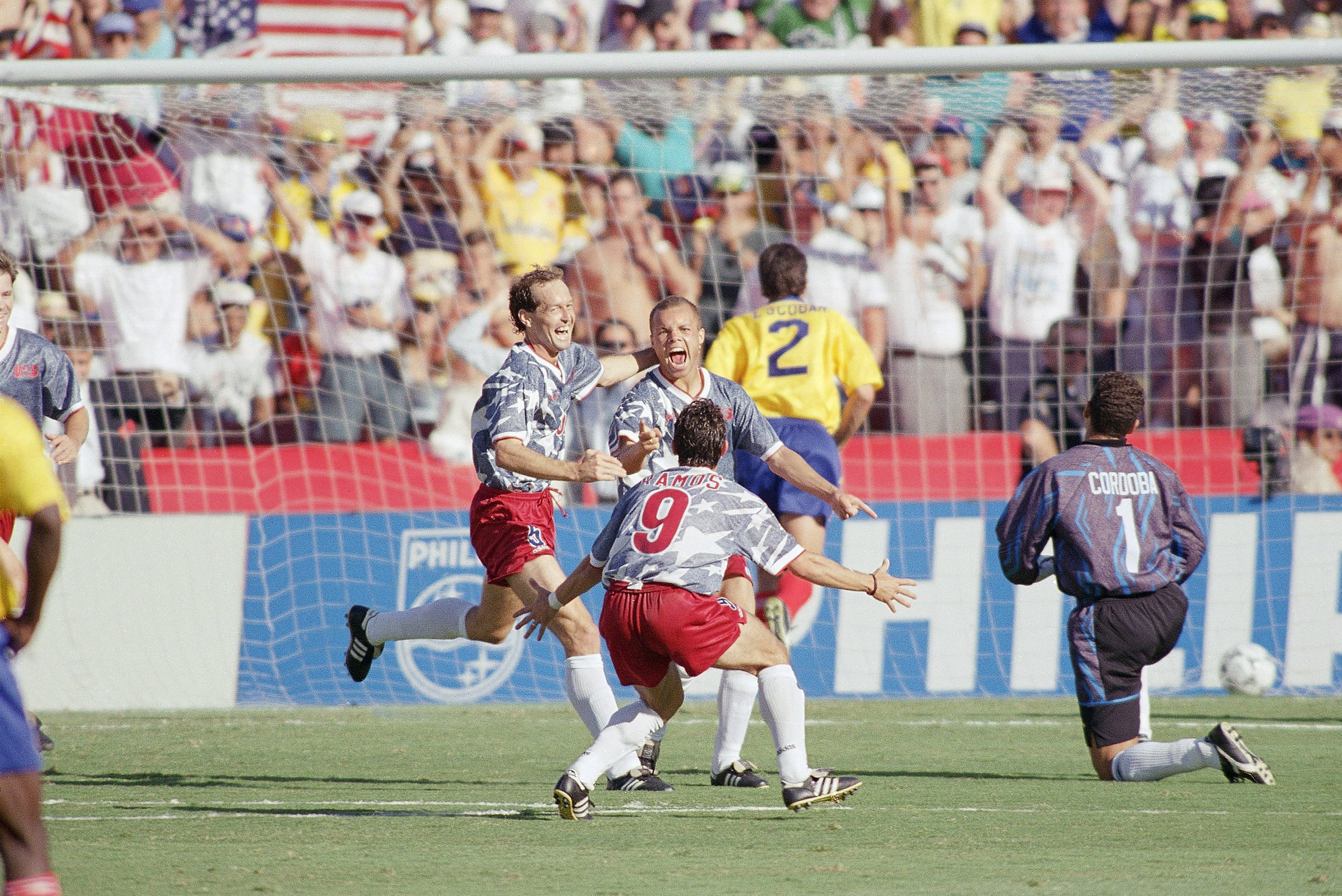
The most festive group: Colombia, Scotland, Republic of Ireland. A U.S.-Colombia game would be a headache for the American squad but would bring back epic memories of the 1994 upset at the Rose Bowl. The Cafeteros’ fan base is also as good as it gets in South America, especially with the country’s big immigrant population in this country.
Former Union sporting director Earnie Stewart (center) scored in the United States’ upset of Colombia at the 1994 World Cup.
Scotland and Ireland’s fan bases are massive, loud, and fun-loving. The Scots are in a men’s World Cup for the first time since 1998, and the Tartan Army will travel in huge numbers — buoyed by expats here and anyone who wants to feel the part for a day.
The same goes for Ireland if it gets through a tricky qualifying playoff with Czechia, North Macedonia, and favorite Denmark. But if the Irish make their first World Cup since 2002, the sea of green will flood the States. New Jersey’s Meadowlands still echo with the raucous noise of the 1994 Ireland-Italy game.
The most political group: Iran, South Africa, Ukraine if it qualifies. A combustible mix of war, immigration, race, and religion that spans as widely as three continents.
The teams Philadelphia fans should want
As the city saw up close during the Club World Cup this summer, there’s no party in soccer like a South American party. Argentina, Brazil, and Colombia have the continent’s biggest fan bases in the U.S., and the first two would bring global superstars in Lionel Messi or Real Madrid’s Vinícius Júnior.
40' ⚽ GOAL — VINÍCIUS JR!
A touch of class from the Brazilian as he puts Real Madrid in front.
Philly fans got to know Brazil’s new phenom, 18-year-old Estêvão, when he scored for Palmeiras against Chelsea in the Club World Cup at Lincoln Financial Field — then joined the Blues a few weeks later.
It’s already set that the U.S. won’t play in the nation’s birthplace during the group stage, to the dismay of fans here and well beyond. But from the rest of Pot 1, France would bring the most star power from Europe, and the Netherlands‘ dancing masses would paint the town oranje.
In Pot 2, no player is more worth watching than Croatia’s Luka Modrić. Even at age 40, his passing skills are unparalleled as he heads into his last World Cup. Japan, South Korea, and Morocco have vibrant fan bases, and the latter two have big expat communities in this part of the U.S.
In Pot 3, Scotland easily is the team you’d want most — and that every hotel, bar, and restaurant would dream of. Egypt would bring another superstar in Liverpool’s Mohamed Salah.
Pot 4 is where the Union ties are. It would be special for Jean Jacques to play in his club hometown with Haiti or for Monteiro to come back to town with Cape Verde’s Blue Sharks.
The biggest of all on that scale would be if Jamaica gets through the intercontinental qualifying playoffs to earn its first men’s World Cup trip since 1998, finally delivering Andre Blake to a stage he deserves. And the turnout from Jamaican fans would be epic, in a city they love coming to for the Penn Relays.
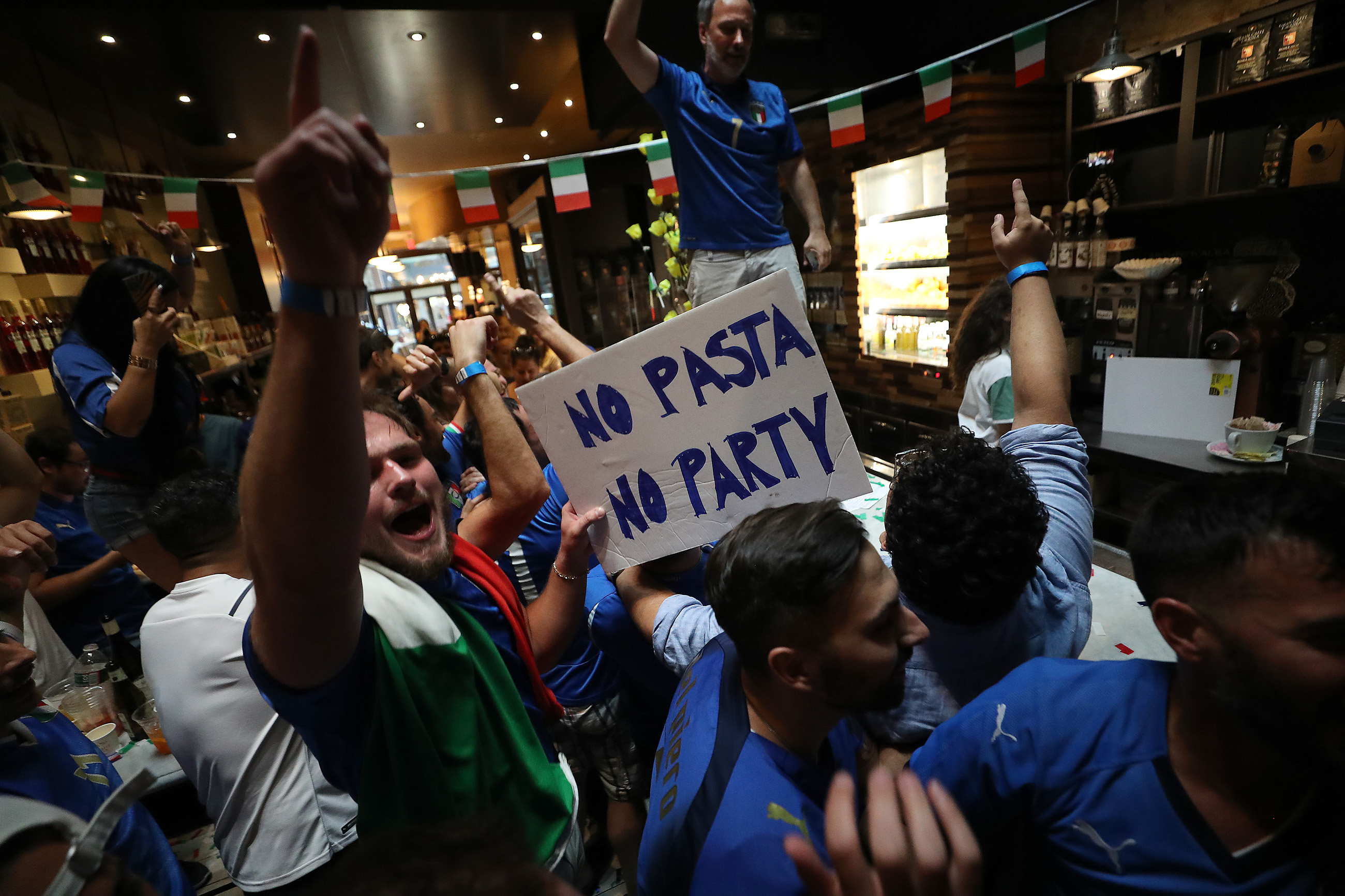
Among the European playoff contenders, the Republic of Ireland would be a huge deal here. But ever since the day three years ago when Philly was named as a host city, the first name on everyone’s lips has been Italy. Imagine how electric it would be if the Azzuri’s World Cup drought ends at the Linc.
The scene at Gran Caffe L’Aquila in Center City when Italy won the European Championship in 2021.
You might have noticed one big team hasn’t been mentioned here yet: England. The Three Lions would bring a huge amount of fans, star players, and media attention to town. But to come to the city where America declared independence from them, 250 years later?
Ask around locally, and you’d find a fair number who’d say no thanks. They’d dreamed for years of a U.S.-England game on July 4, until the preset part of the draw path took the possibility away. It would feel strange if England uses the old colonial capital as the launchpad to fulfill the hype as one of the favorites to win it all.
The Trump administration’s threat to withhold money that Democratic-run states use to administer the SNAP food aid program unless officials release personal information about individual recipients puts 2 million people in Pennsylvania and more than 800,000 in New Jersey at risk of food insecurity.
On Wednesday, New Jersey Attorney General Matthew Platkin called the administration’s stance “deeply immoral.”
“The past few weeks have shown that the Trump administration is willing to sacrifice millions of Americans’ most basic needs in service of a political agenda,” he added.
In a cabinet meeting Tuesday, Agriculture Secretary Brooke Rollins said that data describing Supplemental Nutrition Assistance Program recipients’ names, addresses, Social Security numbers, and immigration status are necessary to ferret out fraud, the Associated Press reported. The Department of Agriculture runs the SNAP program.
Twenty-two states, including New Jersey, have sued the administration over its demand for personal information, which states have never shared with the federal government. Representing Pennsylvania, Gov. Josh Shapiro joined the lawsuit. A California federal court issued a preliminary injunction on Oct. 15, allowing all parties until next Monday to respond.
The federal government splits the cost of running SNAP with states, and the Trump administration said it is not planning to take SNAP benefits from individuals, but rather to pull funds it sends to the states to run the program..
Individuals could nonetheless see their payments disrupted, said Joel Berg, CEO of Hunger Free America, in an interview. The agency is a national nonprofit that fights hunger.
“People in the Philadelphia region could go hungry,” he said. “Even people in rural Pennsylvania and South Jersey in counties that supported Trump who are highly dependent on these programs could be hurt.
“This is an authoritarian intrusion of big government. It’s a way to bully Democratic states.”
Around 500,000 of the 2 million people in Pennsylvania who receive the federal food aid are in Philadelphia.
Neither Shapiro nor New Jersey Gov. Phil Murphy offered comments. The White House referred requests for comment to the USDA, which released a statement Wednesday evening complaining that blue states “choose to protect illegals, criminals, and bad actors over the American taxpayer.”
The statement added that the USDA recently sent an additional request to Democratic-run states for data. However, the statement warned, “if they fail to comply, they will be provided with formal warning that USDA will pull their administrative funds.”
Lately, the SNAP program has played a significant role in aspects of how the Trump administration governs, advocates say.
During the shutdown, the Trump administration paused SNAP benefits in early November, and then went to the Supreme Court to fight orders by federal judges to release the funding.
The way SNAP has been thrust into the White House’s partisan battles irks George Matysik, executive director of the Share Food Program, which provides food to hundreds of Philadelphia-area pantries. “We have a serious food affordability crisis developing and it requires a focused response, not continuous political sideshows,” he said Wednesday.
Temple University sociologist Judith Levine agreed. “It’s extremely disturbing that because of political games, people may lose this very basic benefit needed for survival,” she said. “Being food insecure has nothing to do with infighting between political parties.”
Loss of SNAP places an inordinate strain on the charitable food system, primarily food pantries, which in turn hurts families, said Eliza Kinsey, a professor in the department of family medicine and community health at the University of Pennsylvania’s Perelman School of Medicine.
“There’s tons of evidence that stoppages of SNAP can disproportionately affect households with children,” she said. “Cutting SNAP could be disastrous.”
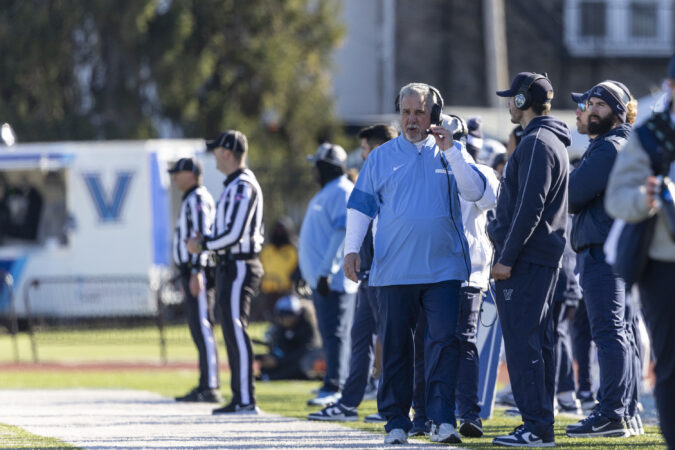
Villanova announced the signing of 13 players during college football’s early signing day on Wednesday.
Five offensive players and eight defensive players in the 2026 recruiting class signed their national letters of intent to join the Wildcats next season under coach Mark Ferrante. The incoming class features five players from Pennsylvania, five from New Jersey, two from Maryland, and one from Connecticut.
The Wildcats signed wide receivers Jasiah Brown of Morristown (N.J.) High School and Andrew Esposito of New Canaan (Conn.) High School; offensive lineman Patrick Degnan of Seneca High School; quarterback Nolan DiLucia of Peters Township (Pa.) High School; and running back Brandon Way of Lancaster Catholic.
Brown will play wide receiver on the Main Line after a decorated high school career as a two-way starter at Morristown, where he earned first-team all-conference honors. Esposito, a 6-foot-3 receiver, was among the top recruits out of Connecticut and was named the state’s MaxPreps Player of the Year in 2024. He had nine touchdowns and also recorded two interceptions.
DiLucia will add depth at quarterback. He was named first-team all-conference three times and twice earned all-state recognition.
Way is the only new signee to join Villanova’s talented running back corps. In his high school career at Lancaster Catholic, he totaled 1,500 yards and 21 touchdowns and earned all-state recognition.
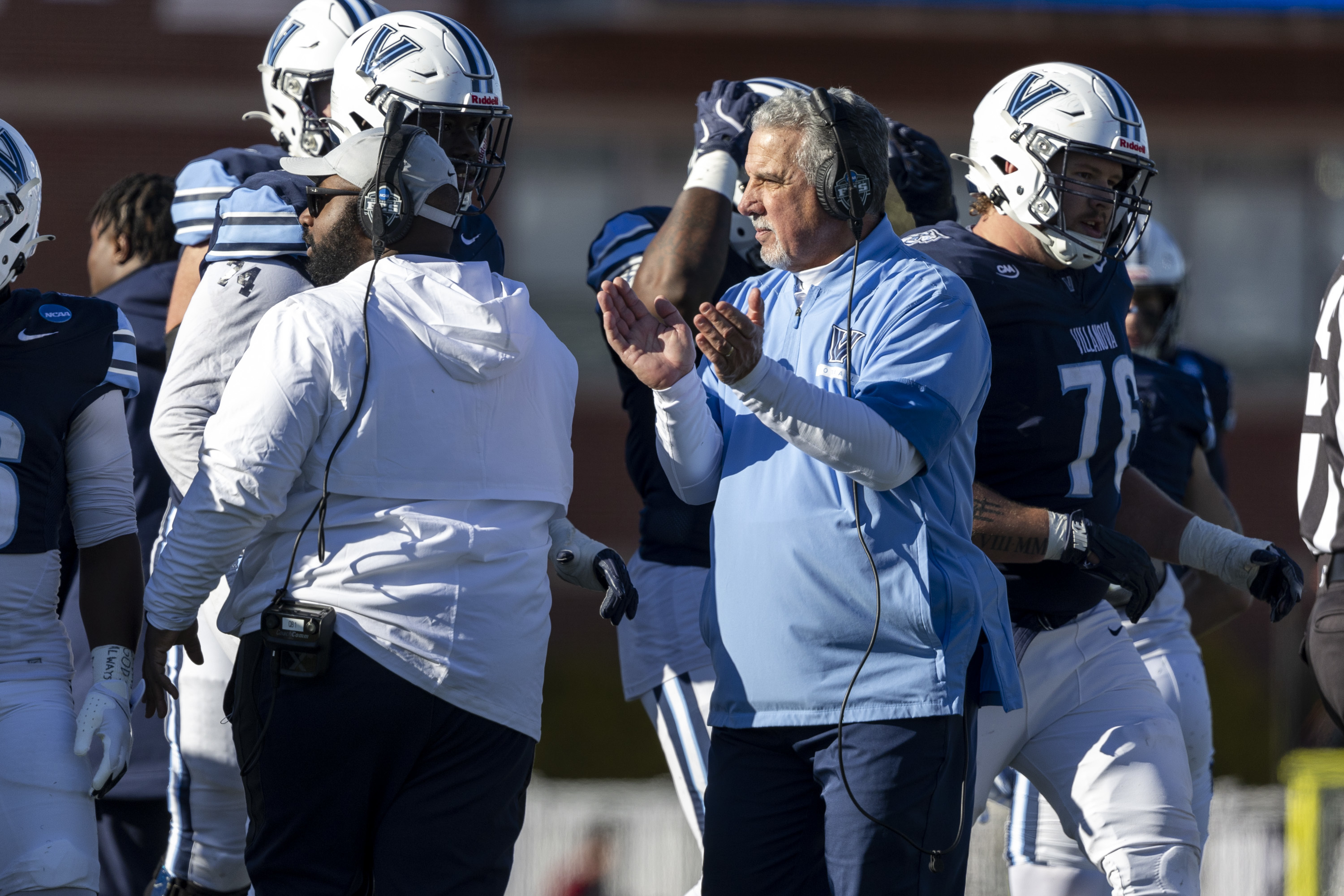
Villanova’s Mark Ferrante during the program’s FCS playoff matchup against Harvard on Nov. 29.
Signees on defense
Villanova’s defensive recruits include linemen Thomas Coates of Urbana High School in Ijamsville, Md., and Jackson Kraemer of Mount Lebanon High School in Pittsburgh; defensive backs Abu Fofana of Conwell-Egan, Luis Martinez of Allentown Central Catholic, Isaiah Selby of Paramus (N.J.) Catholic, and Jordan Taylor of North Point High School in Waldorf, Md.; and linebackers Colin Gurley of Central York High School and Donovan Linthicum of Oakcrest High School.
Gurley, a two-time all-state honoree, registered 100 tackles (26 for loss) and 17½ sacks at Central York. Linthicum earned all-state honors in New Jersey while recording 380 tackles.
Selby helped lead Paramus Catholic to the New Jersey state playoffs as a two-way starter. At defensive back, he totaled 40 tackles and forced two fumbles.
The newly signed players will be part of Villanova’s inaugural campaign in the Patriot League of the FCS as the program changes conferences for the 2026 season.
Villanova will visit Lehigh in the second round of the FCS playoffs on Saturday (noon, ESPN+).
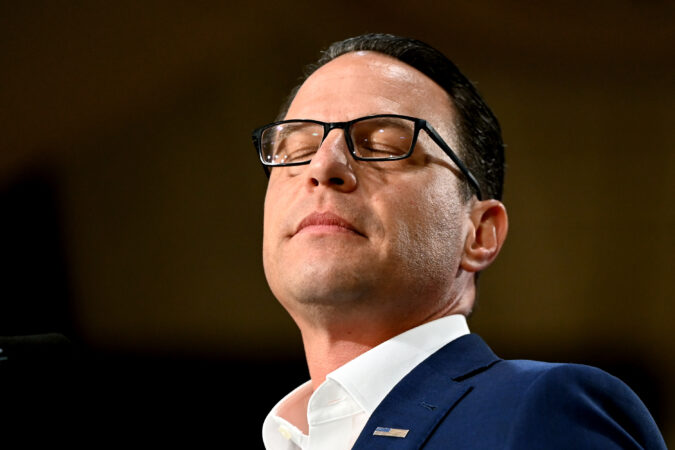
Gov. Josh Shapiro lashed out over former Vice President Kamala Harris’ portrayal of his interview to become her 2024 running mate, calling Harris’ retellings “complete and utter bulls—” intended to sell books and “cover her a—,” according to the Atlantic.
Shapiro, Pennsylvania’s first-term Democratic governor now seen as a likely presidential contender in 2028, departed from his usual composed demeanor and rehearsed comments in a lengthy Atlantic profile, published Wednesday, when journalist Tim Alberta asked the governor about Harris’ depiction of him in her new book.
In her book, titled 107 Days, Harris described Shapiro as “poised, polished, and personable” when he traveled to Washington to interview with Harris for a shot at becoming the Democraticvice presidential candidate during her historic campaign against Donald Trump.
However, Harris said, she suspected Shapiro would be unhappy as second-in-command. He “peppered” her with questions, she wrote, and said he asked questions about the vice president’s residence, “from the number of bedrooms to how he might arrange to get Pennsylvania artists’ work on loan from the Smithsonian.” The account aligns with reporting from The Inquirer when Harris ultimately picked Minnesota Gov. Tim Walz over Shapiro, in part, because Shapiro was too ambitious to serve in a supporting role if chosen as her running mate.
But Shapiro, the Atlantic reported, was taken aback by the portrayal.
“She wrote that in her book? That’s complete and utter bull—,” Shapiro reportedly told the Atlantic when asked about Harris’ account that he had been imagining the potential art for the vice presidential residence. He added: “I can tell you that her accounts are just blatant lies.”
The governor’s sharp-tongued frustration depicted in the Atlantic marked a rare departure for the image-conscious Shapiro, whose oratory skills have been compared to those of former President Barack Obama, and who has been known to give smiling, folksy interviews laced with oft-repeated and carefully told anecdotes.
The wide-ranging, nearly 8,000-word profile in the Atlantic also detailed Shapiro’s loss of “some respect” for Harris during the 2024 election, including for her failure to take action regarding former President Joe Biden’s visible decline.
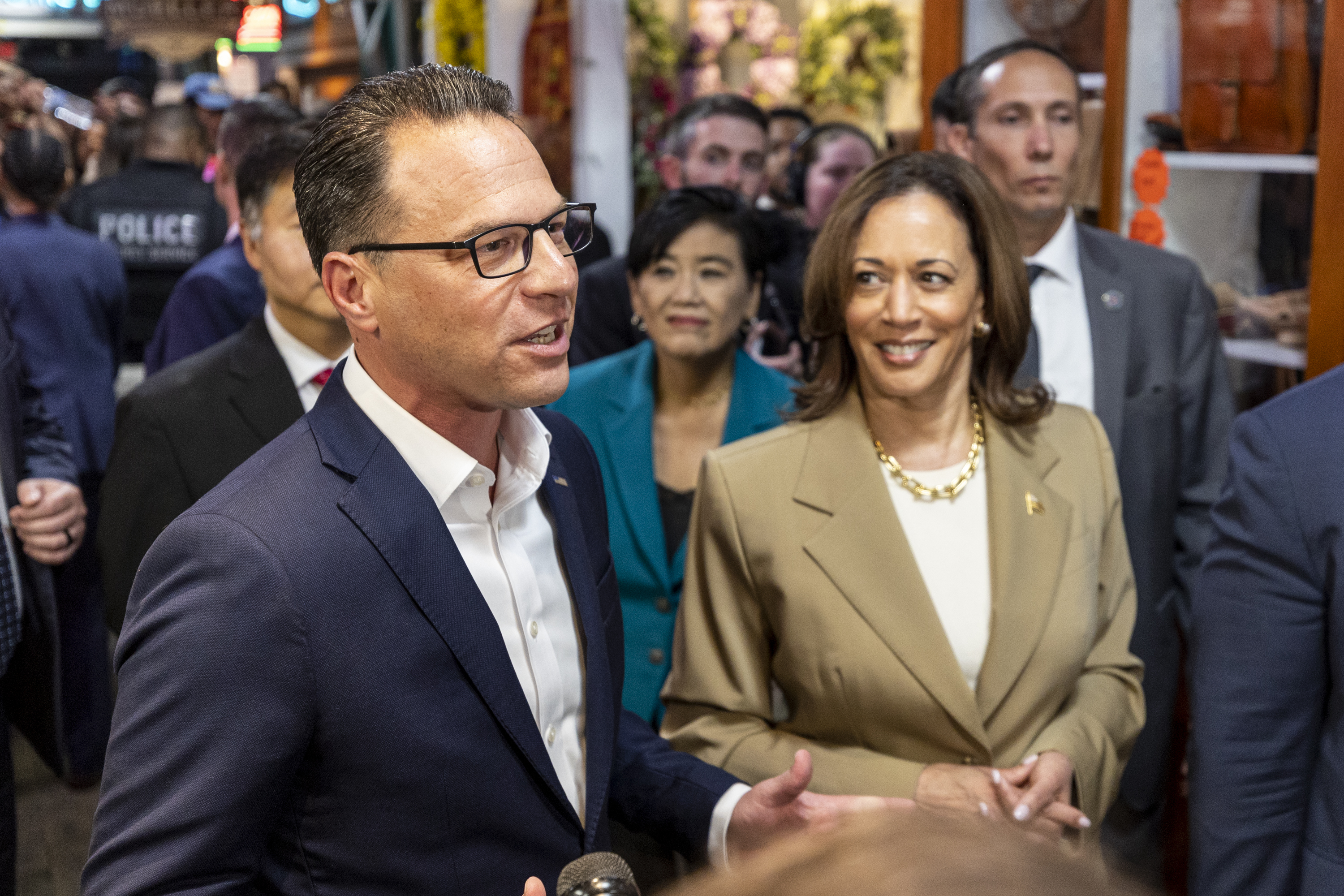
Governor Josh Shapiro speaks with press along with Vice President Kamala Harris during their short visit to Little Thai Market at Reading Terminal Market after she spoke at the APIA Vote Presidential Town Hall at the Pennsylvania Convention Center in Philadelphia, Pa., on Saturday, July 13, 2024.
When Shapiro was asked by the Atlantic whether he felt betrayed by Harris’ comments in her book about him, given that the two have known each other for 20 years, he said: “I mean, she’s trying to sell books and cover her a—.”
He quickly reframed his response: “I shouldn’t say ‘cover her a—,’ I think that’s not appropriate,” he added. “She’s trying to sell books, period.”
The Atlantic piece also outlined common criticisms of Shapiro throughout his two decades in Pennsylvania politics, including those from within the Democratic Party: He is too ambitious with his sights set on the presidency, and his pragmatic approach often leaves him frustrating all sides, as evidenced in his 2023 deal-then-veto with state Senate Republicans over school vouchers. It highlighted some of the top issues Shapiro will face if he chooses to run for president in 2028, including a need to take clearer stances on policy issues — a complaint often cited by Republicans and his critics. If he rises to the presidential field, Shapiro will also have to face his past handling of a sexual harassment complaint against a former top aide that Shapiro claimed he knew very little about despite the aide’s long-held reputation.
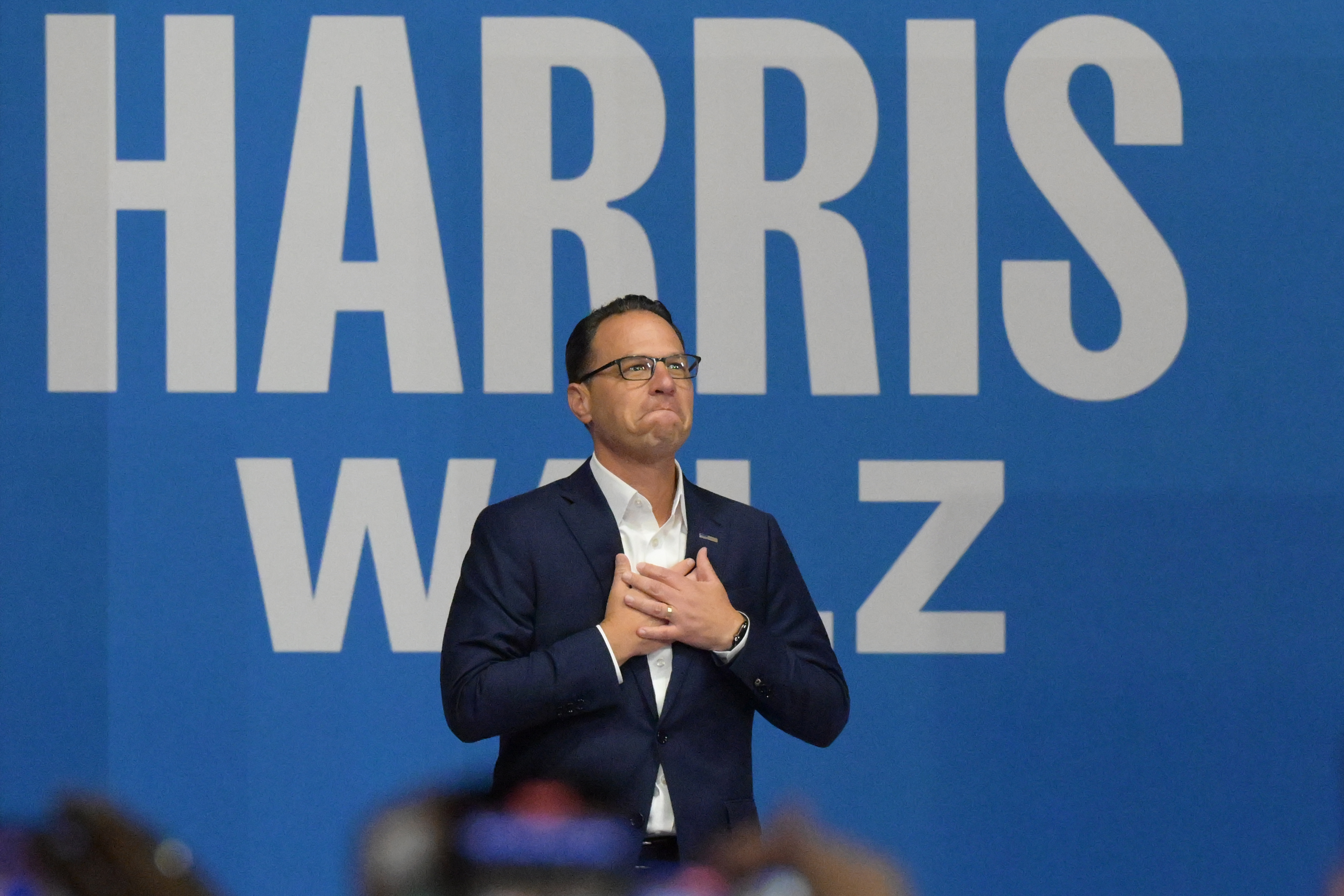
Gov. Josh Shapiro takes the stage ahead of U.S. Vice President Kamala Harris and Gov. Tim Walz at a rally in Philadelphia’s Liacouras Center on August 6, 2024.
“The worst-kept secret in Pennsylvania politics is that the governor is disliked — in certain cases, loathed — by some of his fellow Democrats,” the Atlantic reported. Further, Alberta noted that when an unnamed Pennsylvania lawmaker received a call from a member of Harris’ vetting operation, the member said they had never seen “so many Democrats turning on one of their own.”
Shapiro has been featured in several other prominent national media outlets in recent weeks, including in the New Yorker, which ran a profile about his experience with political violence. He has become vocal on that issue in the months since a Harrisburg man who told police he wanted to kill Shapiro broke into the governor’s residence in April and set several fires while Shapiro and his family slept upstairs. As one of the most prominent Jewish elected officials in the nation, Shapiro has frequently said that leaders must “bring down the temperature” in their rhetoric, and has tried to refocus his own messaging on the good that state governments can do to make people’s lives easier, such as permitting reforms and infrastructure improvements.
“The fact that people view institutions as incapable or unwilling to solve their problems is leading to hyper-frustration, which then creates anger,” Shapiro told the Atlantic. “And that anger forces people oftentimes into dark corners of the internet, where they find others who want to take advantage of their anger and try and convert that anger into acts of violence.”
The National Labor Relations Board is pursuing charges against Philadelphia-based restaurateur Stephen Starr and his company, Starr Restaurants, over union-busting allegations at his D.C. steakhouse St. Anselm, according to documents reviewed by The Inquirer.
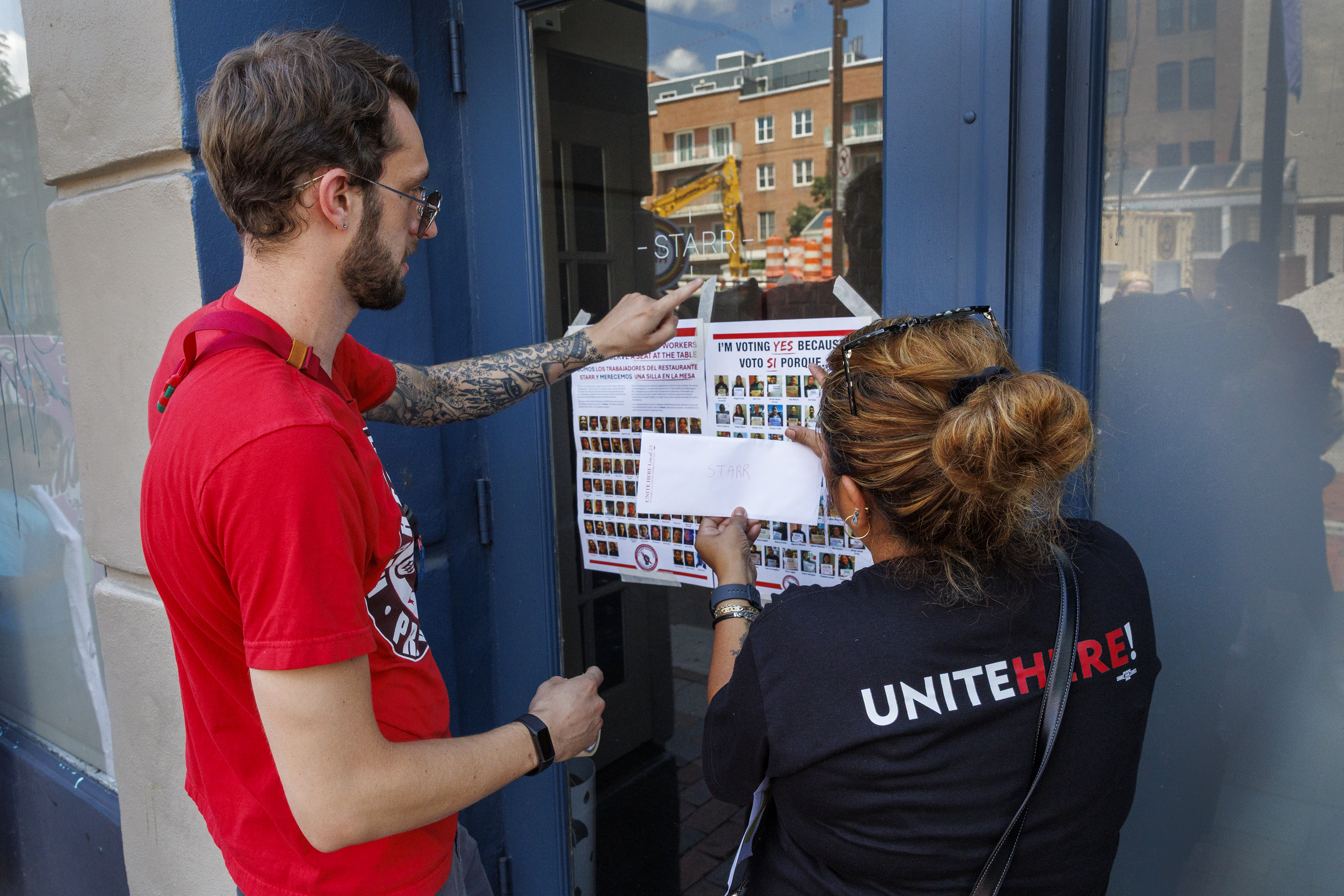
The NLRB’s case revolves around anti-union activity that Local 25 alleges occurred in February at St. Anselm, one of three D.C.-based Starr restaurants that sought a union at the start of 2025 and the only one where workers voted to unionize.
The complaint consolidates a set of unfair labor practice (ULP) allegations Local 25 initially filed to the NLRB on behalf of St. Anselm workers, who said that Stephen Starr and a St. Anselm supervisor directly coerced employees with false information, made promises of improved benefits if they voted against unionizing, and threatened loss of revenue if they voted for it.
In one instance, the complaint alleges, Starr “interrogated” a St. Anselm staffer about their union involvement during a one-on-one conversation.
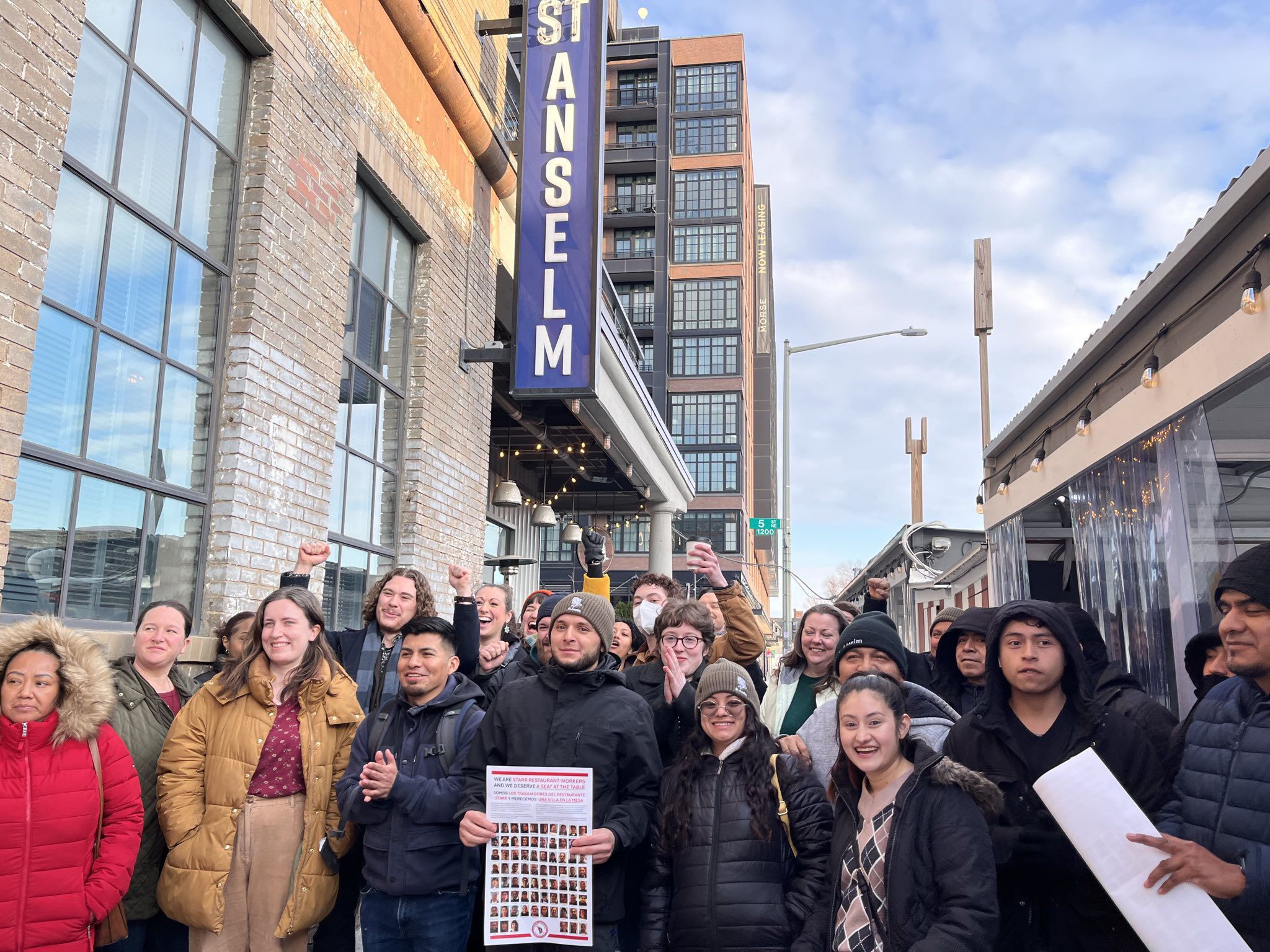
A delegation of workers pose in front Stephen Starr’s D.C. steakhouse St. Anselm before delivering their union petition in Feb. 2025.
The ULP filings were submitted to the NLRB in June. After investigating, the board’s general counsel found merit in the accusations that Starr Restaurants, Starr, and the supervisor violated the National Labor Relations Act. It is now set to bring the charges before an administrative judge on Feb. 24, 2026.
“We are aware of the complaint and strongly disagree with the allegations made therein,” a Starr Restaurants spokesperson for St. Anselm said in a statement. “We look forward to vigorously defending this case through the litigation process.”
The spokesperson declined to address whether Starr spoke directly with St. Anselm employees about union efforts, citing pending litigation.
“It speaks volumes about what happened at this restaurant that, given the challenges that the NLRB is facing, that [general counsel] have chosen to act on this issue,” said Benjy Cannon, Local 25’s communication director, referring to the staffing shortages the agency has faced.
A spokesperson for the NLRB declined to comment.
A contentious dynamic from the start
In January, workers at three of Starr’s sevenD.C restaurants announced plans to unionize with Local 25: French bistro Pastis, Parc-inspired brasserie Le Diplomate, and St. Anselm, an outpost of the upscale Brooklyn steakhouse. The Starr workers, along with employees at two high-profile restaurants affiliated with Knightsbridge Restaurant Group, would’ve ultimately added 500 members to Local 25, if the drives proved successful.
Nearly a year later, both union campaigns remain caught up in litigation.
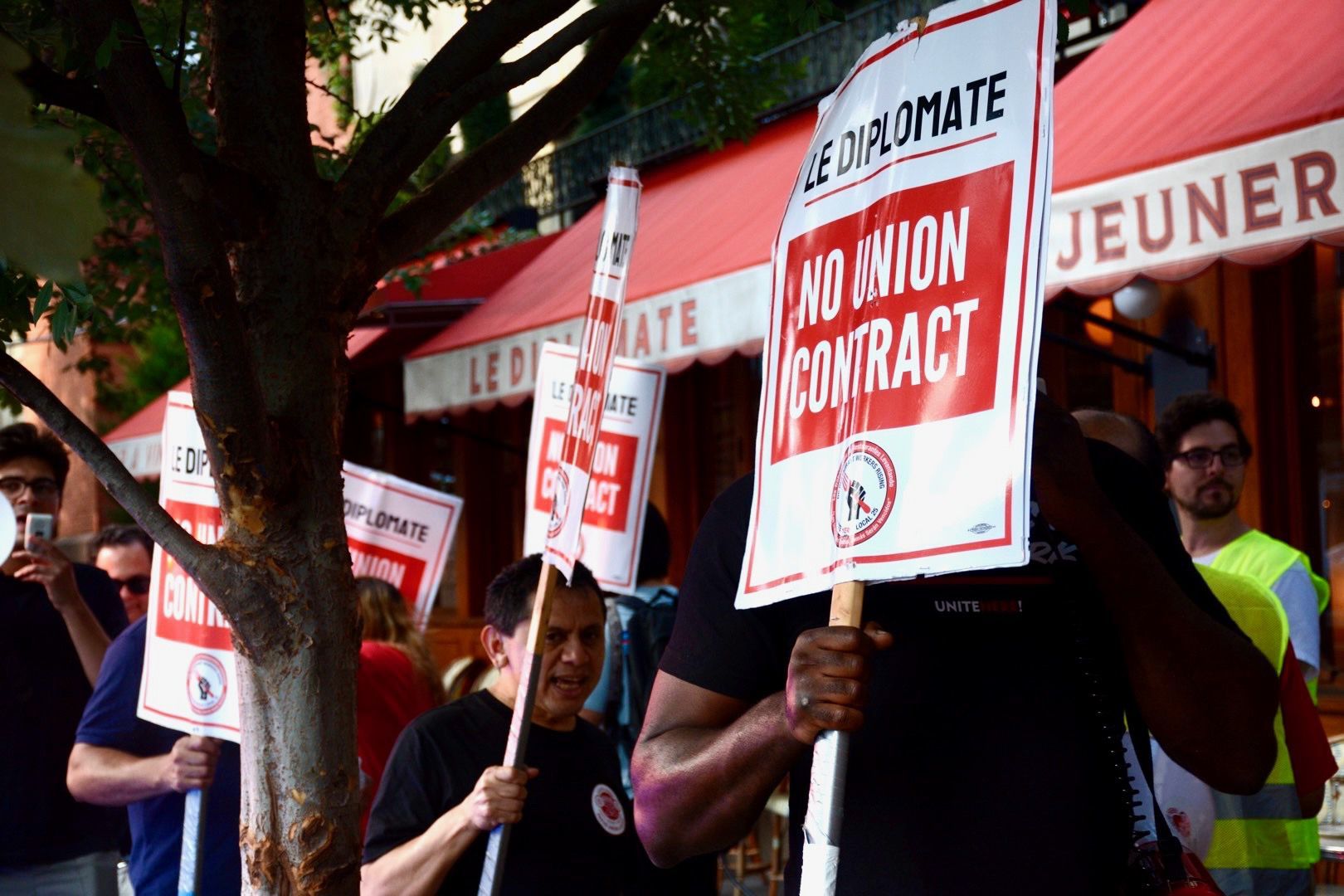
A picket line outside of Stephen Starr’s D.C. restaurant Le Diplomate is led by Unite Here Local 25 after Starr Restaurants challenged a unionization vote at St. Anselm.
Relations between Starr Restaurants and organizers there turned acrimonious almost immediately. The Washingtonian magazine reported that Starr Restaurants hired anti-union consultants from the American Labor Group to meet with St. Anselm staff. Other employees there told online publication Eater that Local 25 organizers had ambushed them at their homes and pressured them to sign cards that indicate they want to vote for union representation.
Only workers at St. Anselm voted to unionize in February. Local 25 lost the union election at Pastis by a margin of 20 votes, and Le Diplomate’s election has been suspended indefinitely as of March.
Starr Restaurants has yet to recognize the St. Anselm union and filed an objection to the results with the NLRB in February, alleging that Local 25 organizers unfairly influenced the outcome through a campaign of bullying and intimidation. The case remains open.
What workers say
Working conditions at St. Anselm have been a mixed bag, according to Ana Reyes, who has been a line cook at the steakhouse since 2022. The fast-paced workplace allowed her to make enough money to help put her youngest daughter through her freshman year of college, Reyes said in Spanish through an interpreter. But, she said, management often ridiculed employees who didn’t speak English, telling them to learn the language if they wanted to get questions answered about pay or scheduling.
Greg Varney (left) and Ana Reyes, both with Unite Here Local 25, outside Starr headquarters at 134 Market St. as they work to unionize.
Reyes, 43, told The Inquirer that she wanted to join Local 25 for respect: “Whether we speak English or not, we deserve to be respected because we’re doing the work they don’t want to do.”
About two weeks into the union drive in February, Reyes recalled, Starr personally asked to meet with all morning-shift staffers. During the meeting, she said, Starr was “surprised to learn that we didn’t get raises each year … and promised to look into it.”
“He made a lot of promises about sick pay, about vacation pay,” Reyes said. She added that nothing has changed to date.
One host at St. Anselm spoke to The Inquirer on the condition of anonymity for fear of retaliation. About four months into working there, she said, Starr asked to chat with her alone, pulling her aside in a near-empty restaurant to ask questions about any problems she had and her involvement in the union.
“I certainly felt cornered and uncomfortable,” she said. Starr “ultimately told me that supporting the union was [quote-unquote] delusional, and that if I voted no, it would be in my own best interest.” The host departed St. Anselm a month later for a full-time customer service job.
Dennis Asaka, a St. Anselm bartender, doesn’t recall Starr making any promises about improved wages or benefits when he sat in on a voluntary informational meeting led by the restaurateur.
In late 2024, however, Asaka recalled a new server at St. Anselm, asking to join him for Bible study at his Baptist church in Arlington. After attending a second meeting, Asaka said, the server invited him to her house to discuss their faith. There, Asaka said he was instead met by several coworkers who pressured him into signing a union card. Asaka declined.
“I felt like I was kind of blindsided and just kind of used a little bit,” Asaka said.
Cannon denies the union ever engaged in such conduct: “We don’t believe that there were any labor laws broken.”
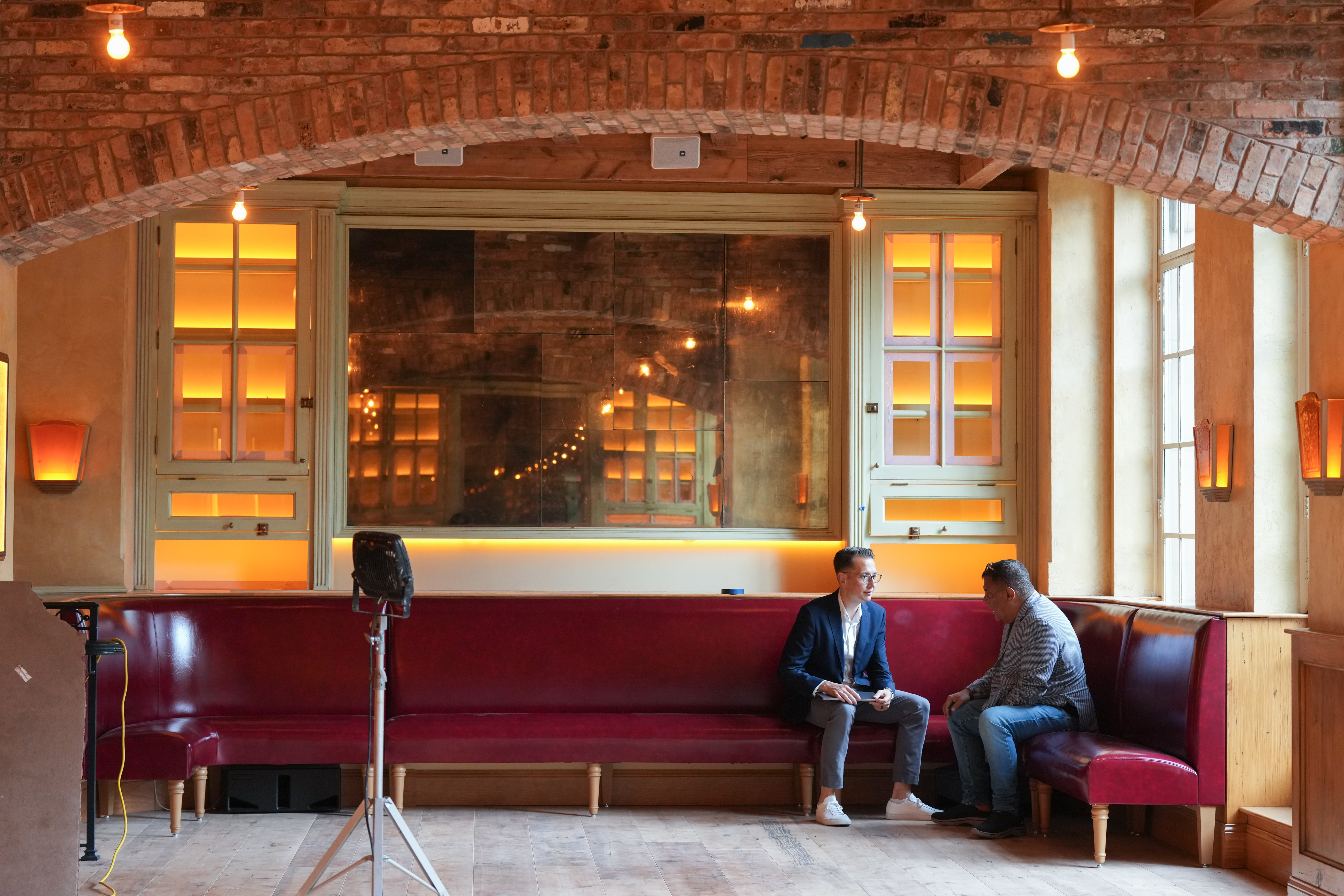
Stephen Starr (right) talks with Erik Battes, Starr Restaurants’ executive vice president of food and beverage, during at a menu-tasting for the Italian restaurant Borromini, in Philadelphia, July 1, 2025.
What happens next?
Unfair labor practice charges are common, said Rutgers University labor and employment law professor James M. Cooney, and cover a variety of tactics that employers or unions can use to interfere with union elections, from retaliation and coercion to promising incentives. Once a ULP is filed, a regional NLRB will launch an investigation. If the board believes there’s merit, they will issue a complaint.
After the hearing, both parties can appeal the administrative law judge’s decision with the NLRB at the federal level, which can decide to uphold and or reject the decision. There’s no punitive damages on the table in most ULP complaints, Cooney said, only an admittance of wrongdoing.
The five-member federal NLRB has been in a bureaucratic standstill since January, when President Donald Trump fired board member Gwynne Wilcox. The move left the independent agency without a quorum, forcing the NLRB to leave hundreds of cases in limbo.
So, why then did the NLRB decide to wade into union drama at one D.C steakhouse?
Because the charges are “old school, really in-your-face-type labor violations,” said Cooney.
“These violations appear to be really egregious that the board just couldn’t overlook them. It’s true that the board isn’t moving on a lot cases, but this one may be easier for them to prove,” Cooney said. “Everybody knows you can’t threaten workers for supporting a union, and you can’t make promises. This is labor law 101.”
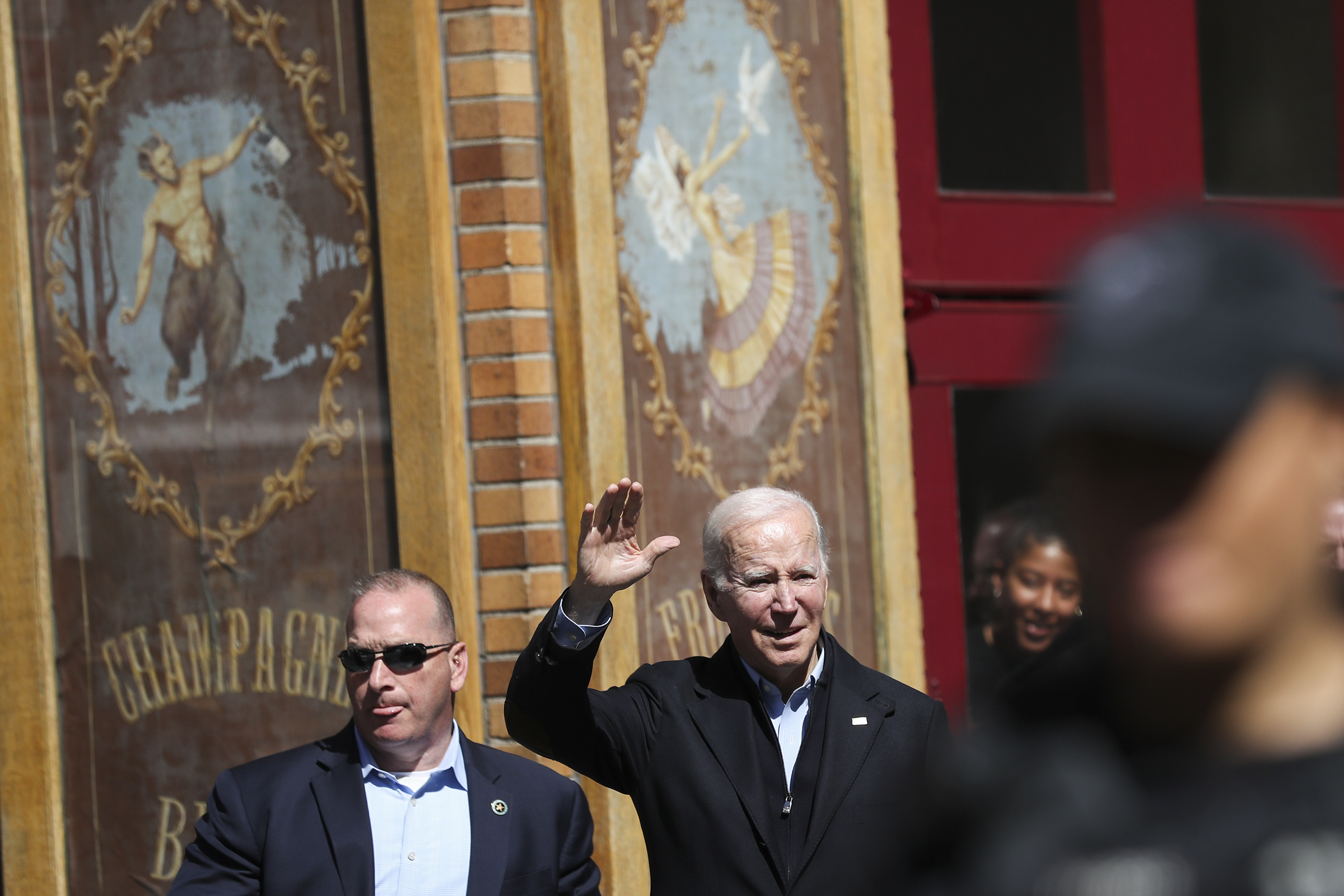
Former President Joe Biden waves to the crowd gathered outside Stephen Starr’s Rittenhouse Square restaurant Parc, where he dined for lunch with his family in April 2023.
Starr is a registered Democrat who has donated thousands of dollars to campaigns for politicians including Tom Wolfe, Barack Obama, Sen. John Fetterman, and Hillary Clinton, according to OpenSecrets.org. His restaurants are common stomping grounds for D.C’s political elite, including former President Joe Biden.
In June, Local 25 called for a boycott of Starr’s three buzziest D.C. restaurants (all currently uninvolved in union efforts). To date, 88 members of Congress signed on, including Sen. Bernie Sanders, Rep. Alexandria Ocasio-Cortes, and Sen. Chuck Schumer.
Cooney does not think the NLRB’s complaint has partisan motivations. “The board has been historically apolitical” at the regional level, he said.
Regardless, the stakes of the proceedings are high for all parties, including employees.
If St. Anselm is forced to recognize the union, Asaka said he’d quit. “I have [health] insurance that includes dental and medical. I have a 401(k) plan. I have commuter reimbursement … I have paid vacation. Those are things that don’t really happen in restaurants,” he said. “I have everything I need.”
STATE COLLEGE, Pa. — It has been 52 days since Penn State fired coach James Franklin. What has followed has been a tumultuous coaching search filled with reported hiring whiffs and former recruits withdrawing their commitments.
The program’s once-impressive 2026 football recruiting class, which ranked inside the top 20 of 247Sports’ composite rankings before Franklin’s departure, has fallen to No. 150.
That’s because Franklin didn’t just take his belongings and his “1-0” motto with him to Blacksburg, Va. He also brought his recruits, flipping 11 Penn State Class of 2026 pledges to Virginia Tech.
Those defections have depleted the Nittany Lions’ 2026 class, which has just two players as of Wednesday’s early national signing day.
Penn State’s signees
Jackson Ford, a four-star edge rusher in 247Sports’ composite rankings, signed with the Nittany Lions on Wednesday. The 6-foot-4, 240-pound defensive end out of Malvern Prep had been committed to Penn State since June 27.
Ford is the ninth-ranked defensive end in Pennsylvania and the No. 256 player nationally, according to 247Sports. Despite Franklin’s departure and uncertainty about the program’s national coaching search, Ford kept his pledge to the Nittany Lions.
“The people in the building are great people,” Ford told 247Sports on Wednesday. “The program itself is just built on greatness. It’s built on family — a tight connection I have.”
In a surprising move, Peyton Falzone, a four-star quarterback, also signed with Penn State. He is the No. 10 player in Pennsylvania and No. 22 quarterback in the nation, according to 247 Sports.
The Nazareth High School senior committed to the Nittany Lions in April before he flipped his commitment to Auburn in June. But after the Tigers fired coach Hugh Freeze, Falzone withdrew his commitment from Auburn on Dec. 1 and later signed with Penn State.
“Staying home in Happy Valley,” Falzone wrote in an X post on Wednesday.
Penn State interim head coach Terry Smith reportedly “played a big role” in Falzone’s decision to sign with the Nittany Lions, according to On3.com.
From PSU to VT
Penn State’s firing of Franklin on Oct. 12 signaled a drastic shift within the program, but it also meant that its future recruiting classes likely would be affected.
The list of players Franklin has flipped from Penn State to Virginia Tech includes seven four-star and four three-star recruits.
Marlen Bright, a four-star offensive tackle from DePaul Catholic High School in Wayne, N.J., flipped on Nov. 27. He is ranked as the No. 7 recruit in New Jersey and No. 40 offensive tackle nationally.
Messiah Mickens, a four-star running back from Harrisburg, withdrew his commitment from Penn State on Nov. 19 and signed with the Hokies on Wednesday.
Other recruits who followed Franklin to Virginia Tech include: Pierce Petersohn (four-star tight end), Troy Huhn (four-star quarterback), Davion Brown (four-star wide receiver), Tyson Harley (four-star defensive end), Terry Wiggins (four-star linebacker), Roseby Lubintus (three-star offensive tackle), Mathieu Lamah (three-star linebacker), Benjamin Eziuka (three-star offensive tackle), and Amauri Polydor (three-star cornerback).
A struggle-filled coaching search
While Franklin’s departure was key in flipping several recruits, Penn State’s shaky coaching search has not helped.
Early reports indicated Penn State’s interest in Indiana’s Curt Cignetti, Texas A&M’s Mike Elko, Nebraska’s Matt Rhule, Georgia Tech’s Brent Key, and Missouri’s Eliah Drinkwitz. All five coaches later signed contract extensions at their respective universities.
Penn State reportedly made BYU coach Kalani Sitake a lucrative offer to become the school’s next head coach, according to ESPN. But once Sitake accepted an extension at his alma mater, Penn State athletic director Patrick Kraft had to pivot.
After the program’s pursuit of several hires fell through, top Penn State donors reportedly are pushing for Kraft to hire Smith, according to On3.com.
It was a step toward ending a two-year civic struggle to find a site for long-distance buses and their passengers. The renovated station could be ready for a series of big national and international events expected to draw millions of visitors next year.
“A lot of people are going to be coming here for the first time, and when they’re in that station, they’re going to get their first taste of Philadelphia — and we want to make sure it’s a good one,” said Councilmember Mike Driscoll, who sponsored the bill on behalf of the Parker administration.
The city will host events in 2026 for the 250th anniversary of the Declaration of Independence, as well as FIFA World Cup soccer matches and the Major League Baseball All-Star Game, among others.
Greyhound ran the terminal at 10th and Filbert Streets for more than three decades but ended its lease in June 2023 when the business model of its parent company, Flixbus, called for divesting from real estate and moving toward cheaper curbside service in many U.S. cities.
Since November 2023, customers of Greyhound, Peter Pan, and other interstate bus carriers wait, board, and arrive at curbside along Spring Garden Street in Northern Liberties — with no shelter from the weather and few amenities. It also has proved a nuisance to nearby businesses.
Before that, the buses operated at curbside on Market Street between Sixth and Seventh Streets.
The city senses that over the long term the owner anticipates selling the property, said Michael Carroll, assistant managing director for the Philadelphia Office of Transportation and Infrastructure Systems.
“That’s the sweet spot, long enough that there’s a meaningful basis to invest in improvements and solve the problems,” Carroll told the committee.
“At the 10-year mark, decisions will have to be made about whether this is a site that forever works best in Philadelphia, or whether there’s a better site,” he said.
The unanimous Finance Committee vote came after it amended the measure to adjust the fees bus companies would be charged to stop in Philadelphia.
Each stop in the city would cost $40 until the bus terminal is open, when it would move to a $65 fee. A smaller number of buses subsidized by the Pennsylvania Department of Transportation under a program to provide rural service would pay $16 a stop.
Committee members also asked for suspension of a procedural rule so that all 17 lawmakers could consider the bill Thursday and clear the way for final passage before the holidays.
In the agreement with the city that is part of the bill, PPA would run the terminal; assess the fees on bus carriers for the use of the facility and any street loading zones, such as those in University City; and handle enforcement.
The Filbert Street proposal includes specific requirements designed to address concerns particularto Chinatown.
For instance, the streets department would change traffic patterns so buses are routed to the station via Market Street instead of driving through the heart of the neighborhood as they did in the past.
John Mondlak, first deputy and chief of staff of the city planning department, said that the through traffic had long been a chief complaint of residents and business owners in Chinatown.
This story has been updated to include the name of the firm that owns the former Greyhound station.
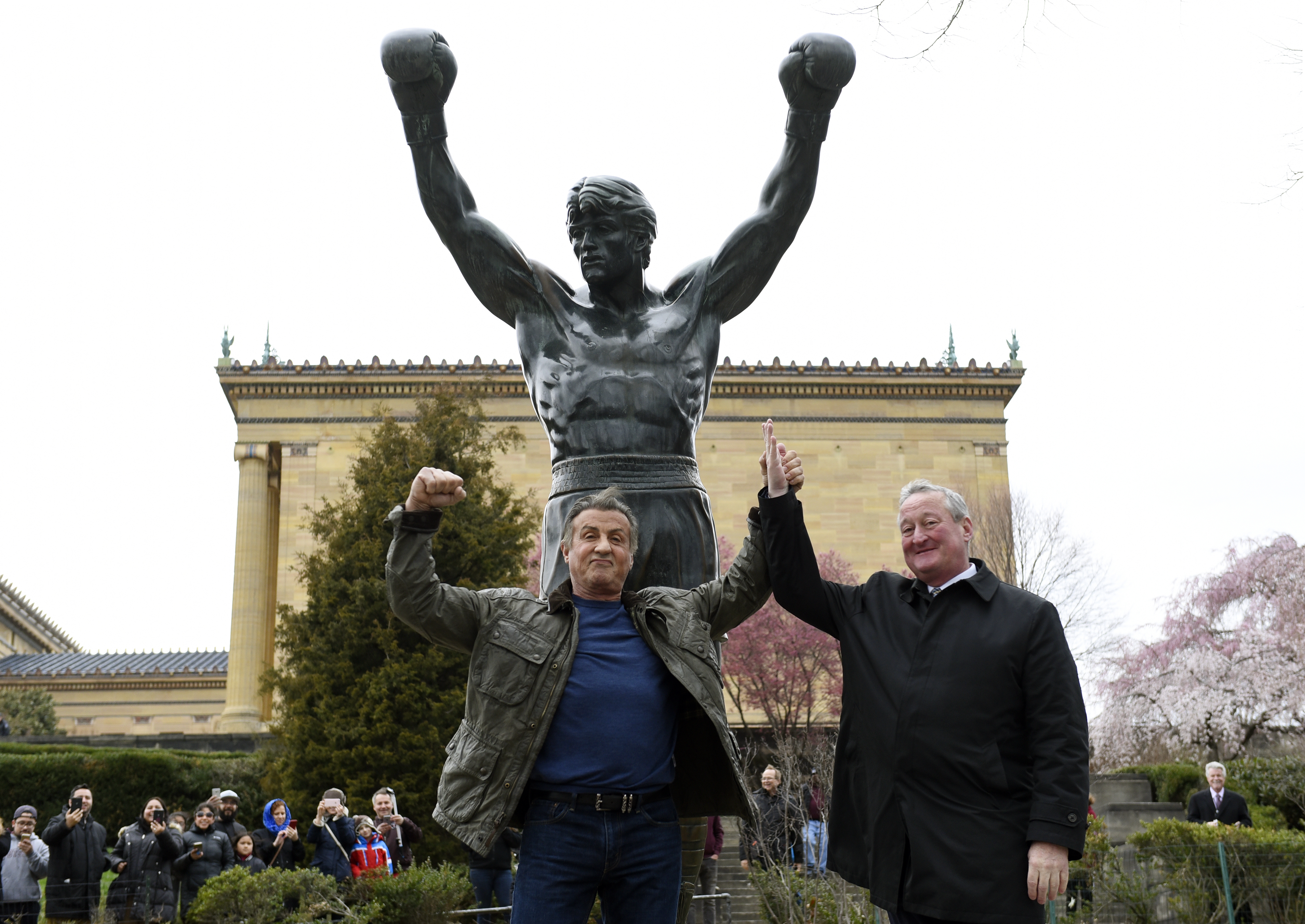
2026 marks the 50th anniversary of the release of the first Rocky film. To coincide, the Philadelphia Art Museum announced on Wednesday there will be an exhibition exploring how the Rocky statue, at the foot of the museum, brings people together..
“Rising Up: Rocky and the Making of Monuments” will open in April in the museum’s Dorrance Galleries.
The exhibition, curated by Monument Lab cofounder Paul Farber, will showcase over 150 works from more than 50 artists including Reading native Keith Haring, Rashid Johnson, Andy Warhol, Carrie Mae Weems, and Hank Willis Thomas, the artist behind the All Power to All People sculpture that stood on Thomas Paine Plaza in 2017. They will be joined by artists from Mural Arts Philadelphia’s Restorative Justice Program.
“Rising Up” will examine the changing role of monuments in creating spaces of recreation across time, with the Rocky statue by sculptor A. Thomas Schomberg at the heart of the exhibition.
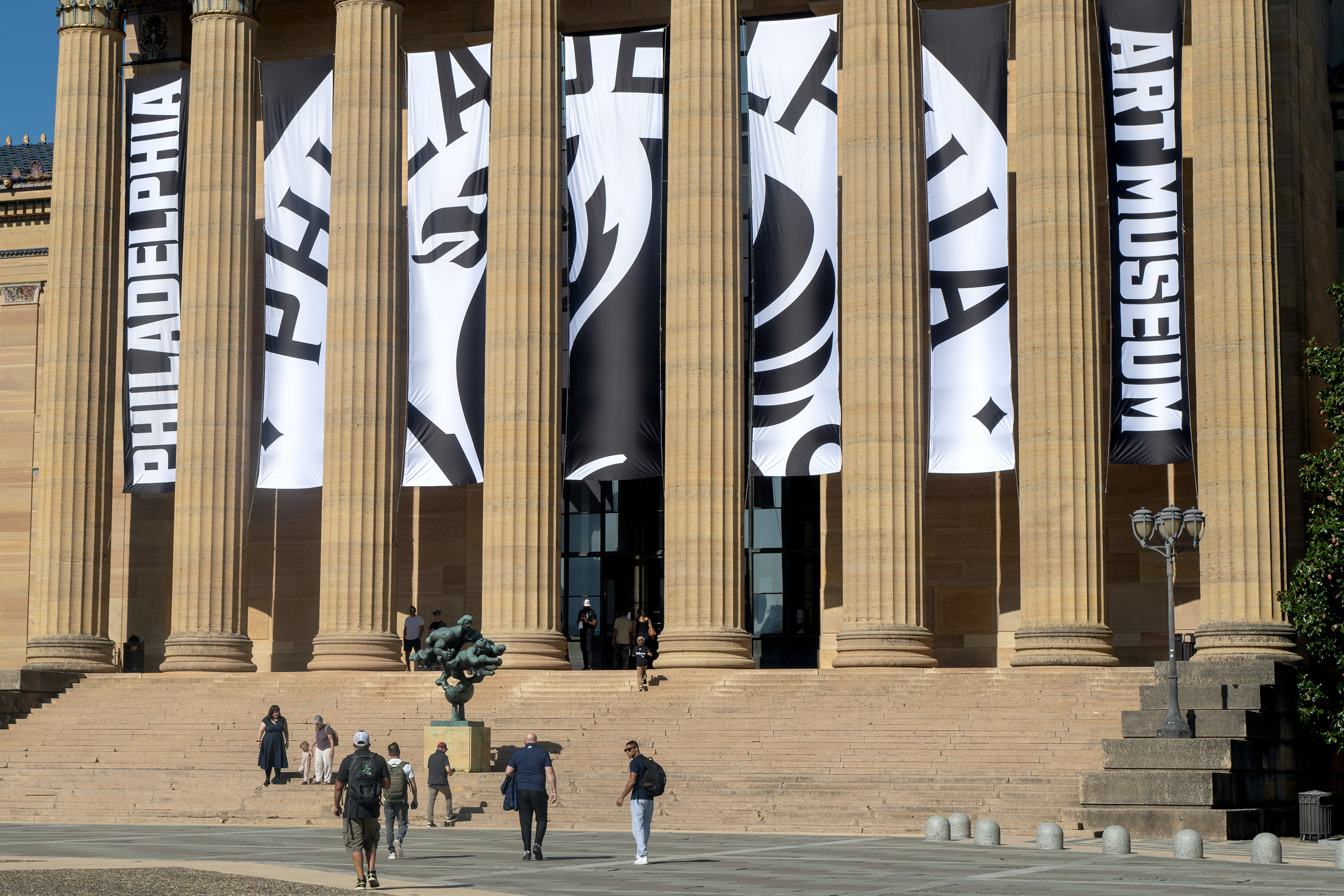
Signage at the east entrance to the Philadelphia Museum of Art Monday, Oct. 6, 2025, now called the Philadelphia Art Museum, or PhAM. The rebranding is part of changes in both style and substance as the museum aims to be more accessible to regular folks and revive attendance, which is still far below pre-pandemic levels.
Farber hopes the display will broaden conversations about identity, power, memory, and community, themes central to public art and Philadelphia’s cultural history.
“We have a statue that 4 million people visit a year. That’s extraordinary. It’s a statue of the most famous Philadelphian that never lived, in a city full of boxers who were legendary champs. How do we reconcile both of those thoughts? Well, we have to dive into it and understand it,” Farber said.
Researched for over five years and in development for two, “Rising Up” will include sculptures, paintings, video performances, film, photographs, prints, drawings, participatory experiences, new commissions, and other works.
“This show is a testament to the vitality and passion of Philadelphia’s arts, culture, and sports communities,” Mayor Cherelle L. Parker said in a statement. “It is more than timely as we approach our monumental Semiquincentennial year.”
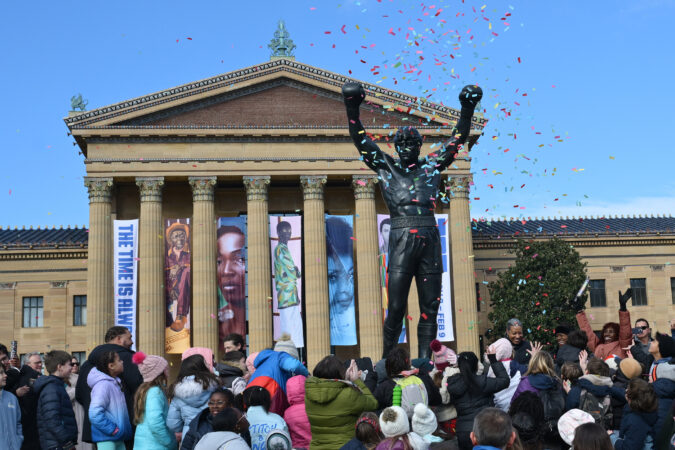
Sylvester Stallone poses with Philadelphia Mayor Jim Kenney in front of the “Rocky” statue at the Philadelphia Art Museum for a “Creed II” photo op, on Friday, April 6, 2018, in Philadelphia. (AP Photo/Michael Perez)
A year after the festival’s first run, organizers have canceled 2025’s festival and will pivot to a yearlong celebration in 2026, rather than offering a week of bus tours and fan experiences.
“Throughout 2026, we will highlight a series of major milestones and activations commemorating this iconic moment in Philadelphia and film history,” Kathryn Ott Lovell, president & CEO of the Visitor Center, said in a statement.
Lovell said next year’s “Rocky 50″ will include events currently in development, some of which will accompany the May release of Sylvester Stallone’s upcoming memoir, The Steps.
A full 2026 calendar of events will be released at a later date, Lovell said.