Tag: topic-link-auto

  • Is Tyler Perkins Villanova’s new Josh Hart? He might be close enough.

    Is Tyler Perkins Villanova’s new Josh Hart? He might be close enough.

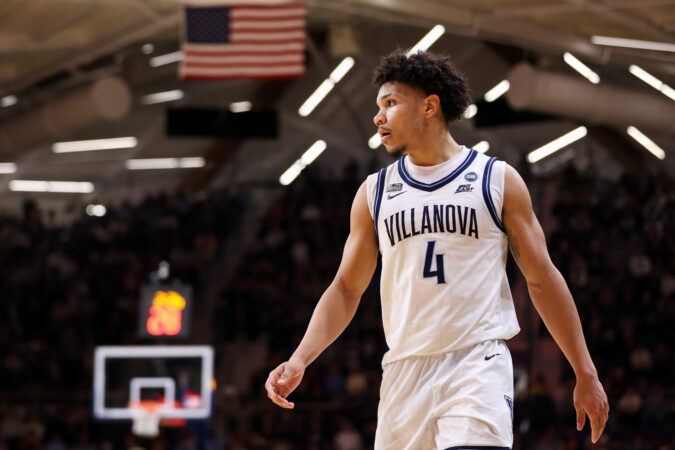
    In the rotunda of the Finneran Pavilion late Tuesday night, the longest tenured Villanova player paused to crane his head toward the ceiling, toward the national championship, Final Four, and Big East championship banners that hang there in V formation, like a flock of birds in flight. On this Wildcats team, he’s the one whose name is called last in the pregame introductions.

    He’s the one everyone knows a little better than everyone else on the roster. For a program once accustomed to having its stars stay for three years, four years, sometimes even five, it has to be jarring that Tyler Perkins, a junior who transferred from Penn in 2024, is the closest thing to a keeper of that flame.

    “I take pride in it,” he said. “Last year, I was able to learn a lot about this place from guys like Eric Dixon, Jordan Longino, guys who have been here for three years, five years. I was able to pick their brains. Just walking these halls, looking at these banners, it makes you hungry. You want to bring it back to this place.”

    The whole idea of a player recognizing and appreciating a particular program’s history and culture seems quaint in this era of college basketball. It certainly doesn’t have the pull and power that it once did.
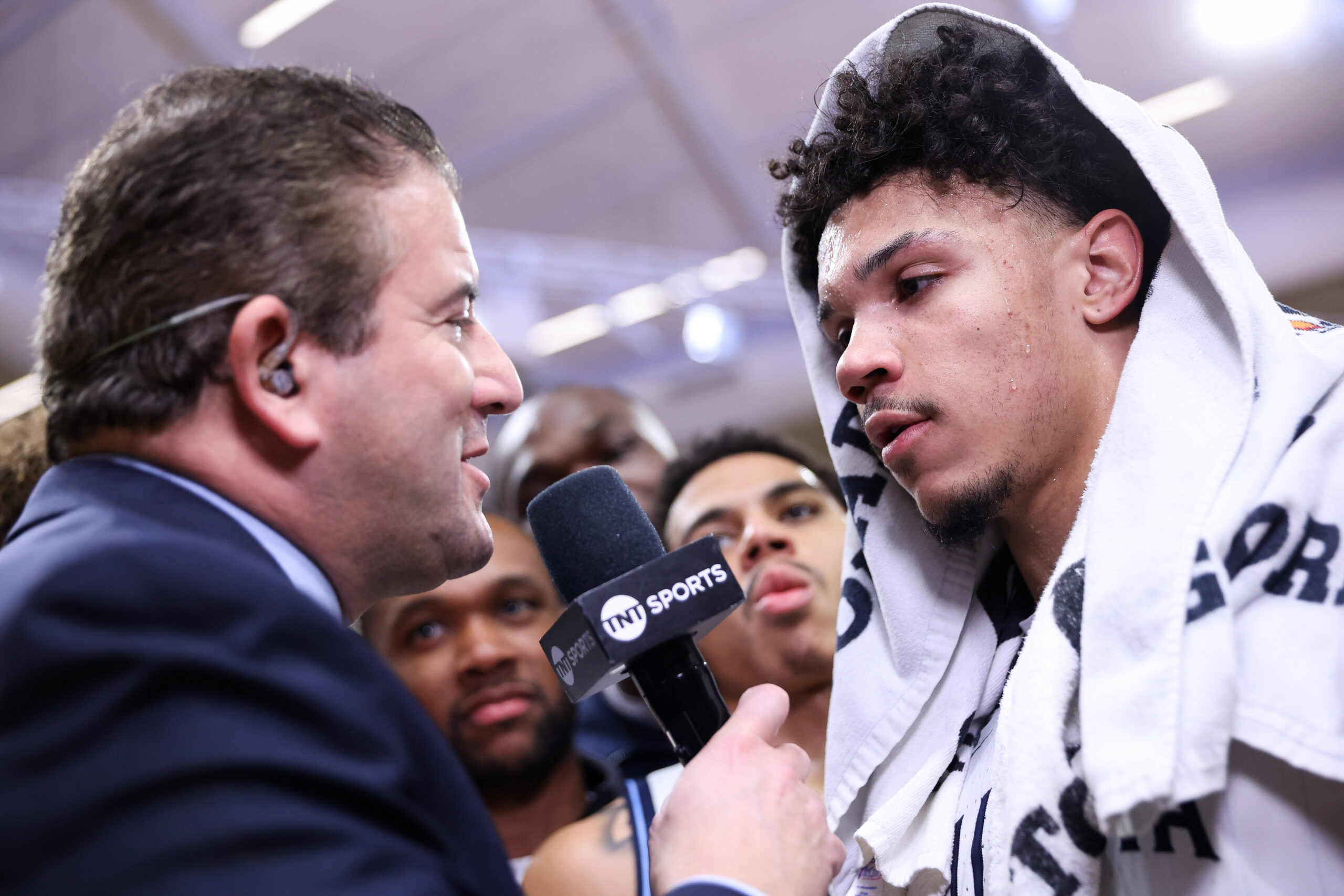
    Tyler Perkins (right) is interviewed by Andy Katz after Villanova’s 77-74 win against Marquette at the Finneran Pavilion on Tuesday.

    Now, paying players is an above-board course of action, athletes pass through the transfer portal like it’s an open doorway, and the story that played out at the Pavilion on Tuesday, in Villanova’s 77-74 victory over Marquette, showed just how much everything has changed.

    Perkins pretty much saved the Wildcats, now 19-5 and on track for their first NCAA Tournament appearance in four years, from losing a Big East game to a lesser opponent. He scored a team-high 22 points, hit three late three-pointers to help ’Nova quickly wipe out a nine-point deficit, grabbed six offensive rebounds, and blocked a three-point attempt by the Golden Eagles’ Adrien Stevens on the game’s final possession.

    It was the kind of performance that a savvy upperclassman — Josh Hart, Mikal Bridges, Collin Gillespie, Dixon — once would have delivered for Villanova … except in this case, the savvy upperclassman is a kid who has been on campus less than two years, and he was having a lousy defensive game until he snuffed Stevens’ shot at the end.

    “Once he figures out he can affect the game without shooting or having to shoot, that’s when he’s going to take a monster step,” Wildcats coach Kevin Willard said. “And he’s starting to get there. He is.”

    Willard is so certain that Perkins will become a great player that, after the Wildcats’ win over Seton Hall last week, he didn’t back away from comparing him to Hart — a first-team All-American and a national champion at ’Nova, a nine-year NBA vet and an invaluable piece of a New York Knicks team that could reach the Finals.

    During Tuesday’s postgame media availability, Willard playfully chided Perkins for his mostly poor defense against Marquette, then pointed out that Hart’s all-around game is what made him such a headache when Willard, while at Seton Hall, was coaching against him.

    “I tell the story all the time,” Willard said. “One of the last times we played against him, I called timeout, and I cursed out my team. I was like, ‘Can somebody please stop Josh Hart?’ And he hadn’t taken a shot. He hadn’t taken a shot, and they’re all looking at me like, ‘Well, he’s not shooting.’ He’s got three steals. He’s got four offensive rebounds. He’s got five assists. And he didn’t take a shot. That’s why he’s in the NBA.
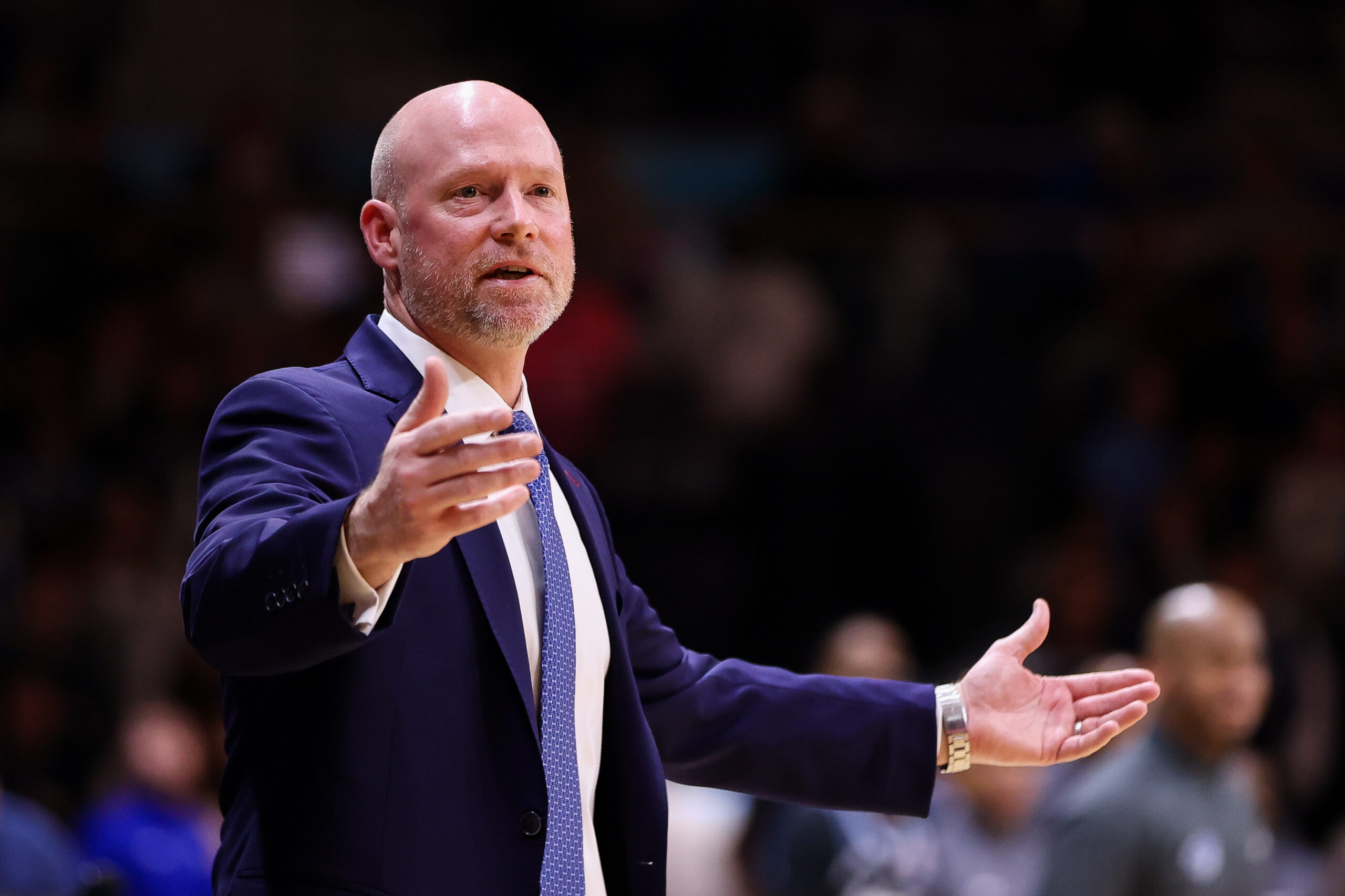
    Villanova coach Kevin Willard believes Tyler Perkins shares many of the same qualities as former Wildcats guard Josh Hart.

    “He” — he tipped his head to the right, toward Perkins — “can do that. He just has to figure it out at times, ‘I don’t need to shoot the ball to be out here and be effective.’ Because he does so many other things.”

    Perkins has met Hart just once — last September, when Hart and Jalen Brunson returned to campus to record an episode of their podcast, The Roommates Show. Their on-paper profiles are practically identical. Both are from the Washington area.

    They are about the same height (6-foot-4) and roughly the same weight (210-215 pounds). The biggest difference, at the moment anyway, might be that the conditions that allowed Hart to develop over his four seasons at Villanova, from 2013 to 2017, are harder to replicate. These days, it takes a welcoming atmosphere; a rewarding athletic, academic, and social experience … and, of course, a big, fat check.

    Make no mistake: The money is and will be the major motivator for keeping a promising basketball player on any campus. A program that wants to keep a star into his senior season is going to have to pony up accordingly. But those first two factors still matter some, at least some of the time, and apparently to Perkins.

    “I don’t really care about all the extra stuff that’s going on in college basketball right now,” he said. “I find joy in playing the game, and I felt like this place was the most comfortable place for me to play.”

    Imagine the comfort he’ll feel a year from now, two years from now, three, if he can stand inside the Pavilion, look up at that ceiling, and see a banner he helped to hang.


  • A romantic Valentine’s Day musical weekend in Philly awaits

    A romantic Valentine’s Day musical weekend in Philly awaits

    Philly Valentine’s Day weekend musical options include Diana Krall and the R&B Lovers Tour in Atlantic City, Eric Benet at City Winery, Stinking Lizaveta at the Khyber, La Cumbia Del Amor at Johnny Brenda’s, Marshall Allen at Solar Myth, Langhorne Slim in Ardmore, and a road trip to see Boyz II Men. What could be more romantic?

    Thursday, Feb. 12

    Lazyacres / Bowling Alley Oop

    Philly songwriter Josh Owens doesn’t seem to have a fully functioning keypad. His dreamy indie pop band Lazyacres’ EP is called Nospacebar. He’s playing South Street hotdog nightclub Nikki Lopez with Attic Posture, Bowling Alley Oop, and Dante Robinson. 8 p.m., Nikki Lopez, 304 South St., @nikkilopezphilly

    Big Benny Bailey, with Ben Pierce and Shamir Bailey, plays the Fallser Club in East Falls on Friday.

    Friday, Feb. 13

    Big Benny Bailey

    The winning Black History Month programming at the Fallser Club continues with Big Benny Bailey, the duo of South Philly songwriters Shamir Bailey and Ben Pierce. It’s a bluegrass, folk, and country project that promises to be another compelling adventure from the multitalented Shamir, who released his 10th album, Ten, last year. He has a GoFundMe going to get his screenplay Career Queer made into a feature film. Reese Florence and Lars open. 8 p.m., Fallser Club, 3721 Midvale Ave., thefallserclub.com

    Umphrey’s McGee

    The veteran jam band, which formed at the University of Notre Dame and called its 1998 debut album Greatest Hits, Vol. III, released its latest improvisatory adventure, Blueprints, in 2025. 8 p.m., Fillmore Philly, 29 E. Allen St., thefillmorephilly.com

    The Knee-Hi’s

    Chicago’s self-described “female fronted garage glam rock band existing as a living love letter to rock and roll” tops a bill with Ione, Star Moles, and Thank You Thank You. 8 p.m., Ortlieb’s 847 N. Third St., 4333collective.com

    Boyz II Men

    Shawn Stockman, Nate Morris, and Wanya Morris usually stay close to home on Valentine’s Day weekend. This year is a little different, with the Boyz on the road on the “New Edition Way” tour with New Edition and Toni Braxton. The trio of R&B stars will arrive in Philly at the Liacouras Center on March 15, but on this heart-shaped weekend, they’re in New Jersey. 8 p.m., Prudential Center, 25 Lafayette St., Newark, prucenter.com

    Iron & Wine

    Sam Beam, who leads Iron & Wine, has a free-flowing new album coming Feb. 27, called Hen’s Teeth. “I’ve always wanted to use that title,” he said in a statement. “I just love it. To me it suggests the impossible. Hen’s teeth do not exist. And that’s what this record felt like: a gift that shouldn’t be there but it is. An impossible thing but it’s real.” Noon, World Cafe Live, 3025 Walnut St., xpn.org

    Diana Krall

    Jazz pianist Diana Krall makes two date-night stops in the region this weekend. On Friday, the vocalist, whose most recent album, This Dream of You, is named after a Bob Dylan song, is in Bethlehem. On Saturday, she’s down the Shore. 8 p.m. Wind Creek Event Center, 77 Wind Creek Blvd, Bethlehem, windcreekeventcenter.com, and 8 p.m., Ocean Casino Resort, 500 Boardwalk, Atlantic City, theoceanac.com

    Diana Krall performs in Bethlehem on Friday and Atlantic City on Saturday.

    Saturday, Feb. 14

    The R&B Lovers Tour

    This package tour gathers together stars of 1990s silky pop R&B and soul, with featured sets by Keith Sweat, Joe, Dru Hill, and Ginuwine. 8 p.m., Boardwalk Hall, 2301 Boardwalk, Atlantic City, boardwalkhall.com.

    Eric Benet

    The R&B love man, formerly betrothed to Halle Berry, and now married to Prince’s ex-wife Manuela Testolini, was a regular hitmaker in the 1990s and 2000s, topping the charts with “Spend My Life With You” with Tamia in 1999. Last year saw the release of his album The Co-Star and a holiday collection. 6 and 9:30 p.m., City Winery Philadelphia, 990 Filbert St., citywinery.com/philadelphia

    Stinking Lizaveta

    Cozy up to your honey while listening to high-volume doom jazz by the power trio named after a character in Dostoyevsky’s novel The Brothers Karamazov. The band consists of drummer Cheshire Augusta and guitarist brothers Yanni and Alexi Papadopoulos, whose 1996 debut album Hopelessness and Shame, recorded by Steve Albini, has just been issued on vinyl for the first time. 8 p.m., Upstairs at the Khyber Pass Pub, 56 S. Second St., @upstairsatkhyberpasspub

    La Cumbia Del Amor

    Philly cumbia klezmer punk band Mariposas Galacticas joins forces with Baltimore-based cumbia ska outfit Soroche and DJ Pdrto Criolla for a dance party celebrating “radical love in all its forms.” 9 p.m., Johnny Brenda’s, 1021 N. Franklin St., johnnybrendas.com

    Philly Gumbo

    Long-standing rhythmically adept party band Philly Gumbo is now in its 47th year. Fat Tuesday is coming up this week, and the band’s bons temps rouler repertoire is deep. This should be a Mardi Gras dance party to remember. 7 p.m., 118 North, 118 N. Wayne Ave., Wayne, 118Northwayne.com.

    Marshall Allen at World Cafe Live in Philadelphia in April 2025. The Sun Ra Arkestra leader plays with his band Ghost Horizons on Saturday at Solar Myth.

    Marshall Allen’s Ghost Horizons

    The indefatigable Sun Ra Arkestra leader is back at the former Boot & Saddle with a version of his Ghost Horizons band that includes DM Hotep on guitar, Joe Morris on bass, and Matthew Shipp on piano. 8 p.m., Solar Myth, 1131 S. Broad St., arsnovaworkshop.org

    Sunday, Feb. 15

    Marissa Nadler

    Folk-goth guitarist Marissa Nadler creates dreamy noir-ish soundscapes that have won her a following with folkies and metal heads. Her latest is the haunting New Radiations. 7:30 p.m., MilkBoy Philly, 1100 Chestnut St., milkboyphilly.com

    Langhorne Slim

    Bucks County’s own Langhorne Slim turns up the volume on The Dreamin’ Kind, his most rocked-out album, produced by Greta Van Fleet bassist Sam F. Kiszka. That album follows 2021’s Strawberry Mansion, named for the Philly neighborhood where his grandfathers were raised. Get there early for Laney Jones and the Spirits, the Nashville quintet whose raucous 2025 self-titled debut is full of promise. 7 p.m., Ardmore Music Hall, 23 E. Lancaster Ave., Ardmore, ardmoremusichall.com

    The Blackbyrds

    The Washington jazz and R&B band, which formed when its members were students of trumpeter Donald Byrd, scored a smash with 1975’s “Walking in Rhythm.” Its music is familiar to hip-hop fans through “Rock Creek Park,” which was sampled by MF Doom, De La Soul, and Wiz Khalifa, among many others. 5 and 8:30 p.m., City Winery Philadelphia, 990 Filbert St., citywinery.com/philadelphia.

  • Shareholders approve merger of American Water and Essential Utilities, which serve Pa. and N.J.

    Shareholders approve merger of American Water and Essential Utilities, which serve Pa. and N.J.

    Shareholders of Camden-based American Water Works and Bryn Mawr-based Essential Utilities, which owns the Aqua water and sewer companies, voted overwhelmingly Tuesday to merge and create a combined company with nearly $30 billion in yearly water and sewer sales.

    More than 99% of the 161 million American Water shares that were voted were cast in favor of the deal, the company told the Securities & Exchange Commission. Essential’s online proposal to merge was approved by around 95% of voting shareholders.

    The planned combination of these rivals, which have competed for more than 100 years to manage water and sewer for the small number of U.S. communities that allow for-profit operators, still needs approval from state public utility commissions.

    The combined companies’ sales are concentrated in Pennsylvania and New Jersey. In suburban Philadelphia, Aqua serves West Chester, northern Delaware County, parts of Lower Bucks, and Main Line communities. American Water serves Abington, King of Prussia, Norristown, Phoenixville, and nearby towns.

    New Jersey American Water serves towns along the PATCO rail line in Camden County, in northern and central Burlington County, and in Shore communities such as Absecon and Ocean City. Aqua New Jersey has customers in the three suburban South Jersey counties and at the Shore.

    American Water’s 14 million U.S. customers include systems in 12 other states, and on 18 U.S. military bases. Essential has around 3 million customers, including systems in six other states, and Pittsburgh-based Peoples Gas, which serves 750,000 in western Pennsylvania and Kentucky.

    American Water is already the nation’s largest private operator of water and sewer systems, and the deal will make it a larger player in competition with Florida-based NextEra Water Group and France-based Veolia’s U.S. operations, among other private systems that have been seeking to expand.

    A separate vote on an Essential executive pay package drew some opposition, with 85%approving.

    That package included more than $17 million in severance compensation and stock grants for departing Essential CEO Christopher H. Franklin, plus medical benefits and up to three years’ professional assistance helping him land another job, plus millions more for his four top deputies.

    The merged company’s larger size, as big as many of the leading natural-gas companies that dominate utility stock-index funds, will boost its visibility to investors, John C. Griffith, the American Water chief executive who will run the combined companies, said in announcing the deal last fall.

    The companies disclosed the approvals Tuesday afternoon and said more details on the vote and their plans would come later this week.

    Deal backers say the combination should enable Griffith to cut management costs, boost profits, drive up the share price, and could ease pressure to keep raising water rates.

    Regulators in New Jersey and Pennsylvania are weighing the company’s latest rate increase requests. American Water’s New Jersey affiliate is asking the state Board of Public Utilities for an average 10% water and 8% sewer rate hike on Jan. 16 for 2.9 million customers, which it said would fund improvements to aging water and sewer systems. Customers would pay an average of $18 more a month.

    Pennsylvania’s Public Utility Commission said last month that it would consider the company’s request to boost water and sewer rates on 2.4 million customers by an average 15%, or $20 a month.

    Critics had urged Essential to seek rival buyers to drive up the share price and shareholder profits from the sale, noting that both stocks had dropped after the merger was proposed last year.

    Tim Quast, founder of Colorado-based ModernIR, a consultant the companies hired to help explain the merger, said share price declines are now typical, even for merger-target companies like Essential whose shares command a premium from buyers like American Water because index-fund investors such as Vanguard and BlackRock tend not to buy more shares of merging companies until a deal is completed.

    Even after long competition from U.S. and foreign utility owners, private water companies serve only about one in six Americans. In recent years, customers of public utilities serving parts of Chester, Delaware, and Bucks Counties have defeated privatization campaigns, though some towns in Pennsylvania and New Jersey have signed on. Pennsylvania also has asked private operators to take over small, troubled public systems.

  • Chesco makes another election error, after residents said their faith in voting security was shaken

    Chesco makes another election error, after residents said their faith in voting security was shaken

    On the heels of a massive pollbook error that left thousands of voters off the rolls in the November election and prompted an independent investigation, Chester County is facing another mistake from its voter services department.

    Earlier this month, the county’s reminder notices, sent to voters who said they would like to receive an annual mail ballot application, reversed the first and last names of voters on the applications. It was not clear how many applications were affected by the error.

    “This printing error will not affect the processing of the form,” the county’s voter services department posted on its website. “Whether voters choose to submit their application online or using the paper form, all applications will be processed accordingly.”

    It was another blunder for a department that has made administrative mistakes in its elections, with residents telling county commissioners last week the errors were eroding their trust in election safety. It also comes as voters have called for the firing of the director of the department after the office has seen high numbers of turnover.

    Counties across the state are sending reminders to voters who said they would like to receive an application to vote by mail. The county became aware of the mistake on Feb. 4, after it mailed out the applications earlier that week.

    County officials alerted the Pennsylvania Department of State that day, a spokesperson for the agency said.

    “We agree with county officials that there is no need to reissue the applications,” the spokesperson said in an email.

    A county spokesperson referred to the voter services statement.

    More than 52,000 county voters cast their ballots by mail in November.

    Residents had worried during a public meeting last week that the county would make another misstep. The meeting was the first since the county released an independent report investigating a pollbook error that omitted roughly 75,000 unaffiliated and third-party voters and forced more than 12,000 voters to cast provisional ballots in the general election.

    November’s error followed another omission in May, when the county did not include the office of the prothonotary on its primary ballot, due to a legal misinterpretation from the county’s solicitor.

    The issues come as the department’s director, Karen Barsoum, has been accused of fostering a toxic workplace, leading to unusually high turnover. The independent investigation found no evidence of that, the lawyers who penned the report said last week.

    The investigation found no evidence of malfeasance in the election blunders, but rather that lack of training, poor oversight, and staffing challenges compounded to cause the pollbook error.

    This suburban content is produced with support from the Leslie Miller and Richard Worley Foundation and The Lenfest Institute for Journalism. Editorial content is created independently of the project donors. Gifts to support The Inquirer’s high-impact journalism can be made at inquirer.com/donate. A list of Lenfest Institute donors can be found at lenfestinstitute.org/supporters.

  • A Philly restaurant regular’s devotion inspired his son to build a $1,500 Lego replica

    A Philly restaurant regular’s devotion inspired his son to build a $1,500 Lego replica

    To be loved is to be known — or, better yet, to inspire a 3,233-piece custom Lego set.

    Gene Gualtieri is devoted to Friday Saturday Sunday. Almost every Friday since 2021, the Fitler Square resident has lined up at 4:30 p.m. to score the same seat at the first-floor bar of Chad and Hanna Williams’ acclaimed Rittenhouse Square restaurant, where he is known to house a full roast chicken — bones and all — and order off-menu sherry martinis from bartender Paul MacDonald. It’s a ritual that has inspired a tattoo on Gualtieri’s bicep: “B9,” code for bar seat no. 9.

    “It’s my seat,” said Gualtieri, 57, an engineer. “This feeling of hospitality and being welcomed [at the bar] … it’s a social hub for me.”

    So when Gualtieri’s 21-year-old son, Leo, needed a Christmas present for his father, everyone from his aunt Claire to his older brother Sam had the same idea. What if, Leo recounts them wondering, there was a way to shrink Friday Saturday Sunday so it fits in your house?

    The resulting gift — a 1½-foot-tall replica of Friday Saturday Sunday’s facade and its ground-level Lovers Bar, constructed out of more than 3,200 Legos — doesn’t skimp on the details. Leo recreated everything, down to the discolored patches of sidewalk out front.

    A figurine of bartender Paul MacDonald shows off a Lego version of his Fibonacci sequence wheel to a miniature of Gene Gualtieri inside a Friday Saturday Sunday replica his son built out of Legos.

    Friday Saturday Sunday (Leo’s version) comes with Lego figurines of the Williamses, bartender MacDonald, and his father that can be posed to sit in one of the bar’s 13 tiger-print chairs. There’s a petite version of the Fibonacci carousel MacDonald uses to perfect his mixology, plus miniatures of the bar’s gargoyle- and raven-shaped pour spouts, mermaid caryatids, and towering citrus bowls. In honor of restaurant’s Michelin star, Leo even included a tiny and perfectly rotund Michelin Man.

    Leo stored the pieces in a repurposed Seinfeld Lego set box that he wrapped in a rendering of the finished design. When Gualtieri opened it on Christmas morning, he cried. The finished version inspired a similar response from others after Gualtieri and the restaurant posted photos on Instagram at the end of January.

    Leo Gualtieri made custom packaging for the Friday Saturday Sunday Lego set he got his father Gene for Christmas.

    “This is so beautiful I wanna cry,” commented one person. “Top 10 most impressive things I have ever seen,” wrote another.

    Leo’s dad concurs. “I was pretty blown away,” Gualtieri said. “At first glance, it looks like a Lego set you’d get a store.”

    A replica built brick by (plastic) brick

    Recreating Friday Saturday Sunday was a labor of love for Leo, a self-described former Lego kid currently finishing up his senior year at Emerson College as a comedy major. As a child, Leo was fixated on building an ever-expanding amusement park out of the plastic blocks alongside his dad. It was an obsession that served him well this holiday season.

    To reconstruct the restaurant, Leo first had to create a rendering of the bar and its exterior in Brick Link, Minecraft-esque software that lets users build and source their own custom Lego sets. Leo said he spent roughly 100 hours translating all the tiny details into Lego form, working first off images of the facade from Google. When those weren’t precise enough, he said, Leo begged MacDonald to send him photos of all the minutiae, from the glassware to close-ups of the light fixtures.

    A replica of the Lovers Bar at Friday Saturday Sunday, built out of more than 3,200 custom Legos by Leo Gualtieri.

    “It was addicting … I would work on it in class,” said Leo while on Zoom with his father, who scoffed at the admission. “Time would pass much faster because I was locked in.”

    Once the rendering was complete, Leo and his mom spent $1,500 on the Lego pieces, sourced from 13 different Lego resellers across Japan, Spain, and the Netherlands. To find a realistic version of Chad Williams’ beard and apron, Leo had to commission custom blocks from an Etsy seller.

    After Christmas, Leo spent the remainder of his winter break from college building mini Friday Saturday Sunday, developing calluses from clicking the bricks into place. Dad, Leo said, wasn’t much help.

    Hanna Williams, co-owner of Friday Saturday Sunday, holds Lego characters of herself and Gene Gualtieri, whose son Leo spent over 100 hours creating a miniature version of the restaurant out of the plastic blocks.

    “He tried to build some chairs,” Leo said of his father. “I don’t think he’s cut out for it.” (Gualtieri agreed. Leo, he admitted, gets his dexterity from his mother.)

    Every time he looks at the replica, Gualtieri said he discovers new details, like how the bottles mimic the exact ones behind MacDonald’s bar. Hanna Williams, Friday Saturday Sunday’s co-owner, felt the same when Gualtieri sent her progress updates on the build out.

    Hanna Williams, co-owner of Friday Saturday Sunday, and Gene Gualtieri, a regular at the restaurant, pose with Lego action figures of themselves created by Gene’s son Leo.

    “I think [Leo] might know every inch of the bar better than me,” she said. Williams especially loves her Lego dopplegangër: “A high bun, bangs, and tattoos? That’s so me.”

    Williams is used to her restaurant being the recipient of the highest order of affection. In the decade since she and her husband revamped Friday Saturday Sunday from a classic fine-dining restaurant with excellent mushroom soup into cozy bar for walk-ins with a top-floor tasting menu that melds Caribbean, Asian, and soul food influences, the restaurant has earned a Michelin Star, a James Beard Award, and a spot on the World’s 50 Best North American restaurants. Just last week, Friday Saturday Sunday won an award for excellence in hospitality from the Tasties, Philly’s homegrown culinary honors.

    And yet, Williams said, the Lego replica represents an extra-special type of achievement.

    “It’s completely overwhelming,” she said. “But at the same time, there’s nothing that could make you feel better.”

  • Putting the Joe Frazier statue in the shadow of the Rocky statue is a low blow

    Putting the Joe Frazier statue in the shadow of the Rocky statue is a low blow

    I thought the absolute nonsense around the Rocky statue being permanently exalted to the top of the steps of the Philadelphia Museum of Art couldn’t be any more embarrassing for Philly. Then, the people in charge of these decisions ripped open my eyes, like Mick, to prove me wrong.

    On Wednesday, the Art Commission approved a proposal from Creative Philadelphia, the city’s office of arts and culture that maintains and preserves Philly’s art collection, to move the statue of legendary Philadelphia boxer “Smokin’” Joe Frazier from the stadium complex, where it’s been since 2014, to the base of the steps of the Art Museum.

    This would normally be a great thing — the Art Museum is in a much more prominent place in the city and Frazier deserves that honor — except that in this case, the Frazier statue is getting the Rocky statue’s leftovers. It’s a bigger smack in the face than a sucker punch in the ring.

    Creative Philadelphia didn’t think the nice little cove at the base of the Art Museum steps where the city’s Rocky statue has been displayed since 2006 was good enough for it anymore. So last month — despite an informal Inquirer poll that showed it was the last thing Philadelphians wanted — the commission approved Creative Philadelphia’s proposal to permanently move the city’s Rocky statue to the top of the steps. (There are currently three Rocky statues in Philadelphia; don’t even get me started on that.)

    A visitor poses with the Rocky statue atop the Philadelphia Museum of Arts steps.

    At the January meeting, commissioner Rebecca Segall said of the Rocky statue: “I believe it’s one of Philadelphia’s most meaningful monuments, and I believe we should just get him out of the bushes and put him up top.”

    Creative Philadelphia and the Art Commission decided “the bushes” weren’t good enough for Rocky, but will be good enough for Joe Frazier. They will put the statue of the real legendary Black boxer right there near a shipping container called the Rocky Shop that sells Sylvester Stallone-licensed products, as if it were some Black History Month consolation prize.

    I mean, c’mon! Do they even hear themselves?

    If any statue belongs at the top of the steps, it’s Frazier’s.

    I’m not the first to point out that Frazier deserves the recognition this city gives to Rocky, and if history is any indicator, I sadly won’t be the last.

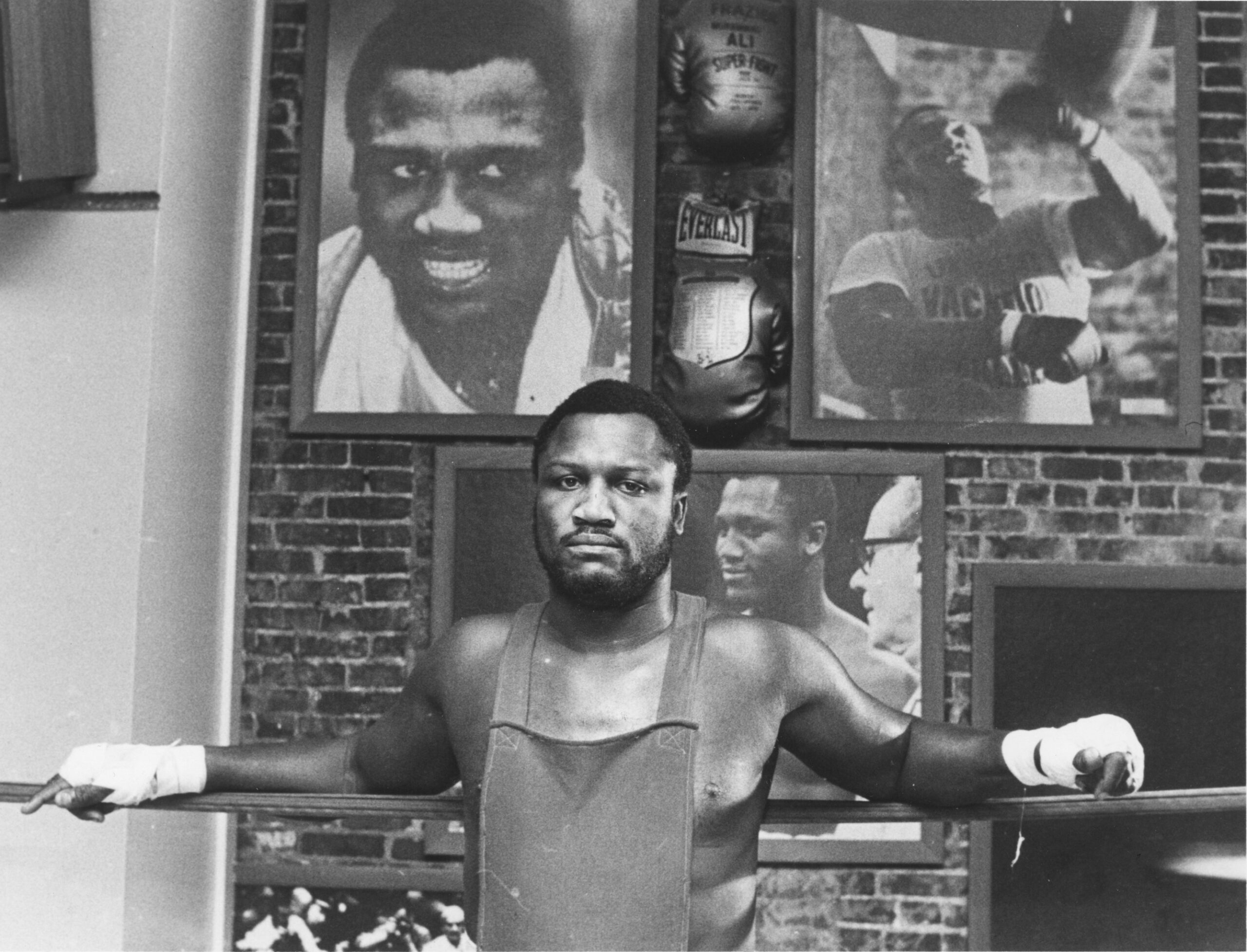
    Joe Frazier poses in front of pictures from his career in an undated photo.

    In a letter of support for the move of Frazier’s statue, Mayor Cherelle L. Parker wrote that putting it at the Art Museum “affirms Philadelphia’s commitment to honoring real-life achievement alongside cultural mythology.”

    But when President Donald Trump’s administration is removing historical facts about slavery from the President’s House Site, why should mythology get top billing?

    At this time, we should not be elevating fiction in Philadelphia as the federal government is attempting to erase our facts.

    Yes, Rocky is a fictional Philadelphia icon, but Frazier, a former world heavyweight champ, was a real-life inspiration for the character, according to Creative Philadelphia, which mentioned it in its recent proposal.

    Frazier, who worked at a Philly slaughterhouse, claimed in a 2008 interview with the Guardian that he’d “go down that long rail of meat and work on my punching.”

    “That’s how [Sylvester] Stallone got the same idea for Rocky — just like he used the story about me training by running up the steps of the museum in Philly,” Frazier said. “But he never paid me for none of my past. I only got paid for a walk-on part. Rocky is a sad story for me.”

    Joe Frazier

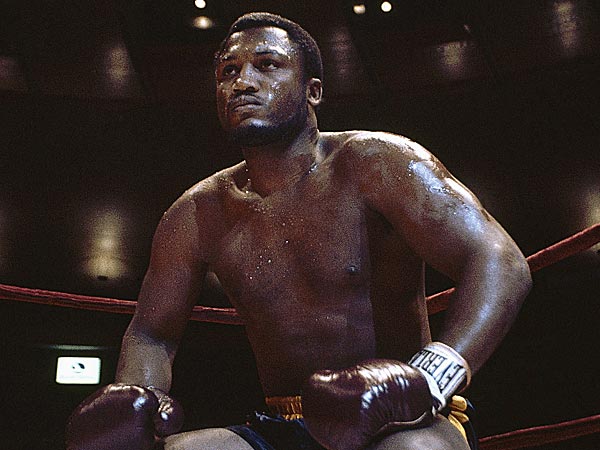
    Frazier wasn’t just one of the inspirations for Rocky, he was one of the greatest heavyweight pugilists ever. In 1964, he won the Olympic gold medal in heavyweight boxing with a broken thumb, and in 1970, he won the world heavyweight title. Here in Philly he gave back, purchasing his own gym in North Philadelphia where he didn’t charge rent and trained a new generation of boxers who found community there.

    Putting the Rocky statue at the top of the steps is clearly designed to appeal to tourists, but those steps are not just a tourist attraction. They are the very place where Philadelphians go to celebrate and protest.

    It’s where the Eagles celebrated their Super Bowl wins and where Live 8 took place. It’s where people gathered during the protests against the murder of George Floyd in 2020 and I saw the lyrics of Woody Guthrie’s “All You Fascists” written on the steps in chalk. It will be the center stage for the nation’s 250th birthday celebrations on July Fourth, and in the center of it all will be the Rocky statue.

    The lyrics to Woody Gurthie’s “All You Fascists” written in chalk on the steps of the Philadelphia Museum of Art in 2020.

    Did Frazier not suffer enough slings and arrows in his life that even in death, this city is choosing to exalt the fictional character he inspired over the very man himself?

    That’s a sad story for Philadelphia.

    I understand why those who love and respect Frazier wrote letters of support for his statue’s move from the sports complex to the base of the Art Museum, where it will have more visibility and more people will get a chance to learn about him.

    Visitor pose with the Rocky statue at the base of the Philadelphia Museum of Art, the proposed location for Joe Frazier’s statue.

    But we can and should do so much better to honor Frazier’s story, and Philadelphia’s. It should not have taken moving the Rocky statue to the top of the steps to get Frazier’s at the base, and when it does go there later this year, it should not be overshadowed by a fictional character based, in part, on him.

    The truth — especially about Black history in this country — is too important.

  • When the doctor needs a checkup

    When the doctor needs a checkup

    He was a surgical oncologist at a hospital in a Southern city, a 78-year-old whose colleagues had begun noticing troubling behavior in the operating room.

    During procedures, he seemed “hesitant, not sure of how to go on to the next step without being prompted” by assistants, said Mark Katlic, director of the Aging Surgeon Program at Sinai Hospital in Baltimore.

    The chief of surgery, concerned about the doctor’s cognition, “would not sign off on his credentials to practice surgery unless he went through an evaluation,” Katlic said.

    Since 2015, when Sinai inaugurated a screening program for surgeons 75 and older, about 30 from around the country have undergone its comprehensive two-day physical and cognitive assessment. This surgeon “did not come of his own accord,” Katlic recalled.

    But he came. The tests revealed mild cognitive impairment, often but not necessarily a precursor to dementia. The neuropsychologist’s report advised that the surgeon’s difficulties were “likely to impact his ability to practice medicine as he is doing presently, e.g. conducting complex surgical procedures.”

    That didn’t mean the surgeon had to retire; a variety of accommodations would allow him to continue in other roles. “He retained a lifetime of knowledge that had not been impacted by cognitive changes,” Katlic said. The hospital “took him out of the OR, but he continued to see patients in the clinic.”

    Such incidents are likely to become more common as America’s physician workforce ages rapidly. In 2005, more than 11% of doctors who were seeing patients were 65 or older, the American Medical Association said. Last year, the proportion reached 22.4%, with nearly 203,000 older practitioners.

    Given physician shortages, especially in rural areas and key specialties like primary care, nobody wants to drive out veteran doctors with skills and experience.

    Yet researchers have documented “a gradual decline in physicians’ cognitive abilities starting in their mid-60s,” said Thomas Gallagher, an internist and bioethicist at the University of Washington who has studied late-career trajectories.

    At older ages, reaction times slow; knowledge can become outdated. Cognitive scores vary greatly, however. “Some practitioners continue to do as well as they did in their 40s and 50s, and others really start to struggle,” Gallagher said.

    A few health organizations have responded by establishing late-career practitioner programs mandating that older doctors be screened for cognitive and physical deficits.

    UVA Health at the University of Virginia began its program in 2011 and has screened about 200 older practitioners. Only in four cases did the results significantly change a doctor’s practice or privileges.

    Stanford Health Care launched its late-career program the following year. Penn Medicine at the University of Pennsylvania also put in place a testing program.

    Nobody has tracked how many exist; Gallagher guesstimated as many as 200. But given that the United States has more than 6,000 hospitals, those with late-career programs constitute “a vast minority,” he said.

    The number may actually have shrunk. A federal lawsuit, along with the profession’s lingering reluctance, appears to have put the effort to regularly assess older doctors’ abilities in limbo.

    Late-career programs typically require those 70 and older to be evaluated before their privileges and credentials are renewed, with confirmatory testing for those whose initial results indicate problems. Thereafter, older doctors undergo regular rescreening, usually every year or two.

    It’s fair to say such efforts proved unpopular among their intended targets. Doctors frequently insist that “‘I’ll know when it’s time to stand down,’” said Rocco Orlando, senior strategic adviser to Hartford HealthCare, which operates eight Connecticut hospitals and began its late-career practitioner program in 2018. “It turns out not to be true.”

    When Hartford HealthCare published data from the first two years of its late-career program, it reported that of the 160 practitioners 70 and older who were screened, 14.4% showed some degree of cognitive impairment.

    That mirrored results from Yale New Haven Hospital, which instituted mandatory cognitive screening for medical staff members starting at age 70. Among the first 141 Yale clinicians who underwent testing, 12.7% “demonstrated cognitive deficits that were likely to impair their ability to practice medicine independently,” a study reported.

    Proponents of late-career screening argued that such programs could prevent harm to patients while steering impaired doctors to less demanding assignments or, in some cases, toward retirement.

    “I thought as we got the word out nationally, this would be something we could encourage across the country,” Orlando said, noting that Hartford’s program cost only $50,000 to $60,000 a year.

    Instead, he has seen “zero progress” in recent years. “Probably we’ve gone backward,” he said.

    A key reason: In 2020, the federal Equal Employment Opportunity Commission sued Yale New Haven over its testing efforts, charging age and disability discrimination. The legal action continues (the EEOC declined to comment on its status), as does the hospital’s late-career program.

    But the suit led several other organizations to pause or shut down their programs, including those at Hartford HealthCare and at Driscoll Children’s Hospital in Corpus Christi, Texas, while few new ones have emerged.

    “It made lots of organizations uncomfortable about sticking their necks out,” Gallagher said.

    Instituting later-career programs has always been an uphill effort. “Doctors don’t like to be regulated,” Katlic acknowledged. Late-career programs have “in some cases been very controversial, and they’ve been blocked by influential physicians,” he said.

    As health systems wait to see what happens in federal court, most national medical organizations have recommended only voluntary screening and peer reporting.

    “Neither works very well at all,” Gallagher said. “Physicians are hesitant to share their concerns about their colleagues,” which can involve “challenging power dynamics.”

    As for voluntary evaluation, since cognitive decline can affect doctors’ (or anyone’s) self-awareness, “they’re the last to know that they’re not themselves,” he added.

    In a recent commentary in The New England Journal of Medicine, Gallagher and his co-authors recommended procedural policies to promote fairness in late-career screening, based on an analysis of such programs and interviews with their leaders.

    “How can we design these programs in a way that’s fair and that therefore physicians are more apt to participate in?” he said. The authors emphasized the need for confidentiality and safeguards, such as an appeals process.

    “There are all sorts of accommodations” for doctors whose assessments indicate the need for different roles, Gallagher noted. They could adopt less onerous schedules or handle routine procedures while leaving complex six-hour surgeries to their colleagues. They might transition to teaching, mentoring, and consulting.

    Yet a substantial number of older doctors head for the exits and retire rather than face a mandated evaluation, he said.

    The future, therefore, might involve programs that regularly screen every practitioner. That would be inefficient (few doctors in their 40s will flunk a cognitive test) and, with current tests, time-consuming and consequently expensive. But it would avoid charges of age discrimination.

    Faster reliable cognitive tests, reportedly in the research pipeline, may be one way to proceed. In the meantime, Orlando said, changing the culture of healthcare organizations requires encouraging peer reporting and commending “the people who have the courage to speak up.”

    “If you see something, say something,” he continued, referring to healthcare professionals who witness doctors (of any age) faltering. “We are overly protective of our own. We need to step back and say, ‘No, we’re about protecting our patients.’”

    The New Old Age is produced through a partnership with The New York Times.

    KFF Health News is a national newsroom that produces in-depth journalism about health issues and is one of the core operating programs at KFF — the independent source for health policy research, polling, and journalism.

  • Lower Merion and Narberth want to make Montgomery Avenue safer. Here’s how you can weigh in.

    Lower Merion and Narberth want to make Montgomery Avenue safer. Here’s how you can weigh in.

    Lower Merion and Narberth are seeking residents’ input as they embark on an effort to make Montgomery Avenue safer for drivers, cyclists, and pedestrians.

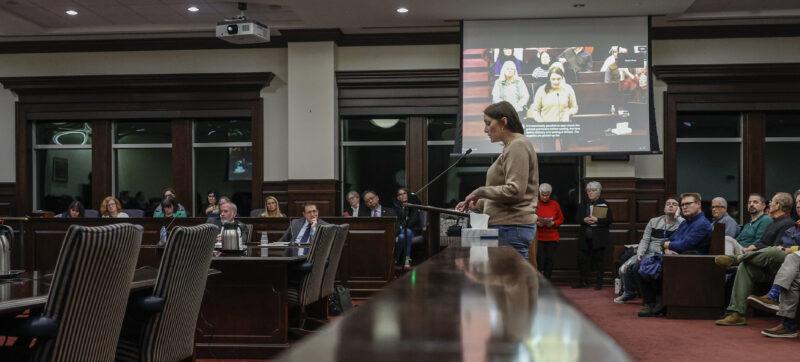
    At a meeting Feb. 3, officials from the township and the borough laid out long-standing safety issues on Montgomery Avenue and took feedback from attendees, many of whom said they no longer feel safe walking and driving along one of the Main Line’s busiest arteries.

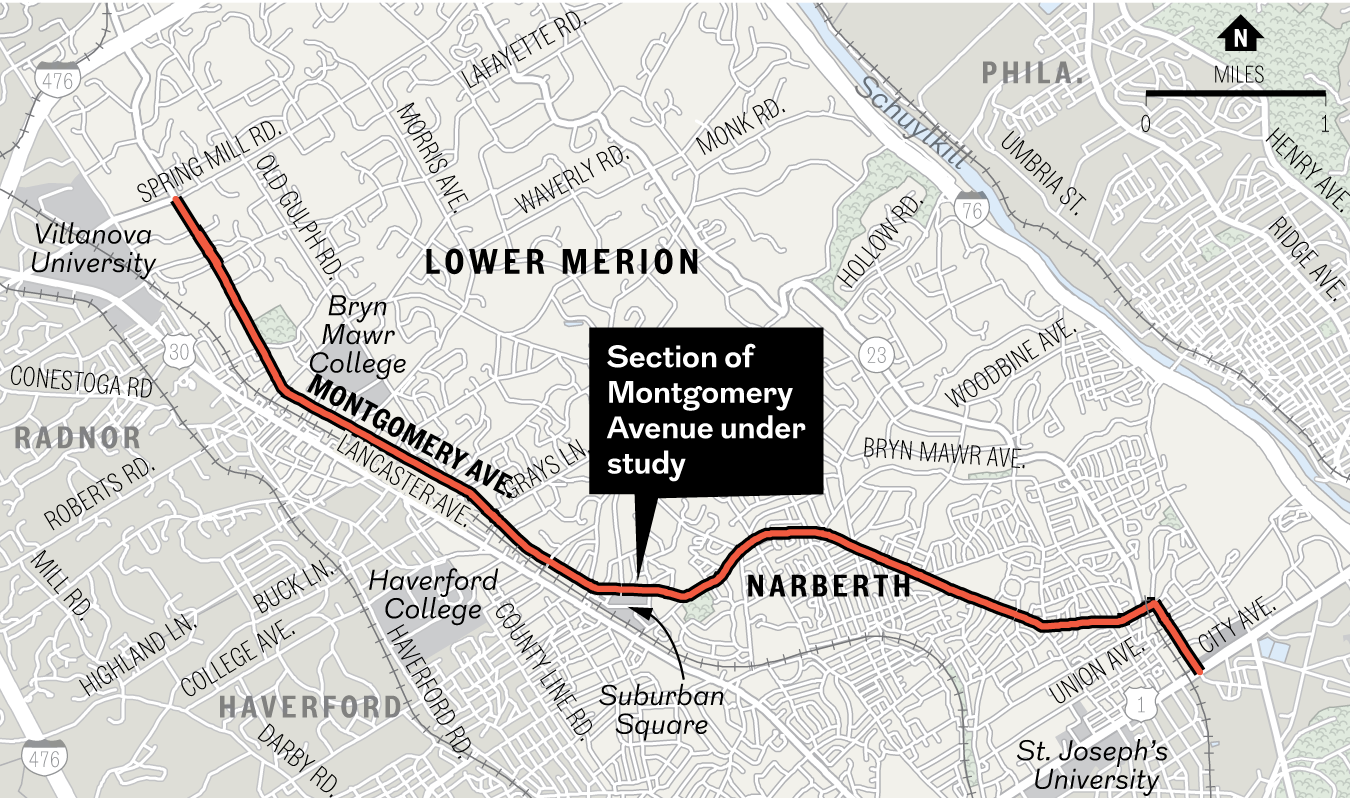
    The U.S. Department of Transportation has awarded Lower Merion and Narberth $340,540 to study a seven-mile stretch of Montgomery Avenue, from Spring Mill Road to City Avenue, through the federal Safe Streets and Roads for All program. The program awards funds to municipalities working to limit roadway deaths and serious injuries. The study will inform safety improvements at 35 intersections on that stretch of Montgomery Avenue.

    Map showing the section of Montgomery
    Avenue in Lower Merion and Narberth undergoing a comprehensive traffic safety study.

    Officials cited a long list of safety issues on Montgomery Avenue, from out-of-date pedestrian push buttons, sidewalk curb ramps, and crosswalk lighting to regular speeding and weaving by drivers. Without proper turn lanes and signals, drivers making left turns on Montgomery Avenue often slow traffic and can endanger pedestrians and other motorists, township representatives added.

    The traffic-calming effort comes at the heels of Lower Merion’s Comprehensive Safety Action Plan, which was published in 2025. The plan calls for eliminating all roadway fatalities and serious injuries in Lower Merion, with a goal of achieving a 50% reduction by 2030. Last summer, township commissioners approved a plan to install automated red-light enforcement cameras at four intersections, beginning with the intersection of Lancaster Avenue and Remington Road.

    Unlike previous traffic studies that focused on individual intersections, this project will take a more comprehensive approach, officials said.

    Between 2020 and 2024, there were 532 reportable crashes on Montgomery Avenue between Spring Mill Road and City Avenue. A reportable crash is defined as a crash resulting in an injury or vehicle damage serious enough to require towing. Around 2.5% of such crashes involved a serious injury. Just over half involved a minor injury, and the rest, around 46%, involved property damage only. In the same time frame, there were 920 minor crashes, or incidents with no injury and no need for towing.

    In total, 3,767 crashes were reported in Lower Merion at-large between 2019 and 2023. In that time frame, Lower Merion Township accounted for 8% of crashes with a fatality or serious injury within Montgomery County.

    Pennsylvania is the only state in the country where local police officers are prohibited from using radar for speed enforcement, said Andy Block, Lower Merion’s police superintendent, making it difficult for his department to enforce speed limits.

    At the meeting, residents told stories of their own crashes and near-misses on Montgomery Avenue.

    Kim Beam, a social worker at Bryn Mawr Hospital, used to walk to work along Montgomery Avenue every day before she was nearly hit by a car a few weeks ago.

    “I had an event which would have made me one of your fatalities,” Beam said, describing her walk to work as poorly lit, contributing to dangerous, and almost deadly, conditions for pedestrians like herself.

    Residents of Lower Merion and Narberth were encouraged to complete a survey that will inform officials as they develop a preliminary set of safety recommendations. A public meeting will be held once the recommendations are developed to gather additional feedback.

    Residents can fill out the survey online via www.lowermerion.org/Home/Components/News/News/5605/50 or print it out and drop it off at Narberth or Lower Merion’s municipal buildings. Completed forms can also be mailed to Brandon Ford, Assistant Township Manager, Lower Merion Township, 75 E. Lancaster Ave., Ardmore, Pa. 19003.

    This suburban content is produced with support from the Leslie Miller and Richard Worley Foundation and The Lenfest Institute for Journalism. Editorial content is created independently of the project donors. Gifts to support The Inquirer’s high-impact journalism can be made at inquirer.com/donate. A list of Lenfest Institute donors can be found at lenfestinstitute.org/supporters.

  • Kaylah Turner went from Temple’s top reserve to leading scorer in the American — and she isn’t satisfied

    Kaylah Turner went from Temple’s top reserve to leading scorer in the American — and she isn’t satisfied

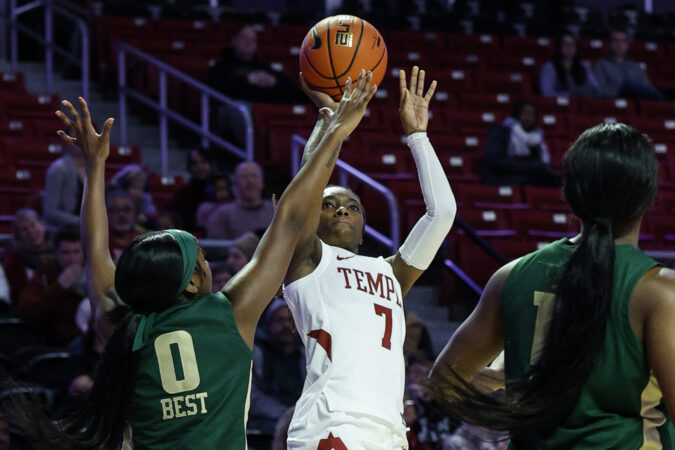
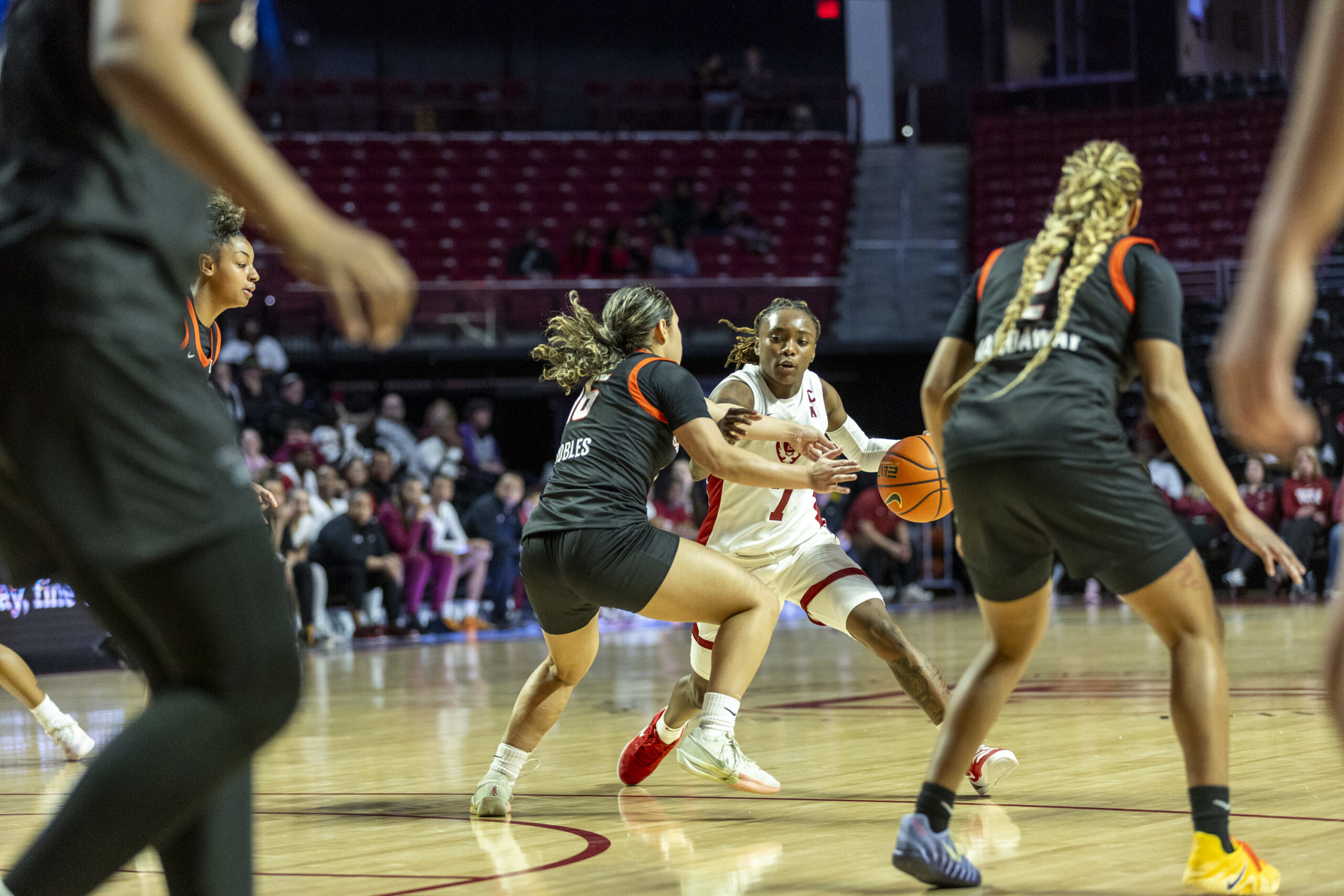
    Temple guard Kaylah Turner describes her play as “KT ball,” which she says is scoring at all three levels and being a pest on defense.

    However, the 5-foot-6 junior is constantly looking to improve, whether it’s becoming a better passer or grabbing more rebounds. Her drive has helped her blossom into one of the best players in the American Conference.

    The Alabama A&M transfer and reigning American sixth player of the year leads the conference in scoring with 17.2 points per game. It’s been a difficult stretch for the Owls in conference play, and Turner has led Temple (10-13, 4-7) to three wins in its last seven games. She scored 12 points in Tuesday’s 52-43 loss against University of Texas San at Antonio.

    “We just have to focus on the next game,” Turner said. “We can’t really draw on all the losses.”

    Temple guard Kaylah Turner is averaging 17.2 points per game.

    Turner had high expectations this season. She was named to the American’s preseason all-conference first team after a strong first season with the Owls, in which she averaged 9.9 points on 38.5% shooting off the bench. With the graduation of guards Tiarra East and Tarriyonna Gary, Turner moved into the starting lineup this season.

    “First-team preseason was cool, but I think I should have been preseason player of the year,” Turner said. “So that’s on my mind, and that’s what’s motivated me every day to get better because I didn’t get my original goal, so I still have another couple of goals in mind. I’m just never satisfied.”

    Moving into the starting lineup paired Turner with point guard Tristen Taylor, who led the American in assist-to-turnover ratio last season. Turner’s scoring prowess and Taylor’s facilitating has forged a formidable backcourt.

    “We play very well together,” Taylor said. “I feel like we’re actually the best backcourt duo in the conference, and I’ll say that. But Kaylah comes in here and works hard every day. She is a great teammate, not just to me, but to everybody. She always brings energy, and I just feel like that flows onto the court when she goes out and plays.”

    That energy has helped Turner lead the conference in scoring and shoot 41.6% on three-pointers, which is second in the conference..

    However, when Temple lost four of its first five American contests, Turner was one of the players who couldn’t find her groove.

    Turner shot below 40% in four of those five games. Before Temple’s game against South Florida on Jan. 20, the team held a meeting to go over everyone’s role on the floor. The Owls beat the Bulls, 86-83, and are 3-3 since the meeting. Turner has been one of the biggest beneficiaries of the refreshed role clarity.

    Temple’s Kaylah Turner has surpassed 1,000 career points this season.

    She had a 27-point outburst in Temple’s 67-65 overtime win over Tulane on Jan. 31 and came up with a steal and assisted forward Jaleesa Molina’s game-winning layup in the final seconds.

    “We were just super locked in on that play,” Turner said. “I got the steal, but all my teammates were all talking at that time. So that’s why we got that steal and Jaleesa was able to get the bucket.”

    Turner also eclipsed 1,000 career points after knocking down a three-pointer in the second quarter in the win over the Green Wave.

    “It definitely means a lot,” Turner said. “I was definitely happy when I got it. Just seeing my success that I had at Alabama A&M, and then having the same thing here is just incredible, seeing my hard work pay off in that aspect.”

    Despite having the best season of her career, Turner sees plenty of room for improvement. With Temple ninth in the 13-team American with seven games to play, Turner is looking to give the Owls momentum heading into the conference tournament.

    “Looking at these games that we won recently, it was with the defense and 50/50 balls, intensity, urgency, all that type of stuff,” Turner said. “So we can make sure we really emphasize the little things. We can sit here and look at scout and run our plays, but what wins games is everything that’s not on the scout. Energy, talking, getting on the floor, that type of stuff. Just being consistent with our spicy defense, like Coach [Diane Richardson] always talks about.”

  • U.S. men’s World Cup hopeful Noahkai Banks is taking the slow and steady approach

    U.S. men’s World Cup hopeful Noahkai Banks is taking the slow and steady approach

    As the clock ticks toward the World Cup, the buzz continues to grow around 19-year-old U.S. national team centerback prospect Noahkai Banks.

    Though there’s no guarantee yet that he’ll make the tournament squad, the attention is warranted. He has played in 16 of the last 17 games for his club, FC Augsburg of Germany’s Bundesliga, and often has looked good on the field.

    That puts Banks squarely on the list of names you’d want to know before the World Cup — and certainly before the U.S. team’s last auditions in March.

    He knows it, as he said when he spoke with The Inquirer earlier in the season. This week brought another opportunity to get to know him, as the Bundesliga hosted a roundtable with Banks for U.S. media.

    Noahkai Banks (rear) in action against Eintracht Frankfurt in a German Bundesliga game in December.

    There was much to talk about, starting with his reflections on his one U.S. team camp so far last fall.

    “I was pretty nervous when I got into camp because I was 18 years old at the moment,” said Banks, who turned 19 on Dec. 1. “So I thought maybe the older guys will think, ‘Who’s that,’ or ‘What is he doing here?’”

    In fact, the opposite happened.

    “For example, Tim Ream, the first day in training, he helped me a lot, because he plays in my position,” Banks said of the fellow centerback and frequent U.S. captain. “He has coached me a lot and helped me to get into the training and into the new tactics — because, obviously, it was a big jump. But also, the older guys also had dinner and they said, ‘Come sit at our table.’”

    Little things like that are a great sign of the strong spirit in the American program.

    “Players like [Christian] Pulisic, [Tim] Weah, they helped me a lot,” Banks said, naming two of the Americans’ biggest stars. Of others, he said, “How they welcomed me, how they made my life easy, was very cool, to be honest.”

    It was no surprise that he praised manager Mauricio Pochettino, but how he did so was news.

    “He has been a centerback back in the day [as a player], he knows the position very well, and he’s helped me with small details like positioning and stuff like this,” Banks said. “Just the small things, which make a difference at the highest level. He gave me some tips, and I hope I can do what he told me in the future.”

    ‘Happy with the U.S.’ and ‘grounded’ at home

    National team staff has remained in touch with Banks since then, further raising the odds of a March call-up. But because he hasn’t formally committed to the senior U.S. team yet, the Hawaii native still can switch allegiance to Germany, where he has lived since age 10.

    Noahkai Banks in action against German power Bayern Munich earlier this season.

    “I’ve been in touch with Germany before, to be honest,” Banks said, but he “was always very happy with the U.S. You can’t tell what happens in the future, but at the moment, there’s not a thought of switching, or something like this, because I’m happy with the U.S.”

    That happiness dates back to playing for various U.S. youth teams, including at the 2023 under-17 World Cup.

    “One of the best experiences in my life,” he said. “And then also at [the] U-19 and U-20 level, I was always just very happy to get into camp to see my friends again, because we were a big class of friends. It was not like I [would] go to the national team and play football, it was like I meet my friends and play football with them.”

    Banks does not lack for confidence, but he carries it well.

    “To be honest, I was always very confident — I think I have that from my mom,” he said. “So I always believed in myself, and I always believed I can play in the Bundesliga. But I think, also, confidence grows and builds itself up with time and with games.”

    Those games have earned the trust of Augsburg’s coaching staff, a feat made harder by two managerial changes since last summer. The club has been fighting all season to avoid relegation. It’s currently 13th in the 18-team league, but just three standings points into safety.

    “It has been a great year so far, because I didn’t expect to play that much, to be absolutely honest with you,” Banks said. “But yeah, the coaches have given me a lot of trust, a lot of minutes. So [over] time, as I said before, I got more confident with the team, with my teammates, with the players, with the tactics.”

    Family matters a lot to him, too. He is close with his mother, Nadine, whose own athletic genes earned her a shot at college basketball before repeated tears to her ACL derailed it. She moved Banks to Germany after separating from his father, settling in a Bavarian mountain town just over an hour from Augsburg.

    “I think it’s easy to stay grounded because I have a great family behind me,” the son said. “And also the club doesn’t allow [otherwise] because my teammates are all very grounded and very humble. It’s like a big family here.”

    Then he added a flourish that far-away Philadelphia would appreciate: “Also, my mom would kick my [butt] if I’m not grounded anymore, so there’s no chance of that.”

    Nor is there a chance of Banks looking too far ahead — as in, to the World Cup — before Augsburg’s season is settled.

    “As I said a lot of times before, I think it’s not the right moment to think about the World Cup for me, because we have a lot of games left here,” he said. “So, really, just focus. A lot of players say it, but I really mean it: I really just focus on the games we have here. And, yeah, then let’s see what happens in summer.”