Despite Philadelphia being a deep-blue city dominated by Democrats, local officials have been somewhat cautious in how they talk about President Donald Trump’s administration.
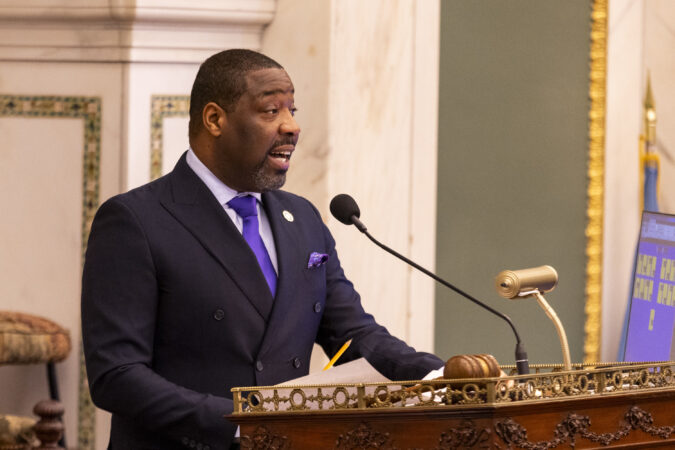
That has included the top legislator, City Council President Kenyatta Johnson, who has largely taken a measured approach on national politics, opting to convene task forces and hold public hearings rather than go scorched-earth on Trump.
That was until last month, when Johnson, like the rest of the country, watched video footage on the news showing federal immigration enforcement agents bearing down on Minneapolis and fatally shooting two United States citizens.
He said in an interview Friday that he now sees City Council differently: as an “activist body” that is obligated to take legislative action in opposition to the Trump administration.
And Johnson said he questions the purpose of his position if not to stand up for the city’s most vulnerable — and right now, he said, that’s immigrants.
“It’s my responsibility to step up in this space and be more vocal,” he said over lunch in South Philadelphia’s Point Breeze neighborhood, the section of the city where he grew up and still lives. “It’s just the evolution of me really not addressing it from a political standpoint, but from a moral standpoint of advocating and fighting for individuals who really need a voice.”
That reflects a shift for Johnson, the centrist Democrat who is entering his third year as Council president. He considers himself pro-law enforcement, and he typically takes an understated approach to leadership, preferring to dissent with others privately rather than duke it out in public.
In employing a more assertive approach, Johnson has also over the last several months started to diverge from Mayor Cherelle L. Parker, a close ally.
“The mayor can respond how she chooses to respond,” he said. “For me, it’s a moral issue.”
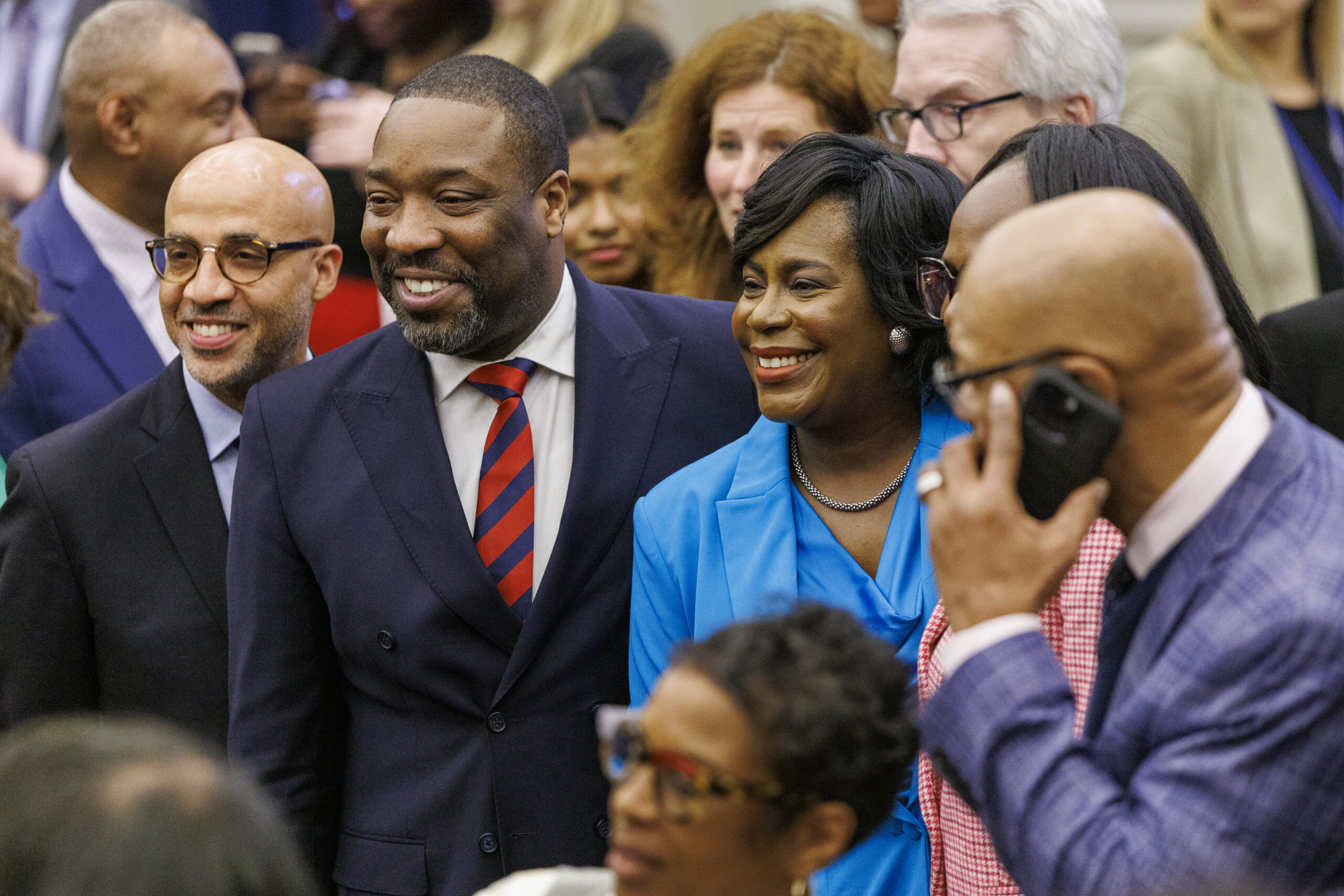
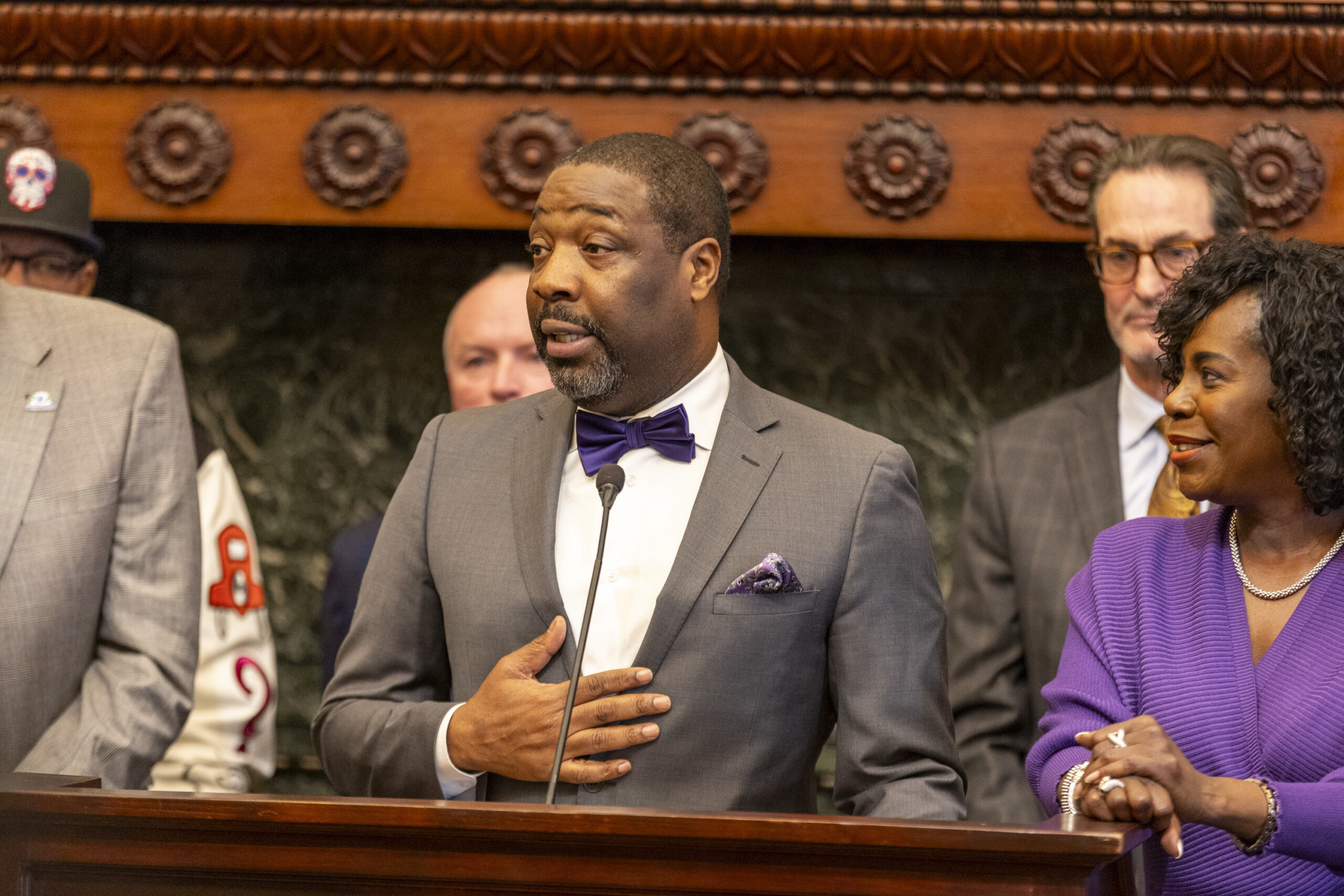
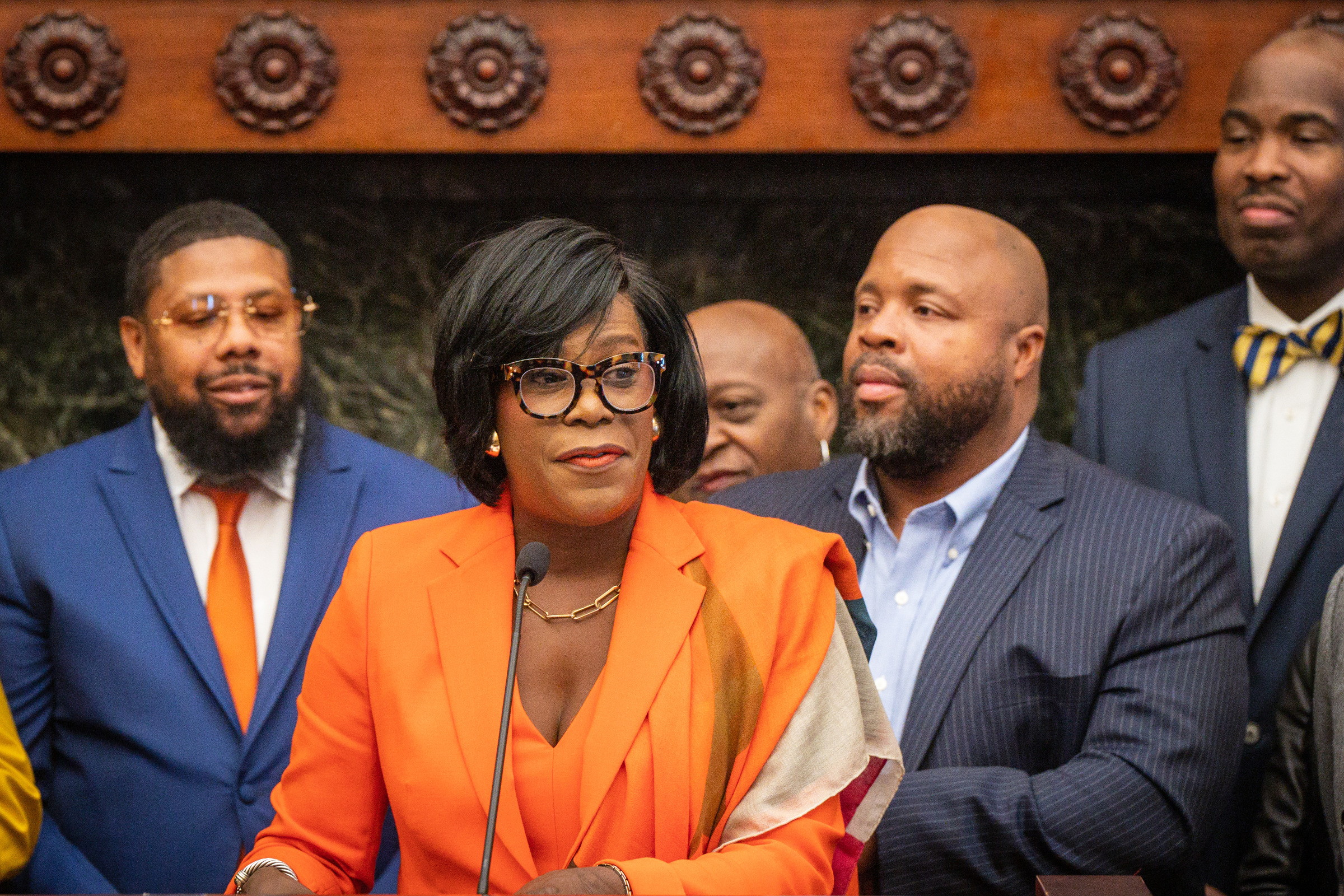
Philadelphia Mayor Cherelle L. Parker stands beside Council President Kenyatta Johnson (left) after she finished her budget address to City Council, City Hall, Thursday, March 13, 2025.
Larry Ceisler, a public affairs executive and longtime City Hall observer, said he has watched Johnson rise from community activist to lawmaker.
He said the Council president, in his latest evolution, might have calculated that a majority of the 16 other members want the city’s legislative body to take a more active role.
“He is an activist at heart, and he has a tremendous amount of empathy for people,” Ceisler said. “At the same time, he’s a pretty good politician and he can count votes. It’s very difficult for him at this point to push back on the will of his members.”
But Ceisler said that Parker might have more to lose, and that she will “be on the hook for all this if there is retribution from Washington.”
A ‘shameful’ episode at the President’s House
Through the first eight months of the second Trump administration, Johnson largely kept focused on local policymaking.
When a reporter asked Johnson in January 2025 how he saw his role responding to the Trump administration, he noted that he had convened two working groups to study how Trump-backed policies would affect Philadelphia residents.
Other Council members introduced more than a dozen resolutions to condemn the Trump administration’s efforts that they said would harm Philadelphians, like cutting food assistance and prohibiting some diversity-hiring initiatives. One resolution opposed the federal government’s deployment of the National Guard as a crime-fighting measure in major American cities; another said Trump’s cabinet members were wholly unqualified.
Those measures, almost entirely symbolic, were largely spearheaded by progressive members. They passed the overwhelmingly Democratic Council with little debate and not much acknowledgment from the Council president.
But by September, Johnson began to speak up.
He was incensed when word spread that the Trump administration was seeking to alter some content related to slavery on federal properties, including at Independence National Historical Park. The National Park Service was reportedly looking to edit panels at the President’s House Site in Center City that memorialize the nine people whom George Washington enslaved.
Last month, federal workers removed the exhibit and relocated the panels to the National Constitution Center, where they are in storage. Parker’s administration filed a lawsuit immediately, and the issue remains the only Trump initiative that Parker has vocally opposed over the last year.
“This history is a critical part of our nation’s origins, and it deserves to be seen and heard,” she said in a video posted on social media.
Veronica Chapman-Smith, concerned citizen was present at the history lesson and protest, Presidents house, Independence National Historical Park, Philadelphia, Friday, Feb. 6, 2026. The community is coming together to protest the removal of slavery exhibit at the President’s House site.
The Council president said he wants the panels returned in time for an expected influx of tourists this year for several major events, including World Cup games and the 250th anniversary of the founding of the nation.
“It’s shameful that during this celebration of our country, the birthplace of America, here in the city of Philadelphia, we have to deal with a Trump administration trying to whitewash our history,” Johnson said last week.
A Minneapolis-like ICE surge on ‘any given day’
Over the next five months, Johnson will juggle advocating for the return of the panels as he manages other high-profile local matters. Council must approve a city budget by the end of June, and its members are expected to play a crucial role in the Philadelphia School District’s closure and consolidation plan that will affect dozens of schools.
The “ICE Out” legislation that Johnson has already backed is also expected to be a major undertaking over the coming weeks. The seven bills that make up the package already have support from 15 of Council’s 17 members, which constitutes a veto-proof majority.
City Councilmember Rue Landau, a Democrat who is one of the prime sponsors of the immigration legislation, said Johnson “fully realizes the importance of this moment.”
“His support,” she said, “is a recognition that local government has a pivotal role to play in moments like these.”
Prior to this year, Johnson rarely talked about immigration. He has spent most of his career focused on public safety, gun violence prevention, and quality-of-life issues.
Bloomberg reported that the building, about 85 miles outside Philadelphia, is one of two dozen across the nation that ICE has identified for conversion into detention centers. ICE purchased another warehouse in Schuylkill County, about 110 miles from Philadelphia.
Together, the two facilities could hold 9,000 beds.
To Johnson, it was like the federal government was saying: “We want to set up shop right in your backyard.”
ICE is already operating in the city. But Johnson said the warehouse purchases are a sign that Philadelphia should prepare for a greater surge of immigration enforcement like the operation in Minneapolis, where more than 3,000 federal agents were deployed and large-scale protests ensued.
Countless Minnesotans have said they were harassed, racially profiled, and unlawfully arrested by ICE agents during the operation this year.
“Who’s to say that won’t happen to any of my constituents that I represent from Liberia? From Sierra Leone? From Cambodia?” Johnson said. “It can happen on any given day here in the city of Philadelphia.”
When your social media algorithm starts feeding you videos of Snoop Dogg, and Jason and Kylie Kelce learning how to curl, it must be time for the Winter Olympics.
Ahead of the Milan Olympic Games, similar to the Kelces and Snoop Dogg, I had the opportunity to get some hands-on training. Here’s a look about the training that goes into the sport, my own experience on the ice, and some local places to play.
Curling can look effortless on television, but looks can be deceiving.
Daniel Laufer, 19, a freshman at Thomas Jefferson University from Richboro, Bucks County, who has been curling for 12 years, had the opportunity to compete on this year’s Olympics ice at the Cortina Olympic Stadium in Italy during last year’s World Junior Curling Championships as a member of Team USA.
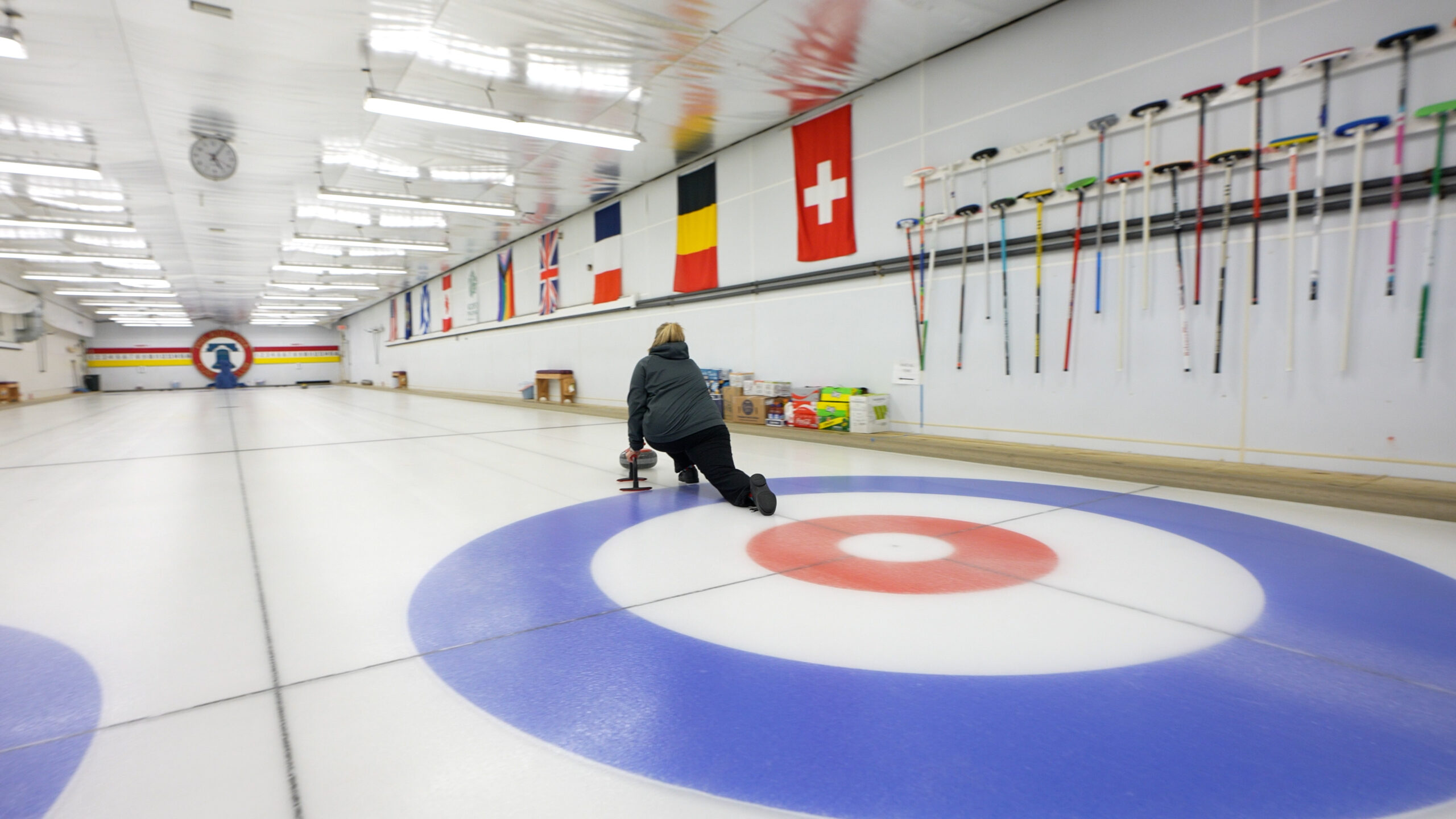
The ice at the Olympic curling center in Milan, like the ice seen here at the Philadelphia Curling Club in Paoli, is pebbled, which is different than the smooth ice you’d find at a Flyers game.
“That was a really great experience,” Laufer said. “[The ice] was really good. Obviously, not as good as it is for the Olympics. They were still figuring out the facilities and figuring out the rocks. We had a really good experience with that venue.”
This year, Laufer again will be competing in the World Junior Curling Championships, just outside Copenhagen, Denmark, from Feb. 24 through March 3. Ahead of the event, he’s been training, working on his strength and cardio.
“I usually try to lift four to five times a week and do a significant amount of cardio,” Laufer said. “When I was training specifically for Worlds last season, I had like three months where I was practicing five days a week. Practices are like two hours long. I probably throw 50 to 60 rocks every practice.
“That’s what a higher level training regiment looks like. But, it looks different for everybody.”
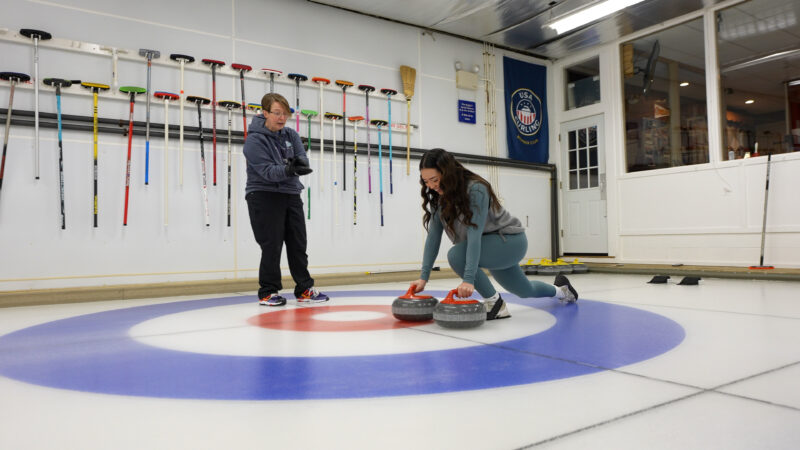
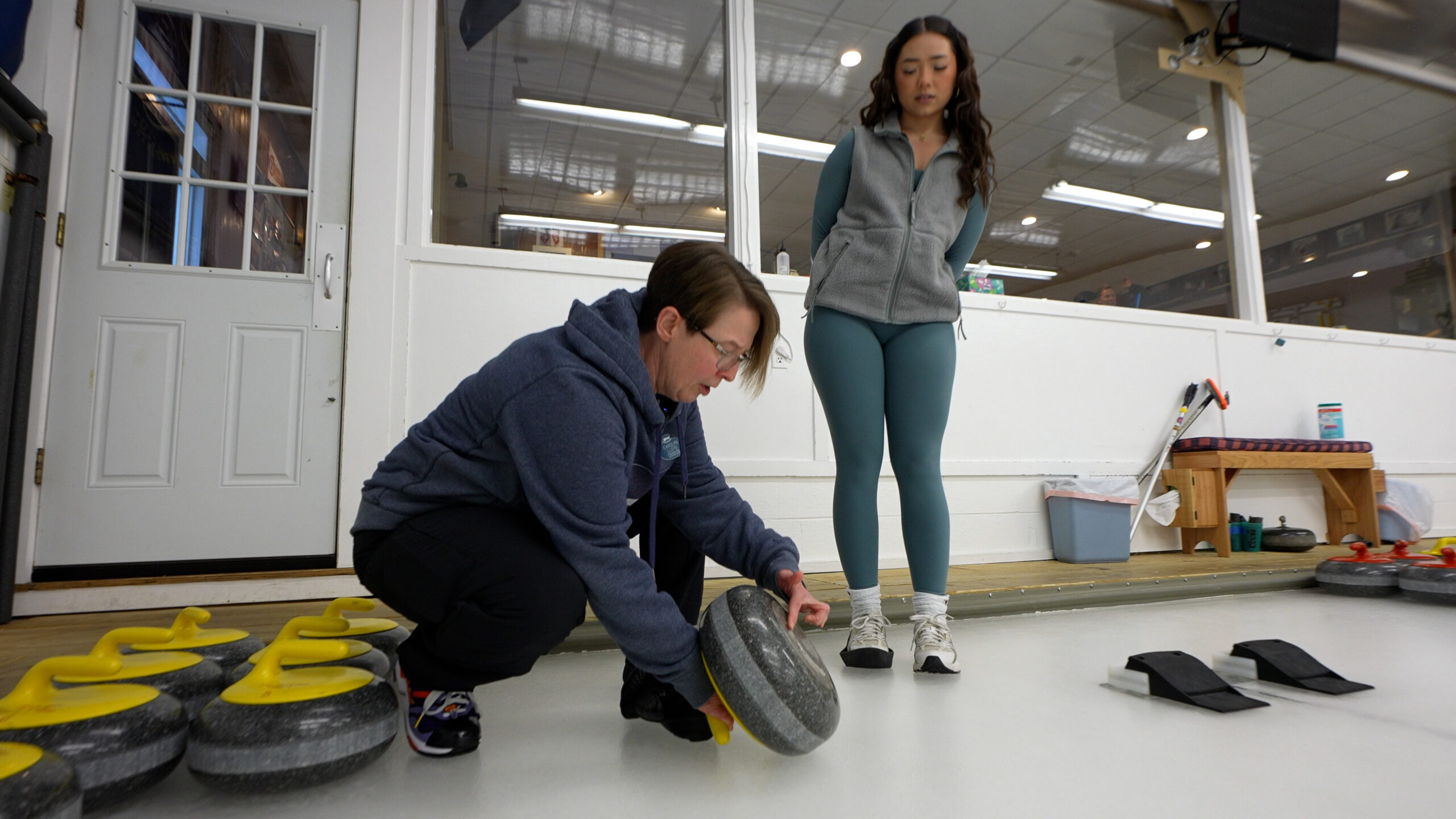
Inquirer reporter Ariel Simpson (center) gets instructions on how to sweep from Carolyn Lloyd (right) at the Philadelphia Curling Club in Paoli.
How hard is curling?
Not everyone trains like Laufer, especially amateurs. So how difficult is curling for the average person? I recently had the opportunity to get a hands-on experience at the Philadelphia Curling Club in Paoli with Carolyn Lloyd, a member for 20 years.
“I love exposing people to something that’s so special,” said Lloyd, who lives in Collegeville. “People don’t realize just how special it is. It’s different from a lot of sports, certainly in its culture. This sport captures my whole heart.”
Before this I had never stepped foot on ice — other than the sheet that covered my driveway for two recent weeks. So, I knew this was going to be a bit of a challenge, but Lloyd was more than up to the task of teaching me.
When it came to delivering the stone, I watched a number of YouTube videos ahead of time. So, of course, I felt like a pro walking in — I didn’t even need special shoes, just some attachments. But once I actually stepped onto the ice, with a gripper covering one shoe and a slider covering the other, I felt like a baby deer trying to walk for the first time.
Walking on the ice was hard enough. Now, imagine having to get into a squat position and push off the hack — a rubber block embedded into the ice — with one leg and balance on the other while holding a deep lunge and bracing your core.
Then you have to aim, release, and spin a 42-pound granite stone. Easy? Trust me, it’s not like they make it look on TV.
Carolyn Lloyd (left) explains Inquirer reporter Ariel Simpson the parts of a curling stone at the Philadelphia Curling Club in Paoli.
It took me a few tries before I was even mentally prepared to push off with enough strength to move myself a few feet. But, once you get over the fear of falling onto the ice, you start to actually enjoy yourself and can focus on the next step — getting the stone to the house — which I did, eventually.
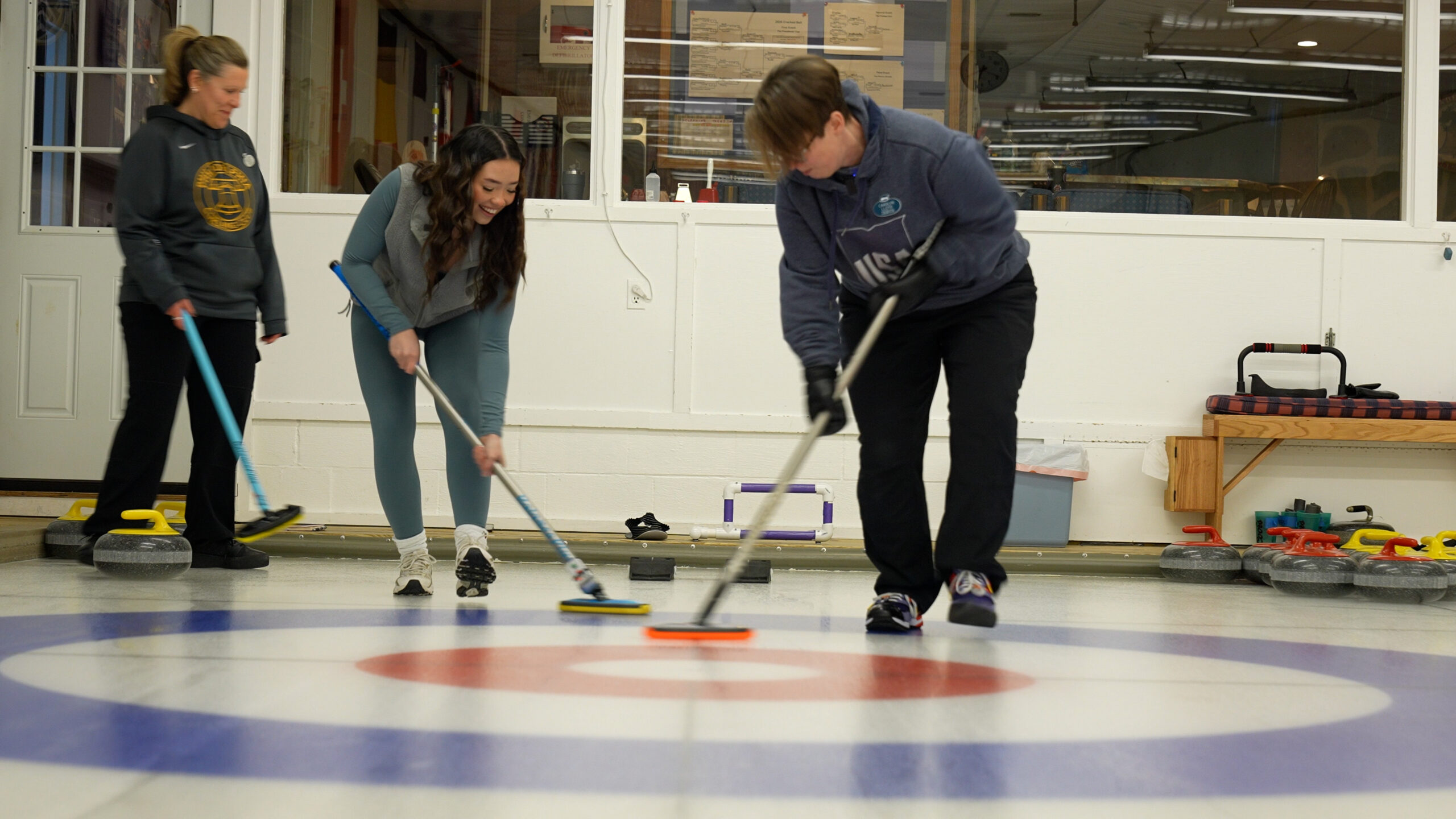
And all of this was only learning how to deliver the stone. Sweeping was a whole other issue. By the time I was ready to try sweeping, I had much more confidence walking on the ice, so that’s a plus. But now I had to run on it.
Afterward, I felt like I had done a full body workout. The amount of core, lower-body, and arm strength needed for curling is substantial and was certainly a surprise.
The one part of the sport I didn’t get a chance to take part in was the social aspect. It’s a game that’s big on camaraderie, including the post-round tradition of “broomstacking,” when the winning team buys the losing team a drink. But, hey, I was on the clock.
Where can I try curling in the Philly area?
If you want to give curling — and its rules and traditions — a try, there are a couple of local clubs where you can learn.
The Philadelphia Curling Club was started in 1957 but didn’t move to its current location until 1965. Since then they have grown, gaining over 200 members.
“This building was built for curling,” Lloyd said. “We bought the land. We built the club. And to this day, what you see here is a lot of the club members’ efforts. Most of the work that we do is not things that other people come in and do for us.”
The club offers a junior program on the weekends where kids can start as early as 5 years old.
“It’s something that anyone can pick up,” Lloyd said. “The game has adaptations for people who have different types of ability needs. You can learn very quickly, and then you can refine that skill for the rest of your life.”
A member of the Philadelphia Curling Club in Paoli delivers a stone during warmups last week.
There’s also the Bucks County Curling Club, located on York Road in Warminster, that was formed in 2010. The four-sheet club also has over 200 members and plays year-round.
Although it’s usually once every four years when the world tunes in to watch curling on TV, there is plenty of curling content that Laufer wants fans to know about.
“We have a ton of events,” he said. “There’s the Grand Slam of Curling events, which are our biggest tour events. There’s the World Championships, the European Championships. There’s a lot of events to watch, a lot of events that U.S. teams play in.”
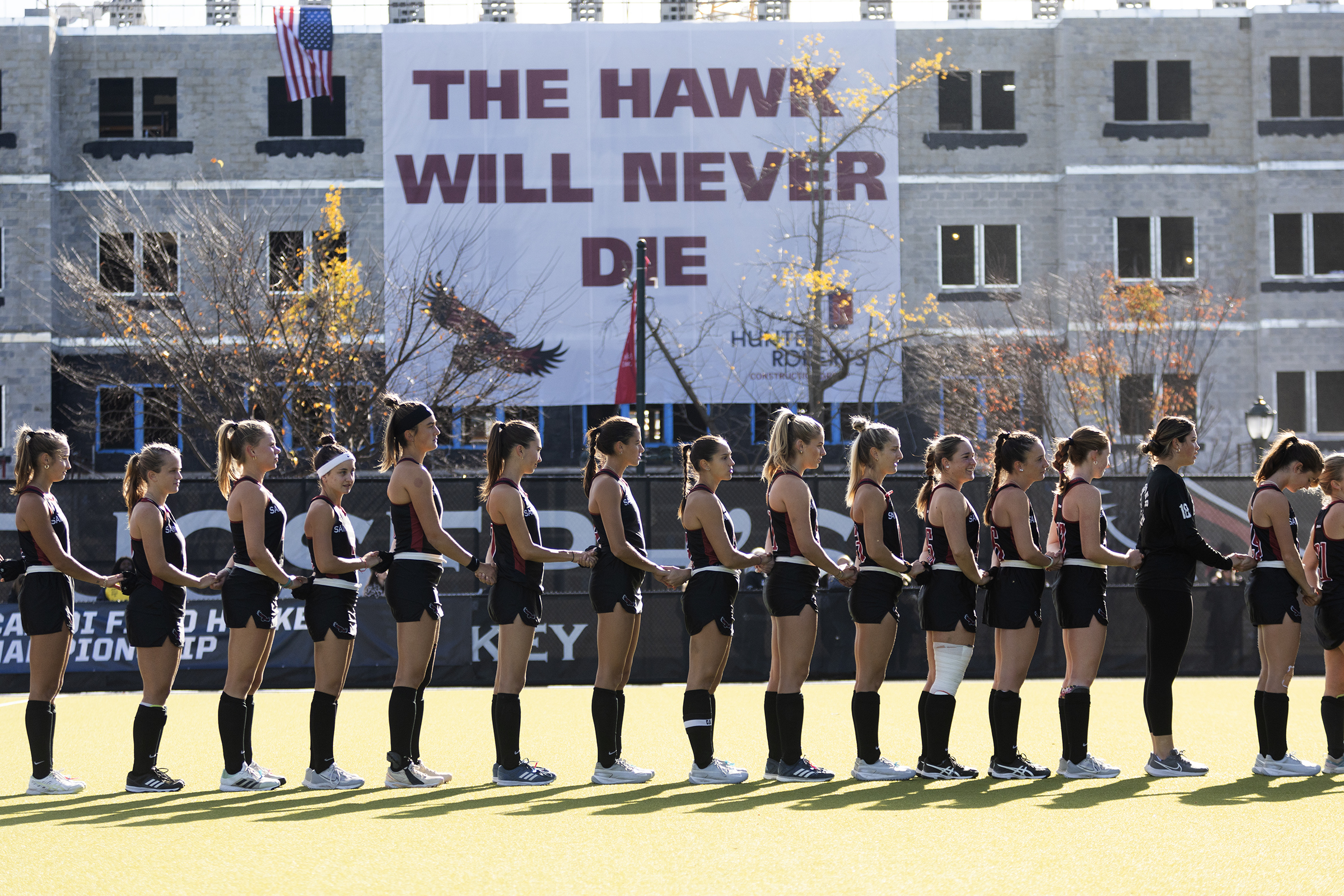
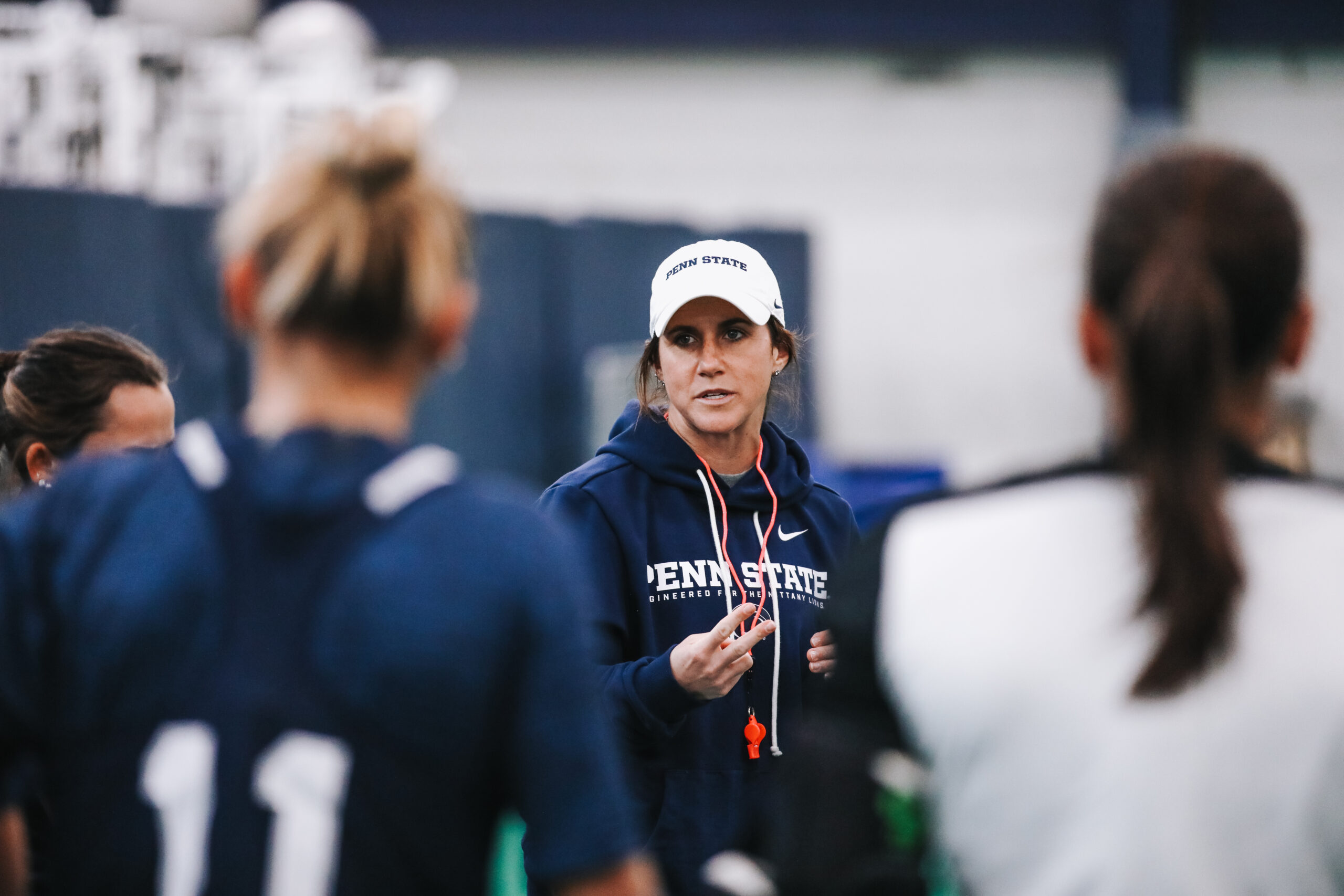
Hannah Prince hasn’t always been a standout Division I coach, nor has she always led with the conviction she does now as the Penn State field hockey coach. But she’s long been around the sport — starting nearly 30 years ago in Gorham, Maine.
When Prince was 6 years old, she made a declaration: She would make her high school’s varsity field hockey team. She did just that, which sparked a successful four-year career at Massachusetts.
The Minutewomen went 56-33 and won three Atlantic 10 titles during Prince’s four-year career as a starting defenseman. Following the team’s NCAA Tournament quarterfinal run in 2013, Prince, a senior at the time, earned National Field Hockey Coaches Association first-team all-region and A-10 first-team all-conference honors.
Prince continued playing after college and was captain of the U.S. women’s indoor team for six years, leading the team to gold at the 2017 Pan American Cup.
Prince’s captaincy meant holding others accountable. It meant leading by example and never asking teammates to do something she wouldn’t do herself.
“I like motivating people. I like building relationships with them that are strong, so they know I care,” Prince said. “I chose to work for some really great people who believed in me and allowed me to have a hand in certain technical and tactical areas.”
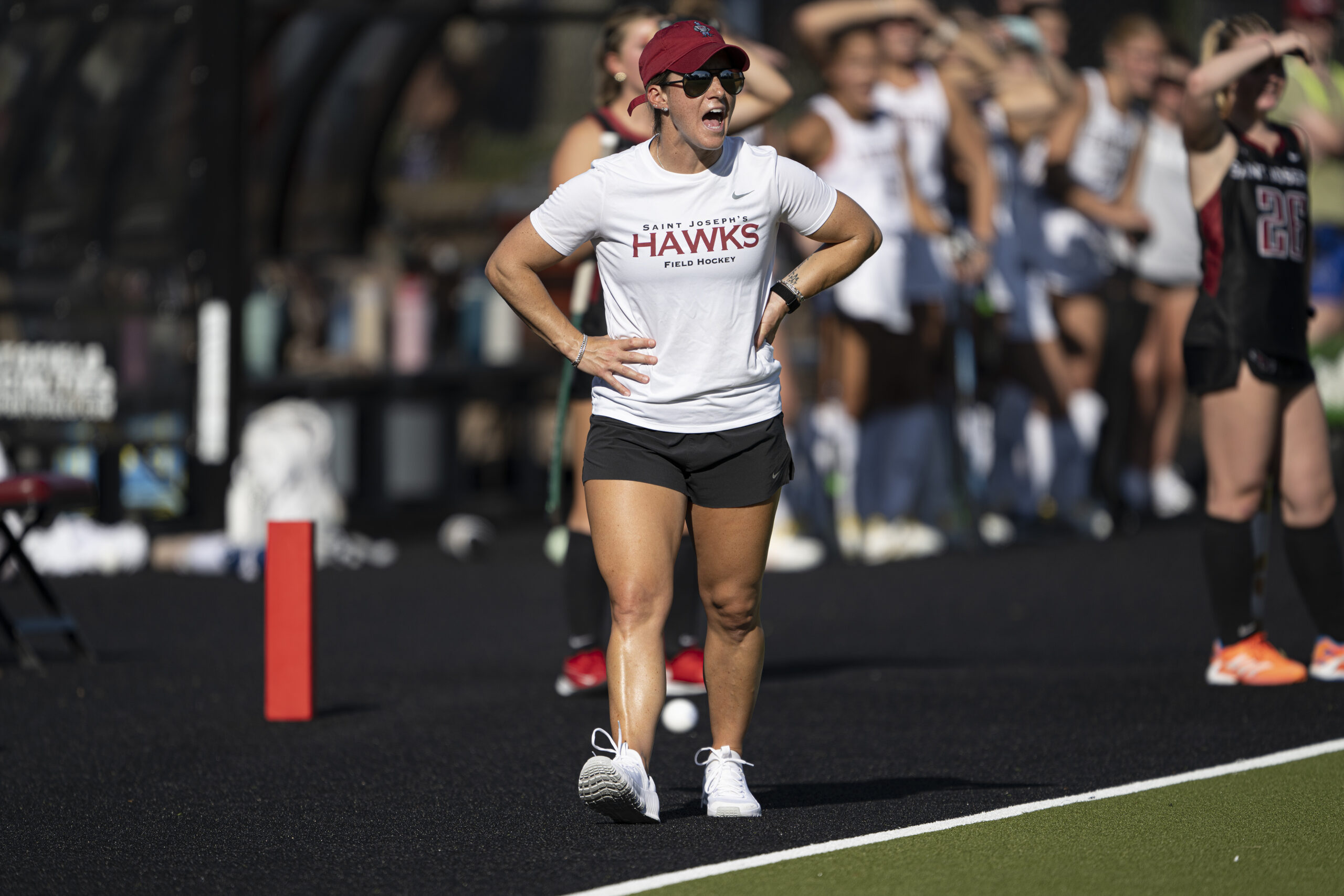
Hannah Prince comes to Penn State after a historic run at St. Joe’s.
Success has followed Prince at every stop of her coaching journey, which started in 2015 when New Hampshire made the America East title game in her first of two seasons as an assistant coach.
Prince later joined St. Joseph’s as an assistant during the program’s first run to the NCAA Tournament in 2017. She then helped Louisville to the Final Four in the spring of 2021 before returning to Hawk Hill in 2022, this time as head coach.
One of the “great people” she worked for was Justine Sowry, her coach at UMass, who has spent the last 14 seasons as Louisville’s coach. Prince credited Sowry for introducing her to coaching and for teaching her the patience required to build a championship-level program.
Sowry lauded her former player for different reasons, ones that extend beyond the field.
“[Prince] is an extrovert. She’s got that energy. She bounces around, and so many people are drawn to her,” Sowry said. “She just shows so much initiative. She took a lot of the weight off my plate just by being who she is … I don’t think I would have been able to get through [the 2020 COVID-19 season] if Hannah weren’t on my staff. She was an absolute godsend for so many more reasons other than just coaching hockey.”
After a final ride under Sowry’s tutelage, Prince accepted the head coaching gig at St. Joe’s, where she went 64-14 in four seasons. The Hawks made four NCAA Tournament appearances and won two Atlantic 10 regular-season titles and four A-10 tournament titles.
In 2023, Prince navigated the Hawks to their first-ever NCAA Tournament win. The next season, Prince guided them to the most wins in program history (20) and the NCAA title game, which marked the first time in school history that any St. Joe’s team had competed for a national championship.
Hannah Prince led the 2024 St. Joseph’s field hockey team to the NCAA title game, a first for any program in Hawks history.
She praised the Philadelphia area’s support during the Hawks’ title pursuit. She also lauded the resolve of her team, which embraced a “why not us” mentality as the tournament’s underdogs.
Prince built the Hawks into a field hockey contender and galvanized area support for her team on its surge toward a championship — a showcase of her program-building prowess.
“[Prince] is passionate, she’s driven, she’s a competitor, and she’s a proven winner,” Sowry said. “She can run a program. She’s got the X’s and O’s covered. And even areas that she might feel deficient in, she has the confidence to bring in coaches that can complement her or make her better.”
Now, she’s ready for her next opportunity: Bringing a once-great Penn State program back into contention.
Under former coach Charlene Morett-Curtiss, the Nittany Lions went 524-219-9 and made eight NCAA Tournament appearances. But in the three seasons since her 2023 retirement, Penn State won just 24 of its 51 games and missed the NCAA Tournament each season.
Prince wants to win national championships in Happy Valley. And that starts with creating a culture of accountability and pride.
“I want [Penn State] to be described as a bunch of empowered, strong, and fearless women who are playing together for a collective reason, because they want to play for each other,” Prince said. “They want to play for those who came before them. They want to play for that legacy.”
There were no Christmas or birthday presents from Shelly and Kent Sanheim this year for their kids and grandkids. They combined everything into one big present for each family member.
But those tickets to Italy weren’t for a typical family vacation. Instead, the tickets for three of their kids and their families were bought early in the hope that their brother, Travis Sanheim, had done enough to book his own trip to the 2026 Milan Cortina Olympics and represent Canada.
The cancellation option, added just in case, was not needed.
Around 8 a.m. Mountain Time on the morning of New Year’s Eve, the Flyers defenseman called his parents to give them the news that they needed to work on their Italian. The phone rang as they were making their way through airport security, going from Vancouver, British Columbia, to Calgary, Alberta, as they followed the Flyers on their Western Canada trip.
“I guess maybe three, four years ago, he never thought he would have a shot at this, and now he’s going to, hopefully, bring back a gold, right?” Kent said. “So I don’t know what else to say. I guess, it’s just, I don’t know, it’s hard. It brings tears to my eyes.”
There was a lot of emotion as Kent and Shelly spoke to The Inquirer a few hours later on the concourse at the Scotiabank Saddledome, the rink where Travis starred for the Hitmen of the Western Hockey League during his junior career. The emotions filled the rink, as it was a family affair with everyone, including his twin brother, Taylor, his teammate in the WHL, there to watch Travis play for the Flyers and celebrate his big moment.
This is what the Sanheims are all about: family.
Twin brothers Travis and Taylor Sanheim during their days together with the Calgary Hitmen. This season, apart from Travis with the Philadelphia Flyers, Taylor has played with the Esterhazy Flyers (Sask East Hockey League) pic.twitter.com/tswGkvNw4j
Driving through the prairies of Canada, the chartreuse of the canola fields can be mesmerizing as the sun hits the bright yellow that stretches across seemingly endless miles. Across that open land, not far from the 100th meridian and tucked into the town of Elkhorn, Manitoba, is one of those fields with some wheat intermixed. In this town of about 500 people, with no street light and one K-12 school, is where Travis Sanheim learned all about responsibility, work ethic, and dedication.
“Being out on a farm, you get firsthand … how much work my family puts in and being able to help out, at a young age, I remember skipping school for harvest, jumping in the combine, and helping mom and dad out with harvest … and just how excited I was to be able to help and be a part of it,” the 29-year-old defenseman said recently.
Born and raised a 3½-hour drive west of Winnipeg, Travis grew up wanting to be like Kent and would help him out on the farm as much as he could. He would help plant crops in the spring and harvest them in the fall and complete daily chores throughout the year. If he didn’t help, there would be no time for hockey. And for Travis, it was all about the hockey.
“Just a die-hard, loved the game — always has,” Shelly said of a young Travis. “Always excited to go to the rink and wanted to go to the rink.
“It’s funny, I see on Twitter or whatever about Trav being the last one off the ice and working on things, and I’m like, ‘This is this kid his entire life.’”
Elkhorn is where Travis fell in love with hockey. He always wanted to play, and he and Taylor even would try to scrape off the dugout, a storage reservoir on the farm, to go one-on-one. And while Kent would stay on the farm to work, they’d pile into the car and Shelly would drive them to the local community rink.
“As long as they didn’t look in the waiting room, they didn’t think they ever had to go home because I’d be knocking on the glass and pointing to my watch, and they just would never look up,” she said with a laugh.
“And then they got to stay longer at the rink. He would always be the last one on the ice, if possible. We dragged him off.”
Kent Sanheim with his twin sons, Travis and Taylor, when they played youth hockey in Manitoba.
Wheat Kings and hockey things
At some point growing up, Travis got a key to the rink, which often was open, anyway, in the town that sits near Manitoba’s border with Saskatchewan. While the temperatures could dip well into the teens in the winter months, he’d call his buddies to get games of shinny going with him and his brother.
“We did everything together,” Travis said of Taylor. “A lot of battles in the basement, playing hockey against each other. That’s kind of where my competitiveness, I would say, came from. … Was really lucky to have the opportunities that I did growing up, that I was able to skate as much as I was, and had the guys that pushed me, and obviously, my brother was a huge reason as to why.”
The duo also would hit a frozen pond on Boxing Day before watching Canada compete at World Juniors — a fitting tradition for a family that has a sign in the living room asking people not to disturb them because they’re watching hockey. And Travis remembers sitting in front of the television as Sidney Crosby crushed the hearts of Americans everywhere with his golden goal against the U.S. at the 2010 Vancouver Olympics.
As a 13-year-old, he just wanted to make the NHL; he never expected to now be lining up alongside the all-time great seeking a gold medal.
“Super excited,” he said. “Obviously, a dream come true. Getting to represent your country and playing in the Olympics and being an Olympian means a lot, and something that I never really thought was possible, but now that it’s here, and then I get the chance to do it, just really excited.”
Sanheim has donned the maple leaf several times before, including at the 2013 World Under-17 Hockey Challenge and the 2014 U18 World Championship, snagging a bronze medal at the latter; the 2016 World Juniors; and the 2022 and 2025 World Championships, winning silver four years ago.
Travis Sanheim celebrates after Canada’s victory in the 4 Nations Face-Off last February.
And he surprised many across Canada last year when he was named to the team for the 4 Nations Face-Off tournament, which the Canadians won. Now he’s going for Olympic gold.
“You never know, there’s so many good players in Canada. They could take a second team and probably still medal with the second team,” Shelly said. “So, you know, just the fact that he was in the mix was a thrill for us, and then to have the dream come true here just — I think I’m still shell-shocked over it. It’s hard to believe.”
‘Across the icy world’
Tampa Bay Lightning and Team Canada coach Jon Cooper isn’t one to show his hand. However, the way he spoke of Sanheim in November in the bowels of the Lightning’s Benchmark International Arena — with a Cheshire Cat-like grin on his face — there was no denying that the defenseman was on his short list.
“You see these players, you compete against these players, but you don’t really know till you have them,” Cooper said. “And I’ve always, I’ve really liked his game. I’m a big fan of big [defensemen] that take up a lot of space and can skate, and he can do all those things. But his ability to jump into plays, he’s got an offensive mind to him.”
After nearly being traded in 2023, Travis Sanheim has developed into a bona fide top-pair defenseman.
Sanheim has come a long way from being a little nervous and wide-eyed at Hockey Canada’s first practice in Brossard, Quebec, ahead of the 4 Nations Face-Off last February. And while he didn’t start the tournament in the lineup, by the end — half because of injury and half because of his performance with the versatility to play right and left defense — he was not just skating in the championship game, but Cooper had him out there for the first shift of overtime.
“He was good. … Travis got thrown in when one of the guys, when [Shea Theodore] got hurt, probably,” said Vegas Golden Knights coach Bruce Cassidy, an assistant on Cooper’s staff.
“Real good player, steady player, liked his pace, transported pucks, got involved. … I think both [he and Thomas Harley] ended up playing a little bit on the right side, and there was no hesitancy to get up the ice and join the rush. And I think that’s the type of team Coop wanted to build, so he fit right in.”
There will be comfort now for Sanheim, having skated on the same team as some of the game’s biggest names like Crosby, Connor McDavid, Cale Makar, and Nathan MacKinnon. And he’ll surely be comfortable because he’ll be able to look up whenever he wants to see his family in the stands in Milan, Italy.
And he’ll surely be thinking about how far he’s come from his days on a farm in Elkhorn, Manitoba, a place Shelly says “gives him some time for clearing his head and stuff.” He hasn’t been able to spend too much time there with all his hockey adventures, but it circles back to the biggest question heading into the Games, which for Sanheim will begin Thursday against Flyers teammate Dan Vladař and Czechia (10:40 a.m., USA and Peacock).
The high-end, 31-story apartment tower at 210 S. 12th St. has nine penthouses on the top two floors. They have a variety of layouts, including three-bedroom, three-bathroom apartments that range from roughly 1,650 to 1,835 square feet and cost from $12,600 per month to $13,250 per month.
Penthouses for rent have at least one balcony and floor-to-ceiling windows that offer lots of natural light and panoramic views.
“You are literally looking at the Philadelphia skyline from the best view possible,” said listing agent Justyna Goldman with SERHANT.
Tenants can see the City Hall tower from this penthouse at the Center City apartment building.
The Philadelphia metropolitan area has had a growing number of very wealthy renters in recent years. For people who like the renting lifestyle or “if someone wants to live their best life but is only staying for a short time” in Philadelphia, the penthouses at 210 S. 12th could be for them, Goldman said.
“We offer an incredible space and incredible square footage for the price,” she said. “We are looking to make someone a very happy renter.”
Goldman said the building could be attractive to athletes, entrepreneurs, and people working in the medical field, since hospitals are nearby. The building’s Center City location means “you’re surrounded by everything you could possibly need,” she said.
The nine penthouses at 210 S. 12th are on the 30th and 31st floors and all have at least one balcony.
The penthouses include walk-in closets and spacious living areas and kitchens.
Parking spaces are available in an automated underground parking garage with electric vehicle chargers.
An amenity lounge on the 30th floor of 210 South 12th includes a fireplace and floor-to-ceiling windows with Philadelphia skyline views.
Tenants have access to amenities such as an outdoor pool, a fitness center, yoga and wellness studios, a game room, lounges and co-working spaces, outdoor terraces, a pet spa, and a dog park.
The tower includes studios and one- and two-bedroom apartments. Studios start at $1,968, one-bedroom dens start at $2,300, one-bedroom units start at $2,411, and two-bedroom units start at $3,809.
The building’s website is currently advertising rent deals. The property is offering 2½ to 3 months free for leases longer than a year.
Salon Republic, which offers salon suites for rent, is operating in one of the tower’s retail spaces and more retailers are expected to be announced soon.
The views make the penthouses at 210 S. 12th special, said listing agent Justyna Goldman with SERHANT.
Philadelphia and state officials awarded more than $6 million in taxpayer funds over the last five years to a politically connected but financially unstable anti-violence nonprofit, despite repeated warnings from city grant managers about improper spending and mismanagement, an Inquirer investigation has found.
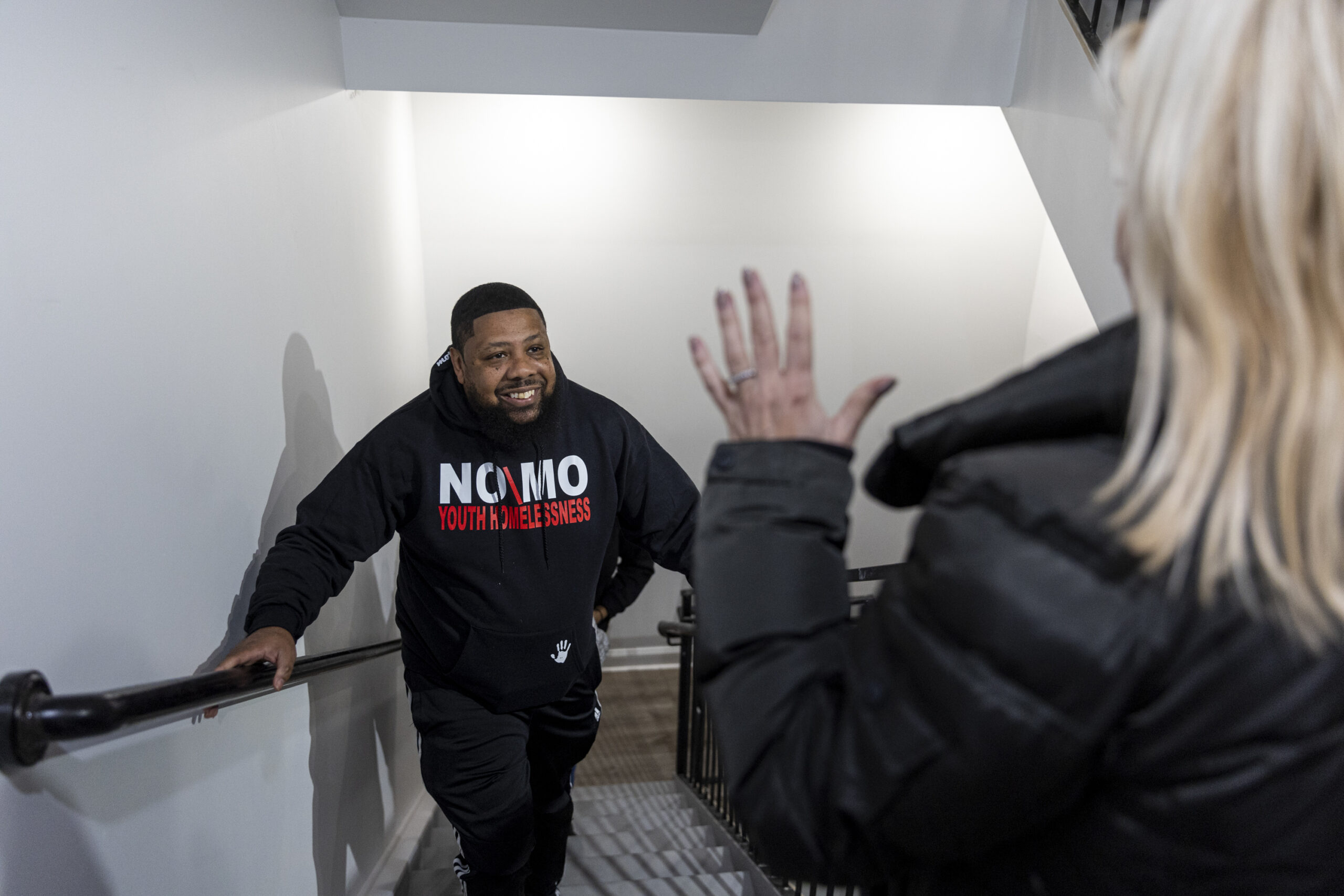
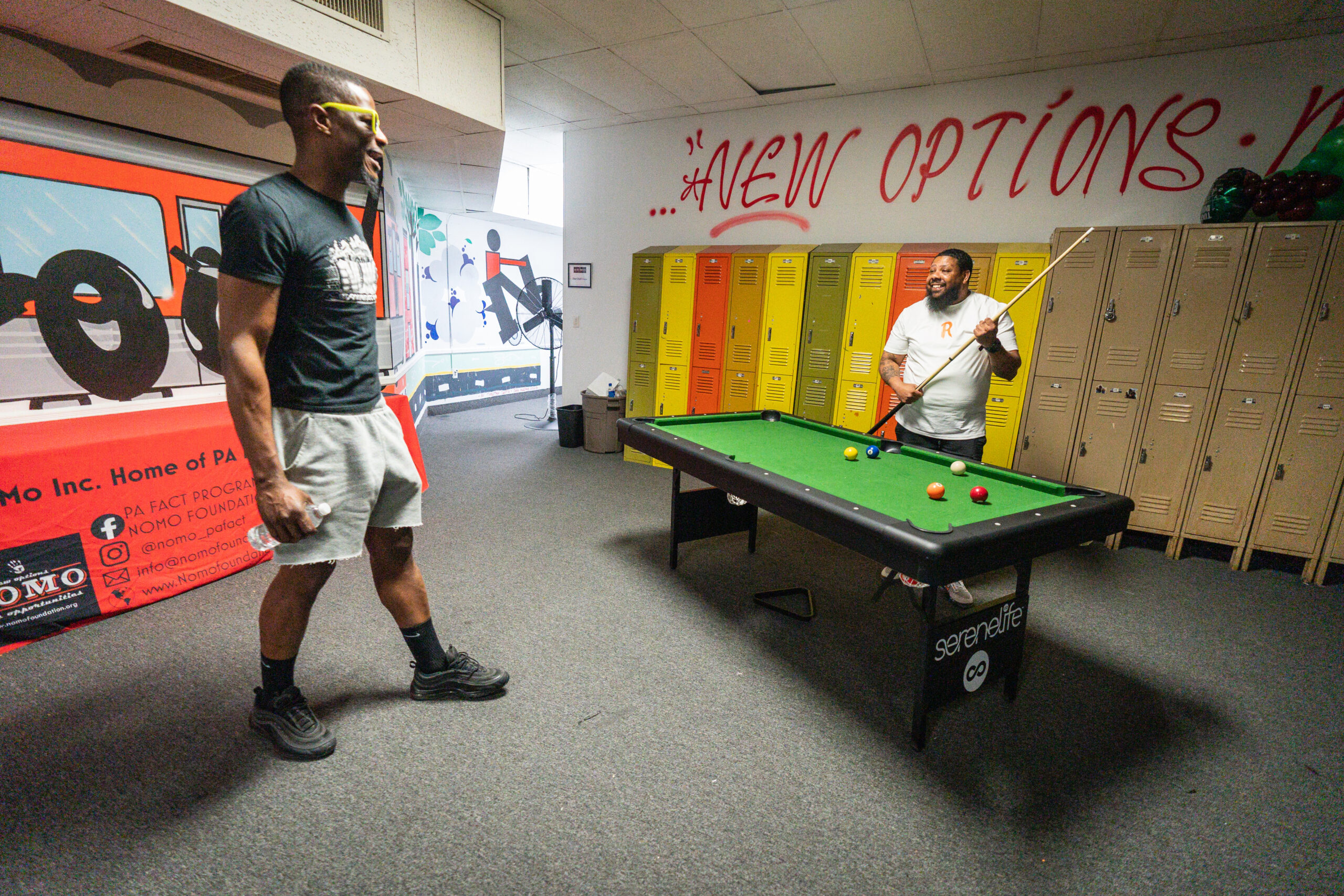
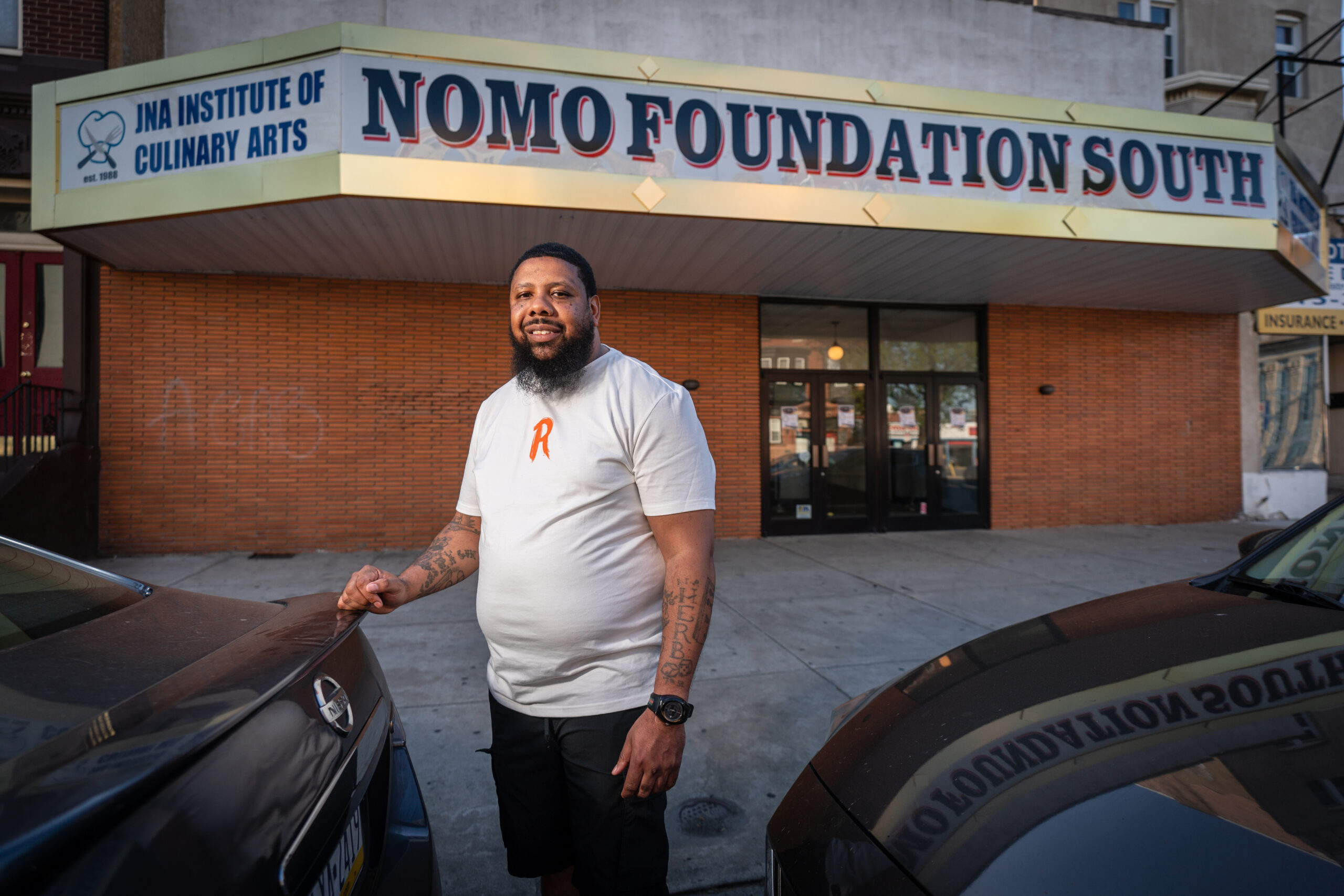
The group — New Options More Opportunities, or NOMO Foundation — received city and state anti-violence grants and locally administered federal dollars to expand its youth programs and launch a new affordable housing program. The money fueled NOMO’s rapid rise from a small, grassroots outfit into a sprawling nonprofit that took on expenses it ultimately could not afford.
Mayor Cherelle L. Parker has publicly touted NOMO’s work in the community, and she further boosted its profile by naming its director to her transition team upon taking office. But behind the scenes, Parker administration staffers watched NOMO face mounting financial pressures over the last two years.
In that time, the organization has been hit with multiple eviction filings and an IRS tax lien, and had to lay off staff and suspend programming. Most significantly, NOMO had to terminate its housing initiative last year — displacing all 23 low-income households that had been its tenants.
The warning signs were evident years earlier. Records obtained under Pennsylvania’s Right to Know Law show that city grant managers expressed concerns as far back as 2021 about NOMO’s lack of financial controls, incomplete balance sheets, and chronic inability to provide basic documents. As recently as last year, the city was unaware who sat on the group’s board.
Yet records show city officials kept propping up the group with more funds, without successfully putting in place the kind of structural support that might have kept it from foundering. Last year, the city sought to award a $700,000 federal homelessness prevention contract to NOMO, but the nonprofit was unable to meet the conditions of the contract and the funds were never disbursed. Officials also proposed writing more funding to NOMO into last year’s city budget as a last-minute line item. That effort failed.
In a September interview, NOMO executive director Rickey Duncan blamed city officials for funding delays.
“I was breaking my back to make sure those young people were getting housed,” Duncan said. “We built a tab that was so big we couldn’t pay no more, because the city didn’t pay.”
Rickey Duncan surprised a group of young women with apartments in a December 2022 file photograph. Last year, NOMO gave up the leases for the apartments citing a lack of funding.
Much of the money awarded to NOMO came via Philadelphia’s Community Expansion Grant (CEG) program, launched in 2021 to respond to record gun violence and support alternatives to policing. NOMO was one of only two initial grantees to receive the maximum $1 million award, which was meant to help the group scale up its operations and serve more at-risk youth.
NOMO’s financial records detail spending that quickly led to trouble after it received the first city grant, starting with the decision to devote most of the funds to launching a costly housing initiative while opening sprawling new youth centers to expand its after-school programs to new neighborhoods.
Duncan signed annual building leases totaling $750,000, and increased his own salary from $48,000 in 2021 to $144,000 the next year. (Duncan said that his pay — now $165,000, according to the most recent tax filing — is below average for an organization of NOMO’s size and was previously lower because he was volunteering half his time.)
The records contain no evidence that city grant managers questioned the lease expenses or conducted an evaluation of whether the upstart housing program was an appropriate addition to the organization’s core mission of offering after-school programming.
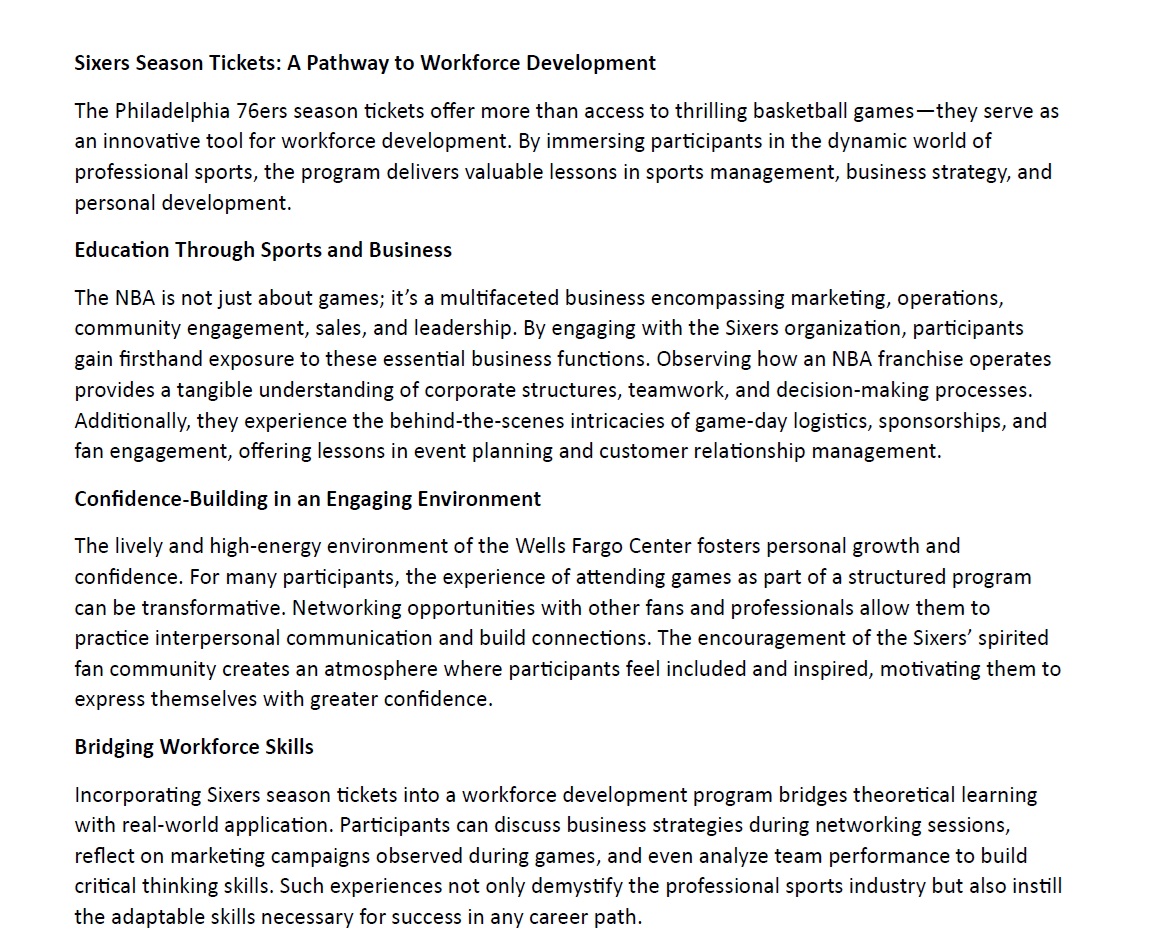
By the start of last year, a tax lien and lawsuits over unpaid rent threatened NOMO’s existence. Still, Duncan asked the city in January 2025 to reimburse the roughly $9,000 cost of two Sixers season tickets he purchased a year earlier. He explained in a memo that the tickets were “an innovative tool for workforce development.”
“Season tickets to the Sixers are not an acceptable programmatic expense,” the grant program manager responded in an email.
Records show that city officials discovered in April that a $35,000 IRS lien, filed four months earlier, had rendered NOMO ineligible for grant funding. Grant administrators sent an email to NOMO staffers with a warning written in all-caps: “CEASE ALL SPENDING.”
Duncan said that the lien was the result of a missing signature on a tax form, and that it was eventually resolved at no cost. But in a June email to Public Safety Director Adam Geer and other city officials, he accused the city of pushing his organization to the brink of collapse.
“I am respectfully requesting a written response detailing how a tax [lien] escalated into a comprehensive investigation into the NOMO Foundation’s financial health,” Duncan wrote. “NOMO has been disrespected, attacked, and harassed, by members of this office on this and previous occasions.”
City Council President Kenyatta Johnson, speaking on Jan. 20. Regarding NOMO, he says, “It is crucial that any concerns are taken seriously.”
In a statement responding to The Inquirer’s findings, Johnson praised NOMO and credited the organization with “working with children throughout Philadelphia, intervening in cycles of violence, and literally saving lives in our community.”
Johnson, who was listed as a reference on the group’s most recent grant application, added: “Regarding any allegations raised against Mr. Duncan and NOMO, I am confident that the City of Philadelphia’s Office of Public Safety will review these matters thoroughly, fairly, and professionally. It is crucial that any concerns are taken seriously and examined through the proper channels, with facts guiding the outcome.”
A spokesperson for Parker referred questions to the Philadelphia Office of Public Safety, which manages CEG grants.
In a written response, a spokesperson for the department, Jennifer Crandall, praised NOMO’s efforts.
Rickey Duncan (left) and then Mayor-elect Cherelle Parker at a news conference that outlined Parker’s transition team and the plans that she had for her administration on Nov. 9, 2023.
“Not only has NOMO delivered on grant-funded programs, it has become an important partner on city initiatives like interventions with at-risk youth,” Crandall wrote. She cited evaluations by an unnamed third party that credited NOMO for providing “holistic support to participants … beyond the immediate program activities” and “addressing the broader social determinants of violence.”
Crandall did not respond to a follow-up request for the evaluation.
Duncan gave The Inquirer a 2023 report prepared by four nonprofit partners that evaluated CEG recipients in their first year, with the intention of documenting program goals and activities. The report states that the evaluation was based on a single site visit, interviews with staff, and a youth focus group, and that it was then too soon to evaluate impact. It noted that NOMO had retained more than half its participants over the grant cycle and had created “an environment that is welcoming and comfortable, so that participants willingly show up.”
The assessment did not address the viability of the housing program, nor did it cite any metrics that might be used to gauge whether NOMO’s programs had reduced community violence.
Duncan also sent The Inquirer written statements from two landlords indicating that their court cases against him had been resolved, and that they support NOMO’s mission.
He says NOMO is now financially stable, despite three years of tax returns showing the nonprofit in the red. He said NOMO’s programs now serve about 140 children a year across its three locations — about the same as when it was operating in just one location in 2019 and before the city awarded the expansion grants.
Laura Otten, a nonprofit consultant and former director of La Salle University’s Nonprofit Center, said it was clear the city’s grant awards to NOMO had not fulfilled their stated goals.
“It obviously didn’t work if they ended up having to evict people,” she said. “Where is the evidence that this grant has improved the capacity of the organization?”
Dawan Williams (left), vice president of restorative justice for the Nomo Foundation, and Rickey Duncan, Nomo CEO and executive director, in one of the student spaces at the foundation on South Broad Street on April 13, 2023.
‘Significant weaknesses noted’
When Parker laid out her priorities in her first budget address before City Council in spring 2024, she mentioned Duncan and NOMO by name as she praised the grassroots anti-violence organizations “working each day to lessen the pain and the trauma caused by gun violence.” She also promised to reward the various groups with an additional $24 million in grant funding.
It was another highlight of Duncan’s well-documented redemption story. By his own account, he dropped out of South Philadelphia High School in 1994 to sell drugs and promote concerts, earning the nickname “Rickey Rolex” for his flashy style. He was arrested the next year for robbery and spent more than a decade in prison. After he was released in 2015, Duncan began volunteering with NOMO, then a fledgling nonprofit, and eventually took the reins.
“My vision started off, to be honest, just wanting to help kids and give back to a city that I took from,” Duncan said in a 2023 interview with The Inquirer.
NOMO began as a largely volunteer-run effort operating in borrowed space on less than $50,000 a year, tax returns show.
In 2019, the tiny nonprofit submitted a grant application to Philadelphia Works, the city’s workforce development board, which was tasked with distributing about $6 million in federal Temporary Assistance for Needy Families (TANF) grants. NOMO proposed after-school programs that would teach up to 125 kids everything from neuroscience to software development to road construction.
Philadelphia Works awarded NOMO $209,000, skipping the standard financial review in order to disburse funds that would have otherwise expired.
“It breathed life into us,” Duncan said.
Rickey Duncan speaks with kids at a NOMO after-school program in a 2021 file photograph.
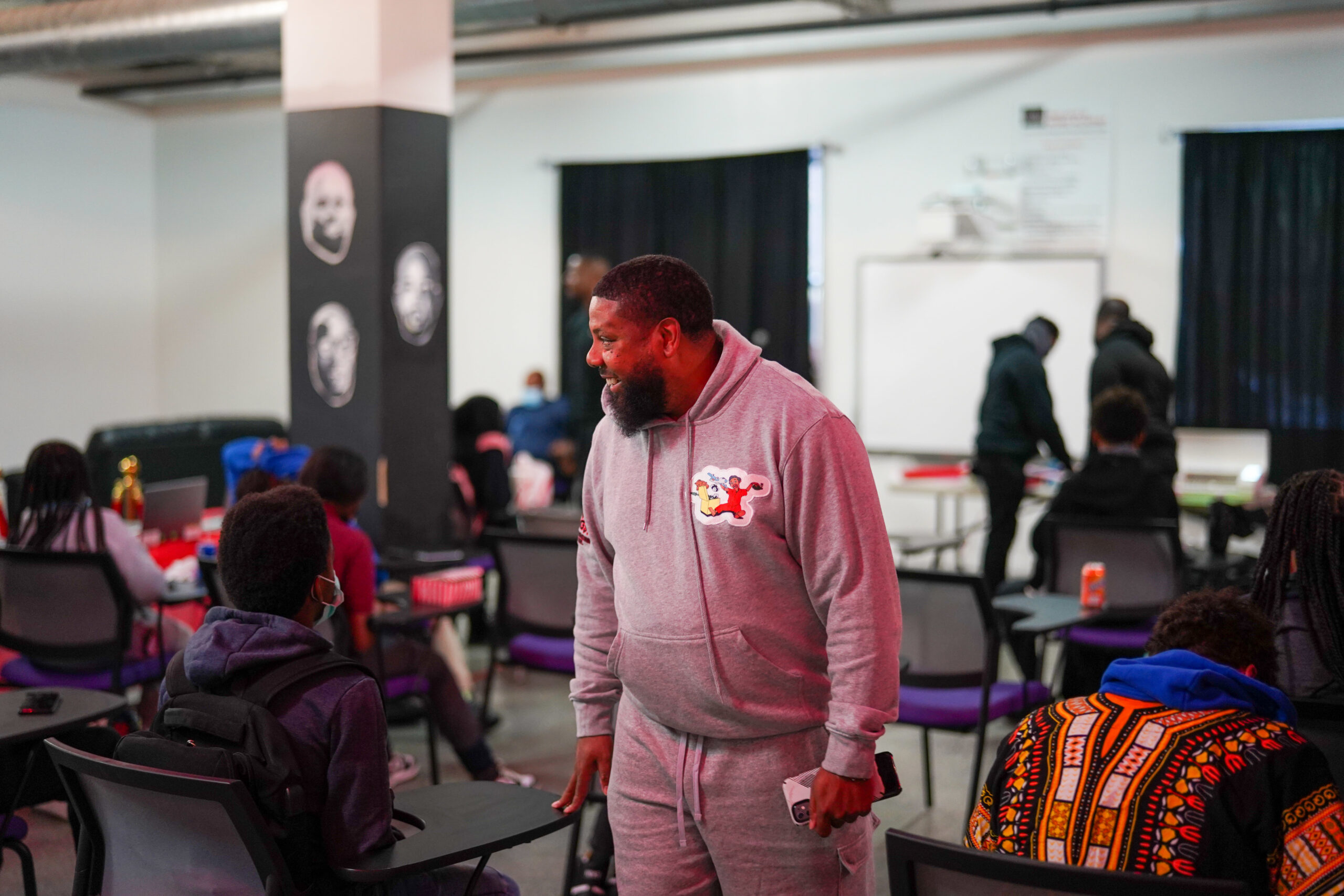
By 2021, NOMO was receiving half a million dollars annually in TANF money — enough to lease a 7,000-square-foot office space on North Broad Street and support programs for more than 100 young people. And Duncan’s star was rising as a charismatic and credible voice who came up from the same streets that he and others were working to rid of violence. Elected officials and news media alike turned to him for quotes and photo ops amid a surge in shootings.
In December 2021, then-Mayor Jim Kenney announced a $155 million investment in gun violence prevention funding. The plan included a $22 million grant program, with more than half that focused on “supporting midsized organizations with a proven track record” to “expand their reach, deepen their impact, and achieve scale.”
Duncan’s scrappy, homespun nonprofit was exactly the type of group city officials had in mind when they created the CEG program, and his grant application cited support from State Reps. Danilo Burgos and Elizabeth Fiedler. Although 30 other nonprofits received funding, NOMO was one of only two organizations awarded the maximum grant of $1 million — a transformative sum that would roughly triple NOMO’s operating budget.
In his first application for the CEG funds, Duncan pledged to expand his “trauma informed” after-school program to South Philadelphia by offering paid work experience, academic support, and intensive case management. The $1.4 million proposed budget projected the organization would spend about $1 million annually on staff salaries and participation incentives for teens, while spending $94,000 a year to cover added lease costs.
NOMO devoted just one sentence of its 15-page grant application to describing a new affordable housing initiative “to combat youth homelessness.” The proposal did not include what metrics would be used to judge that program’s success.
Despite the brief mention, the housing initiative would become the organization’s largest single budget item, by far.
After securing the city grant money, NOMO took on a $552,000 annual lease for a newly built 27,000-square-foot West Philadelphia apartment complex near 40th Street and Lancaster Avenue. It also signed a $192,000-per-year lease for a 17,000-square-foot former culinary school on South Broad Street.
The deals left NOMO with youth centers in North, South, and West Philly, each with large event spaces that could host its programming. Duncan also planned to market the venues for private events — such as weddings and Eagles watch parties — to generate additional revenue.
NOMO students bounced a basketball in the ballroom at the nonprofit’s South Broad Street youth center. The space is offered for event rentals, which Duncan said can generate crucial unrestricted income.
If city officials had concerns about NOMO’s costly expansion strategy or the viability of his plan to lease out the youth centers for parties, they are not reflected in the available records.
However, staffers at the Urban Affairs Coalition — a nonprofit the city had contracted to manage the first round of the grant program — flagged NOMO’s general lack of financial controls in a December 2021 fiscal assessment of prospective grantees.
“Significant weaknesses noted,” an Urban Affairs staffer wrote of NOMO in an email to then-anti-violence director Erica Atwood and other city officials. “No audited financials. No balance sheets presented even in the [IRS Form] 990s. Separation of Authority: Basically non-existent.”
That month, the city instructed Urban Affairs to proceed with the scheduled grant advance of $200,000 and to work with NOMO to establish a remediation plan. Instead, grant administrators wrote that they were reassured after NOMO installed a new chief operating officer — who left the organization the following year.
By the end of the grant cycle, Duncan was able to deliver a public relations win for NOMO. He appeared on Good Day Philadelphia in December 2022 to launch the housing plan with a surprise giveaway of the first of 23 brand-new apartments for young women, many of them single mothers.
Duncan said NOMO’s housing program would cover 70% of rent costs for 18 to 24 months while enrollees seek employment and eventually move out on their own.
“They’ll be getting their credit together so they can prepare to become a homeowner,” he told Fox 29. “We need money to finish doing this.”
Rickey Duncan, CEO and executive director, at Nomo on South Broad Street on April 13, 2023.
Billion-dollar dream
The city renewed NOMO’s grant in January 2024, this time for $850,000. But a tax return the same year showed the organization was already $710,000 in the red.
Months later, the nonprofit faced its first eviction suit, targeting its North Broad headquarters, and had to cut a check for $275,000 in back rent — the equivalent of one-third of its city grant money for that year.
By the fall of 2024, records show NOMO had spent only about 5% of the $150,000 initially budgeted for youth incentives, outside activities, equipment, or program supplies. The city withheld most of NOMO’s fourth-quarter grant funding, reducing the nonprofit’s award by $170,000 to a total of $680,000 for that year.
Still, the city re-upped the group for a third grant in 2025, this time for $600,000.
By January 2025, financial records show NOMO had virtually stopped spending on youth programming. It laid off most of its staff as landlords for all three youth centers took legal action against the nonprofit over hundreds of thousands of dollars of back rent.
NOMO sought to justify the expense of Sixers season tickets with a narrative submitted to the city, which denied the expense. Duncan said the majority of the tickets went to youth participants and members of the community.
Around then, NOMO received an infusion of support in the form of a $950,000 grant from the Pennsylvania Commission on Crime and Delinquency. But the TANF funds had run out, and the organization’s problems continued. City officials had NOMO submit a formal “performance enhancement plan” last July.
Duncan said in September that NOMO had cut costs, hired a new accounting firm, and was working toward “full financial stability.” It resolved two eviction cases by reducing its real estate footprint — downsizing its North Philly headquarters into basement offices and terminating its affordable housing program. Duncan said the former tenants moved in with family members or were transferred to the nonprofit Valley Youth House, which provides transitional housing.
After The Inquirer asked Duncan about the most recent lawsuit over back rent, this one for $312,000, his landlord filed notice in court that the matter was resolved. Duncan said keeping three youth centers and marketing the NOMO spaces for special events are key parts of his business plan as the organization continues to settle its debts.
The spate of lawsuits has not dampened the city’s enthusiasm for Duncan’s nonprofit. Crandall, the spokesperson for the Philadelphia Office of Public Safety, said NOMO remains eligible to receive funds when a new round of grants are awarded this year.
And with the housing initiative scrapped, NOMO is left pursuing its original mission — anti-violence programming for city youth. The organization’s renegotiated leases for its three youth centers now total $360,000 a year, roughly half what NOMO had been paying.
In a 2023 interview, Duncan acknowledged that he underestimated the financial demands of running an organization on a citywide scale.
“As a kid you think, … ‘If I can get a million dollars, I’ll be rich.’ And then you’re broke again,” he said then. “I had a billion-dollar dream. I didn’t realize it was a billion-dollar dream.”
ACKNOWLEDGMENT
The Inquirer’s journalism is supported in part by The Lenfest Institute for Journalism and readers like you. News and Editorial content is created independently of The Inquirer’s donors. Gifts to support The Inquirer’s high-impact journalism can be made at inquirer.com/donate. A list of Lenfest Institute donors can be found at lenfestinstitute.org/supporters.
Acaden Lewis toed the free-throw line with 3 minutes, 35 seconds left in the second half Tuesday night and Villanova trailing Marquette by three. The freshman point guard released the first of two attempts and watched as it failed to reach the rim. The second attempt was only mildly better and clanked off the front of it.
Just over a minute later, he was back at the line after being fouled on a drive. The deficit still was three.
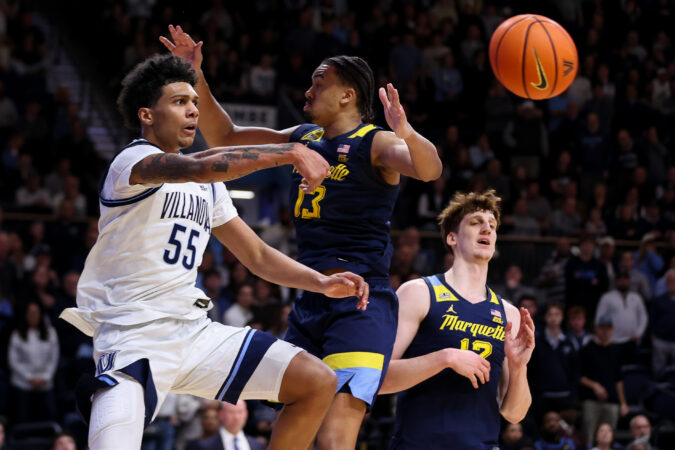
In this moment, it would be Tyler Perkins who inspired the winning plays in Villanova’s 77-74 victory. They were visible all night in Perkins’ clutch three-pointers, his game-winning block, and a key steal as he finished with a team-high 22 points.
But his night also included a moment of leadership, a junior making sure a freshman could forget what had just happened.
“Tyler came up to me and was just like, ‘You’re built for these moments,’” Lewis said.
“I just relaxed and shot them.”
Both free throws went in. Lewis cut Marquette’s lead to one. The tide was starting to turn, and Villanova (19-5, 10-3 Big East) rode the wave and avoided a bad loss to a struggling Marquette team.
A Villanova free throw misses the hoop during the second half against Marquette on Tuesday.
That is the thing about free throws. They giveth and taketh. Lewis described his two misses as “uncharacteristic,” but he is shooting 60.5% for the season, and the Wildcats entered Wednesday ranked 285th in the country and 10th among 11 Big East teams in free-throw percentage (69%).
They made their last six free throws and won the game at the line over the final 2 minutes, 10 seconds. But they were in a tight game against an inferior opponent largely because they were 12-for-25 before the closing minutes.
Villanova’s win against Georgetown on Saturday didn’t have to be as hard as it was. Fourteen missed free throws made it nervy. The fans who were at Finneran Pavilion on Tuesday night know the issues well. They gave a Bronx cheer to freshman Chris Jeffrey when he made a pair of free throws midway through the second half.
It is worth mentioning that the struggles are abnormal for a program that consistently has resided at the top of the conference and near the top of the country in free-throw percentage for much of the last decade. But it is not particularly relevant context, given that Kevin Willard is in his first season coaching an entirely new team.
Still, what gives?
“Everyone is in there every day,” Willard said. “It’s not like we’re not doing it. I think it’s a little mental right now. I think we miss one, and it’s like we got a little bit too much negative emotion right now on the free-throw line. I’ve got to change that somehow.”
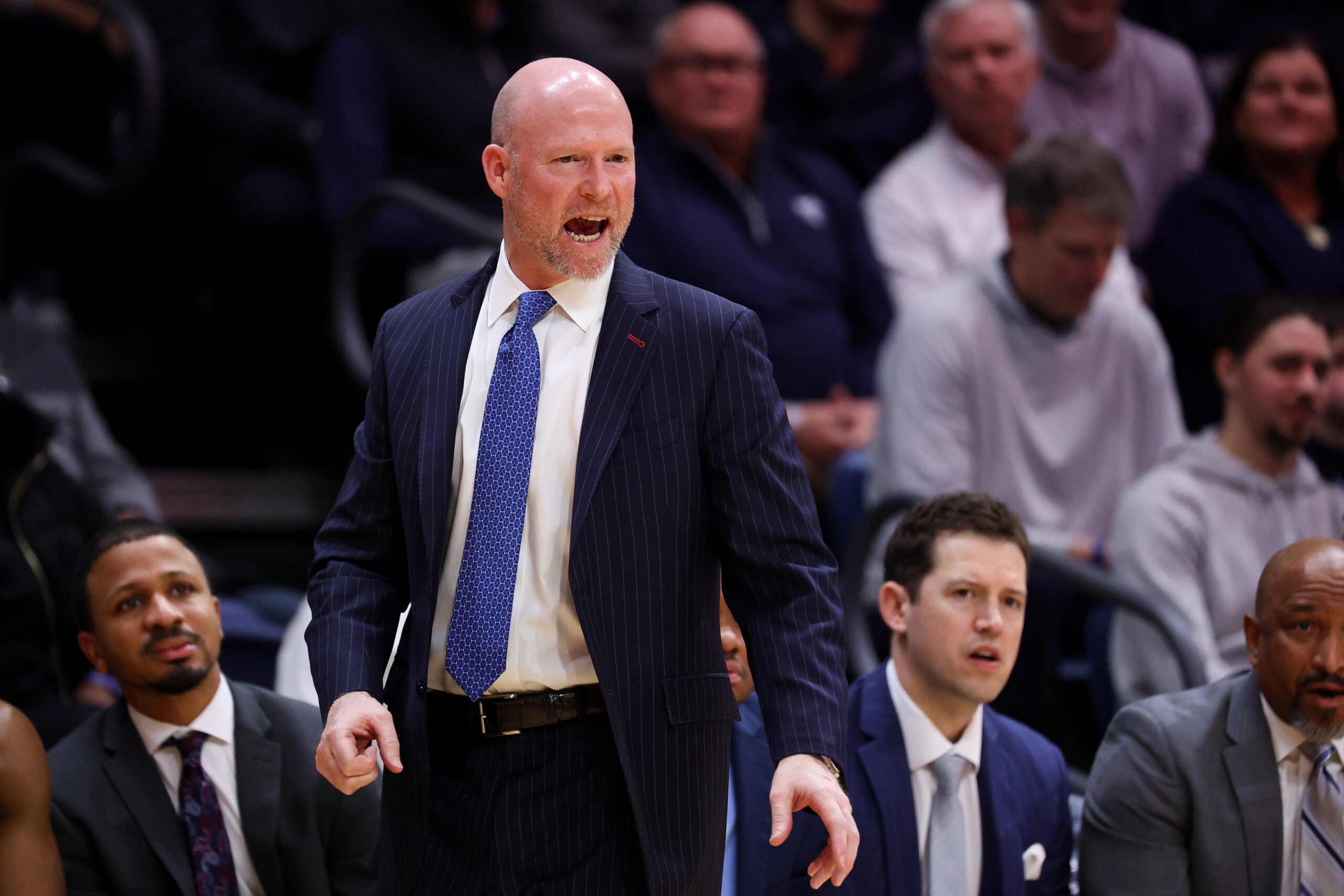
Villanova coach Kevin Willard calls out instructions during the first half against Marquette on Tuesday.
How does one change a mentality this late in the season?
“We’ll get there,” Willard said. “If we can improve our free-throw shooting and make a couple layups in the first half, it’s a completely different game. We held them to 32 points [in that first half], we should’ve had 44 points, and it’s a different type of game.”
Willard was flanked in his postgame news conference by Lewis and Perkins. He turned to Lewis and mentioned that the freshman shoots around 200 extra free throws after practices and noted that Perkins, who is shooting 75% for the season, never misses in practice.
“I have a lot of confidence in these guys that as we go through February and get into March that we’ll make them,” Willard said.
Bryce Lindsay made his first shot Tuesday night, a three-pointer less than three minutes into the game.
It had to, at least briefly, feel like the weight of the world was off his shoulders. Lindsay entered the night having made just 15 of his previous 64 attempts from three-point range (23.4%) over Villanova’s last 10 games since the calendar turned to 2026. The sharpshooting redshirt sophomore guard was a big reason behind Villanova’s strong start to the season, but he has reached double figures just four times in the last 11 games. That initial attempt Tuesday night was his only make on six three-point tries. He went scoreless Saturday afternoon at Georgetown.
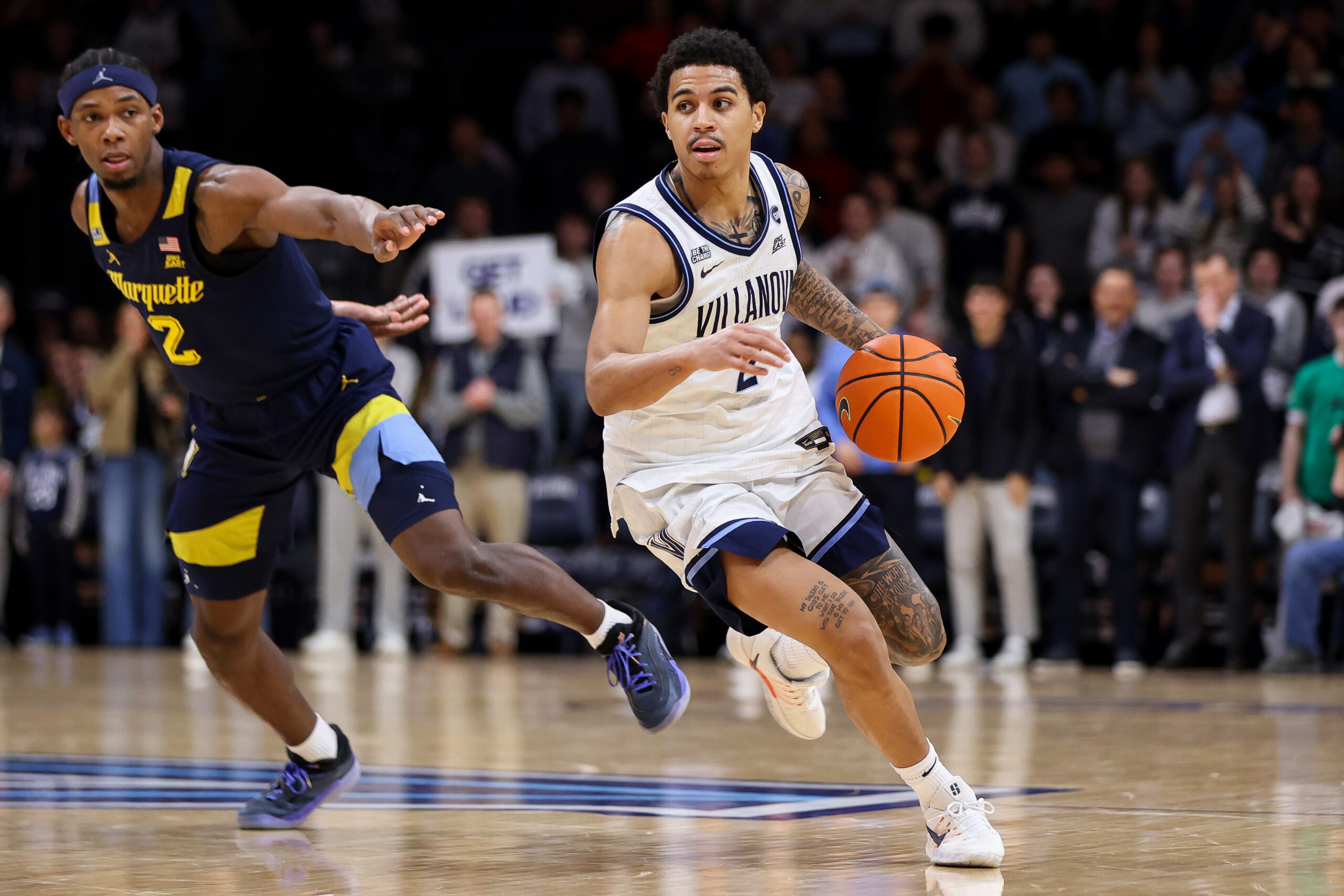
Villanova guard Bryce Lindsay dribbles past Marquette’s Chase Ross during the second half Tuesday.
“He’s going to get going,” Willard said. “It’s a little mental. I talked to the team earlier, before the game, about staying in the moment. Talking to each other and not worrying about the past, not worrying about the future, just trying to stay in the present. Sometimes it’s hard when you’re not playing well to kind of stay in the moment.
“I have a lot of confidence in Bryce. He’s in the gym with me every day working. He’s going to get it. I thought he had some good opportunities tonight. When you’re struggling the way he’s struggling, sometimes you just need one, get a good bounce, bank one in. I told him to sleep on the other side of the bed tonight. Sometimes you’ve just got to try something different.”
Something different, like starting sixth man Devin Askew and giving Lindsay a different look off the bench?
“No,” Willard said. “He’s still doing a lot of other things, and people have to guard him.”
Lindsay did affect the game in positive ways despite only scoring four points. He was plus-8 and had three rebounds and four assists, including a key pass to the corner for a Matt Hodge three-pointer with 4:20 left in the game.
Willard said he likes Askew coming off the bench as a “security blanket.”
Speaking of which … it was Askew who made two free throws with 11 seconds left that gave Villanova a three-point lead and forced Marquette into a desperation three-point attempt.
More than 80% of mined tungsten comes from China — or did, until limits on China tungsten imports imposed during the Biden administration began last year. China has also imposed tungsten export limits.
The struggle has fed a global tungsten rush, with investors and their allies in the U.S. and foreign governments paying to reopen old mines and secure new suppliers around the globe. The restrictions have also revived production of other strategic metals in many countries.
The biggest tungsten processor in the Western world is the century-old, 400-worker Global Tungsten & Powders (GTP) complex in Towanda, Pa., three hours north of Philadelphia.It produced more than 12,000 of the 117,000 metric tons of tungsten powder made in the world last year, crushing the metal into workable powders because it takes too much energy to melt.
Far from fighting to preserve cheap Chinese tungsten supplies, GTPchampioned laws supporting China import restrictions.
Before Stacy Garrity became Pennsylvania’s elected treasurer in 2021, she worked at GTP for more than 30 years. As vice president for government affairs and head of a metals industry group, she lobbied Congress and the first Trump administration to limit tungsten imports from China and its allies under what she called the “don’t buy from the bad guys” law.
Trump endorsed Garrity last month for the Republican nomination to run against Pennsylvania Gov. Josh Shapiro this fall.
Stacy Garrity, Pennsylvania treasurer, at the Pennsylvania Farm Show in Harrisburg in January.
GTP’s owner, Austria-based Plansee, has relied mostly on recycled Western tungsten, along with the few non-Chinese mines. But with tungsten demand and pricessurging, the company has contracted mined metal from new sources, including Korea and Rwanda, after many years of effort, says Karlheinz Wex, Plansee’s executive board chairman.
Korea’s Sandong mine, once among the world’s biggest suppliers, shut in 1994 as cheaper Chinese tungsten flooded world markets. The mine has reopened with financial support from the Korean government, technical assistance from U.S. agencies, and an exclusive supply deal to GTP. It’s owned by Almonty, a multinational mining company partly owned by Plansee. Almonty is moving its headquarters to the U.S. from Canada.
Wex agreed to take questions about the tungsten trade and GTP, purchased from lighting maker Sylvania in 2007. This conversation has been edited for clarity and length.
How did a tungsten processing plant end up in Pennsylvania?
That is where it started more than 100 years ago. The company focused on medical applications. Later, it went into the lighting business[pre-LED light bulbs used tungsten filament]. We have focused it 100% on tooling and special applications, such as artillery shells, and mostly in alloys with nickel and iron for tools, and with carbide and cobalt in machines for cutting, drilling, mining.
The journey starts by creating tungsten scrap from customers and competitors. Our tungsten supply is 70% scrap recycling, from tools and drill bits.
Austria-based Plansee owns the tungsten powdering plant in Towanda, Pa., which processes about one-tenth of the world’s supply of the heavy metal, used in tools and weapons.
Why did your company, which relied on Chinese tungsten, also lobby to reduce imports from China?
We always had this topic of sources independent from China, from the politics and their pricing. The mining of tungsten in the West was not that much [because of] the unfair competition flooding Chinese materials into the market. We wanted to get independent of that.
Why are you buying tungsten from Africa now?
Tungsten is a so-called conflict material. When we can certify it’s conflict-free, the material from that mine is really sound. The people at Trinity Metals [in Rwanda], we’ve known for years. Our specialists visit their mine.
The U.S. government’s involvement made it easier to prove we can support national security in the West. We buy their entire production.
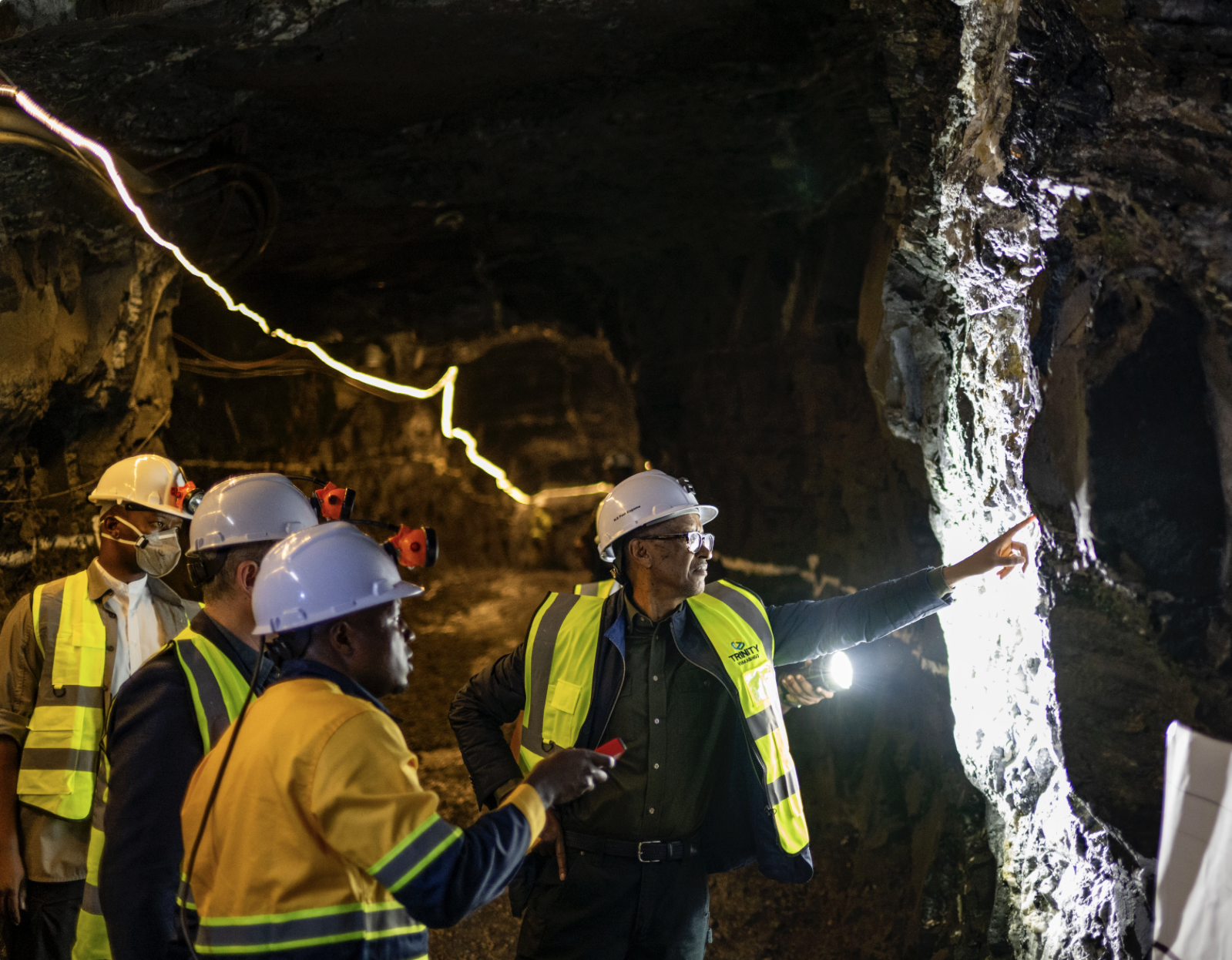
Rwanda President Paul Kagame at Trinity Metals’ newly expanded, reopened Nyakabingo tungsten mine in May 2025. The mine’s entire production is sold to Plansee, an Austrian company that processes one-tenth of world tungsten output at its General Tungsten & Powders plant in Towanda, Pa.
How does tungsten get from Rwanda to Pennsylvania?
At the mine they separate the tungsten, crushing and separating the material by weight, or separating it by flood behind a dam. That makes a concentrate, about 60% tungsten. They put it in big bags and drums, very heavy. It’s easy to transport in standard containers [usually through the port of Mombasa [in Kenya], arriving through Newark or other East Coast ports and trucked to Towanda].
Does the sale price of tungsten today cover all those costs?
We have record prices in the tungsten market. Last year the price tripled. We don’t have enough [supply].
The big problem is the Chinese have restricted exports. And the U.S. has forbidden the use of Chinese material for defense applications, as of this year. About 10% of tungsten goes into defense applications.
Will Rwanda make a big difference in the supply chain?
Rwanda is a small part.
We rely on recycling. The biggest growth in supply that we see is the Sandong mine in South Korea. We have supported that financially. They will ship the concentrate to San Francisco [ports] and then by land to Towanda.
Karlheinz Wex, chairman of the executive committee of Austria-based global miner Plansee, on a 2025 visit to the company’s Global Tungsten & Powder (GTP) mill in Towanda, Pa.
We are working at capacity. We could produce 50-60% more and sell it on the market. We are sold out for the next six to nine months. Some of our customers are desperate.
We are thinking of expanding in Towanda.
Have you kept in touch with Stacy Garrity since she became a public official?
Yes! It’s good to see her as state treasurer and potentially governor of Pennsylvania. She worked a long time for GTP after she was in the Army.
When President Donald Trump and Secretary of State Marco Rubio gutted the U.S. Department of State last year, they said they were doing it to make America “safer, stronger, and more prosperous.” Yet, Trump’s nominee to be assistant secretary of state for international organization affairs, Jeremy Carl, is a white supremacist conspiracy theorist who would undermine the United States’ standing at the United Nations and destroy our relationships with countries around the world.
As former American diplomats, we’ve worked to promote human rights globally. We know the inner workings of this world and can say unequivocally that Carl would be a grave threat in this post, and his nomination must be resoundingly rejected.
The assistant secretary of state for international organization affairs is the architect of U.S. policy at the United Nations and across a wide range of multilateral arenas. Few outside diplomatic circles have heard of this position, but it’s one of the central posts through which the U.S. interacts with the world.
For example, when we stop defending fair labor standards in places like Bangladesh or Vietnam, American workers pay the price as competitors in those countries cut corners and flood markets with cheaper goods. When we look away from corruption and repression in energy-rich regions, instability follows — driving up oil prices and hitting Americans at the pump. When we ignore humanitarian crises until they explode, we spend far more on aid and crisis response than it would have cost to prevent them.
These aren’t far-off problems. In an interconnected world, they’re immediate issues that impact American jobs, consumer prices, and national security. That’s why this role is so crucial.
Carl is moving quietly ahead in the Senate Foreign Relations Committee, on which Pennsylvania Sen. Dave McCormick serves, and his nomination hearing is slated for Thursday. The Senate should stand up for American values and the interests of the American people by rejecting this dangerous nominee.
Carl is not just unqualified for the role — he has no experience working with the U.N. — he represents a dangerous rejection of the ideals of the Universal Declaration of Human Rights: that all humans are born with equal dignity and rights.
Carl has promoted the racist and antisemitic “great replacement” conspiracy theory — claiming that there is a covert effort led by elites to replace white people in Western countries through mass migration and high birth rates of people of color, Muslims, Jews, and immigrants.
He has promoted political violence, including calling for the execution of the president of the American Federation of Teachers, a Jewish lesbian. He claimed that identifying as transgender is “somewhere between demonic and laughable.”
Though he has deleted thousands of his inflammatory tweets, these views are memorialized in his book, The Unprotected Class: How Anti-White Racism is Tearing America Apart. He gave a speech last year titled, “On the Persecution of Whites in America.”
These are not stray remarks. They reflect who Carl is, and the message the U.S. would send by giving him a senior diplomatic post. They are so alarming that the Global Project Against Hate and Extremism wrote an entire article about his work to champion “anti-white racism.”
If Carl becomes the face the U.S. presents to the world, we’ll be telling the world that we care about only one group of people. We also will undermine our interests, because in our racially, religiously diverse world, other countries will rightly see Carl’s views as abhorrent.
A world where human rights are optional and the United States fails to hold abusers accountable is a world where corruption grows, conflicts fester, and authoritarian regimes operate unchecked. The result: increased human suffering at home and abroad, higher prices for Americans, fewer protections for American workers, and greater instability that threatens our own security.
Last month, the Trump administration issued an executive order withdrawing the U.S. from 66 organizations, including 31 U.N. mechanisms. The U.S. was not a significant political or financial supporter of all of them, so the substantive consequences of withdrawal are debatable.
Yet, the symbolism is clear: The U.S. is disproportionately targeting mechanisms that serve the most vulnerable and marginalized, like U.N. Women and the Permanent Forum for People of African Descent, or those tackling the climate crisis, like the U.N. Framework Convention on Climate Change. In other words, being unqualified, opposed to universal human rights, and seeking to undermine global governance is the point of Carl’s nomination.
We know what effective diplomacy looks like. It is steady, principled, and grounded in the belief that America’s power is greatest when guided by its conscience. It also treats the rights and dignity of the most vulnerable as a priority, not an afterthought.
When we lead with our values, we build coalitions that prevent wars and foster prosperity. When we abandon them, chaos fills the vacuum — and history shows that chaos never stays overseas.
Desirée Cormier Smith was the inaugural special representative for racial equity and justice. Jessica Stern was the special envoy for the advancement of the human rights of LGBTQI+ persons at the U.S. Department of State. They are now both cofounders and copresidents of the Alliance for Diplomacy and Justice, promoting human rights as a central pillar of U.S. foreign policy.
ColeKuhn went to St. Joseph’s Prep on a partial music scholarship. He had played the double bass since the fourth grade.
He also did other extracurriculars as kid, like ballet, basketball, soccer, and baseball. However, he didn’t make the junior varsity baseball team as a freshman.
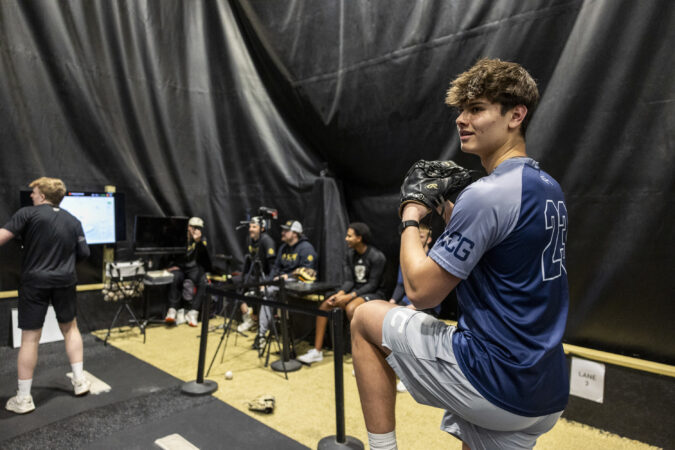
Now, the 16-year-old is throwing a fastball harder than most major leaguers. You may have seen the viral video, if not, here’s the gist of it: Kuhn was throwing 101.7 mph and has quickly emerged as one of the nation’s top high school pitchers.
He holds a scholarship to Duke and is being scouted for the 2027 Major League Baseball draft.
This all happened so rapidly — almost as fast as the pitches the 6-foot-6 teenager throws from his right hand. But it did not happen by accident. Kuhn is enrolled at Ascent Athlete, a training center in Garnet Valley that looks like a baseball laboratory.
And some say it’s why Kuhn has progressed so quickly on the mound: “Without question, that place is the single biggest driving force behind his major jumps over the last eight months,” Kuhn’s mother says.
Read more from Matt Breen’s intriguing piece about a young pitcher charting his path to becoming a baseball prodigy.
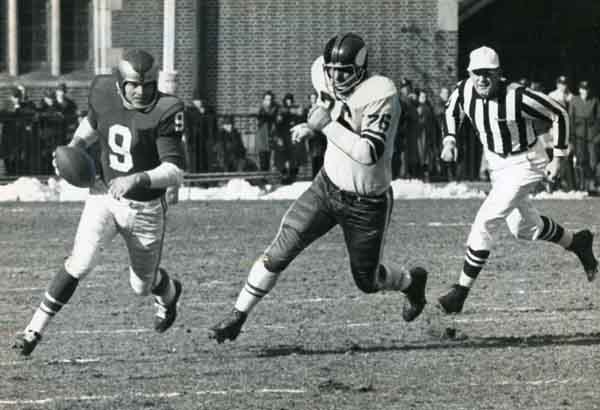
Sonny Jurgensen, running for a first down against the Vikings at Franklin Field on Dec. 15, 1963, played in 83 games as an Eagle between 1957 and 1963.
It’s been nearly a week since Sonny Jurgensen died at 91 and nearly 62 years since he departed Philadelphia for Washington in a trade. Jurgensen played the first seven seasons of his Hall of Fame career with the Eagles.
Thinking of Jurgensen now, he had a knack for quickly surveying the downfield action, then flicking those effortless passes to Tommy McDonald or Pete Retzlaff. But I also still see, maybe more than in any other athlete from that era, his personal foibles, writes Frank Fitzpatrick.
There was the booze, the mischievous smile, the postgame cigars that jutted from his mouth like middle fingers to all those who disapproved. He was one of the first Philly athletes whose lifestyle was as well-known as his talents.
What we’re…
👕 Buying: The Union unveiled a new home kit to illustrate and honor the 250th anniversary of the Declaration of Independence.
🏀 Sympathizing: Jared McCain shared an emotional reaction to being dealt to the Thunder, a trade that came as a surprise.
📺 Watching: AmericanspeedskaterJordan Stolz and Chloe Kim in action on Wednesday during the Winter Olympics.
🏈 Learning: The Eagles are bringing back assistants Jemal Singleton and Aaron Moorehead to their offensive coaching staff.
Jabari Walker has exhausted the maximum 50 games for which he is allowed to be active for the Sixers while on his two-way contract.
Jabari Walker, the Sixers reserve forward who spent his first three seasons with the Trail Blazers, was unable to play in his former NBA home on Monday. That’s because he exhausted the maximum 50 games for which he is allowed play on a two-way contract. However, Walker is remaining optimistic that a deal to convert his contract to standard will be figured out soon.
Also, the Sixers signed former Bulls swingman Dalen Terry to a two-way contract. The 6-foot-6 swingman was recently waived by the New Orleans Pelicans.
Travis Sanheim grew up in Elkhorn, Manitoba, where he worked on his parents’ grain farm.
Travis Sanheim has gone from nearly being traded three years ago to the Flyers’ unquestioned best defenseman. You can also add Olympian to his resumé after he was named to Team Canada at the turn of the year.
But Sanheim’s story isn’t the normal one for a Canadian Olympian. In fact, he’s about as big a long shot as one can be, given that he grew up in a town of 500 people in Manitoba and spent his spare time working on his parents’ grain farm, Jackie Spiegel writes.
Speaking of the men’s Olympic tournament, which begins on Wednesday, here are four things to watch for, including a potential Canada vs. U.S. rematch in the gold medal game.
Sports snapshot
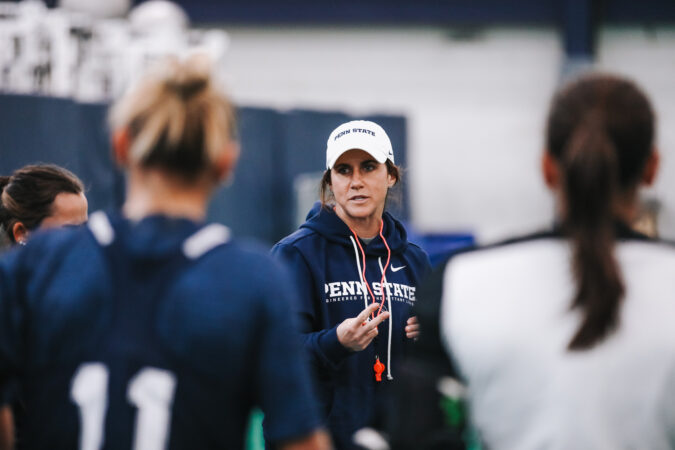
New Penn State field hockey coach Hannah Prince talks with her team. Prince joined the Nittany Lions after leading St. Joseph’s to the NCAA Tournament in each of her four seasons on Hawk Hill.
Winning ways: Hannah Prince led St. Joe’s to the NCAA Tournament in field hockey. She hopes to do the same now at the helm for Penn State.
Creating culture: Matt Campbell believes building a strong program starts with “aligning the team.” His new QB will be expected to help with that.
Another attacker: The Union paid a transfer fee of around $2 million to acquire forward Agustín Anello, marking another major signing.
Sensing a pattern: Villanova pulled off a 77-74 win against Marquette on Tuesday. But there are concerns. Particularly at the free-throw line.
🧠 Trivia time answer
Who is the only Flyers player to win the Conn Smythe Trophy twice as MVP of the playoffs?
D) Bernie Parent — Chayim S. was first with the correct answer.
What you’re saying about the Phillies
We asked: What is the key for the Phillies if they hope to contend for a World Series title? Among your responses:
They have the pieces to contend. Consistent seasons from their secondary players like Stott and Marsh (playing all season like they did after the all star break). Having new additions like Crawford and Painter deliver good seasons. And, getting the old Wheeler back early in the season. I think the bullpen is in better shape and they still have one of the best defensive catchers in the game. You have to have faith. — Bill H.
Pitching Pitching Pitching. Can Wheeler return to being the best pitcher in baseball or at least our #1? Can Nola return to being the guy he was 2 years ago? Can Painter hold down a spot in the rotation for the full season? Is this bullpen better than the patchwork pen we have seen in recent years? Or are we going to rely on Taijuan Walker for meaningful innings? If the pitching holds up this team can win 96 games again this year. If we have to rely on Sanchez and a bunch of question marks it could be a long season. — Mike D.
There are 3 keys to a successful Phillies season: Stable starting pitching — replace Ranger and hope Zack is healthy, Consistent and balanced hitting and a reliable bullpen. — Bob C.
Phillies pitchers and catchers take part in an early workout on Tuesday in Clearwater, Fla.
So many questions. Can a year older Harper, Turner, J.T., and Schwarber deliver what is needed from them? Can Crawford and Painter and other young players really come through as hoped for? Can Nola and Wheeler come back at 33 and 36 and perform at the level needed to take this team to a WS? The Mets made far more significant moves than the Phillies and along with the Braves are committed to ending their time as NL East champs. I think the Phillies made a mistake in not signing Bader. I am cautiously optimistic and hoping for the best. — Everett S.
The Phillies must match the Dodgers, by position. If they do, that will also advance them past the Mets in the East. They came up short in several positional categories in 2025; particularly relief pitching and run scoring. Adding Keller, Backhus and Pop to Duran, Alvarado, Kerkering and Banks is significant for the bullpen. On offense and defense, Garcia offers more power and better outfield defense than Castellanos in right field, and Crawford plus Garcia will likely increase their on base rate and run scoring. — John W.
What the Phillies need in order to contend this year is easy to identify: Health and Luck, in no particular order. — Dan B.
We compiled today’s newsletter using reporting from Matt Breen, Frank Fitzpatrick, Jeff McLane, Owen Hewitt, Ariel Simpson, Jonathan Tannenwald, Rob Tornoe, Greg Finberg, Jeff Neiburg, Gustav Elvin, Gina Mizell, Keith Pompey, and Jackie Spiegel.
By submitting your written, visual, and/or audio contributions, you agree to The Inquirer’s Terms of Use, including the grant of rights in Section 10.
Thanks for reading. Enjoy the warmer weather this week. Kerith will catch up with you in Thursday’s newsletter. Til’ then. — Bella