A growing number of musicians — including most recently Chappell Roan — are leaving their management company after its founder’s emails were uncovered in the latest release of the Epstein files.
Wasserman, a major talent management company based out of Los Angeles, represents stars ranging from Billie Eilish and Kendrick Lamar to Phish, Bon Iver, Turnstile, and Kacey Musgraves.
The company has been in hot water since the Department of Justice dropped over 3 million pages of documents related to Jeffrey Epstein, the disgraced financier and sex offender, and his associate, convicted sex offender Ghislaine Maxwell.
Those released files included emails between the agency’s founder, Casey Wasserman, and Maxwell. Now, musicians signed to Wasserman Group are speaking out and cutting ties.
Here’s what you need to know.
Who is Casey Wasserman?
Wasserman is a successful entertainment agent and the founder and CEO of the Wasserman Group, which represents sports talent, musicians, artists, and content creators.
He is the grandson of media mogul and talent agent Lew Wasserman. He is also the chairperson of the organizing committee for the Los Angeles 2028 Olympic and Paralympic Games.
What did Casey Wasserman’s emails to Ghislaine Maxwell say?
Wasserman’s emails, which were released by the Justice Department in January, reveal an exchange between him and Maxwell from 2003.
In the emails, Maxwell offers to give Wasserman a massage that would “drive a man wild.” Later, Wasserman tells Maxwell that he thinks about her “all the time” and asks what he has to do to see her in “a tight leather outfit.”
The Justice Department has not accused Wasserman of wrongdoing.
What kind of talent does the Wasserman Group represent?
Wasserman is regarded as one of the top talentagencies. The companyrepresents hundreds of the world’s biggest touring acts and oversees artists who perform across a range of musical genres.
The company’s artist roster includes Coldplay; Ed Sheeran; Joni Mitchell; Tyler, the Creator; Kendrick Lamar; Lorde; and many more.
Wasserman’s artist roster is no longer available on its website.
How are artists signed to Wasserman reacting?
Many have spoken out against the Wasserman CEO, calling for him to leave the agency. Some artists have gone as far as leaving the agency.
Bethany Cosentino, the front woman of Best Coast, was among the first to speak out, posting an open letter on Instagram last week calling for the founder to step down.
“As an artist represented by Wasserman, I did not consent to having my name or my career tied to someone with this kind of association to exploitation,” Cosentino said. “Staying quiet isn’t something I can do in good conscience — especially in a moment when men in power are so often protected, excused, or allowed to move on without consequence. Pretending this isn’t a big deal is not an option for me.”
Irish punk band the Dropkick Murphys announced over the weekend that they were alsoleaving Wasserman.
“It saddens us to part ways with [our agents], but the namesake of the agency is in the Epstein files so … we GONE,” the band wrote on Instagram.
Other bands, including Wednesday, Water From Your Eyes, and Beach Bunny, have made statements on social media about their concerns or their intentions to start the process of leaving the agency.
On Monday, Chappell Roan announced her exit.
“As of today, I am no longer represented by Wasserman, the talent agency led by Casey Wasserman,” Roan posted on Instagram. “I hold my teams to the highest standards and have a duty to protect them as well. No artist, agent or employee should ever be expected to defend or overlook actions that conflict so deeply with our own moral values. I have deep respect and appreciation for the agents and staff who work tirelessly for their artists and I refuse to passively stand by.”
In addition to artist pressure, Los Angeles politicians are calling for Wasserman to give up his role on the Olympics committee. The Hollywood Reporter also reported that agents who work at Wasserman are considering spinning off a new firm.
Still, not all artists believe they can make a clean break like Chappell Roan or the Dropkick Murphys.
Why can’t every artist leave the agency?
Wasserman client Alexis Krauss, of the group Sleigh Bells, released a lengthy statement condemning the CEO and detailing why she could not leave the company entirely, citing the financial impact it would cause.
“Do I wish I could burn it all down, boycott and divest? Sure I do. But to be totally honest, I can’t afford to,” Krauss said.
Krauss continued, “Would I love to just leave Wasserman Music? Yes I would. Can we? No, because I love and respect our agent and I trust him to make the decision that is best for himself, his family and his artists. The agents at Wasserman are not the villains.”
Several artists, including Krauss, emphasized that they do not work directly with — and in most cases have never met — Casey Wasserman.
Krauss added that her income allows her to pay her and her child’s health insurance, saying, “let’s remember that there’s no such thing as healthcare for working musicians. Call me spineless, but this is my truth. This is the hypocrisy of our realities as we try to do the least harm in an unscrupulous system.”
Are any Philadelphia-area artists managed by Wasserman?
Yes. Some include: Aaron West and the Roaring Twenties, the A’s, the Bacon Brothers, Diplo, the Disco Biscuits, Dr. Dog, G. Love & Special Sauce, the Menzingers, the Wonder Years, and Spaga.
As of publication time, none of these artists have made statements about Wasserman. This story will be updated if they do.
Has Casey Wasserman made a statement?
Yes. In a statement sent to the New York Times, Wasserman said he “deeply regrets” his correspondence with Maxwell, “which took place over two decades ago, long before her horrific crimes came to light.”
Wasserman added that he never had a “personal or business relationship” with Epstein.
After Sharif Street Jr. got into a highly public fight at Mayor Cherelle L. Parker’s 2024 inauguration ceremony, his boss, City Councilmember Jim Harrity, extended him some grace.
Harrity, who credits Street Jr.’s father, State Sen. Sharif Street (D., Philadelphia), with giving him a second chance earlier in his own career, kept the junior Street on staff as a special assistant, saying the incident was a lapse in judgment.
But according to another staff member in Harrity’s office, it was not the only transgression.
Shanelle Davis, a former constituent services representative, filed a federal lawsuit last week against the city claiming that she told supervisors months before the inauguration fight that Street Jr. had sexually harassed her while she was at work, including twice grabbing her and making sexualized comments about her body.
She said in the suit, filed in the U.S. District Court for the Eastern District of Pennsylvania, that no action was taken and Street Jr. remained on staff.
Davis is seeking unspecified damages from the city, which she claims violated state and federal laws related to gender-based discrimination. Street Jr. is not named as a defendant in the suit, but he is mentioned throughout the 13-page filing.
Davis’ complaint portrays a dysfunctional workplace environment in the City Hall office, including an alleged physical altercation between Street Jr. and another staffer for which no one was reprimanded. Davis, who is Black, claimed another colleague in Harrity’s office made racist comments, including hurling the N-word toward her.
Davis, who was hired in late 2022, said in the lawsuit that she was fired for underperforming at her job about a year later, after Harrity won reelection.
Her attorney did not respond to a request for comment Monday. Street Jr. did not respond to calls seeking comment.
Harrity, a Democrat who represents the city at-large and was a longtime aide to the elder Street, said in a statement that he “categorically denounce[s] workplace harassment, or any conduct that undermines a respectful and professional work environment.”
He declined to comment further, citing the ongoing legal proceedings. A spokesperson for the city law department also declined to comment.
The lawsuit is the latest legal trouble involving Sharif Street Jr., 26, who over the last three years has pleaded guilty to criminal offenses in Philadelphia, Montgomery, and Delaware Counties. In August, his employment with the city was terminated the week he pleaded guilty to charges in connection with the inauguration assault and another incident.
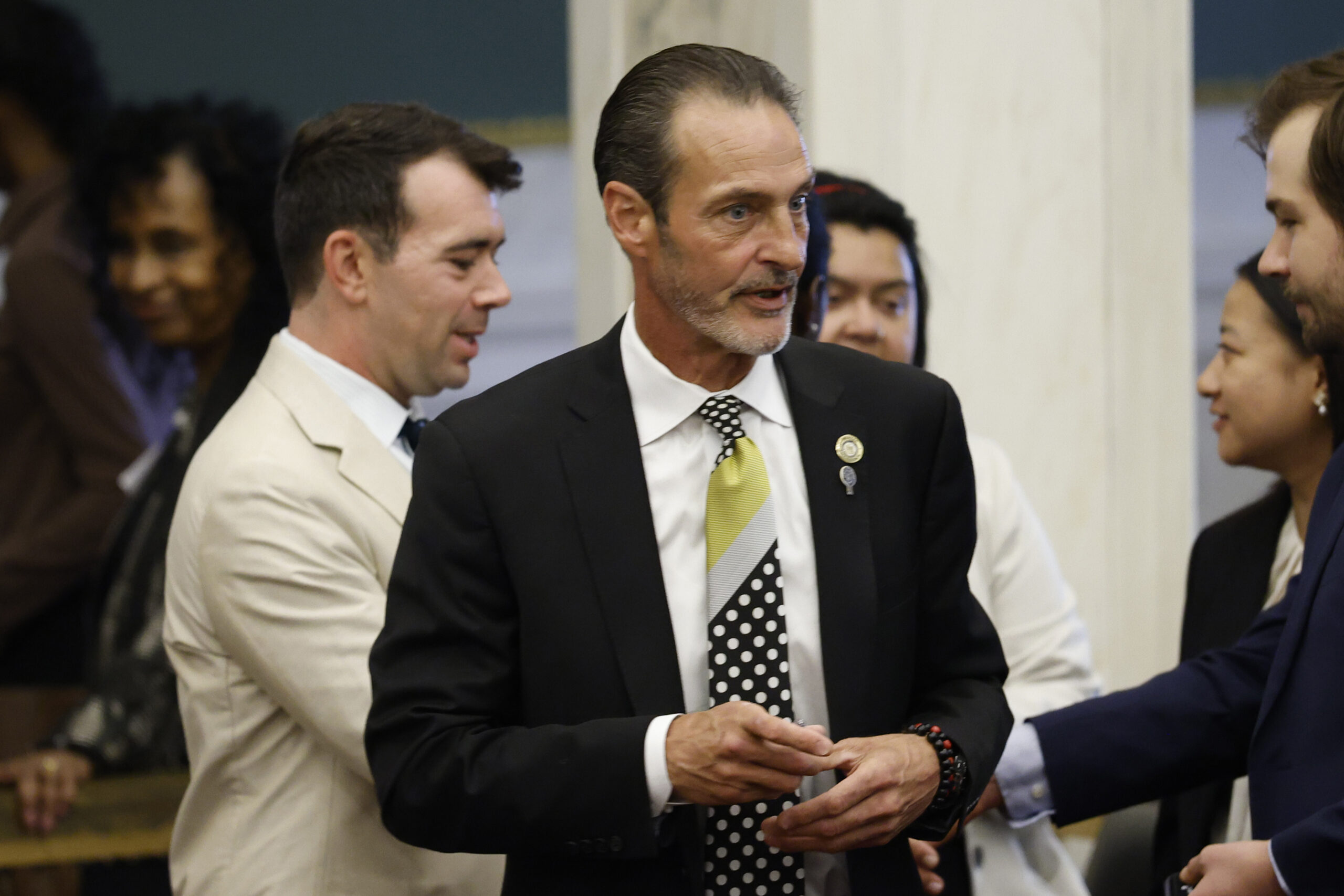
City Councilmember Jim Harrity speaks to colleagues on during a Council session in September.
Street Jr. comes from one of Philadelphia’s most well-known political families. His grandfather is former Mayor John F. Street, his mother is Common Pleas Court Judge Sierra Thomas Street, and his father is a state senator and the former head of the state Democratic Party who is now running for a seat in Congress.
Anthony Campisi, a spokesperson for the elder Sharif Street’s congressional campaign, said the state senator had “no knowledge” of the sexual harassment allegations.
“Sharif loves his son unconditionally and has supported his son through personal troubles, like so many parents across Philadelphia,” Campisi said. “That being said, Sharif unequivocally condemns sexual harassment in all its forms and is looking for the legal process to play out.”
City Council President Kenyatta Johnson, who took over as leader of the chamber in 2024, declined to comment. Under City Council rules, individual members are responsible for hiring and terminating their own employees.
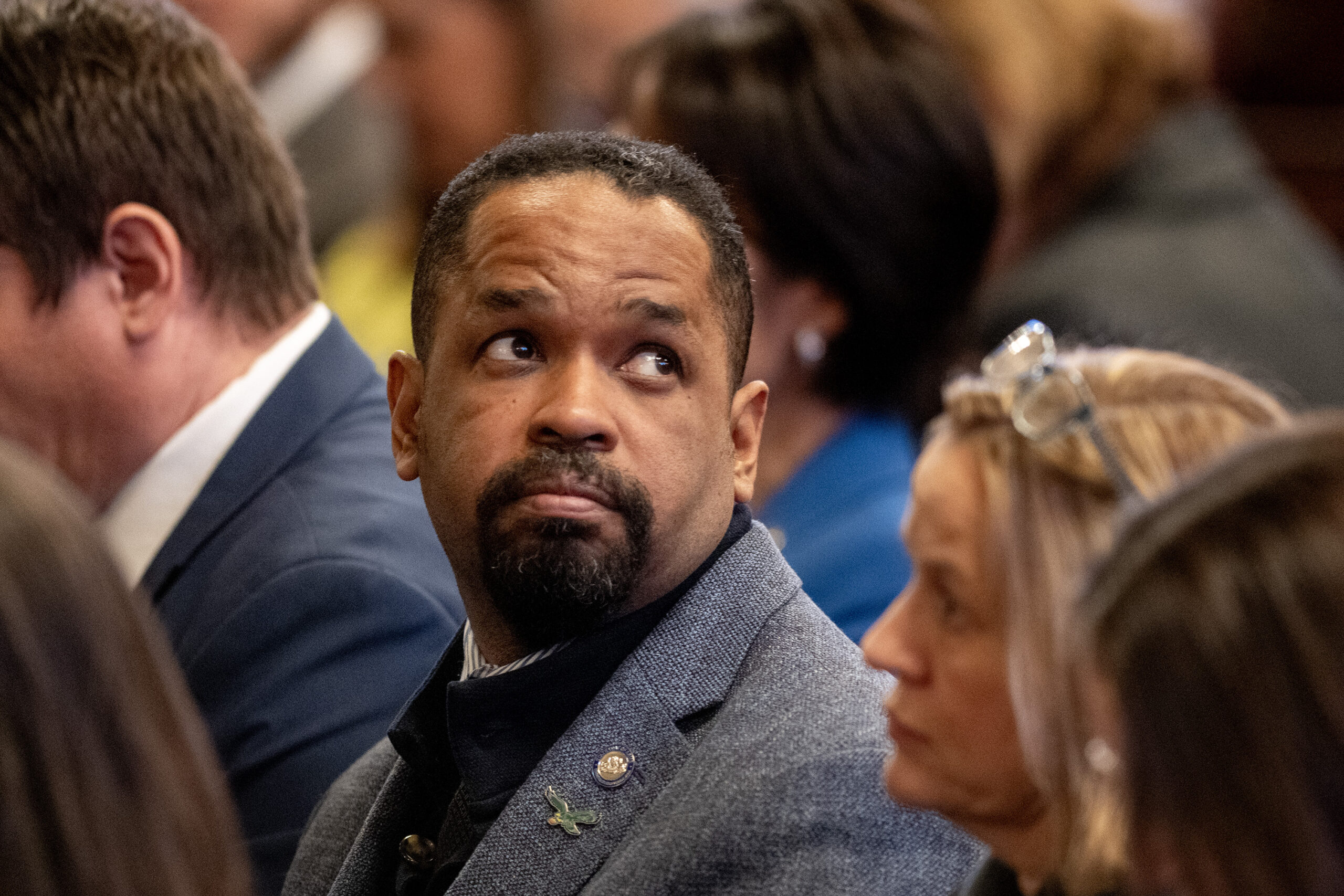
State Senator Sharif Street (D., Phila.)is in the state House chamber as Gov. Josh Shapiro makes his annual budget proposal Feb. 3, 2026.
Street Jr. was arrestedseveral times over three years while working in City Hall as an assistant in Harrity’s office, court records show. Davis’ lawsuit comes about six months after Street Jr.’s employment in Harrity’s office ended, according to payroll records.
In January 2024, Street Jr. punched a security guard at the entrance to Parker’s inauguration ceremony at the Met Philadelphia on North Broad Street. He told The Inquirer at the time that he was defending his grandfather, the former mayor, whom he said the guard had grabbed because they were trying to enter at a back entrance without waiting in line.
“I saw my grandfather get grabbed and I just sort of blacked out,” Street Jr. said. His father defended him at the time, saying the security guard had initiated the altercation.
Later that month, Street Jr. was charged in connection with a hit-and-run from the previous August that left a 14-year-old injured.
The two cases were consolidated in Common Pleas Court, and Street Jr. pleaded guilty in August to charges of assault and causing an accident that resulted in an injury. According to prosecutors, he was sentenced to 60 days in jail.
Four months later, when he was no longer working in city government, Street Jr. was briefly jailed in Delaware County following what police in Upper Darby described as a “prolonged struggle” during a traffic stop. He pleaded guilty to disorderly conduct, a summary offense.
Maybe it’s because I’ve watched every blessed one of them, starting as a curious, nearly 8-year-old boy in 1967, but the Super Bowl has always felt like the ultimate barometer of where the American Experiment is at. Super Bowl LX (that’s 60, for those of you smart enough not to take four years of Latin in high school) was no exception. The actual game was something of a snoozefest, but the tsunami of commercials revealed us as a nation obsessed with artificial intelligence, sports betting, weight loss, and anything that can lift us from middle-class peonage without having to do any actual work. As Bad Bunny said, God bless America.
Bad Bunny’s real message: From P.R. to Minnesota, we are neighbors
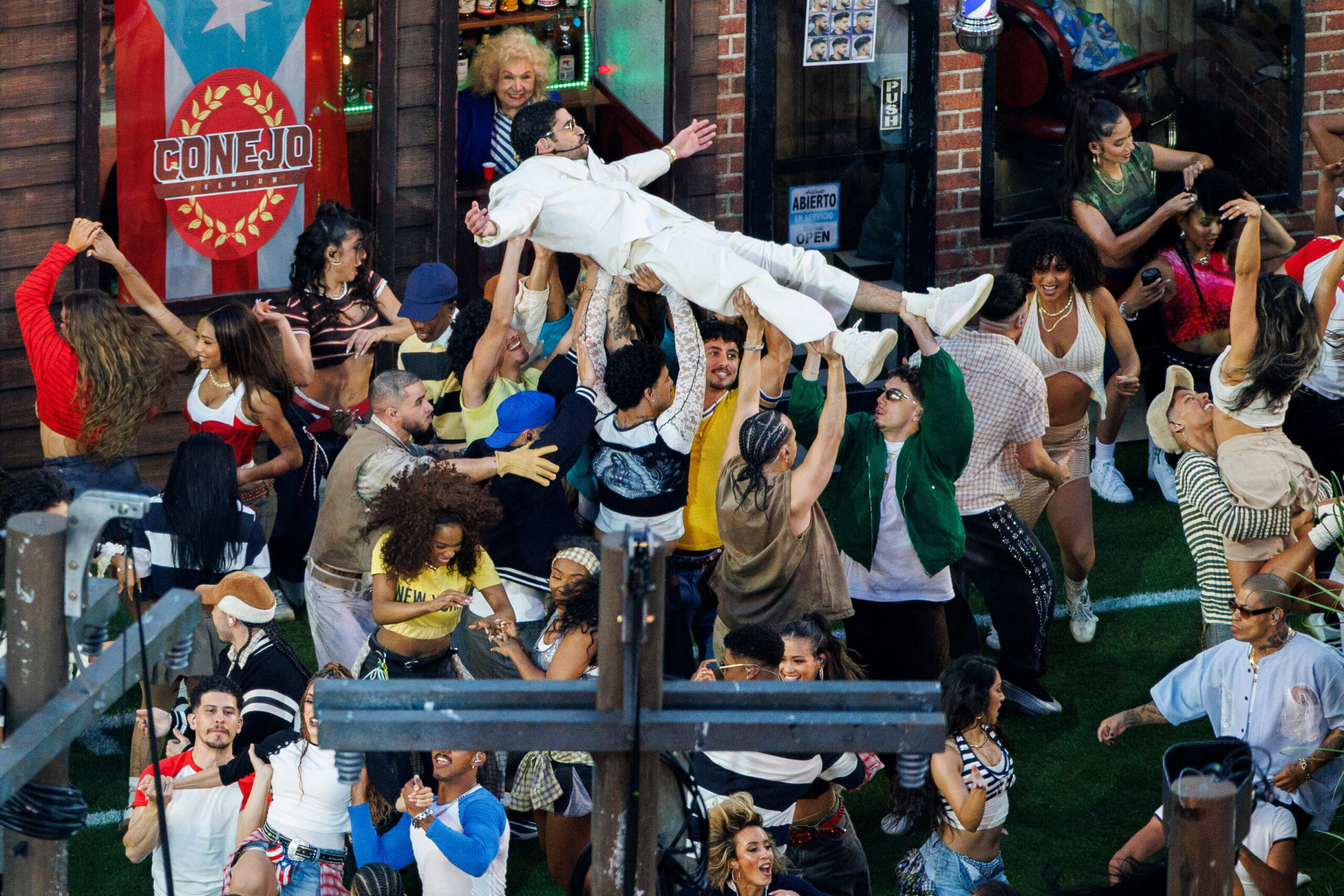
Bad Bunny (center top) performs Sunday during the halftime show of the NFL Super Bowl XL football game between the Seattle Seahawks and the New England Patriots in Santa Clara, Calif.
Right-wing media prattled on for months about how Bad Bunny, the Puerto Rican reggaeton superstar who is the world’s most streamed artist, would politicize and thus ruin the NFL’s halftime extravaganza at Super Bowl LX in Santa Clara, Calif.
The babble became a scream seven days before the Big Game kicked off, when Bad Bunny won the record of the year Grammy Award and began his acceptance speech with the exhortation “ICE out!” adding, “We’re not savages, we’re not animals, we’re not aliens — we are humans, and we are Americans.”
But on the world’s biggest stage Sunday night — seen by 135 million in the United States, a Super Bowl record — Bad Bunny sang not one word about Donald Trump, not that MAGA fans even bothered to hold up a translation app. The white-suited Benito Antonio Martínez Ocasio danced his way through the history of Puerto Rico and the Americas writ large, from the plantations of yore to the exploding power lines of the hurricane-wracked 21st century. He whirled past an actual wedding, stopped for a shaved ice, and for 13 spellbinding minutes turned a cast of 400 into what his transfixed TV audience craved at home.
BadBunny built his own community — a place not torn asunder by politics, but bonded by love and music.
Without uttering one word — in Spanish or English — about the dire situation in a nation drifting from flawed democracy into wrenching authoritarianism, the planet’s reigning king of pop delivered the most powerful message of America’s six decades of Super Bowl fever. Shrouded in sugar cane and shaded by a plantain tree, Bad Bunny sang nothing about the frigid chaos 2,000 miles east in Minnesota, and yet the show was somehow very much about Minneapolis.
Bad Bunny finally gave voice to what thousands of everyday folks in the Twin Cities have been trying to say with their incessant whistles.
We are all neighbors. The undocumented Venezuelan next door who toils in the back of a restaurant and sends his kids to your kids’ school is a neighbor. But Haiti is also a neighbor, as is Cuba. We are all in this together.
The word I kept thinking about as I watched Bad Bunny’s joyous performance is a term that didn’t really exist on New Year’s Day 2026, yet has instantly provided a name to the current zeitgeist.
The great writer Adam Serwer — already up for the wordsmithing Hall of Fame after he nailed the MAGA movement in 2018 in five words: “The cruelty is the point” — leaned hard into the concept of “neighborism” after he traveled to Minneapolis last month. His goal was to understand an almost revolutionary resistance to Trump’s mass deportation raids that had residents — many of whom had not been especially political — in the streets, blowing those warning whistles, confronting armed federal agents, and tracking their movements across the city.
Serwer visited churches where volunteers packed thousands of boxes of food for immigrant families afraid to leave their homes during the U.S. Immigration and Customs Enforcement raids, and talked to stay-at-home moms, retirees, and blue-collar workers who give rides or money to those at risk, or who engaged in the riskier business of tracking the deportation raiders.
“If the Minnesota resistance has an overarching ideology,” Serwer wrote, “you could call it ‘neighborism’ — a commitment to protecting the people around you, no matter who they are or where they came from.” He contrasted the reality on the ground in Minneapolis to the twisted depictions by Trump and his vice president, JD Vance, who’ve insisted refugees are a threat to community and cohesion.
Of course, it’s not just Minneapolis, and it’s not just the many, liberal-leaning cities — from Los Angeles to Chicago to New Orleans and more — that were the incubators of the notion that concerned citizens — immigrant and nonimmigrant alike — could prevent their neighbors from getting kidnapped. Even small towns like rural Sackets Harbor, N.Y., the hometown of Trump’s border czar Tom Homan, rose up in protest to successfully block the dairy farm deportation of a mom and her three kids. It’s been like this everywhere regular folks — even the ones who narrowly elected Trump to a second term in 2024 — realize mass deportation doesn’t mean only “the worst of the worst,” but often the nice mom or dad in the house, or church pew, next to theirs.
Only now that it’s arrived is it possible to see “neighborism” as the thing Americans were looking for all along, even if we didn’t know it. It is, in every way, the opposite vibe from the things that have always fueled fascism — atomization and alienation that’s easy for a demagogue to mold into rank suspicion of The Other.
I’m pretty sure Bad Bunny wasn’t using the word neighborism when the NFL awarded him the coveted halftime gig last fall. But the concept was deeply embedded in his show. He mapped his native Puerto Rico as a place where oppression has long loomed — from the cruelty of the sugar plantations to the capitalist exploitation of the failed power grid — but where community is stronger.
Then Benito broadened the whole concept. Reclaiming the word America for its original meaning as all of the Western Hemisphere, Bad Bunny name-checked “Chile, Argentina, Uruguay, Paraguay, Bolivia, Peru, Ecuador, Brazil,” and Canada, as well as the United States. These, too, are our neighbors. “God bless America,” he shouted — his only message of the night delivered in English.
So, no, Bad Bunny never mentioned Minneapolis, but a tender moment when he seemingly handed the Grammy he’d won just aweek ago to a small Latino boy had to remind viewers of the communal fight to save children like the 5-year-old, blue bunny hat-wearing (yes, ironic) Liam Conejo Ramos, who was just arrested, detained, and released by ICE. (A false rumor that the Super Bowl boy was Ramos went viral.)
But arguably, this super performance had peaked a few moments earlier, when the singer exited the wedding scene stage with a backward trust dive, caught and held aloft by his makeshift community in the crowd below. Bad Bunny had no fear that his neighbors would not be there for him. Viva Puerto Rico. Viva Minneapolis. Viva our neighbors.
Yo, do this!
Some 63 years after he was gunned down by a white racist in his own driveway, the Mississippi civil rights icon Medgar Evers has been having a moment. A fearless World War II vet whose bold stands for civil rights as local leader of the NAACP in America’s most segregated state triggered his 1963 assassination, Evers’ fight has become the subject of a best-selling book, a controversy over how his story is told at the Jackson, Miss., home where he was killed, and now a two-hour documentary streaming on PBS.com. I’m looking forward to watching the widely praised Everlasting: Life & Legacy of Medgar Evers.
After the Super Bowl, February is the worst month for sports — three out of every four years. In 2026, we have the Winter Olympics to bridge the frigid gap while we wait for baseball’s spring training (and its own World Baseball Classic) to warm us up. Personally, I try and sometimes fail to get too jacked up around sleds careening down an icy track, but hockey is a different story. At 2:10 p.m. on Tuesday (that’s today if you read this early enough), the puck drops on USA Network for the highly anticipated match between the world’s two top women’s teams: the United States and its heated rival Canada. Look for these two border frenemies to meet again for the gold medal.
Ask me anything
Question: How is it that some towns have been able to prevent ICE from buying warehouses and turning them into concentration camps, while others say they are helpless against the federal government? What does it mean that several are planned for within a couple of hours of Philly? — @idaroo.bsky.social via Bluesky
Answer: Great question. It seems ICE and its $45 billion wad of cash are racing in near-secrecy to make this national gulag archipelago of 23 or so concentration camps a done deal. The places where they’ve been stopped, like one planned for Virginia, happened because locals were able to pressure the developer before a sale to ICE was concluded. That’s no longer an option at the two already purchased Pennsylvania sites in Schuylkill and Berks Counties. The last hope is pressure from high-ranking Republicans, which may (we’ll see) have stopped a Mississippi site. Pennsylvanians might want to focus, then, on GOP Sen. Dave McCormick. Good luck with that.
What you’re saying about …
It’s conventional wisdom that the best argument for a Gov. Josh Shapiro 2028 presidential campaign is his popularity in his home state of Pennsylvania, the battleground with the most electoral votes. So it’s fascinating that none of the dozen or so of you who responded to this Philadelphia-based newsletter wants Shapiro to seek the White House, although folks seem divided into two camps. Some of you just don’t like Josh or his mostly centrist politics. “I think he’s all ambition, all consumed with reaching that top pedestal, not as a public servant, but because he thinks he deserves it,” wrote Linda Mitala, who once campaigned for Shapiro, but soured on his views over Gaza protesters, New York Mayor Zohran Mamdani, and other issues. Yet, others think he’s an excellent governor who should remain in the job through 2030. “Stay governor of Pa. when good governance and ability to stand up to federal (authoritarian) overreach is dire,” wrote Kim Root, who’d prefer Kentucky Gov. Andy Beshear for the White House.
📮 This week’s question: A shocking, likely (though still not declared) Democratic primary win for Analilia Mejia, the Bernie Sanders-aligned left-wing candidate, in suburban North Jersey’s 11th Congressional District raises new questions for the Dems about the 2026 midterms. Should the party run more progressive candidates like Mejia, who promise a more aggressive response to Trump, or will they lose by veering too far left? Please email me your answer and put the exact phrase “Dems 2026” in the subject line.
Backstory on how the F-bomb became the word of the year
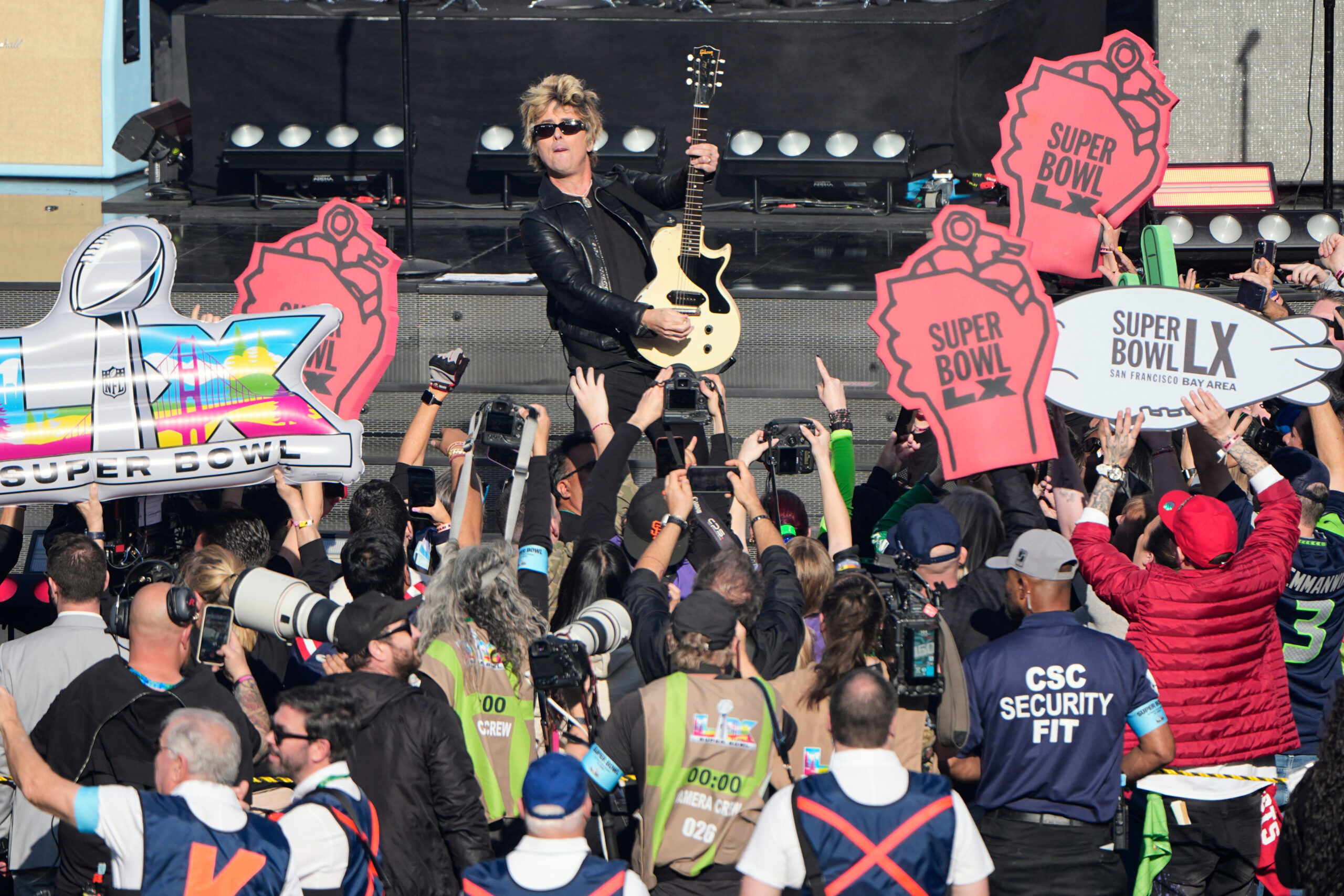
Billie Joe Armstrong of Green Day performs Sunday before the start of Super Bowl XL in Santa Clara, Calif.
I’m old enough to remember when the world’s most famous comedy riff was the late George Carlin’s “Seven Words You Can Never Say on Television” — its point driven home by Carlin’s 1972 arrest on obscenity charges that went all the way to the U.S. Supreme Court. A half century later, you still can’t say dirty words on broadcast TV — cable and streaming is a different story — but that fortress is under assault. In 2026, America is under seemingly constant attack from the F-bomb.
It is freakin’ everywhere. When the top elected Democrat in Washington, House Minority Leader Hakeem Jeffries, cut a short video to respond to the president’s shocking post of a racist video that depicted Barack and Michelle Obama as apes, he said, “[F-word] Donald Trump!” If uttered in, say, 1972, Jeffries’ attack would have been a top story for days, but this barely broke through. Maybe because that word is in the lexicon of so many of his fellow Democrats, like Mayor Jacob Frey, who famously told ICE agents to “get the [F-word] out of Minneapolis,” or Minnesota Sen. Tina Smith, who begged federal agents to “leave us the (bleep) alone.” (Smith is retiring at year’s end and seems to no longer give a you-know-what.)
The poor guys with their finger on the silence button at the TV networks, where you still can’t say Carlin’s seven words, can barely keep up. The F-bomb was dropped at this year’s Grammys, where award-winner Billie Eilish declared “(Bleep) ICE!” as she brandished her prize. The F-bomb was dropped, of course, at the Super Bowl, when the only true moment of silence during 10-plus hours of nonstop bombast came during Green Day’s pregame performance of “American Idiot,” when NBC shielded America’s tender ears from hearing Billie Joe Armstrong sing about “the subliminal mind(bleep) America.”
We’re only about six weeks into the new year, but it’s hard not to think that Merriam-Webster or the other dictionary pooh-bahs won’t declare the F-bomb as word of the year for 2026, even if I’m still not allowed to use it in The Inquirer, family newspaper that we are. So what the … heck is going on here? One study found the F-word was 28 times more likely to appear in literature nowthan in the 1950s, so in one sense it’s not surprising this would eventually break through on Capitol Hill or on the world’s biggest stages.
But the bigger problem is that America’s descent into authoritarianism and daily political outrage has devolved to such a point where, every day, permissible words no longer seem close to adequate for capturing our shock and awe at how bad things are. Only the F-bomb, it turns out, contains enough dynamite to blow out our rage over masked goons kidnapping people on America’s streets, or a racist, megalomaniac president who still has 35 months left in his term. Yet, even this (sort of) banned expletive is losing its power to express how we really feel. I have no idea what the $%&# comes next.
What I wrote on this date in 2019
What a long, strange trip for Amazon founder Jeff Bezos, one of the four richest people on the planet. Today, Bezos is in the headlines for his horrific stewardship of the Washington Post, which has bowed down on its editorial pages to the Trump regime, lost hundreds of thousands of subscribers, and laid off 300 journalists. It’s hard to recall that seven years ago, Bezos and Trump were at war, and there was evidence Team MAGA had enlisted its allies from Saudi Arabia to the National Enquirer to take down the billionaire. I wrote that “a nation founded in the ideals of democracy has increasingly fallen prey to a new dystopian regime that melds the new 21st century dark arts of illegal hacking and media manipulation with the oldest tricks in the book: blackmail and extortion.”
My first and hopefully not last journalistic road trip of 2026 took me to Pennsylvania coal country, where ICE has spent $119.5 million to buy an abandoned Big Lots warehouse on the outskirts of tiny Tremont in Schuylkill County. I spoke with both locals and a historical expert on concentration camps about their fears and the deeper meaning of a gulag archipelago for detained immigrants that is suddenly looming on U.S. soil. It can happen here. Over the weekend, I looked at the stark contrast between Europe’s reaction to the Jeffrey Epstein scandal — where ties to the late multimillionaire sex trafficker are ending careers and even threatening to topple the British government — and the United States, where truth has not led to consequences so far. The Epstein fallout shows how the utter lack of elite accountability is driving the crisis of American democracy.
One last Super Bowl reference: Now that football is over, are you ready for some FOOTBALL? Now just four months out, it’s hard to know what to make of the 2026 World Cup returning to America and coming to Philadelphia for the very first time, and whether the increasing vibe that Donald Trump’s United States is a global pariah will mar the world’s greatest sporting event (sorry, NFL). Whatever happens, The Inquirer is ready, and this past week we published our guide to soccer’s biggest-ever moment in Philly. Anchored by our world-class soccer writer Jonathan Tannenwald and Kerith Gabriel, who worked for the Philadelphia Union between his stints at the paper, the package provides not only an overview of the World Cup in Philly, but previews the dozen teams who will (or might) take the pitch at Lincoln Financial Field, with in-depth looks at the powerhouses (France) as well as the massive underdogs (Curaçao). June is just around the corner, so don’t let the paywall become your goalkeeper. Subscribe to The Inquirer before the first ball drops.
By submitting your written, visual, and/or audio contributions, you agree to The Inquirer’s Terms of Use, including the grant of rights in Section 10.
Philadelphia will play a starring role in this summer’s celebration of the 250th anniversary of the Declaration of Independence. The Union will have a jersey fit for the party.
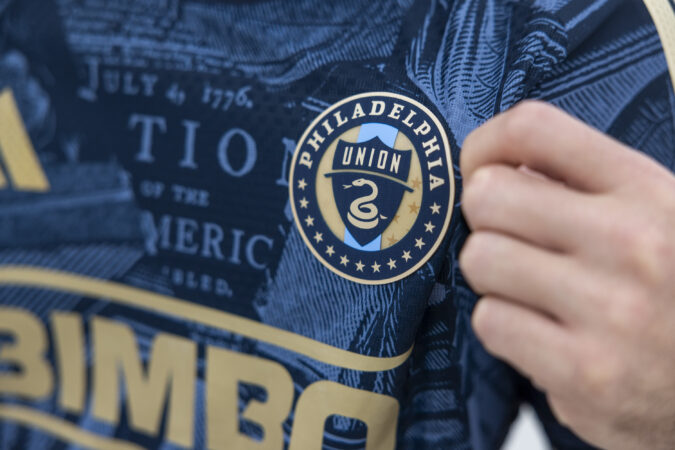
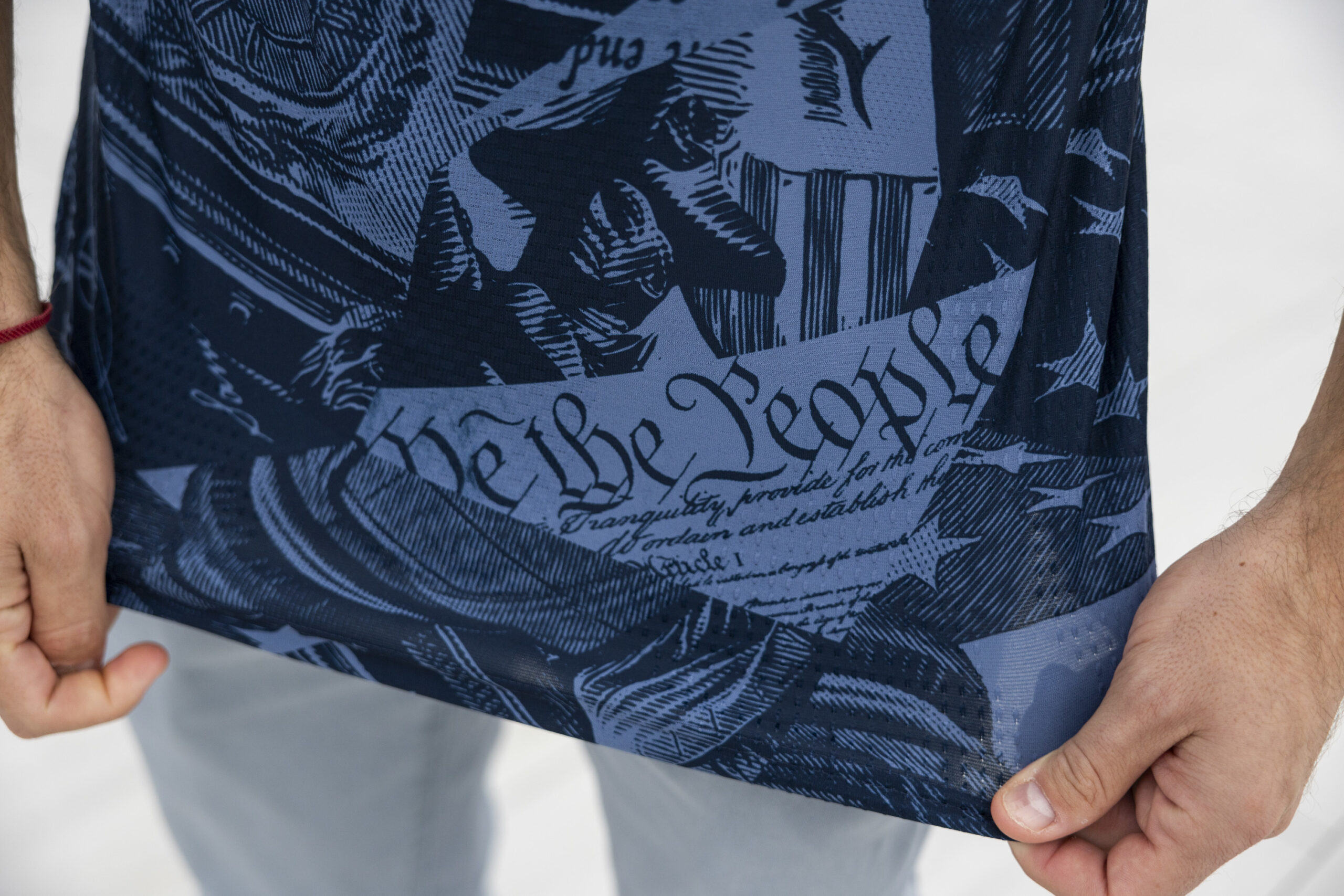
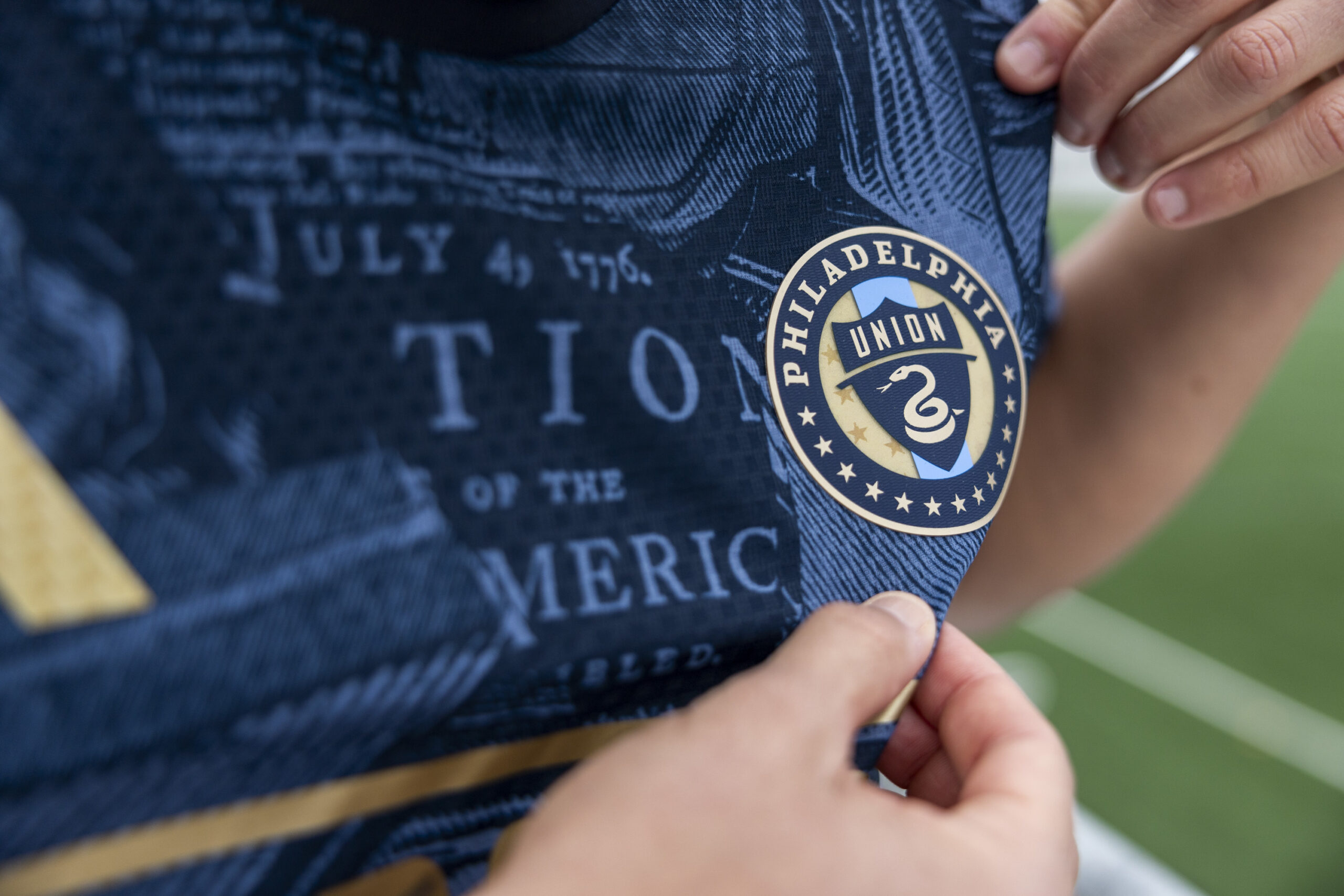
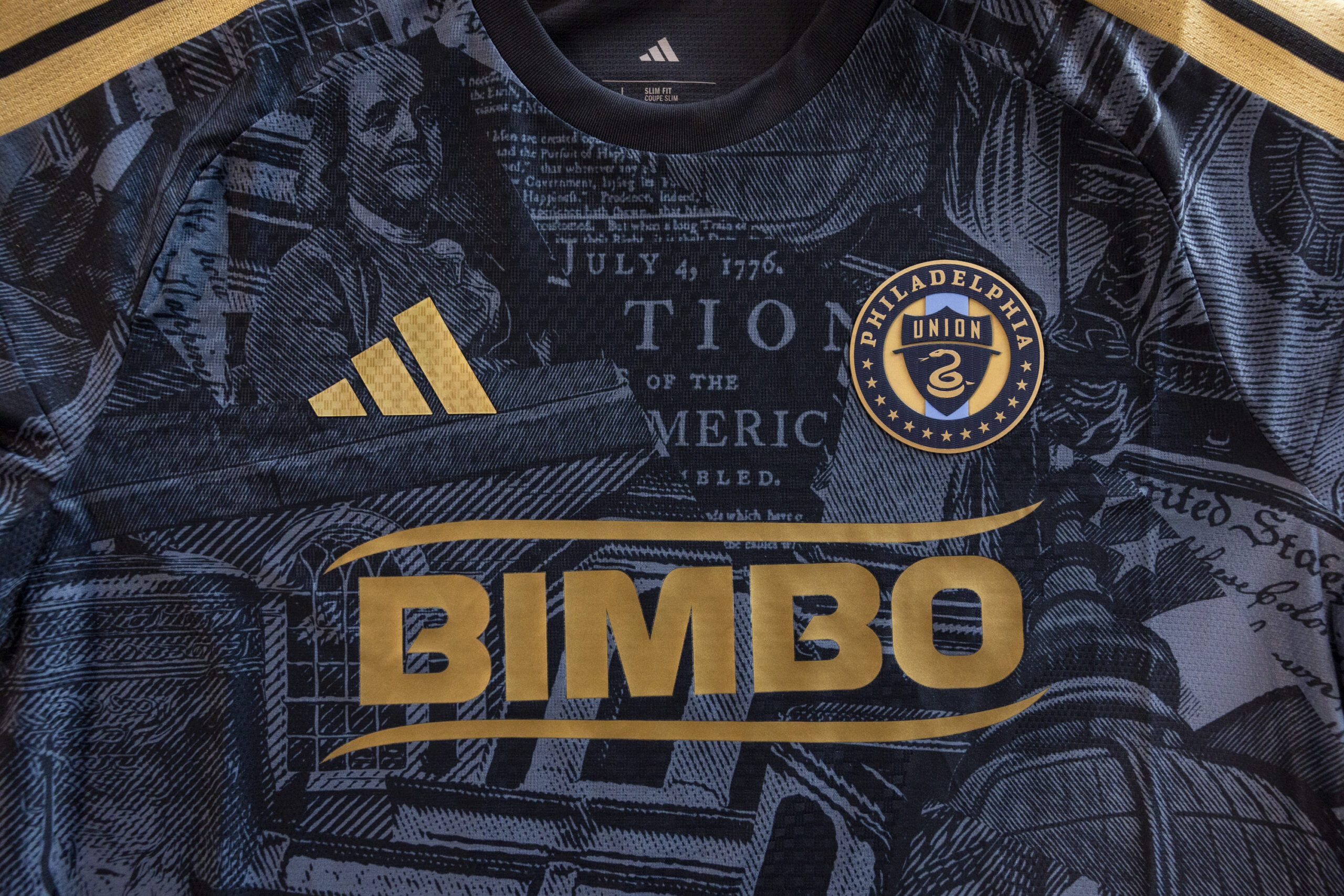
The club’s new home kit, unveiled Tuesday, is a navy blue jersey with an all-over pattern that features illustrations of some of Philly’s most recognizable landmarks and script from the Declaration of Independence.
Included in the pattern are illustrations of the Liberty Bell, Independence Hall, and even a portrait of Benjamin Franklin near the shoulder. A fragment of the Declaration of Independence, including the date of July 4, 1776, is printed just below the jersey’s collar, between the Adidas logo and the club’s crest.
“Being here in Philadelphia, the birthplace of the country, we just thought there was a really incredible opportunity to create something that represents the Philadelphia Union, that represents our city, and represents the country,” said Amanda Young Curtis, the Union’s senior vice president of marketing and communications. “This is, hopefully, a jersey that people think they can wear to a Union game, to a semiquincentennial celebration, or to a U.S. men’s national team game or watch party.”
The Union should have their first opportunity to play in their new uniform when the club hosts Trinidad’s Defence Force FC in the second leg of their first-round Concacaf Champions Cup matchup on Feb. 26. The Union’s MLS home opener is scheduled for March 1 against New York City FC.
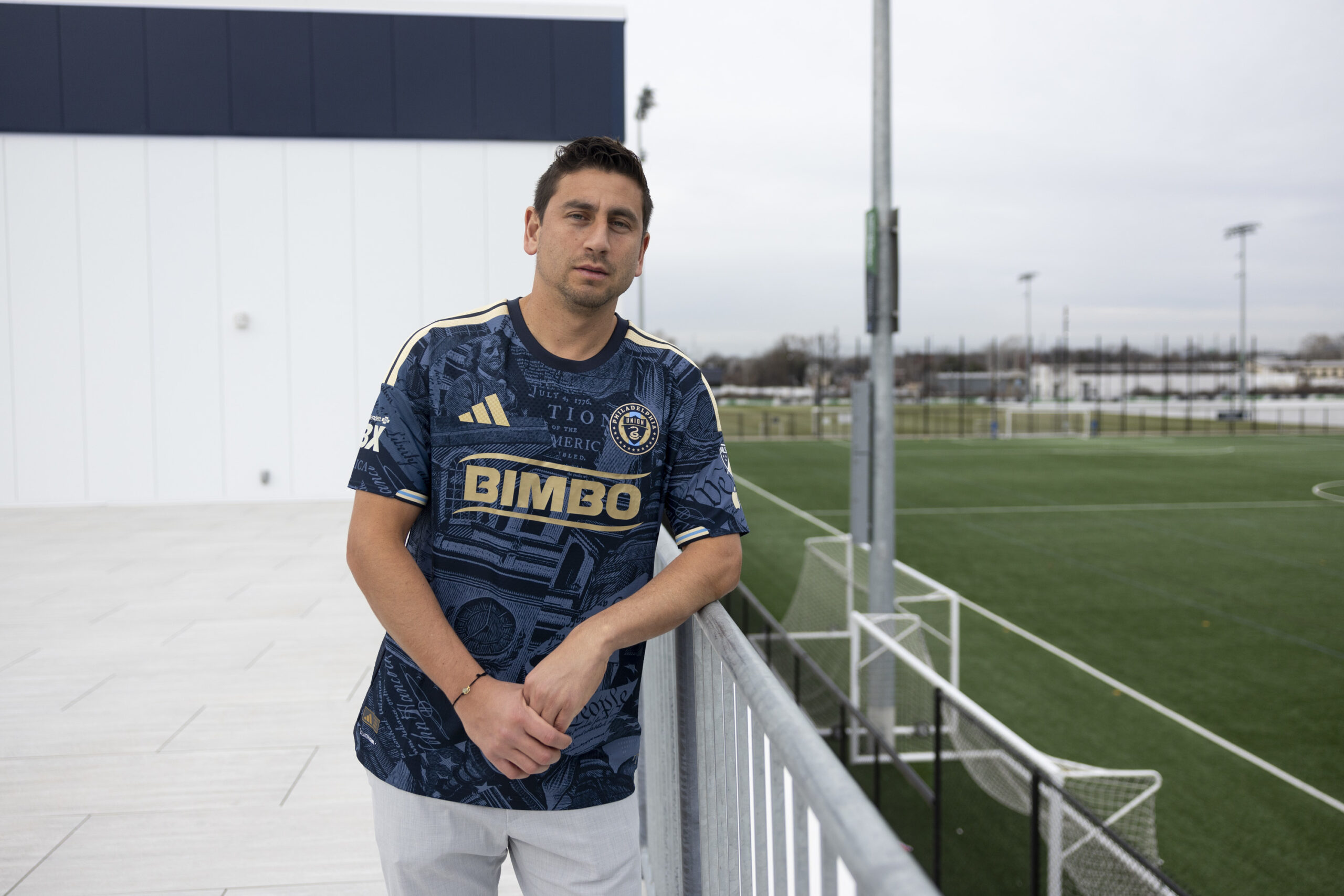
Union midfielder Alejandro Bedoya showcases the new jersey for the season at the WSFS SportsPlex in Chester on Jan. 14.
The 1776 script also appears in the bottom corner of the jersey in gold. The jersey will be paired with dark blue shorts and socks to complete the Union’s home uniform.
The Union hope their bold new home kit can be a staple for this summer’s Independence Day festivities and fans at the FIFA World Cup, which will return to American soil for the first time since 1994.
This year, kits across MLS will feature a special nod to this summer’s World Cup, co-hosted by the U.S., Canada, and Mexico. On jerseys for American teams, the team logo will feature a holographic star pattern. For the three Canadian clubs, the holographic pattern will be maple leaves.
Union forward Milan Iloski shows off the new kit ahead of the Union’s 2026 season, which features various historical Philadelphia landmarks.
The kit, designed in partnership between the Union and Adidas, MLS’s jersey provider, will replace the navy kit that the club debuted in 2024. The team’s away jersey, a light blue shirt that features a yellow lightning pattern, will continue to be used.
Milan Iloski had high praise for the creative team behind the jersey’s design, calling it “a beautiful kit.” The Union midfielder also pointed out the kit’s versatility for this summer’s slate of festivities.
“I think it’ll be a kit that can be worn anywhere,” Iloski said. “I mean, you could wear it to a game, you can wear it to a party, you could wear it anywhere. With the World Cup coming here in America and the 250th anniversary, it felt like the perfect opportunity to do a big kit, to do something different, and I think they nailed it.”
Alejandro Bedoya has played in a lot of Union jerseys over the span of his career. But he says this year’s kit is among the best he’s seen, calling it a “work of art.”
Union midfielder Alejandro Bedoya, who shows off the raised crest on the Union’s new home kit, described it as a “work of art.”
“As a player, you’re often told [to] play for the badge, play for the shirt,” he said. “There’s no better representation of what that actually means than putting it on this jersey. You’re literally rocking Philadelphia here, and the history, and everybody who’s come through here. … Now we have even more of a reason to go out there on the field and really rep our city proudly.”
The Union wanted the kit to tell a story while representing the history and culture of Philadelphia. Fortunately for the club, the timing of its release made it easy to determine what story should be told.
“In soccer culture, not just with the Union, the jersey represents way more than just the team,” Curtis said. “It tells a story. In a way, the story was pretty clear for 2026.”
A first look at the new kit for Union’s 2026 season features various historical Philadelphia landmarks and documents depicted in the jersey to represent club, city, and country.
The Union are scheduled to host a number of pop-up retail locations in Philadelphia this weekend for fans interested in buying the new kit. They will set up at the Independence Blue Cross RiverRink Winterfest from 6:30 p.m. to 8:30 p.m. on Friday. Saturday’s pop-up is scheduled from noon to 2 p.m. at the Independence Visitor Center, and the club will be at Dilworth Park from noon to 2 p.m. on Sunday.
The team’s retail location at Subaru Park also will be open from 9 a.m. to 5 p.m. on Saturday and Sunday.
However, it appeared that fans could purchase the jerseys over the weekend, as a fan noted that the kit was on the shelves at the Mount Laurel location of Dick’s Sporting Goods on Sunday. Repeated attempts for comment from both the store’s location and from Dick’s corporate office went unreturned.
The post and others like it caused a social media storm of reactions, mostly positive from fans and style aficionados trying to determine if the leak was the team’s new primary uniform or a special third kit.
Now they have their answer.
Inquirer staff writer Kerith Gabriel contributed to this article.
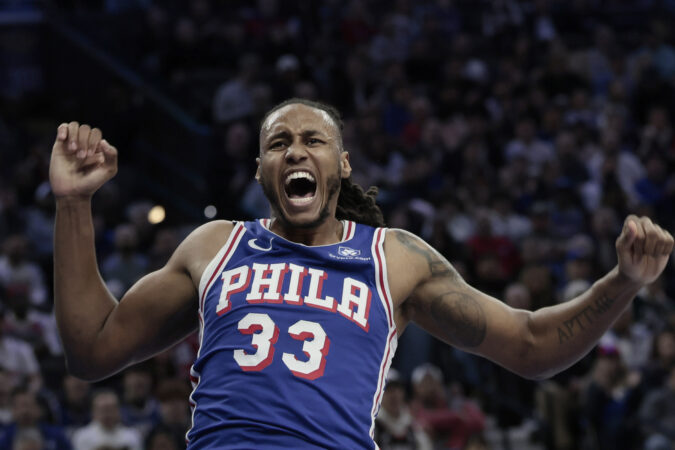
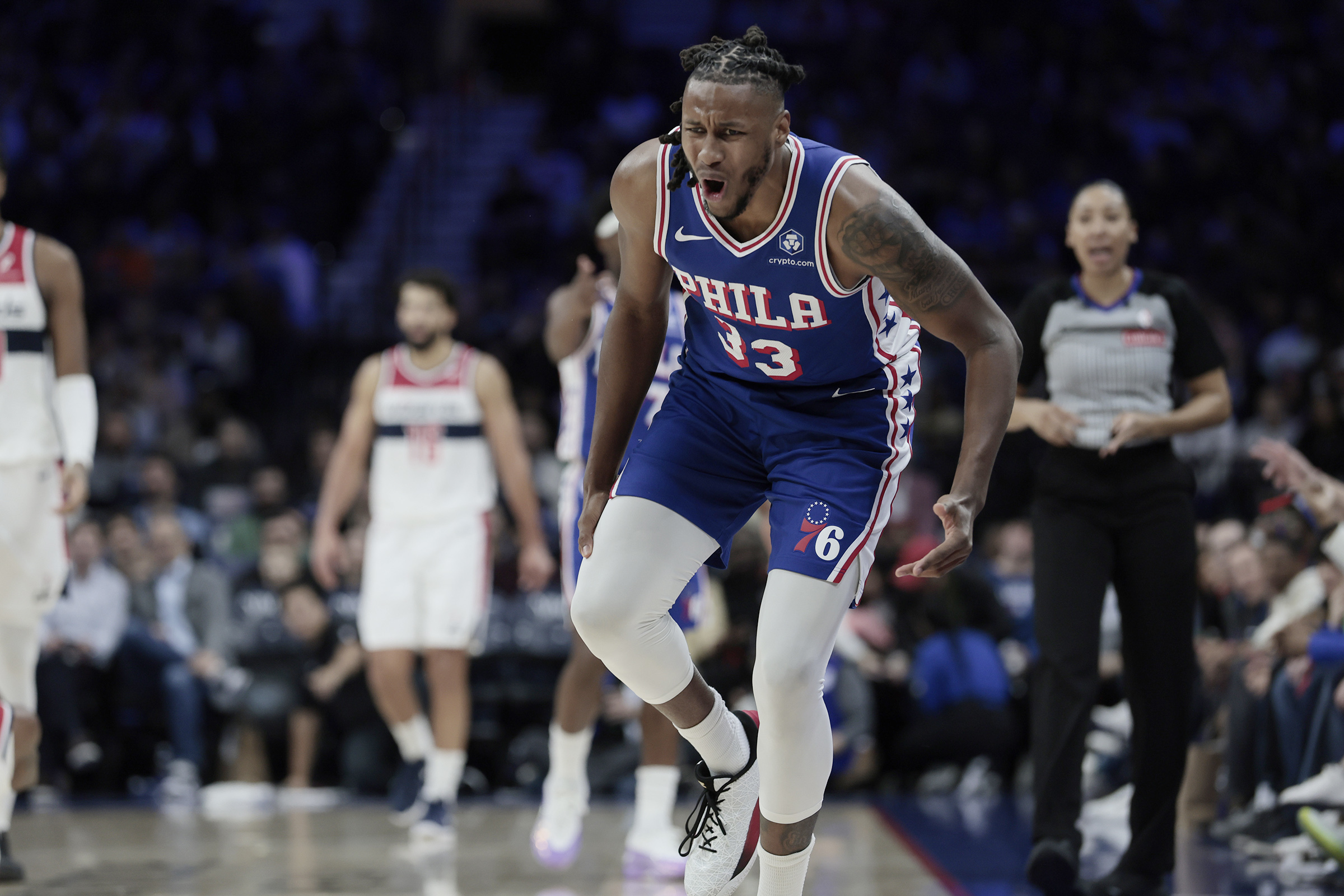
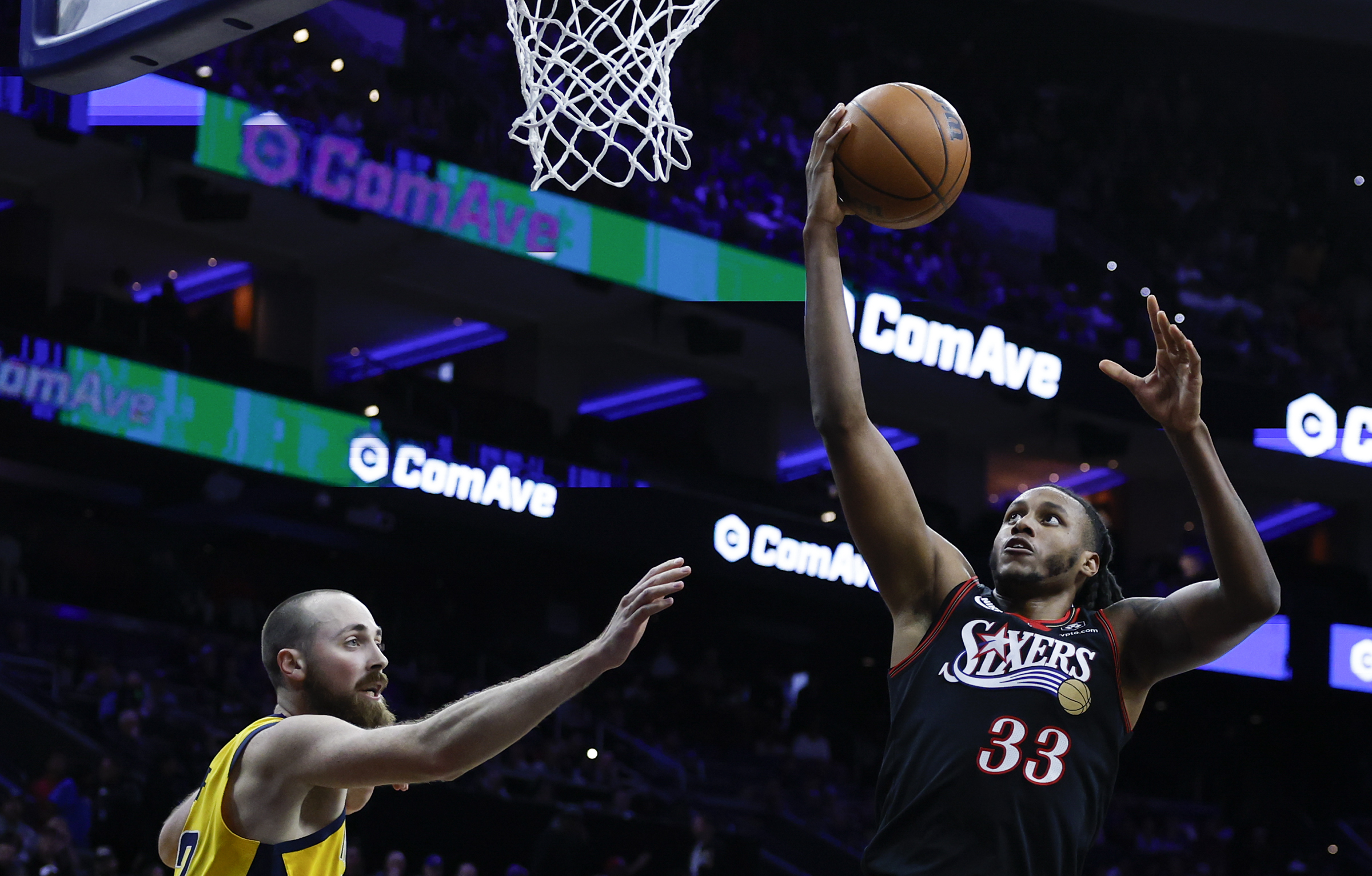
PORTLAND, Ore. — As Jabari Walker worked his way around the three-point arc during Monday’s pregame warmup, a member of the Trail Blazers’ cheer team exclaimed, “Jabari’s back!”
Yes and no.
Walker, the 76ers reserve forward who spent his first three seasons with the Trail Blazers, was unable to play in his former NBA home. He has exhausted the maximum 50 games for which he is allowed to be active for the Sixers while on a two-way contract, leaving him ineligible since Thursday’s loss at the Los Angeles Lakers.
The Sixers could have used Walker in their 135-118 blowout loss in Portland, when starting wing Paul George was suspended, starting forward Dominick Barlow was a late scratch because of illness, and the team was in its final matchup of a grueling five-game Western Conference road trip. And though president of basketball operations Daryl Morey on Friday did not commit to converting Walker to a standard contract, Walker remains optimistic that such a deal will be “figured out” soon.
“It’s a good problem to have,” Walker told The Inquirer from his locker before the Sixers’ victory at the Phoenix Suns on Saturday. “It puts pressure on the organization or whoever is making the decision, which is all you can do as a player. …
“The energy from management is all positive, and it’s just a matter of time, it feels like.”
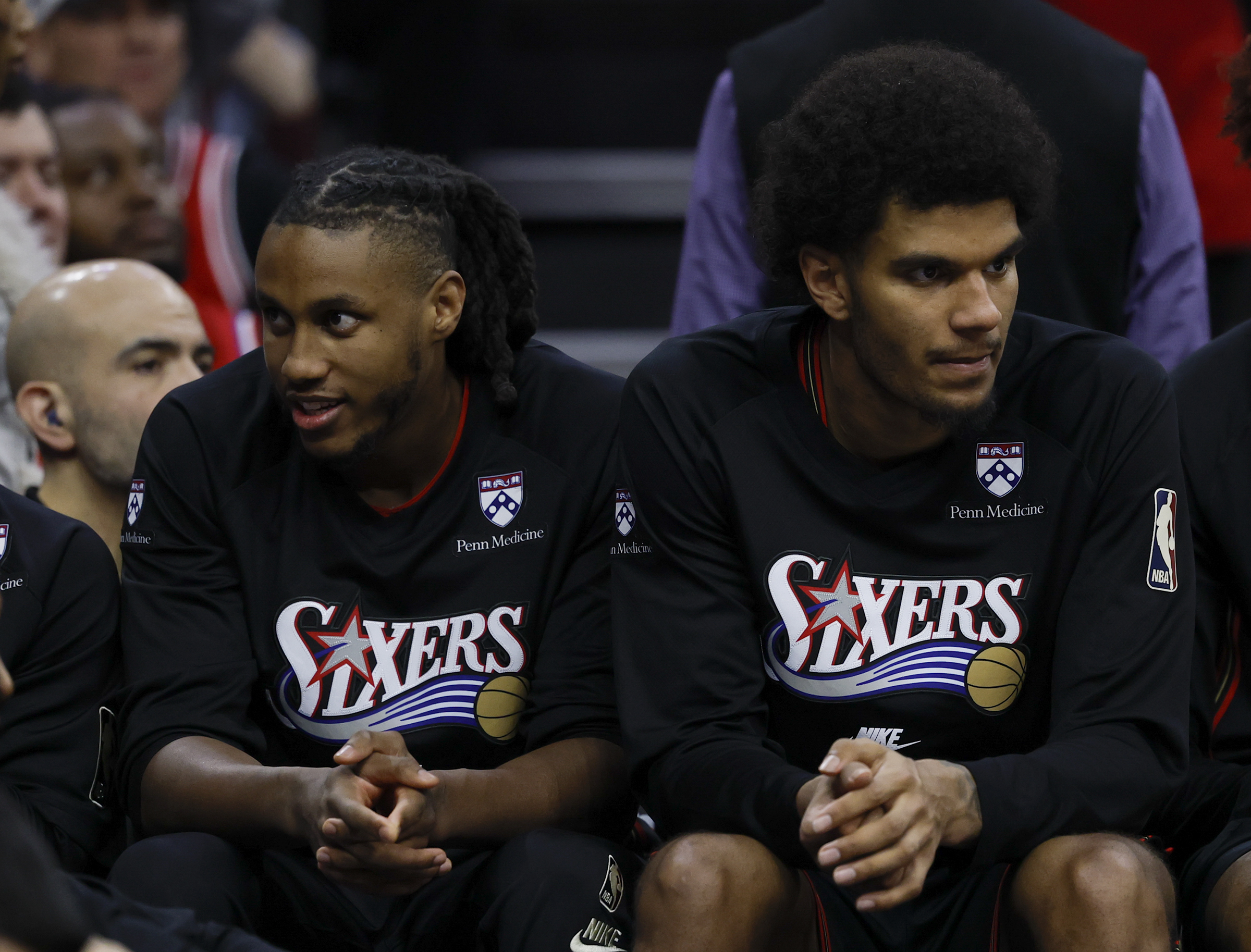
Jabari Walker (left, with Dominick Barlow) has contributed this season but has also had to find other ways to chip in via a bench role.
Sixers coach Nick Nurse also implied before Monday’s loss in Portland that he expects Walker to be converted “fairly soon … and [we will] get him back out there when all that stuff gets taken care of.”
Walker respectfully shrugged off periodic questions throughout the season about his dwindling NBA game days, as he is a rare two-way player who has consistently been in the Sixers’ rotation. Many players on this type of deal split time between the NBA and G League and/or regularly are inactive because they are less experienced and still developing.
Walker’s reality did not fully hit until he (and the Sixers) reached Game 50 last Tuesday at the Golden State Warriors. He received a phone call reminder that he was out of NBA eligibility but was assured of his value to the front office and “how important it is to try and keep me around,” he said.
“He’s been a tremendous next-man-up contributor, and we hope to have his services,” Morey said of Walker following the trade deadline. “But we do have to weigh optimal use of our scarce two roster spots and against the other opportunities, as well.
“So that will be written over time, whether or not we do that conversion.”
Jabari Walker is beloved by Sixers teammates and also brings energy when he cracks the lineup.
Walker has averaged 3.7 points and 3.1 rebounds in 12.1 minutes this season. He brings what teammate Kelly Oubre Jr. on Monday described as “unmatched” energy as a rebounder and physical defender, with spotty success as a three-point shooter (27% on 1.4 attempts per game). And Walker is well-liked inside the locker room, with Oubre sharing that teammates have nicknamed him “Mr. Rah-Rah” because he is “the sweetest dude. He’s friends with everybody.”
“Pretty reliable,” Nurse said Monday of Walker. “At this point, we know who he is and what he’s done for us. So it’s a guy we can kind of count on to do the same things every night.”
Added Walker: “I haven’t overstepped my role. I’ve been impactful. It’s validating to know that you play a solid role on a winning team.”
Walker has relished being immersed in the “completely different vibe” of a Sixers team vying for playoff positioning, with star teammates who he said have “an answer for every situation.” As the Sixers roster temporarily got healthier, however, Walker more often got squeezed out of the rotation.
Now, George still has 19 games remaining on his suspension after violating the NBA’s antidrug policy. His absence on Monday, plus Barlow’s illness and Walker’s ineligibility, thrust fellow two-way player MarJon Beauchamp into his first action as a Sixer.
Walker, though, is attempting to best maximize the time he is prohibited to play in NBA games. He has jumped into the five-on-five and three-on-three scrimmages with “low-minute” players on off days and can shoulder more strenuous weightlifting sessions. He is working on improving his lateral quickness on defense and becoming “more bouncy overall.” He also has focused on the fluidity of his three-point shot and “not overcomplicating it” while maintaining the confidence to launch when open.
Jabari Walker is averaging 3.7 points this season.
And Walker has taken mental notes on where his presence could have been felt in the three games he has missed. Watching Thursday’s loss at the Lakers, when the Sixers surrendered a 14-point second-half lead, was rough because he believed his playing style could have slowed the Lakers’ momentum. Walker thinks the Sixers staff feels similarly, which he recognizes is better than those coaches concluding that he “really would not have helped” in such a game.
After Monday’s matchup between Walker’s current and former teams, he greeted Portland All-Star Deni Avdija with a quick dance move and then chatted with Jerami Grant near midcourt. A few minutes later, Walker was spotted catching up with a Trail Blazers staffer in the hallway outside the visitors’ locker room. Walker then continued to linger with Avdija near the Moda Center’s loading dock, from where the Sixers team buses eventually departed for the airport.
Perhaps all of those reconnections were enough to create a fulfilling NBA homecoming. But Walker could not boost the shorthanded Sixers on the floor Monday because he is still waiting for his contract to be converted.
“It’s ‘free Bari’ until he’s back with us,” Oubre said. “Can’t wait for him to suit up and get out there.”
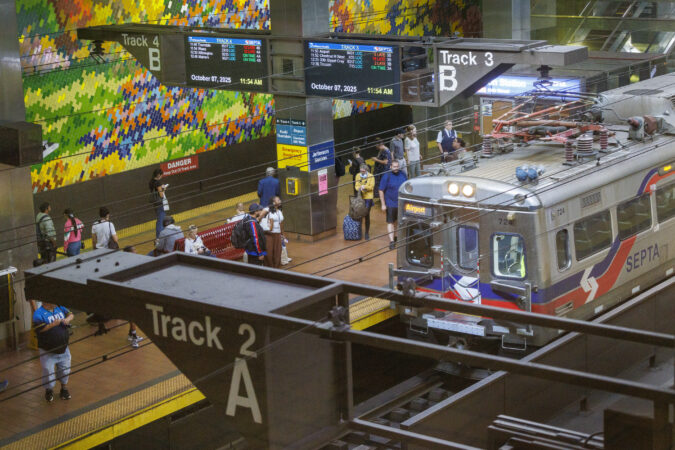
A burst water pipe caused SEPTA to close a section of Jefferson Station in Center Cityon Monday night, but Regional Rail trains were still making stops there for commuters, an agency spokesperson said.
The water started flooding into Section A of the station around 6 p.m., and the water was shut off shortly after 7 p.m., said SEPTA spokesperson Andrew Busch.
Section A closed Monday night for cleanup but opened in time for the morning rush Tuesday, Busch said.
All trains were still running with boardings and exits at other platforms, Busch said.
“We believe the pipe burst was likely due to the change in temperature,” Busch said in an email Monday. “We also had one at the Allegheny subway station today, and a few last week on the days it got above freezing.”
Philadelphia sports fans will soon be presented with a first — a chance to actually save money during the streaming wars.
Beginning this week, YouTube TV is rolling out a sports-specific plan featuring channels with major sports rights that will cost $64.99 a month, $18 less than what it currently charges for a subscription.
New subscribers can nab the deal for $54.99 a month for a year.
The plan will include all the major broadcast networks — ABC, NBC, CBS, and Fox — and cable channels that hold sports rights, including ESPN’s networks (and full access to ESPN Unlimited beginning in the fall), FS1, TNT, TBS, TruTV (for the NCAA men’s basketball tournament), CBS Sports Network, Golf Channel, and USA Network, the U.S. home of Premier League games.
NBC Sports Philadelphia also will be included in the slimmed-down sports bundle for those who live in the Philadelphia TV market, a YouTube spokesperson confirmed. So will NBC’s other three regional sports networks in their respective areas: Boston, the San Francisco Bay Area, and Northern California. NBC Sports Philadelphia also still will be available to stream without a cable subscription through Peacock and MLB.TV.
YouTubeTV’s sports bundle will also include league-centric channels like the NFL Network (now owned by ESPN), the Big Ten Network, and NBA TV, which this season basically just airs a whip-around show called The Association and a handful of NBA games.
While the plan gets sports fans the bulk of NFL, MLB, NBA, and NHL games, there are a few omissions. Amazon’s Prime Video, which features Thursday Night Football, weekly NBA games, and playoff games in both leagues, isn’t included. It also doesn’t include the handful of NFL and MLB games streamed by Netflix, or Apple TV+’s Friday Night Baseball or MLS games.
Another notable omission is MLB Network, which hasn’t been available on YouTube TV since 2023 because of a carriage dispute.
YouTube TV is also rolling out slimmed-down subscription offerings for entertainment fans ($54.99 a month), a sports-plus-news package ($71.99 a month), and a family-focused plan ($69.99 a month).
Why now? Growth. YouTubeTV is the third-largest cable TV provider in the country and growing, with over 10 million subscribers, trailing just Charter (12.6 million) and Comcast (11.3 million). While Comcast has been shedding video customers, Charter has been able to stem its losses by offering its own skinny bundle, something fans and non-fans alike have been complaining about for years.
YouTube, the free older brother of YouTube TV, hasn’t been quiet about wanting to stream more NFL games in the near future. It could get its wish as soon as next season.
As part of its purchase of NFL Media and the NFL Network, ESPN agreed to give the league back the TV rights to four games. Those will now head to the marketplace, where YouTube is expected be among the bidders. It’s no surprise that YouTube CEO Neal Mohan was among the big names sitting with NFL commissioner Roger Goodell in his Super Bowl box on Sunday at Levi’s Stadium.
“We really value our partnership with the NFL,” Christian Oestlien, YouTube’s vice president of subscription product, told Bloomberg.com in a recent interview. “Everything we’ve done with them so far has been really successful. And so we’re very excited about the idea that we could be doing more with them.”
YouTube’s biggest competitor for those four games likely will be Netflix, which is entering the last year of its three-season deal to stream NFL Christmas games. Ted Sarandos, Netflix’s co-CEO, was also in Goodell’s booth.
YouTube streamed its first NFL game last season, the Week 1 matchup between the Kansas City Chiefs and Los Angeles Chargers played in São Paulo, Brazil. The game drew 17.3 million global viewers, including 16.2 million in the United States, a big number boosting the streamer’s chances of landing more games.
More sports media news
ESPN will broadcast next year’s Super Bowl in Los Angeles, and you’re going to hear a lot over the next year about it being the network’s first. But it has aired on sister network, ABC. As pointed out by Sports Media Watch’s Jon Lewis, ABC has broadcast three Super Bowls since being purchased by ESPN’s parent company, Disney, in 1996 — in 2000, 2003, and 2006, with coverage featuring Chris Berman and a number of ESPN personalities. The Super Bowl also has aired in Spanish on ESPN Deportes.
Happy trails to the laptop of The Athletic’s Tony Jones, which was destroyed after it was hit by a T-shirt shot by a cannon during the fourth quarter of Sunday’s Super Bowl. Jones said the rolled-up T-shirt hit his computer, which then hit him in the face, cracking the screen and preventing him from filing a story.
NBC will air MLB games this season for the first time since 1989 and is filling out its broadcast bench, adding studio analysts (and recent MLBers) Clayton Kershaw, Anthony Rizzo, and Joey Votto. You might not see much of them during the regular season, but all three will be part of NBC’s coverage of the wild-card series, which it’s taking over from ESPN.
Super Bowl viewership numbers will be out later Tuesday. If you care about such things and have seen numbers on social media, ignore them. The Eagles’ blowout win last year against the Chiefs averaged over 127 million viewers, peaking with Kendrick Lamar’s halftime show, with over 133 million people tuning in. We’ll see how Bad Bunny and Sunday’s boring Super Bowl can match that.
In many cultures, Chinese New Year, which falls on Feb. 17 this year, is a holiday spent at home. It’s a time to get together with one’s family, preparing auspicious dishes that represent wealth, like spring rolls that mimic the appearance of gold bars and dumplings that are shaped like ancient gold ingots.
Here in Philadelphia, it is the perfect opportunity to get out and about within the wider Pan-Asian community. Several restaurants are joining forces to celebrate the Year of the Horse, collaborating on menus that combine different New Year’s traditions, while others have special one-offs and time-limited offerings to mark the event.
Philly observes a truly global version of Chinese New Year, whichissometimes called the Spring Festival, celebrating the end of winter and onset of spring. Chinese New Year is also known more inclusively in the U.S. as Lunar New Year, though not every East Asian or Southeast Asian community celebrates the New Year at the same time (or for the same length of time). For instance, Khmer New Year occurs between April 14 and 16 this year, and Tibetan New Year, or Losar, is Feb. 18. In Vietnam, Tết is celebrated for several weeks (longer than in most Chinese cultures).
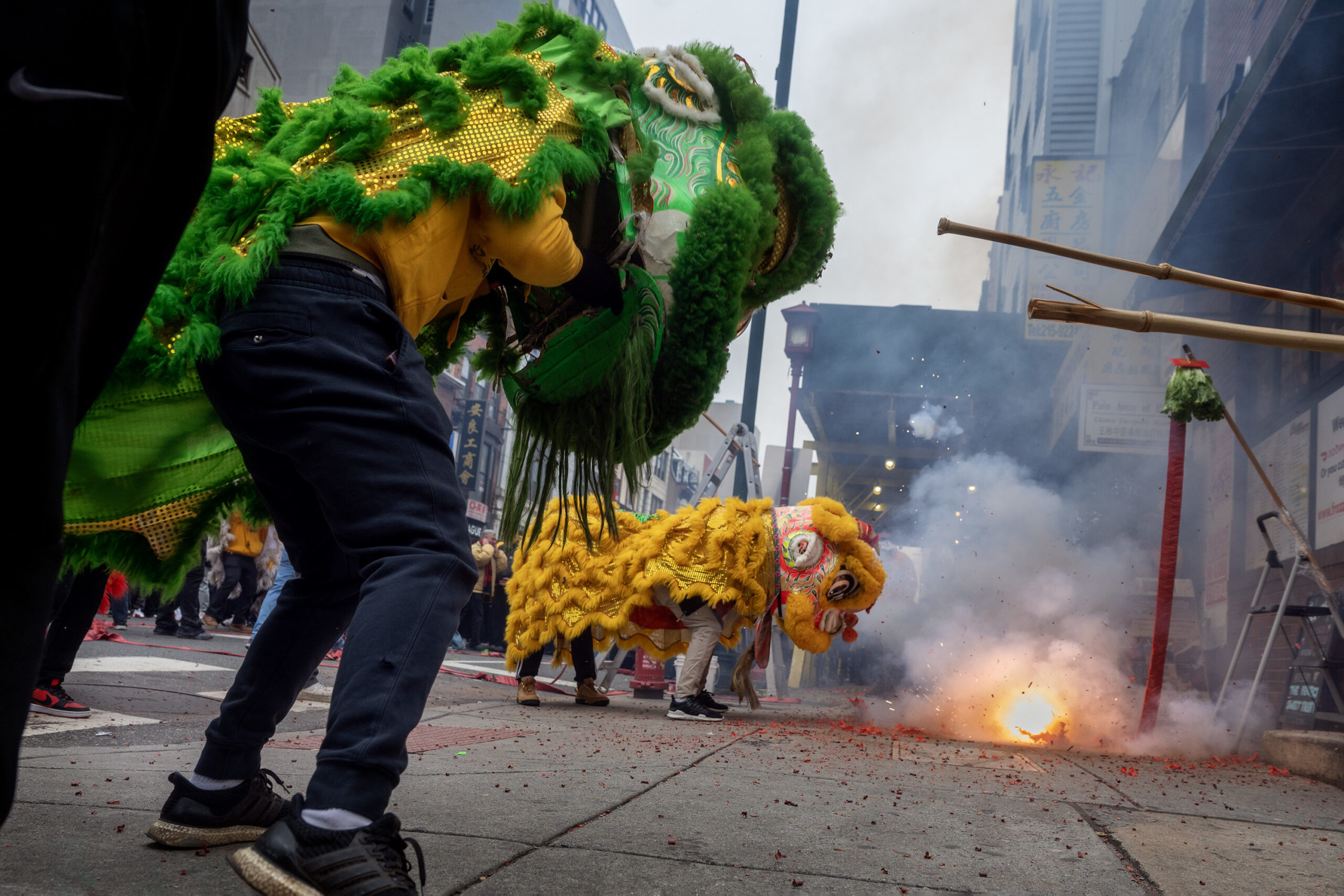
The Year of the Snake is celebrated in Chinatown Sunday, Feb. 2, 2025, bringing in the Lunar New Year with a parade, lion dancers and fireworks.
If you’re celebrating at home, Chinatown’s grocery store shelves are well-stocked with essential New Year foods like seeds and nuts for good beginnings and plants that are considered lucky, like mandarin trees and bundles of willow branches. Vendors are now selling red envelopes for lai see, or lucky money, and red scrolls denoting traditional well wishes on most Chinatown street corners. Expect some restaurants to be closed for the holiday.
Here are some noteworthy opportunities to celebrate.
This list may be updated as new information becomes available.
Dinner series and collaborations
Lunar New Year dishes for a special collaboration dinner between Gabriella’s Vietnam and Ember and Ash.
Ember & Ash and Gabriella’s Vietnam’s “Smoke meets Saigon”
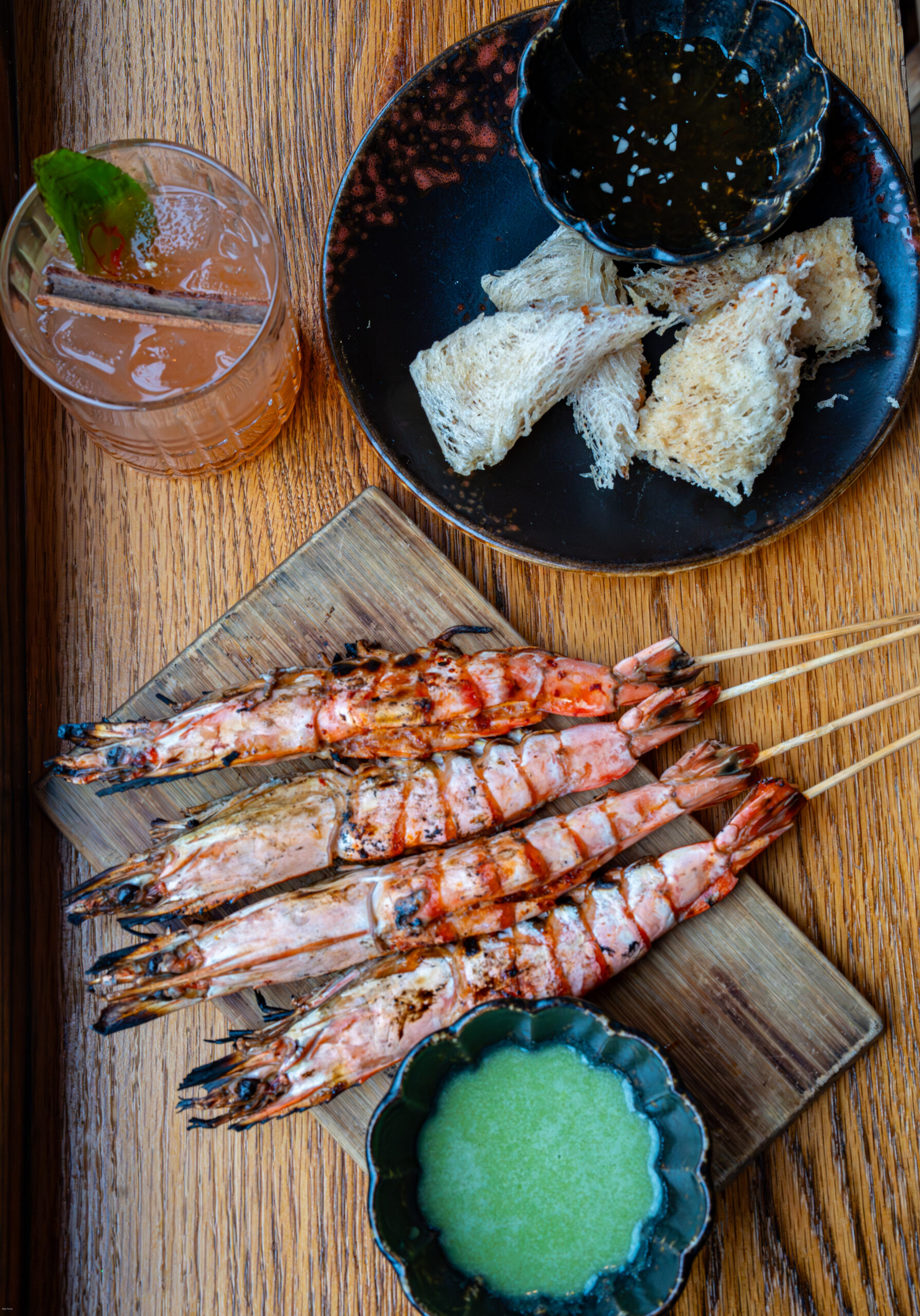
Scott and Lulu Calhoun, the owners of Passyunk’s Ember & Ash, are hosting their fifth annual Lunar New Year celebration, this time welcoming Gabriella’s Vietnam chef Thanh Nguyen. There will be Vietnamese street food-inspired bites to start, then meat and fish cooked over live fire, along with noodle dishes (denoting long life) and rice and vegetable sides.
Dinner is $75 per person (not inclusive of tax and a 20% auto-gratuity) and will be served family-style starting at 5 p.m. in staggered seatings throughout the evening. Reservations, available on Resy, are strongly encouraged.
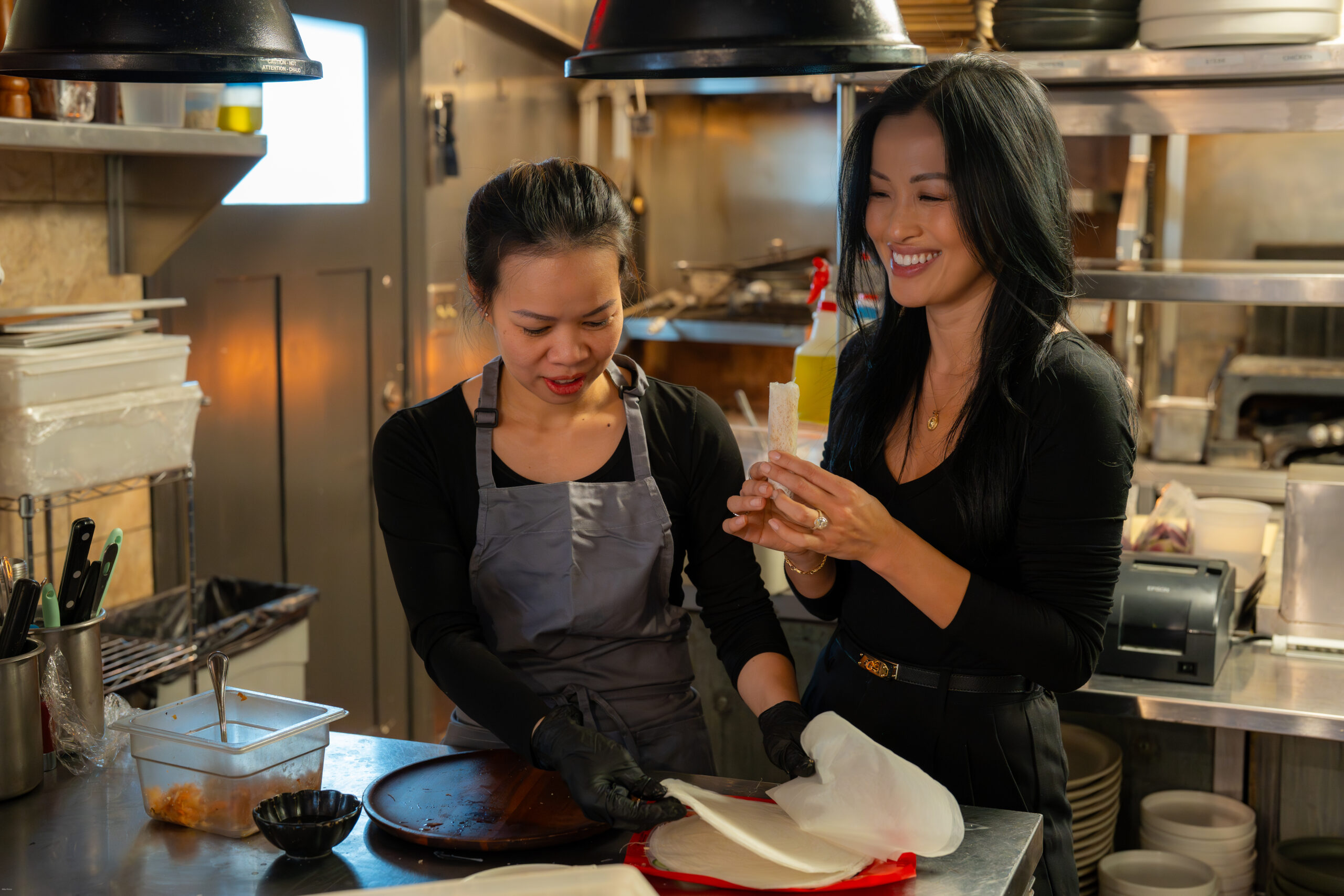
Thanh Nguyen of Gabriella’s Vietnam and Lulu Calhoun of Ember and Ash test Lunar New Year recipes.
The Muhibbah dinner at BLDG39 at the Arsenal
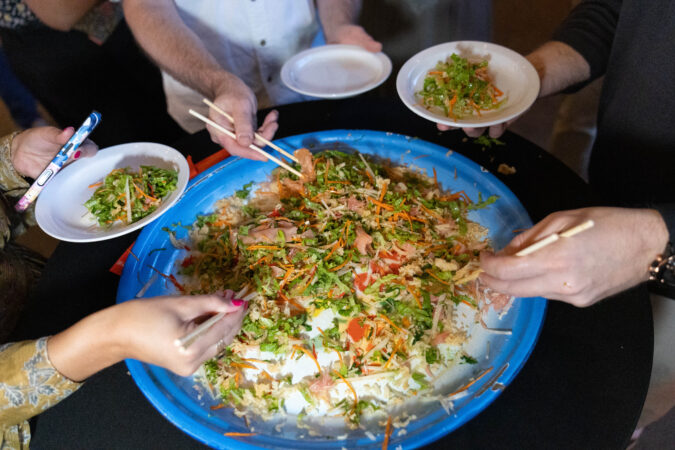
The Muhibbah Dinner series was started by chef Ange Branca of Kampar in 2017 to celebrate diversity and raise money for immigrant and refugee nonprofits in Philadelphia. Its next iteration is on Feb. 16. While it isn’t strictly a New Year’s celebration, dinner will commence with a prosperity yee sang salad, which diners traditionally toss in the air with chopsticks.
Dinner is BYOB and tickets are $170 per person. Sales will benefit Puentes de Salud, a nonprofit that promotes the health and wellness of Philadelphia’s Latinx immigrant population. Tickets are available at muhibbahdinners.org/tickets.
Feb. 16, BLDG39 at the Arsenal, 5401 Tacony St., 215-770-6698, bldg39arsenal.com
Com.unity’s Tết collaboration dinner at Yakitori Boy
Ba Le Bakery, Cafe Nhan, Le Viet, Miss Saigon, and more are teaming up for Com.unity’s third annual Tết dinner, hosted this year at Yakitori Boy in Chinatown. After dinner, guests can walk over to the Lunar New Year Parade presented by the Chinatown PCDC and the Philadelphia Suns. Áo dài, or traditional Vietnamese outfits, and other formal garment are strongly encouraged.
There will be one 60-seat seating, with doors opening at 6:30 p.m. A cash bar will be available for the LNY cocktail menu from the Yakitori Boy team. Dietary restrictions cannot be accommodated. Dinner tickets are $108 per person and can be booked via a link accessed through Com.unity’s Instagram profile.
Feb. 16, Yakitori Boy, 211 N. 11th St., 215-923-8088, yakitoriboy.com
Chicken and ginger wontons from The Wonton Project by Ellen Yin.
Hot Pot at the Bread Room
Ellen Yin’s the Wonton Project will host Lunar New Year Hot Pot parties at the Bread Room for groups of six to eight ($125 per person, excluding tax and gratuity). The parties are inspired by an event the Bread Room hosted with Natasha Pickowicz, the author of the cookbook Everybody Hot Pot.
Diners will cook Lunar New Year menu staples together, such as noodles for longevity, Shanghai rice cakes, and dumplings for prosperity. There will also be whole fish on the menu and spring rolls. It will be available to book on OpenTable.
Feb. 17-21, the Bread Room, 834 Chestnut St., Suite 103, 215-419-5820, thebreadroomphl.com
Buddakan’s Lunar New Year brunch
Stephen Starr’s Buddakan will be serving a tasting menu of modern interpretations of traditional Chinese New Year dishes like trotter-stuffed spring rolls, Dungeness crab longevity noodles, whole fish with black bean sauce, as well as a horse-themed dessert (for the Year of the Horse). Brunch runs from 11 a.m. to 2 p.m. Seats are $75 per person (excluding tax or gratuity), with a four-person minimum for reservations. Reservations can be made on OpenTable. The Lunar New Year menu will also be available a la carte for parties of any size.
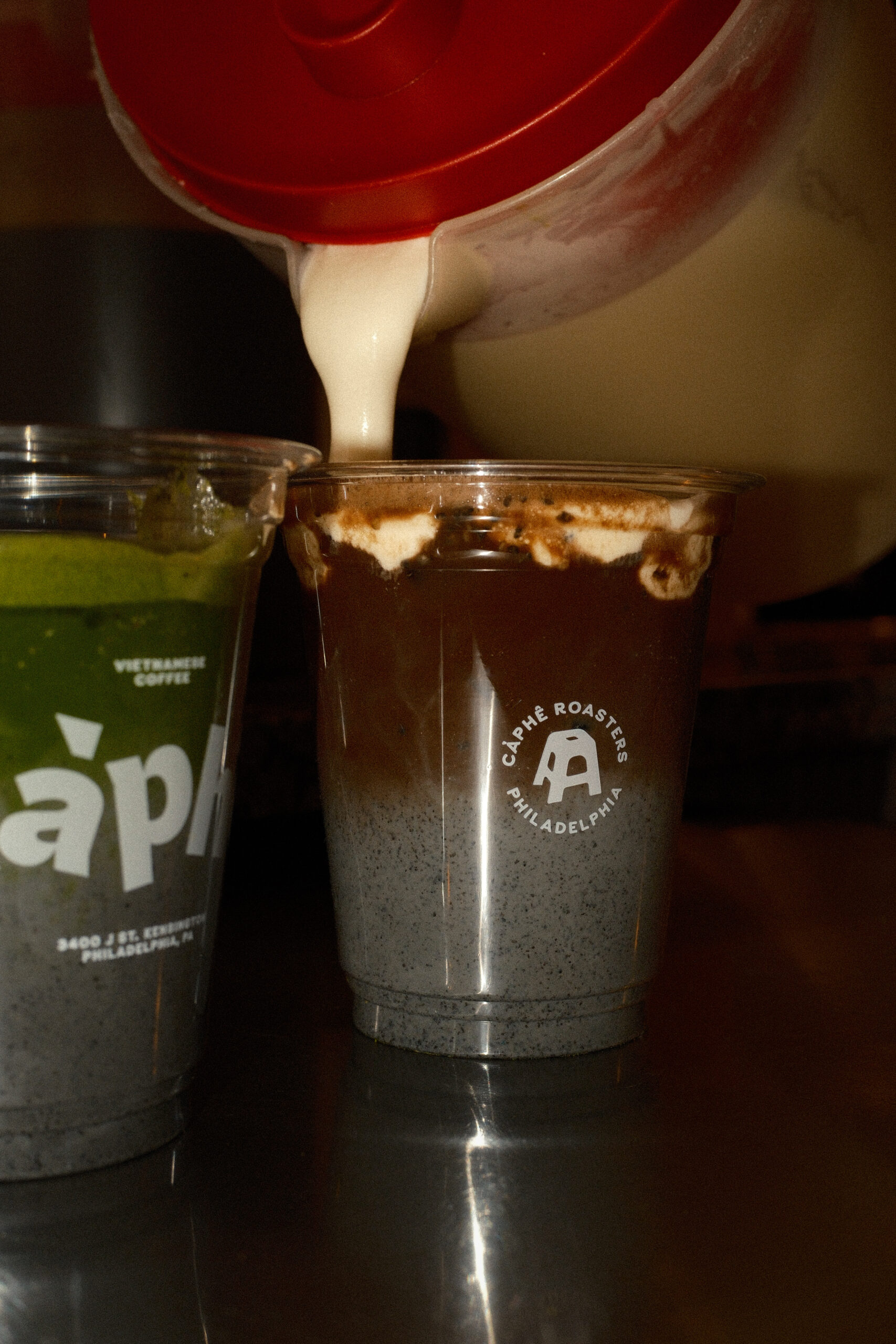
The Kensington-based Vietnamese coffee roaster and cafe will serve two specialty drinks based on Tết treats: a black sesame hojicha, consisting of black sesame paste, hojicha (roasted green tea), milk of choice, condensed milk, and topped with salted foam. “This drink reminds us of kẹo mè đen, which is a black sesame taffy usually found in the traditional Vietnamese Mứt Tết tray (the tray of dried fruits and candies),” said owner Thu Pham. They’re also making a black sesame banana matcha (black sesame paste, matcha, milk of choice, condensed milk, and topped with banana foam), reminiscent of kẹo chuối, a banana taffy also found in the traditional Vietnamese Mứt Tết candy tray.
Black sesame banana matcha and black sesame hojicha from Càphê Roasters for Lunar New Year 2026.
Luk Fu at Live! Casino
Luk Fu is serving an a la carte menu of very traditional Chinese New Year dishes such as braised pork trotters ($38), whole pompano ($48), and a New Year’s stir fry with spring vegetables and auspicious ingredients like snow peas, wood ear mushrooms, and sweet lapchong, or Chinese sausage ($28). Reservations are available on OpenTable.
At this Washington Avenue institution, you can pick up Tết essentials like the cylindrical bánh tét ($20) and square-shaped bánh chưng ($25), savory rice cakes made with mung beans and pork belly and wrapped in banana leaves. Takeout only. Order online.
Available now until Feb. 18 (or until sell-out), Ba Le Bakery, 606 Washington Ave., 215-389-4350, balebakery.com
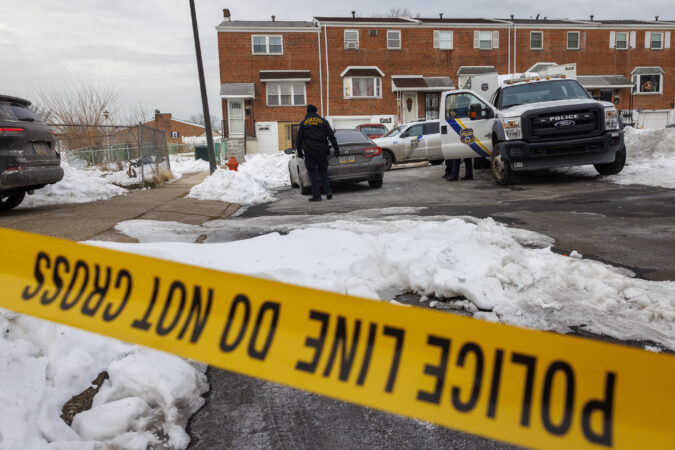
An off-duty sheriff’s officer shot a 17-year-old in Southwest Philadelphia early Tuesday morning.
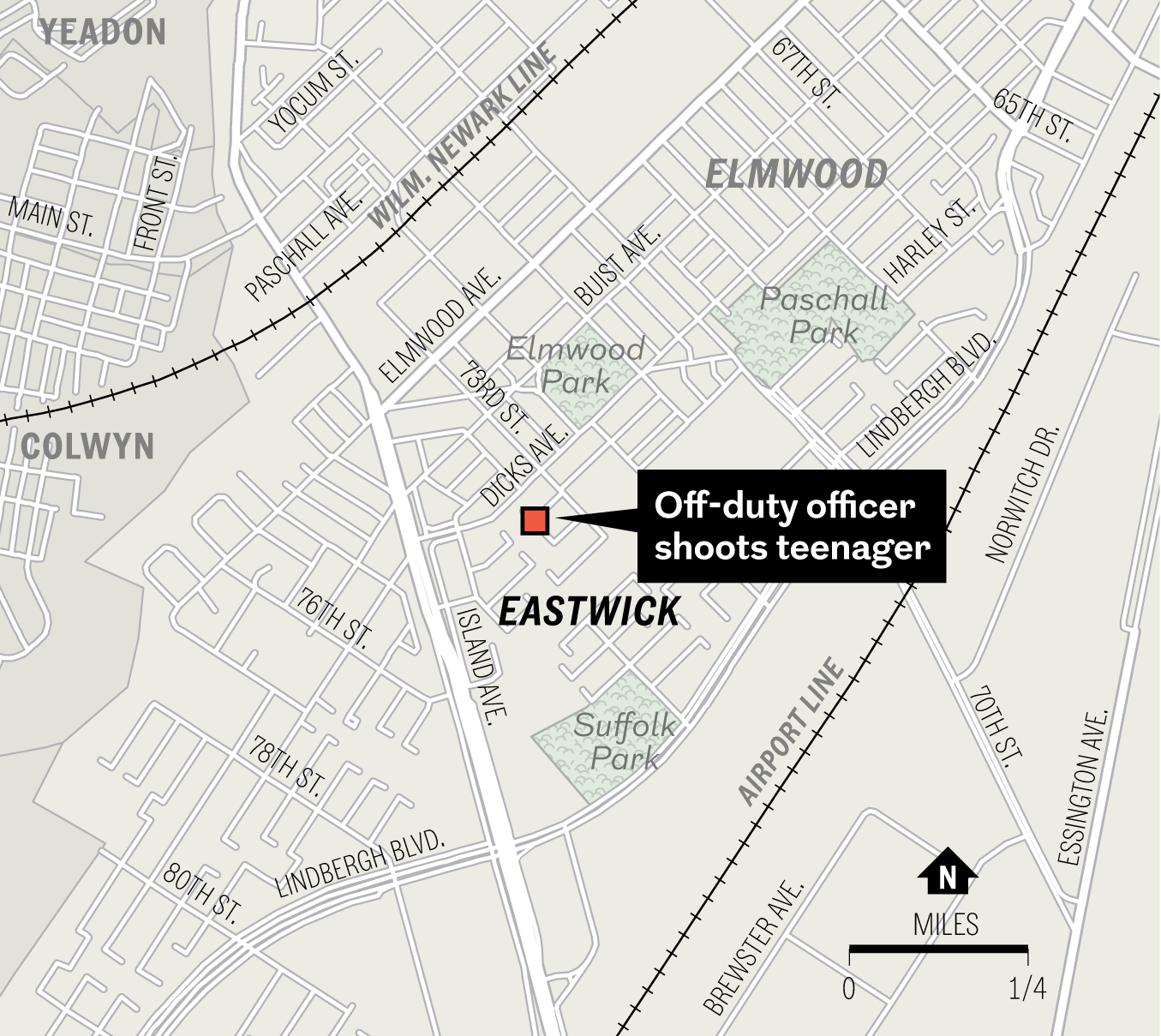
Philadelphia Police Chief Inspector Scott Small told reporters the off-duty officer saw the teenager,who has not been identified, breaking into his private vehicle around 3:32 a.m. on the 7300 block of Bunting Place.
“For reasons unknown at this time,” the officer, and a member of the officer’s family, fired their guns at the teen inside the car, Small told reporters.
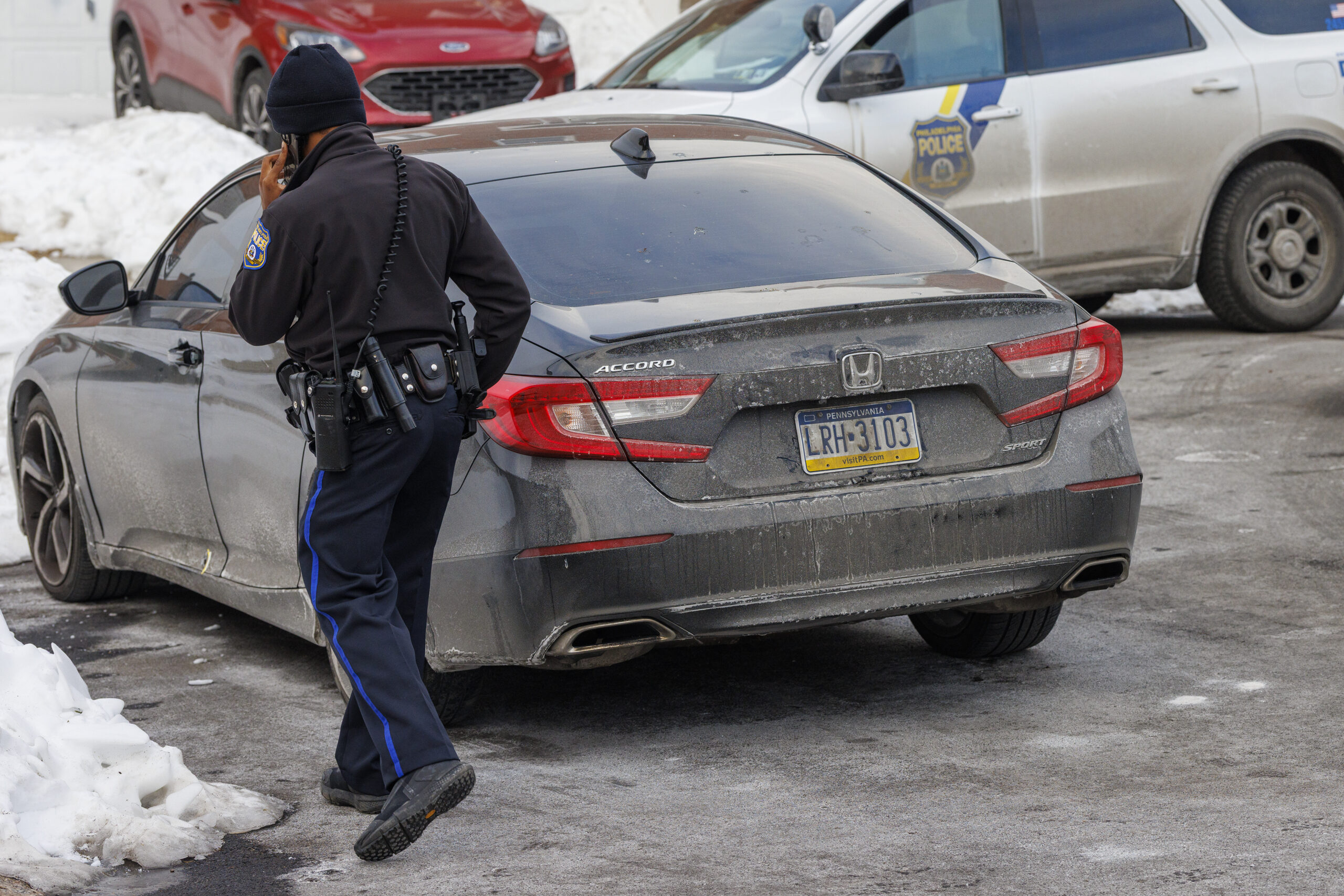
Philadelphia police crime scene unit gathers evidence at shooting by off-duty sheriff at 7300 block of Bunting Place, early Tuesday, Feb. 10, 2026. An off-duty Philadelphia sheriff’s deputy and a family member shot a teen, allegedly trying to steal their car, a Honda Accord.
Four shots total were fired, according to Small, before the teen fled the scene.
Around 20 minutes later,a teenager was transported by a private vehicle to Presbyterian Medical Center, where the officer involved in the shooting identified the wounded teen. The teenager was placed in stable condition.
Map of where an off-duty sheriff’s officer shot a 17-year-old in Southwest Philadelphia on Feb. 10.
Small noted that the teen was in possession of commonly used car theft tools, like a screwdriver, extra key fob, and other items. He told reporters at the scene that investigators found four spent shell casings and newly broken locks on the car’s doors.
The teenager was placed in custody at the hospital with charges pending.
The off-duty sheriff’s officer and their family member are uninjured and cooperating with the investigation. The family member involved in the incident had a license to carry the firearm used in the shooting, Small said.
Many Americans were shocked by the killings of Renee Good and Alex Pretti at the hands of federal immigration agents. Many more were repulsed by the federal government’s lack of transparency, victim blaming, and obfuscation of the facts regarding the shootings.
But as border residents can tell you, what’s playing out in places like Chicago and Minneapolis is, in many ways, nothing new.
Although the administration has taken that lack of accountability to a nauseating low — interfering in federal and local investigations — impunity around immigration enforcement did not begin when Donald Trump took office.
Since 2010, more than 300 people have been killed in incidents involving on-duty Border Patrol agents, according to a tally kept by the Southern Border Communities Coalition. Out of that number, 74 have been killed by agents using force.
Those figures are likely an undercount, as the agency has a history of failing to report deaths its agents are involved in. It also consistently fails to seriously discipline agents who face abuse complaints. A 2017 report by the American Immigration Council found a host of problems with the complaint system and investigation process, resulting in little accountability.
Focusing on the use-of-force killings, I am not saying that all 74 were unjustified. As Gil Kerlikowske, who led U.S. Customs and Border Protection from 2014 to 2017, told me, agents often work by themselves in rural border stretches and can run into dangerous smugglers.
But as Kerlikowske also told me, when he arrived at CBP, the agency had an outdated use-of-force policy that wasn’t available publicly, had no internal affairs division, and the only tools available to agents were firearms.
“They’ve always had a culture that’s distinct, you know, going back to their early days,” he said. “They did have that kind of Wild West kind of culture.”
That’s putting it mildly. While Kerlikowske instituted a series of important reforms around use of force, which he said his successors continued and improved upon, deep lasting change is slow and difficult.
As a 2021 report detailed, the agency “has been steeped in institutional racism and has committed violent acts with near impunity” since its creation in 1924. Lest you think that attitude got left behind last century, in 2019, a Facebook group that included around 9,500 current and former agents was found to be littered with racism and misogyny.
While I’ve known Border Patrol agents who zealously enforce the law while never losing sight of their humanity, who would hand over their lunch to a hungry migrant they just detained, current and former CBP agents were involved in the killings in Minnesota.
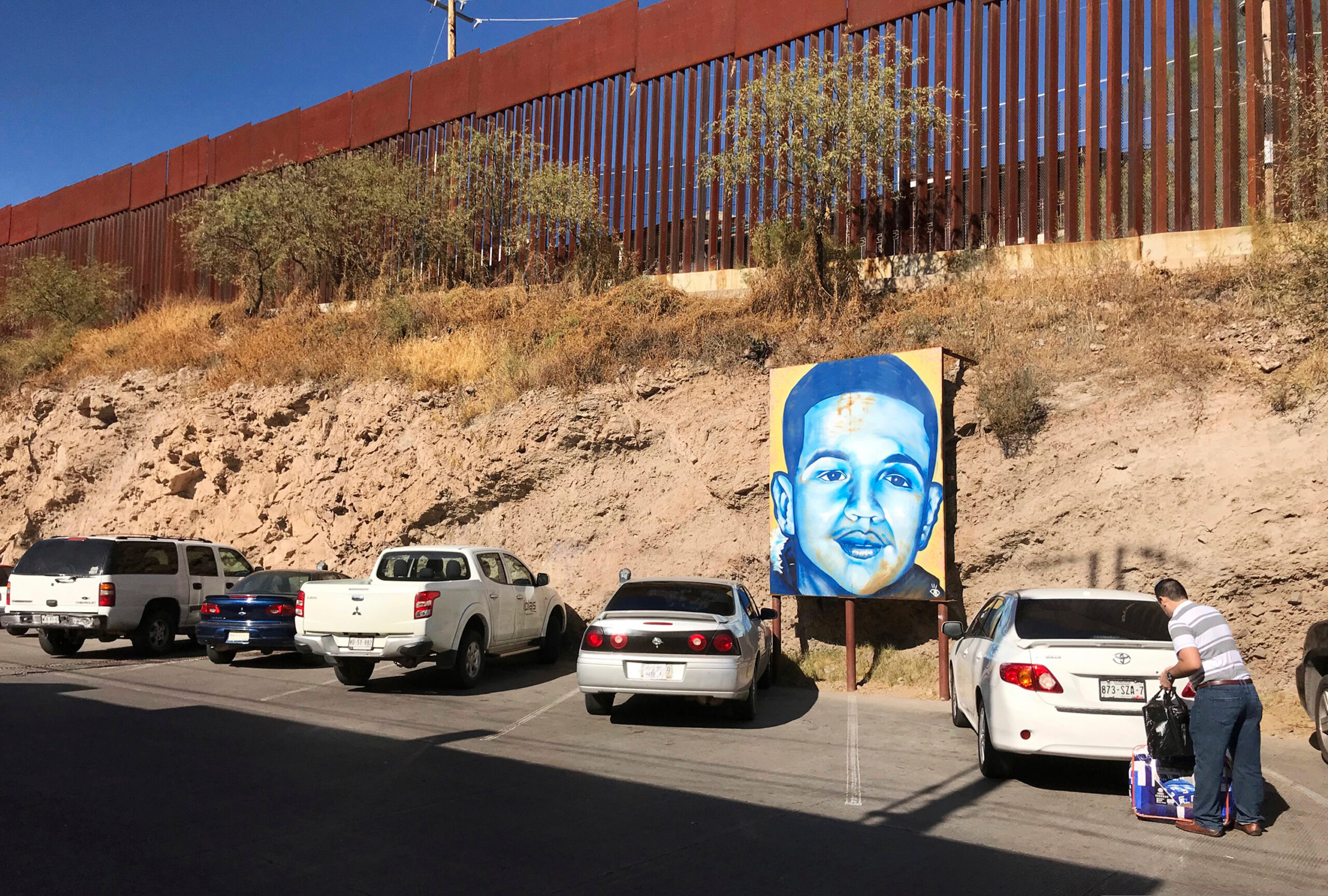
This file photo taken in 2017 shows the boundary in Nogales, Mexico, with the United States and a poster of Juan Antonio Elena Rodriguez, a teen who was shot and killed across the line by a Border Patrol agent in 2012.
The men who shot Pretti were identified by ProPublica as Border Patrol agent Jesus Ochoa and CBP officer Raymundo Gutierrez. Jonathan Ross, the U.S. Immigration and Customs Enforcement agent who killed Good, began his law enforcement career in 2007 as part of the Border Patrol.
I hate to be cynical, but if past is prologue, President Trump and administration officials needn’t have bothered putting their thumb on the scale after the shootings. The few times agents are held to account, the result is rarely justice.
In the last 35 years, only three Border Patrol agents have been charged and tried for killing someone in the line of duty. In all three cases, juries failed to convict.
Michael Elmer was charged with second-degree murder after the 1992 shooting of Dario Miranda Valenzuela in Nogales, Ariz. Elmer fired 12 shots, hitting Valenzuela twice in the back. He then moved the body and didn’t immediately report the incident, according to the Arizona Daily Star. He was acquitted.
Nicholas Corbett was charged with murder for killing Francisco Javier Domingo Rivera near Douglas, Ariz., in 2007. The agent’s account did not match up with eyewitness testimony or the physical evidence. The Cochise County Attorney’s Office eventually declined to prosecute after two trials ended in hung juries.
Lonnie Swartz was tried twice, once for second-degree murder and later for involuntary manslaughter, in the 2012 shooting death of 16-year-old Jose Antonio Elena Rodriguez. I was an opinion writer at the Daily Star in Tucson, Ariz., when this case went to trial in 2018. The facts were undeniable: Swartz shot across the Nogales border fence into Mexico a total of 16 times. He stopped and reloaded. He hit the unarmed Elena Rodriguez eight times in the back and twice in the head from an elevation of around 14 feet.
Taken in total, the message that federal immigration agents keep receiving — from the government and from juries — is that they can continue to operate with impunity.
Those who have long advocated for reform in these agencies say perhaps things will begin to change as a result of the deaths of Good and Pretti because they were white Americans. But this isn’t about race or immigration status, it’s about unchecked power.
Kerlikowske, at least, is optimistic about what happens once Trump is out of the White House.
“The Border Patrol isn’t trained to work in cities. That’s not why they hired on. They didn’t hire on to go work in Chicago or Minneapolis,” he said. “I think the vast majority of these folks will be happy to be back doing what they were doing.”
Let’s hope that when they do, they do so with a renewed commitment by the government to transparency and accountability. Otherwise, it may be back to business as usual.