On Wednesday, in a social media post addressed to Philadelphia, longtime Eagles offensive line coach Jeff Stoutland announced his decision to leave the organization after 13 seasons.
“I’ve decided my time coaching with the Eagles has come to an end,” he wrote. “When I arrived here in 2013, I did not know what I was signing up for. I quickly learned what this city demands. But more importantly, what it gives back. The past 13 years have been the great privilege of my coaching career. I didn’t just work here, I became one of you. Stout Out.”
At least one Eagles offensive lineman was named to the Pro Bowl in every year of Stoutland’s tenure with the franchise. Two Eagles running backs led the league in rushing during the same span: LeSean McCoy in 2013 and Saquon Barkley in 2024.
The news comes a week after The Inquirer first reported that Stoutland’s role as the team’s run game coordinator waned during the season as the Eagles shifted their game-planning responsibilities. Stoutland, as reported by ESPN, did not desire to keep the role after the in-season change.
With the news of the two-time Super Bowl champion assistant relinquishing his coaching role, many fans have taken to social media to thank Stoutland. Others have looked to display their dismay …
I seriously wish stoutland got one more ring or NFC championship. The amount of talent he coached up will be remembered. Thank you for giving us some of the best OL play 🫶🏼 #stoutland
Leaving no time wasted, some fans have begun to blame Stoutland’s departure on coach Nick Sirianni’s reported takeover of run coordinator duties. Stoutland’s agent, Alan Herman, told ESPN that Stoutland was frustrated with the change and felt his input was being ignored.
The news of Stoutland’s decision was coupled with uncertainty around defensive coordinator Vic Fangio’s retirement. The Inquirer has since reported that Fangio will be staying with the Eagles through 2026, but that did not stop onlookers from connecting the two coaching developments to what they perceived as a larger cultural problem.
Eagles might as well fire Sirianni now. Stoutland suddenly leaving and Fangio seriously considering retirement. That's two elite coaches that don't want to work with you
Vic Fangio and Jeff Stoutland. 2 of the most respected coaches in the NFL. Both wanted to leave like the NovaCare complex was on fire. That should tell you all you need to know. pic.twitter.com/OKgXkVgodW
Others have called on fans to stop the blame game and cease the “conspiracy theories.” Meanwhile, some have seen the departure as a positive for the franchise, as it indicated that new offensive coordinator Sean Mannion would be taking more control over the offense.
Stoutland leaving is a big loss, but the overreaction and conspiracy theories about why he's leaving is nauseating.
Idk this seems healthy and doesn’t create panic for me. If we want real change on offense then Mannion needs space to implement his scheme (pass game + run game). If adapting to McVay/Shanahan scheme gave Stoutland pause, as article suggests, it was time to part. Great run. https://t.co/gSjso9fs2f
Stoutland was not the only Philadelphia favorite to depart from the city on Wednesday. A few hours before the assistant coach’s announcement, the Sixers traded away second-year guard Jared McCain to Oklahoma City for the Houston Rockets’ 2026 first-round pick and three second-round picks.
Report: Sixers had no idea Stoutland was going to “retire” and would not have traded Philadelphia hero Jared McCain to “add salt to the wounds”. https://t.co/bjS7BgcfH8
A massive 1.3 million-square-foot Schuylkill County warehouse that just 13 months ago bustled with 505 workers moving cheap overstock goods like shower curtains or pet cleaners for now-bankrupt retailer Big Lots sits utterly abandoned, its dozens of truck bays fenced off and surrounded by a silent shroud of snow.
It’s hard to imagine, but in the very near future, this white behemoth could be warehousing thousands of desperate human beings behind its bland, baby blue-trimmed concrete walls. On Monday, U.S. Immigration and Customs Enforcement filed a county deed that confirmed its $119.5 million purchase of the Big Lots facility — one more island in an American gulag archipelago of detention camps for the undocumented immigrants ICE is aggressively arresting from coast to coast.
“It hurts my heart,” the Rev. Brian Beissel, pastor at Christ’s United Lutheran Church in nearby Ashland, told me, choking up a bit, as we sat in a car outside the warehouse entrance.
When I asked him to expand on the source of that pain,Beissel’s response epitomized what other local residents have been saying about the stunning ICE news — a blend of small-town fears about stressed infrastructure with spiritual unease over the images of violent immigration raids in Minneapolis and elsewhere. He invoked Schuylkill County’s deep resentment of the 20th-century coal barons who took the money and the minerals and then ran. “They’re promising jobs, but how long are they going to be here?”
But then Beissel — a Schuylkill County native who sees himself as a not very political preacher, in a county that Donald Trump won in 2024 with nearly 71% of the vote— pivoted to his moral dismay over a citizenship-seeking restaurant owner and father of a 2-year-old he knows from nearby Danville who was arrested by ICE and agreed to return to Mexico. “The Bible is pretty darn clear,” he said, “that we welcome the stranger.”
Brian Beissel, pastor at Christ’s United Lutheran Church in Ashland, Pa., stands in front of the former Big Lots warehouse in Tremont, Pa., that has been purchased by U.S. Immigration and Customs Enforcement (ICE), on Wednesday.
The Trump regime told America this day was coming. Its acting ICE director, Todd Lyons, said in an April interview that he wanted to run the agency like a business, with a deportation process “like [Amazon] Prime, but with human beings.”
Ironically, the soon-to-be ICE detention center in Schuylkill County, about 100 miles northwest of Philadelphia, is less than a mile from a massive new Amazon fulfillment center that opened in 2023. Soon, trucks carrying consumer bric-a-brac to Tremont will be jostling on Interstate 81 with buses carrying day laborers or restaurant servers in handcuffs to those reborn rows of truck portals.
ICE, flush with a whopping $45 billion in cash from Trump’s so-called Big Beautiful Bill to construct its human supply chain, is currently racing to buy sites for 23 detention centers with as many as 76,500 beds from coast to coast — often keeping communities like Tremont in the dark to thwart the inevitable opposition.
In fact, the Schuylkill County deal is the second ICE facility in east-central Pennsylvania announced just this week. A different warehouse location, which ICE envisions as a kind of feeder camp for 1,500 detainees, was also purchased for $87 million in Hamburg, Berks County — only 25 miles from Tremont.
Even if you could somehow put the morality of what many see as concentration camps on U.S. soil to the side, the government’s scenario for tiny Tremont — a coal-country hollow of two-story brick homes and faded American flags with just 2,000 residents — boggles the mind.
The Big Lots site could soon see a community of nearly 10,000 people — the 7,500 detainees and an estimated more than 2,000 workers to oversee them — that would instantly become the second-largest city in Schuylkill County (after Pottsville, the county seat). It’s just 300 yards from the largest daycare center in a township where the water and sewer system is already at capacity, with no local police force or nearby hospital to deal with the inevitable emergencies. The U.S. government won’t be paying the roughly $1 million a year in annual property taxes that propped up local schools and county and municipal services.
The empty streets of downtown Tremont, Pa., on Tuesday. The 2,000 people of the coal-country borough and its surrounding township would be dwarfed by 7,500 potential detainees at a planned ICE facility on the edge of town.
It’s these kinds of not-in-my-backyard worries that are driving a lot of the initial concern in Schuylkill County, especially from politicians who are cautious in talking about the fraught immigration issue in blood-red Trump country. “I am not going to get into a debate over the overarching immigration policies of the United States of America,” the GOP chair of the county commission, Larry Padora Jr., told a meeting on Wednesday, where he confirmed the ICE purchase of the warehouse.
But a growing number of neighbors do want to talk about those immigration policies, and the stench of inhumanity.
“I’m scared,” Tana Smith, a 24-year-old server at Behm’s Family Restaurant, the local wood-paneled breakfast hangout, told me about the pending ICE project. She, too, blended fears about the daycare site and possible escapees from a detention center with empathy for those same would-be detainees. “People’s families are just being, you know, ripped apart,” she said. “It’s really sad.”
Smith said she’d already gently lobbied her dad — a Republican who said, “I guess it’s just taking care of the illegal people” — against the ICE plan. “I was like, I don’t feel like that’s true at all,” she said. “I feel like they’re going after everyone.”
Andrea Pitzer, author of the definitive history of global concentration camps, One Long Night, said Tremont residents like Smith are right to be alarmed. She told me her research found that authoritarian regimes frequently rely on existing sites like abandoned warehouses or factories as they launch a growing network of gulags.
“The U.S. is clearly echoing previous history with these warehouse acquisitions,” she said. “Dachau — not a death camp, to be sure, but one of the earliest Nazi concentration camps — took over a converted factory when it began its heinous existence in 1933.”
A massive new ICE detention center is coming to Tremont Township in Schuylkill County. At full capacity, it would have a population roughly equivalent to 30 times the Township’s current population: https://t.co/Zp385ZKcjJ
Pitzer asked, “What things will they do on this new, huge scale behind barbed wire?” She noted that the warehouses are a massive expansion of a system that’s already at a record for detainees, with more than 73,000, and is already plagued by squalid conditions, a measles outbreak at the family detention site in Texas, and a death rate as much as 10 times as high as during the Biden administration.
No wonder ICE has moved to buy up new sites — including the two Pennsylvania warehouses — with a practically Soviet level of state secrecy. There are no public hearings. Top lawmakers from both parties have been left in the dark. “This was quiet,” the Democratic county commissioner, Gary Hess, told the meeting. “It was silent. And then, bango! There it was.”
“These will not be warehouses — they will be very well-structured detention facilities meeting our regular detention standards,“ the U.S. Department of Homeland Security insisted in a statement Wednesday. It added that the federal acquisitions “should not come as news,” as ICE expands its nationwide dragnet.
Yet, arguably the region’s most powerful politician, Republican U.S. Rep. Dan Meuser, who voted for the $45 billion fund, has sounded, fittingly, like TV’s fictional German prison camp guard, Sgt. Schultz: He knows nothing, nothing! His spokesperson said Meuser, with both planned facilities in his 9th Congressional District, “has requested a call with … [ICE], and our office has reached out for additional information to better understand the details of the situation. We have not yet received a response.”
Instead, it fell on Meuser’s likely Democratic opponent in November — Rachel Wallace, a former chief of staff for the U.S. Office of Management and Budget who has returned to her native Pottsville — to organize a town hall last week when the project was still rumored.
Lisa Von Ahn (left) and Josephine Kwiatkowski, members of the Schuylkill County chapter of Indivisible, attend a county commissioners meeting in Pottsville on Tuesday to speak out against a proposed ICE detention center in Tremont, Pa.
Most of the 100 or so peoplewho packed a fire hall voiced opposition, but for a variety of reasons. The local GOP state representative, Joanne Stehr, attended and agreed with the not-in-my-backyard concerns, but then drew loud boos when she reportedly said: “I’m saying ICE has a job to do, and it’s going to get done. We are taking out the trash.”
The growing uproar in Schuylkill County echoes brewing battles in many of the 21 other locations, even in areas that voted heavily for Trump in 2024. In Ashland, Va., a Canadian-based warehouse owner canceled its planned deal with ICE after economic pressure and opposition from county commissioners. Elected officials in Roxbury, N.J., and other proposed sites are also fighting to keep ICE out, but it’s unclear how much traction such an effort will get in red rural Pennsylvania.
“We want economic development, and we want good businesses that are part of the community,” Wallace, the congressional candidate, told me as she decried the process and her opponent Meuser’s silence. “And this is the opposite of that.”
And a growing number of Schuylkill County residents say their biggest alarm is less over the NIMBY concerns and more about the idea of their backyard hosting an American concentration camp.
“We have seen firsthand the brutality that government agents are using to detain American citizens, legal immigrants, and law-abiding immigrants without legal status, and the violence in our streets caused by masked, heavily armed agents,” Josephine Kwiatkowski, an Army veteran and retiree from Pottsville, told the commissioners. She said these scenes and “the civil rights violations, the lack of humanitarian conditions [in current ICE facilities], and the discounting of the Constitution are the same issues that I was willing to sacrifice my life to oppose.”
Pitzer, the concentration camp historian, said the time to act is now, before these proposed gulags are up and running.
“Those who made excuses for or ignored these kinds of camps in Russia in the 1920s or Germany in the 1930s couldn’t know how much more vast and lethal those systems would become a decade later,” she said. “But we, who have those examples and other horrors from around the world in our rearview mirror, have no excuse.”
This should be a five-alarm fire, not just for the politicians who’ve been trusted with keeping an American republic, but for citizens who are beginning to grasp a monstrous reality that was set into motion when Trump’s xenophobic demagoguery won a narrow plurality on Nov. 5, 2024. The image of our neighbors shipped in a supply chain like patio furniture and disappeared into the bowels of a Big Lots warehouse should have all of us asking a fundamental question.
A Pennsylvania law prohibiting employment discrimination against people with criminal convictions has gotten a boost from a federal appeals court.
A three-judge panel of the Third Circuit Court of Appeals held that regardless of how a prospective employer learned about an applicant’s criminal background, Pennsylvania law prohibits rejecting the application as long as the crime was not related to the job for which they are applying.
The Jan. 28 ruling resolves a dispute in federal cases over the wording of a 1980 law that some employers argued applied only when the criminal information came from official files of state agencies.
The Third Circuitopinion came in the case of Rodney Phath, a Philadelphia resident who in 2023 applied to work as a truck driver at Central Transport’s Montgomery County facility. Phath had experience as a truck driver and held the needed license and credential.
He also had a 2008 criminal conviction for armed robbery, and had served six years in prison.
Phath told the Michigan-based trucking company during an interview about the conviction and was immediately rejected from the job.
The company didn’t deny that it rejected Phath because of his criminal background. The law prohibits employers using “information collected by criminal justice agencies,” Central Trucking argued, and did not apply because Phath disclosed his conviction himself.
Because the law bans employers from obtaining formal criminal records and using the information in them for hiring decisions,it did not apply when Phath self-disclosed his criminal background, the judge concluded.
Padova wasn’t the first judge to interpret the law literally, as applying only when an official file from a government agency sits on an employer’s desk — or at least in a computer desktop.
A Georgetown Law professor, Brian Wolfman, offered to assist in Phath’s appeal with his students.
The literal interpretation renders the law “meaningless,” the appeal argued, and creates a Catch 22. If an applicant with a criminal record discloses it, they are no longer protected. But if they don’t mention it when asked, they can be rejected for lying in the application process.
“If that’s true the act would have no force at all, and that can’t be right,” Wolfman said in an interview.
Phath won his appeal last week, with Third Circuit Judges Stephanos Bibas, Anthony Joseph Scirica, and D. Brooks Smith finding that the law prohibits prospective employers from using information that is included in a criminal history file regardless of how it came about.
The judge’s opinion could be appealed to an expanded panel of the court, which has the discretion to pick its cases. But if it stands it would be binding precedent in Pennsylvania’s federal court. The case now returns to the Eastern District of Pennsylvania, where it will head toward trial.
The attorney who represented Central Trucking in the appeal did not respond to a request for comment.
Phath’s lawsuit was filed in federal court because Central Trucking is based out of state. But Pennsylvania employees suing in-state employers won’t have the benefit of the binding ruling, although it can be cited in an effort to convince local judges.
The one in four Philadelphians who have a criminal record also are protected by the city’s Fair Chance Hiring Ordinance, which was updated in the fall.
The ordinance prohibits employers from considering a misdemeanor after four years from an arrest or release from incarceration, and seven years for a felony. Before that time period, it allows rejecting applicants based on the criminal history only if the employer can show a specific record leads to a specific risk related to that specific job.
Jamie Gullen, managing attorney of Community Legal Services’ employment unit, said the Philadelphia ordinance is one of the strongest in the country.
Her unit represents 2,000 people a year who face employment barriers because of a criminal record. The most effective way to prevent this type of discrimination is to seal criminal records, Gullen says.
The Clean Slate Act, which allows people with certain convictions to have their criminal records sealed by filing court petitions, has long waiting periods and doesn’t cover every offense. So Gullen was glad to see an appeals court acknowledge the barriers people with a criminal history face in the job market.
“Fair hiring laws are a really important piece of the puzzle,” the attorney said.
Five cases of measles have been confirmed in Lancaster County, the Pennsylvania Department of Health said this week.
The cases, all among school-age children and young adults, are the first of 2026 in Pennsylvania. Four of the cases are related, making this the state’s first measles outbreak of the year.
Separately, the Montgomery County Department of Health and Human Services on Tuesday confirmed a case of measles in Collegeville involving a person traveling through the county who sought care at Patient First Primary & Urgent Care-Collegeville.
Health officials urged anyone who was at the clinic between 1:15 and 4:15 p.m. on Jan. 29 to monitor for symptoms, which include a high fever, cough, runny nose, and a red rash.
Measles has been spreading in the United States over the last year, including isolated cases among travelers and increasingly larger outbreaks. The CDC reported 49 outbreaks in 2025, up from 16 in 2024.
An outbreak is when three or more cases are related, and is a sign that the community lacks sufficient immunity to keep the disease from spreading. Experts generally consider a community to have so-called herd immunity if at least 94% to 95% of people are vaccinated.
In Lancaster County, 89% of kindergarten students and 95% of high school seniors had received two doses of the measles, mumps, and rubella (MMR) vaccine in 2025, according to Pennsylvania Department of Health data.
Last month, Philadelphia officials warned of a potential measles exposure for people who had passed through several transit hubs, including Philadelphia International Airport and 30th Street Station, after a traveler was confirmed to have measles.
Measles is highly contagious, and people who are not vaccinated have a 90% chance of becoming ill if they come into contact with someone who has it. The virus spreads through the air when infected people cough, sneeze, or talk, and can linger in the air for up to two hours after an infected person leaves an area.
People are considered immune to measles if they were born before 1957, have already had measles, or received two doses of the measles, mumps, and rubella vaccine.
The U.S. Centers for Disease Control and Prevention recommends children receive two doses of the measles, mumps, and rubella (MMR) vaccine when they turn a year old and before entering kindergarten.
Health and Human Services Secretary Robert F. Kennedy Jr. has recently overseen an overhaul of the CDC’s childhood vaccine schedule, with new recommendations for when vaccines should be given and who should receive them. But the measles vaccine remains among those recommended for all children.
Staff writer Aubrey Whelan contributed to this article.
Changes to the Eagles’ staff under new offensive coordinator Sean Mannion are well underway.
The team is hiring Ryan Mahaffey as the run game coordinator and tight ends coach, a league source confirmed to The Inquirer on Thursday.
Mahaffey, 38, worked with Mannion while they were with the Green Bay Packers, most recently serving as the wide receivers coach for the last two seasons.
The news of Mahaffey’s hiring comes in the wake of Jeff Stoutland’s departure from the Eagles after 13 seasons on Wednesday night. Stoutland, who turns 64 next week, was hired by Chip Kelly in 2013 to serve as the Eagles’ offensive line coach. In 2018, he added the title of run game coordinator to his role with the team.
However, The Inquirer reported last week that Stoutland’s input in the running game decreased last season as the Eagles attempted to address their early struggles on the ground by shifting their game planning and play calling.
While a source said that the Eagles wanted Stoutland back in 2026, he chose to step away from coaching, giving way to the hiring of Mahaffey to assume running game responsibilities.
Mahaffey, a former NFL fullback and tight end, earned his NFL coaching start with the Packers in 2021 as an offensive quality control coach. He held the title of assistant offensive line coach (2022-23) before becoming the team’s wide receivers coach in 2024.
Mahaffey coached tight ends at the college level, first at Northern Iowa, his alma mater, in 2013 and then at Western Kentucky in 2017-18. This is the first time in Mahaffey’s coaching career that he has held the title of run game coordinator.
The addition of Mahaffey likely signals the end of Jason Michael’s tenure with the Eagles. Michael, 47, was brought to the Eagles by Nick Sirianni in 2021 as tight ends coach after serving in the same role with the Indianapolis Colts in 2019-20.
MILAN (AP) — Finland’s women’s hockey team’s preliminary round opener against Canada on Thursday has been postponed due to a stomach virus depleting Finland’s roster.
The game was rescheduled to Feb. 12.
The decision to postpone the game was announced shortly after Finland completed its early afternoon practice with just eight skaters and two goalies. The remaining 13 players were either in quarantine or isolation due to a norovirus that began affecting the team on Tuesday night.
The postponement provides Finland two extra days to rest before playing the U.S. on Saturday. Had their game against Canada not been postponed, Finnish officials were considering the possibility of a forfeiture.
“While all stakeholders recognize the disappointment of not playing the game as originally scheduled, this was a responsible and necessary decision that reflects the spirit of the Olympic Games and the integrity of the competition,” Olympic officials announced.
“All stakeholders thank teams, partners, and fans for their cooperation and understanding, and look forward to the rescheduled game being played under safe and appropriate conditions.”
Team Finland officials were already weighing the likelihood of not playing before the game was postponed.
Coach Tero Lehterä said it could be unfair to ask his 10 healthy players to compete in a full game. Lehterä also said the team has to take into account the possibility of Canadian opponents being infected as well.
“Most of them are getting better but not healthy enough to play. And there’s the chance that if we would play, it could influence Team Canada and their health as well,” Lehterä said following practice.
“But I couldn’t risk my players if they were ill yesterday to play tonight because that would be wrong against the individual,” he added.
Lehterä said the first sign of the illness became apparent on Tuesday night — and after the team held a full practice earlier in the day.
The rescheduled game falls on the second of two consecutive off days during the women’s tournament, and a day before the quarterfinals open.
The 53-year-old Lehterä is in his first year coaching the women’s team. He played for the Finland national team in the 1990s and previously coached men’s teams.
Lehterä did his best to stay upbeat despite the situation. At one point, he joked the last time he competed in a game with 10 players was in a beer league outing.
“It might become a strength. I got to think positive,” he said. “We might be stronger when we come out of this. You never know.”
Lehterä then noted the potential of facing adversity was among his first messages to the team last summer.
“Some things might happen, you never know what happens. And you only worry about the things that we can affect,” Lehterä said. “And this is not something we can do anything about it. We have no say whether we play or not. It’s not up to us. When we’re told to show up, we show up. Whether it’s five, six, seven, 15 or 20 [players].”
Finland captain Jenni Hiirikoski, making her fifth Olympic appearance, said players were leaning on each other for support.
“It’s not nice, definitely. But we try to focus one day at a time,” the 38-year-old defender said. “The big thing has been how we tolerate different things. I think we try to help each other, whatever it is, and how it goes. So it’s just stay calm and focused.”
Finland, along with Czechia, entered the tournament as medal contenders behind the two global powers — the favored Americans and defending Olympic champion Canada.
Finland is a four-time Olympic bronze medalist, with the last coming at the 2022 Beijing Games. And the team has won bronze at the past two world championships, beating Czechia both times.
Though the 2022 Beijing Games were played amid the Coronavirus pandemic, no games were postponed during a competition that took place in front of few fans and with participants limited to a closed bubble.
The closest a hockey game came to being postponed or forfeited happened during a preliminary round meeting between Canada and Russia. Team Canada refused to take the ice for pregame warmups and the game time was delayed because COVID test results of Russian players were not available.
As a compromise, Canada agreed to begin the game after officials ruled all participants had to wear facemasks.
The moment sounds like something that could only come straight out of a movie — until now. On Wednesday, Jordan Mailata, George Kittle, and Bijan Robinson went Pitch Perfect at San Francisco’s Ferry Building ahead of Super Bowl LX weekend.
George Kittle, Bijan Robinson, and Jordan Mailata out here singing a cappella during #SuperBowl week with Adam Devine and The Treblemakers 😂😂😂
Mailata, Kittle, and Robinson joined Pitch Perfect star — and Treblemaker — Adam Devine and the University of Wisconsin’s competitive a cappella group, Fundamentally Sound, who went viral on social media after surprising people in the street with birthday songs.
The group wore matching jackets and performed a riff off-inspired rendition that included Survivor’s “Eye of the Tiger,” before announcing the winner of the Marriott Bonvoy Super Bowl Sleepover Suite, in which one fan gets to wake up Sunday in a suite in Levi’s Stadium.
“I’m closing out the football season as Marriott Bonvoy’s Fanbassador and announcing the Super Bowl Sleepover Suite winner the only way I know how … by singing,” Devine said in a release. “I couldn’t have done it without my NFL buddies. They were great, but thankfully, these men are athletic specimens and don’t make their living singing.”
From left, Adam Devine, , Bijan Robinson, George Kittle, and Jordan Mailata perform as the Treblemakers in San Francisco.
While Kittle and Robinson, the Falcons’ star running back, may have some work to do on their voices, Mailata appeared to be in his element.
Kittle, meanwhile, didn’t just have to learn a new song and dance. The 49ers tight end suffered a torn Achilles tendon during the Niners’ wild-card win over the Eagles and performed the choreography in a boot while driving around on a scooter.
Was there today at Ferry Building George Kittle was hilarious 😂 he was singing along Falcons star RB. Bijan Robinson & Eagles Jordan Mailata #FTTBpic.twitter.com/bHNaPU9iHV
Federal and private grants totaling nearly $29 million were announced Wednesday for conservation projects within the Delaware River Watershed, including a South Philadelphia wetlands park, a water trail in Camden County, and support of the Lights Out Philly program to keep birds from crashing into buildings.
The money comes from nearly $12.5 million in grants to the Delaware Watershed Conservation Fund from the National Fish and Wildlife Foundation (NFWF) and the U.S. Fish and Wildlife Service. An additional $17 million comes in matching funds from nonprofits such as thePhiladelphia-based William Penn Foundation.
The total is about $9 million less than last year’s grant awards of $38 million. A representative for the two federal agencies did not state a reason for the decline.
However, the reduction comes as many federal grants have been cut or reduced by President DonaldTrump’s administration.
What’s being funded?
In all, the new funds will flow to 30 conservation projects, including local trail creations, stream restorations, shoreline enhancements, and wildlife habitat improvements. The money will go toward planning, hiring for, and construction of projects in Pennsylvania, New Jersey, Delaware, and New York.
Jeff Trandahl, executive director and CEO of NFWF, said the projects “demonstrate the impact that public-private partnerships can have at a landscape scale and will help ensure a healthier and cleaner future for the Delaware River watershed and the communities and species that depend on it.”
The watershed is within a densely populated corridor but remains 50% forested. Four hundred miles of it is classified as a National Wild and Scenic River, largely undeveloped but accessible for recreation.
The grants cover a wide range of projects.
For example, $498,800 will go toward reducing migratory bird collisions into buildings throughout the Delaware Watershed, which includes Philadelphia and New Jersey. The project of the Wildlife Management Institute, along with Bird Safe Philly, will identify and retrofit buildings to be bird-friendly, inform the public about built-environment hazards, and how to mitigate them.
Leigh Altadonna, coordinator for Bird Safe Philly, a collaborative of five organizations, welcomed the grant.
“These funds will reinforce Bird Safe Philly’s continuing work with nature centers, libraries, arboretums and other buildings as part of our mission to mitigate bird collisions with glass,” Altadonna said.
She said money would go toward educating the public about howto make their homes and communities bird-friendly.
Bird Safe Philly coordinates with owners of the city’s skyscrapers to turn off or dim lights, which can attract birds during the spring and fall migration seasons.
A sample of grants with total federal and private funding
Pennsylvania
$650,000 for South Philadelphia Wetlands Park II, a project of the Delaware River Waterfront Corp. The money will go toward completing needed documentation for the park located just south of the base of Tasker Street through Pier 70. The goal is to restore wetland habitat and increase public access to piers and berths, add a kayak launch and a natural pier park, and restore two acres of forested upland, meadow and wetlands.
$2 million for stream channel restoration in the south branch of French Creek, a project of the French and Pickering Creeks Conservation Trust. The stream channel and surrounding wetland will be improved as a habitat for brook trout and bog turtle, restore 6.7 acres of riparian buffer, and more than 13 acres of surrounding wetland and flood plain.
$900,400 to reintroduce wild brook trout in restored agricultural watersheds in Chester County, a project of the Stroud Water Research Center, which will monitor the re-establishment effort and implement agricultural best management practices to give trout the best chance of recovery.
New Jersey
$3.5 million for horseshoe crab and shorebird habitat at the Kimbles Beach and Bay Cove area in Cape May Court House, a project of the American Littoral Society. The money will go toward restoring one mile of critical habitat along the Delaware Bay, by placing 49,000 tons of sand to stabilize the beach, reverse coastal erosion, and protect the shoreline.
$1.2 million for restoration and recreational projects on the Cooper River Water Trail, which is spearheaded by the Upstream Alliance. The money will go toward engaging 3,000 community members through hands-on recreational programming, hiring local youth, and promoting public access on the new trail in Camden County. It will include paddling and fishing programs for the community and create a Friends of the Cooper River Water Trail group.
$487,400 for ecological restoration and wildlife habitat improvements at Swede Run Fields in Moorestown, Burlington County, for a project by the township to eradicate invasive species and establish native plant communities within the wetlands, riparian forest, and upland meadow buffers.
The family of a man who died in a Philadelphia jail last year contends in a lawsuit filed this week that jail staff did not offer him treatment for opioid withdrawal before his death.
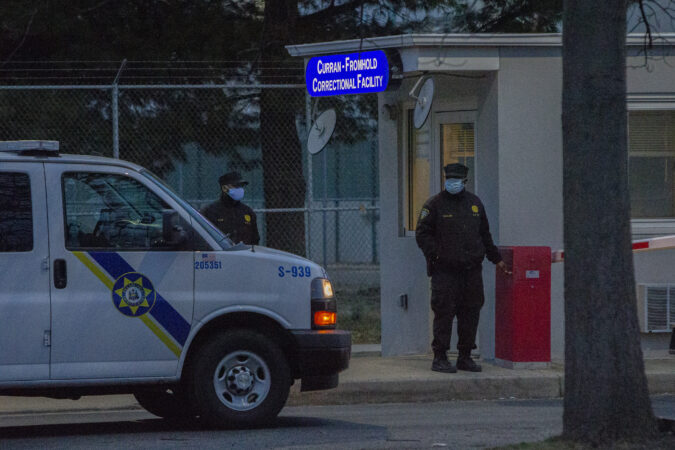
Andrew Drury died in an intake cell at the Curran-Fromhold Correctional Facility in Holmesburg on March 9, 2025. The lawsuit says he was in the cell for 36 hours, despite suffering from opioid withdrawal symptoms.
During that time, the suit says, Drury received no medical care, and jail staff did not alert medical personnel that he was going through withdrawal. Drury had a known opioid addiction and had suffered withdrawal symptoms at the jail in the past, according to the lawsuit. His cause of death was listed as “pending,” the lawsuit said.
Prison officials declined to comment Wednesday. A lawyer for Drury’s family did not return a request for comment. The lawsuit seeks general monetary damages from the city, the jail system, and the state attorney.
Several other families in recent years have sued Philadelphia jails, saying their relatives did not receive adequate medical care for drug-related issues.
In 2024, the family of Carmelo Gabriel Ocasio, 22, accused jail staff of ignoring his cellmate’s pleas for help when Ocasio fell unconscious, overdosed, and died after obtaining fentanyl and benzodiazepines at the jail in 2022.
The family settled with the city for $65,000; further details of the settlement were not made public.
In 2025, the family of Amanda Cahill sued the city, saying she overdosed on fentanylillicitly obtained whilein the jail after she was arrested in a Kensington sweep in 2024. The suit said she cried and begged for help, and fellow inmates tried to get the attention of correctional officers before she was found unresponsive in her cell.
A judge dismissed portions of the lawsuit in late December, but attorneys for Cahill’s family later refiled a complaint. Responding to the suit, lawyers for the city acknowledged staffing issues at the jails, but said the city could not have foreseen and did not cause Cahill’s death.
Between 2018 and July 2024, at least 25 people died in Philadelphia jails of accidents related to drug intoxication, a 2024 Inquirer analysis found. The city noted that summerthat the overdose death rate in Philadelphia jails was the same as the citywide rate, despite higher rates of addiction among incarcerated people.
Philadelphia’s jail system has been hailed as a national leader in offering medications for opioid addiction and provides buprenorphine, an opioid medication that curbs cravings, to inmates soon after arriving.
But staffing issues created backlogs that kept inmates from receiving longer-term care on time, and advocates said illicit drugs were readily available in the facilities, The Inquirer reported in 2024.
Staff writer Abraham Gutman contributed to this article.
After an offseason that saw Zach Spiker’s squad lose four of its five starters to the transfer portal, the Dragons went 6-7 in nonconference play, dropping all three of their Big 5 matchups in the process. The team started its Coastal Athletic Conference campaign looking for relief but was confronted with more of the same: It lost three in a row to tip off conference play. The season looked like a loss.
Then, on Jan. 8, a switch seemed to flip. The Dragons shut down Stony Brook, limiting the Seawolves to just 37 points in a win. From there, Drexel started rattling off victories powered by its defense, winning six of seven games to move into conference contention. The Dragons have held opponents to an average of 56.3 points over that stretch
Drexel (12-11, 6-4 CAA) is in a tie for third place ahead of Thursday’s matchup (7 p.m., FloSports) at Campbell (10-13, 4-6). The Dragons will receive a first-round bye in the CAA Tournament if they stay in the top four.
The potential for the program’s first NCAA Tournament berth since 2021 has offered some guarded optimism for the Dragons.
“I don’t feel a recent surge in excitement and fun after winning,” junior guard Shane Blakeney said. “We’re all taking a deep breath like this is what it should have been like. We’re frustrated because we should have been playing like this, and we also still feel like we haven’t played our best yet.”
Added junior guard Kevon Vanderhorst: “We’re constantly learning through our losses … It’s not necessarily that we’ve just had a reawakening. It’s [that] we’ve been learning the whole time.”
In their last outing on Saturday, Drexel outlasted North Carolina A&T, 61-60, in a slugfest that came down to the final whistle.
With no timeouts and down by one point, the Dragons had to advance the length of the court in 3.2 seconds. After a bit of backcourt misdirection, the ball was inbounded to Vanderhorst. The guard beat his defender down the court, converting a contested scoop at the buzzer to win the game.
“We practice shots like that … three seconds on the clock, somebody has to go get a bucket,” Vanderhorst said. “In terms of just our process, nothing really has changed here.”
Although the team has practiced that situation countless times, hitting the buzzer-beater in a game garnered national attention. Vanderhorst’s sprint to the bucket landed third on SportsCenter’s daily top 10 plays feature.
“It’s definitely been a surreal moment,” Vanderhorst said. “I think that’s the perfect word for it. Growing up, SportsCenter top 10 is that show you turn on in the morning [when] you want to see all the highlights from the day before.”
Vanderhorst, who is averaging 9.6 points, is part of an offense that boasts five players scoring eight or more points per game. Blakeney averages a team-high 13.3 points. The balanced offensive approach has made it difficult for opposing defenses to focus on a single player.
“Our coaches recruited talent. It’s shown in a lot of plays especially through this stretch of the season,” Blakeney said. “Teams can’t really be surprised when we play together — we look good. … We play fast, play connected.”
Drexel has been dominant defensively. The program logged the best defensive effective field goal percentage in the NCAA during January. Since the start of conference play, Drexel is allowing an average of 6.8 fewer points than Hampton, the CAA’s second best statistical defense.
Despite the team’s prowess on defense, not one Drexel player can be found in the top 10 in total steals or blocks among CAA players since the beginning of conference play. Like the offense, Drexel’s suffocating defense has been a team effort.
The Dragons have had the luxury of not leaving campus in two weeks, playing their last three at home. Starting with Campbell on Thursday, though, five of their final eight games are away. Despite boasting a 10-3 record at home, the team is a combined 2-8 in away and neutral games.
“I think this home stretch was nice because it’s given us confidence a little bit,” Vanderhorst said. “In those past games that we had away in Monmouth and Towson, I think dudes were really just getting the hang of sticking together through adversity.
“[Doing that] on the road and [in] those environments is super important, so I don’t think it’s anything that needs to change. I think we’ve kind of gotten the hang of it now.”