Tag: topic-link-auto

  • A quarter-century-old zoning law threatens to block a restaurant and bar in Fishtown

    A quarter-century-old zoning law threatens to block a restaurant and bar in Fishtown

    A plan to revitalize a neglected building at 2043 Frankford Ave. with a ground-floor burger restaurant and second-floor cocktail bar is facing stiff opposition in Fishtown.

    Because of an over-25-year-old zoning overlay — which applies to the east side of Frankford Avenue and not the west side — the Slider Co.’s plans have been hung up for months awaiting a hearing from the city’s Zoning Board of Adjustment (ZBA).

    On Wednesday, the board ruled in the Slider Co.’s favor, but the saga has cost the business owners at least $40,000 and almost six months of waiting for a hearing.

    And that’s if opponents of the project don’t appeal the ZBA ruling to the Court of Common Pleas — adding at least another nine months and more legal costs to the project, probably killing it.

    “We were expecting to have a straightforward project, and then all of a sudden all hell breaks loose,” zoning attorney Alan Nochumson, who represents Slider Co.’s William Johnson and Anesha Garrett, said at a late January ZBA hearing.

    The principal opponent of the project is Ashley Gleason, who owns the clothing shop Vestige next door at 2041 Frankford Ave. She hired a zoning attorney to fight the case. At a Fishtown Neighbors Association (FNA) meeting last year, a narrow majority (36-30) voted to recommend that the zoning board deny the application.

    “Our block is not like the lower part of Frankford. It doesn’t have the bars and restaurants,” Gleason said at the ZBA hearing. “It is mostly residential and retail. So it [the proposal] is out of character for this block.”

    (function() {
    var l2 = function() {
    new pym.Parent(‘fishtownburger’,
    ‘https://media.inquirer.com/storage/inquirer/projects/innovation/arcgis_iframe/fishtownburger.html’);
    };
    if (typeof(pym) === ‘undefined’) {
    var h = document.getElementsByTagName(‘head’)[0],
    s = document.createElement(‘script’);
    s.type = ‘text/javascript’;
    s.src = ‘https://pym.nprapps.org/pym.v1.min.js’;
    s.onload = l2;
    h.appendChild(s);
    } else {
    l2();
    }
    })();

    The property at 2043 Frankford Ave. is a faded two-story building at the end of the row, and it’s been in rough shape for years.

    Unusually for a restaurant application, the case has stirred up allies in the community who submitted a petition in support of Johnson and Garrett, who already have a presence in the neighborhood.

    The former president of FNA, Ashlei Tracy, spoke in support of their application at the zoning board, noting bars and restaurants on the blocks of Frankford to the north and south of this one.

    “A constant complaint that we hear is that Fishtown is becoming very corporate,” Tracy said in an interview after the hearing. “A part of that is that it’s so expensive to even go through this [zoning] process.”

    The cases can also stir neighborhood tensions. January’s ZBA hearing on the matter saw lengthy testimony, weeping, and accusations of racial discrimination. Johnson and Garrett are Black, and Fishtown is an overwhelmingly white neighborhood.

    An interior rendering of the burger place planned by the Slider Co. The Coke machine is a hidden entrance to the upstairs speakeasy.

    The wrong side of the street

    The complexities of the Slider Co.’s attempt to open a new restaurant and bar in one of Philadelphia’s hottest culinary neighborhoods is an effect of a 1990s-era zoning law to address rowdy nightclubs along the Delaware River.

    The “North Delaware Avenue overlay district,” which covers much of Northern Liberties and Fishtown, bans entertainment businesses from the area it covers while requiring food and beverage businesses to secure approval from the ZBA to open.

    The overlay extends from the Delaware River to the east side of Frankford Avenue and from Lehigh Avenue down to Spring Garden Street.

    The law was largely successful in its initial aims, stemming the creation of new nightclubs in the area. The Delaware riverfront is now known for its surplus of rental apartments, not for rowdy nightlife.

    “Everyone agrees that the original purpose of the overlay no longer needs to be served,” said Matt Ruben, a longtime civic activist in Northern Liberties who has been involved with zoning and planning issues in the area — including negotiations around this overlay — for years.

    “Where there is disagreement, and shifting views within some neighborhoods, is on the more subtle question of whether there should be some kind of zoning to help regulate everyday operational nuisances and negative impacts that can come from them,” Ruben said. “Even from operators who are not bad actors at all.”

    Many overlays linger on for decades, long after the politicians who created them are retired because they empower neighborhood groups to stave off changes in their community.

    An interior rendering of the upstairs speakeasy proposed by Slider Co.

    In this case, Councilmember Mark Squilla, who represents the area, says he is open to rewriting or scaling back the overlay, but only if there is unanimity among neighborhood and business groups in Fishtown and Northern Liberties.

    Currently, the Fishtown Neighbors Association (FNA) is in favor of the zoning overlay, which it argues gives residents of Frankford Avenue and the surrounding blocks a say in the restaurant boom.

    The community group says new restaurants and bars have affected quality of life — such as when eateries implement late-night private trash collection that can wake up people who live nearby.

    “I have not seen any interest in our community to get rid of” the zoning overlay, said John Scott, president of FNA. “It’s not seen as a detriment. It’s seen as a way to mitigate some of the impact of the food establishments.”

    Johnson and Garrett fear the old zoning law has given opponents of their project a way to wage legal warfare against their proposal.

    “We have never previously faced opposition to opening a new restaurant,” said Johnson, who has opened numerous culinary businesses in Delaware and Philadelphia.

    “An appeal to the Court of Common Pleas would likely put the project in jeopardy due to the financial strain and delays it would impose on the property owner,” Johnson said.

    Gleason’s lawyer declined to comment, and the property owner, Jordan Claffey, did not respond to a request for comment.

    Staff writer Michael Klein contributed to this article.
  • Curling is back at the Olympics. What are the rules? Why do people love it? And how can I watch it?

    Curling is back at the Olympics. What are the rules? Why do people love it? And how can I watch it?

    The opening ceremony of the 2026 Winter Olympics doesn’t take place until Friday at Milan’s San Siro Stadium, but some of the world’s top athletes are already competing in Italy. That includes in the sport of curling, which always seems to shine on the global stage.

    “I love exposing people to something that’s so special,” said Carolyn Lloyd, who’s been a member of the Philadelphia Curling Club for 20 years. “People don’t realize just how special it is. It’s different from a lot of sports, certainly in its culture. This sport captures my whole heart.”

    Curling is one of the first sports to start, with mixed doubles beginning Wednesday. Team USA made its debut early Thursday against Norway and Switzerland in mixed doubles. However, men’s and women’s curling will begin on Feb. 12 and will feature a local athlete: Marple Newtown High School graduate Taylor Anderson-Heide, who attended the University of Minnesota and is making her Olympic debut.

    Anderson-Heide, 30, is a five-time national champion. She trained at the Philadelphia Curling Club in Paoli with her identical twin Sarah Anderson.

    “What I saw watching these kids grow up, was the dedication of coming and continuing to work through adversity,” Lloyd, who lives in Collegeville, said of the Anderson sisters. “Any sport you’re going to lose a lot while you’re learning and you have to be resilient. That’s one thing that I’m always the most impressed at when I think about them. And I cheer their successes. And when they struggle, I feel it too because you know how hard they work.”

    Here’s everything you need to know about curling before it once again captures the world’s attention at the Winter Olympics …

    What are the rules of curling?

    Curling, which officially became an Olympic sport in 1998, involves two teams sliding granite stones across a long strip of ice known as a sheet. Players take turns sliding a 44-pound stone toward a round target, known as a house, that sits at each end of the 150-foot long sheet. Each house consists of four rings and a center, known as the button.

    Two teams of four players take turns delivering one stone at a time. When delivering a stone, a player uses one of the hacks, or fixed rubber blocks, to push off and must release it before what is known as “the hog line” for it to be considered in play.

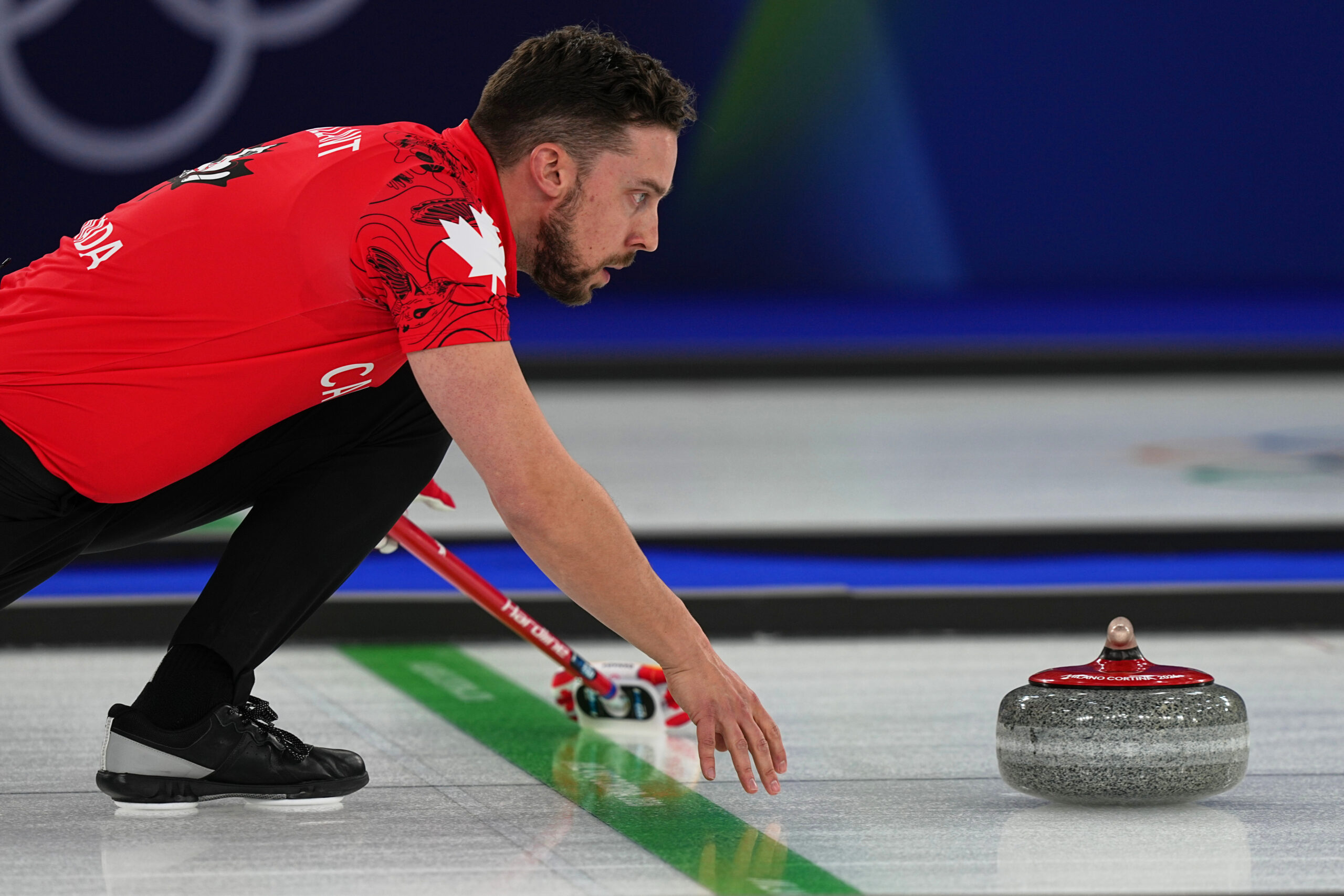
    Canada’s Brett Gallant releases the stone before the hog line in one of the matches on Wednesday’s opening day.

    Games are typically 10 rounds (or ends), and only one team is awarded points after each. The team with the stone closest to the button after all 16 are thrown (eight per team) receives one point — and one additional point for each stone that is both inside or touching the house and closer to the button than opposing team’s closest stone. The team that goes last has what is called “the hammer,” a distinct advantage that passes to the other team after the team that possess it scores.

    A traditional team consists of a lead, second, third, and fourth — and players throw stones, two each, in that order. A fifth player serves as an alternate. Each team also appoints a captain, known as the skip, and a vice skip. The skip is in charge of directing play for the team and typically stands in the house at the scoring end of the sheet. The vice-skip takes over their duties when the skip, who typically goes last, is delivering stones.

    Then there’s sweeping. In addition to the rotation of the stone helping guide its trajectory, a pair of sweepers can brush the ice, creating friction and influencing how the stone moves. You’ll often see the skip yelling out orders to these players as they quickly move down the sheet and stay ahead of the stone.

    And the ice? It’s not the same as what the Flyers play on.

    “You can’t curl on a skating or ice hockey rink,” former Olympic curler and current Great Britain’s chef de mission (or non-playing captain) Eve Muirhead recently told the Athletic. “The stone wouldn’t go anywhere. So you put millions of tiny water droplets on the sheet to cause less friction between the ice and stone. The droplets freeze into what we call ‘pebble’ — if you run your hand over the ice, it’s rough.”

    In mixed doubles, which joined the Olympics in 2018, the rules are slightly different. The game includes just two players — one male and one female — as well as pre-placed stones, a “power play,” and fewer ends.

    You can find more in-depth rules here.

    How did curling start and why is it so popular?

    Curling is considered one of the oldest team sports. According to World Curling, a 16th century Flemish artist known as Pieter Bruegel painted an activity similar to curling being played on frozen ponds. Written evidence dates to the mid-1500s in Scotland, where the first recognized curling clubs were formed — and where the majority of granite for the stones is produced.

    The game eventually spread across the globe, but the first official international competition didn’t take place until the 1924 Winter Games in Chamonix, France, where curling made its Olympic debut as a men’s competition. While curling made a couple more appearances over the next 60 years as a demonstration event — at the 1932 Olympic Winter Games (Lake Placid), the 1988 Olympic Winter Games (Calgary), and the 1992 Olympic Games (Albertville) — it wasn’t until 1998 in Nagano that curling was included as a full medal sport for both men and women.

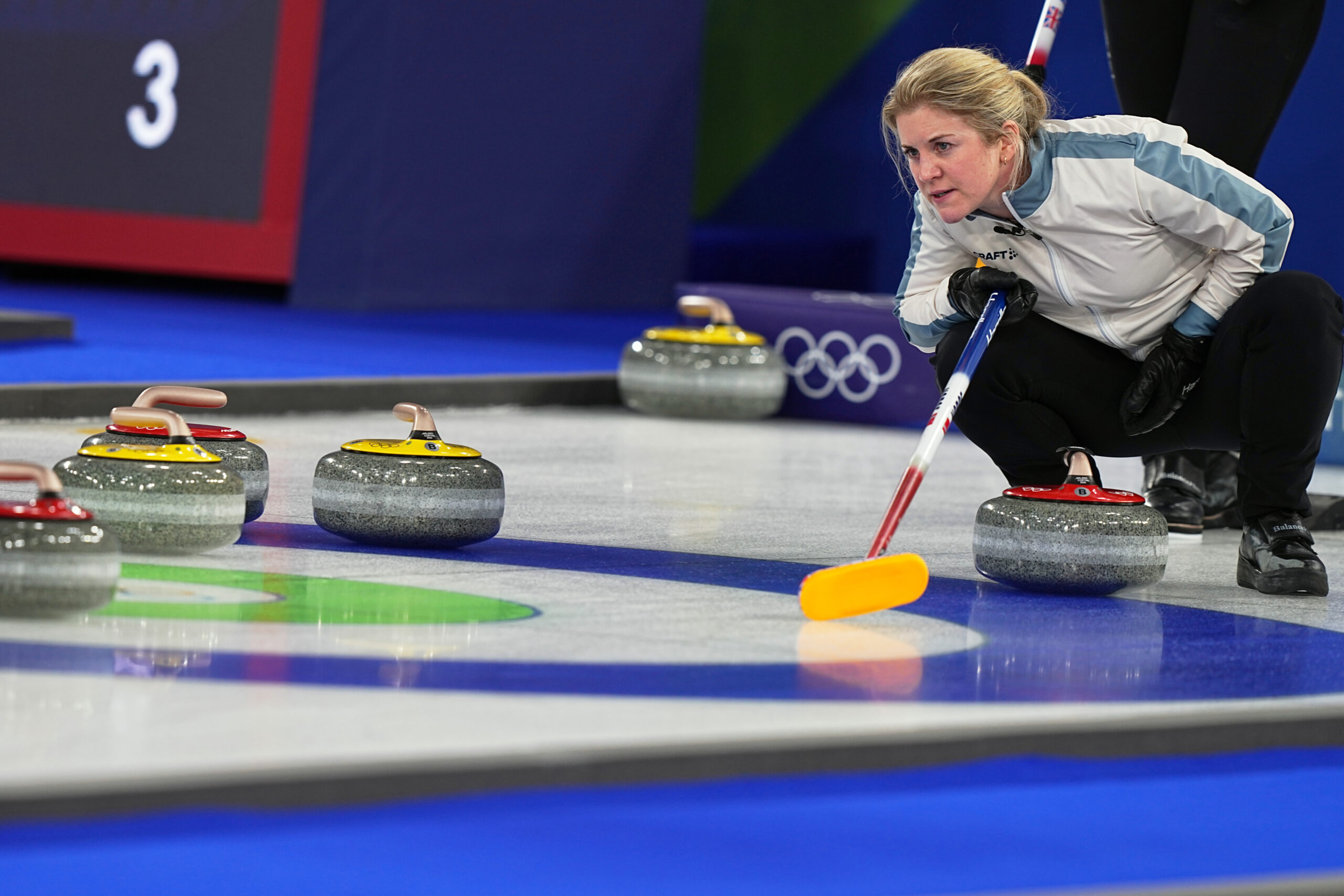
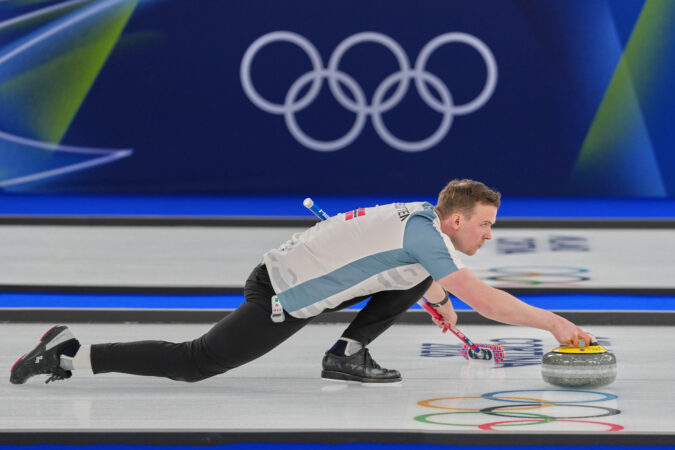
    Kristin Skaslien of Norway faces off against Britain at the 2026 Winter Olympics on Wednesday.

    Since then, Lloyd, 49, has seen the growth in the sport on a local level.

    “We went from having like a couple 50 to 75 people coming to open house to having hundreds of people outside,” Lloyd said. “The police were here and there was a line down the block. It got so crazy so fast.”

    Every four years, curling again captivates the fans around the world. But why? Part of that is likely how different it is from many of the fast-paced Olympic sports. That slower pace allows for more strategy and real-time analysis, like baseball. And it doesn’t look that hard — although looks are deceiving in this case.

    It can also be very satisfying to watch heavy stones effortlessly glide across ice, especially when they do it like this …

    Another reason people enjoy curling is the etiquette and sportsmanship associated with the sport.

    During the week the Philadelphia Curling Club will host league nights where members compete in games. After the competition, it’s tradition to stay after and socialize, with the winning team buying the losing team the first round of drinks.

    The postgame ritual is known as “broomstacking,” and has become a deeply rooted tradition that focuses on the camaraderie of the sport.

    “Broomstacking is usually in the more fun tournaments,” said former Philadelphia Curling Club member, and Olympic curler Taylor Anderson-Heide in a YouTube video on the spirit of curling. “Or we call them bonspiels. You can decide to stack your brooms on the house and then go have a drink inside at the bar.”

    There are other unspoken rules. For instance, similar to golf, the crowd never cheers for missed shots — and you always shake your opponents hand before and after a game. There’s also no talking during an opponent’s shot, and players call their own fouls. And like in chess, you must know when to concede when there’s no way to mathematically win.

    What is the curling schedule for the Olympics?

    If this got you excited to watch, good news: There is curling every day of the Olympics, until Feb. 22, when the women’s gold medal will be decided. There are far too many games to list here, but you can check out the official Olympic schedule here.

    The mixed doubles medal matches will take place first, on Feb. 10 at 8:05 a.m. ET (bronze medal match) and 12:05 p.m. (gold).

    The men’s bronze medal match is Feb. 20 at 1:05 p.m. ET, with the gold medal match the following day at the same time. The women’s bronze medal will be decided on Feb. 21 at 8:05 a.m. ET, with the women’s gold medal match concluding the event on Feb. 22 at 5:05 a.m. ET.

    How can I watch Olympic curling?

    Select matches will air on CNBC and USA Network, with the women’s gold medal match on Feb. 22 scheduled to air on NBC. All of the matches will be available to stream on Peacock and NBCOlympics.com. You can get the full TV schedule here.

  • Ronald Moore was once a March Madness sensation. Now he’s a Penn assistant coach.

    Ronald Moore was once a March Madness sensation. Now he’s a Penn assistant coach.

    When Ronald Moore became an NCAA Tournament hero in 2009, TikTok and Instagram had not yet been invented. The iPhone was in only its second iteration, the 3G, and the first one had been launched just two years before.

    You could certainly become a national sensation, but it would have been with a highlight reel play instead of a viral one.

    Yet for all that has changed in technology since then — to say nothing of all that has changed in college basketball — some things never go out of style. A mid-major toppling a Big Ten beast in March is certainly one of them.

    It was news enough that Siena had taken Ohio State to overtime, and all the better since the game was in Dayton, just over an hour from Columbus. With 9.1 seconds left in the extra session, the Saints trailed the Buckeyes, 65-62.

    Moore, a Plymouth Meeting native who was then a junior guard from Plymouth-Whitemarsh High, took the inbounds pass and raced up the floor. When he neared the three-point arc, he faked left on Ohio State’s P.J. Hill and dribbled right. Hill bit, Moore let fly, and the shot was inch-perfect.

    As CBS announcers Verne Lundqist and Bill Raftery joined the crowd in delirium, Ohio State’s Jon Diebler shot a potential game-winner off the rim. A second overtime beckoned.

    “The little guy that could!” Raftery exclaimed over replays of 6-foot-tall Moore’s three, including a wide-eyed Siena coach Fran McCaffery and an even more wide-eyed bench.

    With 19 seconds left in the second OT, future 76er Evan Turner’s gutsy layup put Ohio State ahead, 72-71. Moore again took the inbounds pass, this time dribbling left, then toward the middle.

    He passed to Edwin Ubiles, who gave a pump fake, a dribble, and a pass back out of a triple team to the man of the hour. The clock read 5.4 when Moore let fly.

    “Three-pointer … Yes!” Lundquist roared, with Raftery landing an “Oh!” right on top of his partner.

    Then came the moment that really sticks in many fans’ minds: Raftery’s “Onions! Double order!” exclamation. The sport’s king of rhetorical flourishes had never taken his most famous line to that level, and it’s still rare.

    Bill Raftery (left) calling a game on CBS with former Villanova coach Jay Wright in 2022.

    Had Turner made the running jumper he missed on Ohio State’s last possession, perhaps all of this would have been forgotten. But the ball rolled around the rim and out, and the nation had a new star.

    ‘A great moment in time’

    Countless fans of Cinderella have memories of Moore’s heroics. So does Siena’s all-time assists leader, now 37 and settled back in his hometown as an assistant coach at Penn.

    “They’re always vivid,” he said in an interview this week. “I’m blessed to have had that moment in my basketball career. And every March, it’s always a flashback, whether someone brings it to my attention or I catch a glimpse of it in some of the highlight reels they play of March Madness.”

    And he still gets “the same feeling every time I see it — just because of what it meant to not only the university, but to myself, to my teammates. So it’s always a great moment in time when I flash back and look at those shots.”

    McCaffery, now at the helm of Penn, hasn’t forgotten either, just as he hasn’t forgotten many of his great moments as a player and a coach. But he offered a reminder of something those fans might have forgotten: Siena was a ninth seed that year, and this was its second straight tournament with a win.

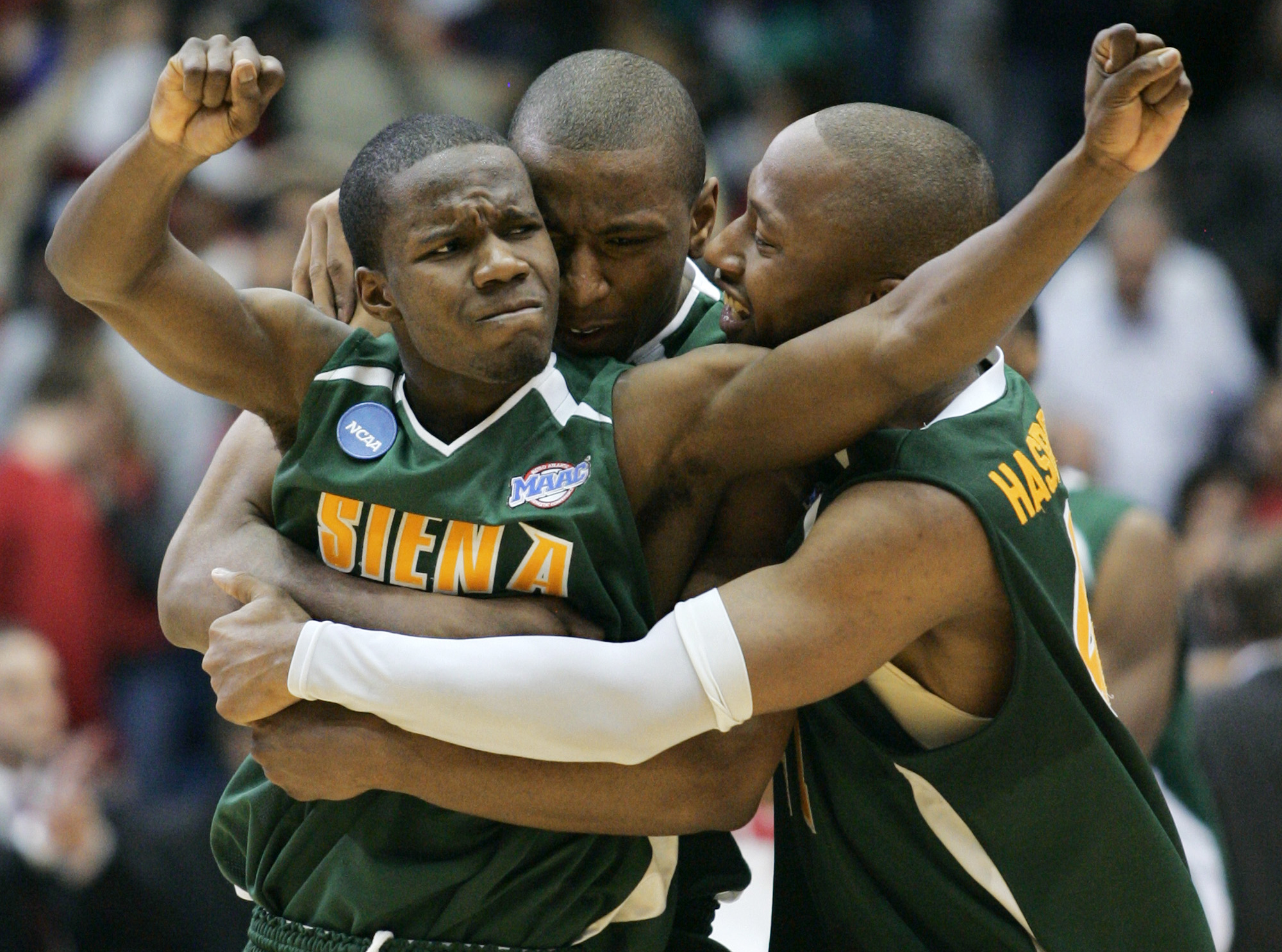
    Ronald Moore (left) celebrates with teammates after his famous game-winning three-pointer.

    “In the moment you’re just thinking about adjustments, personnel — what are we in defensively? What are they in? Are we in the bonus?” McCaffery recalled. “With that team, it was easy to trust your guys. It was a veteran group, they were really smart, and they were incredibly mentally tough. So you can play Ohio State in Ohio [and] nobody’s rattled at all.”

    McCaffery also recalled what followed: “That was as good a locker room celebration as I can remember.”

    After graduating in 2010, Moore went on to play professional basketball in Europe for 11 years, for teams in Slovakia, Poland, Hungary, Ukraine, Italy, and France. He retired from the court in 2021, then returned to his hometown to run a youth basketball outfit.

    “I felt that it was something that was my calling, just to kind of help the next generation and give all the knowledge that I possibly can to help those kids try to help achieve their goals and their dreams in the game of basketball,” he said. “It’s brought me so much that I wanted to be able to help someone do the same.”

    Then, last spring, his old college coach returned to his hometown, and his alma mater. When McCaffery hired Moore to the staff at Penn, some people of a certain age reacted: “That Ronald Moore?”

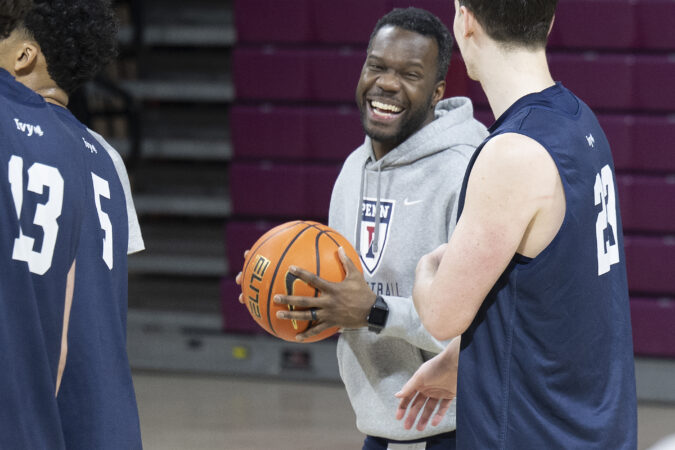
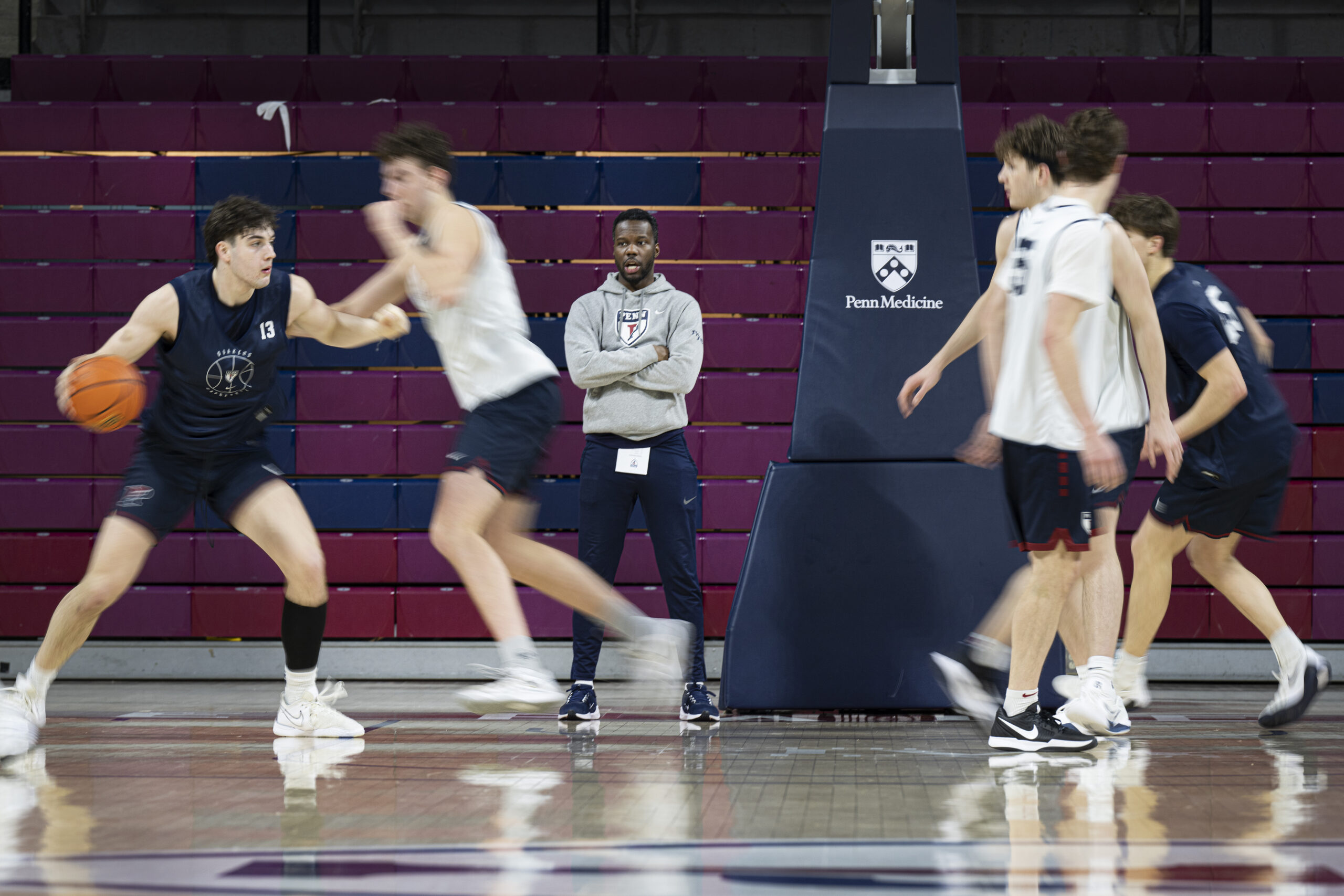
    Ronald Moore watching Penn’s players practice at the Palestra this week.

    Yes, that Ronald Moore. He and his old coach had stayed in close touch over the years. They traded text messages, and when time allowed, Moore would visit McCaffery at Iowa, where the coach moved in 2010. Their families got to know each other, too.

    “It’s just the type of person Fran is, man,” Moore said. “I think a lot of people get a misconception of when he’s out here yelling and trying to motivate guys on the floor, but off the court, he’s always been an open book, and someone who would be approachable to talk about anything.”

    Hiring him made ‘perfect sense’

    McCaffery had long felt Moore would make a good coach someday, and had told him so.

    “I always thought about having him on my staff no matter where I was, but it makes perfect sense in Philadelphia, where we’re both from,” McCaffery said.

    Now Moore’s experiences make him even better-suited for the job.

    “He’s played at an incredibly high level internationally,” McCaffery said. “He’s played for some really good coaches — played for some coaches who probably weren’t very good, and that’s part of the growth in this profession. … But his knowledge is just next-level of the game. So the coaching side of it is easy.”

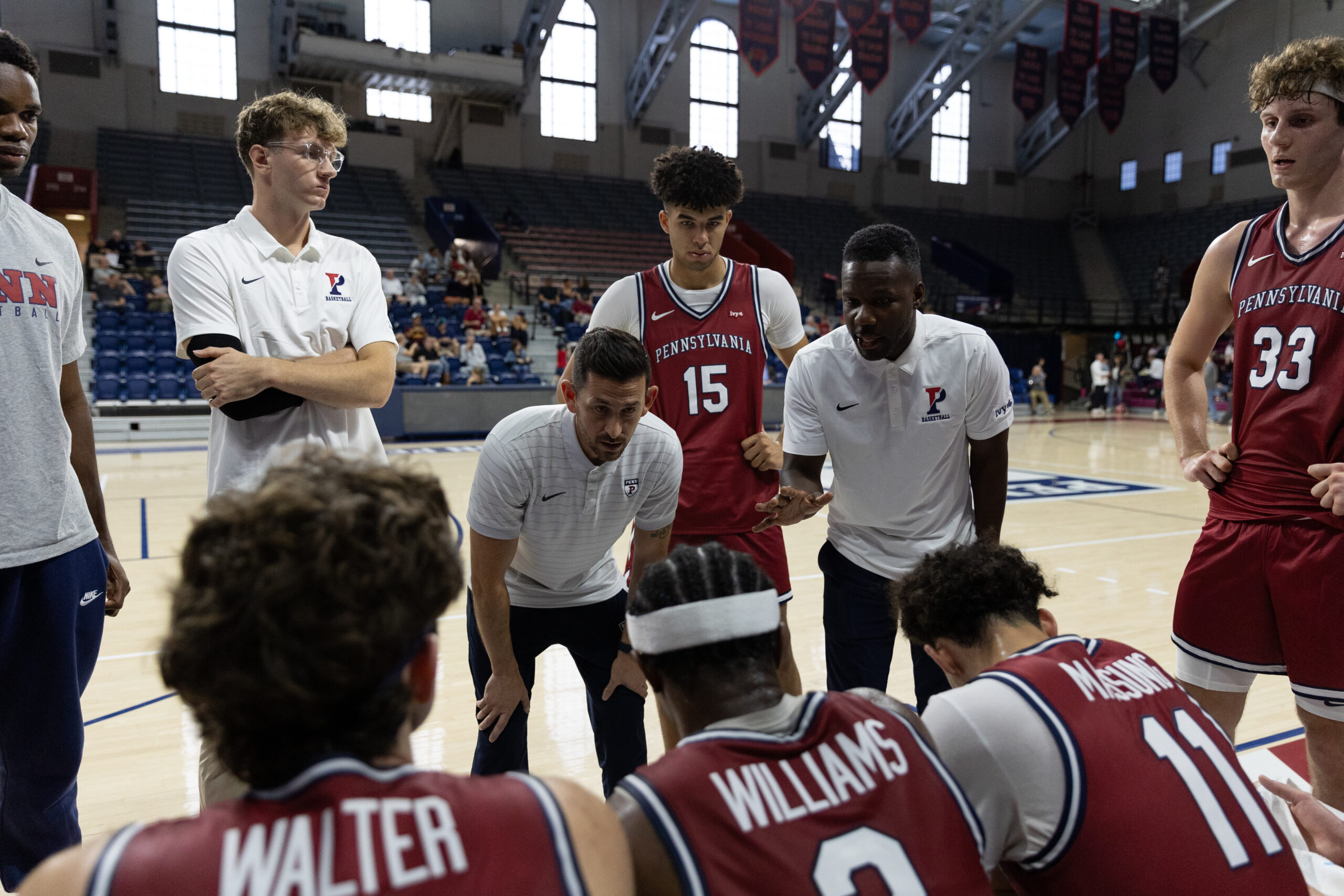
    Ronald Moore (second from right) and fellow Penn assistant coach Ben Luber talking with players during a preseason scrimmage last fall.

    When the offer came to join Penn’s staff, Moore felt that “it just was a full-circle moment.” And he was ready.

    “Many people have asked me, ‘Hey, have you ever thought about getting into college coaching?’” he said. “I had plenty of friends that coached at the college level, so I knew what it entails, but I didn’t really want to move around. So him coming back to Penn and getting that phone call, it kind of just seemed like a no-brainer.”

    On top of that, he now has a key to the Palestra, his city’s basketball shrine. He appreciates that too with one of its annual rituals played on Saturday’s. The 61-60 win over rival Princeton, ended an 8-year, 14-game skid an offered a measure of Penn’s progress this season.

    “You soak it all in when you’re in this place and it’s quiet and nobody’s around — you kind of can stand back and look at it from a different lens,” Moore said. “Having been able to play here as a college player, play here as a high school player, knowing what it means to the city of Philadelphia, and just its history in general, it’s a special place to be able to work at and come in every day.”

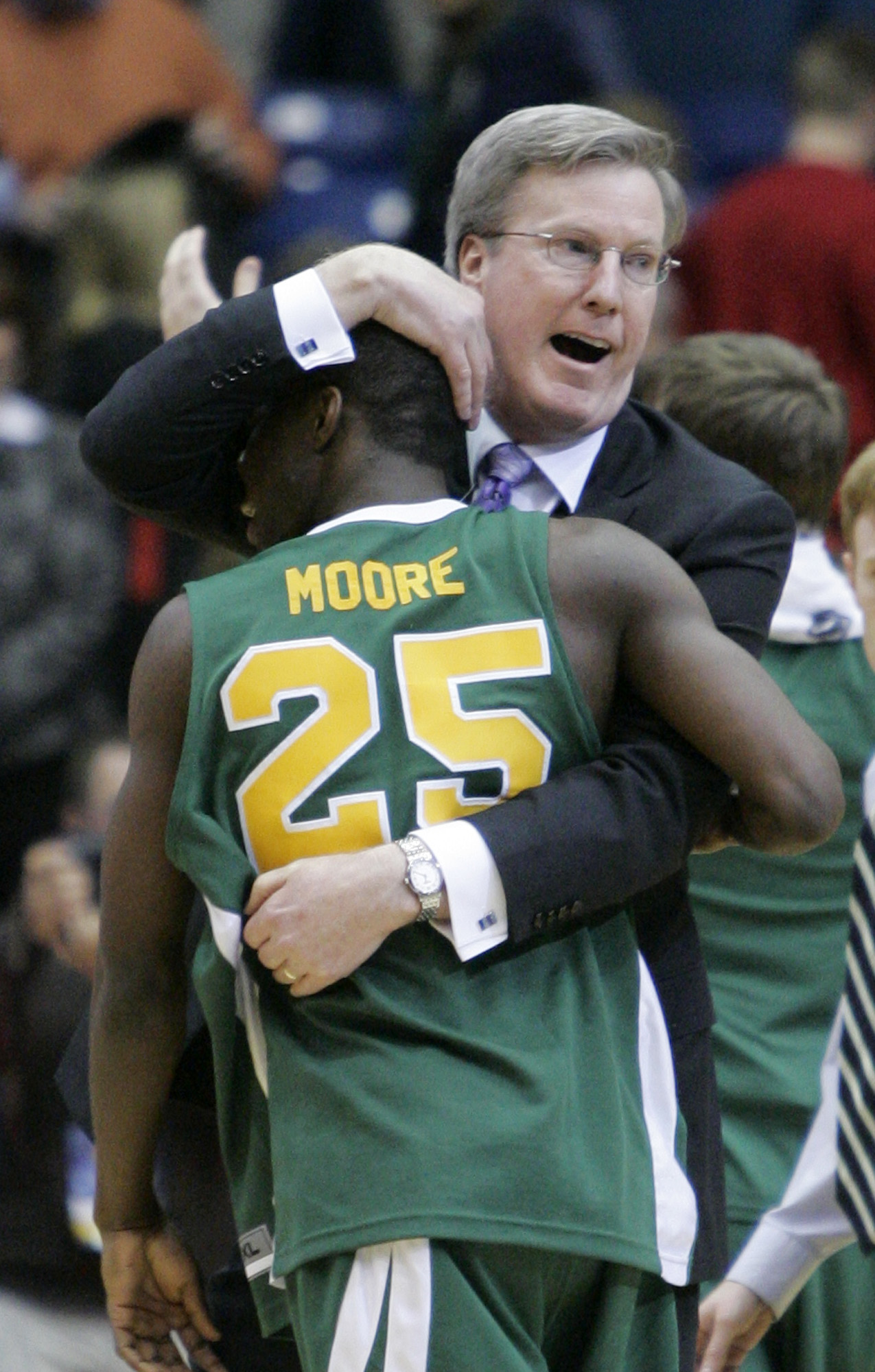
    Fran McCaffery embraces Ronald Moore after Siena’s upset of Ohio State.
  • 2026 BMW iX garners some rave reviews

    2026 BMW iX garners some rave reviews

    2026 BMW iX xDrive45 vs. 2026 Cadillac Vistiq: A lot for a lot?

    This week: BMW iX

    Price: $96,275 as tested. M Sport Package added $4,500 for a lot of M’s (on the steering wheel, among exterior and interior elements); Executive Package, $3,250 for soft-close doors and more; Driving assistant professional, $2,550. And there’s more, mentioned below.

    What others are saying: “Highs: Tranquil cruising, competitive driving range, deluxe cabin. Lows: Busy exterior styling is polarizing, low rear seating position,” says Car and Driver.

    Consumer Reports gushed: “We were thoroughly impressed with BMW’s all-electric iX, which is speedy, ultraquiet, and delivers a cushy ride. Even with its complicated controls, the iX earned one of the highest road test scores ever.”

    What BMW is saying: “The new age of iX.”

    Reality: And this $100,000 model is the low-budget iX.

    What’s new: The iX electric SUV is new and improved for model year 2026, BMW says, with a redesigned exterior, cutting-edge technology, and versatility.

    Competition: In addition to the Vistiq, there are the Genesis Electrified GV70, Lexus RZ, Mercedes-Benz EQE, Tesla Model X, and Volvo EX90.

    Up to speed: Car and Driver reports the iX xDrive45 gets to 60 mph in 4.6 seconds. An M70 version takes just 3.6. It’s still quite fast, but there are other reasons to upgrade. Read on.

    Shiftless: A small toggle gets you into Reverse or Drive; there’s a button for Park.

    On the road: The iX handles nicely like a good all-wheel-drive EV should. It’s not stellar but it’s smooth and fun. It was actually a little rough on highways.

    Vehicle modes are accessed via a touch pad on the console, which gives you a touchscreen full of choices to take your mind and eyes off the road. When you press Sport then there’s an activation dialogue to capture your attention. Who cares about the car that stopped in front of you, the cyclist, the deer, the kid chasing the ball, when there’s all this touchscreen to look at.

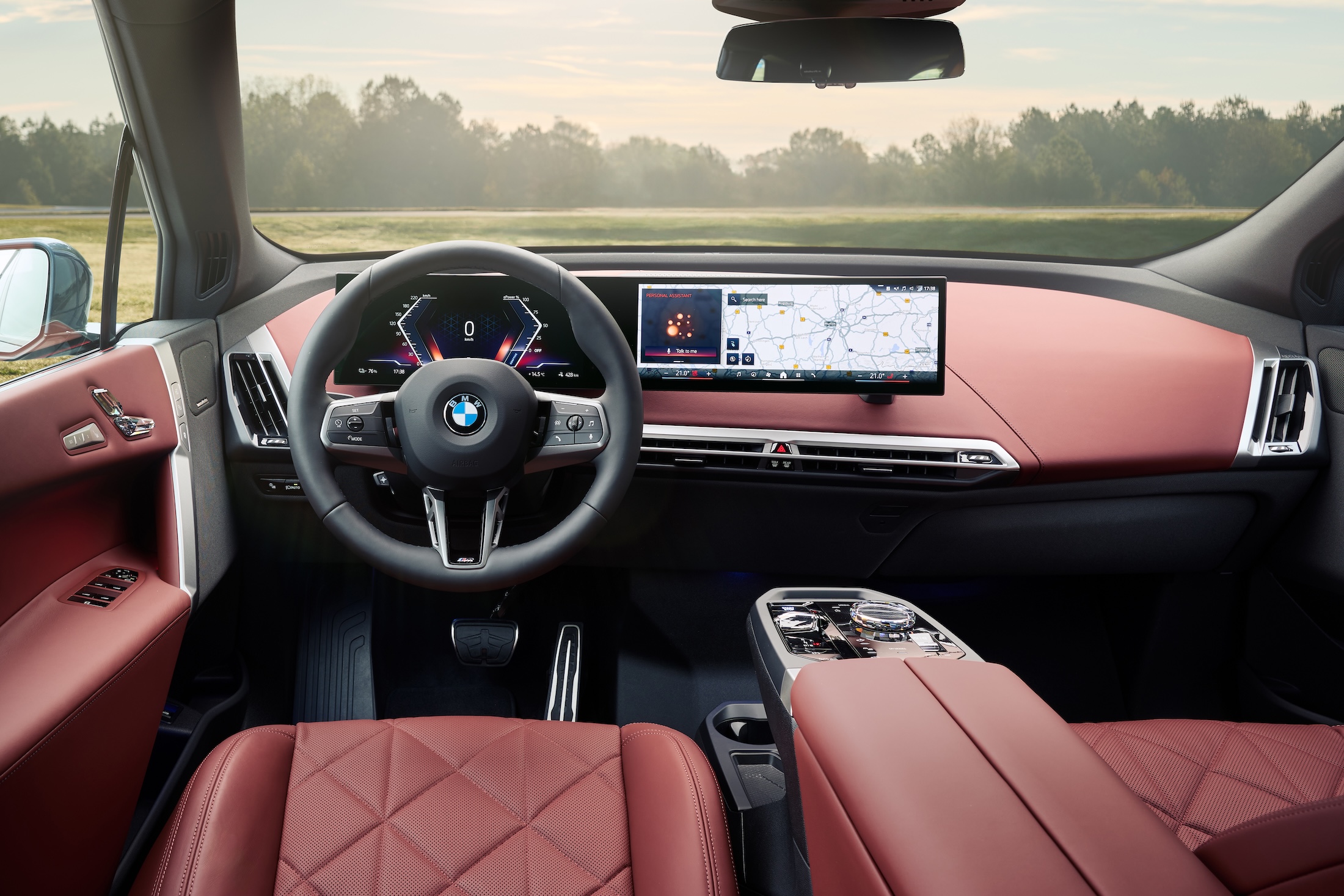
    The interior of the 2026 BMW iX is striking in red leather. It’s comfortable and spacious but with some quirks.

    Driver’s Seat: Here’s another of the iX’s mysteries. The seat is nicely appointed and most comfortable (and on the roomy side), but I was stuck with a lumbar bump that I couldn’t get rid of. The controls are on the door a la old Hyundais but there’s there nothing for lumbar. The touchscreen wasn’t offering any clues either.

    The seats do offer massage, and that function helped take my mind off the lumbar issues — and convinced me there has to be a control for it … somewhere.

    All this for the bargain price of $3,500, for the leather seats.

    Steady speed: The steering wheel controls allow for changing from adaptive cruise to a more intrusive driving assist mode.

    All I wanted to do was simply figure out how to set the distance to the next car. It flashed on the screen when I set the system up and then disappeared forever. Because it was set to the farthest distance, cruise control became useless on Philly-region roads, because everyone here will just cut right in front of you. Mr. Driver’s Seat included.

    Friends and stuff: The rear seat is comfortable and luxurious, although the backrest is a little recline-y for me. There’s ample room for three people across and for everyone’s legs.

    Cargo space is 35.5 cubic feet behind the rear seat and 77.9 with the seat folded.

    In and out: The iX is at a nice height so anyone who doesn’t like climbing or bending will be pleased.

    Play some tunes: The Harman Kardon stereo system produces among the best sound I’ve heard in a long time. Notes and chords that are buried by normal speakers are allowed to sparkle as intended; this is an A+.

    The system is all in the touchscreen or through BMW’s dial and buttons on the console. A volume roller knob on the console just monkeys things up; it’s fairly smooth to the touch and hard to roll. The latter controls remain a favorite and bring this system a step above many other modern BMW offerings (I’m glaring at you, 228).

    Keeping warm and cool: Temperature settings are available on the main touchscreen. A small fan icon on the touchscreen opens the larger menu, and I confess for the first couple days I found that HVAC system annoying — it would blow too hard on auto, even on the lowest setting — and then occasionally boil us. In manual mode I had to run the fan at four out of five to get any coolness.

    Range: The iX xDrive45 has a range of 312 miles, according to BMW. That jumps to 340 miles in the mid-range xDrive60, and drops back to 302 in the high-performance M70.

    Where it’s built: Dingolfing, Germany

    How it’s built: Consumer Reports gives the iX a 3 out of 5 for reliability.

    Next week: Step into the Cadillac Vistiq.

  • Ex-Eagle Josh Jobe won Seahawks’ respect through battles with Jaxon Smith-Njigba: ‘This guy’s pretty dang good’

    Ex-Eagle Josh Jobe won Seahawks’ respect through battles with Jaxon Smith-Njigba: ‘This guy’s pretty dang good’

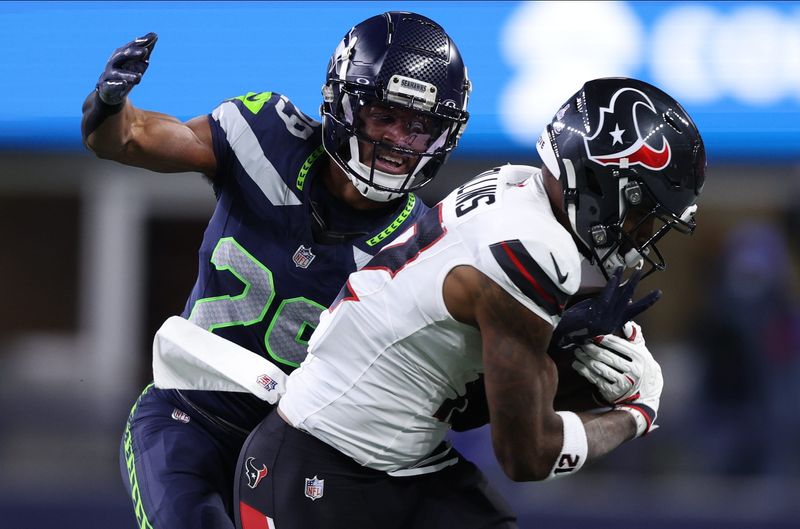
    SAN JOSE, Calif. — Josh Jobe had locked down Jaxon Smith-Njigba in college before their matchups in Seahawks practices compelled Smith-Njigba to extol the virtues of the Eagles castoff to his coaches.

    Smith-Njigba was a rookie wide receiver at Ohio State when he first faced the Alabama cornerback in the College Football Playoff championship game in January 2021.

    “I was like, ‘Gosh this guy’s buff,” Smith-Njigba said. “Who’s this buff guy at corner lifting all these weights?”

    Smith-Njigba lined up opposite Jobe for only about a dozen plays, but the ball never came his way. He had three future NFL first-round Buckeyes receivers also vying for targets, but the receiver struggled vs. Jobe’s press-man coverage as the Crimson Tide won, 52-24.

    Three years later, Seattle signed Jobe to the practice squad when the Eagles released him after two seasons in August 2024. His confidence was shaken, but he had found a scheme that augmented his physicality and immediately had Smith-Njigba bending the ear of coach Mike Macdonald about the third-year corner.

    “I remember our veteran receivers saying, ‘Hey, this guy’s pretty dang good,’” Macdonald said Wednesday. “And he kept making plays and when there was an opportunity to be on the field, we felt really confident for him to go out there and do his job. And he just kept hitting it.”

    Josh Jobe worked his way up from the Seattle practice squad to a critical starting role.

    Jobe started earning call-ups to the game day roster, a promotion to the 53-man roster, and eventually starts in his first season in Seattle. But he elevated his play in 2025 and became a regular for arguably the best secondary in the NFL as the Seahawks are poised to face the Patriots in Super Bowl LX on Sunday (6:30 p.m., NBC10).

    The soft-spoken Jobe may float under the radar while cornerback Devon Witherspoon or safeties Julian Love and Nick Emmanwori get most of the attention. But teams around the league likely are aware of Jobe with the fourth-year pro set to become an unrestricted free agent this offseason.

    His ascension may seem sudden — which Jobe acknowledged — but only he knows all the steps he had to climb. As for pending free agency, he said he should be “the top” corner on the market.

    “It is shocking — being undrafted and cut, trying to make the team throughout training camp,” Jobe said. “But I’ve been through a lot of adversity. So this is a big accomplishment. It’s pretty awesome. It’s a pretty great story.

    “I thank Seattle for this opportunity. I would love to stay in Seattle. Hopefully, something works out.”

    Nearly three years ago, Jobe saw his pre-draft stock fall because of a hamstring injury he suffered during his senior year. The Eagles snagged him after the draft. He contributed mostly on special teams, and started three games in 2023 when injuries forced him into the lineup.

    He played two snaps at the Seahawks late in the season. Starter James Bradberry was getting torched so badly by receiver DK Metcalf that he was pulled before a series.

    “I jumped in, and I got a flag,” Jobe said.

    Josh Jobe received occasional snaps at defensive back but largely was a special teams player in Philly.

    Metcalf — another future teammate who eventually would praise Jobe — drew a pass interference penalty vs. the handsy cornerback. Jobe logged one more snap and then was yanked himself. Smith-Njigba later caught the game-winning touchdown over the overmatched Bradberry.

    Jobe, meanwhile, never quite hit his stride in the Eagles’ Vic Fangio-influenced defense. When Fangio was hired as defensive coordinator in 2024, and general manager Howie Roseman expended the team’s top two picks on Quinyon Mitchell and Cooper DeJean, Jobe became the odd man out.

    He said the additional competition didn’t affect him.

    “I’ve been going against vets for years — [Darius] Slay, James Bradberry, and other guys,” Jobe said. “I’m used to competing since I was at Alabama. I’m all about competing. At the end of the day, what they decide is out of my control.”

    The Eagles released Jobe after training camp. Seahawks general manager John Schneider scooped him up two days later. He saw a corner who could fit in McDonald’s aggressive scheme, which had similarities to the one Jobe played in at Alabama. It helped that Karl Scott, his defensive backs coach with the Crimson Tide, was in Seattle by then.

    “He’s taken a slow climb to get where he’s going,” Scott said. “He’d be the first to tell you that he has a ton to learn about the position. He has a lot of the tools, especially his pure confidence, whether that’s false or real.

    “Having confidence in yourself is important. I think a lot of that comes from hard work.”

    Scott said he was worried this offseason about the cornerback spot opposite Witherspoon because Smith-Njigba was getting the better of Jobe and Riq Woolen. But when it became obvious during the season that the receiver had jumped to the elite level at his position, he recalibrated.

    “I think, in turn, Josh contributed to Jaxon’s improvement,” Scott said. “He was jamming receivers and you would see them autocorrecting themselves. That was a sign to us in training camp that we might have something.”

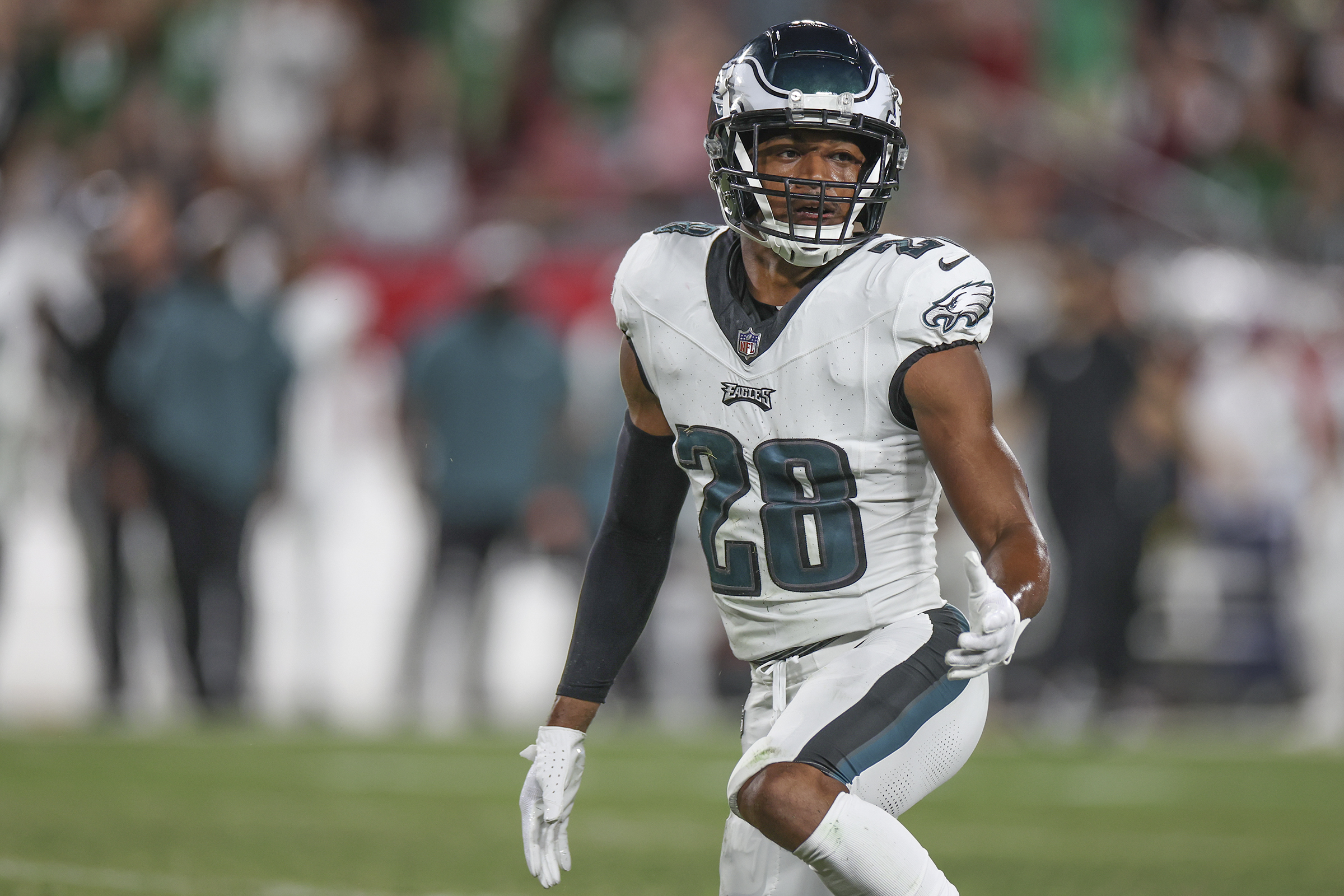
    Josh Jobe (28) believes the competition he faced at Alabama helped prepare him for the trials of the NFL.

    Woolen might have been drafted by Schneider, but Jobe’s progress forced the Seahawks to split time between the two.

    “That’s a great example of the pride that we take in how we run our program,” Macdonald said. “When you come in and you play great football, and you’re a great teammate, you’re going to get an opportunity to play.”

    A year ago, Jobe said he watched the Eagles play in the Super Bowl “[ticked] off.” He said he was rooting for his former teammates, though, and that he appreciated Roseman and the Eagles giving him a first chance.

    “At the end of the day it’s just a business and I wasn’t going to let that bring me down,” Jobe said. “I know what kind of person I am, what kind of player I am. So I just moved onto the next organization and showed them what kind of person and what kind of man I am.”

    Jobe is about to become a first-time father. His fiancée, Nayomie Suarez, is due on March 13. They’re having a daughter.

    “We’re naming her Ami,” Jobe said, “short for Amelia.”

    Scott, more than anyone in football, has seen Jobe mature before his eyes.

    “Whether he’s in a room with big names or no-names, Josh is a very quiet, cerebral guy. … I wish everything that’s coming to him in the future, but I don’t think it’s possible now to keep Joshua a secret,” Scott said.

    “He’s done the part that everybody asked him to do, and now in turn, he’s going to hopefully get what he deserves.”

  • Philadelphians are frustrated with the city’s snowstorm cleanup. What does that mean for Mayor Cherelle Parker?

    Philadelphians are frustrated with the city’s snowstorm cleanup. What does that mean for Mayor Cherelle Parker?

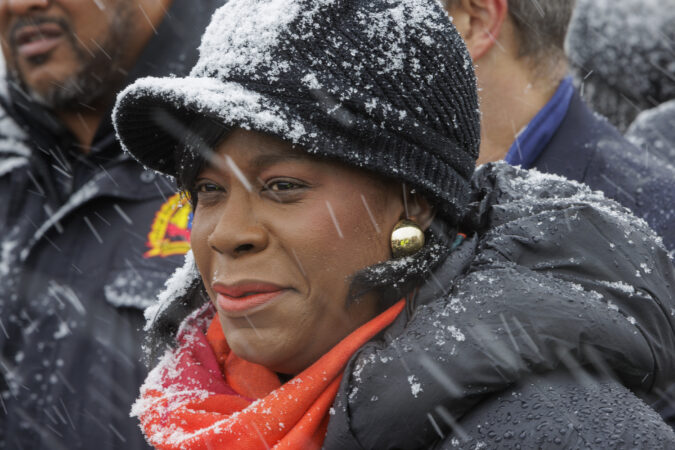
    Mayor Cherelle L. Parker often says she isn’t a fan of “Monday-morning quarterbacks” and “expert AOPs” — her shorthand for so-called articulators of problems who don’t offer solutions.

    Now she has a city full of them.

    After a heavy snowfall followed by a week of below-freezing temperatures, Philadelphia’s streets are still laden with snow, slush, and ice; SEPTA buses are packed; and numerous cars are still stuck in the spots residents left them in 11 days ago.

    The mayor acknowledged residents’ exasperation at a news conference at the Pelbano Recreation Center in Northeast Philadelphia on Wednesday, her first appearance dedicated to the city’s snow response since Jan. 26, the day after the storm walloped the region.

    “For anyone who is frustrated right now about the ice, about the ability for all of the streets to be fully cleared, I want you to know that I understand,” she said. “Everybody can Monday-morning quarterback. … That’s cool. We can’t stop people from feeling the way they feel. But let me tell you something: We were prepared.”

    Parker said the city deployed 1,000 workers and 800 pieces of snow-removal equipment to deal with the emergency.

    “We don’t promise to be perfect, Philadelphia,” she said. “We promise to go to war with the status quo and to fix things, to be doers. … We’re going to continue doing everything that we can to make sure all of this work is done.”

    A pedestrian walks past a large pile of snow and ice along the Benjamin Franklin Parkway days after a fierce winter storm dropped up to 9 inches of snow and sleet, with freezing temperatures leaving large banks of ice and snow on streets and sidewalks in Philadelphia, Monday, Feb. 2, 2026.

    Snowstorms are infamous for their ability to undermine constituents’ faith in their mayors. Over the years, they have been credited with ending political careers in Denver, New York, Chicago, and Seattle.

    The risk of political fallout could be heightened for Parker, who campaigned on a promise to upgrade city services. When Parker ceremonially dropped the puck at Tuesday night’s Flyers game, she was greeted with boos from many fans at Xfinity Mobile Arena.

    “Parker has pitched herself as the can-do mayor. ‘I’m not gonna deal with ideology. I’ve got principles, but I’m here to get the job done,’” said Randall M. Miller, a political historian and professor emeritus at St. Joseph’s University. “There’s that expectation you’re going to get this thing done.”

    Parker also faced questions about her administration’s commitment to delivering core services during the eight-day city workers strike last July, when “Parker piles” of trash mounted around Philadelphia in the hot summer sun. She escaped that ordeal relatively unscathed after winning what she called a “fiscally responsible” contract largely in line with her goals.

    But Miller said the mobility issues associated with snow removal have unique psychological effects for constituents.

    “You’re cold, you’re miserable, and you’re trapped. You’re looking around like, ‘Who is confining me?’” Miller said. “You get angry at the mayor because the mayor said, ‘I’m here to provide public services,’ and public service isn’t being provided.”

    Fred Scheuren shovels snow at 12th Street, near Waverly Street, in Center City, Philadelphia, Monday, Jan. 26, 2026.

    The circumstances of this year’s winter weather emergency could also give Parker some breathing room. Municipal leaders in Pittsburgh, New York, Washington, D.C., and Providence, R.I., are all feeling the heat amid the polar temperatures, thanks to an unusually persistent cold snap that has hampered snow-removal operations.

    A slight reprieve in the weather this week, with highs peaking above freezing Tuesday and Wednesday, could help the city’s cleanup efforts. But officials warned Wednesday that temperatures are forecast to fall again by the end of the week.

    “It’s not hyperbole to consider that we’re still under emergency conditions,” Dominick Mireles, who leads the Philadelphia Office of Emergency Management, said Wednesday.

    Lessons from past Philly storms

    By some measures, the city threw more resources at the latest storm than in the past, but got fewer returns.

    After the legendary blizzard of Jan. 7, 1996, then-Mayor Ed Rendell deployed more than 540 snowplows, dump trucks, and other vehicles to clear away the record 30.7 inches of snow that fell over two days, according to an Inquirer report from that year. Officials bragged at the time that the fleet eclipsed the 300 vehicles marshaled by former Mayor W. Wilson Goode Sr. for the last major blizzard, in 1987.

    Four days after the 1996 storm, the city said it hauled away 50,000 tons of snow, including truckloads famously dumped directly into the Delaware River and the Schuylkill. Officials also said that day that about 71% of roadways were passable, including around half of all side streets.

    In February 2003, the city got walloped with 19 inches of snow, followed by days of subfreezing temperatures. Four days after that storm, the city said it had cleared 75% to 80% of city streets.

    In 2016, Mayor Jim Kenney used 10,000 tons of salt and 1,600 city workers to clear away 22.5 inches of snow, clearing 92% of residential streets by day four — with a major assist from warmer temperatures a few days after the storm.

    The 800 pieces of snow-removal equipment Parker cited that were used in the most recent storm are far more than even in the blizzard of 1996. She also said the city brought in a snow-melting machine from Chicago, saying workers had melted about 4.7 million pounds of snow, while scattering 30,000 tons of salt.

    The result: More than a week after the end of the snowfall, about 85% of city streets had been “treated,” which includes salting, plowing, or both, according to the city.

    Heavy equipment clearing snow along S. Broad Street at Dickinson Street, Philadelphia, Tuesday, Feb. 3, 2026.

    But mobility nonetheless remains limited in much of the city, and officials pointed to the lingering icy conditions.

    The prolonged freeze is “not unheard of, but it is unusual, and that stresses and makes the potential for a lot of not-great things to happen,” Mireles said. “It’s affecting the snow-fighting operation.”

    An analysis of city plowing data shows that after the conclusion of the storm on Jan. 25, vehicles reached about 70% of city streets by the end of Monday. As the snow hardened, activity slowed by about a third on Jan. 27. Some parts of the city — including neighborhood-size chunks of South Philly — saw little plowing until five days after the storm or longer.

    The psychology of snow

    One reason voters punish mayors more harshly for failing to remove snow than for other problems is because of its omnipresence, from getting around the city to small talk about the weather, Miller said.

    Even trash-collection problems tend not to get under residents’ skin to the same degree because they don’t shut the city down, he said.

    “You are furious, and it’s day in, day out,” Miller said. “You’re constantly reminded.”

    Trisha Swed walks with her dog Alberta Einstein at North 30th Street and Girard Avenue in Brewerytown on Monday, Jan. 26, 2026 in Philadelphia. In Philadelphia, 9.3 inches of snow fell, the most in a decade.

    Parker has turned to private contractors to help with the snow-removal operation. And at Wednesday’s news conference, she touted the city’s efforts to deploy 300 “same-day pay and work” laborers earning $25 per hour to help manually clear streets and sidewalks.

    Those moves drew criticism Wednesday from the city’s largest union for municipal workers, District Council 33 of the American Federation of State, County and Municipal Workers, which went on strike for higher wages last summer.

    “District Council 33 is deeply concerned by the City’s decision to bring in outside laborers for snow‐removal operations without any consultation or collaboration with our union,” DC 33 president Greg Boulware said in a statement. “Our members deserve better, and the residents of Philadelphia deserve a snow‐removal strategy rooted in safety, foresight, and respect for the workforce that keeps this city running.”

    Miller said those efforts show the city is doing everything it can to clear the city’s streets and sidewalks.

    “There’s been a great effort to try to deal with it, but Philadelphia is a very difficult place to manage in terms of snow because it’s got so many older streets,” he said.

    Man with shovel clearing snow from small park on Main Street in Manayunk on Monday, Jan. 26, 2026.

    But, he said, hearing about the city’s efforts is cold comfort to residents struggling to navigate their neighborhoods.

    “The major thoroughfares, they’ve done a pretty good job. But folks are concerned with their neighborhoods. They’re not concerned with if they go down to Fourth and Market,” he said. “Once you start to hear those kinds of complaints, it’s hard to contain it.”

    Parker said complaints will not deter her team. “Whenever we’ve been dealing with something challenging in government … there are some people who are expert articulators for problems,” she said.

    Her staff, she said, “is not a team of expert AOPs.”

    “This is a team of subject-matter experts who are doers and they are fixers, and we don’t cry,” she said. “Our job won’t be done until every street in the city of Philadelphia is walkable.”

    Staff writers Ximena Conde and Anna Orso contributed to this article.
  • Patriots owner Robert Kraft’s snub shows again that Hall of Fame voters don’t like cheaters

    Patriots owner Robert Kraft’s snub shows again that Hall of Fame voters don’t like cheaters

    When Patriots owner Robert Kraft sent his team to his 11th Super Bowl, a record for any owner, in search of a seventh title, which would be a record for any franchise, he expected the team to have to deal with uncomfortable questions.

    Last week, ESPN reported that Bill Belichick, who won all six of New England’s titles, did not receive the minimum number of votes by a committee required to secure induction into the Pro Football Hall of Fame in this cycle.

    Now, Kraft and the Patriots will spend the week answering questions about why Kraft didn’t make it, either. ESPN reported Tuesday that Kraft failed to receive at least 40 of 50 votes required for induction. The 2026 inductees will be officially announced Thursday.

    Several explanations and theories circulated following last week’s news. There were assertions that some voters sought revenge for Belichick’s constant bullying. There were assertions that the new, convoluted voting system is flawed.

    But the reality seems clearer than ever:

    The voters don’t like cheaters.

    The Patriots were found guilty of cheating twice during their run. Spygate and Deflategate cost them millions of dollars and several draft picks.

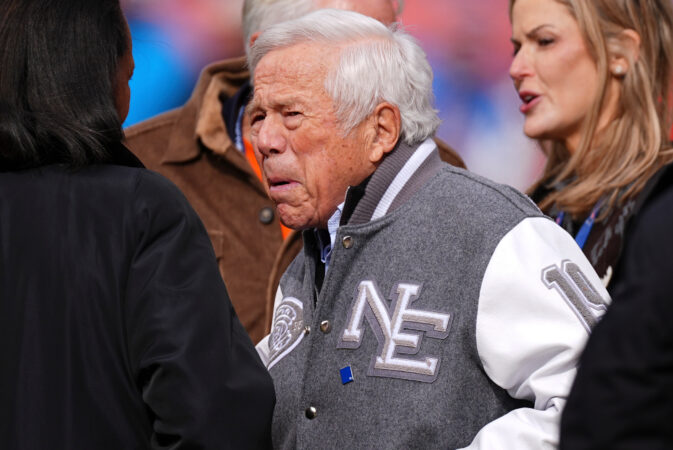
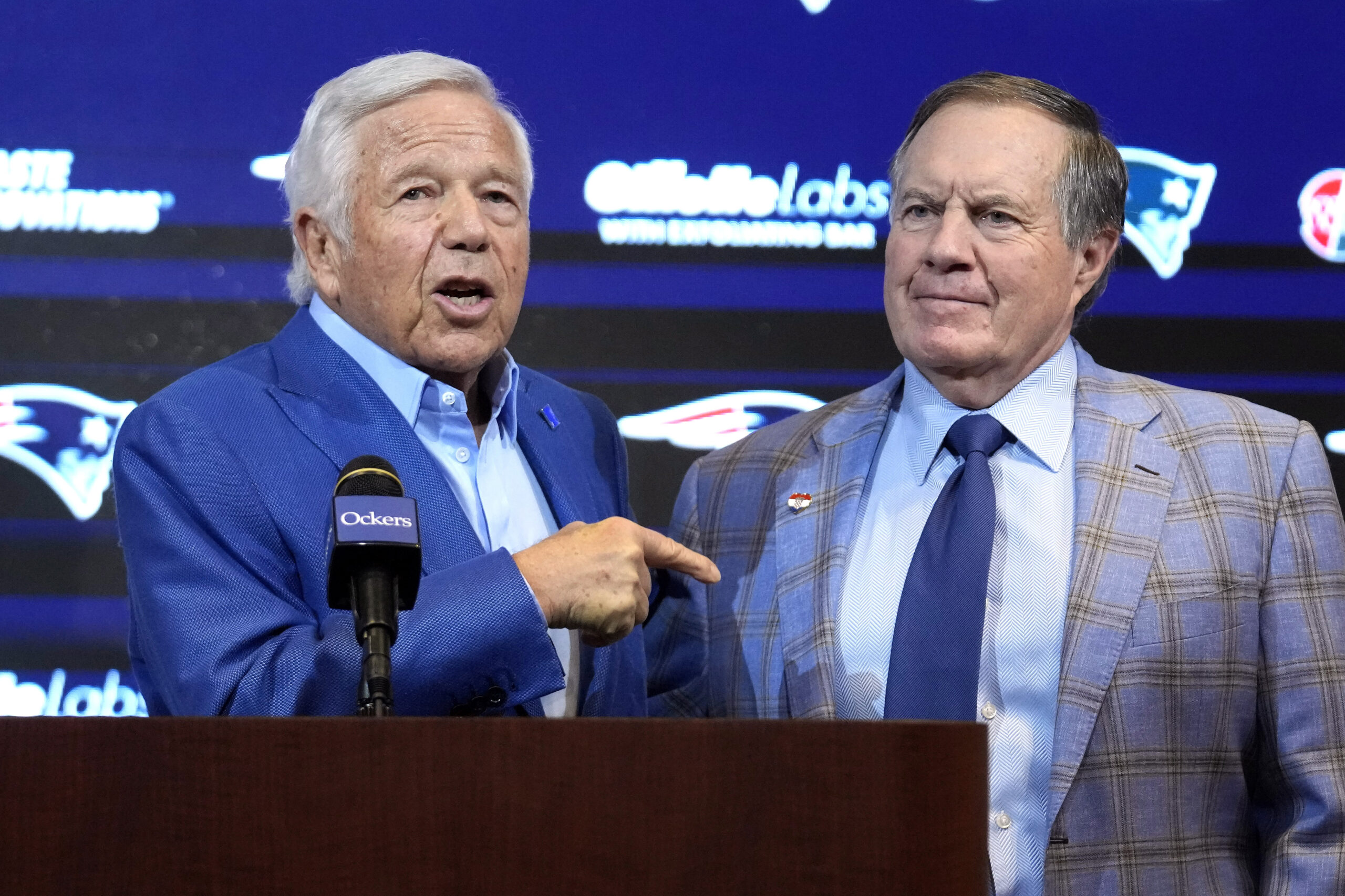
    New England Patriots owner Robert Kraft (left) with coach Bill Belichick on Jan. 11, 2024, the day of Belichick’s exit.

    Notably, the span of cheating included not only Super Bowl XXXIX, when they beat the Eagles, but also all but two of their Super Bowl appearances: their loss in Super Bowl LII to the Eagles and their win the next year over the Rams.

    Clearly, voters believe that cheating devalues winning.

    They also might consider Kraft’s 2019 involvement in a massage-parlor sting a disqualifying element (see below).

    NFL commissioner Roger Goodell said Monday, before the news broke, “They are spectacular. They have contributed so much to this game, and I believe they will be Hall of Famers.”

    It sounds like Goodell knew that Kraft hadn’t made it, either.

    It also sounds like Goodell knows, as hard as it is to imagine, that their tainted records might keep them out forever.

    NFL’s Epstein hypocrisy

    The NFL is supposed to hold team executives to a higher standard of conduct than it holds players. Don’t expect Deshaun Watson and Justin Tucker to believe that.

    Goodell on Monday indicated that the league will not immediately launch an investigation into Giants co-owner Steve Tisch, and probably never will. Tisch appears repeatedly in the latest released batch of files concerning the activities of convicted pedophile Jeffrey Epstein, who died in jail awaiting trial in 2019.

    There are hundreds of emails between Tisch and Epstein, some of which indicate that Epstein was supplying Tisch with female companionship. This correspondence took place after Epstein had served jail time for soliciting a prostitute and procuring a child for prostitution, the latter conviction requiring him to register as a sex offender in both Florida and New York.

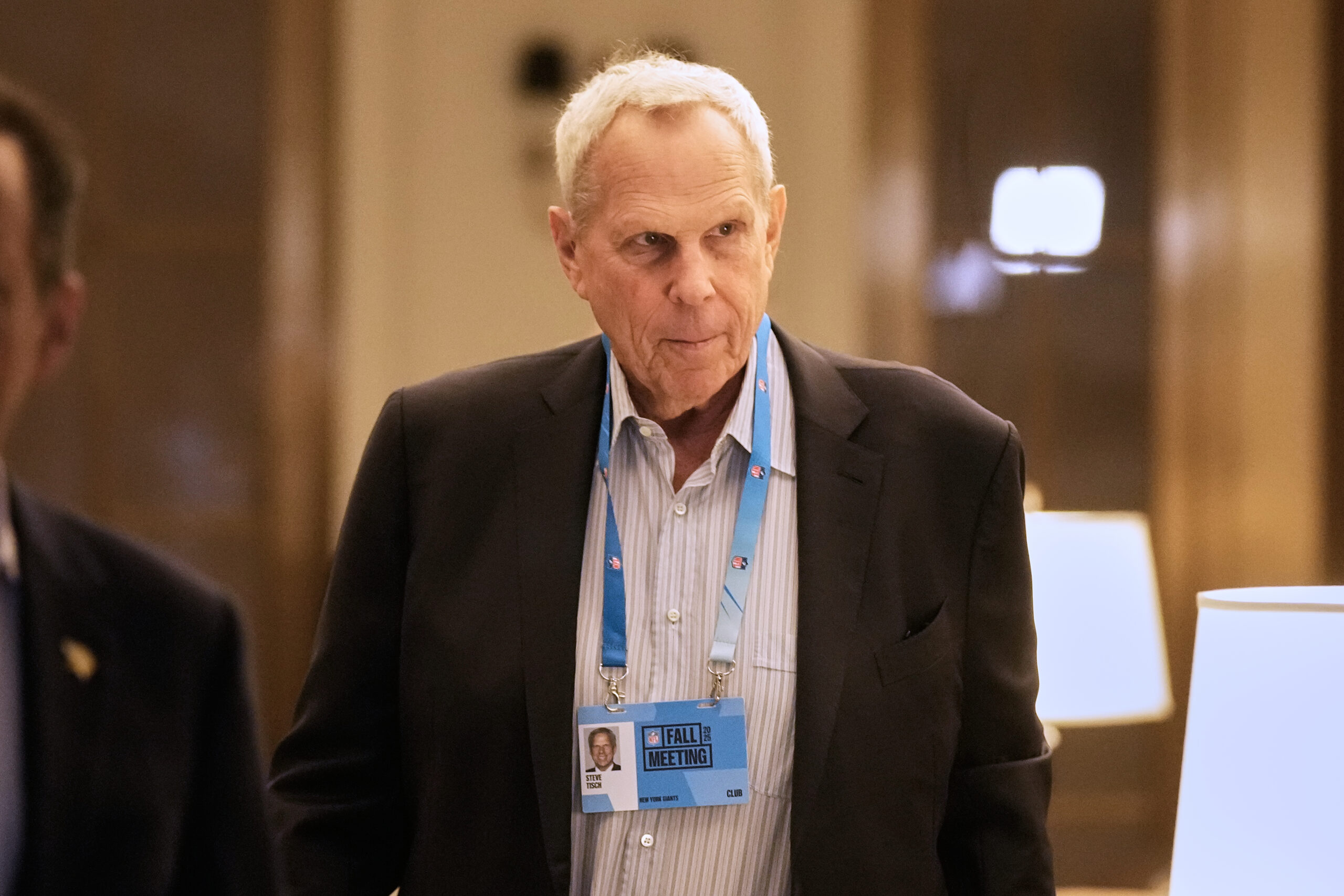
    New York Giants co-owner Steve Tisch’s name appears repeatedly in the latest released batch of files regarding Jeffrey Epstein.

    The nature of the companionship and the ages of those companions Epstein supplied to Tisch remain unknown. Tisch insists that all of the women Epstein supplied him were adults and that he never visited the notorious Epstein island.

    Even Tisch’s apparently legal and possibly acceptable interaction with a man who has become synonymous with sex trafficking and pedophilia sounds like something the NFL should probably investigate, right? The Personal Conduct Policy exists to keep The Shield clean.

    No, said Goodell.

    “We will look at all the facts,” he said. “We’ll look at the context of those, and try to understand that. We’ll look at how that falls under the policy. I think we’ll take one step at a time. Let’s get the facts first.”

    Well, that’s what an investigation does.

    With so many more prominent personalities mentioned in the files, including President Donald Trump, it is likely that the government will have neither the bandwidth nor the incentive (Trump routinely diminishes the files) to pursue a relatively small fish like Tisch.

    Translation: Unless other entities uncover more facts about Tisch’s relationship with Epstein and what services he provided him with, the NFL will turn a blind eye.

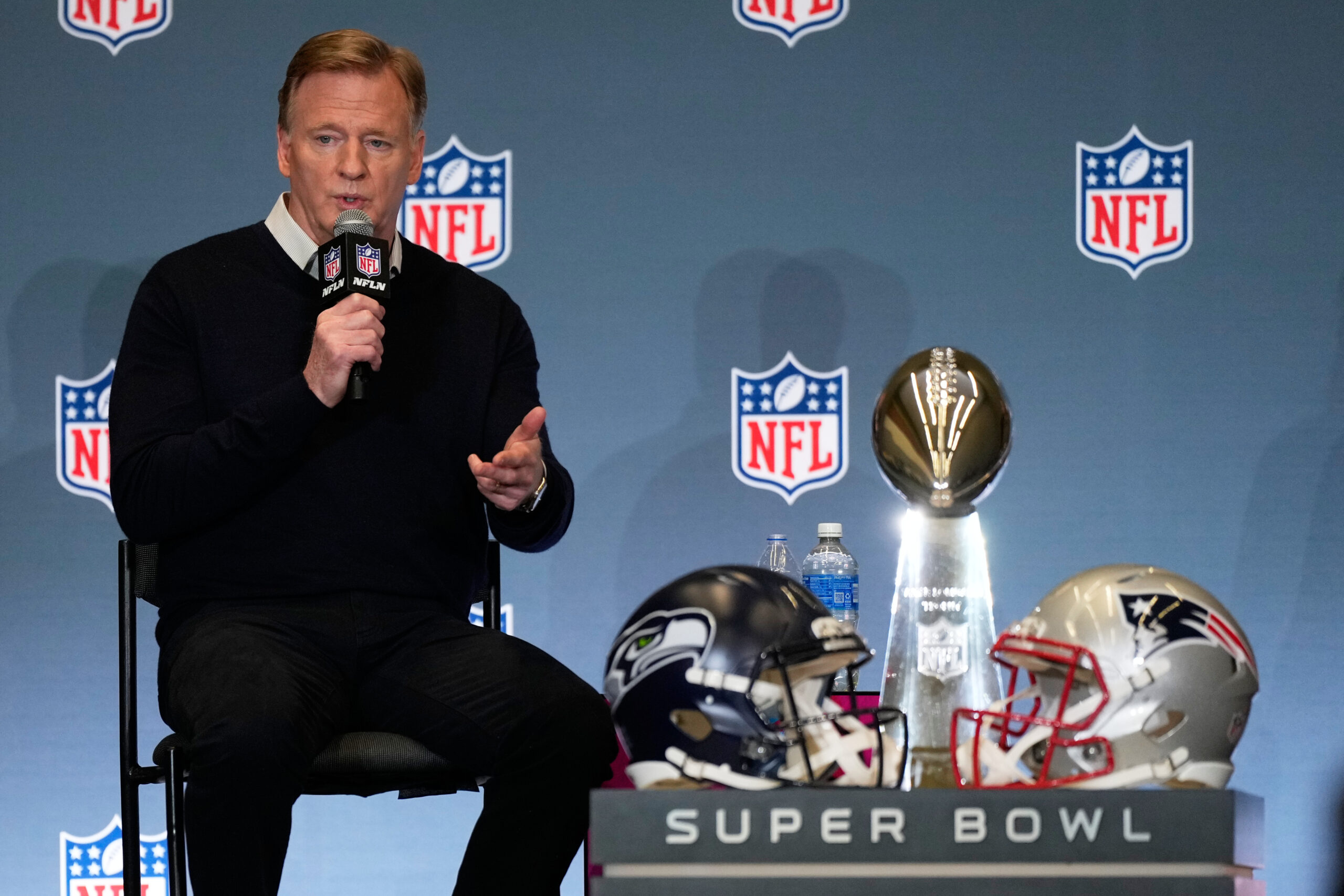
    Commissioner Roger Goodell during his state of the NFL news conference on Monday.

    Which is the opposite of what it does with its players.

    I don’t think there’s any question that if, say, Jameis Winston was found to have exchanged similar emails with Sean “Diddy” Combs, who went to prison for sex-related offenses, the NFL would investigate the matter posthaste (sorry for the stray, Jameis).

    But it seems like Goodell will handle this matter the way he handled the Robert Kraft scandal.

    The Patriots’ owner was caught in a sex trafficking and prostitution sting in 2019. Video allegedly showed Kraft paying for sexual acts on consecutive days that year in Florida. The misdemeanor charges were dropped, but Kraft admitted at least a measure of guilt when he apologized for having “hurt and disappointed” fans and family members.

    Unlike Kraft, neither Watson nor Tucker was ever charged with a crime for his alleged sexual misconduct with private massage professionals, but both were suspended without pay.

    Goodell chose to not punish Kraft back then. He seems just as reluctant to hold Tisch accountable today.

    Notably, NFL owners like Kraft and Tisch are the ones who pay Goodell’s $64 million salary.

  • Philadelphia school closure proposal is not perfect, but it is necessary | Editorial

    Philadelphia school closure proposal is not perfect, but it is necessary | Editorial

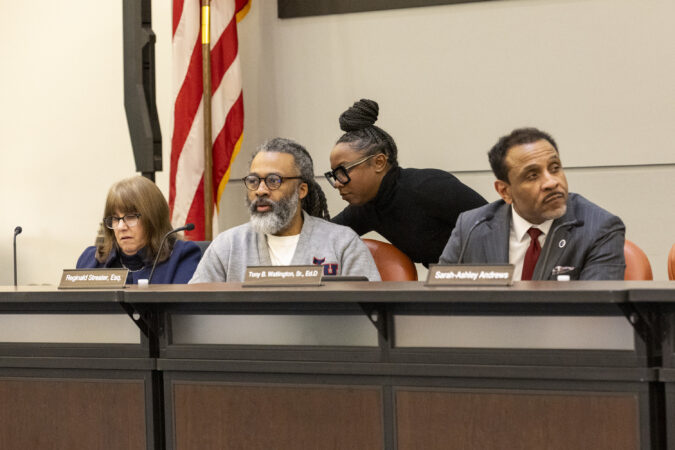
    Superintendent Tony B. Watlington Sr.’s facilities master plan — which includes 20 school closures and comes with a $2.8 billion price tag over 10 years — has attracted serious criticism. But while the proposal requires fine-tuning, and officials must work to earn Philadelphians’ trust, Watlington is wisely pushing to modernize and rightsize the district.

    The need for a facilities plan is clear.

    The average school building in Philadelphia is over 70 years old. More than simply being timeworn and out of date, the district’s buildings frequently contain environmental hazards like asbestos, and staff struggle to maintain older bathrooms and heating systems. In total, the cost of fully updating the district’s facilities is an estimated $10 billion, which is money the district simply doesn’t have.

    Meanwhile, many children attend classes in buildings meant for several times the number of students currently enrolled. Others have been forced to use trailers due to overcrowding. Some institutions lack key enrichment programs, like art or music.

    Unlike the downsizing in 2013, when Superintendent William R. Hite Jr. closed over 20 schools in a desperate bid to stave off a fiscal crisis, Watlington’s plan comes with some clear benefits to students, families, and educators.

    The city plans to open new schools (in part by using empty space in existing buildings), expand access to criteria-based middle school programs, create additional career and technical education pathways at neighborhood high schools, and update recreational and performance spaces. These investments lean into the district’s relative strengths. Suburban schools may have more resources, but they don’t have options like the Philadelphia High School for Creative and Performing Arts, George Washington Carver High School of Engineering and Science, or Central High School.

    The plan, of course, is not perfect. One proposal the district should reconsider, for example, is the relocation of Lankenau High School. The facilities plan recommends relocating Lankenau to Roxborough High School, which would make it difficult to offer many of its nature-oriented programs. The district may be better off keeping Lankenau and closing Roxborough, which has just over 600 students and test scores that are lower than district-wide averages.

    Grace Keiser, 27, of Norristown, a math teacher at Lankenau High School, holding a “Save Lank” sign during a rally outside the Philadelphia School District in January.

    Another reason to reconsider closing Lankenau is the fact that some of the school’s struggles are the result of district decisions. The poorly executed revamp of admissions at the city’s criteria-based, or magnet, high schools led to recruiting struggles at many of the district’s most well-regarded institutions. Beyond Lankenau, CAPA and Girls’ High also experienced a dip in enrollment. For the school to experience another drastic change would be a step backward.

    Another criticism of the plan is that it will impact predominantly Black schools and neighborhoods disproportionately. This is partly a reaction to trends that are far outside the district’s control. Since the 2014-15 school year, there are around 20,000 fewer Black students in traditional public schools. Another factor is the rise of charter and cyber schools, which educate nearly 80,000 students in Philadelphia. As this board wrote in 2024, “threading this needle might be the most daunting part of the job” when it comes to reorganizing the district’s schools.

    The facilities plan has attempted to soften the blow by including a neighborhood vulnerability score. Without it, the plan would likely recommend more closures in predominantly Black neighborhoods.

    Some of the outrage over the plan has less to do with the specifics of the proposal and more to do with the district’s deficit of goodwill among residents. After the 2013 closures, many educators noted an uptick in behavioral issues, and the financial savings failed to fully materialize. It is important to note, however, that while this plan is constrained by fiscal realities, it was not created in reaction to them. The goal is not to save money, but to improve buildings and programs for students.

    Each building that the district transfers to the city for new usage eliminates millions of dollars’ worth of overdue maintenance and upgrades. Given the nearly $30 million cost to renovate and remediate asbestos at Frankford High School, reducing the district’s capital needs by shrinking its physical footprint is the right call. It creates fiscal space for the district to invest in programs that are succeeding.

    No one cheers for the closure of schools, but Watlington’s plan offers students across the city access to better facilities and better programs. After some revisions, it should move forward.

  • Large Roxborough apartment project adds more family units and makes changes to appease neighbors

    Large Roxborough apartment project adds more family units and makes changes to appease neighbors

    A large new apartment proposal for 4889 Umbria St. in Roxborough has been altered to appease some neighbor concerns, with more brick incorporated into the facade and design tweaks to ease congestion.

    The developers, Philadelphia-based Genesis Properties and Newtown Square-based GMH Communities, also reduced the number of apartments from 384 to 369.

    But the actual number of bedrooms increased from 481 to 486, as they shifted to larger, family-size apartments.

    “I love the increase of twos and threes [bedrooms] and the availability to families, which I don’t find very common as a developer,” said Maria Sourbeer, vice president at Mosaic Development Partners and a member of the city’s Civic Design Review committee. “The money’s in the studios and ones.”

    The design team explained that the developers felt this corner of Northwest Philadelphia would have strong demand for larger units.

    Last November, the project’s initial consideration at the Civic Design Review committee saw pushback to its fortress-like design.

    Philadelphia-based Oombra Architects sought to soften elements of the project, increasing plantings and street tree coverage.

    More brick has been added as a building material, in a bid to echo the older industrial buildings on the project’s southwestern edge.

    A bird’s eye rendering of the new development on Umbria Street in Roxborough.

    The 123-space bike parking facility has been moved from the third to the first floor.

    The developers also relocated the parking garage entrance from busy Parker Avenue to Smick Street, which had not previously been publicly accessible. The project includes 380 spaces.

    “[We] want to commend you in taking the process seriously,” said Ximena Valle, an architect who chairs the CDR committee. “We recognize that you could have come here with no changes made. … Overall, there’s a big win here.”

    The Civic Design Review process makes recommendations but cannot force developers to accede to its critiques. The last time the Philadelphia City Planning Commission studied its efficacy in 2019, it found that only a third of projects adopted CDR recommendations.

    A rendering of the Lemonte Street side of the project, the largest new apartment building in Roxborough in years.

    Although the project offers nearly one parking space for every apartment — far more than they are legally required — the local community group still held concerns about the amount of parking included in the project as the bedroom count rose.

    Otherwise, they largely embraced the changes.

    “There are going to be more cars on the street. I don’t think there’s any question about that,” said Marlene G. Schleifer of the Ridge Park Civic Association. “But we were pleased with the work that the developer has done to comfort us a little bit and make it easier to swallow.”

  • A formerly enslaved man was thrown out of an Old City church. He then founded America’s first African Methodist Episcopal church.

    A formerly enslaved man was thrown out of an Old City church. He then founded America’s first African Methodist Episcopal church.

    Mark Tyler, historiographer and executive director of research and scholarship of the African Methodist Episcopal Church, often wonders: What if Christians stood up in the 1780s and challenged the articles of the U.S. Constitution that said Black people were not whole human beings?

    What if the American branch of the Methodist church followed the teachings of its founder, John Wesley, who taught that slavery was a violation of Christian mercy? What if the ushers of Old City’s St. George’s Methodist Church didn’t kick formerly enslaved congregants Richard Allen and Absalom Jones out of the general congregation and force them to worship in segregated pews?

    “We would have avoided the Civil War,” Tyler said. “We would have avoided Jim Crow. We would have avoided the moment in history we are in now.”

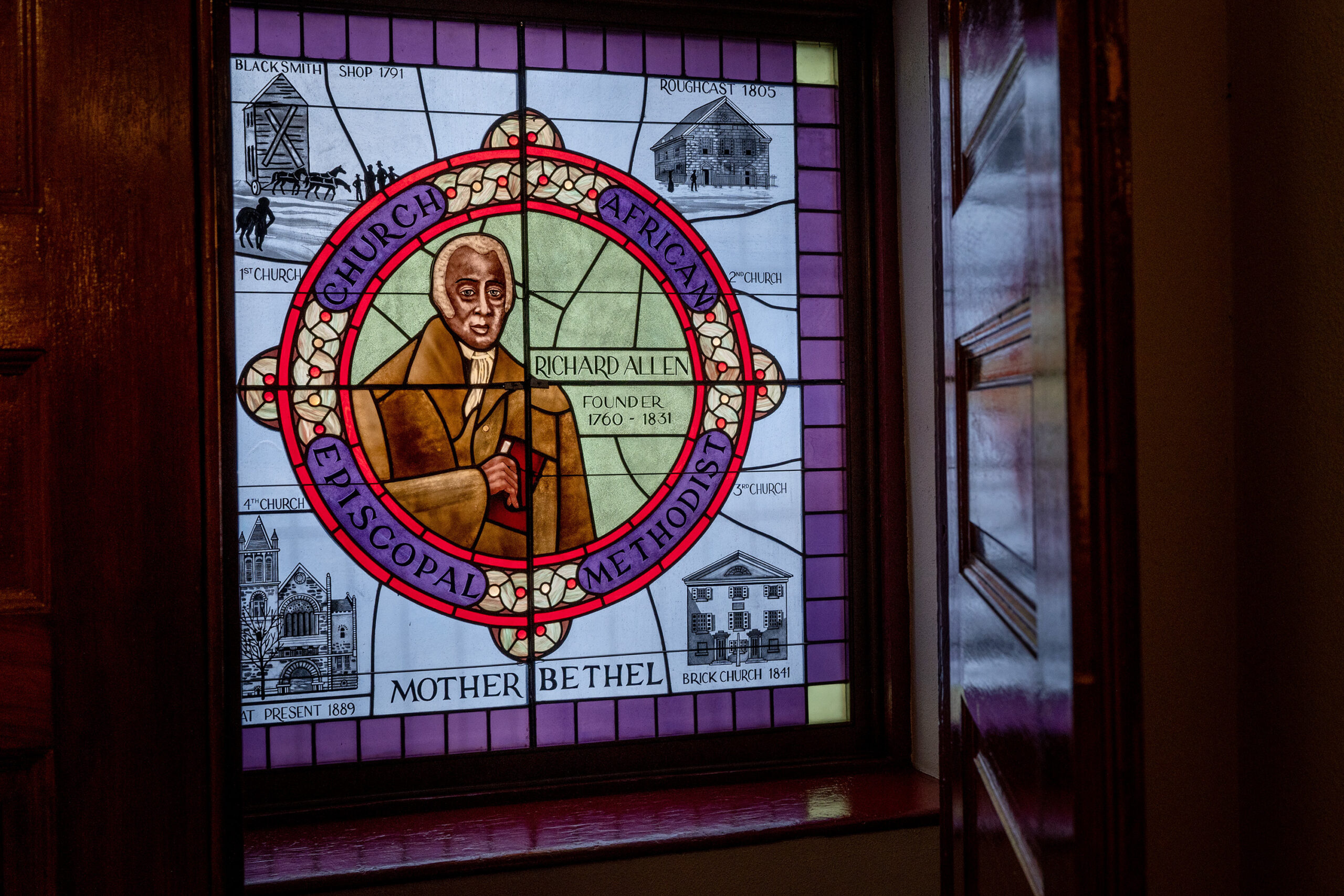
    A stained glass window of founder Richard Allen and Mother Bethel AME Church’s previous homes is at entrance of the church.

    Instead, American Methodists sided with southern landholders who relied on cost-free Black labor to build their empires. Evangelical churches, Tyler said, were among the first institutions to practice segregation.

    Allen and Jones went on to start their own churches.

    Jones founded the African Episcopal Church of St. Thomas at 5th and Adelphi Streets. (Today the church is at 6361 Lancaster Ave. in West Philly.)

    Allen established Mother Bethel African Methodist Episcopal Church, regarded as America’s — and the world’s — first AME congregation.

    Mother Bethel will celebrate this history at the Philadelphia Historical District’s weekly “firstival,” part of a yearlong celebration of America’s 250th birthday. Each Saturday in 2026, the historic district is hosting a daytime shindig honoring an event that happened in Philadelphia before anywhere else in America and often the world.

    Iris Barbee Bonner is a fashion designer and graphic artist who brought her experience growing up in the AME Church to this 52 Weeks of Firsts No. 1

    Allen was born into slavery in Philadelphia in 1760. He bought his freedom from his enslaver, a devout Methodist who converted many of the people he enslaved, in 1783. Allen answered the call to preach and traveled the mid-Atlantic for a few years evangelizing freed and enslaved people.

    In 1786, he returned to Philadelphia, joined St. George’s, and started a 5 a.m. worship service. He led the service for a year-and-a-half before walking out in November of 1787.

    “Certainly there had been moments of resistance in colonial Black communities,” Tyler said. “But this walkout was significant because it led to the emergence of the first American institutions by and for Black people,” Tyler said.

    Allen bought land at Sixth and Lombard Streets — where Mother Bethel sits now — on Oct. 10, 1791. Mother Bethel’s first building, a repurposed blacksmith shop, was dedicated on July 29, 1794, by Bishop Francis Asbury.

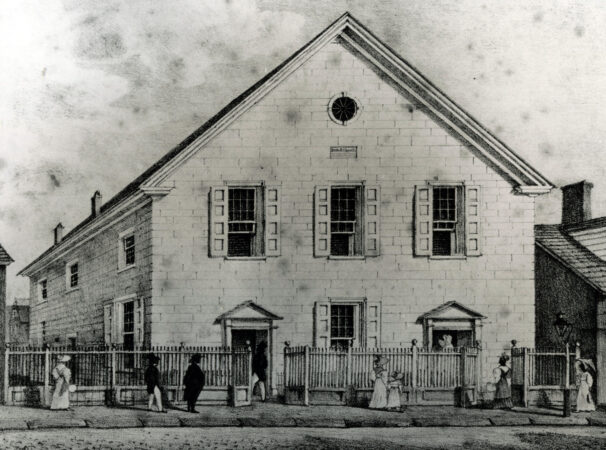
    A second building was erected in 1805, a third in 1841, and the current building was completed in 1890.

    “We are the oldest independent denomination founded by people of color in the United States,” said the Rev. Carolyn C. Cavaness, pastor of Mother Bethel. “Our church sits on the oldest parcel of land continuously owned by African Americans.”

    In 1816, 30 years after Allen established Mother Bethel, he invited delegates of Black Methodist churches in Pennsylvania, Baltimore, Maryland, Delaware, and New Jersey to a conference, establishing the AME Church as its own denomination.

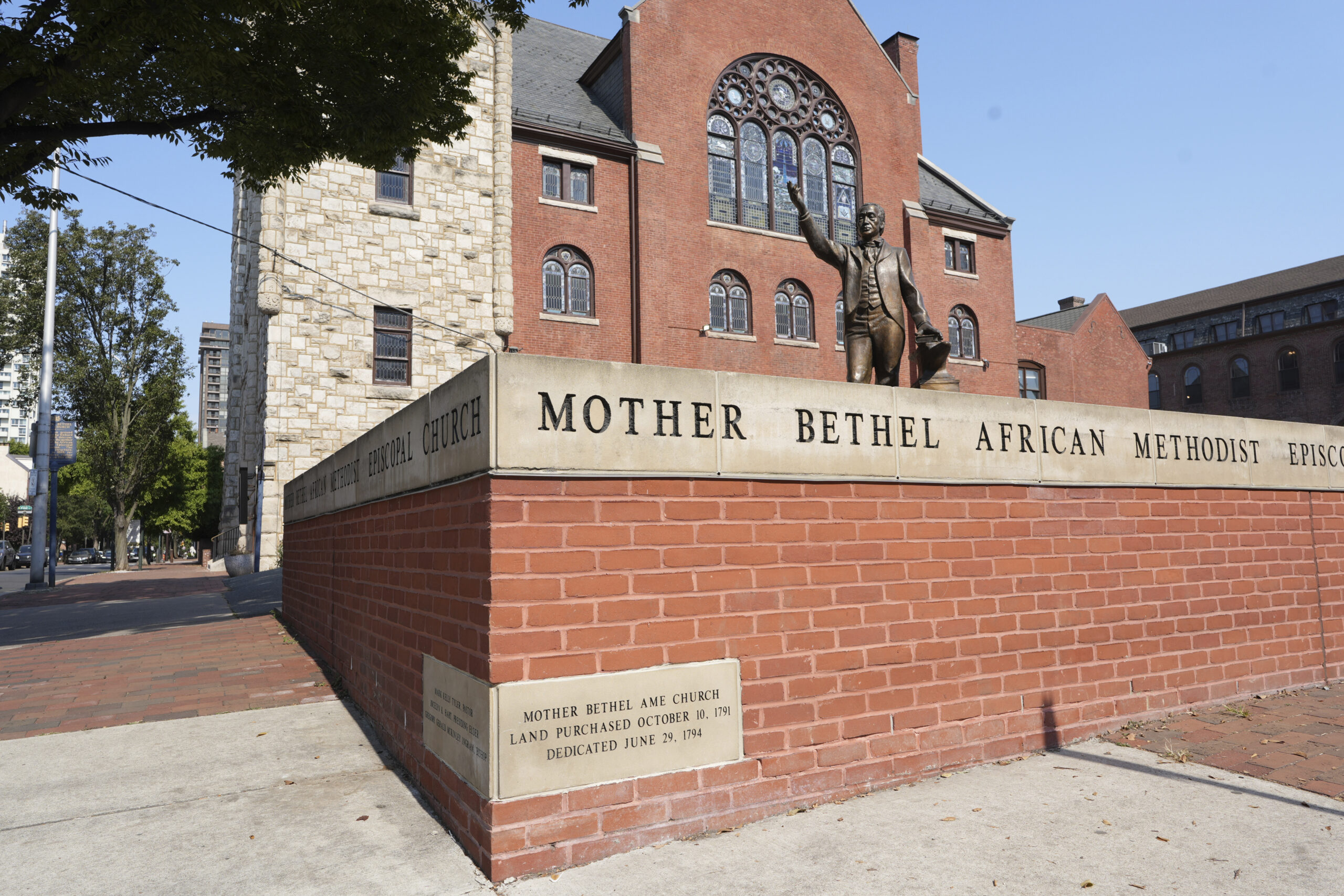
    A statue of Mother Bethel AME Church founder Richard Allen stands on the oldest parcel of land continuously owned by Black Americans in Philadelphia on Oct 13, 2024. (AP Photo/Luis Andres Henao)

    Mother Bethel has stood at the center of civil rights for centuries, from serving as a station on the Underground Railroad to uniting interfaith clergy who questioned $50 million of community benefits slated to go to the Sixers arena in 2024.

    “We are the Mother Church,” Cavaness said. “ … the foundation of so much Philadelphia history, so much American history. It’s an honor to be the sacred caretaker of this history.”

    This week’s Firstival is Saturday, Feb. 7, 11 a.m.-1 p.m., at Mother Bethel, 419 S. Sixth St. The Inquirer will highlight a “first” from Philadelphia Historic District’s 52 Weeks of Firsts program every week. A “52 Weeks of Firsts” podcast, produced by All That’s Good Productions, drops every Tuesday.