Amid the cacophony of whirling toddlers at a local YMCA in Oxford, Chester County, about 14 years ago, Jermaine Palmer caught a glimpse in the corner of his eye of what was to come. He had gotten his daughter, Jordyn, into basketball, taking her to his practices, letting her crawl around the court in diapers, and involving her in youth coed rec leagues with a tiny ball and hoop.
One afternoon, as a game was going on, he noticed, Jordyn and a little boy collided going after a rebound. They both fell. The boy went crying to his mother. Jordyn stood up, grabbed the ball, and scored a layup as if nothing happened, smiling back down the court. Jermaine just shook his head, he recalled.
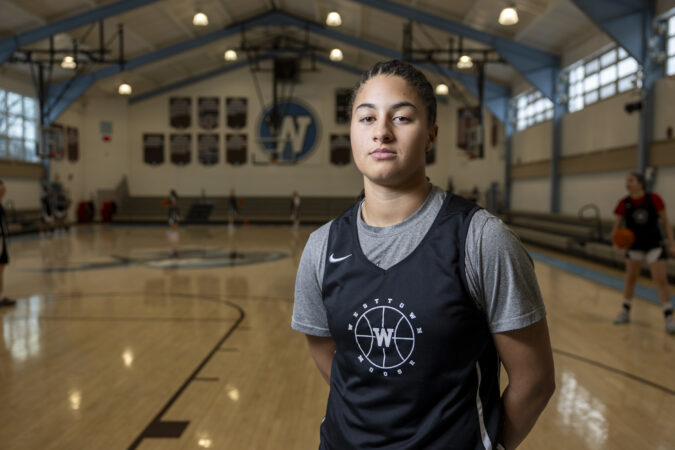
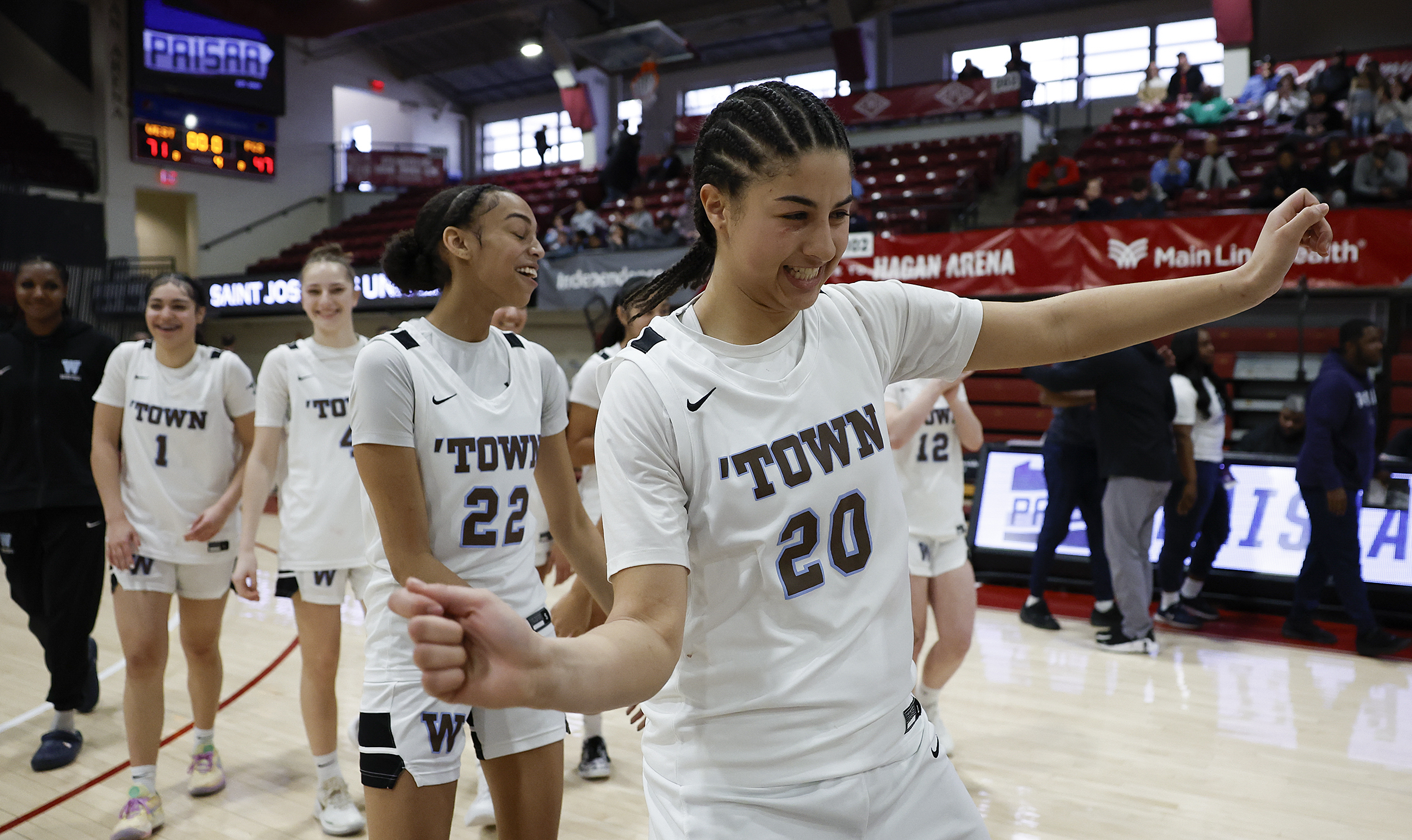
Jordyn Palmer, the gifted 6-foot-2 junior guard at Westtown School, tends to make a lot of people shake their heads in disbelief each time they see her play, especially the nation’s top college coaches. She is ranked as the No. 6 player in the country in the class of 2027 by ESPN’s SportsCenter NEXT — Super 60. She is averaging a humble 23 points and 12 rebounds for the Moose, who will be playing for their sixth straight Friends Schools League championship this Friday at 6:30 p.m. against archrival Friends’ Central at La Salle University.
As a junior, Palmer is on the threshold of 2,000 career points and is the leader of a star-studded team that has a/ 23-1 overall record this season and is ranked No. 7 in the country by ESPN.
What is so interesting about Palmer is that her best is yet to come. She’s always been tall for her age, and her parents, Jermaine and Kim, had to carry her birth certificate as proof of her age because of that. She has been playing varsity basketball since she was in eighth grade.
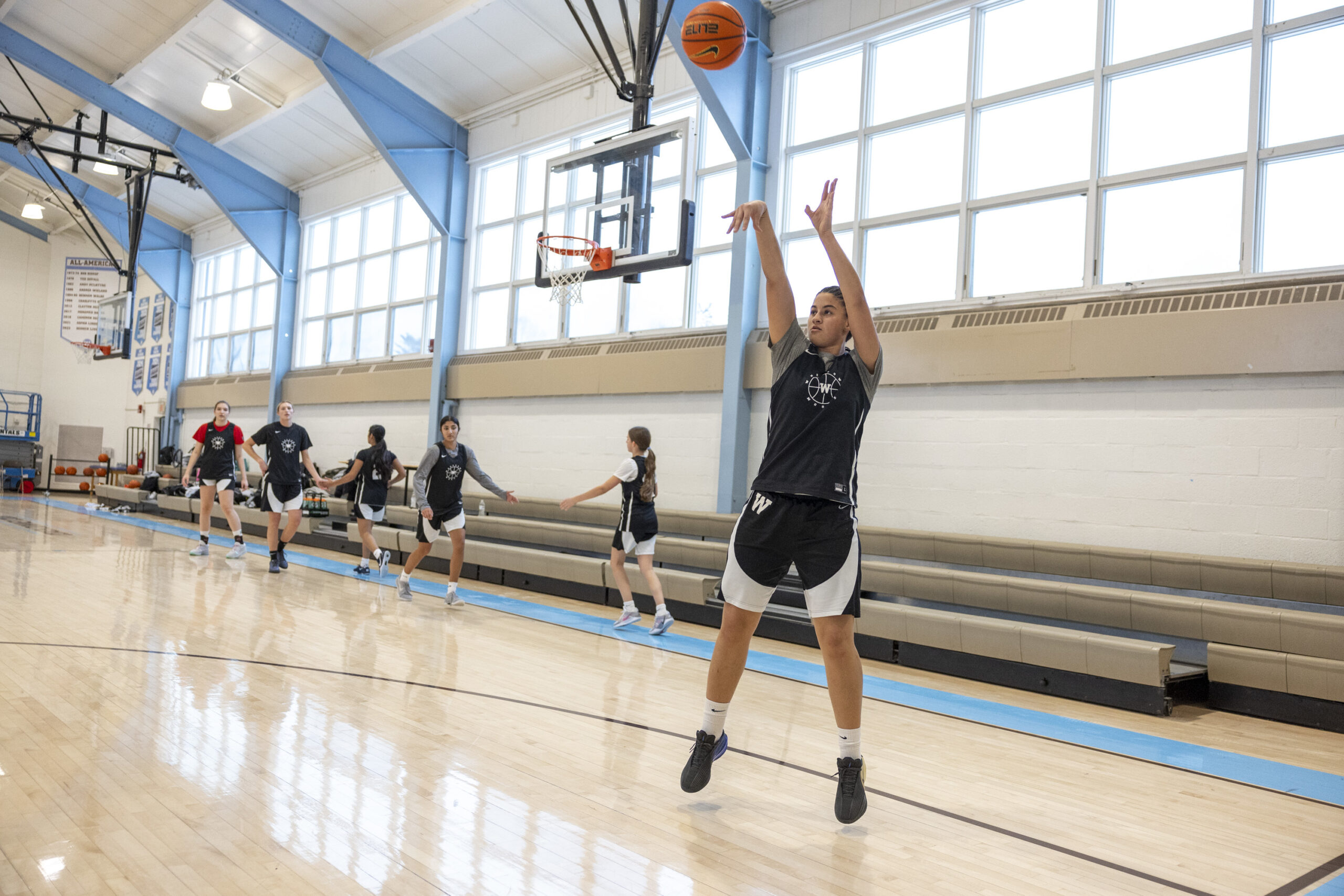
A dominant rebounder, ballhandler, and shooter, she can finish left- or right-handed and has added a more consistent perimeter game. She’s also a team player, making a point to get her teammates involved. She plays with poise, despite the constant attention she has had on her since she was 14.
She was 5-9 at age 12 playing for the Chester County Storm under-16 AAU team when Westtown coach Fran Burbidge first saw her in a summer tournament at the Spooky Nook complex in Manheim, Lancaster County. Burbidge, who coached women’s stars Elena Delle Donne and Breanna Stewart, quickly saw how much more advanced Palmer was than the teenage girls she was playing against.
“A friend of mine asked me if I ever saw her play. I remember going to one of the back courts and thinking, ‘There is no way that kid is in seventh grade,’” Burbidge said. “So, yeah, I had to convince myself she was that much better than everyone around her. If I didn’t know, I would have thought she was a high school junior.”
Palmer has evolved since then. The second-oldest of four, she’s 17 and may grow another inch.
She’s also a victim of her own success. Burbidge pulls her early in blowouts — and the Moose have many. She easily could score 40 points a game, but she plays with a pass-first, team-first mentality.
Last summer, she was playing in a league against a talented Imhotep Charter team when she dominated both ends of the court for 10 minutes. Then she turned back to being a facilitator again. She is by no means lazy, according to her coaches and her father, but she is so smooth that she can play at different levels.
Jordyn Palmer is averaging 23 points and 12 rebounds this season.
“I was raised around the game. I grew up with a basketball in my hands, my dad being a coach taking me to practice,” said Jordyn, who carries a 3.5 grade-point average. “I was pretty much crawling around a basketball court before I was walking. I was always the tallest kid, that was me. I grew up playing soccer, too, but basketball was definitively my first love. I would say I was around seventh, eighth grade, when I started to think I was pretty good at this. It really changed when I went to Westtown.”
And it really changed in 2023 when she was cut from the U.S. under-16 national team in Colorado Springs, Colo., when she was 14. It was the first and only time she was cut from something. She reached the second cuts. She sat in a conference room and was told that she did very well, but she would not make the team.
When Jordyn called her parents, tears were shed — fueling aheightened determination.
“A year later, I got invited back, and I made the team,” she said. “That was the first time I faced rejection, and I thought I dealt with it well. It made me work harder. Being cut didn’t make me angry because I was not too sure I would make it anyway, but it shocked me. I began working out in the morning, and I’m not a morning person. I hate waking up early. I began taking basketball more seriously than I ever did.”
A month after she was cut that summer, she led Philly Rise to an AAU national title.
Jermaine and Burbidge want her to play more intensely for sustained periods of time. Jordyn knows she will need to maintain those levels once she gets to college.
“Jordyn has not even scratched her full potential,” said Jermaine, the girls’ basketball coach at Oxford High School. “I’m proud of her. Jordyn is a great kid. Her upbringing keeps her humble. But she does not play with the urgency that I know she has. You see it in spurts, but when you see her playing national-level players, that comes out. I get on her all the time about dominating.
“The stuff people don’t see in the gym is someone who can outplay anyone. You can’t really guard her. When she tightens her shot off the dribble and her ballhandling, she is going to be terrifying. I’m her father and a coach — you see the way games are called. She’s so strong and so solid, refs look at her a different way than they do other players. She has gotten used to it. Refs don’t understand the body difference between Jordyn and everyone else.
“No one likes Goliath. It’s part of the game.”
Jordyn Palmer plans to make her college commitment next spring. She’s interested in South Carolina, LSU, Kentucky, Rutgers, Maryland, Notre Dame, and UCLA.
South Carolina, LSU, Kentucky, Rutgers, Maryland, Notre Dame, and UCLA are the schools in which she’s interested. She says she is looking to make her official visits over the summer and make a decision next spring. Jordyn and Jermaine said they want to take their time with the recruiting process.
She would get around 30 calls a day this time last year. That has been reduced to around five a day.
“It’s been a little bit of a pain,” she said. “There have been those times when I have cried by myself because it can sometimes be overwhelming. I spoke to my parents about it, and they have done a great job taking the pressure off me, telling these coaches I’m taking a break. I’m still a kid, and I’m grateful to my parents for allowing me to be a kid. They let me fish.”
Then, Jordyn went into her own “fish tale.” She got into fishing as a way to relax through her maternal grandfather. During summer vacations, she fishes with her family in northeast Maryland and the Outer Banks in North Carolina. She once hooked a baby shark when she was 7.
Each night, Louis-Hunter Kean spiked a fever as high as 104.5. He would sweat through bedsheets and shiver uncontrollably. By morning, his fever wouldease but his body stillached; even his jaw hurt.
He had been sick like this for months. Doctors near his South Jersey home couldn’t figure out why a previously healthy 34-year-old was suffering high fevers plus a swollen liver and spleen. In early 2023, they referred Kean to Penn Medicine.
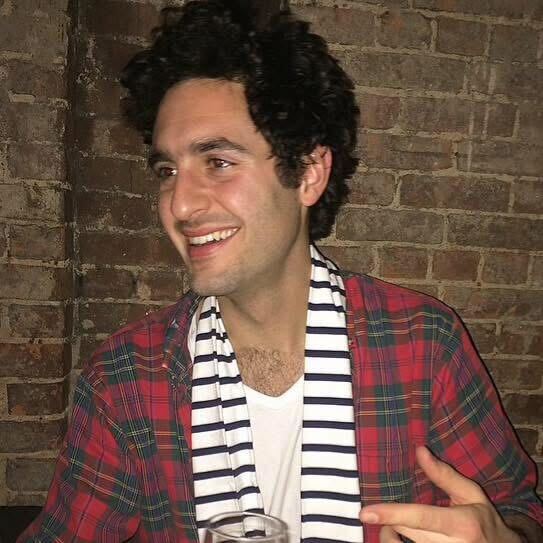
Louis-Hunter Kean visiting a winery in the Tuscany region of Italy in September 2021. He first spiked a mysterious and persistent fever about a year later in August 2022.
“These doctors are very sharp, and there are a lot of teams working on it,” Kean texted a friend after being admitted to the Hospital of the University of Pennsylvania (HUP) in West Philadelphia.
Was it an infection? An autoimmune disease? A blood cancer? Over the next six months, at least 34 HUP doctors — rheumatologists, hematologist-oncologists, gastroenterologists, infectious disease and internal medicine specialists — searched for an answer.
Kean was hospitalized at HUP five times during a six-month period in 2023. His electronic medical chart grew to thousands of pages.
Along the way, doctors missed critical clues, such as failing to obtain Kean’s complete travel history. They recommended a pair of key tests, but didn’t follow up to make sure they got done, medical records provided to The Inquirer by his family show.
Doctors involved in Kean’s care, including at Penn, prescribed treatments that made him sicker, said four infectious disease experts not involved in his care during interviews with a reporter, who shared details about his treatment. Penn doctors continued to do so even as his condition worsened.
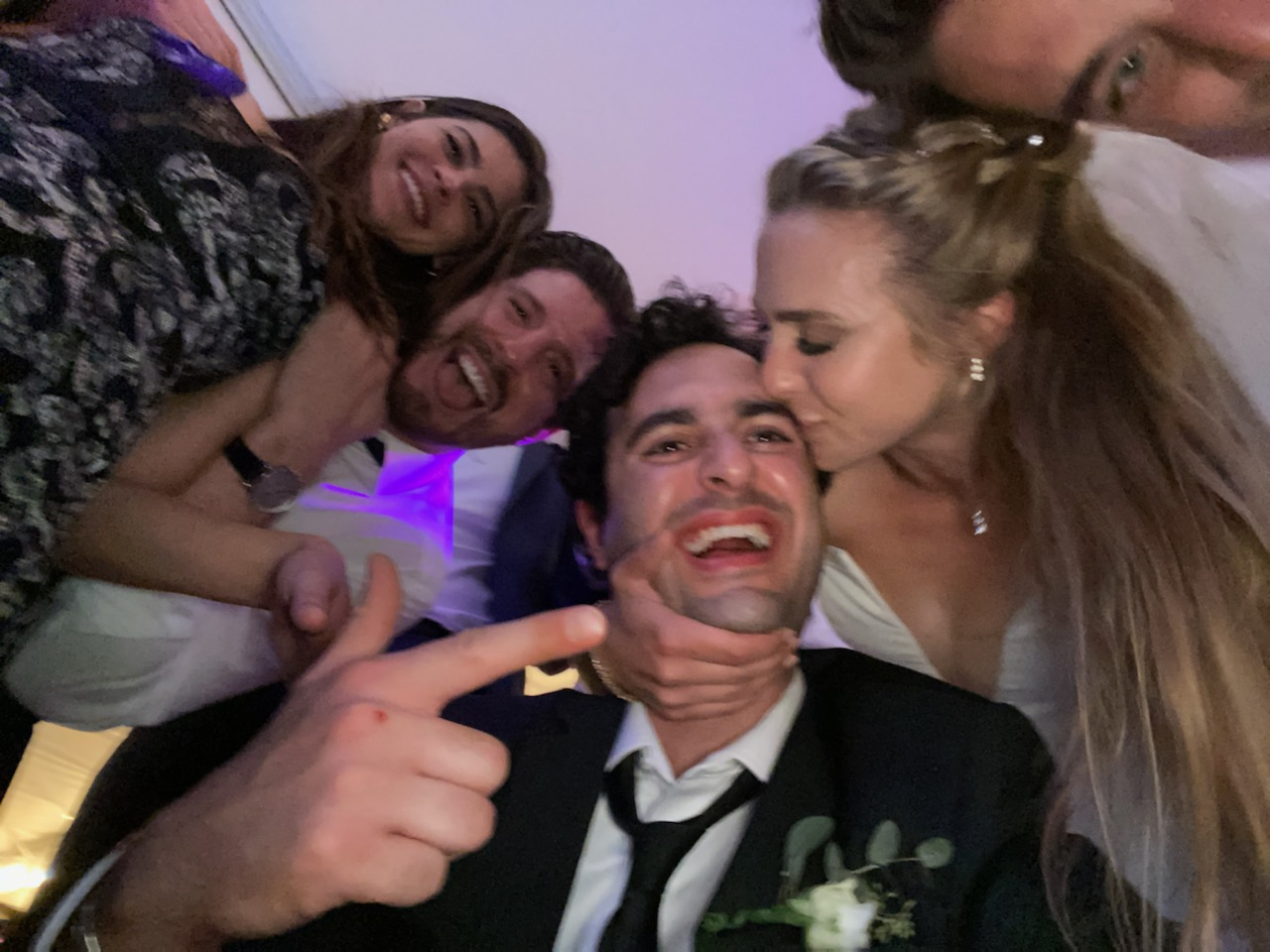
Louis-Hunter Kean receives a kiss from bride Ashley Greyson at the October 2021 wedding of his close friend, Joshua Green. Green and Kean graduated from Haddonfield High School in 2007.
“No one was paying attention to what the doctor before them did or said,” Kean’s mother, Lois Kean, said.
“They did not put all the pieces together,” she said. “It was helter-skelter.”
Kean’s family is now suing Penn’s health system for medical malpractice in Common Pleas Court in Philadelphia. The complaint identifies nearly three dozen Penn doctors, accusing them of misdiagnoses and harmful treatments. These physicians are not individually named as defendants.
In court filings, Penn says its doctors did not act recklessly or with disregard for Kean’s well-being, and his case is not indicative of any systemic failures within its flagship hospital. A Penn spokesperson declined further comment on behalf of both the hospital and the individual doctors involved in Kean’s care, citing the pending lawsuit.
The puzzle of Kean’s diagnosis finally came together in November 2023 after a Penn doctor, early in his career, sought help from the National Institutes of Health (NIH).
An NIH doctor recommended a test that identified the cause: a parasite prevalent in countries bordering the Mediterranean Sea. Kean likely got infected while vacationing in Italy, four parasitic disease experts told The Inquirer.
The infection, which is treatable when caught early, is so rare in the U.S. that most doctors here have never seen a case, the experts said.
By the time Penn doctors figured it out, Kean’s organs were failing.
Louis-Hunter Kean and his then-girlfriend Zara Gaudioso at a friend’s wedding in Tuscany in September 2021. Kean and Gaudioso got engaged in early 2023. Gaudioso was smitten by Kean’s good looks and sense of humor.While vacationing in Italy in September 2021, Louis-Hunter Kean and his friends hiked in the foothills of the Apennine Mountains and visited Gran Sasso and Monti della Laga National Park.
A missed clue
When a patient has an ongoing and unexplained fever, an infectious disease doctor will routinely start by takinga thorough travel history to screen for possible illnesses picked up abroad.
A medical student took Kean’s travel history during his initial workup at HUP in June 2023. An infectious disease specialist reviewed the student’s notes and added a Cooper University Hospital doctor’s earlier notes into Kean’s electronic medical chart at Penn.
Those records show Kean had traveled to Turks and Caicos with his fiancée in May 2022. The next month, he took a work trip out West, including to California, where he visited farms, but didn’t interact with livestock.
This was not unusual for Kean, who worked with fruits and vegetables imported from around the world at his family’s produce distribution center on Essington Avenue in Southwest Philadelphia.
Kean’s fiancée, Zara Gaudioso, said she repeatedly told doctors about another trip: In September 2021, about a year before his fevers began, they traveled to Italy for a friend’s wedding in Tuscany.
The couple hiked remote foothills, danced all night in a courtyard, dined by candlelight surrounded by a sunflower farm, and slept in rustic villas with the windows flung open.
“We told everybody,” Gaudioso said. “A lot of Americans go to Italy — it’s not like a third-world country, so I could see how it could just go in one ear and out the other.”
But notes in Kean’s medical record from the Penn infectious disease specialist don’t mention Italy. Neither do the ones the specialist copied over from Kean’s infectious disease doctor at Cooper.
Kean “does not have known risk factors” for exposure to pathogens, the Penn specialist concluded, except possibly from farm animals or bird and bat droppings.
Still, the specialist listed various diseases that cause unexplained fever: Tick-borne diseases. Fungal infections. Tuberculosis. Bacteria from drinking unpasteurized milk.
The possible culprits included a parasitic disease, called visceral leishmaniasis, transmitted by a bite from an infected sandfly. It can lie dormant for a lifetime — or, in rare cases, activate long after exposure, so it’s important for doctors to take extensive past travel histories, parasitic experts say.
The parasite is widely circulating in Southern European countries, including Spain, Greece, Portugal, and Italy.
“Mostly, people living there are the ones who get it. But it’s just a lottery sandwich, and there’s no reason that travelers can’t get it,” said Michael Libman, a top parasitic disease expert and former director of a tropical medicine center at McGill University in Canada.
But few cases become severe. Hospitals in Italy reported only 2,509 cases of active infection between 2011 and 2016, affecting fewer than one in 100,000 people. Infections requiring hospital care in Italy began to decline after 2012, according a 2023 European study by the Public Library of Science (PLOS) journal Neglected Tropical Diseases.
Caught early, visceral leishmaniasis is treatable. Without treatment, more than 90% of patients will die.
In addition to fever, other telltale symptoms are swelling of the liver and spleen and low blood cell counts. Kean had all of those.
A missed test
The infectious disease specialist requested a test to examine tissue biopsied from Kean’s liver, which was damaged and enlarged. Lab results showed that immune cells there had formed unusual clusters — another sign that his body might be fighting off an infection.
In her notes, the specialist identified “visceral leish” as a possible diagnosis, which repeated — via copy and paste — seven times in his medical record. Her request to “please send biopsy for broad-range PCR” repeated five times.
That is a diagnostic (polymerase chain reaction) test that looks for the genetic fingerprint of a range of pathogens.
The test comes in different versions: One looks broadly for bacteria. The other is for fungi. The broad fungal test candetect leishmania, even though it’s not a fungus. However, it’s not always sensitive enough to identify the parasite and can produce a false negative, experts said.
The specialist’s chart note doesn’t specify which type she wanted done.
It’s not clear if anyone asked. The test wasn’t done.
Louis-Hunter Kean (right, with wine glass and tambourine) leads a wedding procession through the small stone village of Santo Stefano di Sessanio in Italy’s Abruzzo region in September 2021.
She did not order a low-cost rapid blood test that screens specifically for leishmaniasis by detecting antibodies made by the immune system after fighting it. She also didn’t order a leishmania-PCR, which is highly targeted to detect the exact species of the parasite.
Nor did the medical record show that the specialist followed up on the results of the broader test she requested, even though she saw Kean on nine of the 13 days of his first hospitalization at HUP in June 2023.
Penn has a policy that a lead doctor on the patient’s case is responsible for making sure that recommended tests get done. The specialist was called in as a consultant on Kean’s case. During that June hospitalization alone, his medical chart grew to 997 pages.
Patient safety experts have warned for years that electronic medical record systems — designed for billing and not for care — can become so unwieldy that doctors miss important details, especially with multiple specialists involved, or repeat initial errors.
A seemingly innocuous step in charting — copying and pasting previous entries and layering on new ones— can add to the danger, patient safety experts say.
That’s how the specialist’s mention of “visceral leish” and her test recommendation got repeated in Kean’s chart.
Marcus Schabacker, president of ECRI, a nonprofit patient-safety organization based in Plymouth Meeting, said “copy and paste” in electronic medical records puts patients at risk of harm.
“The reality is if you are reading something over and over again, which seems to be the same, you’re just not reading it anymore. You say, ‘Oh, yeah, I read that, let’s go on,’” said Schabacker, speaking generally about electronic medical record systems and not specifically about Kean’s case.
Louis-Hunter Kean plays guitar in his younger years. He loved music and shared eclectic playlists with his friends.
When treatments harm
Penn doctors believed Kean had a rare,life-threatening disorder, known as hemophagocytic lymphohistiocytosis (HLH), in which the immune system attacks the body. Instead of fighting infections, defective immune cells start to destroy healthy blood cells.
In most adults, the constellation of symptoms diagnosed as HLH gets triggered when an underlying disease sends the body’s immune system into overdrive. Triggers include a blood cancer like lymphoma, an autoimmune disease like lupus, or an infection.
Penn doctors across three specialties — hematology-oncology, rheumatology, and infectious disease — were searching for the cause within their specialties.
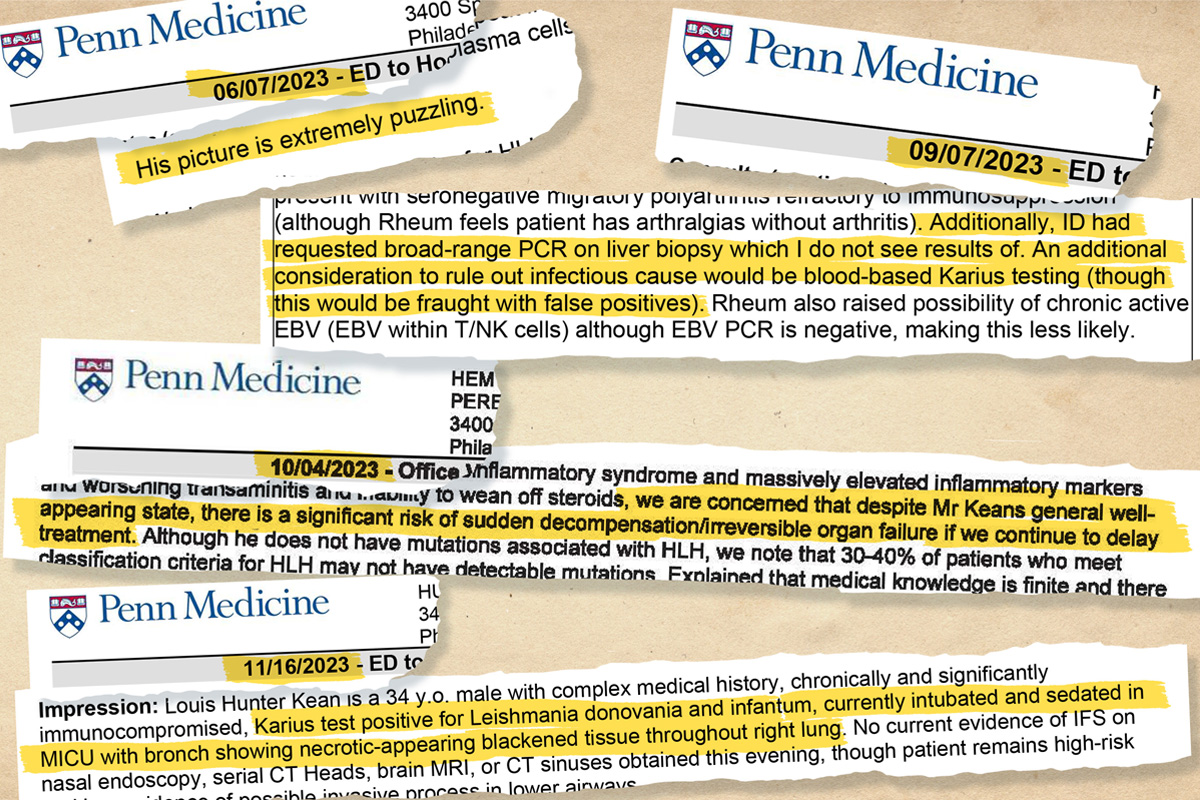
“His picture is extremely puzzling,” one doctor wrote in Kean’s chart. “We are awaiting liver biopsy results. I remain concerned about a possible infectious cause.”
As HUP doctors awaited test results, they treated Kean’s HLH symptoms with high doses of steroids and immunosuppressants to calm his immune system and reduce inflammation.
The treatments, however, made Kean highly vulnerable to further infection.And defenseless against another possible trigger of HLH: visceral leishmaniasis.
At the time, a Penn rheumatologist involved in Kean’s care before his first hospitalization warned about steroids “causing harm” to Kean if it turned out he had an infection. He wrote, “please ensure all studies requested by” infectious disease are done, medical records show.
Steroid treatments would allow the parasites to proliferate unchecked, experts said.
“It’s unfortunately exactly the wrong treatment for parasitic disease,” said Libman, the leishmania disease expert at McGill University.
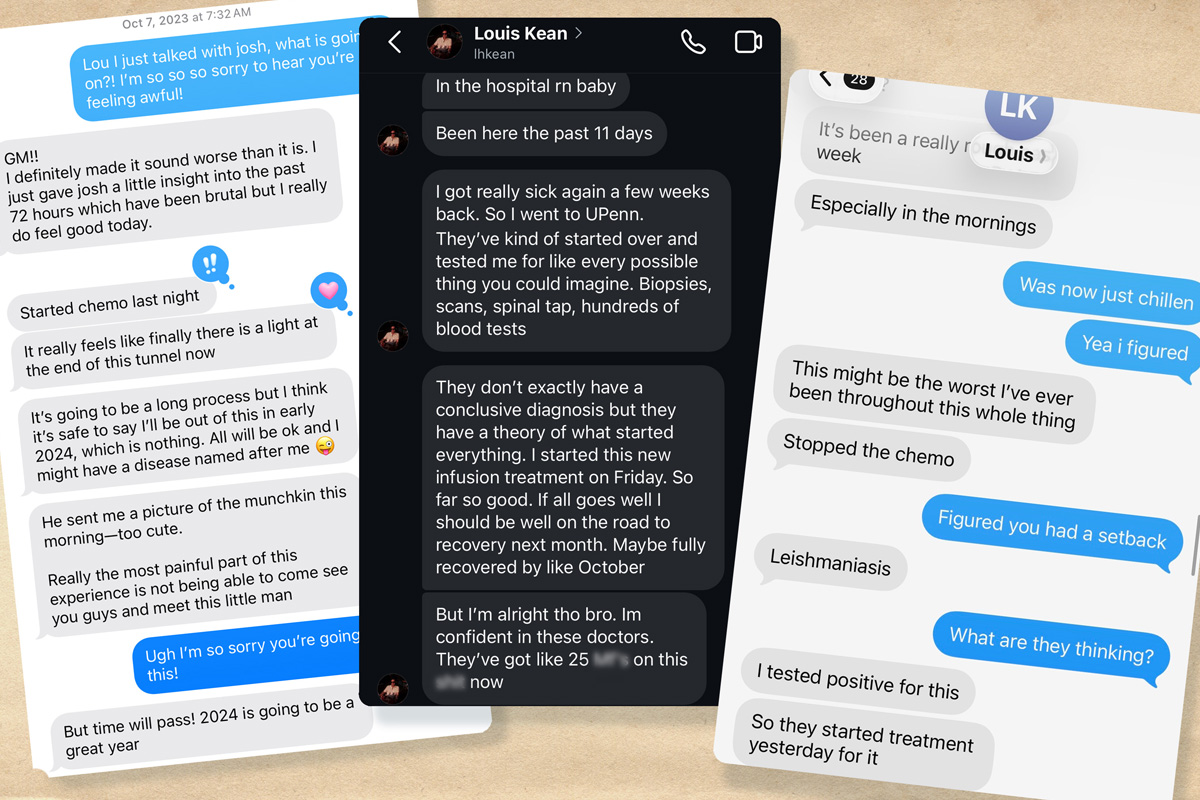
As Kean grew sicker, he was readmitted to HUP for a third time in September 2023. He texted a friend: “I’m on more medications than I’ve ever been on and my condition is worse than it’s ever been.”
A sampling of Louis-Hunter Kean’s electronic medical records, which ballooned to thousands of pages over five HUP hospitalizations within six months in 2023.
Handoffs between doctors
No single doctor seemed to be in charge of Kean’s care, his family said. And the number of specialists involved worried them.
“Everyone just kept being like, ‘We don’t know. Go see this specialist. Go see that specialist,’” Kean’s sister, Priscilla Zinsky, said.
By fall 2023, rheumatologists hadn’t found a trigger of Kean’s symptoms within their specialty. They turned to doctors specializing in blood cancer.
During the handoff, three doctors noted that they didn’t see the results of the test requested by the infectious disease specialist back in June. They still thought it was possible that Kean had an infection, records show.
“An additional consideration to rule out infectious cause would be blood-based Karius testing (though this would be fraught with false positives),” wrote that doctor, who was still training as a hematologist-oncologist.
A supervising physician reviewed the Sept. 8, 2023, note and signed off on it. The medical records don’t show any follow-up with infectious disease doctors, and the test wasn’t done at the time.
In the coming days, blood cancer specialists struggled to find a link between Kean’s symptoms and an underlying disease.
They thought he might have a rare form of leukemia, but tests weren’t definitive, Kean texted friends.
Untreated HLH symptoms can lead to rapid organ failure, so doctors often start patients on treatment while trying to figure out the underlying cause, said Gaurav Goyal, a leading national expert on HLH, noting that it can take days to get test results.
“You have to walk and chew the gum. You have to calm the inflammation so the patient doesn’t die immediately, and at the same time, try to figure out what’s causing it by sending tests and biopsies,” said Goyal, a hematologist-oncologist at the University of Alabama at Birmingham.
Medical records show that Penn doctors feared Kean was at “significant risk” of “irreversible organ failure.”
They suggested a more aggressive treatment: a type of chemotherapy used to treat HLH that would destroy Kean’s malfunctioning immune cells.
In his medical record, a doctor noted that beginning treatment without a clear diagnosis was “not ideal,” but doctors thought it was his best option.
Four parasitic disease experts told The Inquirer that chemotherapy, along with steroids and immunosuppressants, can be fatal to patients with visceral leishmaniasis.
“If that goes on long enough, then they kill the patient because the parasite goes out of control,” Libman said, explaining that ramping up the HLH treatments weakens the immune system. “The parasite has a holiday.”
A sample of text messages from Louis-Hunter Kean to friends during separate HUP hospitalizations over a six-month period in 2023.
Chemo as last resort
Kean banked his sperm, because chemo infusions can cause infertility. He told friends he trusted his Penn team and hoped to make a full recovery.
“Started chemo last night. It really feels like finally there is a light at the end of the tunnel,” he texted a friend on Oct. 7, 2023.
“I’m gonna get to marry my best friend, and I think I’m going to be able to have children,” Kean wrote in another text to a different friend.
Kean spent nearly all of October at HUP getting chemo infusions. He rated his pain as a nine out of 10. His joints throbbed. He couldn’t get out of bed. He started blacking out.
Doctors added a full dose of steroids on top of the IV chemo infusion. By the end of the month, Kean told a friend he feared he was dying.
A year had passed since Kean first spiked a fever. He no longer could see himself returning to his former life — one filled with daily exercise, helping run his family’s produce store, nights out with friends at concerts and bars, and vacations overseas.
Lethargic and weak, he could barely feed himself. His sister tried to spoon-feed him yogurt in his hospital bed.
He started texting reflections on his life to friends and family, saying his illness had given him a “polished lens” through which he could see clearly. He wrote that their love felt “like a physical thing, like it’s a weighted blanket.”
“I’ve lived an extremely privileged life. I don’t think it’s possible for me to feel bad for myself,” he said in a text. “And I don’t want anyone else to either.”
Louis-Hunter Kean enjoying dinner out with his sister, Jessica Kean, in Manhattan in 2014. Friends and family described him as a “foodie” and health food advocate prior to the onset of his illness in August 2022.
Puzzle solved
One doctor involved in Kean’s care had seen him at Penn’s rheumatology clinic in early June 2023, just before his first HUP hospitalization. The doctor, a rheumatology fellow,urged him to go to HUP’s emergency department, so he could be admitted for a medical workup.
The fellowremained closely involved in Kean’s care, medical records show. Also in his 30s, this doctor shared Kean’s interests in music, fashion, and the city’s restaurant scene, according to Kean’s family.
“They had a rapport,” Kean’s father, Ted Kean, said. “Louis thought a lot of him, and he seemed to think a lot of my son.”
By early November 2023, the rheumatology fellow was extremely concerned, medical records show.
The chemo infusions weren’t helping. Kean still was running a fever of 103. The fellow wrote in his chart that he was worried Kean needed a bone-marrow transplant to replace his failing immune system.
And doctors still didn’t know the root of his symptoms.
The fellowcontacted the NIH, medical notes show.
An NIH doctor recommended a test to check for rare pathogens, including parasites that cause visceral leishmaniasis,according to family members present when the testing was discussed.
The NIH-recommended Karius test was the same one suggested two months earlier by the Penn hematologist-oncologist in training, but with no follow-up.
File of sign on front of Hospital of the University of Pennsylvania (HUP) taken on Tuesday, March 19, 2024.
On Nov. 16, the fellow got the results. He went to Kean’s bedside.
After five HUP hospitalizations over six months, a single test had revealed the cause of his illness: visceral leishmaniasis.
Kean cried with relief and hugged the fellow, joined by his mother and sister.
“‘You saved my life,’” Kean’s sister, Jessica Kean, recalled her brother telling the doctor. “‘Finally, we know what this is, and we can treat it.’”
Kean’s medical chart was updated to note that he traveled to “Italy in the past,” also noting he had visited Nicaragua and Mexico. A HUP infectious disease doctor consulted with the Centers for Disease Control and Prevention on antiparasitic medications.
Meanwhile, Kean’s nose wouldn’t stop bleeding. He felt light-headed and dizzy, with high fever. Even on morphine for his pain, his joints ached.
“I’ve been struggling, buddy,” he texted a friend on Nov. 20. “This might be the worst I’ve ever been.”
By Nov. 22, he stopped responding to text messages. He began hallucinating and babbling incoherently, family members recalled. “Things went downhill very, very quickly, like shockingly quickly,” his sister, Priscilla Zinsky, said.
When she returned on Thanksgiving morning, he was convulsing, thrashing his head and arms. “It was horrifying to see,” Zinsky said.
Her brother had suffered brain bleeds that caused a stroke. His organs were failing. He had a fungal infection with black mold growing throughout his right lung, medical records show.
Kean was put on life support, with a doctor noting the still-preliminary diagnosis: “Very medically ill with leishmaniasis.”
“Prognosis is poor,” read the note in his Nov. 29, 2023, medical records.
A few hours later, Kean’s family took him off life support. He died that day.
“All of his organs were destroyed,” said Kean’s mother, Lois Kean. “Even if he had lived, he had zero quality of life.”
Portraits of Lois and Ted Kean’s four children decorate a wall at their home in Haddonfield. Their son, Louis-Hunter, died after contracting visceral leishmaniasis, a parasitic infection he likely picked up in Italy. When caught early, it’s treatable with medication. It’s deadly without treatment.
It’s not clear why the parasites began to attack Kean a year after his return from Italy. Healthy people rarely develop severe disease from exposure to the deadly form of the parasite circulating outside the U.S., experts said.
Most people infected by a sandfly “are probably harboring small amounts of the parasite” in their organs, according to Naomi E. Aronson, a leishmania expert and director of infectious diseases at the Uniformed Services University of the Health Sciences in Bethesda, Md.
“Most of the time, you don’t have any problem from it,” Aronson said.
Children under age 5, seniors, and people who are malnourished or immunodeficient are most susceptible to visceral leishmaniasis. Aronson said she worries about people who might harbor the parasite without problems for years, and then become immunocompromised.
Libman, the parasitic expert from McGill, said he’s seen six to 10 patients die from visceral leishmaniasis because doctors unfamiliar with the disease mistakenly increased immunosuppressants to treat HLH during his 40 years specializing in parasite disease.
“That’s a classic error,” he said.
Kean’s case “should be a real clarion call” for infectious disease specialists and other doctors in the U.S., said Joshua A. Lieberman, an infectious disease pathologist and clinical microbiologist who pioneered the leishmania-PCR test at the Washington state lab.
“If you’re worried about an unexplained [fever], you have to take a travel history that goes back pretty far and think about Southern Europe, Iraq, Afghanistan, India, and maybe even Brazil,” Lieberman said.
In the wake of Kean’s death, his family was told that Penn doctors held a meeting to analyze his case so they could learn from it.
An infectious disease doctor called Zinsky, Kean’s sister, to let her know about the postmortem review and shared that doctors discussed that Kean had likely picked up the parasite in Tuscany.
“Why didn’t you guys have this meeting,” she asked, ”while he was alive?”
Editor’s note: This story has been updated to clarify that ECRI President Marcus Schabacker was not speaking specifically on Kean’s case.
CLEARWATER, Fla. — For years, a tucked-away corner of the Phillies’ spring-training clubhouse has belonged to the stars. And because the roster hasn’t changed much since 2022, neither have the nameplates above the lockers.
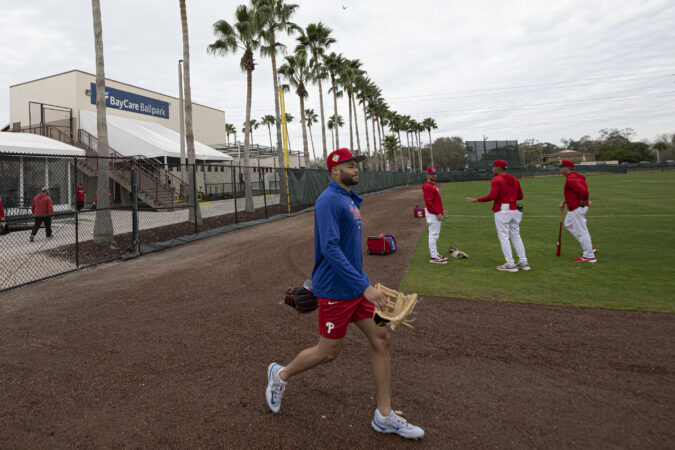
Schwarber did a double take almost as soon as he walked through the door here Wednesday, even before Realmuto pointed it out. Left fielder Brandon Marsh stopped Miller in the hallway and said, “Man, you got a good little locker spot there.”
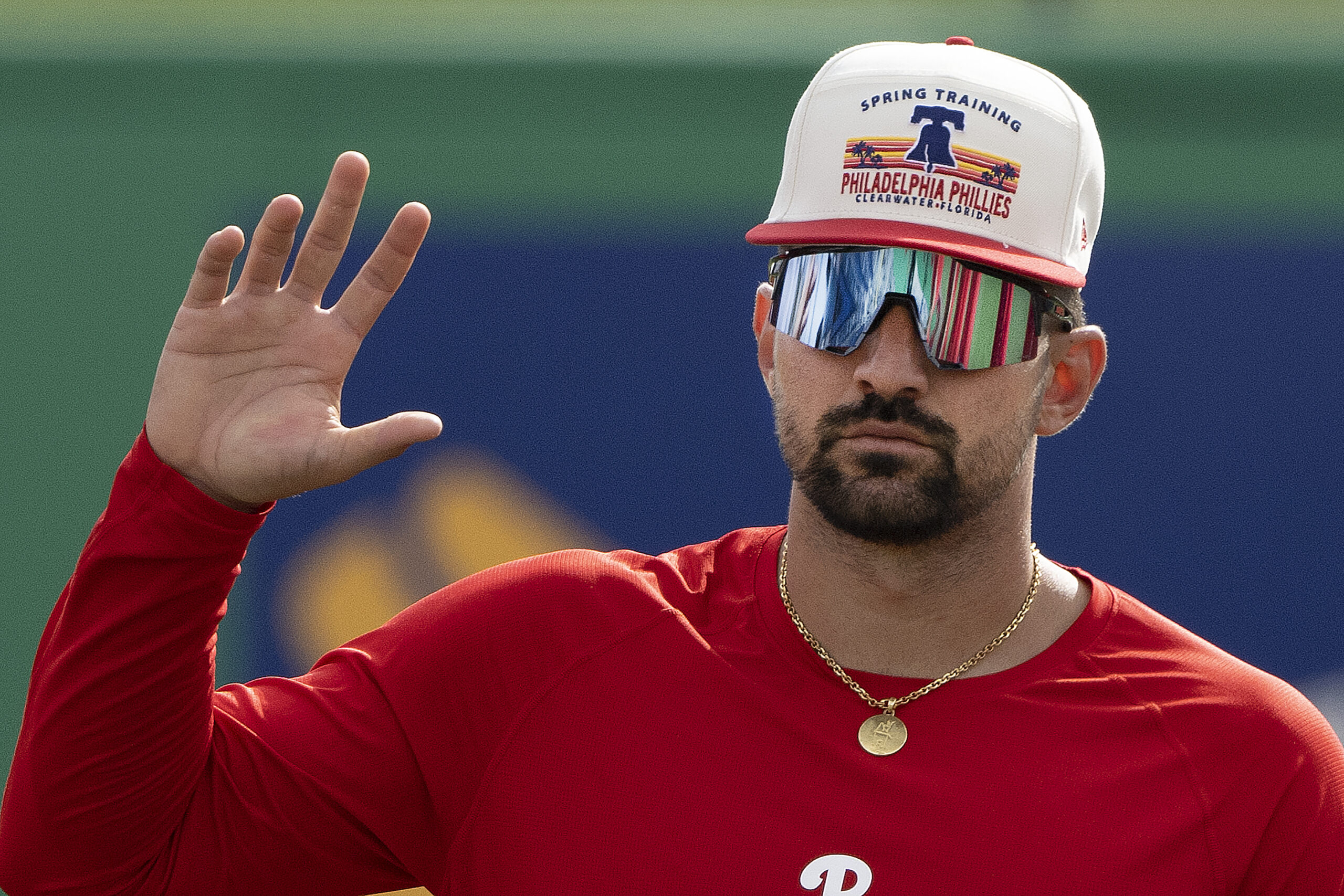
“They’ve all kind of made little comments here and there about it,” said Miller, the top prospect who now occupies the space once reserved for Nick Castellanos, the disgruntled $20 million right fielder who no longer has a locker (a photo of him was removed from a hallway in the clubhouse, too) because he will be traded or released by the weekend. “I was surprised seeing it myself.”
Miller shouldn’t be surprised. Nobody should.
Never mind that he is 21, the second-youngest player among 68 in camp. Or that he dressed at a temporary locker on the other side of the room last spring and lived with his parents 20 miles north of the Phillies’ complex.
Miller is in the Phillies’ plans — and sooner than later. So, it isn’t a coincidence, according to manager Rob Thomson, that he and fellow top prospect Justin Crawford (No. 80 in your spring-training program) are taking up residence on Millionaires’ Row.
“We upgraded a little bit,” Crawford said, laughing.
In 2026, after back-to-back divisional-round knockouts, the Phillies will still be led by Harper & Friends, few of whom have aged out of their prime. But they also aren’t getting younger.
As it is, the Phillies are trying to become only the 10th team in baseball history to make the playoffs with four players age 33 or older getting at least 500 plate appearances. If new right fielder Adolis García joins Harper, Turner, Schwarber, and Realmuto, the Phillies would be only the third team to make the playoffs with five. It hasn’t happened since the 2007 New York Yankees.
So, the Phillies must get younger if they’re going to prop open the proverbial window to contend long beyond this year. And that’s where Crawford, Miller, and 22-year-old pitcher Andrew Painter come in — and why they may be the three most important players in camp.
“Crawford and Miller and Andrew, we know they’re all very talented,” said Zack Wheeler, at 35 the dean of the starting rotation. “It’s good to have those guys around. You can’t have everybody under big contracts. You’ve got to have some young guys. We have a good locker room to accept those guys. They can ask any of these guys questions, and they’ll definitely help out.”
That’s the idea.
Crawford, 22, is the presumptive opening-day center fielder after batting .300 at every level of the minors. He might’ve gotten called up last August if the Phillies didn’t trade for Harrison Bader at the deadline. His time is most certainly now.
“I’ll say it feels a little different,” said Crawford, who would be the youngest outfielder on a Phillies opening-day roster since Greg Luzinski and Mike Anderson in 1973. “Last year was kind of the excitement of being in big-league camp for the first time. This, I feel a little bit more laid-back and just ready to get to work and compete. Excited to see what happens.”
Crawford insists he isn’t taking anything for granted. His dad, four-time All-Star outfielder Carl Crawford, wouldn’t allow it. Neither would his godfather, Junior Spivey, who played five seasons in the majors, or personal hitting coach Mike Easler, who had a 14-year major-league career.
And then there are Crawford’s new neighbors in the high-rent district of the clubhouse.
“I came in and still it was a little surreal,” Crawford said despite getting a heads-up from a teammate of where his locker was located. “It was like, ‘Wow,’ from being over there [on the other side of the room] last year. So, it’s pretty cool and definitely a good, nice moment.”
The Phillies did this in 2023 with Painter. They gave him a locker alongside Wheeler and around the corner from Aaron Nola and a chance to compete for a spot in the rotation as a 19-year-old. But he suffered a torn ligament in his right elbow, had surgery, and missed two seasons.
Painter has a good chance of making the team out of camp in part because Wheeler will be behind the other pitchers as he comes back from thoracic outlet syndrome, a condition in which a vein is compressed between the collarbone and rib cage. Wheeler had a rib removed in September.
But Painter isn’t merely a placeholder. The Phillies remain bullish on his future even after he struggled last season in triple A. Many rival evaluators “cut him some slack,” as one NL scout said, after the two-year absence and believe he still has top-of-the-rotation potential.
Right-hander Andrew Painter has a chance to be in the Phillies’ season-opening starting rotation.
And if Crawford and Painter are ticketed for the opening-day roster, Miller may not be far behind. It isn’t only the placement of his locker. As camp opened for pitchers and catchers, Thomson confirmed that Miller will get reps at third base, in addition to his natural shortstop, a spot occupied by Turner.
It won’t be the first time. Miller played third base at J.W. Mitchell High School, up the road from here in Trinity, Fla., before the Phillies drafted him in the first round in 2023. This spring will be about “relearning” the position, he said, notably the footwork and the hops.
“I just want to get there [to the majors],” Miller said. “I don’t care where it is in the field. As long as I’m there, I’m cool.”
If Crawford, Painter, and Miller can get there, the Phillies will have threaded the needle of replenishing the roster while also contending. It’s a tricky balance.
Thomson was a coach with the Yankees in 2017 when they successfully blended youth (Aaron Judge, Gary Sánchez, Greg Bird, Jordan Montgomery, and Luis Severino) with a veteran core en route to 91 wins and Game 7 of the AL Championship Series.
“I think there’s some similarities there,” Thomson said. “If you want to have a really healthy organization for a sustainable future, you have to be able to infuse some youth along the way.”
And it starts, symbolically, with a couple of kids lockering alongside the stars for six weeks in February and March.
In the rotunda of the Finneran Pavilion late Tuesday night, the longest tenured Villanova player paused to crane his head toward the ceiling, toward the national championship, Final Four, and Big East championship banners that hang there in V formation, like a flock of birds in flight. On this Wildcats team, he’s the one whose name is called last in the pregame introductions.
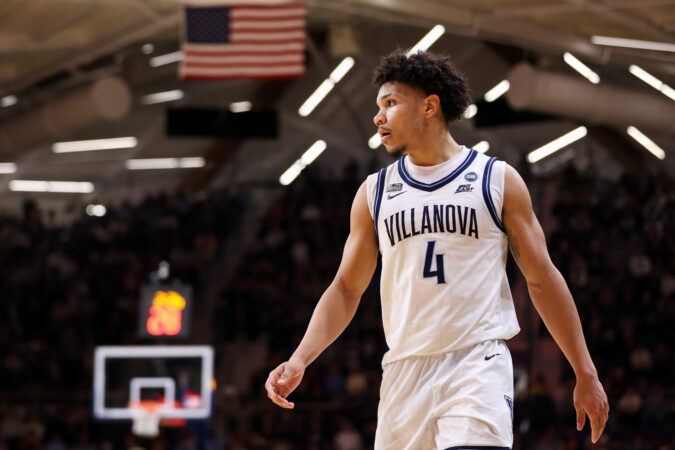
He’s the one everyone knows a little better than everyone else on the roster. For a program once accustomed to having its stars stay for three years, four years, sometimes even five, it has to be jarring that Tyler Perkins, a junior who transferred from Penn in 2024, is the closest thing to a keeper of that flame.
“I take pride in it,” he said. “Last year, I was able to learn a lot about this place from guys like Eric Dixon, Jordan Longino, guys who have been here for three years, five years. I was able to pick their brains. Just walking these halls, looking at these banners, it makes you hungry. You want to bring it back to this place.”
The whole idea of a player recognizing and appreciating a particular program’s history and culture seems quaint in this era of college basketball. It certainly doesn’t have the pull and power that it once did.
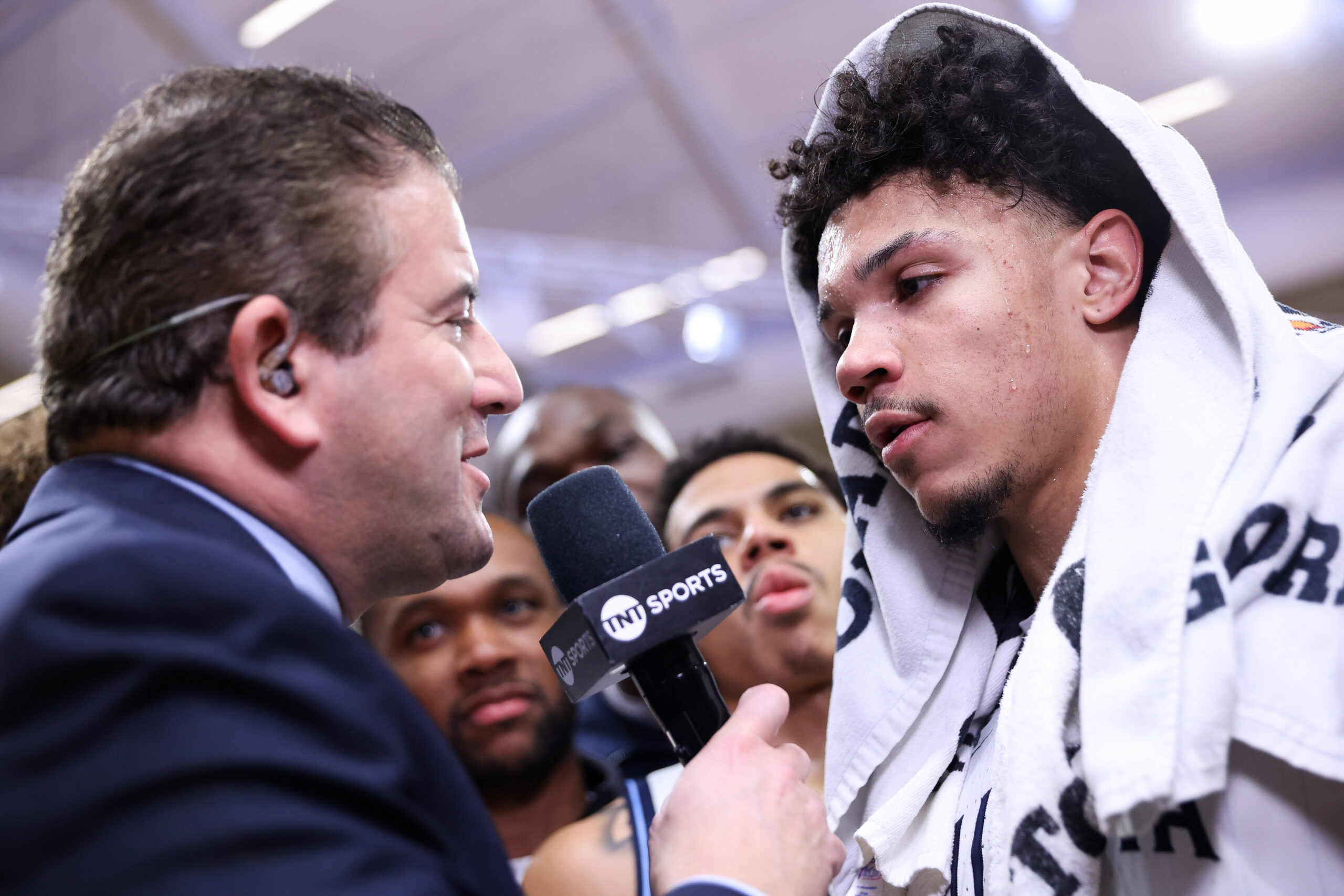
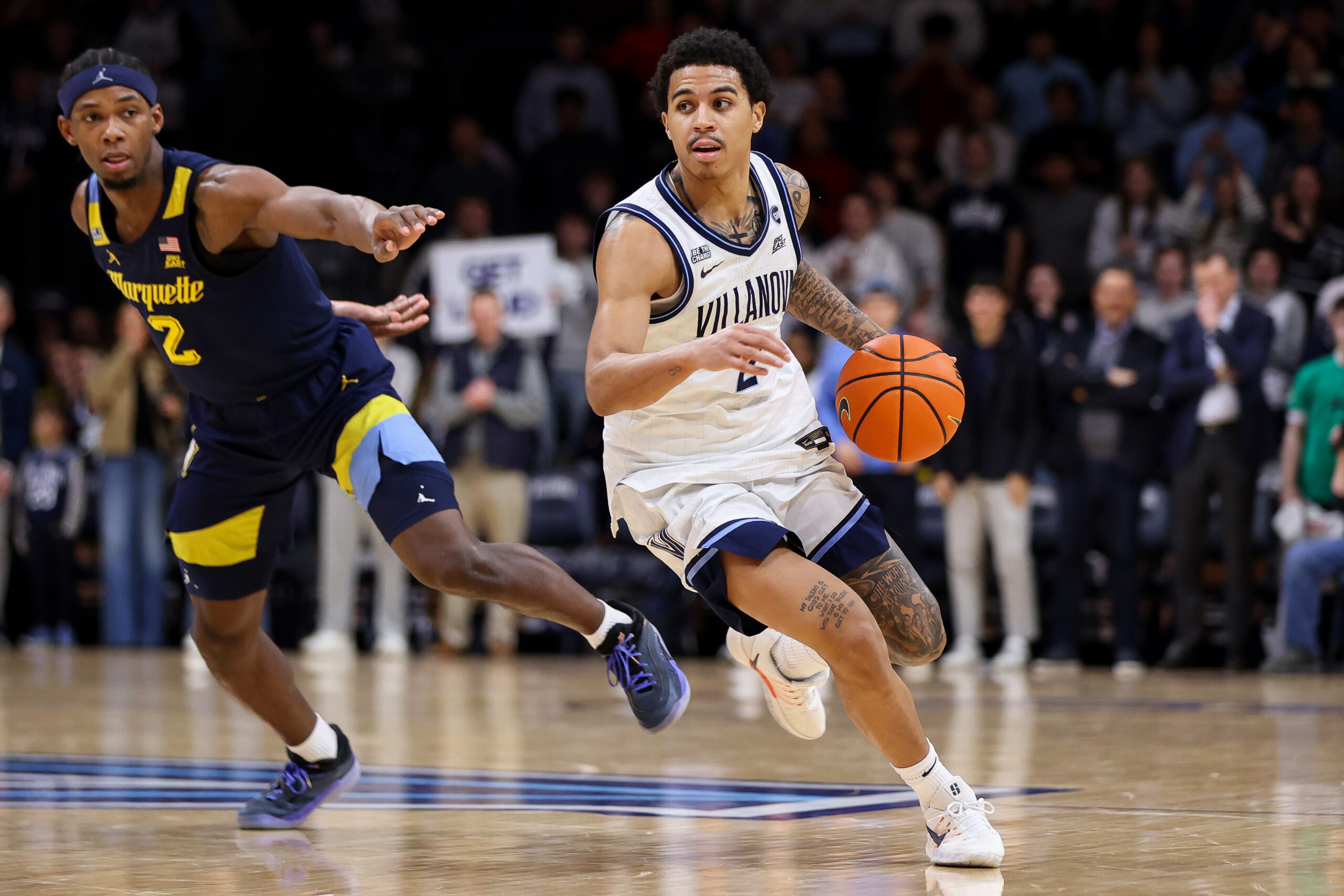
Tyler Perkins (right) is interviewed by Andy Katz after Villanova’s 77-74 win against Marquette at the Finneran Pavilion on Tuesday.
Now, paying players is an above-board course of action, athletes pass through the transfer portal like it’s an open doorway, and the story that played out at the Pavilion on Tuesday, in Villanova’s 77-74 victory over Marquette, showed just how much everything has changed.
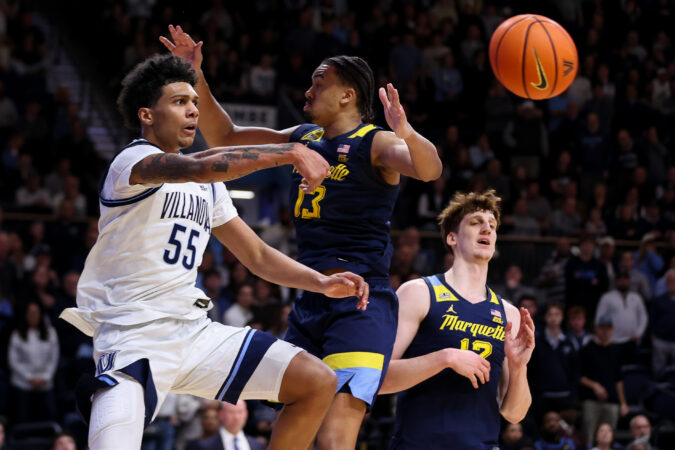
Perkins pretty much saved the Wildcats, now 19-5 and on track for their first NCAA Tournament appearance in four years, from losing a Big East game to a lesser opponent. He scored a team-high 22 points, hit three late three-pointers to help ’Nova quickly wipe out a nine-point deficit, grabbed six offensive rebounds, and blocked a three-point attempt by the Golden Eagles’ Adrien Stevens on the game’s final possession.
It was the kind of performance that a savvy upperclassman — Josh Hart, Mikal Bridges, Collin Gillespie, Dixon — once would have delivered for Villanova … except in this case, the savvy upperclassman is a kid who has been on campus less than two years, and he was having a lousy defensive game until he snuffed Stevens’ shot at the end.
“Once he figures out he can affect the game without shooting or having to shoot, that’s when he’s going to take a monster step,” Wildcats coach Kevin Willard said. “And he’s starting to get there. He is.”
Willard is so certain that Perkins will become a great player that, after the Wildcats’ win over Seton Hall last week, he didn’t back away from comparing him to Hart — a first-team All-American and a national champion at ’Nova, a nine-year NBA vet and an invaluable piece of a New York Knicks team that could reach the Finals.
During Tuesday’s postgame media availability, Willard playfully chided Perkins for his mostly poor defense against Marquette, then pointed out that Hart’s all-around game is what made him such a headache when Willard, while at Seton Hall, was coaching against him.
“I tell the story all the time,” Willard said. “One of the last times we played against him, I called timeout, and I cursed out my team. I was like, ‘Can somebody please stop Josh Hart?’ And he hadn’t taken a shot. He hadn’t taken a shot, and they’re all looking at me like, ‘Well, he’s not shooting.’ He’s got three steals. He’s got four offensive rebounds. He’s got five assists. And he didn’t take a shot. That’s why he’s in the NBA.
Villanova coach Kevin Willard believes Tyler Perkins shares many of the same qualities as former Wildcats guard Josh Hart.
“He” — he tipped his head to the right, toward Perkins — “can do that. He just has to figure it out at times, ‘I don’t need to shoot the ball to be out here and be effective.’ Because he does so many other things.”
Perkins has met Hart just once — last September, when Hart and Jalen Brunson returned to campus to record an episode of their podcast, The Roommates Show. Their on-paper profiles are practically identical. Both are from the Washington area.
They are about the same height (6-foot-4) and roughly the same weight (210-215 pounds). The biggest difference, at the moment anyway, might be that the conditions that allowed Hart to develop over his four seasons at Villanova, from 2013 to 2017, are harder to replicate. These days, it takes a welcoming atmosphere; a rewarding athletic, academic, and social experience … and, of course, a big, fat check.
"It's February basketball. You're going to have to grind and find ways to win. Watching Marquette's last five games, Shaka's done a great job with that group, especially on the defensive end. But we found a way, that's all that matters." -Coach Willard
Make no mistake: The money is and will be the major motivator for keeping a promising basketball player on any campus. A program that wants to keep a star into his senior season is going to have to pony up accordingly. But those first two factors still matter some, at least some of the time, and apparently to Perkins.
“I don’t really care about all the extra stuff that’s going on in college basketball right now,” he said. “I find joy in playing the game, and I felt like this place was the most comfortable place for me to play.”
Imagine the comfort he’ll feel a year from now, two years from now, three, if he can stand inside the Pavilion, look up at that ceiling, and see a banner he helped to hang.
Andrew Kuhn dropped the final score of Ancillae-Assumpta Academy’s seventh- and eighth-grade basketball game into the family group chat last month. He wanted to make sure his 16-year-old son Cole knew that 13-year-old Gavin played well.
The older son responded with an update of his own: a video of him throwing a 101.7-mph fastball.
“New Year’s resolution,” Cole Kuhn texted the family.
Kuhn went to St. Joseph’s Prep on a partial music scholarship — he has played the double bass since the fourth grade — and failed to make the JV baseball team as a freshman. Now he was showing his family that he could throw a fastball harder than most major leaguers.
The teenager from Elkins Park is one of the nation’s top high school pitchers with a scholarship to Duke University and is already being scouted for the 2027 Major League Baseball draft. He’s pitched in just a few varsity high-school games but a triple-digit fastball is enough for scouts to dream on.
And it all happened so rapidly; about as fast as the pitches the 6-foot-6 teenager fires from his right hand.
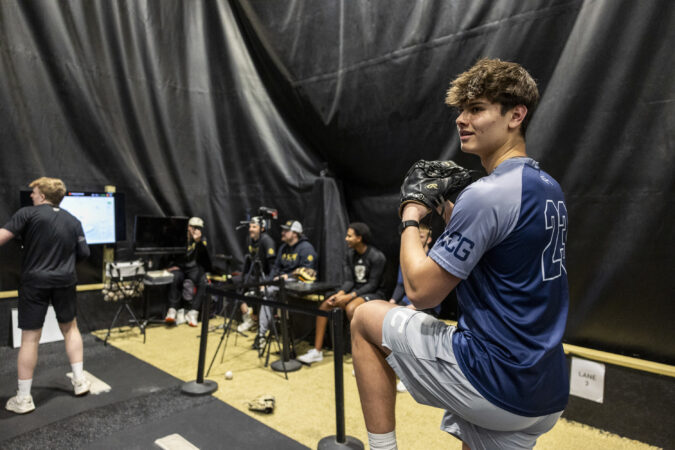
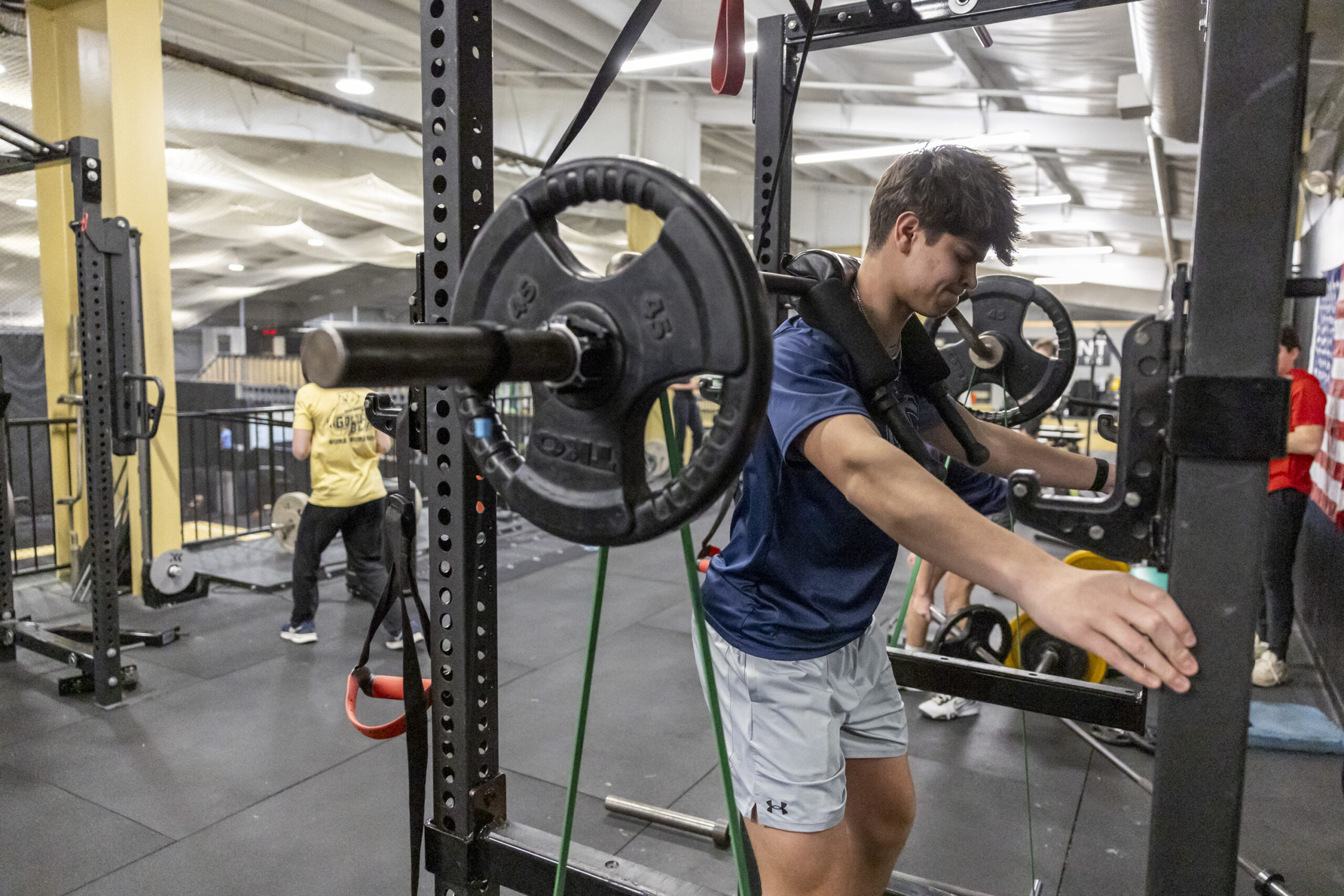
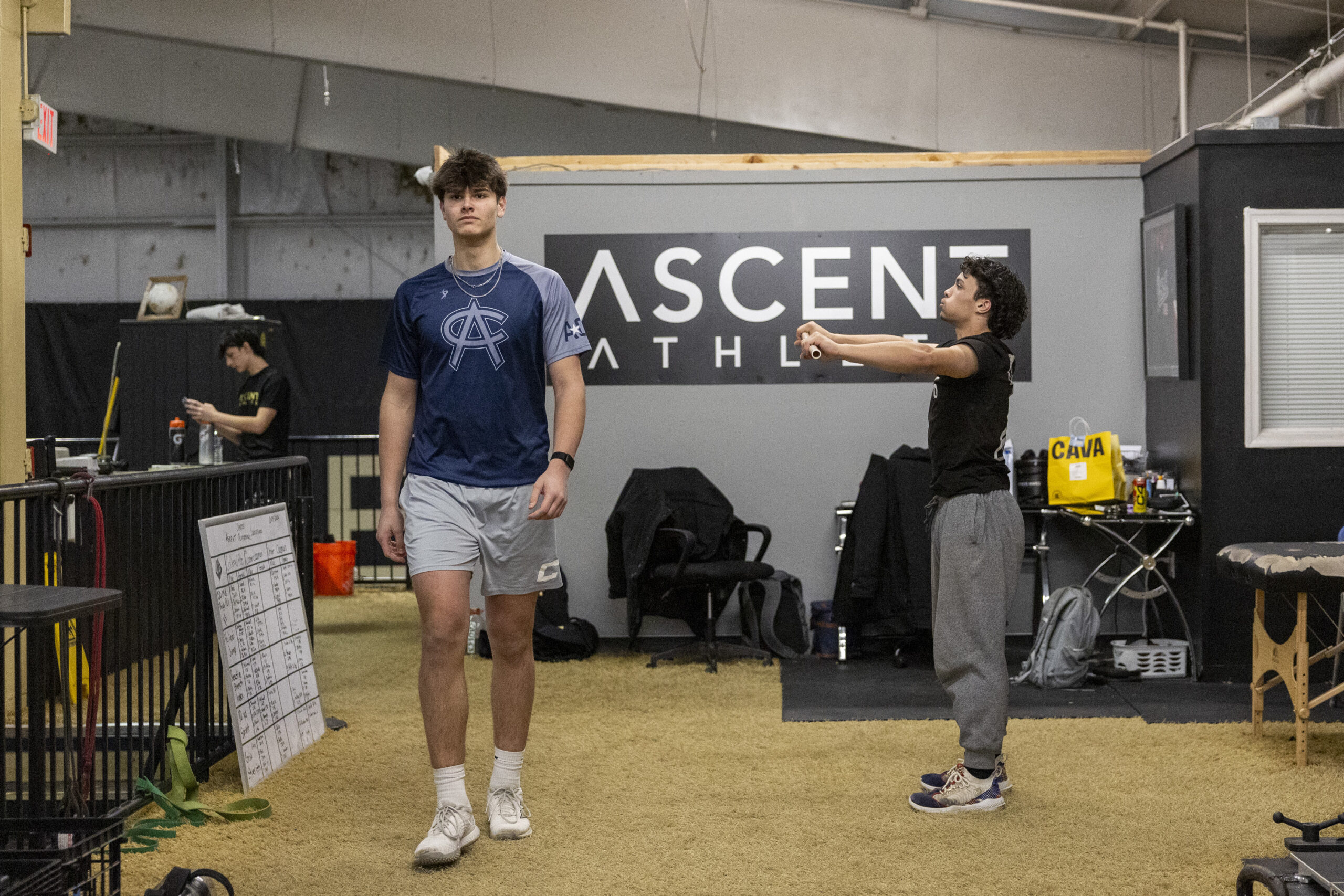
Kuhn was throwing 90 mph in January 2025 when he enrolled at Ascent Athlete, a training center in Garnet Valley that looks like a baseball laboratory. High-tech cameras measure Kuhn’s movements on the mound, a team of coaches studies his mechanics, and he learns in real time how many RPMs his fastball registers. Big league players work out in the morning before high schoolers filter in in the afternoon.
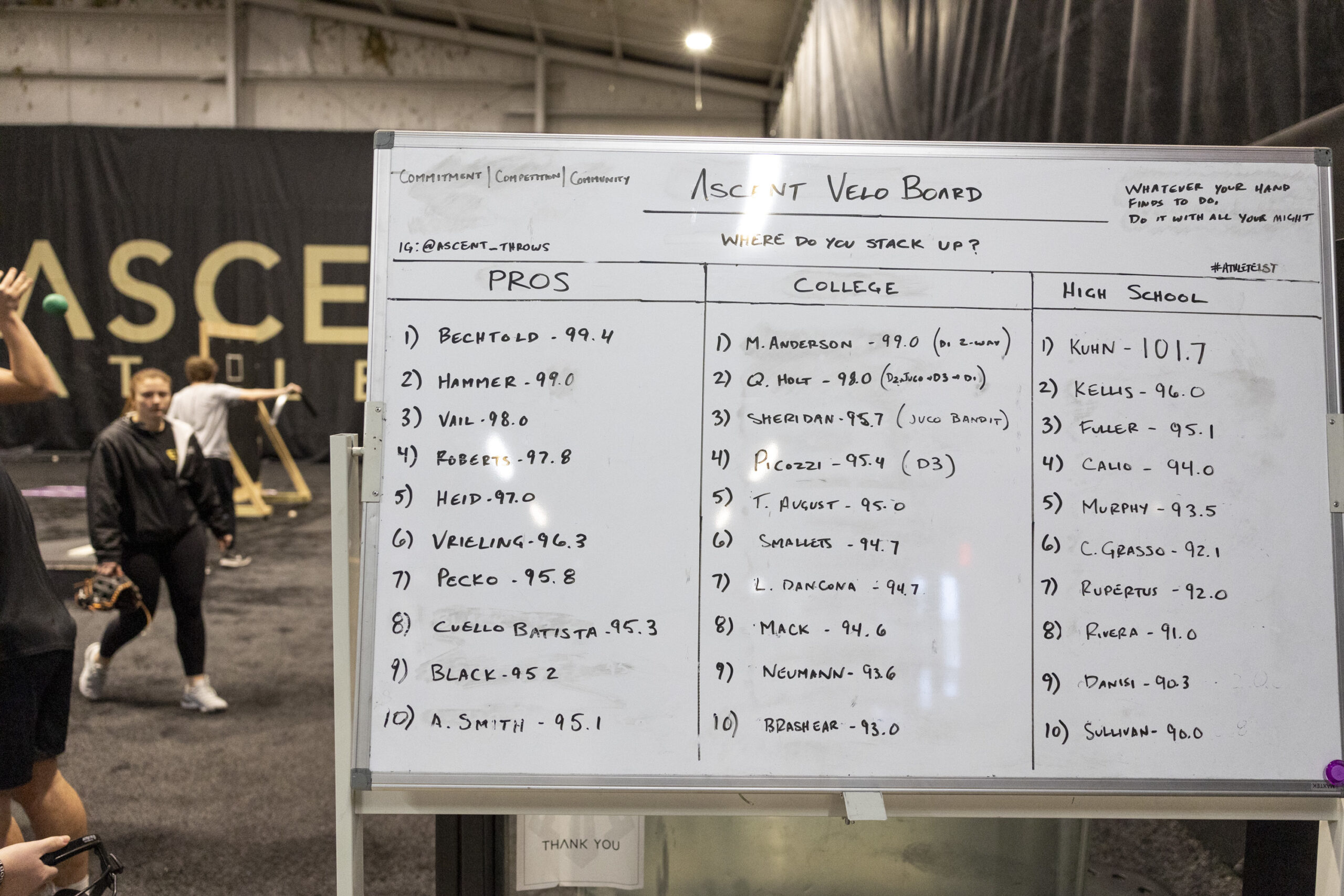
A fitness center upstairs is focused on plyometrics and a computer connected to the batting cages allows a hitter to see how his swings would fare in a big-league park. A dry-erase board near the entrance lists the fastest pitches thrown at Ascent divided into three categories: pro, college, and high school.
“Where do you stack up?” the board says.
A whiteboard shows the top pitching speeds at Ascent Athlete in Garnet Valley, with Cole Kuhn on top at 101.7.
Kuhn, first in the high school column by more than 5 mph, has the fastest pitch.
The facility is open six days a week and Kuhn is there nearly every day, often finding someone on Sundays to unlock the door when the lab is closed. His 101.7-mph fastball did not happen by accident.
“Without question, that place is the single biggest driving force behind his major jumps over the last eight months,” said Kuhn’s mother, Tonya Lawrence. “They’re comprehensive, they’re involved, and they know what they’re doing.”
Scott Lawler, the general manager of Ascent, called Kuhn “a unicorn.” Lawler, who played at Bishop Kenrick High in the 1990s, has never seen a high school arm like this. There is no denying the promise of Kuhn’s right arm, but he is also just a kid who does not yet have a driver’s license.
Andrew Kuhn picked his son up from a friend’s house after Cole threw that 101.7-mph fastball and shook his hand. Two years earlier, Kuhn was nervous to tell his father that he wanted to play winter baseball instead of freshman basketball at the Prep. His parents played college hoops and he thought he’d disappoint them if he didn’t play.
This was not their journey, Andrew told him. This was Cole’s. The son has led the way ever since as he charted his path to that fastball. Dad was proud.
“I said good job,” Andrewsaid. “Then that was about it. Then it’s get home, walk the dogs, have dinner. You’re not all that. You still have chores. Who knows? This whole thing might fall apart at some point. You have to be prepared. You’re not just a baseball player.”
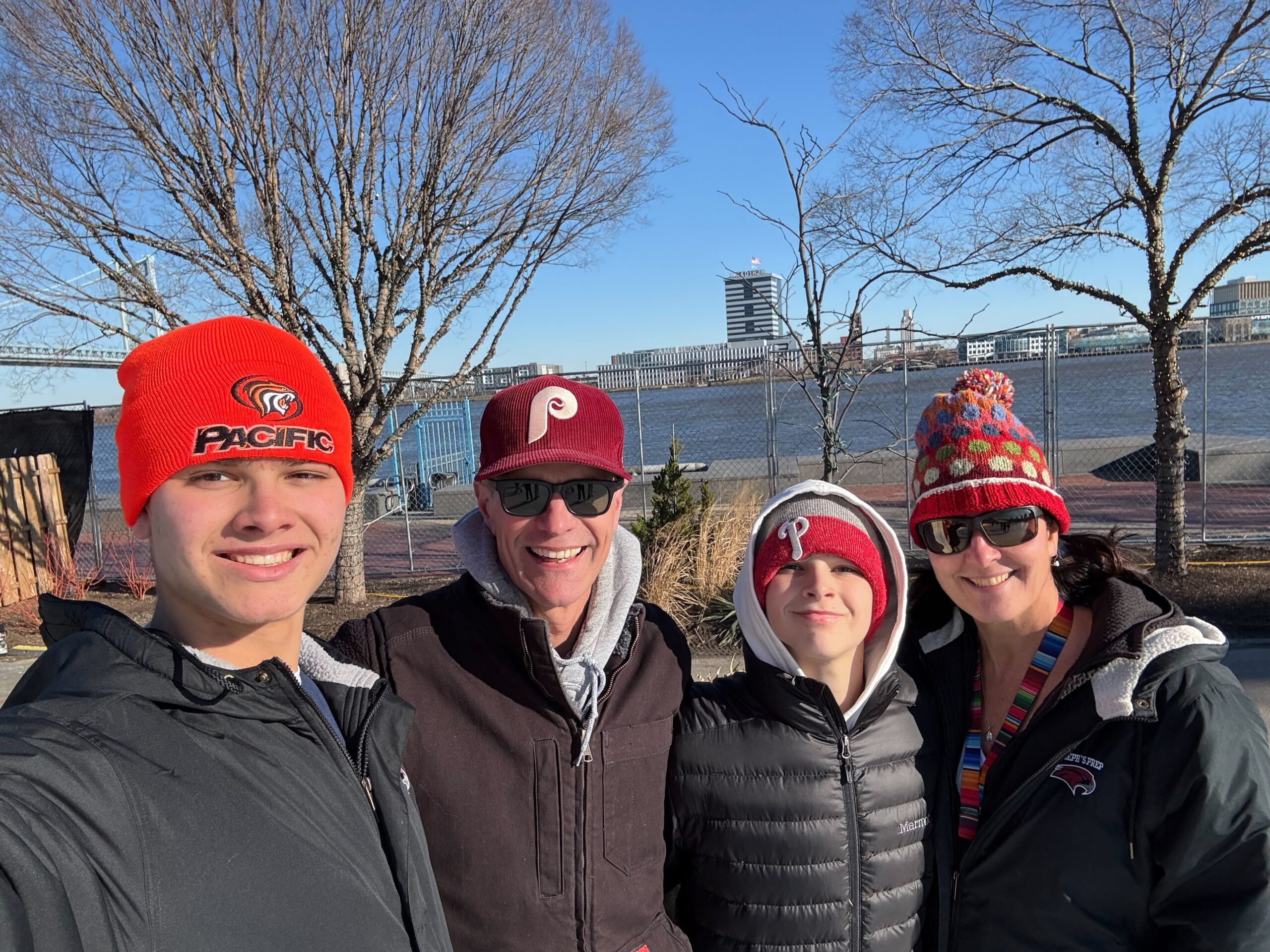
From left: Cole Kuhn with his father, Andrew, brother, Gavin, and mother, Tonya Lawrence.
Ballet to baseball
The letter in Cole Kuhn’s folder as a second grader at Myers Elementary School advertised a ballet class for boys in Jenkintown.
“He was always the kind of kid who if you said, ‘Do you want to try this?’ He would say, ‘Sure,’” Tonya said.
So they signed their son up for ballet at the Metropolitan Ballet Academy where the teachers were strict and timeliness was prudent.
“Six years later, it was clear that he benefited from it,” Tonya said. “Discipline, core strength, grace under pressure. This studio was serious. It was the real deal and we didn’t know that. It just came home in the afternoon packet.”
Kuhn started playing the piano in kindergarten, picked up the double bass in elementary school, and took six years of ballet. He played baseball in the spring, swam in the summer at a public pool, played soccer in the fall and basketball in the winter.
“We tried to get our kids to do everything and then decide what sticks,” Tonya said. “We believe that variety is good for the brain and the body and the mind.”
Andrew and Tonya never intended to build a baseball prodigy. But perhaps keeping him well-rounded — from ballet to baseball — helped Kuhn blossom into the pitcher he is now. He was 15 years old when his fastball reached 90 mph and Tonya said that moment was like an “epiphany” for her son. He now believed he could do this. Kuhn told his parents he wanted to focus solely on baseball.
“It’s not like we’ve been pushing him or somehow training him to hit 90 mph. It wasn’t even on our radar. It just happened,” Andrew said. “In the big picture, it’s really about exercise, friendship, and competition. Then, who knows? Hopefully it’s intriguing enough and interesting enough that kids want to stick with it. We want our kids to be well-rounded and respectful and to try their best.”
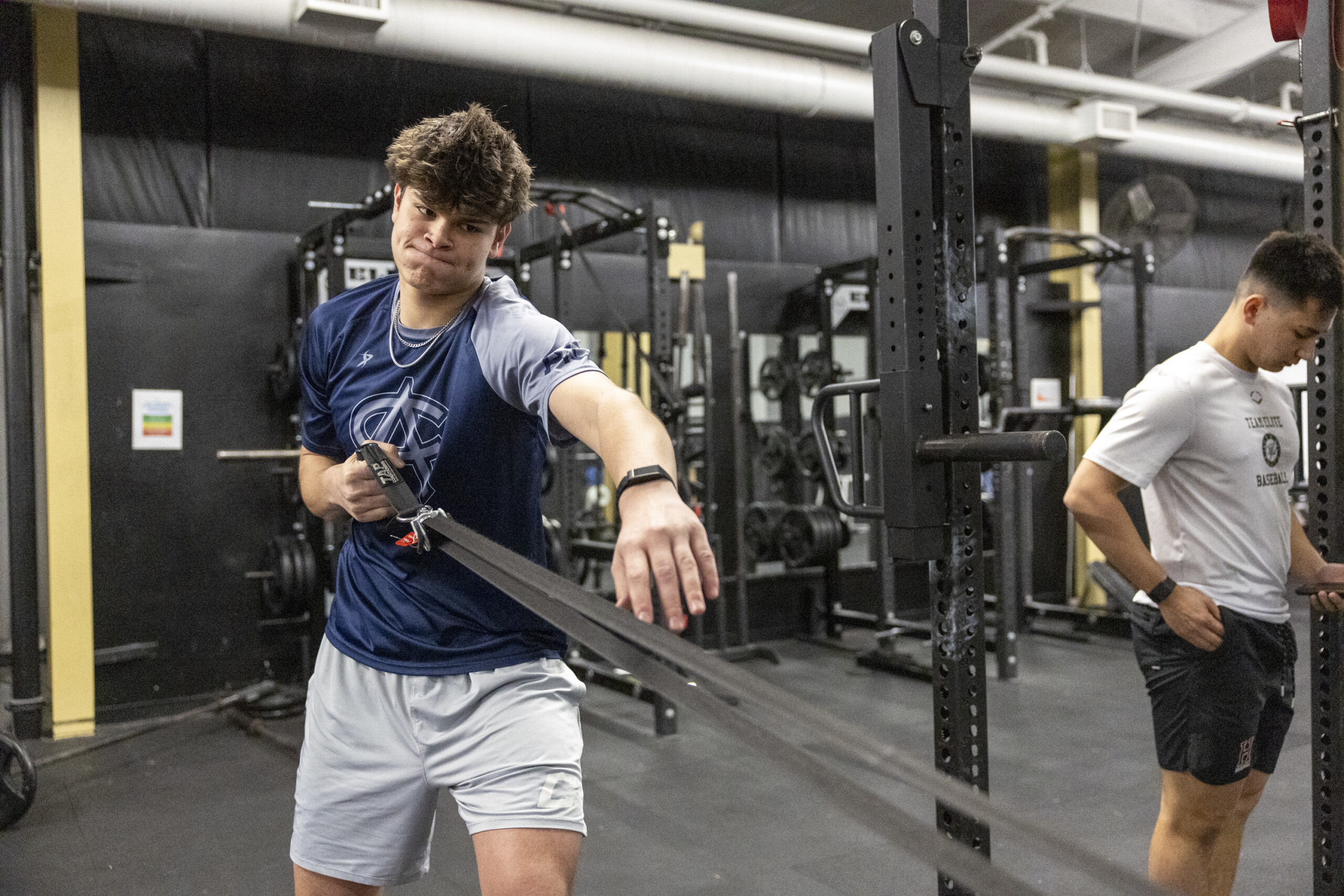
Cole Kuhn trains at Ascent Athlete.
Charting his path
Kuhn told his father last year that he wanted to train at Ascent after meeting Lawler at an event. Many of Kuhn’s Prep teammates were already there and the pitcher thought it was where he needed to be.
Lawler played minor-league ball and coached in college. Jeff Randazzo, Ascent’s owner, was a star at Cardinal O’Hara and is now an agent for major league ballplayers. They have a glistening facility and the connections a player needs to reach the next level.
“This whole world ties together between how you train, who you play for, and who you play in front of,” Lawler said.
Andrew said OK but told his son that he would have to inform his coach in Ambler that he was leaving.
“Ambler did so much for him so you can’t just send a text that you’re leaving,” Andrew said.
So Andrew stood with his son after the team’s final practice and listened to Cole break the news. Andrew played basketball at Franklin & Marshall and Tonya played hoops and lacrosse at Yale before playing basketball professionally overseas. They want their son to make his own decisions, which means working up the courage to explain to someone why you’re leaving.
“That was taking responsibility for the choices you’re making,” Andrew said. “He did it face-to-face. It was hard and emotional for him to leave, but he knew in his own mind that that was the path for him. Cole told him, ‘My dream is to get to MLB and I think the best path for me to get there is to switch to Ascent.’ I was like, ‘Oh, Cole. You sure you want to say all that to this?’”
Kuhn was paired at Ascent with David Keller, the facility’s director of pitching development. Keller pitched at Lock Haven University, where he delved into the data-driven methods that have overtaken baseball since the early 2000s. He put Kuhn on a throwing program and told him that his work upstairs in the weight room was just as important.
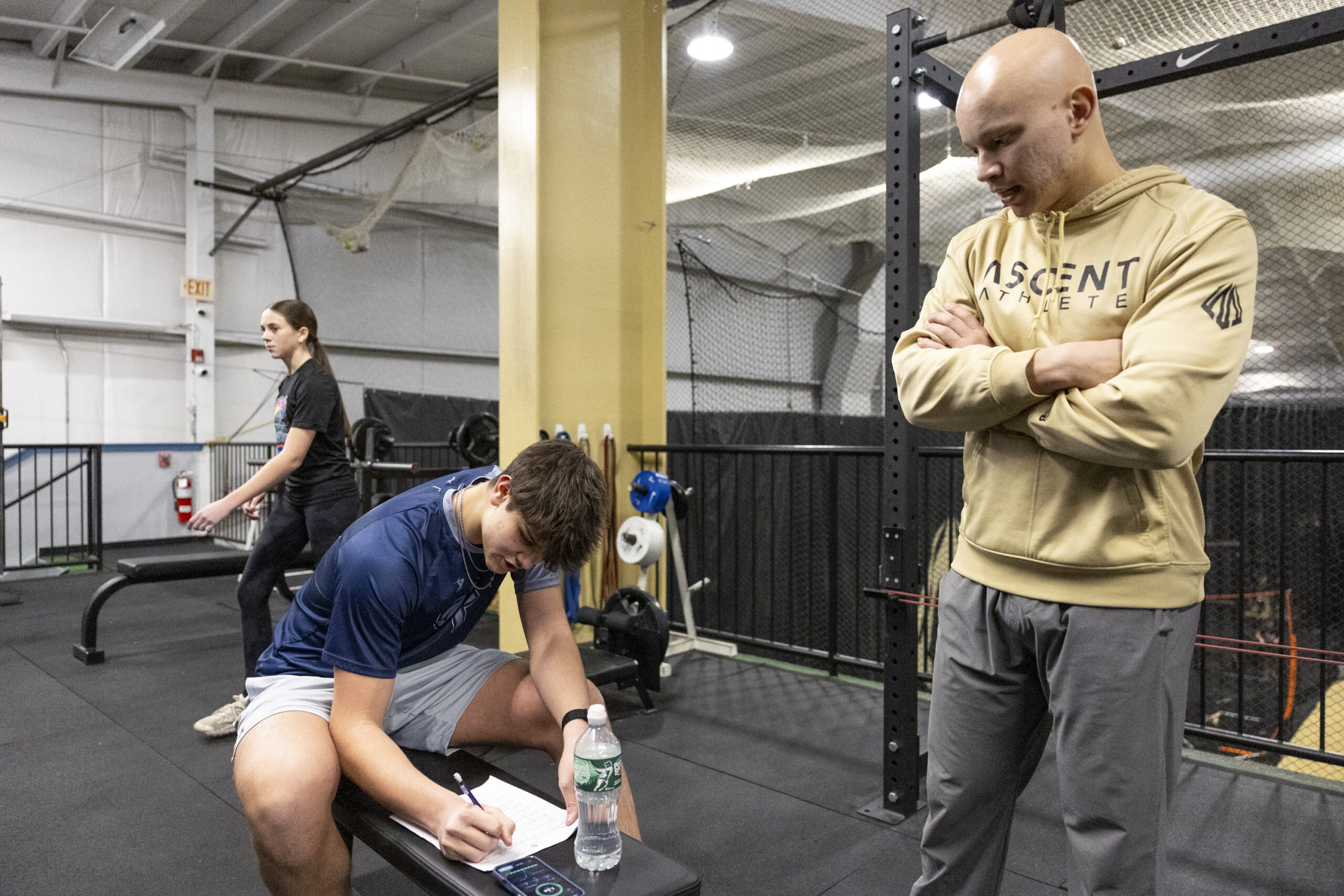
Cole Kuhn works with Francisco Taveras, the assistant director of Sports Performance at Ascent Athlete.
Kuhn gets a ride after school to Ascent from Prep senior Mihretu Rupertus — “I tell him, ‘You treat that dude to anything he wants at Wawa,’” Tonya said — and is given a checklist of exercises to do. He gained 35 pounds from working at Ascent, filling out his towering frame.
Kuhn’s fastball took off as he hit 95 mph last July at an event in Georgia. He pitched six innings, showing he could do more than just light up radar guns. The college coaches watching took notice. The pitcher who studied ballet was suddenly a can’t-miss prospect.
“That was for me when I said, ‘This kid is going to be really, really good,’” Lawler said.
Facing adversity
Kuhn’s phone buzzed exactly at midnight last summer when college coaches were first allowed to contact him. First was Miami. Then Texas Tech. More than 30 schools called that day. A few months earlier, Kuhn was hoping to play college ball at a small school with strong academics. Now the big programs were chasing him. It was a whirlwind.
He flew the next weekend with Tonya to California for the Area Code Games, a premier showcase event for the nation’s top players. It was Kuhn’s chance to show how special his arm was.
“He couldn’t get out of the first inning,” said Andrew, who watched from home on a livestream.
Kuhn, pitching in perhaps the biggest event of his career, struggled. The same coaches who contacted him days earlier were now backing off. Tonya told him afterward to forget about them.
“My line of work may be particularly suited to what was happening, but I am his mom,” said Tonya, who is a child psychiatrist. “It’s hard to watch, but it’s so much part of the game and part of life. I appreciate that that’s what happened. Maybe not at that moment, because seeing your kid struggle is hard. But I knew he was going to be fine. If people see an outing and say they’re no longer going to be behind the kid, then I don’t want my kid playing for that program. That was easy for me. In a weird way, I’m glad it happened. Not only for mental toughness but to kind of weed out people.”
Kuhn returned home, took a few days off, and then returned to Ascent. He kept working. There are going to be some bad days, his father reminded him.
“I always tell him that I’m happy for him when things go well,” Andrew said. “But really I’m only proud of the work that he does on a weekly basis. And because he’s such a grinder, it’s going to work out. And if it doesn’t at some point? Yeah, you can pivot. He has battled through tough things along the way.”
Cole Kuhn’s father, Andrew, says he’s “proud of the work that [Kuhn] does on a weekly basis. And because he’s such a grinder, it’s going to work out.”
Staying healthy
They didn’t measure launch angles or even know how hard an opposing pitcher was throwing when Lawler was playing at Kenrick.
“It was ‘I hit the ball hard. Everyone is swinging and missing against this guy who looks like he’s throwing hard,’” Lawler said. “But we didn’t know how hard it was or how far it went.”
The new ways of instruction are great, Lawler said, as the real-time information provides instant feedback and allows for coaches and players to make corrections in the moment. He can study the movement on Kuhn’s fastball and tell the catcher where to keep his glove. But there’s also a need to manage the information that players see.
“We have to train the kids to not obsess over it,” Lawler said.
Kuhn said he likes to know how many RPMs his fastball has so he knows if he’s generating enough spin on his pitches. But he doesn’t chase the numbers. On the day he threw 101.7, Kuhn was actually working on developing a cutter. The triple-digit fastball just happened. On the mound, he said, he’s focused on the batter and not the data.
Major league evaluators — including Phillies general manager Preston Mattingly — came to Ascent last month to watch Kuhn pitch. Kuhn said it was exciting but the attention didn’t faze him. He’s committed to Duke, but things could change before he’s eligible to be drafted in July 2027. He’ll likely have a choice to make: Go to college or turn pro. First, he has to stay healthy.
“I don’t want him to feel like he has this golden arm and that’s the only thing that matters,” Andrew said. “But it is concerning. The whole thing about how many Tommy John surgeries there are and using the technology input to throw faster and faster, it’s a little worrisome. But it’s just, ‘Slow down.’”
Randazzo said it was no surprise that Kuhn hit triple digits as he has the frame (6-6 and 230 pounds) and arm speed to do so. But it was a slight surprise that it all came together nearly two years before he could get drafted. Now what?
“It’s very common these days with Tommy John surgery and injury in general,” Randazzo said. “You do have to find that balance with still being a normal 16-year-old kid. You want to tread lightly with it, but you also don’t want to put him into a bubble. You just have to be methodical about it with arm care and rest. It’s not a carnival game that this kid is throwing hard. It’s real. There’s no crystal ball with it.”
Cole Kuhn has committed to Duke, but things could change before he’s eligible to be drafted in July 2027.
Kuhn’s fastball has spiked at Ascent, but he said the facility does not simply try to build velocity. The pitcher said it’s instead a result of everything else. He has a nutritionist, follows a workout regimen, and is already built like a major leaguer. The facility limits how often he can throw, knowing that overextending him as a teenager could hurt him in the future.
“You can never 100% prevent injury or setbacks,” Keller said. “But it is important that every day, everything we do contributes to his long-term health. We track all his volume, his intensity, his velocity, and how many times he throws. We want him to get to where he wants to be as safely as possible while also challenging him.”
Big-league dreams
A few days after Kuhn hit 101.7 mph, he marveled to his father how his fastball was nearly as fast as pitches thrown by Phillies closer Jhoan Duran.
“Yeah, it’s cool,” Andrew said. “But it’s not just a carnival trick. You have to make sure you’re doing everything to stay healthy.”
Three years ago, Kuhn failed to make the JV baseball team. And now he’s able to compare himself to big leaguers. It all happened so fast. He’ll pitch this spring for St. Joe’s Prep and spend the summer playing with Ascent’s travel team. He’ll have the chance to prove he can harness his triple-digit fastball. The attention, Kuhn said, has been fun.
“This is like the best part of my life, honestly,” Kuhn said. “It’s only up from here. I’m really excited.”
In just a few years, he could be pitching in the majors. Maybe they’ll even turn the lights off like they do for Duran when Kuhn comes to the mound with a triple-digit fastball. It’s easy to imagine it all when you’re throwing 101.7 mph. First, he has to get his driver’s license. And that will be something he can text the family group chat about.
“He has a lot of supporting characters helping him get to where he’s hoping to go,” Tonya said. “For many boys in the world, it’s MLB, the NBA, or the NFL. I can’t even believe that this might happen. I’m still in awe. I continue to just be incredibly proud of the kinds of things that he’s doing and setting goals and reaching them left and right.”
Acaden Lewis toed the free-throw line with 3 minutes, 35 seconds left in the second half Tuesday night and Villanova trailing Marquette by three. The freshman point guard released the first of two attempts and watched as it failed to reach the rim. The second attempt was only mildly better and clanked off the front of it.
Just over a minute later, he was back at the line after being fouled on a drive. The deficit still was three.
In this moment, it would be Tyler Perkins who inspired the winning plays in Villanova’s 77-74 victory. They were visible all night in Perkins’ clutch three-pointers, his game-winning block, and a key steal as he finished with a team-high 22 points.
But his night also included a moment of leadership, a junior making sure a freshman could forget what had just happened.
“Tyler came up to me and was just like, ‘You’re built for these moments,’” Lewis said.
“I just relaxed and shot them.”
Both free throws went in. Lewis cut Marquette’s lead to one. The tide was starting to turn, and Villanova (19-5, 10-3 Big East) rode the wave and avoided a bad loss to a struggling Marquette team.
A Villanova free throw misses the hoop during the second half against Marquette on Tuesday.
That is the thing about free throws. They giveth and taketh. Lewis described his two misses as “uncharacteristic,” but he is shooting 60.5% for the season, and the Wildcats entered Wednesday ranked 285th in the country and 10th among 11 Big East teams in free-throw percentage (69%).
They made their last six free throws and won the game at the line over the final 2 minutes, 10 seconds. But they were in a tight game against an inferior opponent largely because they were 12-for-25 before the closing minutes.
Villanova’s win against Georgetown on Saturday didn’t have to be as hard as it was. Fourteen missed free throws made it nervy. The fans who were at Finneran Pavilion on Tuesday night know the issues well. They gave a Bronx cheer to freshman Chris Jeffrey when he made a pair of free throws midway through the second half.
It is worth mentioning that the struggles are abnormal for a program that consistently has resided at the top of the conference and near the top of the country in free-throw percentage for much of the last decade. But it is not particularly relevant context, given that Kevin Willard is in his first season coaching an entirely new team.
Still, what gives?
“Everyone is in there every day,” Willard said. “It’s not like we’re not doing it. I think it’s a little mental right now. I think we miss one, and it’s like we got a little bit too much negative emotion right now on the free-throw line. I’ve got to change that somehow.”
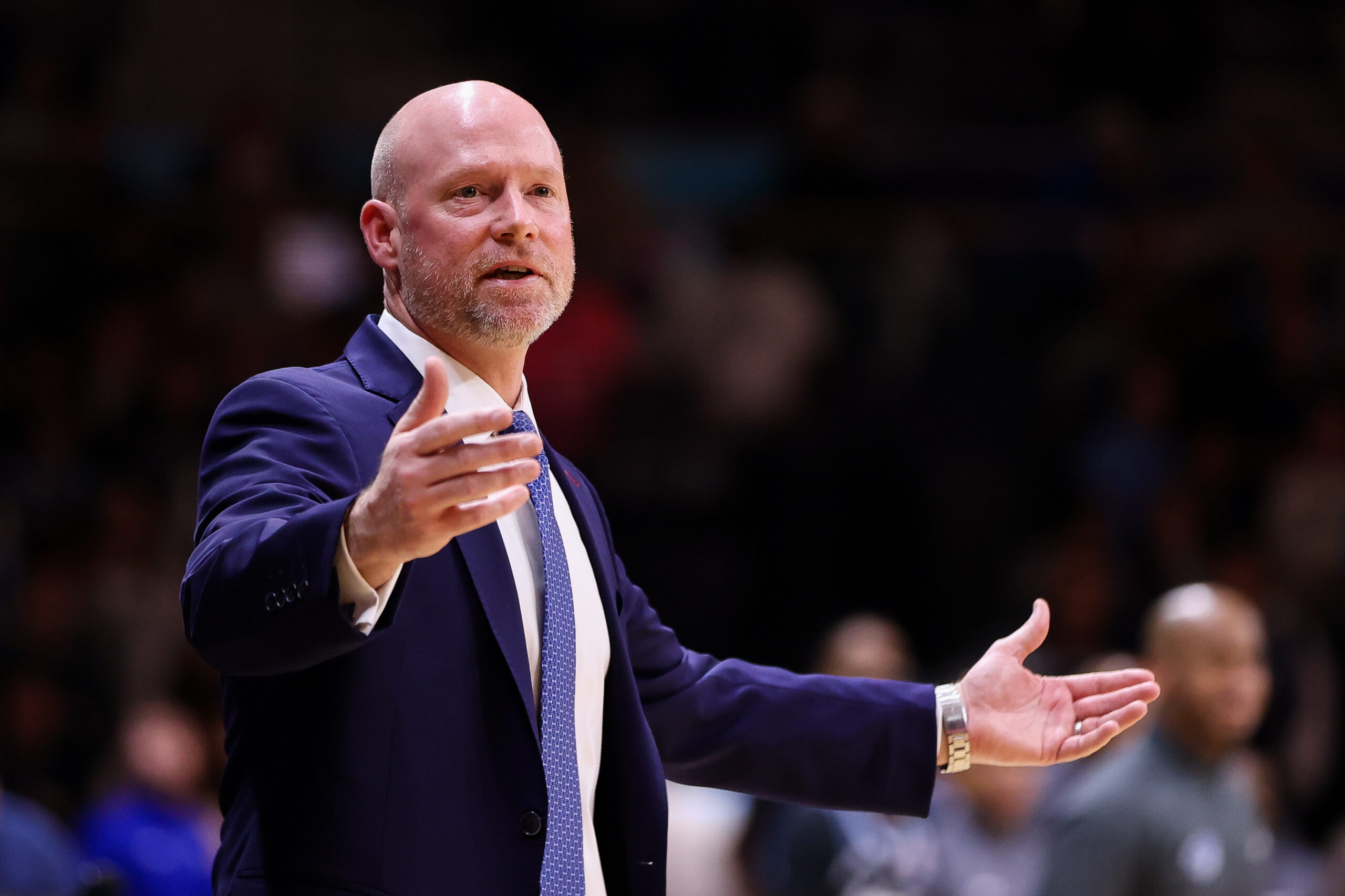
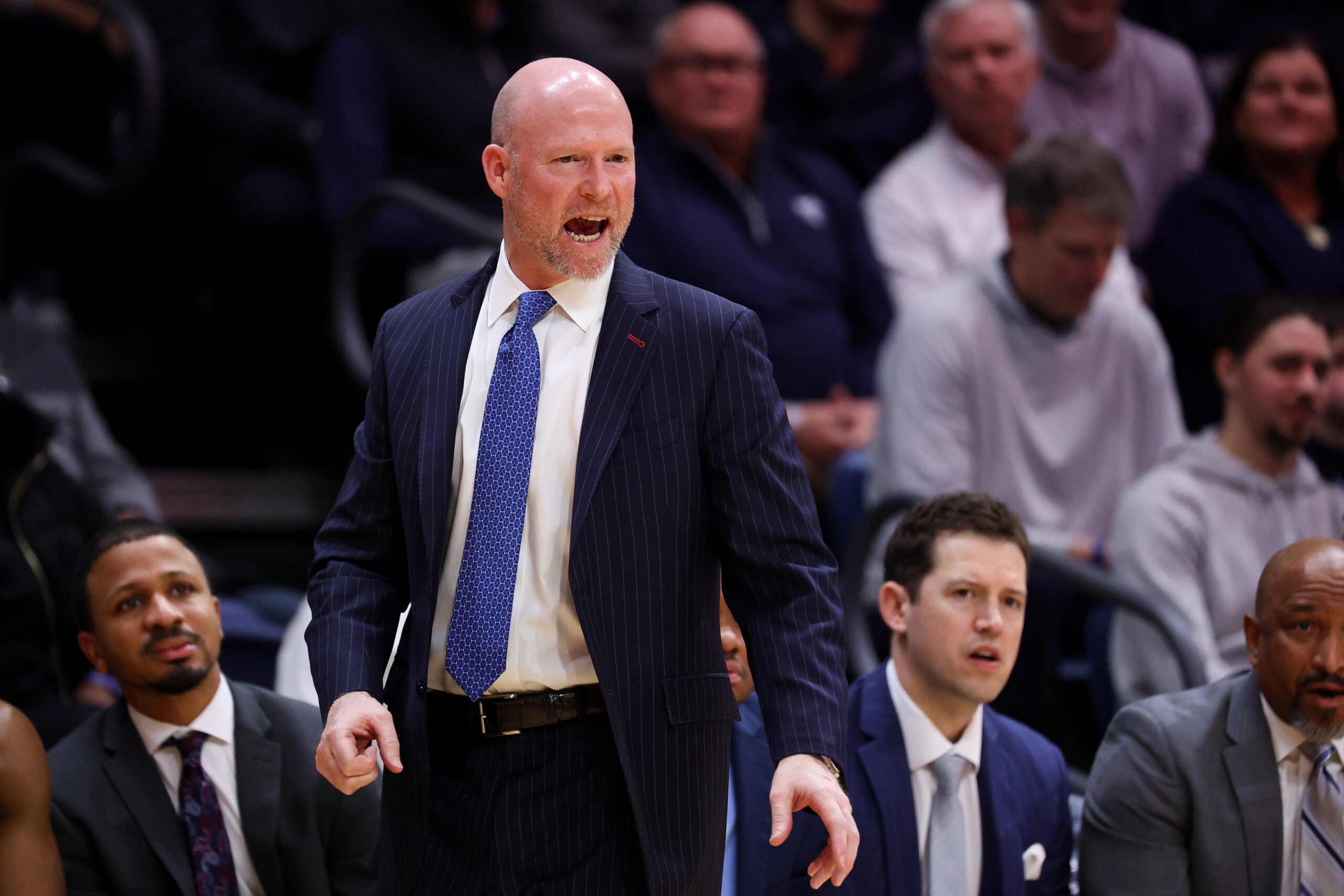
Villanova coach Kevin Willard calls out instructions during the first half against Marquette on Tuesday.
How does one change a mentality this late in the season?
“We’ll get there,” Willard said. “If we can improve our free-throw shooting and make a couple layups in the first half, it’s a completely different game. We held them to 32 points [in that first half], we should’ve had 44 points, and it’s a different type of game.”
Willard was flanked in his postgame news conference by Lewis and Perkins. He turned to Lewis and mentioned that the freshman shoots around 200 extra free throws after practices and noted that Perkins, who is shooting 75% for the season, never misses in practice.
“I have a lot of confidence in these guys that as we go through February and get into March that we’ll make them,” Willard said.
Bryce Lindsay made his first shot Tuesday night, a three-pointer less than three minutes into the game.
It had to, at least briefly, feel like the weight of the world was off his shoulders. Lindsay entered the night having made just 15 of his previous 64 attempts from three-point range (23.4%) over Villanova’s last 10 games since the calendar turned to 2026. The sharpshooting redshirt sophomore guard was a big reason behind Villanova’s strong start to the season, but he has reached double figures just four times in the last 11 games. That initial attempt Tuesday night was his only make on six three-point tries. He went scoreless Saturday afternoon at Georgetown.
Villanova guard Bryce Lindsay dribbles past Marquette’s Chase Ross during the second half Tuesday.
“He’s going to get going,” Willard said. “It’s a little mental. I talked to the team earlier, before the game, about staying in the moment. Talking to each other and not worrying about the past, not worrying about the future, just trying to stay in the present. Sometimes it’s hard when you’re not playing well to kind of stay in the moment.
“I have a lot of confidence in Bryce. He’s in the gym with me every day working. He’s going to get it. I thought he had some good opportunities tonight. When you’re struggling the way he’s struggling, sometimes you just need one, get a good bounce, bank one in. I told him to sleep on the other side of the bed tonight. Sometimes you’ve just got to try something different.”
Something different, like starting sixth man Devin Askew and giving Lindsay a different look off the bench?
“No,” Willard said. “He’s still doing a lot of other things, and people have to guard him.”
Lindsay did affect the game in positive ways despite only scoring four points. He was plus-8 and had three rebounds and four assists, including a key pass to the corner for a Matt Hodge three-pointer with 4:20 left in the game.
Willard said he likes Askew coming off the bench as a “security blanket.”
Speaking of which … it was Askew who made two free throws with 11 seconds left that gave Villanova a three-point lead and forced Marquette into a desperation three-point attempt.
CLEARWATER, Fla. — Say this for the 2026 Phillies: They’re recognizable without a program.
Kyle Schwarber is back. So is J.T. Realmuto. And although team officials cite a new right fielder, a remade bullpen, and a commitment to two top prospects as a rebuttal to the claim that they are running back the roster, there was a week in January when they nearly put the darned thing in a blender.
If the Phillies signed Bo Bichette — and they agreed to offer what he asked for (seven years, $200 million, according to a major-league source) — it would have set off a chain reaction. They’d have moved on from Realmuto to a less-expensive catcher (they talked with Victor Caratini) and probably have traded Alec Bohm to open third base.
Instead, Bichette took a higher-salary, shorter-term offer from the New York Mets, and the Phillies turned back to Realmuto. Re-signing two foundational players — also, the best DH and catcher in free agency — was Plan A anyway. And keeping together the guts of a roster that won … checks standings … 96 games last season is sensible, even if fans are restless after back-to-back divisional-round knockouts.
That’s the backdrop as spring training begins. Let’s dive in with our annual Starting 9 — a lineup of Phillies questions for the next six weeks in Florida.
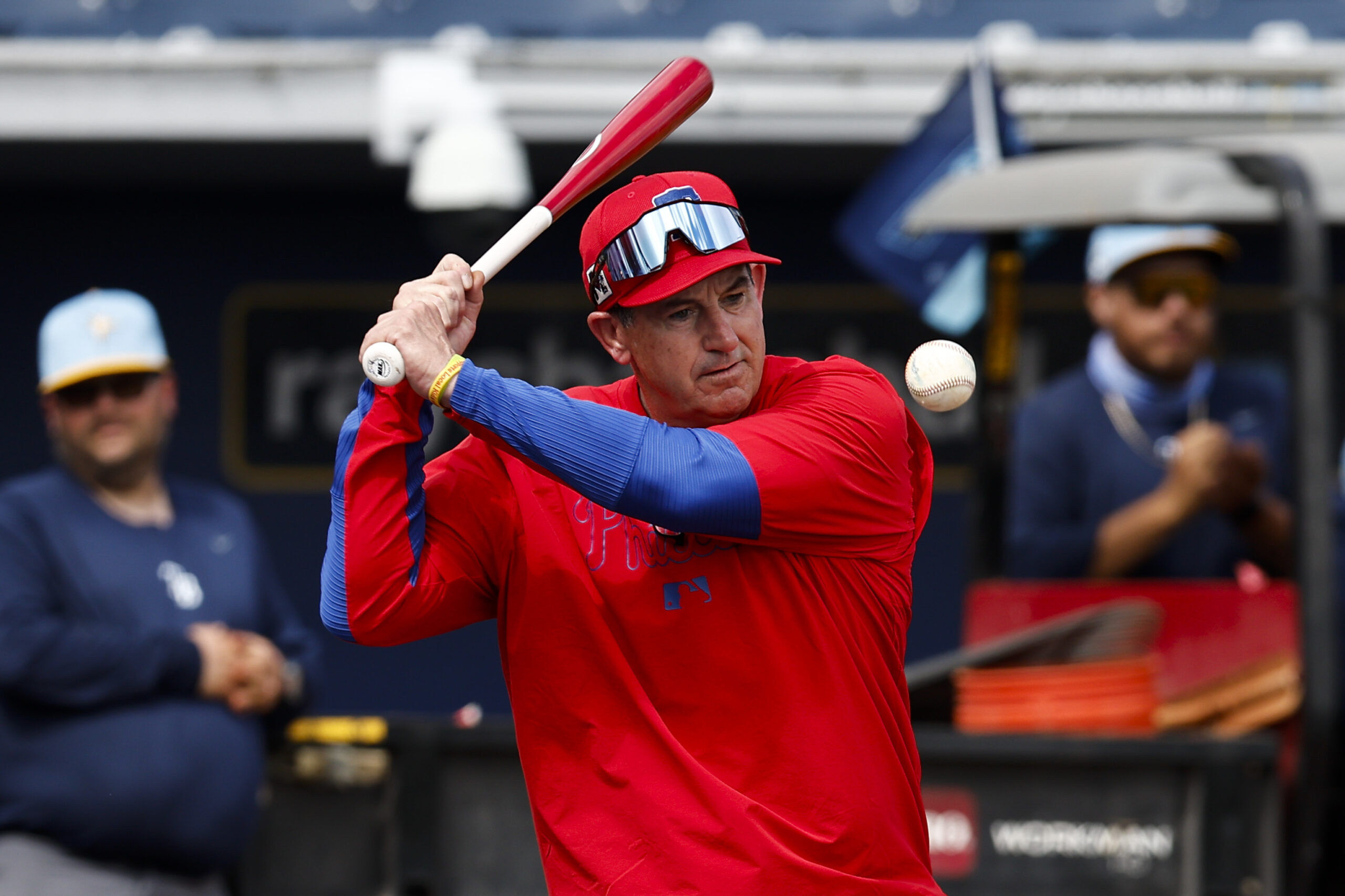
Rob Thomson is set to begin his fifth season as manager of the Phillies.
“I think it’s to be determined,” the manager said recently on The Inquirer’s Phillies Extra podcast. “But I feel better about it.”
It’s a high bar. And the Phillies did lose mainstay starter Ranger Suárez and trade-deadline spark Harrison Bader in free agency. But Thomson’s optimism stems from a belief that rookies Andrew Painter and Justin Crawford can fill those spots. Having star closer Jhoan Duran for a full season helps, too. Adolis García is, at minimum, a defensive upgrade over Nick Castellanos in right field.
It’s reasonable to call for change, and the flirtation with Bichette signaled management’s interest in a different look. But different isn’t always good, and BetMGM set the Same Old Phillies’ over/under win total at 90.5, a reminder that they’re still very good.
Are they better? Not yet, but check back.
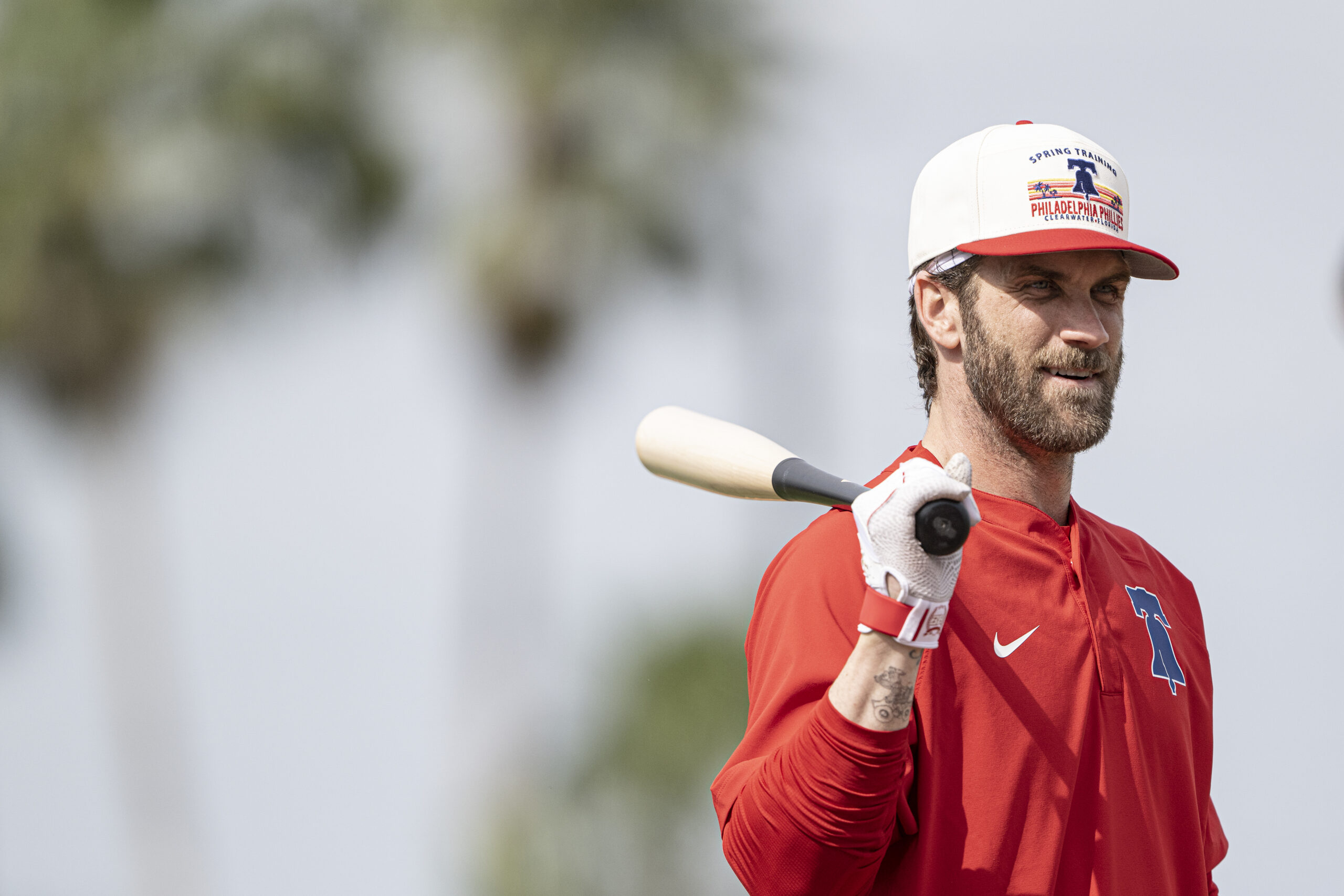
Bryce Harper was still productive in 2025, but he wasn’t patient at the plate or particularly clutch either.
Perspective is important. Harper missed most of June with an inflamed right wrist, leaving his counting stats — homers (27), RBIs (75), doubles (32) — short of his career norms. But by OPS (.844), he ranked 22nd among 145 hitters who qualified for the batting title. Based on OPS-plus, he was 29% better than league average.
Here’s what Harper wasn’t: patient. He swung at 35.6% of pitches out of the strike zone, well above his career average (29.3%). He wasn’t clutch, either. Only one of the Phillies’ biggest 43 hits by Win Probability Added belonged to MV3; he batted .233 with a .762 OPS with runners in scoring position.
The first thing seems fixable. Maybe it will help if Harper bats in front of Schwarber rather than behind him. The second? The Phillies are betting on it being aberrational, not the start of a decline at age 33.
Phillies ace Zack Wheeler is attempting to come back from major surgery in September.
To recap: In August, Wheeler developed a blood clot near his right shoulder and was diagnosed with a condition in which a vein is compressed between the collarbone and rib cage. He had surgery to remove the clot, then a second procedure in September to relieve the vein by removing the first rib.
Wheeler spent the offseason in Philadelphia, rehabbing under the supervision of team doctors and trainers. He got back on a mound last week. He will turn 36 in May. It’s unlikely he will be ready for opening day, Thomson said Monday, but the Phillies don’t expect him to be far behind.
“He’s wants to be an All-Star,” Thomson said. “He’s got a carrot out there that he’s after. We’re not going to push him because we want a healthy Zack Wheeler. We want him back to normal, and I believe he’s going to get there.”
Normal, for Wheeler, is among the best two or three pitchers in baseball, dominant and durable. It’s a long way back to that level. It’ll be fascinating to watch him try to get there.
Alec Bohm is a candidate to return to the cleanup spot for the Phillies.
4. Batting cleanup …?
This is where Bichette came in. Maybe not in the cleanup spot, per se. But the two-time American League hit king surely would have joined Trea Turner, Harper, and Schwarber — in some order — in the top half of the lineup.
So, now what?
“I’ve got some ideas,” Thomson said. “I’ve got to talk to the players about it, but you could see a change.”
The implication is that Schwarber and Harper will be flip-flopped in the Nos. 2 and 3 spots behind Turner as a way of getting Harper to see more strikes. But then who bats behind Schwarber?
Bohm may be the first choice. He batted .216 with a .571 OPS in 26 starts in the cleanup spot last year, but excelled there (.283, .769) in 2024. García is another option after batting cleanup in 71% of his starts for the Rangers since 2022. But Thomson believes García put too much pressure on himself last year in Texas and might prefer to ease him in.
Either way, the Phillies must get more production out of the cleanup spot. They ranked 20th last season with a .720 OPS.
The Phillies are expected to trade or release Nick Castellanos before the first full-squad workout in spring training.
5. Will anyone trade for Castellanos?
Think of Castellanos as a car on the side of the road. It’s running, with the keys in the ignition. The Phillies just haven’t gotten anyone to drive it away.
They have a few more days.
“We continue to talk to clubs about [a trade],” president of baseball operations Dave Dombrowski said Monday.
And if they don’t find a taker before Monday’s first full-squad workout?
“At this point, we’re doing everything we can to make a move by that time period,” Dombrowski said. “I’ll leave it at that right now.“
OK, so everyone knows that Castellanos’ relationship with the organization soured last season when he clashed with Thomson over playing time, including an incident in the dugout in Miami that led to a one-game benching.
In November, Dombrowski said “change of sceneries can be beneficial for people.” Nothing has changed. But before the Phillies release Castellanos and swallow his entire $20 million salary, they will exhaust all trade options. The San Diego Padres have a need after ranking 27th in the majors with a .630 OPS from the DH spot. The Colorado Rockies need a lot, including a DH (.613 OPS last season).
In any case, it would be a stunner if Castellanos walks into the clubhouse next week.
Rookie Justin Crawford is the Phillies’ presumptive opening-day center fielder.
6. What’s reasonable to expect from Crawford and Painter?
Nobody expects them to carry the team.
Crawford turned 22 last month; Painter will be 23 in April. Besides, Harper & Friends (Turner, Schwarber, Realmuto, Wheeler, and Aaron Nola) are still near enough to their primes to do the heaviest lifting.
But if the organization is to transition from this core to the next without a rebuilding gap in between, Crawford, Painter, and eventually top prospect Aidan Miller must light the way.
The projection models are promising. Crawford is pegged to bat .286/.337/.390 with seven homers, 29 steals, a 103 wRC+ (weighted runs created plus; 100 is league average), and 2.0 wins above replacement, based on the ZiPS forecasting system. Steamer, another system used by FanGraphs, has Painter for a 4.69 ERA in 133 innings.
Those would be solid numbers for a rookie No. 9 hitter and debutant No. 5 starter, with room to grow.
Phillies top prospect Aidan Miller has a chance to make his major-league debut later this season.
7. When will it be Miller’s time?
Of all the reasons to be bullish on Miller — extra-base power, a high contact rate, and stolen-base aptitude — here’s one more: He’s a quick study.
To wit: After getting promoted to high-A Jersey Shore in 2024, Miller batted .169 and slugged .268 through his first 71 at-bats. He made adjustments and got on a .299/.526 roll over his final 154 at-bats.
Exhibit B: Last year, the Phillies challenged Miller by starting him at double-A Reading, where he was among the youngest players in the league. He batted .234 and slugged .355 through the All-Star break, then went on a .302/.550 kick before going 9-for-27 (.333) with a 1.032 OPS in a weeklong triple-A cameo to end the season.
It wouldn’t be surprising, then, if the Phillies punch the accelerator on Miller. He’s blocked at shortstop by Turner, but the plan is to get him reps at third base in spring training.
If Miller gets off to a blazing start in triple A and Bohm struggles again in April, well, it could get interesting.
Phillies ace Cristopher Sánchez will pitch for the Dominican Republic in the World Baseball Classic next month.
8. Will the WBC be a disruption?
Eleven players — more than one-quarter of the 40-man roster — will leave camp at the end of the month to compete for their respective countries in the World Baseball Classic. It’s not ideal.
But the Phillies aren’t unique, either. The Boston Red Sox also will have 11 players leaving major league camp; the Seattle Mariners will have 10. The Mets, Milwaukee Brewers, and Chicago Cubs will have eight apiece.
“I played for Team Canada a couple of times, and to play for your country is quite an honor,” Thomson said. “You’re holding your breath when the guys go. But at the end of it, if they come out of it clean, I think it’s really good.”
Specifically, the Phillies will cross their fingers and toes for the health of five pitchers: Cristopher Sánchez (Dominican Republic), Nola (Italy), Taijuan Walker (Mexico), and relievers Brad Keller (U.S.) and José Alvarado (Venezuela). Harper and Schwarber will join Keller on Team USA. Edmundo Sosa (Panama), Johan Rojas (D.R.), and Garrett Stubbs and Max Lazar (Israel) are also competing.
Veteran major-league outfielder Bryan De La Cruz will be a nonroster invitee to Phillies camp after signing a minor-league contract in November.
9. Is there a sleeper to watch?
Don’t mistake passing on a handful of righty-hitting free-agent outfielders as an indication that the Phillies are still holding out hope for Brandon Marsh to hit left-handed pitching. Maybe he’ll turn into a latter-day Schwarber, but the Phillies aren’t under any illusions.
In that case, why not sign Rob Refsnyder, Lane Thomas, Austin Hays, Miguel Andújar, or at least so far, Randal Grichuk?
Two words: Otto Kemp.
Dombrowski and Thomson have talked up Kemp throughout the winter. Kemp slugged .558 with four homers in 57 plate appearances after getting called back up in September despite playing through shoulder and knee injuries that required offseason surgeries. He’s healthy now and will get the first shot at platooning with Marsh in left field.
But there’s another option. Maybe you remember Bryan De La Cruz from his years with the Miami Marlins. He bats from the right side and has 58 career homers, seven against the Phillies. The 29-year-old signed a minor-league deal in November, then batted .301 with eight homers and an .888 OPS en route to being named MVP of the Dominican Winter League.
Could he be the surprise of camp? There’s always one.
For the first time in a 12-year career that has been as sporadic as it has been incandescent, Joel Embiid is performing to the level of his potential.
If that sounds demeaning for a player who won the NBA MVP award in 2023, then you didn’t appreciate his unprecedented potential then and you don’t appreciate his diminished potential now.
Embiid had a chance to be the best big man in NBA history. However, a lack of professionalism rooted in indifference to discipline both on and off the court, combined with a cascade of injuries rooted in bad conditioning and bad luck, always limited his performance. He has missed almost half of the Sixers’ games in his career. This time last year, a lingering knee injury brought him to the brink of irrelevance.
Now, though, he seems to be the best possible version of himself. His new self. And he’s only getting better.
“I continue to see improvement,” Sixers president Daryl Morey said last week. “He feels like he’s improving still.”
How?
He listened to his doctors. He lost weight. He adjusted his game and is more deferential. He became a better teammate. He might not be going to the All-Star Game this weekend, but he’s playing at an All-Star level.
Sixers coach Nick Nurse will not play Joel Embiid on the second night of a back-to-back.
Embiid said last week he doesn’t care about what would be an eighth All-Star appearance: “I don’t need validation from anybody. I’m just excited to be playing every night.”
Everything is a bonus.
“Coming into this year, I thought it was going to be more of a tryout year,” he said.
He’s played in only 31 games, which is probably why he was not elected as an All-Star by the fans, media, and players, who vote on the starters; nor by the coaches, who vote on the reserves.
After all, Embiid missed 14 of the 76ers’ first 22 games as he grew accustomed to a new body and a new mindset and committed more fully to his rehab regimen.
That commitment has borne fruit. Embiid has played in 23 of the last 30 games, averaging 29.4 points and 8.2 rebounds in 33.8 minutes in that span. The Sixers were 14-9 in those games entering Monday. They held the No. 6 seed in the Eastern Conference, which is vulnerable due to the absence of stars in Boston and Indiana.
Given the intermittent nature of a playoff schedule, there’s no reason to think that Embiid couldn’t be similarly productive throughout a postseason run. He doesn’t play in back-to-back games, and he probably never will again, but there are no back-to-backs in the postseason. He did not play Monday in Portland due to right knee soreness, another enduring issue, but missing just seven of 30 games on 31-year-old knees that have undergone a total of four procedures has been a best-case scenario.
“We thought that Joel could still get to this level and play to this level,” Morey said. “I think there was a lot of very reasonable skepticism. But all I ever had was talking to our medical staff and doctors, and there was a lot of confidence that he could get to this place if he put in the time.”
That was a big “if.”
“He has,” Morey said.
Clearly.
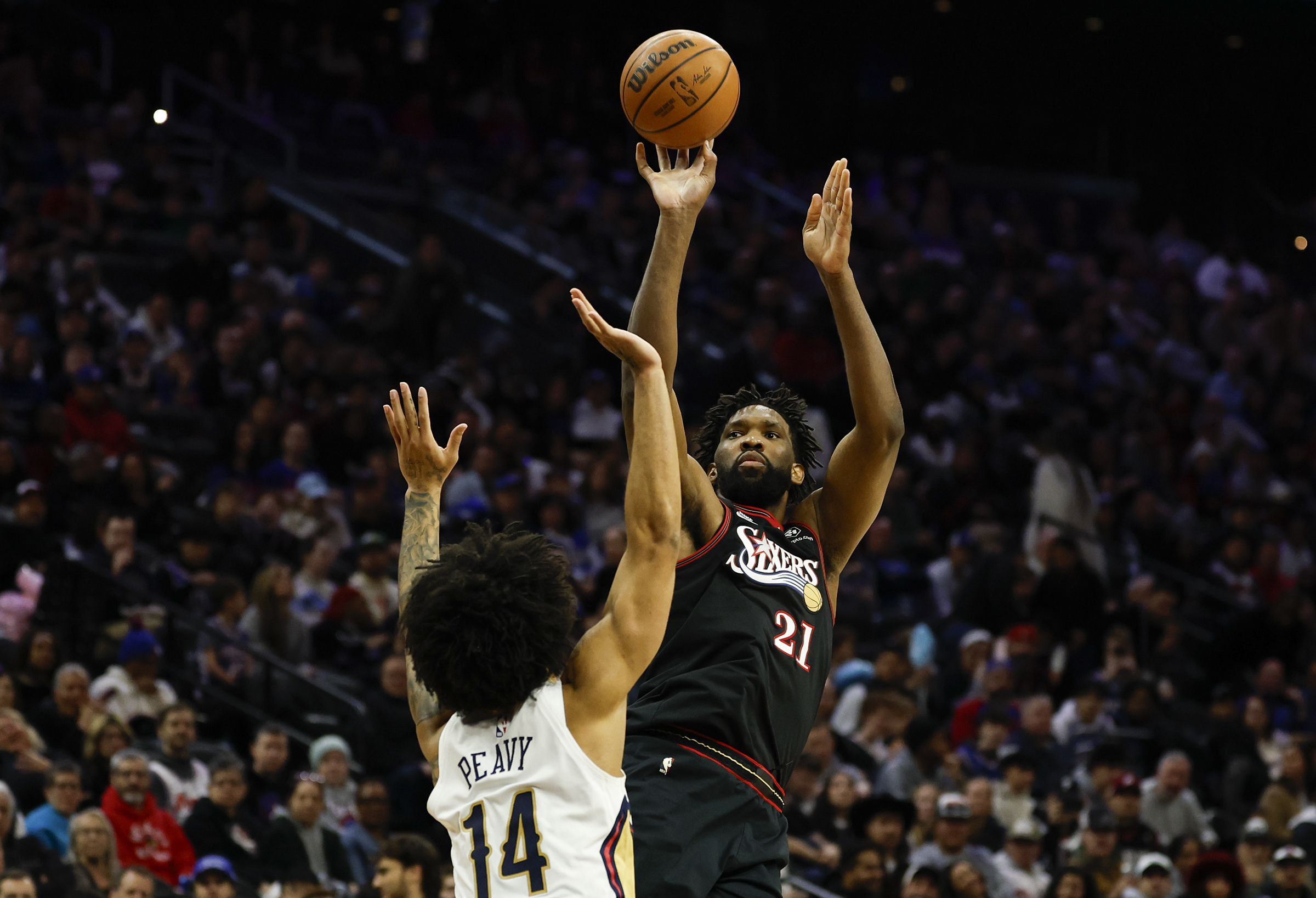
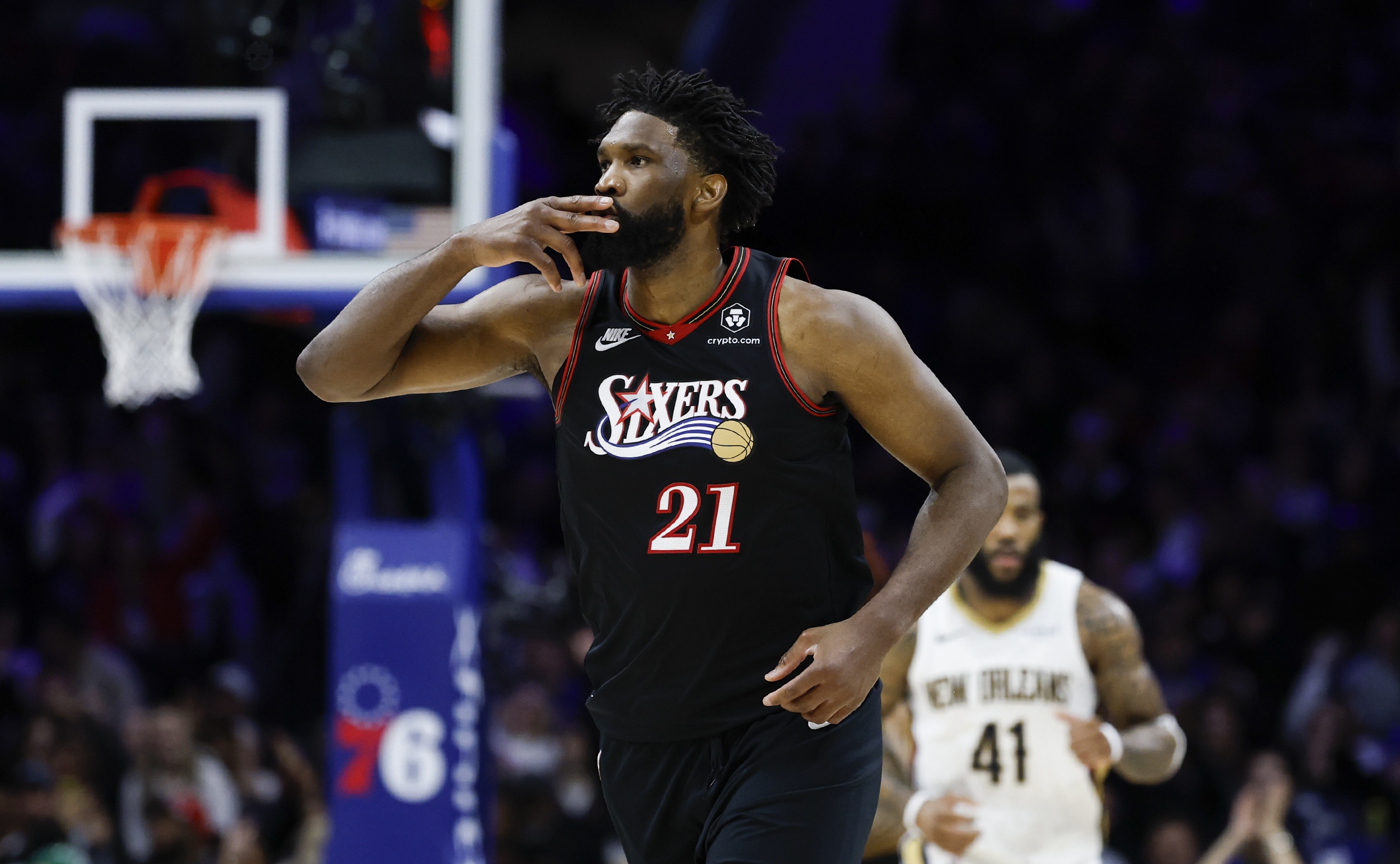
Sixers center Joel Embiid shoots over New Orleans Pelicans guard Micah Peavy on Jan. 31.
Embiid underwent meniscus surgery in February 2024. He returned in April for the Sixers’ failed playoff run, then foolishly participated in the Paris Olympics with Team USA (he’s a naturalized citizen).
He showed up for training camp on Sept. 30 both out of shape and far behind on his rehab, and missed the first three weeks of the season. He was hopeless when he returned. The Sixers insisted the knee was fit for play and there was no further injury, but Embiid could not endure the pain and swelling. Doctors said the process of recovery involved strengthening the muscles that surround the knee; weight loss, to reduce the stress on the joint; and overall body strength to better distribute the load. He just got worse.
Embiid played in just 19 games last season, and, after the 16th one, suggested to a television reporter that he needed another surgery. To that end, Embiid eventually visited Dr. Jonathan Glashow, a Manhattan-based orthopedic surgeon and NBA specialist. Glashow performed an arthroscopic procedure on April 9.
This, of course, undermined the medical advice Embiid received from at least six other doctors.
So what, exactly, did Glashow do? Nobody will say. The Sixers, who since 2013 have been cursed by injuries like no other NBA team, are relatively transparent regarding significant medical procedures, at least eventually. Not this time.
Glashow last month posted on social media, but only to offer thanks to a grateful Sixers community and to offer vague praise of Embiid’s “dedication and hard work.”
The surgeon did not, however, reply for comment for this story.
Dr. Jonathan Glashow, who has received recent praise from Sixers fans as Joel Embiid’s progression continues, posted this video on Instagram earlier today: https://t.co/RcbQqMGp3hpic.twitter.com/pCNMnXnLGO
So, the question remains: What did Glashow do? Did he discover an injury other doctors missed?
About a year ago I wrote a column interviewing orthopedic surgeons who detailed options open to Embiid, many of which might have cost Embiid this season. When presented with the options, the Sixers acknowledged that the list was complete.
League sources indicate that Glashow did not perform any of the more radical procedures. According to the sources’ knowledge, Embiid underwent the most minor possible procedure on the list: putting the arthroscope into the knee, making sure there was nothing new causing irritation, and getting out.
After the visit to Glashow, sources say, everything improved. Maybe the big guy got scared straight. Embiid got better rest, he ate smarter, he was even more focused in his rehab sessions. He lost weight. His pain tolerance increased.
Maybe it just took more time than expected. Everybody heals at a different rate. Everybody’s commitment to rehabilitation is different. Doctors can project typical timelines, but returning to play seldom follows a straight line. There are setbacks. There are plateaus. The body has to develop compensatory strength and stability for strength and stability that has been lost forever.
At any rate, less than a calendar year later, Embiid is back — at least, he’s more “back” than anyone expected.
Can it last?
Joel Embiid’s $188 million contract extension will kick in next season.
Sustainability
The Sixers will have 28 games left after the Knicks visit Wednesday and the All-Star break begins, with six back-to-backs. Can Embiid play in, say, 22 games? After this season, the Sixers owe Embiid $188 million over the next three years. How much will he be able to give them when he’s 34?
“We do think it’s sustainable,” Morey said.
He’s in good hands. Embiid singled out Simon Rice, the team’s vice president of athlete care, as the main reason for his comeback. But it’s not as if the Sixers hired Rice and then Embiid got better. Rice has been with the Sixers since 2020.
No: This is less about the doctors than it is about the patient. Since last spring, Embiid simply has been more professional. More mature.
Sixers sources say that, after Tyrese Maxey called him out last year for chronic tardiness, Embiid has not been as late as often for the team bus or the team plane. He is more present in the locker room during the team’s downtime. He has been more engaging with young players like rookie VJ Edgecombe, with new players like Dominick Barlow, and with fringe players like Quentin Grimes.
Maybe Maxey’s emergence as the team’s MVP and spokesperson relieved from Embiid the pressure of a role for which he was never equipped.
“He’s like the fun-loving uncle now,” said one Sixers insider.
That’s something.
He’s not MVP-level Embiid, and he never again will be. His defensive movement will never return to the all-defensive levels of his youth, but his positioning is good, and he occasionally blocks a shot. He’s even started dunking again. Gently.
“I think, from now on, every single day … keep stacking them up, it’s only going to get better. With the hope that, whether it’s by the playoffs or next year, I’m really, really back to being myself. I’m on my way there,” Embiid told the Inquirer during the team’s West Coast trip.
That’s a pipe dream, of course. But Embiid is so gifted that this new version certainly should be an annual All-Star contender.
It’s always been hard to quantify Embiid’s intangible value. You can say he’s ninth in “DARKO” or seventh in “PER” or whatever composite metric you like, but the eye test will tell you that Embiid once again is among the NBA’s best players, night in and night out.
At Roxborough Memorial Hospital in Philadelphia, surgeon Piotr Krecioch has his hands full launching a program offering surgical interventions to treat obesity.
One in three Philadelphians are living with obesity, putting them at higher risk of chronic conditions like diabetes and heart disease, but these days fewer are seeking the bariatric surgical procedures long considered a leading medical treatment for the condition.
“I’m trying to start a bariatric program at probably the worst possible time you can ever imagine because everybody’s losing patients, and I don’t even have a patient to begin with,” Krecioch said.
Tower Health’s Reading Hospital recently closed its bariatric surgery program, and other local health systems have seen declines in weight-loss operations approach 50%.
Independence Blue Cross, the Philadelphia region’s largest insurer, said the number of bariatric surgeries it paid for dropped by half in the five years ended June 30.
Those shifts in the bariatric surgery landscape have followed the meteoric national rise in the use of GLP-1s and related drugs for weight loss.
So far, the drugs havebenefited patients by allowing them to avoid an invasive surgery.With bariatric surgery, people lose weight because the procedures restrict the amount of food a person can eat. Drugs in a class known asGLP-1s make people feel full longer.
For hospitals, the upheaval in treatment options cuts into a profitable business line and adds to the financial pressure health systems have been experiencing since the pandemic.
Despite the ever-increasing popularity of GLP-1s for weight loss like Novo Nordisk’s Ozempic and Wegovy and Eli Lilly’s Mounjaro and Zepbound, it’s too soon to write off bariatric surgery as an option, some doctors say.
Insurers are imposing limits on coverage because of the long-term cost of the drugs compared to surgery, and doctors are watching for side effects that may emerge as more people take the drugs for longer periods of time.
It’s not the first time a new technology has reduced surgical volumes.
Whenever a less-invasive treatment has come along, “surgical volumes always have taken a beating,” said Prashanth R. Ramachandra, a bariatric and general surgeon at Trinity Health Mid-Atlantic’s Mercy Fitzgerald Hospital. Declines in peptic ulcer and open heart surgeries are past examples of the phenomenon, he said.
Such industrywide moves away from profitable procedures can create financial challenges for individual clinics or independent hospitals, said Daniel Steingart, who leads the nonprofit healthcare practice at Moody’s, a major credit ratings agency.
“But I also see it as an opportunity, because there’s other patients out there, there’s other services that can be provided. This is a matter of the management team being nimble,” he said.
Sharp decline in bariatric surgeries
National data show a 38% decline in bariatric surgeries from the beginning of 2024 through September, according to data firm Strata Decision Technology. Comparable local data were not available.
A substantial portion of the drop is from patients who previously had bariatric surgery but regained weight, physicians say. In the past, they would have had a type of surgery called a revision. Now, those patients are more likely to start taking GLP-1s, local doctors said.
Prashanth R. Ramachandra is a general and bariatric surgeon at Trinity Health Mid-Atlantic’s Mercy Fitzgerald Hospital in Darby.
Only two Philadelphia-area health systems provided details on changes in bariatric surgery volumes in recent years as GLP-1s for weight loss took off.
At the University of Pennsylvania Health System’s three Philadelphia hospitals, the annual number of bariatric surgeries has fallen by more than half, from a peak of 850 three or four years ago to around 400 in the year that ended June 30, said Noel Williams, a physician who leads Penn’s bariatric surgery program.
At Mercy Fitzgerald in Darby, the number fell from an annual peak in the 220-230 range to about 125 last year, Ramachandra said.
The volume at Mercy Fitzgerald was likely buoyed by the closure of the bariatric surgery program at nearby Crozer-Chester Medical Centerin Upland.
Tower did not provide details on the Reading closure, which was part of cutbacks Tower announced in early November. The program closed last month after a 60-day notice tothe state health department.
Main Line Health, which only offers bariatric surgery at Bryn Mawr Hospital, said surgeries have declined, but provided no details.
Virtua Health did not provide comparable data but said that its Virtua Complete Weight Management Program, which opened in spring 2024 to expand into medication treatments, experienced a 35% increase in visits last year.
The number of bariatric procedures is also down at Temple University Health System, but patients with complex conditions and more severe obesity are still coming to Temple for surgery, said David Stein, who is surgeon-in-chief at Temple University Hospital.
To adapt to this rapid change in medicine, Temple is adopting a multidisciplinary approach to the disease, building on what is done in cancer care, Stein said.
Jefferson Health did not respond to requests for information about its bariatric surgery program.
How health systems are responding
While full-scale closures like Reading’s are unusual, cutbacks are occurring broadly.
When the bariatric surgeon at Penn Presbyterian Medical Center retired amid declining numbers of surgeries across the entire system, Penn did not replace him, Williams said.
Penn does the procedures locally at the Hospital of the University of Pennsylvania and at Pennsylvania Hospital.
“If the numbers were to continue the way they are now,” Williams said, “we may want to consolidate into one of our hospitals in the city.”
Outside of Philadelphia, Penn has bariatrics programs at Lancaster General Hospital and Penn Princeton Medical Center.
After Jefferson Health acquired Einstein Healthcare Network in late 2021, it consolidated bariatric procedures at Jefferson Abington Hospital, according an Inquirer analysis of inpatient data through 2024 from the Pennsylvania Health Cost Containment Council.
Jefferson did not respond to a request for information about the changes.
Piotr Krecioch is a bariatric and general surgeon at Roxborough Memorial Hospital in Philadelphia.
Not the end for bariatric surgery
GLP-1s don’t mean the end of bariatric surgery, even though the procedures are not likely to return to previous peaks, physicians said.
Some patients don’t respond to GLP-1s and others can’t tolerate them, which means they remain candidates for surgery, Williams said. Surgery is still recommended forpatients who are considered severely obese,with body-mass indexes over 50,he added.
Outcomes cannot yet be compared over the long-term. Ramachandra and other doctors are keeping their eye on the ratio of fat loss and muscle loss in patients taking GLP-1s compared to those who have bariatric surgery. Losing muscle can lead to falls and fractures.
A study published last month in the Journal of the American Medical Association found that bariatric surgery is associated with a favorable ratio of fat loss.
At Roxborough Memorial Hospital, Krecioch, who also works as a general surgeon, sounds optimisticas he works on his new program.He became a Roxborough employee in April 2024 after eight years at Mercy Fitzgerald, where he worked with Ramachandra.
Krecioch’s strategy for years has been to offer weight management services in addition to surgery. Patients come for a GLP-1, giving him a chance to build a long-term relationship.
“I have a feeling that these people are going to come back to my office,” he said. ”I’m gonna keep seeing them, and that they will actually convert to bariatric surgery at some point.”
Editor’s note: This article has been updated with information from Temple University Health System.
SANTA CLARA, Calif. — As the Eagles demonstrated last year, defense wins championships.
The Seattle Seahawks pounded the New England Patriots and their quarterback Drake Maye for three quarters and cruised to a 29-13 victory in Super Bowl LX on Sunday night at Levi’s Stadium.
The Seahawks had standouts on offense and special teams, as running back Kenneth Walker displayed in an MVP performance and kicker Jason Myers showed in making all five of his field goal attempts. But it was their “Dark Side” defense that set the tone and carried Seattle to its second title and first in 12 years.
What does the Seahawks’ achievement mean for the Eagles moving forward? Well, not much more than the Eagles realized a year ago when they made a future Hall of Fame quarterback look helpless. No matter how you do it, pressuring the quarterback is paramount.
Maye is no Patrick Mahomes, and few expected the 24-year-old and a young Patriots team to get this far in coach Mike Vrabel’s first season at the helm. Of course, the same could have been said for Seattle quarterback Sam Darnold, who once got lost in the NFL wilderness before general manager John Schneider signed the free agent last offseason.
But it was coach Mike Macdonald’s defense, Walker’s tough running, and Myers’ leg that compensated for an unremarkable passing attack. Here are five takeaways — with an Eagles slant — from the 60th Super Bowl:
Byron Murphy II (91) and the Seahawks’ front four got after Drake Maye all night.
A familiar defensive philosophy?
Schneider knows something about building elite defenses. Twelve years ago, the Seahawks’ “Legion of Boom” unit whipped quarterback Peyton Manning and the Denver Broncos and won going away, 43-8, in Super Bowl XLVIII.
This group, led by another elite secondary, may not yet have the name recognition of Richard Sherman and Earl Thomas from that early 2010s Seattle defense. But third-year cornerback Devon Witherspoon and rookie safety Nick Emmanwori are already two of the best at their respective positions.
The Seahawks consistently pressured Maye, and their zone coverages and heavy dime personnel took away the quarterback’s few reads. There were just as many moments when the quarterback had little time in the pocket due to the pass rush.
The four-man front did its job, but Macdonald’s selective blitzes had Maye dipping his eyes as the game progressed. Witherspoon got to him four times from the slot. He forced two throwaways, registered a sack, and hit Maye just as he threw on a key play in the fourth quarter. The ball landed in linebacker Uchenna Nwosu’s arms and he went 45 yards the other way for a touchdown and a 29-7 lead.
A year ago, the Eagles famously didn’t blitz once and sacked Mahomes six times and forced three turnovers. The Seahawks weren’t a blitzing team in the regular season, and Macdonald followed that approach in the Super Bowl, sending extra rushers just 13.2% of the time, according to NextGen Stats.
Maye was sacked six times and pressured on 52.8% of his drops. And like Mahomes, he tossed two interceptions and fumbled once. The Patriots, meanwhile, went against their norm and blitzed Darnold on 53.7% of his drops.
There are different ways to skin a cat. The Eagles’ scheme isn’t changing, with defensive coordinator Vic Fangio returning after mulling retirement. But there could be room for a slightly more aggressive approach next season.
No other defense was as passive in 2025. The Eagles had the highest percentage of light boxes in defending the run and they had the lowest blitz rate in the NFL. Fangio’s approach worked for the most part, but he didn’t have the defensive front he had a year ago.
Seahawks offensive coordinator Klint Kubiak is headed to Las Vegas to become Raiders head coach, and elements of his scheme will show up in Philly next season with Sean Mannion.
How did the Shanahan-McVay scheme fare?
With the Eagles expected to change their offense after the hiring of coordinator Sean Mannion, the Seahawks offered an opportunity to see how the Shanahan-McVay system that Seattle operates offensively would fare on the biggest stage.
The results were mixed. But two staples of the scheme that have flourished under 49ers coach Kyle Shanahan and Rams coach Sean McVay and their acolytes were effective against the Patriots: under-center play-action and outside zone runs.
Darnold was under center for almost half the plays — 35 of 71 — as coordinator Klint Kubiak stayed committed to the ground game. It helped that the Patriots never really threatened the Seahawks. But Walker was often allowed to run downhill and finished with 135 yards rushing on 27 carries.
He gained 71 yards on 12 carries (5.9 average) on runs outside the tackles. The Eagles long had an inside zone-heavy offense under run game coordinator Jeff Stoutland. But they tried to shift away from that tendency last season when they essentially took that responsibility from the offensive line coach.
It was a mild tweak, meant to create more diversity in the running game, but improvement was marginal. There will likely be a more significant transition under Mannion, who played under McVay and Kubiak, and coached under another from the Shanahan tree: Matt LaFleur.
Stoutland’s sudden resignation, after coach Nick Sirianni was prepared to hire tight ends coach Ryan Mahaffey to assume running game duties, was further evidence that change is coming. The Eagles want an offense that has more variables and under-center plays that give quarterback Jalen Hurts more layup throws.
Darnold’s lone touchdown pass came from under center when play-action caught Patriots linebacker Jack Gibbens. The quarterback found wide-open tight end AJ Barner for a 16-yard score early in the fourth quarter.
How far will Sirianni go in altering the offense? It’s been relatively the same structure since 2021. The Eagles had great success with it, but last season’s regression was stark, and wasn’t all on first-time coordinator Kevin Patullo.
How Hurts and the rest of the returning offense adapt is to be determined. But change is coming.
Milton Williams (97) had a sack and was around the football all night.
Milton Williams balled out — again
Milton Williams fell short in his quest to become the fifth player to win back-to-back titles for different teams, but the Patriots defensive tackle had nothing to be ashamed about.
The same could be said for New England’s defense. The unit kept the Patriots within striking distance despite the offensive struggles. But, ultimately, they succumbed after Maye and Co. went three-and-out on five of six possessions during one stretch.
Aside from cornerback Christian Gonzalez, Williams might have been the Patriots’ best defender. He gave Seahawks right guard Anthony Bradford fits and finished with six pressures, one sack, and one batted pass.
The former Eagle, who had two sacks and a forced fumble in last year’s Super Bowl, beat a double team before dropping Darnold in the backfield for a third-quarter loss. It was the Patriots’ lone sack of the game.
Williams wasn’t as dominant vs. the run and finished with just one tackle. But Walker had most of his success running away from New England’s interior defense.
Vrabel knew he had to hang his hat on his defense, but his game management and offensive coordinator Josh McDaniels’ play-calling leaned conservative. Their most egregious moments came on McDaniels’ early run call on third-and-5, and the team electing to punt on fourth-and-1 at the Patriots’ 41 while down 12-0 in the third quarter.
Vrabel also erred in not going for two after a Patriots touchdown narrowed Seattle’s lead to 19-7 early in the fourth quarter.
Williams might not have won for a second straight year, but he further justified the Patriots signing him to a four-year, $104 million contract last offseason. The 26-year old told The Inquirer last week that he never wanted to leave Philly and felt slighted when the Eagles didn’t tender an offer.
The Eagles had first-rounders Jalen Carter and Jordan Davis, along with Moro Ojomo, returning at defensive tackle. It would have been difficult for general manager Howie Roseman to justify extending Williams with other necessary investments waiting in the pipeline.
But time will tell, assuming Carter and Davis eventually get signed to second contracts, if the Eagles made the right decision.
Mack Hollins (13) finally got the Patriots on the board and acquitted himself well overall.
How did the other ex-Eagles perform?
Williams was one of four former Eagles to play in Super Bowl LX. Josh Jobe was the only one to end the night with confetti on his head. The Seahawks cornerback started on the outside and was sticky in coverage and stout against the run. He finished with seven stops and one pass breakup.
Jobe, who spent his first two years in Philly, said he watched last year’s Super Bowl “[ticked] off” after the Eagles released him before the 2024 season. He revived his career in Seattle and will be one of the more sought-after corners on the market this offseason.
The Seahawks may not allow him to reach free agency, even if homegrown cornerback Riq Woolen is also slated to be unrestricted. Seattle has only four starters slated to become free agents. The Seahawks should, theoretically, be a contender again next season.
Woolen had a rough patch in the fourth quarter when Patriots receiver Mack Hollins caught back-to-back passes vs. him in coverage. Hollins’ first catch came over the middle for 24 yards and the second was an over-the-shoulder 35-yard grab for a touchdown.
Hollins, who won a Super Bowl with the Eagles when he was a rookie in 2017, was hoping to cap a journeyman career with a second title.
Patriots linebacker Christian Elliss played his first two seasons in the NFL for the Eagles before getting released late into the 2023 season. New England snatched him up a day later and he has risen the ranks since.
Elliss blitzed early and hit Darnold before he threw incomplete. He also notched three tackles. But he had a relatively quiet night.
John Schneider is on a short list of the NFL’s best GMs along with the Eagles’ Howie Roseman.
Best GM in the NFL?
Schneider joins the Chiefs’ Brett Veach and the Eagles’ Howie Roseman as the only current GMs to win more than one Super Bowl. While Veach has won all three of his with the same coach (Andy Reid) and quarterback (Mahomes), Schneider and Roseman have won their two titles with different coaches and quarterbacks.
The latter two men have been tied together since they became GMs just days apart in 2010. They took different paths to the top spot — Schneider came up the traditional way as a scout, while Roseman got his start on the business side — but both are now regarded by many as the two best NFL roster-builders.
Schneider can now say he’s not only been to as many Super Bowls as Roseman’s three, but he’s also matched him in Lombardi Trophies. The lone feather in his cap could be winning titles with completely different rosters and coaching staffs, while Roseman had several holdovers last season from the 2017 championship squad.