Tag: UniversalPremium

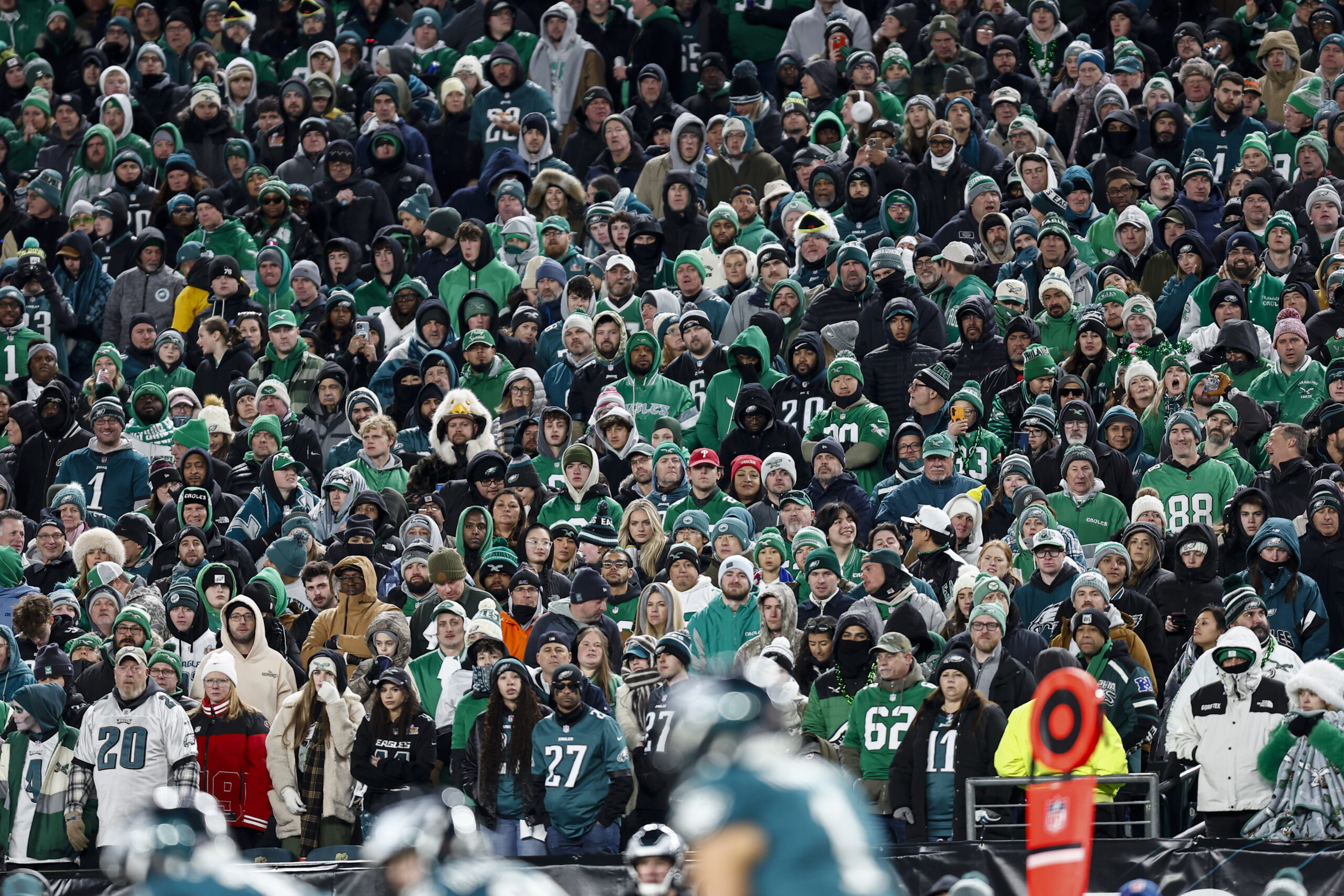
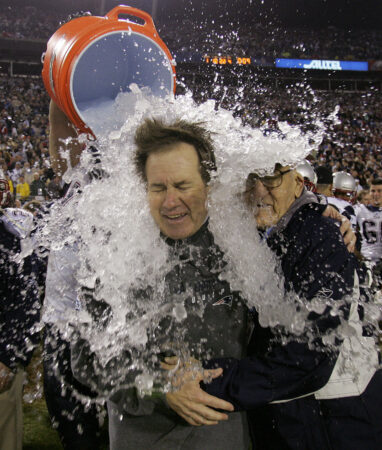
  • Bill Belichick’s cheating cost him first-ballot Hall of Fame induction. It might have also cost the Eagles a Super Bowl title.

    Bill Belichick’s cheating cost him first-ballot Hall of Fame induction. It might have also cost the Eagles a Super Bowl title.

    You’ve probably never heard of Eugène Sue, a French surgeon under Napoleon and later the writer credited with first use of the phrase, “La vengeance se mange très-bien froide.”

    Loosely translated, it means, “Revenge is a dish best served cold.” It has been uttered by characters as diverse as Vito Corleone in The Godfather novel, to Khan Noonien Singh, a Klingon warlord in “Star Trek II: The Wrath of Khan.”

    Now, Philadelphia and the Eagles can say it, too.

    Now, in Bill Belichick’s hour of disappointment and shame, Philly can savor revenge.

    Despite winning a record six Super Bowls, Belichick — whose era as Patriots coach coincided with two of the most notorious cheating schemes in NFL history — failed to secure the minimum 40 of 50 votes required to enter the Pro Football Hall of Fame. He will not be a first-ballot inductee, according to an ESPN.com report Tuesday.

    This shocked the sports world.

    Former defensive lineman J.J. Watt, who never played for Belichick, said on Twitter/X that there is “not a single world whatsoever” in which Belichick shouldn’t be a first-ballot inductee.

    Voters are not required to reveal their votes, but Hall of Fame coach Jimmy Johnson said voters who do not admit to omitting Belichick from their ballot are “cowardly.”

    Like so many, they were shocked. Like so many, they were outraged.

    They should not have been.

    Hall of Fame voters hate cheaters.

    Carlos Beltrán, who helped run an illegal sign-stealing scheme for the Houston Astros, had to wait four years to gain entrance to the Baseball Hall of Fame. Barry Bonds, Alex Rodriguez, Manny Ramirez, and Roger Clemens, Herculean heroes all implicated in PED scandals, might never make it in.

    I voted for all of those guys, and I’d have voted for Belichick, too, if I’d had a vote (the panel is a rotating hodgepodge of 50 mostly credible experts). But I understand. I understand why at least 10 voters banned Bill.

    Why should Belichick, a proven and penalized two-time cheater, be treated any better than other scofflaw? He might not be Pete Rose, but he ain’t Bill Walsh, either.
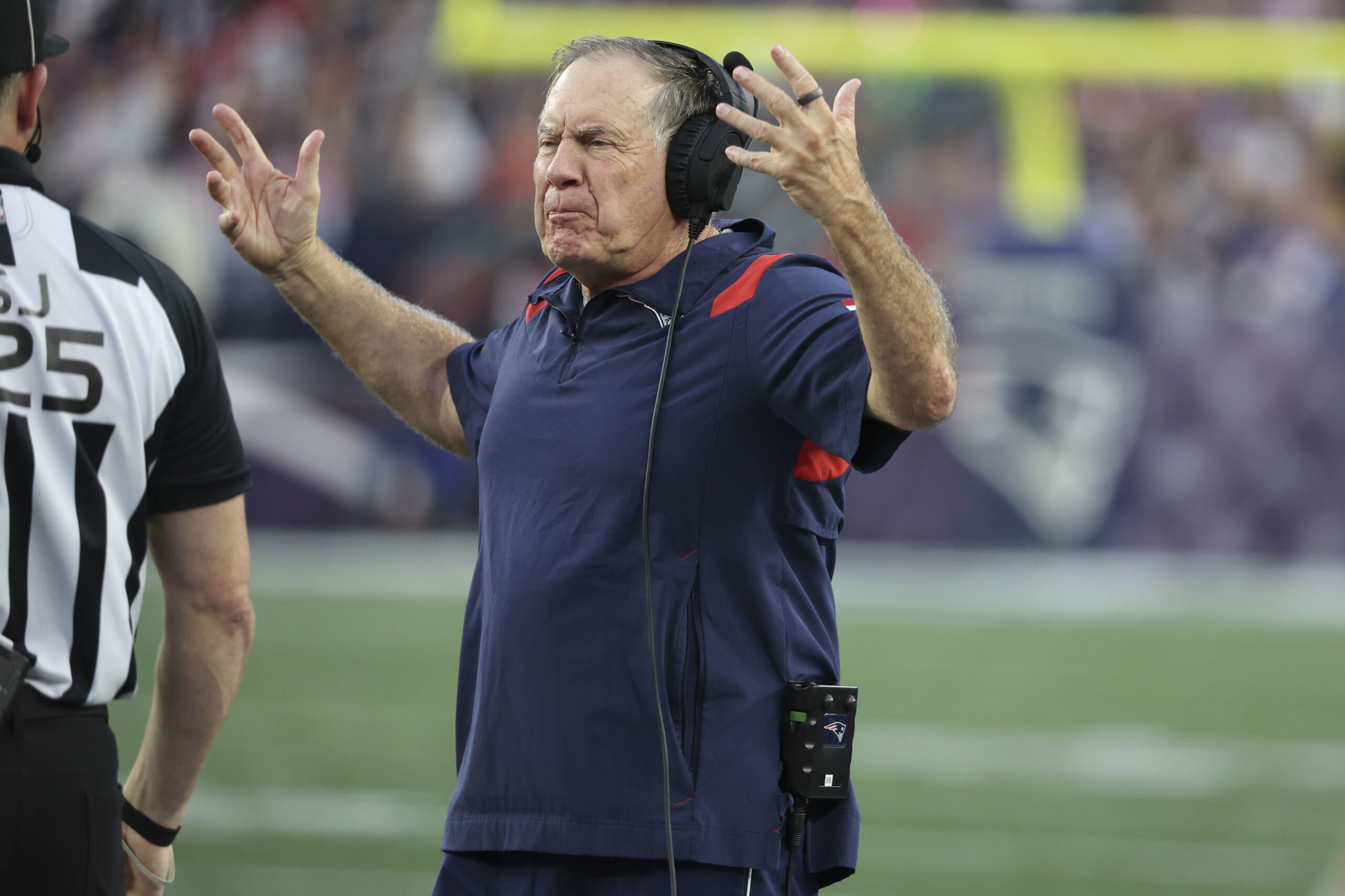
    Bill Belichick’s wins are a matter of record but some of his off-field tactics apparently gave voters pause.

    The voters convened on Jan. 13 to discuss the fates of the Hall of Fame finalists, among them Belichick, whose 302 wins are a record in the Super Bowl era (30 of Don Shula’s 328 wins predate the Super Bowl). Reportedly amid the discussion: Belichick’s role in “Spygate,” an illegal videotaping scheme that Belichick conducted from 2000, the year he was hired as the Patriots’ head coach, through early 2007, when they were caught red-handed while taping the Jets’ sideline during a road game.

    This incident came just over a year after the league issued a memorandum reminding teams of the parameters and definitions of illegal recording.

    The penalty was a $500,000 fine for Belichick, a $250,000 fine for the Patriots, and the loss of their first-round pick in the 2008 draft.

    But there was no way to secure reparations from the teams who had been cheated — possibly among them, the 2004 Eagles in Super Bowl XXXIX.

    Thanks in part to the efforts of former U.S. Sen. Arlen Specter of Pennsylvania, it has since been established that the Patriots recorded opponents’ signs before and after that game.

    It was a hot topic. How hot?

    Shanin Specter, a Philadelphia attorney and the late senator’s son, told The Inquirer in 2021 that, in 2008, President Donald Trump — then a private citizen — appeared to offer Specter’s father a bribe if he would drop his investigation into Spygate.

    The real ones didn’t need an investigation. They knew what was happening as it was happening.

    In a story in 2018, former Eagles defensive backs coach Steve Spagnuolo told a Philadelphia radio station that, at Super Bowl XXXIX, Eagles defensive coordinator Jim Johnson accused the Patriots of stealing the Eagles’ signs during the game. The Patriots seemed to know what was coming even when the Eagles employed rarely-used schemes and plays.

    How did this specter of cheating arise so many years later?

    The ESPN report indicated that Bill Polian, a Hall of Fame member as an NFL executive and a current voter, lobbied against Belichick during that Jan. 13 meeting. He cited the incidence of Belichick’s cheating, and he had skin in the game.

    Polian was president and GM of the Colts when the Patriots, in the middle of their Spygate era, knocked them out of the playoffs after the 2003 and 2004 seasons. On Tuesday night, Polian denied to ESPN that he had told voters that Belichick should serve a one-year penance, but, incredibly — as in, not credibly — Polian said he was unable to recall if he’d voted for Belichick.

    Polian wasn’t with Indianapolis after 2011, but he remained close to the franchise, so he wasn’t happy when the Colts were victims of Belichick’s other moment of ignominy.

    At halftime of the 2014 AFC championship game in New England, NFL officials were alerted by Colts players that the footballs the Patriots were using seemed soft. The balls were examined, deemed to be illegal, and an investigation commenced.

    That’s how Belichick and the Patriots were implicated in “Deflategate.” Eventually, they were found to have routinely, intentionally, and illegally deflated footballs they used on game days to make them easier to pass, catch, and hold on to. Furthermore, Patriots quarterback Tom Brady was found to have destroyed evidence during the investigation. (Belichick denied knowledge of the matter, and the Wells Report into Deflategate found that Belichick was not involved, but many observers remain unconvinced).

    This time the league fined the Patriots $1 million, suspended Brady for the first four games of the 2015 season, and took away the Patriots’ 2016 first-round pick and their 2017 fourth-round pick.
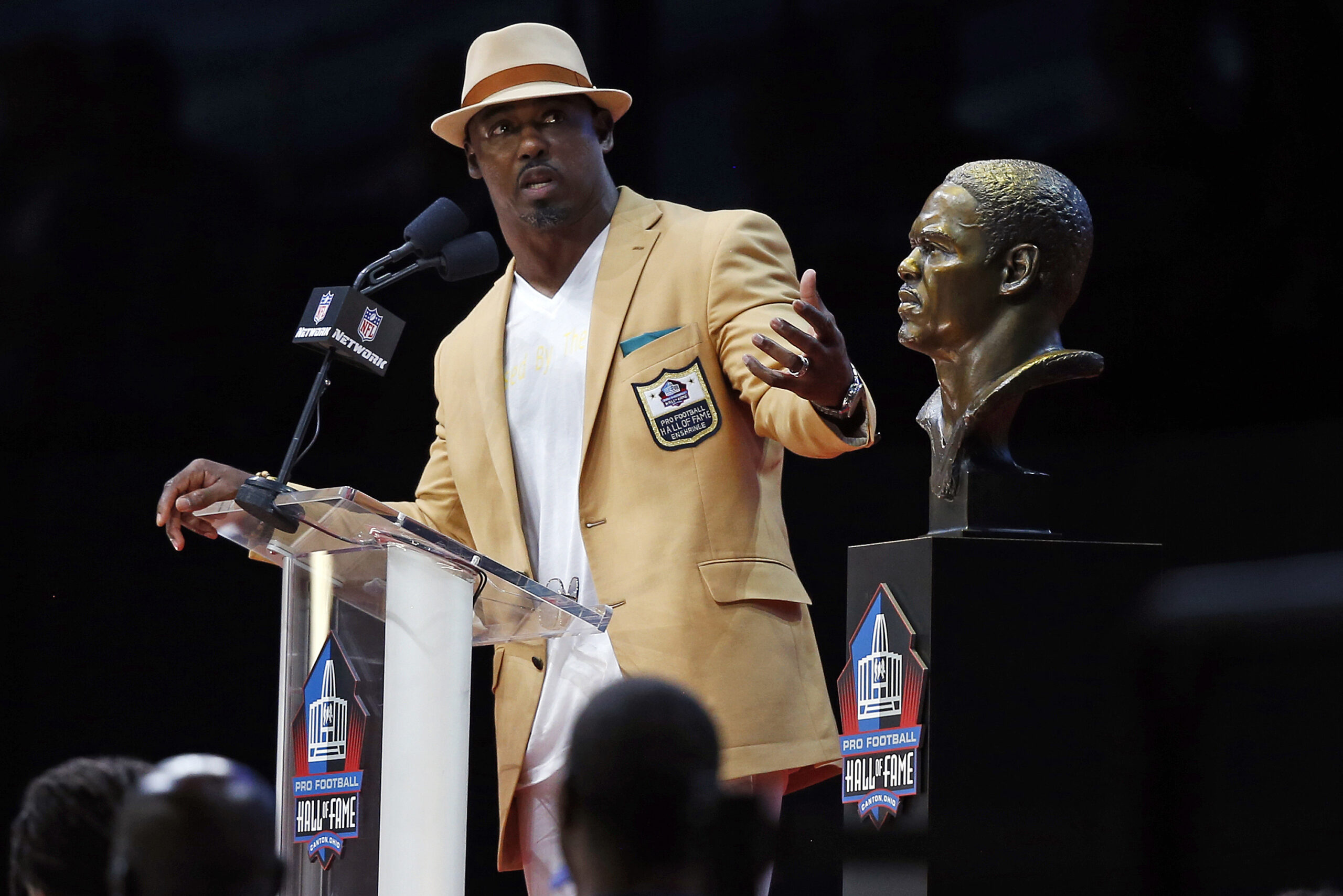
    Bill Belichick will not join former Eagle Brian Dawkins in the Pro Football Hall of Fame … at least this year.

    Today, most folks look past Belichick’s cheating, especially on Tuesday, when the story broke. They point at his innovation, his preparation, and his ability to maximize the abilities of every player, from Brady to Richard Seymour to Rob “Gronk” Gronkowski.

    But just enough folks apparently did not. Just enough folks think Belichick should have to wait a bit before he gets his bust and his jacket.

    Just enough folks did not look past Belichick’s sins.

    Shula died in 2020, but somewhere, you have to think ol’ Don’s smiling. He despised Belichick’s methodology.

    “The ‘Spygate’ thing has diminished what they’ve accomplished. You would hate to have that attached to your accomplishments,“ Shula said in 2007, during the Patriots’ failed attempt to match his 1972 Dolphins’ perfect season.

    Seven years later, when asked about Belichick’s feats to that point, Shula replied with the nickname Belichick’s detractors had given him: “Beli-Cheat?”

    Yes.

    Beli-cheat.

    “La vengeance se mange très-bien froide.”
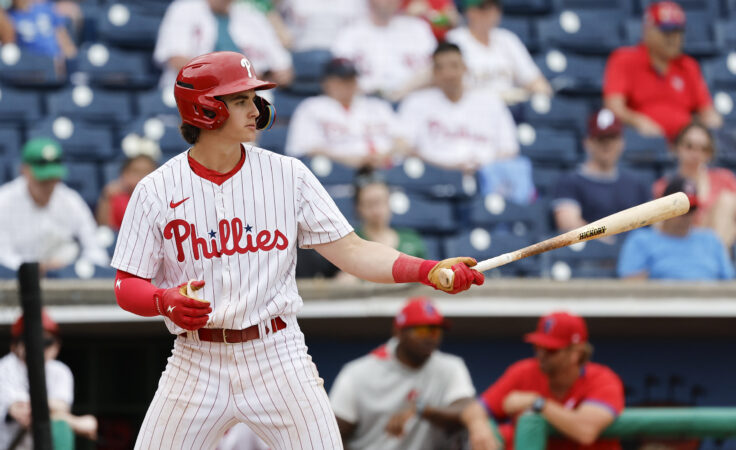
  • Believe it or not, Aidan Miller and the Dodgers are more connected than one might think

    Believe it or not, Aidan Miller and the Dodgers are more connected than one might think

    The fun part of the baseball offseason is the illusion of control.

    Unless you are Dave Dombrowski.

    In which case, you’re a sitting duck. Or, even worse, you’re a floating duck, whose legs are tied, except they are tied beneath the surface, and so everybody thinks you’re a dumb little ducky because you don’t know how to swim.

    The Phillies president has earned some of the criticism being lobbed his way. As ridiculous as it may seem for the Mets to pay Bo Bichette $42 million in annual average value, is it any more ridiculous than paying Taijuan Walker and Nick Castellanos a combined $38 million in AAV?

    The substitution costs are always what get you. Thirty-eight million dollars would have been enough to have Jeff Hoffman and Carlos Estévez in your bullpen last season. It would have been enough to have Edwin Díaz in your bullpen this season. General managing is all about the tradeoffs you make.

    The irony is that the Castellanos and Walker contracts are easy ones to stumble into for the same reason that everyone thinks Dombrowski has done a lousy job this offseason. If you happened to be someone who pointed out the overinflated and potentially ill-advised nature of those deals at the time they were signed, you were met with a shrug of the shoulders.

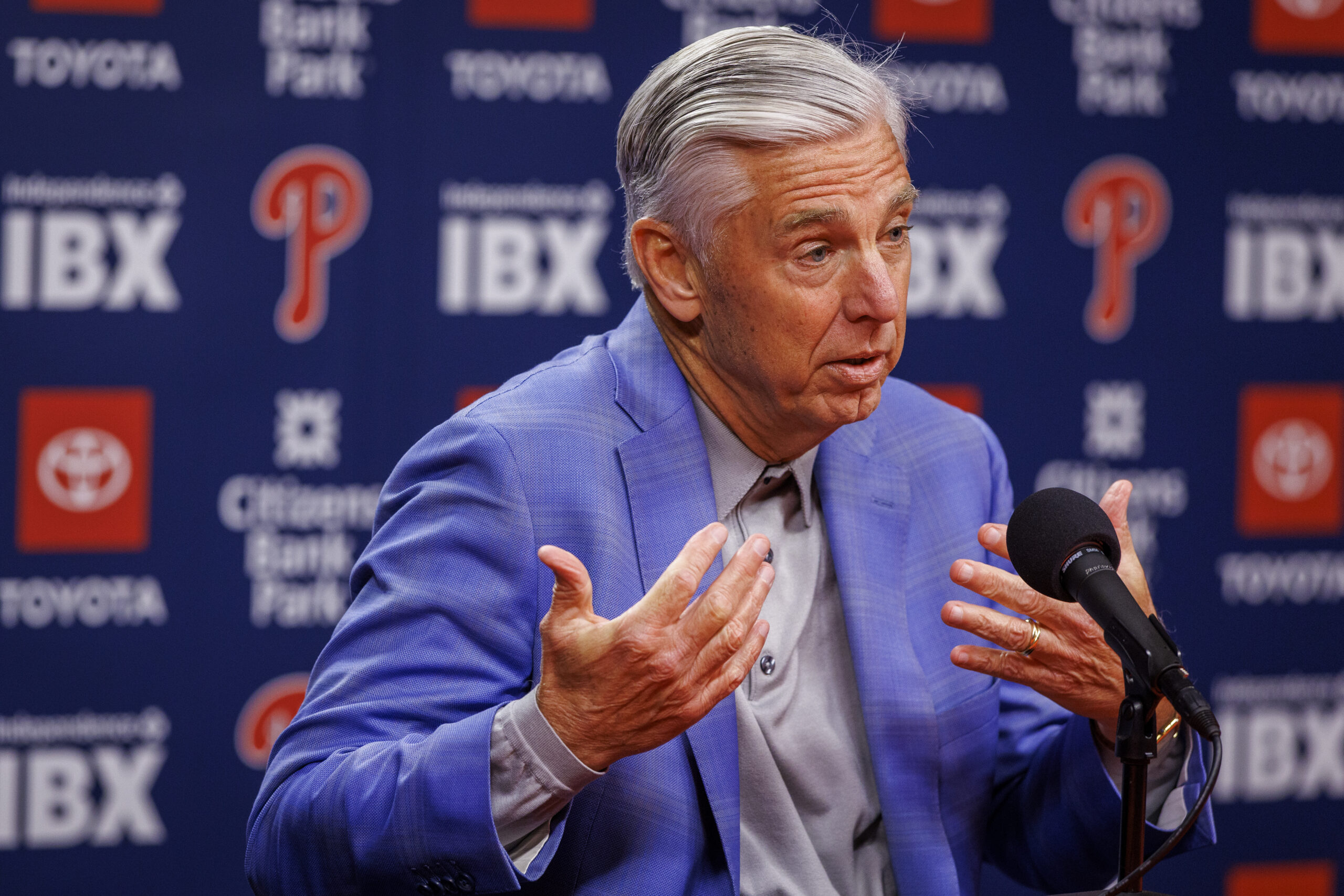
    Phillies president David Dombrowski has been the brunt of a few jokes this offseason as the team looks to retool for this upcoming year.

    Who cares? It’s not our money.

    Well, it’s nobody’s money now.

    But let’s get back to our original point. Whatever nickel-and-diming we do in hindsight, it wouldn’t erase the only conclusion we can draw from this offseason. No amount of fiscal prudence would have given the Phillies the means to catch up to, let alone keep pace with, the Dodgers. Over the last three offseasons, they have signed Shohei Ohtani, Blake Snell, Tyler Glasnow, Yoshinobu Yamamoto, and now Kyle Tucker and Díaz to contracts ranging from $22 million to $57 million in average annual value.

    John Middleton might be a billionaire, but the Dodgers’ annual payroll is pushing half a billion once you factor in the luxury tax. How many billions? That’s the question you need to answer to compete at this level of spending.

    The Phillies know this. Could Middleton and his minority owners rub their pennies together a little harder? Sure. Their attempt to sign Bichette was a sign that they aren’t operating by any hard spending limits. What they lack — what everybody lacks, except for the Dodgers and Mets — is the ability to sign such contracts with the knowledge that they can outspend any mistakes. The Dodgers have plenty of seemingly dead money on their books after last year’s bullpen spending spree. But it doesn’t seem to matter.

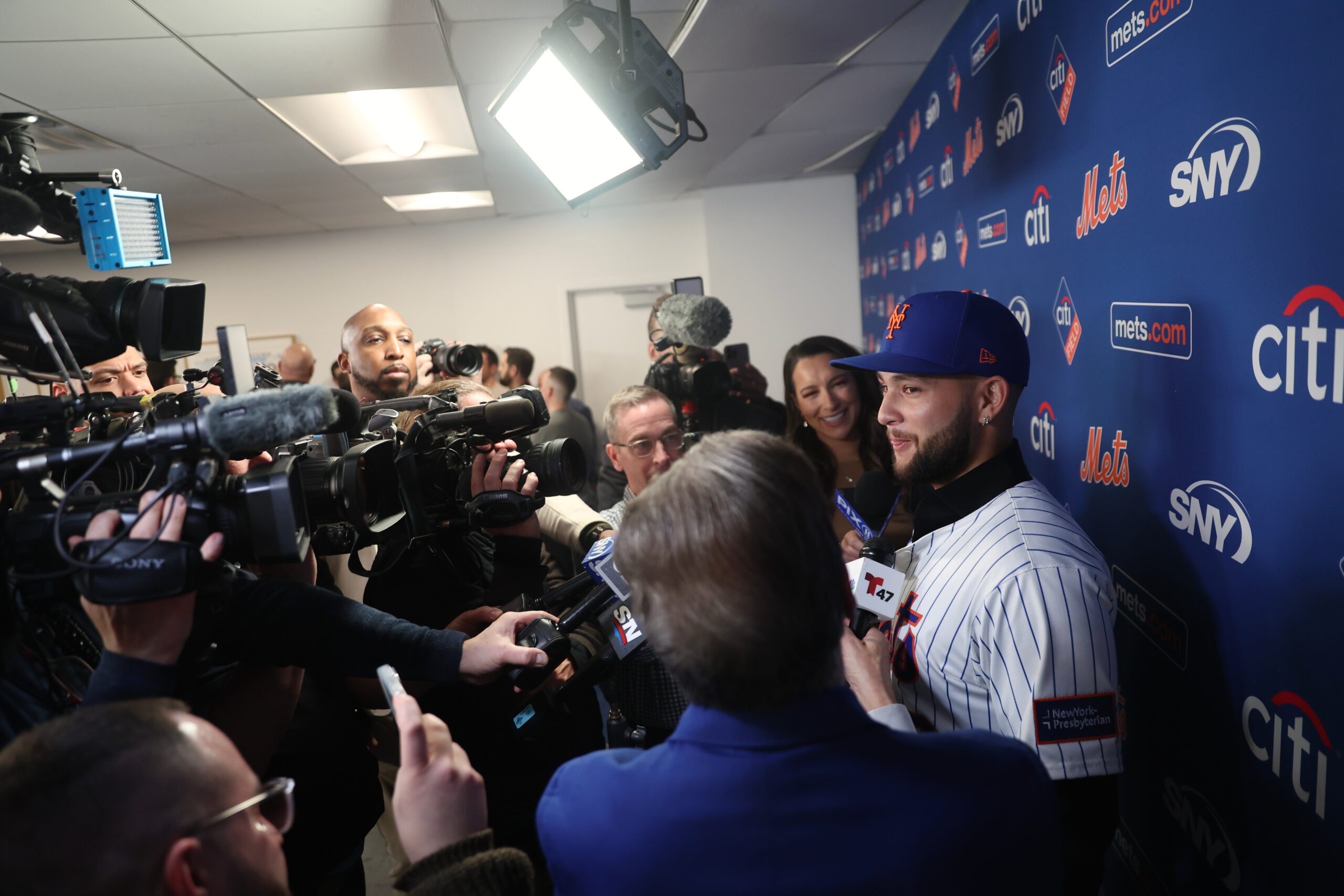
    Chasing Bo Bichette, who signed with the Mets, was admirable of the Phillies. But what would the cost have been if they landed him?

    The ability to sign Bichette for what would have been a reasonable seven-year, $200 million deal is a lot different from the ability to spend that money on whoever happens to be available. That’s how you end up hamstringing yourself by overpaying for players like Walker and Castellanos.

    Those contracts only make sense if you can outspend the mistakes. The Phillies aren’t there, nor have they ever pretended to be. It’s plenty fair to criticize Dombrowski and Middleton for offering those deals to begin with. But you can’t fault them for their inability and/or unwillingness to offer another batch of them.

    Which brings us to the illusory aspect of the baseball offseason. Regardless of how the last few months would have played out, the Phillies were always going to enter spring training needing to look inward in order to catch up to the Dodgers. In more ways than one. They are going to need to get some sort of impact from their minor league system. And they are going to need to get the intestinal fortitude to create opportunities for it to happen.

    The best news of the offseason might have come over the last week, when all of the national outlets released their Top 100 prospects lists. Aidan Miller showed up in the Top 10 of two of those lists: No. 6 on The Athletic’s and No. 10 on ESPN’s.

    News? Perhaps not. But confirmation that the national scouting industry agrees with what all of us local yokels have seen with our own two eyes for the last two years. Miller is the kind of prospect who can alter a team’s long-term trajectory while massively boosting its present-day World Series odds.

    Many believe Phillies minor league infielder Aidan Miller is the kind of prospect who can alter a team’s long-term trajectory.

    Years ago, the Dodgers had one of those prospects in Corey Seager. He broke into the big leagues at 21 on a team managed by Don Mattingly. Mattingly happens to be the new Phillies bench coach and the father of the team’s general manager. The Dodgers went to the NLCS the following season, when Seager was 22, and the World Series the year after, when he was 23. Miller will be 22 in June.

    Prospects are largely responsible for writing their own future. Miller needs to start the season the way he ended the last one. If he does, the Phillies need to do their part and find him a spot in the lineup. It could involve difficult conversations, but they will be necessary ones.

    Same goes elsewhere. With Andrew Painter. With Gage Wood. With lesser-heralded prospects like Gabriel Rincones and Jean Cabrera. The Phillies need to be willing and flexible to bring guys up and find out what they have.

    The Dodgers have set the bar high. The Phillies have no choice but to reach for it.

  • Will Villanova end its NCAA Tournament drought? Here’s what the numbers — and Joe Lunardi — say.

    Will Villanova end its NCAA Tournament drought? Here’s what the numbers — and Joe Lunardi — say.

    Sunday is the first day of February, which means March is right around the corner, which means it is officially no longer too early to think about the NCAA Tournament.

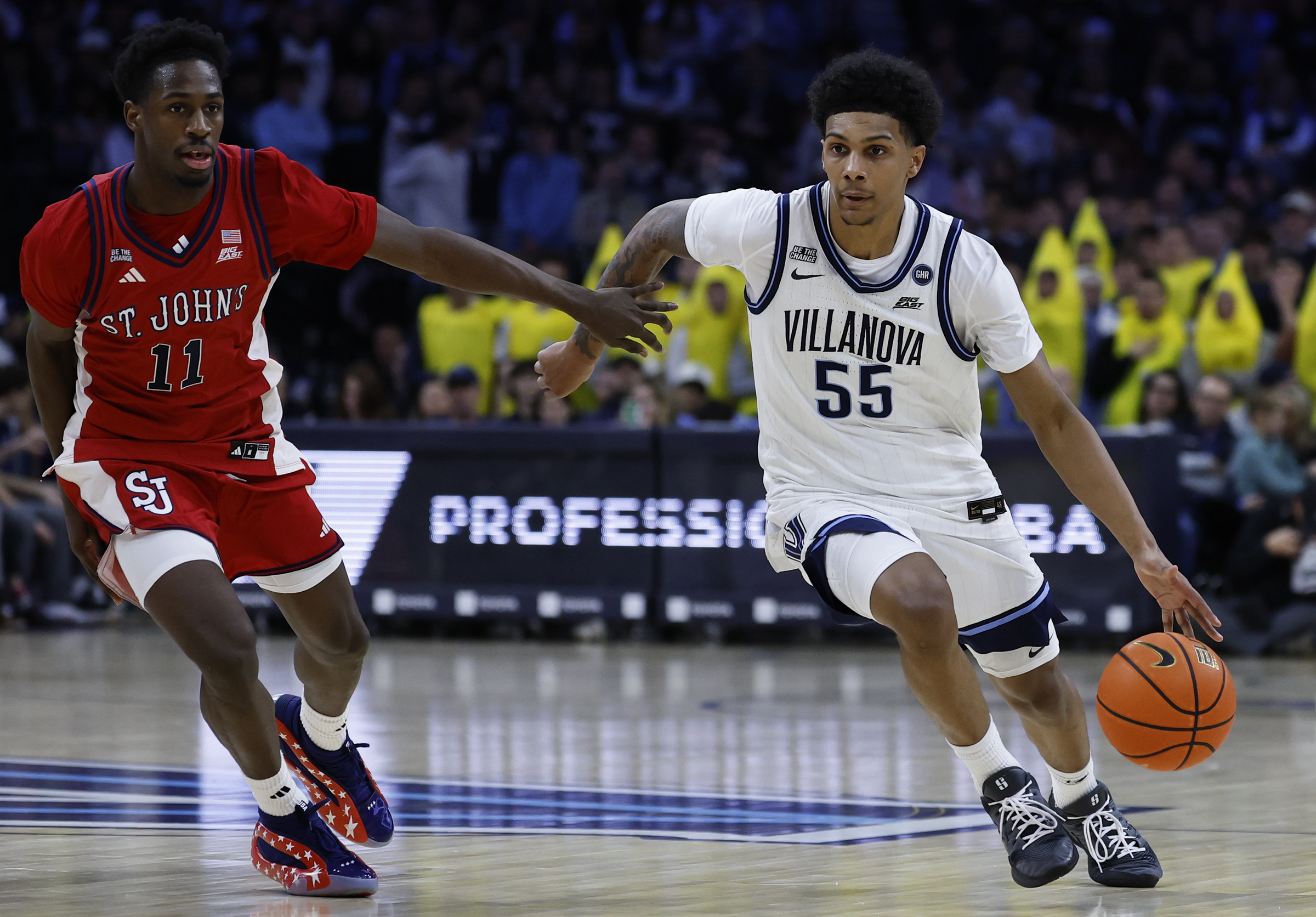
    Villanova is 20 games through its 31-game schedule, and nine games through its 20-game Big East slate. The Wildcats, who host Providence on campus Friday night, are 15-5 overall and 6-3 in their conference matchups in the first season of the Kevin Willard era.

    School administration moved on from Kyle Neptune last March after a third consecutive season ended without an invitation to the NCAA Tournament. Villanova officials believe the school should field a basketball team that perennially is in the at-large bid conversation, and three consecutive seasons without meaningful basketball was not acceptable.

    Right now, it’s hard to believe the drought could stretch to four.

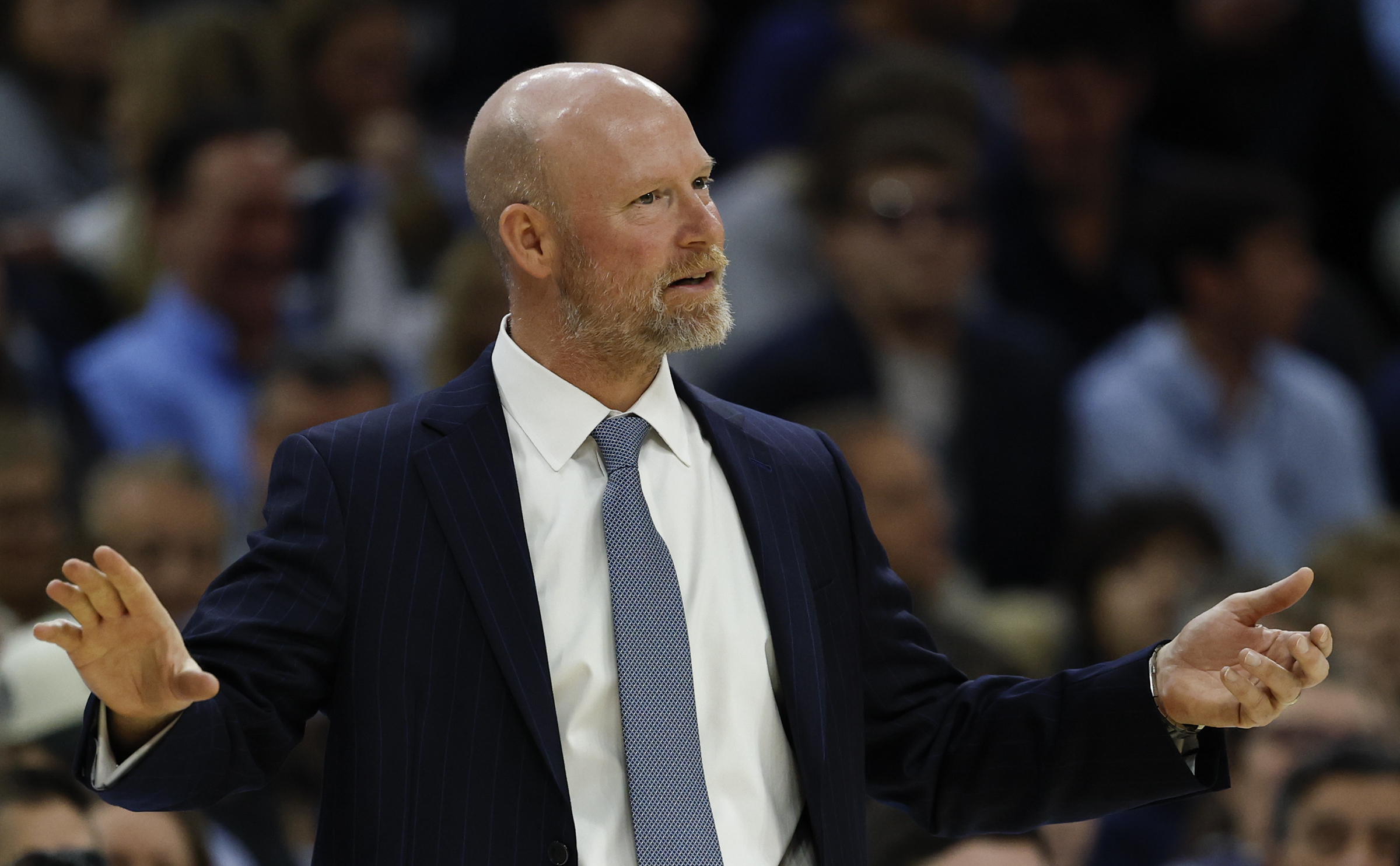
    Villanova coach Kevin Willard is on pace to get the Wildcats back to the tourney.

    The Wildcats aren’t yet a lock, but it’s looking pretty safe for their fans to preemptively look into taking a PTO day or two for the third week of March.

    What are the numbers saying? We went to ESPN’s bracket guru himself, Joe Lunardi, for some help.

    ‘A very long leash’

    Saturday’s loss to No. 2 UConn in Hartford, Conn., was an “insurance policy” kind of game, Lunardi said. Villanova declined coverage. The Wildcats let an upset opportunity slip away in an overtime loss, but the result, Lunardi said, was a “wash.” Villanova was a double-digit underdog and lost by eight.

    “It didn’t hurt, and it didn’t help,” said Lunardi, who had the Wildcats as a No. 7 seed in his latest bracket projection released Tuesday morning.

    The metrics support that notion. Villanova barely budged in the NCAA’s NET rankings, where it was ranked 34th as of Wednesday afternoon, and at KenPom (27).

    What has to happen to stay on the right path?

    “All they really need to do is win games they’re favored, and they can even afford to lose [a few] of those,” Lunardi said. “If they go 6-5, they’re going to make it.”

    That’s some leeway.

    “That’s a very long leash given the fact that, frankly, the league is good but not great,” Lunardi said.

    Guard Acaden Lewis is among those who could land the Wildcats back in the dance.

    As things stand right now, Villanova likely would be favored in at least eight of its final 11 contests. Take care of six or seven of those, and there’s no need for a marquee win over UConn or St. John’s.

    While 6-5 the rest of the way probably would be a disappointment, Lunardi projects that a final record of 21-10 gets Villanova “at worst” a No. 10 seed. The Wildcats’ ceiling, meanwhile, is “probably a five,” Lunardi said.

    So, don’t count on the NCAA rewarding the Wildcats with a “home” game at Xfinity Mobile Arena to start the tournament.

    No signature win, no problem?

    Asked to put the resumé in perspective, Lunardi said: “I would describe it as a resumé of a regular good Jay Wright team, meaning a mid-single-digit seed, not a Final Four team. Everything has to go right to make the second weekend.”

    That’s probably a result any rational person in ’Nova Nation would have signed up for nine months ago.

    It also seems pretty accurate. Villanova is 15-5 because it mostly has taken care of business against teams it is supposed to beat. The nonconference schedule started with a loss to nationally ranked BYU, but then came seven consecutive games against teams well outside the KenPom top 100, including three dominant Big 5 wins.

    The Wildcats were then blown out by Michigan before traveling to Wisconsin to beat the Badgers in overtime, which was followed up with a road victory over Seton Hall to begin conference play. At the time, those were pretty good wins. Only the Wisconsin game has aged well.

    As of Tuesday morning, Seton Hall was Lunardi’s first team outside the field of 68 after a four-game losing streak.

    Forward Matt Hodge and guard Tyler Perkins have Villanova in good shape despite a near-miss against UConn on Saturday.

    It is a Villanova resumé without a signature win, and it might not need one. Why?

    “They don’t have the dreaded bad loss,” Lunardi said.

    Last year’s resumé had losses to Columbia, St. Joseph’s, and a down Virginia team. The year before featured losses to St. Joe’s, Penn, and Drexel. This year’s biggest blip currently is against a Creighton team that still is on the NCAA Tournament bubble.

    Show me the math

    Lunardi says his projections are pretty conservative and include some emphasis on past similar resumés. Right now, Villanova has more than an 80% chance of making the NCAA Tournament, according to Lunardi’s projections.

    On the more extreme side, the TourneyCast projections at Bart Torvik’s analytics site have Villanova at 96% to make the dance. Torvik’s numbers are based on thousands of simulations playing out the rest of the season.

    “It’s too early to make anybody a lock,” Lunardi said.

    But it’s getting closer to that time.

    If there was anything to worry about right now for Villanova fans, it should be health. The Wildcats are a key injury or two — even minor ailments — from scrambling a bit. They don’t have a reliable backup center, for example. Their depth has taken a hit elsewhere, too.

    But those worries are hypothetical. Then again, all of this is.

    What about the rest of the Big 5?

    Villanova is the only one of the six Big 5 schools with an at-large path to the men’s NCAA Tournament. The others would need to win their respective conference tournaments. Of the bunch, only Temple (5-2) and St. Joe’s (5-3) entered Wednesday with a winning conference record.

    Villanova celebrates after a win over Xavier on Jan. 8.

    On the women’s side

    Similar story. Villanova (16-5, 9-3) was projected as a No. 10 seed on the right side of the NCAA Tournament bubble with an at-large bid in the latest ESPN women’s bracketology. No other team has an at-large path, and only Drexel (4-3) had a winning conference record entering Wednesday.

  • The NFL is primed to open up passing offenses again. The Eagles’ new coordinator had better be ready.

    The NFL is primed to open up passing offenses again. The Eagles’ new coordinator had better be ready.

    There’s a lot of anxiety in the ether these days about the Eagles, particularly about the fact that they haven’t hired an offensive coordinator yet to replace Kevin Patullo.

    Just look at some of the candidates who have been scooped up elsewhere or who decided to stay where they were: Mike McDaniel, Brian Daboll, Joe Brady, Mike Kafka, and Charlie Weis Jr.

    We can call this group the “Guys We’ve Heard Of” group, and they’re the biggest drivers of this collective worry that the Eagles will end up hiring some nincompoop who can’t call plays or, worse, calls the same kinds of plays Patullo did. I don’t know much about McDaniel other than he digs capri pants and tinted sunglasses. But I recognize his name, which means he must be smart, and the Eagles must be stupid for not hiring him.

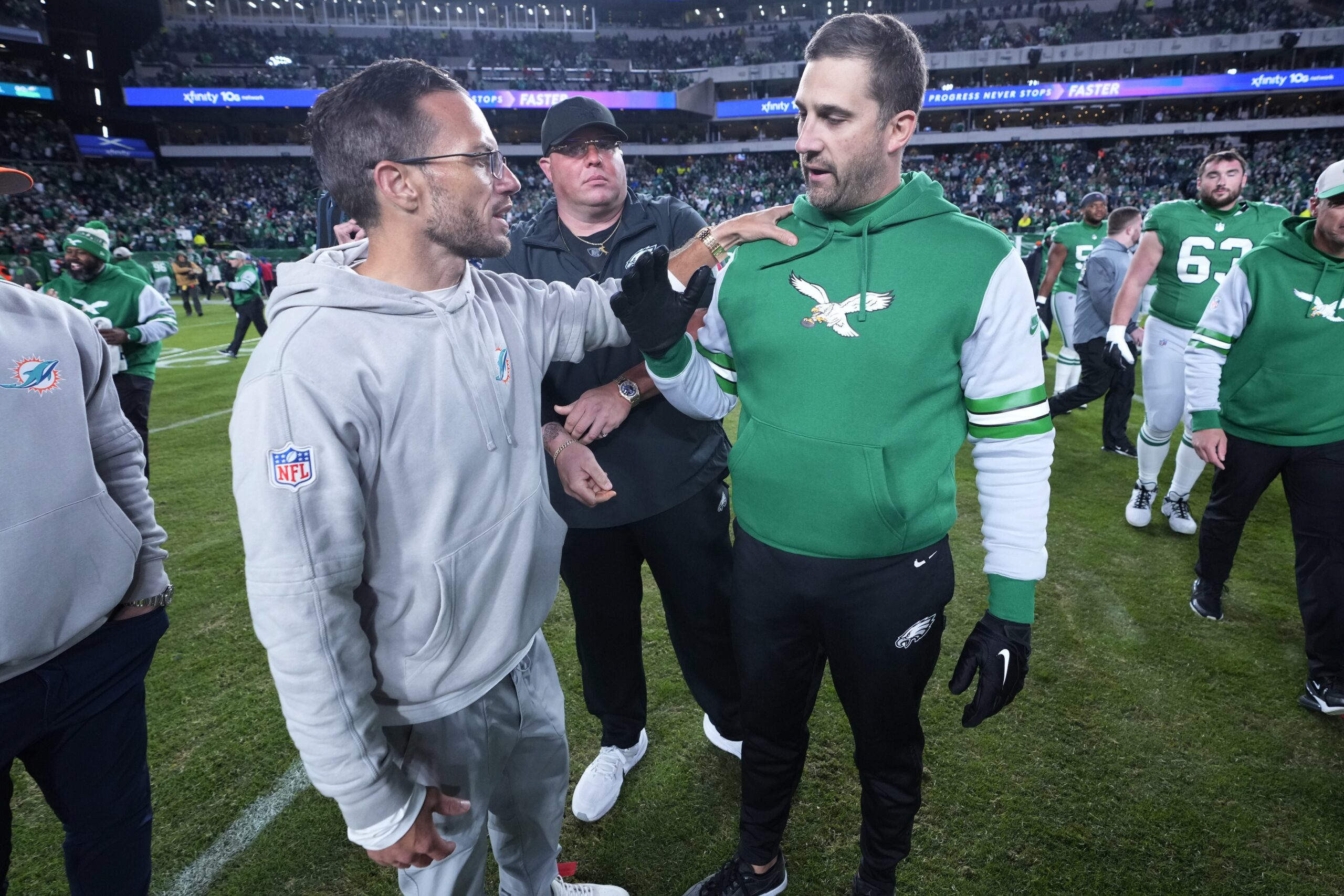
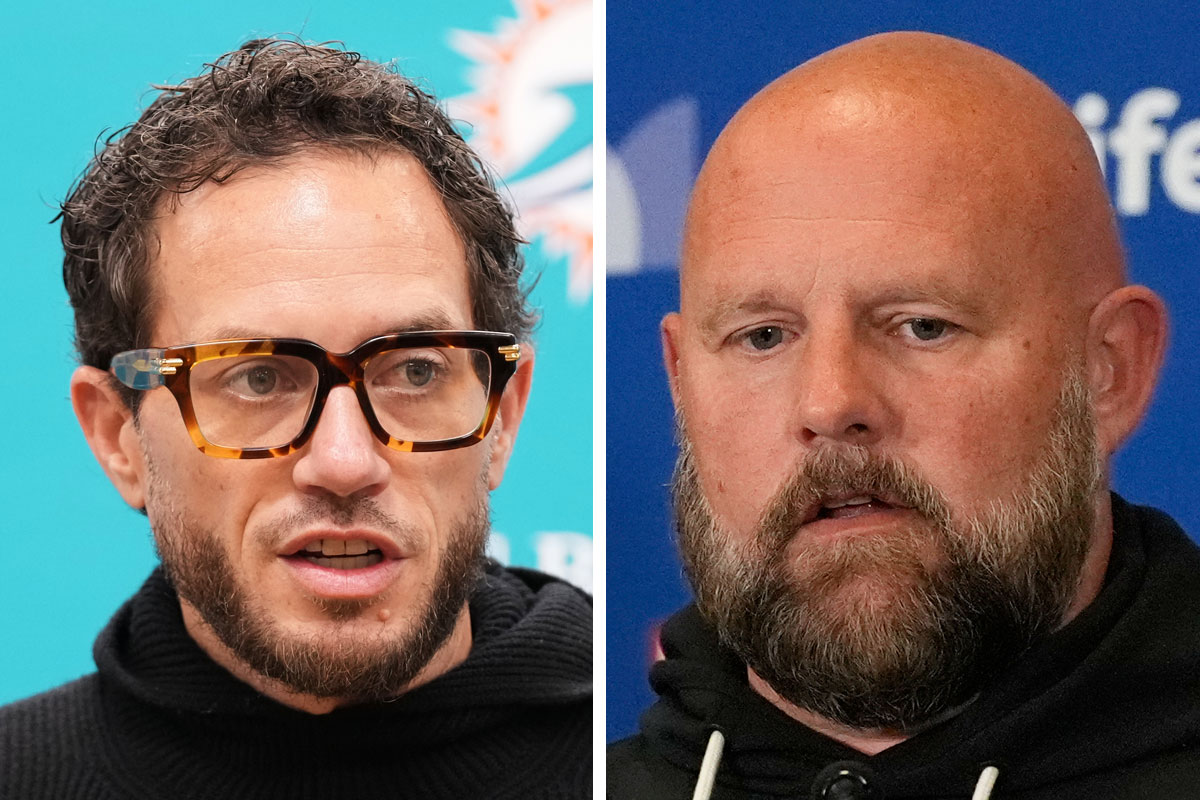
    Mike McDaniel (left) was a player high on the list of potential replacements for Kevin Patullo as offensive coordinator. Until he accepted the role with the Chargers.

    Then there’s the “Guys I’m Googling” group. They’re the up-and-coming coordinators and quarterback coaches who aren’t as well known to the casual NFL follower but who aspire to become branches on the Sean McVay tree or the Kyle Shanahan tree or whatever metaphorical foliage the Eagles happen to prefer. The way the Eagles’ search is shaping up — the time they’re taking, the three still-vacant head coaching jobs around the league — they’re likely to settle on someone from this group.

    Hiring such a candidate, one with relatively little experience and no discernible track record, could turn out to be a problem for the Eagles, who might end up with another play-caller who isn’t quite ready for the role. But it would be a boon for the team’s fans and media, who could start second-guessing and complaining about the guy as early as Week 1.

    No matter who the Eagles bring on board, they would do well to take a big-picture factor into consideration when they make their choice. In the short term, sure, the new coordinator’s primary concerns will be centered on improving an offense that may or may not have A.J. Brown, may or may not have Lane Johnson, may or may not have a decent tight end or two, and could use a bounce-back season from Jalen Hurts. But in the longer term, they should be mindful that they’ve been part of a strategic shift across the NFL, and they should be prepared in case Roger Goodell and the league’s owners try to shift things back.

    Here’s what I mean: During this regular season, the average NFL team passed for 209.7 yards a game. That figure represents the lowest such average since 2006. It has been two decades, in other words, since NFL passing offenses were as anemic (or as conservative, depending on how you want to look at it) as they were this season.

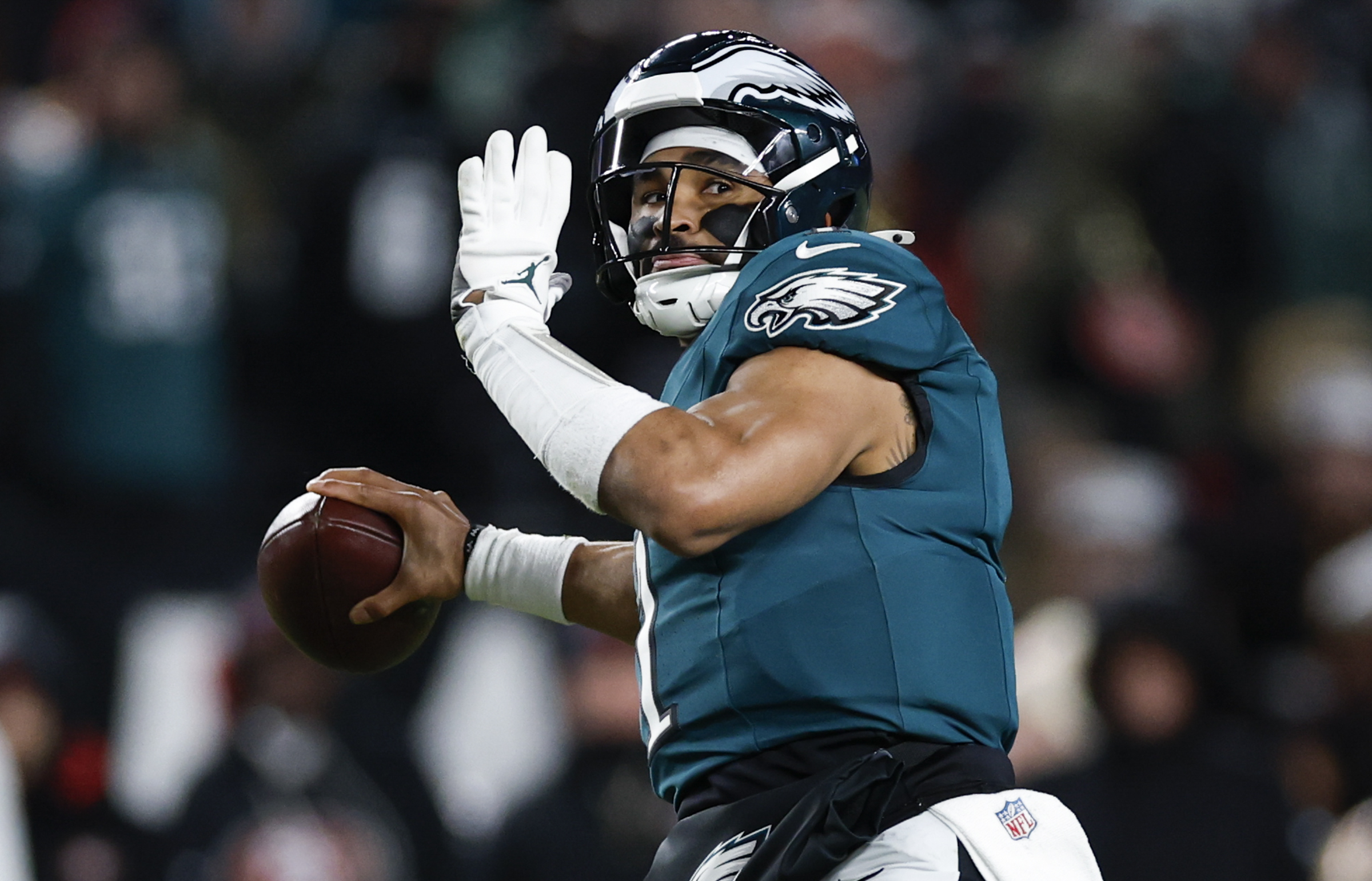
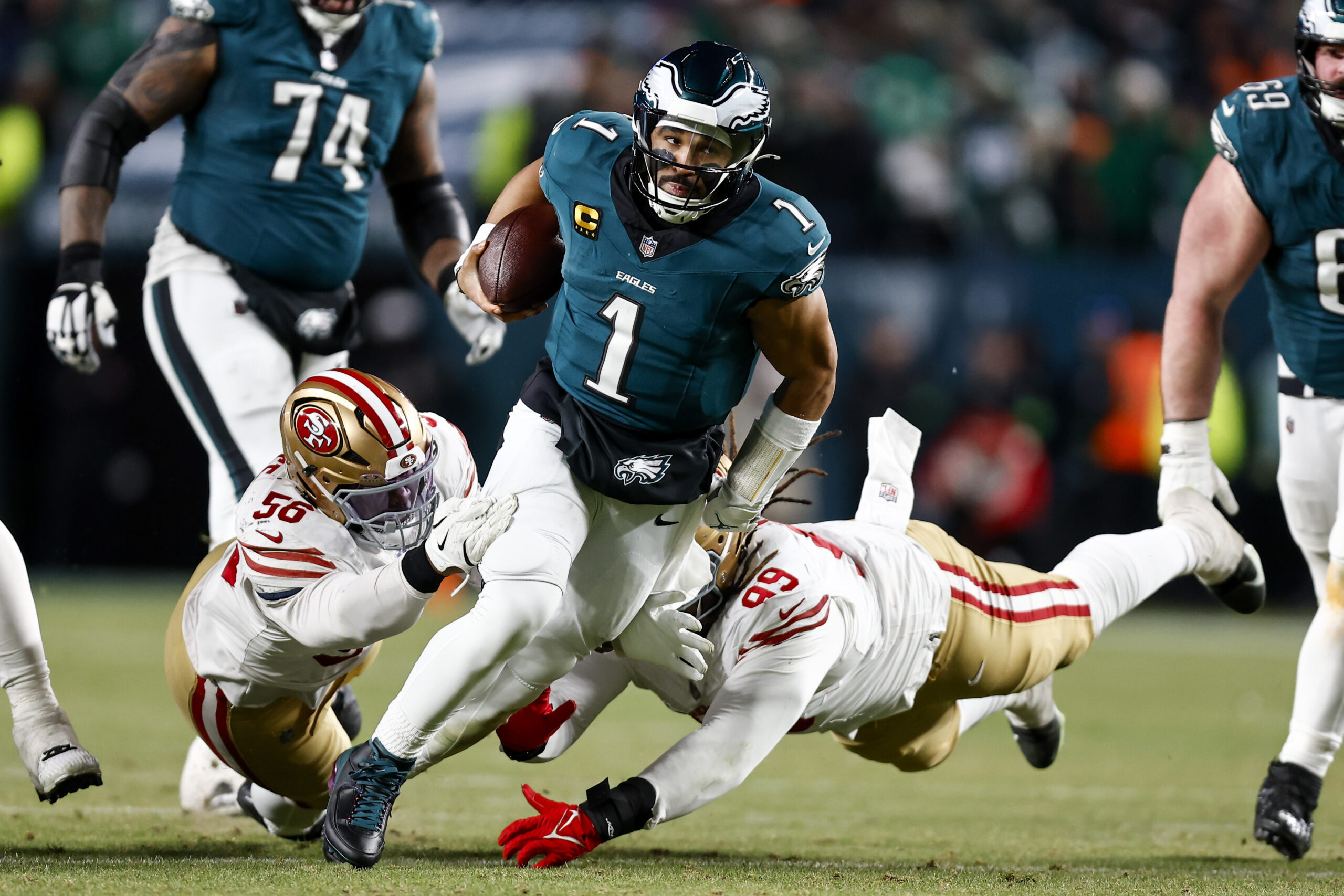
    Eagles quarterback Jalen Hurts was among an NFL passing collective that accounted for an average of just 209.7 yards per game, the lowest since 2006.

    Why? You don’t have to be Bill Walsh to figure it out. After years of franchises chasing franchise quarterbacks and brilliant scheme designers and elite wide receivers — and tight ends who could catch and run like wideouts — a funny thing started happening: Certain teams geared up to counteract their opponents’ dynamic passing games and to exploit smaller, faster defenses. That is, certain teams won championships because of their defenses and/or their run games.

    The 2023 Kansas City Chiefs had Patrick Mahomes, yes, but they ranked 15th in scoring offense and second in scoring defense. The story of the 2024 Eagles is practically gospel around here: the dominance of Saquon Barkley and the offensive line, a stout defense overseen by Vic Fangio and built from the secondary in, the reality that the team didn’t want to and didn’t have to rely on Hurts’ arm to win.

    Now we have the New England Patriots and Seattle Seahawks in Super Bowl LX. Drake Maye had a great second season, and Sam Darnold is a great story. But both the Patriots’ and Seahawks’ defenses finished among the league’s top four in fewest points allowed and among the top eight in fewest yards allowed.

    Simply put, the passing game — the aspect of football that leads to high scores, general excitement, and the rise of the sport’s biggest celebrities and product-movers (i.e., star quarterbacks) — ain’t what it used to be. Hell, we were three points away from having a Super Bowl with Darnold and Jarrett Stidham as the starting QBs … not exactly an electrifying matchup of two all-time greats/household names.

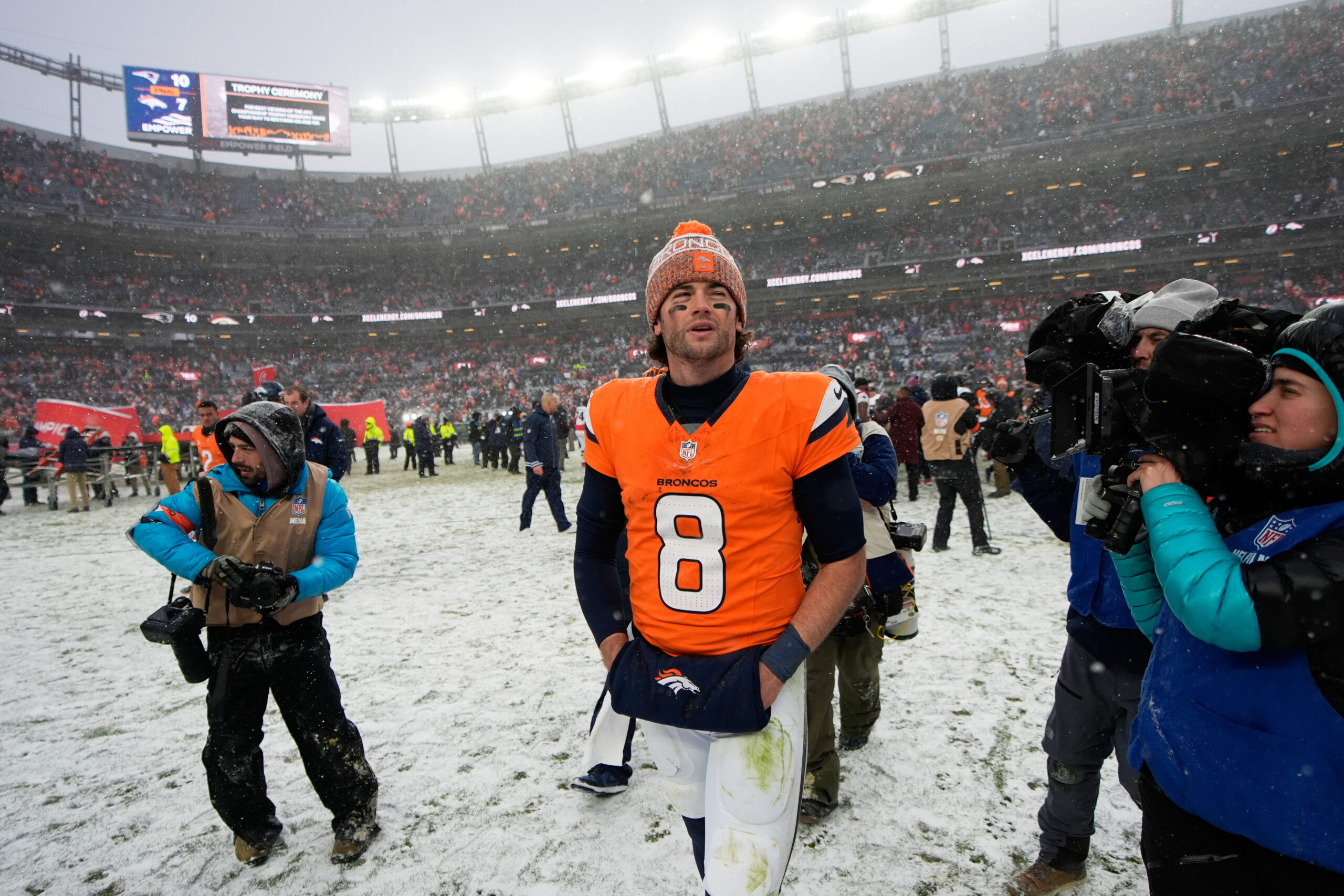
    Broncos backup quarterback Jarrett Stidham leaves the field after the team’s loss in the AFC championship against the New England Patriots.

    For all the moaning that Sunday’s Patriots-Broncos game was boring and unwatchable because of the snow at Empower Stadium, for all the silly calls for holding conference-title games in domes from now on, the weather wasn’t what made it dull. What made it dull was that Maye played as if he was trying not to lose the game (sound familiar, Eagles fans?), and Stidham wasn’t capable of winning it.

    The last time the NFL went through a stretch similar to this one was a quarter-century ago, when four consecutive Super Bowls were won by teams primarily defense-oriented: the 2000 Baltimore Ravens, the 2001 and 2003 Patriots, and the 2002 Tampa Bay Buccaneers. Consider some of the quarterbacks, too, who were reaching those Super Bowls back then: Trent Dilfer, Kerry Collins, Brad Johnson, Rich Gannon, Jake Delhomme, and a rookie named Tom Brady.

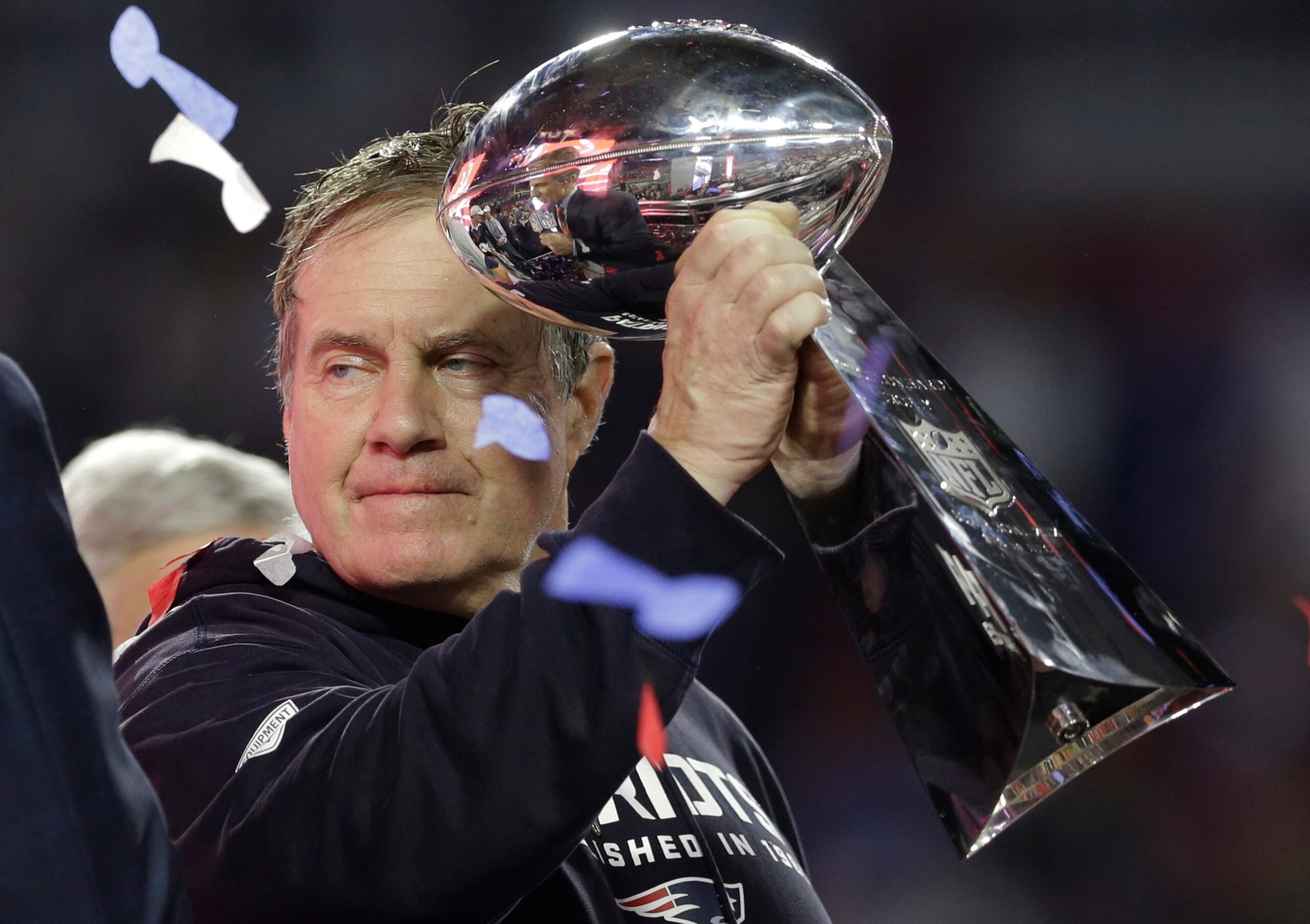
    Former Patriots coach Bill Belichick might have had Tom Brady for the Super Bowls he racked up, but he also boasted some good defenses as well.

    In the aftermath of that ’03 Patriots run — Bill Belichick’s defensive backs manhandled the Indianapolis Colts’ receivers in the AFC title game — the NFL decided to crack down on illegal contact, defensive holding, and pass interference infractions. In 2003, NFL teams averaged 200.4 passing yards. In 2004, that average jumped by more than 10 yards, to 210.5, and it kept rising for years thereafter.

    That surge has stopped. The game has slowed down, and it’s a safe bet that the NFL won’t allow it to stay this way for too much longer. The Eagles were among those applying the brakes, but the sport is poised to open up again, and they and their new man at the wheel, whoever he might be, need to be ready.

  • Ranking the NFL color analysts: Tom Brady shines while Tony Romo struggles (just like old times)

    Ranking the NFL color analysts: Tom Brady shines while Tony Romo struggles (just like old times)

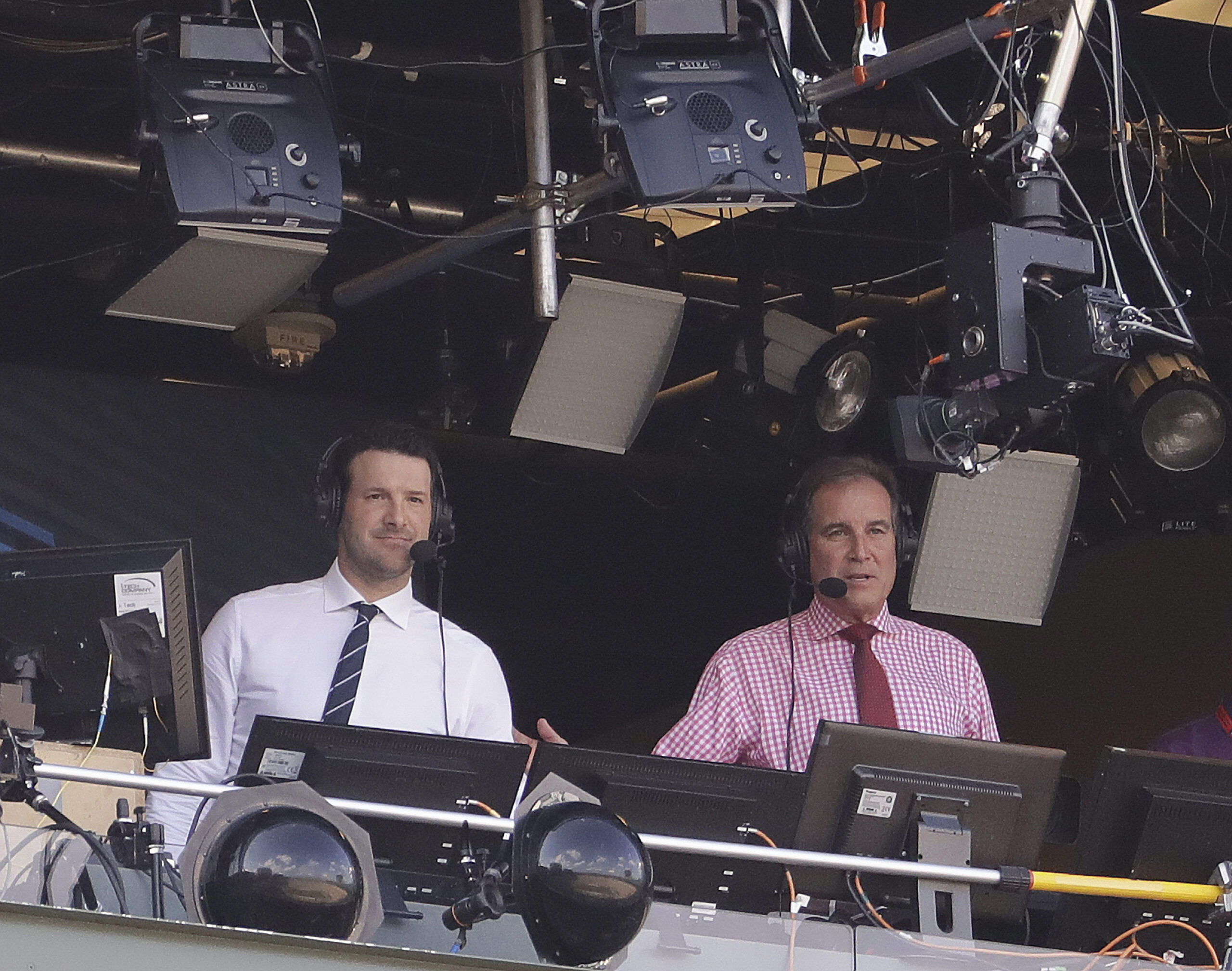
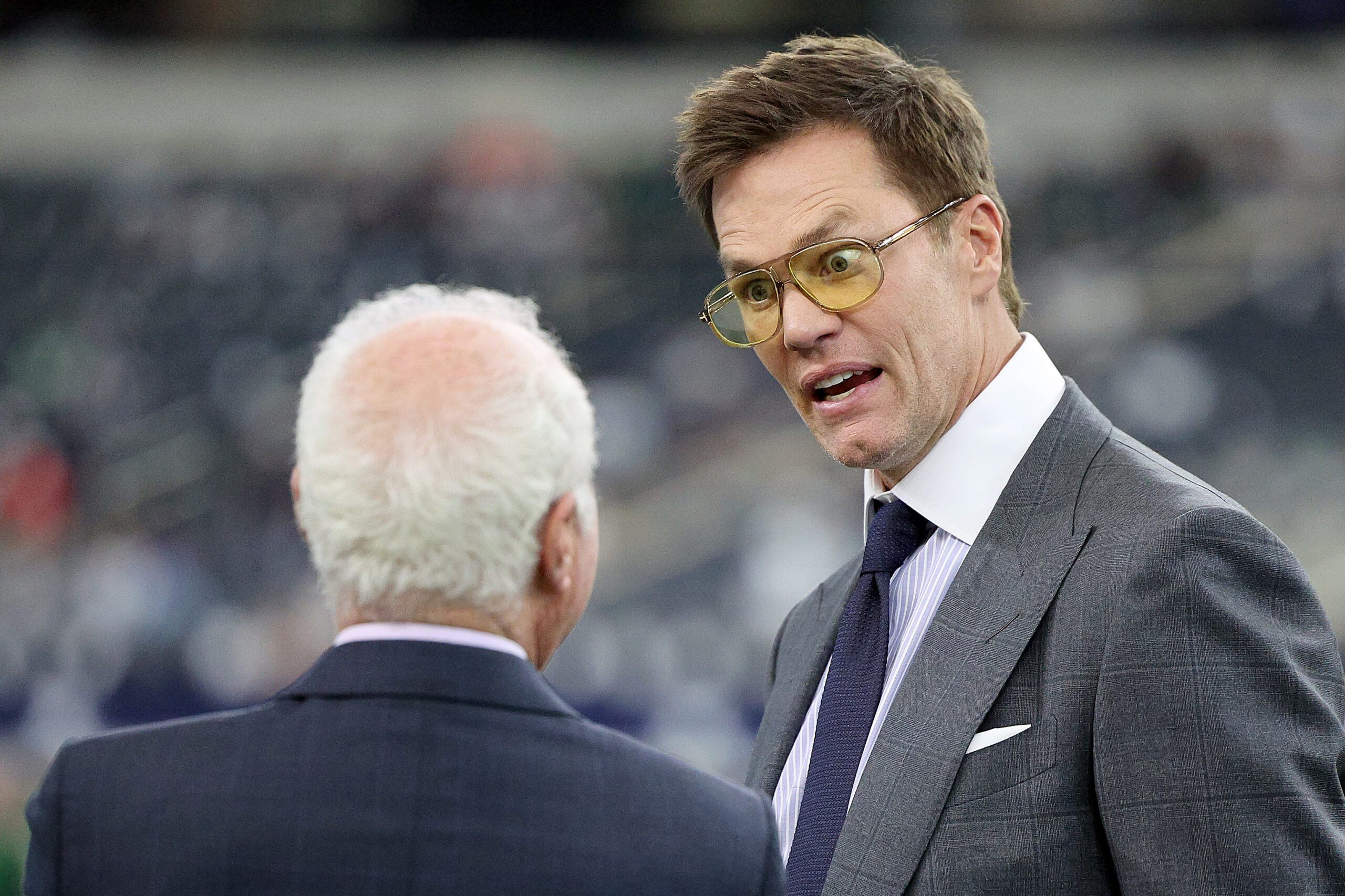
    Tony Romo, as quarterback of America’s Team, went 0-2 head-to-head against Tom Brady.

    Brady, as quarterback of the best team in NFL history, finished his career with seven Super Bowl rings in 10 trips, nine of them with the New England Patriots. Romo never even made it to a conference final.

    When they retired, to the delight of Eagles fans who hated them with equal vigor, each took his fame and fortune and headed to the broadcast booth.

    There, Brady still dominates Romo.

    That was never more apparent than Sunday, when Romo ruined the broadcast portion of an already ugly AFC championship game on CBS. Immediately afterward, Brady burnished a brilliant NFC title game for Fox. As on the field, the contrast in the booths was hideously stark.

    With only one game to go, it seems like a good time to review that most controversial of TV entities: NFL in-game analysts. Mike Tirico, broadcasting’s version of the vanilla milkshake, and Cris Collinsworth, who’s my No. 3, will present Super Bowl LX in two weeks on NBC. It will be fine, but it will be hard.

    Color commentary is vastly more difficult than you can imagine. I’ve done it a few times as an emergency replacement for a basketball broadcast, and, in the parlance of social media, I sucked.

    The job requires research, alertness, rhythm with a partner, familiarity with every coach, and mastery of the game’s history. It requires knowledge of rules, of strategy, of game-day procedures, of tendencies, of strengths and of weaknesses.

    Then, in real time, you have to explain what’s happening to millions of mildly inebriated fans, most of whom wouldn’t know a naked blitz from a naked blintz.

    It’s like a cardiologist describing heart surgery to Grey’s Anatomy fans.

    Tony Romo (left) turned heads early in his broadcast career, but his strengths have become less evident.

    The bashing of NFL booth analysts has become a weekend sport on social media. Keyboard warriors armed with pimple patches and analytics dissect every misspoken word or overlooked strategy, and they attack with verve and glee.

    That said, for years we were spoiled by masters of the craft, none better than Pat Summerall and his partner, the granddaddy of authentic commentary, John Madden, unburdened by the precision of high-definition television and, for the most part, by replay review. It was a simpler, better time.

    My job keeps me busy most football weekends. As a result, I’m not free to watch many other NFL games, and so I am less familiar with the flat-screen visitors to man caves and dens on weekends and Monday nights. However, thanks to Thursday Night Football, other prime-time and Sunday-morning broadcasts, and the Eagles’ recent abrupt exit from the playoffs, for the past few months I’ve been able to catch a few games.

    And … man, was I disappointed.

    Expectations

    I covered Romo and Brady extensively as players. It was hard to dislike Romo and impossible to like Brady. Now, it’s hard to listen to Romo and impossible to dislike Brady.

    I expected Romo to be a star.

    Having covered him extensively and having found him to be comfortable, affable, and knowledgeable, I was delighted with his “Romo-stradamus” debut with CBS in 2017. He seemed to correctly predict every big play call, then offer pointed commentary as to why it worked or why it didn’t.

    He seldom does that now. Instead, he constantly offers banal observations in the most excited of tones, often contradictory and seldom helpful. It’s just a lot of hyperbolic blather, never worse than in the moments after he talked over Jim Nantz following Patrick Mahomes’ game-winning touchdown pass in Super Bowl LVIII.

    On the other hand, I expected Brady to be a flop.

    I covered Robo-Tom in four of his Super Bowls, as well as many other big games, including the Battle of the Unbeatens in Indianapolis in 2007, when he and Randy Moss beat Peyton Manning. I was embedded in New England before the AFC championship game after the 2017 season. Never once did Brady give me any reason to expect he would be anything more than a wax statue in the broadcast booth.

    Wrong.

    Excellence

    It pains me to say that after an uneven debut in the 2024 season, which culminated with an unremarkable Super Bowl LIX broadcast of the Eagles’ win, Brady is getting better every week. As part of Fox’s first team, he often will correctly identify a penalty in real time so, when the play ends, he immediately reports who committed the penalty long before the official announces it. Troy Aikman used to do this with regularity, less so now. Collinsworth and Kirk Herbstreit often get this right, too.

    Brady’s voice sounds like it belongs to a JV basketball player, but he gets his point across. Brady just seems to know more about the game than the rest of the color commentators; or, at least, Brady seems to care more about teaching the game to viewers.

    His concise, clear dissertation on throwing techniques in windy conditions during the Eagles’ windy wild-card loss Jan. 11 was perhaps the best explanatory moment in the history of NFL broadcast booths.

    He was equally brilliant with his explanation Sunday of why Seahawks receiver Jaxon Smith-Njigba’s route-running is so efficient: “He maintains the same shoulder plane when he runs his route, so it’s really hard for any defensive back to get a bead on what he’s doing.”

    Madden, a college lineman and then an offensive line coach, introduced America to the intricacies of trench warfare. Collinsworth is great at diagnosing coverages. Romo, meanwhile, seldom provides a level of detailed technique insight for any position, much less quarterback, receiver, and defensive back, the positions with which he should be most familiar.

    Should Tom Brady’s ownership stake in the Raiders be an issue in his broadcast work?

    Why these two?

    Why does any of this matter? Why pick on Romo, in particular?

    Because Romo is in the middle of a 10-year, $180 million deal that expires after the 2030 season, which makes him the second-highest-paid NFL analyst. CBS reported that it just enjoyed its best season ever, and the network debunked rumors that his future might be in peril. So, at 45, he isn’t going anywhere.

    Fox, meanwhile, was roundly criticized for giving Brady a 10-year, $375 million contract that began in 2024, which made him the highest-paid booth analyst in sports despite his complete lack of experience.

    They’re at the top of the food chain. At least Brady belongs there.

    Incredibly, this was just his second season in the booth. Brady still lacks the strategic chops of, say, Greg Olsen, whom Brady replaced as Fox’s No. 1 color commentator last year, but Brady’s already better than Romo ever was.

    Should Brady continue to be allowed to own part of the Las Vegas Raiders while acting as an analyst? That’s an entirely different conversation. Have at it. I generally figure that leagues can do whatever they want, within the constraints of the law. Besides, any insider information Brady gleaned during his weekly preparation as a Fox analyst certainly didn’t help the Raiders much. They went 7-27 the last two seasons.

    As for his primary vocation: Will Brady, who is 48, be the G.O.A.T. in the booth, as he was on the field?

    Probably.

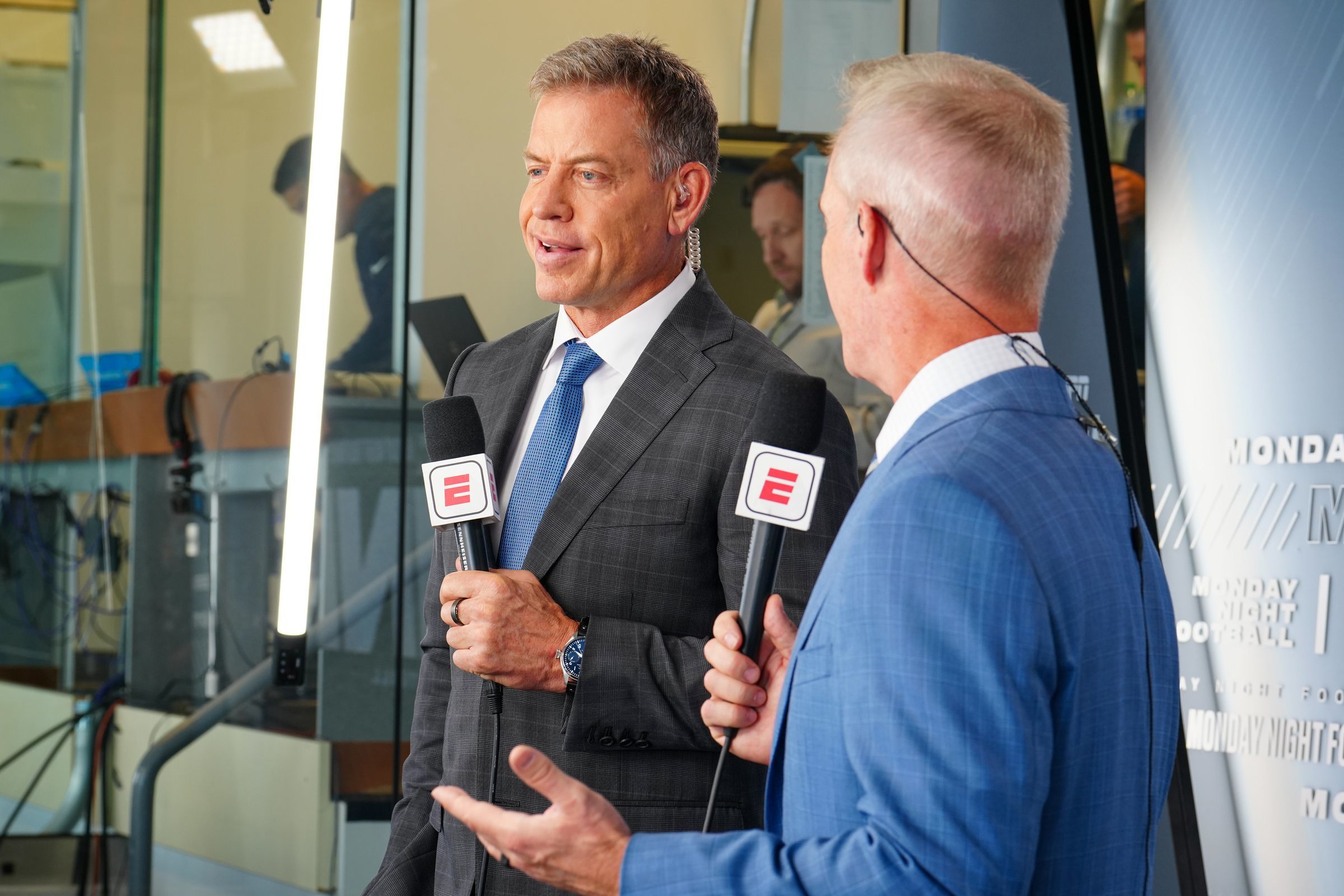
    Even some of those who disliked Troy Aikman (left) as a player can begrudgingly acknowledge his strengths as a color analyst.

    The ranking

    Madden remains unmatched.

    ESPN’s Aikman remains the best and easiest listen in my book, and has been for most of the last 25 years. Then, Brady.

    Collinsworth annoys people, but I think that’s a byproduct of his natural smarminess, because he’s a perfect complement to Tirico’s earnestness.

    I think I’m in the minority when I say I enjoyed Herbstreit on Amazon Prime, at least I did early this year. In the fourth year of a five-year deal, the college football mainstay seemed to come into his own as an NFL commentator this fall. However, he routinely travels thousands of miles every week covering both pro and college ball, and the toll began to show in his commentary later in the NFL season. He’s a free agent after next season, and he’ll be 57. Hopefully, Herbstreit will dial things back and concentrate on the NFL.

    Romo now comes in last.

    This feels a little like punching down. Romo seems to be doing his level best. Maybe he’s a victim of the lofty expectations his early years created. Maybe he’s been coached to be more expressive and less technical.

    Romo’s current slump reminds me of the point in his career when, after a promising first six seasons as a starter, he led the NFL in interceptions in 2012. Romo then had his best season in 2014 before injury forced him to the booth.

    Maybe he can rebound in this career, too.

    But, as in the NFL, Romo will never catch the G.O.A.T.

  • CHOP launches Philly-area autism therapy network in partnership with Soar Autism Centers

    CHOP launches Philly-area autism therapy network in partnership with Soar Autism Centers

    The Children’s Hospital of Philadelphia and Denver-based Soar Autism Centers have opened in Newtown the first of five planned early childhood autism centers in the Philadelphia region and expect the network could grow to more than 30 centers, officials said.

    The 50-50 joint venture is designed to reduce wait times for therapy and to make it easier for families to access multiple types of therapy at one location while remaining connected to CHOP specialists.

    “It can take a year to get into therapy on a regular basis,“ an extremely long time in a young child’s neurological development, Soar cofounder and CEO Ian Goldstein said.

    Such wait times continue to frustrate families despite dramatic growth in the autism-services sector over the last 15 years or so, as states mandated insurance coverage and diagnosis rates soared with more awareness and an expanded definition of autism.

    Nationally, applied behavioral analysis, commonly known as ABA therapy, has become popular for autism treatment, increasing nationally by 270% between 2019 and 2024, according to Trilliant Health, a Nashville data analysis firm. The volume of services provided locally — where companies including ABA Centers, Helping Hands Family, and NeurAbilities Healthcare have expanded — was not available.

    The increase in diagnoses has outpaced the growth in available services, said Matthew Lerner, an autism expert at Drexel University, who is not involved with the newly launched CHOP-Soar Autism Centers.

    When Lerner moved to the Philadelphia region from Long Island in 2023 and started getting plugged into the autism network, a few clinicians here would ask if he could connect patients with services in New York.

    “I was coming from eastern Long Island, two hours east of New York City, and people were like, do you know anyone closer to you?” he recalled.

    CHOP’s road to a joint venture with Soar

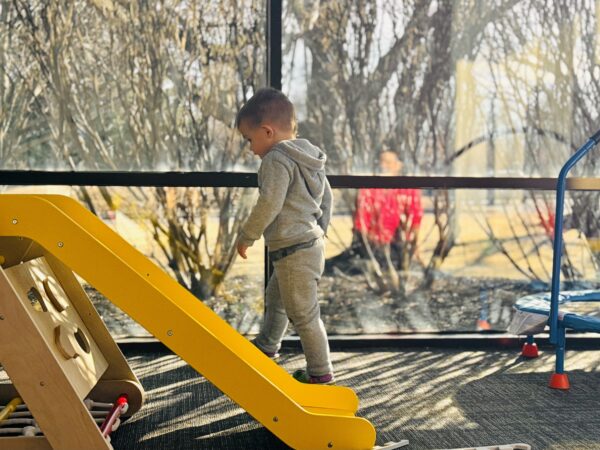
    The freestanding, 10,000 square-foot clinic that opened on Jan. 5 in suburban Bucks County near CHOP Pediatric Primary Care Newtown has 35 to 40 rooms and an indoor playground for therapeutic uses.

    CHOP, among the largest children’s health systems in the country, has long been concerned about limited access to autism care in the region, said Steve Docimo, CHOP’s executive vice president for business development and strategy.

    The nonprofit has provided diagnostic services, but not the forms of therapy that the CHOP-Soar centers will offer. “The threshold to doing this on our own has always been high enough that it hasn’t been a pool that we’ve jumped in,” he said.

    CHOP was in talks with Soar for three years before agreeing to the 50-50 joint venture with the for-profit company. CHOP’s investment will be its share of the startup costs for CHOP-Soar locations.

    The partnership plan calls for five locations in the first two years. The partners did not say where the next four centers will be.

    Soar has 15 locations in the Denver area, which has about half the population of the Philadelphia region, Goldstein said.

    That comparison implies that the CHOP-Soar partnership could grow to 30 centers, Goldstein added. He thinks the region’s needs could support additional expansion, saying the total could reach “into the dozens.”

    The first CHOP-Soar Autism Center opened this month in Newtown. Shown here is the reception area.

    That’s assuming CHOP-Soar provides high quality care for kids, an appealing family experience, and a system of coordinated care: “There will be a need to do more than five, and I think we’re jointly motivated to do so,” Goldstein said.

    The CHOP-Soar approach

    Families seeking care for an autistic child typically have to go to different places to get all the types of therapy they need.

    Families “get behavioral analytics in one place, occupational therapy somewhere else, and speech language pathology in another place,” Docimo said.

    Soar brings all of that together in one center. “If it can be scaled, this will fill a gap in our region in a way that I think will work very well for these families,” he said.

    CHOP-Soar centers will emphasize early intervention and treat children through age six. “The brain has its greatest neuroplasticity” up to age 3, “so waiting a year is a really big deal,” Goldstein said. “You’re missing out on that opportunity to really influence the child’s developmental trajectory at a young age.”

    Some autism services providers focus on ABA therapy, which breaks social and self-care skills, for example, down into components and then works discretely on each.

    But Soar offers what Goldstein described as “integrated, coordinated care for the child.” That includes speech, occupational, and behavioral therapies.

    With CHOP, medical specialties, such as genetics, neurology, and gastrointestinal care, can be tied in as well, Goldstein said.

    It’s rare for autism providers to offer a wide variety of commonly needed services under one roof, said Lerner, who leads the A.J. Drexel Autism Institute’s Life Course Outcomes Research Program.

    He said Soar’s evidence-based, multidisciplinary approach has a lot to offer the region.

    “A person diagnosed with autism will have complex care needs throughout their life, and a one-size-fits-all, one-intervention approach will not work,” he said.

  • Malik Rose and Bill Herrion turned Drexel into an NCAA Tournament team. Now they’re in the Dragons’ Hall of Fame.

    Malik Rose and Bill Herrion turned Drexel into an NCAA Tournament team. Now they’re in the Dragons’ Hall of Fame.

    Drexel hired Bill Herrion as men’s basketball coach in 1991. Replacing longtime head coach Eddie Burke, who led the Dragons to their first NCAA Tournament appearance in 1986, Herrion took the program to three more NCAA tourneys, and Malik Rose was a big reason.

    Drexel assistant Walt Fuller recommended that Herrion recruit the overlooked center from Overbrook High, and Rose caught the first-year Drexel coach’s attention at the All-Star Labor Classic between the best players in the Public and Catholic Leagues.

    It was enough to give Rose a scholarship.

    “Coach Herrion saw something in me that nobody else really did,” said Rose, 51. “None of the Big 5 coaches thought they saw it. None of the other coaches in the region or the area saw it.”

    Former Drexel coach Bill Herrion during the game between the Dragons and the Northeastern Huskies at the Daskalakis Athletic Center.

    With the 6-foot-7 center as the program’s premier player, Herrion’s Dragons made the NCAA Tournament from 1994 to 1996. In its third and final appearance, Drexel upset Memphis as a No. 12 seed. Rose scored 21 points in what is still the only NCAA win in program history.

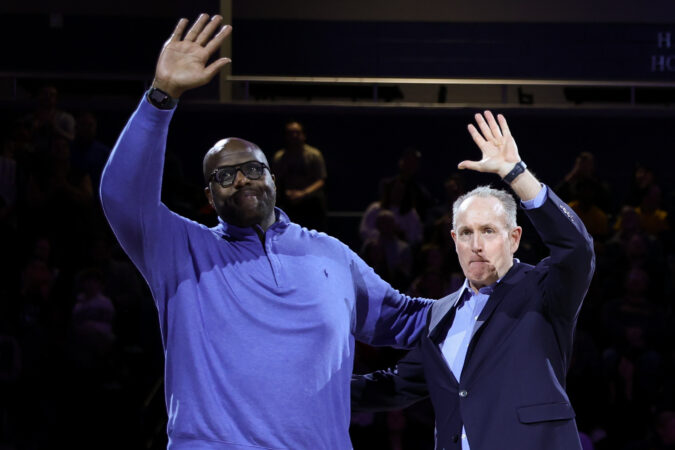
    On Saturday, the Dragons welcomed Rose and Herrion into Drexel Athletics Hall of Fame during an 83-78 victory against Northeastern.

    “It’s a very special and humbling event for me,” said Rose, Drexel’s all-time leading rebounder with 1,514. “It means a lot to me — probably more than any other sports memory I’ve had in my career.”

    Added Herrion: “I’m very honored, very privileged for the recognition. But, I always go back to this. These things only happen as a coach if you’re very, very fortunate to have really good players.”

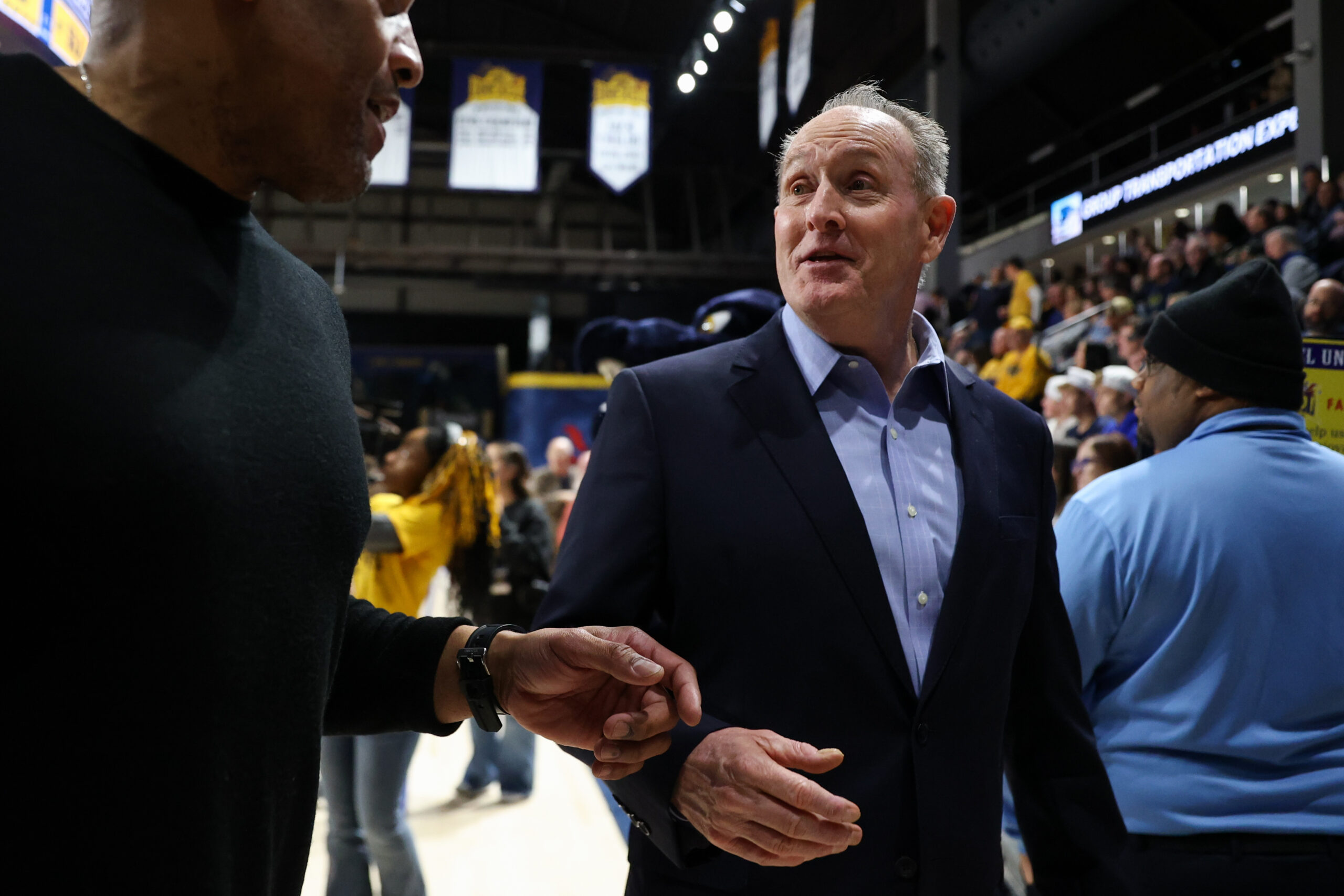
    A lot of those players were in attendance Saturday. After Herrion and Rose made their way to center court, shaking hands with Drexel athletic director Maisha Kelly and university president Antonio Merlo, players from the ’90s tournament teams joined them.

    “One of the reasons for this taking so long is because I never really wanted to do it,” Rose said. “I don’t really like a lot of this type stuff, but I spoke with Coach Herrion and Maisha the AD — she was really working hard. They were able to get a lot of my former teammates there. … That’s what really hit me. I was like, ‘Man, I get a chance to spend some time with the knuckleheads I rode the bus and the planes with.’”

    The Charlotte Hornets drafted Rose in the second round in 1996, 44th overall, but he spent only one season in Charlotte before signing as a free agent with San Antonio. Rose was a valued role player for two championship teams in eight seasons with Spurs. After that, he played five years for the New York Knicks and a lone season in Oklahoma City. After a stint in broadcasting and multiple executive roles, Rose is now the head of basketball operations for the NBA G League.

    Through all these stops, his Philadelphia roots have stuck around.

    “When I was in the NBA, I think we had [around] 21 players from Philly that came up in the Philly [area] leagues: myself, Alvin Williams, Cuttino Mobley, Kobe [Bryant], Aaron McKie, Rasheed Wallace. … We all grew up playing together, from high school to the Pizza Hut three-on-three leagues up at King of Prussia to the hardwood courts of the NBA. We still have that brotherhood today.”

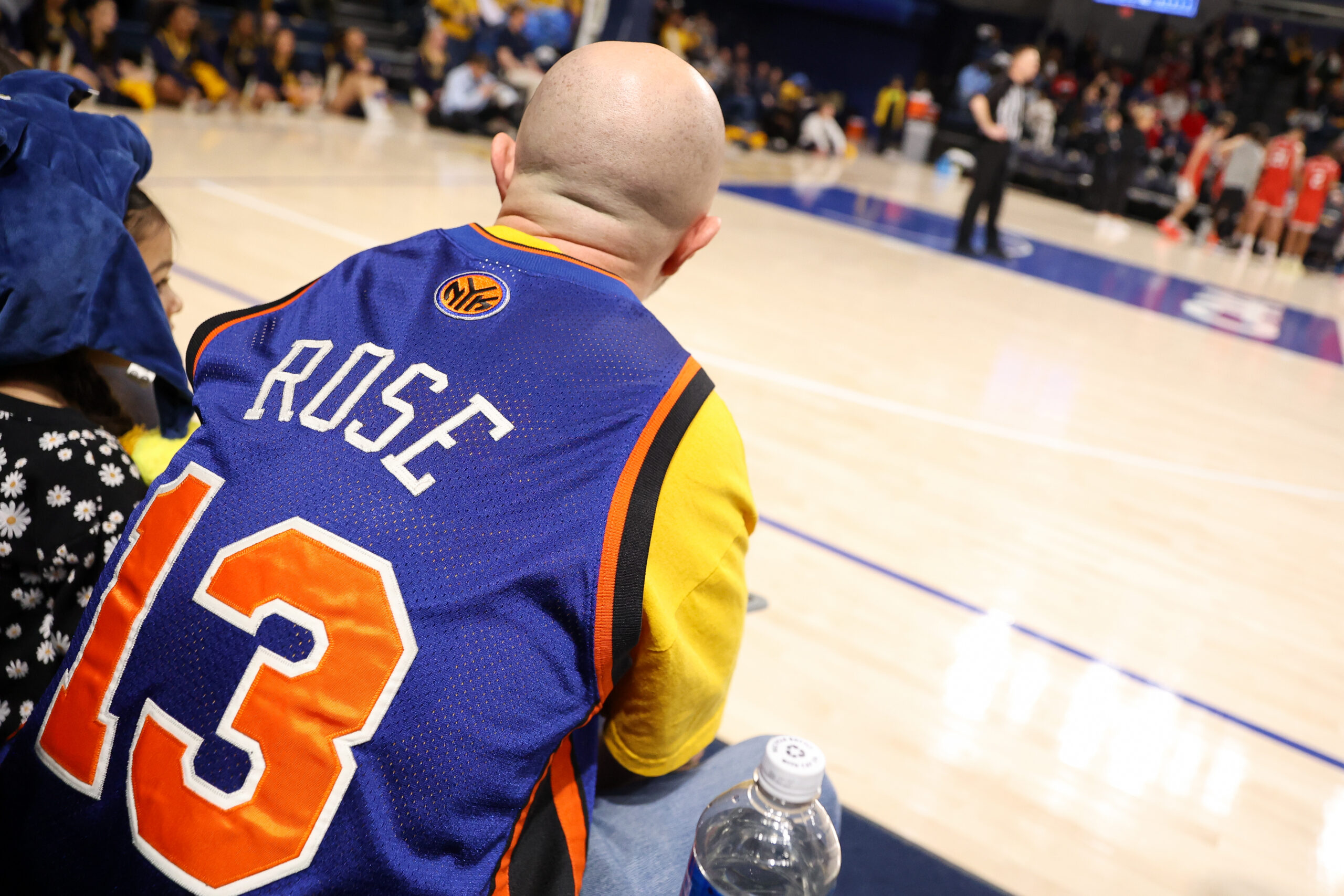
    Bill Martin, a Drexel 2006 graduate and season ticket holder from North Jersey, wearing his jersey from Malik Rose’s time with the Knicks.

    Herrion left Drexel after eight seasons. He coached for six years at East Carolina and 18 at New Hampshire. With the Wildcats, he garnered a program-high 227 victories. Herrion, who is now an assistant at Stonehill in Massachusetts, has the most wins in America East Conference history. His career record as a head coach is 464-472.

    “The remainder of my head coaching career would not even have been possible if it wasn’t for those eight years at Drexel,” Herrion said. “The great thing about it was doing it in Philadelphia, which is such a great college basketball city. All the Big Five coaches I became friendly with. We finally gained unbelievable respect in the city.”

    Now a member of the Big 5, Drexel no longer needs to vie for respect from the other programs. That is still not the biggest change from Herrion and Rose’s time with the Dragons, though. The average NIL budget for a mid-major program, like Drexel, is over $291,000.

    “When I talk to some of my teammates, we remember over Christmas break that we were allowed to get $21 a day. It was like seven bucks a meal,” Rose said. “That’s all we could get each day over Christmas break, and we loved it. We were thankful for it. Times have definitely changed.”

    Behind 22 points from Josh Reed, the current Dragons captured a bit of the energy from the NCAA Tournament teams that routinely packed Drexel’s gym. Afterward, Rose got his wish to spend some more time with his old teammates. The Dragons of the past celebrated a conference win with the team’s present players in the locker room.

  • ‘Not elite’ Bryce Harper might lose his No. 3 spot in the Phillies lineup, flip with Kyle Schwarber at No. 2

    ‘Not elite’ Bryce Harper might lose his No. 3 spot in the Phillies lineup, flip with Kyle Schwarber at No. 2

    Maybe giving Bryce Harper better protection will return him to “elite” status.

    The most intriguing tidbit the Phillies provided Tuesday in their Hot Stove state of the union news conferences concerned how the run-it-back lineup will be organized.

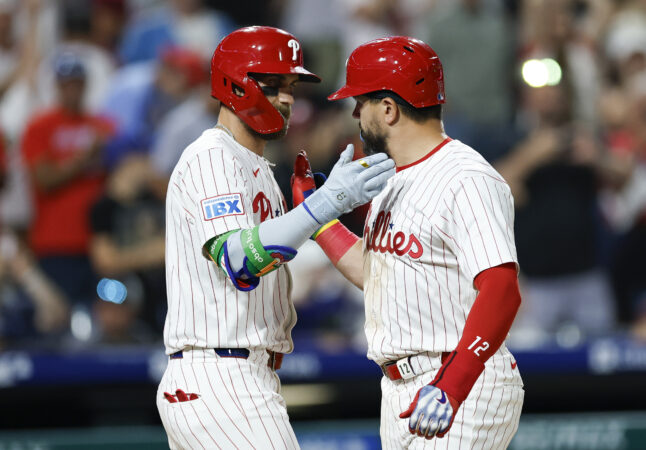
    The Phils led the National League in batting average and finished second in OPS as they won their second consecutive NL East title. That offense was led by a lineup that generally featured Trea Turner leading off, Kyle Schwarber batting second, and Harper batting third. Harper has spent most of his career batting third.

    This year might be different.

    “Yeah, I’ve got some ideas,” said manager Rob Thomson. “I’ve got to talk to the players about it, but you could see a change this year, flipping those guys around a little bit.”

    Asked later if the changes could involve Harper moving out of the three-hole, Thomson said, “Yes.”

    A change might do him good.

    A wrist injury and a steady diet of breaking balls — a career-high 41.3% — led to Harper’s worst season since 2016. His .844 OPS was 22nd in baseball and more than 50 points below his .911 career OPS entering 2025.

    This dip in production led Phillies president Dave Dombrowski, in his postseason news conference in October, to cast Harper as “a quality player” who didn’t “have an elite season like he has had in the past.”

    This upset Harper, who, nine days later, told The Athletic he was “hurt” by the comments and the resulting fallout. That included speculation that the Phillies might be better off trading Harper — media-fueled speculation, and something the Phillies never considered.

    Dombrowski has said he had a conversation with Harper in November and emerged from that discussion believing that their relationship was fine.

    Then, on Dec. 26, Harper posted a TikTok video of himself hitting in a batting cage while wearing a sweatshirt that said, “NOT ELITE.”

    He doesn’t seem fine.

    Simmering

    Harper had announced via social on Dec. 23 that he plans to play for Team USA in the World Baseball Classic in March.

    Thomson said Tuesday that Harper had been hitting in late December, earlier than usual, to better prepare for the WBC … and, maybe, to make Dombrowski eat his words.

    “I think he’s motivated. I really do,” Thomson said. “I think he’s motivated to play for his country, and I think he’s motivated to win a world championship.”

    Will Harper be motivated to move from the No. 3 spot?

    His career OPS while batting second is .791 in 1,010 plate appearances, though those numbers reflect him as a much younger player. In his most recent stretch of hitting No. 2 — 14 games last season — Harper’s OPS was .900.

    Schwarber, meanwhile, has a career OPS of .882 when batting second and .816 when batting third, though he only has 209 plate appearances batting third. For what it’s worth, Schwarber’s OPS in the cleanup spot is .937 in 475 plate appearances.

    Fair point

    Dombrowski might have put his foot in his mouth in October, but he’s right. Harper’s production lagged in 2025. He’s 33 this season.

    A lineup change might be just what the Topper ordered.

    This isn’t the first time Harper’s spot in the lineup has come into question with spring training looming. In fact, this time last year nobody knew who would hit where, exactly. The three previous seasons, Schwarber had been an unusual leadoff hitter — low-average, high-power, few RBIs.

    The Phillies were eager to harness Schwarber’s power (they did: he led baseball with 132 RBIs last year) and replace him up top with Turner or Bryson Stott. If that didn’t work, they hoped their best hitter since ,might be willing to do the job.

    Harper was not interested in that.

    “Obviously, I’m a three-hole hitter, and I have been, but whenever they’ve told me to hit two or four, I’ve done that in the past,” Harper said last spring. “I like to see pitches before I hit, seeing what the guy’s going to do.”

    It’s unlikely Harper will be asked to hit leadoff this season, considering last year Turner won both the job and the NL batting title, hitting .304.

    But it seems extremely likely that Harper and Schwarber will switch, at least occasionally. Both bat left-handed, but Schwarber hit 23 homers off lefties last season with a .962 OPS, both records for left-handed hitters. Of course, he did this with Harper usually standing in the on-deck circle.

    And when Harper came to bat, pitchers knew the No. 4 hitter wasn’t much of a threat. Usually, it was a right-hander like Nick Castellanos, J.T. Realmuto, or Alec Bohm, all of whom struggled in 2025. Early in the season, it was Schwarber.

    Who now?

    This season, $10 million free agent Adolis García will probably get the first chance. He’s hit mostly cleanup the past four years. He’s a right-handed hitter. He has power potential, averaging just over 30 home runs for the Rangers from 2021-24.

    No other player makes sense, especially since Thomson will want to maximize the number of appearances for his would-be elite players, Schwarber and Harper.

    So, ultimately, who will protect whom? It will be one of the more interesting story lines at spring training.

    It also might not be determined by the end of the Phillies’ preseason. The WBC could occupy Harper for two full weeks right in the middle of spring training.

    That might be irrelevant. In a make-or-break season for a Phillies core that has underachieved the past three years, it sounds like Thomson might juggle the lineup every day of the season if he feels like it, preference and feelings be damned.

    His current philosophy:

    “Whoever’s hitting good — protect them.”

  • Philly has long been a special place for tennis legend Billie Jean King. And she wants to see the WNBA succeed here.

    Philly has long been a special place for tennis legend Billie Jean King. And she wants to see the WNBA succeed here.

    Philadelphia and its famously indefatigable, fanatical followers of all things pro sports, you have a test coming at you with the speed of a Tyrese Maxey breakaway.

    In 2030, the City of Brotherly Love will debut its own WNBA franchise.

    At last.

    Then will come the test. Can, and will, Philadelphia and its often-notorious rabid fans land on the right side of the WNBA story, embracing not only a specific team, but the general concept of women’s professional sports?

    Billie Jean King, for one, has thoughts.

    In two interviews, King — one of the most celebrated sports icons of any generation and an inductee into multiple Halls of Fame — explained how she planted roots in Philadelphia long ago and has yet to pull those roots up. Yes, she’s moved around the globe, with stops at Wimbledon, Roland Garros, Australia, and beyond. She is a fixture at the U.S. Open every summer in New York, a whirling dervish who refuses to slow down, even at 82 years old.

    She wants to see Philadelphia become the next successful chapter in the chronicles of the WNBA story, proving all the more, even more that women can succeed on basketball courts, by measuring success one purchased ticket at a time.

    “I just hope that comes true,” said King of a pro team other than the Eagles, Phillies, Sixers, and Flyers lighting up South Philadelphia’s sports complex. “If it does come there, then the fans better make sure they support it because the other [new] teams now, they really have great support.”

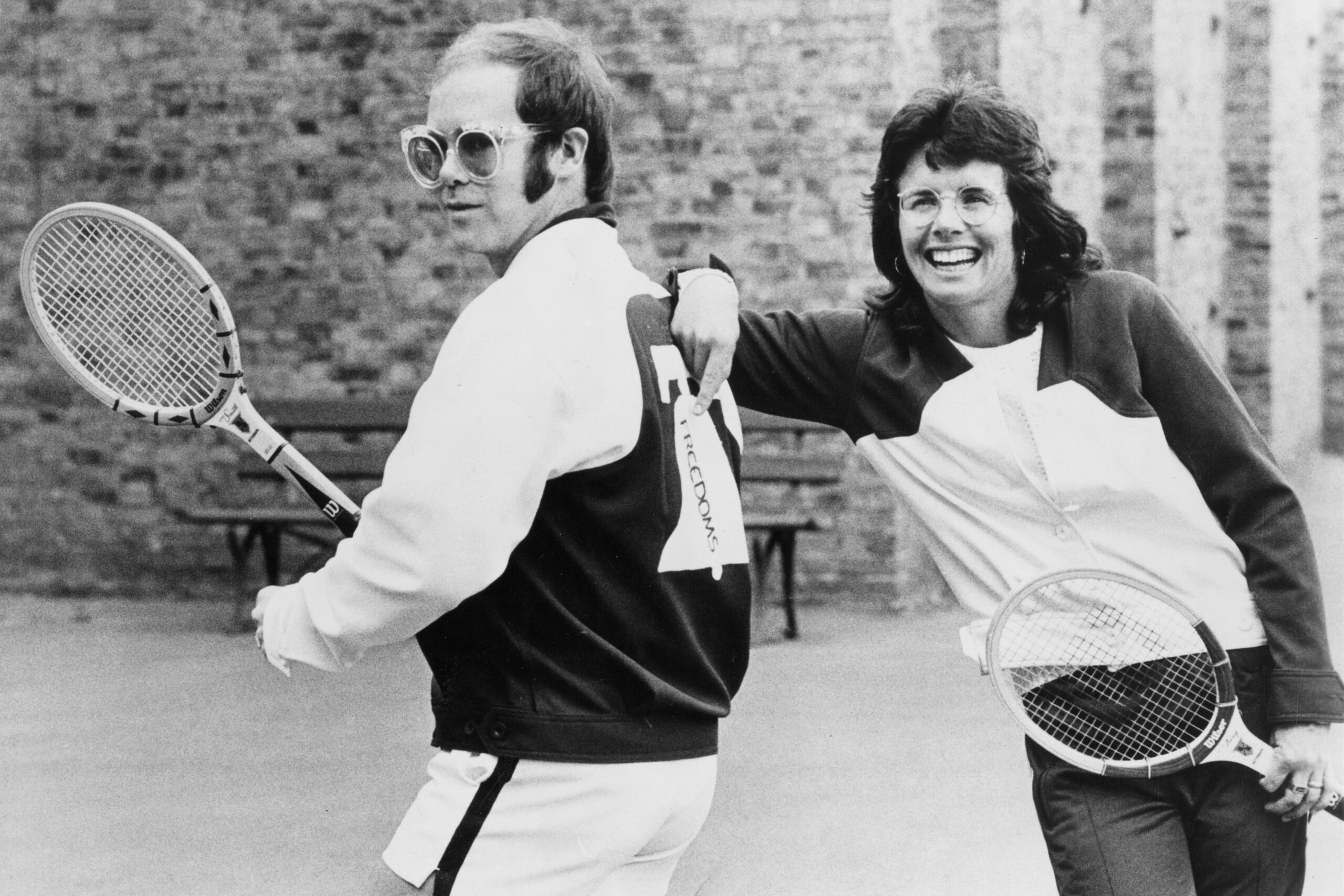
    Elton John in a Philadelphia Freedoms jacket and Billie Jean King in 1974.

    Her conversations about the possibilities of basketball’s best women playing for Philadelphia have been ongoing for seemingly a lifetime. “We’ve been talking to people about that forever on that subject,” King said, mentioning her wish that famed Philadelphians like Wanda Sykes and others from the entertainment industry help draw attention to the sport. (As for ownership, she again points to Sykes, and Sykes’ wife, Alex, saying “I know they’d love to invest.”)

    Having just helped establish the Professional Women’s Hockey League, having dabbled in ownership of tennis tournaments, King knows what lies ahead for ownership of a new franchise and for a fan base that is particularly particular.

    “Philadelphia, it’s a rough market,” King said, “because notice when the Phillies are winning, everybody shows up. When they’re not winning, very few show up. What you need is an organization like the Cubs, whether they win or lose, they fill the place. That’s what Philadelphia has to do. That’s what you need the fans do. They gotta have to want to do that to support their city.”

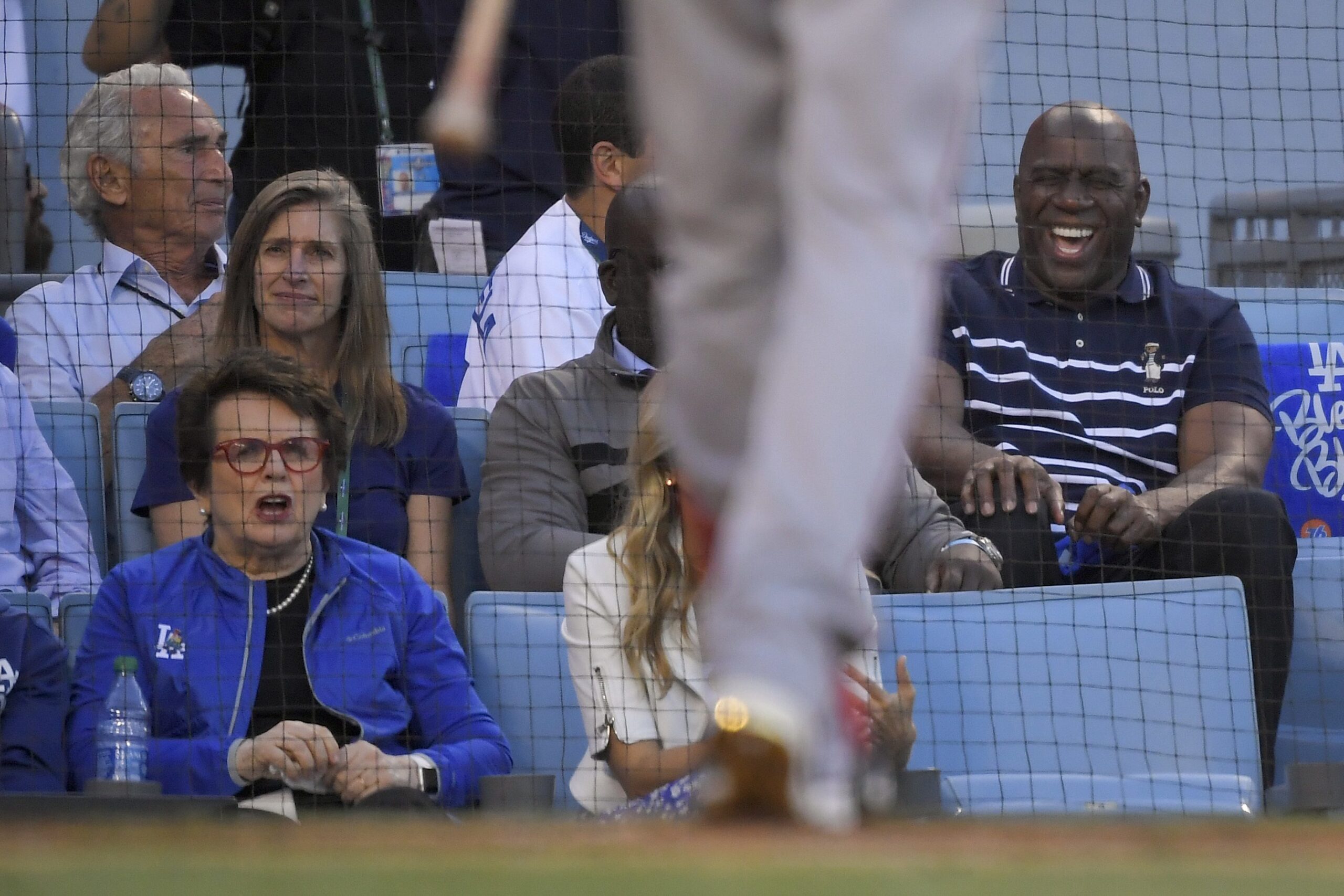
    Her presence is not just the stuff of tennis lore. She is not a fixture in baseball, ensconced in the major leagues as a part-owner of the Los Angeles Dodgers. When not seated in the front row near the Dodgers’ dugout at Chavez Ravine, chatting it up with Magic Johnson and Sandy Koufax, she could be seen standing next to Shohei Ohtani and Mookie Betts on podiums as she and her team celebrated the last two World Series championships.

    Billie Jean King (left) and Magic Johnson take in Game 1 of the NLDS between the Los Angeles Dodgers and the Washington Nationals.

    And for King there is no offseason. She sits on the board of directors for the 3-year-old PWHL, a creation of the Dodgers’ ownership. She applauds its million-plus ticket sales per season as heartily as she celebrates baseball championships.

    She also is closely following the startup of the new women’s professional baseball league being backed by Major League Baseball. King has no stake in that league. Yet. But upon learning that none other than Mo’ne Davis, the multifaceted Philadelphia athlete of Little League fame, was attracted to the new league’s tryouts certainly attracted King’s attention.

    Yet as King began the second of our interviews for this article, she leaned into the Zoom video camera and declared that she was wearing the Phillies’ maroon, a transplant from the West Coast stubbornly proud of her adopted city.

    King remembers watching the Phillies play at Veterans Stadium, falling back on the dreams of a little girl who wanted to play baseball as much as did her brother, Randy Moffitt, a former big league pitcher who died earlier this year.

    King also reminisces about Coaching 101 conversations she’d have with Sixers great Billy Cunningham while the two watched the Flyers skate their way to Stanley Cup championships. Just two Hall of Famers talking hoops. King also wished to have played the sport, but for that glass ceiling that limited girls’ and women’s access to the game.

    That so many memories of teams rooted in Philadelphia can make her smile reminds one to never doubt how much Billie Jean King still has invested in emotions, heart, and soul in this city after six-plus decades.

    “As a child, when I was growing up, I read everything I could on the history of women’s tennis and men’s tennis,” King said. “And there is so much history in Philadelphia. … And the junior championships used to be there. If you wanted to be the No. 1 junior in the world, you had to play at the Philadelphia Cricket Club. They had the junior nationals, and you had to win that tournament to be No. 1 in the country. I never won.”

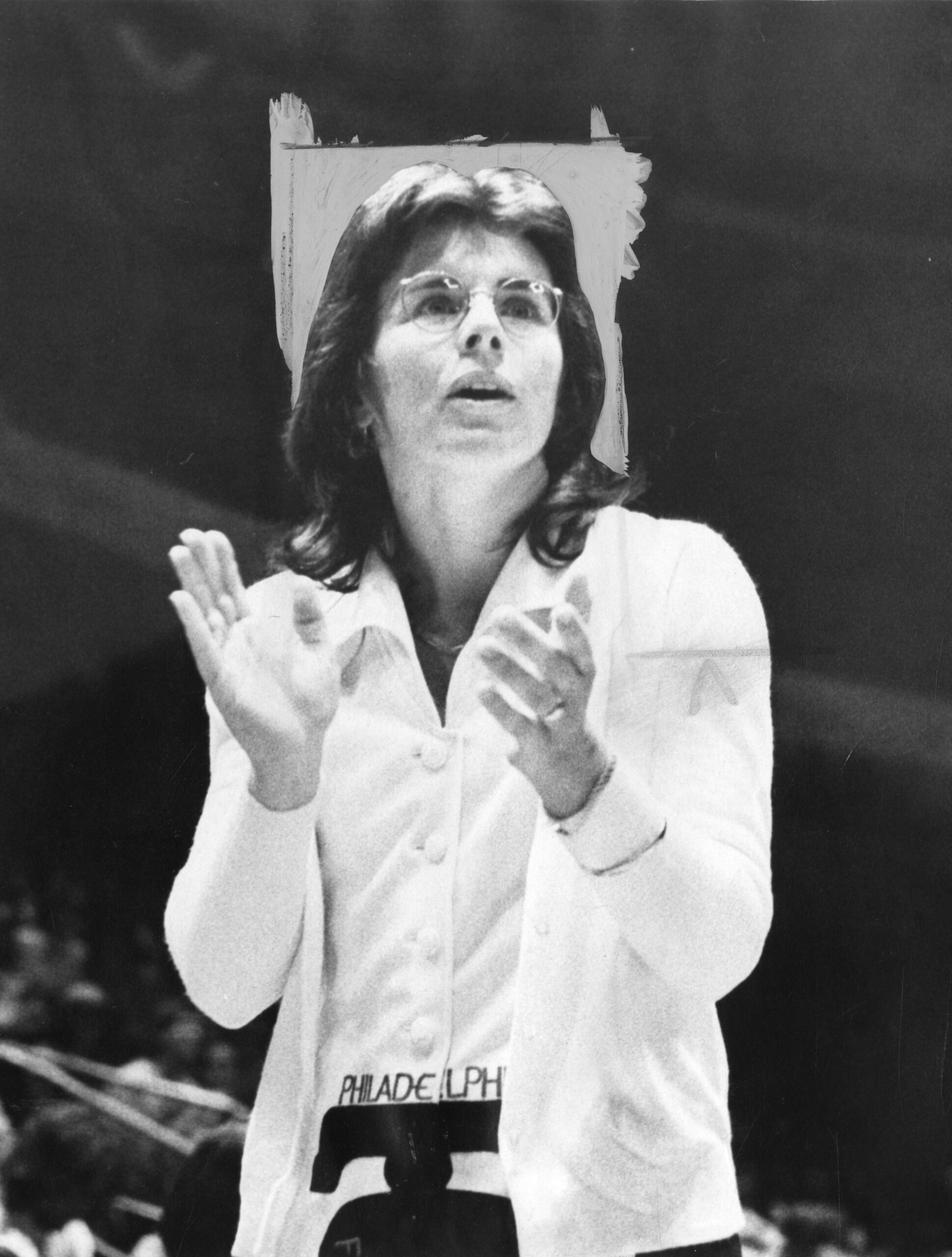
    That didn’t mean the city failed to win over King. “I’ve been going there since I was 15,” she said fondly. And when she returned as an adult, she did so as a world-renowned champion, coming back to play for and coach the Philadelphia Freedoms in 1974, the inaugural season of the World Team Tennis league.

    Billie Jean King was a player-coach for the Philadelphia Freedoms.

    These ventures make it feel like coming home whenever she passes through Philadelphia, she said. And now, she sees a city she loves about to take on a fight she’s waged her whole life.

    Like many a WNBA team, their NBA counterparts will be counted on greatly to help the Philly team take flight. The franchise owner is Harris Blitzer Sports & Entertainment, owners of the Sixers, with Comcast Spectacor holding a minority stake.

    Yet King cautions, too, that “in Philadelphia, you’ve got to have the big bucks. You’ve got to be in it for the long, long haul.”

    Why that matters is this: The WNBA has shuffled the deck in four expansion eras in its 29 seasons. Philadelphia will join as part of its fourth expansion.

    The league’s history on moving or disbanding franchises is no secret. Neither is its willingness to go in another direction quickly, no matter the size of the market the league chooses to flee.

    The league has relocated and rebranded five teams. Only three of the original eight teams remain. As the WNBA looks to grow to an all-time high of 18 teams by 2030, it is betting much on Philadelphia — the only city among the nation’s six largest metropolises to have never had a WNBA team.

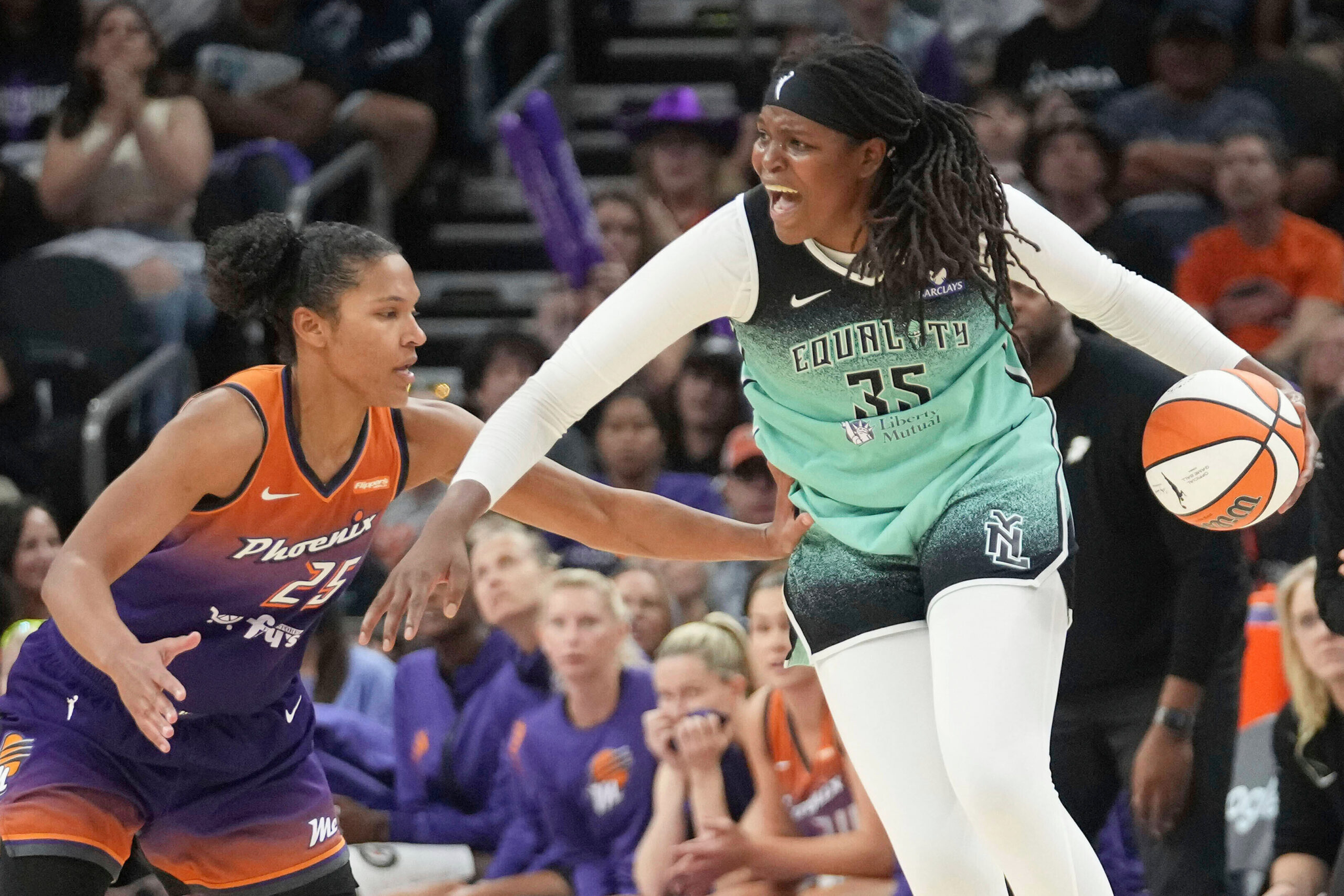
    New York Liberty center Jonquel Jones (35) looks for an outlet as Phoenix Mercury forward Alyssa Thomas during a WNBA playoff game last fall. Jones’ and Thomas’ teams are two of the three inaugural WNBA franchises still in their original homes.

    Right now, the model every future expansion team will be chasing is the Golden State Valkyries.

    The Valkyries set a record for victories in an expansion team’s first season and made the playoffs, another first for an expansion team, all while selling out its slate of home games.

    “So they did it right, and you’ve got to do it right,” said King of the team fronted by the NBA Golden State Warriors.

    “You’ve got to have enough money and then you’ve got to set up everything right. Like, where are they going to play? Make sure they get good dates,” she said, noting that WNBA franchises often are second, third, or fourth in pecking orders in arenas often shared by other teams. “It’s a very difficult world to be in sports, financially, especially if you’re trying to help get a new sport in the area.”

    That largely sums up what fans of women’s sports can expect when the WNBA lands here.

    Can it work? Will it work? For Billie Jean King, just trying will be worth the effort as she keeps endorsing getting women not only on the courts, ice, playing fields, but in the seats of power.

    “I’ve been in business forever,” she said. “My former husband and I owned tournaments from 1968. I always did the business side. It really helped me to lead. I said yes [because] the way to do it was to embrace it with everything I’ve got. The way to do it is to know all sides of something, and not because I’ve been an owner, a coach, a player. I’ve been in a lot of situations not only to have a better life, but to create opportunities for others. It’s just more enriched when you have a life where you have empathy and compassion for each person’s situation.”

    In King’s world of sports, it’s always a must that fairness be made available to women. It won’t be long until the City of Brotherly Love gets its opportunity to agree with one of its most famous adopted sisters. At last.

  • There’s a mystery candidate for the Eagles’ offensive coordinator job. Here’s how the interview went.

    There’s a mystery candidate for the Eagles’ offensive coordinator job. Here’s how the interview went.

    “Hey, Howie, thanks for making the time.”

    “You got it. Have a seat. How’s your day been so far?”

    “Good. Just finished up with Mr. Lurie. I’m very appreciative that you all were willing to have me in to talk.”

    “Of course!”

    “I mean, it’s not often you see an NFL FRANCHISE SEEKING OFFENSIVE COORDINATOR posting on LinkedIn. And I wasn’t even sure if that Easy Apply link actually worked!”

    “Hey, you never know where you’ll find the right candidate. We like to cast a wide net. So why don’t you tell me why you think you’re the right person to be the next offensive coordinator of the Philadelphia Eagles.”

    “Sure. Well, I think I have the experience necessary to thrive in the position.”

    “How so?”

    Mike McDaniel (left) is off the board and Brian Daboll seems unlikely, but head coach experience might still be on the Eagles’ OC checklist.

    “I mean, my resumé kind of speaks for itself. I’ve been a quarterbacks coach, a wide receivers coach, and an offensive coordinator. I’ve called plays. I’ve been part of winning organizations. I know you respect the coaches and offensive minds I’ve worked for and learned from.”

    “True. That’s absolutely true.”

    “And, to be frank, Howie, I’m open to exploring a new role that will allow me to flex my coaching muscles in a way that I haven’t in a long time.”

    “Totally get that.”

    “And the idea of taking on this particular role with the Eagles would be a challenge that I’d relish.”

    “You want to take on all the challenges and problems and obstacles that come with this job?”

    “Definitely.”

    “We have a quarterback who seems like he doesn’t want to run the ball anymore, even though running the ball was a big part of what has made him really good — even great — when he has been really good.”

    Can the Eagles’ mystery OC candidate devise a plan to get the most out of Jalen Hurts’ legs?

    “I know. I’ve been watching Jalen. I think I can help him. I think someone has to help him.”

    “He doesn’t throw the ball over the middle of the field, either.”

    “Seen it. Thought about it. Have plans to change it.”

    “What about the pressure that comes with this job? I mean, you saw what happened to the last guy, right?”

    “I did. Hey, Philadelphia is a passionate sports town. Nothing better. My kids and I already have tons of Phillies and Sixers apparel. We’re in.”

    “As I’m sure you know, we cannot guarantee you egg-free housing.”

    “I know.”

    “It’s one of the … charming consequences, I guess you’d call it … of being an Eagles coach.”

    Have the Eagles found the offensive coordinator candidate with a proper understanding of the fan base’s passions?

    “Oh, you don’t have to tell me. I’ve coached at the Linc often enough to get a sense of it. Even had some spirited conversations with some fans about it. The atmosphere around here can be intimidating, I know, and man, those folks can say some things that get your back up. But I’m at the stage of my career where I think I can handle it.”

    “All right. Well, as you know by now, I’m sure, we operate a bit differently from a lot of other teams around the league.”

    “You sure do.”

    “We view the head coach as more of a conduit between those of us at the top of the leadership pyramid and the locker room.”

    “Yep.”

    “Our head coach doesn’t call plays, for instance. That will be the new OC’s responsibility.”

    “Well aware.”

    “I mean, we’re not inherently opposed to the idea of having a head coach call the plays for the offense. But we’ve realized over the last few years that investing our coordinators with a lot of say-so over the direction of their units is the way to go. Look at Vic. Look how that’s worked out. Our goal is to find someone who fits that mold. There’s a certain … gravitas … that comes with being a coordinator here in 2026. You call the formations and plays. You oversee that side of the ball with near-unfettered discretion. In some ways, whoever we end up hiring as our new OC will have more power than our head coach.”

    “That’s one of the reasons I want the job.”

    “I can understand that. And I have to say, your resumé and experience show that you’re willing to be flexible. You definitely do what’s asked of you.”

    “I try.”

    “OK. So, Jeffrey and I will talk. We’ll ‘confab,’ as it were. Lots to get to in the meantime, of course. Draft prep. Free agency prep. Super Bowl week — San Fran! Are you going? The chowder in a bread bowl at Hog Island is a must-do. And don’t fret. When we reach our decision, we’ll let you know.”

    “I understand. Thanks so much for the time, Howie. I’ll talk to you soon, I hope.”

    “You got it, Nick.”