Tag: Weekend initiative

  • Inside the Philly traveling museum where Black collectors finally take the spotlight

    Inside the Philly traveling museum where Black collectors finally take the spotlight

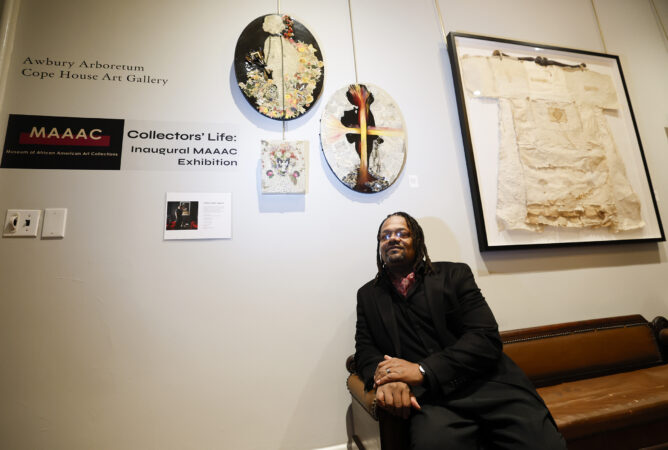
    On a recent Thursday evening, Philadelphia art collector William Skeet Jiggetts sat in the foyer of Awbury Arboretum’s Francis Cope House surrounded by grand collages taken from the walls of his East Falls home.

    The art — all made by living artists and friends of Jiggetts — is striking. A framed paper and antique lace dress by textile artist Rosalind “Nzinga” Vaughn-Nicole sits next to portrait-size cameos that mixed media artist Danielle Scott fashioned from newspapers and other found objects.
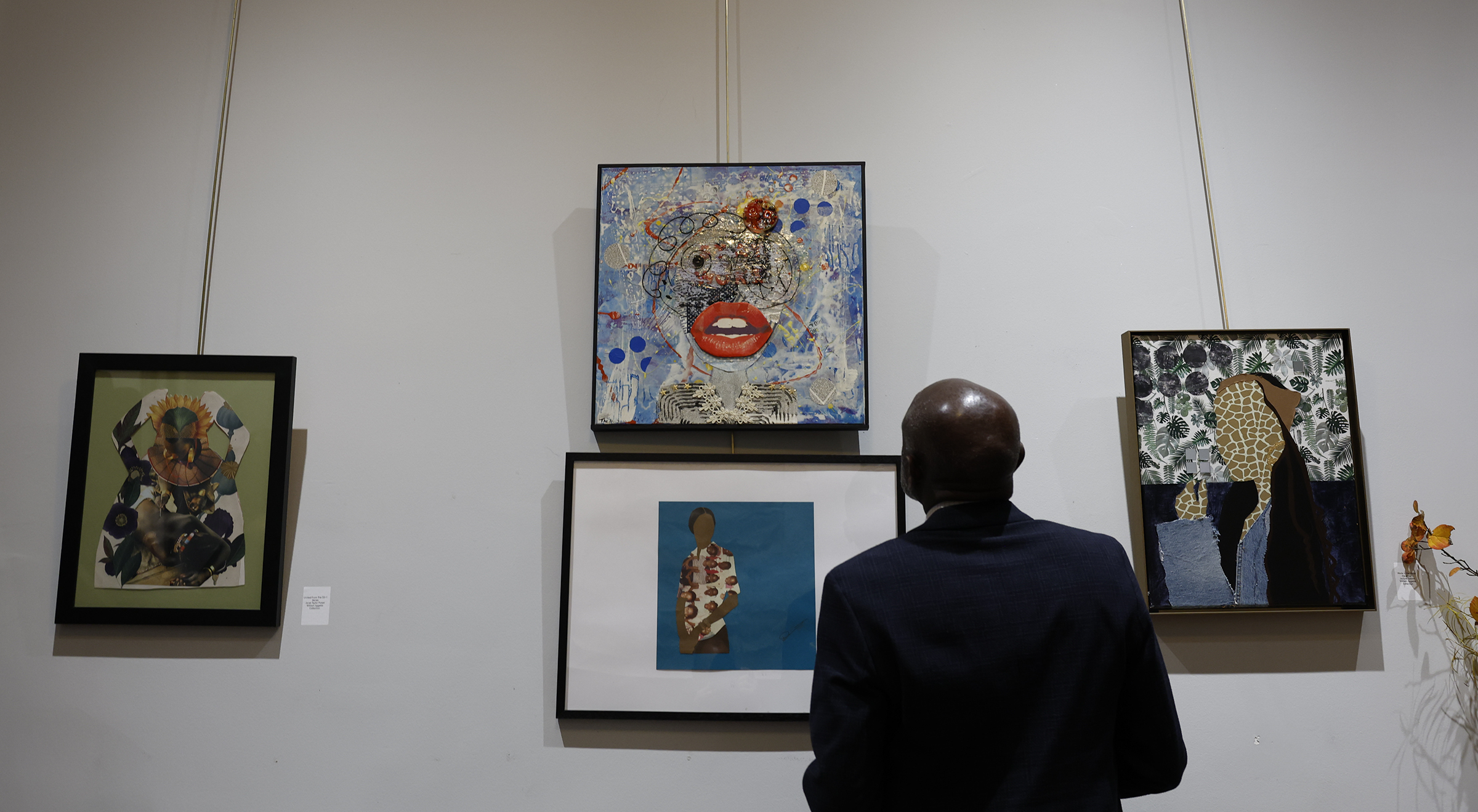
    A guest looks at artwork collected by William Skeet Jiggetts during the Museum of African American Art Collections’ inaugural exhibit at the Awbury Arboretum in East Germantown.

    Jiggetts, 57, an art collector for more than 30 years, has had pieces from his collection on display in small shows, but never in his wildest dreams did he think that they would anchor an exhibition — in a traveling museum that he founded.

    But here he was, at the opening reception for the inaugural exhibition of the Museum of African American Art Collections. Pieces from the art collections of Diana Tyson, Stephanie A. Daniel, and gallerist couple Adrian Moody and Robyn Jones were also on display.

    Collector-centric art

    Museums routinely curate exhibitions centering collectors’ works to celebrate and cultivate existing and potential donor relationships.

    Some recent examples include the African American Museum in Philadelphia’s show drawing from actress CCH Pounder’s substantial collection and the Michener Art Museum’s show honoring the legacy of collector Lewis Tanner Moore, the great-nephew of 19th-century painter Henry Ossawa Tanner.

    While the Barnes Foundation houses the late chemist and art collector Albert C. Barnes’ collection, there are very few other — if any — museums whose walls are solely dedicated to the collections of collectors. Nomadic, traveling museums, at that.

    “It got to the point where I had more art than walls,” Jiggetts said looking over his black-framed glasses. “Nobody saw it … I didn’t even see it. I thought, ‘Wouldn’t it be cool for a bunch of collectors to get together and create a space to show our work. Tell our story?’”
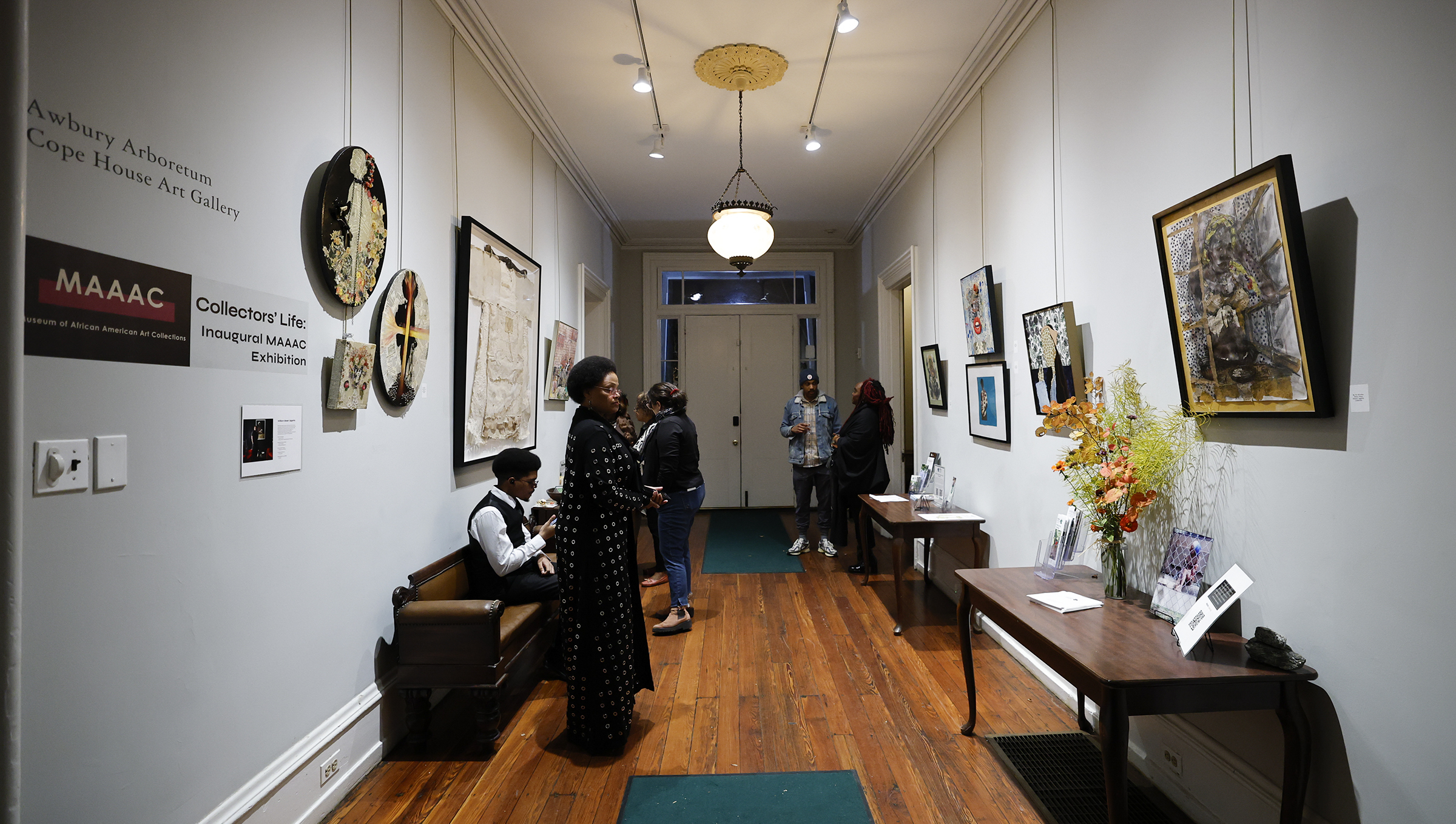
    Guest look at art work during the Museum of African American Art Collections inaugural exhibit at the Awbry Arboretum in East Germantown on Thursday, Nov. 6, 2025.

    Jiggetts got the itch to show his collection in the early 2020s after talking with colleagues who wanted to show theirs, too. In 2023 he set up a foundation, started approaching collectors, and began nailing down locations.

    “There is a treasure trove of African American art in our living rooms, in our reading rooms, and in our dens that need to be shared,” Jiggetts said. “The Museum of African American Art Collections is a forum to host these collections and tell the stories that come with them.”

    That’s how the Museum of African American Art Collections began.

    A $200 frame and an obsession

    Jiggetts, who works as a tax accountant, grew up in Germantown and spent Sunday afternoons at the Philadelphia Art Museum gazing at the impressionist works of Manet and Monet.

    When he was in his 20s, he bought a poster of Vincent van Gogh’s Sunflowers. “I spent $200 of 1989 money on that frame,” he said with a laugh. That purchase marked the beginning of an obsession. He bought his first piece of original art from Germantown painter Lucien Crump Jr., who, according to a 2006 Inquirer obituary, owned the first gallery in the city dedicated to Black art.

    Jiggetts scoured galleries and festivals for original art, buying any piece that tickled his fancy for under $500. In the early 2000s, his mentors — well known Philadelphia appraiser Barbara Wallace and the late African American collector Ronald Ollie — urged him to start evaluating his choices and he became a serious art collector.

    “I figured out what it was I really liked,” Jiggetts said, describing his favorite pieces as ones that marry impressionist and abstract art, like the ones on display at Awbury Arboretum. “I realized I enjoyed the experience of buying art as much as the art. I like the company of artists.”

    His collection is comprised of mostly living artists like the mixed media artist Danielle Scott; abstract painter Ben F. Jones; and Paul Goodnight, who is known for his colossal oil paintings featured in the backdrops of TV shows like Seinfeld and The Fresh Prince of Bel-Air. (Although Jiggetts does have a pencil sketch by the late Bahamian artist Purvis Young.)
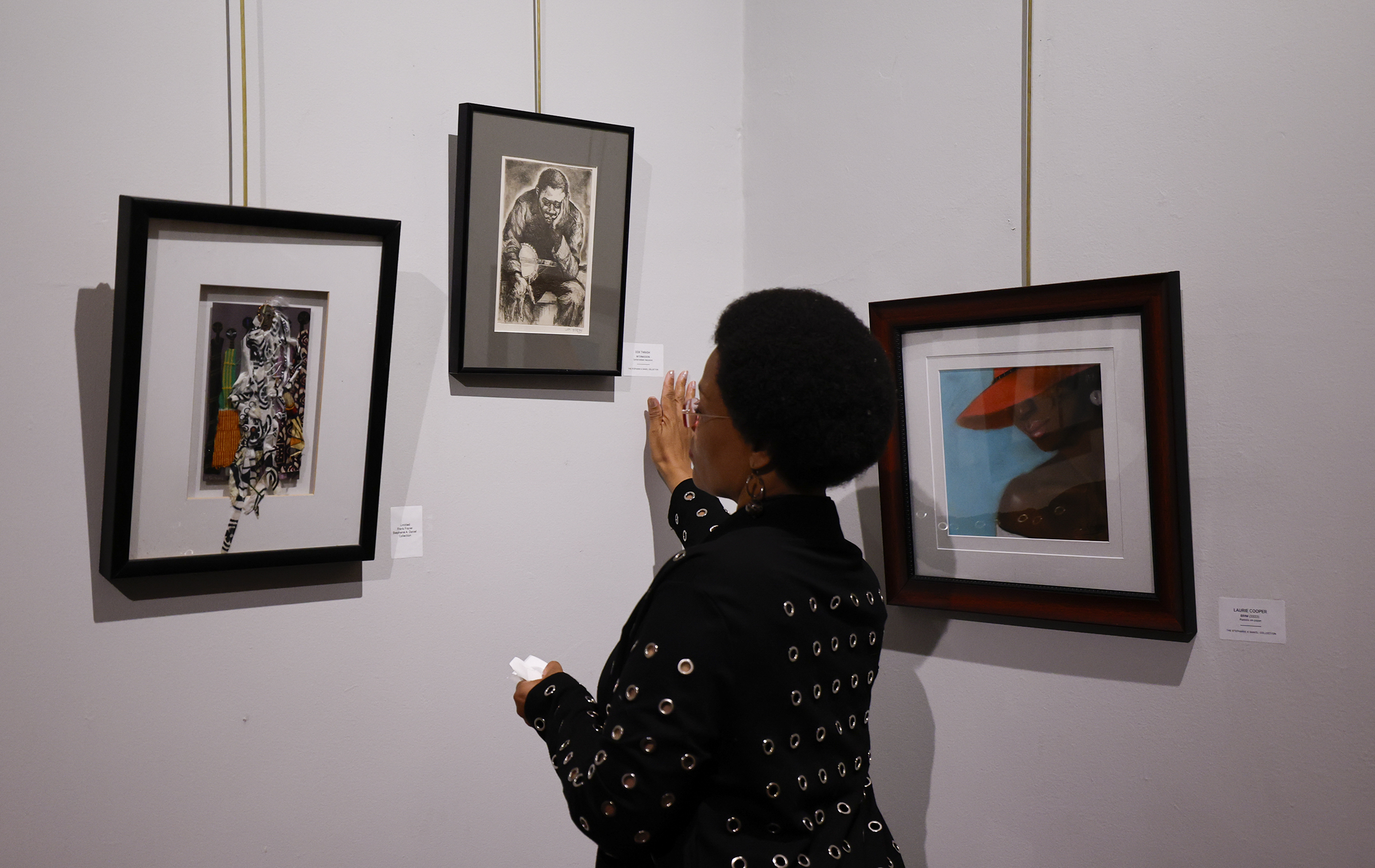
    Graphic designer for the Museum of African American Art Collections, Staci Cherry, places labels for the art collection from Stephanie Daniel during the Museum of African American Art Collections inaugural exhibit at the Awbry Arboretum in East Germantown on Thursday, Nov. 6, 2025. The piece in the center is the Dox Thrash mezzotint.

    Keepers of history

    Collectors are the glue that keep the fine arts ecosystem — artists, patrons, buyers, gallerists, and museum creators — connected and running.

    They are often patrons of the arts like James J. Maguire and his late wife, Frances, investing in artists and art institutions, building impressive art collections in their homes. Collectors Adrian Moody and Robyn Jones connect artists to buyers at Jenkintown’s Moody Jones Gallery, but their personal collection has more than 400 pieces.
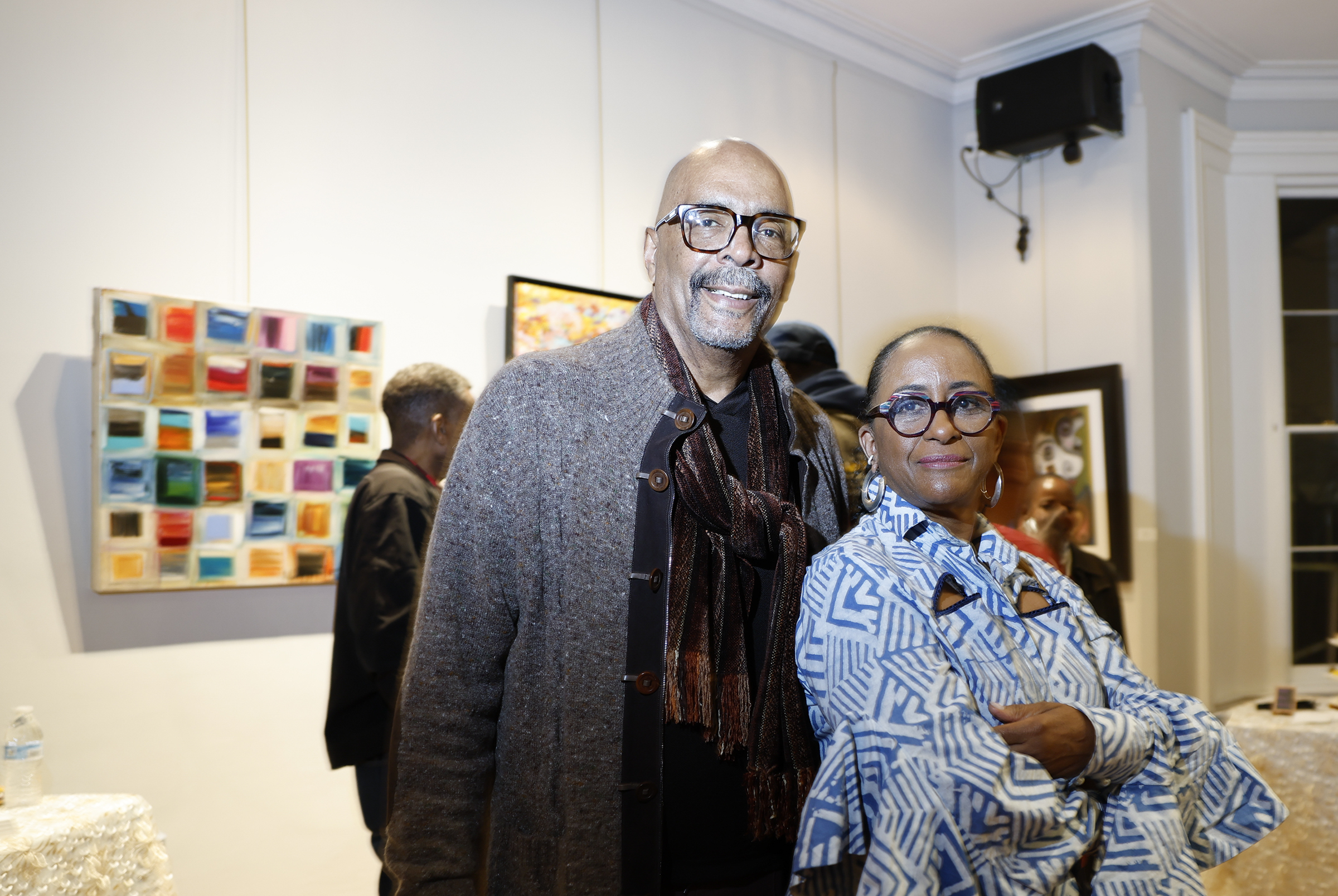
    Art collectors Adrian Moody and Robyn Jones during the Museum of African American Art Collections’ inaugural exhibit at the Awbury Arboretum in East Germantown.

    “Collectors drive the market,” said Valerie Gay, chief cultural officer for the city of Philadelphia. “They have the power to catapult an artist from obscurity to a household name.”

    Black collectors play an even more vital role in fine arts communities, explains Brooklyn, N.Y., collector Myah Brown Green, author of the forthcoming Keepers of a Movement: Black Collectors Who Preserve Art, Stories, and Legacies that Define Black Life.

    It’s the Black collector who discovers artists at street fairs, off-the-beaten-path galleries, hair salons, and their friend’s basement.

    Their interest — like mid-20th-century author Ralph Ellison’s enthusiasm for Harlem Renaissance-era oil on canvas master Romare Bearden — brings artists’ work to a wider audience that can lead to cementing an artist’s place in the fine arts canon. Their picks speak to the collective Black experience, shaping Black America’s historical image.

    “They are the keepers of our history,” Green said. “Mediators who carry the work forward and continue the legacy.”
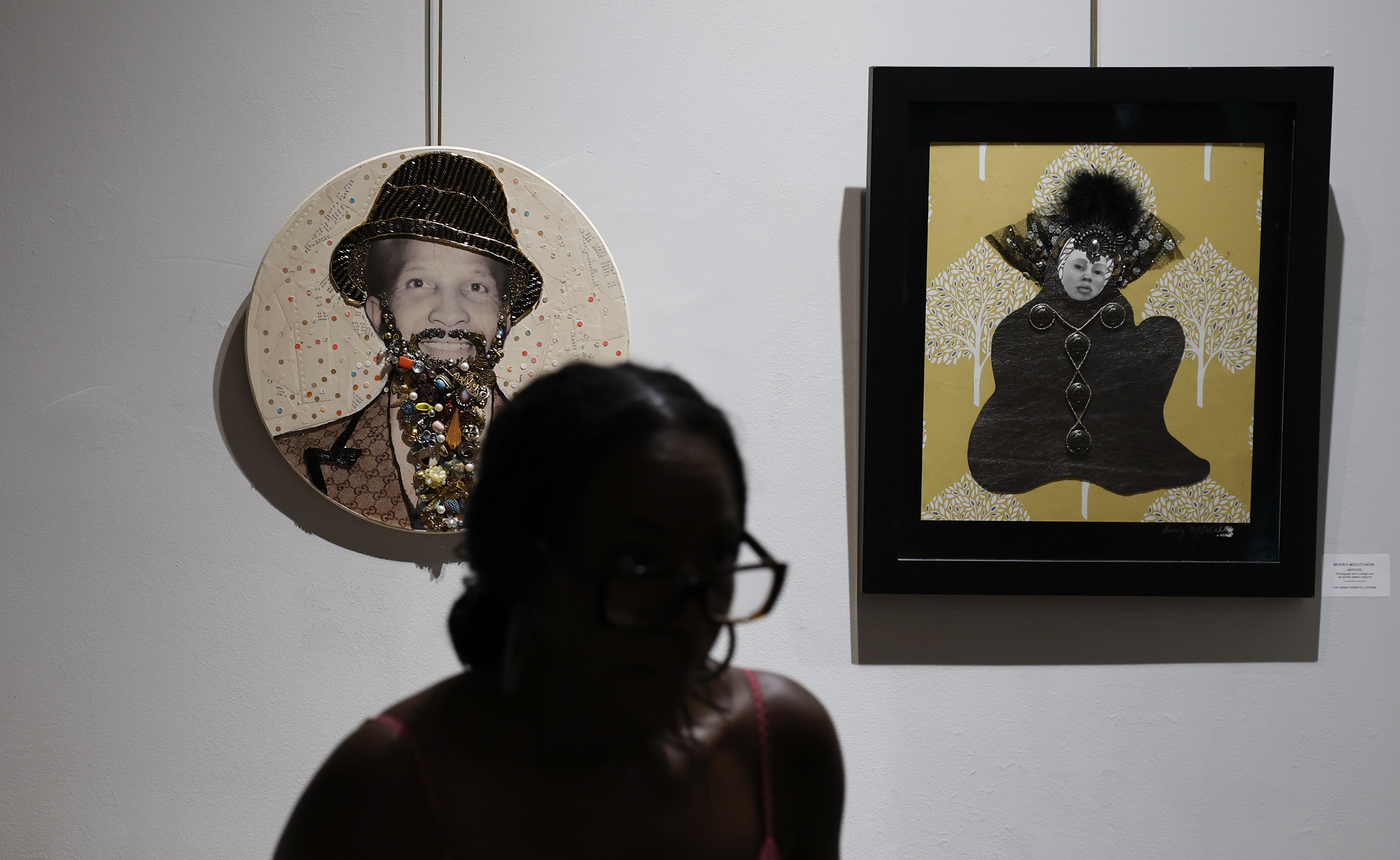
    A guest walks past art collected by Diana Tyson during the Museum of African American Art Collections inaugural exhibit at the Awbry Arboretum in East Germantown on Thursday, Nov. 6, 2025. Artis Beverly McCutcheon created Dad (left) and a piece titled Untitled.

    Setting value

    The Black collectors’ library, Jiggetts says, is the first stop on living artists’ journeys to corporate boardrooms or the walls of major museums. “Our role is that of an economist,” Jiggetts said. “We set the value.”

    The Museum of African American Art Collections will next move to Allens Lane Art Center for its February and March show and will host an exhibit at the Black Lotus Holistic Health Collective in May and June.

    Collectors shared their experiences over white wine and sweet potato cupcakes on opening night.

    Daniel — whose collection features local masters — spoke effusively about her Dox Thrash mezzotint. She will never let the print by the important early 20th-century Black artist go, she said. Robyn Jones interpreted the Jesse Read and Antoinette Ellis-Williams vibrant abstracts. (This reporter thought both of those pieces were images of shoes.)
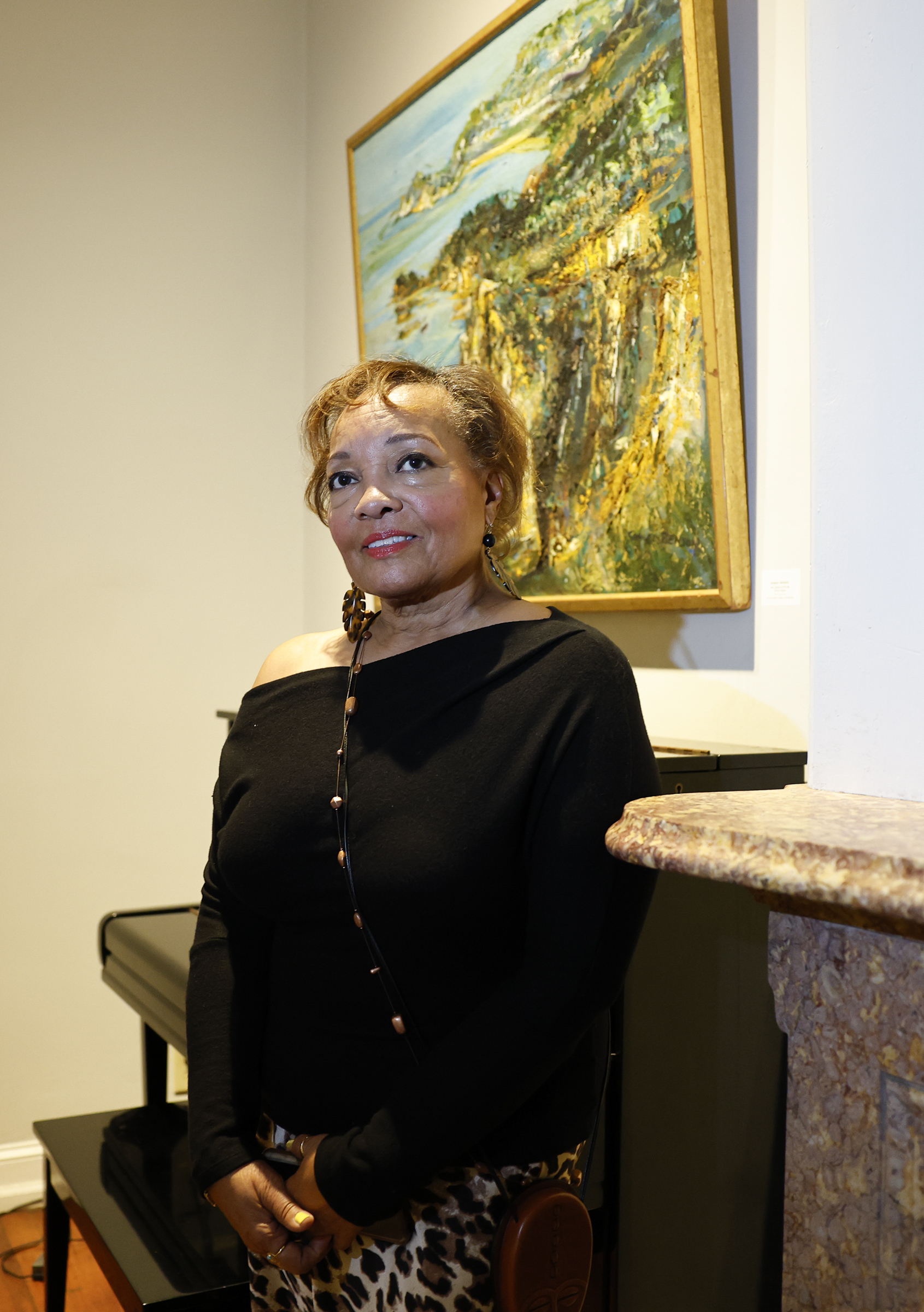
    Art collector Stephanie A. Daniel with Samuel Benson’s.Gay Head Cliffs MV painting during the Museum of African American Art Collections inaugural exhibit at the Awbry Arboretum in East Germantown on Thursday, Nov. 6, 2025.

    The concept of a collectors museum is a new one. Black collectors are not.

    “We’ve always collected our work,” Jiggetts said, stressing that these times require Black people to be stewards of their own stories.

    “At the Museum of African American Art Collections, no one can tell us what to do, what not to do, and what we need to do differently. We don’t have to worry about having it being taken away. It’s ours.”

    The Museum of African American Art Collections, through Dec. 31, Awbury Arboretum’s Francis Cope House, 1 Awbury Rd., Phila.Monday to Thursday, 10 a.m. to 4 p.m.; Saturday and Sunday, 10 a.m. to 2 p.m. Admission is free.

  • The best things we ate this week

    The best things we ate this week

    The cheesesteak banh mi special at Saigon Grace Cafe

    The international cheesesteak genre is as boundless — and as tasty — as Philly’s diverse communities, from the pepper chip-strewn Cambodian lemongrass cheesesteak at Sahbyy Food in the new Gather Food Hall (as well as the seasonal Southeast Asian Market in FDR Park) to the Ethiopian cheesesteak at West Philly’s Gojjo.

    My newest global cheesesteak crush is the Vietnamese banh mi version at Saigon Grace, a sweet fusion cafe on South Street blending Asian and Mexican flavors where I’d already fallen for the intense salt foam Vietnamese coffee. The food has been very good, too, and this recent sandwich special is pretty much exactly the multicultural mashup it sounds like: a griddled hash of flat-iron beef, onions, and melty mozzarella tucked into a delicately crusty Vietnamese roll from South Philly’s Ba Le Bakery along with the classic banh mi fixings of pickled daikon and carrot laces, jalapeño rounds, and crunchy cilantro stems. What ultimately brought this sandwich to the next level, though, was the unexpected flow of golden sauce ladled over top. Was it Whiz? Absolutely not! It was an aromatic Vietnamese curry sauce — a hint sweet and fragrant with star anise — enriched with a creamy kiss of coconut milk that kept the sandwich moist and added an extra layer of nuanced spice to every bite. Saigon Grace Cafe, 1514 South St., 267-423-0081, saigongracecafe.com
    — Craig LaBan

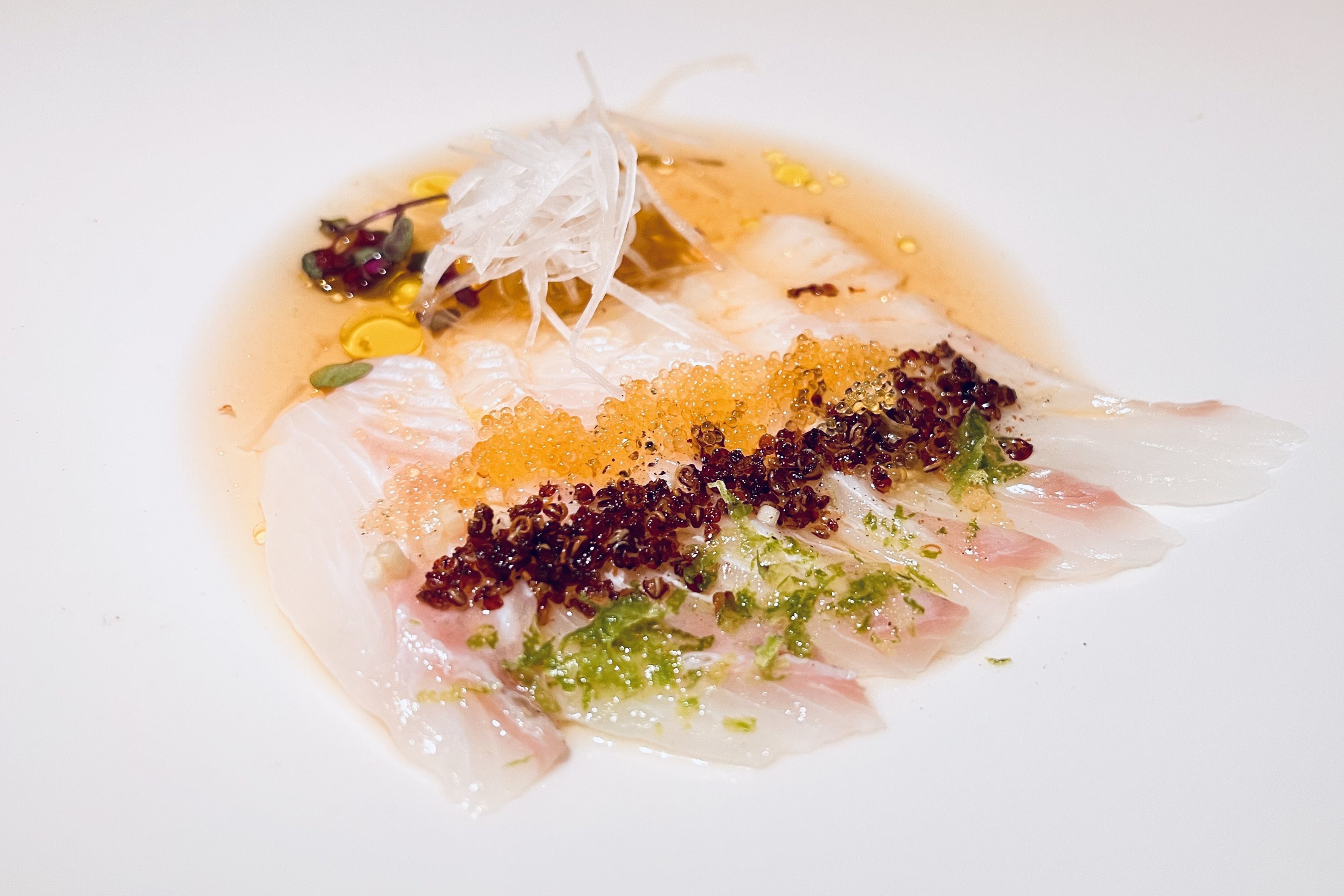
    Hirame usuzukuri as served at Uchi, 1620 Sansom St.
    Hirame usuzukuri at Uchi

    This sleek, sumptuous Japanese spot out of Austin planted its flag in Rittenhouse this month. Its dim lighting makes it a date-night must (sushi bar, drinking bar, dining room options) for high-level fish. This hirame usuzukuri off the cool tastings menu was a crudo surprise — so simple, but so complex: its candied quinoa base gives it a quiet crunch and nutty depth that sharpen the pristine flounder’s silkiness. Uchi, 1620 Sansom St., 215-647-7611, uchi.uchirestaurants.com

    — Michael Klein

    Murasaki sweet potato with yuzu kosho Buffalo sauce, sour cashew cream, and chives at Pietramala.

    The Buffalo sauce-covered sweet potato at Pietramala

    Lucky me to have a band of friends who were up for sharing the entire menu at Pietramala, Philly’s brightest vegan star, now Michelin-endorsed. On the night I had dinner there, chef-owner Ian Graye was off at the awards ceremony, picking up a Green Star and a Recommended. The meal was no less applause-worthy, starting with the tomato XO sauce-laden focaccia (which Craig LaBan considers one of Philly’s best renditions of tomato pie) and finishing on the chocolate-enrobed peanut mousse bar (which I deeply regret not ordering an individual serving of).

    The menu was full of hits, but a predilection for wings perhaps inspired a deep appreciation of the Buffalo sauce-smothered Murasaki sweet potato. The silken, white-fleshed spuds come from Robin Hill Organics in Newtown Square. Pietramala roasts them, smashes them flat, then deep-fries them to order to yield a crispy-creamy slab of potato. It arrives on the plate positively drenched in a velvety Buffalo sauce made with yuzu kosho (a citrusy fermented chili paste), topped with a generous dollop of sour cashew cream and a shower of fresh chives. When our server put the plate down, they let us know it’s not often Pietramala repeats menu items, but this one’s too good to let go. Pietramala, 215-970-9541, pietramalaphl.com

    — Jenn Ladd

  • A 29-year-old found his forever home in Point Breeze for less than $400K | How I Bought This House

    A 29-year-old found his forever home in Point Breeze for less than $400K | How I Bought This House

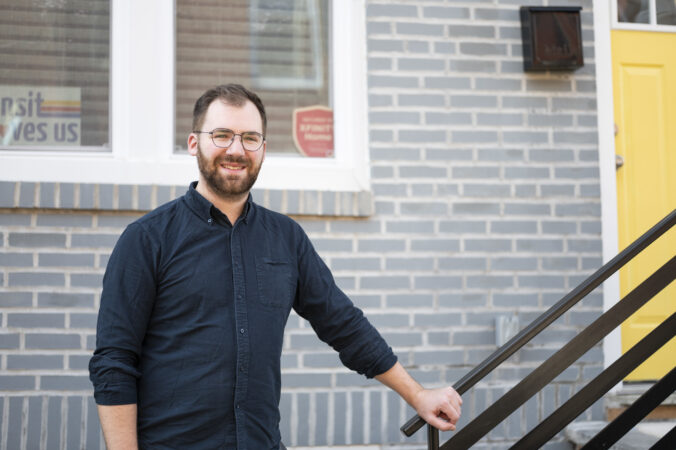
    The buyers: Cameron LaFreniere, 29, software engineer

    The house: a 1,260-square-foot rowhouse in Point Breeze with three bedrooms and 2½ baths, built in 1925.

    The price: originally listed for 350,000; sold for $340,000

    The agent: Rachel Shaw, Philly Home Girls

    The ask: Cameron LaFreniere was looking for a new city to call home and wanted to escape the stress of renting. Originally from Rhode Island, he considered settling down in Providence, but decided on Philadelphia because “the prices are significantly lower,” he said. It’s also easier to get around without a car, which was important to him.

    The primary bedroom at Cameron LaFreniere’s home in Point Breeze.

    He wanted a house that could be big enough for a family one day. “Basically something that could be a forever home if I wanted it to be,” he said. His budget was between $275,000 and $400,000, and he was only interested in historic rowhouses.

    “I would much rather have an old build that’s well taken care of,” said LaFreniere, “because they’re often much more cost-effective in terms of maintenance.” He wanted something recently updated with multiple bathrooms, space for a home office, and within biking distance of Center City.

    The search: LaFreniere began his search in December 2024 and spent months scouring South Philly for the perfect place. “I probably walked at least a third of South Philly,” he said. “I just really wanted to get a feel for the area. It’s one thing to look at something online; it’s another to experience it for yourself.”

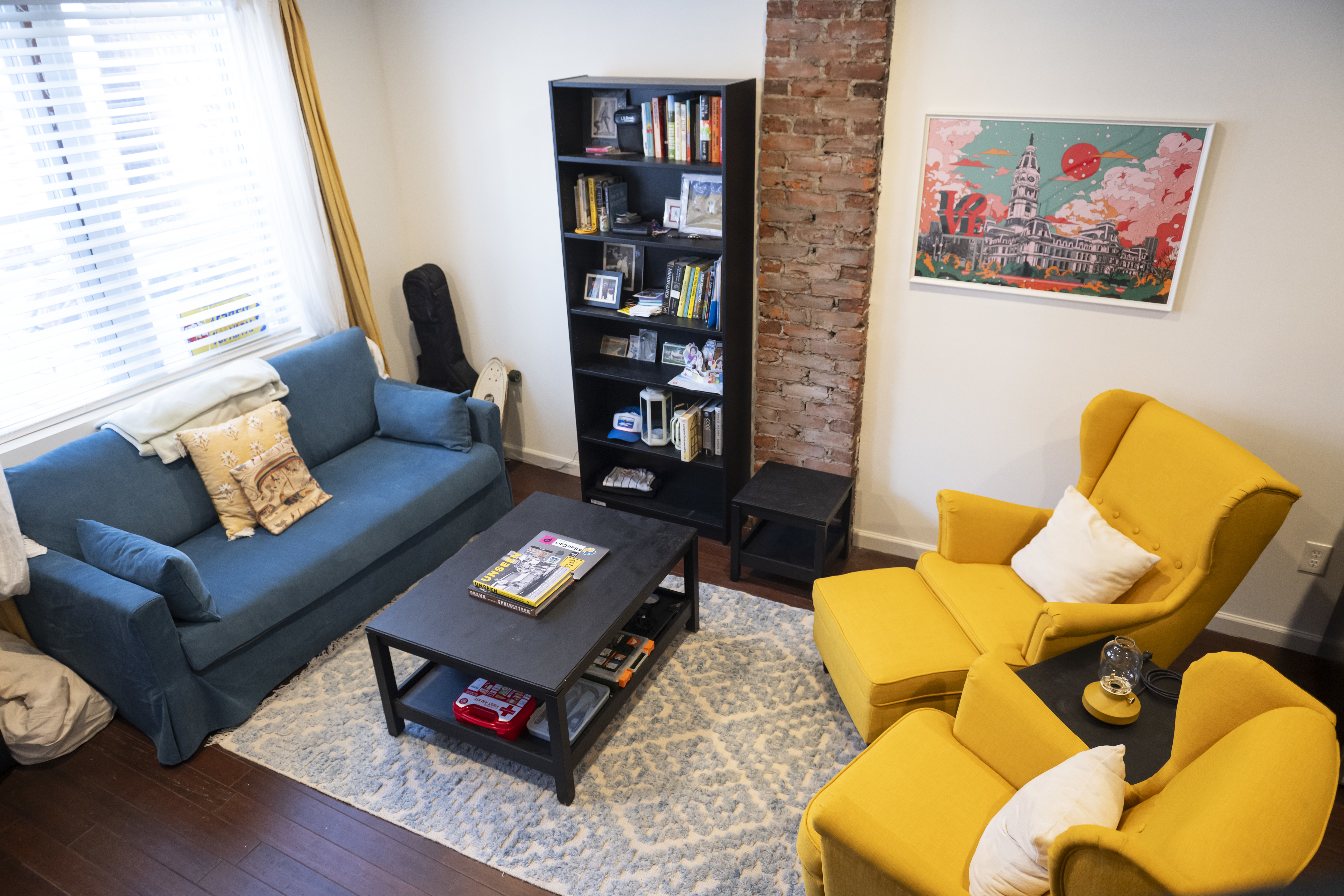
    LaFreniere outfitted the living room with all new furniture.

    Across multiple weekend trips, LaFreniere looked at 25 properties, including eight on the final day of his search. He looked at a few places in Wharton Square and one in Graduate Hospital. He also saw one that was one street over from the house he ultimately bought — it cost $20,000 more. “It had nicer floors and was staged,” he said. As for the house he wanted, “there wasn’t much competition,” LaFreniere said.

    Or it may have something to do with its location. “Point Breeze is a balanced market,” said LaFreniere. “There is a good amount of supply and places being fixed up. It’s a first-time buyer’s ideal situation.”

    One of LaFreniere’s favorite rooms in the house is the kitchen, which was updated in 2017.

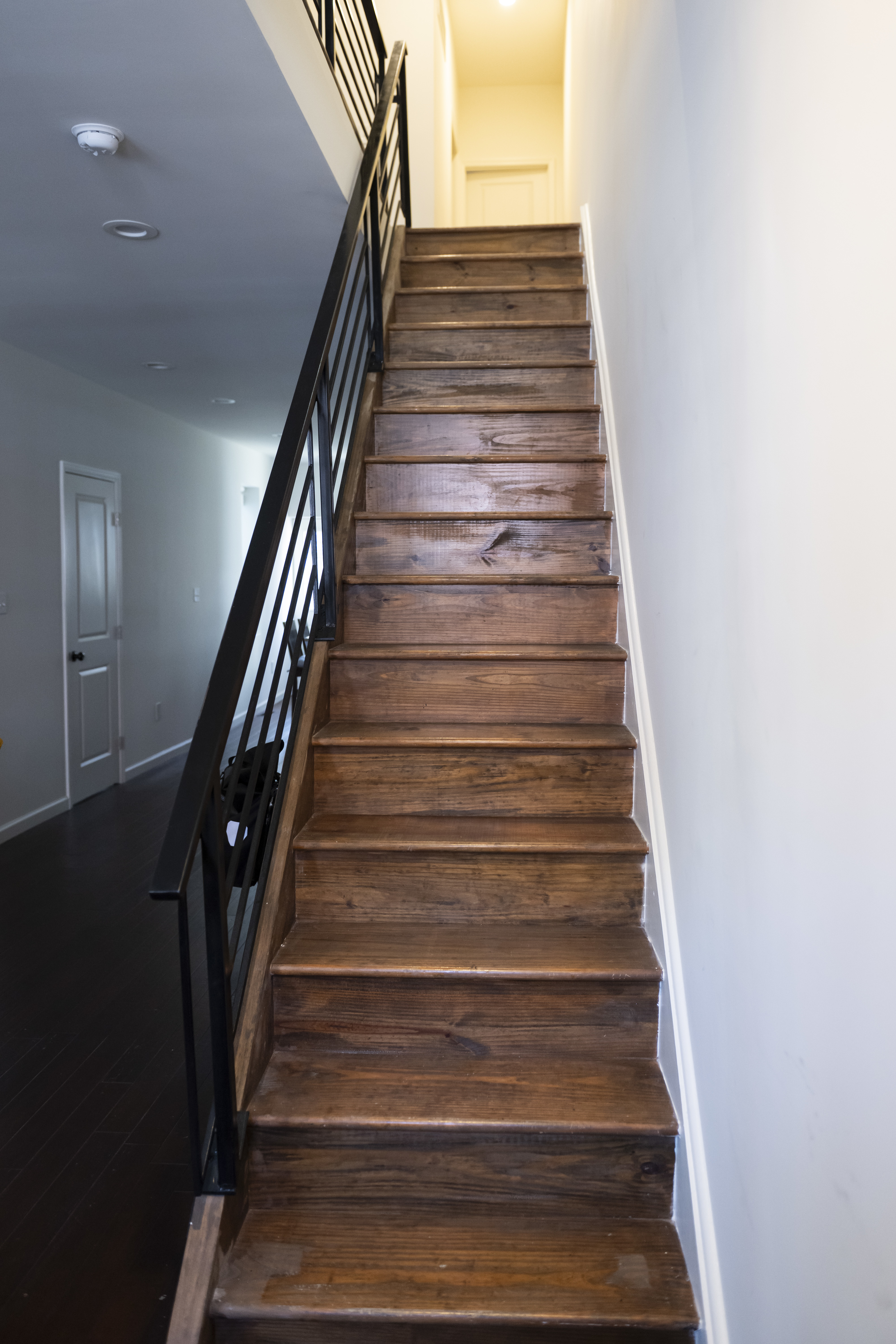
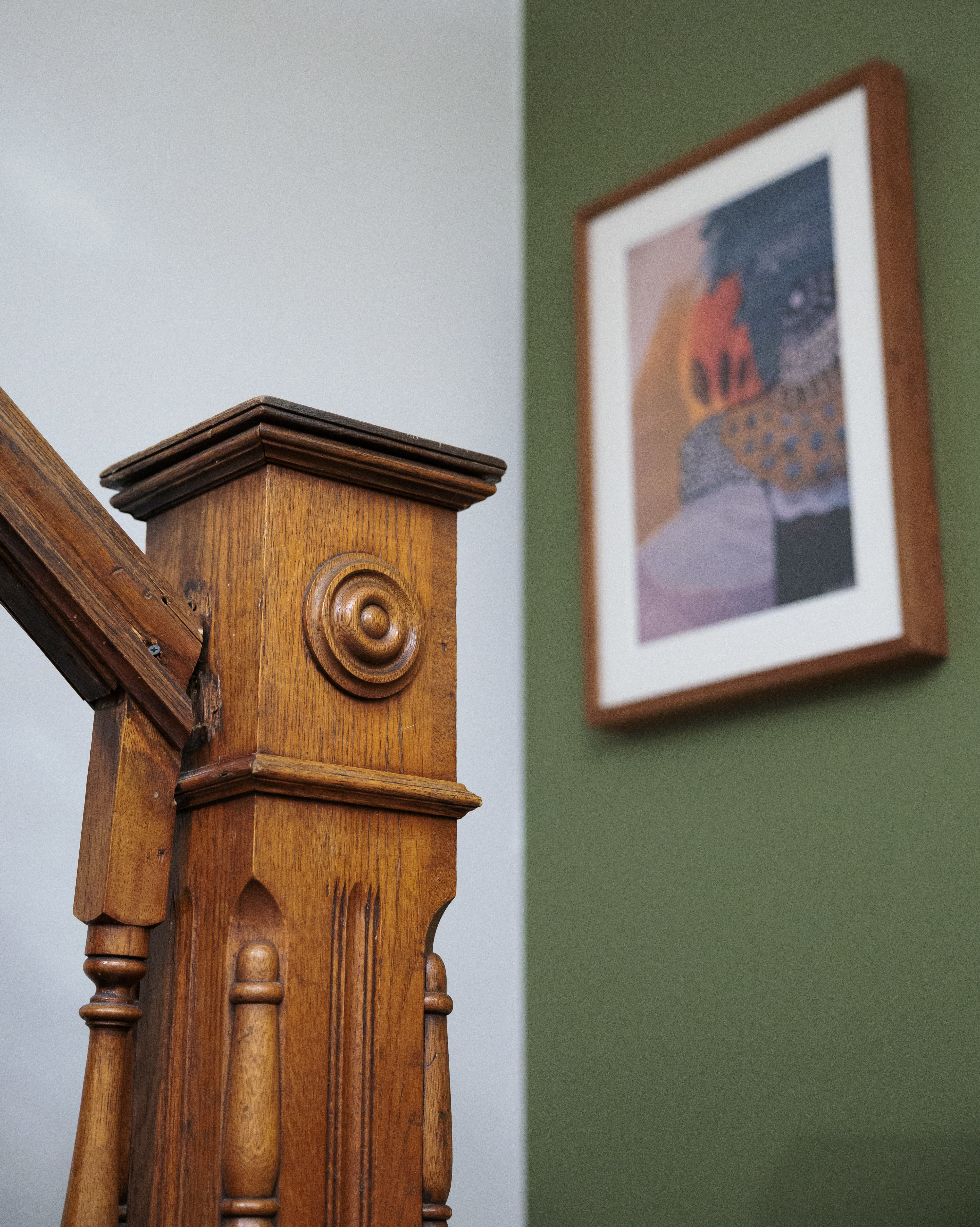
    The appeal: LaFreniere liked that the house had been updated in 2017. It has central air and heat and the “quality of the kitchen is fantastic,” he said. At the same time, it still has several of its original features, like the staircase. “It’s the best of both worlds,” said LaFreniere.

    The deal: On the afternoon LaFreniere visited, the seller had just dropped the price by $10,000. He decided he wanted it a few hours later and offered the new asking price of $340,000. There weren’t any competing offers, and the seller accepted.

    LaFreniere was concerned about the floors, which he described as “a little beat up,” and asked for money to replace them. The seller said no but agreed to cover $3,000 of whatever issues the inspection turned up.

    LaFreniere’s house features original details like the wooden staircase in the living room.

    The money: LaFreniere had $30,000 to spend on the purchase of his home. “I saved this from working in a tech career for the past six years,” he said. It wasn’t always easy. He had significant student loans to pay off as well. To help keep costs down, he lived with roommates.

    Of that $30,000, LaFreniere used $10,200 for a 3% down payment. Because he lived in an eligible census tract, he qualified for community reinvestment financing through OceanFirst’s HelpingHome loan, which allowed him to skip private mortgage insurance and lowered his interest rate from 7% to 6%. It also covered $6,000 of his closing costs.

    The move: LaFreniere didn’t want to lug a bunch of stuff to Philadelphia from Providence, so he donated most of his furniture and half his belongings to local charities and thrift stores. He didn’t hire movers or rent a car. He took the train instead. Come moving day, all he had was a suitcase full of clothes and his bicycle, which he brought with him on the Amtrak. He moved in on June 25.

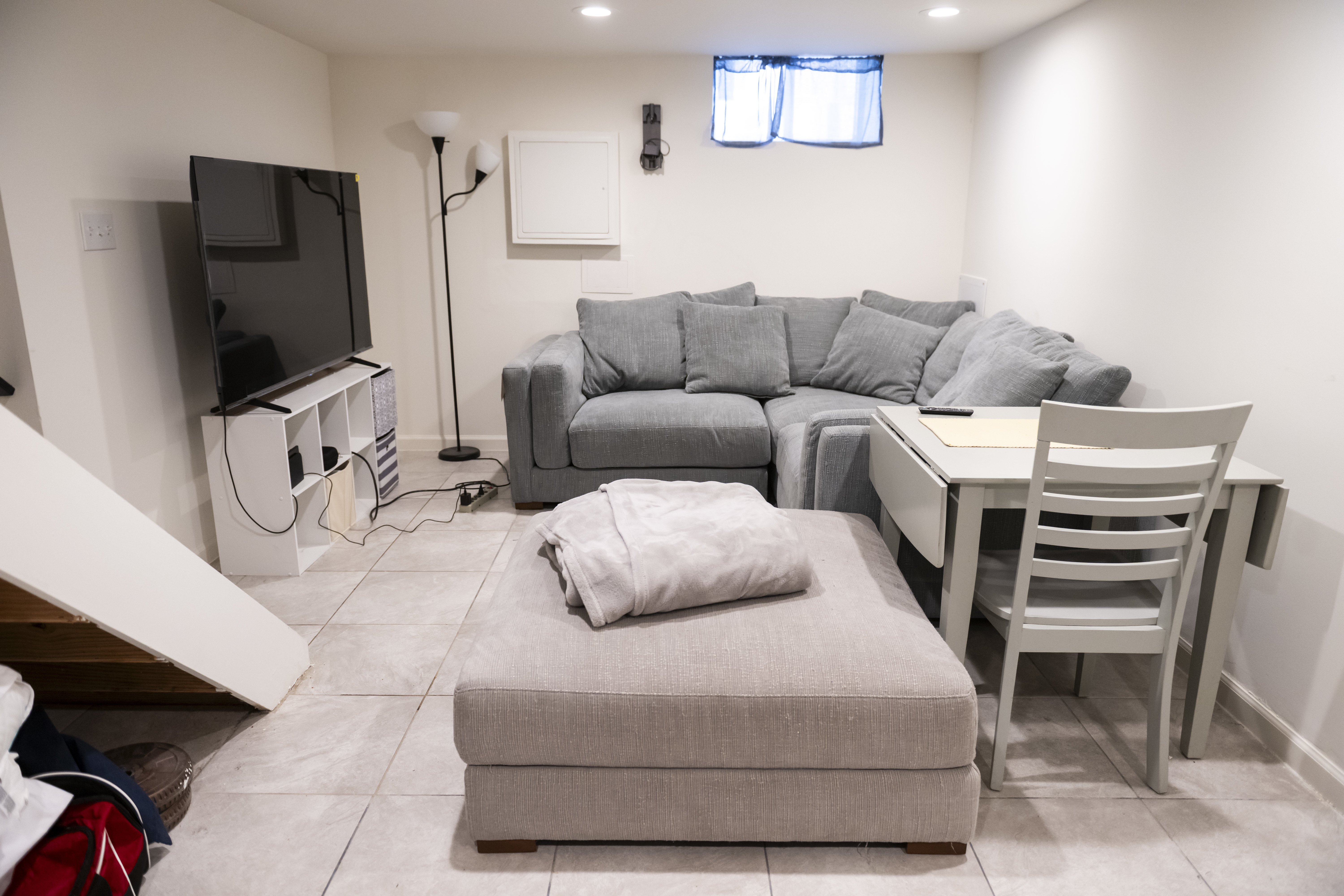
    The basement, also known as the “man cave” at Cameron LaFreniere’s home in Point Breeze.

    Any reservations? LaFreniere says he doesn’t have any regrets. “I knew what I was getting into,” he said. Certain parts of homeownership, like “how to do the trash,” were new to him but didn’t take long to figure out. The only thing he has had to contend with since moving in is cockroaches. But that was just once. “No recurrent pest problems,” he said.

    Life after move: LaFreniere spent the last of his savings, about $10,000, on furniture. “I basically moved with nothing,” he said, “and then bought everything at Ikea.” He thought about redoing the floors but decided against it. The rugs and furniture cover the imperfections.

    Did you recently buy a home? We want to hear about it. Email acovington@inquirer.com.

  • How to have a Perfect Philly Day, according to ‘Predator: Badlands’ director Dan Trachtenberg

    How to have a Perfect Philly Day, according to ‘Predator: Badlands’ director Dan Trachtenberg

    As a kid growing up in Philly’s northeast suburbs, filmmaker Dan Trachtenberg was obsessed with movies. In fact, he spent so much time at the local video store in Willow Grove Mall that the manager eventually hired him, even though he was only 15.

    “I wasn’t really allowed to work,” said Trachtenberg. “But because I frequented the store so much and would advise people on what movie they should get, they gave me a job.”

    After his shift, he’d often take the train to Market Street station and walk over to Chinatown where he would pick up a new Hong Kong action movie. He even learned Mandarin so he could speak to the woman at the pharmacy who rented Chinese movies on the side. He may have purchased a few bootlegs from the adult film store down the street, too.

    “Hong Kong action movies really ignited my fire for filmmaking,” said Trachtenberg. He has since transformed that passion into a successful career as a major Hollywood director. His most recent film, Predator: Badlands, hit theaters in November and earned rave reviews from audiences and critics alike.

    “I am thrilled to have made the kind of movie that I would have devoured as a kid growing up,” said Trachtenberg.

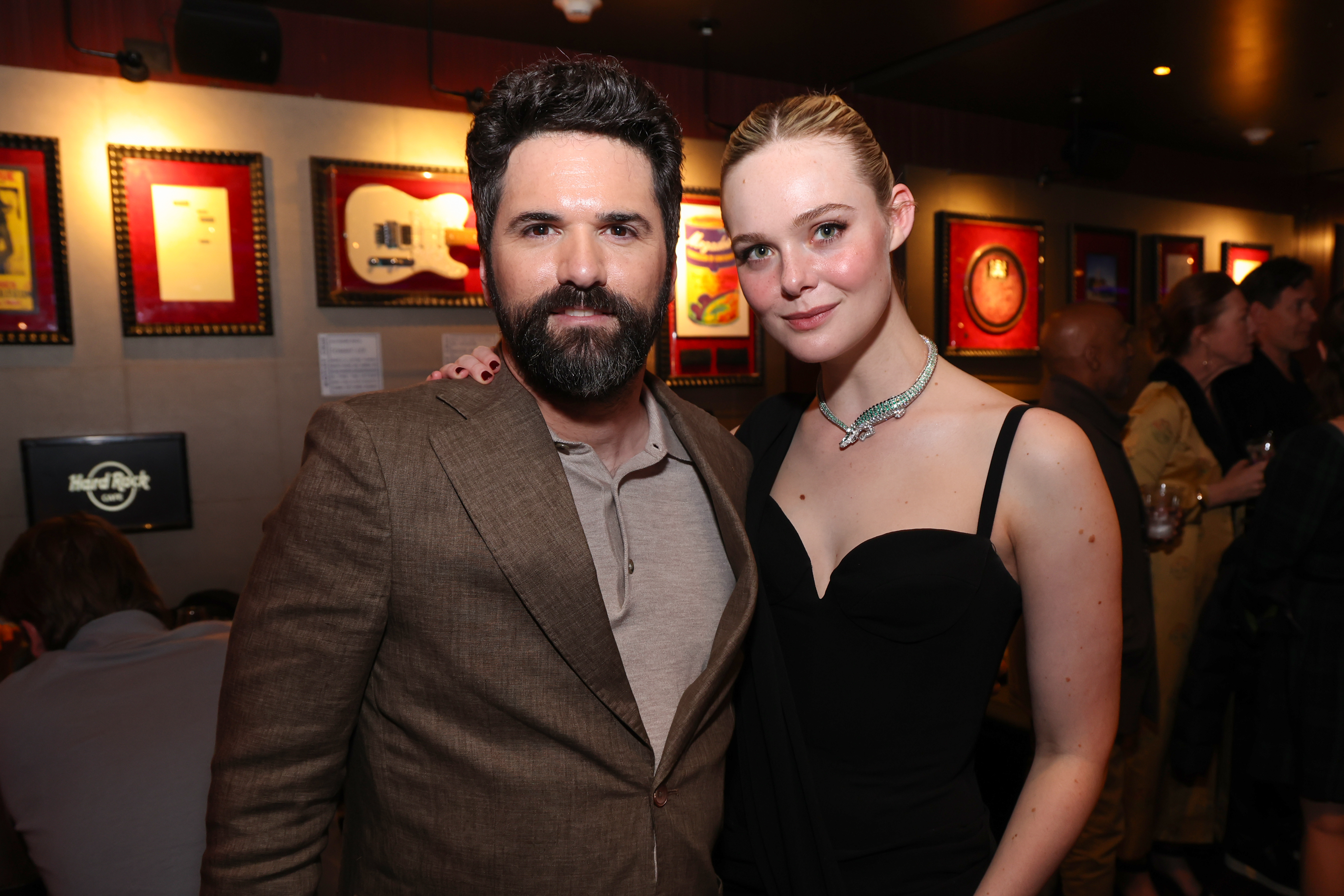
    Dan Trachtenberg and Elle Fanning attend the premiere after-party for “Predator: Badlands” at Hard Rock Cafe on Nov. 03, 2025, in Los Angeles.

    Here’s how Trachtenberg, who now lives in Los Angeles, would spend a perfect Philly day — or afternoon, rather — based on his time as a student at Temple University in the early aughts. His perfect day requires a bit of time travel.

    4 p.m.

    I spent so much time on South Street because I was really big into pop-punk and emo music. I would go to Tower Records where you could listen to music on the headsets. It was the only way to hear something before you bought it.

    [Editor’s note: Tower Records closed in 2006, unfortunately.]

    6 p.m.

    Then I would go to Jim’s and get a cheesesteak. Sometimes I would have two cheesesteaks in a row. I don’t know how I did it. Then I’d walk two blocks up and go to Lorenzo’s and get a slice of pizza. They have these giant slices, literally pizza the size of your chest, and it’s incredible.

    8 p.m.

    Two pretty treasured movie experiences were going to the Ritz and seeing movies that didn’t normally come to the movie theaters where I grew up in the suburbs. And then also going to the Riverview for a very interactive experience — people yelling, throwing popcorn, and getting fired up. There was no better crowd than seeing something at the Riverview.

    I saw a Jackie Chan movie called Jackie Chan’s First Strike. It’s the one that had this iconic ladder fight in it where he fought off a bunch of guys using a ladder. At the end of that sequence, I started clapping. I initiated the clap that became a standing ovation in the theater. No one was there to receive the standing ovation. All of us were so taken by what we had just experienced that we had to erupt in a standing ovation. That was a truly incredible moment.

    11 p.m.

    Late at night my friend and I would often go to Melrose Diner [Editor’s note: the diner was demolished in 2023]. It was a staple, but it was the most annoying diner because the way the seats were, they forced you to sit facing other people. They would cut a booth in half and seat three people on one side and three other people on the other side. We would get grilled cheese and mozzarella sticks and a bunch of marinara sauce and just dip it all. It was my favorite late-night food.

    I also loved going to Wawa. There was a meatball sub there that I devoured. When you leave Philly, you realize how ridiculous the word Wawa is. When you grow up with it, it’s just normal. You don’t think about it. But when you leave, you realize how silly you sound when you say it. No one believes you that it’s actually a store that really exists.

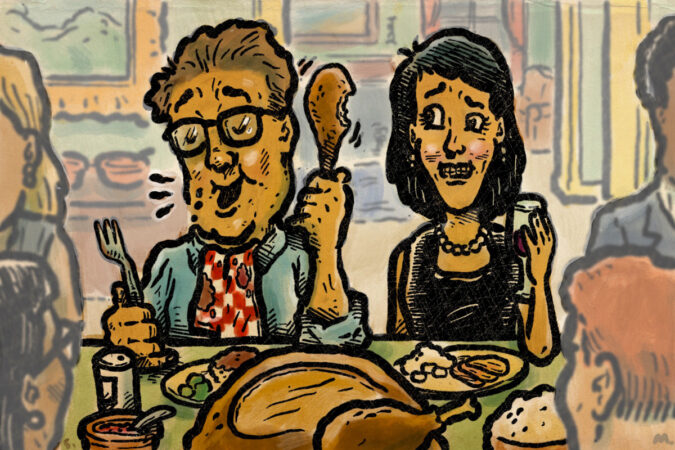
  • My sister brought her new boyfriend to Thanksgiving and asked if we like him. Should I tell the truth?

    My sister brought her new boyfriend to Thanksgiving and asked if we like him. Should I tell the truth?

    The holiday is over but that doesn’t mean the drama has ended. I’ve pulled in two Inquirer Features staffers to help answer the familial conundrum.

    Evan Weiss, Deputy Features Editor: Okay, the question is…

    My sister brought her new boyfriend to Thanksgiving and asked if we like him. Should I tell the truth? (Which is no.)

    Stephanie Farr, Staff Columnist: I think honesty is always the way to go, but when it comes to your loved one’s partners, you must tread carefully.

    I definitely think you shouldn’t say no flat-out, but you could turn it around and ask questions of her: How do you feel he did? What do you like about him? What did he think of us?

    Jason Nark, Life & Culture Reporter: This is a tough one because I’ve learned, after the fact, what people thought of partners. It would have been helpful to know their opinions ahead of time.

    Stephanie Farr: I definitely brought a stinker of a boyfriend to Thanksgiving once, and while I didn’t ask what my father’s opinion of him was, I didn’t have to. My dad didn’t say anything about the dude and I didn’t ask because I knew and he knew and he knew I knew. If he liked him, he would have said it, there would be no need to ask.

    Jason Nark: My mom has said “Would it have mattered?” It probably wouldn’t have. lol

    Stephanie Farr: And I think that’s exactly the point! When you’re in a relationship with someone that you don’t want to leave — for whatever reason, good or bad — very little anyone says is going to change your mind. And if it’s your family, well then you start to think they just don’t want your happiness or understand you.

    Jason Nark: I feel like there needs to be a devil’s advocate in life situations, the one relative who will get you the straight story. I would like to be that person but it’s hard.

    Stephanie Farr: DRUNK UNCLE FTW!

    Jason Nark: Yes, I’ll be the drunk uncle.

    Stephanie Farr: Haha! I got one, he’s great.

    Jason Nark: Then again, I would never want to be “I told you so” kind of person.

    I think, if my theoretical sister was looking for a life partner and was very serious, I would express my concerns if I saw red flags. What if the guy rooted for the Cowboys?

    But if it’s less serious, I’d probably hold back.

    Evan Weiss: You really don’t want to be in the situation where you disparage the person so heavily and then they end up marrying them and it’s awkward forever.

    Stephanie Farr: I think if you’re genuinely concerned about your sister’s partner, maybe pointing out specifics instead of disparaging the entire person is the way to go. For example: “I didn’t like that Brad didn’t say ‘Thank you’ to you for clearing his plate. Is he usually better about such things?” or “I noticed Brad spent the entire trip home watching football instead of hanging with the family. Was it us or is that how he usually is?”

    Sow the seeds of doubt, if warranted, but don’t pull out the entire weed because you don’t know how far his roots have grown.

    Jason Nark: Mostly, I’d want to see how he treats her in little moments. Does he ask her if she needs something? Does he laugh at her jokes? Is he family-oriented and not a curmudgeon?

    We’re reporters after all, we’re great observers.

    Evan Weiss: I think a big question for Thanksgiving specifically: Does he help out?

    If he isn’t cooking… does he clean?

    Stephanie Farr: 110%. I think that’s a big question when considering a life partner overall too, but if you want to impress someone’s family, offer to do chores! I can’t cook, but I wash all the dishes at my in-laws’ holiday gatherings (Bonus: It also gives me alone time. Shhhh!)

    Jason Nark: I guess my takeaway is this: If you express your concerns, do it gently, with grace, knowing your opinion could be ignored.

    Stephanie Farr: Yes, do it sneakily!

    Evan Weiss: And don’t get mad if things don’t go your way.

    Stephanie Farr: For sure, you have to be prepared to be the bad guy if you want to be brutally honest.

  • Her path to ‘having it all?’ Be gay and move to Philly, a Wharton economist says.

    Her path to ‘having it all?’ Be gay and move to Philly, a Wharton economist says.

    Corinne Low, a Wharton economist, didn’t have to search far for an example of how women’s familial and professional choices are shaped by an uneven playing field.

    In 2017, Low gave birth to her son while building a tenure-track career. Her life soon began to feel unmanageable. She was commuting up to six hours a day from Manhattan to Wharton while also taking care of the household tasks that kept her family functioning: groceries, laundry, cooking, childcare.

    The situation reached a crisis point when Low found herself pumping in an Amtrak bathroom while crying; she had been in transit for hours and realized she wouldn’t make it home to see her son before bed.

    Low, 41, was not a single parent. But her husband had recently left his job to start his own business, a choice that did not reduce his working hours, but did reduce his salary — to zero.

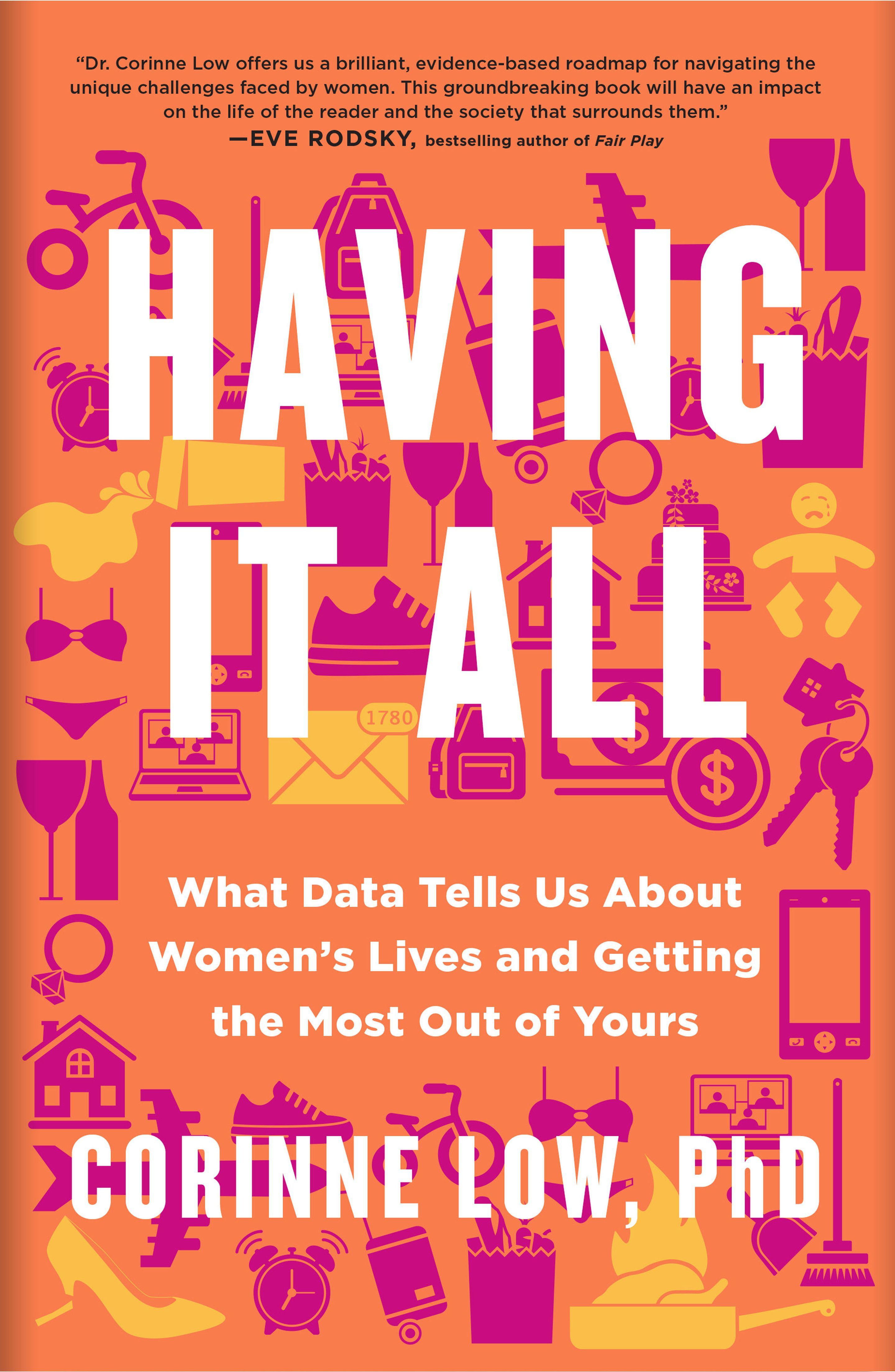
    Low’s personal story is the entry point to her new book, Having it All: What Data Tells Us About Women’s Lives and Getting The Most Out of Yours, part self-help manifesto and part economic tract.

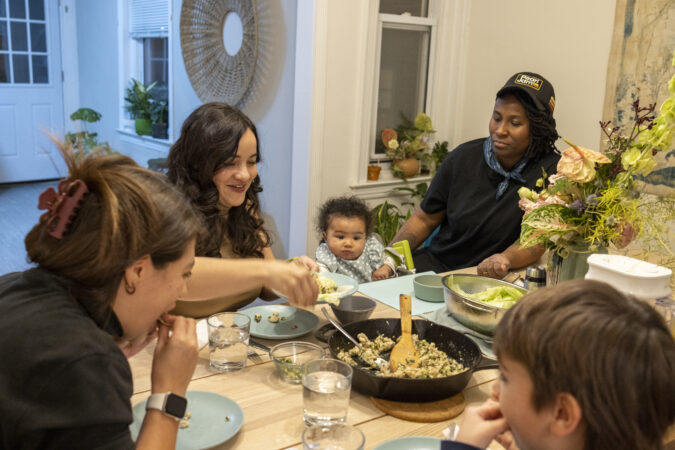
    Wharton professor Corinne Low (right) and her, wife Sondra Woodruff, spend time after dinner playing and reading with their kids.

    When Low examined her own life, she made two major changes that freed her time and altered her circumstances. First, she divorced her husband and decided to exclusively date women. (A summer article in the Cut about Low, headlined “This Economist Crunched the Numbers and Stopped Dating Men,” went viral.) She is now married to a woman.

    The less viral but equally meaningful shift was that she left New York City — and embraced Philly.

    “The underplayed hero of my story, of the changes that I made, was moving to Philadelphia,” she said recently in an interview. “That was actually the more important upgrade.”

    When she was living in Manhattan and struggling to keep up, friends had recommended that she hire a live-in au pair, which they said was a more affordable, less transactional form of childcare. But of course, like most New Yorkers, Low had no spare room.

    In Philadelphia, she was able to afford a bigger house with more space, which meant she could have an au pair. And her commute went from over two hours to seven minutes by bike, freeing her to build a life “filled with friends, community, time outdoors.”

    It all added up. In Philadelphia, Low writes, “I rediscovered myself. I found who I had been before I became a stressed-out, angry, rapidly aging person. I was fun! I was creative! I could relax.“ (She adds the disclaimer that she is “not advocating that everyone who reads this book should leave their marriage and move to a new city,” although, perhaps they should, assuming they move to the right city.)

    The book analyzes economic data to show women how to get a “better deal” for themselves.

    She wanted to show that the feeling many working women experience — of being under siege from all sides, unable to figure out how to gloriously “have it all” — was not some symptom of being hysterical, but was instead rooted in data.

    “I want people to figure out how to claw back some of their time from these structural forces that are squeezing us,” Low said. “Knowing the data, it gives you permission to make some of those choices.”

    She found that even in families where women were the primary breadwinners, they still overwhelmingly had to put in a “second shift” at home. Some statistics in the book are startling: For example, men who earn only 20% of the household income in a heterosexual family do the same amount of housework as those who earn 80% of the family’s income, which Low found by analyzing the American Time Use Survey, a massive dataset of how individuals spend their time.

    That means even when a woman earns more than twice what her partner earns, she also does twice as much cooking and cleaning.

    “That bothers me, because it’s inefficient,” Low said. “Because you’re using the ‘more expensive’ person’s time on these home production tasks.”

    In the book, Low aims to advise women on how to get a “better deal” for themselves, by employing the stark logic of her field.

    She writes about how women might improve their “personal utility function,” which she describes as a “personal video game score at the end of your life,” grounded in one’s priorities and values. She urges women to think about dating as a job interview for a co-executive in a multipronged, multiyear enterprise, and to think of a job as a “technology for converting time into money.”

    She also encourages readers to throw away their houseplants if they are not increasing personal utility function.

    “You need to be ruthless in protecting your time from things that are not investments in your future and do not bring you joy,” she writes.

    Corinne Low and her wife, Sondra Woodruff pictured here with their kids at Clark Park. ,

    One of her most interesting arguments is that women today effectively “hire themselves” for too many jobs within the home. It has become normalized to outsource “male-coded” tasks, like changing a car’s oil or fixing an electrical outlet, by hiring a specialist to do it, Low said.

    But women have not updated their mindsets about the market value of their time, and so there remains stigma to outsourcing “female-coded” tasks, like laundry, cooking, or home childcare.

    Low sees Having It All as a rejoinder to Sheryl Sandberg’s Lean In: While “leaning in is doing more of what’s not working,” as Low put it, she wants readers of her book to “level up” by removing whatever constraints they’re able to.

    Of course, many of the problems facing working women remain systemic, and she writes in the book’s afterword about the necessity of societal changes, including parental leave underwritten by the federal government and creative thinking by employers about how to allow female employees to meet both their professional and domestic obligations during peak child-rearing eras.

    After a book tour, Low is now back in Philly with her two young children and her wife and still reveling in the charms of her city.

    “When I was busy and on book tour,” she said, “neighbors walked my son to school.”

    Readers told Low that they are making changes to their personal lives based on the book. No one has told her they’re moving to Philadelphia — yet.

  • 275 miles to Buc-ee’s

    275 miles to Buc-ee’s

    Thanksgiving is always the busiest travel time of the year and as always, the AAA has come up with their annual projection: this year a record 81.8 million Americans will be going somewhere, at least 50 miles from home.

    6 million people will get there by plane, train, bus, or cruise, but nearly 73 million will travel by car, representing almost 90% of all holiday travelers.

    I will not be among them. I get a lot of photo enjoyment out of road trips, but holiday travel is not the seeing-the-USA-in-your-Chevrolet or getting-your-kicks-on-Route-66 kind.

    While my newspaper print column has been around since 1998, this online version actually started during the summer of 2007 with three or four posts every week (back then it was called blogging) as I traveled the region’s roadways with my camera, bent upon discovery.

    After 9/11, like most Americans, I looked at my country in a new way. Inspired by the 200th anniversary of the Lewis and Clark expedition, I set out to retrace their 3,700 mile journey, known as the Corps of Discovery, on my own epic cross-country road trip across America.

    Since then I have made lots of more local road trips. I sought out retro kitschy giant roadside Muffler Men‚ wandered New Jersey’s Pine Barrens, and Pennsylvania’s political T-zone during the 2020 election.

    And one of my favorites: visiting all 10 of the New Jersey joints and restaurants featured in a 2015 episode of CNN’s Parts Unknown, by the late Anthony Bourdain, a chef, author, TV personality — and a Jersey Boy from Bergen County.

    Speaking of food and other roadside attractions, this is on my maybe to-do road trip list this winter:

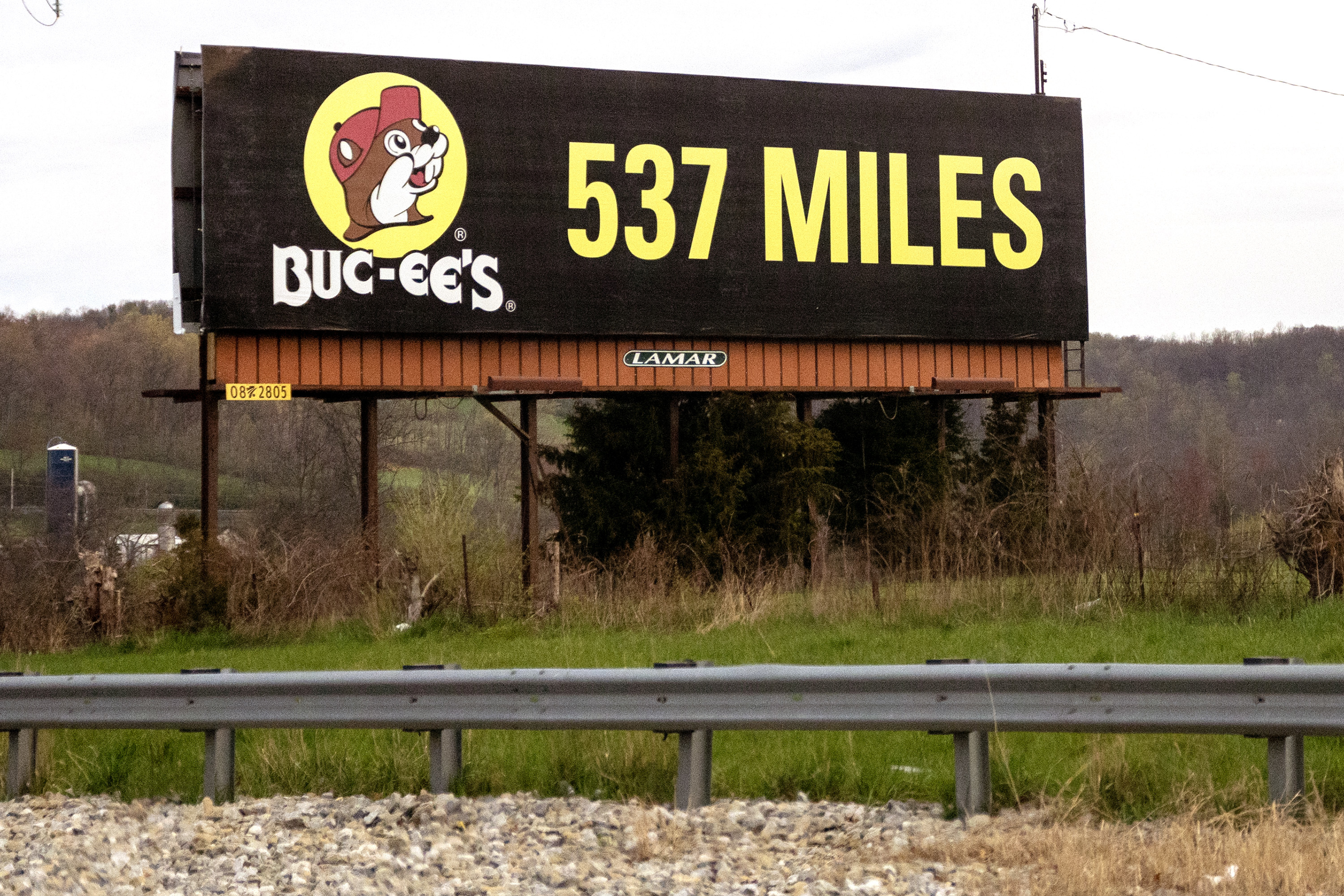
    I photographed that Buc-ee’s sign near mile marker 291 on the westbound Pennsylvania Turnpike earlier this year, near the Bowmansville Service Plaza, back when the closest outpost of the Texas-based travel center described as a “theme park on the highway” was the one off I-95 in Florence, South Carolina.

    My daughter has been sending me social media food videos (mostly by international visitors) and even bought me a mug, but I have never been to any of the chain’s 51 locations across 11 states or experienced their extensive gas stations, “world-famous” restrooms or Beaver Nuggets.

    A new one opened in Virginia this past summer, off I-81, two hours southwest of Washington, D.C. — only 275 miles from Philadelphia’s City Hall.

    So, readers, let me ask you. Is it worth a trip? Let me know here.

    Or do I just stick with getting my highway food-fix at Wawa, Sheetz, Royal Farms, Turkey Hill, QuickChek, or Circle K?

    Since 1998 a black-and-white photo has appeared every Monday in staff photographer Tom Gralish’s “Scene Through the Lens” photo column in the print editions of The Inquirer’s local news section. Here are the most recent, in color:

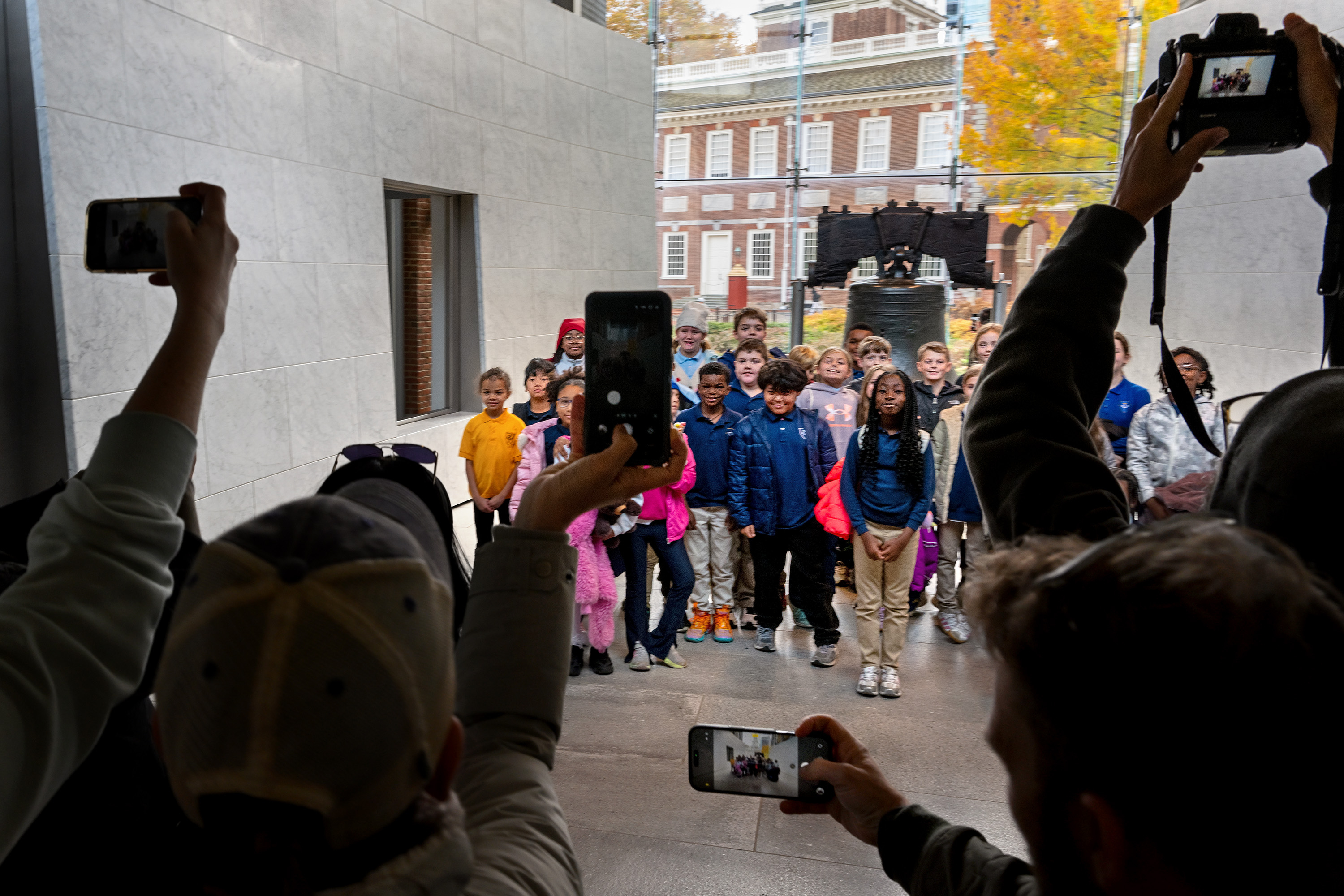
    November 17, 2025: Students on a field trip from the Christian Academy in Brookhaven, Delaware County, pose for a group photo in front of the Liberty Bell in Independence National Historical Park on Thursday. The trip was planned weeks earlier, before they knew it would be on the day park buildings were reopening after the government shutdown ended. “We got so lucky,” a teacher said. Then corrected herself. “It’s because we prayed for it.”
    November 8, 2025: Multitasking during the Festival de Día de Muertos – Day of the Dead – in South Philadelphia.
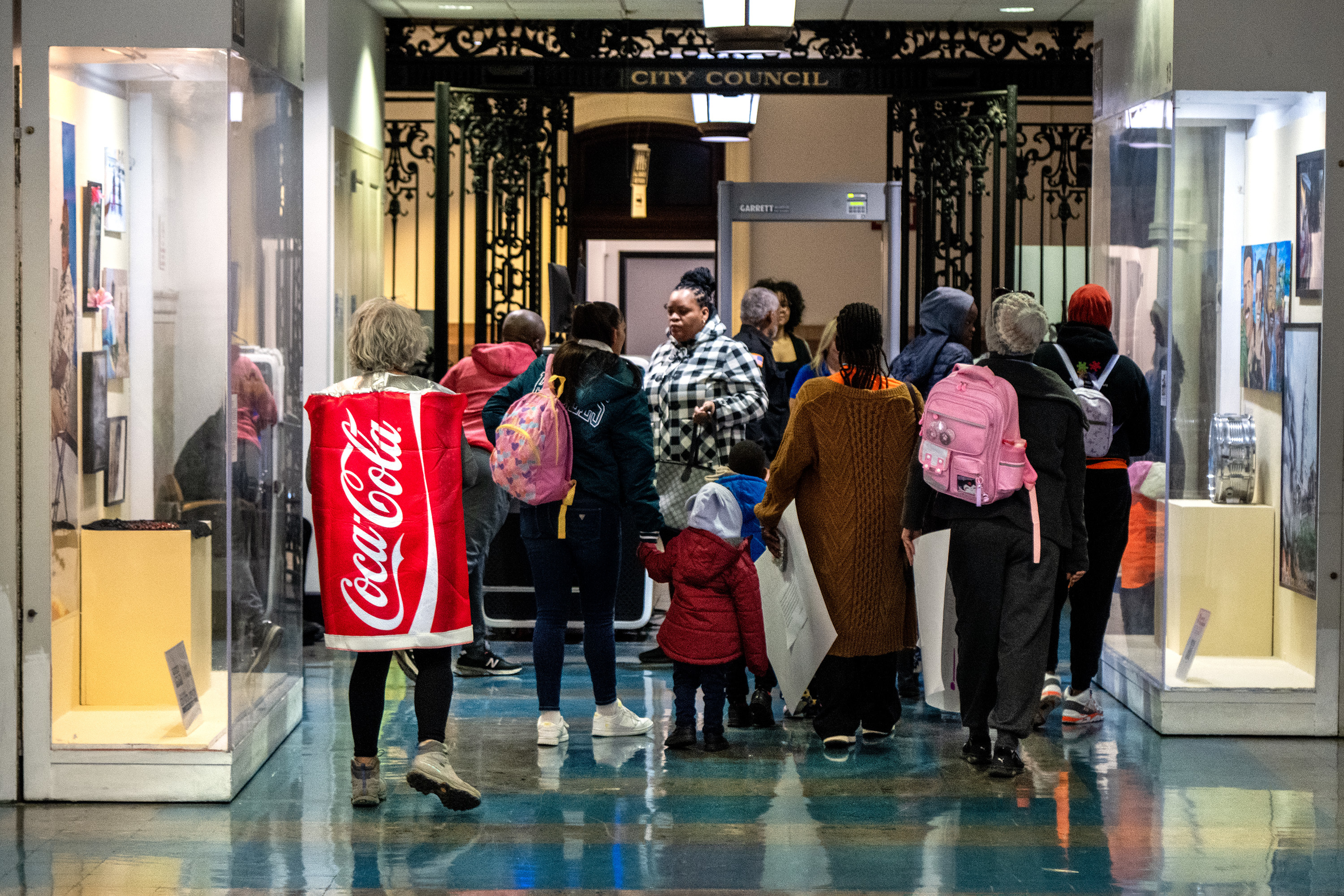
    November 1, 2025: Marcy Boroff is at City Hall dressed as a Coke can, along with preschoolers and their caregivers, in support of former Mayor Jim Kenney’s 2017 tax on sweetened beverages. City Council is considering repealing the tax, which funds the city’s pre-K programs.
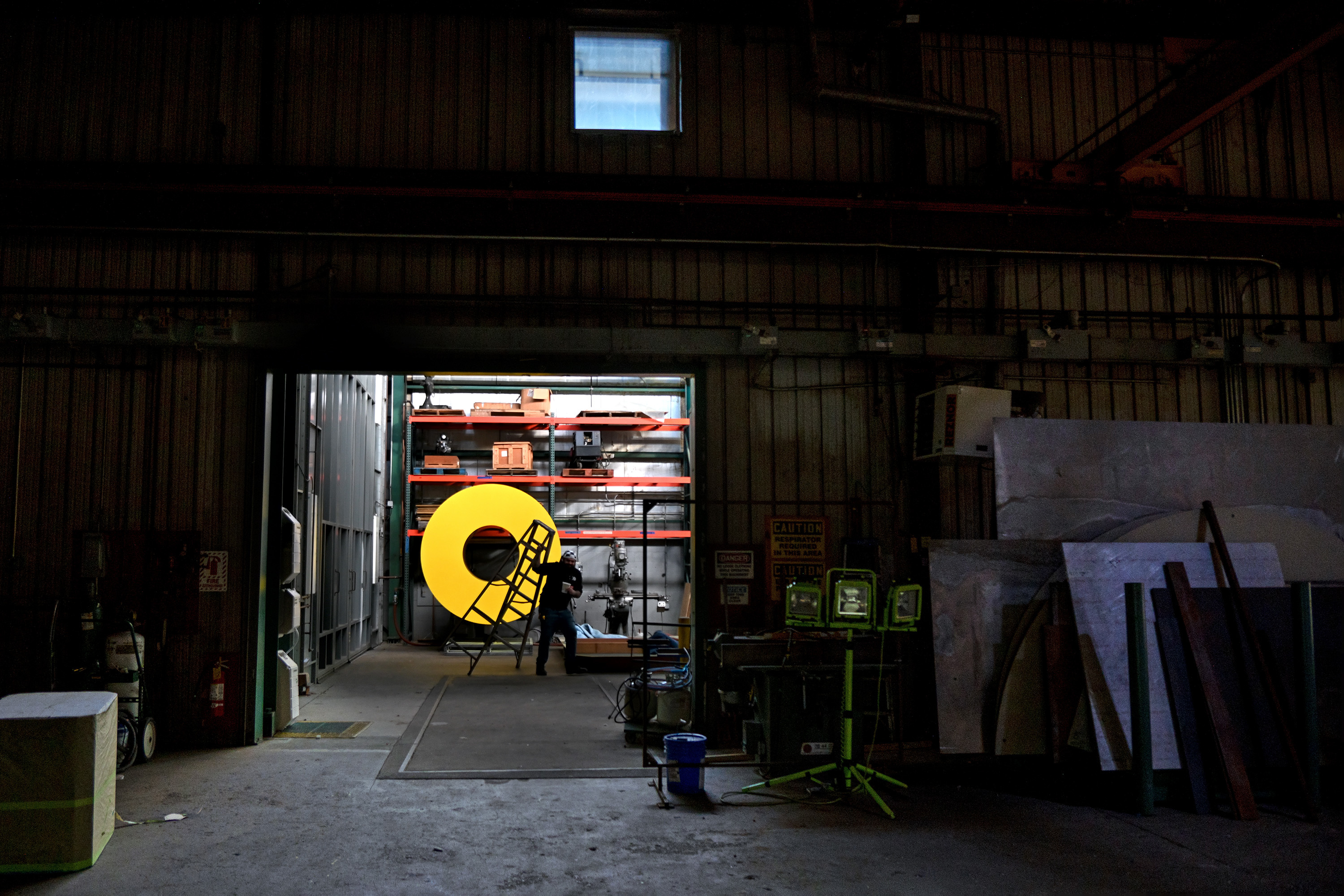
    October 25, 2025: Austin Gabauer, paint and production assistant at the Johnson Atelier, in Hamilton Twp, N.J. as the finished “O” letter awaits the return to Philadelphia. The “Y” part of the OY/YO sculpture is inside the painting booth. The well-known sculpture outside the Weitzman National Museum of American Jewish History was removed in May while construction continues on Market Street and has been undergoing refurbishment at the Atelier at the Grounds for Sculpture outside of Trenton.
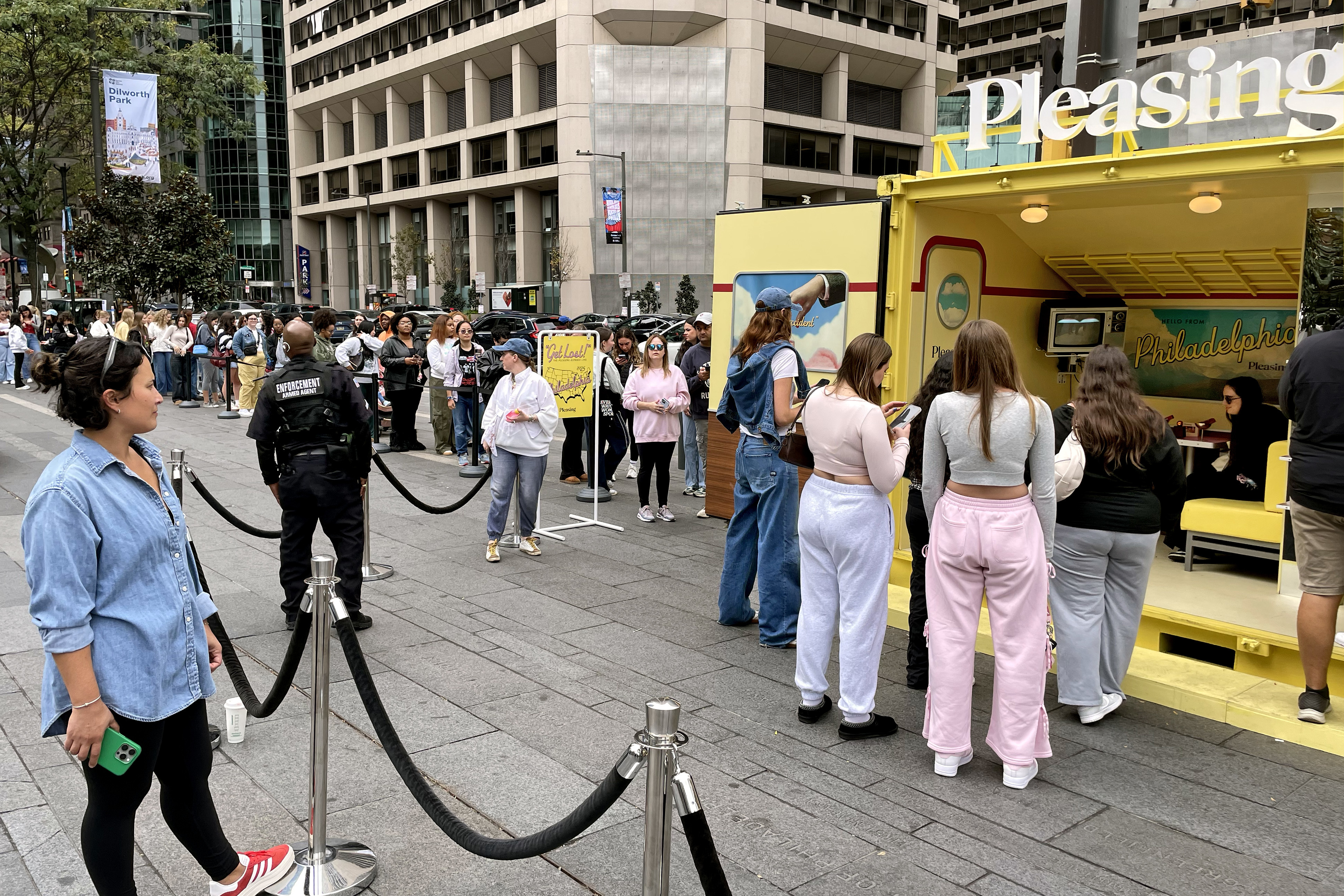
    October 20, 2025:The yellow shipping container next to City Hall attracted a line of over 300 people that stretched around a corner of Dilworth Park. Bystanders wondered as they watched devotees reaching the front take their selfies inside a retro Philly diner-esque booth tableau. Followers on social media had been invited to “Climb on to immerse yourself in the worlds of Pleasing Fragrance, Big Lip, and exclusive treasures,” including a spin of the “Freebie Wheel,” for products of the unisex lifestyle brand Pleasing, created by former One Direction singer Harry Styles.
    October 11, 2025: Can you find the Phillie Phanatic, as he leaves a “Rally for Red October Bus Tour” stop in downtown Westmont, N.J. just before the start of the NLDS? There’s always next year and he’ll be back. The 2026 Spring Training schedule has yet to be announced by Major League Baseball, but Phillies pitchers and catchers generally first report to Clearwater, Florida in mid-February.
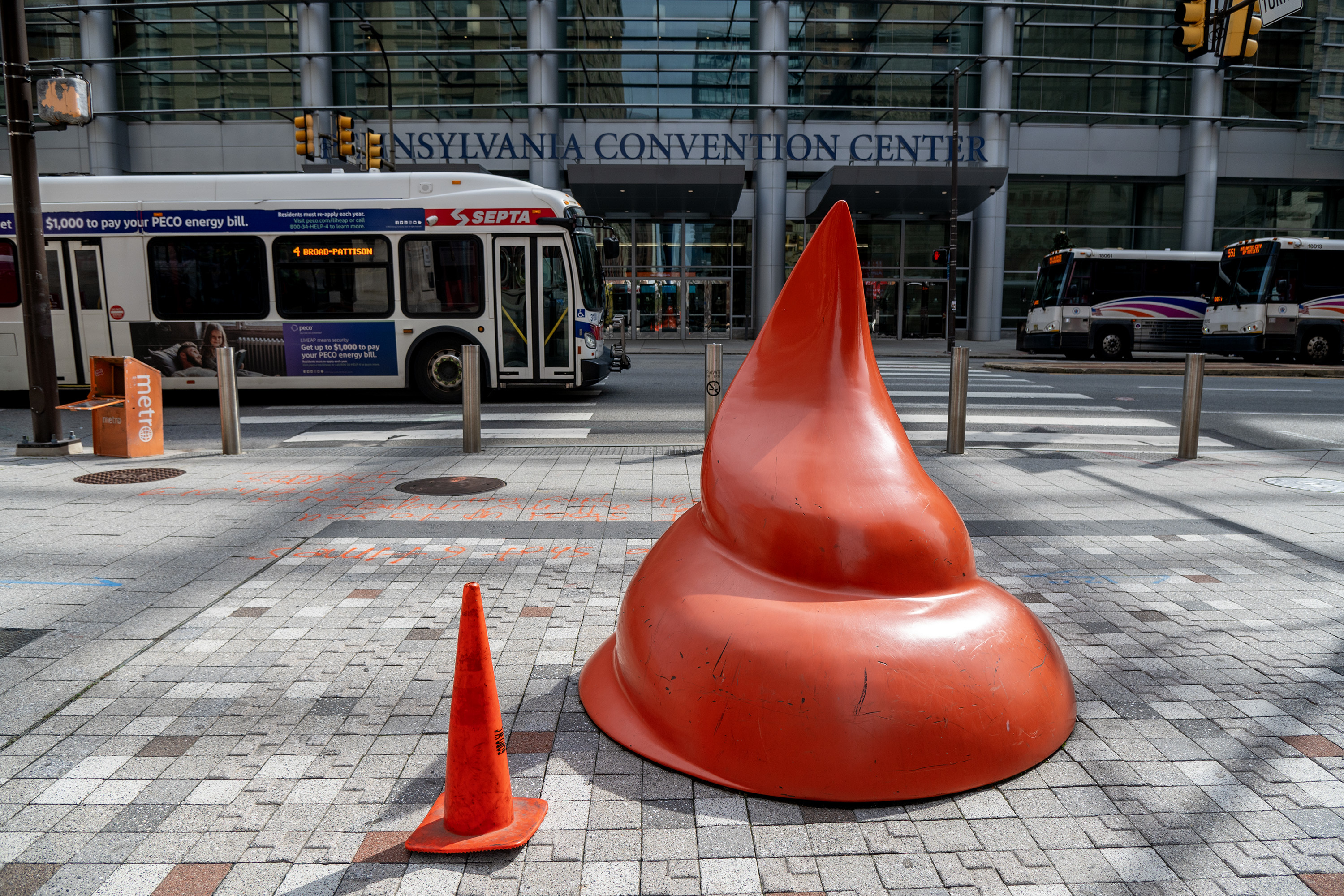
    October 6. 2025: Fluorescent orange safety cone, 28 in, Poly Ethylene. Right: Paint Torch (detail) Claes Oldenburg, 2011, Steel, Fiberglass Reinforced Plastic, Gelcoat and Polyurethane. (Gob of paint, 6 ft. Main sculpture, 51 ft.). Lenfest Plaza at the Pennsylvania Academy of the Fine Arts on North Broad Street, across from the Convention Center.
    September 29, 2025: A concerned resident who follows Bucks County politics, Kevin Puls records the scene before a campaign rally for State Treasurer Stacy Garrity, the GOP candidate for governor. His T-shirt is “personal clickbait” with a url to direct people to the website for The Travis Manion Foundation created to empower veterans and families of fallen heroes. The image on the shirts is of Greg Stocker, one of the hosts of Kayal and Company, “A fun and entertaining conservative spin on Politics, News, and Sports,” mornings on Talk Radio 1210 WPHT.
    September 22, 2025: A shadow is cast by “The Cock’s Comb,” created by Alexander “Sandy” Calder in 1960, is the first work seen by visitors arriving at Calder Gardens, the new sanctuary on the Ben Franklin Parkway. The indoor and outdoor spaces feature the mobiles, stabiles, and paintings of Calder, who was born in Philadelphia in 1898, the third generation of the family’s artistic legacy in the city.
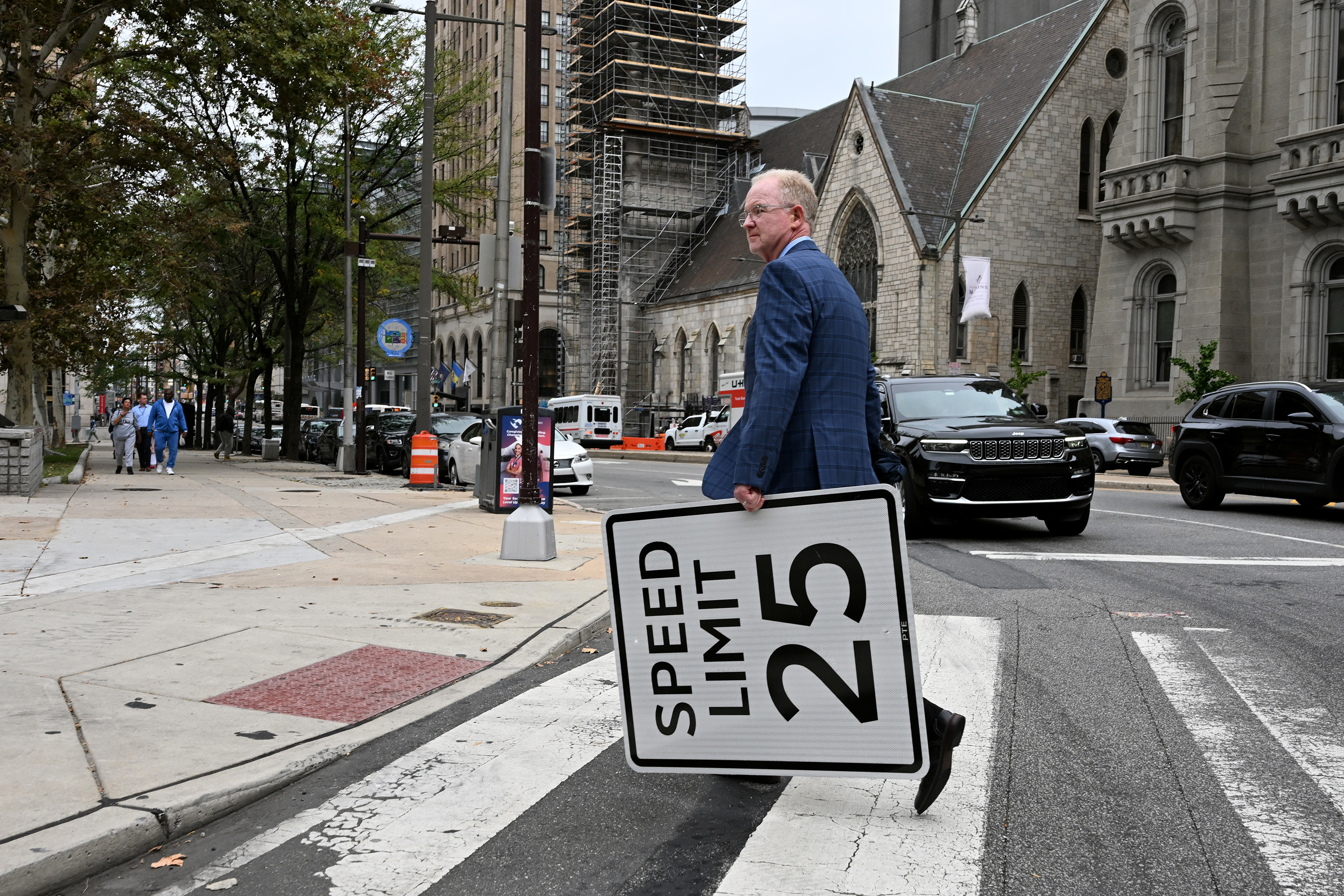
    September 15, 2025: Department of Streets Director of Operations Thomas Buck leaves City Hall following a news conference marking the activation of Automated Speed Enforcement (ASE) cameras on the Broad Street corridor – one the city’s busiest and most dangerous roads. The speed limit on the street, also named PA Route 611, is 25 mph.
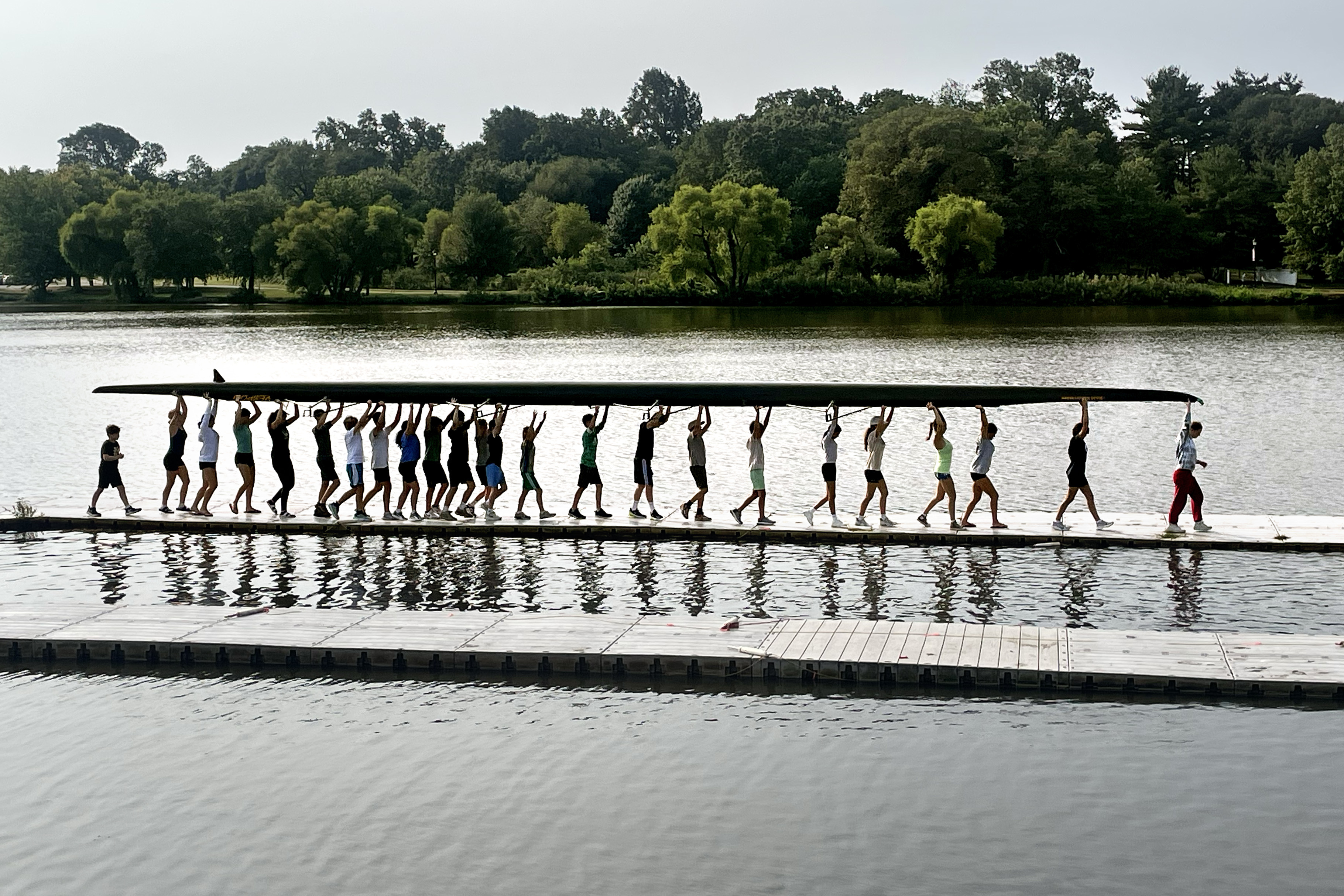
    September 8, 2025: Middle schoolers carry a boat to the water during their first outing in a learn-to-row program with the Cooper Junior Rowing Club, at the Camden County Boathouse on the Cooper River in Pennsauken.
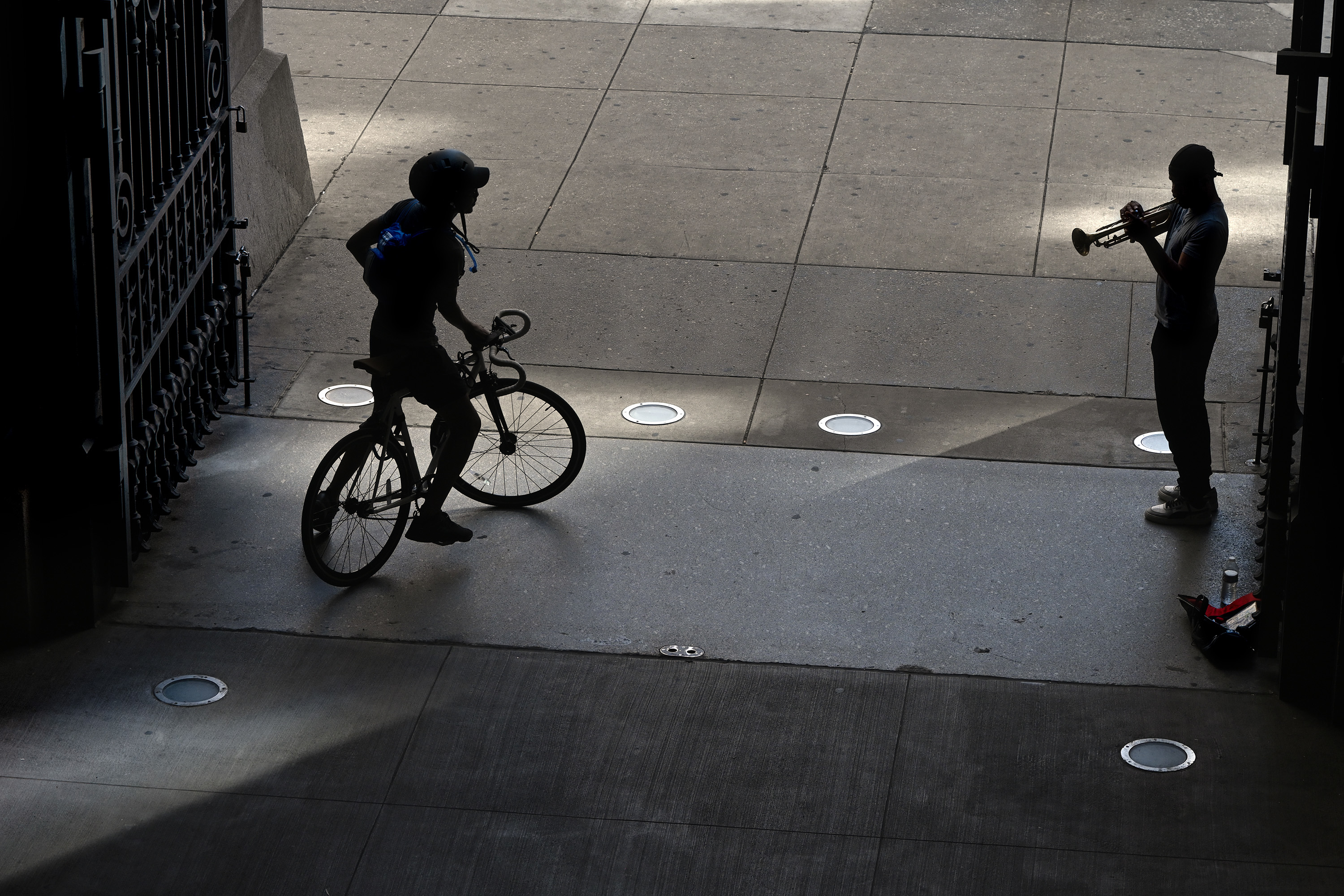
    September 1, 2025: Trumpet player Rome Leone busks at City Hall’s Easr Portal. The Philadelphia native plays many instruments, including violin and piano, which he started playing when he was 3 years old. He tells those who stop to talk that his grandfather played with Billie Holiday, Duke Ellington, Nina Simone, and Dizzy Gillespie.
    August 25, 2025: Bicycling along on East Market Street.
    August 18, 2025: Just passing through Center City; another extraterrestrial among us.
    August 11, 2025: Chris Brown stows away Tongue, the mascot for a new hard iced tea brand, after wearing the lemon costume on a marketing stroll through the Historic District. Trenton-based Crooked Tea is a zero-sugar alcoholic tea brand founded by the creator of Bai, the antioxidant-infused coconut-flavored water, and launched in April with former Eagles defensive end Brandon Graham as a partner.
    August 4,2025: Shanna Chandler and her daughters figure out their plans for a morning spent in Independence National Historical Park on the map in the Independence Visitor Center. The women (from left) Lora, 20; Shanna; Lenna, 17; and Indigo, 29, were stopping on their way home to Richmond, Virginia after vacationing in Maine. The last time they were all in Philadelphia Shanna was pregnant with Lenna.

    » SEE MORE: Archived columns and Twenty years of a photo column.

  • They wanted to buy their friend’s place. They ended up with an East Falls rowhouse instead. | How I Bought This House

    They wanted to buy their friend’s place. They ended up with an East Falls rowhouse instead. | How I Bought This House

    The buyers: Jessica Lubniewski, 41, museum educator; David Jacobs, 40, electrical engineer

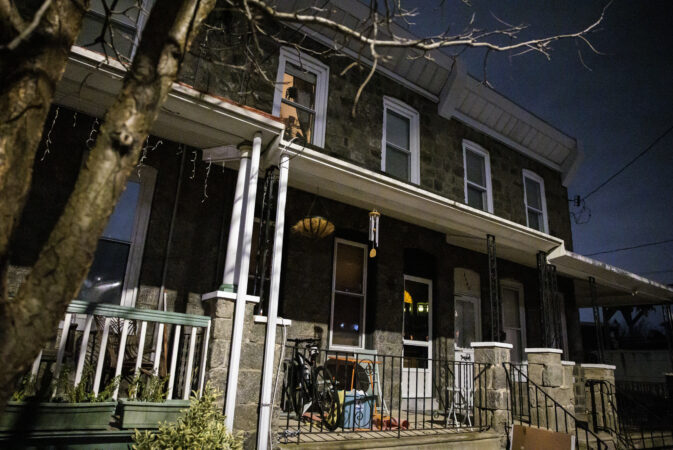
    The house: A 1,300-square-foot rowhouse in East Falls with 3 bedrooms and 1½ baths, built in 1930.

    The price: listed for $325,000; purchased for $327,500

    The agent: Benjamin Camp, Elfant Wissahickon

    The ask: Jessica Lubniewski and David Jacobs didn’t want to buy just any house; they wanted to buy their friend’s house. But when the friend didn’t accept their offer, they had to pivot.

    The couple started looking for houses that cost less than $375,000 in East Falls. They wanted at least three bedrooms, a bathroom on the first floor, and a dining room that was big enough to entertain. “That was a really big thing for me,” said Lubniewski. They also wanted character and original details — not a recently flipped property.

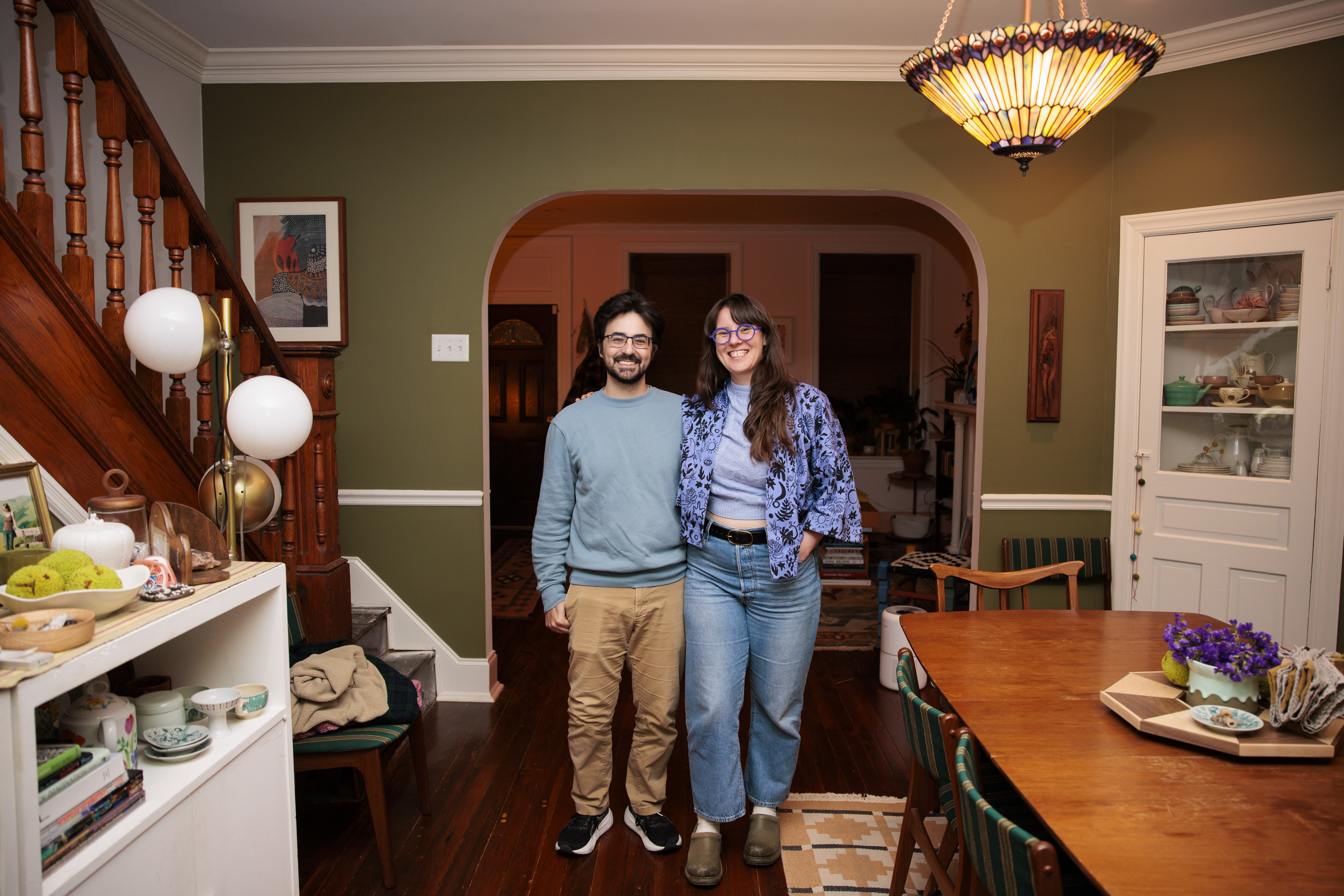
    Lubniewski and Jacobs in their dining room that is big enough to entertain.

    The search: The couple went to a few open houses and spent their evenings browsing Zillow listings, where Lubniewski spied a preview listing for a house that wouldn’t be on the market for a few weeks. “I just kept looking at it and being like, ‘Man, that house looks so cool,’” said Lubniewski. “It was right around the corner from where we were renting our apartment and had all the things we were looking for.” Lubniewski and Jacobs told their agent they wanted to see the house and he worked to get them “the first viewing on the first day that it was on the market,” said Jacobs.

    The appeal: The couple loved the look of the first floor, which includes two fireplaces. “Neither of them are working,” said Lubniewski, but the mantles are “so beautiful.” The one in the living room has its original facade.

    The arched doorways in between the living room and the dining room and the dining room and the kitchen give “a nice look,” said Lubniewski. Jacobs appreciates the house’s central air system.

    Arched doorways separate the living room from the dining room and the dining room from the kitchen

    The deal: A few hours after visiting the home, the couple put in an offer. Their agent suggested they bid a few thousand dollars over the asking price, so they offered $2,500 more for a total of $327,500. Lubniewski thinks they may have been the only people to see the house.

    The seller accepted their offer and after the inspection, agreed to cover $5,000 of the closing costs. He also threw in the patio furniture and the grill. In exchange, the couple did a 30-day closing.

    “It all happened pretty smoothly and pretty quickly,” said Lubniewski.

    One of the couple’s favorite aspects of the house were the two original fireplace mantels in the living room and the dining room.

    The money: The couple had $90,000 to spend on their home. That included $40,000 of personal savings.

    “We don’t have any kids. We don’t have a lot of expenses,” said Lubniewski regarding how they were able to save. And after Jacobs got his current job as an electrical engineer, they were “able to save a lot quite easily,” she added, a first for both of them.

    They also got $40,000 from Jacobs’ parents, and additional money they inherited from relatives who died earlier in the year.

    They tried to pursue a first-time homebuyer’s mortgage but were about $500 over the income limit, Lubniewski said, so they got a 30-year-mortgage with a 6.45% interest rate instead. They put 20% down, about $65,000.

    The move: Lubniewski and Jacobs made a few changes to the house before they moved in, including ripping out the carpeting upstairs. “It was horrible work, so gross,” said Lubniewski. They hired someone to redo the floors and buff the original hardwood downstairs. They officially moved in at the end of July, said Lubniewski, “on what felt like the hottest day of the summer.”

    Original details, like the woodworking on the staircase banister, was important to Jacobs and Lubniewski.

    Any reservations? Jacobs wishes they had time to replace the old electrical wiring they discovered after they moved in. “In the basement the electrical all looked really good, and the inspector didn’t flag anything.” But when they tried to replace a light fixture in the dining room, they encountered old, fabric-wrapped wire, an outdated type of electrical wiring that exists in many old homes. They think there may be more, but they don’t want to bust through the walls right now to find out.

    Life after close: Since moving in, Jacobs and Lubniewski have been busy getting to know their neighbors. In fact, a woman who grew up in the house stopped by on Halloween and asked to peek inside. “She was really excited,” said Lubniewski. She even had her son take a photo in front of the fireplace mantel, the same spot her mother took a photo of her on Halloween in the ‘70s. “It’s always so interesting to know what has changed,” Lubniewski said. Or in the case of the fireplace mantel, what hasn’t.

    Did you recently buy a home? We want to hear about it. Email acovington@inquirer.com.

  • How the Eagles are helping this ‘childhood cancer warrior’ show other kids they’re not fighting alone

    How the Eagles are helping this ‘childhood cancer warrior’ show other kids they’re not fighting alone

    Standing alongside his parents and his six siblings, Caleb Quick posed for a photo with Brandon Graham and Milton Williams, wearing a gray shirt that stated, “I kicked cancer’s butt.” After the photo, Caleb untangled the yellow wristbands in his right hand and handed them to both players. The bracelets read: For Childhood Cancer Warriors.

    “People see football players as heroes,” Caleb said. “So, when the kids look at them they’ll see their heroes wearing the bands to support them.”

    When speaking with Caleb, you learn he loves the typical 10-year-old hobbies. He loves to play board games, he loves riding roller coasters, and he loves football. But if you ask him more about himself, you’ll also learn it’s his mission to raise awareness for pediatric cancer after he was diagnosed with leukemia at just 5 years old.

    Caleb Quick and his family have made it their mission to battle pediatric cancer after he was diagnosed with leukemia at 5 years old.

    The Quick family isn’t your typical family. In fact, they’re quite hard to miss. Naomi and her husband, John, are raising seven kids all under the age of 17. Their youngest is Hannah, who is 6 years old, then it’s Caleb, 10; Noah, 12; Grace, 13; James, 14; John Daniel, 15; and their oldest daughter, Chara, 16.

    The Delaware natives have already combined their mission to raise awareness for pediatric cancer with their love for roller coasters, riding more than 100 of them from Minnesota to Tennessee.

    “Our family just kind of draws attention,” Naomi said. “So people kind of look anyway so we use that to our advantage. We would wear foundation T-shirts to the different parks to raise awareness for the different foundations that help childhood cancer. It was raising awareness in this really fun way that didn’t leave people sad. Instead it was more hopeful.”

    Some of these foundations included: B+ Foundation, the Landon Vargas Foundation, Live Like Lucas, Project Outrun, and Kisses for Kyle. Caleb’s Give Kids the World passport, which grants families free access to parks around the country, made this mission possible.

    “Childhood cancer is like a roller coaster that no one wants to get on,” Naomi said. “It is full of ups and downs and it makes you feel sick sometimes. And life is a roller coaster in general. But kids should get to ride coasters. Not have to fight cancer.”

    Now, the Quicks are ready to raise awareness through the family’s next love: football.

    Caleb Quick (second from left) and his family also share a love for roller coasters, and have used that passion to further their mission of supporting pediatric cancer awareness.

    ‘Bad luck’ for the Quicks

    Just months before Caleb was diagnosed with leukemia, his father, John, had just battled ocular melanoma, the most common eye cancer in adults. “Both him and Caleb had genetic testing done and there’s no link between the two,” Naomi said. “So, it’s just like a really bad situation. I don’t know what else to call it, bad luck.”

    John was diagnosed in 2019 and was declared cancer free in January 2020 after he was treated by sewing in radiation seeds into his eyeball, the procedure ended up taking the vision from his right eye. Seven months later, Caleb was diagnosed with leukemia.

    Naomi remembers bringing Caleb to the emergency room in August 2020, after Caleb was complaining about being tired and having knee pain. She wasn’t expecting her next conversation with the doctor to be something so life changing.

    Caleb Quick was in remission within 28 days, but continued treatment for another two years.

    “To have a doctor sit across from you and tell you that you’re really spunky, climbs-all-over-everything, never-settles-down kid has cancer was …” Naomi said before falling silent.

    Caleb’s initial hospitalization at the Nemours Children’s Hospital in Wilmington was 22 days. Within the first three days, Naomi said, Caleb couldn’t walk and he was covered from head to toe in bruises.

    “It was a really quick progression, and then he developed blood clots unfortunately in his central line, which meant he had to be on blood thinners for a good portion of his treatment as well,” Naomi said. “It was definitely a little bit more complicated than even just the regular treatment.”

    By that November, after months of physical therapy and using a walker to move around the house, Caleb rebuilt his muscles and learned to walk again. However, he still has slight residual weakness in one leg from chemotherapy.

    Caleb was in remission within 28 days. But due to a high rate of relapse without the maintenance period of chemotherapy, his treatment lasted another 25 months. His official Ring the Bell date was Oct. 22, 2022. Right after his last dose, he went home to ring the bell in front of his family.

    When asked what he wanted to do with his meds and supplies, Caleb responded: “I wanted to burn them.”

    Of course, they didn’t burn the medicine. But they did throw a big party and burned a few papers to signify he was done with his treatment. And throughout the Quick family’s battle with cancer — not once, but twice — they gained an even stronger sense of community.

    “Our family has seen those really hard times bring us closer together and make us stronger,” Naomi said. “For all of us, we learned to get through hard times doing it as a family and doing it together. Nobody here had to fight alone, which was good. But that can’t be said for all the other families and so I think it’s really made us more aware and more passionate about fighting on behalf of other families that are going through their own cancer battle.”

    Brandon Graham, whose mother overcame leukemia, gave inspiration to Caleb Quick during his battle with cancer.

    ‘Football was the saving grace’

    On Sept. 19, 2022, Caleb had finished one of the biggest chemo days he had left in his treatment. Later that night, he and his family attended the Eagles’ home opener against the Minnesota Vikings.

    The Eagles invited the Quicks to the sideline before the game after learning that they were divided between Vikings and Eagles fans. “It’s split 5-4 in favor of the Eagles, I’m proud to say,” Naomi said. “The Vikings fandom comes from their father’s Minnesota roots.”

    Caleb Quick (left) and his family pose with Brandon Graham at the Eagles’ 2022 home opener against the Vikings. The family is split between Eagles and Vikings fans due to their father’s Minnesota roots.

    Caleb is a fan of both teams. So it was a dream come true for the family to witness both teams in action. Before the game, Graham walked over, welcoming the family with a sweaty hug and words of encouragement.

    “He looked at me and he said, ‘My mom had leukemia as a kid and she was told she would never have kids, and look where I am,’” Caleb remembered.

    A few weeks earlier, Caleb took part in the Phillies’ Childhood Cancer Awareness Night, and got to meet then-first lady Jill Biden.

    Caleb Quick (left) got to meet Jill Biden, then the first lady, and many Phillies players during Childhood Cancer Awareness Night in 2022.

    Two weeks later, toward the end of his treatment, Caleb took a dive in health. The cumulative effect of over two years of chemo had taken its toll on his body. He developed three different viral infections and four different bacterial infections.

    “It was a little scary, and I just remember thinking to myself, replaying those words that Brandon had spoken. He did say that, ‘With God, all things are possible. He’s a fighter, he’s going to make it,’” Naomi recalled. “And I just held onto that because I needed that encouragement. And to have it come from somebody who is a hero to the community, it was a really special interaction.”

    Football has always played a special role for the Quick family, through both Caleb’s and John’s cancer battles. For John, it was an escape. For Caleb, it was an inspiration.

    “John was diagnosed right in the middle of the football season,” Naomi said. “So, football games were this way that we could have normal family time. It was just kind of an escape from reality during both of their cancer fights. Meanwhile, football was an inspiration for Caleb to walk again.

    “Football was the saving grace, and like I said, when he lost his ability to walk, he would say, ‘Mom, I can’t play in the NFL anymore.’ He wants to play in the NFL and he can’t do that if he can’t walk.”

    Eagles wide receiver DeVonta Smith was wearing his yellow bracelet in support of childhood cancer awareness when he caught this touchdown against the Tennessee Titans in December 2022.

    ‘For childhood cancer warriors’

    During the 2022 season, Eagles wide receiver DeVonta Smith wore a yellow wristband given to him by 10-year-old Nicholas Purificato, who was battling Ewing’s sarcoma, a rare bone cancer. Starting that October, Smith wore the bracelet every day at practice and during games to support his fight.

    One day, Caleb spotted the yellow bracelet and looked up at his mom and said, “Mom, No. 6, Smith, he cares about kids like me. Look at those bands,” Naomi recalled.

    At that moment, she ordered similar yellow bands for her son, with the words “For childhood cancer warriors” and a gold ribbon engraved on them.

    At last year’s Big Climb, a fundraiser for the Leukemia Lymphoma Society, Caleb met Milton Williams and Tarron Jackson, a pair of former Eagles defensive ends. Williams, who signed with the New England Patriots this offseason, shared his story about his mother’s battle with breast cancer and proudly accepted Caleb’s bracelet. A few months later, Williams was still wearing the bracelet.

    “We offered him one and then he took a whole bag to the locker room and passed them out,” Naomi said. “We ended up seeing the team pictures later in August and he was wearing them in his team pictures. Caleb was showing it to all of his friends and family. It was a cool moment.”

    But it’s not just Caleb and Naomi’s mission to raise awareness for pediatric cancer. After watching Caleb battle leukemia at such a young age, his siblings have made it their mission as well.

    “Since we know how hard it is for kids to go through cancer, we know that other families who have to go through the same thing, it’s hard for them too,” said Caleb’s sister Grace. “So, when you raise awareness, those families know that you care.”

    Caleb’s older brother J.D. added: “If they’re wearing bands and they’re asked by a reporter why they’re wearing them, then people start to wonder more about cancer because a lot of people don’t know a whole lot about cancer until somebody they know has had it.”

    The Quick family’s ultimate goal is to get bracelets to all 32 teams in the NFL.

    “September is childhood cancer awareness month and it really doesn’t get as much publicity as some other awareness months do, which is odd,” Naomi said. “It seems to be that you have to be in this world to know a lot about it. So, our hope was that if we could get to all 32 teams, then kids across the country, no matter who they’re rooting for, will know that there are people rooting for them. Every child deserves that. Every kid deserves to know that they’re not fighting alone.”

    As of October, Caleb was moved to annual visits after his three-year off treatment lab results came back perfect.

  • Is it rude to bring a store-bought Thanksgiving dish when everyone else is cooking from scratch?

    Is it rude to bring a store-bought Thanksgiving dish when everyone else is cooking from scratch?

    It’s almost Thanksgiving and maybe you’re not the cooking type. Or maybe you just have too much on your … plate. I invited two Inquirer journalists to answer the age-old holiday conundrum. We do get to the bottom of it.

    Evan Weiss, deputy features editor: OK, the question is …

    Is it rude to bring a store-bought Thanksgiving dish when everyone else is cooking from scratch?

    Margaret Eby, food editor: I feel very strongly about this! The answer is no, of course not! Unless you said you were bringing a homemade casserole and show up with a bag of half-eaten Doritos or something, it’s not rude.

    Sam Ruland, features planning and coverage editor: I think it comes down to how much you like these people.

    Margaret Eby: Oooh OK so homemade is only for people you like? Or vice versa?

    Sam Ruland: If they’re the relatives you adore, put in the effort. Make something, even if it’s simple.

    If they’re the relatives who fight over politics and ask why you’re still single? Pay $12.99 for a pie, pop it on a plate, and walk in confidently.

    Margaret Eby: Hahahah that’s a spicy take. To me, I appreciate someone bringing something. I love cooking! But I don’t always have the energy.

    I also have a weird problem, which is that people don’t like cooking for food editors and writers. I think they assume I’ll judge them in the same way we review restaurants, and that’s not true at all. I find it to be a huge compliment whenever anyone cooks me anything, down to a grilled cheese.

    But maybe that’s part of why I feel like it’s fine to let yourself and other people off the hook. Plus, restaurants and bakers and other professionals are great at cooking! It’s fine to let them cook for you!

    Sam Ruland: I totally get that — cooking for food people does feel like a high-stakes audition.

    Margaret Eby: That’s just because you can’t see us behind the screen eating string cheese for lunch.

    Sam Ruland: And this is where my chaotic Thanksgiving philosophy kicks in: I’m a huge fan of buying something and quietly placing it in your own dish like you spent hours on it. If it saves your sanity, do it.

    Margaret Eby: I support that entirely.

    It is not anyone’s business who made those potatoes.

    Evan Weiss: OK, what’s the best thing to buy and pass off as your own?

    Margaret Eby: A whole pizza.

    No, just kidding. But bringing a whole pizza to a party — it’s kind of a baller move.

    Bring a Johnny’s Pizza from Bryn Mawr?

    Sam Ruland: Honestly, I’m more offended not by someone buying it from the store, but by not even trying to hide it. At least commit to the bit! Put it in a real dish!

    Margaret Eby: I think if you’re attempting to pass it off as your own, you do have to be a little realistic. Like that beautifully crafted hand-latticed pie is a great thing to bring. But if you don’t bake pie, your cover is going to be blown pretty quickly.

    The homemade thing people are always impressed by no matter how “rustic” it looks is bread, I’ve found. I’ll bring over a really complicated dish and bread as an appetizer, and people are always more impressed by the bread

    Sam Ruland: Right, the pie lie has limits. This is why I fully endorse buying something like lobster mac and cheese, putting it in your casserole dish, and sighing deeply like it took you hours. Play to your strengths: commitment and presentation.

    Margaret Eby: Feigning struggle is an important part of Thanksgiving!

    Sam Ruland: The sigh, the smudge of flour on your shirt that you did not earn — it’s all part of the illusion.

    Evan Weiss: Also, so many great restaurants around here do great Thanksgiving takeout. You might get some cred if you say where you got it. (Also, bonus because then you don’t have to lie.)

    Sam Ruland: That’s true, restaurant flexing is its own kind of prestige. But I maintain: the quiet dignity of transferring it to your own dish and pretending you suffered for it? Iconic.

    Margaret Eby: I think if you put the thought into picking up a fabulous pie from The Bread Room or a whole bundle of goodies from Zig Zag, for example, people will be just as impressed by that effort as if you made it your own.

    Or I would be, anyway.

    The Bread Room by High Street Hospitality’s line up of Thanksgiving treats, clockwise from right to left: miso caramel apple pie, dirty chai chocolate pie, and basque pumpkin cheesecake.

    Sam Ruland: True! Like my family loves the cannolis from Isgros, so that’s something that would be a crowd pleaser no matter what and wouldn’t get grumbles.

    Margaret Eby: Picking up cheese from DiBruno’s is also a great move. And you don’t have to pretend that you have a secret cheese cave in your basement.

    However, I believe that the holidays are all about long-running bits with your friends and family. And passing off a dish as your own instead of purchased is a classic bit.

    So maybe DO pretend you made the cheese, why not.

    Evan Weiss: “Yes, I made this wine in Sonoma in 2013!”

    Margaret Eby: “It was a great year, thanks!”

    Evan Weiss: So the answer is: No, it’s not rude to bring prepared food. But either commit to the bit or get it from somewhere good.

    Margaret Eby: Yep, we solved it.

    And don’t be like my friend in college who would bring a ziplock bag of whiskey to parties.

    No one appreciates that.


    Have a question you’d like us to answer? Email us!