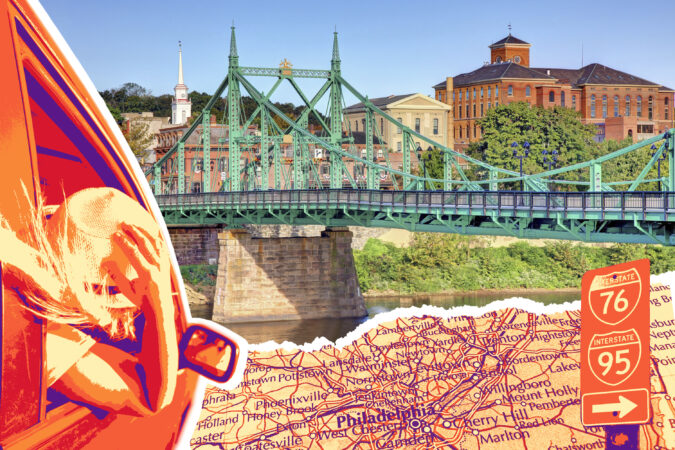
Nestled in the crook of the Lehigh and Delaware Rivers, Easton’s manufacturing might was powered by its waterways during the Industrial Revolution in the early 20th century. Tanneries, flour and silk mills, distilleries, breweries — these were the big businesses in town.
Now, those old industrial shells and the former mansions of tycoons house cafés and galleries, boutique hotels and French-inspired markets. Easton sits just 90 minutes from Philly, making it an easy weekend getaway. Take the Turnpike north, hook a right at Allentown, and head toward the river.
In dining, shopping and arts, Easton way overdelivers. Hotels are still catching up. Fortunately, the popular Gusto Hospitality Group (see Dine, below) opened the Townley House Hotel several years ago, and the 16-room boutique remains the best place to stay in town. An original mahogany staircase links the levels of this restored brick townhouse on Easton’s historic Millionaire’s Row. There’s a sun-dappled courtyard, Mercer-tiled fireplaces, maximalist wallpapers and custom headboards — a different one for each room.
📍 130 N. 3rd St., Easton, Pa. 18042
Stroll: Karl Stirner Arts Trail
Running nearly two miles along scenic Bushkill Creek to Lafayette College’s William Visual Arts Building, the Karl Stirner Arts Trail weaves through 27 works of public art. The trail is named for the German-born sculptor and metalsmith largely credited for making Easton an arts destination in the ‘80s. You’ll find his untitled steel arch, painted an unmissable scarlet, about two-thirds of the way down the path.
In this world, there are people who love pie, and there are monsters. Don’t be a monster. On Northampton Street, Easton’s main drag, Pie + Tart is charming spot with exposed brick walls and Shaker-style chairs from bakers Lisa Yelagin and Anne Gerr. Savory pies (coq au vin) and sweet ones (Mexican chocolate chess, cherry cheesecake) rotate weekly, alongside soups, quiches, and other cozy blackboard specials.
If you’re bringing kids — or you simply have strong feelings about Burnt Sienna and Tickle-Me-Pink — meet the Crayola Experience. The king of crayons was born — and still manufactured — right here in Easton. The four-floor experience mixes analog crafts and digital diversions, including an 85-foot water table and a photo booth that generates a coloring-book selfie. Great opportunity to see what you’d look like as a Mango Tango redhead.
Men’s shearling-lined shackets, watercolor paint-by-numbers journals, irreverent incense (“Chai-Scented Laziness,” “Burn Away the BS”) and more fill Belleville Market, a three-level department store inspired by the marketplaces the owners fell for in France. Keep an eye on their events page to see if your Easton trip lines up with the shop’s happenings, like the upcoming Moka pot demonstration and tasting and floral-filled spring open house.
📍 20 S. 3rd St., Easton, Pa. 18042
Drink: Kabinett
We don’t need to tell you: The PLCB does not make sourcing great wine easy. Which makes Kabinett, a Bavarian-inspired refuge furnished with warm woods, wishbone chairs, and framed botanical prints, all the more impressive. A grandly antlered stag skull presides over the bar. The Wine Spectator-recognized list ranges from whole-cluster Santa Barbara Sangiovese and South Australian Riesling from 175-year-old vines. It’s deep but playful, organized under headings like:“Reds ~ OK, Boomer. Safe Cabernet & oak space for full-throttle bottles.”
📍 125 Northampton St., Easton, Pa. 18042
Dine: Albanesi Restaurant & Bar
Italian restaurants run by Albanians form their own industry sub-genre. At Albanesi Restaurant & Bar, Gusto Group’s Mick Gjevukaj, who grew up in the war-torn former Yugoslavia, is putting his heritage center stage with dishes like harissa-spiced rib-eye qofte (kofte), veal goulash, and braised lamb shoulder lacquered in pomegranate. Climb into one of the camel-colored clamshell banquettes, order some samuna bread and hummus swirled with ajvar, a Balkan condiment of roasted peppers and tomatoes, and settle in for culinary geography lesson. Who knew you’d learn it in Easton?
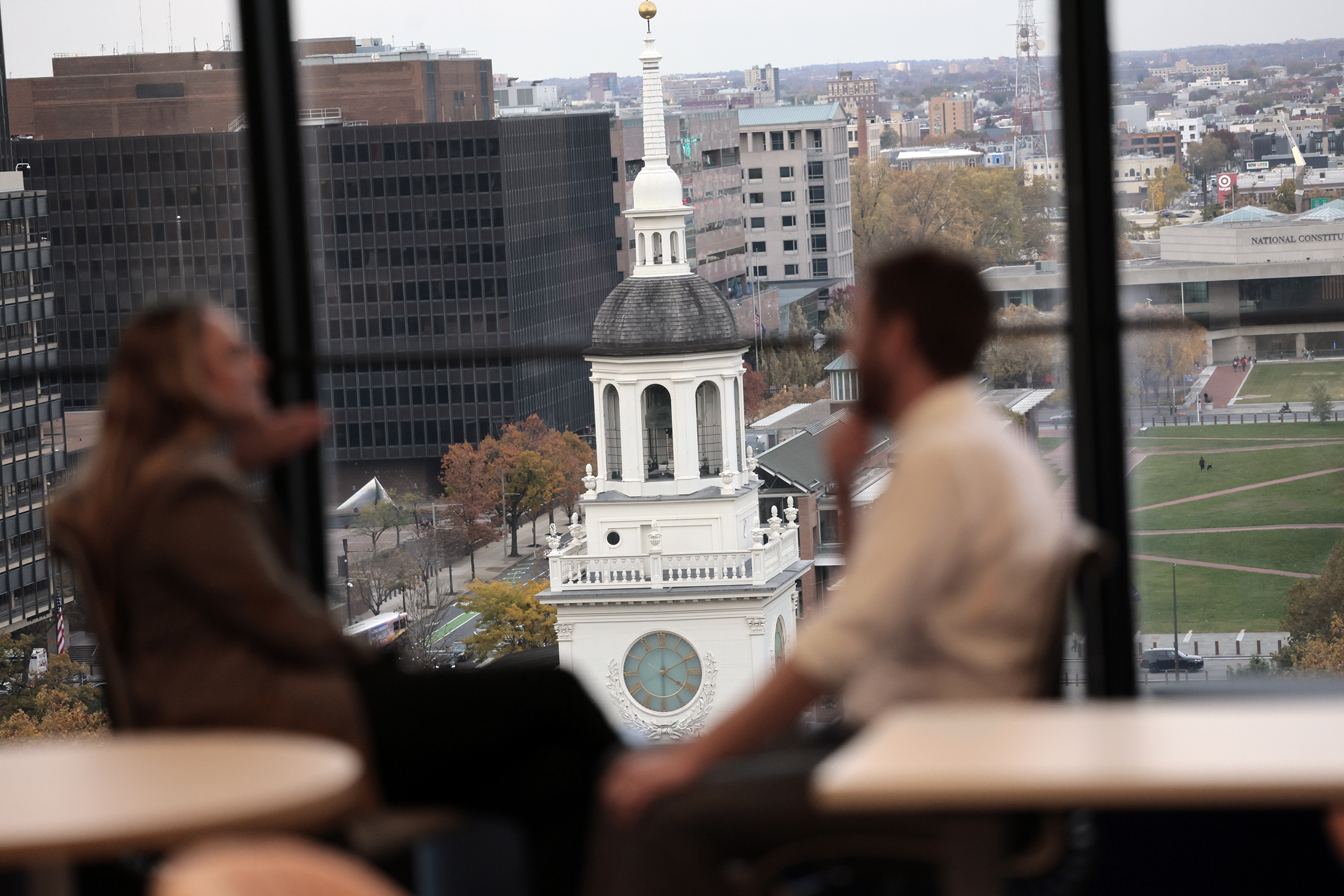
The sleek, modern offices of the Foundation for Individual Rights and Expression, or FIRE, sit on the southernmost edge of Independence Square. The enormous glass windows of a conference room called the Marketplace — a nod to the “marketplace of ideas” — perfectly frame Independence Hall.
The view is no coincidence. The free-speech organization, founded in 1999 and long known for decrying illiberalism and so-called cancel culture on American college campuses, is deliberate in the stories it tells.
In addition to the thousands of case submissions FIRE receives each year, staffers scour social media and news reports for compelling free-speech violations, partly looking, as legal director Will Creeley explained, for “cases you can tell a story with.”
For years, FIRE warned about threats to free speech, primarily on college campuses. Now the crisis it was preparing for has arrived.
The issue today is no longer one of cultural differences — students protesting controversial speakers or agitating for more diverse curricula.
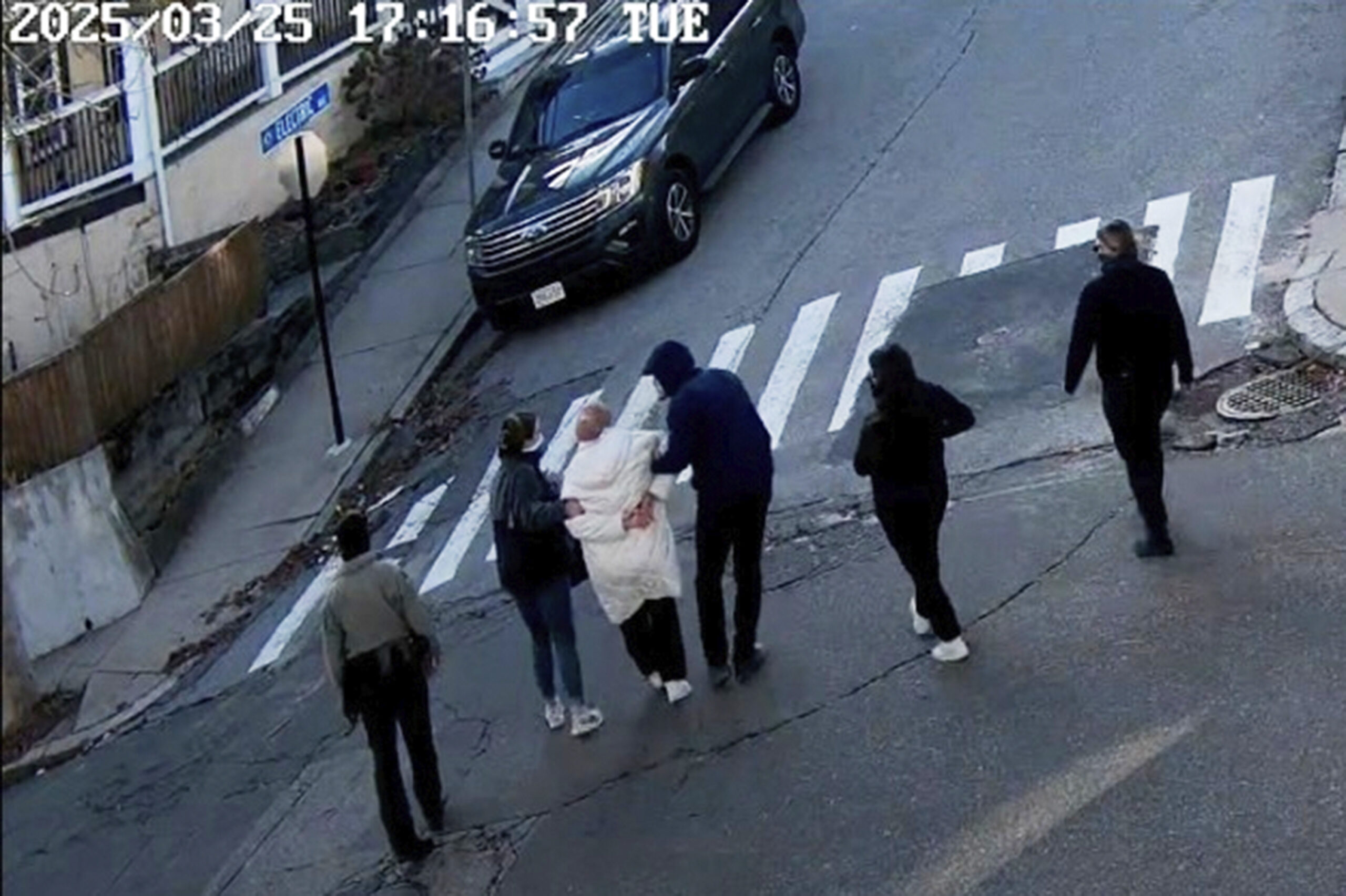
Rumeysa Ozturk, a 30-year-old doctoral student at Tufts University, was detained by Department of Homeland Security agents in March, an arrest captured by security camera footage.
Instead, the full power of the federal government is trained on universities and individual students who disagree with it. The stakes have grown exponentially, as became clear early on when federal agents detained Rumeysa Ozturk, a Tufts University Ph.D. student on a visa, after she cowrote an op-ed in a student newspaper. She then spent 45 days in Immigration and Customs Enforcement detention in Louisiana. (FIRE submitted an amicus brief in Ozturk’s ongoing federal case, in which a federal judge ruled last month that the administration had no grounds to deport her.)
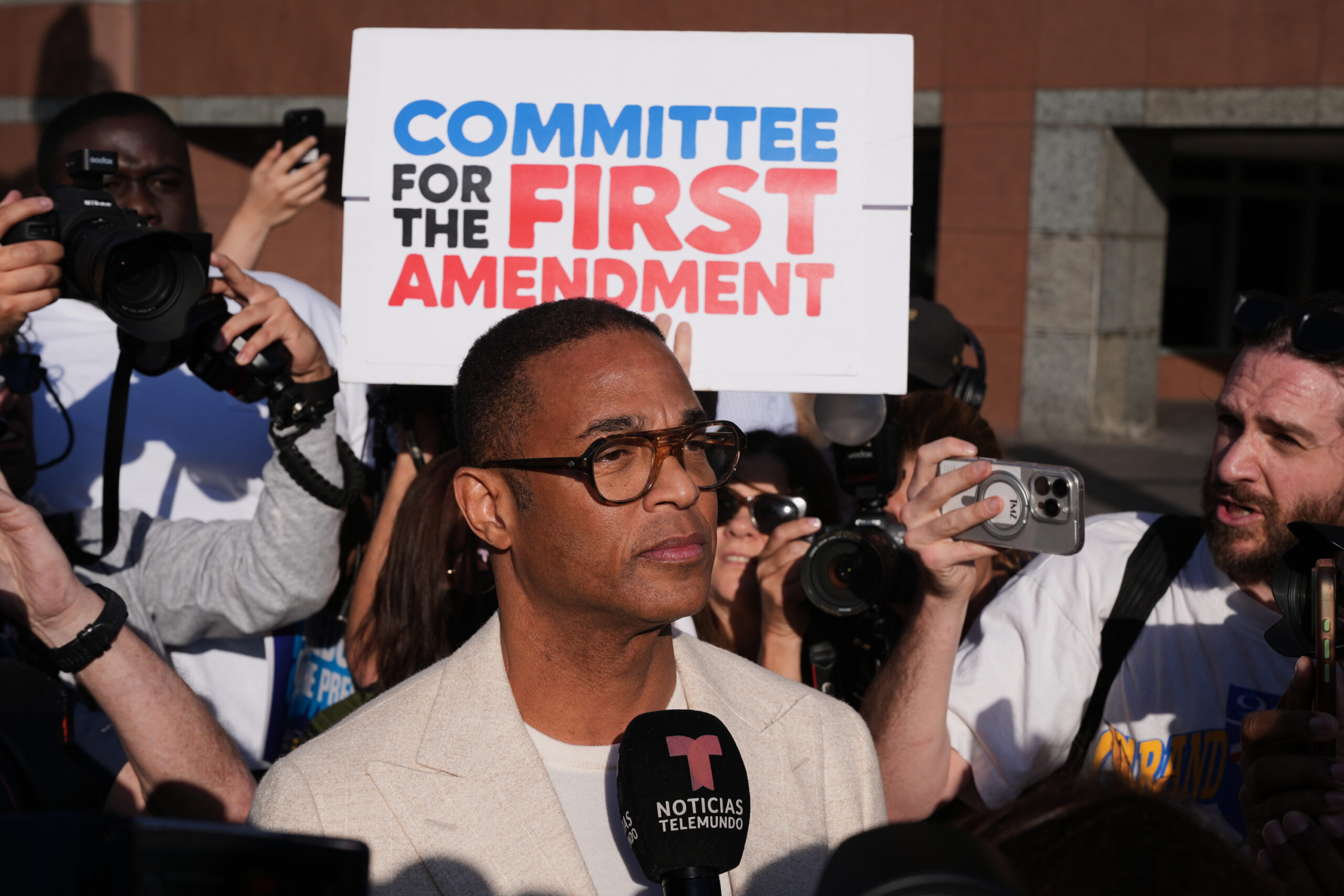
More recently, federal agents arrested and charged journalist and former CNN anchor Don Lemon with federal civil rights crimes for his coverage of an anti-ICE protest inside a Minnesota church. Of his arrest, the organization wrote, “FIRE will be watching closely.”
Journalist and former CNN anchor Don Lemon talked to the media after being detained for covering a protest inside a Minnesota church.
The question FIRE faces today is whether it can effectively meet the moment, and overcome skepticism from the left and from other free-speech advocates, some of whom argue the group helped lay the groundwork for an authoritarian crackdown.
Those critics say the present free-speech crisis is partly the predictable result of FIRE stoking a conservative panic over campus politics, effectively handing the federal government a well-crafted rationale for suppressing progressive voices.
FIRE’s leaders say they were not wrong before about cancel culture. Things were bad, they argue. But this is far worse.
“The threats we’re seeing right now, to me, often feel damn near existential,” Creeley, 45, said in a recent interview. “The incredibly important distinction is that what we’re seeing now from the right is backed by the power of the federal government.”
FIRE described the federal government’s demands on Harvard as “wielding the threat of crippling financial consequences like a mobster gripping a baseball bat.”
When the government becomes the censor
It can sometimes feel as if FIRE has been involved in nearly every major free-speech flash point of the last year — part of an intentional strategy to build the organization’s profile and raise awareness about speech violations, said Alisha Glennon, 41, the group’s chief operating officer.
Among dozens of ongoing cases, FIRE is suing Secretary of State Marco Rubio in federal court over the administration’s targeting of international students who reported on or participated in pro-Palestinian campus activism.
FIRE has also been outspoken in its defense of Harvard University. After the Trump administration sent Harvard a list of demands this spring — including banning some international students based on their views, appointing an outside overseer approved by the federal government to ensure “viewpoint diversity,” and submitting yearly reports to the government — the university refused to comply. Trump then sought to cut off billions of dollars of federal funding in response.
Harvard sued, and FIRE submitted an amicus brief supporting the university, noting that because of its own “longstanding role as a leading critic” of Harvard as a center of cancel culture, it was not less but more alarmed by the government’s “wielding the threat of crippling financial consequences like a mobster gripping a baseball bat.”
FIRE is also preparing to potentially sue Texas A&M University after the university instructed a philosophy professor in January to remove some teachings of Plato from an introductory philosophy course, citing new rules barring public universities in the state from offering classes that “advocate race or gender ideology.” FIRE wrote to the university, calling the move “unconstitutional political interference.”
Removing Plato from an intro philosophy class is the type of absurd, taken-to-the-extreme free-speech dispute that has long been FIRE’s bread and butter, and Creeley was particularly agitated about it.
Will Creeley, FIRE’s legal director, pictured here at the FIRE offices in Philadelphia. He was drawn to First Amendment work partly because his father was a poet.
“What the hell is ‘race and gender ideology’?” he said. “That’s a term so vague you could drive a truck through it.”
He had seen commentary about how 2,400 years ago, Socrates was put to death for corrupting the youth of Athens — and now administrators were, in effect, trying to run Socrates’ student out of College Station, Texas, too.
Creeley was almost laughing, but he was also feeling apocalyptic.
He has been half-joking with his staff that FIRE’s entire litigation program could be dedicated just to Texas. Yet he was also stewing over a decision by the University of Alabama in December to suspend two student publications, one focused on fashion and the other on Black culture and student life.
The university said both violated the Justice Department’s guidance on diversity, equity, and inclusion by narrowly appealing to female students and Black students. FIRE sent an outraged letter to the school, often a precursor to litigation.
“It’s one thing to say, ‘Hey, administratively, we’re not going to have an office of DEI,’” Creeley said. But to say, “‘And students can’t talk about these things.’ … That just drives me nuts.”
Off campus, FIRE is suing Perry County, Tenn., on behalf of Larry Bushart, a retired police officer who spent 37 days in jail after reposting a meme following the assassination of right-wing political activist Charlie Kirk. The meme depicted then-presidential candidate Donald Trump urging people to “get over” a separate shooting the year before.
Defending free speech is notoriously unpopular, and FIRE has leaned hard into a narrative of itself as a pure, principled defender of free speech, regardless of the consequences.
“We always say we just call balls and strikes, no matter what team is up to bat,” Glennon said. “If you are being criticized by both sides and praised by both sides every single day — well, then, that’s something that I wear as a point of pride.”
“Sometimes, if everybody’s criticizing you, you are screwing up,” Creeley acknowledged, and they both laughed. “But here I would say we’re doing it right.”
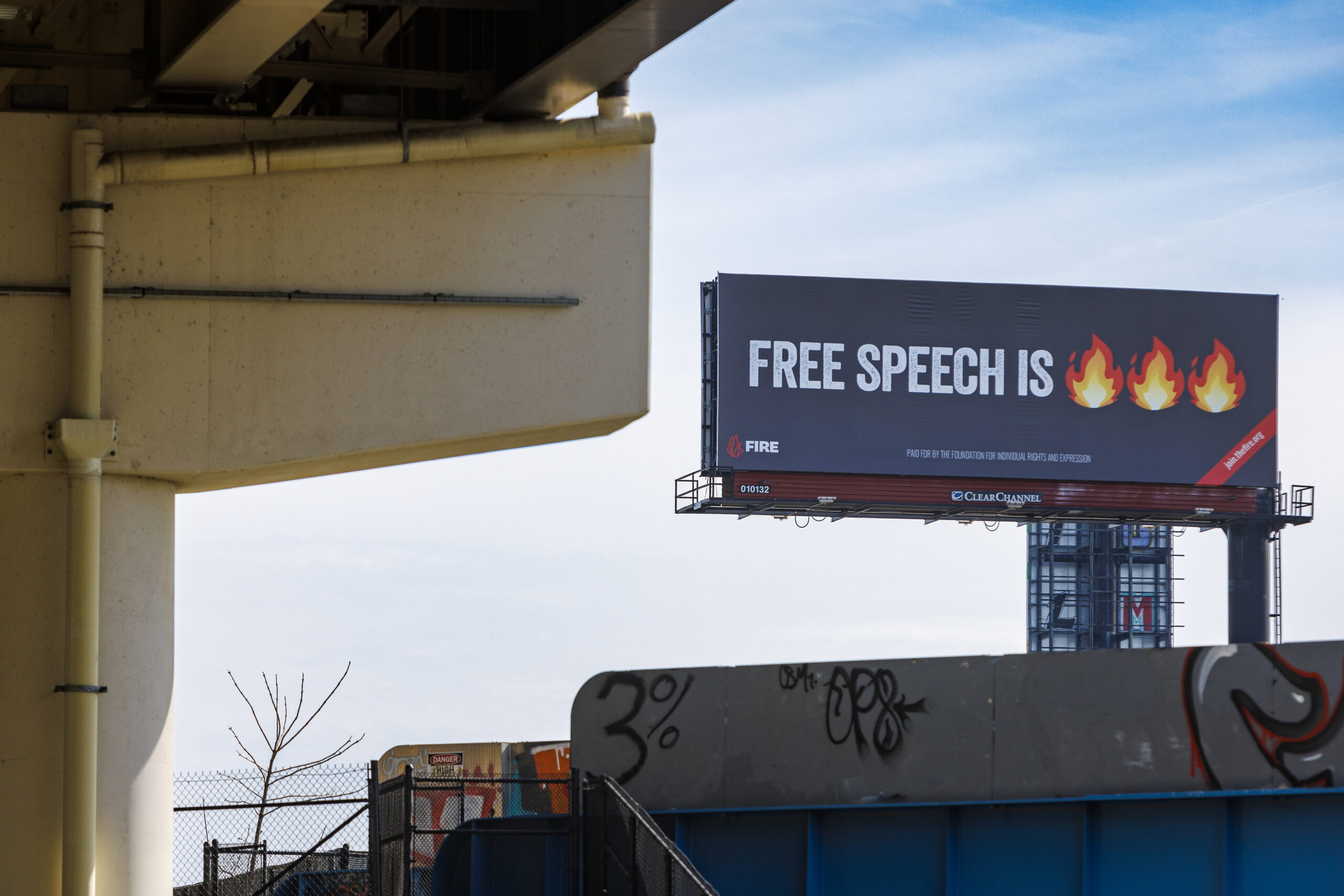
In 2022, FIRE expanded its purview beyond college campuses, including through a massive media campaign. One of its billboards is pictured here, visible heading north on I-95, in 2023.
From scrappy watchdog to national player
FIRE is insistently nonpartisan; staffers acknowledge the organization’s erstwhile conservative reputation but say it was never accurate.
And under the second Trump administration, it has become one of the most outspoken voices in the country for free expression. The nonprofit has a $32 million budget, about 130 staffers, and roughly 12,000 members paying a $25 annual fee.
Both Creeley and Glennon have been with the organization for nearly two decades, helping it grow from a small advocacy group into one garnering increasing mainstream attention. They said FIRE based itself in Philadelphia, not Washington, so that it would remain free from political interference. (One of the cofounders of the organization, Alan Charles Kors, an emeritus history professor at the University of Pennsylvania, is also based in Philly.)
At the Philly office, copies of the Wall Street Journal and the Chronicle of Philanthropy greet visitors. The conference rooms are named after free-speech references. (“It’s a little kitschy, but it’s cute,” Glennon said of the “Crowded Theater” room.)
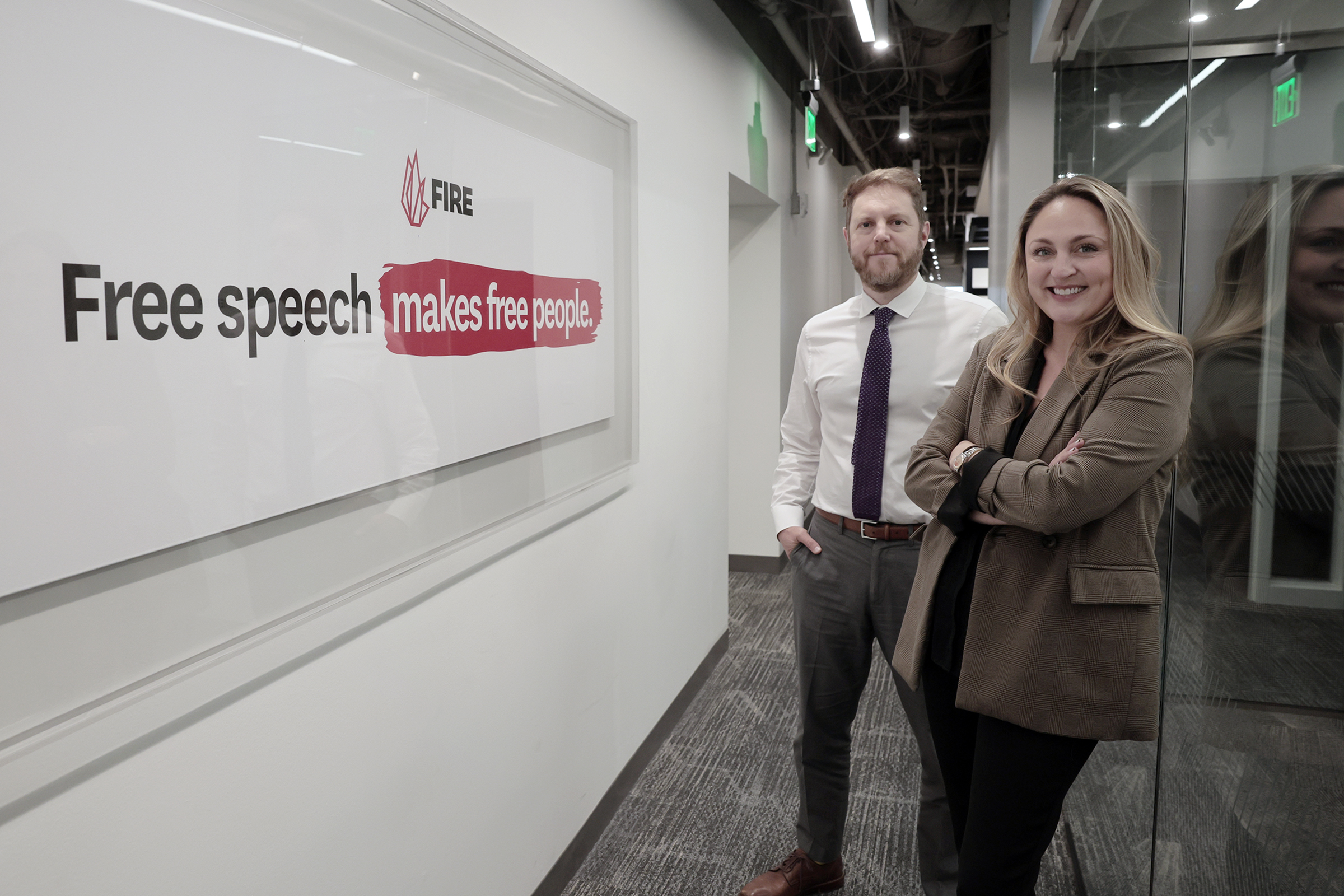
One afternoon this fall, Glennon, in an oversized tan blazer, black pants, and stilettos, her blond hair loose, and Creeley, in a white button-down and purple tie, his auburn beard neatly cropped, were quick to laugh, prone to peppering famous quotes about free speech throughout the conversation.
They appeared to be true believers — in free expression, in their work, in America.
Glennon said she fears “that people will become accustomed to a society that is less free, and that with every generation, we’re losing a little bit of that love for American exceptionalism and what free speech is.”
Creeley nodded.
“What’s the Kors quote? ‘A nation that does not educate in liberty will not long enjoy it, and won’t even know when it’s lost,’” he said, paraphrasing a quote from FIRE’s cofounder.
“‘Won’t even know when it’s lost,’” Glennon echoed. “Gave me chills.”
FIRE’s legal director Will Creeley and FIRE’s chief operating officer Alisha Glennon, pictured here at the Philly offices in November, have both been at the organization for nearly two decades.
From pressure campaigns to the courtroom
FIRE was founded by two civil libertarians who wrote one of the defining campus-panic books of the 1990s, The Shadow University: The Betrayal of Liberty on America’s Campuses, which Publishers Weekly at the time described as a polemic about how “the ‘political and cultural left’ is today the worst abuser of the principles of open, equal free speech.”
Creeley joined FIRE as a law school intern before becoming a full-time staffer in 2006. He comes from a long line of pacifist Quakers and was involved in the campus Green Party as an undergrad at New York University. He said he was drawn to First Amendment work because his father was a poet; words were important.
“I remember the first couple years, I was like, ‘Boy, I’m doing this free-speech work, I’m defending an awful lot of evangelical conservative Christians who I really don’t have much in common with,’” Creeley said. But that was the principle of the thing.
FIRE’s chief operating officer Alisha Glennon in “The Marketplace” conference room overlooking Independence Hall. All the conference rooms are named after free speech references.
Glennon, who was born and raised in Mayfair, joined FIRE around the same time. She had recently graduated from the College of William and Mary and was waitressing while applying for development jobs. “I was like, ‘Free speech! Everybody likes free speech!’” she said, laughing.
For more than a decade, FIRE focused exclusively on advocacy, aiming to “make rights violations so painful for a school that they just would abandon it,” Creeley said. Litigation was plodding and costly, and the awareness campaigns seemed to have an impact.
In 2008, for example, a student-janitor at Indiana University-Purdue University Indianapolis was accused of racial harassment after a coworker saw him reading Notre Dame vs. the Klan: How the Fighting Irish Defeated the Ku Klux Klan, a nonfiction book that depicted robed Klansman and burning crosses on the cover. FIRE took up the cause, and the university eventually apologized to the janitor.
Other early advocacy cases included defending a professor at a New Jersey community college over a photo he posted of his daughter wearing a Game of Thrones T-shirt, and intervening on behalf of a University of Alaska Fairbanks student newspaper accused of sexual harassment for publishing a satirical article about a new building shaped like a vagina.
Then in 2014, FIRE began suing schools. The effort launched with four cases, including one about an unconstitutional “free speech zone” at a college in California and one on behalf of students at Iowa State University who were told they could not use the university’s name while wearing T-shirts representing their chapter of the National Organization for the Reform of Marijuana Laws.
FIRE eventually won all four.
These days, staffers at the ACLU of Pennsylvania and FIRE work closely together, talking weekly and sometimes daily.
“I honestly don’t remember a time where we had a disagreement about how to analyze the case,” said Witold Walczak, the ACLU of Pennsylvania’s legal director.
Despite its ideologically broad legal work, FIRE perhaps became most famous in the mainstream for its conservative-leaning culture work. In 2015, executive director Greg Lukianoff cowrote an Atlantic article — and later a book — titled The Coddling of the American Mind, arguing that efforts to create “safe spaces” on campuses had gone awry. Cowritten with social psychologist Jonathan Haidt, the book portrayed campus identity politics as bordering on the surreal.
That was also the year Lukianoff helped to disseminate one of the defining “cancel culture” artifacts of the decade. He filmed a Yale student, who came to be known online as “shrieking girl,” screaming at a professor in the middle of a simmering debate on campus over what constituted racially sensitive Halloween costumes. The video made national news, eventually racking up nearly 2 million views on FIRE’s YouTube page.
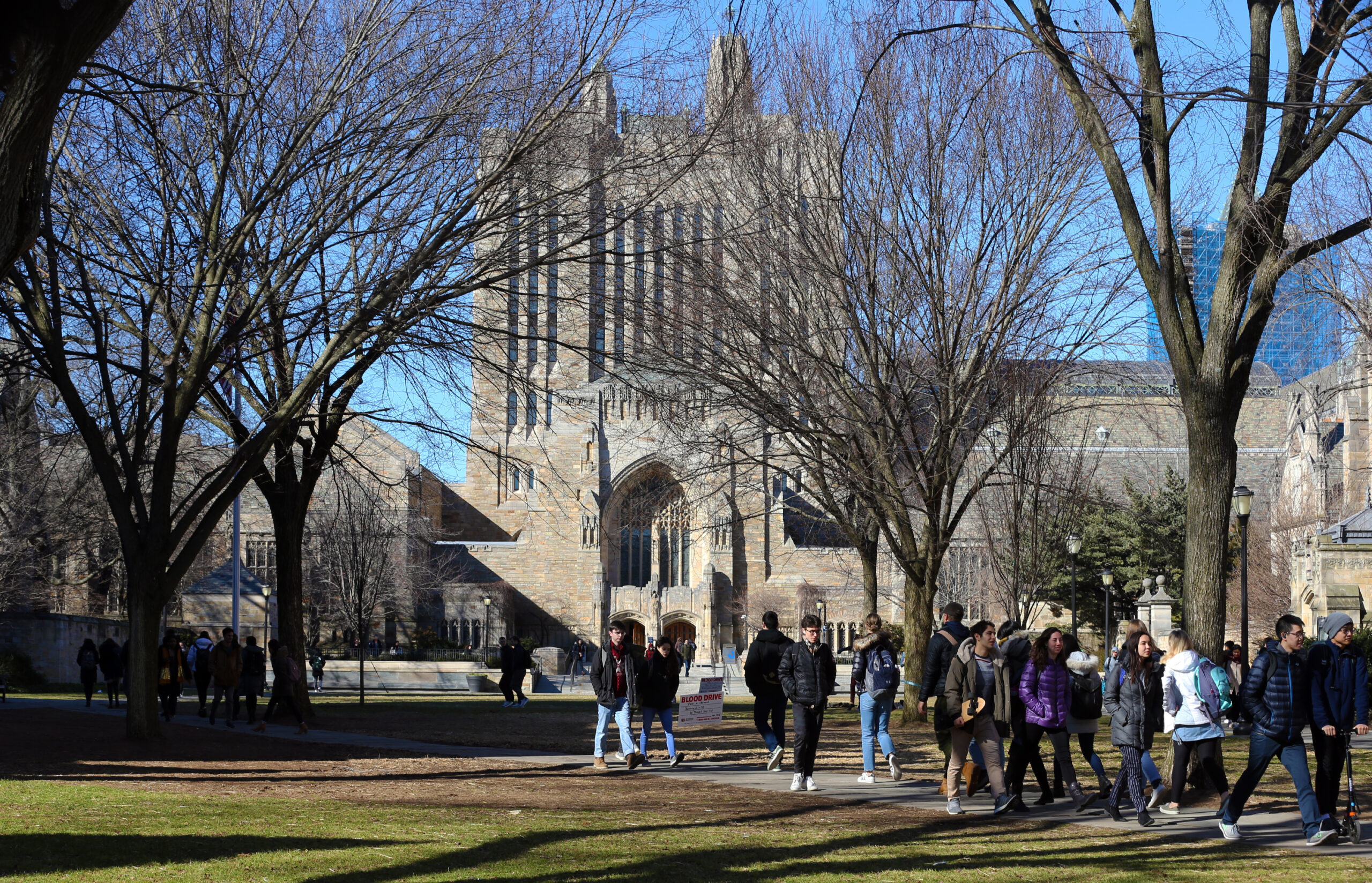
The campus of Yale University in New Haven, Conn.
The rankings — and the reckoning
These days, the organization tracks speaker disinvitations and scholars and students “under fire” through its public databases. Since 2020, it has also published annual “free-speech rankings” based on the databases and student surveys — rankings that have repeatedly placed Harvard at or near the bottom for free speech.
Those efforts underpin one of the central critiques of FIRE: that it has focused not only on government restrictions but also on the actions of private actors, including students.
“The rankings are based on those ideas of ‘cancel culture’ and shaming others and so on. And they’re not based on the First Amendment,” said Charles Walker, a retired attorney based in Maryland who published multiple critiques of FIRE’s rankings last year. “First Amendment law restricts what the government can do with regard to individual speech. It doesn’t address individuals speaking to each other.”
Bradford Vivian, a professor at Pennsylvania State University and the author of Campus Misinformation: The Real Threat to Free Speech in American Higher Education, described FIRE’s databases as “totally subjective, arbitrary, politically motivated tools.”
He argued that FIRE cherry-picks sensational incidents that do not necessarily have anything to do with true First Amendment violations, and prioritizes rankings that will make headlines over those that would be more accurate.
“FIRE has produced misinformation that others can easily use for nefarious purposes,” Vivian said.
FIRE for years whipped up a frenzy over liberal excess on elite college campuses, Vivian and other critics say. The Trump administration seized on that frenzy to slash federal funding and even imprison its detractors. Yet FIRE staffers do not see themselves as part of that story.
Even as FIRE insists it merely “calls balls and strikes,” critics note that state legislatures and the Trump administration have cited FIRE’s rankings as justification for punitive actions against universities.
Adding insult to injury, FIRE staffers have not always expressed much sympathy for the universities that now find themselves in the administration’s crosshairs.
“Administrators, colleges, universities have in some ways done plenty to bring this on themselves,” Sean Stevens, FIRE’s chief research adviser, told The Inquirer. “There was a lot of downplaying or ignoring of the concerns about the homogeneity of politics among the professorate or some of the curriculums.”
Still, Stevens, who oversees the annual rankings, said he disagrees with the Trump administration using his work to cut funding or shut down certain speech or academic departments. “That’s not anything we would advocate for,” he said.
In December, Lukianoff doubled down, publishing what amounted to an “I told you so” essay, arguing that universities now face a “worst of both worlds” scenario, in which government pressure combined with lingering cancel-culture dynamics are producing the “bleakest speech landscape imaginable.”
Creeley and Glennon said they never anticipated their work being used to justify repression.
“It’s galling to me to see our work invoked to justify that kind of illiberal crackdown,” Creeley said, pointing specifically to U.S. Rep. Elise Stefanik (R., N.Y.), who previously said she was a free-speech ally, using FIRE’s rankings in her anti-higher education campaigns.
If onetime allies now seem to have never cared much about free speech to begin with, that’s not on FIRE, they said.
“What we had been saying over the years was true‚” Glennon said. “We’re to blame now for the government overreach? I don’t think it’s a fair assessment.”
“I mean, that’s all we can do: Call out the abuses as we see them,” Creeley said. “If somebody wants to use our work for bad ends, we’ll fight you on it.”
FIRE was based in Philadelphia to avoid the political interference of Washington, D.C.
Can a referee still matter when the rules change?
At FIRE’s daily morning meetings to discuss pressing free-speech problems across the country, the agenda has grown longer. The scope, severity, volume, and nature of the cases they are seeing have changed, Creeley said. (He noted — twice — that an Alexandria Ocasio-Cortez presidency would likely keep FIRE busy as well.)
“In some places, the law is just getting flat-out ignored,” he said.
After two decades defending the First Amendment, Creeley has begun to reflect on whether placing his faith in the collective commitment to the law and the Constitution was the right choice. Still, he remains an optimist. He believes that such a commitment will prevail. That’s the whole promise of the country.
FIRE continues to see itself as a principled referee. Whether a referee still matters when the most powerful player insists the rules no longer apply — that remains an open question.
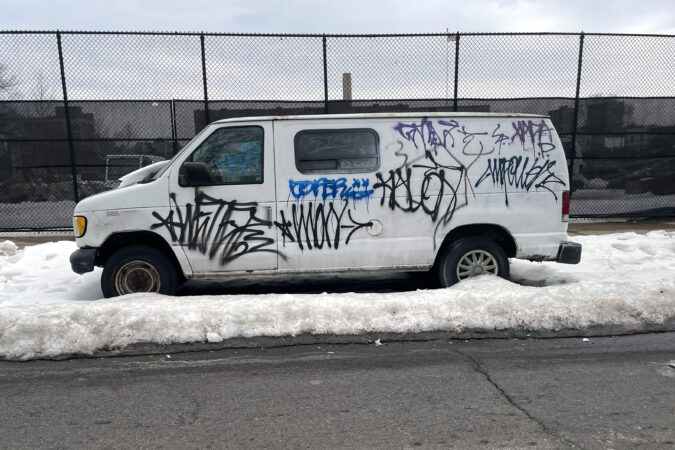
I don’t know why this scene caught my eye. I have seen graffiti-tagged walls on roll-down metal storefronts and yes, even panel trucks and vans before.
And in the past few weeks since our biggest snowfall in a decade — followed by a brutal freeze that locked in all the plowed piles — I have certainly seen enough streets lined with snowed-in vehicles. Maybe it was the combination of the two.
I was stopped because the dirty snowpack on street shoulders reduced traffic lanes and created gridlock. But while I waited through not one or two, but three traffic light cycles, I had the time to look, pick up my phone, roll down my window and take a picture.
Not the kind of image I usually look for.
Then that got me thinking, “What kinds of pictures do I like? What came first, the snow or the graffiti?” (I was at that light a long time.)
I clearly like photographing people. That’s why I got into journalism.
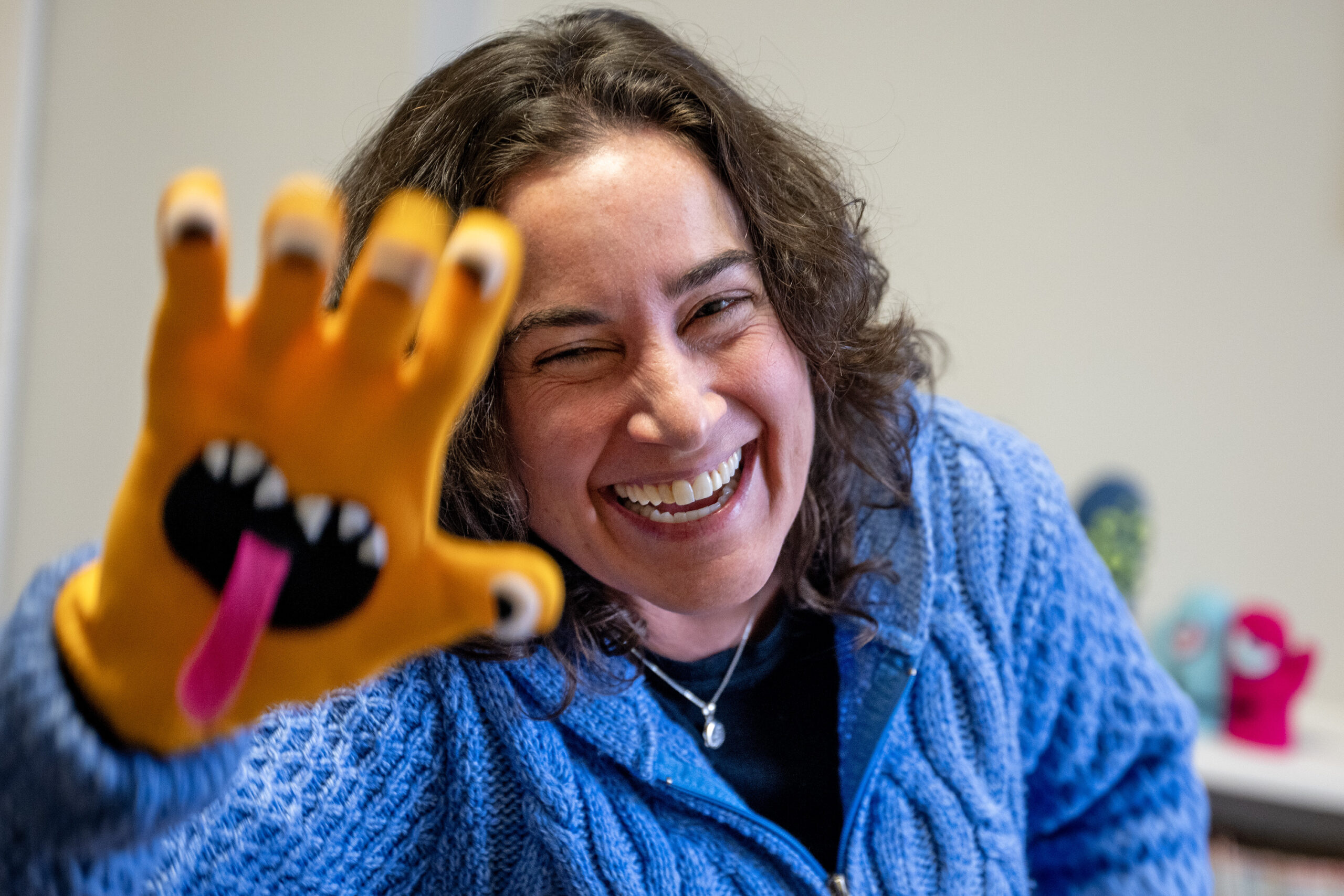
Highlights editor Judy Burke, last month at the editorial offices of America’s most beloved and respected educational magazines for kids.
When doing portraits on assignments I have always tried to get people comfortable with being themselves. I have always had a hard time “directing” them. It is especially difficult when the story I’m trying to illustrate is not about them, but about where they work, or what they are doing.
Trying avoid posing subjects by saying “just do whatever you’d be doing if I — and a reporter, and the public relations person(s) — wasn’t here,” doesn’t help. And just makes it awkward for all of us.
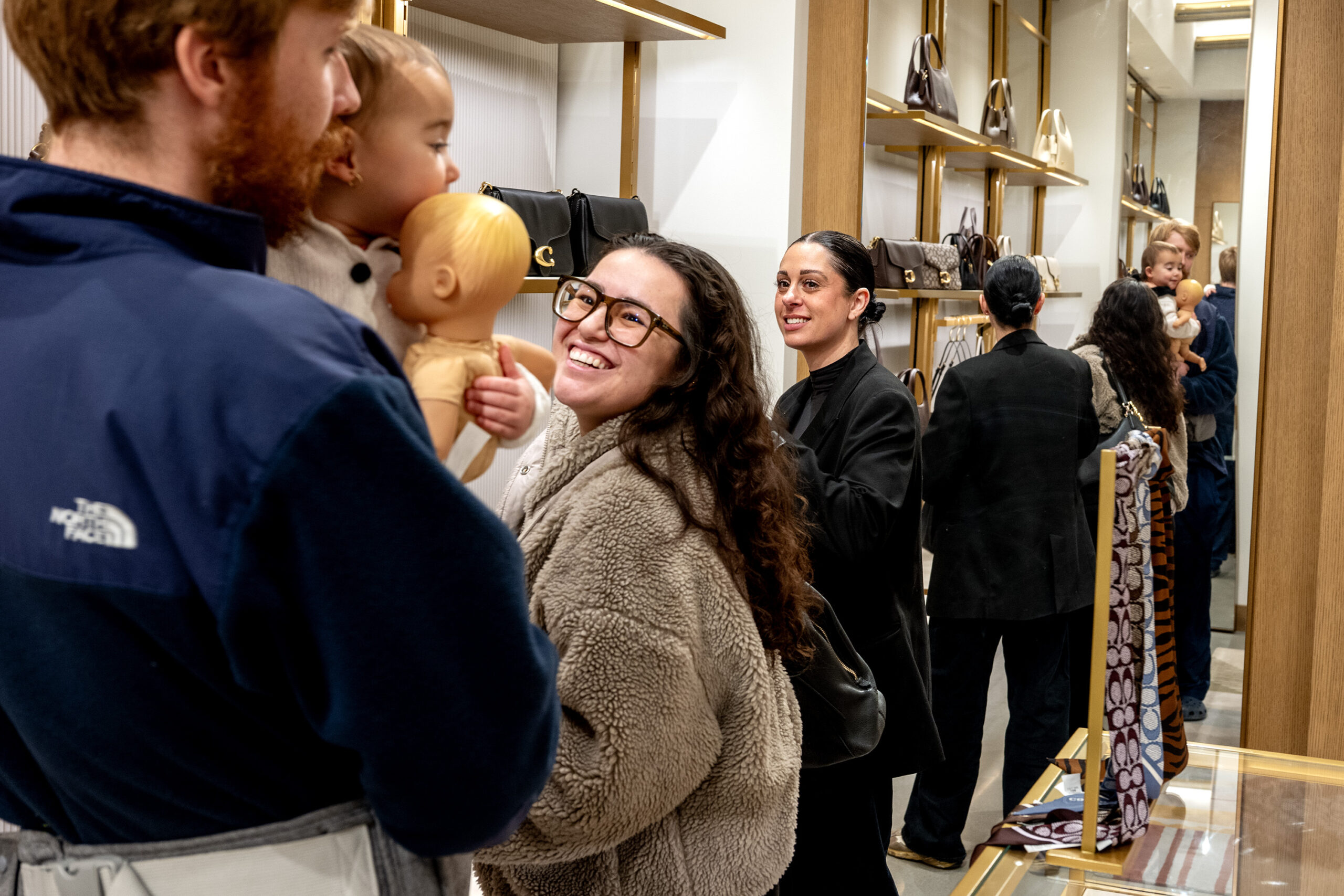
Employee Alex Costa (right) assists Alessandra Bruno as she tries out purses with husband Luke Baur and their 20 month-old daughter Rosalina at the Coach store at the Cherry Hill Mall on Monday.
Walking into a room where everyone is ready and waiting to be photographed — but unsure of what the photographer will do — is also hard for them. If possible I get them to interact with each other, even if it’s just sharing what they had for breakfast. In public spaces I will often enlist customers or passersby, asking if I can photographed over their shoulders. Then wait — and hope — for a genuine moment. Like in the mall retail shop, a customer interaction is much better than five salespeople standing among the merchandise looking at the camera.
That is also why I most enjoy assignments where I am just there, observing an event trying to capture something that will make readers click on a link or pause to read a story. And I keep myself enthused while doing it. Like the many public appearances of our mayor.
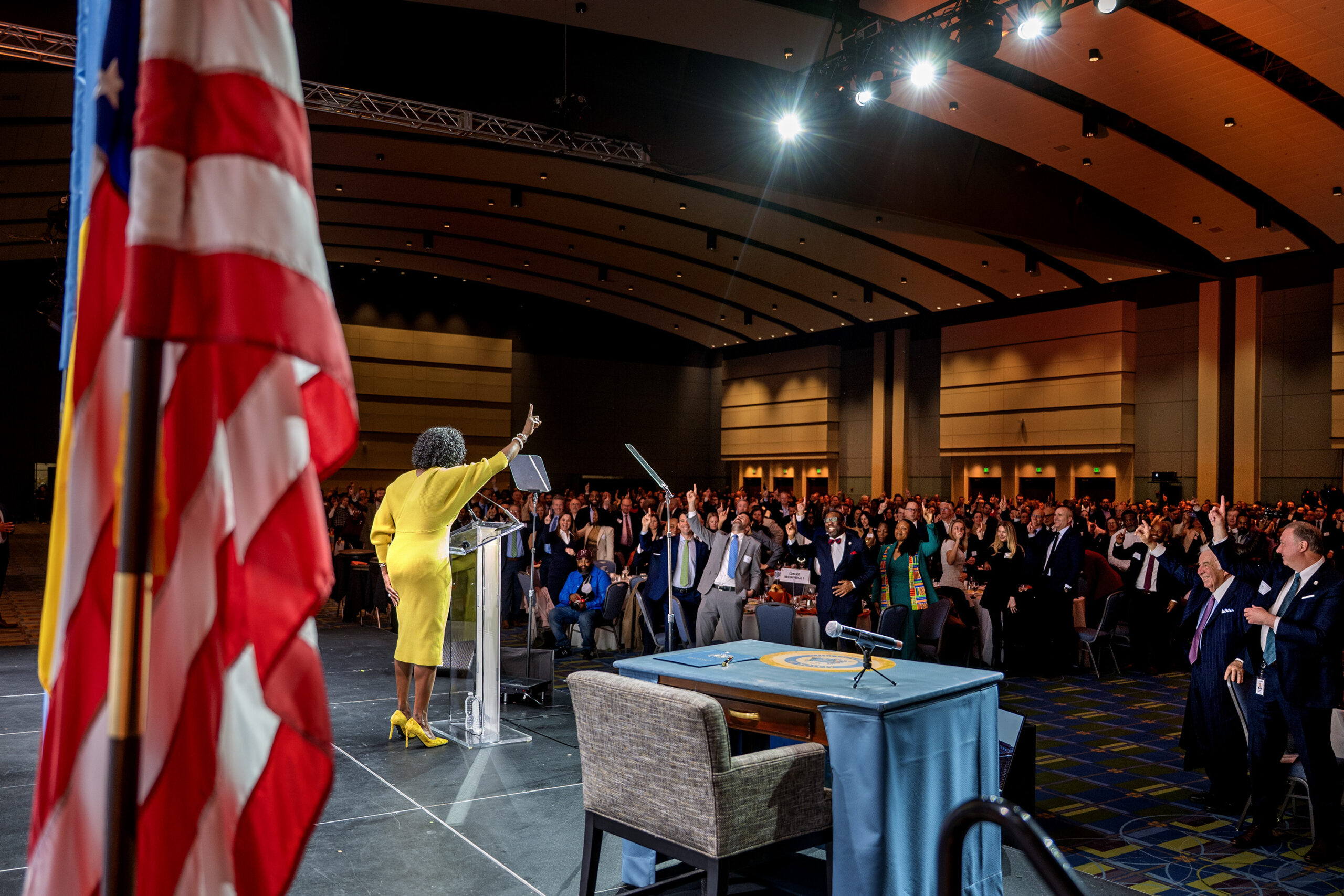
Mayor Cherelle L. Parker has the whole room of business leaders standing with her and her “One Philly” chant as she finishers her keynote address at the Chamber of Commerce for Greater Philadelphia’s Annual Mayoral Luncheon Wednesday.
That goes for ordinary people too, not just politicians or executives or sports or entertainment celebrities. And what is more normal and everyday than stopping at your regular convenience store?
I also photographed Wawa’s excursion into Sheetz land in 2024. For decades, it was assumed there were unspoken boundaries in Pennsylvania between Wawa in the East and Sheetz in the West. But representatives of both chains deny they are rivals and as my colleague Stephanie Farr points out, they have worked together to support various nonprofits.
Next stop for me (soon, I hope) a photographic road trip to the nearest Buc-ees.
Since 1998 a black-and-white photo has appeared every Monday in staff photographer Tom Gralish’s “Scene Through the Lens” photo column in the print editions of The Inquirer’s local news section. Here are the most recent, in color:
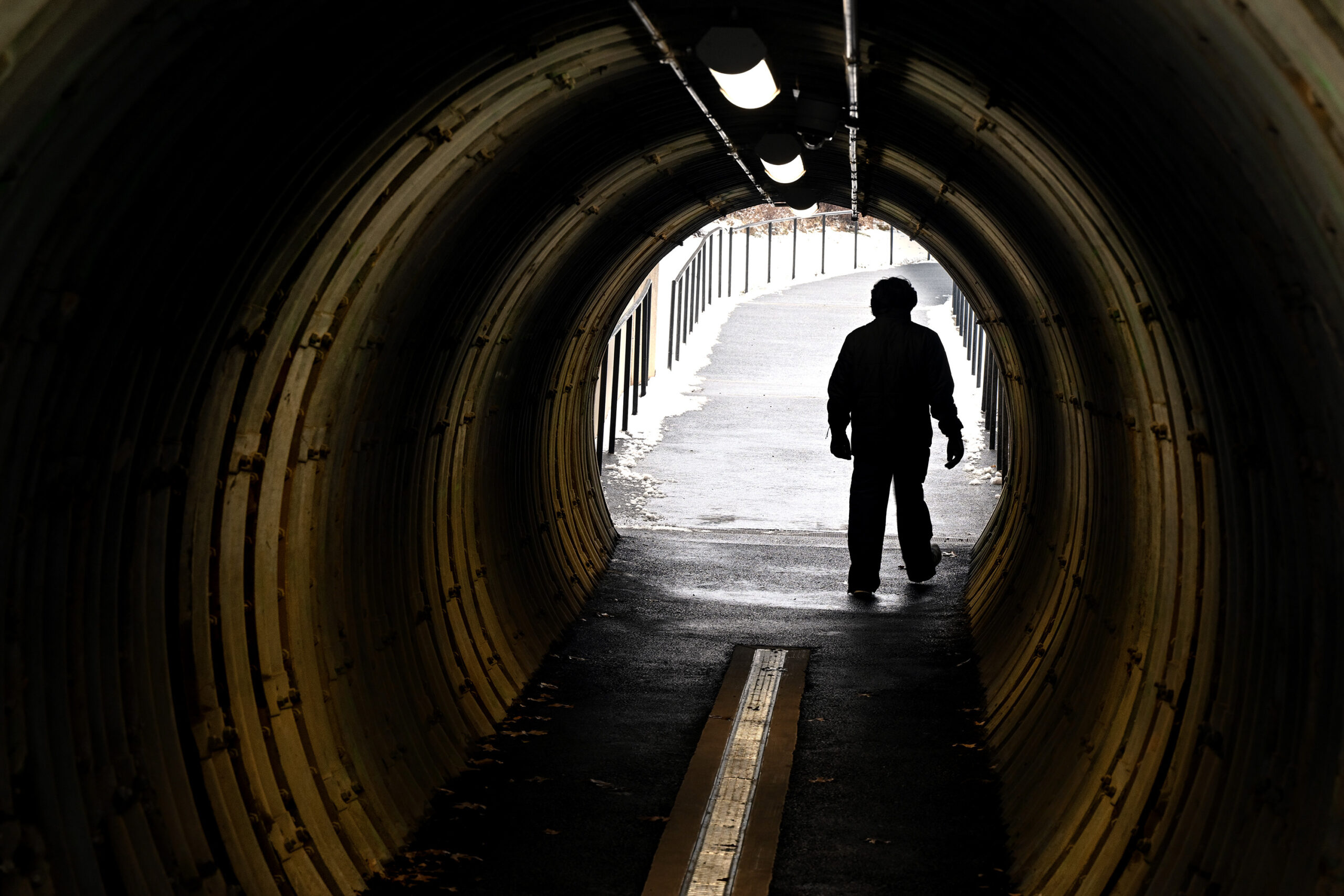
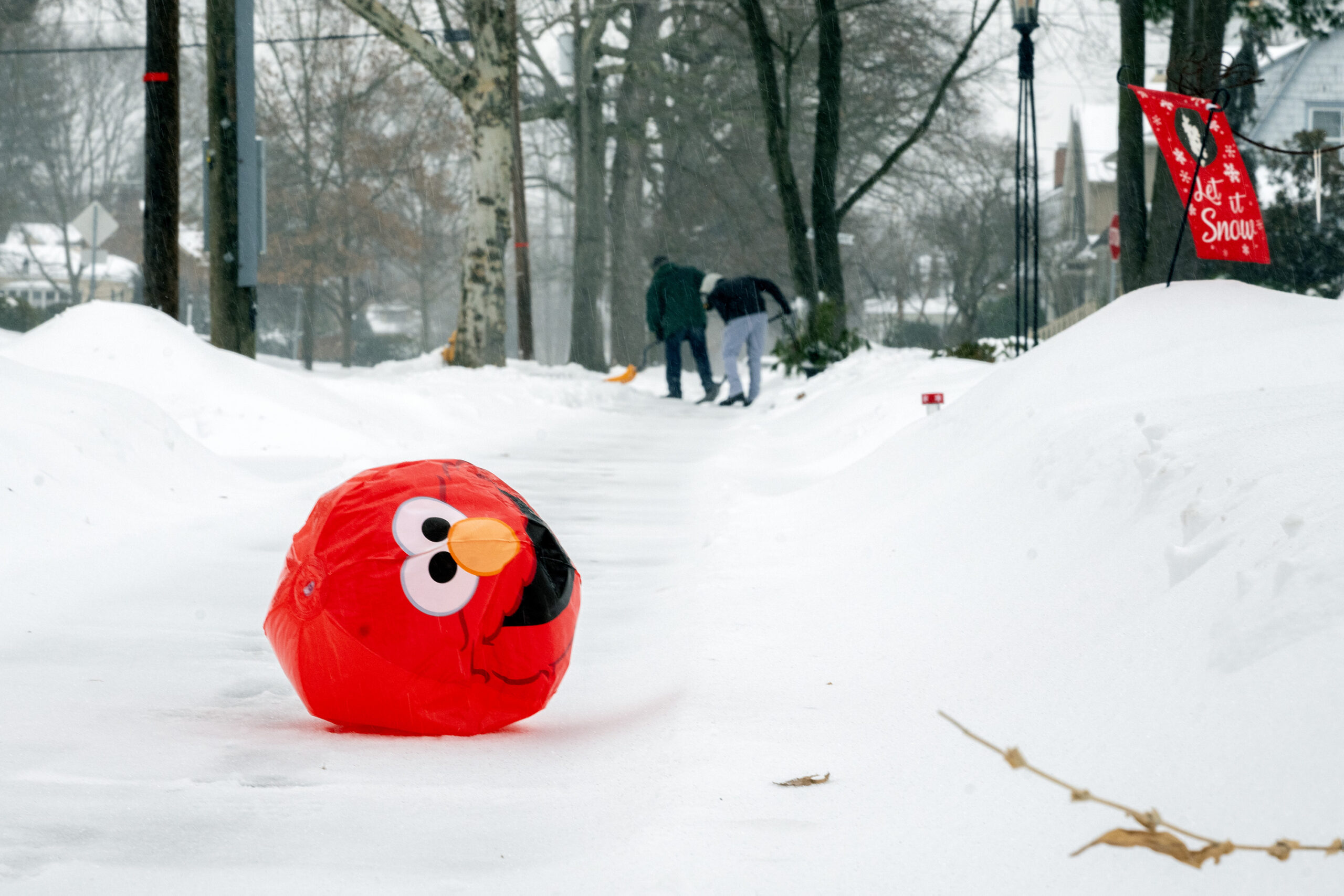
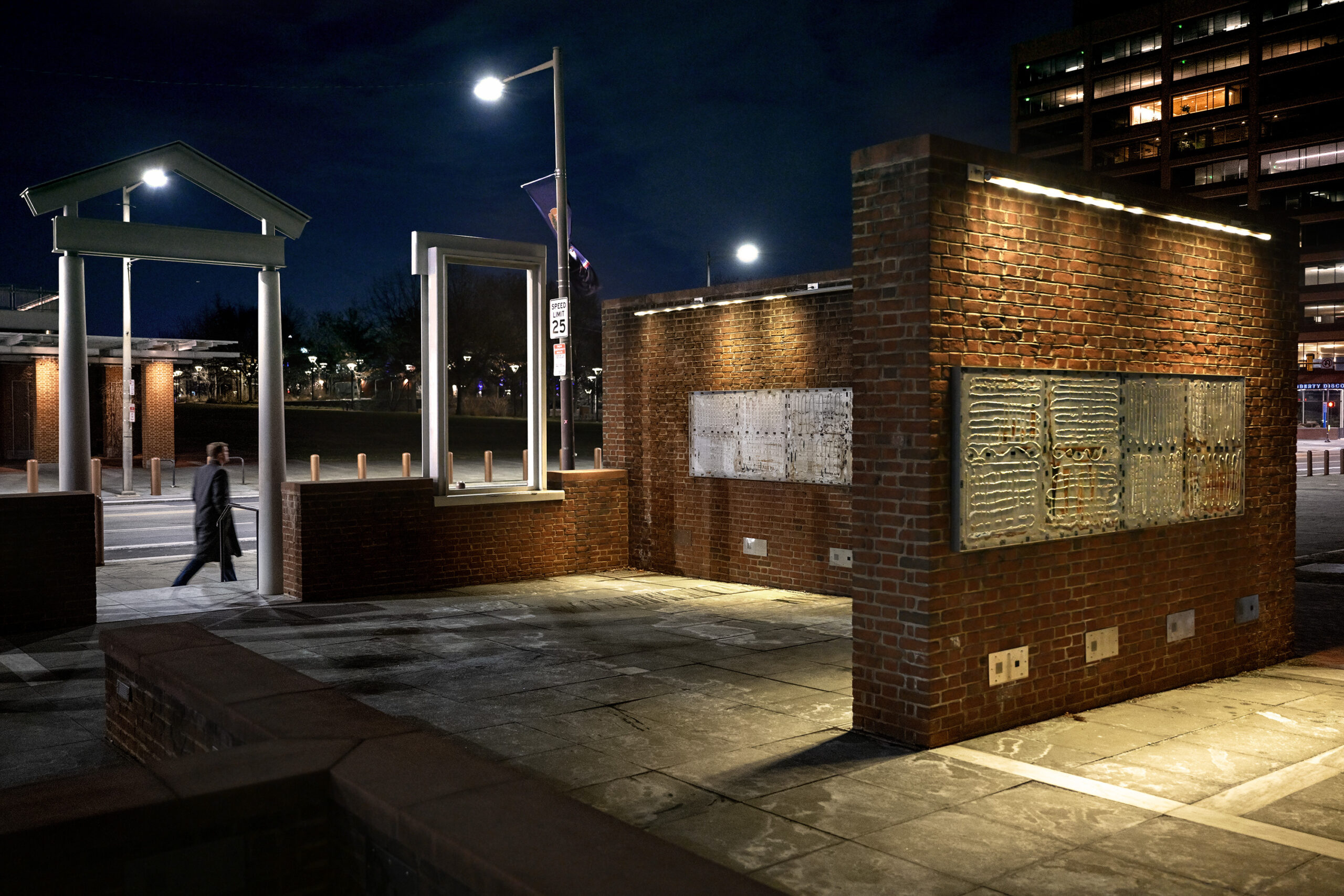
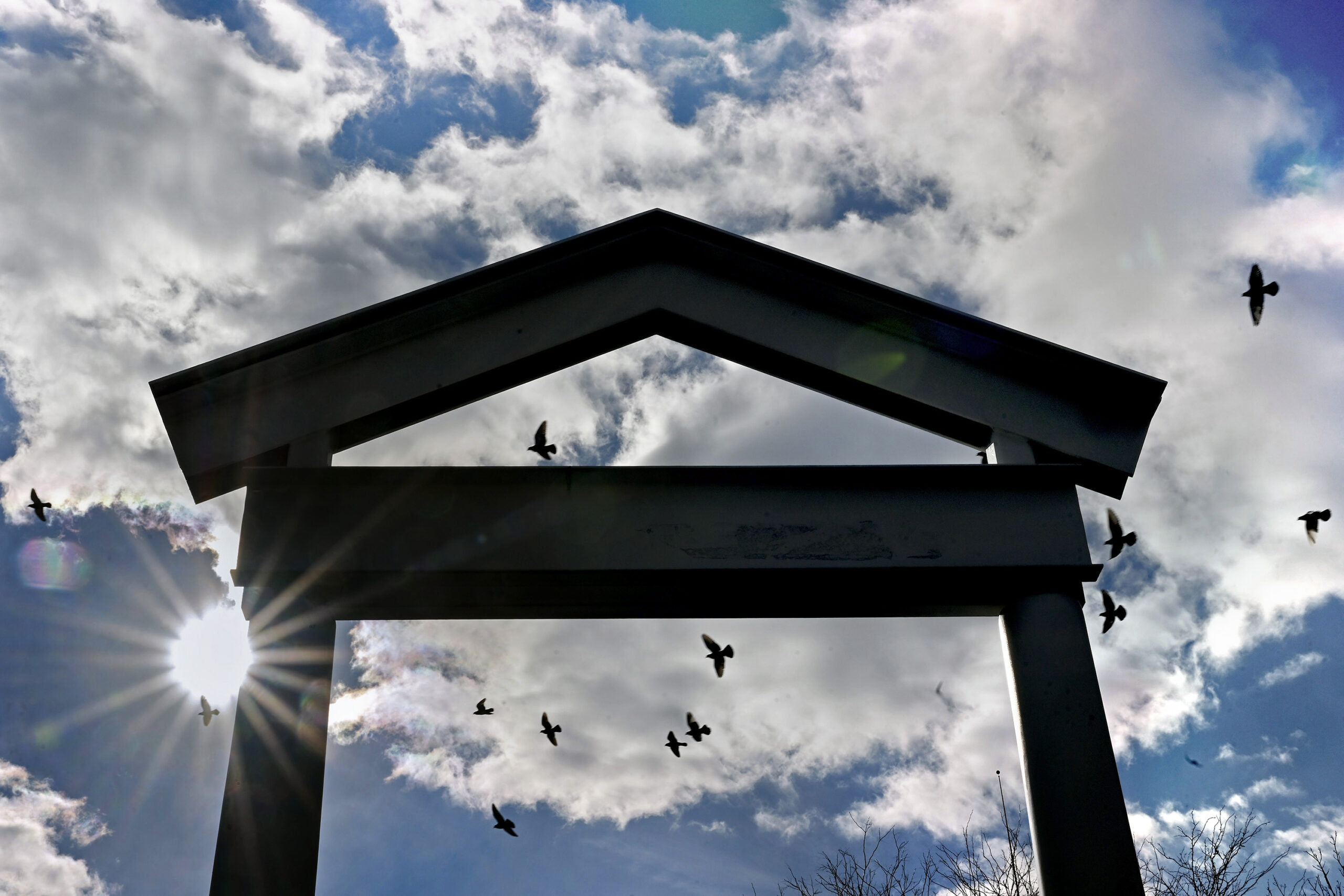
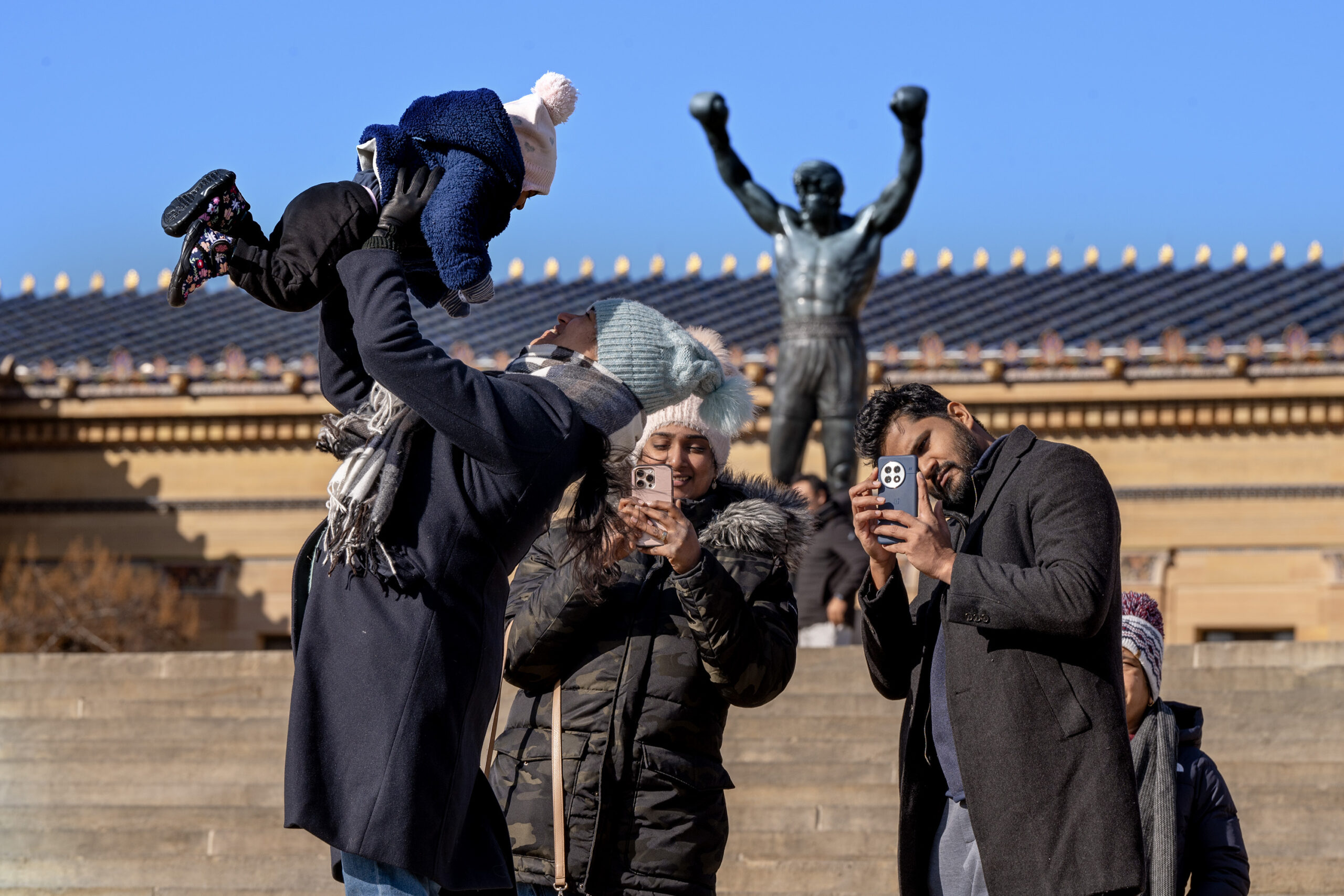
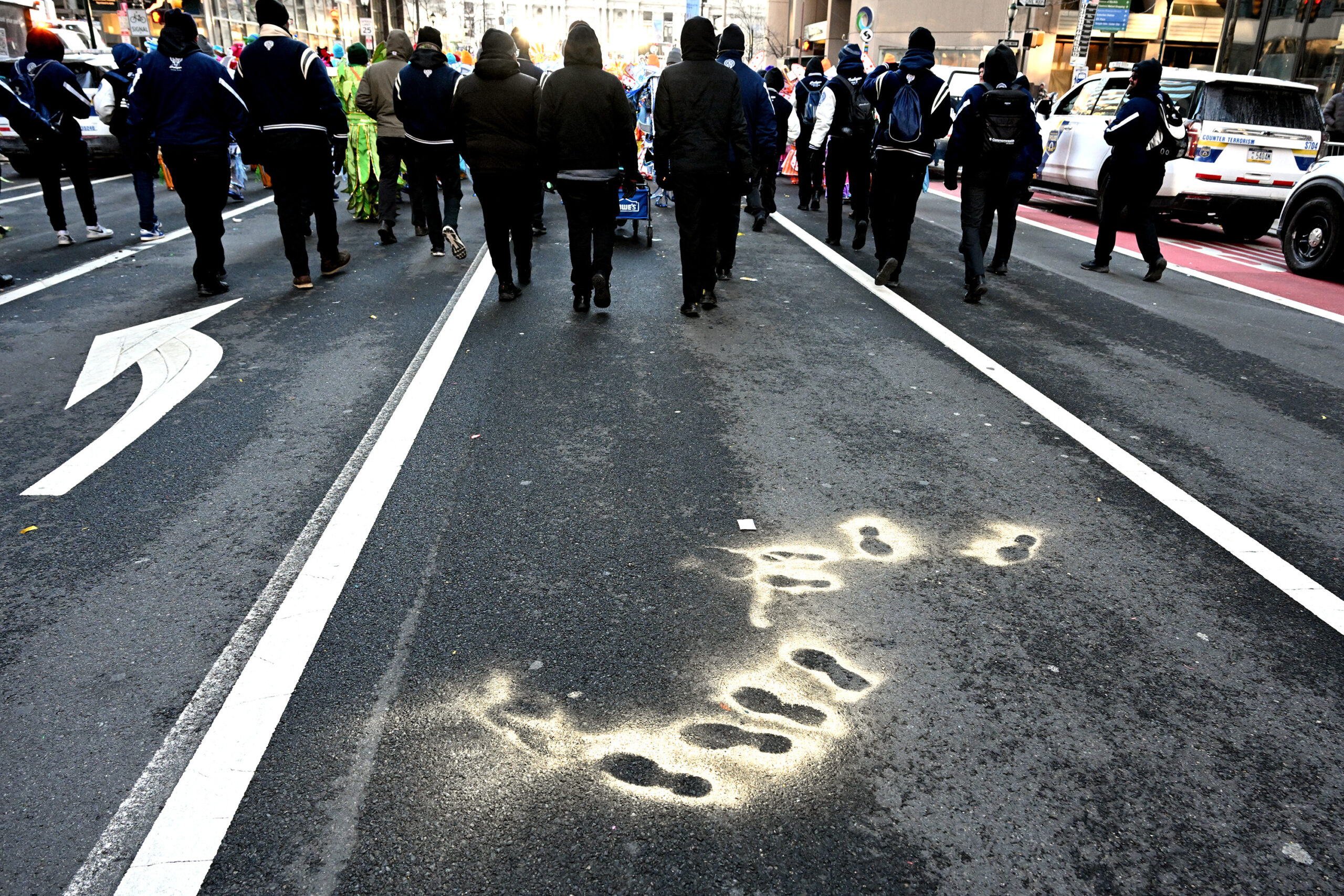
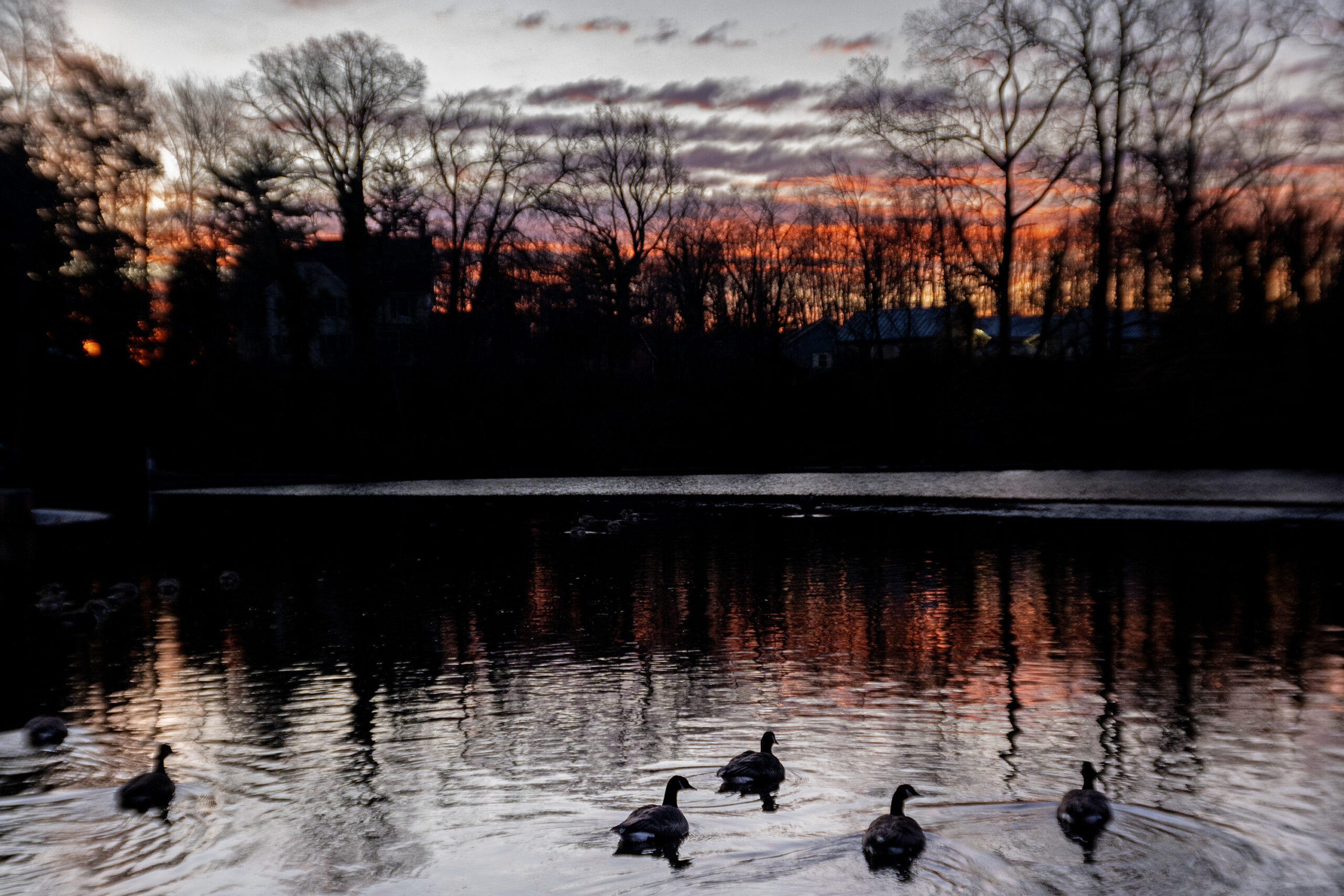
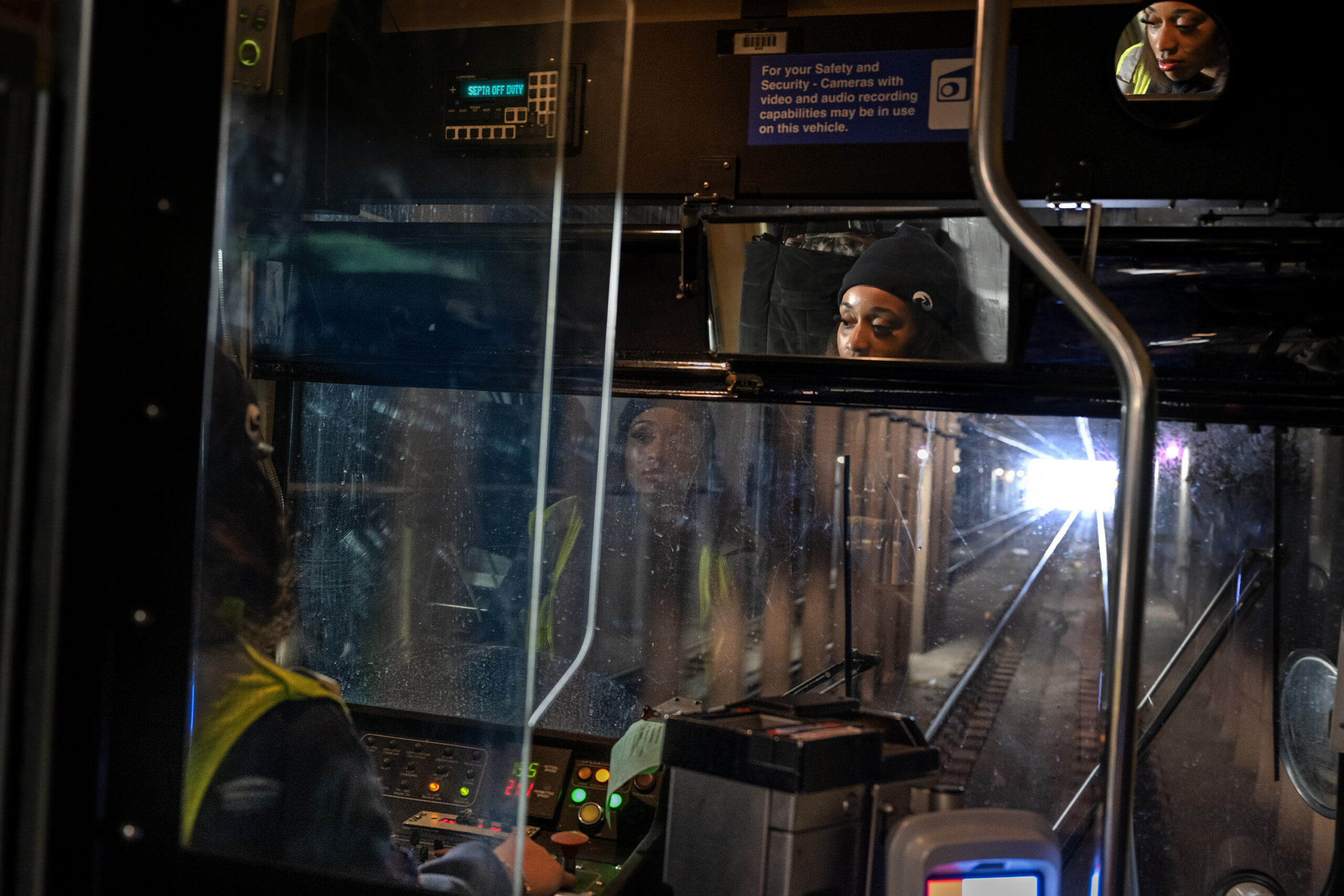
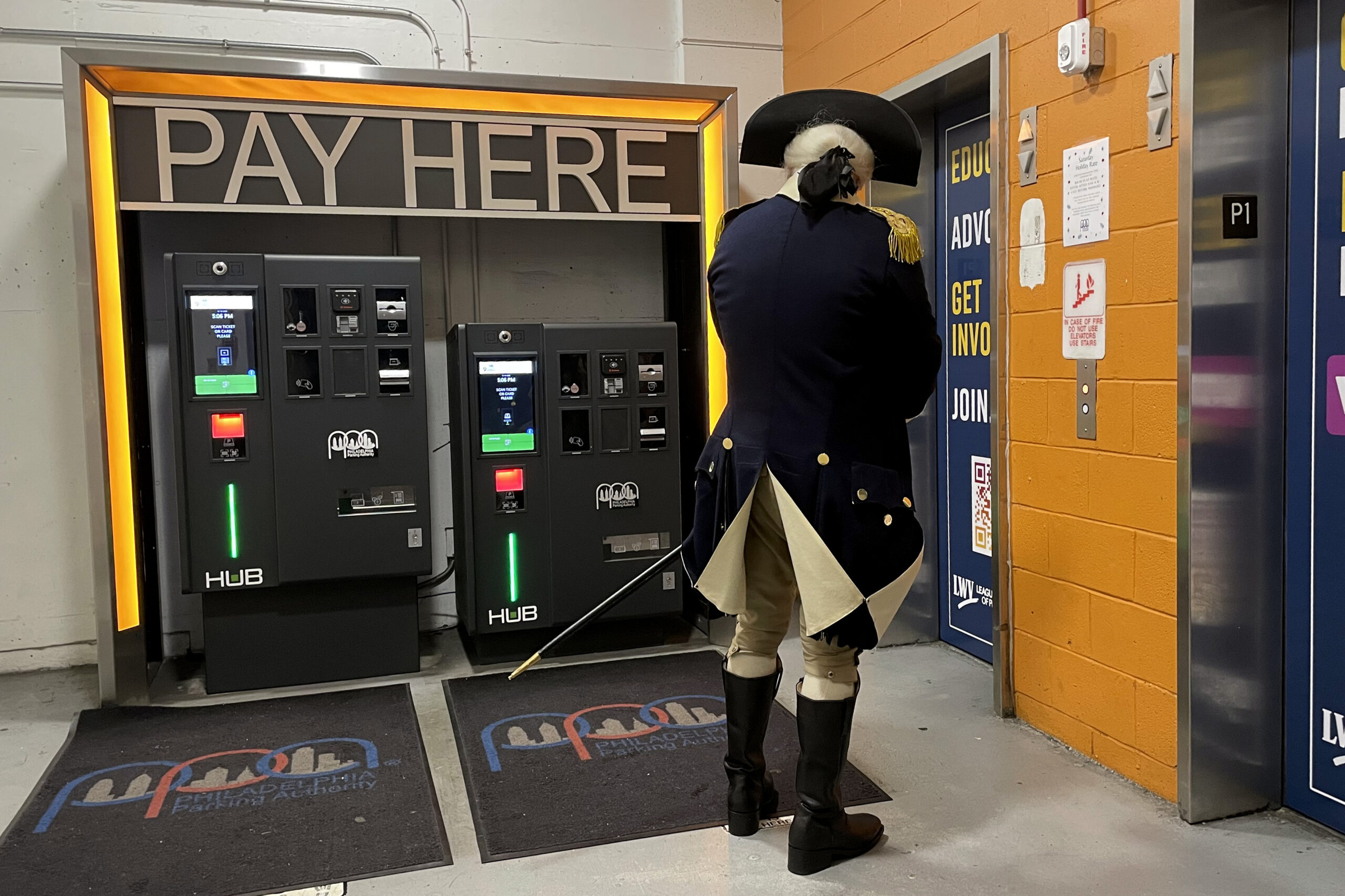
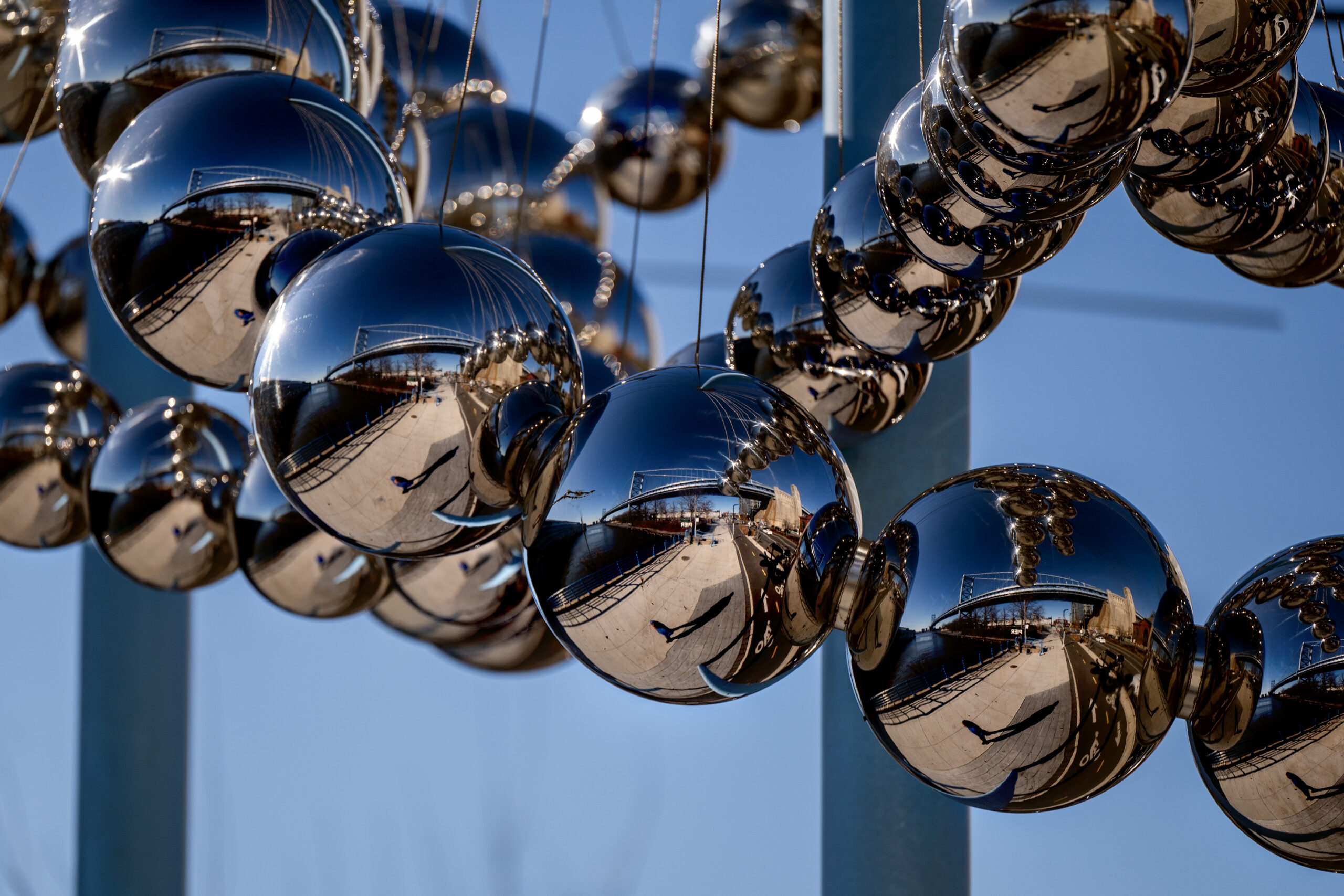
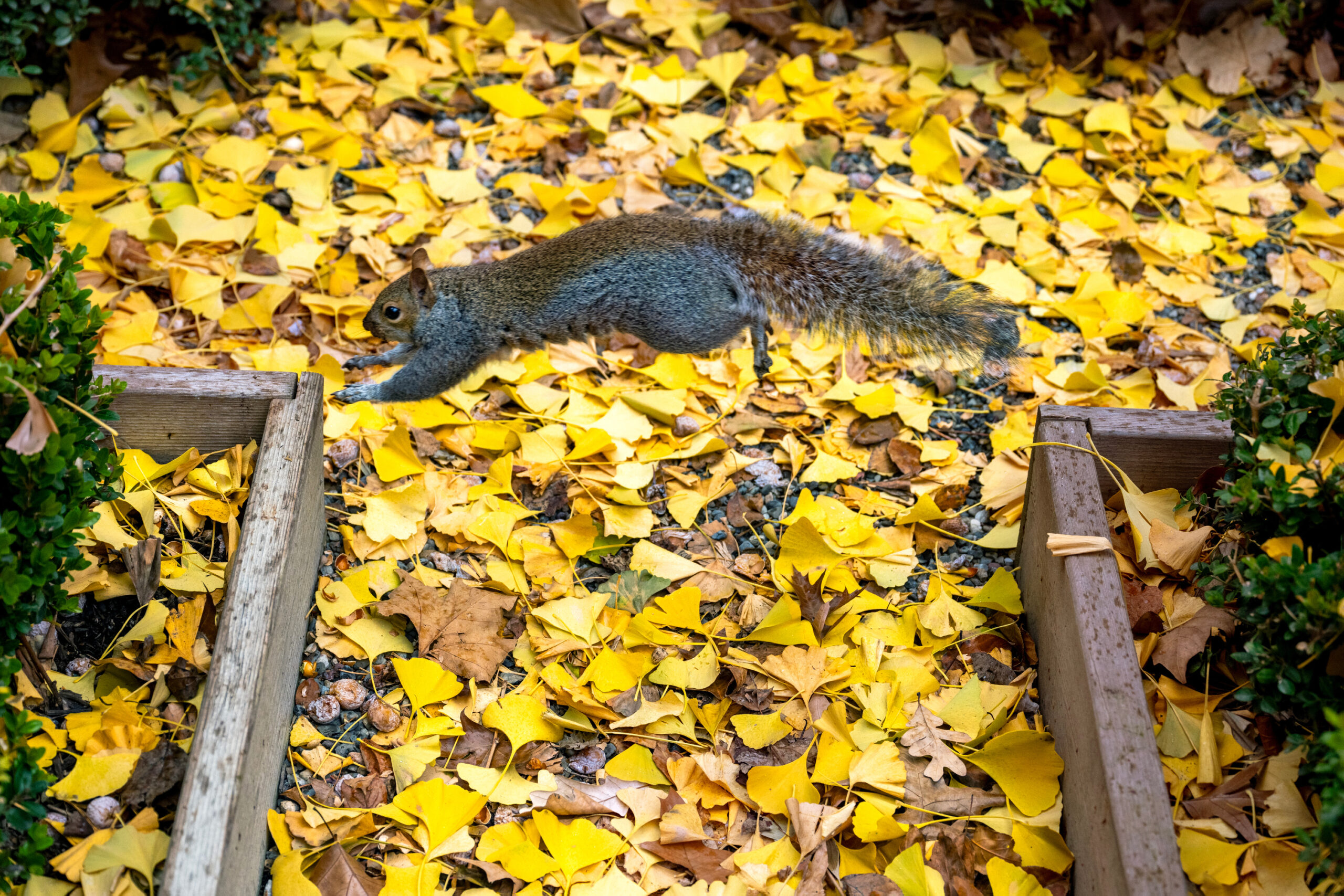
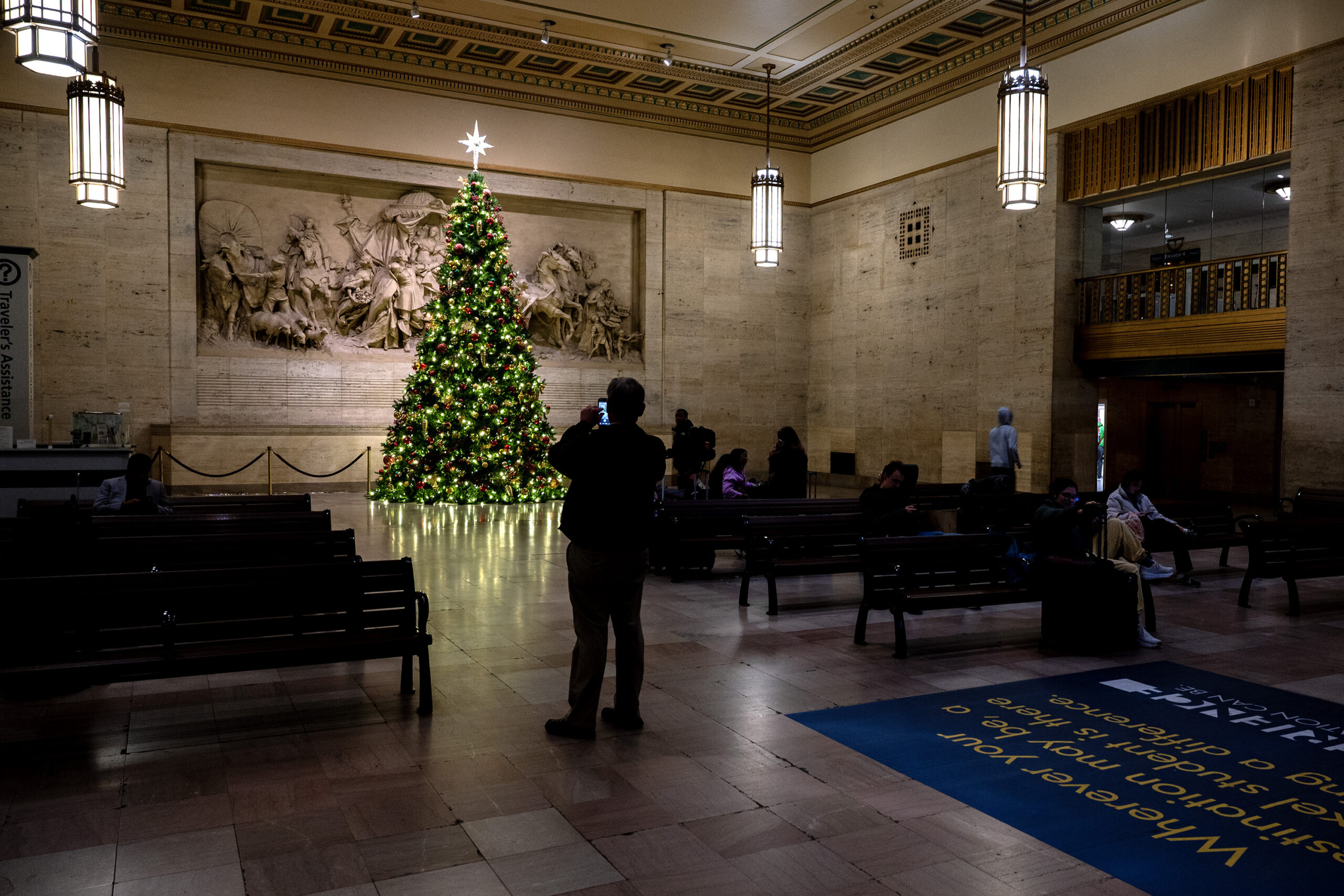
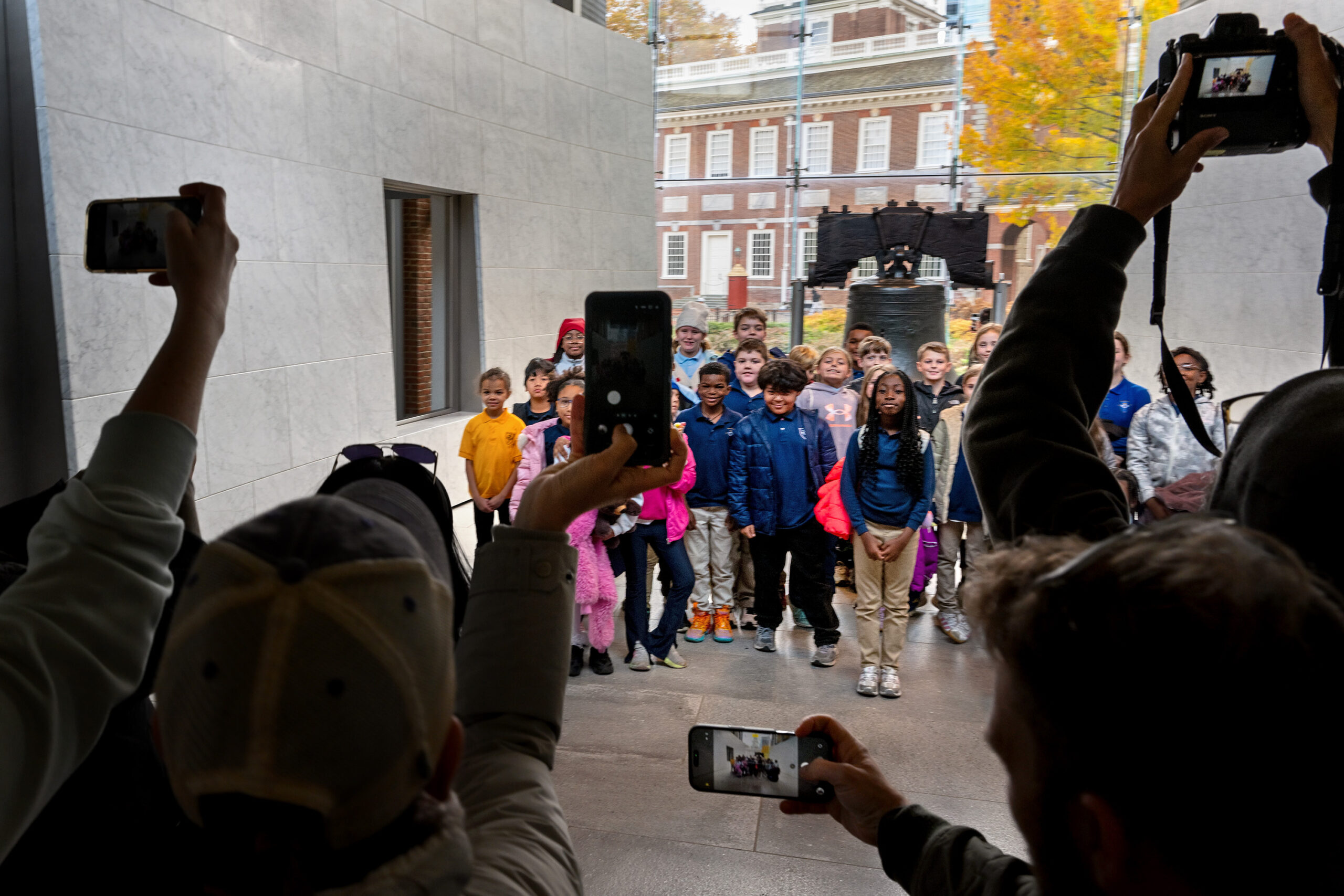
February 9, 2026: Walking through a corrugated metal culvert called the “Duck Tunnel,” a pedestrian navigates the passageway under the SEPTA tracks on the Swarthmore College campus. February 2, 2026: A light-as-air Elmo balloon rolls along a sidewalk in Haddonfield, propelled by the wind as Sunday’s heavy snow starts to turn to ice and sleet. January 26, 2026: The President’s House in Independence National Historical Park hours Jan, 22, after all historical exhibits were removed following President Trump’s Executive Order last March that the content at national parks that “inappropriately disparage” the U.S. be reviewed. The site, a reconstructed “ghost” structure titled “Freedom and Slavery in the Making of a New Nation” (2010), serves as a memorial to the nine people George Washington enslaved there during the founding of America.January 19, 2026: A low-in-the-sky winter sun is behind the triangular pediment of the “front door” of the open-air President’s House installation in Independence National Historical Park. The reconstructed “ghost” structure with partial walls and windows of the Georgian home known in the 18th century as 190 High St. is officially titled, “Freedom and Slavery in the Making of a New Nation” (2010). It is designed to give visitors a sense of the house where the first two presidents of the United States, George Washington and John Adams, served their terms of office. The commemorative site designed by Emanuel Kelly, with Kelly/Maiello Architects, pays homage to nine enslaved people of African descent who were part of the Washington household with videos scripted by Lorene Cary and directed by Louis Massiah. Deepika Iyer holds her niece Ira Samudra aloft in a Rockyesque pose, while her parents photograph their 8 month-old daughter, in front of the famous movie prop at the top of the steps at the Philadelphia Art Museum. Iyer lives in Philadelphia and is hosting a visit by her mother Vijayalakshmi Ramachandran (partially hidden); brother Gautham Ramachandran; and her sister-in-law Janani Gautham who all live in Bangalore, India.January 5, 2026: Parade marshals trail behind the musicians of the Greater Kensington String Band heading to their #9 position start in the Mummers Parade. Spray paint by comic wenches earlier in the day left “Oh, Dem Golden Slippers” shadows on the pavement of Market Street. This year marked the 125th anniversary of Philly’s iconic New Year’s Day celebration.Dec. 29, 2025: Canada geese at sunrise in Evans Pond in Haddonfield, during the week of the Winter Solstice for the Northern Hemisphere. December 22, 2025: SEPTA trolley operator Victoria Daniels approaches the end of the Center City Tunnel, heading toward the 40th Street trolley portal after a tour to update the news media on overhead wire repairs in the closed tunnel due to unexpected issues from new slider parts.December 15, 2025: A historical interpreter waits at the parking garage elevators headed not to a December crossing of the Delaware River, but an event at the National Constitution Center. General George Washington was on his way to an unveiling of the U.S. Mint’s new 2026 coins for the Semiquincentennial, December 8, 2025: The Benjamin Franklin Bridge and pedestrians on the Delaware River Trail are reflected in mirrored spheres of the “Weaver’s Knot: Sheet Bend” public artwork on Columbus Boulevard. The site-specific stainless steel piece located between the Cherry Street and Race Street Piers was commissioned by the City’s Public Art Office and the Delaware River Waterfront Corporation and created and installed in 2022 by the design and fabrication group Ball-Nogues Studio. The name recalls a history that dominated the region for hundreds of years. “Weaver’s knot” derives from use in textile mills and the “Sheet bend” or “sheet knot” was used on sailing vessels for bending ropes to sails. November 29, 2025: t’s ginkgo time in our region again when the distinctive fan-shaped leaves turn yellow and then, on one day, lose all their leaves at the same time laying a carpet on city streets and sidewalks. A squirrel leaps over leaves in the 18th Century Garden in Independence National Historical Park Nov. 25, 2025. The ginkgo (Ginkgo biloba) is considered a living fossil as it’s the only surviving species of a group of trees that existed before dinosaurs. Genetically, it has remained unchanged over the past 200 million years. William Hamilton, owner the Woodlands in SW Phila (no relation to Alexander Hamilton) brought the first ginkgo trees to North America in 1785.November 24, 2025: The old waiting room at 30th Street Station that most people only pass through on their way to the restrooms has been spiffed up with benches – and a Christmas tree. It was placed there this year in front of the 30-foot frieze, “The Spirit of Transportation” while the lobby of Amtrak’s $550 million station restoration is underway. The 1895 relief sculpture by Karl Bitter was originally hung in the Broad Street Station by City Hall, but was moved in 1933. It depicts travel from ancient to modern and even futuristic times. November 17, 2025: Students on a field trip from the Christian Academy in Brookhaven, Delaware County, pose for a group photo in front of the Liberty Bell in Independence National Historical Park on Thursday. The trip was planned weeks earlier, before they knew it would be on the day park buildings were reopening after the government shutdown ended. “We got so lucky,” a teacher said. Then corrected herself. “It’s because we prayed for it.”
I’ve never arrived to Exton’s Malgudi Cafe and not found a line out the door, whether for a late-night dinner or a blizzard-weekend brunch. That initially surprised me considering Malgudi appears at first glance to be an unassuming restaurant in a Chester County strip mall.
But this cafe is a special place, not only because it’s one of the region’s few Indian restaurants dedicated to vegetarian cooking, but because it may also be the only one focused specifically on the cuisine of the city of Bangalore, in the South Indian state of Karnataka.
I have loved virtually everything I’ve ordered here, from the crunchy stuffed pani puri puffs with sour-and-spicy green mint water to pour inside, to the lacy-crisp crepe roll of its onion rava dosa. But for a true immersion into the homey essence of Malgudi, which was launched in 2023 by four South Indian families, dive into a tray of bisi bele bath.
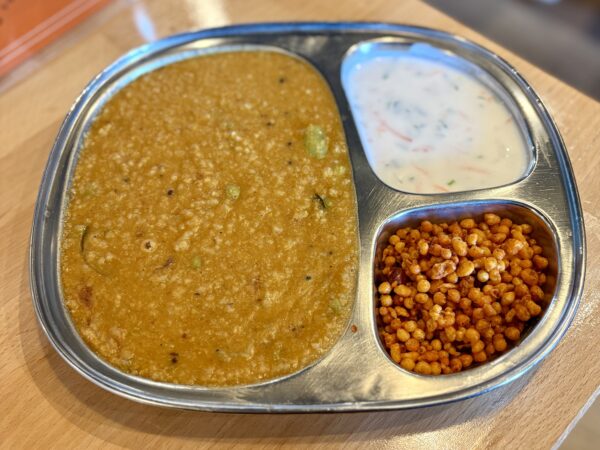
Known by its loyal customers as “Triple B,” this Karnataka comfort classic is a soulful stew of rice and toor dal (split pigeon peas) that are cooked down with seasonal vegetables until they essentially melt together into a soothing porridge. While the word “bisi” means “hot” in Kannada, this one-pot dish is not fiery so much as it is vivid with fragrant spice — tangy with tamarind and tomatoes then flared with the aromatics of Malgudi’s house masala, a punchy blend of dried red chilies, cinnamon, cloves, and coconut ground fresh. Served hot on a stainless-steel thali tray, there are sides of tart raita yogurt and crunchy boondi pastry beads to add more textures and flavors. On the off chance they’re already out of Triple B (as they were on my first visit), go for the khara pongal porridge of yellow moong lentils cooked down with cumin, cashews, chilies, and curry leaves. Malgudi Cafe, 10 W. Lincoln Hwy., Exton; 484-874-2124, malgudicafe.com
— Craig LaBan
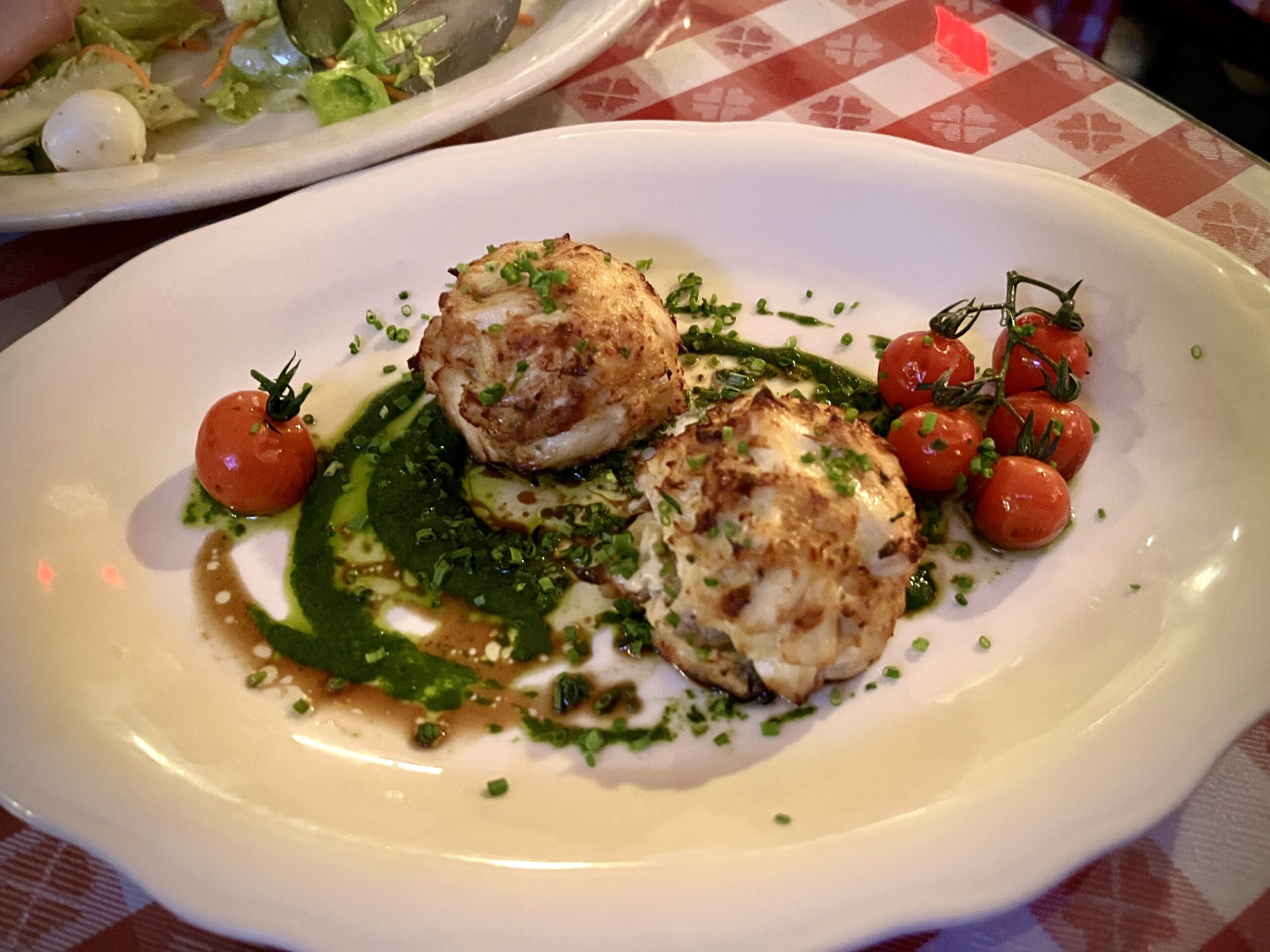
Crab cakes at the Bomb Bomb, the classic Italian seafood joint revived by chef-owner Joey Baldino in deep South Philly.
Crab cakes at Bomb Bomb Bar
There’s a loose guideline followed by many people who dine out a lot: Get the most adventurous things on the menu. They’re often the best reflection of the kitchen’s passions.
So it was with a little sheepishness that I ordered, among other items, the “classic crab cake” at Bomb Bomb Bar, the deep South Philly institution that Zeppoli and Palizzi Social Club chef-owner Joey Baldino revived last fall. Crab cakes are frequently delicious, but they are also extremely common and seldom edgy, especially next to, say, whole Dungenesse crab and mom’s stuffed calamari.
But I’ll be forever content with my decision-making, for chef Max Hachey’s crab cakes are maybe the best ones I’ve ever had — a paean to blue crab, simply treated. To make them, Hachey combines crab meat from three different parts of the crab with reduced, onion-infused cream plus Dijon mustard, roasted-garlic aioli, chives, lemon zest, egg, and some crumbled Club Crackers (“just a few to held hold it together,” Hachey says). The mixture is scooped into dumpling-sized parcels, brushed with butter, then broiled. The cakes are plated, two to an order, on top of a swirl of basil vinaigrette, then garnished with confit cherry tomatoes still clinging to their crispy vines.
The meal at Bomb Bomb was full of hits, from the zippy antipasto salad to the oil-slicked Italian tuna spaghetti and the lobster and shells in a blush sauce, not to mention those torpedoes of sausage-stuffed squid doused in deep-red gravy. We were too full for dessert, but I didn’t feel so bad skipping it, as it was about as approachable as it gets: an ice cream sundae. Bomb Bomb Bar, 1026 Wolf St., bombbombbar.com
— Jenn Ladd
Goat in spicy scallop creole at a recent Honeysuckle x Kabawa collaboration dinner in Philadelphia.
Goat with spicy scallop creole at Honeysuckle x Kabawa popup
After eating an extremely gamey Kashmiri goat curry in high school, I had given up eating goat. I use the past tense because more than a decade later, I have relented on my goat fast. Last week, North Broad Street’s Honeysuckle restaurant hosted a popup with chef Paul Carmichael, who runs Kabawa in New York City’s East Village and presented some of his signature Caribbean dishes.
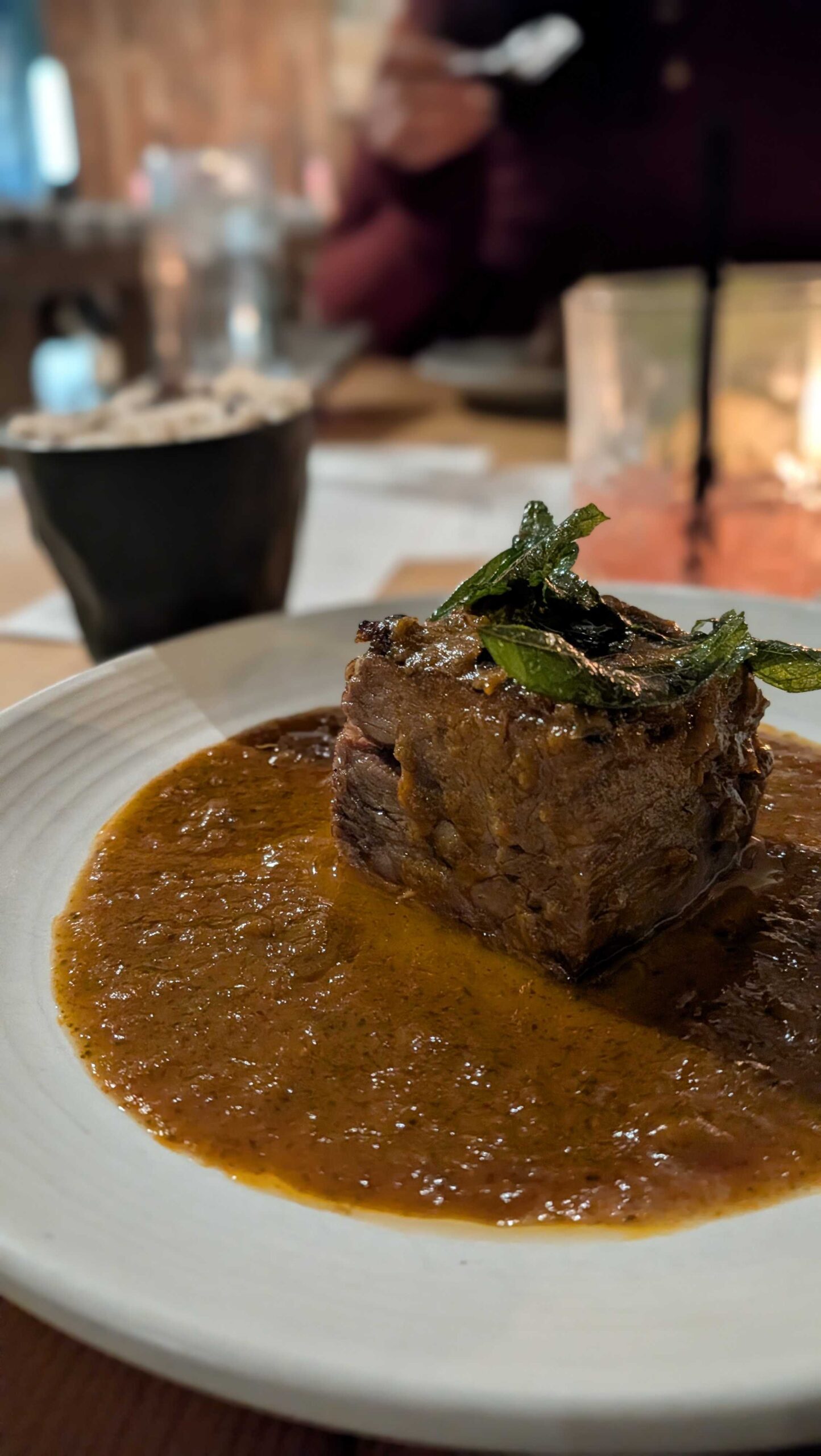
The goat shoulder was a perfect cube of meat, slow-cooked and succulent, bathed in a fiery gravy of habaneros and dried scallop. Glistening like a crown on top of the cube were fried curry leaves. It was absolute perfection, complemented beautifully by the collaborative dessert by Carmichael and Honeysuckle chef-owners Omar Tate and Cybille St.Aude-Tate: a decadent, mousse-y Marquise au Chokola dessert with rum, chocolate, dulce de leche, and djon djon — a rare mushroom from Haiti. Honeysuckle Restaurant, 631 N. Broad St., 215-307-3316, honeysucklephl.com
I invited two Inquirer journalists to discuss the submitted question, which ended with some strong judgments.
Have a question of your own? Or an opinion? Email me.
Evan Weiss, Deputy Features Editor
This week’s question is a question and a story…
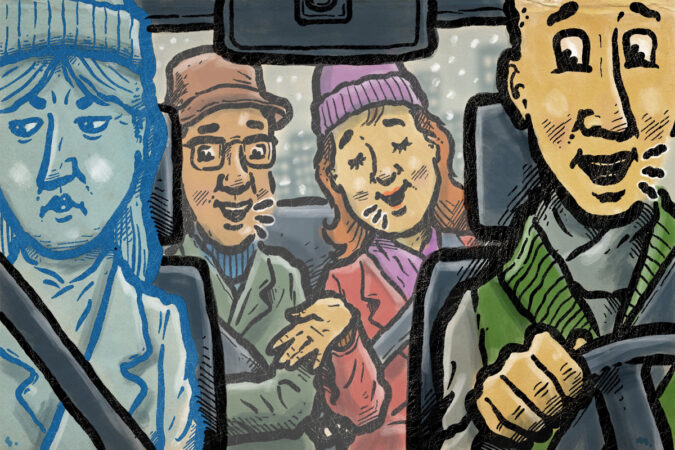
A friend and I were waiting for Regional Rail for Center City when the announcement came that the train was canceled. It being freezing weather, I asked other passengers what their transit apps were saying, and what their plans were. A man said he was planning to drive to Center City, and his car was parked in the lot. Before I could stop myself, I asked for a ride. His wife did not like the idea, giving a wide-eyed look, but the man agreed after hesitating.
The husband was very nice, as was the car, but the wife was irritated the whole way into the city — she never said hi or introduced herself and when we tried to include her in the conversation, she sat silent.
Was it weird for me to ask for a ride or was it weird for her to treat us like a nuisance?
Beatrice Forman, Food and Dining Reporter
I am having a lot of thoughts and most of them feel unkind so I’m going to let Stephanie take the lead on this one.
Stephanie Farr, Features Columnist
I think it’s highly unusual to ask for a ride from a stranger. From a young age we’re told not to get into cars with strangers or, once we get old enough, not to give strangers a ride. That being said, we all take Uber these days so the rules have changed a bit.
I think asking for a ride may have put the man in an awkward situation where he felt obligated to help you, but I think the bigger issue is you saw he had his wife with him and you did not ask her if it was OK too. You shouldn’t have just assumed the husband speaks for both of them. I would have been a bit offended too if I was her.
Beatrice Forman
Oh, you’re so much nicer than me.
Outside of the absolute stranger danger of it all (whose to say that man and his wife aren’t Bonnie and Clyde 2.0?), I think it’s absolutely bonkers to assume a stranger would give not just you, but a friend — double the imposition — a free ride when, as you pointed out, Ubers exist. The wife was probably stunned into silence by the gall of it all.
I’m all for the generosity of the human spirit and know that a village requires being a good villager, but a good villager knows when to read the room!
Stephanie Farr
Agreed, so our letter writer is the weirdo and the wife was totally in her right to treat them like a nuisance.
Beatrice Forman
Weirdo is such a strong word but yeah, total weirdo.
Stephanie Farr
They asked if it was weird!
A weirdo move, let’s say.
Beatrice Forman
My 2026 resolution was to be less of a hater and I do fear this question has set me back.
I do wonder what motivated the husband to say yes in this situation even though his wife seemed uncomfortable. Do either of you have any ideas?
Stephanie Farr
Some people have a hard time saying no, especially when they’re put on the spot in a moment of stress and see someone else in need.
Evan Weiss
In an ideal world, giving rides to people who need them sounds wonderful. It’s fair to say that safety is likely not something that presses on the husband’s mind as much as the wife’s. He may have just been trying to be kind without being empathetic.
Beatrice Forman
That’s fair! He seems like a nice guy and very generous. I guess he deserves, like, 10 “good person” points for the gesture. He does lose two though for not considering his wife in the moment.
Evan Weiss
More than 2!
Beatrice Forman
How many points are you docking, Evan?
Evan Weiss
I honestly can’t imagine not considering how my wife would feel in the moment. Or, worse, knowing how she felt and going through with it anyway (which is how it sounds like it went down). Minus 8?
It’s a good deed, but you’re not the only person doing it.
In this scenario, I actually think it’s the husband who’s most at fault.
Beatrice Forman
Ooooof you run a tight program, Evan.
Stephanie Farr
Nobody thought about the wife in this situation and that may be what ticks me off most of all.
Everybody is at fault but the wife.
Beatrice Forman
Mayhaps this man is the true weirdo, not our question asker.
I really do feel for the wife, and I don’t like that she comes off as rude and entitled in the scenario when in reality, everyone else was entitled. I also don’t think the couple owed the question asker more than the hospitality of the ride itself, if that makes sense? The wife didn’t say yes to this, so why is she required to make polite chit chat?
Stephanie Farr
Agreed — but I don’t think the couple owed the question asker anything, not even the hospitality itself.
One thing is for sure, this person and their friend better have offered the couple a few bucks at the very least for the ride.
Evan Weiss
The core of the question is an interesting one: When, if ever, is it OK to ask for a ride?
Stephanie Farr
When you know the person. Dead stop.
But even then there are rules.
Beatrice Forman
Only in an absolute and total emergency situation, like the apocalypse.
Stephanie Farr
Or right after an Eagles Super Bowl win in Center City, when if you don’t get out, you’re gonna stay in till the next morning.
Beatrice Forman
That constitutes an apocalypse-adjacent situation. We do sometimes light things on fire when we’re happy here.
Stephanie Farr
Very true. It’s part of our charm.
Evan Weiss
Any last words?
Beatrice Forman
Always, always think about your partner.
Stephanie Farr
And if someone has a partner, consider them a team when you ask something.
Also, don’t ask for rides from strangers. In Philly, if someone wants to give you a ride out of the kindness of their heart they’ll ask if you want one with an annoyed sigh.
We’ll show you a photo taken in the Philly-area, you drop a pin where you think it was taken. Closer to the location results in a better score. This week is all about Valentine’s Day! Good luck!
Round #20
Question 1
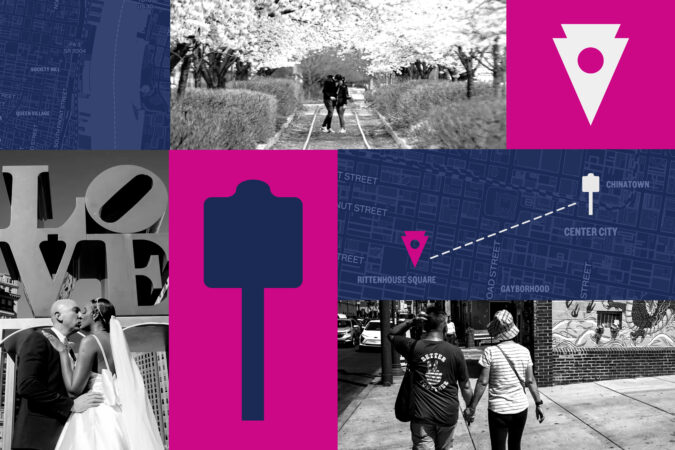
Where did this Valentine’s Day wedding take place?
Loading…
ClickTap on map to guess the location in the photo
ClickTap again to change your guess and hit submit when you're happy
You will be scored at the end. The closer to the location the better the score
Jessica Griffin / Staff Photographer
Pretty good/Not bad/Way off! Your guess was from the location.Spot on! Your guess was exactly at the location. Here's also where a random selection of Inquirer readers guessed.
Every year on Valentine’s Day, the city holds ceremonies for ten couples to get married or renew their vows in front of the LOVEsculpture. Time slots are reserved on the Parks and Recreation website.
Quiz continues after ad
Question 2
Where was this couple seen holding hands?
Loading…
Alejandro A. Alvarez / Staff Photographer
Pretty good/Not bad/Way off! Your guess was from the location.Spot on! Your guess was exactly at the location. Here's also where a random selection of Inquirer readers guessed.
This romantic stroll took place in front of a Chinatown mural.
Quiz continues after ad
Question 3
Where did this cherry blossom-filled kiss take place?
Loading…
Tyger Williams / Staff Photographer
Pretty good/Not bad/Way off! Your guess was from the location.Spot on! Your guess was exactly at the location. Here's also where a random selection of Inquirer readers guessed.
Springtime is right around the corner, which means the cherry blossoms will soon be blooming. This couple was photographed under the trees along Columbus Boulevard.
Your Score
ARank
❤️ Amazing work. You really love Philly geography!
BRank
❤️ Good stuff. You really love Philly geography!
CRank
C is a passing grade, but this quiz could use some love.
DRank
💔 D isn’t great. This quiz could use some love.
FRank
💔 We don’t want to say you failed, but you didn’t not fail.
You beat % of other Inquirer readers.
We’ll be back next Saturday for another round of Citywide Quest.
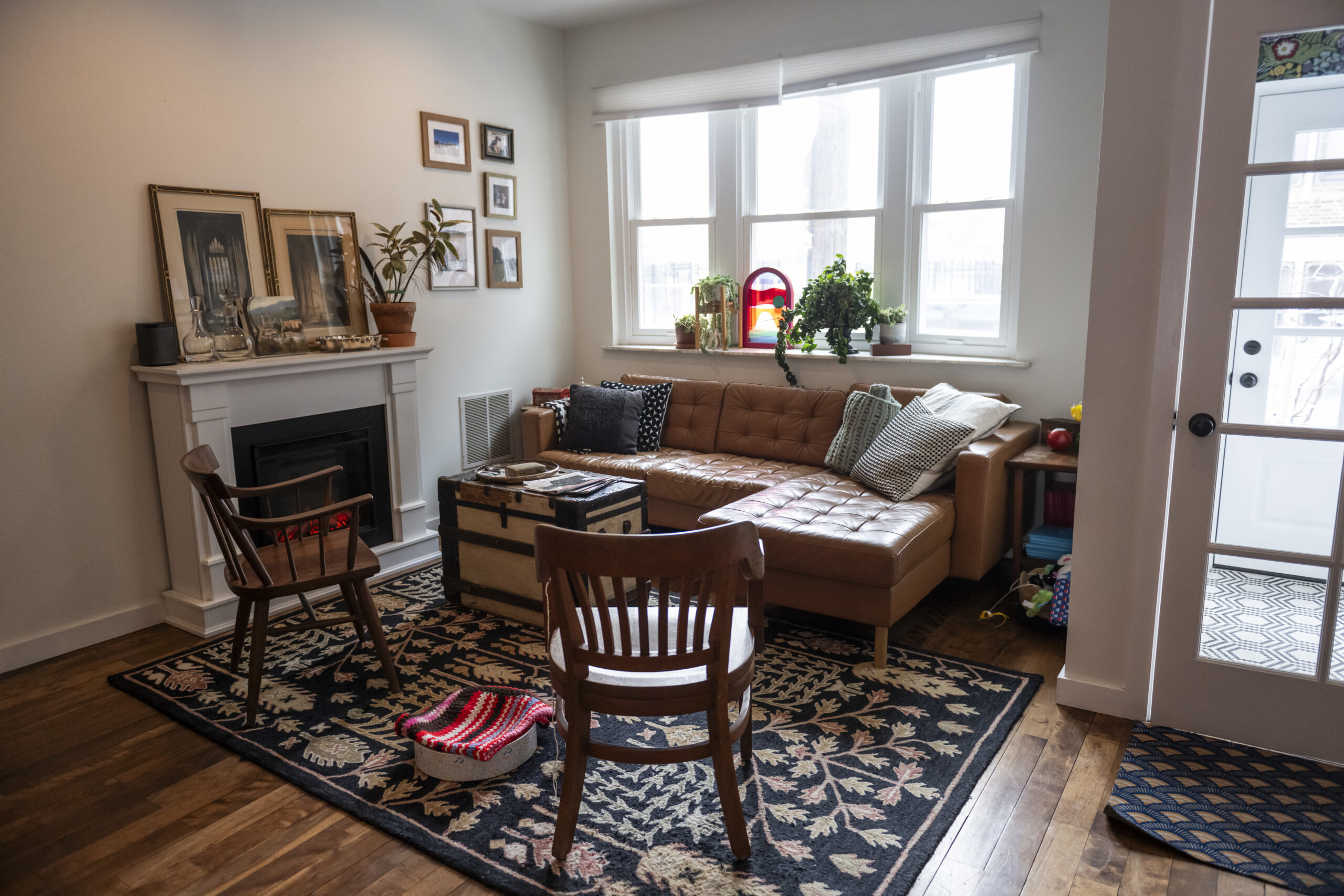
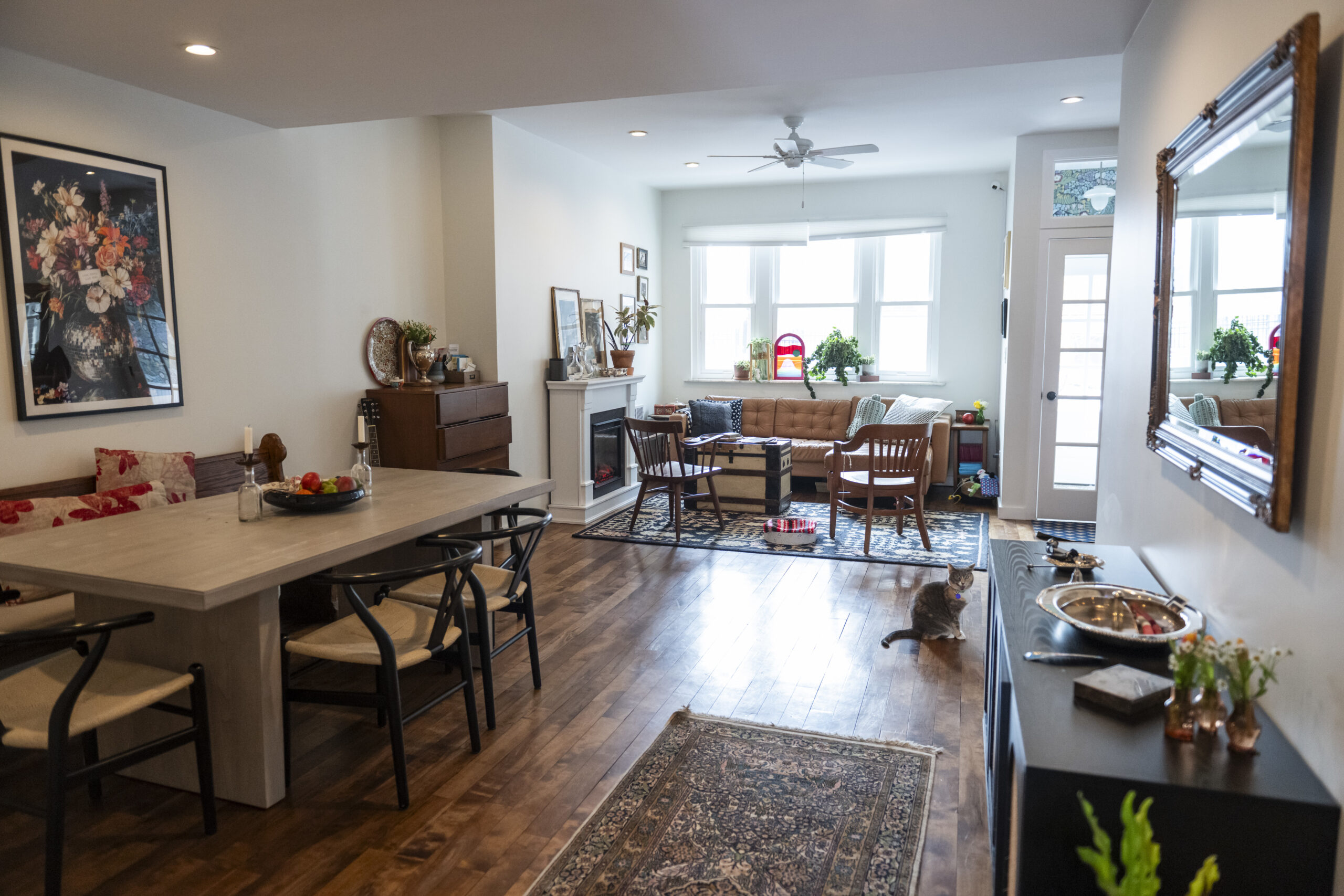
The house: A 1,700-square-foot townhouse in Passyunk Square with three bedrooms and two bathrooms built in 1915.
The price: listed for $725,000; purchased for $725,000.
The agent: Ashley Miele, Compass
The living area in the home in South Philadelphia.
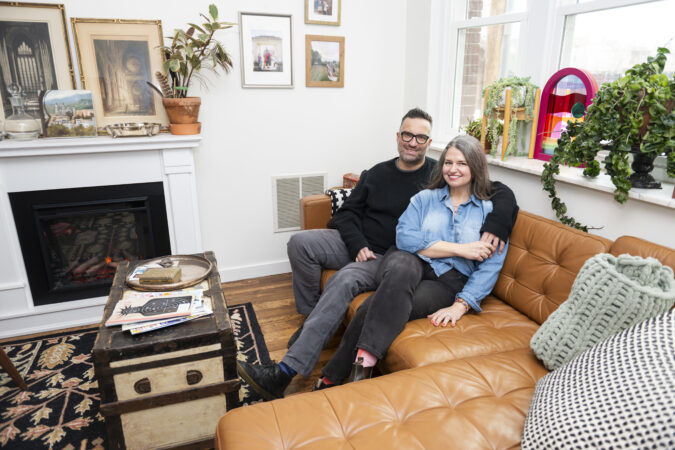
The ask: Catherine Wargo Roberts and her husband, Karsten Roberts, had no desire to leave Passyunk Square. They were already deeply rooted in the neighborhood, with two kids enrolled at the local school and a daily life that revolved around a few familiar streets. But they had grown tired of their mixed commercial and residential block. “We were very happy for new businesses to come into the neighborhood and thrive,” she said. The block had become “just a little bit busier … than we wanted.”
The search: In fall 2024, the family set off in search of a new house. They wanted more square footage, lots of outdoor space, and an unfinished basement. “Everybody in Philadelphia wants a finished basement, but everybody’s basement floods,” Wargo Roberts said. “I want an unfinished basement so that if it fills with water, I’m not freaking out.” They also needed to stay in their kids’ school catchment.
The couple only looked at two homes. The second home was listed as a private sale.
Their list narrowed the search to just two houses. One was north of Washington Avenue, which Wargo Roberts said “felt like a whole different ballgame,” even though it was close to the kids’ school. It also didn’t have any outdoor space.
The other house they had to wait for. An agent friend had given them a heads-up that it would be on the market in a few months. The couple grabbed the first viewing available on the first day it was open for a private sale.
The appeal: Inside, Wargo Roberts was immediately drawn to the home’s size and layout. It was 250 square feet larger than their previous home, and most of the extra space wasin the first-floor living area, which Wargo Roberts appreciated. “I didn’t care about a big bedroom,” she said. “That’s not something I need.”
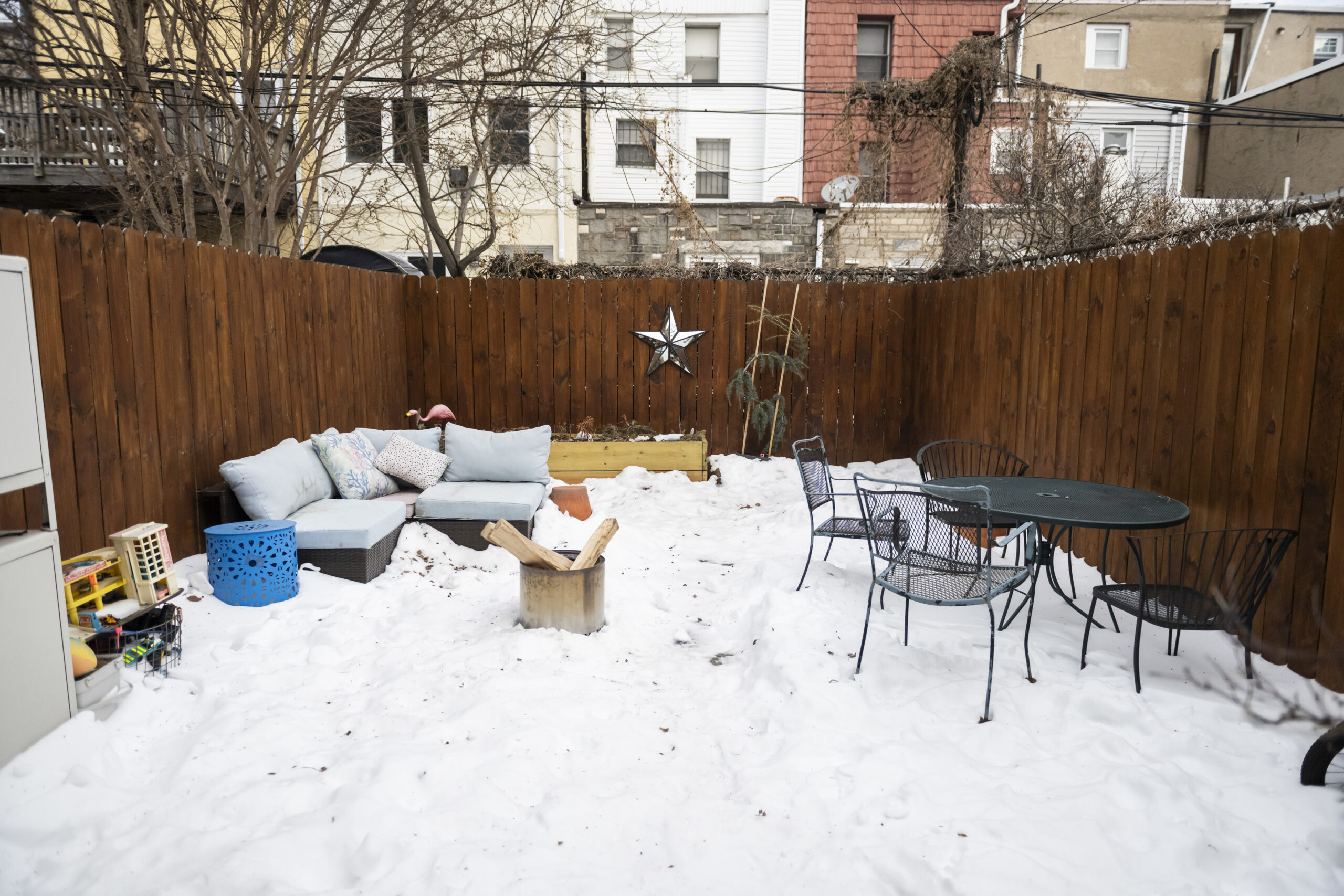
Outside, the house offered outdoor space that felt special: a large backyard, plus a deck that connects to the master suite on the top floor and a second deck above it. “Most people walk in our backyard and are like ‘holy s—,” Wargo Roberts said.
Wargo Roberts’ favorite thing about their new house? The giant backyard.
The deal: The house was listed for $725,000. The couple submitted a full-price offer the same day they saw it. It was within their budget, and “the comps supported it,” Wargo Roberts said. The next night, they learned their offer had been accepted.
The inspection revealed a failing sewer line and a bowing brick facade. The sellers agreed to a $7,000 credit for the sewer repair but declined to cover the estimated $8,000 cost of stabilizing the front wall. “They played hardball,” Wargo Roberts said. “They knew we wanted the house.
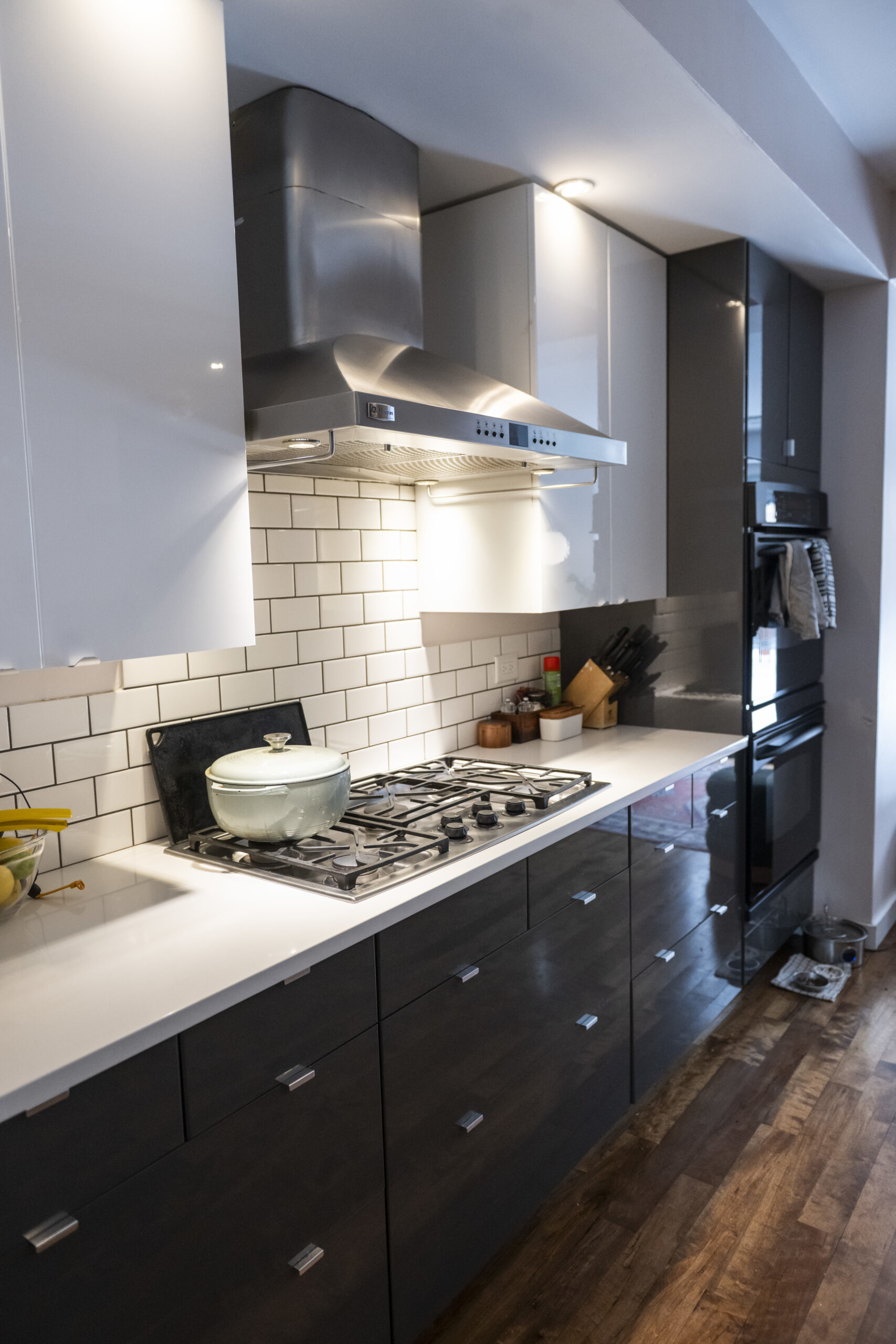
The kitchen in Catherine Wargo Roberts and Karsten Roberts home in South Philadelphia.
The money: The couple’s path to a $725,000 home began more than a decade ago in San Francisco. In 2012, they bought a condo for $562,000 with help from Wargo Roberts’ parents. “We never would have been able to do that without help,” she said. They sold the condo in 2017 and walked away with $330,000. They used $235,000 for a down payment on their first Philadelphia home, which cost $470,000.
To purchase their current house, they used an interest-free bridge loan to cover the down payment while they waited for their old house to sell. “It kept me up at night every single night for 30 days,” Wargo Roberts said. “Because if the house you’re selling doesn’t sell in a certain amount of time, the interest ramps up.” Nine days after it went on the market, their house sold for $612,000, netting them $360,000. They put $300,000 toward the down payment on the new house — roughly 41% of the purchase price. Their monthly mortgage payment is $3,600. “That’s only possible because we had a giant down payment,” Wargo Roberts said.
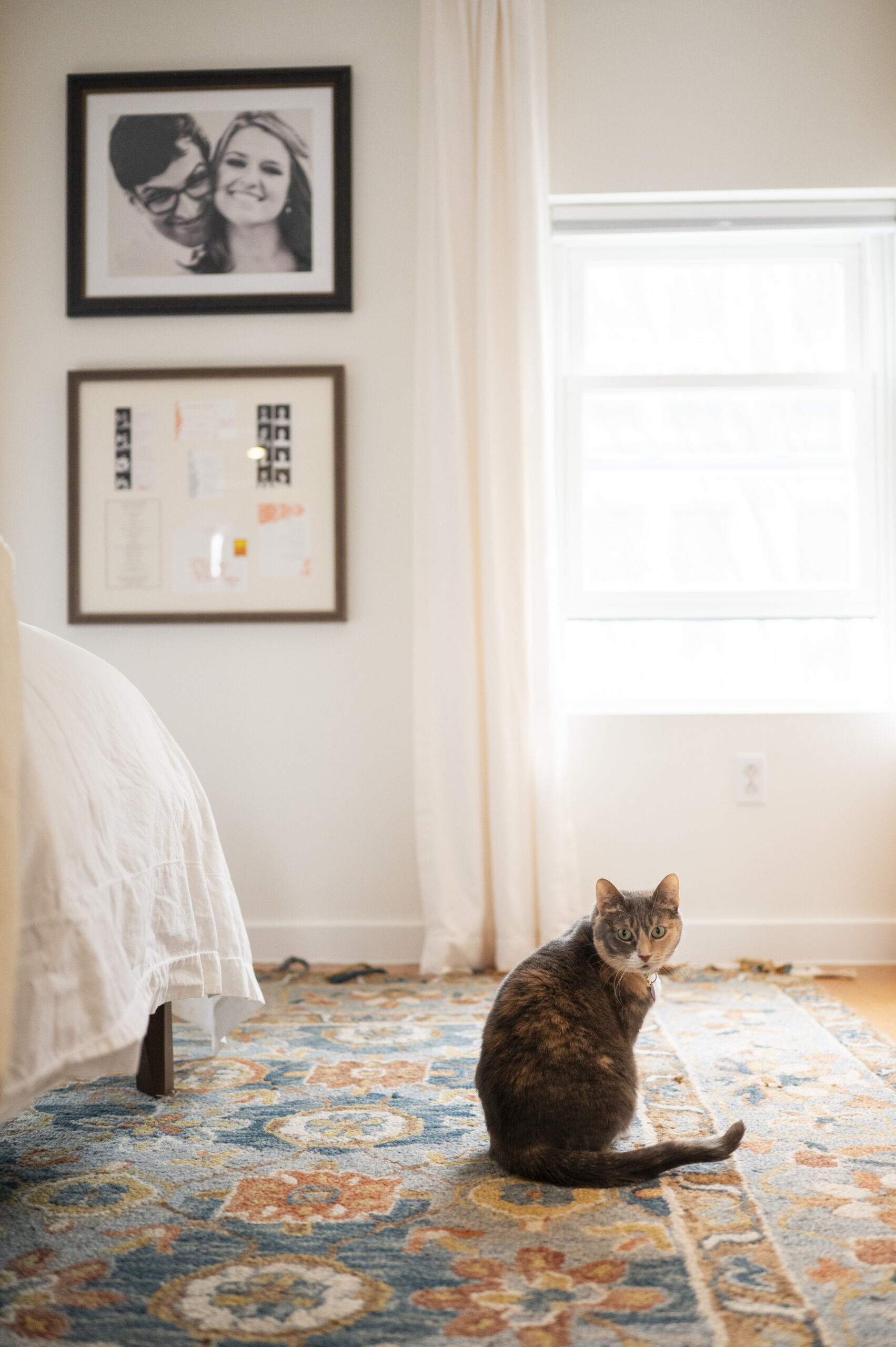
Marzipan the cat sits in the master bedroom in the home of Catherine Wargo Roberts and Karsten Roberts.
The move: The family closed on their new house in April, but the sellers continued to live there for free until June, when they moved to Florida. Becoming a landlord for six weeks wasn’t worth the hassle, Wargo Roberts said. The sellers, she added, “got a sweet deal.”
She did, however, request a security deposit. “What if they decided to chainsaw the fridge in half?” she said, laughing. “You have to protect yourself to some degree.”
Because of the delayed closing, the family had time to prepare. They put seasonal items, books, and decor into storage to reduce moving costs and packed everything else themselves. The kitchen was the only thing they outsourced. “It’s a huge pain,” Wargo Roberts said.
A friend with a pickup truck moved the family’s plants over, and Broad Street Movers took care of the boxes and furniture. “It’s always the skinniest dudes that you’re just like, ‘I can’t understand how you walk, much less carry my couch up three floors,’ but they did it,” Wargo Roberts said.
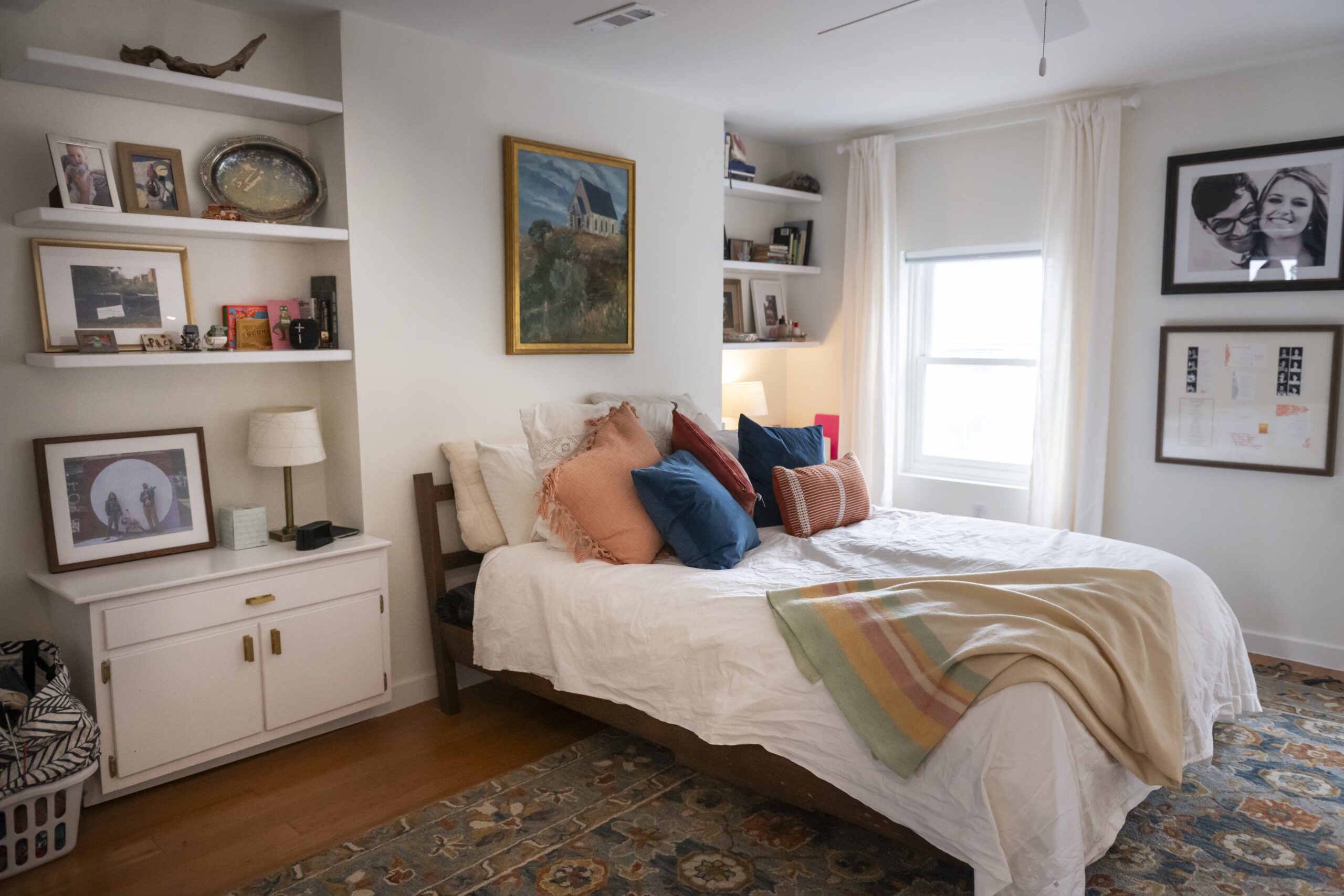
The couple installed custom built-ins to cover up a neon wall in the master bedroom.
Any reservations? “We probably overpaid a little bit,” Wargo Roberts said. “I would’ve loved to get it for $700,000 instead of $725,000.”Still, she is happy with the outcome. “We’re in a house that I feel pretty certain we’ll live in until our kids are out of high school,” she said.
Life after close: Wargo Roberts wasted no time making changes. She painted multiple rooms and tackled one feature she couldn’t live with: a neon-lit wall in the master bedroom. “I called it the portal to another dimension,” she said. “It was so weird.” They used money they had set aside from the sale of their previous home to install custom built-ins on either side of the bed, covering it completely.
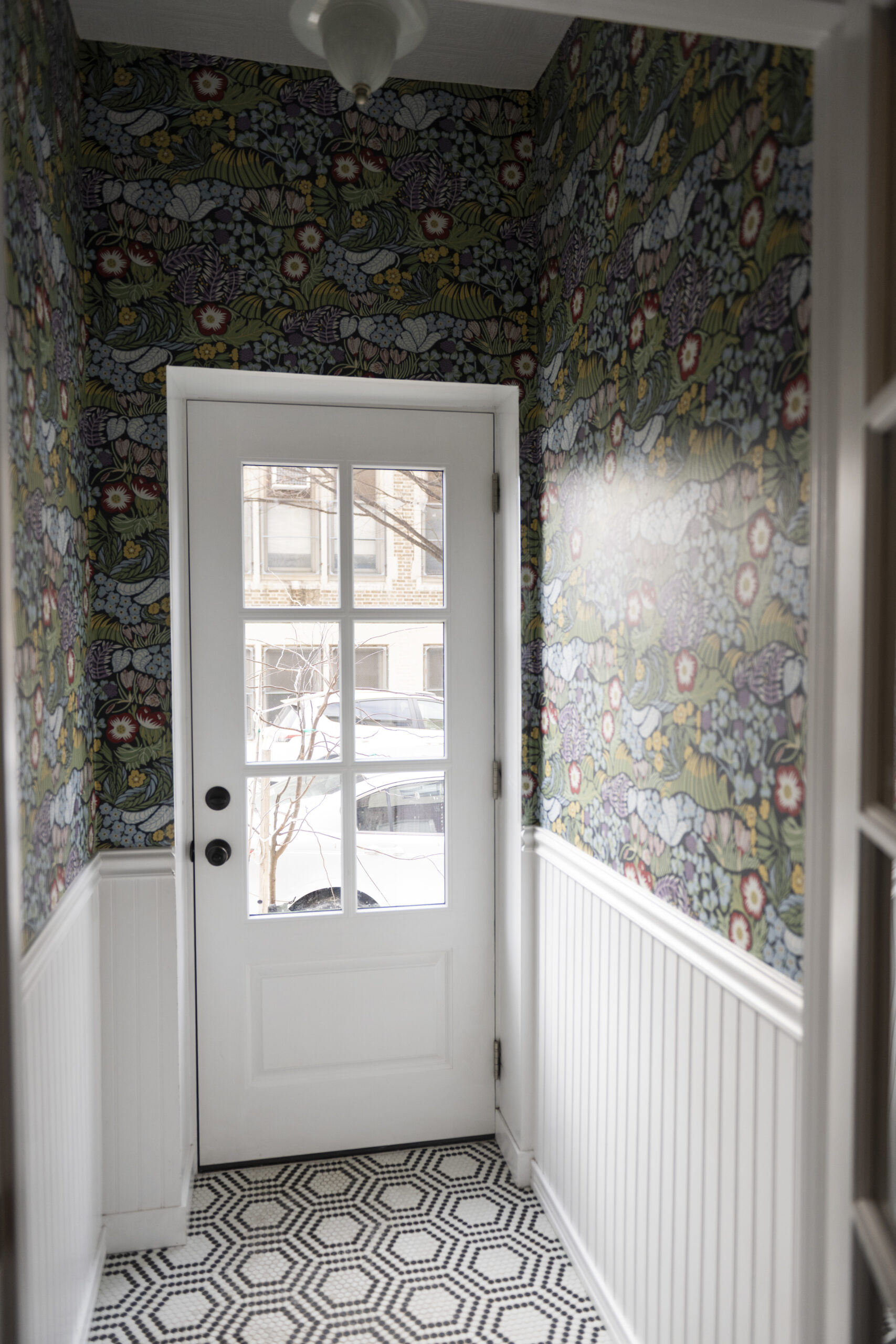
The traditional South Philly vestibule that the couple rebuilt after moving in.
They also rebuilt a traditional South Philly vestibule in the front of the home. “It was a vanity project for sure,” Wargo Roberts said, “But I just really wanted one.” She doesn’t regret it. “Best money I ever spent.”
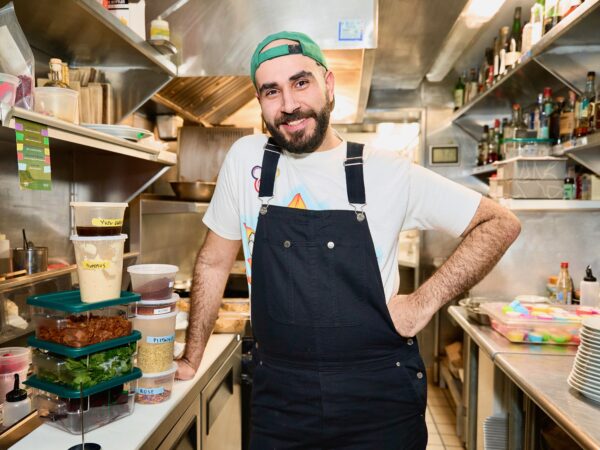
Miled Finianos grew up between Miami, Fl. and Zgharta, Lebanon, until he moved to South Philly in 2019. The 30-year-old rising chef, who runs Habibi Supper Club and lives in an East Passyunk rowhouse with a lovely modern kitchen, where his recipe ideas come to life.
Within two years of its launch, Finianos has reimagined what chef-led dinners can look like in Philly with his exciting weekly concept Habibi Supper Club, an underground supper club in Philly serves the “love language for Arabs” with a big Lebanese feast. Loyal diners and first-timers consistently book out his supper club as soon as he drops the reservation link on social media for five to six course menus showcasing the flavors of his roots — think spreads of shish barak, warak enab, and kibbeh.
“Having left Lebanon 14 years ago, and I would say it’s important to me to preserve the recipes and the experiences that are attached to these dishes because a lot of Levantine culture is passed down by word-of-mouth,” he said. “So when the mouth gets farther away, it becomes hard to preserve the culture. Habibi Supper Club has brought me closer to my culture than ever before — that’s what fuels me to keep going.”
Here’s how Finianos would spend a perfect day in Philadelphia. “Habibi has no scary Sundays if I follow this exact itinerary,” he added.
8 a.m.
I used to wake up earlier when I was still at my corporate job, but now I sleep in a little longer to make up for some of the later hours of my supper clubs and workshops. Now I can sit in bed, check emails, messages, and socials — I’m a notorious quick responder; it kills me to leave things overnight.
9 a.m.
I’m out the door, dressed for the weather, and walking up Passyunk Ave to find coffee. We are blessed in South Philly with a plethora of coffee shops, each better than the next. My rotation is usually between Herman’s, Shot Tower, or Rival Bros. Today we’re hitting up Shot Tower for an iced americano — no matter the temperature outside.
Miled Finianos’ perfect Philly day includes a stop to see friend/chef Kenan Rabah at Majdal Bakery.
10:30 a.m.
After sipping on coffee and reading the newspaper at Shot Tower, it’s time for breakfast. The only breakfast spot for me is Majdal Bakery, where my friend [and owner/chef] Kenan [Rabah] is slinging the flavors I grew up with. (This is a public plea for him to bring back the za’atar manouche with makdous.) With Fairouz playing, I feel like I’m back home [in Ehden, Lebanon] for a bit. He won’t let me leave without trying something one of his new pastry inventions and I will always happily say yes.
11:30 a.m.
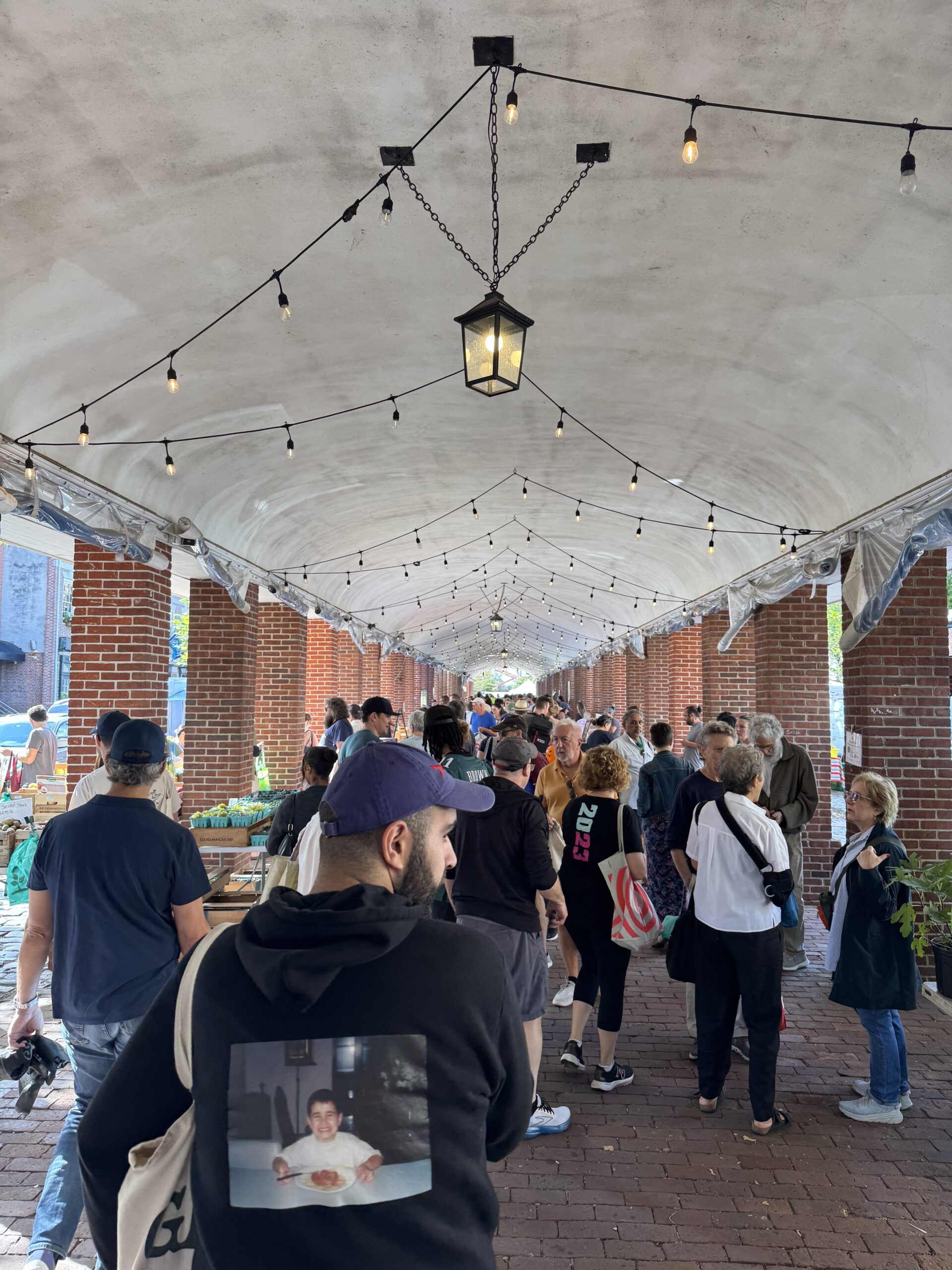
Sundays in Queen Village means the farmer’s market at Headhouse is in full swing. Armed with my tote and a debit card, I’ll peruse the market goodies, often while on FaceTime with my teta (grandmother) or mother. I show them what’s in season — but low-key, I’m farming for ideas of what they would do with what I buy. Then I head home with my goods and plot some personal menu ideas, along with some Habibi [Supper Club] R&D for whatever event is coming up.
1 p.m.
Hunger hits again, and lately I have been on a Vietnamese kick. I walk back up to either Pho Ha or Cafe Diem for a dry rice noodle bowl to satisfy that craving. We really are so lucky to have such a diverse authentic food scene in South Philly.
Miled Finianos visits the Headhouse Square farmers markets.
2:30 p.m.
Now, assuming I don’t have prep work to do, I’ll head back down Passyunk Ave, find another coffee, and sit with my laptop. If the weather is nice, I’ll park myself outside and people watch, daydreaming about a car-free Passyunk Square. This is the time I think of menu ideas, work on future events, and just soak in gratitude for being able to do this as a full-time gig.
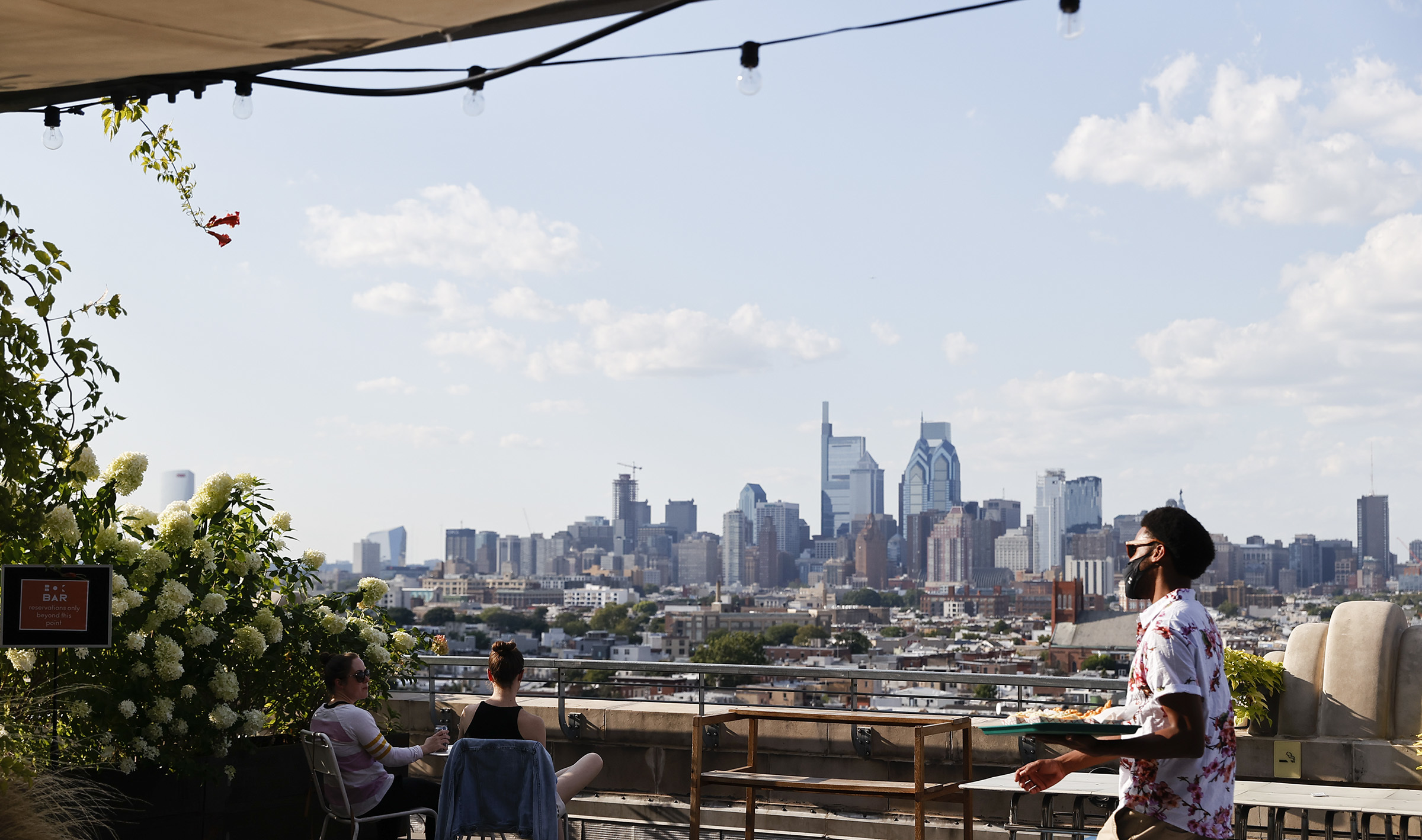
View of Center City Philadelphia from the BoK Bar atop the BOK building in South Philadelphia on Thursday, August 5, 2021.
6 p.m.
Now, my social itch is itching. If this is a day off, I usually have plans with a friend — or 12. I like to keep it local, so drinks and snacks at Grace & Proper and Royal Tavern. Or if it’s open, Bok Bar, my favorite place in Philadelphia — the view of the city paired with the delicious pop-up of the month just makes my heart full.
9 p.m.
One last drink at my fave dive bar, The Jim. I have been ending my nights with a nice shot of Fernet Branca because anything else gives me acid reflux — that’s just too much information to be sharing, but oh well.
As you can probably tell now, the perfect day for me is devoid of any chores or errands because that’s what Mondays are for.
Shelley R. grew up as a gender-nonconforming kid, and she loves the queer and trans community she’s built in Philadelphia — where sometimes she can feel like the seventh wheel when it’s dinner time and the entire party leaves to go on a group date together.
But she’s also ready for something new in romance. Shelley, who The Inquirer is referring to by her first name and last initial because she doesn’t want her experience to reflect on her employer, is a “nontraditional person seeking normal love.”
A 31-year-old trans woman, she just wants a nice, monogamish boyfriend.
Raised by hippies in Boston who were devotees of New Age spirituality, Shelley was assigned male at birth, and as a teenager came out as gay.
“I’ve never had the choice to just be like, ‘This is my boyfriend. He loves me. We live together and we’re hosting a little board game night,’” Shelley R. said.
As a young adult, she attended Hampshire College, a small, very progressive school in Western Massachusetts, where she started identifying as trans. After graduation, she moved to Philadelphia, where she underwent gender-affirming surgery as part of her transition. She describes herself now as a “post-op” trans woman, and told The Inquirer, “I’ve had all that work done. I am essentially the same as a cisgender woman in most of the ways that count, except for one big one: fertility.”
She now lives in West Philadelphia and is seeking what she describes as “typical love.”
“I just want a guy who will commit,” she said.
The following, as told to Zoe Greenberg in interviews and a letter, has been edited for length and clarity.
On being a “post-op” trans woman on the dating apps in Philly
If I don’t mention I’m trans on my profile, then I’ll get a lot of men who will immediately turn me down when they learn I’m trans, either due to prejudice or because they value being able to get their future wife pregnant. The “trans panic” can also be dangerous, if a man feels deceived. People get murdered or assaulted this way.
If I just mention that I’m trans on my profile, with no medical information, many will make incorrect assumptions about my genitals, which could be a deal-breaker for them one way or the other.
If I say I’m “post-op trans,” then I’m putting on my dating profile, “BY THE WAY, I HAVE A VAGINA!!!” which makes me come across as very focused on sex. Most men on dating apps already assume that no matter what I say I’m looking for, I’m looking for sex.
I think I might try putting, “I have a little secret, and I’ll tell you when you get to know me a little more.”
I’m only half-serious about that.
On attracting married men and depressed artists
Married men are strangely drawn to me. I’ve set a rule for myself: no more. They weren’t cheating, it was always an open marriage, and yet they all turned out to be quite close to divorce.
I attract a lot of depressed artists and activists seeking a manic pixie dream girl to experiment with. Breakup conversations with me often include things like, “I understand myself better now, and subsequently have decided to move to Iceland.”
Apparently dating me is a therapeutic journey.
On becoming an accidental role model for her crushes
I was on a little trip with my friends this weekend, and we met this guy from Central Pa. He was cute and he was nice, and I was flirting with him a little bit. Then we get back to Philly, and I got a text message from him that’s like, “You’re so cool and so amazing and so smart. You helped me realize I want to transition.”
That’s another common occurrence: people who date me not actually being interested in me as a person, just in getting to know any trans woman, so that they can figure out if they want to transition themselves. Roughly 50% of the men I’ve dated fall into this category.
On wanting a ‘more typical romance’
I was raised by hippies, I’ve been trans and gender-nonconforming my whole life. All my friends are queer, poly, trans, pansexual.
I’ve never had the choice to be in a monogamous, traditional relationship with a man. I’ve never had the choice to just be like, “This is my boyfriend. He loves me. We live together and we’re hosting a little board game night.”
I just want a romantic relationship, like what people have. I mean, a liberal-blue-state-normal relationship. If he was having a busy workday, I’d cook him a meal. Give him a little massage.
I’m a nontraditional person seeking normal love, and not a polycule. Because I’ve already done the polycule, and my polycule was a disaster.
This story is part of a new series about life partners across the Philadelphia area. See other stories in the series here and here.
If you want to share your story about who you’re navigating life with romantically or otherwise, write to lifepartners@inquirer.com. We won’t publish anything without speaking to you first.
Bad Bunny vows to protest with love. Bruce Springsteen has opted for a more confrontational approach.
Both are part of a growing wave of pop-music dissent aimed at what critics see as overreach by the Trump administration’s Department of Homeland Security — actions in Minneapolis that have been linked to the deaths of two American citizens during encounters with U.S. Immigration and Customs Enforcement agents.
Bad Bunny, the Puerto Rican superstar known as the King of Latin Trap, was the world’s most-streamed pop music maker in 2025. The rapper-singer-producer, whose full name is Benito Antonio Martínez Ocasio, has a massive platform to air his grievances if he chooses, serving as the half-time show headliner at Super Bowl LX on Sunday.
This year’s half-time show is likely to surpass Kendrick Lamar’s 2025 performance, which drew 113.5 million viewers as the most-watched in history.
Those critics include President Donald Trump. “I’m anti-them. I think it’s a terrible choice. All it does is sow hatred. Terrible,” he said last month, referring to Bad Bunny and Green Day, who will play a pregame concert during NBC’s broadcast. The clash between the Seattle Seahawks and New England Patriots will also stream on Peacock.
Bad Bunny haters have an alternative: Kid Rock, whose 5 million monthly Spotify listeners is dwarfed by Bad Bunny’s 87 million, will top the bill on Turning Point USA’s All-American Halftime Show, shown on TPUSA’s YouTube page and conservative media outlets. Country singers Brantley Gilbert, Lee Brice, and Gabby Barrett will also perform.
Will Bad Bunny’s performance be a virulent attack on the Trump administration’s immigration policy?
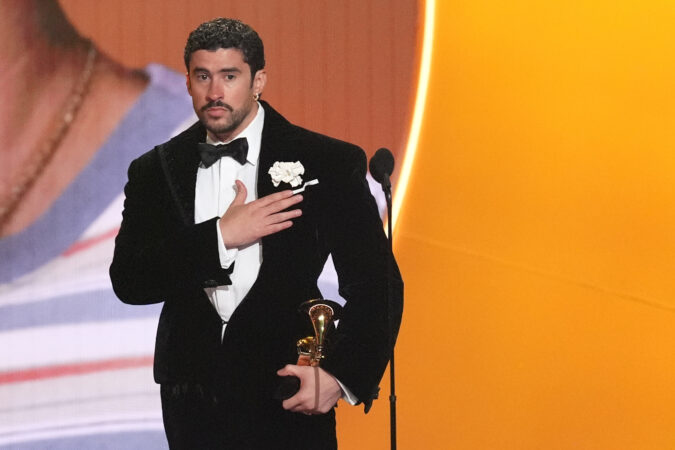
That remains to be seen. But the speech he gave at the Grammys last weekend, after winning best música urbana album for Debí Tirar Más Foto — which also became the first Spanish-language album of the year winner — suggests a more subtle expression of Puerto Rican pride that emphasizes the humanity of demonized brown-skinned immigrants.
Speaking in English, Bad Bunny thanked God, said “ICE Out,” then continued: “We’re not savages, we’re not animals, we’re not aliens. We are humans and we are Americans.” (As a Puerto Rican native, Bad Bunny is an American citizen unlike recent MAGA convert Nicki Minaj, who was born in Trinidad and Tobago.)
“Hate gets more powerful with more hate. The only thing that is more powerful than hate is love. We need to be different. If we want to fight, we have to do it with love.”
Bad Bunny’s speech was one of many gestures opposing ICE at the Grammys, from Bon Iver’s Justin Vernon wearing a whistle on his lapel to Billie Eilish criticizing anti-immigrant voices with a terse line: “Nobody is illegal on stolen land.”
Olivia Dean, the British singer who won best new artist, said: “I’m up here as a granddaughter of an immigrant. I’m a product of bravery, and I think those people deserve to be celebrated.”
But the Grammys didn’t include any overtly political new music. A rumor that Springsteen would open the show with “Streets of Minneapolis” proved unfounded. Springsteen wrote the new anti-ICE broadside the day protester Alex Pretti was killed by federal agents.
But Springsteen’s protest song leads the way in a trend toward musicians opposing the Trump administration in song, in many cases consciously connecting with a tradition that reaches back to Woody Guthrie, Peter Seeger, Bob Dylan, and the Civil Rights protest of the 1960s.
In “Street of Minneapolis,” Springsteen meets the moment by expressing outrage at the deaths of Renee Good and Pretti, specifically the administration’s initial pronouncements that placed blame on the dead rather than the federal agents.
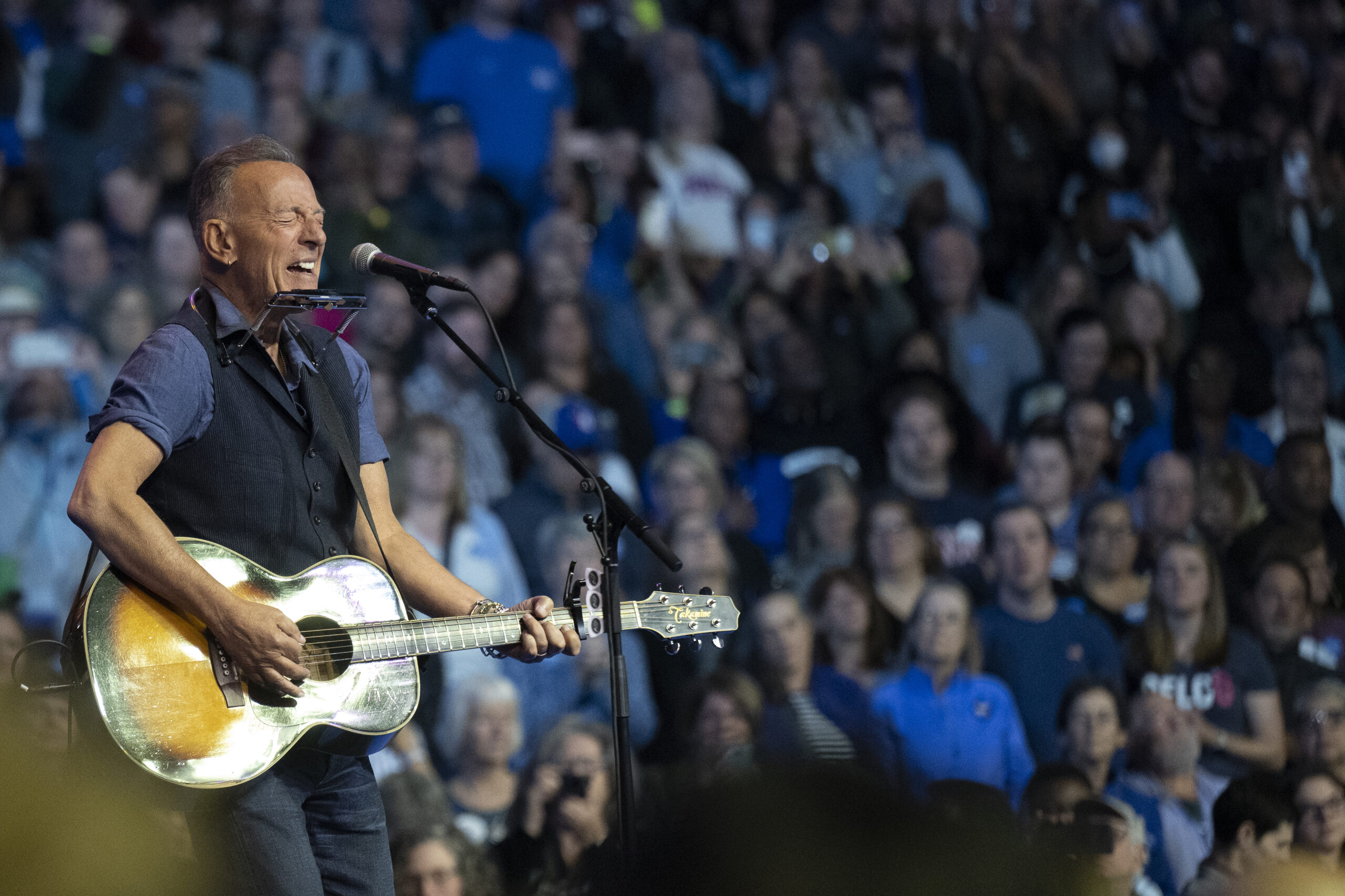
Bruce Springsteen performs Oct. 28, 2024, during a Democratic concert rally at the Liacouras Center at Temple University.
“Their claim was self-defense sir, just don’t believe your eyes,” the Boss sings. “It’s these whistles and phones against Miller and Noem’s dirty lies.”
The song builds to a rousing “ICE out” chorus that’s so unsubtle it even gave the Boss pause.
Performing in Minneapolis last month with rabble-rousing former E Street Band member Tom Morello, Springsteen said he asked the guitarist whether “Streets” was too “soap boxy.” Morello, of Rage Against the Machine, replied: “Nuance is wonderful, but sometimes you have to kick them in the teeth.”
Springsteen, of course, can afford to be aggressively provocative. Not only is he a revered superrich artist at the tail end of his career whose loyal audience is not going anywhere. He’s also a white man whose fans who look like him are not in danger of being detained and deported.
And he has a history of sparring with Trump, whose administration he repeatedly labeled “corrupt, incompetent, and treasonous” on stage in Europe last spring. At the time, Trump responded by calling the Jersey rocker “not a talented guy — Just a pushy, obnoxious JERK.” The president hasn’t responded to “Streets of Minneapolis” as of yet, but loyalist Steve Bannon called Springsteen “fake and gay, as the kids say.”
Springsteen’s singing out will also surely lead to others joining the chorus. And plenty of broadsides have been in the works already.
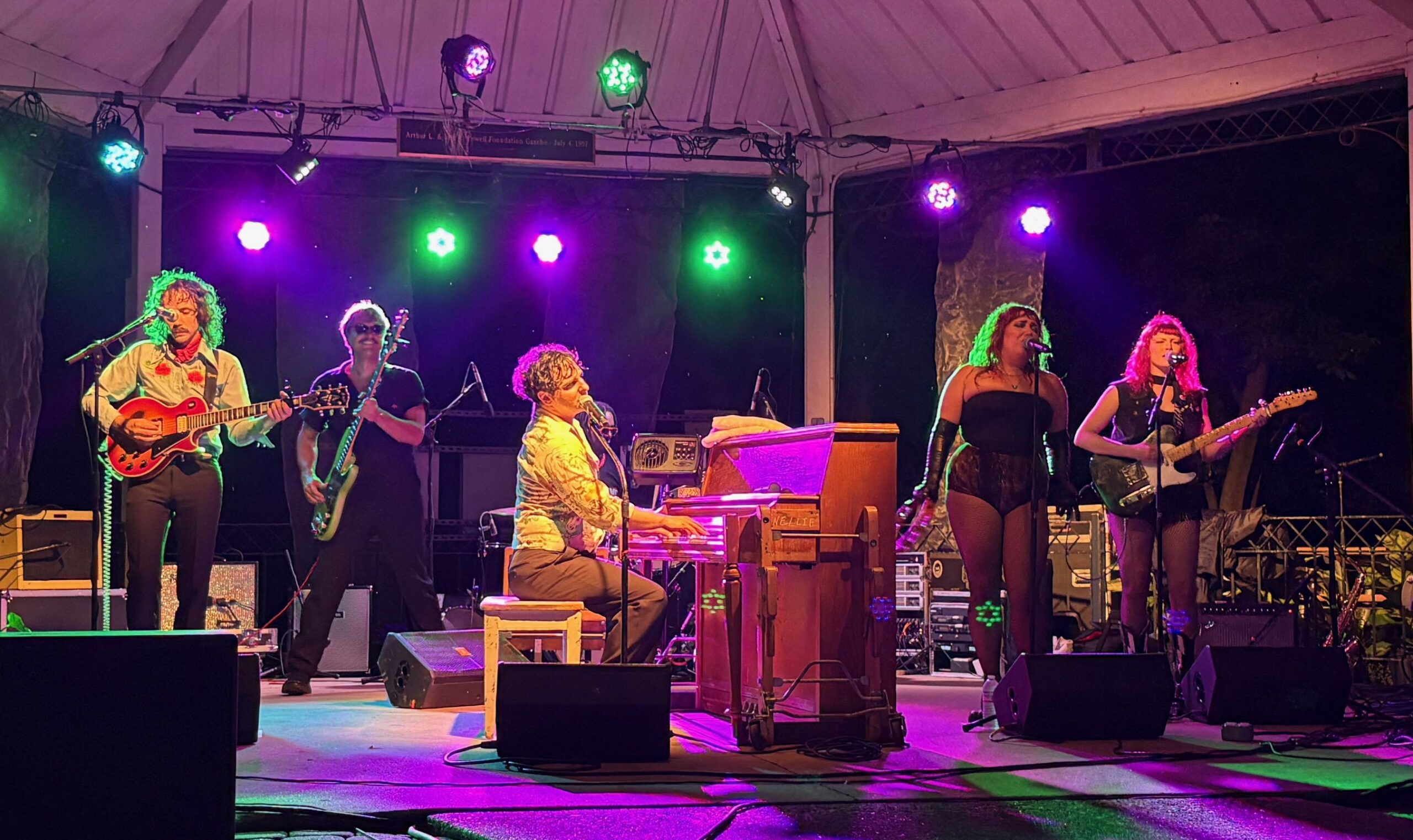
Low Cut Connie at Concerts Under The Stars in King of Prussia on Friday August 1, 2025. Left to right: Rich Stanley, Nick Perri, Adam Weiner, Jarae Lewis (on drums, partially hidden), Amanda “Rocky” Bullwinkel, Kelsey Cork.
Philadelphia’s Adam Weiner of Low Cut Connie has been an outspoken Trump critic, among the first to pull out of a Kennedy Center performance last year.
He’s announced an entire protest album called Livin’ in the U.S.A. Weiner said he made the album “because I am disgusted to see our country descend into an authoritarian hell, a place where art does not lead the cultural conversation.” It arrives timed to the Semiquincentennial on July 3.
The same day that Springsteen released “Streets of Minneapolis,” British folk-punk singer Billy Bragg dropped “City of Heroes,” also written to commemorate Pretti’s death.
Veteran punk rockers are joining in, too, sometimes by rewriting lyrics to old protest songs like Boston band Dropkick Murphys’ “Citizen I.C.E.” — a new version of “Citizen C.I.A.”
The protest isn’t manifest only in topical song writing. In Philly, local events in the indie music scene are aiming to assist immigrants. Juntos, the organization that aids Philadelphia communities affected by ICE, will be the beneficiary of “A Jam Without Borders” at Ortlieb’s on Wednesday, with local musicians Arnetta Johnson, Nazir Ebo, and others.
New generation protest singers include Liberian-born Afro Appalachian singer Mon Rovia, whose buoyant 2025 song “Heavy Foot” remains upbeat as he sings “the government staying on heavy foot / No, they never gonna keep us all down.”
Most prominent in branding himself as a modern folk troubadour is Jesse Welles, whose “No Kings” duet with Joan Baez came out in December.
Welles’ “Join ICE” uses humor as a weapon, with an early Dylan persona. “There’s a hole in my soul that just rages,” he sings. “All the ladies turned me down and I felt like a clown / But will you look at me now, I’m putting people in cages!”
Serious songwriters are likely to continue to pen protest songs as long as scenes of turmoil continue to show up on TV and social media screens.
But high-profile artists worried about alienating their audience aren’t likely to start flooding the zone with anti-ICE screeds if they’re concerned about backlash.
A case in point would be formerly Philadelphian country superstar Zach Bryan. Last October, he released a song snippet of “Bad News” that included the lyrics “ICE is gonna come, bust down your door” and cited “the fading of the red, white and blue.”
The song was met with disdain by the White House. Spokesperson Abigail Jackson said, “Zach Bryan wants to open the gates to criminal illegal aliens and has condemned heroic ICE officers.” DHS secretary Kristi Noem was “extremely disheartened and disappointed.”
Bryan did include the song on his album With Heaven on Top in January, but not before taking great care to explain he wasn’t on one political side or the other.
“Left wing or right wing, we’re all one bird and American,” the Eagles fan said. “To be clear I’m not on either of these radical sides.”