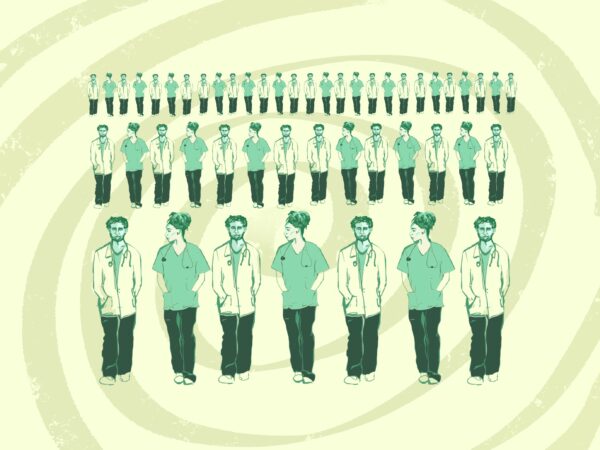
Competition at Philadelphia-area medical schools intensified in 2025, with programs seeing about 50 applicants for every open spot.
That’s the highest demand since 2022, with the number of applications bouncing back after a three-year decline, recently released data from the Association of American Medical Colleges(AAMC) shows.
The annual report offers a look at the composition of the nation’s future doctors through the demographics of the applicants and enrollees at M.D. degree-granting medical schools across the United States and Canada.
It showed increased class sizes and strong female enrollment across the Philadelphia area’s five M.D. degree-granting schools: University of Pennsylvania, Thomas Jefferson University, Temple University, Drexel University, and Cooper Medical School of Rowan University.
And the fraction of first-year medical students from Pennsylvania who identified as Black or African American, excluding the mixed-race student population, fell from 6.9% to 5.4% between 2023 and 2025.
The racial demographics of entering studentsare seeing increased scrutiny in light of the 2023 Supreme Court decision that effectively ended affirmative action, barring race from being used in higher education admissions.
The percentage of first-year medical students from Pennsylvania who are Black is lower this year than the national average. Pennsylvania also lags behind the national average for first-year enrollment of Hispanic or Latino medical students.
This data reflects the results of the application cycle that concluded last spring. Next year’s prospective medical school students are currently in the thick of admissions season, awaiting interviews and offers.
Here’s a look at the key trends we’re seeing:
Applications back up
Demand for spots at Philadelphia area-medical schools is back up after a three-year decline. There were nearly 5,000 more applications last cycle, a 9.3% increase, with all schools except Cooper seeing a boost.
Jefferson’s Sidney Kimmel Medical College helped drive growth the most, with a 16% increase in applications compared to the previous year.
window.addEventListener(“message”,function(a){if(void 0!==a.data[“datawrapper-height”]){var e=document.querySelectorAll(“iframe”);for(var t in a.data[“datawrapper-height”])for(var r,i=0;r=e[i];i++)if(r.contentWindow===a.source){var d=a.data[“datawrapper-height”][t]+”px”;r.style.height=d}}});
More medical students being trained
Orientation icebreakers might take a bit longer to get through at area-medical schools as first-year classes continue to get bigger.
In 2025, Philadelphia-area schools enrolled 1,089new medical students, compared to 991 in 2017. Drexel University College of Medicine contributed to half of that growth, adding 49 seats to its recent entering class compared to that of 2017.
Penn’s Perelman School of Medicine was the only school that did not increase its class size in 2025.
window.addEventListener(“message”,function(a){if(void 0!==a.data[“datawrapper-height”]){var e=document.querySelectorAll(“iframe”);for(var t in a.data[“datawrapper-height”])for(var r,i=0;r=e[i];i++)if(r.contentWindow===a.source){var d=a.data[“datawrapper-height”][t]+”px”;r.style.height=d}}});
Female enrollment remains strong
More female students have entered Philly-area medical schools over the last decade.
In 2025, 55.4% of first-year enrollees at Philly-area medical schools were female, compared to 47.7% in 2017.
Drexel saw the biggest rise, with 181 women entering in 2025, compared to 120 in 2017.
window.addEventListener(“message”,function(a){if(void 0!==a.data[“datawrapper-height”]){var e=document.querySelectorAll(“iframe”);for(var t in a.data[“datawrapper-height”])for(var r,i=0;r=e[i];i++)if(r.contentWindow===a.source){var d=a.data[“datawrapper-height”][t]+”px”;r.style.height=d}}});
State Sen. Sharif Street maintained his financial advantage. Physicians Ala Stanford and David Oxman have turned to self-funding their campaigns. And State Reps. Chris Rabb and Morgan Cephas are low on cash — but one might be getting help soon.
The crowded Democratic primary for Pennsylvania’s 3rd Congressional District is beginning to come into focus after the candidates this weekend filed new campaign finance reports. The filings cover the last three months of 2025, providing insights into the candidates’ resources as the campaign heats up.
window.addEventListener(“message”,function(a){if(void 0!==a.data[“datawrapper-height”]){var e=document.querySelectorAll(“iframe”);for(var t in a.data[“datawrapper-height”])for(var r,i=0;r=e[i];i++)if(r.contentWindow===a.source){var d=a.data[“datawrapper-height”][t]+”px”;r.style.height=d}}});
Fundraising will not be the only factor that determines the outcome of the May primary election, which will ultimately be decided by voters. But the 3rd District candidates need money to pay staff and buy advertisements to spread their message, and the beginning of an election year is often a pivotal time for campaigns to prove their viability.
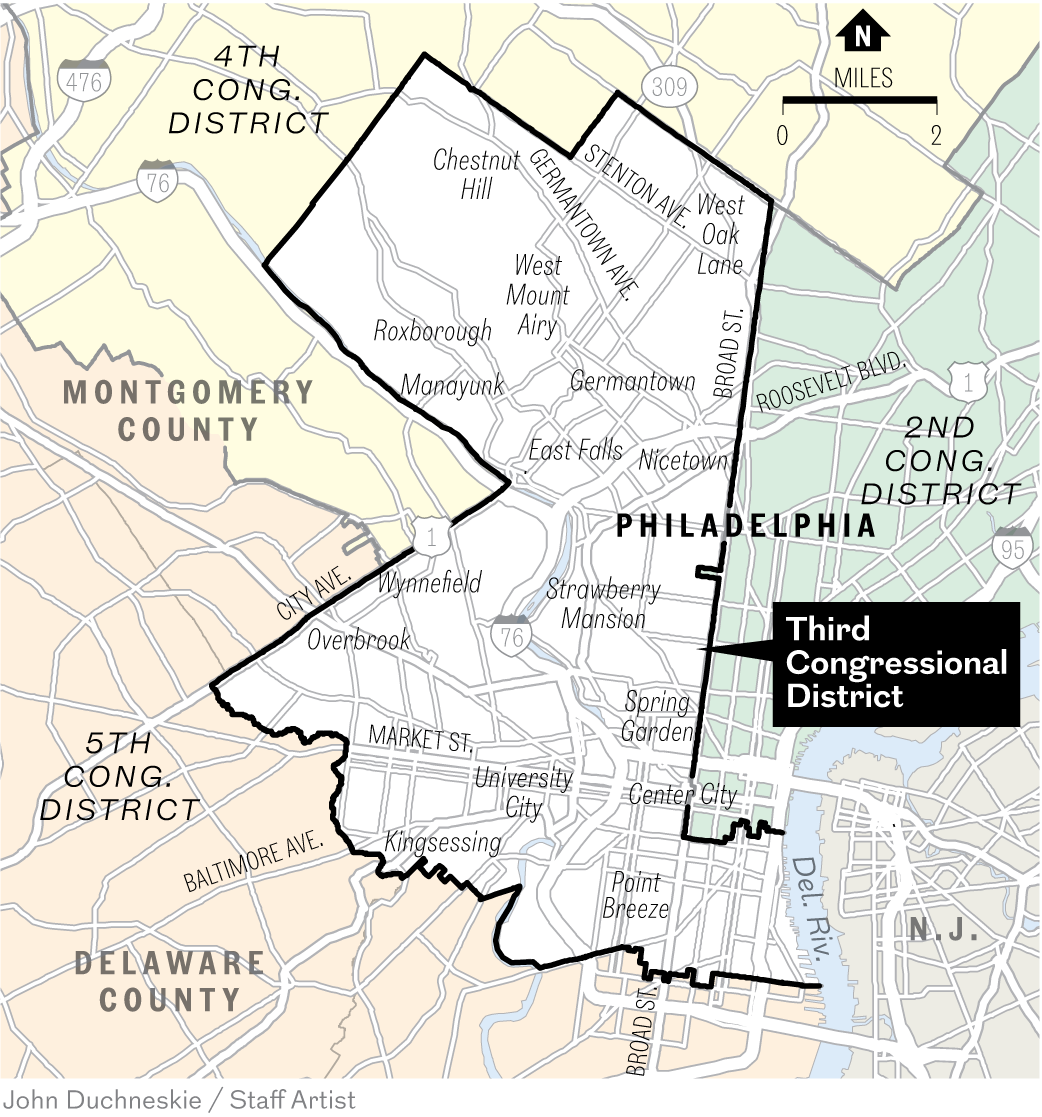
Map of Pennsylvania’s 3rd Congressional District.
After U.S. Rep. Dwight Evans (D., Philadelphia) last year announced he would not seek reelection to the nation’s bluest district, more than a dozen candidates tossed their hats in the ring. It’s likely some will not stay in the race long enough to appear on the May 19 primary ballot.
The 3rd District includes all of Northwest and West Philadelphia, as well as parts of Center City and North, South, and Southwest Philadelphia.
Street led the field by raising about $347,000 from Oct. 1 to Dec. 31 of last year, according to his report. His campaign spent $193,000 during that period, and he had $527,000 in cash on hand at the start of 2026.
window.addEventListener(“message”,function(a){if(void 0!==a.data[“datawrapper-height”]){var e=document.querySelectorAll(“iframe”);for(var t in a.data[“datawrapper-height”])for(var r,i=0;r=e[i];i++)if(r.contentWindow===a.source){var d=a.data[“datawrapper-height”][t]+”px”;r.style.height=d}}});
Campaign manager Josh Uretsky said Street’s fundraising totals “demonstrate that our strong track record of progressive leadership — from lowering health care costs to leading the fight to legalize recreational cannabis and reform our justice system — is resonating in every corner of the district.”
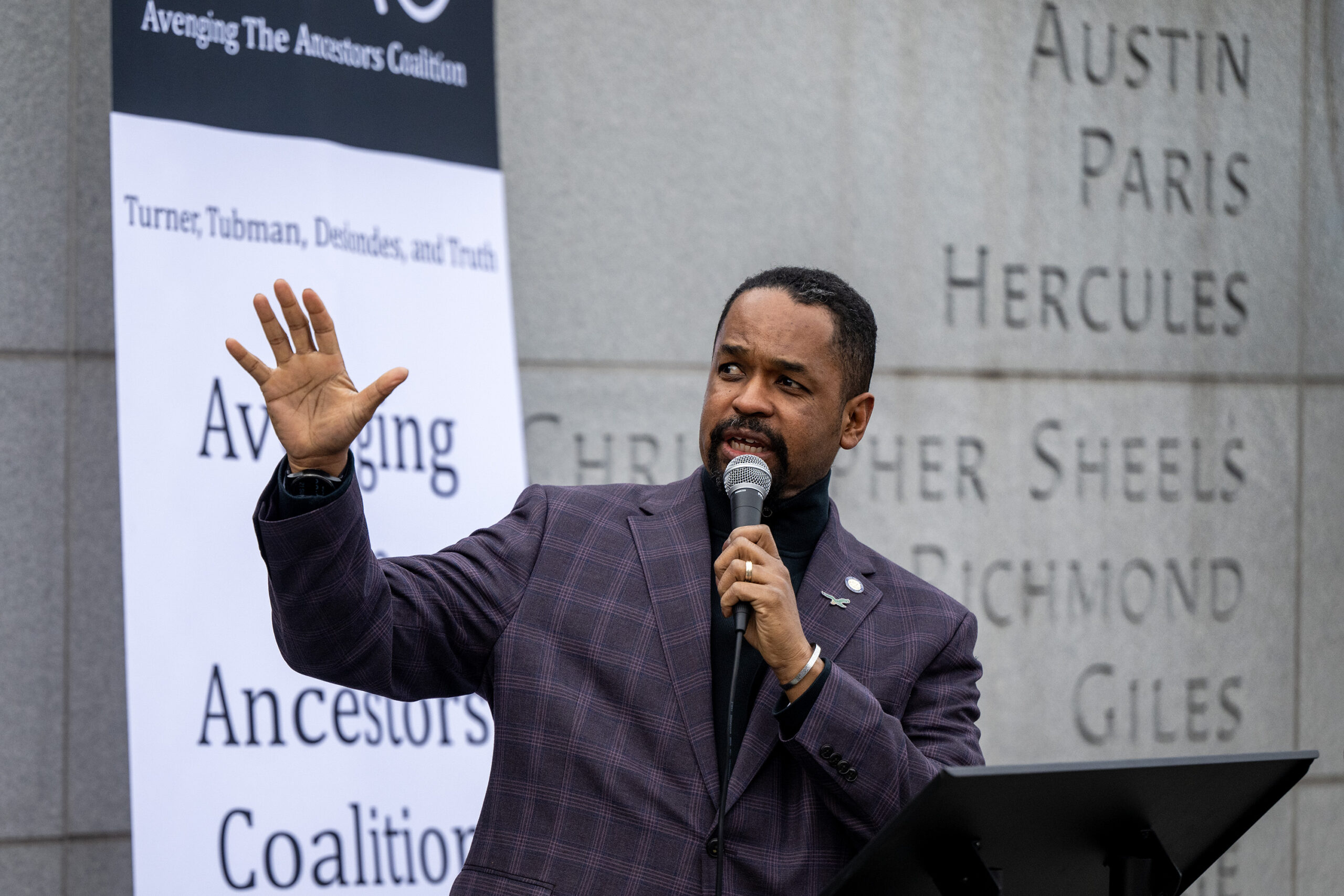
State Sen. Sharif Street speaks in front ofthe engraved names of nine enslaved people who lived and worked at President George Washington’s home, as the 15th anniversary of the President’s House exhibit in Independence National Historical Park is celebrated Sunday, Dec. 21, 2025.
Street has benefited from contributions from the deep-pocketed building trades unions, which endorsed him last fall. In the past, those unions have also funded outside spending committees, or super PACs, to support their preferred candidates, and it’s likely they’ll do the same for Street this spring.
Street collected more than $40,000 from labor groups in the most recent reporting period.
First-time candidates Ala Stanford and David Oxman turn to self-funding
Last month, it appeared that Stanford,a pediatric surgeon, was raking in cash when her campaign released a statement saying she had raised more than $467,000, a significant haul for a first-time candidate. The campaign said at the time that her fundraising prowess “solidifies [her] leading role” in the race.
But it turns out that more than half of the money the campaign brought in came from Stanford herself. The new report showed that Stanford lent her campaign $250,000 on Dec. 31, the last day of the reporting period, bringing her total cash on hand to about $392,000 at the end of the year.
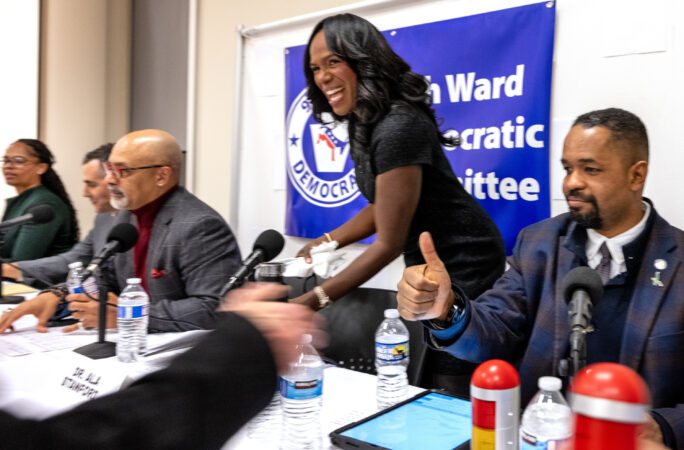
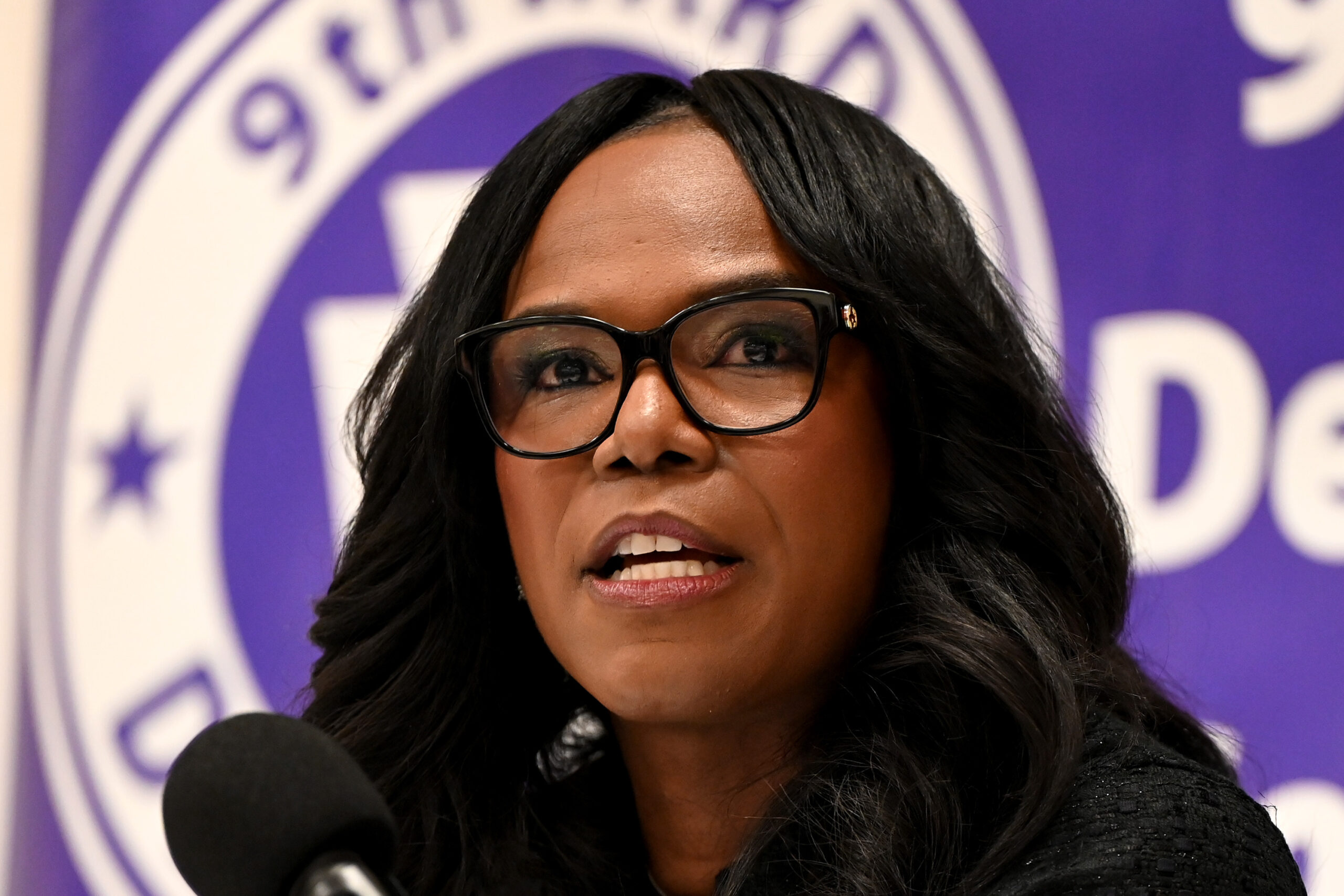
Physician Ala Stanford at a forum hosted by the 9th Ward Democratic Committee Dec. 4, 2025.
In a statement Monday, Stanford emphasized her humble upbringing in North Philadelphia public housing, saying she “never imagined being in this position, but this city has given me so much.”
Her campaign noted that she also invested her own money in her nonprofit organization, the Black Doctors Consortium, to bolster the city’s COVID-19 testing and vaccination programs during the height of the pandemic.
“I’ve stood up and led during a crisis before — and spent my own money to do it — so I’m going do whatever it takes to fight for our city,” Stanford said. “I’m incredibly grateful that in just the first few months of our campaign, that commitment has been matched with amazing grassroots financial support, too, and we’re just getting started.”
Stanford is not the only doctor self-funding their congressional campaign. Oxman, another political outsider and physician, brought in just over $107,000 between October and December — including $75,000 that he lent to his own campaign.
Oxman, an intensive-care physician and professor at Thomas Jefferson University, has lent his campaign $175,000. At the end of the year, he had $357,000 in the bank.
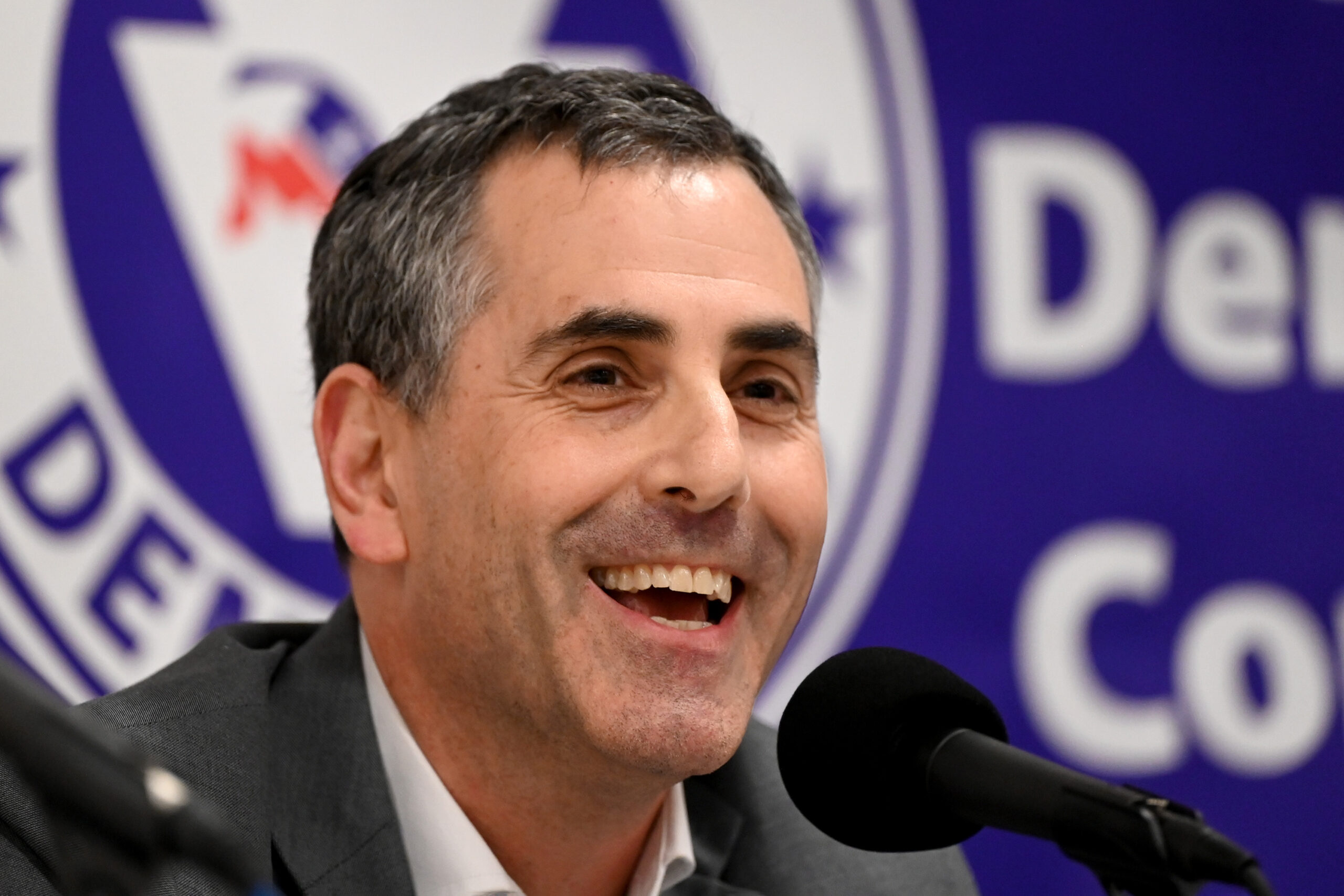
Physician David Oxman at a forum hosted by the 9th Ward Democratic Committee Dec. 4, 2025.
In a press release Sunday, Oxman emphasized that he was not accepting corporate PAC donations.
“You cannot fight for the health of the people of the 3rd district while you are taking money from nursing home companies and health insurance PACs,” Oxman said. “The corporatization of medicine is just a piece of a larger corporatization of American life that is hollowing out our economy as well as our democracy.”
Chris Rabb and Morgan Cephas enter 2026 low on cash
Both Cephas and Rabb raised less money in the fourth quarter of 2025 than in the opening months of their campaigns, and they both closed the year with roughly $100,000 in cash on hand.
Cephas, who represents a West Philadelphia district and chairs the city’s delegation to the Pennsylvania House, entered the year with about $109,000 in cash on hand.
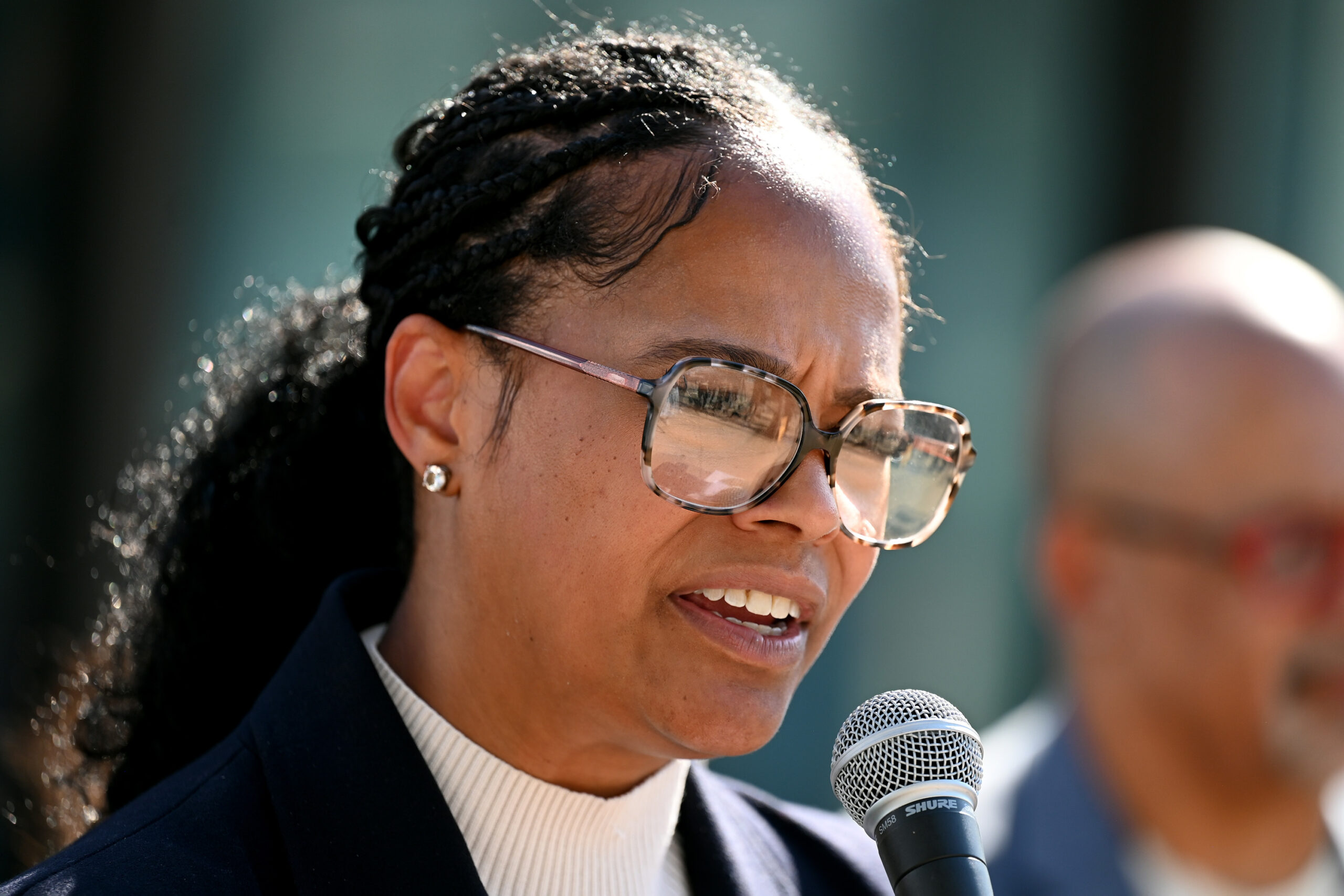
State Rep. Morgan Cephas at a news conference Sept. 3, 2025.
“The residents of the 3rd Congressional District are more concerned with the skyrocketing cost of living, fewer health care options, and making sure their communities are safe than who raised the most money,” Cephas campaign manager Salvatore Colleluori said. “Rep. Cephas has only one priority in this race, the residents of Philadelphia’s 3rd Congressional District.”
“I’m incredibly proud of the thousands of people in Philly and across the country fueled by a movement so much bigger than electoral politics,” Rabb said. “Our momentum is undeniable. We always knew we wouldn’t outraise the corporate-backed and self-funded campaigns — and we don’t need to.”
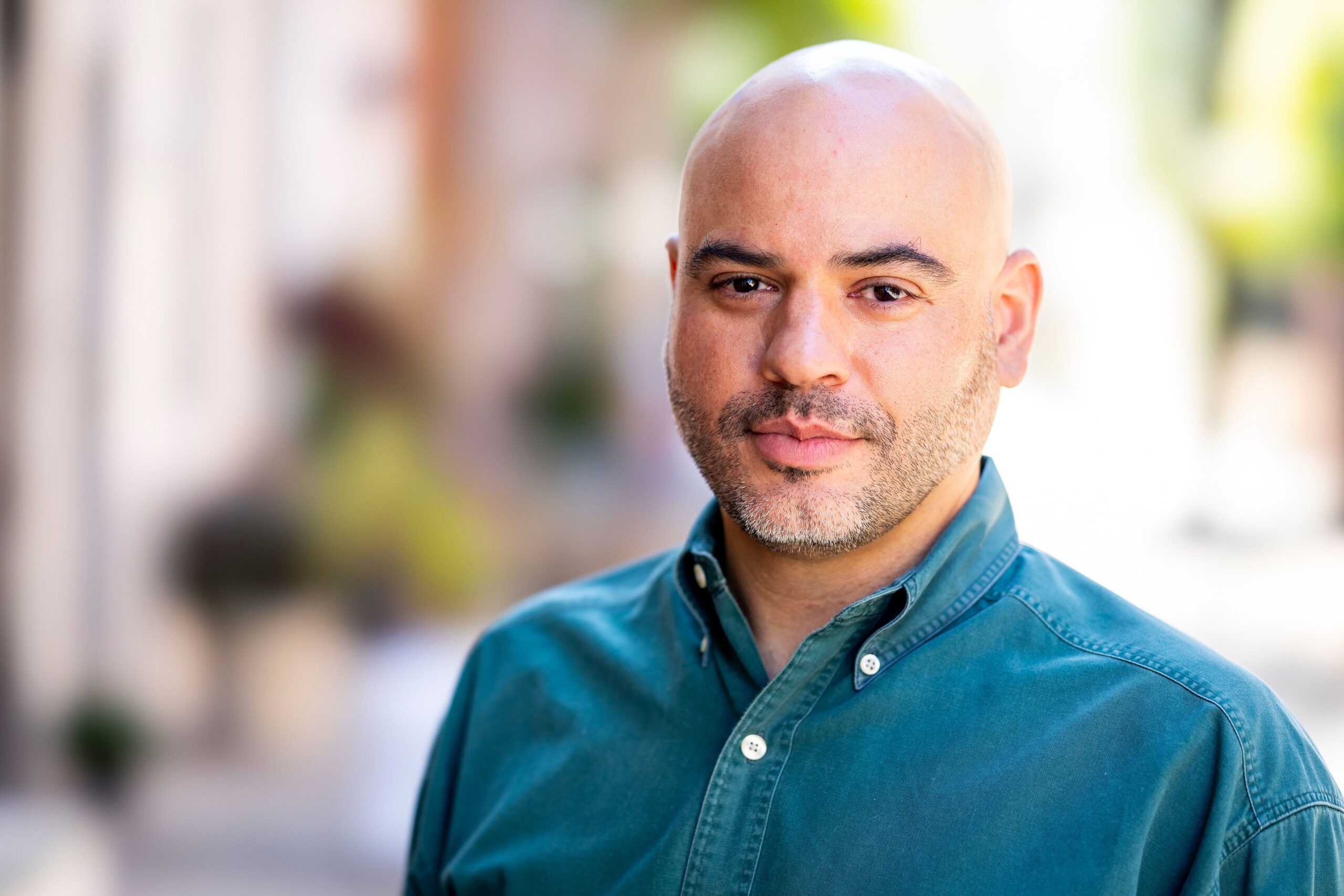
Pablo McConnie-Saad, a 39-year-old South Philly resident who worked in Biden’s administration, entered the race to represent Pennsylvania’s 3rd Congressional District.
Meanwhile, Pablo Iván McConnie-Saad — a Bella Vista resident who worked in Delaware politics before serving in the Treasury Department under former President Joe Biden — brought in a fundraising haul similar to the sitting state representatives last quarter despite his campaign largely flying under the radar.
McConnie-Saad collected $119,000 in contributions last quarter, and he had $69,000 on hand at the start of the year.
In a statement, campaign field director Matt Cárdenas said McConnie-Saad offered voters a “different choice.”
“This campaign is entirely people-powered,” he said. “No corporate PAC money, no AIPAC, just everyday people investing in a different kind of politics. We’re proud of what we’ve built so far. Politicians have failed us, and Washington won’t change unless we challenge it.”
The Democratic Socialists of America’s Philadelphia chapter recently endorsed him, as did two liberal wards in South Philadelphia. And Reclaim Philadelphia leaders are recommending that its members back Rabb in the progressive group’s internal endorsement process.
The Working Families Party of Pennsylvania, which often funds super PACs to back left-leaning candidates, has not yet weighed in.
Candidates (from left) State Reps. Morgan Cephas, and Chris Rabb; and physician David Oxman appear at a forum hosted by the 9th Ward Democratic Committee in Mt. Airy Thursday, Dec. 4, 2025.
“We’re still going through an active endorsement process, but we’re confident that we will land on a progressive who will fight for working people, not billionaire donors, big corporations, or special interests,” said Nick Gavio, a spokesperson for the party.
Additionally, the Justice Democrats, a national group founded by operatives from Bernie Sanders’ presidential campaign, may also get involved. In the past, the PAC has backed candidates with similar platforms to Rabb’s.
Justice Democrats “will likely come to a decision with news to share in the very near future in support of a candidate we can be confident will represent the values of the everyday people in this district,” spokesperson Usamah Andrabi said.
Data reporter Joe Yerardi contributed to this article.
Foreign nationals are facing increasing challenges to working and studying in the U.S., but their contributions to the Philadelphia economy are critical, local business leaders say, painting a grim picture of Philadelphia’s future with fewer of them.
In Philadelphia, “immigrants are not a side factor when it comes to our economy. They are a main driver,” Alain Joinville, from the city’s Office of Immigrant Affairs, said at a panel discussion, hosted last week by the Economy League of Greater Philadelphia, in partnership with immigration-reform organization FWD.us.
The foreign-born population has supported Philadelphia’s workforce growth in recent years. Between 2010 and 2022, the immigrant workforce grew by 50% from 105,600 to 158,300, according to the Pew Charitable Trusts. In 2022, the foreign-born population represented 15.7% of the total Philadelphia population.
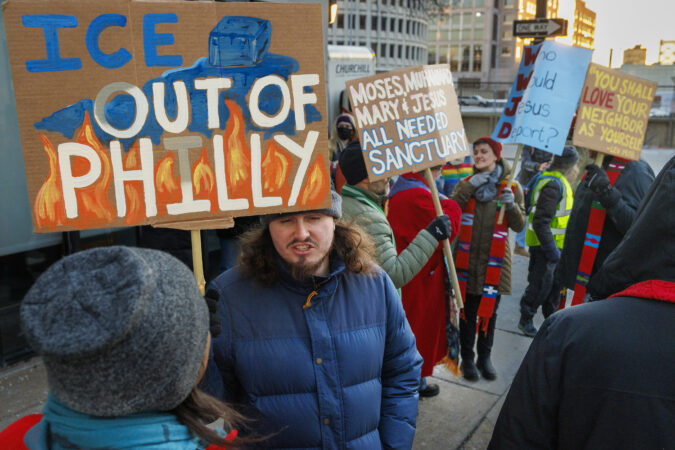
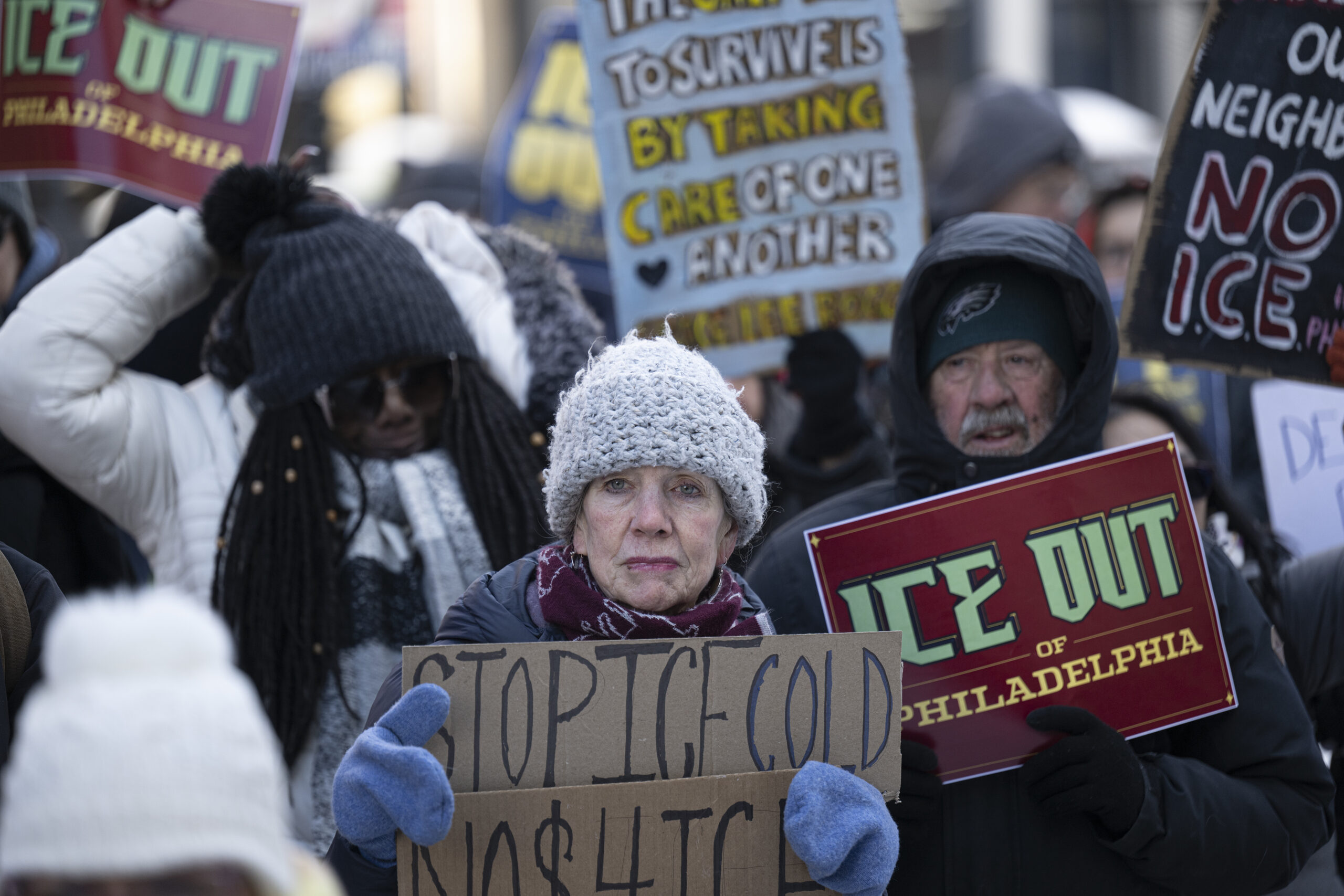
Anti-ICE activists demonstrate outside U.S. Sen. John Fetterman’s Philadelphia office on Jan. 27, 2026, calling for an end to federal immigration enforcement policies.
“If we have policies that are disrupting families, detaining people, sending people back, that’s a huge part of our economy that impacts manufacturing, transportation of all the goods and services that we manufacture,” said Elizabeth Jones, of immigrant-support nonprofit the Welcoming Center. “The ripple effect is scary in terms of how it’s going to impact the economy.”
While the U.S is a global leader in research universities, it could be losing that grip, said Amy Gadsden, from the University of Pennsylvania’s Global Initiatives. Having the best research universities in the world requires the best talent — namely international students that also become faculty, she noted.
Penn has roughly 9,000 international students and an additional 2,000 faculty, postdoc students, and others who “drive a lot of economic activity, both for Penn and for the city of Philadelphia — for the country, for that matter,” she said.
“There is not a guidance counselor around the world who is advising their student not to hedge their application to the United States with an application to another country,” she said.
A view over Walnut Street on the University of Pennsylvania campus, with the Philadelphia skyline at left rear.
Penn, Philadelphia’s largest employer, depends on international students, said Gadsden. “When we think about what is going on with visa policy in the United States, what we see is a decrease in international students, a decrease in international faculty, a decrease in research output, that will ultimately lead to a decrease in our position as a leading research university in the world,” she said.
Jennifer Rodriguez, president and CEO of the Greater Philadelphia Hispanic Chamber of Commerce, highlighted the challenge employers can face under the new fee for H-1B visas.
“Immigrants and the foreign-born population in general is one that is critical for the economic health of the city of Philadelphia and the region,” she said.
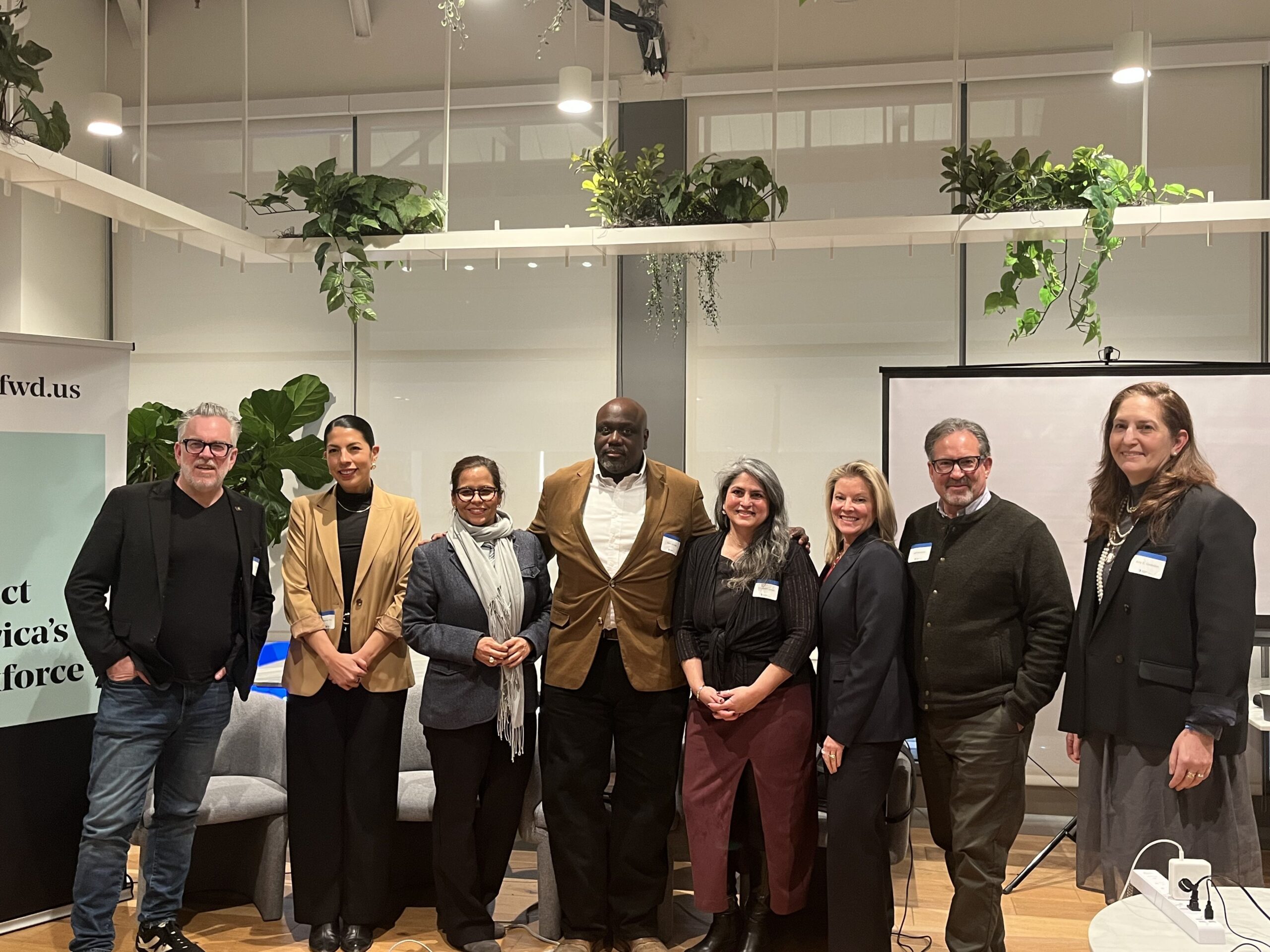
The Economy League of Greater Philadelphia held a panel discussion in collaboration with FWD.us. From left are Ben Fileccia, Pennsylvania Restaurant & Lodging Association; Maria Praeli, FWD.us; Jennifer Rodriguez, Greater Philadelphia Hispanic Chamber of Commerce; Alain Joinville, Philadelphia’s Office of Immigrant Affairs; Elizabeth Jones, the Welcoming Center; Tracy Brala, University City Science Center; Jeff Hornstein, the Economy League of Greater Philadelphia; Amy Gadsden, University of Pennsylvania.
Rodriguez described the additional $100,000, which is on top of other expected visa processing costs, as exorbitant. While some large businesses might have resources to handle it, she said, middle-market companies will be more challenged.
“Philadelphia is desperate to get more of those businesses to establish here, and now you’re making it that much harder,” said Rodriguez. “We are really curtailing the ability of these businesses to innovate, to hire, to really be the contributors to the economy that we want them to be.”
Immigrants in Philadelphia are of prime working age, noted Joinville, from the city’s Office of Immigrant Affairs.
“Without immigrants, we have a smaller workforce to drive and support our businesses locally,” he said, adding that immigrants start small businesses at a high rate in Philadelphia.
“As a child of immigrants, focusing on the economy can be a little tricky for me, because we’re not just data or money or economy,” said Joinville. “Yes, immigrants have an economic impact, but they are cultural leaders, civic leaders, and, yeah, just good people.”
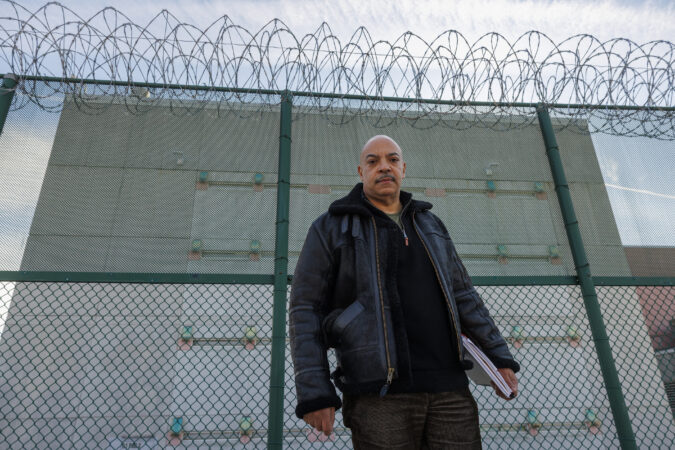
He walked toward the cellblock in Riverside Correctional Facility, pulling a cart of books behind him.
For a moment, it was quiet. The only sounds that echoed off the jail’s cinder block walls were the squeaks of his cart’s wheels.
But as a heavy door to a busy unit swung open, Seth Williams’ work was set to begin.
“Chaplain up!” one of the inmates inside yelled.
Williams smiled at the crowd of prisoners who began walking toward him and his squeaky cart, which was filled with Bibles, Qurans, and other religious texts.
“Step into my office,” he said, placing his hand on an inmate’s shoulder.
The role’s expectations are modest. He offers spiritual counseling and religious programming to the 600 or so prisoners held at Riverside. It is part-time and pays about $21 per hour.
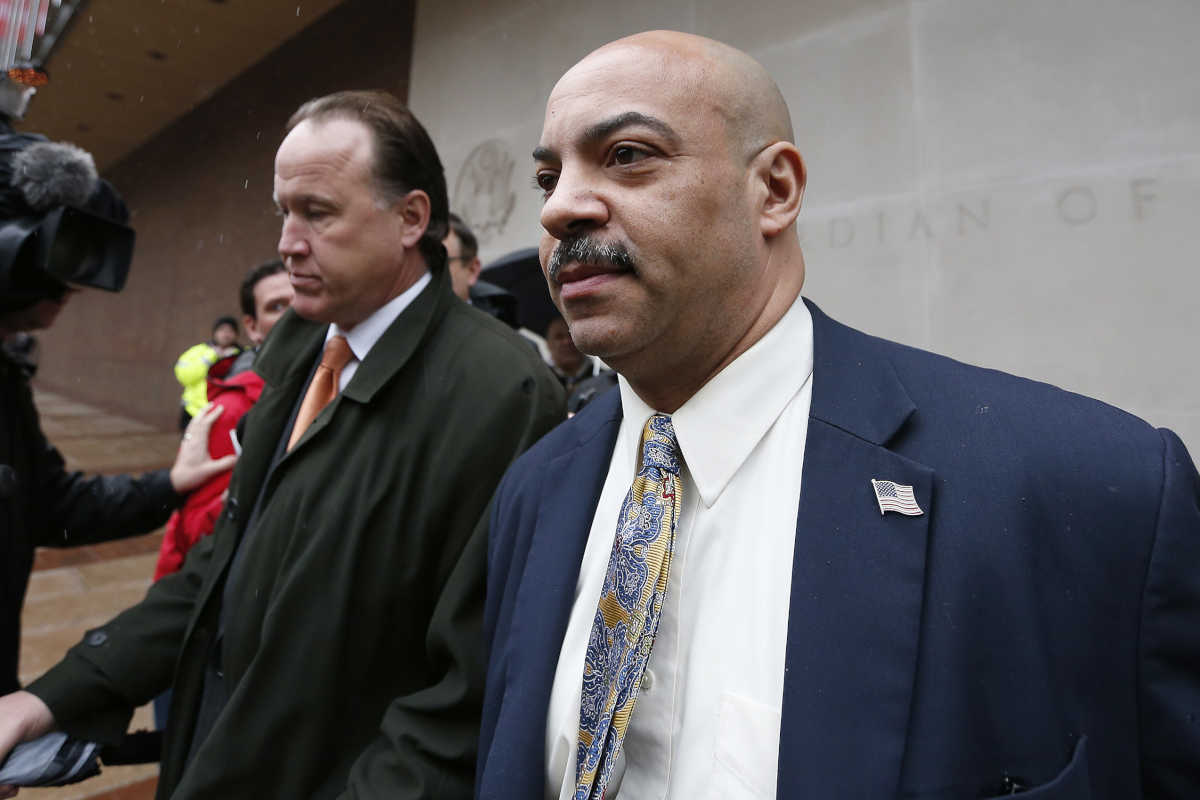
Still, for Williams, the position was uniquely appealing. After putting people in jail as the city’s top prosecutor, then spending five years in federal prison as an inmate himself, he believes he can use what he learned from that journey to help young men avoid committing crimes in the future.
“I can be a better advocate, a better vessel, to help prevent crime and reduce recidivism … by helping people learn the skills they need to keep jobs and de-escalate conflict,” Williams said. “The best use of my experience … is helping people who are incarcerated the way I was.”
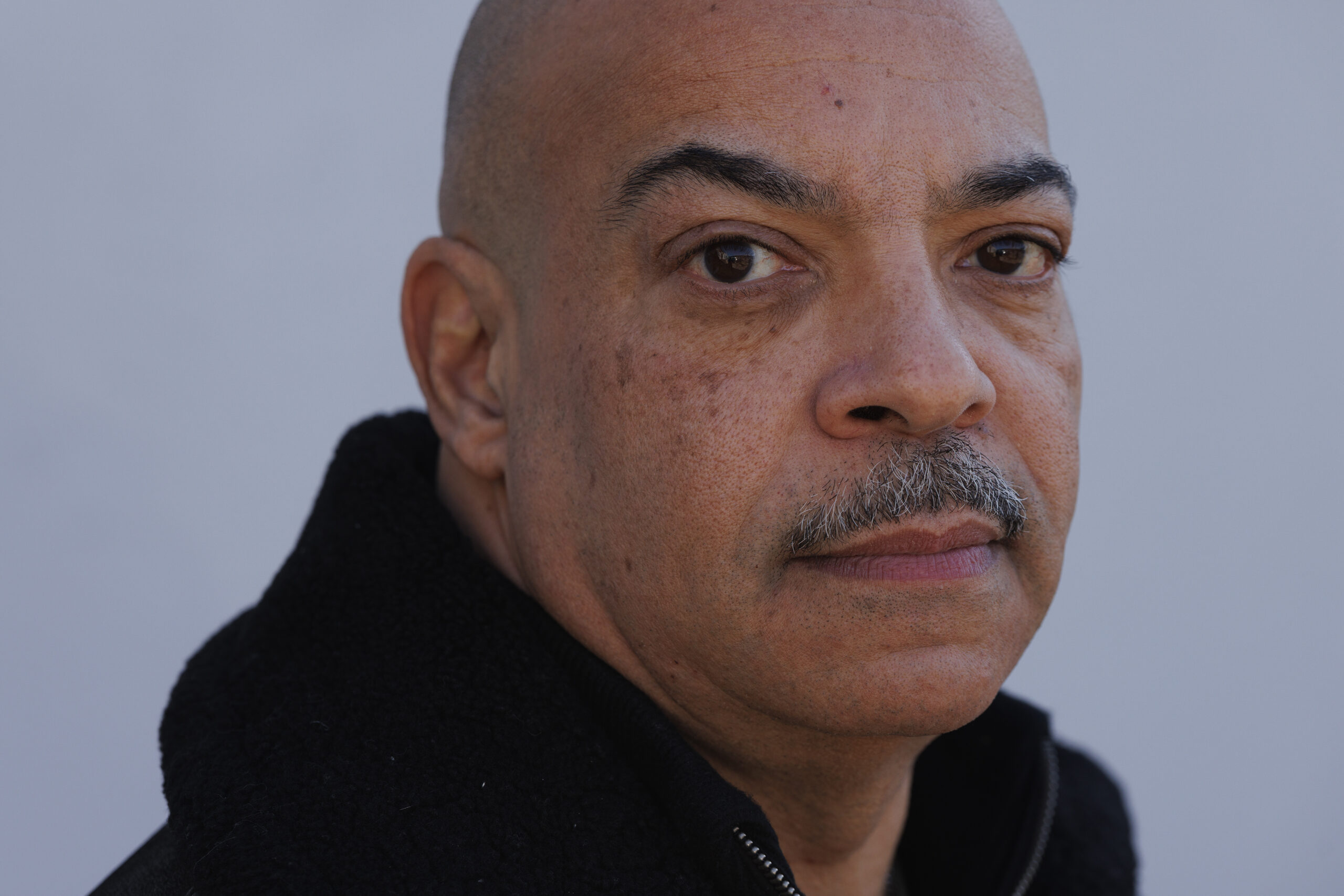
Williams believes his efforts now can help reduce recidivism among young men in jail.
It is a long way from the halls of power that Williams once inhabited as the city’s first Black district attorney — and from his standing as a politician who was viewed as a possible future mayor.
Still, Williams says, he is fulfilled by this more humble form of service. And becoming chaplain is not the only role he has taken up behind bars: For the last two years, he has also volunteered at Curran-Fromhold Correctional Facility, teaching weekly classes on career preparedness and poetry, and at State Correctional Institute Phoenix, where he directs a volunteer program about Christianity.
Last month, Williams agreed to allow an Inquirer reporter to join him inside the city’s jails as he counseled inmates. He shared stories about his time in prison, delivered socks and toothpaste to indigent inmates, gathered a group to recite the rosary, and gave books to men who expressed interest in spiritual counseling.
He was energetic, open, and passionate. He spoke openly about his past misdeeds, but remained defiant about his federal prosecution — saying he was wrong for not reporting gifts he received as DA, but insisting that he did not sell his office to his benefactors, as the U.S. Attorney’s Office alleged.
Williams acknowledged that his path to becoming a jailhouse chaplain and volunteer has been unusual. He pointed out, for instance, that the room where he teaches his Career Keepers course is just down the hall from the jail’s print shop — which once printed the DA’s letterhead with his name at the top.
Prisons Commissioner Michael Resnick said Williams’ transformation is one of the key attributes he brings to the job.
“He just has a passion for this work, to get people on the right path,” Resnick said.
And Williams said he feels as if he is doing more to help people now than he ever has.
“What if the worst thing that happens in your life,” he said, “could be used for good?”
From rising star to ‘criminal’
To understand where Williams is now, it helps to recall where he came from.
After he was elected district attorney in 2009, Williams, then 42, promised to reform the office where he had spent a decade working as a line prosecutor. He said he would assign lawyers to handle cases by neighborhood, place greater emphasis on charging crimes correctly at the outset, and divert minor offenses into community-based treatment programs.
His policy positions were part of his appeal, but he also leaned into a compelling personal story: Abandoned in an orphanage at birth, Williams was adopted at age 2 and raised in Cobbs Creek. He went on to graduate from Central High School, Pennsylvania State University, and Georgetown University’s law school before returning to his hometown to work as an assistant district attorney.
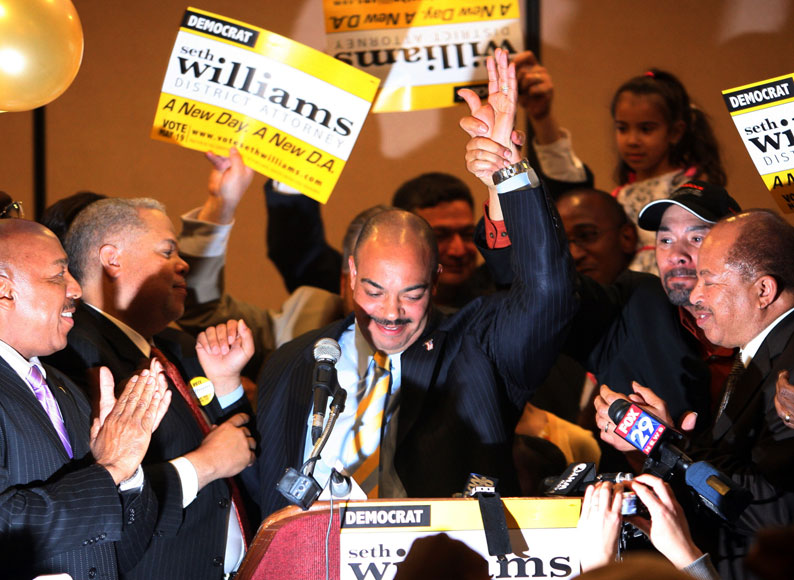
When he ran to become the city’s top prosecutor in 2009 — his second attempt after a narrow loss four years earlier — he had a campaign slogan that matched his aspirations: “A new day, a new D.A.”
Williams thanks supporters after winning the Democratic primary for district attorney in 2009.
And for a while, some political observers said, he was living up to that mantra. In addition to engineering an ambitious restructuring of the office, he made headlines during his first term by charging West Philadelphia doctor Kermit Gosnell with killing babies during illegal late-term abortions, and by charging Msgr. William Lynn, a top official in the Archdiocese of Philadelphia, with shielding sexually abusive Catholic priests.
Charismatic and camera-friendly, Williams was easily reelected to a second term in 2013, and homicides began falling to their lowest levels in decades. Some began wondering if he might leverage his success as DA into a run for City Hall.
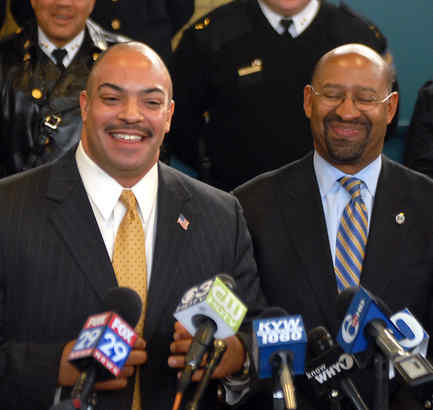
Williams and then-Mayor Michael Nutter at a press conference in 2010.
Beneath the surface, though, challenges in Williams’ personal life began to mount.
He now admits he was also drinking too much, “numbing myself from the daily trauma with too much Jack Daniel’s and martinis and Yuenglings.”
By 2015, the FBI was investigating whether he had been misusing campaign funds to live beyond his means. And two years after that, he was indicted on charges of wire fraud, honest services fraud, and bribery-related crimes.
Federal prosecutors said he not only misspent political money but also sold the influence of his office to wealthy allies who showered him with vacations, clothing, and a used Jaguar convertible.
Williams outside of federal court, where he was charged with bribery and related crimes.
Williams insisted he was not guilty and took his case to trial. But midway through the proceedings, he accepted an offer from prosecutors to plead guilty to a single count of violating the Travel Act.
U.S. District Judge Paul Diamond showed no mercy — jailing Williams immediately, then imposing a five-year prison term, the maximum allowed by law. The judge called Williams a “criminal” who surrounded himself with “parasites” and “fed his face at the trough” of public money.
A mentor in solitary
During the first five months of Williams’ incarceration, he was held in solitary confinement at Philadelphia’s Federal Detention Center. That was intended to protect him — former law enforcement officers can become targets behind bars — but it left him confined to a cell for 23 hours a day.
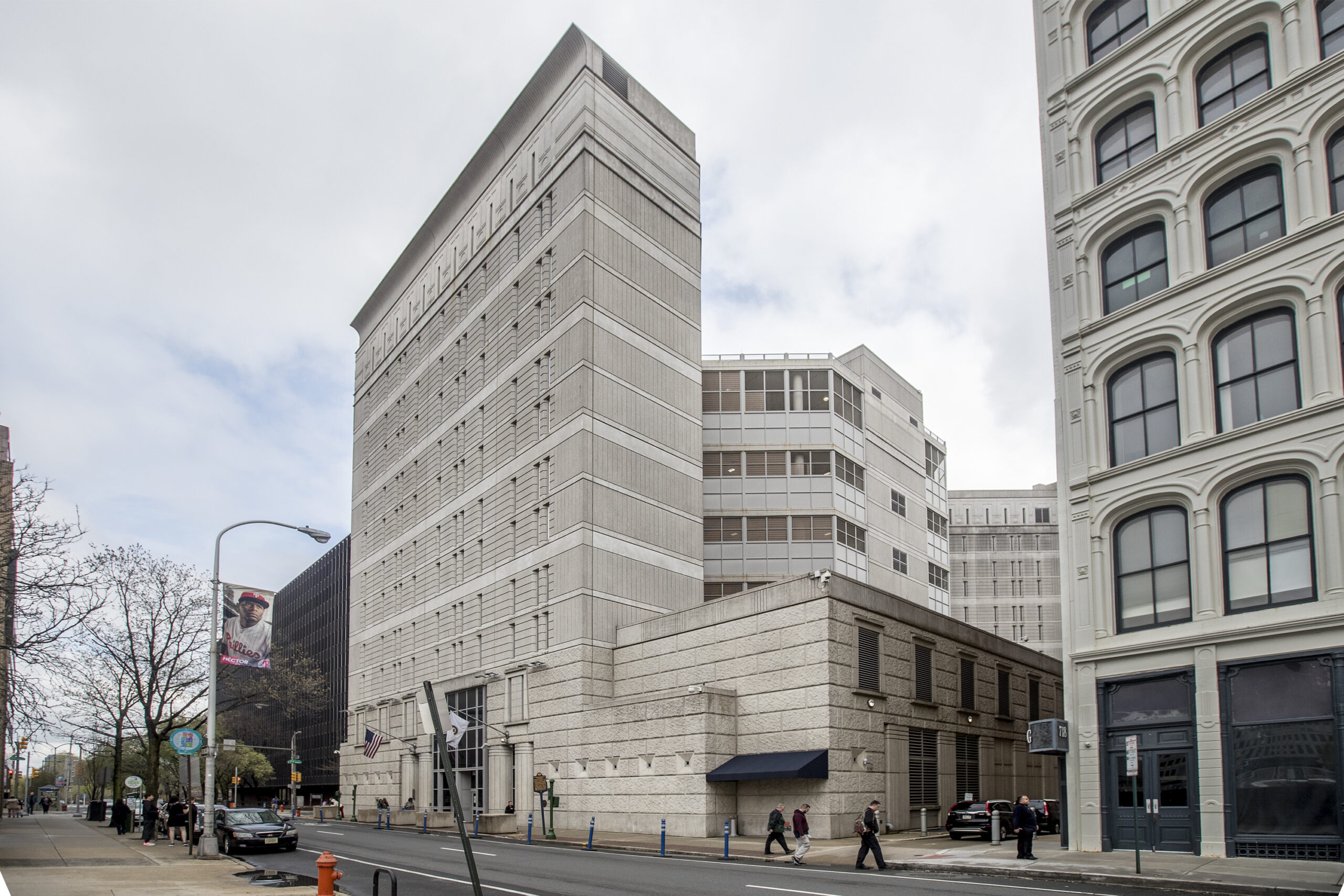
The Federal Detention Center, at 7th and Arch Streets.
Beyond the once-monthly 15-minute phone call he was allowed to make to his daughters, Williams said, there was one thing that helped him endure isolation: Friar Ben Regotti.
Regotti, then a resident at Center City’s St. John the Evangelist Catholic Church, served as the detention center’s chaplain. And when Williams was in solitary, he said, Regotti came to his cell every day and offered an escape: praying with him through a slit in the thick steel door, hearing his confession, and offering him books, including the Bible, which Williams — who was raised Catholic — said he finally read cover-to-cover for the first time.
“I’d lost everything,” Williams recalled. “But Father Regotti was the kindest person to me.”
When he was transferred to a prison camp in Morgantown, W.Va., Williams continued his spiritual journey by attending weekly Masses, Bible studies, and services for other religions. He also completed substance abuse classes, taught classes to help prisoners get high school diplomas, and learned how to play the saxophone.
He made some unlikely friends while he was locked up, including Michael Vandergrift of Delaware County, who is serving a life sentence plus 20 years for killing a rival drug dealer as part of a hired hit; and Bright Ogodo of Brooklyn, N.Y., who was sentenced to more than six years in prison for running a sophisticated identity-theft ring out of TD Bank branches.
Williams said Ogodo later told him he was considering taking his own life — he had even written a letter to his family, convinced they would be better off without him. But when Ogodo saw that Philadelphia’s former DA was in jail, too, Williams said, Ogodo changed his mind.
“He said, ‘I saw you walking with your head up, and [thought], if you can survive, so shall I,’” Williams said.
Three years ago today, I walked out of prison. My friend Bill, picked me up in Morgantown, WV and drove me home. In many ways being incarcerated was less difficult than Re-Entry. I am grateful for all that I have learned. Thank you God. 🙏🏽 pic.twitter.com/393p8KQXmg
Williams was released from prison in 2020, but said almost no one was willing to help him get back on his feet. Before he was incarcerated, he said, he had visited the governor’s mansion and taken his daughters to the Easter egg roll on the White House lawn. But afterward, few people would even take his calls.
“Nobody would hire me,” he said, describing people’s default position toward him as “the Heisman,” the college football statue with an arm extended to keep opponents away.
So Williams — whose law license was suspended when he was convicted — found work at a Lowe’s Home Improvement store in Havertown, unloading trucks and fulfilling online orders from 7 p.m. until 5:30 a.m.
Most of his coworkers, he said, had also recently been released from prison. And while working, he said, he was “kind of providing pastoral care [to them] daily,” similar to his teaching of GED courses in prison, or participating in Bible studies.
In time, he said, he began developing his ideas about self-improvement into formal programs for nonprofits, providing ways for recently incarcerated people to learn the skills needed to maintain consistent employment — developing a resumé, for instance, but also focusing on topics like conflict de-escalation.
Much of his motivation for doing that work, he said, came from research showing that recidivism is greatly reduced among people who receive substance abuse counseling, career coaching, and regular spiritual practice.
“What all three have in common,” Williams said, “is changing the hearts and minds of people.”
Federal Supervised Release ended Friday. First time at the beach since 2016. First time going outside of the Eastern District of Pennsylvania WITHOUT having to ask for permission since ‘17 made me cry! If you want to know my thoughts on Judge Diamond or federal prosecution ask me pic.twitter.com/pwzb9Qa0IR
In 2023, he ran into Terrell Bagby, then a deputy commissioner in Philadelphia’s jail system, and the two discussed the possibility of bringing Williams’ teachings into the jails. That’s how he ended up bringing his volunteer courses — Career Keepers and Prison Poets — into Curran-Fromhold, the city’s largest jail, he said.
In a recent session of Career Keepers, Williams was at the head of the class as nine prisoners sat at a U-shaped table around the room. They took turns practicing public speaking by delivering updates on the weather, sports, and news, then discussed topics including how to reward positive behavior — rather than linger on bad choices — and how to display gratitude.
In the moments after the prisoners were escorted back to their blocks, Williams said the men he has taught over the years have often been more open and vulnerable than he expected. Some have shared stories about traumatic experiences — such as being shot or sexually abused — and then discussed how those experiences affected their lives.
“I spent all this time trying to get out of prison,” he said, “and then I found myself loving being there, trying to help the inmates themselves.”
Becoming a presence
Inside his spare chaplain’s office at the jail, Williams has a desk, a few shelves, and scores of religious books. He keeps packs of white T-shirts, socks, and toothpaste to put into care packages for prisoners and, before making his rounds, keeps a list of people he wants to see.
His time on the cellblocks can be brief. During his rounds on a recent day, his presence did not always seem to have much of an impact. As he passed through each unit’s main expanse, where dozens of prisoners have cells overlooking a bustling common area, some prisoners were more interested in getting their lunch or hanging out by the phones than in checking out what Williams had to offer.
But other times, during several different stops, Williams sat and prayed with prisoners. And the care packages he hands out have become a frequent request, he said.
He wound down his shift in a room near the law library, reciting the rosary with a half-dozen men who had expressed interest in praying with him.
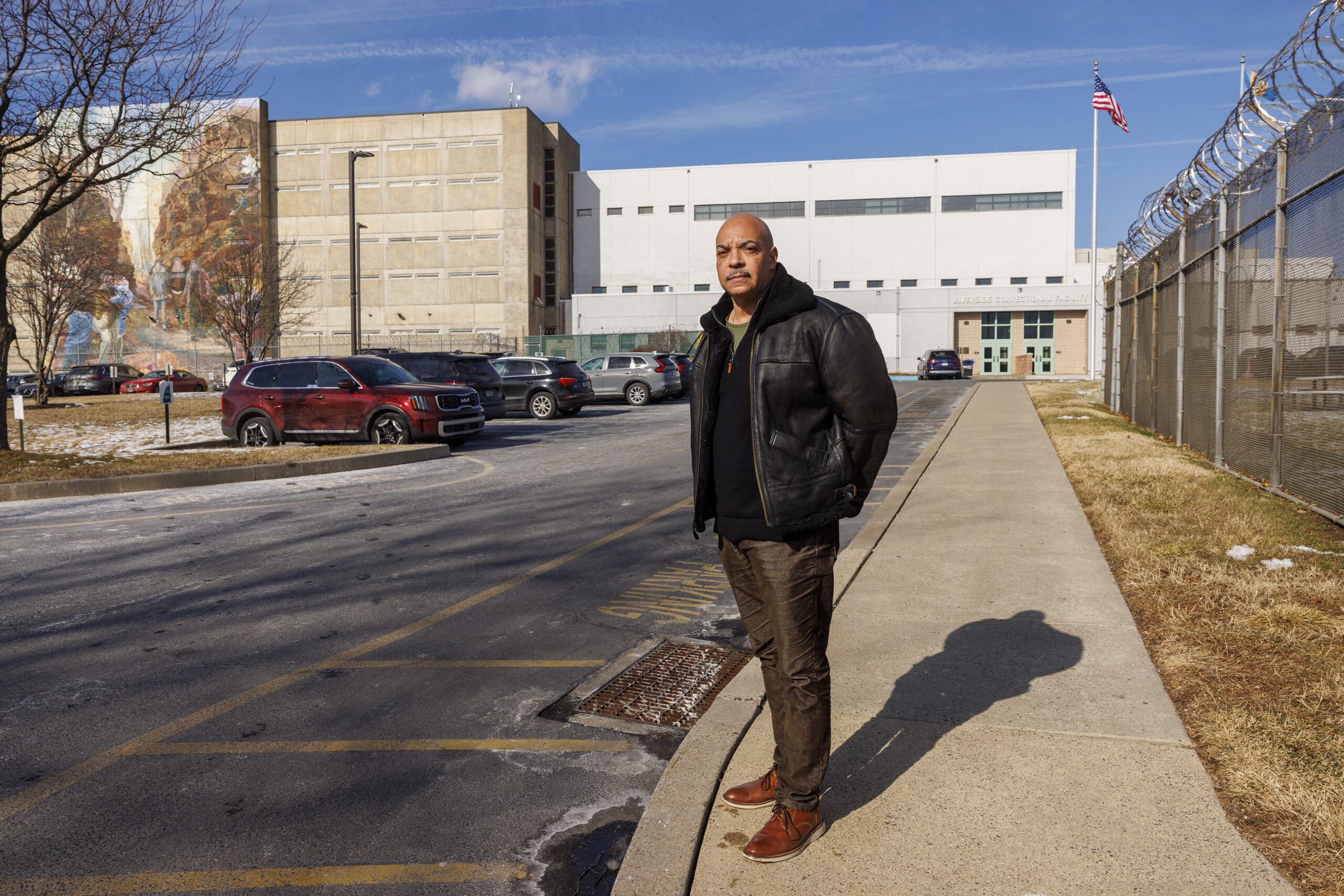
Williams’ chaplaincy is centered at the Riverside Correctional Facility in Northeast Philadelphia.
Regotti, the chaplain Williams had encountered in solitary, said in an interview that even though they first met while the former DA was behind a thick steel door, Regotti could immediately sense his curiosity, intellect, and desire to better himself.
“Going from feeling absolutely desperate to finding ways to cope, it was kind of a mark of his own personal resilience,” Regotti said. “He really developed into somebody that was in touch with God’s grace.”
Williams said he now aspires to be for people what Regotti was for him — a comforting presence in a dark place, and someone who, he hopes, can help provide guidance that can last well beyond someone’s time in confinement.
“The cheapest way to do that is by spreading the gospel,” he said. “People don’t want you to preach to them. They just want your presence — they want you to be there.”
A decorated U.S. Army veteran from Montgomery County was arrested Friday for participating in a protest at a St. Paul, Minn., church, just two days after a video of him speaking out against the Trump administration went viral.
Ian Austin, 35, of Bryn Athyn, is one of nine people facing felony charges for their involvement in a Jan. 18 protest at Cities Church in St. Paul. Former CNN host Don Lemon, who was covering the protest, is also a defendant. Lemon’s arrest, and that of another journalist who attended the protest, has brought criticism from media and civil rights advocates.
The Department of Justice indicted Austin for conspiring to interrupt a church service and “injure, intimidate, and interfere with exercise of right of religious freedom” at a place of worship, federal court documents state.
But Austin’s parents in Bryn Athyn say their son’s actions are in keeping with his sense of duty to his country, and his determination to help others however he can.
“Those are things he cares about more than political party,” his mother, Paige Austin, said. “It’s more about what does it mean to be human, and to treat people justly and kindly, regardless of where you live.”
In a video clip dated Jan. 20 and posted online days before his arrest, Austin said that he believed as an Army veteran it was his duty to travel to Minnesota.
“We took an oath to the Constitution, and it’s just being shredded right now,” Austin said in the video, which racked up hundreds of thousands of likes across multiple social media platforms.
“This has all of the signs from every fascist movement in history that we’re going to lose the opportunity to resist,” he said. “So that’s why I’m here.”
The protesters said they targeted the church because one of its pastors, David Easterwood, leads the Immigration and Customs Enforcement (ICE) St. Paul field office. The church’s website lists David Easterwood as a pastor, and news outlets have reported that his personal information appears to match that of the David Easterwood identified in court filings as the acting director of the ICE St. Paul field office.
In the video, Austin said he’d previously been detained for protesting outside the Bishop Henry Whipple Federal Building before being released without charges. It was during that detainment, he said, that a Department of Homeland Security officer questioned him about why someone “from Philadelphia” would be in Minneapolis.
“And I’m like, ‘Well, because the nation that I was willing to die for is being systematically oppressed with men in military uniforms, a private army told by the president that they have no other laws to follow than his, and they’re systematically attacking and even killing our neighbors — in the United States of America,” Austin said.
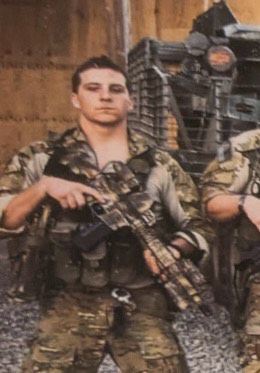
This undated photo shows Ian Austin and other U.S. Army soldiers.
Valorous service
Austin grew up in Huntingdon Valley, a couple miles outside of Philly in Montgomery County. His parents, Kenneth and Paige Austin, said he went to Academy of the New Church high school, where he excelled at baseball and wrestling, earning a spot in the J. Robinson Intensive Wrestling Camp in Minnesota.
“It’s brutally hard,” Kenneth Austin said in an interview with The Inquirer. “It’s like boot camp. He did very well. I think that planted a seed for the military.”
Austin graduated from high school in 2008, celebrated the Phillies’ World Series win with family and friends, and weeks later, shipped out to Army basic training.
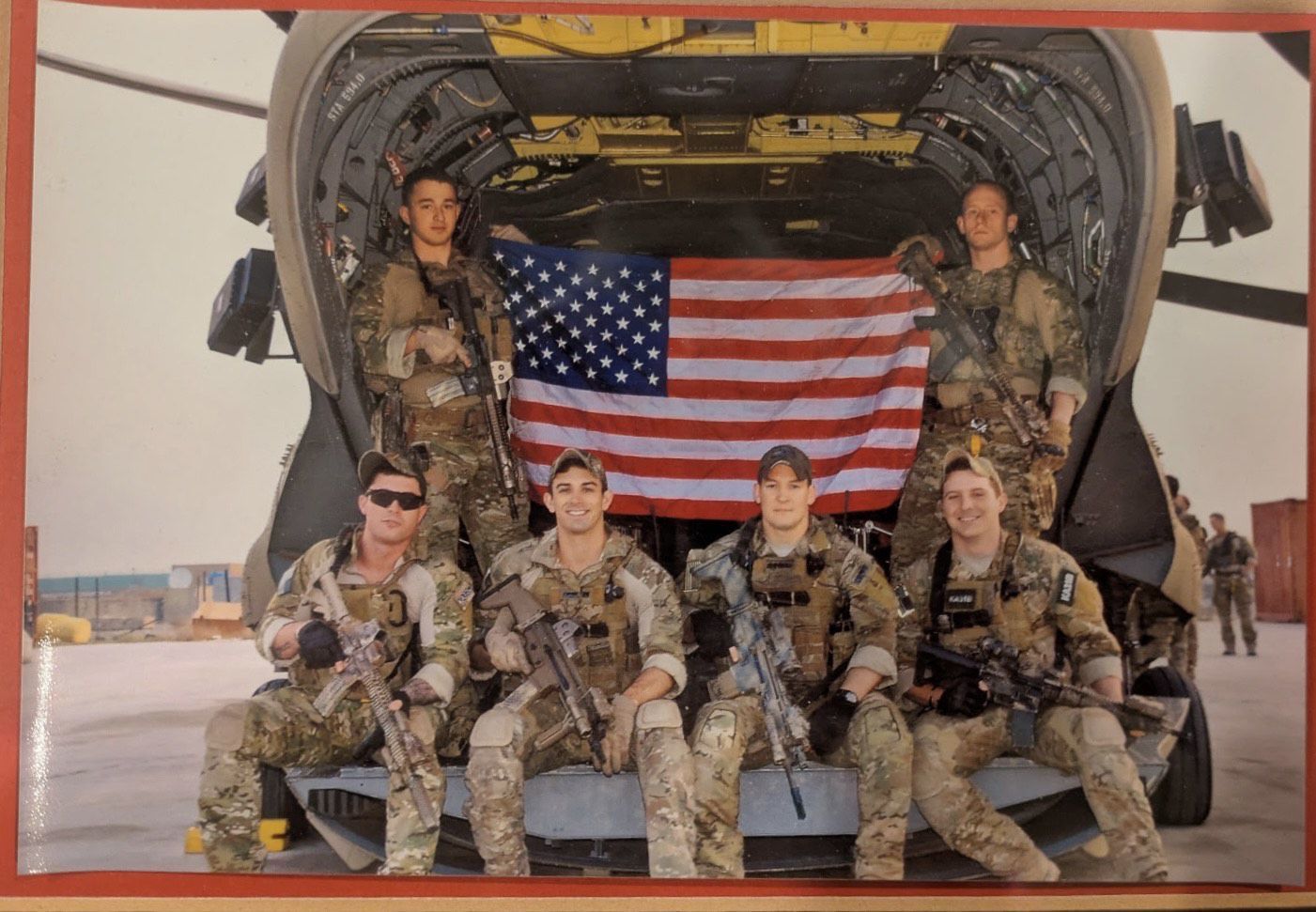
His parents confirmed that as a member of the U.S. Army’s elite 1st Ranger Battalion, Austin served six combat deployments in Afghanistan. In 2013, he was awarded a Joint Commendation Medal with Valor device, according to a news report.
The valor device is given to soldiers who displayed “an act or acts of heroism by an individual above what is normally expected while engaged in direct combat with an enemy of the United States, or an opposing foreign or armed force, with exposure to enemy hostilities and personal risk,” according to a military website.
This detail shot of an undated family photo shows Ian Austin while serving in the U.S. Army 1st Ranger Battalion.
After his Army contract ended in 2014, Austin returned home, his parents said. He was diagnosed with post-traumatic stress disorder, and he threw himself into his recovery process with the same passion he put into his training, Kenneth Austin said. He had his share of setbacks; in 2021, Austin pleaded guilty to disorderly conduct and fighting after refusing to leave a local bar, his parents noted.
But as Austin took college classes at La Salle University and elsewhere, he became increasingly interested in social justice and helping others.
During the 2020 George Floyd protests in Philly, Austin packed his backpack with medical supplies and water, Paige Austin said. “He would go down there and sort of join the protest, but he was there also to help, because part of the Ranger training was emergency medical training.”
Kenneth Austin recounted that his son even carried a backpack full of water, snacks, and first aid supplies during the parade after the Philadelphia Eagles’ 2025 Super Bowl victory, earning him the nickname “headquarters” from some of those out celebrating.
“It was a little much for me,” his father said. “But it really struck me, like, he’s … here to have fun, but he’s also looking out for everyone, and becoming buddies with everyone, and making sure everyone’s OK.”
A protest in a church
A few weeks after ICE agent Jonathan Ross shot and killed Renee Good in Minneapolis, Austin told his parents he was going to Minnesota. Three hours later, his truck was packed, and after a 17-hour drive, he was out protesting.
Austin is being held in the Sherburne County Jail in Minnesota, county records show. His attorney, Sarah Gad, said that she took on his case pro bono after seeing agents arrest him Friday. Gad said that based on what she’s seen in similar cases, she expects him to be released on his own recognizance as early as Monday.
Video of the protest shows protesters in the church chanting “Renee Good,” “Don’t shoot,” and “ICE out,” while a pastor shouted “shame on you” into a microphone. As the protest continued, many congregants can be seen leaving the church, while others stayed put or filmed the takeover. A few church attendees struck up conversations with protesters.
“I understand that what has happened is wrong, and I agree with that,” one congregant said to the person filming. “But this can’t happen. This is the house of the Lord.”
The federal indictment states that between 20 and 40 “agitators” occupied the main aisle and front of the church and yelled at the pastor and congregants. The indictment alleges that some protesters intimidated church members and prevented them from moving about freely in the church.
Austin, the indictment states, stood with other protesters, “approached the pastor and congregants in a menacing manner, and near the end of the operation, loudly berated the pastor with questions about Christian nationalism and Christians wanting their faith to be the law of the land.”
News reports have noted that Cities Church has ties to prominent Christian nationalists and powerful figures in the MAGA movement. Slate reported that its founder, Joe Rigney, is now a pastor at Christ Church in Moscow, Idaho. That church is run by Doug Wilson, who wants America to become a theocracy, according to a New York Times interview. Defense Secretary Pete Hegseth attends an affiliated church.
Austin’s attorney said this is a unique case, but it doesn’t surprise her that the Department of Justice would want to make an example of anti-ICE protesters who were allegedly disrupting a place of worship.
“I think that this is being taken very seriously by the United States attorney,” Gad said, though she added, “federal cases often look much more alarming at the front end than they turn out to be.”
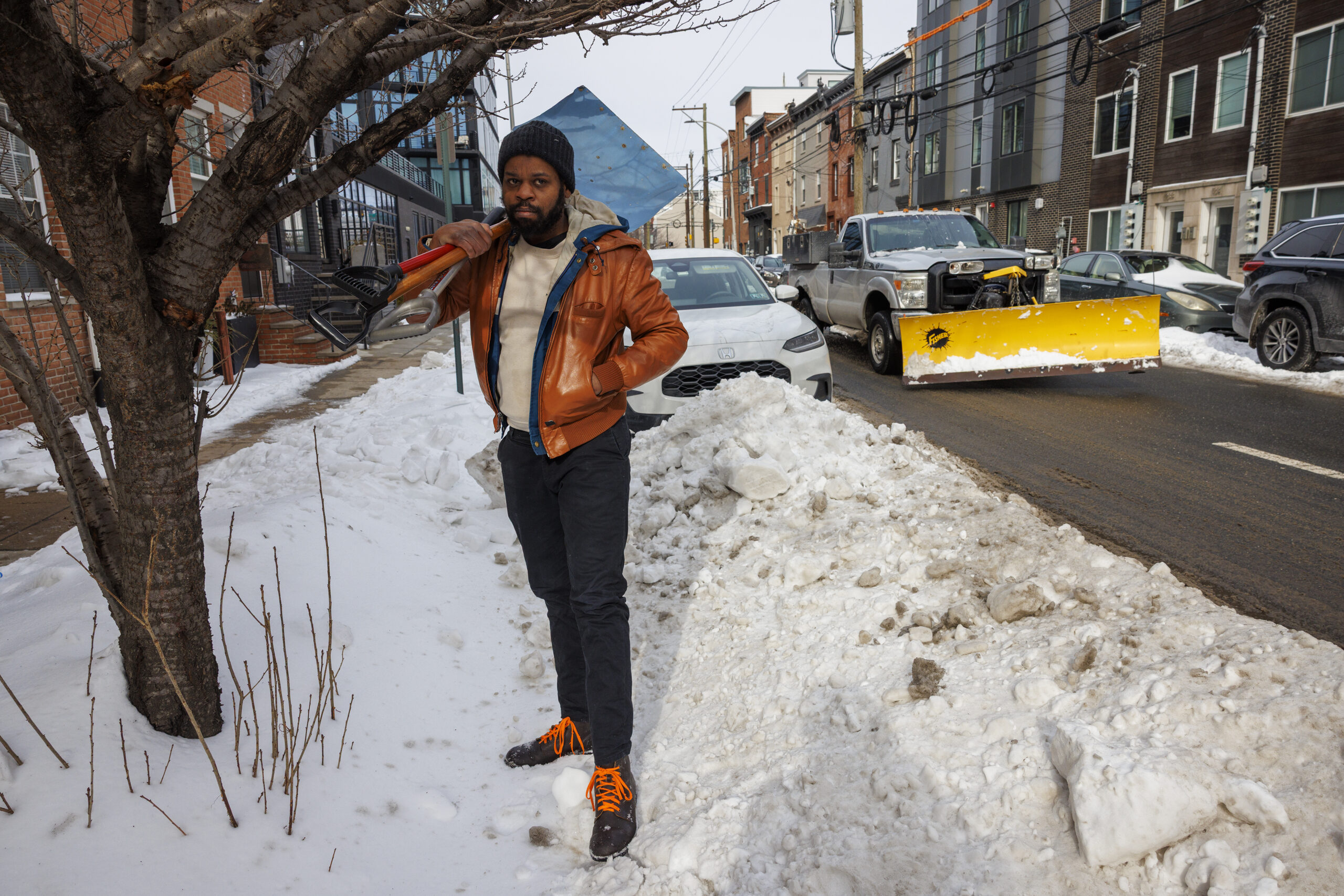
Denise Bruce paid a stranger $75 to shovel out her Hyundai Venue, which was encased in snow and ice outside her East Kensington rowhouse.
“My car was really badly packed in on all sides,” said Bruce, 36, who works in marketing. “I just didn’t have the strength honestly to dig it out myself.”
The West Coast native also didn’t have a shovel.
So she was elated to find a woman on Facebook who agreed to dig out her compact SUV for between $40 and $60. After the endeavor took four hours on a frigid evening, Bruce thought it was only fair to pay more.
After Bruce forked over the money — digitally via Cash App — she asked herself: What should one pay to outsource the onerous task of shoveling?
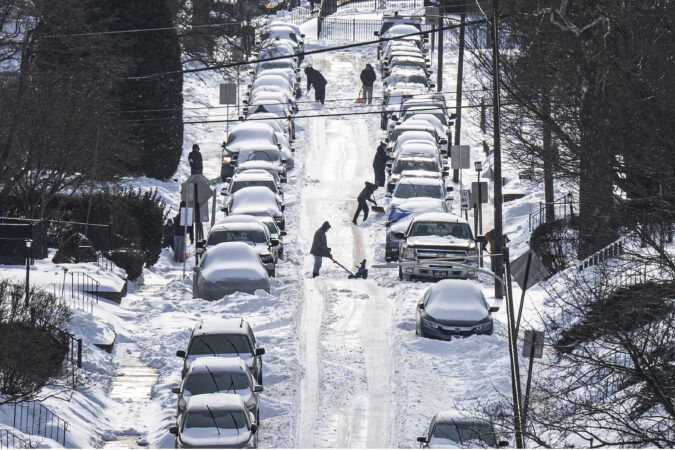
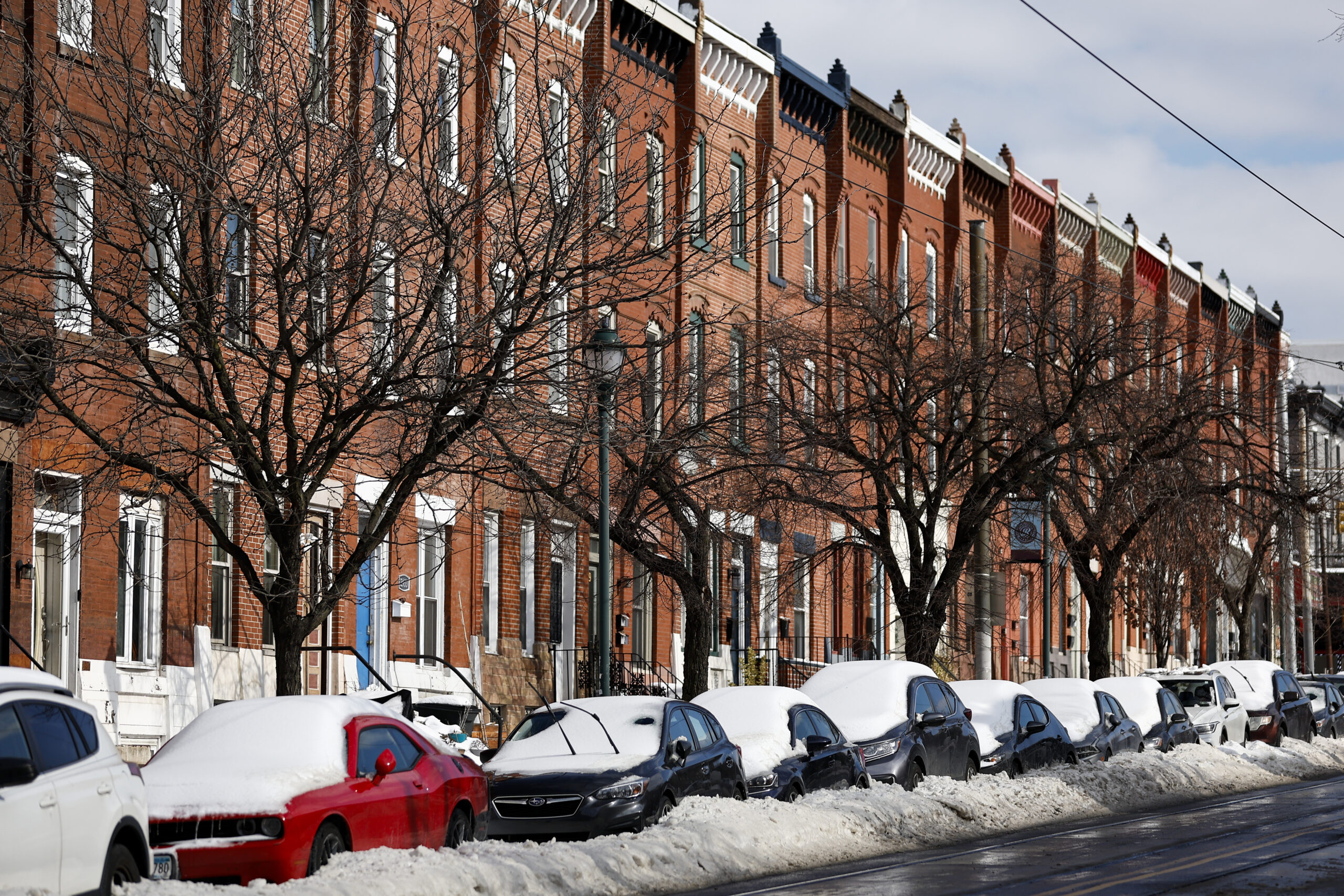
Snow-covered cars lined Girard Avenue in Brewerytown on Monday.
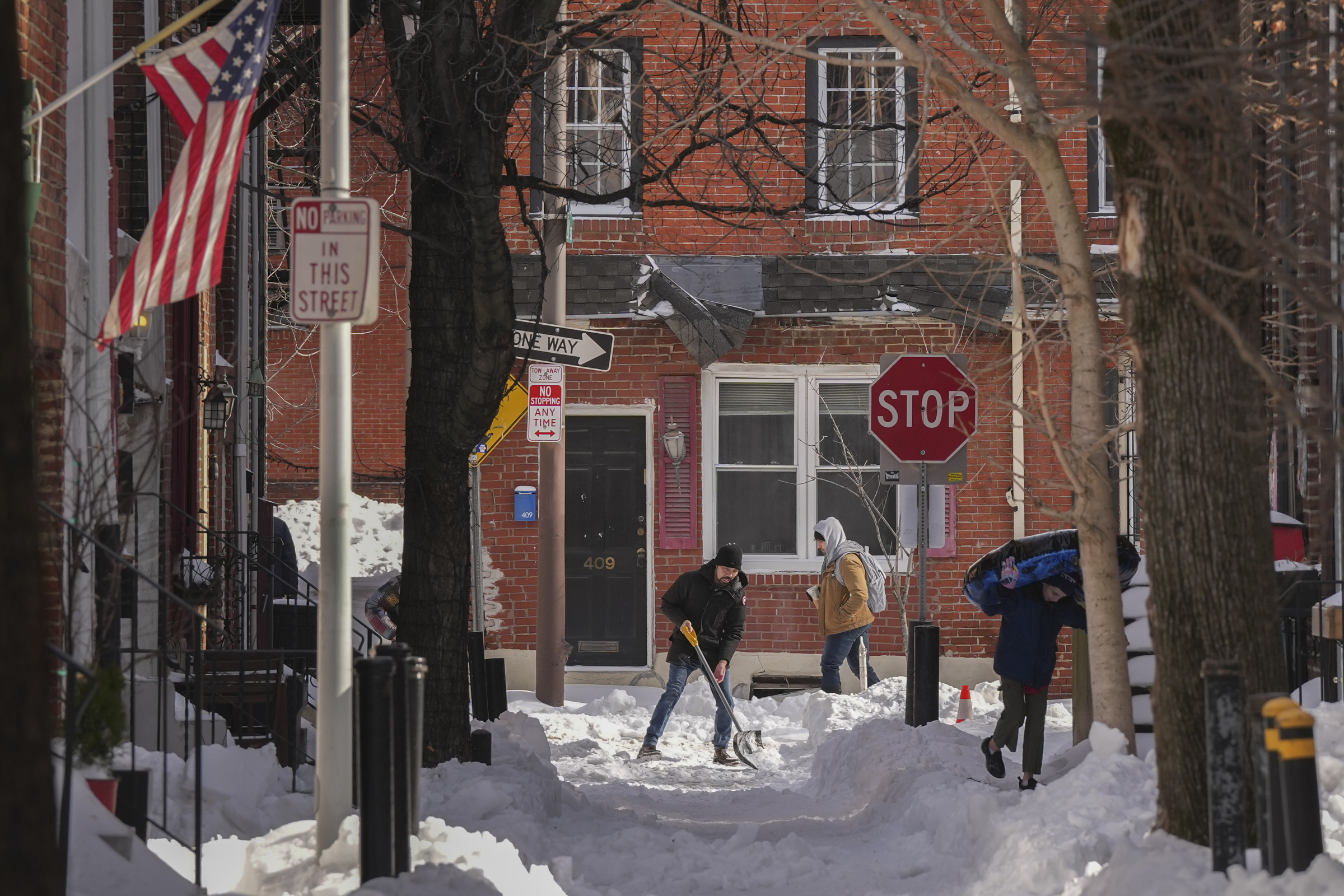
While some shoveled themselves or hired professional snow removal companies with fixed rates, others turned to an ad hoc network of helpers who hawked shoveling services on neighborhood Facebook groups, the Nextdoor app, and the online handyman service TaskRabbit.
On online forums, strangers agreed to dig out the cars of folks like Bruce, who didn’t have the strength, tools, or time to do so on their own. Others signed up to clear the driveways and sidewalks of older people, for whom shoveling such heavy snow can increase the risk of heart attacks.
Prices per job vary from $20 to $100 or more. Some freelance shovelers are upfront about their rates, while others defer to what their customers can afford.
Higher prices now for ‘trying to dig through concrete’
Alex Wiles stands on North Second Street on Tuesday before taking the bus to another snow-shoveling job.
On Monday, the day after the storm hit, Alex Wiles, 34, of Fishtown, shoveled out people’s cars, stoops, and walkways for between $30 and $40 per job. As the week went on, he increased his rate to about $50 because the work became more physically demanding.
“At this point, it feels like trying to dig through concrete,” Wiles said. As of Thursday, he had shoveled for nearly 20 people across the city and broken three shovels trying to break up ice. He said most people tip him an additional $5 to $20.
“I want it to be an accessible service,” he said, “but I also want to be able to make money doing it and remain competitive with other people,” including teenagers who often shovel for less.
For Wiles, who works in filmmaking and photography, his shoveling earnings go toward paying rent.
He said he sees his side hustle as essential service, especially since the city did “a terrible job,” in his opinion, with snow removal.
“A lot of the city looks like a storm happened 10 minutes ago,” Wiles said Thursday.
Shoveling is “necessary and people are just otherwise going to be stuck where there are,” he said. “They aren’t going to be able to get to work easily. They aren’t going to be able to walk down the street.”
Some adults see themselves filling in for ‘the young kids’
When Max Davis was a kid in Hopewell, N.J., he’d compete with his neighbors to see who could shovel the most driveways during snowstorms.
Now, the 28-year-old said he seldom sees or hears of kids going door to door when it snows.
That was part of the reason Davis got off his Northern Liberties couch on Monday and started shoveling out cars for a few neighbors who posted on Facebook that they needed help.
A snow shoveler on Waverly Street on Monday.
Davis, a founding executive at an AI startup, said he didn’t need the money, so he accepted however much his neighbors thought was fair. He ended up making about $40 to $50 per car, money he said he’ll likely use for something “frivolous” like a nice dinner out in the city.
If there is another snowstorm this winter, he said, he’d offer his shoveling services again.
“Why not?” Davis said. “I’d love to see the young kids get out there and do it. I think they’re missing out.”
In Broomall, Maggie Shevlin said she has never seen teenagers going door to door with shovels, but some of her neighbors have.
During this most recent storm, the 31-year-old turned to Facebook to find someone to clear her mother’s driveway and walkway in neighboring Newtown Square. Shevlin connected with a man who showed up at 6:30 a.m. Monday, she said, and did a thorough job for a good price.
“I figured it would be somewhere around $100. He charged me only $50,” said Shevlin, who works as a nanny and a singer. “Oh my god, [my mom] was so thankful.”
How a professional company sets snow removal prices
A snow removal contractor clears the sidewalk in front of an apartment building in Doylestown on Wednesday.
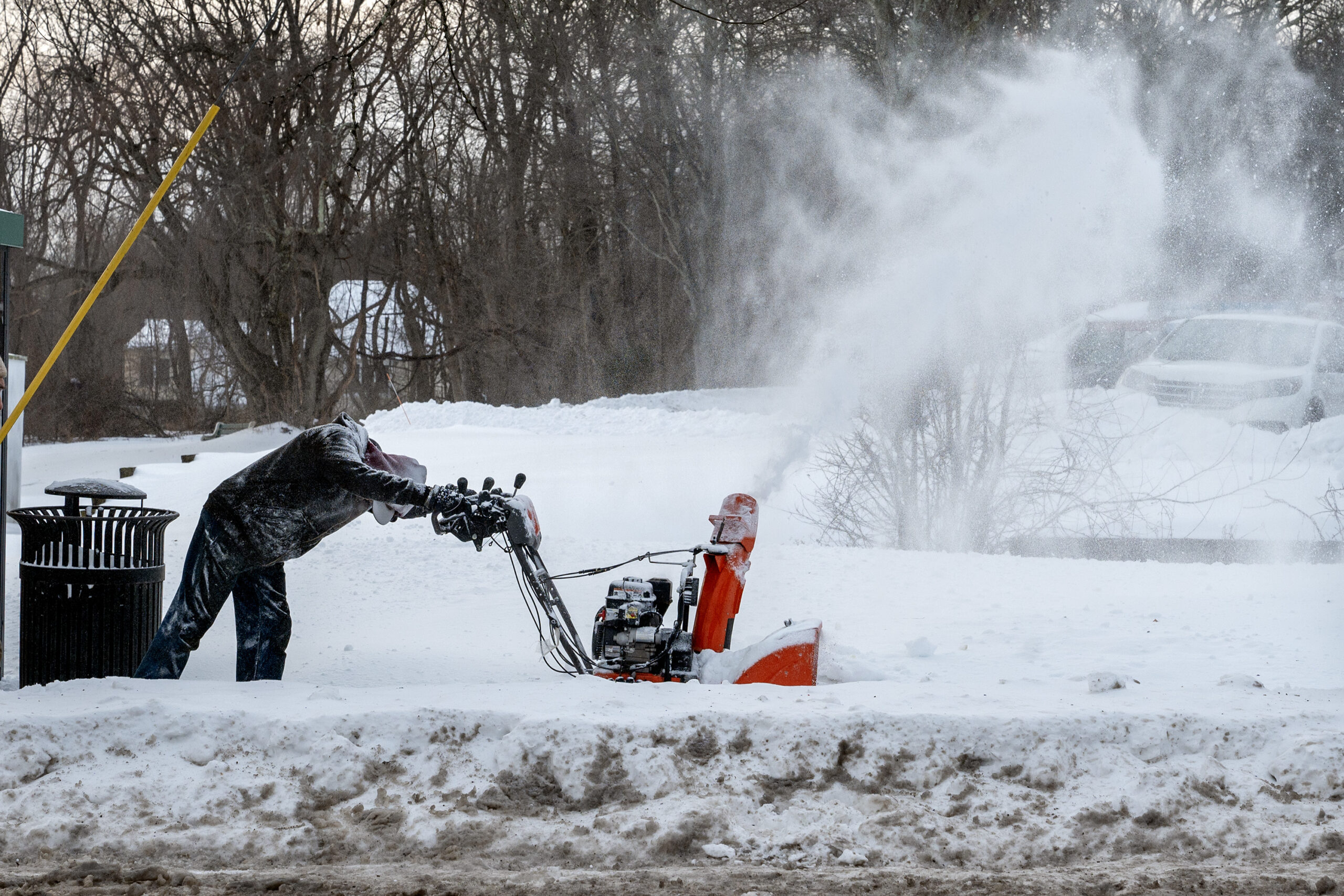
Some Philadelphia-area residents, especially those with larger properties, use professional snow removal services. They often contract with these companies at the start of the winter, guaranteeing snow removal — at a price — if a certain amount falls.
In Bristol, Bucks County, CJ Snow Removal charges $65 to $75 to remove two to four inches of snow from driveways, walkways, and sidewalks at a standard single-family home, said co-owner John Miraski.
The cost increases to $95-$115 for a corner house, he said, and all rates rise about $25 for every additional two inches of snow.
Last week, he said, several people called him asking for help shoveling out cars, but he was too busy to take on the extra customers. He passed those requests to other companies, he said, and recommended they charge “nothing less than $50 to $60, because you’re dealing with [nearly] a foot of snow plus a block of ice.”
Miraski said he recommends professionals because they are insured. That’s especially important, he said, in storms that involve sleet or freezing rain, as Philly just experienced.
“You start throwing ice, who knows where it is going and what it is hitting,” Miraski said.
Professionals are more expensive, he acknowledged, but often more thorough. “Some of my properties we went back to two or three times to make sure they were cleared.”
And sometimes, regardless of who shovels, a resident can find themselves unexpectedly stuck in the snow again.
In Northeast Philadelphia, J’Niyah Brooks paid $50 for a stranger to dig out her car on Sunday night. But when she left for her job as a dialysis technician at 3 a.m. Monday, her car had been plowed in.
“I was out there kicking snow,” said Brooks, who was eventually able to get to work.
When Will Yip was 12 years old, his future flashed before his eyes.
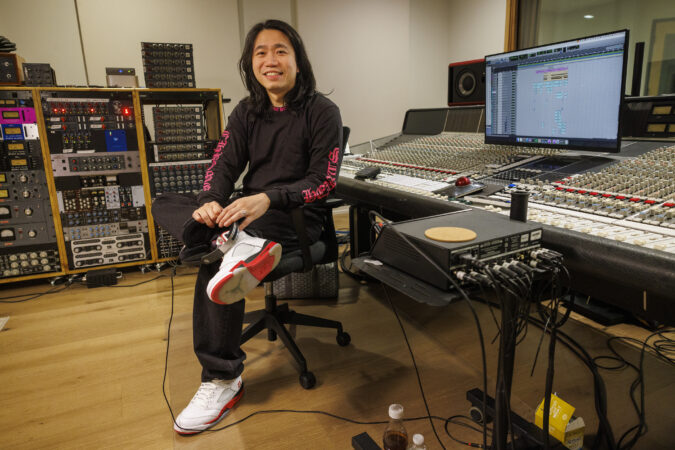
“The second I walked into the studio I knew that this is what I wanted,” said the Grammy-nominated music producer and engineer, sitting in the control room at Memory Music Studios, the new recording studio he’s built in the Whitman section of South Philadelphia.
“I remember the smell,” he said, recalling a visit to Ground Control Recording in Northeast Philly, where he and a friend paid $20 an hour to record two songs in 1999. “I always loved playing drums. But I was like: ‘This is cool!’ I still remember that feeling.”
That enthusiasm has guided Yip, beginning with the days when he was convincing bands like Philly hardcore quartet Blacklisted to record (for free) in his mother’s basement while still a student at Central High.
It’s stayed with him through two decades as one of the busiest producer-engineers in the music business at Studio 4 in Conshohocken, where he went to work at 19. He has co-owned the studio with mentor Phil Nicolo since 2012.
And Yip’s nonstop work ethic and command of his craft — “Will has a gift,” said Nicolo — has made him a go-to collaborator for acclaimed bands like Philly’s Mannequin Pussy and Baltimore’s Turnstile.
Yip recorded Turnstile’s breakthrough Never Enough at uber-producer Rick Rubin’s Los Angeles mansion in 2024.
Citing this recent work with Turnstile as well as rock and shoegaze bands Scowl, Die Spitz, and Doylestown’s Superheaven, music and pop culture site Uproxx named Yip 2025’s “indie producer of the year.”
Yip’s teaming with Turnstile has resulted in five Grammy nominations for the Brendan Yates-fronted hardcore-adjacent band.
If Turnstile triumphs in the rock album category, Yip — who was nominated for his work on Pittsburgh band Code Orange’s Underneath in 2021 — will come home from California with his first golden gramophone. (The other four nods are technical nominations for Yip. “If they win those,” he said, “They’ll give me a plaque.”)
But even if Yip returns empty-handed from the Grammys — which will be broadcast on CBS and streamed on Paramount+ at 8 p.m. Sunday from the Crypto.com Arena in LA — he’ll be coming back to his already up-and-running state of the art studio, where he’s turned a longtime dream into reality.
“Everyone is like, ‘Bro, why are you building a million-dollar studio? Aren’t studios dying?’” said the producer, who turns 39 this month.
“They are. But my brand of music, that I’m lucky enough to work with, is flourishing. Rock is back. I’ve waited my entire life for this, for people to want electric guitars. I’ve felt it bubbling for the last 10 years. And now it’s happening.”
Will Yip, owner of Memory Music Studios, speaks with music producer Steph Marziano.
At Studio 4 — which was headquarters to 1990s hip-hop label Ruffhouse Records, home to the Fugees, Cypress Hill, and Lauryn Hill — Yip has stayed busy.
How busy? A 2019 profile on the Grammy website was headlined: “Philly Producer/Engineer Will Yip Works Harder than You.” Muso, the music industry website that tracks creator credits, ranks Yip as the 88th most active producer, alive or dead, with 37,116 credits.
“I opened a studio because bands need to come to Philadelphia, and I was running out of space,” said Yip, who also co-owns Doom, the metal bar and restaurant around the corner from Franklin Music Hall.
“It was my dream to build a studio. But I wasn’t going to do one until it made sense. We were very calculated with what we were doing. I’m booked through 2027.”
Taking visitors on an early morning tour of the 7,500-square-foot facility before Southern California rock band Movements arrived for a session, he showed off Memory Music’s four rooms to record and mix music.
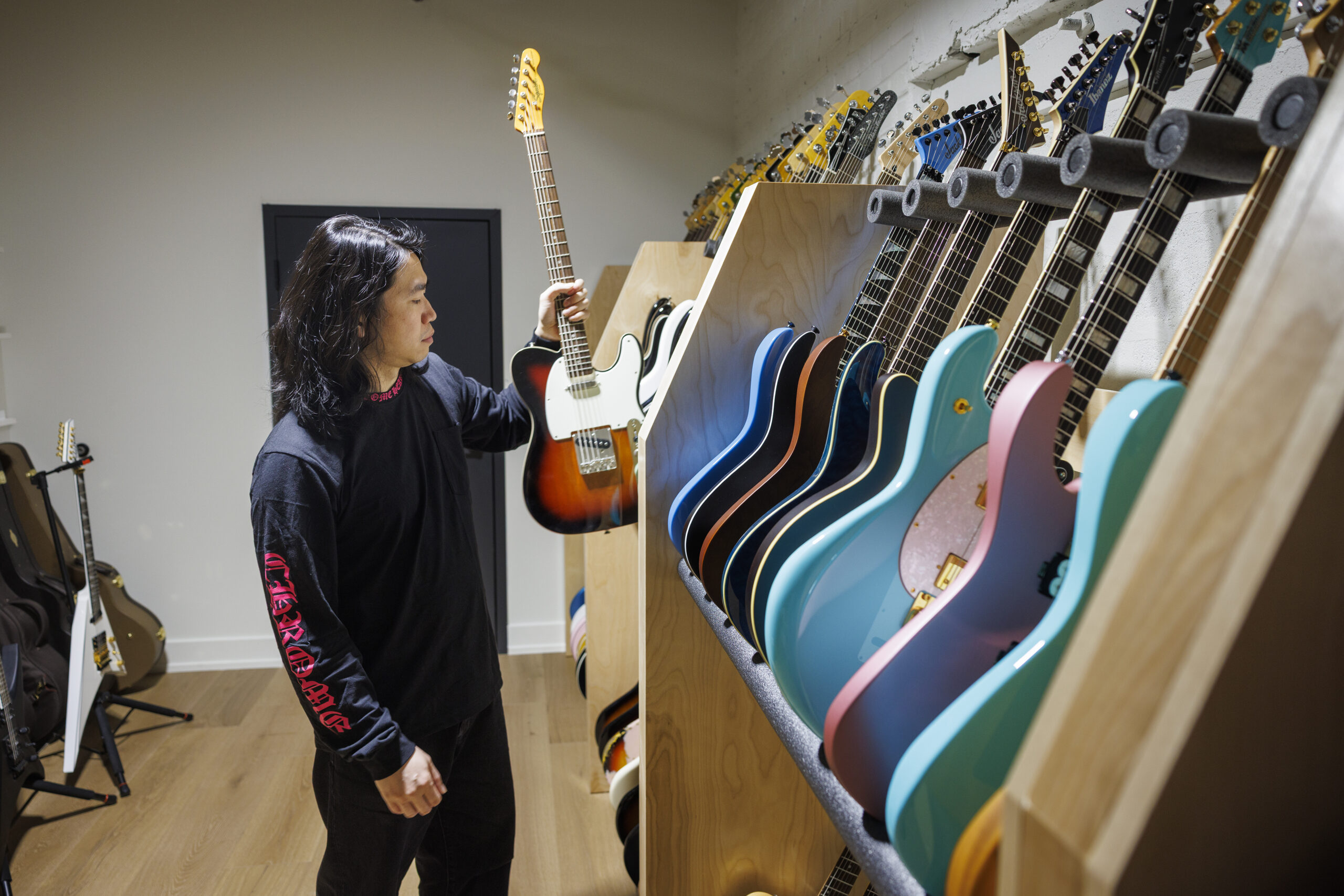
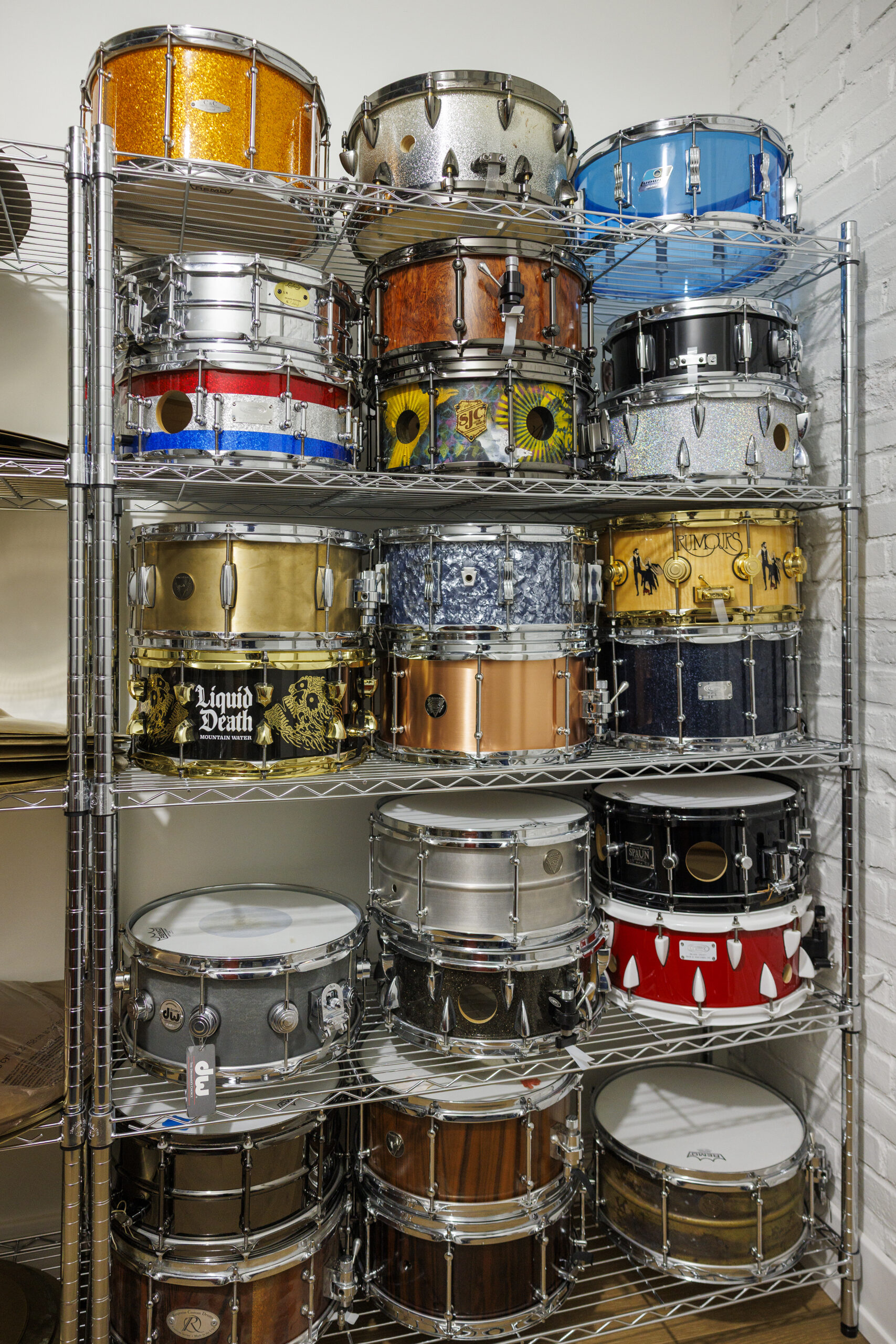
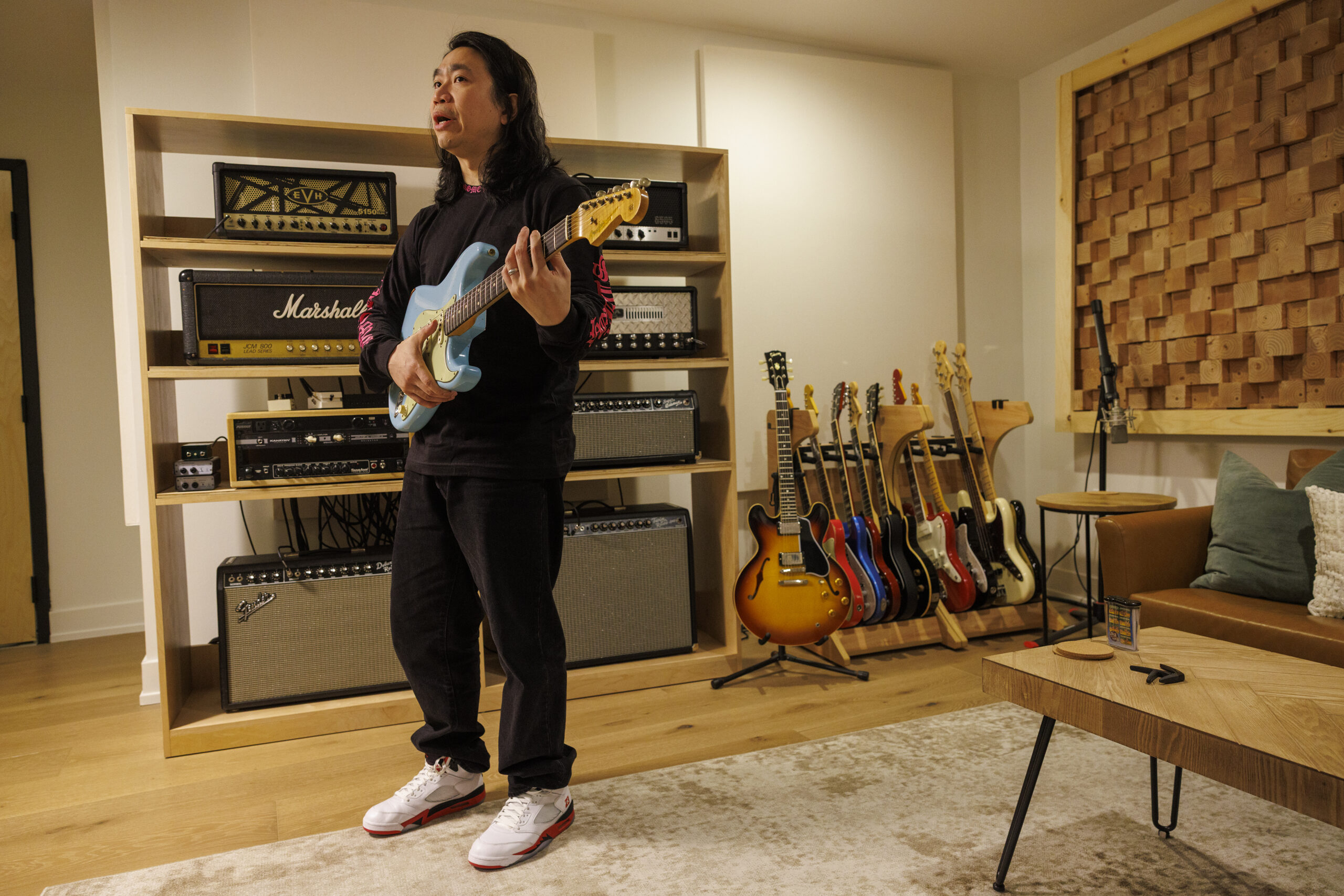
Storage rooms are hung with scores of electric guitars, neatly shelved snare drums, and stacks of Marshall amps. Lounges are equipped with an impressive bourbon-centric whiskey bar, pool table, comfy couches, and Street Fighter II and NFL Blitz video games.
Yip, who is living with his wife, Christina, and toddler son, Milo, in Center City while they house shop, is a passionate Philly sports fan who owns the world’s largest collection of game-worn Phillies jerseys.
“I collect things. I have eight Scott Kingery rookie jerseys,” he said, laughing at himself.
On a recent visit, while Yip worked with Movements in Memory Music’s main room, producer Steph Marziano, who grew up in Philly and lives in London, was next door with Brooklyn indie songwriter Kevin Devine. Atlanta rapper Kenny Mason was due in later in the week.
“I needed a place in Philly to work out of,” said Marziano, who teamed with Hayley Williams on “Parachute” on Ego Death at a Bachelorette Party.
Will Yip in guitar room of his new studio, Memory Music Studios, south Philadelphia, Tuesday, Jan. 13, 2026.
That LP is nominated for best alternative music album this year. The award will most likely be given away in the pre-telecast ceremony, which will stream from the Peacock Theater in LA starting at 3:30 p.m. on grammys.com and the Recording Academy’s YouTube channel.
“This is my new spot,” Marziano said of Memory Music. “Honestly, I love this place. I’m never even working in New York again.”
Yip was born in New York and moved to Philadelphia at age 1. His parents had escaped Mao Zedong’s Cultural Revolution by swimming from China to Hong Kong before immigrating to the United States.
His father co-owned Ocean City Restaurant in Chinatown, but never wanted Yip or his older brother to work there.
His parents hoped Yip would go to Penn, but enraptured by The Miseducation of Lauryn Hill, recorded by Nicolo and his sibling Joe — known as the Butcher Bros. — Yip had a higher aspiration: to work at Studio 4.
So he went to Temple to study recording with Phil Nicolo. When he inquired about helping out at the studio, he got valuable advice he now often shares: “Just show up.”
Assortment of snare drums in the newly constructed music studio built by Will Yip, Memory Music Studios, south Philadelphia, Tuesday, Jan. 13, 2026.
“I drove to Conshohocken that day. I was so nervous. There was a Brazilian band there. I felt like I was in Disneyland.”
“He showed up, and he started doing stuff,” said Nicolo, who still co-owns Studio 4 and Studio 4 Vinyl, an LP pressing plant based in Coatesville.
“And then he started saying, ‘Hey, if I clean out this room can I use it on the weekend?’ He started bringing bands in there, and on Monday morning, he’d hand me a roll of twenties. And it was like, ‘Dude, you can come in whenever you want!’”
Nicolo said Yip’s productions, on which he is frequently also credited as a cowriter and drummer, are marked by “an aggressive rock sound, but with a style and an emotion and a musicality that you don’t often hear in quote unquote modern music, that seems kind of AI. That first time I heard that Turnstile record on WXPN, I was like ‘I bet this is Will.’ And it was.”
Will Yip in Studio 5 in his newly constructed studio, Memory Music Studios, south Philadelphia, Tuesday, Jan. 13, 2026.
In 2021, when six women of Asian descent were killed at spas in the Atlanta area, Yip raised $100,000 through a memorabilia raffle, donating the money to the Asian American and Pacific Islanders Community Fund.
“I’m around great people all the time that support me, but I’ve always felt alone in being Asian in this genre, in this field, that from top to bottom is white male-dominated,” he told The Inquirer at the time. “But my friends and brothers, they came immediately and said, ‘We want to stand with you.’ And that meant the world to me.”
Now, he says, “I’m so proud of how much our little sector of the rock community has strived to improve inclusivity, especially this past decade. Twenty-five years ago, you would never find an Asian-fronted rock band, but today, you’re starting to see legit Asian rock stars like Mitski, Japanese Breakfast, and Turnstile. I’m confident it’ll only continue to grow.”
Yip’s collaborations tend to be long running. Scranton’s Tigers Jaw, whose new Lost on You is due in March, has worked with Yip on all of their albums since 2014’s Charmer. New Yip-produced music by Scranton pop-punk band the Menzingers is also due later this year.
Scranton band Tigers Jaw, with Ban Walsh on the left) have recorded four albums with producer Will Yip, including Lost On You, which is due in March.
“Will is such a detail guy,” said Tigers Jaw’s Ben Walsh. “Every detail in the new studio is meticulously planned out. And the stuff he suggests come from a place of understanding. He’s just very good at what feels natural and creatively fulfilling for the people he’s working with.”
“I’m a song guy,” Yip said. “I don’t look at myself as a sound nerd,” he added, gesturing to the staggering amount of gear he’s assembled. “But I want all the tools I can possibly have to be great at building songs.”
Jesse Ito, the acclaimed Philly chef who co-owns Royal Sushi & Izakaya, where Yip is a regular and often brings bands, calls his friend “the ultimate hype man.”
“Will just makes everybody around him feel so good about themselves. Even though we do different things, we understand each other about the grind and the growth and what it takes at this level.
“He doesn’t drink coffee,” Ito said. “If he drank coffee I think he would explode. He’s just so naturally hyped.”
And nothing comes more natural to Yip than hyping the city where he’s built his new musical home.
“Philly is the indie music capital of the world,” Yip said. “I’ll stand by that. And I want people to see how awesome and investable and easy it is to live in Philly and make music, and enjoy life in Philly. I want to build the culture. To give people a reason to come to Philly. And to stay in Philly.”
When President Donald Trump called on Iranian demonstrators to “KEEP PROTESTING — TAKE OVER THE INSTITUTIONS” in early January and pledged “HELP IS ON THE WAY,” I feared a shameful episode of American betrayal was about to be repeated.
“We are locked and loaded and ready to go,” he had promised these brave Iranians, fed up with decades of corruption and repression by the ayatollahs.
Human rights activists report that these words encouraged many ordinary Iranians to come to the streets.
My mind flashed back to January 1991, when President George H.W. Bush urged Iraqis to rise up against Saddam Hussein, as U.S. troops were liberating Kuwait, then allowed the Iraqi Kurds and Shiites who responded to be slaughtered by the thousands. On assignment in Iraq, I saw the bloody consequences, which undermined U.S. forces during the 2003 Iraq War.
Sure enough, history is repeating itself, this time in Iran. TACO Trump ignored the impact his braggadocio has on real people and reneged on his promises to the Iranians. Many thousands of demonstrators who believed him were shot dead in the streets by regime forces, and many more thousands jailed, beaten, and tortured.
Human rights groups estimate the number of dead at a minimum of 5,000, but we won’t know if the number is much higher until the regime stops blocking the internet. Iranian officials insist, contrary to Trump’s claims, that they won’t halt executions.
If Trump had moved quickly to do the possible — aid the protesters with satellite connections, isolate Iran at the United Nations, organize tighter sanctions against their oil sales and shadow fleet, cripple their military and government with cyberattacks — he might have made a difference. He still could.
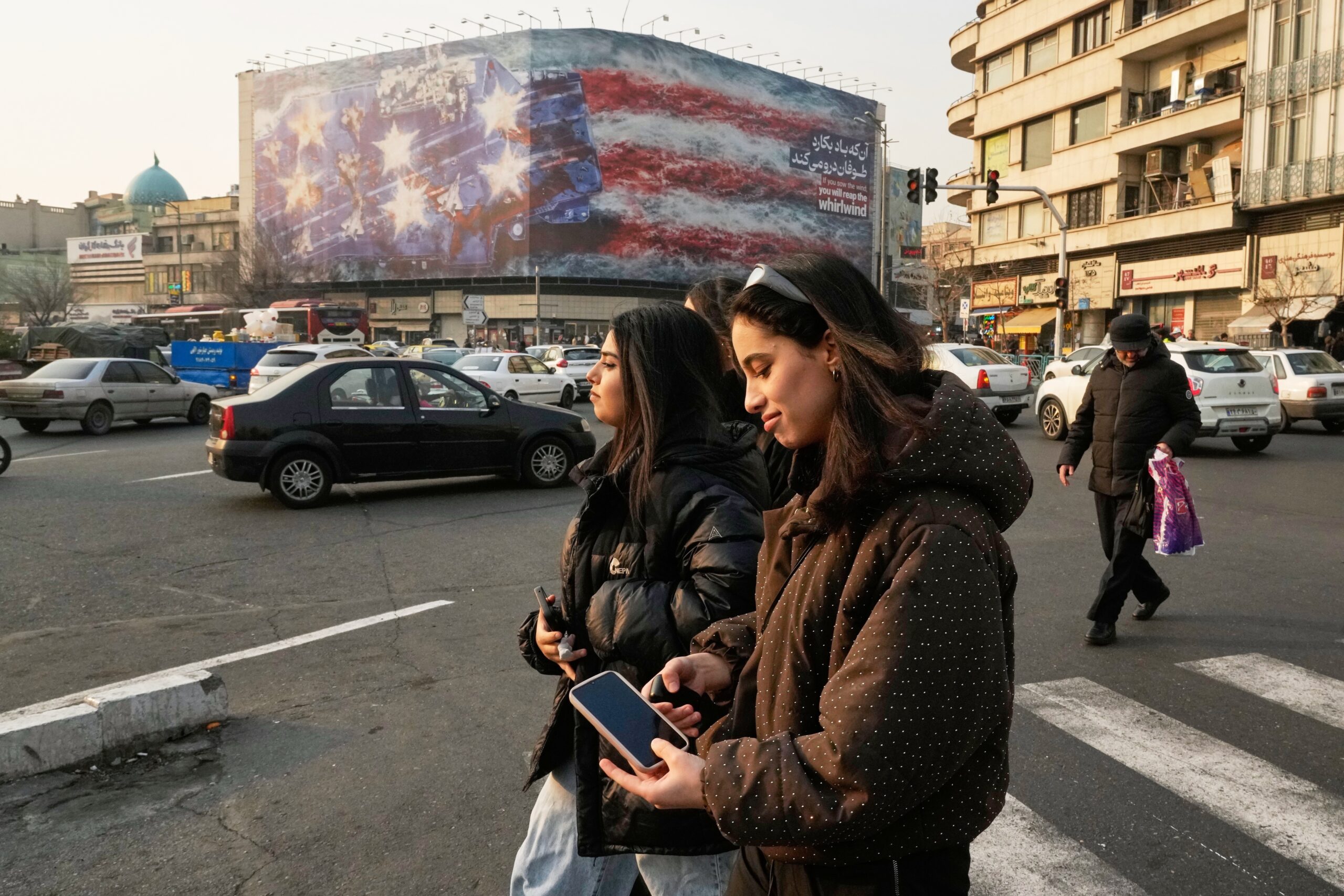
Two girls, not wearing the legally required headscarves, walk past a billboard depicting a damaged U.S. aircraft carrier with disabled fighter jets on its deck and a sign reading in Farsi and English, “If you sow the wind, you’ll reap the whirlwind,” at Enqelab-e-Eslami (Islamic Revolution) Square in Tehran, Iran, Sunday.
Instead, convinced of his own brilliance, surrounded by incompetent advisers, and possessed of a mistaken belief that he has the power to reorder the world, he has tweeted cheap rhetoric that only provoked more regime brutality on young people in the streets.
The consequence of betraying Iran’s citizen uprising will have ripple effects that Trump is unable to foresee.
“We’re in a very difficult situation,” I was told by Suzanne Maloney, a leading Iran expert who directs the foreign policy program at the Brookings Institution. “President Trump raised hopes without a strategy or the tools to carry it out. The tools [a massive U.S. armada dispatched to the region] have arrived too late to make a difference for the demonstrators on the street.”
Now that the uprising has been crushed, Trump no longer mentions the murdered protesters. Compassion is not his thing.
Instead, the president is seeking a deal with the ayatollahs to completely abandon their nuclear program, cut back their missile program, and stop meddling in the region.
In other words, as in Venezuela, the regime could remain if it bowed to the United States. The demands themselves lay out highly desirable objectives, but the regime recognizes that meeting them would leave them totally at the mercy of the U.S. and Israel. So it will probably delay or reject them.
Then what? Trump has likely boxed himself into conducting military strikes. Yet, bombs alone aren’t likely to unseat a government in which the military still has plenty of weapons and sees its fate as tied to the Islamic Republic. More likely, U.S. strikes would provoke a wider regional war, with attacks on U.S. bases in Arab countries and on Israel.
“Trump sees Venezuela as a model,” Maloney said, and indeed POTUS has said so. But in Venezuela, the CIA had inside sources who betrayed Nicolás Maduro and made his extraction possible. Moreover, the United States had previous contacts with Maduro’s vice president, swapping one dictator for another so long as she was willing to let Trump control Venezuelan oil profits. One limited strike, no messy follow-up with ground troops.
Iran, on the other hand, would be brutal, long, and messy, probably requiring U.S. ground troops, something Trump rightly won’t consider.
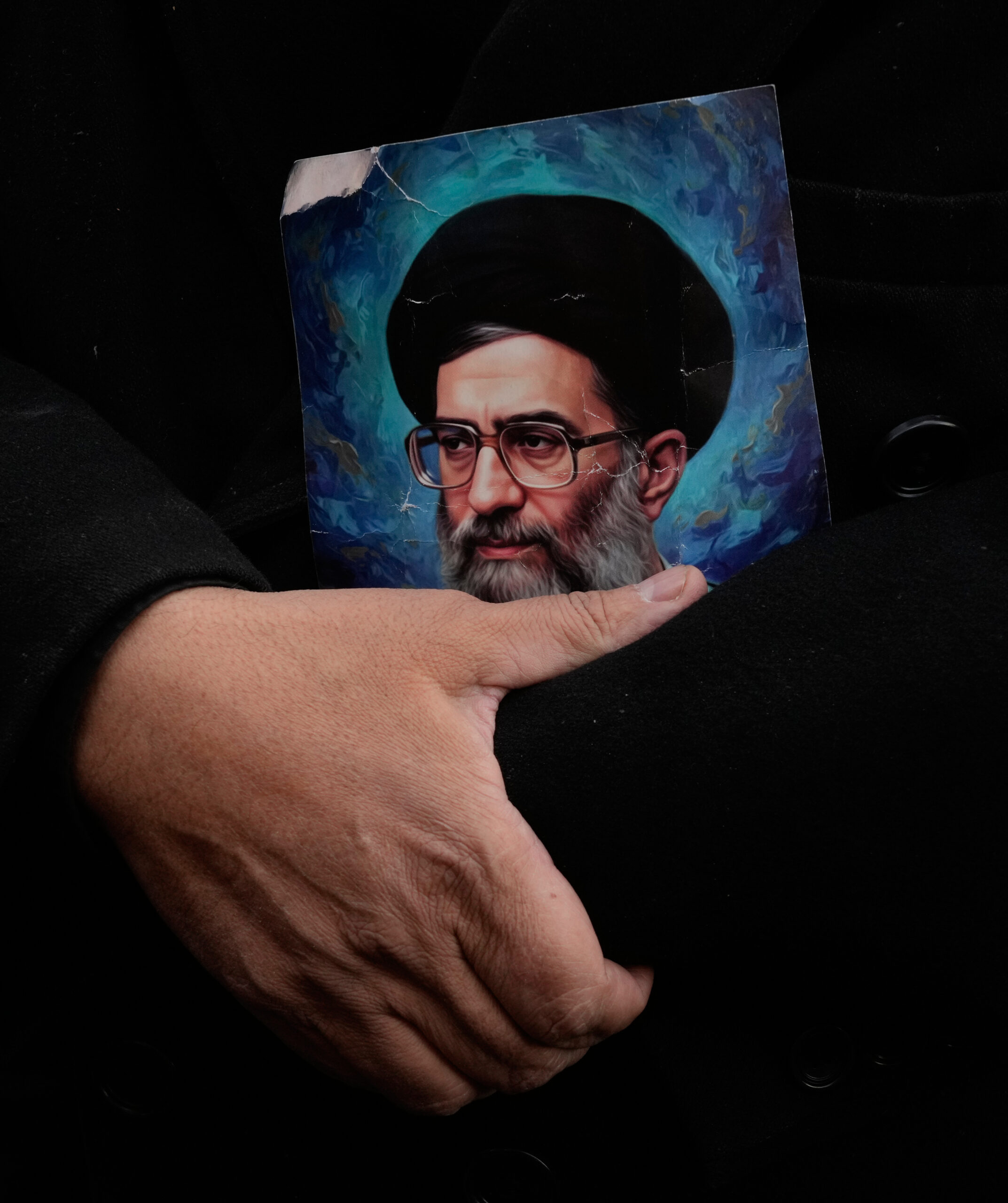
A man holds a poster of the Iranian Supreme Leader Ayatollah Ali Khamenei during a funeral ceremony for a group of security forces, who were killed during anti-government protests, in Tehran, Iran, on Jan. 14.
In Iran, said Maloney, “with the Revolutionary Guards and the clerical elite, there is not a pathway to a pro-Western leader who will bow to the U.S. They are going to go down fighting.”
As for Reza Pahlavi, the son of the last shah of Iran, who has some popularity in Iran, he has lived in exile in the United States since the 1979 Iranian Revolution and has no organization inside his homeland. U.S. experience with overhyped Iraqi exiles in 2003 taught diplomatic officials a bitter lesson, about which Trump is probably totally unaware.
Even if Iran’s supreme leader, Ali Khamenei, were miraculously slain, no one can guarantee what would come after. This is why the Saudis are urging Washington not to pursue regime change, and closing their airspace to any U.S. warplanes headed for Tehran.
Meantime, the trials and future executions of protesters will go forward.
So let me return to the bitter consequences of betraying allies who believed in the promises of the U.S.
The Shiites of southern Iraq never forgot Bush 41’s betrayal, during which he allowed a defeated Saddam to retain military helicopters that were used to slaughter at least 10,000 of their people who had answered the president’s call.
In 2003, just after the U.S. invasion, I returned to Najaf, the heart of Iraq’s south, where George W. Bush expected the Shiite population to welcome American troops. Instead, clerics and merchants recalled bitterly how their fathers and uncles had been slain in 1991. “You owe us,” one Najaf leader told me. “So kill Saddam and get out of Iraq, or we will turn on you, too.”
Instead, we remained in Iraq for years, and Shiite militias ultimately took revenge on our soldiers for the earlier betrayal.
Perhaps the population of Iran will be more forgiving if Trump devises a strategy that will help them, not cause more slaughter. But he doesn’t have much time.
Spotlight PA is an independent, nonpartisan, and nonprofit newsroom producing investigative and public-service journalism that holds power to account and drives positive change in Pennsylvania. Sign up for our free newsletters.
HARRISBURG — Rents are soaring, homelessness is rising, and homeownership is out of reach for many families in Pennsylvania. As the state grapples with a serious housing shortage and affordability dominates the national political conversation, Gov. Josh Shapiro is preparing to release a long-awaited plan to tackle the crisis.
The plan, first announced in late 2024, will draw on months of outreach to advocates, developers, and local officials. Supporters hope it will offer a clear path forward and build momentum around proposals that can win support in Pennsylvania’s politically divided legislature. But significant obstacles stand in the way.
“The housing crisis has risen to the level such that none of the four caucuses can ignore it,” said Deanna Dyer, director of policy at Regional Housing Legal Services, a nonprofit law firm.
The housing shortage is a nationwide problem, but Pennsylvania has been particularly slow to build new units. The shortfall leaves families squeezed by rising costs, pushes recent graduates to take jobs in other states, and makes it harder for companies to expand.
Other states are passing laws to loosen local zoning restrictions and encourage new development — despite often fierce opposition from groups representing local governments.
Similar efforts in Harrisburg have not yet gained traction, although more lawmakers are exploring solutions, said State Rep. Lindsay Powell, a Democrat representing Pittsburgh who cochairs the House Housing Caucus.
“Pennsylvania has an opportunity to really push itself forward here.”
Falling behind
Underlying Pennsylvania’s housing crunch is the law of supply and demand.
Between 2017 and 2023, the number of households in Pennsylvania grew by 5%, according to a recent report from Pew Charitable Trusts, a think tank. Over the same period, local governments issued only enough building permits to increase the state’s housing stock by 3.4%.
That left Pennsylvania ranked 44th out of 50 states on the rate of housing built.
“The most important driver of affordability is whether there are enough homes for everyone,” said Alex Horowitz, Pew’s director of housing policy.
High demand for existing units, combined with a lack of new supply, gives landlords more leverage to raise rents and drives up house prices, Horowitz said.
“The shortage is what is causing housing to get so expensive right now.”
The problem is not spread evenly across the state. Costs have risen the most in areas with growing populations that have not added enough housing, including the Philadelphia suburbs, Northeastern Pennsylvania, and cities like Harrisburg, York, and Lancaster.
To keep up with the demand, state officials estimate, Pennsylvania needs to build 450,000 units by 2035 — a 70% increase in new construction.
In September 2024, Shapiro signed an executive order directing the Pennsylvania Department of Community and Economic Development to create a statewide plan to increase the supply of housing, and to review the effectiveness of existing programs. The executive order also requires the Pennsylvania Department of Human Services to conduct a separate review of policies to address homelessness.
“We don’t have enough housing, the cost of housing is going up, and the housing we do have is getting older and is in need of more repairs,” Shapiro said, announcing the plan.
Since then, DCED has received feedback from almost 2,500 people and organizations, and held 15 listening sessions across the state, a spokesperson said.
A draft was due to be submitted to the governor’s office in September, according to the executive order, but the details have not yet been made public.
Zoning headaches
In roundtables and written feedback, state officials heard about problems small and sweeping. One issue came up repeatedly, according to interviews with participants and a review of hundreds of pages of written recommendations obtained through the state Right-to-Know law: To build more housing, Pennsylvania needs to change local zoning rules that stifle new construction.
There are a number of ways the state could approach this. Many municipalities reserve most of their land zoned residential for single-family homes. Pennsylvania could allow apartment buildings on land currently zoned for commercial use, or near public transit, or legalize accessory dwelling units, like backyard cottages and granny flats.
Changes like these would require revising the municipal planning code, the state law that gives local governments authority over land-use decisions.
These changes would also make it easier to address rising demand for smaller units, as the average household size falls and more people live alone.
Any attempt to change zoning laws, however, will likely face strong opposition from groups representing Pennsylvania’s municipalities. They argue that local governments know their communities best and should retain control over decisions about land use. They also say the focus on zoning overlooks other factors contributing to the housing shortage, like the rising cost of construction materials and supply-chain disruptions.
Municipal zoning laws are “often scapegoated” as the culprit for a lack of affordable housing, Logan Stover, director of policy and legislative affairs at the Pennsylvania State Association of Boroughs, told Spotlight PA in a statement.
In October, a senior Shapiro staffer working on the housing plan told a local group in Lancaster the plan would focus on “incentives rather than mandates,” with a points-based system to give communities that adopt pro-housing policies priority for state funding. Communities with policies that restrict new development could be disqualified, he said.
At least six states — including California, Massachusetts, and New York — have already created incentive programs, which vary in design and enforcement mechanisms.
These efforts have not proven as effective as broader statewide zoning changes, said Horowitz, the Pew researcher.
“States that tried that early on didn’t see the supply response,” he said.
The state plan will also likely focus on how to simplify and speed up local permitting processes, which can delay construction with time-consuming paperwork and unpredictable outcomes. Streamlining state permitting has already been a major focus for Shapiro.
Focus on preservation
Pennsylvania doesn’t just need to build more housing — it also needs to help people stay in their current homes, state officials heard.
Groups that provide free legal services to low-income residents say there has been a dramatic increase in the number of people seeking help with evictions, foreclosures, and similar problems. In 2024, legal aid providers said, housing made up a third of all their cases — the single largest category.
They also urged state officials to keep pushing to seal eviction records in some cases, which Shapiro has said he supports but would require changing state law.
Another common thread was the need for a permanent source of funding to help low-income homeowners with repair costs. The state has some of the oldest housing stock in the U.S.; more than 60% of houses were built before 1970.
Investing in home repairs is broadly popular but has proven politically challenging.
In 2022, the state legislature agreed to spend $125 million in federal pandemic aid to create a new home repair program.
Demand was overwhelming: Some counties were able to take applications only for a few days and thousands of homeowners ended up on wait lists. The program was widely praised for its flexibility, which allowed administrators to help homeowners who would not have been able to get help from other programs, although some counties ran into administrative difficulties.
The program was created with bipartisan support, but efforts to continue it with state funding in 2023 and 2024 were unsuccessful. Last year, Shapiro proposed $50 million for a new, rebranded repair program, but the money didn’t make it into the final budget deal.
Looking ahead
Although Shapiro could make some changes through executive action, many of the suggested policy goals would require legislation.
Housing has proven to be an issue that can cut through political divides in Harrisburg, where Democrats control the state House and the governor’s mansion while Republicans hold a majority in the state Senate.
In recent years, lawmakers have agreed to a series of funding increases for a grant program to build and repair affordable housing. They also supported Shapiro’s proposal for a major expansion of a program that gives older and disabled residents a partial refund on their rent and property tax payments. The changes, which took effect in 2024, made more Pennsylvanians eligible and boosted the value of the rebates.
Between July 2024 and June 2025, more than 25 states passed legislation aimed at increasing the supply of housing, according to an analysis by the Mercatus Center, a libertarian think tank. Pennsylvania was not one of them, although lawmakers in both chambers have unsuccessfully introduced bills to loosenzoning requirements.
More recently, lawmakers from both parties have circulated proposals that echo some of the recommendations floated during the outreach for Shapiro’s housing plan. Republicans who control the state Senate say addressing the housing shortage will be a “key focus” for their caucus this year.
State Sen. Joe Picozzi (R., Philadelphia), chair of his chamber’s Urban Affairs and Housing Committee, plans to introduce legislation that would offer grants to local governments that work with developers to build housing near centers of employment. “To qualify, communities must show they are committed to smart housing policies — like updating zoning, faster permitting processes, or preparing development-ready land,” according to a legislative memo.
This year represents a real opportunity to make progress on the housing shortage, said State Rep. Jared Solomon, a Democrat representing Northeast Philadelphi,a who has sponsored several pieces of legislation aimed at adding more housing.
“We’re all seeing the same thing in our neighborhoods — we all know we have to be proactive about it,” Solomon said.
BEFORE YOU GO… If you learned something from this article, pay it forward and contribute to Spotlight PA at spotlightpa.org/donate. Spotlight PA is funded by foundations and readers like you who are committed to accountability journalism that gets results.
Every day, sometimes several times a day, the 7-year-old girl wants to talk about the mother she lost in the Northeast Philadelphia plane crash.
“She’s missing her all the time and she’ll ask me, `Do you think I look like my mom? Do you think I dress like my mom? Do you see my bag? This is my mom’s bag,’” said 35-year-old Shantell Fletcher, the girl’s godmother.
It has been a year since a medical jet crashed on Cottman Avenue near the Roosevelt Mall, killing all six people onboard. The explosion cast a plume of plane shrapnel and fire over the neighborhood. At least 16 homes were severely damaged and about two dozen people were injured that night.
The girl’s mother, Dominique Goods Burke, and her fiance, Steven Dreuitt Jr., along with Dreuitt’s 10-year-old son, Ramesses Dreuitt Vazquez, were driving on Cottman Avenue on Jan. 31, 2025, just after 6 p.m. when the plane slammed into the ground at more than 278 mph, within feet of their car.
Flames instantly engulfed the vehicle. Dreuitt, 37, trapped in the car with his legs crushed beneath the steering wheel, died at the scene, but Goods Burke and Ramesses escaped with severe burns.
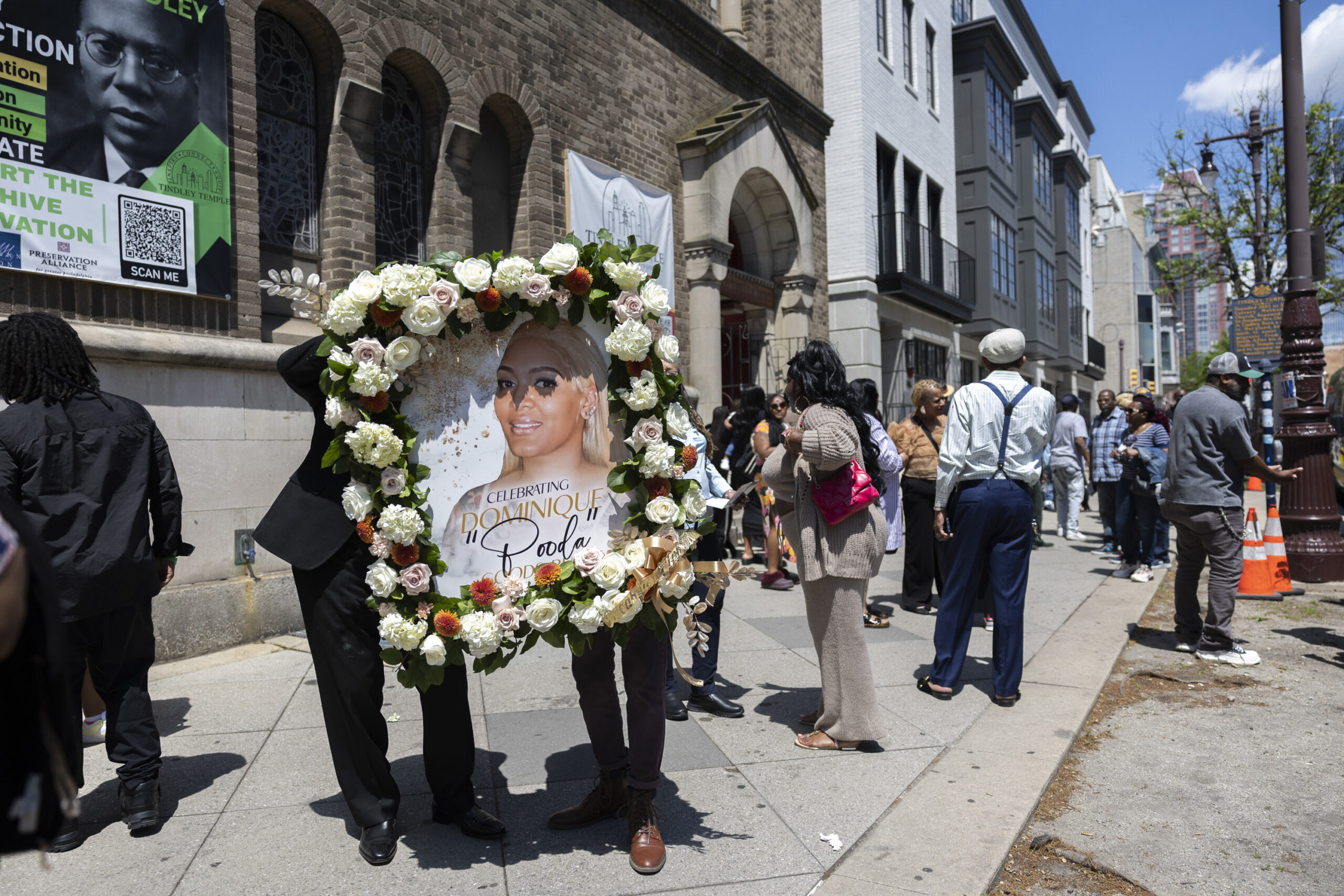
A floral photo of Dominique Goods Burke is carried out after the funeral service as family, friends and community members gather outside at Tindley Temple UM Church in Philadelphia, Pa., on Thursday, May 8, 2025. Dominique passed away at Jefferson hospital on April 27 due to the critical burns from the Roosevelt Mall Learjet crash along Cottman Avenue.
Goods Burke, 34, died of her injuries in April at Thomas Jefferson University Hospital, leaving behind her daughter and her 16-year-old son, Dominick Goods. (The family asked The Inquirer to withhold her daughter’s name to protect her privacy.)
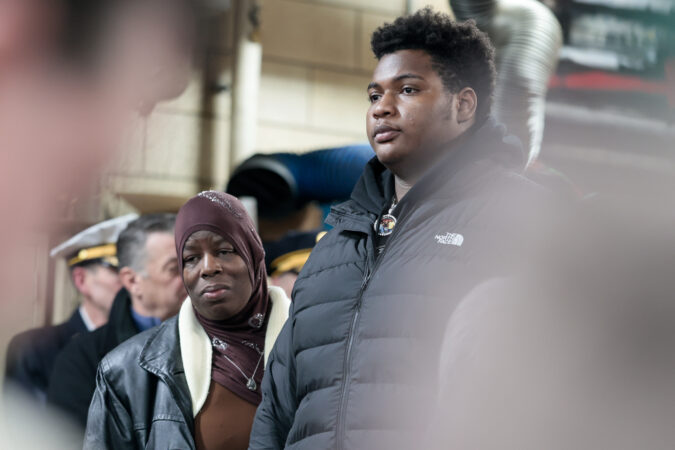
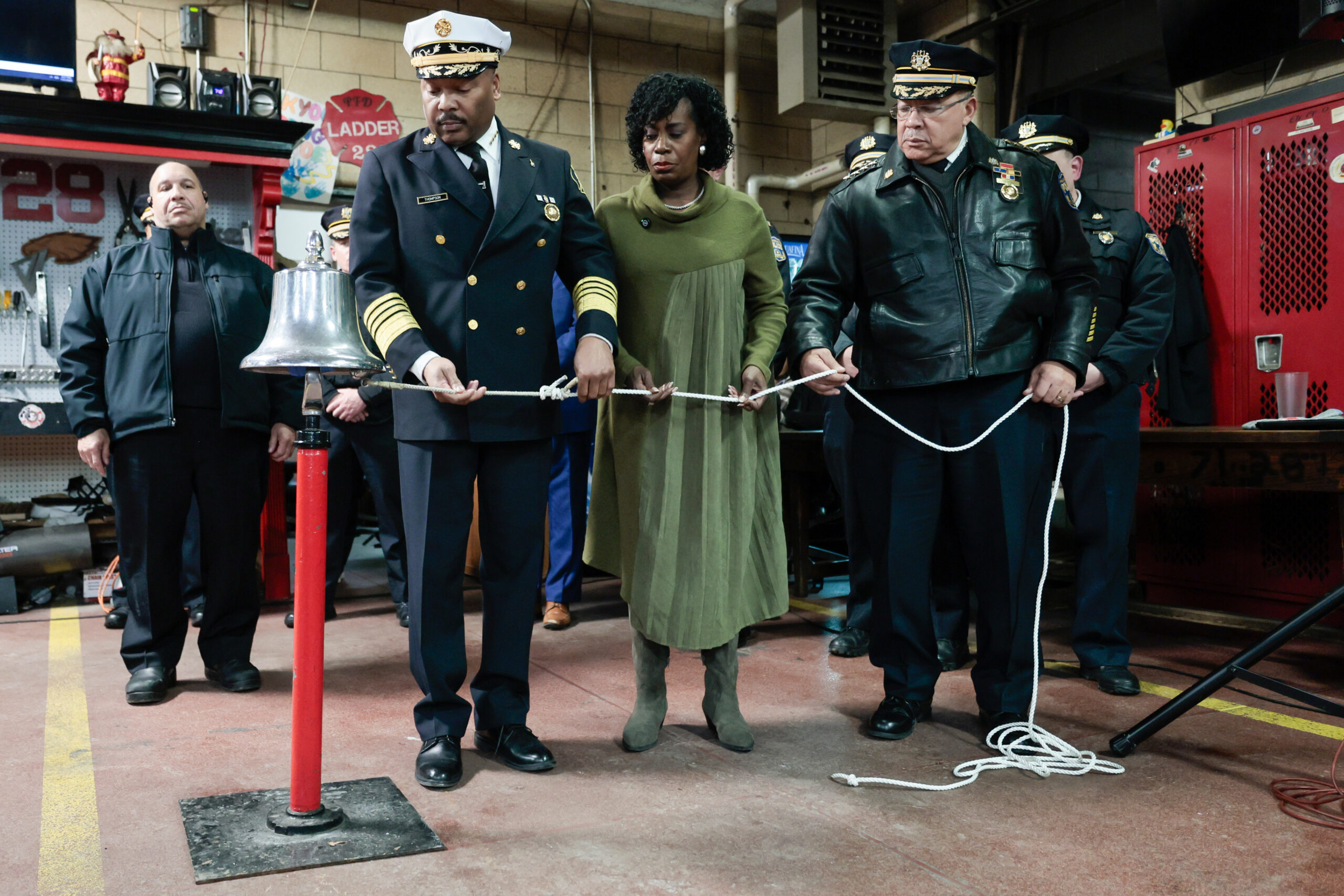
On Saturday evening, Mayor Cherelle L. Parker and other city officials planned to place a wreath at the crash site. About 100 people gathered inside Engine 71 Fire Station on Cottman, the station closest to the crash site.
The plane’s impact had left a bomb-like crater in a driveway apron between a Raising Cane’s restaurant and a Dunkin’ Donuts. The 8-foot-deep hole has since been filled in and paved over, but the loss and devastation are irreparable.
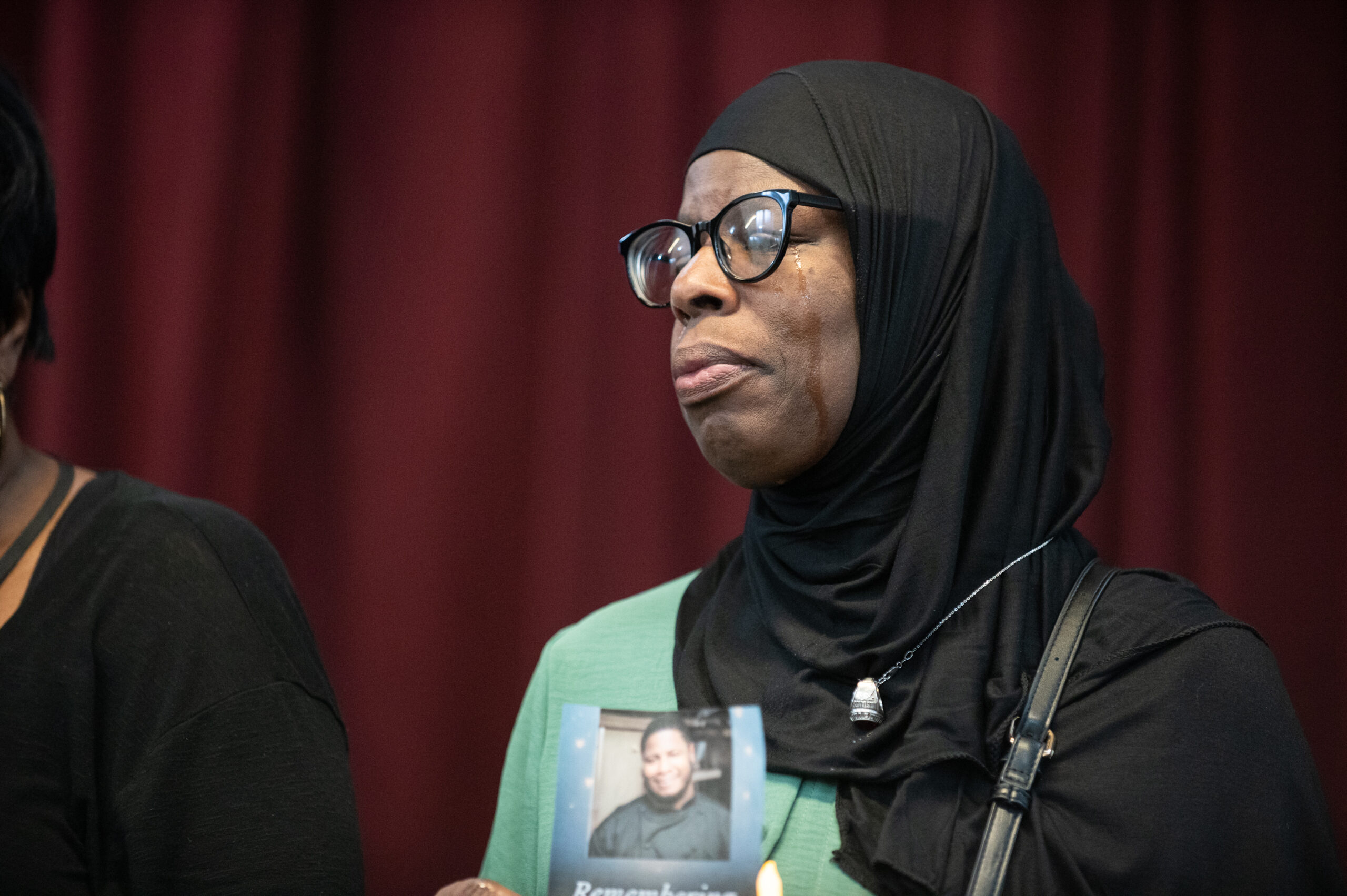
“I don’t know how we made it through a year. It feels fresh, raw. Sometimes it’s hard to breathe,” said Fletcher, who was Goods Burke’s first cousin and best friend. “Losing her, I’ve felt alone and empty. I miss laughing with her. I miss joking with her. I miss celebrating life with her.”
Fletcher is helping to raise Goods Burke’s daughter and her son, Dominick, an 11th grader at Imhotep Institute Charter High School in East Germantown. Dominick’s father was Dreuitt, so he lost both parents.
“My godson doesn’t have his mother or his father. My goddaughter doesn’t have her mamma,” Fletcher said. “Other than them coming back, nothing could ever give us a reprieve from the pain.”
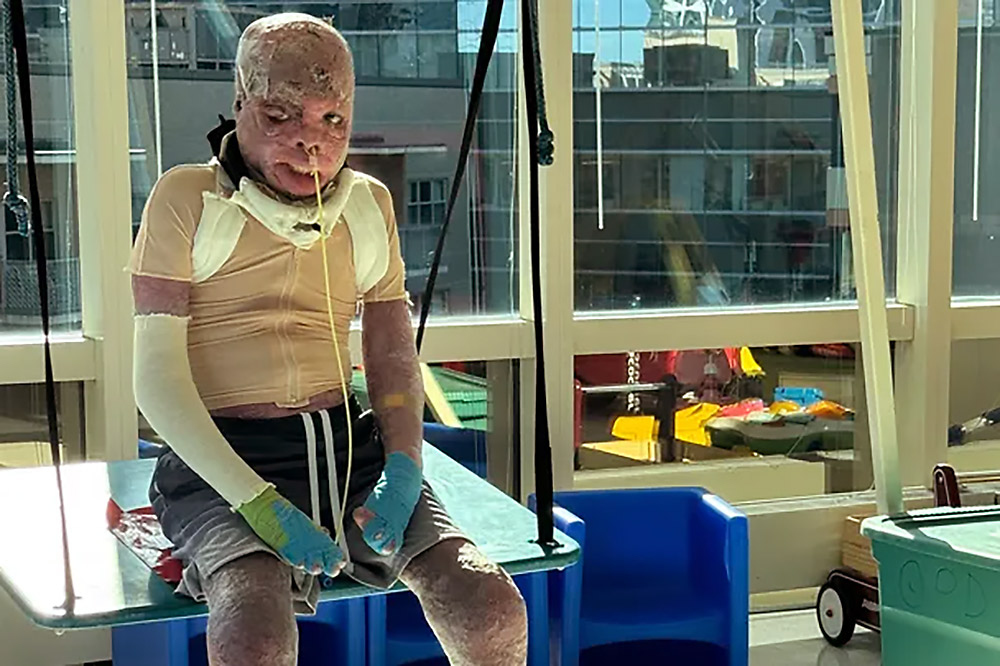
Ramesses Dreuitt Vazquez, 10, spent months in a Boston hospital recovering from burns to more than 90% of his body when the car he was riding in caught fire in the Jan. 31, 2025 plane crash in Northeast Philadelphia.
“I have my moments of still struggling. It’s been really tough,” said Dreuitt’s 61-year-old mother, Alberta “Amira” Brown, whose grandchildren are Ramesses and Dominick. “The life that we once had, we can never get it back.”
An irreplaceable booming voice
Dreuitt worked as a kitchen manager and team leader at the Philadelphia Catering Co. in South Philadelphia for more than seven years. Co-owner Tim Kelly said it was Dreuitt’s job to call staffers to lunch, which the company served to its 45 employees each day at noon.
“Steve would always call lunch, which basically was him just yelling, ‘LUNCH,’ three times loudly,” Kelly said. “His deep booming voice. Many of the guys here have tried to replicate it, but to no avail.”
“Time does help. It softens the blow,” Kelly said. “It was very difficult for a long time for a lot of us, but we’re at the point where we can remember him with a little less sadness and we can smile a bit.”
Goods Burke, whom loved ones affectionately called “Pooda” and colleagues called “Dom,” worked at High Point Cafe as a day bakery manager for years.
Cafe founder Meg Hagele said the staff treats her former work space, dubbed “Dom’s table,” with a shrine-like reverence. Seeing Goods Burke’s handwriting on recipes, scribbles in margins, stirs memories of her vibrancy and creativity.
“She’s very present with us still,” Hagele said. “This accident was just a shock to the entire city, but to be touched so personally by it is just freakish and profound.”
NTSB investigation continues
The National Transportation Safety Board is still investigating the crash’s cause. The plane — a medical transport Learjet 55 owned by Jet Rescue Air Ambulance, headquartered in Mexico City — had taken off at 6:07 p.m. from Northeast Philadelphia Airport. It climbed to 1,640 feet before nosediving just three miles away around 6:08 p.m.
NTSB investigators recovered the cockpit voice recorder at the scene, but after repairing it and playing it back, they found the device “had likely not been recording audio for several years,” according to a preliminary report released in March.
Brown, of Mount Airy, said she got a letter from the NTSB a few weeks ago saying investigators were making progress.
“That’s hope right there,” Brown said in a recent interview. ”It will help to know exactly what happened to make that plane come down. Does it change anything? No.”
Alberta “Amira” Brown remembers her son, Steven Dreuitt Jr., who died in the Jan. 31, 2025, plane crash in Northeast Philadelphia. In November, Brown attended a memorial service at Oxford Presbyterian Church in North Philadelphia.
The cremated remains of the six Mexican nationals who died aboard the plane were returned to loved ones in Mexico City last spring. Among the passengers were 11-year-old Valentina Guzmán Murillo and her 31-year-old mother, Lizeth Murillo Osuna. They were returning home after Valentinahad spent four months undergoing treatment for a spinal condition at Shriners Children’s Philadelphia.
Also killed were the pilot, Alan Montoya Perales, 46; his copilot, Josue de Jesus Juarez Juarez, 43; a Jet Rescue doctor, Raul Meza Arredonda, 41; and paramedic Rodrigo Lopez Padilla, 41.
Philadelphia Fire Commissioner Jeffrey Thompson (from left) Mayor Cherelle L. Parker, and Police Commissioner Kevin J. Bethel ring a ceremonial bell at the one-year anniversary memorial observance of the Northeast Philly plane crash Saturday, Jan. 31, 2026, at Engine 71 Fire Station on Cottman Avenue in Philadelphia.
In the moments after the crash, hundreds of firefighters and rescue workers swarmed the area to put out homes and cars on fire from the jet fuel or burning pieces of aircraft that struck them.
Philadelphia Fire Commissioner Jeffrey Thompson, a 36-year veteran of the city’s fire department, said the plane crash “was without a doubt the biggest thing that I’ve ever responded to.”
In an interview on Thursday, Thompson recalled rushing to the scene from his Fishtown home, filled with dread and adrenaline.
“I remember it was dark. It was cold, and it was raining — it was like something out of a disaster movie,” Thompson said. “As I got closer, I could just see a sea of lights.”
He arrived to find multiple homes and cars on fire. Pools of jet fuel everywhere. And so many pieces of debris that he initially had no idea of the plane’s size. He said he and other first responders will never forget seeing body parts strewn among the wreckage.
“This still affects all of us. Just to see that is so unnatural,” Thompson said. “And the work that they did that night — that’s indelibly etched in their memories.”
More than 150 firefighters scoured “blocks and blocks” of homes, entering each one and every room, to make sure everyone was accounted for. He said he is amazed how multiple agencies worked together to bring “order to chaos.”
“That just gives me goose bumps,” Thompson said. He added, “This is actually therapeutic — me talking to you has been therapeutic because there was a lot there that night and I don’t often talk about this.”
Miracles, luck, and skill
As tragic as that night was, Thompson said, there was some miraculousness, including the fact that the plane struck a patch of empty pavement between two busy restaurants.
“Sometimes in this life, there’s luck,” Thompson said. “It was rush hour. You had a shopping mall and a densely populated neighborhood. It could have been infinitely worse.”
Lashawn ‘Lala’ Hamiel, Andre “Tre” Howard III, and his family cheer on the Eagles during Super Bowl LIX.
Andre Howard Jr. had just picked up his three kids — then ages 4,7, and 10 — from aftercare at Soans Christian Academy. They headed to Dunkin’ for strawberry doughnuts. As they were leaving the parking lot in Howard’s car, the plane exploded a few feet away. A plane part crashed through the car’s window. Howard’s 10-year-old son, Andre “Tre” Howard III, used his body to shield his 4-year-old sister and a piece of metal struck his head.
Tareq Yaseen, a neurosurgeon at Jefferson Torresdale Hospital, was having dinner with his family, including his kids, ages 10 and 6, at Dave & Buster’s at Franklin Mall when he rushed back to the hospital to perform emergency surgery on Tre.
The boy had two gashes in the right side of his head, and his skull had been shattered into more than 20 pieces, Yaseen recalled.
“My son is the exact age as Tre, which made things very personal and emotional to me,” Yaseen said. “He’s gonna die. He was basically losing consciousness and going in a bad direction.”
“I felt for a moment that I would not be able to help him,” Yaseen said. “I was very scared that I’m gonna fail. There’s too much on the line and it’s a little boy.”
Yaseen said he worked fast to relieve the pressure on Tre’s brain and remove bits of broken skull. The surgery was a success. More than 60 relatives and friends in the hospital waiting room hugged and thanked him, Yaseen recalled.
“It’s a moment that would happen in the movies,” Yaseen said. “I was very lucky to take part in saving his life.”
Tre was transferred to the Children’s Hospital of Philadelphia, where he made a near-full recovery. He celebrated his 11th birthday in December.
“With time, he’ll grow up and forget about it. God gave us a gift to forget, which is great,” Yaseen said. “But I will never forget.”
Jefferson neurosurgeon Tareq Yaseen poses for a photo with Andre “Tre” Howard III and his mother, Lashawn “Lala” Hamiel at Jefferson Torresdale Hospital.
A memorial
At the memorial Saturday, Mayor Parker read aloud the names of all eight who perished that night.
“To all the families who continue to carry this grief everyday, that until you’ve walked a mile in their shoes, you can’t begin to understand what it’s like,” Parker said. “It is important for us to affirm that they know that Philadelphia stands with you today and we will always.”
She asked the victims’ family members in attendance to stand and be recognized, including Brown, her grandson, Dominick, and Lisa Goods, the aunt of Goods Burke.
The mayor said she plans to keep close tabs on Dominick.
“Now he knows he belongs to me — don’t try to take him from me,” Parker said as she looked at Dominick seated in the front row.
Parker also recognized first responders for their “extraordinary bravery and selflessness.”
“In a moment of unimaginable tragedy, you all ran towards danger to protect others.”
Alberta “Amira” Brown (center), the grandmother of 10-year-old Ramesses Dreuitt Vazquez, who was severely burned after a plane crashed into his North Philadelphia neighborhood last year at the one year anniversary memorial observance of the Northeast Philly plane crash Saturday, Jan. 31, 2026, at Engine 71 Fire Station on Cottman Ave., in Philadelphia