Temple University has asked its schools, colleges, and administrative units to cut a total of $60 million to help offset a projected deficit for 2026-27.
President John Fry shared the plan in a message to the campus community Friday and said a reduction in employees is “inevitable.”
The message did not reveal how many layoffs the university is considering as it attempts to close the $85 million projected gap. The board of trustees’ executive committee is scheduled to meet next week to consider the proposed budget. The university’s current budget is $1.3 billion, excluding the health system.
“Unfortunately, some reduction in force is inevitable, given that nearly 70% of Temple’s operating budget is spent on compensation and benefits,” Fry said in the message. “It is my promise that any employee’s separation from the university will be handled equitably and compassionately.”
He noted that a faculty retirement incentive program this year drew 77 takers — 3% of full-time faculty — andwill lessen the need for layoffs. Those faculty are scheduled to leave by the end of this month and their departuresultimately will save $15 million annually. The elimination of vacant faculty and staff positions also hashelped, he said.
Fry did not detail the cuts that are planned but said that colleges, schools, and administrative units each received a budget reduction target.
Units were asked to make a 5% cut last year, but this year there is a range of percentages among schools, colleges, and administrative units, a university spokesperson said. The spokesperson declined to say how many layoffs will occur.
Some potential cuts that have stirred discussion include a reduction in adjunct professors and a pause in doctoral student admissions by some programs.
Jeffrey Doshna, president of the Temple Association of University Professionals, said Fry’s message seemed to address some of the issues the union has been raising, but said more information is needed, including how many people will lose their jobs and from what areas.
“Hopefully, they will continue to respond to what we are calling for,” he said, including greater transparency, participation in decision-making, and no job cuts.
Temple has been trying to cope with lost revenue from a precipitous slide in enrollment and uncertainty around federal funding. Fry has been warning since early April that the university “must act decisively and with a sense of urgency” to address the projected deficit. An internal Temple report obtained by The Inquirer in April said layoffs were coming.
Fry reported to the board of trustees last week that this year’s fall enrollment looks promising, with deposits by first-year undergraduate and transfer students up over last year at the same time.
He said in his campus message that making the $60 million in cuts is “an important first step toward returning the university to a balanced budget over the next three years.”
Fry acknowledged that the budget reductions “can create uncertainty and anxiety.” But he said the administration has attempted to be transparent and has held meetings with faculty senate, deans, and schools, colleges, and administrative units.
“Navigating through this stark financial reality is not easy,” Fry said. “I recognize the difficulty of this present moment. We will emerge from this process stronger and on a more sustainable path moving forward.”
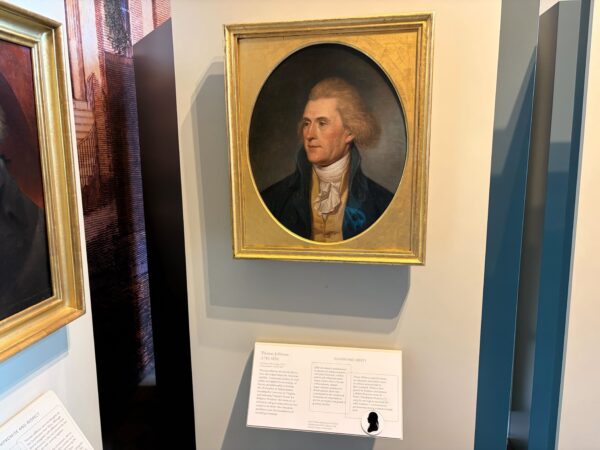
President Donald Trump’s administration has wiped almost all mentions of slavery from a panel accompanying a portrait of Thomas Jefferson at the Second Bank of the United States.
As the Founding Father who wrote the words “all men are created equal” while enslaving more than 600 people throughout his life, Jefferson embodies the paradox at the heart of the revolutionary era.
The description under his iconic portrait attempted to grapple with that tension.
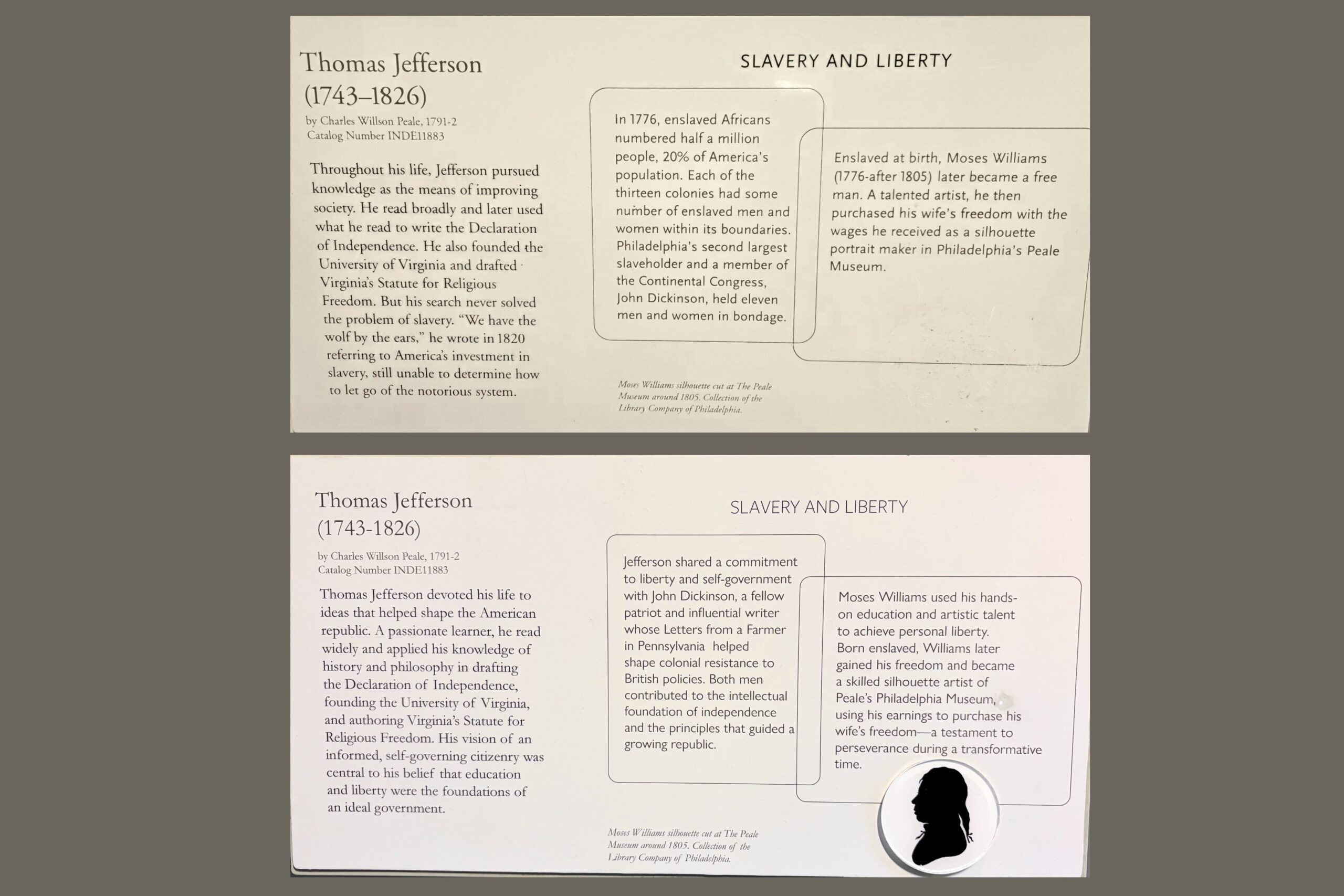
Despite Jefferson’s lifelong pursuit of knowledge, he “never solved the problem of slavery“ and was ”unable to determine how to let go of the notorious system,” the original plaque read.
But a new panel simply states that Jefferson’s “vision of an informed, self-governing citizenry was central to his belief that education and liberty were the foundations of an ideal government,” among other changes.
It’s not the only change the administration has made to exhibits around Philadelphia’s Independence National Historical Park ahead of the 250th anniversary.
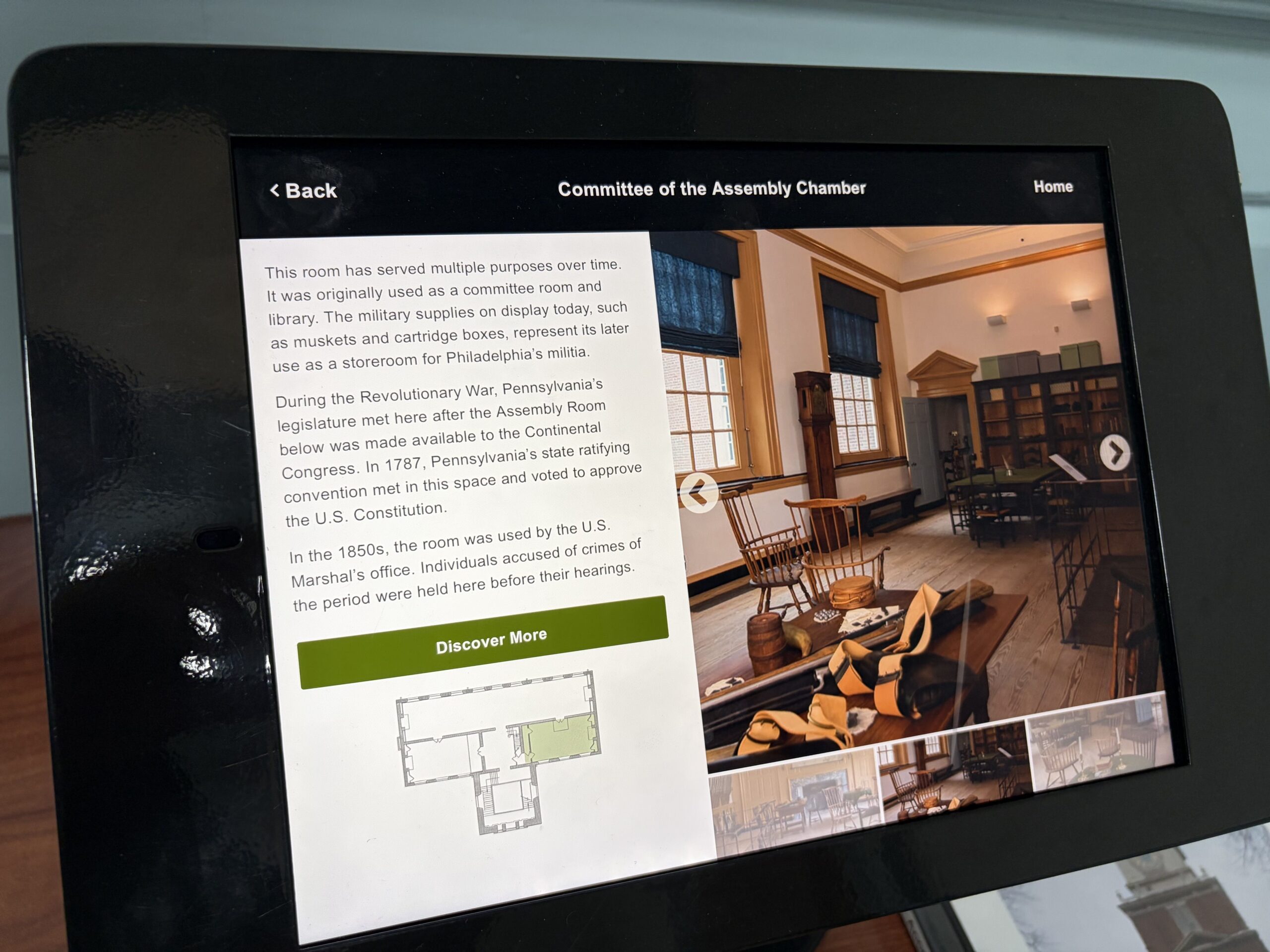
A touchscreen with a virtual tour of Independence Hall’s second floor now tells visitors that one of the rooms was used to hold “individuals accused of crimes of the period” before their court hearings.
Who were these individuals? A previous version stated clearly: “accused fugitives from slavery.”
A side by side of the original and new descriptions Thomas Jefferson’s portrait at the Second Bank of the United States. The references to slavery have largely been removed by President Donald Trump’s administration.
While the changes are more subtle than those that took place at the President’s House in January — and the new exhibits the government proposed a few months later — they further underscore the Trump administration’s goal to sanitize U.S. history, as signified by his executive order to review or remove content at national parks that “inappropriately disparage Americans past or living.”
They also show a lack of transparency. The change to the description under Jefferson’s portrait was only acknowledged following a demand by a federal judge in Boston that the National Park Service share a list of all removals the administration undertook to comply with Trump’s “restoring truth and sanity” edict ahead of the country’s 250thcelebration.
In a statement Monday, Avenging the Ancestors Coalition — which has helped lead the efforts to protect the President’s House — said the additional changes were “extremely troubling.”
“The preservation of history requires ongoing vigilance,” the organization said. “Restoring historical interpretation is only one part of the work; protecting it from future revision or erasure is equally important.”
“One of the greatest disappointments of my life, is that we get to the 250th anniversary of this country, and we are still trying to evade the truth of our founding,” LaRoche said.
Among the most blatant examples of the federal government’s desire to retell history has happened at the President’s House, which opened almost two decades ago to memorialize the nine people George Washington enslaved at his Philadelphia home. It also serves as a symbol of exploring the stark juxtaposition of slavery and liberty during the nation’s founding.
But the moves at the Second Bank and Independence Hall signify that the administration is not letting any stone go unturned when it comes to ridding or softening even smaller mentions of slavery at Philadelphia’s most iconic historic sites.
The Department of Interior did not answer repeated questions about the changes.
“No changes have been made,” a spokesperson said via email, citing the President’s House litigation. When an Inquirer reporter pressed again about changes to Independence Hall and the Second Bank, the government spokesperson repeated that there were no changes to the President’s House during the litigation. The Department of Interior did not respond to further inquiries.
At the Second Bank, the panel under Jefferson’s iconicportrait also informed visitors about the population of persons enslaved in 1776, that John Dickinson — a member of the Continental Congress — was an enslaver, and about the life of Moses Williams, an artist who was enslaved at birth and later became a free man.
That’s drastically changed in the new panel.
Jefferson’s grappling with slavery is no longer present and Dickinson is referred to as a “fellow patriot and influential writer. …” The only mention of slavery remaining is Williams’ story, though it’s reworded.
And at Independence Hall, the touchscreen kiosk describing the second floor Committee of Assembly Chamber previously outlined the irony of the space being used for ratifying the U.S. constitution and later housing the office “where accused fugitives from slavery were held before their hearings, right above the room where the Declaration of Independence had been signed.”
A touch screen at the entrance to Independence Hall with photos and descriptions of the building’s second floor. The description of the Committee of the Assembly Chamber has been edited to replace the words “accused fugitives from slavery” to “individuals accused of crimes of the period.”
But the reference to slavery has been removed, among other rewordings.
It remains unclear when these changes were made. The Inquirer reported last summer that these items — and an interactive exhibit at the Benjamin Franklin Museum about the Founding Father’s conflicting views on slavery, which is still intact — were flagged for review.
In addition to the President’s House exhibits, the list says the administration removed a “portrait description” and cites “disparages Americans past or living” as the reason it is gone.
No entry in the list corresponds to the change made at Independence Hall, which Philadelphia owns.
The city did not immediately respond to a request for comment.
All material changes at Independence Hall should be done after consultation with the city, said Cynthia MacLeod, former superintendent of Independence National Historical Park.
“The National Park service has been known for excellent historians and interpreters and its a shame that they are being muzzled now,” MacLeod said. “It’s a shame and a disservice to all the visitors not to have a more complete history told.”
Could Mike Gansey’s first veteran roster addition be the return of an old friend?
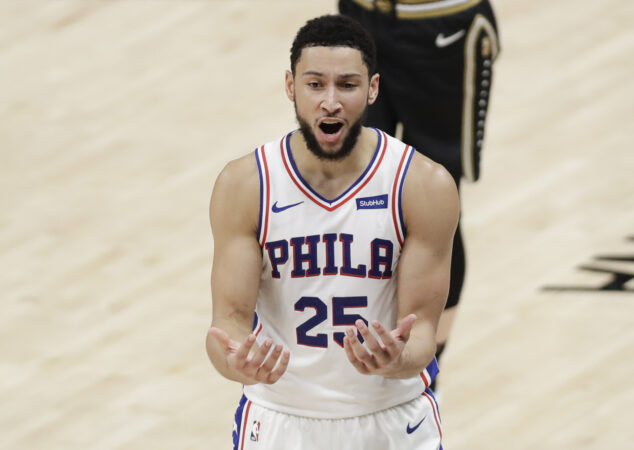
In a new Men’s Health story, Ben Simmons said he’s eyeing an NBA return after a year away.
“I plan on getting as strong as I can physically, getting my ass on the court, and then the team realizing that my abilities will be needed,” he said.
Simmons spent his most recent NBA season of 2024-25 with the Nets and later the Clippers, playing 51 games and averaging five points, 5.6 assists and 4.7 rebounds in 22 minutes per game. Simmons has been hampered by various injuries, including a nerve impingement in his back.
Over the last year, Simmons stepped away from basketball, instead spending some of his time off winning a professional fishing tournament with the South Florida Sails, a team of which he is also part owner.
But now, feeling healthier, the 29-year-old Simmons hopes to launch an NBA comeback. With his size and basketball IQ, Simmons said coaches told him that if he got healthy there would be plenty of interest from teams.
“I don’t have a plan on where,” Simmons told Men’s Health, but he had a few spots in mind.
“Maybe I’ll go back to Philly,” he said. “Miami would be nice. And not because it’s Miami — I like Erik Spoelstra, I like the Heat, I like their organization, I like the culture.”
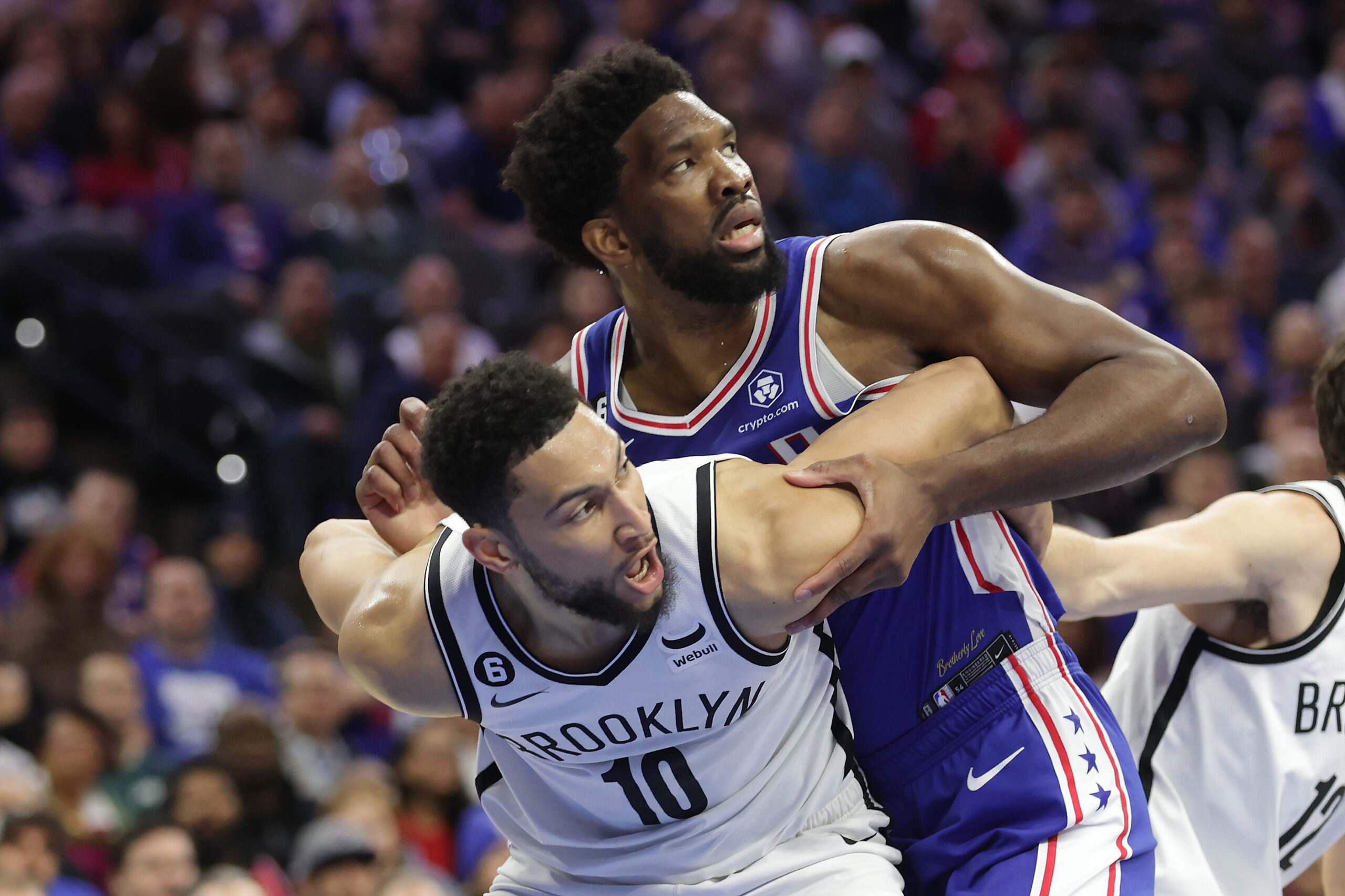
Could Ben Simmons (left) and Joel Embiid coexist as members of the Sixers?
Simmons’ breakup with the Sixers in 2022 was messy. The three-time NBA All-Star refused to play for the team after the second-round playoff loss to the Atlanta Hawks in 2021, and was ultimately traded for James Harden. Would he even be welcomed back?
Simmons famously feuded with center Joel Embiid before he was dealt to the Nets in the middle of the 2021-22 season.
“The situation is weird, disappointing, borderline kind of disrespectful to all the guys that are out here fighting for their lives,” Embiid said back in 2021 training camp of Simmons’ refusal to play for the Sixers. “Some guys rely on the team being successful to stay in the league and make money somehow. Because if you’re on a winning team, you’re always going to have a spot in the league, just because you’re on a winning team and you contributed.”
But it’s been four years, and if Simmons is healthy he could be a depth piece for a capped-out Sixers team in need of help off the bench.
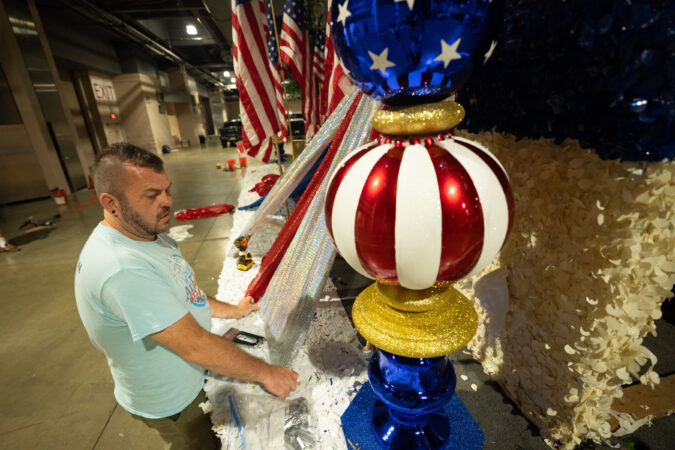
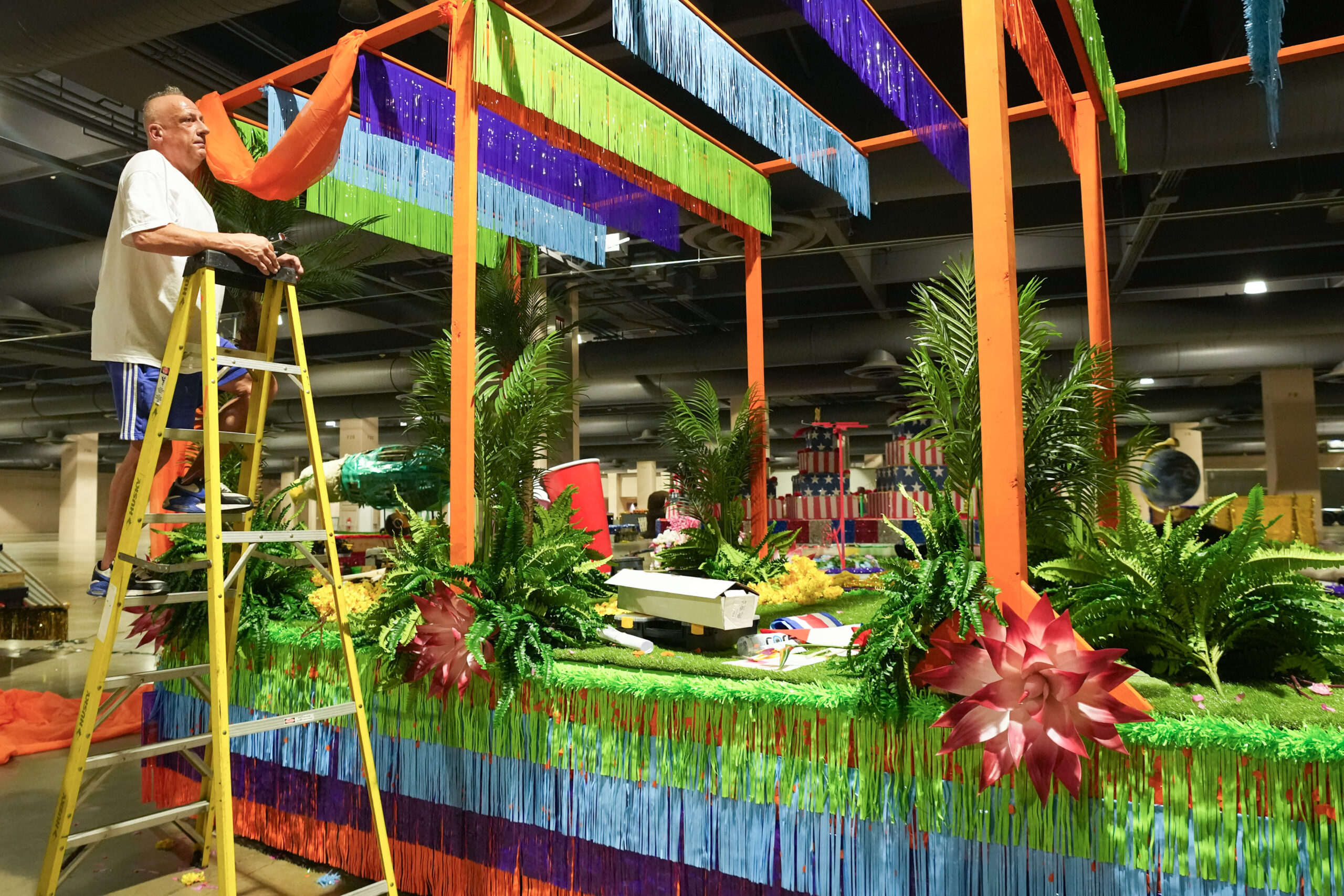
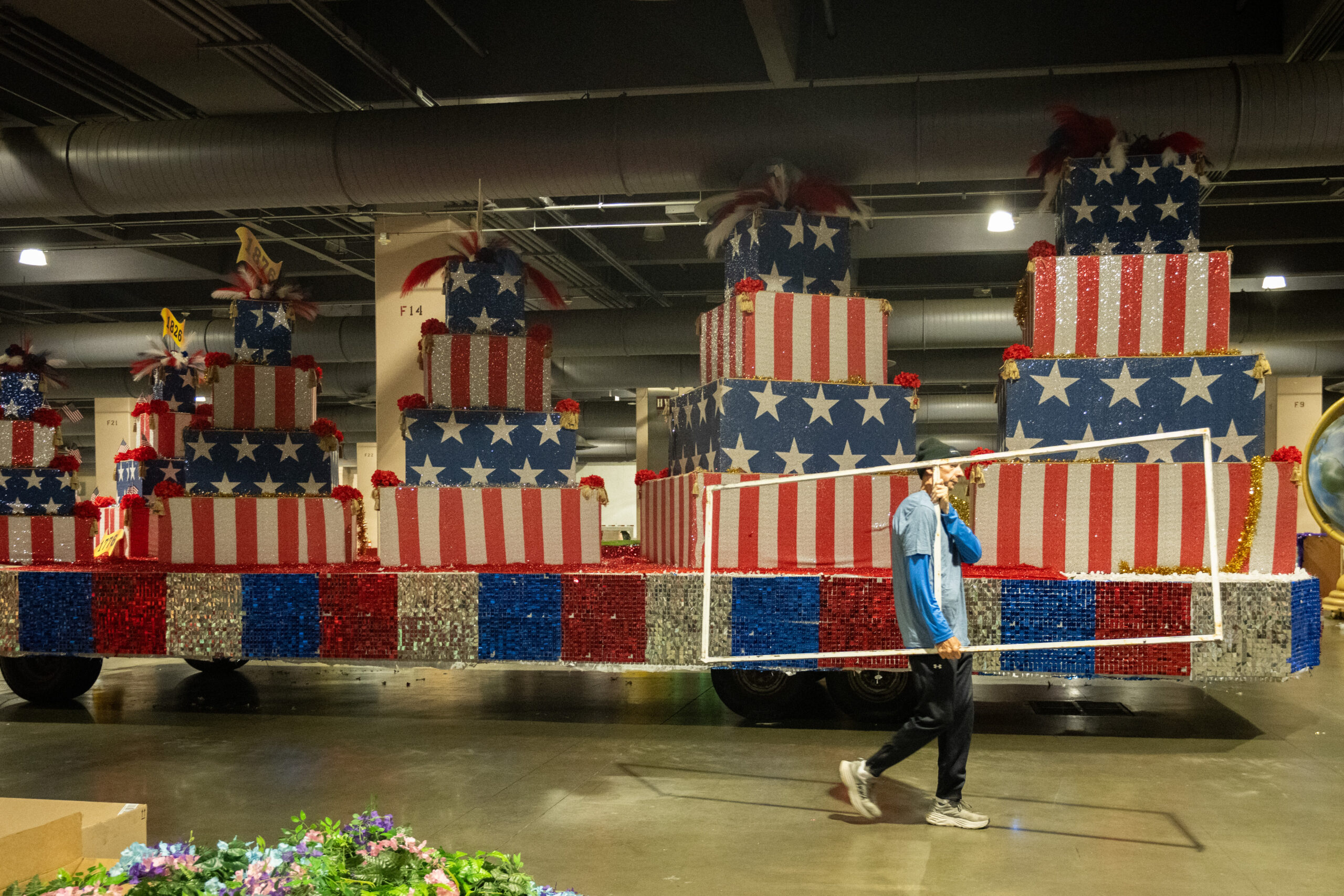
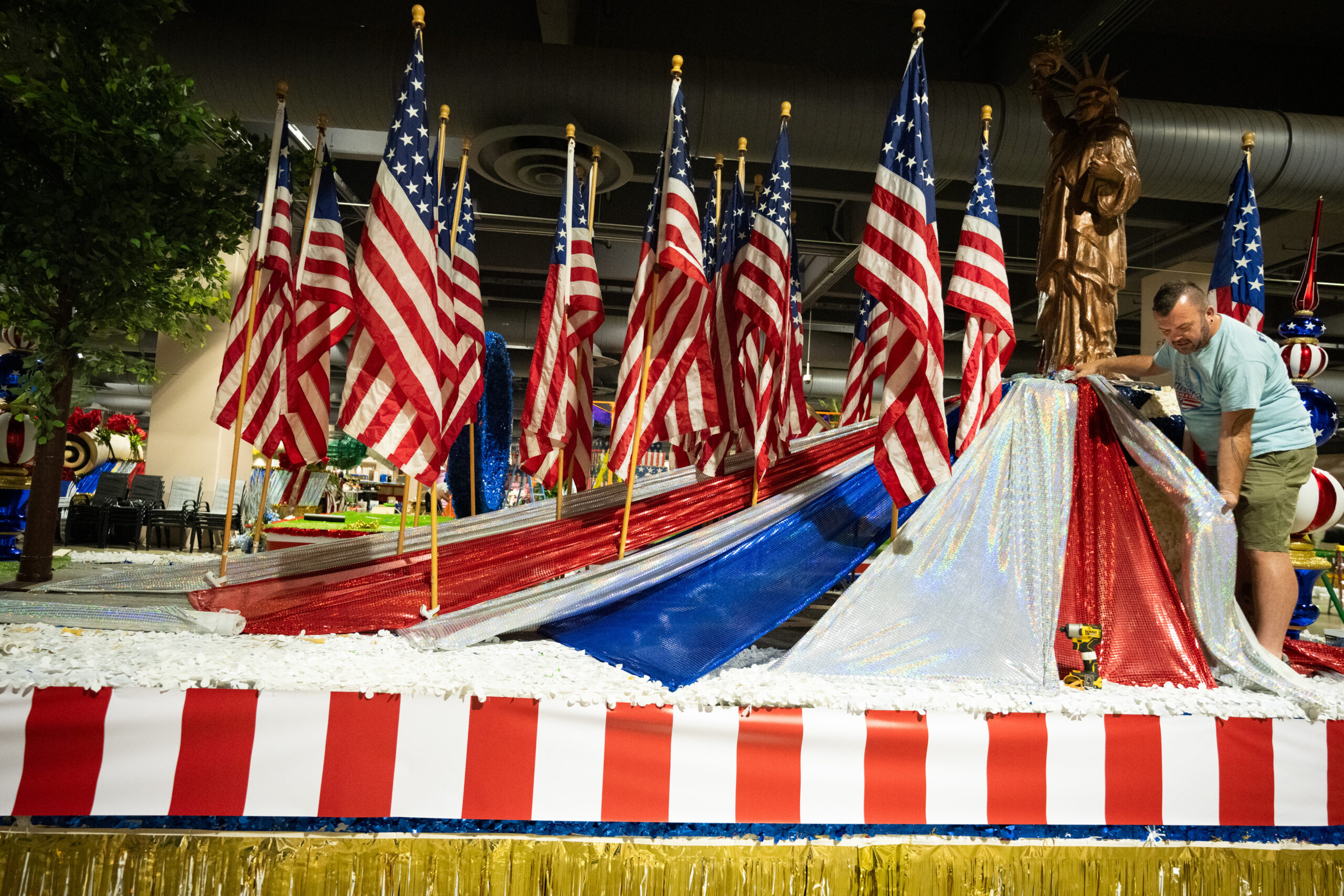
In the dull glow of the overhead Convention Center lights, Todd Marcocci and a band of craftspeople stood next to large wheeled platforms, some housing floral gazebos, others a recreation of a Pennsylvania farm. Sweat dripping from his brow, Marcocci intently drilled palm tree crowns into the base of a platform dedicated to Central and South America.
With just days until Philadelphia’s Semiquincentennial parade, Marcocci, alongside his crew and John Shaw of Shaw Parades, is assembling 19 parade floats to commemorate the United States’ 250th birthday.
Todd Marcocci works on a float back stage with the crews of Friday’s parade and festival.
The “Salute to Independence” Semiquincentennial Parade is scheduled to begin at noon Friday nearwhere the Declaration of Independence was signed in 1776, which Marcocci reminded himself of while he designed a historical parade.
“I told all the groups who signed on for the parade that we’ll be lining up in the footsteps of the Founding Fathers,” Marcocci said. “We’ll walk through history.”
In the halls of the Pennsylvania Convention Center, where float builders worked on Monday, larger-than-life recreations of Martin Luther King Jr. and Harriet Tubman awaited placement on a platform celebrating the Civil Rights movement.
Mike Oyer works backstage on the floats.
The next float over was bathed in white sequins, where a giant “peace dove” sculpture accompanied by a globe would rest. A few paces over sat a 6-foot-tall Wawa smoothie and coffee cups, and right by that were multiple United States-themed layered birthday cakes marking the various anniversaries of the country.
Shaw worked a blade saw, slicing through two-by-fours to construct the float frames that Marcocci and Co. were painstakingly deciding the minutiae of, such as how many American flags or sequins can be threaded through a float.
Annie Woods (left) and Johanna Gelber working on the floats.
Shaw, whose parade float company has passed down through four generations, said Philly Fourth of July parades usually average seven floats. “This year it’s almost tripled,” he said. “Todd designs everything in his head, and then we collaborate back and forth to come up with the plan to actually make these ideas work.”
Mayor Cherelle L. Parker will be on board the “One Philly — A United City” float, which features a large sculpture in the shape of the number 1 and a butterfly-and-floral gazebo symbolizing the city’s commitment to a clean and green city, Marcocci said.
Jeremy Williams, works on a float back stage.
A Liberty Bell float will commemorate some of the Founding Fathers and Betsy Ross with an Independence Hall backdrop. Another celebrates Philadelphia Pride with prominent LGBTQ figures and pride flags atop a vibrant rainbow platform.
“The most important thing for me is that people, whether they’re watching on TV at home across the nation or here in person, is that they see themselves in our parade,” Marcocci said of representing the diversity of America’s history.
Philadelphia’s Semiquincentennial Parade on Friday starts at noon at Fifth and Chestnut Streets, passing such historical landmarks as Independence Hall before heading to Sixth and Market Streets and then west on Market to circle City Hall before ending at Broad and Chestnut Streets after a heat emergency was declared, cutting short the route that was to continue to Logan Circle and loop around before heading back to City Hall.
Fan zones are at Sixth and Market Streets , 11th and Market, and the northeast side of City Hall, where a bar is available for those 21 and over.
“Smokin’” Joe Frazier is finally in his new home, just in time for the 250th birthday of the United States.
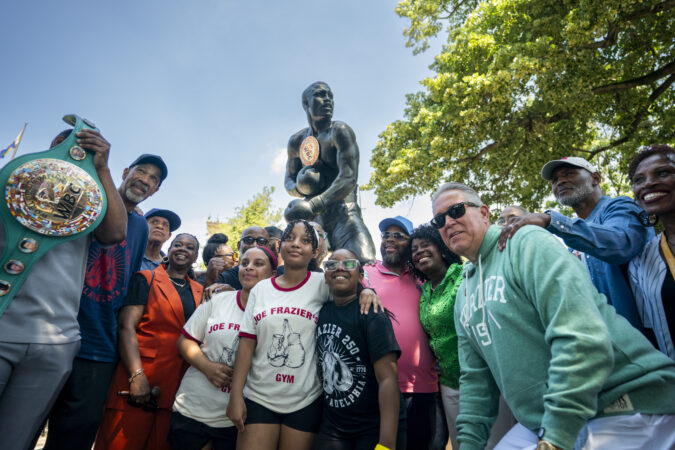
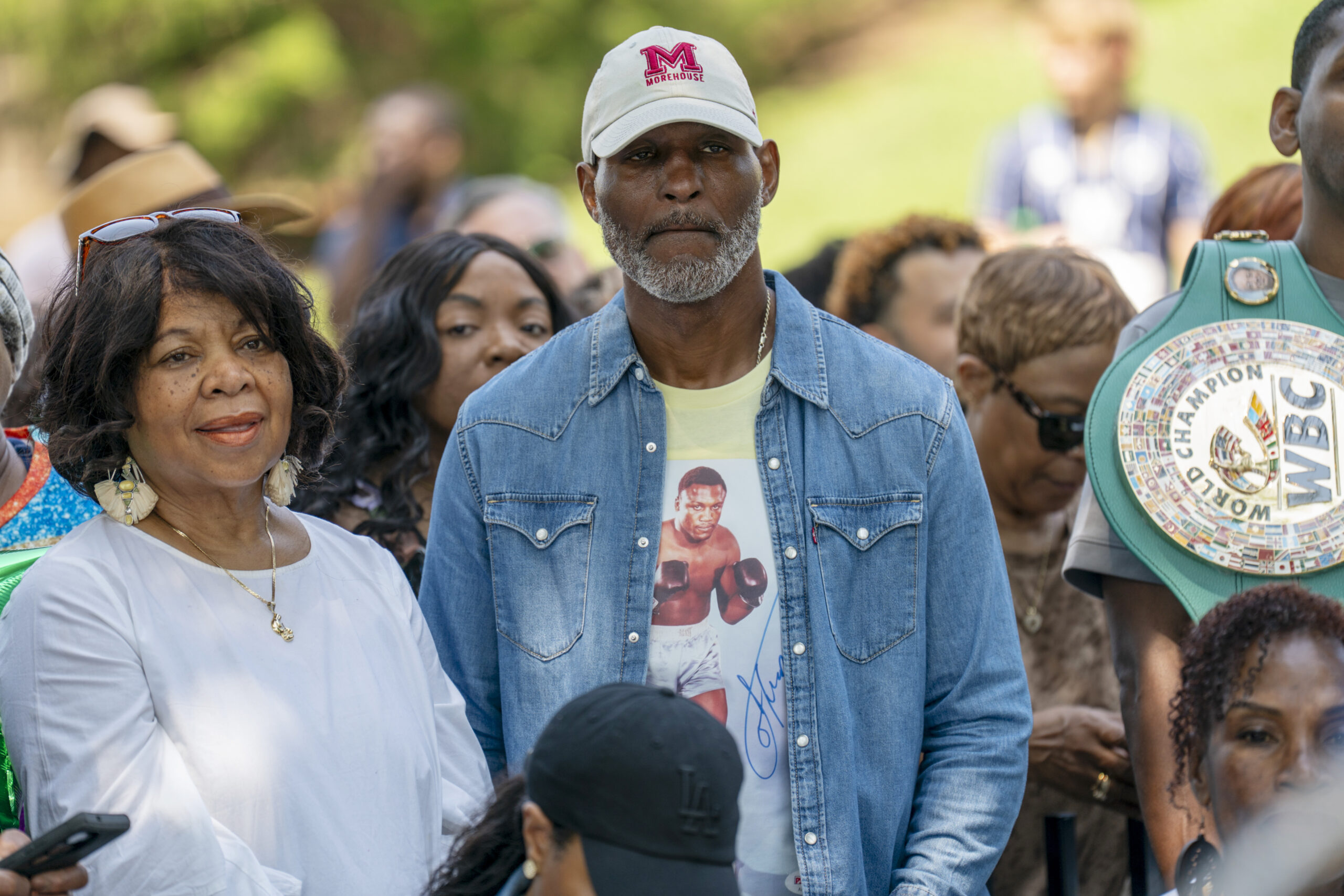
City officials, alongside Frazier’s family, friends, and fans, on Monday unveiled the real-life heavyweight boxing champion’s statue at the base of the Philadelphia Museum of Art. Intended to be the statue’s new location in perpetuity, the spot was occupied by a monument to fictional boxer Rocky Balboa for two decades.
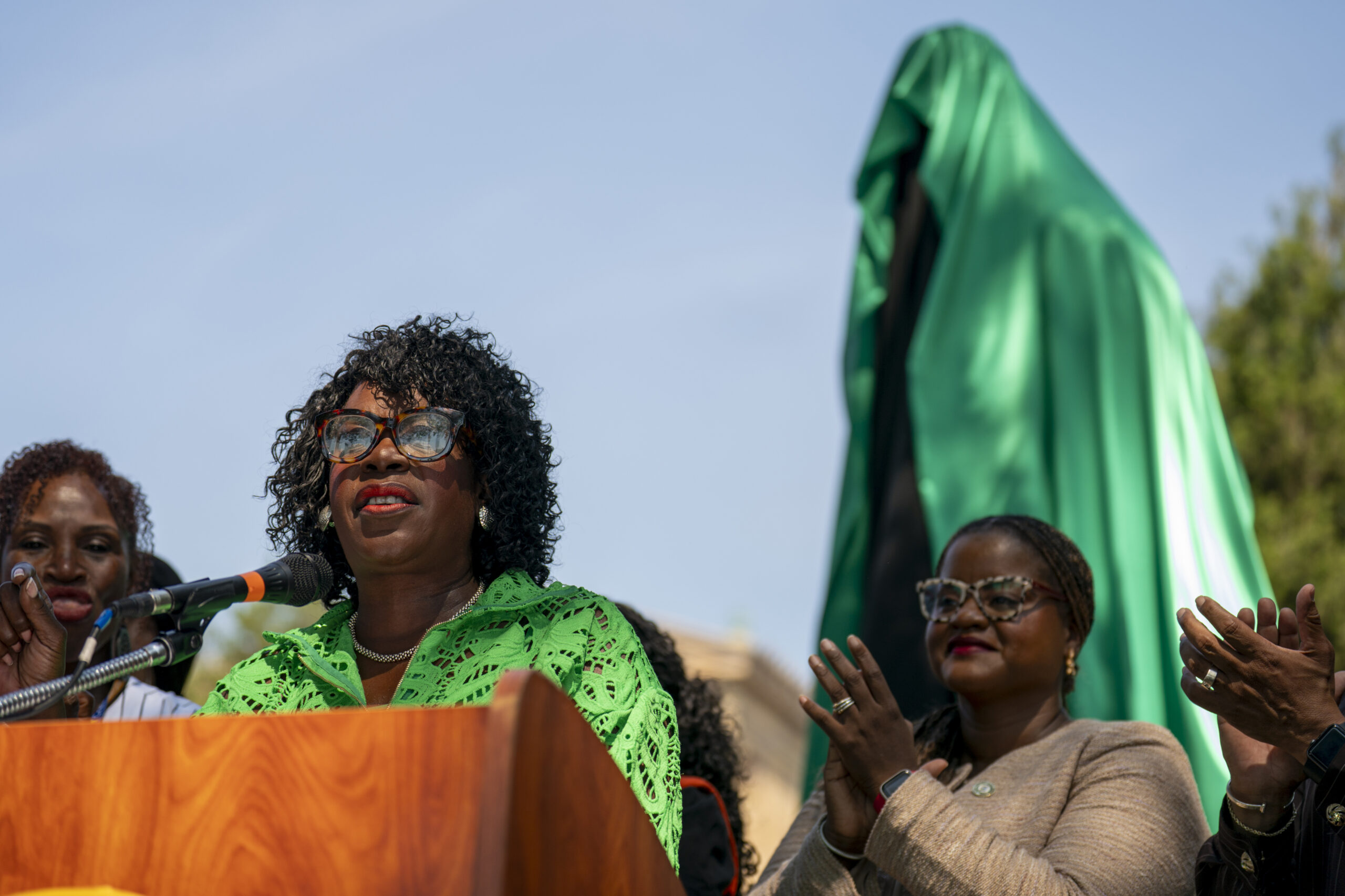
“During this 250th celebration in the birthplace of democracy, we will forever remember that the city got right what it had gotten wrong for a long, long time,” Mayor Cherelle L. Parker said. “Now, Joe Frazier is attached, and connected to, and will permanently be here at our Philadelphia Museum of Art.”
Monday’s unveiling was the culmination of months of planning. The Philadelphia Art commission in February approved a plan to move the statue from by Creative Philadelphia, the city’s office for the creative sector. Chief cultural officer Valerie V. Gay said Monday’s event was something of a “soft launch” for the statue’s new home, as a granite base will be installed in the future, along with more formal interpretive panels.
Mayor Cherelle L. Parker speaks at the unveiling of the statue of former heavyweight boxing champion Joe Frazier at its new home outside the Art Museum.
“Today, we did not want to wait,” Gay said.
Frazier’s statue, after all, lived at the South Philadelphia sports complex for more than 10 years. Created by sculptor Stephen Layne, the statue was unveiled outside what is now Stateside Live! in 2015, four years after Frazier’s death in 2011 following a battle with liver cancer. Frazier, the undisputed heavyweight champion in 1970-1973, is probably best remembered for his three battles against Muhammad Ali in the 1970s.
The city’s statue of Rocky had called the base of the Art Museum’s famed steps home since 2006. The monuments’ moves are part of a larger shuffling of statues at the Art Museum that began in March, when the Rocky statue was moved inside the museum for the first time as part of the ongoing exhibition Rising Up: Rocky and the Making of Monuments.
That Rocky statue will be installed at the top of the Art Museum steps in the fall, when the statue of the Italian Stallion currently there will be returned to actor Sylvester Stallone’s private collection. Stallone, Parker said, was supportive of the Frazier statue’s new location.
Dozens of the boxer’s supporters attended on Monday, including Philadelphia boxer Bernard Hopkins who held world championships in two weight classes, promoter Joe Hand Jr., and Frazier’s daughter Jacqueline Frazier-Lyde. Frazier-Lyde, a retired boxer and current Municipal Court judge, said the the color of the shroud covering her father’s statue — green —was fitting.
“My mother’s favorite color was green, because we’re from the South and we love green, because it represents life,” she said. “My father, Joe Frazier, liked it because it was the color of money.”
Boxing legend Bernard Hopkins at the unveiling of the new home for the statue of heavyweight boxing champion Joe Frazier.
To the end, the statue’s new location wasn’t the end of efforts in the boxer’s memory. Parker also announced plans for a capital campaign to restore the former Joe Frazier’s Gym on Broad Street above Glenwood Avenue in North Philadelphia. Now a discount furniture store, the building is a legendary location in Philadelphia boxing history, having served as a training location for not just Frazier but other famed fighters and community members.
Parker said plans were underway to establish a way to accept donations for that effort via the Philadelphia City Fund. The amount of funds targeted be raised was not immediately clear.
“It’s important to show the world who we are,” Gay said. “Joe Frazier was a humble underdog whose determination and grit inspires us all. What could be more [a] more Philadelphia story than that?”
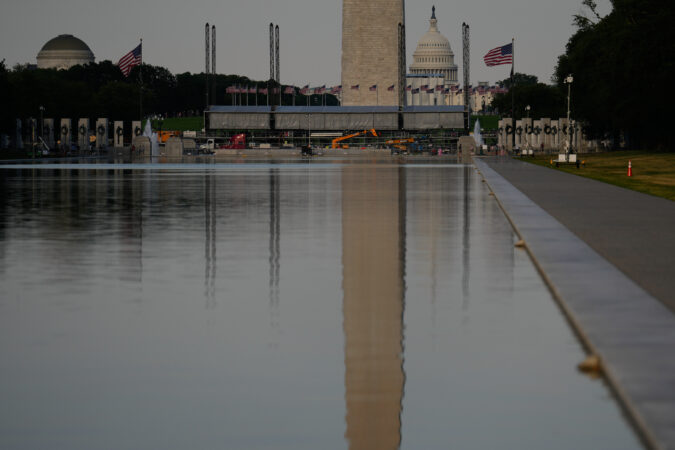
WASHINGTON — I arrived in Washington, D.C., on Wednesday and headed straight to the Reflecting Pool on the National Mall to see for myself what it looked like.
At first glance, it appeared as if sand had been tossed into the newly renovated water basin located between the Lincoln Memorial and the Washington Monument. But my eyes were mistaken. “The sand” was actually the underlying surface showing through as the coating at the bottom started peeling off.
Peeling is seen in the blue coating on the bottom of the Lincoln Memorial Reflecting Pool, Wednesday, June 24.
As I bent down to get a closer look, I made a point to keep my hands close to my body. I knew better than to touch so much as a drop of that water,since people have allegedly been arrested for vandalism after touching the floating detritus.
President Donald Trump blames “radical lunatics” for defacing his latest renovation project. “This isn’t random mischief — it’s targeted sabotage by anti-American crackpots who despise a strong, proud, and beautiful country. They cannot build; they can only destroy. They cannot celebrate our heritage; they can only deface it,” readsa statement released by the White House.
I walked around the pool’s entire perimeter. I didn’t notice any stench, not even a whiff. But the reports are true, and Trump’s $14 million no-bid boondoggle to renovate the Reflecting Pool in advance of the nation’s 250th anniversary has faced one stumbling block after another.
Depending on the angle of the sun and where you’re standing, the combination of the newly added dark paint that’s already chipping away and the algae blooms gives the illusion that the pool is a beautiful aquamarine color. I didn’t expect that.
But it’s not what the president ordered.
Nor is it what the American people want or need right now. We want the war with Iran to be over, but Trump is more concerned with putting a Mar-a-Lago-esque stamp on the nation’s capital. He has barely acknowledged that Americans are most concerned about how to pay for gas, food, and healthcare insurance premiums.
The Lincoln Memorial Reflecting Pool was fine the way it was. Trump should have followed President Joe Biden’s lead and just left it alone. Same thing with the White House East Wing that Trump ordered torn down for a $600 million ballroom project. Same thing with the Kennedy Center for the Performing Arts before Trump made himself chair and slapped his name on the living memorial built to honor the late President John F. Kennedy.
Trump’s gonna trump, though.
Back in April, he announced plans to install an industrial-grade surface on the Reflecting Pool. He originally wanted it to be turquoise, but took the contractor’s advice and went with a darker color that he calls “American Flag Blue.” In typical Trump fashion, he claimed it would only take a week to rehab and cost about $1.5 million, only for the project to take months to complete and the cost to balloon to $14 million.
Workers refilled the pool on June 9. The water quickly turned green, which the U.S. Department of the Interior blamed on “residual algae from the supply lines.” It has since been treated with hydrogen peroxide and ozone nanobubbles. And the blue material coating the bottom has started coming off.
The century-old Reflecting Pool has had issues for years. But it’s still a beautiful thing to behold.
Civil rights activists famously flanked it while listening to the Rev. Dr. Martin Luther King Jr. deliver his famous “I Have a Dream” speech in 1963. Same thing when Marian Anderson performed on the steps of the Lincoln Memorial in 1939, after the Daughters of the American Revolution refused to let the African American contralto sing intheir concert hall because of her race.
Under Trump, the Reflecting Pool has become a Rorschach testof where we are right now as a nation. Some only see its beauty, while for others, the bumbling rehab symbolizes yet another Trump failure.
“I came to see for myself. I wanted to see what all the hoopla was about,” said Cedric Jackson, an Atlanta resident whom I spotted taking photos. “It’s not as green as I thought it was going to be. So they’ve obviously been doing some kind of work.”
But then he added, “I think this is probably something that could have been avoided.”
I couldn’t agree more. Like so much damage and harm the Trump administration has inflicted during this second term, it didn’t have to be this way.
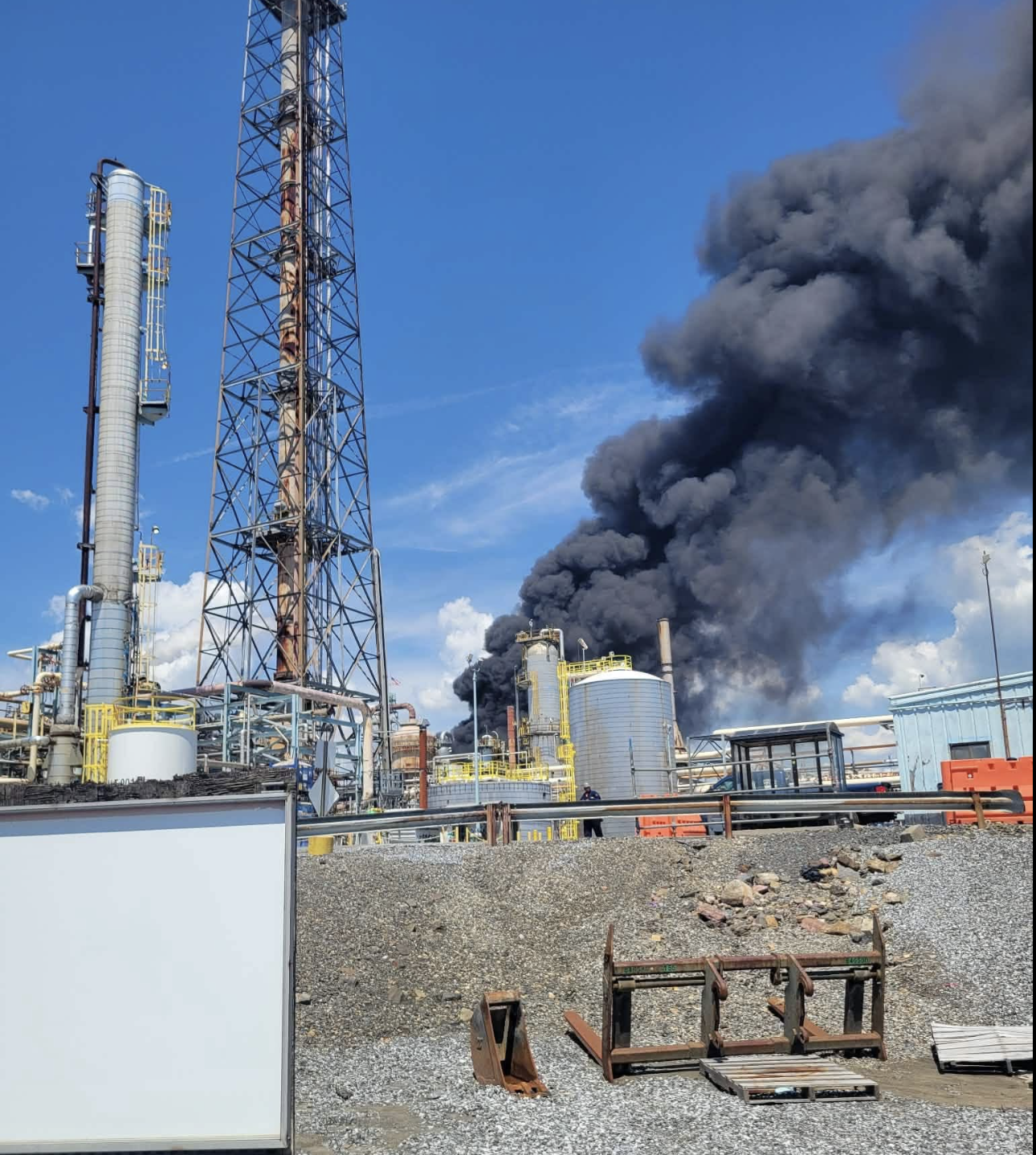
A leak and then a fire that stalled production at Delta Air Lines’ Monroe Energy oil refinery in Delaware County is just one of several unplanned stoppages that have dented U.S. oil production this summer, even as companies work to keep up with shifting supply and demand from the Iran war.
A welcome drop in U.S. gas prices “masks” a string of U.S. supply issues that put stress on fuel markets, Industrial Info Resources told clients in a note last week.
Beyond the stoppage at the 200,000-barrels-a-day Trainer plant, problems include:
Apower plant fireat Marathon Energy’s 550,000 barrels per day refinery complex near Galveston, Texas. Neighbors were temporarily urged to shelter in place last weekend, but the plant kept operating.
A lightning strike that temporarily knocked out power to TotalEnergies’ 190,000 barrels per day Port Arthur refinery in Texas near the Louisiana border.
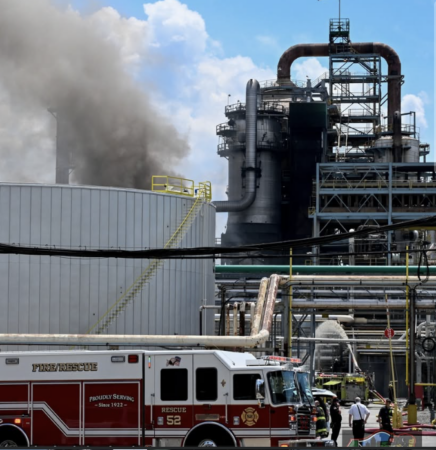
Fire at Delta Air Lines’ Monroe Energy refinery in Trainer, Delaware County, on Friday.
Refinery margins tripled after the U.S. and Israel attacked Iran in February and the Strait of Hormuz closed, and refineries felt pressure to boost production during what is normally the spring “maintenance season” of reduced production, said Stephen Schork, cofounder of the daily Schork Report on energy markets, based in King of Prussia.
During the missile attacks, “crude oil went as high as $120-$130 a barrel; jet fuel traded at $180-$190 a barrel,” tripling the usual profit margins, Schork said. “More than half the jet fuel on the East Coast comes from the Monroe refinery.”
Gasoline and diesel was also in high demand, he said.
“When you can make $50 [in profit] a barrel, you will be running that refinery as hot as you can,” Schork said. But “when you run as complex a piece of engineering as a refinery at nearly 100% capacity, the risk of unscheduled maintenance is increased.”
With prices now dropping, pressure from short-term shutdowns should be less, he said.
Overall, petroleum prices that spiked during the war have dropped since the U.S.-Iran ceasefire began bringing back oil refining and shipping in nations that had been attacking each others’ oil infrastructure.
The Brent crude benchmark price of oil fell to near prewar levels for the first time since the U.S. and Israel attacked Iran at the end of February and Iran retaliated with attacks on U.S. allies.
But with the U.S. Strategic Petroleum Reserve half depleted to prevent prices from rising higher in the near future and oil-thirsty countries scouring the globe for new supplies, the industry is sensitive to slowdowns. President Donald Trump’s energy adviser, Kevin Hassett, has said he’s confident reserves are adequate.
Industry sources say the plant leak shut the plant’s distilleries, which process up to 200,000 barrels of oil a day, much of it for jet fuel, to help Delta control the cost of keeping its commercial jets flying.
According to a Monroe Energy statement, a process pump at the Trainer plant caught fire Thursday, injuring a worker. County officials said two others were treated for heat effects after refinery staff and volunteer fire companies mobilized to fight the blaze. Monroe said air monitoring showed no risk to people outside the plant. The fire is under investigation.
Firefighters outside the plant noticed smoke rising from the refinery at 11:30 a.m. Tuesday, even before reports began flowing in from neighboring fire companies and Delaware County emergency workers, who urged residents to shelter in place, according to a statement by the Upper Chichester Volunteer Fire Co.
The fire was declared under control, and the shelter order lifted at 2:54 p.m.
In line with company policy not to discuss operations, a Monroe spokesperson declined to estimate when the plant would be fully back online.
The earthquake this week in Venezuela, an oil source for East Coast U.S. refiners, did not disrupt production at the nation’s main Paranagua oil complex, but the second-largest concentration, at Morón, was temporarily stopped, Reuters reported. The loss of electric power and other infrastructure damage across Venezuela is expected to slow tanker shipments out of the stricken nation.
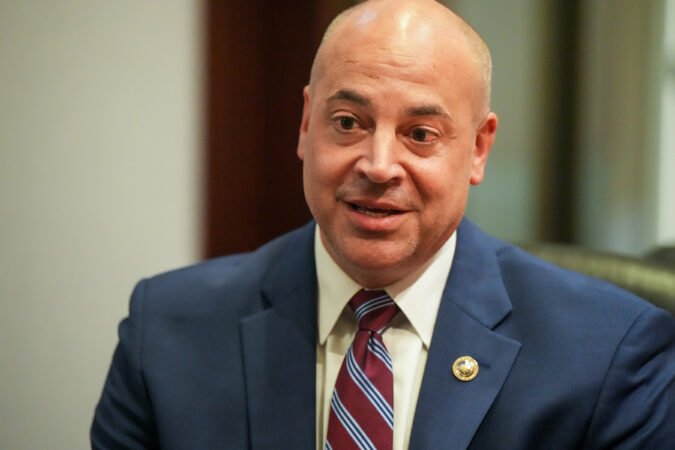
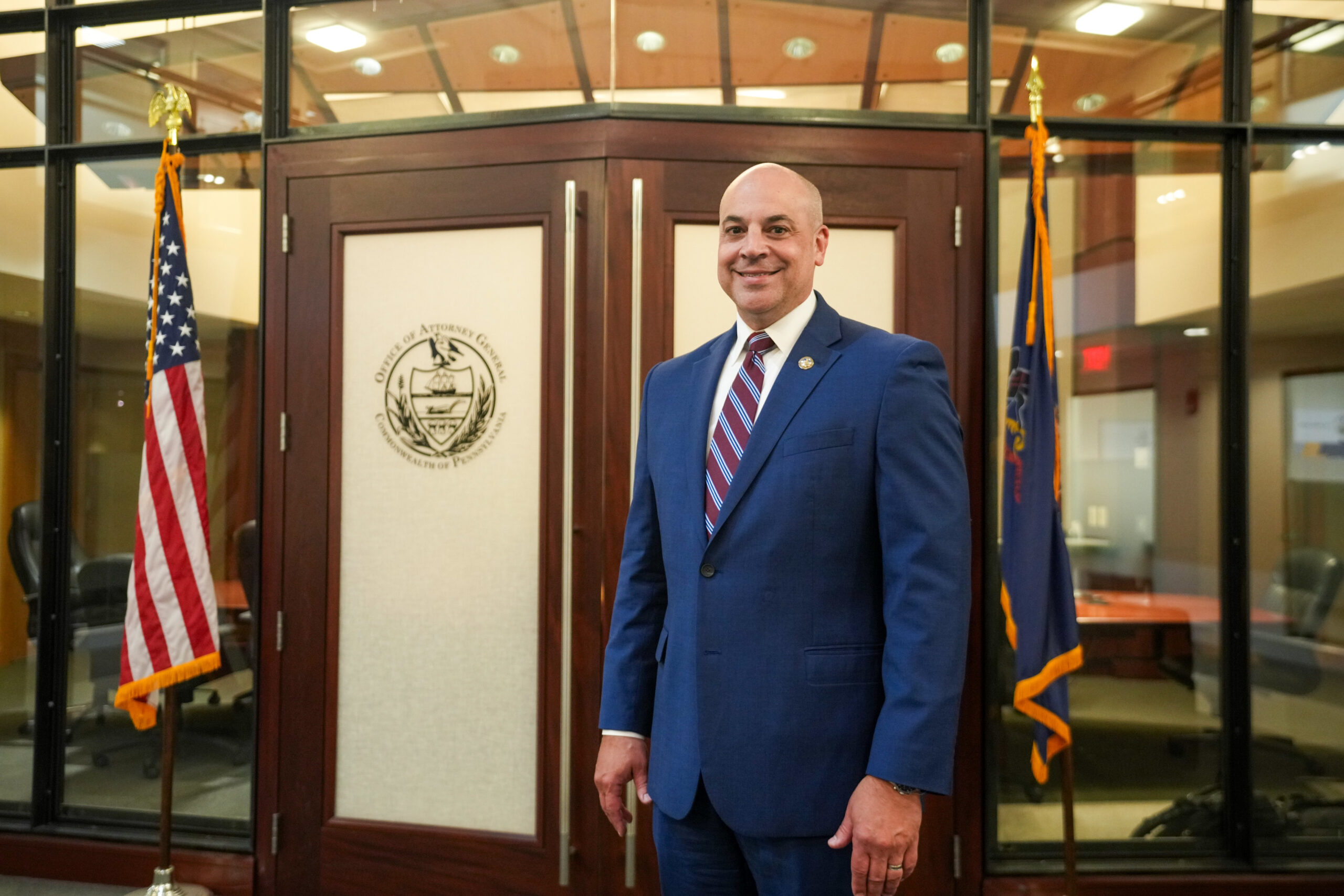
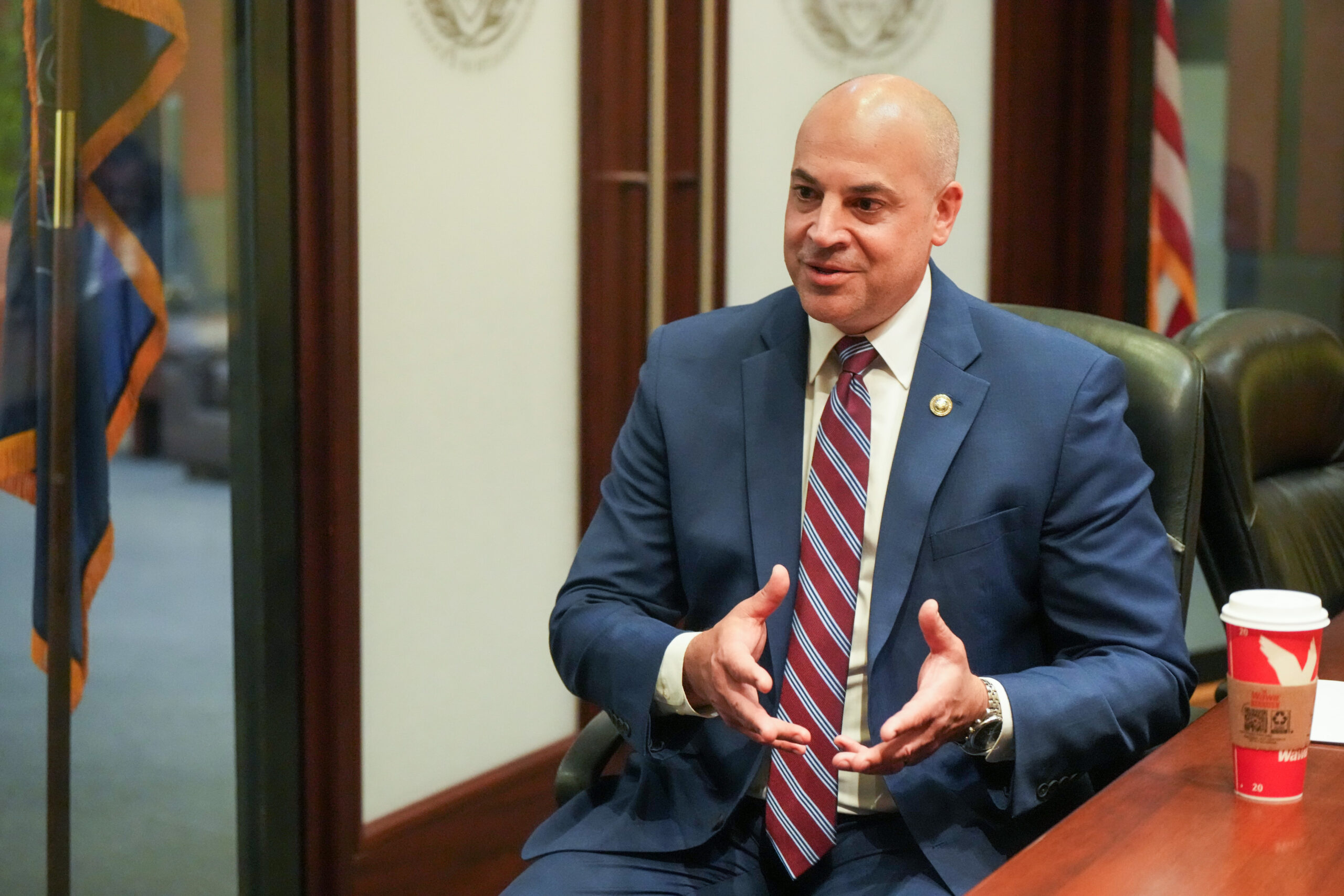
Attorney General Dave Sunday has spent 18 months as the state’s chief law enforcement officer, overseeing a sprawling office that handles criminal prosecution, civil litigation, consumer protection services, civil rights enforcement, and more.
In that time, the 51-year-old Republican and Harrisburg native says, he has taken on issues ranging from the opioid crisis to illegal crime guns. And last week, the Pennsylvania Supreme Court handed his office broad authority to review the efforts of Philadelphia prosecutors to overturn murder convictions they have called unjust, a signature initiative of District Attorney Larry Krasner’s office.
In a recent interviewat his Philadelphia office, Sunday talked about that and more.
What is your reaction to the Supreme Court ruling on the work of District Attorney Larry Krasner’s Conviction Integrity Unit?
Obviously, it’s an unprecedented ruling.
Oftentimes, the best outcome is through the adversarial process. We work with the Philly DA’s office in a lot of different areas, and I viewed this ruling as any other that provides me with instructions on a way on which I have to run my office.
Moving forward, the ruling requires your office to review any post-conviction concession that Krasner’s office aims to pursue. How will that work?
There are questions. How many times will we have to intervene? What will that do to staffing? Will we have the logistics and resources to do it appropriately? I think that process will unfold over the next month or so.
There’s no other real comparison for this ruling, and so what I can say very simply is this: It is absolutely crucial that there is a voice for the families of victims, and at the same time, I think it’s crucial to make sure that we protect the rights of individuals who are charged with crimes and convicted of crimes.
That balance is found in applying the law and the facts to the issue. That’s something we will enthusiastically do.
.Assistant General David Sunday, in Philadelphia, June 23, 2026.
Since Krasner first took office, his prosecutors have supported efforts to overturn around 115 convictions. Given the Supreme Court’s findings, do you now question whether some of those overturned convictions should be reconsidered?
Well, we have to look at the legal process there. For individuals who the court has already ruled in a manner in which they’re out of prison, those cases are done.
But with cases that are still going through the appellate process, individuals that are incarcerated, those are situations where we’re going to have to take a look at it. I mean, this is very serious, and when the Pennsylvania Supreme Court rules in this manner — not just the ruling itself, but the verbiage — I, as attorney general, take that extremely seriously.
We will do our job, and we’ll do our duty, and we’ll review it, but it’s also important to understand that this isn’t a quest to prove someone wrong. It’s a quest to ensure that all parties are zealously advocated for.
Krasner has strongly opposed the ruling. He’s likened this issue to the struggles of the Civil Rights Movement and said that the decision undermines the votes of those who elected him to office. What is your response to that?
I don’t think that it benefits anyone for criminal justice leaders to editorialize a lot of the work we do.
It’s critical that the citizenry knows and understands that their case will be dealt with by applying the facts to the law — and I know that’s not the most exciting answer, but there are things that are in my control and there are things that aren’t in my control, and his reaction to anything is completely out of my control.
The last thing individuals who live in the community want to hear are elected officials yelling at each other. They want to see outcomes.
Earlier this year, justices ruled that mandatory life sentences without parole for those convicted of second-degree murder are unconstitutional. What are your thoughts on that?
Third-degree murder, second-degree murder, those are cases where the acts resulting in the crime are vastly different case to case. As a prosecutor, I’ve tried horrific second-degree murder cases — one was an in-home burglary where an individual was left face down on the ground, duct-taped, and they ultimately died from positional asphyxiation, which really is torture.
At the same time, there are second-degree murder cases where you have multiple codefendants, and — this case is highlighted a lot — one of the codefendants pulls a gun out, kills an individual, and all those codefendants, because they were acting in concert and furthering some conspiracy, they’re all guilty of second-degree murder and they’re in for life.
So there are second-degree murder cases where the individuals should have an opportunity for parole, and at the same time, there are cases that are absolutely horrific, where individuals should spend the rest of their lives in prison.
The important place we’re in now is the legislative process, moving forward to ensure that the punishment is commensurate with the harm caused in the crime.
Violent crime has fallen dramatically from its pandemic-era highs in Philadelphia and across the state. Should the attorney general’s office get some credit for that?
There is no one individual or agency that can take credit for these outcomes. We’re with our federal partners, we work with everybody.
After I was elected, some of the very first calls I made were to the Philadelphia mayor and the police commissioner, and I made it very clear that we’re partners. I’m excited, let’s go. And that’s what we’ve done.
The Attorney General’s Gun Violence Task Force is a huge part. We do everything we can every day to go after gun traffickers, illegal straw purchasers. We’ve removed more than 500 crime guns off the streets [statewide] in 2025.
In addition to that, our Bureau of Narcotics works every day in Philadelphia. Last year, we removed 56 million doses of fentanyl from the streets, and a large portion of that was in the city.
The Commonwealth Court struck down a decades-old law that banned Pennsylvanians from using their Medicaid benefits to pay for abortions, and last month, your office appealed. Why?
A lot of people don’t understand the role of the AG in a lot of issues. In Pennsylvania, we have the Commonwealth Attorneys Act, the rules that dictate the job, and one of the rules in there is that the attorney general shall defend the constitutionality of statutes in Pennsylvania.
I have irritated the entire political spectrum, because I am defending statutes whether you like them or not. That’s literally my job. What a lot of people don’t understand is that the [Medicaid] law is part of the Abortion Control Act — the same law that allows abortions to occur up to six months of pregnancy, the very same law.
In that law is a subsection that also says that government funds cannot be used for abortions — so I’m defending the abortion law in Pennsylvania, just like I would any other section of that law.
Critics say that by appealing the ruling and prolonging this issue, you are denying Pennsylvanians of what the court called a “fundamental right to reproductive autonomy.” How do you respond?
Just like every law we defend — every single one — there are people that like it and don’t like it, and they will have commentary. I certainly respect their absolute right to have that commentary.
What I will say is, this decision has nothing to do with that. It is the job of the attorney general to defend the statute.
.Assistant General David Sunday, in Philadelphia, June 23, 2026.
What would you say has set your tenure apart from your predecessor, Gov. Josh Shapiro, and his appointed successor, Michelle Henry?
Very simply, I came into this job as a prosecutor. I ran on public safety. I wasn’t a legislator, so when I look at the office, I view it as a place where you follow the facts in the law, and you fight hard to keep people safe.
With that being said, I have hyper-focused on issues impacting citizens. We have huge crises in Pennsylvania that need to be addressed, specifically the mental health crisis.
When I came into office, I saw our prisons are full of people that have mental and behavioral health challenges. Individuals go to jail solely because they have a mental health crisis, and what I want to see are people getting treatment.
What we did was create a new initiative that gives police a toolbox, so when they come into contact with someone in a mental health crisis [who is committing a low-level criminal offense], they can get that person into treatment [if the person chooses to do so]. At the same time, that person can be charged, and the police have the flexibility to hold that charge.
This is brand-new, and we have nine counties that are already signed up and are rolling. We have five more lined up and ready to roll over the next few months.
President Donald Trump held a rally in Pennsylvania on Tuesday, and he was joined by some of the state’s other top Republican officials, such as Stacy Garrity. Is that an event you would have liked to attend?
In all candor, I have events that have been scheduled for months and months, and the reality is, a lot of these [presidential] events pop up pretty quickly.
On Tuesday, I had an event with the first elected attorney general in Pennsylvania, LeRoy Zimmerman. I was with him at a fireside chat, talking about what the AG’s office has looked like, and how it’s changed over the last 30 years.
Any Collingswood resident over the last 18 years can remember the fight to legalize backyard chickens. Or the second attempt. Or the third.
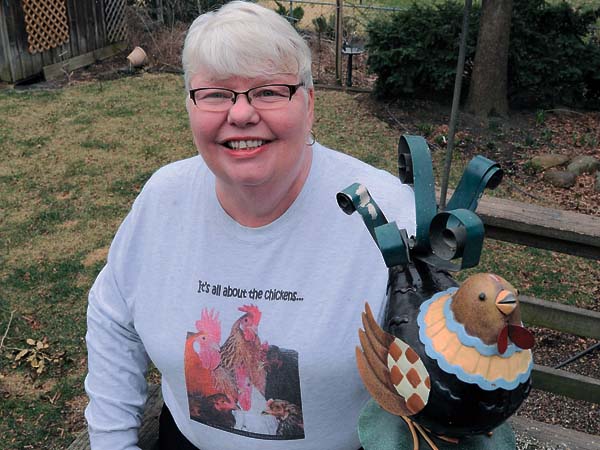
Gwenne Baile, 77, knows the efforts well. A Haddon Township resident and the unofficial “Chicken Lady of South Jersey,” Baile initially became interested when she saw Martha Stewart showing off her chickens on TV. After retiring in 2009 from a long career as an ob-gyn nurse, Baile decided she needed a hobby.
“I started looking into it,” Baile said, “but it was illegal here.”
Since then, Baile said, she has played some part in changing the ordinances in 35 municipalities across South Jersey, including in her hometown. She keeps a list of places with pro-chicken zoning rules, including the 19 municipalities in Camden County that allow them. Baile now has five hens, taken in as fosters, including those injured by predators or forced from owners whose municipalities do not allow coops.
One hen with arthritis lives indoors. Baile calls her a “mini me” since she hates the heat, doesn’t like exercise, and has golden feathers that match Baile’s hair.
Gwenne Baile, an advocate of backyard chickens, holds Mimi, a family’s hen in Audubon.
Baile and a small group of hopeful Collingswood residents have frequented Collingswood Borough Board of Commissioners meetings in recent months. At its last working meeting on June 17, the group handed over proposed language that they hope the board will use in a future ordinance supporting backyard chickens, informed by Baile’s years of advocacy.
The last major push for residential hens fizzled out in 2019 after several Collingswood residents spent more than a year regularly attending meetings to champion an ordinance that never saw the light of day.
But this time feels different, Baile said, and some locals and officials agree.
Dan DiVito, 42, has lived in Collingswood for six years and owns Front Yard Food, a business that teaches people how to grow their own crops and helps design the backyard infrastructure to do it. If Collingswood passes an ordinance, DiVito said, he will get chickens himself and join the new Backyard Chicken Advisory Board — a five-member commission that would oversee the initiative and investigate complaints.
“Chickens are a no-brainer,” DiVito said. “It’s a pet that makes you breakfast.”
Gwenne Baile in her backyard in 2014.
‘A change and an opportunity’
Collingswood did not always ban chickens.
But in 2008, Collingswood’s three-person board of commissioners — made up of a mayor, deputy mayor, and a commissioner — adopted measures prohibiting residents from keeping or breeding a long list of livestock and fowl, including chickens.
Local news records from 2008 do not give a clear explanation why the rules were adopted, other than comment from then-Mayor Jim Maley that the board wanted to “head off a problem before it presents itself.”
The maximum penalty for violating the ordinance is a $500 fine.
Repeated attempts to end the ban have been unsuccessful, even as neighboring municipalities passed ordinances to allow chickens. Some residents voiced concerns about the smell or the noise, or about Collingswood properties being too small to house chicken coops. Collingswood Chicken Uprising, the local Facebook group for the chicken resistance, was created 16 years ago and is up to 234 members.
But a recent political shift in Collingswood has meant hope for some local chicken advocates.
Maley’s 28-year tenure as mayor ended last May, when two progressive challengers joined Maley to win seats on the board of commissioners.
Daniela Solano-Ward became the first female and Latina mayor of Collingswood in 2025, and Deputy Mayor Amy Henderson Riley became one of only a handful of women to serve on the board in the borough’s history. That shuffling was one factor that brought on the chicken resurgence.
“Advocates and community members saw that this was a change and an opportunity to try this out with the new team and see what could happen,” Henderson Riley said.
Passing an ordinance takes time. There must be two separate readings of the proposal, and time must be given for residents to comment. The next commissioners meeting is not until July 15, and Henderson Riley said Tuesday that she was unsure whether the proposal drafted by Collingswood residents would make it to the agenda.
But with an organized, citizen-led group, Henderson Riley said, she suspects this is the most favorable effort thus far. Plus, with concerns like the cost of living and gas prices, she said, there are bigger things to worry about than banning chickens.
“Let the chicken people have their thing,” she said.
Maley and Solano-Ward did not respond to requests for comment.
What advocates are proposing
Suzanne Passante feeds her chickens inside the chicken coop in the backyard of her home in Haddon Township, N.J., on Wednesday, June 24, 2026.
Every municipality’s backyard chicken ordinance is slightly different. Most have strict requirements, including that coops are predator-proof, set a certain distance from other properties, and kept dry and clean.
Collingswood residents’ pitch to the commissioners would ban roosters, forbid residents from selling their eggs, and require completion of an online course teaching applicants how to care for hens. Collingswood could have only 30 households with hens at a time (of the 6,900 estimated housing units the U.S. Census Bureau estimates are in Collingswood), and new licensees would be capped at four chickens.
Chicken owners would have to pay $10 fees annually to renew their licenses. The Backyard Chicken Advisory Board would investigate complaints and help relocate chickens that are no longer wanted, since the advocates are calling for a ban on slaughtering hens.
Any violations could result in a fine of up to $1,250 or imprisonment of up to 90 days, a more severe punishment than the current ordinance gives for keeping chickens.
Henderson Riley, who has a doctorate in public health, took the three-hour backyard chicken course to learn more about the potential process residents would have to go through to get a coop.
She passed, but not without a bunch of red markings and a reality check that owning chickens takes time, money, and energy that she does not have. Henderson Riley said she thinks the long list of requirements, along with the difficulty of raising hens, will dissuade the vast majority of people from partaking in the hobby.
“It’s not like the hens are going to take over Collingswood.”
Words of wisdom
Lynn Parker, 52, has 10 hens in her backyard in Stratford Township, Camden County. When Stratford passed its ordinance allowing chickens in 2023 (an effort Baile helped with), Parker was the first person in line for a chicken permit.
She now chairs the township’s Hen Advisory Commission, which inspects new coops and educates residents. Fourteen homes in Stratford have chickens now, Parker said, and there have been no complaints.
Her advice to people who want to change their municipality’s chicken law is simple.
“Even if you get a no, do it again,” Parker said.
Suzanne Passante, 71 and Baile’s neighbor, chairs Haddon Township’s Backyard Chicken Advisory Board. She has four chickens and averages a dozen eggs per week.
It took time to educate residents about the benefits of hens and to quell misconceptions, like chickens attracting rats, but she said complaints have been nonexistent in recent years.
“Now, after 11 years, people don’t even think about it,” Passante said.
The players amble into the auditorium on acloudy May morning to run through their schemes and formations and make last-minute adjustments to the roster. Some are already in uniform — waistcoats and breeches — fueling up on Wawa coffee and bagels. Others scroll aimlessly on iPhones or finish off their cigarettes outside the Free Quaker Meeting House near Independence Hall. They discuss contingencies, ready their gear, and buckle their latchet shoes tight.
“Get out there and have fun,” their coach, Historic Philadelphia’s director of storytelling Johanna Dunphy, says as she sends her proud-chested team of historical reenactors off for their preseason opener.
This is the start of the team’s Super Bowl run: the lead-up to the nation’s Semiquincentennial. The cast of Ben Franklins, John Adamses, and Betsy Rosses — actors who have spent months and uprooted their lives to learn about and live as colonial America’s key characters — will be at the front lines of the 250th birthday celebrations, which began with the cast’s opening day on May 23 and reach a fever pitch on July 4. They will become de facto historians, guides, entertainers, and ushers to an expected crush of tourists, all while anchoring how the country’s earliest days are memorialized and whose stories get to be told.
“Fly!” Dunphy says with gusto as the performers shuffle out of the modest redbrick building.
This set of actors is part of Historic Philadelphia’s Once Upon a Nation program — a series of performances staged throughout the summer and beyond in Philadelphia’s historic district and at Valley Forge. It’s Once Upon a Nation’s 21st season, but this year is expected to be one of its biggest ever, with the most actors, plays, scripts, and events.
And, with tourism agencies expecting this summer’s events to draw upward of one million visitors, it’s almost certain to be the program’s largest audience.
“Philadelphia is ready for you,” Amy Needle, Historic Philadelphia CEO, told the players on the last day of the preseason. “And I know you’re ready for them.”
Shecky Perlman as Ben Franklin, and other historical reenactors receive their diplomas on May 21, 2026, after weeks of intensive, immersive training at the Benstitute.
Fourmonths to game day
Actors, mostly local, file in and out of Jason Greenplate’s office on a chilly January afternoon. Greenplate, program manager for Once Upon a Nation, and his colleagues are seeking the strongest possible players who have the passion, the look, and the improvisational skills to take on the characters and become “history makers” — what Historic Philadelphia calls its reenactors.It’s essential for these coaches to choose players who are not only capable of taking on these roles but are also willing to challenge their own understanding of history.
Spencer Salusky, a 23-year-old fresh William & Mary graduate, walks through the door.
As a draft prospect, Salusky is an impressive pick. He can execute even the most complex of plays (tricky lines and blocking), and his stats (body measurements and head shape) are optimal.
“He kind of looks like John Adams,” Greenplate thinks.
After conferring with his peers, Greenplate chooses Salusky tobecome Once Upon a Nation’s next John Adams, and, one by one, 19 more actors are cast as history makers and storytellers, those who are stationed at the city’s historic sitesin green polos to offer context to visitors. They join the existing 30 company members returning from prior years.
Courtney Mitchell, who portrays Margaret Woodby (left), and Spencer Salusky (right) as John Adams, join other historical reenactors at graduation on May 21, 2026, after weeks of intensive, immersive training at the Benstitute.
Three months to game day
The actors soon begin their training. For Salusky, that looks like receiving a large packet full of biographical information about John Adams — where he was born, his wife’s name, and his perspective on slavery — from Doug Thomas, director of history makers.
Thomas is a player-coach, a star in his own right who can seamlessly transition to the coaches’ box. Like Deion “Prime Time” Sanders, Thomas is a Swiss Army knife on the field, having played every position in the game of historical reenacting, from William Penn and Patrick Henry to Francis Scott Key, and has been doing the work for nearly 30 years. But what makes him truly elite is his position as Mount Vernon’s George Washington.
Out in the field, the players might be blindsided by a granular question from a tourist, an offensive remark from a passerby, or incessant badgering from a child. On the stage — where the history makers also perform a series of scripted plays — they must be prepared to embrace their characters’ conflicting motivations, shifting attitudes on political issues, and complex interpersonal relationships.
Thomas is equipped to help them tackle it all.
He guides them in studying their characters, trains them on redirecting conversations with visitors toward topics they’re knowledgeable about, and teaches them improvisational techniques. He also prepares them to embody the voice, posture, and behavior of historical figures.
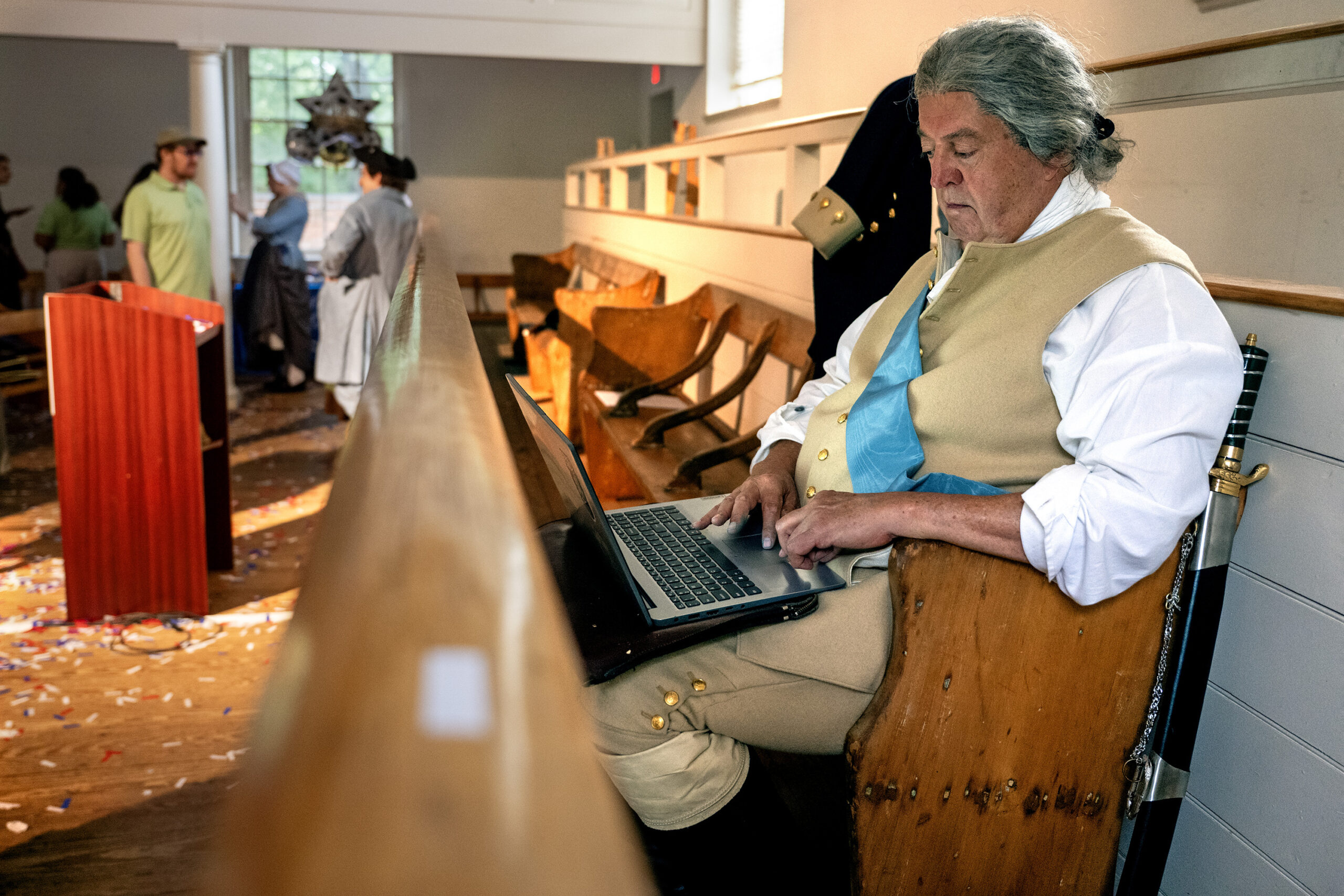
Jim Fryer as George Washington checks in on his laptop on May 21, 2026, after the graduation of dozens of historical reenactors after weeks of intensive, immersive training at the Benstitute.
Three days to game day
“Adams,” Thomas says, summoning Salusky during a rehearsal for Cocktails and Congress, a marquee performance in the Once Upon a Nation repertoire.
On a scorching 95-degree afternoon that foreshadows what the players can expect during the steamy home games to come, Thomas scans the script, glasses poised atop silky black hair that grazes his shoulders. He directs Salusky’s attention to a moment in the dialogue: “Slavery is like a great cancer.”
He cautions the actor to be careful with how he utters that line. Adams is torn about slavery at this point in his life, Thomas explains.
“He doesn’t like it, he doesn’t support it, but also he does realize very practically what eliminating slavery would do to the economy,” Thomas tells Salusky.
Salusky contemplates the note, sitting on a Meeting House pew with a mechanical pencil tucked behind his ear.
“Adams is evolving,” Thomas tells him. But “he’s a practical man.”
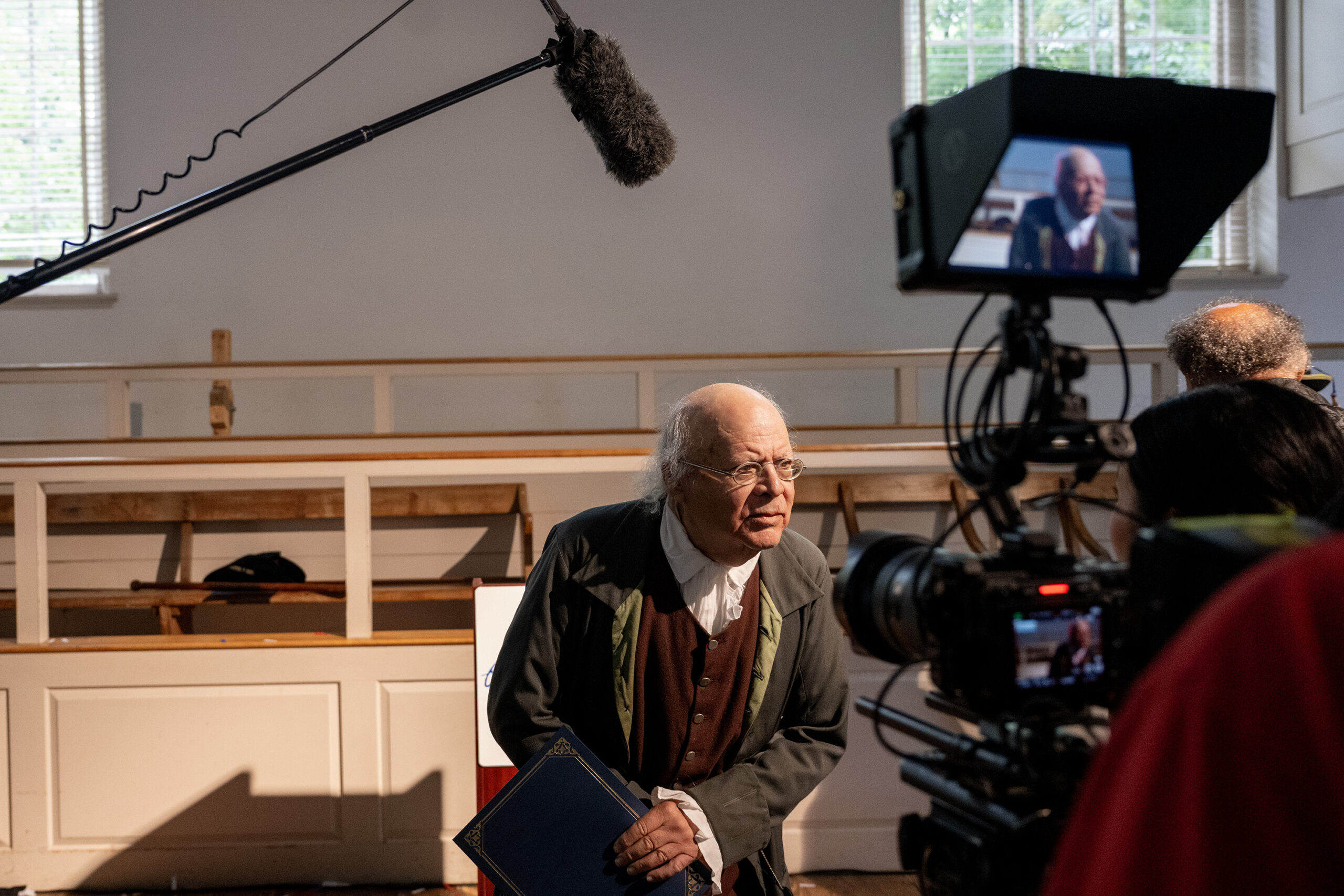
Shecky Perlman as Ben Franklin, ready for his close-up, on May 21, 2026, as he is interviewed by a documentary film crew, as dozens of historical reenactors graduate after weeks of intensive, immersive training at the Benstitute.
Two days to game day
Even with centuries of primary and secondary sources, and extensive research, there are still gaps in what’s known about 18th-century American life that the actors and program coordinators must contend with. There’s a trove of information on John Adams, for example, but the documented lives of women and people of color are far less complete, like that of Hannah Till, an enslaved cook for George Washington at Valley Forge, who purchased her freedom. What’s known about Till is often centered on her enslavers.
West Philadelphia actor Miranda Thompson, who portrays Till as well as Sarah, a fictional composite character in Cocktails and Congress, relies on more general information about how women of color lived during the colonial era to inform her performance. “You just want to get it right,” Thompson, 43, says. “You want to give truth to who that person was. … I feel like if I’m grounded and honest within that interpretation, I think that I’ve done it justice.”
For historian Sandra Mackenzie Lloyd, who authored many of the Once Upon a Nation scripts and founded the Benstitute — the immersive training program the actors undergo — the American story is about “more than the dead white dudes.”
“It’s not a straight line,” Lloyd says. “We are people who have been through many difficult periods and ups, downs. This is a country that was created by people from many places with different beliefs, and that’s historic, and it’s contemporary.”
Organizers were intentional about the stories and figures they chose to platform this summer, centering diverse and layered voices in the narrative of the nation’s founding, including those of Black Americans whose stories have been omitted in the retellings of the story of 1776.
“Our history is being erased, voting rights [are being erased], certain books are banned,” Thompson says. “Representation matters … to know that we were there, and we played an important role.”
Prominently featuring Black history during the 250th, she says, is also an opportunity to dismantle racist, archaic stereotypes about enslaved people through authentic storytelling and connection.
“You can change a person’s mind,” Thompson says. “We’re human, we can always change our minds.”
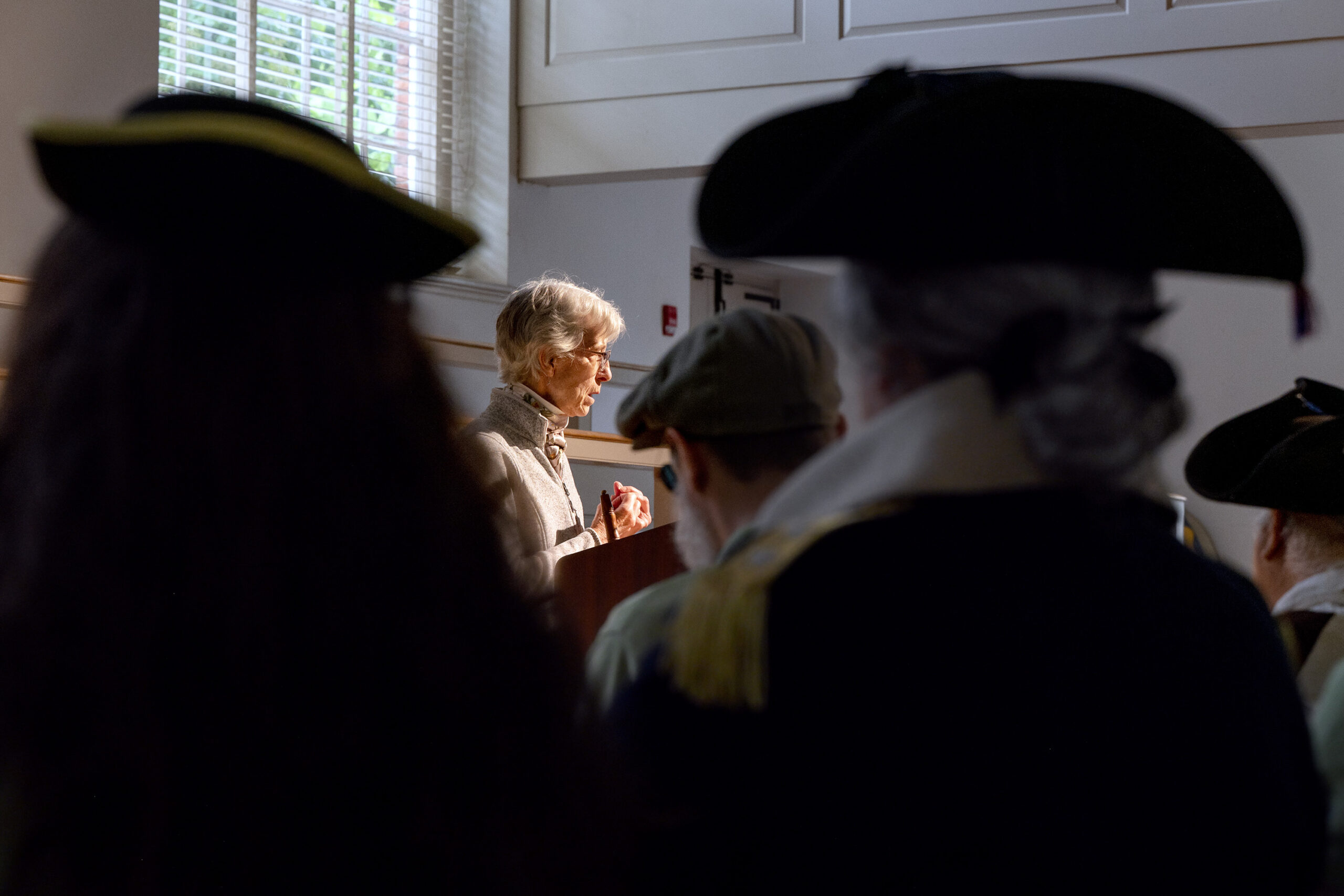
Historian Sandra Mackenzie Lloyd, founder of the Benstitute, delivers the commencement address on May 21, 2026, as dozens of historical reenactors graduate after weeks of intensive, immersive training.
One day to game day
Preparations for the reenactors include not only character work, but also tourism and hospitality training. They learn how to guide someone to the best cheesesteak or nearest toilet while staying in character and using period-appropriate vernacular. The actors also learn how to beat the heat in wool frocks and petticoats and stay safe.
“Make sure to hydrate, hydrate, hydrate,” Dunphy, the storytelling director, tells her team during a morning gathering at the Meeting House before they hit the streets in costume, and a set of volunteer fake tourists heads out to test the reenactors’ skills before they’re faced with real tourists.
She points them to a packet in their supply bags full of powder to pour into their water for extra hydration.
“Drink this,” she instructs them.
Most importantly, Dunphy reminds both the history makers and the storytellers what to do if they’re out in the field and feeling unsafe.
“History makers, please remember this: If a storyteller says, ‘Have you seen John Adams?’ Don’t be cute. That is a plea for help; they need you to stay with them. It is not a joke. They need you to stay,” she says. “Things can turn on a dime.”
And, as this is live performance, things often don’t go according to plan.
During an April news conference at which a Betsy Ross and a Benjamin Franklin from the company stood onstage beside Gov. Josh Shapiro, a giant poster reading “America 250 PA” fell forward, scraping Franklin’s behind.
Carol Spacht, the Betsy Ross at the event, acted quickly.
“This is such an exciting announcement that the world is falling apart over it,” she exclaimed after the poster came down, gesticulating with a scroll clasped in her hand before turning to the Benjamin Franklin reenactor, Bill Robling.
“Quite all right, Dr. Franklin?” she asked as he nodded. “We’re sturdy at our age. 250 years does that.”
At a recent event at Reading Terminal Market, Salusky, as John Adams, had to navigate how to handle tourists approaching him, thinking he was Benjamin Franklin.
“As John Adams, how do I react to people thinking I’m Ben Franklin. Well, he was a mentor of his. He really admired him, found him annoying, but would still be a little flattered,” Salusky says. “It’s kind of just like in-the-moment problem-solving.”
Over the course of their four months of training, the actors finally reach a place of feeling ready for anything … mostly.
“Speaking in 18th-century tongue continuously, I am nervous about that,” Thompson says. “I want to portray it real.”
Cause for celebration
Before the actors are on their own on the Philly streets, they and their mentors celebrate the completion of their Benstitute training with a graduation ceremony at the Free Quaker Meeting House.
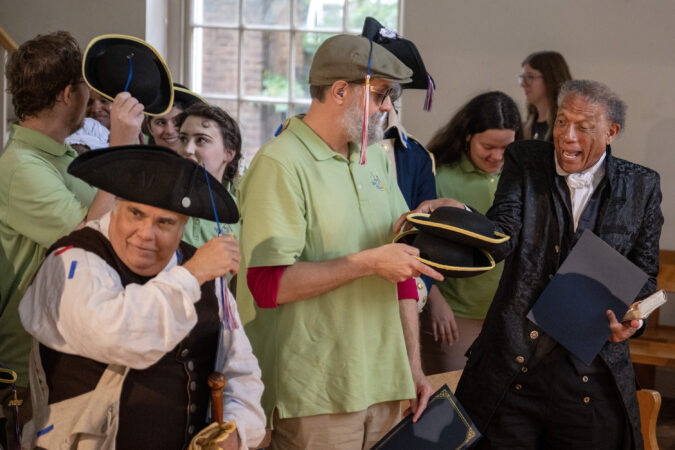
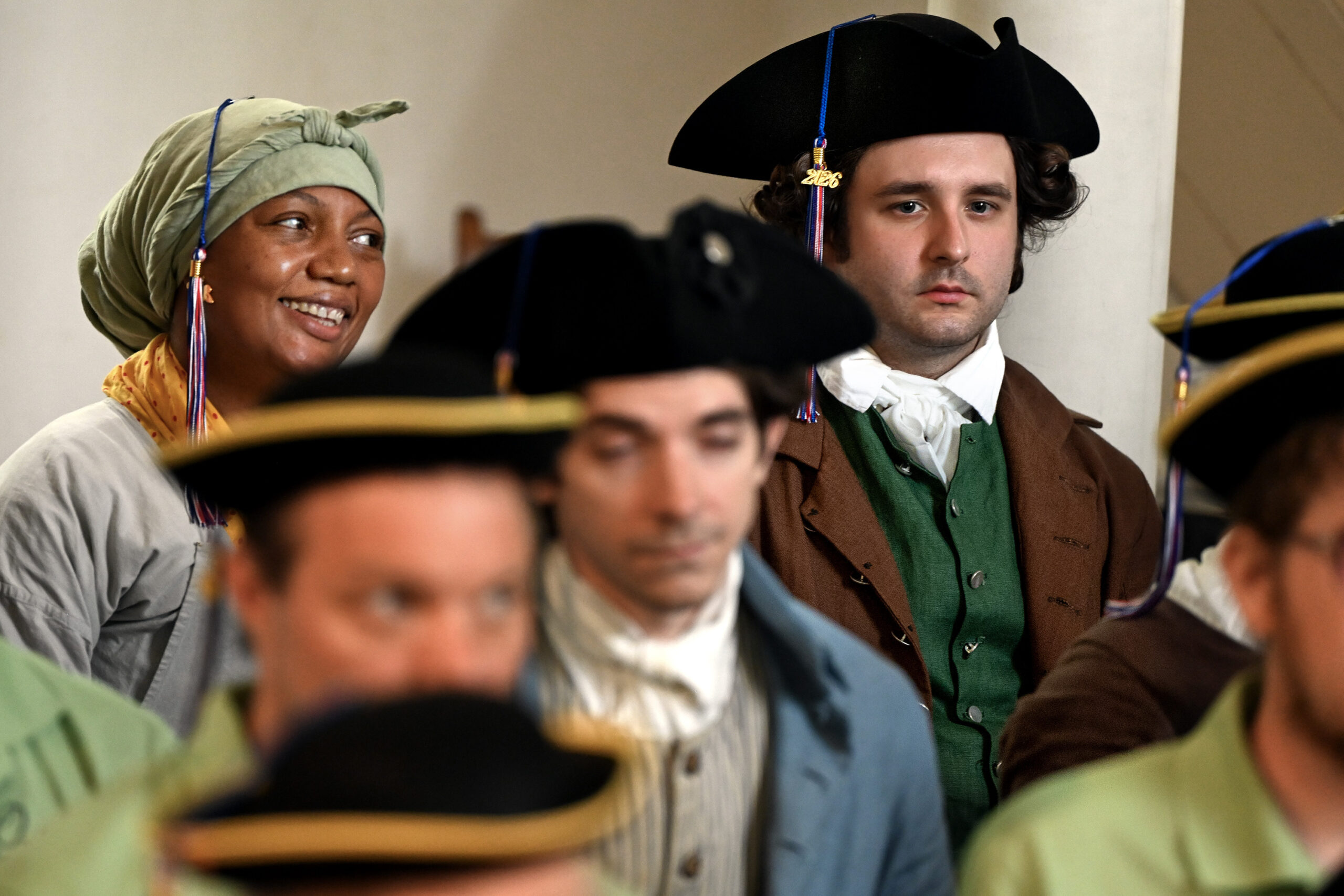
Graduates file in, some in polos and slacks and some in costume, all wearing red, white, and blue tassels dangling from the center of their mob caps and other historical hats. They sit in the pews, players awaiting the game-time whistle, as their coaches offer them final words of encouragement before they put their drills to the test and tackle the real world, beginning with their season’s opening day — their fervor not letting up until they run through the proverbial tunnel onto the championship field for July 4.
“History is not just about buildings, artifacts, and famous moments. It is about people — their choices, their struggles, their disagreements, their courage, their hopes for the future,” says Steven Sims, superintendent of Independence National Historical Park. “Long after visitors leave Philadelphia, they may not remember every date they heard or every building they toured, but many will remember how someone made them feel connected to history. Many will remember you.”
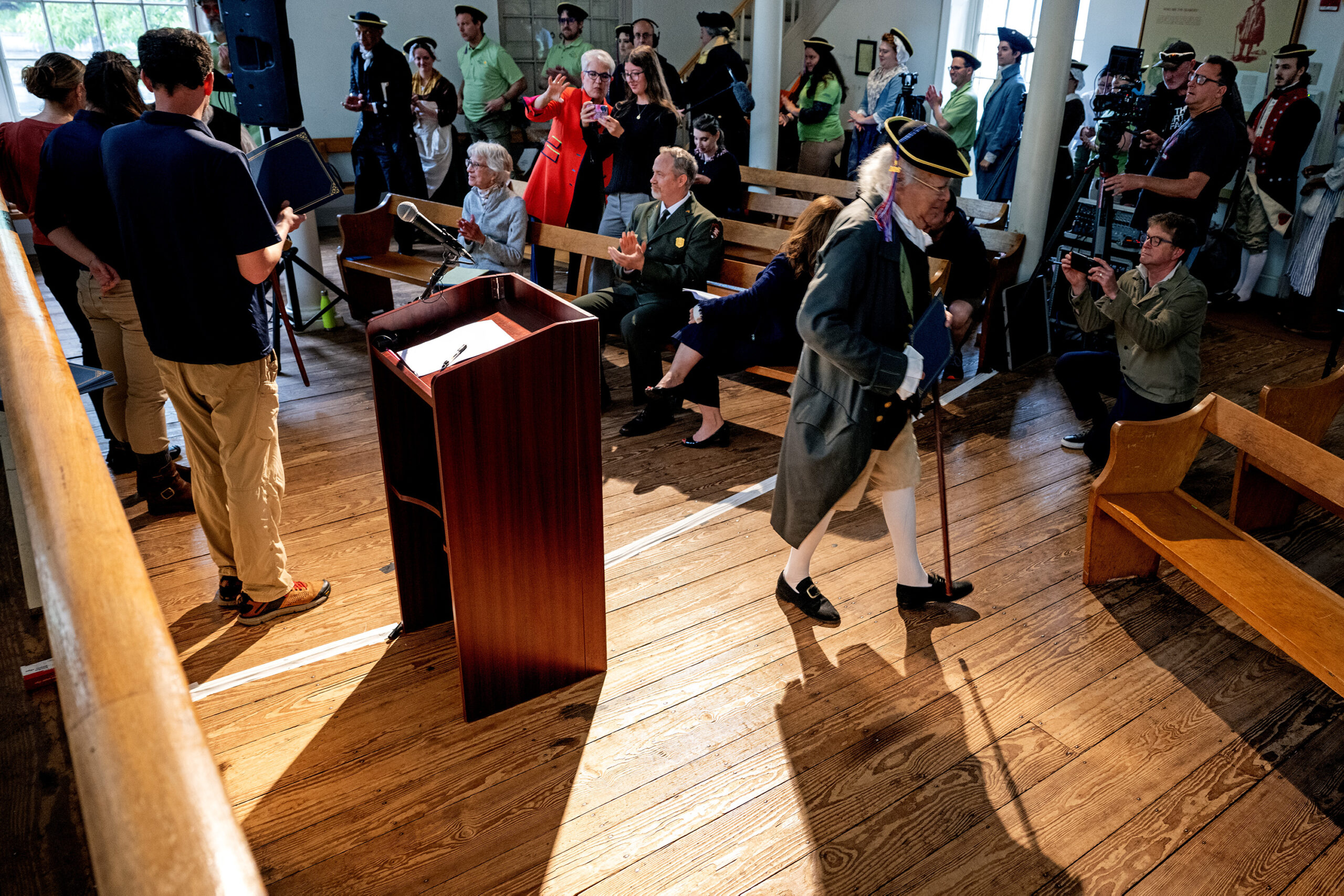
One by one, the reenactors and storytellers cross the stage, graciously accept their diplomas, smile for photos, and return to their seats.
“Class of 2026, please stand up,” says Amy Needle, the Historic Philadelphia CEO.“Change your tassels. Congratulations! George Washington?”
“Class of 2026,” aWashington reenactor calls. “Hip hip.”
“Huzzah,” they respond.
“Hip hip,” he repeats.
“Huzzah!” they conclude as audience members deploy tiny silver confetti cannons and red, white, and blue rain down upon them.
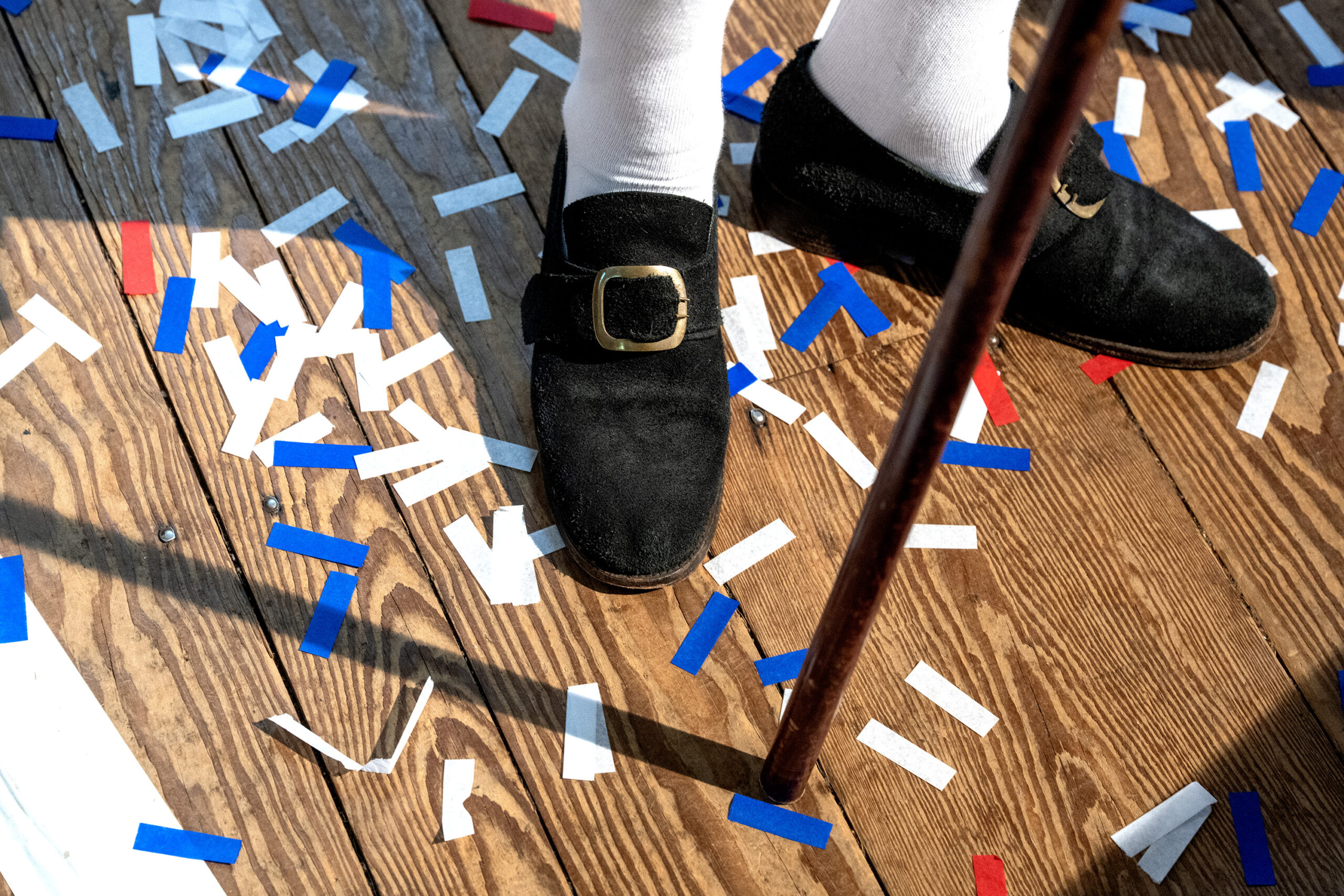
Shecky Perlman as Ben Franklin, his cane and feet, Thursday, May 21, 2026, among the confetti as dozens of historical reenactors graduate after weeks of intensive, immersive training at the Benstitute.