Tag: Weekend Reads

  • Bucks County parents of deaf and blind infants are worried about losing a ‘lifeline’ as early intervention contract ends

    Bucks County parents of deaf and blind infants are worried about losing a ‘lifeline’ as early intervention contract ends

    Julia Hess was on the precipice of discovering the extent of the hearing loss in her 9-month-old daughter Jasmine’s right ear, when she learned that crucial support services for her baby and other visually or hearing impaired children in Bucks County would be cut off next week.

    Jasmine, affectionately known as Jazzy, is a smiley infant who has maintained a “sweet and sassy” personality even as she’s been diagnosed with Smith-Lemli-Opitz syndrome, a developmental disorder, and undergone three surgeries.

    “We can see it in her face in the way that she continues to try even when her body is exhausted and her muscles won’t move anymore,” said Hess, 29, a mental health therapist.

    Jazzy has been receiving early intervention services since she was 2 months old from the Bucks County Intermediate Unit, a county-level education agency, including hearing and communication services due to hearing loss in both ears and other developmental delays. Once a week, an instructor travels to Hess’ home and teaches Jazzy how to communicate with the world around her.

    The 9-month-old has made significant progress, but could face setbacks starting this Saturday when the Bucks County IU will cease services for hearing and visually impaired babies and toddlers ages 0-2, citing funding and staffing challenges. And it’s unclear where parents will find services next.

    “It’s really scary to feel like we are kind of just wandering in the dark,” Hess said.

    In Pennsylvania, children with developmental delays and disabilities are eligible to receive services through a state-backed early intervention system — a right grounded in federal special education law.

    But officials with the Bucks IU say they’ve been losing money on the program for hearing and visually impaired infants and toddlers, which currently serves 49 kids. While the state reimburses the county for early intervention services, it doesn’t cover “indirect” service time, officials said. That means the IU can’t bill for the time incurred by therapists driving between appointments, documenting services, and preparing a child’s program.

    Last year, the gap between what the state reimbursed and what the IU paid to deliver the services was $200,000, officials said.

    At the same time, the demand for services for older children also served by the intermediate unit — both preschool and school-age — has been growing, officials said. And with shortages of special education teachers plaguing school districts statewide, ending services for babies and infants allows the unit to redirect its limited supply of teachers for the deaf and visually impaired to serving older children — a group the IU has primary responsibility for serving.

    “I think what we’re experiencing is what happens when you have a severe shortage, a growing number of kids that need the support, and antiquated models of funding that haven’t kept up,” the intermediate unit’s executive director, Mark Hoffman, said Jan. 20 at a meeting of the unit’s board, which is made up of school board members from districts across Bucks County.

    A Pennsylvania Department of Human Services spokesperson said Monday that provider rates would soon be increased as the result of a $10 million boost in this year’s state budget.

    Revised rates “are still being finalized based on this increase and are expected in the coming weeks,” and will be retroactive to July, said the spokesperson, Brandon Cwalina, who said the change would also allow the state to access more federal money.

    It was unclear whether the increase would change the situation in Bucks County. Officials with the IU said Tuesday they hadn’t been informed of any funding increases.

    Families dependent on services from the intermediate unit are unsure what will happen once the contract expires Saturday.

    “They’ve been a lifeline to us … We haven’t had anybody in our family with this,” said Ali Tirendi, 32, of Warrington, noting that service providers not only help kids, but also educate parents, too.

    Nine-month-old Jasmine receives early intervention services, that are set to be disrupted, from the Bucks County IU.

    Grappling with staffing and funding shortages

    Just 24 days before these crucial services were set to be disrupted, families received correspondence from the Bucks County Department of Behavioral Health/Developmental Programs notifying them that “your current hearing/vision support provider may no longer be available,” according to a Jan. 7 letter from Patricia Erario, county early intervention director, reviewed by The Inquirer.

    One of those providers is BARC Developmental Services, a nonprofit agency that provides services to individuals with intellectual disabilities and autism, and uses teachers from the Bucks intermediate unit to carry out its services.

    Mary Sautter, executive director of BARC, said the Bucks IU informed BARC on Dec. 8 that they would be terminating their contract with the developmental services agency, ending a partnership that’s existed for decades. She said stakeholders are planning to have a meeting this week to discuss next steps.

    “Our hope is that we can find a resolution that minimizes disruption to these vital services so that children can continue to thrive,” said Sautter, adding that BARC is also dealing with staff shortages making it difficult to use their own personnel as providers.

    They have one contractor that services 14 kids, but Sautter said they’re looking to expand the contractor’s caseload.

    “It’s a very unfortunate situation,” Sautter said.

    Erario said that the department would work with agencies to find solutions for families, including virtual options, changing the date or time, or finding an alternative provider if necessary.

    Bucks County spokesperson Jim O’Malley said the county “will be working with our partners in the community to restore access to those affected.”

    Given staffing shortages, Jill Waldbieser, a Neshaminy school board member who serves on the intermediate unit’s board, said she was extremely skeptical the county would find replacement teachers.

    “There’s absolutely no way they’re going to find providers,” said Waldbieser, whose 11-year-old son is deaf.

    Waldbieser’s son went without an interpreter for a year in violation of his individualized education plan.

    “Even if it’s a day or week” that children go without services, “you can never get that time back,” said Waldbieser, who has been pressing officials for a solution.

    Early intervention is valuable for families, and a gap in services could be detrimental, said Casey James, 35, of Warminster, whose 19-month-old has a hearing impairment.

    “What families like mine are concerned about are service gaps, delays, being forced into a fragmented system with multiple providers,” James said.

    Ashley Dats said it “took us as a shock” to learn services for her 21-month-old daughter, who has severe hearing loss, would soon be interrupted.

    “We’re worried,” said Dats, who lives in Doylestown. Her daughter gets a weekly hourlong session with a teacher of the deaf, who works to help her understand spoken language — narrating actions during play, and encouraging her to mimic words — and catch up to her normal-hearing peers.

    Even if a new provider is identified, Dats doesn’t know when that will be, or how her daughter will fare with the change. It took two months for her daughter to reengage after a previous switch in teachers, she said.

    “There are milestones we’re looking to hit, to show us her brain is processing and understanding” words, said Dats, who worried about losing momentum as a result of the service interruption.

    “We don’t want them to get left behind because of funding issues.”

  • ICE tactics in Minneapolis set off political firestorm from Philadelphia City Hall to Washington

    ICE tactics in Minneapolis set off political firestorm from Philadelphia City Hall to Washington

    In Philadelphia, lawmakers on Tuesday unveiled legislation that would institute some of the nation’s toughest limits on federal immigration-enforcement operations.

    In Harrisburg, a top Democrat floated making Pennsylvania a so-called sanctuary state to protect undocumented immigrants.

    And in Washington, senators faced mounting pressure to hold up funding for the Department of Homeland Security, an effort that could result in a government shutdown by the end of the week.

    Across the nation, lawmakers are fielding calls to rein in U.S. Immigration and Customs Enforcement after President Donald Trump’s administration surged forces into Minneapolis as part of his aggressive nationwide deportation campaign. Frustration with the agency reached new heights Saturday after agents fatally shot protester Alex Pretti, the second killing of a U.S. citizen there this month.

    Democrats nationwide slammed ICE and called on Trump to pull the forces out of Minnesota. Sen. John Fetterman, the Pennsylvania Democrat who has at times sided with Trump on immigration matters, said DHS Secretary Kristi Noem should be fired.

    Anti-ICE activists demonstrate outside U.S. Sen. John Fetterman’s Philadelphia office on Monday, calling for an end to federal immigration enforcement policies.

    But Fetterman has also said he will not vote to shut down the government. That angered protesters, who rallied on Tuesday outside his Philadelphia office. Some of the senator’s fellow Democrats, including members of Pennsylvania’s U.S. House delegation, urged him to vote against a bill to fund DHS.

    A growing number of Republicans have also signaled their discomfort with the Minneapolis operation, including Trump allies who called on members of the administration to testify before Congress. Sen. Dave McCormick, a Pennsylvania Republican, has called for an independent investigation into Pretti’s killing.

    Trump, for his part, showed some willingness to change course, sending border czar Tom Homan to Minneapolis to meet with Democratic leaders there. The president on Tuesday called Pretti’s death a “very sad situation.”

    Rue Landau shown here during a press conference at City Hall to announce a package of bills aimed at pushing back against ICE enforcement in Philadelphia on Tuesday.

    However, a chorus of Democrats and activists said Tuesday that the agency needs to change its tactics and be held accountable for missteps. And local leaders said they are laying out plans in case a surge of immigration enforcement comes to Philadelphia, home to an estimated 76,000 undocumented immigrants.

    “We have spent hours and hours and hours doing tabletop exercises to prepare for it,” Gov. Josh Shapiro, a Democrat, said during a Monday night interview on The Late Show with Stephen Colbert.

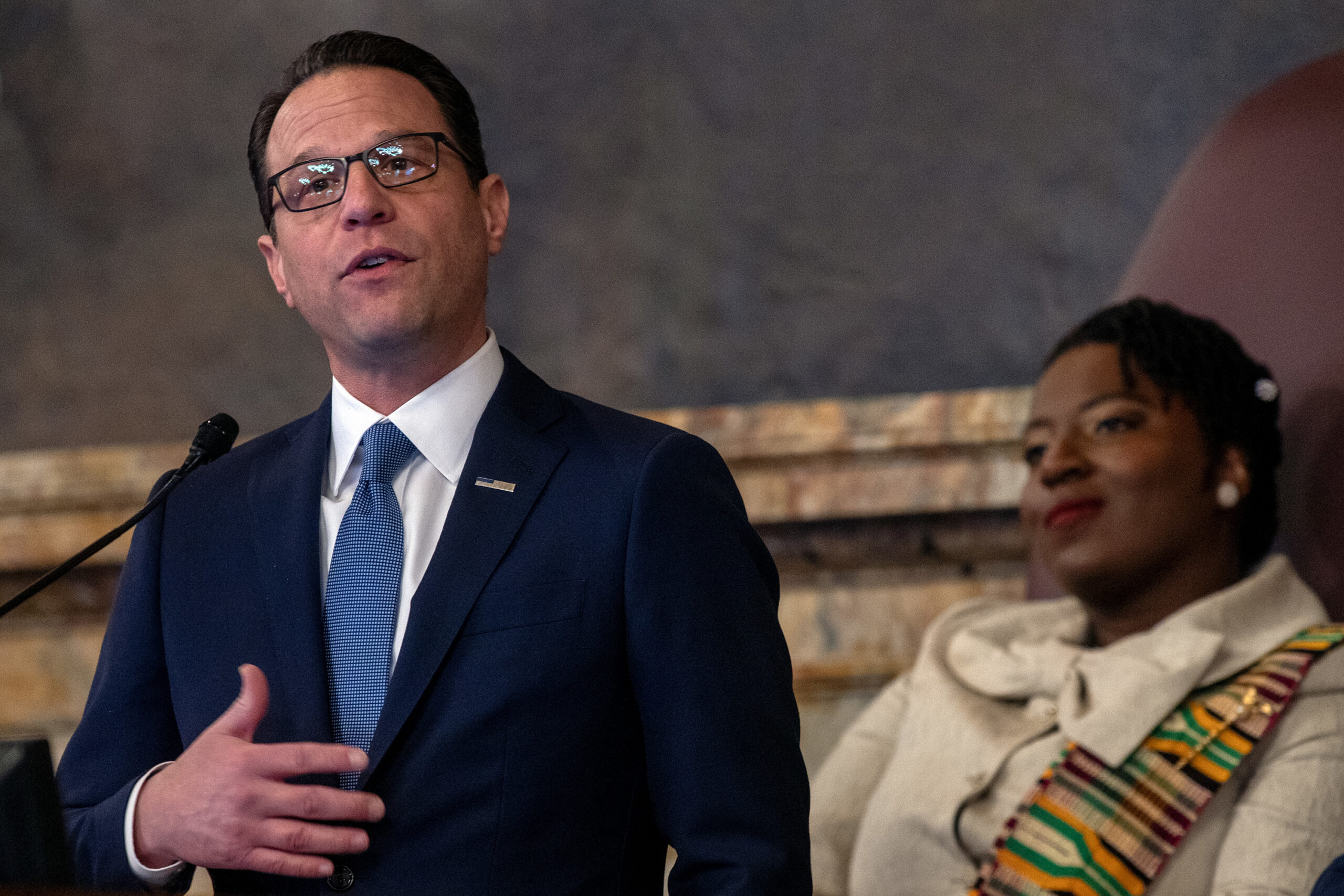
    Shapiro, who is running for reelection and is a rumored presidential contender, added: “I want the good people of Pennsylvania to know — I want the American people to know — that we will do everything in our power to protect them from the federal overreach.”

    Codifying sanctuary policies

    Philadelphia officials said the best way they can prepare is by limiting the city’s cooperation with federal immigration enforcement.

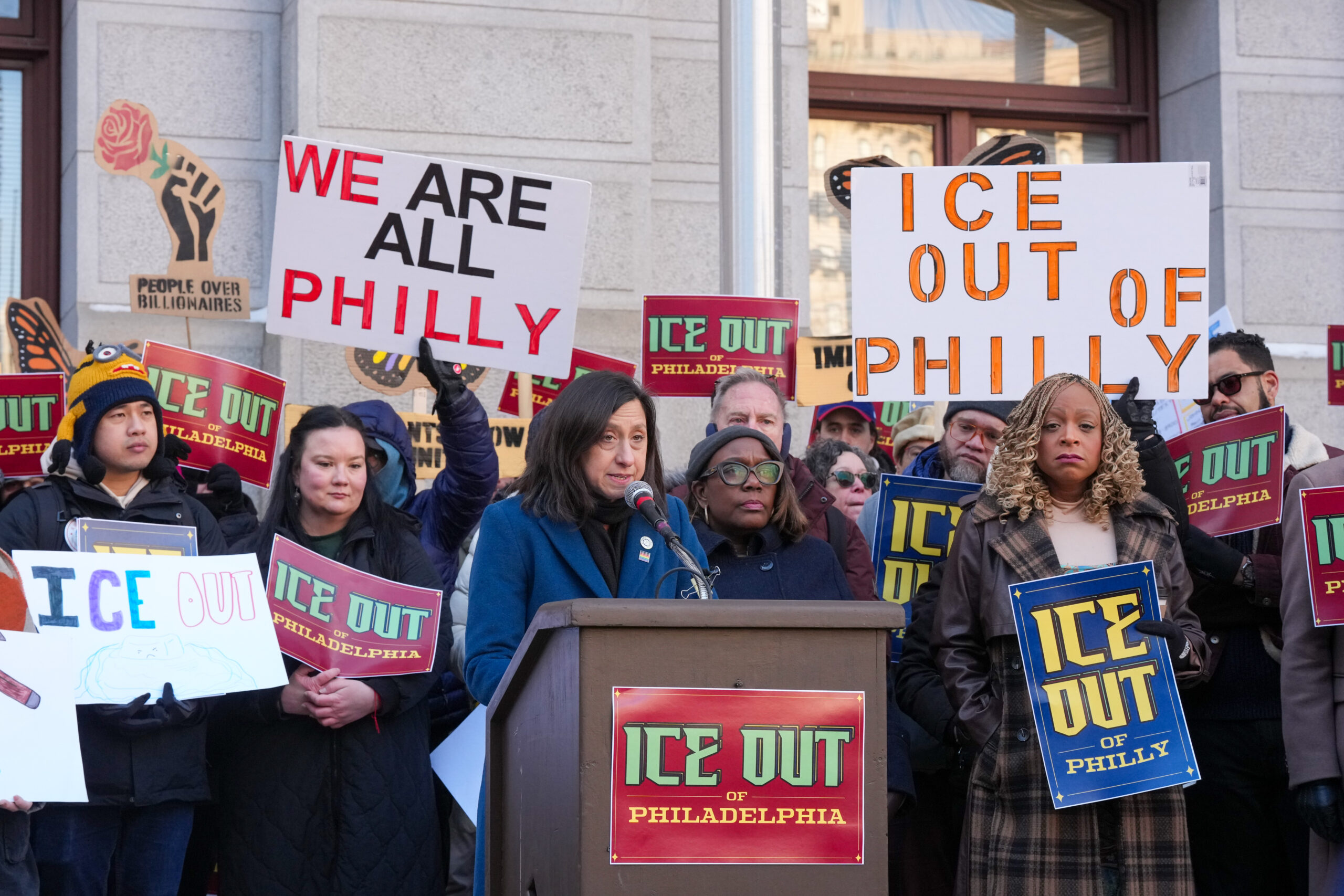
    City Councilmember Kendra Brooks, of the progressive Working Families Party, and Councilmember Rue Landau, a Democrat, were joined by dozens of activists and other elected officials during a news conference Tuesday to unveil a package of legislation aimed at codifying into law the city’s existing “sanctuary city” practices.

    Those policies, which are currently executive orders, bar city officials from holding undocumented immigrants in custody at ICE’s request without a judicial warrant.

    Landau and Brooks’ legislative package, expected to be introduced in Council on Thursday, goes further, preventing ICE agents from wearing masks, using city-owned property for staging raids, or accessing city databases.

    Erika Guadalupe Núñez, executive director of immigrant advocacy organization Juntos, said the legislation “goes beyond just ‘We don’t collaborate.’”

    Juntos gets regular calls about ICE staging operations at public locations in and around Philadelphia, and people have been worried, despite official assurances, whether personal information held by the city will be secure from government prying.

    “We deserve a city that has elected leadership that’s willing to step forward with clear and stronger protections,” Núñez said.

    A protester speaks to a Minnesota State Patrol officer near the site of the fatal shooting of 37-year-old Alex Pretti by federal agents in Minneapolis on Saturday.

    If the legislation is approved, Philadelphia would have some of the most stringent protections for immigrants in the country.

    Oregon has especially strong restrictions against cooperation with federal immigration authorities, including barring local law enforcement from detaining people or collecting information on a person’s immigration status without a judicial warrant.

    In Illinois, local officers “may not participate, support, or assist in any capacity with an immigration agent’s enforcement operations.” They are also barred from granting immigration agents access to electronic databases or to anyone in custody.

    California, New York, Colorado, Vermont — and individual jurisdictions in those states — also provide strong protections for immigrants.

    In New Jersey, Gov. Mikie Sherrill, a Democrat who was sworn in last week, has kept the state’s sanctuary directive in place as lawmakers seek to expand and codify the policy into law. Legislators came close in the final days of former Gov. Phil Murphy’s administration, but he killed a related bill that had won approval in Trenton, saying he worried that enacting a law that included changes to the state’s current policy would invite new lawsuits.

    Meanwhile, some conservatives say bolstering sanctuary policies risks community safety.

    “If an illegal immigrant breaks the law, they should be dealt with and handed over to federal law enforcement, not be released back into our neighborhoods to terrorize more victims and commit more crime,” said James Markley, a spokesperson for the Pennsylvania Republican Party.

    He added: “Sanctuary policies don’t protect communities, they endanger all of us by shielding criminals from accountability for their crimes.”

    Democrats are taking varying approaches

    The widespread outrage over ICE’s tactics in Minneapolis has exposed sharp divisions in elected Democrats’ responses.

    On one end of the party’s ideological spectrum is Fetterman, who has said often that he will not bow to activist demands and strongly opposes shutting down the federal government, even if it means funding DHS.

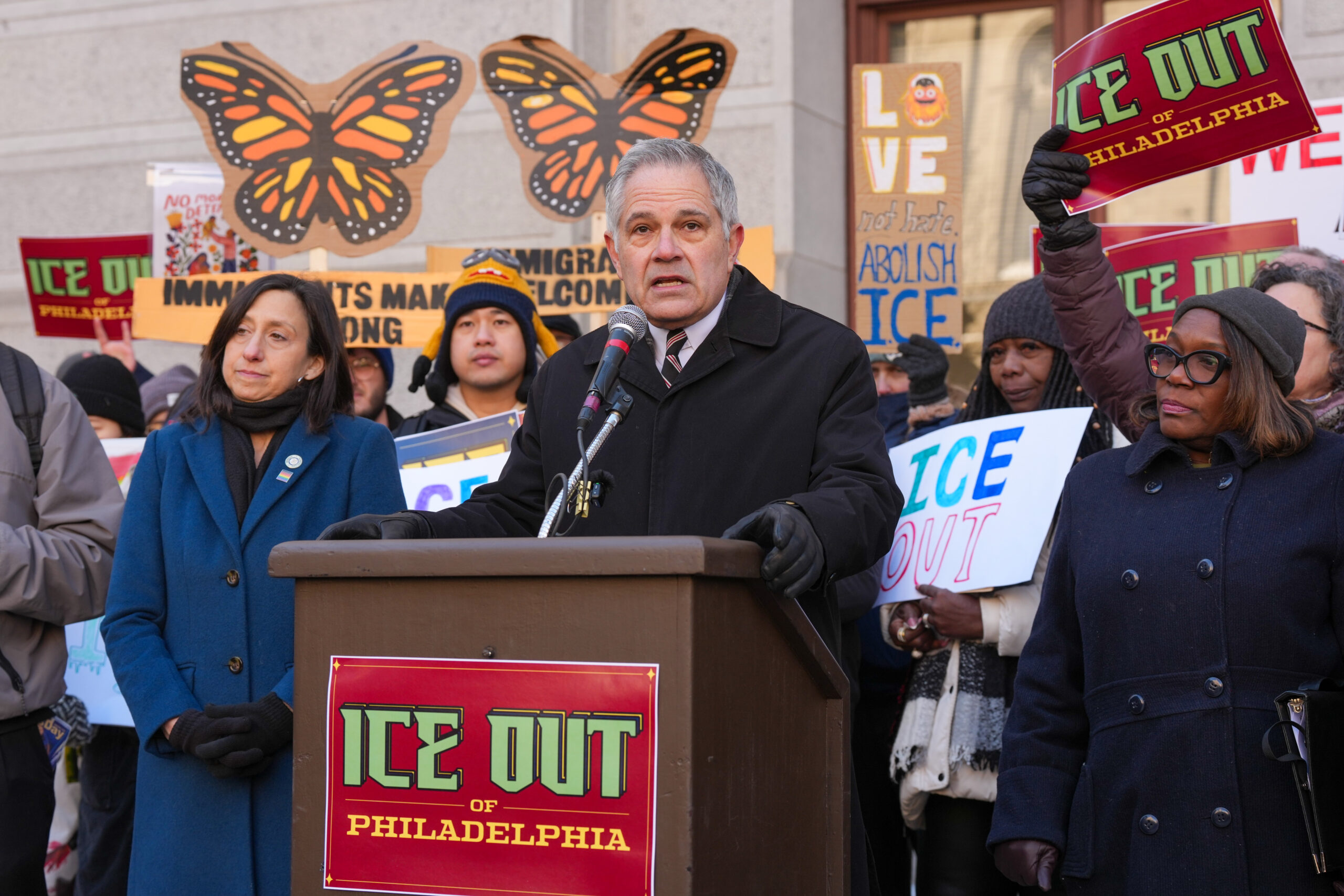
    On the other end is District Attorney Larry Krasner, Philadelphia’s most prominent progressive, who has on several occasions threatened to file criminal charges against ICE agents who commit crimes in the city.

    “There will be accountability now. There will be accountability in the future. There will be accountability after [Trump] is out of office,” Krasner said Tuesday. “If we have to hunt you down the way they hunted down Nazis for decades, we will find your identities.”

    District Attorney Larry Krasner speaks during a news conference at City Hall on Tuesday to announce a package of bills aimed at pushing back against ICE enforcement in Philadelphia.

    Somewhere in the middle is State Sen. Sharif Street, a Philadelphia Democrat and former head of the state party who is running for Congress.

    Street does not have Krasner’s bombast, but this week he announced plans to introduce legislation to prevent state dollars from funding federal immigration enforcement. The bill has less of a chance of becoming law in Pennsylvania’s divided state legislature than similar measures would in Philadelphia, where City Council is controlled by a supermajority of Democrats.

    “Who knows the amount of money that the state could incur because of Trump’s reckless immigration policies?” Street said in an interview Tuesday. “I don’t think state taxpayers should be paying for Donald Trump’s racist, reckless policies.”

    The city’s most prominent Democrat — Mayor Cherelle L. Parker — has perhaps said the least.

    The centrist Democrat has largely avoided outwardly criticizing Trump or his administration, saying often that she is focused on carrying out her own agenda.

    The mayor’s critics have said her approach is not responsive to the city’s overwhelmingly Democratic residents.

    “To the people of Philadelphia, I want to say: I hear you. You want ICE out of our city, and you want your local government to take action,” Brooks, the Council member, said Tuesday. “Some people believe that silence is the best policy when dealing with a bully, but that’s never been an option for me.”

    Kendra Brooks shown here during a news conference at City Hall on Tuesday to announce a package of bills aimed at pushing back against ICE enforcement in Philadelphia.

    Others say Parker’s conflict-averse strategy is appropriate.

    “All of us have different roles to play,” Street said. “The mayor has to manage the city. She’s got to command law enforcement forces. … As a state legislator, we make policy.”

    Rafael Mangual, a fellow who studies urban crime and justice at the right-leaning Manhattan Institute in New York City, said legislative efforts to erect barriers between federal and local law enforcement could backfire.

    “If you don’t engage at all, and you do something that seems to actively frustrate the federal government,” Mangual said, “that would seem to be an invitation for the federal government to prioritize a city like Philadelphia.”

    Staff writers Alfred Lubrano, Aliya Schneider, and Gillian McGoldrick contributed to this article.

  • A new Pa. law aimed at keeping unregulated vapes out of the hands of kids may not actually work

    A new Pa. law aimed at keeping unregulated vapes out of the hands of kids may not actually work

    Spotlight PA is an independent, nonpartisan, and nonprofit newsroom producing investigative and public-service journalism that holds power to account and drives positive change in Pennsylvania. Sign up for our free newsletters.

    HARRISBURG — A new Pennsylvania law aimed at removing unregulated vapes from the market and protecting kids may not be very effective due to loopholes, insufficient funding for enforcement, and limited public health backing.

    The statute is the commonwealth’s first major effort to tackle vaping. By this spring, manufacturers will need to have registered with the Pennsylvania Office of Attorney General and self-certified that they have been authorized by the FDA or have applied for authorization.

    Act 57, which mirrors proposals passed in at least 11 other states, passed the General Assembly with broad bipartisan support and the backing of a powerful coalition of interests, including law enforcement, convenience store chains, and the state’s medical society.

    “We can’t stop the youth from smoking,” State Rep. Jeanne McNeill (D., Lehigh), who sponsored the underlying bill, told Spotlight PA. “But at least if they’re going to do it … the ones they are smoking are safer for them.”

    But because registry laws designed to restrict these products are so new, their impact on fighting youth access to vapes is still unclear, public health experts told Spotlight PA.

    “To be honest, I’m still trying to grasp why [registry laws] became popular,” Jeffrey Drope, a research professor at Johns Hopkins Bloomberg School of Public Health, told Spotlight PA.

    He and other researchers say banning all flavored products would be more effective, although other researchers disagree due to data that suggest such policies may harm adults trying to stop smoking cigarettes.

    In particular, supporters of the law hope to target Chinese-made disposable vapes, which often deliver fanciful flavors and sometimes even include video games. Studies have also found these vapes can contain high levels of heavy metals.

    Rates have gone up and down, but as of 2023, one in four Pennsylvania high school seniors said they had tried vaping at least once, according to a state survey. (Just over one in 10 in the same year said they had tried cigarettes, a 60% decrease from 2017.)

    The law may face legal challenges from the vaping industry, Tony Abboud, executive director of the Vapor Technology Association, a trade group, told Spotlight PA.

    He argued the law won’t stop the flow of vapes into Pennsylvania, and will instead shutter businesses and push consumers into an unregulated, untaxed black market.

    “Nobody believes that the demand for vapes that are on the market now will go down,” Abboud said. “They will look for, and find, the products that they like, they’ve used, that they know that work for them.”

    Potential registry issues

    The law directs the state attorney general’s office to maintain a registry of manufacturers who can sell electronic cigarettes that contain nicotine. Products that have been authorized by the FDA are allowed to register. That encompasses just 39 e-cigarettes from a handful of brands, including those owned by big tobacco companies. They are largely refillable vapes, rather than single-use, and the list excludes all flavored products beyond menthol.

    But the law includes an additional provision for products that are under review by the FDA or have received a denial that’s pending due to a court or FDA order.

    There’s a “significant backlog” of applications, exacerbated by the firings by the Trump administration of the people who review them, the Examination reported last year. And because of that pileup, “tens of thousands of products can still qualify for most registries,” according to the Public Health Law Center.

    “I can tell you that many … applications were really inadequate, and I don’t think that those types of products should be treated equally for purposes of these registry laws,” Mitch Zeller, a former chief federal tobacco regulator who retired in 2022, told Spotlight PA.

    To get on the registry, manufacturers have to certify they are eligible under the law’s provisions. Exactly what that form will look like, and how it will be reviewed for accuracy, is unclear — the attorney general’s office declined to comment on the law’s implementation.

    Attorney general spokesperson Brett Hambright said the office was “evaluating various enforcement options, but wouldn’t want to venture into disclosing techniques.”

    If a vape is not registered, retailers and distributors are barred from buying or selling it. Enforcement against those companies will begin in October. Retailers who violate the law could be punished by fines of up to $1,500 per day per vape.

    According to the attorney general’s office, implementing the legislation will have an initial one-time cost of $98,280, with annual ongoing personnel and operating costs equaling approximately $1.3 million.

    “The Office of Attorney General staff will establish and maintain the vaping directory and provide targeted enforcement based on documentation and intelligence regarding noncompliant actors,” a state House analysis of the bill says.

    The law, Hambright added in an email, ensures “only regulated products are on the market, keeping them out of the hands of children, and not marketed towards children.”

    The office’s projected costs are far less than those of other states with robust tobacco enforcement spending. Neighboring New York allocates approximately $40 million for tobacco enforcement each year. Pennsylvania’s most recent budget allocated $1.7 million.

    “If the state is not prepared to put the time, the money, and the effort behind enforcement,” Zeller said, “I don’t know how effective the law can be.”

    The need for resources is part of why some anti-smoking advocates opposed the proposal as passed. According to the Pennsylvania Alliance for Tobacco Control, funding for a registry could be “better used to support evidence-based prevention and cessation programs.”

    “Instead of investing in a system that simply monitors the problem, we need bold, enforceable action that prevents it entirely,” the group argued. That includes a flavor ban as well as efforts to ban sales near schools, they added.

    Public health questions

    Smoking tobacco is among the leading causes of preventable death in the United States. That hasn’t stopped people from doing it, however.

    Tobacco is a $70 billion-plus industry in the U.S., with millions of users in Pennsylvania. The state’s farmers also produce millions of pounds of tobacco every year.

    Vape technology, meanwhile, became popular in the 2010s as a way to let people consume nicotine, the addictive chemical in tobacco, without smoking cigarettes.

    But what vaping means for public health is still unclear and subject to ongoing research, Jungmi Jun, an associate professor who studies tobacco control campaigns at the University of South Carolina, said in an email.

    “The scientific consensus is fairly clear that combustible cigarettes pose substantially greater health risks than e-cigarettes, primarily due to combustion-related toxins. However, that does not mean e-cigarettes and other vape products are harmless, particularly for youth and non-smokers,” Jun said. “Much depends on who is using these products, how they are regulated, and how they are marketed and communicated to the public.”

    The law, Drope of Johns Hopkins said, amounts to an attempt at controlling the vape supply chain, which he argued “is a worthwhile effort, because you want to know what’s on your marketplace.”

    But Drope argued that the state would be more effective at preventing people under 21 from vaping if the legislature also hiked taxes on tobacco products and banned flavored products, which often mimic popular desserts and other sweets, and frequently get marketed to teens.

    In a statement, Lynn Silver, program director of the Prevention Policy Group of the Public Health Institute, agreed with Drope that a flavor ban should have been higher on the legislature’s to-do list.

    “Bans on flavored vapes should be comprehensive and span all nicotine products, cannabis where legal, and hemp, all of which are hooking kids across the nation,” she said. “Pennsylvania’s new bill falls short on protecting our youth.”

    For her part, McNeill has offered a flavor ban before. But the proposal never left committee.

    “I hit a wall with that. I was basically told, ‘It’s never going to be run, it’s never going to be passed,’” McNeill said of her earlier efforts. She did not clarify who told her the proposal would never pass. It would likely have faced industrywide opposition — both traditional, combustible tobacco firms and vape firms sell flavored tobacco products.

    EXCLUSIVE INSIGHTS … If you liked this reporting from Stephen Caruso, subscribe to Access Harrisburg, a premium newsletter with his unique insider view on how state government works.

  • Joanna McClinton has carefully wielded her power as Pa. House speaker. Now she’s speaking out for home care workers.

    Joanna McClinton has carefully wielded her power as Pa. House speaker. Now she’s speaking out for home care workers.

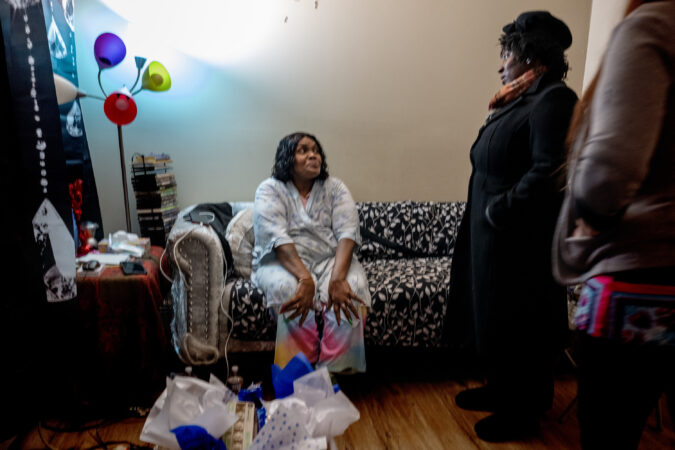
    On a below-freezing day in January, Pennsylvania House Speaker Joanna McClinton delivered food to a West Philly home just minutes from her district office and listened as Sheila Alexander discussed the patchwork of care she has created for herself.

    Alexander, 67, who struggles to get around on her own, explained that she depends on family often but uses a Medicaid-funded home health aide who helps her in the evening — especially when she needs to get up the steep stairs in her home.

    McClinton is advocating for the aides who care for Alexander — and the rest of the roughly 270,000 Pennsylvania workers who make up the home care industry — to earn a higher wage.

    Pennsylvania’s home healthcare workers are among the lowest-paid in the region at an average $16.50 per hour, resulting in what the Pennsylvania Homecare Association has called a crisis point for home care, as more and more workers leave the field and seniors struggle to find help. And it’s a crisis that may only deepen in future years, as one in three Pennsylvanians are projected to be 60 or older by 2030.

    It’s an issue that McClinton, a Philadelphia Democrat who became House speaker in 2023 when her party took a one-seat majority, has had to contend with in her own life.

    McClinton’s 78-year-old mother lost one of her favorite aides because of low pay, she said. The aide had cared for McClinton’s mother for a year, until the aide’s daughter got a job at McDonald’s that paid $3 more an hour. At that point, McClinton said, her mother’s aide realized just how low her pay was.

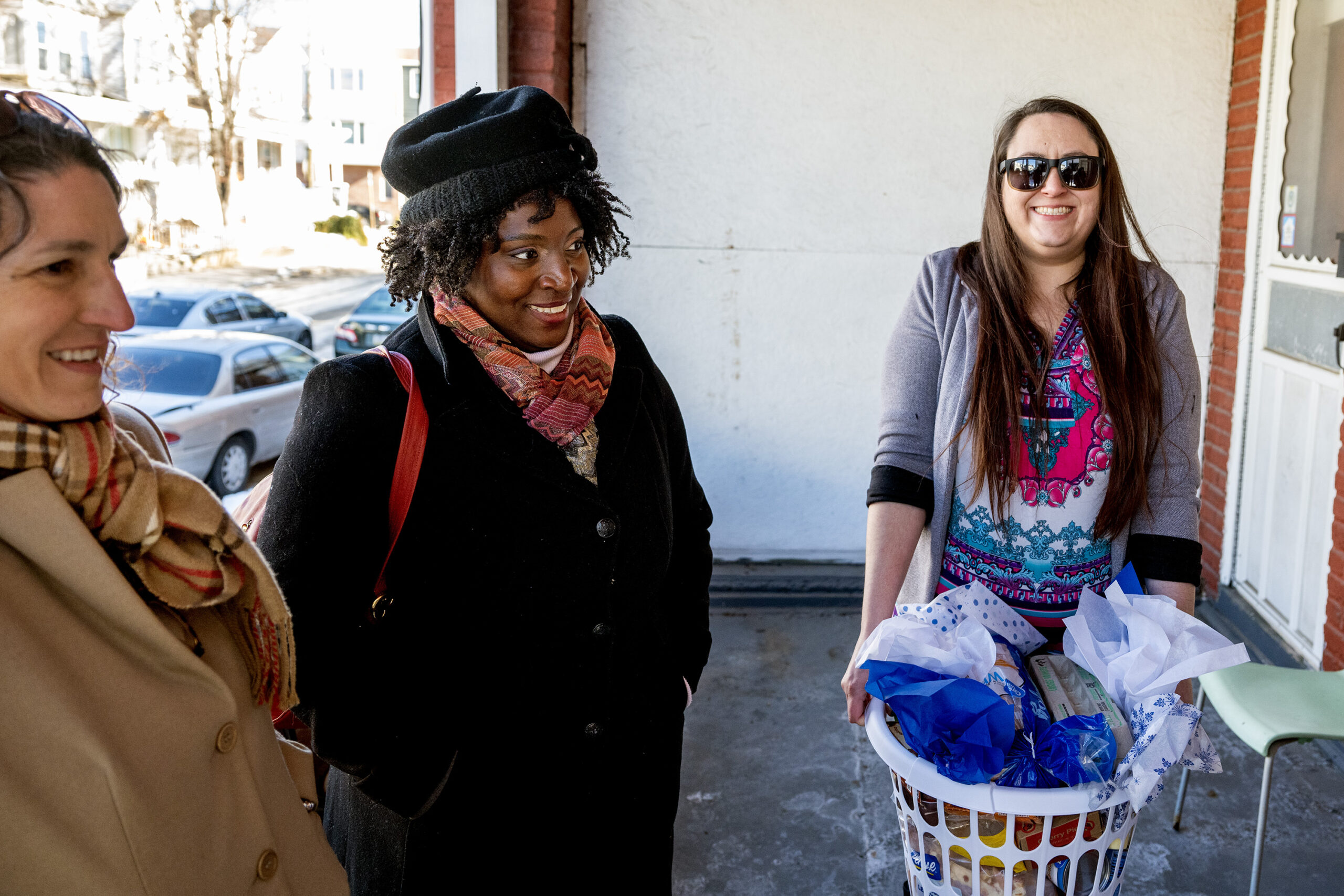
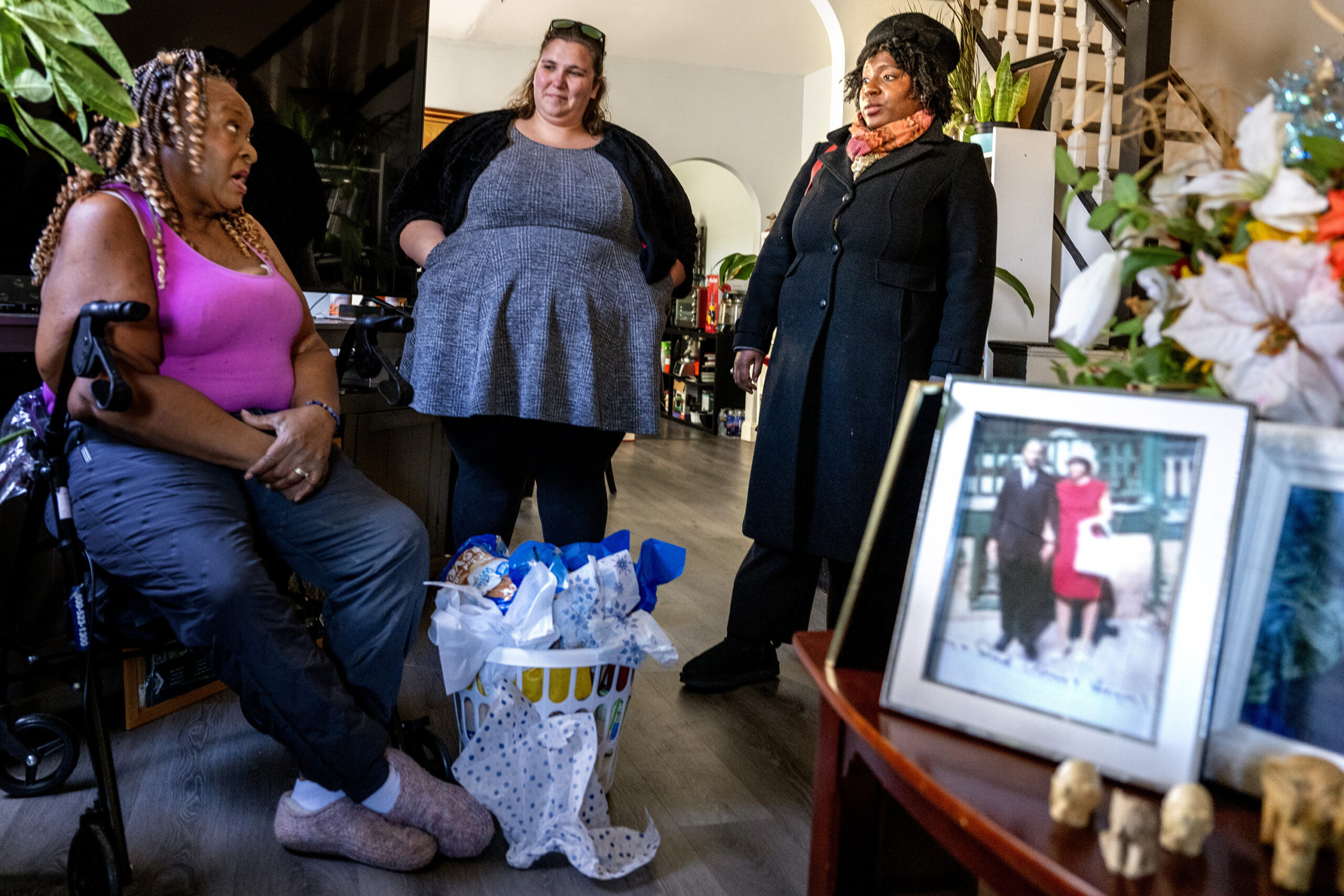
    House Speaker Joanna McClinton (center) with her staff member Nicole Reigelman (left) and home care worker Kate McNaughton (right) wait to meet with home care recipient Ronda Gay on Jan. 20 in her West Philadelphia home. McNaughton was bringing a basket of milk, eggs, canned foods, and other necessities.

    McClinton said she helps her mother when she can, but she only has so many hours in the day and needs assistance when she’s at the Capitol.

    “Many of my colleagues are just like myself, supporting parents who are aging and trying to make sure that they have all the necessities so that when I’m in Harrisburg I’m not thinking, ‘Oh, my God, how’s my mom going to eat or how’s she going to have a bath,’” McClinton said. “It’s because of home health aides and the folks assigned to her that she’s able to thrive. But she’s not unique.”

    Until recently, McClinton had taken a more hands-off approach compared with some previous House speakers who would use their position as the top official to push through their personal agendas. Now, she is taking a more active role in pushing for the issues she cares about most, with special attention to the home care wage crisis.

    Home care workers are often paid through Medicaid, which provides health services to low-income and disabled Americans and is administered at the state level. Pennsylvania has not increased how much it reimburses home care agencies, resulting in all of the surrounding states paying higher wages to home care workers, including GOP-controlled West Virginia and Ohio.

    Describing her leadership approach with a slim majority as “pragmatic,” McClinton says her goal is to find common ground to raise the wages for home healthcare workers between Republicans and Democrats, on an issue that impacts residents across all corners of the state.

    “We just have to really coalesce and build a movement so that we see things get better and that there’s more care,” she said. “Because when there’s more care, there’s less hospitalization, there’s less ER trips, there’s more nutrition.”

    Better pay at Sheetz

    Stakeholders recount dozens of similar stories of aides leaving to work at amusement parks, Sheetz stores, or fast-food restaurants because the pay is better. What’s more: Some home health aides will choose to work in a nearby state where wages are all higher than those paid in Pennsylvania.

    Cathy Creevey, a home health aide who works for Bayada in Philly, made $6.25 when she started working in the field nearly 25 years ago. Now, she makes just $13.50. She has watched countless colleagues quit to take higher-paying jobs elsewhere, resulting in missed shifts and seniors that go without the care they need.

    “We have patients that are 103, 105, and when that aide doesn’t show up their whole world is turned upside down because sometimes we’re the only people that they see to come in, to feed them, to bathe them,” Creevey said.

    While Creevey said she stays in the work because she cares about her patients, she said the long hours and low pay are difficult.

    Fewer and fewer people being willing to take on the jobs means seniors going without care or being forced into already understaffed nursing homes throughout the state.

    “Participants are waiting for care that isn’t coming,” said Mia Haney, the CEO of the Pennsylvania Homecare Association.

    Haney said she hoped McClinton’s advocacy will help drive the issue heading into the next budget season.

    “She has a wonderful opportunity to really influence her peers, but also raise awareness and education about how meaningful and critical these services are,” Haney said.

    In addition to McClinton’s advocacy, 69 House Democrats sent a letter to Gov. Josh Shapiro earlier this month, calling for more funding for the struggling industry just as Shapiro is set to make his 2026-27 budget proposal next month.

    Older Pennsylvanians prefer to “age in place,” or stay in their homes where they remain connected to their communities, said Kevin Hancock, who led the creation of a statewide 10-year strategic plan to improve care for the state’s rapidly aging population.

    “Nursing facilities and hospital services get a lot of attention in the space of older adult services, but it’s home care that really is the most significant service in Pennsylvania,” Hancock said. “The fact that it doesn’t seem to warrant the same type of attention and same type of focus is pretty problematic.”

    House Speaker Joanna McClinton (right) meets with home care worker Rachael Gleisner (center) and home care recipient Sheila Alexander in her West Philadelphia home on Jan. 20.

    Home care remains popular in Pa.

    The fight to increase dollars for home care workers has been an uphill battle in Harrisburg even with the speaker’s support.

    More Medicaid dollars go to home care services than any other program in Pennsylvania due to its popularity among Medicaid recipients, Hancock said. Meanwhile, its critical care workers — a majority of whom are women or women of color — still make low wages for often physically and emotionally demanding work.

    A study by the Pennsylvania Department of Human Services last year determined that a 23% increase would be necessary for agencies to offer competitive wages, but the state’s final budget deal did not include it. (The final budget deal did provide increases to direct aides hired by patients, which represent about 6% of all home care workers in the state.)

    Home care agencies are asking Shapiro to include a 13% reimbursement rate increase in the 2026-27 budget, which equates to a $512 million increase for the year. The 13% ask, Haney said, was a “reasonable and fair” first step in what would need to be a phased approach to reaching competitive wages.

    But neither Shapiro nor Senate GOP leadership has committed to any increases in the forthcoming budget.

    Pennsylvania House Speaker Joanna McClinton listens as Gov. Josh Shapiro delivers his budget address to a joint session of the state House and Senate at the State Capitol on Feb. 4, 2025.

    In a statement, a spokesperson for Shapiro said the governor understood the need and cited his support for limited increases in last year’s budget and for a proposed statewide minimum wage increase to $15 per hour. (Previous efforts by the Democratic House to increase the state’s minimum wage have stalled in the GOP-controlled Senate.)

    Senate Majority Leader Joe Pittman (R., Indiana) said his caucus will put the state’s “future financial stability” before all else. Pennsylvania is expected to spend more than it brings in in revenue this year, setting the stage for yet another tense budget fight.

    “While we’ve seen Democrats continually push for more spending within the state budget year after year, any increases require thoughtful consideration as to the impact on hardworking taxpayers of Pennsylvania,” Pittman added.

    Senate Majority Leader Joe Pittman, a Republican from Indiana County, is joined by other GOP Senate leaders criticizing Gov. Josh Shapiro’s proposed budget last year.

    McClinton, however, was cautiously optimistic that something could be done this year, even as she placed the onus on Senate Republicans, rather than Shapiro.

    “We’ve seen Republicans refusing to work, refusing to resolve issues, that’s not acceptable,” McClinton said. “I’ve seen an unwillingness from Republicans to resolve these issues.”
    Republicans, she said, should come to the table because staffing shortages harmed their constituents in rural Pennsylvania even more than it harmed hers in Philly.

    “We have to get our heads around the fact that we have the lowest reimbursement rates in our area,” McClinton said in an interview after visiting two patients in her district. “We have to make the investment now. We have lots of needs. We have lots of priorities, but we can balance them.”

  • Philly’s building plan would close this high-performing magnet. Lankenau is fighting back.

    Philly’s building plan would close this high-performing magnet. Lankenau is fighting back.

    There’s no place in Philadelphia like Lankenau High School.

    It is the city’s environmental sciences magnet school and the state’s only three-year agriculture, food, and natural resources career and technical education program. It’s set amid 400 acres of woods, with neighbors including a vast environmental center and farm that are active partners with the school. Lankenau’s students have access to dual enrollment and an impressive array of internships.

    But Lankenau just landed on the Philadelphia School District’s closing list, one of 20 schools proposed to shutter for the 2027-28 school year as the district grapples with 70,000 extra seats citywide, billions in unmet capital needs, and a desire to modernize and bring equity to student experiences in the school system.

    The Lankenau community is already gearing up for a fight ahead of a school board vote on the proposal, expected this winter. Community members say the school must be saved because it is one of a kind, offering immersive education in agriculture and sciences and boasting a 100% graduation rate that’s rare in Philadelphia.

    Shutting “the Lank” would be a disastrous move, said Jamir Lowe-Smith, a junior at the school. The district’s proposal would merge Lankenau into Roxborough High as an honors program, but you cannot replicate what his school has built anywhere else, Lowe-Smith said.

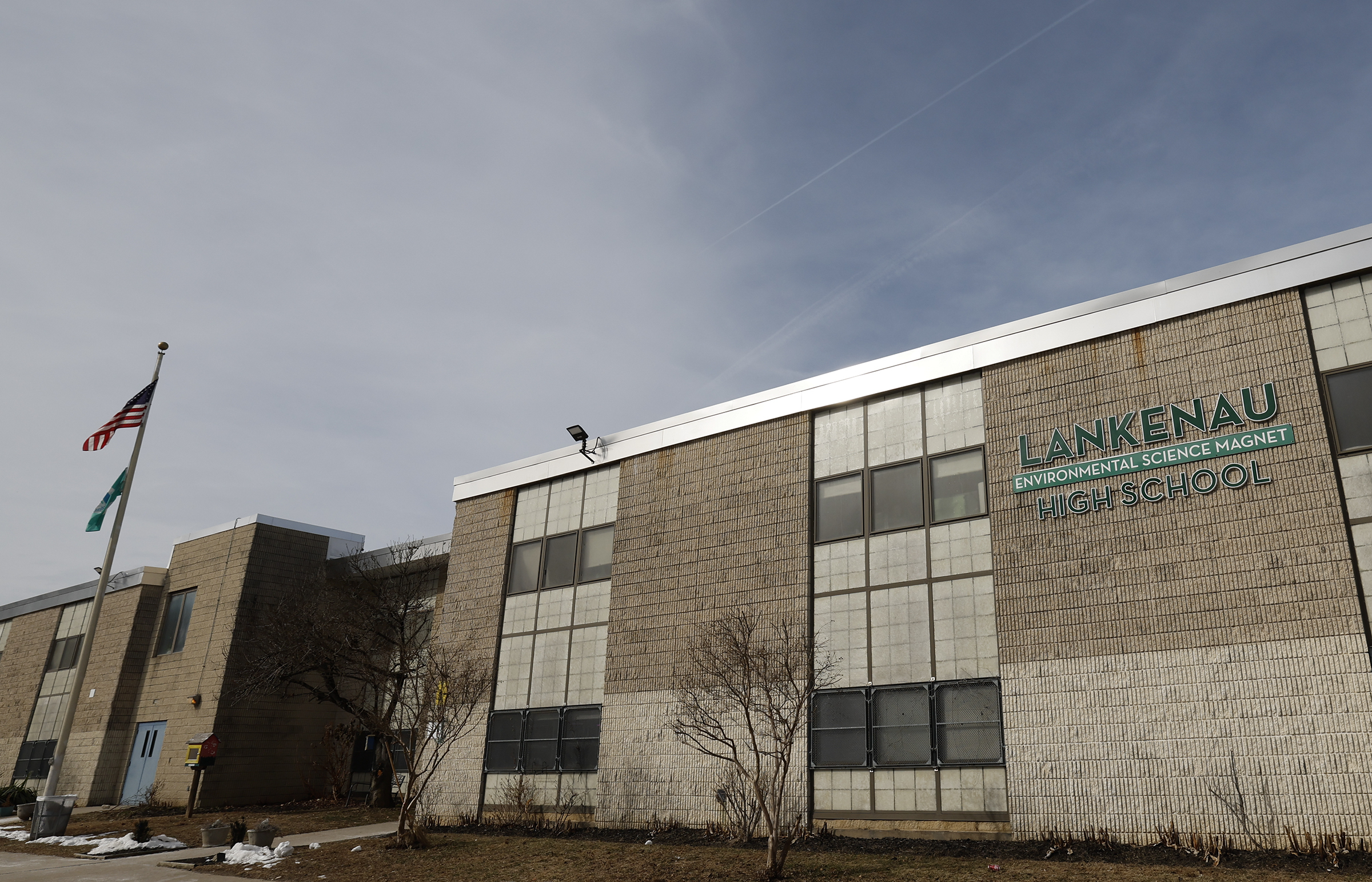
    The Lankenau Environmental Science Magnet High School in Roxborough. The district’s proposal would merge Lankenau into Roxborough High as an honors program.

    “Lankenau takes education to the next level,” said Lowe-Smith, president of the school’s chapter of Junior MANNRS — Minorities in Agriculture, Natural Resources, and Related Sciences — which preps students for jobs in the growing green sciences industry.

    “The environment is beautiful, the woods are — that’s another classroom,“ Lowe-Smith said. ”Nature is like therapy for a lot of people — it changed my life.”

    Being tucked into the woods allows for a Friday advisory bird-watching club at Lankenau and research in a stream that leads directly to the Schuylkill. It lends itself to tick drags — studies of tick species — pesticide classes that will allow students to graduate as certified pesticide applicators, and work with school beehives. Its students engage in innovative project-based learning every day.

    Lankenau students all receive yellow school bus transportation because the campus is not close to any SEPTA routes — adding to the district’s expense to keep it open.

    The school is small — its building, on Spring Lane in Upper Roxborough, is about half full, enrolling about 250 in a building that can accommodate 461. But the recommendations for closing need to be about more than numbers, said State Rep. Tarik Khan, a Democrat whose district includes that area.

    “Respectfully, the recommendation to close Lankenau is one of those things that doesn’t make sense when you look at the full picture,” Khan said. “Right now, it’s a recommendation. Early on, it’s important just to say: This is the wrong decision. I will elevate my voice throughout this process, and I’m not alone.”

    Monique Braxton, a district spokesperson, said the Lankenau recommendation “reflects the district’s commitment to reinvesting in neighborhood high schools as community anchors — a guiding theme of the Facilities Master Plan that received overwhelming support in the recent community survey. This approach expands access to high-quality academic programming and resources across neighborhoods, creating greater opportunity for more students and supporting stronger academic outcomes and postsecondary readiness.”

    Firing on all cylinders

    Lankenau, Khan said, is “firing on all cylinders. The school has so many opportunities for students, so many connections. To take this school out of its environment will break a lot of those connections, will break the cohesiveness.”

    The school lacks a gym. But its students play flag football, hike in the woods, and practice archery. It has a 100% graduation rate, officials say, educating a student body that is primarily Black and brown, with 25% of students requiring special education services.

    Jessica McAtamney, Lankenau’s principal for the last five years, stressed that the school is “doing urban agriculture in a very unique campus setting that is anchored in the space. Agriculture is Pennsylvania’s No. 1 industry. Lankenau is preparing kids to do that. This campus is what allows us to do that.”

    Roxborough High School, by contrast, is in a dense, residential area. Its building, which can hold almost 2,000 students, is about three-quarters empty.

    Like many in the Lankenau community, Erica Stefanovich — who teaches the only Intro to Geographic Information Systems high school course in the city, she believes — was blindsided by word that the school was earmarked for closure.

    “They can say that our building condition is an issue, but how is our building a problem when we have air-conditioning, zero asbestos, and they put a brand-new roof on our school two years ago?” Stefanovich said.

    In 2006, the district actually made plans to expand the Lankenau building, going so far as to contract with an architectural firm to make a model. But those plans went by the wayside as the school system hit rocky financial waters in the early 2010s.

    No slight against Roxborough, Stefanovich said. It does have a park close by, but “we can’t do mussel experiments in that park. We can’t do our internships that our students love. How do we have beehives when there isn’t enough pollinator space around Roxborough High School to have beehives? Our seniors are out of the building 40% of the time; they are off doing things. If we move, we don’t have that.”

    District changes yielded fewer incoming students

    Lankenau used to educate more students.

    Before the district changed its school selection process, in 2021, instituting a centralized lottery in the name of equity, the school had bigger incoming classes. It’s a magnet, meaning students have to have certain grades and test scores to qualify, but in the past, administrators had some leeway to let in students who were close to qualifying if they were a good fit.

    And though district officials said changes to the admissions procedure were necessary to ensure that schools’ demographics mirrored the city’s, Lankenau did not have a diversity problem prior to the changes.

    Lankenau had 106 ninth graders in 2020-21, before the lottery. It dipped to just 28 freshmen in 2023-24, but after a number of parents and administrators raised concerns about the process, some course corrections were made.

    Its numbers are now rising again. Seventy-eight ninth graders entered this school year, and 107 students listed Lankenau as their top choice for the 2026-27 freshman class.

    Even if the proposed school-closing changes go through, Wyntir Alford, a Lankenau 11th grader from West Oak Lane, will be able to graduate from the school as-is — the change is not planned to take effect until the 2027-28 school year.

    But her family was clear: If the closing were happening next year, Alford would have had to transfer.

    “My mom told me her first thought was, ‘There’s no way she’s going to Roxborough.’ She said, ‘The reason we put you in Lankenau is because of all the opportunities and all the nature around.’ I’m not surrounded by any nature at home. So to be able to go to a school like this is a big deal.”

    A student tests a water sample in a Lankenau High school science class in this 2023 file photo.

    Juniper Sok Sarom, a current Lankenau ninth grader, is not sure whether she will transfer to Roxborough if the school board approves the closure recommendation. But she knows she’s happy at a school that gives her plenty of hands-on experience.

    “Our campus — it’s a special learning environment, which you wouldn’t get at any other school, not even Central or Palumbo or SLA,” Sarom said, referring to Science Leadership Academy.

    She and others are gearing up to fight the changes, they said.

    Charde Earley, a Lankenau paraprofessional, dealt with her own sadness the day students found out about the proposed closure, working through tears. And then she marveled at how students pivoted to problem-solving, resolving to write letters and speak at meetings.

    “My motto is, respectfully, ‘Hell, no, we won’t go,’” Earley said. “We’re secluded and we’re safe. You never know what hardship our kids are going through. Imagine what this is doing to our kids.”

  • New University of Delaware president runs with staff and students and wants better relationships with state and local governments

    New University of Delaware president runs with staff and students and wants better relationships with state and local governments

    On Thursdays at 7 a.m., Laura Carlson is by the iconic granite and bronze sculpture of an open book on University of Delaware’s Mentor’s Circle.

    As the new university president, she invites faculty, staff, students and community members to join her there and run a five-kilometer loop through campus. Typically 10 to 20 people show.

    “Rain or shine, we run down to the track on South Campus, loop the track and come back,” said Carlson, 60, who began the treks as interim president last summer and is continuing them in her permanent role, which started earlier this month.

    University of Delaware president Laura Carlson (right) goes on one of her Prez Runs in Mobile, Ala., where the Blue Hens won a bowl game, defeating Louisiana-Lafayette 20-13 on Dec. 17, 2025.

    The “Prez Run” is just one way the psychology scholar — who plans to run her 15th Boston Marathon in April — is building relationships on campus, with alumni and with the community and state. She also runs with alumni, employees, and students during events in other cities.

    “I’ve heard that the alumni association is going to put it on their bucket list of 10 things to do before you graduate,” she said.

    Carlson, a Dartmouth alumna who got her doctorate in cognitive psychology from the University of Illinois Urbana-Champaign, is focused on strengthening relationships with state and local governments and internally with faculty. Finding new revenue streams to plug holes from terminated federal grants and recruiting students in new national markets also are on her list.

    The Massachusetts native previously served as provost for three years, having come to Delaware after 28 years as a faculty member and administrator at the University of Notre Dame in Indiana. She’s the first internal candidate to get the presidential appointment in about 50 years.

    She follows Dennis Assanis, who resigned in June and is now chancellor of the University of California at Santa Barbara.

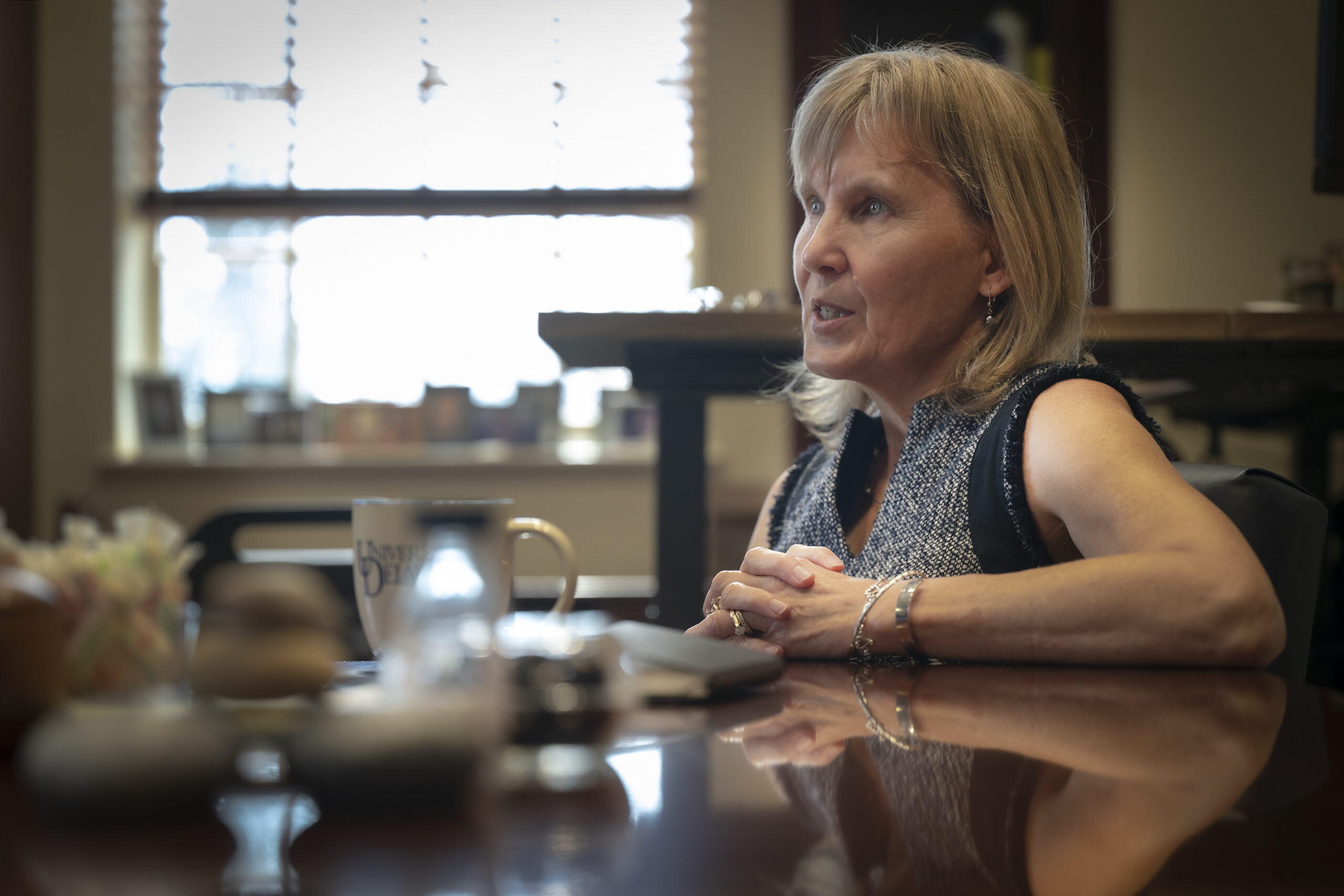
    Laura Carlson, president of the University of Delaware

    Carlson is visiting classes each semester, including elementary organic chemistry and mechanical engineering.

    “I want to make sure I don’t feel distant from the rhythm of the academic year,” she said. “Anything we value, we should put attention on it.”

    When building a team, she asks participants to pick their top 10 values, such as family, world peace, humor, and authenticity, and rank them. Her top value is always purpose.

    University of Delaware president Laura Carlson talks to fellow runners during one of her Prez Runs in Mobile, Ala., where the football team won a bowl game.

    “I want to live a life of purpose,” she said.

    Partnering with state and local government

    She’s attempting to change the way the partnership with the state is viewed.

    “We lead with what does the state need from us, as opposed to what do we need from the state,” she said.

    Southern Delaware, where the university has a campus in Lewes and Georgetown, has housing, healthcare, education and workforce development needs, and the university can help, Carlson said.

    She said she can envision a public-private partnership for new housing in Lewes, she said, or a classroom building with event space for the community.

    Laura Carlson, president of the University of Delaware, discusses her priorities.

    “If we are a university for the whole state, we need to show up in the whole state, and we need to be responsive to the needs across the state,” she said.

    She’s also looking at the possibility of more residential space for the main campus in Newark — possibly a “sophomore village” — through a public-private partnership. The university has about 7,100 residential beds in Newark.

    “That would take some of the pressure off the city,” she said, noting the tight rental market, and adding that parents and students may prefer on-campus housing options.

    She also wants to help Delaware Gov. Matt Meyer with his plan to bring medical education to the state. Delaware remains one of few states without a medical school. The idea is not to build one from scratch but to partner with an existing medical university, she said.

    “We’ve been in conversations with Thomas Jefferson” in Philadelphia, which has a nonexclusive memorandum of understanding with the state to explore a partnership, she said. “What we offer is the classrooms, the lab space, and so on to do kind of the first part of that medical school type of training.”

    Federal government

    Dealing with the federal government could be more challenging. The university has lost 41 grants worth $33.9 million since President Donald Trump took office last year. Those span engineering, biological sciences, arts, and sustainability, she said, and impact 117 graduate students and 27 postdoctoral students.

    In total, $1.1 million in salaries and $2.1 million in stipends have been lost, though the university has been working to find other funding through foundations and industry, she said. No one has lost their job, she said.

    “I’ve been really working hard on … kind of strengthening those relationships with our business community,” she said.

    The school also has experienced a 19% decline in international graduate students following Trump’s pause on student visas and other policies, and the school lowered its doctoral admissions by 19.5% last year amid concerns over federal funding. What will happen with doctoral admissions this year is unclear.

    “Each college is sort of looking strategically program by program and trying to figure out what is the right size for their doctoral programs,” she said. “If they’re compressing their number of students coming in, it’s because they’re trying to prioritize funding for their existing students.”

    The school’s overall enrollment of more than 24,000 rose last fall and applications are up 10%, she said. But as another drop in high school graduates begins this year, the university has found success in new recruiting areas such as Colorado and Wake Forest, N.C., where the football team played as part of the school’s entry into Conference USA, she said.

    “We’ve been very strategic about putting marketing in there, convening alumni and really using that as a way to establish ourselves more nationally,” she said.

    Biden Institute — and a conservative counterpart

    She said the university is on course to build Biden Hall, an academic building named for former President Joe Biden, a Delaware native. It will house the school’s Biden School of Public Policy and Administration and the Biden Institute on government theory and practice. The design phase likely will begin this spring.

    Fundraising is also continuing for Siegfried Hall, which will include the Institute for Free Leadership and Enterprise. The donors, Robert L. Siegfried Jr., a certified public accountant and his wife, Kathleen Marie (Horgan) Siegfried, have said they wanted to bring a “conservative” vision and offer a balance to the Biden Institute.

    Carlson said she doesn’t view the halls as conservative and liberal, but rather places where ideas can be vetted. She noted the Biden Institute is nonpartisan.

    “Siegfried is a think tank on conservative economics, but part of that building will be also to sort of question the limits of those policies,” she said. “That’s what we do in any discipline.”

    Personal life

    Here are a few fun facts about Carlson, whose husband, Robert West, is a professor of psychological and brain sciences at the university.

    Last book read: Chris Whitaker’s All the Colors of the Dark.

    Favorite band or musical group: Bruce Springsteen.

    Favorite food: Indian. Greek.

    Favorite vacation spot: “I spend so little time at my house. Some of my best days on break are if you don’t even get out of your pajamas.”

  • Facing an uphill battle against Gov. Josh Shapiro’s $30 million war chest, Stacy Garrity still has to convince top Republicans she’s worth investing in

    Facing an uphill battle against Gov. Josh Shapiro’s $30 million war chest, Stacy Garrity still has to convince top Republicans she’s worth investing in

    HARRISBURG — In the race for Pennsylvania governor, State Treasurer Stacy Garrity still has a lot of work to do.

    With a little more than nine months until Election Day, the state Republican Party-endorsed candidate must convince top GOP donors that her campaign is worth investing in, making the case that she can motivate voters — and beat popular incumbent Gov. Josh Shapiro.

    And so far, she has significant ground to make up against the Democratic machine Shapiro now effectively controls, as he continues to build his name recognition nationwide.

    Garrity announced earlier this month that from August through December, her campaign raised nearly $1.5 million — almost as much as the 2022 Republican gubernatorial candidate, Doug Mastriano, raised in the entirety of his campaign. But the amount is only a fraction of the $30 million war chest Shapiro has built up over the last few years.

    Republican insiders for months have said privately they see the race against Shapiro, a Democratic governor with consistently high approval ratings and a rising national star, as one they have slim chances at winning in November.

    Pennsylvania Gov. Josh Shapiro (right) listens to Stacy Garrity, the 78th state treasurer, at the Forum Auditorium in Harrisburg, Pa., on Jan. 21, 2025. It was the day she was sworn in.

    Still, they’re hoping that Garrity, a retired U.S. Army colonel who in 2024 broke the record for receiving the most votes in a state-level race — a record previously held by Shapiro — will be able to deliver a high enough level of excitement among Republican voters in Pennsylvania to drive them to the polls, where down-ballot races for control of the U.S. House and state Senate are also on the line.

    Some GOP insiders have pointed to Garrity’s limited early fundraising haul as make-or-break for the state’s whole Republican ticket — and the political future of Pennsylvania.

    “This is the Democrats’ first real opportunity to gain a trifecta in Pennsylvania that could lock up Pennsylvania from being a ‘purple’ state to a solid blue state every election here onward,” said Matt Brouillette, who leads Commonwealth Partners and its political action committees, which often contribute to Republican candidates and are largely funded by Pennsylvania’s richest man, Jeffrey Yass.

    Brouillette leads the Commonwealth Leaders Fund, a powerful PAC that sat out the 2022 gubernatorial race that the PAC saw Mastriano as unable to win. Brouillette said in an interview earlier this month that the fund still had yet to decide whether it will invest in Garrity’s campaign.

    There isn’t a specific number Brouillette said he wants to see her raise before he chooses to get involved in the governor’s race, but he is overall “encouraged to see Stacy solidifying support for her candidacy.”

    “Stacy is going to have to attract national investment the way Josh has,” Brouillette said. “Our donors won’t be sufficient. Stacy is going to have to be competitive nationally to make this a race.” (After publication of this story, Brouillette said the PAC would invest in Garrity’s race, but did not disclose a dollar amount.)

    As 2028 inches closer, Shapiro’s national reach continues to grow — and with that, he has been able to flex his fundraising skills across the country. He will publish his first book on Tuesday, a memoir called Where We Keep the Light, in what is largely seen as a telltale sign that a candidate is considering a presidential run. He has promised to use his influence in Pennsylvania to support Democrats down the ballot, including in four congressional districts the party hopes to flip in the midterms — and deliver Democrats a majority in the U.S. House.

    Campaign finance filings detailing who contributed to both Shapiro and Garrity’s campaigns won’t be available until next week. Shapiro broke fundraising records in the 2022 race, and is on track to do the same again this year.

    What’s more: Garrity is also contending with strong headwinds favoring Democrats in November, as support for President Donald Trump wanes.

    Still, Garrity has been rolling out a number of endorsements from top Pennsylvania Republicans, including on Friday from U.S. Rep. Ryan Mackenzie (R., Pa.), who is running for reelection in one of the districts Democrats hope to flip. But she has yet to receive Trump’s support or endorsement, and was not mentioned by Trump when she attended his most recent Pennsylvania rally.

    The hesitancy appears to have extended to the lieutenant governor’s contest. Garrity still has yet to announce who she would like to be her running mate. Only a few candidates have announced their candidacy for lieutenant governor so far, and the state GOP is expected to endorse Garrity’s pick at its February meeting.

    A spokesperson for Garrity’s campaign said she is “humbled by the outpouring of support she’s received from supporters all across the commonwealth, including from members of the Commonwealth Partners’ leadership,” who share her vision for the state and frustrations with Shapiro.

    “No moment crystalized this support more than when the PAGOP took the unusual step of endorsing Treasurer Garrity’s campaign so early, which served as the catalyst for the momentum she’s building to defeat Josh Shapiro this November,” said Garrity’s spokesperson, Matt Benyon, in a statement.

    A spokesperson for the Pennsylvania Republican Party declined to comment.

    Garrity will host a kickoff fundraiser in Philadelphia on Wednesday, said Bob Asher, Garrity’s finance chair.

    As for her fundraising numbers since December, Asher said, with a smile: “Stay tuned.”

    Grassroots support vs. Shapiro’s war chest

    In announcing her first haul, Garrity’s campaign said 97% of her contributions came from Pennsylvania residents, and 75% of the contributions were under $100. Shapiro, for his part, boasted that the $30 million in his campaign coffers came from all of Pennsylvania’s 67 counties, as well as financial support from all 50 states.

    A large number of small-dollar campaign contributions can suggest grassroots support — translating to an energized voter base on Election Day — for a candidate that big-dollar or corporate political action committee funds can’t capture. But the bigger the war chest, the more a candidate can spend to get their name on the airwaves.

    Other GOP insiders are pointing their fingers at the state Republican Party, using Garrity’s early fundraising numbers as proof they are not doing enough to back her up in the race against Shapiro and that they’re setting themselves up for failure in November.

    For Jim Worthington, the owner of the Newtown Athletic Club and a Bucks County GOP power player, Garrity’s early struggles are a result of failings by the state GOP to plan ahead and invest in mail voting.

    “It’s an indictment of the party,” Worthington said. “I understand why some people are hesitant to give money. They’re looking at the tea leaves and saying, ‘Look, we lost the year.’”

    “It’s going to be difficult for Stacy, and I feel bad because she is a hell of a candidate,” he added.

    State Treasurer Stacy Garrity greets supporters after a campaign rally in Bucks County on Sept. 25, 2025. The GOP gubernatorial candidate visited the Newtown Sports & Events Center, in one of Pennsylvania’s top swing counties.

    Worthington said anytime he talks to national Republicans in Washington or Trump’s Mar-a-Lago club, where he’s a member, he mentions Garrity’s race as one in which they should invest.

    At the very least, he argues, top Republicans should help Garrity in an effort to ensure Shapiro doesn’t “have a cakewalk right into 2028,” as speculation continues to surround Shapiro about his political aspirations. Worthington said he even brought this up directly to Vice President JD Vance, the GOP’s expected 2028 successor to Trump, at Vance’s holiday party.

    As for Garrity, Worthington said he believes she can win, calling her “an excellent candidate” with a hard work ethic.

    “Make no mistake, it’s gonna be a tough go,” Worthington added. “But I’m 100% sure she can win.”

  • CHOP launches Philly-area autism therapy network in partnership with Soar Autism Centers

    CHOP launches Philly-area autism therapy network in partnership with Soar Autism Centers

    The Children’s Hospital of Philadelphia and Denver-based Soar Autism Centers have opened in Newtown the first of five planned early childhood autism centers in the Philadelphia region and expect the network could grow to more than 30 centers, officials said.

    The 50-50 joint venture is designed to reduce wait times for therapy and to make it easier for families to access multiple types of therapy at one location while remaining connected to CHOP specialists.

    “It can take a year to get into therapy on a regular basis,“ an extremely long time in a young child’s neurological development, Soar cofounder and CEO Ian Goldstein said.

    Such wait times continue to frustrate families despite dramatic growth in the autism-services sector over the last 15 years or so, as states mandated insurance coverage and diagnosis rates soared with more awareness and an expanded definition of autism.

    Nationally, applied behavioral analysis, commonly known as ABA therapy, has become popular for autism treatment, increasing nationally by 270% between 2019 and 2024, according to Trilliant Health, a Nashville data analysis firm. The volume of services provided locally — where companies including ABA Centers, Helping Hands Family, and NeurAbilities Healthcare have expanded — was not available.

    The increase in diagnoses has outpaced the growth in available services, said Matthew Lerner, an autism expert at Drexel University, who is not involved with the newly launched CHOP-Soar Autism Centers.

    When Lerner moved to the Philadelphia region from Long Island in 2023 and started getting plugged into the autism network, a few clinicians here would ask if he could connect patients with services in New York.

    “I was coming from eastern Long Island, two hours east of New York City, and people were like, do you know anyone closer to you?” he recalled.

    CHOP’s road to a joint venture with Soar

    The freestanding, 10,000 square-foot clinic that opened on Jan. 5 in suburban Bucks County near CHOP Pediatric Primary Care Newtown has 35 to 40 rooms and an indoor playground for therapeutic uses.

    CHOP, among the largest children’s health systems in the country, has long been concerned about limited access to autism care in the region, said Steve Docimo, CHOP’s executive vice president for business development and strategy.

    The nonprofit has provided diagnostic services, but not the forms of therapy that the CHOP-Soar centers will offer. “The threshold to doing this on our own has always been high enough that it hasn’t been a pool that we’ve jumped in,” he said.

    CHOP was in talks with Soar for three years before agreeing to the 50-50 joint venture with the for-profit company. CHOP’s investment will be its share of the startup costs for CHOP-Soar locations.

    The partnership plan calls for five locations in the first two years. The partners did not say where the next four centers will be.

    Soar has 15 locations in the Denver area, which has about half the population of the Philadelphia region, Goldstein said.

    That comparison implies that the CHOP-Soar partnership could grow to 30 centers, Goldstein added. He thinks the region’s needs could support additional expansion, saying the total could reach “into the dozens.”

    The first CHOP-Soar Autism Center opened this month in Newtown. Shown here is the reception area.

    That’s assuming CHOP-Soar provides high quality care for kids, an appealing family experience, and a system of coordinated care: “There will be a need to do more than five, and I think we’re jointly motivated to do so,” Goldstein said.

    The CHOP-Soar approach

    Families seeking care for an autistic child typically have to go to different places to get all the types of therapy they need.

    Families “get behavioral analytics in one place, occupational therapy somewhere else, and speech language pathology in another place,” Docimo said.

    Soar brings all of that together in one center. “If it can be scaled, this will fill a gap in our region in a way that I think will work very well for these families,” he said.

    CHOP-Soar centers will emphasize early intervention and treat children through age six. “The brain has its greatest neuroplasticity” up to age 3, “so waiting a year is a really big deal,” Goldstein said. “You’re missing out on that opportunity to really influence the child’s developmental trajectory at a young age.”

    Some autism services providers focus on ABA therapy, which breaks social and self-care skills, for example, down into components and then works discretely on each.

    But Soar offers what Goldstein described as “integrated, coordinated care for the child.” That includes speech, occupational, and behavioral therapies.

    With CHOP, medical specialties, such as genetics, neurology, and gastrointestinal care, can be tied in as well, Goldstein said.

    It’s rare for autism providers to offer a wide variety of commonly needed services under one roof, said Lerner, who leads the A.J. Drexel Autism Institute’s Life Course Outcomes Research Program.

    He said Soar’s evidence-based, multidisciplinary approach has a lot to offer the region.

    “A person diagnosed with autism will have complex care needs throughout their life, and a one-size-fits-all, one-intervention approach will not work,” he said.

  • How some Philly-area workers make $100,000 without a bachelor’s degree

    How some Philly-area workers make $100,000 without a bachelor’s degree

    Can you make $100,000 a year in the Philadelphia area without a four-year college degree?

    Yes. But it’s not common.

    “There is no magic wand to get to a six-figure salary,” said Cynthia Figueroa, who leads workforce development nonprofit JEVS Human Services. “There’s a lot of steps that have to happen along the way.”

    Companies including IBM, Delta, and Google have dropped degree requirements in recent years. Locally, Pennsylvania Gov. Josh Shapiro slashed college degree requirements for most state jobs in 2023, and Mayor Cherelle L. Parker has advanced an effort to do the same for some city jobs. Meanwhile, more are pursuing vocational training, the Wall Street Journal reported, as some in Gen Z turn to the trades amid the rising cost of college.

    Data center technicians are increasingly in demand, don’t require a college degree, and can make a six-figure salary after some experience. And store managers at Walmart, who often don’t have college degrees, can make $128,000 before bonuses.

    But who actually makes $100,000 or more in the Philadelphia area without a four-year degree and what does that path look like? The Inquirer took a look at the data.

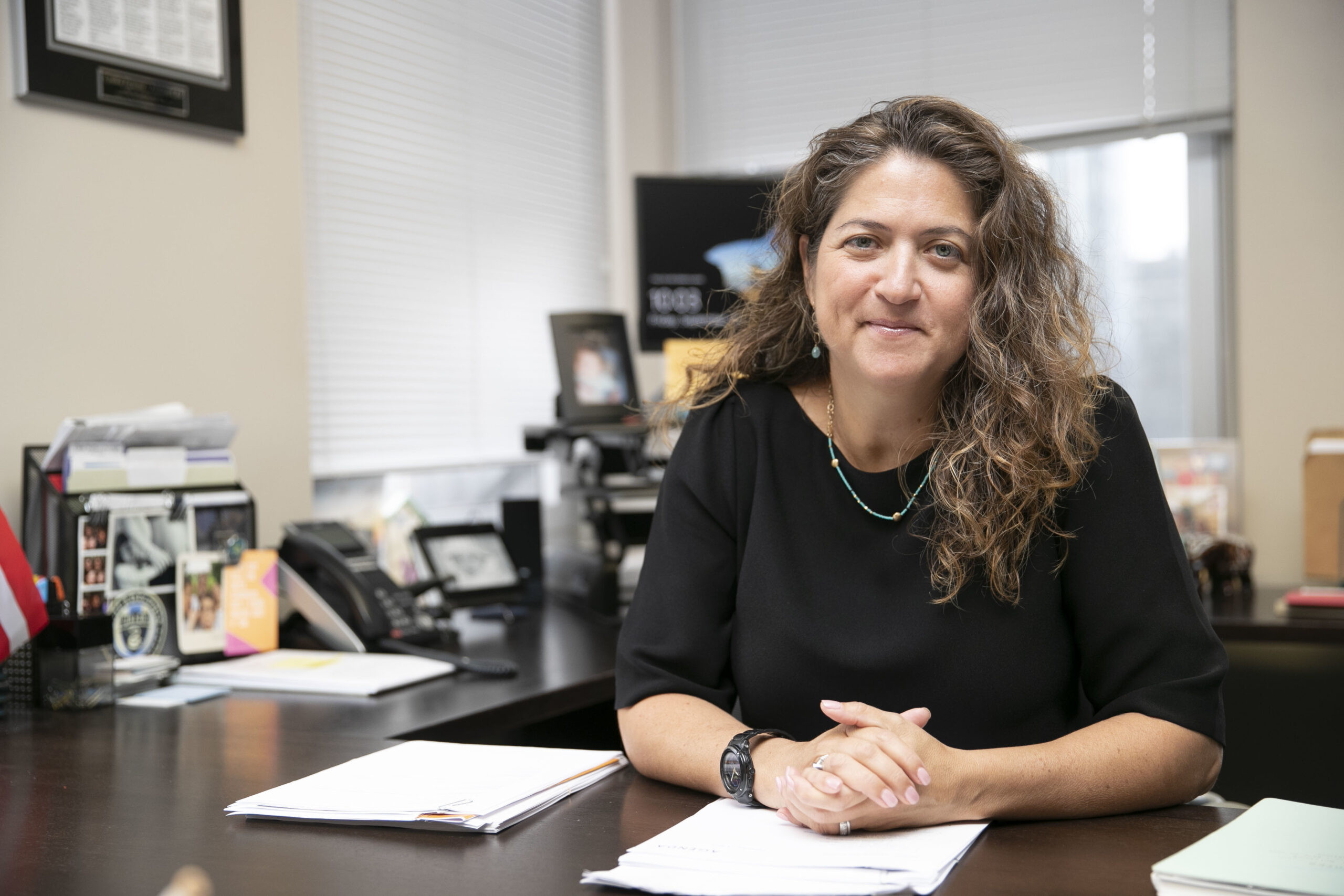
    Cynthia Figueroa poses for a portrait in Philadelphia in 2019. She is the CEO and president of JEVS Human Services.

    What industries pay $100,000-plus without a bachelor’s degree?

    Among the Philadelphia metro area’s 3.97 million workers, the vast majority who make a six-figure salary have at least a bachelor’s degree, according to Census data compiled by IPUMS USA at the University of Minnesota. The metropolitan area includes 11 counties in Pennsylvania, New Jersey, Delaware, and Maryland.

    Roughly 159,000 people made $100,000 or more without a four-year college degree in 2024, the data indicates. (That includes people with an associate’s degree.)

    window.addEventListener(“message”,function(a){if(void 0!==a.data[“datawrapper-height”]){var e=document.querySelectorAll(“iframe”);for(var t in a.data[“datawrapper-height”])for(var r,i=0;r=e[i];i++)if(r.contentWindow===a.source){var d=a.data[“datawrapper-height”][t]+”px”;r.style.height=d}}});

    “There is potential” for high earning without college, but it’s not typical, said Sean Vereen, president and CEO of career-focused education nonprofit Heights Philadelphia.

    “We know that not everybody wants to go to college, but particularly the way the economy in this region is constructed, that college degree still is very useful,” said Vereen.

    But the majority of the workforce in the Philadelphia metro area lacks a bachelor’s degree. Only about 7% of them reach the high-earning $100,000-plus bracket.

    It’s more common in jobs where salaries overall tend to be higher, such as management, business, and finance. About 51,000 Philly-area people in those jobs with less than a bachelor’s degree earned $100,000 or more in 2024.

    window.addEventListener(“message”,function(a){if(void 0!==a.data[“datawrapper-height”]){var e=document.querySelectorAll(“iframe”);for(var t in a.data[“datawrapper-height”])for(var r,i=0;r=e[i];i++)if(r.contentWindow===a.source){var d=a.data[“datawrapper-height”][t]+”px”;r.style.height=d}}});

    What industries are adding more $100,000 jobs?

    Still, more opportunities for people without a four-year degree could be on the horizon.

    Shipbuilding is having a resurgence in Philadelphia’s Navy Yard, and more electricians, carpenters, and welders will be needed, said Figueroa.

    Among Philadelphia construction workers, including carpenters and welders, more than 11,000 do not have a bachelor’s degree and make at least $100,000 annually.

    Hanwha plans to expand its shipbuilding operations in Philadelphia and will need to hire. That includes positions requiring considerable math skills, said Figueroa, of JEVS. The organization is currently figuring out how to get job-training graduates into opportunities.

    Philadelphia Works, the city’s workforce development board, is working closely with Hanwha, CEO and president H. Patrick Clancy said.

    “Our goal is to do more of the pre-apprenticeship,” Clancy said. “They have a lot of people interested in applying for their roles, but not all of them are passing the math and reading [requirements].”

    The newly repainted Goliath Crane is shown July 16, 2025, at the Hanwha Philly Shipyard in Philadelphia.

    Last year, a Brookings Institution report highlighted enterprise digital solutions (business software), specialized manufacturing (like producing parts for medical devices or industrial electronics), and biomedical commercialization (life sciences businesses) as areas where Philadelphia residents should be able to find good jobs. Many jobs in those sectors don’t require a college degree.

    “We need to be focused on creating the right kinds of jobs,” said Chellie Cameron, CEO and president of the Chamber of Commerce for Greater Philadelphia, which is now focusing on the areas Brookings identified.

    The right kinds of jobs, Cameron said, are not minimum-wage positions. They “start at a place where people can earn a family-sustaining wage and have access to pathways for promotion and making more money over the course of their career.”

    Paths and training for high-earning jobs

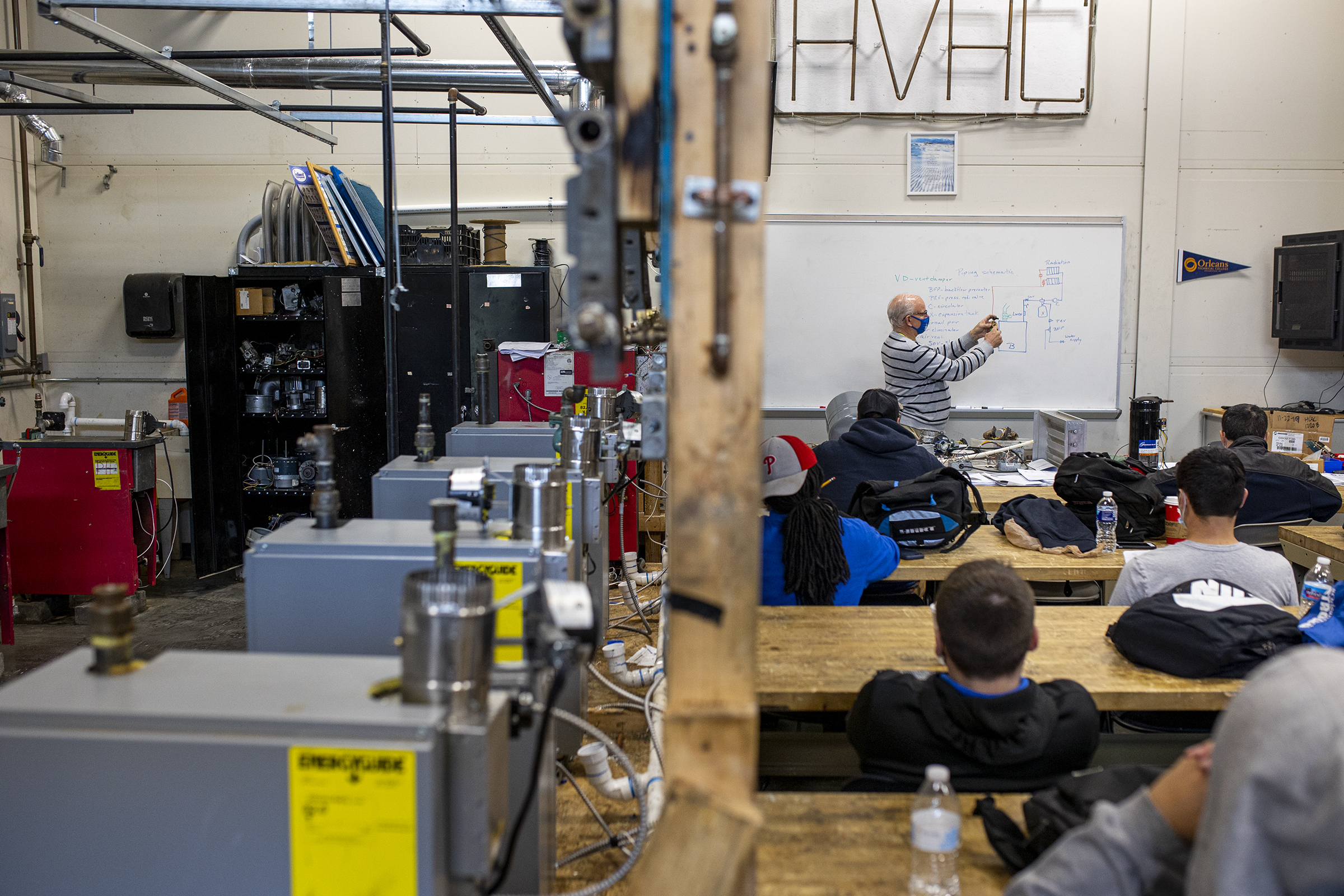
    Orleans Technical College in Northeast Philadelphia, run by JEVS, trains people for building trades and healthcare professions. It had 379 students last year. Tuition ranges from roughly $13,000 to $25,000, but most students get financial assistance and typically leave with $6,000 or less in debt.

    Residential and commercial electrician Dan Finke, 25, of Abington, (right), is learning about motor controls with fellow classmates at Orleans Technical College, in Northeast Philadelphia on a Friday in September 2020.

    “There’s still very much the physical application of running wire, bending metal,” said Figueroa, and many medical tasks seem to be AI-proof for now. “At the end of the day, you need somebody who is taking the blood pressure next to the bed, and who is drawing the blood.”

    Construction management and HVAC students can expect starting salaries around $75,000 and $60,000 respectively. Those who work overtime can make even more, Figueroa noted, and pay also increases over the course of a career.

    That’s not a six-figure salary on Day One, she acknowledged. But college graduates can make a similar amount in their first job, and “they have this enormous debt” from their schooling.

    Lou Abruzzese, HVAC Instructor, is teaching his class about hydronics at Orleans Technical College, in Northeast Philadelphia on Friday, Sept. 25, 2020.

    Orleans also offers healthcare training for clinical medical assistants and practical nursing. Starting salaries for those jobs are generally around $44,000 and $64,000 respectively.

    “Going from an hourly wage — at like a Target, McDonald’s, Walgreens, what have you — to salaried, hopefully with benefits, is a huge first step,” Figueroa said.

    Connecting people to employment also means addressing barriers like lacking a driver’s license, needing childcare, financial literacy, or housing support, says Clancy. Pursuing training might mean going without paid work for weeks or months, which can be a challenge. Philadelphia Works has some funds available to pay people during their training.

    Sean Vereen is the president and CEO of Heights Philadelphia.

    Young adults need to be aware of opportunities, too, said Vereen. For instance, he said, sterilization technician is a good job within a hospital, but young people may not know it’s a path available to them without going to college.

    And sometimes young people need to catch up before training for jobs in the trades, Vereen says. “We’ve heard things like, ‘The kid coming from the school district doesn’t have strong enough math skills to take the test for the building trades,’” he said.

    “You need basic academic skills that are about math and reading and reading comprehension,” he said. “We don’t get away from giving kids basic knowledge.”

  • Elizabeth Hughes: There is a viable path for Pittsburgh to save its newspaper. Here’s how we did it with The Inquirer.

    Elizabeth Hughes: There is a viable path for Pittsburgh to save its newspaper. Here’s how we did it with The Inquirer.

    The news that the Pittsburgh Post-Gazette will soon cease publishing has, justifiably, sounded alarms across the media landscape. The end of a storied organization with deep local roots and a legacy of strong journalism should concern all who believe that a free and thriving press is fundamental to a functioning civic society.

    Among the questions clamoring for answers in light of the news: What will fill the void in Pittsburgh? Will the deep pockets of the city’s many notable philanthropies provide the funds needed to support a new news organization? Will the remaining media outlets — Pittsburgh is not a news desert by any stretch — have the capacity to grow and expand? And the existential question: Will the citizens of the Steel City see the need to support local news now that it is, to an extent, imperiled?

    As publisher of The Philadelphia Inquirer, I believe that our own experience over the past decade offers a template for success. It was only a little more than a decade ago that we were a struggling news organization, with an impressive history of notable journalism, but beset by warring owners, threatened by bankruptcy, and, in May 2014, up for sale on the auction block.

    Redemption began with a visionary philanthropist, H.F. “Gerry” Lenfest, who set out to save The Inquirer and provided the wherewithal to do it. He established the Lenfest Institute for Journalism, our nonprofit owner, and pursued an innovative tax structure that created a for-profit Inquirer with a separate board. Both are the indispensable keys to our stability and success.

    Lenfest’s generosity planted the news philanthropy seed in Philadelphia and, through the institute, established a funding mechanism that supports our journalism. His donation, in cash, allowed The Inquirer to modernize and transform from a legacy print shop to a modern multiplatform news organization.

    The late H.F. “Gerry” Lenfest’s generosity planted the news philanthropy seed in Philadelphia, writes Elizabeth H. Hughes.

    But we have also known that The Inquirer’s long-term stability — and the ability to consistently provide quality journalism — depended on building a successful and integrated business. And that meant forging a new identity through a modern brand campaign, developing a robust marketing strategy, engineering our own path to success by building our own products, and creating new and compelling opportunities for advertisers. Significantly, it also required meeting and convincing civic and business leaders that The Inquirer was a vital asset worth investing in.

    There are 200 journalists in our newsroom, and the journalism produced every day is impressive and innovative, deep and local. In the end, that is what people will pay for. And the business results? The Inquirer in 2025 had its first year-over-year increase in revenue since 2004, and an operating profit of several million.

    The majority of our revenue, 70%, comes from consumer marketing, which means people are paying for our journalism; 19% is from advertising, which signals that local businesses and institutions find merit in supporting us; and 5% from syndication and other partnerships. Philanthropy accounted for 6% of revenue in 2025, and we project donor contributions ranging from 6% to 10% going forward.

    The facade of The Inquirer’s offices on Independence Mall West. The Inquirer in 2025 had its first year-over-year increase in revenue since 2004.

    Lenfest, who died in 2018, was a successful businessman before he became an influential philanthropist. He left his mark on civic and cultural institutions throughout Philadelphia. But his last great effort was to save The Inquirer — to give it the runway it needed because he believed in the importance of local journalism.

    There is much work to be done, and challenges to be met, but the lasting legacy of H.F. “Gerry” Lenfest is an Inquirer that is stable and succeeding as a business.

    Elizabeth H. Hughes has been the publisher of The Philadelphia Inquirer since 2020.