Tag: Weekend Reads

  • The Savannah Bananas are building on one of baseball’s oldest traditions, barnstorming

    The Savannah Bananas are building on one of baseball’s oldest traditions, barnstorming

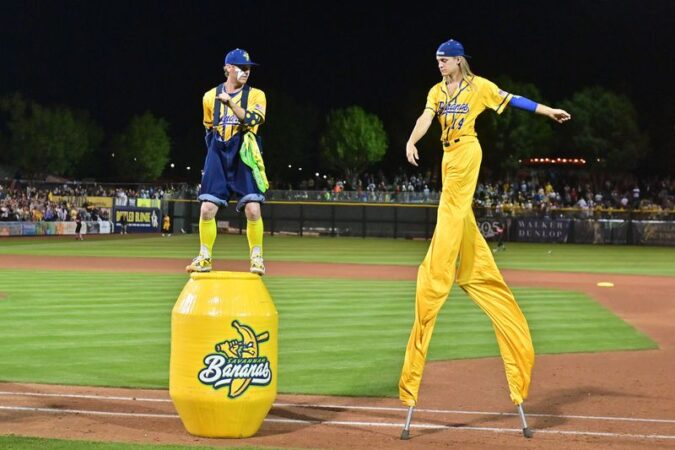
    One of the more striking sports stories of the last few years has been the dramatic rise in popularity of the Savannah Bananas. Founded as a collegiate summer league team in 2016, the Bananas began playing exhibition games in 2018, when they debuted their signature “Banana Ball,” a fast-paced, acrobatic, comedic, participatory style of baseball. Since 2023 they have dedicated themselves entirely to traveling exhibition games against other “Banana Ball” teams, and their popularity has continued to grow. On May 2, as part of the ongoing Banana Ball World Tour, they played before their largest audience yet, a crowd of 102,000 at Kyle Field in College Station, Texas.

    The Bananas and Banana Ball represent a compelling innovation in baseball and American sports—but at the same time, they’re building on one of the sport’s oldest and most enduring traditions: barnstorming, alternatives to professional and major leagues that have long brought community and inclusivity to baseball and America.

    Most histories of baseball focus on its professional leagues: the U.S. Major Leagues and sometimes other prominent professional organizations such as the Negro Leagues and Japan’s Nippon Professional Baseball. But starting in the mid-19th century, there was an equally popular alternative version of baseball that existed outside of those more established sites. Known as barnstorming, probably because many of its games took place in rural communities that might well have featured farm structures, the reference that also connected these baseball teams to other traveling performers who also used the term. This version of baseball saw touring collections of players—sometimes part of an established team, but just as often cobbled together from across multiple teams—visit communities and stage exhibition games. These games were played against local teams and players, fellow barnstorming teams, or as part of other unique entertainments.

    In the first half of the 20th century barnstorming came to be especially associated with the Negro Leagues and represented a way both for those Black athletes to showcase their talents in front of more diverse and widespread audiences. It also allowed them to play against—and, even at times, alongside—white athletes during a time in which the Major Leagues excluded Black players. Building on the legacy of late 19th century, Black barnstorming teams like Bud Fowler’s All-American Black Tourists, legendary 20th-century players like the great Satchel Paige organized teams that toured constantly and brought baseball to every corner of the nation. It also inspired one of the great sports movies, 1976’s The Bingo Long Traveling All-Stars & Motor Kings, with Billy Dee Williams’s Bingo a clear Satchel Paige type.

    In the 1920s and 30s another American community that was excluded from the era’s professional leagues formed their own prominent barnstorming teams and leagues. Japanese baseball dated back to both Hawaii and Japan in the late 19th century, and the first Japanese American semi-pro clubs formed on the mainland United States in the early 1900s. But it was with the rise of barnstorming teams in the late 1920s that these Japanese American players gained truly national and international fame.

    In 1935, the Japanese World Series prominently featured the Japanese American barnstorming team, the Los Angeles Nippons, in a best-of-three series against Japan’s famous Tokyo Giants. Although the Tokyo squad took two of the three games, at the end of their barnstorming tour of the U.S. a team spokesperson noted that “the Los Angeles Nippons were the best of the Japanese Nines.”

    These early 20th century barnstorming teams and games also captured the attention of the sport’s biggest stars. In October 1927, just after winning the World Series and at the height of their success and fame with the New York Yankees, Babe Ruth and his teammate Lou Gehrig took part in a highly competitive barnstorming game in Fresno against Japanese American semi-pro stars, including the powerful slugger Johnny Nakagawa who was known as the “Nisei Babe Ruth.” With each captaining a different team, and as the only white players in the game, Ruth and Gehrig played both against and alongside the Japanese American players, a reflection of how much barnstorming could break down the period’s policies and practices of segregation.

    The single most famous barnstorming baseball team, the House of David, broke down such barriers consistently and purposefully. Formed in the late 1910s by members of the Michigan religious commune of the same name, the House of David—famous for its long hair and equally impressive beards—gained a reputation for baseball prowess over the next four decades before it dissolved in 1955. It featured former Major Leaguers like Grover Cleveland Alexander, other famous athletes like Mildred “Babe” Didrickson and Satchel Paige, and rising stars like Jackie Mitchell, the teenage pitching phenom who was the first woman to play for a minor league team.

    The House of David also partnered with Negro League teams and players: traveling together, playing exhibition games against each other, and challenging segregation policies inside and outside the stadium along the way. Before the House of David would take on the local team, they demanded a chance to play the Negro League team with whom they had arrived (a request smartly made after the audience was already in the stadium to watch the featured exhibition game). They then ate in the same restaurant and stayed at the same hotel with them as well, pushing the boundaries of racial segregation.
    Made By History sponsors. FOR USE ON MADE BY HISTORY STORIES ONLY.

    The House of David ended its barnstorming tours in 1955 for the same reasons the practice largely faded out during that decade: the racial integration of the Major Leagues. Beginning with Jackie Robinson in 1947, integration meant that more of the best players had the chance to join the Majors; and the growing popularity of television allowed audiences around the country to see those players and games. Some Japanese American semi-pro teams did continue to barnstorm, as Japanese Americans didn’t join Major League teams until the late 1960s, a continued legacy of the earlier segregation policies. But by the late 20th century the practice was generally found only in historical depictions like Bingo Long.

    Recently, the Savannah Bananas announced the reforming of a historic Negro Leagues team, the Indianapolis Clowns, against whom they’ll play barnstorming exhibition games. In that way, as in so many others, this 21st-century team builds on the legacies of barnstorming baseball, on the important role of athletes of color in making it more inclusive, and of the communal and inclusive sides of the sport and nation it represents.

    Ben Railton is Professor of English and American Studies at Fitchburg State University, and the author of six books, two podcast seasons, and numerous columns on the worst and best of American history and identity.

    Made by History takes readers beyond the headlines with articles written and edited by professional historians. Opinions expressed do not necessarily reflect the views of The Inquirer.

  • Every bottle of this Kensington-made NA spirit is packaged by hand. At local bars, it’s already a hit.

    Every bottle of this Kensington-made NA spirit is packaged by hand. At local bars, it’s already a hit.

    A non-alcoholic Philly spirits brand is finding early success by doing everything — from blending to bottling — by hand.

    Cult of Trees is a new line of alcohol-free aperitifs produced at Maken Studios in Kensington. Inside the sunny production space, founder Meredith Sheehy spends hours each week distilling homemade herb blends into a line of zero-proof cocktails that taste like fizzy spritzes.

    The brand’s three flavors include Hare Brain, which is akin to a cola-spiked negroni; Meadow Core, a citrusy and floral blend of red fruits; and Billy Goat, which tastes like rolling in a field of wildflowers thanks to a mixture of herbs, honey, and elderflower. Since sales began in January, Cult of Trees has been selling well at local grocery stores and bars, such as Solar Myth and Enswell, where the drinks are served straight or floated with sparkling water or cold brew.

    For Sheehy, who moved to Philly in 2022, the city is as much an inspiration for the brand as the ingredients themselves. After closing her Brooklyn-based Mezcal bar La Loba Cantina due to the pandemic, Sheehy began bartending at Philadelphia Distilling. Philly, she said, had a refreshing scene.

    “People will answer questions and pour tastes of curiosities on their back bars, with genuine excitement to share,” said Sheehy. “It’s a beautifully welcoming culture here.”

    From left: Hare Brain, Billy Club, and Meadow Core, Cult of Trees’s three flavors of non-alcoholic aperitifs. Bottles are sold at Riverwards Produce in Old City and Herman’s Coffee in Pennsport.

    Fascinated by distilling alcohol, yet increasingly conscious of her own dwindling consumption, Sheehy was inspired by the growing sober curious movement to start her own non-alcoholic cocktail brand.

    Fewer and fewer young people are building their social lives around drinking, and more zero-proof drink brands are available than ever. But, Sheehy noticed, most of them showcased the same styles on repeat — one-to-one spirits replacements like zero-proof whiskeys or gins, and spritzes as far as the eye could see. Many also weren’t transparent about where their ingredients came from.

    Sheehy wanted to create something that wasn’t just about emulating the experience of drinking alcohol. Abstaining “shouldn’t mean that you need to take away flavor or an interesting story,” she said.

    At Cult of Trees, each aperitif is made with ingredients sourced from Pennsylvania farms and requires a multiday routine of distillation, carbonation, and bottling. It’s an analog process that contrasts with that of large scale brands, which Sheehy said often rely on commercial flavor extracts — as opposed to dried botanicals or herbs — to quicken production and lower costs.

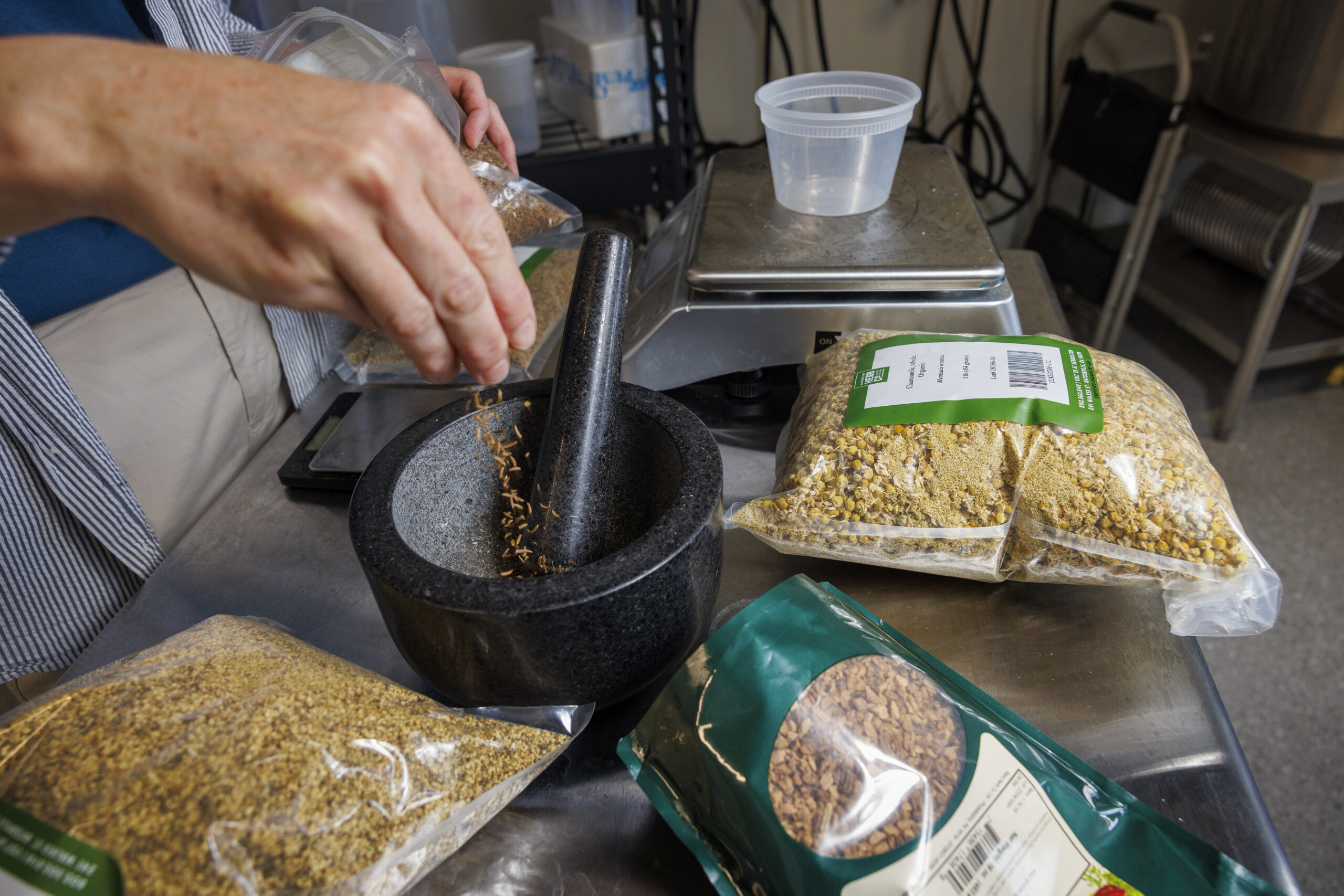
    Meredith Sheehy, owner of Cult of Trees, sprinkles caraway seed into a mortar and pestle to make one of the herb blends for her line of zero-proof spirits.

    Getting started, then getting set back

    While at Philadelphia Distilling, Sheehy became close with Jack Falkenbach, the expert distiller and legendary Philly bartender that died last year at 44. Falkenbach, she said, was always “willing to explain specialized process details at the distillery. We both liked deep-diving on things like acid phosphate,” she said. “I deeply trusted his style of drink making and technical know-how.”

    Falkenbach was among Cult of Tree’s earliest supporters, Sheehy said, and one of the first people she involved in building the company. Around this time last year, the pair was making test batches together; Falkenbach was focused on nailing the carbonation as Sheehy refined the packaging.

    Then the first real workday arrived. Falkenbach did not.

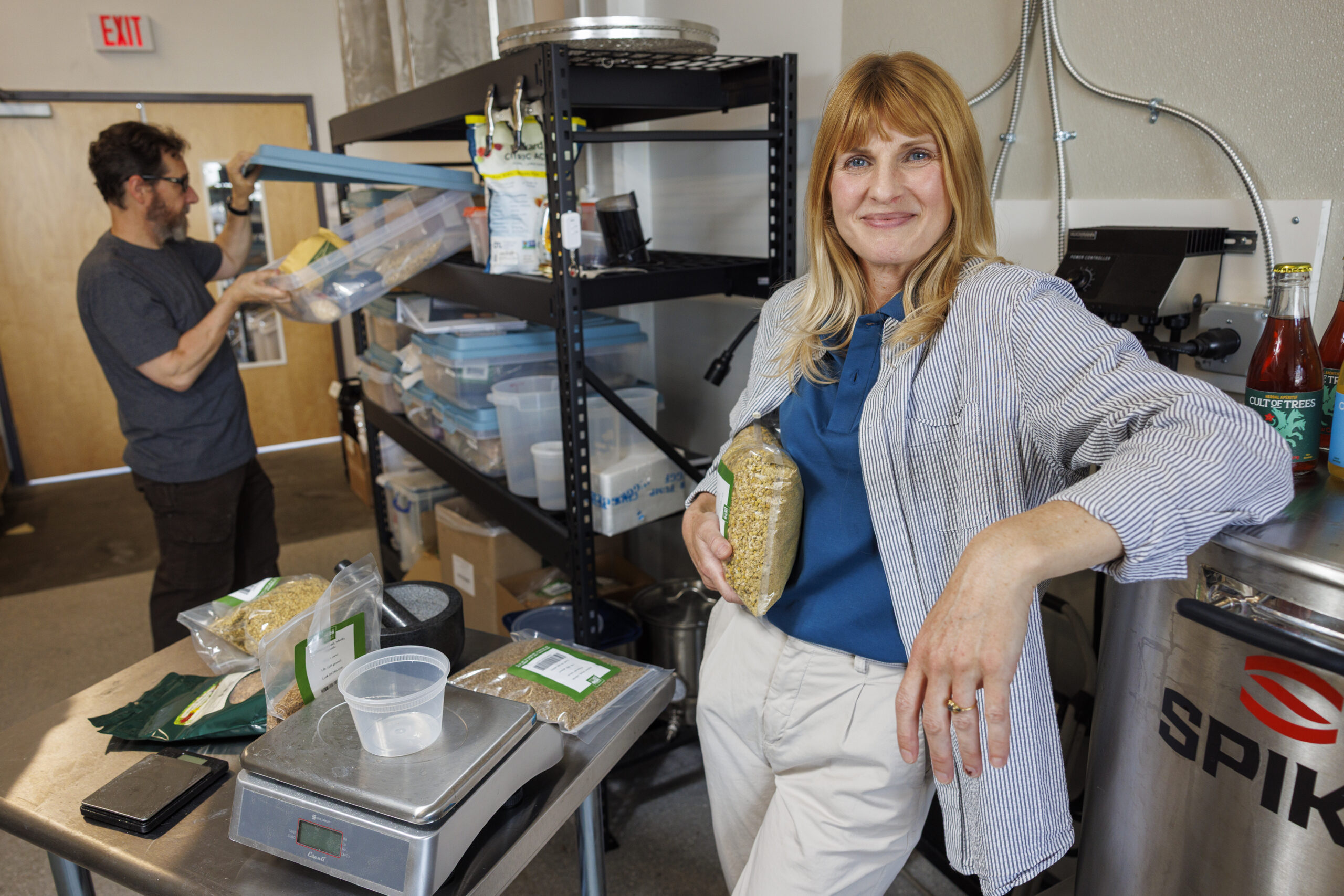
    Meredith Sheehy, owner of Cult of Trees, poses for a photo while preparing one of the herb bases for her line of zero-proof spirts, which is based at Maken Studios in Kensington.

    His passing, Sheehy said, was doubly “heartbreaking,” but launching Cult of Trees left little time to grieve. “I did what all business owners have to do,” she said. “You recover and pivot, or you don’t and you lose the idea.”

    Sheehy went on to launch the business with a single employee: Gordon Grubb, a veteran brewer who had been put out of work by Iron Hill’s sudden closures. Together, they make each batch of aperitifs.

    Hand-bottled and hand-carbonated

    Zero-proof spirits still require distillation to get the right flavors and mouthfeel, which is why many come with a higher price tag.

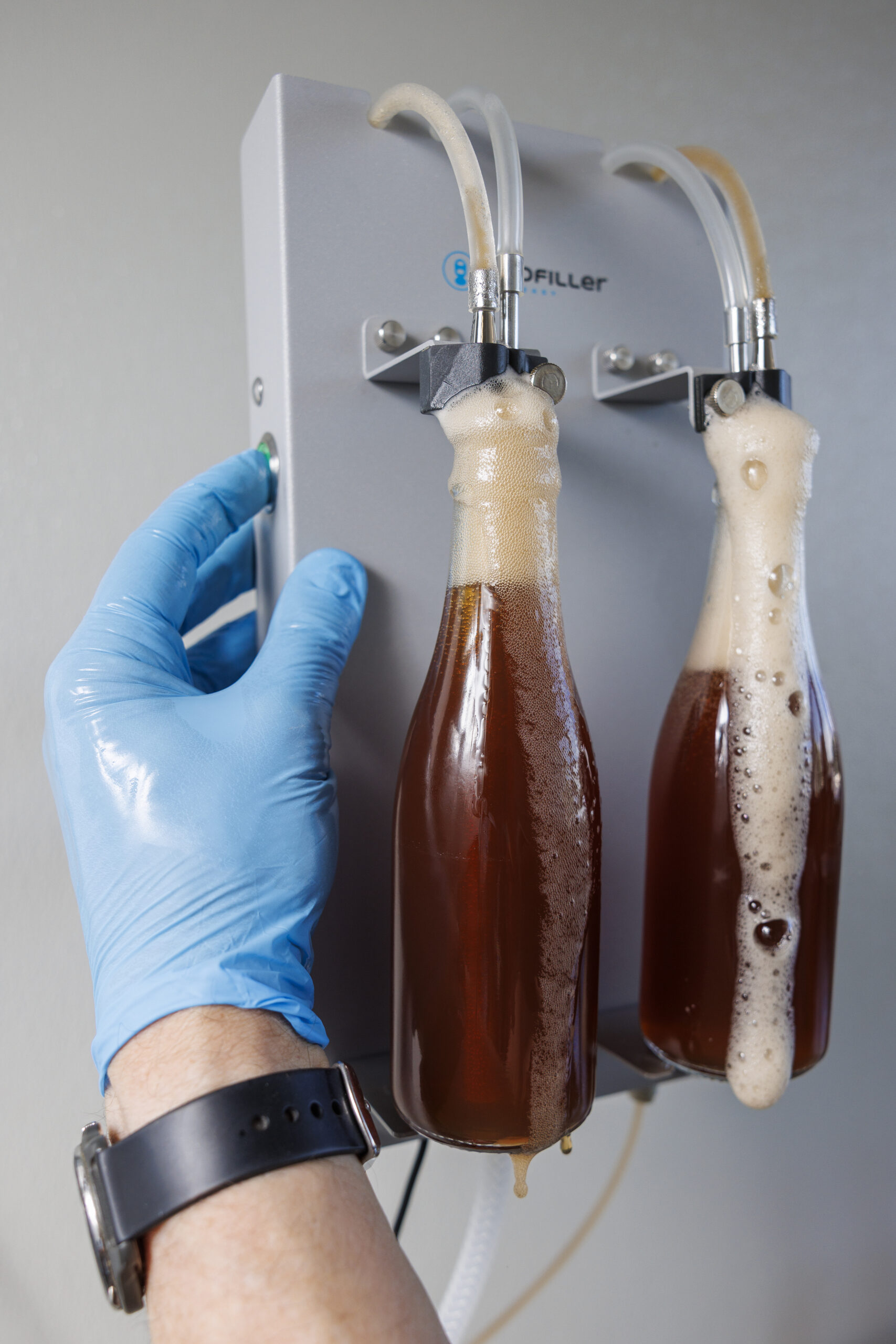
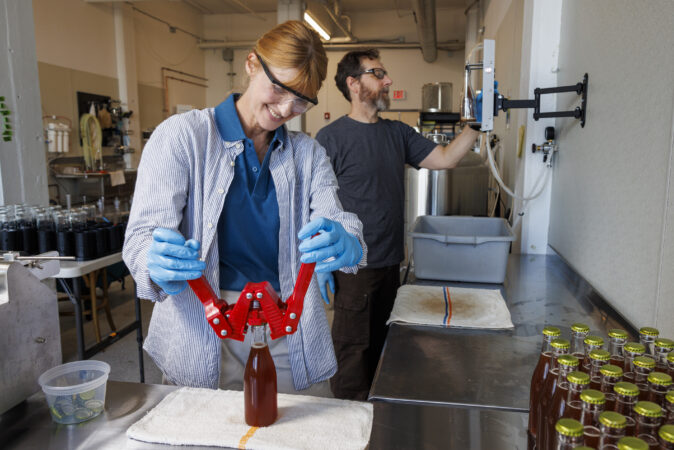
    Each batch of aperitifs takes at least three days to produce, Sheehy said, and begins with her macerating and boiling the original herb blends that serve as the base for each beverage. Distillation is the longest part of the make process and can take upwards of several hours. After, Sheehy and Grubb carbonate and bottle each beverage by hand.

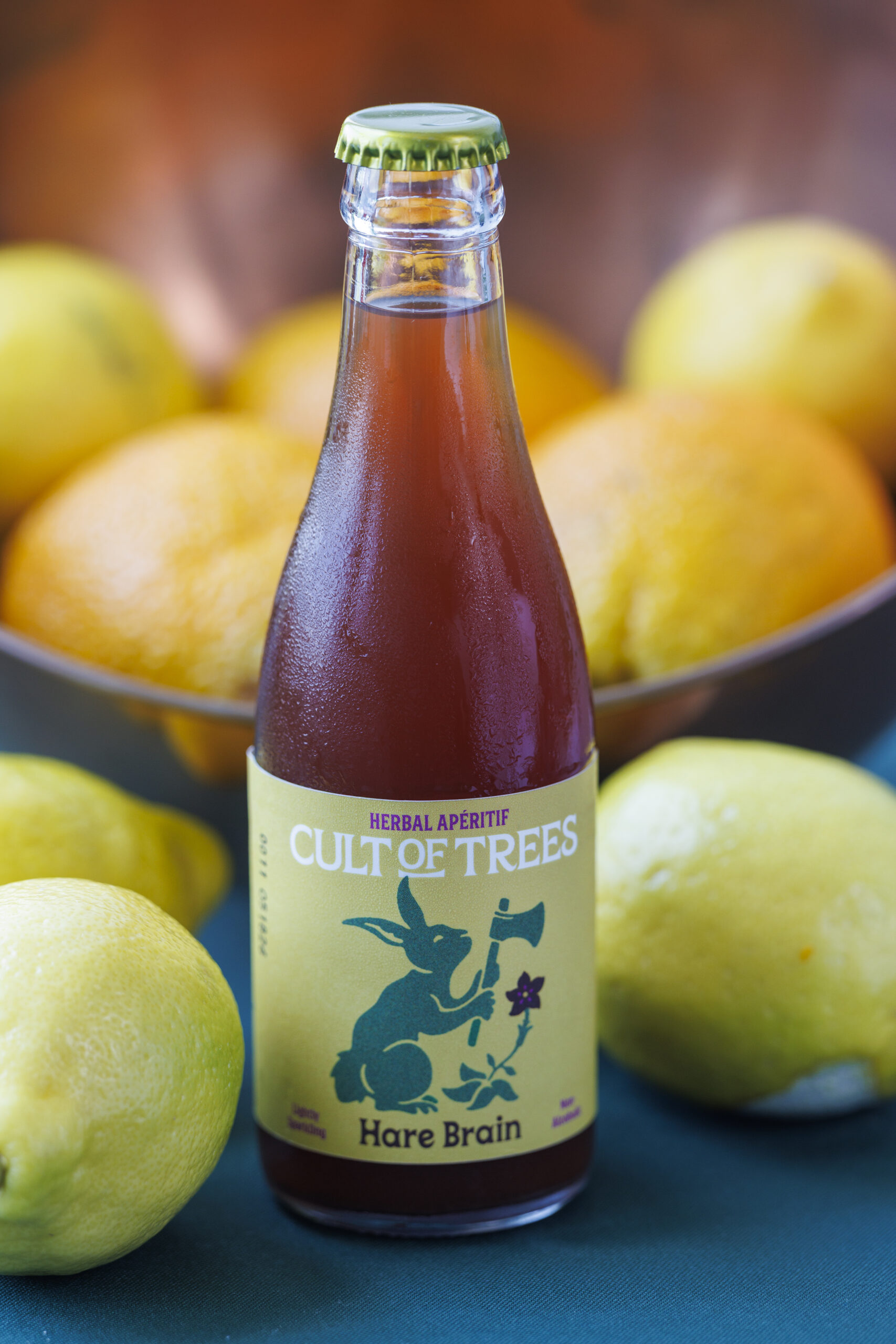
    Hare Brain from Cult of Trees, a zero-proof aperitif that tastes like cola.

    A single batch yields only 18 to 20 cases, according to Sheehy. “It’s labor intensive right now,” she said, “but will start to get more turnkey as we grow and are able to incorporate more equipment.”

    Already, Cult of Trees can be found on the beverage menus at Solar Myth, Tulip Pasta & Wine Bar, Enswell, and the International Bar.

    “It’s a popular suggestion from our entire team when guests are looking for a unique and local NA option,” said Enswell manager Chelsea Boyer, who often pairs Hare Brain with Rival Bro’s Whistle & Cuss espresso. “The bitter nature and gentle carbonation of the Hare Brain pairs perfectly with the candied nuttiness of the espresso.”

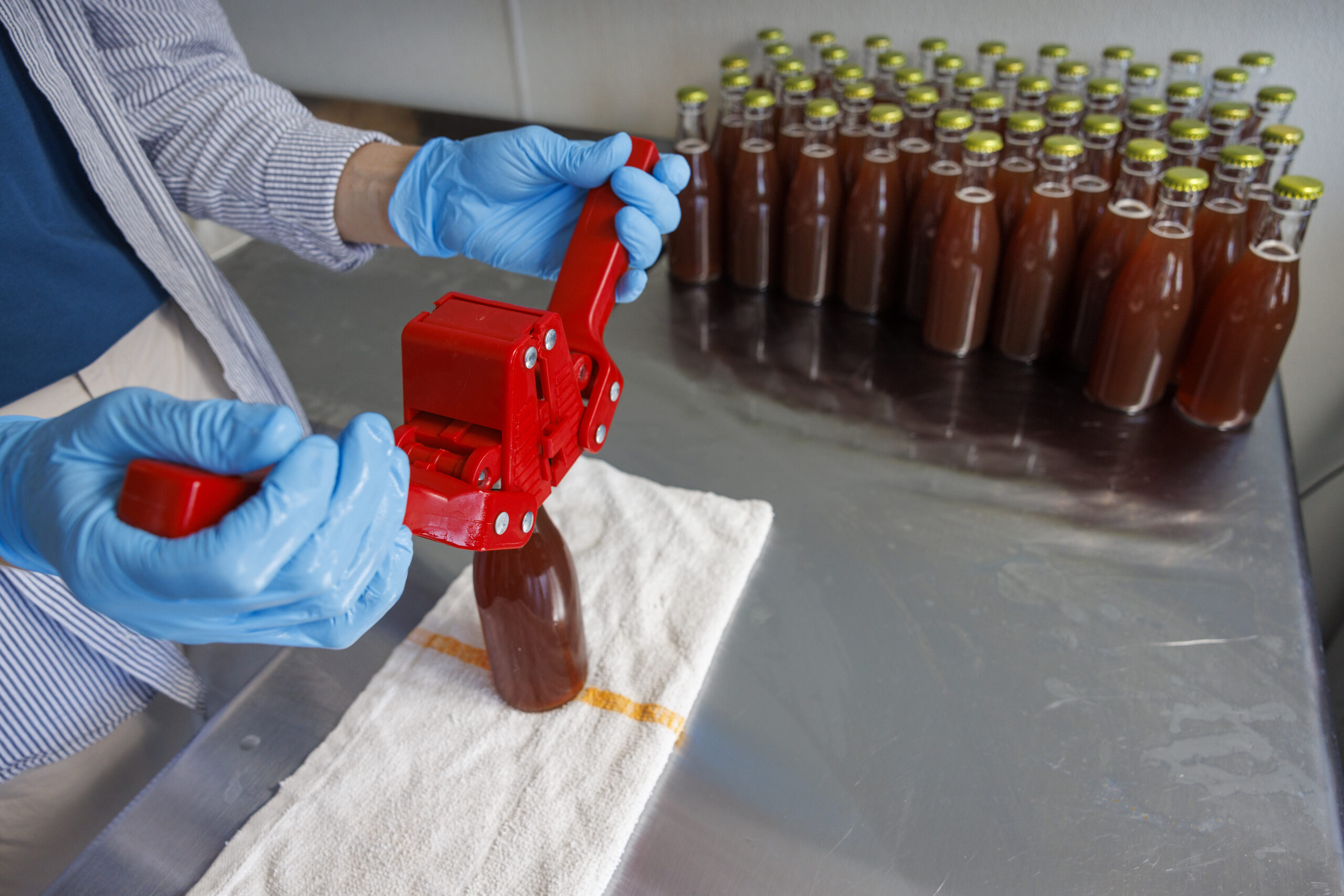
    Meredith Sheehy, owner of Cult of Trees, caps a bottle of Hare Brain at her Kensington production facility. Each bottle of the non-alcoholic spirit is packaged by hand.

    Retail placements at Riverwards Produce, Herman’s Coffee, and Queen Village’s Moon & Arrow are also new, but a sign of growth.

    The drinks have been selling well at Riverwards’ Old City location, said CEO Dan Morgan, buoyed by an April pop-up where Sheehy poured samples for guests. “I think their great flavors and beautiful packaging will really help them stand out,” Morgan said.

    Cult of Trees production manager Gordon Grubb fills bottles of Hare Brain during the carbonation process at the brand’s Kensington studio.

    Sheehy is betting on the same. “In my opinion, consumers increasingly want transparency, local sourcing, and a story behind what they drink,” she said. “That’s what we’re trying to do.”

  • Philadelphia’s World Cup love affair shows just how far we’ve come

    Philadelphia’s World Cup love affair shows just how far we’ve come

    Karl Wallenda walked across Veterans Stadium on a tightrope, dazzling a nearly sold-out crowd when he stopped halfway to do a headstand and unfurl American flags from the ends of his balancing pole.

    It was exactly what the more than 50,000 fans came to see between games of a Phillies doubleheader on Memorial Day 1976. And the show across the street, a soccer game featuring Pelé and other all-time greats — didn’t stand a chance against The Great Wallenda.

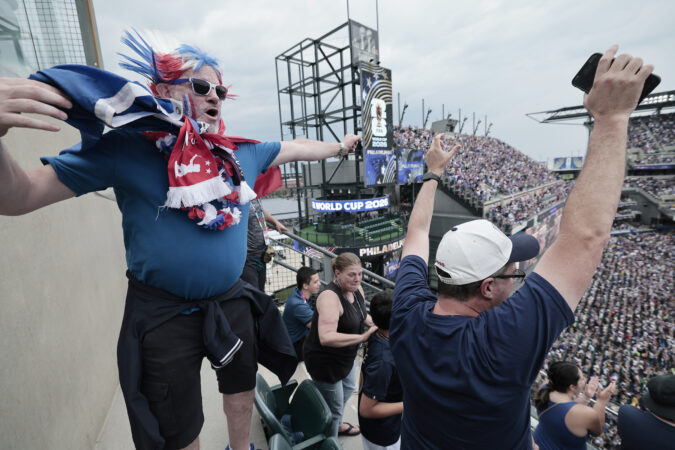
    Philadelphia has become soccer-infused this summer with six games of the World Cup at the sports complex Center City bars were packed Monday afternoon hours before France and Iraq played, banners hung from City Hall, the Broad Street Line carried fans to Lincoln Financial Field, and even the mayor was spotted last week buying soccer jerseys.

    The games are so massive that the Phillies had a rare Friday off last week because Brazil and Haiti were playing at what is temporarily called Philadelphia Stadium.

    But 50 years ago, soccer was still finding its footing in Philadelphia. And that’s why the eyes of the city were fixated above Veterans Stadium while Pelé, Italian superstar Giorgio Chinaglia, and Bobby Moore — the captain of the last English team to win the World Cup — were in a match across the street.

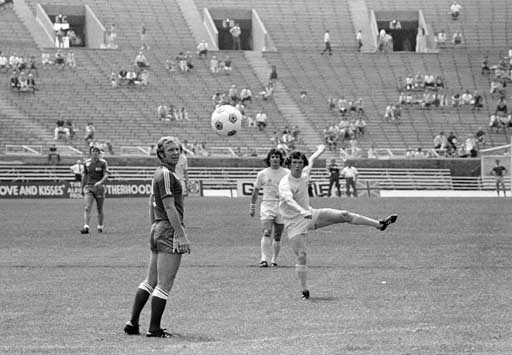
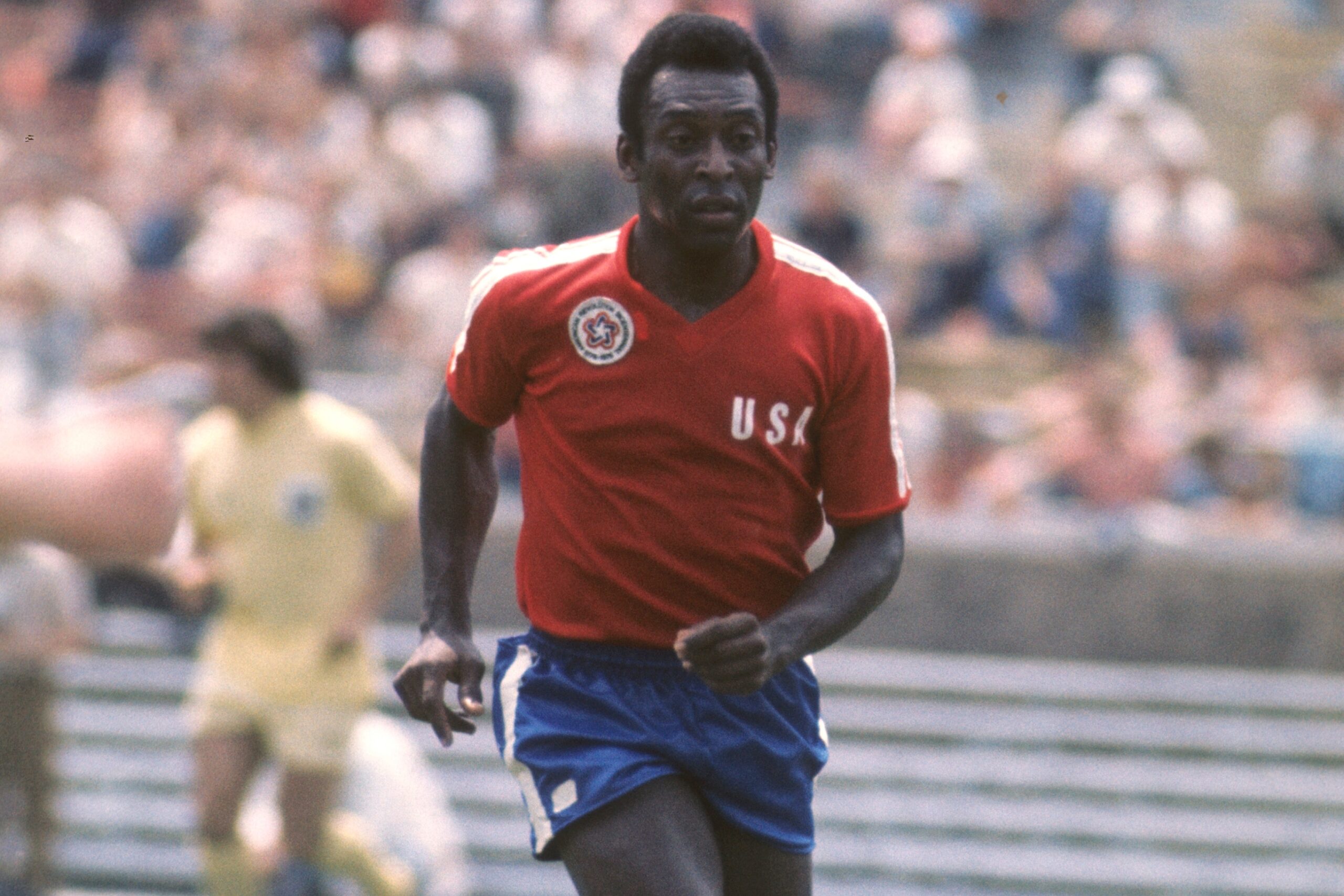
    The soccer icons played for Team America in the Bicentennial Cup against the English National Team at JFK Stadium in front of just 16,000 fans and a lot of empty bleachers.

    Play during the Bicentennial Cup between Team America and England before a sparse crowd at JFK Stadium in South Philadelphia on May 31, 1976.

    Philadelphia now has a professional team with staying power, local players on the U.S. team that have people dreaming this summer, and a stadium full of crazed fans. That was hard to imagine 50 years ago, when the gods of soccer passed through without much notice.

    “Jeez, 50 years,” said Bob Smith, a Trenton native and member of the National Soccer Hall of Fame who played for Team America against the British. “There’s no comparison. The game just grew, and the community grew. The spread of the game is just unbelievable.”

    Gateway to soccer

    Smith learned to play the game as a 9-year-old when an Irish neighbor in Trenton organized a recreation league. He played four-on-four for hours with his buddies and organized games against kids from neighboring towns. Today, the sport is played everywhere, but it was concentrated in the 1960s to neighborhoods in Trenton, just like in Philadelphia.

    Soccer was huge to those who knew it.

    And a mystery to those who didn’t.

    “We’d go to our high school field on weekends to train and see like 2,000 people in our football stadium,” Smith said. “We were freshmen in high school, and we knew exactly where we fit in the spectrum of sports. ‘Who are these guys running around with shorts on?’ But we just fell in love with it.”

    Smith was plucked as a teenager by Manfred Schellscheidt, the legendary coach who assembled an All-Star team with the best players in New Jersey. Schellscheidt brought the Jersey boys to his German hometown, where they beat every team they played. It was an unbelievable experience, Smith said, and it gave him and his buddies the confidence that they could do it.

    “I was like ‘Damn, I can do that,’” Smith said. “We felt like ‘we’re OK here.’”

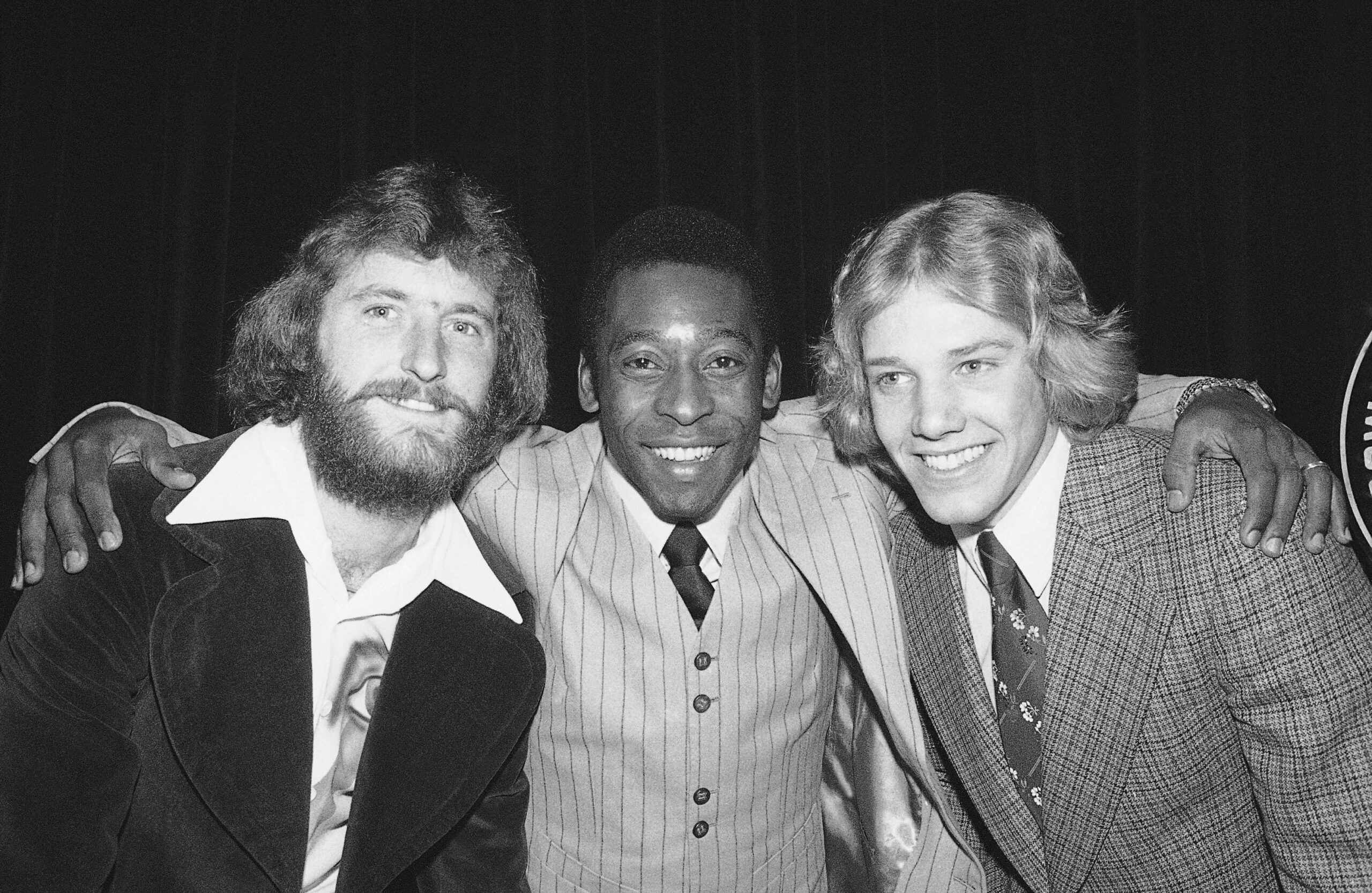
    Bob Smith (left), a Trenton native, shown with soccer star Pelé (center) and Bob Rigby on Jan. 6, 1976.

    Smith played at Rider University before turning pro with the Philadelphia Atoms and helping them win the North American Soccer League championship as a rookie. The league didn’t pay the players enough for soccer to be a full-time gig, so he worked as a laborer at a construction site during the day and practiced in South Philly at night. But he was still a professional soccer player.

    “A lot of guys were schoolteachers,” Smith said.

    This U.S. team started nine players in their World Cup opener who are on professional teams overseas. Smith, who had 18 games for the U.S. team, played overseas in 1975, with Dundalk F.C. in Ireland. Unlike today’s players, Smith and Dave D’Errico — his buddy from New Jersey — didn’t get paid much. No team was looking then for an American player, Smith said.

    “When we got off the plane, a guy picked us up at the airport in Dublin,” Smith said. “We signed this five-quid-a-week contract. We stayed over top [of] this garage, and I pumped gas at night, making a quid an hour.

    “But we were in Ireland playing soccer. What the heck? We didn’t care. You were broke your entire career playing soccer. I never cared about what I made because it was a thrill of a lifetime.”

    ‘It was just wild’

    The starving artist returned to the U.S. after a year abroad and joined the New York Cosmos, which had become America’s traveling band of soccer stars. They had Pelé and Franz Beckenbauer on the field and Mick Jagger and Henry Kissinger in the dressing room after games.

    “The Cosmos years were like a circus,” Smith said. “It was just wild.”

    The NASL brought Pelé out of retirement in 1975 with the hope that the all-time great could spread the gospel of soccer through the country. Every Cosmos game felt like the opponent’s biggest game of the season.

    “It was always a show,” Smith said. “The expression with us was always, ‘We’re with him.’ There was a lot going on in restaurants and clubs and all that. We went to Denver and they rode him on a horse. There was so much marketing stuff, and he got pulled into an awful lot of stuff.

    “I felt sometimes that he was being pushed to sell the game to this country, and I think that was difficult to him. He just wanted to get on the field and play with the guys. Off the field, it was crazy with the commitments he had to fulfill. But he did it 100% with a great attitude. But it was tiring.”

    Pelé playing for Team America against England in the American Bicentennial Cup in 1976, played at JFK Stadium, which is where Xfinity Mobile Arena now stands in the sports complex.

    The 1976 Bicentennial Cup was another attempt to grow the game as Brazil, England, and Italy came to America for tuneups before qualification began for the 1978 World Cup. They played in Washington, New York, and Seattle before finishing in Philadelphia.

    The organizers knew that the U.S. national team wouldn’t be able to keep pace with the world powers, so they filled Team America with the stars of the NASL. That’s how Smith and Delaware County’s Bobby Rigby got to play with a dream team. The stars of the soccer world came to South Philly.

    Philadelphia just wasn’t yet ready in 1976 to embrace what was happening. The city was too distracted by the guy walking in the sky.

    “It was such a thrill to play with those guys,” Smith said. “It was a great honor, and it was also a blur.”

  • In Harrisburg, Philadelphia Mayor Parker asks lawmakers to double school renovation fund to $250 million

    In Harrisburg, Philadelphia Mayor Parker asks lawmakers to double school renovation fund to $250 million

    HARRISBURG — Philadelphia Mayor Cherelle L. Parker called on Pennsylvania’s General Assembly to double what it sets aside for school districts to update their aging facilities, as the Philadelphia School District embarks on a $3.3 billion plan to modernize 169 school buildings.

    Parker hosted a two-hour news conference at the state Capitol on Monday, asking Pennsylvania’s split legislature and Gov. Josh Shapiro to increase the amount of money available for school facility renovations from its current $125 million to $250 million as part of this year’s state budget, which is due at the end of the month.

    The school district is on track to close 17 schools as part of the larger modernization efforts, following months of protest and controversy over the facilities plan.

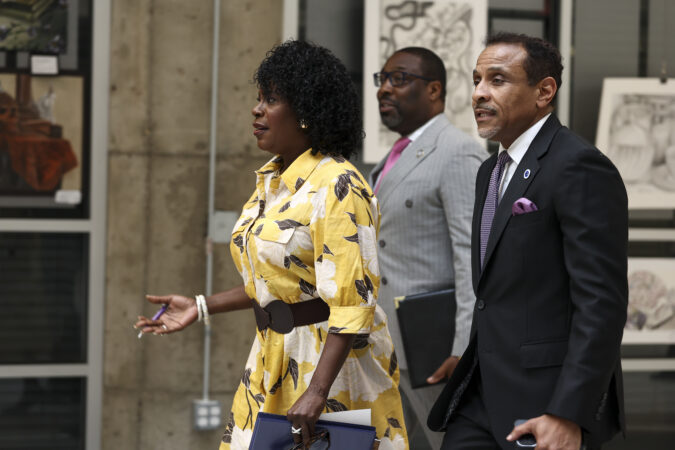
    Parker appeared alongside City Council President Kenyatta Johnson, Philadelphia School Superintendent Tony B. Watlington Sr., and school board president Reginald L. Streater, following several weeks of tensions with state and city legislative leaders over her proposed tax plans to raise revenue for the city and the school district, which ultimately failed.

    But on Monday, the city leaders appeared as a united front in Harrisburg, showcasing their commitment to “rightsizing” Pennsylvania’s largest school district, which is the ninth-largest in the nation.

    “We are here united to let you know that we are proud that the City of Philadelphia has some skin in the game, and we are not coming here simply with our hat in hand, asking the Commonwealth of Pennsylvania to come save the School District of Philadelphia,” Parker said, noting that the city was able to stave off classroom cuts.

    “It is the General Assembly who told us last year we will not give additional funding until you come back with a facilities plan. So we went to work,” Johnson said during the news conference Monday.

    Now it is on the state to set aside additional funding to help school districts update their facilities, Parker and Johnson said.

    Shapiro, a first-term Democrat, proposed keeping the pot of money at $125 million for the coming fiscal year, as part of his $53.2 billion budget proposal.

    Pennsylvania is facing its own budget problems, as the state is on track to spend more than it brings in in revenue this year and in future years. Shapiro’s budget proposal would spend $4.3 billion more than the state’s projected revenue for the coming fiscal year, meaning Parker’s funding increase request faces an uphill battle.

    The event highlighted a coalition of advocates, from labor leaders to recent graduates to public education advocates — all calling on the state to increase the state’s capital fund, in addition to continuing to increase the city’s adequacy funding.

    The school district is facing a $300 million structural deficit and had planned to cut more than 300 school-based positions before city officials cut a deal to keep funding the positions with a yet-to-be-determined revenue source.

    Several of the speakers recalled recent times when their young children did not have access to bathrooms, or instances when schools had to shift to virtual learning because the buildings are unequipped to handle cold or hot weather.

    The speakers, including Parker, emphasized that the issue of aging school buildings is not exclusive to Philadelphia. It is an issue faced by school districts around Pennsylvania, including rural and suburban ones.

    “So goes the decision-making in this building, so goes the future of rural, urban, and suburban Pennsylvania, and all of our children,” Parker said.

    In a letter sent Monday to members of the General Assembly, top leaders from the Pennsylvania League of Urban Schools and the Pennsylvania Association of Rural and Small Schools echoed the calls.

    “Safe, modern school buildings should not depend on a community’s zip code, and we stand with Mayor Parker in calling for Harrisburg to make that needed commitment to students in every corner of the Commonwealth,” the letter said.

    In a letter to Shapiro in January, ahead of his annual budget pitch, Parker requested that the state double the amount available for school facility improvements, and she sought a revision to the guidelines to allow a single district to receive up to 25% of the total grant funding in a given year. That would open approximately $50 million to $60 million annually for the district to tap into to improve school buildings, according to the letter.

    Parker, who served as a state representative for 10 years before joining City Council and her election as mayor, received a major blow to her tax plans from Harrisburg in the final days of city budget negotiations. Three sources with knowledge of the closed-door state budget talks told The Inquirer then that lawmakers would not approve increases to the city’s hotel and long-term rental taxes she requested to help expand the city’s homelessness services.

    Only one state lawmaker joined the mayor’s event: Sen. Art Haywood (D., Philadelphia/Montgomery). Parker met separately in a private meeting with Philadelphia’s House delegation to Harrisburg.

  • This 14-year-old Phillies fan grabbed a Mets home run ball and went viral for making a crafty swap

    This 14-year-old Phillies fan grabbed a Mets home run ball and went viral for making a crafty swap

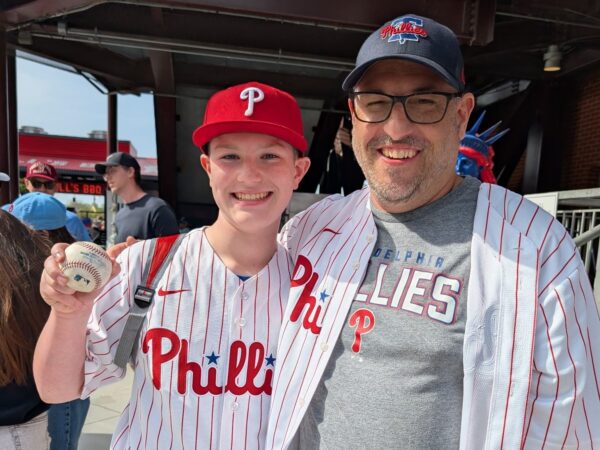
    When Carson Benge’s home run ball started heading in his direction on Sunday at Citizens Bank Park, 14-year-old Josh Kirsch knew exactly what to do.

    The eighth-grader from Royersford was planning for this moment for years, hoping to catch a home run ball in his glove.

    After he actually got his hands on the Mets outfielder’s home run, he was expected to do what most other Phillies fans do when they catch the opposing team’s home runs — throw the ball back onto the field. Instead, Kirsch was caught on camera swapping out the ball, pocketing the home run ball and throwing a different one back out on the field.

    The Kirsch family has had Sunday season tickets in the outfield since 2022, purposefully on the aisle to give Kirsch a better chance at one day catching a ball. But there’s obviously no guarantee that even if you do get a home run ball, it’ll be a Phillies home run, and you’ll get to keep it. So Kirsch had a backup plan.

    “He knows that the Phillies fans will cheer for about 10 seconds, and then be like, ‘Throw it back! Throw it back!’ so he had brought this ball with him to every game we went to,” said his father, Matt Kirsch. “It’s a Little League ball that he wrote in Sharpie in his little chicken scratch, ‘Not the home run ball.’”

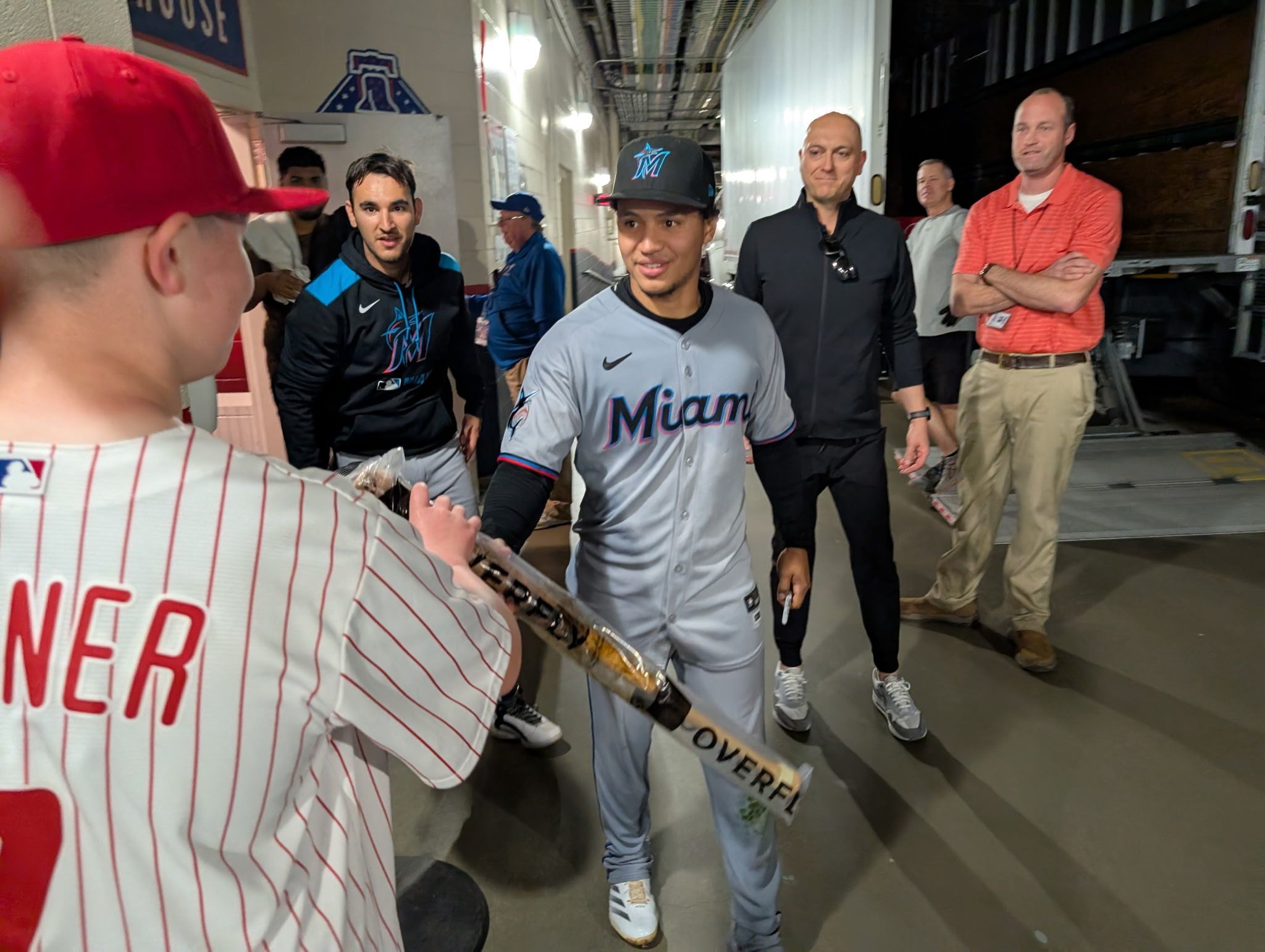
    Sunday was the first time Kirsch has been caught on camera swapping out the ball, but it’s not the first time he’s “thrown back” a home run. On April 20 last season, Marlins rookie Javier Sanoja hit his first career home run against the Phillies, right into Kirsch’s glove. Kirsch, not knowing it was Sanoja’s first major league home run, threw back the ball he’d stowed away in his pocket, wanting to keep his first home run catch.

    Josh Kirsch meeting Javier Sanoja after catching his first career home run on April 20, 2025.

    But after one of their season-ticket neighbors, listening to the game on the radio, learned that it was Sanoja’s first major league home run, Kirsch wanted to find a way to give the ball back. Ballpark staff was able to verify that the ball Kirsch had was in fact the home run ball, and he got to meet Sanoja and trade it for a signed bat.

    “That’s how his mind works,” Matt said. “He’s always thinking about every angle, like, ‘Oh my gosh, what if this happens?’”

    Kirsch has always been an avid baseball fan. The family started going to Phillies games in earnest during the 2021 season, and after seeing just how much Kirsch loved to be at the ballpark, they invested in season tickets.

    He plays in the Spring Ford Babe Ruth baseball league, and at home, Kirsch has a collection of baseball and other Phillies memorabilia, including balls he’s had signed during warmups, jerseys, and bats. That’s part of why he wanted to keep the ball — with how baseball works, who knows if Sanoja or Benge might end up being Phillies one day?

    So, no regrets, even after he went viral for pocketing the ball, which will now get a place of pride nearby his Sanoja bat. It was still surprising for the family to see the video gain more than a million views across various channels, but they’re taking it in stride.

    “My daughter committed to play field hockey at Northwestern,” Matt said. “If you were to ask me which of my two kids was gonna make the Instagram reel for ESPN, I’d be like, ‘Oh, my D-I athlete.’ My Little League eighth-grader made it.”

  • My favorite halal restaurants in the Philadelphia area

    My favorite halal restaurants in the Philadelphia area

    What makes Philly’s halal dining unlike any other city is the diversity of cuisines available. It’s what made dining so exciting for me when I moved to Philly in 2020. As a Muslim growing up in Tennessee, halal options — aside from chicken and rice and one barbecue hotspot — were hard to come by. From the moment I began eating my way through my new home, it was clear Philly’s robust dining scene offered a grander landscape of halal eats.

    Halal meat follows the tradition of zabihah, defining whether the animal has been fed and treated humanely before and during slaughter, blessed in the name of Allah, and drained of blood. The literal meaning of halal is “permissible,” which can be used to describe various parts of Muslims’ lifestyle, including dining habits. For example, rice and bread are halal, but alcohol and pork are haram — or prohibited.

    Most halal-serving restaurants will identify themselves as such on their website or menus but a simple ask also helps verify. Similar to kosher meat, halal certifications are available, but “if it’s a Muslim-owned restaurant and they are guaranteeing and promising you that it’s halal, then that’s really the only research that’s required,” said Toba Hoda, who runs the Instagram account @phillyhalalspots.

    Over the years, I’ve compiled a list of my favorite halal spots, from crispy Ethiopian fried chicken in West Philly to slow-cooked beef rendang in South Philly. Here are a handful of them that show the breadth of cuisines to try in Philly. — Hira Qureshi

    Al-Baik Shawarma

    Tucked into a commercial strip on the ever-busy Willits Road, Al-Baik Shawarma is one of the best Palestinian restaurants in Philadelphia. Hailing from Ramallah, chef-owner Sohaib Al-Haj and his family serve juicy cuts of chicken, beef, and lamb seasoned with aplomb. Nestle into one of the plush booths and order the mashawi mixed grill platter to savor it all: kufta, chicken and beef kebab skewers, and chicken wings alongside rice, salad, hummus, grilled onions, tomatoes, and fresh laffa bread. The Northeast restaurant also has some of the best falafel in the city. Here, you can sip on Palestine Colas and enjoy sweets like coconut basbousa and pistachio Nutella cookies from local bakers. At least, that’s what I do.

    3217 Willits Rd., 267-703-8000, order.albaikshawarma.com

    Black Dragon Takeout

    In West Philly, chef Kurt Evans is serving an entire halal menu featuring Black American Chinese takeout. That means I’m walking in ready to order their crispy collard green egg rolls, saucy oxtail “lo-mane,” sweet and spicy General Roscoe’s chicken, sweet potato chili wings, and jerk chicken skewers. With limited seating, it’s best to take your order home — although I usually sneak a bite inside and end up scarfing down the rest while standing on the sidewalk.

    5260 Rodman St., 267-292-2905, blackdragontakeout.com

    Doro Bet

    What if halal fried chicken was also gluten-free? At Doro Bet, sisters Mebruka Kane and Hayat Ali (who also own the nearby Alif Brew, which offers traditional Ethiopian coffee service with fresh-roasted beans, and Salam Cafe in Germantown) make those dreams a reality. The fast-casual West Philly hotspot — an Inquirer 76 pick two years in a row — serves crispy, teff-coated fried chicken spiced with either berbere or lemon turmeric. It’s just a few blocks west of Clark Park, perfectly located for a savory treat after my farmers’ market visits. The restaurant also has Ethiopian classics like doro wot and tibs, along with vegetarian options like falafel wraps and teff-flour fried mushrooms. And don’t sleep on the tiramisu, made with the richness of that same Ethiopian coffee.

    4533 Baltimore Ave., 215-921-6558, alifamilyrestaurants.com/doro-bet

    Griddle & Rice

    Philly’s new era of Indonesian cafés includes a South Philly spot that’s got a halal, pork-free menu. Griddle & Rice is all about dishes that marry Indonesian traditions with current trends and American breakfast foods. Take the nasi uduk, a breakfast coconut rice platter packed with crispy fried marinated chicken, sweet chili egg and tofu, sweet soy tempe, crunchy veggie fritter, sambal terasi shrimp paste chili, and crackly garlic crackers; or the iga bakar platter with grilled, Indonesian-spiced braised beef ribs, white rice, fried egg, more sambal terasi, and a salad. I would recommend ordering one of the best bowls of congee — with halal curry chicken broth and shredded chicken breast — in the city. And don’t sleep on the drinks — I slurped up the es kopi gula aren, a smoky Indonesian palm sugar latte, and mango matcha with coconut water in one sitting.

    2151 S. 22nd St., 267-360-2900, griddlericephilly.com

    Hardena

    The beloved late Ena Widjojo’s family-run restaurant has been feeding South Philly for more than 20 years. These days it’s her daughter Maylia who runs the place, but they’ve stuck to the script — halal Indonesian classics. I love venturing to South Philly for their slow-cooked beef rendang, saté chicken (marinated in sweet soy and makrut lime juice, topped with peanut sauce), and crunchy Krupuk (garlic and tapioca chips). And I’m always reminded why the menu earned a semifinalist nod from the James Beard Foundation in 2018.

    1754 S. Hicks St., 215-271-9442, hardenapa.com

    Korea Taqueria

    Since its inception in 2023, Korea Taqueria has mostly operated with a non-halal menu, with halal chicken offerings on a if-you-know-you-know basis. But as of March, owners Alexander Sherack and Rene Lopez announced their shift to a fully halal menu. “We’d be getting DMs [about halal offerings] just about every month, so there was always this seed planted from day one,” Sherack said. “Once we found local suppliers we made the shift.” The Korean Mexican grub, located in South Philly, Fishtown, and West Philly, includes bulgogi beef birria tacos, gochujang wings, Kimchi cheese fries, Korean fried chicken sandwich, and more. Consider ordering my go-to: the meal sampler, for all of it one order. Wash it down with horchata or watermelon agua fresca.

    3101 Tasker St., 267-234-7100; 2563 Trenton Ave., 267-204-3710; 3401 Walnut St., 267-274-1230, korea-taqueria.com

    MAdness of MAsala

    One of the 76 most vital restaurants in the Philly area sits in the middle of Montgomery County. The hour drive to Madness of Masala becomes a mandatory pilgrimage for those seeking halal goat pepper fry, malai paneer kabab, andhra shrimp curry, and other South Indian classics. The fiery tandoori spices tingle on my tongue as I devour stuffed mirchi bajji, kali mirch paneer, and goat ghee roast. I only need to order their syrupy gulab jamun and a Hyderabadi masala chai to cool down.

    2851 Ridge Pike, Trooper, 484-235-8003, madnessofmasala.com

    Saad’s Halal Restaurant

    What makes this a West Philly institution? It’s owner Saad Alrayes’ chicken shish tawook — best known simply as the chicken maroosh. The first time I took a bite of the sandwich packed with juicy pieces of grilled chicken, tomato slices, sautéed onions, and snappy pickles, generously drizzled with creamy garlic sauce in a long hoagie roll — the namesake “maroosh way” — I understood. This was most definitely the best sandwich in the city.

    4500 Walnut St., 215-222-7223, saadhalal.com

  • Philadelphia’s former top lawyer, now a corporate defender, says national companies need Philly lawyers

    Philadelphia’s former top lawyer, now a corporate defender, says national companies need Philly lawyers

    As Philadelphia’s city solicitor, heading a staff of more than 200 lawyers, Sozi Pedro Tulante sued some of the nation’s biggest corporations, accusing them of loan discrimination and pushing lethal painkillers.

    Now he’s a partner at Dechert LLP, a Philadelphia-founded, international corporate law firm, where the work includes defending big national corporations from the kinds of complaints he used to file.

    Corporate targets during his 2016-18 stint as the city’s top civil lawyer included Wells Fargo & Co., the third-largest U.S. bank, which settled his lending-discrimination complaint for a promise of $10 million in donations to housing programs, and six pharmaceutical companies, four of which were major Pennsylvania employers, for promoting addictive opioids. The city later got a nearly $200 million share of a national settlement.

    Tulante’s job also included routine legal reviews. He defended the city’s soda tax and its sanctuary city immigration status.

    After leaving his city position in 2018, Tulante — son of a refugee, a Northeast High School and Harvard University graduate, and a former federal prosecutor — lectured at the University of Pennsylvania’s law school.

    He joined Dechert’s litigation department the next year, then spent 2022 to 2025 as general counsel at Boston-based Form Energy, which builds iron-based batteries for data centers and other clients at its plant in Weirton, W.Va.

    Last year, Tulante moved back to Philadelphia and was named co-managing partner of Dechert’s Philadelphia office. He agreed to talk to The Inquirer about practicing law in Philadelphia.

    This interview has been edited for clarity and brevity.

    Does Philadelphia’s reputation as a “judicial hellhole” full of billboards urging citizens to sue businesses scare companies away?

    When a company is deciding to locate in a particular place, they do look at the tax structure and how red is the red tape and the legal climate.

    The Inquirer has reported how in Philadelphia [a plaintiff] can pursue a case in Philadelphia Court of Common Pleas even if they aren’t here. There have been these “nuclear verdicts” for millions of dollars.

    More companies are now aware of the risk. They adjust.

    There are extreme cases where litigation ends a company. But for the most part you factor it in.

    Who gains from a litigious climate?

    Sophisticated national companies have clients everywhere. They know they are going to get sued. They study to minimize litigation. For example, don’t use flip messaging. Just be familiar where the threats may come from. Know what litigation the city is pursuing.

    Many of the big companies facing litigation in Philadelphia are more likely to engage counsel that is locally respected and recognized in the area. In Philly, if you can’t answer the question, “Where did you go to high school?” [with a name the parties recognize], it’s a disadvantage. Here, we fight the plaintiff attorney, but we also serve on the same board and attend the same continuing legal education [CLE] classes.

    There are great lawyers on the other side, at [plaintiffs’] firms like Kline & Specter and Ross Feller Casey, sophisticated counsel who walk into court and get instant respect.

    Part of my role at Dechert is to represent clients in Philadelphia and nationally who are thinking about how Philadelphia has changed as a place of litigation and how that litigation impacts business.

    Businesses are saying, “We have the tax burden, the regulatory burden, we’ll comply, but you are pushing on the edges.”

    What recent laws have changed the legal climate for business?

    The new consumer protection ordinance, passed in 2024, has given the city more power to bring some major cases [through national law firms] that are broader than before. Life sciences cases. Firearms liability. Fair workweek litigation. They may go after [national] retailers in certain cases. The city can go forward and get penalties up to $2,000 per violation.

    As city solicitor, I was reminded that government has the broadest power of regulation at the local level. The police authority government has is really broad. Unless there’s some preemption by state or federal government. It’s something folks pay attention to.

    Is part of Philadelphia’s affordability a result of its failure to attract private-sector employers?

    I live in West Philly. I work at the law school. I have three children in public schools. I want the city to have a secure tax base. I want to make sure investment goes where it needs to.

    It’s challenging. One of the biggest challenges is getting people from Temple, Penn, Drexel, and St. Joe’s to stay.

    There are instances, like Chubb’s new office, where the city has persuaded [a longtime city employer] to stay.

    In Philadelphia the strength ultimately is in eds and meds. We have doctors and nurses, lab technicians, people with a high level of training. Philadelphia takes credit for helping solve COVID by our Nobel Prize winners Drew Weissman and Katalin Karikó at Penn, which has led to investments in gene therapy.

    What was the most satisfying thing you did as city solicitor?

    Working to get local control of the school district and disbanding the state’s School Reform Commission. It was humiliating, the way the state was running our schools. We should have a stake. The most important thing we can do is educate our children and prepare them for businesses that want to hire talent.

    Why did you choose the law?

    It’s not the ability to argue that makes a good lawyer. You have to solve problems. You have to be really good at writing. And you have to be able to talk to people — to be personable, to make the hard stuff simple, to help them understand.

    I like a career where people ask you to help them solve really big problems. They can be CEO of a major company or a pro bono client that needs a habeas petition. They require the same level of skill.

    How did you come to be a Philadelphian?

    I came here at age 8 in 1983 [after his father, a military official in Angola, fled to Congo following a change in government, was imprisoned, then was resettled in North Philly by a refugee agency].

    It was a difficult time to grow up here. I graduated in 1993 from Northeast High School. I got into Harvard, then Harvard Law School.

    Eight years ago, I left the city, to be general counsel at a startup.

    But it came back to family and affordability. Philadelphia is that place for me, within the larger Northeast corridor.

    What gives you hope?

    My dad drove a cab when he came here. My mom worked in the prison system. Now here I am, a Black attorney from the public school system.

    I am a big booster of today’s public schools. My children are at Central, at Masterman — I couldn’t get into those, I still hold a grudge! — and at Penn Alexander in West Philly.

    I want my children with other children who really want to achieve. I motivate them, the teachers motivate them, they are self-motivated, but the friends they are with have more of an impact on them.

    And I think we are finally putting into place an infrastructure for understanding government. You know Philadelphia has more political ads and advertising than almost anyplace, a big city in a swing state. But we have not always centered our education on civics. Now my son understands more than I did.

    I’m glad to be back at Dechert. I can see a lot from this perch.

    This story has been updated to correct some biographical information about Sozi Pedro Tulante.

  • How Haverford High’s national teacher of the year is coaching aspiring teachers, on topics from racism to connecting with students

    How Haverford High’s national teacher of the year is coaching aspiring teachers, on topics from racism to connecting with students

    As the newly appointed National Teacher of the Year, Haverford High School’s Leon Smith has been celebrated on television: from CBS Mornings and Good Morning America to the Kelly Clarkson Show.

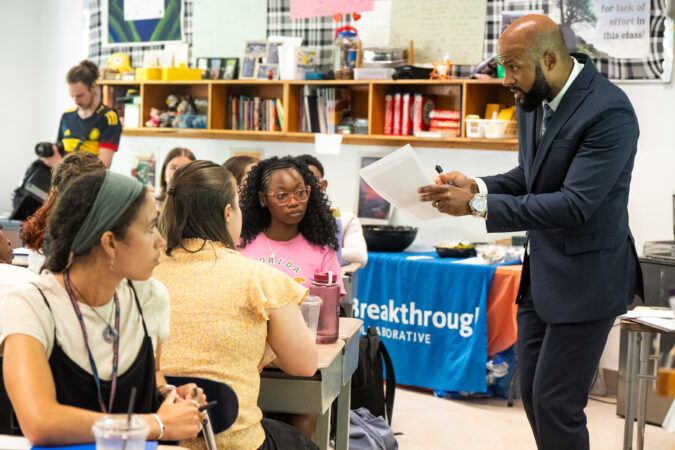
    But as the lone Black teacher when he started teaching at Haverford 25 years ago, Smith got a different reception. He experienced racism, he told a group of young people interested in teaching, and if it weren’t for a Black vice principal that listened and supported him, he might not still be teaching today.

    “She would just be very honest with me, and be like, ‘First of all, you’re an excellent educator. … Keep being you. Somebody calls and says something crazy, I’m just hanging up,’” Smith told teaching fellows gathered in Germantown on Wednesday with Breakthrough of Greater Philadelphia, a nonprofit that trains aspiring teachers to lead enrichment programs for middle-school students.

    The event, sponsored by the Equitable Foundation, was just one of many for Smith during his yearlong stint as Teacher of the Year, a platform he was awarded in April by the Council of Chief State School Officers. In that role, he’s spending the year traveling the country to advocate for the teaching profession and growing its ranks.

    Smith, who teaches Advanced Placement U.S. History and Advanced Placement African American Studies at Haverford, spoke passionately to the fellows Wednesday about his motivation to be the teacher he didn’t have growing up, and the immense impact teachers can have on students’ lives — presenting the profession as a deeply rewarding opportunity to help kids recognize their talents.

    But he was also honest about the challenges. Fielding questions about his career from fellows gathered in an auditorium on the Germantown Friends School campus, Smith said he had struggled to find his way as a new teacher, staying up too late trying to perfect lessons.

    He described the sometimes lonely experience of being his predominantly white high school’s only Black teacher, and how he developed strategies to respond to racism, including learning when to walk away and when to speak out.

    He told fellows to find supportive colleagues and to be selective when they considered job offers.

    “Do your research. Make sure it’s a space that’s going to take care of you,” he said.

    Smith also described feeling self-conscious when he was younger about some of his lessons — worrying that students would say, “‘Oh, all he does is talk about Black history,’” Smith said. But he began hearing from students about how grateful they were to have learned about subjects that hadn’t been covered in other classes; an audit later identified African American studies as a class community members wanted to see added.

    ‘My why’

    His comments resonated with the teaching fellows, some of whom said they’re committed to careers in education.

    Dominique Sidae, a 23-year-old rising senior at Florida A&M University, is planning to become a special-education teacher. She said she was inspired by her appreciation for a teacher who helped her younger brothers, who have autism.

    Sidae said she is often the only Black person in teaching spaces. “It feels good to know this isn’t only happening to me,” she said. “You don’t really learn that in college.”

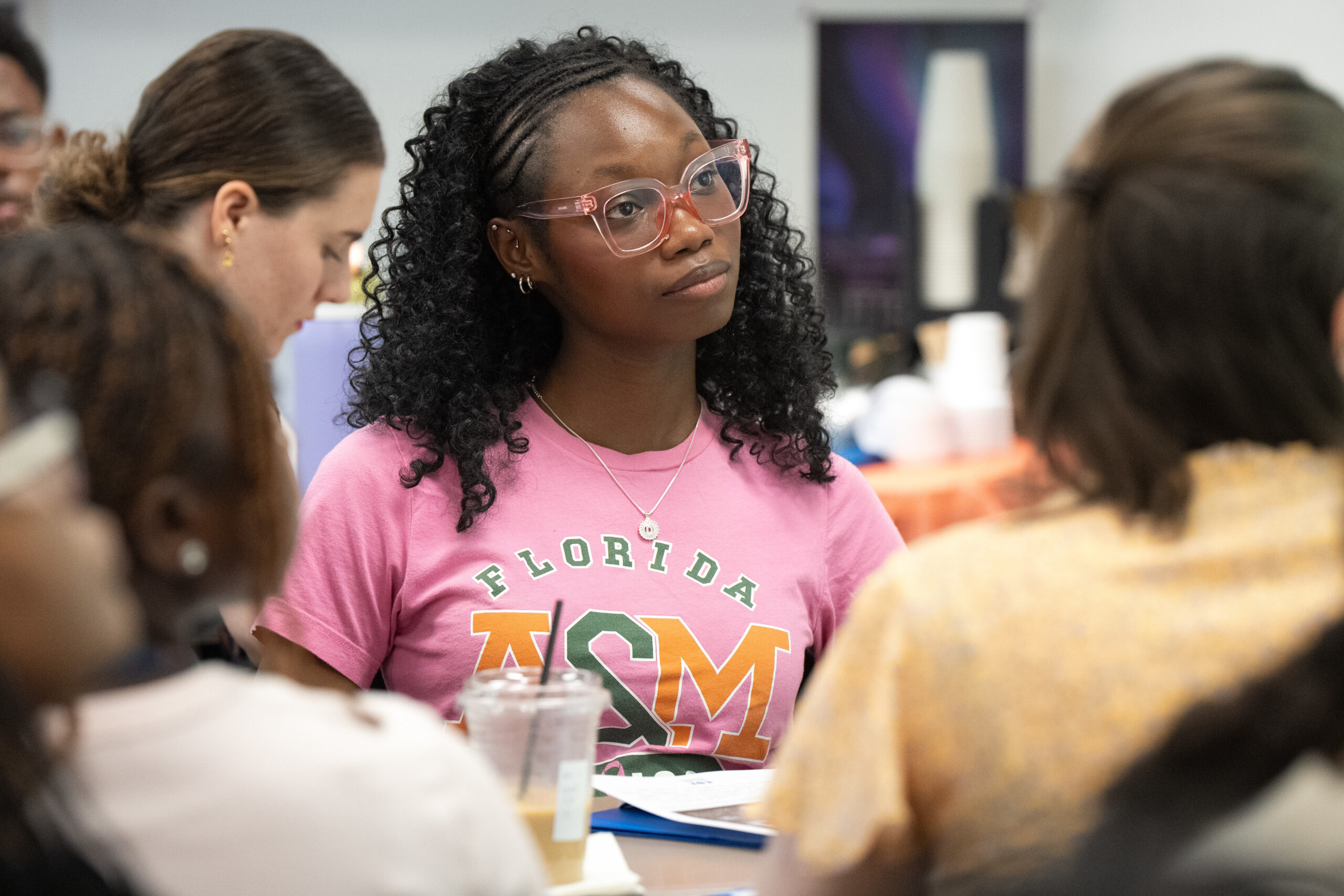
    Dominique Sidae, 23, a fellow with the Breakthrough of Greater Philadelphia, listens to a talk by Leon Smith last week.

    Miles Baldwin, an 18-year-old graduate of Harriton High School in Lower Merion, isn’t sure he wants to become a teacher. But he enjoyed working with students last summer in the Breakthrough program — “a lot of kids came in hating it, and left wanting more,” he said — and Smith’s pitch about being a mentor was compelling to him.

    “Honestly, yeah,” he said, when asked if hearing from Smith made him more interested in teaching.

    That’s part of the goal of Smith’s role as Teacher of the Year, as a dwindling pipeline has challenged recruitment efforts.

    Smith’s agenda this summer includes attending the National PTA Convention in Pittsburgh and giving a keynote speech at the Smithsonian’s National Education Summit. He also will be joining other state teachers of the year at Space Camp in Alabama and participating in professional development.

    But addressing the Breakthrough teaching fellows Wednesday “reminds me of my why,” Smith said in a brief interview. He said the fellows’ eagerness to ask questions “shows they want to be the best they can be,” and reflects qualities of good teachers: “You have to be curious, sometimes silent … often humbled,” Smith said.

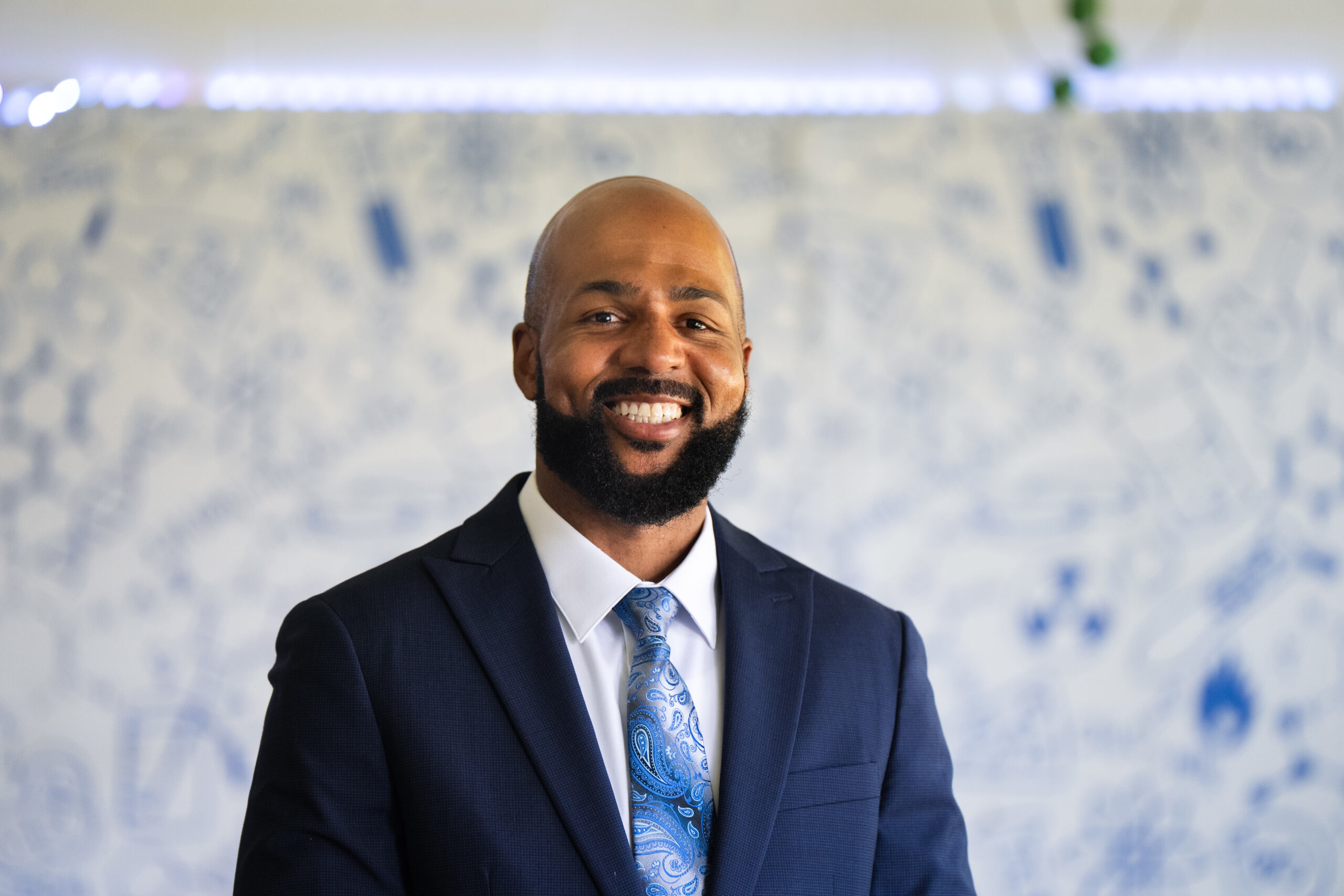
    Leon Smith, a teacher at Haverford High School, was named National Teacher of the Year this spring.

    Teaching students to lead

    In a model lesson after his talk, Smith put some of those skills on display. He started by gathering the 34 fellows in a circle, asking them each to share their name and a brief story about it; the group periodically broke into laughter at humorous anecdotes.

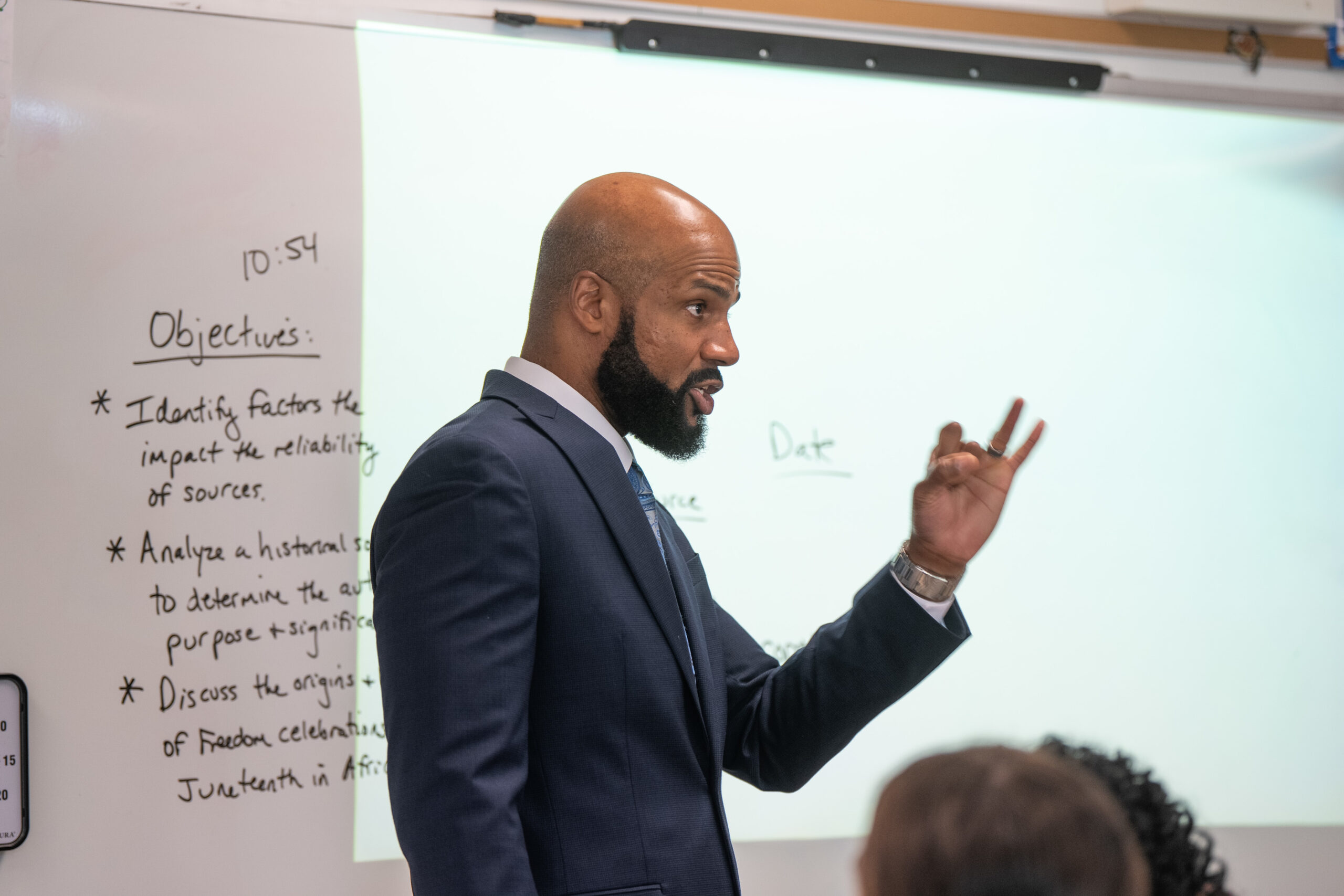
    Smith then outlined the objectives for his lesson about assessing the credibility of sources. He passed out copies of a photo, asking fellows to silently write and then discuss in small groups whether it provided strong evidence of the Fukushima power plant explosion.

    “I always tell my students, you want to be a leader,” Smith said, encouraging fellows to stand by their analyses, even if others disagreed. He then called on people, asking them to explain their thinking while challenging some of their points.

    Leon Smith talks to fellows at Breakthrough Collaborative last week.

    Matt Greenawalt, co-dean of faculty for the Breakthrough summer program and a teacher at Germantown Friends — which supports Breakthrough — was planning to breakdown Smith’s approach for the fellows after the lesson. He noted how Smith was walking through the room, engaging with the fellows as they talked, and Smith’s ability to affirm and redirect them when an answer wasn’t on point.

    Smith’s visit came on day three of a two-week orientation for the fellows, before they would begin teaching students during Breakthrough’s six-week free summer program.

    While access to academics is key for the program’s students, many of whom come from Germantown, “a big piece of it too is having role models,” Greenawalt said.

    Smith told fellows that when the students arrived, “they’re going to just admire you so much.”

    “You’re going to be able to see the light inside of them, and sometimes it just takes someone else to notice, right? … They’ll just kind of be doing their work, and then as you get to know them, you’ll notice certain characteristics and you’ll just pour into it.”

    What really helps make a connection with kids, Smith said, is “just you being yourself.”

    “You walking in there and walking in your own life, and bringing your passion and all the reasons why you wanted to become a teacher,” he said. “Your students are going to feel that.”

  • Stacy Garrity on potentially being the first female governor of Pennsylvania: ‘It’s my least favorite thing to talk about’

    Stacy Garrity on potentially being the first female governor of Pennsylvania: ‘It’s my least favorite thing to talk about’

    If elected in November, Stacy Garrity would become Pennsylvania’s first female governor in the state’s 238-year history.

    Even now, she is one of only two women in history to receive the Republican Party’s nomination for the job.

    The state has never had a woman as its governor; no woman has been elected as U.S. senator; and both times a woman ran for president, she lost the state. Over the last two centuries, Pennsylvania’s political glass ceiling has proven stubbornly resistant to cracks.

    But on the campaign trail against Democratic Gov. Josh Shapiro, Garrity, 62, said she doesn’t give that too much thought.

    “It’s my least favorite thing to talk about,” she said. “I was the oldest of four daughters, and we were just told that we were expected to work hard.”

    Navigating gender dynamics in politics can prove to be a particularly fine balance. Republicans, in particular, often emphasize that candidates should rise on their skills and talent, not personal identity.

    Garrity emphasized her attention is on issues like the power grid, education, and reining in spending, though she recognizes the historic significance of a potential win.

    “Republicans, for the most part, are based on merit, and that’s how I was raised,” said Garrity, who spent decades serving in the Army Reserve and as an executive in the manufacturing industry before becoming state treasurer. When she was reelected in 2024, she broke the record in Pennsylvania for the most number of votes cast in her favor for a statewide office, a distinction formerly held by Shapiro.

    In addition to taking on centuries of male-dominated leadership, Garrity will face other challenges in November.

    She is a Republican who has aligned herself closely with President Donald Trump — including campaigning at his Mar-A-Lago Club in Florida — at a time when Trump has been experiencing historic dissatisfaction among voters and the national political environment favors Democrats.

    And she is running against Shapiro, a Democratic incumbent with a rising national star who is popular even among independents. He has $38 million banked as of May, vastly outpacing Garrity’s $2.8 million. Shapiro is also counting on a strong showing in the midterms to help Democrats win the majority in the U.S. House.

    “I think [voters] are excited to have a first female governor, but I don’t think that is the reason anybody would vote for me,” she said.

    In Pennsylvania and 16 other states

    It is hard to be what you can’t see. And for voters who have never experienced a woman at the top of the hierarchy, it is difficult to imagine what that could look like, experts said.

    It has been 300 years since a woman led Pennsylvania — before it was a state.

    Hannah Callowhill Penn led the colony of Pennsylvania, governing first while her husband, William Penn, suffered several strokes, and then alongside a group of trustees after he died. Over 14 years, she settled boundary disputes, appointed and replaced government officials, and navigated relations with the monarchy in England.

    Other Pennsylvania women made attempts to break gender barriers but came up short. Barbara Hafer ran as a Republican against Democratic incumbent Bob Casey Sr. in the 1990 governor’s race, but lost with just 32% of the vote.

    Former U.S. Rep. Allyson Schwartz lost to Tom Wolf during the Democratic primary for governor in 2014, and Laura Ellsworth was defeated by Scott Wagner in the 2018 Republican gubernatorial primary.

    “It could just be a coincidence, but also it’s very hard to break political traditions, and one of those traditions in Pennsylvania, unfortunately, is male leadership,” said Nichola Gutgold, a professor at Pennsylvania State University’s Lehigh Valley campus, who has researched women in politics.

    Pennsylvania, however, is not alone. There are 17 states that have never had a female senator, and 17 states have never had a female governor, according to the Pew Research Center. That distinction spans geographic ranges and party control.

    Still, Pennsylvania is one of just four states that has never had either, along with Idaho, Indiana, and Colorado. Among them, only Colorado went for Democrats Hillary Clinton and Kamala Harris for president.

    “We have certain variables at play in the Commonwealth of Pennsylvania that make it more challenging for women to run for elected office,” said Dana Brown, executive director of the Pennsylvania Center for Women and Politics.

    The role of the parties on the state and county levels means they have a strong influence on recruiting candidates and pushing them up through the pipeline. Historically, recruiting tended to come from more masculine bases — such as fire stations or township supervisor positions.

    Now, though, “both sides of the aisle recognize that women can win here in Pennsylvania, and so Republicans and Democrats have been purposely recruiting more women,” she said.

    Women have made strides in other Pennsylvania elected offices.

    In Harrisburg, State Rep. Joanna McClinton (D., Philadelphia) is the first woman and second Black person to serve as speaker of the Pennsylvania House. Republican State Sen. Kim Ward of Westmoreland County is the first woman in Pennsylvania history to serve as Senate president pro tempore and Senate majority leader.

    When former Democratic U.S. Rep. Susan Wild, the first woman to represent the Lehigh Valley in Congress, was elected in 2018, “it took a real concentrated effort from [political action committees] and from groups that really wanted to see a woman win to make that happen,” Gutgold said.

    In other cases, as in neighboring New Jersey or Virginia, women have ascended with a combination of fortunate timing, skill, experience, and deft campaigning.

    When Gov. Mikie Sherrill last year became the second woman elected to lead New Jersey, Brown said, “it was a change election for New Jersey, and it was a sign of pushing back against what the federal government is doing with ICE and immigration and also with the economy.”

    Even though Sherrill, a Democrat, shares the same party as her predecessor, Phil Murphy, New Jersey’s vote for a woman represents change, Brown said. “She also worked really, really hard for it, as most women do,” she added.

    Sometimes, female candidates succeed by pushing against expected norms for women by emphasizing military experience or work in male-dominated trades, Gutgold said. Garrity has emphasized her military and business experience on the campaign trail, holding a Veterans for Garrity rally last week.

    “I think that, rhetorically speaking, it would be easier to elect a woman who appears to hold more conservative views, because of the way we, the electorate, still views women’s role in society,” Gutgold said.

    Republican women have scored victories in the Deep South by upholding conservative values such as opposition to abortion and support of gun rights. Kay Ivey holds the governor’s mansion in Alabama, and Nikki Haley previously led South Carolina for two terms. In Tennessee, U.S. Sen. Marsha Blackburn has represented the state since 2018 and publicly repudiated gender-specific titles, such as congresswoman vs. congressman.

    Garrity, on the campaign trail, has also vowed to clean up the “boys will be boys” culture in Harrisburg and has criticized Shapiro’s handling of a sexual harassment case involving a longtime aide.

    The aide, Mike Vereb, abruptly stepped down in 2023, while the administration quietly agreed to pay $295,000 to settle claims from an employee in the governor’s office that Vereb had made repeated sexual advances toward her, and made lewd claims about her and other women.

    “We don’t need to settle for a governor who will sweep sexual harassment and abuse charges under the rug. We don’t need to accept that our state government is a cesspool where intimidation is the norm and public employees fear retribution,” Garrity said during a news conference this year.

    Manuel Bonder, a spokesperson for Shapiro, rejected those accusations.

    “Governor Shapiro has a track record of taking on powerful institutions, exposing sexual abuse, and putting predators behind bars — and he continues to fight to deliver real accountability and justice for survivors here in Pennsylvania,” he said.

    Could Pa. women give Garrity a boost?

    Nationally, women voters tend to lean more toward the Democratic Party, Pew Research Center data show, so it’s unlikely that the Republican Party will attract a huge turnover — even with a female candidate on the top of the ticket.

    Sometimes, however, the gender divide can become even more entrenched. In 2024, for example, when the candidates were broadly polling neck-and-neck, Harris saw a 17-point advantage with Pennsylvania women, while Trump led with men in the state by 11 points, according to a Philadelphia Inquirer/New York Times/Siena College poll.

    Garrity said she is putting together agendas that speak to various coalitions of voters, such as veterans, Latinos, and small-business owners.

    “I don’t think we’ve done specifically females, but that might be a good idea,” she said. A campaign spokesperson added that Garrity would be rolling out women-focused events in the coming weeks.

    Campaigns can target women by speaking directly to certain issues. Democrats have often focused their message on support for reproductive access and abortion rights, especially since the 2022 Supreme Court decision overturning Roe v. Wade.

    According to a Pew Research Center report in March, 64% of women and 55% of men say abortion should be legal in all or most cases. But Garrity has been inconsistent on the issue. She said “Roe was wrong from the beginning” on the day the ruling came out and sold T-shirts on her campaign website that opposed abortion. But in an interview last September, Garrity said she would “respect” Pennsylvania’s current abortion law and would not support a state ban.

    Republicans, meanwhile, often promote public safety and have sought to make women’s sports a wedge issue in recent elections by pushing restrictions on the participation of transgender athletes.

    It is a tactic Garrity will use against Shapiro, who has called attempts to silo transgender athletes discriminatory.

    “A lot of people think that he’s moderate because he likes to be all things to all people, and they don’t understand, he is really for boys competing against girls in sports,” Garrity said.

    There are other issues women candidates are often seen as more trusted on, such as education, healthcare, and children’s needs, Gutgold said.

    Amy Widestrom, executive director of the League of Women Voters of Pennsylvania, said top of mind for members of her organization right now is the right to vote. She said some women have expressed concern that requiring documentary proof of citizenship, which Republicans say is meant to ensure immigrants in the country illegally do not vote, could affect those who change their legal name and do not have matching identification records.

    Appealing to women on these issues can pay off, as they represent a significant voting bloc. Among registered voters in Pennsylvania, 52% are female. Of registered Democrats, 59% are female, and 47% of registered Republicans are female. Roughly 40% of unaffiliated voters are female, according to Widestrom, via voter data.

    But Macy Charles of Concerned Women for America, a socially conservative political nonprofit focused on women, said candidates should speak more expansively when courting women voters.

    “It’s pretty offensive to assume that when we’re talking about issues women care about, it’s only women’s specific issues, like abortion,” said Charles, a legislative strategist. “Women care about the economy, women care about the U.S. borders. Because they have maternal instincts, they care about their families, they care about the well-being of America’s future.”

    Rather than leaning into identity, Charles said, Garrity is reinforcing her reputation of competence.

    “More than just her identity as a woman, she is willing to stand up for common sense and truth and really put families first,” she said.

    Still, Garrity recognizes the achievement her potential victory could bring.

    To be Pennsylvania’s first female governor, “I think it would be great,” she said, “but I think it will be because I am absolutely the best candidate.”

  • The city’s graffiti cleanup program doesn’t cover areas where residents request it the most

    The city’s graffiti cleanup program doesn’t cover areas where residents request it the most

    To make its best first impression on the droves of visitors expected this summer in Philadelphia, the city has launched an anti-graffiti cleanup campaign. But those cleanup areas do not match up with where Philadelphia residents actually ask for it the most.

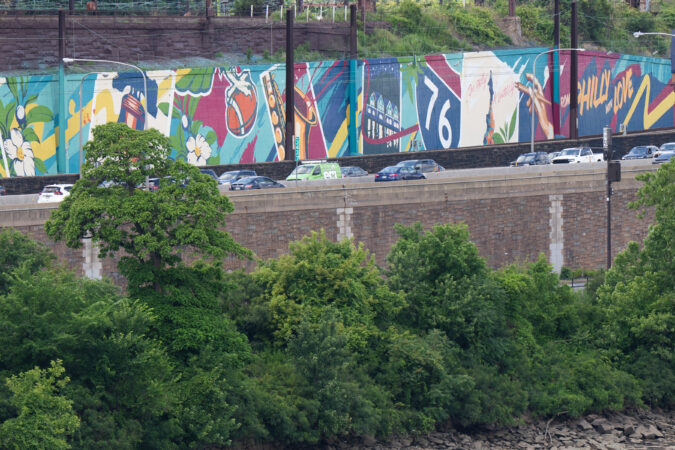
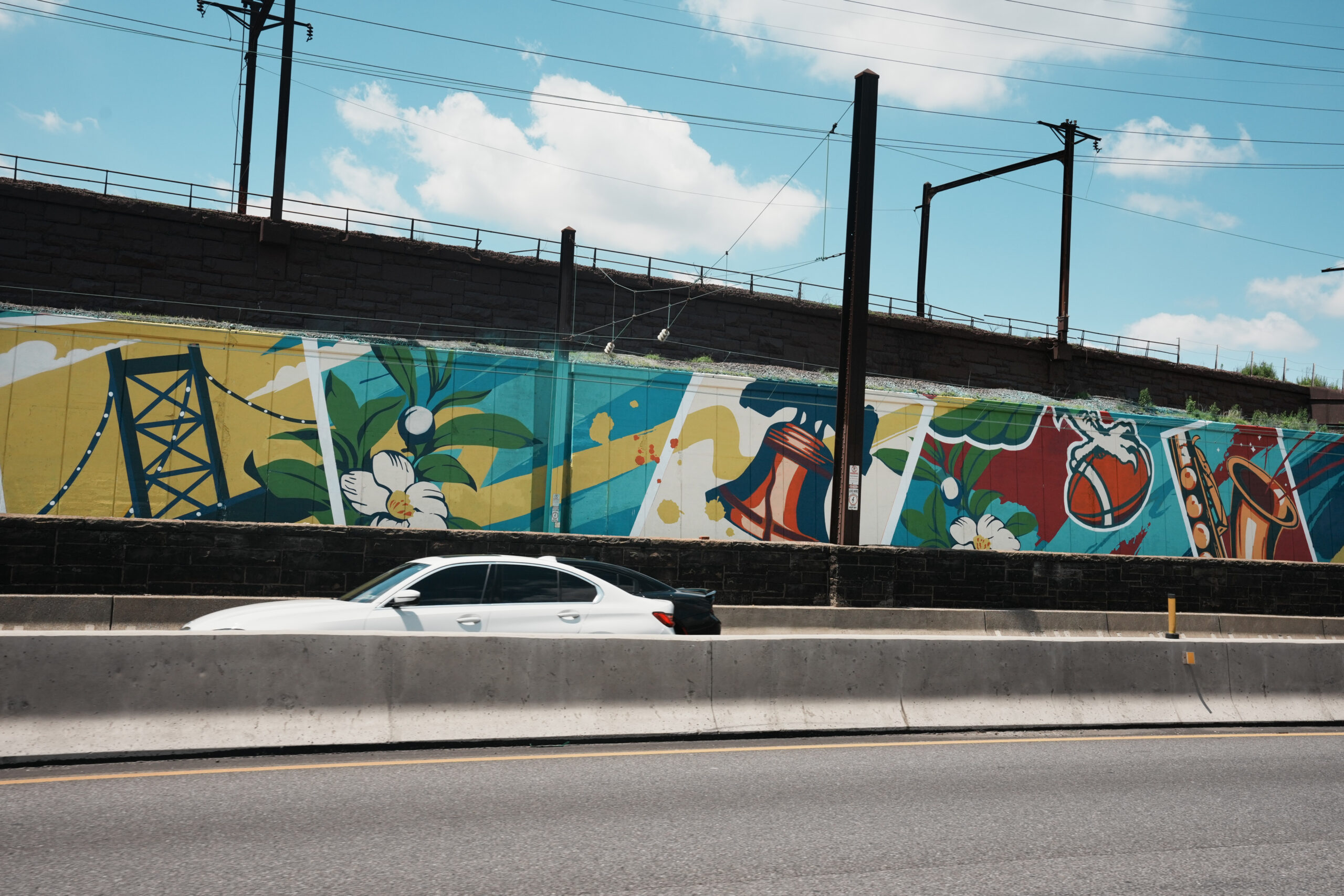
    In the fall, the city began an $11.5 million beautification project ahead of this summer’s series of major events — the World Cup, the nation’s 250th celebration, and the MLB All-Star Game — that included new landscaping and graffiti cleanup. The Gateways to Philadelphia project focused on seven major transit areas that could be a visitor’s first glimpse of the city, where new murals and fresh flowers replace sparse medians and graffiti.

    Those gateways were:

    • 26th Street Gateway at Penrose Avenue.
    • South Street Bridge, walls, medians, and ramps.
    • 30th Street Station walls, medians, and ramps.
    • I-676 interchange at 15th and 16th Streets and Vine Street.
    • I-676 interchange at Sixth and Eighth Streets and Callowhill/Vine Streets.
    • I-76 and I-95 interchange at Second and Third Streets and Callowhill/Vine Streets.
    • CSX/Amtrak wall at Spring Garden Street.

    Meanwhile, the hot spots for graffiti cleanup requests through 311 last year were most densely clustered in West Philly, South Philly, and Northern Liberties. Despite three gateway locations being a short distance from high-density areas, they are on the opposite side of the Schuylkill from the hot spots.

    In 2025, residents submitted 10,141 requests for graffiti removal, and nearly all of them have since been marked closed. There was a seasonal spike in the spring, with residents filing over 1,100 requests each in March and April.

    (function() {
    var l2 = function() {
    new pym.Parent(‘iframe_test’,
    ‘https://media.inquirer.com/world_cup_graffiti/iframe_graffiti_wc_map.html’);
    };
    if (typeof(pym) === ‘undefined’) {
    var h = document.getElementsByTagName(‘head’)[0],
    s = document.createElement(‘script’);
    s.type = ‘text/javascript’;
    s.src = ‘https://pym.nprapps.org/pym.v1.min.js’;
    s.onload = l2;
    h.appendChild(s);
    } else {
    l2();
    }
    })();

    Sara Lorenz, 45, lives in one of the corridors with a high amount of graffiti cleanup requests, along Baltimore Avenue in West Philly. She said graffiti typically gets cleaned up fairly quickly in the area, particularly near businesses, but sometimes it lingers and becomes an eyesore. Lorenz makes a distinction between artful graffiti and careless markings, and said it would do some good if the city had an initiative targeting the latter on blocks like hers.

    Lorenz said she understands the city’s desire to make its best appeal to tourists this summer, but it would be nice if the beautification efforts went toward the typical Philadelphian, too.

    “As residents, we also deserve respect,” she said.

    The city has painted a new, wide postcard style mural to cover graffiti.

    Efficient response time

    It could be that some Philly residents also want graffiti removed from the city’s chosen gateways, and that people are less likely to contact 311 for what they witness while driving on major roadways. Some other residents living near Lorenz said they had not noticed graffiti much around them and were not bothered about the city’s beautification plans.

    The city is clear that the gateways project was prompted by visitors, but there are plans for at least some of it to continue after the guests leave. The beautification project is expected to be completed sometime this summer, and a maintenance plan has been put in place for the new installations, according to Keisha McCarty, a spokesperson for the Philadelphia Office of Clean and Green Initiatives.

    “If you want the city to look clean, you want to do it where it’s most visible,” said Fikru Bekele, 75, the owner of multiple properties along Baltimore Avenue, who said he understands the city’s focus on visitors. He said he has gotten used to residents not receiving as much attention as higher-profile projects do.

    “It’s not the right thing but it’s the way it is. … Neighborhoods need to be taken care of, too,” he said.

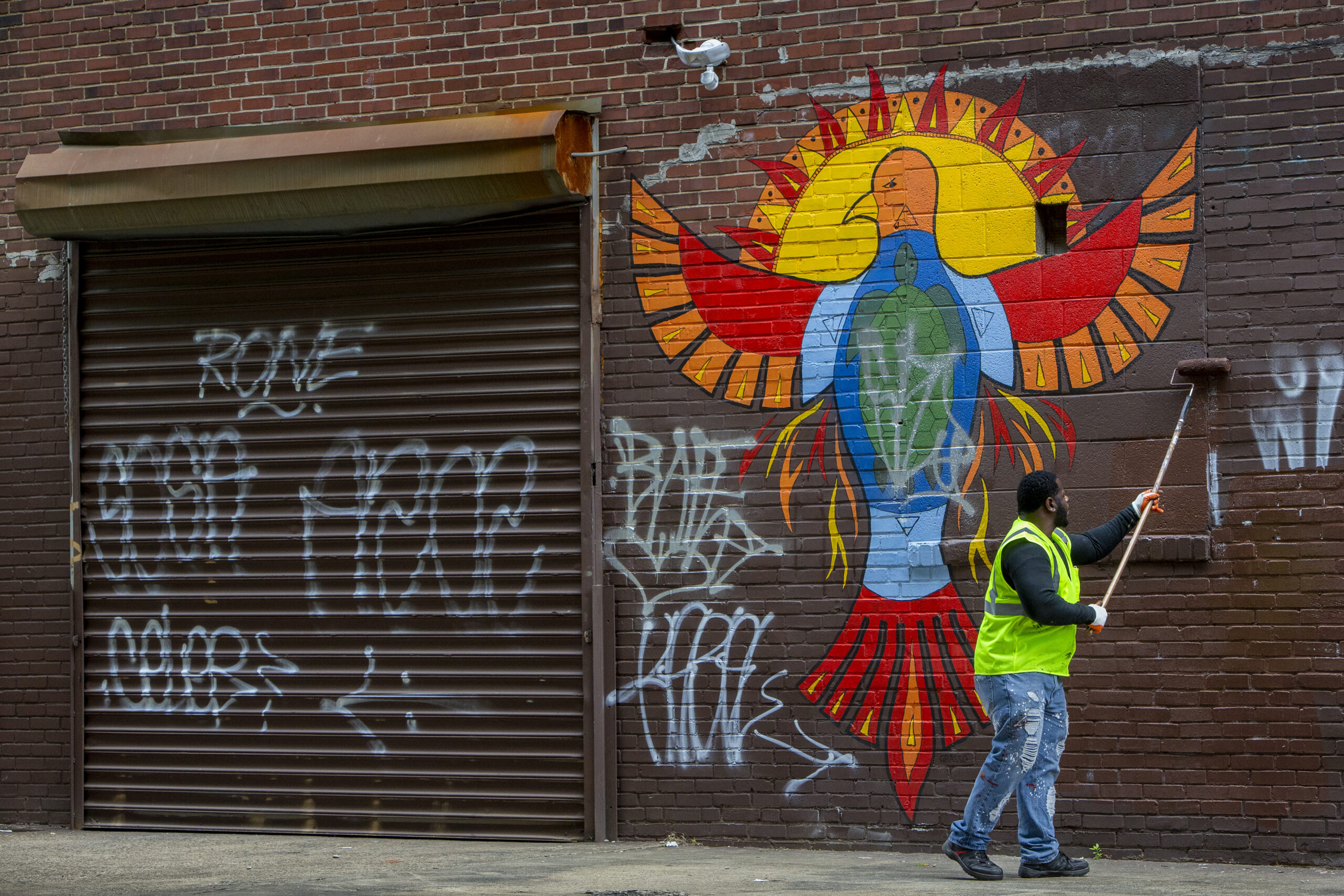
    William Scott with the CLIP, Community Life Improvement Program, removes graffiti from wall around a colorful bird along North 9th Street near Jefferson on Tuesday, April 20, 2021.

    However, graffiti removal in Philadelphia neighborhoods might not need additional focus, because the city’s existing program appears to be working efficiently. Graffiti removal requests submitted to 311 are passed along to the Philadelphia Community Life Improvement Program, known as CLIP. It took 311 and CLIP crews eight days on average to close graffiti removal requests last year, with five days as the median closure time.

    If there is a 311 submission in South Philly, there is a decent chance it’s coming from Joe Eastman. The retired Navy veteran is a 311 neighborhood liaison, part of a city program that trains certain residents how to report issues more effectively. Eastman, 75, goes on walks and reports what he sees in the neighborhood, and often finds himself alerting 311 to the same spots, like a stop sign near Broad Street and Snyder Avenue.

    “I’m sure if I go back in two weeks it’ll have graffiti again,” he said.

    Eastman is pleased with 311 and CLIP’s responsiveness, and said he has no problem with the anti-graffiti focus on visitors if CLIP continues at its current pace.

    “I get what they’re doing. And as long as they are being as responsive as they have been, I think we can all get along with this,” he said.