Tag: Weekend Reads

  • Philly police union defends questionable expenses, blaming city ‘ineptitude’ for delayed funeral payouts for officers killed in the line of duty

    Philly police union defends questionable expenses, blaming city ‘ineptitude’ for delayed funeral payouts for officers killed in the line of duty

    Philadelphia’s police union issued a statement criticizing city officials for failing to promptly reimburse expenses incurred for officers who died in the line of duty, and disputed the city’s claim that it did not use tax dollars to cover a roughly $11,500 funeral luncheon, which included a 94% “gratuity.”

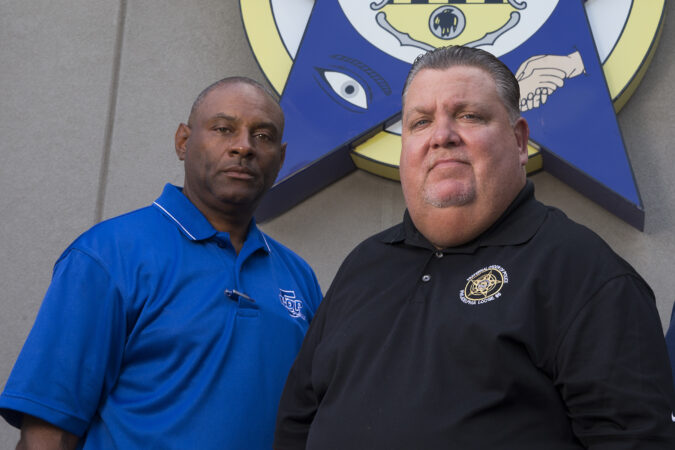
    The Fraternal Order of Police Lodge 5’s statement, which was posted on Facebook last week and emailed to its members, followed an Inquirer investigation that found the union has for years billed the city following an officer’s death for expenses that are unrelated to funeral home and cemetery costs.

    “The problem has always been and continues to be the city of Philadelphia’s ineptitude to pay bills in a timely fashion,” the FOP wrote. “Which leads to the survivors’ families having to make large financial decisions for funerals, services, luncheons, transportation, cemeteries, funeral attire, and cremations within days of suffering a traumatic life-changing event.”

    Since 2014, the city has contributed up to $75,000 in tax dollars for each line-of-duty death, up from $15,000. The FOP’s contract with the city calls for the union to be reimbursed for “reasonable and necessary funeral expenses.” But there is no further explanation of what would qualify, and The Inquirer found the union has asked the city to pay tens of thousands of dollars for everything from bar and restaurant tabs to socks and underwear.

    The FOP has also billed the city for at least eight events at its own bar, 7C Lounge, located inside its sprawling headquarters in Northeast Philadelphia. One of those events was a luncheon in May 2020 for Cpl. James O’Connor IV, a 23-year veteran and married father of two, who had been shot and killed in March of that year.

    His funeral had to be postponed for eight weeks due to the COVID-19 pandemic and only a limited number of people, all in masks, were permitted inside the church.
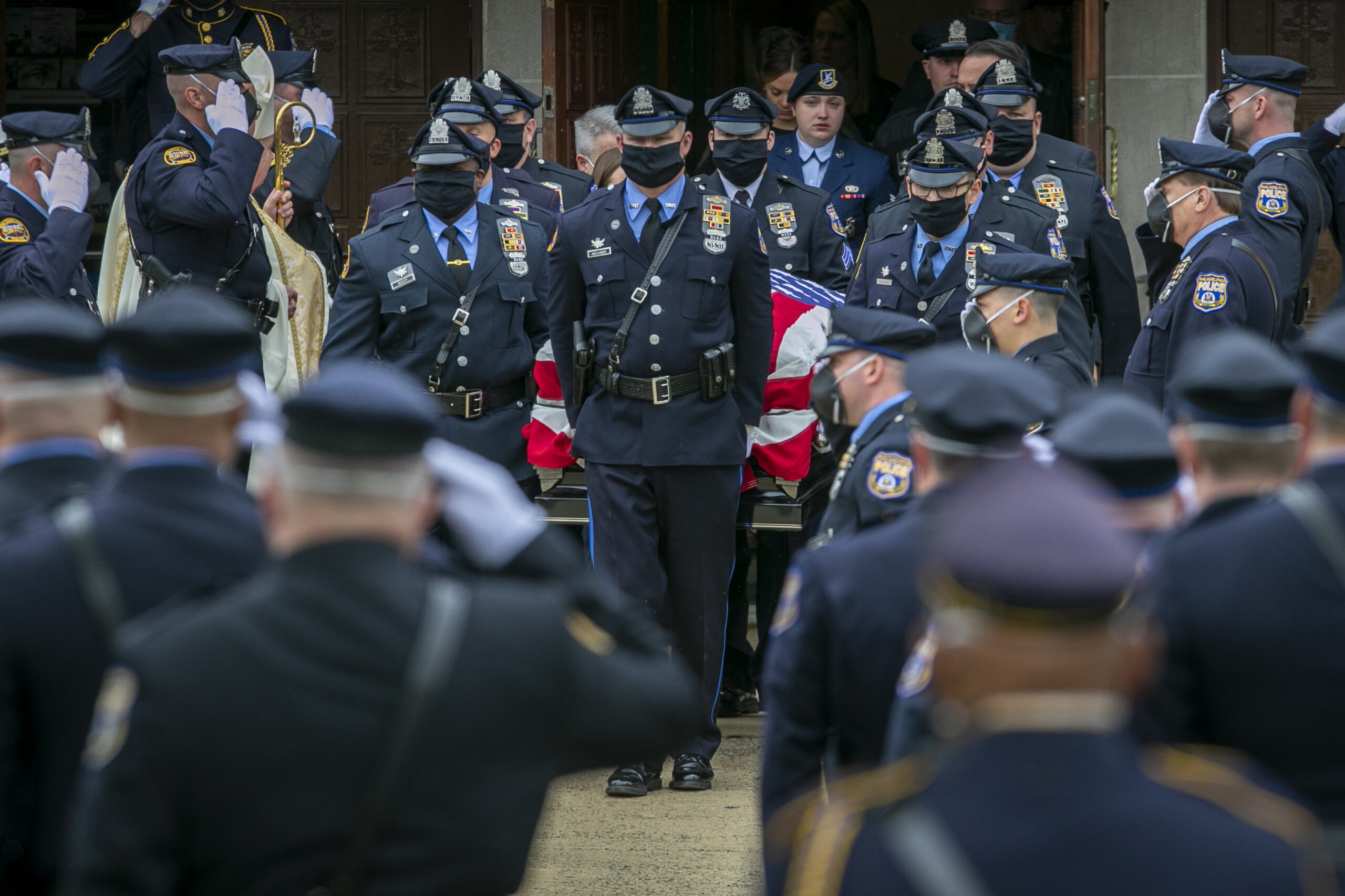
    Pallbearers carry the body of slain Philadelphia Police Cpl. James O’Connor IV outside Our Lady of Calvary on May 8, 2020. O’Connor was killed in the line of duty.

    Even though the city had restricted bars and restaurants to takeout and delivery service, the FOP held a 2½-hour lunch for O’Connor at its own bar.

    Records show the FOP billed the city for $5,700 worth of bottled beer, an open bar, and food for 160 people. The union added a $5,375 gratuity.

    Sharolyn L. Murphy, the city’s risk manager and deputy finance director, wrote in an email to The Inquirer that the city did not reimburse the FOP for the O’Connor luncheon.

    The FOP statement claims otherwise. The union wrote that it provided the city with comprehensive documentation and was fully reimbursed.

    The FOP statement also says that the $5,375 was not all a gratuity — which is how it is listed on the bill — but just $925 for a tip while the rest was payment for kitchen and catering workers, bartenders, servers, and managers.

    “This was the only way to add the payroll and gratuity expense to the catering invoice,” the FOP wrote. “This was all documented and explained in timestamped email records and provided to the city which is why they approved the reimbursement.”

    The FOP attached to its statement copies of six emails listing the amounts paid to the staffers, all of whose names are redacted. Names of the senders and recipients are also redacted, except for then-FOP president John McNesby’s.

    The emails were not included in the Right-to-Know records The Inquirer received from the city. The city did not respond to questions about whether the risk management team had gotten them and, if so, why they were not among the documents previously provided to the newspaper.

    But Murphy on Tuesday e-mailed The Inquirer a breakdown of the items the city denied from a $32,600 reimbursement request, including the cost of the O’Connor luncheon, as well as liquor bills totaling $800 and $50 in miscellaneous beverages.

    “The city provides expeditious payment of funeral expenses to support families of those who made the ultimate sacrifice to service to Philadelphia,” Murphy wrote in an e-mailed response to The Inquirer. “At the same time, the city has a responsibility to ensure that taxpayer funds are spent appropriately.”

    Current FOP president Roosevelt Poplar and McNesby, who served as the union’s president for 16 years before stepping down in 2023, did not respond to multiple requests for comment before The Inquirer published its investigation. In its June 13 statement, the FOP called The Inquirer’s investigation a “hatchet job hit piece.”

    The Inquirer’s examination of the funeral expenses underscored questions about the FOP’s nonprofit Charitable Foundation, commonly known as the Survivors’ Fund, which raises money to pay for funerals and support the families of officers who were killed or seriously injured in the line of duty.

    A 2025 Inquirer investigation found that the FOP reported spending hundreds of thousands of dollars on “funerals and special events” in years when no officers died in the line of duty, and that its expenditures and cash donations had been loosely documented and were difficult to track.

    The Inquirer sought further clarity by filing Right-to-Know requests with the city for more than 1,000 pages of invoices, bills, emails, and other public records concerning 17 police line-of-duty deaths since 2014. Eight of the deaths were attributed to COVID.

    The FOP publicly criticized The Inquirer’s records request.

    Included in the documents were FOP submissions of receipts from businesses such as Target, Home Depot, Walmart, Acme, 7-Eleven, and CVS that include no explanation as to why they were funeral expenses. The union has also forwarded statements of corporate credit cards requesting reimbursement for restaurants and beer stores.

    Some reimbursement requests lacked receipts or itemized breakdowns, and at least two were for cash. The FOP did not address the cash requests in its statement.

    The Inquirer found that the city has covered the bulk of the FOP’s requests, although in almost all cases, the documents do not point to which specific reimbursements were approved or denied. An FOP request for $1,870 to cover two bar tabs and pipes and drums after a dinner is the only explicit denial in the records.

    The FOP wrote in its statement that its “finance office and accounting firm have comprehensive, accurate, and detailed records for all financial transactions for our multiple accounts. There are no missing or incomplete records.”
  • The son of the Jersey Kebab restaurateurs now faces his own fight to stay in the U.S.

    The son of the Jersey Kebab restaurateurs now faces his own fight to stay in the U.S.

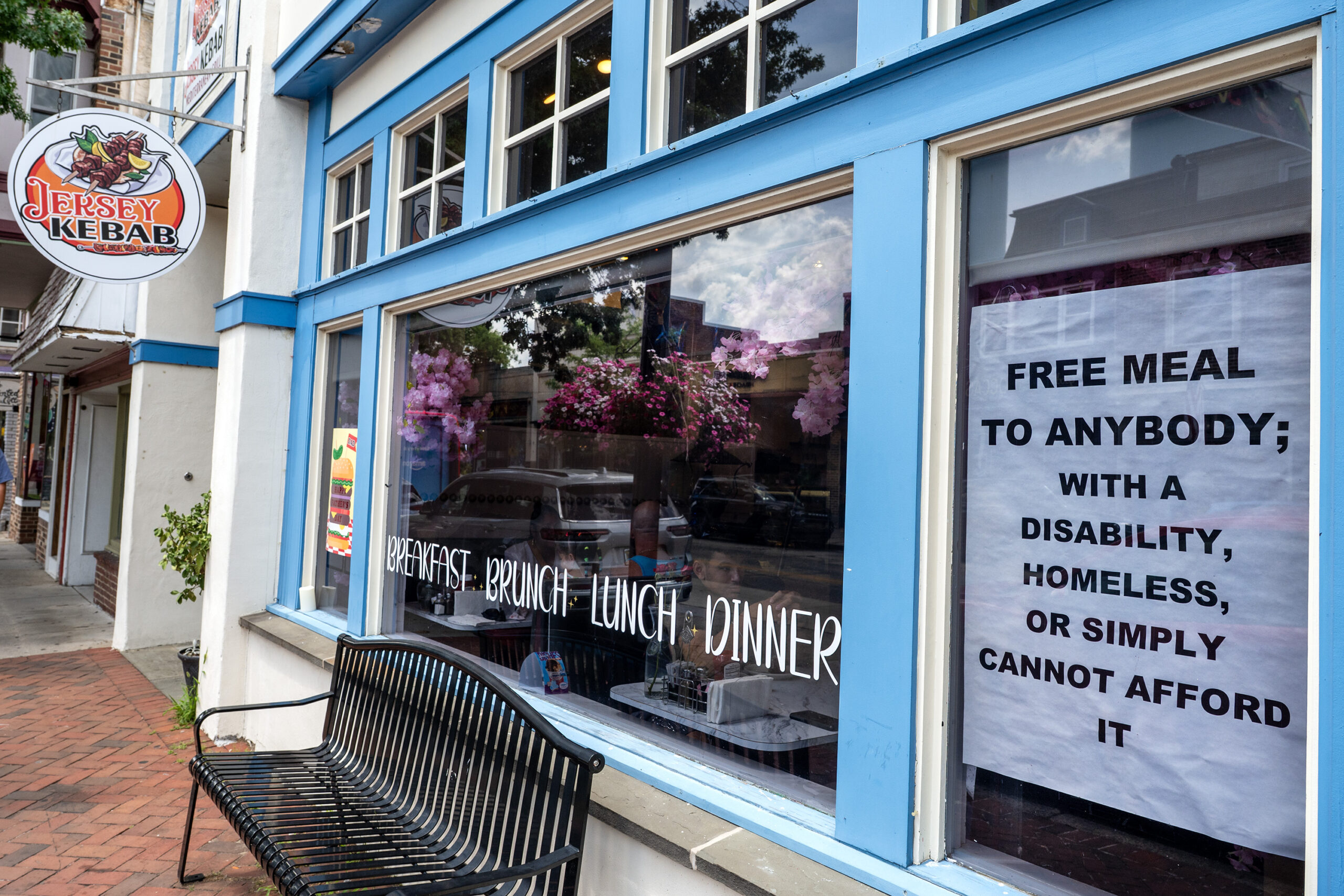
    The son of the Jersey Kebab restaurant owners whose ICE arrests sparked wide condemnation last year now confronts his own battle to stay in the United States.

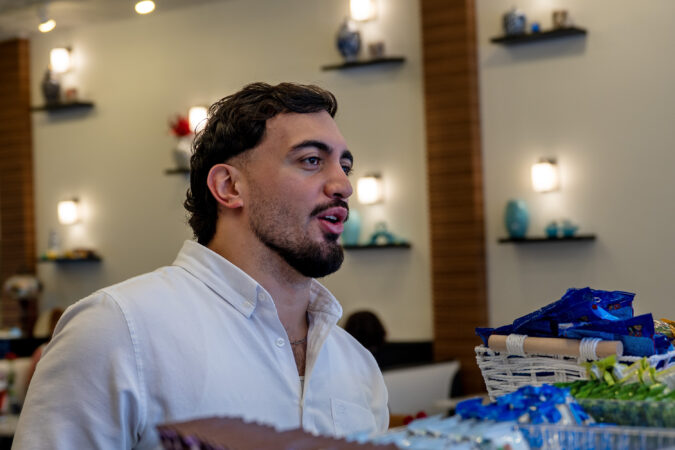
    Muhammed Emanet, 26, said he is trying to be upbeat as he faces the prospect of being separated from his wife and two sons, ages 4 and 1, all American citizens.

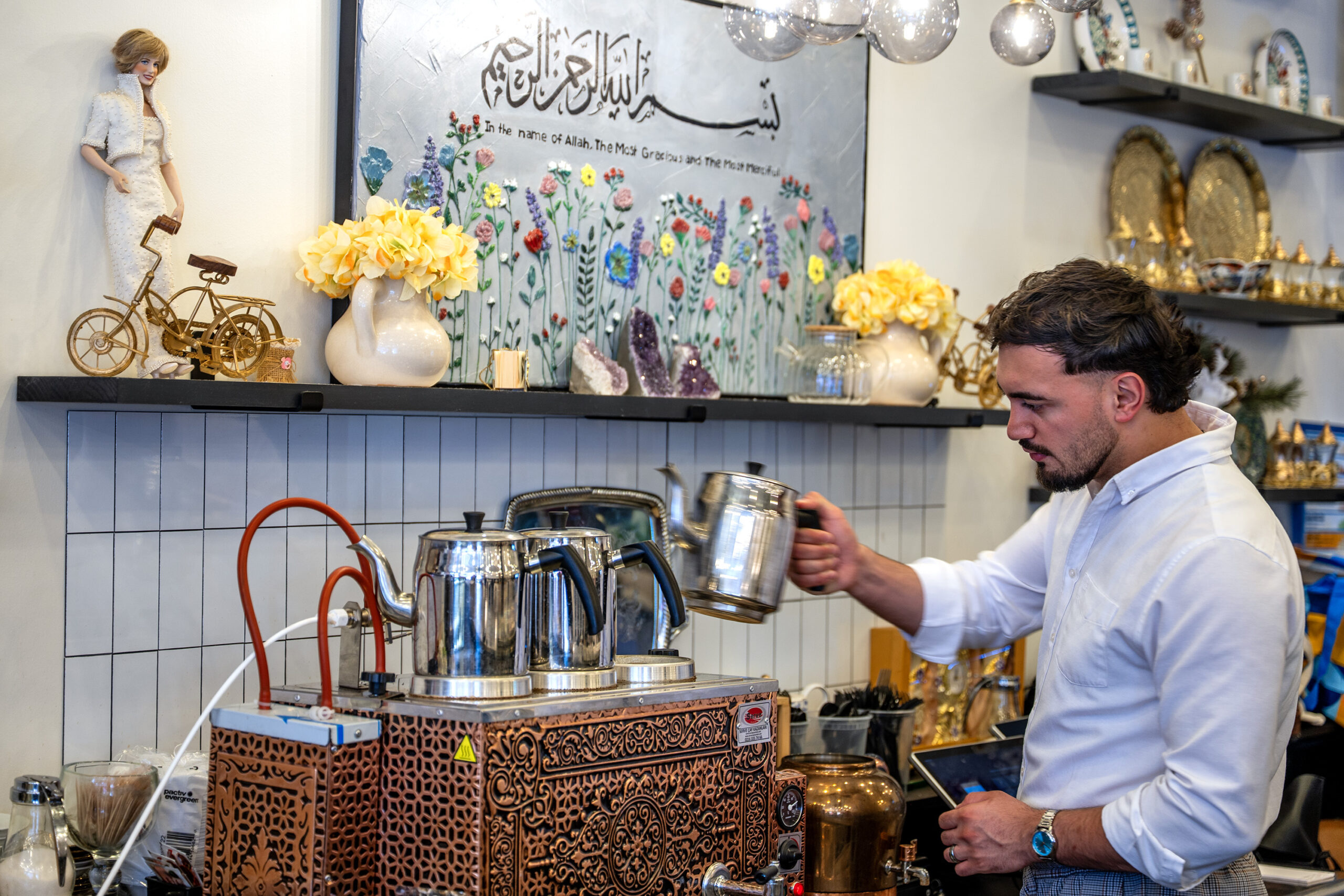
    “I try not to dwell on what I can’t control,” said Emanet, who with his parents operates the popular South Jersey eatery in Collingswood. “I still have a restaurant to run, employees that depend on me, customers, family. I have no other choice but to be positive.”

    Still, his situation feels disorienting, as what seemed to be settled is now newly unsettled.

    In spring the Department of Homeland Security ended its effort to deport Emanet, which seemed to clear the path for him to stay in the U.S. But this month, a different federal immigration agency told him it plans to deny his request for legal permanent residency, what is known as a green card.

    That intended denial carries a 30-day window for Emanet, who came here from Turkey as a boy, to present new or additional evidence to try to change the minds of officials at U.S. Citizenship and Immigration Services.

    The government also told him that under a new Trump administration policy, he and other immigrants who are pursuing green cards while living in the U.S. must leave the country and apply from their home nations. Emanet hasn’t been in Turkey since he was 12.

    It’s unclear what will happen when the 30-day deadline expires around July 2.

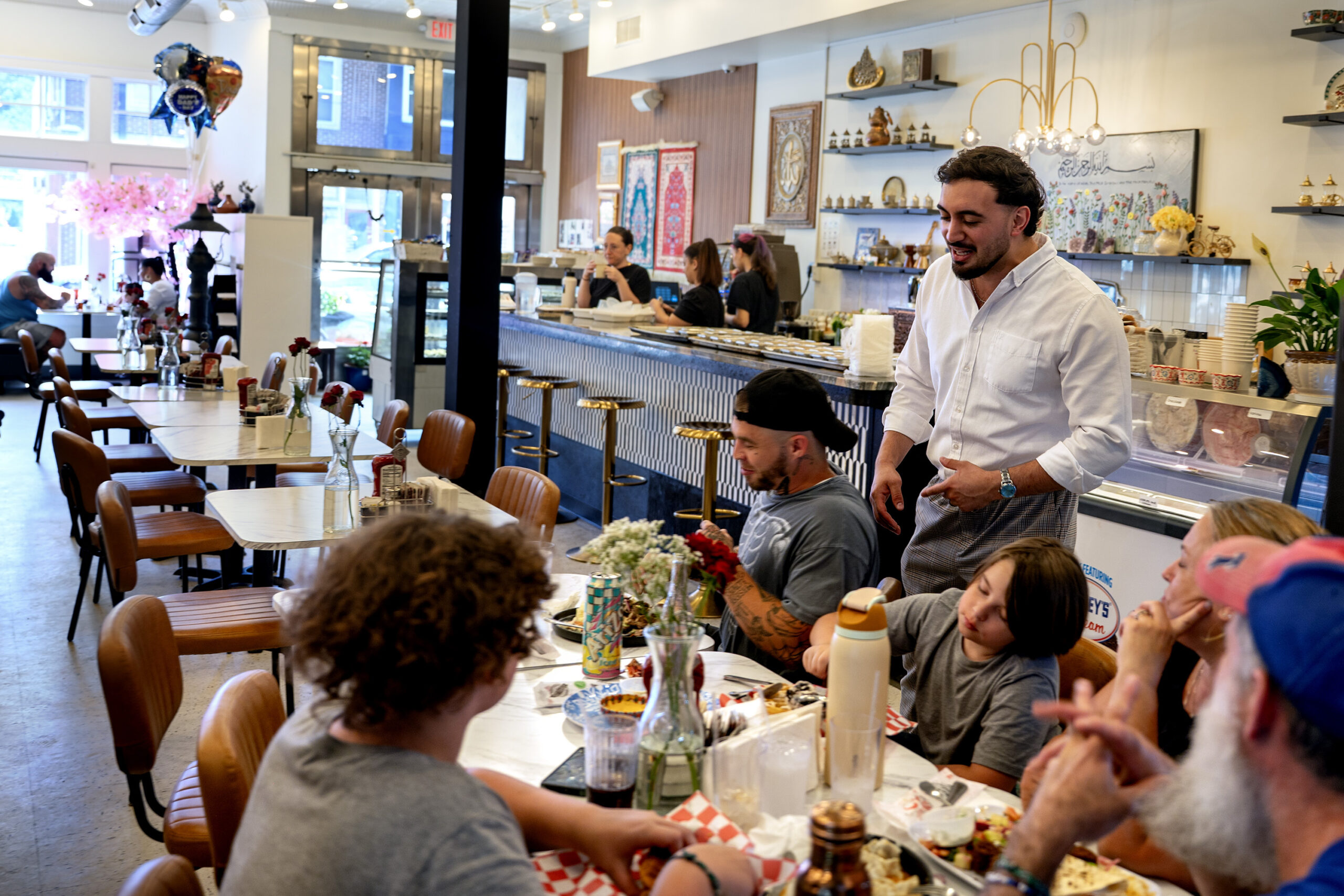
    Muhammed Emanet greets Elijah Brown, a friend from high school, and his family, at Jersey Kebab in Collingswood on Sunday.

    A little more than a year ago, on Feb. 25, 2025, the small Mediterranean restaurant on Haddon Avenue generated national headlines. Immigration advocates and local leaders railed against what they saw as government injustice, after ICE agents arrested owners Celal Emanet and his wife, Emine.

    Celal Emanet was released after being fitted with an electronic ankle monitor ― later removed ― while his wife was held at an ICE detention center in Elizabeth. She was released on bond after two weeks and a day.

    Their arrests angered a South Jersey community that has long known the couple as caring people who offer free food to the hungry. A GoFundMe campaign to pay family costs and expenses raised $327,000, drawing donations from across the country and beyond, including from Ireland, Germany, and England.

    Now, a community effort to help Muhammed Emanet is driving a new letter-writing campaign, with person after person attesting to his good character and his importance to his neighbors. Hundreds of letters have been signed and gathered to be presented on his behalf, said Lori Leonard, who organized the GoFundMe campaign last year.

    “People are rallying behind Muhammed,” she said.

    State Assemblyman Bill Moen, a Democrat who represents parts of Camden and Gloucester Counties, signed a letter of support. He said on social media that Emanet “has touched the lives of many people throughout South Jersey” as a husband, father, neighbor, friend, and businessperson.

    “While I don’t make immigration decisions,” Moen said, “I do believe decision-makers should understand the character of the people whose lives are affected by those decisions.”

    U.S. Rep. Donald Norcross, a South Jersey Democrat, met with the family soon after Emine Emanet was released from ICE detention, and as her son’s situation emerged this month he stressed in a statement that the family had been long “rooted in our community.”

    In response to questions on Muhammed Emanet’s situation, USCIS said it does not comment on individual immigration cases.

    Being removed to Turkey would likely separate Emanet from his wife and children for years. It also could subject him to reprisals from the Turkish regime, where repressive human-rights conditions under President Recep Tayyip Erdogan has driven an exodus.

    Marriage to a U.S. citizen by someone who legally entered the country ― as Emanet did ― has long been a reliable route to an adjustment of status and acquisition of a green card.

    But the Trump policy change announced in May said adjustment should be an “extraordinary” relief, one that depends on government discretion, not merely on having a valid marriage and submitting the proper forms. Failing to depart the U.S. under the policy can by itself be treated as a negative factor in the government’s decision-making.

    Emanet’s immigration lawyer, Joseph Best, said that change in administration policy does not alter the law around eligibility for green cards.

    “If USCIS follows the law,” Best said, “he will attain his lawful permanent resident status just as Congress intended. It is not some fluke or exceptional ‘ask’ here.”

    Discretionary factors, he said, all favor Emanet, who was brought legally to the U.S. as a child, was admitted under a valid visa, and has no criminal history. He is loved in his community, and a key person in a successful family business that is known for helping others, Best said.

    The Jersey Kebab restaurant in Collingswood where Muhammed Emanet works is seen on Sunday, June 21. It offers the same “Free Meal” policy as at the prior location in Haddon Township.

    Celal and Emine Emanet came legally to the United States with two young children in 2008, entering under a religious visa that allowed the father to work at a New Jersey Islamic center.

    They said that they sought green cards before that visa expired in 2013, but that the application has been in government limbo for years.

    In 2021, they founded Jersey Kebab in Haddon Township, and the restaurant recently moved west on Haddon Avenue to a new location in Collingswood.

    The couple’s immigration cases continue. Celal Emanet’s next hearing is scheduled for December, while his wife is to appear in April 2027.

    The family stands among roughly 386,000 Turkish immigrants and people of Turkish ancestry who live in the United States, according to Inquirer computations of U.S. Census figures. That includes about 15,000 in Philadelphia and surrounding suburban Pennsylvania and New Jersey counties.

    Turkey is a longtime U.S. ally, a rectangular land bridge between Europe and Asia that is surrounded by sea on three sides. It is a Muslim nation, a country of tea drinkers, the place where Julius Caesar is said to have immortally proclaimed “Veni, vidi, vici” ― “I came, I saw, I conquered” ― after a decisive battle victory near what is now the modern town of Zile.

    Today, people are leaving the country amid economic instability and political purges, with many trying to get to the United States.

    U.S. government apprehensions of Turkish nationals at the Mexican and Canadian borders surged from 67 in 2020 to more than 15,000 in 2022 and another 15,000-plus in 2023, dropping to 10,500 in 2024. Figures for 2025 were not immediately available.

    President Donald Trump is expected to be in Turkey next month to attend the NATO summit in Ankara.

    Muhammed Emanet works at his family’s restaurant, Jersey Kebab, in Collingswood on Sunday, June 21.

    During Trump’s second term, USCIS has repeatedly paused the processing of applications for all types of immigration benefits, including those for legal permanent residency.

    Last month, the administration announced it would require foreigners who are living in the U.S. and want to obtain green cards to leave the country to do so. The administration said they must now apply in their homelands, a departure from longstanding policy that has sowed confusion and concern.

    For decades, foreign nationals who meet requirements have been able to complete the green-card process in the United States, including those married to U.S. citizens, holders of work and student visas, and refugees and asylum seekers.

    USCIS spokesperson Zach Kahler said in a statement that entering the U.S. on a visa should not be a first step toward obtaining a green card, that tourists and temporary workers are permitted to come here for limited times.

    “Our system is designed for them to leave when their visit is over,” he said.

    Making people leave the country to apply for green cards “reduces the need to find and remove those who decide to slip into the shadows and remain in the U.S. illegally,” he said.

    The administration instructed immigration officers to consider violations of immigration laws, including overstaying a visa, as negative factors in their decision-making.

    Since the uproar, though, USCIS has seemed to walk back the policy, saying it would be implemented on a case-by-case basis. That could mean that some immigrants will be able to stay in the U.S. while they seek green cards.

    Emanet said his immigration case started in 2020, when two plainclothes ICE officers arrived at the family home and said he was in the country illegally.

    In spring, his attorney persuaded an immigration court in Newark to terminate Emanet’s court case ― with no opposition from the DHS Office of the Principal Legal Adviser, the ICE prosecutors. That termination seemed to clear the way for Emanet to adjust his status.

    Instead, on June 3 he received a Notice of Intent to Deny from federal immigration officials, indicating they plan to reject his application to adjust his status. He is not sure what will happen when the 30-day deadline for new information expires.

    “I have children here who need my support ― American citizens who depend on me,” Emanet said. “I thought I was that one, that I did everything exactly how I was supposed to, that I should receive my green card. … It feels like a punch in the gut.”

  • Why a Boston-based appeals court ruling matters for President’s House

    Why a Boston-based appeals court ruling matters for President’s House

    President Donald Trump’s administration is closer to getting its way after a Boston-based appeals court said it doesn’t have to restore exhibits it removed — at least for now.

    The Boston-based U.S. Court of Appeals for the First Circuit ruled the National Park Service does not have to restore all exhibits it removed as part of its “restoring sanity to American history” push before the nation’s 250th anniversary celebration, issuing an administrative stay on a lower court’s order.

    That order protected the historic site of George Washington’s Philadelphia residence on Sixth and Market Streets from further changes after the U.S. Court of Appeals for the Third Circuit ruled last week that Philadelphia does not have the right to dictate the content of exhibits at the President’s House. The exhibits were dismantled by the Trump administration earlier this year.

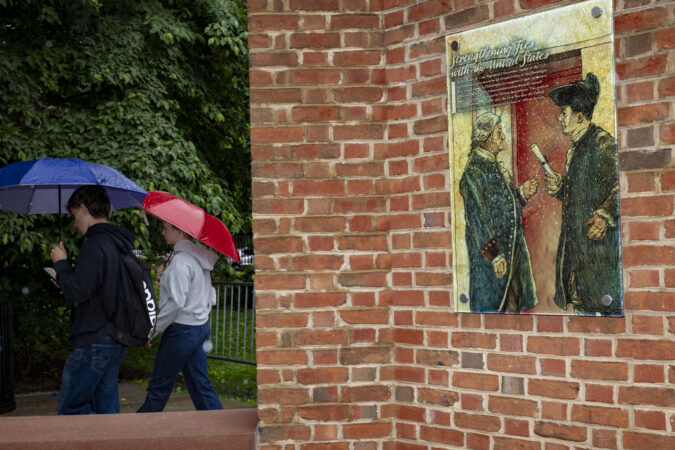
    But it remains to be seen whether the stay allows the Trump administration to install the newly proposed panels, which historians say whitewash Washington’s culpability in enslaving nine people at his Philadelphia home.

    In a statement, the Department of the Interior responded: “We are confident that as this inferior ruling from an activist lower court judge receives further scrutiny, they will be further restrained.”

    Administrative stays are common steps federal courts take to buy time while judges assess the arguments.

    The First Circuit judges intend to rule “promptly” on a request for a more permanent stay during the appeal, the order says.

    Either way, the ruling marks a second blow in a week to the City of Philadelphia and stakeholders who developed the President’s House Site.

    Michael Coard, attorney and founder of Avenging the Ancestors Coalition, which is leading efforts to protect the President’s House, emphasized that the First Circuit action was not a final decision.

    “The stories of enslaved African descendants and other historically marginalized communities are American history and deserve to be preserved and told truthfully,” he said.

    Here is what you need to know about the status of the President’s House exhibits.

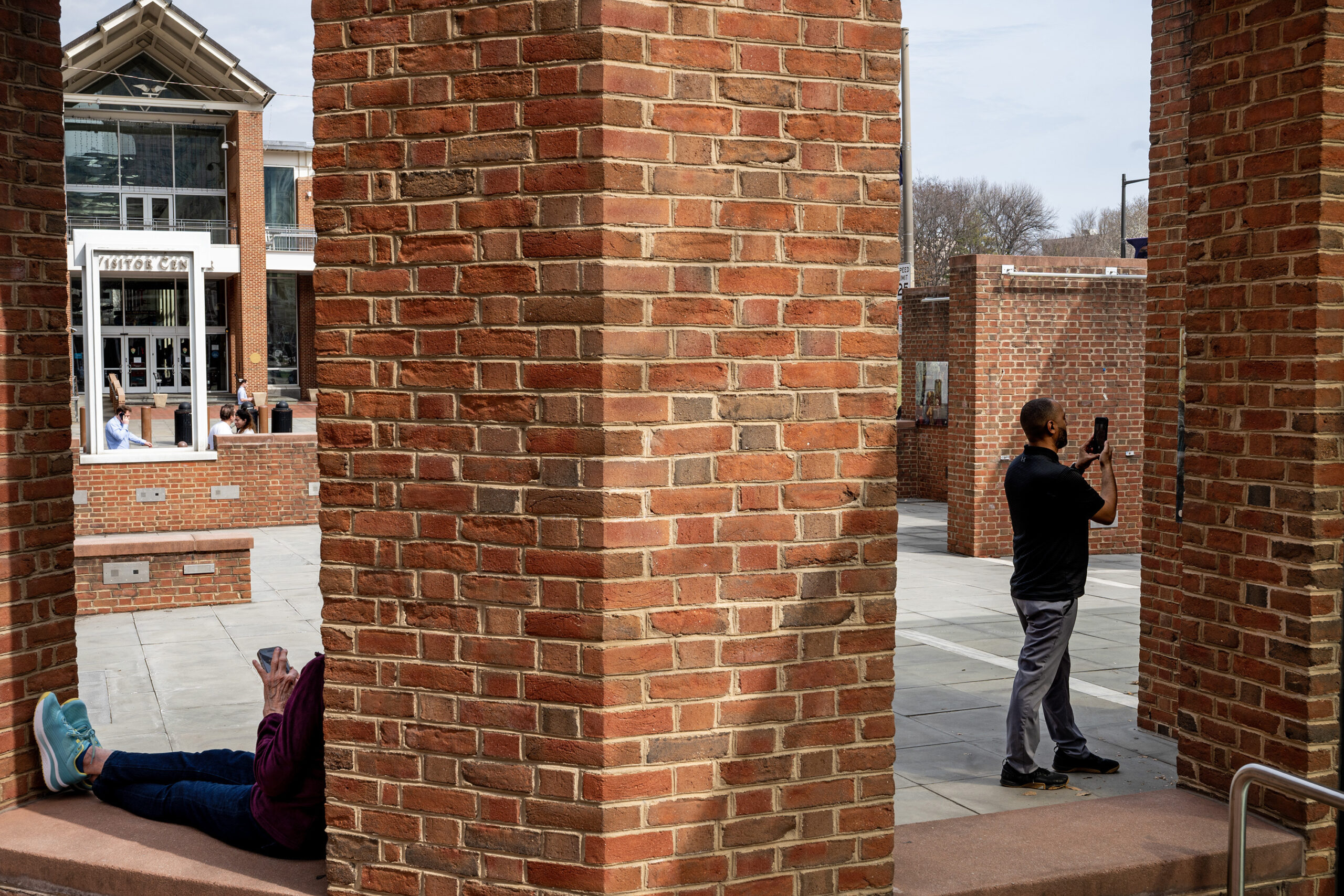
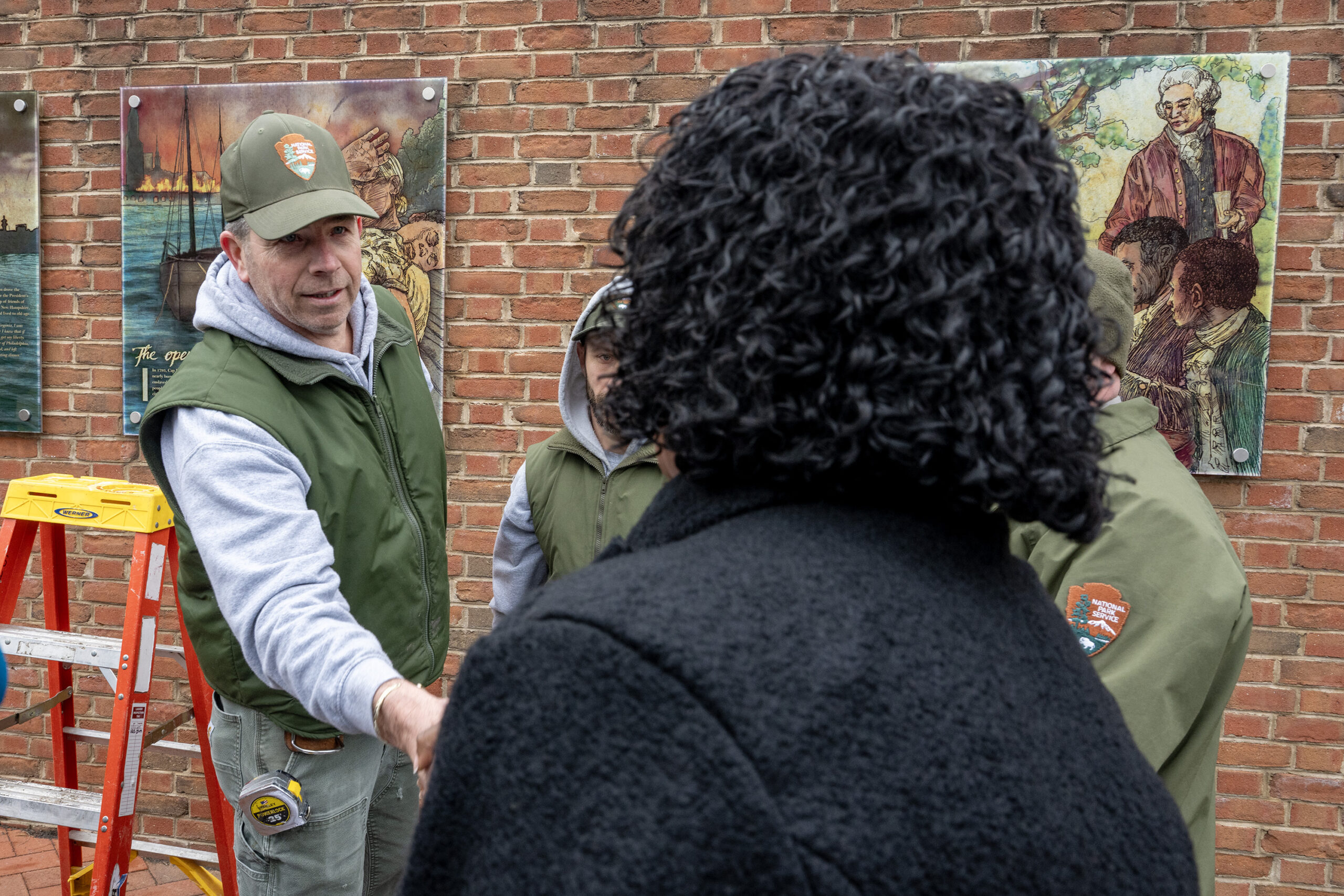
    The President’s House in Independence National Historical Park March 11, 2026.

    What do Boston-based courts have to do with the President’s House?

    Earlier this year, conservation groups sued the Trump administration in federal court in Massachusetts challenging Interior Secretary Doug Burgum’s 2025 order implementing the president’s directive to ensure that no displays at national parks “inappropriately disparage Americans past or living.”

    U.S. District Judge Angel Kelley this month temporarily blocked the National Park Service from removing or altering content at parks across the country, and required the agency to restore before July 4 all exhibits that had been removed.

    The Trump administration’s changes to exhibits “seek to rewrite the Nation’s history with a white-out pen,” wrote Kelley, a nominee of former President Joe Biden.

    At least 50 exhibits were removed from more than 30 sites nationwide, according to court records.

    Justice Department attorneys appealed the ruling to the First Circuit and asked the higher court to issue an administrative stay or a stay for the duration of the appeal.

    The three judges assigned to the case — Chief Judge David J. Barron, appointed by Barack Obama, and Biden appointees Gustavo A. Gelpí Jr. and Julie Rikelman — issued the administrative stay Tuesday pausing the majority of Kelley’s order, including the directive to restore sites such as the President’s House.

    The order is not explicit on whether the National Park Service can make changes to sites, but administrative stays are viewed as a way to preserve the status quo while the appeals court can review the facts and arguments in a case.

    “The administration’s decision not to reinstall and reinstate censored materials, particularly in advance of our nation’s upcoming 250th anniversary, is a disservice to every park visitor this summer and to the broader American public,” the conservation groups, represented by Democracy Forward, said in a statement.

    What did the Third Circuit rule?

    The First Circuit ruling comes on the heels of the Third Circuit’s reversal of a February order entered by a Philadelphia federal judge.

    Judge Cynthia M. Rufe issued an injunction that required the Trump administration to restore the President’s House to its form before the abrupt Jan. 22 removal of exhibits.

    A three-judge panel disagreed with Rufe, finding that Philadelphia gave up its rights over the President’s House when it donated the site to the National Park Service. The judges further said the federal government’s proposed replacement panels were “full of historical context.”

    Mayor Cherelle L. Parker thanks workers as the President’s House site in Independence National Historical Park Thursday, Feb, 19, 2026 during a brief visit to the site as they began to return the slavery displays.

    What are the city’s options?

    After the Third Circuit ruling, Mayor Cherelle L. Parker said she would “pursue every legal action possible in efforts to reverse this decision.”

    The city has a few options, but time is running out for a favorable ruling before July 4.

    The city could ask for a rehearing in front of the same three judges who unanimously ruled to overturn the injunction. It can also ask for a hearing in front of the full Third Circuit court, known as en banc, or ask the U.S. Supreme Court to intervene.

    Philadelphia Law Department attorney Anne Taylor argued at the Third Circuit hearing that the federal government’s attack on these exhibits has caused irreparable harm as the city tries to tell its story ahead of next month’s 250th celebrations.

    Philadelphia is expecting a flood of visitors for the Semiquincentennial celebration, Taylor said, adding: “The President’s House is at the doorway to the Liberty Bell. That history is not being told to all the people who are expected to come here.”

    It could be challenging, or even impossible, to get a new panel of circuit judges or the Supreme Court justices briefed on the case to get a ruling in less than two weeks, legal experts said.

  • Meek Mill joins the July 4 ‘One Philly: Unity Concert for America’ lineup

    Meek Mill joins the July 4 ‘One Philly: Unity Concert for America’ lineup

    The event billed as the nation’s largest free concert and biggest celebration of America’s 250th anniversary just got bigger.

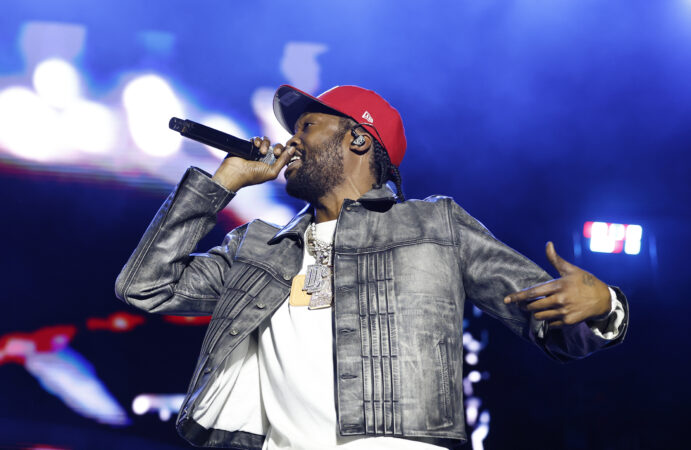
    Meek Mill will join headliners Christina Aguilera, Jill Scott, and The Roots to perform at the “One Philly: Unity Concert for America” on July 4 on the Benjamin Franklin Parkway.

    ESM Productions and Live Nation Urban announced the addition of the Dreams and Nightmares rapper to the Parkway bill on Tuesday morning, hot off his Saturday night performance at “Lit in AC,” a hip-hop festival featuring early 2000s bling-era rappers T.I., Eve, Shyne, Havoc, and Ms. Jade.

    Will Smith & DJ Jazzy Jeff; Kathy Sledge, lead singer of ’70s R&B girl group Sister Sledge; and State Property, the Philly hip-hop collective that includes Beanie Sigel, Freeway, Peedi Crakk, and Chris and Neef, are also scheduled to perform.

    While the bill includes mostly Philadelphia-area musicians — Aguilera grew up outside Pittsburgh — performers also include Seal, the Brit whose hit “Kiss From a Rose” still stops music fans in their tracks; Infinity Song, the Detroit-born soft rock and soul family; and Jordan Davis, the Louisiana-born country music singer.

    Comedian and part-time Media resident Wanda Sykes is hosting. Gillie da Kid and Wallo267 are also slated to make an appearance.

    The nearly seven-hour show will start at 5 p.m. and end just before midnight, with a fireworks finale to follow. Admission to the concert starts at 3 p.m.

    The “One Philly: Unity Concert for America” is presented by the City of Philadelphia and produced by Center City-based ESM Productions with executive producers Scott Mirkin, Shawn Gee (The Roots’ manager and head of Live Nation Urban), and Roots frontman Ahmir “Questlove” Thompson.

    Wawa is a sponsor of the concert, but the show is not part of Wawa Welcome America, the series of events leading up to the July 4 holiday, which this year will include concerts with Queen Latifah, Eve, Idina Menzel, and Pink Sweat$, among others.

    The “One Philly: Unity Concert for America,” according to the news release announcing the event, is “designed as a non-partisan celebration of unity, diversity, and democracy” that brings together “voices, perspectives, and performances that reflect the richness of the American experience across generations and genres.”

  • The Savannah Bananas are building on one of baseball’s oldest traditions, barnstorming

    The Savannah Bananas are building on one of baseball’s oldest traditions, barnstorming

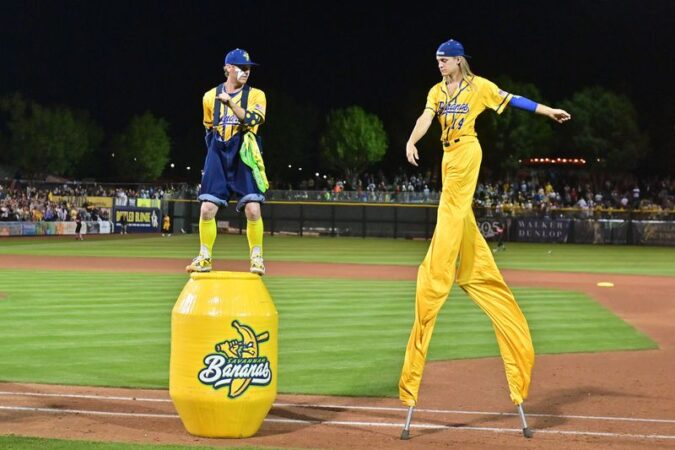
    One of the more striking sports stories of the last few years has been the dramatic rise in popularity of the Savannah Bananas. Founded as a collegiate summer league team in 2016, the Bananas began playing exhibition games in 2018, when they debuted their signature “Banana Ball,” a fast-paced, acrobatic, comedic, participatory style of baseball. Since 2023 they have dedicated themselves entirely to traveling exhibition games against other “Banana Ball” teams, and their popularity has continued to grow. On May 2, as part of the ongoing Banana Ball World Tour, they played before their largest audience yet, a crowd of 102,000 at Kyle Field in College Station, Texas.

    The Bananas and Banana Ball represent a compelling innovation in baseball and American sports—but at the same time, they’re building on one of the sport’s oldest and most enduring traditions: barnstorming, alternatives to professional and major leagues that have long brought community and inclusivity to baseball and America.

    Most histories of baseball focus on its professional leagues: the U.S. Major Leagues and sometimes other prominent professional organizations such as the Negro Leagues and Japan’s Nippon Professional Baseball. But starting in the mid-19th century, there was an equally popular alternative version of baseball that existed outside of those more established sites. Known as barnstorming, probably because many of its games took place in rural communities that might well have featured farm structures, the reference that also connected these baseball teams to other traveling performers who also used the term. This version of baseball saw touring collections of players—sometimes part of an established team, but just as often cobbled together from across multiple teams—visit communities and stage exhibition games. These games were played against local teams and players, fellow barnstorming teams, or as part of other unique entertainments.

    In the first half of the 20th century barnstorming came to be especially associated with the Negro Leagues and represented a way both for those Black athletes to showcase their talents in front of more diverse and widespread audiences. It also allowed them to play against—and, even at times, alongside—white athletes during a time in which the Major Leagues excluded Black players. Building on the legacy of late 19th century, Black barnstorming teams like Bud Fowler’s All-American Black Tourists, legendary 20th-century players like the great Satchel Paige organized teams that toured constantly and brought baseball to every corner of the nation. It also inspired one of the great sports movies, 1976’s The Bingo Long Traveling All-Stars & Motor Kings, with Billy Dee Williams’s Bingo a clear Satchel Paige type.

    In the 1920s and 30s another American community that was excluded from the era’s professional leagues formed their own prominent barnstorming teams and leagues. Japanese baseball dated back to both Hawaii and Japan in the late 19th century, and the first Japanese American semi-pro clubs formed on the mainland United States in the early 1900s. But it was with the rise of barnstorming teams in the late 1920s that these Japanese American players gained truly national and international fame.

    In 1935, the Japanese World Series prominently featured the Japanese American barnstorming team, the Los Angeles Nippons, in a best-of-three series against Japan’s famous Tokyo Giants. Although the Tokyo squad took two of the three games, at the end of their barnstorming tour of the U.S. a team spokesperson noted that “the Los Angeles Nippons were the best of the Japanese Nines.”

    These early 20th century barnstorming teams and games also captured the attention of the sport’s biggest stars. In October 1927, just after winning the World Series and at the height of their success and fame with the New York Yankees, Babe Ruth and his teammate Lou Gehrig took part in a highly competitive barnstorming game in Fresno against Japanese American semi-pro stars, including the powerful slugger Johnny Nakagawa who was known as the “Nisei Babe Ruth.” With each captaining a different team, and as the only white players in the game, Ruth and Gehrig played both against and alongside the Japanese American players, a reflection of how much barnstorming could break down the period’s policies and practices of segregation.

    The single most famous barnstorming baseball team, the House of David, broke down such barriers consistently and purposefully. Formed in the late 1910s by members of the Michigan religious commune of the same name, the House of David—famous for its long hair and equally impressive beards—gained a reputation for baseball prowess over the next four decades before it dissolved in 1955. It featured former Major Leaguers like Grover Cleveland Alexander, other famous athletes like Mildred “Babe” Didrickson and Satchel Paige, and rising stars like Jackie Mitchell, the teenage pitching phenom who was the first woman to play for a minor league team.

    The House of David also partnered with Negro League teams and players: traveling together, playing exhibition games against each other, and challenging segregation policies inside and outside the stadium along the way. Before the House of David would take on the local team, they demanded a chance to play the Negro League team with whom they had arrived (a request smartly made after the audience was already in the stadium to watch the featured exhibition game). They then ate in the same restaurant and stayed at the same hotel with them as well, pushing the boundaries of racial segregation.

    Made By History sponsors. FOR USE ON MADE BY HISTORY STORIES ONLY.

    The House of David ended its barnstorming tours in 1955 for the same reasons the practice largely faded out during that decade: the racial integration of the Major Leagues. Beginning with Jackie Robinson in 1947, integration meant that more of the best players had the chance to join the Majors; and the growing popularity of television allowed audiences around the country to see those players and games. Some Japanese American semi-pro teams did continue to barnstorm, as Japanese Americans didn’t join Major League teams until the late 1960s, a continued legacy of the earlier segregation policies. But by the late 20th century the practice was generally found only in historical depictions like Bingo Long.

    Recently, the Savannah Bananas announced the reforming of a historic Negro Leagues team, the Indianapolis Clowns, against whom they’ll play barnstorming exhibition games. In that way, as in so many others, this 21st-century team builds on the legacies of barnstorming baseball, on the important role of athletes of color in making it more inclusive, and of the communal and inclusive sides of the sport and nation it represents.

    Ben Railton is Professor of English and American Studies at Fitchburg State University, and the author of six books, two podcast seasons, and numerous columns on the worst and best of American history and identity.

    Made by History takes readers beyond the headlines with articles written and edited by professional historians. Opinions expressed do not necessarily reflect the views of The Inquirer.

  • Every bottle of this Kensington-made NA spirit is packaged by hand. At local bars, it’s already a hit.

    Every bottle of this Kensington-made NA spirit is packaged by hand. At local bars, it’s already a hit.

    A non-alcoholic Philly spirits brand is finding early success by doing everything — from blending to bottling — by hand.

    Cult of Trees is a new line of alcohol-free aperitifs produced at Maken Studios in Kensington. Inside the sunny production space, founder Meredith Sheehy spends hours each week distilling homemade herb blends into a line of zero-proof cocktails that taste like fizzy spritzes.

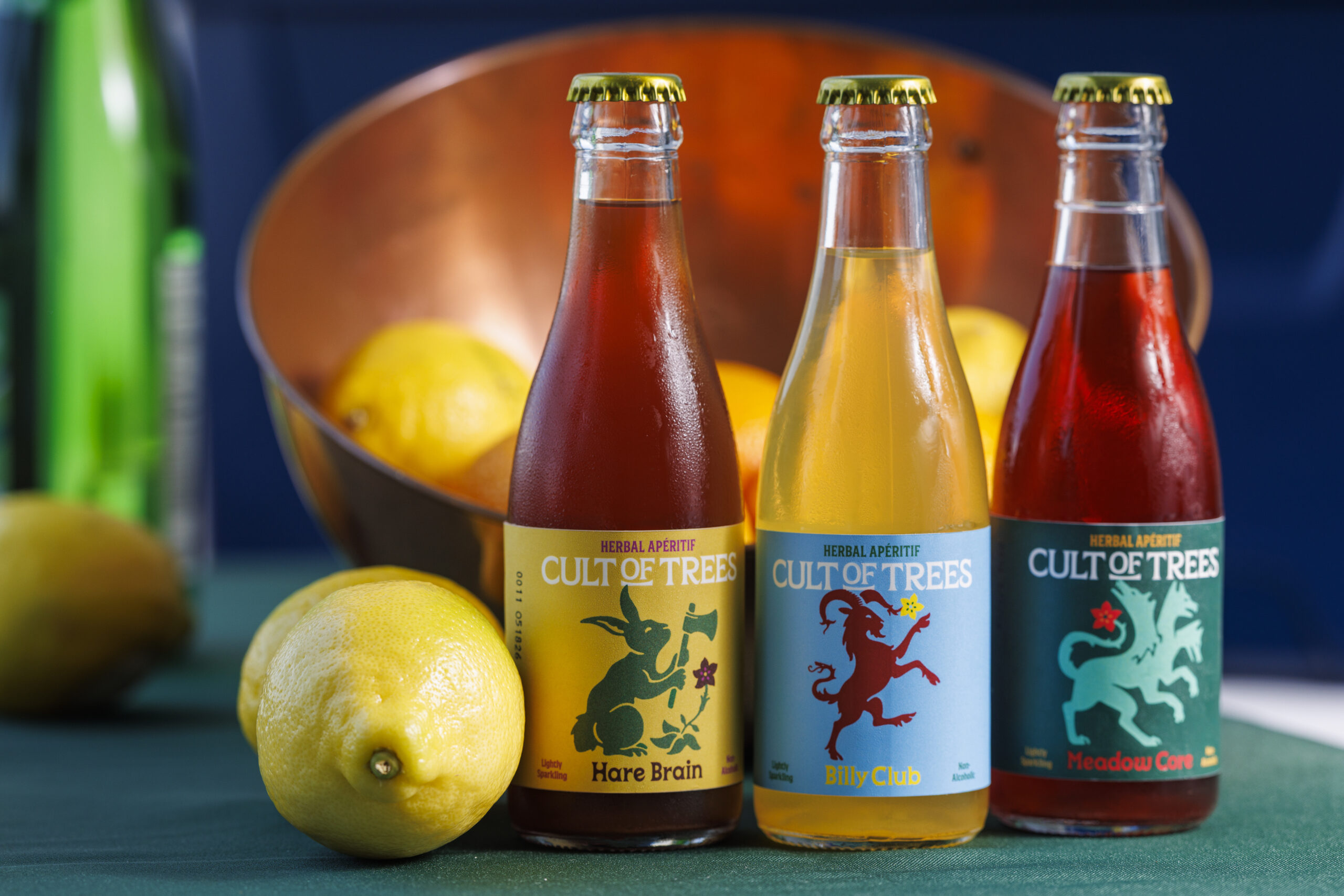
    The brand’s three flavors include Hare Brain, which is akin to a cola-spiked negroni; Meadow Core, a citrusy and floral blend of red fruits; and Billy Goat, which tastes like rolling in a field of wildflowers thanks to a mixture of herbs, honey, and elderflower. Since sales began in January, Cult of Trees has been selling well at local grocery stores and bars, such as Solar Myth and Enswell, where the drinks are served straight or floated with sparkling water or cold brew.

    For Sheehy, who moved to Philly in 2022, the city is as much an inspiration for the brand as the ingredients themselves. After closing her Brooklyn-based Mezcal bar La Loba Cantina due to the pandemic, Sheehy began bartending at Philadelphia Distilling. Philly, she said, had a refreshing scene.

    “People will answer questions and pour tastes of curiosities on their back bars, with genuine excitement to share,” said Sheehy. “It’s a beautifully welcoming culture here.”

    From left: Hare Brain, Billy Club, and Meadow Core, Cult of Trees’s three flavors of non-alcoholic aperitifs. Bottles are sold at Riverwards Produce in Old City and Herman’s Coffee in Pennsport.

    Fascinated by distilling alcohol, yet increasingly conscious of her own dwindling consumption, Sheehy was inspired by the growing sober curious movement to start her own non-alcoholic cocktail brand.

    Fewer and fewer young people are building their social lives around drinking, and more zero-proof drink brands are available than ever. But, Sheehy noticed, most of them showcased the same styles on repeat — one-to-one spirits replacements like zero-proof whiskeys or gins, and spritzes as far as the eye could see. Many also weren’t transparent about where their ingredients came from.

    Sheehy wanted to create something that wasn’t just about emulating the experience of drinking alcohol. Abstaining “shouldn’t mean that you need to take away flavor or an interesting story,” she said.

    At Cult of Trees, each aperitif is made with ingredients sourced from Pennsylvania farms and requires a multiday routine of distillation, carbonation, and bottling. It’s an analog process that contrasts with that of large scale brands, which Sheehy said often rely on commercial flavor extracts — as opposed to dried botanicals or herbs — to quicken production and lower costs.

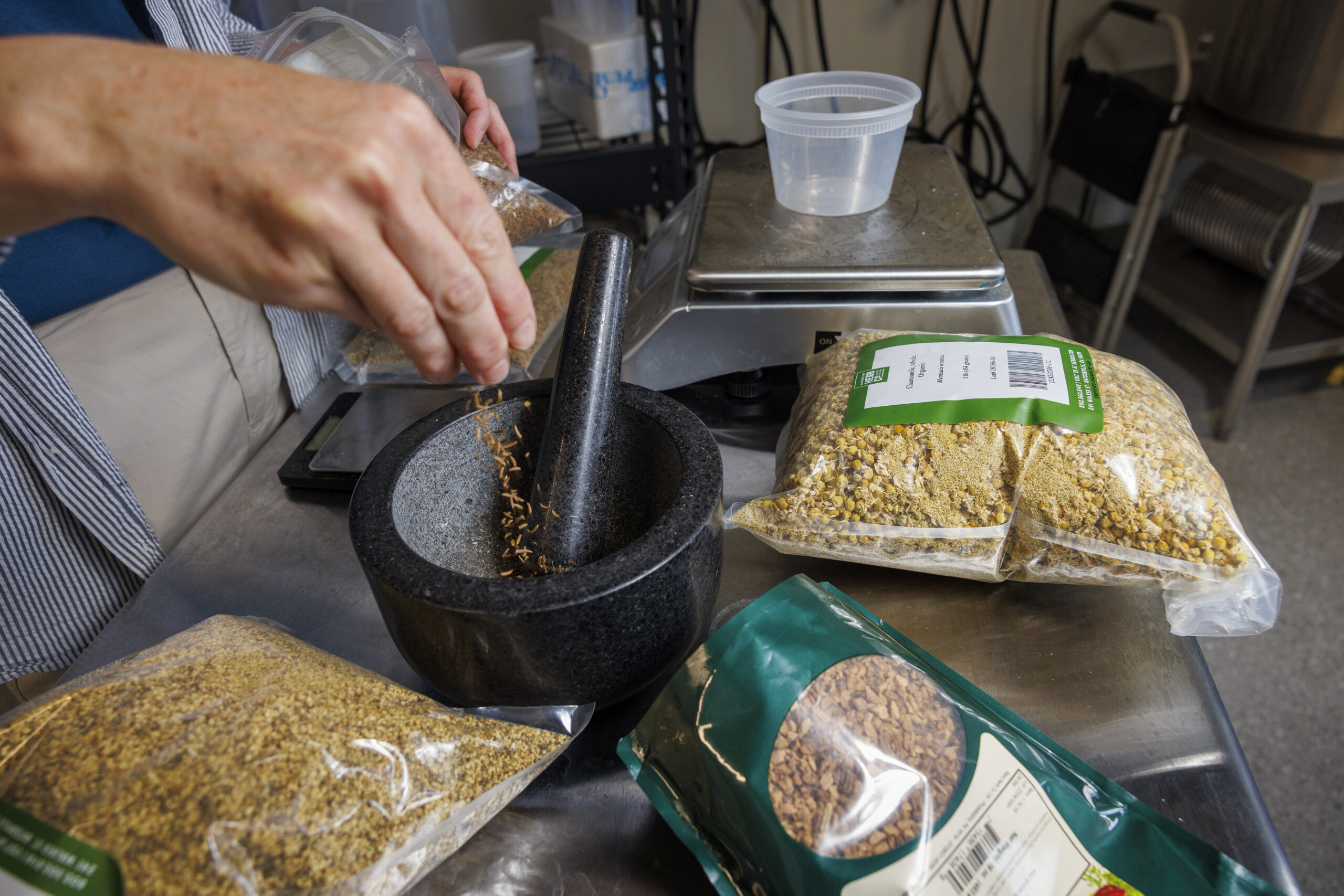
    Meredith Sheehy, owner of Cult of Trees, sprinkles caraway seed into a mortar and pestle to make one of the herb blends for her line of zero-proof spirits.

    Getting started, then getting set back

    While at Philadelphia Distilling, Sheehy became close with Jack Falkenbach, the expert distiller and legendary Philly bartender that died last year at 44. Falkenbach, she said, was always “willing to explain specialized process details at the distillery. We both liked deep-diving on things like acid phosphate,” she said. “I deeply trusted his style of drink making and technical know-how.”

    Falkenbach was among Cult of Tree’s earliest supporters, Sheehy said, and one of the first people she involved in building the company. Around this time last year, the pair was making test batches together; Falkenbach was focused on nailing the carbonation as Sheehy refined the packaging.

    Then the first real workday arrived. Falkenbach did not.

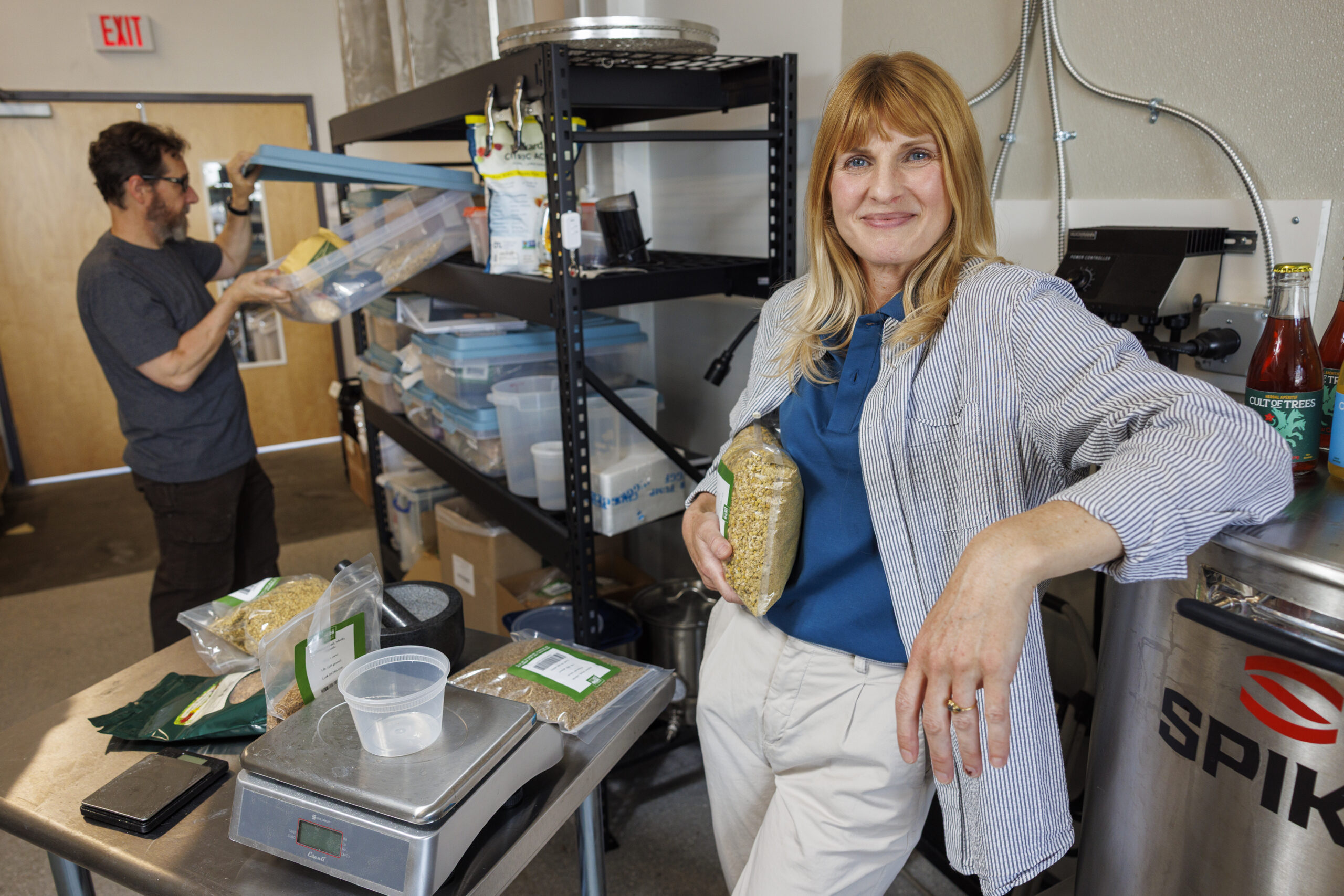
    Meredith Sheehy, owner of Cult of Trees, poses for a photo while preparing one of the herb bases for her line of zero-proof spirts, which is based at Maken Studios in Kensington.

    His passing, Sheehy said, was doubly “heartbreaking,” but launching Cult of Trees left little time to grieve. “I did what all business owners have to do,” she said. “You recover and pivot, or you don’t and you lose the idea.”

    Sheehy went on to launch the business with a single employee: Gordon Grubb, a veteran brewer who had been put out of work by Iron Hill’s sudden closures. Together, they make each batch of aperitifs.

    Hand-bottled and hand-carbonated

    Zero-proof spirits still require distillation to get the right flavors and mouthfeel, which is why many come with a higher price tag.

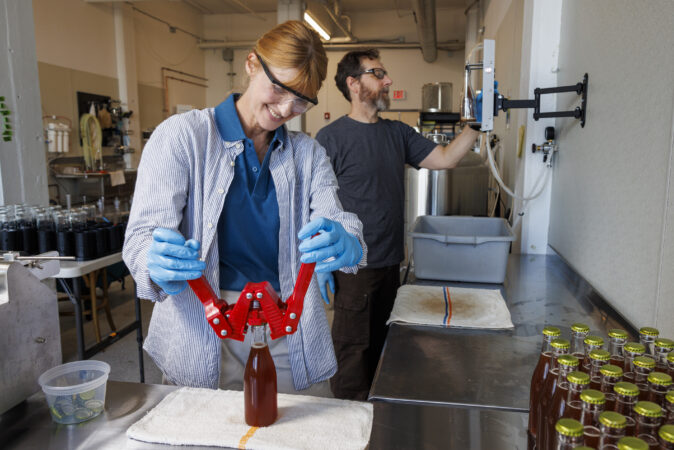
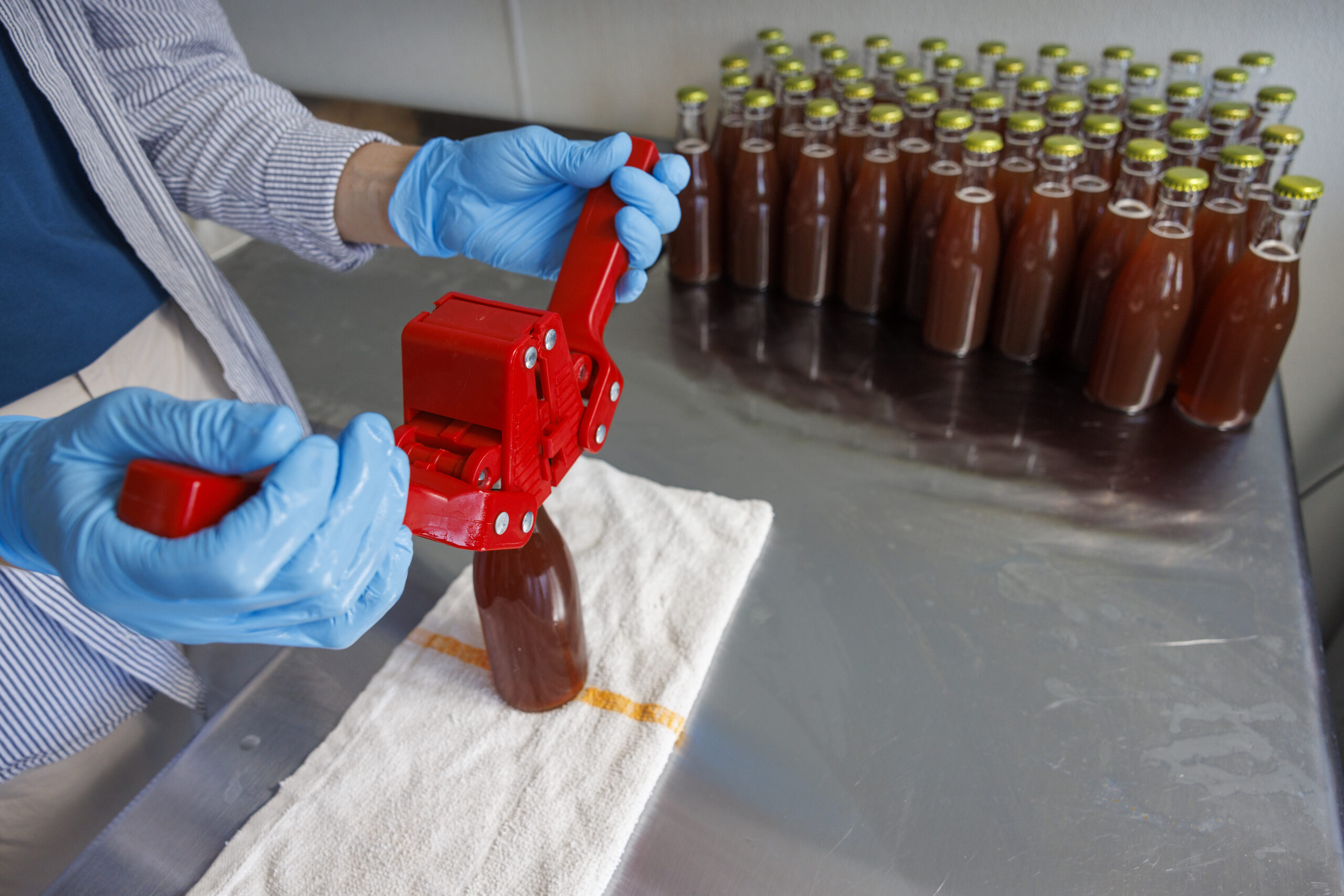
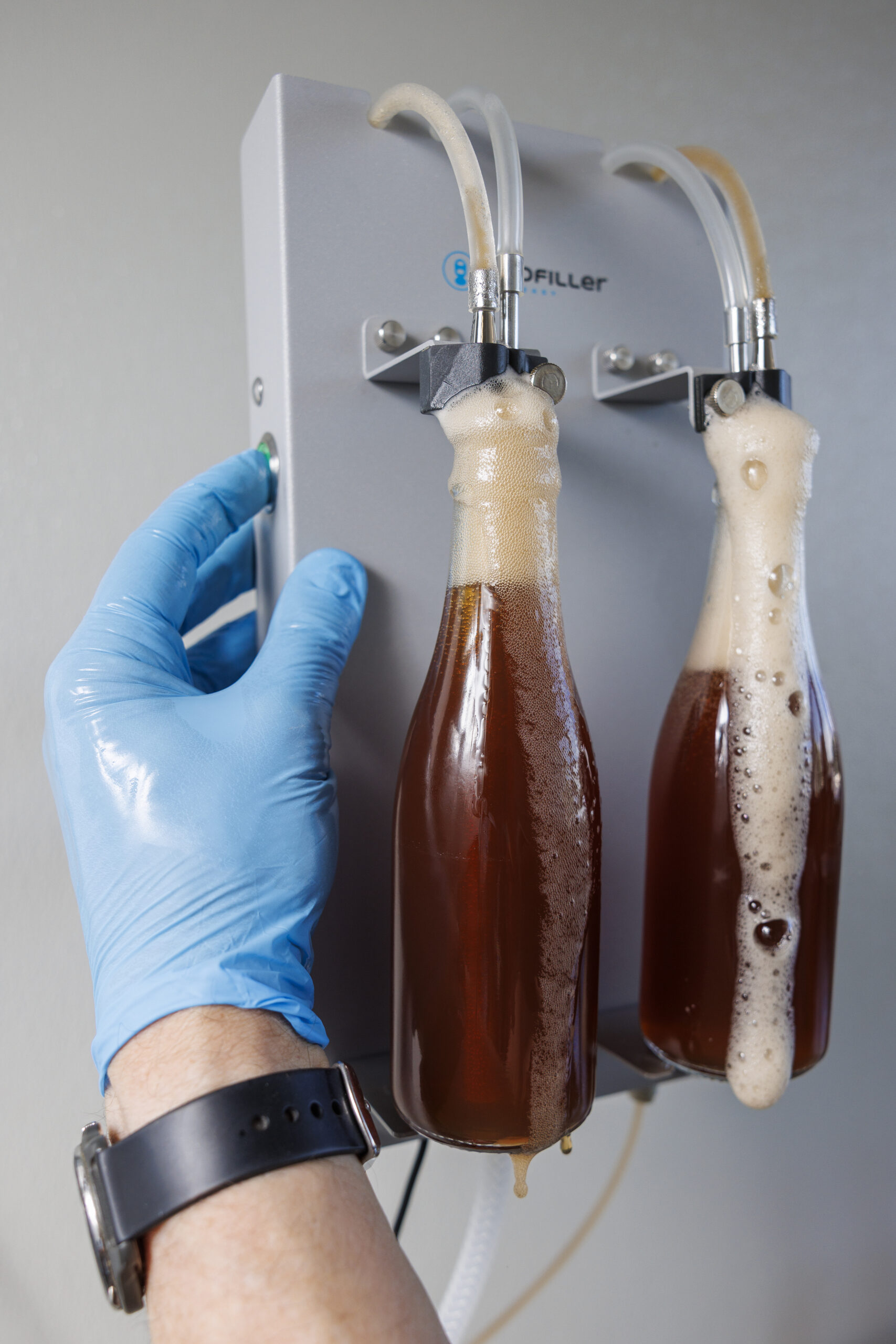
    Each batch of aperitifs takes at least three days to produce, Sheehy said, and begins with her macerating and boiling the original herb blends that serve as the base for each beverage. Distillation is the longest part of the make process and can take upwards of several hours. After, Sheehy and Grubb carbonate and bottle each beverage by hand.

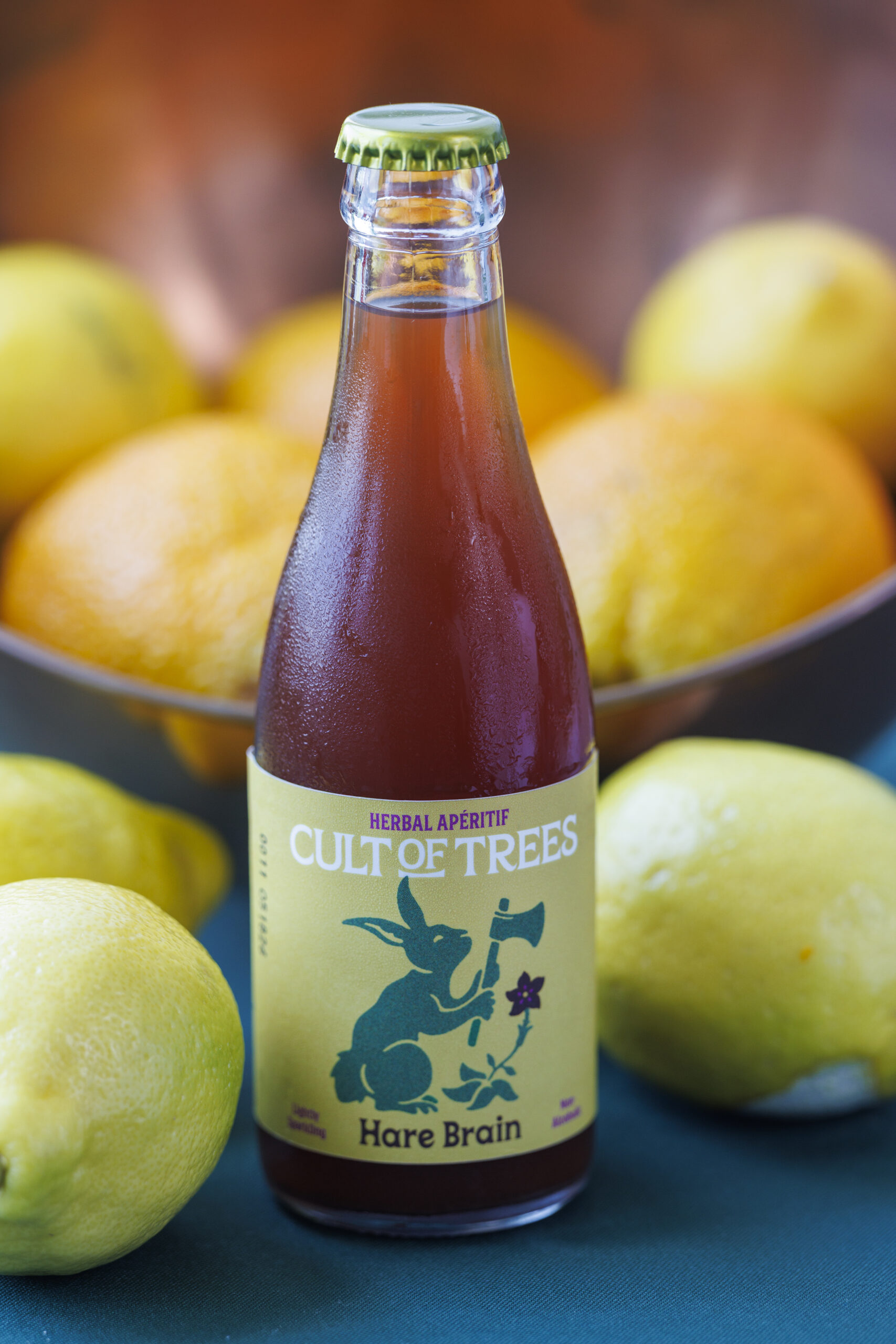
    Hare Brain from Cult of Trees, a zero-proof aperitif that tastes like cola.

    A single batch yields only 18 to 20 cases, according to Sheehy. “It’s labor intensive right now,” she said, “but will start to get more turnkey as we grow and are able to incorporate more equipment.”

    Already, Cult of Trees can be found on the beverage menus at Solar Myth, Tulip Pasta & Wine Bar, Enswell, and the International Bar.

    “It’s a popular suggestion from our entire team when guests are looking for a unique and local NA option,” said Enswell manager Chelsea Boyer, who often pairs Hare Brain with Rival Bro’s Whistle & Cuss espresso. “The bitter nature and gentle carbonation of the Hare Brain pairs perfectly with the candied nuttiness of the espresso.”

    Meredith Sheehy, owner of Cult of Trees, caps a bottle of Hare Brain at her Kensington production facility. Each bottle of the non-alcoholic spirit is packaged by hand.

    Retail placements at Riverwards Produce, Herman’s Coffee, and Queen Village’s Moon & Arrow are also new, but a sign of growth.

    The drinks have been selling well at Riverwards’ Old City location, said CEO Dan Morgan, buoyed by an April pop-up where Sheehy poured samples for guests. “I think their great flavors and beautiful packaging will really help them stand out,” Morgan said.

    Cult of Trees production manager Gordon Grubb fills bottles of Hare Brain during the carbonation process at the brand’s Kensington studio.

    Sheehy is betting on the same. “In my opinion, consumers increasingly want transparency, local sourcing, and a story behind what they drink,” she said. “That’s what we’re trying to do.”

  • Philadelphia’s World Cup love affair shows just how far we’ve come

    Philadelphia’s World Cup love affair shows just how far we’ve come

    Karl Wallenda walked across Veterans Stadium on a tightrope, dazzling a nearly sold-out crowd when he stopped halfway to do a headstand and unfurl American flags from the ends of his balancing pole.

    It was exactly what the more than 50,000 fans came to see between games of a Phillies doubleheader on Memorial Day 1976. And the show across the street, a soccer game featuring Pelé and other all-time greats — didn’t stand a chance against The Great Wallenda.

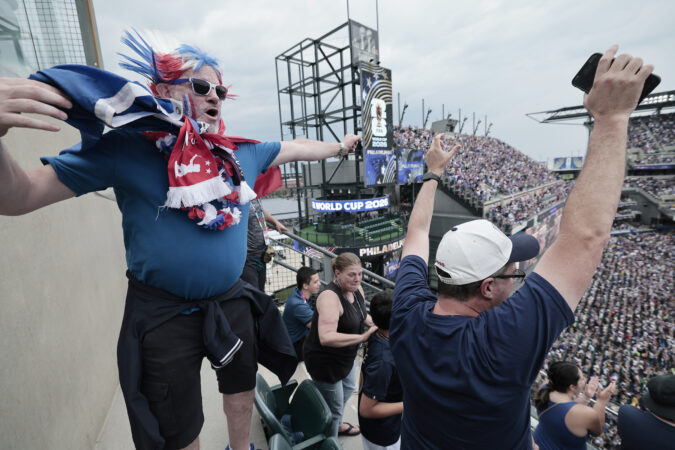
    Philadelphia has become soccer-infused this summer with six games of the World Cup at the sports complex Center City bars were packed Monday afternoon hours before France and Iraq played, banners hung from City Hall, the Broad Street Line carried fans to Lincoln Financial Field, and even the mayor was spotted last week buying soccer jerseys.

    The games are so massive that the Phillies had a rare Friday off last week because Brazil and Haiti were playing at what is temporarily called Philadelphia Stadium.

    But 50 years ago, soccer was still finding its footing in Philadelphia. And that’s why the eyes of the city were fixated above Veterans Stadium while Pelé, Italian superstar Giorgio Chinaglia, and Bobby Moore — the captain of the last English team to win the World Cup — were in a match across the street.

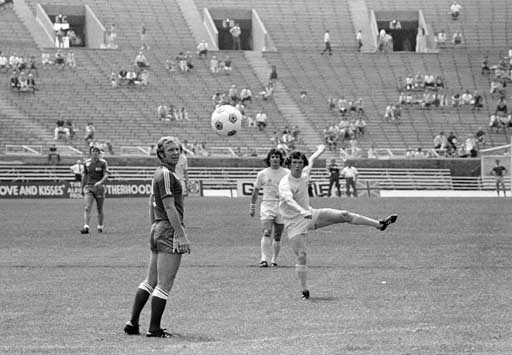
    The soccer icons played for Team America in the Bicentennial Cup against the English National Team at JFK Stadium in front of just 16,000 fans and a lot of empty bleachers.

    Play during the Bicentennial Cup between Team America and England before a sparse crowd at JFK Stadium in South Philadelphia on May 31, 1976.

    Philadelphia now has a professional team with staying power, local players on the U.S. team that have people dreaming this summer, and a stadium full of crazed fans. That was hard to imagine 50 years ago, when the gods of soccer passed through without much notice.

    “Jeez, 50 years,” said Bob Smith, a Trenton native and member of the National Soccer Hall of Fame who played for Team America against the British. “There’s no comparison. The game just grew, and the community grew. The spread of the game is just unbelievable.”

    Gateway to soccer

    Smith learned to play the game as a 9-year-old when an Irish neighbor in Trenton organized a recreation league. He played four-on-four for hours with his buddies and organized games against kids from neighboring towns. Today, the sport is played everywhere, but it was concentrated in the 1960s to neighborhoods in Trenton, just like in Philadelphia.

    Soccer was huge to those who knew it.

    And a mystery to those who didn’t.

    “We’d go to our high school field on weekends to train and see like 2,000 people in our football stadium,” Smith said. “We were freshmen in high school, and we knew exactly where we fit in the spectrum of sports. ‘Who are these guys running around with shorts on?’ But we just fell in love with it.”

    Smith was plucked as a teenager by Manfred Schellscheidt, the legendary coach who assembled an All-Star team with the best players in New Jersey. Schellscheidt brought the Jersey boys to his German hometown, where they beat every team they played. It was an unbelievable experience, Smith said, and it gave him and his buddies the confidence that they could do it.

    “I was like ‘Damn, I can do that,’” Smith said. “We felt like ‘we’re OK here.’”

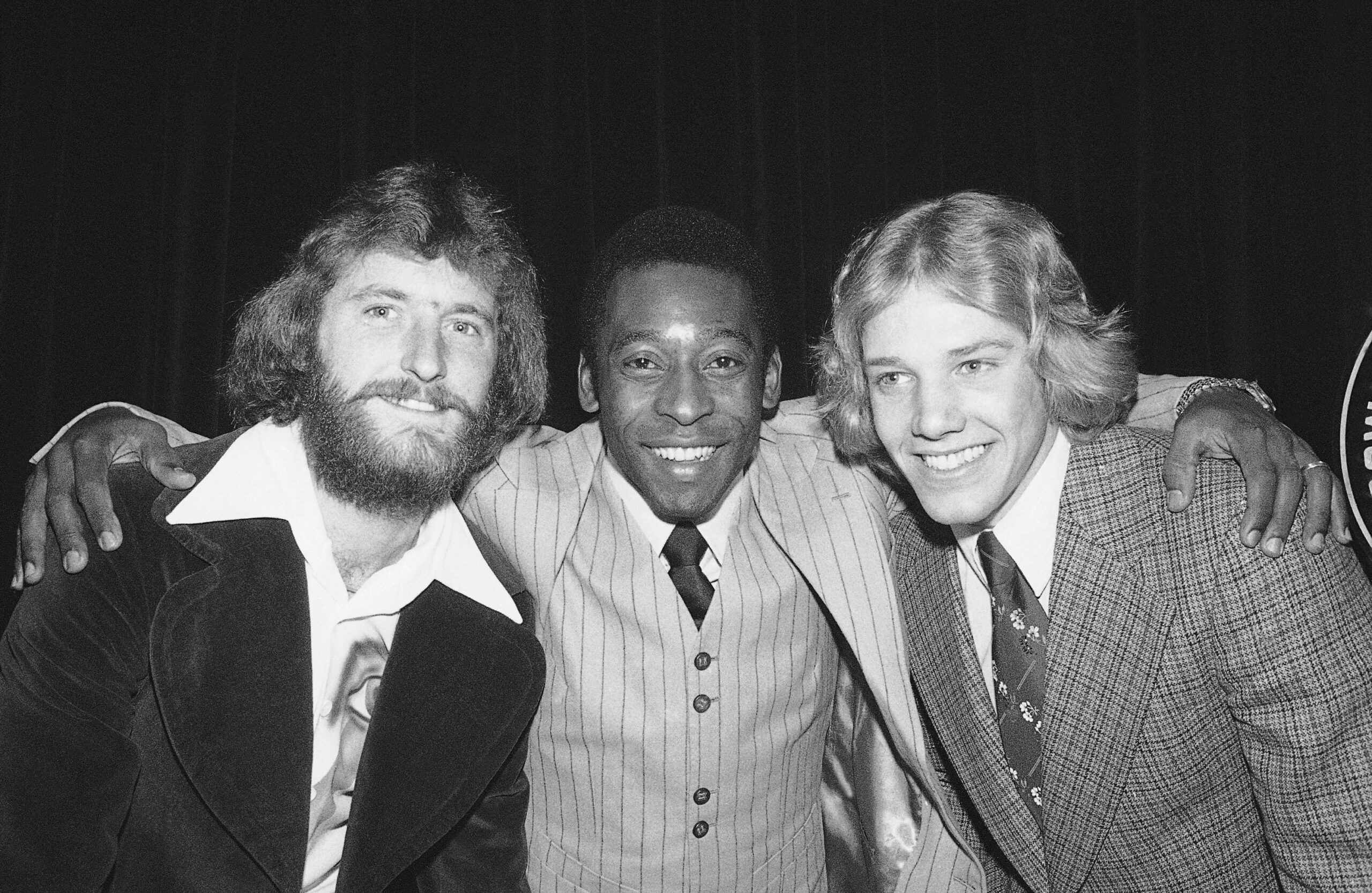
    Bob Smith (left), a Trenton native, shown with soccer star Pelé (center) and Bob Rigby on Jan. 6, 1976.

    Smith played at Rider University before turning pro with the Philadelphia Atoms and helping them win the North American Soccer League championship as a rookie. The league didn’t pay the players enough for soccer to be a full-time gig, so he worked as a laborer at a construction site during the day and practiced in South Philly at night. But he was still a professional soccer player.

    “A lot of guys were schoolteachers,” Smith said.

    This U.S. team started nine players in their World Cup opener who are on professional teams overseas. Smith, who had 18 games for the U.S. team, played overseas in 1975, with Dundalk F.C. in Ireland. Unlike today’s players, Smith and Dave D’Errico — his buddy from New Jersey — didn’t get paid much. No team was looking then for an American player, Smith said.

    “When we got off the plane, a guy picked us up at the airport in Dublin,” Smith said. “We signed this five-quid-a-week contract. We stayed over top [of] this garage, and I pumped gas at night, making a quid an hour.

    “But we were in Ireland playing soccer. What the heck? We didn’t care. You were broke your entire career playing soccer. I never cared about what I made because it was a thrill of a lifetime.”

    ‘It was just wild’

    The starving artist returned to the U.S. after a year abroad and joined the New York Cosmos, which had become America’s traveling band of soccer stars. They had Pelé and Franz Beckenbauer on the field and Mick Jagger and Henry Kissinger in the dressing room after games.

    “The Cosmos years were like a circus,” Smith said. “It was just wild.”

    The NASL brought Pelé out of retirement in 1975 with the hope that the all-time great could spread the gospel of soccer through the country. Every Cosmos game felt like the opponent’s biggest game of the season.

    “It was always a show,” Smith said. “The expression with us was always, ‘We’re with him.’ There was a lot going on in restaurants and clubs and all that. We went to Denver and they rode him on a horse. There was so much marketing stuff, and he got pulled into an awful lot of stuff.

    “I felt sometimes that he was being pushed to sell the game to this country, and I think that was difficult to him. He just wanted to get on the field and play with the guys. Off the field, it was crazy with the commitments he had to fulfill. But he did it 100% with a great attitude. But it was tiring.”

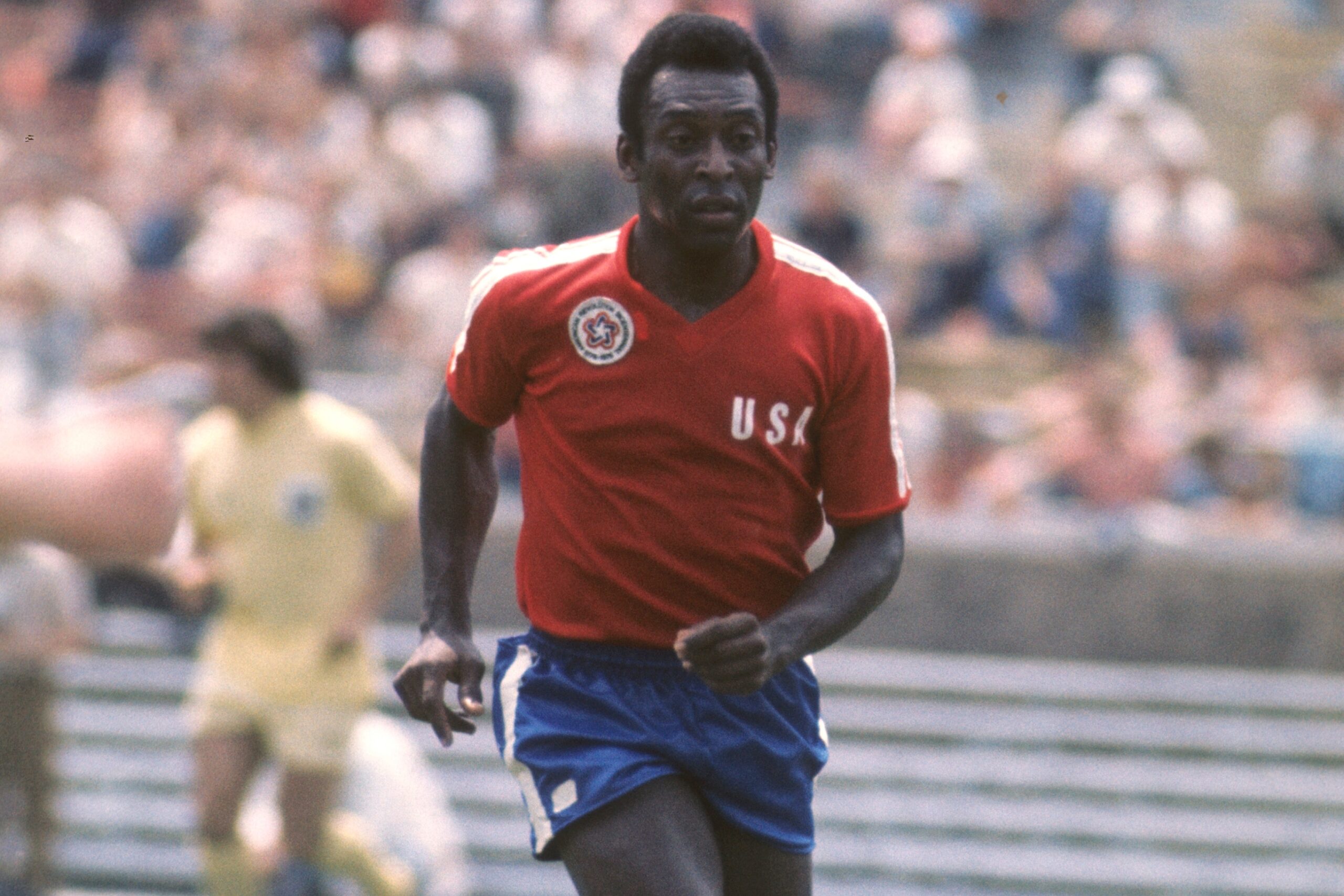
    Pelé playing for Team America against England in the American Bicentennial Cup in 1976, played at JFK Stadium, which is where Xfinity Mobile Arena now stands in the sports complex.

    The 1976 Bicentennial Cup was another attempt to grow the game as Brazil, England, and Italy came to America for tuneups before qualification began for the 1978 World Cup. They played in Washington, New York, and Seattle before finishing in Philadelphia.

    The organizers knew that the U.S. national team wouldn’t be able to keep pace with the world powers, so they filled Team America with the stars of the NASL. That’s how Smith and Delaware County’s Bobby Rigby got to play with a dream team. The stars of the soccer world came to South Philly.

    Philadelphia just wasn’t yet ready in 1976 to embrace what was happening. The city was too distracted by the guy walking in the sky.

    “It was such a thrill to play with those guys,” Smith said. “It was a great honor, and it was also a blur.”

  • In Harrisburg, Philadelphia Mayor Parker asks lawmakers to double school renovation fund to $250 million

    In Harrisburg, Philadelphia Mayor Parker asks lawmakers to double school renovation fund to $250 million

    HARRISBURG — Philadelphia Mayor Cherelle L. Parker called on Pennsylvania’s General Assembly to double what it sets aside for school districts to update their aging facilities, as the Philadelphia School District embarks on a $3.3 billion plan to modernize 169 school buildings.

    Parker hosted a two-hour news conference at the state Capitol on Monday, asking Pennsylvania’s split legislature and Gov. Josh Shapiro to increase the amount of money available for school facility renovations from its current $125 million to $250 million as part of this year’s state budget, which is due at the end of the month.

    The school district is on track to close 17 schools as part of the larger modernization efforts, following months of protest and controversy over the facilities plan.

    Parker appeared alongside City Council President Kenyatta Johnson, Philadelphia School Superintendent Tony B. Watlington Sr., and school board president Reginald L. Streater, following several weeks of tensions with state and city legislative leaders over her proposed tax plans to raise revenue for the city and the school district, which ultimately failed.

    But on Monday, the city leaders appeared as a united front in Harrisburg, showcasing their commitment to “rightsizing” Pennsylvania’s largest school district, which is the ninth-largest in the nation.

    “We are here united to let you know that we are proud that the City of Philadelphia has some skin in the game, and we are not coming here simply with our hat in hand, asking the Commonwealth of Pennsylvania to come save the School District of Philadelphia,” Parker said, noting that the city was able to stave off classroom cuts.

    “It is the General Assembly who told us last year we will not give additional funding until you come back with a facilities plan. So we went to work,” Johnson said during the news conference Monday.

    Now it is on the state to set aside additional funding to help school districts update their facilities, Parker and Johnson said.

    Shapiro, a first-term Democrat, proposed keeping the pot of money at $125 million for the coming fiscal year, as part of his $53.2 billion budget proposal.

    Pennsylvania is facing its own budget problems, as the state is on track to spend more than it brings in in revenue this year and in future years. Shapiro’s budget proposal would spend $4.3 billion more than the state’s projected revenue for the coming fiscal year, meaning Parker’s funding increase request faces an uphill battle.

    The event highlighted a coalition of advocates, from labor leaders to recent graduates to public education advocates — all calling on the state to increase the state’s capital fund, in addition to continuing to increase the city’s adequacy funding.

    The school district is facing a $300 million structural deficit and had planned to cut more than 300 school-based positions before city officials cut a deal to keep funding the positions with a yet-to-be-determined revenue source.

    Several of the speakers recalled recent times when their young children did not have access to bathrooms, or instances when schools had to shift to virtual learning because the buildings are unequipped to handle cold or hot weather.

    The speakers, including Parker, emphasized that the issue of aging school buildings is not exclusive to Philadelphia. It is an issue faced by school districts around Pennsylvania, including rural and suburban ones.

    “So goes the decision-making in this building, so goes the future of rural, urban, and suburban Pennsylvania, and all of our children,” Parker said.

    In a letter sent Monday to members of the General Assembly, top leaders from the Pennsylvania League of Urban Schools and the Pennsylvania Association of Rural and Small Schools echoed the calls.

    “Safe, modern school buildings should not depend on a community’s zip code, and we stand with Mayor Parker in calling for Harrisburg to make that needed commitment to students in every corner of the Commonwealth,” the letter said.

    In a letter to Shapiro in January, ahead of his annual budget pitch, Parker requested that the state double the amount available for school facility improvements, and she sought a revision to the guidelines to allow a single district to receive up to 25% of the total grant funding in a given year. That would open approximately $50 million to $60 million annually for the district to tap into to improve school buildings, according to the letter.

    Parker, who served as a state representative for 10 years before joining City Council and her election as mayor, received a major blow to her tax plans from Harrisburg in the final days of city budget negotiations. Three sources with knowledge of the closed-door state budget talks told The Inquirer then that lawmakers would not approve increases to the city’s hotel and long-term rental taxes she requested to help expand the city’s homelessness services.

    Only one state lawmaker joined the mayor’s event: Sen. Art Haywood (D., Philadelphia/Montgomery). Parker met separately in a private meeting with Philadelphia’s House delegation to Harrisburg.

  • This 14-year-old Phillies fan grabbed a Mets home run ball and went viral for making a crafty swap

    This 14-year-old Phillies fan grabbed a Mets home run ball and went viral for making a crafty swap

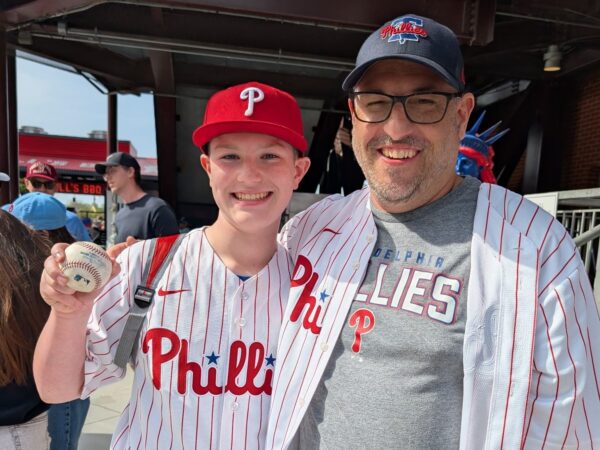
    When Carson Benge’s home run ball started heading in his direction on Sunday at Citizens Bank Park, 14-year-old Josh Kirsch knew exactly what to do.

    The eighth-grader from Royersford was planning for this moment for years, hoping to catch a home run ball in his glove.

    After he actually got his hands on the Mets outfielder’s home run, he was expected to do what most other Phillies fans do when they catch the opposing team’s home runs — throw the ball back onto the field. Instead, Kirsch was caught on camera swapping out the ball, pocketing the home run ball and throwing a different one back out on the field.

    The Kirsch family has had Sunday season tickets in the outfield since 2022, purposefully on the aisle to give Kirsch a better chance at one day catching a ball. But there’s obviously no guarantee that even if you do get a home run ball, it’ll be a Phillies home run, and you’ll get to keep it. So Kirsch had a backup plan.

    “He knows that the Phillies fans will cheer for about 10 seconds, and then be like, ‘Throw it back! Throw it back!’ so he had brought this ball with him to every game we went to,” said his father, Matt Kirsch. “It’s a Little League ball that he wrote in Sharpie in his little chicken scratch, ‘Not the home run ball.’”

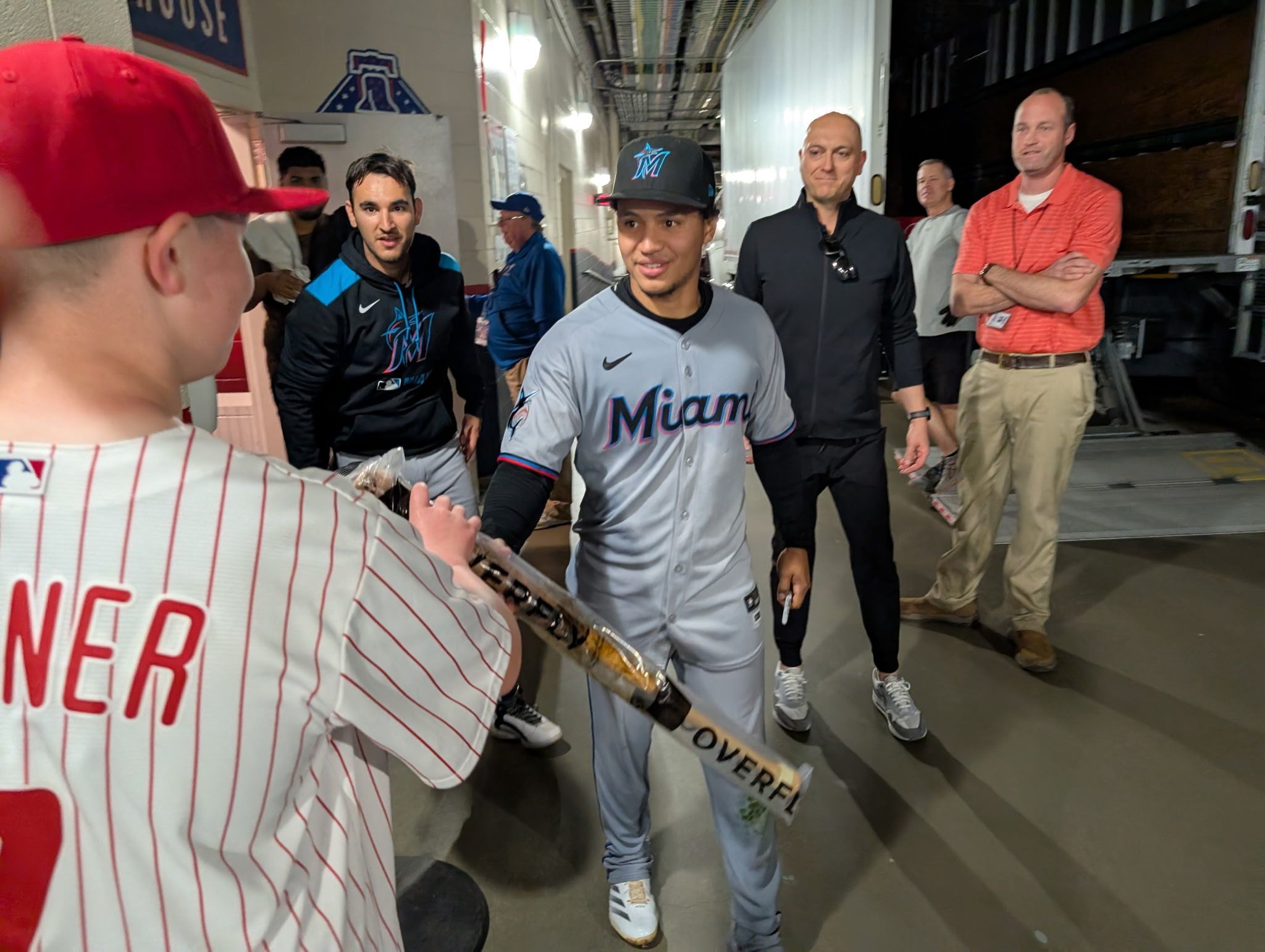
    Sunday was the first time Kirsch has been caught on camera swapping out the ball, but it’s not the first time he’s “thrown back” a home run. On April 20 last season, Marlins rookie Javier Sanoja hit his first career home run against the Phillies, right into Kirsch’s glove. Kirsch, not knowing it was Sanoja’s first major league home run, threw back the ball he’d stowed away in his pocket, wanting to keep his first home run catch.

    Josh Kirsch meeting Javier Sanoja after catching his first career home run on April 20, 2025.

    But after one of their season-ticket neighbors, listening to the game on the radio, learned that it was Sanoja’s first major league home run, Kirsch wanted to find a way to give the ball back. Ballpark staff was able to verify that the ball Kirsch had was in fact the home run ball, and he got to meet Sanoja and trade it for a signed bat.

    “That’s how his mind works,” Matt said. “He’s always thinking about every angle, like, ‘Oh my gosh, what if this happens?’”

    Kirsch has always been an avid baseball fan. The family started going to Phillies games in earnest during the 2021 season, and after seeing just how much Kirsch loved to be at the ballpark, they invested in season tickets.

    He plays in the Spring Ford Babe Ruth baseball league, and at home, Kirsch has a collection of baseball and other Phillies memorabilia, including balls he’s had signed during warmups, jerseys, and bats. That’s part of why he wanted to keep the ball — with how baseball works, who knows if Sanoja or Benge might end up being Phillies one day?

    So, no regrets, even after he went viral for pocketing the ball, which will now get a place of pride nearby his Sanoja bat. It was still surprising for the family to see the video gain more than a million views across various channels, but they’re taking it in stride.

    “My daughter committed to play field hockey at Northwestern,” Matt said. “If you were to ask me which of my two kids was gonna make the Instagram reel for ESPN, I’d be like, ‘Oh, my D-I athlete.’ My Little League eighth-grader made it.”

  • My favorite halal restaurants in the Philadelphia area

    My favorite halal restaurants in the Philadelphia area

    What makes Philly’s halal dining unlike any other city is the diversity of cuisines available. It’s what made dining so exciting for me when I moved to Philly in 2020. As a Muslim growing up in Tennessee, halal options — aside from chicken and rice and one barbecue hotspot — were hard to come by. From the moment I began eating my way through my new home, it was clear Philly’s robust dining scene offered a grander landscape of halal eats.

    Halal meat follows the tradition of zabihah, defining whether the animal has been fed and treated humanely before and during slaughter, blessed in the name of Allah, and drained of blood. The literal meaning of halal is “permissible,” which can be used to describe various parts of Muslims’ lifestyle, including dining habits. For example, rice and bread are halal, but alcohol and pork are haram — or prohibited.

    Most halal-serving restaurants will identify themselves as such on their website or menus but a simple ask also helps verify. Similar to kosher meat, halal certifications are available, but “if it’s a Muslim-owned restaurant and they are guaranteeing and promising you that it’s halal, then that’s really the only research that’s required,” said Toba Hoda, who runs the Instagram account @phillyhalalspots.

    Over the years, I’ve compiled a list of my favorite halal spots, from crispy Ethiopian fried chicken in West Philly to slow-cooked beef rendang in South Philly. Here are a handful of them that show the breadth of cuisines to try in Philly. — Hira Qureshi

    Al-Baik Shawarma

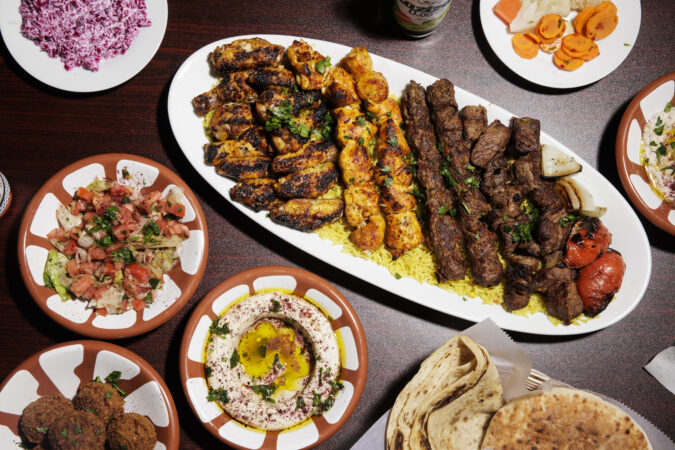
    Tucked into a commercial strip on the ever-busy Willits Road, Al-Baik Shawarma is one of the best Palestinian restaurants in Philadelphia. Hailing from Ramallah, chef-owner Sohaib Al-Haj and his family serve juicy cuts of chicken, beef, and lamb seasoned with aplomb. Nestle into one of the plush booths and order the mashawi mixed grill platter to savor it all: kufta, chicken and beef kebab skewers, and chicken wings alongside rice, salad, hummus, grilled onions, tomatoes, and fresh laffa bread. The Northeast restaurant also has some of the best falafel in the city. Here, you can sip on Palestine Colas and enjoy sweets like coconut basbousa and pistachio Nutella cookies from local bakers. At least, that’s what I do.

    3217 Willits Rd., 267-703-8000, order.albaikshawarma.com

    Black Dragon Takeout

    In West Philly, chef Kurt Evans is serving an entire halal menu featuring Black American Chinese takeout. That means I’m walking in ready to order their crispy collard green egg rolls, saucy oxtail “lo-mane,” sweet and spicy General Roscoe’s chicken, sweet potato chili wings, and jerk chicken skewers. With limited seating, it’s best to take your order home — although I usually sneak a bite inside and end up scarfing down the rest while standing on the sidewalk.

    5260 Rodman St., 267-292-2905, blackdragontakeout.com

    Doro Bet

    What if halal fried chicken was also gluten-free? At Doro Bet, sisters Mebruka Kane and Hayat Ali (who also own the nearby Alif Brew, which offers traditional Ethiopian coffee service with fresh-roasted beans, and Salam Cafe in Germantown) make those dreams a reality. The fast-casual West Philly hotspot — an Inquirer 76 pick two years in a row — serves crispy, teff-coated fried chicken spiced with either berbere or lemon turmeric. It’s just a few blocks west of Clark Park, perfectly located for a savory treat after my farmers’ market visits. The restaurant also has Ethiopian classics like doro wot and tibs, along with vegetarian options like falafel wraps and teff-flour fried mushrooms. And don’t sleep on the tiramisu, made with the richness of that same Ethiopian coffee.

    4533 Baltimore Ave., 215-921-6558, alifamilyrestaurants.com/doro-bet

    Griddle & Rice

    Philly’s new era of Indonesian cafés includes a South Philly spot that’s got a halal, pork-free menu. Griddle & Rice is all about dishes that marry Indonesian traditions with current trends and American breakfast foods. Take the nasi uduk, a breakfast coconut rice platter packed with crispy fried marinated chicken, sweet chili egg and tofu, sweet soy tempe, crunchy veggie fritter, sambal terasi shrimp paste chili, and crackly garlic crackers; or the iga bakar platter with grilled, Indonesian-spiced braised beef ribs, white rice, fried egg, more sambal terasi, and a salad. I would recommend ordering one of the best bowls of congee — with halal curry chicken broth and shredded chicken breast — in the city. And don’t sleep on the drinks — I slurped up the es kopi gula aren, a smoky Indonesian palm sugar latte, and mango matcha with coconut water in one sitting.

    2151 S. 22nd St., 267-360-2900, griddlericephilly.com

    Hardena

    The beloved late Ena Widjojo’s family-run restaurant has been feeding South Philly for more than 20 years. These days it’s her daughter Maylia who runs the place, but they’ve stuck to the script — halal Indonesian classics. I love venturing to South Philly for their slow-cooked beef rendang, saté chicken (marinated in sweet soy and makrut lime juice, topped with peanut sauce), and crunchy Krupuk (garlic and tapioca chips). And I’m always reminded why the menu earned a semifinalist nod from the James Beard Foundation in 2018.

    1754 S. Hicks St., 215-271-9442, hardenapa.com

    Korea Taqueria

    Since its inception in 2023, Korea Taqueria has mostly operated with a non-halal menu, with halal chicken offerings on a if-you-know-you-know basis. But as of March, owners Alexander Sherack and Rene Lopez announced their shift to a fully halal menu. “We’d be getting DMs [about halal offerings] just about every month, so there was always this seed planted from day one,” Sherack said. “Once we found local suppliers we made the shift.” The Korean Mexican grub, located in South Philly, Fishtown, and West Philly, includes bulgogi beef birria tacos, gochujang wings, Kimchi cheese fries, Korean fried chicken sandwich, and more. Consider ordering my go-to: the meal sampler, for all of it one order. Wash it down with horchata or watermelon agua fresca.

    3101 Tasker St., 267-234-7100; 2563 Trenton Ave., 267-204-3710; 3401 Walnut St., 267-274-1230, korea-taqueria.com

    MAdness of MAsala

    One of the 76 most vital restaurants in the Philly area sits in the middle of Montgomery County. The hour drive to Madness of Masala becomes a mandatory pilgrimage for those seeking halal goat pepper fry, malai paneer kabab, andhra shrimp curry, and other South Indian classics. The fiery tandoori spices tingle on my tongue as I devour stuffed mirchi bajji, kali mirch paneer, and goat ghee roast. I only need to order their syrupy gulab jamun and a Hyderabadi masala chai to cool down.

    2851 Ridge Pike, Trooper, 484-235-8003, madnessofmasala.com

    Saad’s Halal Restaurant

    What makes this a West Philly institution? It’s owner Saad Alrayes’ chicken shish tawook — best known simply as the chicken maroosh. The first time I took a bite of the sandwich packed with juicy pieces of grilled chicken, tomato slices, sautéed onions, and snappy pickles, generously drizzled with creamy garlic sauce in a long hoagie roll — the namesake “maroosh way” — I understood. This was most definitely the best sandwich in the city.

    4500 Walnut St., 215-222-7223, saadhalal.com