Pest control companies routinely use traps baited with rodenticide to kill rats and mice found in homes, restaurants, and businesses throughout the Philadelphia area, but a recent Rutgers University study suggests those companies face a gnawing problem.
Researchers discovered that mice in Philadelphia, Trenton, and suburbs like Levittown and New Hope harbor genetic mutations that shield them from standard chemical baits.
In fact, a majority of house mice sampled from Northeast urban areas, including Manhattan and other New York City boroughs, carried at least one mutation linked to rodenticide resistance — a clear sign that pests are actively evolving to survive common poisons.
Rats presented a different problem. While they lacked the chemical-resistant mutations found in mice, the study’s author suggests they possess the cognitive sophistication to outsmart and evade traps entirely.
Lead author Jin-Jia Yu, a postdoctoral researcher in Rutgers’ entomology department, said the findings indicate that pest control companies might need to develop different strategies.
Yu conducted his research with the supervision of another of the paper’s authors, Changlu Wang, an entomologist in the same department.
Published in the April issue of Pest Management Science, the peer-reviewed study was launched after frustrated pest control professionals repeatedly approached the Rutgers lab, reporting that rodents routinely survived multiple treatments.
“For the house mouse, we saw much more mutations rather than Norway rats,” Yu said. Norway rats are the common brown rat often seen in sewers.“Genetic mutation is not that special in these creatures. But we found that the house mouse shows a lot of genetic mutations related to rodenticide resistance.”
Rodents are a bigger problem in cities
This study focused on urban rodents. It found that mice in bigcities such as Philly and New York had a high frequency of mutations of a certain gene.
Rodents are a bigger problem in cities than more rural areas. Data cited in the study indicate that an average of 12% of all households experience rodent sightings. But major metropolitan areas reporter higher rates, including Philadelphia (29%), Washington (20%), and Manhattan (15%).
Yu said that similar studies of mutations in house mice and Norway rats were conducted in Europe and that research in the U.S. has been limited. One study in 2009 did find some rats in England with mutations that made them resistant.
However, Yu said there had been no such studies in the Northeast.
It has long been known that rodents developed resistance to the rodenticides developed in the 1950s. So more potent compounds were created in the 1970s and include brodifacoum, bromadiolone, difenacoum, and difethialone.
The poisons contain anticoagulants that interfere with the activation of vitamin K reductase (VKOR), an enzyme essential for blood to clot. Eating the bait leads to fatal internal bleeding.
The Rutgers team looked for mutations in the gene known as VKORC1 that makes the enzyme.
Pest control companies, as well as the Philadelphia Department of Public Health, sent the researchers the tails of caught rodents. Yu said his research was possible only with their help.
A rare mouse mutation in Philly
The researchers analyzed DNA from 147 house mice and 143 Norway rats collected in New York, New Jersey, Pennsylvania, and Washington, D.C.
Among house mice, 84% carried at least one mutation in the VKORC1 gene. Nearly 70% carried mutations known to help mice survive rodenticides.
Of 24 mice collected in Philadelphia, the majority had a mutation and five had two. One mouse had a rare mutation.
Of 20 mice collected in Trenton, 10 had two mutations. Lansdale, Levittown, and New Hope had one mouse each with a mutated VKORC1 gene.
About 35% of the Norway rats also carried mutations. However, scientists do not yet know whether those mutations result in resistance in the rats.
Mice, Yu said, might be genetically adapting faster than rats because they are curious and more likely to eat unfamiliar food, including rodent bait.
However, rats will avoid new objects, including live traps, and learn from their encounters.
In other words, not only aremice mutating to survive, but ratsmay be learning to avoid entrapment.
EAST RUTHERFORD, N.J. — Benjamin Klevge, a soccer fan from Pamiers, France, had the front-facing camera open on his phone and a wide smile on his face. He crouched down, struggling to fit the Statue of Liberty into the frame.
It wasn’t the actual Statue of Liberty, though. It was a 60-foot replica, encrusted with more than 1 million green jelly beans, towering above the entrance to a three-story candy store.
And Klevge wasn’t in New York. He wasn’t even outdoors. He was roaming the gaping halls of the American Dream, a three-million-square-foot megamall in East Rutherford, N.J. He took more pictures in front of an indoor water park a few steps away as a Backstreet Boys song from the previous century played over the loudspeakers.
“C’est magnifique,” he said, before switching to English. “It’s beautiful.”
Fans who attended the opening match of this World Cup this month in Mexico City could wander a warren of neighborhood streets alive with music and the smell of grilled meat on their way to the iconic Estadio Azteca.
Other citadels of soccer — whether Maracanã Stadium in Rio de Janeiro, which hosted the 1950 and 2014 finals, or Madrid’s Santiago Bernabéu, where the final was played in 1982 — are similarly embedded in dense, urban landscapes, helping to animate the heartbeats of their respective cities.
Then there’s MetLife Stadium — or “New York New Jersey Stadium,” as World Cup officials have poetically rebranded it for the summer — which will host eight matches in this tournament, including the final.
For fans accustomed to ballparks with more of the local flavor outside, it has become a punchline. They deride it as a remote island in a sea of asphalt, an inaccessible behemoth surrounded by swampland and a tangle of highway. And for the most part they’re right.
But there’s another island out there.
On Tuesday, before a match between France and Senegal, Klevge and thousands of others fans flooded the American Dream mall, which is connected to the stadium by an elevated footpath, and tried to make the best of an odd situation.
Children from France kick play during a World Cup watch party at American Dream earlier this month.
“Exit?” Klevge asked a reporter after taking his selfies and apologizing for his limited English. He tapped two fingers on his lips. “For smoking?”
Erected in 2021, the American Dream is the second-largest shopping mall in the country. It has hundreds of stores, several dozen eateries and a host of attractions not commonly found indoors: a go-kart track, a water park, a ski slope and five roller coasters.
This month, the air-conditioned cathedral to commerce represents the only public gathering space — besides the generic official “fan zones” immediately outside the stadium — accessible to the 82,500-capacity stadium by foot.
“It’s kind of confusing. We’re just in a mall,” said Dawda Daye, 30, a Senegalese fan from Houston, who arrived there by taxi with his wife. “But it’s convenient, and everyone seems to be enjoying it and having fun.”
Indeed, fans of both teams on Tuesday — just like the crowds supporting Brazil and Morocco over the weekend — seemed open to embracing the weirdness of the setting. The resulting rowdy energy was similar to the atmosphere at any major soccer match around the world — just entirely different.
Three hours before kickoff, four men in French jerseys juggled a plush soccer ball, purchased moments earlier from an Ikea kiosk, outside a Verizon store.
A Senegalese drum troupe rapped out a mesmerizing beat for a swaying group of soccer fans marching near the cash register of a Mrs. Field’s cookie stand.
The sunlit space normally containing the mall’s NHL regulation-size ice rink had been converted into a sort of simulation of a beer garden, filled with picnic tables where scores of fans clapped and sang. Above them towered a screen roughly the size of the penalty area on a soccer field that displayed a video feed of the very same picnic zone they were in — meaning the fans were cheering real-time images of themselves cheering.
“In the U.S., everything is bigger,” said Benoit Berthier, 39, a Frenchman working in Montreal, who was eating a pastry at a cafe a few steps away. “But what they did inside is good. If you have one thing you know how to do in America, it’s entertain.”
In a food court connected to H Mart, the Korean American grocery chain, two men wearing the jersey of Rayan Cherki, a young French star, blew into vuvuzelas as they squeezed between groups munching on traditional Korean snacks.
On the third floor — there are five levels to the American Dream — a trio of Frenchman puzzled over a digital map of the shopping center, tapping on the screen to find a place to eat.
“This kind of mall is unusual for French people,” said Gérald Grégoire, 52, one of the fans. “What’s most surprising is the size of the parking lot.”
Three friends kick a small soccer ball in the American Dream parking garage.
During American football season, when the New York Jets and the New York Giants share MetLife Stadium, the parking lots there can hold close to 30,000 cars, a perfect setting for that quintessentially American sports tableau: tailgating.
A handful of World Cup stadiums — like Lincoln Financial Field, where opposing fans played drinking games together before a match — are allowing tailgating this summer. MetLife is not one of them.
“We heard there was no tailgating, so we said, ‘OK, we’re not going to the stadium, we’re going to the mall,’ ” said Carlos Orbe, 35, who was visiting from Tampa, Fla., with his fiancée, Julia Szenberg.
Undeterred, the two grabbed a case of hard seltzers, took a cab to the American Dream and found some space between a row of parked cards in the mall’s indoor parking complex.
They stood in a circle with a dozen or so other fans, sipping their drinks and periodically kicking a soccer ball that bounced their way. Asked about the people in the juggling circle, Szenberg, 36, who was born in Paris, shrugged.
“We don’t know them,” she said. “But now they’re our family. This is the real American dream, happening in the mall parking garage.”
MARGATE, N.J. — Hillary Bor had had enough of running the acclaimed Pumpkin BYOB in Philly after two decades.
Around the time Pumpkin closed in 2024, she uprooted her life and moved to the Shore full time. Also around this time, she fell in love with Tim Nedzwecky, whom she met through their respective white pit bulls, Piggy and Loki.
They hadn’t planned to launch a food venture, but when Scott Bonar, of Scott’s Dock on the bay in Margate, talked about wanting a food option, the pieces fell together.
Dogs. The Shore. A view.
Thus was born Dock Dogs (hot dogs with a view), a permanent fixture next to Scott’s Dock, with a complimentary lovely sunset over the bay.
Tim Nedzwecky and Hillary Bor, the former owner of Pumpkin BYOB in Philadelphia, opened Dock Dogs on the bay in Margate.
“We wanted to do something together,” Bor said. “He asked us, ‘You guys want to do food?’”
Hot dog stands have a history in Margate. There’s Junior’s nearby and the old Lenny’s, famous for its pepper hash, which was set up back in the 1960s and 1970s near Lucy the Elephant. Now, Dock Dogs has started carrying — by popular demand — the pepper hash from the original Lenny’s outside Philadelphia.
But does running a hot dog cart, even one with a beautiful view, offer fulfillment after owning Pumpkin BYOB with its elevated cuisine and prime South Street Graduate Hospital location, for 20 years?
Bor does not hesitate to answer.
“This is so fulfilling,” said Bor, who rides a bike everywhere and still doesn’t own a car. Plus, “I get to be with my soulmate. I get to be with wonderful people to work with. We get to be on the water.”
“It’s a dream come true,” said Nedzwecky.
Tim Nedzwecky and Hillary Bor at their hot dog stand on the bay in Margate, Docks Dogs. Bor is the former owner of Pumpkin BYOB in Philadelphia, which closed in 2024.
Dock Dogs has a menu item in memory of Scott’s mother, Robin, a familiar face around the marina, who died in 2021: Robin’s Reuben with Swiss cheese, sauerkraut, and Russian dressing. ($12).
The Windy Dog with mustard, relish, onions, peppers, pickles, celery salt, tomatoes, and a side of Lenny’s pepper hash, at Dock Dogs in Margate, opened by Hillary Bor, the former owner of Pumpkin BYOB in Philadelphia, and partner Tim Nedzwecky.
All hot dogs are Hebrew National and served on Martin’s potato rolls with kettle chips, pickles, and coleslaw.
There’s chicken and egg salad options (no hot dog) as well, and the Keeper, a crab cake shaped like a hot dog ($22). The Captain’s Choice ($14) has bacon, barbecue sauce, and cheddar and a “simple sailor” hotdog with choice of ketchup, mustard, relish, sauerkraut, and sriracha is $10.
They’re hoping people come for the food as well as the vibe. Mondays are for families, with face painting and other kid-friendly activities out back, where picnic tables line the docks. You can come by boat. Wednesdays feature a house band.
There’s also a “Hook the hot dog” game that carries a prize.
The response has been enthusiastic.
“Saturday night, the vibe here, it was so special,” said Nedzwecky. “Everybody, the kids, were dancing.”
“We were looking at each other like, ‘Oh my God it’s amazing.’, ” said Bor.
“It makes us really happy,” said Nedzwecky. “People are saying this is exactly what this area needed.”
Some are hidden gems. Some are hiding in plain sight. Together, these places tell the story of the city Philadelphians know and love.
Philadelphia is a city of favorites.
Ask someone for the best cheesesteak, neighborhood bar, park, bookstore, view, or place to spend a Saturday afternoon, and you’ll get an answer — often delivered with the confidence of someone who believes every other answer is objectively wrong.
That’s what made this list so difficult to assemble.
Together, they tell the story of a city that rewards curiosity, where a quiet garden, a neighborhood dive bar, a train-watching bridge, a community garden, or a bench with a view can become someone's favorite place.
This is not a ranking. No. 1 isn't better than No. 76, and No. 76 isn't lesser than No. 1. It’s also not an exhaustive list — we could have done 176, or 1,760, and still not captured everything that’s great about Philadelphia’s neighborhoods.
So think of this less as a ranked, definitive list and more as a collection of recommendations from people who spend their days exploring Philadelphia.
You may discover a new favorite. You may wonder how we left yours off. Honestly, we hope both happen. — Sam Ruland
story continues after advertisement
1
Navy Yard
The USS Arlington on Pier 4 at the Navy Yard in Philadelphia, Pa., on Oct. 11, 2025.Tyger Williams / Staff Photographer
What first brought me to theNavy Yard was the bench in the rickety ferry terminal — the wobbly old shack at the tip of the yard, the very southern terminus of Broad Street and South Philadelphia. It became a staple of my daily runs, the objective. “Make it to the shack.” What kept me coming back was the beauty of the place. The oldness. The newness (and there’s a lot more newness these days). The wide-open spaces. The feeling of being set apart, even with the skyline looming. I’ve done the math and I think my old Australian cattle dog, Sadie, who died last year at 14, must have walked close to 10,000 miles through the Navy Yard. On her last day, we took her to her favorite bench — one not so rickety — to put her face in the sun one last time. I swear she smiled. — Mike Newall
4747 S. Broad St.
2
Shofuso Japanese Cultural Center
Visitors walk around the Shofuso Japanese Cultural Center gardens on April 9, 2025, in Philadelphia.Jose F. Moreno / Staff Photographer
Peace and quiet are hard to come by in a city as big as Philadelphia, but the Shofuso Japanese Cultural Center in Fairmount Park tries to offer both in a manicured environment, in a way that feels otherworldly. Shofuso is a 17th-century-style Japanese house surrounded by gardens and ponds filled with orange-and-white koi. It was built in Japan and shipped to New York City’s Museum of Modern Art for a show, where it became a hit. After its run, cities put in bids to house it, and its builders chose Fairmount Park. It’s listed as a potential urban quiet park on Quiet Parks International, and you can spend hours there, staring off into the landscape with only the occasional car horn or leaf blower. — Jason Nark
Horticultural and Lansdowne Drives, in the western section of Fairmount Park
3
Singing Fountain
The Singing Fountain is located at the triangle formed by Passyunk Avenue, Tasker Street, and 11th Street.Tom Gralish / Staff Photographer
To me, the Singing Fountain is the heart of my East Passyunk neighborhood. An enchanting, transporting intersection of neighborhood gems like Urban Jungle plant shop, Dutch, Stateside, and Superette. All the old charms and new energy that define East Passyunk are on display daily at the Singing Fountain. Old men play chess and chew on cigars. Young coffee-fueled parents frolic with toddlers. Lovers swoon to the trickling rhythms of the fountain. Bands play. There’s a tiny free library. All in a space smaller than a baseball diamond. Everybody stops by the Singing Fountain. Eventually, you probably will, too. — Mike Newall
Cultural landmark, South 11th Street and East Passyunk Avenue
4
Magic Gardens
The Magic Gardens, created by award-winning mosaic mural artist Isaiah Zager, on April 27, 2022.Tyger Williams / Staff Photographer
With Isaiah Zagar’s death in February, we lost a monumental artist and champion for the city. His murals live on walls throughout the city, a fixture in the city’s visual identity, particularly South Philly, where his work lives in public view, on commutes, across from parks, and down random alleys — his art is among us, not cloistered away in white-walled galleries and magazine-ready estates. Magic Gardens is his masterpiece. A labyrinth of tile and glass created by a visionary who saw a different future for South Street. The place is no secret, even to tourists, but its programming is what keeps locals returning — activities for kids, outdoor concerts, and workshops. We’re lucky to have it. — Evan Weiss
1020 South St.
5
Boathouse Row at night
Boathouse Row is relit with a new programmable system containing 6,400 LED lights that allow for 16 million color combinations during a public ceremony at the fish ladder in Philadelphia on March 7, 2024.Monica Herndon / Staff Photographer
Some Philadelphia views never lose their ability to stop you in your tracks, and Boathouse Row glowing at night is one of them. The lights ripple across the Schuylkill while runners, cyclists, and late-night walkers move along Kelly Drive with Center City glowing in the background. There’s something about the contrast that makes it special: grand historic rowing houses sitting beside one of the busiest roads in the city, rowers still cutting through the water after dark, planes occasionally passing overhead. It’s the kind of view that makes people slow down mid-run, pull over on Kelly Drive, or sit by the water a few extra minutes to take it in. — Sam Ruland
Kelly Drive, Fairmount Park
6
Pennypack Trail
People in the community are out walking and biking at Pennypacker Park on March 21, 2020.Tyger Williams / Staff Photographer
People love to stereotype Northeast Philly as rows of identical houses and strip malls, but Pennypack Trail proves it all wrong. Stretching through some of the city’s least “trendy” neighborhoods, the sprawling trail cuts through creeks, wooded paths, fishing spots, and long scenic stretches perfect for biking or walking for miles. Parts of it feel surprisingly remote, like you’ve accidentally wandered out of the city altogether. It’s one of Philadelphia’s best outdoor spaces, but because it sits largely in the Northeast — far from the cafes and boutiques that define “cool Philly” to some people — it still feels oddly overlooked. Which honestly makes discovering it even better. — Sam Ruland
Multiple addresses, 8750 Pine Rd.
7
Halloween
I had barely moved to the U.S. when I first visited Philadelphia in 2016 to see a friend. She had defended her Ph.D. thesis and I wanted to buy her “something nice.” She said she knew just the place and took me to Halloween. If you have to get to Henri David’s jewelry store in a converted rowhouse on Pine Street, you do have to know just where it is; there are no signs outside. But inside, there is a cave of endless baubles and curiosities. Earrings, rings, necklaces, pendants hanging on walls, pillars, cases built like painting frames, and glass-topped tables. And all of it is handmade, either by staff or collected from all over the world. Then there are statues, antique busts, chandeliers, patterned wallpaper, showcases, and more showcases. We went in wanting to buy “something nice quickly” while it was still light out and emerged God-knows-how-many hours later with a little bag of jewelry we still wear. Every time we wear them, someone has something to say (usually nice) about the pieces. And we always have a story when people ask where we got them. Halloween will always remain my favorite place in Philly. It’s advised you call before you go. Don’t worry, if you’re nice to the person on the phone, they’ll be nice right back. — Bedatri D. Choudhury
1329 Pine St.
8
Strolling Delancey Street
Delancey Street in Philadelphia's Society Hill neighborhood has brick-lined sidewalks and rowhouses with low-set windows.Courtesy of Donkin Media
The closest we can get to walking in our founding heroes’ shoes is to walk where they walked. I can't say for certain whether Ben Franklin hobbled down the silver cobblestones lining the 300 block of Delancey Street, but it's the closest I feel I can get. Maybe it's the rowhouses, with the low-set windows so colonial-era residents could peek inside and see if the candles were on and their friends were home. Maybe it's the brick-lined sidewalks, or how well the current inhabitants pay homage to the past with blooming window boxes and colorful shutters. Maybe it's the air of quiet sophistication. Whatever it is, you feel as though you are walking in a different time, one step closer to the past. — Tommy Rowan
100-300 blocks of Delancey Street, Society Hill
9
The Dream Garden
The century-old Dream Garden mural, a 15-by-49-foot mosaic, sits in the lobby of the Curtis Center. The work was commissioned by Cyrus Curtis, of the Curtis Publishing Co., and is now owned by the Pennsylvania Academy of the Fine Arts.Jessica Griffin / Staff Photographer
On a nice day, Independence National Historic Park can be the busiest part of the city — teeming with tourists and office workers (including our very own Inquirer staff). To escape the (relative) madness, you can sneak into the Curtis Center, sit on a bench, and stare at a splendor of Tiffany glass tiles. The work of Maxfield Parrish was almost taken away from Philadelphia in the late ’90s, but we kept it and it is always surprising to me that people aren’t lined up to view the vibrant wonder. So sit there and take it in. Sometimes the player piano is going. Move closer to see the detail and then sit again. Then head back out into the world. — Evan Weiss
601 Walnut St.
10
Museum of the American Revolution
“The March to Valley Forge, December 19, 1777.” The oil on canvas work was painted by Philadelphia painter William Brooke Thomas Trego In Philadelphia in 1883. It is conserved with funds provided by the Society of the Descendants of Washington's Army at Valley Forge.Courtesy of Museum of the American Revolution
The Museum of the American Revolution isn’t just a Philly neighborhood gem. It’s a national gem. Its grand 250th exhibit, “The Declaration’s Journey,” is a must-see for anyone in town serious about the Semiquincentennial — or who just has a passing interest in understanding the ongoing experiment that is modern democracy. We’ve become regulars and have our own favorite little spots inside the thriving museum that opened in 2017. My son, who is almost 6, is a total sucker for Revolution Place, the museum’s family-friendly discovery center. Every single time, he runs to the center’s digital screen to enlist in the Continental Army with the swipe of a quill pen, before donning the child-size colonial garb and hats (the home screen image on my phone is a photo of him wearing … a pint-size replica British military redcoat uniform! Call me Benedict Arnold, but it’s just too cute). When he’s fully reenacted his heart out, we bring him upstairs to the final section of the museum’s core exhibition. The haunting display includes photos of Revolutionary figures who lived long enough into the 19th century to sit for portraits (the last known Revolutionary War vet died shortly after the Civil War). Looking into the eyes of the aged Revolutionary generation — I am pretty sure one dude is actually dead in his photo — is where I can most easily conjure the ghosts of America’s beginnings. There may be no more powerful reminder of America’s painful contradictions than staring into the dignified portrait of Isaac Jefferson, a man born into slavery on Thomas Jefferson’s plantation in 1775. — Mike Newall
101 S. Third St.
11
Bartram’s Garden Community Boathouse and Dock
Brenda Nguyen and Marlaine Erhart (right) drink local brews from Weyerbacher Brewing Company on the dock at the Bartram’s Garden Community Boathouse on the Schuylkill during Philly Beer Week in 2016.Tom Gralish / Staff Photographer
Bartram’s Garden has a way of making Philadelphia feel very far away. Tucked along the Schuylkill, the historic garden and boathouse area feel almost suspended in time, with quiet trails, shimmering creeks, towering trees, and stretches of water where birds glide past the shoreline. On warm days, people launch kayaks from the dock, wander through the gardens, or sit near the river listening to little more than rustling leaves. You can spend hours there without feeling the need to do much of anything at all. — Sam Ruland
5400 Lindbergh Rd.
12
For Pete’s Sake on Phillies game days
Anyone can tailgate in a parking lot, and Eagles games demand it. But sometimes, particularly for a Phillies day game, the corner of Front and Christian also beckons. Sit outside on game day at For Pete's Sake, underneath the faded Phillies flag, and fire up the beers and bloodies and roasted potato and chorizo hash. Is it always sunny at Front and Christian? Then it's just a quick drive down Columbus Boulevard and around Pattison to snag some free parking on Lawrence or Darien Streets. — Amy S. Rosenberg
900 S. Front St.
13
Ray’s Happy Birthday Bar
Patrons stand outside of Ray’s Happy Birthday Bar, in South Philadelphia on April 4, 2026. Ray’s Happy Birthday Bar and its patrons celebrate the late owner Lou Capozzoli’s life and birthday with tributes and performances by the Rage Band.Allie Ippolito / For The Inquirer
Ray’s Happy Birthday Bar feels like the kind of place Philadelphia doesn’t make enough of anymore. The tiny South Philly dive, wedged near Pat’s and Geno’s, has sticky floors, cake-flavored birthday shots, bad karaoke, old regulars at the bar, and a room full of people who somehow all end up talking to one another by the end of the night. If it’s your birthday, expect strangers to sing to you. If it’s not your birthday, there’s a decent chance they’ll sing to you anyway. Longtime owner Lou Capozzoli — a musician, jokester, and South Philly character who died earlier this year — helped make the bar feel less like a business and more like one long-running neighborhood bit everyone was invited into. — Sam Ruland
1200 E. Passyunk Ave.
14
Masonic Temple
Oriental Hall at the Masonic Temple on April 9, 2025 in Philadelphia. It is the headquarters of the Grand Lodge of Pennsylvania, Free and Accepted Masons. Visitors can purchase tickets for a guided tour of the Masonic Temple Wednesday through Saturday.Monica Herndon / Staff Photographer
Despite its imposing, cathedral-like structure and prominent location across from City Hall, the headquarters of Pennsylvania’s Freemasons remains an enigma to many and a hidden-in-plain-sight gem. Guided tours offer an inside look at the stunningly ornate interior, which features rooms inspired by Greek, Egyptian, and other cultures. But it’s the symbolic details — from the fossils embedded in the floor to a towering statue of Freemason Benjamin Franklin — that truly stir the imagination. Stepping inside this secret society’s headquarters feels like being transported into an Indiana Jones movie while standing right in the center of Philadelphia. For tour information and reservations, visit pamasonictemple.org. — Stephanie Farr
1 N. Broad St.
15
Burholme Park on a snow day
Sledders of all ages take to Burholme Park’s popular hill following a February snowstorm.Courtesy of G. Emil Reutter
A real snow day in Philadelphia feels rare now, but Burholme Park still brings back that old feeling. As soon as enough snow sticks, the sledding hill fills with kids, teenagers, parents, and adults pretending they’re just there to supervise. The massive hill, with the historic Ryerss Mansion rising behind it, becomes one of Northeast Philly’s great winter scenes: people flying downhill on sleds, wiping out, laughing, trudging back up to do it all over again. And somehow it keeps going after dark, when the white snow lights up the whole park and the cold sends everyone toward the local pizza shops afterward. Spending a few hours there reminds you what snow days used to feel like as a kid: exciting, chaotic, and like the entire neighborhood was in on the same tradition. — Sam Ruland
401 Cottman Ave.
16
Edgewood Lake at FDR Park
Jared Griffin, a Philadelphia birder, at FDR Park in South Philadelphia.Alejandro A. Alvarez / Staff Photographer
We always look forward to a stroll around Edgewood Lake in FDR Park. And not just because our city dog Buttercup revels in the lush wild smells of the marsh grasses that fringe this man-made lake, one of the key features the famed Olmsted brothers designed in 1913, when it was originally called League Island Park.
This nearly one-mile loop also offers one of the most joyful snapshots of the widest array of Philadelphians at play you’re likely to find in one place. On any given weekend, we can inhale the aromas of lemongrass-stuffed chicken wings and pungent papaya salads at the bustling Southeast Asian Market, or fragrant al pastor tacos being carved from turning trompo spits at pop-up food stands erected beside the fields near where Mexican soccer league teams play. There may also be a Little League baseball game underway, or skateboarders zooming the ramps of the skatepark tucked into the shadows under I-95. And on calm days, the families peacefully fishing crappies (and sometimes even snakeheads!) from the floating dock bobbing gently in front of the boathouse are having luck, too. By the time we usually arrive there, our lake loop stroll is almost done. But not before stopping for a treat at the chiming Mister Softee truck that parks beside the boisterous new playground, where the fun never really ends. — Craig LaBan
FDR Park at 1500 Pattison Ave.
17
The hideaway bench at historic Gloria Dei Old Swedes Episcopal Church cemetery
Gloria Dei (Old Swedes') Church at 916 South Swanson St. in Philadelphia on April 24, 2019.Jessica Griffin / Staff Photographer
The creaky centuries-old church, tilted tombstones, and lovely green space are reasons alone to make Old Swedes a Philly favorite. Not to mention the rock and roll shows and mainstay musicals the Sextons run all year to make money for the landmark church. But what brings me back to the church at the hardest times, is the bench tucked between some tall trees in the back of the cemetery. It’s a memorial tied to a story I won't get into here — but has a peacefulness to it. You're hidden away from the bustle of the world a stone’s throw from Delaware Avenue. I’ve lost myself there for hours, writing or reading, or thinking through a thing. You’re alone with the ghosts and the greenery and yourself. And we all need that from time to time. — Mike Newall
916 Swanson St.
18
Ontario Street Comics
The shy shop with a faded blue-and-white facade is set on a throwaway stretch of Port Richmond, and a tree blocks the marquee sign. You have to be looking for Ontario Street Comics. Inside, the warehouse is not exactly disorganized, but it’s not quite tidy, either. It’s where you can spend an entire afternoon stumbling through side rooms and tripping through aisles formed from stacks of action figures. Getting lost is the point. Director M. Night Shyamalan was so enthralled with the shop’s authenticity that he filmed scenes there for his 2000 thriller Unbreakable. It’s best to poke around its sea of slim white boxes of back-issue comics and pull out a title you weren’t looking for and follow the thread until you can’t help but search for more. Consider it the beginning of a new adventure. — Tommy Rowan
2235 E. Ontario St.
19
Rizzo Rink
Tatiana Suuta works on skating technique during a Halloween-themed skating event at Rizzo Rink on Oct. 20, 2022.Elizabeth Robertson / Staff Photographer
Rizzo Rink is the charming youth hockey arena located under I-95 in South Philadelphia. The traffic zooming by overhead sounds like rolling thunder and shakes the concrete pillars over the single set of bleachers. Pigeons coo in the rafters. It’s a lovely place to play hockey. Since 1979, boys and girls between the ages of 5 and 13 have skated in the instructional leagues running between November and March. In the heyday, fans jammed the cramped arena and toted homemade Stanley Cups. But the rink still thrives. And that’s because what really makes Rizzo Rink so special is the people. The dedicated volunteer coaches and administrators at the Ralph R. Rizzo Rink, named after the former mayor’s father, have more than made do at the tiny city rink. They've made it a neighborhood institution. When my boy is old enough to be on skates, I’ll bring him to Rizzo Rink. — Mike Newall
1001 S. Front St.
20
“We the Youth” by Keith Haring
"We the Youth," a Keith Haring mural from 1987, has been restored to its original vibrancy and will be maintained by the Philadelphia Mural Arts Program.Michael S. Wirtz/ Staff Photographer
When I used to walk home from the Inquirer offices near the Liberty Bell to Point Breeze, the Keith Haring mural on the corner of Ellsworth and 22nd Streets was how I knew I was in the home stretch. We the Youth is the only collaborative Haring mural that remains intact on its original site with Haring’s signature primary-colored characters brightening an otherwise drab stretch of brown rowhouses and former warehouses. That’s kind of the point: After the city rejected Haring’s initial proposal to graffiti a roving trash truck with Philadelphia high school students, he settled on this wall in Point Breeze (and the vacant lot next to it) to call attention to the neighborhood’s potential. Whether it succeeded is debatable, but I am certain that the mural served as a constant reminder to allow color — and spontaneity — into my life as I settled into the doldrums of my first post-grad job. — Beatrice Forman
2147 Ellsworth St.
21
Café Lutécia
Café Lutecia is a longtime breakfast and lunch cafe at 23rd and Lombard.Charles Fox / Staff Photographer
Valérie Blum will tell you the magic trick that transforms her corner cafe near Fitler Square into a genuine slice of France is the red wine vinegar she ferments from a “mother” starter handed down through three generations of women in her family. Indeed, that vinegar shines like a burst of bright Biarritz sunshine over the simple composed salads topped with olives, goat cheese, Southern French salami, or anchovies that have anchored the home-style menu of this mainstay at 23rd and Lombard for 36 years. But that sells Blum’s underrated skills as a chef too short. Her talent with soups like tomato bisque and coconut-curried lentil is legendary. Her pâté and brie-stuffed baguettes and croque monsieur are unparalleled. And she was baking super creamy Basque cheesecakes from her homeland long before they were trendy. But the true magic here is the tight-knit family hospitality that keeps it humming. Blum’s husband John is a fixture at the register and the espresso machine, and their daughter Jordane — just a baby when Café Lutécia opened — now cheerfully takes orders in front while her own young children prop up server’s trays in the corner to pass the time doodling colorful pictures of life growing up in one of Philly’s most beloved neighborhood cafes. — Craig LaBan
2301 Lombard St.
22
Avril 50
Admittedly, this was the spot where all the coolest University of Pennsylvania students would buy cigarettes between classes. But Avril 50 is also a portal into the bygone era of newsstands. An Iranian immigrant who came to Philly for college, owner John Shahidi opened the store on the 3400 block of Sansom Street in 1984 when it became clear he would not be able to return home after graduating. After that, the shop’s collection of international magazines, tobacco products, and imported snacks kept growing year after year. Avril 50 is known for its array of international coffees (which Shahidi will gladly brew samples of on the spot) but also its owner’s uncanny memory. He holds on to everything about his customers — their routines, their coffee orders, their preferred cigarette brand, the class you told him you hated — and is able to pick up right where you left off, even if there’s been a graduation and several years since your last purchase. — Beatrice Forman
3406 Sansom St.
23
Borski Park
A group exercises at Borski Park in the Bridesburg section of Philadelphia.Frank Wiese / Staff Photographer
Bridesburg tends to be defined by its factories, and, depending on the day, the chemical smell that drifts through from nearby industrial plants. For generations, the neighborhood’s waterfront belonged more to industry than to the people who lived there. That’s why Borski Park feels so special. Tucked along the Delaware River, the relatively new green space offers something Bridesburg long deserved: a place to simply sit outside and breathe in peace. There are benches overlooking the water, quiet walking trails, native plants, and surprising moments where the industrial backdrop fades just enough for you to think, Wow, this is beautiful. It’s not flashy, but that’s part of the charm — a reclaimed piece of calm in one of the city’s most overlooked corners. — Sam Ruland
Bridesburg waterfront,3150 Orthodox St.
24
“Playing Angels” sculpture
Boathouse Row might be the star of the Schuylkill River Trail (and not without reason), but don't sleep on the public art. Keep heading north and you'll eventually run into an impressive assortment of statues, sculptures, and monuments — among them, a trio of frolicking bronze angels by the Swedish-born artist Carl Milles. Installed in 1972, the three slender figures ended up in the city's hands after aserendipitous series of events several decades ago. Now, they hover above the river atop slim pedestals. Time your stroll for after dark and treat yourself to an especially majestic view: the angels, lit, with the glow of the city's skyline as a backdrop. — Dugan Arnett
25 Schuylkill River Trail
25
Knock Restaurant and Bar
Trevor Powell serves drinks and smiles with patrons at Knock Restaurant and Bar.Anton Klusener / Staff
Knock's welcoming vibe hits you the moment you walk in. And you might think, as I did, “this feels like Cheers.” Regulars pack a rhomboid-shaped bar mostly in small groups; denizens of every age, every stripe, all mirth, and whiskey sours. Out-of-towners and newbies are soon drawn in and the warmth spreads like gossip. Since soon after Knock’s opening 19 years ago, a beaming Trevor Powell has presided over the bar. It’s the multigenerational aspect of the clientele that he loves most about Knock. And the history: “You hear fascinating stories about the AIDS era,” Powell says. “Great retellings of Philly history happen here.”
“Knock is really like the Cheers of the Gayborhood. I know all their names … or at least what they’re drinking.” — Anton Klusener
225 S. 12th St.
26
Chestnut Hill Skyscape, "Greet the Light"
Blue light from the art installation by James Turrell radiates from the windows of Chestnut Hill Friends Meeting.Ron Tarver / Staff Photographer
A feat of astonishing magic sits quietly in Chestnut Hill. Contemporary Quaker artist James Turrell has built his career using light as a medium of creative expression. His enchanting series of skyscapes — enclosed spaces with cutouts in the ceiling and a lighting design that changes the color of the incoming sunlight — make site-specific performance art out of every sunrise and sunset. It’s a meditative and calming immersive installation that can only be experienced in some 90 locations worldwide. One of those just happens to be in Philadelphia, at the Chestnut Hill Friends Meeting Room. The work earned the title “Greet the Light” in reference to Turrell’s grandmother, who once brought him to a Quaker meetinghouse and encouraged him to “go inside and greet the light.” The 83-year-old artist recently said in an interview that his fixation on light is part of his attempt to call attention to the truth through creative illumination: “I’m interested in the thingness of light — not that light is revealing something about an object or another thing, but that light becomes a revelation itself.” Visitors can see Turrell’s artwork every Sunday at sunset (except during winter months), with select dates offering sunrise programs and accompaniments like harmonic music. — Rosa Cartagena
20 E. Mermaid Lane
27
Woodmere Art Museum
The Larry Day gallery at the Woodmere Art Museum in Philadelphia on Jan. 12, 2022. Larry Day was known as the dean of Philadelphia painting.Thomas Hengge / Staff Photographer
Housed in two historic houses a little more than a block apart, Woodmere’s Smith and Maguire Halls offer a diverse range of Philly-centric art that is both historic and contemporary. Some pieces at Woodmere, like George Beck’s Romantic Landscape, Schuylkill River, date to the Revolutionary War era. While others like that of mixed media artist Barbara Bullock speak to Woodmere’s dedication to representing the work of Philadelphia’s diverse community. The Victorian mansion and former convent that is now Maguire Hall houses Woodmere’s permanent collection, the most definitive group of paintings, sculptures, and prints by Philadelphia artists in the region, if not the world. — Elizabeth Wellington
Smith Hall, 9201 Germantown Ave.; Maguire Hall, 9001 Germantown Ave.
28
John Heinz National Wildlife Refuge
Christy Hyman' is shown birding at John Heinz National Wildlife Refuge.Jessica Griffin / Staff Photographer
A delicate coexistence seems to hang in the balance when you’re at this 1,000-acre wildlife refuge nestled in an urban setting. The dozens of species of birds feel no less present than the planes alighting nearby at Philadelphia International Airport. For anglers, it’s snakehead heaven, though you probably don’t want to eat anything you catch. Visitors who just want to get in their steps often find themselves bumping up against the encroachment of civilization, but there are enough pockets of thick flora and vistas across the marshy water that a few hours here — a 20-minute drive from Center City — make you feel like you’ve gotten away from it all. — Peter Dobrin
8601 Lindbergh Blvd., Tinicum
29
Darien Street on game day
There are flashier ways to tailgate in South Philly, but Darien Street has its own magic on Phillies and Eagles game days. A few blocks from the stadiums, it becomes a gathering place where people line up lawn chairs, crack open coolers, and settle in before heading toward the crowds. Walking up the street, you pass waves of jerseys, smoke from portable grills, and vendors weaving through with bootleg playoff shirts and ice-cold water. You can hear the energy from the lots nearby, but it feels less frantic and more like a ritual. It’s one of those game-day traditions that’s just as memorable as whatever happens inside the stadium. — Sam Ruland
Darien Street, near the South Philadelphia stadium complex
30
“ContraFuerte”
"Contrafuerte" by sculptor Miguel Antonio Horn in the 1200 block of Cuthbert. The eight human-like figures made of aluminum plates float 20 feet above the ground on both ends of the bridge/ramp.Tom Gralish / Staff Photographer
Halfway down a dark, narrow alley across from Reading Terminal Market, one of the city’s most impressive pieces of public art, ContraFuerte, hides in plain sight. A group of eight 15-foot-tall human figures made from thousands of aluminum plates grapple to hold up a bridge between two buildings while suspended 20 feet in the air. The musculature of the sculptures is stunning, particularly given the medium, and the subject matter is haunting. Are these people working together to hoist the bridge up or to keep it from falling? Are they working together at all or are the groups on either side of the bridge at odds? What does the bridge represent? Artist Miguel Antonio Horn, who completed the piece in 2021, won’t say. “My job is to inspire curiosity that never goes away,” he told The Inquirer. Tip: To check out the sculpture up close, head into the Parkway parking garage to which it’s attached. — Stephanie Farr
Cuthbert Street between 12th and 13th Streets
31
The Rosenbach Museum and Library
A selection of books by Maurice Sendak on display in the shop window of the Rosenbach Museum.David M Warren / Staff Photographer
The Rosenbach is more of a cultural safe-deposit box than a museum. The 1860s townhouse and garden, nestled between Rittenhouse and Fitler Squares, wears its age well, as does its array of priceless and rare pieces of Americana. The collection was the brainchild of colorful book dealer A.S.W. Rosenbach, who founded the library and museum with his brother Philip in the mid-20th century. What has survived them is an entity that shares its small but rich collection of rare books, paintings, sculptures, and manuscripts with the city and the Free Library. Among their treasures is the only surviving copy of Benjamin Franklin’s first Poor Richard’s Almanack, James Joyce's manuscript of Ulysses, Bram Stoker's notes for Dracula, Thomas Jefferson's inventory of slaves, portraits by Thomas Sully and Gilbert Stuart, and more than 100 of George Washington’s letters. It’s more diamond than gem. — Tommy Rowan
2008-2010 Delancey St., between Rittenhouse and Fitler Squares
32
Smith Playground Giant Slide
Three-year-old Maria Molina-Ramirez, left, and Johanna Rusinque, right, a child and family educator with the Health Federation of Philadelphia – Early Head Start Program, on the slide at Smith Memorial Playground,.Jessica Griffin / Staff Photographer
How can an institution be a hidden gem? In 2024, we had a story about how Abbott Elementaryrecreated the slide for its show. The comments were filled with love and nostalgia for a place people fondly remembered as kids or as a place they brought their own kids, and grandkids. Many, though, had never heard of it. The slide is older than the Ben Franklin Bridge and looks like it was made from vintage bowling alleys. And you don’t have to be a kid for it to make you smile. Show up and just watch as kids from all over the city gleefully slide. Close your eyes and you can hear them squeal. It is pure joy — free and simple. — Evan Weiss
3500 Reservoir Dr.
33
Stone Spiral Arch Bridge
The Stone Spiral Arch Bridge.Tyger Williams / Staff Photographer
Tucked into a quieter corner of Fairmount Park, the Stone Spiral Arch Bridge feels like one of Philadelphia’s best hidden discoveries. The winding paths leading to it pass the Chamounix Equestrian Center — where horses often peek over fences as people head down toward the trails — before opening up to the bridge’s striking stonework tucked among the trees. It’s peaceful in a way that’s hard to find in the city, with long stretches where all you hear are birds, rustling leaves, and the occasional dog collar jingling on the trail. The bridge itself feels almost transportive, the kind of place that makes you stop for a minute just to admire how much beauty can hide in plain sight. — Sam Ruland
50 Chamounix Dr., West Fairmount Park
34
Clark Park Farmers Market
Joani Walsh, a USDA undersecretary, looks over vegetables at Clark Park Farmers Market in West Philadelphia.
credit: Ron Tarver / Staff PhotographerRon Tarver / Staff Photographer
Every Saturday, the Food Trust transforms Clark Park into a community hub that feels less like a farmers market and more like a giant picnic with great party favors. Yes, the market has many of the same vendors as Philly’s other excellent farmers markets: Fresh produce from Hands on the Earth Orchards, artisan pastries from Lost Bread Company and Manna Bakery, brews from Triple Bottom, fancy pasta, and so much local honey. But what Clark Park has that those other markets don’t is spirit, a real sense that it could only exist in West Philly. Neighbors are known to set up informal tables next to the Food Trust’s official vendors, and the real magic is found in the hodgepodge of wares that shift from week to week. I’ve left with custom jewelry, vintage clothes, cheesecake, and even handmade ceramic tchotchkes (and sometimes all that and more in one trip). The best part is unpacking your haul with friends on a blanket near the dog bowl. — Beatrice Forman
4300-4398 Baltimore Ave.
35
Fairmount Hardware
You might walk in looking for just the right size screw to reinforce your loose fireplace andiron, and walk out with the cactus-specific soil you never knew you needed. Plus a box of chocolate-covered pretzels. Old-timey in the best sense, Fairmount Hardware manages that great clown-car trick of the retail subgenre: the illusion that almost no matter what you’re looking for, it’s waiting for you somewhere on the shelves. — Peter Dobrin
2011 Fairmount Ave.
36
Skyline view at Bok Bar
View of Center City Philadelphia from the BoK Bar atop the Bok building in South Philadelphia.Yong Kim / Staff Photographer
It's very Philly that the most sweeping and panoramic views of the city’s skyline are found at a rooftop bar on a shuttered public high school. And what seals its elite status isn't just the view, but the journey to reach the view. Uber drivers dropping riders off at the front doors of a hulking old school building is a peculiar though oddly familiar sight, as is walking past an old gymnasium and an auditorium to wait in an orderly line for the elevator. The doors open to a scene out of a Batman cartoon, and you start questioning the decision to attend this $14-a-cocktail party. And then you take your final walk out onto the deck, and the city's splendor spreads out before you, and the wind catches you off guard, and you need a minute to take it all in. — Tommy Rowan
800 Mifflin St.
37
“Freedom”
Artist Zenos Frudakis’ Freedom sculpture. The work shows four human figures emerging from a 20-foot-long bronze wall, as a way to explore humanity’s struggle to break from that which binds us. The sculpture is along heavily trafficked Vine Street.Courtesy of Frudakis Studio
Four human figures emerge from a 20-foot-long bronze wall in artist Zenos Frudakis’ Freedom, a powerful monument exploring humanity’s struggle to break from that which binds us, whatever it may be. All of the figures represent the same person in various stages — captive, writhing, and reaching — with the final figure placed on the sidewalk, his arms outstretched and face lifted toward the sun. Behind that last figure is an empty space in the wall, indicating where he broke free. The emotionally stirring sculpture is along heavily trafficked Vine Street, but the small details Frudakis included within it can be easily overlooked without a careful eye. The model he used to conceptualize the sculpture, which is just a few inches high, was cast in the lower left corner; in the lower right corner is a cast of Frudakis’ hands holding a sculpting tool; and the faces of the artist, his mother, father, and cat are all sculpted into the wall as well. Inside of the empty space from which the final figure appears to have broken free, Frudakis wrote the words, “stand here,” inviting the viewer to become a part of his art. — Stephanie Farr
1600 Vine St.
38
Prime Halal Meat Market
Exterior of Prime Halal Meat Market.Alejandro A. Alvarez / Staff Photographer
For years, Prime Halal Meat Market has sold a wide selection of beef, poultry, lamb, goat, seafood, dairy, and deli items on South 23rd. But the long-standing establishment is not just a butcher and market. It was founded in 1975 by Vietnam veteran Wali Scott, who saw the need for a halal meat supplier in the Philadelphia area. Today, Prime Halal is a mainstay for the Muslim community and anyone looking for the religiously halal meat options — includinglocal restaurants looking to convert their menus. — Hira Qureshi
500 S. 23rd St.
39
Schuylkill River Trail
Schuylkill River Development Corp. donors and other guests tour the new Christian to Crescent segment of the Schuylkill Banks trail.Monica Herndon / Staff Photographer
It’s become Philadelphia’s great civic space, a half-sylvan, half-industrial winding path carved out along the river. The stretch from the Art Museum through Center City and down south near Bartram’s Garden has a particularly utopian feel, whether you’re a runner, stroller, fisher, or student of the human condition. — Peter Dobrin
On the banks of the Schuylkill
40
Material Culture
If you're looking for an interesting and eclectic retail experience in the city, visiting this 60,000-square-foot emporium of antiques and artwork is a must. Located in a former radio manufacturing plant in East Falls, this purveyor of all things pretty and peculiar is filled with objects from around the world including furniture, sculptures, and an endless variety of beautiful rugs. On my last visit, they had a life-size standing bear statue decked out in sequins and a fez. There was also a large replica of the Eiffel Tower made of sprockets and various other mechanical parts. The high ceilings, vast inventory, and expansive layout make exploring this space feel more like an anthropological adventure than a trip to the store. — Stephanie Farr
4700 Wissahickon Ave.
41
Morning Glory Diner
The exterior of Morning Glory Diner.Heather Khalifa / Staff Photographer
They might not be for everyone, but the daily specials menus at Morning Glory Diner at 10th and Fitzwater are a bracing celebration of free speech, strong opinions, and left-wing politics. After you've walked past the "Donny is a pooper head!" and "We the people will never forget the cowards in congress who kept quiet" signs, you can order your "Krasner ‘f Around and Find out’" chorizo burrito or your "Dr. Stanford eats free triple 'shroom frittata" (an election day special) or the "draft Fetterman then eat choconana cakes" glory cakes. The lovingly made food, signature metal coffee mugs, and homemade and bottled ketchup, jam, and hot sauce complete the experience. — Amy S. Rosenberg
735 S. 10th St.
42
You & Me
You & Me is Chinatown's newest Asian grocery store. Drexel students shop in the basement of EnJoy Market.Hira Qureshi / Staff
On its surface, You & Me is a fun Chinatown toy store. Walk in and you’ll see shelves of mystery collectibles, plushies, model build kits, and a row of neon blue claw machines that look like they came from an arcade in Tron: Legacy. But it’s what’s below the surface here that’s the real treat. In the back of the shop is a set of rainbow steps leading down to an expansive Asian grocery store called EnJoy Market that’s stocked with imported food, beverages, condiments, cosmetics, and gifts. Here, you can find snacks you won’t find anywhere else in Philly, like coriander-flavored Doritos, cucumber-flavored Lay’s, and peach-flavored Oreos, or you can buy a knock-off Lego kit of a sushi restaurant (which I did). I’ve never spent less than an hour in this store and when I took my friend’s 12-year-old there recently she proclaimed she’d “Died and gone to heaven,” so plan your time accordingly. — Stephanie Farr
143 N. 11th St.
43
The Oval Movie Nights
There’s something about watching a movie outside on the Benjamin Franklin Parkway that feels like peak Philadelphia summer. Maybe it’s spreading out on a blanket with snacks and a cooler as the sun goes down behind the Art Museum. Maybe it’s seeing families, friend groups, and couples all settling in together for a free screening of favorites like The Goonies or A League of Their Own. Or maybe it’s the way the Oval manages to feel both timeless and distinctly Philly — the kind of summer tradition that makes you nostalgic for an era you might not have even lived through. Either way, it’s one of the city’s simplest and best warm-weather rituals. — Sam Ruland
Benjamin Franklin Parkway
44
Drexel Park
Natalia Bastida, a senior at Drexel, rests in a hammock at Drexel Park in Philadelphia on March 20, 2020.Heather Khalifa / Staff Photographer
A little pocket of land on the west side of the Schuylkill has a crystalline view of the city skyline and, if you’re in the right spot, the bonus of watching trains rumble slowly by on the nearby trestle bridge. It’s also a great perch for watching the Parkway’s Independence Day fireworks. — Peter Dobrin
32nd Street and Baring Street, Powelton Village
45
The Woodlands
Maggie Danna, 26, takes a selfie near a tree in bloom on the grounds of The Woodlands.David Maialetti / Staff Photographer
The Woodlands feels less like a cemetery and more like a hidden pocket of calm tucked inside West Philadelphia. On warm spring days, people read beneath blooming magnolias and forsythia while runners weave through winding paths lined with centuries-old mausoleums and gravestones. Trains rumble past in the distance — SEPTA and Amtrak cars cutting through the landscape above the Schuylkill — while people walk and bike along the nearby Grays Ferry Crescent Trail below. The whole place somehow feels both peaceful and deeply alive. It’s one of the rare spots in the city where history, nature, transit, and neighborhood life all seem to overlap at once. — Sam Ruland
4000 Woodland Ave.
46
Boxers’ Trail
In front, from left, Khalilah Boyd, Shauna Johnson, and Nya Mercer join other participants in the Black Girl Joy Bike Ride in Fairmount Park along the legendary Boxers’ Trail in North Philly on Aug. 11, 2024.Tom Gralish / Staff Photographer
Philly boxers Joe Frazier, Mathew Saad Muhammad, and Benny Briscoe are among the pugilists honored at the start of the Boxers’ Trail, which gets going at the corner of 33rd Street and Reservoir Drive in Strawberry Mansion. Then it heads into East Fairmount Park, through old growth forest of ivy-covered ash, elm, and maple trees, winding its way by 18th-century mansions Mount Pleasant and Ouriston, before becoming a secluded dirt track as it moves to a ridge high above Kelly Drive and the Schuylkill. Fighters still train here, and there’s a Boxers’ Trail 5K every September, but every time my dog and I have walked here, we have pretty much had the trail to ourselves. — Dan DeLuca
33rd Street and Reservoir Drive
47
Sue’s Produce Market
Sue’s is a throwback to the days when independent merchants anchored nearly every neighborhood in Philadelphia specializing in produce, seafood, or butchery before the rise of supermarkets and online delivery services put them nearly all out of business. Sue’s staying power over the past 50 years in its cozy storefront near Rittenhouse Square has been the story of one family’s tireless hard work, making early morning stops to the wholesale produce market to procure the ripest berries, romaine, and tomatoes ever since Soo Yang Chang founded it in 1976. It’s currently co-owned by Chang’s grandnephew, James Shin, who not only has expanded the business to another location with a deli in Society Hill Towers (275 St. James Place, Philadelphia, 215- 982-1678) where he makes bulgogi cheesesteaks to supplement the produce sales, but has also continued to evolve 18th Street into a destination for all-natural smoothies and homey Korean specialties, from kimbap to kimchi and mini-seafood pancakes, made early each morning by his mother, Mi Ja Shin. “People don’t cook as much as they used to,” Chang laments. But for those who do, Sue’s still has some of the best fresh herb prices in town. — Craig LaBan
114 S. 18th St.
48
Tildie’s Toy Box
Michelle Gillen-Doobrajh works in her Tildie's Toy Box shop in downtown Haddonfield on Oct. 15, 2025.Tom Gralish / Staff Photographer
There’s something comforting about an old-school toy store, especially now when so much shopping happens with a few taps online. Tildie’s Toy Box, tucked along East Passyunk Avenue, feels like the kind of place people worry doesn’t exist anymore. Inside, you’ll find shelves packed with games, stuffed animals, puzzles, and gifts that kids actually get excited to pick out in person. It’s the type of shop that turns a quick errand for a birthday present into wandering around for 20 extra minutes saying, “Oh wow, I had one of these.” It captures a little bit of the magic toy stores used to have before everything came in a cardboard box on your porch. — Sam Ruland
1829 E. Passyunk Ave.
49
Wooden Shoe Books
This volunteer-run anarchist bookstore has stood on South Street since 1976 and has some of the most unique after-hours events offered by a bookseller, from stick-fighting and lockpicking classes to monthly Know Your Rights and de-escalation trainings. The book selection at Wooden Shoe leans esoteric (so no Emily Henry, sorry!), but it’s a great place to let your curiosity guide you while perusing rows of books that, taken together, form a syllabus about how to be civically engaged. Think titles about how to start a mutual aid group, organize a union, or learn about systemic inequities. An added bonus: there are steep discounts. The Wooden Shoe offers year-round markdowns on hardcovers and children’s books, plus 20% off for book club orders. — Beatrice Forman
704 South St.
50
Brave New Worlds
Casey Crawford, assistant manager, at Brave New Worlds. She is in the back issues section of the store.Alejandro A. Alvarez / Staff Photographer
Brave New Worlds is the kind of comic shop you won’t be embarrassed to bring your boyfriend or girlfriend to. The Old City mainstay — it opened in 2007 — is art-gallery pretty, with elegant showcases of statuettes, toys, games, and carefully curated back issues. The back wall — beautifully arranged with rare gems from the Golden and Silver Age of comics — is a heartstopper. But what makes Brave New Worlds truly special is the staff:Rob, Cacey, and Brian, all gems themselves, and fully welcoming to newbies and old heads alike. It’s the type of place that makes you fall in love with comics again, and nostalgic for the time when you first did. — Mike Newall
55 N. Second St.
51
Yamatorium
In his Yamatorium, Steven Erdman is an artist, illustrator, and musician.Steven M. Falk / Staff Photographer
Philly’s most absurd immersive art experience isn’t found in a museum, but in the basement of artist Steven Erdman’s West Philly home. Created during the pandemic, this two-room imaginarium is a weird and wonderful world in which yams reign supreme. Here, there are yamophones, yamlights, a yamtrain, and even yam people, all of which Erdman created himself. Partially inspired by Pee-wee’s Playhouse, the Yamatorium is a panoply of the peculiar and a totally tubular time. As your host and tour guide, Erdman — who introduces himself to visitors as an alien who came from Planet Belopio aboard his Dreamotron machine — is along for the ride (and he often breaks out in song). Magician Teller (of Penn & Teller fame) stopped into the Yamatorium when he was in town last year to get his yam on. Visits are by appointment only and can be scheduled on Erdman’s website at yam-on.com. — Stephanie Farr
501 S. 47th St.
52
The Universal Sphere
Audience members enter the Universal Sphere in the second floor lobby of the Comcast Technology Center.Tom Gralish / Staff Photographer
Tucked inside the second-floor lobby of Philadelphia’s tallest skyscraper is a free, cinematic attraction within a 34-by-39-foot gleaming-white orb. Born out of collaboration among several companies owned by Comcast — including Universal Destinations & Experiences and DreamWorks — the sphere is an immersive theatrical experience with a rotating platform, vibrating seats, and short films custom-made for its curved screen. A new 15-minute movie, How to Train Your Dragon: Flight Academy, is running now through Nov. 20. The film is available in English, American Sign Language, French, German, Hindi, Mandarin, Portuguese, and Spanish. Reservations are recommended but can be made on-site on your phone. For more information visit comcastcentercampus.com/universal-sphere. — Stephanie Farr
1800 Arch St.,Comcast Technology Center
53
Richmond Street Flea
This flea is analog. The street-wide market along the 3100 block of Richmond Street, between Allegheny Avenue and Clearfield Street, is a personal experience as much as a business transaction. The soul of the event is vintage clothing and local art and collectible records, but the event runners wisely open up their stalls to vendors and traders of all kinds and from every neighborhood. It's more of a block party than a pop-up mall, but it still offers a wonderfully tactile experience. It transports attendees back to a time when a stroll through the market was a chance to connect with their community, and find something they didn't realize they needed. — Tommy Rowan
3100 block of Richmond Street
54
Philly Typewriter
Bill Rhoda types on a vintage typewriter at his shop, Philly Typewriter, on Jan. 9, 2026, in Philadelphia. A recent customer had a typewriter privately flown to the city for an extensive repair.Jose F. Moreno / Staff Photographer
In an age where most of us can barely remember a phone number, Philly Typewriter feels like a portal to a slower, more deliberate world. Inside the East Passyunk shop, rows of lovingly restored machines clack and ding while mechanics and apprentices keep alive a craft that has all but disappeared. Writers, collectors, passersby, and even Tom Hanks — who gifted the shop a typewriter from his personal collection — have fallen for its charm. Recently, a North Carolina pilot even flew his late mother’s IBM Selectric to Northeast Philadelphia so the shop could restore it. But beyond the celebrity stories and rare machines, what makes Philly Typewriter special is the feeling that history is still alive here — and that you’re encouraged to touch it, type on it, and maybe even leave with a page of your own. — Sam Ruland
1735 E. Passyunk Ave.
55
The Tioga Ballfield
In a world of cookie-cutter youth sports complexes, Kenderton Field — or “The Tioga ballfield,” as it’s better known — is a young ballplayer’s daydream. Thirty years ago, a man named David Fisher realized his beloved childhood baseball field had fallen into disarray and set out to do something about it. “It wasn’t always easy,” says Fisher, a retired Philadelphia Police detective – but the result is a baseball oasis. Home to the Tioga United Baseball Program, which Fisher oversees, the field features a perfectly cut grass infield, crisp chalk lines, brightly-colored wooden flower boxes filled with joyful summer blooms, and bleachers in a shady spot that also offers the perfect vantage point to watch a beaming 10-year-old who just ripped a triple celebrate with their third-base coach. The field is nestled between a lovely community garden and an elevated section of SEPTA’s regional rail, so the soothing sounds of the train complements the crack of the bats as silver rail cars glide past the outfield. Though owned by the city, it is maintained by a collection of volunteers and aided by donations, serving as a source of pride for the neighborhood and as a kind of holy grail for youth baseball teams throughout the city. — Dugan Arnett
North 20th and West Tioga streets
56
Forbidden Drive
Children feeding the Canada geese in the Wissahickon Creek near Valley Green Restaurant off Forbidden Drive.Alejandro A. Alvarez / Staff Photographer
For a city trail, Forbidden Drive somehow never feels like just a trail. Stretching through the Wissahickon, the wide gravel path winds past creeks, stone bridges, dense trees, and pockets of quiet that make it easy to forget you’re still in Philadelphia. But part of what makes it special is the people, too: runners weaving past families with strollers, cyclists ringing their bells, friends walking dogs, horseback riders trotting through the park, and couples moving slowly hand in hand beneath the trees. In every season, it feels alive in a calming way — one of those rare places where the city collectively seems to exhale for a minute. — Sam Ruland
Valley Green Rd., Wissahickon Valley Park
57
Fountain Porter
Drinks on the bar at Fountain Porter.Charles Fox / Staff Photographer
The only hint at what goes on behind the double black doors and timeless brick facade at the corner of 10th and Tasker Streets are the iconic red-and-yellow neon signs glowing in its picture windows. Inside, Fountain Porter delivers ideal servings of the things that get working people through the day: 20 drafts on tap, affordable wine, and a life-affirming $6 cheeseburger. Just about every night of the week it provides its diverse crowds with a taste of the neighborhood, and a confined dark space to take a breath. It opened in 2012, but it feels like a place that has always been there to provide the basics: a burger and a beer. Nothing snooty. — Tommy Rowan
1601 S. 10th St.
58
Uncle Bobbie's Coffee & Books
Uncle Bobbie's Coffee & Books.Alejandro A. Alvarez / Staff Photographer
For eight years, Uncle Bobbie's Coffee & Books has been an institution in Germantown. It’s one place where you can settle into plush couches, sip delicious lattes, read James Baldwin or bell hooks, and catch an event with the country’s most sought-after authors at sold-out appearances, from scholar Ta-Nehisi Coates to Supreme Court justice Ketanji Brown Jackson. The bookstore, owned by college professor and political pundit Marc Lamont Hill, is moving to a new location — a 3,000-square-feet space on the ground floor of a 47-unit apartment building with a rooftop terrace — this fall. — Hira Qureshi
5445 Germantown Ave.
59
Sally and the nearby birdhouses
Birdhouses installed on the exterior walls of a house on 23rd Street near Spruce Street.Jessica Griffin / Staff Photographer
Sally, the bar at 23rd and Spruce Streets, is a much-loved happy hour spot. After many a hard day at work, I have met up with colleagues, comrades, and friends there; chomping on some excellent small plates which come with one of the best sourdoughs in the city. A post-Sally ritual for me is to walk two blocks up to the corner of 23rd and Rittenhouse Square and stand in front of what I call the “birdhouse” house, for a few minutes. It’s the wall of someone’s home (I don't know them!) — decked with about 20 birdhouses of different sizes that peep out amid growing creepers on the facade. Sometimes the sun falls in a slant, sometimes I catch some birds hovering around, sometimes there’s a slow breeze, and sometimes there is the thick heat of the summer. But there is always a moment of stillness, a moment of quiet satisfaction before someone blares a horn close by. It’s whimsical, it’s beautiful, and it’s one of my favorite corners in the city. — Bedatri Choudhury
2229 Spruce St.
60
Independence Seaport Museum
The Cruiser Olympia on the Delaware River near the Independence Seaport Museum.Monica Herndon / Staff Photographer
It’s not inconspicuous or even out of the way, but it feels like Penn’s Landing’s Independence Seaport Museum floats just below the radar for most people in the Philadelphia area. You can never go wrong spending time at Penn’s Landing, but the Seaport Museum can surprise you. Founded in 1961, the museum documents the maritime history of the Delaware River, the reason Philadelphia exists. Outside, you can board the Olympia, “the oldest steel warship afloat in the world,” and the Becuna, a World War II submarine. There are also swan paddleboats and kayaking available on the river. Inside exhibits include “Patriots & Pirates” and a working boat shop where students and craftsmen make their own boats. — Jason Nark
211 S. Christopher Columbus Blvd.
61
Green space by Society Hill Towers
Flowers in flower bed are in full bloom, Welton’s Walk, Society Hill Towers.Alejandro A. Alvarez / Staff Photographer
Tucked away under a canopy of trees, the green space surrounding the Society Hill Towers offers a blink-and-you'll-miss-it oasis in the heart of the city. There's green grass, sprawling shrubbery, and oh-so-much shade (the three, 30-story towers help with that). A sizable fountain helps drown out the sound of traffic on nearby Dock and Spruce Streets. A short asphalt walking path is a nice touch, and the small collection of benches provide a perfect place for a private phone call or lazy lunch. If you need a (brief) break from the hustle and bustle of the city, stop here. — Dugan Arnett
285 St. James Place
62
Bocce court at Bardascino Park
Patrice Maro Forcine plays bocce at Bardascino Park.Jessica Griffin / Staff Photographer
There are beautiful pocket parks all across the city where neighbors meet, eat, relax. Some have playgrounds, some have spraygrounds, some are lined by benches, some a city oasis filled with flowers. A block from the heart of the Italian Market, across from a coffee shop, you’ll see the expected: people eating hoagies on benches, sharing pizzas at tables, but also … a well-kept bocce court. If it’s after 5, there will probably be kids running around, neighbors drinking a few glasses of wine, and generally serious players rolling for points. The court is well kept and has a few basic rules but is open for all to play when there is no league play. — Evan Weiss
1000 S. 10th St.
63
Fountain of the Sea Horses
Popular Philly lifestyle influencer Cass Matthews, 31, walks with her 3-month-old child, Wilde Matthews (inside the baby stroller), past the Fountain of the Sea Horses at the Azalea Garden near the Philadelphia Museum of Art.Yong Kim / Staff Photographer
Four horses with fish tails sit in the center of a traffic circle on one end of a parking lot behind the Philadelphia Museum of Art. They were a gift from the fascist regime of Italian Prime Minister Benito Mussolini for the American sesquincentennial in 1926, though they didn't arrive in time for the celebration. Modeled after Cristoforo Unterberger’s 1791 neoclassical original in the Villa Borghese in Rome, over the years the Mussolini fountain fell into disrepair, got back in working order for the bicentennial in 1976, then got a major makeover in 2012-13. It’s a reassuring sign of spring every year when the waters start flowing, and the benches that surround it are a prime rest stop on a bike ride down Kelly Drive on the way to Schuylkill Banks. — Dan DeLuca
Aquarium Drive west of Azalea Garden, behind Philadelphia Museum of Art
64
Academy of Music Art Museum
The room feels like a secret and holds just a handful of paintings, but the tiny gallery at the stage entrance to the Academy of Music is well worth seeking out. The theme? Music, of course. Among the residents is a Violet Oakley portrait of Albert Spalding, known as soloist in the world premiere of Barber’s Violin Concerto with the Philadelphia Orchestra right there on the Academy stage. — Peter Dobrin
240 S. Broad St.
65
Spruce Hill Bird Sanctuary
Jasmin Rees at the Spruce Hill Bird Sanctuary, in West Philadelphia.Jessica Griffin / Staff Photographer
Established in 2011 by two landscape architects with a community grant, this volunteer-run bird sanctuary is surrounded by rowhouses on a quiet block of West Philly. Yet when you step inside the pop-up park thick with trees and bird feeders, everything somehow manages to get more serene. Bucolic even. Roughly 16 different bird species have called this sanctuary home at one point or another — from blue jays and doves to, yes, mostly pigeons — but the true magic is in the stillness the space invites. Make a ruckus and the birds fly to hide on the nearest branch, but if you sit patiently (and maybe pretend not to be watching), a chubby chickadee or purple finch might emerge for a snack. And when they do, it’s such a worthwhile reward for attempting to touch grass. — Beatrice Forman
233 S. Melville St.
66
John B. Kelly Pool
Cadence Moon swims at the Kelly Pool.Jose F. Moreno / Staff Photographer
In the 2,000-acre sprawl of Fairmount Park — where the long list of attractions includes everything from zip-lining to zoo — it's inevitable that some things are going to get lost in the shuffle. But you'd be wise not to miss this summertime gem. Even in a city boasting 60-odd public pools, the Kelly Pool stands out. Anchored in the shadow of the Please Touch Museum, this summer staple boasts an eight-lane, Olympic-size pool that serves as a haven for serious lap swimmers, while also accommodating the countless kids and families that flock to the facility on summer afternoons. After a dip, stroll over to the vast expanse of green space that surrounds the pool for a post-swim picnic. Best of all, it's free. — Dugan Arnett
4231 Lansdowne Dr.
67
Sixth Sense Street
Crews tape outside a mansion at 21st and Delancey. The block has been in such films as "The Sixth Sense" and "Trading Places."Michael S. Wirtz / Staff Photographer
The brick-lined pedestrian street is packed tight between two rows of classic Second Empire-style townhomes. So close it seems the front doors glare at each other with resting Shyamalan-twist face. There's no asphalt between them, only a narrow yet carefully cultivated strip of garden. It feels like a block out of place in Devil’s Pocket. Walking beside marble steps you'll come across wrought-iron and wood benches, reminiscent of the perch from which Bruce Willis' character sat and studied the boy who saw dead people in M. Night Shyamalan's 1999 horror hit Sixth Sense. The benches will be an inviting sight, waving you over to sit and relish in all of the absurd novelty. But right before you commit, you'll sense you're being watched. And you'll swing your head around, and you'll meet the judging gaze of the door across the garden. — Tommy Rowan
2300 block of St. Albans Place, Devil’s Pocket
68
The train bridge at Schuylkill River Park
Pedestrians stand on the Schuylkill River Parks Connector Bridge to watch dogs run at the Schuylkill River Dog Park.Yong Kim / Staff Photographer
It's not really a bridge. Just an elevated walkway that connects the dog park to the river trail. But it’s the perfect place to watch the big trains zoom by. I used to take my son as a toddler. The rumbling freight cars and roaring locomotives put him to sleep. Now, a few years later, he likes to go on weekends and look down and call out passing trains. I used to think it was a city thing. But it’s not, of course. It’s one of the places in the city that could be anywhere in America. And there’s a connective comfort to that. If it's fun for him, it's fun for me. And it always reminds me of the Ginsberg line, “Boxcars Boxcars Boxcars.” — Mike Newall
300 S. 25th St.
69
Whispering benches
The curved whispering benches at Smith Memorial Arch.Heather Khalifa / Staff Photographer
In West Fairmount Park, a monument to Civil War heroes holds a quiet secret. Completed in 1912, Smith Memorial Arch — which is more of a concave gateway than an overhead arch — is a bronze-and-limestone monument featuring 14 sculptures. While many people drive through it on their way into the park or the Please Touch Museum, take time to explore the memorial with a friend to experience a little bit of everyday magic. Behind the monument are two curved benches. If you and your friend sit on opposite benches and whisper into the wall behind you, you’ll be able to hear each other clearly, even from 50 feet away. This is due to the parabola effect, a phenomenon in which sound waves become more focused around a curved surface. Philadelphians have been sitting at these benches for generations whispering secrets to each other, including Rob Mac (formerly McElhenney) whose dad whispered to him on the benches when he was a kid and his parents were going through a divorce. “He said, ‘I love you, and I always will, and so will your mom. You belong here and you belong with us and you belong with both of us. And I thought it was magic, I truly thought it was magic,” McElhenney recalled in 2023. — Stephanie Farr
Avenue of the Republic and Lansdowne Drive
70
Village of Arts and Humanities
Starr Granger (left) and Tamika Bell-Harlem (right) take photos May 12, 2021, by the installation, ”On the Day They Come Home,” a sculpture by Courtney Bowles and Mark Strandquist in the exhibition “Staying Power.” The two are featured in the piece with large photographs. Monument Lab, a public art initiative, worked with artists and the North Philadelphia community around the Village of Arts and Humanities to create monuments in the outdoor art exhibition and program series.Tom Gralish / Staff Photographer
While out reporting a few years ago, I stumbled upon the Village of Arts and Humanities’ stunning public art in North Philly and it felt like one of those magic moments this city gives you sometimes, if you’re open to them. The village’s brightly colored mosaics, murals, and statues span several noncontiguous blocks and can be found adorning 15 art parks and 10 buildings in the city’s Fairhill-Hartranft neighborhood. The imagery is fantastical and inspiring, the colors are bold and brilliant, and it feels like art is just waiting to be discovered around every corner (and it’s even embedded in the sidewalks too!). Founded in 1986, the village is a nonprofit organization that promotes artistic expression and community revitalization. A good place to start exploring their public art is at Ile Ife Park, next to the village’s headquarters at 2544 Germantown Ave. — Stephanie Farr
2544 Germantown Ave.
71
Upstairs Bar at Saloon Restaurant
The Saloon at 750 S. Seventh St.Elizabeth Robertson / Staff Photographer
Stepping into the upstairs bar at the Saloon in South Philly is transporting. By the time your cocktail hits the wood, you feel firmly planted in the 19th century. By the time you’ve sipped your second Fool’s Gold (a perfect blend of bourbon, Fernet-Branca, lemon, and honey) you feel perfectly muggleheaded. The dark wood, brick, old-time decor, and sepia-toned light slipping in from Seventh Street all bleeds authenticity. My wife and I first supped at the Saloon 18 years ago on one of our first dates (I of course spent a bunch of money I didn’t have; but hey it worked!). It’s never lost its allure. — Mike Newall
750 S. Seventh St.
72
The Book Trader
Dr. Horatio Pickles, the live-in cat at the Book Trader.Charles Fox / Staff Photographer
The shop cat inside this overflowing Old City bookstore is a local celebrity — he even has his own postcards. Dr. Abraham Horatio Pickles has lived inside the Book Trader since 2019 under the care of manager Miro Bullo, drawing in even the most casual readers for pets and games of hide-and-seek. This bookstore is so much more than its live-in tabby, though, with a collection of used books that spans two floors. Its name is also very literal. Trade in a stack of books and get up to 20% of the original sale price in store credit. I strongly suggest capping off your visit with at least 15 minutes of reading in one of the second floor’s cozy chairs. Dr. Pickles might just come by to keep you company. — Beatrice Forman
7 N. Second St.
73
LeSouk Market
In Northeast Philly, there’s a market filled with North African and Arab sweets, nuts, spices, and gifts. Bishara Kuttab and Zohra Saibi opened a space to share their home countries’ delicacies for the local Middle Eastern community. Bottles of Palestinian olive oil and jars of Algerian green olives line the shelves; and dried fruits, aromatic spices, and fresh coffee beans are up for grabs, too. While you’re there, visit the counter serving bubble waffles, sweet crepes, Turkish coffee, and a menu full of Dubai chocolate treats. — Hira Qureshi
7952 Oxford Ave.
74
Pine Street, from river to river
Homes along Pine Street in Society Hill.Tyger Williams / Staff Photographer
Pine Street flows like a canal through Center City. It starts at a small park off the Schuylkill and dead-ends at Front Street, which if not for I-95 would lead directly into the Delaware River. The stretch between the rivers is a roughly 1.7-mile runway that covers nearly 30 blocks, crossing through some of the city's bougiest zip codes and past some of its most exquisite public spaces. On a Saturday morning, sipping from a hot drink, the mostly residential strip dazzles with its tree-shaded calmness and buttoned-up townhomes and welcoming green spaces. You don't walk down Pine Street as much as you glide among the dog walkers who make way for the runners who yield to the strollers. It's like a cruise with a full-access backstage pass to watch Philly put its best foot forward. — Tommy Rowan
75
SEAMAAC Growing Home Community Garden
Growing Home Community Garden in South Philly, a garden where immigrants grow foods that taste like home.Steven M. Falk / Staff Photographer
In the middle of South Philadelphia rowhouses and city blocks, the SEAMAAC Growing Home Community Garden offers something slower and deeply human. Gardeners tend plots overflowing with vegetables, herbs, and fruits from all over the world while conversations drift through the air in different languages. People swap growing tips, recipes, stories about home, and ideas for what they’ll cook once harvest season arrives. It’s a shared space where neighbors connect through food, culture, and the simple ritual of taking care of something together. — Sam Ruland
728-42 Emily St.
76
Ubuntu Fine Art Gallery
The exterior of Ubuntu Fine Art Gallery. Steven CW Taylor founded the gallery.Monica Herndon / Staff Photographer
Photographer Steven CW Taylor has a gift for telling universal stories of discovery, joy, and sadness in a black and white photo of a little girl standing on a street corner in Germantown. He shares this gift on the stark white walls of 1,300-square-foot Ubuntu Fine Art Gallery. Taylor’s photography is bold. Some are simple black and white. Others are in dazzling technicolor. They all transmit an array of feeling, from immense joy to immense pain. Taylor’s photographic eye is nonjudgmental, but his vision of shared humanity is clear in every print and portrait. Taylor’s art often serves as a backdrop to Germantown community events from book signings, to bookmark making. Here locals have a chance to see, be seen, and enjoy art on their own terms. — Elizabeth Wellington
5423 Germantown Ave.
story continues after advertisement
Staff Contributors
Design: Julia Duarte
Development: Julia Duarte and Charmaine Runes
Reporting: Sam Ruland, Tommy Rowan, Stephanie Farr, Mike Newall, Beatrice Forman, Peter Dobrin, Amy Rosenberg, Anton Klusener, Bedatri D. Choudhury, Craig LaBan, Dan DeLuca, Dugan Arnett, Elizabeth Wellington, Evan Weiss, Hira Qureshi, Jason Nark, Rosa Cartagena
Editing: Sam Ruland and Kate Dailey
Photo Editing: Jasmine Goldband
Subscribe to The Philadelphia Inquirer
Our reporting is directly supported by reader subscriptions. If you want more journalism like this story, please subscribe today
SEATTLE — At the final whistle of the U.S. men’s soccer team’s 2-0 win over Australia on Friday, Auston Trusty walked over to Matt Freese to offer a big hug.
They didn’t know that a photographer from the Associated Press was standing nearby to capture the moment. But soon enough, everyone found out.
“He came over to me and said, ‘Two Delco-heads just had a shutout in the World Cup together. That’s fate,’” the Wayne-born Freese said after his shutout in net. “And I laughed and I said, ‘Yeah, who would have thought?’”
Perhaps Jim Curtin, or other coaches across the Union ranks who worked with the duo over the years. But not too many people beyond Chester, or Wayne in those days, since that was YSC Academy’s first home.
“It’s obviously such a cool thing to have known him for so long, and I knew him outside of the soccer world too,” Freese said of Trusty. “We were just friends. So it’s incredible.”
That wasn’t the only karmic coincidence of the day. Trusty made his World Cup debut in front of not just his wife, daughter, in-laws and cousins, but also two of his first youth soccer coaches with the old Nether United club in Nether Providence, Delaware County: Tor Hotham and John Waraksa.
Like so many people around American soccer, they circled this day in this soccer-mad city and decided they had to be there. The reward was beyond measure.
“To have them fly here, not knowing if I’m going to play or not, to come here and be here for this game where I actually make my World Cup debut, it’s just all meant to be,” Trusty said.
The Media native beamed with pride again when he reflected on finally reaching this moment at age 27, 11 years after going to an under-17 World Cup with Christian Pulisic, Tyler Adams, Alejandro Zendejas, and Haji Wright.
“When you’re a little kid, dreaming about the stadiums you play in and the atmospheres and everything involved, to play in a home turf World Cup, get minutes, it’s a dream come true,” Trusty said.
Freese had his family in attendance too, plus his girlfriend’s family, and old friends from high school at Episcopal Academy. He shouted out one of the closest, Michael Hinkley, a soccer teammate back then who went on to play basketball at Dickinson.
Matt Freese (left) clearing the ball in front ofAustralia’s Mo Touré during the first half.
“Obviously incredible support,” Freese said. “It means a lot to play in front of them, and play in front of everyone in this country.”
That support fueled the U.S. team all day, with the stands full and roaring well before kickoff. Trusty said the atmosphere “gives you chills,” especially when the crowd sang The Star-Spangled Banner over the orchestral rendition on the speakers.
“The atmosphere is one of those things you dream of,” Freese said. “I’ve heard ‘the 12th man’ is what they call the crowd here. It was definitely a 12th man for us — I think it was a 12th, 13th, 14th, 15th man for us today.”
But things were getting dicey when Trusty and Joe Scally entered the game in the 80th minute as defensive reinforcements. Australia was gaining momentum even though it hadn’t scored, and an already physical game was getting even more fractious.
Auston Trusty (left) tussling with Australia’s Cristian Volpato.
It got especially chippy in the last few minutes, but those two and the rest of the Americans kept their heads and finished the job. They did so at both ends, ensuring Australia didn’t score while also keeping a foot on the gas pedal in attack.
“Just keep the pressure up,” Trusty said. “They weren’t really pressing too much, they kind of had like a halfway-block [formation], and obviously in a back five [defensively], they want pressure on them. So just continue the press that we had and the movement we had, and really just keep momentum.”
Mission accomplished on all counts. Not only did the U.S. men qualify for the knockout rounds before the group stage finale against Turkey, but the program has two wins in one World Cup group stage for the first time since the inaugural tournament in 1930. And thanks to Turkey’s loss at the end of the night, the U.S. clinched first place with a game to spare.
“We came into the tournament wanting to make a statement,” Freese said. “The first part of that’s done, but, you know, there’s a lot more statements we want to make.”
Summer music is here in earnest, and the majority of the concerts on this curated list of highlights in a jam-packed season are happening outdoors.
Besides those featured below, there are still more: like Coltrane 100: Legacy featuring Ravi Coltrane with the Philadelphia Orchestra at the Highmark Mann on July 22, or Ed Sheeran on Sept. 19 and AC/DC on Sept. 29, both at Lincoln Financial Field.
Singer-songwriter Noah Kahan throws a ceremonial first pitch before a baseball game between the Boston Red Sox and the Chicago Cubs in 2024 in Boston. Kahan plays Citizens Bank Park in Philadelphia on June 26. (AP Photo/Michael Dwyer)
Noah Kahan
June 26, Citizens Bank Park
Noah Kahan broke through big-time with his 2022 album Stick Season, which the Vermont songwriter, who grew up on a tree farm, described as “a love letter to New England.” His new The Great Divide, produced with Gabe Simon and the National’s Aaron Dessner, is even huger. New Jersey’s Gigi Perez and Wayne’s Annabelle Dinda open. mlb.com/phillies/noah-kahan
River Roads Music Festival
June 27, Heuser Park
Dar Williams’ River Roads Music Festival has found a home in Heuser Park, the King of Prussia space that accommodates crowds larger than the nearby Concerts Under the Stars series (which has choice shows with Nasir Dickerson’s Coltrane tribute July 11, Preservation Hall Jazz Band on July 23, and Joan Osborne on Aug. 7). Williams co-headlines River Roads with 10,000 Maniacs, and the bill includes English punk-folk firebrand Billy Bragg and superb songwriter Amythyst Kiah. risingsunpresents.com
Freedom Mortgage Pavilion
All summer
The lineup at the Camden amphitheater with a lawn’s eye view of Center City spans genres. Hardy’s “The Country! Country! Tour!” is June 27, Dave Matthews Band’s two-night stand is July 10-11, and Tim McGraw plays July 23. Fresh from the Roots Picnic, Kehlani is Aug. 26, Chris Stapleton’s “All-American Road Show” arrives Aug. 28-29, and TLC, Salt-N-Pepa, and En Vogue team up Sept. 13. FreedomMortgagePavilion.com
DJ Jazzy Jeff during the second day of the Roots Picnic on May 31 in Philadelphia.
One Philly: Unity Concert For America
July 4, Ben Franklin Parkway
Pittsburgh-raised Christina Aguilera tops the bill of the free 250th birthday party concert, and British pop star Seal and New York family band Infinity Song are toward the bottom. Otherwise, it’s an all-Philly affair with Jill Scott, plus the Roots performing and serving as a backup band for Will Smith. Then there’s DJ Jazzy Jeff, State Property, Kathy Sledge, and more. phila.gov
Paul Simon was supposed to play three shows on his “A Quiet Celebration” tour at the Academy of Music last year, but the final two were canceled due to his bad back. Now he’s back, in a larger space, and, as always, with a stellar band. highmarkmann.org
Patti LaBelle performs during the “Victory at Sea” concert at the Temple Performing Arts Center in 2025.
Patti LaBelle
July 9, Dell Music Center
The highlight of the Dell season is this America 250 concert with hometown hero LaBelle, who will be joined by Chester, Pa., Grammy-winning R&B singer Avery Sunshine. The Isley Brothers on Aug. 6 are also standouts on the old school R&B and hip-hop calendar. DellMusicCenter.com
Camden County Concerts
All summer, Cooper River Park, Haddon Lake Park, and Wiggins Park
Across the river on the Jersey side, multiple concert series feature national and local acts. The Haddon Lake Park Sundown Music Series has Delco native Devon Gilfillian on June 24 and Young Gun Silver Fox on Aug. 12. Cooper River Park presents Color Me Badd July 9, and Al Jardine and the Pet Sounds Band on July 16. And Wiggins Park has Will Calhoun celebrating Miles Davis on Aug. 24. They’re all free. camdencounty.com
Megan Moroney performing in Nashville in 2025. The country singer will headline Xfinity Mobile Arena in South Philly in July.
Megan Moroney
July 11, Xfinity Mobile Arena
The country songwriter, with sharp words for foolhardy dudes, is on her first arena tour behind her album Cloud 9. The presence of Musgraves and Ed Sheeran on the album shows how big a star Moroney has become. XfinityMobileArena.com
Todd Rundgren
July 11-12, Keswick Theatre
Upper Darby’s own reluctant Rock & Roll Hall of Famer is playing the hits. The “Damned If I Do” tour is subtitled “The Fan-Favorite Classics Return.” So get ready to “bang on the drum all day.” KeswickTheatre.com
Bryn Mawr Twilight Concerts
All summer
Acts hitting the under-the-gazebo stage on the Main Line include Shovels & Rope on July 12, John Gorka on July 24, Larry Campbell & Teresa Williams with Mutlu on July 31, and Mdou Moctar on Sept. 11. brynmawrtwlightconcerts.com
Bob Dylan
July 14, TD Pavilion at the Highmark Mann
The world’s greatest living songwriter, who turned 85 this year, has been pulling surprises out of his hat of late, playing long-neglected songs like “You Ain’t Going Nowhere.” Jimmie Vaughan & the Tilt-A-Whirl Band and Brittney Spencer are also on the bill. highmarkmann.org
Lionel Richie at Union Transfer on March 29, 2025.
Ben Gibbard and Death Cab For Cutie sparkled at the NonCommvention this spring. The band is touring behind their excellent new I Built You a Tower, with Philly proud Michelle Zauner and Japanese Breakfast opening. HighmarkMann.org
Pavement will headline Connor Barwin’s Make The World Better Concert Weekend on Friday July 24 at the Dell Music Center.
Make The World Better Concert Weekend
July 24-25, Dell Music Center
After a year at FDR Park, former Eagle Connor Barwin’s fundraising event for his MTWB Foundation is back at the Dell. The Strawberry Mansion weekend’s bang-bang lineup features Pavement and Ratboys followed by Kurt Vile and the Violators with They Are Gutting A Body of Water and Twisted Teens. r5productions.com
Jill Scott is playing on the Ben Franklin Parkway on July Fourth and has four shows at the Met Philly later that month.
Jill Scott
July 24-25, and July 27 and July 29, The Met Philly
Multiple concerts will bring music to the Delaware River waterfront. Wild Pink plays July 23, Spirit of the Beehive is July 24, Snacktime plays Aug. 14. The 502s are Aug. 1, Ripe is Aug. 29, and Folk Bitch Trio is Sept. 26. delawareriverwaterfront.com
Morgan Wallen
July 31-Aug. 1, Lincoln Financial Field
The Sneedville, Tenn., country superstar’s South Philly weekend on his “Still The Problem” tour teams him with Brooks & Dunn on his first night at the Linc. Night two looks more enticing, with Ella Langley, whose Dandelion is the biggest country album of 2026. LincolnFinancialField.com
Dinner Party
Aug. 2, Heuser Park
Dinner Party, the supergroup that features adventurous jazz-funk-soul-hip-hop hyphenate Kamasi Washington, Robert Glasper, and Terrace Martin, have all of one date listed on their 2026 calendar. It’s in King of Prussia, with Digable Planets opening. RisingSunPresents.com/heuser-park
Lyle Lovett performs at the Lansdowne Theater on March 12.
Lyle Lovett & Esperanza Spalding
Aug. 4-6 and Aug. 25-26, City Winery
Two of the coolest, coziest indoor gigs of the summer. Lyle Lovett plays solo and tells tales in a three-night “Songs & Stories” stand. Then Esperanza Spalding, the jazz bassist and composer, plays two nights with her full band. citywinery.com/philadlelphia
Silvana Estrada plays Longwood Gardens on Aug. 13.
Arooj Aftab & Silvana Estrada
July 29 & Aug. 13, Longwood Gardens
World class global music-making women coming to Chester County. Arooj Aftab is a Pakistani American composer whose transporting 2024 album Night Reign features Chocolate Genius, Kaki King, and Philadelphians Moor Mother and Cautious Clay. Silvana Estrada, who grew up in rural Mexico, shines on Vendrán Suaves Lluvias, a luminous mixture of folk, jazz, and traditional Mexican musical forms. longwoodgardens.org
Jon Batiste performs at the Met in Philadelphia on Oct. 30, 2025.
Jon Batiste
Aug. 14, Highmark Mann
Jon Batiste’s joyous show at the Met Philly last fall ended with New Orleans’ second line parade out of the theater and onto Poplar Street. The bandleader will bring the life-affirming spirit of his 2025 album Big Money to Fairmount Park. HighmarkMann.org
Philadelphia Folk Festival
Aug. 14-16, Old Pool Farm
The storied Philly Folk Fest returns for its 63rd year with a lineup that includes progressive bluegrass innovator Sam Bush, tough-minded songwriter Mary Gauthier, brilliantly witty tunesmith Robbie Fulks, blue guitar wiz Eddie 9V, folk troubadour Tom Rush, and Philly’s the Tisburys. John Flynn will perform and emcee. FolkFest.org.
Mannequin Pussy’s Marisa Dabice performs at Union Transfer in 2024. The Philly band is scheduled to open for the Foo Fighters this summer.
Foo Fighters
Aug. 13, Lincoln Financial Field
The “Take Cover” tour brings Dave Grohl’s stadium rock band to the Linc behind the new Your Favorite Toy. It’s the band’s first time here with new drummer Ilan Rubin, who replaced Josh Freese, who briefly replaced Taylor Hawkins after his death in 2022. Openers are Queens of the Stone Age and Philly punks Mannequin Pussy, getting a deserved spot on the big stage. LincolnFinancialField.com
Rush
Aug. 21 & 23, Xfinity Mobile Arena
Rush fans are over the moon about the reunion of the Canadian prog-rock group. Core members Geddy Lee and Alex Lifeson are back, with Loren Gold on keyboards and more importantly, new drummer Anika Nilles, who has won universal praise for taking on the daunting task of stepping in for Neil Peart, who died in 2020. XfinityMobileArena.com
Bruno Mars in Las Vegas on “Bruno Mars Day.” (Steve Marcus/Las Vegas Sun via AP)
Bruno Mars
Sept. 1-2, Lincoln Financial Field
The hits never stop coming for Bruno Mars, from “Just The Way You Are” in 2010 to his “Die With A Smile” with Lady Gaga and “APT” with Rosé in 2024. Fabulous British vocalist Raye opens, as does DJ Pee .Wee, who is Mars’ Silk Sonic partner Anderson .Paak in disguise. LincolnFinancialField.com
Kacey Musgraves
Sept. 4, Xfinity Mobile Arena
The Texas singer has circled back to her country roots on her self-reflecting new album Middle of Nowhere, which features collabs with Willie Nelson, Miranda Lambert, Billy Strings, and Philadelphia-raised singer Gregory Alan Isakov. XfinityMobileArena.com
Charli xcx performs during the Glastonbury Festival in Worthy Farm, Somerset, England, Saturday, June 28, 2025. She opens her ‘Music, Fashion, Film’ tour in Philadelphia on Sept. 11. (Scott A Garfitt/Invision/AP)
Charli XCX
Sept. 11, Xfinity Mobile Arena
Charli XCX is covering all the bases with her new album Music, Fashion, Film, which represents those realms with contributions from John Cale, Marc Jacobs, and Martin Scorsese. (Yes, really.) She opens her tour for the album, which drops July 24, in Philly. XfinityMobileArena.com
Angine de Poitrine plays Underground Arts on Sept. 16.
Angine de Poitrine
Sept. 16, Underground Arts
The masked Canadian math-rockers who hide their identities but not their musical prowess, are doing a UA basement show before returning to play Franklin Music Hall on Nov. 20. UndergroundArts.org
The WXPN-FM (88.5) weekend at Wiggins Park in Camden features headliners Dawes, Little Feat, Portugal. The Man, plus S.G. Goodman, Te Vista, Cyril Neville playing the Grateful Dead, Madison Cunningham, Sierra Hull, Rebirth Brass Band, and more. xpn.org/xpnfest
Vineland’s public school teachers are having an easier timewith the question of what to wear to work — at least for the final days of the school year.
In a move to boost morale in the South Jersey school system and make teachers’ lives easier this spring during a hectic testing period, the district eased its dress policy to allow denim jeans until the end of the school year on June 25.
Teachers love it and hope it will continue in September.
“It’s one small way to make the world of work a little friendlier,” said Vineland Education Association president Louis Russo, a social studies teacher. “It’s one small thing off of their shoulders.”
Teachers Andrea Ruiz (left) and Elaine Petrini (right) at Rossi Elementary in Vineland on June 9. The teachers are allowed to wear jeans until the end of the school year.
School board president Cedric Holmes said the Cumberland County district notified employees when they returned from spring break in April that they could wear jeans any day of the week under a pilot program.
Holmes said there had been rumblings among staff because the district — the largest in Cumberland County, with 11,000 students — had to extend the school year to make up snow days. Vineland‘s June 25 last day of school isamong the latest in the region.
The months following spring break are among the toughest with students undergoing standardized state testing, Holmes said. There are also end-of-the year field trips and outings when it makes sense to allow more relaxed clothing, he said.
“It was important to the board that staff felt that we saw the stress of all of that of this as a practical way to give a morale boost for the end of the year,” Holmes said.
Teachers typically dress a bit more formally for school.According to Vineland’s policy, female teachers must wear skirts, slacks, skorts, or dresses with blouses or sweaters, or school uniform. The skirt, skort, or dress should not exceed three inches above the knee.
Male staffers can wear suits or slacks with jackets and ties, sweaters, school uniform, or sports or dress shirts. Deemed unacceptable for both are sneakers, flip-flops, bedroom slippers, combat boots, and work boots. There are exceptions for teachers attending field trips or who work in specialized areas such as health and physical education or arts.
The district also has a uniform policy for students, but Holmes said that has been relaxed and the board also plans to reexamine that policy.
New Jersey’s 600 school districts set their own policies for staff and students.
Steve Baker, a spokesperson for the New Jersey Education Association, which represents 200,000 teachers and support staff, said the union supports the efforts in Vineland “to develop policies that help create a positive learning and working environment for students and staff.“
On a busy morning last week at Anthony Rossi Elementary in Vineland, third-grade teacher Jeffrey Martine stood in front of the class dressed in khaki shorts, a button-down blue dress shirt, and slip-on loafers. As an added bonus, it was a dress-down day, which allowed teachers to wear casual attire beyond jeans.
Jeffrey Martine, a teacher at Rossi Elementary in Vineland, greets a student at the school last week.
“If you do your job well, you have to be able to move,” Martine said. “I’m all about comfort.”
Students in Martine’s gifted and talented class were spread around the room working on a project in small groups. Some sat at desks making posters, while others were stretched out on the floor.
“I don’t think professionalism and comfort are mutually exclusive,” Martine said. “Teachers should be judged more on how they interact with their students than the pants they select.”
Holmes acknowledged the dress code was outdated and revisions are needed. The board plans to review the changes implemented this spring and may allow teachers to wear jeans during the new school year, he said.
“It was time for a change,” said Kaitlynn Rossi, a long-term substitute teacher. “People don’t dress like that.”
Teacher dress codes have evolved nationally over the years, especially during the pandemic, when more casual attire was the norm.
Based on responses from teachers around the world, the website We are Teachers in 2024 compiled a list of “16 Ridiculous Dress Code Rules for Teachers You Won’t Believe Are Real.” The list included prohibiting hats, capri pants, pants with pockets, UGGs, hoodies, or dark underwear.
In Philadelphia, where classes ended last week, there is no system-wide dress code for staff. Arthur Steinberg, president of the Philadelphia Federation of Teachers, which represents about 14,000 teachers, counselors, nurses, secretaries, and other workers, said employee dress typically does not come up as an issue.
School board president Cedric Holmes at Rossi Elementary in Vineland last week. Holmes said the teacher dress code policy was relaxed in an effort to improve morale at the end of the school year.
Holmes said teachers have responded well to the changes in Vineland and there have been few infractions, like torn or ripped jeans.
Before Vineland implemented the pilot dress code, teachers were allowed to wear jeans only for special days. The schools sponsor fundraisers that allow teachers to pay $2 to wear jeans. Students are allowed to wear jeans on dress-down days determined by their school principal, and they do not have to pay.
Fourth-grade teacher Andrea Ruiz said dressing more casually helps her students see her differently. A sign in her classroom says: “Be the best version of you.” She enjoys sitting with students on the carpet in her classroom or playing kickball on the playground.
“We’re meeting them where they are,” said Ruiz, who was wearing a gray T-shirt and striped pants. “It’s definitely something different for us.”
Teacher Kaitlynn Rossi with students at Rossi Elementary in Vineland last week.
Timothy Purnell, executive director of the New Jersey School Boards Association, said a decision as simple as allowing jeans can have an impact on the learning environment.
“If jeans support a positive environment during testing, that’s a local call we respect,” Purnell said.
Russo believes a less-stringent dress code will help attract and retain younger teachers amid a national teacher shortage. He wants them to still dress in a manner that gets respect from students.
“We just have to find the right balance,” Russo said.
Staff writer Kristen A. Graham contributed to this article.
LAWNSIDE — For nearly 200 years, the historic Peter Mott House — believed to have once served as a stop on the Underground Railroad — has managed to withstand the encroachment of the outside world.
In the 1950s, construction of the New Jersey Turnpike brought a heavily used trafficway within just a few hundred feet of the home.There was the time, in the 1980s,when a developer bought up a patch of surrounding land with plans to raze the structure and build housing units. And the arrival of the COVID-19 pandemic in 2020 left the home shuttered for three years — and its future temporarily uncertain.
Now, the New Jersey Turnpike Authorityplans to soon begin work on a $2 billion project to expand the turnpike, which would bring the highway — currently located just 220 feet from the Mott House — 12 feet closer to the building.
The plans have prompted a wave of pushback from a small but vocal group of Lawnside residents, who fear that vibrations from the construction could damage the nearly two-century-old structure and that already “deafening” traffic noise in the area could become unbearable.
Already, says Linda Shockley, the longtime president of the Lawnside Historical Society, which owns and maintains the Mott House, it can be difficult for visitors to hear over the hum of the turnpike. The back of the house, which boasts a quaint patio, is essentially unusable without the use of microphones, she said — and this is to say nothing of the potential environmental and safety implications of bringing a heavily traversed highway even closer to a residential area.
The expansion, which also includes plans to widen nearby Warwick Road, has become — in Shockley’s words — “like a sword of Damocles hanging over us.”
“What are you doing and when are you going to do it?” Shockley said. “And what say do we have over how it’s done?”
Traffic on the New Jersey Turnpike passes at the end of a cul-de-sac near the historic Peter Mott House in Lawnside, N.J.
Theconstruction arrives at a seminal moment for the historic borough, which this year is celebrating the 100th anniversary of its incorporation.
Originally settled by formerly enslaved people who escaped or were freedand considered the first independent, self-governing African American community north of the Mason-Dixon Line, Lawnside has long boasted a historical significance far outsizing its modest 1.4-square-mile footprint.
In the 1930s, it was home to a bustling entertainment district, drawing high-profile acts such as Ella Fitzgerald and Billie Holiday. Three decades later, Lawnside’s school district became one of the first U.S. governmental entities to declare the Rev. Dr. Martin Luther King Jr.’s birthday a holiday.
No aspect of Lawnside’s history, however, has remained as vital to its identity than the Mott House, the onetime home of Peter Mott,a free Black farmer, preacher, and abolitionist, who, along with wife Elizabeth, was a conductor on the Underground Railroad.
Built around 1845, the home is Lawnside’s oldest known house and is widely believed to have been a refuge for enslaved people traveling from the South — making it a strong symbol for the community at large.
“This town has been a beacon of hope for African Americans,” said Darryl Lee Dozier, 60, a longtime Lawnside resident. “To be able to walk outside and say, ‘Harriet Tubman came through this town’ — that’s iconic, man.”
At least 18 municipalities across Salem, Gloucester, Camden, and Burlington Counties will be affected by the turnpike project, but the proximity of the Mott House — as well as a neighboring housing development — to the construction has stoked fears that it will be uniquely vulnerable. State officials say they are working closely with local leaders to ensure that any adverse effects of the project are minimal.
(function() { var l = function() { new pym.Parent( ‘peter-mott__graphic’, ‘https://media.inquirer.com/storage/inquirer/ai2html/peter-mott/index.html’); }; if(typeof(pym) === ‘undefined’) { var h = document.getElementsByTagName(‘head’)[0], s = document.createElement(‘script’); s.type = ‘text/javascript’; s.src = ‘https://pym.nprapps.org/pym.v1.min.js’; s.onload = l; h.appendChild(s); } else { l(); } })();
AECOM, the infrastructure firm handling the engineering work for the turnpike project, told The Inquirer recently that Lawnside qualifies for noise barriers to help alleviate the effects of the project, and that “vibration monitoring,” as well as inspections, would be conducted throughout the course of the project.
“Should the vibrations for any reason exceed a threshold that would cause concern, then the activities would pause and we’d figure out what’s going on,” said Matthew Rao, a project manager with AECOM.
New Jersey Assemblyman William F. Moen Jr., who grew up in the area, said he has been engaged in conversations with the New Jersey Turnpike Authority about the project since 2020 and has been cognizant of the questions raised by Shockley and others.
“I’m acutely aware of her concerns, and I think they’re valid,” he said. “This is the time to be talking about those things, and making sure, to the extent that they can be, that they’re reflected in the final plan of what’s going to happen.”
Still, many in Lawnside remain wary.
Kia Jones at her home next door to the Peter Mott House in Lawnside, N.J. Tuesday, May 26, 2026. Plans to expand the nearby New Jersey Turnpike have left local residents concerned about how it could affect a beloved institution as well as neighboring homes.
Despite meetings with officials, said Kia Jones, 60, whose home sits near the proposed turnpike expansion, residents have largely felt powerless throughout the process.
“Their whole attitude seems to be, ‘It’s a done deal — we’re just talking to you because we have to, but nothing’s going to change,’” she said.
For some in this South Jersey borough of roughly 3,000 residents, meanwhile, the expansion raises unmistakable echoes of the 1950s, when construction of the turnpike left a profound impact on the community.
At the time, America’s vast network of highways was displacing — and often targeting — Black communities across the country.
Initially, Shockley said, only six homes in Lawnside were supposed to be affected by the turnpike’s creation. But by the time it opened in November 1951, she said, 27 families had been affected.
“Some people’s houses were purchased, some houses were condemned,” Shockley said. “I’ve seen pictures of houses on flatbed trucks, being moved.”
(It was not lost on some in Lawnside, Shockley points out, that the turnpike conveniently curves around the nearby Tavistock Country Club, a private golf club founded in 1920.)
Though few in Lawnside are old enough to remember the turnpike’s arrival, many have felt the ripples.
Lorraine Pollitt, 70, a lifelong Lawnside resident, grew up hearing about her great-grandparents’ farm, which, she said, had fallen in the turnpike’s right-of-way and, as a result, had to be sold.
Seventy-five years later, Pollitt said, the expansion project feels like more of the same.
“Just taking more from us here,” she said. “It’s always something.”
For Shockley, who has served as president of the historical society since 1994, the effort to preserve and protect the Mott House has been a nearly 40-year endeavor.
She first got involved in the late 1980s, when a local developer, Mark DeFeo, received permits from the borough to raze the house in order to build a small housing development.
A group of residents organized to try to stop the home’s demolition, and Shockley — who was raised in Lawnside and had recently moved back from New York — joined the effort.
It took three years and considerable legal wrangling, but the developer eventually agreed to sell the home to the group for $1.
For its efforts, Shockley later told the New York Times, the group found itself in possession of “a decaying, vacant house … in danger of collapsing.”
In the years since, however, the historical society, buoyed by a dedicated collection of volunteers, has turned the property into a gem that has garnered national renown. The group has raised hundreds of thousands of dollars toward upgrades and repairs through grants and donations.
The house opened to the public in 2001, and, today, it offers a variety of programming, including a weeklong summer camp for middle schoolers on the history of the Underground Railroad, sitting on both the national and state registers of historical places.
In her mid-30s when she joined the effort, Shockley is now in her 70s, her hair flecked with gray. She retired in 2021 from her job at the Dow Jones News Fund, a journalism nonprofit foundation.
“Don’t tell anyone,” she joked one morning recently, from a seat inside the Mott House, “but I’m getting older.”
Linda Shockley, president of the Lawnside Historical Society, at the Peter Mott House in Lawnside, N.J. Tuesday, May 26, 2026. Shockley has served as president of the local historical society since 1994.
But while there is still work to be done, she remains dedicated to doing it — one more battle in a long string of them.
“Ask anybody who’s trying to do anything with historic buildings, or restore history or culture, and you find that, yeah, there’s always something — and there are always threats to it,” she said.
In January, Danny Ceisler inherited a Bucks County Sheriff’s office that was a lightning rod for debate over deputies’ role in federal immigration enforcement. Now, as he reflects on the changes he’s made in his first six months in office, Ceisler says he is bringing the office back to standard procedure with a shift in staffing to prioritize addressing domestic violence.
That shift comes amid an increase in the number of warrants — called Protection From Abuse orders— served against alleged perpetrators of domestic violence.
Between February and May,Ceisler’s office has served 441 PFAs — an increase from the 370 that were served during the same time period last year.
Ceisler, a Democrat who flipped the seat after four years of GOP control, has dedicated more staffing and resources to ensure those warrants are served in a timely manner, which can often be a life-or-death situation.
“I view it as one of our real life-saving duties,” Ceisler said. “I mean if we can get an abuser out of a house at 8 p.m. on a Friday instead of 9 a.m. on a Monday — which is kind of what used to happen if they came in on Fridays — you could save a person’s life.”
Last November, Ceisler ousted former Sheriff Fred Harran, a Republican, who came under scrutinyfor his embrace of President Donald Trump’s style of politics and his willingness to commit his office to a controversial agreement to assist U.S. Immigration and Customs Enforcement in federal immigration enforcement in the county.
In addition, Ceisler has developed a so-called “armory” that holds confiscated weapons and added six people to a round-the-clock unit dedicated to evicting alleged abusers from their homes based on judicial orders.
Jen Locker, executive director at A Woman’s Place, a Bucks County-based shelter and community organization for survivors of domestic and intimate partner violence, said that throughout her 13 years working at the nonprofit, the sheriff’s office has always been “really phenomenal” at being present during hearings for PFA warrants and ensuring survivors feel safe. The organization offers court accompaniment services and assistance in filling out PFA petitions.
But the biggest shift came when A Woman’s Place and the sheriff’s office met early on in Ceisler’s tenure and advocates expressed that one of the biggest challenges survivors face is the delay in serving PFAs.
Soon after the meeting, Locker said, Ceisler prioritized the eviction unit.
“Getting the offenders out of the home and getting the weapons out of the home are really, really crucial in maintaining safety for the survivors who are just trying to find a path forward safely,” Locker said.
Ceisler’s counterparts in the other Philadelphia suburbs say the work he’s doing is one of the core functions of any sheriff’s office.
And Ceisler argues that he’s bringing the office back to basics, noting that at one point he had to reassign deputies who were tasked with planning firearms training and that the office spent a lot of time on ICE training.
“One of my predecessor’s issues was he was stepping on the toes of police departments and trying to do more police work or federal, you know, immigration work,” Ceisler said. “We’re just doing what we are statutorily empowered to do, and trying to do it to the very best of our ability.”
According to data provided by the sheriff’s office, there has been a 94.1% clearance rate for PFAs under Ceisler’s tenure between February and March and a 90.4% rate during that same period last year under Harran. A “cleared” PFA means the warrant was successfully delivered, and any weapons were confiscated.
In an interview, Harran pushed back on the characterization that the office, under his leadership,was dedicated to anything but local law enforcement issues. And he was adamant that deputies working under him also served PFA warrants, with a dedicated, four-person unit doing that work exclusively.
“Danny knows the truth: We were never doing the work of immigration. I’ve said it a million times, I’ve testified with my hand on a Bible to it,” he said. “I don’t know what more I could’ve done to tell people that’s not what we were doing.”
Ceisler’s “armory,” he said, is also not a new concept. Harran said he was in the process of establishing one.
“Domestic violence is not going away,” he said. “To say he created a new unit, tomato, tomahto, call it whatever you want, we were doing same thing.”
Former Bucks County Sheriff Fred Harran stands following County Commissioners meeting last year when they approved a resolution opposing his deputies participating in an Immigrations and Customs Enforcement 287(g) program to act as ICE officers.
In most of the other suburban counties, the sheriffs — all Democrats — say their offices have been serving the vast majority of PFA orders.
In Chester County, Sheriff Kevin Dykes said his office has processed 247 PFA orders in the first quarter of 2026, as well as recovered eight firearms relinquished through that process. Dykes said his office rarely, if ever, has a backlog of PFA orders waiting to be filed, and works closely with local police departments to avoid that situation.
“I think where the issue came in with Bucks is that Danny stepped into an office where the person running it had different priorities,” Dykes said. “In this instance, it’s just how the nature of this business is. One day we could have a high-profile trial in the courthouse, and the next we could have a threat on an official. It just changes day-to-day for us.”
In Montgomery County, Sheriff Sean Kilkenny said his deputies are responsible for serving three-quarters of the PFAs filed. Last year that amounted to about 1,600.
Kilkenny formerly headed the state’s Sheriff’s Association, and said having those departments take the lead in handling PFAs is the industry standard, one that he said has worked well for counties across Pennsylvania.He added that Ceisler “getting under the hood” of the process is part of the job for a new official.
In Delaware County, where newly elected Sheriff Saddiq Kamara is wrestling with a staffing shortage, the sheriff’s office one day hopes to use Ceisler’s initiatives as a model.
Kamara, a former Yeadon Police officer and onetime member of Gov. Josh Shapiro’s security detail, said his office currently has 35 vacancies for deputies. He’s working to reverse that, and has recently hired seven new deputies, but said the shortage has forced him to leave the serving of PFAs to local police departments.
“It’s something that I really would like for us to do as well, but the Delaware County Sheriff’s Office is the third-busiest in the state,” said Kamara, referring to the number of prisoners they transport daily, as well as applications they receive for gun permits and other filings.
“We just don’t have the capability of the resources and the man and woman power in our office,” he said. “What Danny is doing I think is a phenomenal idea, and we’re planning to do that in the near future as well.”
The city does not have a right to dictate the content of the panels, the court found.
The judges further found that the federal government’s proposed replacement panels, which historians say whitewash Washington’s role in slavery, “are full of historical context.”
The proposed panels “highlight the momentous events that took place in the President’s House and the other sites at Independence National Historical Park,” Judge Thomas M. Hardiman, a President George W. Bush appointee, wrote in the opinion. “They acknowledge the evil of slavery, including its injustices and hypocrisies, and, by telling the story of the nine slaves that Washington kept in the President’s House, remind us of their essential humanity.”
It was not immediately clear what would happen next at the site. The federal government did not immediately outline its next steps, and there are conflicting court rulings over the Trump administration’s push to remove displays from national parks that “inappropriately disparage Americans past or living.”
But the ruling does bring to a close a chapter in the President’s House litigation, the first courtroom clash between Trump and Mayor Cherelle L. Parker’s administration. Any further review of the injunction is at the discretion of the three judges, the full Third Circuit, or the Supreme Court and is not guaranteed.
Mijuel Johnson, a guide with The Black Journey: African-American Walking Tour of Philadelphia, leads District Court Judge Cynthia Rufe (right) as she visits the President’s House in Independence National Historical Park in February.
The city was unable to convince the Third Circuit panel it has joint decision-making power with the federal government over the entirety of Independence National Historical Park because of the local ownership of Independence Hall.
Philadelphia has standing to argue in court that the federal government violated the contract signed when the city donated the President’s House to the National Park Service, Hardiman wrote. The agreement included a guarantee the federal agency would maintain the site.
But the city had to prove it could win based on that argument to keep the injunction alive, and the judges disagreed.
“The duty to ‘maintain’ is better understood as a general management obligation that accompanies ownership, not a promise that the exhibits will forever remain in place regardless of the owner’s wishes,” the opinion said.
The city’s claim that the removal was “arbitrary and capricious” under the Administrative Procedure Act also did not find purchase. The federal law allows challenges only to “final” agency actions, but the newly proposed panels show the January removal was not the Trump administration’s “last word on the matter,” the opinion said.
Avenging the Ancestors Coalition, one of the advocacy groups leading efforts to protect the President’s House, said in a statement that the group was disappointed by the decision but would persevere. The coalition was consulting its legal team to consider potential next steps.
“This is definitely not the end of this fight, nor does it diminish the importance of ensuring that the full truth of our nation’s history is preserved and presented accurately,” the organization said.
In a video statement Thursday, Parker said, “I will pursue every legal action possible in efforts to reverse this decision.”
A spokesperson for the U.S. Department of the Interior simply said: “Trust in Trump.”
Debate over history
A worker cleans the glass on the panel for Oney Judge after re-hanging it at the President’s House in Independence National Historical Park in February.
The ruling is an inflection point in the tumultuous legal saga over whether the federal government has power to determine which version of U.S. history is displayed for public viewing — an issue even more salient ahead of the country’s 250th birthday on July Fourth.
The Trump administration ordered the removal of the President’s House exhibits in January after almost a year of scrutiny of the site. Months later, the government offered its own vision for how those panels would be replaced, quietly uploading them to the National Park Service website in April.
An Inquirer review of the panels found that the federal government had softened Washington’s role as an enslaver.
For instance, one proposed panel argues the people who were enslaved at the President’s House “experienced a greater modicum of autonomy than elsewhere in the South such as to explore the city and sometimes even attend the theater, with Washington buying the tickets.”
Historians argued the original panels were accurate, well-researched, and site-specific. The development of the site in the early 2000s was the product of collaboration across various disciplines including historians, artists, architects, and advocates.
But Thursday’s ruling says the Trump administration’s proposed displays offer a nuanced view on Washington’s and John Adams’ roles in or opinions on slavery, adequately highlight the stories of the nine people enslaved at the President’s House, thoroughly acknowledge the horrors and brutality of slavery, and uplift key figures in Black history.
“One panel … explains that Washington ‘often expressed discomfort with the institution and a desire to see it abolished,’ but, ‘as a Virginia plantation owner, his wealth and livelihood were deeply tied to it,’“ Hardiman wrote. ”Other panels provide an even broader overview of slavery and the struggle to extirpate it.”
The ruling landed just less than three weeks before the 250th anniversary celebrations, and one day before Juneteenth. Attorneys for the federal government said the new panels had been manufactured and were ready to be installed.
U.S. Rep. Brendan Boyle (D., Philadelphia), whose district includes Independence Park, said in a statement that Thursday’s ruling highlighted the urgency of passing his Protecting American History Act, which would shield historical displays at the park from government censorship.
“Just a block away from where our nation was founded, Donald Trump is choosing the path of tyrants who rewrite history instead of learning from it,” Boyle said. “As we approach America’s 250th anniversary, we must tell the full truth of our nation’s history — the good and the bad.”
The administration has appealed to the U.S. Court of Appeals for the First Circuit.
There is not a prescriptive way to resolve such conflicting rulings, which is why some legal scholars argue against so-called universal injunctions, in which one district judge’s ruling affects the entire country. The Supreme Court signaled its discomfort with those types of orders last year.
Conflicting rulings have become more prevalent during Trump’s tenure, as his administration has issued drastic measures that take immediate effect, said Michael Foreman, a professor at Penn State Dickinson Law.
Which order ends up prevailing will depend on whether the Massachusetts ruling is stayed, or if the issue escalates to the Supreme Court.
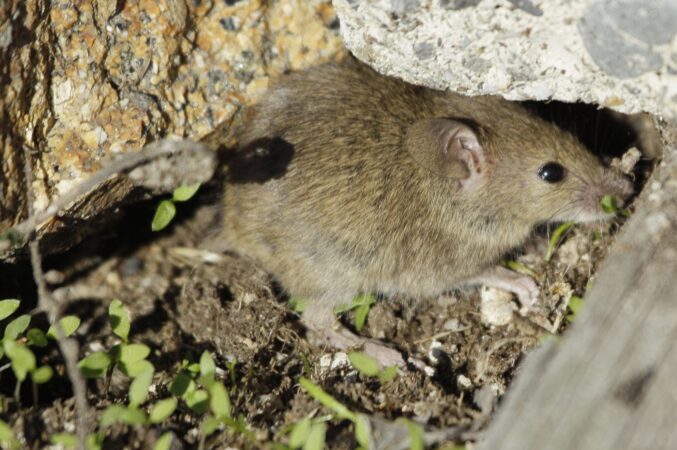
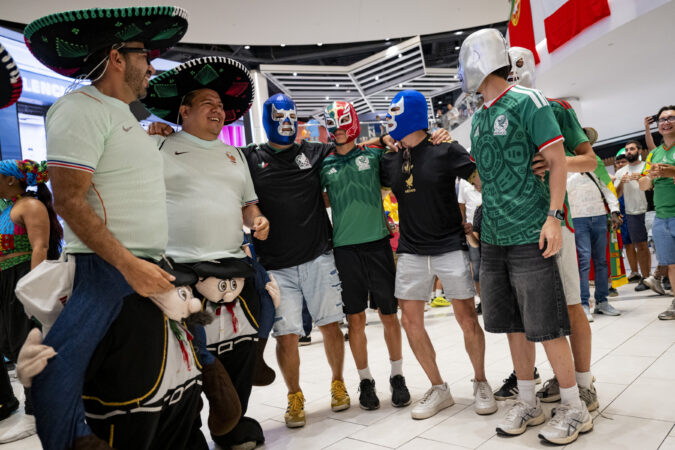
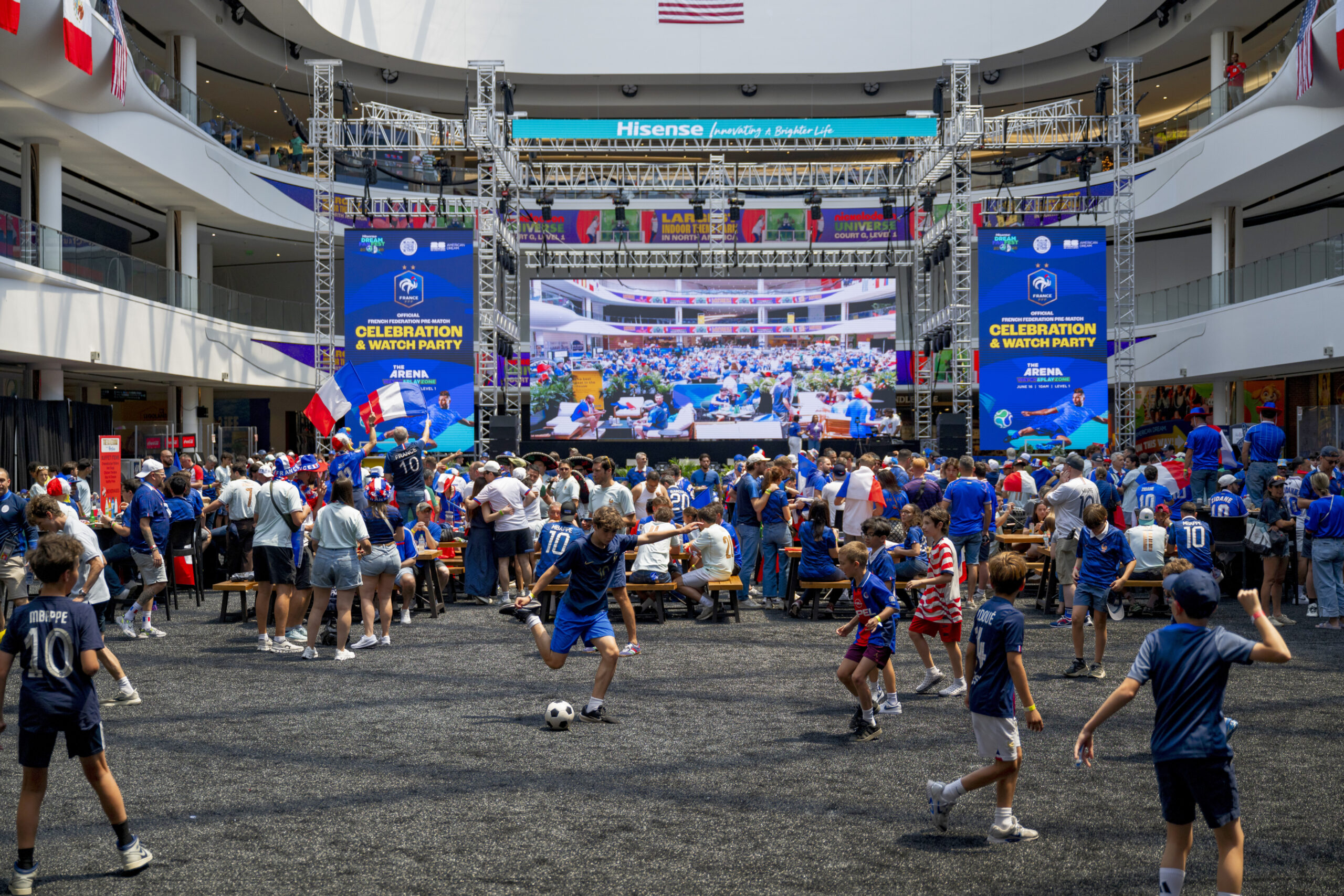
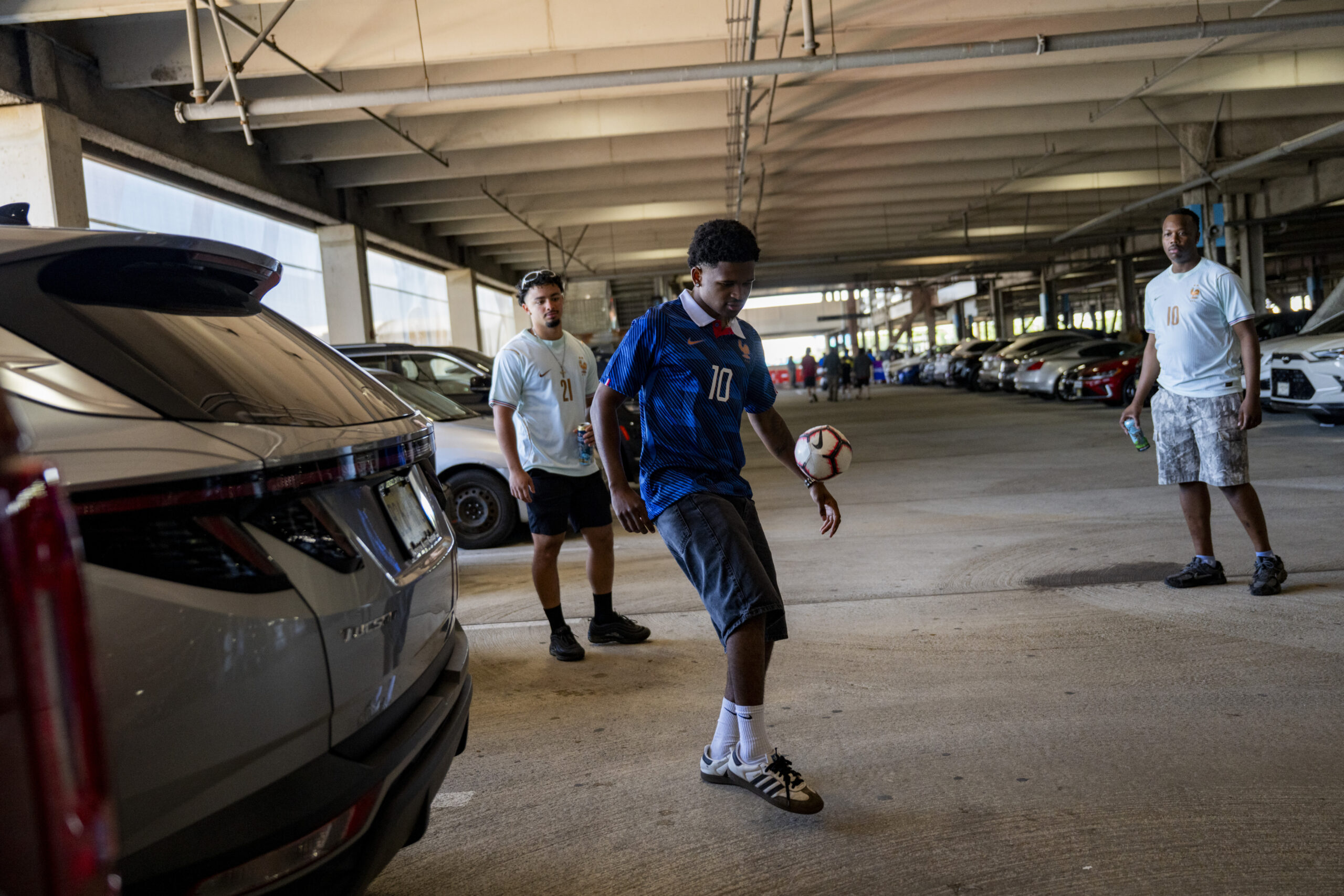
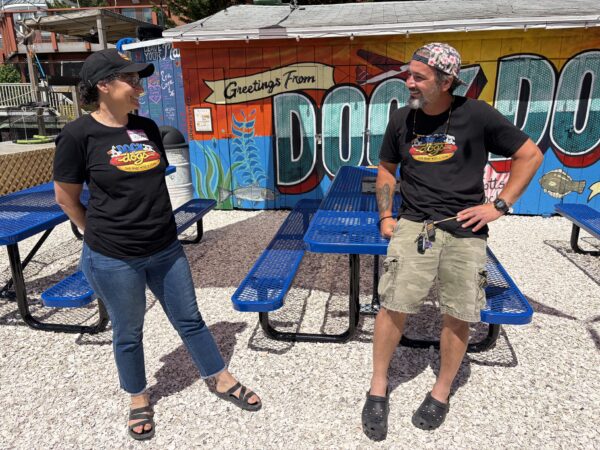
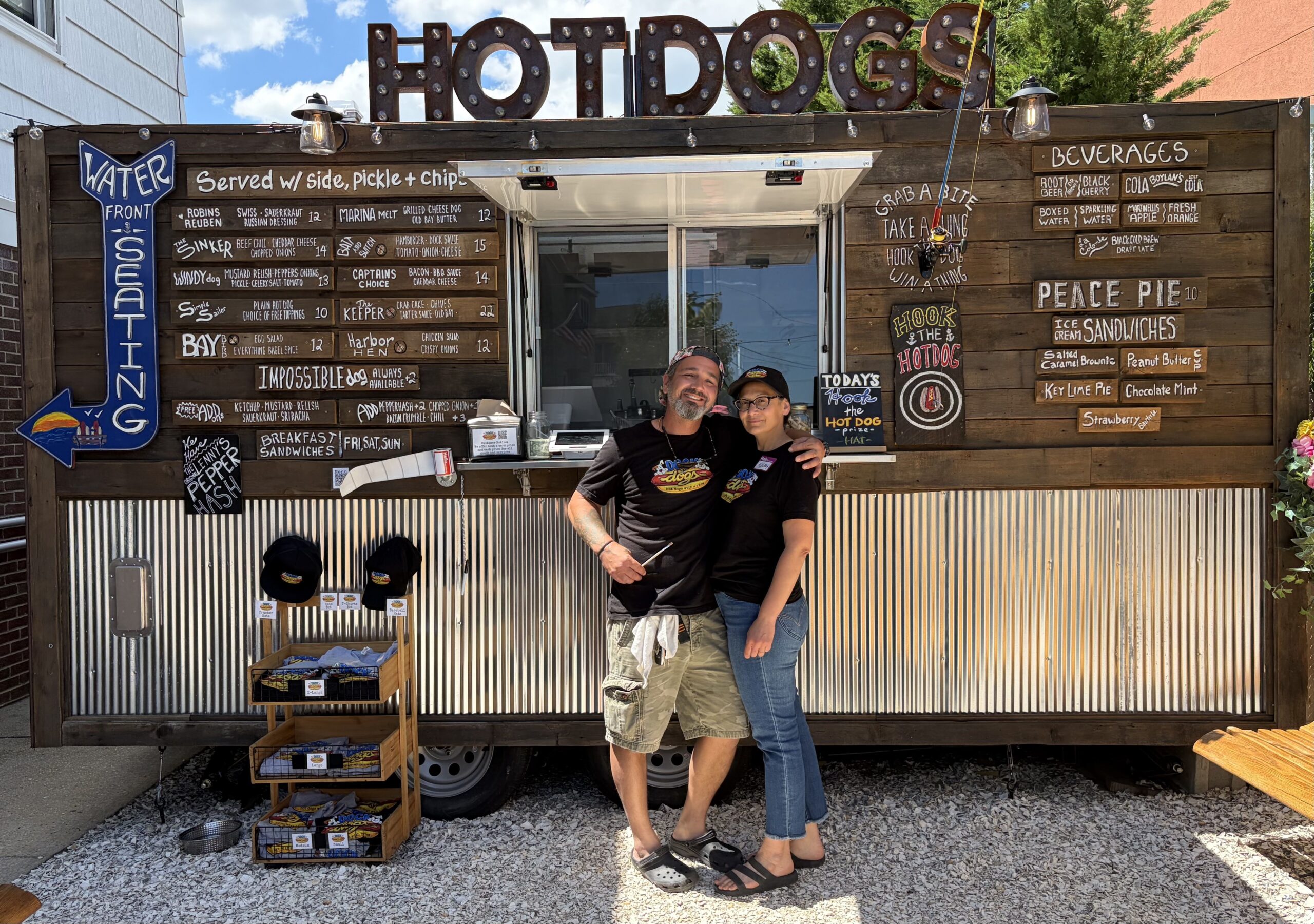
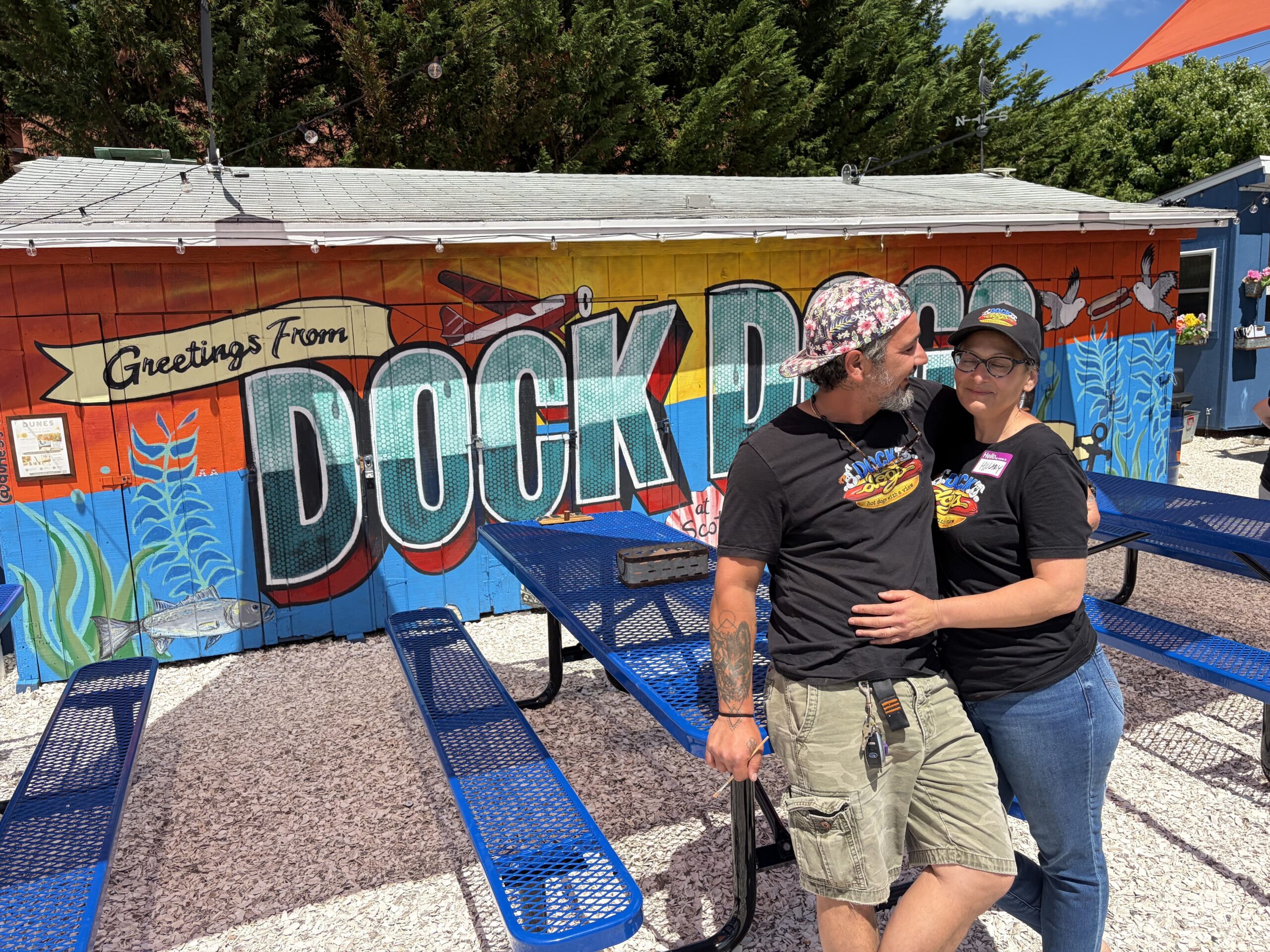
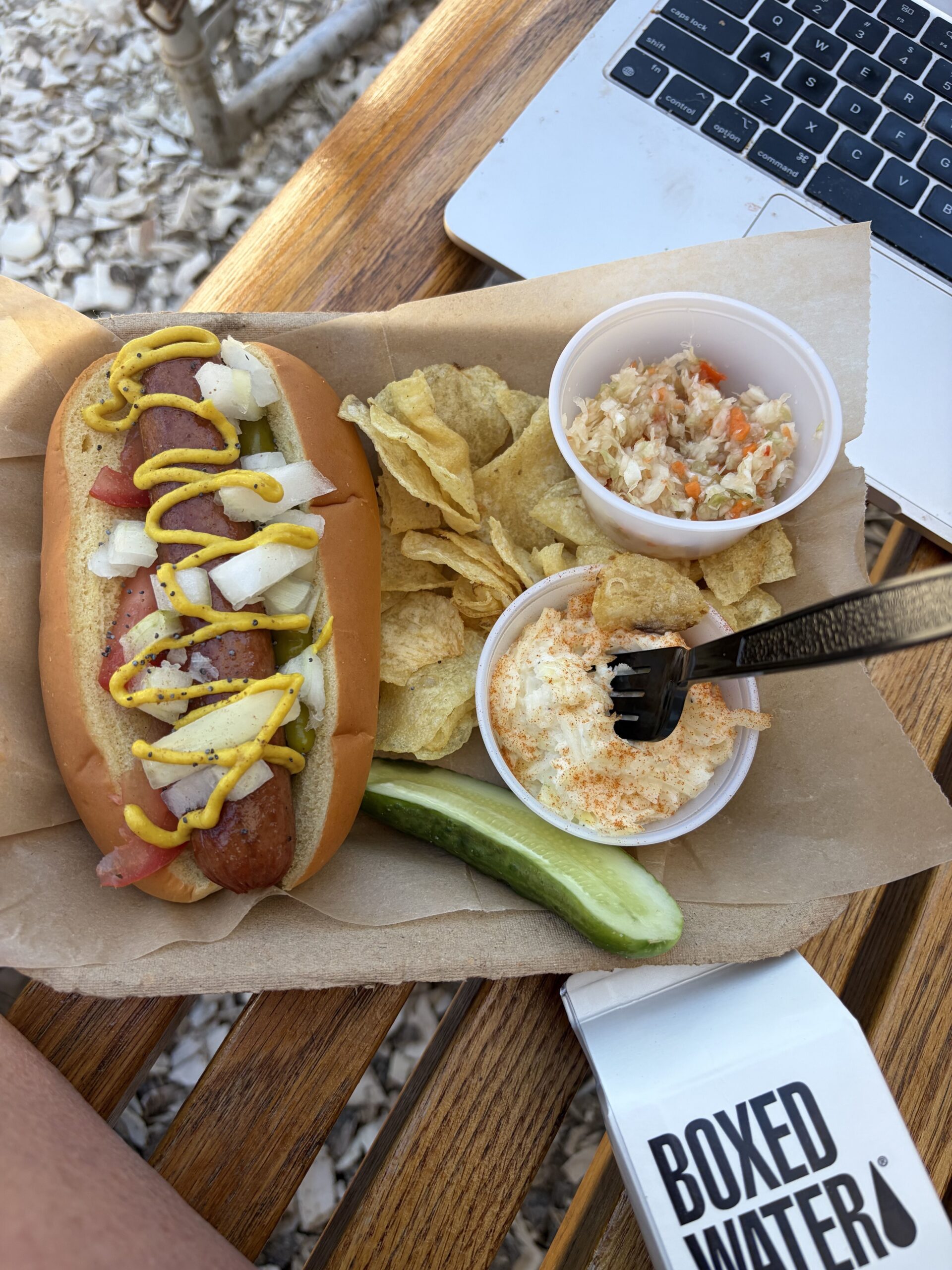


 g
g